EP4498259A2 - Verfahren, vorrichtung und speichermedium zur planung einer verteilten datenbank - Google Patents
Verfahren, vorrichtung und speichermedium zur planung einer verteilten datenbank Download PDFInfo
- Publication number
- EP4498259A2 EP4498259A2 EP24182092.7A EP24182092A EP4498259A2 EP 4498259 A2 EP4498259 A2 EP 4498259A2 EP 24182092 A EP24182092 A EP 24182092A EP 4498259 A2 EP4498259 A2 EP 4498259A2
- Authority
- EP
- European Patent Office
- Prior art keywords
- replica
- task
- primary
- storage node
- subreplicas
- Prior art date
- Legal status (The legal status is an assumption and is not a legal conclusion. Google has not performed a legal analysis and makes no representation as to the accuracy of the status listed.)
- Pending
Links
Images


Classifications
-
- G—PHYSICS
- G06—COMPUTING OR CALCULATING; COUNTING
- G06F—ELECTRIC DIGITAL DATA PROCESSING
- G06F16/00—Information retrieval; Database structures therefor; File system structures therefor
- G06F16/20—Information retrieval; Database structures therefor; File system structures therefor of structured data, e.g. relational data
- G06F16/22—Indexing; Data structures therefor; Storage structures
- G06F16/2282—Tablespace storage structures; Management thereof
-
- G—PHYSICS
- G06—COMPUTING OR CALCULATING; COUNTING
- G06F—ELECTRIC DIGITAL DATA PROCESSING
- G06F16/00—Information retrieval; Database structures therefor; File system structures therefor
- G06F16/20—Information retrieval; Database structures therefor; File system structures therefor of structured data, e.g. relational data
- G06F16/27—Replication, distribution or synchronisation of data between databases or within a distributed database system; Distributed database system architectures therefor
- G06F16/278—Data partitioning, e.g. horizontal or vertical partitioning
-
- G—PHYSICS
- G06—COMPUTING OR CALCULATING; COUNTING
- G06F—ELECTRIC DIGITAL DATA PROCESSING
- G06F16/00—Information retrieval; Database structures therefor; File system structures therefor
- G06F16/20—Information retrieval; Database structures therefor; File system structures therefor of structured data, e.g. relational data
- G06F16/21—Design, administration or maintenance of databases
- G06F16/214—Database migration support
-
- G—PHYSICS
- G06—COMPUTING OR CALCULATING; COUNTING
- G06F—ELECTRIC DIGITAL DATA PROCESSING
- G06F16/00—Information retrieval; Database structures therefor; File system structures therefor
- G06F16/20—Information retrieval; Database structures therefor; File system structures therefor of structured data, e.g. relational data
- G06F16/24—Querying
- G06F16/245—Query processing
- G06F16/2458—Special types of queries, e.g. statistical queries, fuzzy queries or distributed queries
- G06F16/2471—Distributed queries
-
- G—PHYSICS
- G06—COMPUTING OR CALCULATING; COUNTING
- G06F—ELECTRIC DIGITAL DATA PROCESSING
- G06F16/00—Information retrieval; Database structures therefor; File system structures therefor
- G06F16/20—Information retrieval; Database structures therefor; File system structures therefor of structured data, e.g. relational data
- G06F16/27—Replication, distribution or synchronisation of data between databases or within a distributed database system; Distributed database system architectures therefor
-
- G—PHYSICS
- G06—COMPUTING OR CALCULATING; COUNTING
- G06F—ELECTRIC DIGITAL DATA PROCESSING
- G06F9/00—Arrangements for program control, e.g. control units
- G06F9/06—Arrangements for program control, e.g. control units using stored programs, i.e. using an internal store of processing equipment to receive or retain programs
- G06F9/46—Multiprogramming arrangements
- G06F9/48—Program initiating; Program switching, e.g. by interrupt
- G06F9/4806—Task transfer initiation or dispatching
- G06F9/4843—Task transfer initiation or dispatching by program, e.g. task dispatcher, supervisor, operating system
- G06F9/4881—Scheduling strategies for dispatcher, e.g. round robin, multi-level priority queues
-
- G—PHYSICS
- G06—COMPUTING OR CALCULATING; COUNTING
- G06F—ELECTRIC DIGITAL DATA PROCESSING
- G06F9/00—Arrangements for program control, e.g. control units
- G06F9/06—Arrangements for program control, e.g. control units using stored programs, i.e. using an internal store of processing equipment to receive or retain programs
- G06F9/46—Multiprogramming arrangements
- G06F9/50—Allocation of resources, e.g. of the central processing unit [CPU]
- G06F9/5005—Allocation of resources, e.g. of the central processing unit [CPU] to service a request
- G06F9/5027—Allocation of resources, e.g. of the central processing unit [CPU] to service a request the resource being a machine, e.g. CPUs, Servers, Terminals
- G06F9/505—Allocation of resources, e.g. of the central processing unit [CPU] to service a request the resource being a machine, e.g. CPUs, Servers, Terminals considering the load
-
- G—PHYSICS
- G06—COMPUTING OR CALCULATING; COUNTING
- G06F—ELECTRIC DIGITAL DATA PROCESSING
- G06F9/00—Arrangements for program control, e.g. control units
- G06F9/06—Arrangements for program control, e.g. control units using stored programs, i.e. using an internal store of processing equipment to receive or retain programs
- G06F9/46—Multiprogramming arrangements
- G06F9/50—Allocation of resources, e.g. of the central processing unit [CPU]
- G06F9/5061—Partitioning or combining of resources
-
- G—PHYSICS
- G06—COMPUTING OR CALCULATING; COUNTING
- G06F—ELECTRIC DIGITAL DATA PROCESSING
- G06F9/00—Arrangements for program control, e.g. control units
- G06F9/06—Arrangements for program control, e.g. control units using stored programs, i.e. using an internal store of processing equipment to receive or retain programs
- G06F9/46—Multiprogramming arrangements
- G06F9/50—Allocation of resources, e.g. of the central processing unit [CPU]
- G06F9/5083—Techniques for rebalancing the load in a distributed system
-
- G—PHYSICS
- G06—COMPUTING OR CALCULATING; COUNTING
- G06F—ELECTRIC DIGITAL DATA PROCESSING
- G06F2209/00—Indexing scheme relating to G06F9/00
- G06F2209/48—Indexing scheme relating to G06F9/48
- G06F2209/484—Precedence
-
- G—PHYSICS
- G06—COMPUTING OR CALCULATING; COUNTING
- G06F—ELECTRIC DIGITAL DATA PROCESSING
- G06F2209/00—Indexing scheme relating to G06F9/00
- G06F2209/50—Indexing scheme relating to G06F9/50
- G06F2209/5011—Pool
-
- G—PHYSICS
- G06—COMPUTING OR CALCULATING; COUNTING
- G06F—ELECTRIC DIGITAL DATA PROCESSING
- G06F2209/00—Indexing scheme relating to G06F9/00
- G06F2209/50—Indexing scheme relating to G06F9/50
- G06F2209/5017—Task decomposition
-
- G—PHYSICS
- G06—COMPUTING OR CALCULATING; COUNTING
- G06F—ELECTRIC DIGITAL DATA PROCESSING
- G06F2209/00—Indexing scheme relating to G06F9/00
- G06F2209/50—Indexing scheme relating to G06F9/50
- G06F2209/5018—Thread allocation
-
- G—PHYSICS
- G06—COMPUTING OR CALCULATING; COUNTING
- G06F—ELECTRIC DIGITAL DATA PROCESSING
- G06F2209/00—Indexing scheme relating to G06F9/00
- G06F2209/50—Indexing scheme relating to G06F9/50
- G06F2209/5021—Priority
Definitions
- Embodiments of the present disclosure relate to the field of computer and network communications technologies, and in particular, to a method, device, and storage medium for scheduling a distributed database.
- a distributed database introduces a consensus algorithm into a database technology, thereby implementing consistency of a plurality of replicas of data, and naturally guaranteeing high availability of a system.
- a plurality of replicas of data are stored in a distributed database, and there is a primary/secondary relationship among a plurality of replicas of the same piece of data, which can be respectively referred to as a primary replica and a secondary replica, in which the primary replica usually provides a read-write service, and the secondary replica provides a read-only service. Due to the existence of functional differences between the primary and secondary replicas, it is necessary to schedule the replicas evenly among a plurality of nodes in the system.
- certain replicas in a distributed database may have certain read and write pressures, which causes a disk hotspot problem to occur, affects read and write performance, and even causes a disk to be damaged.
- Embodiments of the present disclosure provide a method, device, and storage medium for scheduling a distributed database, so as to reduce a disk hotspot problem.
- an embodiment of the present disclosure provides a method of scheduling a distributed database, comprising:
- an embodiment of the present disclosure provides a device of scheduling a distributed database, comprising:
- an embodiment of the present disclosure provides a computer readable storage medium, wherein computer execution instructions are stored in the computer readable storage medium, the computer execution instructions, when executed by a processor, implementing the method of the first aspect and various possible designs of the first aspect is implemented.
- an embodiment of the present disclosure provides a computer program product, comprising computer execution instructions which, when executed by a processor, implement the method of the first aspect and various possible designs of the first aspect is implemented.
- the embodiments provide a method, device, and storage medium for scheduling a distributed database.
- Load states of respective storage units in any first storage node in a distributed database are detected by any of a plurality of management devices of a distributed database, and a hotspot partition of any first storage unit is determined based on the load states;
- a replica splitting task for a target replica stored in the hotspot partition is generated, the replica splitting task comprising the target number of subreplicas of the target replica after splitting and migration target addresses of the subreplicas;
- the replica splitting task is executed by invoking a thread in a thread pool, to split the target replica into the subreplicas based on the target number of the subreplicas and migrate at least one of the subreplicas based on the migration target addresses of the subreplicas.
- replica splitting can be performed automatically based on a load state, so that a disk hotspot problem can be reduced, thereby avoiding affecting read-write performance and preventing a disk from being damaged and improving the disaster-tolerance capability of the distributed database.
- a distributed database introduces a consensus algorithm into a database technology, thereby implementing consistency of a plurality of replicas of data, and naturally guaranteeing high availability of a system.
- a plurality of replicas of data are stored in a distributed database, and there is a primary/secondary relationship among a plurality of replicas of the same piece of data, which can be respectively referred to as a primary replica and a secondary replica, in which the primary replica usually provides a read-write service, and the secondary replica provides a read-only service. Due to the existence of functional differences between the primary and secondary replicas, it is necessary to schedule the replicas evenly among a plurality of nodes in the system.
- some replicas in a distributed database may have a certain read/write pressure. Although there are a plurality of replicas, there may still be a large read/write requirement, which causes the replica to be in a read-write state for a long time, leading to a disk where the replica is located generating heat, causing a disk hotspot problem, influencing read/write performance, and even causing a disk to be damaged.
- the embodiments of the present disclosure provide a method of scheduling a distributed database, which can split a replica of a hotspot partition into a plurality of subreplicas based on a load state and migrate same, thereby reducing the heating of the hotspot partition and reducing a disk hotspot problem, so as to avoid affecting read and write performance and avoid disk damage, and improve the disaster-tolerance capability of a distributed database.
- the method of scheduling a distributed database can be applied to the distributed database system as shown in FIG. 1 , comprising a management device and a storage node cluster, wherein each storage node comprises a plurality of storage units, and can further comprise an agent device, wherein the management device can manage the whole storage node cluster, comprising a management storage node, a storage unit managed by the storage node, a replica, replica scheduling, a DDL (Data Definition Language), a replica location cache, etc., high availability can be achieved through the Raft-Group technology; a storage node is used for providing a read and write service of a replica, and managing a plurality of storage units (e. g.
- an agent device facing a client is used for receiving a read/write request of the client, shielding an internal structure of a cluster from the outside; after receiving the read/write request of the client, the agent device can send the read/write request to a management device; the management device determines, based on load balancing, location information of a read/write replica, and returns same to the agent device; and then the agent device reads and writes the replica based on the location information.
- the management device can be configured as a plurality of management devices, for example, three management devices are configured, so as to implement the disaster-tolerance of three replicas of the management device, and a raft-group can be used to implement high availability.
- the method of scheduling a distributed database of the present disclosure can be executed by any management device.
- a management device can detect load states of respective storage units in any first storage node in a distributed database, and determine a hotspot partition of any first storage unit based on the load states; a replica splitting task for a target replica stored in the hotspot partition is generated, the replica splitting task comprising the target number of subreplicas of the target replica after splitting and migration target addresses of the subreplicas; the replica splitting task is executed by invoking a thread in a thread pool, to split the target replica into the subreplicas based on the target number of the subreplicas and migrate at least one of the subreplicas based on the migration target addresses of the subreplicas.
- replica splitting can be performed automatically based on a load state, so that a disk hotspot problem can be reduced, thereby avoiding affecting read-write performance and preventing a disk from being damaged and improving the disaster-tolerance capability of the distributed database.
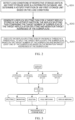
- FIG. 2 is a schematic flowchart of a method of scheduling a distributed database according to an embodiment of the present disclosure.
- the method of the present embodiment can be applied to any management device among a plurality of management devices of a distributed database.
- the management device is connected to a plurality of storage nodes of the distributed database, and each storage node comprises a plurality of storage units (e. g. magnetic disks).
- the method of scheduling a distributed database comprises: At S201, load states of respective storage units in any first storage node in a distributed database are detected, and a hotspot partition of any first storage unit is determined based on the load states.
- the management device obtains the load state of individual storage unit in any storage node in the distributed database, for example, the read/write pressure, especially the read/write pressure of each partition in individual storage unit, or the read/write pressure of a certain stored replica.
- a first storage node can actively detect load states of a plurality of storage nodes comprised therein, and send same to a management device;
- the management device sends a detection instruction to the first storage node, and then the first storage node actively detects load states of a plurality of storage nodes comprised in the detection instruction, and sends the detection instruction to the management device.
- the management device may determine a hotspot partition of any storage unit in the first storage node based on the load state.
- the first storage unit wherein the first storage unit is any storage unit in the first storage node
- the partition increases in temperature due to increase of read-write pressure, and the partition may be determined to be a hotspot partition.
- the hotspot partition may also be determined by collecting temperatures of the individual partitions of the first storage node.
- a replica splitting task for a target replica stored in the hotspot partition is generated, the replica splitting task comprising the target number of subreplicas of the target replica after splitting and migration target addresses of the subreplicas.
- a replica with larger read-write pressure stored in the hotspot partition may be determined as a target replica. For example, if a replica is in a read-write state for a long time (longer than a predetermined duration), the target replica is split, i.e., the target replica is split into a plurality of subreplicas, and at least one subreplica is migrated from a partition where the at least one subreplica is located.
- read-write pressure of the partition can be reduced, thereby overheat of the hotspot partition can be avoided.
- the management device may first determine the target number of the subreplicas and the migration target addresses of the subreplicas after the target replica is split, and then a replica splitting task is generated based on the target number of the subreplicas and the migration target addresses of the subreplicas.
- the subreplica may be migrated to further partitions of the first storage node or migrated to a partition of further storage units in the first storage node.
- a part of the subreplicas may be migrated to further partitions of the first storage node, and a part of the subreplicas may be migrated to partitions of further storage units in the first storage node.
- the target partition to which the target partition is migrated cannot be a hotspot partition, otherwise, the read/write pressure of the target partition is further increased, increasing the temperature of the target partition. Therefore, in this embodiment, the non-hotspot partition of the first storage unit and/or further storage units may be determined based on the load state of individual storage unit in the first storage node.
- a partition where read-write pressure fails to reach a predetermined read-write pressure threshold and thereby determining the target number of the subreplicas and the migration target addresses of the subreplicas based on a non-hotspot partition of the first storage unit and/or a further storage unit in the first storage node, wherein the migration target addresses of the subreplicas comprise one or more non-hotspot partitions of the first storage unit and/or the further storage unit in the first storage node.
- the target number of subreplicas may be determined based on the number of the non-hotspot partitions.
- the target number of the subreplicas may be increased appropriately (at most the same as the non-hotspot score number) if there are more non-hotspot partition in the first storage unit; the target number of subreplicas may be reduced appropriately (at most the same as the non-hotspot score amount) if there are fewer non-hotspot partitions in the first storage unit. If the migration target address of the subreplica is other cases, the determination of the target number of the subreplicas is similar to the foregoing cases, and is not repeated herein.
- the size of the subreplica may also be determined based on the size of the available storage space in the non-hotspot partition and/or the read/write pressure, so as to ensure that the non-hotspot partition can accommodate the subreplica and that the read/write pressure after migration is not excessive.
- the replica splitting task is executed by invoking a thread in a thread pool, to split the target replica into the subreplicas based on the target number of the subreplicas and migrate at least one of the subreplicas based on the migration target addresses of the subreplicas.
- threads in the thread pool may be invoked to execute the replica splitting task
- a thread when executing a replica splitting task, may split a target replica into a plurality of subreplicas according to a target number of subreplicas, and migrating at least one subreplica based on the migration target address of the subreplica, so as to realize splitting of the target replica,
- the read-write pressure of the hotspot partition is reduced, thereby reducing the temperature of the hotspot partition and avoiding overheating of the hotspot partition.
- replica splitting tasks may be added to a task queue, and the task queue invokes threads from a thread pool to execute the tasks in the task queue.
- the management device may set priorities for the tasks in the task queue, invoke threads according to a descending order of the priorities of the tasks, and preferentially invoke the threads for processing.
- the priority can be determined according to the magnitude or temperature of the read-write pressure in the hotspot partition where the replica splitting task is located, and if the read-write pressure is larger or the temperature is higher, the priority is higher, and the replica splitting can be performed preferentially.
- the method of scheduling a distributed database comprises: detecting load states of respective storage units in any first storage node in a distributed database, and determining a hotspot partition of any first storage unit based on the load states; generating a replica splitting task for a target replica stored in the hotspot partition, the replica splitting task comprising the target number of subreplicas of the target replica after splitting and migration target addresses of the subreplicas; executing the replica splitting task by invoking a thread in a thread pool, to split the target replica into the subreplicas based on the target number of the subreplicas and migrate at least one of the subreplicas based on the migration target addresses of the subreplicas.
- replica splitting can be performed automatically based on a load state, so that a disk hotspot problem can be reduced, thereby avoiding affecting read-write performance and preventing a disk from being damaged and improving the disaster-tolerance capability of the distributed database.
- the method of scheduling a distributed database in an embodiment of the present disclosure may further provide a scheduling manner for merging replicas.
- the management device may generate a replica merging task for the plurality of split subreplicas based on the size of the replica capacity and the read/write pressure, or a replica merging task is generated for different replicas, and then threads in the thread pool can be invoked to execute the replica merging task,
- the thread may implement replica merging when performing a replica splitting task.
- the replica merging tasks may be added to a task queue, and the task queue invokes threads from a thread pool to execute the tasks in the task queue.
- the method of scheduling a distributed database in an embodiment of the present disclosure further comprises scheduling at a level of storage node, comprising distributed database scheduling in the case that a storage node is offline and/or is temporarily broken down for maintenance.
- a scheduling process of distributed database in the case that a storage node being offline is as follows:
- the management device may detect the state of respective storage nodes and determine whether there is a storage node being offline, wherein detecting the state of respective storage nodes may be implemented by means of a heartbeat protocol or the like; alternatively, the administrator may send an instruction or a notification that the storage node is offline to the management device, or modify the state of the storage node in the management device (for example, mark that a certain storage node is offline permanently or is shielded).
- the replica in the first storage node may be migrated to further storage nodes in the distributed database.
- a load state of a storage node of the storage node needs to be considered, and one or more storage nodes (which may be further detailed to a storage unit or even a partition) with a low read-write pressure may be determined, based on load states of further storage nodes, as a migration target address.
- the first replica migration task is generated based on the migration target addresses of one or more replicas in the first storage node.
- a thread in a thread pool may be invoked to execute a first replica migration task.
- the thread migrates one or more replicas based on migration target addresses of the one or more replicas. It is ensured that the replica of the first storage node can be migrated to further storage nodes to continue to be read and written after the first storage node gets offline.
- the first replica migration tasks may be added to the task queue, and the task queue invokes the threads from the thread pool to execute the tasks in the task queue, which is similar to the above embodiments and will not be repeated here.
- the distributed database scheduling process in the case of temporary fault maintenance is as follows:
- a management personnel may send a temporary fault maintenance message of the first storage node to a management device, and certainly, a temporary fault maintenance state of the first storage node may also be detected in another manner.
- the first storage node may comprise some primary replicas, and the primary replica provides reading and writing services and can update and synchronize the replicas to the secondary replica. Since the secondary replicas only provide reading services, if a certain primary replica is located in the first storage node, and at least one corresponding secondary replica is located in further storage nodes in the distributed database, while the first storage node is temporarily broken down for maintenance, the secondary replica(s) located in further storage node(s) may continue to provide read services.
- any secondary replica located in further storage nodes can be switched to a primary replica, i.e., role switching is performed between the primary replica of the first storage node and any secondary replica among further storage nodes.
- a read/write service can be provided after the secondary replica is switched to the primary replica.
- the load state of the storage node in which the secondary replica is located can also be considered for the selection of any of the further storage nodes.
- the management device may generate a first role switching task for the primary replica of the first storage node and any secondary replica in any of the further storage nodes. Similar to the replica splitting task and the first replica migration task in the foregoing embodiments, after the management device generates the first role switching task, a thread in a thread pool can be invoked to execute a first role switching task. When executing the first role switching task, the thread implements the switching from a primary replica of a first storage node to a secondary replica, switching any of the further storage nodes from the secondary replica to the primary replica, so as to ensure the update and synchronization of the replica during the temporary fault maintenance of the first storage node.
- the first role switching task may be added to a task queue, and the task queue invokes a thread from a thread pool to execute the tasks in the task queue, which is similar to the above embodiments and will not be repeated here.
- the process of scheduling a distributed database in the case of temporary maintenance may also be as follows:
- a certain primary replica and all corresponding secondary replicas may be located on the first storage node. If the first storage node is in temporary fault maintenance, the primary replica and the corresponding secondary replica cannot provide services. Therefore, the primary replica and the corresponding secondary replica need to be migrated to one or more further storage nodes in the distributed database.
- the migrated storage node may be selected based on load states of further storage nodes, so as to determine a migration target address of the primary replica and one or more corresponding secondary replicas.
- the management device may generate a second replica migration task based on the migration target addresses of the primary replica and the corresponding secondary replica. Similar to the replica splitting task and the first replica migration task in the foregoing embodiments, after the management device generates the second replica migration task, a thread in a thread pool may be invoked to execute a second replica migration task. When executing the second replica migration task, the thread implements migration of a primary replica of a first storage node and one or more corresponding secondary replicas based on corresponding migration target addresses.
- the second replica migration tasks may be added to the task queue, and the task queue invokes the threads from the thread pool to execute the tasks in the task queue, which is similar to the above embodiments and will not be repeated here.
- the method of scheduling a distributed database in an embodiment of the present disclosure further comprises scheduling for the primary replica.
- the scheduling process for the primary replica is as follows:
- the management device can detect the state of the replica of the primary replica in any storage node.
- the first storage node can actively detect the state of the replica of the primary replica comprised therein, and send same to the management device; alternatively, the management device sends a detection instruction to the first storage node, and then the first storage node actively detects the replica state of the primary replica comprised therein, and sends the detection instruction to the management device.
- any secondary replica corresponding to the primary replica is selected and is switched to be the primary replica, or roles of the primary replica and any secondary replica are interchanged, so as to ensure that a read-write service can be continuously provided.
- the original primary replica is deleted at last.
- the load state of the storage node where the secondary replica is located may also be considered for the selection of any of the secondary replicas.
- the management device may generate a second role switching task for any secondary replica corresponding to the primary replica, and generate a first deletion task for the primary replica. Similar to the tasks such as the replica splitting task, the first replica migration task, and the first role switching task in the foregoing embodiments, after the management device generates the second role switching task and the first deletion task, threads in the thread pool may be invoked to execute the second role switching task and the first deletion task. When executing the second role switching task and the first deletion task, the thread implementing the role switching of the secondary replica and deleting the original primary replica.
- the second role switching task and the first deletion task may be added to a task queue, and the task queue invokes a thread from a thread pool to execute the tasks in the task queue, which is similar to the above embodiments and will not be repeated here.
- the process of scheduling the primary replica is as follows:
- Some policies are pre-configured for the primary replica, comprising but not limited to, a tag matching rule, an arrangement strategy, and an affinity relation rule.
- the tag matching rule is to pre-configure some tag information for the primary replica, some tag information is also pre-configured for the storage node, and then the primary replica is deployed based on the matching degree of the tag information, i.e., the primary replica is deployed to the storage node that best matches the label information of the primary replica.
- the arrangement policy defines how the primary replica is specifically arranged, for example, on which storage node, etc. ; and the affinity relationship rule defines a storage node which is the most affinity to the primary replica, i.e.
- a secondary replica satisfying the above determination rule can be found from further storage nodes, and the secondary replica can be switched to the primary replica, or performing role exchange between the primary replica and the secondary replica, and deleting the original primary replica at last.
- the selection of the secondary replica may also consider the load state of the storage node where the secondary replica is located.
- the management device may generate a third role switching task for the secondary replicas that satisfy the above determination rules, and generating a second deletion task for the primary replica, which is similar to the tasks such as a replica splitting task, a first replica migration task and a first role switching task in the described embodiments.
- threads in the thread pool may be invoked to execute the third role switching task and the second deletion task.
- the thread implements the role switching of the secondary replica and deleting the original primary replica.
- the third role switching task and the second deletion task may be added to a task queue, and the task queue invokes a thread from a thread pool to execute the tasks in the task queue, which is similar to the above embodiments and will not be repeated here.
- the method of scheduling a distributed database in an embodiment of the present disclosure further comprises:
- the management device can also detect the replica state of the secondary replica in any storage node.
- the first storage node can actively detect the replica state of the secondary replica comprised therein and send same to the management device; alternatively, the management device sends a detection instruction to the first storage node, and then the first storage node passively detects the replica state of the secondary replica comprised in the detection instruction, and sends the detection instruction to the management device. If it is determined that the replica state of any secondary replica of the first storage node is abnormal, the secondary replica may be reestablished, i.e., the original secondary replica is deleted and a new replica is created.
- a management device may generate a replica reconstruction task for a secondary replica with an abnormal replica state, which is similar to the tasks such as a replica splitting task, a first replica migration task, and a first role switching task in the described embodiments.
- the management device may invoke a thread in a thread pool to execute the replica reconstruction task.
- the thread deletes an original secondary replica and establishes a new replica.
- a replica reconstruction task may be added to a task queue, and the task queue invokes a thread from a thread pool to execute a task in the task queue, which is similar to the foregoing embodiments and will not be repeated herein.
- the method of scheduling a distributed database in an embodiment of the present disclosure further comprises:
- a predetermined number threshold is usually set for the total number of primary replicas and corresponding secondary replicas.
- the predetermined quantity threshold may be different for the primary replica and the corresponding secondary replica of different services and/or different degrees of importance.
- the predetermined number threshold may be set to 5, i.e., five-replica disaster-tolerance is implemented instead of the primary replica and the corresponding secondary replica of the key service.
- the predetermined quantity threshold may be set to 3, i.e., three-replica disaster-tolerance is implemented.
- the management device can select one or more storage nodes based on the load state of respective storage nodes in the distributed database, to replenish the replicas on the one or more storage nodes. The reduction of the disaster-tolerance ability due to the lack of the replicas is avoided.
- the management device may generate a replica replenishment task and invoke a thread in a thread pool to execute the replica replenishment task, and when executing the replica replenishment task, the thread creates a secondary replica corresponding to a primary replica in one or more storage nodes, so as to ensure the number of replicas.
- a replica replenishment task may be added to a task queue, and the task queue invokes a thread from a thread pool to execute a task in the task queue, which is similar to the above embodiments and will not be repeated here.
- the management device recognizes various scheduling requirements through detection, and uniformly generates various scheduling tasks.
- a scheduling task can be generated based on a predetermined basic scheduling method (a method of task generation),.
- a basic scheduling method (a method of task generation) is used for encapsulating public methods and members of specific scheduling classes.
- a predetermined scheduling base class can be used to abstract public functions of different scheduling tasks, such as a scheduler name, a scheduling period, a scheduler switch, a scheduling thread, and a scheduling specific implementation, wherein the scheduling specific implementation (Schedule) is a virtual method.
- the method is implemented by a lower-layer specific scheduling method.
- the management device adds various scheduling tasks to the task queue, and the task queue invokes the threads from the thread pool to execute the tasks in the task queue.
- the management device may set priorities for various scheduling tasks in the task queue, and then may invoke threads based on the order of the priority levels of the tasks, and the task with a high priority level preferentially invokes the threads for processing.
- the scheduling process in respective of the above embodiments can be divided into different layers, as shown in FIG. 3 , the uppermost layer is a basic method of scheduling used for encapsulating public methods and members of a specific scheduling class; a second layer is a specific implementation for a method of scheduling; a third layer is scheduling tasks generated by different scheduling methods, comprising replica splitting, replica merging, etc.; finally, all scheduling tasks are forwarded to the storage nodes for specific execution.
- a multi-level scheduling task can process many problem scenarios such as a node fault, a disk fault, and a disk hotspot; furthermore, the storage and scheduling are separated, so that seamless storage engine docking can be implemented, and different storage engines can be adapted; different disaster-tolerance and capacity expansion policies can be adopted for storage and scheduling, for example, a management device can be configured with three-replica disaster-tolerance, i.e., three management devices are adopted, and storage nodes can be configured with five-replica disaster-tolerance and nine-replica disaster-tolerance, etc.; multi-level scheduling task can implement different disaster-tolerance strategies such as service level, rack level and data center level; the multi-level scheduling may adopt mutually independent schedulers to perform scheduling respectively, and different schedulers may start and stop as required and configure a scheduling period as required.
- different scheduling tasks are executed on a storage node, which can effectively deal with different scenarios and handle many problem scenarios such as storage node fault, disk fault, and disk hotspots.
- FIG. 4 is a structural block diagram of a device of scheduling a distributed database according to an embodiment of the present disclosure. For ease of description, only parts related to the embodiments of the present disclosure are shown.
- the device of scheduling a distributed database 600 comprises: a detecting unit 601, a task generating unit 602, and an executing unit 603.
- the detection unit 601 is configured to detect load states of respective storage units in any first storage node in a distributed database, and determining a hotspot partition of any first storage unit based on the load states; a task generating unit 602 is configured to generate generating a replica splitting task for a target replica stored in the hotspot partition, the replica splitting task comprising the target number of subreplicas of the target replica after splitting and migration target addresses of the subreplicas; The executing unit 603 is configured to executing the replica splitting task by invoking a thread in a thread pool, to split the target replica into the subreplicas based on the target number of the subreplicas and migrate at least one of the subreplicas based on the migration target addresses of the subreplicas.
- the task generating unit 602 when generating the replica splitting task for the target replica stored in the hotspot partition, is configured to: determine the target number of the subreplicas and the migration target addresses of the subreplicas based on a non-hotspot partition of the first storage unit and/or a further storage unit in the first storage node, wherein the migration target addresses of the subreplicas comprise one or more non-hotspot partitions of the first storage unit and/or the further storage unit in the first storage node.
- the task generating unit 602 is further configured to, when the detecting unit 601 detects the first storage node being offline, determine migration target addresses of one or more replicas in the first storage node based on load states of further storage nodes in the distributed database, and generate a first replica migration task based on the migration target addresses of the one or more replicas;
- the executing unit 603 is further configured to execute the first replica migration task by invoking a thread in the thread pool, to migrate the one or more replicas based on the migration target addresses of the one or more replicas.
- the task generating unit 602 is further configured to, in response to receiving a temporary fault maintenance message of the first storage node, for any of primary replicas comprised in the first storage node, in accordance with a determination that at least one of secondary replicas corresponding to the primary replica is located in a further storage node in the distributed database, generate a first role switching task for the primary replica and any of secondary replicas
- the executing unit 603 is further configured to execute the first role switching task by invoking a thread in the thread pool, to perform role switching on the primary replica and any of the secondary replicas.
- the task generating unit 602 is further configured to, in response to receiving a temporary fault maintenance message of the first storage node, for any of primary replicas comprised in the first storage node, in accordance with a determination that all secondary replicas corresponding to the primary replica are located in the first storage node, determine migration target addresses of the primary replica and a corresponding secondary replica based on load states of further storage nodes in the distributed database, and generate a second replica migration task based on the migration target addresses of the primary replica and the corresponding secondary replica;
- the executing unit 603 is further configured to execute the second replica migration task by invoking a thread in the thread pool, to migrate the primary replica and the corresponding secondary replica based on the migration target addresses of the primary replica and the corresponding secondary replica.
- the detecting unit 601 is further configured to detect a replica state of a primary replica comprised in the first storage node;
- the task generating unit 602 is further configured to, in accordance with a determination that a replica state of the primary replica is abnormal, generate a second role switching task for any secondary replica corresponding to the primary replica and generate a first deletion task for the primary replica;
- the executing unit 603 is further configured to execute the second role switching task and the first deletion task by invoking a thread in the thread pool, to perform role switching on the secondary replica and delete the primary replica.
- the detecting unit 601 is further configured to determine whether any primary replica comprised in the first storage node satisfies a predetermined judgement rule, the judgement rule comprising: whether label information of the primary replica matches label information of the first storage node, or whether a current arrangement strategy of the primary replica matches a predetermined arrangement strategy, or whether a predetermined affinity relationship of the primary replica matches the first storage node;
- the task generating unit 602 is further configured to, if the primary replica fails to satisfy the predetermined judgement rule, generate a third role switching task for any secondary replica corresponding to the primary replica that satisfies the predetermined judgement rule, and a second deletion task for the primary replica;
- the executing unit 603 is further configured to execute the third role switching task and the second deletion task by invoking a thread in the thread pool, to perform role switching on the secondary replica and delete the primary replica.
- the detecting unit 601 is further configured to detect a replica state of a secondary replica comprised in the first storage node;
- the task generating unit 602 is further configured to generate a replica reconstruction task for the secondary replica if a replica state of any primary replica is abnormal;
- the executing unit 603 is further configured to execute the replica reconstruction task by invoking a thread in the thread pool, to perform a post-deletion reconstruction on the secondary replica.
- the task generating unit 602 is further configured to obtain the total number of any primary replica and corresponding secondary replicas in the distributed database, in accordance with a determination that the total number is less than a predetermined number threshold, generate a replica replenishment task based on load states of respective storage nodes in the distributed database;
- the executing unit 603 is further configured to execute the replica rearrangement task by invoking a thread in the thread pool, to create a secondary replica corresponding to the primary replica in one or more of the storage nodes.
- a replica location inquiry unit is configured to receive a client replica read request sent by an agent device, and determining location information of a replica to be returned based on load states of a primary replica and a secondary replica corresponding to a requested replica; send, to the agent device, the location information of the replica to be returned, to cause the agent device to read a replica and return it to a client based on the location information of the replica to be returned.
- the device of scheduling a distributed database provided in this embodiment may be used to execute the technical solutions of the foregoing method embodiments.
- Implementation principles and technical effects of the device of scheduling a distributed database are similar to those of the foregoing method embodiments and are not repeatedly described herein in this embodiment.
- the electronic device 700 may be a terminal device or a server.
- the terminal device may comprise, but is not limited to, a mobile terminal such as a mobile phone, a laptop computer, a digital broadcast receiver, a personal digital assistant (Personal Digital Assistant, PDA for short), a tablet computer (Portable Android Device, PAD for short), a portable multimedia player (Portable Media Player, PMP for short), a vehicle-mounted terminal (for example, a vehicle-mounted navigation terminal), and the like, and a fixed terminal such as a digital TV, a desktop computer, and the like.
- PDA Personal Digital Assistant
- PMP Portable Multimedia Player
- vehicle-mounted terminal for example, a vehicle-mounted navigation terminal
- a fixed terminal such as a digital TV, a desktop computer, and the like.
- the electronic device shown in FIG. 5 is merely an example and should not bring any limitation to the functions and scope of use of embodiments of the present disclosure.
- the electronic device 700 may comprise a processing device (e. g., a central processing unit, a graphics processor, etc. ) 701 that may perform various suitable actions and processes in accordance with a program stored in a read only memory (ROM) 702 or a program loaded into a random access memory (RAM) 703 from the storage device 708.
- a processing device e. g., a central processing unit, a graphics processor, etc.
- RAM random access memory
- a variety of programs and data necessary for the operation of the electronic device 700 are also stored in the RAM 703.
- the processing device 701, the ROM 702, and the RAM 703 are connected to each other via the bus 704.
- An input/output (I/O) interface 705 is also connected to the bus 704.
- the following devices may be connected to the I/O interface 705: an input device 706 comprising, for example, a touch screen, a touch pad, a keyboard, a mouse, a camera, a microphone, an accelerometer, a gyroscope, or the like; an output device 707 comprising, for example, a liquid crystal display (LCD), a speaker, a vibrator, or the like; a storage device 708 comprising, for example, a magnetic tape, a hard disk, or the like; and a communication device 709.
- the communication device 709 can allow the electronic device 700 to communicate wirelessly or wired with other devices to exchange data. While FIG. 5 illustrates the electronic device 700 with a variety of means, it is to be understood that not all of the illustrated means are required to be implemented or provided. More or fewer devices may alternatively be implemented or provided.
- embodiments of the present disclosure include a computer program product comprising a computer program carried on a computer readable medium.
- the computer program comprises a program code for executing the method as shown in the flowchart.
- the computer program may be downloaded and installed from the network through the communication device 709, installed from the storage device 708, or installed from the ROM 702.
- the processing device 701 the described functions defined in the method according to the embodiment of the present disclosure are executed.
- the computer-readable medium described above in the present disclosure may be a computer-readable signal medium or a computer-readable storage medium or any combination thereof.
- the computer-readable storage medium may, for example, be - but is not limited to - a system, device, or apparatus or device that is electrical, magnetic, optical, electromagnetic, infrared, or semiconducting, or any combination of the above.
- Computer-readable storage media may include, but are not limited to: electrical connections having one or more wires, portable computer disks, hard drives, random access memory (RAM), read-only memory (ROM), erasable programmable read-only memory (EPROM or flash memory), optical fibres, portable compact disk read-only memory (CD- ROM), optical storage device, magnetic storage device, or any suitable combination of the foregoing.
- a computer-readable storage medium may be any tangible medium that contains or stores a program that may be used by or in combination with an instruction execution system, device, or apparatus.
- a computer-readable signalling medium may comprise a data signal propagated in a baseband or as part of a carrier carrying computer-readable program code.
- Such propagated data signals may take a variety of forms, including, but not limited to, electromagnetic signals, optical signals, or any suitable combination of the foregoing.
- the computer-readable signal medium may also be any computer-readable medium other than a computer-readable storage medium that sends, propagates, or transmits a programme for use by, or in conjunction with, an instruction-executing system, apparatus, or device.
- the program code contained on the computer-readable medium may be transmitted using any suitable medium, including, but not limited to: wire, fibre optic cable, RF (radio frequency), etc., or any suitable combination of the foregoing.
- the computer-readable medium may be included in the electronic device; or it may stand alone and not be assembled into such electronic device.
- the above-described computer-readable medium carries one or more programs that, when the above-described one or more programs are executed by the electronic device, cause the electronic device to perform the method shown in the above-described embodiments.
- Computer program code for carrying out operations for aspects of the present disclosure may be written in any combination of one or more programming languages, including an object oriented programming language such as Java, Smalltalk, C++ or the like and conventional procedural programming languages, such as the 'C' programming language or similar programming languages.
- the program code may execute entirely on the user's computer, partly on the user's computer, as a stand-alone software package, partly on the user's computer and partly on a remote computer or entirely on the remote computer or server.
- the remote computer may be connected to the user's computer through any type of network, including a local area network (LAN) or a wide area network (WAN), or the connection may be made to an external computer (for example, through the Internet using an Internet Service Provider).
- LAN local area network
- WAN wide area network
- Internet Service Provider for example, AT&T, MCI, Sprint, EarthLink, MSN, GTE, etc.
- each block in the flowchart or block diagrams may represent a module, segment, or portion of code, which comprises one or more executable instructions for implementing the specified logical function(s).
- the functions noted in the blocks may occur out of the order noted in the figures. For example, two blocks shown in succession may, in fact, be executed substantially concurrently, or the blocks may sometimes be executed in the reverse order, depending upon the functionality involved.
- the units involved in the embodiments of the present disclosure may be implemented through software or hardware.
- the name of a unit does not constitute a limitation to the unit itself in some cases, for example, the first acquisition unit may also be described as "unit to acquire at least two internet protocol addresses".
- FPGAs Field-programmable Gate Arrays
- ASICs Program-specific Integrated Circuits
- ASSPs Program-specific Standard Products
- SOCs System-on-a-chip systems
- CPLDs Complex Programmable Logic Devices
- a machine-readable medium may be tangible media that may contain or store a program for use by or in connection with an instruction execution system, apparatus, or device.
- the machine-readable medium may be a machine-readable signal medium or a machine-readable storage medium.
- the machine-readable medium may include, but is not limited to, an electronic, magnetic, optical, electromagnetic, infrared, or semiconductor system, apparatus, or device, or any suitable combination of the foregoing.
- machine-readable storage media would include an electrical connection based on one or more wires, a portable computer diskette, a hard disk, a random access memory (RAM), a read-only memory (ROM), an erasable programmable read-only memory (EPROM or Flash memory), an optical fiber, a compact disc read-only memory (CD-ROM), an optical storage device, a magnetic storage device, or any suitable combination of the foregoing.
- RAM random access memory
- ROM read-only memory
- EPROM or Flash memory erasable programmable read-only memory
- CD-ROM compact disc read-only memory
- magnetic storage device or any suitable combination of the foregoing.
- an embodiment of the present disclosure provides a method of scheduling a distributed database, comprising:
- generating the replica splitting task for the target replica stored in the hotspot partition comprises: determining the target number of the subreplicas and the migration target addresses of the subreplicas based on a non-hotspot partition of the first storage unit and/or a further storage unit in the first storage node, wherein the migration target addresses of the subreplicas comprise one or more non-hotspot partitions of the first storage unit and/or the further storage unit in the first storage node.
- the method further comprises:
- the method further comprises:
- the method further comprises:
- the method further comprises:
- the method further comprises:
- the method further comprises:
- the method further comprises:
- the method further comprises:
- a device of scheduling a distributed database comprising:
- the task generating unit when generating the replica splitting task for the target replica stored in the hotspot partition, is configured to: determining the target number of the subreplicas and the migration target addresses of the subreplicas based on a non-hotspot partition of the first storage unit and/or a further storage unit in the first storage node, wherein the migration target addresses of the subreplicas comprise one or more non-hotspot partitions of the first storage unit and/or the further storage unit in the first storage node.
- the task generating unit is further configured to, in response to a detection of the first storage node being offline, determine migration target addresses of one or more replicas in the first storage node based on load states of further storage nodes in the distributed database, and generate a first replica migration task based on the migration target addresses of the one or more replicas;
- the executing unit is further configured to execute the first replica migration task by invoking a thread in the thread pool, to migrate the one or more replicas based on the migration target addresses of the one or more replicas.
- the task generating unit is further configured to, in response to receiving a temporary fault maintenance message of the first storage node, for any of primary replicas comprised in the first storage node, in accordance with a determination that at least one of secondary replicas corresponding to the primary replica is located in a further storage node in the distributed database, generate a first role switching task for the primary replica and any of secondary replicas;
- the executing unit is further configured to execute the first role switching task by invoking a thread in the thread pool, to perform role switching on the primary replica and any of the secondary replicas.
- the task generating unit is further configured to, in response to receiving a temporary fault maintenance message of the first storage node, for any of primary replicas comprised in the first storage node, in accordance with a determination that all secondary replicas corresponding to the primary replica are located in the first storage node, determine migration target addresses of the primary replica and a corresponding secondary replica based on load states of further storage nodes in the distributed database, and generate a second replica migration task based on the migration target addresses of the primary replica and the corresponding secondary replica;
- the executing unit is further configured to execute the second replica migration task by invoking a thread in the thread pool, to migrate the primary replica and the corresponding secondary replica based on the migration target addresses of the primary replica and the corresponding secondary replica.
- the detecting unit is further configured to detect a replica state of a primary replica comprised in the first storage node;
- the task generating unit is further configured to, in accordance with a determination that a replica state of the primary replica is abnormal, generate a second role switching task for any secondary replica corresponding to the primary replica and generate a first deletion task for the primary replica;
- the executing unit is further configured to execute the second role switching task and the first deletion task by invoking a thread in the thread pool, to perform role switching on the secondary replica and delete the primary replica.
- the detecting unit is further configured to determine whether any primary replica comprised in the first storage node satisfies a predetermined judgement rule, the judgement rule comprising: whether label information of the primary replica matches label information of the first storage node, or whether a current arrangement strategy of the primary replica matches a predetermined arrangement strategy, or whether a predetermined affinity relationship of the primary replica matches the first storage node;
- the detecting unit is further configured to detect a replica state of a secondary replica comprised in the first storage node; the task generating unit is further configured to generating a replica reconstruction task for the secondary replica if a replica state of any primary replica is abnormal; The executing unit is further configured to execute the replica reconstruction task by invoking a thread in the thread pool, to perform a post-deletion reconstruction on the secondary replica.
- the task generating unit is further configured to obtain the total number of any primary replica and corresponding secondary replicas in the distributed database, in accordance with a determination that the total number is less than a predetermined number threshold, generate a replica replenishment task based on load states of respective storage nodes in the distributed database;
- the executing unit is further configured to execute the replica rearrangement task by invoking a thread in the thread pool, to create a secondary replica corresponding to the primary replica in one or more of the storage nodes.
- a replica location inquiry unit is configured to receive a client replica read request sent by an agent device, and determining location information of a replica to be returned based on load states of a primary replica and a secondary replica corresponding to a requested replica; and send, to the agent device, the location information of the replica to be returned, to cause the agent device to read a replica and return it to a client based on the location information of the replica to be returned.
- an embodiment of the present disclosure provides an electronic device, comprising: at least one processor and a memory;
- an embodiment of the present disclosure provides a computer readable storage medium, wherein computer execution instructions are stored in the computer readable storage medium, the computer execution instructions, when executed by a processor, implementing the method of the first aspect and various possible designs of the first aspect is implemented.
- an embodiment of the present disclosure provides a computer program product, comprising computer execution instructions which, when executed by a processor, implement the method of the first aspect and various possible designs of the first aspect is implemented.
Landscapes
- Engineering & Computer Science (AREA)
- Theoretical Computer Science (AREA)
- Physics & Mathematics (AREA)
- Databases & Information Systems (AREA)
- Software Systems (AREA)
- General Engineering & Computer Science (AREA)
- General Physics & Mathematics (AREA)
- Data Mining & Analysis (AREA)
- Computing Systems (AREA)
- Fuzzy Systems (AREA)
- Mathematical Physics (AREA)
- Probability & Statistics with Applications (AREA)
- Computational Linguistics (AREA)
- Information Retrieval, Db Structures And Fs Structures Therefor (AREA)
Applications Claiming Priority (1)
| Application Number | Priority Date | Filing Date | Title |
|---|---|---|---|
| CN202310928308.1A CN116954859A (zh) | 2023-07-26 | 2023-07-26 | 分布式数据库调度方法、设备及存储介质 |
Publications (2)
| Publication Number | Publication Date |
|---|---|
| EP4498259A2 true EP4498259A2 (de) | 2025-01-29 |
| EP4498259A3 EP4498259A3 (de) | 2025-04-16 |
Family
ID=88456229
Family Applications (1)
| Application Number | Title | Priority Date | Filing Date |
|---|---|---|---|
| EP24182092.7A Pending EP4498259A3 (de) | 2023-07-26 | 2024-06-13 | Verfahren, vorrichtung und speichermedium zur planung einer verteilten datenbank |
Country Status (3)
| Country | Link |
|---|---|
| US (1) | US12321368B2 (de) |
| EP (1) | EP4498259A3 (de) |
| CN (1) | CN116954859A (de) |
Family Cites Families (14)
| Publication number | Priority date | Publication date | Assignee | Title |
|---|---|---|---|---|
| US9805108B2 (en) * | 2010-12-23 | 2017-10-31 | Mongodb, Inc. | Large distributed database clustering systems and methods |
| US8595267B2 (en) * | 2011-06-27 | 2013-11-26 | Amazon Technologies, Inc. | System and method for implementing a scalable data storage service |
| US8843441B1 (en) * | 2012-01-17 | 2014-09-23 | Amazon Technologies, Inc. | System and method for maintaining a master replica for reads and writes in a data store |
| CN103139302B (zh) | 2013-02-07 | 2015-07-08 | 浙江大学 | 考虑负载均衡的实时副本调度方法 |
| US9489443B1 (en) * | 2013-05-24 | 2016-11-08 | Amazon Technologies, Inc. | Scheduling of splits and moves of database partitions |
| US9438665B1 (en) * | 2013-06-18 | 2016-09-06 | Amazon Technologies, Inc. | Scheduling and tracking control plane operations for distributed storage systems |
| CN103729436A (zh) | 2013-12-27 | 2014-04-16 | 中国科学院信息工程研究所 | 一种分布式元数据管理方法及系统 |
| US10095428B1 (en) * | 2016-03-30 | 2018-10-09 | EMC IP Holding Company LLC | Live migration of a tree of replicas in a storage system |
| CN110169040B (zh) * | 2018-07-10 | 2021-09-28 | 深圳花儿数据技术有限公司 | 基于多层一致性哈希的分布式数据存储方法与系统 |
| CN112578997B (zh) * | 2019-09-30 | 2022-07-22 | 华为云计算技术有限公司 | 一种数据迁移方法、系统及相关设备 |
| CN111949379A (zh) | 2020-09-18 | 2020-11-17 | 成都精灵云科技有限公司 | 基于容器调度引擎的声明式副本控制方法 |
| US11726684B1 (en) * | 2021-02-26 | 2023-08-15 | Pure Storage, Inc. | Cluster rebalance using user defined rules |
| CN113515364B (zh) * | 2021-09-14 | 2022-03-01 | 腾讯科技(深圳)有限公司 | 一种数据迁移的方法及装置、计算机设备和存储介质 |
| CN114827181B (zh) | 2022-07-01 | 2022-09-09 | 长城超云(北京)科技有限公司 | 一种超融合存储设备的存储方法、设备、装置及介质 |
-
2023
- 2023-07-26 CN CN202310928308.1A patent/CN116954859A/zh active Pending
-
2024
- 2024-06-13 EP EP24182092.7A patent/EP4498259A3/de active Pending
- 2024-06-14 US US18/744,410 patent/US12321368B2/en active Active
Also Published As
| Publication number | Publication date |
|---|---|
| CN116954859A (zh) | 2023-10-27 |
| US20250036653A1 (en) | 2025-01-30 |
| EP4498259A3 (de) | 2025-04-16 |
| US12321368B2 (en) | 2025-06-03 |
Similar Documents
| Publication | Publication Date | Title |
|---|---|---|
| US10467025B2 (en) | Managing delivery of code and dependent data using application containers | |
| US8418181B1 (en) | Managing program execution based on data storage location | |
| JP2018190456A (ja) | ストリーミング・サーバのセッション・アイドル最適化 | |
| US9881018B2 (en) | File management in thin provisioning storage environments | |
| US10037298B2 (en) | Network-accessible data volume modification | |
| US11144432B2 (en) | Testing and reproduction of concurrency issues | |
| US20180006963A1 (en) | Network-accessible data volume modification | |
| EP4567598A1 (de) | Ressourcenplanungsverfahren, vorrichtung, system und speichermedium | |
| CN118132204B (zh) | 一种容器管理方法、装置、设备及介质 | |
| US11126371B2 (en) | Caching file data within a clustered computing system | |
| EP4498259A2 (de) | Verfahren, vorrichtung und speichermedium zur planung einer verteilten datenbank | |
| CN121116971A (zh) | 基于云搜索服务的数据查询方法、介质、设备及产品 | |
| CN118740716A (zh) | 基于多容器集群的网络通信方法、系统及存储介质 | |
| US20230418681A1 (en) | Intelligent layer derived deployment of containers | |
| AU2017290693B2 (en) | Network-accessible data volume modification | |
| US11818174B1 (en) | Contextual policy weighting for permissions searching | |
| JPH09319720A (ja) | 分散プロセス管理システム | |
| US12547335B2 (en) | Data migration method, electronic device, and storage medium | |
| CN114296633A (zh) | 一种基于大数据的数据迁移方法及系统 | |
| CN114650392A (zh) | 一种资源管理方法、装置、电子设备和存储介质 | |
| US20260056779A1 (en) | Cluster-based scheduling method, medium and electronic device | |
| CN117573027A (zh) | 数据处理方法及设备 | |
| US20220210791A1 (en) | Method and apparatus for maximizing a number of connections that can be executed from a mobile application | |
| CN117435307A (zh) | 一种虚拟机迁移的方法及设备 | |
| CN118796468A (zh) | 磁盘簇资源调度方法、装置、系统、设备及存储介质 |
Legal Events
| Date | Code | Title | Description |
|---|---|---|---|
| PUAI | Public reference made under article 153(3) epc to a published international application that has entered the european phase |
Free format text: ORIGINAL CODE: 0009012 |
|
| STAA | Information on the status of an ep patent application or granted ep patent |
Free format text: STATUS: REQUEST FOR EXAMINATION WAS MADE |
|
| 17P | Request for examination filed |
Effective date: 20240613 |
|
| AK | Designated contracting states |
Kind code of ref document: A2 Designated state(s): AL AT BE BG CH CY CZ DE DK EE ES FI FR GB GR HR HU IE IS IT LI LT LU LV MC ME MK MT NL NO PL PT RO RS SE SI SK SM TR |
|
| PUAL | Search report despatched |
Free format text: ORIGINAL CODE: 0009013 |
|
| AK | Designated contracting states |
Kind code of ref document: A3 Designated state(s): AL AT BE BG CH CY CZ DE DK EE ES FI FR GB GR HR HU IE IS IT LI LT LU LV MC ME MK MT NL NO PL PT RO RS SE SI SK SM TR |
|
| RIC1 | Information provided on ipc code assigned before grant |
Ipc: G06F 16/27 20190101ALI20250307BHEP Ipc: G06F 16/22 20190101AFI20250307BHEP |