EP4497375A1 - Verfahren zur überwachung von benutzerkrankheiten auf basis von herzfrequenzinformationen und server zur durchführung davon - Google Patents
Verfahren zur überwachung von benutzerkrankheiten auf basis von herzfrequenzinformationen und server zur durchführung davon Download PDFInfo
- Publication number
- EP4497375A1 EP4497375A1 EP23775270.4A EP23775270A EP4497375A1 EP 4497375 A1 EP4497375 A1 EP 4497375A1 EP 23775270 A EP23775270 A EP 23775270A EP 4497375 A1 EP4497375 A1 EP 4497375A1
- Authority
- EP
- European Patent Office
- Prior art keywords
- heart rate
- rate information
- information
- disease monitoring
- model
- Prior art date
- Legal status (The legal status is an assumption and is not a legal conclusion. Google has not performed a legal analysis and makes no representation as to the accuracy of the status listed.)
- Pending
Links
Images









Classifications
-
- A—HUMAN NECESSITIES
- A61—MEDICAL OR VETERINARY SCIENCE; HYGIENE
- A61B—DIAGNOSIS; SURGERY; IDENTIFICATION
- A61B5/00—Measuring for diagnostic purposes; Identification of persons
- A61B5/02—Detecting, measuring or recording for evaluating the cardiovascular system, e.g. pulse, heart rate, blood pressure or blood flow
- A61B5/024—Measuring pulse rate or heart rate
- A61B5/02438—Measuring pulse rate or heart rate with portable devices, e.g. worn by the patient
-
- A—HUMAN NECESSITIES
- A61—MEDICAL OR VETERINARY SCIENCE; HYGIENE
- A61B—DIAGNOSIS; SURGERY; IDENTIFICATION
- A61B5/00—Measuring for diagnostic purposes; Identification of persons
-
- A—HUMAN NECESSITIES
- A61—MEDICAL OR VETERINARY SCIENCE; HYGIENE
- A61B—DIAGNOSIS; SURGERY; IDENTIFICATION
- A61B5/00—Measuring for diagnostic purposes; Identification of persons
- A61B5/02—Detecting, measuring or recording for evaluating the cardiovascular system, e.g. pulse, heart rate, blood pressure or blood flow
- A61B5/024—Measuring pulse rate or heart rate
-
- A—HUMAN NECESSITIES
- A61—MEDICAL OR VETERINARY SCIENCE; HYGIENE
- A61B—DIAGNOSIS; SURGERY; IDENTIFICATION
- A61B5/00—Measuring for diagnostic purposes; Identification of persons
- A61B5/02—Detecting, measuring or recording for evaluating the cardiovascular system, e.g. pulse, heart rate, blood pressure or blood flow
- A61B5/024—Measuring pulse rate or heart rate
- A61B5/02405—Determining heart rate variability
-
- A—HUMAN NECESSITIES
- A61—MEDICAL OR VETERINARY SCIENCE; HYGIENE
- A61B—DIAGNOSIS; SURGERY; IDENTIFICATION
- A61B5/00—Measuring for diagnostic purposes; Identification of persons
- A61B5/02—Detecting, measuring or recording for evaluating the cardiovascular system, e.g. pulse, heart rate, blood pressure or blood flow
- A61B5/024—Measuring pulse rate or heart rate
- A61B5/0245—Measuring pulse rate or heart rate by using sensing means generating electric signals, i.e. ECG signals
-
- A—HUMAN NECESSITIES
- A61—MEDICAL OR VETERINARY SCIENCE; HYGIENE
- A61B—DIAGNOSIS; SURGERY; IDENTIFICATION
- A61B5/00—Measuring for diagnostic purposes; Identification of persons
- A61B5/68—Arrangements of detecting, measuring or recording means, e.g. sensors, in relation to patient
- A61B5/6801—Arrangements of detecting, measuring or recording means, e.g. sensors, in relation to patient specially adapted to be attached to or worn on the body surface
- A61B5/6802—Sensor mounted on worn items
- A61B5/681—Wristwatch-type devices
-
- A—HUMAN NECESSITIES
- A61—MEDICAL OR VETERINARY SCIENCE; HYGIENE
- A61B—DIAGNOSIS; SURGERY; IDENTIFICATION
- A61B5/00—Measuring for diagnostic purposes; Identification of persons
- A61B5/72—Signal processing specially adapted for physiological signals or for diagnostic purposes
- A61B5/7235—Details of waveform analysis
- A61B5/7264—Classification of physiological signals or data, e.g. using neural networks, statistical classifiers, expert systems or fuzzy systems
- A61B5/7267—Classification of physiological signals or data, e.g. using neural networks, statistical classifiers, expert systems or fuzzy systems involving training the classification device
-
- A—HUMAN NECESSITIES
- A61—MEDICAL OR VETERINARY SCIENCE; HYGIENE
- A61B—DIAGNOSIS; SURGERY; IDENTIFICATION
- A61B5/00—Measuring for diagnostic purposes; Identification of persons
- A61B5/72—Signal processing specially adapted for physiological signals or for diagnostic purposes
- A61B5/7271—Specific aspects of physiological measurement analysis
- A61B5/7275—Determining trends in physiological measurement data; Predicting development of a medical condition based on physiological measurements, e.g. determining a risk factor
-
- G—PHYSICS
- G16—INFORMATION AND COMMUNICATION TECHNOLOGY [ICT] SPECIALLY ADAPTED FOR SPECIFIC APPLICATION FIELDS
- G16H—HEALTHCARE INFORMATICS, i.e. INFORMATION AND COMMUNICATION TECHNOLOGY [ICT] SPECIALLY ADAPTED FOR THE HANDLING OR PROCESSING OF MEDICAL OR HEALTHCARE DATA
- G16H40/00—ICT specially adapted for the management or administration of healthcare resources or facilities; ICT specially adapted for the management or operation of medical equipment or devices
- G16H40/60—ICT specially adapted for the management or administration of healthcare resources or facilities; ICT specially adapted for the management or operation of medical equipment or devices for the operation of medical equipment or devices
- G16H40/63—ICT specially adapted for the management or administration of healthcare resources or facilities; ICT specially adapted for the management or operation of medical equipment or devices for the operation of medical equipment or devices for local operation
-
- G—PHYSICS
- G16—INFORMATION AND COMMUNICATION TECHNOLOGY [ICT] SPECIALLY ADAPTED FOR SPECIFIC APPLICATION FIELDS
- G16H—HEALTHCARE INFORMATICS, i.e. INFORMATION AND COMMUNICATION TECHNOLOGY [ICT] SPECIALLY ADAPTED FOR THE HANDLING OR PROCESSING OF MEDICAL OR HEALTHCARE DATA
- G16H40/00—ICT specially adapted for the management or administration of healthcare resources or facilities; ICT specially adapted for the management or operation of medical equipment or devices
- G16H40/60—ICT specially adapted for the management or administration of healthcare resources or facilities; ICT specially adapted for the management or operation of medical equipment or devices for the operation of medical equipment or devices
- G16H40/67—ICT specially adapted for the management or administration of healthcare resources or facilities; ICT specially adapted for the management or operation of medical equipment or devices for the operation of medical equipment or devices for remote operation
-
- G—PHYSICS
- G16—INFORMATION AND COMMUNICATION TECHNOLOGY [ICT] SPECIALLY ADAPTED FOR SPECIFIC APPLICATION FIELDS
- G16H—HEALTHCARE INFORMATICS, i.e. INFORMATION AND COMMUNICATION TECHNOLOGY [ICT] SPECIALLY ADAPTED FOR THE HANDLING OR PROCESSING OF MEDICAL OR HEALTHCARE DATA
- G16H50/00—ICT specially adapted for medical diagnosis, medical simulation or medical data mining; ICT specially adapted for detecting, monitoring or modelling epidemics or pandemics
- G16H50/20—ICT specially adapted for medical diagnosis, medical simulation or medical data mining; ICT specially adapted for detecting, monitoring or modelling epidemics or pandemics for computer-aided diagnosis, e.g. based on medical expert systems
-
- G—PHYSICS
- G16—INFORMATION AND COMMUNICATION TECHNOLOGY [ICT] SPECIALLY ADAPTED FOR SPECIFIC APPLICATION FIELDS
- G16H—HEALTHCARE INFORMATICS, i.e. INFORMATION AND COMMUNICATION TECHNOLOGY [ICT] SPECIALLY ADAPTED FOR THE HANDLING OR PROCESSING OF MEDICAL OR HEALTHCARE DATA
- G16H50/00—ICT specially adapted for medical diagnosis, medical simulation or medical data mining; ICT specially adapted for detecting, monitoring or modelling epidemics or pandemics
- G16H50/70—ICT specially adapted for medical diagnosis, medical simulation or medical data mining; ICT specially adapted for detecting, monitoring or modelling epidemics or pandemics for mining of medical data, e.g. analysing previous cases of other patients
-
- A—HUMAN NECESSITIES
- A61—MEDICAL OR VETERINARY SCIENCE; HYGIENE
- A61B—DIAGNOSIS; SURGERY; IDENTIFICATION
- A61B2560/00—Constructional details of operational features of apparatus; Accessories for medical measuring apparatus
- A61B2560/02—Operational features
- A61B2560/0223—Operational features of calibration, e.g. protocols for calibrating sensors
Definitions
- the present disclosure relates to a method of monitoring a disease of a patient using standardized heart rate information, and a server for performing the method.
- a method of monitoring diseases of a user on the basis of heart rate information obtained by a wearable device including: obtaining type information of the wearable device and the heart rate information; generating disease monitoring information using the heart rate information through a disease monitoring module when the type information corresponds to a reference type; generating standardized heart rate information using the heart rate information through a heart rate information standardization module and generating the disease monitoring information using the standardized heart rate information through the disease monitoring module when the type information does not correspond to the reference type; and outputting the disease monitoring information.
- the heart rate information standardization module may be implemented using a heart rate information standardization model, and the heart rate information standardization model may be a model trained using training heart rate information and reference heart rate information corresponding to the training heart rate information, the training heart rate information may be heart rate information obtained by a wearable device that is not the reference type for a first time, and the reference heart rate information may be heart rate information obtained by a wearable device that is the reference type for the first time.
- the disease monitoring module may be implemented using a first disease monitoring model, the generating of the disease monitoring information using the heart rate information may include generating the disease monitoring information by inputting the heart rate information into the first disease monitoring model, and the generating of the disease monitoring information using the standardized heart rate information may include generating the disease monitoring information by inputting the standardized heart rate information into the first disease monitoring model.
- the disease monitoring module may be implemented using a second disease monitoring model, the generating of the disease monitoring information using the heart rate information may include: generating a first rest period heart rate from the heart rate information; and generating the disease monitoring information by inputting the first rest period heart rate into the second disease monitoring model, and the generating of the disease monitoring information using the standardized heart rate information may include: generating a second rest period heart rate from the standardized heart rate information; and generating the disease monitoring information by inputting the second rest period heart rate into the second disease monitoring model.
- the heart rate information may include a plurality of heart rates corresponding to different points in time
- the standardized heart rate information may include a plurality of standardized heart rates corresponding to different points in time.
- the method may further include generating one or more heart rate missing value from the plurality of heart rates, thereby generating missing value estimation heart rate information including the plurality of heart rates and the heart rate missing value, and the standardized heart rate information may be generated through the heart rate information standardization module using the missing value estimation heart rate information.
- the heart rate information standardization module may be implemented using a heart rate information standardization model, and the standardized heart rate information may be generated by inputting the heart rate information into the heart rate information standardization model.
- the heart rate information standardization module may be implemented using a first type model and a second type model, the standardized heart rate information may be generated using the heart rate information and the first type model when the type information corresponds to a first type that is not the reference type, and the standardized heart rate information may be generated using the heart rate information and the second type model when the type information corresponds to a second type that is not the reference type.
- a method of monitoring diseases of a user on the basis of heart rate information obtained by a wearable device including: obtaining type information of the wearable device and the heart rate information; generating standardized heart rate information using the type information and the heart rate information through a heart rate information standardization module; generating disease monitoring information using the standardized heart rate information through a disease monitoring module; and outputting the disease monitoring information.
- the heart rate information standardization module may be implemented using a heart rate information standardization model, the heart rate information standardization model may be a model trained using training heart rate information and reference heart rate information corresponding to the training heart rate information, the training heart rate information may be heart rate information obtained by a wearable device for a first time, and the reference heart rate information may be heart rate information obtained by a heart rate information measurement device for the first time.
- the disease monitoring module may be implemented using a second disease monitoring model, and the generating of the disease monitoring information may include: generating a rest period heart rate from the standardized heart rate information; and generating the disease monitoring information by inputting the rest period heart rate into the second disease monitoring model.
- the disease monitoring module may be implemented further using a rest period heart rate generation model, and the rest period heart rate may be generated by inputting the standardized heart rate information into the rest period heart rate generation model.
- the heart rate information may include a plurality of heart rates corresponding to different points in time
- the standardized heart rate information may include a plurality of standardized heart rates corresponding to different points in time.
- the method may further include generating one or more heart rate missing value from the plurality of heart rates, thereby generating missing value estimation heart rate information including the plurality of heart rates and the heart rate missing value, and the standardized heart rate information may be generated through the heart rate information standardization model using the missing value estimation heart rate information.
- the heart rate information standardization module may be implemented using a heart rate information standardization model, and the generating of the standardized heart rate information may include generating the standardized heart rate information by inputting the type information and the heart rate information into the heart rate information standardization model.
- the heart rate information standardization module may be implemented using a first type model and a second type model, the standardized heart rate information may be generated using the heart rate information and the first type model when the type information corresponds to a first type, and the standardized heart rate information may be generated using the heart rate information and the second type model when the type information corresponds to a second type.
- a non-transitory computer-readable medium that stores one or more instructions, wherein when the one or more instructions are executed by one or more processors of a device/server, the one or more instructions make the device/server perform the method according to an embodiment.
- a server for monitoring diseases of a user on the basis of heart rate information obtained by a wearable device including: a communication unit; a storage configured to store one or more instructions; and a controller configured to execute the one or more instructions stored in the storage, in which the controller executes the one or more instructions, thereby obtaining type information of the wearable device and the heart rate information; generating disease monitoring information using the heart rate information through a disease monitoring module when the type information corresponds to a reference type; generating standardized heart rate information using the heart rate information through a heart rate information standardization module and generating the disease monitoring information using the standardized heart rate information through the disease monitoring module when the type information does not correspond to the reference type; and outputting the disease monitoring information.
- information obtained by a wearable device is standardized in consideration of type information of the wearable device and diseases of a user are monitored using the standardized information, whereby it is possible to accurately monitor disease of the user regardless of the types of wearable devices.
- Terminologies used herein were selected from general terminologies that are used at present as generally as possible in consideration of their functions herein, but may be changed, depending on the intention of those skilled in the art, customs, advent of new technologies, or the like. However, when such specific terminologies are defined and used as certain meanings, the meanings of the terminologies will be specifically described. Accordingly, the terminologies used herein should be construed on the basis of the substantial meanings of the terminologies and the entire specification, not simply the names of the terminologies.
- a method of monitoring a disease of a user according to the present disclosure and a server and system using the method are described.
- monitoring thyroid dysfunction e.g., hyperthyroidism and hypothyroidism
- disease monitoring according to the present disclosure is not limited thereto.
- heart rate information may mean a set of heart rate values.
- the heart rate information may mean a set of heart rate values measured for a predetermined time.
- standardization of heart rate information means operation or a step that is performed to reduce a deviation or an error between measurement data obtained from devices measuring heart rate information.
- standardized heart rate information means heart rate information generated by standardizing heart rate information.
- standardization may mean standardizing according to an embodiment of the specification.
- heart rate information when it is stated simply as heart rate information, it may mean heart rate information when standardization according to an embodiment of the specification is not performed or before standardization according to an embodiment of the specification is performed.
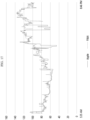
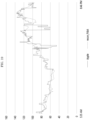
- FIG. 1 which is an example of differences in heart rate information measurement data according to wearable devices, is a graph showing the result of measuring a heart rate of a user with Apple Watch and Fitbit on the same wrist.
- the x axis represents time and the y axis represents heart rate in FIG. 1 .
- the heart rate measured by Apple Watch and the heart rate measured by Fitbit are different even at the same points in time.
- a problem that can be derived from this fact is that a result of performing disease monitoring on the basis of the heart rate measured by Apple Watch and a result of performing disease monitoring on the basis of the heart rate measured by Fitbit may be different, and accordingly, this may influence the accuracy in a disease monitoring result.
- Fitbit measures a heart rate once for every one minute
- Apple Watch irregularly measures a heart rate once for every 5 ⁇ 8 minutes.
- different heart rates may be measured even at the same point in time and the points in time at which measuring a heart rate may be different, depending on wearable devices.
- FIG. 2 is a view showing a disease monitoring system 10 according to an embodiment.
- a network 300 can connect any two or more of a use terminal 200, a data storage server 400, and a disease monitoring server 500 such that communication is possible (directly or indirectly).
- a wearable device 100 is not directly connected to the network 300 and is connected to the network 300 through the user terminal 200, but in some embodiments, the wearable device 100 may be directly connected to the network 300.
- the wearable device 100 can sense heart rate information of a user.
- the wearable device 100 can obtain heart rate information on the body of a user.
- the user may mean a person wearing the wearable device 100.
- the wearable device 100 may be, for example, a smart watch, a smart band, a smart ring, of a combination thereof, but is not limited thereto.
- the user terminal 200 can obtain heart rate information from the wearable device 100.
- the user terminal 200 can provide heart rate information to the data storage server 400.
- the user terminal 200 may be, for example, a smartphone, a tablet device, a laptop, a personal computer, or a combination thereof, but is not limited thereto.
- the data storage server 400 can store heart rate information.
- the data storage server 400 can store heart rate information into a heart rate information database as a database.
- the data storage server 400 may be a server that a wearable device manufacturer operates or manages, but is not limited thereto.
- the disease monitoring server 500 can monitor diseases using heart rate information.
- the disease monitoring server 500 can generate disease monitoring information using heart rate information.
- the disease monitoring server 500 can standardize heart rate information.
- the disease monitoring server 500 can generate standardized heart rate information.
- Disease monitoring and heart rate information standardization by the disease monitoring server 500 will be described in more detail below.
- the components shown in FIG. 2 are not all necessary components of the disease monitoring system 10 and at least some of the components of the disease monitoring system 10 shown in FIG. 2 may be omitted.
- the disease monitoring system 10 may not include the data storage server 400.
- the function of the data storage server 400 may be performed by other components of the disease monitoring system 10 such as the disease monitoring server 500 and the user terminal 200.
- the disease monitoring system 10 may not include the user terminal 200.
- the function of the user terminal 200 may be performed by other components of the disease monitoring system 10 such as the wearable device 100.
- the disease monitoring system 10 may further include components not shown in FIG. 2 .
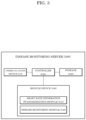
- FIG. 3 is a view showing the disease monitoring server 500 according to an embodiment.
- the disease monitoring server 500 may include a communication unit 510, a storage 520, a controller 530, and a module unit 530.
- the disease monitoring server 500 can perform communication with the outside through the communication unit 510.
- the disease monitoring server 500 can receive heart rate information from the data storage server 400 through the communication unit 510.
- the disease monitoring server 500 can transmit disease monitoring information to the user terminal 200 through the communication unit 510.
- the communication unit 510 can perform wired or wireless communication.
- the communication unit 510 may be, for example, a wired/wireless Local Area Network (LAN) module, a WAN module, an Ethernet module, a Bluetooth module, a Zigbee module, a Universal Serial Bus (USB) module, an IEEE 1394 module, a WiFi module, or a combination thereof, but is not limited thereto.
- the disease monitoring server 500 can store various data, programs, applications, or the like for operation in the storage 520.
- the programs or applications stored in the storage 520 may include one or more instructions.
- the programs or applications stored in the storage 520 can be executed by the controller 530.
- the storage 520 can store information that the disease monitoring server 500 obtains.
- the storage 520 can store heart rate information, user information, and type information of wearable devices.
- the storage 520 can store the result of operation that the disease monitoring server 500 performs, etc.
- the storage 520 can store disease monitoring information.
- the storage 520 may be a hard disk, a flash memory, a Solid State Drive (SSD), a Random Access Memory (RAM), a Read Only Memory (ROM), an Electrically Erasable Programmable Read-Only Memory (EEPROM), a magnetic memory, a magnetic disc, an optical disc, or a combination thereof, but is not limited thereto.
- SSD Solid State Drive
- RAM Random Access Memory
- ROM Read Only Memory
- EEPROM Electrically Erasable Programmable Read-Only Memory
- magnetic memory a magnetic disc, an optical disc, or a combination thereof, but is not limited thereto.
- the disease monitoring server 500 can process various items of information and can perform operation through the controller 530.
- the controller 530 can generate standardized heart rate information.
- the controller 530 can generate disease monitoring information.
- the controller 530 can transmit standardized heart rate information to an external device or an external server, generate disease monitoring information on the basis of the standardized heart rate information at the external device or external server, and receive the generated disease monitoring information from the external device or external server.
- the controller 530 can control other components constituting the disease monitoring server 500.
- the controller 530 may be implemented as a computer or a similar device in accordance with hardware, software, or a combination thereof.
- the controller 530 may be one or a plurality of processors.
- the controller 530 may be provided as processors that are physically spaced apart and cooperate through communication.
- the controller 530 may be, for example, a Central Processing Unit (CPU), a Graphics Processing Unit (GPU), a Digital Signal Processor (DSP), a state machine, an Application Specific Integrated Circuit (ASIC), a Radio-Frequency Integrated Circuit (RFIC), or a combination thereof, but is not limited thereto.
- CPU Central Processing Unit
- GPU Graphics Processing Unit
- DSP Digital Signal Processor
- ASIC Application Specific Integrated Circuit
- RFIC Radio-Frequency Integrated Circuit
- the controller 530 may be provided in the form of a program that drives the controller 530 that is hardware.
- the operation of the disease monitoring server 500 may be construed as being performed by the controller 530 or performed by control of the controller 530.
- the module unit 540 may include one or more operable modules.
- the module unit 540 may include a heart rate information standardization module 541.
- the heart rate information standardization module 541 may be implemented using one or more models.
- the module unit 540 may include a disease monitoring module 542.
- the disease monitoring module 542 may be implemented using one or more models. The module unit 540 will be described in more detail below.
- the components shown in FIG. 3 are not all necessary components of the disease monitoring server 500 and at least some of the components of the disease monitoring server 500 shown in FIG. 3 may be omitted.
- the disease monitoring server 500 may further include components not shown in FIG. 3 .
- the disease monitoring server 500 may further include an output device including a display, a speaker, or a combination thereof.
- At least one or more modules of the modules may be implemented as software modules stored in the storage 520.
- the heart rate information standardization module 541 may be stored in the storage 520 as a software module without being implemented as a specific hardware module included in the module unit 540, as shown in FIG. 3 , and may be operated by being executed by the controller 530.
- the disease monitoring module 542 may be stored in the storage 520 as a software module without being implemented as a specific hardware module included in the module unit 540, as shown in FIG. 3 , and may be operated by being executed by the controller 530.
- a disease monitoring method is performed at a disease monitoring server in the following description, but the disease monitoring method is not necessarily performed at a disease monitoring server.
- the disease monitoring method may be performed at a user terminal.
- a portion of the disease monitoring method may be performed at a disease monitoring server and the other may be performed at a user terminal.
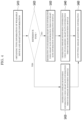
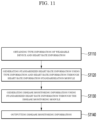
- FIG. 4 is a flow chart showing a disease monitoring method according to an embodiment.
- a disease monitoring server can obtain type information of a wearable device and heart rate information.
- the types of wearable devices may correspond to the manufacturers of the wearable devices.
- wearable devices manufactured by Apple may correspond to an apple type
- wearable devices manufactured by Fitbit may correspond to a Fitbit type
- wearable devices manufactured by Samsung Electronics may correspond to a Samsung Electronics type.
- wearable devices manufactured by the same manufacturer they may correspond to the same type even though the models thereof are different.
- the Apple Watch 1 st to 7 th generations may correspond to the same apple type and the Galaxy Watch 1 st to 3 rd generations may correspond to the same Samsung electronics type.
- type information may be set in accordance with the manufacturers of wearable devices.
- the type information may be manually set by a user or automatically set by a disease monitoring server.
- the types of wearable devices may correspond to the models of the wearable devices.
- wearable devices of different models manufactured by the same manufacturers may correspond to different types, respectively.
- wearable devices are wearable devices manufactured by Apple
- the Apple Watch 1 st to 7 th generations may correspond to different types, respectively.
- some of the Apple Watch 1 st to 7 th generations may correspond to types different from those of the others.
- different items of type information may be set in accordance with the models of wearable devices.
- the type information may be manually set by a user or automatically set by a disease monitoring server.
- the types of wearable devices may be discriminated in accordance with identity of measurement values that are measured by the wearable devices. For example, when a first wearable device and a second wearable device provide the same measurement values (e.g., heart rate information, etc.), the first wearable device and the second wearable device may correspond to the same type.
- different items of type information may be set in accordance with the identity of the measurement values.
- the type information may be manually set by a user or automatically set by a disease monitoring server.
- a disease monitoring server can obtain type information through some methods.
- the disease monitoring server can receive a user identifier from at least one of a user terminal, a data storage server, and a wearable device and can determine type information on the basis of the user identifier.
- the disease monitoring server can store in advance a user identifier and type information corresponding to the user identifier, and can determine type information by finding an identifier that is the same as the received identifier from pre-stored identifiers.
- the disease monitoring server can receive type information from at least one of a user terminal, a data storage server, and a wearable device.
- the disease monitoring server can obtain heart rate information from at least one of the user terminal, the data storage server, and the wearable device.
- the disease monitoring server can obtain heart rate information from the data storage server.
- the disease monitoring server may receive a user identifier or type information from the data storage server, but may receive a user identifier or type information from the user terminal or the wearable device.
- the disease monitoring server can obtain heart rate information from the user terminal.
- the disease monitoring server may receive a user identifier or type information from the user terminal, but may receive a user identifier or type information from the data storage server or the wearable device.
- the disease monitoring server can obtain type information and heart rate information in the same cycle.
- the disease monitoring server can obtain type information and heart rate information in different cycles.
- the disease monitoring server can obtain heart rate information in a longer cycle than type information.
- the disease monitoring server can obtain type information in a first cycle and heart rate information in a second cycle longer than the first cycle.
- the disease monitoring server can obtain type information in a longer cycle than heart rate information.
- the disease monitoring server can obtain heart rate information in a first cycle and type information in a second cycle longer than the first cycle.
- the disease monitoring server can obtain type information and heart rate information in the same number of times. For example, the disease monitoring server can obtain hear rate information one time when obtaining type information one time.
- the disease monitoring server can obtain type information and heart rate information in different number of times.
- the disease monitoring server can obtain heart rate information in a larger number of times than type information.
- the disease monitoring server can obtain hear rate information two or more times when obtaining type information one time.
- the disease monitoring server can obtain type information in a larger number of times than heart rate information.
- the disease monitoring server can obtain type information two or more times when obtaining heart rate information one time.
- the disease monitoring server can determine whether type information corresponds to a reference type.
- the reference type may be a specific type of the types of a plurality of wearable devices.
- step S430 when type information does not correspond to a reference type, the disease monitoring server can generate standardized heart rate information using heart rate information through the heart rate information standardization module.
- Generating standardized heart rate information using heart rate information may means converting heart rate information obtained from a non-reference type wearable device into heart rate information obtained from a reference type wearable device.
- the disease monitoring server can convert heart rate information obtained from another type wearable device (e.g., Apple Watch, Galaxy Watch, etc.) that is not Fitbit into heart rate information obtained from Fitbit.
- the disease monitoring server can convert heart rate information obtained from a second model (different from the first model) of Fitbit into heart rate information obtained from the first model of Fitbit.
- standardized heart rate information may be a virtual heart rate information that is expected as one obtained from a reference type wearable device.
- heart rate information may include a plurality of heart rate values and the points in time at which the heart rate values were obtained.
- heart rate information may be expressed as an n ⁇ 2 matrix. first point in time first heart rate second point in time second heart rate . . . . . n ⁇ th point in time n ⁇ th heart rate where n is the number of heart rates, the first point in time is the earliest point in time at which a heart rate was measured, and the n-th point in time is the latest point in time at which a heart rate was measured.
- the interval between points in time at which heart rate was measured may be a predetermined time interval.
- the interval may be 10 seconds, 30 second, 1 minute, 5 minutes, or 10 minutes, but is not limited thereto.
- heart rate information may include a plurality of heart rate values.
- heart rate information may be expressed as the following n-order vector. first heart rate second heart rate . . . n ⁇ th heart rate where n is the number of heart rates.
- heart rate information may include electrocardiogram (ECG) data.
- ECG electrocardiogram
- heart rate information may include at least one lead ECG data, but is not limited thereto.
- heart rate information may include a plurality of ECG values and the points in time at which the ECG values were measured.
- heart rate information may include time series data including a plurality of ECG values and the points in time at which the ECG values were measured, but is not limited thereto.
- the heart rate information standardization module may be implemented using a heart rate information standardization model.
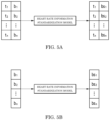
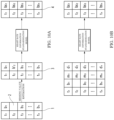
- FIGS. 5A and 5B show generating standardized heart rate information using a heart rate information standardization model, in which FIG. 5A is the case in which standardized heart rate information is generated from heart information of the n ⁇ 2 matrix type heart rate information including heart rate values and points in time described above and FIG. 5B is the case in which standardized heart rate information is generated from heart rate information of the n-order vector type including heart rate values described above.
- the disease monitoring server can generate standardized heart rate information using heart rate information and a heart rate information standardization model.
- the disease monitoring server can generate standardized heart rate information by inputting heart rate information into a heart rate information standardization model.
- the disease monitoring server can generate standardized heart rate information by inputting information generated from heart rate information into a heart rate information standardization model.
- the information generated from heart rate information may be, for example, information in which at least some heart rate values included in the heart rate information have been changed or deleted, information generated by adding one or more value to the heart rate information, or information generated by processing the heart rate information, but is not limited thereto.
- heart rate information may include a plurality of heart rate values b1, b2, to bn and measurement points in time t1, t2, to tn at which the heart rate values were obtained
- standardized heart rate information may include a plurality of standardized heart rate values bs1, bs2, to bsn and points in time t1, t2, to tn corresponding to the standardized heart rate values.
- the points in time corresponding to the standardized heart rate values may be the same as the measurement points in time at which the heart rate values were obtained.
- Standardized heart rate information includes points in time t1, t2, to tn corresponding to the standardized heart rate values in FIG. 5A , but the standardized heart rate information may include standardized heart rate values bst, bst, to bsn without including the points in time t1, t2, to tn corresponding to the standardized heart rate values.
- heart rate information may include a plurality of heart rate values b1, b2, to bn and standardized heart rate information may include a plurality of standardized heart rate values bs1, bs2, to bsn.
- a heart rate information standardization model may be a machine learning model, a deep learning model, or a combination thereof.
- the heart rate information standardization model may be, for example, an RNN-series model such as an RNN model, an LSTM model, or a GRU model, but is not limited thereto.
- the heart rate information standardization model can be trained through various methods such as supervised learning, unsupervised learning, semi-supervised learning, and reinforcement learning.
- the heart rate information standardization model may be trained further using type information.
- the heart rate information standardization model can receive training heart rate information and type information, can output heart rate information, and can be trained on the basis of the difference between the output heart rate information and reference heart rate information.
- the heart rate information standardization model may be trained further using biological information such as the sex and age of a person.
- the characteristic or pattern of heart rate information that is measured may depend on the types of wearable devices.
- the measurement methods of heart rate information of wearable devices may be different, whereby the characteristics or patterns of heart rate information that is measured may be different. Accordingly, when heart rate information obtained from different types of wearable devices is standardized using one same model, incorrect standardized heart rate information may be generated. In this case, it is possible to generate more accurately standardized heart rate information using different type models in accordance with the types of wearable devices.
- heart rate information includes the ECG data described above and the case in which heart rate information includes a plurality of ECG values and the points in time at which the ECG values were obtained, so repeated description is omitted.
- a training data obtaining method for implementing a heart rate information standardization module may be provided.
- a training data obtaining method may include a step of obtaining first type heart rate information and second type heart rate information from a first type wearable device and a second type wearable device that are positioned on the body of the same user.
- the first type wearable device may correspond to a reference type wearable device and the second type wearable device may correspond to a non-reference type wearable device, but they are not limited thereto.
- the first type wearable device may correspond to a Fitbit wearable device and the second type wearable device may correspond to an Apple wearable device, but they are not limited thereto.
- the first type wearable device may correspond to an Apple 5 th generation wearable device and the second type wearable device may correspond to an Apple 6 th generation wearable device, but they are not limited thereto.
- the first type wearable device may correspond to a wearable device that has been approved in a clinical test and the second type wearable device may correspond to a wearable device that has not been approved in a clinical test yet, but they are not limited thereto.
- the meaning of the wearable device that has been approved in a clinical test may mean approval in a clinical test for heart rate itself obtained from the wearable device, but is not limited thereto and may mean approval in a clinical test related to disease information output using heart rate information obtained from the wearable device.
- the first type wearable device and the second type wearable device may be positioned at adjacent portions on the body of the same user, and may be guided to be positioned.
- the first type wearable device and the second type wearable device both may be positioned around the left wrist of the same user, and may be guided to be positioned around the left wrist, but are not limited thereto.
- the training data obtaining method may include a step of obtaining first type heart rate information and second type heart rate information from a heart rate information measurement device and a wearable device that are positioned on the body of the same user.
- the heart rate information measurement device may a heart rate monitor and may correspond to a reference type device, and the wearable device may correspond to a non-reference type wearable device, but they are not limited thereto.
- the training data obtaining method may include a step of obtaining first type heart rate information and second type heart rate information from a first type ECG measurement wearable device and a second type ECG measurement wearable device that are positioned on the body of the same user.
- the first type ECG measurement wearable device may correspond to a reference type wearable device and the second type ECG measurement wearable device may correspond to a non-reference type wearable device, but they are not limited thereto.
- the first type ECG measurement wearable device may correspond to a wearable device that has been approved in a clinical test and the second type ECG measurement wearable device may correspond to a wearable device that has not been approved in a clinical test yet, but they are not limited thereto.
- the meaning of the wearable device that has been approved in a clinical test may mean approval in a clinical test for heart rate itself obtained from the wearable device, but is not limited thereto and may mean approval in a clinical test related to disease information output using heart rate information obtained from the wearable device.
- ECG measurement device may include a heart rate monitor and may correspond to a reference type device, and the ECG measurement wearable device may correspond to a non-reference type wearable device, but they are not limited thereto.
- the training data obtaining method may include a step of generating training data using first type heart rate information and second type heart rate information.
- the training data may include training input data and training result data corresponding to the training input data.
- the training input data may be generated on the basis of second type heart rate information not corresponding to a reference type.
- the training input data according to an embodiment may be obtained by processing at least a portion of second type heart rate information, but is not limited thereto.
- the second type heart rate information may be processed to have a reference time length or a reference format, but is not limited thereto.
- the training result data may be generated on the basis of first type heart rate information corresponding to a reference type.
- the training result data according to an embodiment may be obtained by processing at least a portion of first type heart rate information, but is not limited thereto.
- the first type heart rate information may be processed to have a reference time length or a reference format, but is not limited thereto.
- FIG. 6 is a view showing generating standardized heart rate information using a plurality of type models model according to an embodiment.
- the disease monitoring server can generate standardized heart rate information using different type models in accordance with the types of wearable devices.
- the disease monitoring server can generate standardized heart rate information using heart rate information and a first type model when the type information of a wearable device corresponds to a first type. For example, the disease monitoring server can generate standardized heart rate information by inputting heart rate information into the first type model when the type information of a wearable device corresponds to the first type. As another example, the disease monitoring server can generate standardized heart rate information by inputting information generated from heart rate information into the first type model when the type information of a wearable device corresponds to the first type.
- the disease monitoring server can generate standardized heart rate information using heart rate information and a second type model when the type information of a wearable device corresponds to a second type.
- the disease monitoring server can generate standardized heart rate information by inputting heart rate information into the second type model when the type information of a wearable device corresponds to the second type.
- the disease monitoring server can generate standardized heart rate information by inputting information generated from heart rate information into the second type model when the type information of a wearable device corresponds to the second type.
- the second type is a type different from the first type.
- a type model may be a machine learning model, a deep learning model, or a combination thereof.
- the type model may be, for example, an RNN-series model such as an RNN model, an LSTM model, or a GRU model, but is not limited thereto.
- the type model can be trained through various methods such as supervised learning, unsupervised learning, semi-supervised learning, and reinforcement learning.
- the disease monitoring server can train a type model.
- the disease monitoring server can be provided with a trained type model from the outside.
- heart rate information in sleep is heart rate information that is stable in comparison to heart rate information in non-sleep
- the characteristic or pattern of the heart rate information in sleep may be different from those in non-sleep. Accordingly, when heart rate information in sleep and heart rate information in non-sleep are standardized using one same model, incorrect standardized heart rate information may be generated. In this case, when different models are used for the heart rate information in sleep and the heart rate information in non-sleep, it is possible to more accurately generate standardized heart rate information.
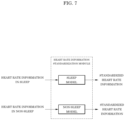
- FIG. 7 is a view showing generating standardized heart rate information using a sleep model and a non-sleep model according to an embodiment.
- the disease monitoring server can generate standardized heart rate information using different models, depending on whether heart rate information was obtained in sleep or non-sleep.
- the disease monitoring server can generate standardized heart rate information using heart rate obtained in non-sleep and a non-sleep model.
- the disease monitoring server can generate standardized heart rate information by inputting heart rate information obtained in non-sleep or information generated from the heart rate information into a non-sleep model.
- the disease monitoring server can determine whether heart rate information corresponds to the case of sleep or non-sleep. For example, the disease monitoring server can determine whether heart rate information corresponds to the case of sleep or non-sleep by analyzing the heart rate information. As another example, the disease monitoring server can determine whether heart rate information corresponds to the case of sleep or non-sleep in accordance with the point in time at which the heart rate information was obtained. As a more detailed example, when the point in time at which heart rate information was obtained is included in a predetermined sleep time (e.g., from 2 a.m. to 6 a.m.), the disease monitoring server can determine that the heart rate information corresponds to the case of sleep.
- a predetermined sleep time e.g., from 2 a.m. to 6 a.m.
- the disease monitoring server can obtain information about whether heart rate information corresponds to the case of sleep or non-sleep from at least one of a user terminal a data storage server, and a wearable device.
- the disease monitoring server can obtain information about whether hear rate information corresponds to the case of sleep or non-sleep together with the heart rate information when obtaining the heart rate information from at least one of a user terminal, a data storage server, and a wearable device.
- a sleep model or a non-sleep model may be a machine learning model, a deep learning model, or a combination thereof.
- the sleep model or the non-sleep model may be, for example, an RNN-series model such as an RNN model, an LSTM model, or a GRU model, but is not limited thereto.
- the sleep model or the non-sleep model can be trained through various methods such as supervised learning, unsupervised learning, semi-supervised learning, and reinforcement learning.
- training heart rate information standardization model can be similarly applied to training a sleep model or a non-sleep.
- training heart rate information for a sleep model may be heart rate information obtained in sleep
- training heart rate information for a non-sleep model may be heart rate information obtained in non-sleep.
- the disease monitoring server can train a sleep model or a non-sleep model.
- the disease monitoring server can be provided with a trained sleep model or non-sleep model from the outside.
- the disease monitoring server can generate disease monitoring information using heart rate information or standardized heart rate information using the disease monitoring module.
- the disease monitoring information may include information about whether there is a disease.
- the information about whether there is a disease may be, for example, information about whether there is thyroid dysfunction, but is not limited thereto.
- the disease monitoring information may include information about factors related to one or more diseases.
- the factors may be, for example, hormone values (e.g., the value of at least one of all hormones related to the thyroid gland that are secreted from the thyroid gland or stimulate the thyroid gland such as free T4, T3, and TSH), but are not limited thereto.
- the disease monitoring information may include information about whether there is a disease and information about factors related to one or more diseases.
- step S440 when type information does not correspond to a reference type, the disease monitoring server can generate disease monitoring information using standardized heart rate information through the disease monitoring module.
- step S450 when type information corresponds to a reference type, the disease monitoring server can generate disease monitoring information using heart rate information through the disease monitoring module. In this case, the disease monitoring server can generate disease monitoring information without the heart rate standardization step of step S430. In other words, when type information corresponds to a reference type, hear rate information obtained by a wearable device can be considered as already coinciding with a reference, so the disease monitoring server can generate disease monitoring information without the heart rate information standardization step. For example, when a Fitbit type is a reference type, the disease monitoring server can generate disease monitoring information without the heart rate information standardization step using heart rate information obtained by Fitbit.
- the disease monitoring module may be implemented using a disease monitoring model.
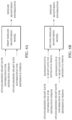
- FIGS. 8A and 8B show generating disease monitoring information using a disease monitoring model, in which FIG. 8A is a disease monitoring model (hereafter, referred to as a "first disease monitoring model") that receives heart rate information or standardized heart rate information and outputs disease monitoring information and FIG. 8B is a disease monitoring model (hereafter, referred to as a "second disease monitoring model") that receives one or more representative heart rates generated from heart rate information or standardized heart rate information and outputs disease monitoring information.
- first disease monitoring model a disease monitoring model
- second disease monitoring model a disease monitoring model that receives one or more representative heart rates generated from heart rate information or standardized heart rate information and outputs disease monitoring information.
- the "heart rate information or standardized heart rate information” is referred to as "(standardized) heart rate information”.
- the disease monitoring server can generate disease monitoring information by inputting (standardized) heart rate information into the first disease monitoring model.
- the (standardized) heart rate information that is input into the first disease monitoring model for example, may be a format including a heart rate value and a point in time, as shown in FIG. 5A , or a format including a heart rate value, as shown in FIG. 5B , but is not limited thereto.
- the (standardized) heart rate information that is input into the first disease monitoring model may be an ECG data format or a format including an ECG value and the point in time at which the ECG value was obtained, as described with reference to FIGS. 5A and 5B , but is not limited thereto.
- the disease monitoring server can generate disease monitoring information by inputting (standardized) heart rate information for an estimation period into the first disease monitoring model.
- the estimation period may be a target period for monitoring diseases of a user.
- the estimation period may be a period including a point in time at which it will be tried to expect whether there is a disease.
- the estimation period may be a period including a point in time at which it will be tried to expect factors related to diseases.
- the estimation period may be the length of a predetermined period.
- the estimation period may include a plurality of days.
- the estimation period may be 3 or more days.
- the (standardized) heart rate information for the estimation period may mean heart rate information for a partial period included in the target period for which it will be tried to monitor diseases of a user.
- the estimation period is a period including a plurality of days including a point in time at which it will be tried to expect whether there is a disease
- the (standardized) heart rate information for the estimation period may mean heart rate information for a partial period included in the plurality of days, but is not limited thereto.
- the (standardized) heart rate information for the estimation period may mean heart rate information for a partial period included in the plurality of days, but is not limited thereto.
- the first disease monitoring model may be a machine learning model, a deep learning model, or a combination thereof.
- the first disease monitoring model may be, for example, an RNN-series model such as an RNN model, an LSTM model, or a GRU model, but is not limited thereto.
- the first disease monitoring model can be trained through various methods such as supervised learning, unsupervised learning, semi-supervised learning, and reinforcement learning.
- the first disease monitoring model may be trained through supervised learning.
- the first disease monitoring model can be trained using training (standardized) heart rate information and reference disease monitoring information corresponding to the training (standardized) heart rate information.
- the first disease monitoring model can receive training (standardized) heart rate information, can output disease monitoring information, and can be trained on the basis of the difference between the output disease monitoring information and the reference disease monitoring information.
- the (standardized) heart rate information may correspond to the (standardized) heart rate information for the estimation period.
- the disease monitoring server can train the first disease monitoring model.
- the disease monitoring server can be provided with a trained first disease monitoring model from the outside.
- the disease monitoring server can generate disease monitoring information by inputting (standardized) heart rate information for an estimation period and (standardized) heart rate information for a reference period into the first disease monitoring model.
- the reference period may be a period for which the thyroid function is determined as being normal.
- the reference period may be a period including a point in time at which thyroid hormone values are determined as being normal.
- the reference period may be the period immediately before the day at which thyroid hormone values were measured through a blood test, a period including the measurement day, or a period immediately after the measurement day.
- the reference period may be the length of a predetermined period.
- the length of the reference period may be the same as the length of the estimation period.
- the method of calculating a representative heart rate for the reference period may be the same as the method of calculating a representative heart rate for the estimation period.
- the reference period may be, regardless of whether the thyroid function of a user is normal, a period immediately before a day at which thyroid hormone values of the user were measured through a blood test, a period including the measurement day, or a period immediately after the measurement day, that is, a period related to the day at which thyroid hormone values of the user were obtained, but is not limited thereto.
- the estimation period may be after the reference period.
- the reference period may be before the estimation period.
- the estimation period may not overlap the reference period.
- the estimation period may overlap the reference period.
- the first disease monitoring model may be trained similarly to the above description. However, the first disease monitoring model may be trained further using training (standardized) heart rate information corresponding to a reference period. For example, the first disease monitoring model can receive training (standardized) heart rate information and training (standardized) heart rate information corresponding to a reference period, can output disease monitoring information, and can be trained on the basis of the difference between the output disease monitoring information and the reference disease monitoring information.
- the disease monitoring server can generate disease monitoring information by inputting the ratio between (standardized) heart rate information for an estimation period and (standardized) heart rate information for a reference period (hereafter, "heart rate information ratio") into the first disease monitoring model.
- the first disease monitoring model may be trained similarly to the above description. However, in this case, the first disease monitoring model may be trained using a training heart rate information ratio instead of the training (standardized) heart rate information.
- the disease monitoring server can generate disease monitoring information by inputting the difference between (standardized) heart rate information for an estimation period and (standardized) heart rate information for a reference period (hereafter, "heart rate information difference") into the first disease monitoring model.
- the first disease monitoring model may be trained similarly to the above description. However, in this case, the first disease monitoring model may be trained using a training heart rate information difference instead of the training (standardized) heart rate information.
- the disease monitoring server can generate disease monitoring information using at least one of (standardized) heart rate information for an estimation period and (standardized) heart rate information for a reference period, and the first disease monitoring model.
- a disease monitoring server can generate one or more representative heart rates from (standardized) heart rate information and can generate disease monitoring information by inputting the one or more representative heart rates into a second disease monitoring model.
- the representative heart rate may be a representative value that is calculated on the basis of (standardized) heart rate information for a certain period.
- the representative heart rate may be an average value of (standardized) heart rate information in a section that satisfies a predetermined reference in a certain period.
- the representative heart rate may be a standard deviation value of (standardized) heart rate information in a section that satisfies a predetermined reference in a certain period.
- the representative heart rate may be a median of (standardized) heart rate information in a section that satisfies a predetermined reference in a certain period.
- an algorithm for calculating a representative heart rate may be stored in a disease monitoring server.
- a disease monitoring server can obtain a representative heart rate for an estimation period.
- the controller of a disease monitoring server can obtain a representative heart rate for an estimation period by calculating a representative heart rate on the basis of (standardized) heart rate information for the estimation period stored in the storage.
- the controller of a disease monitoring server can obtain a representative heart rate for an estimation period by receiving data about (standardized) heart rate information for the estimation period through the communication unit and calculating a representative heart rate on the basis of the (standardized) heart rate information for the estimation period.
- the controller of a disease monitoring server can obtain a representative heart rate for an estimation period by receiving a representative heart rate for the estimation period through the communication unit.
- FIG. 9 is a view showing obtaining a representative heart rate according to an embodiment.
- a disease monitoring server can extract at least one section that satisfies a predetermined reference in an estimation period P.
- the disease monitoring server can extract a section corresponding to a time stored in a "sleep time" in the estimation period P.
- the disease monitoring server can extract sections corresponding to the time from 12 a.m. to 6 a.m. in the estimation period P.
- the estimation period P is 3 days, up to 3 sections can be extracted.
- three sections discriminated as a first section SE1, a second section SE2, and a third section SE3 can be extracted as sections that satisfy a predetermined reference in the estimation period P of 3 days.
- the disease monitoring server can calculate a representative value of (standardized) heart rate information included in an extracted section.
- the disease monitoring server can determine a representative value of (standardized) heart rate information included in an extracted section as a representative heart rate.
- the disease monitoring server can determine a representative value of (standardized) heart rate information included in a section extracted from a specific period as a representative heart rate for the specific period.
- the disease monitoring server can determine the average value of (standardized) heart rate information corresponding to the first section SE1, the second section SE2, and the third section SE3 as a representative heart rate.
- the disease monitoring server can determine the standard deviation value of (standardized) heart rate information corresponding to the first section SE1, the second section SE2, and the third section SE3 as a representative heart rate.
- the disease monitoring server can determine, as a representative heart rate, the average value of the average value of (standardized) heart rate information HRD1 corresponding to the first section, the average value of (standardized) heart rate information HRD2 corresponding to the second section, and the average value of (standardized) heart rate information HRD3 corresponding to the third section.
- the disease monitoring server can determine, as a representative heart rate, the standard deviation value of the average value of (standardized) heart rate information HRD1 corresponding to the first section, the average value of (standardized) heart rate information HRD2 corresponding to the second section, and the average value of (standardized) heart rate information HRD3 corresponding to the third section.
- the disease monitoring server can determine, as a representative heart rate, the average value of the median of (standardized) heart rate information HRD1 corresponding to the first section, the median of (standardized) heart rate information HRD2 corresponding to the second section, and the median of (standardized) heart rate information HRD3 corresponding to the third section.
- the disease monitoring server can extract at least one section that satisfies a predetermined reference in the estimation period P.
- the disease monitoring server can extract a "section in which user's movement is little" in the estimation period P.
- the disease monitoring server can extract a section that is determined as a rest section of a user in the estimation period P.
- the rest section may be a section that is sorted as a sleep section by at least one sensor, a section in which user's movement is 0 by a motion sensor, etc., or a section that is sorted as a rest section in an existing product.
- a sleep section and/or a section in which user's movement is little may be referred to as a rest section in combination.
- heart rates pertaining to a sleep section and/or a section in which user's movement is little may be referred to as a rest section heart rate in combination.
- the disease monitoring server can generate disease monitoring information by inputting a representative heart rate for an estimation period into the second disease monitoring model.
- the second disease monitoring model can be trained through various methods such as supervised learning, unsupervised learning, semi-supervised learning, and reinforcement learning.
- the second disease monitoring model may be trained through supervised learning.
- the second disease monitoring model can be trained using a training heart rate and reference disease monitoring information corresponding to the training heart rate.
- the second disease monitoring model can receive a training heart rate, can output disease monitoring information, and can be trained on the basis of the difference between the output disease monitoring information and the reference disease monitoring information.
- the training heart rate may correspond to the representative heart rate for the estimation period.
- the disease monitoring server can train the second disease monitoring model.
- the disease monitoring server can be provided with a trained second disease monitoring model from the outside.
- the disease monitoring server can generate disease monitoring information by inputting a representative heart rate for an estimation period and a representative heart rate for a reference period into the second disease monitoring model.
- the disease monitoring server can obtain a representative heart rate for a reference period.
- the controller of the disease monitoring server can obtain a representative heart rate for a reference period by loading a representative heart rate for a pre-calculated reference period stored in the storage.
- the controller of the disease monitoring server can obtain a representative heart rate for a reference period by calculating a representative heart rate on the basis of heart rate information for a reference period or standardized heart rate information stored in the storage.
- the controller of the disease monitoring server can obtain a representative heart rate for a reference period by receiving data about heart rate information or standardized heart rate information for the reference period through the communication unit and calculating a representative heart rate on the basis of the heart rate information for the reference period or the standardized heart rate information.
- the controller of the disease monitoring server can obtain a representative heart rate for a reference period by receiving a representative heart rate for the estimation period through the communication unit.
- the second disease monitoring model may be trained similarly to the above description. However, the second disease monitoring model may be trained further using a training heart rate corresponding to a reference period. For example, the second disease monitoring model can receive a training heart rate and a training heart rate corresponding to a reference period, can output output disease monitoring information, and can be trained on the basis of the difference between the output disease monitoring information and the reference disease monitoring information.
- the disease monitoring server can generate disease monitoring information by inputting the ratio between a representative heart rate for an estimation period and a representative heart rate for a reference period (hereafter, "representative heart rate ratio) into the second disease monitoring model.
- the second disease monitoring model may be trained similarly to the above description. However, in this case, the second disease monitoring model may be trained using a training representative heart rate ratio instead of the training heart rate.
- the disease monitoring server can generate disease monitoring information by inputting the difference between a representative heart rate for an estimation period and a representative heart rate for a reference period (hereafter, "representative heart rate difference") into the second disease monitoring model.
- the second disease monitoring model may be trained similarly to the above description. However, in this case, the second disease monitoring model may be trained using a training representative heart rate difference instead of the training (standardized) heart rate information.
- the disease monitoring server can generate disease monitoring information using at least one of a representative heart rate for an estimation period and a representative heart rate for a reference period, and the second disease monitoring model.
- the disease monitoring server can output disease monitoring information.
- Outputting disease monitoring information by the disease monitoring server may mean transmitting disease monitoring information to an external device such as a user terminal.
- the external device receiving the disease monitoring information can display the disease monitoring information through a display thereof.
- Outputting disease monitoring information by the disease monitoring server may mean displaying the disease monitoring information through a display included in the disease monitoring server.
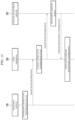
- FIGS. 10A and 10B are views showing generating standardized heart rate information using heart rate information having a missing value according to an embodiment.
- a disease monitoring server when heart rate information 1 has a missing value 2, a disease monitoring server according to an embodiment generates heart rate information 3 with a missing value estimated through a missing value estimation algorithm and inputs the heart rate information 3 with an estimated missing value into a heart rate information standardization model, thereby being able to generate standardized heart rate information 4.
- the disease monitoring server can estimate a missing value using a heart rate around the point in time at which a missing value exists in heart rate information.
- the disease monitoring server can determine a heart rate before the point in time at which a missing value exists as a heart rate at the point in time at which the missing value exists (e.g., when a heart rate at 3:01 is a missing value, the heart rate at 3:00 is determined as the heart rate at 3:01).
- the disease monitoring server can determine a heart rate after the point in time at which a missing value exists as a heart rage at the point in time at which the missing value exists (e.g., when a heart rate at 3:01 is a missing value, the heart rate at 3:02 is determined as the heart rate at 3:01).
- the disease monitoring server can determine the average value of heart rates before and after the point in time at which a missing value exists as a heart rate at the point in time at which the missing value exists (e.g., when a heart rate at 3:01 is a missing value, the average value of the heart rate at 3:00 and the heart rate at 3:02 is determined as the heart rate at 3:01).
- the missing value estimation algorithm is not limited to the way described above and various value estimation algorithms may be used.
- the missing value estimation algorithm may be implemented into an autoregressive model, an RNN-series model such as a deep learning model based on gated recurrent unit (GRU-D) or bidirectional recurrent imputation for time series (BRITS), a GAN-series model such as non-autoregressive multiresolution sequence imputation (NAOMI).
- GRU-D gated recurrent unit
- BRITS bidirectional recurrent imputation for time series
- NAOMI non-autoregressive multiresolution sequence imputation
- a disease monitoring server can generate standardized heart rate information using a heart rate information standardization model in which missing value processing and heart rate information standardization are integrated, without a specific missing value estimation step shown in FIG. 10A .
- the integrated model may be an RNN-series model such as a deep learning model based on gated recurrent unit (GRU-D) or bidirectional recurrent imputation for time series (BRITS), or a GAN-series model such as non-autoregressive multiresolution sequence imputation (NAOMI), but is not limited thereto.
- GRU-D gated recurrent unit
- BRITS bidirectional recurrent imputation for time series
- NAOMI non-autoregressive multiresolution sequence imputation
- input data that are input into the model may include maskings m1 to mn corresponding to whether a missing value exists, and intervals d1 to dn corresponding to the interval from a point in time before a missing value exists.
- a disease monitoring server may generate standardized heart rate information and generate disease monitoring information using the standardized heart rate information, regardless of type information.
- FIG. 11 is a flowchart showing a disease monitoring method according to another embodiment.
- step S1120 the disease monitoring server can generate standardized heart rate information using type information and heart rate information through a heart rate information standardization module.
- the matter in step S430 described above can be similarly applied to this step, so configuration repeated to the description of step S430 is briefly or not described hereafter.
- the heart rate information standardization module may be implemented using a heart rate information standardization model.
- the heart rate information measurement device may be a device known as measuring heart rate information more accurately than wearable devices or a device specialized to measure heart rate information.
- the heart rate information measurement device may be, for example, a heart rate monitor, but is not limited thereto.
- a heart rate information standardization model may be a machine learning model, a deep learning model, or a combination thereof.
- the heart rate information standardization model may be, for example, an RNN-series model such as an RNN model, an LSTM model, or a GRU model, but is not limited thereto.
- the heart rate information standardization model can be trained through various methods such as supervised learning, unsupervised learning, semi-supervised learning, and reinforcement learning.
- the heart rate information may be heart rate information obtained by a wearable device and reference heart rate information may be heart rate information obtained from a heart rate information measurement device other than the wearable device or heart rate information expected as being obtained from a heart rate information measurement device other than the wearable device.
- the heart rate information standardization module may be implemented using a plurality of type models.
- the heart rate information standardization module may be implemented using at least a first type model and a second type model.
- the disease monitoring server can generate standardized heart rate information using different type models in accordance with the types of wearable devices.
- the disease monitoring server can generate standardized heart rate information using heart rate information, type information, and a first type model when the type information of a wearable device corresponds to a first type.
- the disease monitoring server can generate standardized heart rate information by inputting heart rate information and type information into a first type model when the type information of a wearable device corresponds to a first type.
- the disease monitoring server can generate standardized heart rate information by inputting information generated from heart rate information and type information into the first type model when the type information of a wearable device corresponds to the first type.
- the disease monitoring server can generate standardized heart rate information using heart rate information, type information, and a second type model when the type information of a wearable device corresponds to a second type.
- the disease monitoring server can generate standardized heart rate information by inputting heart rate information and type information into the second type model when the type information of a wearable device corresponds to the second type.
- the disease monitoring server can generate standardized heart rate information by inputting information generated from heart rate information and type information into the second type model when the type information of a wearable device corresponds to the second type.
- a type model may be a machine learning model, a deep learning model, or a combination thereof.
- the first type model may be, for example, an RNN-series model such as an RNN model, an LSTM model, or a GRU model, but is not limited thereto.
- the type model can be trained through various methods such as supervised learning, unsupervised learning, semi-supervised learning, and reinforcement learning.
- reference heart rate information may be heart rate information obtained from a heart rate information measurement device other than a wearable device or heart rate information expected as being obtained from a heart rate information measurement device other than a wearable device.
- the disease monitoring server can generate disease monitoring information using standardized heart rate information through the disease monitoring module.
- the above description of generating disease monitoring information in steps S440 and S450 can be similarly applied to this step, so repeated description is omitted.
- step S1140 the disease monitoring server can output disease monitoring information.
- the matter of step S460 described above can be similarly applied to this step, so repeated description is omitted.
- a disease monitoring system may perform a disease monitoring method in ways different from examples to be described below.
- FIG. 12 is a flowchart showing a first example of performing a disease monitoring method in a disease monitoring system according to an embodiment.
- a data storage server can store heart rate information obtained by a wearable device and a disease monitoring server can receive stored heart rate information through a user terminal and perform a disease monitoring method.
- the disease monitoring system may include a wearable device, a user terminal, a data storage server, and a disease monitoring server.
- the wearable device can sense heart rate information of a user.
- the wearable device can generate heart rate information (S1210).
- the wearable device can transmit the heart rate information to the user terminal.
- the user terminal can transmit the heart rate information received from the wearable device to the data storage server.
- the data storage server can store the heart rate information (S1220).
- the user terminal can request heart rate information from the data storage server (S1230).
- the data storage server can identify whether the user terminal has been authorized to access heart rate information.
- the data storage server can transmit the stored heart rate information to the user terminal.
- the data storage server can transmit the stored heart rate information to a user terminal that has been authorized to access heart rate information.
- the user terminal can transmit the heart rate information to the disease monitoring server.
- the disease monitoring server can perform the disease monitoring method described above (S1240).
- the disease monitoring server can generate disease monitoring information.
- the disease monitoring server can transmit the generated disease monitoring information to the user terminal.
- the user terminal can display the received disease monitoring information on a display (1250).
- FIG. 13 is a flowchart showing a second example of performing a disease monitoring method in a disease monitoring system according to an embodiment.
- a user terminal can store heart rate information obtained by a wearable device and a disease monitoring server can receive stored heart rate information from the user terminal and perform a disease monitoring method.
- the disease monitoring system may include a wearable device, a user terminal, and a disease monitoring server.
- the wearable device can sense heart rate information of a user.
- the wearable device can generate heart rate information (S1310).
- the wearable device can transmit heart rate information to the user terminal.
- the user terminal can store the heart rate information (S1320).
- the user terminal can transmit the heart rate information to the disease monitoring server.
- the disease monitoring server can perform the disease monitoring method described above (S1330).
- the disease monitoring server can generate disease monitoring information.
- the disease monitoring server can transmit the generated disease monitoring information to the user terminal.
- the user terminal can display the received disease monitoring information on a display (1340).
- FIG. 14 is a flowchart showing a third example of performing a disease monitoring method in a disease monitoring system according to an embodiment.
- a data storage server can store heart rate information obtained by a wearable device and a disease monitoring server can receive stored heart rate information from the data storage server and perform a disease monitoring method.
- the disease monitoring system may include a wearable device, a user terminal, a data storage server, and a disease monitoring server.
- the wearable device can sense heart rate information of a user.
- the wearable device can generate heart rate information (S1410).
- the wearable device can transmit heart rate information to the user terminal.
- the user terminal can transmit the heart rate information received from the wearable device to the data storage server.
- the data storage server can store the heart rate information (S1420).
- the disease monitoring server can request heart rate information from the data storage server (S1430).
- the data storage server can identify whether the data storage server has been authorized to access heart rate information.
- the data storage server can transmit the stored heart rate information to the disease monitoring server.
- the data storage server can transmit the stored heart rate information to a disease monitoring server that has been authorized to access heart rate information.
- the disease monitoring server can perform the disease monitoring method described above (S1440).
- the disease monitoring server can generate disease monitoring information.
- the disease monitoring server can transmit the generated disease monitoring information to the user terminal.
- the user terminal can display the received disease monitoring information on a display (1450).
- FIG. 15 is a flowchart showing a fourth example of performing a disease monitoring method in a disease monitoring system according to an embodiment.
- a disease monitoring server can store heart rate information obtained by a wearable device and can perform a disease monitoring method using the heart rate information.
- the disease monitoring system may include a wearable device, a user terminal, and a disease monitoring server.
- the wearable device can sense heart rate information of a user.
- the wearable device can generate heart rate information (S1510).
- the wearable device can transmit heart rate information to the user terminal.
- the user terminal can transmit the heart rate information to the disease monitoring server.
- the disease monitoring server can store the heart rate information (S1520).
- the disease monitoring server can perform the disease monitoring method described above (S1530).
- the disease monitoring server can generate disease monitoring information.
- the disease monitoring server can transmit the generated disease monitoring information to the user terminal.
- the user terminal can display the received disease monitoring information on a display (1540).
- the disease monitoring method may further include a user registration step.
- FIG. 16 is a flowchart showing a user registration step according to an embodiment.
- a disease monitoring server can obtain first user information and first type information about a first user.
- the disease monitoring server can obtain the first user information and the first type information from a user terminal.
- the first type information may be received from a wearable device.
- the first type information may be generated by the user terminal.
- the disease monitoring server can receive the first user information and the first type information from the wearable device.
- step S1620 the disease monitoring server can obtain second user information and second type information about a second user.
- the matter of step S1610 described above can be similarly applied to this step, so repeated description is omitted.
- the disease monitoring server can store information about users including the first user and the second user.
- the disease monitoring server can store the information about users into a user information database as a database.
- monitoring diseases on the basis of heart rate information was described above, but the above description can be similarly applied to monitoring diseases on the basis of biological information other than heart rate information.
- Example 1 It can be applied to monitoring diseases such as thyroid dysfunction on the basis of skin conductance.
- the skin conductance can be measured through a skin conductance measurement sensor such as an Electrodermal Activity (EDA) sensor.
- EDA Electrodermal Activity
- the sensor may be a sensor mounted on a wearable device.
- Example 2 It can be applied to diagnose motility of bowels or monitoring diseases related to bowels on the basis of a bowel sound.
- the bowel sound can be measured through a bowel sound measurement sensor such as a sound sensor.
- the sensor may be a sensor mounted on a wearable device.
- Example 3 It can be applied to monitoring diseases such as apnea on the basis of a blood oxygen level.
- the blood oxygen level can be measured through a sensor such as a pulse oximeter.
- the sensor may be a sensor mounted on a wearable device.
- the motion sensor may include an acceleration sensor, a gyro sensor, a step counter sensor, etc.
- the blood pressure can be measured by a blood pressure sensor.
- the blood pressure sensor may be a sensor mounted on a wearable device.
- Example 8 It can be applied to monitoring diseases on the basis of a respiratory rate.
- the respiratory rate can be measured through a respiratory rate sensor.
- the respiratory rate sensor may be a sensor mounted on a wearable device.
- Example 9 It can be applied to monitoring diseases on the basis of skin moisture.
- the skin moisture can be measured through a skin moisture sensor.
- the skin moisture sensor may be a sensor mounted on a wearable device.
- Example 10 It can be applied to monitoring diseases on the basis of stress or the concentration of a stress hormone.
- the stress can be measured through a stress sensor.
- the concentration of a stress hormone can be measured through a stress hormone concentration sensor.
- the stress sensor or the stress hormone concentration sensor may be a sensor mounted on a wearable device.
- a method according to an embodiment may be performed by a processing logic including hardware, firmware, software, or a combination thereof.
- a method according to an embodiment may be performed by a processor that executes codes stored in a non-transitory computer-readable medium.
- the non-transitory computer-readable medium include magnetic media such as hard disks, floppy disks, and magnetic media such as a magnetic tape, optical media such as CD-ROMs and DVDs, magneto-optical media such as floptical disks, and hardware devices specifically configured to store and execute program commands and instructions, such as ROM, RAM, and flash memory.
- FIG. 17 is a graph showing the result of measuring heart rate information of a specific user through Apple Watch and Fitbit, that is, a graph showing the result of measuring heart rate information with a specific user wearing Apple Watch and Fitbit on the same wrist.
- the graph shows heart rate information measured from 5:35 a.m. to 8:46 p.m. on October 19, 2021, in which the x axis represents time and the y axis represents a heart rate.
- the Fitbit measures a heart rate in the unit of 1 minute but the Apple Watch non-periodically measures a heart rate with an interval over 1 minute, so a heart rate at a point in time around a missing value was added for the missing value in the heart rate information measured by the Apple Watch to make a heart rate in the unit of 1 minute.
- FIG. 18 is a graph showing standardizing heart rate information in accordance with the type information of a wearable device when Fitbit is a reference type. Since Fitbit is a reference type and the heart rate information measured by the Fitbit shown in FIG. 17 has been already standardized, so a heart rate standardization step was not performed. However, since Apple Watch is not a reference type, standardized heart rate information was measured from the heart rate information measured by the Apple Watch shown in FIG. 17 through a heart rate information standardization step. In FIG. 18 , "recon_Apple” means standardized heart rate information generated from heart rate information measured by Apple Watch.
- FIG. 19 is a graph showing standardized heart rate information in accordance with the type information of a wearable device when Apple Watch is a reference type. Since Apple Watch is a reference type and the heart rate information measured by the Apple Watch shown in FIG. 17 has been already standardized, so a heart rate standardization step was not performed. However, since Fitbit is not a reference type, standardized heart rate information was measured from the heart rate information measured by the Fitbit shown in FIG. 17 through a heart rate information standardization step. In FIG. 19 , "recon_Fitbit” means standardized heart rate information generated from heart rate information measured by Fitbit.
- FIG. 20 is a graph showing the standardized heart rate information of both FIG. 18 and FIG. 19 . Comparing FIG. 17 and FIG. 20 , it was found that similarity of standardized heart rate information increased before heart rate was standardized. In particular, it was found that similarity was high for a sleep time such as the midnight hours or a time for which user's activity is little rather than daytime for which user actively moves.
- the average value of the differences of the heart rate information obtained by the Apple Watch and the Fitbit shown in FIG. 17 is 7.452
- the standard deviation value is 11.559
- the distribution value is 133.619
- the number of differences in heart rate over 10 is 105.
- the average value of the differences of the heart rate information obtained by "recon_Apple” and the Fitbit shown in FIG. 18 is 6.637
- the standard deviation value is 7.935
- the distribution value is 62.959
- the number of differences in heart rate over 10 is 91.
- the average value of the differences of the heart rate information obtained by the Apple Watch shown in FIG. 19 and "recon_Fitbit” is 8.206
- the standard deviation value is 10.744
- the distribution value is 115.428
- the number of differences in heart rate over 10 is 95.
- the average value of the differences of "recon_Apple” and “recon_Fitbit” shown in FIG. 20 is 4.924, the standard deviation value is 7.073, the distribution value is 50.025, and the number of differences in heart rate over 10 is 65.
- FIGS. 17 to 20 it is possible to see that similarity of standardized heart rate information increased more than before heart rate was standardized, and particularly, the standard deviation value of the differences in standardized heart rate information decreased under 10, so the possibility that different types of heart rate information can be applied (learned or used) for the same disease monitoring model could increase.
- the difference of different types of heart rate information obtained from different types of devices is decreased, whereby it is possible to reduce difference in accuracy of a disease monitoring system that uses different types of devices.
- heart rate information obtained from different types of devices since it is possible to standardize heart rate information obtained from different types of devices, it is possible to use different types of heart rate information obtained from different types of devices as training data for one disease monitoring model, so it is possible to more easily obtain training data for a disease monitoring model and secure more training data.
- the accuracy of a model may decrease due to the differences of different types of heart rate information obtained from different types of devices when the different types of heart rate information are used as training data for one disease monitoring model, however, when the heart rate standardization model according to the above description of the present disclosure is used, the differences of different types of heart rate information obtained from different types of devices are decreased, so the accuracy of a model can be increased when the different types of heart rate information are used as training data for one disease monitoring model.
- the heart rate information standardization model according to the above description of the present disclosure when the heart rate information standardization model according to the above description of the present disclosure is not used, it is required to generate a disease monitoring model for each of different types of heart rate information obtained from different types of devices, respectively, due to the differences of the different types of heart rate information obtained from the different types of devices.
- the differences of different types of heart rate information obtained from different types of devices are decreased, so it is possible to use the different types of heart rate information as training data for one disease monitoring model, whereby the necessity of generating a plurality of disease monitoring models can be reduced.
- the disease monitoring model according to the above description of the present disclosure may need to be approved through clinical tests, depending on the countries that use the disease monitoring model of necessity thereof.
- a disease monitoring model using heart rate information obtained from a first-version wearable device by a specific manufacturer has been approved through a clinical test and then a second-version wearable device by the same manufacturer has been released
- the heart rate standardization model according to the above description of the present disclosure is not used, it is required to generate a new disease monitoring model by collecting again training data from the second-version wearable device and plan a clinical test for the new disease monitoring model.
- the heart rate standardization model according to the above description of the present disclosure is used, it is possible to generate standardized heart rate information related to heart rate information obtained from the first-version wearable device on the basis of heart rate information obtained from the second-version wearable device and use the generated standardized heart rate information, so it is possible to plan a clinical test without generating a new disease monitoring model.
- a method of distributing a disease monitoring model may be provided.
- a method of distributing a disease monitoring model may include: training a disease monitoring model using heart rate information obtained from a first type device; obtaining a first disease monitoring result through the trained disease monitoring model on the basis of first type heart rate information obtained from the first type device on the body of a first user; obtaining a first diagnosis result by at least one doctor for the first user; obtaining a first comparison result for the first disease monitoring result and the first diagnosis result by the at least one doctor; obtaining a result of approving a disease monitoring model for the first type device on the basis of the first comparison result; distributing a disease monitoring model that can be used for the first type device; generating standardized heart rate information on the basis of second type heart rate information from a second type device on the body of a second user-the second type device being a device released after a point in time at which the disease monitoring model is trained; obtaining a second disease monitoring result through the trained disease monitoring model on the basis of the generated standardized heart rate information; obtaining a second diagnosis result by at least one doctor for the
- training data used for training a trained disease monitoring model may not include second type heart rate information obtained from the second type device.
- a clinical test method for a disease monitoring model may be provided.
- a clinical test method for a disease monitoring model may include: preparing a disease monitoring system approved already through a clinical test; preparing a heart rate standardization model trained using training data obtained using another heart rate information obtaining device different from a heart rate information obtaining device used when training the disease monitoring system; inputting an output value of the heart rate standardization model into the disease monitoring system and preparing a clinical test target product; preparing clinical test data-the clinical test data including heart rate information obtained by the another heart rate information obtaining device and an evaluation value by a doctor for a heart rate obtaining target (that is, a patient); and calculating accuracy in estimating the evaluation value by the doctor by inputting the clinical test data into the clinical test target product.
Landscapes
- Health & Medical Sciences (AREA)
- Life Sciences & Earth Sciences (AREA)
- Engineering & Computer Science (AREA)
- Biomedical Technology (AREA)
- Public Health (AREA)
- Medical Informatics (AREA)
- General Health & Medical Sciences (AREA)
- Physics & Mathematics (AREA)
- Pathology (AREA)
- Animal Behavior & Ethology (AREA)
- Veterinary Medicine (AREA)
- Surgery (AREA)
- Molecular Biology (AREA)
- Biophysics (AREA)
- Heart & Thoracic Surgery (AREA)
- Cardiology (AREA)
- Physiology (AREA)
- Artificial Intelligence (AREA)
- Signal Processing (AREA)
- Psychiatry (AREA)
- Computer Vision & Pattern Recognition (AREA)
- Epidemiology (AREA)
- Primary Health Care (AREA)
- Data Mining & Analysis (AREA)
- Evolutionary Computation (AREA)
- Fuzzy Systems (AREA)
- Mathematical Physics (AREA)
- Databases & Information Systems (AREA)
- General Business, Economics & Management (AREA)
- Business, Economics & Management (AREA)
- Measuring Pulse, Heart Rate, Blood Pressure Or Blood Flow (AREA)
- Urology & Nephrology (AREA)
- Endocrinology (AREA)
- Gastroenterology & Hepatology (AREA)
- Computer Networks & Wireless Communication (AREA)
Applications Claiming Priority (3)
| Application Number | Priority Date | Filing Date | Title |
|---|---|---|---|
| KR20220034751 | 2022-03-21 | ||
| KR1020220071467A KR102462245B1 (ko) | 2022-03-21 | 2022-06-13 | 심박 정보를 기초로 사용자의 질환을 모니터링하는 방법 및 이를 수행하는 서버 |
| PCT/KR2023/003723 WO2023182774A1 (ko) | 2022-03-21 | 2023-03-21 | 심박 정보를 기초로 사용자의 질환을 모니터링하는 방법 및 이를 수행하는 서버 |
Publications (2)
| Publication Number | Publication Date |
|---|---|
| EP4497375A1 true EP4497375A1 (de) | 2025-01-29 |
| EP4497375A4 EP4497375A4 (de) | 2026-01-21 |
Family
ID=84040881
Family Applications (1)
| Application Number | Title | Priority Date | Filing Date |
|---|---|---|---|
| EP23775270.4A Pending EP4497375A4 (de) | 2022-03-21 | 2023-03-21 | Verfahren zur überwachung von benutzerkrankheiten auf basis von herzfrequenzinformationen und server zur durchführung davon |
Country Status (4)
| Country | Link |
|---|---|
| US (1) | US20250049336A1 (de) |
| EP (1) | EP4497375A4 (de) |
| KR (4) | KR102462245B1 (de) |
| WO (1) | WO2023182774A1 (de) |
Families Citing this family (4)
| Publication number | Priority date | Publication date | Assignee | Title |
|---|---|---|---|---|
| KR102462245B1 (ko) * | 2022-03-21 | 2022-11-03 | 주식회사 타이로스코프 | 심박 정보를 기초로 사용자의 질환을 모니터링하는 방법 및 이를 수행하는 서버 |
| CN121532117A (zh) * | 2023-07-19 | 2026-02-13 | 皇家飞利浦有限公司 | 用于检测来自生理信号的感染的个性化基线校正 |
| WO2025021579A1 (en) * | 2023-07-25 | 2025-01-30 | Koninklijke Philips N.V. | Personalized baseline correction for detection of infection from physiological signals |
| WO2025105715A1 (ko) * | 2023-11-17 | 2025-05-22 | 삼성전자 주식회사 | 전자 장치 및 전자 장치의 데이터 관리 방법 |
Family Cites Families (14)
| Publication number | Priority date | Publication date | Assignee | Title |
|---|---|---|---|---|
| AT10236U3 (de) * | 2008-07-10 | 2009-09-15 | Avl List Gmbh | Messanordnung und verfahren zur erfassung von messdaten |
| KR101196228B1 (ko) * | 2008-10-31 | 2012-11-05 | 메디게이트(주) | 재택 건강 관리 시스템 및 그 방법 |
| KR101307664B1 (ko) * | 2012-09-11 | 2013-09-12 | 박희재 | 이기종의 게임 체감형 운동장비와 다양한 게임 콘텐츠를 연동하여 관리해 주는 미들웨어를 구현한 클라이언트 디바이스 및 이의 제어 방법 |
| JP6344912B2 (ja) * | 2013-12-13 | 2018-06-20 | 国立大学法人京都大学 | てんかん性発作兆候検知装置、てんかん性発作兆候検知モデル生成装置、てんかん性発作兆候検知方法、てんかん性発作兆候検知モデル生成方法、てんかん性発作兆候検知プログラムおよびてんかん性発作兆候検知モデル生成プログラム |
| GB2552375A (en) * | 2016-07-22 | 2018-01-24 | Ixico Tech Limited | Systems and methods for validating sensor data |
| EP3687392B1 (de) * | 2017-10-17 | 2026-03-04 | Whoop, Inc. | Anwendung von datenqualitätsmetriken für physiologische messungen |
| KR102405150B1 (ko) * | 2018-06-18 | 2022-06-07 | 울산대학교 산학협력단 | 태아의 심박동을 모니터링하는 방법 및 그 장치 |
| JP7068583B2 (ja) * | 2018-09-20 | 2022-05-17 | 日本電信電話株式会社 | 学習装置、推定装置、学習方法、推定方法およびプログラム |
| KR102078703B1 (ko) * | 2019-07-23 | 2020-02-19 | 이재용 | 싱글리드 심전도 데이터를 이용하여 심장의 질병 유무를 판단하는 심전도 측정 시스템 및 그 방법 |
| KR20210058274A (ko) * | 2019-11-14 | 2021-05-24 | 권준명 | 머신러닝을 기반으로 생성된 심전도표준데이터를 이용하여 사용자의 신체상태를 판단하는 심전도 측정 시스템 및 그 방법 |
| US20210275110A1 (en) * | 2019-12-30 | 2021-09-09 | RubyElf, LLC | Systems For Synchronizing Different Devices To A Cardiac Cycle And For Generating Pulse Waveforms From Synchronized ECG and PPG Systems |
| KR102487583B1 (ko) * | 2020-03-26 | 2023-01-13 | 재단법인 아산사회복지재단 | 환자의 이상 반응 예측 시스템 |
| KR102321661B1 (ko) * | 2020-06-12 | 2021-11-05 | 고려대학교 산학협력단 | 심장 상태 감지 센서 장치 및 이를 이용한 심장 상태 모니터링 방법 |
| KR102462245B1 (ko) * | 2022-03-21 | 2022-11-03 | 주식회사 타이로스코프 | 심박 정보를 기초로 사용자의 질환을 모니터링하는 방법 및 이를 수행하는 서버 |
-
2022
- 2022-06-13 KR KR1020220071467A patent/KR102462245B1/ko active Active
- 2022-10-28 KR KR1020220140987A patent/KR102813348B1/ko active Active
-
2023
- 2023-03-21 EP EP23775270.4A patent/EP4497375A4/de active Pending
- 2023-03-21 WO PCT/KR2023/003723 patent/WO2023182774A1/ko not_active Ceased
- 2023-06-29 KR KR1020230084405A patent/KR102730302B1/ko active Active
- 2023-06-29 KR KR1020230084404A patent/KR102730301B1/ko active Active
-
2024
- 2024-09-20 US US18/891,656 patent/US20250049336A1/en active Pending
Also Published As
| Publication number | Publication date |
|---|---|
| KR20230137273A (ko) | 2023-10-04 |
| KR102813348B1 (ko) | 2025-05-27 |
| WO2023182774A1 (ko) | 2023-09-28 |
| KR20230137274A (ko) | 2023-10-04 |
| KR102730301B1 (ko) | 2024-11-14 |
| KR102462245B1 (ko) | 2022-11-03 |
| KR102730302B1 (ko) | 2024-11-14 |
| EP4497375A4 (de) | 2026-01-21 |
| US20250049336A1 (en) | 2025-02-13 |
| KR20230137223A (ko) | 2023-10-04 |
Similar Documents
| Publication | Publication Date | Title |
|---|---|---|
| EP4497375A1 (de) | Verfahren zur überwachung von benutzerkrankheiten auf basis von herzfrequenzinformationen und server zur durchführung davon | |
| US20230078248A1 (en) | Early diagnosis and treatment methods for pending septic shock | |
| CN111194468B (zh) | 利用移动装置持续监测用户健康 | |
| US12453482B2 (en) | Continuous monitoring of a user's health with a mobile device | |
| US20150272509A1 (en) | Diagnostic apparatus and method | |
| US20200281485A9 (en) | Machine learning health analysis with a mobile device | |
| JP7045405B2 (ja) | センサの動作ステータスを検出するための方法および状態機械システム | |
| CN108604465B (zh) | 基于患者生理反应的对急性呼吸道疾病综合征(ards)的预测 | |
| KR102494308B1 (ko) | 인공지능 기반의 이미지 분석 모델을 이용한 쇼크 발생 예측 방법, 장치 및 컴퓨터프로그램 | |
| EP4483808A1 (de) | Verfahren und vorrichtung zur analyse von elektrokardiogrammdaten | |
| Nishadi | Predicting heart diseases in logistic regression of machine learning algorithms by Python Jupyterlab | |
| US20240099593A1 (en) | Machine learning health analysis with a mobile device | |
| CN115553739A (zh) | 基于个人健康大数据的健康管理方法、装置及系统 | |
| US11813077B2 (en) | Arrhythmic heartbeat resilient sleep apnea detection | |
| CN115496105B (zh) | 睡眠预测模型训练方法、睡眠状况预测方法及相关装置 | |
| JP7420753B2 (ja) | 臨床アセスメントへのコンテキストデータの組み込み | |
| KR102891308B1 (ko) | 토큰화된 심전도 데이터를 이용한 환자 정보 예측 방법, 컴퓨팅 장치 및 컴퓨터 프로그램 | |
| KR102876800B1 (ko) | 인공지능을 이용한 심전도 판독 방법, 프로그램 및 장치 | |
| US11853874B2 (en) | Prediction and reporting of medical events | |
| Hafizhah et al. | Prediction Model of Mortality with Respiratory Rate, Oxygen Saturation and Heart Rate using Logistic Regression | |
| CN120227003A (zh) | 血压数据处理方法及设备、存储介质 | |
| KR20250171225A (ko) | 토큰화된 심전도 데이터를 이용한 환자 정보 예측 방법, 컴퓨팅 장치 및 컴퓨터 프로그램 | |
| CN119562790A (zh) | 利用心电图诊断心肌梗塞的方法、程序及装置 | |
| HK40023944A (en) | Method and state machine system for detecting an operation status for a sensor |
Legal Events
| Date | Code | Title | Description |
|---|---|---|---|
| STAA | Information on the status of an ep patent application or granted ep patent |
Free format text: STATUS: THE INTERNATIONAL PUBLICATION HAS BEEN MADE |
|
| PUAI | Public reference made under article 153(3) epc to a published international application that has entered the european phase |
Free format text: ORIGINAL CODE: 0009012 |
|
| STAA | Information on the status of an ep patent application or granted ep patent |
Free format text: STATUS: REQUEST FOR EXAMINATION WAS MADE |
|
| 17P | Request for examination filed |
Effective date: 20241017 |
|
| AK | Designated contracting states |
Kind code of ref document: A1 Designated state(s): AL AT BE BG CH CY CZ DE DK EE ES FI FR GB GR HR HU IE IS IT LI LT LU LV MC ME MK MT NL NO PL PT RO RS SE SI SK SM TR |
|
| DAV | Request for validation of the european patent (deleted) | ||
| DAX | Request for extension of the european patent (deleted) | ||
| A4 | Supplementary search report drawn up and despatched |
Effective date: 20251223 |
|
| RIC1 | Information provided on ipc code assigned before grant |
Ipc: A61B 5/00 20060101AFI20251217BHEP Ipc: A61B 5/024 20060101ALI20251217BHEP Ipc: G16H 50/20 20180101ALI20251217BHEP |