EP4496383A1 - Drahtloskommunikationsverfahren, netzwerkvorrichtung und endgerätevorrichtung - Google Patents
Drahtloskommunikationsverfahren, netzwerkvorrichtung und endgerätevorrichtung Download PDFInfo
- Publication number
- EP4496383A1 EP4496383A1 EP22934243.1A EP22934243A EP4496383A1 EP 4496383 A1 EP4496383 A1 EP 4496383A1 EP 22934243 A EP22934243 A EP 22934243A EP 4496383 A1 EP4496383 A1 EP 4496383A1
- Authority
- EP
- European Patent Office
- Prior art keywords
- terminal
- information
- connection
- network device
- relay
- Prior art date
- Legal status (The legal status is an assumption and is not a legal conclusion. Google has not performed a legal analysis and makes no representation as to the accuracy of the status listed.)
- Granted
Links
Images
Classifications
-
- H—ELECTRICITY
- H04—ELECTRIC COMMUNICATION TECHNIQUE
- H04W—WIRELESS COMMUNICATION NETWORKS
- H04W76/00—Connection management
- H04W76/10—Connection setup
- H04W76/14—Direct-mode setup
-
- H—ELECTRICITY
- H04—ELECTRIC COMMUNICATION TECHNIQUE
- H04W—WIRELESS COMMUNICATION NETWORKS
- H04W40/00—Communication routing or communication path finding
- H04W40/02—Communication route or path selection, e.g. power-based or shortest path routing
- H04W40/22—Communication route or path selection, e.g. power-based or shortest path routing using selective relaying for reaching a BTS [Base Transceiver Station] or an access point
-
- H—ELECTRICITY
- H04—ELECTRIC COMMUNICATION TECHNIQUE
- H04W—WIRELESS COMMUNICATION NETWORKS
- H04W76/00—Connection management
- H04W76/10—Connection setup
- H04W76/11—Allocation or use of connection identifiers
-
- H—ELECTRICITY
- H04—ELECTRIC COMMUNICATION TECHNIQUE
- H04W—WIRELESS COMMUNICATION NETWORKS
- H04W76/00—Connection management
- H04W76/10—Connection setup
- H04W76/19—Connection re-establishment
-
- H—ELECTRICITY
- H04—ELECTRIC COMMUNICATION TECHNIQUE
- H04W—WIRELESS COMMUNICATION NETWORKS
- H04W84/00—Network topologies
- H04W84/02—Hierarchically pre-organised networks, e.g. paging networks, cellular networks, WLAN [Wireless Local Area Network] or WLL [Wireless Local Loop]
- H04W84/10—Small scale networks; Flat hierarchical networks
- H04W84/12—WLAN [Wireless Local Area Networks]
-
- H—ELECTRICITY
- H04—ELECTRIC COMMUNICATION TECHNIQUE
- H04W—WIRELESS COMMUNICATION NETWORKS
- H04W88/00—Devices specially adapted for wireless communication networks, e.g. terminals, base stations or access point devices
- H04W88/02—Terminal devices
- H04W88/04—Terminal devices adapted for relaying to or from another terminal or user
Definitions
- Embodiments of the present application relate to the field of communications, and in particular, to a wireless communication method, a network device, and a terminal device.
- a remote terminal may be connected to a network via multiple paths.
- the remote terminal may be directly connected to the network and connected to the network via a relay terminal.
- connections between the remote terminal and the relay terminal are based on interfaces defined by the 3rd generation partnership project (3rd Generation Partnership Project, 3GPP) protocol, such as a PC5 interface.
- 3GPP 3rd Generation Partnership Project
- the remote UE and the relay UE may also be connected by using an interface defined by a non-3GPP protocol, such as a wired connection, a wireless local area network (Wireless LAN, WLAN) connection, a blue tooth (Blue Tooth, BT) connection, etc.
- the present application provides a wireless communication method, a network device and a terminal device, and a remote device may implement connection management such as establishment, release, modification, or resumption of a relay connection, by the network device.
- a wireless communication method which includes: acquiring, by a network device, target information, where the target information is information related to a connection between a first terminal and a second terminal; where the first terminal and the second terminal are connected via a first interface, and the first interface is not an interface defined by a 3rd generation partnership project (3GPP) protocol.
- 3GPP 3rd generation partnership project
- a wireless communication method is provided, and applied to a first terminal, where the first terminal and a second terminal are connected via a first interface, and the first interface is not an interface defined by a 3rd generation partnership project (3GPP) protocol, and the method includes: transmitting, by the first terminal, first information to a network device, where the first information is information related to a connection between the first terminal and the second terminal.
- 3GPP 3rd generation partnership project
- a wireless communication method is provided, and applied to a second terminal, where the second terminal and a first terminal are connected via a first interface, the first interface is not an interface defined by a 3rd generation partnership project (3GPP) protocol, and the method includes: transmitting, by the second terminal, second information to a network device, where the second information is information related to a connection between the first terminal and the second terminal.
- 3GPP 3rd generation partnership project
- a network device configured to perform the method in the above first aspect or any possible implementation of the above first aspect.
- the network device includes a unit configured to perform the method in the above first aspect or any possible implementation of the above first aspect.
- a terminal device configured to perform the method in the above second aspect or any possible implementation of the above second aspect.
- the terminal device includes a unit configured to perform the method in the above second aspect or any possible implementation of the above second aspect.
- a terminal device configured to perform the method in the above third aspect or any possible implementation of the above third aspect.
- the terminal device includes a unit configured to perform the method in the above third aspect or any possible implementation of the above third aspect.
- a network device in a seventh aspect, includes: a processor and a memory.
- the memory is configured to store a computer program
- the processor is configured to invoke and execute the computer program stored in the memory, to perform the method in the above first aspect or various implementations thereof.
- a terminal device in an eighth aspect, includes: a processor and a memory.
- the memory is configured to store a computer program
- the processor is configured to invoke and execute the computer program stored in the memory, to perform the method in the above second aspect or various implementations thereof.
- a terminal device in a ninth aspect, includes: a processor and a memory.
- the memory is configured to store a computer program
- the processor is configured to invoke and execute the computer program stored in the memory, to perform the method in the above third aspect or various implementations thereof.
- a chip is provided, and configured to implement the method in any one of the above first to third aspects or various implementations thereof.
- the chip includes: a processor configured to invoke and execute a computer program from a memory, to cause a device equipped with the chip to perform the method in any one of the above first to third aspects or various implementations thereof.
- a computer-readable storage medium configured to store a computer program, where the computer program causes a computer to perform the method in any one of the above first to third aspects or various implementations thereof.
- a computer program product includes computer program indications, where the computer program indications cause a computer to perform the method in any one of the above first to third aspects or various implementations thereof.
- a computer program when executed on a computer, causes the computer to perform the method in any one of the above first to third aspects or various implementations thereof.
- the network device may acquire connection-related information between the remote UE and the relay UE, and further, the network device may manage the connection between the remote UE and the network device based on the connection-related information, such as establishing a relay connection between the remote UE and the network device, or modifying, releasing or releasing the relay connection between the remote UE and the network device.
- GSM Global System of Mobile communication
- CDMA Code Division Multiple Access
- WCDMA Wideband Code Division Multiple Access
- GPRS General Packet Radio Service
- LTE Long Term Evolution
- LTE-A Advanced long term evolution
- NR New Radio
- NTN Non-Terrestrial communication Network
- UMTS Universal Mobile Telecommunication System
- WLAN Wireless Local Area Network
- WiFi Wireless Fidelity
- 5G fifth-generation communication
- the mobile communication system will not only support the traditional communication, but also support, for example, Device to Device (D2D) communication, Machine to Machine (M2M) communication, Machine Type Communication (MTC), Vehicle to Vehicle (V2V) communication, or Vehicle to everything (V2X) communication, etc, and the embodiments of the present application may also be applied to these communication systems.
- D2D Device to Device
- M2M Machine to Machine
- MTC Machine Type Communication
- V2V Vehicle to Vehicle
- V2X Vehicle to everything
- the communication system in the embodiments of the present application may be applied to a carrier aggregation (CA) scenario, may also be applied to a dual connectivity (DC) scenario, and may also be applied to a standalone (SA) network deployment scenario.
- CA carrier aggregation
- DC dual connectivity
- SA standalone
- the communication system in the embodiments of the present application may be applied to an unlicensed spectrum, where the unlicensed spectrum may also be considered as a shared spectrum; or the communication system in the embodiments of the present application may also be applied to a licensed spectrum, where the licensed spectrum may also be considered as an unshared spectrum.
- the embodiments of the present application describe various embodiments in conjunction with a network device and a terminal device, where the terminal device may also be referred to as a user equipment (UE), an access terminal, a user unit, a user station, a mobile station, a mobile platform, a remote station, a remote terminal, a mobile device, a user terminal, a terminal, a wireless communication device, a user agent or a user apparatus, etc.
- UE user equipment
- the terminal device may be a station (STATION, STA) in the WLAN, may be a cellular phone, a cordless phone, a Session Initiation Protocol (SIP) phone, a Wireless Local Loop (WLL) station, or a personal digital assistant (PDA) device, a handheld device with a wireless communication function, a computing device or other processing devices connected to a wireless modem, a vehicle-mounted device, a wearable device, a terminal device in a next generation communication system such as in an NR network, or a terminal device in a Public Land Mobile Network (PLMN) network evolved in the future, etc.
- STATION station
- STA Session Initiation Protocol
- WLL Wireless Local Loop
- PDA personal digital assistant
- the terminal device may be deployed on land, which includes indoor or outdoor, in handheld, worn or vehicle-mounted; may also be deployed on water (e.g., on a ship, etc.); may also be deployed in the air (e.g., on an airplane, a balloon, a satellite, etc.).
- the terminal device may be a mobile phone, a pad, a computer with a wireless transceiver function, a Virtual Reality (VR) terminal device, an Augmented Reality (AR) terminal device, a wireless terminal device in industrial control, a wireless terminal device in self-driving, a wireless terminal device in remote medical, a wireless terminal device in smart grid, a wireless terminal device in transportation safety, a wireless terminal device in smart city, a wireless terminal device in smart home, etc.
- VR Virtual Reality
- AR Augmented Reality
- the terminal device may also be a wearable device.
- the wearable device which is also referred to as a wearable smart device, is a generic term for a device that can be worn, into which the daily wear is intelligently designed and developed by applying wearable technologies, such as glasses, gloves, watches, clothing, and shoes, etc.
- the wearable device is a portable device that is worn directly on the body, or integrated into the user's clothing or accessories.
- the wearable device is not just a hardware device, but also achieves powerful functions through software supporting, data interaction, and cloud interaction.
- a generalized wearable smart device includes for example, a smartwatch or smart glasses, etc., with full functions, large size, and entire or partial functions without relying on a smartphone, as well as, for example, a smart bracelet and smart jewelry for physical sign monitoring, which only focuses on a certain type of application function and needs to be used in conjunction with other devices such as a smartphone.
- the network device may be a device used for communicating with a mobile device.
- the network device may be an Access Point (AP) in the WLAN, a base station (Base Transceiver Station, BTS) in the GSM or CDMA, may also be a base station (NodeB, NB) in the WCDMA, or may also be an evolutionary base station (Evolutionary Node B, eNB or eNodeB) in the LTE, or a relay station or an access point, or a vehicle-mounted device, a wearable device, and a network device or a base station (gNB) in an NR network, or a network device in the PLMN network evolved in the future or a network device in the NTN network, etc.
- AP Access Point
- BTS Base Transceiver Station
- NodeB NodeB
- NB evolved base station
- gNB network device or a base station
- the network device may have a mobile characteristic, for example, the network device may be a mobile device.
- the network device may be a satellite or a balloon station.
- the satellite may be a low earth orbit (LEO) satellite, a medium earth orbit (MEO) satellite, a geostationary earth orbit (GEO) satellite, a high elliptical orbit (HEO) satellite, etc.
- the network device may also be a base station provided on land, water, and other places.
- the network device may provide a service for a cell, and the terminal device communicates with the network device through a transmission resource (such as a frequency domain resource, or a frequency spectrum resource) used by the cell.
- the cell may be a cell corresponding to the network device (such as the base station), the cell may belong to a macro base station or may also belong to a base station corresponding to a small cell, and the small cell here may include: a metro cell, a micro cell, a pico cell, a femto cell, etc., these small cells have characteristics of small coverage range and low transmission power, which are applicable for providing a data transmission service with high speed.
- the communication system 100 may include a network device 110, and the network device 110 may be a device that communicates with a terminal device 120 (also referred to as a communication terminal or a terminal).
- the network device 110 may provide communication coverage for a specific geographical area and may communicate with a terminal device located within the coverage area.
- FIG. 1 exemplarily shows one network device and two terminal devices, and optionally, the communication system 100 may include a plurality of network devices and may include another number of terminal devices within a coverage range of each network device, the embodiments of the present application are not limited thereto.
- the communication system 100 may also include other network entities such as a network controller and a mobility management entity, etc., which are not limited to the embodiments of the present application.
- network entities such as a network controller and a mobility management entity, etc., which are not limited to the embodiments of the present application.
- a device with a communication function in the network/system may be referred to as a communication device.
- the communication device may include the network device 110 and the terminal device 120 with the communication function, and the network device 110 and the terminal device 120 may be the specific devices described above, which will not be repeated herein; the communication device may also include other devices in the communication system 100, such as a network controller, a mobility management entity, and other network entities, which are not limited in the embodiments of the present application.
- the "indication" mentioned in the embodiments of the present application may be a direct indication, may also be an indirect indication, or may also represent having an association relationship.
- a indicates B which may mean that A directly indicates B, for example, B may be acquired by A; may also mean that A indirectly indicates B, for example, A indicates C, and B may be acquired by C; or may also mean that there is an association relationship between A and B.
- the term "correspondence” may mean that there is a direct correspondence or indirect correspondence between the two, it may also mean that there is an associated relationship between the two, or it may also mean a relationship of indicating and being indicated or a relationship of configuring and being configured, etc.
- predefined may be implemented by pre-saving corresponding codes, tables or other manners that may be used for indicating related information, in the device (for example, including the terminal device and the network device), and the present application does not limit its specific implementation.
- the predefined may refer to what is defined in a protocol.
- the "protocol” may refer to a standard protocol in the field of communication, which may include, for example, an LTE protocol, an NR protocol, and related protocols applied in the future communication system, and the present application is not limited thereto.
- a layer 2-based UE-to-Network relay UE is introduced, and the UE-to-Network relay UE may connect directly to the network.
- the remote terminal is connected to an access network (e.g., gNB) and a core network (CN) (e.g., 5GC) via the UE-to-Network relay UE.
- an access network e.g., gNB
- CN core network
- 5GC 5GC
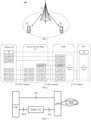
- FIG. 2 illustrates a schematic diagram of a transmission protocol stack of a 5G system, specifically involving a remote UE, a layer 2 UE-to-Network relay UE, a gNB, and a 5GC.
- the remote UE may include the following layers: internet protocol (IP), Uu-service data adaptation protocol (SDAP), Uu-packet data convergence protocol (PDCP), PC5-radio link control (RLC), PC5-media access control (MAC), PC5-physics (PHY).
- the UE-to-Network relay UE may include the following layers: adaptation (ADAPT), PC5-RLC, PC5-MAC, PC5-PHY, Uu-RLC, Uu-MAC, and Uu-PHY.
- ADAPT adaptation
- the gNB may include the following layers: Uu-SDAP, Uu-PDCP, ADAPT, Uu-RLC, Uu-MAC, Uu-PHY, and N3 protocol stack.
- the 5GC may include the following layers: IP, and N3 protocol stack.
- the adaptation layer (ADAPT) of the relay UE is set above a control plane and user plane RLC layer of the Uu interface between the relay UE and the gNB.
- the Uu-SDAP, Uu-PDCP and radio resource control (RRC) are terminated between the remote UE and the gNB, and the RLC, MAC and PHY are terminated in each link (including a link between the remote UE and the relay UE and a link between the relay UE and the gNB).
- the link between the relay UE and the network may be called a Uu link, a Uu path; a direct link between the remote UE and the network may also be called a Uu link, a Uu path; and the link between the remote UE and the relay UE may be called a PC5 link, a PC5 path.
- the adaptation layer of the relay UE supports uplink bearer mapping between access PC5 RLC channels, which is used to perform the transmission and reception of Uu channel on the Uu path between the relay UE and the network.
- different end-to-end bearers e.g., signaling radio bearers (SRBs)), data radio bearers (DRBs)
- SRBs signaling radio bearers
- DRBs data radio bearers
- the adaptation layer of the relay UE includes identification information of the remote terminal of an uplink service to be relayed and identification information of a radio bearer of the remote terminal, so that the gNB correlates the received data packets of a specific packet data convergence protocol (PDCP) entity associated with the radio bearer of the remote terminal.
- PDCP packet data convergence protocol
- the adaptation layer of the relay UE may be used to support downlink bearer mapping at the gNB, to map an end-to-end radio bearer (e.g., SRB, DRB) of the remote terminal to a Uu RLC channel via the Uu path between the relay UE and the network.
- the adaptation layer of the relay UE may be used to support downlink N: 1 bearer mapping and data multiplexing between multiple end-to-end radio bearers (e.g., SRBs, DRBs) of the remote UE and/or different remote UEs and a Uu RLC channel on the Uu path between the relay UE and the network.
- the adaptation layer of the relay UE includes identification information of the remote terminal of the downlink service to be relayed.
- the identification information of the radio bearer of the remote terminal and the identification information of the remote terminal need to be placed in the adaptation layer of the relay UE by the gNB, so that the relay UE maps the data packet received from the radio bearer of the remote terminal to the PC5 RLC channel associated with the radio bearer.
- the remote UE may be connected to the network via multiple paths, for example, the multiple paths include a direct path between the remote UE and the network, and a relay path that connects to the network via the relay UE.
- the remote UE may be connected to the network device via the relay UE and directly connected to the network device via the Uu interface.
- the remote UE and the relay UE are connected and communicated via the PC5 interface, and the relay UE and the network device are connected and communicated via the Uu interface.
- the relay UEs are connected and communicated via the PC5 interface, and the last-hop relay UE and the network device are connected and communicated via the Uu interface.
- connection between the remote UE and the relay UE is based on an interface defined by the 3rd generation partnership project (3GPP) protocol, such as the PC5 interface.
- 3GPP 3rd generation partnership project
- the remote UE and the relay UE may also be connected by using an interface defined by a non-3GPP protocol, such as a wired connection, a wireless local area network (Wireless LAN, WLAN) connection, a blue tooth (Blue Tooth, BT) connection, etc.
- a non-3GPP protocol such as a wired connection, a wireless local area network (Wireless LAN, WLAN) connection, a blue tooth (Blue Tooth, BT) connection, etc.
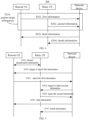
- FIG. 4 is a schematic interaction diagram of a wireless communication method 200, according to the embodiments of the present application.
- the method 200 includes: S210, acquiring, by a network device, target information, where the target information is information related to a connection between a first terminal and a second terminal.
- the first terminal and the second terminal are connected via a first interface, and the first interface is not an interface defined by the 3GPP protocol.
- the first interface may include at least one of: a wired interface, a WLAN interface, a WIFI interface, or a BT interface.
- the information related to the connection between the first terminal and the second terminal may include at least one of: quality related information of the connection, status information of the connection (such as whether an RLF occurs), type related information of the connection, information of devices corresponding to the connection, or identity information of devices corresponding to the connection.
- the target information is used to establish, modify, release or resume a relay connection between the first terminal and the network device.
- the relay connection may also be expressed as a relay link, a relay path, a non-direct connection, a non-direct link, a relay path, etc.
- the relay connection may include a connection between the first terminal and the second terminal, and a connection between the second terminal and the network device.
- connection between the second terminal and the network device may be the Uu connection.
- the second terminal and the network device may be connected via an interface defined by the 3GPP protocol.
- a direct connection defined by the 3GPP protocol has been established between the first terminal and the network device.
- a direct connection defined by the 3GPP protocol has been established between the second terminal and the network device.
- the direct connection may also be expressed as a direct link, a direct path, a Uu connection, a Uu link, or a Uu path.
- the target information includes but is not limited to at least one of the following information:
- the identification information of the first terminal may be a physical layer identification, or a layer 2 identification (L2-ID), or an MAC layer identification, or an MAC layer address of the first terminal, or other identification information that can uniquely identify the first terminal, which is not limited in the present application.
- L2-ID layer 2 identification
- MAC layer identification MAC layer address of the first terminal
- the identification information of the first terminal includes at least one of: a layer 2 identification (L2-ID) of the first terminal, media access control layer identification information (MAC-ID) of the first terminal, an MAC layer address of the first terminal, a radio network temporary identity (RNTI) of the first terminal, or a 5G shorted temporary mobile subscriber identity (5G-S-TSMI) of the first terminal.
- L2-ID layer 2 identification
- MAC-ID media access control layer identification information
- RNTI radio network temporary identity
- 5G-S-TSMI 5G shorted temporary mobile subscriber identity
- the identification information of the second terminal may be a physical layer identification, or an L2-ID, or an MAC layer identification, or an MAC layer address of the second terminal, or other identification information that can uniquely identify the second terminal, which is not limited in the present application.
- the identification information of the second terminal includes at least one of: a layer 2 identification (L2-ID) of the second terminal, an MAC-ID of the second terminal, an MAC layer address of the second terminal, an RNTI of the second terminal, or a 5G-S-TSMI of the second terminal.
- L2-ID layer 2 identification
- MAC-ID of the second terminal
- MAC layer address of the second terminal an RNTI of the second terminal
- 5G-S-TSMI 5G-S-TSMI of the second terminal.
- the RNTI may include at least one of: a cell radio network temporary identity (Cell RNTI, C-RNTI), or an inactive radio network temporary identity (Inactive RNTI, I-RNTI).
- Cell RNTI cell radio network temporary identity
- I-RNTI inactive radio network temporary identity
- the type information of the connection between the first terminal and the second terminal may be a connection type defined by the non-3GPP protocol, for example, a non-PC5 connection or a non-PC5 interface, which is not limited in the present application.
- the type information of the connection between the first terminal and the second terminal includes but not is limited to at least one of: a wired connection, a wireless local area network (WLAN) connection, a blue tooth (BT) connection, or a Zigbee connection.
- WLAN wireless local area network
- BT blue tooth
- the quality information of the connection between the first terminal and the second terminal includes but is not limited to, at least one of: reference signal receiving power (RSRP), reference signal receiving quality (RSRQ), signal to interference plus noise ratio (SINR), channel quality indicator (CQI), or received signal strength indication (RSSI).
- RSRP reference signal receiving power
- RSSQ reference signal receiving quality
- SINR signal to interference plus noise ratio
- CQI channel quality indicator
- RSSI received signal strength indication
- the quality of the connection between the first terminal and the second terminal may be measured by the first terminal, or may be measured by the second terminal.
- the identity type information of the first terminal includes at least one of: an anchor UE, a remote UE, or an assisted UE.
- the identity type information of the second terminal includes at least one of: assisting terminal, or a relay UE.
- the target information is acquired from the first terminal and/or the second terminal.
- the S210 includes:
- the first terminal transmits first information to the network device; and/or the second terminal transmits second information to the network device.
- the target information is determined according to the first information and/or the second information.
- the target information includes the first information and/or the second information.
- the first information includes but is not limited to at least one of:
- the second information includes at least one of:
- the first information is used to establish, modify, release or resume a relay connection between the first terminal and the network device.
- the second information is used to establish, modify, release or resume a relay connection between the first terminal and the network device.
- the method 200 further includes:
- the identification information of the second terminal in the first information may be acquired from the second terminal, and the identification information of the first terminal in the second information may be acquired from the first terminal.
- the identification information of the first terminal may be transmitted via the first interface.
- the first terminal transmits the identification information of the first terminal via at least one of a PC5-RRC signaling, a PC5-S signaling or an adaptation layer control PDU.
- the identification information of the second terminal may be transmitted via the first interface.
- the second terminal transmits the identification information of the first terminal via at least one of a PC5-RRC signaling, a PC5-S signaling or an adaptation layer control PDU.
- the identification information of the first terminal in the target information may be determined according to the identification information of the first terminal in the first information and/or the identification information of the first terminal in the second information.
- the identification information of the second terminal in the target information may be determined according to the identification information of the second terminal in the first information and/or the identification information of the second terminal in the second information.
- the type information of the connection between the first terminal and the second terminal in the target information may be determined according to the type information of the connection between the first terminal and the second terminal in the first information and/or the type information of the connection between the first terminal and the second terminal in the second information.
- the quality information of the connection between the first terminal and the second terminal in the target information may be determined according to the quality information of the connection between the first terminal and the second terminal in the first information and/or the quality information of the connection between the first terminal and the second terminal in the second information.
- the identity type information of the first terminal in the target information may be determined according to the identity type information of the first terminal in the first information.
- the identity type information of the second terminal in the target information may be determined according to the identity type information of the second terminal in the second information.
- the target indication information in the target information may be determined according to the first indication information in the first information and/or the second indication information in the second information.
- the first information is transmitted by the first terminal itself.
- the first information is transmitted by the first terminal based on an instruction (or trigger) of the network device.
- the first information is transmitted in a case where a radio link failure (RLF) occurs in a relay connection between the first terminal and the second terminal.
- RLF radio link failure
- the first terminal may decide to transmit the first information by itself, or may transmit the first information based on the indication (or trigger) of the network device, or may transmit the first information in a specific case, for example, transmit the first information in a case where the RLF occurs in the relay connection.
- the first terminal may transmit the first information to establish a relay connection between the first terminal and the second terminal, in a case where a service transmission needs to be performed via the relay connection.
- the first terminal may transmit the first information to modify, release or resume the relay connection between the first terminal and the second terminal.
- the occurrence of the RLF in the relay connection between the first terminal and the network device may be determined by at least one of a PDCP layer, a PC5-RRC layer, or a PC5-S layer of the first terminal, or may also be determined by a non-3GPP bottom layer (e.g., a physical layer) of the first terminal, and further reported by the non-3GPP bottom layer of the first terminal to a higher layer (e.g., the PDCP layer, the PC5-RRC layer, or the PC5-S layer) of the first terminal.
- a non-3GPP bottom layer e.g., a physical layer
- a higher layer e.g., the PDCP layer, the PC5-RRC layer, or the PC5-S layer
- the first information may be carried by any uplink information or uplink message, which is not limited in this application.
- the first information is carried by at least one of the following signaling: terminal assistance information (UEAssistanceInformation), sidelink terminal information (SidelinkUEinformation), a terminal information response (UEInformationResponse), a measurement report message, or failure information (failureInformation).
- terminal assistance information (UEAssistanceInformation)
- SidelinkUEinformation Sidelink terminal information
- UEInformationResponse terminal information response
- measurement report message a measurement report message
- failureInformation failure information
- the measurement report message may be a message in a measurement report process.
- the first terminal may report the first information by using UEAssistanceInformation, SidelinkUEinformation or UEInformationResponse, or may also report the first information in the measurement report process.
- the first terminal may report the first information by using UEAssistanceInformation, SidelinkUEinformation, UEInformationResponse or failureInformation, or may report the first information in the measurement report process.
- the network device may indicate the first terminal to transmit the first information via any downlink information or downlink signaling, which is not limited in the present application.
- the network device indicates the first terminal to transmit the first information via a terminal information request (UEInformationRequest) and/or a measurement configuration message.
- the measurement configuration message may be a message in a measurement configuration process.
- the first terminal uses a UEInformationResponse to report the first information.
- the first terminal may report the first information in the measurement report process.
- the second information is transmitted by the second terminal itself.
- the second information is transmitted by the second terminal based on an indication (or trigger) of the network device.
- the second information is transmitted in a case where an RLF occurs in the connection between the first terminal and the second terminal.
- the second terminal may decide to transmit the second information by itself, or may transmit the second information based on the indication (or trigger) of the network device, or may transmit the second information in a specific case, for example, transmit the second information in a case where the RLF occurs in the relay connection.
- the occurrence of the RLF in the connection between the first terminal and the second terminal may be determined by at least one of a PDCP layer, a PC5-RRC layer or a PC5-S layer of the second terminal, or may be determined by a non-3GPP bottom layer (e.g., a physical layer) of the second terminal, and further reported by the non-3GPP bottom layer of the second terminal to a higher layer (e.g., the PDCP layer, the PC5-RRC layer or the PC5-S layer) of the second terminal.
- a non-3GPP bottom layer e.g., a physical layer
- the second information may be carried by any uplink information or uplink message, which is not limited in this application.
- the second information is carried by at least one of the following signaling: terminal assistance information (UEAssistanceInformation), sidelink terminal information (SidelinkUEinformation), a terminal information response (UEInformationResponse), a measurement report message, or failure information (failureInformation).
- terminal assistance information (UEAssistanceInformation)
- SidelinkUEinformation Sidelink terminal information
- UEInformationResponse terminal information response
- measurement report message a measurement report message
- failure information failure information
- the measurement report message may be a message in a measurement report process.
- the network device may indicate the second terminal to transmit the second information via any downlink information or downlink signaling, which is not limited in the present application.
- the network device indicates the second terminal to transmit the second information, via a terminal information request (UEInformationRequest) and/or a measurement configuration message.
- the measurement configuration message may be a message in a measurement configuration process.
- the second terminal uses a UEInformationResponse to report the first information.
- the second terminal may report the second information in the measurement report process.
- the network device may establish, modify, release or resume the relay connection between the first terminal and the network device according to the first information and/or the second information.
- the network device may distribute connection configuration information based on the first information and/or the second information, and the connection configuration information is used to establish, modify, release or resume the relay connection between the first terminal and the network device.
- the method 200 further includes: S203, transmitting, by the network device, third information to the first terminal, where the third information is used to establish, modify, release or resume a relay connection between the first terminal and the network device.
- the first terminal receives the third information.
- the third information includes at least one of:
- the first configuration information may be used to indicate information such as a bearer or a service associated with the relay connection, so that the first terminal may transmit the service by the corresponding bearer according to the first configuration information.
- the first configuration information is used to configure a target bearer, where a transmission corresponding to the target bearer is performed via the relay connection, or, a service corresponding to the target bearer may be transmitted via the second terminal.
- the third information may also indicate a modified connection configuration, so that the first terminal may modify the relay connection based on the modified connection configuration, and further may perform a data transmission based on the modified relay connection.
- the third information may further indicate a connection configuration to be released, so that the first terminal may release the relay connection according to the connection configuration to be released.
- the third information is determined according to the target information, or the third information is determined according to the first information and/or the second information.
- the method 200 further includes: S204, transmitting, by the network device, fourth information to the second terminal, where the fourth information is used to establish, modify, release or resume a relay connection between the first terminal and the network device.
- the second terminal receives the third information.
- the fourth information includes at least one of:
- the second configuration information may be used to indicate information such as a Uu RLC channel or service associated with the relay connection, so that the second terminal may transmit the service by the corresponding Uu RLC channel according to the second configuration information.
- the second configuration information is used to configure a target Uu RLC channel, where a transmission corresponding to the target Uu RLC channel is performed via the relay connection, or, a service corresponding to the target Uu RLC channel may be transmitted via the second terminal.
- the fourth information is determined according to the target information, or the fourth information is determined according to the first information and/or the second information.
- the wireless communication method of the embodiments of the present application is described from the perspective of devices' interaction, with the first terminal being a relay UE and the second terminal being a relay UE, in combination with Embodiment 1 and Embodiment 2 below.
- Embodiment 1 establishing a relay connection between the first terminal and the network device
- identification information is interacted between the remote UE and the relay UE.
- the remote UE may acquire the identification information of the relay UE, or the identification information related to the identity of the relay UE.
- the relay UE may acquire the identification information of the remote UE, or the identification information related to the identity of the remote UE.
- the remote UE and the relay UE may perform the transmission via a PC5-RRC, a PC5-S signaling of the first interface, or an adaptation layer control PDU.
- the network device indicates (or triggers) the remote UE to report the first information.
- the remote UE reports the first information to the network device.
- the first information may include at least one of:
- the first information is carried by at least one of the following signaling: terminal assistance information (UEAssistanceInformation), sidelink terminal information (SidelinkUEinformation), a terminal information response (UEInformationResponse), or a measurement report message.
- terminal assistance information (UEAssistanceInformation)
- SidelinkUEinformation Sidelink terminal information
- UEInformationResponse terminal information response
- measurement report message a measurement report message
- the measurement report message may be a message in the measurement report process.
- the first information may include the identification information of the relay UE, or may also include the identification information of the remote UE and the identification information of the relay UE.
- the identification information of the remote UE may be a layer 2 ID, MAC-ID, MAC layer address, C-RNTI, 5G-S-TMSI, I-RNTI, and the like of the remote UE.
- the identification information of the relay UE may be layer 2 ID, MAC-ID, MAC layer address, C-RNTI, 5G-S-TMSI, I-RNTI, and the like of the relay UE.
- the first information may include connection type information for the first interface, such as a wired connection, a WLAN connection, a BT connection, etc.
- the first information may include connection quality information for the first interface, such as RSRP, RSRQ, RSSI, etc.
- the first information may include identity type information of the remote UE, for example, as an anchor UE or a remote UE, etc.
- the network device indicates (or triggers) the relay UE to report the second information.
- the relay UE reports the second information to the network device.
- the second information may include at least one of:
- the second information is carried by at least one of the following signaling: terminal assistance information (UEAssistanceInformation), sidelink terminal information (SidelinkUEinformation), a terminal information response (UEInformationResponse), or a measurement report message.
- terminal assistance information (UEAssistanceInformation)
- SidelinkUEinformation Sidelink terminal information
- UEInformationResponse terminal information response
- measurement report message a measurement report message
- the measurement report message may be a message in the measurement report process.
- the second information may include the identification information of the remote UE, or may also include the identification information of the remote UE and the identification information of the relay UE.
- the identification information of the remote UE may be a layer 2 ID, MAC layer ID, MAC layer address, C-RNTI, 5G-S-TMSI, I-RNTI, and the like of the remote UE.
- the identification information of the relay UE may be layer 2 ID, MAC-ID, MAC layer address, C-RNTI, 5G-S-TMSI, I-RNTI, and the like of the relay UE.
- the second information may include connection type information for the first interface, such as a wired connection, a WLAN connection, a BT connection, etc.
- the second information may include connection quality information for the first interface, such as RSRP, RSRQ, RSSI, etc.
- the second information may include identity type information of the relay UE, for example, as an assisting UE or a relay UE, etc.
- the network device distributes connection configuration information to the remote UE and the relay UE.
- the network device configures the remote UE to transmit data and/or signaling via the relay UE according to the first information reported by the remote UE and the second information reported by the relay UE.
- the network device transmits third information to the remote UE.
- the third information includes at least one of:
- the third information may also include identification information of the remote UE.
- the first configuration information is used to configure bearers or services associated with the relay connection, that is, which bearers or services are transmitted via the relay connection.
- the network device transmits fourth information to the relay UE.
- the fourth information includes at least one of:
- the second configuration information is used to configure Uu RLC channels or services associated with the relay connection, etc., that is, signaling and/or data of the remote UE is carried through which Uu RLC channels.
- the fourth information may also include identification information of the relay UE.
- Embodiment 2 RLF report, and modification, release or resumption of the relay connection between the first terminal and the network device
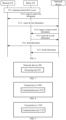
- the remote UE and/or the relay UE determines that the RLF occurs.
- the occurrence of the RLF in the connection between the first terminal and the second terminal may be determined by at least one of a PDCP layer, a PC5-RRC layer or a PC5-S layer of the first terminal, or may be determined by a non-3 GPP bottom layer (e.g., a physical layer) of the first terminal, and further reported by the non-3GPP bottom layer of the first terminal to a higher layer (e.g., the PDCP layer, PC5-RRC layer or PC5-S layer) of the first terminal.
- a non-3 GPP bottom layer e.g., a physical layer
- the occurrence of the RLF in the connection between the first terminal and the second terminal may be determined by at least one of a PDCP layer, a PC5-RRC layer or a PC5-S layer of the second terminal, or may be determined by a non-3GPP bottom layer (e.g., a physical layer) of the second terminal, and further reported by the non-3GPP bottom layer of the first terminal to a higher layer (e.g., the PDCP layer, PC5-RRC layer or PC5-S layer) of the second terminal.
- a non-3GPP bottom layer e.g., a physical layer
- the network device indicates (or triggers) the remote UE to report the first information.
- the remote UE reports the first information to the network device.
- the first information may include at least one of:
- the first information is carried by at least one of the following signaling: UEAssistanceInformation, SidelinkUEinformation, UEInformationResponse, a measurement report message, or failureinformation.
- the measurement report message may be a message in the measurement report process.
- the first information may include the identification information of the relay UE, or may also include the identification information of the remote UE and the identification information of the relay UE.
- the identification information of the remote UE may be a layer 2 ID, MAC-ID, MAC layer address, C-RNTI, 5G-S-TMSI, I-RNTI, and the like of the remote UE.
- the identification information of the relay UE may be a layer 2 ID, MAC-ID, MAC layer address, C-RNTI, 5G-S-TMSI, I-RNTI, and the like of the relay UE.
- the first information may include connection type information for the first interface, such as a wired connection, a WLAN connection, a BT connection, etc.
- the first information may include connection quality information for the first interface, such as RSRP, RSRQ, RSSI, etc.
- the first information may include first indication information, which is used to indicate that the RLF occurs in the connection between the remote UE and the relay UE.
- the first information may include identity type information of the remote UE, for example, as an anchor UE or a remote UE, etc.
- the network device indicates (or triggers) the relay UE to report the second information.
- the relay UE reports the second information to the network device.
- the second information may include at least one of:
- the second information is carried by at least one of the following signaling: UEAssistanceInformation, SidelinkUEinformation, UEInformationResponse, measurement report message, or failureinformation.
- the measurement report message may be a message in the measurement report process.
- the second information may include the identification information of the remote UE, or may also include the identification information of the remote UE and the identification information of the relay UE.
- the identification information of the remote UE may be a layer 2 ID, MAC-ID, MAC layer address, C-RNTI, 5G-S-TMSI, I-RNTI, and the like of the remote UE.
- the identification information of the relay UE may be layer 2 ID, MAC-ID, MAC layer address, C-RNTI, 5G-S-TMSI, I-RNTI, and the like of the relay UE.
- the second information may include second indication information is used to indicate that an RLF occurs between the remote UE and the relay UE.
- the second information may include connection type information for the first interface, such as a wired connection, a WLAN connection, a BT connection, etc.
- the second information may include connection quality information for the first interface, such as RSRP, RSRQ, RSSI, etc.
- the second information may include identity type information of the relay UE, for example, as an assisting UE or a relay UE, etc.
- the network device modifies, releases or resumes the relay connection between the remote UE and the network device according to the first information reported by the remote UE and the second information reported by the relay UE.
- the network device transmits third information to the remote UE.
- the third information includes identification information of the relay UE, such as a layer 2 ID, MAC-ID, MAC layer address, C-RNTI, 5G-S-TMSI, or I-RNTI.
- the third information includes index information of the first information, for indicating the first information.
- the third information includes third indication information, which is used to indicate modification, release or resumption of the relay connection between the remote UE and the network device.
- the third indication information may indicate a modified connection configuration, or a connection configuration to be released, or a connection configuration to be resumed.
- the third information may also include identification information of the remote UE.
- the network device transmits fourth information to the relay UE.
- the fourth information includes identification information of the remote UE, such as a layer 2 ID, MAC-ID, MAC layer address, C-RNTI, 5G-S-TMSI, or I-RNTI.
- the fourth information includes index information of the second information, which is used to indicate the second information.
- the fourth information includes fourth indication information, which is used to indicate modification, release or resumption of the relay connection between the remote UE and the network device.
- the fourth indication information may indicate a modified connection configuration, or a connection configuration to be released, or a connection configuration to be resumed.
- the remote UE and/or the relay UE may report connection-related information between the remote UE and the relay UE to the network device.
- the network device may manage the connection between the remote UE and the network device, for example, establish a relay connection between the remote UE and the network device, or, modify, release or release the relay connection between the remote UE and the network device, according to the connection-related information.
- FIG. 4 to FIG. 6 and apparatus embodiments of the present application will be described in detail below in conjunction with FIG. 7 to FIG. 9 . It can be understood that the apparatus embodiments correspond to the method embodiments, and similar descriptions may refer to the method embodiments.
- FIG. 7 illustrates a schematic block diagram of a network device 400 according to the embodiments of the present application.
- the network device 400 includes: a processing unit 410, configured to acquire target information, which is information related to a connection between a first terminal and a second terminal; where the first terminal and the second terminal are connected via a first interface, and the first interface is not an interface defined by a 3rd generation partnership project (3GPP) protocol.
- 3GPP 3rd generation partnership project
- the target information includes at least one of the following information:
- the identification information of the first terminal includes at least one of: a layer 2 identification (L2-ID) of the first terminal, media access control layer identification information (MAC-ID) of the first terminal, an MAC layer address of the first terminal, a cell radio network temporary identity (C-RNTI) of the first terminal, an inactive radio network temporary identity (I-RNTI) of the first terminal, or a 5G shorted temporary mobile subscriber identity code (5G-S-TSMI) of the first terminal.
- L2-ID layer 2 identification
- MAC-ID media access control layer identification information
- C-RNTI cell radio network temporary identity
- I-RNTI inactive radio network temporary identity
- 5G-S-TSMI 5G shorted temporary mobile subscriber identity code
- the identification information of the second terminal includes at least one of: an L2-ID of the second terminal, an MAC-ID of the second terminal, an MAC layer address of the second terminal, a C-RNTI of the second terminal, an I-RNTI of the second terminal, or a 5G-S-TSMI of the second terminal.
- the type information of the connection between the first terminal and the second terminal includes at least one of: a wired connection, a wireless local area network (WLAN) connection, or a blue tooth (BT) connection.
- WLAN wireless local area network
- BT blue tooth
- the quality information of the connection between the first terminal and the second terminal includes at least one of: reference signal receiving power (RSRP), reference signal receiving quality (RSRQ), signal to interference plus noise ratio (SINR), channel quality indicator (CQI), or received signal strength indication (RSSI).
- RSRP reference signal receiving power
- RSSQ reference signal receiving quality
- SINR signal to interference plus noise ratio
- CQI channel quality indicator
- RSSI received signal strength indication
- the identity type information of the first terminal includes at least one of: an anchor terminal, or a remote terminal.
- the identity type information of the second terminal includes at least one of: an assisting terminal, or a relay terminal.
- the network device further includes:
- the processing unit 410 may control the communication unit to receive the first information and/or the second information.
- the target information is determined according to the first information and/or the second information.
- the first information includes at least one of:
- the second information includes at least one of:
- target indication information in the target information is determined according to first indication information in the first information and/or second indication information in the second information.
- the first information is transmitted by the first terminal itself, or
- the first information is carried by at least one of the following signaling: terminal assistance information (UEAssistanceInformation), sidelink terminal information (SidelinkUEinformation), a terminal information response (UEInformationResponse), a measurement report message, or failure information (failureInformation).
- terminal assistance information (UEAssistanceInformation)
- SidelinkUEinformation Sidelink terminal information
- UEInformationResponse terminal information response
- measurement report message a measurement report message
- failureInformation failure information
- the indication of the network device is carried by a terminal information request (UEInformationRequest) and/or a measurement configuration message.
- UEInformationRequest terminal information request
- measurement configuration message e.g., a measurement configuration message
- the occurrence of the RLF in the connection between the first terminal and the second terminal is determined by at least one of a packet data convergence protocol (PDCP) layer, a PC5-RRC layer or a PC5-S layer of the first terminal.
- PDCP packet data convergence protocol
- the second information is transmitted by the second terminal itself, or
- the second information is carried by at least one of the following signaling: terminal assistance information (UEAssistanceInformation), sidelink terminal information (SidelinkUEinformation), a terminal information response (UEInformationResponse), measurement report information, or failure information (failureInformation).
- terminal assistance information (UEAssistanceInformation)
- SidelinkUEinformation Sidelink terminal information
- UEInformationResponse terminal information response
- measurement report information e.g., measurement report information
- failureInformation failure information
- the indication of the network device is carried by a terminal information request (UEInformationRequest) and/or measurement configuration information.
- UEInformationRequest terminal information request
- measurement configuration information e.g., measurement configuration information
- the occurrence of the RLF in the connection between the first terminal and the second terminal is determined by at least one of a PDCP layer, a PC5-RRC layer or a PC5-S layer of the second terminal.
- the first information is used to establish, modify, release or resume a relay connection between the first terminal and the network device.
- the second information is used to establish, modify, release or resume a relay connection between the first terminal and the network device.
- the network device 400 further includes: a communication unit, configured to transmit third information to the first terminal, where the third information is used to establish, modify, release or resume a relay connection between the first terminal and the network device.
- the third information includes at least one of:
- the first configuration information is used to configure a target bearer, where the transmission corresponding to the target bearer is performed via the relay connection.
- the third information is determined according to the target information.
- the network device 400 further includes: a communication unit, configured to transmit fourth information to the second terminal, where the fourth information is used to establish, modify, release or resume a relay connection between the first terminal and the network device.
- the fourth information includes at least one of:
- the second configuration information is used to configure a target Uu radio link control (RLC) channel, where the transmission corresponding to the target Uu RLC channel is performed via the relay connection.
- RLC radio link control
- the fourth information is determined according to the target information.
- the communication unit mentioned above may be a communication interface or a transceiver, or an input/output interface of a communication chip or a system on chip.
- the processing unit mentioned above may be one or more processors.
- the network device 400 may correspond to the network device in the method embodiments of the present application, and the above-mentioned and other operations and/or functions of each unit in the network device 400 are respectively for implementing the corresponding processes of the network device in the method 200 shown in FIG. 4 to FIG. 6 , which will not be repeated here for the sake of brevity.
- FIG. 8 illustrates a schematic block diagram of a terminal device 1000 according to the embodiments of the present application.
- the terminal device 1000 includes: a communication unit 1010, configured to transmit first information to a network device, which is information related to a connection between the terminal device and a second terminal, where the terminal device and the second terminal are connected via a first interface, and the first interface is not an interface defined by a 3rd generation partnership project (3GPP) protocol.
- 3GPP 3rd generation partnership project
- the first information includes at least one of:
- the identification information of the terminal device includes at least one of: a layer 2 identification (L2-ID) of the terminal device, media access control layer identification information (MAC-ID) of the terminal device, an MAC layer address of the terminal device, a cell radio network temporary identity (C-RNTI) of the terminal device, an inactive radio network temporary identity (I-RNTI) of the terminal device, or a 5G shorted temporary mobile subscriber identity code (5G-S-TSMI) of the terminal device.
- L2-ID layer 2 identification
- MAC-ID media access control layer identification information
- C-RNTI cell radio network temporary identity
- I-RNTI inactive radio network temporary identity
- 5G-S-TSMI 5G shorted temporary mobile subscriber identity code
- the identification information of the second terminal includes at least one of: the identification information of the second terminal includes at least one of: an L2-ID of the second terminal, an MAC-ID of the second terminal, an MAC layer address of the second terminal, a C-RNTI of the second terminal, an I-RNTI of the second terminal, or a 5G-S-TSMI of the second terminal.
- the type information of the connection between the terminal device and the second terminal includes at least one of: a wired connection, a wireless local area network (WLAN) connection, or a blue tooth (BT) connection.
- WLAN wireless local area network
- BT blue tooth
- the quality information of the connection between the terminal device and the second terminal includes at least one of: reference signal receiving power (RSRP), reference signal receiving quality (RSRQ), signal to interference plus noise ratio (SINR), channel quality indicator (CQI), or received signal strength indication (RSSI).
- RSRP reference signal receiving power
- RSSQ reference signal receiving quality
- SINR signal to interference plus noise ratio
- CQI channel quality indicator
- RSSI received signal strength indication
- the identity type information of the terminal device includes at least one of: an anchor terminal, or a remote terminal.
- the first information is transmitted by the terminal device itself, or
- the first information is carried by at least one of the following signaling: terminal assistance information (UEAssistanceInformation), sidelink terminal information (SidelinkUEinformation), a terminal information response (UEInformationResponse), measurement report information, or failure information (failureInformation).
- terminal assistance information (UEAssistanceInformation)
- SidelinkUEinformation Sidelink terminal information
- UEInformationResponse terminal information response
- measurement report information e.g., measurement report information
- failureInformation failure information
- the indication of the network device is carried by a terminal information request (UEInformationRequest) and/or measurement configuration information.
- UEInformationRequest terminal information request
- measurement configuration information e.g., measurement configuration information
- the occurrence of the RLF in the connection between the terminal device and the second terminal is determined by at least one of a packet data convergence protocol (PDCP) layer, a PC5-RRC layer or a PC5-S layer of the terminal device.
- PDCP packet data convergence protocol
- the communication unit 1010 is further configured to: receive third information transmitted by the network device, where the third information is used to establish, modify, release or resume a relay connection between the terminal device and the network device.
- the third information includes at least one of:
- the first configuration information is used to configure a target bearer, where the transmission corresponding to the target bearer is performed via the relay connection.
- the communications unit 1010 is further configured to transmit identification information of the terminal device to the second terminal.
- the identification information of the terminal device is transmitted via at least one of a PC5-RRC signaling, a PC5-S signaling or an adaptation layer control protocol data unit (PDU).
- a PC5-RRC signaling e.g., a PC5-RRC signaling
- a PC5-S signaling e.g., a PC5-S signaling
- PDU adaptation layer control protocol data unit
- the communications unit 1010 is further configured to receive identification information of the second terminal transmitted by the second terminal.
- the identification information of the second terminal is transmitted via at least one of a PC5-RRC signaling, a PC5-S signaling or an adaptation layer control PDU.
- the first information is used to establish, modify, release or resume a relay connection between the terminal device and the network device.
- the communication unit mentioned above may be a communication interface or a transceiver, or an input/output interface of a communication chip or a system on chip.
- the processing unit mentioned above may be one or more processors.
- terminal device 1000 may correspond to the first terminal in the method embodiments of the present application, and the above-mentioned and other operations and/or functions of each unit in the terminal device 1000 are respectively for implementing the corresponding processes of the first terminal or the remote UE in the method 200 shown in FIG. 4 to FIG. 6 , which will not be repeated here for the sake of brevity.
- FIG. 9 illustrates a schematic block diagram of a terminal device 1100 according to the embodiments of the present application.
- the terminal device 1100 includes: a communication unit 1110, configured to transmit second information to a network device, which is information related to a connection between a first terminal and the terminal device, where the terminal device and the first terminal are connected via a first interface, and the first interface is not an interface defined by a 3rd generation partnership project (3GPP) protocol.
- 3GPP 3rd generation partnership project
- the second information includes at least one of:
- the identification information of the first terminal includes at least one of: a layer 2 identification (L2-ID) of the first terminal, media access control layer identification information (MAC-ID) of the first terminal, an MAC layer address of the first terminal, a cell radio network temporary identity (C-RNTI) of the first terminal, an inactive radio network temporary identity (I-RNTI) of the first terminal, or a 5G shorted temporary mobile subscriber identity code (5G-S-TSMI) of the first terminal.
- L2-ID layer 2 identification
- MAC-ID media access control layer identification information
- C-RNTI cell radio network temporary identity
- I-RNTI inactive radio network temporary identity
- 5G-S-TSMI 5G shorted temporary mobile subscriber identity code
- the identification information of the terminal device includes at least one of: an L2-ID of the terminal device, an MAC-ID of the terminal device, an MAC layer address of the terminal device, a C-RNTI of the terminal device, an I-RNTI of the terminal device, or a 5G-S-TSMI of the terminal device.
- the type information of the connection between the first terminal and the terminal device includes at least one of: a wired connection, a wireless local area network (WLAN) connection, or a blue tooth (BT) connection.
- WLAN wireless local area network
- BT blue tooth
- the quality information of the connection between the first terminal and the terminal device includes at least one of: reference signal receiving power (RSRP), reference signal receiving quality (RSRQ), signal to interference plus noise ratio (SINR), channel quality indicator (CQI), or received signal strength indication (RSSI).
- RSRP reference signal receiving power
- RSSQ reference signal receiving quality
- SINR signal to interference plus noise ratio
- CQI channel quality indicator
- RSSI received signal strength indication
- the second information is transmitted by the terminal device itself, or
- the second information is carried by at least one of the following signaling: terminal assistance information (UEAssistanceInformation), sidelink terminal information (SidelinkUEinformation), a terminal information response (UEInformationResponse), measurement report information, or failure information (failureInformation).
- terminal assistance information (UEAssistanceInformation)
- SidelinkUEinformation Sidelink terminal information
- UEInformationResponse terminal information response
- measurement report information e.g., measurement report information
- failureInformation failure information
- the indication of the network device is carried by a terminal information request (UEInformationRequest) and/or measurement configuration information.
- UEInformationRequest terminal information request
- measurement configuration information e.g., measurement configuration information
- the occurrence of the RLF in the connection between the first terminal and the terminal device is determined by at least one of a packet data convergence protocol (PDCP) layer, a PC5-RRC layer or a PC5-S layer of the terminal device.
- PDCP packet data convergence protocol
- the communication unit 1110 is further configured to: receive fourth information transmitted by the network device, where the fourth information is used to establish, modify, release or resume a relay connection between the first terminal and the network device.
- the fourth information includes at least one of:
- the second configuration information is used to configure a target Uu radio link control (RLC) channel, where the transmission corresponding to the target Uu RLC channel is performed via the relay connection.
- RLC radio link control
- the communication unit 1110 is further configured to: receive identification information of the first terminal transmitted by the first terminal.
- the identification information of the first terminal is transmitted via at least one of a PC5-RRC signaling, a PC5-S signaling or an adaptation layer control PDU.
- the communication unit 1110 is further configured to: transmit identification information of the terminal device to the first terminal.
- the identification information of the terminal device is transmitted via at least one of a PC5-RRC signaling, a PC5-S signaling or an adaptation layer control protocol data unit (PDU).
- a PC5-RRC signaling e.g., a PC5-RRC signaling
- a PC5-S signaling e.g., a PC5-S signaling
- PDU adaptation layer control protocol data unit
- the second information is used to establish, modify, release or resume a relay connection between the first terminal and the network device.
- the communication unit mentioned above may be a communication interface or a transceiver, or an input/output interface of a communication chip or a system on chip.
- the processing unit mentioned above may be one or more processors.
- terminal device 1100 may correspond to the second terminal in the method embodiments of the present application, and the above-mentioned and other operations and/or functions of each unit in the terminal device 1100 are respectively for implementing the corresponding processes of the second terminal or the relay UE in the method 200 shown in FIG. 4 to FIG. 6 , which will not be repeated here for the sake of brevity.
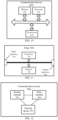
- FIG. 10 is a schematic structural diagram of a communication device 600 provided in the embodiments of the present application.
- the communication device 600 shown in FIG. 10 includes a processor 610, which may invoke and execute a computer program from a memory, to implement the method in the embodiments of the present application.
- the communication device 600 further includes a memory 620.
- the processor 610 may invoke and execute a computer program from the memory 620 to implement the method in the embodiments of the present application.
- the memory 620 may be a separate device independent from the processor 610, or may also be integrated into the processor 610.
- the communication device 600 may also include a transceiver 630, and the processor 610 may control the transceiver 630 to communicate with other devices, and specifically, to transmit information or data to other devices, or receive information or data transmitted by other devices.
- the transceiver 630 may include a transmitter and a receiver.
- the transceiver 630 may further include antennas, and the number of antennas may be one or more.
- the communication device 600 may specifically be the network device of the embodiments of the present application, and the communication device 600 may implement the corresponding procedure implemented by the network device in the various methods of the embodiments of the present application, which will not be repeated here for the sake of brevity.
- the communication device 600 may specifically be the first terminal or the second terminal of the embodiments of the present application, and the communication device 600 may implement the corresponding procedure implemented by the first terminal or the second terminal in the various methods of the embodiments of the present application, which will not be repeated here for the sake of brevity.
- FIG. 11 is a schematic structural diagram of a chip of the embodiments of the present application.
- the chip 700 shown in FIG. 11 includes a processor 710, the processor 710 may invoke and execute a computer program from a memory to implement the method in the embodiments of the present application.
- the chip 700 may further include a memory 720.
- the processor 710 may invoke and execute a computer program from the memory 720 to implement the method in the embodiments of the present application.
- the memory 720 may be a separate device independent from the processor 710, or may also be integrated into the processor 710.
- the chip 700 may further include an input interface 730.
- the processor 710 may control the input interface 730 to communicate with other devices or chips, and specifically, the input interface 730 may acquire information or data sent by other devices or chips.
- the chip 700 may further include an output interface 740.
- the processor 710 may control the output interface 740 to communicate with other devices or chips, and specifically, the output interface 740 may output information or data to other devices or chips.
- the chip may be applied to the network device in the embodiments of the present application, and the chip may implement the corresponding procedure implemented by the network device in the various methods of the embodiments of the present application, which will not be repeated here for the sake of brevity.
- the chip may be applied to the first terminal or the second terminal in the embodiments of the present application, and the chip may implement the corresponding procedure implemented by the first terminal or the second terminal in the various methods of the embodiments of the present application, which will not be repeated here for the sake of brevity.
- chip mentioned in the embodiments of the present application may also be called a system on chip, a system chip, a chip system or a system-on-chip chip, etc.
- FIG. 12 is a schematic block diagram of a communication system 900 provided in the embodiments of the present application.
- the communication system 900 includes a remote terminal 910, a relay terminal 920, and a network device 930.
- the remote terminal 910 may be used to implement the corresponding functions implemented by the first terminal or the remote UE in the above-mentioned methods
- the relay terminal 920 may be used to implement the corresponding functions implemented by the second terminal or the relay UE in the above-mentioned methods
- the network device 930 may be used to implement the corresponding functions implemented by the network device in the above-mentioned methods, which will not be repeated here for the sake of brevity.
- the processor in the embodiments of the present application may be an integrated circuit chip and have a processing capability of signals.
- various steps of the above method embodiments may be completed by an integrated logic circuit of hardware in the processor or an instruction in a software form.
- the above processor may be a general-purpose processor, a Digital Signal Processor (DSP), an Application Specific Integrated Circuit (ASIC), a Field Programmable Gate Array (FPGA) or other programmable logic devices, a discrete gate or transistor logic device, a discrete hardware component.
- DSP Digital Signal Processor
- ASIC Application Specific Integrated Circuit
- FPGA Field Programmable Gate Array
- a general-purpose processor may be a microprocessor, or the processor may also be any conventional processor, etc.
- the steps of the method disclosed in combination with the embodiments of the present application may be directly embodied as being performed and completed by a hardware decoding processor, or by using a combination of hardware and software modules in the decoding processor.
- the software module may be located in the mature storage medium in the art such as the random memory, the flash memory, the read-only memory, the programmable read-only memory or electrically erasable programmable memory, the register.
- the storage medium is located in the memory, and the processor reads the information in the memory and completes the steps of the above methods in combination with its hardware.
- the memory in the embodiments of the present application may be a volatile memory or a non-volatile memory, or may include both volatile and non-volatile memories.
- the non-volatile memory may be a Read-Only Memory (ROM), a programmable read-only memory (Programmable ROM, PROM), an erasable programmable read-only memory (Erasable PROM, EPROM), an electrically erasable programmable read-only memory (Electrically EPROM, EEPROM) or a flash memory.
- the volatile memory may be a Random Access Memory (RAM), which is used as an external cache.
- RAMs are available, for example, a static random access memory (Static RAM, SRAM), a dynamic random access memory (Dynamic RAM, DRAM), a synchronous dynamic random access memory (Synchronous DRAM, SDRAM), a double data rate synchronous dynamic random access memory (Double Data Rate SDRAM, DDR SDRAM), an enhanced synchronous dynamic random access memory (Enhanced SDRAM, ESDRAM), a synchronous link dynamic random access memory (Synchlink DRAM, SLDRAM) and a direct rambus random access memory (Direct Rambus RAM, DR RAM).
- Static RAM Static RAM
- DRAM dynamic random access memory
- DRAM synchronous dynamic random access memory
- SDRAM double data rate synchronous dynamic random access memory
- Enhanced SDRAM, ESDRAM enhanced synchronous dynamic random access memory
- Synchlink DRAM, SLDRAM synchronous link dynamic random access memory
- Direct Rambus RAM Direct Rambus RAM
- the memory in embodiments of the present application may also be a static Random Access Memory (static RAM, SRAM), a Dynamic Random Access Memory (dynamic RAM, DRAM), a synchronous DRAM (SDRAM), a double data rate SDRAM (DDR SDRAM), an enhanced SDRAM (ESDRAM), a synch link DRAM (SLDRAM), and a Direct Rambus RAM (DR RAM), etc. That is, the memory in the embodiments of the present application is intended to include, but not limited to, these and any other suitable types of memories.
- static RAM static Random Access Memory
- DRAM Dynamic Random Access Memory
- SDRAM synchronous DRAM
- DDR SDRAM double data rate SDRAM
- ESDRAM enhanced SDRAM
- SLDRAM synch link DRAM
- DR RAM Direct Rambus RAM
- the embodiments of the present application further provide a computer readable storage medium for storing a computer program.
- the computer readable storage medium may be applied to the network device in the embodiments of the present application, and the computer program causes a computer to perform the corresponding procedure implemented by the network device in the various methods of the embodiments of the present application, which will not be repeated here for the sake of brevity.
- the computer readable storage medium may be applied to the first terminal or the second terminal in the embodiments of the present application, and the computer program causes a computer to perform the corresponding procedure implemented by the first terminal or the second terminal in various methods of the embodiments of the present application, which will not be repeated here for the sake of brevity.
- the embodiments of the present application further provide a computer program product including a computer program instruction.
- the computer program product may be applied to the network device in the embodiments of the present application, and the computer program instruction causes a computer to perform the corresponding procedure implemented by the network device in the various methods of the embodiments of the present application, which will not be repeated here for the sake of brevity.
- the computer program product may be applied to the first terminal or the second terminal in the embodiments of the present application, and the computer program instruction causes a computer to perform the corresponding procedure implemented by the first terminal or the second terminal in various methods of the embodiments of the present application, which will not be repeated here for the sake of brevity.
- the embodiments of the present application further provide a computer program.
- the computer program may be applied to network device in the embodiments of the present application, the computer program when being executed on a computer, causes the computer to perform the corresponding procedure implemented by the network device in various methods of the embodiments of the present application, which will not be repeated here for the sake of brevity.
- the computer program may be applied to the first terminal or the second terminal in the embodiments of the present application, the computer program when being executed on a computer, causes the computer to perform the corresponding procedure implemented by the first terminal or the second terminal in various methods of the embodiments of the present application, which will not be repeated here for the sake of brevity.
- the disclosed systems, apparatus, and method may be implemented in other ways.
- the apparatus embodiments described above are only schematic, for example, division of the units is only division of logical functions, and there may be other division methods in an actual implementation, for example, a plurality of units or components may be combined or integrated into another system, or some features may be ignored or not performed.
- the coupling or direct coupling or communicative connection between each other as shown or discussed may be indirect coupling or communicative connection of apparatus or units via some interfaces, which may be electrical, mechanical, or in other forms.
- the units illustrated as separate components may be or may not be physically separated, and the components shown as units may be or may not be physical units, that is, they may be located in one place, or may be distributed onto a plurality of network units. A part or all of the units may be selected according to actual needs, to implement the purpose of the schemes of the embodiments.
- the various functional units in the various embodiments of the present application may be integrated into one processing unit, or the various units may exist physically separately, or two or more units may be integrated into one unit.
- the described functions are implemented in the form of a software functional unit and sold or used as an independent product, they may be stored in a computer readable storage medium.
- the technical solution of the present application essentially, or a part of the technical solution that contributes to the prior art, or a part of the technical solution, may be embodied in the form of a software product, and the computer software product is stored in a storage medium, and includes a plurality of instructions for enabling a computer device (which may be a personal computer, a server, or a network device, etc.) to perform all or some of steps of the methods described in the various embodiments of the present application.
- the storage medium mentioned above includes a USB flash drive (U disk), a mobile hard disk, a Read-Only Memory (ROM), a Random Access Memory (RAM), a diskette, or an optical disk, and various mediums that may store program codes.
Landscapes
- Engineering & Computer Science (AREA)
- Computer Networks & Wireless Communication (AREA)
- Signal Processing (AREA)
- Mobile Radio Communication Systems (AREA)
Applications Claiming Priority (1)
| Application Number | Priority Date | Filing Date | Title |
|---|---|---|---|
| PCT/CN2022/084570 WO2023184405A1 (zh) | 2022-03-31 | 2022-03-31 | 无线通信的方法、网络设备和终端设备 |
Related Child Applications (1)
| Application Number | Title | Priority Date | Filing Date |
|---|---|---|---|
| EP26168496.3 Division-Into | 2026-03-27 |
Publications (3)
| Publication Number | Publication Date |
|---|---|
| EP4496383A1 true EP4496383A1 (de) | 2025-01-22 |
| EP4496383A4 EP4496383A4 (de) | 2025-04-23 |
| EP4496383B1 EP4496383B1 (de) | 2026-05-06 |
Family
ID=88198757
Family Applications (1)
| Application Number | Title | Priority Date | Filing Date |
|---|---|---|---|
| EP22934243.1A Active EP4496383B1 (de) | 2022-03-31 | 2022-03-31 | Verbindung eines endgeräts über ein nicht-3gpp-protokoll mit einem relais-endgerät und verbindung des relais-endgeräts über ein 3gpp-protokoll mit einem netzwerk |
Country Status (4)
| Country | Link |
|---|---|
| US (1) | US20250024537A1 (de) |
| EP (1) | EP4496383B1 (de) |
| CN (2) | CN119815577A (de) |
| WO (1) | WO2023184405A1 (de) |
Family Cites Families (9)
| Publication number | Priority date | Publication date | Assignee | Title |
|---|---|---|---|---|
| EP3229549B1 (de) * | 2016-04-08 | 2018-11-21 | Panasonic Intellectual Property Corporation of America | Verfahren zur gruppierung von tragbaren vorrichtungen mit lte-master-benutzergeräten |
| WO2018010123A1 (zh) * | 2016-07-13 | 2018-01-18 | 华为技术有限公司 | 通信方法、网络设备和终端设备 |
| US11140732B2 (en) * | 2017-04-02 | 2021-10-05 | Lg Electronics Inc. | Method for performing sidelink communication in wireless communication system and apparatus therefor |
| US10588112B2 (en) * | 2017-04-20 | 2020-03-10 | Lg Electronics Inc. | Method and apparatus for transmitting and receiving a signal in a wireless communication system supporting a relay UE |
| CN114513822B (zh) * | 2017-08-11 | 2024-05-03 | 华为技术有限公司 | 一种路径转换方法、相关装置及系统 |
| WO2021031030A1 (zh) * | 2019-08-16 | 2021-02-25 | Oppo广东移动通信有限公司 | 通信方法和通信装置 |
| CN113133080B (zh) * | 2020-01-15 | 2023-04-25 | 大唐移动通信设备有限公司 | 一种中继设备的选择方法、设备及计算机存储介质 |
| CN113498142A (zh) * | 2020-03-18 | 2021-10-12 | 华为技术有限公司 | 一种中继通信方法及相关设备 |
| EP4376483A4 (de) * | 2021-07-19 | 2025-05-21 | Beijing Xiaomi Mobile Software Co., Ltd. | Verfahren und vorrichtung zur messmeldung einer relaisendgerätevorrichtung |
-
2022
- 2022-03-31 EP EP22934243.1A patent/EP4496383B1/de active Active
- 2022-03-31 CN CN202510036986.6A patent/CN119815577A/zh active Pending
- 2022-03-31 CN CN202280093617.5A patent/CN118830296A/zh active Pending
- 2022-03-31 WO PCT/CN2022/084570 patent/WO2023184405A1/zh not_active Ceased
-
2024
- 2024-09-30 US US18/901,478 patent/US20250024537A1/en active Pending
Also Published As
| Publication number | Publication date |
|---|---|
| EP4496383B1 (de) | 2026-05-06 |
| EP4496383A4 (de) | 2025-04-23 |
| CN118830296A (zh) | 2024-10-22 |
| CN119815577A (zh) | 2025-04-11 |
| WO2023184405A1 (zh) | 2023-10-05 |
| US20250024537A1 (en) | 2025-01-16 |
Similar Documents
| Publication | Publication Date | Title |
|---|---|---|
| US20230337301A1 (en) | Wireless communication method and terminal device | |
| CN116321489B (zh) | 中继发现方法和终端 | |
| US20240259904A1 (en) | Wireless communication method, terminal device, and network device | |
| US12543174B2 (en) | Data transmission method and terminal device | |
| US20250024334A1 (en) | Wireless communication method, network device, and terminal device | |
| US11924893B2 (en) | Method for establishing connection, and terminal device | |
| US12414198B2 (en) | Secondary node change method, terminal device and network device | |
| US20250063617A1 (en) | Relay communication method, and device | |
| US20240237057A1 (en) | Wireless communication method, terminal device, and network device | |
| US20240267992A1 (en) | Wireless communication method, terminal device, and network device | |
| US20240163020A1 (en) | Communication method and storage medium | |
| WO2022126521A1 (zh) | 无线通信的方法、终端设备和网络设备 | |
| US20240008027A1 (en) | Wireless communication method, terminal device and network device | |
| EP4496383B1 (de) | Verbindung eines endgeräts über ein nicht-3gpp-protokoll mit einem relais-endgerät und verbindung des relais-endgeräts über ein 3gpp-protokoll mit einem netzwerk | |
| CN116114366B (zh) | 用于终端间通信的方法、终端设备和网络设备 | |
| JP7577192B2 (ja) | 中継通信方法及びデバイス | |
| US20240422851A1 (en) | Wireless communication method and terminal devices | |
| US20250098010A1 (en) | Wireless communication method, terminal device, and network device | |
| CN116941258A (zh) | 无线通信的方法、终端设备 | |
| US20240137833A1 (en) | Wireless communication method, first terminal, and communication device | |
| EP4622346A1 (de) | Drahtloskommunikationsverfahren, endgerätevorrichtung und relaisknoten | |
| CN119111112A (zh) | 无线通信的方法、终端设备和网络设备 | |
| CN119815583A (zh) | 连接配置方法和终端 |
Legal Events
| Date | Code | Title | Description |
|---|---|---|---|
| STAA | Information on the status of an ep patent application or granted ep patent |
Free format text: STATUS: THE INTERNATIONAL PUBLICATION HAS BEEN MADE |
|
| PUAI | Public reference made under article 153(3) epc to a published international application that has entered the european phase |
Free format text: ORIGINAL CODE: 0009012 |
|
| STAA | Information on the status of an ep patent application or granted ep patent |
Free format text: STATUS: REQUEST FOR EXAMINATION WAS MADE |
|
| 17P | Request for examination filed |
Effective date: 20241016 |
|
| AK | Designated contracting states |
Kind code of ref document: A1 Designated state(s): AL AT BE BG CH CY CZ DE DK EE ES FI FR GB GR HR HU IE IS IT LI LT LU LV MC MK MT NL NO PL PT RO RS SE SI SK SM TR |
|
| A4 | Supplementary search report drawn up and despatched |
Effective date: 20250326 |
|
| RIC1 | Information provided on ipc code assigned before grant |
Ipc: H04W 76/19 20180101ALI20250320BHEP Ipc: H04W 76/11 20180101ALI20250320BHEP Ipc: H04W 76/14 20180101ALI20250320BHEP Ipc: H04W 40/22 20090101AFI20250320BHEP |
|
| DAV | Request for validation of the european patent (deleted) | ||
| DAX | Request for extension of the european patent (deleted) | ||
| GRAP | Despatch of communication of intention to grant a patent |
Free format text: ORIGINAL CODE: EPIDOSNIGR1 |
|
| STAA | Information on the status of an ep patent application or granted ep patent |
Free format text: STATUS: GRANT OF PATENT IS INTENDED |
|
| RIC1 | Information provided on ipc code assigned before grant |
Ipc: H04W 40/22 20090101AFI20260107BHEP Ipc: H04W 76/14 20180101ALI20260107BHEP Ipc: H04W 76/11 20180101ALI20260107BHEP Ipc: H04W 76/19 20180101ALI20260107BHEP Ipc: H04W 84/12 20090101ALI20260107BHEP Ipc: H04W 88/04 20090101ALI20260107BHEP |
|
| INTG | Intention to grant announced |
Effective date: 20260119 |
|
| GRAS | Grant fee paid |
Free format text: ORIGINAL CODE: EPIDOSNIGR3 |
|
| GRAA | (expected) grant |
Free format text: ORIGINAL CODE: 0009210 |
|
| STAA | Information on the status of an ep patent application or granted ep patent |
Free format text: STATUS: THE PATENT HAS BEEN GRANTED |