EP4496360A1 - System und verfahren zur ermöglichung von vehicle-to-everything-kommunikation - Google Patents
System und verfahren zur ermöglichung von vehicle-to-everything-kommunikation Download PDFInfo
- Publication number
- EP4496360A1 EP4496360A1 EP23186197.2A EP23186197A EP4496360A1 EP 4496360 A1 EP4496360 A1 EP 4496360A1 EP 23186197 A EP23186197 A EP 23186197A EP 4496360 A1 EP4496360 A1 EP 4496360A1
- Authority
- EP
- European Patent Office
- Prior art keywords
- vehicle
- servers
- output devices
- party
- sensors
- Prior art date
- Legal status (The legal status is an assumption and is not a legal conclusion. Google has not performed a legal analysis and makes no representation as to the accuracy of the status listed.)
- Pending
Links
Images






Classifications
-
- H—ELECTRICITY
- H04—ELECTRIC COMMUNICATION TECHNIQUE
- H04W—WIRELESS COMMUNICATION NETWORKS
- H04W4/00—Services specially adapted for wireless communication networks; Facilities therefor
- H04W4/30—Services specially adapted for particular environments, situations or purposes
- H04W4/40—Services specially adapted for particular environments, situations or purposes for vehicles, e.g. vehicle-to-pedestrians [V2P]
- H04W4/44—Services specially adapted for particular environments, situations or purposes for vehicles, e.g. vehicle-to-pedestrians [V2P] for communication between vehicles and infrastructures, e.g. vehicle-to-cloud [V2C] or vehicle-to-home [V2H]
-
- G—PHYSICS
- G08—SIGNALLING
- G08G—TRAFFIC CONTROL SYSTEMS
- G08G1/00—Traffic control systems for road vehicles
- G08G1/01—Detecting movement of traffic to be counted or controlled
- G08G1/0104—Measuring and analyzing of parameters relative to traffic conditions
- G08G1/0108—Measuring and analyzing of parameters relative to traffic conditions based on the source of data
-
- G—PHYSICS
- G08—SIGNALLING
- G08G—TRAFFIC CONTROL SYSTEMS
- G08G1/00—Traffic control systems for road vehicles
- G08G1/01—Detecting movement of traffic to be counted or controlled
- G08G1/0104—Measuring and analyzing of parameters relative to traffic conditions
- G08G1/0125—Traffic data processing
- G08G1/0133—Traffic data processing for classifying traffic situation
-
- G—PHYSICS
- G08—SIGNALLING
- G08G—TRAFFIC CONTROL SYSTEMS
- G08G1/00—Traffic control systems for road vehicles
- G08G1/01—Detecting movement of traffic to be counted or controlled
- G08G1/0104—Measuring and analyzing of parameters relative to traffic conditions
- G08G1/0137—Measuring and analyzing of parameters relative to traffic conditions for specific applications
- G08G1/0141—Measuring and analyzing of parameters relative to traffic conditions for specific applications for traffic information dissemination
-
- G—PHYSICS
- G08—SIGNALLING
- G08G—TRAFFIC CONTROL SYSTEMS
- G08G1/00—Traffic control systems for road vehicles
- G08G1/09—Arrangements for giving variable traffic instructions
- G08G1/0962—Arrangements for giving variable traffic instructions having an indicator mounted inside the vehicle, e.g. giving voice messages
- G08G1/0967—Systems involving transmission of highway information, e.g. weather, speed limits
- G08G1/096708—Systems involving transmission of highway information, e.g. weather, speed limits where the received information might be used to generate an automatic action on the vehicle control
- G08G1/096716—Systems involving transmission of highway information, e.g. weather, speed limits where the received information might be used to generate an automatic action on the vehicle control where the received information does not generate an automatic action on the vehicle control
-
- G—PHYSICS
- G08—SIGNALLING
- G08G—TRAFFIC CONTROL SYSTEMS
- G08G1/00—Traffic control systems for road vehicles
- G08G1/09—Arrangements for giving variable traffic instructions
- G08G1/0962—Arrangements for giving variable traffic instructions having an indicator mounted inside the vehicle, e.g. giving voice messages
- G08G1/0967—Systems involving transmission of highway information, e.g. weather, speed limits
- G08G1/096733—Systems involving transmission of highway information, e.g. weather, speed limits where a selection of the information might take place
- G08G1/09675—Systems involving transmission of highway information, e.g. weather, speed limits where a selection of the information might take place where a selection from the received information takes place in the vehicle
-
- G—PHYSICS
- G08—SIGNALLING
- G08G—TRAFFIC CONTROL SYSTEMS
- G08G1/00—Traffic control systems for road vehicles
- G08G1/09—Arrangements for giving variable traffic instructions
- G08G1/0962—Arrangements for giving variable traffic instructions having an indicator mounted inside the vehicle, e.g. giving voice messages
- G08G1/0967—Systems involving transmission of highway information, e.g. weather, speed limits
- G08G1/096766—Systems involving transmission of highway information, e.g. weather, speed limits where the system is characterised by the origin of the information transmission
- G08G1/096775—Systems involving transmission of highway information, e.g. weather, speed limits where the system is characterised by the origin of the information transmission where the origin of the information is a central station
-
- H—ELECTRICITY
- H04—ELECTRIC COMMUNICATION TECHNIQUE
- H04W—WIRELESS COMMUNICATION NETWORKS
- H04W4/00—Services specially adapted for wireless communication networks; Facilities therefor
- H04W4/30—Services specially adapted for particular environments, situations or purposes
- H04W4/40—Services specially adapted for particular environments, situations or purposes for vehicles, e.g. vehicle-to-pedestrians [V2P]
- H04W4/46—Services specially adapted for particular environments, situations or purposes for vehicles, e.g. vehicle-to-pedestrians [V2P] for vehicle-to-vehicle communication [V2V]
-
- H—ELECTRICITY
- H04—ELECTRIC COMMUNICATION TECHNIQUE
- H04W—WIRELESS COMMUNICATION NETWORKS
- H04W4/00—Services specially adapted for wireless communication networks; Facilities therefor
- H04W4/30—Services specially adapted for particular environments, situations or purposes
- H04W4/38—Services specially adapted for particular environments, situations or purposes for collecting sensor information
-
- H—ELECTRICITY
- H04—ELECTRIC COMMUNICATION TECHNIQUE
- H04W—WIRELESS COMMUNICATION NETWORKS
- H04W4/00—Services specially adapted for wireless communication networks; Facilities therefor
- H04W4/70—Services for machine-to-machine communication [M2M] or machine type communication [MTC]
Definitions
- An individual signal unit 22 may be provided with at least one external event sensor 44 incorporated within the device itself, but individual signal units 22 are more preferably provided with a sensor interface allowing the unit to accept signals from a number of external event sensors connected to the interface.
- an individual signal unit 22 may monitor a number of aspects of a remotely located facility, such as the doors and windows of a building or various items of equipment located on a service vehicle.
- the ISU may include the following components.
- GSM Engine 74 the GSM Engine 74.
- the transceiver also makes use of the GPRS capability of the GSM network to connect to a server of the central control facility using IP sockets.
- the GSM engine also includes a basic Python script interpreter to run application scripts (software) and a battery charger 75 to allow (enable) the charging of a Li-ion battery pack (connected via J5 on the circuit diagram of Figure 5C ).
- the GSM engine has a push button switch (S1 on the circuit diagram of Figure 5C ) which allows the GSM engine to be turned on and off.
- An LED (light emitting diode) is provided to give an indication of the status of the ISU device.
- the LED When the LED is permanently off, the device is powered down.
- the LED When the LED is blinking quickly (approximately 1 second period), the GSM engine is searching for the GSM network and attempting to register itself with the network.
- the LED When the LED is blinking slowly (approximately 3 second period), the GSM engine has registered itself with the GSM network and is in a state that will allow it to make a connection with a server should one of the inputs change state.
- the LED When the LED is permanently on, there is an active call being made by the device.
- a visible indication of the charge status of the battery is provided using an LED (light emitting diode).
- the prototype ISU device implements four (4) external sensor inputs. These connections are available on a dedicated input connector (J2 on the circuit diagram) and on the special attachment connector (J4 on the circuit diagram of Figure 5A ). These inputs have been configured to allow (enable) external sensors to simply connect these input signals to a 0 Volt return signal (available on both connectors) using a relay contact closure. This is the typical output from a wide range of sensors.
- An interface component (U3 on the circuit diagram of Figure 5E ) is provided to isolate the input signals from the GSM engine when the GSM engine has been turned off.
- a special attachment connector has been provided on the ISU device to allow it to be plugged into purpose-built sensors. These sensors will be engineered to accommodate the ISU device and all of the required connections between the two devices are made through the single attachment connector.
- This connector supports attachments that are self-powered and are capable of providing current to recharge the battery in the ISU, as well as attachments that do not have their own power supply and require current from the ISU device's battery to operate.
- the apparatus of a monitoring system may include a number of standard sensor devices (namely, one or more, optionally a plurality of) available for purchase along with, or in addition to the individual signal unit 22.
- Each sensor device is adapted to respond to a predefined stimulus, and may include sensors for power status, smoke detection, motion detection, door or window opening, button press, fluid level, tampering, location via the GPS system and video camera, for example.
- These standard sensor devices are provided as a simple plug-in to the individual signal unit 22, via one of the input connections 64 or USB port shown in Figure 4 , or other standard interface ports provided on the device.
- An individual signal unit 22 may further be provided with internal error monitoring facilities, such as a power supply failure.
- individual signal units 22 are equipped with interference sensors to alert the central control facility 12 of tampering by unauthorised persons, or disturbance by animals for example.
- Individual signal units 22 in at least one preferred embodiment, are provided with output relays to activate one or more external devices according to pre-programmed responses to sensor monitored events. Examples may include the activation of audio and/or visual alarms, the switching on of security lighting, closure of fire doors and so forth.
- the power supply and control module 42 is adapted to maintain individual signal unit 22 in a passive, standby state until receiving a signal from an external event sensor. Such a signal initiates a powering up of the device, enabling it to transmit its unique encrypted identifying code to the central control facility. After transmission of this signal the individual signal unit powers down and returns to its passive standby state.
- an individual signal unit 22 is provided with data entry and display facilities, such programming or re-programming of the unit may be performed at the device itself.
- the new or modified data is transmitted to the central control facility to update its responses to any signals received from the individual signal unit as required.
- nominated recipient 30 will be the registered user or owner of the individual signal unit from which the alerting signal was received.
- nominated recipients may also include service providers, who are automatically notified of the occurrence and the nature of the event, the location of the individual signal unit and any other pre-defined details. Service providers may include police, fire and ambulance services, or equipment servicing personnel for example.
- the owner of the unit may elect that third parties be contacted only on receipt by the central control facility of authorisation from the owner.
- the individual signaling unit may have attached as an input device such equipment as a video camera, sound recording equipment or a Global Positioning System (GPS) module for example.
- GPS Global Positioning System
- the connection of a GPS module allows the individual signal unit to report its location, either continuously, at predetermined intervals or on command from the central control facility.
- a video camera may send images on a continuous basis, at predetermined intervals or as commanded.
- data from a camera, GPS module etc. may be data storage device (if so provided) of stored in the individual signal unit for later interrogation and central control facility.
- the web site 148 of the central control facility may communicate with the user 154 of the ISU 142 over any one or combination of current or future communication systems 156.
- the central control facility may communicate the occurrence of an incident to the user's mobile phone, computer, land-line telephone, and facsimile machine.
- the control facility may, where appropriate, communicate with another ISU, programmable logic controller (PLC) or transfer data to a designated database.
- PLC programmable logic controller
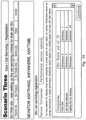
- FIG. 24 With reference now to Figure 24 , with an ISU fitted to a vehicle and interfaced with the vehicle's onboard computer, the vehicle becomes another device for which the registered owner of the ISU can configure various actions associated with aspects of the vehicle.
- One category of configuration as shown in Figure 24 is a listing of preferred or potential servicing facilities for the vehicle from which quotation may be solicited for servicing or repair. Performance and satisfaction ratings may be assigned to these facilities garnered from data collected by third party assessors and supplied to the central control facility.
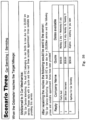
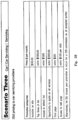
- Figure 26 shows a possible result of a vehicle management configuration using the ISU in a vehicle to arrange for servicing of the vehicle at a predefined service interval.
- the ISU monitoring the vehicle' s onboard computer, signals the central control facility that the vehicle has reached the given odometer reading. This activates the central control facility to obtain quotations for service and possible dates at which the service may be accommodated from the three-service nominated by the vehicle' s owner at registration.
- the central control facility may establish a database of service providers willing to offer services and provide quotations to registered users of the ISU monitoring system.
- Figure 27 shows a web-based page service providers may use to register, including the provision of details of any specialised services they may wish to nominate.
- the ISU may be configured in various models with varying attributes:
- the ISU may be adapted to accept input from virtually any signal producing device.
- Some currently known examples include: motion detectors, Bluetooth accessories, alarms, detectors and responders.
- a new owner must register with the central control facility, preferably over an internet web site maintained by the facility, or by telephone.
- the process of registration over the facility web site includes the following steps;
- This sequence of steps completes the registration and configuration of the individual signal unit, the attached sensor and any output device/s and the response steps to be taken by the central control facility if a signal from the registered individual signal unit is received.
- the central control facility web site may be accessed at any time by the owner (or other authorised person) of a registered individual signal unit, by entering security user name and password, for example.
- Several options 130 are then presented to the owner of the individual signal unit as shown in Figure 17 .
- One of the available options is the facility of locating an individual signal unit.
- the central control facility can command the individual signal unit to transmit its unique identifying code for a sufficient length of time to enable triangulation of its location from three or more stations of the distributed communication network. This location is then superposed on a map 132 and the map and marked detected location relayed to the owner of the individual signal unit as shown in Figure 18 .
- a third option available to the registered owner is that of checking the current status of the device and its event history. As shown in Figure 19 , this information may be displayed to the owner in tabular form. In the example shown, this owner has four devices 134 registered with the central control facility, and can see at a glance the current status as well as a record of detected incidents reported by each sensing device.
- Toolbox 1 may be a toolbox fitted with an individual signal unit, located on an item of earth moving plant left unattended at a work site.
- the tabulated history shows it has been interfered with at the time and on the date shown 136.
- the owner or personnel responsible for the equipment may be alerted within minutes. Alerting messages may be transmitted via any preferred or multiple media, for example by telephone, mobile phone text messages, facsimile or by email.
- Gramma may be an individual signal unit incorporated in a personal security module in which the sensor is a push button, providing an elderly (or incapacitated) person with a means of alerting someone to a distress situation.
- the individual signal unit of the present invention may be incorporated at manufacture (or be retro-fitted) to an item of infrastructure or instrumentation. Individual signal units so incorporated are registered with the central control facility in a similar way to that described for the public user above.
- streetlights under the control of a local authority are fitted, preferably at manufacture, with a sensor and individual signal unit.
- the individual signal unit for each streetlight is assigned a unique encrypted code which is associated with data maintained in the central control facility's computers. This data may include the type of bulb fitted and the location of the particular streetlight.
- the data may further include an instruction set as to what action to take when an encrypted code signal is received by the control facility. This could include a message to the maintenance department and even a requisition on a supplier of the required bulb so that a check of bulb stock and possible resupply will automatically follow.
- smoke alarms may incorporate an individual signal unit, with the smoke detector circuit providing an input to the signaling unit when smoke is detected.
- power for the signaling unit may be provided in common with the smoke detector power supply.
- individual signal units may be incorporated in parking meters, with sensing for example of coin full, out of paper or tampering conditions.
- An individual signal unit may be installed in plant and commercial vehicles, monitoring for example power up and power down of an engine so as to track duty cycles, servicing intervals and improper use for example.
- the owner of the plant or vehicle can access the central control facility and obtain a record of the times the plant was in operation and log the hours of service.
- individual signal units with appropriate sensors may be located along rivers and streams to give early warning of changes in water levels.
- vending machines as to status of stock and tampering for example.
- Items of utility infrastructure such as water and gas supply equipment also may be conveniently monitored for usage and error conditions.
- the action taken by the control facility may be predicated on a secondary layer of instructions received from the owner of the individual signal unit and the sensor or sensors attached to it.
- the registration of the unit may include a number of optional actions for the control facility to implement after a first notification to the owner (or an authorized recipient designated by the registered owner) of an event.
- the possible actions to be taken by the central control facility may include:
- the primary instructions on record at the control facility to be followed on receipt of a signal from the individual signal unit installed at the building site, is to send an SMS message to the owner or authorized recipient. He or she may respond for example with "34".
- the control facility will then carry out actions 3 and 4 of the possible actions of the secondary layer of instructions by notifying the site foreman (3) and the neighbor (4) of the event.
- the ISU may be interfaced with the management computer of a private or commercial vehicle. This allows the management of many aspects of the vehicle, its running costs, performance as well as the scheduling of servicing and even the acquisition of service availability and quotations for service.
- This application of the ISU is of particular use for operators of hire cars for example with an ISU as described above to provide any of the data transferable from a car's onboard computer. These may include the status of the vehicle's door locks at any given time, for example to indicate if it has been left unlocked while not in use.
- the ISU could be instructed to lock and keep locked the doors of the vehicle until this command was reversed.
- An in-vehicle ISU could be used to augment the entertainment system of the vehicle by accessing the internet via wireless broadband for downloading music and videos, accessing a remote computer and using the internet for surfing.
- Figure 23 provides an overview of potential uses of an ISU installed in a vehicle and the actions which may follow on from the monitoring of the status, or measurement of various parameters associated with the vehicle's use and its equipment.
- the individual signal unit and monitoring system described above provides an extremely flexible and effective way of disseminating an alert of an alarm generated by any of a range of events at widely dispersed locations to owners of the device and/or those service providers best able to deal effectively with the cause of the alarm, and allows a unit owner to specify the circumstances under which the owner is to be contacted actions taken.
- the system provides:
- the individual signal unit (ISU) system of the present invention provides a missing link people products and services.
- the ISU platform can receive information via any network and initiate a user-configured chain of events, anywhere in the world to anyone.
- the small compact ISU (similar in size and appearance of a small MP3 player may be adapted to access advanced programming and resources with little or no setup.
- FIG. 29A is a block diagram of a system for Vehicle-to-Everything (V2E) communication in accordance with an embodiment of the present disclosure.
- V2E Vehicle-to-Everything
- the system 2900A is used for enabling Vehicle-to-Everything (V2E) communication.
- the Vehicle-to-Everything (V2E) communication includes at least one of Vehicle-to-Vehicle (V2V) communication, Vehicle-to-Infrastructure (V2I) communication, Vehicle-to-Pedestrian (V2P) communication, Vehicle-to-Network (V2N) communication, and Vehicle-to-Device (V2D) communication.
- V2V Vehicle-to-Vehicle
- V2I Vehicle-to-Infrastructure
- V2P Vehicle-to-Pedestrian
- V2N Vehicle-to-Network
- V2D Vehicle-to-Device
- the system 2900A includes one or more servers 2902A to 2902N.
- the one or more servers 2902A to 2902N includes a first server 2902A, a second server 2902B, and up to a Nth server 2902N; in other words, there are N servers 2902 in total.
- Each of the one or more servers 2902A to 2902N includes a processor coupled to an associated data memory.
- the first server 2902A includes a processor 2904A and a memory 2906A.
- the processor 2904A is communicatively coupled to the memory 2906A.
- the processor 2904A and the memory 2906A may be implemented on a same server, such as the first server 2902A. In some other implementations, the processor 2904A and the memory 2906A may be implemented on a different server. Furthermore, in an implementation, the one or more servers 2902A to 2902N are communicatively coupled with a vehicle 2908A, via a wide area network (WAN) 2910. Specifically, the one or more servers 2902A to 2902N are communicatively coupled with the at least one local signaling device 2912 of the vehicle 2908A, via the WAN 2910.
- WAN wide area network
- the one or more servers 2902A to 2902N are communicatively coupled with the at least one local signaling device 2912 of one or more vehicles, via the WAN 2910.
- the one or more servers 2902A to 2902N are further communicatively coupled with one or more third party output devices 2914 or external event sensors 2916, via the WAN 2910.
- the vehicle 2908A is communicatively coupled with the one or more third party output devices 2914 or external event sensors 2916, via a local area network (LAN) 2918.
- the vehicle 2908A includes one or more external sensors 2920.
- the one or more external sensors 2920 includes at least one of a radar, a camera, and an ultrasonic sensor.
- the at least one local signaling device 2912 is communicatively coupled to the one or more external sensors 2920 of the vehicle 2908A.
- Each of the one or more servers 2902A to 2902N includes suitable logic, circuitry, interfaces, and code that may be configured to communicate with the vehicle 2908A and the one or more third party output devices 2914 or external event sensors 2916 via the WAN 2910.
- the one or more servers 2902A to 2902N may include a master server or a master machine that is a part of a data center that controls an array of other cloud servers communicatively coupled to it for load balancing, running customized applications, and efficient data management.
- Examples of the one or more servers 2902A to 2902N may include, but are not limited to a cloud server, an application server, a data server, or an electronic data processing device.
- the processor 2904A (as shown in Figure 29 ) refers to a computational element that is operable to respond to and processes instructions that drive the system 2900A.
- the processor 2904A may refer to one or more individual processors, processing devices, and various elements associated with a processing device that may be shared by other processing devices. Additionally, the one or more individual processors, processing devices, and elements are arranged in various architectures for responding to and processing the instructions that drive the system 2900A.
- the processor 2904A may be an independent unit and may be located outside the server 2902A of the system 2900A.
- Examples of the processor 2904A may include but are not limited to, a hardware processor, a digital signal processor (DSP), a microprocessor, a microcontroller, a complex instruction set computing (CISC) processor, an application-specific integrated circuit (ASIC) processor, a reduced instruction set (RISC) processor, a very long instruction word (VLIW) processor, a state machine, a data processing unit, a graphics processing unit (GPU), and other processors or control circuitry.
- DSP digital signal processor
- CISC complex instruction set computing
- ASIC application-specific integrated circuit
- RISC reduced instruction set
- VLIW very long instruction word
- state machine a data processing unit
- GPU graphics processing unit
- GPU graphics processing unit
- the memory 2906A (as shown in Figure 29 ) refers to a volatile or persistent medium, such as an electrical circuit, magnetic disk, virtual memory, or optical disk, in which a computer can store data or software for any duration.
- the memory 2906A is a non-volatile mass storage, such as a physical storage media.
- the memory 2906A is configured to store a set of predefined steps.
- a single memory may encompass and, in a scenario, and the system 2900A is distributed, the processor 2904A, the memory 2906A and/or storage capability may be distributed as well.
- Examples of implementation of the memory 2906A may include, but are not limited to, an Electrically Erasable Programmable Read-Only Memory (EEPROM), Dynamic Random-Access Memory (DRAM), Random Access Memory (RAM), Read-Only Memory (ROM), Hard Disk Drive (HDD), Flash memory, a Secure Digital (SD) card, Solid-State Drive (SSD), and/or CPU cache memory.
- EEPROM Electrically Erasable Programmable Read-Only Memory
- DRAM Dynamic Random-Access Memory
- RAM Random Access Memory
- ROM Read-Only Memory
- HDD Hard Disk Drive
- Flash memory Flash memory
- SD Secure Digital
- SSD Solid-State Drive
- the vehicle 2908A refers to any motorized transportation equipment that is used for specific purposes, such as construction vehicles, delivery trucks, emergency response vehicles, and public transportation vehicles.
- the vehicle 2908A is a personal car, namely a personal automobile.
- the WAN 2910 includes a medium (e.g., a communication channel) through which the vehicle 2908A and the one or more third party output devices 2914 or external event sensors 2916 communicates with the one or more server 2902A to 2902N.
- the WAN 2910 may be a wired or wireless communication network. Examples of the WAN 2910 may include, but are not limited to, Internet, a wireless wide area network (WWAN), a cloud network, a Long-Term Evolution (LTE) network, a plain old telephone service (POTS), a Metropolitan Area Network (MAN), and/or the Internet.
- WWAN wireless wide area network
- LTE Long-Term Evolution
- POTS plain old telephone service
- MAN Metropolitan Area Network
- the WAN 2910 is a cellular network.
- the at least one local signaling device 2912 refers to a device that is capable of emitting an audible, visual, or other sensory signal to indicate a particular status or event.
- the local signaling device may be used to provide an indication of the status of the vehicle 2908A.
- the local signaling device 2912 may be used to indicate whether a gate is open or closed, whether the vehicle 2908A is parked or in motion, or whether a piece of equipment is in use or idle.
- the at least one local signaling device 2912 may be connected to a sensor or other monitoring device, and may be configured to emit a signal based on data received from the sensor.
- the signal may be audible, visual, or a combination of both, and may be designed to alert nearby individuals to the status or event being signaled.
- the at least one local signaling device 2912 is substantially similar to the individual signal unit 22 of Figures 1 to 3 .
- the one or more third party output devices 2914 refer to any external device that may receive and display or process the data transmitted by the at least one local signaling device 2912 of the vehicle 2908A.
- the one or more third party output devices 2914 may include, but are not limited to, computers, mobile devices, alarm systems, or any other device that may receive and display data.
- the purpose of such third-party output devices 2914 is to provide the user with real-time information about the status and condition of the monitored infrastructure, as well as to enable the user to take appropriate action if necessary.
- the real-time information refers to data that is received and processed immediately, without any significant delay.
- the real-time information is available as soon as it is generated or received and may be accessed and utilized in real-time.
- the real-time information may be used for various purposes, such as monitoring and control systems, decision-making processes, and data analysis.
- Examples of the real-time information include live sensor data, current location and status of the vehicle 2908A being monitored, current location of slippery roads, potholes, breakdowns, and weather reports.
- the one or more third-party external event sensors 2916 refer to any sensor that is capable of detecting an event or condition that is relevant to the vehicle 2908A. Examples of the one or more third-party external event sensors 2916 include motion sensors, temperature sensors, humidity sensors, pressure sensors, and sound sensors, among others.
- the third-party external event sensors 2916 may be connected to the vehicle 2908A wirelessly or through wired connections.
- the one or more third party output devices 2914 or external event sensors 2916 include traffic cameras, weather sensors, road sensors, or other type of sensors or devices configured to sense and communicate information related to the traffic, the road and weather conditions, or the other potential hazards.
- the one or more third party external event sensors 2916 include at least one of a radar, a camera, and an ultrasonic sensor of one or more other vehicles operating in the same LAN 2918 as the vehicle 2908A.
- the LAN 2918 refers to a wired or wireless communication network. Examples of the LAN 2918 may include, but are not limited to, a wireless personal area network (WPAN), and a Wireless Local Area Network (WLAN).
- WLAN Wireless Local Area Network
- the one or more external sensors 2920 refer to any sensor that is capable of detecting the traffic, road and weather information, or other potential hazards in the vicinity of the vehicle 2908A. Furthermore, the external sensors 2920 is configured to generate a communication signal 2922 upon detection of any potential hazard. Examples of the one or more external sensors include a radar, a camera, and an ultrasonic sensor of the vehicle 2908A.
- the one or more servers 2902A to 2902N are configured to communicate over the WAN 2910 with the at least one local signaling device 2912 of the vehicle 2908A in a real-time or near real-time.
- the real-time or near real-time communication refers to a type of data exchange in which there is an immediate or almost immediate response or feedback loop between the sender and the receiver of the data. This means that the communication happens instantaneously or with minimal delay, so that the participants may interact and respond to each other in a timely manner.
- the real-time or near real-time communication is commonly used in various applications such as video conferencing, instant messaging, voice over IP (VoIP), and online gaming, among others.
- the real-time or near real-time communication is important in many scenarios where immediate response and interaction is necessary, such as emergency situations, critical business decisions, and collaborative work environments.
- the one or more servers 2902A to 2902N are further configured to register the at least one local signaling device 2912 of the vehicle 2908A to utilize third-party provided functions provided by the one or more third party output devices 2914 or external event sensors 2916 coupled to, or operating on the same LAN 2918 as, the at least one local signaling device 2912.
- the one or more third party output devices 2914 or external event sensors 2916 are selectable by a registering entity from a plurality of third-party output devices or external event sensors.
- the registration includes configuring, at least in part, through user data entry into a web-based interface, a set of predefined steps to be taken by the one or more servers 2902A to 2902N in connection with the third party-provided functions of the one or more third party output devices 2914 or external event sensors 2916.
- Some examples of the set of predefined steps may include sending alerts or notifications to designated individuals or groups based on specific triggers or events detected by the sensors, or automatically adjusting vehicle settings or behavior in response to certain external factors.
- the predefined steps may also involve recording and storing data from the sensors for later analysis and use in improving system performance or decision-making.
- the one or more servers 2902A to 2902N are further configured to receive the communication signal 2922 from the at least one local signaling device 2912 of the vehicle 2908A.
- the communication signal 2922 is a Vehicle-to-Everything communication signal that includes a first piece of information that includes traffic, road and weather information, or other potential hazards information in the vicinity of the at least one local signaling device 2912.
- the one or more servers 2902A to 2902N are further configured to receive another communication signal 2924 from the one or more third-party output devices 2914 or external event sensors 2916.
- the communication signal 2924 further includes a second piece of information obtained from the one or more third-party output devices 2914 or external event sensors 2916.
- the second piece of information includes the traffic, road, or weather information, or other potential hazards in the vicinity of the one or more third-party output devices 2914 or external event sensors 2916.
- the one or more servers 2902A to 2902N are further configured to communicate the first piece of information and the second piece of information to each local signaling device (e.g., the local signaling device 2912) operating in the same LAN 2918.
- the one or more servers 2902A to 2902N are further configured to, in response to receiving the communication signal 2922, execute at least one of the set of predefined steps.
- the execution includes communicating instructions to the one or more third party output devices 2914 to provide the first piece of information to other local signaling devices in a vicinity of the vehicle 2908A.
- the one or more servers 2902A to 2902N are further configured to cause the one or more external sensors 2920 of the vehicle 2908A to detect the traffic, road and weather information, or other potential hazards in the vicinity of the vehicle 2908A and automatically generate the communication signal 2922 upon detection of any potential hazard.
- the one or more external sensors 2920 of the vehicle 2908A By detecting any potential hazard associated with the vehicle 2908A, theft of one or more component of the vehicle 2908A may be detected. For example, theft detection of catalytic converters from exhaust systems from vehicles may be detected.
- vibration sensor may be used to detect an event of the vehicle suspension being partially damaged or compromised by the vehicle being driven over a large pothole. In such events, the one or more servers 2902A to 2902N automatically generates the communication signal 2922.
- the one or more servers 2902A to 2902N are further configured to communicate an encrypted message to a specific third-party output device of the one or more third party output devices 2914 based on a user input at the vehicle 2908A.
- the one or more servers 2902A to 2902N are further configured to cause the at least one local signaling device 2912 of the vehicle 2908A to broadcast the encrypted message to the one or more third party output devices 2914.
- the broadcasted encrypted message is decipherable at a specific third-party output device from among the one or more third party output devices 2914.
- FIG 29B is a block diagram of a system for Vehicle-to-Everything (V2E) communication in accordance with an embodiment of the present disclosure.
- V2E Vehicle-to-Everything
- Figure 29B is described in conjunction with elements from Figure 29A .
- a block diagram of a system 2900B includes the one or more servers 2902A to 2902N.
- the one or more servers 2902A to 2902N are communicatively coupled with one or more vehicles 2908A to 2908N, via the WAN 2910.
- the one or more vehicles 2908A to 2908N includes a first vehicle 2908A, a second vehicle 2908B, and up to a Nth vehicle 2908N; in other words, there are N vehicles 2908.
- Each of the one or more vehicles 2908A to 2908N includes the at least one local signaling device 2912.
- the one or more servers 2902A to 2902N are communicatively coupled with a plurality of local signaling devices associated with the one or more vehicles 2908A to 2908N, via the WAN 2910.
- each of the one or more vehicles 2908A to 2908N may be or may not be identical to one another.
- the one or more servers 2902A to 2902N are configured to acquire vehicle data from the plurality of local signaling devices over the WAN 2910.
- the vehicle data includes at least engine monitoring data.
- the one or more servers 2902A to 2902N are further configured to execute a training of an artificial intelligence-based analysis model that is configured to predict an engine and gearbox failure based on the acquired vehicle data.
- the one or more servers 2902A to 2902N are further configured to recommend an actionable insight to take a preventive action when an engine and gearbox failure is predicted associated with the vehicle 2908A or other vehicles 2908B to 2908N.
- Figure 30 is an exemplary representation of the system for V2E communication in accordance with an embodiment of the present disclosure.
- Figure 30 is described in conjunction with elements from Figures 29A and 29B .
- an exemplary representation 3000 of the system for V2E communication includes a cloud server 3002 or a group of cloud server (similar to the one or more servers 2902A to 2902N of Figures 29A and 29B ) connected to the one or more cars 3004A to 3004E (similar to the one or more vehicles 2908A to 2908N of Figure 29B ) over a wide area network.
- first car 3004A a first car 3004A
- second car 3004B a third car 3004C
- fourth car 3004D a fifth car 3004E
- the first car 3004A and the second car 3004B have met with an accident with one another on a first road R1.
- Information about the accident of the first car 3004A and the second car 3004B is transmitted to the cloud server 3002 to be stored therein.
- the third car 3004C which is also travelling on the first road R1, receives a signal from the cloud server 3002, wherein the signal contains the information about the accident of the first car 3004A and the second car 3004B.
- the fourth car 3004D experiences a potential hazard 3006 on a second road R2
- information about the potential hazard 3006 such as type of hazard, severity of hazard, etc.
- the fifth car 3004E which is also travelling on the second road R2, receives a signal from the cloud server 3002.
- the signal contains information about the potential hazard 3006.
- information associated with any potential hazard present on a road may be shared with other vehicles in advance in order to warn the other vehicles about the potential hazard.
- Figure 31 is a flowchart of a method for V2E communication in accordance with an embodiment of the present disclosure.
- Figure 31 is described in conjunction with elements from Figures 29A , 29B , and 30 .
- FIG 31 there is shown a flowchart of a method 3100.
- the method 3100 is executed at the one or more servers 2902A to 2902N (of Figures 29A and 29B ).
- the method 3100 may include steps 3102 to 3104.
- the method 3100 includes communicating, by the one or more servers 2902A to 2902N, over the Wide Area Network 2910 with the at least one local signaling device 2912 of the vehicle 2908A in the real-time or near real-time.
- the method 3100 further includes registering, by the one or more servers 2902A to 2902N, the at least one local signaling device 2912 of the vehicle 2908A to utilize functions provided by the one or more third party output devices 2914 or external event sensors 2916 coupled to, or operating on the same Local Area Network 2918 as, the at least one local signaling device 2912.
- the one or more third party output devices 2914 or external event sensors 2916 are selectable by a registering entity from the plurality of third-party output devices or external event sensors.
- the registration includes configuring, at least in part, through user data entry into the web-based interface, the set of predefined steps to be taken by the one or more servers 2902A to 2902N in connection with third party-provided functions of the one or more third party output devices 2914 or external event sensors 2916.
- the method 3100 includes, in response to receiving the communication signal 2922, executing, by the one or more servers 2902A to 2902N, at least one of the set of predefined steps.
- the execution includes communicating instructions to the one or more third party output devices 2914 to provide the first piece of information to other local signaling devices in the vicinity of the vehicle 2908A.
- the method 3100 further includes communicating, by the one or more servers 2902A to 2902N, the encrypted message to the specific third-party output device of the one or more third party output devices 2914 based on the user input at the vehicle 2908A that corresponds to the communication signal 2922.
- the method 3100 further includes causing, by the one or more servers 2902A to 2902N, the at least one local signaling device 2912 of the vehicle 2908A to broadcast the encrypted message to the one or more third party output devices 2914 of other vehicles.
- the broadcasted encrypted message is decipherable at the specific third-party output device from among the one or more third party output devices 2914.
- the systems 2900A and 2900B, and the method 3100 may help drivers to avoid potential hazards on the road, such as accidents, traffic jams, and bad weather conditions, by providing real-time or near real-time information from a variety of sources, including sensors in other vehicles, road sensors, weather sensors, and traffic cameras. By providing drivers with accurate and timely information, the systems 2900A and 2900B, and the method 3100 may help reduce traffic congestion, optimize route planning, and save time and fuel costs. Further, the systems 2900A and 2900B, and the method 3100 may offer a wide range of services and features, such as personalized recommendations, predictive maintenance, and remote diagnostics, that may enhance the driving experience and make it more convenient for users.
- the systems 2900A and 2900B, and the method 3100 may enable new forms of communication, collaboration, and data sharing that may facilitate new services and applications.
- the systems 2900A and 2900B, and the method 3100 may help identify patterns, trends, and anomalies that may potentially provide valuable insights for vehicle manufacturers, fleet managers, and other stakeholders.
Landscapes
- Physics & Mathematics (AREA)
- General Physics & Mathematics (AREA)
- Life Sciences & Earth Sciences (AREA)
- Atmospheric Sciences (AREA)
- Chemical & Material Sciences (AREA)
- Analytical Chemistry (AREA)
- Engineering & Computer Science (AREA)
- Computer Networks & Wireless Communication (AREA)
- Signal Processing (AREA)
- Alarm Systems (AREA)
Priority Applications (2)
| Application Number | Priority Date | Filing Date | Title |
|---|---|---|---|
| EP23186197.2A EP4496360A1 (de) | 2023-07-18 | 2023-07-18 | System und verfahren zur ermöglichung von vehicle-to-everything-kommunikation |
| PCT/AU2024/050771 WO2025015383A1 (en) | 2023-07-18 | 2024-07-18 | System and method for enabling vehicle-to-everything communication |
Applications Claiming Priority (1)
| Application Number | Priority Date | Filing Date | Title |
|---|---|---|---|
| EP23186197.2A EP4496360A1 (de) | 2023-07-18 | 2023-07-18 | System und verfahren zur ermöglichung von vehicle-to-everything-kommunikation |
Publications (1)
| Publication Number | Publication Date |
|---|---|
| EP4496360A1 true EP4496360A1 (de) | 2025-01-22 |
Family
ID=87419219
Family Applications (1)
| Application Number | Title | Priority Date | Filing Date |
|---|---|---|---|
| EP23186197.2A Pending EP4496360A1 (de) | 2023-07-18 | 2023-07-18 | System und verfahren zur ermöglichung von vehicle-to-everything-kommunikation |
Country Status (1)
| Country | Link |
|---|---|
| EP (1) | EP4496360A1 (de) |
Citations (4)
| Publication number | Priority date | Publication date | Assignee | Title |
|---|---|---|---|---|
| US20190325750A1 (en) * | 2018-04-19 | 2019-10-24 | Micron Technology, Inc. | Systems and Methods for Automatically Warning nearby Vehicles of Potential Hazards |
| CN112232405A (zh) * | 2020-10-13 | 2021-01-15 | 中车青岛四方机车车辆股份有限公司 | 齿轮箱的故障预测、监测和诊断方法及相应装置 |
| US20210181699A1 (en) * | 2006-07-12 | 2021-06-17 | Imprenditore Pty Limited | Monitoring apparatus and system |
| US20220321343A1 (en) * | 2021-03-31 | 2022-10-06 | Fujitsu Limited | Multi-level access control in sharing of vehicle data with devices |
-
2023
- 2023-07-18 EP EP23186197.2A patent/EP4496360A1/de active Pending
Patent Citations (4)
| Publication number | Priority date | Publication date | Assignee | Title |
|---|---|---|---|---|
| US20210181699A1 (en) * | 2006-07-12 | 2021-06-17 | Imprenditore Pty Limited | Monitoring apparatus and system |
| US20190325750A1 (en) * | 2018-04-19 | 2019-10-24 | Micron Technology, Inc. | Systems and Methods for Automatically Warning nearby Vehicles of Potential Hazards |
| CN112232405A (zh) * | 2020-10-13 | 2021-01-15 | 中车青岛四方机车车辆股份有限公司 | 齿轮箱的故障预测、监测和诊断方法及相应装置 |
| US20220321343A1 (en) * | 2021-03-31 | 2022-10-06 | Fujitsu Limited | Multi-level access control in sharing of vehicle data with devices |
Similar Documents
| Publication | Publication Date | Title |
|---|---|---|
| US12504729B2 (en) | Monitoring apparatus and system | |
| US10551801B2 (en) | Monitoring apparatus and system | |
| US12050445B2 (en) | Remote monitoring and control of lan-based sensors and output devices by wan-to-lan communications | |
| US12130601B2 (en) | System and method for enabling vehicle-to-everything communication | |
| US12147205B2 (en) | System and method for property security | |
| EP4496360A1 (de) | System und verfahren zur ermöglichung von vehicle-to-everything-kommunikation | |
| HK40122418A (en) | System and method for enabling vehicle-to-everything communication | |
| WO2025015383A1 (en) | System and method for enabling vehicle-to-everything communication | |
| EP4495904A1 (de) | System und verfahren zur eigentumssicherheit | |
| AU2020267150B2 (en) | Monitoring Apparatus and System | |
| WO2025015385A1 (en) | System and method for property security | |
| HK40122417A (en) | System and method for property security |
Legal Events
| Date | Code | Title | Description |
|---|---|---|---|
| PUAI | Public reference made under article 153(3) epc to a published international application that has entered the european phase |
Free format text: ORIGINAL CODE: 0009012 |
|
| STAA | Information on the status of an ep patent application or granted ep patent |
Free format text: STATUS: THE APPLICATION HAS BEEN PUBLISHED |
|
| AK | Designated contracting states |
Kind code of ref document: A1 Designated state(s): AL AT BE BG CH CY CZ DE DK EE ES FI FR GB GR HR HU IE IS IT LI LT LU LV MC ME MK MT NL NO PL PT RO RS SE SI SK SM TR |
|
| STAA | Information on the status of an ep patent application or granted ep patent |
Free format text: STATUS: REQUEST FOR EXAMINATION WAS MADE |
|
| 17P | Request for examination filed |
Effective date: 20250722 |
|
| RAV | Requested validation state of the european patent: fee paid |
Extension state: KH Effective date: 20250722 |
|
| RAX | Requested extension states of the european patent have changed |
Extension state: BA Payment date: 20250722 |
|
| REG | Reference to a national code |
Ref country code: HK Ref legal event code: DE Ref document number: 40122418 Country of ref document: HK |