EP4495962A1 - A method for magnetic conversion from paramagnetic to ferromagnetic of microporous metal materials, ferromagnetic microporous metal material obtainable thereby and their uses - Google Patents
A method for magnetic conversion from paramagnetic to ferromagnetic of microporous metal materials, ferromagnetic microporous metal material obtainable thereby and their uses Download PDFInfo
- Publication number
- EP4495962A1 EP4495962A1 EP23382733.6A EP23382733A EP4495962A1 EP 4495962 A1 EP4495962 A1 EP 4495962A1 EP 23382733 A EP23382733 A EP 23382733A EP 4495962 A1 EP4495962 A1 EP 4495962A1
- Authority
- EP
- European Patent Office
- Prior art keywords
- microporous
- stainless
- steel material
- ferromagnetic
- steel
- Prior art date
- Legal status (The legal status is an assumption and is not a legal conclusion. Google has not performed a legal analysis and makes no representation as to the accuracy of the status listed.)
- Withdrawn
Links
Images



Classifications
-
- H—ELECTRICITY
- H01—ELECTRIC ELEMENTS
- H01F—MAGNETS; INDUCTANCES; TRANSFORMERS; SELECTION OF MATERIALS FOR THEIR MAGNETIC PROPERTIES
- H01F1/00—Magnets or magnetic bodies characterised by the magnetic materials therefor; Selection of materials for their magnetic properties
- H01F1/01—Magnets or magnetic bodies characterised by the magnetic materials therefor; Selection of materials for their magnetic properties of inorganic materials
- H01F1/03—Magnets or magnetic bodies characterised by the magnetic materials therefor; Selection of materials for their magnetic properties of inorganic materials characterised by their coercivity
- H01F1/12—Magnets or magnetic bodies characterised by the magnetic materials therefor; Selection of materials for their magnetic properties of inorganic materials characterised by their coercivity of soft-magnetic materials
- H01F1/14—Magnets or magnetic bodies characterised by the magnetic materials therefor; Selection of materials for their magnetic properties of inorganic materials characterised by their coercivity of soft-magnetic materials metals or alloys
- H01F1/147—Alloys characterised by their composition
- H01F1/14708—Fe-Ni based alloys
-
- C—CHEMISTRY; METALLURGY
- C21—METALLURGY OF IRON
- C21D—MODIFYING THE PHYSICAL STRUCTURE OF FERROUS METALS; GENERAL DEVICES FOR HEAT TREATMENT OF FERROUS OR NON-FERROUS METALS OR ALLOYS; MAKING METAL MALLEABLE, e.g. BY DECARBURISATION OR TEMPERING
- C21D1/00—General methods or devices for heat treatment, e.g. annealing, hardening, quenching or tempering
- C21D1/26—Methods of annealing
-
- C—CHEMISTRY; METALLURGY
- C21—METALLURGY OF IRON
- C21D—MODIFYING THE PHYSICAL STRUCTURE OF FERROUS METALS; GENERAL DEVICES FOR HEAT TREATMENT OF FERROUS OR NON-FERROUS METALS OR ALLOYS; MAKING METAL MALLEABLE, e.g. BY DECARBURISATION OR TEMPERING
- C21D6/00—Heat treatment of ferrous alloys
- C21D6/004—Heat treatment of ferrous alloys containing Cr and Ni
-
- C—CHEMISTRY; METALLURGY
- C21—METALLURGY OF IRON
- C21D—MODIFYING THE PHYSICAL STRUCTURE OF FERROUS METALS; GENERAL DEVICES FOR HEAT TREATMENT OF FERROUS OR NON-FERROUS METALS OR ALLOYS; MAKING METAL MALLEABLE, e.g. BY DECARBURISATION OR TEMPERING
- C21D8/00—Modifying the physical properties of ferrous metals or ferrous alloys by deformation combined with, or followed by, heat treatment
- C21D8/12—Modifying the physical properties of ferrous metals or ferrous alloys by deformation combined with, or followed by, heat treatment during manufacturing of articles with special electromagnetic properties
- C21D8/1244—Modifying the physical properties of ferrous metals or ferrous alloys by deformation combined with, or followed by, heat treatment during manufacturing of articles with special electromagnetic properties characterised by the heat treatment
- C21D8/1272—Final recrystallisation annealing
-
- C—CHEMISTRY; METALLURGY
- C21—METALLURGY OF IRON
- C21D—MODIFYING THE PHYSICAL STRUCTURE OF FERROUS METALS; GENERAL DEVICES FOR HEAT TREATMENT OF FERROUS OR NON-FERROUS METALS OR ALLOYS; MAKING METAL MALLEABLE, e.g. BY DECARBURISATION OR TEMPERING
- C21D2211/00—Microstructure comprising significant phases
- C21D2211/001—Austenite
Definitions
- the present invention relates to methods for magnetic conversion of microporous metal materials from paramagnetic to ferromagnetic.
- the present invention relates to a conversion method for changing (converting) magnetic behavior of microporous austenitic stainless-steel materials from paramagnetic to ferromagnetic.
- the invention also relates to the ferromagnetic microporous stainless-steel materials obtainable thereby as well as to their uses, particularly in applications where an efficient heat exchanger for fluids is required.
- porous stainless-steel structures can provide a cost-effective alternative to combine wireless magnetic heating and/or optical heating, and to efficiently transfer the heat to the fluid going through the porous structure.
- the majority of the porous stainless-steel structures are composed of non-ferromagnetic austenitic microstructures, whose magnetic induction heating efficiency is limited. The conversion of the austenitic to a martensitic phase stainless-steel can modify the magnetic behavior to exhibit ferromagnetism at room temperature.
- a widespread method to obtain magnetic (martensitic) steel from non-magnetic (austenitic) steel is by a quenching process of the later from high temperatures.
- the process is usually based on heating the austenitic steel to high temperature, typically around 1000 °C, and then rapidly cooling the material (i.e., quenching) to room temperature, or below, usually using a liquid, like water, oil or liquid nitrogen.
- austenitic stainless steel is known for its excellent corrosion resistance and formability, but it has relatively low strength compared to other steel types.
- quenching By subjecting the austenitic stainless steel to a specific heat treatment known as quenching, it can be transformed into a harder and stronger phase called martensite.
- this transformation has not been applied to enhance the magnetic heating efficiency.
- the large size of the microstructures in porous stainless makes that the optical heating efficiency is also low.
- the present invention was made in view of the prior art described above, and a first aspect of the invention is to provide a method for magnetic conversion of a microporous metal material from paramagnetic to ferromagnetic.
- microporous metal material comprises a microporous austenitic stainless-steel material as raw material, and the method comprises the steps of:
- step i) The annealing process of step i) is carried out under atmospheric conditions. This means that no gas treatment is carried out, i.e., no inert gases or other components are used during annealing.
- microporous metal material as raw material consists of a microporous austenitic stainless-steel material. Preferable, it is a filter.
- the method of the first aspect is capable of:
- Preferable annealing temperature (step i) is comprised of between 800°C and 1,100°C, more preferable between 940°C and 960°C.
- Preferable organic solvent in step ii) is isopropanol.
- Other organic solvents can be used as well.
- the microporous austenitic stainless-steel material as raw material includes an average pore diameter equal to or lower than 80 ⁇ m, preferably an average pore diameter equal to or lower than 25 ⁇ m.
- the microporosity can be alternatively measured by the average particle size of the particles delimiting the pores in the microporous material. Therefore, the microporous austenitic stainless-steel material as raw material can include an average particle size lower than 100 ⁇ m, preferably an average particle size lower than 50 ⁇ m.
- microporous austenitic stainless-steel material as raw material can be initially cleaned by immersing the microporous austenitic stainless-steel material in an organic solvent bath under ultra-sonication and then drying with a nitrogen flow.
- organic solvent is isopropanol.
- the microporous austenitic stainless-steel material as raw material can be further initially chemically treated to remove metals and oxides that can be present at their surface, whereby the availability of the iron at the surface of the raw material be assured.
- the chemical treatment is carried out before the thermal annealing of step i), and comprises chemically treating the microporous austenitic stainless-steel material as raw material in an acidic mixture comprising hydrochloride acid and nitric acid in a volume ratio from 3:1 to 1:3.
- Preferable acidic mixture is in an equimolar ratio 1:1.
- the present invention also provides a ferromagnetic microporous stainless-steel material obtainable by the method defined in the first aspect of the invention.
- the obtainable microporous stainless-steel material is ferromagnetic, and the surface nanostructured.
- the authors of the present invention have found that, in addition to converting from paramagnetic to ferromagnetic, the obtainable microporous stainless-steel material is hydrophilic or hydrophobic in accordance with the way of cooling (slow or quick).
- the cooling step is carried out by allowing to slow cool down under room temperature, then the obtainable ferromagnetic microporous stainless-steel material is also hydrophilic.
- the cooling step is carried out at by immersing in an organic solvent bath that is at room temperature, then the obtainable ferromagnetic microporous stainless-steel material is also hydrophobic.
- the surface of the obtainable ferromagnetic microporous stainless-steel material is also varied in accordance with the way to cool down, slow or quick.
- the surface of the ferromagnetic microporous stainless-steel material is all of iron oxides
- the surface of the ferromagnetic microporous stainless-steel material is of carbon.
- the material is a filter.
- the ferromagnetic microporous stainless-steel filter as raw material can be of stainless-steel, sintered or not.
- the present invention is directed to the use of the ferromagnetic microporous stainless-steel material obtainable by the method defined in the first aspect as a heat exchanger in fluids.
- the stainless steel microporous ferromagnetic material of the invention as a heat exchanger is capable of saving energy. Using a magnetic field, the temperature reached is around 45% higher, and close to 75% higher using optical heating. Heating can be done wirelessly, that is, without direct contact between the ferromagnetic material and the energy source, either magnetic or optical.
- the heat exchanger is able to be heated by magnetic induction and/or by optical absorption to act as a very efficient heat exchanger in fluids flowing therethrough.
- the method in accordance with the first aspect of the present invention can be also an alternative to fabricate ferromagnetic microporous stainless-steel materials.
- the method of the first aspect of the present invention encompasses a method to fabricate ferromagnetic microporous stainless-steel filters, in which iron powder compacted as raw material is subjected to the annealing treatment described in step i), and then cooling down as described in step ii) to obtain a ferromagnetic microporous stainless-steel material.
- the annealing temperatures of step i) can also allow to sinter the iron powder compacted as raw material, so the ferromagnetic microporous stainless-steel material obtainable thereby can also be sintered.
- the ferromagnetic microporous stainless-steels material can be used in applications where an efficient heat exchanger for fluids is required. Applications such as air disinfection, thermo-catalytic processes, or water heating among others are susceptible to be performed using a ferromagnetic microporous stainless-steel material or filter obtainable in accordance with the first aspect of the present invention as an efficient heat exchanger.
- annealing has the common meaning in the art that is a heat treatment process which alters the microstructure of a material to change its mechanical or electronic properties.
- annealing is used to reduce hardness, increase ductility, and help eliminate internal stresses.
- a typical annealing process includes three main stages. During the annealing process, the metal is heated to a specific temperature where recrystallization can occur. At this stage, any defects caused by deformation of the metal are repaired. The metal is held at that temperature for a fixed period, then cooled down to room temperature.
- austenitic stainless steel means a specific type of stainless-steel alloy.
- Stainless steels can be classified by their crystalline structure into four main types: austenitic, ferritic, martensitic, and duplex.
- Austenitic stainless steels possess austenite as their primary crystal structure (face-centered cubic). This austenite crystal structure is achieved by sufficient additions of the stabilizing elements of austenite: nickel, manganese, and nitrogen. Their crystalline structure makes the austenitic steels essentially non-magnetic.
- the expression “atmospheric conditions” means the atmospheric pressure and the ambient or room temperature, usually 1 atmosphere of pressure and 23°C of temperature.
- the ambient or room temperature includes values from 15°C to 35°C.
- the present invention provides a method for magnetic conversion of microporous metal materials from paramagnetic to ferromagnetic.
- the present invention relates to a conversion method for changing magnetic behavior of microporous austenitic stainless-steel materials from paramagnetic to ferromagnetic.
- the conversion method is suitable for changing the austenitic stainless steels which is paramagnetic to a ferromagnetic behavior.
- the magnetic conversion method of the first aspect transforms their magnetic properties from paramagnetic to ferromagnetic and generates micro/nano-structuration of the pore surface ( Figures 2 and 3 (a), (b) ).
- the cooling step ii) (quick cooling) in an organic solvent (preferably, isopropanol) results in the deposition of a carbon layer on the material (filter) surface.
- an organic solvent preferably, isopropanol
- the ferromagnetic behavior enables a high improvement of the magnetic induction heating efficiency.
- the nanostructured surface and the deposited carbon layer enable boosting the optical heating efficiency.
- the conversion method also provides a powerful protection for corrosion in both air and water conditions, even at very high temperatures.
- the potential applications include air disinfection, methane pyrolysis for generation of H 2 without CO 2 emission, other thermo-catalytic processes in gas o liquid phase, and even efficient decentralized water heating.
- the obtainable ferromagnetic microporous stainless-steel reveals an efficient heating of fluids by magnetic induction and/or optical absorption.
- the filters obtainable using the method of the first aspect of the present invention were surprisingly improved compared to the untreated filters, as it will be discussed below.
- the effect of the porosity on the magnetic induction heating was surprisingly improved using an average pore diameter equal to or lower than 25 ⁇ m.
- the filters with smaller average pore diameters, that is of about 5 ⁇ m reached a still higher temperature in the filter, even above of 400°C, compared to filters having a higher average pore diameter, particularly higher than the threshold of 25 ⁇ m.
- heating of the porous material by magnetic induction is further improved with an average pore diameter equal to or lower than 25 ⁇ m.
- the maximum temperature, expressed in Celsius degrees, achieved in filters heated by magnetic induction is obtained by using an annealing temperature range between 900°C and 960°C.
- heating of materials by magnetic induction is further improved when materials are thermally treated (step i) using annealing temperatures from 900°C to 960°C, independent of the cooling down (step ii) by a slow or quick way.
- the effect of the period maintaining the annealing temperature on the magnetic induction heating of the annealed filter does not change too much after the first 15 minutes, and does not affect or even goes down after 1 hour maintaining the annealing temperature.
- the preferable period maintaining the annealed material to the annealing temperature (step i) is equal to or lower than 1 hour, preferably equal to or lower than 30 min.
- the optimal magnetic field frequency for magnetic induction heating depends on the pore size and, therefore on the size of the particles that form the porous structures
- ferromagnetic microporous stainless-steel material obtainable by the method defined in the first aspect of the invention as a heat exchanger in fluids is preferable having a small average pore diameter, preferably equal to or lower than 25 ⁇ m, still more preferable below 10 ⁇ m, and combined with low magnetic frequencies, preferably from 70 kHz to 200 kHz.
- the heating efficiency increases with the frequency.
- higher magnetic fields can be obtained at lower frequencies using similar electric energy consumption, and the magnetic heating efficiency drastically increases with the amplitude of the magnetic field.
- the magnetization reversal loops of the four filters confirmed the conversion from paramagnetic to ferromagnetic of the austenitic microporous stainless-steel filters.
- the ellipsoidal magnetization reversal loops with positive slope reflect the effect of the ferromagnetism in the treated filters (black circle), compared to the ellipse with negative slope of the untreated samples (grey circle), which is sign of the Eddy currents and diamagnetic-like behavior under alternating magnetic fields.
- the difference in amplitude of the loops is correlated with the higher heating efficiency in the treated samples.
- the magnetic induction heating efficiency increases as long as the magnetic field amplitude is increased.
- the induced temperature change in the treated filter subjected to an optical heating is increased compared with the untreated filter using a laser light beam with 917 nm wavelength and 15 W power.
- the initial step was cleaning the filters in isopropanol for 5 minutes under ultra-sonication and dried with a nitrogen flow.
- Example 1 The cleaned filters of Example 1 were submitted to a chemical treatment by immersing the filters in a mixture of HCl:HNO 3 (1:1), then rinsed with isopropanol for 5 minutes and dried with a nitrogen flow.
- the time (seconds) in the acid immersion was varied.
- the time in the acid mixture increases as the average pore diameter is reduced.
- the filters were immersed for 45 seconds for the average pore diameter of 5 ⁇ m, 10 seconds for the average pore diameter of 10 ⁇ m, and 5 seconds for the average pore diameters of 25 ⁇ m, 40 ⁇ m, 60 ⁇ m and 80 ⁇ m.
- the chemical treatment removes the chromium and nickel oxide layers usually present in the stainless-steel surface of the filters.
- the thermal annealing step i) was performed by heating the filters of the above average pore diameters (with the ends of the tube uncapped) at a rate of 1 °C/s until an annealing temperature of 950°C was reached. The filters were then kept at this annealing temperature for 1 hour.
- Example 4 Cooling treatment (step ii) of microporous annealed stainless-steel filter The filters of Example 3 were cooled down to room temperature.
- step ii) The cooling of step ii) was carried out in two different ways.
- the first way of cooling down was done by removing the quartz tube from the furnace including the filters inside it and allowing to cool it to room temperature, yielding dark blue filters of morphology shown in Figure 2 .
- Example 5 Surface composition of ferromagnetic microporous stainless-steel filter
- the blue filters obtained by slow cooling were highly hydrophilic, whereas the black carbon coated filters obtained by quick cooling were highly hydrophobic.
Landscapes
- Chemical & Material Sciences (AREA)
- Engineering & Computer Science (AREA)
- Physics & Mathematics (AREA)
- Materials Engineering (AREA)
- Crystallography & Structural Chemistry (AREA)
- Mechanical Engineering (AREA)
- Thermal Sciences (AREA)
- Metallurgy (AREA)
- Organic Chemistry (AREA)
- Electromagnetism (AREA)
- Manufacturing & Machinery (AREA)
- Dispersion Chemistry (AREA)
- Power Engineering (AREA)
- Heat Treatment Of Articles (AREA)
Abstract
The present invention describes a new method for magnetic conversion from paramagnetic to ferromagnetic of a raw material being composed of microporous austenitic stainless-steel. The method comprises an annealing treatment, and then a cooling down treatment.
The invention also describes a ferromagnetic microporous stainless-steel material obtainable thereby with hydrophilic or hydrophobic properties, as well as to their uses in applications where an efficient heat exchanger for fluids is required. The heat exchanger is provided by means of magnetic field and/or optical absorption.
Description
- The present invention relates to methods for magnetic conversion of microporous metal materials from paramagnetic to ferromagnetic. In particular, the present invention relates to a conversion method for changing (converting) magnetic behavior of microporous austenitic stainless-steel materials from paramagnetic to ferromagnetic.
- The invention also relates to the ferromagnetic microporous stainless-steel materials obtainable thereby as well as to their uses, particularly in applications where an efficient heat exchanger for fluids is required.
- Most of the heating systems for fluids are based on electrical resistances that are placed inside the fluid to heat it via Joule effect. Also, there is a possibility to directly heat metal pipes via Joule heating. This is used in heaters that can be applied to heat tap or shower water.
- However, the heating of the fluids in both cases is not efficient due to a poor heat transfer from the Joule heated conductor to the fluid. To increase the heating efficiency and the heat transfer capability porous materials can be used. For example, a Ni foam heated by Joule effect has been employed to heat and disinfect air. [L Yu et al: Catching and killing of airborne SARS-CoV-2 to control spread of COVID-19 by a heated air disinfection system, Materials Today Physics 15, 100249 (2020)].
- Moreover, these heating systems require electrical contacts to the heating resistance or to the metal pipe, which complicates the design and increases the costs. To reduce the complexity, wireless heating of a porous structure inside a fluid pipeline could be achieved by magnetic induction or optical heating. In this context, porous stainless-steel structures can provide a cost-effective alternative to combine wireless magnetic heating and/or optical heating, and to efficiently transfer the heat to the fluid going through the porous structure. However, the majority of the porous stainless-steel structures are composed of non-ferromagnetic austenitic microstructures, whose magnetic induction heating efficiency is limited. The conversion of the austenitic to a martensitic phase stainless-steel can modify the magnetic behavior to exhibit ferromagnetism at room temperature. A widespread method to obtain magnetic (martensitic) steel from non-magnetic (austenitic) steel is by a quenching process of the later from high temperatures. [M. Wendler, C. Ullrich, M. Hauser, L. Krüger, O. Volkova, A. Weiß, J. Mola, Quenching and partitioning (Q&P) processing of fully austenitic stainless steels. Acta Mater. 133 (2017) 346-355.] The process is usually based on heating the austenitic steel to high temperature, typically around 1000 °C, and then rapidly cooling the material (i.e., quenching) to room temperature, or below, usually using a liquid, like water, oil or liquid nitrogen. The transformation of austenitic stainless steel into the martensitic phase is typically used to achieve an increase in its hardness and strength. Austenitic stainless steel is known for its excellent corrosion resistance and formability, but it has relatively low strength compared to other steel types. By subjecting the austenitic stainless steel to a specific heat treatment known as quenching, it can be transformed into a harder and stronger phase called martensite. However, this transformation has not been applied to enhance the magnetic heating efficiency. On the other hand, the large size of the microstructures in porous stainless makes that the optical heating efficiency is also low.
- Therefore, there is still the need to provide an alternative to the prior art that resolves the shortcomings thereof.
- There is still the need to find more efficient systems to heat flowing fluids in several applications, including air disinfection, thermo-catalytic processes, or water heating.
- The present invention was made in view of the prior art described above, and a first aspect of the invention is to provide a method for magnetic conversion of a microporous metal material from paramagnetic to ferromagnetic.
- The method is characterized in that the microporous metal material comprises a microporous austenitic stainless-steel material as raw material, and the method comprises the steps of:
- i) thermal annealing the microporous austenitic stainless-steel material as raw material, wherein thermal annealing comprises heating the microporous austenitic stainless-steel material to an annealing temperature comprised of between 500°C and 1,200°C, and maintaining the microporous stainless-steel material at the annealing temperature for a period, and then,
- ii) cooling down the annealed microporous stainless-steel material to room temperature, wherein the cooling is carried out by allowing the annealed microporous stainless-steel material to cool under room temperature, so the annealed microporous stainless-steel material is slowly cooled, or alternatively wherein the cooling down is carried out by immersing the annealed microporous stainless-steel material in an organic solvent, preferable isopropanol bath, that is at room temperature, so the annealed microporous stainless-steel material cools quickly.
- The annealing process of step i) is carried out under atmospheric conditions. This means that no gas treatment is carried out, i.e., no inert gases or other components are used during annealing.
- Preferable microporous metal material as raw material consists of a microporous austenitic stainless-steel material. Preferable, it is a filter.
- Surprisingly, the method of the first aspect is capable of:
- changing the magnetic behavior from paramagnetic to ferromagnetic of a microporous austenitic stainless-steel material;
- increasing the surface area due to the nanostructuring of the surface during the thermal annealing (step ii);
- enhancing the magnetic specific absorption rate (SAR) and/or optical absorption efficiency in a wide light spectral range.
- Preferable annealing temperature (step i) is comprised of between 800°C and 1,100°C, more preferable between 940°C and 960°C.
- Preferable organic solvent in step ii) is isopropanol. Other organic solvents can be used as well.
- Preferably, the microporous austenitic stainless-steel material as raw material includes an average pore diameter equal to or lower than 80 µm, preferably an average pore diameter equal to or lower than 25 µm.
- The microporosity can be alternatively measured by the average particle size of the particles delimiting the pores in the microporous material. Therefore, the microporous austenitic stainless-steel material as raw material can include an average particle size lower than 100 µm, preferably an average particle size lower than 50 µm.
- The microporous austenitic stainless-steel material as raw material can be initially cleaned by immersing the microporous austenitic stainless-steel material in an organic solvent bath under ultra-sonication and then drying with a nitrogen flow. Preferable organic solvent is isopropanol.
- Optionally, the microporous austenitic stainless-steel material as raw material can be further initially chemically treated to remove metals and oxides that can be present at their surface, whereby the availability of the iron at the surface of the raw material be assured.
- Optionally, the chemical treatment is carried out before the thermal annealing of step i), and comprises chemically treating the microporous austenitic stainless-steel material as raw material in an acidic mixture comprising hydrochloride acid and nitric acid in a volume ratio from 3:1 to 1:3. Preferable acidic mixture is in an equimolar ratio 1:1.
- In a second aspect, the present invention also provides a ferromagnetic microporous stainless-steel material obtainable by the method defined in the first aspect of the invention.
- Surprisingly, the obtainable microporous stainless-steel material is ferromagnetic, and the surface nanostructured.
- The authors of the present invention have found that, in addition to converting from paramagnetic to ferromagnetic, the obtainable microporous stainless-steel material is hydrophilic or hydrophobic in accordance with the way of cooling (slow or quick).
- In fact, when the cooling step is carried out by allowing to slow cool down under room temperature, then the obtainable ferromagnetic microporous stainless-steel material is also hydrophilic.
- On the other hand, when the cooling step is carried out at by immersing in an organic solvent bath that is at room temperature, then the obtainable ferromagnetic microporous stainless-steel material is also hydrophobic.
- Compositionally, the surface of the obtainable ferromagnetic microporous stainless-steel material is also varied in accordance with the way to cool down, slow or quick. In the first way (slow), the surface of the ferromagnetic microporous stainless-steel material is all of iron oxides, and in the second way (quick) the surface of the ferromagnetic microporous stainless-steel material is of carbon.
- In a preferable embodiment, the material is a filter.
- The ferromagnetic microporous stainless-steel filter as raw material can be of stainless-steel, sintered or not.
- In a further aspect, the present invention is directed to the use of the ferromagnetic microporous stainless-steel material obtainable by the method defined in the first aspect as a heat exchanger in fluids.
- The stainless steel microporous ferromagnetic material of the invention as a heat exchanger is capable of saving energy. Using a magnetic field, the temperature reached is around 45% higher, and close to 75% higher using optical heating. Heating can be done wirelessly, that is, without direct contact between the ferromagnetic material and the energy source, either magnetic or optical.
- Advantageously, the heat exchanger is able to be heated by magnetic induction and/or by optical absorption to act as a very efficient heat exchanger in fluids flowing therethrough.
- The method in accordance with the first aspect of the present invention can be also an alternative to fabricate ferromagnetic microporous stainless-steel materials.
- Thus, the method of the first aspect of the present invention encompasses a method to fabricate ferromagnetic microporous stainless-steel filters, in which iron powder compacted as raw material is subjected to the annealing treatment described in step i), and then cooling down as described in step ii) to obtain a ferromagnetic microporous stainless-steel material.
- The annealing temperatures of step i) can also allow to sinter the iron powder compacted as raw material, so the ferromagnetic microporous stainless-steel material obtainable thereby can also be sintered.
- The ferromagnetic microporous stainless-steels material can be used in applications where an efficient heat exchanger for fluids is required. Applications such as air disinfection, thermo-catalytic processes, or water heating among others are susceptible to be performed using a ferromagnetic microporous stainless-steel material or filter obtainable in accordance with the first aspect of the present invention as an efficient heat exchanger.
- According to the present invention, the term "annealing" has the common meaning in the art that is a heat treatment process which alters the microstructure of a material to change its mechanical or electronic properties. Typically in the art, in steels, annealing is used to reduce hardness, increase ductility, and help eliminate internal stresses. A typical annealing process includes three main stages. During the annealing process, the metal is heated to a specific temperature where recrystallization can occur. At this stage, any defects caused by deformation of the metal are repaired. The metal is held at that temperature for a fixed period, then cooled down to room temperature.
- According to the present invention, the expression "austenitic stainless steel" means a specific type of stainless-steel alloy. Stainless steels can be classified by their crystalline structure into four main types: austenitic, ferritic, martensitic, and duplex. Austenitic stainless steels possess austenite as their primary crystal structure (face-centered cubic). This austenite crystal structure is achieved by sufficient additions of the stabilizing elements of austenite: nickel, manganese, and nitrogen. Their crystalline structure makes the austenitic steels essentially non-magnetic.
- According to the present invention, the expression "atmospheric conditions" means the atmospheric pressure and the ambient or room temperature, usually 1 atmosphere of pressure and 23°C of temperature. The ambient or room temperature includes values from 15°C to 35°C.
- To better understand the description made, a set of drawings has been provided which, schematically and solely by way of non-limiting example, represent practical cases of various embodiments.
-
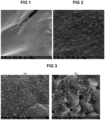
Figure 1 depicts the morphology of microporous austenitic stainless-steel filters commercially available in the art. -
Figure 2 depicts the morphology of a ferromagnetic microporous stainless-steel filter obtained in Example 4 using slow cooling (blue surface filter). -
Figure 3 depicts the morphology of a ferromagnetic microporous stainless-steel filter obtained in Example 4 using rapid cooling, in two different magnification scales, (a) 8,000 and (b) 60,000 (black surface filter). -
Figure 4 depicts a bar graph of the effect on porosity of magnetic induction heating (132 kHz, 500 Oe) of 20 L/min constant airflow through treated filters (striped columns), treated with an annealing temperature of 950°C and with rapid or slow cooling, versus untreated filters, porosity varies for average pore diameters of 5 µm, 10 µm, 25 µm, 40 µm, 60 µm and 80 µm. -
Figure 5 depicts a bar graph of the effect of the annealing temperature between 650°C and 1,000°C on the magnetic induction heating (132 kHz, 500 Oe) in a constant airflow of 20 L/min flowing through filters of average pore diameter of 10 µm, treated with an annealing temperature of 950°C and with rapid or slow cooling. -
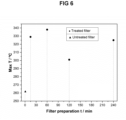
Figure 6 depicts the obtained data of the effect of the period maintaining to the annealing temperature on the magnetic induction heating (132 kHz, 500 Oe) in filters of average pore diameter of 10 µm, treated with an annealing temperature of 950°C. -
Figure 7 depicts four graphs of the magnetic induction heating effect for four treated filters of different average pore diameters (5 µm, 60 µm), subjected to different magnetic frequencies (78 kHz, 404 kHz) and magnetic field amplitude of 125 Oe. The squares show the data obtained with thermally treated filters and with rapid or slow cooling, and the circles show the data obtained with untreated filters. -
Figure 8 depicts four graphs of the magnetization reversal loop effect for four treated filters of different average pore diameters (5 µm, 60 µm), subjected to different magnetic frequencies (78 kHz, 404 kHz). Black cycles show the data obtained with thermally treated filters using an annealing temperature of 950°C and with rapid or slow cooling, and grey circles show the data obtained with untreated filters. -
Figure 9 depicts a graph of magnetic induction heating efficiency versus different magnetic field amplitude (Oe), H= 100 Oe, 125 Oe, 150 Oe, 175 Oe, in filters of average pore diameter of 10 µm, treated with an annealing temperature of 950°C. -
Figure 10 depicts a graph of the effect of optical heating (917 nm wavelength and 15 W power) on treated filters (black line) versus untreated filters (grey line). - As described above, the present invention provides a method for magnetic conversion of microporous metal materials from paramagnetic to ferromagnetic.
- In particular, the present invention relates to a conversion method for changing magnetic behavior of microporous austenitic stainless-steel materials from paramagnetic to ferromagnetic.
- The conversion method is suitable for changing the austenitic stainless steels which is paramagnetic to a ferromagnetic behavior.
- The magnetic conversion method of the first aspect transforms their magnetic properties from paramagnetic to ferromagnetic and generates micro/nano-structuration of the pore surface (
Figures 2 and 3 (a), (b) ). - In addition, the cooling step ii) (quick cooling) in an organic solvent (preferably, isopropanol) results in the deposition of a carbon layer on the material (filter) surface.
- Advantageously, the ferromagnetic behavior enables a high improvement of the magnetic induction heating efficiency.
- Furthermore, the nanostructured surface and the deposited carbon layer enable boosting the optical heating efficiency.
- The conversion method also provides a powerful protection for corrosion in both air and water conditions, even at very high temperatures.
- The potential applications include air disinfection, methane pyrolysis for generation of H2 without CO2 emission, other thermo-catalytic processes in gas o liquid phase, and even efficient decentralized water heating.
- The obtainable ferromagnetic microporous stainless-steel reveals an efficient heating of fluids by magnetic induction and/or optical absorption.
- The filters obtainable using the method of the first aspect of the present invention were surprisingly improved compared to the untreated filters, as it will be discussed below.
- Effect of the Porosity Filter on the Magnetic Induction Heating-
- As can be observed in
Figure 4 , the effect of the porosity on the magnetic induction heating was surprisingly improved using an average pore diameter equal to or lower than 25 µm. Moreover, the filters with smaller average pore diameters, that is of about 5 µm, reached a still higher temperature in the filter, even above of 400°C, compared to filters having a higher average pore diameter, particularly higher than the threshold of 25 µm. - Therefore, heating of the porous material by magnetic induction is further improved with an average pore diameter equal to or lower than 25 µm.
- Effect of the Annealing Temperature on the Magnetic Induction Heating-
- As shown in
Figure 5 , the maximum temperature, expressed in Celsius degrees, achieved in filters heated by magnetic induction is obtained by using an annealing temperature range between 900°C and 960°C. - Therefore, heating of materials by magnetic induction is further improved when materials are thermally treated (step i) using annealing temperatures from 900°C to 960°C, independent of the cooling down (step ii) by a slow or quick way.
- Effect of the period maintaining the Annealing Temperature on the Magnetic Induction Heating-
- As shown in
Figure 6 , the effect of the period maintaining the annealing temperature on the magnetic induction heating of the annealed filter does not change too much after the first 15 minutes, and does not affect or even goes down after 1 hour maintaining the annealing temperature. - Therefore, the preferable period maintaining the annealed material to the annealing temperature (step i) is equal to or lower than 1 hour, preferably equal to or lower than 30 min.
- Effect of the porosity of the filters on the Magnetic Induction Heating -
- Several assays of magnetic heating for different average pore diameters and magnetic frequencies, at fixed magnetic field amplitude, were performed.
- As shown in
Figure 7 , the effect of the porosity of treated filters of average pore diameter of 5 µm versus 60 µm, subjected to a magnetic frequency of 78 kHz versus a magnetic frequency of 404 kHz with a fixed magnetic field amplitude reveals that the lower is the average pore diameter (5 µm) and the magnetic frequency (78 kHz) the higher is the heating (°C) in the treated filters by magnetic induction. - Therefore, the optimal magnetic field frequency for magnetic induction heating depends on the pore size and, therefore on the size of the particles that form the porous structures The smaller is the pore size, the smaller is the dimension of the particles that form the porous structure. This effect is because for small pores, that is < 25 µm, preferable 5 µm, and low frequencies, that is < 200 kHz, 78 kHz, the ferromagnetic behavior dominates in the particles and the heating due to hysteresis losses is in the same range as the heating due to Eddy currents.
- In contrast, for large frequencies (> 404 kHz), the heating due to Eddy currents dominates and the hysteresis losses contribution given by the ferromagnetic behavior is weak.
- For large pore filters (>60 µm), the effect of the thermal treatment is small and the hysteresis losses in the larger particles that form the porous structure have a negligible contribution.
- Therefore, the use of ferromagnetic microporous stainless-steel material obtainable by the method defined in the first aspect of the invention as a heat exchanger in fluids is preferable having a small average pore diameter, preferably equal to or lower than 25 µm, still more preferable below 10 µm, and combined with low magnetic frequencies, preferably from 70 kHz to 200 kHz.
- The authors of the present invention have found that the magnetic heating efficiency after the thermal treatment is similar for treatments with slow and quick cooling (step ii).
- For a fixed magnetic field amplitude, in general, the heating efficiency increases with the frequency. However, it is more convenient from the practical point of view to work at lower frequencies due to the possibility to use cheaper electronic circuits. Moreover, higher magnetic fields can be obtained at lower frequencies using similar electric energy consumption, and the magnetic heating efficiency drastically increases with the amplitude of the magnetic field.
- Ferromagnetism in the converted microporous stainless-steel filters -
- As shown in
Figure 8 , the magnetization reversal loops of the four filters confirmed the conversion from paramagnetic to ferromagnetic of the austenitic microporous stainless-steel filters. - For small pores (5 µm) and low frequencies (78 kHz) (first graph, left), the ellipsoidal magnetization reversal loops with positive slope reflect the effect of the ferromagnetism in the treated filters (black circle), compared to the ellipse with negative slope of the untreated samples (grey circle), which is sign of the Eddy currents and diamagnetic-like behavior under alternating magnetic fields. The difference in amplitude of the loops is correlated with the higher heating efficiency in the treated samples.
- For high frequency (404 kHz), the difference in amplitude and internal area of the loops is smaller, thus confirming that for large frequencies the magnetic heating process is dominated by Eddy currents.
- In contrast, for large pores (60 µm), the magnetization reversal loops barely change, which explains the minimal enhancement of the magnetic heating efficiency in this case.
- Effect of Magnetic induction heating efficiency on magnetic field amplitude -
- As shown in
Figure 9 , the magnetic induction heating efficiency increases as long as the magnetic field amplitude is increased. - Effect of Optical Heating
- As shown in
Figure 10 , the induced temperature change in the treated filter subjected to an optical heating is increased compared with the untreated filter using a laser light beam with 917 nm wavelength and 15 W power. - Hereinafter, the present invention is described in more detail and specifically with reference to the Examples and Figures, which however are not intended to limit the present invention.
- 6 virgin (untreated) filters, commercially available (Amespore®) (
Figure 1 ) of different average pore diameters of 5 µm, 10 µm, 25 µm, 40 µm, 60 µm and 80 µm were used for the assays. - The initial step was cleaning the filters in isopropanol for 5 minutes under ultra-sonication and dried with a nitrogen flow.
- The cleaned filters of Example 1 were submitted to a chemical treatment by immersing the filters in a mixture of HCl:HNO3 (1:1), then rinsed with isopropanol for 5 minutes and dried with a nitrogen flow.
- Depending on the average pore diameter of each one of the filters (5 µm, 10 µm, 25 µm, 40 µm, 60 µm and 80 µm), the time (seconds) in the acid immersion was varied. The time in the acid mixture increases as the average pore diameter is reduced. The filters were immersed for 45 seconds for the average pore diameter of 5 µm, 10 seconds for the average pore diameter of 10 µm, and 5 seconds for the average pore diameters of 25 µm, 40 µm, 60 µm and 80 µm.
- The chemical treatment removes the chromium and nickel oxide layers usually present in the stainless-steel surface of the filters.
- Example 3 Annealing treatment (step i) of microporous austenitic stainless-steel filter A tube furnace (Lindberg Blue Mini-Mite™TF55030A-1) was used for the high temperature treatment. The filters were introduced in a quartz tube.
- The thermal annealing step i) was performed by heating the filters of the above average pore diameters (with the ends of the tube uncapped) at a rate of 1 °C/s until an annealing temperature of 950°C was reached. The filters were then kept at this annealing temperature for 1 hour.
- Example 4 Cooling treatment (step ii) of microporous annealed stainless-steel filter The filters of Example 3 were cooled down to room temperature.
- The cooling of step ii) was carried out in two different ways.
- The first way of cooling down was done by removing the quartz tube from the furnace including the filters inside it and allowing to cool it to room temperature, yielding dark blue filters of morphology shown in
Figure 2 . - In the second way, the cooling down was carried out by removing the filters directly from the furnace and immediately immersing them into an isopropanol bath at 25°C. This cooling showed that the filters turned a black color with morphology shown in
Figure 3 (a), (b) . - The surface composition of the filters obtained in Example 4 (slow and quick cooling) were compared by SEM-EDX. The results showed that the surface composition of the slowly cooled down filters became all iron oxides as shown in Table 1, second column, below. The results also showed that the surface composition of the rapidly cooled down filters in the isopropanol bath caused carbon incorporation into the surface composition as shown in Table 1, third column, below.
Table 1 - Comparison of surface composition using SEM-EDX Austenitic (Fig. Filter 1) Ferromagnetic Filter, Slowly cooled ( Fig. 2 ) (blue surfaceFerromagnetic Filter, Quickly cooled ( Fig. 3 ) (black surface)Mo= 2.5 Fe= 65 Si= 0.8 O= 1.4 Fe= 60 Ni= 11.4 O= 17 Cr= 16.1 O= 35 C=23 C= 5.3 Fe= 62.5 - The blue filters obtained by slow cooling were highly hydrophilic, whereas the black carbon coated filters obtained by quick cooling were highly hydrophobic.
Claims (15)
- A method for magnetic conversion from paramagnetic to ferromagnetic of a microporous metal material, characterized in that the microporous metal material comprises a microporous austenitic stainless-steel material, and the method comprises the steps of:i) thermal annealing the microporous austenitic stainless-steel material as raw material, wherein thermal annealing comprises heating the microporous austenitic stainless-steel material to an annealing temperature comprised of between 500°C and 1,200°C, and maintaining the annealed microporous stainless-steel material at the annealing temperature for a period, and then,ii) cooling down the annealed microporous stainless-steel material to room temperature, wherein the cooling is carried out by allowing the annealed microporous stainless-steel material to cool under room temperature, so the annealed microporous stainless-steel material is slowly cooled, or alternatively cooling by immersing the annealed microporous stainless-steel material in an organic solvent bath that is at room temperature, so the annealed microporous stainless-steel material is quickly cooled.
- Method of claim 1, wherein the microporous austenitic stainless-steel material as raw material includes an average pore diameter equal to or lower than 80 µm.
- Method of claim 2, wherein the average pore diameter is equal to or lower than 25 µm.
- Method of claim 1, wherein in step i) the annealing temperature is between 850°C and 1,000°C, preferable from 940 to 960°C.
- Method of claim 1, wherein the organic solvent is isopropanol.
- Method of claim 1, wherein before thermal annealing of step i), the microporous austenitic stainless-steel material as raw material is chemically treated in an acidic mixture comprising hydrochloride acid and nitric acid in a volume ratio from 3:1 to 1:3.
- Method of claim 6, wherein the acidic mixture is in an equimolar ratio 1:1.
- Method of any one of previous claims, wherein the method further comprises an initial step of cleaning the microporous austenitic stainless-steel material, wherein the cleaning includes immersing the microporous austenitic stainless-steel material in an isopropanol bath under ultra-sonication and then drying with a nitrogen flow.
- Method of any one of previous claims, wherein the material is a filter, sintered or not.
- A ferromagnetic microporous stainless-steel material obtainable by the method defined in claims 1 to 9.
- Ferromagnetic microporous stainless-steel material of claim 10, wherein being the cooling of step i) carried out by allowing to cool under room temperature, the obtainable ferromagnetic microporous stainless-steel material is hydrophilic.
- Ferromagnetic microporous stainless-steel material according to claims 11, wherein the surface of the material is nanostructured and composed of iron oxides.
- Ferromagnetic microporous stainless-steel material of claims 10, wherein being the cooling of step ii) carried out at by immersing in an organic solvent bath that is at room temperature, the obtainable ferromagnetic microporous stainless-steel material is hydrophobic.
- Ferromagnetic microporous stainless-steel of claim 13, wherein the surface of the material is nanostructured and composed of carbon.
- Use of a ferromagnetic microporous stainless-steel material defined in claims 10 to 14 as a heat exchanger.
Priority Applications (2)
| Application Number | Priority Date | Filing Date | Title |
|---|---|---|---|
| EP23382733.6A EP4495962A1 (en) | 2023-07-18 | 2023-07-18 | A method for magnetic conversion from paramagnetic to ferromagnetic of microporous metal materials, ferromagnetic microporous metal material obtainable thereby and their uses |
| PCT/EP2024/070425 WO2025017138A1 (en) | 2023-07-18 | 2024-07-18 | A method for magnetic conversion from paramagnetic to ferromagnetic of microporous metal materials, converted ferromagnetic microporous metal material and uses thereof |
Applications Claiming Priority (1)
| Application Number | Priority Date | Filing Date | Title |
|---|---|---|---|
| EP23382733.6A EP4495962A1 (en) | 2023-07-18 | 2023-07-18 | A method for magnetic conversion from paramagnetic to ferromagnetic of microporous metal materials, ferromagnetic microporous metal material obtainable thereby and their uses |
Publications (1)
| Publication Number | Publication Date |
|---|---|
| EP4495962A1 true EP4495962A1 (en) | 2025-01-22 |
Family
ID=87418883
Family Applications (1)
| Application Number | Title | Priority Date | Filing Date |
|---|---|---|---|
| EP23382733.6A Withdrawn EP4495962A1 (en) | 2023-07-18 | 2023-07-18 | A method for magnetic conversion from paramagnetic to ferromagnetic of microporous metal materials, ferromagnetic microporous metal material obtainable thereby and their uses |
Country Status (2)
| Country | Link |
|---|---|
| EP (1) | EP4495962A1 (en) |
| WO (1) | WO2025017138A1 (en) |
Citations (2)
| Publication number | Priority date | Publication date | Assignee | Title |
|---|---|---|---|---|
| CN107164704A (en) * | 2017-04-17 | 2017-09-15 | 华南理工大学 | A kind of porous low mould austenitic stainless steel and preparation method thereof |
| US11478761B2 (en) * | 2018-03-14 | 2022-10-25 | King Fahd University Of Petroleum And Minerals | One-step scalable fabrication of mechanically robust visible-light responsive oxide-modified metallic multifunctional membranes |
-
2023
- 2023-07-18 EP EP23382733.6A patent/EP4495962A1/en not_active Withdrawn
-
2024
- 2024-07-18 WO PCT/EP2024/070425 patent/WO2025017138A1/en not_active Ceased
Patent Citations (2)
| Publication number | Priority date | Publication date | Assignee | Title |
|---|---|---|---|---|
| CN107164704A (en) * | 2017-04-17 | 2017-09-15 | 华南理工大学 | A kind of porous low mould austenitic stainless steel and preparation method thereof |
| US11478761B2 (en) * | 2018-03-14 | 2022-10-25 | King Fahd University Of Petroleum And Minerals | One-step scalable fabrication of mechanically robust visible-light responsive oxide-modified metallic multifunctional membranes |
Non-Patent Citations (3)
| Title |
|---|
| L YU ET AL.: "Catching and killing of airborne SARS-CoV-2 to control spread of COVID-19 by a heated air disinfection system", MATERIALS TODAY PHYSICS, vol. 15, 2020, pages 100249 |
| M. WENDLERC. ULLRICHM. HAUSERL. KRUGERO. VOLKOVAA. WEIΒJ. MOLA: "Quenching and partitioning (Q&P) processing of fully austenitic stainless steels", ACTA MATER, vol. 133, 2017, pages 346 - 355 |
| NUR ACAR ET AL: "Effect of pressure on the magnetic and structural properties of X2CrNiMo17-12-2 austenitic stainless steel prepared by powder metallurgy method", JOURNAL OF MOLECULAR STRUCTURE, vol. 1198, 2 August 2019 (2019-08-02), XP085854823, ISSN: 0022-2860, [retrieved on 20190802], DOI: 10.1016/J.MOLSTRUC.2019.126876 * |
Also Published As
| Publication number | Publication date |
|---|---|
| WO2025017138A1 (en) | 2025-01-23 |
Similar Documents
| Publication | Publication Date | Title |
|---|---|---|
| US7161124B2 (en) | Thermal and high magnetic field treatment of materials and associated apparatus | |
| RU2566122C1 (en) | Heat-resistant ferritic steel and method of its manufacturing | |
| US9803139B1 (en) | Process for removing aluminum-silicon coatings from metallic structures, and related processes for preparing magnetic components | |
| Tang et al. | Corrosion characteristics of Fe3Si intermetallic coatings prepared by molten salt infiltration in sulfuric acid solution | |
| CN111057820A (en) | Efficient annealing method for improving comprehensive performance of iron-based amorphous alloy iron core | |
| Li et al. | Microstructure analysis of 304L austenitic stainless steel by QPQ complex salt bath treatment | |
| CN114317898A (en) | A method for improving wear and corrosion resistance of ferritic stainless steel surface | |
| CN108277325B (en) | A kind of heat treatment method of amorphous alloy | |
| Sung et al. | Effect of Mn on< 100> texture evolution in Fe-Si-Mn alloys | |
| CN106755842B (en) | A kind of heat treatment method of iron based nano crystal material | |
| CN100545960C (en) | Magnetic core and application product using the same | |
| Liu et al. | Effect of grain size and cooling rate on the martensite start temperature of stainless steel | |
| CN108588366A (en) | A kind of heat treatment method of selective laser fusing forming 06Cr19Ni10 austenitic stainless steels | |
| CN107739785B (en) | A kind of idle call stator core heat treatment process | |
| CN100537818C (en) | A constant elastic alloy with high magnetic induction and low frequency temperature coefficient | |
| Ovchinnikov et al. | Effect of ion irradiation on the nanocrystallization and magnetic properties of soft magnetic Fe72. 5Cu1Nb2Mo1. 5Si14B9 alloy | |
| WO2025017138A1 (en) | A method for magnetic conversion from paramagnetic to ferromagnetic of microporous metal materials, converted ferromagnetic microporous metal material and uses thereof | |
| US20150071702A1 (en) | Structural body and production method for the same | |
| CN109913622B (en) | Rapid spheroidizing annealing method for T8 carbon tool steel | |
| CN106702312A (en) | Method for treating iron-based pan and iron-based pan | |
| CA3032155A1 (en) | Methods of removing a ceramic coating from a substrate | |
| CN109988978B (en) | Method for preparing wide-strain-amplitude high-damping iron-based composite alloy through high-temperature oxidation | |
| Prabhu et al. | Anomalously large magnetic moment in nanocrystalline Co0. 3Zn0. 7Fe2O4 thin films | |
| CN112899447A (en) | Annealing method for improving output linearity of nanocrystalline iron core in transformer | |
| JP2015014022A (en) | Method for imparting corrosion resistance to stainless steel cylinders |
Legal Events
| Date | Code | Title | Description |
|---|---|---|---|
| PUAI | Public reference made under article 153(3) epc to a published international application that has entered the european phase |
Free format text: ORIGINAL CODE: 0009012 |
|
| STAA | Information on the status of an ep patent application or granted ep patent |
Free format text: STATUS: THE APPLICATION HAS BEEN PUBLISHED |
|
| AK | Designated contracting states |
Kind code of ref document: A1 Designated state(s): AL AT BE BG CH CY CZ DE DK EE ES FI FR GB GR HR HU IE IS IT LI LT LU LV MC ME MK MT NL NO PL PT RO RS SE SI SK SM TR |
|
| STAA | Information on the status of an ep patent application or granted ep patent |
Free format text: STATUS: THE APPLICATION IS DEEMED TO BE WITHDRAWN |
|
| 18D | Application deemed to be withdrawn |
Effective date: 20250723 |