EP4495929A1 - Unit cell and structural panel assemblies with enhanced impact and noise absorption characteristics - Google Patents
Unit cell and structural panel assemblies with enhanced impact and noise absorption characteristics Download PDFInfo
- Publication number
- EP4495929A1 EP4495929A1 EP24188555.7A EP24188555A EP4495929A1 EP 4495929 A1 EP4495929 A1 EP 4495929A1 EP 24188555 A EP24188555 A EP 24188555A EP 4495929 A1 EP4495929 A1 EP 4495929A1
- Authority
- EP
- European Patent Office
- Prior art keywords
- frame member
- unit cell
- outer frame
- cell assembly
- inner frame
- Prior art date
- Legal status (The legal status is an assumption and is not a legal conclusion. Google has not performed a legal analysis and makes no representation as to the accuracy of the status listed.)
- Withdrawn
Links
Images
Classifications
-
- G—PHYSICS
- G10—MUSICAL INSTRUMENTS; ACOUSTICS
- G10K—SOUND-PRODUCING DEVICES; METHODS OR DEVICES FOR PROTECTING AGAINST, OR FOR DAMPING, NOISE OR OTHER ACOUSTIC WAVES IN GENERAL; ACOUSTICS NOT OTHERWISE PROVIDED FOR
- G10K11/00—Methods or devices for transmitting, conducting or directing sound in general; Methods or devices for protecting against, or for damping, noise or other acoustic waves in general
- G10K11/16—Methods or devices for protecting against, or for damping, noise or other acoustic waves in general
- G10K11/172—Methods or devices for protecting against, or for damping, noise or other acoustic waves in general using resonance effects
-
- B—PERFORMING OPERATIONS; TRANSPORTING
- B60—VEHICLES IN GENERAL
- B60R—VEHICLES, VEHICLE FITTINGS, OR VEHICLE PARTS, NOT OTHERWISE PROVIDED FOR
- B60R13/00—Elements for body-finishing, identifying, or decorating; Arrangements or adaptations for advertising purposes
- B60R13/08—Insulating elements, e.g. for sound insulation
- B60R13/0815—Acoustic or thermal insulation of passenger compartments
-
- F—MECHANICAL ENGINEERING; LIGHTING; HEATING; WEAPONS; BLASTING
- F16—ENGINEERING ELEMENTS AND UNITS; GENERAL MEASURES FOR PRODUCING AND MAINTAINING EFFECTIVE FUNCTIONING OF MACHINES OR INSTALLATIONS; THERMAL INSULATION IN GENERAL
- F16F—SPRINGS; SHOCK-ABSORBERS; MEANS FOR DAMPING VIBRATION
- F16F15/00—Suppression of vibrations in systems; Means or arrangements for avoiding or reducing out-of-balance forces, e.g. due to motion
- F16F15/02—Suppression of vibrations of non-rotating, e.g. reciprocating systems; Suppression of vibrations of rotating systems by use of members not moving with the rotating systems
- F16F15/04—Suppression of vibrations of non-rotating, e.g. reciprocating systems; Suppression of vibrations of rotating systems by use of members not moving with the rotating systems using elastic means
- F16F15/06—Suppression of vibrations of non-rotating, e.g. reciprocating systems; Suppression of vibrations of rotating systems by use of members not moving with the rotating systems using elastic means with metal springs
- F16F15/067—Suppression of vibrations of non-rotating, e.g. reciprocating systems; Suppression of vibrations of rotating systems by use of members not moving with the rotating systems using elastic means with metal springs using only wound springs
-
- G—PHYSICS
- G10—MUSICAL INSTRUMENTS; ACOUSTICS
- G10K—SOUND-PRODUCING DEVICES; METHODS OR DEVICES FOR PROTECTING AGAINST, OR FOR DAMPING, NOISE OR OTHER ACOUSTIC WAVES IN GENERAL; ACOUSTICS NOT OTHERWISE PROVIDED FOR
- G10K11/00—Methods or devices for transmitting, conducting or directing sound in general; Methods or devices for protecting against, or for damping, noise or other acoustic waves in general
- G10K11/16—Methods or devices for protecting against, or for damping, noise or other acoustic waves in general
- G10K11/162—Selection of materials
Definitions
- the present disclosure relates generally to unit cell and structural panel assemblies with enhanced impact, noise absorption, and insulation characteristics for use in automotive, aerospace, construction, and other applications.
- the unit cell and structural panel assemblies combine quasi-zero stiffness (QZS) structures, scattering phononic crystals (SPCs), and locally-resonating phononic crystals (LRPCs) enabled by additive manufacturing, molding, and other techniques.
- QZS quasi-zero stiffness
- SPCs scattering phononic crystals
- LRPCs locally-resonating phononic crystals
- the present disclosure relates generally to unit cell and structural panel assemblies with enhanced impact, noise absorption, and insulation characteristics for use in automotive, aerospace, construction, and other applications.
- the unit cell and structural panel assemblies combine QZS structures, SPCs, and LRPCs enabled by additive manufacturing, molding, and other techniques. This offers an improved approach to enhancing impact sustainability and noise attenuation in various applications.
- the present disclosure provides a unit cell assembly, including: an outer frame member spaced apart from an inner frame member; a plurality of QZS spring members disposed between the inner frame member and the outer frame member; a phononic crystal disposed between the inner frame member and the outer frame member; and a plurality of LRPC spring members disposed between the phononic crystal and one or more of the inner frame member and the outer frame member.
- the outer frame member is an open frame member allowing for the penetration of sound waves into the unit cell assembly through the outer frame member.
- the inner frame member is a closed frame member including a barrier material attenuating the transmission of sound waves out of the unit cell assembly through the inner frame member.
- each unit cell assembly includes: an outer frame member spaced apart from an inner frame member; a plurality of QZS spring members disposed between the inner frame member and the outer frame member; a phononic crystal disposed between the inner frame member and the outer frame member; and a plurality of LRPC spring members disposed between the phononic crystal and one or more of the inner frame member and the outer frame member.
- the outer frame member is an open frame member allowing for the penetration of sound waves into the unit cell assembly through the outer frame member.
- the inner frame member is a closed frame member including a barrier material attenuating the transmission of sound waves out of the unit cell assembly through the inner frame member.
- the phononic crystal is a disc that acts as a SPC for attenuating high-frequency sound waves within the unit cell assembly.
- the phononic crystal is a disc that acts as a vibrating mass for the LRPC spring members for attenuating low-frequency sound waves within the unit cell assembly by converting the low-frequency sound waves to heat by vibration.
- the plurality of LRPC spring members are each disposed at an oblique angle between the phononic crystal and the one or more of the inner frame member and the outer frame member.
- the array of unit cell assemblies is one or both of an array of horizontally disposed unit cell assemblies and an array of vertically disposed unit cell assemblies, and the array of unit cell assemblies is formed by one or more of an additive manufacturing technique and a molding technique.
- the array of unit cell assemblies is disposed between an inner panel and an outer panel of a vehicle structure.
- the present disclosure provides a method for forming a unit cell assembly, the method including the steps of: providing an outer frame member spaced apart from an inner frame member; providing a plurality of QZS spring members disposed between the inner frame member and the outer frame member; providing a phononic crystal disposed between the inner frame member and the outer frame member; and providing a plurality of LRPC spring members disposed between the phononic crystal and one or more of the inner frame member and the outer frame member; the providing steps include using one or more of an additive manufacturing technique and a molding technique.
- the outer frame member is an open frame member allowing for the penetration of sound waves into the unit cell assembly through the outer frame member
- the inner frame member is a closed frame member including a barrier material attenuating the transmission of sound waves out of the unit cell assembly through the inner frame member.
- the phononic crystal is a disc that acts as a SPC for attenuating high-frequency sound waves within the unit cell assembly and as a vibrating mass for the LRPC spring members for attenuating low-frequency sound waves within the unit cell assembly by converting the low-frequency sound waves to heat by vibration.
- the method also includes disposing the unit cell assembly one or more of horizontally and vertically adjacent to a plurality of other unit cell assemblies to form an array of unit cell assemblies forming a structural panel assembly.
- QZS structures are engineered systems designed to exhibit extremely low stiffness under normal conditions, while maintaining high stiffness when subjected to large deformation or impact forces. This unique characteristic allows them to effectively absorb and dissipate energy during an impact, thereby mitigating the effects of sudden loads and shocks.
- the design of the present disclosure houses a phononic crystal disc or the like, which acts as a scatterer for SPC functionality and a vibrating mass for LRPC functionality.
- the phononic crystal is connected to an outer frame using LRPC springs, which have different spring stiffness that may be tuned.
- the stiffness of the LRPC springs may be altered to change the resonance mode shape to target specific frequencies.
- the vibrator mass may be altered for the same purpose by changing the infill density, for example.
- the outer frame and inner frame of the design are separated and kept in place by load springs having the same stiffness, which act as QZS structures during an impact.
- This design also uses the inherent shape memory behavior of common polymeric materials, like polyactic acid (PLA) and thermoplastic polyurethane (TPU), in order to regain an original shape post impact with heat as the stimuli.
- PPA polyactic acid
- TPU thermoplastic polyurethane
- the proposed solution integrates the QZS structures, SPC, and LRPCs into a single unit cell that can be programmed for each application given the loads and frequency isolation data. It offers the advantage of enhanced impact sustainability. Unlike conventional approaches, that primarily rely on the strength and stiffness of the materials used, QZS structures exhibit extremely low stiffness under normal conditions and efficiently absorb and dissipate impact energy, minimizing transmitted forces and reducing the risk of structural damage.
- the proposed solution also offers the advantage of targeted noise attenuation.
- the integration of phononic crystals within the unit cell enables precise control and manipulation of sound waves. Unlike conventional noise reduction methods that often provide general noise attenuation, the phononic crystals selectively attenuate or block specific frequency ranges associated with noise.
- the proposed solution further offers the advantage of versatility and integration.
- the unit cell offers versatility in its applications and integration into existing structures. It can be seamlessly incorporated into various components, such as vehicle frames and body panels, door panels, machinery mounts, etc.
- the design has inclined/oblique LRPC springs that connect the scatterer/vibrator to the outer frame.
- the mode shape of the vibrator can be simulated using finite element analysis (FEM) and tuned accordingly.
- FEM finite element analysis
- the design uses materials like PLA and TPU, which are readily available and exhibit a lesser-known shape memory behavior when exposed to heat.
- the unit cells are used to form an array that may fill a defined space, e.g., the space between inner and outer door panels of a vehicle, etc.
- the inner frame member 14 is a closed frame member including a barrier material 18, such as PLA, TPU, or the like, in an interior thereof for attenuating the transmission of sound waves out of the unit cell assembly 10 through the inner frame member 14.
- a barrier material 18 such as PLA, TPU, or the like
- Each of the outer frame member 12 and the inner frame member may be made of PLA, TPU, or the like.
- a plurality of QZS spring members 20 are disposed between the inner frame 14 member and the outer frame member 12.
- Each of the QZS spring members 20 is made of PLA, TPU, or the like and includes a thin-walled Schwarz triply periodic minimal surface (TPMS) lattice structure.
- TPMS thin-walled Schwarz triply periodic minimal surface
- the plurality of QZS spring members 20 are disposed at vertices of the inner frame member 14 and the outer frame member 12, and have a length of about 35mm.
- the QZS spring members 20 are a cuboid-shaped volume of dimensions x, y, and z (10 mm, 10 mm, and 35 mm, for example, depending on the application) that is filled with a Schwarz TPMS lattice structure with a lattice constant of a, b, and c and a wall thickness of t. It is important to note that the dimensions may change according to the application.
- the phononic crystal 22 also acts as a vibrating mass for the LRPC spring members 26 for attenuating low-frequency sound waves, between about 200 Hz and about 700 Hz and harmonics, within the unit cell assembly 10 by converting the low-frequency sound waves to heat by vibration.
- the plurality of LRPC spring members 26 are disposed between the phononic crystal 22 and one or more of the inner frame member 14 and the outer frame member 12. In this embodiment, optionally, the plurality of LRPC spring members 26 are disposed between the plurality of QZS spring members 20 and are disposed between the phononic crystal 22 and the outer frame member 12. The plurality of LRPC spring members 26 are each disposed at an oblique angle of about 62 degrees, depending on the frame structure, between the phononic crystal 22 and the outer frame member 12. Each of the LRPC spring members 26 is made of TPU or the like, includes a thin-walled Schwarz TPMS lattice structure, and has a length of about 25 mm.
- the unit cell assembly 10 is formed by one or more of an additive manufacturing technique and a molding technique.
- the QZS spring members 20 are a cuboid-shaped volume of dimensions x, y, and z (10 mm, 10 mm, and 35 mm, for example, depending on the application) that is filled with a Schwarz TPMS lattice structure with a lattice constant of a, b, and c and a wall thickness of t. It is important to note that the dimensions may change according to the application.
- a phononic crystal 22 is disposed between the inner frame member 14 and the outer frame member 12.
- the phononic crystal 22 is made of PLA or the like and, in this embodiment, has a disc shape with a diameter of about 76 mm and a thickness of about 12 mm at the axis and about 2 mm at the circumference, although other shapes and dimensions may be used equally.
- the phononic crystal 22 is suspended within the cavity 24 formed by the inner frame 14, the outer frame 12, and the plurality of QZS spring members 20.
- the phononic crystal 22 acts as a SPC for tunably attenuating high-frequency sound waves, between about 1700 Hz and about 1900 Hz, within the unit cell assembly 10.
- the phononic crystal 22 also acts as a vibrating mass for the LRPC spring members 26 for attenuating low-frequency sound waves, between about 200 Hz and about 700 Hz and harmonics, within the unit cell assembly 10 by converting the low-frequency sound waves to heat by vibration.
- the plurality of LRPC spring members 26 are disposed between the phononic crystal 22 and one or more of the inner frame member 14 and the outer frame member 12. In this embodiment, optionally, the plurality of LRPC spring members 26 are disposed between the plurality of QZS spring members 20 and are disposed between the phononic crystal 22 and the outer frame member 12. The plurality of LRPC spring members 26 are each disposed at an oblique angle of about 62 degrees, depending on the frame structure, between the phononic crystal 22 and the outer frame member 12. Each of the LRPC spring members 26 is made of TPU or the like, includes a thin-walled Schwarz TPMS lattice structure, and has a length of about 25 mm.
- the LRPC spring members 26 are a cuboid-shaped volume of dimensions x, y, and z that is filled with a Schwarz TPMS lattice structure with a lattice constant of a, b, and c and a wall thickness of t. It is important to note that the dimensions may change according to the application.
- the unit cell assembly 10 is formed by one or more of an additive manufacturing technique and a molding technique.
- the structural panel assembly 30 includes a plurality of unit cell assemblies 10 formed or joined together to form a unitary structural member that is incorporated into a vehicle, structure, or the like to provide enhanced impact sustainability, noise absorption, and insulation for the vehicle, structure, or the like.
- the structural panel assembly 30, consisting of an array of unit cell assemblies 10, may be one or both of an array of horizontally disposed unit cell assemblies 10 and an array of vertically disposed unit cell assemblies 10 having any suitable length, width, and depth shapes and/or dimensions for a given application.
- the structural panel assembly 30 may be disposed between an inner panel 32 and an outer panel 34 of a vehicle structure 36, such as a vehicle door.
- the structural panel assembly 30 may be adhered to one or more of the inner panel 32 and the outer panel 34, and/or may utilize other intervening structures, layers, and/or materials.
- FIG. 4 is a flowchart of one illustrative embodiment of the method 40 for forming the unit cell assembly 10 of the present disclosure.
- the method includes the steps of: providing the outer frame member spaced apart from the inner frame member (step 42), providing the plurality of QZS spring members disposed between the inner frame member and the outer frame member (step 44), providing the phononic crystal disposed between the inner frame member and the outer frame member (step 46), and providing the plurality of LRPC spring members disposed between the phononic crystal and one or more of the inner frame member and the outer frame member (step 48).
- the steps are performed using one or more of an additive manufacturing technique and a molding technique, for example.
- the outer frame member is an open frame member allowing for the penetration of sound waves into the unit cell assembly through the outer frame member
- the inner frame member is a closed frame member comprising a barrier material attenuating the transmission of sound waves out of the unit cell assembly through the inner frame member.
- the phononic crystal is a disc that acts as a SPC for attenuating high-frequency sound waves within the unit cell assembly and as a vibrating mass for the LRPC spring members for attenuating low-frequency sound waves within the unit cell assembly by converting the low-frequency sound waves to heat by vibration.
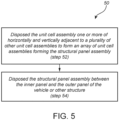
- FIG. 5 is a flowchart of one illustrative embodiment of the method 50 for forming the structural panel assembly 30 of the present disclosure.
- the method includes the steps of: disposing the unit cell assembly one or more of horizontally and vertically adjacent to a plurality of other unit cell assemblies to form an array of unit cell assemblies forming the structural panel assembly (step 52) and, optionally, disposing the structural panel assembly between the inner panel and the outer panel of the vehicle or other structure (step 54).
- the design of the present disclosure houses a phononic crystal disc or the like, which acts as a scatterer for SPC functionality and a vibrating mass for LRPC functionality.
- the phononic crystal is connected to an outer frame using LRPC springs, which have different spring stiffness that may be tuned.
- the stiffness of the LRPC springs may be altered to change the resonance mode shape to target specific frequencies.
- the vibrator mass may be altered for the same purpose by changing the infill density, for example.
- the outer frame and inner frame of the design are separated and kept in place by load springs having the same stiffness, which act as QZS structures during an impact.
- This design also uses the inherent shape memory behavior of common polymeric materials, like PLA and TPU, in order to regain an original shape post impact with heat as the stimuli.
- Using such materials, along with meta-structures/architected materials, provides a lightweight and compact solution as compared to conventional methods.
- the potential applications for this innovation are diverse, ranging from the automotive and aerospace industries, where impact resistance and noise control are crucial, to the construction industry.
- the proposed solution integrates the QZS structures, SPC, and LRPCs into a single unit cell that can be programmed for each application given the loads and frequency isolation data. It offers the advantage of enhanced impact sustainability. Unlike conventional approaches, that primarily rely on the strength and stiffness of the materials used, QZS structures exhibit extremely low stiffness under normal conditions and efficiently absorb and dissipate impact energy, minimizing transmitted forces and reducing the risk of structural damage.
- the proposed solution also offers the advantage of targeted noise attenuation.
- the integration of phononic crystals within the unit cell enables precise control and manipulation of sound waves. Unlike conventional noise reduction methods that often provide general noise attenuation, the phononic crystals selectively attenuate or block specific frequency ranges associated with noise.
- the proposed solution further offers the advantage of versatility and integration.
- the unit cell offers versatility in its applications and integration into existing structures. It can be seamlessly incorporated into various components, such as vehicle frames and body panels, door panels, machinery mounts, etc.
Landscapes
- Engineering & Computer Science (AREA)
- Physics & Mathematics (AREA)
- Acoustics & Sound (AREA)
- Multimedia (AREA)
- Mechanical Engineering (AREA)
- General Engineering & Computer Science (AREA)
- Aviation & Aerospace Engineering (AREA)
- Soundproofing, Sound Blocking, And Sound Damping (AREA)
Abstract
Description
- The present disclosure relates generally to unit cell and structural panel assemblies with enhanced impact, noise absorption, and insulation characteristics for use in automotive, aerospace, construction, and other applications. The unit cell and structural panel assemblies combine quasi-zero stiffness (QZS) structures, scattering phononic crystals (SPCs), and locally-resonating phononic crystals (LRPCs) enabled by additive manufacturing, molding, and other techniques.
- In designing automotive, aerospace, construction, and other structures, impact sustainability and noise attenuation are significant considerations. Conventional structures often struggle to withstand high-intensity impacts or sudden loads without sustaining significant damage. This can lead to safety hazards, structural failures, and increased maintenance costs. To avoid this, such structures typically need to be made unnecessarily heavy and bulky, which is inefficient. Further, noise pollution is a pervasive problem in various industries and everyday environments. Excessive noise can have detrimental effects on human health, productivity, and quality of life. Traditional noise reduction methods, such as sound barriers and insulation materials, may have limitations in effectively attenuating specific frequency ranges.
- The need for structures to sustain impacts without significant damage has been a long-standing concern, particularly in industries such as automotive, aerospace, and construction. Thus, rigid structures have commonly been used, which has often resulted in high levels of damage upon impact. Over time, researchers and engineers have explored the use of materials with improved impact resistance, such as high-strength alloys, composites, and energy-absorbing foams. These materials have offered some improvements, but have not always been sufficient to prevent damage or ensure the safety of a structure. Recently, the concept of QZS structures has emerged as a promising approach to effectively absorb and dissipate impact energy.
- Likewise, conventional approaches to noise mitigation include the use of sound barriers, acoustic insulation materials, and passive damping systems. While these methods can provide some level of noise reduction, they often have limitations in effectively attenuating specific frequency ranges or selectively targeting specific noise sources. Additionally, the methods may add weight, complexity, and cost to a system. Recently, automotive manufacturers have experimented with using either SPCs or LRPCs, but not both.
- This background is provided as illustrative environmental context only and should not be construed to be limiting in any manner. It will be readily apparent to those of ordinary skill in the art that the principles and concepts of the present disclosure may be implemented in other environmental contexts equally, without limitation.
- The present disclosure relates generally to unit cell and structural panel assemblies with enhanced impact, noise absorption, and insulation characteristics for use in automotive, aerospace, construction, and other applications. The unit cell and structural panel assemblies combine QZS structures, SPCs, and LRPCs enabled by additive manufacturing, molding, and other techniques.. This offers an improved approach to enhancing impact sustainability and noise attenuation in various applications.
- In one illustrative embodiment, the present disclosure provides a unit cell assembly, including: an outer frame member spaced apart from an inner frame member; a plurality of QZS spring members disposed between the inner frame member and the outer frame member; a phononic crystal disposed between the inner frame member and the outer frame member; and a plurality of LRPC spring members disposed between the phononic crystal and one or more of the inner frame member and the outer frame member. The outer frame member is an open frame member allowing for the penetration of sound waves into the unit cell assembly through the outer frame member. The inner frame member is a closed frame member including a barrier material attenuating the transmission of sound waves out of the unit cell assembly through the inner frame member. The phononic crystal is a disc that acts as a SPC for attenuating high-frequency sound waves within the unit cell assembly. The phononic crystal is a disc that acts as a vibrating mass for the LRPC spring members for attenuating low-frequency sound waves within the unit cell assembly by converting the low-frequency sound waves to heat by vibration. Optionally, the plurality of QZS spring members are disposed at vertices of the inner frame member and the outer frame member. Optionally, the plurality of LRPC spring members are disposed between the plurality of QZS spring members. The plurality of LRPC spring members are disposed between the phononic crystal and the outer frame member. The plurality of LRPC spring members are each disposed at an oblique angle between the phononic crystal and the one or more of the inner frame member and the outer frame member. The unit cell assembly is formed by one or more of an additive manufacturing technique and a molding technique.
- In another illustrative embodiment, the present disclosure provides a structural panel assembly including an array of unit cell assemblies. Each unit cell assembly includes: an outer frame member spaced apart from an inner frame member; a plurality of QZS spring members disposed between the inner frame member and the outer frame member; a phononic crystal disposed between the inner frame member and the outer frame member; and a plurality of LRPC spring members disposed between the phononic crystal and one or more of the inner frame member and the outer frame member. The outer frame member is an open frame member allowing for the penetration of sound waves into the unit cell assembly through the outer frame member. The inner frame member is a closed frame member including a barrier material attenuating the transmission of sound waves out of the unit cell assembly through the inner frame member. The phononic crystal is a disc that acts as a SPC for attenuating high-frequency sound waves within the unit cell assembly. The phononic crystal is a disc that acts as a vibrating mass for the LRPC spring members for attenuating low-frequency sound waves within the unit cell assembly by converting the low-frequency sound waves to heat by vibration. The plurality of LRPC spring members are each disposed at an oblique angle between the phononic crystal and the one or more of the inner frame member and the outer frame member. The array of unit cell assemblies is one or both of an array of horizontally disposed unit cell assemblies and an array of vertically disposed unit cell assemblies, and the array of unit cell assemblies is formed by one or more of an additive manufacturing technique and a molding technique. The array of unit cell assemblies is disposed between an inner panel and an outer panel of a vehicle structure.
- In a further illustrative embodiment, the present disclosure provides a method for forming a unit cell assembly, the method including the steps of: providing an outer frame member spaced apart from an inner frame member; providing a plurality of QZS spring members disposed between the inner frame member and the outer frame member; providing a phononic crystal disposed between the inner frame member and the outer frame member; and providing a plurality of LRPC spring members disposed between the phononic crystal and one or more of the inner frame member and the outer frame member; the providing steps include using one or more of an additive manufacturing technique and a molding technique. The outer frame member is an open frame member allowing for the penetration of sound waves into the unit cell assembly through the outer frame member, and the inner frame member is a closed frame member including a barrier material attenuating the transmission of sound waves out of the unit cell assembly through the inner frame member. The phononic crystal is a disc that acts as a SPC for attenuating high-frequency sound waves within the unit cell assembly and as a vibrating mass for the LRPC spring members for attenuating low-frequency sound waves within the unit cell assembly by converting the low-frequency sound waves to heat by vibration. The method also includes disposing the unit cell assembly one or more of horizontally and vertically adjacent to a plurality of other unit cell assemblies to form an array of unit cell assemblies forming a structural panel assembly.
- It will be readily apparent to those of ordinary skill in the art that elements of any illustrative embodiment provided herein may be used with any other illustrative embodiment, without limitation.
- The present disclosure is illustrated and described herein with reference to the various drawings, in which like reference numbers are used to denote like assembly components/method steps, as appropriate, and in which:
-
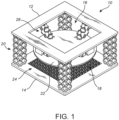
FIG. 1 is a perspective view of one illustrative embodiment of the unit cell of the present disclosure; -
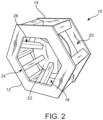
FIG. 2 is a perspective view of another illustrative embodiment of the unit cell of the present disclosure; -
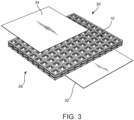
FIG. 3 is a perspective view of one illustrative embodiment of the structural panel of the present disclosure; -
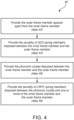
FIG. 4 is a flowchart of one illustrative embodiment of the method for forming the unit cell of the present disclosure; and -
FIG. 5 is a flowchart of one illustrative embodiment of the method for forming the structural panel of the present disclosure. - Again, it will be readily apparent to those of ordinary skill in the art that elements of any illustrative embodiment provided herein may be used with any other illustrative embodiment, without limitation.
- Again, the present disclosure relates generally to unit cell and structural panel assemblies with enhanced impact, noise absorption, and insulation characteristics for use in automotive, aerospace, construction, and other applications. The unit cell and structural panel assemblies combine QZS structures, SPCs, and LRPCs enabled by additive manufacturing, molding, and other techniques.. This offers an improved approach to enhancing impact sustainability and noise attenuation in various applications.
- Phononic crystals have garnered significant attention in the automotive sector for their ability to manipulate and control the propagation of sound waves. Phononic crystals are periodic structures that exhibit spatial variation in mechanical properties, enabling them to selectively filter, attenuate, and/or guide sound waves. By exploiting the bandgap properties of phononic crystals, specific frequency ranges associated with noise can be effectively attenuated or blocked. The proposed design utilizes a combination SPCs, which are effective to attenuate high-frequency noise, and LRPCs, which are known for their effectiveness at converting low-frequency noise energy into heat by vibration. The frequency at which all mode shapes occur can be programmed by changing the spring stiffness and mass of the vibrator.
- QZS structures are engineered systems designed to exhibit extremely low stiffness under normal conditions, while maintaining high stiffness when subjected to large deformation or impact forces. This unique characteristic allows them to effectively absorb and dissipate energy during an impact, thereby mitigating the effects of sudden loads and shocks.
- As QZS structures, SPCs, and LRPCs are generally known to those of ordinary skill in the art, they are not described in great detail herein. Rather, the present disclosure focuses on specific uses of such materials.
- As described in greater detail herein below, the design of the present disclosure houses a phononic crystal disc or the like, which acts as a scatterer for SPC functionality and a vibrating mass for LRPC functionality. The phononic crystal is connected to an outer frame using LRPC springs, which have different spring stiffness that may be tuned. The stiffness of the LRPC springs may be altered to change the resonance mode shape to target specific frequencies. The vibrator mass may be altered for the same purpose by changing the infill density, for example. The outer frame and inner frame of the design are separated and kept in place by load springs having the same stiffness, which act as QZS structures during an impact.
- This design also uses the inherent shape memory behavior of common polymeric materials, like polyactic acid (PLA) and thermoplastic polyurethane (TPU), in order to regain an original shape post impact with heat as the stimuli. Using such materials, along with meta-structures/architected materials, provides a lightweight and compact solution as compared to conventional methods. The potential applications for this innovation are diverse, ranging from the automotive and aerospace industries, where impact resistance and noise control are crucial, to the construction industry.
- Thus, the proposed solution integrates the QZS structures, SPC, and LRPCs into a single unit cell that can be programmed for each application given the loads and frequency isolation data. It offers the advantage of enhanced impact sustainability. Unlike conventional approaches, that primarily rely on the strength and stiffness of the materials used, QZS structures exhibit extremely low stiffness under normal conditions and efficiently absorb and dissipate impact energy, minimizing transmitted forces and reducing the risk of structural damage. The proposed solution also offers the advantage of targeted noise attenuation. The integration of phononic crystals within the unit cell enables precise control and manipulation of sound waves. Unlike conventional noise reduction methods that often provide general noise attenuation, the phononic crystals selectively attenuate or block specific frequency ranges associated with noise. The proposed solution further offers the advantage of versatility and integration. The unit cell offers versatility in its applications and integration into existing structures. It can be seamlessly incorporated into various components, such as vehicle frames and body panels, door panels, machinery mounts, etc.
- The proposed design consists of an inner frame and an outer frame connected to each other by QZS load springs and the size/lattice constant of such unit cell can be calculated from the Bragg frequency using the generic equation:

- The design has inclined/oblique LRPC springs that connect the scatterer/vibrator to the outer frame. The mode shape of the vibrator can be simulated using finite element analysis (FEM) and tuned accordingly. The design uses materials like PLA and TPU, which are readily available and exhibit a lesser-known shape memory behavior when exposed to heat. The unit cells are used to form an array that may fill a defined space, e.g., the space between inner and outer door panels of a vehicle, etc.
- Referring now specifically to
FIG. 1 , in one illustrative embodiment, theunit cell assembly 10 includes anouter frame member 12 spaced apart from aninner frame member 14. In this embodiment, each of theouter frame member 12 and theinner frame member 14 is a substantially rectangular or square frame member with a length of about 95 mm, a width of about 95 mm, and a thickness of about 2.5 mm, although other shapes and dimensions may be used equally. Theouter frame 12 is spaced apart from the inner frame by a distance of about 35 mm. Theouter frame member 12 is an open frame member defining anopening 16 and allowing for the penetration of sound waves into theunit cell assembly 10 through theouter frame member 12. Theinner frame member 14 is a closed frame member including abarrier material 18, such as PLA, TPU, or the like, in an interior thereof for attenuating the transmission of sound waves out of theunit cell assembly 10 through theinner frame member 14. Each of theouter frame member 12 and the inner frame member may be made of PLA, TPU, or the like. - A plurality of
QZS spring members 20 are disposed between theinner frame 14 member and theouter frame member 12. Each of theQZS spring members 20 is made of PLA, TPU, or the like and includes a thin-walled Schwarz triply periodic minimal surface (TPMS) lattice structure. As illustrated, optionally, the plurality ofQZS spring members 20 are disposed at vertices of theinner frame member 14 and theouter frame member 12, and have a length of about 35mm. TheQZS spring members 20 are a cuboid-shaped volume of dimensions x, y, and z (10 mm, 10 mm, and 35 mm, for example, depending on the application) that is filled with a Schwarz TPMS lattice structure with a lattice constant of a, b, and c and a wall thickness of t. It is important to note that the dimensions may change according to the application. - A
phononic crystal 22 is disposed between theinner frame member 14 and theouter frame member 12. Thephononic crystal 22 is made of PLA or the like and, in this embodiment, has a disc shape with a diameter of about 76 mm and a thickness of about 12 mm at the axis and about 2 mm at the circumference, although other shapes and dimensions may be used equally. Thephononic crystal 22 is suspended within thecavity 24 formed by theinner frame 14, theouter frame 12, and the plurality ofQZS spring members 20. Thephononic crystal 22 acts as a SPC for tunably attenuating high-frequency sound waves, between about 1700 Hz and about 1900 Hz, within theunit cell assembly 10. Thephononic crystal 22 also acts as a vibrating mass for theLRPC spring members 26 for attenuating low-frequency sound waves, between about 200 Hz and about 700 Hz and harmonics, within theunit cell assembly 10 by converting the low-frequency sound waves to heat by vibration. - The plurality of
LRPC spring members 26 are disposed between thephononic crystal 22 and one or more of theinner frame member 14 and theouter frame member 12. In this embodiment, optionally, the plurality ofLRPC spring members 26 are disposed between the plurality ofQZS spring members 20 and are disposed between thephononic crystal 22 and theouter frame member 12. The plurality ofLRPC spring members 26 are each disposed at an oblique angle of about 62 degrees, depending on the frame structure, between thephononic crystal 22 and theouter frame member 12. Each of theLRPC spring members 26 is made of TPU or the like, includes a thin-walled Schwarz TPMS lattice structure, and has a length of about 25 mm. TheLRPC spring members 26 are a cuboid-shaped volume of dimensions x, y, and z that is filled with a Schwarz TPMS lattice structure with a lattice constant of a, b, and c and a wall thickness of t. It is important to note that the dimensions may change according to the application. - The
unit cell assembly 10 is formed by one or more of an additive manufacturing technique and a molding technique. - Referring now specifically to
FIG. 2 , in another illustrative embodiment, theunit cell assembly 10 again includes anouter frame member 12 spaced apart from aninner frame member 14. In this embodiment, each of theouter frame member 12 and theinner frame member 14 is a substantially hexagonal frame member with a side length of about 55 mm, depending on the lattice constant, and a thickness of about 2.5 mm, although other shapes and dimensions may be used equally. Theouter frame 12 is spaced apart from the inner frame by a distance of about 35 mm. Theouter frame member 12 is an open frame member defining anopening 16 and allowing for the penetration of sound waves into theunit cell assembly 10 through theouter frame member 12. Theinner frame member 14 is also an open frame member defining anopening 16 and allowing for the transmission of sound waves out of theunit cell assembly 10 through theinner frame member 14. Each of theouter frame member 12 and the inner frame member may be made of PLA, TPU, or the like. - A plurality of
QZS spring members 20 are disposed between theinner frame 14 member and theouter frame member 12. Each of theQZS spring members 20 is made of PLA, TPU, or the like and includes a thin-walled Schwarz triply periodic minimal surface (TPMS) lattice structure. As illustrated, optionally, the plurality ofQZS spring members 20 are disposed at vertices of theinner frame member 14 and theouter frame member 12, and have a length of about 35mm. TheQZS spring members 20 are a cuboid-shaped volume of dimensions x, y, and z (10 mm, 10 mm, and 35 mm, for example, depending on the application) that is filled with a Schwarz TPMS lattice structure with a lattice constant of a, b, and c and a wall thickness of t. It is important to note that the dimensions may change according to the application. - A
phononic crystal 22 is disposed between theinner frame member 14 and theouter frame member 12. Thephononic crystal 22 is made of PLA or the like and, in this embodiment, has a disc shape with a diameter of about 76 mm and a thickness of about 12 mm at the axis and about 2 mm at the circumference, although other shapes and dimensions may be used equally. Thephononic crystal 22 is suspended within thecavity 24 formed by theinner frame 14, theouter frame 12, and the plurality ofQZS spring members 20. Thephononic crystal 22 acts as a SPC for tunably attenuating high-frequency sound waves, between about 1700 Hz and about 1900 Hz, within theunit cell assembly 10. Thephononic crystal 22 also acts as a vibrating mass for theLRPC spring members 26 for attenuating low-frequency sound waves, between about 200 Hz and about 700 Hz and harmonics, within theunit cell assembly 10 by converting the low-frequency sound waves to heat by vibration. - The plurality of
LRPC spring members 26 are disposed between thephononic crystal 22 and one or more of theinner frame member 14 and theouter frame member 12. In this embodiment, optionally, the plurality ofLRPC spring members 26 are disposed between the plurality ofQZS spring members 20 and are disposed between thephononic crystal 22 and theouter frame member 12. The plurality ofLRPC spring members 26 are each disposed at an oblique angle of about 62 degrees, depending on the frame structure, between thephononic crystal 22 and theouter frame member 12. Each of theLRPC spring members 26 is made of TPU or the like, includes a thin-walled Schwarz TPMS lattice structure, and has a length of about 25 mm. TheLRPC spring members 26 are a cuboid-shaped volume of dimensions x, y, and z that is filled with a Schwarz TPMS lattice structure with a lattice constant of a, b, and c and a wall thickness of t. It is important to note that the dimensions may change according to the application. - Again, the
unit cell assembly 10 is formed by one or more of an additive manufacturing technique and a molding technique. - Referring now specifically to
FIG. 3 , in one illustrative embodiment, thestructural panel assembly 30 includes a plurality ofunit cell assemblies 10 formed or joined together to form a unitary structural member that is incorporated into a vehicle, structure, or the like to provide enhanced impact sustainability, noise absorption, and insulation for the vehicle, structure, or the like. Thestructural panel assembly 30, consisting of an array ofunit cell assemblies 10, may be one or both of an array of horizontally disposedunit cell assemblies 10 and an array of vertically disposedunit cell assemblies 10 having any suitable length, width, and depth shapes and/or dimensions for a given application. For example, thestructural panel assembly 30 may be disposed between aninner panel 32 and anouter panel 34 of avehicle structure 36, such as a vehicle door. Impact sustainability is promoted, and noise from the exterior of the vehicle door may be come entrapped within and dissipated by thestructural panel assembly 30, isolating the cabin of the vehicle from the noise. A multitude of other uses are also possible. In this example, thestructural panel 30 may be adhered to one or more of theinner panel 32 and theouter panel 34, and/or may utilize other intervening structures, layers, and/or materials. -
FIG. 4 is a flowchart of one illustrative embodiment of themethod 40 for forming theunit cell assembly 10 of the present disclosure. The method includes the steps of: providing the outer frame member spaced apart from the inner frame member (step 42), providing the plurality of QZS spring members disposed between the inner frame member and the outer frame member (step 44), providing the phononic crystal disposed between the inner frame member and the outer frame member (step 46), and providing the plurality of LRPC spring members disposed between the phononic crystal and one or more of the inner frame member and the outer frame member (step 48). The steps are performed using one or more of an additive manufacturing technique and a molding technique, for example. Again, the outer frame member is an open frame member allowing for the penetration of sound waves into the unit cell assembly through the outer frame member, and the inner frame member is a closed frame member comprising a barrier material attenuating the transmission of sound waves out of the unit cell assembly through the inner frame member. The phononic crystal is a disc that acts as a SPC for attenuating high-frequency sound waves within the unit cell assembly and as a vibrating mass for the LRPC spring members for attenuating low-frequency sound waves within the unit cell assembly by converting the low-frequency sound waves to heat by vibration. -
FIG. 5 is a flowchart of one illustrative embodiment of themethod 50 for forming thestructural panel assembly 30 of the present disclosure. The method includes the steps of: disposing the unit cell assembly one or more of horizontally and vertically adjacent to a plurality of other unit cell assemblies to form an array of unit cell assemblies forming the structural panel assembly (step 52) and, optionally, disposing the structural panel assembly between the inner panel and the outer panel of the vehicle or other structure (step 54). - Thus, the design of the present disclosure houses a phononic crystal disc or the like, which acts as a scatterer for SPC functionality and a vibrating mass for LRPC functionality. The phononic crystal is connected to an outer frame using LRPC springs, which have different spring stiffness that may be tuned. The stiffness of the LRPC springs may be altered to change the resonance mode shape to target specific frequencies. The vibrator mass may be altered for the same purpose by changing the infill density, for example. The outer frame and inner frame of the design are separated and kept in place by load springs having the same stiffness, which act as QZS structures during an impact.
- This design also uses the inherent shape memory behavior of common polymeric materials, like PLA and TPU, in order to regain an original shape post impact with heat as the stimuli. Using such materials, along with meta-structures/architected materials, provides a lightweight and compact solution as compared to conventional methods. The potential applications for this innovation are diverse, ranging from the automotive and aerospace industries, where impact resistance and noise control are crucial, to the construction industry.
- Thus, the proposed solution integrates the QZS structures, SPC, and LRPCs into a single unit cell that can be programmed for each application given the loads and frequency isolation data. It offers the advantage of enhanced impact sustainability. Unlike conventional approaches, that primarily rely on the strength and stiffness of the materials used, QZS structures exhibit extremely low stiffness under normal conditions and efficiently absorb and dissipate impact energy, minimizing transmitted forces and reducing the risk of structural damage. The proposed solution also offers the advantage of targeted noise attenuation. The integration of phononic crystals within the unit cell enables precise control and manipulation of sound waves. Unlike conventional noise reduction methods that often provide general noise attenuation, the phononic crystals selectively attenuate or block specific frequency ranges associated with noise. The proposed solution further offers the advantage of versatility and integration. The unit cell offers versatility in its applications and integration into existing structures. It can be seamlessly incorporated into various components, such as vehicle frames and body panels, door panels, machinery mounts, etc.
- Although the present disclosure is illustrated and described herein with reference to illustrative embodiments and specific examples thereof, it will be readily apparent to those of ordinary skill in the art that other embodiments and examples may perform similar functions and/or achieve like results. All such equivalent embodiments and examples are within the spirit and scope of the present disclosure, are contemplated thereby, and are intended to be covered by the following non-limiting claims for all purposes.
Claims (15)
- A unit cell assembly, comprising:an outer frame member spaced apart from an inner frame member;a plurality of quasi-zero stiffness (QZS) spring members disposed between the inner frame member and the outer frame member;a phononic crystal disposed between the inner frame member and the outer frame member; anda plurality of locally-resonating phononic crystal (LRPC) spring members disposed between the phononic crystal and one or more of the inner frame member and the outer frame member.
- The unit cell assembly of claim 1, wherein the outer frame member is an open frame member allowing for the penetration of sound waves into the unit cell assembly through the outer frame member.
- The unit cell assembly of any of the preceding claims, wherein the inner frame member is a closed frame member comprising a barrier material attenuating the transmission of sound waves out of the unit cell assembly through the inner frame member.
- The unit cell assembly of any of the preceding claims, wherein the phononic crystal is a disc that acts as a scattering phononic crystal (SPC) for attenuating high-frequency sound waves within the unit cell assembly.
- The unit cell assembly of any of the preceding claims, wherein the phononic crystal is a disc that acts as a vibrating mass for the LRPC spring members for attenuating low-frequency sound waves within the unit cell assembly by converting the low-frequency sound waves to heat by vibration.
- The unit cell assembly of any of the preceding claims, wherein:the plurality of QZS spring members are disposed at vertices of the inner frame member and the outer frame member;the plurality of LRPC spring members are disposed between the plurality of QZS spring members; andthe plurality of LRPC spring members are disposed between the phononic crystal and the outer frame member.
- The unit cell assembly of any of the preceding claims, wherein the plurality of LRPC spring members are each disposed at an oblique angle between the phononic crystal and the one or more of the inner frame member and the outer frame member.
- The unit cell assembly of any of the preceding claims, wherein the unit cell assembly is formed by one or more of an additive manufacturing technique and a molding technique.
- A structural panel assembly, comprising:
An array of unit cell assemblies according to any of the preceding claims. - The structural panel assembly of claim 9, wherein the array of unit cell assemblies is one or both of an array of horizontally disposed unit cell assemblies and an array of vertically disposed unit cell assemblies, and wherein the array of unit cell assemblies is formed by one or more of an additive manufacturing technique and a molding technique.
- The structural panel assembly of any of claims 9-10, wherein the array of unit cell assemblies is disposed between an inner panel and an outer panel of a vehicle structure.
- A method for forming a unit cell assembly, the method comprising the steps of:providing an outer frame member spaced apart from an inner frame member;providing a plurality of quasi-zero stiffness (QZS) spring members disposed between the inner frame member and the outer frame member;providing a phononic crystal disposed between the inner frame member and the outer frame member; andproviding a plurality of locally-resonating phononic crystal (LRPC) spring members disposed between the phononic crystal and one or more of the inner frame member and the outer frame member;wherein the providing steps comprise using one or more of an additive manufacturing technique and a molding technique.
- The method of claim 12, wherein the outer frame member is an open frame member allowing for the penetration of sound waves into the unit cell assembly through the outer frame member, and wherein the inner frame member is a closed frame member comprising a barrier material attenuating the transmission of sound waves out of the unit cell assembly through the inner frame member.
- The method of any of claims 12-13, wherein the phononic crystal is a disc that acts as a scattering phononic crystal (SPC) for attenuating high-frequency sound waves within the unit cell assembly and as a vibrating mass for the LRPC spring members for attenuating low-frequency sound waves within the unit cell assembly by converting the low-frequency sound waves to heat by vibration.
- The method of any of claims 12-14, further comprising disposing the unit cell assembly one or more of horizontally and vertically adjacent to a plurality of other unit cell assemblies to form an array of unit cell assemblies forming a structural panel assembly.
Applications Claiming Priority (1)
| Application Number | Priority Date | Filing Date | Title |
|---|---|---|---|
| US18/222,523 US12562143B2 (en) | 2023-07-17 | 2023-07-17 | Unit cell and structural panel assemblies with enhanced impact and noise absorption characteristics |
Publications (1)
| Publication Number | Publication Date |
|---|---|
| EP4495929A1 true EP4495929A1 (en) | 2025-01-22 |
Family
ID=91950179
Family Applications (1)
| Application Number | Title | Priority Date | Filing Date |
|---|---|---|---|
| EP24188555.7A Withdrawn EP4495929A1 (en) | 2023-07-17 | 2024-07-15 | Unit cell and structural panel assemblies with enhanced impact and noise absorption characteristics |
Country Status (3)
| Country | Link |
|---|---|
| US (1) | US12562143B2 (en) |
| EP (1) | EP4495929A1 (en) |
| CN (1) | CN119323948A (en) |
Citations (1)
| Publication number | Priority date | Publication date | Assignee | Title |
|---|---|---|---|---|
| CN113339438A (en) * | 2021-06-22 | 2021-09-03 | 天津大学 | Quasi-zero phononic crystal vibration isolation device capable of actively controlling multi-directional vibration isolation |
Family Cites Families (86)
| Publication number | Priority date | Publication date | Assignee | Title |
|---|---|---|---|---|
| EP1612768B1 (en) | 2003-03-26 | 2012-10-10 | Takehiro Co., Ltd. | Ultralight soundproof material |
| WO2004109145A2 (en) | 2003-06-05 | 2004-12-16 | Pedro Frommer, M.D., P.A. | Resilient and deformable member for absorbing kinetic energy |
| US7598651B2 (en) | 2004-03-12 | 2009-10-06 | Sri International | Mechanical meta-materials |
| CA2603421C (en) | 2005-04-01 | 2013-05-21 | James R. Gross | Nonwoven material for acoustic insulation, and process for manufacture |
| JP5194972B2 (en) | 2008-04-09 | 2013-05-08 | トヨタ紡織株式会社 | Soundproof material |
| EP2595142B1 (en) | 2010-07-15 | 2021-01-20 | Aishin Kako Kabushiki Kaisha | Sound absorption characteristic structure |
| US20120208032A1 (en) | 2011-02-14 | 2012-08-16 | Kinetica Inc. | Helmet designs utilizing an outer slip layer |
| US8474574B1 (en) | 2012-02-29 | 2013-07-02 | Inoac Corporation | Sound absorbing structure |
| WO2015011298A1 (en) | 2013-07-26 | 2015-01-29 | Norman Matheson Lindsay | Impact-absorbing structures |
| WO2015033378A1 (en) | 2013-09-06 | 2015-03-12 | 株式会社プロテックエンジニアリング | Impact absorbing levee body |
| KR101439066B1 (en) | 2013-12-19 | 2014-09-05 | 현대자동차주식회사 | Noise absorbent fabric with excellent formability and appearance, and manufacturing method for the same |
| FR3017235B1 (en) | 2014-02-04 | 2016-01-29 | Onera Office National Detudes Et De Rech Aerospatiales | SOUNDPROOF PANEL |
| US20170051806A1 (en) | 2014-04-24 | 2017-02-23 | President And Fellows Of Harvard College | Shape Recoverable And Reusable Energy Absorbing Structures, Systems And Methods For Manufacture Thereof |
| RU2557865C1 (en) | 2014-06-20 | 2015-07-27 | Анвар Рашитович Валеев | Shock-absorber with quasi-zero stiffness |
| US10030733B2 (en) | 2014-08-01 | 2018-07-24 | Board Of Regents, The University Of Texas System | Negative stiffness honeycomb material |
| CN204452315U (en) | 2014-12-18 | 2015-07-08 | 北汽福田汽车股份有限公司 | A kind of automobile bumper structure with cushion bumper beam |
| GB201501834D0 (en) | 2015-02-04 | 2015-03-18 | Isis Innovation | An impact absorbing structure |
| JP6043407B2 (en) | 2015-02-27 | 2016-12-14 | 富士フイルム株式会社 | Soundproof structure and method for manufacturing soundproof structure |
| CN104837098A (en) | 2015-04-23 | 2015-08-12 | 上海交通大学 | Low and medium frequency sound insulation meta-material structure prepared by 3D printing |
| WO2016176319A1 (en) | 2015-04-30 | 2016-11-03 | Sabic Global Technologies B.V. | Energy absorption member for automobile |
| CN108124417A (en) | 2015-06-02 | 2018-06-05 | 顶点生物医药有限责任公司 | Energy-absorbing structures with defined multi-stage crush properties |
| KR102374629B1 (en) | 2015-06-05 | 2022-03-15 | 사빅 글로벌 테크놀러지스 비.브이. | Energy absorbing assembly and method of making and using same |
| US11199235B2 (en) | 2015-06-15 | 2021-12-14 | 3M Innovative Properties Company | Multilayer damping material |
| WO2016208580A1 (en) | 2015-06-22 | 2016-12-29 | 富士フイルム株式会社 | Soundproof structure and method for producing soundproof structure |
| GB201512470D0 (en) | 2015-07-16 | 2015-08-19 | Univ Cardiff | Impact absorbing device and method of producing an impact absorbing device |
| US11242909B2 (en) | 2015-08-04 | 2022-02-08 | The Supporting Organization For The Georgia O'keeffe Museum | Isolation system for transporting and storing fragile objects |
| CN105040603A (en) | 2015-08-28 | 2015-11-11 | 招商局重庆交通科研设计院有限公司 | Sound-absorbing panel |
| US20170105461A1 (en) | 2015-10-14 | 2017-04-20 | Impact Reduction Apparel, Inc. | Impact reduction apparel and impact absorbing liner for apparel |
| DE102015223771A1 (en) | 2015-11-30 | 2017-06-01 | Röchling Automotive SE & Co. KG | Rad-Staulippe with sound absorbing material |
| CN108463377A (en) | 2015-12-23 | 2018-08-28 | 沙特基础工业全球技术公司 | The mixing of automobile/lower member of compound absorption energy and the method for manufacturing it |
| WO2017120378A1 (en) | 2016-01-08 | 2017-07-13 | VICIS, Inc. | Manufacturing impact absorbing structures for an athletic helmet |
| US10973272B2 (en) * | 2016-01-08 | 2021-04-13 | Vpg Acquisitionco, Llc | Laterally supported filaments |
| DE102016201008B4 (en) | 2016-01-25 | 2019-05-16 | Ford Global Technologies, Llc | Bumper unit for a motor vehicle |
| BR112018068858B1 (en) | 2016-03-25 | 2022-05-03 | Pirelli Tyre S.P.A | Sound-insulating self-sealing tire, and process for manufacturing a sound-insulating self-sealing tire |
| US10540952B2 (en) | 2016-03-30 | 2020-01-21 | Maryam Mohammadi Gojani | Sound absorbing structure including nanofibers |
| EP3239973A1 (en) | 2016-04-28 | 2017-11-01 | Eidgenössische Materialprüfungs- und Forschungsanstalt EMPA | Phononic crystal vibration isolator with inertia amplification mechanism |
| CN105972147B (en) | 2016-07-12 | 2018-03-06 | 安徽工程大学 | The adjustable quasi- zero stiffness vibration-isolating platform of positive negative stiffness |
| WO2018075108A1 (en) | 2016-07-15 | 2018-04-26 | VICIS, Inc. | Impacting absorbing structures in body protective equipment |
| CN109641416A (en) | 2016-08-19 | 2019-04-16 | 3M创新有限公司 | Abatvoix including the core being made of the unit connected, it is wherein some with opening in cell-wall |
| CN106328115B (en) | 2016-08-22 | 2019-10-11 | 东南大学 | Low frequency sound insulation artificial material based on fractal structure |
| JP2018031930A (en) | 2016-08-25 | 2018-03-01 | 浩平 速水 | Sound absorption structure |
| WO2018047153A1 (en) | 2016-09-12 | 2018-03-15 | Acoustic Metamaterials Group Limited | Acoustic metamaterial sound absorber |
| JP6886679B2 (en) | 2016-10-20 | 2021-06-16 | 岐阜プラスチック工業株式会社 | Sound absorption structure unit |
| US10220736B2 (en) * | 2016-10-25 | 2019-03-05 | Viconic Defense Inc. | Seat impact energy absorbing system |
| GB2555457A (en) | 2016-10-28 | 2018-05-02 | Gordon Murray Design Ltd | Impact-absorbing structure for vehicles |
| CN106402262B (en) | 2016-11-11 | 2017-10-27 | 中国人民解放军海军工程大学 | A kind of adjustable magnetic quasi-zero stiffness vibration isolators of rigidity |
| CN108610486A (en) | 2017-01-25 | 2018-10-02 | 翁秋梅 | A kind of energy-absorbing method based on the hybrid cross-linked dynamic aggregation object of combination |
| IT201700041415A1 (en) | 2017-04-13 | 2018-10-13 | Lead Tech S R L | MULTISTABLE, COMPRESSIBLE, COMPOSITE METAMATERIALS, WITH ARTICULATED ELEMENTS AND REALIZABLE WITH 3D MOLDING PROCESSES. |
| CN108312992A (en) | 2018-01-22 | 2018-07-24 | 河南职业技术学院 | A kind of anticollision bumper of car |
| CN108361314B (en) | 2018-01-29 | 2019-08-02 | 南京依维柯汽车有限公司 | A kind of air spring low frequency vibration isolation device folded based on three Pus |
| CN110277083B (en) | 2018-03-16 | 2021-04-02 | 北京理工大学 | A low-frequency sound-absorbing metamaterial |
| CN108502031B (en) | 2018-04-13 | 2020-08-18 | 吉林大学 | A car door sill with microcell filling layer |
| CN108895108B (en) | 2018-07-23 | 2019-06-21 | 北京航空航天大学 | A kind of auxetic multicellular configuration and energy-absorbing structural component |
| US11498282B1 (en) | 2018-11-30 | 2022-11-15 | National Technology & Engineering Solutions Of Sandia, Llc | Computationally optimized and manufactured acoustic metamaterials |
| CN209719505U (en) | 2019-01-03 | 2019-12-03 | 重庆菲斯塔新能源汽车科技有限公司 | A kind of anti-collision beam energy absorbing box |
| US10967802B2 (en) | 2019-03-11 | 2021-04-06 | Volvo Car Corporation | Storage compartment of a vehicle |
| CN209987881U (en) | 2019-03-18 | 2020-01-24 | 哈尔滨理工大学 | Automobile collision buffer device |
| US11530731B2 (en) * | 2019-06-25 | 2022-12-20 | Arizona Board Of Regents On Behalf Of Arizona State University | Mechanical metamaterials as an energy shield |
| US11524753B2 (en) | 2019-07-08 | 2022-12-13 | Impact CBS Inc. | Boat fender with improved impact protection |
| CN110502787B (en) | 2019-07-16 | 2021-04-06 | 南京航空航天大学 | Optimal Design Method of Quasi-Zero Stiffness Shock Absorber |
| CN110332270B (en) | 2019-07-23 | 2021-10-26 | 广州大学 | Folding quasi-zero rigidity vibration isolation device |
| CN110439947A (en) | 2019-08-16 | 2019-11-12 | 沈阳智振科技有限公司 | A kind of vibration isolator based on diamond shape periodic structure |
| CN210859654U (en) | 2019-10-16 | 2020-06-26 | 上海工程技术大学 | A dynamic vibration absorber for urban rail vehicle body based on the principle of quasi-zero stiffness |
| CN110843709B (en) | 2019-11-05 | 2025-01-07 | 华侨大学 | A sandwich structure automobile front anti-collision beam and assembly |
| DE102019007850B4 (en) | 2019-11-13 | 2022-10-27 | Mercedes-Benz Group AG | Loading space arrangement for a front compartment of a motor vehicle that can be closed by a front hood |
| CN210067888U (en) | 2019-11-27 | 2020-02-14 | 江苏天涵之星吸音材料有限公司 | Sound-absorbing fireproof door |
| JP7264042B2 (en) | 2019-12-20 | 2023-04-25 | トヨタ自動車株式会社 | Manufacturing method of shock absorbing member |
| JP6908320B1 (en) | 2020-03-13 | 2021-07-21 | ピクシーダストテクノロジーズ株式会社 | Sound absorbing structure and sound absorbing wall |
| NL2025343B1 (en) | 2020-04-14 | 2021-10-26 | Univ Groningen | Three-dimensional metamaterial for wave attenuation, unit cell of a three-dimensional metamaterial, method for manufactering of a metamaterial, computer program for 3d printing a metamaterial |
| CN213508112U (en) | 2020-09-07 | 2021-06-22 | 江苏登科聚氨酯材料有限公司 | High-strength silicon-containing TPU noise reduction plate |
| CN112319411A (en) | 2020-10-14 | 2021-02-05 | 奇瑞汽车股份有限公司 | Front offset collision energy absorption structure of automobile |
| CN112537263B (en) | 2020-10-29 | 2022-10-04 | 安徽江淮汽车集团股份有限公司 | Automobile with noise reduction and sound receiving device |
| CN112242131A (en) | 2020-12-01 | 2021-01-19 | 中国科学院化学研究所 | Bubble acoustic metamaterial |
| US11420565B2 (en) | 2020-12-18 | 2022-08-23 | Ford Global Technologies, Llc | Cargo divider assembly for a vehicle |
| CN112527027B (en) | 2020-12-18 | 2025-03-07 | 湖南大学 | A passive ultra-low frequency angular vibration control system and a vibration control method thereof |
| WO2022157628A1 (en) | 2021-01-20 | 2022-07-28 | Tata Steel Limited | A reinforcement member for a vehicle |
| CN112758519B (en) | 2021-02-09 | 2025-10-03 | 北京市科学技术研究院城市安全与环境科学研究所 | A quasi-zero-rigidity honeycomb core vibration damping package and its preparation method |
| US12012868B2 (en) * | 2021-03-15 | 2024-06-18 | Massachusetts Institute Of Technology | Discrete macroscopic metamaterial systems |
| CN216040774U (en) | 2021-03-18 | 2022-03-15 | 合肥中驰声屏障技术有限公司 | Broadband sound absorption sound barrier cell board |
| CN216040776U (en) | 2021-04-07 | 2022-03-15 | 安徽中源建设有限公司 | Netted environmental protection board of noise abatement |
| EP4144596B1 (en) | 2021-09-02 | 2023-11-08 | Volvo Car Corporation | Hood lifting mechanism, vehicle comprising the same and method for moving a hood |
| WO2023044121A1 (en) * | 2021-09-17 | 2023-03-23 | University Of Pittsburgh - Of The Commonwealth System Of Higher Education | Super-compressible metamaterial concrete and method for making same |
| CN216119540U (en) | 2021-09-28 | 2022-03-22 | 苏州声致达声学科技有限公司 | A noise-reducing fabric based on acoustic metamaterials |
| CN115303150B (en) | 2022-09-16 | 2024-11-15 | 常熟理工学院 | Seat suspension based on negative rigidity |
| CN115758903A (en) | 2022-11-28 | 2023-03-07 | 同济大学 | 3D printing metamaterial sound absorption performance regulation and control method based on deep learning |
| US20240401667A1 (en) * | 2023-06-02 | 2024-12-05 | University Of Utah Research Foundation | Inerter-Based Elastic Metamaterials For Low-Frequency Vibration Mitigation |
-
2023
- 2023-07-17 US US18/222,523 patent/US12562143B2/en active Active
-
2024
- 2024-06-05 CN CN202410720322.7A patent/CN119323948A/en active Pending
- 2024-07-15 EP EP24188555.7A patent/EP4495929A1/en not_active Withdrawn
Patent Citations (1)
| Publication number | Priority date | Publication date | Assignee | Title |
|---|---|---|---|---|
| CN113339438A (en) * | 2021-06-22 | 2021-09-03 | 天津大学 | Quasi-zero phononic crystal vibration isolation device capable of actively controlling multi-directional vibration isolation |
Non-Patent Citations (2)
| Title |
|---|
| JI J C ET AL: "Vibration control based metamaterials and origami structures: A state-of-the-art review", MECHANICAL SYSTEMS AND SIGNAL PROCESSING, ELSEVIER, AMSTERDAM, NL, vol. 161, 29 April 2021 (2021-04-29), XP086635415, ISSN: 0888-3270, [retrieved on 20210429], DOI: 10.1016/J.YMSSP.2021.107945 * |
| LIU JUNYI ET AL: "A Review of Acoustic Metamaterials and Phononic Crystals", CRYSTALS, vol. 10, no. 4, 15 April 2020 (2020-04-15), CH, pages 305, XP093221670, ISSN: 2073-4352, DOI: 10.3390/cryst10040305 * |
Also Published As
| Publication number | Publication date |
|---|---|
| US12562143B2 (en) | 2026-02-24 |
| US20250029588A1 (en) | 2025-01-23 |
| CN119323948A (en) | 2025-01-17 |
Similar Documents
| Publication | Publication Date | Title |
|---|---|---|
| US20250084908A1 (en) | Designs and manufacturing methods for lightweight hyperdamping materials providing large attenuation of broadband-frequency structure-borne sound | |
| CN103975385B (en) | High bandwidth anti-resonance film | |
| US9275622B2 (en) | Vibro-acoustic attenuation or reduced energy transmission | |
| US7267196B2 (en) | Method and apparatus for reducing acoustic noise | |
| US6266427B1 (en) | Damped structural panel and method of making same | |
| EP2316117B1 (en) | Noise-reducing device and method for reducing noise | |
| Manimala et al. | Dynamic load mitigation using negative effective mass structures | |
| Wang et al. | Flexural wave suppression by an acoustic metamaterial plate | |
| US7104372B2 (en) | Damping structure and applications | |
| US20150047923A1 (en) | Hybrid acoustic barrier and absorber | |
| Xiong et al. | A study on low-frequency vibration mitigation by using the metamaterial-tailored composite concrete-filled steel tube column | |
| Asiri et al. | Periodic struts for gearbox support system | |
| DE212019000455U1 (en) | Sound insulating panel | |
| Asiri et al. | Active periodic struts for a gearbox support system | |
| US12562143B2 (en) | Unit cell and structural panel assemblies with enhanced impact and noise absorption characteristics | |
| CN112013066A (en) | Low-frequency vibration-absorbing structure of composite damping type dynamic vibration absorber | |
| KR102726744B1 (en) | Device for reducing noise using sound meta-material | |
| JP2013541741A (en) | Acoustic suppression system and related method | |
| Jia et al. | Vibration Characteristics of Plate Structures Embedded with Acoustic Black Holes and Distributed Dynamic Vibration Absorbers. | |
| AU2004269176B2 (en) | Method and device for filtering and damping vibrations | |
| US20250218420A1 (en) | Cyclically-Arranged Split Ring Resonator-Based Acoustic Metamaterial | |
| RU2622935C1 (en) | Acoustic construction for industrial facilities | |
| Bishop et al. | Leveraging the arrangement of multiple, critically constrained inclusions in resonant metamaterials for control of broadband vibroacoustic energy | |
| Rocha de Melo Filho et al. | Attenuation of the mass-spring-mass effect in the sound transmission loss of double panel partitions using vibroacoustic resonant metamaterials | |
| Hook et al. | Acoustic black holes in curved plates |
Legal Events
| Date | Code | Title | Description |
|---|---|---|---|
| PUAI | Public reference made under article 153(3) epc to a published international application that has entered the european phase |
Free format text: ORIGINAL CODE: 0009012 |
|
| STAA | Information on the status of an ep patent application or granted ep patent |
Free format text: STATUS: THE APPLICATION HAS BEEN PUBLISHED |
|
| AK | Designated contracting states |
Kind code of ref document: A1 Designated state(s): AL AT BE BG CH CY CZ DE DK EE ES FI FR GB GR HR HU IE IS IT LI LT LU LV MC ME MK MT NL NO PL PT RO RS SE SI SK SM TR |
|
| STAA | Information on the status of an ep patent application or granted ep patent |
Free format text: STATUS: REQUEST FOR EXAMINATION WAS MADE |
|
| STAA | Information on the status of an ep patent application or granted ep patent |
Free format text: STATUS: EXAMINATION IS IN PROGRESS |
|
| 17P | Request for examination filed |
Effective date: 20250722 |
|
| 17Q | First examination report despatched |
Effective date: 20250819 |
|
| STAA | Information on the status of an ep patent application or granted ep patent |
Free format text: STATUS: THE APPLICATION HAS BEEN WITHDRAWN |
|
| 18W | Application withdrawn |
Effective date: 20250923 |