EP4495390A2 - Steuerung des schaufelspitzenspiels eines turbinenmotors unter verwendung einer elektrischen maschine - Google Patents
Steuerung des schaufelspitzenspiels eines turbinenmotors unter verwendung einer elektrischen maschine Download PDFInfo
- Publication number
- EP4495390A2 EP4495390A2 EP24189503.6A EP24189503A EP4495390A2 EP 4495390 A2 EP4495390 A2 EP 4495390A2 EP 24189503 A EP24189503 A EP 24189503A EP 4495390 A2 EP4495390 A2 EP 4495390A2
- Authority
- EP
- European Patent Office
- Prior art keywords
- engine core
- rotor
- electric machine
- turbine
- operating
- Prior art date
- Legal status (The legal status is an assumption and is not a legal conclusion. Google has not performed a legal analysis and makes no representation as to the accuracy of the status listed.)
- Pending
Links
Images



Classifications
-
- F—MECHANICAL ENGINEERING; LIGHTING; HEATING; WEAPONS; BLASTING
- F01—MACHINES OR ENGINES IN GENERAL; ENGINE PLANTS IN GENERAL; STEAM ENGINES
- F01D—NON-POSITIVE DISPLACEMENT MACHINES OR ENGINES, e.g. STEAM TURBINES
- F01D11/00—Preventing or minimising internal leakage of working-fluid, e.g. between stages
- F01D11/08—Preventing or minimising internal leakage of working-fluid, e.g. between stages for sealing space between rotor blade tips and stator
- F01D11/14—Adjusting or regulating tip-clearance, i.e. distance between rotor-blade tips and stator casing
-
- F—MECHANICAL ENGINEERING; LIGHTING; HEATING; WEAPONS; BLASTING
- F01—MACHINES OR ENGINES IN GENERAL; ENGINE PLANTS IN GENERAL; STEAM ENGINES
- F01D—NON-POSITIVE DISPLACEMENT MACHINES OR ENGINES, e.g. STEAM TURBINES
- F01D15/00—Adaptations of machines or engines for special use; Combinations of engines with devices driven thereby
- F01D15/10—Adaptations for driving, or combinations with, electric generators
-
- F—MECHANICAL ENGINEERING; LIGHTING; HEATING; WEAPONS; BLASTING
- F01—MACHINES OR ENGINES IN GENERAL; ENGINE PLANTS IN GENERAL; STEAM ENGINES
- F01D—NON-POSITIVE DISPLACEMENT MACHINES OR ENGINES, e.g. STEAM TURBINES
- F01D11/00—Preventing or minimising internal leakage of working-fluid, e.g. between stages
- F01D11/08—Preventing or minimising internal leakage of working-fluid, e.g. between stages for sealing space between rotor blade tips and stator
- F01D11/14—Adjusting or regulating tip-clearance, i.e. distance between rotor-blade tips and stator casing
- F01D11/20—Actively adjusting tip-clearance
- F01D11/22—Actively adjusting tip-clearance by mechanically actuating the stator or rotor components, e.g. moving shroud sections relative to the rotor
-
- F—MECHANICAL ENGINEERING; LIGHTING; HEATING; WEAPONS; BLASTING
- F02—COMBUSTION ENGINES; HOT-GAS OR COMBUSTION-PRODUCT ENGINE PLANTS
- F02C—GAS-TURBINE PLANTS; AIR INTAKES FOR JET-PROPULSION PLANTS; CONTROLLING FUEL SUPPLY IN AIR-BREATHING JET-PROPULSION PLANTS
- F02C6/00—Plural gas-turbine plants; Combinations of gas-turbine plants with other apparatus; Adaptations of gas-turbine plants for special use
-
- F—MECHANICAL ENGINEERING; LIGHTING; HEATING; WEAPONS; BLASTING
- F02—COMBUSTION ENGINES; HOT-GAS OR COMBUSTION-PRODUCT ENGINE PLANTS
- F02C—GAS-TURBINE PLANTS; AIR INTAKES FOR JET-PROPULSION PLANTS; CONTROLLING FUEL SUPPLY IN AIR-BREATHING JET-PROPULSION PLANTS
- F02C9/00—Controlling gas-turbine plants; Controlling fuel supply in air- breathing jet-propulsion plants
-
- B—PERFORMING OPERATIONS; TRANSPORTING
- B64—AIRCRAFT; AVIATION; COSMONAUTICS
- B64D—EQUIPMENT FOR FITTING IN OR TO AIRCRAFT; FLIGHT SUITS; PARACHUTES; ARRANGEMENT OR MOUNTING OF POWER PLANTS OR PROPULSION TRANSMISSIONS IN AIRCRAFT
- B64D31/00—Power plant control systems; Arrangement of power plant control systems in aircraft
- B64D31/16—Power plant control systems; Arrangement of power plant control systems in aircraft for electric power plants
- B64D31/18—Power plant control systems; Arrangement of power plant control systems in aircraft for electric power plants for hybrid-electric power plants
-
- F—MECHANICAL ENGINEERING; LIGHTING; HEATING; WEAPONS; BLASTING
- F01—MACHINES OR ENGINES IN GENERAL; ENGINE PLANTS IN GENERAL; STEAM ENGINES
- F01D—NON-POSITIVE DISPLACEMENT MACHINES OR ENGINES, e.g. STEAM TURBINES
- F01D11/00—Preventing or minimising internal leakage of working-fluid, e.g. between stages
- F01D11/08—Preventing or minimising internal leakage of working-fluid, e.g. between stages for sealing space between rotor blade tips and stator
- F01D11/14—Adjusting or regulating tip-clearance, i.e. distance between rotor-blade tips and stator casing
- F01D11/20—Actively adjusting tip-clearance
-
- F—MECHANICAL ENGINEERING; LIGHTING; HEATING; WEAPONS; BLASTING
- F01—MACHINES OR ENGINES IN GENERAL; ENGINE PLANTS IN GENERAL; STEAM ENGINES
- F01D—NON-POSITIVE DISPLACEMENT MACHINES OR ENGINES, e.g. STEAM TURBINES
- F01D11/00—Preventing or minimising internal leakage of working-fluid, e.g. between stages
- F01D11/08—Preventing or minimising internal leakage of working-fluid, e.g. between stages for sealing space between rotor blade tips and stator
- F01D11/14—Adjusting or regulating tip-clearance, i.e. distance between rotor-blade tips and stator casing
- F01D11/20—Actively adjusting tip-clearance
- F01D11/24—Actively adjusting tip-clearance by selectively cooling-heating stator or rotor components
-
- F—MECHANICAL ENGINEERING; LIGHTING; HEATING; WEAPONS; BLASTING
- F05—INDEXING SCHEMES RELATING TO ENGINES OR PUMPS IN VARIOUS SUBCLASSES OF CLASSES F01-F04
- F05D—INDEXING SCHEME FOR ASPECTS RELATING TO NON-POSITIVE-DISPLACEMENT MACHINES OR ENGINES, GAS-TURBINES OR JET-PROPULSION PLANTS
- F05D2220/00—Application
- F05D2220/70—Application in combination with
- F05D2220/76—Application in combination with an electrical generator
-
- F—MECHANICAL ENGINEERING; LIGHTING; HEATING; WEAPONS; BLASTING
- F05—INDEXING SCHEMES RELATING TO ENGINES OR PUMPS IN VARIOUS SUBCLASSES OF CLASSES F01-F04
- F05D—INDEXING SCHEME FOR ASPECTS RELATING TO NON-POSITIVE-DISPLACEMENT MACHINES OR ENGINES, GAS-TURBINES OR JET-PROPULSION PLANTS
- F05D2270/00—Control
-
- F—MECHANICAL ENGINEERING; LIGHTING; HEATING; WEAPONS; BLASTING
- F05—INDEXING SCHEMES RELATING TO ENGINES OR PUMPS IN VARIOUS SUBCLASSES OF CLASSES F01-F04
- F05D—INDEXING SCHEME FOR ASPECTS RELATING TO NON-POSITIVE-DISPLACEMENT MACHINES OR ENGINES, GAS-TURBINES OR JET-PROPULSION PLANTS
- F05D2270/00—Control
- F05D2270/01—Purpose of the control system
- F05D2270/05—Purpose of the control system to affect the output of the engine
- F05D2270/053—Explicitly mentioned power
-
- F—MECHANICAL ENGINEERING; LIGHTING; HEATING; WEAPONS; BLASTING
- F05—INDEXING SCHEMES RELATING TO ENGINES OR PUMPS IN VARIOUS SUBCLASSES OF CLASSES F01-F04
- F05D—INDEXING SCHEME FOR ASPECTS RELATING TO NON-POSITIVE-DISPLACEMENT MACHINES OR ENGINES, GAS-TURBINES OR JET-PROPULSION PLANTS
- F05D2270/00—Control
- F05D2270/30—Control parameters, e.g. input parameters
- F05D2270/335—Output power or torque
-
- Y—GENERAL TAGGING OF NEW TECHNOLOGICAL DEVELOPMENTS; GENERAL TAGGING OF CROSS-SECTIONAL TECHNOLOGIES SPANNING OVER SEVERAL SECTIONS OF THE IPC; TECHNICAL SUBJECTS COVERED BY FORMER USPC CROSS-REFERENCE ART COLLECTIONS [XRACs] AND DIGESTS
- Y02—TECHNOLOGIES OR APPLICATIONS FOR MITIGATION OR ADAPTATION AGAINST CLIMATE CHANGE
- Y02T—CLIMATE CHANGE MITIGATION TECHNOLOGIES RELATED TO TRANSPORTATION
- Y02T50/00—Aeronautics or air transport
- Y02T50/60—Efficient propulsion technologies, e.g. for aircraft
Definitions
- This disclosure relates generally to a turbine engine and, more particularly, to tip clearance control for the turbine engine.
- a gas turbine engine may include a tip clearance control system to maintain a select clearance between blade tips of a rotor and an adjacent shroud.
- tip clearance control systems to maintain a select clearance between blade tips of a rotor and an adjacent shroud.
- Various types and configurations of tip clearance control systems are known in the art. While these known tip clearance control systems have various benefits, there is still room in the art for improvement.
- an operating method is provided during which a command is received to decrease thrust generated by a propulsor rotor from a first thrust level to a second thrust level.
- the propulsor rotor is operatively coupled to an engine core and an electric machine.
- the engine core includes a flowpath, a compressor section, a combustor section and a turbine section.
- the flowpath extends through the compressor section, the combustor section and the turbine section from an inlet into the flowpath to an exhaust from the flowpath.
- the engine core is operated in a transient state to decrease total power of the engine core from a first power level to a second power level in response to the command.
- the electric machine is operated as a generator to reduce power output from the engine core to the propulsor rotor while the engine core is operating in the transient state.
- a clearance control system for the engine core is operated based on the operation of the electric machine.
- an engine core is operated in a transient state to decrease total power of the engine core from a first power level to a second power level.
- the engine core is operatively coupled to an electric machine and a driven rotor of a mechanical load.
- the engine core includes a flowpath, a compressor section, a combustor section and a turbine section.
- the flowpath extends through the compressor section, the combustor section and the turbine section from an inlet into the flowpath to an exhaust from the flowpath.
- the electric machine is operated to reduce power output from the engine core to drive rotation of the driven rotor while the engine core is operating in the transient state.
- a clearance control system for the engine core is operated while the engine core is operating in the transient state.
- a blade tip clearance target for the clearance control system is selected based on the operation of the electric machine.
- a propulsion system for an aircraft.
- This propulsion system includes a propulsor rotor, an engine core, an electric machine and a clearance control system.
- the engine core includes a compressor section, a combustor section, a turbine section, a first rotating assembly, a second rotating assembly and a flowpath extending through the compressor section, the combustor section and the turbine section.
- the first rotating assembly includes a first compressor rotor in the compressor section and a first turbine rotor in the turbine section.
- the second rotating assembly includes a second turbine rotor in the turbine section.
- the second rotating assembly is operatively coupled to the propulsor rotor.
- the electric machine is operatively coupled to the engine core.
- the clearance control system is configured to control tip clearance for the first turbine rotor and/or the second turbine rotor based on operation of the electric machine while total power of the engine core is being reduced.
- the driven rotor may be configured as or otherwise include a propulsor rotor.
- the method may also include receiving a command to decelerate a rotational velocity of the driven rotor.
- the engine core may be operated in the transient state in response to receiving the command.
- a first period of time to decelerate the rotational velocity of the driven rotor may be at least three times less than a second period of time for the total power of the engine core to decrease from the first power level to the second power level.
- a first portion of the total power of the engine core may be used to drive rotation of the propulsor rotor while the engine core is operating in the transient state.
- a second portion of the total power of the engine core may be used to operate the electric machine as the generator while the engine core is operating in the transient state.
- Power output from the engine core to the electric machine to operate the electric machine as the generator while the engine core is operating in the transient state may decrease as the total power of the engine core decreases from the first power level to the second power level.
- Power output from the engine core to the electric machine to operate the electric machine as the generator when the engine core enters the transient state may be equal to the power output from the engine core to the electric machine to operate the electric machine as the generator when the engine core exits the transient state.
- the power output from the engine core to the electric machine to operate the electric machine as the generator when the engine core enters the transient state may be a zero power output.
- the power output from the engine core to the electric machine to operate the electric machine as the generator when the engine core enters the transient state may be a non-zero power output.
- a first period of time for the thrust generated by the propulsor rotor to decrease from the first thrust level to the second thrust level may be less than a second period of time for the total power of the engine core to decrease from the first power level to the second power level.
- the first period of time may be at least two times greater than the second period of time.
- the engine core may be operated in the transient state to maintain a rate of change in temperature of combustion products within the flowpath below a threshold level.
- the engine core may also include a first rotating assembly and a second rotating assembly.
- the first rotating assembly may include a first compressor rotor in the compressor section and a first turbine rotor in the turbine section.
- the second rotating assembly may include a second turbine rotor in the turbine section.
- the second rotating assembly may be operatively coupled to the propulsor rotor.
- the clearance control system may be configured to control: clearance between the first turbine rotor and a first shroud circumscribing the first turbine rotor based on the operation of the electric machine; and/or clearance between the second turbine rotor and a second shroud circumscribing the second turbine rotor based on the operation of the electric machine.
- the clearance control system may be configured to control the clearance between the first turbine rotor and the first shroud circumscribing the first turbine rotor.
- the clearance control system may be configured to control the clearance between the second turbine rotor and the second shroud circumscribing the second turbine rotor.
- the electric machine may be operatively coupled to the propulsor rotor through the second rotating assembly.
- the electric machine may be operatively coupled to the propulsor rotor independent of the second rotating assembly.
- the method may also include operating another electric machine as a generator to reduce a rotational speed of the first rotating assembly while the engine core is operating in the transient state.
- the propulsor rotor may be configured as or otherwise include a ducted propulsor rotor.
- the propulsor rotor may be configured as or otherwise include an open propulsor rotor.
- the present disclosure may include any one or more of the individual features disclosed above and/or below alone or in any combination thereof.
- FIG. 1 illustrates a powerplant 10 for an aircraft.
- the aircraft may be an airplane, a helicopter, a drone (e.g., an unmanned aerial vehicle (UAV)) or any other manned or unmanned aerial vehicle or system.
- the aircraft powerplant 10 may be configured as, or otherwise included as part of, a propulsion system for the aircraft.
- the aircraft powerplant 10 may also or alternatively be configured as, or otherwise included as part of, an electric power system for the aircraft; e.g., an auxiliary power unit (APU) for the aircraft.
- the aircraft powerplant 10 of FIG. 1 includes a mechanical load 12, an engine core 14 of a gas turbine engine 16, an electric machine system 18, an active tip clearance control system 20 and a controller 22.
- the mechanical load 12 may be configured as or otherwise include a rotor 24 mechanically driven and/or otherwise powered by the engine core 14 and/or the electric machine system 18.
- This driven rotor 24 may be a bladed propulsor rotor 26 (e.g., an air mover) where the aircraft powerplant 10 is (or is part of) the aircraft propulsion system.
- the propulsor rotor 26 includes a plurality of rotor blades arranged circumferentially around and connected to at least (or only) one rotor disk or hub.
- the propulsor rotor 26 may be an open (e.g., un-ducted) propulsor rotor or a ducted propulsor rotor.
- Examples of the open propulsor rotor include a propeller rotor for a turboprop propulsion system, a rotorcraft rotor (e.g., a main helicopter rotor) for a turboshaft propulsion system, a propfan rotor for a propfan propulsion system, and a pusher fan rotor for a pusher fan propulsion system.
- An example of the ducted propulsor rotor is a fan rotor for a turbofan propulsion system. The present disclosure, however, is not limited to the foregoing exemplary propulsor rotor arrangements.
- the driven rotor 24 may alternatively be a generator rotor of an electric power generator where the aircraft powerplant 10 is (or is part of) the aircraft electric power system.
- the driven rotor 24 may be generally described below as the propulsor rotor 26; e.g., the fan rotor for the turbofan propulsion system.
- the engine core 14 of FIG. 1 includes a compressor section 28, a combustor section 29 and a turbine section 30.
- the compressor section 28 of FIG. 1 includes a low pressure compressor (LPC) section 28A and a high pressure compressor (HPC) section 28B.
- the turbine section 30 of FIG. 1 includes a high pressure turbine (HPT) section 30A and a low pressure turbine (LPT) section 30B.
- the engine core 14 also includes a core flowpath 32 and an engine housing 34.
- the core flowpath 32 extends longitudinally in the engine core 14 and through the engine sections 28A-30B from an airflow inlet 36 into the core flowpath 32 to a combustion products exhaust 38 from the core flowpath 32.
- the engine housing 34 is configured to house one or more of the engine sections 28A-30B.
- Each of the engine sections 28A, 28B, 30A and 30B includes a respective bladed engine rotor 40-43.
- Each of these engine rotors 40-43 includes a plurality of rotor blades arranged circumferentially around and connected to one or more respective rotor disks and/or hubs.
- the rotor blades may be formed integral with or mechanically fastened, welded, brazed and/or otherwise attached to the respective rotor disk(s) and/or hub(s).
- the HPT rotor 42 is connected to and configured to drive rotation of the HPC rotor 41 through a high speed shaft 46. At least (or only) the HPC rotor 41, the HPT rotor 42 and the high speed shaft 46 may collectively form a high speed rotating assembly 48 of the engine core 14.
- the LPT rotor 43 is connected to and configured to drive rotation of the LPC rotor 40 through a low speed shaft 50. At least (or only) the LPC rotor 40, the LPT rotor 43 and the low speed shaft 50 may collectively form a low speed rotating assembly 52 of the engine core 14.
- the low speed rotating assembly 52 is operatively coupled to and configured to drive rotation of the propulsor rotor 26 (e.g., the driven rotor 24) through a drivetrain 54.
- This drivetrain 54 may be configured as a geared drivetrain, where a geartrain 56 (e.g., a transmission, a speed change device, an epicyclic geartrain, etc.) is disposed between and operatively couples the propulsor rotor 26 to the low speed rotating assembly 52 and its LPT rotor 43.
- a geartrain 56 e.g., a transmission, a speed change device, an epicyclic geartrain, etc.
- the propulsor rotor 26 may rotate at a different (e.g., slower) rotational velocity than the low speed rotating assembly 52 and its LPT rotor 43.
- the drivetrain 54 may alternatively be configured as a direct drive drivetrain, where the geartrain 56 is omitted.
- the propulsor rotor 26 rotates at a common (the same) rotational velocity as the low speed rotating assembly 52 and its LPT rotor 43.
- each of the engine rotating assemblies 48, 52 and its members may be rotatable about a respective rotational axis.
- the engine rotating assemblies 48, 52 of FIG. 1 is configured to rotate about a common rotational axis 58, which rotational axis 58 may also be an axial centerline of the engine core 14.
- core air During operation of the turbine engine 16, air enters the engine core 14 and its core flowpath 32 through the core inlet 36. This air entering the core flowpath 32 may be referred to as "core air".
- the core air is compressed by the LPC rotor 40 and the HPC rotor 41 and directed into a combustion chamber 60 (e.g., an annular combustion chamber) of a combustor 62 (e.g., an annular combustor) in the combustor section 29.
- Fuel is injected into the combustion chamber 60 by one or more fuel injectors 64 and mixed with the compressed core air to provide a fuel-air mixture. This fuel-air mixture is ignited and combustion products thereof flow through and sequentially cause the HPT rotor 42 and the LPT rotor 43 to rotate.
- the rotation of the HPT rotor 42 and the LPT rotor 43 respectively drive rotation of the HPC rotor 41 and the LPC rotor 40 and, thus, compression of the air received from the core inlet 36.
- the rotation of the LPT rotor 43 also drives rotation of the propulsor rotor 26 (the driven rotor 24).
- the rotation of the propulsor rotor 26 propels air outside of (e.g., radially outboard of and along) the engine core 14 and its engine housing 34; e.g., through a bypass duct or outside of the aircraft propulsion system.
- the propulsion of this air outside of the engine core 14 may account for a majority of thrust generated by the aircraft propulsion system.
- the mechanical load 12 also or alternatively includes the generator rotor
- the rotation of the LPT rotor 43 may drive the electric power generator to generate electricity.
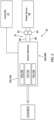
- the electric machine system 18 of FIG. 1 includes one or more electric machines 66A and 66B (generally referred to as "66"). Referring to FIG. 2 , the electric machine system 18 also includes an electric power source 68 and an electrical power bus 70.
- Each electric machine 66 may be configurable as an electric motor and/or an electric generator; e.g., a motor-generator. Alternatively, one or more of the electric machines 66 may be configured as a dedicated electric generator.
- the electric machine 66 of FIG. 2 includes an electric machine rotor 72A, 72B (generally referred to as “72"), an electric machine stator 74A, 74B (generally referred to as “74") and an electric machine housing 76A, 76B (generally referred to as “76").
- the machine rotor 72 is rotatable about a rotational axis of the machine rotor 72, which rotational axis may also be an axial centerline of the electric machine 66.
- the machine stator 74 of FIG. 2 is radially outboard of and circumscribes the machine rotor 72. With this arrangement, the electric machine 66 is configured as a radial flux electric machine.
- the electric machine 66 of the present disclosure is not limited to such an exemplary rotor-stator configuration nor to radial flux arrangements.
- the machine rotor 72 may alternatively be radially outboard of and circumscribe the machine stator 74.
- the machine rotor 72 may be axially next to the machine stator 74 configuring the electric machine 66 as an axial flux electric machine.
- the machine rotor 72 and the machine stator 74 are at least partially or completely housed within the machine housing 76.
- the high speed machine rotor 72A of the high speed electric machine 66A is operatively coupled to the high speed rotating assembly 48.
- the high speed machine rotor 72A of FIG. 1 for example, is rotatable with the high speed rotating assembly 48 through a geared drivetrain 78A with a gearbox coupled with and between the high speed machine rotor 72A and the high speed rotating assembly 48.
- the low speed machine rotor 72B of the low speed electric machine 66B is operatively coupled to the low speed rotating assembly 52.
- the low speed machine rotor 72B is coupled to the propulsor rotor 26 (the driven rotor 24) through the low speed rotating assembly 52.
- the low speed machine rotor 72B may be coupled to the propulsor rotor 26 independent of the low speed rotating assembly 52.
- the low speed machine rotor 72B and the low speed rotating assembly 52 may be coupled in parallel to the propulsor rotor 26 through the geartrain 56.
- the respective electric machine 66 operates as the electric generator to convert mechanical power into electricity.
- the respective powerplant member(s) e.g., 48, 52
- the respective powerplant member(s) coupled to the machine rotor 72 may drive rotation of the machine rotor 72; see also FIG. 1 .
- the rotation of the machine rotor 72 may generate an electromagnetic field with the machine stator 74.
- the machine stator 74 may convert energy from the electromagnetic field into the electricity.
- the respective electric machine 66 may output this generated electricity to the power bus 70 for further use; e.g., storage, provision to other aircraft components and/or systems, etc.
- the respective electric machine 66 operates as the electric motor to convert electricity received from the power source 68 into mechanical power.
- the machine stator 74 may generate an electromagnetic field with the machine rotor 72 using the electricity.
- the electromagnetic field may drive rotation of the machine rotor 72, and the machine rotor 72 may drive rotation of the respective powerplant member(s) (e.g., 26, 48, 52) coupled thereto and rotatable therewith (see also FIG. 1 ).
- mechanical power output by the respective electric machine 66 may be utilized for various purposes. For example, referring to FIG.
- the electric machine mechanical power may boost mechanical power output by the engine core 14 and its low speed rotating assembly 52 for driving rotation of the propulsor rotor 26 (the driven rotor 24).
- the electric machine mechanical power may completely power rotation of the propulsor rotor 26 (the driven rotor 24) and/or rotation of the low speed rotating assembly 52; e.g., during startup of the turbine engine 16.
- the power source 68 is configured to store electricity.
- the power source 68 is also configured to provide the stored electricity to each electric machine 66 and/or receive electricity from each electric machine 66.
- the power source 68 may be configured as or otherwise include one or more electricity storage devices; e.g., batteries, supercapacitors, etc.
- the power bus 70 electrically couples the power source 68 to each electric machine 66.
- the power bus 70 may include one or more electrical lines 80; e.g., high voltage lines.
- Each electrical line 80 of FIG. 2 is electrically coupled to and extends between the power source 68 and a respective one of the electric machines 66.
- the electric machine system 18 may also include one or more additional electric devices 82 electrically coupled between the power source 68 and each electric machine 66 along one or more of the electrical lines 80. Examples of these electric devices 82 include, but are not limited to, switches, current regulators, converters, amplifiers, buffers and the like.
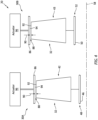
- FIG. 3 illustrates a turbine rotor (e.g., 42, 43) with an array of turbine blades 84 (one visible in FIG. 3 ) which are surrounded by an outer shroud 86; e.g., a turbine shroud such as a blade outer air seal (BOAS).
- the outer shroud 86 of FIG. 3 is configured to house the turbine blades 84 and form an outer peripheral boundary of the core flowpath 32 across the turbine rotor 42, 43 and its turbine blades 84.
- the outer shroud 86 of FIG. 3 for example, is disposed radially outboard of and circumscribes the turbine rotor 42, 43 and its turbine blades 84.
- Efficiency of a turbine section (e.g., 30A, 30B) and a turbine engine in general may be affected by clearance between its turbine rotor (e.g., 42, 43) and the outer shroud 86.
- a clearance gap 88 for example, is provided between the turbine rotor 42, 43 and the outer shroud 86.
- This clearance gap 88 has a height 90 which extends radially (and/or axially) from tips 92 of the turbine blades 84 to an outer flowpath surface 94 formed by the outer shroud 86.
- the clearance gap 88 and its height 90 may be sized large enough to prevent (or significantly reduce likelihood of) rubbing between each blade tip 92 and the outer shroud 86 and its outer flowpath surface 94.
- the clearance gap 88 and its height 90 increase, combustion products leakage across the blade tip 92 also increases. Increasing combustion products leakage across the blade tips 92 reduces a volume of the combustion products expanded across by the turbine rotor 42, 43. Increasing combustion products leakage across the blade tips 92 may also increase boundary layer turbulence along the outer flowpath surface 94. Thus, as combustion products leakage across the blade tips 92 increases, turbine section efficiency decreases. Therefore, the clearance gap 88 and its height 90 are typically sized large enough to prevent (or significantly reduce likelihood of) rubbing between the blade tips 92 and the outer shroud 86 and its outer flowpath surface 94, while small enough to minimize combustion products leakage across the blade tips 92.
- the turbine rotor 42, 43 and the outer shroud 86 may be subject to different environmental conditions during engine core operation.
- a backside e.g., an outer side
- relatively cool air e.g., cooling air. Rapid changes in temperature of the combustion products, inter alia, may thereby subject the turbine rotor 42, 43 and the outer shroud 86 to differential thermal expansion or contraction therebetween.
- This differential thermal expansion or contraction between the turbine rotor 42, 43 and the outer shroud 86 may cause the blade tips 92 to move radially outward or inward relative to the outer shroud 86 and its outer flowpath surface 94. If left unmitigated, such radial movement of the blade tips 92 may lead to a size change in the clearance gap 88 and its height 90. Where the size change is an increase in the clearance gap 88 and its height 90, additional combustion products may leak across the blade tips 92. Where the size change is a decrease in the clearance gap 88 and its height 90, there may be a risk of blade tip rub against the outer shroud 86; e.g., pinch.
- the clearance control system 20 is provided to account for, inter alia, radial movement of the blade tips 92 resulting from thermal expansion and/or contraction of each turbine rotor 42, 43 and its blade tips 92 and/or thermal expansion and/or contraction of the outer shroud 86. More particularly, the clearance control system 20 is configured to control (e.g., vary and/or maintain) the clearance between each turbine rotor 42, 43 and the associated outer shroud 86.
- the clearance control system 20 of FIG. 4 for example, includes one or more actuators 96 operatively coupled to the respective outer shrouds 86.
- Each actuator 96 is configured to adjust the clearance gap 88 and its height 90 between the respective turbine rotor 42, 43 and the respective outer shroud 86.
- each actuator 96 may be configured to move its respective outer shroud 86 towards the respective turbine rotor 42, 43 and its blade tips 92 to reduce the clearance gap height 90.
- the clearance control system 20 may thereby close the respective clearance gap 88 to promote turbine section efficiency.
- each actuator 96 may be configured to move its respective outer shroud 86 away from the respective turbine rotor 42, 43 and its blade tips 92 to increase the clearance gap height 90.
- the clearance control system 20 may thereby open the respective clearance gap 88 to reduce risk of contact (e.g., rub) between the respective turbine rotor 42, 43 and the adjacent outer shroud 86.
- Each actuator 96 may be configured as or otherwise include one or more cooling conduits (e.g., impingement manifold(s)), a pneumatic actuator, a hydraulic actuator, an electric motor, or the like.
- the present disclosure is not limited to such an exemplary arrangement.
- various types and configurations of clearance control systems are known in the art, and the present disclosure is not limited to any particular ones thereof.
- the controller 22 is in signal communication with (e.g., hardwired and/or wirelessly coupled to) a fuel system 98 for the turbine engine 16, the electric machine system 18 and the clearance control system 20, where the fuel system 98 includes the fuel injectors 64, a fuel source and a flow regulator (e.g., a pump and/or valve(s)) between and fluidly coupled with the fuel injectors 64 and the fuel source.
- the controller 22 may be configured as an onboard engine controller; e.g., an electronic engine controller (EEC), an electronic control unit (ECU), a full-authority digital engine controller (FADEC), etc.
- the controller 22 may be implemented with a combination of hardware and software.
- the hardware may include a memory and at least one processing device, which processing device may include one or more single-core and/or multi-core processors.
- the hardware may also or alternatively include analog and/or digital circuitry other than that described above.
- the memory is configured to store software (e.g., program instructions) for execution by the processing device, which software execution may control and/or facilitate performance of one or more operations such as those described in the methods below.
- the memory may be a non-transitory computer readable medium.
- the memory may be configured as or include a volatile memory and/or a nonvolatile memory.
- Examples of a volatile memory may include a random access memory (RAM) such as a dynamic random access memory (DRAM), a static random access memory (SRAM), a synchronous dynamic random access memory (SDRAM), a video random access memory (VRAM), etc.
- RAM random access memory
- DRAM dynamic random access memory
- SRAM static random access memory
- SDRAM synchronous dynamic random access memory
- VRAM video random access memory
- Examples of a nonvolatile memory may include a read only memory (ROM), an electrically erasable programmable read-only memory (EEPROM), a computer hard drive, etc.
- ROM read only memory
- EEPROM electrical
- FIG. 5 is a flow diagram of a method 500 for operating an aircraft powerplant.
- the operating method 500 is described below with reference to the aircraft powerplant 10 of FIG. 1 and its systems of FIGS. 2 and 4 .
- the present disclosure is not limited to such an exemplary powerplant arrangement.
- the operating method 500 may also be performed with a powerplant for a non-aircraft application.
- step 502 the aircraft powerplant 10 is operated to drive rotation of the propulsor rotor 26 (the driven rotor 24).
- the rotation of the propulsor rotor 26 may provide substantially steady-state propulsion system thrust.
- the controller 22 may signal the fuel system 98 of the turbine engine 16 to deliver the fuel to the combustor section 29 and its combustor 62 for mixing with the compressed core air and subsequent combustion as described above.
- the fuel system 98 may deliver the fuel at a substantially steady-state rate such that the turbine engine 16 and its engine core 14 may output substantially steady-state mechanical power for driving the rotation of the propulsor rotor 26.
- each electric machine 66 may be dormant as the electric generator and/or the electric motor.
- Each electric machine 66 may be completely non-operational (or non-operational at least as the electric generator) and thereby provide a substantially zero power draw on the engine core 14 during the step 502. Similarly, neither electric machine 66 may generate mechanical power to boost the mechanical power output by the engine core 14 for driving the rotation of the propulsor rotor 26. During other operating conditions, one or more of the electric machines 66 may alternatively operate as the electric generator and/or the electric motor. However, even when operating as the electric generator or electric motor, each electric machine 66 may be operated in such a fashion so as to maintain the steady-state propulsion system thrust generation by the propulsor rotor 26. For example, the low speed electric machine 66B may draw mechanical power from the low speed rotating assembly 52 at a substantially uniform rate.
- a temperature of the combustion products flowing through each turbine section 30A, 30B may be substantially constant.
- the HPT rotor 42 and the LPT rotor 43 may each be subject to relatively small (if any) differential thermally induced movement relative to their associated outer shrouds 86.
- the controller 22 may thereby signal the clearance control system 20 to maintain relatively small clearance gaps 88 between the turbine rotors 42 and 43 and their associated outer shrouds 86.
- the controller 22 may receive a command to decrease the propulsion system thrust from a first thrust level to a second thrust level.
- An aircraft pilot or automated thrust system may change a powerplant throttle position to a lower level.
- the turbine engine 16 and its engine core 14 may be operated in a transient state to decrease its total power from a first power level to a second power level.
- the total power may describe an overall mechanical power generated by the operation of the engine core 14.
- the engine core 14 is (e.g., solely) operated to drive rotation of the propulsor rotor 26 (the driven rotor 24)
- the total power is the mechanical power output by the engine core 14 to the propulsor rotor 26.
- the total power is a sum of the mechanical power output by the engine core 14 to each powerplant member 26, 72A, 72B.
- the controller 22 may signal the fuel system 98 to progressively decrease fuel delivery to the combustor section 29 and its combustor 62 for mixing with the compressed core air and subsequent combustion.
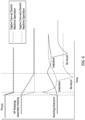
- the temperature of the combustion products flowing through each turbine section 30A, 30B may decrease. While the reduction in fuel delivery may be implemented quickly to meet the decreased thrust demand using (e.g., only) the turbine engine 16 and its engine core 14, the temperature of the combustion products may also quickly fall increasing the differential thermally induced movement between the turbine rotors 42 and 43 and the outer shrouds 86. Referring to FIG.
- an increase in the differential thermally induced movement between the turbine rotors 42 and 43 and the outer shrouds 86 may be tied to a quick deceleration (as well as acceleration) in a rotational velocity of the high speed rotating assembly 48.
- the controller 22 may signal the fuel system 98 to slowly decrease the fuel delivered to the combustor 62 over a relatively long period of time.
- the fuel may be delivered to maintain a rate of change in the temperature of the combustion products within the core flowpath 32 at or below a threshold level during the transient state operation of the engine core 14.
- This threshold level may be a constant level, or a variable level depending upon the specific operation conditions, a magnitude of the decreased thrust demand, etc.
- the slow decrease in fuel delivered to the combustor 62 reduces the rate of deceleration of the high speed rotating assembly 48.
- the slow decrease in fuel delivered to the combustor 62 also reduces a rate of temperature decrease of the combustion products as well as a degree of the associated differential thermally induced movement between the turbine rotors 42 and 43 and the outer shrouds 86.
- step 508 the electric machine system 18 is operated to reduce the mechanical power output from the engine core 14 to the propulsor rotor 26.
- the controller 22 may signal the low speed electric machine 66B to operate as the electric generator.
- the low speed electric machine 66B exerts rotational drag on the low speed rotating assembly 52 which is powering the rotation of the propulsor rotor 26.
- the low speed electric machine 66B may thereby extract mechanical power from the total power of the engine core 14 to decrease the mechanical power available for driving the propulsor rotor 26.
- This reduction in the power output from the engine core 14 to the propulsor rotor 26 may be performed such that the decreased thrust demand is quickly fulfilled; e.g., without any delay or significant delay.
- a period of time for the thrust generated by the propulsor rotor 26 to decrease from the first thrust level to the second thrust level may be significantly (e.g., at least two, three or five times) less than the period of time for the total power of the engine core 14 to decrease from the first power level to the second power level.
- the low speed electric machine 66B may be used to brake rotation of the low speed rotating assembly 52 while the total power of the engine core 14 is slowly decreased to reduce the differential thermally induced movement between the turbine rotors 42 and 43 and the outer shrouds 86.
- the low speed electric machine 66B may be operated to receive the same amount of power from the engine core 14 and its low speed rotating assembly 52 at (a) a point in time just before or when the engine core 14 enters the transient state (e.g., when the command is received) and (b) a point in time just after or when the engine core 14 exits the transient state.
- step 508 is described above as using (e.g., only) using the low speed electric machine 66B to extract mechanical power from engine core 14, the high speed electric machine 66A may also or alternatively be utilized extract mechanical power from engine core 14.
- the controller 22 may signal the high speed electric machine 66A to operate as the electric generator.
- the high speed electric machine 66A may thereby brake rotation of the high speed rotating assembly 48 while the total power of the engine core 14 is slowly decreased to reduce the differential thermally induced movement between the turbine rotors 42 and 43 and the outer shrouds 86.
- the electricity generated by the electric machine(s) 66A and/or 66B during the step 508 may be utilized for various purposes.
- the electricity may be delivered to the power source 68 for charging the power source 68.
- the electricity may be delivered to one or more other electrical components and/or systems of the aircraft powerplant 10.
- the electricity may also or alternatively be delivered to one or more other electrical components and/or systems of the aircraft outside of the aircraft powerplant 10.
- the clearance control system 20 is operated based on the operation of the electric machine system 18. For example, where the low speed electric machine 66B is reducing the power output to the propulsor rotor 26 while the engine core 14 is in the transient state, the controller 22 may signal the clearance control system 20 to maintain relatively small clearance gaps 88 between the turbine rotors 42 and 43 and their associated outer shrouds 86 since the engine core 14 is operated to reduce differential thermally induced movement between the turbine rotors 42 and 43 and the outer shrouds 86.
- a pinch point margin may be reduced while the engine core 14 is operating in the transient state as shown in FIG. 6 .
- This in turn may facilitate operating the engine core 14 with tighter clearance gaps 88 and, thus, operating the engine core 14 at a higher efficiency.
- This may be particularly useful to provide margin for a rapid increase in thrust, for example, in case of an unexpected maneuver or flight condition; see re-acceleration ("re-accel") shown in FIG. 6 .
- the pinch point margin may be relatively large.
- the clearance control system 20 may be operated with relatively large clearance gaps 88 for a longer period of time.
- the controller 22 may modify a target for the clearance gaps 88 based on, inter alia, whether or not the electric machine(s) 66A and/or 66B is/are being operated to facilitate slower power reduction of the engine core 14.
Landscapes
- Engineering & Computer Science (AREA)
- Mechanical Engineering (AREA)
- General Engineering & Computer Science (AREA)
- Chemical & Material Sciences (AREA)
- Combustion & Propulsion (AREA)
- Control Of Turbines (AREA)
- Control Of Eletrric Generators (AREA)
Applications Claiming Priority (2)
| Application Number | Priority Date | Filing Date | Title |
|---|---|---|---|
| US202363527556P | 2023-07-18 | 2023-07-18 | |
| US18/235,394 US12209501B1 (en) | 2023-07-18 | 2023-08-18 | Turbine engine tip clearance control utilizing electric machine |
Publications (2)
| Publication Number | Publication Date |
|---|---|
| EP4495390A2 true EP4495390A2 (de) | 2025-01-22 |
| EP4495390A3 EP4495390A3 (de) | 2025-06-18 |
Family
ID=91959173
Family Applications (1)
| Application Number | Title | Priority Date | Filing Date |
|---|---|---|---|
| EP24189503.6A Pending EP4495390A3 (de) | 2023-07-18 | 2024-07-18 | Steuerung des schaufelspitzenspiels eines turbinenmotors unter verwendung einer elektrischen maschine |
Country Status (2)
| Country | Link |
|---|---|
| US (1) | US12209501B1 (de) |
| EP (1) | EP4495390A3 (de) |
Families Citing this family (1)
| Publication number | Priority date | Publication date | Assignee | Title |
|---|---|---|---|---|
| US20250027425A1 (en) * | 2023-07-18 | 2025-01-23 | Rtx Corporation | Turbine engine tip clearance control utilizing electric machine |
Family Cites Families (18)
| Publication number | Priority date | Publication date | Assignee | Title |
|---|---|---|---|---|
| US8011883B2 (en) | 2004-12-29 | 2011-09-06 | United Technologies Corporation | Gas turbine engine blade tip clearance apparatus and method |
| US7549604B2 (en) * | 2006-10-26 | 2009-06-23 | Hutterer Joseph A | Fuel efficient fixed wing aircraft |
| FR2914697B1 (fr) | 2007-04-06 | 2012-11-30 | Turbomeca | Dispositif d'assistance aux phases transitoires d'acceleration et de deceleration |
| US7926287B2 (en) | 2007-05-08 | 2011-04-19 | Pratt & Whitney Canada Corp. | Method of operating a gas turbine engine |
| US9890707B2 (en) | 2012-04-02 | 2018-02-13 | Powerphase Llc | Gas turbine efficiency and regulation speed improvements using supplementary air system continuous and storage systems and methods of using the same |
| EP2930335B1 (de) * | 2014-04-10 | 2019-09-18 | Rolls-Royce North American Technologies, Inc. | Kraftstoff-luft-verhältnissteuerung von gasturbinenmotoren |
| US10696416B2 (en) * | 2017-06-30 | 2020-06-30 | General Electric Company | Propulsion system for an aircraft |
| US10953995B2 (en) * | 2017-06-30 | 2021-03-23 | General Electric Company | Propulsion system for an aircraft |
| US10738706B2 (en) * | 2017-06-30 | 2020-08-11 | General Electric Company | Propulsion system for an aircraft |
| GB201807771D0 (en) * | 2018-05-14 | 2018-06-27 | Rolls Royce Plc | Hybrid electric aircraft propulsion system |
| US20200039657A1 (en) * | 2018-08-02 | 2020-02-06 | Southwest Research Institute | Variable Cycle Hybrid Power and Propulsion System for Aircraft |
| GB2584693A (en) | 2019-06-12 | 2020-12-16 | Rolls Royce Plc | Improving deceleration of a gas turbine |
| GB2584692A (en) | 2019-06-12 | 2020-12-16 | Rolls Royce Plc | Improving acceleration of a gas turbine |
| US11548651B2 (en) | 2019-07-25 | 2023-01-10 | Raytheon Technologies Corporation | Asymmeiric hybrid aircraft idle |
| US20210131355A1 (en) | 2019-10-31 | 2021-05-06 | Rolls-Royce Deutschland Ltd & Co Kg | Control method and system in a hybrid-electrical aircraft propulsion system |
| US11428171B2 (en) * | 2019-12-06 | 2022-08-30 | General Electric Company | Electric machine assistance for multi-spool turbomachine operation and control |
| US11821372B2 (en) | 2021-06-11 | 2023-11-21 | Rtx Corporation | Hybrid electric engine with electric tip clearance mechanism |
| US11933232B1 (en) * | 2023-02-21 | 2024-03-19 | General Electric Company | Hybrid-electric gas turbine engine and method of operating |
-
2023
- 2023-08-18 US US18/235,394 patent/US12209501B1/en active Active
-
2024
- 2024-07-18 EP EP24189503.6A patent/EP4495390A3/de active Pending
Also Published As
| Publication number | Publication date |
|---|---|
| US12209501B1 (en) | 2025-01-28 |
| EP4495390A3 (de) | 2025-06-18 |
| US20250027424A1 (en) | 2025-01-23 |
Similar Documents
| Publication | Publication Date | Title |
|---|---|---|
| CN109204843B (zh) | 用于飞行器的推进系统 | |
| JP6723565B2 (ja) | 航空機用推進システム | |
| EP3421368B1 (de) | Antriebssystem für ein flugzeug | |
| EP2971593B1 (de) | Gasturbine mit elektrischem system umfassend elektrische bussysteme | |
| JP2019048615A (ja) | 航空機用推進システム | |
| EP4506542A2 (de) | Steuerung des schaufelspitzenspiels eines turbinenmotors unter verwendung einer elektrischen maschine | |
| EP4495390A2 (de) | Steuerung des schaufelspitzenspiels eines turbinenmotors unter verwendung einer elektrischen maschine | |
| EP4509703A1 (de) | Flugzeugtriebwerk mit elektrischem antriebsstrang | |
| EP4491853A1 (de) | Vorwärmen eines flugzeugtriebwerks motors im standby-modus | |
| US12385434B2 (en) | Aircraft powerplant with boosted gas turbine engine | |
| EP4474631A2 (de) | Flugzeugtriebwerk mit verstärktem gasturbinenmotor | |
| EP4733566A2 (de) | Wärmeverwaltungssystem für ein flugzeugantriebssystem mit offenem rotor | |
| US20260117702A1 (en) | Thermal management system for open rotor aircraft propulsion system | |
| US20250026333A1 (en) | Hybrid Electric Power Dependent Active Clearance Control | |
| US12600481B1 (en) | Aircraft air system with boost compressor(s) | |
| US12421863B2 (en) | Turbine engine tip clearance control system with thrust bearing | |
| US20250051029A1 (en) | Power management between a heat engine and an electric machine for an aircraft powerplant | |
| US12525841B2 (en) | Cooling an electric machine of a turbine engine powerplant |
Legal Events
| Date | Code | Title | Description |
|---|---|---|---|
| PUAI | Public reference made under article 153(3) epc to a published international application that has entered the european phase |
Free format text: ORIGINAL CODE: 0009012 |
|
| STAA | Information on the status of an ep patent application or granted ep patent |
Free format text: STATUS: THE APPLICATION HAS BEEN PUBLISHED |
|
| AK | Designated contracting states |
Kind code of ref document: A2 Designated state(s): AL AT BE BG CH CY CZ DE DK EE ES FI FR GB GR HR HU IE IS IT LI LT LU LV MC ME MK MT NL NO PL PT RO RS SE SI SK SM TR |
|
| PUAL | Search report despatched |
Free format text: ORIGINAL CODE: 0009013 |
|
| AK | Designated contracting states |
Kind code of ref document: A3 Designated state(s): AL AT BE BG CH CY CZ DE DK EE ES FI FR GB GR HR HU IE IS IT LI LT LU LV MC ME MK MT NL NO PL PT RO RS SE SI SK SM TR |
|
| RIC1 | Information provided on ipc code assigned before grant |
Ipc: F01D 11/24 20060101ALI20250513BHEP Ipc: F01D 11/22 20060101ALI20250513BHEP Ipc: F01D 15/10 20060101ALI20250513BHEP Ipc: F01D 11/20 20060101AFI20250513BHEP |
|
| STAA | Information on the status of an ep patent application or granted ep patent |
Free format text: STATUS: REQUEST FOR EXAMINATION WAS MADE |
|
| 17P | Request for examination filed |
Effective date: 20251217 |