EP4492907A2 - Bestimmung von verhaltensparametern einer entfernten einheit - Google Patents
Bestimmung von verhaltensparametern einer entfernten einheit Download PDFInfo
- Publication number
- EP4492907A2 EP4492907A2 EP24215942.4A EP24215942A EP4492907A2 EP 4492907 A2 EP4492907 A2 EP 4492907A2 EP 24215942 A EP24215942 A EP 24215942A EP 4492907 A2 EP4492907 A2 EP 4492907A2
- Authority
- EP
- European Patent Office
- Prior art keywords
- parameters
- smf
- parameter
- remote unit
- amf
- Prior art date
- Legal status (The legal status is an assumption and is not a legal conclusion. Google has not performed a legal analysis and makes no representation as to the accuracy of the status listed.)
- Pending
Links
Images



Classifications
-
- H—ELECTRICITY
- H04—ELECTRIC COMMUNICATION TECHNIQUE
- H04L—TRANSMISSION OF DIGITAL INFORMATION, e.g. TELEGRAPHIC COMMUNICATION
- H04L5/00—Arrangements affording multiple use of the transmission path
- H04L5/003—Arrangements for allocating sub-channels of the transmission path
- H04L5/0058—Allocation criteria
-
- H—ELECTRICITY
- H04—ELECTRIC COMMUNICATION TECHNIQUE
- H04W—WIRELESS COMMUNICATION NETWORKS
- H04W8/00—Network data management
- H04W8/005—Discovery of network devices, e.g. terminals
-
- H—ELECTRICITY
- H04—ELECTRIC COMMUNICATION TECHNIQUE
- H04L—TRANSMISSION OF DIGITAL INFORMATION, e.g. TELEGRAPHIC COMMUNICATION
- H04L5/00—Arrangements affording multiple use of the transmission path
- H04L5/003—Arrangements for allocating sub-channels of the transmission path
- H04L5/0044—Allocation of payload; Allocation of data channels, e.g. PDSCH or PUSCH
-
- H—ELECTRICITY
- H04—ELECTRIC COMMUNICATION TECHNIQUE
- H04W—WIRELESS COMMUNICATION NETWORKS
- H04W4/00—Services specially adapted for wireless communication networks; Facilities therefor
- H04W4/20—Services signaling; Auxiliary data signalling, i.e. transmitting data via a non-traffic channel
-
- H—ELECTRICITY
- H04—ELECTRIC COMMUNICATION TECHNIQUE
- H04W—WIRELESS COMMUNICATION NETWORKS
- H04W4/00—Services specially adapted for wireless communication networks; Facilities therefor
- H04W4/50—Service provisioning or reconfiguring
-
- H—ELECTRICITY
- H04—ELECTRIC COMMUNICATION TECHNIQUE
- H04W—WIRELESS COMMUNICATION NETWORKS
- H04W48/00—Access restriction; Network selection; Access point selection
- H04W48/08—Access restriction or access information delivery, e.g. discovery data delivery
-
- H—ELECTRICITY
- H04—ELECTRIC COMMUNICATION TECHNIQUE
- H04W—WIRELESS COMMUNICATION NETWORKS
- H04W60/00—Affiliation to network, e.g. registration; Terminating affiliation with the network, e.g. de-registration
-
- H—ELECTRICITY
- H04—ELECTRIC COMMUNICATION TECHNIQUE
- H04W—WIRELESS COMMUNICATION NETWORKS
- H04W76/00—Connection management
- H04W76/10—Connection setup
- H04W76/15—Setup of multiple wireless link connections
- H04W76/16—Involving different core network technologies, e.g. a packet-switched [PS] bearer in combination with a circuit-switched [CS] bearer
-
- H—ELECTRICITY
- H04—ELECTRIC COMMUNICATION TECHNIQUE
- H04W—WIRELESS COMMUNICATION NETWORKS
- H04W76/00—Connection management
- H04W76/20—Manipulation of established connections
- H04W76/28—Discontinuous transmission [DTX]; Discontinuous reception [DRX]
-
- H—ELECTRICITY
- H04—ELECTRIC COMMUNICATION TECHNIQUE
- H04W—WIRELESS COMMUNICATION NETWORKS
- H04W8/00—Network data management
- H04W8/26—Network addressing or numbering for mobility support
-
- H—ELECTRICITY
- H04—ELECTRIC COMMUNICATION TECHNIQUE
- H04W—WIRELESS COMMUNICATION NETWORKS
- H04W88/00—Devices specially adapted for wireless communication networks, e.g. terminals, base stations or access point devices
- H04W88/08—Access point devices
-
- H—ELECTRICITY
- H04—ELECTRIC COMMUNICATION TECHNIQUE
- H04W—WIRELESS COMMUNICATION NETWORKS
- H04W76/00—Connection management
- H04W76/20—Manipulation of established connections
- H04W76/27—Transitions between radio resource control [RRC] states
Definitions
- the subject matter disclosed herein relates generally to wireless communications and more particularly relates to determining remote unit behavior parameters.
- a remote unit may have various associated behavior parameters.
- network devices associated with the remote unit may receive information corresponding to the behavior parameters.
- the method includes receiving a message including parameters associated with an application in a remote unit.
- the method includes determining a first set of parameters including a first portion of the parameters, wherein each parameter of the first set of parameters corresponds to a remote unit behavior.
- the method includes determining a second set of parameters including a second portion of the parameters, wherein each parameter of the second set of parameters corresponds to a service behavior.
- the method includes associating the second set of parameters with a data network name, a single network slice selection assistance information, or a combination thereof.
- receiving the message includes receiving one or more messages, and each of the one or more messages contains a validity time for parameters included therein.
- receiving the message includes receive the message from a network exposure function.
- the method includes transmitting the first set of parameters to an access and mobility management function.
- the access and mobility management function determines how to configure the remote unit, a base station, or a combination thereof, based on the first set of parameters.
- the method includes transmitting the second set of parameters to a session management function.
- the session management function configures one or more network functions or radio entities using the second set of parameters, and the one or more network functions are configured with information specific to a protocol data unit session, a traffic flow, or a combination thereof.
- the parameters include information indicating a preference for either a control plane transmission or a user plane transmission.
- the parameters include information indicating an internet protocol address, a port number, or a combination thereof corresponding to a service server, an application server, or a combination thereof.
- the parameters include information indicating an identifier corresponding to a service server, an application server, an application, or some combination thereof.
- An apparatus for determining remote unit behavior parameters includes a receiver that receives a message including parameters associated with an application in a remote unit.
- the apparatus includes a processor that: determines a first set of parameters including a first portion of the parameters, wherein each parameter of the first set of parameters corresponds to a remote unit behavior; determines a second set of parameters including a second portion of the parameters, wherein each parameter of the second set of parameters corresponds to a service behavior; and associates the second set of parameters with a data network name, a single network slice selection assistance information, or a combination thereof.
- a method for determining remote unit behavior parameters includes receiving a message including a third set of parameters. In various embodiments, the method includes determining a fourth set of parameters including a first portion of the third set of parameters, wherein each parameter of the fourth set of parameters corresponds to remote unit session behavior. In certain embodiments, the method includes determining a fifth set of parameters including a second portion of the third set of parameters, wherein each parameter of the fifth set of parameters corresponds to a service behavior.
- the method includes transmitting the fourth set of parameters to an access and mobility management function. In a further embodiment, the method includes determining configuration information for a user plane function based on the fifth set of parameters, and transmitting the configuration information to the user plane function. In certain embodiments, the method includes determining configuration information for a base station based on the fifth set of parameters. In some embodiments, the method includes transmitting the configuration information to the base station. In certain embodiments, the third set of parameters includes a first set of parameters corresponding to a remote unit behavior. In various embodiments, the third set of parameters includes a second set of parameters corresponding to a service behavior. In some embodiments, the third set of parameters includes a first set of parameters corresponding to a remote unit behavior and a second set of parameters corresponding to a service behavior.
- An apparatus for determining remote unit behavior parameters includes a receiver that receives a message including a third set of parameters.
- the apparatus includes a processor that: determines a fourth set of parameters including a first portion of the third set of parameters, wherein each parameter of the fourth set of parameters corresponds to remote unit session behavior; and determines a fifth set of parameters including a second portion of the third set of parameters, wherein each parameter of the fifth set of parameters corresponds to a service behavior.
- embodiments may be embodied as a system, apparatus, method, or program product. Accordingly, embodiments may take the form of an entirely hardware embodiment, an entirely software embodiment (including firmware, resident software, micro-code, etc.) or an embodiment combining software and hardware aspects that may all generally be referred to herein as a "circuit," "module” or “system.” Furthermore, embodiments may take the form of a program product embodied in one or more computer readable storage devices storing machine readable code, computer readable code, and/or program code, referred hereafter as code. The storage devices may be tangible, non-transitory, and/or non-transmission. The storage devices may not embody signals. In a certain embodiment, the storage devices only employ signals for accessing code.
- modules may be implemented as a hardware circuit comprising custom very-large-scale integration ("VLSI") circuits or gate arrays, off-the-shelf semiconductors such as logic chips, transistors, or other discrete components.
- VLSI very-large-scale integration
- a module may also be implemented in programmable hardware devices such as field programmable gate arrays, programmable array logic, programmable logic devices or the like.
- Modules may also be implemented in code and/or software for execution by various types of processors.
- An identified module of code may, for instance, include one or more physical or logical blocks of executable code which may, for instance, be organized as an object, procedure, or function. Nevertheless, the executables of an identified module need not be physically located together, but may include disparate instructions stored in different locations which, when joined logically together, include the module and achieve the stated purpose for the module.
- a module of code may be a single instruction, or many instructions, and may even be distributed over several different code segments, among different programs, and across several memory devices.
- operational data may be identified and illustrated herein within modules, and may be embodied in any suitable form and organized within any suitable type of data structure. The operational data may be collected as a single data set, or may be distributed over different locations including over different computer readable storage devices.
- the software portions are stored on one or more computer readable storage devices.
- the computer readable medium may be a computer readable storage medium.
- the computer readable storage medium may be a storage device storing the code.
- the storage device may be, for example, but not limited to, an electronic, magnetic, optical, electromagnetic, infrared, holographic, micromechanical, or semiconductor system, apparatus, or device, or any suitable combination of the foregoing.
- a storage device More specific examples (a non-exhaustive list) of the storage device would include the following: an electrical connection having one or more wires, a portable computer diskette, a hard disk, a random access memory (“RAM”), a read-only memory (“ROM”), an erasable programmable read-only memory (“EPROM” or Flash memory), a portable compact disc read-only memory (“CD-ROM”), an optical storage device, a magnetic storage device, or any suitable combination of the foregoing.
- a computer readable storage medium may be any tangible medium that can contain, or store a program for use by or in connection with an instruction execution system, apparatus, or device.
- Code for carrying out operations for embodiments may be any number of lines and may be written in any combination of one or more programming languages including an object oriented programming language such as Python, Ruby, Java, Smalltalk, C++, or the like, and conventional procedural programming languages, such as the "C" programming language, or the like, and/or machine languages such as assembly languages.
- the code may execute entirely on the user's computer, partly on the user's computer, as a stand-alone software package, partly on the user's computer and partly on a remote computer or entirely on the remote computer or server.
- the remote computer may be connected to the user's computer through any type of network, including a local area network (“LAN”) or a wide area network (“WAN”), or the connection may be made to an external computer (for example, through the Internet using an Internet Service Provider).
- LAN local area network
- WAN wide area network
- Internet Service Provider an Internet Service Provider
- the code may also be stored in a storage device that can direct a computer, other programmable data processing apparatus, or other devices to function in a particular manner, such that the instructions stored in the storage device produce an article of manufacture including instructions which implement the function/act specified in the schematic flowchart diagrams and/or schematic block diagrams block or blocks.
- the code may also be loaded onto a computer, other programmable data processing apparatus, or other devices to cause a series of operational steps to be performed on the computer, other programmable apparatus or other devices to produce a computer implemented process such that the code which execute on the computer or other programmable apparatus provide processes for implementing the functions/acts specified in the flowchart and/or block diagram block or blocks.
- each block in the schematic flowchart diagrams and/or schematic block diagrams may represent a module, segment, or portion of code, which includes one or more executable instructions of the code for implementing the specified logical function(s).
- Figure 1 depicts an embodiment of a wireless communication system 100 for determining remote unit behavior parameters.
- the wireless communication system 100 includes remote units 102, network units 104, one or more SCS/AS/AFs 106, and one or more CNs 108. Even though a specific number of remote units 102, network units 104, SCS/AS/AFs 106, and CNs 108 are depicted in Figure 1 , one of skill in the art will recognize that any number of remote units 102, network units 104, SCS/AS/AFs 106, and CNs 108 may be included in the wireless communication system 100.
- the remote units 102 may include computing devices, such as desktop computers, laptop computers, personal digital assistants ("PDAs"), tablet computers, smart phones, smart televisions (e.g., televisions connected to the Internet), set-top boxes, game consoles, security systems (including security cameras), vehicle on-board computers, network devices (e.g., routers, switches, modems), IoT devices, or the like.
- the remote units 102 include wearable devices, such as smart watches, fitness bands, optical head-mounted displays, or the like.
- the remote units 102 may be referred to as subscriber units, mobiles, mobile stations, users, terminals, mobile terminals, fixed terminals, subscriber stations, UE, user terminals, a device, or by other terminology used in the art.
- the remote units 102 may communicate directly with one or more of the network units 104 via UL communication signals.
- the network units 104 may be distributed over a geographic region.
- a network unit 104 may also be referred to as an access point, an access terminal, a base, a base station, a Node-B, an eNB, a gNB, a Home Node-B, a relay node, a device, a network device, or by any other terminology used in the art.
- the network units 104 are generally part of a radio access network that includes one or more controllers communicably coupled to one or more corresponding network units 104.
- the radio access network is generally communicably coupled to one or more core networks, which may be coupled to other networks, like the Internet and public switched telephone networks, among other networks.
- a network unit 104 may include one or more of the following network components a gNB, a NG-RAN node, and/or a RAN node.
- the CN 108 may include an MME, an HSS, an SCEF, an AMF, an SMF, an NEF, a DB, a PCF, a UDR, a UPF, and/or a UDM.
- the wireless communication system 100 is compliant with the LTE of the 3GPP protocol, wherein the network unit 104 transmits using an OFDM modulation scheme on the DL and the remote units 102 transmit on the UL using a SC-FDMA scheme or an OFDM scheme. More generally, however, the wireless communication system 100 may implement some other open or proprietary communication protocol, for example, WiMAX, among other protocols.
- WiMAX wireless personal area network
- the network units 104 may serve a number of remote units 102 within a serving area, for example, a cell or a cell sector via a wireless communication link.
- the network units 104 transmit DL communication signals to serve the remote units 102 in the time, frequency, and/or spatial domain.
- a network unit 104 may receive a message including parameters associated with an application in a remote unit 102. In various embodiments, the network unit 104 may determine a first set of parameters including a first portion of the parameters, wherein each parameter of the first set of parameters corresponds to a remote unit behavior. In certain embodiments, the network unit 104 may determine a second set of parameters including a second portion of the parameters, wherein each parameter of the second set of parameters corresponds to a service behavior. In some embodiments, the network unit 104 may associate the second set of parameters with a data network name, a single network slice selection assistance information, or a combination thereof. Accordingly, a network unit 104 may be used for determining remote unit 102 behavior parameters.
- a network unit 104 may receive a message including a third set of parameters. In various embodiments, the network unit 104 may determine a fourth set of parameters including a first portion of the third set of parameters, wherein each parameter of the fourth set of parameters corresponds to remote unit session behavior. In certain embodiments, the network unit 104 may determine a fifth set of parameters including a second portion of the third set of parameters, wherein each parameter of the fifth set of parameters corresponds to a service behavior. Accordingly, a network unit 104 may be used for determining remote unit 102 behavior parameters.
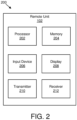
- the processor 202 may include any known controller capable of executing computer-readable instructions and/or capable of performing logical operations.
- the processor 202 may be a microcontroller, a microprocessor, a central processing unit (“CPU"), a graphics processing unit (“GPU”), an auxiliary processing unit, a field programmable gate array (“FPGA”), or similar programmable controller.
- the processor 202 executes instructions stored in the memory 204 to perform the methods and routines described herein.
- the processor 202 is communicatively coupled to the memory 204, the input device 206, the display 208, the transmitter 210, and the receiver 212.
- the memory 204 in one embodiment, is a computer readable storage medium.
- the memory 204 includes volatile computer storage media.
- the memory 204 may include a RAM, including dynamic RAM (“DRAM”), synchronous dynamic RAM (“SDRAM”), and/or static RAM (“SRAM”).
- the memory 204 includes non-volatile computer storage media.
- the memory 204 may include a hard disk drive, a flash memory, or any other suitable non-volatile computer storage device.
- the memory 204 includes both volatile and non-volatile computer storage media.
- the memory 204 stores data relating to network registration.
- the memory 204 also stores program code and related data, such as an operating system or other controller algorithms operating on the remote unit 102.
- the input device 206 may include any known computer input device including a touch panel, a button, a keyboard, a stylus, a microphone, or the like.
- the input device 206 may be integrated with the display 208, for example, as a touchscreen or similar touch-sensitive display.
- the input device 206 includes a touchscreen such that text may be input using a virtual keyboard displayed on the touchscreen and/or by handwriting on the touchscreen.
- the input device 206 includes two or more different devices, such as a keyboard and a touch panel.
- the display 208 may include any known electronically controllable display or display device.
- the display 208 may be designed to output visual, audible, and/or haptic signals.
- the display 208 includes an electronic display capable of outputting visual data to a user.
- the display 208 may include, but is not limited to, an LCD display, an LED display, an OLED display, a projector, or similar display device capable of outputting images, text, or the like to a user.
- the display 208 may include a wearable display such as a smart watch, smart glasses, a heads-up display, or the like.
- the display 208 may be a component of a smart phone, a personal digital assistant, a television, a table computer, a notebook (laptop) computer, a personal computer, a vehicle dashboard, or the like.
- the display 208 includes one or more speakers for producing sound.
- the display 208 may produce an audible alert or notification (e.g., a beep or chime).
- the display 208 includes one or more haptic devices for producing vibrations, motion, or other haptic feedback.
- all or portions of the display 208 may be integrated with the input device 206.
- the input device 206 and display 208 may form a touchscreen or similar touch-sensitive display.
- the display 208 may be located near the input device 206.
- the transmitter 210 is used to provide UL communication signals to the network unit 104 and the receiver 212 is used to receive DL communication signals from the network unit 104.
- the remote unit 102 may have any suitable number of transmitters 210 and receivers 212.
- the transmitter 210 and the receiver 212 may be any suitable type of transmitters and receivers.
- the transmitter 210 and the receiver 212 may be part of a transceiver.
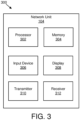
- Figure 3 depicts one embodiment of an apparatus 300 that may be used for determining remote unit 102 behavior parameters.
- the apparatus 300 includes one embodiment of the network unit 104.
- the network unit 104 may include a processor 302, a memory 304, an input device 306, a display 308, a transmitter 310, and a receiver 312.
- the processor 302, the memory 304, the input device 306, the display 308, the transmitter 310, and the receiver 312 may be substantially similar to the processor 202, the memory 204, the input device 206, the display 208, the transmitter 210, and the receiver 212 of the remote unit 102, respectively.
- the receiver 312 receives a message including parameters associated with an application in a remote unit 102.
- the processor 302 determines a first set of parameters including a first portion of the parameters, wherein each parameter of the first set of parameters corresponds to a remote unit behavior; determines a second set of parameters including a second portion of the parameters, wherein each parameter of the second set of parameters corresponds to a service behavior; and associates the second set of parameters with a data network name, a single network slice selection assistance information, or a combination thereof.
- the receiver 312 receives a message including a third set of parameters.
- the processor 302 determines a fourth set of parameters including a first portion of the third set of parameters, wherein each parameter of the fourth set of parameters corresponds to remote unit session behavior; and determines a fifth set of parameters including a second portion of the third set of parameters, wherein each parameter of the fifth set of parameters corresponds to a service behavior.
- the network unit 104 may have any suitable number of transmitters 310 and receivers 312.
- the transmitter 310 and the receiver 312 may be any suitable type of transmitters and receivers.
- the transmitter 310 and the receiver 312 may be part of a transceiver.
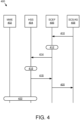
- FIG. 4 illustrates one embodiment of communications 400 of remote unit 102 behavior parameters. Specifically, communications 400 between an MME 402, an HSS 404, an SCEF 406, and an SCS/AS 408 are illustrated. As may be appreciated, any of the communications 400 described herein may be considered messages and/or parts of messages. In certain embodiments, the communications 400 may be similar to TS 23.682.
- the SCEF 406 may select 412 a CP parameter.
- a second communication 414 from the SCEF 406 to the HSS 404 may include the SCEF 406 sending an update CP parameter request.
- the HSS 404 may update 416 a UE subscription.
- One such parameter set not mentioned in Tables 1 - 3 may be parameters for policy information, e.g., infrastructural policy (policies to protect platforms and network, e.g., for ensuring that a service node such as SMS-SC is not overloaded), business policy (policies related to the specific functionalities exposed, e.g., number portability, service routing, subscriber consent, etc.), or application layer policy (policies that are primarily focused on message payload or throughput provided by an application, e.g. how to throttle traffic from this application).
- infrastructural policy Policies to protect platforms and network, e.g., for ensuring that a service node such as SMS-SC is not overloaded
- business policy policies related to the specific functionalities exposed, e.g., number portability, service routing, subscriber consent, etc.
- application layer policy policies that are primarily focused on message payload or throughput provided by an application, e.g. how to throttle traffic from this application.
- Tables 1 - 3 may be an SCS/AS/AF ID, an SCS/AS source IP address/port number, an SSC mode preference, a CP/UP transmission preference, a DNAI, an expected number of uplink/downlink packets, and/or other parameters as described in certain embodiments herein. All parameters mentioned in this paragraph, but not limited to, may be referred to as CP/NC parameters.
- Table 2 Expected UE behavior parameter Description Expected UE moving trajectory Identifies the UE's expected geographical movement. Example: A planned path of movement.
- UE behavior related parameters may refer to communication pattern parameters, network parameter configuration parameters, and/or other parameters.
- CP/NC parameters may be sent from AFs, SCSs, and/or ASs over different APIs exposed by a NEF and/or SCEF.
- an MME and/or AMF may use these CP/NC parameters for RAN configuration tuning and/or MM parameter(s) for UE configuration tuning (e.g., PSM mode timer, eDRX timer, etc.).
- CP/NC parameters associated with an application in a UE may include: a CP parameter set (e.g., a time at which traffic is expected to be sent and/or received) which may include - a stationary parameter, a periodic time, a communication duration, a communication schedule, an SCS/AS ID, an SCS/AS IP address, and so forth; an NC parameter set which may include - a maximum response time, a maximum latency, a suggested number of DL packets, a CP/UP delivery preference, and so forth; and/or a UE moving trajectory.
- a CP parameter set e.g., a time at which traffic is expected to be sent and/or received
- certain CP/NC parameters may be best used and/or processed in an AMF and other CP/NC parameters may be best used and/or processed in an SMF.
- a UE moving trajectory or stationary parameter may be best processed in the AMF.
- other parameters like a suggested number of DL packets may be best processed in the SMF (e.g., to properly configure a UPF).
- At least some of the CP/NC parameter set may describe an application and/or service behavior rather than UE behavior, especially if a UE uses multiple applications (e.g., multiple SCS/ASs).
- at least some of the CP/NC parameters may be associated with one or more corresponding PDU sessions, but not with a general UE behavior.
- CP/NC parameters may not influence a network configuration for a corresponding UE.
- a UDM/UDR may categorizes CP/NC parameters into at least CP/NC MM parameters, CP/NC SM parameters, and/or CP/NC policy parameters.
- at least the SM parameters may be associated with a particular subscribed DNN and/or S-NSSAI.
- the UDM/UDR may determine whether there is a single application or multiple applications on a UE (which may be equal to a single SCS/AS or multiple SCS/ASs).
- the CP/NC policy parameters are used by the PCF to derive policy rules for the relevant UE's application(s) and PDU Session(s).
- a traffic filter (e.g., based on an SCS/AS's IP address) may be used to differentiate traffic from/to multiple SCS/ASs within a same DNN/S-NSSAI.
- the UDM/UDR may use a SCS/AS ID to determine a corresponding DNN and S-NSSAI.
- the UDM in response to CP/NC parameters being configured and/or updated in a UDM, the UDM may update only an AMF or an SMF associated with the updated MM parameters and/or SM parameters.
- the NEF in response to CP/NC parameters being configured and/or updated in an NEF, the NEF may update only an AMF or an SMF associated with the updated MM parameters and/or SM parameters.
- an SMF may receive either an entire CP/NC parameter set sent from NEF/SCEF or CP/NC SM parameters.
- the SMF may derive PDU session specific characteristics and/or behaviors based on the received parameters. For example, the SMF may derive: configuration parameters for UPF configuration (e.g., a number of buffered downlink packets, how long time packets should be buffered (e.g., determined based on a maximum latency parameter, etc.)); SMF to NG-RAN (e.g., the SMF sends this information during UP connection activation) CP/NC N2 SM information which may include new parameters to influence NG-RAN settings for a radio interface, e.g.
- Uu interface in the 3GPP specifications, (e.g., the NG-RAN node can use these parameters to determine whether to activate RRC inactive state and the corresponding state configuration; and/or for RRC Connected state configuration (e.g. to derive the Inactive time value)); SMF to AMF (e.g., during PDU session establishment or UP connection activation) session parameters (e.g., PDU session specific parameters for UE behavior such as maximum response time being used to configure eDRX or a periodic registration timer when MICO mode is used.
- SMF to AMF e.g., during PDU session establishment or UP connection activation
- session parameters e.g., PDU session specific parameters for UE behavior such as maximum response time being used to configure eDRX or a periodic registration timer when MICO mode is used.
- RRC inactive state assistance information derived by an AMF may be extended to include new parameters sent from the SMF, but parameters such as periodic time may be signaled from SMF to AMF to be used); SMF-triggered UP connection deactivation or PDU session release; and/or a switch between a control plane to UP delivery mechanism of data (e.g., small data).
- the AMF sends RRC inactive assistance information to the NG-RAN node and the additional information described herein may be sent from the SMF in CP/NC N2 SM information to the NG-RAN node to determine the RRC inactive state configuration or RRC connected state configuration.
- a UDM/UDR may not process and/or classify received CP/NC parameters, but may store the CP/NC parameters as session management parameters relevant to a particular DNN and/or S-NSSAI.
- the SMF may receive all CP/NC parameters and may processes and/or classify the parameters into MM parameters to be send to an AMF and SM parameters to be further locally processed at the SMF.
- a UDR/UDM may associate an SCS/AS ID with at least a subscribed DNN (or APN) or network slice information (e.g., S-NSSAI).
- APN subscribed DNN
- S-NSSAI network slice information
- the SCS/AS may include in a request to an SCEF/NEF traffic filter information (e.g., SCS/AS source IP address/port number).
- SCEF/NEF traffic filter information e.g., SCS/AS source IP address/port number
- the NEF may store the traffic filter information in an SM parameter and send the traffic filter to the SMF.
- the SMF may create and store the traffic filter information to determine the application and a corresponding UE behavior.
- the SCS/AS may also send to the network (e.g., NEF/SCEF which forwards the information to the UDM/UDR) information about a session continuity preference (e.g., SSC mode) or IP address preservation requirements for a connection between a UE and a network.
- a session continuity preference e.g., SSC mode
- IP address preservation requirements for a connection between a UE and a network.
- Such session continuity information may be used in the SMF to determine the SSC mode to be applied to a PDU session and to select an appropriate UPF. Therefore, the UDM/UDR may classify and store such received session continuity information as SM information and send it to the SMF serving a corresponding PDU session.
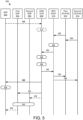
- FIG. 5 illustrates another embodiment of communications 500 of remote unit 102 behavior parameters. Specifically, communications 500 between an AMF 502, a first SMF 504, a second SMF 506, a UDM/UDR 508, an NEF/SCEF 510, a first SCS/AS 512, and a second SCS/AS 514 are illustrated. As may be appreciated, any of the communications 500 described herein may be considered messages and/or parts of messages.
- a first communication 516 from the AMF 502 to the UDM/UDR 508 may include the AMF 502 performing a registration procedure and/or a provisioning procedure with the UDM/UDR 508.
- the UDM/UDR 508 may learn the that a UE is configured to use only a single service or single application (e.g., the UE transmission/reception behavior is determined by a single service/application), or the UDM/UDR 508 may learnt that the UE is configured to use multiple services or applications.
- the UDM/UDR 508 may use this knowledge during classifying 528 in which the UDM/UDR 508 determines how to categorize CP/NC parameters.
- the UDM/UDR 508 may determine 518 that it is provisioned with a single application or single service.
- a second communication 520 from the first SCS/AS 512 to the NEF/SCEF 510 may include the first SCS/AS 512 using various APIs to provide parameters specific to a given UE application (or the UE as such if a single application is used in the UE) to the NEF/SCEF 510 to facilitate efficient network configuration.
- a third communication 522 from the second SCS/AS 514 to the NEF/SCEF 510 may include the second SCS/AS 512 using various APIs to provide parameters specific to a given UE application to the NEF/SCEF 510 to facilitate efficient network configuration.
- the first and second SCS/AS 512 and 514 may add, modify, and/or delete parameters provided to the network (e.g., provided to the NEF/SCEF 510).
- the first and second SCS/AS 512 and 514 may use any existing APIs or other APIs.
- the APIs may include: an API for CP parameter provisioning (e.g., any CP parameters, SCS/AS IP address, SCS/AS ID); an API for NC parameters; an API for an expected UE moving trajectory parameter.
- any of the CP parameters, NC parameters, expected UE moving trajectory parameters, and/or other parameters may be considered CP/NC parameters.
- the NEF/SCEF 510 may discover 524 the UDM/UDR 508 based on a UE's GPSI which may in turn include an external ID or MSISDN.
- a fourth communication 526 from the NEF/SCEF 510 to the UDM/UDR 508 may include the NEF/SCEF 510 sending an update CP/NC parameter request message to the UDM/UDR 508 for delivering selected CP/NC parameters to one or more UEs.
- the CP/NC parameters may include a GPSI (which may be an external ID for a single UE or an external ID for a group of UEs), one or more SCEF reference IDs, an SCEF address, one or more CP/NC parameter sets, one or more validity times, one or more SCEF reference IDs for deletion, one or more SCS/AS IDs, and/or other parameters.
- the fourth communication 526 may include a Nudm_ParameterProvision_Update having parameters such as: GPSI, SCS/AS ID, one or more NEF transaction reference IDs, one or more CP/NC parameter sets, one or more validity times, and so forth.
- the UDM/UDR 508 may categorize 528 CP/NC parameters into at least MM parameters, SM parameters, and/or policy parameters. Moreover, the SM parameters may further be associated with a particular subscribed DNN and/or S-NSSAI. Furthermore, the UDM/UDR 508 may determine whether there are one or more applications on a UE (which may correspond to single or multiple SCS/ASs). In some embodiments, the UDM/UDR 508 uses a SCS/AS ID to determine corresponding DNN and/or S-NSSAI. In one embodiment, in response to a UE using a single service or application, the UDM/UDR 508 may decide to store all parameters as MM parameters and send them to the AMF 502.
- the UDM/UDR 508 may decide to categorize the CP/NC parameters into CP/NC MM parameters and CP/NC SM parameters.
- a traffic filter e.g., based on a SCS/AS's IP address
- all CP/NC parameter sets may be stored as SM parameters in a corresponding DNN and/or S-NSSAI subscription data.
- the processing and or further classification of the CP/NC parameter sets may be performed at an SMF and the SMF may determine which parameters are forwarded to the AMF 502 as session parameter sets.
- the CP/NC parameter sets may be categorized as CP/NC MM parameters.
- the UDM/UDR 508 stores the CP/NC parameter sets received from the NEF/SCEF 510 as CP/NC MM parameters and the UDM/UDR 508 sends the CP/NC MM parameters to the AMF 502.
- the UDM/UDR 508 may categorize those parameters as CP/NC MM parameters and send them to the AMF 502.
- the UDM/UDR 508 may update 530 corresponding fields in a UE subscription (e.g., see Table 4).
- the UDM/UDR 508 may update: only the AMF 502 if the CP/NC parameters were MM related; only SMFs associated with the CP/NC SM parameters if the CP/NC parameters were SM related; or both the AMF 502 and one or more SMFs if the CP/NC parameters contained both MM and SM related parameters.
- a fifth communication 532 from the UDM/UDR 508 to the NEF/SCEF 510 may include the UDM/UDR 508 sending an update CP parameter response to the NEF/SCEF 510.
- a sixth communication 534 from the NEF/SCEF 510 to the first SCS/AS 512 may include the NEF/SCEF 510 sending an update response to the first SCS/AS 512.
- a seventh communication 535 from the NEF/SCEF 510 to the second SCS/AS 514 may include the NEF/SCEF 510 sending an update response to the second SCS/AS 514.
- an eighth communication 536 from the UDM/UDR 508 to the AMF 502 may include the UDM/UDR 508 sending an update with MM parameters to the AMF 502.
- the UDM/UDR 508 may initiate an insert subscription data procedure for each UE to send the CP/NC parameter sets with corresponding validity times, SCEF Reference IDs, and SCEF Reference IDs for deletion to the AMF 502.
- the eighth communication 536 may include a Nudm_ SubscriberDataManagement parameter, a (SDM)_Notification, a SUPI, MM parameters, and so forth.
- the AMF 502 may use 538 the CP/NC MM parameters to derive expected UE behaviors.
- the AMF 502 may send a periodic time parameter (e.g., as part of the CP parameter set) to a RAN as part of enhanced RRC inactive assistance information or the AMF 502 uses the periodic time to derive an expected UE activity behavior as part of the CN assisted RAN parameters tuning information.
- the RAN may use this information (e.g. periodic time) to determine whether to configure an RRC inactive state for the UE.
- the RAN may determine to configure the RRC inactive state to avoid increased signaling (e.g., perform a service request procedure every 30 seconds) and instead use a resume procedure.
- the AMF 502 may use the MM parameters to determine RRC inactive assistance information or to enhance this information with other information (e.g., a periodic time parameter).
- the AMF 502 may use 538 the CP/NC MM parameters to derive expected UE behaviors after the communication 546.
- the first SMF 504 may include a periodic time as a session parameter sent to the AMF 502 that the AMF 502 uses to derive expected UE behaviors.
- a ninth communication 540 from the UDM/UDR 508 to the first SMF 504 may include the UDM/UDR 508, in response to new or updated CP/NC parameters being provided to the UDM/UDR 508, initiating an insert subscription data procedure for each UE to send CP/NC SM parameter sets with corresponding validity times, SCEF reference IDs, and/or SCEF reference IDs for deletion to the first SMF 504.
- the ninth communication 540 may include a Nudm_ SubscriberDataManagement parameter, a (SDM) _Notification, a SUPI, MM parameters, and so forth.
- the CP/NC SM parameters may contain a subset of the CP/NC parameters.
- the UDM/UDR 508 stores whole CP/NC parameter sets as CP/NC SM parameters, and the CP/NC SM parameters are sent to the first SMF 504 as whole CP/NC parameter sets.
- a tenth communication 542 from the UDM/UDR 508 to the second SMF 506 may include the UDM/UDR 508, in response to new or updated CP/NC parameters being provided to the UDM/UDR 508, initiating an insert subscription data procedure for each UE to send CP/NC SM parameter sets with corresponding validity times, SCEF reference IDs, and/or SCEF reference IDs for deletion to the second SMF 506.
- the tenth communication 542 may include a Nudm_ SubscriberDataManagement parameter, a (SDM) _Notification, a SUPI, MM parameters, and so forth.
- the CP/NC SM parameters may contain a subset of the CP/NC parameters.
- the UDM/UDR 508 stores whole CP/NC parameter sets as CP/NC SM parameters, and the CP/NC SM parameters are sent to the second SMF 506 as whole CP/NC parameter sets.
- the first and/or second SMFs 504 and 506 may process 544 the received CP/NC SM parameters, identify whether there are overlapping CP/NC SM parameter sets, and/or merge CP/NC SM parameter sets.
- the first and/or second SMFs 504 and 506 may derive session parameters (e.g., MM or access control related parameters needed for operation of the AMF 502) and signal the session parameters to the AMF 502 in an eleventh communication 546.
- the first and/or second SMFs 504 and 506 store CP/NC SM parameters in a remote unit 102 context.
- the first and/or second SMFs 504 and 506 may send SMF-assisted RAN information to an AN (e.g. NG-RAN node) within an N2 SM information message.
- the first and/or second SMFs 504 and 506 may send a communication duration time, periodic time, expected number of uplink/downlink packets, and/or expected UE activity behavior to an NG-RAN node in order to assist the NG-RAN in deciding and/or configuring an RRC inactive state and/or configuring the connected state parameters of a remote unit 102.
- the expected UE activity behavior may mean an expected pattern of a UE changes between CM-connected and CM-idle states.
- SMF-assisted RAN information may be used in the NG-RAN node to derive the expected UE activity behavior as described in TS 23.401.
- the SMF derives the expected UE activity behavior and signals it to the NG-RAN node within the N2 SM information message during the activation of the UP connection for the PDU session.
- the expected UE activity behavior information in an SMF and signal it to the NG-RAN node is that the expected UE activity behavior may be applicable only when the associated PDU session (serving the associated application in the UE) is activated; otherwise if another PDU session is activated another expected UE activity behavior may be applicable, if determined in another corresponding SMF.
- the SMF may determine the expected UE activity behavior information considering the communication duration time and/or the periodic time from the CP/NC SM parameters.
- the first and/or second SMFs 504 and 506 may use CP/NC SM parameters to configure the UPF.
- the SMF can use the CP/NC parameter Suggested Number of Downlink Packets to configure a UPF with a number of downlink packets to buffer.
- the first and/or second SMFs 504 and 506 may use SM parameters for internal processing.
- the first and/or second SMFs 504 and 506 may use a communication duration time to determine to deactivate a UP connection after the communication duration time expires and/or the first and/or second SMFs 504 and 506 may perform a procedure CN-initiated selective deactivation of a UP connection of an existing PDU session.
- the first and/or second SMFs 504 and 506 may determine whether to use control plane or UP data delivery during PDU session establishment or to switch from control plane to UP delivery based on a parameter CP/UP delivery preference. This is described in detail in Figure 6 .
- a traffic filter (e.g., based on SCS/AS's IP address) may be used to differentiate traffic from/to multiple SCS/ASs within the same DNN/S-NSSAI.
- the first and/or second SMFs 504 and 506 may configure a UPF to: indicate to the first and/or second SMFs 504 and 506 the source IP address of the SCS/Ass; or differently forward packets depending on the source IP address of received downlink packets (e.g., data from one SCS/AS is forwarded over control plane NAS delivery and s data of another SCS/AS is forwarded over UP delivery).
- processing of CP/NC SM parameters in the first and/or second SMFs 504 and 506 may depend on policy rules received from a PCF, if available.
- the eleventh communication 546 from the first SMF 504 (and/or the second SMF 506) to the AMF 502 may include the first SMF 504 informing the AMF 502 about session parameters (e.g., parameters derived from the CP/NC SM parameters as MM-relevant (or access control relevant) parameters for processing in the AMF 502).
- session parameters e.g., parameters derived from the CP/NC SM parameters as MM-relevant (or access control relevant) parameters for processing in the AMF 502.
- the eleventh communication 546 may be performed either: during a successful PDU session establishment procedure in which an SMF sends a PDU session establishment accept message to a remote unit 102; or an SMF may initiate a service operation by transmitting a message to the AMF 502 in response to SM parameters being updated from the UDM/UDR 508.
- the eleventh communication may include: an existing service operation (e.g., Nsmf_PDUSession_SMContextStatusNotify (SUPI, PDU session ID, session parameters, etc.)) to notify the AMF 502 about new MM parameters; Nsmf_EventExposure_Notify (SUPI, PDU Session ID, Session parameters, etc.) transmitted to the AMF 502 (in response to the AMF 502 being previously subscribed); or a new service operations being specified.
- an existing service operation e.g., Nsmf_PDUSession_SMContextStatusNotify (SUPI, PDU session ID, session parameters, etc.)
- Nsmf_EventExposure_Notify SUPI, PDU Session ID, Session parameters, etc.
- the eleventh communication 546 may include the AMF 502 receiving multiple session parameters sets for different PDU sessions (e.g., from different SMFs or from the same SMF).
- the AMF 502 may store session parameters within a PDU session level context.
- the AMF 502 may merge session parameter sets associated with PDU sessions for which a UP Connection is to be activated. In other words, in response to a UP connection for a particular PDU session not being activated, corresponding session parameters may not be considered for RRC inactive assistance information, but may be considered for PSM mode (or MICO mode) or eDRX mode settings, for example.
- CP/NC MM parameters may include: a stationary indication; an expected UE moving trajectory; and/or a scheduled communication time.
- CP/NC SM parameters may include: from CP parameters: a periodic time; a communication duration time; a scheduled communication time; and/or a SCS/AS IP address; and from NC parameters: a maximum Latency; a maximum response time and suggested number of downlink packets (buffering); and/or a CP/UP delivery preference.
- session parameters may include: a stationary indication; an expected UE moving trajectory; a periodic time; a scheduled communication time; a maximum latency; a maximum response time; and so forth.
- CP/NC MM parameters and CP/NC SM parameters may include a validity time (e.g., if indicated by an SCS/AS) and the validity time may be provided an end consumer NF (e.g., an SMF and/or the AMF 502).
- the UDM/UDR 508 an SMF, and/or the AMF 502 may delete corresponding CP/NC parameters autonomously.
- Table 4 shows an example how a UDM/UDR 508 may update stored UE subscription information in response to the UDM/UDR 508 categorizing 528 CP/NC parameter sets into CP/NC MM parameters and CP/NC SM parameters.
- an SMF may determine whether to apply UP or control plane delivery (or transmission) of data to a remote unit 102. Such a decision at the SMF may be performed either: during PDU session establishment; or to later switch from control plane to UP delivery.
- Table 4 Subscription Data Type Field Description Access and Mobility Subscription Data (Data for UE Registration and Mobility Management) SUPI Key GPSI List List of the GPSI used both inside and outside of the 3GPP system to address a 3GPP subscription. Internal Group ID-list List of the subscribed internal group(s) to which the UE belongs to.
- Subscribed-UE-AMBR The maximum aggregated uplink and downlink MBRs to be shared across all Non-GBR QoS Flows according to the subscription of the user.
- Subscribed S-NSSAIs The Network Slices that the UE subscribes to.
- Default S-NSSAIs The Subscribed S-NSSAIs marked as default S-NSSAI.
- UE Usage Type As defined in TS 23.501, clause 5.15.7.2.
- Service Area Restriction Indicates allowed areas in which the UE is permitted to initiate communication with the network, and non-allowed areas in which the UE and the network are not allowed to initiate Service Request or SM signalling to obtain user services.
- Core Network type restriction Defines whether UE is allowed to connect to 5GC for this PLMN.
- RFSP Index An index to specific RRM configuration in the NG-RAN.
- Subscribed Periodic Registration Timer Indicates a subscribed Periodic Registration Timer value.
- Priority Services Indicates the user is subscribed to priority service (MPS) as indicated in TS 23.501, clause 5.16.5.
- MPS priority service
- CP/NC MM parameters Stationary indication, UE moving trajectory, validity time.
- AMF Selection Subscription data (data needed for Slice Selection as described in clause 4.2.2.2.3) SUPI Key Subscribed S-NSSAIs The Network Slices that the UE subscribes to. In roaming case, it indicates the subscribed network slices applicable to the serving PLMN.
- UE context in AMF data SUPI Key AMF Allocated AMF for the registered UE. Include AMF address and AMF NF Id. Access Type 3GPP or non-3GPP access through this AMF SMF Selection Subscription data (data needed for SMF Selection as described in clause 6.3.2 of TS 23.501) SUPI Key Subscribed DNN list List of the subscribed DNNs for the UE. Default DNN The default DNN if the UE does not provide a valid DNN.
- LBO Roaming Information Indicates whether LBO roaming is allowed per DNN, or per (S-NSSAI, subscribed DNN) UE context in SMF data SUPI Key PDU Session Id(s) List of PDU Session Id(s) for the UE For each PDU Session Id: DNN DNN for the PDU Session. SMF Allocated SMF for the PDU Session. Includes SMF IP Address and SMF NF Id.
- SMS Management Subscription data (data needed by SMSF for SMSF Registration)
- SUPI Key SMS parameters Indicates SMS parameters subscribed for SMS service such as SMS teleservice, SMS barring list SMS Subscription data (data needed in AMF)
- SUPI Key SMS Supported Indicates whether the UE supports SMS delivery over NAS via 3GPP access, or via non-3GPP access, or via both the 3GPP and non-3GPP access.
- SMSF address Indicates SMSF address subscribed for SMS service.
- Session Management Subscription data (data needed for PDU Session Establishment)
- SUPI Key Session Management Subscription data contains one or more S-NSSAI level subscription data: S-NSSAI Indicates the value of the S-NSSAI.
- UE Address Indicates the subscribed static IP address(es) for the IPv4 or IPv6 or IPv4v6 type PDU Sessions accessing the DNN, S-NSSAI.
- Allowed PDU Session Types Indicates the allowed PDU Session Types (IPv4, IPv6, IPv4v6, Ethernet, and Unstructured) for the DNN, S-NSSAI.
- Default PDU Session Type Indicates the default PDU Session Type for the DNN, S-NSSAI.
- Allowed SSC modes Indicates the allowed SSC modes for the DNN, S-NSSAI.
- Default SSC mode Indicate the default SSC mode for the DNN, S-NSSAI.
- 5GS Subscribed QoS profile The QoS Flow level QoS parameter values (5QI and ARP) for the DNN, S-NSSAI (see clause 5.7.2.7 of TS 23.501).
- Charging Characteristics This information is defined in TS 32.240; it may e.g. contain information on how to contact the Charging Function. This information, when provided shall override any corresponding predefined information at the SMF Subscribed-Session-AMBR The maximum aggregated uplink and downlink MBRs to be shared across all Non-GBR QoS Flows in each PDU Session, which are established for the DNN, S-NSSAI.
- Static IP address/prefix Indicate the static IP address/prefix for the DNN, S-NSSAI.
- CP/NC SM parameters Communication duration time, periodic time, scheduled communication time, suggested number of downlink packets (buffering), expected number of uplink/downlink packets, SCS/AS IP address, CP/UP preference, DNAI, validity time(s).
- Identifier translation GPSI Generic Public Subscription Identifier used inside and outside of the 3GPP system to address a 3GPP subscription. Used as the Key for translation to the corresponding SUPI (and optionally corresponding MSISDN).
- MSISDN should be interpreted as an indication to the NEF that MSISDN shall be used to identify the UE when sending the SMS to the SMS-SC via T4.
- User Plane Security Policy Indicates the security policy for integrity protection and encryption for the user plane.
- FIG. 6 illustrates a further embodiment of communications 600 of remote unit 102 behavior parameters. Specifically, communications 600 between a UE 602, a RAN 604, an AMF 606, an SMF 608, a UPF 610, an NEF 612 (e.g., NEF/SCEF), and a UDM/UDR 614 are illustrated. As may be appreciated, any of the communications 600 described herein may be considered messages and/or parts of messages.
- an existing PDU session may be configured to transmit 616 uplink and downlink small data ("SD") over a control plane (e.g., over an NAS protocol between the SMF 608 and the UE 602 via the AMF 606.
- SD uplink and downlink small data
- the SD may be transmitted over an N6 interface to an SCS/AS.
- the SD may be transmitted over the NEF 612 and NBI API to an SCS/AS.
- the SMF 608 may determine to configure control plane delivery of data for a PDU session based on previously received (e.g., subscription or CP/NC SM parameters) information from the UDM/UDR 614. For example, an SCS/AS/AF may have sent a parameter for control plane preference in the UDM/UDR 614 and the SMF 608 may receive this parameter from the UDM/UDR 614 during PDU session establishment. In such embodiments, the SMF 608 may use this parameter to determine to configure control plane delivery of data. In other words, the UE 602 may not need to indicate explicitly a control plane delivery method during PDU session establishment signaling.
- previously received e.g., subscription or CP/NC SM parameters
- a first communication 618 from the UDM/UDR 614 to the SMF 608 may include the UDM/UDR 614 updating SM parameters in the SMF 608 in response to an SCS/AS having updated CP/NC parameters in the UDR/UDM 614.
- the SMF 608 may be updated with a new periodicity time, periodicity might be switched-off, and/or the SMF 608 may be updated with a new transmission duration time.
- an SCS/AS/AF may signal and/or modify a preference for UP or control plane transmission by changing the value of the CP/UP preference parameter.
- a CP/UP preference parameter is an SM parameter stored in the UDM/UDR 614
- the CP/UP preference parameter is a parameter stored and/or managed by a PCF.
- an SCS/AS may send to the NEF 612 a CP/UP preference indication which may then be forwarded to the UDM/UDR 614.
- the UDM/UDR 614 may process this CP/UP preference indication and the UDM/UDR 614 may determine to update a relevant PCF managing the UE's 602 policy rules.
- an SCS/AS/AF may determine a CP/UP preference parameter value (e.g., UP preference value or control plane preference value, which may be encoded as e.g., "00", "01", or “10" bit map) based on an amount of data to transmit or based on a traffic pattern (the traffic pattern may be explicitly signaled to the network). Further, the SCS/AS/AF may maintain information from the MNO about the charging conditions or charging rules applied by the MNO when delivering data over control plane or over UP; and the SCS/AS/AF may consider this information together with the amount of data or traffic pattern when determining the value of the CP/UP delivery preference.
- a CP/UP preference parameter value e.g., UP preference value or control plane preference value, which may be encoded as e.g., "00", "01", or “10” bit map
- a same PDU session in response to the SCS/AS/AF determining that a software and/or firmware update is needed, a same PDU session may be used to deliver both SD over control plane and software updates over a user plane in non-overlapping time spans.
- the CP/UP preference parameter may be sent from the SCS/AS/AF to the NEF 612 (i.e. over a T8 interface) either as part of the control plane parameter set, as part of the NC parameters, or as independent parameter.
- a second communication 620 from the AMF 606 to the SMF 608 may include the AMF 606 configuring a threshold value for a maximum amount of data (e.g., number of packets, number of bytes, etc.) to be transmitted over a control plane.
- the second communication 620 may occur either during PDU session establishment for control plane transmission or at a later time.
- the SMF 608 may determine 622 to switch a data transmission mechanism from control plane transmission to UP transmission.
- a switch from control plane to UP transmission may be done to avoid an overload of the control plane (including the AMF 606 and SRBs) which may be meant for transmission of control plane messages.
- a third communication 624 from the SMF 608 to the AMF 606 may include the SMF 608 invoking a service operation.
- the third communication 624 may include a Namf_Communication_N1N2MessageTransfer (e.g., SM context ID, N2 SM information (PDU session ID, N3 tunnel information, QFIs, QoS profiles, session-AMBR), N1 SM container (PDU session modification command (PDU session ID, UP indication, QoS rules, QoS rule operation, session-AMBR)), and so forth).
- Namf_Communication_N1N2MessageTransfer e.g., SM context ID, N2 SM information (PDU session ID, N3 tunnel information, QFIs, QoS profiles, session-AMBR), N1 SM container (PDU session modification command (PDU session ID, UP indication, QoS rules, QoS rule operation, session-AMBR)), and so forth).
- N2 SM information may be similar to N2 SM information used during UP connection activation (e.g., it contains N3 tunnel info, PDU session ID, and QoS-related information).
- the SMF 608 in response to the data (e.g. SD) being received/sent via the NEF 612, the SMF 608 may select and/or configure the UPF 610.
- the AMF 606 may decide whether to page the UE 602 based on an ATC status. In various embodiments, the AMF 606 may update and/or store the UE 602 context based on a Namf_Communication_N1N2MessageTransfer, in response to the UE 602 not being reachable.
- an idle state e.g., CM-IDLE state
- the AMF 606 may update and/or store the UE 602 context based on a Namf_Communication_N1N2MessageTransfer, in response to the UE 602 not being reachable.
- a fourth communication 626 from the AMF 606 to the RAN 604 may include the AMF 606 sending an N2 PDU session request (e.g., N2 SM information received from the SMF 608, NAS message (e.g., PDU session ID, N1 SM container (PDU session modification command)) message to the RAN 604.
- N2 PDU session request e.g., N2 SM information received from the SMF 608, NAS message (e.g., PDU session ID, N1 SM container (PDU session modification command)) message to the RAN 604.
- a fifth communication 628 between the RAN 604 and the UE 602 may include the RAN 604 issuing AN specific signaling exchange with the UE 602 that is related to information received from the SMF 608.
- an RRC connection reconfiguration may take place with the UE 602 establishing RAN 604 resources related to QoS Rules for a PDU session request received in the fourth communication 626.
- a sixth communication 630 from the RAN 604 to the AMF 606 may include the RAN 604 transmitting an N2 session response to the AMF 606.
- a seventh communication 632 from the AMF 606 to the SMF 608 may include the AMF 606 forwarding N2 SM information and/or an N1 container to the SMF 608.
- an eighth communication 634 from the SMF 608 to the AMF 606 and a ninth communication 636 from the AMF 606 to the SMF 608 may include communications for updating the UE 602 context to reconfigure from control plane delivery to UP delivery.
- a tenth communication 638 from the SMF 608 to the UPF 610 and an eleventh communication 640 from the UPF 610 to the SMF 608 may include communications for N4 modification and/or creation.
- communications 642 may be used for SD transmission over UP.
- the AMF 606 may send "RRC inactive assistance information" to be used in the RAN 604 to determine whether the UE 602 may be transitioned to an RRC inactive state.
- the RAN 604 behavior may not depend on a used and/or activated UP connection.
- the SMF 608 influences NG-RAN behavior based on an activated UP connection. There are several options to perform this. In one embodiment, as described in Figure 5 , the SMF 608 may update the UE's 602 PDU session context in the AMF 606 with session parameters which may be used in the AMF 606 to determine "RRC inactive assistance information" which is extended with periodic time and/or communication duration time. In another embodiment, the SMF 608 includes SMF assisted RAN information in N2 SM information sent to an NG-RAN node as described in Figure 7 .
- Figure 7 illustrates an additional embodiment of communications 700 of remote unit 102 behavior parameters. Specifically, communications 700 between a UE 702, a RAN 704, an AMF 706, an SMF 708, a UPF 710, and an NEF 712 are illustrated. As may be appreciated, any of the communications 700 described herein may be considered messages and/or parts of messages.
- SD of a PDU session may be configured to be transmitted 714 over a control plane.
- data in response to CP transmission being configured, data may be delivered over an NAS protocol between the SMF 708 and the UE 702. The data may be received by the SMF 708 either over an N6 interface from the UPF 710 or from the NEF 712.
- SD of the PDU session may be configured to be transmitted 716 over a user plane.
- the data may be received by the UPF 710 either over an N6 interface or from the SMF 708 via the NEF 712.
- the UE 702 may be in an idle state (e.g., CM-IDLE state) at some point.
- the SMF 708 stores 718 CP/NC SM parameters (e.g., received from a UDM/UDR as described in relation to Figure 5 or received from the AMF 706). Based on CP/NC SM parameters the SMF 708 may determine 718 SMF assisted RAN information to be sent to the RAN 704.
- a first communication 720 from the UE 702 to the SMF 708 may include the UE 702 transmitting a service request to the SMF 708 via the AMF 706.
- a second communication 722 from the UPF 710 to the SMF 708 may include the UPF 710 transmitting DL data to the SMF 708.
- due to mobile originated communication e.g., the first communication 720
- due to mobile terminated communication e.g., the second communication 722
- a user plane connection for a PDU session may be activated.
- a third communication 724 from the SMF 708 to the AMF 706 may include the SMF 708 initiating signaling or service operation.
- the service operation may be initiated using Namf_Communication_N1N2MessageTransfer (e.g., N2 SM information (SMF assisted RAN information (expected UE activity behavior, communication duration, periodic time, and/or expected number of uplink/downlink packets, etc.), N1 SM container, etc.)).
- the SMF 708 may include new parameters within an S2 SM information container (e.g., expected UE activity behavior, a communication duration, expected number of uplink/downlink packets, and/or a periodic time, etc.).
- the new parameters included in the N2 SM information container from the SMF 708 may be in general referred as SMF assisted RAN information including further parameters.
- the SMF 708 may determine the expected UE activity behavior information considering a communication duration time and/or a periodic time from the CP/NC SM parameters, but also other parameters gained from statistics gathered internally in the network.
- the SMF 708 may determine an expected number of uplink/downlink packets parameter based on the CP/NC SM parameters, for example.
- the parameter expected number of uplink/downlink packets may include separate parameters (e.g., expected number of uplink packets parameter and/or expected number of downlink packets parameter), or may be coded as a parameter with multiple values (e.g., [2, 3] meaning 2 uplink packets and 3 downlink packets, or [2, 0] meaning 2 uplink packets and 0 downlink packets).
- a fourth communication 726, a fifth communication 728, a sixth communication 730, and a seventh communication 732 may be substantially similar to communication as described in TS 23.502 clause 4.2.3.2 steps 12 - 14.
- the RAN 704 after receiving SMF assisted RAN information from the SMF 708 (including e.g., parameters such as communication duration, expected UE activity behavior, or periodic time), may use these parameters to configure or reconfigure 734 a radio connection with the UE. For example, based on a periodic time, the RAN 704 may determine whether to keep the UE 702 in a connected state (e.g., RRC connected state), to configure an inactive state (e.g., RRC inactive state), or to trigger an idle state (e.g., trigger an RRC idle state via releasing an RRC connection or triggering release of AN resources procedure).
- a connected state e.g., RRC connected state
- an inactive state e.g., RRC inactive state
- an idle state e.g., trigger an RRC idle state via releasing an RRC connection or triggering release of AN resources procedure.
- the RAN 704 may determine based on communication duration parameters whether to deactivate the inactive state or to trigger release of AN resources procedure after the communication duration time expires. In another example, the RAN 704 may receive an expected UE activity behavior from the SMF 708 and use this information to determine a transition pattern between RRC connected, RRC idle, and/or RRC inactive states.
- the AMF 706 may provide the following RRC inactive assistance information to the RAN 704: UE specific DRX values; a registration area provided to the UE; a periodic registration update timer; in response to the AMF 706 enabling a MICO mode for the UE 702, an indication that the UE 702 is in MICO mode; and/or information from the UE 702 permanent identifier, as defined in TS 38.304, that allows the RAN 704 to calculate the UE's RAN paging occasions.
- the SMF 708 during an UP connection activation procedure may also provide SMF assisted RAN information from the SMF 708 which is specific to an activated PDU session.
- the RAN 704 in response to the RAN 704 having multiple activated PDU sessions simultaneously and the RAN 704 receives SMF assisted RAN information from the SMF 708 for multiple PDU sessions, the RAN 704 may merge the multiple SMF assisted RAN information from the SMF 708 and determine to configure the radio Uu interface correspondingly.
- the RAN 704 may also receive RAN information from the AMF 706 (e.g., RRC inactive assistance information) and SMF assisted RAN information from one or more SMFs 708.
- the RAN 704 may merge the RAN information of the same type (e.g., if there are multiple communication duration parameters, the RAN 704 may take the larger value to configure a UE inactivity time, for example) or the RAN 704 may use different information types for different purposes.
- the RAN 704 may use RRC inactive assistance information from the AMF 706 to determine an RRC inactive state configuration, but the RAN 704 may use SMF assisted RAN information from the SMF 708 (e.g., expected UE activity behavior, expected number of uplink/downlink packets, and/or communication duration) to determine a time to initiate transition from RRC connected to RRC inactive state, and/or to initiate transition from RRC connected to RRC idle state.
- SMF assisted RAN information e.g., expected UE activity behavior, expected number of uplink/downlink packets, and/or communication duration
- an RRC inactive state may be configured by the RAN 704 in response to there being a PDU session using control plane transmission of data (e.g., without having user plane resources activated).
- an RRC inactive state may be configured during a time in which there is a mixture of a PDU session using a control plane transmission and a PDU session using the UP transmission.
- the RAN 704 based on received SMF assisted RAN information, may decide to change from RRC inactive state to RRC connected state.
- the RAN 704 may determine whether the data to be transmitted is small data (e.g., just a single packet) or bigger size data; or the RAN 704 may determine whether uplink and/or downlink communication has been completed based on a number of packets transmitted in an uplink and/or a downlink direction. If the RAN 704 determines that uplink and/or downlink communication has been completed, the RAN 704 may decide to initiate release of AN resources by sending an RRC connection release message with or without an indication for resume identity, and, respectively, whether to initiate N2 signaling transmission to the AMF 706 to request release of the AN resources.
- the presence of a resume identity indication may mean transition from an RRC connected state to an RRC inactive state.
- the non-presence of a resume identity indication may mean transition from an RRC connected state to an RRC idle state.
- the parameter periodic time e.g., as part of the SMF assisted RAN information
- the RAN 704 may be used in the RAN 704 to determine whether the transmission of data is frequent or infrequent; and, consequently, to determine which RRC state for the UE would be the most appropriate in order to save UE power consumption and/or signaling transmitted to the CN due to RRC state transitions.
- CP/NC parameter sets may not be processed and classified by a UDM/UDR into CP/NC MM parameters and CP/NC SM parameters, but the CP/NC parameter sets may be stored as CP/NC MM parameters.
- the UMD/UDR may determine and store, if available, a DNN and/or S-NSSAI corresponding to each CP/NC MM parameter set.
- CP/NC MM parameter sets may be sent to the AMF 706 together with associated DNN and/or S-NSSAI.
- the AMF 706 stores CP/NC MM parameter sets and associated DNN and/or S-NSSAI.
- the AMF 706 may send the associated CP/NC MM parameter sets or a portion thereof related to session management to the SMF 708 in an N11 message from the AMF 706 to the SMF 708.
- processing and classifying CP/NC MM parameter sets as SM parameters may be done in the AMF 706 and the SM parameters may be sent to the SMF 708.
- a modified service operation from the AMF 706 to the SMF 708 may be as follows: Nsmf PDUSession_CreateSMContext Request (SUPI, DNN, S-NSSAIs, PDU session ID, AMF ID, request type, PCF ID, N1 SM container (PDU session establishment request), CP/NC SM parameters).
- CP/NC SM parameters are SM parameters determined by the AMF 706 as session-relevant parameters.
- the AMF 706 may initiate, via communication to the SMF 708, a service operation (e.g., Nsmf PDUSession UpdateSMContext Request (SUPI, PDU session ID, CP/NC SM parameters, request type, cause, etc.)).
- a service operation e.g., Nsmf PDUSession UpdateSMContext Request (SUPI, PDU session ID, CP/NC SM parameters, request type, cause, etc.
- the service operation message may be insert as new or updated SM parameters in the SMF 708.
- CP/NC SM parameters sent from the AMF 706 to the SMF 708 may be: a periodic time; a communication duration time; an SCS/AS IP address; a suggested number of downlink packets (buffering); maximum latency; a CP/UP delivery preference; DNAI; and/or SSC mode preference, etc.
- the SMF 708 may use CP/NC SM parameters as described herein in relation to Figure 5 Error! Reference source not found., Figure 6 , and/or Figure 7 .
- the SMF 708 may not need to determine and signal session parameters to the AMF 706.
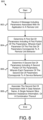
- Figure 8 is a schematic flow chart diagram illustrating one embodiment of a method 800 for determining remote unit 102 behavior parameters.
- the method 800 is performed by an apparatus, such as the network unit 104.
- the method 800 may be performed by a processor executing program code, for example, a microcontroller, a microprocessor, a CPU, a GPU, an auxiliary processing unit, a FPGA, or the like.
- the method 800 may include receiving 802 a message including parameters associated with an application in a remote unit.
- the method 800 includes determining 804 a first set of parameters including a first portion of the parameters, wherein each parameter of the first set of parameters corresponds to a remote unit behavior.
- the method 800 includes determining 806 a second set of parameters including a second portion of the parameters, wherein each parameter of the second set of parameters corresponds to a service behavior.
- the method 800 includes associating 808 the second set of parameters with a data network name, a single network slice selection assistance information, or a combination thereof.
- receiving the message includes receiving one or more messages, and each of the one or more messages contains a validity time for parameters included therein.
- receiving the message includes receive the message from a network exposure function.
- the method 800 includes transmitting the first set of parameters to an access and mobility management function.
- the access and mobility management function determines how to configure the remote unit, a base station, or a combination thereof, based on the first set of parameters.
- the method 800 includes transmitting the second set of parameters to a session management function.
- the session management function configures one or more network functions or radio entities using the second set of parameters, and the one or more network functions are configured with information specific to a protocol data unit session, a traffic flow, or a combination thereof.
- the parameters include information indicating a preference for either a control plane transmission or a user plane transmission.
- the parameters include information indicating an internet protocol address, a port number, or a combination thereof corresponding to a service server, an application server, or a combination thereof.
- the parameters include information indicating an identifier corresponding to a service server, an application server, an application, or some combination thereof.
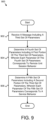
- Figure 9 is a schematic flow chart diagram illustrating one embodiment of a method 900 for determining remote unit 102 behavior parameters.
- the method 900 is performed by an apparatus, such as the network unit 104.
- the method 900 may be performed by a processor executing program code, for example, a microcontroller, a microprocessor, a CPU, a GPU, an auxiliary processing unit, a FPGA, or the like.
- the method 900 may include receiving 902 a message including a third set of parameters.
- the method 900 includes determining 904 a fourth set of parameters including a first portion of the third set of parameters, wherein each parameter of the fourth set of parameters corresponds to remote unit session behavior.
- the method 900 includes determining 906 a fifth set of parameters including a second portion of the third set of parameters, wherein each parameter of the fifth set of parameters corresponds to a service behavior.
- the method 900 includes transmitting the fourth set of parameters to an access and mobility management function. In a further embodiment, the method 900 includes determining configuration information for a user plane function based on the fifth set of parameters, and transmitting the configuration information to the user plane function. In certain embodiments, the method 900 includes determining configuration information for a base station based on the fifth set of parameters. In some embodiments, the method 900 includes transmitting the configuration information to the base station. In certain embodiments, the third set of parameters includes a first set of parameters corresponding to a remote unit behavior. In various embodiments, the third set of parameters includes a second set of parameters corresponding to a service behavior. In some embodiments, the third set of parameters includes a first set of parameters corresponding to a remote unit behavior and a second set of parameters corresponding to a service behavior.
Landscapes
- Engineering & Computer Science (AREA)
- Signal Processing (AREA)
- Computer Networks & Wireless Communication (AREA)
- Databases & Information Systems (AREA)
- Computer Security & Cryptography (AREA)
- Mobile Radio Communication Systems (AREA)
- Alarm Systems (AREA)
- Selective Calling Equipment (AREA)
Priority Applications (1)
| Application Number | Priority Date | Filing Date | Title |
|---|---|---|---|
| EP24215942.4A EP4492907A3 (de) | 2018-04-06 | 2018-04-06 | Bestimmung von verhaltensparametern einer entfernten einheit |
Applications Claiming Priority (3)
| Application Number | Priority Date | Filing Date | Title |
|---|---|---|---|
| EP18717315.8A EP3777460B1 (de) | 2018-04-06 | 2018-04-06 | Bestimmung von verhaltensparametern einer entfernten einheit |
| EP24215942.4A EP4492907A3 (de) | 2018-04-06 | 2018-04-06 | Bestimmung von verhaltensparametern einer entfernten einheit |
| PCT/EP2018/058917 WO2019192731A1 (en) | 2018-04-06 | 2018-04-06 | Determining remote unit behavior parameters |
Related Parent Applications (2)
| Application Number | Title | Priority Date | Filing Date |
|---|---|---|---|
| EP18717315.8A Division EP3777460B1 (de) | 2018-04-06 | 2018-04-06 | Bestimmung von verhaltensparametern einer entfernten einheit |
| EP18717315.8A Division-Into EP3777460B1 (de) | 2018-04-06 | 2018-04-06 | Bestimmung von verhaltensparametern einer entfernten einheit |
Publications (2)
| Publication Number | Publication Date |
|---|---|
| EP4492907A2 true EP4492907A2 (de) | 2025-01-15 |
| EP4492907A3 EP4492907A3 (de) | 2025-03-26 |
Family
ID=61965977
Family Applications (3)
| Application Number | Title | Priority Date | Filing Date |
|---|---|---|---|
| EP24215942.4A Pending EP4492907A3 (de) | 2018-04-06 | 2018-04-06 | Bestimmung von verhaltensparametern einer entfernten einheit |
| EP18717315.8A Active EP3777460B1 (de) | 2018-04-06 | 2018-04-06 | Bestimmung von verhaltensparametern einer entfernten einheit |
| EP24216658.5A Pending EP4496421A3 (de) | 2018-04-06 | 2018-04-06 | Bestimmung von verhaltensparametern einer entfernten einheit |
Family Applications After (2)
| Application Number | Title | Priority Date | Filing Date |
|---|---|---|---|
| EP18717315.8A Active EP3777460B1 (de) | 2018-04-06 | 2018-04-06 | Bestimmung von verhaltensparametern einer entfernten einheit |
| EP24216658.5A Pending EP4496421A3 (de) | 2018-04-06 | 2018-04-06 | Bestimmung von verhaltensparametern einer entfernten einheit |
Country Status (5)
| Country | Link |
|---|---|
| US (3) | US11304049B2 (de) |
| EP (3) | EP4492907A3 (de) |
| CN (2) | CN118199830A (de) |
| ES (1) | ES3012795T3 (de) |
| WO (1) | WO2019192731A1 (de) |
Families Citing this family (19)
| Publication number | Priority date | Publication date | Assignee | Title |
|---|---|---|---|---|
| US11985585B2 (en) * | 2018-08-10 | 2024-05-14 | Nokia Technologies Oy | Downlink signaling to user equipment in non-3GPP idle state |
| CN112534835B (zh) * | 2018-08-13 | 2022-07-19 | 华为技术有限公司 | 在5g网络中提供多播/广播服务 |
| EP3841729B1 (de) | 2018-08-24 | 2025-06-18 | Koninklijke KPN N.V. | Informationszentrische vernetzung über 5g oder spätere netzwerke |
| EP3841728B1 (de) * | 2018-08-24 | 2024-02-21 | Koninklijke KPN N.V. | Informationszentrische vernetzung über 5g oder spätere netzwerke |
| US11765575B2 (en) * | 2018-12-04 | 2023-09-19 | Nokia Technologies Oy | Apparatus, method and computer program |
| US12068918B2 (en) * | 2019-02-27 | 2024-08-20 | Telefonaktiebolaget Lm Ericsson (Publ) | Methods and apparatuses for managing a port of a network device |
| US11297680B2 (en) | 2019-06-17 | 2022-04-05 | Samsung Electronics Co., Ltd. | Method and apparatus for handling emergency services in a wireless network |
| US11184946B2 (en) * | 2019-06-17 | 2021-11-23 | Samsung Electronics Co., Ltd. | Method and apparatus for handling emergency services in a wireless communication system |
| EP4426001A3 (de) | 2019-10-02 | 2024-10-23 | Samsung Electronics Co., Ltd | Verfahren und vorrichtung zur datenratensteuerung in einem netzwerk-slice in einem drahtloskommunikationssystem |
| CN114631397A (zh) * | 2019-10-18 | 2022-06-14 | 欧芬诺有限责任公司 | 无线网络中的信令传送 |
| EP4066547A1 (de) * | 2019-11-29 | 2022-10-05 | Telefonaktiebolaget LM Ericsson (publ) | Verfahren und geräte zur ereignisberichterstattung |
| US20210392653A1 (en) * | 2020-04-30 | 2021-12-16 | Qualcomm Incorporated | Unmanned aerial vehicle category reporting |
| US11588788B2 (en) * | 2020-05-06 | 2023-02-21 | Verizon Patent And Licensing Inc. | Systems and methods for facilitating data transmission to internet of things devices |
| CN111885627B (zh) * | 2020-07-30 | 2023-02-24 | 中国联合网络通信集团有限公司 | 最小化路测配置的方法及装置 |
| CN112272169B (zh) * | 2020-10-16 | 2023-06-02 | 中国联合网络通信集团有限公司 | 一种用户身份的确定方法及装置 |
| US11503659B2 (en) * | 2021-01-15 | 2022-11-15 | T-Mobile Usa, Inc. | Routing optimization for service capability exposure |
| CN115529311A (zh) * | 2021-06-24 | 2022-12-27 | 普天信息技术有限公司 | 集群通信系统、集群注册方法及集群组呼业务传输方法 |
| CN113179518B (zh) * | 2021-06-30 | 2021-10-26 | 中移(上海)信息通信科技有限公司 | 一种数据传输方法、数据传输装置、数据传输设备及终端 |
| BR112023026880A2 (pt) * | 2021-07-08 | 2024-03-05 | Qualcomm Inc | Função de aplicativo (af) provendo endereços de protocolo de internet (ip) estáticos para equipamentos de usuário |
Family Cites Families (12)
| Publication number | Priority date | Publication date | Assignee | Title |
|---|---|---|---|---|
| KR101653310B1 (ko) * | 2009-09-02 | 2016-09-01 | 엘지전자 주식회사 | Mac 헤더 타입 정보를 이용한 mac pdu 송수신 방법 및 장치 |
| US9661525B2 (en) * | 2012-03-21 | 2017-05-23 | Samsung Electronics Co., Ltd. | Granular network access control and methods thereof |
| US9456337B2 (en) * | 2012-03-30 | 2016-09-27 | Qualcomm Incorporated | Apparatus and method for signaling network capabilities for a wireless device |
| US9414284B2 (en) * | 2014-08-19 | 2016-08-09 | Google Technology Holdings LLC | Methods and an apparatus for applying radio-access network-selection and traffic-routing policies in a communication device |
| KR102205551B1 (ko) * | 2015-06-23 | 2021-01-21 | 인터디지탈 패튼 홀딩스, 인크 | 고급 의사 소통을위한 우선 순위 처리 |
| JP6679751B2 (ja) * | 2016-04-01 | 2020-04-15 | アイディーエーシー ホールディングス インコーポレイテッド | サービススライス選択および分離のための方法 |
| US10277515B2 (en) * | 2016-04-04 | 2019-04-30 | Qualcomm Incorporated | Quality of service (QOS) management in wireless networks |
| US10397892B2 (en) * | 2017-02-06 | 2019-08-27 | Huawei Technologies Co., Ltd. | Network registration and network slice selection system and method |
| US10375665B2 (en) * | 2017-02-06 | 2019-08-06 | Huawei Technologies Co., Ltd. | Method and apparatus for supporting access control and mobility management |
| US10986516B2 (en) * | 2017-03-10 | 2021-04-20 | Huawei Technologies Co., Ltd. | System and method of network policy optimization |
| EP3589062B1 (de) * | 2017-03-21 | 2021-05-12 | Huawei Technologies Co., Ltd. | Kommunikationsverfahren und -vorrichtung |
| US20190116486A1 (en) * | 2017-10-17 | 2019-04-18 | Electronics And Telecommunications Research Institute | Method and apparatus for location based service in 5g system |
-
2018
- 2018-04-06 CN CN202410283643.5A patent/CN118199830A/zh active Pending
- 2018-04-06 US US17/045,621 patent/US11304049B2/en active Active
- 2018-04-06 CN CN201880092211.9A patent/CN112005613B/zh active Active
- 2018-04-06 EP EP24215942.4A patent/EP4492907A3/de active Pending
- 2018-04-06 EP EP18717315.8A patent/EP3777460B1/de active Active
- 2018-04-06 ES ES18717315T patent/ES3012795T3/es active Active
- 2018-04-06 EP EP24216658.5A patent/EP4496421A3/de active Pending
- 2018-04-06 WO PCT/EP2018/058917 patent/WO2019192731A1/en not_active Ceased
-
2022
- 2022-04-11 US US17/718,078 patent/US11765568B2/en active Active
-
2023
- 2023-07-13 US US18/221,777 patent/US12356500B2/en active Active
Also Published As
| Publication number | Publication date |
|---|---|
| EP3777460C0 (de) | 2025-02-19 |
| US20220240075A1 (en) | 2022-07-28 |
| US20210160680A1 (en) | 2021-05-27 |
| US12356500B2 (en) | 2025-07-08 |
| EP3777460A1 (de) | 2021-02-17 |
| US20230362617A1 (en) | 2023-11-09 |
| EP4496421A2 (de) | 2025-01-22 |
| EP3777460B1 (de) | 2025-02-19 |
| ES3012795T3 (en) | 2025-04-10 |
| WO2019192731A1 (en) | 2019-10-10 |
| US11304049B2 (en) | 2022-04-12 |
| US11765568B2 (en) | 2023-09-19 |
| CN118199830A (zh) | 2024-06-14 |
| EP4492907A3 (de) | 2025-03-26 |
| CN112005613A (zh) | 2020-11-27 |
| EP4496421A3 (de) | 2025-07-16 |
| CN112005613B (zh) | 2024-03-22 |
Similar Documents
| Publication | Publication Date | Title |
|---|---|---|
| US12356500B2 (en) | Determining remote unit behavior parameters | |
| US20250024403A1 (en) | Connection suspension for multiple sims | |
| US20220030458A1 (en) | Determining data available for transmission | |
| US11490292B2 (en) | Transferring a data connection to a radio access network | |
| US20220030642A1 (en) | Method and Apparatus for Determining Whether to Transmit Network Slice Selection Assistance Information | |
| US11635741B2 (en) | Extracting etherCAT datagrams from an etherCAT frame | |
| EP3949284B1 (de) | Extraktion von ethercat-datagrammen aus einem ethercat-frame | |
| US20250119859A1 (en) | Registering with multiple networks | |
| US11876868B2 (en) | Deriving an operating system identity | |
| WO2022174902A1 (en) | Data connection establishment in response to a disaster condition | |
| CN120077687A (zh) | 用于虚拟网络组的用户面安全的方法和装置 | |
| CN117062189A (zh) | 通信方法和装置 | |
| CN121126580A (zh) | 多个sim的连接暂停 |
Legal Events
| Date | Code | Title | Description |
|---|---|---|---|
| PUAI | Public reference made under article 153(3) epc to a published international application that has entered the european phase |
Free format text: ORIGINAL CODE: 0009012 |
|
| STAA | Information on the status of an ep patent application or granted ep patent |
Free format text: STATUS: THE APPLICATION HAS BEEN PUBLISHED |
|
| AC | Divisional application: reference to earlier application |
Ref document number: 3777460 Country of ref document: EP Kind code of ref document: P |
|
| AK | Designated contracting states |
Kind code of ref document: A2 Designated state(s): AL AT BE BG CH CY CZ DE DK EE ES FI FR GB GR HR HU IE IS IT LI LT LU LV MC MK MT NL NO PL PT RO RS SE SI SK SM TR |
|
| REG | Reference to a national code |
Ref country code: DE Ref legal event code: R079 Free format text: PREVIOUS MAIN CLASS: H04W0076000000 Ipc: H04W0076160000 |
|
| PUAL | Search report despatched |
Free format text: ORIGINAL CODE: 0009013 |
|
| AK | Designated contracting states |
Kind code of ref document: A3 Designated state(s): AL AT BE BG CH CY CZ DE DK EE ES FI FR GB GR HR HU IE IS IT LI LT LU LV MC MK MT NL NO PL PT RO RS SE SI SK SM TR |
|
| RIC1 | Information provided on ipc code assigned before grant |
Ipc: H04W 76/28 20180101ALI20250218BHEP Ipc: H04W 60/00 20090101ALI20250218BHEP Ipc: H04W 76/00 20180101ALI20250218BHEP Ipc: H04W 76/16 20180101AFI20250218BHEP |
|
| STAA | Information on the status of an ep patent application or granted ep patent |
Free format text: STATUS: REQUEST FOR EXAMINATION WAS MADE |
|
| 17P | Request for examination filed |
Effective date: 20250821 |