EP4491478A1 - Engine load point allocation control method and apparatus, and storage medium and vehicle - Google Patents
Engine load point allocation control method and apparatus, and storage medium and vehicle Download PDFInfo
- Publication number
- EP4491478A1 EP4491478A1 EP23765899.2A EP23765899A EP4491478A1 EP 4491478 A1 EP4491478 A1 EP 4491478A1 EP 23765899 A EP23765899 A EP 23765899A EP 4491478 A1 EP4491478 A1 EP 4491478A1
- Authority
- EP
- European Patent Office
- Prior art keywords
- load point
- torque
- engine
- allocation
- electric generator
- Prior art date
- Legal status (The legal status is an assumption and is not a legal conclusion. Google has not performed a legal analysis and makes no representation as to the accuracy of the status listed.)
- Pending
Links
Images
Classifications
-
- B—PERFORMING OPERATIONS; TRANSPORTING
- B60—VEHICLES IN GENERAL
- B60W—CONJOINT CONTROL OF VEHICLE SUB-UNITS OF DIFFERENT TYPE OR DIFFERENT FUNCTION; CONTROL SYSTEMS SPECIALLY ADAPTED FOR HYBRID VEHICLES; ROAD VEHICLE DRIVE CONTROL SYSTEMS FOR PURPOSES NOT RELATED TO THE CONTROL OF A PARTICULAR SUB-UNIT
- B60W30/00—Purposes of road vehicle drive control systems not related to the control of a particular sub-unit, e.g. of systems using conjoint control of vehicle sub-units
- B60W30/18—Propelling the vehicle
- B60W30/20—Reducing vibrations in the driveline
-
- B—PERFORMING OPERATIONS; TRANSPORTING
- B60—VEHICLES IN GENERAL
- B60W—CONJOINT CONTROL OF VEHICLE SUB-UNITS OF DIFFERENT TYPE OR DIFFERENT FUNCTION; CONTROL SYSTEMS SPECIALLY ADAPTED FOR HYBRID VEHICLES; ROAD VEHICLE DRIVE CONTROL SYSTEMS FOR PURPOSES NOT RELATED TO THE CONTROL OF A PARTICULAR SUB-UNIT
- B60W10/00—Conjoint control of vehicle sub-units of different type or different function
- B60W10/04—Conjoint control of vehicle sub-units of different type or different function including control of propulsion units
- B60W10/06—Conjoint control of vehicle sub-units of different type or different function including control of propulsion units including control of combustion engines
-
- B—PERFORMING OPERATIONS; TRANSPORTING
- B60—VEHICLES IN GENERAL
- B60W—CONJOINT CONTROL OF VEHICLE SUB-UNITS OF DIFFERENT TYPE OR DIFFERENT FUNCTION; CONTROL SYSTEMS SPECIALLY ADAPTED FOR HYBRID VEHICLES; ROAD VEHICLE DRIVE CONTROL SYSTEMS FOR PURPOSES NOT RELATED TO THE CONTROL OF A PARTICULAR SUB-UNIT
- B60W10/00—Conjoint control of vehicle sub-units of different type or different function
- B60W10/04—Conjoint control of vehicle sub-units of different type or different function including control of propulsion units
- B60W10/08—Conjoint control of vehicle sub-units of different type or different function including control of propulsion units including control of electric propulsion units, e.g. motors or generators
-
- B—PERFORMING OPERATIONS; TRANSPORTING
- B60—VEHICLES IN GENERAL
- B60W—CONJOINT CONTROL OF VEHICLE SUB-UNITS OF DIFFERENT TYPE OR DIFFERENT FUNCTION; CONTROL SYSTEMS SPECIALLY ADAPTED FOR HYBRID VEHICLES; ROAD VEHICLE DRIVE CONTROL SYSTEMS FOR PURPOSES NOT RELATED TO THE CONTROL OF A PARTICULAR SUB-UNIT
- B60W20/00—Control systems specially adapted for hybrid vehicles
-
- B—PERFORMING OPERATIONS; TRANSPORTING
- B60—VEHICLES IN GENERAL
- B60W—CONJOINT CONTROL OF VEHICLE SUB-UNITS OF DIFFERENT TYPE OR DIFFERENT FUNCTION; CONTROL SYSTEMS SPECIALLY ADAPTED FOR HYBRID VEHICLES; ROAD VEHICLE DRIVE CONTROL SYSTEMS FOR PURPOSES NOT RELATED TO THE CONTROL OF A PARTICULAR SUB-UNIT
- B60W20/00—Control systems specially adapted for hybrid vehicles
- B60W20/10—Controlling the power contribution of each of the prime movers to meet required power demand
-
- B—PERFORMING OPERATIONS; TRANSPORTING
- B60—VEHICLES IN GENERAL
- B60W—CONJOINT CONTROL OF VEHICLE SUB-UNITS OF DIFFERENT TYPE OR DIFFERENT FUNCTION; CONTROL SYSTEMS SPECIALLY ADAPTED FOR HYBRID VEHICLES; ROAD VEHICLE DRIVE CONTROL SYSTEMS FOR PURPOSES NOT RELATED TO THE CONTROL OF A PARTICULAR SUB-UNIT
- B60W30/00—Purposes of road vehicle drive control systems not related to the control of a particular sub-unit, e.g. of systems using conjoint control of vehicle sub-units
- B60W30/18—Propelling the vehicle
- B60W30/188—Controlling power parameters of the driveline, e.g. determining the required power
- B60W30/1882—Controlling power parameters of the driveline, e.g. determining the required power characterised by the working point of the engine, e.g. by using engine output chart
-
- B—PERFORMING OPERATIONS; TRANSPORTING
- B60—VEHICLES IN GENERAL
- B60W—CONJOINT CONTROL OF VEHICLE SUB-UNITS OF DIFFERENT TYPE OR DIFFERENT FUNCTION; CONTROL SYSTEMS SPECIALLY ADAPTED FOR HYBRID VEHICLES; ROAD VEHICLE DRIVE CONTROL SYSTEMS FOR PURPOSES NOT RELATED TO THE CONTROL OF A PARTICULAR SUB-UNIT
- B60W2510/00—Input parameters relating to a particular sub-units
- B60W2510/06—Combustion engines, Gas turbines
- B60W2510/0638—Engine speed
-
- B—PERFORMING OPERATIONS; TRANSPORTING
- B60—VEHICLES IN GENERAL
- B60W—CONJOINT CONTROL OF VEHICLE SUB-UNITS OF DIFFERENT TYPE OR DIFFERENT FUNCTION; CONTROL SYSTEMS SPECIALLY ADAPTED FOR HYBRID VEHICLES; ROAD VEHICLE DRIVE CONTROL SYSTEMS FOR PURPOSES NOT RELATED TO THE CONTROL OF A PARTICULAR SUB-UNIT
- B60W2510/00—Input parameters relating to a particular sub-units
- B60W2510/06—Combustion engines, Gas turbines
- B60W2510/0657—Engine torque
-
- B—PERFORMING OPERATIONS; TRANSPORTING
- B60—VEHICLES IN GENERAL
- B60W—CONJOINT CONTROL OF VEHICLE SUB-UNITS OF DIFFERENT TYPE OR DIFFERENT FUNCTION; CONTROL SYSTEMS SPECIALLY ADAPTED FOR HYBRID VEHICLES; ROAD VEHICLE DRIVE CONTROL SYSTEMS FOR PURPOSES NOT RELATED TO THE CONTROL OF A PARTICULAR SUB-UNIT
- B60W2510/00—Input parameters relating to a particular sub-units
- B60W2510/08—Electric propulsion units
- B60W2510/083—Torque
-
- B—PERFORMING OPERATIONS; TRANSPORTING
- B60—VEHICLES IN GENERAL
- B60W—CONJOINT CONTROL OF VEHICLE SUB-UNITS OF DIFFERENT TYPE OR DIFFERENT FUNCTION; CONTROL SYSTEMS SPECIALLY ADAPTED FOR HYBRID VEHICLES; ROAD VEHICLE DRIVE CONTROL SYSTEMS FOR PURPOSES NOT RELATED TO THE CONTROL OF A PARTICULAR SUB-UNIT
- B60W2510/00—Input parameters relating to a particular sub-units
- B60W2510/08—Electric propulsion units
- B60W2510/087—Temperature
-
- B—PERFORMING OPERATIONS; TRANSPORTING
- B60—VEHICLES IN GENERAL
- B60W—CONJOINT CONTROL OF VEHICLE SUB-UNITS OF DIFFERENT TYPE OR DIFFERENT FUNCTION; CONTROL SYSTEMS SPECIALLY ADAPTED FOR HYBRID VEHICLES; ROAD VEHICLE DRIVE CONTROL SYSTEMS FOR PURPOSES NOT RELATED TO THE CONTROL OF A PARTICULAR SUB-UNIT
- B60W2510/00—Input parameters relating to a particular sub-units
- B60W2510/24—Energy storage means
- B60W2510/242—Energy storage means for electrical energy
- B60W2510/244—Charge state
-
- B—PERFORMING OPERATIONS; TRANSPORTING
- B60—VEHICLES IN GENERAL
- B60W—CONJOINT CONTROL OF VEHICLE SUB-UNITS OF DIFFERENT TYPE OR DIFFERENT FUNCTION; CONTROL SYSTEMS SPECIALLY ADAPTED FOR HYBRID VEHICLES; ROAD VEHICLE DRIVE CONTROL SYSTEMS FOR PURPOSES NOT RELATED TO THE CONTROL OF A PARTICULAR SUB-UNIT
- B60W2540/00—Input parameters relating to occupants
- B60W2540/10—Accelerator pedal position
-
- B—PERFORMING OPERATIONS; TRANSPORTING
- B60—VEHICLES IN GENERAL
- B60W—CONJOINT CONTROL OF VEHICLE SUB-UNITS OF DIFFERENT TYPE OR DIFFERENT FUNCTION; CONTROL SYSTEMS SPECIALLY ADAPTED FOR HYBRID VEHICLES; ROAD VEHICLE DRIVE CONTROL SYSTEMS FOR PURPOSES NOT RELATED TO THE CONTROL OF A PARTICULAR SUB-UNIT
- B60W2555/00—Input parameters relating to exterior conditions, not covered by groups B60W2552/00, B60W2554/00
- B60W2555/20—Ambient conditions, e.g. wind or rain
-
- B—PERFORMING OPERATIONS; TRANSPORTING
- B60—VEHICLES IN GENERAL
- B60W—CONJOINT CONTROL OF VEHICLE SUB-UNITS OF DIFFERENT TYPE OR DIFFERENT FUNCTION; CONTROL SYSTEMS SPECIALLY ADAPTED FOR HYBRID VEHICLES; ROAD VEHICLE DRIVE CONTROL SYSTEMS FOR PURPOSES NOT RELATED TO THE CONTROL OF A PARTICULAR SUB-UNIT
- B60W2710/00—Output or target parameters relating to a particular sub-units
- B60W2710/06—Combustion engines, Gas turbines
- B60W2710/0666—Engine torque
-
- B—PERFORMING OPERATIONS; TRANSPORTING
- B60—VEHICLES IN GENERAL
- B60W—CONJOINT CONTROL OF VEHICLE SUB-UNITS OF DIFFERENT TYPE OR DIFFERENT FUNCTION; CONTROL SYSTEMS SPECIALLY ADAPTED FOR HYBRID VEHICLES; ROAD VEHICLE DRIVE CONTROL SYSTEMS FOR PURPOSES NOT RELATED TO THE CONTROL OF A PARTICULAR SUB-UNIT
- B60W2710/00—Output or target parameters relating to a particular sub-units
- B60W2710/08—Electric propulsion units
- B60W2710/083—Torque
-
- Y—GENERAL TAGGING OF NEW TECHNOLOGICAL DEVELOPMENTS; GENERAL TAGGING OF CROSS-SECTIONAL TECHNOLOGIES SPANNING OVER SEVERAL SECTIONS OF THE IPC; TECHNICAL SUBJECTS COVERED BY FORMER USPC CROSS-REFERENCE ART COLLECTIONS [XRACs] AND DIGESTS
- Y02—TECHNOLOGIES OR APPLICATIONS FOR MITIGATION OR ADAPTATION AGAINST CLIMATE CHANGE
- Y02T—CLIMATE CHANGE MITIGATION TECHNOLOGIES RELATED TO TRANSPORTATION
- Y02T10/00—Road transport of goods or passengers
- Y02T10/60—Other road transportation technologies with climate change mitigation effect
- Y02T10/62—Hybrid vehicles
Definitions
- Embodiments of the present disclosure relate to the technical field of vehicles and more particularly, to a control method and apparatus for engine load point allocation, a storage medium and a vehicle.
- Embodiments of the present disclosure provide a control method and apparatus for engine load point allocation, a storage medium and a vehicle, so as to solve the problem of poor user experience caused by periodic gear knocking noise due to an electric generator idling in a direct-drive operation mode of an engine.
- a first aspect of the embodiments of the present disclosure provides a control method for engine load point allocation being applied to a direct-drive operation mode of an engine, and including:
- the current operation parameters of the vehicle at least include: a vehicle speed, a gearbox gear, an electric generator temperature and an accelerator pedal opening degree; and the when the first load point torque is the regenerative torque, allocating the proportionality coefficient to the electric generator according to the current operation parameters of the vehicle includes:
- the acquiring a first load point torque, currently needing to be adjusted, of the engine includes:
- the current operation condition of the vehicle meeting the engine load point adjustment condition includes that:
- the control method further includes: reducing the third load point torque to ensure that the second load point torque is greater than the preset load point torque.
- a second aspect of the present disclosure provides a control apparatus for engine load point allocation being applied to a direct-drive operation mode of an engine, and including:
- the current operation parameters of the vehicle at least include: a vehicle speed, a gearbox gear, an electric generator temperature and an accelerator pedal opening degree; and the first allocation module includes:
- the first acquisition module includes:
- a third aspect of the present disclosure provides a readable storage medium, the readable storage medium has a control program for engine load point allocation stored thereon, and the control program for the engine load point allocation, when executed by a processor, implements the control method for the engine load point allocation provided in the first aspect of the present disclosure.
- a fourth aspect of the present disclosure provides a vehicle, including a controller, the controller includes a readable storage medium and a processor;
- the control method for the engine load point allocation provided by the present disclosure, when the current operation condition of the vehicle meets the engine load point adjustment condition, the first load point torque, currently needing to be adjusted, of the engine is acquired; when the first load point torque is the regenerative torque, the proportionality coefficient is allocated to the electric generator according to the current operation parameters of the vehicle, and the first load point torque originally borne only by the driving motor is allocated to be jointly borne by the electric generator and the driving motor; and the allocation is performed on the second load point torque of the electric generator and the third load point torque of the driving motor according to the first load point torque and the proportionality coefficient, to ensure that the electric generator has a certain torque and does not idle, and periodic gear knocking noise of the electric generator during idling is avoided.
- the second load point torque is greater than the preset load point torque, such that a Noise, Vibration and Harshness (hereinafter referred to as NVH) performance of the vehicle is guaranteed while it is ensured that the electric generator has a certain torque, the user experience is improved, and the problem of poor user experience caused by the periodic gear knocking noise due to the electric generator idling in the direct-drive operation mode of the engine is solved.
- NVH Noise, Vibration and Harshness
- Hybrid vehicles operate in various modes that are respectively a pure electric operation mode, a series operation mode, a parallel operation mode, a direct-drive operation mode of an engine, an energy recovery mode, etc.
- the pure electric operation mode refers to a mode that there is only a driving motor (a Torque Max (TM) motor) for driving a vehicle;
- the series operation mode refers to a mode that an engine drives an electric generator (a Governor Motor (GM)) to charge a high-voltage battery, and at the same time, a driving motor drives the vehicle;
- the direct-drive operation mode of the engine refers to a mode that a clutch is closed, the engine directly drives the vehicle, at the same time, the engine does not need to drive the electric generator to charge the high-voltage battery, and the electric generator has no torque at this moment.
- the engine and the TM motor jointly drive the vehicle to operate, and the GM motor also takes part in a vehicle driving process under a special condition.
- the pure electric operation mode the engine is not started, and therefore, there is no gear knocking noise.
- the series operation mode the electric generator generates a greater torque, but generates no gear knocking noise during electric generation.
- the direct-drive operation mode of the engine the engine operates, and the electric generator has no torque; and due to the existence of a gear gap between the engine and the electric generator, the electric generator will generate periodic gear knocking noise during idling, which lowers the user experience.
- a control method for engine load point allocation when the current operation condition of the vehicle meets an engine load point adjustment condition, a first load point torque, currently needing to be adjusted, of the engine is acquired; when the first load point torque is a regenerative torque, a proportionality coefficient is allocated to the electric generator according to current operation parameters of the vehicle, and the first load point torque originally borne only by the driving motor is allocated to be jointly borne by the electric generator and the driving motor; and allocation is performed on a second load point torque of the electric generator and a third load point torque of the driving motor according to the first load point torque and the proportionality coefficient, to ensure that the electric generator has a certain torque and does not idle, and periodic gear knocking noise of the electric generator during idling is avoided.
- the second load point torque is greater than a preset load point torque, such that an NVH performance of the vehicle is guaranteed while it is ensured that the electric generator has a certain torque, the user experience is improved, and the problem of poor user experience caused by the periodic gear knocking noise due to the electric generator idling in the direct-drive operation mode of the engine is solved.
- step S1 when the current operation condition of a vehicle meets an engine load point adjustment condition, acquiring a first load point torque, currently needing to be adjusted, of the engine.
- the first load point torque, currently needing to be adjusted, of the engine is an engine torque needing to be adjusted by means of an electric generator and a driving motor so as to ensure that the engine is in an optimal working point.
- a wheel end torque requested by a driver is 2000Nm
- a torque of the engine of which the current rotating speed is optimal is 2600Nm
- the first load point torque is -600Nm, and thus, it is ensured that the engine is in the optimal working point.
- Step S2 when the first load point torque is a regenerative torque, allocating a proportionality coefficient to an electric generator according to the current operation parameters of the vehicle.
- the first load point torque is divided into a driving torque and a regenerative torque, "+” represents that the torque is the driving torque, “-” represents that the torque is the regenerative torque, and “+” and “-” only represent a state of the torque, but do not represent a size of the torque.
- -600Nm represent that the regenerative torque is 600Nm
- -600Nm is greater than -10Nm.
- Step S3 performing allocation on a second load point torque of the electric generator and a third load point torque of a driving motor according to the first load point torque and the proportionality coefficient, such that the second load point torque is greater than a preset load point torque.
- the first load point torque is jointly borne by the electric generator and the driving motor, that is, the first load point torque is equal to the sum of the second load point torque and the third load point torque.
- the second load point torque is equal to a product of the first load point torque and the proportionality coefficient; and when the second load point torque is greater than the preset load point torque, an NVH demand of the vehicle is met, that is to say, when the second load point torque is greater than the preset load point torque, an NVH performance of the vehicle is guaranteed while it is ensured that the electric generator has a certain torque and does not idle.
- the control method for the engine load point allocation when the current operation condition of the vehicle meets the engine load point adjustment condition, the first load point torque, currently needing to be adjusted, of the engine is acquired; when the first load point torque is the regenerative torque, the proportionality coefficient is allocated to the electric generator according to the current operation parameters of the vehicle, and the first load point torque originally borne only by the driving motor is allocated to be jointly borne by the electric generator and the driving motor; and the allocation is performed on the second load point torque of the electric generator and the third load point torque of the driving motor according to the first load point torque and the proportionality coefficient, such that it is ensured that the electric generator has a certain torque and does not idle, and the periodic gear knocking noise of the electric generator during idling is avoided.
- the second load point torque is greater than the preset load point torque, such that the NVH performance of the vehicle is guaranteed while it is ensured that the electric generator has a certain torque, the user experience is improved, and the problem of poor user experience caused by the periodic gear knocking noise due to the electric generator idling in the direct-drive operation mode of the engine is solved.
- the present disclosure provides examples of the following specific implementations, and all the examples can be combined randomly without mutual conflicts so as to form another control method for the engine load point allocation. It should be understood that the another control method for the engine load point allocation formed by combining any examples shall fall within the protection scope of the present disclosure.
- the current operation parameters of the vehicle at least include: a vehicle speed, a gearbox gear, an electric generator temperature and an accelerator pedal opening degree; when the first load point torque is the driving torque, the proportionality coefficient is zero, and the second load point torque is the preset load point torque; and when the first load point torque is the regenerative torque, the proportionality coefficient is allocated to the electric generator according to the current operation parameters of the vehicle, which includes the following steps: step S21: determining an initial allocation proportionality coefficient of the electric generator according to the vehicle speed and the gearbox gear.
- the proportionality coefficient is used for ensuring that the second load point torque is greater than the preset load point torque, and thus, the NVH performance of the vehicle is guaranteed while it is ensured that the electric generator has a certain torque and does not idle.
- the vehicle speed and the gearbox gear are two factors affecting the proportionality coefficient to the maximum extent, and therefore, the initial allocation proportionality coefficient of the electric generator is determined according to the vehicle speed and the gearbox gear.
- Step S22 determining an initial allocation proportionality coefficient correction value of the electric generator is according to the electric generator temperature, the accelerator pedal opening degree and the vehicle speed.
- the proportionality coefficient can also be affected by the electric generator temperature and the accelerator pedal opening degree, and therefore, the initial allocation proportionality coefficient correction value of the electric generator is determined according to the electric generator temperature, the accelerator pedal opening degree and the vehicle speed.
- the initial allocation proportionality coefficient correction value includes an electric generator temperature correction value and an accelerator pedal opening degree correction value
- the electric generator temperature correction value is determined according to the electric generator temperature
- the accelerator pedal opening degree correction value is jointly determined according to the accelerator pedal opening degree and the vehicle speed
- the sum of the electric generator temperature correction value and the accelerator pedal opening degree correction value is the initial allocation proportionality coefficient correction value.
- the electric generator temperature correction value is 1%
- the accelerator pedal opening degree correction value is 2%
- the initial allocation proportionality coefficient correction value is 3%.
- Step S23 correcting the initial allocation proportionality coefficient according to the initial allocation proportionality coefficient correction value to obtain the proportionality coefficient.
- the initial allocation proportionality coefficient is corrected according to the initial allocation proportionality coefficient correction value, by which the proportionality coefficient is precisely determined, it is ensured that the second load point torque is greater than the preset load point torque, and thus, the NVH performance of the vehicle is guaranteed while it is ensured that the electric generator has a certain torque and does not idle.
- the initial allocation proportionality coefficient is 5%
- the initial allocation proportionality coefficient correction value is 1%
- the proportionality coefficient is 6%.
- the step that the first load point torque, currently needing to be adjusted, of the engine is acquired includes: step S11: determining an optimal torque of the engine according to the current rotating speed of the engine and a required torque.
- the required torque is a torque requested by the current driver, and the optimal torque of the engine is obtained by looking up a table according to the current rotating speed of the engine and required torque.
- Step S12 determining the first load point torque, currently needing to be adjusted, of the engine according to the optimal torque of the engine and the required torque.
- the first load point torque, currently needing to be adjusted, of the engine is obtained by subtracting the optimal torque of the engine by the required torque, and thus, it is ensured that the engine is at the optimal working point.
- the current operation condition of the vehicle meets the engine load point adjustment condition, which includes that:
- the engine stops operating and has no torque, when the engine has no torque, the periodic gear knocking noise cannot be generated when the engine has no torque, and therefore, the engine load point adjustment condition is not met when the vehicle is in the fuel cutoff operation condition.
- a determination condition for the non-fuel cutoff operation condition includes a first non-fuel cutoff operation condition determination condition and a second non-fuel cutoff operation condition; firstly, determination is performed by adopting the first non-fuel cutoff operation condition determination condition, when the vehicle does not meet the first non-fuel cutoff operation condition determination condition, determination is performed by adopting the second non-fuel cutoff operation condition determination condition, a time period for performing determination by adopting the second non-fuel cutoff operation condition determination condition is the time when an accelerator is released every time, and a state value of the previous period is maintained before determination in the next period.
- the first non-fuel cutoff operation condition determination condition incudes that: when the accelerator pedal opening degree is greater than a second preset accelerator pedal opening degree, the required torque is greater than a preset required torque, and a charge level of a power battery is lower than first preset battery charge level, it is determined that the vehicle is in the non-fuel cutoff operation condition.
- the second non-fuel cutoff operation condition determination condition includes that: when battery charging power is limited or an engine regeneration enabling function is started, the vehicle is in the fuel cutoff operation condition; and when the atmospheric pressure is too low, or the charge level of the battery is lower than second preset battery charge level, the vehicle is in the non-fuel cutoff operation condition.
- the first preset battery power can be the same as or different from the second preset battery power, which is not limited herein.
- the first preset accelerator pedal opening degree is used for representing the vehicle speed; if the accelerator pedal opening degree of the vehicle is less than the first preset accelerator pedal opening degree, it represents that the vehicle speed is lower and the vehicle is in a quiet driving operation condition under which the periodic gear knocking noise generated when the electric generator idles can lower the user experience. If the accelerator pedal opening degree of the vehicle is greater than or equal to the first preset accelerator pedal opening degree, it represents that the vehicle speed is higher and the vehicle is in an intense driving operation condition under which the noise of the engine is higher and the periodic gear knocking noise generated when the electric generator idles can be ignored and cannot affect a user, and therefore, the engine load point adjustment condition is not met.
- the first preset accelerator pedal opening degree is greater than the second preset accelerator pedal opening degree. Exemplarily: the first preset accelerator pedal opening degree is 70km/h, and the second preset accelerator pedal opening degree is 5km/h.
- the vehicle is in an intelligent driving mode.
- an intelligent driving mode exemplary: when the vehicle is automatically parked and cruise is activated, artificial operation of a driver is not needed, and therefore, the accelerator pedal opening degree is zero at this moment. Then, whether the vehicle is in the quiet driving operation condition or the intense driving operation condition is determined by looking up the table at this moment according to the required torque and the vehicle speed, if the vehicle is in the quiet driving operation condition, the engine load point adjustment condition is met, and if the vehicle is in the intense driving operation condition, the engine load point adjustment condition is not met.
- the onboard diagnosis system of the vehicle If the onboard diagnosis system of the vehicle is not activated, it represents that the vehicle has no faults and can normally operate, and therefore, the engine load point adjustment condition is met.
- the third load point torque is less than the torque limiting value of the driving motor, the third load point torque is a torque that needs to be borne and allocated by the driving motor, and if the third load point torque is greater than the torque limiting value of the driving motor, the third load point torque is limited by the torque limiting value, and the NVH demand of the vehicle cannot be met.
- the method further includes: step S4: reducing the third load point torque to ensure that the second load point torque is greater than the preset load point torque.
- the NVH performance of the vehicle cannot be met. Therefore, whether the second load point torque is greater than the preset load point torque is verified again, such that it is ensured that the NVH performance of the vehicle is met.
- the first load point torque is -600Nm
- the preset load point torque is -10Nm
- the second load point torque is -6Nm
- the third load point torque is -594Nm
- the second load point torque is less than the preset load point torque
- the third load point torque is reduced to -589Nm
- the second load point torque is reduced to -11Nm, such that it is ensured that the second load point torque is greater than the preset load point torque, and the NVH performance of the vehicle is met.
- another embodiment of the present disclosure provides a control apparatus for engine load point allocation which is used for performing the control method for the engine load point allocation provided in embodiment 1 of the present disclosure and is applied to a direct-drive operation mode of an engine.
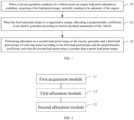
- FIG. 2 a block diagram of a control apparatus for engine load point allocation is shown. As shown in FIG. 2 , the control apparatus for the engine load point allocation includes:
- the control apparatus for the engine load point allocation when the current operation condition of the vehicle meets the engine load point adjustment condition, the first load point torque, currently needing to be adjusted, of the engine is acquired; when the first load point torque is the regenerative torque, the proportionality coefficient is allocated to the electric generator according to the current operation parameters of a vehicle, and the first load point torque originally borne only by the driving motor is allocated to be jointly borne by the electric generator and the driving motor; and the allocation is performed on the second load point torque of the electric generator and the third load point torque of the driving motor according to the first load point torque and the proportionality coefficient, such that it is ensured that the electric generator has a certain torque and does not idle, and the periodic gear knocking noise of the electric generator during idling is avoided.
- the second load point torque is greater than the preset load point torque, such that the NVH performance of the vehicle is guaranteed while it is ensured that the electric generator has a certain torque, the user experience is improved, and the problem of poor user experience caused by the periodic gear knocking noise due to the electric generator idling in a direct-drive operation mode of the engine is solved.
- the current operation parameters of the vehicle at least include: a vehicle speed, a gearbox gear, an electric generator temperature and an accelerator pedal opening degree; and the first allocation module 12 includes:
- the first acquisition module 11 includes:
- the current operation condition of the vehicle meets the engine load point adjustment condition, which includes:
- the control apparatus for the engine load point allocation further includes: a first control module 14 configured to reduce the third load point torque to ensure that the second load point torque is greater than the preset load point torque.
- An embodiment of the present disclosure further provides a readable storage medium, wherein the readable storage medium has a control program for engine load point allocation stored thereon, and when the control program for the engine load point allocation is executed by a processor, the control method for the engine load point allocation provided in the first aspect of the present disclosure is implemented.
- the first load point torque, currently needing to be adjusted, of the engine is acquired; when the first load point torque is the regenerative torque, the proportionality coefficient is allocated to the electric generator according to the current operation parameters of the vehicle, and the first load point torque originally borne only by the driving motor is allocated to be co-borne by the electric generator and the driving motor; and allocation is performed on the second load point torque of the electric generator and the third load point torque of the driving motor according to the first load point torque and the proportionality coefficient, such that it is ensured that the electric generator has a certain torque and does not idle, and periodic gear knocking noise of the electric generator during idling is avoided.
- the second load point torque is greater than the preset load point torque, such that the NVH performance of the vehicle is guaranteed while it is ensured that the electric generator has a certain torque, the user experience is improved, and the problem of poor user experience caused by the periodic gear knocking noise due to the electric generator idling in a direct-drive operation mode of the engine is solved.
- An embodiment of the present disclosure further provides a vehicle, including a controller, wherein the controller includes a readable storage medium and a processor;
- a first load point torque, currently needing to be adjusted, of an engine is acquired; when the first load point torque is a regenerative torque, a proportionality coefficient is allocated to an electric generator according to the current operation parameters of the vehicle, and the first load point torque originally borne only by a driving motor is allocated to be co-borne by the electric generator and the driving motor; and allocation is performed on a second load point torque of the electric generator and a third load point torque of the driving motor according to the first load point torque and the proportionality coefficient, such that it is ensured that the electric generator has a certain torque and does not idle, and periodic gear knocking noise of the electric generator during idling is avoided.
- the second load point torque is greater than a preset load point torque, such that an NVH performance of the vehicle is guaranteed while it is ensured that the electric generator has a certain torque, the user experience is improved, and the problem of poor user experience caused by the periodic gear knocking noise due to the electric generator idling in a direct-drive operation mode of the engine is solved.
- the apparatus embodiment described as above is only schematic, wherein the units described as separated components can be or not be physically separated, and components displayed as units can be or not be physical units, that is, they can be located on the same place or distributed on a plurality of network units. Parts or all of the modules can be selected according to an actual demand to achieve the purpose of the solution in the present embodiment.
- the present disclosure can be understood and implemented by those of ordinary skill in the art without creative work.
- Each component embodiment of the present disclosure can be implemented by hardware or a software module running on one or more processors or a combination thereof. It should be understood by the skilled in the art that some or parts of functions of some or all components in the computing and processing device according to the embodiments of the present disclosure can be implemented in practice by using a microprocessor or a digital signal processor (DSP).
- DSP digital signal processor
- the present disclosure can also be implemented as a part or all of device or apparatus programs (such as a computer program and a computer program product) for performing the method described herein.
- Such a program for implementing the present disclosure can be stored in a computer-readable medium or can have one or more signal forms. Such a signal can be downloaded from an Internet website or provided on a carrier signal or any other forms.
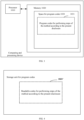
- FIG. 3 shows a computing and processing device capable of implementing the method according to the present disclosure.
- the computing and processing device traditionally includes a processor 1010 and a computer program product or a computer-readable medium in a form of a memory 1020.
- the memory 1020 can be an electronic memory such as a flash memory, an Electrically Erasable Programmable Read-Only Memory (EEPROM), an Erasable Programmable Read-Only Memory ((EPROM), a hard disk or a Read-Only Memory (ROM).
- the memory 1020 is provided with a storage space 1030 for program codes 1031 for performing any method step in the above-mentioned method.
- the storage space 1030 for the program codes can include the various program codes 1031 respectively used for implementing the various steps in the above method.
- These program codes can be read from or written into one or more computer program products.
- These computer program products include program code carriers such as a hard disk, a Compact Disc (DC), a storage card or a floppy disk.
- Such a computer program product is usually a portable or fixed storage unit with reference to FIG. 4 .
- the storage unit can be provided with a storage segment, a storage space, etc. having similar layout as the memory 1020 in the computing and processing device in FIG. 3 .
- the program codes can be, for example, compressed in an appropriate form.
- the storage unit includes computer-readable codes 1031', i.e., codes that can be read by a processor such as the processor 1010, and these codes, when run by the computing and processing device, make the computing and processing device perform each step in the method described as above.
- computer-readable codes 1031' i.e., codes that can be read by a processor such as the processor 1010, and these codes, when run by the computing and processing device, make the computing and processing device perform each step in the method described as above.
- any reference symbol located between brackets should not be constructed as a limitation on the claims.
- the word “include” does not exclude the existence of elements or steps not listed in the claims.
- the word “a” or “one” located in front of an element does not exclude the existence of a plurality of elements.
- the present disclosure can be implemented by means of hardware including a plurality of different elements and by means of a computer programmed appropriately. In unit claims in which a plurality of apparatuses are listed, a plurality of these apparatuses can be specifically embodied by means of the same hardware item.
- the use of words such as first, second and third does not denote any order. These words can be interpreted as names.
Landscapes
- Engineering & Computer Science (AREA)
- Transportation (AREA)
- Mechanical Engineering (AREA)
- Chemical & Material Sciences (AREA)
- Combustion & Propulsion (AREA)
- Automation & Control Theory (AREA)
- Control Of Vehicle Engines Or Engines For Specific Uses (AREA)
Abstract
Description
- The present disclosure claims the priority of the
Chinese patent application filed on March 10th, 2022 before the Chinese Patent Office with the application number of 202210240181.X - Embodiments of the present disclosure relate to the technical field of vehicles and more particularly, to a control method and apparatus for engine load point allocation, a storage medium and a vehicle.
- For a power architecture of hard connection between an engine and an electric generator, when a vehicle is in a direct-drive operation mode of the engine, the engine directly drives the vehicle without driving the electric generator to charge a high-voltage battery, and therefore, the electric generator has no torque at this moment. When the engine operates and the electric generator has no torque, due to the existence of a gear gap between the engine and the electric generator, the electric generator will generate periodic gear knocking noise during idling, which lowers the user experience. Therefore, the poor user experience caused by the periodic gear knocking noise due to the electric generator idling in the direct-drive operation mode of the engine becomes an urgent problem to be solved.
- Embodiments of the present disclosure provide a control method and apparatus for engine load point allocation, a storage medium and a vehicle, so as to solve the problem of poor user experience caused by periodic gear knocking noise due to an electric generator idling in a direct-drive operation mode of an engine.
- A first aspect of the embodiments of the present disclosure provides a control method for engine load point allocation being applied to a direct-drive operation mode of an engine, and including:
- when a current operation condition of a vehicle meets an engine load point adjustment condition, acquiring a first load point torque, currently needing to be adjusted, of the engine;
- when the first load point torque is a regenerative torque (also referred as recovery torque), allocating a proportionality coefficient to an electric generator according to current operation parameters of the vehicle; and
- performing allocation on a second load point torque of the electric generator and a third load point torque of a driving motor according to the first load point torque and the proportionality coefficient, such that the second load point torque is greater than a preset load point torque.
- Optionally, the current operation parameters of the vehicle at least include: a vehicle speed, a gearbox gear, an electric generator temperature and an accelerator pedal opening degree; and the when the first load point torque is the regenerative torque, allocating the proportionality coefficient to the electric generator according to the current operation parameters of the vehicle includes:
- determining an initial allocation proportionality coefficient of the electric generator according to the vehicle speed and the gearbox gear;
- determining an initial allocation proportionality coefficient correction value of the electric generator according to the electric generator temperature, the accelerator pedal opening degree and the vehicle speed; and
- correcting the initial allocation proportionality coefficient according to the initial allocation proportionality coefficient correction value to obtain the proportionality coefficient.
- Optionally, the acquiring a first load point torque, currently needing to be adjusted, of the engine includes:
- determining an optimal torque of the engine according to a current rotating speed of the engine and a required torque; and
- determining the first load point torque, currently needing to be adjusted, of the engine according to the optimal torque of the engine and the required torque.
- Optionally, the current operation condition of the vehicle meeting the engine load point adjustment condition includes that:
- the vehicle is in a non-fuel cutoff operation condition,
- an accelerator pedal opening degree of the vehicle is less than a first preset accelerator pedal opening degree,
- an onboard diagnosis system of the vehicle is not activated, and
- the third load point torque is less than a torque limiting value of the driving motor.
- Optionally, after performing allocation on the second load point torque of the electric generator and the third load point torque of the driving motor according to the first load point torque and the proportionality coefficient, the second load point torque is less than or equal to the preset load point torque, and the control method further includes:
reducing the third load point torque to ensure that the second load point torque is greater than the preset load point torque. - A second aspect of the present disclosure provides a control apparatus for engine load point allocation being applied to a direct-drive operation mode of an engine, and including:
- a first acquisition module configured to, when a current operation condition of a vehicle meets an engine load point adjustment condition, acquire a first load point torque, currently needing to be adjusted, of the engine;
- a first allocation module configured to, when the first load point torque is a regenerative torque, allocate a proportionality coefficient to an electric generator according to current operation parameters of the vehicle; and
- a second allocation module configured to perform allocation on a second load point torque of the electric generator and a third load point torque of a driving motor according to the first load point torque and the proportionality coefficient, such that the second load point torque is greater than a preset load point torque.
- Optionally, the current operation parameters of the vehicle at least include: a vehicle speed, a gearbox gear, an electric generator temperature and an accelerator pedal opening degree; and the first allocation module includes:
- a first determination unit configured to determine an initial allocation proportionality coefficient of the electric generator according to the vehicle speed and the gearbox gear;
- a second determination unit configured to determine an initial allocation proportionality coefficient correction value of the electric generator according to the electric generator temperature, the accelerator pedal opening degree and the vehicle speed; and
- a first acquisition unit configured to correct the initial allocation proportionality coefficient according to the initial allocation proportionality coefficient correction value to obtain the proportionality coefficient.
- Optionally, the first acquisition module includes:
- a third determination unit configured to determine an optimal torque of the engine according to a current rotating speed of the engine and a required torque; and
- a fourth determination unit configured to determine the first load point torque, currently needing to be adjusted, of the engine according to the optimal torque of the engine and the required torque.
- A third aspect of the present disclosure provides a readable storage medium, the readable storage medium has a control program for engine load point allocation stored thereon, and the control program for the engine load point allocation, when executed by a processor, implements the control method for the engine load point allocation provided in the first aspect of the present disclosure.
- A fourth aspect of the present disclosure provides a vehicle, including a controller, the controller includes a readable storage medium and a processor;
- the readable storage medium has a control program for engine load point allocation stored thereon; and
- the processor is configured to execute the control program for the engine load point allocation in the readable storage medium so as to implement the control method for the engine load point allocation provided in the first aspect of the present disclosure.
- Beneficial effects:
according to the control method for the engine load point allocation provided by the present disclosure, when the current operation condition of the vehicle meets the engine load point adjustment condition, the first load point torque, currently needing to be adjusted, of the engine is acquired; when the first load point torque is the regenerative torque, the proportionality coefficient is allocated to the electric generator according to the current operation parameters of the vehicle, and the first load point torque originally borne only by the driving motor is allocated to be jointly borne by the electric generator and the driving motor; and the allocation is performed on the second load point torque of the electric generator and the third load point torque of the driving motor according to the first load point torque and the proportionality coefficient, to ensure that the electric generator has a certain torque and does not idle, and periodic gear knocking noise of the electric generator during idling is avoided. At the same time, the second load point torque is greater than the preset load point torque, such that a Noise, Vibration and Harshness (hereinafter referred to as NVH) performance of the vehicle is guaranteed while it is ensured that the electric generator has a certain torque, the user experience is improved, and the problem of poor user experience caused by the periodic gear knocking noise due to the electric generator idling in the direct-drive operation mode of the engine is solved. - The above-mentioned description is only a summary of the technical solutions of the present disclosure. In order to more clearly know about the technical means of the present disclosure, they can be implemented according to the content of the description. Moreover, in order to make the above-mentioned and other objects, features, and advantages of the present disclosure more obvious and comprehensible, specific implementations of the present disclosure will be particularly listed below.
- In order to describe the technical solutions in the embodiments of the present disclosure more clearly, the accompanying drawings required for describing the embodiments of the present disclosure will be briefly introduced below. Apparently, the accompanying drawings in the following description show only some embodiments of the present disclosure, and those skilled in the art can still derive other accompanying drawings from these accompanying drawings without creative work.
-
FIG. 1 is a flow chart of a control method for engine load point allocation according to an embodiment of the present disclosure; -
FIG. 2 is a structural block diagram of a control apparatus for engine load point allocation according to an embodiment of the present disclosure; -
FIG. 3 schematically shows a block diagram of a computing and processing device for performing the method according to the present disclosure; and -
FIG. 4 schematically shows a storage unit for holding or carrying program codes for implementing the method according to the present disclosure. - The technical solutions in the embodiments of the present disclosure will be described clearly and completely below in conjunction with the accompanying drawings in the embodiments of the present disclosure. Apparently, the described embodiments are a part of the embodiments of the present disclosure, not all the embodiments. Based on the embodiments of the present disclosure, all other embodiments obtained by those skilled in the art without creative work shall fall within the protection scope of the present disclosure.
- Hybrid vehicles operate in various modes that are respectively a pure electric operation mode, a series operation mode, a parallel operation mode, a direct-drive operation mode of an engine, an energy recovery mode, etc. The pure electric operation mode refers to a mode that there is only a driving motor (a Torque Max (TM) motor) for driving a vehicle; the series operation mode refers to a mode that an engine drives an electric generator (a Governor Motor (GM)) to charge a high-voltage battery, and at the same time, a driving motor drives the vehicle; and the direct-drive operation mode of the engine refers to a mode that a clutch is closed, the engine directly drives the vehicle, at the same time, the engine does not need to drive the electric generator to charge the high-voltage battery, and the electric generator has no torque at this moment. In the parallel operation mode, the engine and the TM motor jointly drive the vehicle to operate, and the GM motor also takes part in a vehicle driving process under a special condition. In the pure electric operation mode, the engine is not started, and therefore, there is no gear knocking noise. In the series operation mode, the electric generator generates a greater torque, but generates no gear knocking noise during electric generation. In the direct-drive operation mode of the engine, the engine operates, and the electric generator has no torque; and due to the existence of a gear gap between the engine and the electric generator, the electric generator will generate periodic gear knocking noise during idling, which lowers the user experience.
- To this end, according to a control method for engine load point allocation provided by the present disclosure, when the current operation condition of the vehicle meets an engine load point adjustment condition, a first load point torque, currently needing to be adjusted, of the engine is acquired; when the first load point torque is a regenerative torque, a proportionality coefficient is allocated to the electric generator according to current operation parameters of the vehicle, and the first load point torque originally borne only by the driving motor is allocated to be jointly borne by the electric generator and the driving motor; and allocation is performed on a second load point torque of the electric generator and a third load point torque of the driving motor according to the first load point torque and the proportionality coefficient, to ensure that the electric generator has a certain torque and does not idle, and periodic gear knocking noise of the electric generator during idling is avoided. At the same time, the second load point torque is greater than a preset load point torque, such that an NVH performance of the vehicle is guaranteed while it is ensured that the electric generator has a certain torque, the user experience is improved, and the problem of poor user experience caused by the periodic gear knocking noise due to the electric generator idling in the direct-drive operation mode of the engine is solved.
- With reference to
FIG. 1 , a flow chart of a control method for engine load point allocation according to the present disclosure is shown. As shown inFIG. 1 , the control method for the engine load point allocation according to the present disclosure is applied to a direct-drive operation mode of an engine, and the control method for the engine load point allocation includes:
step S1: when the current operation condition of a vehicle meets an engine load point adjustment condition, acquiring a first load point torque, currently needing to be adjusted, of the engine. - In the embodiment, the first load point torque, currently needing to be adjusted, of the engine is an engine torque needing to be adjusted by means of an electric generator and a driving motor so as to ensure that the engine is in an optimal working point. Exemplarily: if a wheel end torque requested by a driver is 2000Nm, and a torque of the engine of which the current rotating speed is optimal is 2600Nm, the first load point torque is -600Nm, and thus, it is ensured that the engine is in the optimal working point.
- Step S2: when the first load point torque is a regenerative torque, allocating a proportionality coefficient to an electric generator according to the current operation parameters of the vehicle.
- The first load point torque is divided into a driving torque and a regenerative torque, "+" represents that the torque is the driving torque, "-" represents that the torque is the regenerative torque, and "+" and "-" only represent a state of the torque, but do not represent a size of the torque. Exemplarily, -600Nm represent that the regenerative torque is 600Nm, and -600Nm is greater than -10Nm.
- Step S3: performing allocation on a second load point torque of the electric generator and a third load point torque of a driving motor according to the first load point torque and the proportionality coefficient, such that the second load point torque is greater than a preset load point torque.
- The first load point torque is jointly borne by the electric generator and the driving motor, that is, the first load point torque is equal to the sum of the second load point torque and the third load point torque. When the first load point torque is the regenerative torque, the second load point torque is equal to a product of the first load point torque and the proportionality coefficient; and when the second load point torque is greater than the preset load point torque, an NVH demand of the vehicle is met, that is to say, when the second load point torque is greater than the preset load point torque, an NVH performance of the vehicle is guaranteed while it is ensured that the electric generator has a certain torque and does not idle.
- According to the control method for the engine load point allocation provided by the present disclosure, when the current operation condition of the vehicle meets the engine load point adjustment condition, the first load point torque, currently needing to be adjusted, of the engine is acquired; when the first load point torque is the regenerative torque, the proportionality coefficient is allocated to the electric generator according to the current operation parameters of the vehicle, and the first load point torque originally borne only by the driving motor is allocated to be jointly borne by the electric generator and the driving motor; and the allocation is performed on the second load point torque of the electric generator and the third load point torque of the driving motor according to the first load point torque and the proportionality coefficient, such that it is ensured that the electric generator has a certain torque and does not idle, and the periodic gear knocking noise of the electric generator during idling is avoided. At the same time, the second load point torque is greater than the preset load point torque, such that the NVH performance of the vehicle is guaranteed while it is ensured that the electric generator has a certain torque, the user experience is improved, and the problem of poor user experience caused by the periodic gear knocking noise due to the electric generator idling in the direct-drive operation mode of the engine is solved.
- Based on the above-mentioned control method for the engine load point allocation, the present disclosure provides examples of the following specific implementations, and all the examples can be combined randomly without mutual conflicts so as to form another control method for the engine load point allocation. It should be understood that the another control method for the engine load point allocation formed by combining any examples shall fall within the protection scope of the present disclosure.
- In a feasible implementation, the current operation parameters of the vehicle at least include: a vehicle speed, a gearbox gear, an electric generator temperature and an accelerator pedal opening degree; when the first load point torque is the driving torque, the proportionality coefficient is zero, and the second load point torque is the preset load point torque; and when the first load point torque is the regenerative torque, the proportionality coefficient is allocated to the electric generator according to the current operation parameters of the vehicle, which includes the following steps:
step S21: determining an initial allocation proportionality coefficient of the electric generator according to the vehicle speed and the gearbox gear. - The proportionality coefficient is used for ensuring that the second load point torque is greater than the preset load point torque, and thus, the NVH performance of the vehicle is guaranteed while it is ensured that the electric generator has a certain torque and does not idle. The vehicle speed and the gearbox gear are two factors affecting the proportionality coefficient to the maximum extent, and therefore, the initial allocation proportionality coefficient of the electric generator is determined according to the vehicle speed and the gearbox gear.
- Step S22: determining an initial allocation proportionality coefficient correction value of the electric generator is according to the electric generator temperature, the accelerator pedal opening degree and the vehicle speed.
- The proportionality coefficient can also be affected by the electric generator temperature and the accelerator pedal opening degree, and therefore, the initial allocation proportionality coefficient correction value of the electric generator is determined according to the electric generator temperature, the accelerator pedal opening degree and the vehicle speed.
- The initial allocation proportionality coefficient correction value includes an electric generator temperature correction value and an accelerator pedal opening degree correction value, the electric generator temperature correction value is determined according to the electric generator temperature, the accelerator pedal opening degree correction value is jointly determined according to the accelerator pedal opening degree and the vehicle speed, and the sum of the electric generator temperature correction value and the accelerator pedal opening degree correction value is the initial allocation proportionality coefficient correction value. Exemplarily: if the electric generator temperature correction value is 1%, and the accelerator pedal opening degree correction value is 2%, the initial allocation proportionality coefficient correction value is 3%.
- Step S23: correcting the initial allocation proportionality coefficient according to the initial allocation proportionality coefficient correction value to obtain the proportionality coefficient.
- The initial allocation proportionality coefficient is corrected according to the initial allocation proportionality coefficient correction value, by which the proportionality coefficient is precisely determined, it is ensured that the second load point torque is greater than the preset load point torque, and thus, the NVH performance of the vehicle is guaranteed while it is ensured that the electric generator has a certain torque and does not idle. Exemplarily: if the initial allocation proportionality coefficient is 5%, and the initial allocation proportionality coefficient correction value is 1%, the proportionality coefficient is 6%.
- In a feasible implementation, the step that the first load point torque, currently needing to be adjusted, of the engine is acquired includes:
step S11: determining an optimal torque of the engine according to the current rotating speed of the engine and a required torque. - The required torque is a torque requested by the current driver, and the optimal torque of the engine is obtained by looking up a table according to the current rotating speed of the engine and required torque.
- Step S12: determining the first load point torque, currently needing to be adjusted, of the engine according to the optimal torque of the engine and the required torque.
- The first load point torque, currently needing to be adjusted, of the engine is obtained by subtracting the optimal torque of the engine by the required torque, and thus, it is ensured that the engine is at the optimal working point.
- In another feasible implementation, the current operation condition of the vehicle meets the engine load point adjustment condition, which includes that:
- the vehicle is in a non-fuel cutoff operation condition,
- an accelerator pedal opening degree of the vehicle is less than a first preset accelerator pedal opening degree,
- an onboard diagnosis system of the vehicle is not activated, and
- the third load point torque is less than a torque limiting value of the driving motor.
- When the vehicle is in a fuel cutoff operation condition, the engine stops operating and has no torque, when the engine has no torque, the periodic gear knocking noise cannot be generated when the engine has no torque, and therefore, the engine load point adjustment condition is not met when the vehicle is in the fuel cutoff operation condition. A determination condition for the non-fuel cutoff operation condition includes a first non-fuel cutoff operation condition determination condition and a second non-fuel cutoff operation condition; firstly, determination is performed by adopting the first non-fuel cutoff operation condition determination condition, when the vehicle does not meet the first non-fuel cutoff operation condition determination condition, determination is performed by adopting the second non-fuel cutoff operation condition determination condition, a time period for performing determination by adopting the second non-fuel cutoff operation condition determination condition is the time when an accelerator is released every time, and a state value of the previous period is maintained before determination in the next period. Exemplarily: if it is determined as the non-fuel cutoff operation condition when the accelerator is released for the Nth time, a determination state of the non-fuel cutoff operation condition is maintained before the accelerator is released for the (N+1)th time. The first non-fuel cutoff operation condition determination condition incudes that: when the accelerator pedal opening degree is greater than a second preset accelerator pedal opening degree, the required torque is greater than a preset required torque, and a charge level of a power battery is lower than first preset battery charge level, it is determined that the vehicle is in the non-fuel cutoff operation condition. The second non-fuel cutoff operation condition determination condition includes that: when battery charging power is limited or an engine regeneration enabling function is started, the vehicle is in the fuel cutoff operation condition; and when the atmospheric pressure is too low, or the charge level of the battery is lower than second preset battery charge level, the vehicle is in the non-fuel cutoff operation condition. The first preset battery power can be the same as or different from the second preset battery power, which is not limited herein.
- The first preset accelerator pedal opening degree is used for representing the vehicle speed; if the accelerator pedal opening degree of the vehicle is less than the first preset accelerator pedal opening degree, it represents that the vehicle speed is lower and the vehicle is in a quiet driving operation condition under which the periodic gear knocking noise generated when the electric generator idles can lower the user experience. If the accelerator pedal opening degree of the vehicle is greater than or equal to the first preset accelerator pedal opening degree, it represents that the vehicle speed is higher and the vehicle is in an intense driving operation condition under which the noise of the engine is higher and the periodic gear knocking noise generated when the electric generator idles can be ignored and cannot affect a user, and therefore, the engine load point adjustment condition is not met. The first preset accelerator pedal opening degree is greater than the second preset accelerator pedal opening degree. Exemplarily: the first preset accelerator pedal opening degree is 70km/h, and the second preset accelerator pedal opening degree is 5km/h.
- In one of feasible implementations, the vehicle is in an intelligent driving mode. Exemplarily: when the vehicle is automatically parked and cruise is activated, artificial operation of a driver is not needed, and therefore, the accelerator pedal opening degree is zero at this moment. Then, whether the vehicle is in the quiet driving operation condition or the intense driving operation condition is determined by looking up the table at this moment according to the required torque and the vehicle speed, if the vehicle is in the quiet driving operation condition, the engine load point adjustment condition is met, and if the vehicle is in the intense driving operation condition, the engine load point adjustment condition is not met.
- If the onboard diagnosis system of the vehicle is not activated, it represents that the vehicle has no faults and can normally operate, and therefore, the engine load point adjustment condition is met.
- If the third load point torque is less than the torque limiting value of the driving motor, the third load point torque is a torque that needs to be borne and allocated by the driving motor, and if the third load point torque is greater than the torque limiting value of the driving motor, the third load point torque is limited by the torque limiting value, and the NVH demand of the vehicle cannot be met.
- In one of feasible implementations, after performing allocation on the second load point torque of the electric generator and the third load point torque of the driving motor according to the first load point torque and the proportionality coefficient, the second load point torque is less than or equal to the preset load point torque, and the method further includes:
step S4: reducing the third load point torque to ensure that the second load point torque is greater than the preset load point torque. - When the second load point torque is less than or equal to the preset load point torque, the NVH performance of the vehicle cannot be met. Therefore, whether the second load point torque is greater than the preset load point torque is verified again, such that it is ensured that the NVH performance of the vehicle is met. Exemplarily: if the first load point torque is -600Nm, the preset load point torque is -10Nm, the second load point torque is -6Nm, and the third load point torque is -594Nm, at this moment, the second load point torque is less than the preset load point torque, the third load point torque is reduced to -589Nm, and the second load point torque is reduced to -11Nm, such that it is ensured that the second load point torque is greater than the preset load point torque, and the NVH performance of the vehicle is met.
- Based on the same inventive concept, another embodiment of the present disclosure provides a control apparatus for engine load point allocation which is used for performing the control method for the engine load point allocation provided in
embodiment 1 of the present disclosure and is applied to a direct-drive operation mode of an engine. With reference toFIG. 2 , a block diagram of a control apparatus for engine load point allocation is shown. As shown inFIG. 2 , the control apparatus for the engine load point allocation includes: - a
first acquisition module 11 configured to, when the current operation condition of a vehicle meets an engine load point adjustment condition, acquire a first load point torque, currently needing to be adjusted, of the engine; - a
first allocation module 12 configured to, when the first load point torque is a regenerative torque, allocate a proportionality coefficient to an electric generator according to the current operation parameters of the vehicle; and - a
second allocation module 13 configured to perform allocation on a second load point torque of the electric generator and a third load point torque of a driving motor according to the first load point torque and the proportionality coefficient, such that the second load point torque is greater than a preset load point torque. - According to the control apparatus for the engine load point allocation provided by the present disclosure, when the current operation condition of the vehicle meets the engine load point adjustment condition, the first load point torque, currently needing to be adjusted, of the engine is acquired; when the first load point torque is the regenerative torque, the proportionality coefficient is allocated to the electric generator according to the current operation parameters of a vehicle, and the first load point torque originally borne only by the driving motor is allocated to be jointly borne by the electric generator and the driving motor; and the allocation is performed on the second load point torque of the electric generator and the third load point torque of the driving motor according to the first load point torque and the proportionality coefficient, such that it is ensured that the electric generator has a certain torque and does not idle, and the periodic gear knocking noise of the electric generator during idling is avoided. At the same time, the second load point torque is greater than the preset load point torque, such that the NVH performance of the vehicle is guaranteed while it is ensured that the electric generator has a certain torque, the user experience is improved, and the problem of poor user experience caused by the periodic gear knocking noise due to the electric generator idling in a direct-drive operation mode of the engine is solved.
- In a feasible implementation, the current operation parameters of the vehicle at least include: a vehicle speed, a gearbox gear, an electric generator temperature and an accelerator pedal opening degree; and the
first allocation module 12 includes: - a first determination unit 121 configured to determine an initial allocation proportionality coefficient of the electric generator according to the vehicle speed and the gearbox gear;
- a second determination unit 122 configured to determine an initial allocation proportionality coefficient correction value of the electric generator according to the electric generator temperature, the accelerator pedal opening degree and the vehicle speed; and
- a first acquisition unit 123 configured to correct the initial allocation proportionality coefficient according to the initial allocation proportionality coefficient correction value to obtain the proportionality coefficient.
- In a feasible implementation, the
first acquisition module 11 includes: - a third determination unit 111 configured to determine an optimal torque of the engine according to the current rotating speed of the engine and a required torque; and
- a fourth determination unit 112 configured to determine the first load point torque, currently needing to be adjusted, of the engine according to the optimal torque of the engine and the required torque.
- In a feasible implementation, the current operation condition of the vehicle meets the engine load point adjustment condition, which includes:
- the vehicle is in a non-fuel cutoff operation condition,
- the accelerator pedal opening degree of the vehicle is less than a first preset accelerator pedal opening degree,
- an onboard diagnosis system of the vehicle is not activated, and
- the third load point torque is less than a torque limiting value of the driving motor.
- In another feasible implementation, after performing allocation on the second load point torque of the electric generator and the third load point torque of the driving motor according to the first load point torque and the proportionality coefficient, the second load point torque is less than or equal to the preset load point torque, and the control apparatus for the engine load point allocation further includes:
a first control module 14 configured to reduce the third load point torque to ensure that the second load point torque is greater than the preset load point torque. - For an apparatus embodiment, it is basically similar to the method embodiment so as to be described relatively simply, and reference can be made to the description of the method embodiment for relevant parts.
- All the embodiments in the present description are described in a progressive way, the same or similar parts among all the embodiments can refer to each other, and the emphasis in each of the embodiments will focus on differences from other embodiments.
- An embodiment of the present disclosure further provides a readable storage medium, wherein the readable storage medium has a control program for engine load point allocation stored thereon, and when the control program for the engine load point allocation is executed by a processor, the control method for the engine load point allocation provided in the first aspect of the present disclosure is implemented.
- According to the readable storage medium provided by the present disclosure, when the current operation condition of the vehicle meets the engine load point adjustment condition, the first load point torque, currently needing to be adjusted, of the engine is acquired; when the first load point torque is the regenerative torque, the proportionality coefficient is allocated to the electric generator according to the current operation parameters of the vehicle, and the first load point torque originally borne only by the driving motor is allocated to be co-borne by the electric generator and the driving motor; and allocation is performed on the second load point torque of the electric generator and the third load point torque of the driving motor according to the first load point torque and the proportionality coefficient, such that it is ensured that the electric generator has a certain torque and does not idle, and periodic gear knocking noise of the electric generator during idling is avoided. At the same time, the second load point torque is greater than the preset load point torque, such that the NVH performance of the vehicle is guaranteed while it is ensured that the electric generator has a certain torque, the user experience is improved, and the problem of poor user experience caused by the periodic gear knocking noise due to the electric generator idling in a direct-drive operation mode of the engine is solved.
- An embodiment of the present disclosure further provides a vehicle, including a controller, wherein the controller includes a readable storage medium and a processor;
- the readable storage medium has a control program for engine load point allocation stored thereon; and
- the processor is configured to execute the control program for the engine load point allocation in the readable storage medium so as to implement the control method for the engine load point allocation provided in the first aspect of the present disclosure.
- According to the vehicle provided by the present disclosure, when the current operation condition of the vehicle meets an engine load point adjustment condition, a first load point torque, currently needing to be adjusted, of an engine is acquired; when the first load point torque is a regenerative torque, a proportionality coefficient is allocated to an electric generator according to the current operation parameters of the vehicle, and the first load point torque originally borne only by a driving motor is allocated to be co-borne by the electric generator and the driving motor; and allocation is performed on a second load point torque of the electric generator and a third load point torque of the driving motor according to the first load point torque and the proportionality coefficient, such that it is ensured that the electric generator has a certain torque and does not idle, and periodic gear knocking noise of the electric generator during idling is avoided. At the same time, the second load point torque is greater than a preset load point torque, such that an NVH performance of the vehicle is guaranteed while it is ensured that the electric generator has a certain torque, the user experience is improved, and the problem of poor user experience caused by the periodic gear knocking noise due to the electric generator idling in a direct-drive operation mode of the engine is solved.
- The apparatus embodiment described as above is only schematic, wherein the units described as separated components can be or not be physically separated, and components displayed as units can be or not be physical units, that is, they can be located on the same place or distributed on a plurality of network units. Parts or all of the modules can be selected according to an actual demand to achieve the purpose of the solution in the present embodiment. The present disclosure can be understood and implemented by those of ordinary skill in the art without creative work.
- Each component embodiment of the present disclosure can be implemented by hardware or a software module running on one or more processors or a combination thereof. It should be understood by the skilled in the art that some or parts of functions of some or all components in the computing and processing device according to the embodiments of the present disclosure can be implemented in practice by using a microprocessor or a digital signal processor (DSP). The present disclosure can also be implemented as a part or all of device or apparatus programs (such as a computer program and a computer program product) for performing the method described herein. Such a program for implementing the present disclosure can be stored in a computer-readable medium or can have one or more signal forms. Such a signal can be downloaded from an Internet website or provided on a carrier signal or any other forms.
- For example,
FIG. 3 shows a computing and processing device capable of implementing the method according to the present disclosure. The computing and processing device traditionally includes aprocessor 1010 and a computer program product or a computer-readable medium in a form of amemory 1020. Thememory 1020 can be an electronic memory such as a flash memory, an Electrically Erasable Programmable Read-Only Memory (EEPROM), an Erasable Programmable Read-Only Memory ((EPROM), a hard disk or a Read-Only Memory (ROM). Thememory 1020 is provided with astorage space 1030 forprogram codes 1031 for performing any method step in the above-mentioned method. For example, thestorage space 1030 for the program codes can include thevarious program codes 1031 respectively used for implementing the various steps in the above method. These program codes can be read from or written into one or more computer program products. These computer program products include program code carriers such as a hard disk, a Compact Disc (DC), a storage card or a floppy disk. Such a computer program product is usually a portable or fixed storage unit with reference toFIG. 4 . The storage unit can be provided with a storage segment, a storage space, etc. having similar layout as thememory 1020 in the computing and processing device inFIG. 3 . The program codes can be, for example, compressed in an appropriate form. Usually, the storage unit includes computer-readable codes 1031', i.e., codes that can be read by a processor such as theprocessor 1010, and these codes, when run by the computing and processing device, make the computing and processing device perform each step in the method described as above. - "An embodiment", "embodiments" or "one or more embodiments" called herein means that specific features, structures or characteristics described in conjunction with the embodiments are included in at least one embodiment of the present disclosure. In addition, please note that a term example "in an embodiment" described herein does not necessarily refer to the same embodiment.
- In the description provided herein, lots of specific details have been described. However, it can be understood that the embodiments of the present disclosure can be put into practice without these specific details. In some embodiments, the known method, structure and technology are not shown in detail so as not to fuzz the understanding for the present description.
- In the claims, any reference symbol located between brackets should not be constructed as a limitation on the claims. The word "include" does not exclude the existence of elements or steps not listed in the claims. The word "a" or "one" located in front of an element does not exclude the existence of a plurality of elements. The present disclosure can be implemented by means of hardware including a plurality of different elements and by means of a computer programmed appropriately. In unit claims in which a plurality of apparatuses are listed, a plurality of these apparatuses can be specifically embodied by means of the same hardware item. The use of words such as first, second and third does not denote any order. These words can be interpreted as names.
- It should be understood that although preferred embodiments in the embodiments of the present disclosure have been described in the description of the present disclosure, the skilled in the art can make additional alterations and modifications on these embodiments once they know the basic creative concept. Therefore, the appended claims are intended to be interpreted to include the preferred embodiments and all the alterations and modifications falling within the scope of the embodiments of the present disclosure.
- The control method for the engine load point allocation and apparatus, the storage medium and the vehicle provided in the present disclosure have been introduced above in detail. The principle and implementations of the present disclosure have been described by applying specific examples in the present disclosure, and the description for the above-mentioned embodiments is only intended to help the understanding of the method and a core concept thereof in the present disclosure; at the same time, specific implementations and the application scope can be both changed by those of ordinary skill in the art according to the concept of the present disclosure. In conclusion, the content of the present description should not be understood as a limitation on the present disclosure.
Claims (15)
- A control method for engine load point allocation, applied to a direct-drive operation mode of an engine, characterized in that the control method comprises:when a current operation condition of a vehicle meets an engine load point adjustment condition, acquiring a first load point torque, currently needing to be adjusted, of the engine;when the first load point torque is a regenerative torque, allocating a proportionality coefficient to an electric generator according to current operation parameters of the vehicle; andperforming allocation on a second load point torque of the electric generator and a third load point torque of a driving motor according to the first load point torque and the proportionality coefficient, such that the second load point torque is greater than a preset load point torque.
- The control method according to claim 1, characterized in that the current operation parameters of the vehicle at least comprise: a vehicle speed, a gearbox gear, an electric generator temperature and an accelerator pedal opening degree; and the when the first load point torque is the regenerative torque, allocating the proportionality coefficient to the electric generator according to the current operation parameters of the vehicle comprises:determining an initial allocation proportionality coefficient of the electric generator according to the vehicle speed and the gearbox gear;determining an initial allocation proportionality coefficient correction value of the electric generator according to the electric generator temperature, the accelerator pedal opening degree and the vehicle speed; andcorrecting the initial allocation proportionality coefficient according to the initial allocation proportionality coefficient correction value, to obtain the proportionality coefficient.
- The control method according to claim 1, characterized in that the acquiring the first load point torque, currently needing to be adjusted, of the engine comprises:determining an optimal torque of the engine according to a current rotating speed of the engine and a required torque; anddetermining the first load point torque, currently needing to be adjusted, of the engine according to the optimal torque of the engine and the required torque.
- The control method according to claim 1, characterized in that the current operation condition of the vehicle meeting the engine load point adjustment condition comprises that:the vehicle is in a non-fuel cutoff operation condition;an accelerator pedal opening degree of the vehicle is less than a first preset accelerator pedal opening degree;an onboard diagnosis system of the vehicle is not activated; andthe third load point torque is less than a torque limiting value of the driving motor.
- The control method according to claim 1, characterized in that after performing allocation on the second load point torque of the electric generator and the third load point torque of the driving motor according to the first load point torque and the proportionality coefficient, the second load point torque is less than or equal to the preset load point torque, and the control method further comprises:
reducing the third load point torque to ensure that the second load point torque is greater than the preset load point torque. - The control method according to claim 2, characterized in that the initial allocation proportionality coefficient correction value comprises an electric generator temperature correction value and an accelerator pedal opening degree correction value;
wherein the electric generator temperature correction value is determined according to the electric generator temperature, and the accelerator pedal opening degree correction value is determined jointly by the accelerator pedal opening degree and the vehicle speed. - The control method according to claim 4, characterized in that a determination condition for the non-fuel cutoff operation condition comprises a first non-fuel cutoff operation condition determination condition and a second non-fuel cutoff operation condition; and
a determination method for the non-fuel cutoff operation condition comprises:performing determination by adopting the first non-fuel cutoff operation condition determination condition; andwhen the vehicle does not meet the first non-fuel cutoff operation condition determination condition, performing determination by adopting the second non-fuel cutoff operation condition determination condition. - The control method according to claim 7, characterized in that the first non-fuel cutoff operation condition determination condition comprises that: the accelerator pedal opening degree is greater than a second preset accelerator pedal opening degree, a required torque is greater than a preset required torque, and a charge level of a power battery is lower than a first preset battery charge level; and
the second non-fuel cutoff operation condition determination condition comprises that: an atmospheric pressure is too low, or a battery charge level is lower than a second preset battery charge level. - A control apparatus for engine load point allocation, applied to a direct-drive operation mode of an engine, characterized in that the control apparatus comprises:a first acquisition module configured to, when a current operation condition of a vehicle meets an engine load point adjustment condition, acquire a first load point torque, currently needing to be adjusted, of the engine;a first allocation module configured to, when the first load point torque is a regenerative torque, allocate a proportionality coefficient to an electric generator according to current operation parameters of the vehicle; anda second allocation module configured to perform allocation on a second load point torque of the electric generator and a third load point torque of a driving motor according to the first load point torque and the proportionality coefficient, such that the second load point torque is greater than a preset load point torque.
- The control apparatus for the engine load point allocation according to claim 9, characterized in that the current operation parameters of the vehicle at least comprise: a vehicle speed, a gearbox gear, an electric generator temperature and an accelerator pedal opening degree; and the first allocation module comprises:a first determination unit configured to determine an initial allocation proportionality coefficient of the electric generator according to the vehicle speed and the gearbox gear;a second determination unit configured to determine an initial allocation proportionality coefficient correction value of the electric generator according to the electric generator temperature, the accelerator pedal opening degree and the vehicle speed; anda first acquisition unit configured to correct the initial allocation proportionality coefficient according to the initial allocation proportionality coefficient correction value, to obtain the proportionality coefficient.
- The control apparatus for the engine load point allocation according to claim 9, characterized in that the first acquisition module comprises:a third determination unit configured to determine an optimal torque of the engine according to a current rotating speed of the engine and a required torque; anda fourth determination unit configured to determine the first load point torque, currently needing to be adjusted, of the engine according to the optimal torque of the engine and the required torque.
- A readable storage medium, characterized in that the readable storage medium has a control program for the engine load point allocation stored thereon, and the control program for the engine load point allocation, when executed by a processor, implements the control method for the engine load point allocation according to any one of claims 1 to 8.
- A vehicle, comprising a controller, the controller comprising a readable storage medium and a processor, characterized in that the readable storage medium has a control program for engine load point allocation stored thereon; and
the processor is configured to execute the control program for the engine load point allocation in the readable storage medium so as to implement the control method for the engine load point allocation according to any one of claims 1 to 8. - A computing and processing device, characterized by comprising:a memory, storing computer-readable codes; andone or more processors, wherein when the computer-readable codes are executed by the one or more processors, the computing and processing device performs the control method for the engine load point allocation according to any one of claims 1 to 8.
- A computer program product, comprising computer-readable codes, characterized in that when the computer-readable codes run on a computing and processing device, the computing and processing device performs the control method for the engine load point allocation according to any one of claims 1 to 8.
Applications Claiming Priority (2)
| Application Number | Priority Date | Filing Date | Title |
|---|---|---|---|
| CN202210240181.XA CN115230709B (en) | 2022-03-10 | 2022-03-10 | Engine load point distribution control method and device, storage medium and vehicle |
| PCT/CN2023/079528 WO2023169321A1 (en) | 2022-03-10 | 2023-03-03 | Engine load point allocation control method and apparatus, and storage medium and vehicle |
Publications (2)
| Publication Number | Publication Date |
|---|---|
| EP4491478A1 true EP4491478A1 (en) | 2025-01-15 |
| EP4491478A4 EP4491478A4 (en) | 2025-07-23 |
Family
ID=83667912
Family Applications (1)
| Application Number | Title | Priority Date | Filing Date |
|---|---|---|---|
| EP23765899.2A Pending EP4491478A4 (en) | 2022-03-10 | 2023-03-03 | Method and device for controlling the allocation of engine load points, as well as storage medium and vehicle |
Country Status (3)
| Country | Link |
|---|---|
| EP (1) | EP4491478A4 (en) |
| CN (1) | CN115230709B (en) |
| WO (1) | WO2023169321A1 (en) |
Families Citing this family (6)
| Publication number | Priority date | Publication date | Assignee | Title |
|---|---|---|---|---|
| CN115230709B (en) * | 2022-03-10 | 2024-11-19 | 长城汽车股份有限公司 | Engine load point distribution control method and device, storage medium and vehicle |
| CN116533976A (en) * | 2023-05-11 | 2023-08-04 | 重庆青山工业有限责任公司 | Torque distribution method for hybrid powertrain system |
| CN117818614B (en) * | 2024-01-19 | 2025-07-25 | 广州汽车集团股份有限公司 | Method and device for controlling engine torque, electronic equipment and storage medium |
| CN119116669B (en) * | 2024-09-27 | 2025-05-09 | 徐工集团工程机械股份有限公司科技分公司 | Driving device, motor output torque control method and electric loader |
| CN118953363B (en) * | 2024-10-09 | 2025-09-12 | 一汽解放汽车有限公司 | Vehicle, vibration control method, device and electronic equipment thereof |
| CN119749555B (en) * | 2025-01-26 | 2025-10-03 | 长城汽车股份有限公司 | Method for controlling reversing of vehicle, vehicle and storage medium |
Family Cites Families (12)
| Publication number | Priority date | Publication date | Assignee | Title |
|---|---|---|---|---|
| JP4997949B2 (en) * | 2006-12-08 | 2012-08-15 | トヨタ自動車株式会社 | Control device for vehicle drive device |
| JP4853281B2 (en) * | 2006-12-28 | 2012-01-11 | 日産自動車株式会社 | Gear rattle reduction device for hybrid vehicle |
| DE102008009430A1 (en) * | 2008-02-15 | 2009-08-20 | Robert Bosch Gmbh | Method and apparatus for operating a hybrid propulsion system |
| US8417431B2 (en) * | 2008-07-23 | 2013-04-09 | Ford Global Technologies, Llc | Method for reducing gear rattle in a hybrid electric vehicle powertrain |
| DE112012007199T5 (en) * | 2012-12-04 | 2015-09-10 | Toyota Jidosha Kabushiki Kaisha | Control device for a hybrid vehicle |
| JP5850035B2 (en) * | 2013-12-12 | 2016-02-03 | トヨタ自動車株式会社 | Control device for hybrid vehicle |
| DE102018211134A1 (en) * | 2018-07-05 | 2020-01-09 | Audi Ag | Method and control device for operating a hybrid electric vehicle |
| CN111376738B (en) * | 2019-06-20 | 2022-07-12 | 长城汽车股份有限公司 | Vehicle speed control method and system |
| CN111379633B (en) * | 2020-03-25 | 2022-07-05 | 北京经纬恒润科技股份有限公司 | Engine torque control method and device |
| CN112744211B (en) * | 2020-04-17 | 2022-06-24 | 长城汽车股份有限公司 | Vehicle driving control method and system |
| CN111645667B (en) * | 2020-04-23 | 2021-08-31 | 吉泰车辆技术(苏州)有限公司 | Torque control method, device and equipment for parallel mode of hybrid vehicle and vehicle |
| CN115230709B (en) * | 2022-03-10 | 2024-11-19 | 长城汽车股份有限公司 | Engine load point distribution control method and device, storage medium and vehicle |
-
2022
- 2022-03-10 CN CN202210240181.XA patent/CN115230709B/en active Active
-
2023
- 2023-03-03 EP EP23765899.2A patent/EP4491478A4/en active Pending
- 2023-03-03 WO PCT/CN2023/079528 patent/WO2023169321A1/en not_active Ceased
Also Published As
| Publication number | Publication date |
|---|---|
| WO2023169321A1 (en) | 2023-09-14 |
| CN115230709B (en) | 2024-11-19 |
| CN115230709A (en) | 2022-10-25 |
| EP4491478A4 (en) | 2025-07-23 |
Similar Documents
| Publication | Publication Date | Title |
|---|---|---|
| WO2023169321A1 (en) | Engine load point allocation control method and apparatus, and storage medium and vehicle | |
| CN110696810B (en) | Energy management method, device, vehicle and storage medium of hybrid electric vehicle | |
| CN109910868B (en) | An energy management method and device for a hybrid electric vehicle in series mode | |
| CN111645537B (en) | Gear shifting method of two-gear transmission of electric automobile, storage medium, electronic equipment and electric automobile | |
| CN111824110B (en) | Engine stop control method, device, equipment and storage medium | |
| CN108501936B (en) | Automobile torque distribution method and device and electronic equipment | |
| EP4491473A1 (en) | Four-wheel drive hybrid vehicle control method and apparatus, vehicle, and storage medium | |
| CN113147721B (en) | Method and device for controlling engine starting, electronic equipment and storage medium | |
| CN110341687B (en) | Torque distribution method and system for dual-motor range-extending driving hybrid vehicle | |
| WO2023206906A1 (en) | Range extender control method and apparatus, electronic device, and storage medium | |
| CN105438169A (en) | Control method and device for range-extending type vehicle engine | |
| CN114670805B (en) | A torque distribution method and distribution device for parallel hybrid vehicles. | |
| CN115743082B (en) | Torque distribution methods, devices, equipment and media | |
| CN115042630B (en) | Electric vehicle power distribution method and system | |
| CN105667498A (en) | Allocating method and device for electricity generating power of hybrid electric vehicle in series connection mode | |
| CN111619544A (en) | Torque distribution method and device of pure electric vehicle and storage medium | |
| CN118894080A (en) | Range extender power generation control method, device, storage medium and vehicle | |
| CN117261625A (en) | Extended-range hybrid vehicle battery charging method and device and extended-range hybrid vehicle | |
| CN109849894B (en) | Energy management method, system and equipment for four-wheel drive hybrid electric vehicle | |
| CN114954008B (en) | Vehicle charging torque control method, device, vehicle and storage medium | |
| CN114771358B (en) | A control method and device for a fuel cell vehicle power system | |
| CN108661838B (en) | Hybrid electric vehicle and starting method, device and equipment of its engine | |
| CN113734145B (en) | Vehicle driving method and device and vehicle | |
| CN112298157B (en) | Control method, device, equipment and storage medium | |
| CN118220112A (en) | Engine torque control method and device |
Legal Events
| Date | Code | Title | Description |
|---|---|---|---|
| STAA | Information on the status of an ep patent application or granted ep patent |
Free format text: STATUS: THE INTERNATIONAL PUBLICATION HAS BEEN MADE |
|
| PUAI | Public reference made under article 153(3) epc to a published international application that has entered the european phase |
Free format text: ORIGINAL CODE: 0009012 |
|
| STAA | Information on the status of an ep patent application or granted ep patent |
Free format text: STATUS: REQUEST FOR EXAMINATION WAS MADE |
|
| 17P | Request for examination filed |
Effective date: 20241009 |
|
| AK | Designated contracting states |
Kind code of ref document: A1 Designated state(s): AL AT BE BG CH CY CZ DE DK EE ES FI FR GB GR HR HU IE IS IT LI LT LU LV MC ME MK MT NL NO PL PT RO RS SE SI SK SM TR |
|
| DAV | Request for validation of the european patent (deleted) | ||
| DAX | Request for extension of the european patent (deleted) | ||
| A4 | Supplementary search report drawn up and despatched |
Effective date: 20250624 |
|
| RIC1 | Information provided on ipc code assigned before grant |
Ipc: B60W 30/188 20120101AFI20250617BHEP Ipc: B60W 10/08 20060101ALI20250617BHEP Ipc: B60W 10/06 20060101ALI20250617BHEP Ipc: B60W 20/10 20160101ALI20250617BHEP Ipc: B60W 30/20 20060101ALI20250617BHEP |
|
| GRAP | Despatch of communication of intention to grant a patent |
Free format text: ORIGINAL CODE: EPIDOSNIGR1 |
|
| STAA | Information on the status of an ep patent application or granted ep patent |
Free format text: STATUS: GRANT OF PATENT IS INTENDED |
|
| INTG | Intention to grant announced |
Effective date: 20260407 |