EP4489449A1 - Vehicle-based information interaction method, and mobile phone terminal and head unit terminal - Google Patents
Vehicle-based information interaction method, and mobile phone terminal and head unit terminal Download PDFInfo
- Publication number
- EP4489449A1 EP4489449A1 EP23762728.6A EP23762728A EP4489449A1 EP 4489449 A1 EP4489449 A1 EP 4489449A1 EP 23762728 A EP23762728 A EP 23762728A EP 4489449 A1 EP4489449 A1 EP 4489449A1
- Authority
- EP
- European Patent Office
- Prior art keywords
- mobile application
- vehicle
- terminal
- mobile
- state
- Prior art date
- Legal status (The legal status is an assumption and is not a legal conclusion. Google has not performed a legal analysis and makes no representation as to the accuracy of the status listed.)
- Pending
Links
Images



Classifications
-
- H—ELECTRICITY
- H04—ELECTRIC COMMUNICATION TECHNIQUE
- H04M—TELEPHONIC COMMUNICATION
- H04M1/00—Substation equipment, e.g. for use by subscribers
- H04M1/72—Mobile telephones; Cordless telephones, i.e. devices for establishing wireless links to base stations without route selection
- H04M1/724—User interfaces specially adapted for cordless or mobile telephones
- H04M1/72403—User interfaces specially adapted for cordless or mobile telephones with means for local support of applications that increase the functionality
- H04M1/72409—User interfaces specially adapted for cordless or mobile telephones with means for local support of applications that increase the functionality by interfacing with external accessories
- H04M1/724098—Interfacing with an on-board device of a vehicle
-
- H—ELECTRICITY
- H04—ELECTRIC COMMUNICATION TECHNIQUE
- H04M—TELEPHONIC COMMUNICATION
- H04M1/00—Substation equipment, e.g. for use by subscribers
- H04M1/72—Mobile telephones; Cordless telephones, i.e. devices for establishing wireless links to base stations without route selection
- H04M1/724—User interfaces specially adapted for cordless or mobile telephones
- H04M1/72403—User interfaces specially adapted for cordless or mobile telephones with means for local support of applications that increase the functionality
-
- H—ELECTRICITY
- H04—ELECTRIC COMMUNICATION TECHNIQUE
- H04M—TELEPHONIC COMMUNICATION
- H04M1/00—Substation equipment, e.g. for use by subscribers
- H04M1/72—Mobile telephones; Cordless telephones, i.e. devices for establishing wireless links to base stations without route selection
- H04M1/724—User interfaces specially adapted for cordless or mobile telephones
- H04M1/72403—User interfaces specially adapted for cordless or mobile telephones with means for local support of applications that increase the functionality
- H04M1/7243—User interfaces specially adapted for cordless or mobile telephones with means for local support of applications that increase the functionality with interactive means for internal management of messages
-
- H—ELECTRICITY
- H04—ELECTRIC COMMUNICATION TECHNIQUE
- H04W—WIRELESS COMMUNICATION NETWORKS
- H04W4/00—Services specially adapted for wireless communication networks; Facilities therefor
- H04W4/30—Services specially adapted for particular environments, situations or purposes
- H04W4/40—Services specially adapted for particular environments, situations or purposes for vehicles, e.g. vehicle-to-pedestrians [V2P]
- H04W4/48—Services specially adapted for particular environments, situations or purposes for vehicles, e.g. vehicle-to-pedestrians [V2P] for in-vehicle communication
-
- H—ELECTRICITY
- H04—ELECTRIC COMMUNICATION TECHNIQUE
- H04W—WIRELESS COMMUNICATION NETWORKS
- H04W4/00—Services specially adapted for wireless communication networks; Facilities therefor
- H04W4/50—Service provisioning or reconfiguring
-
- H—ELECTRICITY
- H04—ELECTRIC COMMUNICATION TECHNIQUE
- H04W—WIRELESS COMMUNICATION NETWORKS
- H04W4/00—Services specially adapted for wireless communication networks; Facilities therefor
- H04W4/80—Services using short range communication, e.g. near-field communication [NFC], radio-frequency identification [RFID] or low energy communication
-
- H—ELECTRICITY
- H04—ELECTRIC COMMUNICATION TECHNIQUE
- H04M—TELEPHONIC COMMUNICATION
- H04M1/00—Substation equipment, e.g. for use by subscribers
- H04M1/72—Mobile telephones; Cordless telephones, i.e. devices for establishing wireless links to base stations without route selection
- H04M1/724—User interfaces specially adapted for cordless or mobile telephones
- H04M1/72403—User interfaces specially adapted for cordless or mobile telephones with means for local support of applications that increase the functionality
- H04M1/72406—User interfaces specially adapted for cordless or mobile telephones with means for local support of applications that increase the functionality by software upgrading or downloading
Definitions
- the present disclosure relates to the field of intelligent vehicles, and in particular to a vehicle-based information interaction method, a mobile terminal and a vehicle terminal.
- the present disclosure discloses a vehicle-based information interaction method, a mobile terminal and a vehicle terminal, with a purpose of ensuring that mobiles of non-vehicle owners interact with vehicles.
- a vehicle-based information interaction method, applied to a mobile terminal including:
- controlling the mobile application to perform the operations corresponding to the state of the mobile application after receiving the first interaction request sent by the vehicle terminal which has the binding relationship with the mobile application preset on the mobile terminal includes:
- controlling the mobile application to perform the operations corresponding to the state of the mobile application after receiving the first interaction request sent by the vehicle terminal which has the binding relationship with the mobile application preset on the mobile terminal includes:
- the method further includes: controlling the mobile application to send a successful interaction signal to the vehicle terminal to enable the vehicle terminal to perform feedback operations deployed in the vehicle terminal in advance.
- the method further includes: receiving a successful interaction signal fed back by the vehicle terminal based on the second interaction request and controlling the mobile application to perform feedback operations deployed in the mobile application in advance.
- a vehicle-based information interaction method applied to a vehicle terminal, including:
- the method further includes:
- the method further includes: receiving a successful interaction signal fed back by the mobile application based on the first interaction request and performing feedback operations deployed in the vehicle terminal in advance.
- performing the response operations corresponding to the state of the vehicle after receiving the second interaction request sent by the mobile terminal includes:
- the method further includes: sending a successful interaction signal to the mobile terminal to enable the mobile terminal to control the mobile application to perform the feedback operations deployed in the mobile application in advance.
- a mobile terminal including:
- the receiving unit is specifically configured to:
- the receiving unit is specially configured to:
- the mobile terminal further includes: a control unit configured to control the mobile application to send a successful interaction signal to the vehicle terminal to enable the vehicle terminal to perform feedback operations deployed in the vehicle terminal in advance.
- a control unit configured to control the mobile application to send a successful interaction signal to the vehicle terminal to enable the vehicle terminal to perform feedback operations deployed in the vehicle terminal in advance.
- the mobile terminal further includes: a feedback unit configured to receive a successful interaction signal fed back by the vehicle terminal based on the second interaction request and control the mobile application to perform feedback operations deployed in the mobile application in advance.
- a feedback unit configured to receive a successful interaction signal fed back by the vehicle terminal based on the second interaction request and control the mobile application to perform feedback operations deployed in the mobile application in advance.
- a vehicle terminal including:
- the responding unit is specially configured to:
- the vehicle terminal further includes: a feedback unit configured to receive a successful interaction signal fed back by the mobile application based on the first interaction request and performing feedback operations deployed in the vehicle terminal in advance.
- a feedback unit configured to receive a successful interaction signal fed back by the mobile application based on the first interaction request and performing feedback operations deployed in the vehicle terminal in advance.
- the performing unit is specially configured to:
- the vehicle terminal further includes: a sending unit configured to send a successful interaction signal to the mobile terminal to enable the mobile terminal to control the mobile application to perform the feedback operations deployed in the mobile application in advance.
- a sending unit configured to send a successful interaction signal to the mobile terminal to enable the mobile terminal to control the mobile application to perform the feedback operations deployed in the mobile application in advance.
- the technical solution provided by the present disclosure is applied to the mobile terminal, including: controlling a mobile application to perform one or more operations corresponding to a state of the mobile application after receiving a first interaction request sent by a vehicle terminal which has a binding relationship with the mobile application preset on the mobile terminal; and sending a second interaction request to the vehicle terminal to enable the vehicle terminal to perform one or more response operations corresponding to the state of a vehicle, wherein the second interaction request is generated based on the mobile application responding to an activation operation of a user.
- the user may trigger the interaction between the mobile application and the vehicle terminal by the activation operation.
- the vehicle terminal sends the first interaction request to the mobile application to enable the mobile terminal to control the mobile application to perform the operations corresponding to the state of the mobile application, and the mobile terminal sends the second interaction request to the vehicle terminal based on the preset mobile application to enable the vehicle terminal to perform the response operations corresponding to the state of the vehicle, thereby realizing the effective interaction between the mobile terminal of a non-vehicle owner and the vehicle, providing a novel interaction method for the vehicle, and enriching the user experience of the vehicle.
- FIG. 1 is a flowchart of a vehicle-based information interaction method provided in an embodiment of the present disclosure. The method is applied to a mobile terminal and includes the following steps.
- a mobile application is controlled to perform one or more operations corresponding to a state of the mobile application after receiving a first interaction request sent by a vehicle terminal which has a binding relationship with the mobile application preset on the mobile terminal.
- a second interaction request is sent to the vehicle terminal to enable the vehicle terminal to perform one or more response operations corresponding to the state of a vehicle.
- the second interaction request is generated based on the mobile application responding to an activation operation of a user.
- the user may trigger the interaction between the mobile application and the vehicle terminal by the activation operation.
- the vehicle terminal sends the first interaction request to the mobile application to enable the mobile terminal to control the mobile application to perform the operations corresponding to the state of the mobile application
- the mobile terminal sends the second interaction request to the vehicle terminal based on the preset mobile application to enable the vehicle terminal to perform the response operations corresponding to the state of the vehicle, thereby realizing the effective interaction between the mobile terminal of a non-vehicle owner and the vehicle, providing a novel interaction method for the vehicle, and enriching the user experience of the vehicle.
- FIG. 2 is a flowchart of another vehicle-based information interaction method provided in an embodiment of the present disclosure. The method is applied to a mobile terminal, and includes the following steps.
- a binding request sent by the vehicle terminal is received in advance, and the mobile application is downloaded based on an application download address indicated in the binding request.
- the vehicle terminal may send a binding request to the mobile terminal via a phone number of the mobile terminal.
- the vehicle terminal may send a binding request to a preset vehicle backend information server, triggering the vehicle backend information server to send the application download address and pairing code (usually, the communication operator can send a binding request to the mobile terminal in the form of SMS notification) indicated in the binding request to the mobile terminal.
- the communication methods between the vehicle terminal, the vehicle backend information server, and the mobile terminal include but are not limited to: 4G network communication, 5G network communication, etc.
- the vehicle backend information server may be regarded as a relay station for information interaction between the vehicle terminal and the mobile terminal.
- the mobile application is installed and the mobile application is authorized to enable the mobile application to have a message prompt authority.
- the authorizing the mobile application to enable it to have message prompt authority ensures that the mobile application may still push message prompt to the user even when it is in an off state.
- the specific implementation principle of authorizing the mobile application is common knowledge familiar to persons skilled in this field and will not be repeated here.
- the mobile application is controlled to download one or more preset functional plugins and initiating a deployment process of the functional plugins based on a pairing code indicated in the binding request.
- the functional plugins include pre-configured response operations and feedback operations.
- the response operations deployed by the mobile application may be playing a preset animation (such as colorful heart-shaped animations) and preset prompt tone (such as ding-dong tone, "Ding Dong Sentiments” human voice, etc.), and the feedback operations deployed by the mobile application may be playing preset animations.
- a preset animation such as colorful heart-shaped animations
- preset prompt tone such as ding-dong tone, "Ding Dong Sentiments” human voice, etc.
- the mobile application is controlled to send a successful binding prompt to the vehicle terminal and it is determined that the mobile application has established the binding relationship with the vehicle terminal after successfully deploying the functional plugins in the mobile application.
- the state of the mobile application is obtained after receiving the first interaction request sent by the vehicle terminal.
- the mobile application is controlled to perform the response operations deployed in the mobile application in advance in the case that the mobile application is in an on state.
- S207 is proceeded to perform.
- the mobile application is controlled to push a message prompt to the user in the case that the mobile application is in an off state.
- the mobile application is controlled to send a successful interaction signal to the vehicle terminal to cause the vehicle terminal to perform feedback operations deployed in the vehicle terminal in advance.
- the process shown in S201-S208 is for the mobile terminal to passively interact with the vehicle terminal.
- the implementation method of the mobile terminal passively interacting with the vehicle terminal may be seen in the process shown in FIG. 3 .
- a second interaction request is sent to the vehicle terminal to cause the vehicle terminal to perform response operations corresponding to the state of the vehicle.
- the second interaction request is generated based on the mobile application responding to an activation operation of a user.
- the activation operation of the user for the mobile application includes, but is not limited to, the user triggers operations on the preset interface of the mobile application (for example, drawing a heart-shaped pattern on the preset interface, and clicking on the preset activation button in the mobile application, etc.).
- the feedback operations deployed in the vehicle terminal in advance may control the central control screen to play a preset animation.
- the vehicle terminal may install functional plugins to achieve the deployment of feedback operations.
- the process shown in S209-S210 is for the mobile terminal to actively interact with the vehicle terminal.
- the implementation method of the mobile terminal actively interacting with the vehicle terminal may be seen in the process shown in FIG. 4 .
- the user may trigger the interaction between the mobile application and the vehicle terminal by the activation operation.
- the vehicle terminal sends the first interaction request to the mobile application to enable the mobile terminal to control the mobile application to perform the operations corresponding to the state of the mobile application
- the mobile terminal sends the second interaction request to the vehicle terminal based on the preset mobile application to enable the vehicle terminal to perform the response operations corresponding to the state of the vehicle, thereby realizing the effective interaction between the mobile terminal of a non-vehicle owner and the vehicle, providing a novel interaction method for the vehicle, and enriching the user experience of the vehicle.
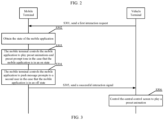
- FIG. 3 is a flowchart of another vehicle-based information interaction method provided in an embodiment of the present disclosure. The method includes the following steps.
- the vehicle terminal responds to an activation operation of a first user and sends the first interaction request to the mobile terminal which has a preset mobile application with a binding relationship with the vehicle terminal.
- the activation operation of the first user includes but is not limited to: gesture activation (that is, making a preset gesture to a preset camera), voice activation (that is, speaking a preset voice to a preset microphone), clicking on a preset shortcut key on the vehicle terminal, and triggering operations on the central control screen, etc.
- gesture activation that is, making a preset gesture to a preset camera
- voice activation that is, speaking a preset voice to a preset microphone
- clicking on a preset shortcut key on the vehicle terminal and triggering operations on the central control screen, etc.
- the so-called first user refers to the vehicle owner.
- the mobile terminal obtains the state of the mobile application after receiving the first interaction request.
- the mobile terminal controls the mobile application to play a preset animation and preset prompt tone in the case that the mobile application is in aN on state.
- the mobile terminal controls the mobile application to push message prompts to a second user in the case that the mobile application is in an off state.
- the so-called second user refers to the user of the mobile terminal.
- the mobile terminal controls the mobile application to send a successful interaction signal to the vehicle terminal.
- the vehicle terminal controls the central control screen to play a preset animation after receiving the successful interaction signal.
- FIG. 4 is a flowchart of another vehicle-based information interaction method provided in an embodiment of the present disclosure. The method includes the following steps.
- the second interaction request is generated based on the mobile application responding to the activation operation of the second user.
- the vehicle terminal obtains the state of the vehicle after receiving the second interaction request.
- the vehicle terminal performs a first response operation in the case that the vehicle is in a power-off state.
- the first response operation is used to send a notification request to the target mobile application to enable the target mobile application to perform operations corresponding to the state of the target mobile application.
- the target mobile application is the mobile application installed on the mobile device of the first user.
- the target mobile application plays a preset animation and preset prompt tone. If the target mobile application is in the off state, the target mobile application pushes message prompts.
- the vehicle terminal performs a second response operation in the case that the vehicle is in a powered-on state and in a static state.
- the second response operation is used to control a central control screen to play a preset animation, control a ambient light to work, and control a speaker to play preset prompt tone.
- the vehicle terminal performs a third response operation in the case that the vehicle is in a powered-on state and in a driving state.
- the third response operation is used to control the central control screen to display preset pop-up windows and control the speaker to play preset prompt tone.
- the vehicle terminal sends a successful interaction signal to the mobile terminal with the preset mobile application.
- the mobile terminal controls the mobile application to play a preset animation after receiving the successful interaction signal.
- FIG. 5 is a flowchart of another vehicle-based information interaction method provided in an embodiment of the present disclosure. The method is applied to the vehicle terminal, and includes the following steps.
- response operations corresponding to state of the vehicles are performed after receiving a second interaction request sent by the mobile terminal.
- users may trigger interaction between the vehicle terminal and the mobile terminal by activation operations.
- the vehicle terminal sends a first interaction request to the mobile application to enable the mobile application to perform pre-deployed response operations, and based on the second interaction request sent to the vehicle terminal by the mobile terminal with the preset mobile application, to cause the vehicle terminal to perform response operations corresponding to the state of the vehicle, thereby achieving effective interaction between the mobile terminal not belonging to the car owner and the vehicle, providing a novel interaction method for the vehicle, and enriching the user experience of the vehicle.
- FIG. 6 is a flowchart of another vehicle-based information interaction method provided in an embodiment of the present disclosure. The method is applied to the vehicle terminal, and includes the following steps.
- a binding request is sent to the mobile terminal in advance to enable the mobile terminal to download the mobile application and install the mobile application based on the application download address indicated in the binding request.
- the activation operation of the user is responded, and the first interaction request is sent to the mobile application to enable the mobile terminal to control the mobile application to perform the operation corresponding to the state of the mobile application.
- the state of the vehicle is obtained after receiving the second interaction request sent by the mobile terminal.
- a first response operation is performed in the case that the vehicle is in a power-off state.
- the first response operation is used to send a notification request to the target mobile application to enable the target mobile application to perform operations corresponding to the state of the target mobile application; and the target mobile application is a mobile application installed on the mobile device of the user.
- a second response operation is performed in the case that the vehicle is in a powered-on state and a static state.
- the second response operation is used to control a central control screen to play a preset animation, control an ambient light to work, and control a speaker to play preset prompt tone.
- a third response operation is performed in the case that the vehicle is in a powered-on state and in a driving state.
- the third response operation is used to control the central control screen to display preset a pop-up window and control the speaker to play a preset prompt tone.
- a successful interaction signal is sent to the mobile terminal to enable the mobile terminal to control the mobile application to perform feedback operations pre-deployed by the mobile application.
- users may trigger interaction between the vehicle terminal and the mobile terminal by activation operations.
- the vehicle terminal sends a first interaction request to the mobile application to enable the mobile application to perform pre-deployed response operations, and based on the second interaction request sent to the vehicle terminal by the mobile terminal with the preset mobile application, to cause the vehicle terminal to perform response operations corresponding to the state of the vehicle, thereby achieving effective interaction between the mobile terminal not belonging to the car owner and the vehicle, providing a novel interaction method for the vehicle, and enriching the user experience of the vehicle.
- the present disclosure also provides a mobile terminal and a vehicle terminal.
- FIG. 7 is a schematic structural diagram of a mobile terminal provided in an embodiment of the present disclosure.
- the mobile terminal includes the following units.
- a receiving unit 701 configured to control a mobile application to perform one or more operations corresponding to a state of the mobile application after receiving a first interaction request sent by a vehicle terminal which has a binding relationship with the mobile application preset on the mobile terminal.
- the receiving unit 701 is specially configured to receive a binding request sent by the vehicle terminal in advance, and download the mobile application based on an application download address indicated in the binding request; install the mobile application and authorize the mobile application to enable the mobile application to have a message prompt authority; control the mobile application to download one or more preset functional plugins and initiate a deployment process of the functional plugins based on a pairing code indicated in the binding request, wherein the functional plugins include pre-configured response operations and feedback operations; control the mobile application to send a successful binding prompt to the vehicle terminal and determine that the mobile application has established the binding relationship with the vehicle terminal after successfully deploying the functional plugins in the mobile application; and control the mobile application to perform the operations corresponding to the state of the mobile application after receiving the first interaction request sent by the vehicle terminal.
- the receiving unit 701 is specifically configured to obtain the state of the mobile application after receiving the first interaction request sent by the vehicle terminal which has the binding relationship with the mobile application preset on the mobile terminal; control the mobile application to perform the response operations deployed in the mobile application in advance in the case that the mobile application is in an on state; and control the mobile application to push a message prompt to the user in the case that the mobile application is in an off state.
- a control unit 702 configured to control the mobile application to send a successful interaction signal to the vehicle terminal to enable the vehicle terminal to perform feedback operations deployed in the vehicle terminal in advance.
- a sending unit 703 configured to send a second interaction request to the vehicle terminal to enable the vehicle terminal to perform one or more response operations corresponding to the state of a vehicle, wherein the second interaction request is generated based on the mobile application responding to an activation operation of a user.
- a feedback unit 704 configured to receive a successful interaction signal fed back by the vehicle terminal based on the second interaction request and control the mobile application to perform feedback operations deployed in the mobile application in advance.
- the user may trigger the interaction between the mobile application and the vehicle terminal by the activation operation.
- the vehicle terminal sends the first interaction request to the mobile application to enable the mobile terminal to control the mobile application to perform the operations corresponding to the state of the mobile application
- the mobile terminal sends the second interaction request to the vehicle terminal based on the preset mobile application to enable the vehicle terminal to perform the response operations corresponding to the state of the vehicle, thereby realizing the effective interaction between the mobile terminal of a non-vehicle owner and the vehicle, providing a novel interaction method for the vehicle, and enriching the user experience of the vehicle.
- FIG. 8 is a schematic structural diagram of a vehicle terminal architecture provided in an embodiment of the present disclosure.
- the vehicle terminal includes the following units.
- a responding unit 801 configured to respond to an activation operation of a user, and send a first interaction request to the mobile terminal which has a preset mobile application with a binding relationship with the vehicle terminal to enable the mobile terminal to control the mobile application to perform one or more operations corresponding to a state of the mobile application.
- the responding unit 801 is specially configured to send a binding request to the mobile terminal in advance to enable the mobile terminal to download the mobile application and install the mobile application based on the application download address indicated in the binding request; determine that a binding relationship between the mobile application and the vehicle terminal is established after receiving a successful binding prompt sent by the mobile application; and respond to the activation operation of the user, and send the first interaction request to the mobile application to enable the mobile terminal to control the mobile application to perform the operations corresponding to the state of the mobile application.
- a feedback unit 802 configured to receive a successful interaction signal fed back by the mobile application based on the first interaction request and performing feedback operations deployed in the vehicle terminal in advance.
- a performing unit 803 configured to perform one or more response operations corresponding to the state of a vehicle after receiving a second interaction request sent by the mobile terminal.
- the performing unit 803 is configured to obtain the state of the vehicle after receiving the second interaction request sent by the mobile terminal; perform a first response operation in the case that the vehicle is in a power-off state, wherein the first response operation is configured to send a notification request to a target mobile application to enable the target mobile application to perform one or more operations corresponding to a state of the target mobile application, and the target mobile application is a mobile application installed on a mobile device of the user; perform a second response operation in the case that the vehicle is in a powered-on state and in a static state, wherein the second response operation is configured to control a central control screen to play a preset animation, control an ambient light to work, and control a speaker to play a preset prompt tone; and perform a third response operation in the case that the vehicle is in the powered-on state and in a driving state, wherein the third response operation is configured to control the central control screen to display a preset pop-up window and control the speaker to play the preset prompt tone.
- a sending unit 804 configured to send a successful interaction signal to the mobile terminal to enable the mobile terminal to control the mobile application to perform the feedback operations deployed in the mobile application in advance.
- users may trigger interaction between the vehicle terminal and the mobile terminal by activation operations.
- the vehicle terminal sends a first interaction request to the mobile application to enable the mobile application to perform pre-deployed response operations, and based on the second interaction request sent to the vehicle terminal by the mobile terminal with the preset mobile application, to cause the vehicle terminal to perform response operations corresponding to the state of the vehicle, thereby achieving effective interaction between the mobile terminal not belonging to the car owner and the vehicle, providing a novel interaction method for the vehicle, and enriching the user experience of the vehicle.
- the aforementioned units may be implemented by one or more processors.
- the processor in the embodiment of the present disclosure may be a Central Processing Unit (CPU), or it may also be other general-purpose processors, Digital Signal Processors (DSP), Application Specific Integrated Circuits (ASIC), Field Programmable Gate Arrays (FPGA), or other programmable logic devices, transistor logic devices, hardware components, or any combination thereof.
- the general-purpose processor may be a microprocessor or any conventional processor.
- the present disclosure also provides a computer device, including: a processor, a memory, and a bus.
- the processor is connected to the memory via the bus, the memory is used to store programs, and the processor is used to run programs, wherein the program, when executed, implements the vehicle-based information interaction method as provided in the above embodiment.
- the present disclosure also provides a computer-readable storage medium, including stored programs, wherein the programs implement the vehicle-based information interaction method as provided in the above embodiment.
- the functions described in the method of the present disclosure embodiment are realized in the form of software functional units and are sold or used as independent products, they may be stored in a storage medium readable by a computing device.
- a computing device which may be a personal computer, server, mobile computing device, or network device, etc.
- the aforementioned storage medium includes various media that may store program code, such as USB flash drives, portable hard drives, read-only memory, random-access memory, magnetic disks, or optical discs.
Landscapes
- Engineering & Computer Science (AREA)
- Computer Networks & Wireless Communication (AREA)
- Signal Processing (AREA)
- Human Computer Interaction (AREA)
- Business, Economics & Management (AREA)
- General Business, Economics & Management (AREA)
- Telephone Function (AREA)
Abstract
Description
- The present disclosure claims the priority of the Chinese patent application filed in CNIPA on March 3, 2022, with the application number
202210210382.5 - The present disclosure relates to the field of intelligent vehicles, and in particular to a vehicle-based information interaction method, a mobile terminal and a vehicle terminal.
- With the increasing popularity of intelligent vehicles and the comprehensive coverage of smart terminals (mobile phones, tablets, laptops, etc.) for various user groups, the interconnection and interaction between vehicles with the mobile phones, as well as between vehicles themselves, has become more and more common. Moreover, as young people gradually become a main group of car buyers, interaction configurations between the vehicles with the mobile phones, the vehicles with the vehicles, and other smart terminals are personalized and diversified, and the vehicles and the mobile phones are also developing rapidly in the direction of complete interconnection and mutual compatibility.
- At present, existing information interaction configurations between mobile phones with vehicles are only aimed at information interactions between mobile phones of vehicle owners with vehicles of the vehicle owners, and mobile phones of users related to the vehicle owners (such as family members of the vehicle owners) cannot interact with the vehicles of the vehicle owners.
- Therefore, how to ensure that mobile phones of non-vehicle owners may interact with the vehicles has become an urgent problem to be resolved in this field.
- The present disclosure discloses a vehicle-based information interaction method, a mobile terminal and a vehicle terminal, with a purpose of ensuring that mobiles of non-vehicle owners interact with vehicles.
- In order to achieve the above purpose, the present disclosure provides the following technical solutions.
- A vehicle-based information interaction method, applied to a mobile terminal, including:
- controlling a mobile application to perform one or more operations corresponding to a state of the mobile application after receiving a first interaction request sent by a vehicle terminal which has a binding relationship with the mobile application preset on the mobile terminal; and
- sending a second interaction request to the vehicle terminal to enable the vehicle terminal to perform one or more response operations corresponding to the state of a vehicle, wherein the second interaction request is generated based on the mobile application responding to an activation operation of a user.
- Optionally, controlling the mobile application to perform the operations corresponding to the state of the mobile application after receiving the first interaction request sent by the vehicle terminal which has the binding relationship with the mobile application preset on the mobile terminal includes:
- receiving a binding request sent by the vehicle terminal in advance, and downloading the mobile application based on an application download address indicated in the binding request;
- installing the mobile application and authorizing the mobile application to enable the mobile application to have a message prompt authority;
- controlling the mobile application to download one or more preset functional plugins and initiating a deployment process of the functional plugins based on a pairing code indicated in the binding request, wherein the functional plugins include pre-configured response operations and feedback operations;
- controlling the mobile application to send a successful binding prompt to the vehicle terminal and determining that the mobile application has established the binding relationship with the vehicle terminal after successfully deploying the functional plugins in the mobile application; and
- controlling the mobile application to perform the operations corresponding to the state of the mobile application after receiving the first interaction request sent by the vehicle terminal.
- Optionally, controlling the mobile application to perform the operations corresponding to the state of the mobile application after receiving the first interaction request sent by the vehicle terminal which has the binding relationship with the mobile application preset on the mobile terminal includes:
- obtaining the state of the mobile application after receiving the first interaction request sent by the vehicle terminal which has the binding relationship with the mobile application preset on the mobile terminal;
- controlling the mobile application to perform the response operations deployed in the mobile application in advance in the case that the mobile application is in an on state; and
- controlling the mobile application to push a message prompt to the user in the case that the mobile application is in an off state.
- Optionally, after controlling the mobile application to perform the operations corresponding to the state of the mobile application after receiving the first interaction request sent by the vehicle terminal which has the binding relationship with the mobile application preset on the mobile terminal, the method further includes:
controlling the mobile application to send a successful interaction signal to the vehicle terminal to enable the vehicle terminal to perform feedback operations deployed in the vehicle terminal in advance. - Optionally, after sending the second interaction request to the vehicle terminal to enable the vehicle terminal to perform the response operations corresponding to the state of the vehicle, the method further includes:
receiving a successful interaction signal fed back by the vehicle terminal based on the second interaction request and controlling the mobile application to perform feedback operations deployed in the mobile application in advance. - A vehicle-based information interaction method, applied to a vehicle terminal, including:
- responding to an activation operation of a user, and sending a first interaction request to the mobile terminal which has a preset mobile application with a binding relationship with the vehicle terminal to enable the mobile terminal to control the mobile application to perform one or more operations corresponding to a state of the mobile application; and
- performing one or more response operations corresponding to the state of a vehicle after receiving a second interaction request sent by the mobile terminal.
- Optionally, after responding to the activation operation of the user, and sending the first interaction request to the mobile terminal which has the preset mobile application with the binding relationship with the vehicle terminal to enable the mobile terminal to control the mobile application to perform the operations corresponding to the state of the mobile application, the method further includes:
- sending a binding request to the mobile terminal in advance to enable the mobile terminal to download the mobile application and install the mobile application based on the application download address indicated in the binding request;
- determining that a binding relationship between the mobile application and the vehicle terminal is established after receiving a successful binding prompt sent by the mobile application; and
- responding to the activation operation of the user, and sending the first interaction request to the mobile application to enable the mobile terminal to control the mobile application to perform the operations corresponding to the state of the mobile application.
- Optionally, after responding to the activation operation of the user, and sending the first interaction request to the mobile terminal which has the preset mobile application with the binding relationship with the vehicle terminal to enable the mobile terminal to control the mobile application to perform the operations corresponding to the state of the mobile application, the method further includes:
receiving a successful interaction signal fed back by the mobile application based on the first interaction request and performing feedback operations deployed in the vehicle terminal in advance. - Optionally, performing the response operations corresponding to the state of the vehicle after receiving the second interaction request sent by the mobile terminal includes:
- obtaining the state of the vehicle after receiving the second interaction request sent by the mobile terminal;
- performing a first response operation in the case that the vehicle is in a power-off state, wherein the first response operation is configured to send a notification request to a target mobile application to enable the target mobile application to perform one or more operations corresponding to a state of the target mobile application, and the target mobile application is a mobile application installed on a mobile device of the user;
- performing a second response operation in the case that the vehicle is in a powered-on state and in a static state, wherein the second response operation is configured to control a central control screen to play a preset animation, control an ambient light to work, and control a speaker to play a preset prompt tone; and
- performing a third response operation in the case that the vehicle is in the powered-on state and in a driving state, wherein the third response operation is configured to control the central control screen to display a preset pop-up window and control the speaker to play the preset prompt tone.
- Optionally, after performing the response operations corresponding to the state of the vehicle after receiving the second interaction request sent by the mobile terminal, the method further includes:
sending a successful interaction signal to the mobile terminal to enable the mobile terminal to control the mobile application to perform the feedback operations deployed in the mobile application in advance. - A mobile terminal, including:
- a receiving unit configured to control a mobile application to perform one or more operations corresponding to a state of the mobile application after receiving a first interaction request sent by a vehicle terminal which has a binding relationship with the mobile application preset on the mobile terminal; and
- a sending unit configured to send a second interaction request to the vehicle terminal to enable the vehicle terminal to perform one or more response operations corresponding to the state of a vehicle, wherein the second interaction request is generated based on the mobile application responding to an activation operation of a user.
- Optionally, the receiving unit is specifically configured to:
- receive a binding request sent by the vehicle terminal in advance, and download the mobile application based on an application download address indicated in the binding request;
- install the mobile application and authorize the mobile application to enable the mobile application to have a message prompt authority;
- control the mobile application to download one or more preset functional plugins and initiate a deployment process of the functional plugins based on a pairing code indicated in the binding request, wherein the functional plugins include pre-configured response operations and feedback operations;
- control the mobile application to send a successful binding prompt to the vehicle terminal and determine that the mobile application has established the binding relationship with the vehicle terminal after successfully deploying the functional plugins in the mobile application; and
- control the mobile application to perform the operations corresponding to the state of the mobile application after receiving the first interaction request sent by the vehicle terminal.
- Optionally, the receiving unit is specially configured to:
- obtain the state of the mobile application after receiving the first interaction request sent by the vehicle terminal which has the binding relationship with the mobile application preset on the mobile terminal;
- control the mobile application to perform the response operations deployed in the mobile application in advance in the case that the mobile application is in an on state; and
- control the mobile application to push a message prompt to the user in the case that the mobile application is in an off state.
- Optionally, the mobile terminal further includes:
a control unit configured to control the mobile application to send a successful interaction signal to the vehicle terminal to enable the vehicle terminal to perform feedback operations deployed in the vehicle terminal in advance. - Optionally, the mobile terminal further includes:
a feedback unit configured to receive a successful interaction signal fed back by the vehicle terminal based on the second interaction request and control the mobile application to perform feedback operations deployed in the mobile application in advance. - A vehicle terminal, including:
- a responding unit configured to respond to an activation operation of a user, and send a first interaction request to the mobile terminal which has a preset mobile application with a binding relationship with the vehicle terminal to enable the mobile terminal to control the mobile application to perform one or more operations corresponding to a state of the mobile application; and
- a performing unit configured to perform one or more response operations corresponding to the state of a vehicle after receiving a second interaction request sent by the mobile terminal.
- Optionally, the responding unit is specially configured to:
- send a binding request to the mobile terminal in advance to enable the mobile terminal to download the mobile application and install the mobile application based on the application download address indicated in the binding request;
- determine that a binding relationship between the mobile application and the vehicle terminal is established after receiving a successful binding prompt sent by the mobile application; and
- respond to the activation operation of the user, and send the first interaction request to the mobile application to enable the mobile terminal to control the mobile application to perform the operations corresponding to the state of the mobile application.
- Optionally, the vehicle terminal further includes:
a feedback unit configured to receive a successful interaction signal fed back by the mobile application based on the first interaction request and performing feedback operations deployed in the vehicle terminal in advance. - Optionally, the performing unit is specially configured to:
- obtain the state of the vehicle after receiving the second interaction request sent by the mobile terminal;
- perform a first response operation in the case that the vehicle is in a power-off state, wherein the first response operation is configured to send a notification request to a target mobile application to enable the target mobile application to perform one or more operations corresponding to a state of the target mobile application, and the target mobile application is a mobile application installed on a mobile device of the user;
- perform a second response operation in the case that the vehicle is in a powered-on state and in a static state, wherein the second response operation is configured to control a central control screen to play a preset animation, control an ambient light to work, and control a speaker to play a preset prompt tone; and
- perform a third response operation in the case that the vehicle is in the powered-on state and in a driving state, wherein the third response operation is configured to control the central control screen to display a preset pop-up window and control the speaker to play the preset prompt tone.
- Optionally, the vehicle terminal further includes:
a sending unit configured to send a successful interaction signal to the mobile terminal to enable the mobile terminal to control the mobile application to perform the feedback operations deployed in the mobile application in advance. - The technical solution provided by the present disclosure is applied to the mobile terminal, including: controlling a mobile application to perform one or more operations corresponding to a state of the mobile application after receiving a first interaction request sent by a vehicle terminal which has a binding relationship with the mobile application preset on the mobile terminal; and sending a second interaction request to the vehicle terminal to enable the vehicle terminal to perform one or more response operations corresponding to the state of a vehicle, wherein the second interaction request is generated based on the mobile application responding to an activation operation of a user. The user may trigger the interaction between the mobile application and the vehicle terminal by the activation operation. During the interaction, the vehicle terminal sends the first interaction request to the mobile application to enable the mobile terminal to control the mobile application to perform the operations corresponding to the state of the mobile application, and the mobile terminal sends the second interaction request to the vehicle terminal based on the preset mobile application to enable the vehicle terminal to perform the response operations corresponding to the state of the vehicle, thereby realizing the effective interaction between the mobile terminal of a non-vehicle owner and the vehicle, providing a novel interaction method for the vehicle, and enriching the user experience of the vehicle.
- To more clearly illustrate the technical solutions in the embodiments of the present disclosure or in prior art, a brief introduction will now be given to the appended drawings that are necessary for the description of the embodiments or the prior art. It is evident that the appended drawings described below are merely some embodiments of the present disclosure, and for those skilled in the art, other drawings may be obtained based on these without expenditure of creative labor.
-
FIG. 1 is a flowchart of a vehicle-based information interaction method provided in an embodiment of the present disclosure; -
FIG. 2 is a flowchart of another vehicle-based information interaction method provided in an embodiment of the present disclosure; -
FIG. 3 is a flowchart of another vehicle-based information interaction method provided in an embodiment of the present disclosure; -
FIG. 4 is a flowchart of another vehicle-based information interaction method provided in an embodiment of the present disclosure; -
FIG. 5 is a flowchart of another vehicle-based information interaction method provided in an embodiment of the present disclosure; -
FIG. 6 is a flowchart of another vehicle-based information interaction method provided in an embodiment of the present disclosure; -
FIG. 7 is a schematic structural diagram of a mobile terminal provided in an embodiment of the present disclosure; and -
FIG. 8 is a schematic structural diagram of a vehicle terminal provided in an embodiment of the present disclosure. - The following will combine the appended drawings in the embodiments of the present disclosure to provide a clear and complete description of the technical solutions in the embodiments of the present disclosure. It is evident that the described embodiments are only a part of the embodiments of the present disclosure, not all of them. All other embodiments obtained by persons skilled in the field without expenditure of creative labor based on the embodiments in the present disclosure fall within the scope of protection of the present disclosure.
- As shown in
FIG. 1, FIG. 1 is a flowchart of a vehicle-based information interaction method provided in an embodiment of the present disclosure. The method is applied to a mobile terminal and includes the following steps. - S101, a mobile application is controlled to perform one or more operations corresponding to a state of the mobile application after receiving a first interaction request sent by a vehicle terminal which has a binding relationship with the mobile application preset on the mobile terminal.
- The specific implementation principle of controlling the mobile application to perform the operations corresponding to the state of the mobile application after receiving the first interaction request sent by the vehicle terminal which has a binding relationship with the mobile application preset on the mobile terminal may be seen in the explanation of S201-S208 shown in
FIG. 2 below. - S102, a second interaction request is sent to the vehicle terminal to enable the vehicle terminal to perform one or more response operations corresponding to the state of a vehicle.
- The second interaction request is generated based on the mobile application responding to an activation operation of a user.
- It should be noted that the specific implementation principle of sending a second interaction request to the vehicle terminal to cause the vehicle terminal to perform response operations corresponding to the state of the vehicle may be seen in the explanation of S209-S210 shown in
FIG. 2 below. - In summary, the user may trigger the interaction between the mobile application and the vehicle terminal by the activation operation. During the interaction, the vehicle terminal sends the first interaction request to the mobile application to enable the mobile terminal to control the mobile application to perform the operations corresponding to the state of the mobile application, and the mobile terminal sends the second interaction request to the vehicle terminal based on the preset mobile application to enable the vehicle terminal to perform the response operations corresponding to the state of the vehicle, thereby realizing the effective interaction between the mobile terminal of a non-vehicle owner and the vehicle, providing a novel interaction method for the vehicle, and enriching the user experience of the vehicle.
- As shown in
FIG. 2, FIG. 2 is a flowchart of another vehicle-based information interaction method provided in an embodiment of the present disclosure. The method is applied to a mobile terminal, and includes the following steps. - S201, a binding request sent by the vehicle terminal is received in advance, and the mobile application is downloaded based on an application download address indicated in the binding request.
- The vehicle terminal may send a binding request to the mobile terminal via a phone number of the mobile terminal.
- Optionally, the vehicle terminal may send a binding request to a preset vehicle backend information server, triggering the vehicle backend information server to send the application download address and pairing code (usually, the communication operator can send a binding request to the mobile terminal in the form of SMS notification) indicated in the binding request to the mobile terminal. Generally speaking, the communication methods between the vehicle terminal, the vehicle backend information server, and the mobile terminal include but are not limited to: 4G network communication, 5G network communication, etc. In other words, the vehicle backend information server may be regarded as a relay station for information interaction between the vehicle terminal and the mobile terminal.
- S202, the mobile application is installed and the mobile application is authorized to enable the mobile application to have a message prompt authority.
- The authorizing the mobile application to enable it to have message prompt authority ensures that the mobile application may still push message prompt to the user even when it is in an off state. In addition, the specific implementation principle of authorizing the mobile application is common knowledge familiar to persons skilled in this field and will not be repeated here.
- S203, the mobile application is controlled to download one or more preset functional plugins and initiating a deployment process of the functional plugins based on a pairing code indicated in the binding request.
- The functional plugins include pre-configured response operations and feedback operations.
- It should be noted that the response operations deployed by the mobile application may be playing a preset animation (such as colorful heart-shaped animations) and preset prompt tone (such as ding-dong tone, "Ding Dong Sentiments" human voice, etc.), and the feedback operations deployed by the mobile application may be playing preset animations.
- S204, the mobile application is controlled to send a successful binding prompt to the vehicle terminal and it is determined that the mobile application has established the binding relationship with the vehicle terminal after successfully deploying the functional plugins in the mobile application.
- S205, the state of the mobile application is obtained after receiving the first interaction request sent by the vehicle terminal.
- S206, the mobile application is controlled to perform the response operations deployed in the mobile application in advance in the case that the mobile application is in an on state.
- After performing S206, S207 is proceeded to perform.
- S207, the mobile application is controlled to push a message prompt to the user in the case that the mobile application is in an off state.
- After performing S207, S208 is proceeded to perform.
- S208, the mobile application is controlled to send a successful interaction signal to the vehicle terminal to cause the vehicle terminal to perform feedback operations deployed in the vehicle terminal in advance.
- The process shown in S201-S208 is for the mobile terminal to passively interact with the vehicle terminal. In specific applications, the implementation method of the mobile terminal passively interacting with the vehicle terminal may be seen in the process shown in
FIG. 3 . - S209, a second interaction request is sent to the vehicle terminal to cause the vehicle terminal to perform response operations corresponding to the state of the vehicle.
- The second interaction request is generated based on the mobile application responding to an activation operation of a user.
- It should be noted that the activation operation of the user for the mobile application includes, but is not limited to, the user triggers operations on the preset interface of the mobile application (for example, drawing a heart-shaped pattern on the preset interface, and clicking on the preset activation button in the mobile application, etc.).
- S210, a successful interaction signal fed back by the vehicle terminal based on the second interaction request is received and the mobile application is controlled to perform feedback operations deployed in the mobile application in advance.
- The feedback operations deployed in the vehicle terminal in advance may control the central control screen to play a preset animation. In the embodiment of the present disclosure, the vehicle terminal may install functional plugins to achieve the deployment of feedback operations.
- The process shown in S209-S210 is for the mobile terminal to actively interact with the vehicle terminal. In specific applications, the implementation method of the mobile terminal actively interacting with the vehicle terminal may be seen in the process shown in
FIG. 4 . - In summary, the user may trigger the interaction between the mobile application and the vehicle terminal by the activation operation. During the interaction, the vehicle terminal sends the first interaction request to the mobile application to enable the mobile terminal to control the mobile application to perform the operations corresponding to the state of the mobile application, and the mobile terminal sends the second interaction request to the vehicle terminal based on the preset mobile application to enable the vehicle terminal to perform the response operations corresponding to the state of the vehicle, thereby realizing the effective interaction between the mobile terminal of a non-vehicle owner and the vehicle, providing a novel interaction method for the vehicle, and enriching the user experience of the vehicle.
- As shown in
FIG. 3, FIG. 3 is a flowchart of another vehicle-based information interaction method provided in an embodiment of the present disclosure. The method includes the following steps. - S301, the vehicle terminal responds to an activation operation of a first user and sends the first interaction request to the mobile terminal which has a preset mobile application with a binding relationship with the vehicle terminal.
- The activation operation of the first user includes but is not limited to: gesture activation (that is, making a preset gesture to a preset camera), voice activation (that is, speaking a preset voice to a preset microphone), clicking on a preset shortcut key on the vehicle terminal, and triggering operations on the central control screen, etc. The so-called first user refers to the vehicle owner.
- S302, the mobile terminal obtains the state of the mobile application after receiving the first interaction request.
- S303, the mobile terminal controls the mobile application to play a preset animation and preset prompt tone in the case that the mobile application is in aN on state.
- S304, the mobile terminal controls the mobile application to push message prompts to a second user in the case that the mobile application is in an off state.
- The so-called second user refers to the user of the mobile terminal.
- S305, the mobile terminal controls the mobile application to send a successful interaction signal to the vehicle terminal.
- S306, the vehicle terminal controls the central control screen to play a preset animation after receiving the successful interaction signal.
- Based on the process shown in S301-S306, effective interaction between the mobile terminal and the vehicle terminal may be achieved.
- As shown in
FIG. 4, FIG. 4 is a flowchart of another vehicle-based information interaction method provided in an embodiment of the present disclosure. The method includes the following steps. - S401: the mobile terminal sends a second interaction request to the vehicle terminal.
- The second interaction request is generated based on the mobile application responding to the activation operation of the second user.
- S402, the vehicle terminal obtains the state of the vehicle after receiving the second interaction request.
- S403, the vehicle terminal performs a first response operation in the case that the vehicle is in a power-off state.
- The first response operation is used to send a notification request to the target mobile application to enable the target mobile application to perform operations corresponding to the state of the target mobile application. The target mobile application is the mobile application installed on the mobile device of the first user.
- Specifically, if the target mobile application is in the on state, the target mobile application plays a preset animation and preset prompt tone. If the target mobile application is in the off state, the target mobile application pushes message prompts.
- S404, the vehicle terminal performs a second response operation in the case that the vehicle is in a powered-on state and in a static state.
- The second response operation is used to control a central control screen to play a preset animation, control a ambient light to work, and control a speaker to play preset prompt tone.
- S405, the vehicle terminal performs a third response operation in the case that the vehicle is in a powered-on state and in a driving state.
- The third response operation is used to control the central control screen to display preset pop-up windows and control the speaker to play preset prompt tone.
- S406, the vehicle terminal sends a successful interaction signal to the mobile terminal with the preset mobile application.
- S407, the mobile terminal controls the mobile application to play a preset animation after receiving the successful interaction signal.
- Based on the process shown in S401-S407, effective interaction between the mobile terminal and the vehicle terminal may be achieved.
- As shown in
FIG. 5, FIG. 5 is a flowchart of another vehicle-based information interaction method provided in an embodiment of the present disclosure. The method is applied to the vehicle terminal, and includes the following steps. - S501, an activation operation of a user is responded, and a first interaction request is sent to the mobile terminal which has a preset mobile application with a binding relationship with the vehicle terminal to enable the mobile terminal to control the mobile application to perform operations corresponding to state of the mobile application.
- The specific implementation principle of responding to the activation operation of the user and sending a first interaction request to the mobile terminal which has a preset mobile application with a binding relationship with the vehicle terminal, to enable the mobile terminal to control the mobile application to perform operations corresponding to the state of the mobile application, may be seen in the explanation of S601-S603 shown in
FIG. 6 below. - S502, response operations corresponding to state of the vehicles are performed after receiving a second interaction request sent by the mobile terminal.
- The specific implementation principle of performing response operations corresponding to the state of the vehicle after receiving the second interaction request sent by the mobile terminal may be seen in the explanation of S604-S609 shown in
FIG. 6 below. - In summary, users may trigger interaction between the vehicle terminal and the mobile terminal by activation operations. During the interaction process, the vehicle terminal sends a first interaction request to the mobile application to enable the mobile application to perform pre-deployed response operations, and based on the second interaction request sent to the vehicle terminal by the mobile terminal with the preset mobile application, to cause the vehicle terminal to perform response operations corresponding to the state of the vehicle, thereby achieving effective interaction between the mobile terminal not belonging to the car owner and the vehicle, providing a novel interaction method for the vehicle, and enriching the user experience of the vehicle.
- As shown in
FIG. 6, FIG. 6 is a flowchart of another vehicle-based information interaction method provided in an embodiment of the present disclosure. The method is applied to the vehicle terminal, and includes the following steps. - S601, a binding request is sent to the mobile terminal in advance to enable the mobile terminal to download the mobile application and install the mobile application based on the application download address indicated in the binding request.
- S602, it is determined that a binding relationship between the mobile application and the vehicle terminal is established, after receiving a successful binding prompt sent by the mobile application.
- S603, the activation operation of the user is responded, and the first interaction request is sent to the mobile application to enable the mobile terminal to control the mobile application to perform the operation corresponding to the state of the mobile application.
- S604, a successful interaction signal fed back by the mobile application based on the first interaction request is received, and feedback operations deployed in the vehicle terminal in advance is performed.
- S605, the state of the vehicle is obtained after receiving the second interaction request sent by the mobile terminal.
- S606, a first response operation is performed in the case that the vehicle is in a power-off state.
- The first response operation is used to send a notification request to the target mobile application to enable the target mobile application to perform operations corresponding to the state of the target mobile application; and the target mobile application is a mobile application installed on the mobile device of the user.
- S607, a second response operation is performed in the case that the vehicle is in a powered-on state and a static state.
- The second response operation is used to control a central control screen to play a preset animation, control an ambient light to work, and control a speaker to play preset prompt tone.
- S608, a third response operation is performed in the case that the vehicle is in a powered-on state and in a driving state.
- The third response operation is used to control the central control screen to display preset a pop-up window and control the speaker to play a preset prompt tone.
- S609, a successful interaction signal is sent to the mobile terminal to enable the mobile terminal to control the mobile application to perform feedback operations pre-deployed by the mobile application.
- In summary, users may trigger interaction between the vehicle terminal and the mobile terminal by activation operations. During the interaction process, the vehicle terminal sends a first interaction request to the mobile application to enable the mobile application to perform pre-deployed response operations, and based on the second interaction request sent to the vehicle terminal by the mobile terminal with the preset mobile application, to cause the vehicle terminal to perform response operations corresponding to the state of the vehicle, thereby achieving effective interaction between the mobile terminal not belonging to the car owner and the vehicle, providing a novel interaction method for the vehicle, and enriching the user experience of the vehicle.
- Based on the vehicle-based information interaction methods mentioned in the above embodiments, the present disclosure also provides a mobile terminal and a vehicle terminal.
- As shown in
FIG. 7, FIG. 7 is a schematic structural diagram of a mobile terminal provided in an embodiment of the present disclosure. The mobile terminal includes the following units. - A receiving
unit 701 configured to control a mobile application to perform one or more operations corresponding to a state of the mobile application after receiving a first interaction request sent by a vehicle terminal which has a binding relationship with the mobile application preset on the mobile terminal. - The receiving
unit 701 is specially configured to receive a binding request sent by the vehicle terminal in advance, and download the mobile application based on an application download address indicated in the binding request; install the mobile application and authorize the mobile application to enable the mobile application to have a message prompt authority; control the mobile application to download one or more preset functional plugins and initiate a deployment process of the functional plugins based on a pairing code indicated in the binding request, wherein the functional plugins include pre-configured response operations and feedback operations; control the mobile application to send a successful binding prompt to the vehicle terminal and determine that the mobile application has established the binding relationship with the vehicle terminal after successfully deploying the functional plugins in the mobile application; and control the mobile application to perform the operations corresponding to the state of the mobile application after receiving the first interaction request sent by the vehicle terminal. - The receiving
unit 701 is specifically configured to obtain the state of the mobile application after receiving the first interaction request sent by the vehicle terminal which has the binding relationship with the mobile application preset on the mobile terminal; control the mobile application to perform the response operations deployed in the mobile application in advance in the case that the mobile application is in an on state; and control the mobile application to push a message prompt to the user in the case that the mobile application is in an off state. - A
control unit 702 configured to control the mobile application to send a successful interaction signal to the vehicle terminal to enable the vehicle terminal to perform feedback operations deployed in the vehicle terminal in advance. - A sending
unit 703 configured to send a second interaction request to the vehicle terminal to enable the vehicle terminal to perform one or more response operations corresponding to the state of a vehicle, wherein the second interaction request is generated based on the mobile application responding to an activation operation of a user. - A
feedback unit 704 configured to receive a successful interaction signal fed back by the vehicle terminal based on the second interaction request and control the mobile application to perform feedback operations deployed in the mobile application in advance. - In summary, the user may trigger the interaction between the mobile application and the vehicle terminal by the activation operation. During the interaction, the vehicle terminal sends the first interaction request to the mobile application to enable the mobile terminal to control the mobile application to perform the operations corresponding to the state of the mobile application, and the mobile terminal sends the second interaction request to the vehicle terminal based on the preset mobile application to enable the vehicle terminal to perform the response operations corresponding to the state of the vehicle, thereby realizing the effective interaction between the mobile terminal of a non-vehicle owner and the vehicle, providing a novel interaction method for the vehicle, and enriching the user experience of the vehicle.
- As shown in
FIG. 8, FIG. 8 is a schematic structural diagram of a vehicle terminal architecture provided in an embodiment of the present disclosure. The vehicle terminal includes the following units. - A responding
unit 801 configured to respond to an activation operation of a user, and send a first interaction request to the mobile terminal which has a preset mobile application with a binding relationship with the vehicle terminal to enable the mobile terminal to control the mobile application to perform one or more operations corresponding to a state of the mobile application. - The responding
unit 801 is specially configured to send a binding request to the mobile terminal in advance to enable the mobile terminal to download the mobile application and install the mobile application based on the application download address indicated in the binding request; determine that a binding relationship between the mobile application and the vehicle terminal is established after receiving a successful binding prompt sent by the mobile application; and respond to the activation operation of the user, and send the first interaction request to the mobile application to enable the mobile terminal to control the mobile application to perform the operations corresponding to the state of the mobile application. - A
feedback unit 802 configured to receive a successful interaction signal fed back by the mobile application based on the first interaction request and performing feedback operations deployed in the vehicle terminal in advance. - A performing
unit 803 configured to perform one or more response operations corresponding to the state of a vehicle after receiving a second interaction request sent by the mobile terminal. - Specifically, the performing
unit 803 is configured to obtain the state of the vehicle after receiving the second interaction request sent by the mobile terminal; perform a first response operation in the case that the vehicle is in a power-off state, wherein the first response operation is configured to send a notification request to a target mobile application to enable the target mobile application to perform one or more operations corresponding to a state of the target mobile application, and the target mobile application is a mobile application installed on a mobile device of the user; perform a second response operation in the case that the vehicle is in a powered-on state and in a static state, wherein the second response operation is configured to control a central control screen to play a preset animation, control an ambient light to work, and control a speaker to play a preset prompt tone; and perform a third response operation in the case that the vehicle is in the powered-on state and in a driving state, wherein the third response operation is configured to control the central control screen to display a preset pop-up window and control the speaker to play the preset prompt tone. - A sending
unit 804 configured to send a successful interaction signal to the mobile terminal to enable the mobile terminal to control the mobile application to perform the feedback operations deployed in the mobile application in advance. - In summary, users may trigger interaction between the vehicle terminal and the mobile terminal by activation operations. During the interaction process, the vehicle terminal sends a first interaction request to the mobile application to enable the mobile application to perform pre-deployed response operations, and based on the second interaction request sent to the vehicle terminal by the mobile terminal with the preset mobile application, to cause the vehicle terminal to perform response operations corresponding to the state of the vehicle, thereby achieving effective interaction between the mobile terminal not belonging to the car owner and the vehicle, providing a novel interaction method for the vehicle, and enriching the user experience of the vehicle.
- The aforementioned units may be implemented by one or more processors.
- It is understandable that the processor in the embodiment of the present disclosure may be a Central Processing Unit (CPU), or it may also be other general-purpose processors, Digital Signal Processors (DSP), Application Specific Integrated Circuits (ASIC), Field Programmable Gate Arrays (FPGA), or other programmable logic devices, transistor logic devices, hardware components, or any combination thereof. The general-purpose processor may be a microprocessor or any conventional processor.
- The present disclosure also provides a computer device, including: a processor, a memory, and a bus. The processor is connected to the memory via the bus, the memory is used to store programs, and the processor is used to run programs, wherein the program, when executed, implements the vehicle-based information interaction method as provided in the above embodiment.
- The present disclosure also provides a computer-readable storage medium, including stored programs, wherein the programs implement the vehicle-based information interaction method as provided in the above embodiment.
- If the functions described in the method of the present disclosure embodiment are realized in the form of software functional units and are sold or used as independent products, they may be stored in a storage medium readable by a computing device. Based on this understanding, the part of the present disclosure embodiment that contributes to the prior art or the part of the technical solution may be embodied in the form of a software product, which is stored in a storage medium and includes several instructions to cause a computing device (which may be a personal computer, server, mobile computing device, or network device, etc.) to execute all or part of the steps described in the various embodiments of the present disclosure. The aforementioned storage medium includes various media that may store program code, such as USB flash drives, portable hard drives, read-only memory, random-access memory, magnetic disks, or optical discs.
- The embodiments in this document are described in a progressive manner, with each embodiment focusing on its differences from other embodiments. The same or similar parts between different embodiments may refer to each other.
- The above description of the disclosed embodiments enables professionals in the field to implement or use the present disclosure. Multiple modifications to these embodiments will be obvious to professionals in the field. The general principles defined in this document may be implemented in other embodiments without departing from the spirit or scope of the present disclosure. Therefore, the present disclosure will not be limited to the embodiments shown in this document but will conform to the broadest scope consistent with the principles and novel features disclosed herein.
Claims (12)
- A vehicle-based information interaction method, characterized in that, applied to a mobile terminal, comprising:controlling a mobile application to perform one or more operations corresponding to a state of the mobile application after receiving a first interaction request sent by a vehicle terminal which has a binding relationship with the mobile application preset on the mobile terminal; andsending a second interaction request to the vehicle terminal to enable the vehicle terminal to perform one or more response operations corresponding to the state of a vehicle, wherein the second interaction request is generated based on the mobile application responding to an activation operation of a user.
- The method according to claim 1, characterized in that, controlling the mobile application to perform the operations corresponding to the state of the mobile application after receiving the first interaction request sent by the vehicle terminal which has the binding relationship with the mobile application preset on the mobile terminal comprises:receiving a binding request sent by the vehicle terminal in advance, and downloading the mobile application based on an application download address indicated in the binding request;installing the mobile application and authorizing the mobile application to enable the mobile application to have a message prompt authority;controlling the mobile application to download one or more preset functional plugins and initiating a deployment process of the functional plugins based on a pairing code indicated in the binding request, wherein the functional plugins comprise pre-configured response operations and feedback operations;controlling the mobile application to send a successful binding prompt to the vehicle terminal and determining that the mobile application has established the binding relationship with the vehicle terminal after successfully deploying the functional plugins in the mobile application; andcontrolling the mobile application to perform the operations corresponding to the state of the mobile application after receiving the first interaction request sent by the vehicle terminal.
- The method according to claim 1, characterized in that, controlling the mobile application to perform the operations corresponding to the state of the mobile application after receiving the first interaction request sent by the vehicle terminal which has the binding relationship with the mobile application preset on the mobile terminal comprises:obtaining the state of the mobile application after receiving the first interaction request sent by the vehicle terminal which has the binding relationship with the mobile application preset on the mobile terminal;controlling the mobile application to perform the response operations deployed in the mobile application in advance in the case that the mobile application is in an on state; andcontrolling the mobile application to push a message prompt to the user in the case that the mobile application is in an off state.
- The method according to claim 1, characterized in that, after controlling the mobile application to perform the operations corresponding to the state of the mobile application after receiving the first interaction request sent by the vehicle terminal which has the binding relationship with the mobile application preset on the mobile terminal, the method further comprises:
controlling the mobile application to send a successful interaction signal to the vehicle terminal to enable the vehicle terminal to perform feedback operations deployed in the vehicle terminal in advance. - The method according to claim 1, characterized in that, after sending the second interaction request to the vehicle terminal to enable the vehicle terminal to perform the response operations corresponding to the state of the vehicle, the method further comprises:
receiving a successful interaction signal fed back by the vehicle terminal based on the second interaction request and controlling the mobile application to perform feedback operations deployed in the mobile application in advance. - A vehicle-based information interaction method, characterized in that, applied to a vehicle terminal, comprising:responding to an activation operation of a user, and sending a first interaction request to the mobile terminal which has a preset mobile application with a binding relationship with the vehicle terminal to enable the mobile terminal to control the mobile application to perform one or more operations corresponding to a state of the mobile application; andperforming one or more response operations corresponding to the state of a vehicle after receiving a second interaction request sent by the mobile terminal.
- The method according to claim 6, characterized in that, after responding to the activation operation of the user, and sending the first interaction request to the mobile terminal which has the preset mobile application with the binding relationship with the vehicle terminal to enable the mobile terminal to control the mobile application to perform the operations corresponding to the state of the mobile application, the method further comprises:
receiving a successful interaction signal fed back by the mobile application based on the first interaction request and performing feedback operations deployed in the vehicle terminal in advance. - The method according to claim 6, characterized in that, performing the response operations corresponding to the state of the vehicle after receiving the second interaction request sent by the mobile terminal comprises:obtaining the state of the vehicle after receiving the second interaction request sent by the mobile terminal;performing a first response operation in the case that the vehicle is in a power-off state, wherein the first response operation is configured to send a notification request to a target mobile application to enable the target mobile application to perform one or more operations corresponding to a state of the target mobile application, and the target mobile application is a mobile application installed on a mobile device of the user;performing a second response operation in the case that the vehicle is in a powered-on state and in a static state, wherein the second response operation is configured to control a central control screen to play a preset animation, control an ambient light to work, and control a speaker to play a preset prompt tone; andperforming a third response operation in the case that the vehicle is in the powered-on state and in a driving state, wherein the third response operation is configured to control the central control screen to display a preset pop-up window and control the speaker to play the preset prompt tone.
- A mobile terminal, characterized in that, comprising:a receiving unit configured to control a mobile application to perform one or more operations corresponding to a state of the mobile application after receiving a first interaction request sent by a vehicle terminal which has a binding relationship with the mobile application preset on the mobile terminal; anda sending unit configured to send a second interaction request to the vehicle terminal to enable the vehicle terminal to perform one or more response operations corresponding to the state of a vehicle, wherein the second interaction request is generated based on the mobile application responding to an activation operation of a user.
- A vehicle terminal, characterized in that, comprising:a responding unit configured to respond to an activation operation of a user, and send a first interaction request to the mobile terminal which has a preset mobile application with a binding relationship with the vehicle terminal to enable the mobile terminal to control the mobile application to perform one or more operations corresponding to a state of the mobile application; anda performing unit configured to perform one or more response operations corresponding to the state of a vehicle after receiving a second interaction request sent by the mobile terminal.
- A computer device, characterized in that, comprising: a processor, a memory, and a bus, wherein the processor is connected to the memory via the bus;
the memory is configured to store programs, and the processor is configured to run the programs, wherein the programs, when run by the processor, implement the vehicle-based information interaction method according to claim 1 or 6. - A computer-readable storage medium, characterized in that, the computer-readable storage medium comprises stored programs, wherein the programs, when run by a processor, implement the vehicle-based information interaction method according to claim 1 or 6.
Applications Claiming Priority (2)
| Application Number | Priority Date | Filing Date | Title |
|---|---|---|---|
| CN202210210382.5A CN115226070A (en) | 2022-03-03 | 2022-03-03 | Vehicle-based information interaction method, mobile terminal and vehicle terminal |
| PCT/CN2023/075891 WO2023165327A1 (en) | 2022-03-03 | 2023-02-14 | Vehicle-based information interaction method, and mobile phone terminal and head unit terminal |
Publications (2)
| Publication Number | Publication Date |
|---|---|
| EP4489449A1 true EP4489449A1 (en) | 2025-01-08 |
| EP4489449A4 EP4489449A4 (en) | 2025-06-11 |
Family
ID=83606613
Family Applications (1)
| Application Number | Title | Priority Date | Filing Date |
|---|---|---|---|
| EP23762728.6A Pending EP4489449A4 (en) | 2022-03-03 | 2023-02-14 | VEHICLE-BASED INFORMATION INTERACTION METHOD, MOBILE PHONE TERMINAL, AND HEAD UNIT TERMINAL |
Country Status (3)
| Country | Link |
|---|---|
| EP (1) | EP4489449A4 (en) |
| CN (1) | CN115226070A (en) |
| WO (1) | WO2023165327A1 (en) |
Families Citing this family (2)
| Publication number | Priority date | Publication date | Assignee | Title |
|---|---|---|---|---|
| CN115226070A (en) * | 2022-03-03 | 2022-10-21 | 长城汽车股份有限公司 | Vehicle-based information interaction method, mobile terminal and vehicle terminal |
| CN115250447B (en) * | 2022-03-03 | 2025-06-20 | 长城汽车股份有限公司 | Vehicle-based information interaction method, vehicle terminal, storage medium and vehicle |
Family Cites Families (12)
| Publication number | Priority date | Publication date | Assignee | Title |
|---|---|---|---|---|
| JP2006084384A (en) * | 2004-09-17 | 2006-03-30 | Denso Corp | Vehicle navigation device |
| US10251034B2 (en) * | 2013-03-15 | 2019-04-02 | Blackberry Limited | Propagation of application context between a mobile device and a vehicle information system |
| CN108256033A (en) * | 2018-01-11 | 2018-07-06 | 北京新能源汽车股份有限公司 | Vehicle control method and device, terminal and vehicle |
| CN110874202B (en) * | 2018-08-29 | 2024-04-19 | 斑马智行网络(香港)有限公司 | Interaction method, device, medium and operating system |
| CN111204311B (en) * | 2018-11-19 | 2022-04-15 | 上海擎感智能科技有限公司 | Vehicle-mounted TBOX, vehicle and Bluetooth key realization method and system |
| CN109495872A (en) * | 2018-12-30 | 2019-03-19 | 东莞市开畅电子科技有限公司 | A kind of automobile Bluetooth comfortably enters system |
| CN113984086B (en) * | 2019-08-16 | 2024-10-15 | 阿波罗智联(北京)科技有限公司 | Navigation method, navigation device, electronic apparatus, and storage medium |
| CN111429665A (en) * | 2020-02-21 | 2020-07-17 | 浙江吉利控股集团有限公司 | Vehicle sharing control method, device and equipment |
| CN112373431A (en) * | 2020-10-22 | 2021-02-19 | 上汽通用五菱汽车股份有限公司 | Cloud digital key generation and authorization method |
| CN112954648B (en) * | 2021-01-25 | 2023-11-10 | 华为技术有限公司 | An interaction method, terminal and system between a mobile terminal and a vehicle-mounted terminal |
| CN115226070A (en) * | 2022-03-03 | 2022-10-21 | 长城汽车股份有限公司 | Vehicle-based information interaction method, mobile terminal and vehicle terminal |
| CN115250447B (en) * | 2022-03-03 | 2025-06-20 | 长城汽车股份有限公司 | Vehicle-based information interaction method, vehicle terminal, storage medium and vehicle |
-
2022
- 2022-03-03 CN CN202210210382.5A patent/CN115226070A/en active Pending
-
2023
- 2023-02-14 WO PCT/CN2023/075891 patent/WO2023165327A1/en not_active Ceased
- 2023-02-14 EP EP23762728.6A patent/EP4489449A4/en active Pending
Also Published As
| Publication number | Publication date |
|---|---|
| EP4489449A4 (en) | 2025-06-11 |
| WO2023165327A1 (en) | 2023-09-07 |
| CN115226070A (en) | 2022-10-21 |
Similar Documents
| Publication | Publication Date | Title |
|---|---|---|
| RU2628323C1 (en) | Methods and devices for the reference to the device | |
| CN106739946B (en) | Starting method and device of automobile air conditioner | |
| CN115250447B (en) | Vehicle-based information interaction method, vehicle terminal, storage medium and vehicle | |
| MX2012004331A (en) | Centralized management of motor vehicle software applications and services. | |
| CN112214186A (en) | Information sharing method and vehicle-mounted terminal | |
| MX2012004333A (en) | Centralized management of motor vehicle software applications and services. | |
| US20110208545A1 (en) | Portable Device Distraction Reduction System | |
| CN104753882A (en) | Method, system and server for verifying network services | |
| CN111107518A (en) | Display method, vehicle-mounted terminal, display system and computer-readable storage medium | |
| CN108038729A (en) | Reward distribution method, device and server | |
| EP3016349A1 (en) | Method and apparatus for verifying terminal and computer program product | |
| CN109565880A (en) | Method and device for transmitting random access indication information | |
| CN109660988B (en) | Communication authentication processing method and device and electronic equipment | |
| EP4123540A1 (en) | Payment function activation method, terminal device, server, system, and storage medium | |
| CN107135475A (en) | Vehicle positioning system, method and apparatus | |
| WO2023165327A1 (en) | Vehicle-based information interaction method, and mobile phone terminal and head unit terminal | |
| CN114979994A (en) | Vehicle-mounted telephone privacy protection method and system and computer readable storage medium | |
| WO2024109786A1 (en) | Instant messaging session information processing method and apparatus, and electronic device | |
| CN104753884A (en) | Method, system and server for verifying network services | |
| CN112804403B (en) | Information interaction method, electronic equipment and readable storage medium | |
| CN113205167A (en) | Vehicle moving notification method, device and system | |
| CN104052872B (en) | Electronic device with ringtone recognition function and ringtone recognition method | |
| CN111105797A (en) | Voice interaction method and device and electronic equipment | |
| CN114637587B (en) | Methods and apparatus for batch processing of tasks in cluster architecture deployment | |
| CN106469080B (en) | Method and device for preventing system service process from restarting and mobile terminal |
Legal Events
| Date | Code | Title | Description |
|---|---|---|---|
| STAA | Information on the status of an ep patent application or granted ep patent |
Free format text: STATUS: THE INTERNATIONAL PUBLICATION HAS BEEN MADE |
|
| PUAI | Public reference made under article 153(3) epc to a published international application that has entered the european phase |
Free format text: ORIGINAL CODE: 0009012 |
|
| STAA | Information on the status of an ep patent application or granted ep patent |
Free format text: STATUS: REQUEST FOR EXAMINATION WAS MADE |
|
| 17P | Request for examination filed |
Effective date: 20241002 |
|
| AK | Designated contracting states |
Kind code of ref document: A1 Designated state(s): AL AT BE BG CH CY CZ DE DK EE ES FI FR GB GR HR HU IE IS IT LI LT LU LV MC ME MK MT NL NO PL PT RO RS SE SI SK SM TR |
|
| A4 | Supplementary search report drawn up and despatched |
Effective date: 20250514 |
|
| DAV | Request for validation of the european patent (deleted) | ||
| DAX | Request for extension of the european patent (deleted) | ||
| RIC1 | Information provided on ipc code assigned before grant |
Ipc: H04W 4/80 20180101ALI20250508BHEP Ipc: H04W 4/48 20180101AFI20250508BHEP |
|
| STAA | Information on the status of an ep patent application or granted ep patent |
Free format text: STATUS: EXAMINATION IS IN PROGRESS |
|
| 17Q | First examination report despatched |
Effective date: 20260127 |