EP4489448A1 - Vehicle-based information exchange method, head unit end, storage medium, and vehicle - Google Patents
Vehicle-based information exchange method, head unit end, storage medium, and vehicle Download PDFInfo
- Publication number
- EP4489448A1 EP4489448A1 EP23762727.8A EP23762727A EP4489448A1 EP 4489448 A1 EP4489448 A1 EP 4489448A1 EP 23762727 A EP23762727 A EP 23762727A EP 4489448 A1 EP4489448 A1 EP 4489448A1
- Authority
- EP
- European Patent Office
- Prior art keywords
- vehicle
- intelligent terminal
- terminal
- interaction
- machine
- Prior art date
- Legal status (The legal status is an assumption and is not a legal conclusion. Google has not performed a legal analysis and makes no representation as to the accuracy of the status listed.)
- Pending
Links
Images





Classifications
-
- H—ELECTRICITY
- H04—ELECTRIC COMMUNICATION TECHNIQUE
- H04W—WIRELESS COMMUNICATION NETWORKS
- H04W4/00—Services specially adapted for wireless communication networks; Facilities therefor
- H04W4/30—Services specially adapted for particular environments, situations or purposes
- H04W4/40—Services specially adapted for particular environments, situations or purposes for vehicles, e.g. vehicle-to-pedestrians [V2P]
-
- H—ELECTRICITY
- H04—ELECTRIC COMMUNICATION TECHNIQUE
- H04L—TRANSMISSION OF DIGITAL INFORMATION, e.g. TELEGRAPHIC COMMUNICATION
- H04L61/00—Network arrangements, protocols or services for addressing or naming
- H04L61/09—Mapping addresses
- H04L61/25—Mapping addresses of the same type
- H04L61/2503—Translation of Internet protocol [IP] addresses
- H04L61/255—Maintenance or indexing of mapping tables
- H04L61/2553—Binding renewal aspects, e.g. using keep-alive messages
-
- H—ELECTRICITY
- H04—ELECTRIC COMMUNICATION TECHNIQUE
- H04L—TRANSMISSION OF DIGITAL INFORMATION, e.g. TELEGRAPHIC COMMUNICATION
- H04L67/00—Network arrangements or protocols for supporting network services or applications
- H04L67/01—Protocols
- H04L67/12—Protocols specially adapted for proprietary or special-purpose networking environments, e.g. medical networks, sensor networks, networks in vehicles or remote metering networks
-
- H—ELECTRICITY
- H04—ELECTRIC COMMUNICATION TECHNIQUE
- H04M—TELEPHONIC COMMUNICATION
- H04M1/00—Substation equipment, e.g. for use by subscribers
- H04M1/72—Mobile telephones; Cordless telephones, i.e. devices for establishing wireless links to base stations without route selection
- H04M1/724—User interfaces specially adapted for cordless or mobile telephones
- H04M1/72403—User interfaces specially adapted for cordless or mobile telephones with means for local support of applications that increase the functionality
- H04M1/72409—User interfaces specially adapted for cordless or mobile telephones with means for local support of applications that increase the functionality by interfacing with external accessories
- H04M1/724098—Interfacing with an on-board device of a vehicle
-
- H—ELECTRICITY
- H04—ELECTRIC COMMUNICATION TECHNIQUE
- H04W—WIRELESS COMMUNICATION NETWORKS
- H04W4/00—Services specially adapted for wireless communication networks; Facilities therefor
- H04W4/30—Services specially adapted for particular environments, situations or purposes
- H04W4/40—Services specially adapted for particular environments, situations or purposes for vehicles, e.g. vehicle-to-pedestrians [V2P]
- H04W4/48—Services specially adapted for particular environments, situations or purposes for vehicles, e.g. vehicle-to-pedestrians [V2P] for in-vehicle communication
Definitions
- the present application relates to the field of intelligent cars, and particularly relates to a method for information interaction based on a vehicle, a vehicle-machine terminal, a storage medium and a vehicle.
- the current configurations of the information interaction between the mobile phone and the vehicle are merely for the information interaction between the mobile phone of the vehicle owner and the vehicle of the vehicle owner, and the intelligent terminals of the users relevant to the vehicle owner (for example, the family members of the vehicle owner) cannot perform information interaction with the vehicle of the vehicle owner.
- the present application provides a method for information interaction based on a vehicle, a vehicle-machine terminal, a storage medium and a vehicle, for the purpose of ensuring that an intelligent terminal interacts with the vehicle.
- a method for information interaction based on a vehicle wherein the method is applied to a vehicle-machine terminal, and comprises:
- the step of, in response to the activating operation by the user, sending the first interaction request to the intelligent terminal having the binding relation with the vehicle-machine terminal, to cause the intelligent terminal to execute the responding operation that was deployed in advance in the intelligent terminal comprises:
- the method further comprises: receiving an interaction-succeeding signal that is fed back by the intelligent terminal based on the first interaction request, and executing a feeding-back operation that was deployed in advance in the vehicle-machine terminal.
- the step of, after the second interaction request sent by the intelligent terminal has been received, executing the responding operation corresponding to the state of the vehicle comprises:
- the method further comprises: sending an interaction-succeeding signal to the intelligent terminal, to cause the intelligent terminal to execute a feeding-back operation that was deployed in advance in the intelligent terminal.
- a method for information interaction based on a vehicle wherein the method is applied to an intelligent terminal, and comprises:
- the step of, in response to the activating operation by the user, sending the second interaction request to the vehicle-machine terminal having the binding relation with the intelligent terminal, to cause the vehicle-machine terminal to execute the responding operation corresponding to the state of the vehicle comprises:
- the method further comprises: receiving an interaction-succeeding signal that is fed back by the vehicle-machine terminal based on the second interaction request, and executing a feeding-back operation that is configured in the intelligent terminal based on a functional plug-in that was deployed in advance.
- the method further comprises: sending an interaction-succeeding signal to the vehicle-machine terminal, to cause the vehicle-machine terminal to execute a feeding-back operation that was deployed in advance in the vehicle-machine terminal.
- a vehicle-machine terminal wherein the vehicle-machine terminal comprises:
- the responding unit is particularly configured for:
- controlling unit is particularly configured for:
- the vehicle-machine terminal further comprises:
- An intelligent terminal wherein the intelligent terminal comprises:
- the responding unit is particularly configured for:
- the intelligent terminal further comprises:
- a computer-readable storage medium wherein the computer-readable storage medium contains a stored program, and the program implements the method for information interaction based on a vehicle.
- a vehicle wherein the vehicle comprises:
- the technical solutions according to the present application are applied to a vehicle-machine terminal.
- the vehicle-machine terminal in response to the activating operation by the user, sends the first interaction request to the intelligent terminal having the binding relation with the vehicle-machine terminal, to cause the intelligent terminal to execute the responding operation that was deployed in advance in the intelligent terminal, and, after the second interaction request sent by the intelligent terminal has been received, executes the responding operation corresponding to the state of the vehicle.
- the user can trigger, by using the activating operation, the vehicle-machine terminal to interact with the intelligent terminal.
- the vehicle-machine terminal sends the first interaction request to the intelligent terminal, to cause the intelligent terminal to execute the responding operation that was deployed in advance in the intelligent terminal, and, based on the second interaction request sent by the intelligent terminal, executes the responding operation corresponding to the state of the vehicle, to realize the effective interaction between the intelligent terminal and the vehicle, so as to provide a novel interaction mode for the vehicle, thereby enriching the user experience of the vehicle.
- FIG. 1 is a schematic flow chart of a method for information interaction based on a vehicle according to an embodiment of the present application.
- the method is applied to a vehicle-machine terminal (also referred as vehicle-mounted terminal or in-vehicle infotainment system or vehicle terminal, for example HUT) which can interact with a mobile terminal, and comprises the following steps: S101: in response to an activating operation by a user, sending a first interaction request to an intelligent terminal having a binding relation with the vehicle-machine terminal, to cause the intelligent terminal to execute a responding operation that was deployed in advance in the intelligent terminal.
- a vehicle-machine terminal also referred as vehicle-mounted terminal or in-vehicle infotainment system or vehicle terminal, for example HUT
- S101 in response to an activating operation by a user, sending a first interaction request to an intelligent terminal having a binding relation with the vehicle-machine terminal, to cause the intelligent terminal to execute a responding operation that was deployed in advance in the intelligent terminal.
- the particular principle of implementation of the step of, in response to the activating operation by the user, sending the first interaction request to the intelligent terminal having the binding relation with the vehicle-machine terminal may refer to the following interpretation and description with reference to S201-S204 shown in FIG. 2 .
- the particular principle of implementation of the step of, after the second interaction request sent by the intelligent terminal has been received, executing the responding operation corresponding to the state of the vehicle may refer to the following interpretation and description with reference to S205-S209 shown in FIG. 2 .
- the user can trigger, by using the activating operation, the vehicle-machine terminal to interact with the intelligent terminal.
- the vehicle-machine terminal sends the first interaction request to the intelligent terminal, to cause the intelligent terminal to execute the responding operation that was deployed in advance in the intelligent terminal, and, based on the second interaction request sent by the intelligent terminal, executes the responding operation corresponding to the state of the vehicle, to realize the effective interaction between the intelligent terminal and the vehicle, so as to provide a novel interaction mode for the vehicle, thereby enriching the user experience of the vehicle.
- FIG. 2 is a schematic flow chart of another method for information interaction based on a vehicle according to an embodiment of the present application.
- the method is applied to a vehicle-machine terminal, and comprises the following steps: S201: sending a binding request to the intelligent terminal in advance, to cause the intelligent terminal to, according to a plug-in link shown by the binding request, download a functional plug-in, and according to a pairing code shown by the binding request, start up a process of deploying the functional plug-in.
- the functional plug-in contains a responding operation and a feeding-back operation that are pre-configured.
- the type of the intelligent terminal includes but is not limited to a mobile-phone system and a vehicle-machine system.
- the responding operation deployed in the mobile-phone system may be playing a predetermined animation (for example, a dazzle color heart-shape animation) and a predetermined prompt tone (for example, a Ding Dong sound, a human voice of "Ding Dong expresses the affection" and so on), and the feeding-back operation deployed in the mobile-phone system may be playing a predetermined animation.
- the functional plug-in contains a responding operation and a feeding-back operation that are pre-configured. Both of the mobile-phone system and the vehicle-machine system may, by being provided with the functional plug-in, realize the pre-configuration of the responding operation and the feeding-back operation. Moreover, in the process of the deployment of the functional plug-in in the mobile-phone system, the mobile-phone system is upgraded, so that the mobile-phone system can be adapted for the functional plug-in.
- the correspondence address of the mobile-phone system or the vehicle-machine system has already been pre-configured. After the vehicle-machine terminal has been provided with the responding operation and the feeding-back operation of itself, the vehicle-machine terminal sends the binding request to the mobile-phone system or the vehicle-machine system according to the correspondence address, to seek to establish the binding relation with the mobile-phone system or the vehicle-machine system.
- the responding operation deployed in the vehicle-machine system comprises a first responding operation, a second responding operation and a third responding operation
- the feeding-back operation deployed in the vehicle-machine system may be controlling a center-control screen to play a predetermined animation.
- the so-called first responding operation is for sending a notification request to a mobile device of the user (which particularly refers to the owner of the vehicle-machine system), to cause the mobile device to play a predetermined animation and a predetermined sound effect.
- the so-called second responding operation is for controlling the center-control screen to play the predetermined animation, controlling an ambient light to operate, and controlling a loudspeaker box to play the predetermined prompt tone.
- the so-called third responding operation is for controlling the center-control screen to display a predetermined pop-up window, and controlling the loudspeaker box to play the predetermined prompt tone.
- the intelligent terminal after successfully provided with the functional plug-in, sends a binding-succeeding prompt to the vehicle-machine terminal, so as to establish the binding relation with the vehicle-machine terminal.
- the activating operation by the user includes but is not limited to hand-gesture activation (i.e., performing a predetermined hand gesture to a predetermined camera), voice activation (i.e., speaking a predetermined voice to a predetermined microphone), clicking a predetermined shortcut key at the vehicle-machine terminal, and performing a triggering operation to the center-control screen.
- hand-gesture activation i.e., performing a predetermined hand gesture to a predetermined camera
- voice activation i.e., speaking a predetermined voice to a predetermined microphone
- clicking a predetermined shortcut key at the vehicle-machine terminal i.e., clicking a predetermined shortcut key at the vehicle-machine terminal, and performing a triggering operation to the center-control screen.
- the mobile-phone system plays the predetermined animation and the predetermined prompt tone.
- the vehicle-machine system acquires the state of the vehicle that the vehicle-machine system belongs to; if the vehicle is in a powering-off state, executes the first responding operation; if the vehicle is in a powering-on state and a stationary state, executes the second responding operation; and if the vehicle is in the powering-on state and a travelling state, executes the third responding operation.
- the feeding-back operation that was deployed in advance in the vehicle-machine terminal may be controlling the center-control screen to play the predetermined animation.
- the vehicle-machine terminal may realize the provision of the feeding-back operation by being installed with the functional plug-in.
- the flow shown by S201-S204 is that the vehicle-machine terminal, in response to the activation request by the user, actively interacts with the intelligent terminal.
- the mode of the implementation of the active interaction by the vehicle-machine terminal with the mobile-phone system may refer to the flow shown in FIG. 3
- the mode of the implementation of the active interaction by the vehicle-machine terminal with the vehicle-machine system may refer to the flow shown in FIG. 4 .
- the intelligent terminal may actively interact with the vehicle-machine terminal.
- the process of the active interaction by the intelligent terminal with the vehicle-machine terminal has the flow shown by the following S105-S109.
- S209 continues to be executed.
- the second responding operation is for controlling the center-control screen to play the predetermined animation, controlling an ambient light to operate, and controlling a loudspeaker box to play the predetermined prompt tone.
- S209 continues to be executed.
- the third responding operation is for controlling the center-control screen to display a predetermined pop-up window (the predetermined pop-up window contains a predetermined text message, for example, "xx is missing you"), and controlling the loudspeaker box to play the predetermined prompt tone.
- the flow shown by S205-S209 is that the intelligent terminal, in response to the activation request by the user, actively interacts with the vehicle-machine terminal.
- the mode of the implementation of the active interaction by the mobile-phone system with the vehicle-machine terminal may refer to the flow shown in FIG. 5
- the mode of the implementation of the active interaction by the vehicle-machine system with the vehicle-machine terminal may refer to the flow shown in FIG. 6 .
- the user can trigger, by using the activating operation, the vehicle-machine terminal to interact with the intelligent terminal.
- the vehicle-machine terminal sends the first interaction request to the intelligent terminal, to cause the intelligent terminal to execute the responding operation that was deployed in advance in the intelligent terminal, and, based on the second interaction request sent by the intelligent terminal, executes the responding operation corresponding to the state of the vehicle, to realize the effective interaction between the intelligent terminal and the vehicle, so as to provide a novel interaction mode for the vehicle, thereby enriching the user experience of the vehicle.
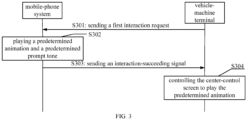
- FIG. 3 is a schematic flow chart of another method for information interaction based on a vehicle according to an embodiment of the present application. The method comprises the following steps:
- FIG. 8 is a schematic flow chart of another method for information interaction based on a vehicle according to an embodiment of the present application.
- the method is applied to an intelligent terminal, and comprises the following steps: S801: receiving in advance a binding request sent by the vehicle-machine terminal, according to a plug-in link shown by the binding request, downloading a functional plug-in, and according to a pairing code shown by the binding request, starting up a process of deploying the functional plug-in.
- the functional plug-in contains a responding operation and a feeding-back operation that are pre-configured.
- S806 sending an interaction-succeeding signal to the vehicle-machine terminal, to cause the vehicle-machine terminal to execute a feeding-back operation that was deployed in advance in the vehicle-machine terminal.
- the user can trigger, by using the activating operation, the intelligent terminal to interact with the vehicle-machine terminal.
- the vehicle-machine terminal sends the first interaction request to the intelligent terminal, to cause the intelligent terminal to execute the responding operation that was deployed in advance in the intelligent terminal, and, based on the second interaction request sent by the intelligent terminal, executes the responding operation corresponding to the state of the vehicle, to realize the effective interaction between the intelligent terminal and the vehicle, so as to provide a novel interaction mode for the vehicle, thereby enriching the user experience of the vehicle.
- the responding unit 901 is particularly configured for:
- the vehicle-machine terminal further comprises: a feeding-back unit 902 configured for receiving an interaction-succeeding signal that is fed back by the intelligent terminal based on the first interaction request, and controlling the vehicle to execute a feeding-back operation that was deployed in advance in the vehicle-machine terminal.
- a feeding-back unit 902 configured for receiving an interaction-succeeding signal that is fed back by the intelligent terminal based on the first interaction request, and controlling the vehicle to execute a feeding-back operation that was deployed in advance in the vehicle-machine terminal.
- the responding unit 1001 is particularly configured for:
- the intelligent terminal further comprises: an executing unit 1002 configured for, after a first interaction request sent by the vehicle-machine terminal has been received, executing a responding operation that is configured in the intelligent terminal based on a functional plug-in that was deployed in advance.
- the intelligent terminal further comprises: a feeding-back unit 1003 configured for receiving an interaction-succeeding signal that is fed back by the vehicle-machine terminal based on the second interaction request, and executing a feeding-back operation that is configured in the intelligent terminal based on a functional plug-in that was deployed in advance.
- a feeding-back unit 1003 configured for receiving an interaction-succeeding signal that is fed back by the vehicle-machine terminal based on the second interaction request, and executing a feeding-back operation that is configured in the intelligent terminal based on a functional plug-in that was deployed in advance.
- the intelligent terminal further comprises: a sending unit 1004 configured for sending an interaction-succeeding signal to the vehicle-machine terminal, to cause the vehicle-machine terminal to execute a feeding-back operation that was deployed in advance in the vehicle-machine terminal.
- a sending unit 1004 configured for sending an interaction-succeeding signal to the vehicle-machine terminal, to cause the vehicle-machine terminal to execute a feeding-back operation that was deployed in advance in the vehicle-machine terminal.
- the user can trigger, by using the activating operation, the intelligent terminal to interact with the vehicle-machine terminal.
- the vehicle-machine terminal sends the first interaction request to the intelligent terminal, to cause the intelligent terminal to execute the responding operation that was deployed in advance in the intelligent terminal, and, based on the second interaction request sent by the intelligent terminal, executes the responding operation corresponding to the state of the vehicle, to realize the effective interaction between the intelligent terminal and the vehicle, so as to provide a novel interaction mode for the vehicle, thereby enriching the user experience of the vehicle.
- the step of, in response to the activating operation by the user, sending the first interaction request to the intelligent terminal having the binding relation with the vehicle-machine terminal, to cause the intelligent terminal to execute the responding operation that was deployed in advance in the intelligent terminal comprises:
- the method further comprises: receiving an interaction-succeeding signal that is fed back by the intelligent terminal based on the first interaction request, and executing a feeding-back operation that was deployed in advance in the vehicle-machine terminal.
- the step of, after the second interaction request sent by the intelligent terminal has been received, executing the responding operation corresponding to the state of the vehicle comprises:
- the functions of the method according to the embodiments of the present application may be stored in a computing-device-readable storage medium.
- a computing-device-readable storage medium On the basis of such a comprehension, the part of the embodiments of the present application that makes a contribution over the prior art, or part of the technical solutions, may be embodied in the form of a software product.
- the software product is stored in a storage medium, and contains multiple instructions configured so that a computing device (which may be a personal computer, a server, a mobile computing device, a network device and so on) implements all or some of the steps of the methods according to the embodiments of the present application.
- the above-described storage medium includes various media that can store a program code, such as a USB flash disk, a mobile hard disk drive, a read-only memory, a random access memory, a diskette and an optical disk.
Landscapes
- Engineering & Computer Science (AREA)
- Computer Networks & Wireless Communication (AREA)
- Signal Processing (AREA)
- Health & Medical Sciences (AREA)
- Computing Systems (AREA)
- General Health & Medical Sciences (AREA)
- Medical Informatics (AREA)
- Human Computer Interaction (AREA)
- Telephone Function (AREA)
- User Interface Of Digital Computer (AREA)
Abstract
Description
- The present application claims the priority of the Chinese patent application filed on March 03rd, 2022 before the Chinese Patent Office with the application number of
202210210250.2 - The present application relates to the field of intelligent cars, and particularly relates to a method for information interaction based on a vehicle, a vehicle-machine terminal, a storage medium and a vehicle.
- While the popularizing rate of intelligent cars is increasing year by year and intelligent terminals (mobile phones, tablet personal computers, notebook computers and so on) have basically realized the all-around coverage of all of the user groups, the interconnection and the interaction between vehicles and between vehicles and mobile phones are becoming increasingly more common. Furthermore, while youngsters are gradually becoming the major car buyers, the configurations of the interaction between vehicles and intelligent terminals such as mobile phones and vehicles are developing with the trend of personalization and diversity, and the vehicles and the mobile phones are rapidly developing with the trend of total intercommunication and mutual compatibility.
- Currently, the current configurations of the information interaction between the mobile phone and the vehicle are merely for the information interaction between the mobile phone of the vehicle owner and the vehicle of the vehicle owner, and the intelligent terminals of the users relevant to the vehicle owner (for example, the family members of the vehicle owner) cannot perform information interaction with the vehicle of the vehicle owner.
- Accordingly, how to ensure that intelligent terminals interact with the vehicle has become a problem urgently needed to be solved in the art.
- The present application provides a method for information interaction based on a vehicle, a vehicle-machine terminal, a storage medium and a vehicle, for the purpose of ensuring that an intelligent terminal interacts with the vehicle.
- In order to achieve the above object, the present application provides the following technical solutions:
A method for information interaction based on a vehicle, wherein the method is applied to a vehicle-machine terminal, and comprises: - in response to an activating operation by a user, sending a first interaction request to an intelligent terminal having a binding relation with the vehicle-machine terminal, to cause the intelligent terminal to execute a responding operation that was deployed in advance in the intelligent terminal; and
- after a second interaction request sent by the intelligent terminal has been received, executing a responding operation corresponding to a state of the vehicle.
- Optionally, the step of, in response to the activating operation by the user, sending the first interaction request to the intelligent terminal having the binding relation with the vehicle-machine terminal, to cause the intelligent terminal to execute the responding operation that was deployed in advance in the intelligent terminal comprises:
- sending a binding request to the intelligent terminal in advance, to cause the intelligent terminal to, according to a plug-in link shown by the binding request, download a functional plug-in, and according to a pairing code shown by the binding request, start up a process of deploying the functional plug-in, wherein the functional plug-in contains a responding operation that is pre-configured;
- after a binding-succeeding prompt sent by the intelligent terminal has been received, determining to establish the binding relation between the vehicle-machine terminal and the intelligent terminal; and
- in response to the activating operation by the user, sending the first interaction request to the intelligent terminal, to cause the intelligent terminal to execute the responding operation deployed in the intelligent terminal.
- Optionally, after the step of, in response to the activating operation by the user, sending the first interaction request to the intelligent terminal having the binding relation with the vehicle-machine terminal, to cause the intelligent terminal to execute the responding operation that was deployed in advance in the intelligent terminal, the method further comprises:
receiving an interaction-succeeding signal that is fed back by the intelligent terminal based on the first interaction request, and executing a feeding-back operation that was deployed in advance in the vehicle-machine terminal. - Optionally, the step of, after the second interaction request sent by the intelligent terminal has been received, executing the responding operation corresponding to the state of the vehicle comprises:
- after the second interaction request sent by the intelligent terminal has been received, acquiring the state of the vehicle;
- if the vehicle is in a powering-off state, executing a first responding operation, wherein the first responding operation is for sending a notification request to a mobile device of the user, to cause the mobile device to play a predetermined animation and a predetermined prompt tone;
- if the vehicle is in a powering-on state and a stationary state, executing a second responding operation, wherein the second responding operation is for controlling a center-control screen to play the predetermined animation, controlling an ambient light to operate, and controlling a loudspeaker box to play the predetermined prompt tone; and
- if the vehicle is in the powering-on state and a travelling state, executing a third responding operation, wherein the third responding operation is for controlling the center-control screen to display a predetermined pop-up window, and controlling the loudspeaker box to play the predetermined prompt tone.
- Optionally, after the step of, after the second interaction request sent by the intelligent terminal has been received, executing the responding operation corresponding to the state of the vehicle, the method further comprises:
sending an interaction-succeeding signal to the intelligent terminal, to cause the intelligent terminal to execute a feeding-back operation that was deployed in advance in the intelligent terminal. - A method for information interaction based on a vehicle, wherein the method is applied to an intelligent terminal, and comprises:
- in response to an activating operation by a user, sending a second interaction request to a vehicle-machine terminal having a binding relation with the intelligent terminal, to cause the vehicle-machine terminal to execute a responding operation corresponding to a state of the vehicle; and
- after a first interaction request sent by the vehicle-machine terminal has been received, executing a responding operation that is configured in the intelligent terminal based on a functional plug-in that was deployed in advance.
- Optionally, the step of, in response to the activating operation by the user, sending the second interaction request to the vehicle-machine terminal having the binding relation with the intelligent terminal, to cause the vehicle-machine terminal to execute the responding operation corresponding to the state of the vehicle comprises:
- receiving in advance a binding request sent by the vehicle-machine terminal, according to a plug-in link shown by the binding request, downloading a functional plug-in, and according to a pairing code shown by the binding request, starting up a process of deploying the functional plug-in, wherein the functional plug-in contains a responding operation and a feeding-back operation that are pre-configured;
- after the deployment of the functional plug-in has succeeded, sending a binding-succeeding prompt to the vehicle-machine terminal, and determining to establish the binding relation between the vehicle-machine terminal and the intelligent terminal; and
- in response to the activating operation by the user, sending the second interaction request to the vehicle-machine terminal having the binding relation with the intelligent terminal, to cause the vehicle-machine terminal to execute the responding operation corresponding to the state of the vehicle.
- Optionally, after the step of, in response to the activating operation by the user, sending the second interaction request to the vehicle-machine terminal having the binding relation with the intelligent terminal, to cause the vehicle-machine terminal to execute the responding operation corresponding to the state of the vehicle, the method further comprises:
receiving an interaction-succeeding signal that is fed back by the vehicle-machine terminal based on the second interaction request, and executing a feeding-back operation that is configured in the intelligent terminal based on a functional plug-in that was deployed in advance. - Optionally, after the step of, after the first interaction request sent by the vehicle-machine terminal has been received, executing the responding operation that is configured in the intelligent terminal based on the functional plug-in that was deployed in advance, the method further comprises:
sending an interaction-succeeding signal to the vehicle-machine terminal, to cause the vehicle-machine terminal to execute a feeding-back operation that was deployed in advance in the vehicle-machine terminal. - A vehicle-machine terminal, wherein the vehicle-machine terminal comprises:
- a responding unit configured for, in response to an activating operation by a user, sending a first interaction request to an intelligent terminal having a binding relation with the vehicle-machine terminal, to cause the intelligent terminal to execute a responding operation that was deployed in advance in the intelligent terminal; and
- a controlling unit configured for, after a second interaction request sent by the intelligent terminal has been received, executing a responding operation corresponding to a state of the vehicle.
- Optionally, the responding unit is particularly configured for:
- sending a binding request to the intelligent terminal in advance, to cause the intelligent terminal to, according to a plug-in link shown by the binding request, download a functional plug-in, and according to a pairing code shown by the binding request, start up a process of deploying the functional plug-in, wherein the functional plug-in contains a responding operation that is pre-configured;
- after a binding-succeeding prompt sent by the intelligent terminal has been received, determining to establish the binding relation between the vehicle-machine terminal and the intelligent terminal; and
- in response to the activating operation by the user, sending the first interaction request to the intelligent terminal, to cause the intelligent terminal to execute the responding operation deployed in the intelligent terminal.
- Optionally, the controlling unit is particularly configured for:
- after the second interaction request sent by the intelligent terminal has been received, acquiring the state of the vehicle;
- if the vehicle is in a powering-off state, executing a first responding operation, wherein the first responding operation is for sending a notification request to a mobile device of the user, to cause the mobile device to play a predetermined animation and a predetermined prompt tone;
- if the vehicle is in a powering-on state and a stationary state, executing a second responding operation, wherein the second responding operation is for controlling a center-control screen to play the predetermined animation, controlling an ambient light to operate, and controlling a loudspeaker box to play the predetermined prompt tone; and
- if the vehicle is in the powering-on state and a travelling state, executing a third responding operation, wherein the third responding operation is for controlling the center-control screen to display a predetermined pop-up window, and controlling the loudspeaker box to play the predetermined prompt tone.
- Optionally, the vehicle-machine terminal further comprises:
- a feeding-back unit configured for receiving an interaction-succeeding signal that is fed back by the intelligent terminal based on the first interaction request, and executing a feeding-back operation that was deployed in advance in the vehicle-machine terminal; and
- a sending unit configured for sending an interaction-succeeding signal to the intelligent terminal, to cause the intelligent terminal to execute a feeding-back operation that was deployed in advance in the intelligent terminal.
- An intelligent terminal, wherein the intelligent terminal comprises:
- a responding unit configured for, in response to an activating operation by a user, sending a second interaction request to a vehicle-machine terminal having a binding relation with the intelligent terminal, to cause the vehicle-machine terminal to execute a responding operation corresponding to a state of the vehicle; and
- an executing unit configured for, after a first interaction request sent by the vehicle-machine terminal has been received, executing a responding operation that is configured in the intelligent terminal based on a functional plug-in that was deployed in advance.
- Optionally, the responding unit is particularly configured for:
- receiving in advance a binding request sent by the vehicle-machine terminal, according to a plug-in link shown by the binding request, downloading a functional plug-in, and according to a pairing code shown by the binding request, starting up a process of deploying the functional plug-in, wherein the functional plug-in contains a responding operation and a feeding-back operation that are pre-configured;
- after the deployment of the functional plug-in has succeeded, sending a binding-succeeding prompt to the vehicle-machine terminal, and determining to establish the binding relation between the vehicle-machine terminal and the intelligent terminal; and
- in response to the activating operation by the user, sending the second interaction request to the vehicle-machine terminal having the binding relation with the intelligent terminal, to cause the vehicle-machine terminal to execute the responding operation corresponding to the state of the vehicle.
- Optionally, the intelligent terminal further comprises:
- a feeding-back unit configured for receiving an interaction-succeeding signal that is fed back by the vehicle-machine terminal based on the second interaction request, and executing a feeding-back operation that is configured in the intelligent terminal based on a functional plug-in that was deployed in advance; and
- a sending unit configured for sending an interaction-succeeding signal to the vehicle-machine terminal, to cause the vehicle-machine terminal to execute a feeding-back operation that was deployed in advance in the vehicle-machine terminal.
- A computer-readable storage medium, wherein the computer-readable storage medium contains a stored program, and the program implements the method for information interaction based on a vehicle.
- A vehicle, wherein the vehicle comprises:
- a processor, a memory and a bus;
- the processor and the memory are connected by the bus; and
- the memory is configured for storing a program, the processor is configured for executing the program, and the program, when executed, implements the method for information interaction based on a vehicle.
- The technical solutions according to the present application are applied to a vehicle-machine terminal. The vehicle-machine terminal, in response to the activating operation by the user, sends the first interaction request to the intelligent terminal having the binding relation with the vehicle-machine terminal, to cause the intelligent terminal to execute the responding operation that was deployed in advance in the intelligent terminal, and, after the second interaction request sent by the intelligent terminal has been received, executes the responding operation corresponding to the state of the vehicle. On the basis of the solutions of the present application, the user can trigger, by using the activating operation, the vehicle-machine terminal to interact with the intelligent terminal. In the interaction, the vehicle-machine terminal sends the first interaction request to the intelligent terminal, to cause the intelligent terminal to execute the responding operation that was deployed in advance in the intelligent terminal, and, based on the second interaction request sent by the intelligent terminal, executes the responding operation corresponding to the state of the vehicle, to realize the effective interaction between the intelligent terminal and the vehicle, so as to provide a novel interaction mode for the vehicle, thereby enriching the user experience of the vehicle.
- In order to more clearly illustrate the technical solutions of the embodiments of the present application or the prior art, the figures that are required to describe the embodiments or the prior art will be briefly described below. Apparently, the figures that are described below are merely embodiments of the present application, and a person skilled in the art can obtain other figures according to these figures without paying creative work.
-
FIG. 1 is a schematic flow chart of a method for information interaction based on a vehicle according to an embodiment of the present application; -
FIG. 2 is a schematic flow chart of another method for information interaction based on a vehicle according to an embodiment of the present application; -
FIG. 3 is a schematic flow chart of another method for information interaction based on a vehicle according to an embodiment of the present application; -
FIG. 4 is a schematic flow chart of another method for information interaction based on a vehicle according to an embodiment of the present application; -
FIG. 5 is a schematic flow chart of another method for information interaction based on a vehicle according to an embodiment of the present application; -
FIG. 6 is a schematic flow chart of another method for information interaction based on a vehicle according to an embodiment of the present application; -
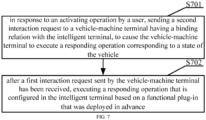
FIG. 7 is a schematic flow chart of another method for information interaction based on a vehicle according to an embodiment of the present application; -
FIG. 8 is a schematic flow chart of another method for information interaction based on a vehicle according to an embodiment of the present application; -
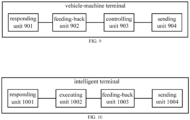
FIG. 9 is a schematic diagram of the architecture of a vehicle-machine terminal according to an embodiment of the present application; and -
FIG. 10 is a schematic diagram of the architecture of an intelligent terminal according to an embodiment of the present application. - The technical solutions of the embodiments of the present application will be clearly and completely described below with reference to the drawings of the embodiments of the present application. Apparently, the described embodiments are merely certain embodiments of the present application, rather than all of the embodiments. All of the other embodiments that a person skilled in the art obtains on the basis of the embodiments of the present application without paying creative work fall within the protection scope of the present application.
- As shown in
FIG. 1, FIG. 1 is a schematic flow chart of a method for information interaction based on a vehicle according to an embodiment of the present application. The method is applied to a vehicle-machine terminal (also referred as vehicle-mounted terminal or in-vehicle infotainment system or vehicle terminal, for example HUT) which can interact with a mobile terminal, and comprises the following steps:
S101: in response to an activating operation by a user, sending a first interaction request to an intelligent terminal having a binding relation with the vehicle-machine terminal, to cause the intelligent terminal to execute a responding operation that was deployed in advance in the intelligent terminal. - The particular principle of implementation of the step of, in response to the activating operation by the user, sending the first interaction request to the intelligent terminal having the binding relation with the vehicle-machine terminal may refer to the following interpretation and description with reference to S201-S204 shown in
FIG. 2 . - S102: after a second interaction request sent by the intelligent terminal has been received, executing a responding operation corresponding to a state of the vehicle.
- The particular principle of implementation of the step of, after the second interaction request sent by the intelligent terminal has been received, executing the responding operation corresponding to the state of the vehicle may refer to the following interpretation and description with reference to S205-S209 shown in
FIG. 2 . - In conclusion, the user can trigger, by using the activating operation, the vehicle-machine terminal to interact with the intelligent terminal. In the interaction, the vehicle-machine terminal sends the first interaction request to the intelligent terminal, to cause the intelligent terminal to execute the responding operation that was deployed in advance in the intelligent terminal, and, based on the second interaction request sent by the intelligent terminal, executes the responding operation corresponding to the state of the vehicle, to realize the effective interaction between the intelligent terminal and the vehicle, so as to provide a novel interaction mode for the vehicle, thereby enriching the user experience of the vehicle.
- As shown in
FIG. 2, FIG. 2 is a schematic flow chart of another method for information interaction based on a vehicle according to an embodiment of the present application. The method is applied to a vehicle-machine terminal, and comprises the following steps:
S201: sending a binding request to the intelligent terminal in advance, to cause the intelligent terminal to, according to a plug-in link shown by the binding request, download a functional plug-in, and according to a pairing code shown by the binding request, start up a process of deploying the functional plug-in. - The functional plug-in contains a responding operation and a feeding-back operation that are pre-configured. In the embodiments of the present application, the type of the intelligent terminal includes but is not limited to a mobile-phone system and a vehicle-machine system. Correspondingly, if the intelligent terminal is the mobile-phone system, then the responding operation deployed in the mobile-phone system may be playing a predetermined animation (for example, a dazzle color heart-shape animation) and a predetermined prompt tone (for example, a Ding Dong sound, a human voice of "Ding Dong expresses the affection" and so on), and the feeding-back operation deployed in the mobile-phone system may be playing a predetermined animation.
- It should be noted that the functional plug-in contains a responding operation and a feeding-back operation that are pre-configured. Both of the mobile-phone system and the vehicle-machine system may, by being provided with the functional plug-in, realize the pre-configuration of the responding operation and the feeding-back operation. Moreover, in the process of the deployment of the functional plug-in in the mobile-phone system, the mobile-phone system is upgraded, so that the mobile-phone system can be adapted for the functional plug-in.
- In addition, in the vehicle-machine terminal, the correspondence address of the mobile-phone system or the vehicle-machine system has already been pre-configured. After the vehicle-machine terminal has been provided with the responding operation and the feeding-back operation of itself, the vehicle-machine terminal sends the binding request to the mobile-phone system or the vehicle-machine system according to the correspondence address, to seek to establish the binding relation with the mobile-phone system or the vehicle-machine system.
- If the intelligent terminal is the vehicle-machine system, then the responding operation deployed in the vehicle-machine system comprises a first responding operation, a second responding operation and a third responding operation, and the feeding-back operation deployed in the vehicle-machine system may be controlling a center-control screen to play a predetermined animation. Particularly, the so-called first responding operation is for sending a notification request to a mobile device of the user (which particularly refers to the owner of the vehicle-machine system), to cause the mobile device to play a predetermined animation and a predetermined sound effect. The so-called second responding operation is for controlling the center-control screen to play the predetermined animation, controlling an ambient light to operate, and controlling a loudspeaker box to play the predetermined prompt tone. The so-called third responding operation is for controlling the center-control screen to display a predetermined pop-up window, and controlling the loudspeaker box to play the predetermined prompt tone.
- Optionally, the vehicle-machine terminal may send the binding request to a predetermined vehicle-machine-background information server, to trigger the vehicle-machine-background information server to send to the intelligent terminal the plug-in link and the pairing code shown by the binding request. Generally, the modes of the communication between the vehicle-machine terminal, the vehicle-machine-background information server and the intelligent terminal include but are not limited to 4G network communication, 5G network communication and Bluetooth communication. In other words, the vehicle-machine-background information server may be deemed as a transfer station for the information interaction between the vehicle-machine terminal and the intelligent terminal.
- S202: after a binding-succeeding prompt sent by the intelligent terminal has been received, determining to establish the binding relation between the vehicle-machine terminal and the intelligent terminal.
- The intelligent terminal, after successfully provided with the functional plug-in, sends a binding-succeeding prompt to the vehicle-machine terminal, so as to establish the binding relation with the vehicle-machine terminal.
- S203: in response to the activating operation by the user, sending the first interaction request to the intelligent terminal, to cause the intelligent terminal to execute the responding operation deployed in the intelligent terminal.
- The activating operation by the user includes but is not limited to hand-gesture activation (i.e., performing a predetermined hand gesture to a predetermined camera), voice activation (i.e., speaking a predetermined voice to a predetermined microphone), clicking a predetermined shortcut key at the vehicle-machine terminal, and performing a triggering operation to the center-control screen.
- Particularly, if the intelligent terminal is the mobile-phone system, then after the first interaction request has been received, the mobile-phone system plays the predetermined animation and the predetermined prompt tone. If the intelligent terminal is the vehicle-machine system, then after the first interaction request has been received, the vehicle-machine system acquires the state of the vehicle that the vehicle-machine system belongs to; if the vehicle is in a powering-off state, executes the first responding operation; if the vehicle is in a powering-on state and a stationary state, executes the second responding operation; and if the vehicle is in the powering-on state and a travelling state, executes the third responding operation.
- S204: receiving an interaction-succeeding signal that is fed back by the intelligent terminal based on the first interaction request, and executing a feeding-back operation that was deployed in advance in the vehicle-machine terminal.
- The intelligent terminal, after executing the responding operation deployed in the intelligent terminal, sends an interaction-succeeding signal to the vehicle-machine terminal. Accordingly, the vehicle-machine terminal, after has received the interaction-succeeding signal that is fed back by the intelligent terminal based on the first interaction request, executes the feeding-back operation that was deployed in advance in the vehicle-machine terminal.
- It should be noted that the feeding-back operation that was deployed in advance in the vehicle-machine terminal may be controlling the center-control screen to play the predetermined animation. In the embodiments of the present application, the vehicle-machine terminal may realize the provision of the feeding-back operation by being installed with the functional plug-in.
- The flow shown by S201-S204 is that the vehicle-machine terminal, in response to the activation request by the user, actively interacts with the intelligent terminal. Regarding the different types of the intelligent terminal, the mode of the implementation of the active interaction by the vehicle-machine terminal with the mobile-phone system may refer to the flow shown in
FIG. 3 , and the mode of the implementation of the active interaction by the vehicle-machine terminal with the vehicle-machine system may refer to the flow shown inFIG. 4 . - Moreover, after the intelligent terminal has established the binding relation with the vehicle-machine terminal, the intelligent terminal may actively interact with the vehicle-machine terminal. Particularly, the process of the active interaction by the intelligent terminal with the vehicle-machine terminal has the flow shown by the following S105-S109.
- S205: after the second interaction request sent by the intelligent terminal has been received, acquiring the state of the vehicle.
- S206: if the vehicle is in a powering-off state, executing a first responding operation.
- After S206 has been executed, S209 continues to be executed.
- The first responding operation is for sending a notification request to a mobile device of the user, to cause the mobile device to play the predetermined animation and the predetermined prompt tone.
- S207: if the vehicle is in a powering-on state and a stationary state, executing a second responding operation.
- After S207 has been executed, S209 continues to be executed.
- The second responding operation is for controlling the center-control screen to play the predetermined animation, controlling an ambient light to operate, and controlling a loudspeaker box to play the predetermined prompt tone.
- S208: if the vehicle is in the powering-on state and a travelling state, executing a third responding operation.
- After S208 has been executed, S209 continues to be executed.
- The third responding operation is for controlling the center-control screen to display a predetermined pop-up window (the predetermined pop-up window contains a predetermined text message, for example, "xx is missing you"), and controlling the loudspeaker box to play the predetermined prompt tone.
- It should be noted that all of the first responding operation, the second responding operation and the third responding operation are a responding operation that was deployed in advance by the vehicle-machine terminal with respect to the state of the vehicle. In the embodiments of the present application, the vehicle-machine terminal may realize the provision of the responding operation by being installed with the functional plug-in.
- S209: sending an interaction-succeeding signal to the intelligent terminal, to cause the intelligent terminal to execute a feeding-back operation that was deployed in advance in the intelligent terminal.
- The flow shown by S205-S209 is that the intelligent terminal, in response to the activation request by the user, actively interacts with the vehicle-machine terminal. Regarding the different types of the intelligent terminal, the mode of the implementation of the active interaction by the mobile-phone system with the vehicle-machine terminal may refer to the flow shown in
FIG. 5 , and the mode of the implementation of the active interaction by the vehicle-machine system with the vehicle-machine terminal may refer to the flow shown inFIG. 6 . - In conclusion, the user can trigger, by using the activating operation, the vehicle-machine terminal to interact with the intelligent terminal. In the interaction, the vehicle-machine terminal sends the first interaction request to the intelligent terminal, to cause the intelligent terminal to execute the responding operation that was deployed in advance in the intelligent terminal, and, based on the second interaction request sent by the intelligent terminal, executes the responding operation corresponding to the state of the vehicle, to realize the effective interaction between the intelligent terminal and the vehicle, so as to provide a novel interaction mode for the vehicle, thereby enriching the user experience of the vehicle.
- As shown in
FIG. 3, FIG. 3 is a schematic flow chart of another method for information interaction based on a vehicle according to an embodiment of the present application. The method comprises the following steps: - S301: by the vehicle-machine terminal, in response to an activating operation by a user, sending a first interaction request to the mobile-phone system.
- S302: after the first interaction request has been received, playing, by the mobile-phone system, a predetermined animation and a predetermined prompt tone.
- S303: by the mobile-phone system, sending an interaction-succeeding signal to the vehicle-machine terminal.
- S304: after the interaction-succeeding signal has been received, controlling, by the vehicle-machine terminal, the center-control screen to play the predetermined animation.
- On the basis of the flow shown by S301-S304, the effective interaction between the vehicle-machine terminal and the mobile-phone system can be realized.
- As shown in
FIG. 4, FIG. 4 is a schematic flow chart of another method for information interaction based on a vehicle according to an embodiment of the present application. The method comprises the following steps:
S401: by the vehicle-machine terminal, in response to an activating operation by a first user, sending a first interaction request to the vehicle-machine system. - The first user is the owner of the vehicle that the vehicle-machine terminal belongs to.
- S402: after the first interaction request has been received, acquiring, by the vehicle-machine system, the state of the vehicle that the vehicle-machine system belongs to.
- S403: if the vehicle is in a powering-off state, sending, by the vehicle-machine system, a notification request to a mobile device of a second user, to cause the mobile device to play a predetermined animation and a predetermined sound effect.
- The second user is the owner of the vehicle that the vehicle-machine system belongs to.
- S404: if the vehicle is in a powering-on state and a stationary state, controlling, by the vehicle-machine system, the center-control screen to play the predetermined animation, an ambient light to operate, and a loudspeaker box to play the predetermined prompt tone.
- S405: if the vehicle is in the powering-on state and a travelling state, controlling, by the vehicle-machine system, the center-control screen to display a predetermined pop-up window, and the loudspeaker box to play the predetermined prompt tone.
- S406: by the vehicle-machine system, sending an interaction-succeeding signal to the vehicle-machine terminal.
- S407: after the interaction-succeeding signal has been received, controlling, by the vehicle-machine terminal, the center-control screen to play the predetermined animation.
- On the basis of the flow shown by S401-S407, the effective interaction between the vehicle-machine terminal and the vehicle-machine system can be realized.
- As shown in
FIG. 5, FIG. 5 is a schematic flow chart of another method for information interaction based on a vehicle according to an embodiment of the present application. The method comprises the following steps:
S501: by the mobile-phone system, in response to an activating operation by a second user, sending a second interaction request to the vehicle-machine terminal. - The activating operation that the mobile-phone system responds to includes but is not limited to that the user performs a triggering operation to a predetermined interface of the mobile-phone system (for example, when the mobile-phone system is in the black-screen state, the user draws a heart-shaped pattern on the screen of the mobile phone, and when the mobile-phone system is normal, the user performs interface switching on the screen of the mobile phone, or clicks a predetermined button of the mobile-phone system).
- S502: after the second interaction request has been received, by the vehicle-machine terminal, acquiring the state of the vehicle.
- S503: if the vehicle is in a powering-off state, sending, by the vehicle-machine terminal, a notification request to a mobile device of a first user, to cause the mobile device to play a predetermined animation and a predetermined sound effect.
- S504: if the vehicle is in a powering-on state and a stationary state, controlling, by the vehicle-machine terminal, the center-control screen to play the predetermined animation, an ambient light to operate, and a loudspeaker box to play the predetermined prompt tone.
- S505: if the vehicle is in the powering-on state and a travelling state, controlling, by the vehicle-machine terminal, the center-control screen to display a predetermined pop-up window, and the loudspeaker box to play the predetermined prompt tone.
- S506: by the vehicle-machine terminal, sending an interaction-succeeding signal to the mobile-phone system.
- S507: after the interaction-succeeding signal has been received, playing, by the mobile-phone system, a predetermined animation.
- On the basis of the flow shown by S501-S507, the effective interaction between the vehicle-machine terminal and the mobile-phone system can be realized.
- As shown in
FIG. 6, FIG. 6 is a schematic flow chart of another method for information interaction based on a vehicle according to an embodiment of the present application. The method comprises the following steps:
S601: by the vehicle-machine system, in response to an activating operation by a second user, sending a second interaction request to the vehicle-machine terminal. - The activating operation that the vehicle-machine system responds to includes but is not limited to hand-gesture activation (performing a predetermined hand gesture to a predetermined camera), voice activation (speaking a predetermined voice to a predetermined microphone), clicking a predetermined shortcut key at the vehicle-machine system, and performing a triggering operation on the center-control screen.
- S602: after the second interaction request has been received, by the vehicle-machine terminal, acquiring the state of the vehicle.
- S603: if the vehicle is in a powering-off state, sending, by the vehicle-machine terminal, a notification request to a mobile device of a first user, to cause the mobile device to play a predetermined animation and a predetermined sound effect.
- S604: if the vehicle is in a powering-on state and a stationary state, controlling, by the vehicle-machine terminal, the center-control screen to play the predetermined animation, an ambient light to operate, and a loudspeaker box to play the predetermined prompt tone.
- S605: if the vehicle is in the powering-on state and a travelling state, controlling, by the vehicle-machine terminal, the center-control screen to display a predetermined pop-up window, and the loudspeaker box to play the predetermined prompt tone.
- S606: by the vehicle-machine terminal, sending an interaction-succeeding signal to the vehicle-machine system.
- S607: after the interaction-succeeding signal has been received, controlling, by the vehicle-machine system, the center-control screen to play the predetermined animation.
- On the basis of the flow shown by S601-S607, the effective interaction between the vehicle-machine terminal and the vehicle-machine system can be realized.
- As shown in
FIG. 7, FIG. 7 is a schematic flow chart of another method for information interaction based on a vehicle according to an embodiment of the present application. The method is applied to an intelligent terminal, and comprises the following steps:
S701: in response to an activating operation by a user, sending a second interaction request to a vehicle-machine terminal having a binding relation with the intelligent terminal, to cause the vehicle-machine terminal to execute a responding operation corresponding to a state of the vehicle. - The particular principle of implementation of the step of, in response to the activating operation by the user, sending the second interaction request to the vehicle-machine terminal having the binding relation with the intelligent terminal, to cause the vehicle-machine terminal to execute the responding operation corresponding to the state of the vehicle may refer to the following S801-S804 shown in
FIG. 8 . - S702: after a first interaction request sent by the vehicle-machine terminal has been received, executing a responding operation that is configured in the intelligent terminal based on a functional plug-in that was deployed in advance.
- The particular principle of implementation of the step of, after the first interaction request sent by the vehicle-machine terminal has been received, executing the responding operation that is configured in the intelligent terminal based on the functional plug-in that was deployed in advance may refer to the following S805-S806 shown in
FIG. 8 . - In conclusion, the user can trigger, by using the activating operation, the intelligent terminal to interact with the vehicle-machine terminal. In the interaction, the vehicle-machine terminal sends the first interaction request to the intelligent terminal, to cause the intelligent terminal to execute the responding operation that was deployed in advance in the intelligent terminal, and, based on the second interaction request sent by the intelligent terminal, executes the responding operation corresponding to the state of the vehicle, to realize the effective interaction between the intelligent terminal and the vehicle, so as to provide a novel interaction mode for the vehicle, thereby enriching the user experience of the vehicle.
- As shown in
FIG. 8, FIG. 8 is a schematic flow chart of another method for information interaction based on a vehicle according to an embodiment of the present application. The method is applied to an intelligent terminal, and comprises the following steps:
S801: receiving in advance a binding request sent by the vehicle-machine terminal, according to a plug-in link shown by the binding request, downloading a functional plug-in, and according to a pairing code shown by the binding request, starting up a process of deploying the functional plug-in. - The functional plug-in contains a responding operation and a feeding-back operation that are pre-configured.
- S802: after the deployment of the functional plug-in has succeeded, sending a binding-succeeding prompt to the vehicle-machine terminal, and determining to establish the binding relation between the vehicle-machine terminal and the intelligent terminal.
- S803: in response to the activating operation by the user, sending the second interaction request to the vehicle-machine terminal having the binding relation with the intelligent terminal, to cause the vehicle-machine terminal to execute the responding operation corresponding to the state of the vehicle.
- S804: receiving an interaction-succeeding signal that is fed back by the vehicle-machine terminal based on the second interaction request, and executing a feeding-back operation that is configured in the intelligent terminal based on a functional plug-in that was deployed in advance.
- S805: after a first interaction request sent by the vehicle-machine terminal has been received, executing a responding operation that is configured in the intelligent terminal based on a functional plug-in that was deployed in advance.
- S806: sending an interaction-succeeding signal to the vehicle-machine terminal, to cause the vehicle-machine terminal to execute a feeding-back operation that was deployed in advance in the vehicle-machine terminal.
- In conclusion, the user can trigger, by using the activating operation, the intelligent terminal to interact with the vehicle-machine terminal. In the interaction, the vehicle-machine terminal sends the first interaction request to the intelligent terminal, to cause the intelligent terminal to execute the responding operation that was deployed in advance in the intelligent terminal, and, based on the second interaction request sent by the intelligent terminal, executes the responding operation corresponding to the state of the vehicle, to realize the effective interaction between the intelligent terminal and the vehicle, so as to provide a novel interaction mode for the vehicle, thereby enriching the user experience of the vehicle.
- As corresponding to the method for information interaction based on a vehicle according to the embodiments of the present application, the embodiments of the present application further provide a vehicle-machine terminal and an intelligent terminal.
- As shown in
FIG. 9, FIG. 9 is a schematic diagram of the architecture of a vehicle-machine terminal according to an embodiment of the present application. The vehicle-machine terminal comprises: - a responding
unit 901 configured for, in response to an activating operation by a user, sending a first interaction request to an intelligent terminal having a binding relation with the vehicle-machine terminal, to cause the intelligent terminal to execute a responding operation that was deployed in advance in the intelligent terminal. - The responding
unit 901 is particularly configured for: - sending a binding request to the intelligent terminal in advance, to cause the intelligent terminal to, according to a plug-in link shown by the binding request, download a functional plug-in, and according to a pairing code shown by the binding request, start up a process of deploying the functional plug-in, wherein the functional plug-in contains a responding operation that is pre-configured;
- after a binding-succeeding prompt sent by the intelligent terminal has been received, determining to establish the binding relation between the vehicle-machine terminal and the intelligent terminal; and
- in response to the activating operation by the user, sending the first interaction request to the intelligent terminal, to cause the intelligent terminal to execute the responding operation deployed in the intelligent terminal.
- The vehicle-machine terminal further comprises:
a feeding-backunit 902 configured for receiving an interaction-succeeding signal that is fed back by the intelligent terminal based on the first interaction request, and controlling the vehicle to execute a feeding-back operation that was deployed in advance in the vehicle-machine terminal. - The vehicle-machine terminal further comprises:
a controllingunit 903 configured for, after a second interaction request sent by the intelligent terminal has been received, executing a responding operation corresponding to a state of the vehicle. - The controlling
unit 903 is particularly configured for: - after the second interaction request sent by the intelligent terminal has been received, acquiring the state of the vehicle;
- if the vehicle is in a powering-off state, executing a first responding operation, wherein the first responding operation is for sending a notification request to a mobile device of the user, to cause the mobile device to play a predetermined animation and a predetermined prompt tone;
- if the vehicle is in a powering-on state and a stationary state, executing a second responding operation, wherein the second responding operation is for controlling a center-control screen to play the predetermined animation, controlling an ambient light to operate, and controlling a loudspeaker box to play the predetermined prompt tone; and
- if the vehicle is in the powering-on state and a travelling state, executing a third responding operation, wherein the third responding operation is for controlling the center-control screen to display a predetermined pop-up window, and controlling the loudspeaker box to play the predetermined prompt tone.
- The vehicle-machine terminal further comprises:
a sendingunit 904 configured for sending an interaction-succeeding signal to the intelligent terminal, to cause the intelligent terminal to execute a feeding-back operation that was deployed in advance in the intelligent terminal. - In conclusion, the user can trigger, by using the activating operation, the vehicle-machine terminal to interact with the intelligent terminal. In the interaction, the vehicle-machine terminal sends the first interaction request to the intelligent terminal, to cause the intelligent terminal to execute the responding operation that was deployed in advance in the intelligent terminal, and, based on the second interaction request sent by the intelligent terminal, executes the responding operation corresponding to the state of the vehicle, to realize the effective interaction between the intelligent terminal and the vehicle, so as to provide a novel interaction mode for the vehicle, thereby enriching the user experience of the vehicle.
- As shown in
FIG. 10, FIG. 10 is a schematic diagram of the architecture of an intelligent terminal according to an embodiment of the present application. The intelligent terminal comprises:
a respondingunit 1001 configured for, in response to an activating operation by a user, sending a second interaction request to a vehicle-machine terminal having a binding relation with the intelligent terminal, to cause the vehicle-machine terminal to execute a responding operation corresponding to a state of the vehicle. - The responding
unit 1001 is particularly configured for: - receiving in advance a binding request sent by the vehicle-machine terminal, according to a plug-in link shown by the binding request, downloading a functional plug-in, and according to a pairing code shown by the binding request, starting up a process of deploying the functional plug-in, wherein the functional plug-in contains a responding operation and a feeding-back operation that are pre-configured;
- after the deployment of the functional plug-in has succeeded, sending a binding-succeeding prompt to the vehicle-machine terminal, and determining to establish the binding relation between the vehicle-machine terminal and the intelligent terminal; and
- in response to the activating operation by the user, sending the second interaction request to the vehicle-machine terminal having the binding relation with the intelligent terminal, to cause the vehicle-machine terminal to execute the responding operation corresponding to the state of the vehicle.
- The intelligent terminal further comprises:
an executing unit 1002 configured for, after a first interaction request sent by the vehicle-machine terminal has been received, executing a responding operation that is configured in the intelligent terminal based on a functional plug-in that was deployed in advance. - The intelligent terminal further comprises:
a feeding-backunit 1003 configured for receiving an interaction-succeeding signal that is fed back by the vehicle-machine terminal based on the second interaction request, and executing a feeding-back operation that is configured in the intelligent terminal based on a functional plug-in that was deployed in advance. - The intelligent terminal further comprises:
a sendingunit 1004 configured for sending an interaction-succeeding signal to the vehicle-machine terminal, to cause the vehicle-machine terminal to execute a feeding-back operation that was deployed in advance in the vehicle-machine terminal. - In conclusion, the user can trigger, by using the activating operation, the intelligent terminal to interact with the vehicle-machine terminal. In the interaction, the vehicle-machine terminal sends the first interaction request to the intelligent terminal, to cause the intelligent terminal to execute the responding operation that was deployed in advance in the intelligent terminal, and, based on the second interaction request sent by the intelligent terminal, executes the responding operation corresponding to the state of the vehicle, to realize the effective interaction between the intelligent terminal and the vehicle, so as to provide a novel interaction mode for the vehicle, thereby enriching the user experience of the vehicle.
- The present application further provides a computer-readable storage medium, wherein the computer-readable storage medium contains a stored program, and the program implements the method for information interaction based on a vehicle according to the present application.
- The present application further provides a vehicle, wherein the vehicle comprises: a processor, a memory and a bus. The processor and the memory are connected by the bus. The memory is configured for storing a program, the processor is configured for executing the program, and the program, when executed, implements the method for information interaction based on a vehicle according to the present application. The method comprises the following steps:
- in response to an activating operation by a user, sending a first interaction request to an intelligent terminal having a binding relation with the vehicle-machine terminal, to cause the intelligent terminal to execute a responding operation that was deployed in advance in the intelligent terminal; and
- after a second interaction request sent by the intelligent terminal has been received, executing a responding operation corresponding to a state of the vehicle.
- Particularly, on the basis of the above embodiments, the step of, in response to the activating operation by the user, sending the first interaction request to the intelligent terminal having the binding relation with the vehicle-machine terminal, to cause the intelligent terminal to execute the responding operation that was deployed in advance in the intelligent terminal comprises:
- sending a binding request to the intelligent terminal in advance, to cause the intelligent terminal to, according to a plug-in link shown by the binding request, download a functional plug-in, and according to a pairing code shown by the binding request, start up a process of deploying the functional plug-in, wherein the functional plug-in contains a responding operation that is pre-configured;
- after a binding-succeeding prompt sent by the intelligent terminal has been received, determining to establish the binding relation between the vehicle-machine terminal and the intelligent terminal; and
- in response to the activating operation by the user, sending the first interaction request to the intelligent terminal, to cause the intelligent terminal to execute the responding operation deployed in the intelligent terminal.
- Particularly, on the basis of the above embodiments, after the step of, in response to the activating operation by the user, sending the first interaction request to the intelligent terminal having the binding relation with the vehicle-machine terminal, to cause the intelligent terminal to execute the responding operation that was deployed in advance in the intelligent terminal, the method further comprises:
receiving an interaction-succeeding signal that is fed back by the intelligent terminal based on the first interaction request, and executing a feeding-back operation that was deployed in advance in the vehicle-machine terminal. - Particularly, on the basis of the above embodiments, the step of, after the second interaction request sent by the intelligent terminal has been received, executing the responding operation corresponding to the state of the vehicle comprises:
- after the second interaction request sent by the intelligent terminal has been received, acquiring the state of the vehicle;
- if the vehicle is in a powering-off state, executing a first responding operation, wherein the first responding operation is for sending a notification request to a mobile device of the user, to cause the mobile device to play a predetermined animation and a predetermined prompt tone;
- if the vehicle is in a powering-on state and a stationary state, executing a second responding operation, wherein the second responding operation is for controlling a center-control screen to play the predetermined animation, controlling an ambient light to operate, and controlling a loudspeaker box to play the predetermined prompt tone; and
- if the vehicle is in the powering-on state and a travelling state, executing a third responding operation, wherein the third responding operation is for controlling the center-control screen to display a predetermined pop-up window, and controlling the loudspeaker box to play the predetermined prompt tone.
- Particularly, on the basis of the above embodiments, after the step of, after the second interaction request sent by the intelligent terminal has been received, executing the responding operation corresponding to the state of the vehicle, the method further comprises:
sending an interaction-succeeding signal to the intelligent terminal, to cause the intelligent terminal to execute a feeding-back operation that was deployed in advance in the intelligent terminal. - The functions of the method according to the embodiments of the present application, if embodied in the form of software function units and sold or used as an independent product, may be stored in a computing-device-readable storage medium. On the basis of such a comprehension, the part of the embodiments of the present application that makes a contribution over the prior art, or part of the technical solutions, may be embodied in the form of a software product. The software product is stored in a storage medium, and contains multiple instructions configured so that a computing device (which may be a personal computer, a server, a mobile computing device, a network device and so on) implements all or some of the steps of the methods according to the embodiments of the present application. Moreover, the above-described storage medium includes various media that can store a program code, such as a USB flash disk, a mobile hard disk drive, a read-only memory, a random access memory, a diskette and an optical disk.
- The embodiments of the description are described in the mode of progression, each of the embodiments emphatically describes the differences from the other embodiments, and the same or similar parts of the embodiments may refer to each other.
- The above description on the disclosed embodiments enables a person skilled in the art to implement or use the present application. Various modifications on those embodiments will be apparent to a person skilled in the art, and the general principle defined herein may be implemented in other embodiments without departing from the spirit or scope of the present application. Therefore, the present application should not be limited to the embodiments illustrated herein, but should meet the broadest scope in accord with the principle and the novel characteristics disclosed herein.
Claims (10)
- A method for information interaction based on a vehicle, characterized in that the method is applied to a vehicle-machine terminal, and comprises:in response to an activating operation by a user, sending a first interaction request to an intelligent terminal having a binding relation with the vehicle-machine terminal, to cause the intelligent terminal to execute a responding operation that was deployed in advance in the intelligent terminal; andafter a second interaction request sent by the intelligent terminal has been received, executing a responding operation corresponding to a state of the vehicle.
- The method according to claim 1, wherein the step of, in response to the activating operation by the user, sending the first interaction request to the intelligent terminal having the binding relation with the vehicle-machine terminal, to cause the intelligent terminal to execute the responding operation that was deployed in advance in the intelligent terminal comprises:sending a binding request to the intelligent terminal in advance, to cause the intelligent terminal to, according to a plug-in link shown by the binding request, download a functional plug-in, and according to a pairing code shown by the binding request, start up a process of deploying the functional plug-in, wherein the functional plug-in contains a responding operation that is pre-configured;after a binding-succeeding prompt sent by the intelligent terminal has been received, determining to establish the binding relation between the vehicle-machine terminal and the intelligent terminal; andin response to the activating operation by the user, sending the first interaction request to the intelligent terminal, to cause the intelligent terminal to execute the responding operation deployed in the intelligent terminal.
- The method according to claim 1, wherein after the step of, in response to the activating operation by the user, sending the first interaction request to the intelligent terminal having the binding relation with the vehicle-machine terminal, to cause the intelligent terminal to execute the responding operation that was deployed in advance in the intelligent terminal, the method further comprises:
receiving an interaction-succeeding signal that is fed back by the intelligent terminal based on the first interaction request, and executing a feeding-back operation that was deployed in advance in the vehicle-machine terminal. - The method according to claim 1, wherein the step of, after the second interaction request sent by the intelligent terminal has been received, executing the responding operation corresponding to the state of the vehicle comprises:after the second interaction request sent by the intelligent terminal has been received, acquiring the state of the vehicle;if the vehicle is in a powering-off state, executing a first responding operation, wherein the first responding operation is for sending a notification request to a mobile device of the user, to cause the mobile device to play a predetermined animation and a predetermined prompt tone;if the vehicle is in a powering-on state and a stationary state, executing a second responding operation, wherein the second responding operation is for controlling a center-control screen to play the predetermined animation, controlling an ambient light to operate, and controlling a loudspeaker box to play the predetermined prompt tone; andif the vehicle is in the powering-on state and a travelling state, executing a third responding operation, wherein the third responding operation is for controlling the center-control screen to display a predetermined pop-up window, and controlling the loudspeaker box to play the predetermined prompt tone.
- The method according to claim 1, wherein after the step of, after the second interaction request sent by the intelligent terminal has been received, executing the responding operation corresponding to the state of the vehicle, the method further comprises:
sending an interaction-succeeding signal to the intelligent terminal, to cause the intelligent terminal to execute a feeding-back operation that was deployed in advance in the intelligent terminal. - A method for information interaction based on a vehicle, characterized in that the method is applied to an intelligent terminal, and comprises:in response to an activating operation by a user, sending a second interaction request to a vehicle-machine terminal having a binding relation with the intelligent terminal, to cause the vehicle-machine terminal to execute a responding operation corresponding to a state of the vehicle; andafter a first interaction request sent by the vehicle-machine terminal has been received, executing a responding operation that is configured in the intelligent terminal based on a functional plug-in that was deployed in advance.
- A vehicle-machine terminal, characterized in that the vehicle-machine terminal comprises:a responding unit configured for, in response to an activating operation by a user, sending a first interaction request to an intelligent terminal having a binding relation with the vehicle-machine terminal, to cause the intelligent terminal to execute a responding operation that was deployed in advance in the intelligent terminal; anda controlling unit configured for, after a second interaction request sent by the intelligent terminal has been received, executing a responding operation corresponding to a state of the vehicle.
- An intelligent terminal, characterized in that the intelligent terminal comprises:a responding unit configured for, in response to an activating operation by a user, sending a second interaction request to a vehicle-machine terminal having a binding relation with the intelligent terminal, to cause the vehicle-machine terminal to execute a responding operation corresponding to a state of the vehicle; andan executing unit configured for, after a first interaction request sent by the vehicle-machine terminal has been received, executing a responding operation that is configured in the intelligent terminal based on a functional plug-in that was deployed in advance.
- A computer-readable storage medium, characterized in that the computer-readable storage medium contains a stored program, and the program implements the method for information interaction based on a vehicle according to any one of claims 1-5.
- A vehicle, characterized in that the vehicle comprises:a processor, a memory and a bus;the processor and the memory are connected by the bus; andthe memory is configured for storing a program, the processor is configured for executing the program, and the program, when executed, implements the method for information interaction based on a vehicle according to any one of claims 1-5.
Applications Claiming Priority (2)
| Application Number | Priority Date | Filing Date | Title |
|---|---|---|---|
| CN202210210250.2A CN115250447B (en) | 2022-03-03 | 2022-03-03 | Vehicle-based information interaction method, vehicle terminal, storage medium and vehicle |
| PCT/CN2023/075889 WO2023165326A1 (en) | 2022-03-03 | 2023-02-14 | Vehicle-based information exchange method, head unit end, storage medium, and vehicle |
Publications (2)
| Publication Number | Publication Date |
|---|---|
| EP4489448A1 true EP4489448A1 (en) | 2025-01-08 |
| EP4489448A4 EP4489448A4 (en) | 2025-06-11 |
Family
ID=83698986
Family Applications (1)
| Application Number | Title | Priority Date | Filing Date |
|---|---|---|---|
| EP23762727.8A Pending EP4489448A4 (en) | 2022-03-03 | 2023-02-14 | Vehicle-based information exchange method, head unit end, storage medium, and vehicle |
Country Status (3)
| Country | Link |
|---|---|
| EP (1) | EP4489448A4 (en) |
| CN (1) | CN115250447B (en) |
| WO (1) | WO2023165326A1 (en) |
Families Citing this family (4)
| Publication number | Priority date | Publication date | Assignee | Title |
|---|---|---|---|---|
| CN115226070A (en) * | 2022-03-03 | 2022-10-21 | 长城汽车股份有限公司 | Vehicle-based information interaction method, mobile terminal and vehicle terminal |
| CN115250447B (en) * | 2022-03-03 | 2025-06-20 | 长城汽车股份有限公司 | Vehicle-based information interaction method, vehicle terminal, storage medium and vehicle |
| CN116639075B (en) * | 2023-06-20 | 2026-03-03 | 阿维塔科技(重庆)股份有限公司 | Control methods |
| CN118394547B (en) * | 2024-06-24 | 2024-10-01 | 宁波均联智行科技股份有限公司 | Plug-in type data communication method, device and medium |
Family Cites Families (13)
| Publication number | Priority date | Publication date | Assignee | Title |
|---|---|---|---|---|
| CN108263303A (en) * | 2016-12-30 | 2018-07-10 | 上海擎感智能科技有限公司 | Control method for vehicle, apparatus and system |
| CN108256033A (en) * | 2018-01-11 | 2018-07-06 | 北京新能源汽车股份有限公司 | Vehicle control method and device, terminal and vehicle |
| CN110337060B (en) * | 2018-03-30 | 2021-05-14 | 比亚迪股份有限公司 | Vehicle and mobile terminal communication control method, vehicle and mobile terminal |
| CN113984086B (en) * | 2019-08-16 | 2024-10-15 | 阿波罗智联(北京)科技有限公司 | Navigation method, navigation device, electronic apparatus, and storage medium |
| CN111429665A (en) * | 2020-02-21 | 2020-07-17 | 浙江吉利控股集团有限公司 | Vehicle sharing control method, device and equipment |
| CN111432020A (en) * | 2020-04-02 | 2020-07-17 | 斑马网络技术有限公司 | Vehicle networking cloud service platform, vehicle networking system and vehicle-machine control method |
| CN113766448A (en) * | 2020-06-01 | 2021-12-07 | 富顶精密组件(深圳)有限公司 | Vehicle control method, intelligent vehicle key and mobile terminal |
| CN112109631B (en) * | 2020-09-17 | 2022-08-16 | 广州小鹏汽车科技有限公司 | Vehicle interaction method and device |
| CN112373431A (en) * | 2020-10-22 | 2021-02-19 | 上汽通用五菱汽车股份有限公司 | Cloud digital key generation and authorization method |
| CN112954648B (en) * | 2021-01-25 | 2023-11-10 | 华为技术有限公司 | An interaction method, terminal and system between a mobile terminal and a vehicle-mounted terminal |
| CN113421564A (en) * | 2021-06-22 | 2021-09-21 | 广州小鹏汽车科技有限公司 | Voice interaction method, voice interaction system, server and storage medium |
| CN115250447B (en) * | 2022-03-03 | 2025-06-20 | 长城汽车股份有限公司 | Vehicle-based information interaction method, vehicle terminal, storage medium and vehicle |
| CN115226070A (en) * | 2022-03-03 | 2022-10-21 | 长城汽车股份有限公司 | Vehicle-based information interaction method, mobile terminal and vehicle terminal |
-
2022
- 2022-03-03 CN CN202210210250.2A patent/CN115250447B/en active Active
-
2023
- 2023-02-14 WO PCT/CN2023/075889 patent/WO2023165326A1/en not_active Ceased
- 2023-02-14 EP EP23762727.8A patent/EP4489448A4/en active Pending
Also Published As
| Publication number | Publication date |
|---|---|
| CN115250447B (en) | 2025-06-20 |
| CN115250447A (en) | 2022-10-28 |
| WO2023165326A1 (en) | 2023-09-07 |
| EP4489448A4 (en) | 2025-06-11 |
Similar Documents
| Publication | Publication Date | Title |
|---|---|---|
| JP5201599B2 (en) | Terminal device and program | |
| CN112214186B (en) | Information sharing method and vehicle-mounted terminal | |
| JP6057504B2 (en) | Electronic device, output control method, and output control program | |
| WO2023165326A1 (en) | Vehicle-based information exchange method, head unit end, storage medium, and vehicle | |
| CN111107518A (en) | Display method, vehicle-mounted terminal, display system and computer-readable storage medium | |
| CN110505603B (en) | Bluetooth phone privacy protection method and vehicle machine | |
| CN111371695B (en) | Service flow limiting method and device | |
| TWM592840U (en) | Portable vehicle-mounted touch screen device for mapping smart phone functions | |
| US11210056B2 (en) | Electronic device and method of controlling thereof | |
| US20120287262A1 (en) | In-vehicle information apparatus | |
| CN112579038A (en) | Built-in recording method and device, electronic equipment and storage medium | |
| CN111970671B (en) | Control method and device of near field communication module and electronic equipment | |
| KR20220016544A (en) | Electronic device for supporting audio sharing | |
| CN111083683B (en) | Call display control method and device | |
| EP4489449A1 (en) | Vehicle-based information interaction method, and mobile phone terminal and head unit terminal | |
| CN113954756B (en) | Function conflict handling method, device, electronic device and readable storage medium | |
| CN114691067B (en) | Screen projection method and electronic device | |
| JP6282599B2 (en) | Information display control device and communication terminal | |
| CN113778371A (en) | System, method and device for realizing multi-module sound management control for vehicle-mounted computer system, processor and computer storage medium thereof | |
| US11726741B2 (en) | Agent control device, agent control method, and recording medium | |
| US20210357086A1 (en) | Agent control device, agent control method, and recording medium | |
| CN112181863B (en) | Page recycling method, device, terminal and storage medium | |
| CN111460424A (en) | Interactive method, terminal and computer storage medium for lock screen configuration | |
| CN118069334B (en) | Methods and devices for enabling equipment capabilities | |
| CN111078212A (en) | Operation method and system for realizing personalized customization of voice product, service end processing method and server |
Legal Events
| Date | Code | Title | Description |
|---|---|---|---|
| STAA | Information on the status of an ep patent application or granted ep patent |
Free format text: STATUS: THE INTERNATIONAL PUBLICATION HAS BEEN MADE |
|
| PUAI | Public reference made under article 153(3) epc to a published international application that has entered the european phase |
Free format text: ORIGINAL CODE: 0009012 |
|
| STAA | Information on the status of an ep patent application or granted ep patent |
Free format text: STATUS: REQUEST FOR EXAMINATION WAS MADE |
|
| 17P | Request for examination filed |
Effective date: 20240930 |
|
| AK | Designated contracting states |
Kind code of ref document: A1 Designated state(s): AL AT BE BG CH CY CZ DE DK EE ES FI FR GB GR HR HU IE IS IT LI LT LU LV MC ME MK MT NL NO PL PT RO RS SE SI SK SM TR |
|
| A4 | Supplementary search report drawn up and despatched |
Effective date: 20250512 |
|
| DAV | Request for validation of the european patent (deleted) | ||
| DAX | Request for extension of the european patent (deleted) | ||
| RIC1 | Information provided on ipc code assigned before grant |
Ipc: H04W 4/48 20180101ALI20250506BHEP Ipc: H04M 1/72409 20210101ALI20250506BHEP Ipc: H04W 4/40 20180101AFI20250506BHEP |
|
| STAA | Information on the status of an ep patent application or granted ep patent |
Free format text: STATUS: EXAMINATION IS IN PROGRESS |
|
| 17Q | First examination report despatched |
Effective date: 20251208 |