EP4489376A1 - Sitzungsstatusverwaltungsverfahren und -system, vorrichtung, vorrichtung und speichermedium - Google Patents
Sitzungsstatusverwaltungsverfahren und -system, vorrichtung, vorrichtung und speichermedium Download PDFInfo
- Publication number
- EP4489376A1 EP4489376A1 EP23762829.2A EP23762829A EP4489376A1 EP 4489376 A1 EP4489376 A1 EP 4489376A1 EP 23762829 A EP23762829 A EP 23762829A EP 4489376 A1 EP4489376 A1 EP 4489376A1
- Authority
- EP
- European Patent Office
- Prior art keywords
- session
- service
- state information
- processing result
- session state
- Prior art date
- Legal status (The legal status is an assumption and is not a legal conclusion. Google has not performed a legal analysis and makes no representation as to the accuracy of the status listed.)
- Pending
Links
Images

Classifications
-
- H—ELECTRICITY
- H04—ELECTRIC COMMUNICATION TECHNIQUE
- H04L—TRANSMISSION OF DIGITAL INFORMATION, e.g. TELEGRAPHIC COMMUNICATION
- H04L67/00—Network arrangements or protocols for supporting network services or applications
- H04L67/14—Session management
-
- H—ELECTRICITY
- H04—ELECTRIC COMMUNICATION TECHNIQUE
- H04L—TRANSMISSION OF DIGITAL INFORMATION, e.g. TELEGRAPHIC COMMUNICATION
- H04L67/00—Network arrangements or protocols for supporting network services or applications
- H04L67/14—Session management
- H04L67/142—Managing session states for stateless protocols; Signalling session states; State transitions; Keeping-state mechanisms
-
- H—ELECTRICITY
- H04—ELECTRIC COMMUNICATION TECHNIQUE
- H04L—TRANSMISSION OF DIGITAL INFORMATION, e.g. TELEGRAPHIC COMMUNICATION
- H04L67/00—Network arrangements or protocols for supporting network services or applications
- H04L67/01—Protocols
- H04L67/10—Protocols in which an application is distributed across nodes in the network
- H04L67/1001—Protocols in which an application is distributed across nodes in the network for accessing one among a plurality of replicated servers
-
- H—ELECTRICITY
- H04—ELECTRIC COMMUNICATION TECHNIQUE
- H04L—TRANSMISSION OF DIGITAL INFORMATION, e.g. TELEGRAPHIC COMMUNICATION
- H04L67/00—Network arrangements or protocols for supporting network services or applications
- H04L67/01—Protocols
- H04L67/10—Protocols in which an application is distributed across nodes in the network
- H04L67/1095—Replication or mirroring of data, e.g. scheduling or transport for data synchronisation between network nodes
-
- H—ELECTRICITY
- H04—ELECTRIC COMMUNICATION TECHNIQUE
- H04L—TRANSMISSION OF DIGITAL INFORMATION, e.g. TELEGRAPHIC COMMUNICATION
- H04L67/00—Network arrangements or protocols for supporting network services or applications
- H04L67/14—Session management
- H04L67/143—Termination or inactivation of sessions, e.g. event-controlled end of session
- H04L67/145—Termination or inactivation of sessions, e.g. event-controlled end of session avoiding end of session, e.g. keep-alive, heartbeats, resumption message or wake-up for inactive or interrupted session
-
- H—ELECTRICITY
- H04—ELECTRIC COMMUNICATION TECHNIQUE
- H04L—TRANSMISSION OF DIGITAL INFORMATION, e.g. TELEGRAPHIC COMMUNICATION
- H04L67/00—Network arrangements or protocols for supporting network services or applications
- H04L67/14—Session management
- H04L67/146—Markers for unambiguous identification of a particular session, e.g. session cookie or URL-encoding
-
- H—ELECTRICITY
- H04—ELECTRIC COMMUNICATION TECHNIQUE
- H04L—TRANSMISSION OF DIGITAL INFORMATION, e.g. TELEGRAPHIC COMMUNICATION
- H04L67/00—Network arrangements or protocols for supporting network services or applications
- H04L67/50—Network services
- H04L67/56—Provisioning of proxy services
-
- H—ELECTRICITY
- H04—ELECTRIC COMMUNICATION TECHNIQUE
- H04L—TRANSMISSION OF DIGITAL INFORMATION, e.g. TELEGRAPHIC COMMUNICATION
- H04L67/00—Network arrangements or protocols for supporting network services or applications
- H04L67/50—Network services
- H04L67/56—Provisioning of proxy services
- H04L67/568—Storing data temporarily at an intermediate stage, e.g. caching
-
- H—ELECTRICITY
- H04—ELECTRIC COMMUNICATION TECHNIQUE
- H04L—TRANSMISSION OF DIGITAL INFORMATION, e.g. TELEGRAPHIC COMMUNICATION
- H04L67/00—Network arrangements or protocols for supporting network services or applications
- H04L67/50—Network services
- H04L67/56—Provisioning of proxy services
- H04L67/568—Storing data temporarily at an intermediate stage, e.g. caching
- H04L67/5682—Policies or rules for updating, deleting or replacing the stored data
Definitions
- Embodiments of the present disclosure relate to the field of computer technologies, and in particular, relate to a method, system, apparatus, and device for managing a session state, and a storage medium.
- the existing methods for managing session states are mainly adopting a multipoint server, in which each server acquires the relevant session data of the region to which the server belongs, and updates the session state to a cache based on the session data, to achieve session state management.
- a multipoint server By using multipoint servers, the concurrent processing capability for session data can be improved, and the data processing pressure of a single server can be reduced.
- Embodiments of the present disclosure provide a method, system, apparatus, and device for managing a session state, and a storage medium, which can ensure the consistency of session states and solve the technical problem of poor consistency of session state management in the prior art.
- the embodiments of the present disclosure provide a method for managing a session state, including:
- the embodiments of the present disclosure provide a system for managing a session state, including: a service server, a proxy server, a processing server, and a local cache, wherein
- the embodiments of the present disclosure provide an apparatus for managing a session state, including:
- the embodiments of the present disclosure provide a device for managing a session state, including:
- the embodiments of the present disclosure provide a storage medium including one or more computer-executable instructions, wherein the one or more computer-executable instructions, when executed by a computer processor, cause the computer processor to perform the method for managing the session state as defined in the first aspect.
- session state information of the session service is determined based on the service processing result. Then, the session state information is updated to a local cache so as to synchronize the session state information to a cache of an associated regional data center through the local cache.
- the proxy server forwards the service processing result based on a session identifier in the service processing result, wherein the session identifier includes mapping information between the service processing result and a processing server corresponding to the service processing result.
- the session state management of both parties of a session can maintain a higher level of consistency, and the timeliness of session state storage is improved. Meanwhile, the decentralized management of session data is avoided, thus optimizing the effectiveness of session state management.
- the process may be terminated in the case that its operations are completed, but there may be additional processes that are not included in the accompanying drawings.
- the process may correspond to a method, a function, a procedure, a subroutine, a subprogram, and the like.
- the present disclosure provides a method and system for managing a session state and aims to select a processing server to receive a service processing result and update a session state based on the mapping information between the service processing result and a processing server corresponding to the service processing result included in the session identifier, and synchronize the session state to the cache of each region through a local cache.
- all session data of a session service can be ensured to be forwarded to the same processing server for processing, avoiding decentralized data processing and ensuring the consistency and timeliness of session state data storage.
- Traditional session state management solutions mainly adopt the following management modes.
- the existing session state management modes cannot ensure the consistency of session state information storage, and therefore, the method and system for managing the session state according to the embodiments of the present disclosure are provided to solve the technical problem of poor consistency in existing session state management.
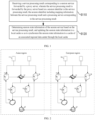
- FIG. 1 shows a flowchart of a method for managing a session state according to some embodiments of the present disclosure.
- the method for managing the session state provided in the embodiments is applicable to a device for managing a session state, wherein the device for managing the session state is implemented through a software and/or hardware manner, and the device for managing the session state consists of two or more physical entities, or is implemented by one physical entity.
- the device for managing the session state is a computing device such as a processing server of a system for managing a session state.
- the method for managing the session state specifically includes the following processes.
- a service processing result corresponding to a session service forwarded by a proxy server is received, wherein the service processing result is forwarded by the proxy server based on a session identifier in the service processing result, wherein the session identifier includes mapping information between the service processing result and a processing server corresponding to the service processing result.
- session state information of the session service is determined based on the service processing result, and the session state information is updated to a local cache so as to synchronize the session state information to a cache of an associated regional data center through the local cache.
- the method for managing the session state described above is performed through the processing server to achieve session state management.
- session state management can be performed in a global service through the processing server described above.
- the processing server provides a unified session state management interface. For a session service between both parties of a session, the service processing result of each service generated from the session service is reported to the processing server, such that session state management is performed based on the processing server.
- the service processing result described above is generated by a service processor processing session services.
- the service processor processes one session service between both parties of a session
- the service processor generates a plurality of corresponding services, such as creating a session, connecting streaming media, ending a session, and other services.
- the service server Upon processing the services described above according to its own service logic, the service server generates corresponding service processing results, and then reports the service processing results to the processing server through the proxy server, such that session state management between both parties of the session is performed through the processing server.
- the system for managing the session state includes a service server, a proxy server, a processing server, and a local cache
- the service server is configured to process a session service from a first client to a second client, generate a service processing result corresponding to the session service, and report the service processing result to the proxy server
- the proxy server is configured to forward the service processing result to the processing server corresponding to the service processing result based on a session identifier in the service processing result, wherein the session identifier includes mapping information between the service processing result and the processing server corresponding to the service processing result
- the processing server is configured to receive the service processing result corresponding to the session service forwarded by the proxy server, determine session state information of the session service based on the service processing result, and update the session state information to the local cache
- the local cache is configured to store and synchronize the session state information to a cache of an associated regional data center.
- FIG. 2 a schematic structural diagram of a system for managing a session state according to some embodiments of the present disclosure is provided.
- the session service is first processed by a service server 15 of the client 17 and the client 18.
- the session service is processed by a streaming media server 16.
- the service server 15 is configured to process various actual services of the session service, and directly interacts with the clients.
- the media server 16 is responsible for providing communication services of streaming media such as video and audio.
- the service server 15 and the streaming media server generate a service processing result in the case of providing the corresponding service, and transmit the service processing result to a proxy server 11, such that the service processing result is forwarded to a corresponding processing server 12 through the proxy server 11, and the processing server 12 manages the session state based on the method for managing the session state described above.
- part of client requests such as heartbeat requests for monitoring the session connection state of a client, are directly reported to the proxy server 11, and forwarded to the corresponding processing server 12 through the proxy server for processing.
- the proxy server 11 forwards the service processing result based on a session identifier in the service processing result. Because the session identifier includes mapping information between the service processing result and the processing server 12 corresponding to the service processing result, in the case that the client, the service server, or the streaming media service requires to interact with the processing server, the service processing result or the request is transmitted to the proxy server of the region to which the client, the service server, or the streaming media server belongs.
- the proxy server transmits, based on mapping information between the service processing result and the corresponding processing server 12, the service processing result or the request to the corresponding processing server for processing.
- the service server transmits the service processing result of the session creation to the proxy server.
- the proxy server selects, based on the region to which the client requesting session creation belongs, one processing server from various processing servers of the corresponding region to process various service processing results of the current session service.
- a session identifier is generated based on mapping information between the service processing result and the corresponding processing server, and the currently received service processing result is transmitted to the corresponding processing server based on the session identifier.
- the session identifier is returned to the service server, and added to the service processing results in subsequent uploads of the service processing results by the service server, thus facilitating the proxy server to determine a receiver corresponding to the service processing result.
- mapping information of the session identifier is represented using a hash value.
- the proxy server determines a target processing server by calculating the hash value, and then forwards the service processing result. Additionally, for two parties of a session being in different regions, to ensure that all service processing results are centralized to and processed by the same processing server, the session identifier is required to further include region information.
- the proxy server of the region to which client A belongs selects one processing server from a plurality of processing servers within the region according to a set rule (e.g., a load balancing rule) to manage the session state between both parties.
- a session identifier for the current session is then generated, which identifies the region to which client A belongs and the processing server for managing the state of the current session.
- the session identifier is transmitted to both parties of the session and the service servers and the streaming media servers to which both parties belong, and thus the session identifier is added to the service processing results.
- the proxy server to which both parties of the session belong first determines, based on the session identifier, the region to which the identifier belongs, and then selects, through the consistent hash value of the session identifier, a corresponding processing server from the region, to which the service processing result is forwarded.
- the proxy server of the region to which client 18 belongs in the case of receiving the service processing result from client 17, selects the corresponding processing server 12 of the Asian region to manage the session state based on the consistent hash value of the session identifier.
- session state information is further updated to a pre-constructed message middleware 14.
- the message middleware 14 is configured to be used for the service server 15 to query session state information, so as to perform the corresponding session service logic.
- Session state data is stored regionally and synchronized bidirectionally to the caches of various regions, enhancing disaster recovery capabilities and ensuring that the session state data is ultimately consistent.
- additional processing servers are employed in the data center to achieve smooth extension, thereby optimizing the session state management.
- the service processing results described above are generated in the case that the service server and the streaming media server process the corresponding session services.
- the service processing result records corresponding session state information which is specifically a session creation result, a session end result, or a streaming media connection result.
- the processing server executes the corresponding session state management logic according to the different service processing results received.
- the processing server performs an initialization operation of the session service based on the session creation result, generates first state information, determines the first state information as the session state information, and updates the session state information to a local cache. Additionally, during the initialization operation, the processing server initializes a session timeout period of the session service based on the session creation result, and stores the session timeout period in the local cache, wherein the session timeout period is configured to detect a session connection state of a client.
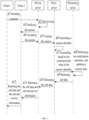
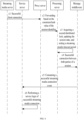
- a session state management flow of session creation including processes a1-a12 is provided.
- a session request is initiated by client 1 to client 2.
- the service server receives the session request and processes the service logic.
- the service server notifies the called party client 2 by means of offline or online notification.
- the service server transmits the session creation result of processing the session creation service to a proxy server of the region to which the service server belongs.
- the proxy server according to the region in which the proxy server is deployed, generates a corresponding session state identifier and a flag for background verification.
- the proxy server then, based on the session state identifier, selects a processing server of the region corresponding to the proxy server for forwarding. Because the session identifier is created by the proxy server based on the region where the proxy server is located, a processing server in the same region must be selected to receive the service processing result herein.
- the processing server upon receiving the service processing result, performs verification based on the flag generated by the proxy server, simultaneously determines whether both parties of the current session have an unfinished session, and in the case of yes, returns state error information.
- the processing server confirms the successful creation of the current session based on the session creation result and initializes session data.
- the session timeout period of the clients for both parties of the session is set for subsequently checking the heartbeat of the client and determining whether a user is offline.
- the processing server further sets a maximum timeout period of the current session, that is, the processing server actively closes the session in the case that the session exists for a period exceeding the maximum timeout period.
- the initialization operation further initializes the session state.
- the initialization result of the session state is defined as the first state information, which is then stored as session state information in the local cache.
- the processing server In the case that the operation described above is completed, the processing server generates session data based on the current session state and returns the session data to the service server.
- the session data is transmitted from the processing server to the proxy server, and then returned to the invoked service server by the proxy server.
- the service server Upon receiving the session data and confirming the successful creation of the session, the service server notifies both clients of the corresponding session data and service data. Therefore, the clients create audio and video connections based on the session data, and process and display the corresponding service modules based on the service data.
- the processing server in the case that the processing server is processing a session creation result, the processing server further transmits a check request to the proxy server, thereby checking the current session state of the called party client through the proxy server, and then decides whether to continue the session service or stop the call and return a specific prompt to the calling party client.
- the local cache Upon the processing server updating session state information to the local cache, the local cache synchronizes the data bidirectionally to caches of other global regions, ensuring that the session state information in all regions is ultimately consistent.
- the session creation described above is a session manner for different scenarios such as a phone call and a game, and the processing server is only required to provide an interface to access a corresponding session creation result to perform the session state management of the corresponding session manner.
- the processing server based on the session timeout period of a client set by the initialization operation described above, the processing server periodically detects a client with connection timeout based on the heartbeat of the client.
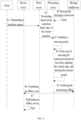
- a session state management flow of heartbeat monitoring including processes b1-b7 is provided.
- the processing server updates the session timeout period based on the current time.
- the processing server determines that the client corresponding to the session service is in an offline state, updates the session state information in the local cache based on the offline state, and deletes the session timeout period.
- the heartbeat request is further required to be periodically transmitted to the processing server through the proxy server, ensuring that the processing server can monitor the session condition and timely check whether the client state is abnormal.
- the processing server upon receiving the heartbeat request of the client, updates the timeout period corresponding to the client. The timeout period is updated by adding the current time with the timeout period of the client prior to the update.
- the processing server Upon successfully initializing the session timeout period of the client, the processing server starts to periodically check whether the user is timed out.
- the processing server does not receive a heartbeat request from a specific client for a long time and the session timeout period of the client is reached, the processing server updates the session state to be that the client is offline, and removes the timeout period of the client (the client is not checked again in subsequent periodical checks). Additionally, the client offline event is logged to the message middleware. Because the service server actively consumes events in the message middleware, upon acquiring the message of the client being offline, the service server performs the corresponding client offline service logic.
- the processing server renews the timeout period of the client. Additionally, the client reconnection event is logged to the message middleware. The service server actively consumes the events in the message middleware, and upon acquiring the message of the client being reconnected, performs the corresponding service logic.
- the change of the session state of the user is notified to the service side in real-time, and different services are isolated from each other and do not interfere with each other. Therefore, the pressure of the deployed service is reduced without affecting user experience.
- the processor when managing the session state, acquires a first distributed lock corresponding to the session end result based on the session identifier, wherein the first distributed lock is configured to prohibit initiating a session end request corresponding to the session service again; and generates second state information based on the session end result, and determines the second state information as the session state information and updates the session state information to the local cache. Subsequently, the session timeout period of the client is deleted.
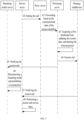
- a session state management flow for ending a session including processes dl-d8 is provided.
- the service server determines that the current session is ended, the service server transmits a session end result to a nearest proxy server.
- the proxy server forwards the session end result to the sole corresponding processing server based on the session identifier.
- the processing server upon receiving the session end result, first acquires the distributed lock of the current session end result based on the session identifier, and defines the distributed lock as a first distributed lock.
- Other session ending requests of the session service are prohibited through the first distributed lock, ensuring that all operations of the same session service are processed serially. Then, the timeout period corresponding to the client and the session is removed and the session state is updated.
- the session end state is defined as second state information, and the second state information is determined as the session state information, and updated to the local cache. Additionally, the session end state is logged to the message middleware, and then the streaming media server and the service server are notified with the end of the session, such that the streaming media server and the service server execute the service logic corresponding to the end of the session.
- the session end result is that the service server consumes the user offline event and ends the session automatically; or that the session is actively ended by a client user operation; or that in the case that the session is timed out, the processing server actively ends the session and notifies the service server through the message middleware.
- the embodiments of the present disclosure do not impose a fixed limitation on the session ending manner, and are not described herein for further details.
- the embodiments of the present disclosure perform session state management by using an independent processing logic.
- the processing server when managing the session state, acquires a second distributed lock corresponding to the streaming media connection result based on the session identifier, wherein the second distributed lock is configured to prohibit initiating a streaming media connection request corresponding to the session service again; generates third state information based on the streaming media connection result, determines the third state information as the session state information, and updates the session state information to the local cache; and initializes a streaming media connection timeout period, wherein the streaming media connection timeout period is configured to detect a streaming media connection state of a client.
- a session state management flow of audio and video connection including processes c1-c6 is provided.
- the connection media server determines that the client connection is successful
- the streaming media server based on the streaming media connection result, notifies the processing server of the successful streaming media connection of the corresponding client through the proxy server.
- the processing server upon receiving the streaming media connection result, first acquires the distributed lock corresponding to the streaming media connection result based on the session identifier, and defines the distributed lock as a second distributed lock.
- the second distributed lock is configured to prohibit initiating a streaming media connection request corresponding to the session service again, avoiding multiple streaming media connections for the same client at the same time and ensuring that all operations of the same session service are processed serially.
- state information is generated based on the streaming media connection successful state, and is defined as third state information.
- the third state information is determined as the session state information, and updated to the local cache.
- the timeout period of the streaming media connection of the corresponding client is set.
- the processing server determines that both parties of the session are successfully connected
- the processing server records the session state as the formal start of the streaming media session, and records the session state to the message middleware.
- the service server acquires the message that both parties of the session are successfully connected by actively consuming the event in the message middleware, and performs the corresponding service logic.
- the processing server acquires corresponding session states for different service processing results and updates the session states to the local cache, such that the session state management flow of the embodiments of the present disclosure is achieved.
- the session state information of the session service is determined based on the service processing result. Then, the session state information is updated to a local cache so as to synchronize the session state information to a cache of an associated regional data center through the local cache.
- the proxy server forwards the service processing result based on a session identifier in the service processing result, wherein the session identifier includes mapping information between the service processing result and a processing server corresponding to the service processing result.
- a service processing result is forwarded to a corresponding processing server based on a session identifier for processing and recording a session state, and the session state is synchronized through a local cache, such that the session state management of both parties of a session can maintain a higher level of consistency, and the timeliness of session state storage is improved. Meanwhile, the decentralized management of session data is avoided, thus optimizing the effectiveness of session state management.
- FIG. 7 is a schematic structural diagram of an apparatus for managing a session state according to the present disclosure.
- the apparatus for managing the session state provided in the embodiments specifically includes: a receiving module 21 and an updating module 22.
- the receiving module 21 is configured to receive a service processing result corresponding to a session service forwarded by a proxy server, wherein the service processing result is forwarded by the proxy server based on a session identifier in the service processing result, the session identifier including mapping information between the service processing result and a processing server corresponding to the service processing result.
- the updating module 22 is configured to determine session state information of the session service based on the service processing result, and update the session state information to a local cache so as to synchronize the session state information to a cache of an associated regional data center through the local cache.
- the updating module 22 is further configured to update the session state information to a pre-constructed message middleware, wherein the message middleware is configured to be used for a service server to query the session state information, and the service server is configured to process the session service, generate the service processing result, and report the service processing result to the proxy server.
- the message middleware is configured to be used for a service server to query the session state information
- the service server is configured to process the session service, generate the service processing result, and report the service processing result to the proxy server.
- the service processing result is a session creation result.
- the updating module 22 is configured to perform an initialization operation of the session service based on the session creation result, generate first state information, and determine the first state information as the session state information and update the session state information to the local cache.
- the updating module further initializes a session timeout period of the session service based on the session creation result, and stores the session timeout period in the local cache, wherein the session timeout period is configured to detect a session connection state of a client. Then, in the case of receiving a client heartbeat request forwarded by the proxy server within the session timeout period, the module updates the session timeout period based on the current time.
- the module determines that the client corresponding to the session service is in an offline state, updates the session state information in the local cache based on the offline state, and deletes the session timeout period.
- the service processing result is a session end result.
- the updating module 22 is configured to acquire a first distributed lock corresponding to the session end result based on the session identifier, wherein the first distributed lock is configured to prohibit initiating a session end request corresponding to the session service again; generate second state information based on the session end result, and determine the second state information as the session state information and update the session state information to the local cache; and delete the session timeout period.
- the service processing result is a streaming media connection result.
- the updating module 22 is configured to acquire a second distributed lock corresponding to the streaming media connection result based on the session identifier, wherein the second distributed lock is configured to prohibit initiating a streaming media connection request corresponding to the session service again; generate third state information based on the streaming media connection result, and determine the third state information as the session state information and update the session state information to the local cache; and initialize a streaming media connection timeout period, wherein the streaming media connection timeout period is configured to detect a streaming media connection state of a client.
- the session state information of the session service is determined based on the service processing result. Then, the session state information is updated to a local cache so as to synchronize the session state information to a cache of an associated regional data center through the local cache.
- the proxy server forwards the service processing result based on a session identifier in the service processing result, wherein the session identifier includes mapping information between the service processing result and a processing server corresponding to the service processing result.
- a service processing result is forwarded to a corresponding processing server based on a session identifier for processing and recording a session state, and the session state is synchronized through a local cache, such that the session state management of both parties of a session can maintain a higher level of consistency, and the timeliness of session state storage is improved. Meanwhile, the decentralized management of session data is avoided, thus optimizing the effectiveness of session state management.
- the apparatus for managing the session state provided by the embodiments of the present disclosure is configured to perform the method for managing the session state provided by the embodiments described above, and has corresponding functions and beneficial effects.
- the embodiments of the present disclosure further provide a device for managing a session state.
- the device for managing the session state includes: a processor 31, a memory 32, a communication module 33, an input apparatus 34, and an output apparatus 35.
- the memory 32 as a computer-readable storage medium, is configured to store one or more software programs, one or more computer-executable programs, and one or more modules, such as program instructions/modules corresponding to the method for managing the session state according to any embodiment of the present disclosure (e.g., the receiving module 21 and the updating module in the apparatus for managing the session state).
- the communication module 33 is configured to perform data transmission.
- the processor 31 By running one or more software programs, one or more instructions, and one or more modules stored in the memory, the processor 31 runs various functional applications and data processing of the device, to achieve the method for managing the session state described above.
- the input apparatus 34 is configured to receive input numeric or character information and produce key signal inputs related to user settings and function control of the device.
- the output apparatus 35 includes display devices such as a display screen.
- the device for managing the session state provided above is configured to perform the method for managing the session state provided by the embodiments described above, and has corresponding functions and beneficial effects.
- the embodiments of the present disclosure further provide a storage medium including one or more computer-executable instructions, wherein the one or more computer-executable instructions, when executed by a computer processor, cause the computer processor to perform the method for managing the session state.
- the storage medium is any of various types of memory devices or storage devices.
- the one or more computer-executable instructions are not limited to the method for managing the session state described above, but can also be used to perform related operations in the method for managing the session state according to any embodiment of the present disclosure.
Landscapes
- Engineering & Computer Science (AREA)
- Computer Networks & Wireless Communication (AREA)
- Signal Processing (AREA)
- Health & Medical Sciences (AREA)
- Cardiology (AREA)
- General Health & Medical Sciences (AREA)
- Computer And Data Communications (AREA)
Applications Claiming Priority (2)
| Application Number | Priority Date | Filing Date | Title |
|---|---|---|---|
| CN202210195846.XA CN114584602B (zh) | 2022-03-01 | 2022-03-01 | 一种会话状态管理方法、系统、装置、设备及存储介质 |
| PCT/CN2023/078217 WO2023165429A1 (zh) | 2022-03-01 | 2023-02-24 | 一种会话状态管理方法、系统、装置、设备及存储介质 |
Publications (2)
| Publication Number | Publication Date |
|---|---|
| EP4489376A1 true EP4489376A1 (de) | 2025-01-08 |
| EP4489376A4 EP4489376A4 (de) | 2025-02-12 |
Family
ID=81776117
Family Applications (1)
| Application Number | Title | Priority Date | Filing Date |
|---|---|---|---|
| EP23762829.2A Pending EP4489376A4 (de) | 2022-03-01 | 2023-02-24 | Sitzungsstatusverwaltungsverfahren und -system, vorrichtung, vorrichtung und speichermedium |
Country Status (4)
| Country | Link |
|---|---|
| US (1) | US20250168238A1 (de) |
| EP (1) | EP4489376A4 (de) |
| CN (1) | CN114584602B (de) |
| WO (1) | WO2023165429A1 (de) |
Families Citing this family (3)
| Publication number | Priority date | Publication date | Assignee | Title |
|---|---|---|---|---|
| CN114584602B (zh) * | 2022-03-01 | 2023-08-29 | 百果园技术(新加坡)有限公司 | 一种会话状态管理方法、系统、装置、设备及存储介质 |
| CN115202811A (zh) * | 2022-06-30 | 2022-10-18 | 新华三技术有限公司 | 公有云云桌面管理平台、云桌面控制方法和设备 |
| CN115412603B (zh) * | 2022-11-02 | 2022-12-27 | 中国电子科技集团公司第十五研究所 | 一种消息中间件的消息客户端模块的高可用的方法及装置 |
Family Cites Families (21)
| Publication number | Priority date | Publication date | Assignee | Title |
|---|---|---|---|---|
| JP4309629B2 (ja) * | 2002-09-13 | 2009-08-05 | 株式会社日立製作所 | ネットワークシステム |
| US8095658B2 (en) * | 2004-05-07 | 2012-01-10 | International Business Machines Corporation | Method and system for externalizing session management using a reverse proxy server |
| KR100725066B1 (ko) * | 2005-08-02 | 2007-06-08 | 한미아이티 주식회사 | 다수의 클라이언트와의 데이터 통신을 위한 시스템 서버 및데이터 처리 방법 |
| CN100536600C (zh) * | 2006-03-14 | 2009-09-02 | 中兴通讯股份有限公司 | 一种将定位业务中定位引擎接入业务管理平台的方法 |
| JP2007316837A (ja) * | 2006-05-24 | 2007-12-06 | Fujitsu Ltd | サーバシステム |
| US8713365B2 (en) * | 2011-01-28 | 2014-04-29 | Microsoft Corporation | Re-establishing push notification channels via user identifiers |
| US9325785B2 (en) * | 2012-06-29 | 2016-04-26 | Rodolfo Kohn | Device, system, and method for client-governed session persistency between one or more clients and servers of a data center |
| US9171019B1 (en) * | 2013-02-19 | 2015-10-27 | Amazon Technologies, Inc. | Distributed lock service with external lock information database |
| US10637929B1 (en) * | 2013-09-23 | 2020-04-28 | Ribbon Communications Operating Company, Inc. | Methods and apparatus for storing and/or retrieving session state information |
| CN104735098B (zh) * | 2013-12-18 | 2018-05-08 | 青岛海尔空调器有限总公司 | 会话信息的控制方法和控制系统 |
| CN105338095A (zh) * | 2015-11-17 | 2016-02-17 | 中国建设银行股份有限公司 | 一种会话数据处理方法和装置 |
| CN106921721A (zh) * | 2015-12-28 | 2017-07-04 | 华为软件技术有限公司 | 一种服务器、会话管理方法和系统 |
| CN107517227B (zh) * | 2016-06-15 | 2020-10-13 | 阿里巴巴集团控股有限公司 | 用于分布式一致性系统的会话实现方法以及装置 |
| CN107733995A (zh) * | 2017-09-21 | 2018-02-23 | 北京信安世纪科技股份有限公司 | 一种会话保持方法、装置和电子设备 |
| CN110769019B (zh) * | 2018-07-27 | 2022-05-06 | 阿里巴巴集团控股有限公司 | 会话处理方法、装置、系统、存储介质和计算设备 |
| DE112019005604T5 (de) * | 2018-11-08 | 2021-09-09 | Intel Corporation | Function-as-a-service-system-verbesserungen (faas-system-verbesserungen) |
| CN109361778A (zh) * | 2018-12-18 | 2019-02-19 | 厦门商集网络科技有限责任公司 | 一种管理会话的方法及终端 |
| CN110839084B (zh) * | 2019-11-19 | 2022-04-05 | 中国建设银行股份有限公司 | 会话管理方法、装置、设备和介质 |
| CN113645261A (zh) * | 2020-04-27 | 2021-11-12 | 中国移动通信集团江西有限公司 | 一种会话数据处理方法、装置、存储介质和计算机设备 |
| CN112751748B (zh) * | 2020-12-28 | 2023-04-18 | 百果园技术(新加坡)有限公司 | 会话消息管理方法、装置、服务器和可读存储介质 |
| CN114584602B (zh) * | 2022-03-01 | 2023-08-29 | 百果园技术(新加坡)有限公司 | 一种会话状态管理方法、系统、装置、设备及存储介质 |
-
2022
- 2022-03-01 CN CN202210195846.XA patent/CN114584602B/zh active Active
-
2023
- 2023-02-24 WO PCT/CN2023/078217 patent/WO2023165429A1/zh not_active Ceased
- 2023-02-24 EP EP23762829.2A patent/EP4489376A4/de active Pending
- 2023-02-24 US US18/840,270 patent/US20250168238A1/en active Pending
Also Published As
| Publication number | Publication date |
|---|---|
| WO2023165429A1 (zh) | 2023-09-07 |
| CN114584602B (zh) | 2023-08-29 |
| US20250168238A1 (en) | 2025-05-22 |
| CN114584602A (zh) | 2022-06-03 |
| EP4489376A4 (de) | 2025-02-12 |
Similar Documents
| Publication | Publication Date | Title |
|---|---|---|
| EP4489376A1 (de) | Sitzungsstatusverwaltungsverfahren und -system, vorrichtung, vorrichtung und speichermedium | |
| EP3490224B1 (de) | Datensynchronisationsverfahren und -system | |
| US8984170B2 (en) | Idempotence for database transactions | |
| US9191439B2 (en) | Method and system for data synchronization in content delivery network | |
| US20100103781A1 (en) | Time synchronization in cluster systems | |
| US20090019158A1 (en) | Engine Near Cache for Reducing Latency in a Telecommunications Environment | |
| US20210382870A1 (en) | Methods and system of tracking transactions for distributed ledger | |
| US20080250097A1 (en) | Method and system for extending the services provided by an enterprise service bus | |
| CN106502769A (zh) | 分布式事务处理方法、装置及系统 | |
| US11228664B2 (en) | Method and apparatus for acquiring RPC member information, electronic device and storage medium | |
| CN107528891B (zh) | 一种基于WebSocket的自动集群方法及其系统 | |
| CN107018159B (zh) | 业务请求处理方法及装置、和业务请求方法及装置 | |
| US8230086B2 (en) | Hidden group membership in clustered computer system | |
| CN114900449A (zh) | 一种资源信息管理方法、系统及装置 | |
| CN113900728B (zh) | 同步配置的方法、系统、电子设备及存储介质 | |
| US20080137531A1 (en) | Sip presence server failover | |
| WO2023093641A1 (zh) | 用户关系链存储方法、装置、系统、电子设备及存储介质 | |
| US10255339B2 (en) | Data change controller | |
| US20090106781A1 (en) | Remote call handling methods and systems | |
| CN115203215B (zh) | 数据处理方法和装置、存储介质及电子设备 | |
| CN116483921A (zh) | 一种数据共享方法、装置、系统及存储介质 | |
| CN116347467A (zh) | 5g网络中udr进行用户数据管理方法及系统 | |
| WO2013036099A1 (en) | System and method for rich internet application session transfer | |
| CN114463124A (zh) | 系统服务处理方法、装置、系统与计算机可读存储介质 | |
| CN110417850B (zh) | 软件配置获取方法、系统、服务器及介质 |
Legal Events
| Date | Code | Title | Description |
|---|---|---|---|
| STAA | Information on the status of an ep patent application or granted ep patent |
Free format text: STATUS: THE INTERNATIONAL PUBLICATION HAS BEEN MADE |
|
| PUAI | Public reference made under article 153(3) epc to a published international application that has entered the european phase |
Free format text: ORIGINAL CODE: 0009012 |
|
| STAA | Information on the status of an ep patent application or granted ep patent |
Free format text: STATUS: REQUEST FOR EXAMINATION WAS MADE |
|
| 17P | Request for examination filed |
Effective date: 20240815 |
|
| AK | Designated contracting states |
Kind code of ref document: A1 Designated state(s): AL AT BE BG CH CY CZ DE DK EE ES FI FR GB GR HR HU IE IS IT LI LT LU LV MC ME MK MT NL NO PL PT RO RS SE SI SK SM TR |
|
| A4 | Supplementary search report drawn up and despatched |
Effective date: 20250113 |
|
| RIC1 | Information provided on ipc code assigned before grant |
Ipc: H04L 67/5682 20220101ALI20250107BHEP Ipc: H04L 67/568 20220101ALI20250107BHEP Ipc: H04L 67/56 20220101ALI20250107BHEP Ipc: H04L 67/146 20220101ALI20250107BHEP Ipc: H04L 67/145 20220101ALI20250107BHEP Ipc: H04L 67/142 20220101ALI20250107BHEP Ipc: H04L 65/40 20220101ALI20250107BHEP Ipc: H04L 67/1001 20220101ALI20250107BHEP Ipc: H04L 67/1095 20220101ALI20250107BHEP Ipc: H04L 67/14 20220101AFI20250107BHEP |
|
| DAV | Request for validation of the european patent (deleted) | ||
| DAX | Request for extension of the european patent (deleted) | ||
| GRAP | Despatch of communication of intention to grant a patent |
Free format text: ORIGINAL CODE: EPIDOSNIGR1 |
|
| STAA | Information on the status of an ep patent application or granted ep patent |
Free format text: STATUS: GRANT OF PATENT IS INTENDED |
|
| INTG | Intention to grant announced |
Effective date: 20260223 |