EP4489346A2 - Systèmes et procédés de communications de passerelle pour systèmes de registre distribué - Google Patents
Systèmes et procédés de communications de passerelle pour systèmes de registre distribué Download PDFInfo
- Publication number
- EP4489346A2 EP4489346A2 EP24215809.5A EP24215809A EP4489346A2 EP 4489346 A2 EP4489346 A2 EP 4489346A2 EP 24215809 A EP24215809 A EP 24215809A EP 4489346 A2 EP4489346 A2 EP 4489346A2
- Authority
- EP
- European Patent Office
- Prior art keywords
- payload
- distributed ledger
- message
- adapter
- listener
- Prior art date
- Legal status (The legal status is an assumption and is not a legal conclusion. Google has not performed a legal analysis and makes no representation as to the accuracy of the status listed.)
- Pending
Links
Images


Classifications
-
- H—ELECTRICITY
- H04—ELECTRIC COMMUNICATION TECHNIQUE
- H04L—TRANSMISSION OF DIGITAL INFORMATION, e.g. TELEGRAPHIC COMMUNICATION
- H04L9/00—Cryptographic mechanisms or cryptographic arrangements for secret or secure communications; Network security protocols
- H04L9/32—Cryptographic mechanisms or cryptographic arrangements for secret or secure communications; Network security protocols including means for verifying the identity or authority of a user of the system or for message authentication, e.g. authorization, entity authentication, data integrity or data verification, non-repudiation, key authentication or verification of credentials
- H04L9/321—Cryptographic mechanisms or cryptographic arrangements for secret or secure communications; Network security protocols including means for verifying the identity or authority of a user of the system or for message authentication, e.g. authorization, entity authentication, data integrity or data verification, non-repudiation, key authentication or verification of credentials involving a third party or a trusted authority
- H04L9/3213—Cryptographic mechanisms or cryptographic arrangements for secret or secure communications; Network security protocols including means for verifying the identity or authority of a user of the system or for message authentication, e.g. authorization, entity authentication, data integrity or data verification, non-repudiation, key authentication or verification of credentials involving a third party or a trusted authority using tickets or tokens, e.g. Kerberos
-
- G—PHYSICS
- G06—COMPUTING OR CALCULATING; COUNTING
- G06F—ELECTRIC DIGITAL DATA PROCESSING
- G06F16/00—Information retrieval; Database structures therefor; File system structures therefor
- G06F16/20—Information retrieval; Database structures therefor; File system structures therefor of structured data, e.g. relational data
- G06F16/27—Replication, distribution or synchronisation of data between databases or within a distributed database system; Distributed database system architectures therefor
-
- G—PHYSICS
- G06—COMPUTING OR CALCULATING; COUNTING
- G06F—ELECTRIC DIGITAL DATA PROCESSING
- G06F9/00—Arrangements for program control, e.g. control units
- G06F9/06—Arrangements for program control, e.g. control units using stored programs, i.e. using an internal store of processing equipment to receive or retain programs
- G06F9/46—Multiprogramming arrangements
- G06F9/54—Interprogram communication
- G06F9/541—Interprogram communication via adapters, e.g. between incompatible applications
-
- G—PHYSICS
- G06—COMPUTING OR CALCULATING; COUNTING
- G06F—ELECTRIC DIGITAL DATA PROCESSING
- G06F9/00—Arrangements for program control, e.g. control units
- G06F9/06—Arrangements for program control, e.g. control units using stored programs, i.e. using an internal store of processing equipment to receive or retain programs
- G06F9/46—Multiprogramming arrangements
- G06F9/54—Interprogram communication
- G06F9/546—Message passing systems or structures, e.g. queues
-
- G—PHYSICS
- G06—COMPUTING OR CALCULATING; COUNTING
- G06F—ELECTRIC DIGITAL DATA PROCESSING
- G06F9/00—Arrangements for program control, e.g. control units
- G06F9/06—Arrangements for program control, e.g. control units using stored programs, i.e. using an internal store of processing equipment to receive or retain programs
- G06F9/46—Multiprogramming arrangements
- G06F9/54—Interprogram communication
- G06F9/547—Remote procedure calls [RPC]; Web services
-
- H—ELECTRICITY
- H04—ELECTRIC COMMUNICATION TECHNIQUE
- H04L—TRANSMISSION OF DIGITAL INFORMATION, e.g. TELEGRAPHIC COMMUNICATION
- H04L63/00—Network architectures or network communication protocols for network security
- H04L63/04—Network architectures or network communication protocols for network security for providing a confidential data exchange among entities communicating through data packet networks
- H04L63/0428—Network architectures or network communication protocols for network security for providing a confidential data exchange among entities communicating through data packet networks wherein the data content is protected, e.g. by encrypting or encapsulating the payload
-
- H—ELECTRICITY
- H04—ELECTRIC COMMUNICATION TECHNIQUE
- H04L—TRANSMISSION OF DIGITAL INFORMATION, e.g. TELEGRAPHIC COMMUNICATION
- H04L9/00—Cryptographic mechanisms or cryptographic arrangements for secret or secure communications; Network security protocols
- H04L9/32—Cryptographic mechanisms or cryptographic arrangements for secret or secure communications; Network security protocols including means for verifying the identity or authority of a user of the system or for message authentication, e.g. authorization, entity authentication, data integrity or data verification, non-repudiation, key authentication or verification of credentials
- H04L9/3247—Cryptographic mechanisms or cryptographic arrangements for secret or secure communications; Network security protocols including means for verifying the identity or authority of a user of the system or for message authentication, e.g. authorization, entity authentication, data integrity or data verification, non-repudiation, key authentication or verification of credentials involving digital signatures
-
- H—ELECTRICITY
- H04—ELECTRIC COMMUNICATION TECHNIQUE
- H04L—TRANSMISSION OF DIGITAL INFORMATION, e.g. TELEGRAPHIC COMMUNICATION
- H04L9/00—Cryptographic mechanisms or cryptographic arrangements for secret or secure communications; Network security protocols
- H04L9/50—Cryptographic mechanisms or cryptographic arrangements for secret or secure communications; Network security protocols using hash chains, e.g. blockchains or hash trees
-
- H—ELECTRICITY
- H04—ELECTRIC COMMUNICATION TECHNIQUE
- H04L—TRANSMISSION OF DIGITAL INFORMATION, e.g. TELEGRAPHIC COMMUNICATION
- H04L2209/00—Additional information or applications relating to cryptographic mechanisms or cryptographic arrangements for secret or secure communication H04L9/00
- H04L2209/56—Financial cryptography, e.g. electronic payment or e-cash
Definitions
- the present disclosure generally relates to systems and methods for gateway communications with distributed ledger systems.
- Distributed ledger systems such as Blockchain-based systems
- Blockchain-based systems are increasingly being implemented by different providers.
- legacy e.g., non-Blockchain based systems
- a method for gateway communication between a non-distributed ledger system and a distributed ledger system may include: (1) receiving, at a listener comprising a computer processor and from an application in a first domain, a message for a destination distributed ledger system that may be one of a plurality of distributed ledger systems in a second domain; (2) generating, by the listener, a payload for the message, wherein the payload identifies the destination distributed ledger system for the message; and (3) encrypting, by the listener, the payload and passing a payload message comprising the encrypted payload to one of a plurality of adapters in a gateway communication service using an API.
- the adapter may receive the payload message, decrypt the payload, identify the destination distributed ledger system, and communicate the decrypted payload to the destination distributed ledger system.
- the message may include a request to tokenize an asset having a plurality of attributes
- the method may further include tokenizing, by the listener, the plurality of attributes for the asset.
- the payload may include the tokenized plurality of attributes for the asset.
- the payload may also identify a distributed ledger technology for the destination distributed ledger system, and the method may further include the adapter translating the decrypted payload to a format for the distributed ledger technology and communicating the translated decrypted payload to the destination distributed ledger system.
- the method may further include signing, by the listener, the encrypted payload.
- the payload message may include an identifier for the adapter.
- the adapter may be associated with the destination distributed ledger system.
- a method for gateway communication between a non-distributed ledger system and a distributed ledger system may include: (1) receiving, at one of a plurality of adapters in a gateway communication service in a second domain comprising a computer processor, a payload message comprising an encrypted payload, the payload from an application in a first domain and encrypted by a listener and for a destination distributed ledger system that may be one of a plurality of distributed ledgers system in the second domain; (2) decrypting, by the adapter, the payload; (3) identifying, by the adapter, the destination distributed ledger system from the decrypted payload; and (4) communicating the decrypted payload to the destination distributed ledger system.
- the payload may include a tokenized plurality of attributes for an asset.
- the payload may identify a distributed ledger technology for the destination distributed ledger system, and the method may further include the adapter translating the decrypted payload to a format for the distributed ledger technology and communicating the translated decrypted payload to the destination distributed ledger system.
- the encrypted payload may be signed by the listener.
- the payload message may include an identifier for the adapter.
- the adapter may be associated with the destination distributed ledger system.
- a method for gateway communication between a distributed ledger system and a non-distributed ledger system may include: (1) receiving, at one of a plurality of adapters in a gateway communication service in a second domain comprising a computer processor, a message for an application in a first domain from one of a plurality of a distributed ledger systems; (2) translating, by the adapter, the message from a format for the distributed ledger system to a format for the application; (3) encrypting, by the adapter, the translated message; (4) generating, by the adapter, a payload for the translated message; (5) generating, by the adapter, a payload message comprising the encrypted payload; and (6) communicating the payload message to a listener associated with the application in the first domain using an API. The listener decrypts the payload and provides the decrypted payload to the application.
- the step of communicating the payload message to a listener associated with the application in the first domain may include the adapter pushing the payload message to the listener.
- the step of communicating the payload message to a listener associated with the application in the first domain may include the listener pulling the payload message from the adapter in response to the listener polling the adapter.
- the payload message may identify the listener.
- the listener may be associated with the application.
- the method may further include signing, by the adapter, the encrypted payload.
- Embodiments are generally directed to systems and methods for gateway communications for distributed ledger systems.
- a gateway may provide access through an organizational firewall, and all communications to and from the organization may flow through the gateway.
- each backend system e.g., distributed ledger systems, databases, etc.
- each backend system may be provided with an adapter that facilitates communication with the gateway so that the gateway and route incoming communications to the appropriate backend system, and can route outgoing communications from, the backend system.
- Embodiments may allow representation of existing financial instruments (including cash, fixed income, other debt securities), and other asset types, via the gateway which relate events handled on existing internal systems to creation and destruction of tokens on distributed ledger platforms.
- distributed ledger may include any suitable distributed ledger that provides an immutable, cryptographically-verifiable record.
- Embodiments may provide a "tokenization service” that may be responsible for the creation of a “tokenization certificate” - cryptographic evidence of an event from an internal system.
- This payload may be signed (only the source system could have created it; non-repudiation) and encrypted (only the intended destination can read it; security, spoofing prevention).
- Examples of events may include the movement of cash between accounts, a notification of collateral movement via, for example, a SWIFT MT569 message, the movement, exchange, trade, etc. of investment vehicles, securities, renewable energy credits, carbon credits, etc., the "digitization" of tangible assets, such as precious metals, vehicles, objects, artwork, etc. Any other suitable event may be included as is necessary and/or desired.
- the payload may be delivered via a gateway, which may be a mechanism that connects internal messages with externally hosted distributed ledger platforms.
- the gateway may coordinate internal and external message brokers, and may communicate exclusively over an egress-only "bridge" proxy component.
- the gateway may connect non-distributed ledger internal/external systems with one or more distributed ledger platforms through a single, secured API.
- the gateway may provide at least some of the following: message signing, non-repudiation, guaranteed delivery, failure management, key management, high availability, transaction receipt delivery, transaction receipt replay, and event delivery.
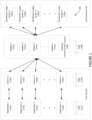
- System 100 may include applications 110 1 , 110 2 , 110 3 , ... 110 n .
- Each application 110 may be associated with one or more asset type, such as cash, cash, collateral, securities, precious metals, vehicles, objects, energy credits, etc. Other asset types may be included as is necessary and/or desired.
- application 110 may be a system that holds relevant information about the asset, such as the asset type, identification of the of the holder, etc.
- Each application 110 may be executed by one or more computing devices, such as computers, servers (physical and/or cloud-based), etc.
- applications 110 may be in a first domain, such as a business domain for an organization, financial institution, FinTech, etc.
- System 100 may further include a plurality of listeners 120 1 , 120 2 , 1203, ... 120n. Each listener 120 may be associated with one or more application 110, and may receive messages from one or more application 110. In one embodiment, listeners 120 may convert application-specific messages from application 110 into a generic payload to be communicated to one or more distributed ledger system 150 1 , 150 2 , 150 3 , ... 150 n via an adapter 135 in gateway communication service 130. It may further convert a generic payload received from one or more distributed ledger system 150 1 , 150 2 , 150 3 , ... 150 n via gateway communication service 130 into an application-specific message for one of application 110.
- Each listener 120 may also encrypt and digitally sign outgoing generic payloads, which may provide authenticity and non-repudiation.
- Listeners 120 may provide tokenization services for one or more type of asset (e.g., cash tokenization, collateral tokenization, securities tokenization, precious metal tokenization, vehicle tokenization, object tokenization, energy credit tokenization, etc.), and may create and sign a message reflecting the event (e.g., a business domain event) with sub-certificate establishing link to root of trust to the specific domain in which the event is generated.
- asset e.g., cash tokenization, collateral tokenization, securities tokenization, precious metal tokenization, vehicle tokenization, object tokenization, energy credit tokenization, etc.
- listeners 120 may tokenize and issue asset-backed tokens in a trusted, verifiable way.
- Listeners 120 may further provide reporting capabilities statistics and information on token usage.
- each listener 120 may be a computer program that is executed by one or more computing devices, such as computers, servers (physical and/or cloud-based), etc.
- applications 110 1 , 110 2 , 110 3 , ... 110 n and listeners 120 1 , 120 2 , 120 3 , ... 120 n may be internal to a domain, such as a business domain, a business entity, etc.
- Gateway communication service 130 may provide a highly available, reliable messaging layer. It may provide translation between a domain (e.g., the domain for one or more application 110 and listener 120) and one or more distributed ledger system (e.g., one or more distributed ledger 150). Gateway communication service 130 may include a plurality of adapters 135 1 , 135 2 , 135 3 , ... 135 n that may receive the payload from one listener 120, decrypt the payload, and translate it for the destination distributed ledger system 150, and write it to the distributed ledger system 150.
- a domain e.g., the domain for one or more application 110 and listener 120
- Gateway communication service 130 may include a plurality of adapters 135 1 , 135 2 , 135 3 , ... 135 n that may receive the payload from one listener 120, decrypt the payload, and translate it for the destination distributed ledger system 150, and write it to the distributed ledger system 150.
- a message from one of applications 110 may include an identification of a platform (e.g., a specific distributed ledger technology) and a destination distributed ledger system (e.g., one of distributed ledger systems 150).
- the message (e.g., a header portion) may further identify one of the adapters 135 to process the message.
- the identified adapter 135 may identify the destination distributed ledger system 150 from the message.
- a message from one of the distributed ledger systems 150 may identify a specific application 110 that is to receive the message.
- Adapters 135 may also receive a message (e.g., a confirmation message) from distributed ledger system 150, convert it to a generic payload, and communicate it to application 110.
- a message e.g., a confirmation message
- each listener 120 may poll one or more adapter 135 1 , 135 2 , 135 3 , ... 135 n for a message from one or more distributed ledger system 150 1 , 150 2 , 150 3 , ... 150 n for a specific application 110.
- each listener 120 may receive messages from one or more distributed ledger system 150 1 , 150 2 , 150 3 , ... 150 n via more adapter 135 1 , 135 2 , 135 3 , ... 135 n for a specific application 110.
- the messages may include any sort of suitable message regarding the asset associated with application 110, including confirmation messages.
- An example adapter 135 is a cash/collateral adapter. Such an adapter 135 may verify the authenticity of cash and collateral events using, for example digital signatures. It may further transform cash and collateral events to other types of transactions as is necessary and/or desired.
- Gateway communication service 130 may also provide several services, such as verification and non-repudiation checks, data filtering, enrichment, and/or transformation, and distributed ledger system integration.
- gateway communication service 130 may be executed one or more servers (physical and/or cloud).
- KMS key management services
- Applications 110, listeners 120, and gateway communication service 130 may communicate with respective KMS 115, 125, 150 which may store keys that may be used to sign messages and distributed ledger transactions, perform other cryptographic operations, etc.
- Distributed ledger system 150 1 , 150 2 , 150 3 , ... 150 n may be any suitable distributed ledger system, using any suitable technology.
- one or more distributed ledger system may be in a second domain that is different from the first domain.
- a plurality of second domains may be provided as is necessary and/or desired.
- gateway communication service 130 provides an interface, or bridge, for routing the payload from applications 110 to distributed ledger system 150, and from distributed ledger system 150 to application 110, and the adapters translate the payload as is necessary.
- an application may generate a message for a distributed ledger system that is outside of its domain (e.g., outside of a business domain).
- the message may be related to an asset associated with an application.
- the message may include a request to tokenize, or digitize, an asset.
- an asset may optionally be tokenized.
- an asset may be tokenized by taking a set of attributes for the asset and creating a payload representing the asset.
- the listener may generate a payload for the message received from the application.
- the payload may identify a destination distributed ledger system and may optionally identify the distributed ledger technology.
- the specific type of distributed ledger system, destination, etc. may not be identified in the message.
- the listener may encrypt and sign the payload.
- the payload may be encrypted with a first key, and then the payload and first key may be encrypted with a second key.
- a payload message including the encrypted and signed payload may be provided to the gateway communication service using, for example, a standardized generic message that can accept any payload message, passed to a predefined, standardized API, which, in step 220, may route the payload message to an adapter.
- the payload message may identify a specific adapter to receive the payload.
- the adapter may decrypt the payload from the payload message and may identify the destination distributed ledger system and the distributed ledger technology, if provided. The adapter may then translate the payload as necessary for the format of the destination distributed ledger technology as is necessary and/or desired.
- the adapter may send the translated payload to the appropriate destination distributed ledger system, wherein it may be written.
- a distributed ledger system may originate a message for one of the applications in the other domain.
- the message may be any suitable message, including confirmation messages, messages about an asset, etc.
- an adapter may receive the message from the distributed ledger system.
- the adapter may translate the message from the distributed ledger system format to a format for the application as is necessary and/or desired.
- the adapter may encrypt the message.
- the message may be encrypted with a first key, and then the first key and the message may be encrypted using a second key.
- the message may identify a specific listener in a different domain to receive the message.
- the adapter may provide the message to the gateway communication service, which may then provide the message to a listener (e.g., push).
- a listener may poll the adapters for messages for its application and may retrieve (e.g., pull) the message via the gateway communication service.
- the gateway communication service may communicate the message to a listener in the domain.
- the listener may decrypt the message and, in step 330, may provide the decrypted message to the application.
- the application may then consume the message as is necessary and/or desired.
- the system of the invention or portions of the system of the invention may be in the form of a "processing machine,” such as a general-purpose computer, for example.
- processing machine is to be understood to include at least one processor that uses at least one memory.
- the at least one memory stores a set of instructions.
- the instructions may be either permanently or temporarily stored in the memory or memories of the processing machine.
- the processor executes the instructions that are stored in the memory or memories in order to process data.
- the set of instructions may include various instructions that perform a particular task or tasks, such as those tasks described above. Such a set of instructions for performing a particular task may be characterized as a program, software program, or simply software.
- the processing machine may be a specialized processor.
- the processing machine executes the instructions that are stored in the memory or memories to process data.
- This processing of data may be in response to commands by a user or users of the processing machine, in response to previous processing, in response to a request by another processing machine and/or any other input, for example.
- the processing machine used to implement the invention may be a general-purpose computer.
- the processing machine described above may also utilize any of a wide variety of other technologies including a special purpose computer, a computer system including, for example, a microcomputer, mini-computer or mainframe, a programmed microprocessor, a micro-controller, a peripheral integrated circuit element, a CSIC (Customer Specific Integrated Circuit) or ASIC (Application Specific Integrated Circuit) or other integrated circuit, a logic circuit, a digital signal processor, a programmable logic device such as a FPGA, PLD, PLA or PAL, or any other device or arrangement of devices that is capable of implementing the steps of the processes of the invention.
- the processing machine used to implement the invention may utilize a suitable operating system.
- embodiments of the invention may include a processing machine running the iOS operating system, the OS X operating system, the Android operating system, the Microsoft Windows TM operating systems, the Unix operating system, the Linux operating system, the Xenix operating system, the IBM AIX TM operating system, the Hewlett-Packard UX TM operating system, the Novell Netware TM operating system, the Sun Microsystems Solaris TM operating system, the OS/2 TM operating system, the BeOS TM operating system, the Macintosh operating system, the Apache operating system, an OpenStep TM operating system or another operating system or platform.
- each of the processors and/or the memories of the processing machine may be located in geographically distinct locations and connected so as to communicate in any suitable manner.
- each of the processor and/or the memory may be composed of different physical pieces of equipment. Accordingly, it is not necessary that the processor be one single piece of equipment in one location and that the memory be another single piece of equipment in another location. That is, it is contemplated that the processor may be two pieces of equipment in two different physical locations. The two distinct pieces of equipment may be connected in any suitable manner. Additionally, the memory may include two or more portions of memory in two or more physical locations.
- processing is performed by various components and various memories.
- the processing performed by two distinct components as described above may, in accordance with a further embodiment of the invention, be performed by a single component.
- the processing performed by one distinct component as described above may be performed by two distinct components.
- the memory storage performed by two distinct memory portions as described above may, in accordance with a further embodiment of the invention, be performed by a single memory portion.
- the memory storage performed by one distinct memory portion as described above may be performed by two memory portions.
- various technologies may be used to provide communication between the various processors and/or memories, as well as to allow the processors and/or the memories of the invention to communicate with any other entity; i.e., so as to obtain further instructions or to access and use remote memory stores, for example.
- Such technologies used to provide such communication might include a network, the Internet, Intranet, Extranet, LAN, an Ethernet, wireless communication via cell tower or satellite, or any client server system that provides communication, for example.
- Such communications technologies may use any suitable protocol such as TCP/IP, UDP, or OSI, for example.
- a set of instructions may be used in the processing of the invention.
- the set of instructions may be in the form of a program or software.
- the software may be in the form of system software or application software, for example.
- the software might also be in the form of a collection of separate programs, a program module within a larger program, or a portion of a program module, for example.
- the software used might also include modular programming in the form of object oriented programming. The software tells the processing machine what to do with the data being processed.
- the instructions or set of instructions used in the implementation and operation of the invention may be in a suitable form such that the processing machine may read the instructions.
- the instructions that form a program may be in the form of a suitable programming language, which is converted to machine language or object code to allow the processor or processors to read the instructions. That is, written lines of programming code or source code, in a particular programming language, are converted to machine language using a compiler, assembler or interpreter.
- the machine language is binary coded machine instructions that are specific to a particular type of processing machine, i.e., to a particular type of computer, for example. The computer understands the machine language.
- any suitable programming language may be used in accordance with the various embodiments of the invention.
- the programming language used may include assembly language, Ada, APL, Basic, C, C++, COBOL, dBase, Forth, Fortran, Java, Modula-2, Pascal, Prolog, REXX, Visual Basic, and/or JavaScript, for example.
- assembly language Ada
- APL APL
- Basic Basic
- C C
- C++ C++
- COBOL COBOL
- dBase Forth
- Fortran Fortran
- Java Modula-2
- Pascal Pascal
- Prolog Prolog
- REXX REXX
- Visual Basic Visual Basic
- JavaScript JavaScript
- instructions and/or data used in the practice of the invention may utilize any compression or encryption technique or algorithm, as may be desired.
- An encryption module might be used to encrypt data.
- files or other data may be decrypted using a suitable decryption module, for example.
- the invention may illustratively be embodied in the form of a processing machine, including a computer or computer system, for example, that includes at least one memory.
- the set of instructions i.e., the software for example, that enables the computer operating system to perform the operations described above may be contained on any of a wide variety of media or medium, as desired.
- the data that is processed by the set of instructions might also be contained on any of a wide variety of media or medium. That is, the particular medium, i.e., the memory in the processing machine, utilized to hold the set of instructions and/or the data used in the invention may take on any of a variety of physical forms or transmissions, for example.
- the medium may be in the form of paper, paper transparencies, a compact disk, a DVD, an integrated circuit, a hard disk, a floppy disk, an optical disk, a magnetic tape, a RAM, a ROM, a PROM, an EPROM, a wire, a cable, a fiber, a communications channel, a satellite transmission, a memory card, a SIM card, or other remote transmission, as well as any other medium or source of data that may be read by the processors of the invention.
- the memory or memories used in the processing machine that implements the invention may be in any of a wide variety of forms to allow the memory to hold instructions, data, or other information, as is desired.
- the memory might be in the form of a database to hold data.
- the database might use any desired arrangement of files such as a flat file arrangement or a relational database arrangement, for example.
- a user interface includes any hardware, software, or combination of hardware and software used by the processing machine that allows a user to interact with the processing machine.
- a user interface may be in the form of a dialogue screen for example.
- a user interface may also include any of a mouse, touch screen, keyboard, keypad, voice reader, voice recognizer, dialogue screen, menu box, list, checkbox, toggle switch, a pushbutton or any other device that allows a user to receive information regarding the operation of the processing machine as it processes a set of instructions and/or provides the processing machine with information.
- the user interface is any device that provides communication between a user and a processing machine.
- the information provided by the user to the processing machine through the user interface may be in the form of a command, a selection of data, or some other input, for example.
- a user interface is utilized by the processing machine that performs a set of instructions such that the processing machine processes data for a user.
- the user interface is typically used by the processing machine for interacting with a user either to convey information or receive information from the user.
- the user interface of the invention might interact, i.e., convey and receive information, with another processing machine, rather than a human user. Accordingly, the other processing machine might be characterized as a user.
- a user interface utilized in the system and method of the invention may interact partially with another processing machine or processing machines, while also interacting partially with a human user.
Landscapes
- Engineering & Computer Science (AREA)
- Theoretical Computer Science (AREA)
- Computer Security & Cryptography (AREA)
- Software Systems (AREA)
- General Engineering & Computer Science (AREA)
- Physics & Mathematics (AREA)
- General Physics & Mathematics (AREA)
- Signal Processing (AREA)
- Computer Networks & Wireless Communication (AREA)
- Computing Systems (AREA)
- Databases & Information Systems (AREA)
- Computer Hardware Design (AREA)
- Data Mining & Analysis (AREA)
- Data Exchanges In Wide-Area Networks (AREA)
- Multi Processors (AREA)
- Computer And Data Communications (AREA)
- Small-Scale Networks (AREA)
Applications Claiming Priority (3)
| Application Number | Priority Date | Filing Date | Title |
|---|---|---|---|
| US201962948702P | 2019-12-16 | 2019-12-16 | |
| PCT/US2020/065391 WO2021127031A1 (fr) | 2019-12-16 | 2020-12-16 | Systèmes et procédés de communications de passerelle pour des systèmes de registre distribué |
| EP20842100.8A EP4078896B1 (fr) | 2019-12-16 | 2020-12-16 | Systèmes et procédés de communications de passerelle pour des systèmes de registre distribué |
Related Parent Applications (2)
| Application Number | Title | Priority Date | Filing Date |
|---|---|---|---|
| EP20842100.8A Division EP4078896B1 (fr) | 2019-12-16 | 2020-12-16 | Systèmes et procédés de communications de passerelle pour des systèmes de registre distribué |
| EP20842100.8A Division-Into EP4078896B1 (fr) | 2019-12-16 | 2020-12-16 | Systèmes et procédés de communications de passerelle pour des systèmes de registre distribué |
Publications (2)
| Publication Number | Publication Date |
|---|---|
| EP4489346A2 true EP4489346A2 (fr) | 2025-01-08 |
| EP4489346A3 EP4489346A3 (fr) | 2025-03-26 |
Family
ID=74184908
Family Applications (2)
| Application Number | Title | Priority Date | Filing Date |
|---|---|---|---|
| EP24215809.5A Pending EP4489346A3 (fr) | 2019-12-16 | 2020-12-16 | Systèmes et procédés de communications de passerelle pour systèmes de registre distribué |
| EP20842100.8A Active EP4078896B1 (fr) | 2019-12-16 | 2020-12-16 | Systèmes et procédés de communications de passerelle pour des systèmes de registre distribué |
Family Applications After (1)
| Application Number | Title | Priority Date | Filing Date |
|---|---|---|---|
| EP20842100.8A Active EP4078896B1 (fr) | 2019-12-16 | 2020-12-16 | Systèmes et procédés de communications de passerelle pour des systèmes de registre distribué |
Country Status (6)
| Country | Link |
|---|---|
| US (2) | US11750575B2 (fr) |
| EP (2) | EP4489346A3 (fr) |
| JP (2) | JP7442644B2 (fr) |
| CN (2) | CN115299009B (fr) |
| AU (1) | AU2020407512A1 (fr) |
| WO (1) | WO2021127031A1 (fr) |
Families Citing this family (2)
| Publication number | Priority date | Publication date | Assignee | Title |
|---|---|---|---|---|
| US11204760B2 (en) * | 2020-02-20 | 2021-12-21 | Share Edge, Llc | Online activity monitoring |
| US20220067728A1 (en) * | 2020-08-28 | 2022-03-03 | Jpmorgan Chase Bank, N.A. | Distributed ledger interoperability services |
Family Cites Families (28)
| Publication number | Priority date | Publication date | Assignee | Title |
|---|---|---|---|---|
| US6710786B1 (en) * | 1997-02-03 | 2004-03-23 | Oracle International Corporation | Method and apparatus for incorporating state information into a URL |
| US6225995B1 (en) * | 1997-10-31 | 2001-05-01 | Oracle Corporaton | Method and apparatus for incorporating state information into a URL |
| US6026404A (en) * | 1997-02-03 | 2000-02-15 | Oracle Corporation | Method and system for executing and operation in a distributed environment |
| US7596599B1 (en) * | 2002-07-31 | 2009-09-29 | Facetime Communications, Inc. | Management capabilities for real-time messaging networks |
| US20050071422A1 (en) * | 2003-09-25 | 2005-03-31 | International Business Machines Corporation | Method, system, and computer program product for an automation tool adapter for use with multiple different automation tools |
| US10362006B2 (en) * | 2013-03-15 | 2019-07-23 | Mastercard International Incorporated | Systems and methods for cryptographic security as a service |
| US20160321752A1 (en) * | 2015-05-01 | 2016-11-03 | Medici, Inc. | Digitally Encrypted Securities Platform, Along With Methods And Systems For The Same |
| JP6838000B2 (ja) * | 2015-05-26 | 2021-03-03 | ティーゼロ・グループ,インコーポレーテッド | 暗号技法を使用した取引における意思の難読化 |
| US10749848B2 (en) * | 2016-04-01 | 2020-08-18 | Jpmorgan Chase Bank, N.A. | Systems and methods for providing data privacy in a private distributed ledger |
| CN108780556A (zh) * | 2016-06-06 | 2018-11-09 | 汤森路透全球资源无限公司 | 用于提供个人分布式分类账的系统和方法 |
| EP3533019A4 (fr) * | 2016-10-28 | 2020-04-29 | JPMorgan Chase Bank, N.A. | Application de grands livres distribués permettant des paiements en réseau à titre de règlement et de rapprochement d'échanges financiers |
| WO2018220450A1 (fr) * | 2017-06-02 | 2018-12-06 | Suson Roberto Jesus | Système, procédé et système informatique de serveur pour mettre en œuvre une transformation d'une entité originale en une entité authentifiable de manière vérifiable dans un environnement hétérogène de réseaux de communications |
| WO2019005985A1 (fr) | 2017-06-27 | 2019-01-03 | Jpmorgan Chase Bank, N.A. | Système et procédé pour utiliser une passerelle de registres distribués |
| CN107392528A (zh) * | 2017-06-30 | 2017-11-24 | 海航创新科技研究有限公司 | 集装箱运营数据处理方法和装置 |
| US11922363B2 (en) * | 2017-07-05 | 2024-03-05 | United Parcel Service Of America, Inc. | Counterparty physical proximity verification for digital asset transfers |
| AU2018354975B2 (en) * | 2017-10-27 | 2024-08-29 | Tata Consultancy Services Limited | System and method for blockchain coexistence |
| US10298585B1 (en) * | 2018-01-26 | 2019-05-21 | Accenture Global Solutions Limited | Blockchain interoperability |
| US20190306235A1 (en) * | 2018-03-27 | 2019-10-03 | Makecents Llc | Private Blockchain With Decentralized External Gateway |
| US10721065B2 (en) * | 2018-03-29 | 2020-07-21 | Accenture Global Solutions Limited | Active state blockchain synchronization |
| US20190378119A1 (en) * | 2018-06-12 | 2019-12-12 | Fressets Inc. | Wallet device for cryptocurrency and method of signature for the use thereof |
| US20200117733A1 (en) * | 2018-10-11 | 2020-04-16 | Sap Se | Blockchain integration layer |
| US12470413B2 (en) * | 2018-10-15 | 2025-11-11 | Eileen Chu Hing | Methods and systems for providing a customized network |
| US11201937B2 (en) * | 2018-11-22 | 2021-12-14 | Jeffrey Alan Carley | Message broker customization with user administered policy functions |
| US11546348B2 (en) * | 2018-12-27 | 2023-01-03 | Silver Rocket Data Technology (Shanghai) Co., Ltd. | Data service system |
| US11038771B2 (en) * | 2019-04-26 | 2021-06-15 | Salesforce.Com, Inc. | Systems, methods, and apparatuses for implementing a metadata driven rules engine on blockchain using distributed ledger technology (DLT) |
| US11995647B2 (en) * | 2019-04-30 | 2024-05-28 | Salesforce, Inc. | System and method of providing interoperable distributed and decentralized ledgers using consensus on consensus and delegated consensus |
| US11170376B2 (en) * | 2019-05-29 | 2021-11-09 | Vivigle, Inc. | Informational and analytical system and method for ensuring the level of trust, control and secure interaction of counterparties when using electronic currencies and contracts |
| US11625382B2 (en) * | 2019-06-21 | 2023-04-11 | Einstein Technologies Inc. | Blockchain as a service method, apparatus, and system |
-
2020
- 2020-12-16 WO PCT/US2020/065391 patent/WO2021127031A1/fr not_active Ceased
- 2020-12-16 US US17/124,204 patent/US11750575B2/en active Active
- 2020-12-16 AU AU2020407512A patent/AU2020407512A1/en not_active Abandoned
- 2020-12-16 EP EP24215809.5A patent/EP4489346A3/fr active Pending
- 2020-12-16 CN CN202080092068.0A patent/CN115299009B/zh active Active
- 2020-12-16 JP JP2022536934A patent/JP7442644B2/ja active Active
- 2020-12-16 CN CN202510758802.7A patent/CN120639308A/zh active Pending
- 2020-12-16 EP EP20842100.8A patent/EP4078896B1/fr active Active
-
2023
- 2023-05-19 US US18/320,402 patent/US11968190B2/en active Active
-
2024
- 2024-02-20 JP JP2024023631A patent/JP7602082B2/ja active Active
Also Published As
| Publication number | Publication date |
|---|---|
| JP7602082B2 (ja) | 2024-12-17 |
| JP2024056963A (ja) | 2024-04-23 |
| US11750575B2 (en) | 2023-09-05 |
| EP4078896B1 (fr) | 2025-01-29 |
| AU2020407512A1 (en) | 2022-07-07 |
| JP7442644B2 (ja) | 2024-03-04 |
| EP4489346A3 (fr) | 2025-03-26 |
| US20230300117A1 (en) | 2023-09-21 |
| JP2023507375A (ja) | 2023-02-22 |
| CN120639308A (zh) | 2025-09-12 |
| US20210185021A1 (en) | 2021-06-17 |
| CN115299009B (zh) | 2025-07-01 |
| WO2021127031A1 (fr) | 2021-06-24 |
| CN115299009A (zh) | 2022-11-04 |
| EP4078896A1 (fr) | 2022-10-26 |
| US11968190B2 (en) | 2024-04-23 |
| CA3162070A1 (fr) | 2021-06-24 |
Similar Documents
| Publication | Publication Date | Title |
|---|---|---|
| US11546167B2 (en) | System and method for using a distributed ledger gateway | |
| EP3437048B1 (fr) | Systèmes et procédés de fourniture de confidentialité de données dans un registre distribué privé | |
| US11824988B2 (en) | Systems and methods for inter-service authentication | |
| US11968190B2 (en) | Systems and methods for gateway communications for distributed ledger systems | |
| US20200097928A1 (en) | Systems and methods for conducting account tokenized transactions | |
| CA3162070C (fr) | Systemes et procedes de communications de passerelle pour des systemes de registre distribue | |
| HK40075689B (en) | Systems and methods for gateway communications for distributed ledger systems | |
| HK40075689A (en) | Systems and methods for gateway communications for distributed ledger systems | |
| US11521206B2 (en) | Systems and methods for providing immutable identifiers for aggregated data structures | |
| US12282953B2 (en) | Systems and methods for processing peer-to-peer financial product markup language agency notices | |
| US20230367897A1 (en) | Systems and methods for processing checks with machine-readable optical labels | |
| KR20250130542A (ko) | 대용량 이미지 전송을 위한 대출 정보 중계 플랫폼 시스템, 대출 정보 중계 방법 및 이를 위한 컴퓨터 프로그램 | |
| HK40029251A (en) | System and method for using a distributed ledger gateway | |
| HK40029251B (en) | System and method for using a distributed ledger gateway |
Legal Events
| Date | Code | Title | Description |
|---|---|---|---|
| PUAI | Public reference made under article 153(3) epc to a published international application that has entered the european phase |
Free format text: ORIGINAL CODE: 0009012 |
|
| STAA | Information on the status of an ep patent application or granted ep patent |
Free format text: STATUS: THE APPLICATION HAS BEEN PUBLISHED |
|
| AC | Divisional application: reference to earlier application |
Ref document number: 4078896 Country of ref document: EP Kind code of ref document: P |
|
| AK | Designated contracting states |
Kind code of ref document: A2 Designated state(s): AL AT BE BG CH CY CZ DE DK EE ES FI FR GB GR HR HU IE IS IT LI LT LU LV MC MK MT NL NO PL PT RO RS SE SI SK SM TR |
|
| PUAL | Search report despatched |
Free format text: ORIGINAL CODE: 0009013 |
|
| AK | Designated contracting states |
Kind code of ref document: A3 Designated state(s): AL AT BE BG CH CY CZ DE DK EE ES FI FR GB GR HR HU IE IS IT LI LT LU LV MC MK MT NL NO PL PT RO RS SE SI SK SM TR |
|
| RIC1 | Information provided on ipc code assigned before grant |
Ipc: H04L 9/00 20220101ALI20250219BHEP Ipc: H04L 9/32 20060101AFI20250219BHEP |
|
| STAA | Information on the status of an ep patent application or granted ep patent |
Free format text: STATUS: REQUEST FOR EXAMINATION WAS MADE |
|
| 17P | Request for examination filed |
Effective date: 20250911 |
|
| GRAP | Despatch of communication of intention to grant a patent |
Free format text: ORIGINAL CODE: EPIDOSNIGR1 |
|
| STAA | Information on the status of an ep patent application or granted ep patent |
Free format text: STATUS: GRANT OF PATENT IS INTENDED |
|
| RIC1 | Information provided on ipc code assigned before grant |
Ipc: H04L 9/32 20060101AFI20260105BHEP Ipc: H04L 9/00 20220101ALI20260105BHEP |
|
| INTG | Intention to grant announced |
Effective date: 20260210 |