EP4485915A1 - Image management apparatus, image management method, and recording medium for handling image deletion after its transfer into another storage - Google Patents
Image management apparatus, image management method, and recording medium for handling image deletion after its transfer into another storage Download PDFInfo
- Publication number
- EP4485915A1 EP4485915A1 EP24183405.0A EP24183405A EP4485915A1 EP 4485915 A1 EP4485915 A1 EP 4485915A1 EP 24183405 A EP24183405 A EP 24183405A EP 4485915 A1 EP4485915 A1 EP 4485915A1
- Authority
- EP
- European Patent Office
- Prior art keywords
- image
- image data
- grace period
- storage area
- transfer
- Prior art date
- Legal status (The legal status is an assumption and is not a legal conclusion. Google has not performed a legal analysis and makes no representation as to the accuracy of the status listed.)
- Pending
Links
Images




Classifications
-
- H—ELECTRICITY
- H04—ELECTRIC COMMUNICATION TECHNIQUE
- H04N—PICTORIAL COMMUNICATION, e.g. TELEVISION
- H04N1/00—Scanning, transmission or reproduction of documents or the like, e.g. facsimile transmission; Details thereof
- H04N1/21—Intermediate information storage
- H04N1/2104—Intermediate information storage for one or a few pictures
- H04N1/2108—Intermediate information storage for one or a few pictures for one picture only
-
- G—PHYSICS
- G06—COMPUTING OR CALCULATING; COUNTING
- G06F—ELECTRIC DIGITAL DATA PROCESSING
- G06F3/00—Input arrangements for transferring data to be processed into a form capable of being handled by the computer; Output arrangements for transferring data from processing unit to output unit, e.g. interface arrangements
- G06F3/06—Digital input from, or digital output to, record carriers, e.g. RAID, emulated record carriers or networked record carriers
- G06F3/0601—Interfaces specially adapted for storage systems
- G06F3/0628—Interfaces specially adapted for storage systems making use of a particular technique
- G06F3/0646—Horizontal data movement in storage systems, i.e. moving data in between storage devices or systems
- G06F3/0652—Erasing, e.g. deleting, data cleaning, moving of data to a wastebasket
-
- G—PHYSICS
- G06—COMPUTING OR CALCULATING; COUNTING
- G06F—ELECTRIC DIGITAL DATA PROCESSING
- G06F3/00—Input arrangements for transferring data to be processed into a form capable of being handled by the computer; Output arrangements for transferring data from processing unit to output unit, e.g. interface arrangements
- G06F3/06—Digital input from, or digital output to, record carriers, e.g. RAID, emulated record carriers or networked record carriers
- G06F3/0601—Interfaces specially adapted for storage systems
- G06F3/0602—Interfaces specially adapted for storage systems specifically adapted to achieve a particular effect
- G06F3/0608—Saving storage space on storage systems
-
- G—PHYSICS
- G06—COMPUTING OR CALCULATING; COUNTING
- G06F—ELECTRIC DIGITAL DATA PROCESSING
- G06F3/00—Input arrangements for transferring data to be processed into a form capable of being handled by the computer; Output arrangements for transferring data from processing unit to output unit, e.g. interface arrangements
- G06F3/06—Digital input from, or digital output to, record carriers, e.g. RAID, emulated record carriers or networked record carriers
- G06F3/0601—Interfaces specially adapted for storage systems
- G06F3/0668—Interfaces specially adapted for storage systems adopting a particular infrastructure
- G06F3/0671—In-line storage system
- G06F3/0673—Single storage device
- G06F3/0679—Non-volatile semiconductor memory device, e.g. flash memory, one time programmable memory [OTP]
-
- G—PHYSICS
- G16—INFORMATION AND COMMUNICATION TECHNOLOGY [ICT] SPECIALLY ADAPTED FOR SPECIFIC APPLICATION FIELDS
- G16H—HEALTHCARE INFORMATICS, i.e. INFORMATION AND COMMUNICATION TECHNOLOGY [ICT] SPECIALLY ADAPTED FOR THE HANDLING OR PROCESSING OF MEDICAL OR HEALTHCARE DATA
- G16H10/00—ICT specially adapted for the handling or processing of patient-related medical or healthcare data
- G16H10/60—ICT specially adapted for the handling or processing of patient-related medical or healthcare data for patient-specific data, e.g. for electronic patient records
-
- G—PHYSICS
- G16—INFORMATION AND COMMUNICATION TECHNOLOGY [ICT] SPECIALLY ADAPTED FOR SPECIFIC APPLICATION FIELDS
- G16H—HEALTHCARE INFORMATICS, i.e. INFORMATION AND COMMUNICATION TECHNOLOGY [ICT] SPECIALLY ADAPTED FOR THE HANDLING OR PROCESSING OF MEDICAL OR HEALTHCARE DATA
- G16H30/00—ICT specially adapted for the handling or processing of medical images
- G16H30/20—ICT specially adapted for the handling or processing of medical images for handling medical images, e.g. DICOM, HL7 or PACS
-
- G—PHYSICS
- G16—INFORMATION AND COMMUNICATION TECHNOLOGY [ICT] SPECIALLY ADAPTED FOR SPECIFIC APPLICATION FIELDS
- G16H—HEALTHCARE INFORMATICS, i.e. INFORMATION AND COMMUNICATION TECHNOLOGY [ICT] SPECIALLY ADAPTED FOR THE HANDLING OR PROCESSING OF MEDICAL OR HEALTHCARE DATA
- G16H30/00—ICT specially adapted for the handling or processing of medical images
- G16H30/40—ICT specially adapted for the handling or processing of medical images for processing medical images, e.g. editing
-
- G—PHYSICS
- G16—INFORMATION AND COMMUNICATION TECHNOLOGY [ICT] SPECIALLY ADAPTED FOR SPECIFIC APPLICATION FIELDS
- G16H—HEALTHCARE INFORMATICS, i.e. INFORMATION AND COMMUNICATION TECHNOLOGY [ICT] SPECIALLY ADAPTED FOR THE HANDLING OR PROCESSING OF MEDICAL OR HEALTHCARE DATA
- G16H40/00—ICT specially adapted for the management or administration of healthcare resources or facilities; ICT specially adapted for the management or operation of medical equipment or devices
- G16H40/20—ICT specially adapted for the management or administration of healthcare resources or facilities; ICT specially adapted for the management or operation of medical equipment or devices for the management or administration of healthcare resources or facilities, e.g. managing hospital staff or surgery rooms
-
- H—ELECTRICITY
- H04—ELECTRIC COMMUNICATION TECHNIQUE
- H04N—PICTORIAL COMMUNICATION, e.g. TELEVISION
- H04N1/00—Scanning, transmission or reproduction of documents or the like, e.g. facsimile transmission; Details thereof
- H04N1/21—Intermediate information storage
- H04N1/2104—Intermediate information storage for one or a few pictures
-
- H—ELECTRICITY
- H04—ELECTRIC COMMUNICATION TECHNIQUE
- H04N—PICTORIAL COMMUNICATION, e.g. TELEVISION
- H04N21/00—Selective content distribution, e.g. interactive television or video on demand [VOD]
- H04N21/40—Client devices specifically adapted for the reception of or interaction with content, e.g. set-top-box [STB]; Operations thereof
- H04N21/43—Processing of content or additional data, e.g. demultiplexing additional data from a digital video stream; Elementary client operations, e.g. monitoring of home network or synchronising decoder's clock; Client middleware
- H04N21/433—Content storage operation, e.g. storage operation in response to a pause request, caching operations
- H04N21/4335—Housekeeping operations, e.g. prioritizing content for deletion because of storage space restrictions
-
- G—PHYSICS
- G06—COMPUTING OR CALCULATING; COUNTING
- G06F—ELECTRIC DIGITAL DATA PROCESSING
- G06F16/00—Information retrieval; Database structures therefor; File system structures therefor
- G06F16/50—Information retrieval; Database structures therefor; File system structures therefor of still image data
- G06F16/51—Indexing; Data structures therefor; Storage structures
-
- H—ELECTRICITY
- H04—ELECTRIC COMMUNICATION TECHNIQUE
- H04N—PICTORIAL COMMUNICATION, e.g. TELEVISION
- H04N1/00—Scanning, transmission or reproduction of documents or the like, e.g. facsimile transmission; Details thereof
- H04N1/21—Intermediate information storage
-
- H—ELECTRICITY
- H04—ELECTRIC COMMUNICATION TECHNIQUE
- H04N—PICTORIAL COMMUNICATION, e.g. TELEVISION
- H04N1/00—Scanning, transmission or reproduction of documents or the like, e.g. facsimile transmission; Details thereof
- H04N1/46—Colour picture communication systems
- H04N1/64—Systems for the transmission or the storage of the colour picture signal; Details therefor, e.g. coding or decoding means therefor
-
- H—ELECTRICITY
- H04—ELECTRIC COMMUNICATION TECHNIQUE
- H04N—PICTORIAL COMMUNICATION, e.g. TELEVISION
- H04N2201/00—Indexing scheme relating to scanning, transmission or reproduction of documents or the like, and to details thereof
- H04N2201/21—Intermediate information storage
- H04N2201/218—Deletion of stored data; Preventing such deletion
-
- H—ELECTRICITY
- H04—ELECTRIC COMMUNICATION TECHNIQUE
- H04N—PICTORIAL COMMUNICATION, e.g. TELEVISION
- H04N2201/00—Indexing scheme relating to scanning, transmission or reproduction of documents or the like, and to details thereof
- H04N2201/32—Circuits or arrangements for control or supervision between transmitter and receiver or between image input and image output device, e.g. between a still-image camera and its memory or between a still-image camera and a printer device
- H04N2201/3285—Circuits or arrangements for control or supervision between transmitter and receiver or between image input and image output device, e.g. between a still-image camera and its memory or between a still-image camera and a printer device using picture signal storage, e.g. at transmitter
- H04N2201/3295—Deletion of stored data; Preventing such deletion
Definitions
- the present specification relates to an image management apparatus, an image management method, and a program.
- the transferred image data of a transfer source has a role as a backup of the transferred image data of the transfer destination. For this reason, there is a possibility that the user refrains from using the deletion function due to concern that the transferred image data of the transfer destination is deleted or the transfer process fails due to an erroneous operation at the transfer destination, and the role as the backup cannot be fulfilled.
- an object of one aspect of the present invention is to more flexibly perform processing on transferred image data.
- An image management apparatus includes a processor configured to: set a grace period for image deletion in response to transferring one or more images from a first storage area to a second storage area different from the first storage area, according to a user's instruction; and give an instruction to delete, from the first storage area, an image corresponding to the transferred image, in response to a lapse of the grace period starting from the transfer.
- FIG. 1 is a diagram illustrating a configuration of a system according to the present embodiment.
- FIG. 2 is a block diagram illustrating an example of a hardware configuration of the information processing apparatus according to the present embodiment.
- a system 1 illustrated in FIG. 1 is an image management system including a camera 10 and an information processing apparatus 20, and manages image data acquired by imaging by the camera 10.
- the camera 10 and the information processing apparatus 20 are communicably connected to each other.
- the camera 10 is an imaging device that acquires image data by imaging.
- the camera 10 includes an image sensor (not illustrated) and a recording medium 11 that records image data.
- the image data acquired by the camera 10 is recorded in the recording medium 11.
- the camera 10 has a communication function, and exchanges image data and the like with the information processing apparatus 20.
- FIG. 1 illustrates an example in which the camera 10 and the information processing apparatus 20 are wirelessly connected, the camera 10 and the information processing apparatus 20 may be connected by a communication cable.
- the information processing apparatus 20 is an image management apparatus that manages image data acquired by the camera 10, and is communicably connected to the camera 10 having the recording medium 11.
- the information processing apparatus 20 is a computer that executes an image management program, and includes, for example, a processor 21, a storage device 22, an input device 23, a display device 24, and a communication device 25 as illustrated in FIG. 2 .
- the storage device 22 stores, for example, an image management application program (program 22a) installed in advance.
- the processor 21 executes the program 22a stored in the storage device 22 to perform image management processing including transfer of image data from the recording medium 11 of the camera 10 to the information processing apparatus 20 and automatic deletion of the transferred image data from the recording medium 11.
- Image data 22b transferred to the information processing apparatus 20 is stored in the storage device 22.
- the information processing apparatus 20 performs the image management processing including the transfer and the automatic deletion of the image data, so that it is possible to suppress occurrence of various inconveniences caused by accumulation of a large amount of image data in the recording medium 11.
- image data satisfying a predetermined condition is automatically deleted by automatic deletion, it is possible to avoid, for example, a situation in which a free capacity of the recording medium 11 is tight due to a large amount of image data and new image data cannot be acquired (that is, there is a possibility that the operation of the device of the transfer source is affected by a large amount of image data remaining in the transfer source), or a situation in which a scan time of the recording medium 11 performed to extract image data to be transferred or deleted becomes longer than an allowable range (that is, there is a possibility that the speed of transfer is affected by a large amount of image data remaining in the transfer source).
- FIG. 3A and FIG. 3B are views illustrating display examples of the wireless setting screen according to the present embodiment.
- the user of the information processing apparatus 20 can set an automatic deletion function of automatically deleting transferred image data from the recording medium 11 on the wireless setting screen 30 displayed on the display device 24 by the processor 21 executing the program 22a.
- the wireless setting screen 30 is a screen for performing wireless communication setting between the camera 10 and the information processing apparatus 20, and includes a mode selection area 31 and an automatic deletion setting area 32.
- a camera wireless mode is set to an access point (AP) mode in the mode selection area 31.
- AP access point
- the AP mode is a mode in which the camera 10 itself operates as an access point (that is, a master unit) to perform communication between the camera 10 and the information processing apparatus 20.
- the station (ST) mode is a mode in which the camera 10 operates as a slave device, and is a mode in which the camera 10 and the information processing apparatus 20 communicate via different access point.
- the automatic deletion setting area 32 includes a grace period setting area 33 in which the user can designate a grace period from image transfer to image deletion.
- the grace period setting area 33 is, for example, a list box for selecting the length of the grace period from among predetermined options, but in the default state, as illustrated in FIG. 3A , this list box is invalidated.
- the list box cannot be operated by the user in the default state, more strictly, in a state where "not to be deleted" can be selected in the automatic deletion setting area 32, and the list box may be hidden instead of invalidating the list box.
- the user may select "to be deleted” in the automatic deletion setting area 32.
- the transferred image data is automatically deleted from the recording medium 11 in the image management processing performed by the processor 21.
- the user can easily switch between validating and invalidating of the automatic deletion function on the wireless setting screen 30.
- the grace period setting area 33 (list box) is validated, and the length of the grace period from image transfer to image deletion can be selected.
- the processor 21 sets the grace period according to the user's selection.
- the user can also set the grace period when the automatic deletion function is validated.
- FIG. 3B four options of "Immediately after transfer”, “After lapse of 30 days (from transfer)”, “After lapse of 60 days (from transfer)”, and “After lapse of 90 days (from transfer)” are illustrated, but the options selectable in the list box are not limited to this example.
- the options may include at least immediately after image transfer (in FIG. 3B , "Immediately after transfer”) and a certain period after image transfer (in FIG. 3B , "After lapse of 30 days”, “After lapse of 60 days”, and “After lapse of 90 days”).
- the processor 21 operates as a processing unit that executes a setting process of setting a grace period and a deletion process of deleting, from the recording medium 11, the transferred image data in which a duplicate image data has been transferred from the recording medium 11, which is an example of a first storage area, to the storage device 22, which is an example of a second storage area different from the recording medium 11, after a lapse of the grace period starting from the image transfer.
- the starting period of the grace period is desirably set at the end of transfer of the image data.
- the information processing apparatus 20 can secure a time for the user to confirm whether the transfer has been normally ended even in a case where the automatic deletion function is validated. Therefore, it is possible to alleviate the concern of the user about the unexpected loss of the image data due to the transfer failure, and an effect of prompting the user to use the automatic deletion function can be expected.
- the processor 21 which is a processing unit sets a grace period on the basis of an operation of the user from among options including immediately after image transfer and a certain period after image transfer.
- the user can freely select the length of the grace period. Therefore, the user can appropriately select the optimal grace period according to different environments for each system, such as the capacity of the recording medium 11, the period during which the transferred image data is required as a backup, and the occurrence frequency of the image data.
- the longer the grace period is set the more image data is accumulated in the recording medium 11, and thus, it takes time to perform image management processing (image transfer and deletion) per one time.
- image management processing image transfer and deletion
- FIG. 4 is a flowchart illustrating an example of processing executed by the information processing apparatus according to the present embodiment.
- FIG. 5 is a flowchart illustrating another example of processing executed by the information processing apparatus according to the present embodiment.
- FIGS. 4 and 5 a specific example of the image management processing performed by the information processing apparatus 20 in a state where the automatic deletion function is validated will be described with reference to FIGS. 4 and 5 .
- the processor 21 first acquires a grace period from transfer of image data to automatic deletion (step S1).
- the grace period acquired in step S1 is a period set in advance on the wireless setting screen 30.
- the processor 21 performs a transfer process (steps S2 to S4) of transferring, from the recording medium 11, the image data untransferred from the recording medium 11 to the storage device 22 which is an area different from the recording medium 11, and a deletion process (steps S2 and S5 to S6) of deleting the transferred image data after a lapse of the grace period from the recording medium 11.
- the processor 21 first confirms target data from the recording medium 11 (step S2).
- image data to be transferred and image data to be deleted are confirmed.
- the image data to be transferred is untransferred image data that has not yet been transferred to the storage device 22 of the information processing apparatus 20 among the image data recorded in the recording medium 11.
- the image data to be deleted is image data that has been transferred to the storage device 22 among the image data recorded in the recording medium 11, and is image data for which a grace period acquired in step S1 has elapsed since a duplicate of the image data was transferred from the recording medium 11 to the storage device 22.
- step S2 the information processing apparatus 20 transmits an instruction to extract the target data to the camera 10.
- the camera 10 scans the recording medium 11 to extract the target data, and transmits the result to the information processing apparatus 20.
- the information processing apparatus 20 confirms the target data on the basis of the information received from the camera 10.
- the processor 21 determines the presence or absence of target data to be transferred (step S3), and in a case where there is image data to be transferred (step S3: YES), requests the information processing apparatus 20 to transfer the image data to be transferred (step S4).
- the camera 10 that has received the transfer request duplicates the image data to be transferred and transmits the duplicate to the information processing apparatus 20, and the information processing apparatus 20 stores the duplicate of the image data to be transferred in the storage device 22.
- the processor 21 determines the presence or absence of target data to be deleted (step S5), and in a case where there is image data to be deleted (step S5: YES), requests the information processing apparatus 20 to delete the image data to be deleted (step S6). That is, the processor 21 performs processing of transmitting a deletion request for requesting deletion of the transferred image data from the recording medium 11 to the camera 10 which is an imaging device. As a result, the camera 10 that has received the deletion request deletes the image data to be deleted from the recording medium 11.
- the processing of FIG. 4 may be performed, not only at the time of startup, but also may be periodically performed while the program 22a is operating.
- the processing illustrated in FIG. 4 is not limited to the case where the automatic transfer function of the image data is validated, and may be performed in a case where the user manually gives an instruction to transfer of the image data.
- the processor 21 as a processing unit executes a transfer processing of transferring an untransferred image from the recording medium 11.
- the transfer processing in synchronization with the deletion processing, the image data to be transferred and the image data to be deleted can be simultaneously extracted by performing one scan on the recording medium 11. Therefore, the time required for the entire processing can be shortened as compared with the case where the transfer processing and the deletion processing are separately performed asynchronously.
- FIG. 5 An example in which automatic deletion is performed asynchronously with transfer of image data will be described with reference to FIG. 5 .
- the processing illustrated in FIG. 5 is periodically performed, for example, while the program 22a is operating.
- step S11 When the processing illustrated in FIG. 5 is started, the processor 21 first acquires a grace period from transfer of image data to automatic deletion (step S11).
- the processing in step S11 is similar to the processing in step S1 in FIG. 4 .
- step S12 the processor 21 confirms the target data from the recording medium 11 (step S12).
- the processing in step S12 is similar to the processing in step S2 in FIG. 4 except that only image data to be deleted is confirmed.
- the processor 21 determines the presence or absence of target data to be deleted (step S13), and in a case where there is image data to be deleted (step S13: YES), requests the information processing apparatus 20 to delete the image data to be deleted (step S14).
- the camera 10 that has received the deletion request deletes the image data to be deleted from the recording medium 11.
- processing illustrated in FIG. 5 may be performed in a case where the user manually gives an instruction to delete the image data for which the grace period has elapsed.
- the processor 21 as a processing unit may perform the deletion processing asynchronously with the transfer processing. As a result, only necessary processing can be performed at a necessary frequency.
- the execution of the deletion processing and the transfer processing asynchronously is particularly effective in a case where frequencies at which the deletion processing and the transfer processing are required are greatly different.
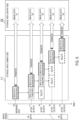
- FIG. 6 is a diagram illustrating an example of transfer and deletion of image data from the recording medium 11 caused by the processing illustrated in FIG. 4 , and indicates an example of a case where the processing of FIG. 4 is performed on a reference date (0 day), 60 days, 90 days, 120 days, and 150 days after the reference date.
- FIG. 7 is a flowchart of processing of updating a setting of a grace period.
- the processor 21 detects the operation (step S101: YES), acquires information of the updated grace period designated by the user (step S102), and updates the setting of the grace period by performing processing such as rewriting a configuration file (step S103). Note that, in this example, a case where the grace period initially set to 90 days is changed to 30 days after the transfer in the middle of the grace period will be described.
- the untransferred image data D1 is duplicated and the duplicate is transferred from the recording medium 11 to the storage device 22. Note that the image data D1 of the duplication source is not deleted from the recording medium 11 on the reference date (t0) since 90 days have not elapsed from the transfer.
- untransferred image data D4 recorded on the recording medium 11 on and after the date of 90 days after the reference date is duplicated, and the duplicate is transferred from the recording medium 11 to the storage device 22.
- the image data D2 and the image data D3 of the duplication source are deleted from the recording medium 11 in the processing illustrated in FIG. 4 since the updated grace period of 30 days has elapsed from the transfer of each image data on the date of 120 days after the reference date (t3).
- the remaining image data D4 of the duplication source is not deleted from the recording medium 11 on the date of 120 days after the reference date (t3) since the grace period of 30 days has not elapsed from the transfer.
- untransferred image data D5 recorded on the recording medium 11 on and after the date of 120 days after the reference date is duplicated, and the duplicate is transferred from the recording medium 11 to the storage device 22.
- the image data D4 of the duplication source is deleted from the recording medium 11 in the processing illustrated in FIG. 4 since the updated grace period of 30 days has elapsed from the transfer on the date of 150 days after the reference date (t4).
- the remaining image data D5 of the duplication source is not deleted from the recording medium 11 on the date of 150 days after the reference date (t4) since the grace period of 30 days has not elapsed from the transfer.
- the grace period can be updated as appropriate.
- the updated grace period is applied not only to the transferred image data duplicated after the update and to which the duplicate is transferred, but also to the transferred image data duplicated before the update and to which the duplicate is transferred. That is, the updated grace period is uniformly applied to the transferred image data regardless of the transfer time. Therefore, when the grace period is updated by the setting processing, the processor 21, which is the processing unit, deletes the transferred image data that has not been deleted from the recording medium 11 at the time of update from the recording medium 11 after the lapse of the updated grace period starting from the transfer of the transferred image data.
- the image management processing reflecting the intention of the user can be executed at an early stage.
- the free capacity of the recording medium 11 is tight and sets the grace period to be short
- the free capacity can be secured relatively early.
- the image processing time can be shortened relatively early.
- FIG. 6 illustrates an example in which the grace period is shortened, the grace period may be lengthened in the middle.
- the grace period may be extended, and the transferred image data recorded on the recording medium 11 may be used as a backup for a long period of time.
- the system and the image management apparatus according to the present embodiment are different from the system 1 and the image management apparatus (the information processing apparatus 20) according to the first embodiment in that a confirmation dialog is displayed on the display device 24 when the image data is automatically deleted from the recording medium 11 and the user is requested for final confirmation. Since components of the system and the image management apparatus are similar to those of the first embodiment, the same components are referred to by the same reference numerals.
- FIG. 8 is a view illustrating a display example of the wireless setting screen according to the present embodiment.
- the user can set the automatic deletion function on the wireless setting screen 40 illustrated in FIG. 8 instead of the wireless setting screen 30 illustrated in FIGS. 3A and 3B .
- the wireless setting screen 40 is different from the wireless setting screen 30 in that a confirmation display setting area 41 is included in the automatic deletion setting area 32.
- the confirmation display setting area 41 is a check box for selecting whether or not to display a confirmation dialog when automatically deleting image data from the recording medium 11. In a case where the user desires to perform final confirmation before deleting the transferred image data, the user may check the confirmation display setting area 41.
- confirmation display setting area 41 is invalidated or hidden so as not to be operated by the user in a state where "not to be deleted” is selected in the automatic deletion setting area 32, similarly to the grace period setting area 33.
- FIG. 9 is a flowchart illustrating an example of processing executed by the information processing apparatus according to the present embodiment
- FIGS. 10A and 10B are views each illustrating a display example of a confirmation dialog according to the present embodiment.
- FIGS. 9 to 10B a specific example of the image management processing performed by the image management apparatus in a state where the automatic deletion function is validated and the confirmation dialog display is validated will be described with reference to FIGS. 9 to 10B .
- the processor 21 When the processing illustrated in FIG. 9 is started, the processor 21 first acquires a grace period from transfer of image data to automatic deletion (step S21). and confirms target data from the recording medium 11 (step S22).
- the processing in step S21 and step S22 is similar to the processing in step S1 and step S2 in FIG. 4 .
- step S23 determines the presence or absence of target data to be transferred (step S23), and in a case where there is image data to be transferred (step S23: YES), requests the image management apparatus to transfer the image data to be transferred (step S24).
- step S23 and step S24 is similar to the processing in step S3 and step S4 in FIG. 4 .
- the processor 21 determines the presence or absence of target data to be deleted (step S25), and in a case where there is image data to be deleted (step S25: YES), displays a confirmation dialog on the display device 24 (step S26).
- step S26 the contents in the confirmation dialog may be changed according to the grace period acquired in step S21.
- the confirmation dialog 50 illustrated in FIG. 10A may be displayed, and in a case where there is no grace period, that is, in a case of setting to delete image data immediately after image transfer, the confirmation dialog 60 illustrated in FIG. 10B may be displayed.
- step S27 When detecting an operation on the confirmation dialog (confirmation dialog 50, confirmation dialog 60) and confirming the intention of the user to execute deletion (step S27: YES), the processor 21 requests the image management apparatus to delete the image data to be deleted (step S28). As a result, the camera 10 that has received the deletion request deletes the image data to be deleted from the recording medium 11.
- step S27: NO When detecting an operation on the confirmation dialog (confirmation dialog 50, confirmation dialog 60) and confirming the intention of the user not to execute deletion (step S27: NO), the processor 21 ends processing illustrated in FIG. 9 without performing the deletion processing in step S28. As a result, the deletion processing is postponed until the next execution of the processing illustrated in FIG. 9 .
- the processor 21 displays a confirmation dialog on the display device 24 to request the user for the final confirmation as to whether or not to delete the image data. Therefore, according to the image management apparatus according to the present embodiment, the user can postpone the deletion processing in a case where there is image data that the user wants to postpone the deletion even in the transferred image data after the grace period has elapsed, and can manually take necessary measures after the postpone.
- the user when setting the grace period, the user can individually cope with a situation in which the image data should be maintained beyond the grace period, which occurs irregularly, by postponing the deletion processing on the confirmation dialog while setting an appropriate grace period based on a normally assumed condition.
- FIG. 11 is a diagram illustrating a configuration of a system according to the present embodiment.
- a system 2 according to the present embodiment includes a camera 10, an information processing apparatus 20, and an information processing apparatus 70.
- the system 2 is different from the system 1 in that the untransferred image data recorded in the recording medium 11 of the camera 10 is transferred to a storage device 71 of the information processing apparatus 70 different from the information processing apparatus 20 instead of being transferred to the information processing apparatus 20 in which an image management application program operates.
- the transfer destination of the image data is not limited to the information processing apparatus in which the image management application program operates, and can be arbitrarily set. Furthermore, the storage device of the transfer destination may be appropriately changed according to the free capacity of the storage device 71 of the transfer destination.
- FIG. 12 is a diagram illustrating a configuration of a system according to the present embodiment.
- a system 3 according to the present embodiment includes an information processing apparatus 20 and an information processing apparatus 70.
- the system 3 is different from the system 2 according to the third embodiment in that instead of transferring image data from the recording medium 11 of the camera 10 to the storage device 71 of the information processing apparatus 70, image data is transferred from the storage device 71 of the information processing apparatus 70 to a storage device 72.
- the transfer source of the image data is not limited to the recording medium of the imaging device such as the camera 10.
- the system 3 may be applied to, for example, transfer and automatic deletion of image data from a server that accumulates a large amount of image data to another server.
- the capacity of the recording medium 11 of the camera 10 is often smaller than that of a storage device of a general information processing apparatus, and the free capacity is likely to be tight.
- the information processing apparatus 20 inquires of the camera 10 about the presence or absence of the target data, the information processing apparatus 20 recognizes the presence of the target data, and then a request for image transfer and image deletion is transmitted to the information processing apparatus 20.
- the request for the image transfer and image deletion from the information processing apparatus 20 to the camera 10 is not necessarily transmitted after the presence of the target data is recognized.
- the camera 10 that has received the request for the image transfer and image deletion from the information processing apparatus 20 may check the presence or absence of the target data, execute the image transfer and the image deletion if there is the target data, and notify the information processing apparatus 20 of the result.
- the grace period may be automatically set by the information processing apparatus 20 according to the free capacity, for example, in a case where the free capacity of the recording medium 11 is large, the grace period is set to be long, and in a case where the free capacity of the recording medium 11 is small, the grace period is set to be short.
- the user and the information processing apparatus 20 may cooperate to set the grace period. For example, by setting the free capacity (or the ratio thereof) to be secured by the user, the information processing apparatus 20 may estimate a grace period during which the free capacity set by the user is secured on the basis of past results or the like, and set the estimated grace period.
- the determination as to whether or not the grace period has elapsed may be made based on 0:00 after the lapse of the designated number of days until the automatic deletion, and if there is deletion target data after 0:00, a deletion instruction may be issued.
- whether or not the grace period has elapsed may be determined by obtaining the number of elapsed days by dividing the elapsed time by 24 starting from the end of transfer, and determining whether or not the number of elapsed days exceeds the designated number of days. If there is deletion target data at an arbitrary timing, a deletion instruction may be issued.
- the information processing apparatus 20 may detect that the power of the camera 10 is turned on, and then may issue the deletion instruction to the camera 10.
Landscapes
- Engineering & Computer Science (AREA)
- Theoretical Computer Science (AREA)
- Human Computer Interaction (AREA)
- Physics & Mathematics (AREA)
- General Engineering & Computer Science (AREA)
- General Physics & Mathematics (AREA)
- Health & Medical Sciences (AREA)
- Primary Health Care (AREA)
- General Health & Medical Sciences (AREA)
- Medical Informatics (AREA)
- Epidemiology (AREA)
- Public Health (AREA)
- Multimedia (AREA)
- Signal Processing (AREA)
- General Business, Economics & Management (AREA)
- Nuclear Medicine, Radiotherapy & Molecular Imaging (AREA)
- Radiology & Medical Imaging (AREA)
- Business, Economics & Management (AREA)
- Biomedical Technology (AREA)
- Information Retrieval, Db Structures And Fs Structures Therefor (AREA)
- Facsimiles In General (AREA)
- Studio Devices (AREA)
Abstract
An information processing apparatus includes a processor configured to: set a grace period for image deletion in response to transferring one or more images from a first storage area to a second storage area different from the first storage area, according to a user's instruction; and give an instruction to delete, from the first storage area, an image corresponding to the transferred image, in response to a lapse of the grace period starting from the transfer.
Description
- The present specification relates to an image management apparatus, an image management method, and a program.
- Conventionally, in order to efficiently manage a large amount of images, a technique of automatically deleting an image from a storage device has been proposed (for example,
JP 2013-008379 A - For example, unlike the image data automatically deleted in
JP 2013-008379 A - In view of the above circumstances, an object of one aspect of the present invention is to more flexibly perform processing on transferred image data.
- An image management apparatus according to an aspect of the present invention includes a processor configured to: set a grace period for image deletion in response to transferring one or more images from a first storage area to a second storage area different from the first storage area, according to a user's instruction; and give an instruction to delete, from the first storage area, an image corresponding to the transferred image, in response to a lapse of the grace period starting from the transfer.
- According to the present invention, it is possible to more flexibly perform processing on transferred image data.
-
-
FIG. 1 is a diagram illustrating a configuration of a system according to a first embodiment; -
FIG. 2 is a block diagram illustrating an example of a hardware configuration of the information processing apparatus according to the first embodiment; -
FIG. 3A is a view illustrating a display example at the time of default setting of a wireless setting screen according to the first embodiment; -
FIG. 3B is a view illustrating another display example of the wireless setting screen according to the first embodiment; -
FIG. 4 is a flowchart illustrating an example of processing executed by the information processing apparatus according to the first embodiment; -
FIG. 5 is a flowchart illustrating another example of processing executed by the information processing apparatus according to the first embodiment; -
FIG. 6 is a diagram illustrating an example of transfer and deletion of image data from a recording medium caused by the processing illustrated inFIG. 4 ; -
FIG. 7 is a flowchart of processing of updating a setting of a grace period; -
FIG. 8 is a view illustrating a display example of the wireless setting screen according to a second embodiment; -
FIG. 9 is a flowchart illustrating an example of processing executed by the information processing apparatus according to the second embodiment; -
FIG. 10A is a view illustrating a display example of a confirmation dialog according to the second embodiment; -
FIG. 10B is a view illustrating another display example of the confirmation dialog according to the second embodiment; -
FIG. 11 is a diagram illustrating a configuration of a system according to a third embodiment; and -
FIG. 12 is a diagram illustrating a configuration of a system according to a fourth embodiment. -
FIG. 1 is a diagram illustrating a configuration of a system according to the present embodiment.FIG. 2 is a block diagram illustrating an example of a hardware configuration of the information processing apparatus according to the present embodiment. Asystem 1 illustrated inFIG. 1 is an image management system including acamera 10 and aninformation processing apparatus 20, and manages image data acquired by imaging by thecamera 10. In thesystem 1, thecamera 10 and theinformation processing apparatus 20 are communicably connected to each other. - The
camera 10 is an imaging device that acquires image data by imaging. Thecamera 10 includes an image sensor (not illustrated) and arecording medium 11 that records image data. The image data acquired by thecamera 10 is recorded in therecording medium 11. - The
camera 10 has a communication function, and exchanges image data and the like with theinformation processing apparatus 20. Note that, althoughFIG. 1 illustrates an example in which thecamera 10 and theinformation processing apparatus 20 are wirelessly connected, thecamera 10 and theinformation processing apparatus 20 may be connected by a communication cable. - The
information processing apparatus 20 is an image management apparatus that manages image data acquired by thecamera 10, and is communicably connected to thecamera 10 having therecording medium 11. Theinformation processing apparatus 20 is a computer that executes an image management program, and includes, for example, aprocessor 21, astorage device 22, aninput device 23, adisplay device 24, and acommunication device 25 as illustrated inFIG. 2 . - The
storage device 22 stores, for example, an image management application program (program 22a) installed in advance. In theinformation processing apparatus 20, theprocessor 21 executes theprogram 22a stored in thestorage device 22 to perform image management processing including transfer of image data from therecording medium 11 of thecamera 10 to theinformation processing apparatus 20 and automatic deletion of the transferred image data from therecording medium 11.Image data 22b transferred to theinformation processing apparatus 20 is stored in thestorage device 22. - In the
system 1 configured as described above, theinformation processing apparatus 20 performs the image management processing including the transfer and the automatic deletion of the image data, so that it is possible to suppress occurrence of various inconveniences caused by accumulation of a large amount of image data in therecording medium 11. In particular, when image data satisfying a predetermined condition is automatically deleted by automatic deletion, it is possible to avoid, for example, a situation in which a free capacity of therecording medium 11 is tight due to a large amount of image data and new image data cannot be acquired (that is, there is a possibility that the operation of the device of the transfer source is affected by a large amount of image data remaining in the transfer source), or a situation in which a scan time of therecording medium 11 performed to extract image data to be transferred or deleted becomes longer than an allowable range (that is, there is a possibility that the speed of transfer is affected by a large amount of image data remaining in the transfer source). - The automatic deletion setting included in the image management processing performed by the
information processing apparatus 20 will be described below.FIG. 3A and FIG. 3B are views illustrating display examples of the wireless setting screen according to the present embodiment. The user of theinformation processing apparatus 20 can set an automatic deletion function of automatically deleting transferred image data from therecording medium 11 on thewireless setting screen 30 displayed on thedisplay device 24 by theprocessor 21 executing theprogram 22a. - The
wireless setting screen 30 is a screen for performing wireless communication setting between thecamera 10 and theinformation processing apparatus 20, and includes amode selection area 31 and an automaticdeletion setting area 32. In a default state (that is, initial setting), as illustrated inFIG. 3A , a camera wireless mode is set to an access point (AP) mode in themode selection area 31. - The AP mode is a mode in which the
camera 10 itself operates as an access point (that is, a master unit) to perform communication between thecamera 10 and theinformation processing apparatus 20. The station (ST) mode is a mode in which thecamera 10 operates as a slave device, and is a mode in which thecamera 10 and theinformation processing apparatus 20 communicate via different access point. - In the default state (that is, the initial setting), as illustrated in
FIG. 3A , "not to be deleted", which is not to perform an automatic deletion, is selected in the automaticdeletion setting area 32. The automaticdeletion setting area 32 includes a graceperiod setting area 33 in which the user can designate a grace period from image transfer to image deletion. The graceperiod setting area 33 is, for example, a list box for selecting the length of the grace period from among predetermined options, but in the default state, as illustrated inFIG. 3A , this list box is invalidated. - Note that it is sufficient that the list box cannot be operated by the user in the default state, more strictly, in a state where "not to be deleted" can be selected in the automatic
deletion setting area 32, and the list box may be hidden instead of invalidating the list box. - In a case where the user desires to automatically delete the transferred image data from the
recording medium 11, the user may select "to be deleted" in the automaticdeletion setting area 32. As a result, the transferred image data is automatically deleted from therecording medium 11 in the image management processing performed by theprocessor 21. As described above, in theinformation processing apparatus 20, the user can easily switch between validating and invalidating of the automatic deletion function on thewireless setting screen 30. - Furthermore, when "to be deleted" is selected, as illustrated in
FIG. 3B , the grace period setting area 33 (list box) is validated, and the length of the grace period from image transfer to image deletion can be selected. When the user selects the length of the grace period from the options in the graceperiod setting area 33 and presses the OK button, theprocessor 21 sets the grace period according to the user's selection. As described above, in theinformation processing apparatus 20, the user can also set the grace period when the automatic deletion function is validated. - Note that, in
FIG. 3B , four options of "Immediately after transfer", "After lapse of 30 days (from transfer)", "After lapse of 60 days (from transfer)", and "After lapse of 90 days (from transfer)" are illustrated, but the options selectable in the list box are not limited to this example. The options may include at least immediately after image transfer (inFIG. 3B , "Immediately after transfer") and a certain period after image transfer (inFIG. 3B , "After lapse of 30 days", "After lapse of 60 days", and "After lapse of 90 days"). - As described above, in the
information processing apparatus 20, theprocessor 21 operates as a processing unit that executes a setting process of setting a grace period and a deletion process of deleting, from therecording medium 11, the transferred image data in which a duplicate image data has been transferred from therecording medium 11, which is an example of a first storage area, to thestorage device 22, which is an example of a second storage area different from therecording medium 11, after a lapse of the grace period starting from the image transfer. Note that, more strictly, the starting period of the grace period is desirably set at the end of transfer of the image data. - Since the grace period until the automatic deletion can be set on the basis of the transfer timing, the
information processing apparatus 20 can secure a time for the user to confirm whether the transfer has been normally ended even in a case where the automatic deletion function is validated. Therefore, it is possible to alleviate the concern of the user about the unexpected loss of the image data due to the transfer failure, and an effect of prompting the user to use the automatic deletion function can be expected. - Furthermore, in the
information processing apparatus 20, as illustrated inFIG. 3B , theprocessor 21 which is a processing unit sets a grace period on the basis of an operation of the user from among options including immediately after image transfer and a certain period after image transfer. - That is, the user can freely select the length of the grace period. Therefore, the user can appropriately select the optimal grace period according to different environments for each system, such as the capacity of the
recording medium 11, the period during which the transferred image data is required as a backup, and the occurrence frequency of the image data. In general, the longer the grace period is set, the more image data is accumulated in therecording medium 11, and thus, it takes time to perform image management processing (image transfer and deletion) per one time. However, according to theinformation processing apparatus 20, it is possible to well balance the risk of image data loss and the processing time required for the image management processing. -
FIG. 4 is a flowchart illustrating an example of processing executed by the information processing apparatus according to the present embodiment.FIG. 5 is a flowchart illustrating another example of processing executed by the information processing apparatus according to the present embodiment. Hereinafter, a specific example of the image management processing performed by theinformation processing apparatus 20 in a state where the automatic deletion function is validated will be described with reference toFIGS. 4 and 5 . - First, an example in which automatic deletion is performed in synchronization with transfer of image data will be described with reference to
FIG. 4 . In a case where the automatic transfer function of the image data from thecamera 10 to theinformation processing apparatus 20 is validated, the processing illustrated inFIG. 4 is performed, for example, when theprogram 22a is activated. - When the processing illustrated in
FIG. 4 is started, theprocessor 21 first acquires a grace period from transfer of image data to automatic deletion (step S1). The grace period acquired in step S1 is a period set in advance on thewireless setting screen 30. - Thereafter, the
processor 21 performs a transfer process (steps S2 to S4) of transferring, from therecording medium 11, the image data untransferred from therecording medium 11 to thestorage device 22 which is an area different from therecording medium 11, and a deletion process (steps S2 and S5 to S6) of deleting the transferred image data after a lapse of the grace period from therecording medium 11. - Specifically, the
processor 21 first confirms target data from the recording medium 11 (step S2). Here, image data to be transferred and image data to be deleted are confirmed. The image data to be transferred is untransferred image data that has not yet been transferred to thestorage device 22 of theinformation processing apparatus 20 among the image data recorded in therecording medium 11. In addition, the image data to be deleted is image data that has been transferred to thestorage device 22 among the image data recorded in therecording medium 11, and is image data for which a grace period acquired in step S1 has elapsed since a duplicate of the image data was transferred from therecording medium 11 to thestorage device 22. - In step S2, the
information processing apparatus 20 transmits an instruction to extract the target data to thecamera 10. In accordance with the extraction instruction from theinformation processing apparatus 20, thecamera 10 scans therecording medium 11 to extract the target data, and transmits the result to theinformation processing apparatus 20. Theinformation processing apparatus 20 confirms the target data on the basis of the information received from thecamera 10. - Next, the
processor 21 determines the presence or absence of target data to be transferred (step S3), and in a case where there is image data to be transferred (step S3: YES), requests theinformation processing apparatus 20 to transfer the image data to be transferred (step S4). As a result, thecamera 10 that has received the transfer request duplicates the image data to be transferred and transmits the duplicate to theinformation processing apparatus 20, and theinformation processing apparatus 20 stores the duplicate of the image data to be transferred in thestorage device 22. - Further, the
processor 21 determines the presence or absence of target data to be deleted (step S5), and in a case where there is image data to be deleted (step S5: YES), requests theinformation processing apparatus 20 to delete the image data to be deleted (step S6). That is, theprocessor 21 performs processing of transmitting a deletion request for requesting deletion of the transferred image data from therecording medium 11 to thecamera 10 which is an imaging device. As a result, thecamera 10 that has received the deletion request deletes the image data to be deleted from therecording medium 11. - Note that, in a case where the
information processing apparatus 20 periodically monitors the presence or absence of image data to be transferred, the processing ofFIG. 4 may be performed, not only at the time of startup, but also may be periodically performed while theprogram 22a is operating. In addition, the processing illustrated inFIG. 4 is not limited to the case where the automatic transfer function of the image data is validated, and may be performed in a case where the user manually gives an instruction to transfer of the image data. - As illustrated in
FIG. 4 , in addition to the setting processing and the deletion processing, theprocessor 21 as a processing unit executes a transfer processing of transferring an untransferred image from therecording medium 11. In particular, by performing the transfer processing in synchronization with the deletion processing, the image data to be transferred and the image data to be deleted can be simultaneously extracted by performing one scan on therecording medium 11. Therefore, the time required for the entire processing can be shortened as compared with the case where the transfer processing and the deletion processing are separately performed asynchronously. - Next, an example in which automatic deletion is performed asynchronously with transfer of image data will be described with reference to
FIG. 5 . The processing illustrated inFIG. 5 is periodically performed, for example, while theprogram 22a is operating. - When the processing illustrated in
FIG. 5 is started, theprocessor 21 first acquires a grace period from transfer of image data to automatic deletion (step S11). The processing in step S11 is similar to the processing in step S1 inFIG. 4 . - Next, the
processor 21 confirms the target data from the recording medium 11 (step S12). The processing in step S12 is similar to the processing in step S2 inFIG. 4 except that only image data to be deleted is confirmed. - Thereafter, the
processor 21 determines the presence or absence of target data to be deleted (step S13), and in a case where there is image data to be deleted (step S13: YES), requests theinformation processing apparatus 20 to delete the image data to be deleted (step S14). As a result, thecamera 10 that has received the deletion request deletes the image data to be deleted from therecording medium 11. - Note that although the example in which the processing illustrated in
FIG. 5 is periodically performed has been described above, the processing illustrated inFIG. 5 may be performed in a case where the user manually gives an instruction to delete the image data for which the grace period has elapsed. - As illustrated in
FIG. 5 , theprocessor 21 as a processing unit may perform the deletion processing asynchronously with the transfer processing. As a result, only necessary processing can be performed at a necessary frequency. The execution of the deletion processing and the transfer processing asynchronously is particularly effective in a case where frequencies at which the deletion processing and the transfer processing are required are greatly different. -
FIG. 6 is a diagram illustrating an example of transfer and deletion of image data from therecording medium 11 caused by the processing illustrated inFIG. 4 , and indicates an example of a case where the processing ofFIG. 4 is performed on a reference date (0 day), 60 days, 90 days, 120 days, and 150 days after the reference date.FIG. 7 is a flowchart of processing of updating a setting of a grace period. When the user performs an update operation of the grace period, theprocessor 21 detects the operation (step S101: YES), acquires information of the updated grace period designated by the user (step S102), and updates the setting of the grace period by performing processing such as rewriting a configuration file (step S103). Note that, in this example, a case where the grace period initially set to 90 days is changed to 30 days after the transfer in the middle of the grace period will be described. - When the processing illustrated in
FIG. 4 is performed on the reference date (t0) on which the untransferred image data D1 is recorded in therecording medium 11, the untransferred image data D1 is duplicated and the duplicate is transferred from therecording medium 11 to thestorage device 22. Note that the image data D1 of the duplication source is not deleted from therecording medium 11 on the reference date (t0) since 90 days have not elapsed from the transfer. - When the processing illustrated in
FIG. 4 is performed on a date of 60 days after the reference date (t1), untransferred image data D2 recorded on therecording medium 11 on and after the reference date is duplicated, and the duplicate is transferred from therecording medium 11 to thestorage device 22. Note that the image data D1 and the image data D2 of the duplication source are not deleted from therecording medium 11 since the grace period of 90 days has not elapsed from the transfer of each image data on the date of 60 days after the reference date (t1). - When the processing illustrated in
FIG. 4 is performed on a date of 90 days after the reference date (t2), untransferred image data D3 recorded on therecording medium 11 on and after the date of 60 days after the reference date is duplicated, and the duplicate is transferred from therecording medium 11 to thestorage device 22. In addition, the image data D1 of the duplication source is deleted from therecording medium 11 in the processing illustrated inFIG. 4 since the grace period of 90 days has elapsed from the transfer on the date of 90 days after the reference date (t2). On the other hand, the remaining image data D2 and the image data D3 of the duplication source are not deleted from therecording medium 11 since the grace period of 90 days has not elapsed from the transfer of each image data on the date of 90 days after the reference date (t2). - When the processing illustrated in
FIG. 4 is performed on a date of 120 days after the reference date (t3), untransferred image data D4 recorded on therecording medium 11 on and after the date of 90 days after the reference date is duplicated, and the duplicate is transferred from therecording medium 11 to thestorage device 22. Further, the image data D2 and the image data D3 of the duplication source are deleted from therecording medium 11 in the processing illustrated inFIG. 4 since the updated grace period of 30 days has elapsed from the transfer of each image data on the date of 120 days after the reference date (t3). On the other hand, the remaining image data D4 of the duplication source is not deleted from therecording medium 11 on the date of 120 days after the reference date (t3) since the grace period of 30 days has not elapsed from the transfer. - When the processing illustrated in
FIG. 4 is performed on a date of 150 days after the reference date (t4), untransferred image data D5 recorded on therecording medium 11 on and after the date of 120 days after the reference date is duplicated, and the duplicate is transferred from therecording medium 11 to thestorage device 22. In addition, the image data D4 of the duplication source is deleted from therecording medium 11 in the processing illustrated inFIG. 4 since the updated grace period of 30 days has elapsed from the transfer on the date of 150 days after the reference date (t4). On the other hand, the remaining image data D5 of the duplication source is not deleted from therecording medium 11 on the date of 150 days after the reference date (t4) since the grace period of 30 days has not elapsed from the transfer. - As illustrated in
FIG. 6 , the grace period can be updated as appropriate. In theinformation processing apparatus 20, when the setting of the grace period is updated, the updated grace period is applied not only to the transferred image data duplicated after the update and to which the duplicate is transferred, but also to the transferred image data duplicated before the update and to which the duplicate is transferred. That is, the updated grace period is uniformly applied to the transferred image data regardless of the transfer time. Therefore, when the grace period is updated by the setting processing, theprocessor 21, which is the processing unit, deletes the transferred image data that has not been deleted from therecording medium 11 at the time of update from therecording medium 11 after the lapse of the updated grace period starting from the transfer of the transferred image data. - In this manner, by applying the updated grace period to all of the transferred image data, the image management processing reflecting the intention of the user can be executed at an early stage. As a result, for example, when the user detects that the free capacity of the
recording medium 11 is tight and sets the grace period to be short, the free capacity can be secured relatively early. In addition, by detecting that the time required for the image management processing per one time by the user becomes longer and setting the grace period to be short, the image processing time can be shortened relatively early. - Note that although
FIG. 6 illustrates an example in which the grace period is shortened, the grace period may be lengthened in the middle. For example, when sufficient free capacity can be secured, the grace period may be extended, and the transferred image data recorded on therecording medium 11 may be used as a backup for a long period of time. - The system and the image management apparatus according to the present embodiment are different from the
system 1 and the image management apparatus (the information processing apparatus 20) according to the first embodiment in that a confirmation dialog is displayed on thedisplay device 24 when the image data is automatically deleted from therecording medium 11 and the user is requested for final confirmation. Since components of the system and the image management apparatus are similar to those of the first embodiment, the same components are referred to by the same reference numerals. -
FIG. 8 is a view illustrating a display example of the wireless setting screen according to the present embodiment. In the image management apparatus according to the present embodiment, the user can set the automatic deletion function on thewireless setting screen 40 illustrated inFIG. 8 instead of thewireless setting screen 30 illustrated inFIGS. 3A and 3B . - The
wireless setting screen 40 is different from thewireless setting screen 30 in that a confirmationdisplay setting area 41 is included in the automaticdeletion setting area 32. Note that the confirmationdisplay setting area 41 is a check box for selecting whether or not to display a confirmation dialog when automatically deleting image data from therecording medium 11. In a case where the user desires to perform final confirmation before deleting the transferred image data, the user may check the confirmationdisplay setting area 41. - Note that the confirmation
display setting area 41 is invalidated or hidden so as not to be operated by the user in a state where "not to be deleted" is selected in the automaticdeletion setting area 32, similarly to the graceperiod setting area 33. -
FIG. 9 is a flowchart illustrating an example of processing executed by the information processing apparatus according to the present embodiment;FIGS. 10A and 10B are views each illustrating a display example of a confirmation dialog according to the present embodiment. Hereinafter, a specific example of the image management processing performed by the image management apparatus in a state where the automatic deletion function is validated and the confirmation dialog display is validated will be described with reference toFIGS. 9 to 10B . - When the processing illustrated in
FIG. 9 is started, theprocessor 21 first acquires a grace period from transfer of image data to automatic deletion (step S21). and confirms target data from the recording medium 11 (step S22). The processing in step S21 and step S22 is similar to the processing in step S1 and step S2 inFIG. 4 . - Thereafter, the
processor 21 determines the presence or absence of target data to be transferred (step S23), and in a case where there is image data to be transferred (step S23: YES), requests the image management apparatus to transfer the image data to be transferred (step S24). The processing in step S23 and step S24 is similar to the processing in step S3 and step S4 inFIG. 4 . - Further, the
processor 21 determines the presence or absence of target data to be deleted (step S25), and in a case where there is image data to be deleted (step S25: YES), displays a confirmation dialog on the display device 24 (step S26). - Note that, in step S26, the contents in the confirmation dialog may be changed according to the grace period acquired in step S21. For example, in a case where the grace period is 90 days, the
confirmation dialog 50 illustrated inFIG. 10A may be displayed, and in a case where there is no grace period, that is, in a case of setting to delete image data immediately after image transfer, theconfirmation dialog 60 illustrated inFIG. 10B may be displayed. - When detecting an operation on the confirmation dialog (
confirmation dialog 50, confirmation dialog 60) and confirming the intention of the user to execute deletion (step S27: YES), theprocessor 21 requests the image management apparatus to delete the image data to be deleted (step S28). As a result, thecamera 10 that has received the deletion request deletes the image data to be deleted from therecording medium 11. - When detecting an operation on the confirmation dialog (
confirmation dialog 50, confirmation dialog 60) and confirming the intention of the user not to execute deletion (step S27: NO), theprocessor 21 ends processing illustrated inFIG. 9 without performing the deletion processing in step S28. As a result, the deletion processing is postponed until the next execution of the processing illustrated inFIG. 9 . - As described above, in the present embodiment, before deleting the transferred image data of the duplication source from the
recording medium 11, theprocessor 21 displays a confirmation dialog on thedisplay device 24 to request the user for the final confirmation as to whether or not to delete the image data. Therefore, according to the image management apparatus according to the present embodiment, the user can postpone the deletion processing in a case where there is image data that the user wants to postpone the deletion even in the transferred image data after the grace period has elapsed, and can manually take necessary measures after the postpone. - Therefore, when setting the grace period, the user can individually cope with a situation in which the image data should be maintained beyond the grace period, which occurs irregularly, by postponing the deletion processing on the confirmation dialog while setting an appropriate grace period based on a normally assumed condition.
-
FIG. 11 is a diagram illustrating a configuration of a system according to the present embodiment. Asystem 2 according to the present embodiment includes acamera 10, aninformation processing apparatus 20, and aninformation processing apparatus 70. Thesystem 2 is different from thesystem 1 in that the untransferred image data recorded in therecording medium 11 of thecamera 10 is transferred to astorage device 71 of theinformation processing apparatus 70 different from theinformation processing apparatus 20 instead of being transferred to theinformation processing apparatus 20 in which an image management application program operates. - As illustrated in
FIG. 11 , the transfer destination of the image data is not limited to the information processing apparatus in which the image management application program operates, and can be arbitrarily set. Furthermore, the storage device of the transfer destination may be appropriately changed according to the free capacity of thestorage device 71 of the transfer destination. -
FIG. 12 is a diagram illustrating a configuration of a system according to the present embodiment. Asystem 3 according to the present embodiment includes aninformation processing apparatus 20 and aninformation processing apparatus 70. Thesystem 3 is different from thesystem 2 according to the third embodiment in that instead of transferring image data from therecording medium 11 of thecamera 10 to thestorage device 71 of theinformation processing apparatus 70, image data is transferred from thestorage device 71 of theinformation processing apparatus 70 to astorage device 72. - As illustrated in
FIG. 12 , the transfer source of the image data is not limited to the recording medium of the imaging device such as thecamera 10. Thesystem 3 may be applied to, for example, transfer and automatic deletion of image data from a server that accumulates a large amount of image data to another server. - On the other hand, it is very useful to transfer image data from the
recording medium 11 of thecamera 10 and delete the image data after the lapse of the grace period. The capacity of therecording medium 11 of thecamera 10 is often smaller than that of a storage device of a general information processing apparatus, and the free capacity is likely to be tight. By performing the automatic deletion processing, even in a case where the capacity of therecording medium 11 is small, it is possible to avoid a situation in which an inconvenience due to insufficient capacity occurs. - The above-described embodiments have been given as specific examples to facilitate understanding of the invention, and the present invention is not limited to the above-described embodiments, and should be understood as including various modifications and alternative embodiments of the above-described embodiments. For example, it will be understood that the above-described embodiments can be embodied by modifying components without departing from the spirit thereof. In addition, it will be understood that various embodiments can be implemented by appropriately combining a plurality of components disclosed in the above-described embodiments. Furthermore, a person skilled in the art may understand that various embodiments may be implemented by deleting some components from all the components shown in the embodiments or adding some components to the components shown in the embodiments. That is, the image management apparatus, the image management method, and the program described above can be variously modified and changed without departing from the scope of the claims.
- For example, in the above-described embodiment, an example has been described in which the
information processing apparatus 20 inquires of thecamera 10 about the presence or absence of the target data, theinformation processing apparatus 20 recognizes the presence of the target data, and then a request for image transfer and image deletion is transmitted to theinformation processing apparatus 20. However, the request for the image transfer and image deletion from theinformation processing apparatus 20 to thecamera 10 is not necessarily transmitted after the presence of the target data is recognized. For example, thecamera 10 that has received the request for the image transfer and image deletion from theinformation processing apparatus 20 may check the presence or absence of the target data, execute the image transfer and the image deletion if there is the target data, and notify theinformation processing apparatus 20 of the result. - Furthermore, in the above-described embodiment, an example in which the user explicitly sets the grace period has been described. However, the grace period may be automatically set by the
information processing apparatus 20 according to the free capacity, for example, in a case where the free capacity of therecording medium 11 is large, the grace period is set to be long, and in a case where the free capacity of therecording medium 11 is small, the grace period is set to be short. Furthermore, instead of completely leaving the setting of the grace period to one of theinformation processing apparatus 20 and the user, the user and theinformation processing apparatus 20 may cooperate to set the grace period. For example, by setting the free capacity (or the ratio thereof) to be secured by the user, theinformation processing apparatus 20 may estimate a grace period during which the free capacity set by the user is secured on the basis of past results or the like, and set the estimated grace period. - Although not particularly mentioned in the above-described embodiment, the determination as to whether or not the grace period has elapsed may be made based on 0:00 after the lapse of the designated number of days until the automatic deletion, and if there is deletion target data after 0:00, a deletion instruction may be issued. In addition, whether or not the grace period has elapsed may be determined by obtaining the number of elapsed days by dividing the elapsed time by 24 starting from the end of transfer, and determining whether or not the number of elapsed days exceeds the designated number of days. If there is deletion target data at an arbitrary timing, a deletion instruction may be issued. In the deletion instruction, for example, the
information processing apparatus 20 may detect that the power of thecamera 10 is turned on, and then may issue the deletion instruction to thecamera 10.
Claims (9)
- An image management apparatus, comprising a processor configured to:set a grace period for image deletion in response to transferring one or more images from a first storage area to a second storage area different from the first storage area, according to a user's instruction; andgive an instruction to delete, from the first storage area, an image corresponding to the transferred image, in response to a lapse of the grace period starting from the transfer.
- The image management apparatus according to claim 1, wherein
the processor sets the grace period based on an operation of a user from among a plurality of options including a period immediately after image transfer and a certain period after image transfer. - The image management apparatus according to claim 1, wherein
when the grace period is updated by setting the grace period, the processor applies the updated grace period to all of the transferred image data that has not been deleted from the first storage area at the time of updating. - The image management apparatus according to claim 3, wherein
the processor:acquires an instruction to update the grace period; andwhen the grace period is updated in response to the instruction of update, deletes, from the first storage area, transferred image data that has not been deleted from the first storage area at the time of the update, after a lapse of the updated grace period starting from the transfer of the image data. - The image management apparatus according to claim 1 or 2, wherein
the processor further duplicates image data that has not been transferred to the second storage area, and transfers the duplicated image data from the first storage area. - The image management apparatus according to claim 1 or 2, whereinthe image management apparatus is communicably connected to an imaging device including the first storage area, andthe processor transmits, to the imaging device, a request for deleting the transferred image data from the first storage area.
- The image management apparatus according to claim 1 or 2, wherein
the processor gives an instruction to delete transferred image data for which the grace period has elapsed in a case where a power source of an imaging device that is a transfer source of the image data is turned on. - An image management method causing a computer to execute processing to:set a grace period for image deletion in response to transferring one or more images from a first storage area to a second storage area different from the first storage area, according to a user's instruction; anddelete, from the first storage area, an image corresponding to the transferred image, in response to a lapse of the grace period starting from the transfer.
- A program for causing a computer to execute processing to:set a grace period for image deletion in response to transferring one or more images from a first storage area to a second storage area different from the first storage area, according to a user's instruction; andgive an instruction to delete, from the first storage area, an image corresponding to the transferred image, in response to a lapse of the grace period starting from the transfer.
Applications Claiming Priority (1)
| Application Number | Priority Date | Filing Date | Title |
|---|---|---|---|
| JP2023104056A JP2025004393A (en) | 2023-06-26 | 2023-06-26 | IMAGE MANAGEMENT DEVICE, IMAGE MANAGEMENT METHOD, AND PROGRAM |
Publications (1)
| Publication Number | Publication Date |
|---|---|
| EP4485915A1 true EP4485915A1 (en) | 2025-01-01 |
Family
ID=91621265
Family Applications (1)
| Application Number | Title | Priority Date | Filing Date |
|---|---|---|---|
| EP24183405.0A Pending EP4485915A1 (en) | 2023-06-26 | 2024-06-20 | Image management apparatus, image management method, and recording medium for handling image deletion after its transfer into another storage |
Country Status (3)
| Country | Link |
|---|---|
| US (1) | US20240427517A1 (en) |
| EP (1) | EP4485915A1 (en) |
| JP (1) | JP2025004393A (en) |
Families Citing this family (1)
| Publication number | Priority date | Publication date | Assignee | Title |
|---|---|---|---|---|
| JP2025070712A (en) * | 2023-10-20 | 2025-05-02 | キヤノン株式会社 | Photographing device, photographing system, control method, and program |
Citations (4)
| Publication number | Priority date | Publication date | Assignee | Title |
|---|---|---|---|---|
| JP2003046705A (en) * | 2001-07-30 | 2003-02-14 | Murata Mach Ltd | Image processor |
| JP2004363797A (en) * | 2003-06-03 | 2004-12-24 | Fuji Photo Film Co Ltd | Automatic shooting system |
| JP2013008379A (en) | 2005-04-26 | 2013-01-10 | Toshiba Corp | Medical image filing device |
| US10602017B2 (en) * | 2017-09-19 | 2020-03-24 | Sharp Kabushiki Kaisha | File management apparatus, multifunction device and information processing apparatus, file management method, and file management program |
Family Cites Families (36)
| Publication number | Priority date | Publication date | Assignee | Title |
|---|---|---|---|---|
| US5544347A (en) * | 1990-09-24 | 1996-08-06 | Emc Corporation | Data storage system controlled remote data mirroring with respectively maintained data indices |
| JP3556608B2 (en) * | 2001-03-29 | 2004-08-18 | 株式会社東芝 | Recording / reproducing apparatus and recording / reproducing method |
| US20040117414A1 (en) * | 2002-12-17 | 2004-06-17 | Capital One Financial Corporation | Method and system for automatically updating operating systems |
| US7933033B2 (en) * | 2003-07-29 | 2011-04-26 | Ricoh Company, Ltd. | Image forming apparatus, image processing method, image processing program and recording medium |
| US7287048B2 (en) * | 2004-01-07 | 2007-10-23 | International Business Machines Corporation | Transparent archiving |
| US7861274B2 (en) * | 2004-01-13 | 2010-12-28 | Time Warner Cable, Inc. | System and method for managing program assets |
| US8429359B1 (en) * | 2004-12-31 | 2013-04-23 | Symantec Operating Corporation | Method and apparatus for dynamically backing up database files |
| KR100746198B1 (en) * | 2005-07-08 | 2007-08-06 | 삼성전자주식회사 | Data storage device, data storage method, and recording medium thereof |
| FI20065783A0 (en) * | 2006-12-08 | 2006-12-08 | Nokia Corp | Signal pre-distortion in radio transmitters |
| US8429425B2 (en) * | 2007-06-08 | 2013-04-23 | Apple Inc. | Electronic backup and restoration of encrypted data |
| US9128882B2 (en) * | 2007-08-08 | 2015-09-08 | Qualcomm Incorporated | Mobile client device driven data backup |
| US8538919B1 (en) * | 2009-05-16 | 2013-09-17 | Eric H. Nielsen | System, method, and computer program for real time remote recovery of virtual computing machines |
| US9798573B1 (en) * | 2009-05-22 | 2017-10-24 | Vmware, Inc. | Physical to virtual scheduling system and method |
| US20110055559A1 (en) * | 2009-08-27 | 2011-03-03 | Jun Li | Data retention management |
| JP5533102B2 (en) * | 2010-03-23 | 2014-06-25 | コニカミノルタ株式会社 | Image forming apparatus |
| US9229818B2 (en) * | 2011-07-20 | 2016-01-05 | Microsoft Technology Licensing, Llc | Adaptive retention for backup data |
| US8527479B2 (en) * | 2011-12-21 | 2013-09-03 | International Business Machines Corporation | Determining whether a selected backup set satisfies a retention policy |
| JP5838810B2 (en) * | 2011-12-28 | 2016-01-06 | 富士通株式会社 | Backup control program, backup control method, and backup control apparatus |
| JP6041546B2 (en) * | 2012-06-08 | 2016-12-07 | キヤノン株式会社 | Information processing apparatus, control method therefor, and program |
| US20150039660A1 (en) * | 2013-07-31 | 2015-02-05 | Cleversafe, Inc. | Co-locate objects request |
| US10025802B2 (en) * | 2014-09-19 | 2018-07-17 | Amazon Technologies, Inc. | Automated configuration of log-coordinated storage groups |
| US10373247B2 (en) * | 2014-09-19 | 2019-08-06 | Amazon Technologies, Inc. | Lifecycle transitions in log-coordinated data stores |
| US10042908B2 (en) * | 2014-09-26 | 2018-08-07 | Oracle International Corporation | Method and system for implementing a unified DB clone system |
| KR20160083762A (en) * | 2015-01-02 | 2016-07-12 | 삼성전자주식회사 | Method for managing mapping table in storage system and storage system adopting the same |
| US10762041B2 (en) * | 2015-08-31 | 2020-09-01 | Netapp, Inc. | Event based retention of read only files |
| US10180885B2 (en) * | 2015-11-10 | 2019-01-15 | Netapp, Inc. | Prioritized data recovery from an object storage service and concurrent data backup |
| US9619335B1 (en) * | 2016-03-11 | 2017-04-11 | Storagecraft Technology Corporation | Filtering a directory enumeration of a directory to exclude files with missing file content from an image backup |
| US10296423B2 (en) * | 2016-03-31 | 2019-05-21 | Acronis International Gmbh | System and method for live virtual incremental restoring of data from cloud storage |
| US20170310362A1 (en) * | 2016-04-21 | 2017-10-26 | Lior Ben David | Data Backup and Charging Device for Communication Devices |
| WO2018125039A1 (en) * | 2016-12-27 | 2018-07-05 | Rovi Guides, Inc. | System and method for classifying recorded content for deletion |
| GB2567146B (en) * | 2017-09-28 | 2022-04-13 | Red Flint Llp | Method and system for secure storage of digital data |
| US11042447B2 (en) * | 2019-09-27 | 2021-06-22 | International Business Machines Corporation | Retention rule compliance of record deletion based on deletion log |
| US11601232B2 (en) * | 2021-07-22 | 2023-03-07 | Cilag Gmbh International | Redundant communication channels and processing of imaging feeds |
| EP4167070B1 (en) * | 2021-10-12 | 2025-12-31 | Memento Cloud | HYBRID METHOD FOR STORING DIGITAL INFORMATION AND HYBRID ARCHITECTURE FOR STORING DIGITAL INFORMATION |
| KR20230093914A (en) * | 2021-12-20 | 2023-06-27 | 삼성전자주식회사 | Method of writing data in storage device and method of reading data from storage device using sensor information, and storage device performing the same |
| US11704043B1 (en) * | 2022-01-31 | 2023-07-18 | Salesforce, Inc. | Backup and/or restore as a service |
-
2023
- 2023-06-26 JP JP2023104056A patent/JP2025004393A/en active Pending
-
2024
- 2024-06-20 EP EP24183405.0A patent/EP4485915A1/en active Pending
- 2024-06-24 US US18/751,685 patent/US20240427517A1/en active Pending
Patent Citations (4)
| Publication number | Priority date | Publication date | Assignee | Title |
|---|---|---|---|---|
| JP2003046705A (en) * | 2001-07-30 | 2003-02-14 | Murata Mach Ltd | Image processor |
| JP2004363797A (en) * | 2003-06-03 | 2004-12-24 | Fuji Photo Film Co Ltd | Automatic shooting system |
| JP2013008379A (en) | 2005-04-26 | 2013-01-10 | Toshiba Corp | Medical image filing device |
| US10602017B2 (en) * | 2017-09-19 | 2020-03-24 | Sharp Kabushiki Kaisha | File management apparatus, multifunction device and information processing apparatus, file management method, and file management program |
Also Published As
| Publication number | Publication date |
|---|---|
| US20240427517A1 (en) | 2024-12-26 |
| JP2025004393A (en) | 2025-01-15 |
Similar Documents
| Publication | Publication Date | Title |
|---|---|---|
| US9465603B2 (en) | Application management apparatus, application management system, application management method, and non-transitory computer readable medium | |
| US8239662B1 (en) | Network based operating system across devices | |
| US10051139B2 (en) | Network device that flexibly manages setting value, control method, and storage medium | |
| JP2007286790A (en) | Application management program, application management method, and application management apparatus | |
| JP5959942B2 (en) | Image processing apparatus, control method thereof, program, and firmware update system | |
| US10452818B2 (en) | License management system | |
| US8782636B2 (en) | Information processing apparatus, control method thereof, and program | |
| US20240427517A1 (en) | Image management apparatus, image management method, and recording medium | |
| JP4944812B2 (en) | Information processing system, information processing method, and program | |
| JP5671880B2 (en) | Image forming apparatus, program state determination method, program state determination program, and program state determination system | |
| US10205842B2 (en) | Information processing system in which an information processing apparatus sends updated setting information to a connected device, information processing apparatus, control method of information processing apparatus, and storage medium | |
| CN110045990A (en) | Restart control system | |
| WO2016013217A1 (en) | Image forming apparatus, system, method for controlling image forming apparatus, and program | |
| US9727381B2 (en) | Image forming apparatus and resource management method | |
| JP2003167746A (en) | Software distribution method, its implementation system, and its processing program | |
| EP3364287B1 (en) | Network device and method therefor | |
| WO2017145828A1 (en) | Information processing device for managing data of client device, client device, backup method, and storage medium | |
| JP2015005028A (en) | Image processing apparatus and control apparatus | |
| US20170017445A1 (en) | Remote maintenance system and remote maintenance method | |
| CN101155061B (en) | Master/standby control method | |
| JP6631343B2 (en) | Firmware update system, cloud system, and information processing device | |
| JP7424457B2 (en) | Image forming device and program | |
| US12159051B2 (en) | Migration of application on container platform | |
| US20250306984A1 (en) | Information processing apparatus, device management method, and non-transitory computer-readable storage medium containing computer-executable instructions for such a method | |
| JP6729001B2 (en) | Image processing system, image processing apparatus, program and backup method |
Legal Events
| Date | Code | Title | Description |
|---|---|---|---|
| PUAI | Public reference made under article 153(3) epc to a published international application that has entered the european phase |
Free format text: ORIGINAL CODE: 0009012 |
|
| STAA | Information on the status of an ep patent application or granted ep patent |
Free format text: STATUS: REQUEST FOR EXAMINATION WAS MADE |
|
| 17P | Request for examination filed |
Effective date: 20240620 |
|
| AK | Designated contracting states |
Kind code of ref document: A1 Designated state(s): AL AT BE BG CH CY CZ DE DK EE ES FI FR GB GR HR HU IE IS IT LI LT LU LV MC ME MK MT NL NO PL PT RO RS SE SI SK SM TR |