EP4485877A1 - Verfahren und elektronische vorrichtung zur steuerung der skalierung in einem virtualisierten funkzugangsnetzwerk - Google Patents
Verfahren und elektronische vorrichtung zur steuerung der skalierung in einem virtualisierten funkzugangsnetzwerk Download PDFInfo
- Publication number
- EP4485877A1 EP4485877A1 EP23831804.2A EP23831804A EP4485877A1 EP 4485877 A1 EP4485877 A1 EP 4485877A1 EP 23831804 A EP23831804 A EP 23831804A EP 4485877 A1 EP4485877 A1 EP 4485877A1
- Authority
- EP
- European Patent Office
- Prior art keywords
- pod
- cell migration
- situation
- information
- electronic device
- Prior art date
- Legal status (The legal status is an assumption and is not a legal conclusion. Google has not performed a legal analysis and makes no representation as to the accuracy of the status listed.)
- Pending
Links
Images



Classifications
-
- H—ELECTRICITY
- H04—ELECTRIC COMMUNICATION TECHNIQUE
- H04W—WIRELESS COMMUNICATION NETWORKS
- H04W24/00—Supervisory, monitoring or testing arrangements
- H04W24/02—Arrangements for optimising operational condition
-
- H—ELECTRICITY
- H04—ELECTRIC COMMUNICATION TECHNIQUE
- H04L—TRANSMISSION OF DIGITAL INFORMATION, e.g. TELEGRAPHIC COMMUNICATION
- H04L41/00—Arrangements for maintenance, administration or management of data switching networks, e.g. of packet switching networks
- H04L41/08—Configuration management of networks or network elements
- H04L41/0896—Bandwidth or capacity management, i.e. automatically increasing or decreasing capacities
- H04L41/0897—Bandwidth or capacity management, i.e. automatically increasing or decreasing capacities by horizontal or vertical scaling of resources, or by migrating entities, e.g. virtual resources or entities
-
- H—ELECTRICITY
- H04—ELECTRIC COMMUNICATION TECHNIQUE
- H04L—TRANSMISSION OF DIGITAL INFORMATION, e.g. TELEGRAPHIC COMMUNICATION
- H04L43/00—Arrangements for monitoring or testing data switching networks
- H04L43/20—Arrangements for monitoring or testing data switching networks the monitoring system or the monitored elements being virtualised, abstracted or software-defined entities, e.g. SDN or NFV
-
- H—ELECTRICITY
- H04—ELECTRIC COMMUNICATION TECHNIQUE
- H04W—WIRELESS COMMUNICATION NETWORKS
- H04W36/00—Hand-off or reselection arrangements
- H04W36/16—Performing reselection for specific purposes
- H04W36/22—Performing reselection for specific purposes for handling the traffic
-
- H—ELECTRICITY
- H04—ELECTRIC COMMUNICATION TECHNIQUE
- H04W—WIRELESS COMMUNICATION NETWORKS
- H04W36/00—Hand-off or reselection arrangements
- H04W36/24—Reselection being triggered by specific parameters
-
- H—ELECTRICITY
- H04—ELECTRIC COMMUNICATION TECHNIQUE
- H04W—WIRELESS COMMUNICATION NETWORKS
- H04W36/00—Hand-off or reselection arrangements
- H04W36/13—Cell handover without a predetermined boundary, e.g. virtual cells
-
- H—ELECTRICITY
- H04—ELECTRIC COMMUNICATION TECHNIQUE
- H04W—WIRELESS COMMUNICATION NETWORKS
- H04W88/00—Devices specially adapted for wireless communication networks, e.g. terminals, base stations or access point devices
- H04W88/08—Access point devices
- H04W88/085—Access point devices with remote components
Definitions
- the disclosure relates to a method and electronic device for controlling scaling of a virtual radio access network.
- one cell site may be connected to one distributed unit (DU), and thus, the processing capacity of the distributed unit may be determined according to the maximum traffic entering the cell site.
- the resources of the DU may be not used outside of peak traffic times.
- a virtualized RAN (vRAN) system may perform resource pooling by virtualizing a DU or a centralized unit (CU).
- CU centralized unit
- Kubernetes may provide a horizontal pod autoscaler (HPA), which is a feature of performing scaling for the resource pooling.
- HPA may scale pods according to a preset number of pods, based on a monitored key performance indicator (KPI) reaching a preset value.
- KPI monitored key performance indicator
- a method of controlling scaling in a virtualized radio access network includes determining a cell migration situation based on information about a key performance indicator (KPI) of a first pod; based on the cell migration situation, transmitting, to the first pod, at least one cell migration message related to a second pod with which the first pod is to perform cell migration; and based on the cell migration being terminated, receiving a cell migration termination message from the first pod.
- KPI key performance indicator
- the information about the KPI may include information about at least one of a number of user equipments (UEs) processed by a pod, a number of cells processed by the pod, a central processing unit (CPU) utilization, a memory usage, a throughput, a radio network temporary identifier (RNTI), a block error rate (BLER), and a reference signal received power (RSRP).
- UEs user equipments
- CPU central processing unit
- RNTI radio network temporary identifier
- BLER block error rate
- RSRP reference signal received power
- Each of the first pod and the second pod may include one of a centralized unit (CU) or a distributed unit (DU).
- CU centralized unit
- DU distributed unit
- the determining of the cell migration situation may include, based on the KPI of the first pod being less than or equal to a predetermined first value, determining the cell migration situation to be a scale-in situation, and based on the KPI of the first pod being greater than or equal to a predetermined second value, determining the cell migration situation to be a scale-out situation.
- the transmitting of the at least one cell migration message may include: based on the cell migration situation being determined to be the scale-out situation, requesting a management device to generate the second pod; receiving, from the management device, a message indicating that the generating of the second pod is completed; and transmitting the at least one cell migration message to the first pod.
- the transmitting of the at least one cell migration message may include, based on the cell migration situation being determined to be the scale-in situation, and based on information about an obtained KPI of the second pod, determining that the second pod is to perform the cell migration with the first pod, and the receiving of the cell migration termination message may include: based on the cell migration situation being determined to be the scale-in situation, receiving the cell migration termination message from the first pod; transmitting, to a management device, a message requesting deletion of the second pod; and receiving, from the management device, a message indicating that the deletion of the second pod is completed.
- the transmitting of the at least one cell migration message may include, based on the cell migration situation being determined to be the scale-out situation, and based on a KPI of the second pod being less than or equal to a predetermined third value, transmitting, to the first pod, the at least one cell migration message related to the second pod.
- the at least one cell migration message may include at least one of endpoint information corresponding to the first pod, endpoint information corresponding to the second pod, information about the cell migration situation, basis information about the cell migration situation, resource allocation information about the second pod, and scaling control request identifier (ID) information.
- the cell migration completion message may include at least one of information about a completion status of the cell migration, cell migration failure reason information, KPI information at a time point of completion of the cell migration, and scaling control request identifier (ID) information.
- a non-transitory computer-readable recording medium has recorded thereon instructions which, when executed by at least one processor, cause the at least one processor to: determine a cell migration situation, based on information about a key performance indicator (KPI) of a first pod; based on the cell migration situation, transmit, to the first pod, at least one cell migration message related to a second pod with which the first pod is to perform cell migration; and based on the cell migration being terminated, receive a cell migration termination message from the first pod.
- KPI key performance indicator
- an electronic device for controlling scaling in a virtual radio access network includes a memory configured to store one or more instructions: a transceiver; and at least one processor configured to execute the one or more instructions to: determine a cell migration situation based on information about a key performance indicator (KPI) of a first pod obtained using the transceiver, based on the cell migration situation, transmit, to the first pod, at least one cell migration message related to a second pod with which the first pod is to perform cell migration, and based on the cell migration being terminated, receive a cell migration termination message from the first pod using the transceiver.
- KPI key performance indicator
- the information about the KPI may include information about at least one of a number of user equipments (UEs) processed by a pod, the number of cells processed by the pod, a central processing unit (CPU) utilization, a memory usage, a throughput, a radio network temporary identifier (RNTI), a block error rate (BLER), and a reference signal received power (RSRP).
- UEs user equipments
- CPU central processing unit
- RNTI radio network temporary identifier
- BLER block error rate
- RSRP reference signal received power
- Each of the first pod and the second pod may include one of a centralized unit (CU) or a distributed unit (DU).
- CU centralized unit
- DU distributed unit
- the at least one processor may be further configured to execute the one or more instructions to: based on the obtained KPI of the first pod being less than or equal to a predetermined first value, determine the cell migration situation to be a scale-in situation, and based on the obtained KPI of the first pod being greater than or equal to a predetermined second value, determine the cell migration situation to be a scale-out situation.
- the at least one processor may be further configured to execute the one or more instructions to: based on the cell migration situation being determined to be the scale-out situation, request a management device to generate the second pod, receive a message indicating that the generating of the second pod is completed from the management device using the transceiver, and control the transceiver to transmit the at least one cell migration message to the first pod.
- the at least one processor may be further configured to execute the one or more instructions to: based on the cell migration situation being determined to be the scale-in situation, and based on information about a KPI of the second pod, determine that the second pod is to perform the cell migration with the first pod, receive the cell migration termination message from the first pod, control the transceiver to transmit, to the management device, a message requesting deletion of the second pod, and receive a message indicating that the deletion of the second pod is completed from the management device through the transceiver.
- the at least one processor may be further configured to execute the one or more instructions to: based on the cell migration situation being determined to be the scale-out situation, and based on a KPI of the second pod being less than or equal to a predetermined second value, control the transceiver to transmit, to the first pod, the at least one cell migration message related to the second pod.
- the at least one cell migration message may include at least one of endpoint information corresponding to the first pod, endpoint information corresponding to the second pod, scaling type information, scaling trigger basis information, resource allocation information of the second pod, and a scaling control request identifier (ID).
- the cell migration termination message may include at least one of information about a completion status of the cell migration, cell migration failure reason information, KPI information at a time point of completion of the cell migration, and a scaling control request identifier (ID) information.
- ID scaling control request identifier
- ...er (or) may denote a unit that performs at least one function or operation, which may be implemented as hardware or software or a combination thereof.
- a part when referred to as being “connected to” another part, this may mean that the part is “directly connected to” or “physically connected to” the other part, or is “electrically connected to” the other part through an intervening element.
- a part when referred to as “including” or “comprising” a component, this may mean that the part may additionally include or comprise other components rather than excluding other components as long as there is no particular opposing recitation.
- the expression “or” is inclusive and not exclusive, as long as there is no particular opposing recitation.
- the expression “A or B” may refer to “A, B, or both” as long as it is not inconsistent with the context.
- the phrase “at least one of”, when used with a list of items, means that different combinations of one or more of the listed items may be used, and only one item in the list may be needed.
- “at least one of: A, B, or C” may include any of the following combinations: A, B, C, A and B, A and C, B and C, or A and B and C.
- controller may refer to any device, system or part thereof that controls at least one operation. Such a controller may be implemented in hardware, a combination of hardware and software, or firmware. The functionality associated with any particular controller may be centralized or distributed, whether locally or remotely.
- Various embodiments of the disclosure described below may be implemented or supported by one or more computer programs, which may be produced from computer-readable program code and stored in a computer-readable medium.
- application and “program” may refer to one or more computer programs, software components, instruction sets, procedures, functions, objects, classes, instances, relevant data, which are suitable for an implementation in computer-readable program code, or a part thereof.
- computer-readable program code may include various types of computer code including source code, object code, and executable code.
- ROM read-only memory
- RAM random-access memory
- HDD hard disk drive
- CD compact disc
- DVD digital video disc
- the computer-readable storage medium may be provided in the form of a non-transitory storage medium.
- the term 'non-transitory storage medium' may refer to a tangible device, and may exclude wired, wireless, optical, or other communication links that transmit temporary electrical or other signals.
- the term 'non-transitory storage medium' does not distinguish between a case in which data is stored in a storage medium semi-permanently and a case in which data is stored temporarily.
- the non-transitory storage medium may include a buffer in which data is temporarily stored.
- the computer-readable medium may be any available medium that is accessible by a computer, and may include a volatile or non-volatile medium and a removable or non-removable medium.
- the computer-readable media includes media in which data may be permanently stored and media in which data may be stored and overwritten later, such as a rewritable optical disc or an erasable memory device.
- methods according to various embodiments of the disclosure may be included in a computer program product and then provided.
- the computer program products may be traded as commodities between sellers and buyers.
- the computer program product may be distributed in the form of a machine-readable storage medium (e.g., a CD-ROM), or be distributed (e.g., downloaded or uploaded) online through an application store (e.g., PlayStore TM ), or between two user devices (e.g., smart phones) directly.
- an application store e.g., PlayStore TM
- two user devices e.g., smart phones
- at least a portion of the computer program product e.g., a downloadable app
- each component described hereinafter may additionally perform some or all of functions performed by another component, in addition to main functions of itself, and some of the main functions of each component may be performed entirely by another component.
- the term 'scaling' may refer to an operation of adjusting the number of pods by deleting or generating pods according to a predefined criterion.
- the term 'scaling' may be used as a general term for a scale-in operation and a scale-out operation to be described below.
- the term 'scale-in' may refer to an operation of adjusting the number of pods by deleting pods according to a predefined criterion.
- the scale-in operation may reduce the number of pods that are no longer required or used, thereby reducing the resources which are used or required.
- the term 'scale-out' may refer to an operation of adjusting the number of pods by generating pods according to a predefined criterion.
- the term 'scale-out' can refer to adding, when a pod capacity or performance limit is reached, pods with similar specifications to share the load of existing pods, thereby improving overall performance.
- the term 'cell migration' may refer to an operation of migrating a cell being processed by a particular pod to another pod.
- the term 'migration' may be used in the same meaning as the term 'cell migration' in the specification.
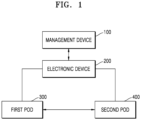
- FIG. 1 is a block diagram illustrating a configuration of a virtual radio access network (vRAN) system according to an embodiment of the disclosure.
- the vRAN may be, or may be included in, a wireless access network.
- a vRAN system may include a management device 100, an electronic device 200, a first pod 300, and a second pod 400.
- the devices included in the RAN system are not limited thereto.
- the management device 100 may include Kubernetes.
- Kubernetes may refer to a container management system for rapidly and automatically deploying cloudified applications and providing container orchestration, scaling, and the like.
- the term 'orchestration' may refer to managing and adjusting computing resources by automating the configuration of computer systems, services, and applications
- the term 'container orchestration' may refer to automating the deployment, management, and expansion of containers.
- pods of a vRAN may differ in the number of cells or terminals to be processed, and the resources used by the pods may be flexible according to time or period, control of scaling between the pods of the vRAN may be beneficial.
- Kubernetes provides a horizontal pod autoscaler (HPA) feature to scale pods.
- An HPA may perform scaling by monitoring key performance indicators (KPIs) of pods according to a preset KPI value and generating or deleting pods when the preset KPI value is reached.
- KPIs key performance indicators
- pods may be generated or deleted according to the number of pods set in a replicaset.
- the replicaset may refer to a set that is managed such that a specified number of pods always run for managing resources while guaranteeing the availability of the number of running pods.
- the HPA may control such that, when one pod is deleted during a scaling operation, another pod is generated such that the number of pods is always maintained at 10.
- the HPA of Kubernetes may monitor limited KPI types, including central processing unit (CPU) occupancy and memory usage.
- the HPA may not directly designate a pod to be generated or deleted when performing scaling, and a user may not know which pod is generated or deleted. Accordingly, when the HPA performs an operation of deleting a pod, the pod to be deleted may be forcibly deleted even though the software of the pod is not ready for the deletion.
- scaling by the HPA may cause session loss, because a pod may be deleted before cell migration between pods is performed.
- building a scalable structure that allows pods to transmit and receive cell migration therebetween may include determining which pods are to be scaled in or out, and which information is to be transmitted and received. Building a structure that allows all pods to directly share resource information therebetween in order to build a scalable structure between the pods may consume a lot of resources.
- pods on a vRAN may have a structure in which resource usage information is directly shared among the pods. In embodiments, pods on a vRAN may have a structure in which resource usage information is transmitted to an upper layer that serves as a manager, such as the management device 100 or the electronic device 200.
- the electronic device 200 may use KPI information of the first pod 300 to determine a preset or predetermined scaling situation.
- "information of" an element may refer to, for example, at least one of "information about” the element, "information associated with” the element, “information related to” the element, and “information corresponding to” the element.
- the electronic device 200 may request the management device 100 to generate a new pod or delete an existing pod according to the determined scaling situation.
- the electronic device 200 may transmit at least one cell migration message to prevent session loss, and receive a cell migration termination message after cell migration is terminated.
- the electronic device 200 may delete a pod after cell migration between pods is completed, thereby achieving various effects including an effect of preventing session loss.
- the first pod 300 and the second pod 400 may be processing modules existing in a vRAN, and for example may refer to units that serve as a base station in a 5th Generation (5G) network.
- 5G 5th Generation
- the first pod 300 and the second pod 400 may be any one of a centralized unit (CU) or a distributed unit (DU).
- CU centralized unit
- DU distributed unit
- An example of a method, performed by an electronic device 200, of determining a scaling situation and transmitting and receiving message related to cell migration to and from the management device 100, the first pod 300, and the second pod 400 is described in detail below with reference to FIGS. 2 to 5 .
- FIG. 2 is a flowchart illustrating a method, performed by an electronic device, of controlling scaling, according to an embodiment of the disclosure.
- the electronic device 200 may determine a cell migration situation, which may be referred to as a cell migration condition, based on the obtained KPI information of the first pod 300 at operation S210.
- the KPI information obtained by the electronic device 200 may include information about at least one of a number of user equipments (UEs) processed by the pod, a number of cells processed by the pod, CPU utilization, memory usage, throughput, radio network temporary identifier (RNTI), block error rate (BLER), or reference signal received power (RSRP).
- UEs user equipments
- RNTI radio network temporary identifier
- BLER block error rate
- RSRP reference signal received power
- the CPU utilization and memory usage of the pod may refer to information detected by the HPA of Kubernetes, and may indicate the amount of additional computation which the pod is capable of performing.
- the RNTI may refer to information used to identify a terminal connected to a cell, a particular radio channel, a terminal group in a case of paging, a terminal group for which power control is issued by a base station, and system information transmitted from a 5G base station to all terminals.
- the BLER may refer to a ratio of the number of erroneous blocks among received blocks to the total number of transmitted blocks.
- the BLER may be used to measure the performance of a physical layer.
- the RSRP may refer to a value representing the received signal sensitivity, and may be in units of decibel-milliwatts (dBm).
- the electronic device 200 may determine the cell migration situation by using the obtained KPI information of the first pod 300, according to a cell migration rule.
- the cell migration rule may refer to a rule for determining a cell migration situation according to a preset threshold KPI value.
- the threshold KPI value used in the cell migration rule may be a value that is set according to an input by a user, or may be a value determined considering resource situations of pods or timing.
- a threshold KPI value for a first time period during which a large amount of resources of pods are used, and a threshold KPI value of a second time period during which a small amount of resources of pods are used may be determined to be different values.
- the cell migration rule may relate to various pieces of setting information used for cell migration.
- Table 1 shows pieces of setting information of the cell migration rule according to an embodiment of the disclosure.
- NumUePerCELL 4 NumUePerDU: 8
- ScalingPeriod 300 # (sec) Period time to determine whether to perform scaling operation (once every 300 seconds), immediately if 0 MetricStandard: "avg” # "avg", “min”, or "max”.
- TargetScalingPodLabel "vdu" # Target pod to which rule will be applied (k8s label)
- MaxPod 8 # Maximum number of pods for target Namespace MinPod: 1 # Minimum number of pods for target Namespace ScaleOutDisabled: false # Set scale-out operation not to be triggered (default: false)
- ScaleInDisabled false # Set scale-in operation not to be triggered (default: false)
- OnlyMigrationDisable false # Set only-migration operation not to be triggered (default: false)
- NodeSelect # Setting to specify node where pods are generated in scale-out operation
- Type "label” # Supports three types: default, node, and label Name: "DPP Group1" # Used only for node and label, and refers to Name of node or label
- DataFilter "DU" # Set KPI monitoring target vRAN ID (vDU ID / vCU ID) for determining whether to perform scaling MigrationRange: # Determine
- the electronic device may determine the cell migration situation by using a plurality of pieces of KPI information collected for a preset time period. For example, based on MonitoringPeriod being 1 second and ScalingPeriod being 5 seconds, five pieces of KPI information may be obtained for 5 seconds. In this case, the electronic device 200 may determine the cell migration situation by using the five pieces of KPI information.
- MetricStandard may be used to determine which value may be used as a representative value by using a plurality of pieces of collected KPI information.
- MetricStandard may be set to any one of a minimum (min), an average (avg), and a maximum (max). For example, based on MetricStandard being set to min, the electronic device 200 may determine the cell migration situation by determining, as the representative value, the largest value among the plurality of pieces of collected KPI information and comparing the determined representative value with a threshold KPI value.
- the cell migration situation may be any one of a scale-in situation in which scale-in may be performed or may be required between pods, a scale-out situation which scale-out may be performed or may be required between pods, and a migration-only situation in which only cell migration may be performed or may be required between pods. In all of a scale-in situation, a scale-out situation, and a migration-only situation, cell migration between pods may be performed.
- a scaling operation by the management device 100 and a cell migration operation between the pods may be performed simultaneously or sequentially.
- no pods may be generated or deleted by the management device. Accordingly, by performing cell migration between already existing pods, the phenomenon of concentrating necessary resources on one side may be alleviated.
- the electronic device 200 may transmit, to a first pod, at least one cell migration message related to a second pod on which cell migration is to be performed with the first pod for which the cell migration is determined, based on the determined cell migration situation at operation S220.
- the cell migration message may include information about at least one of endpoint information of the first pod 300, endpoint information of the second pod 400, the cell migration situation, basis information of the cell migration situation, resource allocation information of the second pod 400, a scaling control request identifier (ID), or information about a cell to be migrated from the first pod 300 to the second pod 400 when performing the cell migration.
- ID scaling control request identifier
- the basis information of the cell migration situation may include at least one of the number of cells of the first pod 300, the number of terminals connected to the first pod 300, a throughput of the first pod 300, CPU utilization, memory usage, RNTI radio network temporary identifier, BLER, or RSRP.
- the electronic device 200 may receive a cell migration termination message from the first pod 300 at operation S230. Based on the electronic device 200 determining that the cell migration situation is a scale-in situation, after receiving the cell migration termination message, the electronic device 200 may transmit, to the management device 100, a request message to delete the second pod 400, such that the second pod 400 is deleted after the cell migration between the first pod 300 and the second pod 400 is completed.
- the cell migration termination message may include at least one of information about whether the cell migration is completed, cell migration failure reason information, KPI information at a time point of completion of the cell migration, or the scaling control request ID.
- the electronic device 200 may determine the cell migration situation by using a KPI of a monitored pod, and transmit a cell migration message to the pod such that the pod is not deleted until cell migration between pods is completed, thereby preventing session loss.
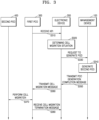
- FIG. 3 illustrates a method, performed by an electronic device, of controlling scale-out of a RAN, according to an embodiment of the disclosure.
- the electronic device 200 may receive KPI information of the first pod 300 at operation S310.
- the electronic device 200 is described as directly monitoring the KPI of the first pod 300, embodiments are not limited thereto.
- the monitoring of the KPI of the first pod 300 may be performed by a device separate from the electronic device 200.
- the electronic device 200 may receive the KPI of the monitored first pod 300 from the separate device.
- the electronic device 200 may determine a cell migration situation by using the KPI of the first pod 300 at operation S320.
- the cell migration situation may be determined by a cell migration rule. Based on the KPI of the first pod 300 obtained by the cell migration rule being greater than or equal to a preset threshold KPI, the electronic device 200 may determine that the cell migration situation is a scale-out situation.
- the electronic device 200 may request the management device 100 to generate a new pod at operation S330.
- the management device 100 may include Kubernetes, and may generate the second pod 400 to which a cell may be migrated within a range defined by a user by using an application programming interface (API) server provided by the management device 100 at operation S340.
- API application programming interface
- the electronic device 200 may receive, from the management device 100, a message indicating that the second pod 400 has been generated at operation S350. For example, after the second pod 400 to which the cell is to be migrated is generated, the electronic device 200 may transmit, to the first pod 300, a cell migration message at operation S360.
- the cell migration message may include information used for the cell migration between the first pod 300 and the second pod 400.
- the cell migration message may include information about at least one of endpoint information of the first pod 300, endpoint information of the second pod 400, the cell migration situation, basis information of the cell migration situation, resource allocation information of the second pod 400, a scaling control request ID, or information about a cell to be migrated from the first pod 300 to the second pod 400 when performing the cell migration.
- a cell migration operation may be performed between the first pod 300 and the second pod 400 at operation S370, and when the cell migration operation is completed, the electronic device 200 may receive a cell migration termination message at operation S380.
- the cell migration termination message may include information related to the cell migration situation.
- the cell migration termination message may include at least one of information about whether the cell migration is completed, cell migration failure reason information, KPI information at a time point of completion of the cell migration, or the scaling control request ID.
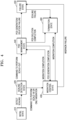
- FIG. 4 is a block diagram illustrating state transitions of an electronic device according to an embodiment of the disclosure.
- states of the electronic device 200 may include an initial state 410, a scaling detection state 420, a migration control state 430, a pod management state 440, a failure state 450, and a termination state 460.
- the state of the electronic device 200 may transition from the initial state 410 to the scaling detection state 420 for obtaining a KPI of a particular pod and determining whether to perform cell migration, according to a cell migration rule.
- a cell migration situation may be determined based on the KPI of the particular pod and a preset threshold KPI.
- the cell migration situation may be any one of a scale-in situation, a scale-out situation, and a migration-only situation.
- the electronic device 200 may issue an additional command according to the cell migration situation determined in the scaling detection state 420.
- the additional command may include one of a command to perform scale-in, a command to perform scale-out, and a command to perform only migration.
- the state of the electronic device 200 may transition to the migration control state 430 based on the additional command being a command to perform scale-in or a command to perform only cell migration, and to the migration control state 430 based on the add command being a command to perform scale-out.
- the electronic device 200 may transmit a cell migration message to the first pod 300, which is to perform the cell migration, and receive, from the first pod 300, information about migration completion or migration failure.
- the electronic device 200 in the migration control state 430 may transmit a cell migration termination message to the management device 100, and the state of the electronic device 200 may transition to the pod management state 440.
- the state of the electronic device may transition from the migration control state 430 to the failure state 450.
- the electronic device 200 may control a migration state by transmitting or receiving a message related to the cell migration between the pods.
- the electronic device 200 may transmit, to the management device 100, a command to perform scale-out as the additional command, and transition to the pod management state 440.
- the scaling detection state 420 in which it is determined to perform scale-out may correspond to the state of the electronic device 200 in operation S320 of FIG. 3 .
- the electronic device 200 may generate or delete a pod with the management device 100, and transmit or receive a pod generation/deletion completion/failure message.
- the electronic device 200 in the pod management state 440 may receive, from the management device 100, a message indicating completion of generation of the second pod 400, transmit a cell migration-related message to the first pod 300, and transition to the migration control state 430.
- the state of the electronic device 200 may correspond to the pod management state 440.
- the electronic device 200 in the migration control state 430 may receive a migration termination message from the first pod 300, and transition to the termination state 460.
- the state of the electronic device 200 after operation S380 of FIG. 3 may correspond to the termination state 460.
- the state of the electronic device 200 may transition from the pod management state 440 to the failure state 450.
- the failure state 450 may be a state to which the electronic device 200 transitions based on a pod being not generated or deleted by the management device 100 or a cell migration failure message is received from the first pod 300.
- the state of the electronic device 200 may immediately transition the termination state 460.
- the electronic device 200 may transition to the termination state 460.
- the termination state 460 of the electronic device 200 may refer to a state in which the cell migration situation determined in the scaling detection state 420 has completely terminated. Accordingly, in the termination state 460, the electronic device 200 may transition to the initial state 410 for receiving a KPI from at least one pod and detecting a scaling situation.
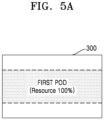
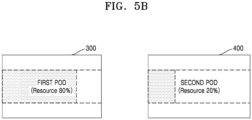
- FIG. 5A and 5B illustrate a process of performing scale-out according to an embodiment of the disclosure.
- the electronic device 200 may obtain resource information of the first pod 300 as KPI information, and determine the cell migration situation according to the cell migration rule. For example, based on the cell migration rule indicating that scale-out is performed when a resource usage rate of 90 % or greater, which may be a threshold KPI, being satisfied, the electronic device 200 may determine that the cell migration situation is a scale-out situation.
- the electronic device 200 may request the management device 100 to generate the second pod 400 for scale-out, and the management device 100 may generate the second pod 400.
- the resource usage rate of the second pod 400 may be 0 % when initially generated.
- the electronic device 200 may transmit a cell migration message to the first pod 300, and cell migration between the first pod 300 and the second pod 400 may be completed.
- the first pod 300 may migrate a cell to the second pod 400 by using the cell migration message received from the electronic device 200, and transmit a cell migration termination message to the electronic device 200.
- the resource usage rate of the first pod 300 may be 80 %
- the resource usage rate of the second pod 400 may be 20 %
- the electronic device 200 may store, by using the cell migration termination message, the resource usage rates of the first pod 300 and the second pod 400 at a time point at which the cell migration is completed.
- FIG. 6 illustrates a method, performed by an electronic device, of controlling scale-in of a RAN, according to an embodiment of the disclosure.
- the electronic device 200 may receive KPI information of the first pod 300 at operation S610.
- the electronic device 200 is described as directly monitoring a KPI of the first pod 300 or the second pod 400 , embodiments are not limited thereto.
- the monitoring of the KPI of the first pod 300 or the second pod 400 may be performed by a device separate from the electronic device 200.
- the electronic device 200 may receive the KPI of the monitored first pod 300 or second pod 400, from the separate device.
- the electronic device 200 may determine a cell migration situation by using the KPI of the first pod 300 at operation S620.
- the state of the electronic device 200 may be the scaling detection state 420 of FIG. 4 to determine the cell migration situation.
- the cell migration situation may be determined by a cell migration rule. Based on the KPI of the first pod 300 obtained by the cell migration rule being less than or equal to a preset threshold KPI, the electronic device 200 may determine that the cell migration situation is a scale-in situation. For example, based on the cell migration rule indicating that scale-in is performed when a resource usage rate of 60 % or less, which may be a threshold KPI, being satisfied, the electronic device 200 may determine that the cell migration situation is a scale-in situation.
- the electronic device 200 may receive KPI information of the monitored second pod 400 in order to determine a target pod to perform cell migration with the first pod 300 at operation S630, and determine the second pod 400 as the target pod, based on the received KPI information of the second pod 400.
- the electronic device 200 may transmit a cell migration message to the first pod 300 at operation S640.
- the electronic device 200 may first transmit the cell migration message to the first pod 300, such that the cell migration between the first pod 300 and the second pod 400 is performed before the second pod 400 is deleted by the management device 100.
- the state of the electronic device 200 may transition from the scaling detection state 420 to the migration control state 430 of FIG. 4 .
- the cell migration message may include information used for the cell migration between the first pod 300 and the second pod 400.
- the cell migration message may include information about at least one of endpoint information of the first pod 300, endpoint information of the second pod 400, the cell migration situation, basis information of the cell migration situation, resource allocation information of the second pod 400, a scaling control request ID, or information about a cell to be migrated from the first pod 300 to the second pod 400 when performing the cell migration.
- a cell migration operation may be performed between the first pod 300 and the second pod 400 at operation S650, and when the cell migration operation is completed, the electronic device 200 may receive a cell migration termination message from the first pod 300 at operation S660.
- the state of the electronic device 200 may transition from the migration control state 430 to the failure state 450 of FIG. 4 .
- the cell migration termination message may include information related to the cell migration situation.
- the cell migration termination message may include at least one of information about whether the cell migration is completed, cell migration failure reason information, KPI information at a time point of completion of the cell migration, or the scaling control request ID.
- the electronic device 200 may transmit, to the management device 100, a message for requesting deletion of the second pod 400 at operation S670, and the management device 100 may delete the second pod 400 that is no longer needed at operation S680, and transmit, to the electronic device 200, a message indicating the deletion of the second pod 400 at operation S690.
- the state of the electronic device 200 may transition from the migration control state 430 to the pod management state 440 after transmitting, to the management device 100, the message requesting to delete the second pod 400.
- the state of the electronic device 200 may transition from the pod management state 440 to the termination state 460 of FIG. 4
- the deletion of the second pod 400 fails, the state of the electronic device 200 may transition from the pod management state 440 to the failure state 450 of FIG. 4 .
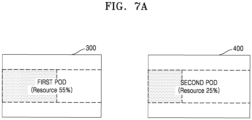
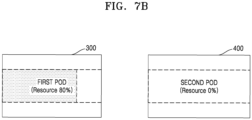
- FIGS. 7A and 7B illustrate a process of performing scale-in according to an embodiment of the disclosure.
- the electronic device 200 may obtain resource information of the first pod 300 as KPI information, and determine the cell migration situation according to the cell migration rule. For example, based on the cell migration rule indicating that scale-in is performed when a resource usage rate of 60 % or less, which may be a threshold KPI, being satisfied, the electronic device 200 may determine that the cell migration situation requires scale-in.
- the electronic device 200 may receive a KPI of the second pod 400 monitored for performing scale-in, and determine the second pod 400 as a target pod for cell migration.
- the second pod 400 may be determined as the target pod, as the sum of the resource usage rates of the first pod 300 and the second pod 400 is less than 100 %.
- the electronic device 200 may transmit a cell migration message to the first pod 300, and cell migration between the first pod 300 and the second pod 400 may be completed.
- the first pod 300 may migrate a cell to the second pod 400 by using the cell migration message received from the electronic device 200, and transmit a cell migration termination message to the electronic device 200.
- the resource usage rate of the first pod 300 may be 80 %
- the resource usage rate of the second pod 400 may be 0 %
- the electronic device 200 may store, by using the obtained cell migration termination message, the resource usage rate of the first pod 300 at a time point at which the cell migration is completed.
- the electronic device 200 may request the management device 100 to delete the second pod 400, in which the resource usage rate is 0 %, and the management device 100 may delete the second pod 400.
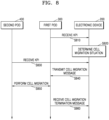
- FIG. 8 illustrates a method, performed by an electronic device, of performing only cell migration of a RAN, according to an embodiment of the disclosure.
- the electronic device 200 may receive KPI information of the first pod 300 at operation S810.
- the electronic device 200 is described as directly monitoring a KPI of the first pod 300 or the second pod 400, embodiments are not limited thereto.
- the monitoring of the KPI of the first pod 300 or the second pod 400 may be performed by a device separate from the electronic device 200.
- the electronic device 200 may receive the KPI of the monitored first pod 300 or second pod 400, from the separate device.
- the electronic device 200 may determine a cell migration situation by using the KPI of the first pod 300 at operation S820.
- the cell migration situation may be determined by a cell migration rule.
- the electronic device 200 may determine that the cell migration situation is a scale-out situation. For example, based on the cell migration rule indicating that scale-out is performed when a resource usage rate of 90 % or greater, which may be a threshold KPI, being satisfied, the electronic device 200 may determine that the cell migration situation is a scale-out situation.
- the resource usage rate of the first pod 300 may be reduced by performing only cell migration to a pod having a low KPI value among existing pods, without generating a new pod.
- the electronic device 200 may receive KPI information of the second pod 400 at operation S830, and based on the received KPI of the second pod 400 being less than or equal to a preset third value, the electronic device 200 may determine to perform only data migration.
- the electronic device 200 may transmit a cell migration message to the first pod 300 at operation S840.
- the state of the electronic device 200 may transition from the scaling detection state 420 to the migration control state 430 of FIG. 4 .
- the cell migration message may include information used for the cell migration between the first pod 300 and the second pod 400.
- the cell migration message may include information about at least one of endpoint information of the first pod 300, endpoint information of the second pod 400, the cell migration situation, basis information of the cell migration situation, resource allocation information of the second pod 400, a scaling control request ID, or information about a cell to be migrated from the first pod 300 to the second pod 400 when performing the cell migration.
- a cell migration operation may be performed between the first pod 300 and the second pod 400 at operation S850, and when the cell migration operation is completed, the electronic device 200 may receive a cell migration termination message from the first pod 300 at operation S860.
- the state of the electronic device 200 may transition from the migration control state 430 to the termination state 460 of FIG. 4
- the electronic device 200 receives a cell migration failure message
- the state of the electronic device 200 may transition from the migration control state 430 to the failure state 450 of FIG. 4 .
- the cell migration termination message may include information related to the cell migration situation.
- the cell migration termination message may include at least one of information about whether the cell migration is completed, cell migration failure reason information, KPI information at a time point of completion of the cell migration, or the scaling control request ID.
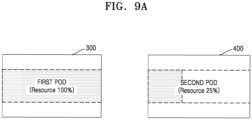
- FIG. 9A and 9B illustrate a process performing only cell migration according to an embodiment of the disclosure.
- the electronic device 200 may obtain resource information of the first pod 300 as KPI information, and determine the cell migration situation according to the cell migration rule. For example, based on the cell migration rule indicating that scale-out is performed when a resource usage rate of 80 % or greater, which may be a threshold KPI, being satisfied, the electronic device 200 may determine that the cell migration situation is a scale-out situation.
- the resource usage rate of the first pod 300 may be reduced by performing only cell migration to a pod having a low KPI value among existing pods, without generating a new pod.
- the electronic device 200 may receive a KPI of the second pod 400 monitored for performing scale-out, and determine the second pod 400 as a target pod for cell migration.
- the second pod 400 may be determined as the target pod, as the sum of the resource usage rates of the first pod 300 and the second pod 400 is less than 150 %.
- the cell migration between the first pod 300 and the second pod 400 may be completed.
- the first pod 300 may migrate a cell to the second pod 400 by using the cell migration message received from the electronic device 200, and transmit a cell migration termination message to the electronic device 200.
- the resource usage rate of the first pod 300 may be 65 %
- the resource usage rate of the second pod 400 may be 60 %
- the electronic device 200 may store, by using the obtained cell migration termination message, the resource usage rates of the first pod 300 and the second pod 400 at a time point at which the cell migration is completed.
- the electronic device 200 may perform only data migration between the pods, which does not generate a new pod.
- the electronic device 200 may achieve various effects including an effect of preventing an excessive increase in the resource usage rate of any one pod.
- Example methods, which may be performed by the electronic device 200, of performing cell migration are described above. Hereinafter, an example of the configuration of the electronic device 200 is described in detail with reference to FIG. 10 .
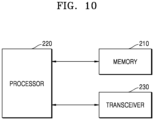
- FIG. 10 is a block diagram illustrating a configuration of an electronic device according to an embodiment of the disclosure.
- the electronic device 200 may include a memory 210, a processor 220, and a transceiver 230.
- the components of the electronic device is not limited to those illustrated in FIG. 10 , and may further include components not illustrated in FIG. 10 , or may omit some components illustrated in FIG. 10 .
- FIG. 10 illustrates that the operation of the processor 220 allows the electronic device 200 to control scaling
- the operation of the processor 220 may be implemented and stored as software stored in the memory 210.
- the electronic device 200 may further include an input unit for receiving, from a user, an input of a threshold KPI value for determining a scaling situation, and an output unit for outputting a scaling result.
- the operation of the processor 220 may be implemented as a software module stored in the memory 210.
- the software module may be stored in the memory 210 and operated by being executed by the processor 220.
- the memory 210 may be electrically connected to the processor 220, and may store commands or data related to operations of the components included in the electronic device. According to various embodiments of the disclosure, the memory 210 may store a KPI threshold value for determining a cell migration situation, a cell migration message related to a pod to which a cell is to be migrated, or instructions for the above operations.
- the memory 210 may store instructions for executing such software modules.
- the processor 220 may be electrically connected to the components included in the electronic device to perform computations or data processing for control and/or communications of the components included in the electronic device. According to an embodiment of the disclosure, the processor 220 may load, into the memory 210, a command or data received from at least one of other components, process the command or data, and store resulting data in the memory 210.
- FIG. 10 illustrates that the processor 220 operates as one processor 220 for convenience of description, functions of at least some modules included in the respective units that perform conceptually classified functions of the electronic device may be implemented as a plurality of processors. In this case, the processor 220 does not operate as one processor 220, but a plurality of processors may be implemented as separate hardware units to perform respective operations. However, the disclosure is not limited thereto.
- the transceiver 230 may support establishment of a wired or wireless communication channel between the electronic device and another external electronic device, and communication through the established communication channel. According to an embodiment of the disclosure, the transceiver 230 may receive data from another external electronic device or transmit data to another electronic device including a server that controls another external base station, through wired or wireless communication.
- Data received by the transceiver 230 may be a KPI related to at least one pod, at least one cell migration message, and a cell migration termination message.
- the cell migration message may include information used for cell migration between the first pod 300 and the second pod 400.
- the cell migration message may include information about at least one of endpoint information of the first pod 300, endpoint information of the second pod 400, the cell migration situation, basis information of the cell migration situation, resource allocation information of the second pod 400, a scaling control request ID, or information about a cell to be migrated from the first pod 300 to the second pod 400 when performing the cell migration.
- the cell migration termination message may include information related to a cell migration situation.
- the cell migration termination message may include at least one of information about whether the cell migration is completed, cell migration failure reason information, KPI information at a time point of completion of the cell migration, or the scaling control request ID.
- the transceiver 230 may include a wireless communication module (e.g., a cellular communication module, a short-range wireless communication module, or a global navigation satellite system (GNSS) communication module) or a wired communication module (e.g., a local area network (LAN) communication module, or a power line communication module), and may communicate with an external electronic device through a short-range communication network (e.g., Bluetooth, Wi-Fi direct, or Infrared Data Association (IrDA)) or a long-range communication network (e.g., a cellular network, the Internet, or a computer network (e.g., a LAN or a wide area network (WAN))), by using the communication module.
- a wireless communication module e.g., a cellular communication module, a short-range wireless communication module, or a global navigation satellite system (GNSS) communication module
- GNSS global navigation satellite system
- wired communication module e.g., a local area network (LAN) communication module, or
- a method of controlling scaling in a vRAN may include determining a cell migration situation based on KPI information of a first pod, transmitting, to the first pod, at least one cell migration message related to a second pod on which cell migration is to be performed with the first pod for which the cell migration is determined based on the determined cell migration situation, and receiving a cell migration termination message from the first pod.
- the KPI information may include information about at least one of the number of UEs processed by the pod, the number of cells processed by the pod, CPU utilization, memory usage, throughput, RNTI, BLER, or RSRP.
- Each of the first pod and the second pod may be any one of a CU or a DU.
- the determining of the cell migration situation may include, based on the obtained KPI of the first pod being less than or equal to a preset first value, determining the cell migration situation as requiring scale-in, and based on the obtained KPI of the first pod being greater than or equal to a preset second value, determining the cell migration situation as requiring scale-out.
- the transmitting of the at least one cell migration message may include, based on the cell migration situation being determined as a scale-in situation, requesting a management device to generate the second pod, receiving, from the management device, a message indicating completion of generation of the second pod, and transmitting the at least one cell migration message to the first pod.
- the cell migration message may include at least one of endpoint information of the first pod, endpoint information of the second pod, the determined cell migration situation, basis information of the cell migration situation, resource allocation information of the second pod, or a scaling control request ID.
- the cell migration termination message may include at least one of information about whether the cell migration is completed, cell migration failure reason information, KPI information at a time point of completion of the cell migration, or the scaling control request ID.
- An electronic device for controlling scaling may include a transceiver and at least one processor configured to execute one or more instructions stored in the electronic device.
- the at least one processor may determine a cell migration situation based on KPI information of a first pod obtained through the transceiver.
- the at least one processor may transmit, to a first pod, at least one cell migration message related to a second pod on which cell migration is to be performed with the first pod for which the cell migration is determined based on the determined cell migration situation.
- the at least one processor may receive a cell migration termination message from the first pod.
- the KPI information may include information about at least one of the number of UEs processed by the pod, the number of cells processed by the pod, CPU utilization, memory usage, throughput, RNTI, BLER, or RSRP.
- Each of the first pod and the second pod may be any one of a CU or a DU.
- the at least one processor may determine the cell migration situation as requiring scale-in.
- the at least one processor may determine the cell migration situation as requiring scale-out.
- the at least one processor may request a management device to generate the second pod.
- the at least one processor may obtain a message indicating completion of generation of the second pod, from the management device through the transceiver.
- the at least one processor may control the transceiver to transmit the at least one cell migration message to the first pod.
- the at least one processor may determine, based on obtained KPI information of the second pod, that the second pod is to perform cell migration with the first pod.
- the at least one processor may control the transceiver to receive, from the first pod, a cell migration termination message and transmit, to a management device, a message for requesting deletion of the second pod, and receive, from the management device, a message indicating completion of deletion of the second pod.
- the at least one processor may control the transceiver to transmit, to the first pod, at least one cell migration message related to the second pod.
- the cell migration message may include at least one of endpoint information of the first pod, endpoint information of the second pod, scaling type information, scaling trigger basis information, resource allocation information of the second pod, or a scaling control request ID.
- the cell migration termination message may include at least one of information about whether the cell migration is completed, cell migration failure reason information, KPI information at a time point of completion of the cell migration, or scaling control request ID information.
- a computer-readable recording medium may include one or more pieces of program code.
- An electronic device may execute the one or more pieces of program code to perform a method including determining a cell migration situation based on KPI information of a first pod, transmitting, to the first pod, at least one cell migration message related to a second pod on which cell migration is to be performed with the first pod for which the cell migration is determined based on the determined cell migration situation, and receiving a cell migration termination message from the first pod.
- a recording medium may store a program for executing at least one of the methods according to the embodiments of the disclosure.
- a machine-readable storage medium may be provided in the form of a non-transitory storage medium.
- the term 'non-transitory storage medium' may refer to a tangible device and does not include a signal (e.g., an electromagnetic wave), and the term 'non-transitory storage medium' does not distinguish between a case where data is stored in a storage medium semi-permanently and a case where data is stored temporarily.
- the non-transitory storage medium may include a buffer in which data is temporarily stored.
- the methods according to various embodiments of the disclosure may be included in a computer program product and then provided.
- the computer program products may be traded as commodities between sellers and buyers.
- the computer program product may be distributed in the form of a machine-readable storage medium (e.g., a CD-ROM), or may be distributed online (e.g., downloaded or uploaded) through an application store or directly between two user devices (e.g., smart phones).
- a portion of the computer program product e.g., a downloadable app
Landscapes
- Engineering & Computer Science (AREA)
- Computer Networks & Wireless Communication (AREA)
- Signal Processing (AREA)
- Mobile Radio Communication Systems (AREA)
Applications Claiming Priority (3)
| Application Number | Priority Date | Filing Date | Title |
|---|---|---|---|
| KR20220081499 | 2022-07-01 | ||
| KR1020220121030A KR20240003685A (ko) | 2022-07-01 | 2022-09-23 | 가상 무선 접속 네트워크의 스케일링 제어 방법 및 전자 장치 |
| PCT/KR2023/008630 WO2024005444A1 (ko) | 2022-07-01 | 2023-06-21 | 가상 무선 접속 네트워크의 스케일링 제어 방법 및 전자 장치 |
Publications (2)
| Publication Number | Publication Date |
|---|---|
| EP4485877A1 true EP4485877A1 (de) | 2025-01-01 |
| EP4485877A4 EP4485877A4 (de) | 2025-06-25 |
Family
ID=89380836
Family Applications (1)
| Application Number | Title | Priority Date | Filing Date |
|---|---|---|---|
| EP23831804.2A Pending EP4485877A4 (de) | 2022-07-01 | 2023-06-21 | Verfahren und elektronische vorrichtung zur steuerung der skalierung in einem virtualisierten funkzugangsnetzwerk |
Country Status (3)
| Country | Link |
|---|---|
| US (1) | US20240007921A1 (de) |
| EP (1) | EP4485877A4 (de) |
| WO (1) | WO2024005444A1 (de) |
Families Citing this family (1)
| Publication number | Priority date | Publication date | Assignee | Title |
|---|---|---|---|---|
| US20240334463A1 (en) * | 2023-03-28 | 2024-10-03 | Dish Wireless L.L.C. | Adaptive distributed unit (du) scheduler |
Family Cites Families (6)
| Publication number | Priority date | Publication date | Assignee | Title |
|---|---|---|---|---|
| WO2020049335A1 (en) * | 2018-09-04 | 2020-03-12 | Telefonaktiebolaget Lm Ericsson (Publ) | Signalling storm mitigation in a secured radio access network |
| EP3745761A1 (de) * | 2019-05-28 | 2020-12-02 | Samsung Electronics Co., Ltd. | Virtualisierung von ran-funktionen auf der basis der belastung der basisstationen |
| KR20210108791A (ko) * | 2020-02-26 | 2021-09-03 | 삼성전자주식회사 | 가상화된 네트워크 기능을 실행하는 방법 및 장치 |
| EP4187879A4 (de) * | 2020-09-24 | 2023-11-22 | Samsung Electronics Co., Ltd. | Verfahren und vorrichtung zum offload von hardware an ein softwarepaket |
| US12127059B2 (en) * | 2020-11-25 | 2024-10-22 | Northeastern University | Intelligence and learning in O-RAN for 5G and 6G cellular networks |
| EP4264993A1 (de) * | 2020-12-18 | 2023-10-25 | Nokia Technologies Oy | Zugangsnetz mit dienstbasierten schnittstellen |
-
2023
- 2023-06-21 EP EP23831804.2A patent/EP4485877A4/de active Pending
- 2023-06-21 WO PCT/KR2023/008630 patent/WO2024005444A1/ko not_active Ceased
- 2023-07-10 US US18/220,027 patent/US20240007921A1/en active Pending
Also Published As
| Publication number | Publication date |
|---|---|
| WO2024005444A1 (ko) | 2024-01-04 |
| US20240007921A1 (en) | 2024-01-04 |
| EP4485877A4 (de) | 2025-06-25 |
Similar Documents
| Publication | Publication Date | Title |
|---|---|---|
| US10956849B2 (en) | Microservice auto-scaling for achieving service level agreements | |
| CN108632365B (zh) | 服务资源调整方法、相关装置和设备 | |
| US11316792B2 (en) | Method and system of limiting traffic | |
| US9277494B2 (en) | Reducing wireless reconnection time of a computing device | |
| KR101665897B1 (ko) | 컴퓨팅 디바이스의 무선 재연결 시간을 감소시키기 위한 혼합식 오프 사이트/온 사이트 예측 계산 | |
| CN110196770B (zh) | 云系统内存数据处理方法、装置、设备及存储介质 | |
| JP7214287B1 (ja) | リソース割り当ての決定方法、装置、計算装置及びコンピュータプログラム | |
| WO2023115829A1 (zh) | 一种边缘计算资源的分配方法、装置、设备及存储介质 | |
| US11405843B2 (en) | Techniques for selecting network protocols | |
| CN111490947A (zh) | 数据包发送方法、数据包接收方法、系统、设备及介质 | |
| EP4485877A1 (de) | Verfahren und elektronische vorrichtung zur steuerung der skalierung in einem virtualisierten funkzugangsnetzwerk | |
| CN111177160A (zh) | 服务更新方法、装置、服务器及介质 | |
| US12423151B2 (en) | Multi-tenant real-time process controller for edge cloud environments | |
| CN114995972B (zh) | 应用程序的管理方法、装置、可读介质、电子设备及产品 | |
| CN105868002B (zh) | 一种用于在分布式计算中处理重发请求的方法与设备 | |
| WO2018103447A1 (zh) | WiFi/热点的开启方法及装置 | |
| CN112615916A (zh) | 文件部署方法、装置、电子设备以及存储介质 | |
| KR20240003685A (ko) | 가상 무선 접속 네트워크의 스케일링 제어 방법 및 전자 장치 | |
| US11765042B2 (en) | Traffic application amount calculation apparatus, method and program | |
| US11362890B2 (en) | System management device, system management method, program, and information processing system | |
| CN115454576A (zh) | 一种虚拟机进程管理方法、系统及电子设备 | |
| US20180262562A1 (en) | Selection device, device selection method, and program | |
| CN117082083B (zh) | 一种基于分布式物联网架构的数据存储方法、装置及介质 | |
| US11418417B2 (en) | Managing stateful workloads executing on temporarily available resources of a cloud computing system | |
| CN114185688B (zh) | 物理资源占用状态的矫正方法、调度器及可读存储介质 |
Legal Events
| Date | Code | Title | Description |
|---|---|---|---|
| STAA | Information on the status of an ep patent application or granted ep patent |
Free format text: STATUS: THE INTERNATIONAL PUBLICATION HAS BEEN MADE |
|
| PUAI | Public reference made under article 153(3) epc to a published international application that has entered the european phase |
Free format text: ORIGINAL CODE: 0009012 |
|
| STAA | Information on the status of an ep patent application or granted ep patent |
Free format text: STATUS: REQUEST FOR EXAMINATION WAS MADE |
|
| 17P | Request for examination filed |
Effective date: 20240927 |
|
| AK | Designated contracting states |
Kind code of ref document: A1 Designated state(s): AL AT BE BG CH CY CZ DE DK EE ES FI FR GB GR HR HU IE IS IT LI LT LU LV MC ME MK MT NL NO PL PT RO RS SE SI SK SM TR |
|
| REG | Reference to a national code |
Ref country code: DE Ref legal event code: R079 Free format text: PREVIOUS MAIN CLASS: H04L0041089700 Ipc: H04W0024020000 |
|
| A4 | Supplementary search report drawn up and despatched |
Effective date: 20250528 |
|
| RIC1 | Information provided on ipc code assigned before grant |
Ipc: H04W 36/22 20090101ALN20250522BHEP Ipc: H04W 88/08 20090101ALN20250522BHEP Ipc: H04L 43/20 20220101ALI20250522BHEP Ipc: H04L 41/0897 20220101ALI20250522BHEP Ipc: H04W 24/02 20090101AFI20250522BHEP |
|
| DAV | Request for validation of the european patent (deleted) | ||
| DAX | Request for extension of the european patent (deleted) |