EP4485776A1 - Coordinated fault-tolerant control method - Google Patents
Coordinated fault-tolerant control method Download PDFInfo
- Publication number
- EP4485776A1 EP4485776A1 EP24183751.7A EP24183751A EP4485776A1 EP 4485776 A1 EP4485776 A1 EP 4485776A1 EP 24183751 A EP24183751 A EP 24183751A EP 4485776 A1 EP4485776 A1 EP 4485776A1
- Authority
- EP
- European Patent Office
- Prior art keywords
- stage
- circuit
- voltage
- switch
- bridge arm
- Prior art date
- Legal status (The legal status is an assumption and is not a legal conclusion. Google has not performed a legal analysis and makes no representation as to the accuracy of the status listed.)
- Pending
Links
Images








Classifications
-
- H—ELECTRICITY
- H02—GENERATION; CONVERSION OR DISTRIBUTION OF ELECTRIC POWER
- H02M—APPARATUS FOR CONVERSION BETWEEN AC AND AC, BETWEEN AC AND DC, OR BETWEEN DC AND DC, AND FOR USE WITH MAINS OR SIMILAR POWER SUPPLY SYSTEMS; CONVERSION OF DC OR AC INPUT POWER INTO SURGE OUTPUT POWER; CONTROL OR REGULATION THEREOF
- H02M1/00—Details of apparatus for conversion
- H02M1/32—Means for protecting converters other than automatic disconnection
- H02M1/325—Means for protecting converters other than automatic disconnection with means for allowing continuous operation despite a fault, i.e. fault tolerant converters
-
- H—ELECTRICITY
- H02—GENERATION; CONVERSION OR DISTRIBUTION OF ELECTRIC POWER
- H02J—ELECTRIC POWER NETWORKS; CIRCUIT ARRANGEMENTS OR SYSTEMS FOR SUPPLYING OR DISTRIBUTING ELECTRIC POWER; SYSTEMS FOR STORING ELECTRIC ENERGY
- H02J9/00—Circuit arrangements for emergency or stand-by power supply, e.g. for emergency lighting
- H02J9/04—Circuit arrangements for emergency or stand-by power supply, e.g. for emergency lighting in which the distribution system is disconnected from the normal source and connected to a standby source
- H02J9/06—Circuit arrangements for emergency or stand-by power supply, e.g. for emergency lighting in which the distribution system is disconnected from the normal source and connected to a standby source with automatic change-over, e.g. UPS systems
- H02J9/061—Circuit arrangements for emergency or stand-by power supply, e.g. for emergency lighting in which the distribution system is disconnected from the normal source and connected to a standby source with automatic change-over, e.g. UPS systems for DC powered loads
-
- H—ELECTRICITY
- H02—GENERATION; CONVERSION OR DISTRIBUTION OF ELECTRIC POWER
- H02M—APPARATUS FOR CONVERSION BETWEEN AC AND AC, BETWEEN AC AND DC, OR BETWEEN DC AND DC, AND FOR USE WITH MAINS OR SIMILAR POWER SUPPLY SYSTEMS; CONVERSION OF DC OR AC INPUT POWER INTO SURGE OUTPUT POWER; CONTROL OR REGULATION THEREOF
- H02M1/00—Details of apparatus for conversion
- H02M1/0067—Converter structures employing plural converter units, other than for parallel operation of the units on a single load
- H02M1/007—Plural converter units in cascade
-
- H—ELECTRICITY
- H02—GENERATION; CONVERSION OR DISTRIBUTION OF ELECTRIC POWER
- H02M—APPARATUS FOR CONVERSION BETWEEN AC AND AC, BETWEEN AC AND DC, OR BETWEEN DC AND DC, AND FOR USE WITH MAINS OR SIMILAR POWER SUPPLY SYSTEMS; CONVERSION OF DC OR AC INPUT POWER INTO SURGE OUTPUT POWER; CONTROL OR REGULATION THEREOF
- H02M1/00—Details of apparatus for conversion
- H02M1/0067—Converter structures employing plural converter units, other than for parallel operation of the units on a single load
- H02M1/0074—Plural converter units whose inputs are connected in series
-
- H—ELECTRICITY
- H02—GENERATION; CONVERSION OR DISTRIBUTION OF ELECTRIC POWER
- H02M—APPARATUS FOR CONVERSION BETWEEN AC AND AC, BETWEEN AC AND DC, OR BETWEEN DC AND DC, AND FOR USE WITH MAINS OR SIMILAR POWER SUPPLY SYSTEMS; CONVERSION OF DC OR AC INPUT POWER INTO SURGE OUTPUT POWER; CONTROL OR REGULATION THEREOF
- H02M1/00—Details of apparatus for conversion
- H02M1/42—Circuits or arrangements for compensating for or adjusting power factor in converters or inverters
- H02M1/4208—Arrangements for improving power factor of AC input
- H02M1/4225—Arrangements for improving power factor of AC input using a non-isolated boost converter
-
- H—ELECTRICITY
- H02—GENERATION; CONVERSION OR DISTRIBUTION OF ELECTRIC POWER
- H02M—APPARATUS FOR CONVERSION BETWEEN AC AND AC, BETWEEN AC AND DC, OR BETWEEN DC AND DC, AND FOR USE WITH MAINS OR SIMILAR POWER SUPPLY SYSTEMS; CONVERSION OF DC OR AC INPUT POWER INTO SURGE OUTPUT POWER; CONTROL OR REGULATION THEREOF
- H02M3/00—Conversion of DC power input into DC power output
- H02M3/01—Resonant DC/DC converters
-
- H—ELECTRICITY
- H02—GENERATION; CONVERSION OR DISTRIBUTION OF ELECTRIC POWER
- H02M—APPARATUS FOR CONVERSION BETWEEN AC AND AC, BETWEEN AC AND DC, OR BETWEEN DC AND DC, AND FOR USE WITH MAINS OR SIMILAR POWER SUPPLY SYSTEMS; CONVERSION OF DC OR AC INPUT POWER INTO SURGE OUTPUT POWER; CONTROL OR REGULATION THEREOF
- H02M3/00—Conversion of DC power input into DC power output
- H02M3/22—Conversion of DC power input into DC power output with intermediate conversion into AC
- H02M3/24—Conversion of DC power input into DC power output with intermediate conversion into AC by static converters
- H02M3/28—Conversion of DC power input into DC power output with intermediate conversion into AC by static converters using discharge tubes with control electrode or semiconductor devices with control electrode to produce the intermediate AC
- H02M3/325—Conversion of DC power input into DC power output with intermediate conversion into AC by static converters using discharge tubes with control electrode or semiconductor devices with control electrode to produce the intermediate AC using devices of a triode or a transistor type requiring continuous application of a control signal
- H02M3/335—Conversion of DC power input into DC power output with intermediate conversion into AC by static converters using discharge tubes with control electrode or semiconductor devices with control electrode to produce the intermediate AC using devices of a triode or a transistor type requiring continuous application of a control signal using semiconductor devices only
- H02M3/3353—Conversion of DC power input into DC power output with intermediate conversion into AC by static converters using discharge tubes with control electrode or semiconductor devices with control electrode to produce the intermediate AC using devices of a triode or a transistor type requiring continuous application of a control signal using semiconductor devices only having at least two simultaneously operating switches on the input side, e.g. "double forward" or "double (switched) flyback" converter
-
- H—ELECTRICITY
- H02—GENERATION; CONVERSION OR DISTRIBUTION OF ELECTRIC POWER
- H02M—APPARATUS FOR CONVERSION BETWEEN AC AND AC, BETWEEN AC AND DC, OR BETWEEN DC AND DC, AND FOR USE WITH MAINS OR SIMILAR POWER SUPPLY SYSTEMS; CONVERSION OF DC OR AC INPUT POWER INTO SURGE OUTPUT POWER; CONTROL OR REGULATION THEREOF
- H02M3/00—Conversion of DC power input into DC power output
- H02M3/22—Conversion of DC power input into DC power output with intermediate conversion into AC
- H02M3/24—Conversion of DC power input into DC power output with intermediate conversion into AC by static converters
- H02M3/28—Conversion of DC power input into DC power output with intermediate conversion into AC by static converters using discharge tubes with control electrode or semiconductor devices with control electrode to produce the intermediate AC
- H02M3/325—Conversion of DC power input into DC power output with intermediate conversion into AC by static converters using discharge tubes with control electrode or semiconductor devices with control electrode to produce the intermediate AC using devices of a triode or a transistor type requiring continuous application of a control signal
- H02M3/335—Conversion of DC power input into DC power output with intermediate conversion into AC by static converters using discharge tubes with control electrode or semiconductor devices with control electrode to produce the intermediate AC using devices of a triode or a transistor type requiring continuous application of a control signal using semiconductor devices only
- H02M3/33569—Conversion of DC power input into DC power output with intermediate conversion into AC by static converters using discharge tubes with control electrode or semiconductor devices with control electrode to produce the intermediate AC using devices of a triode or a transistor type requiring continuous application of a control signal using semiconductor devices only having several active switching elements
- H02M3/33571—Half-bridge at primary side of an isolation transformer
-
- H—ELECTRICITY
- H02—GENERATION; CONVERSION OR DISTRIBUTION OF ELECTRIC POWER
- H02M—APPARATUS FOR CONVERSION BETWEEN AC AND AC, BETWEEN AC AND DC, OR BETWEEN DC AND DC, AND FOR USE WITH MAINS OR SIMILAR POWER SUPPLY SYSTEMS; CONVERSION OF DC OR AC INPUT POWER INTO SURGE OUTPUT POWER; CONTROL OR REGULATION THEREOF
- H02M3/00—Conversion of DC power input into DC power output
- H02M3/22—Conversion of DC power input into DC power output with intermediate conversion into AC
- H02M3/24—Conversion of DC power input into DC power output with intermediate conversion into AC by static converters
- H02M3/28—Conversion of DC power input into DC power output with intermediate conversion into AC by static converters using discharge tubes with control electrode or semiconductor devices with control electrode to produce the intermediate AC
- H02M3/325—Conversion of DC power input into DC power output with intermediate conversion into AC by static converters using discharge tubes with control electrode or semiconductor devices with control electrode to produce the intermediate AC using devices of a triode or a transistor type requiring continuous application of a control signal
- H02M3/335—Conversion of DC power input into DC power output with intermediate conversion into AC by static converters using discharge tubes with control electrode or semiconductor devices with control electrode to produce the intermediate AC using devices of a triode or a transistor type requiring continuous application of a control signal using semiconductor devices only
- H02M3/33569—Conversion of DC power input into DC power output with intermediate conversion into AC by static converters using discharge tubes with control electrode or semiconductor devices with control electrode to produce the intermediate AC using devices of a triode or a transistor type requiring continuous application of a control signal using semiconductor devices only having several active switching elements
- H02M3/33573—Full-bridge at primary side of an isolation transformer
-
- H—ELECTRICITY
- H02—GENERATION; CONVERSION OR DISTRIBUTION OF ELECTRIC POWER
- H02M—APPARATUS FOR CONVERSION BETWEEN AC AND AC, BETWEEN AC AND DC, OR BETWEEN DC AND DC, AND FOR USE WITH MAINS OR SIMILAR POWER SUPPLY SYSTEMS; CONVERSION OF DC OR AC INPUT POWER INTO SURGE OUTPUT POWER; CONTROL OR REGULATION THEREOF
- H02M3/00—Conversion of DC power input into DC power output
- H02M3/22—Conversion of DC power input into DC power output with intermediate conversion into AC
- H02M3/24—Conversion of DC power input into DC power output with intermediate conversion into AC by static converters
- H02M3/28—Conversion of DC power input into DC power output with intermediate conversion into AC by static converters using discharge tubes with control electrode or semiconductor devices with control electrode to produce the intermediate AC
- H02M3/325—Conversion of DC power input into DC power output with intermediate conversion into AC by static converters using discharge tubes with control electrode or semiconductor devices with control electrode to produce the intermediate AC using devices of a triode or a transistor type requiring continuous application of a control signal
- H02M3/335—Conversion of DC power input into DC power output with intermediate conversion into AC by static converters using discharge tubes with control electrode or semiconductor devices with control electrode to produce the intermediate AC using devices of a triode or a transistor type requiring continuous application of a control signal using semiconductor devices only
- H02M3/33569—Conversion of DC power input into DC power output with intermediate conversion into AC by static converters using discharge tubes with control electrode or semiconductor devices with control electrode to produce the intermediate AC using devices of a triode or a transistor type requiring continuous application of a control signal using semiconductor devices only having several active switching elements
- H02M3/33576—Conversion of DC power input into DC power output with intermediate conversion into AC by static converters using discharge tubes with control electrode or semiconductor devices with control electrode to produce the intermediate AC using devices of a triode or a transistor type requiring continuous application of a control signal using semiconductor devices only having several active switching elements having at least one active switching element at the secondary side of an isolation transformer
-
- H—ELECTRICITY
- H02—GENERATION; CONVERSION OR DISTRIBUTION OF ELECTRIC POWER
- H02M—APPARATUS FOR CONVERSION BETWEEN AC AND AC, BETWEEN AC AND DC, OR BETWEEN DC AND DC, AND FOR USE WITH MAINS OR SIMILAR POWER SUPPLY SYSTEMS; CONVERSION OF DC OR AC INPUT POWER INTO SURGE OUTPUT POWER; CONTROL OR REGULATION THEREOF
- H02M3/00—Conversion of DC power input into DC power output
- H02M3/22—Conversion of DC power input into DC power output with intermediate conversion into AC
- H02M3/24—Conversion of DC power input into DC power output with intermediate conversion into AC by static converters
- H02M3/28—Conversion of DC power input into DC power output with intermediate conversion into AC by static converters using discharge tubes with control electrode or semiconductor devices with control electrode to produce the intermediate AC
- H02M3/325—Conversion of DC power input into DC power output with intermediate conversion into AC by static converters using discharge tubes with control electrode or semiconductor devices with control electrode to produce the intermediate AC using devices of a triode or a transistor type requiring continuous application of a control signal
- H02M3/335—Conversion of DC power input into DC power output with intermediate conversion into AC by static converters using discharge tubes with control electrode or semiconductor devices with control electrode to produce the intermediate AC using devices of a triode or a transistor type requiring continuous application of a control signal using semiconductor devices only
- H02M3/33569—Conversion of DC power input into DC power output with intermediate conversion into AC by static converters using discharge tubes with control electrode or semiconductor devices with control electrode to produce the intermediate AC using devices of a triode or a transistor type requiring continuous application of a control signal using semiconductor devices only having several active switching elements
- H02M3/33576—Conversion of DC power input into DC power output with intermediate conversion into AC by static converters using discharge tubes with control electrode or semiconductor devices with control electrode to produce the intermediate AC using devices of a triode or a transistor type requiring continuous application of a control signal using semiconductor devices only having several active switching elements having at least one active switching element at the secondary side of an isolation transformer
- H02M3/33584—Bidirectional converters
-
- H—ELECTRICITY
- H02—GENERATION; CONVERSION OR DISTRIBUTION OF ELECTRIC POWER
- H02M—APPARATUS FOR CONVERSION BETWEEN AC AND AC, BETWEEN AC AND DC, OR BETWEEN DC AND DC, AND FOR USE WITH MAINS OR SIMILAR POWER SUPPLY SYSTEMS; CONVERSION OF DC OR AC INPUT POWER INTO SURGE OUTPUT POWER; CONTROL OR REGULATION THEREOF
- H02M7/00—Conversion of AC power input into DC power output; Conversion of DC power input into AC power output
- H02M7/42—Conversion of DC power input into AC power output without possibility of reversal
- H02M7/44—Conversion of DC power input into AC power output without possibility of reversal by static converters
- H02M7/48—Conversion of DC power input into AC power output without possibility of reversal by static converters using discharge tubes with control electrode or semiconductor devices with control electrode
- H02M7/483—Converters with outputs that each can have more than two voltages levels
- H02M7/4833—Capacitor voltage balancing
-
- H—ELECTRICITY
- H02—GENERATION; CONVERSION OR DISTRIBUTION OF ELECTRIC POWER
- H02M—APPARATUS FOR CONVERSION BETWEEN AC AND AC, BETWEEN AC AND DC, OR BETWEEN DC AND DC, AND FOR USE WITH MAINS OR SIMILAR POWER SUPPLY SYSTEMS; CONVERSION OF DC OR AC INPUT POWER INTO SURGE OUTPUT POWER; CONTROL OR REGULATION THEREOF
- H02M7/00—Conversion of AC power input into DC power output; Conversion of DC power input into AC power output
- H02M7/42—Conversion of DC power input into AC power output without possibility of reversal
- H02M7/44—Conversion of DC power input into AC power output without possibility of reversal by static converters
- H02M7/48—Conversion of DC power input into AC power output without possibility of reversal by static converters using discharge tubes with control electrode or semiconductor devices with control electrode
- H02M7/483—Converters with outputs that each can have more than two voltages levels
- H02M7/487—Neutral point clamped inverters
Definitions
- the present disclosure relates to a power conversion technology, and more particularly to a coordinated fault-tolerant control method for a two-stage power module.
- solid-state transformers As known, solid-state transformers (SST) have been widely used in DC power consumption or DC power generation fields such as data centers, electric vehicle charging and swapping stations, photovoltaic products and energy storage products. It is important to provide the solid-state transformer with high reliability. In the process of designing the solid-state transformer, an appropriate fault-tolerant control method should be adopted to minimize the downtime caused by internal equipment failures.
- the switch failure is a main failure cause of the power electronic circuit.
- a fault-tolerant control method can be performed to reduce the system downtime. Consequently, the reliability can be enhanced, and the operation and maintenance cost will be reduced.
- the control circuit bypasses the faulty power module when the switch of the power module fails. Since it is necessary to bypass the whole power module as long as one switch fails, the power that can be provided by the system is reduced, and the fault tolerance is insufficient.
- the redundant components are arranged.
- the redundant components are used to reconstruct the circuit topology.
- the second method needs to add redundant components, the circuitry complexity and the cost of the power module increase.
- the present disclosure provides a coordinated fault-tolerant control method.
- the coordinated fault-tolerant control method is applied to the two-stage power module.
- one switch in one of the two rear-stage switch sets in the first side circuit of the rear-stage circuit fails, some rear-stage switch sets in the first side circuit and the second side circuit of the rear-stage circuit are still operated normally. Consequently, the two-stage power module is maintained in the normal working state, the fault tolerance capability of the two-stage power module is enhanced, and the reliability of the two-stage power module is increased.
- the circuitry complexity of the two-stage power module is reduced, and the cost of the two-stage power module is also reduced.
- any switch in the front-stage circuit fails and the DC midpoint is in a potential unbalance state, the DC midpoint is controlled to be in the potential balance state. Consequently, the DC bus voltage can be maintained in the balance state.
- a coordinated fault-tolerant control method for a two-stage power module includes a front-stage circuit and a rear-stage circuit.
- the front-stage circuit has a DC midpoint.
- Each of a first side circuit and a second side circuit of the rear-stage circuit includes two rear-stage switch sets.
- Each of the rear-stage switch sets includes two switches in serial connection.
- the control signals for controlling the two switches are complementary to each other.
- the coordinated fault-tolerant control method includes the following steps. When one switch in one of the two rear-stage switch sets in the first side circuit of the rear-stage circuit fails, the other switch in the rear-stage switch set with the failed switch is disabled.
- the other rear-stage switch set in the first side circuit of the rear-stage circuit is controlled to be operated normally. Then, one of the two rear-stage switch sets in the second side circuit of the rear-stage circuit is controlled to be operated normally, and the other of the two rear-stage switch sets in the second side circuit of the rear-stage circuit is disabled.
- any switch in the front-stage circuit fails and the DC midpoint is in a potential unbalance state, the DC midpoint is controlled to be in a potential balance state.
- a coordinated fault-tolerant control method for a power system includes a plurality of two-stage power modules.
- Each of the plurality of two-stage power modules includes a front-stage circuit and a rear-stage circuit.
- the front-stage circuit has a DC midpoint.
- Each of a first side circuit and a second side circuit of the rear-stage circuit includes two rear-stage switch sets.
- Each of the rear-stage switch sets includes two switches in serial connection.
- the control signals for controlling the two switches are complementary to each other.
- the front-stage circuits of the plurality of two-stage power modules are connected with each other in series.
- the rear-stage circuits of the plurality of two-stage power modules are connected with each other in parallel.
- the coordinated fault-tolerant control method includes the following steps. When one switch in one of the two rear-stage switch sets in the first side circuit of the rear-stage circuit in a specified two-stage power module of the plurality of two-stage power modules fails, the other switch in the rear-stage switch set with the failed switch is disabled. Then, the other rear-stage switch set in the first side circuit of the rear-stage circuit in the specified two-stage power module is controlled to be operated normally. Then, one of the two rear-stage switch sets in the second side circuit of the rear-stage circuit in the specified two-stage power module is controlled to be operated normally, and the other of the two rear-stage switch sets in the second side circuit of the rear-stage circuit is disabled. When any switch in the front-stage circuit in any two rear-stage switch fails and the DC midpoint is in a potential unbalance state, the DC midpoint in the specified two-stage power module is controlled to be in a potential balance state.
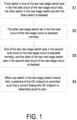
- FIG. 1 is a flowchart illustrating a coordinated fault-tolerant control method according to a first embodiment of the present disclosure.
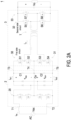
- FIG. 2A is a schematic circuit diagram illustrating an exemplary two-stage power module using the coordinated fault-tolerant control method as shown in FIG. 1 .
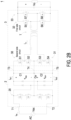
- FIG. 2B is a schematic circuit diagram illustrating another exemplary two-stage power module using the coordinated fault-tolerant control method as shown in FIG. 1 .
- the coordinated fault-tolerant control method of FIG. 1 can be applied to the controller (not shown) in the two-stage power module of FIG. 2A or the two-stage power module of FIG. 2B .
- the two-stage power module 1 includes a front-stage circuit 2 and a rear-stage circuit 3.
- the front-stage circuit 2 has a DC midpoint Ce.
- the rear-stage circuit 3 includes a first side circuit, a second side circuit and a transformer T.
- the first side circuit of the rear-stage circuit 3 is electrically connected between the front-stage circuit 2 and a primary winding of the transformer T.
- the first side circuit of the rear-stage circuit 3 includes two rear-stage switch sets, i.e., a first rear-stage switch set 30 and a second rear-stage switch set 31.
- the first rear-stage switch set 30 and the second rear-stage switch set 31 are connected with each other in series.
- the second side circuit of the rear-stage circuit 3 is electrically connected with a secondary winding of the transformer T.
- the second side circuit of the rear-stage circuit 3 includes two rear-stage switch sets, i.e., a third rear-stage switch set 32 and a fourth rear-stage switch set 33.
- the third rear-stage switch set 32 and the fourth rear-stage switch set 33 are connected with each other in parallel.
- the second side circuit of the rear-stage circuit 3 is electrically connected between the front-stage circuit 2 and a primary winding of the transformer.
- the second side circuit of the rear-stage circuit 3 includes two rear-stage switch sets, i.e., a first rear-stage switch set 30 and a second rear-stage switch set 31.
- the first rear-stage switch set 30 and the second rear-stage switch set 31 are connected with each other in series.
- the first side circuit of the rear-stage circuit 3 is electrically connected with a secondary winding of the transformer T.
- the first side circuit of the rear-stage circuit 3 includes two rear-stage switch sets, i.e., a third rear-stage switch set 32 and a fourth rear-stage switch set 33.
- the third rear-stage switch set 32 and the fourth rear-stage switch set 33 are connected with each other in parallel.
- Each of the four switch sets includes two switches.
- the control signals for controlling the two switches in each switch set are complementary to each other. In this context, these two switches are referred to as two complementary switches.
- the first rear-stage switch set 30 includes a first switch S1 and a second switch S2.
- the second rear-stage switch set 31 includes a third switch S3 and a fourth switch S4.
- the third rear-stage switch set 32 includes a fifth switch S5 and a sixth switch S6.
- the fourth rear-stage switch set 33 includes a seventh switch S7 and an eighth switch S8.
- one of the first side circuit and the second side circuit is operated in an inverter mode, and the other of the first side circuit and the second side circuit is operated in a rectifier mode.
- the first side circuit is an inverter circuit operated in the inverter mode
- the second side circuit is a rectifier circuit operated in the rectifier mode.
- the first side circuit is a rectifier circuit operated in the rectifier mode
- the second side circuit is an inverter circuit operated in the inverter mode.
- the coordinated fault-tolerant control method includes the following steps.
- the coordinated fault-tolerant control method is applied to the two-stage power module 1 as shown in FIG. 2A .
- the coordinated fault-tolerant control method for the two-stage power module 1 as shown in FIG. 2B is similar, and not redundantly described herein.
- a step S1 if one switch in one of the two rear-stage switch sets in the first side circuit of the rear-stage circuit 3 (e.g., the first rear-stage switch set 30 or second rear-stage switch set 31) fails (e.g., the open-circuited failure occurs), the other switch (i.e., a normal switch) in the rear-stage switch set with the failed switch is in the close state (e.g., in the continuous conduction state). Under this circumstance, the normal switch is similar to a conductor line and not operated at the high switching frequency.
- a step S2 the other rear-stage switch set in the first side circuit of the rear-stage circuit 3 (i.e., the normal switch set) is operated normally. That is, the normal switch set is operated at the high-frequency switching to obtain the required voltage and current.
- one of the two rear-stage switch sets in the second side circuit of the rear-stage circuit 3 (e.g., the third rear-stage switch set 32 or the fourth rear-stage switch set 33) is operated normally, and the other of the two rear-stage switch sets in the second side circuit of the rear-stage circuit 3 is disabled.
- the rear-stage switch set is disabled so that the rear-stage switch set doesn't operated at the high-frequency switching.
- one of the two rear-stage switch sets in the second side circuit of the rear-stage circuit 3 is operated at the high-frequency switching to obtain required voltage and current, and the other of the two rear-stage switch sets in the second side circuit of the rear-stage circuit 3 doesn't be operated at the high-frequency switching.
- one switch of the other rear-stage switch set is constant on and is like a conductor line, and the other switch is constant off. Consequently, the circuitry topology of the two rear-stage switch sets in the second side circuit of the rear-stage circuit 3 is switched from the full-bridge circuitry topology to the half-bridge circuitry topology.
- a potential of the DC midpoint Ce is controlled such that a current flowing the DC midpoint Ce is essentially equal to zero.
- the two-stage power module 1 includes a controller, and the steps S1 ⁇ S4 are performed by the controller.
- the two-stage power module 1 includes a front-stage controller and a rear-stage controller.
- the steps S1 ⁇ S3 are operated by the rear-stage controller.
- the step S4 is performed by the front-stage controller.
- the controller is configured to control the second switch S2 disabled (i.e., in the constant on state), and to operate the third switch S3 and the fourth switch S4 at the high-frequency switching.
- the controller is further configured to operate the fifth switch S5 and the sixth switch S6 in the second side circuit of the rear-stage circuit 3 at the high-frequency switching, and to control the seventh switch S7 and the eighth switch S8 in the second side circuit of the rear-stage circuit 3 disabled.
- the seventh switch S7 and the eighth switch S8 in the second side circuit of the rear-stage circuit 3 are operated at the high-frequency switching, and the fifth switch S5 and the sixth switch S6 in the second side circuit of the rear-stage circuit 3 are disabled.
- disable one switch is that the switch doesn't be operated at the high-frequency switching.
- the switch disabled is constant on or off, and when the switch is constant on, the switch is like a conductor line.
- the control method is similar to that mentioned above, and not redundantly described herein.
- the fifth switch S5 in the first side circuit of the rear-stage circuit 3 fails (e.g., the open-circuited failure occurs).
- the sixth switch S6 is disabled (e.g., in the constant on state), and the seventh switch S7 and the eighth switch S8 are operated at the high-frequency switching.
- the first switch S 1 and the second switch S2 in the second side circuit of the rear-stage circuit 3 are operated at the high-frequency switching, and the third switch S3 and the fourth switch S4 in the second side circuit of the rear-stage circuit 3 are disabled (i.e., not operated at the high-frequency switching).
- the third switch S3 and the fourth switch S4 in the second side circuit of the rear-stage circuit 3 are operated at the high-frequency switching, and the first switch S1 and the second switch S2 in the second side circuit of the rear-stage circuit 3 are disabled (i.e., not operated at the high-frequency switching).
- the switch failure may be the open-circuited failure of a switch.
- the switch failure may be a converted open-circuited failure.
- the short-circuited failure can be converted into the open-circuited failure.
- the two-stage power module 1 uses the coordinated fault-tolerant control method. In case that one switch in one of the two rear-stage switch sets in the first side circuit of the rear-stage circuit 3 fails, some rear-stage switch sets in the first side circuit and the second side circuit of the rear-stage circuit 3 are still operated normally. Consequently, the two-stage power module 1 is maintained in the normal working state, the fault tolerance capability of the two-stage power module 1 is enhanced, and the reliability of the two-stage power module 1 is increased. Moreover, since it is not necessary to add any redundant components to realize the fault-tolerant operation of the two-stage power module 1, the circuitry complexity of the two-stage power module 1 is reduced, and the cost of the two-stage power module 1 is also reduced.
- any switch in the two-stage power module 1 fails to cause the potential of the DC midpoint Ce unbalance, the potential of the DC midpoint Ce is controlled to be regained balance. Consequently, the DC bus voltage can be maintained in the balance state.
- the front-stage circuit 2 further includes a first AC terminal T1, a second AC terminal T2, a front-stage power conversion unit 20, a first capacitor C1, a second capacitor C2, a first DC terminal T3, a second DC terminal T4 and a third DC terminal T5.
- the first AC terminal T1 and the second AC terminal T2 are connected with an AC power source.
- the front-stage power conversion unit 20 includes a first bridge arm and a second bridge arm.
- the first bridge arm and the second bridge arm are electrically connected between the first AC terminal T1 and the second AC terminal T2.
- the first capacitor C1 is electrically connected between the first DC terminal T3 and the DC midpoint Ce.
- the second capacitor C2 is electrically connected between the DC midpoint Ce and the third DC terminal T5.
- the second DC terminal T4 is electrically connected with the DC midpoint Ce.
- the front-stage circuit 2 is a three-level high power factor converter (HPFC), and the inverter circuit of the rear-stage circuit 3 is a serial half bridge (SHB) inverter circuit. It is noted that the type of the front-stage circuit 2 and the type of the inverter circuit of the rear-stage circuit 3 are not restricted.
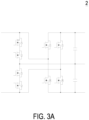
- the front-stage circuit 2 is a T-type three-level converter.
- the front-stage circuit 2 is a three-level high power factor converter (HPFC).
- the front-stage circuit 2 is a diode neutral point clamped converter (DNPC).
- DNPC diode neutral point clamped converter
- the front-stage circuit 2 is an active-neutral-point clamped converter (ANPC).
- ANPC active-neutral-point clamped converter
- the front-stage circuit 2 includes two front-stage sub-circuits 21 and 22.
- the front-stage circuit 2 may be further modified as long as the neutral point balance control can be realized, thereby controlling the current flowing the bus capacitor corresponding to the fault bridge arm to be equal to zero.
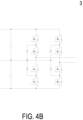
- FIGS. 4A , 4B , 4C and 4D are schematic circuit diagrams illustrating some variant examples of the first side circuit of the rear-stage circuit shown in FIG. 2A or the second side circuit of the rear-stage circuit shown in FIG. 2B .
- the first side circuit of the rear-stage circuit 3 shown in FIG. 2A or the second side circuit of the rear-stage circuit 3 shown in FIG. 2B is a T-type three-level converter.
- the first side circuit of the rear-stage circuit 3 shown in FIG. 2A or the second side circuit of the rear-stage circuit 3 shown in FIG. 2B is a diode neutral point clamped converter (DNPC).
- DNPC diode neutral point clamped converter
- the first side circuit of the rear-stage circuit 3 shown in FIG. 2A or the second side circuit of the rear-stage circuit 3 shown in FIG. 2B is an active-neutral-point clamped half bridge converter.
- the first side circuit of the rear-stage circuit 3 shown in FIG. 2A or the second side circuit of the rear-stage circuit 3 shown in FIG. 2B is an active-neutral-point clamped converter (ANPC).
- ANPC active-neutral-point clamped converter
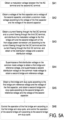
- FIG. 5A is a flowchart illustrating a midpoint balance control process in the coordinated fault-tolerant control method of FIG. 1 .
- FIG. 5B is a schematic block diagram illustrating a control mechanism of the front-stage circuit in the power module of FIG. 2A .
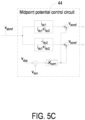
- FIG. 5C is a schematic circuit diagram illustrating the midpoint voltage control circuit of FIG. 5B .
- the midpoint balance control process in the coordinated fault-tolerant control method of FIG. 1 includes the following steps.
- a step S42 obtain a voltage of the first capacitor C1 and a voltage of the second capacitor C2, and obtain a common mode voltage according to the voltage of the first capacitor C1 and the voltage of the second capacitor C2.
- a step S43 obtain a current flowing through the first DC terminal T3 and a current flowing through the third DC terminal T5, distribute the modulation voltage to the first bridge arm and the second bridge arm of the front-stage power conversion unit 20 according to the current flowing through the first DC terminal T3 and the current flowing through the third DC terminal T5, and obtain a first distribution voltage and a second distribution voltage.
- a step S44 superimpose a first distribution voltage on the common mode voltage to obtain a first bridge arm reference voltage, and superimpose a second distribution voltage on the common mode voltage to obtain a second bridge arm reference voltage.
- a step S45 obtain a first bridge arm duty cycle according to the first bridge arm reference voltage and the voltage of the first capacitor C1, and obtain a second bridge arm duty cycle according to the second bridge arm reference voltage and the voltage of the second capacitor C2.
- step S46 control the operation of the first bridge arm according to the first bridge arm duty cycle, and control the operation of the second bridge arm according to the second bridge arm duty cycle. Consequently, make the potential of the DC midpoint Ce balance.
- the step S41 is performed.
- the phase-locked circuit 41 is configured to lock a modulation voltage v abref between the first AC terminal T1 and the second AC terminal T2 to obtain a feedback signal S F .
- the voltage control circuit 42 is configured to receive a voltage v dcp of the first capacitor C1, a voltage v dcn of the second capacitor C2, a bus voltage reference value v dcref and the feedback signal S F .
- the voltage control circuit 42 is further configured to subtract a bus voltage from the bus voltage reference value v dcref , to generate a first error signal.
- the midpoint potential control circuit 44 is configured to receive the voltage v dcp of the first capacitor C1, the voltage v dcn of the second capacitor C2, the modulation voltage v abref , a current i dc1 flowing through the first DC terminal T3 and a current i dc2 flowing through the third DC terminal T5.
- the step S42 is performed.
- the step S43 is performed.
- the midpoint potential control circuit 44 is further configured to calculate the first distribution voltage v ao and the second distribution voltage v bo .
- the step S44 is performed.
- the midpoint potential control circuit 44 is further configured to superimpose the first distribution voltage v ao on the common mode voltage v com to obtain a first bridge arm reference voltage v aoref , and to superimpose the second distribution voltage v bo on the common mode voltage v com to obtain a second bridge arm reference voltage v boref .
- the step S45 is performed.
- the driving circuit 45 is configured to obtain a first bridge arm duty cycle d 1 and a second bridge arm duty cycle d 2 according to the AC current i ac , the voltage v dcp of the first capacitor C1, the voltage v dcn of the second capacitor C2, the first bridge arm reference voltage v aoref and the second bridge arm reference voltage v boref .
- the step S45 is performed.
- the driving circuit 45 is further configured to generate switch signals according to the first bridge arm duty cycle d 1 and the second bridge arm duty cycle d 2 .
- the operations of the first bridge arm and the second bridge arm are controlled according to the switch signals.
- the steps S1 ⁇ S3, the steps S41 ⁇ S46 and the control architecture of FIG. 5B are performed by the controller of the two-stage power module 1. In some embodiments, the steps S1 ⁇ S3 are performed by the rear-stage controller of the two-stage power module 1, and the steps S41 ⁇ S46 and the control architecture of FIG. 5B are performed by the front-stage controller of the two-stage power module 1.
- the controller of the two-stage power module 1, the front-stage controller of the two-stage power module 1 or the rear-stage controller of the two-stage power module 1 may be implemented with a control chip.
- the controller of the two-stage power module 1, the front-stage controller of the two-stage power module 1 or the rear-stage controller of the two-stage power module 1 is implemented with a DSP control chip and a FPGA control chip.
- the DSP control chip is used for the signal sampling and loop control.
- the functions of the phase-locked circuit, the voltage control circuit, the current control circuit and the midpoint potential control circuit may be achieved by the DSP control chip, and the function of signal modulation and generating the switch driving signals may be achieved by the FPGA control chip.
- the first bridge arm of the front-stage power conversion unit 20 includes a switch.
- the first bridge arm of the front-stage power conversion unit 20 includes two switches in serial connection, and the two switches are complementary to each other.
- the operations of the switches in the first bridge arm are controlled according to the first bridge arm duty cycle.
- the second bridge arm of the front-stage power conversion unit 20 includes a switch.
- the first bridge arm of the front-stage power conversion unit 20 includes two switches in serial connection, and the two switches are complementary to each other.
- the operations of the switches in the second bridge arm are controlled according to the second bridge arm duty cycle.
- the coordinated fault-tolerant control method includes a step S5 (not shown).
- the step S5 if one switch in one of the two rear-stage switch sets in the first side circuit of the rear-stage circuit 3 fails, the amplitude of the AC voltage v ac received by the front-stage power conversion unit 20 is decreased.
- the step S5 is performed before the steps S1 ⁇ S4. In some other embodiments, the step S5 is performed after the steps S1 ⁇ S4. Alternatively, the step S5 is performed between any two steps of the steps S1 ⁇ S4.
- the current imbalance between the first current i dc1 flowing through the first DC terminal T3 and the second current i dc2 flowing through the third DC terminal T5 is greater than 50%.
- the midpoint potential balance can be achieved by using the coordinated fault-tolerant control method of the present disclosure.
- the two-stage power module of FIG. 2A is a two-stage three-level power module. If the first switch S 1 in the first side circuit of the rear-stage circuit 3 fails (e.g., the open-circuited failure occurs), the second switch S2 is in the close state. In other words, the first side circuit (i.e., the inverter circuit) of the rear-stage circuit 3 becomes the half-bridge circuitry topology. At the same time, the eighth switch S8 in the second side circuit (i.e., the rectifier circuit) is in the close state. In addition, control the midpoint potential of the front-stage circuit 2 balance, thereby making the midpoint potential be regained balance.
- the first switch S 1 in the first side circuit of the rear-stage circuit 3 fails (e.g., the open-circuited failure occurs)
- the second switch S2 is in the close state.
- the first side circuit i.e., the inverter circuit
- the eighth switch S8 in the second side circuit i.e., the rectifier
- the above fault-tolerant operation can be applied for the open-circuited failure of the second switch S2, the third switch S3 and the fourth switch S4.
- the complementary switch is in the close state.
- the rectifier circuit of the rear-stage circuit 3 becomes the half-bridge circuitry topology
- the inverter circuit of the rear-stage circuit 3 becomes the half-bridge circuitry topology synchronously.
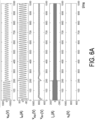
- FIG. 6A is a schematic waveform diagram illustrating associated voltages and currents of the two-stage power module shown in FIG. 2A .
- the rear-stage circuit 3 is an LLC resonant converter.
- the primary side operates in the frequency modulation mechanism.
- the secondary side operates in the uncontrolled rectification.
- the first switch S1 in the first side circuit of the rear-stage circuit 3 fails.
- the first side circuit of the rear-stage circuit 3 acts as the half-bridge circuit.
- turn on the eighth switch S8 in the second side circuit of the rear-stage circuit 3 and keep the eighth switch S8 constant on.
- the second side circuit of the rear-stage circuit 3 is subjected to the voltage doubler rectification to stabilize the output voltage. In addition, control the midpoint potential of the front-stage circuit 2 balance.
- the two-stage power module 1 is fault-tolerant and still operated normally.
- the AC voltage v ac is 1000V.
- the AC voltage v ac decreases to 500V.
- the AC input current i ac is stabilized, but the input power decreases.
- the voltage v dcp of the first capacitor C1 and the voltage v dcn of the second capacitor C2 are substantially equal.
- the midpoint potential is regained balance. Consequently, the current flowing into the DC midpoint Ce is zero.
- the resonant current I Lr flowing through the resonant inductor of the rear-stage circuit 3 decreases.
- the output voltage Vo of the two-stage power module 1 is stabilized. That is, the output voltage Vo can meet the requirements, but only the output power decreases as the input power decreases.
- the fault-tolerant operation for the open-circuited failure of the second switch S2, the third switch S3 and the fourth switch S4 can be achieved.
- the complementary switch is in the close state.
- the first side circuit of the rear-stage circuit 3 acts as the half-bridge circuit
- the second side circuit of the rear-stage circuit 3 also acts as the half-bridge circuit. Since the fault-tolerant operation for the failure of any switch in the two-stage three-level power module is implemented, the system reliability is enhanced.
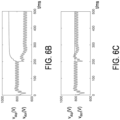
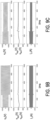
- FIG. 6B is a schematic waveform diagram illustrating associated capacitor voltages of the two-stage power module shown in FIG. 2A , in which the control of the midpoint potential of the front-stage circuit is not performed.
- FIG. 6C is a schematic waveform diagram illustrating associated capacitor voltages of the two-stage power module shown in FIG. 2A or 2B , in which control the midpoint potential of the front-stage circuit balance.
- the control of the midpoint potential of the front-stage circuit is performed, so the voltage v dcp of the first capacitor C1 and the voltage v dcn of the second capacitor C2 are substantially equal. And the controlling speed is faster.
- the current imbalance is larger (e.g., greater than 50%)
- the method of distributing the bridge arm voltage according to the current can effectively control the DC bus capacitor voltages balance.
- FIG. 7A is a flowchart illustrating a coordinated fault-tolerant control method according to a second embodiment of the present disclosure.
- FIG. 7B is a schematic block diagram illustrating a control mechanism of the front-stage circuit in the power module using the coordinated fault-tolerant control method of FIG. 7A .
- FIG. 8 is a schematic circuit diagram illustrating the circuitry topology of a power system using the coordinated fault-tolerant control method of FIG. 7A .
- the coordinated fault-tolerant control method of FIG. 7A can be applied to the controller (not shown) of the power system 4 in FIG. 8 .
- the power system 4 includes a plurality of two-stage power modules 1.
- the circuitry topology of each two-stage power module is similar to the circuitry topology of the two-stage power module 1 shown in FIG. 2A or FIG. 2B .
- the circuitry topology of each two-stage power module may have one of the circuitry topologies in the above variant examples of the two-stage power module.
- the front-stage circuits in the plurality of two-stage power modules 1 of the power system 4 are connected with each other in series.
- the rear-stage circuits in the plurality of two-stage power modules 1 of the power system 4 are connected with each other in parallel.
- the coordinated fault-tolerant control method includes the following steps.
- a step S10 if one switch in one of the two rear-stage switch sets in the first side circuit of the rear-stage circuit in a specified two-stage power module fails, the other switch in the rear-stage switch set with the failed switch is constant on.
- step S20 the other of the two rear-stage switch sets of the rear-stage circuit in the specified two-stage power module is operated normally.
- step S30 one of the two rear-stage switch sets in the second side circuit of the rear-stage circuit in the specified two-stage power module is operated normally, and the other of the two rear-stage switch sets in the second side circuit of the rear-stage circuit is disabled.
- a potential of the DC midpoint Ce in the specified two-stage power module is controlled to be regained balance.
- the control mechanism of FIG. 7B is similar to the control mechanism of FIG. 5B . However, in comparison with the control mechanism of FIG. 5B , the control mechanism of the front-stage circuit in the power system 4 of FIG. 7B further includes an anti-drooping control circuit 46 for the front-stage bridge arm voltage.
- the anti- drooping control circuit 46 is configured to receive a bridge arm voltage v b , a bridge arm voltage setting value v bset and a bus voltage setting value v dcset .
- the anti-drooping control circuit 46 is further configured to subtract the bridge arm voltage v b from the bridge arm voltage setting value v bset to generate a third error signal.
- the anti-drooping control circuit 46 is further configured to regulate the third error signal to obtain a third reference signal, and configured to subtract the third reference signal from the bus voltage setting value v dcset to obtain the bus voltage reference value v dcref .
- the bridge arm voltage setting value v bset of the specified power module 1 is decreased by the anti-drooping control circuit 46 of the specified power module 1.
- the bridge arm voltage setting value v bset of each of the other power modules 1 i.e., the normal power modules
- the anti-drooping control circuit 46 in each of the normal power modules 1 is increased by the anti-drooping control circuit 46 in each of the normal power modules 1.
- control mechanism for the rear-stage circuit 3 further includes an anti-drooping control circuit (not shown) for the bus voltage.
- an anti-drooping control circuit (not shown) for the bus voltage.
- the system reliability is enhanced. For example, in case that the N+1 redundancy configuration is adopted, the number of the allowable failed power modules in the power system 4 is raised from 1 to 2.
- the power system 4 includes three power modules 1.
- FIG. 9A is a schematic waveform diagram illustrating associated voltages and currents of the power system shown in FIG. 8 .
- FIG. 9B is a schematic waveform diagram illustrating associated voltages and currents of the first power module in the power system shown in FIG. 8 .
- FIG. 9C is a schematic waveform diagram illustrating associated voltages and currents of the second power module in the power system shown in FIG. 8 .
- FIG. 9D is a schematic waveform diagram illustrating associated voltages and currents of the third power module in the power system shown in FIG. 8 .
- the first switch S1 in the first side circuit of the rear-stage circuit in the second power module fails.
- the complementary switch i.e., the second switch S2
- the eighth switch S8 in the second side circuit of the rear-stage circuit in the second power module is constant on.
- the first switch S1 in the first side circuit of the rear-stage circuit in the third power module fails.
- the complementary switch i.e., the second switch S2 is constant on, and the eighth switch S8 in the second side circuit of the rear-stage circuit in the third power module is constant on.
- the switch failure occurs in both the second power module and the third power module.
- the input voltage v ac and the input current i ac of the power system 4 are stabilized.
- the output voltage V o (e.g., 800V) and the output current i o of the power system 4 are stabilized, so the output power is kept unchanged.
- the switch failure doesn't occur in the first power module.
- the amplitude of the input voltage v in of the first power module is raised from 1000V to 1500V
- the input power distributed to the first power module is increased.
- the voltage v dcp of the first capacitor C1 and the voltage v dcn of the second capacitor C2 are essentially equal (e.g., 800V).
- the amplitude of the resonant current I Lr and the amplitude of the magnetized current i LM are essentially kept unchanged.
- the switch failure occurs in the second power module, the amplitude of the input voltage v in of the second power module is decreased from 1000V to 500V The input power distributed to the second power module is decreased.
- the voltage v dcp of the first capacitor C1 and the voltage v dcn of the second capacitor C2 are essentially equal (e.g., 800V).
- the midpoint potential of the front-stage circuit is regained balance.
- the resonant current and the magnetized current are decreased.
- the switch failure occurs in the third power module, the amplitude of the input voltage v in of the third power module is decreased from 1000V to 500V The input power distributed to the third power module is decreased.
- the voltage v dcp of the first capacitor C1 and the voltage v dcn of the second capacitor C2 are essentially equal (e.g., 800V).
- the midpoint potential of the front-stage circuit is regained balance.
- the resonant current and the magnetized current are decreased.
- the switch failures occur in two power modules. Fault-tolerant operation for the power system 4 is performed. Control the midpoint potential of the front-stage circuit in the failed power module, thereby making the voltage v dcp of the first capacitor C1 and the voltage v dcn of the second capacitor C2 in each of all two-stage power modules 1 substantially equal. Consequently, the power system 4 can be operated normally, and the midpoint potential of the front-stage circuit in the failed power module is regained balance. Even if two power modules of the power system 4 fail, the fault-tolerant operation of the power system 4 can be performed. Consequently, the fault tolerance capability is enhanced.
- the 2+1 redundant system Take the 2+1 redundant system as an example to illustrate that the fault-tolerant capability of the power system increases when adopting the coordinated fault-tolerant control method of the present disclosure.
- the switch failure occurs in one power module, the faulty power module is bypassed.
- the redundant power module is enabled to replace the faulty power module.
- only one power module is allowed to fail. If the switch failure respectively occurs in two power modules, the power system must be shut down.
- the output power of the failed power module is decreased. For example, the output power is reduced to a half of the original value.
- the redundant power module is enabled to provide a difference of the output power.
- the redundant power module can provide the difference of the output power required for at least two power modules. Adopting the coordinated fault-tolerant control method of the present disclosure, allow failures to occur in two power modules in the N+1 redundancy configuration. Consequently, the system reliability is enhanced.
- the present disclosure provides a coordinated fault-tolerant control method.
- the coordinated fault-tolerant control method is applied to the two-stage power module.
- some rear-stage switch sets in the first side circuit and the second side circuit of the rear-stage circuit are still operated normally. Consequently, the failed power module is maintained in working state, the fault tolerance capability of the two-stage power module is enhanced, and the reliability of the two-stage power module is increased.
- the circuitry complexity of the two-stage power module is reduced, and the cost of the two-stage power module is also reduced.
- any switch in the two-stage circuit fails to cause the potential of the DC midpoint unbalance, control the potential of the DC midpoint to be regained balance. Consequently, the DC bus voltage can be maintained in the balance state.
Landscapes
- Engineering & Computer Science (AREA)
- Power Engineering (AREA)
- Business, Economics & Management (AREA)
- Emergency Management (AREA)
- Inverter Devices (AREA)
Abstract
A coordinated fault-tolerant control method for a two-stage power module (1) is provided. The two-stage power module (1) includes a front-stage circuit (2) and a rear-stage circuit (3). The front-stage circuit (2) has a DC midpoint (Ce). Each of a first side circuit and a second side circuit of the rear-stage circuit (3) includes two rear-stage switch sets (30, 31, 32, 33). If one switch (S1, S2, S3, S4, S5, S6, S7, S8) in one of the two rear-stage switch sets (30, 31, 32, 33) in the first side circuit fails, disable the other switch (S1, S2, S3, S4, S5, S6, S7, S8) in the rear-stage switch set (30, 31, 32, 33). Operate the other rear-stage switch set (30, 31, 32, 33) in the first side circuit normally. One of the two rear-stage switch sets (30, 31, 32, 33) in the second side circuit is operated normally, and the other of the two rear-stage switch sets (30, 31, 32, 33) in the second side circuit is disabled.
Description
- The present disclosure relates to a power conversion technology, and more particularly to a coordinated fault-tolerant control method for a two-stage power module.
- As known, solid-state transformers (SST) have been widely used in DC power consumption or DC power generation fields such as data centers, electric vehicle charging and swapping stations, photovoltaic products and energy storage products. It is important to provide the solid-state transformer with high reliability. In the process of designing the solid-state transformer, an appropriate fault-tolerant control method should be adopted to minimize the downtime caused by internal equipment failures.
- Generally, the switch failure is a main failure cause of the power electronic circuit. When the switch fails, a fault-tolerant control method can be performed to reduce the system downtime. Consequently, the reliability can be enhanced, and the operation and maintenance cost will be reduced.
- Conventionally, two fault-tolerant control methods were used. In accordance with the first fault-tolerant control method, the control circuit bypasses the faulty power module when the switch of the power module fails. Since it is necessary to bypass the whole power module as long as one switch fails, the power that can be provided by the system is reduced, and the fault tolerance is insufficient.
- In accordance with the second fault-tolerant control method, the redundant components are arranged. When the switch failure occurs in the power module, the redundant components are used to reconstruct the circuit topology. However, since the second method needs to add redundant components, the circuitry complexity and the cost of the power module increase.
- Therefore, there is a need of providing a coordinated fault-tolerant control method in order to overcome the drawbacks of the conventional technologies.
- The present disclosure provides a coordinated fault-tolerant control method. The coordinated fault-tolerant control method is applied to the two-stage power module. In case that one switch in one of the two rear-stage switch sets in the first side circuit of the rear-stage circuit fails, some rear-stage switch sets in the first side circuit and the second side circuit of the rear-stage circuit are still operated normally. Consequently, the two-stage power module is maintained in the normal working state, the fault tolerance capability of the two-stage power module is enhanced, and the reliability of the two-stage power module is increased. Moreover, since it is not necessary to add any redundant components to realize the fault-tolerant operation of the two-stage power module, the circuitry complexity of the two-stage power module is reduced, and the cost of the two-stage power module is also reduced. Moreover, if any switch in the front-stage circuit fails and the DC midpoint is in a potential unbalance state, the DC midpoint is controlled to be in the potential balance state. Consequently, the DC bus voltage can be maintained in the balance state.
- In accordance with an aspect of the present disclosure, a coordinated fault-tolerant control method for a two-stage power module is provided. The two-stage power module includes a front-stage circuit and a rear-stage circuit. The front-stage circuit has a DC midpoint. Each of a first side circuit and a second side circuit of the rear-stage circuit includes two rear-stage switch sets. Each of the rear-stage switch sets includes two switches in serial connection. The control signals for controlling the two switches are complementary to each other. The coordinated fault-tolerant control method includes the following steps. When one switch in one of the two rear-stage switch sets in the first side circuit of the rear-stage circuit fails, the other switch in the rear-stage switch set with the failed switch is disabled. The other rear-stage switch set in the first side circuit of the rear-stage circuit is controlled to be operated normally. Then, one of the two rear-stage switch sets in the second side circuit of the rear-stage circuit is controlled to be operated normally, and the other of the two rear-stage switch sets in the second side circuit of the rear-stage circuit is disabled. When any switch in the front-stage circuit fails and the DC midpoint is in a potential unbalance state, the DC midpoint is controlled to be in a potential balance state.
- In accordance with another aspect of the present disclosure, a coordinated fault-tolerant control method for a power system is provided. The power system includes a plurality of two-stage power modules. Each of the plurality of two-stage power modules includes a front-stage circuit and a rear-stage circuit. The front-stage circuit has a DC midpoint. Each of a first side circuit and a second side circuit of the rear-stage circuit includes two rear-stage switch sets. Each of the rear-stage switch sets includes two switches in serial connection. The control signals for controlling the two switches are complementary to each other. The front-stage circuits of the plurality of two-stage power modules are connected with each other in series. The rear-stage circuits of the plurality of two-stage power modules are connected with each other in parallel. The coordinated fault-tolerant control method includes the following steps. When one switch in one of the two rear-stage switch sets in the first side circuit of the rear-stage circuit in a specified two-stage power module of the plurality of two-stage power modules fails, the other switch in the rear-stage switch set with the failed switch is disabled. Then, the other rear-stage switch set in the first side circuit of the rear-stage circuit in the specified two-stage power module is controlled to be operated normally. Then, one of the two rear-stage switch sets in the second side circuit of the rear-stage circuit in the specified two-stage power module is controlled to be operated normally, and the other of the two rear-stage switch sets in the second side circuit of the rear-stage circuit is disabled. When any switch in the front-stage circuit in any two rear-stage switch fails and the DC midpoint is in a potential unbalance state, the DC midpoint in the specified two-stage power module is controlled to be in a potential balance state.
- The above contents of the present disclosure will become more readily apparent to those ordinarily skilled in the art after reviewing the following detailed description and accompanying drawings, in which:
-
-
FIG. 1 is a flowchart illustrating a coordinated fault-tolerant control method according to a first embodiment of the present disclosure; -
FIG. 2A is a schematic circuit diagram illustrating an exemplary two-stage power module using the coordinated fault-tolerant control method as shown inFIG. 1 ; -
FIG. 2B is a schematic circuit diagram illustrating another exemplary two-stage power module using the coordinated fault-tolerant control method as shown inFIG. 1 ; -
FIGS. 3A ,3B ,3C ,3D and3E are schematic circuit diagrams illustrating some variant examples of the front-stage circuit in the two-stage power module as shown inFIG. 2A orFIG. 2B ; -
FIGS. 4A ,4B ,4C and4D are schematic circuit diagrams illustrating some variant examples of the first side circuit of the rear-stage circuit shown inFIG. 2A or the first side circuit of the rear-stage circuit shown inFIG. 2B ; -
FIG. 5A is a flowchart illustrating a midpoint balance control process in the coordinated fault-tolerant control method ofFIG. 1 ; -
FIG. 5B is a schematic block diagram illustrating a control mechanism of the front-stage circuit in the power module ofFIG. 2A ; -
FIG. 5C is a schematic circuit diagram illustrating the midpoint voltage control circuit shown inFIG. 5B ; -
FIG. 6A is a schematic waveform diagram illustrating associated voltages and currents of the two-stage power module shown inFIG. 2A ; -
FIG. 6B is a schematic waveform diagram illustrating associated capacitor voltages of the two-stage power module shown inFIG. 2A , in which the control of the midpoint potential of the front-stage circuit is not performed; -
FIG. 6C is a schematic timing waveform diagram illustrating associated capacitor voltages of the two-stage power module shown inFIG. 2A or2B , in which the control of the midpoint potential of the front-stage circuit is performed; -
FIG. 7A is a flowchart illustrating a coordinated fault-tolerant control method according to a second embodiment of the present disclosure; -
FIG. 7B is a schematic block diagram illustrating a control mechanism of the front-stage circuit in the power module using the coordinated fault-tolerant control method ofFIG. 7A ; -
FIG. 8 is a schematic circuit diagram illustrating the circuitry topology of a power system using the coordinated fault-tolerant control method ofFIG. 7A ; -
FIG. 9A is a schematic waveform diagram illustrating associated voltages and currents of the power system shown inFIG. 8 ; -
FIG. 9B is a schematic waveform diagram illustrating associated voltages and currents of the first power module in the power system shown inFIG. 8 ; -
FIG. 9C is a schematic waveform diagram illustrating associated voltages and currents of the second power module in the power system shown inFIG. 8 ; and -
FIG. 9D is a schematic waveform diagram illustrating associated voltages and currents of the third power module in the power system shown inFIG. 8 . - The present disclosure will now be described more specifically with reference to the following embodiments. It is to be noted that the following descriptions of preferred embodiments of this disclosure are presented herein for purpose of illustration and description only. It is not intended to be exhaustive or to be limited to the precise form disclosed.
- Please refer to
FIGS. 1 ,2A and2B .FIG. 1 is a flowchart illustrating a coordinated fault-tolerant control method according to a first embodiment of the present disclosure.FIG. 2A is a schematic circuit diagram illustrating an exemplary two-stage power module using the coordinated fault-tolerant control method as shown inFIG. 1 .FIG. 2B is a schematic circuit diagram illustrating another exemplary two-stage power module using the coordinated fault-tolerant control method as shown inFIG. 1 . The coordinated fault-tolerant control method ofFIG. 1 can be applied to the controller (not shown) in the two-stage power module ofFIG. 2A or the two-stage power module ofFIG. 2B . - The two-
stage power module 1 includes a front-stage circuit 2 and a rear-stage circuit 3. The front-stage circuit 2 has a DC midpoint Ce. The rear-stage circuit 3 includes a first side circuit, a second side circuit and a transformer T. - In the example of
FIG. 2A , the first side circuit of the rear-stage circuit 3 is electrically connected between the front-stage circuit 2 and a primary winding of the transformer T. The first side circuit of the rear-stage circuit 3 includes two rear-stage switch sets, i.e., a first rear-stage switch set 30 and a second rear-stage switch set 31. The first rear-stage switch set 30 and the second rear-stage switch set 31 are connected with each other in series. The second side circuit of the rear-stage circuit 3 is electrically connected with a secondary winding of the transformer T. The second side circuit of the rear-stage circuit 3 includes two rear-stage switch sets, i.e., a third rear-stage switch set 32 and a fourth rear-stage switch set 33. The third rear-stage switch set 32 and the fourth rear-stage switch set 33 are connected with each other in parallel. - In the example of
FIG. 2B , the second side circuit of the rear-stage circuit 3 is electrically connected between the front-stage circuit 2 and a primary winding of the transformer. The second side circuit of the rear-stage circuit 3 includes two rear-stage switch sets, i.e., a first rear-stage switch set 30 and a second rear-stage switch set 31. The first rear-stage switch set 30 and the second rear-stage switch set 31 are connected with each other in series. The first side circuit of the rear-stage circuit 3 is electrically connected with a secondary winding of the transformer T. The first side circuit of the rear-stage circuit 3 includes two rear-stage switch sets, i.e., a third rear-stage switch set 32 and a fourth rear-stage switch set 33. The third rear-stage switch set 32 and the fourth rear-stage switch set 33 are connected with each other in parallel. - Each of the four switch sets includes two switches. The control signals for controlling the two switches in each switch set are complementary to each other. In this context, these two switches are referred to as two complementary switches.
- The first rear-stage switch set 30 includes a first switch S1 and a second switch S2. The second rear-stage switch set 31 includes a third switch S3 and a fourth switch S4. The third rear-stage switch set 32 includes a fifth switch S5 and a sixth switch S6. The fourth rear-stage switch set 33 includes a seventh switch S7 and an eighth switch S8.
- In the rear-
stage circuit 3, one of the first side circuit and the second side circuit is operated in an inverter mode, and the other of the first side circuit and the second side circuit is operated in a rectifier mode. In a first situation, the first side circuit is an inverter circuit operated in the inverter mode, and the second side circuit is a rectifier circuit operated in the rectifier mode. In a second situation, the first side circuit is a rectifier circuit operated in the rectifier mode, and the second side circuit is an inverter circuit operated in the inverter mode. - As shown in
FIG. 1 , the coordinated fault-tolerant control method includes the following steps. The coordinated fault-tolerant control method is applied to the two-stage power module 1 as shown inFIG. 2A . The coordinated fault-tolerant control method for the two-stage power module 1 as shown inFIG. 2B is similar, and not redundantly described herein. - In a step S1, if one switch in one of the two rear-stage switch sets in the first side circuit of the rear-stage circuit 3 (e.g., the first rear-stage switch set 30 or second rear-stage switch set 31) fails (e.g., the open-circuited failure occurs), the other switch (i.e., a normal switch) in the rear-stage switch set with the failed switch is in the close state (e.g., in the continuous conduction state). Under this circumstance, the normal switch is similar to a conductor line and not operated at the high switching frequency.
- In a step S2, the other rear-stage switch set in the first side circuit of the rear-stage circuit 3 (i.e., the normal switch set) is operated normally. That is, the normal switch set is operated at the high-frequency switching to obtain the required voltage and current.
- In a step S3, one of the two rear-stage switch sets in the second side circuit of the rear-stage circuit 3 (e.g., the third rear-stage switch set 32 or the fourth rear-stage switch set 33) is operated normally, and the other of the two rear-stage switch sets in the second side circuit of the rear-
stage circuit 3 is disabled. For example, the rear-stage switch set is disabled so that the rear-stage switch set doesn't operated at the high-frequency switching. In other words, one of the two rear-stage switch sets in the second side circuit of the rear-stage circuit 3 is operated at the high-frequency switching to obtain required voltage and current, and the other of the two rear-stage switch sets in the second side circuit of the rear-stage circuit 3 doesn't be operated at the high-frequency switching. In one or more embodiments, one switch of the other rear-stage switch set is constant on and is like a conductor line, and the other switch is constant off. Consequently, the circuitry topology of the two rear-stage switch sets in the second side circuit of the rear-stage circuit 3 is switched from the full-bridge circuitry topology to the half-bridge circuitry topology. - In a step S4, when any switch in the two-
stage power module 1 fails, a potential of the DC midpoint Ce is controlled such that a current flowing the DC midpoint Ce is essentially equal to zero. - In an embodiment, the two-
stage power module 1 includes a controller, and the steps S1∼S4 are performed by the controller. In another embodiment, the two-stage power module 1 includes a front-stage controller and a rear-stage controller. The steps S1∼S3 are operated by the rear-stage controller. The step S4 is performed by the front-stage controller. - Please refer to
FIGS. 1 and2A again. It is assumed that the first switch S1 in the first side circuit of the rear-stage circuit 3 fails (e.g., the open-circuited failure occurs). The controller is configured to control the second switch S2 disabled (i.e., in the constant on state), and to operate the third switch S3 and the fourth switch S4 at the high-frequency switching. The controller is further configured to operate the fifth switch S5 and the sixth switch S6 in the second side circuit of the rear-stage circuit 3 at the high-frequency switching, and to control the seventh switch S7 and the eighth switch S8 in the second side circuit of the rear-stage circuit 3 disabled. Alternatively, under control of the controller, the seventh switch S7 and the eighth switch S8 in the second side circuit of the rear-stage circuit 3 are operated at the high-frequency switching, and the fifth switch S5 and the sixth switch S6 in the second side circuit of the rear-stage circuit 3 are disabled. - In some embodiments, disable one switch is that the switch doesn't be operated at the high-frequency switching. For example, the switch disabled is constant on or off, and when the switch is constant on, the switch is like a conductor line.
- In case that the second switch S2, the third switch S3 or the fourth switch S4 in the first side circuit of the rear-
stage circuit 3 fails, the control method is similar to that mentioned above, and not redundantly described herein. - Please refer to
FIGS. 1 and2B again. It is assumed that the fifth switch S5 in the first side circuit of the rear-stage circuit 3 fails (e.g., the open-circuited failure occurs). Under control of the controller, the sixth switch S6 is disabled (e.g., in the constant on state), and the seventh switch S7 and the eighth switch S8 are operated at the high-frequency switching. Under control of the controller, thefirst switch S 1 and the second switch S2 in the second side circuit of the rear-stage circuit 3 are operated at the high-frequency switching, and the third switch S3 and the fourth switch S4 in the second side circuit of the rear-stage circuit 3 are disabled (i.e., not operated at the high-frequency switching). Alternatively, under control of the controller, the third switch S3 and the fourth switch S4 in the second side circuit of the rear-stage circuit 3 are operated at the high-frequency switching, and the first switch S1 and the second switch S2 in the second side circuit of the rear-stage circuit 3 are disabled (i.e., not operated at the high-frequency switching). - In case that the sixth switch S6, the seventh switch S7 and the eighth switch S8 in the first side circuit of the rear-
stage circuit 3 fails, the control method is similar to that mentioned above, and not redundantly described herein. - In the above embodiments, the switch failure may be the open-circuited failure of a switch. In some other embodiments, the switch failure may be a converted open-circuited failure. For example, in case that the switch is equipped with a quick acting fuse, the short-circuited failure can be converted into the open-circuited failure.
- In the above embodiments, the two-
stage power module 1 uses the coordinated fault-tolerant control method. In case that one switch in one of the two rear-stage switch sets in the first side circuit of the rear-stage circuit 3 fails, some rear-stage switch sets in the first side circuit and the second side circuit of the rear-stage circuit 3 are still operated normally. Consequently, the two-stage power module 1 is maintained in the normal working state, the fault tolerance capability of the two-stage power module 1 is enhanced, and the reliability of the two-stage power module 1 is increased. Moreover, since it is not necessary to add any redundant components to realize the fault-tolerant operation of the two-stage power module 1, the circuitry complexity of the two-stage power module 1 is reduced, and the cost of the two-stage power module 1 is also reduced. - Moreover, if any switch in the two-
stage power module 1 fails to cause the potential of the DC midpoint Ce unbalance, the potential of the DC midpoint Ce is controlled to be regained balance. Consequently, the DC bus voltage can be maintained in the balance state. - In some embodiments, the front-
stage circuit 2 further includes a first AC terminal T1, a second AC terminal T2, a front-stagepower conversion unit 20, a first capacitor C1, a second capacitor C2, a first DC terminal T3, a second DC terminal T4 and a third DC terminal T5. The first AC terminal T1 and the second AC terminal T2 are connected with an AC power source. - The front-stage
power conversion unit 20 includes a first bridge arm and a second bridge arm. The first bridge arm and the second bridge arm are electrically connected between the first AC terminal T1 and the second AC terminal T2. The first capacitor C1 is electrically connected between the first DC terminal T3 and the DC midpoint Ce. The second capacitor C2 is electrically connected between the DC midpoint Ce and the third DC terminal T5. The second DC terminal T4 is electrically connected with the DC midpoint Ce. - In the embodiment of
FIG. 2A , the front-stage circuit 2 is a three-level high power factor converter (HPFC), and the inverter circuit of the rear-stage circuit 3 is a serial half bridge (SHB) inverter circuit. It is noted that the type of the front-stage circuit 2 and the type of the inverter circuit of the rear-stage circuit 3 are not restricted. -
FIGS. 3A ,3B ,3C ,3D and3E are schematic circuit diagrams illustrating some variant examples of the front-stage circuit in the two-stage power module as shown inFIG. 2A orFIG. 2B . - In the embodiment of
FIG. 3A , the front-stage circuit 2 is a T-type three-level converter. - In the embodiment of
FIG. 3B , the front-stage circuit 2 is a three-level high power factor converter (HPFC). - In the embodiment of
FIG. 3C , the front-stage circuit 2 is a diode neutral point clamped converter (DNPC). - In the embodiment of
FIG. 3D , the front-stage circuit 2 is an active-neutral-point clamped converter (ANPC). - In the embodiment of
FIG. 3E , the front-stage circuit 2 includes two front-stage sub-circuits - The front-
stage circuit 2 may be further modified as long as the neutral point balance control can be realized, thereby controlling the current flowing the bus capacitor corresponding to the fault bridge arm to be equal to zero. -
FIGS. 4A ,4B ,4C and4D are schematic circuit diagrams illustrating some variant examples of the first side circuit of the rear-stage circuit shown inFIG. 2A or the second side circuit of the rear-stage circuit shown inFIG. 2B . - In the embodiment of
FIG. 4A , the first side circuit of the rear-stage circuit 3 shown inFIG. 2A or the second side circuit of the rear-stage circuit 3 shown inFIG. 2B is a T-type three-level converter. - In the embodiment of
FIG. 4B , the first side circuit of the rear-stage circuit 3 shown inFIG. 2A or the second side circuit of the rear-stage circuit 3 shown inFIG. 2B is a diode neutral point clamped converter (DNPC). - In the embodiment of
FIG. 4C , the first side circuit of the rear-stage circuit 3 shown inFIG. 2A or the second side circuit of the rear-stage circuit 3 shown inFIG. 2B is an active-neutral-point clamped half bridge converter. - In the embodiment of
FIG. 4D , the first side circuit of the rear-stage circuit 3 shown inFIG. 2A or the second side circuit of the rear-stage circuit 3 shown inFIG. 2B is an active-neutral-point clamped converter (ANPC). - Taking the two-stage power module of
FIG. 2A as an example, a midpoint balance control process for the three-level front-stage circuit is explained as follows.FIG. 5A is a flowchart illustrating a midpoint balance control process in the coordinated fault-tolerant control method ofFIG. 1 .FIG. 5B is a schematic block diagram illustrating a control mechanism of the front-stage circuit in the power module ofFIG. 2A .FIG. 5C is a schematic circuit diagram illustrating the midpoint voltage control circuit ofFIG. 5B . - In one or more embodiments, the midpoint balance control process in the coordinated fault-tolerant control method of
FIG. 1 includes the following steps. - In a step S41, obtain a modulation voltage between the first AC terminal T1 and the second AC terminal T2.
- In a step S42, obtain a voltage of the first capacitor C1 and a voltage of the second capacitor C2, and obtain a common mode voltage according to the voltage of the first capacitor C1 and the voltage of the second capacitor C2.
- In a step S43, obtain a current flowing through the first DC terminal T3 and a current flowing through the third DC terminal T5, distribute the modulation voltage to the first bridge arm and the second bridge arm of the front-stage
power conversion unit 20 according to the current flowing through the first DC terminal T3 and the current flowing through the third DC terminal T5, and obtain a first distribution voltage and a second distribution voltage. - In a step S44, superimpose a first distribution voltage on the common mode voltage to obtain a first bridge arm reference voltage, and superimpose a second distribution voltage on the common mode voltage to obtain a second bridge arm reference voltage.
- In a step S45, obtain a first bridge arm duty cycle according to the first bridge arm reference voltage and the voltage of the first capacitor C1, and obtain a second bridge arm duty cycle according to the second bridge arm reference voltage and the voltage of the second capacitor C2.
- In a step S46, control the operation of the first bridge arm according to the first bridge arm duty cycle, and control the operation of the second bridge arm according to the second bridge arm duty cycle. Consequently, make the potential of the DC midpoint Ce balance.
- As shown in
FIG. 5B , the control mechanism of the front-stage circuit includes a phase-lockedcircuit 41, avoltage control circuit 42, acurrent control circuit 43, a midpointpotential control circuit 44 and a drivingcircuit 45. - Please refer to
FIGS. 5A and5B . The step S41 is performed. The phase-lockedcircuit 41 is configured to lock a modulation voltage vabref between the first AC terminal T1 and the second AC terminal T2 to obtain a feedback signal SF. Thevoltage control circuit 42 is configured to receive a voltage vdcp of the first capacitor C1, a voltage vdcn of the second capacitor C2, a bus voltage reference value vdcref and the feedback signal SF. Thevoltage control circuit 42 is further configured to subtract a bus voltage from the bus voltage reference value vdcref, to generate a first error signal. The sum of the voltage vdcp of the first capacitor C1 and the voltage vdcn of the second capacitor C2 is the bus voltage. Thevoltage control circuit 42 is further configured to adjust the first error signal to obtain a first reference signal. Thevoltage control circuit 42 is further configured to superimpose the first reference signal on the feedback signal SF, to obtain an AC current reference value Iacref. Thecurrent control circuit 43 is configured to receive an AC current Iac, the AC current reference value Iacref and an AC voltage vac. Thecurrent control circuit 43 is further configured to subtract the AC current Iac from the AC current reference value Iacref, to generate a second error signal. Thecurrent control circuit 43 is further configured to adjust the second error signal to obtain a second reference signal. Thecurrent control circuit 43 is further configured to subtract the second reference signal from the AC voltage vac, to obtain the modulation voltage vabref. - The midpoint
potential control circuit 44 is configured to receive the voltage vdcp of the first capacitor C1, the voltage vdcn of the second capacitor C2, the modulation voltage vabref, a current idc1 flowing through the first DC terminal T3 and a current idc2 flowing through the third DC terminal T5. - Please refer to
FIGS. 5A ,5B and5C . The step S42 is performed. The midpointpotential control circuit 44 is further configured to calculate a difference between the voltage vdcp of the first capacitor C1 and the voltage vdcn of the second capacitor C2, and to regulate the difference to obtain the common mode voltage vcom. Consequently, the common mode voltage vcom is obtained according to the formula: vcom = (vao+vbo)/2, where vao is the first distribution voltage, and vbo is the second distribution voltage. - Please refer to
FIGS. 5A ,5B and5C . The step S43 is performed. The midpointpotential control circuit 44 is further configured to calculate the first distribution voltage vao and the second distribution voltage vbo. The first distribution voltage vao and the second distribution voltage vbo are calculated according to the following mathematic formulae:

- Please refer to
FIGS. 5A ,5B and5C . The step S44 is performed. The midpointpotential control circuit 44 is further configured to superimpose the first distribution voltage vao on the common mode voltage vcom to obtain a first bridge arm reference voltage vaoref, and to superimpose the second distribution voltage vbo on the common mode voltage vcom to obtain a second bridge arm reference voltage vboref. - Please refer to
FIGS. 5A and5B . The step S45 is performed. The drivingcircuit 45 is configured to obtain a first bridge arm duty cycle d1 and a second bridge arm duty cycle d2 according to the AC current iac, the voltage vdcp of the first capacitor C1, the voltage vdcn of the second capacitor C2, the first bridge arm reference voltage vaoref and the second bridge arm reference voltage vboref. The first bridge arm duty cycle d1 and the second bridge arm duty cycle d2 are calculated according to the following formulae:

- Please refer to
FIGS. 5A and5B again. The step S45 is performed. The drivingcircuit 45 is further configured to generate switch signals according to the first bridge arm duty cycle d1 and the second bridge arm duty cycle d2. The operations of the first bridge arm and the second bridge arm are controlled according to the switch signals. - In some embodiments, the steps S1∼S3, the steps S41~S46 and the control architecture of
FIG. 5B are performed by the controller of the two-stage power module 1. In some embodiments, the steps S1~S3 are performed by the rear-stage controller of the two-stage power module 1, and the steps S41~S46 and the control architecture ofFIG. 5B are performed by the front-stage controller of the two-stage power module 1. The controller of the two-stage power module 1, the front-stage controller of the two-stage power module 1 or the rear-stage controller of the two-stage power module 1 may be implemented with a control chip. Alternatively, the controller of the two-stage power module 1, the front-stage controller of the two-stage power module 1 or the rear-stage controller of the two-stage power module 1 is implemented with a DSP control chip and a FPGA control chip. The DSP control chip is used for the signal sampling and loop control. For example, the functions of the phase-locked circuit, the voltage control circuit, the current control circuit and the midpoint potential control circuit may be achieved by the DSP control chip, and the function of signal modulation and generating the switch driving signals may be achieved by the FPGA control chip. - In some embodiments, the first bridge arm of the front-stage
power conversion unit 20 includes a switch. In the embodiment ofFIG. 2A orFIG. 2B , the first bridge arm of the front-stagepower conversion unit 20 includes two switches in serial connection, and the two switches are complementary to each other. Moreover, in the step S46, the operations of the switches in the first bridge arm are controlled according to the first bridge arm duty cycle. - In some embodiments, the second bridge arm of the front-stage
power conversion unit 20 includes a switch. In the embodiment ofFIG. 2A orFIG. 2B , the first bridge arm of the front-stagepower conversion unit 20 includes two switches in serial connection, and the two switches are complementary to each other. Moreover, in the step S46, the operations of the switches in the second bridge arm are controlled according to the second bridge arm duty cycle. - In some embodiments, the coordinated fault-tolerant control method includes a step S5 (not shown). In the step S5, if one switch in one of the two rear-stage switch sets in the first side circuit of the rear-
stage circuit 3 fails, the amplitude of the AC voltage vac received by the front-stagepower conversion unit 20 is decreased. In one or more embodiments, the step S5 is performed before the steps S1~S4. In some other embodiments, the step S5 is performed after the steps S1~S4. Alternatively, the step S5 is performed between any two steps of the steps S1∼S4. - In some situations, if one switch in one of the two rear-stage switch sets in the first side circuit of the rear-
stage circuit 3 fails, the current imbalance between the first current idc1 flowing through the first DC terminal T3 and the second current idc2 flowing through the third DC terminal T5 is greater than 50%. However, even if the current imbalance is greater than 50%, the midpoint potential balance can be achieved by using the coordinated fault-tolerant control method of the present disclosure. - For example, the two-stage power module of
FIG. 2A is a two-stage three-level power module. If thefirst switch S 1 in the first side circuit of the rear-stage circuit 3 fails (e.g., the open-circuited failure occurs), the second switch S2 is in the close state. In other words, the first side circuit (i.e., the inverter circuit) of the rear-stage circuit 3 becomes the half-bridge circuitry topology. At the same time, the eighth switch S8 in the second side circuit (i.e., the rectifier circuit) is in the close state. In addition, control the midpoint potential of the front-stage circuit 2 balance, thereby making the midpoint potential be regained balance. Similarly, the above fault-tolerant operation can be applied for the open-circuited failure of the second switch S2, the third switch S3 and the fourth switch S4. In case that a switch in the rectifier circuit fails, the complementary switch is in the close state. In other words, the rectifier circuit of the rear-stage circuit 3 becomes the half-bridge circuitry topology, and the inverter circuit of the rear-stage circuit 3 becomes the half-bridge circuitry topology synchronously. - Since the fault-tolerant operation for the failure of any switch in the two-stage three-level power module is implemented, the system reliability is enhanced.
-
FIG. 6A is a schematic waveform diagram illustrating associated voltages and currents of the two-stage power module shown inFIG. 2A . Control the midpoint potential of the front-stage circuit 2 to be regained balance according to the above method. The rear-stage circuit 3 is an LLC resonant converter. The primary side operates in the frequency modulation mechanism. The secondary side operates in the uncontrolled rectification. - At the time t=200ms, the first switch S1 in the first side circuit of the rear-
stage circuit 3 fails. Turn on the second switch S2 which is complementary to the first switch S1, and keep the second switch S2 constant on. The first side circuit of the rear-stage circuit 3 acts as the half-bridge circuit. At the same time, turn on the eighth switch S8 in the second side circuit of the rear-stage circuit 3, and keep the eighth switch S8 constant on. The second side circuit of the rear-stage circuit 3 is subjected to the voltage doubler rectification to stabilize the output voltage. In addition, control the midpoint potential of the front-stage circuit 2 balance. - After the time t=200ms, the two-
stage power module 1 is fault-tolerant and still operated normally. For example, before the failure, the AC voltage vac is 1000V. After the time t=200ms, the AC voltage vac decreases to 500V. The AC input current iac is stabilized, but the input power decreases. The voltage vdcp of the first capacitor C1 and the voltage vdcn of the second capacitor C2 are substantially equal. The midpoint potential is regained balance. Consequently, the current flowing into the DC midpoint Ce is zero. - Please refer to
FIG. 6A . The resonant current ILr flowing through the resonant inductor of the rear-stage circuit 3 decreases. The output voltage Vo of the two-stage power module 1 is stabilized. That is, the output voltage Vo can meet the requirements, but only the output power decreases as the input power decreases. Similarly, the fault-tolerant operation for the open-circuited failure of the second switch S2, the third switch S3 and the fourth switch S4 can be achieved. In case that a switch in the second side circuit of the rear-stage circuit 3 fails, the complementary switch is in the close state. In other words, the first side circuit of the rear-stage circuit 3 acts as the half-bridge circuit, and the second side circuit of the rear-stage circuit 3 also acts as the half-bridge circuit. Since the fault-tolerant operation for the failure of any switch in the two-stage three-level power module is implemented, the system reliability is enhanced. -
FIG. 6B is a schematic waveform diagram illustrating associated capacitor voltages of the two-stage power module shown inFIG. 2A , in which the control of the midpoint potential of the front-stage circuit is not performed.FIG. 6C is a schematic waveform diagram illustrating associated capacitor voltages of the two-stage power module shown inFIG. 2A or2B , in which control the midpoint potential of the front-stage circuit balance. - Please refer to
FIG. 6B . In case that the control of the midpoint potential balance of the front-stage circuit is not performed, the difference between the voltage vdcp of the first capacitor C1 and the voltage vdcn of the second capacitor C2 becomes larger. The midpoint imbalance is greater than 50% until the two-stage power module 1 fails. - Please refer to
FIG. 6C . The control of the midpoint potential of the front-stage circuit is performed, so the voltage vdcp of the first capacitor C1 and the voltage vdcn of the second capacitor C2 are substantially equal. And the controlling speed is faster. When the current imbalance is larger (e.g., greater than 50%), the method of distributing the bridge arm voltage according to the current can effectively control the DC bus capacitor voltages balance. - Please refer to
FIGS. 7A ,7B and8 .FIG. 7A is a flowchart illustrating a coordinated fault-tolerant control method according to a second embodiment of the present disclosure.FIG. 7B is a schematic block diagram illustrating a control mechanism of the front-stage circuit in the power module using the coordinated fault-tolerant control method ofFIG. 7A .FIG. 8 is a schematic circuit diagram illustrating the circuitry topology of a power system using the coordinated fault-tolerant control method ofFIG. 7A . The coordinated fault-tolerant control method ofFIG. 7A can be applied to the controller (not shown) of thepower system 4 inFIG. 8 . - The
power system 4 includes a plurality of two-stage power modules 1. The circuitry topology of each two-stage power module is similar to the circuitry topology of the two-stage power module 1 shown inFIG. 2A orFIG. 2B . Of course, the circuitry topology of each two-stage power module may have one of the circuitry topologies in the above variant examples of the two-stage power module. The front-stage circuits in the plurality of two-stage power modules 1 of thepower system 4 are connected with each other in series. In addition, the rear-stage circuits in the plurality of two-stage power modules 1 of thepower system 4 are connected with each other in parallel. - As shown in
FIG. 7A , the coordinated fault-tolerant control method includes the following steps. - In a step S10, if one switch in one of the two rear-stage switch sets in the first side circuit of the rear-stage circuit in a specified two-stage power module fails, the other switch in the rear-stage switch set with the failed switch is constant on.
- In a step S20, the other of the two rear-stage switch sets of the rear-stage circuit in the specified two-stage power module is operated normally.
- In a step S30, one of the two rear-stage switch sets in the second side circuit of the rear-stage circuit in the specified two-stage power module is operated normally, and the other of the two rear-stage switch sets in the second side circuit of the rear-stage circuit is disabled.
- In a step S40, when any switch in the specified two-stage power module fails, a potential of the DC midpoint Ce in the specified two-stage power module is controlled to be regained balance.
- The control mechanism of
FIG. 7B is similar to the control mechanism ofFIG. 5B . However, in comparison with the control mechanism ofFIG. 5B , the control mechanism of the front-stage circuit in thepower system 4 ofFIG. 7B further includes ananti-drooping control circuit 46 for the front-stage bridge arm voltage. The anti- droopingcontrol circuit 46 is configured to receive a bridge arm voltage vb, a bridge arm voltage setting value vbset and a bus voltage setting value vdcset. Theanti-drooping control circuit 46 is further configured to subtract the bridge arm voltage vb from the bridge arm voltage setting value vbset to generate a third error signal. Theanti-drooping control circuit 46 is further configured to regulate the third error signal to obtain a third reference signal, and configured to subtract the third reference signal from the bus voltage setting value vdcset to obtain the bus voltage reference value vdcref. - When a switch failure occurs in a specified
power module 1, the bridge arm voltage setting value vbset of the specifiedpower module 1 is decreased by theanti-drooping control circuit 46 of the specifiedpower module 1. However, the bridge arm voltage setting value vbset of each of the other power modules 1 (i.e., the normal power modules) is increased by theanti-drooping control circuit 46 in each of thenormal power modules 1. - Correspondingly, the control mechanism for the rear-
stage circuit 3 further includes an anti-drooping control circuit (not shown) for the bus voltage. When all power modules in the power system are operated normally, the input voltage is distributed to the plurality ofpower module 1 in a ratio of 1:1:...:1. Whereas, if the switch failure occurs in one of the power modules, for example, the switch failure occurs in thelast power module 1, the input voltage is distributed to the plurality ofpower module 1 in a ratio of 1:1:...:0.5. - Since the fault-tolerant operation for the power module is implemented, the system reliability is enhanced. For example, in case that the N+1 redundancy configuration is adopted, the number of the allowable failed power modules in the
power system 4 is raised from 1 to 2. - In the embodiment of
FIG. 8 , thepower system 4 includes threepower modules 1.FIG. 9A is a schematic waveform diagram illustrating associated voltages and currents of the power system shown inFIG. 8 .FIG. 9B is a schematic waveform diagram illustrating associated voltages and currents of the first power module in the power system shown inFIG. 8 .FIG. 9C is a schematic waveform diagram illustrating associated voltages and currents of the second power module in the power system shown inFIG. 8 .FIG. 9D is a schematic waveform diagram illustrating associated voltages and currents of the third power module in the power system shown inFIG. 8 . - At the time t=300ms, the first switch S1 in the first side circuit of the rear-stage circuit in the second power module fails. The complementary switch (i.e., the second switch S2) is constant on, and the eighth switch S8 in the second side circuit of the rear-stage circuit in the second power module is constant on. In addition, control the midpoint potential of the front-stage circuit in the second power module balance. Similarly, the first switch S1 in the first side circuit of the rear-stage circuit in the third power module fails. The complementary switch (i.e., the second switch S2) is constant on, and the eighth switch S8 in the second side circuit of the rear-stage circuit in the third power module is constant on. In addition, control the midpoint potential of the front-stage circuit in the third power module balance.
- Please refer to
FIG. 9A . The switch failure occurs in both the second power module and the third power module. The input voltage vac and the input current iac of thepower system 4 are stabilized. The output voltage Vo (e.g., 800V) and the output current io of thepower system 4 are stabilized, so the output power is kept unchanged. - Please refer to
FIG. 9B . The switch failure doesn't occur in the first power module. The amplitude of the input voltage vin of the first power module is raised from 1000V to 1500V The input power distributed to the first power module is increased. The voltage vdcp of the first capacitor C1 and the voltage vdcn of the second capacitor C2 are essentially equal (e.g., 800V). In addition, the amplitude of the resonant current ILr and the amplitude of the magnetized current iLM are essentially kept unchanged. - Please refer to
FIG. 9C . The switch failure occurs in the second power module, the amplitude of the input voltage vin of the second power module is decreased from 1000V to 500V The input power distributed to the second power module is decreased. The voltage vdcp of the first capacitor C1 and the voltage vdcn of the second capacitor C2 are essentially equal (e.g., 800V). The midpoint potential of the front-stage circuit is regained balance. The resonant current and the magnetized current are decreased. - Please refer to
FIG. 9D . The switch failure occurs in the third power module, the amplitude of the input voltage vin of the third power module is decreased from 1000V to 500V The input power distributed to the third power module is decreased. The voltage vdcp of the first capacitor C1 and the voltage vdcn of the second capacitor C2 are essentially equal (e.g., 800V). The midpoint potential of the front-stage circuit is regained balance. The resonant current and the magnetized current are decreased. - Please refer to the
FIGS. 9A ,9B ,9C and9D again. At the time t=300ms, the switch failures occur in two power modules. Fault-tolerant operation for thepower system 4 is performed. Control the midpoint potential of the front-stage circuit in the failed power module, thereby making the voltage vdcp of the first capacitor C1 and the voltage vdcn of the second capacitor C2 in each of all two-stage power modules 1 substantially equal. Consequently, thepower system 4 can be operated normally, and the midpoint potential of the front-stage circuit in the failed power module is regained balance. Even if two power modules of thepower system 4 fail, the fault-tolerant operation of thepower system 4 can be performed. Consequently, the fault tolerance capability is enhanced. - Take the 2+1 redundant system as an example to illustrate that the fault-tolerant capability of the power system increases when adopting the coordinated fault-tolerant control method of the present disclosure. In the existing 2+1 redundant system, when the switch failure occurs in one power module, the faulty power module is bypassed. The redundant power module is enabled to replace the faulty power module. In addition, only one power module is allowed to fail. If the switch failure respectively occurs in two power modules, the power system must be shut down. In the 2+1 redundant system of the present disclosure, if the switch failure occurs, the output power of the failed power module is decreased. For example, the output power is reduced to a half of the original value. The redundant power module is enabled to provide a difference of the output power. The redundant power module can provide the difference of the output power required for at least two power modules. Adopting the coordinated fault-tolerant control method of the present disclosure, allow failures to occur in two power modules in the N+1 redundancy configuration. Consequently, the system reliability is enhanced.
- From the above descriptions, the present disclosure provides a coordinated fault-tolerant control method. The coordinated fault-tolerant control method is applied to the two-stage power module. When one switch in one of the two rear-stage switch sets in the first side circuit of the rear-stage circuit fails, some rear-stage switch sets in the first side circuit and the second side circuit of the rear-stage circuit are still operated normally. Consequently, the failed power module is maintained in working state, the fault tolerance capability of the two-stage power module is enhanced, and the reliability of the two-stage power module is increased. Moreover, since it is not necessary to add any redundant components to realize the fault-tolerant operation of the two-stage power module, the circuitry complexity of the two-stage power module is reduced, and the cost of the two-stage power module is also reduced. Moreover, if any switch in the two-stage circuit fails to cause the potential of the DC midpoint unbalance, control the potential of the DC midpoint to be regained balance. Consequently, the DC bus voltage can be maintained in the balance state.
Claims (16)
- A coordinated fault-tolerant control method for a two-stage power module (1), the two-stage power module (1) comprising a front-stage circuit (2) and a rear-stage circuit (3), the front-stage circuit (2) having a DC midpoint (Ce), each of a first side circuit and a second side circuit of the rear-stage circuit (3) comprising two rear-stage switch sets (30, 31, 32, 33), each of the rear-stage switch sets (30, 31, 32, 33) comprising two switches (S1, S2, S3, S4, S5, S6, S7, S8) in serial connection, the coordinated fault-tolerant control method comprising:when one switch (S1, S2, S3, S4, S5, S6, S7, S8) in one of the two rear-stage switch sets (30, 31, 32, 33) in the first side circuit of the rear-stage circuit (3) fails, disabling the other switch (S1, S2, S3, S4, S5, S6, S7, S8) in the rear-stage switch set (30, 31, 32, 33) with the failed switch (S1, S2, S3, S4, S5, S6, S7, S8);operating the other rear-stage switch set (30, 31, 32, 33) in the first side circuit of the rear-stage circuit (3) in high-frequency switching;operating one of the two rear-stage switch sets (30, 31, 32, 33) in the second side circuit of the rear-stage circuit (3), and disabling the other of the two rear-stage switch sets (30, 31, 32, 33) in the second side circuit of the rear-stage circuit (3); andwhen any switch (S1, S2, S3, S4, S5, S6, S7, S8) in the two-stage power module (1) fails, controlling a potential of the DC midpoint (Ce) such that a current flowing the DC midpoint (Ce) is essentially equal to zero.
- The coordinated fault-tolerant control method according to claim 1, wherein the front-stage circuit (2) further comprises a first DC terminal (T3) and a third DC terminal (T5) electrically connected with the rear-stage circuit (3); and a second DC terminal (T4) electrically connected with the DC midpoint (Ce);
wherein distribute a modulation voltage (vabref) of the front-stage circuit (2), according to a current (idc1) flowing through the first DC terminal (T3) and a current (idc2) flowing through the third DC terminal (T5), so that the DC midpoint (Ce) is controlled to be regained balance. - The coordinated fault-tolerant control method according to claim 2, wherein the front-stage circuit (2) further comprises:a front-stage power conversion unit (20) configured to receive an AC power, and having a first bridge arm and a second bridge arm;a first capacitor (C1) electrically connected between the first DC terminal (T3) and the DC midpoint (Ce); anda second capacitor (C2) electrically connected between the DC midpoint (Ce) and the third DC terminal (T5).
- The coordinated fault-tolerant control method according to claim 3, wherein controlling the potential of the DC midpoint (Ce) comprises:obtaining the modulation voltage (vabref) of the front-stage circuit (2);obtaining a voltage (vdcp) of the first capacitor (C1) and a voltage (vdcn) of the second capacitor (C2), and obtaining a common mode voltage (vcom) according to the voltage (vdcp) of the first capacitor (C1) and the voltage (vdcn) of the second capacitor (C2);obtaining the current (idc1) flowing through the first DC terminal (T3) and the current (idc2) flowing through the third DC terminal (T5);distributing the modulation voltage (vabref) to the first bridge arm and the second bridge arm according to the current (idc1) flowing through the first DC terminal (T3) and the current (idc2) flowing through the third DC terminal (T5), to obtain a first distribution voltage (vao) and a second distribution voltage (vbo);superimposing the first distribution voltage (vao) on the common mode voltage (vcom) to obtain a first bridge arm reference voltage (vaoref), and superimposing the second distribution voltage (vaoref) on the common mode voltage (vcom) to obtain a second bridge arm reference voltage (vboref);obtaining a first bridge arm duty cycle (d1) according to the first bridge arm reference voltage (vaoref) and the voltage (vdcp) of the first capacitor (C1), and obtaining a second bridge arm duty cycle (d2) according to the second bridge arm reference voltage (vboref) and the voltage (vdcn) of the second capacitor (C2); andcontrolling an operation of the first bridge arm according to the first bridge arm duty cycle (d1) and controlling an operation of the second bridge arm according to the second bridge arm duty cycle (d2).
- The coordinated fault-tolerant control method according to claim 4, wherein obtaining the common mode voltage (vcom) comprises:calculating a difference between the voltage (vdcp) of the first capacitor (C1) and the voltage (vdcn) of the second capacitor (C2); andregulating the difference to obtain the common mode voltage (vcom).
- The coordinated fault-tolerant control method according to claim 4, wherein the first distribution voltage (vao) and the second distribution voltage (vbo) are calculated according to mathematic formulae:

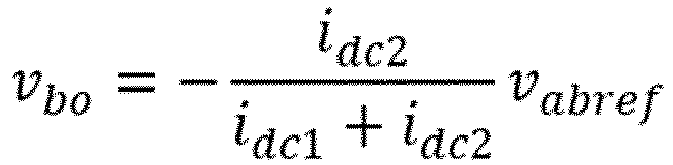 wherein vao is the first distribution voltage, vbo is the second distribution voltage, idc1 is the current flowing through the first DC terminal (T3), idc2 is the current flowing through the third DC terminal (T5), and vabref is the modulation voltage; andwherein the first bridge arm duty cycle (d1) and the second bridge arm duty cycle (d2) are calculated according to mathematic formulae:
 wherein d1 is the first bridge arm duty cycle, d2 is the second bridge arm duty cycle, vaoref is the first bridge arm reference voltage, vboref is the second bridge arm reference voltage, vcom is the common mode voltage, vdcp is the voltage of the first capacitor C1, vdcn is the voltage of the second capacitor C2, and iac is an AC current of the AC power.
 - The coordinated fault-tolerant control method according to claim 3, wherein when one switch (S1, S2, S3, S4, S5, S6, S7, S8) in any rear-stage switch set (30, 31, 32, 33) of the rear-stage circuit (3) fails, an amplitude of an AC voltage of the AC power is decreased.
- The coordinated fault-tolerant control method according to claim 2, wherein when one switch (S1, S2, S3, S4, S5, S6, S7, S8) in any rear-stage switch set (30, 31, 32, 33) of the rear-stage circuit (3) fails, a current imbalance between the current (idc1) flowing through the first DC terminal (T3) and the current (idc2) flowing through the third DC terminal (T5) is greater than 50%.
- A coordinated fault-tolerant control method for a power system (4) with a plurality of two-stage power modules (1), each of the plurality of two-stage power modules (1) comprising a front-stage circuit (2) and a rear-stage circuit (3), the front-stage circuit (2) having a DC midpoint (Ce), each of a first side circuit and a second side circuit of the rear-stage circuit (3) comprising two rear-stage switch sets (30, 31, 32, 33), each of the rear-stage switch sets (30, 31, 32, 33) comprising two switches (S1, S2, S3, S4, S5, S6, S7, S8) in serial connection, the coordinated fault-tolerant control method comprising:when one switch (S1, S2, S3, S4, S5, S6, S7, S8) in one of the two rear-stage switch sets (30, 31, 32, 33) in the first side circuit of the rear-stage circuit (3) in a specified two-stage power module (1) of the plurality of two-stage power modules (1) fails, disabling the other switch (S1, S2, S3, S4, S5, S6, S7, S8) in the rear-stage switch set (30, 31, 32, 33) with the failed switch (S1, S2, S3, S4, S5, S6, S7, S8);operating the other rear-stage switch set (30, 31, 32, 33) in the first side circuit of the rear-stage circuit (3) in the specified two-stage power module (1) in high-frequency switching;operating one of the two rear-stage switch sets (30, 31, 32, 33) in the second side circuit of the rear-stage circuit (3) in the specified two-stage power module (1) in high-frequency switching, and disabling the other of the two rear-stage switch sets (30, 31, 32, 33) in the second side circuit of the rear-stage circuit (3); andwhen any switch (S1, S2, S3, S4, S5, S6, S7, S8) in the specified two-stage power module (1) fails, controlling a potential of the DC midpoint (Ce) in the specified two-stage power module (1) to be regained balance.
- The coordinated fault-tolerant control method according to claim 9, wherein the front-stage circuit (2) of the specified two-stage power module (1) further comprises a first DC terminal (T3) and a third DC terminal (T5) electrically connected with the rear-stage circuit (3); and a second DC terminal (T4) electrically connected with the DC midpoint (Ce);
wherein distribute a modulation voltage (vabref) of the front-stage circuit (1) according to a current (idc1) flowing through the first DC terminal (T3) and a current (idc2) flowing through the third DC terminal (T5), so that a current flowing the DC midpoint (Ce) is essentially equal to zero. - A two-stage power module (1), comprising:a front-stage circuit (2) having a DC midpoint (Ce);a rear-stage circuit (3) electrically connected the front-stage circuit (2), wherein each of a first side circuit and a second side circuit of the rear-stage circuit (3) comprises two rear-stage switch sets (30, 31, 32, 33), and each of the rear-stage switch sets (30, 31, 32, 33) comprises two switches (S1, S2, S3, S4, S5, S6, S7, S8) in serial connection; anda controller is configured to:when one switch (S1, S2, S3, S4, S5, S6, S7, S8) in one of the two rear-stage switch sets (30, 31, 32, 33) in the first side circuit of the rear-stage circuit (3) fails, disabling the other switch (S1, S2, S3, S4, S5, S6, S7, S8) in the rear-stage switch set (30, 31, 32, 33) with the failed switch (S1, S2, S3, S4, S5, S6, S7, S8);operating the other rear-stage switch set (30, 31, 32, 33) in the first side circuit of the rear-stage circuit (3) in high-frequency switching;operating one of the two rear-stage switch sets (30, 31, 32, 33) in the second side circuit of the rear-stage circuit (3), and disabling the other of the two rear-stage switch sets (30, 31, 32, 33) in the second side circuit of the rear-stage circuit (3); andwhen any switch (S1, S2, S3, S4, S5, S6, S7, S8) in the two-stage power module (1) fails, controlling a potential of the DC midpoint (Ce) such that a current flowing the DC midpoint (Ce) is essentially equal to zero.
- The two-stage power module according to claim 11, wherein the second side circuit of the rear-stage circuit (3) is electrically connected between the front-stage circuit (2) and a primary winding of a transformer (T), and the first side circuit of the rear-stage circuit (3) is electrically connected with a secondary winding of the transformer (T); or wherein the first side circuit of the rear-stage circuit (3) is electrically connected between the front-stage circuit (2) and a primary winding of a transformer (T), and the second side circuit of the rear-stage circuit (3) is electrically connected with a secondary winding of the transformer (T).
- The two-stage power module according to claim 11, wherein the front-stage circuit (2) further comprises a first DC terminal (T3) and a third DC terminal (T5) electrically connected with the rear-stage circuit (3); and a second DC terminal (T4) electrically connected with the DC midpoint (Ce);
wherein distribute a modulation voltage (vabref) of the front-stage circuit (2), according to a current (idc1) flowing through the first DC terminal (T3) and a current (idc2) flowing through the third DC terminal (T5), so that the DC midpoint (Ce) is controlled to be regained balance. - The two-stage power module according to claim 13, wherein the front-stage circuit (2) further comprises:a front-stage power conversion unit (20) configured to receive an AC power, and having a first bridge arm and a second bridge arm;a first capacitor (C1) electrically connected between the first DC terminal (T3) and the DC midpoint (Ce); anda second capacitor (C2) electrically connected between the DC midpoint (Ce) and the third DC terminal (T5).
- The two-stage power module according to claim 14, wherein the controller is further configured to:obtaining the modulation voltage (vabref) of the front-stage circuit (2);obtaining a voltage (vdcp) of the first capacitor (C1) and a voltage (vdcn) of the second capacitor (C2), and obtaining a common mode voltage (vcom) according to the voltage (vdcp) of the first capacitor (C1) and the voltage (vdcn) of the second capacitor (C2);obtaining the current (idc1) flowing through the first DC terminal (T3) and the current (idc2) flowing through the third DC terminal (T5);distributing the modulation voltage (vabref) to the first bridge arm and the second bridge arm according to the current (idc1) flowing through the first DC terminal (T3) and the current (idc2) flowing through the third DC terminal (T5), to obtain a first distribution voltage (vao) and a second distribution voltage (vbo);superimposing the first distribution voltage (vao) on the common mode voltage (vcom) to obtain a first bridge arm reference voltage (vaoref), and superimposing the second distribution voltage (vbo) on the common mode voltage (vcom) to obtain a second bridge arm reference voltage (vboref);obtaining a first bridge arm duty cycle (d1) according to the first bridge arm reference voltage (vaoref) and the voltage (vdcp) of the first capacitor (C1), and obtaining a second bridge arm duty cycle (d2) according to the second bridge arm reference voltage (vboref) and the voltage (vdcn) of the second capacitor (C2); andcontrolling an operation of the first bridge arm according to the first bridge arm duty cycle (d1) and controlling an operation of the second bridge arm according to the second bridge arm duty cycle (d2).
- The two-stage power module according to claim 15, wherein the first bridge arm comprises one switch or two complementary switches, which are operated according to the first bridge arm duty cycle (d1), wherein the second bridge arm comprises one switch or two complementary switches, which are operated according to the second bridge arm duty cycle (d2).
Applications Claiming Priority (1)
| Application Number | Priority Date | Filing Date | Title |
|---|---|---|---|
| CN202310800662.6A CN119231731A (en) | 2023-06-30 | 2023-06-30 | Coordinated Fault-Tolerant Control Method |
Publications (1)
| Publication Number | Publication Date |
|---|---|
| EP4485776A1 true EP4485776A1 (en) | 2025-01-01 |
Family
ID=91664165
Family Applications (1)
| Application Number | Title | Priority Date | Filing Date |
|---|---|---|---|
| EP24183751.7A Pending EP4485776A1 (en) | 2023-06-30 | 2024-06-21 | Coordinated fault-tolerant control method |
Country Status (3)
| Country | Link |
|---|---|
| US (1) | US20250007392A1 (en) |
| EP (1) | EP4485776A1 (en) |
| CN (1) | CN119231731A (en) |
Families Citing this family (1)
| Publication number | Priority date | Publication date | Assignee | Title |
|---|---|---|---|---|
| CN118694178A (en) * | 2023-03-21 | 2024-09-24 | 台达电子企业管理(上海)有限公司 | DC bias suppression method and high frequency power conversion circuit using the same |
Citations (3)
| Publication number | Priority date | Publication date | Assignee | Title |
|---|---|---|---|---|
| US9571084B1 (en) * | 2010-03-09 | 2017-02-14 | Vlt, Inc. | Controlled switches for fault tolerant power converters |
| EP3852262A1 (en) * | 2020-01-16 | 2021-07-21 | Delta Electronics (Shanghai) Co., Ltd. | Dc/dc converter and control method thereof |
| EP4089898A1 (en) * | 2021-05-12 | 2022-11-16 | Delta Electronics (Shanghai) Co., Ltd | Power module and method for controlling the same, three-phase power system and method for controlling the same |
-
2023
- 2023-06-30 CN CN202310800662.6A patent/CN119231731A/en active Pending
-
2024
- 2024-06-21 EP EP24183751.7A patent/EP4485776A1/en active Pending
- 2024-06-25 US US18/753,866 patent/US20250007392A1/en active Pending
Patent Citations (3)
| Publication number | Priority date | Publication date | Assignee | Title |
|---|---|---|---|---|
| US9571084B1 (en) * | 2010-03-09 | 2017-02-14 | Vlt, Inc. | Controlled switches for fault tolerant power converters |
| EP3852262A1 (en) * | 2020-01-16 | 2021-07-21 | Delta Electronics (Shanghai) Co., Ltd. | Dc/dc converter and control method thereof |
| EP4089898A1 (en) * | 2021-05-12 | 2022-11-16 | Delta Electronics (Shanghai) Co., Ltd | Power module and method for controlling the same, three-phase power system and method for controlling the same |
Non-Patent Citations (2)
| Title |
|---|
| BHAKAR PRIYA SINGH ET AL: "Fault-Tolerant and Self-Reliant Characteristic in Series Resonant Converter for Semiconductor Open/Short-Circuit Faults", IEEE JOURNAL OF EMERGING AND SELECTED TOPICS IN POWER ELECTRONICS, IEEE, PISCATAWAY, NJ, USA, vol. 11, no. 1, 25 March 2022 (2022-03-25), pages 1143 - 1153, XP011933552, ISSN: 2168-6777, [retrieved on 20220328], DOI: 10.1109/JESTPE.2022.3161362 * |
| SU BIN ET AL: "Low conduction loss and low device stress three-level power factor correction rectifier", IET POWER ELECTRONICS, IET, UK, vol. 6, no. 3, 1 March 2013 (2013-03-01), pages 478 - 487, XP006046011, ISSN: 1755-4535, DOI: 10.1049/IET-PEL.2012.0515 * |
Also Published As
| Publication number | Publication date |
|---|---|
| US20250007392A1 (en) | 2025-01-02 |
| CN119231731A (en) | 2024-12-31 |
Similar Documents
| Publication | Publication Date | Title |
|---|---|---|
| Siouane et al. | Open-switch fault-tolerant operation of a two-stage buck/buck–boost converter with redundant synchronous switch for PV systems | |
| US6262901B1 (en) | Adjustable DC-to-DC converter with synchronous rectification and digital current sharing | |
| US10084393B2 (en) | Cascade converter system and method of putting converter module of the same into operation | |
| Bhakar et al. | A new fault-tolerant scheme for switch failures in dual active bridge DC-DC converter | |
| US11431190B2 (en) | DC power supply system and method | |
| EP0481456B1 (en) | Power conversion apparatus | |
| EP4485776A1 (en) | Coordinated fault-tolerant control method | |
| EP1450476B1 (en) | Power converter circuit | |
| KR102292553B1 (en) | Modular multi-level converter | |
| CN110323930A (en) | A kind of modular multilevel DC solid transformer and failure tolerant method | |
| Le et al. | Fault-tolerant control of three-phase bidirectional current-fed dual active bridge DC-DC converter | |
| US20240356427A1 (en) | Cascaded power conversion system and power distribution method thereof | |
| JP2015156740A (en) | Power converter | |
| CN109450265A (en) | A kind of multimode redundancy structure of cascaded H-bridges Three-phase electronic power transformer | |
| JP2016103891A (en) | Power conversion apparatus | |
| JP2016214030A (en) | Power converter | |
| Zhang et al. | A capacitor fault-tolerant scheme for dual-active-bridge DC/DC converter | |
| CN112187054A (en) | Direct current transformer | |
| US20220094257A1 (en) | Cascaded conversion system and voltage equalizing control method thereof | |
| KR102896803B1 (en) | A Novel LLC Resonant Converter With High Reliability | |
| EP4322382A1 (en) | Resonant converter, and controlling method for the same | |
| JP2000166221A (en) | Double chopper device | |
| WO2023012963A1 (en) | Power conversion device | |
| KR20260019619A (en) | LLC resonant converter device | |
| Patthi et al. | An ameliorated single-phase five-level multi-switch fault-tolerant inverter with reduced number of switches |
Legal Events
| Date | Code | Title | Description |
|---|---|---|---|
| PUAI | Public reference made under article 153(3) epc to a published international application that has entered the european phase |
Free format text: ORIGINAL CODE: 0009012 |
|
| STAA | Information on the status of an ep patent application or granted ep patent |
Free format text: STATUS: THE APPLICATION HAS BEEN PUBLISHED |
|
| AK | Designated contracting states |
Kind code of ref document: A1 Designated state(s): AL AT BE BG CH CY CZ DE DK EE ES FI FR GB GR HR HU IE IS IT LI LT LU LV MC ME MK MT NL NO PL PT RO RS SE SI SK SM TR |
|
| STAA | Information on the status of an ep patent application or granted ep patent |
Free format text: STATUS: REQUEST FOR EXAMINATION WAS MADE |
|
| 17P | Request for examination filed |
Effective date: 20250627 |