EP4485744A1 - Charging circuit and electronic device - Google Patents
Charging circuit and electronic device Download PDFInfo
- Publication number
- EP4485744A1 EP4485744A1 EP23795139.7A EP23795139A EP4485744A1 EP 4485744 A1 EP4485744 A1 EP 4485744A1 EP 23795139 A EP23795139 A EP 23795139A EP 4485744 A1 EP4485744 A1 EP 4485744A1
- Authority
- EP
- European Patent Office
- Prior art keywords
- charging
- circuit
- conversion circuit
- conversion
- voltage
- Prior art date
- Legal status (The legal status is an assumption and is not a legal conclusion. Google has not performed a legal analysis and makes no representation as to the accuracy of the status listed.)
- Pending
Links
Images




Classifications
-
- H—ELECTRICITY
- H02—GENERATION; CONVERSION OR DISTRIBUTION OF ELECTRIC POWER
- H02J—ELECTRIC POWER NETWORKS; CIRCUIT ARRANGEMENTS OR SYSTEMS FOR SUPPLYING OR DISTRIBUTING ELECTRIC POWER; SYSTEMS FOR STORING ELECTRIC ENERGY
- H02J7/00—Circuit arrangements for charging or discharging batteries or for supplying loads from batteries
- H02J7/40—Circuit arrangements for charging or discharging batteries or for supplying loads from batteries characterised by the exchange of charge or discharge related data
- H02J7/44—Circuit arrangements for charging or discharging batteries or for supplying loads from batteries characterised by the exchange of charge or discharge related data between battery management systems and power sources
-
- H—ELECTRICITY
- H02—GENERATION; CONVERSION OR DISTRIBUTION OF ELECTRIC POWER
- H02M—APPARATUS FOR CONVERSION BETWEEN AC AND AC, BETWEEN AC AND DC, OR BETWEEN DC AND DC, AND FOR USE WITH MAINS OR SIMILAR POWER SUPPLY SYSTEMS; CONVERSION OF DC OR AC INPUT POWER INTO SURGE OUTPUT POWER; CONTROL OR REGULATION THEREOF
- H02M3/00—Conversion of DC power input into DC power output
- H02M3/02—Conversion of DC power input into DC power output without intermediate conversion into AC
- H02M3/04—Conversion of DC power input into DC power output without intermediate conversion into AC by static converters
- H02M3/10—Conversion of DC power input into DC power output without intermediate conversion into AC by static converters using discharge tubes with control electrode or semiconductor devices with control electrode
- H02M3/145—Conversion of DC power input into DC power output without intermediate conversion into AC by static converters using discharge tubes with control electrode or semiconductor devices with control electrode using devices of a triode or transistor type requiring continuous application of a control signal
- H02M3/155—Conversion of DC power input into DC power output without intermediate conversion into AC by static converters using discharge tubes with control electrode or semiconductor devices with control electrode using devices of a triode or transistor type requiring continuous application of a control signal using semiconductor devices only
- H02M3/156—Conversion of DC power input into DC power output without intermediate conversion into AC by static converters using discharge tubes with control electrode or semiconductor devices with control electrode using devices of a triode or transistor type requiring continuous application of a control signal using semiconductor devices only with automatic control of output voltage or current, e.g. switching regulators
-
- H—ELECTRICITY
- H02—GENERATION; CONVERSION OR DISTRIBUTION OF ELECTRIC POWER
- H02J—ELECTRIC POWER NETWORKS; CIRCUIT ARRANGEMENTS OR SYSTEMS FOR SUPPLYING OR DISTRIBUTING ELECTRIC POWER; SYSTEMS FOR STORING ELECTRIC ENERGY
- H02J7/00—Circuit arrangements for charging or discharging batteries or for supplying loads from batteries
- H02J7/90—Regulation of charging or discharging current or voltage
- H02J7/933—Regulation of charging or discharging current or voltage the cycle being controlled or terminated in response to electric parameters
-
- H—ELECTRICITY
- H02—GENERATION; CONVERSION OR DISTRIBUTION OF ELECTRIC POWER
- H02J—ELECTRIC POWER NETWORKS; CIRCUIT ARRANGEMENTS OR SYSTEMS FOR SUPPLYING OR DISTRIBUTING ELECTRIC POWER; SYSTEMS FOR STORING ELECTRIC ENERGY
- H02J1/00—Circuit arrangements for DC mains or DC distribution networks
- H02J1/08—Three-wire DC power distribution systems; Systems having more than three wires
- H02J1/082—DC supplies with two or more different DC voltage levels
-
- H—ELECTRICITY
- H02—GENERATION; CONVERSION OR DISTRIBUTION OF ELECTRIC POWER
- H02J—ELECTRIC POWER NETWORKS; CIRCUIT ARRANGEMENTS OR SYSTEMS FOR SUPPLYING OR DISTRIBUTING ELECTRIC POWER; SYSTEMS FOR STORING ELECTRIC ENERGY
- H02J50/00—Circuit arrangements or systems for wireless supply or distribution of electric power
- H02J50/005—Mechanical details of housing or structure aiming to accommodate the power transfer means, e.g. mechanical integration of coils, antennas or transducers into emitting or receiving devices
-
- H—ELECTRICITY
- H02—GENERATION; CONVERSION OR DISTRIBUTION OF ELECTRIC POWER
- H02J—ELECTRIC POWER NETWORKS; CIRCUIT ARRANGEMENTS OR SYSTEMS FOR SUPPLYING OR DISTRIBUTING ELECTRIC POWER; SYSTEMS FOR STORING ELECTRIC ENERGY
- H02J50/00—Circuit arrangements or systems for wireless supply or distribution of electric power
- H02J50/10—Circuit arrangements or systems for wireless supply or distribution of electric power using inductive coupling
-
- H—ELECTRICITY
- H02—GENERATION; CONVERSION OR DISTRIBUTION OF ELECTRIC POWER
- H02J—ELECTRIC POWER NETWORKS; CIRCUIT ARRANGEMENTS OR SYSTEMS FOR SUPPLYING OR DISTRIBUTING ELECTRIC POWER; SYSTEMS FOR STORING ELECTRIC ENERGY
- H02J7/00—Circuit arrangements for charging or discharging batteries or for supplying loads from batteries
- H02J7/40—Circuit arrangements for charging or discharging batteries or for supplying loads from batteries characterised by the exchange of charge or discharge related data
-
- H—ELECTRICITY
- H02—GENERATION; CONVERSION OR DISTRIBUTION OF ELECTRIC POWER
- H02J—ELECTRIC POWER NETWORKS; CIRCUIT ARRANGEMENTS OR SYSTEMS FOR SUPPLYING OR DISTRIBUTING ELECTRIC POWER; SYSTEMS FOR STORING ELECTRIC ENERGY
- H02J7/00—Circuit arrangements for charging or discharging batteries or for supplying loads from batteries
- H02J7/60—Circuit arrangements for charging or discharging batteries or for supplying loads from batteries including safety or protection arrangements
- H02J7/64—Circuit arrangements for charging or discharging batteries or for supplying loads from batteries including safety or protection arrangements against overvoltage
-
- H—ELECTRICITY
- H02—GENERATION; CONVERSION OR DISTRIBUTION OF ELECTRIC POWER
- H02J—ELECTRIC POWER NETWORKS; CIRCUIT ARRANGEMENTS OR SYSTEMS FOR SUPPLYING OR DISTRIBUTING ELECTRIC POWER; SYSTEMS FOR STORING ELECTRIC ENERGY
- H02J7/00—Circuit arrangements for charging or discharging batteries or for supplying loads from batteries
- H02J7/855—Circuit arrangements for charging or discharging batteries or for supplying loads from batteries with circuits adapted for supplying loads from the battery
-
- H—ELECTRICITY
- H02—GENERATION; CONVERSION OR DISTRIBUTION OF ELECTRIC POWER
- H02J—ELECTRIC POWER NETWORKS; CIRCUIT ARRANGEMENTS OR SYSTEMS FOR SUPPLYING OR DISTRIBUTING ELECTRIC POWER; SYSTEMS FOR STORING ELECTRIC ENERGY
- H02J7/00—Circuit arrangements for charging or discharging batteries or for supplying loads from batteries
- H02J7/90—Regulation of charging or discharging current or voltage
-
- H—ELECTRICITY
- H02—GENERATION; CONVERSION OR DISTRIBUTION OF ELECTRIC POWER
- H02J—ELECTRIC POWER NETWORKS; CIRCUIT ARRANGEMENTS OR SYSTEMS FOR SUPPLYING OR DISTRIBUTING ELECTRIC POWER; SYSTEMS FOR STORING ELECTRIC ENERGY
- H02J7/00—Circuit arrangements for charging or discharging batteries or for supplying loads from batteries
- H02J7/90—Regulation of charging or discharging current or voltage
- H02J7/96—Regulation of charging or discharging current or voltage in response to battery voltage
-
- H—ELECTRICITY
- H02—GENERATION; CONVERSION OR DISTRIBUTION OF ELECTRIC POWER
- H02M—APPARATUS FOR CONVERSION BETWEEN AC AND AC, BETWEEN AC AND DC, OR BETWEEN DC AND DC, AND FOR USE WITH MAINS OR SIMILAR POWER SUPPLY SYSTEMS; CONVERSION OF DC OR AC INPUT POWER INTO SURGE OUTPUT POWER; CONTROL OR REGULATION THEREOF
- H02M1/00—Details of apparatus for conversion
- H02M1/32—Means for protecting converters other than automatic disconnection
-
- H—ELECTRICITY
- H02—GENERATION; CONVERSION OR DISTRIBUTION OF ELECTRIC POWER
- H02M—APPARATUS FOR CONVERSION BETWEEN AC AND AC, BETWEEN AC AND DC, OR BETWEEN DC AND DC, AND FOR USE WITH MAINS OR SIMILAR POWER SUPPLY SYSTEMS; CONVERSION OF DC OR AC INPUT POWER INTO SURGE OUTPUT POWER; CONTROL OR REGULATION THEREOF
- H02M3/00—Conversion of DC power input into DC power output
- H02M3/02—Conversion of DC power input into DC power output without intermediate conversion into AC
- H02M3/04—Conversion of DC power input into DC power output without intermediate conversion into AC by static converters
- H02M3/10—Conversion of DC power input into DC power output without intermediate conversion into AC by static converters using discharge tubes with control electrode or semiconductor devices with control electrode
- H02M3/145—Conversion of DC power input into DC power output without intermediate conversion into AC by static converters using discharge tubes with control electrode or semiconductor devices with control electrode using devices of a triode or transistor type requiring continuous application of a control signal
- H02M3/155—Conversion of DC power input into DC power output without intermediate conversion into AC by static converters using discharge tubes with control electrode or semiconductor devices with control electrode using devices of a triode or transistor type requiring continuous application of a control signal using semiconductor devices only
- H02M3/156—Conversion of DC power input into DC power output without intermediate conversion into AC by static converters using discharge tubes with control electrode or semiconductor devices with control electrode using devices of a triode or transistor type requiring continuous application of a control signal using semiconductor devices only with automatic control of output voltage or current, e.g. switching regulators
- H02M3/158—Conversion of DC power input into DC power output without intermediate conversion into AC by static converters using discharge tubes with control electrode or semiconductor devices with control electrode using devices of a triode or transistor type requiring continuous application of a control signal using semiconductor devices only with automatic control of output voltage or current, e.g. switching regulators including plural semiconductor devices as final control devices for a single load
-
- H—ELECTRICITY
- H02—GENERATION; CONVERSION OR DISTRIBUTION OF ELECTRIC POWER
- H02M—APPARATUS FOR CONVERSION BETWEEN AC AND AC, BETWEEN AC AND DC, OR BETWEEN DC AND DC, AND FOR USE WITH MAINS OR SIMILAR POWER SUPPLY SYSTEMS; CONVERSION OF DC OR AC INPUT POWER INTO SURGE OUTPUT POWER; CONTROL OR REGULATION THEREOF
- H02M3/00—Conversion of DC power input into DC power output
- H02M3/02—Conversion of DC power input into DC power output without intermediate conversion into AC
- H02M3/04—Conversion of DC power input into DC power output without intermediate conversion into AC by static converters
- H02M3/10—Conversion of DC power input into DC power output without intermediate conversion into AC by static converters using discharge tubes with control electrode or semiconductor devices with control electrode
- H02M3/145—Conversion of DC power input into DC power output without intermediate conversion into AC by static converters using discharge tubes with control electrode or semiconductor devices with control electrode using devices of a triode or transistor type requiring continuous application of a control signal
- H02M3/155—Conversion of DC power input into DC power output without intermediate conversion into AC by static converters using discharge tubes with control electrode or semiconductor devices with control electrode using devices of a triode or transistor type requiring continuous application of a control signal using semiconductor devices only
- H02M3/156—Conversion of DC power input into DC power output without intermediate conversion into AC by static converters using discharge tubes with control electrode or semiconductor devices with control electrode using devices of a triode or transistor type requiring continuous application of a control signal using semiconductor devices only with automatic control of output voltage or current, e.g. switching regulators
- H02M3/158—Conversion of DC power input into DC power output without intermediate conversion into AC by static converters using discharge tubes with control electrode or semiconductor devices with control electrode using devices of a triode or transistor type requiring continuous application of a control signal using semiconductor devices only with automatic control of output voltage or current, e.g. switching regulators including plural semiconductor devices as final control devices for a single load
- H02M3/1582—Buck-boost converters
-
- H—ELECTRICITY
- H02—GENERATION; CONVERSION OR DISTRIBUTION OF ELECTRIC POWER
- H02M—APPARATUS FOR CONVERSION BETWEEN AC AND AC, BETWEEN AC AND DC, OR BETWEEN DC AND DC, AND FOR USE WITH MAINS OR SIMILAR POWER SUPPLY SYSTEMS; CONVERSION OF DC OR AC INPUT POWER INTO SURGE OUTPUT POWER; CONTROL OR REGULATION THEREOF
- H02M3/00—Conversion of DC power input into DC power output
- H02M3/02—Conversion of DC power input into DC power output without intermediate conversion into AC
- H02M3/04—Conversion of DC power input into DC power output without intermediate conversion into AC by static converters
- H02M3/10—Conversion of DC power input into DC power output without intermediate conversion into AC by static converters using discharge tubes with control electrode or semiconductor devices with control electrode
- H02M3/145—Conversion of DC power input into DC power output without intermediate conversion into AC by static converters using discharge tubes with control electrode or semiconductor devices with control electrode using devices of a triode or transistor type requiring continuous application of a control signal
- H02M3/155—Conversion of DC power input into DC power output without intermediate conversion into AC by static converters using discharge tubes with control electrode or semiconductor devices with control electrode using devices of a triode or transistor type requiring continuous application of a control signal using semiconductor devices only
- H02M3/156—Conversion of DC power input into DC power output without intermediate conversion into AC by static converters using discharge tubes with control electrode or semiconductor devices with control electrode using devices of a triode or transistor type requiring continuous application of a control signal using semiconductor devices only with automatic control of output voltage or current, e.g. switching regulators
- H02M3/158—Conversion of DC power input into DC power output without intermediate conversion into AC by static converters using discharge tubes with control electrode or semiconductor devices with control electrode using devices of a triode or transistor type requiring continuous application of a control signal using semiconductor devices only with automatic control of output voltage or current, e.g. switching regulators including plural semiconductor devices as final control devices for a single load
- H02M3/1584—Conversion of DC power input into DC power output without intermediate conversion into AC by static converters using discharge tubes with control electrode or semiconductor devices with control electrode using devices of a triode or transistor type requiring continuous application of a control signal using semiconductor devices only with automatic control of output voltage or current, e.g. switching regulators including plural semiconductor devices as final control devices for a single load with a plurality of power processing stages connected in parallel
-
- H—ELECTRICITY
- H02—GENERATION; CONVERSION OR DISTRIBUTION OF ELECTRIC POWER
- H02J—ELECTRIC POWER NETWORKS; CIRCUIT ARRANGEMENTS OR SYSTEMS FOR SUPPLYING OR DISTRIBUTING ELECTRIC POWER; SYSTEMS FOR STORING ELECTRIC ENERGY
- H02J2207/00—Details of circuit arrangements for charging or discharging batteries or supplying loads from batteries
- H02J2207/20—Charging or discharging characterised by the power electronics converter
-
- H—ELECTRICITY
- H02—GENERATION; CONVERSION OR DISTRIBUTION OF ELECTRIC POWER
- H02J—ELECTRIC POWER NETWORKS; CIRCUIT ARRANGEMENTS OR SYSTEMS FOR SUPPLYING OR DISTRIBUTING ELECTRIC POWER; SYSTEMS FOR STORING ELECTRIC ENERGY
- H02J2207/00—Details of circuit arrangements for charging or discharging batteries or supplying loads from batteries
- H02J2207/30—Charge provided using DC bus or data bus of a computer
-
- H—ELECTRICITY
- H02—GENERATION; CONVERSION OR DISTRIBUTION OF ELECTRIC POWER
- H02J—ELECTRIC POWER NETWORKS; CIRCUIT ARRANGEMENTS OR SYSTEMS FOR SUPPLYING OR DISTRIBUTING ELECTRIC POWER; SYSTEMS FOR STORING ELECTRIC ENERGY
- H02J2207/00—Details of circuit arrangements for charging or discharging batteries or supplying loads from batteries
- H02J2207/40—Details of circuit arrangements for charging or discharging batteries or supplying loads from batteries adapted for charging from various sources, e.g. AC, DC or multivoltage
-
- Y—GENERAL TAGGING OF NEW TECHNOLOGICAL DEVELOPMENTS; GENERAL TAGGING OF CROSS-SECTIONAL TECHNOLOGIES SPANNING OVER SEVERAL SECTIONS OF THE IPC; TECHNICAL SUBJECTS COVERED BY FORMER USPC CROSS-REFERENCE ART COLLECTIONS [XRACs] AND DIGESTS
- Y02—TECHNOLOGIES OR APPLICATIONS FOR MITIGATION OR ADAPTATION AGAINST CLIMATE CHANGE
- Y02E—REDUCTION OF GREENHOUSE GAS [GHG] EMISSIONS, RELATED TO ENERGY GENERATION, TRANSMISSION OR DISTRIBUTION
- Y02E60/00—Enabling technologies; Technologies with a potential or indirect contribution to GHG emissions mitigation
- Y02E60/10—Energy storage using batteries
Definitions
- Embodiments of this application relate to the field of electronic technologies, and in particular, to a charging circuit and an electronic device.
- a charging circuit is widely used in an electronic device such as a mobile phone, a watch, or a tablet computer, to convert a voltage that is output by a power adapter (charger) or a wireless charging circuit, and then provide a charging voltage to a battery of the electronic device or directly provide a system voltage to another load circuit of the electronic device.
- the charging circuit mainly uses a voltage conversion circuit such as a buck (BUCK) circuit or a switched capacitor (switched capacitor converter, SC) to implement a conversion ratio of an input voltage to an output voltage.
- BUCK buck
- SC switched capacitor
- a BUCK circuit applicable to low-power charging is used, so that flexibility of a voltage conversion ratio during charging is improved.
- an SC circuit applicable to high-power charging is used. In this way, based on different charging application scenarios, the BUCK circuit or the SC may be selectively controlled to charge the battery.
- a mainstream solution is: when it is detected, according to a power deliver (power deliver, PD) charging protocol, that the charger supports normal charging, controlling the BUCK circuit to implement the conversion ratio of the input voltage to the output voltage; or when it is detected, according to a super charge protocol (super charge protocol, SCP), that the charger supports fast charging, controlling the SC circuit to implement the conversion ratio of the input voltage to the output voltage.
- a power deliver power deliver, PD
- SCP super charge protocol
- a power (or current) upper limit of the SC How to further increase a power (or current) of high-power fast charging becomes an urgent problem to be resolved.
- Embodiments of this application provide a charging circuit and an electronic device, to increase a power of high-power fast charging.
- a charging circuit includes: at least two direct current-direct current DC-DC conversion circuits coupled between a power supply end and a charging end.
- the power supply end is configured to be coupled to a charger, and the charging end is configured to be coupled to a battery.
- a voltage input end of the DC-DC conversion circuit is coupled to the power supply end, and a voltage output end of the DC-DC conversion circuit is coupled to the charging end.
- the at least two DC-DC conversion circuits include a first DC-DC conversion circuit and a second DC-DC conversion circuit.
- the first DC-DC conversion circuit is configured to perform voltage conversion on a voltage at the power supply end, to output a first charging signal to the battery.
- the second DC-DC conversion circuit is configured to perform voltage conversion on the voltage at the power supply end, to output a second charging signal to the battery.
- the first DC-DC conversion circuit includes a voltage regulated direct current conversion circuit
- the second DC-DC conversion circuit includes a voltage non-regulated direct current conversion circuit.
- the at least two DC-DC conversion circuits that are in the charging circuit and that are coupled between the power supply end VBUS and the charging end Vbat include one voltage non-regulated direct current conversion circuit and one voltage regulated direct current conversion circuit.
- a first DC-DC conversion circuit includes a voltage regulated direct current conversion circuit
- a second DC-DC conversion circuit includes a voltage non-regulated direct current conversion circuit.
- the power supply end VBUS is configured to be coupled to the charger
- the charging end Vbat is configured to be coupled to the battery.
- the first DC-DC conversion circuit performs voltage conversion on the voltage at the power supply end VBUS, to output the first charging signal to the battery
- the second DC-DC conversion circuit performs voltage conversion on the voltage at the power supply end, to output the second charging signal to the battery. Therefore, with reference to the foregoing process, the first DC-DC conversion circuit and the second DC-DC conversion circuit may simultaneously charge the battery in a first charging mode (for example, fast charging).
- the solution provided in this embodiment of this application may simultaneously use, in a fast charging scenario, two DC-DC conversion circuits to charge the battery, so that a power of high-power fast charging can be increased.
- the first DC-DC conversion circuit in the at least two DC-DC conversion circuits is configured to output the first charging signal to the battery
- the second DC-DC conversion circuit is configured to stop performing voltage conversion on the voltage at the power supply end.
- one of the at least two DC-DC conversion circuits may alternatively be used to charge the battery.
- the first DC-DC conversion circuit in the at least two DC-DC conversion circuits is configured to output the first charging signal to the battery.
- the charging circuit further includes a first protocol chip, where the first protocol chip is coupled to a controller, and the at least two direct current-direct current DC-DC conversion circuits are further coupled to the controller.
- the controller is specifically configured to: when the first protocol chip determines that the charger supports the first charging mode, control the first DC-DC conversion circuit to output the first charging signal to the battery, and control the second DC-DC conversion circuit to output the second charging signal to the battery.
- the first protocol chip and the second DC-DC conversion circuit are integrated into a same chip.
- the first protocol chip is configured to negotiate with the charger according to an SCP charging protocol, to determine that the charger supports the first charging mode.
- the charging circuit further includes a second protocol chip, where the second protocol chip is configured to be coupled to a controller, and the at least two direct current-direct current DC-DC conversion circuits are further coupled to the controller.
- the control circuit is specifically configured to: when the second protocol chip determines that the charger supports the second charging mode, control the first DC-DC conversion circuit to output the first charging signal to the battery, and control the second DC-DC conversion circuit to stop performing voltage conversion on the voltage at the power supply end.
- the second protocol chip and the first DC-DC conversion circuit are integrated into a same chip.
- the second protocol chip is configured to negotiate with the charger according to a PD charging protocol, to determine that the charger supports the second charging mode.
- the at least two DC-DC conversion circuits further include a third DC-DC conversion circuit, where the third DC-DC conversion circuit is configured to perform voltage conversion on the voltage at the power supply end, to output a third charging signal to the battery; and the third DC-DC conversion circuit includes a voltage non-regulated direct current conversion circuit.
- the third DC-DC conversion circuit includes a voltage non-regulated direct current conversion circuit.
- the voltage regulated direct current conversion circuit includes at least any one of the following: a buck-boost BUCK-BOOST circuit, a buck BUCK circuit, and a boost BOOST circuit.
- the voltage non-regulated direct current conversion circuit includes a switched capacitor SC circuit.
- the charging circuit further includes: a plurality of control switches, where the control switch is connected in series between the power supply end and the DC-DC conversion circuit.
- a control switch connected in series to the power supply end and the first DC-DC conversion circuit is configured to be in an on state
- a control switch connected in series to the power supply end and the second DC-DC conversion circuit is configured to be in an on state.
- a control switch connected in series to the power supply end and the first DC-DC conversion circuit is configured to be in an on state
- a control switch connected in series to the power supply end and the second DC-DC conversion circuit is configured to be in an off state.
- a chip includes the charging circuit according to any one of the first aspect or the possible implementations of the first aspect, and the chip further includes a pin configured to couple a charger and a battery.
- the chip includes a charging management module.
- an electronic device including the charging circuit according to any one of the first aspect or the possible implementations of the first aspect or the chip provided in the second aspect.
- the charging circuit according to any one of the first aspect or the possible implementations of the first aspect or the chip provided in the second aspect.
- the electronic device further includes a wireless charging coil, a receiving circuit, and a battery.
- the wireless charging coil is connected to the receiving circuit, the receiving circuit is connected to a power supply end of the charging circuit or the chip, and the battery is connected to a charging end of the charging circuit or the chip. In this way, a wireless charging manner is implemented.
- the electronic device further includes a USB interface and a battery.
- the USB interface is connected to a power supply end of the charging circuit or the chip, and the battery is connected to a charging end of the charging circuit or the chip. In this way, a wired charging manner is implemented.
- the electronic device further includes an overvoltage protection circuit.
- the overvoltage protection circuit includes a diode and a protection switch, where an anode of the diode is coupled to the ground, a cathode of the diode is coupled to the power supply end, and the protection switch is connected in series between the power supply end and the ground. In this way, because the diode is reversely connected between the power supply end and the ground, when the protection switch is turned off, a voltage at the anode of the diode increases. If the voltage at the anode of the diode is higher than a voltage at the cathode, the diode is turned on, and the excessively high voltage is released, thereby playing a role of overvoltage protection.
- the electronic device further includes a load circuit; and a first DC-DC conversion circuit further includes an isolation switch, where a voltage output end of the first DC-DC conversion circuit is coupled to the load circuit, and the isolation switch is further disposed between the voltage output end of the first DC-DC conversion circuit and the charging end.
- the voltage output end of the first DC-DC conversion circuit is directly connected to a system load (load circuit), and the voltage output end of the first DC-DC conversion circuit is connected to the battery by using the isolation switch.
- the first DC-DC conversion circuit may directly supply power to the system load, and may directly charge the battery when the isolation switch is turned on.
- the system load may be powered by the battery when the isolation switch is turned on.
- first and second mentioned below are merely intended for a purpose of description, and shall not be understood as an indication or implication of relative importance or an implicit indication of a quantity of indicated technical features. Therefore, a feature limited by “first” or “second” may explicitly or implicitly include one or more features. In the descriptions of embodiments of this application, unless otherwise specified, "a plurality of" means two or more.
- a "first end” and a “second end” may respectively indicate connection ends of the switch, but a "control end” may indicate a control end of the switch.
- the control end may be a gate (gate) of the MOS transistor
- the first end may be a source (source) of the MOS transistor
- the second end may be a drain (drain) of the MOS transistor.
- each switch may include one switching transistor.
- each switch may alternatively include two or more switching transistors connected in parallel.
- a charging circuit provided in embodiments of this application may be used in an electronic device that needs to charge a battery, such as a mobile phone, a tablet computer, a notebook computer, an ultra-mobile personal computer (ultra-mobile personal computer, UMPC), a handheld computer, a netbook, a personal digital assistant (personal digital assistant, PDA), a wearable electronic device, or a virtual reality device. This is not limited in embodiments of this application.
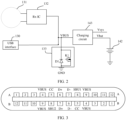
- FIG. 1 is a schematic of a structure of an electronic device 100.
- the electronic device 100 may include a processor 110, an external memory interface 120, an internal memory 121, a universal serial bus (universal serial bus, USB) interface 130, a charging management module 140, a power management module 141, a battery 142, an antenna 1, an antenna 2, a mobile communication module 150, a wireless communication module 160, an audio module 170, a speaker 170A, a receiver 170B, a microphone 170C, a headset jack 170D, a sensor module 180, a camera 193, a display 194, and the like.
- a processor 110 an external memory interface 120, an internal memory 121, a universal serial bus (universal serial bus, USB) interface 130, a charging management module 140, a power management module 141, a battery 142, an antenna 1, an antenna 2, a mobile communication module 150, a wireless communication module 160, an audio module 170, a speaker 170A, a receiver 170B, a microphone 170C, a headset jack 170D, a sensor module 180,
- the structure shown in this embodiment of the present invention does not constitute a specific limitation on the electronic device 100.
- the electronic device 100 may include more or fewer components than those shown in the figure, or some components may be combined, or some components may be split, or different component arrangements may be used.
- the components shown in the figure may be implemented in hardware, software, or a combination of software and hardware.
- the processor 110 may include one or more processing units.
- the processor 110 may include an application processor (application processor, AP), a modem processor, a graphics processing unit (graphics processing unit, GPU), an image signal processor (image signal processor, ISP), a controller, a video codec, a digital signal processor (digital signal processor, DSP), a baseband processor, a neural-network processing unit (neural-network processing unit, NPU), and/or the like.
- Different processing units may be independent devices, or may be integrated into one or more processors.
- the charging management module 140 is configured to receive a charging input from a charger.
- the charger may be a wireless charger or a wired charger (or an adapter).
- the charging management module 140 may receive a charging input from the wired charger through the USB interface 130.
- the charging management module 140 may receive a wireless charging input by using a wireless charging coil of the electronic device 100.
- the charging management module 140 may further supply power to a load circuit of the electronic device by using the power management module 141.
- the charging management module 140 is connected to the USB interface 130. To implement normal charging or fast charging of the battery, with reference to FIG.
- the charging management module 140 may include a charging circuit 143 configured to charge the battery, where a power supply end VBUS of the charging circuit 143 is connected to the USB interface 130, and a charging end Vbat of the charging circuit 143 is connected to the battery 142.
- the power supply end VBUS of the charging circuit 143 is specifically connected to the wireless charging coil 131 by using a receiving circuit (receive integrated circuit, Rx IC) 132.
- the processor 110 or the charging management module 140 may control, according to a charging protocol, the charging circuit 143 to convert a voltage at the power supply end VBUS into a voltage Vbat near a battery voltage (usually 5 V), and then charge the battery.
- the charging circuit 143 further includes a system voltage end Vsys that is configured to provide a voltage to the load circuit.
- the electronic device further includes an overvoltage protection circuit 133.
- the overvoltage protection circuit 133 includes a diode D1 and a protection switch K1, where an anode of the diode D1 is coupled to the ground GND, a cathode of the diode D1 is coupled to the power supply end VBUS, and the protection switch K1 is connected in series between the power supply end VBUS and the ground GND.
- a voltage at the anode of the diode D1 increases. If the voltage at the anode of the diode D1 is higher than a voltage at the cathode, D1 is turned on, and the excessively high voltage is released, thereby playing a role of overvoltage protection.
- a control end of the protection switch K1 may be connected to the processor 110 or the power management module 141, to control the protection switch K1 to be in the foregoing off state, thereby implementing an overvoltage protection function.
- the USB interface 130 may be a Type-C interface. As shown in FIG.
- a side A and a side B of the Type-C interface each include two symmetrically disposed VBUS pins (configured to provide a USB voltage, a pin 4 and a pin 9), a CC pin (a pin 5), a D+ pin (a pin 6 on the side A and a pin 7 on the side B), a D- pin (a pin 7 on the side A and a pin 6 on the side B), and an SBU pin (a pin 8 is a spare pin, marked as SBU1 on the side A and SBU2 on the side B).
- the power supply end of the charging circuit 143 is coupled to the VBUS pin.
- the electronic device may negotiate a charging voltage with the charger based on pins such as the CC pin, the D+ pin, and the D- pin according to a charging protocol.
- a charging parameter is negotiated by using the CC pin.
- a charging parameter is negotiated by using the D+ pin and the D-pin.
- a charging parameter may be negotiated with the charger by using the Rx IC 132 and the wireless charging coil 131 according to the charging protocol.
- the charging circuit 143 is described in detail mainly with reference to an example in which the charger is connected through the USB interface 130.
- the power management module 141 is configured to connect to the battery 142, the charging management module 140, and the processor 110.
- the power management module 141 receives an input from the battery 142 and/or the charging management module 140, and supplies power to the processor 110, the internal memory 121, the display 194, the camera 193, the wireless communication module 160, and the like.
- the power management module 141 may alternatively be disposed in the processor 110.
- the power management module 141 and the charging management module 140 may alternatively be disposed in a same device.
- a wireless communication function of the electronic device 100 may be implemented through the antenna 1, the antenna 2, the mobile communication module 150, the wireless communication module 160, the modem processor, the baseband processor, and the like.
- the antenna 1 and the antenna 2 are configured to transmit and receive an electromagnetic wave signal.
- the mobile communication module 150 may provide a solution, applied to the electronic device 100, to wireless communication including 2G/3G/4G/5G, and the like.
- at least some functional modules of the mobile communication module 150 may be disposed in the processor 110.
- at least some functional modules of the mobile communication module 150 may be disposed in a same device as at least some modules of the processor 110.
- the wireless communication module 160 may provide a solution, applied to the electronic device 100, to wireless communication including a wireless local area network (wireless local area network, WLAN) (for example, a wireless fidelity (wireless fidelity, Wi-Fi) network), Bluetooth (Bluetooth, BT), a global navigation satellite system (global navigation satellite system, GNSS), frequency modulation (frequency modulation, FM), a near field communication (near field communication, NFC) technology, an infrared (infrared, IR) technology, and the like.
- WLAN wireless local area network
- WLAN wireless local area network
- WLAN wireless local area network
- WLAN wireless local area network
- WLAN wireless local area network
- WLAN wireless local area network
- WLAN wireless local area network
- Bluetooth Bluetooth
- BT global navigation satellite system
- GNSS global navigation satellite system
- FM frequency modulation
- NFC near field communication
- infrared infrared
- the antenna 1 and the mobile communication module 150 in the electronic device 100 are coupled, and the antenna 2 and the wireless communication module 160 in the electronic device 100 are coupled, so that the electronic device 100 can communicate with a network and another device by using a wireless communication technology.
- the electronic device 100 implements a display function by using the GPU, the display 194, the application processor, and the like.
- the GPU is a microprocessor for image processing, and is connected to the display 194 and the application processor.
- the GPU is configured to: perform mathematical and geometric computation, and render an image.
- the processor 110 may include one or more GPUs that execute program instructions to generate or change display information.
- the display 194 is configured to display an image, a video, and the like.
- the electronic device 100 may implement a photographing function by using the ISP, the camera 193, the video codec, the GPU, the display 194, the application processor, and the like.
- the camera 193 is configured to capture a static image or a video.
- the external memory interface 120 may be configured to connect to an external memory card, for example, a micro SD card, to extend a storage capability of the electronic device 100.
- the external memory card communicates with the processor 110 through the external memory interface 120, to implement a data storage function. For example, files such as music and videos are stored in the external memory card.
- the internal memory 121 may be configured to store one or more computer programs.
- the one or more computer programs include instructions.
- the processor 110 may run the instructions stored in the internal memory 121, so that the electronic device 100 performs a method provided in some embodiments of this application, various functional applications, data processing, and the like.
- the electronic device 100 may implement an audio function such as music playing or recording by using the audio module 170, the speaker 170A, the receiver 170B, the microphone 170C, the headset jack 170D, the application processor, and the like.
- an audio function such as music playing or recording by using the audio module 170, the speaker 170A, the receiver 170B, the microphone 170C, the headset jack 170D, the application processor, and the like.
- the sensor module 180 may include a pressure sensor, a gyroscope sensor, a barometric pressure sensor, a magnetic sensor, an acceleration sensor, a distance sensor, an optical proximity sensor, a fingerprint sensor, a temperature sensor, a touch sensor, an ambient light sensor, a bone conduction sensor, and the like.
- the electronic device may further include one or more components such as a button 190, a motor 191, an indicator 192, and a subscriber identification module (subscriber identification module, SIM) card interface 195. This is not limited in this embodiment of this application.
- the charging circuit 143 shown in FIG. 2 usually includes a BUCK circuit and an SC circuit.
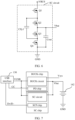
- FIG. 4 is a schematic of a connection manner of the BUCK circuit and the SC circuit.
- a voltage output end of the BUCK circuit is coupled to a load circuit Vsys.
- the BUCK circuit includes an inductor L1 and a switch circuit that includes switches Q1 and Q2.
- the BUCK circuit is connected between VBUS and Vsys, a first end of Q1 is coupled to VBUS, and a second end of Q1 is coupled to a first end of Q2.
- the first end of Q2 is coupled to a first end of the inductor L1, and a second end of Q2 is coupled to the ground GND.
- a second end of the inductor L1 is coupled to Vsys.
- Q1 and Q2 form a buck bridge of the BUCK circuit.
- the BUCK circuit When the BUCK circuit is in a buck state, on and off states of Q1 and Q2 are complementary, and an on/off duty cycle D BUCK of Q1 and Q2 is adjusted to implement buck outputs of different ratios.
- the BUCK circuit further includes an isolation switch Q B .
- the voltage output end (Vsys) of the BUCK circuit is connected to a charging end (Vbat) by using the isolation switch Q B .
- the BUCK circuit may directly supply power to the load circuit of the system, and may directly charge the battery 142 when Q B is turned on.
- Q B may alternatively be turned on, to supply power to the load circuit by using the battery 142.
- the SC circuit includes a flying capacitor Cfly 1, an output capacitor Cout, and a switch circuit that includes switches Q1 to Q4.
- a first end of Q1 is coupled to VBUS, a second end of Q1 is coupled to a first end of Q2, a second end of Q2 is coupled to a first end of Q3, a second end of Q3 is coupled to a first end of Q4, and a second end of Q4 is coupled to the ground GND.
- a first end of the flying capacitor Cfly 1 is coupled to the first end of Q2, and a second end of Cfly 1 is coupled to the first end of Q4.
- a first end of the output capacitor Cout is coupled to the first end of Q3, and a second end of Cout is coupled to the ground GND.
- the first end of the output capacitor Cout is connected to a charging end Vbat.
- the SC circuit may convert a voltage that is input by VBUS into a voltage at Vbat at a fixed ratio, and charge the battery.
- the SC circuit shown in FIG. 6 is used as an example. Both Q1 and Q3 are turned on, and both Q2 and Q4 are turned on. Control signals of Q1 and Q3 and control signals of Q2 and Q4 are complementary. In this way, in a period of time of a cycle, Q1 and Q3 are turned on, and Q2 and Q4 are turned off.
- Cfly 1 and Cout are connected in series between V1 and GND, and a voltage that is input by V1 simultaneously charges Cfly1 and Cout.
- Q1 and Q3 are turned off, Q2 and Q4 are turned on, Cfly1 is connected in parallel to Cout, and Cfly1 discharges to Cout.
- 2:1 buck conversion is formed.
- an SC circuit that implements 2:1 buck conversion is merely used as an example. It may be understood that 3:1 buck conversion, 4:1 buck conversion, or the like may be implemented by using an SC circuit in another form.
- the BUCK circuit used by the charging circuit 143 includes the inductor L1, the inductor L1 is used as an energy storage element, energy density of the inductor is usually low, and energy consumed on the inductor increases as charging power of the battery 142 increases. Therefore, a loss of the charging circuit 143 is increased.
- the SC circuit does not include a power device, efficiency is improved compared with that of the BUCK.
- a conversion ratio of an input voltage to an output voltage of the SC circuit is limited, and is usually limited by a quantity of capacitors.
- a conversion ratio implemented by the SC circuit is relatively fixed, for example, (a conversion ratio such as 2:1, 3:1, or 4:1), and the voltage change ratio cannot be freely adjusted.
- a BUCK circuit applicable to low-power charging is usually used, so that flexibility of a voltage conversion ratio during charging is improved.
- an SC circuit applicable to high-power charging is used.
- the BUCK circuit or the SC circuit may be selectively controlled to charge the battery.
- the electronic device further includes a PD chip and an SCP chip that are configured to implement charging protocol detection, where the PD chip is connected to a CC pin of the USB interface 130, and the SCP chip is connected to a D+/D-pin of the USB interface 130.
- the BUCK circuit When a charger is inserted into the USB interface 130, if the PD chip detects (according to a PD charging protocol) that the charger supports normal charging, the BUCK circuit is controlled to implement the conversion ratio of the input voltage and the output voltage; or if the SCP chip detects (according to an SCP charging protocol) that the charger supports fast charging, the SC circuit is controlled to implement the conversion ratio of the input voltage and the output voltage.
- the PD chip and the SCP chip each may be a logic circuit such as a processor or an MCU that is separately disposed, or may be integrated into the processor 110 or the power management module 141 shown in FIG. 1 for implementation.
- the BUCK circuit and the PD chip may alternatively be integrated into a same BUCK chip, and/or the SC circuit and the SCP chip may alternatively be integrated into a same SC chip.
- a power (or current) provided by the charging circuit is limited by a power (or current) upper limit of the SC. How to further increase a power (or current) of high-power fast charging becomes an urgent problem to be resolved.
- the charging circuit includes at least two direct current-direct current DC-DC conversion circuits 143 (a first DC-DC conversion circuit 1431 and a second DC-DC conversion circuit 1432 shown in FIG. 8 ) coupled between a power supply end VBUS and a charging end Vbat.
- the power supply end VBUS is configured to be coupled to a charger
- the charging end Vbat is configured to be coupled to a battery 142 (as shown in FIG. 2 ).
- a voltage input end of the DC-DC conversion circuit 143 is coupled to the power supply end VBUS, and a voltage output end of the DC-DC conversion circuit 143 (1431, 1432) is coupled to the charging end Vbat.
- the at least two DC-DC conversion circuits 143 include a first DC-DC conversion circuit 1431, and a second DC-DC conversion circuit 1432.
- the first DC-DC conversion circuit 1431 is configured to perform voltage conversion on a voltage at the power supply end VBUS, to output a first charging signal to the battery 142.
- the second DC-DC conversion circuit 1432 is configured to perform voltage conversion on the voltage at the power supply end, to output a second charging signal to the battery 142.
- the first DC-DC conversion circuit 1431 includes a voltage regulated direct current conversion circuit
- the second DC-DC conversion circuit 1432 includes a voltage non-regulated direct current conversion circuit.
- the voltage regulated direct current conversion circuit includes at least any one of the following: a buck-boost BUCK-BOOST circuit, a buck BUCK circuit, and a boost BOOST circuit.
- the voltage non-regulated direct current conversion circuit includes a switched capacitor SC circuit. It should be noted that, as shown in FIG.
- the first DC-DC conversion circuit 1431 when the first DC-DC conversion circuit 1431 includes a voltage regulated direct current conversion circuit such as a buck-boost BUCK-BOOST circuit, a buck BUCK circuit, or a boost BOOST circuit, the first DC-DC conversion circuit 1431 further includes a system voltage end Vsys that is connected to a load circuit.
- a voltage regulated direct current conversion circuit such as a buck-boost BUCK-BOOST circuit, a buck BUCK circuit, or a boost BOOST circuit
- the first DC-DC conversion circuit 1431 further includes a system voltage end Vsys that is connected to a load circuit.
- the at least two DC-DC conversion circuits that are in the charging circuit and that are coupled between the power supply end VBUS and the charging end Vbat include one voltage non-regulated direct current conversion circuit and one voltage regulated direct current conversion circuit.
- the first DC-DC conversion circuit includes a voltage regulated direct current conversion circuit
- the second DC-DC conversion circuit includes a voltage non-regulated direct current conversion circuit.
- the power supply end VBUS is configured to be coupled to the charger
- the charging end Vbat is configured to be coupled to the battery.
- the first DC-DC conversion circuit performs voltage conversion on the voltage at the power supply end VBUS, to output the first charging signal to the battery; and the second DC-DC conversion circuit performs voltage conversion on the voltage at the power supply end, to output the second charging signal to the battery. Therefore, with reference to the foregoing process, the first DC-DC conversion circuit and the second DC-DC conversion circuit may simultaneously charge the battery in a first charging mode (for example, fast charging).
- a first charging mode for example, fast charging
- the solution provided in this embodiment of this application may simultaneously reuse, in a fast charging scenario, two DC-DC conversion circuits to charge the battery, so that a power of high-power fast charging can be increased.
- the first DC-DC conversion circuit 1431 includes a BUCK circuit
- the second DC-DC conversion circuit 1432 includes an SC circuit.
- the BUCK circuit 1431 outputs a current of 2 A (a battery voltage of 5 V) to Vbat
- the SC circuit 1432 outputs a current of 6 A (a battery voltage of 5 V) to Vbat
- fast charging with a charging power of 40 W can be implemented (compared with a charging power of 30 W of fast charging that is implemented by using only the SC circuit, the charging power is increased by 10 W).
- the charging circuit further includes a third DC-DC conversion circuit 1433 (the third DC-DC conversion circuit 1433 may be a voltage non-regulated direct current conversion circuit, for example, the SC circuit 1432 in FIG. 11 ), in the first charging mode, the third DC-DC conversion circuit 1433 is also configured to perform voltage conversion on the voltage at the power supply end VBUS, to output a third charging signal to the battery 142.
- the third DC-DC conversion circuit 1433 may be a voltage non-regulated direct current conversion circuit, for example, the SC circuit 1432 in FIG. 11
- the third DC-DC conversion circuit 1433 in the first charging mode, the third DC-DC conversion circuit 1433 is also configured to perform voltage conversion on the voltage at the power supply end VBUS, to output a third charging signal to the battery 142.
- the BUCK circuit 1431, the SC circuit 1432, and the SC circuit 1433 simultaneously output a charging signal to Vbat
- the BUCK circuit 1431 outputs a current of 2 A (a battery voltage of 5 V) to Vbat
- the SC circuits 1432 and 1433 output a current of 6 A (a battery voltage of 5 V) to Vbat
- fast charging with a charging power of 70 W can be implemented (compared with a charging power of 60 W of fast charging that is implemented by using only two SC circuits, the charging power is increased by 10 W).
- a power of the BUCK circuit 1431 may be reused, instead of leaving the BUCK circuit 1431 idle and using only an output power of the SC circuit. In this way, an output of a higher power can be implemented.
- the charging circuit 143 further includes a first protocol chip 1441, where the first protocol chip 1441 is coupled to a controller 145, and the at least two direct current-direct current DC-DC conversion circuits (1431, 1432) are further coupled to the controller 145.
- the controller is specifically configured to: when the first protocol chip 1441 determines that the charger supports the first charging mode, control the first DC-DC conversion circuit 1431 to output the first charging signal to the battery, and control the second DC-DC conversion circuit 1432 to output the second charging signal to the battery.
- the first protocol chip 1441 may be an SCP chip.
- the first protocol chip 1441 is configured to negotiate with the charger according to an SCP charging protocol, to determine that the charger supports the first charging mode.
- one of the at least two DC-DC conversion circuits may alternatively be used to charge the battery.
- the first DC-DC conversion circuit 1431 in the at least two DC-DC conversion circuits is configured to output the first charging signal to the battery 142
- the second DC-DC conversion circuit 1432 is configured to stop performing voltage conversion on the voltage at the power supply end.
- the charging circuit 143 further includes a second protocol chip 1442.
- the second protocol chip 1442 is configured to be coupled to a controller 145, and the at least two direct current-direct current DC-DC conversion circuits are further coupled to the controller 145.
- the first DC-DC conversion circuit 1431 may be a BUCK circuit
- the second protocol chip 1442 may be a PD chip.
- the second protocol chip 1442 is configured to: when negotiating with the charger according to a PD charging protocol to determine that the charger supports the second charging mode, control the first DC-DC conversion circuit 1431 to output the first charging signal to the battery, and control the second DC-DC conversion circuit 1432 to stop performing voltage conversion on the voltage of the power supply end.
- the controller 145 may be a logic circuit such as a processor or an MCU that is separately disposed, or may be integrated into the processor 110 or the power management module 141 shown in FIG. 1 for implementation.
- the first protocol chip 1441 and the second protocol chip 1442 each may be a logic circuit such as a processor or an MCU that is separately disposed, or may be integrated into the processor 110 or the power management module 141 shown in FIG. 1 for implementation.
- the first protocol chip 1441 and the second DC-DC conversion circuit 1432 may alternatively be integrated into a same second chip, and the second protocol chip 1442 and the first DC-DC conversion circuit 1431 may alternatively be integrated into a same first chip.
- the charging circuit 143 further includes a plurality of control switches M (M1, M2), where the control switch is connected in series between the power supply end VBUS and the DC-DC conversion circuit.
- M1 is connected in series between the power supply end VBUS and the first DC-DC conversion circuit 1431; and a control switch M2 is connected in series between the power supply end VBUS and the second DC-DC conversion circuit 1432.
- control switch M1 connected in series to the power supply end VBUS and the first DC-DC conversion circuit 1431 is configured to be in an on state
- control switch M2 connected in series to the power supply end VBUS and the second DC-DC conversion circuit 1432 is configured to be in an on state
- control switch M2 connected in series to the power supply end VBUS and the second DC-DC conversion circuit 1432 is configured to be in an off state.
- control ends of the control switches M1 and M2 may be connected to the controller 145 in FIG. 9 .
- controller 145 is specifically configured to: when the first protocol chip 1441 determines that the charger supports the first charging mode (supports the SCP charging protocol), control M1 and M2 to be turned on; and when the second protocol chip 1441 determines that the charger supports the first charging mode (supports the PD charging protocol), control M1 to be turned on and M2 to be turned off.
- An embodiment of this application further provides a chip, where the chip includes the charging circuit provided in the foregoing embodiments; and the chip further includes a pin configured to couple a charger and a battery.
- the chip includes the charging management module shown in FIG. 1 .
- the chip may alternatively include only a switching device in the charging circuit, and devices such as a capacitor and an inductor of the charging circuit are coupled outside the chip by using a pin P.
- a specific connection relationship and a working principle of each internal structure in the chip refer to the detailed descriptions in the foregoing embodiments. Details are not described herein again.
Landscapes
- Engineering & Computer Science (AREA)
- Power Engineering (AREA)
- Computer Networks & Wireless Communication (AREA)
- Charge And Discharge Circuits For Batteries Or The Like (AREA)
- Dc-Dc Converters (AREA)
Abstract
Description
- This application claims priority to
Chinese Patent Application No. 202210452308.4, filed with the China National Intellectual Property Administration on April 27, 2022 - Embodiments of this application relate to the field of electronic technologies, and in particular, to a charging circuit and an electronic device.
- A charging circuit is widely used in an electronic device such as a mobile phone, a watch, or a tablet computer, to convert a voltage that is output by a power adapter (charger) or a wireless charging circuit, and then provide a charging voltage to a battery of the electronic device or directly provide a system voltage to another load circuit of the electronic device. Usually, according to different charging protocols, the charging circuit mainly uses a voltage conversion circuit such as a buck (BUCK) circuit or a switched capacitor (switched capacitor converter, SC) to implement a conversion ratio of an input voltage to an output voltage.
- Currently, in a normal charging scenario, a BUCK circuit applicable to low-power charging is used, so that flexibility of a voltage conversion ratio during charging is improved. In a fast charging scenario, to ensure charging efficiency, an SC circuit applicable to high-power charging is used. In this way, based on different charging application scenarios, the BUCK circuit or the SC may be selectively controlled to charge the battery. For example, a mainstream solution is: when it is detected, according to a power deliver (power deliver, PD) charging protocol, that the charger supports normal charging, controlling the BUCK circuit to implement the conversion ratio of the input voltage to the output voltage; or when it is detected, according to a super charge protocol (super charge protocol, SCP), that the charger supports fast charging, controlling the SC circuit to implement the conversion ratio of the input voltage to the output voltage.
- In this way, in the fast charging scenario, a power (or current, where the charging voltage of the battery is limited by a rated voltage of the battery, and is usually fixed at about 5 V, so that the power that is output by the charging circuit is mainly in a direct ratio to the current) provided by the charging circuit is limited by a power (or current) upper limit of the SC. How to further increase a power (or current) of high-power fast charging becomes an urgent problem to be resolved.
- Embodiments of this application provide a charging circuit and an electronic device, to increase a power of high-power fast charging.
- According to a first aspect, a charging circuit is provided. The charging circuit includes: at least two direct current-direct current DC-DC conversion circuits coupled between a power supply end and a charging end. The power supply end is configured to be coupled to a charger, and the charging end is configured to be coupled to a battery. A voltage input end of the DC-DC conversion circuit is coupled to the power supply end, and a voltage output end of the DC-DC conversion circuit is coupled to the charging end. The at least two DC-DC conversion circuits include a first DC-DC conversion circuit and a second DC-DC conversion circuit. The first DC-DC conversion circuit is configured to perform voltage conversion on a voltage at the power supply end, to output a first charging signal to the battery. The second DC-DC conversion circuit is configured to perform voltage conversion on the voltage at the power supply end, to output a second charging signal to the battery. The first DC-DC conversion circuit includes a voltage regulated direct current conversion circuit, and the second DC-DC conversion circuit includes a voltage non-regulated direct current conversion circuit. In this way, the at least two DC-DC conversion circuits that are in the charging circuit and that are coupled between the power supply end VBUS and the charging end Vbat include one voltage non-regulated direct current conversion circuit and one voltage regulated direct current conversion circuit. For example, a first DC-DC conversion circuit includes a voltage regulated direct current conversion circuit, and a second DC-DC conversion circuit includes a voltage non-regulated direct current conversion circuit. In addition, the power supply end VBUS is configured to be coupled to the charger, and the charging end Vbat is configured to be coupled to the battery. In this way, in a case, the first DC-DC conversion circuit performs voltage conversion on the voltage at the power supply end VBUS, to output the first charging signal to the battery; and the second DC-DC conversion circuit performs voltage conversion on the voltage at the power supply end, to output the second charging signal to the battery. Therefore, with reference to the foregoing process, the first DC-DC conversion circuit and the second DC-DC conversion circuit may simultaneously charge the battery in a first charging mode (for example, fast charging). Compared with a conventional technology in which only one of a BUCK circuit or an SC circuit is used to charge the battery in a charging scenario, the solution provided in this embodiment of this application may simultaneously use, in a fast charging scenario, two DC-DC conversion circuits to charge the battery, so that a power of high-power fast charging can be increased.
- In a possible implementation, the first DC-DC conversion circuit in the at least two DC-DC conversion circuits is configured to output the first charging signal to the battery, and the second DC-DC conversion circuit is configured to stop performing voltage conversion on the voltage at the power supply end. In this possible implementation, one of the at least two DC-DC conversion circuits may alternatively be used to charge the battery. For example, in a second charging mode, the first DC-DC conversion circuit in the at least two DC-DC conversion circuits is configured to output the first charging signal to the battery.
- In a possible implementation, to implement control on the DC-DC conversion circuits, the charging circuit further includes a first protocol chip, where the first protocol chip is coupled to a controller, and the at least two direct current-direct current DC-DC conversion circuits are further coupled to the controller. When the first protocol chip is coupled to the charger, the controller is specifically configured to: when the first protocol chip determines that the charger supports the first charging mode, control the first DC-DC conversion circuit to output the first charging signal to the battery, and control the second DC-DC conversion circuit to output the second charging signal to the battery.
- In a possible implementation, to save an external analog device (for example, a logic circuit such as an MCU), the first protocol chip and the second DC-DC conversion circuit are integrated into a same chip.
- In a possible implementation, the first protocol chip is configured to negotiate with the charger according to an SCP charging protocol, to determine that the charger supports the first charging mode.
- In a possible implementation, to implement control on the DC-DC conversion circuits, the charging circuit further includes a second protocol chip, where the second protocol chip is configured to be coupled to a controller, and the at least two direct current-direct current DC-DC conversion circuits are further coupled to the controller. When the second protocol chip is coupled to the charger, the control circuit is specifically configured to: when the second protocol chip determines that the charger supports the second charging mode, control the first DC-DC conversion circuit to output the first charging signal to the battery, and control the second DC-DC conversion circuit to stop performing voltage conversion on the voltage at the power supply end.
- In a possible implementation, to save an external analog device (for example, a logic circuit such as an MCU), the second protocol chip and the first DC-DC conversion circuit are integrated into a same chip.
- In a possible implementation, the second protocol chip is configured to negotiate with the charger according to a PD charging protocol, to determine that the charger supports the second charging mode.
- In a possible implementation, the at least two DC-DC conversion circuits further include a third DC-DC conversion circuit, where the third DC-DC conversion circuit is configured to perform voltage conversion on the voltage at the power supply end, to output a third charging signal to the battery; and the third DC-DC conversion circuit includes a voltage non-regulated direct current conversion circuit. In this way, in the first charging mode, three DC-DC conversion circuits are simultaneously reused to charge the battery, so that an output of a higher power can be implemented.
- In a possible implementation, the voltage regulated direct current conversion circuit includes at least any one of the following: a buck-boost BUCK-BOOST circuit, a buck BUCK circuit, and a boost BOOST circuit.
- In a possible implementation, the voltage non-regulated direct current conversion circuit includes a switched capacitor SC circuit.
- In a possible implementation, to avoid supplying a voltage to a DC-DC conversion circuit that does not work, the charging circuit further includes: a plurality of control switches, where the control switch is connected in series between the power supply end and the DC-DC conversion circuit. A control switch connected in series to the power supply end and the first DC-DC conversion circuit is configured to be in an on state, and a control switch connected in series to the power supply end and the second DC-DC conversion circuit is configured to be in an on state. Alternatively, a control switch connected in series to the power supply end and the first DC-DC conversion circuit is configured to be in an on state, and a control switch connected in series to the power supply end and the second DC-DC conversion circuit is configured to be in an off state.
- According to a second aspect, a chip is provided. The chip includes the charging circuit according to any one of the first aspect or the possible implementations of the first aspect, and the chip further includes a pin configured to couple a charger and a battery. For technical effects implemented in the second aspect, refer to the descriptions in the first aspect or any possible implementation. Details are not described herein again.
- In a possible implementation, the chip includes a charging management module.
- According to a third aspect, an electronic device is provided, including the charging circuit according to any one of the first aspect or the possible implementations of the first aspect or the chip provided in the second aspect. For technical effects implemented in the third aspect, refer to the descriptions in the first aspect or any possible implementation. Details are not described herein again.
- In a possible implementation, the electronic device further includes a wireless charging coil, a receiving circuit, and a battery. The wireless charging coil is connected to the receiving circuit, the receiving circuit is connected to a power supply end of the charging circuit or the chip, and the battery is connected to a charging end of the charging circuit or the chip. In this way, a wireless charging manner is implemented.
- In a possible implementation, the electronic device further includes a USB interface and a battery. The USB interface is connected to a power supply end of the charging circuit or the chip, and the battery is connected to a charging end of the charging circuit or the chip. In this way, a wired charging manner is implemented.
- In a possible implementation, the electronic device further includes an overvoltage protection circuit. The overvoltage protection circuit includes a diode and a protection switch, where an anode of the diode is coupled to the ground, a cathode of the diode is coupled to the power supply end, and the protection switch is connected in series between the power supply end and the ground. In this way, because the diode is reversely connected between the power supply end and the ground, when the protection switch is turned off, a voltage at the anode of the diode increases. If the voltage at the anode of the diode is higher than a voltage at the cathode, the diode is turned on, and the excessively high voltage is released, thereby playing a role of overvoltage protection.
- In a possible implementation, the electronic device further includes a load circuit; and a first DC-DC conversion circuit further includes an isolation switch, where a voltage output end of the first DC-DC conversion circuit is coupled to the load circuit, and the isolation switch is further disposed between the voltage output end of the first DC-DC conversion circuit and the charging end. In this scenario, the voltage output end of the first DC-DC conversion circuit is directly connected to a system load (load circuit), and the voltage output end of the first DC-DC conversion circuit is connected to the battery by using the isolation switch. In this way, in this scenario, the first DC-DC conversion circuit may directly supply power to the system load, and may directly charge the battery when the isolation switch is turned on. In addition, when there is no external power supply, the system load may be powered by the battery when the isolation switch is turned on.
-
-
FIG. 1 is a schematic of a structure of an electronic device according to an embodiment of this application; -
FIG. 2 is a schematic of a connection relationship of a charging circuit according to an embodiment of this application; -
FIG. 3 is a schematic of pin distribution of a USB interface according to an embodiment of this application; -
FIG. 4 is a schematic of a structure of a charging circuit according to an embodiment of this application; -
FIG. 5 is a schematic of a structure of a BUCK circuit according to an embodiment of this application; -
FIG. 6 is a schematic of a structure of an SC circuit according to an embodiment of this application; -
FIG. 7 is a schematic of a structure of a charging circuit according to another embodiment of this application; -
FIG. 8 is a schematic of a structure of a charging circuit according to still another embodiment of this application; -
FIG. 9 is a schematic of a structure of a charging circuit according to yet another embodiment of this application; -
FIG. 10 is a schematic of a structure of a charging circuit according to another embodiment of this application; -
FIG. 11 is a schematic of a structure of a charging circuit according to still another embodiment of this application; and -
FIG. 12 is a schematic of a structure of a charging circuit according to yet another embodiment of this application. - Unless otherwise required by the context, throughout this specification and claims, the term "comprise (comprise)" and other forms thereof such as a third person singular form "comprises (comprises)" and a present participle form "comprising (comprising)" are interpreted as "open and inclusive", that is, "comprise, but not limited to". In the descriptions of this specification, the terms such as "one embodiment (one embodiment)", "some embodiments (some embodiments)", "example embodiments (example embodiments)", "an example (example)", "a specific example (specific example)", or "some examples (some examples)" are intended to indicate that a specific feature, structure, material, or characteristic related to the embodiment or example is included in at least one embodiment or example of this application. The schematic representations of the foregoing terms do not necessarily indicate a same embodiment or example. In addition, the specific feature, structure, material, or characteristic may be included in any one or more embodiments or examples in any appropriate manner.
- The terms "first" and "second" mentioned below are merely intended for a purpose of description, and shall not be understood as an indication or implication of relative importance or an implicit indication of a quantity of indicated technical features. Therefore, a feature limited by "first" or "second" may explicitly or implicitly include one or more features. In the descriptions of embodiments of this application, unless otherwise specified, "a plurality of" means two or more.
- When used to describe a three-port switch (also referred to as a switching device, such as a switching tube, a switch transistor, or a protection switch, an isolation switch, and a control switch in this application), a "first end" and a "second end" may respectively indicate connection ends of the switch, but a "control end" may indicate a control end of the switch. For example, for a MOS (metal-oxide-semiconductor, metal-oxide-semiconductor) transistor, the control end may be a gate (gate) of the MOS transistor, the first end may be a source (source) of the MOS transistor, and the second end may be a drain (drain) of the MOS transistor. Alternatively, the first end may be a drain of the MOS transistor, and the second end may be a source of the MOS transistor. In embodiments of this application, each switch may include one switching transistor. However, to minimize an internal resistance increase caused by a switch connected in series to a line, each switch may alternatively include two or more switching transistors connected in parallel.
- The following describes technical solutions of this application with reference to accompanying drawings.
- A charging circuit provided in embodiments of this application may be used in an electronic device that needs to charge a battery, such as a mobile phone, a tablet computer, a notebook computer, an ultra-mobile personal computer (ultra-mobile personal computer, UMPC), a handheld computer, a netbook, a personal digital assistant (personal digital assistant, PDA), a wearable electronic device, or a virtual reality device. This is not limited in embodiments of this application.
- For example,
FIG. 1 is a schematic of a structure of anelectronic device 100. - The
electronic device 100 may include aprocessor 110, anexternal memory interface 120, aninternal memory 121, a universal serial bus (universal serial bus, USB)interface 130, acharging management module 140, apower management module 141, abattery 142, anantenna 1, anantenna 2, amobile communication module 150, awireless communication module 160, anaudio module 170, aspeaker 170A, areceiver 170B, amicrophone 170C, aheadset jack 170D, asensor module 180, acamera 193, adisplay 194, and the like. - It may be understood that the structure shown in this embodiment of the present invention does not constitute a specific limitation on the
electronic device 100. In some other embodiments of this application, theelectronic device 100 may include more or fewer components than those shown in the figure, or some components may be combined, or some components may be split, or different component arrangements may be used. The components shown in the figure may be implemented in hardware, software, or a combination of software and hardware. - The
processor 110 may include one or more processing units. For example, theprocessor 110 may include an application processor (application processor, AP), a modem processor, a graphics processing unit (graphics processing unit, GPU), an image signal processor (image signal processor, ISP), a controller, a video codec, a digital signal processor (digital signal processor, DSP), a baseband processor, a neural-network processing unit (neural-network processing unit, NPU), and/or the like. Different processing units may be independent devices, or may be integrated into one or more processors. - The
charging management module 140 is configured to receive a charging input from a charger. The charger may be a wireless charger or a wired charger (or an adapter). In some embodiments of wired charging, thecharging management module 140 may receive a charging input from the wired charger through theUSB interface 130. In some embodiments of wireless charging, thecharging management module 140 may receive a wireless charging input by using a wireless charging coil of theelectronic device 100. When charging thebattery 142, thecharging management module 140 may further supply power to a load circuit of the electronic device by using thepower management module 141. Specifically, with reference toFIG. 1 , thecharging management module 140 is connected to theUSB interface 130. To implement normal charging or fast charging of the battery, with reference toFIG. 2 , thecharging management module 140 may include acharging circuit 143 configured to charge the battery, where a power supply end VBUS of the chargingcircuit 143 is connected to theUSB interface 130, and a charging end Vbat of the chargingcircuit 143 is connected to thebattery 142. For another example, in some embodiments of wireless charging, with reference toFIG. 2 , the power supply end VBUS of the chargingcircuit 143 is specifically connected to thewireless charging coil 131 by using a receiving circuit (receive integrated circuit, Rx IC) 132. Theprocessor 110 or thecharging management module 140 may control, according to a charging protocol, the chargingcircuit 143 to convert a voltage at the power supply end VBUS into a voltage Vbat near a battery voltage (usually 5 V), and then charge the battery. As shown inFIG. 2 , the chargingcircuit 143 further includes a system voltage end Vsys that is configured to provide a voltage to the load circuit. In addition, as shown inFIG. 2 , the electronic device further includes anovervoltage protection circuit 133. Theovervoltage protection circuit 133 includes a diode D1 and a protection switch K1, where an anode of the diode D1 is coupled to the ground GND, a cathode of the diode D1 is coupled to the power supply end VBUS, and the protection switch K1 is connected in series between the power supply end VBUS and the ground GND. In this way, because the diode D1 is reversely connected between the power supply end VBUS and the ground GND, when the protection switch K1 is turned off, a voltage at the anode of the diode D1 increases. If the voltage at the anode of the diode D1 is higher than a voltage at the cathode, D1 is turned on, and the excessively high voltage is released, thereby playing a role of overvoltage protection. It should be noted that a control end of the protection switch K1 may be connected to theprocessor 110 or thepower management module 141, to control the protection switch K1 to be in the foregoing off state, thereby implementing an overvoltage protection function. It should be noted that, to enable the electronic device to be usually coupled to an external device (for example, a charger, an analog headset, a digital headset, a mobile storage device, or a mobile terminal) through theUSB interface 130, theUSB interface 130 may be a Type-C interface. As shown inFIG. 3 , a side A and a side B of the Type-C interface each include two symmetrically disposed VBUS pins (configured to provide a USB voltage, apin 4 and a pin 9), a CC pin (a pin 5), a D+ pin (apin 6 on the side A and apin 7 on the side B), a D- pin (apin 7 on the side A and apin 6 on the side B), and an SBU pin (apin 8 is a spare pin, marked as SBU1 on the side A and SBU2 on the side B). Usually, the power supply end of the chargingcircuit 143 is coupled to the VBUS pin. When being connected to an external charger through theUSB interface 130, the electronic device may negotiate a charging voltage with the charger based on pins such as the CC pin, the D+ pin, and the D- pin according to a charging protocol. For example, for a charger that supports a power deliver (power deliver, PD) charging protocol, a charging parameter is negotiated by using the CC pin. For a charger that supports a super charge protocol (super charge protocol, SCP), a charging parameter is negotiated by using the D+ pin and the D-pin. Certainly, for an electronic device that supports wireless charging, a charging parameter may be negotiated with the charger by using theRx IC 132 and thewireless charging coil 131 according to the charging protocol. In the following example, the chargingcircuit 143 is described in detail mainly with reference to an example in which the charger is connected through theUSB interface 130. - The
power management module 141 is configured to connect to thebattery 142, thecharging management module 140, and theprocessor 110. Thepower management module 141 receives an input from thebattery 142 and/or thecharging management module 140, and supplies power to theprocessor 110, theinternal memory 121, thedisplay 194, thecamera 193, thewireless communication module 160, and the like. In some other embodiments, thepower management module 141 may alternatively be disposed in theprocessor 110. In some other embodiments, thepower management module 141 and thecharging management module 140 may alternatively be disposed in a same device. - A wireless communication function of the
electronic device 100 may be implemented through theantenna 1, theantenna 2, themobile communication module 150, thewireless communication module 160, the modem processor, the baseband processor, and the like. Theantenna 1 and theantenna 2 are configured to transmit and receive an electromagnetic wave signal. Themobile communication module 150 may provide a solution, applied to theelectronic device 100, to wireless communication including 2G/3G/4G/5G, and the like. In some embodiments, at least some functional modules of themobile communication module 150 may be disposed in theprocessor 110. In some embodiments, at least some functional modules of themobile communication module 150 may be disposed in a same device as at least some modules of theprocessor 110. Thewireless communication module 160 may provide a solution, applied to theelectronic device 100, to wireless communication including a wireless local area network (wireless local area network, WLAN) (for example, a wireless fidelity (wireless fidelity, Wi-Fi) network), Bluetooth (Bluetooth, BT), a global navigation satellite system (global navigation satellite system, GNSS), frequency modulation (frequency modulation, FM), a near field communication (near field communication, NFC) technology, an infrared (infrared, IR) technology, and the like. - In some embodiments, the
antenna 1 and themobile communication module 150 in theelectronic device 100 are coupled, and theantenna 2 and thewireless communication module 160 in theelectronic device 100 are coupled, so that theelectronic device 100 can communicate with a network and another device by using a wireless communication technology. - The
electronic device 100 implements a display function by using the GPU, thedisplay 194, the application processor, and the like. The GPU is a microprocessor for image processing, and is connected to thedisplay 194 and the application processor. The GPU is configured to: perform mathematical and geometric computation, and render an image. Theprocessor 110 may include one or more GPUs that execute program instructions to generate or change display information. - The
display 194 is configured to display an image, a video, and the like. - The
electronic device 100 may implement a photographing function by using the ISP, thecamera 193, the video codec, the GPU, thedisplay 194, the application processor, and the like. - The
camera 193 is configured to capture a static image or a video. - The
external memory interface 120 may be configured to connect to an external memory card, for example, a micro SD card, to extend a storage capability of theelectronic device 100. The external memory card communicates with theprocessor 110 through theexternal memory interface 120, to implement a data storage function. For example, files such as music and videos are stored in the external memory card. - The
internal memory 121 may be configured to store one or more computer programs. The one or more computer programs include instructions. Theprocessor 110 may run the instructions stored in theinternal memory 121, so that theelectronic device 100 performs a method provided in some embodiments of this application, various functional applications, data processing, and the like. - The
electronic device 100 may implement an audio function such as music playing or recording by using theaudio module 170, thespeaker 170A, thereceiver 170B, themicrophone 170C, theheadset jack 170D, the application processor, and the like. - The
sensor module 180 may include a pressure sensor, a gyroscope sensor, a barometric pressure sensor, a magnetic sensor, an acceleration sensor, a distance sensor, an optical proximity sensor, a fingerprint sensor, a temperature sensor, a touch sensor, an ambient light sensor, a bone conduction sensor, and the like. - In addition, the electronic device may further include one or more components such as a button 190, a motor 191, an indicator 192, and a subscriber identification module (subscriber identification module, SIM) card interface 195. This is not limited in this embodiment of this application.
- With reference to
FIG. 4 , the chargingcircuit 143 shown inFIG. 2 usually includes a BUCK circuit and an SC circuit.FIG. 4 is a schematic of a connection manner of the BUCK circuit and the SC circuit. A voltage output end of the BUCK circuit is coupled to a load circuit Vsys. As shown inFIG. 5 , the BUCK circuit includes an inductor L1 and a switch circuit that includes switches Q1 and Q2. The BUCK circuit is connected between VBUS and Vsys, a first end of Q1 is coupled to VBUS, and a second end of Q1 is coupled to a first end of Q2. The first end of Q2 is coupled to a first end of the inductor L1, and a second end of Q2 is coupled to the ground GND. A second end of the inductor L1 is coupled to Vsys. Q1 and Q2 form a buck bridge of the BUCK circuit. When the BUCK circuit is in a buck state, on and off states of Q1 and Q2 are complementary, and an on/off duty cycle DBUCK of Q1 and Q2 is adjusted to implement buck outputs of different ratios. In addition, to charge the battery, the BUCK circuit further includes an isolation switch QB. The voltage output end (Vsys) of the BUCK circuit is connected to a charging end (Vbat) by using the isolation switch QB. In this way, the BUCK circuit may directly supply power to the load circuit of the system, and may directly charge thebattery 142 when QB is turned on. In addition, when the electronic device is not connected to an external charger, QB may alternatively be turned on, to supply power to the load circuit by using thebattery 142. - In some other examples, as shown in
FIG. 6 , the SC circuit includes a flyingcapacitor Cfly 1, an output capacitor Cout, and a switch circuit that includes switches Q1 to Q4. A first end of Q1 is coupled to VBUS, a second end of Q1 is coupled to a first end of Q2, a second end of Q2 is coupled to a first end of Q3, a second end of Q3 is coupled to a first end of Q4, and a second end of Q4 is coupled to the ground GND. A first end of the flyingcapacitor Cfly 1 is coupled to the first end of Q2, and a second end ofCfly 1 is coupled to the first end of Q4. A first end of the output capacitor Cout is coupled to the first end of Q3, and a second end of Cout is coupled to the ground GND. The first end of the output capacitor Cout is connected to a charging end Vbat. The SC circuit may convert a voltage that is input by VBUS into a voltage at Vbat at a fixed ratio, and charge the battery. The SC circuit shown inFIG. 6 is used as an example. Both Q1 and Q3 are turned on, and both Q2 and Q4 are turned on. Control signals of Q1 and Q3 and control signals of Q2 and Q4 are complementary. In this way, in a period of time of a cycle, Q1 and Q3 are turned on, and Q2 and Q4 are turned off. In this way,Cfly 1 and Cout are connected in series between V1 and GND, and a voltage that is input by V1 simultaneously charges Cfly1 and Cout. In another period of time of a cycle, Q1 and Q3 are turned off, Q2 and Q4 are turned on, Cfly1 is connected in parallel to Cout, and Cfly1 discharges to Cout. In this way, 2:1 buck conversion is formed. Certainly, inFIG. 6 , an SC circuit that implements 2:1 buck conversion is merely used as an example. It may be understood that 3:1 buck conversion, 4:1 buck conversion, or the like may be implemented by using an SC circuit in another form. - As shown in
FIG. 5 andFIG. 6 , it may be learned that the BUCK circuit used by the chargingcircuit 143 includes the inductor L1, the inductor L1 is used as an energy storage element, energy density of the inductor is usually low, and energy consumed on the inductor increases as charging power of thebattery 142 increases. Therefore, a loss of the chargingcircuit 143 is increased. However, because the SC circuit does not include a power device, efficiency is improved compared with that of the BUCK. However, a conversion ratio of an input voltage to an output voltage of the SC circuit is limited, and is usually limited by a quantity of capacitors. A conversion ratio implemented by the SC circuit is relatively fixed, for example, (a conversion ratio such as 2:1, 3:1, or 4:1), and the voltage change ratio cannot be freely adjusted. Based on the foregoing reasons, in a normal charging scenario, a BUCK circuit applicable to low-power charging is usually used, so that flexibility of a voltage conversion ratio during charging is improved. In a fast charging scenario, to ensure charging efficiency, an SC circuit applicable to high-power charging is used. In this way, based on different charging application scenarios, the BUCK circuit or the SC circuit may be selectively controlled to charge the battery. For example, with reference toFIG. 4 , a mainstream solution is that the electronic device further includes a PD chip and an SCP chip that are configured to implement charging protocol detection, where the PD chip is connected to a CC pin of theUSB interface 130, and the SCP chip is connected to a D+/D-pin of theUSB interface 130. When a charger is inserted into theUSB interface 130, if the PD chip detects (according to a PD charging protocol) that the charger supports normal charging, the BUCK circuit is controlled to implement the conversion ratio of the input voltage and the output voltage; or if the SCP chip detects (according to an SCP charging protocol) that the charger supports fast charging, the SC circuit is controlled to implement the conversion ratio of the input voltage and the output voltage. It should be noted that the PD chip and the SCP chip each may be a logic circuit such as a processor or an MCU that is separately disposed, or may be integrated into theprocessor 110 or thepower management module 141 shown inFIG. 1 for implementation. Certainly, to save an external analog device (for example, a logic circuit such as an MCU), as shown inFIG. 7 , the BUCK circuit and the PD chip may alternatively be integrated into a same BUCK chip, and/or the SC circuit and the SCP chip may alternatively be integrated into a same SC chip. - In this way, in a fast charging scenario, a power (or current) provided by the charging circuit is limited by a power (or current) upper limit of the SC. How to further increase a power (or current) of high-power fast charging becomes an urgent problem to be resolved.
- To further increase the power of high-power fast charging, based on the foregoing electronic device, an embodiment of this application provides a charging circuit. With reference to
FIG. 8 , the charging circuit includes at least two direct current-direct current DC-DC conversion circuits 143 (a first DC-DC conversion circuit 1431 and a second DC-DC conversion circuit 1432 shown inFIG. 8 ) coupled between a power supply end VBUS and a charging end Vbat. The power supply end VBUS is configured to be coupled to a charger, and the charging end Vbat is configured to be coupled to a battery 142 (as shown inFIG. 2 ). A voltage input end of the DC-DC conversion circuit 143 (1431, 1432) is coupled to the power supply end VBUS, and a voltage output end of the DC-DC conversion circuit 143 (1431, 1432) is coupled to the charging end Vbat. The at least two DC-DC conversion circuits 143 (1431, 1432) include a first DC-DC conversion circuit 1431, and a second DC-DC conversion circuit 1432. The first DC-DC conversion circuit 1431 is configured to perform voltage conversion on a voltage at the power supply end VBUS, to output a first charging signal to thebattery 142. The second DC-DC conversion circuit 1432 is configured to perform voltage conversion on the voltage at the power supply end, to output a second charging signal to thebattery 142. The first DC-DC conversion circuit 1431 includes a voltage regulated direct current conversion circuit, and the second DC-DC conversion circuit 1432 includes a voltage non-regulated direct current conversion circuit. The voltage regulated direct current conversion circuit includes at least any one of the following: a buck-boost BUCK-BOOST circuit, a buck BUCK circuit, and a boost BOOST circuit. The voltage non-regulated direct current conversion circuit includes a switched capacitor SC circuit. It should be noted that, as shown inFIG. 8 , when the first DC-DC conversion circuit 1431 includes a voltage regulated direct current conversion circuit such as a buck-boost BUCK-BOOST circuit, a buck BUCK circuit, or a boost BOOST circuit, the first DC-DC conversion circuit 1431 further includes a system voltage end Vsys that is connected to a load circuit. For a specific function and a connection manner, refer to the foregoing descriptions forFIG. 4 . Details are not described again. - In this way, the at least two DC-DC conversion circuits that are in the charging circuit and that are coupled between the power supply end VBUS and the charging end Vbat include one voltage non-regulated direct current conversion circuit and one voltage regulated direct current conversion circuit. For example, the first DC-DC conversion circuit includes a voltage regulated direct current conversion circuit, and the second DC-DC conversion circuit includes a voltage non-regulated direct current conversion circuit. In addition, the power supply end VBUS is configured to be coupled to the charger, and the charging end Vbat is configured to be coupled to the battery. In this way, in a case, the first DC-DC conversion circuit performs voltage conversion on the voltage at the power supply end VBUS, to output the first charging signal to the battery; and the second DC-DC conversion circuit performs voltage conversion on the voltage at the power supply end, to output the second charging signal to the battery. Therefore, with reference to the foregoing process, the first DC-DC conversion circuit and the second DC-DC conversion circuit may simultaneously charge the battery in a first charging mode (for example, fast charging). Compared with a conventional technology in which only one of a BUCK circuit or an SC circuit is used to charge the battery in a charging scenario, the solution provided in this embodiment of this application may simultaneously reuse, in a fast charging scenario, two DC-DC conversion circuits to charge the battery, so that a power of high-power fast charging can be increased.
- With reference to
FIG. 9 , for example, the first DC-DC conversion circuit 1431 includes a BUCK circuit, and the second DC-DC conversion circuit 1432 includes an SC circuit. In the first charging mode, when theBUCK circuit 1431 and theSC circuit 1432 simultaneously output a charging signal to Vbat, for example, theBUCK circuit 1431 outputs a current of 2 A (a battery voltage of 5 V) to Vbat, and theSC circuit 1432 outputs a current of 6 A (a battery voltage of 5 V) to Vbat, because theBUCK circuit 1431 and theSC circuit 1432 are directly connected to Vbat in a wired AND manner, fast charging with a charging power of 40 W can be implemented (compared with a charging power of 30 W of fast charging that is implemented by using only the SC circuit, the charging power is increased by 10 W). Further, as shown inFIG. 10 , when the charging circuit further includes a third DC-DC conversion circuit 1433 (the third DC-DC conversion circuit 1433 may be a voltage non-regulated direct current conversion circuit, for example, theSC circuit 1432 inFIG. 11 ), in the first charging mode, the third DC-DC conversion circuit 1433 is also configured to perform voltage conversion on the voltage at the power supply end VBUS, to output a third charging signal to thebattery 142. Therefore, in the first charging mode, when theBUCK circuit 1431, theSC circuit 1432, and theSC circuit 1433 simultaneously output a charging signal to Vbat, for example, theBUCK circuit 1431 outputs a current of 2 A (a battery voltage of 5 V) to Vbat, and theSC circuits BUCK circuit 1431, theSC circuit 1432, and theSC circuit 1432 are directly connected to Vbat in a wired AND manner, fast charging with a charging power of 70 W can be implemented (compared with a charging power of 60 W of fast charging that is implemented by using only two SC circuits, the charging power is increased by 10 W). That is, in the fast charging scenario, in comparison with a conventional technology, a power of theBUCK circuit 1431 may be reused, instead of leaving theBUCK circuit 1431 idle and using only an output power of the SC circuit. In this way, an output of a higher power can be implemented. - Further, to implement control on the DC-DC conversion circuits, the charging
circuit 143 further includes afirst protocol chip 1441, where thefirst protocol chip 1441 is coupled to acontroller 145, and the at least two direct current-direct current DC-DC conversion circuits (1431, 1432) are further coupled to thecontroller 145. When thefirst protocol chip 1442 is coupled to the charger, the controller is specifically configured to: when thefirst protocol chip 1441 determines that the charger supports the first charging mode, control the first DC-DC conversion circuit 1431 to output the first charging signal to the battery, and control the second DC-DC conversion circuit 1432 to output the second charging signal to the battery. For example, when the first DC-DC conversion circuit 1431 uses a BUCK circuit, and the second DC-DC conversion circuit 1432 uses an SC circuit, thefirst protocol chip 1441 may be an SCP chip. Thefirst protocol chip 1441 is configured to negotiate with the charger according to an SCP charging protocol, to determine that the charger supports the first charging mode. - In addition, in embodiments of this application, one of the at least two DC-DC conversion circuits may alternatively be used to charge the battery. For example, in a second charging mode, the first DC-
DC conversion circuit 1431 in the at least two DC-DC conversion circuits is configured to output the first charging signal to thebattery 142, and the second DC-DC conversion circuit 1432 is configured to stop performing voltage conversion on the voltage at the power supply end. To implement control on the DC-DC conversion circuits, the chargingcircuit 143 further includes asecond protocol chip 1442. Thesecond protocol chip 1442 is configured to be coupled to acontroller 145, and the at least two direct current-direct current DC-DC conversion circuits are further coupled to thecontroller 145. For example, the first DC-DC conversion circuit 1431 may be a BUCK circuit, and thesecond protocol chip 1442 may be a PD chip. Thesecond protocol chip 1442 is configured to: when negotiating with the charger according to a PD charging protocol to determine that the charger supports the second charging mode, control the first DC-DC conversion circuit 1431 to output the first charging signal to the battery, and control the second DC-DC conversion circuit 1432 to stop performing voltage conversion on the voltage of the power supply end. - In addition, the
controller 145 may be a logic circuit such as a processor or an MCU that is separately disposed, or may be integrated into theprocessor 110 or thepower management module 141 shown inFIG. 1 for implementation. It should be noted that thefirst protocol chip 1441 and thesecond protocol chip 1442 each may be a logic circuit such as a processor or an MCU that is separately disposed, or may be integrated into theprocessor 110 or thepower management module 141 shown inFIG. 1 for implementation. Certainly, to save an external analog device (for example, a logic circuit such as an MCU), as shown inFIG. 11 , thefirst protocol chip 1441 and the second DC-DC conversion circuit 1432 may alternatively be integrated into a same second chip, and thesecond protocol chip 1442 and the first DC-DC conversion circuit 1431 may alternatively be integrated into a same first chip. - In some examples, to avoid supplying a voltage to a DC-DC conversion circuit that does not work, with reference to
FIG. 12 , the chargingcircuit 143 further includes a plurality of control switches M (M1, M2), where the control switch is connected in series between the power supply end VBUS and the DC-DC conversion circuit. For example, with reference toFIG. 12 , a control switch M1 is connected in series between the power supply end VBUS and the first DC-DC conversion circuit 1431; and a control switch M2 is connected in series between the power supply end VBUS and the second DC-DC conversion circuit 1432. In this case, in the first charging mode, the control switch M1 connected in series to the power supply end VBUS and the first DC-DC conversion circuit 1431 is configured to be in an on state, and the control switch M2 connected in series to the power supply end VBUS and the second DC-DC conversion circuit 1432 is configured to be in an on state. In the second charging mode, the control switch connected in series to the power supply end VBUS and the first DC-DC conversion circuit 1431 is configured to be in an on state, and the control switch M2 connected in series to the power supply end VBUS and the second DC-DC conversion circuit 1432 is configured to be in an off state. Usually, control ends of the control switches M1 and M2 may be connected to thecontroller 145 inFIG. 9 . In addition, thecontroller 145 is specifically configured to: when thefirst protocol chip 1441 determines that the charger supports the first charging mode (supports the SCP charging protocol), control M1 and M2 to be turned on; and when thesecond protocol chip 1441 determines that the charger supports the first charging mode (supports the PD charging protocol), control M1 to be turned on and M2 to be turned off. - An embodiment of this application further provides a chip, where the chip includes the charging circuit provided in the foregoing embodiments; and the chip further includes a pin configured to couple a charger and a battery. In some examples, the chip includes the charging management module shown in
FIG. 1 . In addition, it should be noted that, devices such as a capacitor and an inductor need to be implemented by using a large-sized plate or a wire, and are not conducive to being integrated into a chip. Therefore, the chip may alternatively include only a switching device in the charging circuit, and devices such as a capacitor and an inductor of the charging circuit are coupled outside the chip by using a pin P. In addition, for a specific connection relationship and a working principle of each internal structure in the chip, refer to the detailed descriptions in the foregoing embodiments. Details are not described herein again. - Although this application is described herein with reference to embodiments, in a process of implementing this application that claims protection, a person skilled in the art may understand and implement other variations of the disclosed embodiments by viewing the accompanying drawings, disclosed content, and appended claims. In the claims, the word "comprising" does not exclude another component or another step, and "a" or "one" does not exclude a case of plurality. Some measures are recorded in dependent claims that are different from each other, but this does not mean that these measures cannot be combined to produce good effect.
- The foregoing has described embodiments of this application. The foregoing descriptions are examples, are not exhaustive, and are not limited to the disclosed embodiments. Many modifications and changes are apparent to a person of ordinary skill in the art without departing from the scope and spirit of the illustrated embodiments. The selection of terms used in this specification is intended to best explain the principles of embodiments, practical applications, or improvements to technologies in the market, or to enable another person of ordinary skill in the art to understand embodiments disclosed in this specification.
Claims (19)
- A charging circuit, comprising at least two direct current-direct current DC-DC conversion circuits coupled between a power supply end and a charging end, wherein the power supply end is configured to be coupled to a charger, and the charging end is configured to be coupled to a battery;a voltage input end of the DC-DC conversion circuit is coupled to the power supply end, a voltage output end of the DC-DC conversion circuit is coupled to the charging end, and the at least two DC-DC conversion circuits comprise a first DC-DC conversion circuit and a second DC-DC conversion circuit; andthe first DC-DC conversion circuit is configured to perform voltage conversion on a voltage at the power supply end, to output a first charging signal to the battery, the second DC-DC conversion circuit is configured to perform voltage conversion on the voltage at the power supply end, to output a second charging signal to the battery, the first DC-DC conversion circuit comprises a voltage regulated direct current conversion circuit, and the second DC-DC conversion circuit comprises a voltage non-regulated direct current conversion circuit.
- The charging circuit according to claim 1, further comprising:
the first DC-DC conversion circuit in the at least two DC-DC conversion circuits is configured to output the first charging signal to the battery, and the second DC-DC conversion circuit is configured to stop performing voltage conversion on the voltage at the power supply end. - The charging circuit according to claim 1 or 2, further comprising a first protocol chip, whereinthe first protocol chip is coupled to a controller, and the at least two direct current-direct current DC-DC conversion circuits are further coupled to the controller; andwhen the first protocol chip is coupled to the charger, the controller is specifically configured to: when the first protocol chip determines that the charger supports a first charging mode, control the first DC-DC conversion circuit to output the first charging signal to the battery, and control the second DC-DC conversion circuit to output the second charging signal to the battery.
- The charging circuit according to claim 3, wherein the first protocol chip and the second DC-DC conversion circuit are integrated into a same chip.
- The charging circuit according to claim 3 or 4, wherein the first protocol chip is configured to negotiate with the charger according to an SCP charging protocol, to determine that the charger supports the first charging mode.
- The charging circuit according to claim 2, further comprising a second protocol chip, wherein the second protocol chip is configured to be coupled to a controller, and the at least two direct current-direct current DC-DC conversion circuits are further coupled to the controller; and
when the second protocol chip is coupled to the charger, the control circuit is specifically configured to: when the second protocol chip determines that the charger supports a second charging mode, control the first DC-DC conversion circuit to output the first charging signal to the battery, and control the second DC-DC conversion circuit to stop performing voltage conversion on the voltage at the power supply end. - The charging circuit according to claim 6, wherein the second protocol chip and the first DC-DC conversion circuit are integrated into a same chip.
- The charging circuit according to claim 6 or 7, wherein the second protocol chip is configured to negotiate with the charger according to a PD charging protocol, to determine that the charger supports the second charging mode.
- The charging circuit according to any one of claims 1 to 8, wherein the at least two DC-DC conversion circuits further comprise a third DC-DC conversion circuit; and
the third DC-DC conversion circuit is configured to perform voltage conversion on the voltage at the power supply end, to output a third charging signal to the battery, and the third DC-DC conversion circuit comprises the voltage non-regulated direct current conversion circuit. - The charging circuit according to any one of claims 1 to 9, wherein the voltage regulated direct current conversion circuit comprises at least any one of the following: a buck-boost BUCK-BOOST circuit, a buck BUCK circuit, and a boost BOOST circuit.
- The charging circuit according to any one of claims 1 to 10, wherein the voltage non-regulated direct current conversion circuit comprises a switched capacitor SC circuit.
- The charging circuit according to claim 2, further comprising a plurality of control switches, wherein the control switch is connected in series between the power supply end and the DC-DC conversion circuit; anda control switch connected in series to the power supply end and the first DC-DC conversion circuit is configured to be in an on state, and a control switch connected in series to the power supply end and the second DC-DC conversion circuit is configured to be in an on state; ora control switch connected in series to the power supply end and the first DC-DC conversion circuit is configured to be in an on state, and a control switch connected in series to the power supply end and the second DC-DC conversion circuit is configured to be in an off state.
- A chip, wherein the chip comprises the charging circuit according to any one of claims 1 to 12; and the chip further comprises a pin configured to couple a charger and a battery.
- The chip according to claim 13, wherein the chip comprises a charging management module.
- An electronic device, comprising the charging circuit according to any one of claims 1 to 12 or the chip according to claim 13 or 14.
- The electronic device according to claim 15, further comprising:
a wireless charging coil, a receiving circuit, and a battery, wherein the wireless charging coil is connected to the receiving circuit, the receiving circuit is connected to a power supply end of the charging circuit or the chip, and the battery is connected to a charging end of the charging circuit or the chip. - The electronic device according to claim 15, further comprising: a USB interface and a battery, wherein the USB interface is connected to a power supply end of the charging circuit or the chip, and the battery is connected to a charging end of the charging circuit or the chip.
- The electronic device according to any one of claims 15 to 17, further comprising: an overvoltage protection circuit, wherein
the overvoltage protection circuit comprises:
a diode and a protection switch, wherein an anode of the diode is coupled to the ground, and a cathode of the diode is coupled to the power supply end; and the protection switch is connected in series between the power supply end and the ground. - The electronic device according to any one of claims 15 to 18, wherein the electronic device further comprises a load circuit; and a first DC-DC conversion circuit further comprises an isolation switch; and
a voltage output end of the first DC-DC conversion circuit is coupled to the load circuit, and the isolation switch is further disposed between the voltage output end of the first DC-DC conversion circuit and the charging end.
Applications Claiming Priority (2)
| Application Number | Priority Date | Filing Date | Title |
|---|---|---|---|
| CN202210452308.4A CN114884157A (en) | 2022-04-27 | 2022-04-27 | Charging circuit and electronic equipment |
| PCT/CN2023/089212 WO2023207706A1 (en) | 2022-04-27 | 2023-04-19 | Charging circuit and electronic device |
Publications (2)
| Publication Number | Publication Date |
|---|---|
| EP4485744A1 true EP4485744A1 (en) | 2025-01-01 |
| EP4485744A4 EP4485744A4 (en) | 2025-07-09 |
Family
ID=82671620
Family Applications (1)
| Application Number | Title | Priority Date | Filing Date |
|---|---|---|---|
| EP23795139.7A Pending EP4485744A4 (en) | 2022-04-27 | 2023-04-19 | CHARGING CIRCUIT AND ELECTRONIC DEVICE |
Country Status (4)
| Country | Link |
|---|---|
| US (1) | US20250047120A1 (en) |
| EP (1) | EP4485744A4 (en) |
| CN (1) | CN114884157A (en) |
| WO (1) | WO2023207706A1 (en) |
Families Citing this family (4)
| Publication number | Priority date | Publication date | Assignee | Title |
|---|---|---|---|---|
| CN114884157A (en) * | 2022-04-27 | 2022-08-09 | 华为技术有限公司 | Charging circuit and electronic equipment |
| CN115276180A (en) * | 2022-08-19 | 2022-11-01 | 维沃移动通信有限公司 | Charging circuit, electronic device and charging system |
| CN117118006A (en) * | 2023-07-14 | 2023-11-24 | 华为技术有限公司 | Electronic equipment, charging circuit, charging control method and chip |
| CN121420442A (en) * | 2024-04-29 | 2026-01-27 | 高创(苏州)电子有限公司 | Power supply system and electronic equipment |
Family Cites Families (9)
| Publication number | Priority date | Publication date | Assignee | Title |
|---|---|---|---|---|
| KR101977412B1 (en) * | 2012-06-05 | 2019-05-10 | 현대모비스 주식회사 | Communication interface system for charging battery of electric vehicle and charging method using thereof, electric vehicle having communication interface system for charging battery |
| CN106849645A (en) * | 2016-08-15 | 2017-06-13 | 珠海市魅族科技有限公司 | A kind of charging circuit, method and electronic installation |
| EP3706282B1 (en) * | 2018-12-21 | 2023-04-05 | Guangdong Oppo Mobile Telecommunications Corp., Ltd. | Device to be charged and charging control method |
| US11239677B2 (en) * | 2019-05-09 | 2022-02-01 | Renesas Electronics America Inc. | Buck-boost battery charger for dual battery application |
| EP3931936B1 (en) * | 2019-08-22 | 2024-05-22 | Huawei Digital Power Technologies Co., Ltd. | Wireless power transfer system and method |
| CN111277012A (en) * | 2019-12-31 | 2020-06-12 | 华为技术有限公司 | Charging circuit, charging chip and electronic equipment |
| CN114069768B (en) * | 2021-09-17 | 2023-03-24 | 荣耀终端有限公司 | Charging circuit, charging control method and device and electronic equipment |
| CN114400890B (en) * | 2022-03-24 | 2022-06-17 | 伏达半导体(合肥)有限公司 | Power conversion structure, system, method, electronic device including the same, and chip unit |
| CN114884157A (en) * | 2022-04-27 | 2022-08-09 | 华为技术有限公司 | Charging circuit and electronic equipment |
-
2022
- 2022-04-27 CN CN202210452308.4A patent/CN114884157A/en active Pending
-
2023
- 2023-04-19 WO PCT/CN2023/089212 patent/WO2023207706A1/en not_active Ceased
- 2023-04-19 EP EP23795139.7A patent/EP4485744A4/en active Pending
-
2024
- 2024-10-24 US US18/925,348 patent/US20250047120A1/en active Pending
Also Published As
| Publication number | Publication date |
|---|---|
| WO2023207706A1 (en) | 2023-11-02 |
| CN114884157A (en) | 2022-08-09 |
| EP4485744A4 (en) | 2025-07-09 |
| US20250047120A1 (en) | 2025-02-06 |
Similar Documents
| Publication | Publication Date | Title |
|---|---|---|
| EP4485744A1 (en) | Charging circuit and electronic device | |
| EP4459424B1 (en) | Folding electronic device | |
| EP4050754B1 (en) | Power supply system, and electronic device | |
| US11527905B2 (en) | Wireless charging receiver, charging system and terminal | |
| CN114865755B (en) | Multi-battery power supply, charging and discharging method and electronic equipment | |
| US20120194124A1 (en) | Wireless Battery Charging System | |
| US20240372382A1 (en) | Charging circuit, charging control method, and electronic device | |
| CN114844182B (en) | Charging circuit, charging method and electronic equipment | |
| CN115086562B (en) | Power supply circuit, power supply control method and electronic device | |
| CN117707265B (en) | Electronic equipment and voltage regulator chip | |
| US20260095054A1 (en) | Electronic device, charging circuit, charging control method, and chip | |
| US20250373008A1 (en) | Power supply circuit and electronic device | |
| CN117614088B (en) | Power processing circuit, method and electronic equipment | |
| CN115800688A (en) | Step-down circuit and terminal equipment | |
| CN116937983A (en) | Voltage conversion circuit and electronic equipment | |
| EP4529014A1 (en) | Switch power source circuit, power adapter, and charging system | |
| CN118316136A (en) | Electronic equipment and power supply system | |
| CN117154866B (en) | Charging system and charger | |
| CN117155126B (en) | Terminal device and control method | |
| WO2024037013A1 (en) | Motor driving circuit and terminal device | |
| WO2026036799A1 (en) | Power supply system and electronic device | |
| CN119787799A (en) | Switching power supply circuit, switching power supply, electronic equipment and power supply system | |
| CN118232444A (en) | Charging circuit control method, device, equipment and storage medium | |
| WO2023142820A1 (en) | Switched capacitor converter (sc) and electronic device | |
| WO2025001286A1 (en) | Charging and discharging circuit, and related apparatus |
Legal Events
| Date | Code | Title | Description |
|---|---|---|---|
| STAA | Information on the status of an ep patent application or granted ep patent |
Free format text: STATUS: THE INTERNATIONAL PUBLICATION HAS BEEN MADE |
|
| PUAI | Public reference made under article 153(3) epc to a published international application that has entered the european phase |
Free format text: ORIGINAL CODE: 0009012 |
|
| STAA | Information on the status of an ep patent application or granted ep patent |
Free format text: STATUS: REQUEST FOR EXAMINATION WAS MADE |
|
| 17P | Request for examination filed |
Effective date: 20240927 |
|
| AK | Designated contracting states |
Kind code of ref document: A1 Designated state(s): AL AT BE BG CH CY CZ DE DK EE ES FI FR GB GR HR HU IE IS IT LI LT LU LV MC ME MK MT NL NO PL PT RO RS SE SI SK SM TR |
|
| A4 | Supplementary search report drawn up and despatched |
Effective date: 20250610 |
|
| RIC1 | Information provided on ipc code assigned before grant |
Ipc: H02M 3/158 20060101ALI20250603BHEP Ipc: H02M 1/32 20070101ALI20250603BHEP Ipc: H02M 1/00 20060101ALI20250603BHEP Ipc: H02J 50/00 20160101ALI20250603BHEP Ipc: H02J 1/08 20060101ALI20250603BHEP Ipc: H02M 3/156 20060101ALI20250603BHEP Ipc: H02J 50/10 20160101ALI20250603BHEP Ipc: H02J 7/00 20060101AFI20250603BHEP |
|
| DAV | Request for validation of the european patent (deleted) | ||
| DAX | Request for extension of the european patent (deleted) |