EP4485362A2 - Verfahren und vorrichtung zur neuronalen kodierung und dekodierung - Google Patents
Verfahren und vorrichtung zur neuronalen kodierung und dekodierung Download PDFInfo
- Publication number
- EP4485362A2 EP4485362A2 EP24185309.2A EP24185309A EP4485362A2 EP 4485362 A2 EP4485362 A2 EP 4485362A2 EP 24185309 A EP24185309 A EP 24185309A EP 4485362 A2 EP4485362 A2 EP 4485362A2
- Authority
- EP
- European Patent Office
- Prior art keywords
- image
- neural network
- output
- trained
- colour values
- Prior art date
- Legal status (The legal status is an assumption and is not a legal conclusion. Google has not performed a legal analysis and makes no representation as to the accuracy of the status listed.)
- Pending
Links
Images
Classifications
-
- H—ELECTRICITY
- H04—ELECTRIC COMMUNICATION TECHNIQUE
- H04N—PICTORIAL COMMUNICATION, e.g. TELEVISION
- H04N19/00—Methods or arrangements for coding, decoding, compressing or decompressing digital video signals
- H04N19/42—Methods or arrangements for coding, decoding, compressing or decompressing digital video signals characterised by implementation details or hardware specially adapted for video compression or decompression, e.g. dedicated software implementation
- H04N19/436—Methods or arrangements for coding, decoding, compressing or decompressing digital video signals characterised by implementation details or hardware specially adapted for video compression or decompression, e.g. dedicated software implementation using parallelised computational arrangements
-
- G—PHYSICS
- G06—COMPUTING OR CALCULATING; COUNTING
- G06T—IMAGE DATA PROCESSING OR GENERATION, IN GENERAL
- G06T9/00—Image coding
- G06T9/002—Image coding using neural networks
-
- G—PHYSICS
- G06—COMPUTING OR CALCULATING; COUNTING
- G06N—COMPUTING ARRANGEMENTS BASED ON SPECIFIC COMPUTATIONAL MODELS
- G06N3/00—Computing arrangements based on biological models
- G06N3/02—Neural networks
- G06N3/04—Architecture, e.g. interconnection topology
- G06N3/045—Combinations of networks
- G06N3/0455—Auto-encoder networks; Encoder-decoder networks
-
- H—ELECTRICITY
- H04—ELECTRIC COMMUNICATION TECHNIQUE
- H04N—PICTORIAL COMMUNICATION, e.g. TELEVISION
- H04N19/00—Methods or arrangements for coding, decoding, compressing or decompressing digital video signals
- H04N19/10—Methods or arrangements for coding, decoding, compressing or decompressing digital video signals using adaptive coding
- H04N19/134—Methods or arrangements for coding, decoding, compressing or decompressing digital video signals using adaptive coding characterised by the element, parameter or criterion affecting or controlling the adaptive coding
- H04N19/136—Incoming video signal characteristics or properties
- H04N19/137—Motion inside a coding unit, e.g. average field, frame or block difference
-
- H—ELECTRICITY
- H04—ELECTRIC COMMUNICATION TECHNIQUE
- H04N—PICTORIAL COMMUNICATION, e.g. TELEVISION
- H04N19/00—Methods or arrangements for coding, decoding, compressing or decompressing digital video signals
- H04N19/10—Methods or arrangements for coding, decoding, compressing or decompressing digital video signals using adaptive coding
- H04N19/169—Methods or arrangements for coding, decoding, compressing or decompressing digital video signals using adaptive coding characterised by the coding unit, i.e. the structural portion or semantic portion of the video signal being the object or the subject of the adaptive coding
- H04N19/17—Methods or arrangements for coding, decoding, compressing or decompressing digital video signals using adaptive coding characterised by the coding unit, i.e. the structural portion or semantic portion of the video signal being the object or the subject of the adaptive coding the unit being an image region, e.g. an object
- H04N19/172—Methods or arrangements for coding, decoding, compressing or decompressing digital video signals using adaptive coding characterised by the coding unit, i.e. the structural portion or semantic portion of the video signal being the object or the subject of the adaptive coding the unit being an image region, e.g. an object the region being a picture, frame or field
-
- H—ELECTRICITY
- H04—ELECTRIC COMMUNICATION TECHNIQUE
- H04N—PICTORIAL COMMUNICATION, e.g. TELEVISION
- H04N19/00—Methods or arrangements for coding, decoding, compressing or decompressing digital video signals
- H04N19/10—Methods or arrangements for coding, decoding, compressing or decompressing digital video signals using adaptive coding
- H04N19/169—Methods or arrangements for coding, decoding, compressing or decompressing digital video signals using adaptive coding characterised by the coding unit, i.e. the structural portion or semantic portion of the video signal being the object or the subject of the adaptive coding
- H04N19/182—Methods or arrangements for coding, decoding, compressing or decompressing digital video signals using adaptive coding characterised by the coding unit, i.e. the structural portion or semantic portion of the video signal being the object or the subject of the adaptive coding the unit being a pixel
-
- H—ELECTRICITY
- H04—ELECTRIC COMMUNICATION TECHNIQUE
- H04N—PICTORIAL COMMUNICATION, e.g. TELEVISION
- H04N19/00—Methods or arrangements for coding, decoding, compressing or decompressing digital video signals
- H04N19/10—Methods or arrangements for coding, decoding, compressing or decompressing digital video signals using adaptive coding
- H04N19/169—Methods or arrangements for coding, decoding, compressing or decompressing digital video signals using adaptive coding characterised by the coding unit, i.e. the structural portion or semantic portion of the video signal being the object or the subject of the adaptive coding
- H04N19/186—Methods or arrangements for coding, decoding, compressing or decompressing digital video signals using adaptive coding characterised by the coding unit, i.e. the structural portion or semantic portion of the video signal being the object or the subject of the adaptive coding the unit being a colour or a chrominance component
-
- H—ELECTRICITY
- H04—ELECTRIC COMMUNICATION TECHNIQUE
- H04N—PICTORIAL COMMUNICATION, e.g. TELEVISION
- H04N19/00—Methods or arrangements for coding, decoding, compressing or decompressing digital video signals
- H04N19/50—Methods or arrangements for coding, decoding, compressing or decompressing digital video signals using predictive coding
- H04N19/503—Methods or arrangements for coding, decoding, compressing or decompressing digital video signals using predictive coding involving temporal prediction
-
- G—PHYSICS
- G06—COMPUTING OR CALCULATING; COUNTING
- G06T—IMAGE DATA PROCESSING OR GENERATION, IN GENERAL
- G06T17/00—Three-dimensional [3D] modelling for computer graphics
-
- G—PHYSICS
- G06—COMPUTING OR CALCULATING; COUNTING
- G06T—IMAGE DATA PROCESSING OR GENERATION, IN GENERAL
- G06T2207/00—Indexing scheme for image analysis or image enhancement
- G06T2207/20—Special algorithmic details
- G06T2207/20081—Training; Learning
-
- G—PHYSICS
- G06—COMPUTING OR CALCULATING; COUNTING
- G06T—IMAGE DATA PROCESSING OR GENERATION, IN GENERAL
- G06T2207/00—Indexing scheme for image analysis or image enhancement
- G06T2207/20—Special algorithmic details
- G06T2207/20084—Artificial neural networks [ANN]
Definitions
- the present invention relates to neural coding and decoding methods and apparatuses.
- Conventional video encoders and decoders use one or more for a variety of methods for removing redundant image elements from the source image, for example by quantisation (to intelligently reduce the number of values to transmit), by the removal of high frequency components (which may have limited visual impact), and by the removal of spatially and/or temporary redundant components (for example repeating blocks of values within an image, or corresponding values between successive images, optionally after taking account of inter-image movement).
- quantisation to intelligently reduce the number of values to transmit
- high frequency components which may have limited visual impact
- spatially and/or temporary redundant components for example repeating blocks of values within an image, or corresponding values between successive images, optionally after taking account of inter-image movement.
- an image encoder is provided in accordance with claim 12.
- a non-transitory machine-readable medium comprising a representation of one or more images is provided in accordance with claim 13.
- an image decoder is provided in accordance with claim 14.
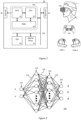
- an example of an entertainment system 10 is a computer or console such as the Sony ® PlayStation 5 ® (PS5).
- PS5 Sony ® PlayStation 5 ®
- the entertainment system 10 comprises a central processor 20. This may be a single or multi core processor, for example comprising eight cores as in the PS5.
- the entertainment system also comprises a graphical processing unit or GPU 30.
- the GPU can be physically separate to the CPU, or integrated with the CPU as a system on a chip (SoC) as in the PS5.
- SoC system on a chip
- the entertainment device also comprises RAM 40, and may either have separate RAM for each of the CPU and GPU, or shared RAM as in the PS5.
- the or each RAM can be physically separate, or integrated as part of an SoC as in the PS5.
- Further storage is provided by a disk 50, either as an external or internal hard drive, or as an external solid state drive, or an internal solid state drive as in the PS5.
- the entertainment device may transmit or receive data via one or more data ports 60, such as a USB port, Ethernet ® port, Wi-Fi ® port, Bluetooth ® port or similar, as appropriate. It may also optionally receive data via an optical drive 70.
- data ports 60 such as a USB port, Ethernet ® port, Wi-Fi ® port, Bluetooth ® port or similar, as appropriate. It may also optionally receive data via an optical drive 70.
- Audio/visual outputs from the entertainment device are typically provided through one or more A/V ports 90, or through one or more of the wired or wireless data ports 60.
- An example of a device for displaying images output by the entertainment system is a head mounted display 'HMD' 120, such as the PlayStation VR 2 'PSVR2', worn by a user 1.
- Interaction with the system is typically provided using one or more handheld controllers (130, 130A), such as the DualSense ® controller (130) in the case of the PS5, and/or one or more VR controllers (130A-L,R) in the case of the HMD.
- handheld controllers 130, 130A
- the DualSense ® controller 130
- VR controllers 130A-L,R
- entertainment system 10 is an example of a coding system operable to implement the methods and techniques described herein.
- the coding system may be used to encode and/or decode images and/or videos according to the methods and techniques described herein.
- an encoding method comprises training a machine learning system such as a neural network.
- An example neural network would be a fully connected multi-layer perceptron, i.e. a fully connected multi-layer network having one or more hidden layers.
- a neural network operates as a feedforward neural network, trained using a backpropagation algorithm to approximate target outputs in response to corresponding inputs.
- the neural network can be implemented as a fully connected neural network, a deep neural network (DNN), multilayer perceptron (MLP), feedforward artificial neural network (ANN), or a convolutional neural network (CNN, or ConvNet).
- DNN deep neural network
- MLP multilayer perceptron
- ANN feedforward artificial neural network
- CNN convolutional neural network
- each image/frame is encoded as one neural network. That is to say that respective neural networks are trained to generate the pixel data corresponding to one image.
- the neural network is then an implicit neural representation of the source content of that image / frame.
- This approach has the scope to be highly efficient as the neural network can learn how best to represent the given image within the weights that comprise it, the weights effectively then being the compressed representation of the image.
- the image bandwidth can then be controlled by the number of nodes within the neural networks used to encode the images, which in turn determines the number of weights available to the neural network.
- the degree of compression is controlled by the number of nodes (typically hidden nodes) within the neural networks used to represent respective images, and each neural network learns the best representation of the image for the available bandwidth provided by the weights of the network.
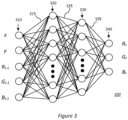
- an example neural network 200 comprises an input node layer 210, an output node layer 240 and one or more hidden layers 220, 230.
- the hidden layers may comprise any suitable number of nodes. Between each layer are typically a fully connected set of weights 215, 225, 235; that is to say there is a weight between each node in adjoining layers. However, optionally the network does not need to be fully connected in this manner, and so some weights may not be included.
- two input nodes (x, y) indicate a pixel position within the image to be encoded
- three output nodes (R, G, B) indicate the colour values for the pixel at the x, y pixel position.
- RGB is an example colour scheme and any suitable colour (or greyscale) representation can be used, such as for example YUV or HSV.
- the neural network is trained on a particular image (e.g. image or image frame of a video) using the RGB values of that image at the different x, y positions.
- the training can continue until an error criterion is met.
- the error criterion may comprise some or all of the following:
- the neural network comprises an internal representation of the image within its weights.
- the weight values can be constrained to values that are suitable for transmission. For example typically weights lie within the range 0 to 1; however, the system may be forced during training to use weight values being fractions of 256 or 65536 (e.g. by selecting the fraction closest to the calculated change of weight); the weights could then be represented exactly using one or two bytes each. To the other bitwise plantations of values may be considered, or the P most common values within the network (or between respective layers) could be chosen using one or more quantisation schemes.
- the above approaches are intended to enable the network to perform correctly / as expected using weight values that can be efficiently transmitted to the decoder.
- modifications to the training scheme can also be considered; for example the network could first be trained conventionally, and then the weight values could be constrained to fractions such as those above or to values corresponding to a quantisation scheme, and then only a subset of the network (for example within one layer) may be given top-up training to compensate for the small changes in weight values imposed throughout the network by this approach; optionally this layer may be transmitted with a different fidelity of values. Or for example most of the layers may be trained using fractions of 256, with one layer (for example the final set of weights leading to the output nodes) being trained using fractions of 65535.
- the decoder comprises a graphics processing unit with a plurality of parallel shaders, each operable to query a respective copy of the neural network to generate results in parallel and thus speed up the decoding process.
- the decoder does not decode the image in a conventional manner, but prompts one or more copies of the neural network to generate the image information at respective pixel positions.
- the above approach provides a means for an image or image sequence such as a video to be encoded by creating respective trained neural networks for each image that output pixel information corresponding to the image for each queried pixel position.
- the neural network can be thought of as an 'I-frame' neural network; that is to say, a neural network that completely encapsulates the image it represents. This neural network is able to do so extremely efficiently, but over a sequence of images there is scope to improve this further.
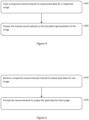
- this illustrates a variant neural network 300 comprising input layer 310, output layer 340, and one or more hidden layers 320, 330 in a similar manner to that of figure 2 .
- This variant neural network is then trained to output the pixel values R t , G t , B t for the current image based upon the pixel position and the pixel values at that position in the previous image.
- the neural network only has to learn how to modify inputs from the previously decoded/output image to generate the new image, without storing a complete internal representation of the image itself. Consequently typically the neural network can achieve similar quality results with far fewer weights, meaning that the overall size of the neural network can be smaller and consequently the bandwidth required to transmit or store the neural network is also smaller.
- Such a neural network can be thought of as a P-frame neural network; that is to say a neural network that relies upon proceeding image data to generate its output.
- the three additional inputs can be RGB values for a different pixel position in the previous image to the pixel position represented by the input x, y coordinates for the current image being encoded.
- the input RGB values may take account of inter-frame motion and represent the RGB values at a position in the proceeding image where the corresponding image element was at that time, so that it is a good match for the current RGB values at the x, y coordinates.
- the inter-frame motion may be limited to whole-image panning, or more complex motion within the image, for example represented by motion vectors.
- the decoder In order to also input the same RGB values at the decoder, the decoder must either independently estimate the same inter-frame motion, or the inter-frame motion information is provided as separate data in association with the neural network when it is transmitted. Alternatively the neural network can also be trained to output such information as well by providing it as target data during training.
- a sequence of trained neural networks may therefore comprise a mixture of I-frame and P-frame neural networks, typically using I frames when there is a scene change, or where the difference between subsequent images is too large for a p-frame neural network to generate the output to an acceptable error level.
- the p frames may optionally also be accompanied with information indicating inter-frame motion, or enabling its calculation at the decoder, where this has been used during training.
- a standardised preceding image may be one of Q images that are each averages of images of a particular type; for example a landscape image, a cityscape image, a talking heads image and the like; these will be non-descript in detail, but will include typical features such as a light upper half of the image with a certain colour range and darker lower half with a different certain colour range for the landscape image, a different division of light and colour for a cityscape image, a general human outline and generic background for a talking head image, and so forth.
- Q may be for example 8, 16, 32, etc.
- the I-frame neural network then has to learn how to modify this general image to the specific image it is being trained upon; because the standardised generic precursor image is only a poor approximation of the current image, this neural network would typically require more weights than a normal P-frame neural network, but because it is only calculating the differences it is likely to require fewer weights than a pure I frame network that doesn't have inputs from a generic precursor image, and so will encode the image more efficiently.
- the standardised preceding image within the set of Q images that is closest to the image being encoded (for example in terms of a sound squared error in pixel values) is chosen and used to provide the R t-1 , G t-1 , B t-1 inputs during training, and the chosen image is indicated for example as meta data along with the trained network when transmitted to the decoder.
- the decoder can then select the correct standardised preceding image when prompting output from the trained network.
- the Q standard images may be generated from the specific content being encoded so that the colour and lighting within the standard images is a better initial match than if completely generic images were used; these Q standard images may then be encoded using I frame neural networks or any other conventional technique, and transmitted for example at the start of the stream or any event before they are needed.
- the inputs and outputs of the respective neural networks - and potentially their footprints (number of weights) can be the same, making the decoding process simpler in terms of consistently placing and running the neural networks on a GPU.
- RGB or other colour scheme
- the neural network may be configured out provide pixel values for a larger subset of the image.
- the neural network may output pixel values for a 2 x 2, 4 x 4, 8 x 8, 16 x 16, 32 x 32, or 64 x 64 pixel block (e.g. a macroblock or equivalent).
- the output layer (240, 340) may comprise many more nodes than shown in figures 2 or 3 . It is also likely that the hidden layer (or the hidden layer next to the output layer 230, 330) comprises fewer nodes, so that the number of weights (235, 335) between this hidden layer and the output layer are roughly similar to that for the single pixel output version.
- the neural network may be configured to have more input values than for example just the RGB values of a single pixel at the x, y position.
- the neural network may have input pixel values for a 2 x 2, 3 x 3, 4 x 4, 5 x 5, 8 x 8, 16 x 16, 32 x 32, or 64 x 64 pixel block.
- the hidden layer (220, 320) adjacent to the input layer (210, 310) may comprise fewer notes that the overall number of intervening weights (215, 315) is roughly similar to the single input version.
- the input RGB values may correspond to a lower resolution version of the target image; hence for example a 2 x 2 or 4 x 4 set of RGB values may represent a down-sampled 4 x 4, 8 x 8 or 16 x 16 pixel region of the preceding image.
- the input region of the preceding image is larger than the output region of the respective image, then the input region provides some context to the neural network when generating the output region values, which may assist in particular with some styles (as described elsewhere herein), but some of this may be redundant and reduce overall efficiency in the network whilst potentially improving image quality.
- the input region is the same size as the output region (whether using a down sampled version of the input region or pixel by pixel values for the input region), then the network is operating in a similar manner to that described previously, but for multiple pixels within a block.
- the x, y inputs may correspond to block positions rather than pixel positions.
- a neural network may also be trained to output two sets of RGB values for corresponding coordinates in a stereo image pair.
- the neural network may also receive depth information (e.g. from the corresponding depth map) or disparity information to assist with an internal representation of the stereoscopic scene.
- depth information e.g. from the corresponding depth map
- disparity information to assist with an internal representation of the stereoscopic scene.
- the neural network may be trained to output two sets of RGB values and a disparity/offset value, the first set of RGB values corresponding to the input coordinates for one of the image pair (as an arbiter example, the left), and the second set corresponding to a position offset from the input coordinates according to the stereoscopic disparity the image for the other of the image pair (in this case the right).
- the neural network can learn to output the same element of the scene as offset due to stereoscopy, and so the RGB values are likely to be very similar.
- Different users may wish to view the content in different ways. Doing so may be for purely aesthetic reasons, or it may be beneficial for particular kinds of user. For example it may be advantageous to provide the content in a format for the best viewing by colour-blind users (e.g. for various degrees of red-green colour blindness, or similarly for various degrees of blue-yellow colour blindness).
- Aesthetic changes may include differences in contrast and/or colour balance, or other effects such as creating a paint, pastel, or line drawing version of the image or some other texture modification, a high saturation version, a warm or cool colour temperature version, or the like.
- the style may be incorporated into the neural network.
- a neural network in whichever form has previously been described herein may be trained specifically to output pixel values in that style, and the relevant sequence of neural networks may be streamed.
- a neural network in whichever form has previously been described herein, e.g. completely encapsulating the encoded image, modifying a standardised image, or modifying a preceding image, whether to output for a single pixel at a time or for multiple pixels at a time), may also have one or more style inputs.
- the style input may take the form of binary inputs or a series of flags (for example as a one-hot vector) to respective additional input nodes of the network.
- the binary or one-hot flag pattern indicates the choice of style.
- one style is neutral, i.e. represents the original image.
- the style can be represented by a vector, a scalar, or indeed text (for example converting the text into a vector, optionally as an abstraction of the text).
- the neural network is then trained on multiple versions of the image (i.e. at least two), one for each supported style.
- the neural network may output different RGB values for the same pixel position depending on the indicated style.
- the neural network will be slightly larger than a neural network encoding a single style or no style at all (i.e. the 'neutral' style).
- Such a neural network can be thought of as similar to a combination of an I or P-frame network and a further P-frame network for each supported style, the weights driven by the style inputs interacting with the other weights to modify the image generated by the rest the network responsive to the input coordinates and optionally input RGB values.
- This multiple style version of the neural network may then be transmitted to the decoder in a similar manner to that described elsewhere herein, and prompted by the decoder to output pixel values in a similar manner, but in this case the relevant style chosen by the user (for example via a Ul) can also be input to the network by the decoder so that RGB values appropriate that style are then output.
- the style is not applied to the decoded image at the client device; rather multiple styles are embodied within the neural network representation of the image (or image modification), and the neural network is prompted by the decoder to output the relevant style-type.
- one or more of the styles may also comprise one or more parameter inputs to control one or more aspects of the style.
- a style that modifies the colour temperature of the image may comprise a time of day parameter so that the colour temperature gradually changes from cooler to warmer towards the late evening, which can assists users with their sleep.
- the neural network may be trained on different colour temperatures in association with different time of day parameters.
- the neural network may be trained on warm and cool versions of the image as separate styles, and the parameter may be a value representing a relative bias between the two styles.
- the style inputs for styles that together represent a potential range or spectrum of outputs may each be a continuous value rather than a flag, with the respective values indicating their Internet contribution to the output.
- any style may comprise a parameter input, or a continuous style input, that indicates the degree/strength of stylisation with respect to a neutral version of the image.
- the neural network will be trained accordingly with different parameter input values and different degrees of strength/stylisation in the target output.
- style inputs indicating the degree/strength with which each style is to be applied.
- a pencil sketch style may be applied and separately a sepia colour palette style to create a combined effect that was not, in itself, part of the training set of target images.
- a stream according to embodiments of the present description can comprise a neural network with no style / neutral style output, and a separate second neural network that applies one or more styles to the output of the first neural network.
- This second neural network can be trained in a similar manner style based neural networks described previously herein, acting like P-frame network that receives RGB values from the first neural network and at least a first style value and typically the coordinate values, and outputs the corresponding RGB values for the selected style.
- the first network can be treated as a baseline common transmission to clients, whilst the second neural network can be treated as an enhancement layer supplied to clients who request modifications to the image (i.e. a different style).
- Such post-processing may include error masking, upscaling, jitter reduction, and the like.
- a method of image coding (for example for still or video images) comprises the following steps.
- a first step S410 for a respective image, training a respective neural network to output pixel data for that image, as described elsewhere herein.
- a second step S420 outputting the trained neural network as the encoded representation of the image (whether as a single image, or as a stream, broadcast, and/or file of successive images such as in a video), as described elsewhere herein.
- a method of style coding comprises the steps of providing a respective trained neural network comprising inputs to receive colour values and to define two or more styles for a respective image, and outputs providing colour values, the neural network having been trained to output colour for the respective image in the two or more styles, at least one of which modifies the output colour for the respective input colour values; and outputting the trained neural network to a decoder to use with a decoded image.
- the respective neural network comprises inputs to receive coordinates for a position in the respective image, and the outputs have been trained to provide colour values for a pixel at those coordinates.
- a style network can be transmitted that can apply a style to an existing image (e.g. an image decoded from another network, as described elsewhere herein, or an image decoded using any other technique).
- an existing image e.g. an image decoded from another network, as described elsewhere herein, or an image decoded using any other technique.
- a method of style decoding comprises the steps of receiving a respective neural network trained to output colour values in response to input colour values and input style values defining two or more styles, at least one of which modifies the output colour for the respective input colour values; inputting colour values of a respective image and at least a first style value to the neural network, and receiving output colour values from the neural network; and displaying the respective image using the output colour values instead of the input colour values.
- the respective neural network comprises inputs to receive coordinates for a position in the respective image, and the outputs have been trained to provide colour values for a pixel at those coordinates.
- method of image decoding comprising the following steps.
- a first step s510 receiving a respective neural network trained to output pixel data for one image, as described elsewhere herein;
- a second step s520 prompting the neural network to output the pixel data for that image, as described elsewhere herein.
- Modifications to the decoder corresponding to the modifications described elsewhere herein will be apparent to the skilled person; for example modifications to generate outputs on a pixel by pixel basis or a group of pixels basis, modifications to use colour values from a prompt image, which may be from the proceeding generated image or a best matching generic image, modifications to output pixels from respective images of a stereoscopic pair, modifications to input a style selection or selections, or a parametric value associated with one or more style selections, and modifications involving receiving a first neural network encoding the image and second neural network encoding style variations in order to generate a style modified version of the image, and modifications involving implementing these processes in parallel on the GPU or equivalent processor with parallel processing capability so that the prompting of respective instances of the neural network to generate individual pixels or group of pixels as outputs can be conducted in parallel to speed up the overall generation of the image.
- a conventional equivalent device may be implemented in the form of a computer program product comprising processor implementable instructions stored on a non-transitory machine-readable medium such as a floppy disk, optical disk, hard disk, solid state disk, PROM, RAM, flash memory or any combination of these or other storage media, or realised in hardware as an ASIC (application specific integrated circuit) or an FPGA (field programmable gate array) or other configurable circuit suitable to use in adapting the conventional equivalent device.
- a computer program may be transmitted via data signals on a network such as an Ethernet, a wireless network, the Internet, or any combination of these or other networks.
- an image encoder - for example a server (not shown) or entertainment device 10 such as a Sony PlayStation 5 ® , may comprise the following:
- the resulting output can be a non-transitory machine-readable medium (such as an HDD or SSD record, or an optical drive record) comprising a representation of one or more images formed by respective neural networks for the one or more images each trained to output pixel data for the respective image (e.g. a solo image or an image frame as part of a sequence such as a video), as described elsewhere herein.
- a non-transitory machine-readable medium such as an HDD or SSD record, or an optical drive record
- This output may be distributed on the medium, or broadcast or streamed as appropriate.
- an image decoder-for example a server (not shown) or entertainment device 10 such as a Sony PlayStation 5 ® comprises the following:
Landscapes
- Engineering & Computer Science (AREA)
- Multimedia (AREA)
- Signal Processing (AREA)
- Theoretical Computer Science (AREA)
- Physics & Mathematics (AREA)
- Evolutionary Computation (AREA)
- Artificial Intelligence (AREA)
- General Physics & Mathematics (AREA)
- Computing Systems (AREA)
- Mathematical Physics (AREA)
- Health & Medical Sciences (AREA)
- Molecular Biology (AREA)
- Computational Linguistics (AREA)
- General Engineering & Computer Science (AREA)
- Biophysics (AREA)
- General Health & Medical Sciences (AREA)
- Biomedical Technology (AREA)
- Data Mining & Analysis (AREA)
- Life Sciences & Earth Sciences (AREA)
- Software Systems (AREA)
- Image Analysis (AREA)
- Compression Or Coding Systems Of Tv Signals (AREA)
- Compression, Expansion, Code Conversion, And Decoders (AREA)
- Compression Of Band Width Or Redundancy In Fax (AREA)
Applications Claiming Priority (1)
| Application Number | Priority Date | Filing Date | Title |
|---|---|---|---|
| GB2309991.4A GB2631452A (en) | 2023-06-30 | 2023-06-30 | Neural coding and decoding method and apparatus |
Publications (2)
| Publication Number | Publication Date |
|---|---|
| EP4485362A2 true EP4485362A2 (de) | 2025-01-01 |
| EP4485362A3 EP4485362A3 (de) | 2025-04-30 |
Family
ID=87556952
Family Applications (1)
| Application Number | Title | Priority Date | Filing Date |
|---|---|---|---|
| EP24185309.2A Pending EP4485362A3 (de) | 2023-06-30 | 2024-06-28 | Verfahren und vorrichtung zur neuronalen kodierung und dekodierung |
Country Status (5)
| Country | Link |
|---|---|
| US (1) | US20250008136A1 (de) |
| EP (1) | EP4485362A3 (de) |
| JP (1) | JP2025010060A (de) |
| CN (1) | CN119228917A (de) |
| GB (1) | GB2631452A (de) |
Family Cites Families (10)
| Publication number | Priority date | Publication date | Assignee | Title |
|---|---|---|---|---|
| US9811775B2 (en) * | 2012-12-24 | 2017-11-07 | Google Inc. | Parallelizing neural networks during training |
| CN110956669A (zh) * | 2019-11-11 | 2020-04-03 | 珠海格力电器股份有限公司 | 一种图像压缩编码方法及系统 |
| CN112070888B (zh) * | 2020-09-08 | 2024-04-05 | 抖音视界有限公司 | 图像生成方法、装置、设备和计算机可读介质 |
| US20230343026A1 (en) * | 2021-01-08 | 2023-10-26 | Shenzhen Institutes Of Advanced Technology Chinese Academy Of Sciences | Method and device for three-dimensional reconstruction of brain structure, and terminal equipment |
| DE102021104110A1 (de) * | 2021-02-22 | 2022-08-25 | Dspace Gmbh | Verfahren zur Parametrierung einer Bildsynthese aus einem 3D-Modell |
| US20220353521A1 (en) * | 2021-04-30 | 2022-11-03 | Tencent America LLC | Method and apparatus for content-adaptive online training in neural image compression |
| US12206851B2 (en) * | 2021-05-21 | 2025-01-21 | Qualcomm Incorporated | Implicit image and video compression using machine learning systems |
| US12555306B2 (en) * | 2021-11-16 | 2026-02-17 | Google Llc | Geometry-free neural scene representations through novel-view synthesis |
| US20230156169A1 (en) * | 2021-11-18 | 2023-05-18 | Capital One Services, Llc | Reduced bandwidth image transfer |
| CN114782565A (zh) * | 2022-06-22 | 2022-07-22 | 武汉搜优数字科技有限公司 | 基于神经网络的数字档案馆图像压缩、存储、恢复方法 |
-
2023
- 2023-06-30 GB GB2309991.4A patent/GB2631452A/en active Pending
-
2024
- 2024-06-28 EP EP24185309.2A patent/EP4485362A3/de active Pending
- 2024-06-28 US US18/758,934 patent/US20250008136A1/en active Pending
- 2024-07-01 JP JP2024105929A patent/JP2025010060A/ja active Pending
- 2024-07-01 CN CN202410871546.8A patent/CN119228917A/zh active Pending
Also Published As
| Publication number | Publication date |
|---|---|
| US20250008136A1 (en) | 2025-01-02 |
| GB2631452A (en) | 2025-01-08 |
| GB202309991D0 (en) | 2023-08-16 |
| CN119228917A (zh) | 2024-12-31 |
| EP4485362A3 (de) | 2025-04-30 |
| JP2025010060A (ja) | 2025-01-20 |
Similar Documents
| Publication | Publication Date | Title |
|---|---|---|
| CN112889282B (zh) | 用于对图像执行人工智能编码和人工智能解码的方法和设备 | |
| US11688038B2 (en) | Apparatuses and methods for performing artificial intelligence encoding and artificial intelligence decoding on image | |
| CN112889283B (zh) | 编码方法及其设备以及解码方法及其设备 | |
| TWI826321B (zh) | 提高影像品質的方法 | |
| US9659596B2 (en) | Systems and methods for motion-vector-aided video interpolation using real-time smooth video playback speed variation | |
| US11200639B1 (en) | Apparatus and method for performing artificial intelligence encoding and decoding on image by using low-complexity neural network | |
| CN114631315B (zh) | 图像编码方法和设备以及图像解码方法和设备 | |
| CN112740687B (zh) | 用于对图像执行人工智能编码和人工智能解码的设备和方法 | |
| US20250385995A1 (en) | Learning-based light field compression for tensor display | |
| US20230276070A1 (en) | Artificial intelligence (ai) encoding apparatus and method and ai decoding apparatus and method for region of object of interest in image | |
| EP4195154A1 (de) | Ki-codierungsvorrichtung und betriebsverfahren dafür sowie ki-decodierungsvorrichtung und betriebsverfahren dafür | |
| WO2023215184A1 (en) | Predictive coding of lenslet images | |
| US11006184B2 (en) | Enhanced distribution image system | |
| JP2014176017A (ja) | 映像再生装置、映像配信装置、映像再生方法及び映像配信方法 | |
| EP4246988A1 (de) | Bildsynthese | |
| US20250008136A1 (en) | Neural Coding and Decoding Method and Apparatus | |
| CN116458157A (zh) | 用于图像中感兴趣的对象区域的ai编码装置和方法以及ai解码装置和方法 | |
| US12482057B2 (en) | Artificial intelligence-based image providing apparatus and method, and artificial intelligence-based display apparatus and method | |
| CN118400507B (zh) | 一种基于视频质量感知模型的立体视频自适应传输方法和系统 | |
| CN117859321A (zh) | 在视频会议期间使用人工智能(ai)进行缩小和放大的方法和设备 | |
| WO2025172429A1 (en) | Method and data processing system for lossy image or video encoding, transmission and decoding |
Legal Events
| Date | Code | Title | Description |
|---|---|---|---|
| PUAI | Public reference made under article 153(3) epc to a published international application that has entered the european phase |
Free format text: ORIGINAL CODE: 0009012 |
|
| STAA | Information on the status of an ep patent application or granted ep patent |
Free format text: STATUS: REQUEST FOR EXAMINATION WAS MADE |
|
| 17P | Request for examination filed |
Effective date: 20240714 |
|
| AK | Designated contracting states |
Kind code of ref document: A2 Designated state(s): AL AT BE BG CH CY CZ DE DK EE ES FI FR GB GR HR HU IE IS IT LI LT LU LV MC ME MK MT NL NO PL PT RO RS SE SI SK SM TR |
|
| PUAL | Search report despatched |
Free format text: ORIGINAL CODE: 0009013 |
|
| AK | Designated contracting states |
Kind code of ref document: A3 Designated state(s): AL AT BE BG CH CY CZ DE DK EE ES FI FR GB GR HR HU IE IS IT LI LT LU LV MC ME MK MT NL NO PL PT RO RS SE SI SK SM TR |
|
| RIC1 | Information provided on ipc code assigned before grant |
Ipc: H04N 19/503 20140101ALI20250324BHEP Ipc: H04N 19/436 20140101ALI20250324BHEP Ipc: H04N 19/186 20140101ALI20250324BHEP Ipc: H04N 19/182 20140101ALI20250324BHEP Ipc: H04N 19/172 20140101ALI20250324BHEP Ipc: G06T 9/00 20060101AFI20250324BHEP |