EP4485329A2 - System, verfahren und computerprogramm zur abonnementaufhebung - Google Patents
System, verfahren und computerprogramm zur abonnementaufhebung Download PDFInfo
- Publication number
- EP4485329A2 EP4485329A2 EP24185307.6A EP24185307A EP4485329A2 EP 4485329 A2 EP4485329 A2 EP 4485329A2 EP 24185307 A EP24185307 A EP 24185307A EP 4485329 A2 EP4485329 A2 EP 4485329A2
- Authority
- EP
- European Patent Office
- Prior art keywords
- customer
- subscription
- card
- merchant
- operating system
- Prior art date
- Legal status (The legal status is an assumption and is not a legal conclusion. Google has not performed a legal analysis and makes no representation as to the accuracy of the status listed.)
- Pending
Links
Images




Classifications
-
- G—PHYSICS
- G06—COMPUTING OR CALCULATING; COUNTING
- G06Q—INFORMATION AND COMMUNICATION TECHNOLOGY [ICT] SPECIALLY ADAPTED FOR ADMINISTRATIVE, COMMERCIAL, FINANCIAL, MANAGERIAL OR SUPERVISORY PURPOSES; SYSTEMS OR METHODS SPECIALLY ADAPTED FOR ADMINISTRATIVE, COMMERCIAL, FINANCIAL, MANAGERIAL OR SUPERVISORY PURPOSES, NOT OTHERWISE PROVIDED FOR
- G06Q20/00—Payment architectures, schemes or protocols
- G06Q20/08—Payment architectures
- G06Q20/10—Payment architectures specially adapted for electronic funds transfer [EFT] systems; specially adapted for home banking systems
- G06Q20/102—Bill distribution or payments
-
- G—PHYSICS
- G06—COMPUTING OR CALCULATING; COUNTING
- G06Q—INFORMATION AND COMMUNICATION TECHNOLOGY [ICT] SPECIALLY ADAPTED FOR ADMINISTRATIVE, COMMERCIAL, FINANCIAL, MANAGERIAL OR SUPERVISORY PURPOSES; SYSTEMS OR METHODS SPECIALLY ADAPTED FOR ADMINISTRATIVE, COMMERCIAL, FINANCIAL, MANAGERIAL OR SUPERVISORY PURPOSES, NOT OTHERWISE PROVIDED FOR
- G06Q20/00—Payment architectures, schemes or protocols
- G06Q20/38—Payment protocols; Details thereof
- G06Q20/40—Authorisation, e.g. identification of payer or payee, verification of customer or shop credentials; Review and approval of payers, e.g. check credit lines or negative lists
- G06Q20/407—Cancellation of a transaction
-
- G—PHYSICS
- G06—COMPUTING OR CALCULATING; COUNTING
- G06Q—INFORMATION AND COMMUNICATION TECHNOLOGY [ICT] SPECIALLY ADAPTED FOR ADMINISTRATIVE, COMMERCIAL, FINANCIAL, MANAGERIAL OR SUPERVISORY PURPOSES; SYSTEMS OR METHODS SPECIALLY ADAPTED FOR ADMINISTRATIVE, COMMERCIAL, FINANCIAL, MANAGERIAL OR SUPERVISORY PURPOSES, NOT OTHERWISE PROVIDED FOR
- G06Q20/00—Payment architectures, schemes or protocols
- G06Q20/30—Payment architectures, schemes or protocols characterised by the use of specific devices or networks
- G06Q20/32—Payment architectures, schemes or protocols characterised by the use of specific devices or networks using wireless devices
- G06Q20/322—Aspects of commerce using mobile devices [M-devices]
-
- G—PHYSICS
- G06—COMPUTING OR CALCULATING; COUNTING
- G06Q—INFORMATION AND COMMUNICATION TECHNOLOGY [ICT] SPECIALLY ADAPTED FOR ADMINISTRATIVE, COMMERCIAL, FINANCIAL, MANAGERIAL OR SUPERVISORY PURPOSES; SYSTEMS OR METHODS SPECIALLY ADAPTED FOR ADMINISTRATIVE, COMMERCIAL, FINANCIAL, MANAGERIAL OR SUPERVISORY PURPOSES, NOT OTHERWISE PROVIDED FOR
- G06Q20/00—Payment architectures, schemes or protocols
- G06Q20/30—Payment architectures, schemes or protocols characterised by the use of specific devices or networks
- G06Q20/36—Payment architectures, schemes or protocols characterised by the use of specific devices or networks using electronic wallets or electronic money safes
-
- G—PHYSICS
- G06—COMPUTING OR CALCULATING; COUNTING
- G06Q—INFORMATION AND COMMUNICATION TECHNOLOGY [ICT] SPECIALLY ADAPTED FOR ADMINISTRATIVE, COMMERCIAL, FINANCIAL, MANAGERIAL OR SUPERVISORY PURPOSES; SYSTEMS OR METHODS SPECIALLY ADAPTED FOR ADMINISTRATIVE, COMMERCIAL, FINANCIAL, MANAGERIAL OR SUPERVISORY PURPOSES, NOT OTHERWISE PROVIDED FOR
- G06Q30/00—Commerce
- G06Q30/06—Buying, selling or leasing transactions
- G06Q30/0601—Electronic shopping [e-shopping]
- G06Q30/0613—Electronic shopping [e-shopping] using intermediate agents
-
- G—PHYSICS
- G06—COMPUTING OR CALCULATING; COUNTING
- G06Q—INFORMATION AND COMMUNICATION TECHNOLOGY [ICT] SPECIALLY ADAPTED FOR ADMINISTRATIVE, COMMERCIAL, FINANCIAL, MANAGERIAL OR SUPERVISORY PURPOSES; SYSTEMS OR METHODS SPECIALLY ADAPTED FOR ADMINISTRATIVE, COMMERCIAL, FINANCIAL, MANAGERIAL OR SUPERVISORY PURPOSES, NOT OTHERWISE PROVIDED FOR
- G06Q30/00—Commerce
- G06Q30/06—Buying, selling or leasing transactions
- G06Q30/0601—Electronic shopping [e-shopping]
- G06Q30/0631—Recommending goods or services
Definitions
- This disclosure generally relates to cancellation of online subscription, and, more particularly, to methods and apparatuses for implementing a platform, cloud, and language agnostic subscription cancellation module configured to allow a user to cancel subscriptions in a consistent and seamless manner irrespective of how the subscription was signed up (i.e., via Appstore or via merchant site).
- the present disclosure provides, among other features, various systems, servers, devices, methods, media, programs, and platforms for implementing a platform, cloud, and language agnostic subscription cancellation module configured to allow a user to cancel subscriptions from the user's mobile device, such as "settings" page, or "wallet” page, in a consistent and seamless manner irrespective of how the subscription was signed up (i.e., via Appstore or via merchant site), but the disclosure is not limited thereto.
- a method for cancelling online subscription by utilizing one or more processors along with allocated memory may include: providing a database that stores a customer's card subscription payment details data associated with online subscriptions with one or more merchants; granting access to the customer's card subscription payment details data from the database to a mobile operating system embedded within a mobile device of the customer; calling, in response to granting the access, a first application programming interface received from the mobile operating system to retrieve and display a list of merchants with active subscriptions tied to the customer's card onto a graphical user interface within the customers' mobile device to cancel a corresponding active subscription; calling, in response to granting the access, a second application programming interface received from the mobile operating system to allow cancellation of the corresponding active subscription; receiving an input via the graphical user interface to select a merchant associated with the corresponding active subscription the customer wants to cancel; and cancelling, in response to receiving the input, the corresponding active subscription associated with the selected merchant.
- the method may further include: receiving an acknowledgement message via the mobile device that the customer's card may be successfully added to the mobile wallet with an opt-in option that allows sharing the customer's subscription details data tied to the customer's card with the operating system; and receiving an input that the customer selected the opt-in option.
- the method may further include: integrating the customer's mobile device to a third party subscription cancellation provider platform; receiving, in response to integrating, an input via the graphical user interface to select the merchant associated with the corresponding active subscription the customer wants to cancel; and cancelling, in response to receiving the input, the corresponding active subscription associated with the selected merchant utilizing the third party subscription cancellation provider platform, but the disclosure is not limited thereto.
- the method may further include: implementing the subscription cancellation module in such a manner to put the card provider in the middle rather than the customer's mobile device integrating directly with the third party subscription cancellation provider platform.
- the card provider may be configured to decide if it wants to call the third party subscription cancellation provider platform or network APIs to connect to the network services for subscription cancellation or block the transaction internally based on the merchant and use case.
- the method may further include: implementing a rule or token to block future payments from the customer card for the merchant.
- a system for cancelling online subscription may include: a processor; and a memory operatively connected to the processor via a communication interface, the memory storing computer readable instructions, when executed, may cause the processor to: provide a database that stores a customer's card subscription payment details data associated with online subscriptions with one or more merchants; grant access to the customer's card subscription payment details data from the database to a mobile operating system embedded within a mobile device of the customer; call, in response to granting the access, a first application programming interface received from the mobile operating system to retrieve and display a list of merchants with active subscriptions tied to the customer's card onto a graphical user interface within the customers' mobile device to cancel a corresponding active subscription; call, in response to granting the access, a second application programming interface received from the mobile operating system to allow cancellation of the corresponding active subscription; receive an input via the graphical user interface to select a merchant associated with the corresponding active subscription the customer wants to cancel; and cancel, in response to receiving the input, the
- the processor in granting the access to the customer's card subscription payment details data, may be further configured to: add the customer's card to a mobile wallet of the operating system.
- the processor may be further configured to: display on to the graphical user interface, in response to receiving the input to select the merchant whose subscription the customer wants to cancel, a cancelled workflow.
- the processor may be further configured to: integrate the customer's mobile device to a third party subscription cancellation provider platform; receive, in response to integrating, an input via the graphical user interface to select the merchant associated with the corresponding active subscription the customer wants to cancel; and cancel, in response to receiving the input, the corresponding active subscription associated with the selected merchant utilizing the third party subscription cancellation provider platform, but the disclosure is not limited thereto.
- the processor may be further configured to implement the subscription cancellation module in such a manner to put the card provider in the middle rather than the customer's mobile device integrating directly with the third party subscription cancellation provider platform.
- the card provider may be configured to decide if it wants to call the third party subscription cancellation provider platform or network APIs to connect to the network services for subscription cancellation or block the transaction internally based on the merchant and use case.
- the processor when cancellation of subscription fails due to unable to reach the merchant via the uniform resource locator link, the processor may be further configured to: implement a rule or token to block future payments from the customer card for the merchant.
- a non-transitory computer readable medium configured to store instructions for cancelling online subscription.
- the instructions when executed, may cause a processor to perform the following: providing a database that stores a customer's card subscription payment details data associated with online subscriptions with one or more merchants; granting access to the customer's card subscription payment details data from the database to a mobile operating system embedded within a mobile device of the customer; calling, in response to granting the access, a first application programming interface received from the mobile operating system to retrieve and display a list of merchants with active subscriptions tied to the customer's card onto a graphical user interface within the customers' mobile device to cancel a corresponding active subscription; calling, in response to granting the access, a second application programming interface received from the mobile operating system to allow cancellation of the corresponding active subscription; receiving an input via the graphical user interface to select a merchant associated with the corresponding active subscription the customer wants to cancel; and cancelling, in response to receiving the input, the corresponding active subscription associated with the selected merchant.
- the instructions in granting the access to the customer's card subscription payment details data, may cause the processor to further perform the following: adding the customer's card to a mobile wallet of the operating system.
- the instructions when executed, may cause the processor to further perform the following: receiving an acknowledgement message via the mobile device that the customer's card may be successfully added to the mobile wallet with an opt-in option that allows sharing the customer's subscription details data tied to the customer's card with the operating system; and receiving an input that the customer selected the opt-in option.
- the instructions when executed, may cause the processor to further perform the following: displaying on to the graphical user interface, in response to receiving the input to select the merchant whose subscription the customer wants to cancel, a cancelled workflow.
- the instructions when executed, may cause the processor to further perform the following: calling, in response to the cancelled workflow, a third application programming interface received from the mobile operating system to recommend that the customer subscribe to other subscriptions provided by other merchants based on analyzing deals data related to the customer card and customer transaction habits data and demographics data retrieved from the database.
- the instructions when executed, may cause the processor to further perform the following: integrating the customer's mobile device to a third party subscription cancellation provider platform; receiving, in response to integrating, an input via the graphical user interface to select the merchant associated with the corresponding active subscription the customer wants to cancel; and cancelling, in response to receiving the input, the corresponding active subscription associated with the selected merchant utilizing the third party subscription cancellation provider platform, but the disclosure is not limited thereto.
- the instructions when executed, may cause the processor to implement the subscription cancellation module in such a manner to put the card provider in the middle rather than the customer's mobile device integrating directly with the third party subscription cancellation provider platform.
- the card provider may be programmed in a manner to decide if it wants to call the third party subscription cancellation provider platform or network APIs to connect to the network services for subscription cancellation or block the transaction internally based on the merchant and use case.
- the instructions when executed, may cause the processor to further perform the following: implementing a rule or token to block future payments from the customer card for the merchant.
- the examples may also be embodied as one or more non-transitory computer readable media having instructions stored thereon for one or more aspects of the present technology as described and illustrated by way of the examples herein.
- the instructions in some examples include executable code that, when executed by one or more processors, cause the processors to carry out steps necessary to implement the methods of the examples of this technology that are described and illustrated herein.
- each block, unit and/or module may be implemented by dedicated hardware, or as a combination of dedicated hardware to perform some functions and a processor (e.g., one or more programmed microprocessors and associated circuitry) to perform other functions.
- each block, unit and/or module of the example embodiments may be physically separated into two or more interacting and discrete blocks, units and/or modules without departing from the scope of the inventive concepts. Further, the blocks, units and/or modules of the example embodiments may be physically combined into more complex blocks, units and/or modules without departing from the scope of the present disclosure.
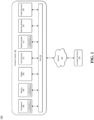
- FIG. 1 is a system 100 for use in implementing a platform, cloud, and language agnostic subscription cancellation module that may be configured for allowing a user to cancel subscriptions from the user's mobile device "settings" page in a consistent and seamless manner irrespective of how the subscription was signed up (i.e., via Appstore or via merchant site)in accordance with the embodiments described herein.
- the system 100 is generally shown and may include a computer system 102, which is generally indicated.
- the computer system 102 may include a set of instructions that may be executed to cause the computer system 102 to perform any one or more of the methods or computer-based functions disclosed herein, either alone or in combination with the other described devices.
- the computer system 102 may operate as a standalone device or may be connected to other systems or peripheral devices.
- the computer system 102 may include, or be included within, any one or more computers, servers, systems, communication networks or cloud environment. Even further, the instructions may be operative in such cloud-based computing environment.
- the computer system 102 may operate in the capacity of a server or as a client user computer in a server-client user network environment, a client user computer in a cloud computing environment, or as a peer computer system in a peer-to-peer (or distributed) network environment.
- the computer system 102 may be implemented as, or incorporated into, various devices, such as a personal computer, a tablet computer, a set-top box, a personal digital assistant, a mobile device, a palmtop computer, a laptop computer, a desktop computer, a communications device, a wireless smart phone, a personal trusted device, a wearable device, a global positioning satellite (GPS) device, a web appliance, or any other machine capable of executing a set of instructions (sequential or otherwise) that specify actions to be taken by that machine.
- GPS global positioning satellite
- web appliance or any other machine capable of executing a set of instructions (sequential or otherwise) that specify actions to be taken by that machine.
- additional embodiments may include any collection of systems or sub-systems that individually or jointly execute instructions or perform functions.
- the term system shall be taken throughout the present disclosure to include any collection of systems or sub-systems that individually or jointly execute a set, or multiple sets, of instructions to perform one or more computer functions.
- the computer system 102 may include at least one processor 104.
- the processor 104 is tangible and non-transitory. As used herein, the term “non-transitory” is to be interpreted not as an eternal characteristic of a state, but as a characteristic of a state that will last for a period of time. The term “non-transitory” specifically disavows fleeting characteristics such as characteristics of a particular carrier wave or signal or other forms that exist only transitorily in any place at any time.
- the processor 104 is an article of manufacture and/or a machine component. The processor 104 is configured to execute software instructions in order to perform functions as described in the various embodiments herein.
- the processor 104 may be a general-purpose processor or may be part of an application specific integrated circuit (ASIC).
- the processor 104 may also be a microprocessor, a microcomputer, a processor chip, a controller, a microcontroller, a digital signal processor (DSP), a state machine, or a programmable logic device.
- the processor 104 may also be a logical circuit, including a programmable gate array (PGA) such as a field programmable gate array (FPGA), or another type of circuit that includes discrete gate and/or transistor logic.
- the processor 104 may be a central processing unit (CPU), a graphics processing unit (GPU), or both. Additionally, any processor described herein may include multiple processors, parallel processors, or both. Multiple processors may be included in, or coupled to, a single device or multiple devices.
- the computer system 102 may also include a computer memory 106.
- the computer memory 106 may include a static memory, a dynamic memory, or both in communication.
- Memories described herein are tangible storage mediums that may store data and executable instructions, and are non-transitory during the time instructions are stored therein. Again, as used herein, the term “non-transitory” is to be interpreted not as an eternal characteristic of a state, but as a characteristic of a state that will last for a period of time. The term “non-transitory” specifically disavows fleeting characteristics such as characteristics of a particular carrier wave or signal or other forms that exist only transitorily in any place at any time.
- the memories are an article of manufacture and/or machine component.
- Memories described herein are computer-readable mediums from which data and executable instructions may be read by a computer.
- Memories as described herein may be random access memory (RAM), read only memory (ROM), flash memory, electrically programmable read only memory (EPROM), electrically erasable programmable read-only memory (EEPROM), registers, a hard disk, a cache, a removable disk, tape, compact disk read only memory (CD-ROM), digital versatile disk (DVD), floppy disk, or any other form of storage medium known in the art.
- Memories may be volatile or non-volatile, secure and/or encrypted, unsecure and/or unencrypted.
- the computer memory 106 may comprise any combination of memories or a single storage.
- the computer system 102 may further include a display 108, such as a liquid crystal display (LCD), an organic light emitting diode (OLED), a flat panel display, a solid-state display, a cathode ray tube (CRT), a plasma display, or any other known display.
- a display 108 such as a liquid crystal display (LCD), an organic light emitting diode (OLED), a flat panel display, a solid-state display, a cathode ray tube (CRT), a plasma display, or any other known display.
- the computer system 102 may also include at least one input device 110, such as a keyboard, a touch-sensitive input screen or pad, a speech input, a mouse, a remote control device having a wireless keypad, a microphone coupled to a speech recognition engine, a camera such as a video camera or still camera, a cursor control device, a global positioning system (GPS) device, an altimeter, a gyroscope, an accelerometer, a proximity sensor, or any combination thereof.
- a keyboard such as a keyboard, a touch-sensitive input screen or pad, a speech input, a mouse, a remote control device having a wireless keypad, a microphone coupled to a speech recognition engine, a camera such as a video camera or still camera, a cursor control device, a global positioning system (GPS) device, an altimeter, a gyroscope, an accelerometer, a proximity sensor, or any combination thereof.
- GPS global positioning system
- the computer system 102 may also include a medium reader 112 which is configured to read any one or more sets of instructions, e.g., software, from any of the memories described herein.
- the instructions when executed by a processor, may be used to perform one or more of the methods and processes as described herein.
- the instructions may reside completely, or at least partially, within the memory 106, the medium reader 112, and/or the processor 110 during execution by the computer system 102.
- the computer system 102 may include any additional devices, components, parts, peripherals, hardware, software or any combination thereof which are commonly known and understood as being included with or within a computer system, such as, but not limited to, a network interface 114 and an output device 116.
- the output device 116 may be, but is not limited to, a speaker, an audio out, a video out, a remote control output, a printer, or any combination thereof.
- Each of the components of the computer system 102 may be interconnected and communicate via a bus 118 or other communication link. As shown in FIG. 1 , the components may each be interconnected and communicate via an internal bus. However, those skilled in the art appreciate that any of the components may also be connected via an expansion bus. Moreover, the bus 118 may enable communication via any standard or other specification commonly known and understood such as, but not limited to, peripheral component interconnect, peripheral component interconnect express, parallel advanced technology attachment, serial advanced technology attachment, etc.
- the computer system 102 may be in communication with one or more additional computer devices 120 via a network 122.
- the network 122 may be, but is not limited to, a local area network, a wide area network, the Internet, a telephony network, a short-range network, or any other network commonly known and understood in the art.
- the short-range network may include, for example, infrared, near field communication, ultraband, or any combination thereof.
- additional networks 122 which are known and understood may additionally or alternatively be used and that the exemplary networks 122 are not limiting or exhaustive.
- the network 122 is shown in FIG. 1 as a wireless network, those skilled in the art appreciate that the network 122 may also be a wired network.
- the additional computer device 120 is shown in FIG. 1 as a personal computer.
- the computer device 120 may be a laptop computer, a tablet PC, a personal digital assistant, a mobile device, a palmtop computer, a desktop computer, a communications device, a wireless telephone, a personal trusted device, a web appliance, a server, or any other device that is capable of executing a set of instructions, sequential or otherwise, that specify actions to be taken by that device.
- the above-listed devices are merely exemplary devices and that the device 120 may be any additional device or apparatus commonly known and understood in the art without departing from the scope of the present application.
- the computer device 120 may be the same or similar to the computer system 102.
- the device may be any combination of devices and apparatuses.
- the subscription cancellation module may be platform, language, database, and cloud agnostic that may allow for consistent easy orchestration and passing of data through various components to output a desired result. Since the disclosed process, in some embodiments, is platform, language, database, and cloud agnostic, the subscription cancellation module may be independently tuned or modified for optimal performance without affecting the configuration or data files.
- the configuration or data files in some embodiments, may be written using JSON, but the disclosure is not limited thereto.
- the configuration or data files may easily be extended to other readable file formats such as XML, YAML, etc., or any other configuration-based languages.
- the data files may easily be extended to other files formats such as CSV, RDF, OWL, etc., or any other structured, semi-structured, or unstructured format.
- the methods described herein may be implemented using a hardware computer system that executes software programs. Further, in a, non-limited embodiment, implementations may include distributed processing, component/obj ect distributed processing, and an operation mode having parallel processing capabilities. Virtual computer system processing may be constructed to implement one or more of the methods or functionalities as described herein, and a processor described herein may be used to support a virtual processing environment.
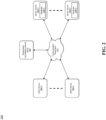
- FIG. 2 a schematic of a network environment 200 for implementing a platform, cloud, and language agnostic subscription cancellation device (SCD) of the instant disclosure is illustrated.
- SCD language agnostic subscription cancellation device
- an SCD 202 as illustrated in FIG. 2 may be configured for allowing a user to cancel subscriptions from the user's mobile device "settings" page in a consistent and seamless manner irrespective of how the subscription was signed up (i.e., via Appstore or via merchant site), but the disclosure is not limited thereto.
- the SCD 202 may be the same or similar to the computer system 102 as described with respect to FIG. 1 .
- the SCD 202 may store one or more applications that may include executable instructions that, when executed by the SCD 202, cause the SCD 202 to perform actions, such as to transmit, receive, or otherwise process network messages, for example, and to perform other actions described and illustrated below with reference to the figures.
- the application(s) may be implemented as modules or components of other applications. Further, the application(s) may be implemented as operating system extensions, modules, plugins, or the like.
- the application(s) may be operative in a cloud-based computing environment.
- the application(s) may be executed within or as virtual machine(s) or virtual server(s) that may be managed in a cloud-based computing environment.
- the application(s), and even the SCD 202 itself may be located in virtual server(s) running in a cloud-based computing environment rather than being tied to one or more specific physical network computing devices.
- the application(s) may be running in one or more virtual machines (VMs) executing on the SCD 202.
- VMs virtual machines
- virtual machine(s) running on the SCD 202 may be managed or supervised by a hypervisor.
- the SCD 202 is coupled to a plurality of server devices 204(1)-204(n) that hosts a plurality of databases 206(1)-206(n), and also to a plurality of client devices 208(1)-208(n) via communication network(s) 210.
- a communication interface of the SCD 202 such as the network interface 114 of the computer system 102 of FIG.
- the SCD 202 operatively couples and communicates between the SCD 202, the server devices 204(1)-204(n), and/or the client devices 208(1)-208(n), which are all coupled together by the communication network(s) 210, although other types and/or numbers of communication networks or systems with other types and/or numbers of connections and/or configurations to other devices and/or elements may also be used.
- the communication network(s) 210 may be the same or similar to the network 122 as described with respect to FIG. 1 , although the SCD 202, the server devices 204(1)-204(n), and/or the client devices 208(1)-208(n) may be coupled together via other topologies. Additionally, the network environment 200 may include other network devices such as one or more routers and/or switches, for example, which are well known in the art and thus will not be described herein.
- the communication network(s) 210 may include local area network(s) (LAN(s)) or wide area network(s) (WAN(s)), and may use TCP/IP over Ethernet and industry-standard protocols, although other types and/or numbers of protocols and/or communication networks may be used.
- the communication network(s) 202 in this example may employ any suitable interface mechanisms and network communication technologies including, for example, teletraffic in any suitable form (e.g., voice, modem, and the like), Public Switched Telephone Network (PSTNs), Ethernet-based Packet Data Networks (PDNs), combinations thereof, and the like.
- PSTNs Public Switched Telephone Network
- PDNs Packet Data Networks
- the SCD 202 may be a standalone device or integrated with one or more other devices or apparatuses, such as one or more of the server devices 204(1)-204(n), for example.
- the SCD 202 may be hosted by one of the server devices 204(1)-204(n), and other arrangements are also possible.
- one or more of the devices of the SCD 202 may be in the same or a different communication network including one or more public, private, or cloud networks, for example.
- the plurality of server devices 204(1)-204(n) may be the same or similar to the computer system 102 or the computer device 120 as described with respect to FIG. 1 , including any features or combination of features described with respect thereto.
- any of the server devices 204(1)-204(n) may include, among other features, one or more processors, a memory, and a communication interface, which are coupled together by a bus or other communication link, although other numbers and/or types of network devices may be used.
- the server devices 204(1)-204(n) in this example may process requests received from the SCD 202 via the communication network(s) 210 according to the HTTP-based and/or JavaScript Object Notation (JSON) protocol, for example, although other protocols may also be used.
- JSON JavaScript Object Notation
- the server devices 204(1)-204(n) may be hardware or software or may represent a system with multiple servers in a pool, which may include internal or external networks.
- the server devices 204(1)-204(n) hosts the databases 206(1)-206(n) that are configured to store metadata sets, data quality rules, and newly generated data, but the disclosure is not limited thereto.
- the database(s) 206(1)-206(n) may be a mainframe database, a log database that may produce programming for searching, monitoring, and analyzing machine-generated data via a web interface, etc., but the disclosure is not limited thereto.
- the database(s) 206(1)-206(n) may also include relational databases and NoSQL databases (key-value, column, document, graph, multi-model, etc.).
- the SCD 202 may be configured to leverage any database protocol (i.e., Java Database Connectivity, Open Database Connectivity, etc.) and distributed file systems for reading/writing data (i.e., Hadoop Distributed File System, Amazon Simple Storage Service, etc.).
- database protocol i.e., Java Database Connectivity, Open Database Connectivity, etc.
- distributed file systems for reading/writing data i.e., Hadoop Distributed File System, Amazon Simple Storage Service, etc.
- server devices 204(1)-204(n) are illustrated as single devices, one or more actions of each of the server devices 204(1)-204(n) may be distributed across one or more distinct network computing devices that together comprise one or more of the server devices 204(1)-204(n). Moreover, the server devices 204(1)-204(n) are not limited to a particular configuration. Thus, the server devices 204(1)-204(n) may contain a plurality of network computing devices that operate using a master/slave approach, whereby one of the network computing devices of the server devices 204(1)-204(n) operates to manage and/or otherwise coordinate operations of the other network computing devices.
- the server devices 204(1)-204(n) may operate as a plurality of network computing devices within a cluster architecture, a peer-to peer architecture, virtual machines, or within a cloud architecture, for example.
- a cluster architecture a peer-to peer architecture
- virtual machines virtual machines
- cloud architecture a cloud architecture
- the plurality of client devices 208(1)-208(n) may also be the same or similar to the computer system 102 or the computer device 120 as described with respect to FIG. 1 , including any features or combination of features described with respect thereto.
- Client device in this context refers to any computing device that interfaces to communications network(s) 210 to obtain resources from one or more server devices 204(1)-204(n) or other client devices 208(1)-208(n).
- the client devices 208(1)-208(n) in this example may include any type of computing device that may facilitate the implementation of the SCD 202 that may efficiently provide a platform for implementing a platform, cloud, and language agnostic subscription cancellation module for allowing a user to cancel subscriptions from the user's mobile device "settings" page in a consistent and seamless manner irrespective of how the subscription was signed up (i.e., via Appstore or via merchant site), but the disclosure is not limited thereto.
- the client devices 208(1)-208(n) may run interface applications, such as standard web browsers or standalone client applications, which may provide an interface to communicate with the SCD 202 via the communication network(s) 210 in order to communicate user requests.
- the client devices 208(1)-208(n) may further include, among other features, a display device, such as a display screen or touchscreen, and/or an input device, such as a keyboard, for example.
- the exemplary network environment 200 with the SCD 202, the server devices 204(1)-204(n), the client devices 208(1)-208(n), and the communication network(s) 210 are described and illustrated herein, other types and/or numbers of systems, devices, components, and/or elements in other topologies may be used. It is to be understood that the systems of the examples described herein are for exemplary purposes, as many variations of the specific hardware and software used to implement the examples are possible, as will be appreciated by those skilled in the relevant art(s).
- One or more of the devices depicted in the network environment 200 may be configured to operate as virtual instances on the same physical machine.
- one or more of the SCD 202, the server devices 204(1)-204(n), or the client devices 208(1)-208(n) may operate on the same physical device rather than as separate devices communicating through communication network(s) 210.
- the SCD 202 may be configured to send code at run-time to remote server devices 204(1)-204(n), but the disclosure is not limited thereto.
- two or more computing systems or devices may be substituted for any one of the systems or devices in any example. Accordingly, principles and advantages of distributed processing, such as redundancy and replication also may be implemented, as desired, to increase the robustness and performance of the devices and systems of the examples.
- the examples may also be implemented on computer system(s) that extend across any suitable network using any suitable interface mechanisms and traffic technologies, including by way of example only teletraffic in any suitable form (e.g., voice and modem), wireless traffic networks, cellular traffic networks, Packet Data Networks (PDNs), the Internet, intranets, and combinations thereof.
- FIG. 3 illustrates a system diagram for implementing an SCD having a platform, cloud, and language agnostic subscription cancellation module (SCM) in accordance with an embodiment.
- SCM language agnostic subscription cancellation module
- the system 300 may include an SCD 302 within which an SCM 306 is embedded, a server 304, a database(s) 312, a plurality of client devices 308(1) ... 308(n), and a communication network 310.
- the SCD 302 including the SCM 306 may be connected to the server 304, and the database(s) 312 via the communication network 310.
- the SCD 302 may also be connected to the plurality of client devices 308(1) ... 308(n) via the communication network 310, but the disclosure is not limited thereto.
- the SCD 302 is described and shown in FIG. 3 as including the SCM 306, although it may include other rules, policies, modules, databases, or applications, for example.
- the database(s) 312 may be configured to store ready to use modules written for each API for all environments. Although only one database is illustrated in FIG. 3 , the disclosure is not limited thereto. Any number of desired databases may be utilized for use in the disclosed invention herein.
- the database(s) 312 may be a mainframe database, a log database that may produce programming for searching, monitoring, and analyzing machine-generated data via a web interface, etc., but the disclosure is not limited thereto.
- the database(s) 312 may also include relational databases and NoSQL databases (key-value, column, document, graph, multi-model, etc.).
- the SCM 306 may be configured to leverage any database protocol (i.e., Java Database Connectivity, Open Database Connectivity, etc.) and distributed file systems for reading/writing data (i.e., Hadoop Distributed File System, Amazon Simple Storage Service, etc.).
- the SCM 306 may be configured to receive real-time feed of data from the plurality of client devices 308(1) ... 308(n), and the database(s) 312 via the communication network 310.
- the SCM 306 may be configured to utilize stream processing systems as the real-time feed.
- the real-time feed(s) may be a stream processing system, but the disclosure is not limited thereto.
- the SCM 306 may be configured to: provide a database that stores a customer's card subscription payment details data associated with online subscriptions with one or more merchants; grant access to the customer's card subscription payment details data from the database to a mobile operating system embedded within a mobile device of the customer; call, in response to granting the access, a first application programming interface received from the mobile operating system to retrieve and display a list of merchants with active subscriptions tied to the customer's card along with a corresponding uniform resource locator link onto a graphical user interface within the customers' mobile device to cancel a corresponding active subscription; call, in response to granting the access, a second application programming interface received from the mobile operating system to allow cancellation of the corresponding active subscription; integrate the customer's mobile device to a third party subscription cancellation provider platform; receive, in response to integrating, an input via the graphical user interface to select a merchant associated with the corresponding active subscription the customer wants to cancel; and cancel, in response to receiving the input, the corresponding active subscription associated with the selected merchant
- the plurality of client devices 308(1) ... 308(n) are illustrated as being in communication with the SCD 302.
- the plurality of client devices 308(1) ... 308(n) may be "clients” (e.g., customers) of the SCD 302 and are described herein as such. Nevertheless, it is to be known and understood that the plurality of client devices 308(1) ... 308(n) need not necessarily be “clients” of the SCD 302, or any entity described in association therewith herein. Any additional or alternative relationship may exist between either or both of the plurality of client devices 308(1) ... 308(n) and the SCD 302, or no relationship may exist.
- the first client device 308(1) may be, for example, a smart phone. Of course, the first client device 308(1) may be any additional device described herein.
- the second client device 308(n) may be, for example, a personal computer (PC). Of course, the second client device 308(n) may also be any additional device described herein.
- the server 304 may be the same or equivalent to the server device 204 as illustrated in FIG. 2 .
- the process may be executed via the communication network 310, which may comprise plural networks as described above.
- the communication network 310 may comprise plural networks as described above.
- one or more of the plurality of client devices 308(1) ... 308(n) may communicate with the SCD 302 via broadband or cellular communication.
- these embodiments are merely exemplary and are not limiting or exhaustive.
- the computing device 301 may be the same or similar to any one of the client devices 208(1)-208(n) as described with respect to FIG. 2 , including any features or combination of features described with respect thereto.
- the SCD 302 may be the same or similar to the SCD 202 as described with respect to FIG. 2 , including any features or combination of features described with respect thereto.
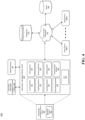
- FIG. 4 illustrates a system diagram for implementing an SCM of FIG.3 in accordance with an embodiment.
- the system 400 may include a platform, cloud, and language agnostic SCD 402 within which a platform, cloud, and language agnostic SCM 406 is embedded, a server 404, database(s) 412, a third party subscription cancellation provider platform 405, network services 407,and a communication network 410.
- the SCD 402 including the SCM 406 may be connected to the server 404, the third party subscription cancellation provider platform 405 or alternatively makes API call to the network services 407 for subscription cancellation, and the database(s) 412 via the communication network 410.
- the SCD 402 may also be connected to the plurality of client devices 408(1)-408(n) via the communication network 410, but the disclosure is not limited thereto.
- the SCM 406, the server 404, the plurality of client devices 408(1)-408(n), the database(s) 412, the communication network 410 as illustrated in FIG. 4 may be the same or similar to the SCM 306, the server 304, the plurality of client devices 308(1)-308(n), the database(s) 312, the communication network 310, respectively, as illustrated in FIG. 3 .
- the SCM 406 may include a granting module 414, a calling module 416, an integrating module 418, a receiving module 420, a cancelling module 422, an adding module 424, an implementing module 426, a communication module 428, and a GUI 430.
- interactions and data exchange among these modules included in the SCM 406 provide the advantageous effects of the disclosed invention. Functionalities of each module of FIG. 4 may be described in detail below with reference to FIGS. 4-7 .
- each of the granting module 414, the calling module 416, the integrating module 418, the receiving module 420, the cancelling module 422, the adding module 424, the implementing module 426, and the communication module 428 of the SCM 406 may be physically implemented by electronic (or optical) circuits such as logic circuits, discrete components, microprocessors, hard-wired circuits, memory elements, wiring connections, and the like, which may be formed using semiconductor-based fabrication techniques or other manufacturing technologies.
- each of the granting module 414, the calling module 416, the integrating module 418, the receiving module 420, the cancelling module 422, the adding module 424, the implementing module 426, and the communication module 428 of the SCM 406 may be implemented by microprocessors or similar, and may be programmed using software (e.g., microcode) to perform various functions discussed herein and may optionally be driven by firmware and/or software.
- software e.g., microcode
- each of the granting module 414, the calling module 416, the integrating module 418, the receiving module 420, the cancelling module 422, the adding module 424, the implementing module 426, and the communication module 428 of the SCM 406 may be implemented by dedicated hardware, or as a combination of dedicated hardware to perform some functions and a processor (e.g., one or more programmed microprocessors and associated circuitry) to perform other functions.
- a processor e.g., one or more programmed microprocessors and associated circuitry
- each of the granting module 414, the calling module 416, the integrating module 418, the receiving module 420, the cancelling module 422, the adding module 424, the implementing module 426, and the communication module 428 of the SCM 406 may be called via corresponding API.
- FIG. 5 illustrates a process flow architecture 500 implemented by the platform, cloud, and language agnostic SCM 406 of FIG. 4 for subscription cancellation in accordance with an embodiment.
- operating system wallet provider 503 is in communication with a card provider 501 and the card provider is integrated with a third party subscription cancellation provider platform 505 for subscription cancellation as disclosed herein, but the disclosure is not limited thereto.
- the SCM 406 may be implemented in such a manner to put the card provider 501 in the middle rather than the customer's mobile device integrating directly with the third party subscription cancellation provider platform 505.
- the card provider 501 may be configured to decide if it wants to call the third party subscription cancellation provider platform 505 or network APIs to connect to the network services 507 for subscription cancellation or block the transaction internally based on the merchant and use case.
- the operating system wallet provider 503 may include IOS or Android wallet provider, but the disclosure is not limited thereto.
- the third party subscription cancellation provider platform 505 may include a platform provided by Visa or Mastercard network or any Fin Tech partners, but the disclosure is not limited thereto.
- Subscription cancellation with the card provider 501 may be performed via variety of ways, for example, kill token, Visa API, POS rule, or various fintech partners, but the disclosure is not limited thereto.
- a subscription cancellation process is described below with reference to FIGS. 4 and 5 .
- the process may be executed via the communication module 428 and the communication network 410, which may comprise plural networks as described above.
- the various components of the SCM 406 may communicate with the server 404, the third party subscription cancellation provider platform 405, 505, and the database(s) 412 via the communication module 438 and the communication network 410.
- these embodiments are merely exemplary and are not limiting or exhaustive.
- the database(s) 412 may store a customer's card subscription payment details data associated with online subscriptions with one or more merchants.
- the granting module 414 may be configured to grant access to the customer's card subscription payment details data from the database(s) 412 to a mobile operating system 403 embedded within a mobile device (i.e., one of the SCD 402 or client device 408(1-408(n)) of the customer.
- the calling module 416 may be configured to call, in response to granting the access, a first application programming interface (API) (i.e., first API 507 as illustrated in FIG. 5 ) received from the mobile operating system (i.e., operating system wallet provider 503) to retrieve and display a list of merchants with active subscriptions tied to the customer's card onto the GUI 430 within the customers' mobile device to cancel a corresponding active subscription.
- API application programming interface
- the first API 507 is called to retrieve recurring transactions linked to the customer's card.
- the calling module 416 may be further configured to call, in response to granting the access, a second API (i.e., API 509 as illustrated in FIG. 5 ) received from the mobile operating system (i.e., operating system wallet provider 503) to allow cancellation of the corresponding active subscription.
- a second API i.e., API 509 as illustrated in FIG. 5
- the mobile operating system i.e., operating system wallet provider 503
- the second API 509 is called to initiate cancellation/stop payment block of subscription.
- the integrating module 418 may be configured to integrate the customer's mobile device to the third party subscription cancellation provider platform 405, 505.
- the receiving module 420 may be configured to receive, in response to integrating, an input via the GUI 430 to select a merchant associated with the corresponding active subscription the customer wants to cancel.
- the cancelling module 422 may be configured to cancel, in response to receiving the input, the corresponding active subscription associated with the selected merchant utilizing the third party subscription cancellation provider platform 405, 505.
- the customer may sign up for the online subscription directly from a merchant website associated with the merchant without going through an Appstore.
- the adding module 424 may be further configured to add the customer's card to a mobile wallet of the operating system.
- the receiving module 420 may be further configured to receive an acknowledgement message via the mobile device that the customer's card may be successfully added to the mobile wallet with an opt-in option that allows sharing the customer's subscription details data tied to the customer's card with the operating system; and receive an input that the customer selected the opt-in option.
- the GUI 430 may be configured to display, in response to receiving the input to select the merchant whose subscription the customer wants to cancel, a cancelled workflow.
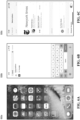
- FIG. 6A illustrates a graphical user interface displaying home page 600a of a mobile device in accordance with an embodiment. As illustrated in FIG., a user is on iOS device home page and goes to "settings," but the disclosure is not limited thereto.
- FIG. 6B illustrates another graphical user interface displaying a setting page 600b where a user may navigate to subscription page in accordance with an embodiment. As illustrated in FIG. 6B , the user is on settings page and navigates to subscription page.
- FIG. 6E illustrates another graphical user interface displaying a subscription cancellation workflow 600e in accordance with an embodiment.
- the user views subscription cancellation workflow within the iOS and enters information required to cancel Newyork times subscription, but the disclosure is not limited thereto. The user then enters the required information, accepts terms and conditions, and tabs Next.
- FIG. 6F illustrates another graphical user interface displaying a notification 600f regarding submission of subscription cancellation in accordance with an embodiment. As illustrated in FIG. 6F , the user views submit cancellation request notification and may enter "Done.”
- FIG. 7A illustrates a graphical user interface displaying wallet page 700a of a mobile device utilized by in accordance with an embodiment. As illustrated in FIG. 7A , the wallet page is displaying latest transactions by the card of the user, but the disclosure is not limited thereto.
- FIG. 7B illustrates another graphical user interface displaying a wallet page 700b where a specific transaction is shown in accordance with an embodiment. As illustrated in FIG. 7B , in this page, the user may view approved transactions as well as has option to contact the card provider, report incorrect merchant information, or cancel subscription.
- the process as illustrated in FIGS. 6A through 7B may be implemented via both web-based solution (i.e., desktop web experience) as well as mobile-based solution (i.e., mobile phones, iPads, tablets, etc.), depending on user's preference, but the disclosure is not limited thereto.
- web-based solution i.e., desktop web experience
- mobile-based solution i.e., mobile phones, iPads, tablets, etc.
- the GUI 430 may display where a customer's card may be stored, and the user may select that entry to initiate cancellation of any subscriptions under that card (or however many cards) (i.e., based on obtaining data corresponding to card transactions with respect to subscriptions; recurring charges, transactions level data, card on file transaction data, whether Card Verification Value (CVV) is transmitted to the system or manually entered, etc.) utilizing the processes disclosed above with respect to FIGS. 4-7B .
- the GUI 430 may display current subscriptions under that card, and connect to a third party provider to initiate the cancellation process. The third party has a list of subscriptions under that card (or however many cards).
- This initiation may include prompting the user to fill out a form and receive a notification from the third party that the cancellation process may take a few days (i.e., three days or any other preconfigured days) to complete cancellation of subscriptions that utilize the underlying card.
- the third party provider as well as the SCM 406 may periodically provide status updates of such cancellation process.
- the communication module 428 may be utilized to send an electronic message (i.e., email, text, or any other form of electronic communications) to the user (i.e., customer) about the status updates.
- the SCM 406 may be configured to allow to swap a card with current card for a subscription, or pause subscriptions for a certain preconfigured time period instead of cancelling subscriptions.
- the SCM 406 may be configured to allow the customer to find out where a particular card is used (i.e., stored cards) other than subscriptions for managing expense or other financial management scenarios.
- the SCM 406 may be integrated with other third party platforms (i.e., Visa, Mastercard, etc.) to allow a customer to stop using the card (stop payment solution) for a particular merchant via integrating corresponding APIs if that particular merchant does not allow subscription cancellation.
- these APIs may be utilized by the SCM 406 broadly across line of business ecosystems.
- FIG. 8 illustrates a flow chart of a process 800 implemented by the SCM 406 of FIG. 4 configured to allow a user to cancel subscriptions in a consistent and seamless manner irrespective of how the subscription was signed up in accordance with an embodiment. It will be appreciated that the illustrated process 800 and associated steps may be performed in a different order, with illustrated steps omitted, with additional steps added, or with a combination of reordered, combined, omitted, or additional steps.
- the process 800 may include providing a database that stores a customer's card subscription payment details data associated with online subscriptions with one or more merchants.
- the process 800 may include granting access to the customer's card subscription payment details data from the database to a mobile operating system embedded within a mobile device of the customer.
- the process 800 may include calling, in response to granting the access, a first application programming interface received from the mobile operating system to retrieve and display a list of merchants with active subscriptions tied to the customer's card onto a graphical user interface within the customers' mobile device to cancel a corresponding active subscription.
- the process 800 may include calling, in response to granting the access, a second application programming interface received from the mobile operating system to allow cancellation of the corresponding active subscription.
- the process 800 may include receiving, in response to integrating, an input via the graphical user interface to select a merchant associated with the corresponding active subscription the customer wants to cancel.
- the process 800 may include, cancelling, in response to receiving the input, the corresponding active subscription associated with the selected merchant.
- the customer may sign up for the online subscription directly from a merchant website associated with the merchant without going through an Appstore.
- the process 800 may further include: adding the customer's card to a mobile wallet of the operating system.
- the process 800 may further include: displaying on to the graphical user interface, in response to receiving the input to select the merchant whose subscription the customer wants to cancel, a cancelled workflow.
- the process 800 may further include: calling, in response to the cancelled workflow, a third application programming interface received from the mobile operating system to recommend that the customer subscribe to other subscriptions provided by other merchants based on analyzing deals data related to the customer card and customer transaction habits data and demographics data retrieved from the database.
- the process 800 may further include: integrating the customer's mobile device to a third party subscription cancellation provider platform; receiving, in response to integrating, an input via the graphical user interface to select the merchant associated with the corresponding active subscription the customer wants to cancel; and cancelling, in response to receiving the input, the corresponding active subscription associated with the selected merchant utilizing the third party subscription cancellation provider platform, but the disclosure is not limited thereto.
- the process 800 may further include: implementing the subscription cancellation module in such a manner to put the card provider in the middle rather than the customer's mobile device integrating directly with the third party subscription cancellation provider platform.
- the card provider may be configured to decide if it wants to call the third party subscription cancellation provider platform or network APIs to connect to the network services for subscription cancellation or block the transaction internally based on the merchant and use case.
- the process 800 may further include: implementing a rule or token to block future payments from the customer card for the merchant.
- the SCD 402 may include a memory (e.g., a memory 106 as illustrated in FIG. 1 ) which may be a non-transitory computer readable medium that may be configured to store instructions for implementing an SCM 406 for cancelling subscriptions in a consistent and seamless manner irrespective of how the subscription was signed up as disclosed herein.
- the SCD 402 may also include a medium reader (e.g., a medium reader 112 as illustrated in FIG. 1 ) which may be configured to read any one or more sets of instructions, e.g., software, from any of the memories described herein.
- the instructions when executed by a processor embedded within the SCM 406 or within the SCD 402, may be used to perform one or more of the methods and processes as described herein.
- the instructions may reside completely, or at least partially, within the memory 106, the medium reader 112, and/or the processor 104 (see FIG. 1 ) during execution by the SCD 402.
- the instructions in granting the access to the customer's card subscription payment details data, may cause the processor 104 to further perform the following: adding the customer's card to a mobile wallet of the operating system.
- the instructions when executed, may cause the processor 104 to further perform the following: receiving an acknowledgement message via the mobile device that the customer's card may be successfully added to the mobile wallet with an opt-in option that allows sharing the customer's subscription details data tied to the customer's card with the operating system; and receiving an input that the customer selected the opt-in option.
- the instructions when executed, may cause the processor 104 to further perform the following: displaying on to the graphical user interface, in response to receiving the input to select the merchant whose subscription the customer wants to cancel, a cancelled workflow.
- the instructions when executed, may cause the processor 104 to further perform the following: calling, in response to the cancelled workflow, a third application programming interface received from the mobile operating system to recommend that the customer subscribe to other subscriptions provided by other merchants based on analyzing deals data related to the customer card and customer transaction habits data and demographics data retrieved from the database.
- the instructions when executed, may cause the processor 104 to further perform the following: integrating the customer's mobile device to a third party subscription cancellation provider platform; receiving, in response to integrating, an input via the graphical user interface to select the merchant associated with the corresponding active subscription the customer wants to cancel; and cancelling, in response to receiving the input, the corresponding active subscription associated with the selected merchant utilizing the third party subscription cancellation provider platform, but the disclosure is not limited thereto.
- the instructions when executed, may cause the processor 104 to further perform the following: implementing the subscription cancellation module in such a manner to put the card provider in the middle rather than the customer's mobile device integrating directly with the third party subscription cancellation provider platform.
- the processor 104 may cause the card provider to decide if it wants to call the third party subscription cancellation provider platform or network APIs to connect to the network services for subscription cancellation or block the transaction internally based on the merchant and use case.
- the instructions when executed, may cause the processor 104 to further perform the following: implementing a rule or token to block future payments from the customer card for the merchant.
- technical improvements effected by the instant disclosure may include a platform for implementing a platform, cloud, and language agnostic subscription cancellation module allowing a user to cancel subscriptions from the user's mobile device "settings" page in a consistent and seamless manner irrespective of how the subscription was signed up (i.e., via Appstore or via merchant site), but the disclosure is not limited thereto.
- This subscription cancellation module implements an improved graphical user interface as disclosed herein.
- computer-readable medium may be described as a single medium, the term "computer-readable medium” includes a single medium or multiple media, such as a centralized or distributed database, and/or associated caches and servers that store one or more sets of instructions.
- the term "computer-readable medium” shall also include any medium that is capable of storing, encoding or carrying a set of instructions for execution by a processor or that cause a computer system to perform any one or more of the embodiments disclosed herein.
- the computer-readable medium may comprise a non-transitory computer-readable medium or media and/or comprise a transitory computer-readable medium or media.
- the computer-readable medium may include a solid-state memory such as a memory card or other package that houses one or more non-volatile read-only memories.
- the computer-readable medium may be a random access memory or other volatile re-writable memory.
- the computer-readable medium may include a magneto-optical or optical medium, such as a disk or tapes or other storage device to capture carrier wave signals such as a signal communicated over a transmission medium. Accordingly, the disclosure is considered to include any computer-readable medium or other equivalents and successor media, in which data or instructions may be stored.
- inventions of the disclosure may be referred to herein, individually and/or collectively, by the term "invention" merely for convenience and without intending to voluntarily limit the scope of this application to any particular invention or inventive concept.
- inventions may be referred to herein, individually and/or collectively, by the term "invention" merely for convenience and without intending to voluntarily limit the scope of this application to any particular invention or inventive concept.
- specific embodiments have been illustrated and described herein, it should be appreciated that any subsequent arrangement designed to achieve the same or similar purpose may be substituted for the specific embodiments shown.
- This disclosure is intended to cover any and all subsequent adaptations or variations of various embodiments. Combinations of the above embodiments, and other embodiments not specifically described herein, will be apparent to those of skill in the art upon reviewing the description.
Landscapes
- Business, Economics & Management (AREA)
- Accounting & Taxation (AREA)
- Engineering & Computer Science (AREA)
- Finance (AREA)
- General Physics & Mathematics (AREA)
- Strategic Management (AREA)
- Physics & Mathematics (AREA)
- General Business, Economics & Management (AREA)
- Theoretical Computer Science (AREA)
- Development Economics (AREA)
- Economics (AREA)
- Computer Security & Cryptography (AREA)
- Computer Networks & Wireless Communication (AREA)
- Marketing (AREA)
- User Interface Of Digital Computer (AREA)
- Telephonic Communication Services (AREA)
- Financial Or Insurance-Related Operations Such As Payment And Settlement (AREA)
Applications Claiming Priority (2)
| Application Number | Priority Date | Filing Date | Title |
|---|---|---|---|
| US202363524123P | 2023-06-29 | 2023-06-29 | |
| US18/750,646 US20250005586A1 (en) | 2023-06-29 | 2024-06-21 | System, method, and computer program for subscription cancellation |
Publications (2)
| Publication Number | Publication Date |
|---|---|
| EP4485329A2 true EP4485329A2 (de) | 2025-01-01 |
| EP4485329A3 EP4485329A3 (de) | 2025-02-05 |
Family
ID=91737707
Family Applications (1)
| Application Number | Title | Priority Date | Filing Date |
|---|---|---|---|
| EP24185307.6A Pending EP4485329A3 (de) | 2023-06-29 | 2024-06-28 | System, verfahren und computerprogramm zur abonnementaufhebung |
Country Status (2)
| Country | Link |
|---|---|
| US (1) | US20250005586A1 (de) |
| EP (1) | EP4485329A3 (de) |
Family Cites Families (11)
| Publication number | Priority date | Publication date | Assignee | Title |
|---|---|---|---|---|
| US8566235B2 (en) * | 2008-12-23 | 2013-10-22 | Verifi, Inc. | System and method for providing dispute resolution for electronic payment transactions |
| WO2012141885A1 (en) * | 2011-04-15 | 2012-10-18 | Mastercard International, Inc. | Upgrading of recurring payment cancellation services |
| US20130124395A1 (en) * | 2011-11-10 | 2013-05-16 | James Siminoff | Systems And Methods For Disabling Recurring Charges |
| US11935020B1 (en) * | 2016-07-01 | 2024-03-19 | Wells Fargo Bank, N.A. | Control tower for prospective transactions |
| US11886611B1 (en) * | 2016-07-01 | 2024-01-30 | Wells Fargo Bank, N.A. | Control tower for virtual rewards currency |
| US20190205882A1 (en) * | 2018-01-04 | 2019-07-04 | Mastercard International Incorporated | System and methods for updating a card-not-present account-on-file transaction blocking service |
| US20200184434A1 (en) * | 2018-12-07 | 2020-06-11 | Wells Fargo Bank, N.A. | System and method for identifying and managing goods and services based on disuse |
| US11423373B1 (en) * | 2019-09-17 | 2022-08-23 | Block, Inc. | Intelligent subscription identification using transaction data |
| US11240382B2 (en) * | 2020-06-22 | 2022-02-01 | Capital One Services, Llc | Computer-based systems configured for automated subscription management and methods thereof |
| US11823201B2 (en) * | 2021-02-04 | 2023-11-21 | Visa International Service Association | Intelligent recurring transaction processing and fraud detection |
| US20230206195A1 (en) * | 2021-12-28 | 2023-06-29 | Capital One Services, Llc | Systems and methods for circumstantial auto-pausing of recurrent transactions |
-
2024
- 2024-06-21 US US18/750,646 patent/US20250005586A1/en active Pending
- 2024-06-28 EP EP24185307.6A patent/EP4485329A3/de active Pending
Also Published As
| Publication number | Publication date |
|---|---|
| US20250005586A1 (en) | 2025-01-02 |
| EP4485329A3 (de) | 2025-02-05 |
Similar Documents
| Publication | Publication Date | Title |
|---|---|---|
| US12118385B2 (en) | System and method for real-time data dependency management and task orchestration | |
| US12066925B2 (en) | Method and system for integration test monitoring and management | |
| US11675632B2 (en) | System and method for implementing a single window integrated module | |
| US20220405152A1 (en) | Container application for microservices front end desktop | |
| US11816450B2 (en) | System and method for real-time automated project specifications analysis | |
| EP4369271A1 (de) | Verfahren und system für standortbasierte transaktionen | |
| US11966373B2 (en) | System and method data quality validation for migrating servicing layer implementations | |
| US11709813B2 (en) | System and method for implementing a contract data management module | |
| EP4485329A2 (de) | System, verfahren und computerprogramm zur abonnementaufhebung | |
| US11012537B2 (en) | Method for handling long-running client-server processes | |
| US20250077493A1 (en) | System and method for implementing a model driven data platform with no code or low code data warehouse | |
| HK40119098A (en) | System, method, and computer program for subscription cancellation | |
| US11620700B2 (en) | Method and system for providing transparency in loan request bidding | |
| US12184722B2 (en) | Method and system for persisting session data | |
| US11631126B2 (en) | Methods and systems for persistent contextual interaction | |
| US12530207B2 (en) | System and method for automatically monitoring application performance | |
| US20240062282A1 (en) | Method and system for payment processing and account services | |
| US20240037535A1 (en) | System and method for implementing an auto-provisioning workflow module | |
| US12346344B2 (en) | Method and system for managing cross-account data distribution | |
| US20250156873A1 (en) | System and method for fraud verification across user identification formats implementing scanning technologies | |
| US12026054B2 (en) | System and method for dynamic state reconciliation | |
| US11941689B2 (en) | Method and system for accepting payments on mobile application | |
| US20230177420A1 (en) | Method and system for managing statement events | |
| US12174837B2 (en) | System and method for integration of user defined metrics of cloud hosted relational databases with cloud monitoring services | |
| US20240362711A1 (en) | Method and system for facilitating integrated computations |
Legal Events
| Date | Code | Title | Description |
|---|---|---|---|
| PUAI | Public reference made under article 153(3) epc to a published international application that has entered the european phase |
Free format text: ORIGINAL CODE: 0009012 |
|
| STAA | Information on the status of an ep patent application or granted ep patent |
Free format text: STATUS: THE APPLICATION HAS BEEN PUBLISHED |
|
| AK | Designated contracting states |
Kind code of ref document: A2 Designated state(s): AL AT BE BG CH CY CZ DE DK EE ES FI FR GB GR HR HU IE IS IT LI LT LU LV MC ME MK MT NL NO PL PT RO RS SE SI SK SM TR |
|
| REG | Reference to a national code |
Ref country code: DE Ref legal event code: R079 Free format text: PREVIOUS MAIN CLASS: G06Q0030060000 Ipc: G06Q0030060100 |
|
| PUAL | Search report despatched |
Free format text: ORIGINAL CODE: 0009013 |
|
| AK | Designated contracting states |
Kind code of ref document: A3 Designated state(s): AL AT BE BG CH CY CZ DE DK EE ES FI FR GB GR HR HU IE IS IT LI LT LU LV MC ME MK MT NL NO PL PT RO RS SE SI SK SM TR |
|
| RIC1 | Information provided on ipc code assigned before grant |
Ipc: G06Q 20/32 20120101ALI20250102BHEP Ipc: G06Q 20/36 20120101ALI20250102BHEP Ipc: G06Q 20/10 20120101ALI20250102BHEP Ipc: G06Q 20/40 20120101ALI20250102BHEP Ipc: G06Q 30/0601 20230101AFI20250102BHEP |
|
| P01 | Opt-out of the competence of the unified patent court (upc) registered |
Free format text: CASE NUMBER: APP_3077/2025 Effective date: 20250120 |
|
| REG | Reference to a national code |
Ref country code: HK Ref legal event code: DE Ref document number: 40119098 Country of ref document: HK |
|
| STAA | Information on the status of an ep patent application or granted ep patent |
Free format text: STATUS: REQUEST FOR EXAMINATION WAS MADE |
|
| 17P | Request for examination filed |
Effective date: 20250721 |