EP4485325A2 - Systeme, verfahren und medien zur verhinderung von fälschungen mit nichtfungiblen token - Google Patents
Systeme, verfahren und medien zur verhinderung von fälschungen mit nichtfungiblen token Download PDFInfo
- Publication number
- EP4485325A2 EP4485325A2 EP24178130.1A EP24178130A EP4485325A2 EP 4485325 A2 EP4485325 A2 EP 4485325A2 EP 24178130 A EP24178130 A EP 24178130A EP 4485325 A2 EP4485325 A2 EP 4485325A2
- Authority
- EP
- European Patent Office
- Prior art keywords
- footwear
- digital
- user
- blockchain
- article
- Prior art date
- Legal status (The legal status is an assumption and is not a legal conclusion. Google has not performed a legal analysis and makes no representation as to the accuracy of the status listed.)
- Pending
Links
Images




Classifications
-
- G—PHYSICS
- G06—COMPUTING OR CALCULATING; COUNTING
- G06Q—INFORMATION AND COMMUNICATION TECHNOLOGY [ICT] SPECIALLY ADAPTED FOR ADMINISTRATIVE, COMMERCIAL, FINANCIAL, MANAGERIAL OR SUPERVISORY PURPOSES; SYSTEMS OR METHODS SPECIALLY ADAPTED FOR ADMINISTRATIVE, COMMERCIAL, FINANCIAL, MANAGERIAL OR SUPERVISORY PURPOSES, NOT OTHERWISE PROVIDED FOR
- G06Q20/00—Payment architectures, schemes or protocols
- G06Q20/38—Payment protocols; Details thereof
- G06Q20/40—Authorisation, e.g. identification of payer or payee, verification of customer or shop credentials; Review and approval of payers, e.g. check credit lines or negative lists
- G06Q20/401—Transaction verification
-
- G—PHYSICS
- G06—COMPUTING OR CALCULATING; COUNTING
- G06Q—INFORMATION AND COMMUNICATION TECHNOLOGY [ICT] SPECIALLY ADAPTED FOR ADMINISTRATIVE, COMMERCIAL, FINANCIAL, MANAGERIAL OR SUPERVISORY PURPOSES; SYSTEMS OR METHODS SPECIALLY ADAPTED FOR ADMINISTRATIVE, COMMERCIAL, FINANCIAL, MANAGERIAL OR SUPERVISORY PURPOSES, NOT OTHERWISE PROVIDED FOR
- G06Q30/00—Commerce
- G06Q30/018—Certifying business or products
- G06Q30/0185—Product, service or business identity fraud
-
- G—PHYSICS
- G06—COMPUTING OR CALCULATING; COUNTING
- G06F—ELECTRIC DIGITAL DATA PROCESSING
- G06F21/00—Security arrangements for protecting computers, components thereof, programs or data against unauthorised activity
- G06F21/60—Protecting data
- G06F21/602—Providing cryptographic facilities or services
-
- G—PHYSICS
- G06—COMPUTING OR CALCULATING; COUNTING
- G06Q—INFORMATION AND COMMUNICATION TECHNOLOGY [ICT] SPECIALLY ADAPTED FOR ADMINISTRATIVE, COMMERCIAL, FINANCIAL, MANAGERIAL OR SUPERVISORY PURPOSES; SYSTEMS OR METHODS SPECIALLY ADAPTED FOR ADMINISTRATIVE, COMMERCIAL, FINANCIAL, MANAGERIAL OR SUPERVISORY PURPOSES, NOT OTHERWISE PROVIDED FOR
- G06Q20/00—Payment architectures, schemes or protocols
- G06Q20/30—Payment architectures, schemes or protocols characterised by the use of specific devices or networks
- G06Q20/36—Payment architectures, schemes or protocols characterised by the use of specific devices or networks using electronic wallets or electronic money safes
- G06Q20/367—Payment architectures, schemes or protocols characterised by the use of specific devices or networks using electronic wallets or electronic money safes involving electronic purses or money safes
- G06Q20/3678—Payment architectures, schemes or protocols characterised by the use of specific devices or networks using electronic wallets or electronic money safes involving electronic purses or money safes e-cash details, e.g. blinded, divisible or detecting double spending
-
- G—PHYSICS
- G06—COMPUTING OR CALCULATING; COUNTING
- G06Q—INFORMATION AND COMMUNICATION TECHNOLOGY [ICT] SPECIALLY ADAPTED FOR ADMINISTRATIVE, COMMERCIAL, FINANCIAL, MANAGERIAL OR SUPERVISORY PURPOSES; SYSTEMS OR METHODS SPECIALLY ADAPTED FOR ADMINISTRATIVE, COMMERCIAL, FINANCIAL, MANAGERIAL OR SUPERVISORY PURPOSES, NOT OTHERWISE PROVIDED FOR
- G06Q20/00—Payment architectures, schemes or protocols
- G06Q20/38—Payment protocols; Details thereof
- G06Q20/389—Keeping log of transactions for guaranteeing non-repudiation of a transaction
-
- G—PHYSICS
- G06—COMPUTING OR CALCULATING; COUNTING
- G06Q—INFORMATION AND COMMUNICATION TECHNOLOGY [ICT] SPECIALLY ADAPTED FOR ADMINISTRATIVE, COMMERCIAL, FINANCIAL, MANAGERIAL OR SUPERVISORY PURPOSES; SYSTEMS OR METHODS SPECIALLY ADAPTED FOR ADMINISTRATIVE, COMMERCIAL, FINANCIAL, MANAGERIAL OR SUPERVISORY PURPOSES, NOT OTHERWISE PROVIDED FOR
- G06Q30/00—Commerce
- G06Q30/06—Buying, selling or leasing transactions
- G06Q30/0601—Electronic shopping [e-shopping]
- G06Q30/0609—Qualifying participants for shopping transactions
-
- G—PHYSICS
- G06—COMPUTING OR CALCULATING; COUNTING
- G06Q—INFORMATION AND COMMUNICATION TECHNOLOGY [ICT] SPECIALLY ADAPTED FOR ADMINISTRATIVE, COMMERCIAL, FINANCIAL, MANAGERIAL OR SUPERVISORY PURPOSES; SYSTEMS OR METHODS SPECIALLY ADAPTED FOR ADMINISTRATIVE, COMMERCIAL, FINANCIAL, MANAGERIAL OR SUPERVISORY PURPOSES, NOT OTHERWISE PROVIDED FOR
- G06Q30/00—Commerce
- G06Q30/06—Buying, selling or leasing transactions
- G06Q30/0601—Electronic shopping [e-shopping]
- G06Q30/0641—Electronic shopping [e-shopping] utilising user interfaces specially adapted for shopping
- G06Q30/0643—Electronic shopping [e-shopping] utilising user interfaces specially adapted for shopping graphically representing goods, e.g. 3D product representation
-
- G—PHYSICS
- G06—COMPUTING OR CALCULATING; COUNTING
- G06Q—INFORMATION AND COMMUNICATION TECHNOLOGY [ICT] SPECIALLY ADAPTED FOR ADMINISTRATIVE, COMMERCIAL, FINANCIAL, MANAGERIAL OR SUPERVISORY PURPOSES; SYSTEMS OR METHODS SPECIALLY ADAPTED FOR ADMINISTRATIVE, COMMERCIAL, FINANCIAL, MANAGERIAL OR SUPERVISORY PURPOSES, NOT OTHERWISE PROVIDED FOR
- G06Q40/00—Finance; Insurance; Tax strategies; Processing of corporate or income taxes
- G06Q40/04—Trading; Exchange, e.g. stocks, commodities, derivatives or currency exchange
-
- H—ELECTRICITY
- H04—ELECTRIC COMMUNICATION TECHNIQUE
- H04L—TRANSMISSION OF DIGITAL INFORMATION, e.g. TELEGRAPHIC COMMUNICATION
- H04L9/00—Cryptographic mechanisms or cryptographic arrangements for secret or secure communications; Network security protocols
- H04L9/32—Cryptographic mechanisms or cryptographic arrangements for secret or secure communications; Network security protocols including means for verifying the identity or authority of a user of the system or for message authentication, e.g. authorization, entity authentication, data integrity or data verification, non-repudiation, key authentication or verification of credentials
- H04L9/3247—Cryptographic mechanisms or cryptographic arrangements for secret or secure communications; Network security protocols including means for verifying the identity or authority of a user of the system or for message authentication, e.g. authorization, entity authentication, data integrity or data verification, non-repudiation, key authentication or verification of credentials involving digital signatures
-
- H—ELECTRICITY
- H04—ELECTRIC COMMUNICATION TECHNIQUE
- H04L—TRANSMISSION OF DIGITAL INFORMATION, e.g. TELEGRAPHIC COMMUNICATION
- H04L9/00—Cryptographic mechanisms or cryptographic arrangements for secret or secure communications; Network security protocols
- H04L9/50—Cryptographic mechanisms or cryptographic arrangements for secret or secure communications; Network security protocols using hash chains, e.g. blockchains or hash trees
-
- G—PHYSICS
- G06—COMPUTING OR CALCULATING; COUNTING
- G06F—ELECTRIC DIGITAL DATA PROCESSING
- G06F2221/00—Indexing scheme relating to security arrangements for protecting computers, components thereof, programs or data against unauthorised activity
- G06F2221/21—Indexing scheme relating to G06F21/00 and subgroups addressing additional information or applications relating to security arrangements for protecting computers, components thereof, programs or data against unauthorised activity
- G06F2221/2107—File encryption
Definitions
- counterfeit articles are produced for the purpose of imitating articles produced by the true organization, which can dilute, confuse, and sometimes deceive purchasers into believing they are purchasing the true organization's high-quality articles, only to realize that a counterfeit article of lower quality and questionable value has been purchased. While this has occurred within the physical realm for a long time, similar issues now exist in the digital realm, where digital products or digital versions of physical products are often subject to unauthorized sale and reproduction.
- this unauthorized, counterfeit production and/or digital reproduction can dilute, confuse, and deceive an organization's brand, goodwill, and exclusivity, which can negatively affect the organization's profitability and reputation, and may compromise a user's subjective perception of the value, quality, authenticity, and sometimes "collectable" aspects of the organization's articles.
- systems, methods, and media for preventing counterfeiting using cryptographic tokens e.g., non-fungible tokens.
- a method of preventing counterfeiting using non-fungible tokens includes manufacturing a physical article with an ID tag that is configured to be recognized by a device that includes a user interface and communicates wirelessly over a communication network. The method further comprises providing a digital asset with a representation of the physical article and metadata, wherein the digital asset is authenticated or cryptographically secured by a non-fungible token and the metadata includes a unique product identifier corresponding to the ID tag of the physical article. Further, the method comprises storing the non-fungible token on a blockchain and linking the ID tag of the physical article to the digital asset. When the ID tag is read by the device, the user interface of the device displays the cryptographically secured digital asset with the representation of the physical article.
- a method of preventing counterfeiting using non-fungible tokens comprises receiving data corresponding to an attribute of a digital article of footwear.
- the method further comprises manufacturing a physical article of footwear to include the attribute of the digital article of footwear.
- the method comprises generating a digital asset cryptographically secured by a non-fungible token, wherein the digital asset is linked to the digital article of footwear by an address.
- the non-fungible token can comprise metadata corresponding to the attribute of the digital article of footwear and a date of manufacture of the physical article of footwear.
- the method comprises storing the non-fungible token in a blockchain network.
- the digital asset is configured to be transferrable to a third party.
- the attribute includes at least one of a footwear color, a footwear size, a plate design, a signature, or a date of purchase.
- the non-fungible token can be a single token.
- the non-fungible token is a collection of non-fungible tokens associated with a plurality of digital assets created, in part, using a permutation generator.
- the blockchain network is a private blockchain network.
- a method of preventing counterfeiting using non-fungible tokens comprises providing a network comprising a plurality of entities in communication with a private blockchain having a host administrator, wherein each entity has been granted limited access to the private blockchain, and wherein each entity maintains an inventory management system that is in communication with the private blockchain.
- the method further comprises receiving data associated with manufacturing physical footwear, the data containing a first detail and a second detail related to the footwear. Further, the method comprises recording the first detail and the second detail to the private blockchain, such that the first and second details are cryptographically secured by a non-fungible token.
- the method comprises generating notifications regarding the first detail and the second detail associated with the non-fungible token among the plurality of entities.
- the method further comprises updating the inventory management system of a first entity of the plurality of entities in accordance with the first detail. Further, the method comprises updating the inventory management system of a second entity of the plurality of entities in accordance with the second detail. Additionally, the method comprises recording a transaction related to the non-fungible token, wherein the transaction is triggered by any one of the plurality of entities.
- the first detail is at least one of a material, a size, a color, a model, or an optional feature.
- the plurality of entities includes at least one of a shipping provider, a material supplier, an assembly supplier, or an ambassador.
- a report is generated by the host administrator, the report containing a list of the transactions recorded on the private blockchain associated with the non-fungible token. The report may be stored on a public blockchain.
- a method of preventing counterfeiting using non-fungible tokens comprises receiving data associated with a counterfeit product, wherein the data is received from a user registered with an online platform, the data including an address to an ecommerce site where the counterfeit product is offered for sale.
- the method further comprises generating a digital asset with a virtual object based on the data and cryptographically secured by a non-fungible token.
- the method comprises storing the non-fungible token in a blockchain network.
- the method comprises generating a notification to the ecommerce site, wherein the notification includes the data. Additionally, the method comprises transferring the digital asset to the user via the online platform.
- the ecommerce site may be an individual seller, a marketplace, a distributor, a retailer, or a manufacturer.
- the digital asset includes metadata corresponding to the user, the metadata including a score associated with the user on the platform. In some embodiments, a score associated with the ecommerce site is generated.
- anti-counterfeiting techniques have been developed to assist in identifying counterfeit goods and to prevent illicit sales.
- conventional anti-counterfeiting techniques may be difficult to implement due to time-consuming training processes that may be needed for individuals to learn how to identify counterfeit goods.
- imitators have become more sophisticated and adaptive over time, which has increased the pace at which anti-counterfeiting techniques must be developed and implemented.
- some embodiments of the present disclosure include mechanisms (e.g ., systems, methods, and media) for generating digital assets authenticated or cryptographically secured by cryptographic tokens, e.g ., non-fungible tokens (NFTs), and correspond to physical objects (e.g ., articles of apparel, or articles of footwear).
- cryptographic tokens e.g ., non-fungible tokens (NFTs)
- NFTs non-fungible tokens
- this disclosure relates to cryptographic digital assets for articles or objects, such as, e.g ., tangible objects, including footwear, apparel, headgear, or sporting gear, among other products, such as, e.g ., watches, luggage, jewelry, storage or shipping containers, artwork, mobile phones or smartphones, tablets, televisions or other electronic devices, refrigerators or other appliances, and vehicles or other machines, or the articles or objects may be intangible objects, including graphic designs, virtual avatars or characters, graphic user interfaces, or other forms of communication.
- articles or objects such as, e.g ., tangible objects, including footwear, apparel, headgear, or sporting gear, among other products, such as, e.g ., watches, luggage, jewelry, storage or shipping containers, artwork, mobile phones or smartphones, tablets, televisions or other electronic devices, refrigerators or other appliances, and vehicles or other machines, or the articles or objects may be intangible objects, including graphic designs, virtual avatars or characters, graphic user interfaces, or other forms of communication.
- this disclosure relates to cryptographic digital assets for methods for provisioning and methods for preventing counterfeiting of such cryptographic digital assets and articles, and decentralized computing systems with attendant blockchain control logic for mining, exchanging, collaborating, modifying, combining, and/or blending blockchain-enabled digital assets and articles.
- the presently described technology relies on the trust established in and by blockchain technology to enable a company to control the creation, distribution, expression, and use of digital objects that represent their brand. Unlike typical digital assets that are freely reproducible without loss of content or quality, the use of discrete recordation of ownership via blockchain technology eliminates the ability for simple digital reproductions of the digital objects.
- the manufacturer has the ability to control or limit the overall supply of the digital objects or traits/aspects thereof and may create a controlled scarcity if so desired.
- the digital object may be representative of: a physical object offered for sale; a 2D or 3D design rendering or design file that may be suitable for future production; a virtual representation of an object that is not presently intended for physical creation/production; or other such objects.
- some embodiments of the present disclosure include mechanisms for generating cryptographic tokens using virtual reality (VR), augmented reality (AR), and/or graphical user interfaces (GUIs) on computing devices.
- VR virtual reality
- AR augmented reality
- GUIs graphical user interfaces
- cryptographic digital assets that are provisioned through a blockchain ledger of transaction blocks and function, in part, to connect a real-world product, such as a physical shoe, to a virtual collectable, such as a digital shoe.
- a real-world product such as a physical shoe
- a virtual collectable such as a digital shoe
- the term "user” is inclusive of a consumer, a purchaser, and a registered member of an online platform.
- a digital representation of a shoe may be generated, linked with the consumer, and assigned a cryptographic token, where the digital shoe and cryptographic token collectively represent a footwear NFT.
- the digital representation may include a computer-generated avatar of the shoe or a limited-edition artist rendition of the shoe.
- the digital asset may be secured by an encryption-protected block that contains a hash pointer as a link to a related block in a decentralized blockchain, a transaction timestamp, and transaction data.
- the buyer is enabled to securely trade or sell the tangible pair of shoes, trade or sell the digital shoe, store the digital shoe in a cryptocurrency wallet or other digital blockchain wallet, and, based on rules of acceptable shoe manufacturability, create a custom, made-as-new, tangible pair of shoes.
- users can develop a personal user account that is registered with the original manufacturer of the tangible shoes, e.g., a Puma Fam account, which is linked to the user's cryptographic wallet and allows the user access to a platform for viewing, purchasing, selling, trading, minting, and burning digital assets and associated cryptographic tokens that may or may not be linked to or representative of tangible goods.
- a Puma Fam account which is linked to the user's cryptographic wallet and allows the user access to a platform for viewing, purchasing, selling, trading, minting, and burning digital assets and associated cryptographic tokens that may or may not be linked to or representative of tangible goods.
- cryptographic digital assets may refer to any computer-generated virtual object, including digital footwear, apparel, headgear, avatars, art, collectables, tickets, coins, creatures, or sub-elements thereof, etc., among other virtual objects, that have a unique, non-fungible tokenized code (“token") registered on and validated by a blockchain platform or otherwise registered in an immutable database.
- the digital asset may be a digital-art version of a tangible, physical object or an object disassociated with tangible, physical objects.
- the digital asset may be a digital-art version of physical footwear having the same or substantially the same appearance.
- the digital asset may be digital footwear generated within the physical realm and without being connected to or representative of physical footwear.
- the digital asset may become physical through various techniques, such as by manufacturing methods based on aspects of the digital footwear that are taken as inputs to create the physical footwear.
- cryptographic token is a digital unit of value that is stored/recorded on a blockchain.
- Cryptographic tokens include payment tokens, such as coins (e.g., Bitcoin), utility tokens, security tokens, and non-fungible tokens.
- non-fungible token or “NFT” refers to a cryptoasset in the form of a unique, cryptographic token corresponding to a digital asset, including a computer-generated virtual object, such as, e.g., digital articles of footwear and/or digital articles of apparel.
- the NFT may be a blockchain-based deed of digital ownership and/or certificate of authenticity of a digital asset.
- an NFT is not a digital asset, but is used to signify ownership of the digital asset.
- the NFT can be built in accordance with contemporary and relevant standards, such as, e.g., an Ethereum Request for Comments (ERC) 721 (Non-Fungible Token Standard) or ERC1155 (Multi Token Standard) among other relevant standards and as appropriate for the particular blockchain network and applications used therewith.
- ERC Ethereum Request for Comments
- ERC1155 Multi Token Standard
- the NFT represents authentication of the transaction and serves as a record of this authentication on a blockchain ledger (e.g., Bitcoin, Ethereum, and the like).
- a blockchain ledger e.g., Bitcoin, Ethereum, and the like.
- the NFT itself may fluctuate in value depending on various aspects of the transaction, e.g ., the parties involved, value exchanged, time and/or date, exclusivity, or combinations thereof, among other factors. Further, the number and/or frequency of transactions may also cause the NFT to fluctuate in value.
- a digital asset can be accessible at a web address (i.e., the URI) that is referenced in the non-fungible token securing it.
- the web address can be a link which, when accessed, can serve the digital asset, or could serve information or metadata of the digital asset. Because of a cost associated with storing information in a non-fungible token, the token itself may contain only enough information to identify the digital asset and prove ownership, with the rest of the information about the digital asset residing on computer systems that are not themselves nodes in the blockchain. Accessing the web address can return a list of properties of the digital asset to the user through a graphical user interface, or, alternatively, in a format that is consumable by computer programs and applications that may access the digital asset.
- the web address could return information about the digital asset in JSON format or XML format, and the address of the digital asset itself could be included in the list of properties.
- a digital asset representing a golf club could thus have properties specifying the type of club, a method of manufacturing used in making the club, a shaft length, a specification of handedness, a weight of the club, etc.
- an address referenced in a non-fungible token could be an API endpoint that may vary information returned to the user, or implement a function based on the HTTP method through which the API endpoint is accessed.
- the API endpoint could allow a user or system to perform a GET, HEAD, PUT, or POST, for example, which could allow a digital property of the digital asset to be changed based on the operation performed.
- the GET and HEAD operations can be read-only operations, and can provide publicly available information about the digital asset without the need for authentication. Access to the write operations (e.g ., POST, PUT) of the API endpoint referenced in an NFT can require authentication, and could thus only be accessible to the manufacturer of the NFT and digital asset, for example.
- a "Uniform Resource Identifier” or "URI” is a unique sequence of characters that identifies a logical or physical resource used by web technologies. URIs may be used to identify any resource, including non-virtual objects, such as locations or people, or digital information resources, such as web pages.
- the URI can comprise a "Uniform Resource Name” ("URN”) or a "Uniform Resource Locator” ("URL").
- options are contracts in which an offeree gives consideration for a promise by the offeror not to revoke an outstanding offer, and options can be provided as part of a larger contract or, alternatively, the option may be the foundation of the contract itself.
- a smart contract in an NFT may, but need not, be legally enforceable.
- Some embodiments of the present disclosure are directed to computer-generated virtual or digital collectables or assets, such as digital articles of footwear, or digital articles of apparel (e.g ., jackets, shirts, pants, shorts, hats, necklaces, watches).
- the digital collectables may be secured and/or uniquely identified by a cryptographic token, e.g., an NFT.
- the digital asset may be linked and/or distributed with real-world, physical products, such as tangible articles of footwear and/or tangible articles of apparel.
- the digital assets may be linked or distributed with a 2D or 3D design file such as a computer-aided design (CAD) model, graphical rendering, image, or drawings package from which a physical product may be constructed or otherwise represented.
- CAD computer-aided design
- NFTs can be created, recorded, or "minted” into the blockchain ledger stored in the blockchain network, and thereby stored in memory of one or more of the blockchain nodes. Further, such cryptographic tokens can be destroyed or “burned” by permanent removal from circulation in the blockchain network. Burning can be accomplished in a variety of ways, including by transferring ownership of the cryptographic token to a general, null address that is inaccessible and unowned. Alternatively, burning can be accomplished by modification or destruction of metadata, e.g ., a uniform resource locator (URL), included with the cryptographic token.
- URL uniform resource locator
- Manufacturers also referred to herein as brands or organizations, may burn cryptographic tokens to create scarcity within the marketplace, or to trigger a condition, or as a result of a condition, or for security purposes.
- a brand may release, e.g ., "drop," a collection of digital assets secured or identified by cryptographic tokens, and then may burn any unsold cryptographic tokens within the collection to preserve exclusivity of those sold.
- a brand may drop a collection of digital assets secured or identified by NFTs with the condition that purchasers may only have access to their purchased digital asset when all or a particular quantity of the collection has been purchased, which may be expedited by the brand then burning unsold NFTs to meet the condition prematurely.
- POS point-of-sale
- a unique NFT and corresponding private key are automatically generated and assigned to the user's blockchain wallet.
- a private key is provided to the user via a printed or digital receipt, a visual or electronic ID tag (RFID or NFC) hidden in or applied to the physical footwear, a pop-up message or email sent to a personal user account, a push notification or text message sent to a smartphone, or some other record; the consumer uses the private key to link the cryptographic asset to their digital blockchain wallet.
- RFID visual or electronic ID tag
- Another example may require the user to assemble the private key in part via a physical code or Unique Product Identifier (UPID), e.g., a serial number, associated with the shoe (on the packaging or box, on a hang tag, under a label, on an insole, embedded within a QR code on the physical footwear or packaging, embedded within a colorway pattern or sole tread pattern, etc.) and in part via a transaction authentication code (i.e., to prevent a consumer from collecting a cryptographic asset while merely trying shoes on).
- UPID Unique Product Identifier
- a Brand provides a first portion of the private key with a product, e.g., an article of footwear, in physical form, e.g ., printed, adhered, fastened, or the like, and a second portion of the private key is communicated by the Brand directly to a consumer, e.g ., via email or text message or telephonic call or push notification, by accessing an online platform that requires registration and/or login credentials, or the like.
- the Brand provides the first portion of the private key with the product and the second portion of the private key is provided to a retailer of the product, such that only via transaction or purchase of the product may a consumer receive the second portion of the private key from the retailer for assembly with the first portion of the private key.
- the private key is divided into a plurality of portions that are acquired by the consumer via an online platform that requires registration and/or login credentials.
- the online platform may allow a user to acquire successive portions of the private key by participation in a game, such that completion of each level of the game unlocks another portion of the private key.
- the online platform permits the consumer to unlock portions of the private key through completion of tasks, e.g., watching advertisements, submitting feedback or reviews, or the like.
- Another example may require the user to "seek" for cryptographic assets in stores, whether physical stores or virtual stores inside a metaverse or game, by using a photographic capture function or augmented reality (“AR") function on a handheld personal computing device.
- AR augmented reality
- a private key may be provided via the validated transaction, however, the user must separately find a hidden cryptographic asset in an AR hidden within the store or local area before the digital asset can be transferred to their wallet ( i.e., the cryptographic key and the virtual object must both be separately acquired before the transfer occurs).
- an authenticated pair of physical footwear are created and assigned a UPID.
- the UPID may be used to unlock a cryptographic digital asset composed of a collectable digital shoe and a unique non-fungible token (NFT) operating on a block-chain based distributed computing platform.
- NFT unique non-fungible token
- a consumer must have or procure a blockchain wallet address (e.g ., an Ethereum hardware wallet) to purchase, unlock, or acquire a cryptographic asset.
- the blockchain wallet may be used to store a private key belonging to the cryptographic asset and may be linked to a personal account that is registered with the original manufacturer of the physical footwear.
- the cryptographic asset may not be originally linked to a physical product, but instead may be gifted or sold as part of a brand promotion campaign, event, moment, or experience.
- the brand may host or commission a raffle, a game, a contest or other virtual promotion campaigns, events, moments, or experiences for which digital assets may be gifted or sold, or for which NFTs may be generated as proof of attendance or as tickets for entry, among other examples.
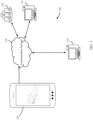
- FIG. 1 illustrates an example system 100 for generating a footwear NFT corresponding to a paired digital and physical article of footwear in accordance with some embodiments of the disclosed subject matter.
- the system may include one or more computing devices or user devices 110, and one or more servers 120.
- the digital article of footwear may include a toe, a heel, an outsole, a midsole, an upper, a toe support, an insole, a plate, and/or a heel support (not shown).
- the one or more computing devices 110 can receive data corresponding to one or more digital articles of footwear. Additionally, or alternatively, the one or more computing devices 110 can receive input data from a user that correspond to attributes of one or more digital articles of footwear. The one or more computing devices 110 can execute at least a portion of the system 100 to generate one or more NFTs corresponding to the one or more digital articles of footwear. Additionally, or alternatively, the one or more computing devices 110 can communicate data corresponding to the one or more digital articles of footwear to one or more servers 120 over one or more communication networks or connections 130.
- the one or more servers 120 can execute at least a portion of the system 100. In such embodiments, the one or more servers 120 can receive data corresponding to one or more digital articles of footwear. Additionally, or alternatively, the one or more servers 120 can receive inputs from a user that correspond to attributes of one or more digital articles of footwear. The one or more servers 120 can execute at least a portion of the system 100 to generate one or more NFTs corresponding to the one or more digital articles of footwear.
- FIG. 2 shows an example of hardware 200 that can be used to implement computing device 110 and/or server 120 in accordance with some embodiments of the disclosed subject matter.
- computing device 110 can include a processor 202, a display 204, one or more inputs 206, one or more communication systems 208, and/or memory 210.
- processor 202 can be any suitable hardware processor or combination of processors, such as a central processing unit (CPU), a graphics processing unit (GPU), an application specific integrated circuit (ASIC), a field-programmable gate array (FPGA), etc.
- display 204 can include any suitable display devices, such as a computer monitor, a touchscreen, a television, etc.
- inputs 206 can include any suitable input devices and/or sensors that can be used to receive user input, such as a keyboard, a mouse, a touchscreen, a microphone, a camera, etc.
- communications systems 208 can include any suitable hardware, firmware, and/or software for communicating information over communication network 130 and/or any other suitable communication networks.
- communications systems 208 can include one or more transceivers, one or more communication chips and/or chip sets, etc.
- communications systems 208 can include hardware, firmware and/or software that can be used to establish a Wi-Fi connection, a Bluetooth connection, a cellular connection, an Ethernet connection, etc.
- memory 210 can include any suitable storage device or devices that can be used to store instructions, values, etc. , that can be used, for example, by processor 202 to generate a non-fungible token, to present a digital asset using display 204, to communicate with server 120 via communications system(s) 208, etc.
- Memory 210 can include any suitable volatile memory, non-volatile memory, storage, or any suitable combination thereof.
- memory 210 can include random access memory (RAM), read-only memory (ROM), electronically-erasable programmable read-only memory (EEPROM), one or more flash drives, one or more hard disks, one or more solid state drives, one or more optical drives, etc.
- memory 210 can have encoded thereon a computer program for controlling operation of computing device 110.
- processor 202 can execute at least a portion of the computer program to receive inputs from a graphical user interface for customizing an article of footwear, store in memory an image of a digital asset based on the user's customizations, generate a non-fungible token based on the digital asset, mint the non-fungible token to a blockchain network made up of computing devices 110 and/or servers 120.
- processor 202 can execute at least a portion of the computer program to implement the system 100 for generating an NFT corresponding to a paired digital and physical article of footwear.
- processor 202 can execute at least a portion of process 500, 700, 800, 900, and 1000 described below in connection with FIGS. 5 and 7-10 .
- server 120 can include a processor 212, a display 214, one or more inputs 216, one or more communications systems 218, and/or memory 220.
- processor 212 can be any suitable hardware processor or combination of processors, such as a CPU, a GPU, an ASIC, an FPGA, etc.
- the display 214 can include any suitable display device, such as a computer monitor, a touchscreen, a television, etc.
- inputs 216 can include any suitable input devices and/or sensors that can be used to receive user input, such as a keyboard, a mouse, a touchscreen, a microphone, a camera, etc.
- communications systems 218 can include any suitable hardware, firmware, and/or software for communicating information over communication network 108 and/or any other suitable communication networks.
- communications systems 218 can include one or more transceivers, one or more communication chips and/or chip sets, etc.
- communications systems 218 can include hardware, firmware and/or software that can be used to establish a Wi-Fi connection, a Bluetooth connection, a cellular connection, an Ethernet connection, etc.
- memory 220 can include any suitable storage device or devices that can be used to store instructions, values, etc. , that can be used, for example, by processor 212 to present content using display 214, to communicate with one or more computing devices 110, etc.
- Memory 220 can include any suitable volatile memory, non-volatile memory, storage, or any suitable combination thereof.
- memory 220 can include RAM, ROM, EEPROM, one or more flash drives, one or more hard disks, one or more solid state drives, one or more optical drives, etc.
- memory 220 can have encoded thereon a server program for controlling operation of server 120.
- processor 212 can execute at least a portion of the server program to receive inputs from a GUI for customizing an article of footwear, store in memory (e.g ., memory 220) an image of a digital asset based on the user's customization, generate an NFT based on the digital asset, and/or mint the NFT to a blockchain network made up of computing devices 110 and/or servers 120.
- processor 212 can execute at least a portion of the server program to implement the system 100 for generating an NFT corresponding to a paired digital and physical article of footwear.
- processor 202 can execute at least a portion of process 500, 700, 800, 900, and 1000 described below in connection with FIGS. 5 and 7-10 .
- FIG. 3 illustrates an example blockchain network 300 according to some embodiments of the present disclosure.
- the blockchain network 300 may include one or more blockchain nodes.
- the blockchain nodes may each be a computing device 110 ( e.g ., similar to computing device 110 of FIGS. 1 and 2 ), or a server 120 ( e.g., similar to server 120 of FIGS. 1 and 2 ) that are in communication with one another ( e.g ., via a communication network similar to the communication network 130 of FIGS. 1 and 2 ).
- the footwear NFT may be stored in a blockchain ledger stored on one or more of the blockchain nodes (e.g ., "minted" into the blockchain ledger stored in the blockchain network, and thereby stored in memory of one or more of the blockchain nodes).
- metadata of the footwear NFT may be stored in memory on a local computing device (e.g ., computing device 110), and may be copied into the memory of one or more blockchain nodes (e.g ., servers, such as server 120, and/or computing devices that may be similar to computing device 110).
- the one or more blockchain nodes may be responsible for storing data that is contained in the blockchain ledger.
- Each of the one or more blockchain nodes may store ( e.g., in memory, such as, memory 210 or 220) a copy of the blockchain ledger (e.g., a deed tracking various transactions of, and modifications to, a digital asset, such as a digital article of footwear).
- the one or more blockchain nodes may each be a computing device located at one or more geographic locations, thereby creating a decentralized computing architecture.
- the blockchain network may be a public network (e.g., available to any user), or a private network (e.g., available to a specific set of users).
- an organization may develop an application for storing NFTs corresponding to both digital and physical products (e.g ., articles of footwear, or articles apparel).
- the application may be a mobile application, or desktop application, or web-based applet, comprising computer-readable instructions stored in, for example, memory 210 or 220, and configured to be executed by, for example, processor 202 or 212 (see FIG. 2 ).
- the blockchain network may be private and, thus, limited to users who download the organization's application and obtain authorization to participate. If the application is available to the public, then the blockchain network may be a public network. However, if the organization restricts who has access to the application, or restricts authorization for select individuals who download the application from becoming a blockchain node, then the blockchain network may be a private network, such as e.g. , a permissioned network.
- the permissioned network is a distributed ledger that is not publicly accessible and can only be accessed by users with certain permissions, and the users can only perform specific actions granted to them by the central owner or the ledger administrators and are required to identify themselves through certificates or other digital means.
- the blockchain network may be a known blockchain network (e.g ., Bitcoin, Ethereum, or the like), and the permissioned network may be a sub-set or service associated with a known blockchain network.
- the blockchain network may be an open, yet encrypted peer-to-peer network in which asset transaction records are linked via cryptographic hash functions in a distributed, immutable ledger of interconnected blocks.
- Each blockchain node may contain a ledger of blocks that includes one or more digital asset transactions accompanied by corroboration information representing a validity of each transaction as assessed by peer-validation devices (e.g ., the other blockchain nodes in the blockchain network).
- Encrypted, decentralized computing architectures allow for authentication of transacted assets while preventing duplication of a cryptography-protected ("cryptographic") digital asset registered to the blockchain network.
- Decentralized asset management may work by encrypting a proprietary asset file, breaking the encrypted code into segments, and sending the segments to numerous different blockchain nodes (e.g., the blockchain nodes) in the blockchain network.
- a validated owner may be provided with a private key that indicates where in the network the digital asset is located and how to reassemble or "decrypt" the file.
- an individual blockchain may be managed by a host administrator and distributed to multiple peers collectively adhering to a protocol for inter-node communication and transaction validation.
- the footwear NFT may be a digital asset stored in the blockchain network.
- the footwear NFT may include metadata corresponding to a digital footwear (e.g ., 2D representation, or a 3D representation of a virtual article of footwear), and a footwear token ID.
- the footwear token ID may be a 32-bit, 64-bit, or 128-bit alphanumeric code that is sectioned into individual segments.
- the alphanumeric code may be sectioned into 2 segments, 4 segments, 8 segments, 16 segments, or 32 segments.
- One or more of the code segments may correspond to common attributes between the digital footwear and a physical footwear corresponding to the digital footwear. Additionally, or alternatively, the one or more code segments may correspond to attributes of solely the physical footwear, or solely the digital footwear.
- the footwear NFT and token can be built in accordance with contemporary and relevant standards, such as, e.g. , an Ethereum Request for Comments (ERC) 721 (Non-Fungible Token Standard) or ERC1155 (Multi Token Standard), among other relevant standards and as appropriate for the particular blockchain network and applications used therewith.
- ERC Ethereum Request for Comments
- ERC1155 Multi Token Standard
- the code segments may include metadata corresponding to one or more attributes from the group of: a footwear image, footwear size, footwear style, footwear fit, footwear color, outsole pattern, location of manufacture, date of manufacture, or date of purchase. Additional combinations of the above-listed attributes should be recognized by those of ordinary skill in the art.
- the attribute footwear style may comprise metadata corresponding to Lows, Mids, Sandals, or Boots.
- the footwear size may comprise metadata corresponding to 4, 4.5, 5, 5.5, 6, 6.5, 7, 7.5, 8, 8.5, 9, 9.5, 10, 10.5, 11, 11.5, 12, 12.5, 13, 13.5, 14, 14.5, 15, 15.5, 16, 16.5, 17, 17.5, 18, or 18.5 in U.S. Men's sizes. It should be understood that metadata may correspond to similar sizes in Women's sizes, children's sizes, unisex sizes, and footwear size measurements of foreign countries.
- the footwear color segment may comprise metadata corresponding to Black, Gray, Brown, Blue, Green, Orange, Tan, Yellow, Red, White, Multi-Colored, or Pink.
- the footwear style segment may comprise metadata corresponding to Basketball, Running, Motorsport, Soccer, or Training.
- the footwear fit segment may comprise metadata corresponding to Regular fit, or Narrow fit.
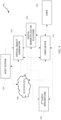
- FIG. 4 provides a schematic representation of a functional structure of a decentralized computing system or blockchain network 400, similar to the blockchain network 300 of FIG. 3 .
- a user 404 may operatively interface with the user device 110 that may include one or more of a smartphone, a tablet computer, a smart watch, a laptop computer, a desktop computer, a standalone video game console, smart footwear/apparel, or other similar internet enabled devices, e.g., a television, an exercise machine or device, or a vehicle, among other examples.
- the user device 110 may be operatively configured to communicate with one or more of an immutable public database (e.g ., a blockchain service/network 408-referred to as "blockchain network 408"), a virtual object generator 412, an online digital marketplace or platform 416, and/or a third (3 rd ) party integration service 420.
- an immutable public database e.g ., a blockchain service/network 408-referred to as "blockchain network 408”
- a virtual object generator 412 e.g a blockchain service/network 408-referred to as "blockchain network 408”
- an online digital marketplace or platform 416 e.g a third party integration service 420.
- a virtual object generator 412 may be provided to create a digital object on the basis of the information associated with the token.
- the virtual object generator 412 may employ a plurality of style and artistic rules such that the resultant digital objects are unique, yet recognizable according to predefined silhouettes, styles, articles, or characters. In some embodiments, or on the basis of auxiliary factors, such as the age of the asset, user activity (tracked via the user device), or use via third party platform.
- the virtual object generator 412 and/or blockchain network 408 may further be in communication with a hosted digital marketplace 416, forum, social platform, or the like.
- the digital marketplace may represent a plurality of virtual objects in a manner that permits the organized trade and/or sale/purchase of the virtual objects between parties. Upon closing of the sale or transfer, the digital marketplace 416 may update the blockchain network 408 with the new ownership information and facilitate the transfer of new or existing keys to the new asset holder.
- the marketplace 416 may further enable various social engagement functions, such as voting or commenting on the represented virtual objects.
- the marketplace 416 may be configured to assess and score the scarcity of a particular virtual object based on the sum total of the object's expressed features or characteristics, as well as consideration of any of the auxiliary factors. Such a scarcity score may then enable the marketplace (and/or users who participate within the marketplace) to better assess the value of the object.
- the system 400 may further include a 3rd party integration service 420 that may enable the use of the virtual object in different contexts or manners.
- the 3rd party integration service 420 may operate as an API on an app provided on the user's device, or as a dedicated cloud based service.
- the 3rd party integration service 420 may make the virtual object ( e.g., as expressed by the virtual object generator 412), and/or the information available for external use. Examples of such a use may include skins on 3rd party video game characters, objects capable of being used by 3rd party video game characters, digital artwork displays, physical 2D print generation, manufacturing production, such as, e.g., 3D print generation, and the like.
- the information and/or scarcity score may be made available and may alter the characteristics or abilities of a user's video game character in a video game played on the user's device 110.
- a corporate host system 424 may be in communication with the blockchain network 408 for the purpose of provisioning and/or initially creating new digital assets. Additionally, the host system 424 may provide one or more rules to the virtual object generator 412 to constrain the manner and style in which genomic information from the blockchain network 408 is expressed in a visual/artistic form.
- FIG. 5 a method of generating a digital asset protected by NFTs on a blockchain ledger is generally described in accordance with aspects of the present disclosure.
- Some or all of the operations in FIG. 5 and described in further detail below may be representative of an algorithm that corresponds to processor-executable instructions that may be stored, for example, in main or auxiliary remote memory, and executed, for example, by a resident or remote controller, central processing unit (CPU), control logic circuit, or other module or device or network of devices, to perform any or all of the above or below described functions associated with the disclosed concepts.
- CPU central processing unit
- control logic circuit or other module or device or network of devices
- the method 500 of FIG. 5 starts at terminal block 502 with processor-executable instructions for a programmable controller or control module or similarly suitable processor to call up an initialization procedure for a protocol to generate a cryptographic digital asset, such as a computer-generated digital shoe and encrypted token key, for a consumer product.
- This routine may be called-up and executed in real-time, continuously, systematically, sporadically, and/or at regular intervals.
- the initialization procedure at block 502 may automatically commence each time a pair of authentic footwear is manufactured, at various stages of the supply chain and manufacturing process, each time a user 404 purchases a real-world pair of the footwear, or each time the user 404 unlocks an access key.
- the initialization procedure may be manually activated by an employee at a POS terminal or by the manufacturer.
- a user device 110 such as, e.g., a portable electronic device, including a smartphone, or other electronic device
- the user 404 may launch a dedicated mobile software application (app) or web-based applet that collaborates with a server-class (backend or middleware) computer (e.g ., a remote host system) to communicate with the various peer devices on the decentralized computing system 400.
- a server-class (backend or middleware) computer e.g ., a remote host system
- the user 404 may purchase a pair of the footwear using a corresponding feature provisioned by the app.
- the user 404 enters the personal information and a method of payment to complete the transaction.
- the host system 424 Upon completion of a validated payment, the host system 424 receives, e.g ., from an online store transaction module or an approved third-party electronic payment system, a transaction confirmation to indicate a validated transfer of the footwear to the user 404 has been completed.
- validated transfer of the footwear may be effectuated through any available means, including at a brick-and-mortar store, through an online auction website, an aftermarket consumer-to-consumer trade/sale, etc.
- the method 500 proceeds to decision block 504 to determine if the user 404 has procured a cryptocurrency wallet or other similarly suitable digital blockchain account that is operable, for example, to upload and maintain location and retrieval information for digital assets that are encrypted and stored in a decentralized manner.
- a cryptocurrency wallet typically stores public and private key pairs, but does not store the cryptocurrency itself; the cryptocurrency is decentrally stored and maintained in a publicly available blockchain ledger. With the stored keys, the owner may digitally sign a transaction and write it to the blockchain ledger.
- a platform-dictated smart contract associated with the wallet may facilitate transfer of stored assets and create a verifiable audit trail of the same. If the user 404 has not already acquired a digital blockchain wallet, the method 500 continues to predefined process block 508 to set up a wallet.
- user 404 may be prompted to visit or may be automatically routed to any of an assortment of publicly available websites that offer a hardware wallet for cold storage of cryptocurrency such as an ERC20-compatible Ethereum wallet provided by MyEtherWallet, or Metamask, among other viable sources or providers.
- a hardware wallet for cold storage of cryptocurrency such as an ERC20-compatible Ethereum wallet provided by MyEtherWallet, or Metamask, among other viable sources or providers.
- the method 500 may check if the wallet is linked to a personal user account at decision block 510.
- the user 404 may have already linked a wallet to a user account in a prior transaction, and thus, the method 500 could proceed to process block 516.
- the method 500 may automatically link, or prompt the user 404 to link, the digital blockchain wallet to a personal user account, as portrayed at process block 512 of FIG. 5 .
- This linking at process block 512 may proceed automatically if a wallet was generated at process block 508, without the need to perform a check at decision block 510 of whether the wallet has been linked.
- Linking a wallet to a personal account at process block 512 may require the remote host system 424 retrieve a unique owner ID code associated with the purchasing party (e.g ., user 404) from an encrypted relational database, e.g ., provisioned through cloud computing system 130. At this time, a unique physical golf club ID code associated with the purchased golf club may be linked to the user's personal account.
- a unique owner ID code associated with the purchasing party e.g ., user 404
- an encrypted relational database e.g ., provisioned through cloud computing system 130.
- a unique physical golf club ID code associated with the purchased golf club may be linked to the user's personal account.
- the universally recognized UPID product code may be used to retrieve a collectable golf club NFT which is identified by an encrypted token key, and is generally associated with a collectable digital golf club.
- the UPID may be used to trigger a function of the golf club NFT, such as compensation for a third party, e.g., a fitter, associated with or identified by the metadata of the golf club NFT.
- a third party e.g., a fitter
- a third-party or a retailer at a POS terminal or the user 404 employing their user device 110 may scan the UPID or UPC on the golf club or a box storing therein the golf club. Accordingly, enabling a cryptographic digital asset, at block 516, may be automatic, random, systematic, prize based, or any logically appropriate manner.
- the method 500 After receiving confirmation that a cryptographic digital asset has been authorized at input/output block 516, the method 500 generates a cryptographic digital asset for the transacted golf club. This may comprise generating a unique, encrypted asset code with a contract address (i.e., the address where the smart contract is deployed on the blockchain network), a token, and a public and private key pair, as denoted at predefined process block 520. Host system 424 may transmit the token, with the public key and the owner ID, to a distributed blockchain ledger to record and peer-validate transfer of the cryptographic digital asset to the user 404 on a transaction block. Host system 424 can also store the metadata of the digital asset, and/or the digital asset itself, which can be accessed via the address provided in the NFT. The method 500 continues to process block 524 to link the cryptographic digital asset with the unique owner ID code. This control logic may comprise executable instructions for assigning the encrypted asset code to the user 404 and storing the public and private keys in the user's digital blockchain wallet.
- the method 500 can proceed to process block 528 to produce a virtual representation or "digital art" of the cryptographic digital asset.
- the virtual representation may include a computer-generated avatar of the golf club or a limited-edition artist rendition of the golf club. It is also envisioned that one or more attributes of the virtual representation of the cryptographic digital asset may be created, in whole or in part, via the user 404. Alternatively, a machine learning function may be executed to generate image features through a neural network to produce the digital art at process block 528. Upon completion of the digital art, the image may be uploaded to host servers 140 at block 536, and the digital art can be included as part of the digital asset.
- the digital footwear corresponding to the NFT will be linked to the physical footwear.
- the digital footwear may appear to be the same size, color, and material on a display screen (e.g ., display screen of computing device 110) as a corresponding physical article of footwear.
- the metadata includes reference to a UPID that corresponds to the physical code, or a version thereof, associated with the physical footwear, thereby linking the footwear NFT to the physical footwear in a one-to-one fashion.
- the footwear NFT may be provided as a collection or family of footwear NFTs having, e.g ., variations or permutations in attributes or appearance or underlying metadata, but with each footwear NFT in the collection being linked to the same physical footwear by way of reference to the UPID in the metadata. In this way, one common physical footwear can be linked across multiple footwear NFTs that are generated as a collection of footwear NFTs each containing unique digital footwear.
- the footwear NFTs can, therefore, be a collection of two (2) or more, such as, e.g., a collection of 3, 4, 5, 6, 7, 8, 9, 10, 11, 12, or more, a collection of 20 or more, a collection of 50 or more, a collection of 100 or more, a collection of 250 or more, or a collection of 500 or more.
- Products are often associated with a supply chain that spans from sourcing of the raw materials or inputs, e.g., comprising a Bill of Materials, for the product all the way to delivery of the product to the consumer. Accordingly, each aspect of the supply chain may be tokenized and recorded/stored on the blockchain.
- Products e.g., the digital article of footwear in FIG. 1
- mechanisms described herein may calculate the quantity of a material that is required to create the article of footwear, or article of apparel. Additionally, or alternatively, the quantity of a material that is required to create the article of footwear, or article of apparel may be pre-known information.
- the quantity of materials for a warehouse may be stored in an inventory management system, such as, e.g ., software that tracks and updates inventory through solutions provided by Manhattan Associates, or other providers.
- an inventory management system may update its quantities for materials based on the Bill of Materials for the NFT that was minted. For example, if a product requires 0.25 lbs of thermoplastic polyurethane, then the inventory management system can reduce the available quantity of thermoplastic polyurethane by 0.25 lbs when a digital representation of the product is minted.
- the inventory management system may have minimum and/or maximum thresholds for quantities of materials in inventory.
- a maximum threshold for a material may be the maximum amount of that material that can be stored in one or more warehouses that store the given material.
- a minimum threshold for a material may be the minimum amount of that material that an organization is willing to have available, before ordering more of the material.
- a supply chain blockchain network (SCBC) 600 comprises a private blockchain 604 provided to communicate between the Original Manufacturer or Brand and entities that are upstream or downstream in the supply chain.
- entities can include suppliers, manufacturing or assembly facilities, shipping providers, and retailers or distributors, among other entities involved in the production, assembly, distribution, and delivery of products for the Brand.
- the private blockchain 604 is private, rather than being publicly accessible, and the parties included ( i.e., manufacturer, supplier, distributor, retailer, etc.) are all known, rather than being anonymous. Accordingly, the SCBC 600 is used in parallel with and additional to the public blockchain network 612 on which, e.g. , a footwear NFT may reside.
- the private blockchain 604 may be a permissioned blockchain, as described above.
- the private blockchain 604 can be linked to the footwear NFT on the public blockchain 612, or metadata of the footwear NFT may include select information from the SCBC 600, for visibility by consumers and/or the public.
- the inventory management system of each of the Material Suppliers A, B and C and each of the Assembly Suppliers A and B is responsible for containing information related to the functions and/or service provided to the SCBC.
- Material Supplier A may provide, e.g., a fabric material that is used to manufacture an upper of the footwear and, thus, Material Supplier A has an inventory management system that stores various characteristics of the fiber materials, e.g ., amount, type, cost, availability, etc., which is communicated with and visible through the inventory management system's connection to the private blockchain 604, such that any other entity within the SCBC 600 has visibility of the relevant information on the information management system of Material Supplier A.
- the Assembly Supplier B has an inventory management system that accounts for the information and changes associated with the upstream suppliers, e.g ., Material Suppliers A and B.
- the Brand has an inventory management system that accounts for the information and changes associated with each of the suppliers.
- a shipping provider (not shown) may also be able to tap into and communicate with the private blockchain 604 as part of the SCBC 600, thereby allowing for improved visibility of timing for all entities involved.
- the SCBC 600 operates in the background, hidden from the public blockchain 612 and under the management of the Brand.
- the transaction details among the entities may also be hidden from the private blockchain 604 and, thus, from disclosure among the entities or parties simply by way of the private blockchain 604.
- participation in the SCBC 600 is not overinclusive and only the pertinent and necessary information may be recorded in the private blockchain 604, such as the information associated with the function of each entity to perform the contractual obligations within the SCBC 600 to produce the desired product.
- a digital representation of the physical footwear may be provided at real-time stages, e.g ., by operation of a virtual object generator, such as the virtual object generator 412 of FIG. 4 .
- the metadata of the NFT links to the physical footwear by way of the UPID that is stored within the metadata of the NFT and that corresponds to the physical footwear being manufactured.
- the metadata associated with the digital representation of the physical footwear may be updated and modified, whether by predetermined templates or image files associated with particular transaction/manufacturing details or by manual input from the entities comprising the SCBC 600, including the Brand.
- the digital representation of the physical footwear tracks and reflects in real-time the manufacturing progression of the physical footwear as it is produced through the SCBC 600.
- the digital footwear may be stored or reside in memory 210 on the various computing devices 110 and/or in memory 220 on the various servers 120 of the entities comprising the SCBC 600, including those of the Brand. Further, the digital footwear representing the manufacturing progression may be generated as a static image or as an animated short-form video, as examples.
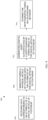
- FIG. 7 depicts an exemplary process of implementing the SCBC 600.
- process block or Step 704 comprises the Brand providing the private blockchain 604 and, next, Step 708 involves connecting a plurality of entities and inventory management systems to the private blockchain 604 to form the SCBC 600.
- Step 712 of the method 700 includes the Brand receiving order data associated with manufacturing physical footwear and, in accordance with predetermined templates and a Bill of Materials, the Brand records the data, in Step 716, on the brand's local inventory management system, which assigns a unique product identifier UPID. Further, the Brand also mints the order details to the private blockchain 604 with a unique NFT that is then linked to the UPID of to-be-manufactured footwear.
- Step 720 includes notifications being generated, e.g ., automatically generated emails or invoices, to the relevant entities in the SCBC 600.
- a particular quantity of fabric material is provided in the order details and the inventory management system of the Material Supplier A is updated to reflect a quantity or amount required to fulfill the order detail for fabric, in Step 724, along with other relevant details, e.g ., timing or deadlines, styles, shipping locations, etc.
- the order data associated with the UPID on the inventory management system is updated with the change in quantity and the fulfillment details are communicated to and recorded on the private blockchain 604 in association with the NFT, as in Step 728.
- the completion of each fulfillment Step along the supply chain triggers a transaction that is recorded and stored immutably, immediately, and visibly, on the private blockchain 604.
- the data may include a variety of aspects and details associated with manufacturing footwear, including standard or convention features, such as, e.g ., materials of the upper, midsole, outsole, and the like, as well as optional features, such as, e.g. , lacing systems, signature emblems or logos, or any other feature or detail that may be envisioned for footwear.
- each comprising a transaction that is recorded on the private blockchain 604 the respective inventory management systems of each entity are also updated in accordance with the UPID, such that inventory quantities are reduced or increased, or receiving and shipping statuses are changed, all in real-time.
- smart contract features built into the cryptographic footwear ID or order details allow for expedited transactions, notifications, tracking updates, etc. to be provided without typical delays associated with manual entry or communication among various different systems.
- the Brand performs the final assembly of the footwear and the private blockchain 604 is updated accordingly with the fulfilled state of the order.
- the Brand generates a report, either automatically or by actuation, from the private blockchain 604 with various aspects of the SCBC 600 involved in manufacturing the footwear.
- the report can include a list of each transaction and corresponding details thereof from the private blockchain 604 associated with the NFT. Further, the report can include locations and biographies of the entities within the SCBC 600, materials and assembly techniques used, weights and sizes of various aspects of the footwear, and other details, as desired.
- the Brand includes images of the footwear as assembled within the report.
- the Brand includes a 3D model or instructions for rendering a 3D model of the footwear as-assembled within the report.
- the report is stored or minted to another blockchain, such as a public blockchain 612, where it can be made accessible to the user on a platform.
- another blockchain such as a public blockchain 612
- an ID tag may be provided that gives the user access to the particular footwear NFT, as in Step 740.
- the ID tag may contain only a partial token or code that must be corroborated with, e.g ., two-step authentication, email verification, or the like, to avoid theft or intervention.
- the user may access and view the footwear NFT by way of a user device 110, e.g., a smartphone, and also may link the footwear NFT to the user's cryptographic wallet using the user device, or any other suitable device.
- a user device 110 e.g., a smartphone
- the SCBC 600 is not limited to use with footwear and apparel.
- the user may be provided with, by transfer of or mere viewing access to, the supply chain report, as in Step 744.
- the supply chain report may indicate authenticity, being recorded immutably on both the private blockchain 604 and, at least partially, on the public blockchain 612, for the user.
- the user and/or other consumers may then view the fulfillment details, which may be useful to a user concerned with sourcing.
- the user may be a retailer or distributor, rather than an individual.
- the method 700 is applicable to bulk orders of footwear, or any other consumer good, rather than being limited to individual units.
- third-party shipping providers and retailers comprising the supply chain downstream of the original manufacturer may also be enabled to access and interact with a digital asset that corresponds with a tangible shoe or an order for a shoe.
- third-party shipping providers include various organizations, such as, e.g., United Parcel Service (UPS), FedEx, DHL, etc.
- retailers can include distributors and merchants of various sizes and relationships to original manufactures, such as, e.g ., Puma Stores, Footlocker, Famous Footwear, DSW, Kohl's, Stadium Goods, etc., as well as online platforms or retailers, such as, e.g ., StockX, Zappos, etc.
- the third-party shipping providers and retailers may be referenced herein as mid-chain merchants.
- the corresponding digital asset or footwear NFT can be used to update the respective inventory management system.
- NFTs such as footwear NFTs
- peripheral hardware or devices include a user device 110 (e.g., a smartphone or a scanner), a server 120, communication network 130 or bus, resident and/or remote memory 210 and/or 220, and the like.
- the ID tag may be manually or automatically sensed or scanned at several checkpoints.
- one checkpoint may include the transfer of the footwear to a retailer that purchases the footwear itself for resale thereof.
- the checkpoint details of the transfer e.g ., the parties involved, the transaction details, etc., are provided as a transaction on the blockchain in association with the footwear NFT.
- the metadata of the footwear NFT is cataloged in the inventory management systems of both the Brand and the retailer, and a notification is provided to the Brand and the retailer for verification. Accordingly, when the footwear NFT is accessed through the ID tag via the personal device 110, the checkpoint details associated with the footwear NFT are visible as transactions on the blockchain, which allows a user to verify authenticity of the footwear in connection with the Brand.
- the supply chain may include several of such checkpoints and, thus, the footwear NFT may be updated several times, iteratively. For example, when the footwear and/or packages are loaded into a vehicle for transport, the ID tags may be sensed or scanned by the shipping provider (e.g ., transport driver) to access the footwear NFT(s), thereby verifying the authenticity thereof.
- the shipping provider may cause a transaction associated with each footwear NFT to be recorded on the private blockchain 604, such that the transaction can record various checkpoint data of the linked physical footwear in transit, e.g ., time location. Then, after the shipping provider unloads the footwear and/or packages, the ID tag may again be scanned or sensed to cause another transaction associated with the linked footwear NFTs to be recorded on the private blockchain 604.
- a load of footwear and/or packages may include large quantities that are routinely transported over long distances within unsecured vehicles, which can leave the load of footwear to be susceptible to loss or theft. Accordingly, recording the checkpoint data in the transactions associated with the linked footwear NFTs on the private blockchain 604 can allow for authentication that nothing was lost or stolen along the way.
- the footwear NFT may have conditions and/or terms that are updated in connection with the transfer of the physical footwear between the brand and the third-party at each checkpoint.
- the footwear NFT may include royalty or fee slots to be claimed by a third-party, e.g ., a brand ambassador, a shipping provider, a distributor, or any other authorized entity, and the fee slot can be set at a pre-determined amount or value and subject to pre-determined conditions.
- a third-party e.g ., a brand ambassador, a shipping provider, a distributor, or any other authorized entity
- the fee slot can be set at a pre-determined amount or value and subject to pre-determined conditions.
- the fee slot is claimed by the third-party scanning or sensing the ID tag.
- the third-party's scanner, or other device sends a notification or request to the footwear NFT's owner or author, e.g ., the Brand.
- the third-party's credentials, tokens, and checkpoint details are exchanged with the owner of the footwear NFT.
- the fee slot may be optional, such that the third-party may decline to claim the fee slot, whether by deliberate election to waive the right to claim the fee or through deliberate or accidental incompletion violation of one or more conditions.
- the fee slot can operate as a royalty or fixed fee paid to the third-party claiming the fee slot in return for satisfaction of the conditions.
- the conditions may include acknowledgement of receipt by scanning/reading the ID tag, secure and sustainable storage or presentation of the footwear within a warehouse or showroom or vehicle, updating the location and timestamp of the footwear visible in the metadata, communication of the real-time status of inventory of the third-party, or some combination thereof, or other conditions.
- the brand may implement a loyalty condition that only allows a third-party to claim the fee slot only if certain conditions are met. For example, in the case of a retailer or distributor, a condition may be that the third-party (a) lacks inventory of counterfeit or competitor products or (b) promises to have an absence of inventory of counterfeit or competitor products.
- a search/lookup function embedded within the footwear NFT may run a search of the third-party's inventory database (e.g ., a database accessible online and stored in a cloud server) at the time of the checkpoint, whether automatically upon scanning or after prompting a third-party to agree to such function. Further, the third-party may agree to forfeit any value received by the fee slot upon violation of the loyalty condition, in lieu of running such a search/lookup function at the time of checkpoint. As a result, the third-party is incentivized to perform each required condition and maintain an authentic, mutually-beneficial relationship with the brand. Additionally, consumers are incentivized to purchase the brand products from those third-parties who are "authorized” and within the supply chain network maintained by operation of such anti-counterfeiting techniques.
- the third-party's inventory database e.g ., a database accessible online and stored in a cloud server
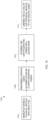
- process block or Step 804 comprises providing an online platform, such as, e.g., the digital platform 416 of FIG. 4 , which consumers can join as members and which comprises smart forms, e.g ., software enabled forms with fields that are operably connected to various user preferences or data (cookies) to assist a user in populating the fields.
- the form is a preliminary form for submission of counterfeit product identification and evidence therefor.
- the consumer can elect to join the platform at any time, which may be promoted or encouraged as part of an anti-counterfeiting campaign.
- the Brand promotes the anti-counterfeiting campaign at various times and in various manners, such as, e.g ., through seasonal campaigns focused on particular products.
- the anti-counterfeiting platform (ACP) may be joined by creation of a digital profile and, also, allows for connection to a digital wallet, as indicated in Step 808 of the method 800. After the user joins the ACP, membership status is reached and benefits are unlocked, such as, e.g ., exclusive access to offers and events, as well as participation in the anti-counterfeiting process 800 and access to the forms described herein.
- the brand provides educational materials and content regarding anti-counterfeiting techniques, including how to identify counterfeit products. Users may wish to attain various levels of education in anti-counterfeiting techniques, where some consumers may only desire basic skills in identifying counterfeit products while searching on popular sites or in popular stores, and where other users may desire more advanced skills in identifying counterfeit products in various formats, settings, markets, and regions. Accordingly, the brand produces educational content that ranges from novice to expert anti-counterfeiting techniques, while also maintaining contact with the users and building trust.
- Step 812 the user identifies a counterfeit product, whether by employing anti-counterfeiting techniques learned through the educational content offered by the Brand in the ACC, or by any manner in which the user determines a counterfeit product has been identified.
- Step 812 of the method 800 includes the user collecting evidence of the counterfeit product sold or offered for sale by an individual seller, an ecommerce site or marketplace, or the like. Collection of evidence can include taking photographs or video with a camera on a smartphone device, taking screenshots from an online site, copying an address, e.g ., a URL link to an online ecommerce site or marketplace, confiscating the counterfeit products by legal means, or any other suitable manner of collecting evidence.
- evidence of counterfeit products can include a photograph or video, an address or URL link to an online site, a screenshot of an online site, etc.
- Step 812 also includes the user submitting the form with the collected evidence to a private blockchain or bountychain managed by the Brand.
- the bountychain can be a private blockchain network among the ACP members and the Brand, such as a permissioned blockchain where only members of the ACP may have access to the bountychain and the brand may limit their access in various ways to only particular tasks.
- the smart form is provided to the user to complete with required fields and optional fields.
- Some required fields may include, for example, a date of identification, attachment of some form of visual evidence or link, the user profile ID or wallet ID or address, and a check--box condition that the submission is made in good-faith.
- Some optional fields may include, for example, a brief explanation of the facts surrounding the identification of the counterfeit product, additional non-visual evidence, and corroboration by additional users or parties.
- Step 816 the bountychain receives the submission of the smart form through the platform identifying the counterfeit product and begins a review process to determine whether the user has actually identified a counterfeit product.
- Step 820 comprises a review process that may be performed by an algorithm operating as part of a smart contract. Additionally or alternatively, the review process of Step 820 may be supervised and/or performed in part or entirely by professionals, such as, e.g ., attorneys, engineers, supply chain managers, purchasers, or any other qualified agent of the brand. Further, due diligence is undertaken to investigate the entity selling or offering the counterfeit product, as well as identification of other counterfeit products related to the submitted evidence, and validity and strength of the evidence submitted to identify the counterfeit product.
- Step 824 includes a determination of the counterfeit product as a result of the completed review and investigation/diligence process. If the determination is YES, a counterfeit product has indeed been identified. If the answer is NO, either the counterfeit product has been determined not to be counterfeit or there is insufficient evidence to make a determination, which causes a notification to be provided to the user with the determination and associated message regarding any errors or issues with the evidence, as indicated in Step 828.
- Step 836 includes a formal report to be prepared and sent out to the seller and/or the local governing agency or authority to initiate any measures to prevent the counterfeit product(s) from continuing to be sold.
- legal processes may be invoked in removing the counterfeit product from the market and pursuing legal action against the counterfeit seller and/or supply chain.
- Step 840 includes minting a NFT to a blockchain ledger or network with a digital asset provided in the form of a link to a read-only, viewable format of the counterfeit record on the bountychain.
- the digital asset may be an abridged and modified version of the counterfeit activity report sent to the seller and/or authority.
- the digital asset may be the entire, complete counterfeit activity report sent to the seller and/or authority.
- Step 844 provides for transferring the minted NFT of the counterfeit record(s) to the user who identified the counterfeit products.
- the user is rewarded with an NFT on the blockchain and linked to the digital asset of the counterfeit report, which includes visual evidence of the counterfeit product.
- the user may collect counterfeit report NFTs after successful identification and submission of counterfeit products to the Brand bountychain.
- the user may become decorated and acquire a reputation for identifying counterfeit products, which may accrue to the benefit of the user over time.
- the Brand may optionally submit payment to the user in accordance with a pre-determined fee in a pre-determined currency, e.g ., fiat, physical, crypto, etc.
- mechanisms in accordance with some embodiments of the present disclosure can be beneficial for tracking and maintaining inventory of material for manufacturing processes.
- Step 904 comprises receiving data or inputs from a user, such as a user accessing an online platform (e.g ., platform 416) via a user device ( e.g ., user device 110, including a smartphone and user interface).
- the data inputs correspond to at least one attribute of a digital article of footwear.
- the attributes include a variety of features or aspects of footwear, such as, e.g., a size, colorway, lacing system, plate design, signature features or custom lettering/symbols, and the like.
- Step 908 includes manufacturing a physical article of footwear based on the one or more attributes of the digital article of footwear.
- manufacturing the physical article may include or employ the SCBC 600 of FIGS. 6 and 7 .
- manufacturing the physical article of footwear includes the use of traditional manufacturing methods, such as, e.g ., injection molding, weaving, fastening, sewing or stitching, heat pressing, cementing or adhering, interlocking, or any other conventional method of forming physical footwear.
- manufacturing the physical footwear includes additive manufacturing methods, such as, e.g ., printing layer-by-layer.
- Step 912 comprises generating a digital asset authenticated by an NFT.
- the NFT includes metadata corresponding to the at least one attribute of the digital and physical article of footwear, as well as a date of manufacture of the physical article of footwear.
- Step 916 includes recording or storing the NFT in a blockchain network, such as, e.g. , the blockchain network 300, the blockchain network 408, the private blockchain 604, or the public blockchain 612.
- the NFT is a single non-fungible token that establishes a one-to-one relationship with the physical footwear.
- the NFT is a collection or plurality of non-fungible tokens that can be individually transferred.
- the collection of tokens may be generated using, e.g., a permutation generator for producing recursive permutations associated with at least one of the attributes of the footwear.
- the collection of tokens may be generated by applying a variety of image processing techniques or algorithms, such as, e.g., color or tone filters, mosaic plots, binary image rendering, 8-bit image rendering, 16-bit image rendering, grayscale rendering, black-and-white rendering, whitewashing, brightness, contrast, sharpness, transparency, or any other image processing technique.
- image processing techniques or algorithms such as, e.g., color or tone filters, mosaic plots, binary image rendering, 8-bit image rendering, 16-bit image rendering, grayscale rendering, black-and-white rendering, whitewashing, brightness, contrast, sharpness, transparency, or any other image processing technique.
- the method 900 of FIG. 9 may be utilized in conjunction with the methods 500, 700, 800, and 1000 of the present disclosure. Further, any of the methods 500, 700, 800, 900, and 1000 may be executed,
- Step 1004 comprises manufacturing a physical article with an ID tag that is configured to be recognized by a device, e.g., user device 110 that includes a user interface, and communicates wirelessly over a communication network, e.g ., communication network 130.
- An ID tag can be provided in the form of or include a barcode, a QR code, an RFID tag, or an NFC tag.
- the physical article can be footwear, apparel, headgear, or any other consumer good that may or may not be a collectable.
- the device may be smartphone, a tablet, a laptop, a barcode scanner, a smartwatch, or any other electronic device that is web-enabled and includes a user interface with an electronic display.
- Step 1008 comprises providing a digital asset with a representation of the physical article and metadata.
- the digital asset is authenticated by an NFT, which may be a non-fungible token (NFT).
- the metadata includes a unique product identifier (UPID) corresponding to the ID tag of the physical article.
- Step 1012 comprises storing the cryptographically secured digital asset on a blockchain, such as, e.g., the blockchain network 300, the blockchain network 408, the private blockchain 604, or the public blockchain 612.
- Step 1016 comprises linking the ID tag of the physical article to the digital asset.
- the user interface of the device displays the cryptographically secured digital asset with the representation of the physical article.
- An online platform e.g., platform 416, is displayed on the user interface of the device when the ID tag is read or recognized.
- the online platform comprises a plurality of cryptographically secured digital assets, such as, e.g., a storefront or a list or a marketplace for such digital assets.
- the metadata includes attributes associated with the physical article. The attributes can include a colorway, a size, a material, a date of manufacture, or any other information associated with the physical article. It will be appreciated that the method 1000 of FIG. 10 may be utilized in conjunction with the methods 500, 700, 800, and 900 of the present disclosure. Further, any of the methods 500, 700, 800, 900, and 1000 may be executed, partially or entirely, in conjunction with the embodiments described below.
- Some embodiments of the present disclosure may include generating an NFT by customizing elements of an article of footwear on a user-interface (e.g ., a website, a computer application, a mobile application, etc.).
- a user may select preferences for various attributes of the article of footwear.
- the user may then select an orientation of the article of footwear, capture an image of the article of footwear in the selected orientation, and input metadata to the NFT corresponding to the captured image.
- a graphical user interface may be used to generate a footwear NFT.
- the graphical user interface may be used to customize aspects of a digital article of footwear, and assign values to metadata segments of the footwear NFT.
- a personal device 110 a user may access a website, computer application, a web-based applet, or a mobile application that includes a menu. After selecting the menu option, a list of one or more customizable features may be displayed. The user may select a predetermined option for each of the one or more features. By selecting an option for each of the one or more features, a user may assign a value to each of the metadata segments of a footwear token.
- the user may purchase a physical article of footwear corresponding to the digital article of footwear displayed via the graphical user interface (GUI).
- GUI graphical user interface
- the digital article of footwear may be minted in a blockchain ledger. Effectively, the user may own a physical article of footwear, as well as a digital article of footwear that corresponds to the physical article of footwear that was purchased.
- Some embodiments of the present disclosure may include generating an NFT by customizing elements of an article of footwear in a virtual reality environment (e.g ., while wearing a virtual reality headset). While wearing the virtual reality headset, a user may view an article of footwear.
- the article of footwear may be displayed on a table, on a virtual character ( e.g ., a person, or an animal), or in front of any environmental display ( e.g., a plain colored background, a sporting field background, a street, a retail store, etc. ) .
- a user may select preferences for various attributes of the article of footwear.
- the user may then select an orientation of the article of footwear (e.g ., by rotating the article of footwear in the virtual reality environment).
- the user may further capture an image of the article of footwear in the selected orientation, and input metadata to the NFT corresponding to the captured image.
- a virtual reality environment may be used to generate a footwear NFT.
- the virtual reality environment may be used to customize aspects of a digital article of footwear, and assign values to metadata segments of the footwear NFT.
- the virtual reality environment may include a menu that is selectable by a user. After selecting the menu option, a list of one or more customizable features may be displayed. The user may select a predetermined option for each of the one or more features. By selecting an option for each of the one or more features, a user may assign a value to each of the metadata segments of a footwear token.
- the user may purchase a physical article of footwear corresponding to the digital article of footwear displayed via the graphical user interface.
- the digital article of footwear may be minted in a blockchain ledger.
- the blockchain ledger may be stored in a blockchain network. Effectively, the user may own a physical article of footwear, as well as a digital article of footwear that corresponds to the physical article of footwear that was purchased.
- Augmented reality may provide the ability for computer-generated images to be superimposed on a user's view of the physical world.
- augmented reality may be used to add a virtual layer to the physical world.
- augmented reality may be used to display 2-dimensional or 3-dimensional images that are stored in the metadata of non-fungible tokens saved to a blockchain network.
- digital articles of footwear, and digital articles of apparel may be shown in augmented reality via the use of augmented reality glasses, smartphones, cameras, or other computing devices with optic lenses that may superimpose computer-generated images onto a user's view of the physical world.
- Some embodiments of the present disclosure may include generating an NFT by customizing elements of an article of footwear in an augmented reality environment (e.g ., while wearing augmented reality glasses, or while interacting with an augmented reality environment on a smartphone or other computing device).
- an augmented reality environment e.g., while wearing augmented reality glasses, or while interacting with an augmented reality environment on a smartphone or other computing device.
- navigating the augmented reality environment e.g., while wearing the augmented reality glasses, or interfacing with a display screen on a computing device with an optical lens
- a user may view an article of footwear.
- the article of footwear may be displayed on a surface in the physical world. Additionally, or alternatively, the article of footwear may be displayed on a user's body ( e.g., on a foot or sock).
- a user may select preferences for various attributes of the article of footwear.
- the user may then select an orientation of the article of footwear (e.g ., by rotating the article of footwear in the virtual reality environment, or by rotating the augmented reality environment).
- the user may further capture an image of the article of footwear in the selected orientation, and input metadata to the NFT corresponding to the captured image.
- An augmented reality environment may be used to generate a footwear NFT.
- the augmented reality environment may be used to customize aspects of a digital article of footwear, and assign values to metadata segments of the footwear NFT.
- the virtual reality environment may include a menu that is selectable by a user. After selecting the menu option, a list of one or more customizable features may be displayed. The user may select a predetermined option for each of the one or more features. By selecting an option for each of the one or more features, a user may assign a value to each of the metadata segments of a footwear token.
- the user may purchase a physical article of footwear corresponding to the digital article of footwear displayed via the graphical user interface.
- the digital article of footwear may be minted in a blockchain ledger.
- the blockchain ledger may be stored in a blockchain network, such as, e.g., the blockchain network 300, the blockchain network 408, the private blockchain 604, or the public blockchain 612. Effectively, the user may own a physical article of footwear, as well as a digital article of footwear that corresponds to the physical article of footwear that was purchased.
- a sock may be used in accordance with some embodiments to display a digital article of footwear in an augmented reality environment.
- the sock may include a toe, a heel, a medial side, a lateral side, a top side, a bottom side, and one or more visual indicators.
- a navicular may be located on the top side corresponding to the navicular of a wearer's foot.
- a first or top visual indicator may extend along a top of the sock between the navicular and the toe.
- a second or medial visual indicator extending along a medial side of the sock between the heel and the toe.
- the one or more visual indicators may be solid lines with a known hue or thickness that is recognizable to a computing device using visual processing mechanisms according to some embodiments.
- the one or more visual indicators may be dashed lines with a known distance between dashes, thereby making the visual indicators easily recognizable to a computing device using visual processing mechanisms according to some embodiments.
- the one or more visual indicators may be patterned ( e.g ., diagonal dashes, boxes, or dots) with a known design that is easily recognizable to a computing device using visual processing mechanisms according to some embodiments.
- the computing device may generate the digital article of footwear by displaying the top of a footwear upper to be projected along the top visual indicator.
- the computing device may generate the digital article of footwear by displaying a heel of the footwear to be projected along the heel indicator.
- the computing device may generate the digital article of footwear by displaying a medial side of the footwear to be projected along the medial indicator.
- the computing device may generate the digital article of footwear by displaying a toe of the footwear to be projected along the toe indicator.
- the visual indicators may be used to constrain a digital article of footwear to the sock to allow a user to accurately see how a physical article of footwear, corresponding to the digital article of footwear, would look when worn in the physical world.
- digital assets e.g ., the digital footwear, or digital apparel discussed earlier herein
- a 2D or 3D design file such as a (computer-automated design) CAD model, graphical rendering, image, or drawings package from which a physical product may be constructed or otherwise represented.
- a computing device e.g., a user device 110 in communication with a 3D printer may receive an NFT comprising metadata corresponding to a digital article of footwear.
- a user may put a portion of an article of footwear into a 3D printer, and the 3D printer may print a portion of the article of footwear based on a 3D design file corresponding to the digital article of footwear.
- a user may put an article of footwear comprising an upper and a midsole into a 3D printer, wherein the upper and the midsole match the upper and the midsole of the digital article of footwear.
- the 3D printer may then print an outsole onto the midsole based on the metadata in the NFT receive by the 3D printer.
- the NFT may then update the token to indicate the date of manufacture of the outsole.
- a physical article of footwear may include an accessory or structural element, such as a shoelace or plate, respectively.
- the plate could be a propulsion plate for returning energy to a user at or just-before toe-off, or a rock plate for absorbing and/or resisting deformation due to impact on uneven terrain ( e.g., rocks, twigs, trails, and the like).
- a user may desire to customize the plate for a proper fit and performance tailored to her particular needs, such as by tuning the concentration of reinforcing elements, e.g ., carbon fibers embedded within the plate, to suit particular needs.
- the plate is capable of being custom printed layer-by-layer with reinforcement elements located in accordance with inputs, e.g., measurements, taken from a user's foot and/or gait analysis.
- inputs e.g., measurements
- the inputs are incorporated into a system capable of generating a 3D model, which allows for running simulations and adjustment of the plate.
- the system is also capable of generating instructions that are configured to be read by a 3D printer to manufacture the plate in accordance with the 3D model.
- the plate is entirely concealed within the sole structure or only partially visible from an exterior of the footwear, such that only the 3D model or rendering is available to the user as a visual of the plate.
- users desire verification or authentication that the customized plate design and rendered in the 3D model is, in fact, the plate installed within the footwear.
- the 3D model is provided in the form of a file, such as, e.g., a .dwg, .prt, .model, .par, .asm, or the like, and a digital asset is generated with the 3D model and minted as an NFT on a blockchain, in accordance with the process 900 of FIG. 9 .
- a digital asset is generated with the 3D model and minted as an NFT on a blockchain, in accordance with the process 900 of FIG. 9 .
- various details and aspects of the customized plate and 3D model are included, such as, e.g., the UPID of the plate, date and time of creation, material composition, stiffness and/or resistance profile, dimensions, weight, shape, size, designer name or identification, user name or identification, date of assembly in the footwear, UPID of the footwear, and the like.
- the NFT may include a digital representation of the customized plate based on the 3D model. Because the NFT is minted with to the blockchain, it becomes immutable. As a result, the user is provided with a visual representation of the customized plate and authentication, in the form of the NFT, that the customized plate is linked to and assembled within their footwear.
- any suitable computer readable media can be used for storing instructions for performing the functions and/or processes described herein.
- computer readable media can be non-transitory.
- non-transitory computer readable media can include media such as magnetic media (such as hard disks, floppy disks, etc. ), optical media (such as compact discs, digital video discs, Blu-ray discs, etc. ), semiconductor media (such as RAM, Flash memory, electrically programmable read only memory (EPROM), electrically erasable programmable read only memory (EEPROM), etc. ), any suitable media that is not fleeting or devoid of any semblance of permanence during transmission, and/or any suitable tangible media.
- magnetic media such as hard disks, floppy disks, etc.
- optical media such as compact discs, digital video discs, Blu-ray discs, etc.
- semiconductor media such as RAM, Flash memory, electrically programmable read only memory (EPROM), electrically erasable programmable read only memory (EEPROM), etc.
Landscapes
- Business, Economics & Management (AREA)
- Engineering & Computer Science (AREA)
- Accounting & Taxation (AREA)
- Finance (AREA)
- Theoretical Computer Science (AREA)
- General Physics & Mathematics (AREA)
- Physics & Mathematics (AREA)
- Strategic Management (AREA)
- General Business, Economics & Management (AREA)
- Computer Security & Cryptography (AREA)
- Development Economics (AREA)
- Economics (AREA)
- Marketing (AREA)
- Computer Networks & Wireless Communication (AREA)
- Signal Processing (AREA)
- Entrepreneurship & Innovation (AREA)
- General Health & Medical Sciences (AREA)
- Bioethics (AREA)
- Computer Hardware Design (AREA)
- Software Systems (AREA)
- General Engineering & Computer Science (AREA)
- Technology Law (AREA)
- Health & Medical Sciences (AREA)
- Management, Administration, Business Operations System, And Electronic Commerce (AREA)
Applications Claiming Priority (1)
| Application Number | Priority Date | Filing Date | Title |
|---|---|---|---|
| US18/206,531 US20240412208A1 (en) | 2023-06-06 | 2023-06-06 | Systems, methods, and media for preventing counterfeiting using non-fungible tokens |
Publications (2)
| Publication Number | Publication Date |
|---|---|
| EP4485325A2 true EP4485325A2 (de) | 2025-01-01 |
| EP4485325A3 EP4485325A3 (de) | 2025-03-05 |
Family
ID=91277035
Family Applications (1)
| Application Number | Title | Priority Date | Filing Date |
|---|---|---|---|
| EP24178130.1A Pending EP4485325A3 (de) | 2023-06-06 | 2024-05-27 | Systeme, verfahren und medien zur verhinderung von fälschungen mit nichtfungiblen token |
Country Status (4)
| Country | Link |
|---|---|
| US (1) | US20240412208A1 (de) |
| EP (1) | EP4485325A3 (de) |
| JP (1) | JP2024175672A (de) |
| CN (1) | CN119090509A (de) |
Families Citing this family (3)
| Publication number | Priority date | Publication date | Assignee | Title |
|---|---|---|---|---|
| US12401510B2 (en) * | 2022-09-12 | 2025-08-26 | Capital One Services, Llc | Systems and methods for user control and exclusion of cryptographic tokenized data |
| US12417262B2 (en) * | 2022-09-20 | 2025-09-16 | Dish Network L.L.C. | Systems and methods for 3D printing of limited edition virtual items |
| US12314963B2 (en) * | 2024-02-20 | 2025-05-27 | SecureTap LLC | System, method and process for product authentication and verification |
Family Cites Families (11)
| Publication number | Priority date | Publication date | Assignee | Title |
|---|---|---|---|---|
| ES2689254T3 (es) * | 2014-02-18 | 2018-11-12 | Enrico Cuini Signed S.R.L. | Zapato mejorado |
| US10402792B2 (en) * | 2015-08-13 | 2019-09-03 | The Toronto-Dominion Bank | Systems and method for tracking enterprise events using hybrid public-private blockchain ledgers |
| JP6784408B2 (ja) * | 2015-11-06 | 2020-11-11 | 株式会社ドリーム・ジーピー | 木型の作製方法 |
| US11130042B2 (en) * | 2016-02-02 | 2021-09-28 | Bao Tran | Smart device |
| CN109475201B (zh) * | 2016-07-20 | 2021-04-20 | 耐克创新有限合伙公司 | 鞋板 |
| US20220366494A1 (en) * | 2018-05-06 | 2022-11-17 | Strong Force TX Portfolio 2018, LLC | Market orchestration system for facilitating electronic marketplace transactions |
| US10505726B1 (en) * | 2018-12-07 | 2019-12-10 | Nike, Inc. | System and method for providing cryptographically secured digital assets |
| US12470254B2 (en) * | 2019-10-03 | 2025-11-11 | collectID AG | Methods and systems for authenticating physical products via near field communication tags and recording authentication transactions on a blockchain |
| US11790377B2 (en) * | 2019-12-09 | 2023-10-17 | Nike, Inc. | Digital fingerprinting |
| US20220366061A1 (en) * | 2021-03-16 | 2022-11-17 | Blocktag, Inc. | Validation of Authenticity of Association of a Physical Entity with a Non-Fungible Token and Creation of the Non-Fungible Token having a Verifiable Association with the Physical Entity |
| US11741426B2 (en) * | 2021-05-07 | 2023-08-29 | Sony Interactive Entertainment Inc. | Tracking unique video game digital media assets using tokens on a distributed ledger |
-
2023
- 2023-06-06 US US18/206,531 patent/US20240412208A1/en active Pending
-
2024
- 2024-05-27 EP EP24178130.1A patent/EP4485325A3/de active Pending
- 2024-06-03 JP JP2024089993A patent/JP2024175672A/ja active Pending
- 2024-06-06 CN CN202410728996.1A patent/CN119090509A/zh active Pending
Also Published As
| Publication number | Publication date |
|---|---|
| EP4485325A3 (de) | 2025-03-05 |
| CN119090509A (zh) | 2024-12-06 |
| US20240412208A1 (en) | 2024-12-12 |
| JP2024175672A (ja) | 2024-12-18 |
Similar Documents
| Publication | Publication Date | Title |
|---|---|---|
| EP4336435A1 (de) | Systeme und verfahren mit digitalen assets | |
| US12425220B2 (en) | Physical asset corresponding to a digital asset | |
| JP7732047B2 (ja) | 暗号で保護されたデジタル資産を提供するためのシステム及び方法 | |
| JP7667355B2 (ja) | ブロックチェーンで保護された小売製品用の暗号化デジタル資産を供給するためのシステム及び方法 | |
| US12417443B2 (en) | Authenticating physical items in a tokenization workflow | |
| US12321913B2 (en) | Golf systems and methods using digital assets | |
| US12572926B2 (en) | Systems and methods for creating and using sustainability tokens | |
| US20240412208A1 (en) | Systems, methods, and media for preventing counterfeiting using non-fungible tokens | |
| US12415132B2 (en) | Systems and methods for playing golf | |
| CA3177552A1 (en) | Token-facilitated ticketing, token-facilitated pre-sale campaigns, and digital rights management for digital tokens | |
| US12296243B2 (en) | Golf club fitting systems and methods | |
| US20240330902A1 (en) | Systems and methods for generating graphics for cryptographic tokens | |
| US20260039461A1 (en) | System and method for providing phygital forge of cryptographic digital assets |
Legal Events
| Date | Code | Title | Description |
|---|---|---|---|
| PUAI | Public reference made under article 153(3) epc to a published international application that has entered the european phase |
Free format text: ORIGINAL CODE: 0009012 |
|
| STAA | Information on the status of an ep patent application or granted ep patent |
Free format text: STATUS: THE APPLICATION HAS BEEN PUBLISHED |
|
| AK | Designated contracting states |
Kind code of ref document: A2 Designated state(s): AL AT BE BG CH CY CZ DE DK EE ES FI FR GB GR HR HU IE IS IT LI LT LU LV MC ME MK MT NL NO PL PT RO RS SE SI SK SM TR |
|
| PUAL | Search report despatched |
Free format text: ORIGINAL CODE: 0009013 |
|
| AK | Designated contracting states |
Kind code of ref document: A3 Designated state(s): AL AT BE BG CH CY CZ DE DK EE ES FI FR GB GR HR HU IE IS IT LI LT LU LV MC ME MK MT NL NO PL PT RO RS SE SI SK SM TR |
|
| RIC1 | Information provided on ipc code assigned before grant |
Ipc: H04L 9/00 20220101ALI20250128BHEP Ipc: G06Q 30/0601 20230101ALI20250128BHEP Ipc: G06Q 30/018 20230101AFI20250128BHEP |
|
| STAA | Information on the status of an ep patent application or granted ep patent |
Free format text: STATUS: REQUEST FOR EXAMINATION WAS MADE |
|
| 17P | Request for examination filed |
Effective date: 20250905 |