EP4485299A1 - A method and system for the predictive management of a plurality of physical energy storage elements installed in an electrical grid - Google Patents
A method and system for the predictive management of a plurality of physical energy storage elements installed in an electrical grid Download PDFInfo
- Publication number
- EP4485299A1 EP4485299A1 EP23182674.4A EP23182674A EP4485299A1 EP 4485299 A1 EP4485299 A1 EP 4485299A1 EP 23182674 A EP23182674 A EP 23182674A EP 4485299 A1 EP4485299 A1 EP 4485299A1
- Authority
- EP
- European Patent Office
- Prior art keywords
- energy storage
- physical
- simulated
- energy
- computational
- Prior art date
- Legal status (The legal status is an assumption and is not a legal conclusion. Google has not performed a legal analysis and makes no representation as to the accuracy of the status listed.)
- Pending
Links
Images
Classifications
-
- G—PHYSICS
- G06—COMPUTING OR CALCULATING; COUNTING
- G06Q—INFORMATION AND COMMUNICATION TECHNOLOGY [ICT] SPECIALLY ADAPTED FOR ADMINISTRATIVE, COMMERCIAL, FINANCIAL, MANAGERIAL OR SUPERVISORY PURPOSES; SYSTEMS OR METHODS SPECIALLY ADAPTED FOR ADMINISTRATIVE, COMMERCIAL, FINANCIAL, MANAGERIAL OR SUPERVISORY PURPOSES, NOT OTHERWISE PROVIDED FOR
- G06Q10/00—Administration; Management
- G06Q10/04—Forecasting or optimisation specially adapted for administrative or management purposes, e.g. linear programming or "cutting stock problem"
-
- G—PHYSICS
- G06—COMPUTING OR CALCULATING; COUNTING
- G06Q—INFORMATION AND COMMUNICATION TECHNOLOGY [ICT] SPECIALLY ADAPTED FOR ADMINISTRATIVE, COMMERCIAL, FINANCIAL, MANAGERIAL OR SUPERVISORY PURPOSES; SYSTEMS OR METHODS SPECIALLY ADAPTED FOR ADMINISTRATIVE, COMMERCIAL, FINANCIAL, MANAGERIAL OR SUPERVISORY PURPOSES, NOT OTHERWISE PROVIDED FOR
- G06Q50/00—Information and communication technology [ICT] specially adapted for implementation of business processes of specific business sectors, e.g. utilities or tourism
- G06Q50/06—Energy or water supply
-
- H—ELECTRICITY
- H02—GENERATION; CONVERSION OR DISTRIBUTION OF ELECTRIC POWER
- H02J—ELECTRIC POWER NETWORKS; CIRCUIT ARRANGEMENTS OR SYSTEMS FOR SUPPLYING OR DISTRIBUTING ELECTRIC POWER; SYSTEMS FOR STORING ELECTRIC ENERGY
- H02J2103/00—Details of circuit arrangements for mains or AC distribution networks
- H02J2103/30—Simulating, planning, modelling, reliability check or computer assisted design [CAD] of electric power networks
-
- H—ELECTRICITY
- H02—GENERATION; CONVERSION OR DISTRIBUTION OF ELECTRIC POWER
- H02J—ELECTRIC POWER NETWORKS; CIRCUIT ARRANGEMENTS OR SYSTEMS FOR SUPPLYING OR DISTRIBUTING ELECTRIC POWER; SYSTEMS FOR STORING ELECTRIC ENERGY
- H02J3/00—Circuit arrangements for AC mains or AC distribution networks
- H02J3/28—Arrangements for balancing of the load in networks by storage of energy
- H02J3/32—Arrangements for balancing of the load in networks by storage of energy using batteries or super capacitors with converting means
Definitions
- the present disclosure is within the area of electrical energy grid management, especially referring to the management of several energy resources with focus on energy storage.
- Electrical energy storage nowadays are very flexible as one can use them to store energy when there are over production or low prices in the electricity market, or discharge energy when there is such energy need.
- the method may comprise:
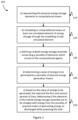
- Figure 1 - a representation of an embodiment of the method (100) of the present disclosure, comprising the steps of a) representing the physical energy storage elements in computational means, through the computational representation of each physical energy storage element by a computational agent from a plurality of computational agents (110), b) simulating in computational means at least one simulated element of energy storage through the modelling of said simulated element, each simulated element of energy storage being computationally represented by a computational agent from a plurality of computational agents, and each simulated element corresponding to a data storage element which potentially will form an additional physical energy storage element to be installed in the electrical grid (120), c) defining a hybrid energy storage assembly comprising a plurality of elements which consist of the computational agents representing physical energy storage elements and the computational agents representing the one or more simulated elements of energy storage (130), d) determining a value of energy to be generated by a plurality of physical energy generation means during a first period of time and determining a load to be powered by the hybrid energy storage assembly during a second period of time (140),
- the method of the present disclosure by being based on computational agents, provides a multi-agent framework that aims to support and manage the development of multi-agent ecosystems in a simple way, in particular creating simulation environments and providing a feasible solution for a pilot deployment, more specifically in the context of electrical energy grids, with the integration of real devices, such as energy resources, loads, and/or Internet of Things (loT) devices and respective simulated devices. Moreover, it enables the integration of mathematical and machine learning models within each computational agent. As a further consequence, the computational agents of the method of the present disclosure do not represent a threat to the physical equipment when using data simulation.
- the determination of step e) may comprise determining if a total capacity of the hybrid energy storage assembly, the total capacity being defined by the sum of the capacities of the physical and simulated energy storage elements, is such that allows the storage of the generated energy during the first period of time in the physical and simulated energy storage elements.
- the method of the present disclosure combines energy storage with demand response to significantly reduce the size of conventional energy storage systems.
- the determination of step e) may further comprise determining a portion of completeness of the capacity of each of the physical and simulated energy storage elements.
- the method may further comprise defining sub-groups of physical and simulated energy storage elements part of the hybrid energy storage assembly, each sub-group comprising at least one physical or simulated energy storage element, the determination of step e) being applicable to each sub-group.
- At least one sub-group may be charged with energy from the plurality of physical means of generating energy while another sub-group is discharged while powering the load, wherein such charging and discharging are simultaneous or take place in different moments.
- the simulation of step c) may comprise emulating in means for emulation of one or more energy storage elements, the emulation comprising emulating the one or more simulated elements of energy storage resulting from the said simulation, the total capacity being defined by the sum of the capacities of the physical and simulated energy storage elements as emulated in the means for emulation of one or more energy storage elements.
- Physical and simulated energy storage elements may be, respectively, physical and simulated electrical energy storage elements.
- the computational agents may be computationally processed through multiprocessing and multithreading, thereby increasing simulation processing speed.
- Steps a) to e) may be sequentially performed in real-time, whereby each step is performed immediately after the previous step.
- step e) may be limited by a predefined maximum capacity and a predefined minimum capacity of the hybrid energy storage assembly, the predefined maximum capacity and the predefined minimum capacity being determined based on the capacities of the physical and simulated energy storage elements. It thereby reduces the chance of physical threats to the equipment.
- Representing computationally each physical and simulated energy storage element by a computational agent from a plurality of computational agents comprises:
- the method may comprise obtaining through communication means the total capacity, a maximum capacity, a minimum capacity, a rate of charge, a rate of discharge and/or a level of completeness of the total capacity of each physical energy storage element, the communication being optionally performed through cabled means, optionally through ModBus/TCP and/or Message Queuing Telemetry Transport (MQTT) communication protocols.
- MQTT Message Queuing Telemetry Transport
- At least two of the physical energy storage elements may be installed in different locations.
- step e) may be further based on a tariff associated with the value of energy to be generated by a plurality of physical energy generation means during a first period of time, the tariff variating during the first period of time.
- the method thereby enables the usage of dynamic prices in the electricity market.
- the present disclosure may further comprise a computational system for the predictive management of a plurality of physical energy storage elements installed in an electrical grid, the system comprising computational means.
- Such computational means may be configured to implement the method of the present disclosure, in any of the previously described forms.
- the present disclosure may further comprise a computer program product comprising executable instructions for performing the method of the present disclosure, in any of the previously described forms.
- the present disclosure may further comprise a non-transitory storage media including program instructions executable to carry out the method of the present disclosure, in any of the previously described forms.
- the method, the system and/or elements thereof include components for performing at least some of the example features and capabilities of the described method, whether by means of hardware components (such as memory and/or processor), software, or any combination thereof.
- the system may comprise a microcontroller, with the ability to receive external data via inputs and provide triggering of outputs, based on configured rules and/or predefined programming.
- An article for use with the method and/or the system such as a pre-recorded storage device or other similar computer-readable medium including program instructions recorded thereon, or a computer data signal carrying computer-readable program instructions may direct a device to facilitate implementation of the methods described herein. It is understood that such apparatus, articles of manufacture and computer data signals are also within the scope of the present disclosure.
- a "computer-readable medium” is understood as any medium that can store instructions for use or execution by a computer or other computing device, including read-only memory (ROM), erasable programmable read-only memory (EPROM) or flash memory, random access memory (RAM), a portable floppy disk, a hard disk drive (HDD), a solid state storage device (e.g., NAND flash or synchronous dynamic RAM (SDRAM)), and/or an optical disc, such as a Compact Disc (CD), Digital Versatile Disc (DVD), or Blu-Ray TM Disc.
- ROM read-only memory
- EPROM erasable programmable read-only memory
- RAM random access memory
- HDD hard disk drive
- SSDRAM synchronous dynamic RAM
- optical disc such as a Compact Disc (CD), Digital Versatile Disc (DVD), or Blu-Ray TM Disc.
Landscapes
- Business, Economics & Management (AREA)
- Engineering & Computer Science (AREA)
- Economics (AREA)
- Human Resources & Organizations (AREA)
- Strategic Management (AREA)
- Theoretical Computer Science (AREA)
- Physics & Mathematics (AREA)
- Health & Medical Sciences (AREA)
- Marketing (AREA)
- General Physics & Mathematics (AREA)
- General Business, Economics & Management (AREA)
- Tourism & Hospitality (AREA)
- Public Health (AREA)
- General Health & Medical Sciences (AREA)
- Primary Health Care (AREA)
- Water Supply & Treatment (AREA)
- Development Economics (AREA)
- Game Theory and Decision Science (AREA)
- Entrepreneurship & Innovation (AREA)
- Operations Research (AREA)
- Quality & Reliability (AREA)
- Supply And Distribution Of Alternating Current (AREA)
Abstract
The present disclosure is within the area of electrical energy grid management, especially referring to the management of several energy resources with focus on energy storage. Although there exist numerous solutions addressing energy management from energy providers which include storage, these solutions are missing a simple and reliable way to dynamically consider availability for the energy management, considering energy storage. The solution of the present disclosure further allows to test different energy availabilities and model a consumer interaction with the electricity grid. Moreover, an actuation in energy storage allows to fully automate a process on behalf of the consumer, namely in the context of demand response programs.
Description
- The present disclosure is within the area of electrical energy grid management, especially referring to the management of several energy resources with focus on energy storage.
- Electrical energy storage nowadays are very flexible as one can use them to store energy when there are over production or low prices in the electricity market, or discharge energy when there is such energy need.
- Although there exist numerous solutions addressing energy management from energy providers which include storage, these solutions are missing a simple and reliable way to dynamically consider availability for the energy management, considering energy storage. The solution of the present disclosure further allows to test different energy availabilities and model a consumer interaction with the electricity grid. Moreover, an actuation in energy storage allows to fully automate a process on behalf of the consumer, namely in the context of demand response programs.
- It is an object of the present disclosure a method for the predictive management of a plurality of physical energy storage elements installed in an electrical grid.
- The method may comprise:
- a) representing the physical energy storage elements in computational means, through the computational representation of each physical energy storage element by a computational agent from a plurality of computational agents,
- b) simulating in computational means at least one simulated element of energy storage through the modelling of said simulated element, each simulated element of energy storage being computationally represented by a computational agent from a plurality of computational agents, and each simulated element corresponding to a data storage element which potentially will form an additional physical energy storage element to be installed in the electrical grid,
- c) defining a hybrid energy storage assembly comprising a plurality of elements which consist of the computational agents representing physical energy storage elements and the computational agents representing the one or more simulated elements of energy storage,
- d) determining a value of energy to be generated by a plurality of physical energy generation means during a first period of time and determining a load to be powered by the hybrid energy storage assembly during a second period of time,
- e) based on the value of energy to be generated, the load and the first and second periods of time, determining if the elements of the hybrid energy storage assembly are to be charged with energy from the plurality of physical means of generating energy or discharged while powering the load.
-
Figure 1 - a representation of an embodiment of the method (100) of the present disclosure, comprising the steps of a) representing the physical energy storage elements in computational means, through the computational representation of each physical energy storage element by a computational agent from a plurality of computational agents (110), b) simulating in computational means at least one simulated element of energy storage through the modelling of said simulated element, each simulated element of energy storage being computationally represented by a computational agent from a plurality of computational agents, and each simulated element corresponding to a data storage element which potentially will form an additional physical energy storage element to be installed in the electrical grid (120), c) defining a hybrid energy storage assembly comprising a plurality of elements which consist of the computational agents representing physical energy storage elements and the computational agents representing the one or more simulated elements of energy storage (130), d) determining a value of energy to be generated by a plurality of physical energy generation means during a first period of time and determining a load to be powered by the hybrid energy storage assembly during a second period of time (140), e) based on the value of energy to be generated, the load and the first and second periods of time, determining if the elements of the hybrid energy storage assembly are to be charged with energy from the plurality of physical means of generating energy or discharged while powering the load (150). - The method of the present disclosure, by being based on computational agents, provides a multi-agent framework that aims to support and manage the development of multi-agent ecosystems in a simple way, in particular creating simulation environments and providing a feasible solution for a pilot deployment, more specifically in the context of electrical energy grids, with the integration of real devices, such as energy resources, loads, and/or Internet of Things (loT) devices and respective simulated devices. Moreover, it enables the integration of mathematical and machine learning models within each computational agent. As a further consequence, the computational agents of the method of the present disclosure do not represent a threat to the physical equipment when using data simulation.
- The determination of step e) may comprise determining if a total capacity of the hybrid energy storage assembly, the total capacity being defined by the sum of the capacities of the physical and simulated energy storage elements, is such that allows the storage of the generated energy during the first period of time in the physical and simulated energy storage elements.
- The method of the present disclosure combines energy storage with demand response to significantly reduce the size of conventional energy storage systems.
- The determination of step e) may further comprise determining a portion of completeness of the capacity of each of the physical and simulated energy storage elements.
- The method may further comprise defining sub-groups of physical and simulated energy storage elements part of the hybrid energy storage assembly, each sub-group comprising at least one physical or simulated energy storage element, the determination of step e) being applicable to each sub-group.
- At least one sub-group may be charged with energy from the plurality of physical means of generating energy while another sub-group is discharged while powering the load, wherein such charging and discharging are simultaneous or take place in different moments.
- The simulation of step c) may comprise emulating in means for emulation of one or more energy storage elements, the emulation comprising emulating the one or more simulated elements of energy storage resulting from the said simulation, the total capacity being defined by the sum of the capacities of the physical and simulated energy storage elements as emulated in the means for emulation of one or more energy storage elements.
- Physical and simulated energy storage elements may be, respectively, physical and simulated electrical energy storage elements.
- The computational agents may be computationally processed through multiprocessing and multithreading, thereby increasing simulation processing speed.
- Steps a) to e) may be sequentially performed in real-time, whereby each step is performed immediately after the previous step.
- The charge and discharge of step e) may be limited by a predefined maximum capacity and a predefined minimum capacity of the hybrid energy storage assembly, the predefined maximum capacity and the predefined minimum capacity being determined based on the capacities of the physical and simulated energy storage elements. It thereby reduces the chance of physical threats to the equipment.
- Representing computationally each physical and simulated energy storage element by a computational agent from a plurality of computational agents comprises:
- defining a total capacity, a maximum capacity, a minimum capacity, a rate of charge, a rate of discharge and/or a level of completeness of the total capacity for each energy storage element as represented in a computational agent, and
- for a physical energy storage element, obtaining a real-time behaviour, and/or for a simulated energy storage element, simulating a real-time behaviour.
- The method may comprise obtaining through communication means the total capacity, a maximum capacity, a minimum capacity, a rate of charge, a rate of discharge and/or a level of completeness of the total capacity of each physical energy storage element, the communication being optionally performed through cabled means, optionally through ModBus/TCP and/or Message Queuing Telemetry Transport (MQTT) communication protocols.
- At least two of the physical energy storage elements may be installed in different locations.
- The determination of step e) may be further based on a tariff associated with the value of energy to be generated by a plurality of physical energy generation means during a first period of time, the tariff variating during the first period of time. The method thereby enables the usage of dynamic prices in the electricity market.
- The present disclosure may further comprise a computational system for the predictive management of a plurality of physical energy storage elements installed in an electrical grid, the system comprising computational means. Such computational means may be configured to implement the method of the present disclosure, in any of the previously described forms.
- The present disclosure may further comprise a computer program product comprising executable instructions for performing the method of the present disclosure, in any of the previously described forms.
- The present disclosure may further comprise a non-transitory storage media including program instructions executable to carry out the method of the present disclosure, in any of the previously described forms.
- In various embodiments, the method, the system and/or elements thereof include components for performing at least some of the example features and capabilities of the described method, whether by means of hardware components (such as memory and/or processor), software, or any combination thereof.
- In various embodiments, the system may comprise a microcontroller, with the ability to receive external data via inputs and provide triggering of outputs, based on configured rules and/or predefined programming.
- An article for use with the method and/or the system such as a pre-recorded storage device or other similar computer-readable medium including program instructions recorded thereon, or a computer data signal carrying computer-readable program instructions may direct a device to facilitate implementation of the methods described herein. It is understood that such apparatus, articles of manufacture and computer data signals are also within the scope of the present disclosure.
- A "computer-readable medium" is understood as any medium that can store instructions for use or execution by a computer or other computing device, including read-only memory (ROM), erasable programmable read-only memory (EPROM) or flash memory, random access memory (RAM), a portable floppy disk, a hard disk drive (HDD), a solid state storage device (e.g., NAND flash or synchronous dynamic RAM (SDRAM)), and/or an optical disc, such as a Compact Disc (CD), Digital Versatile Disc (DVD), or Blu-Ray ™ Disc.
- As will be evident to a person skilled in the art, the present disclosure should not be limited to the embodiments described herein, with a number of changes being possible, which remain within the scope of this disclosure.
- Of course, the preferred embodiments above described are combinable in the different possible forms, the repetition of all such combinations being herein avoided.
Claims (15)
- A method for the predictive management of a plurality of physical energy storage elements installed in an electrical grid wherein it comprises:a) representing the physical energy storage elements in computational means, through the computational representation of each physical energy storage element by a computational agent from a plurality of computational agents,b) simulating in computational means at least one simulated element of energy storage through the modelling of said simulated element, each simulated element of energy storage being computationally represented by a computational agent from a plurality of computational agents, and each simulated element corresponding to a data storage element which potentially will form an additional physical energy storage element to be installed in the electrical grid,c) defining a hybrid energy storage assembly comprising a plurality of elements which consist of the computational agents representing physical energy storage elements and the computational agents representing the one or more simulated elements of energy storage,d) determining a value of energy to be generated by a plurality of physical energy generation means during a first period of time and determining a load to be powered by the hybrid energy storage assembly during a second period of time,e) based on the value of energy to be generated, the load and the first and second periods of time, determining if the elements of the hybrid energy storage assembly are to be charged with energy from the plurality of physical means of generating energy or discharged while powering the load.
- A method according to the previous claim wherein the determination of step e) comprises determining if a total capacity of the hybrid energy storage assembly, the total capacity being defined by the sum of the capacities of the physical and simulated energy storage elements, is such that allows the storage of the generated energy during the first period of time in the physical and simulated energy storage elements.
- A method according to the previous claim wherein the determination of step e) further comprises determining a portion of completeness of the capacity of each of the physical and simulated energy storage elements.
- A method according to any of the preceding claims wherein it further comprises defining sub-groups of physical and simulated energy storage elements part of the hybrid energy storage assembly, each sub-group comprising at least one physical or simulated energy storage element, the determination of step e) being applicable to each sub-group and, optionally,
wherein at least one sub-group is charged with energy from the plurality of physical means of generating energy while another sub-group is discharged while powering the load, wherein such charging and discharging are simultaneous or take place in different moments. - A method according to any of the claims 2-4 wherein the simulation of step c) comprises emulating in means for emulation of one or more energy storage elements, the emulation comprising emulating the one or more simulated elements of energy storage resulting from the said simulation, the total capacity being defined by the sum of the capacities of the physical and simulated energy storage elements as emulated in the means for emulation of one or more energy storage elements.
- A method according to any of the preceding claims wherein physical and simulated energy storage elements are, respectively, physical and simulated electrical energy storage elements.
- A method according to any of the preceding claims wherein the computational agents are computationally processed through multiprocessing and multithreading.
- A method according to any of the preceding claims wherein steps a) to e) are sequentially performed in real-time, whereby each step is performed immediately after the previous step.
- A method according to any of the preceding claims wherein the charge and discharge of step e) are limited by a predefined maximum capacity and a predefined minimum capacity of the hybrid energy storage assembly, the predefined maximum capacity and the predefined minimum capacity being determined based on the capacities of the physical and simulated energy storage elements.
- A method according to any of the preceding claims wherein representing computationally each physical and simulated energy storage element by a computational agent from a plurality of computational agents comprises:
defining a total capacity, a maximum capacity, a minimum capacity, a rate of charge, a rate of discharge and/or a level of completeness of the total capacity for each energy storage element as represented in a computational agent, andfor a physical energy storage element, obtaining a real-time behaviour, and/orfor a simulated energy storage element, simulating a real-time behaviour. - A method according to the previous claim wherein it comprises obtaining through communication means the total capacity, a maximum capacity, a minimum capacity, a rate of charge, a rate of discharge and/or a level of completeness of the total capacity of each physical energy storage element, the communication being optionally performed through cabled means, optionally through ModBus/TCP and/or Message Queuing Telemetry Transport (MQTT) communication protocols.
- A method according to any of the preceding claims wherein at least two of the physical energy storage elements are installed in different locations
- A method according to any of the preceding claims wherein the determination of step e) is further based on a tariff associated with the value of energy to be generated by a plurality of physical energy generation means during a first period of time, the tariff variating during the first period of time.
- A computational system for the predictive management of a plurality of physical energy storage elements installed in an electrical grid, the system comprising computational means configured to implement the method of any of the preceding claims.
- A computer program product comprising executable instructions for performing the method of any of the claims 1-13, or a non-transitory storage media including program instructions executable to carry out the method of any of the claims 1-13.
Applications Claiming Priority (1)
| Application Number | Priority Date | Filing Date | Title |
|---|---|---|---|
| PT11877323 | 2023-06-29 |
Publications (1)
| Publication Number | Publication Date |
|---|---|
| EP4485299A1 true EP4485299A1 (en) | 2025-01-01 |
Family
ID=93746045
Family Applications (1)
| Application Number | Title | Priority Date | Filing Date |
|---|---|---|---|
| EP23182674.4A Pending EP4485299A1 (en) | 2023-06-29 | 2023-06-30 | A method and system for the predictive management of a plurality of physical energy storage elements installed in an electrical grid |
Country Status (1)
| Country | Link |
|---|---|
| EP (1) | EP4485299A1 (en) |
Citations (2)
| Publication number | Priority date | Publication date | Assignee | Title |
|---|---|---|---|---|
| WO2012145563A1 (en) * | 2011-04-19 | 2012-10-26 | Viridity Energy, Inc. | Methods, apparatus and systems for managing energy assets |
| EP3113313A1 (en) * | 2015-06-29 | 2017-01-04 | Instituto Superior de Engenharia do Porto | Method of control for electric power micronetworks and system for implementing it |
-
2023
- 2023-06-30 EP EP23182674.4A patent/EP4485299A1/en active Pending
Patent Citations (2)
| Publication number | Priority date | Publication date | Assignee | Title |
|---|---|---|---|---|
| WO2012145563A1 (en) * | 2011-04-19 | 2012-10-26 | Viridity Energy, Inc. | Methods, apparatus and systems for managing energy assets |
| EP3113313A1 (en) * | 2015-06-29 | 2017-01-04 | Instituto Superior de Engenharia do Porto | Method of control for electric power micronetworks and system for implementing it |
Similar Documents
| Publication | Publication Date | Title |
|---|---|---|
| CN113867295B (en) | A method, system, device and storage medium for dynamic scheduling of AGV in a manufacturing workshop based on digital twin | |
| JP6696699B2 (en) | Power control device, power control method, and power control program | |
| Greenwood et al. | Frequency response services designed for energy storage | |
| Ren et al. | EcoRacer: game-based optimal electric vehicle design and driver control using human players | |
| CN117200250B (en) | Control method and system for combined frequency regulation of fire and storage | |
| Wu et al. | Remaining useful life prediction of Lithium-ion batteries based on PSO-RF algorithm | |
| Odonkor et al. | Automated design of energy efficient control strategies for building clusters using reinforcement learning | |
| CN116360294A (en) | Simulation method and device based on active distribution network | |
| CN107244312A (en) | Electrical changing station and controller for electric consumption, method are changed in order | |
| EP4485299A1 (en) | A method and system for the predictive management of a plurality of physical energy storage elements installed in an electrical grid | |
| CN117332556B (en) | Battery energy storage system simulation method, device, computer equipment and storage medium | |
| CN108021735B (en) | Battery simulation method, upper computer, real-time simulator and battery simulation system | |
| EP4246763B1 (en) | Method and device for combining cell cores, electronic apparatus and storage medium | |
| CN117952547A (en) | Intelligent examination and approval method and device for express expense based on machine learning | |
| WO2023187254A1 (en) | Controlling distributed energy storage system | |
| Mohammadi et al. | Machine learning assisted stochastic unit commitment: A feasibility study | |
| CN118795355B (en) | A drone battery monitoring method and system for smart hangar | |
| CN120377318A (en) | Frequency modulation instruction prediction method and system for optimizing hybrid energy storage system | |
| EP4535241A1 (en) | Reinforcement learning-based dynamic aggregation for distributed and federated learning | |
| CN117371681A (en) | Power resource scheduling method, device, equipment and storage medium | |
| CN118091292A (en) | A frequency modulation control performance simulation system and test method, equipment and medium | |
| CN104730938A (en) | Battery characteristic simulation method and system | |
| Westerlund et al. | A generalized scalable software architecture for analyzing temporally structured big data in the cloud | |
| CN108427854B (en) | Data analysis method and related equipment thereof | |
| KR20220108984A (en) | Integrated operation management system for Smart grid economics analysis |
Legal Events
| Date | Code | Title | Description |
|---|---|---|---|
| PUAI | Public reference made under article 153(3) epc to a published international application that has entered the european phase |
Free format text: ORIGINAL CODE: 0009012 |
|
| STAA | Information on the status of an ep patent application or granted ep patent |
Free format text: STATUS: THE APPLICATION HAS BEEN PUBLISHED |
|
| AK | Designated contracting states |
Kind code of ref document: A1 Designated state(s): AL AT BE BG CH CY CZ DE DK EE ES FI FR GB GR HR HU IE IS IT LI LT LU LV MC ME MK MT NL NO PL PT RO RS SE SI SK SM TR |
|
| STAA | Information on the status of an ep patent application or granted ep patent |
Free format text: STATUS: REQUEST FOR EXAMINATION WAS MADE |
|
| 17P | Request for examination filed |
Effective date: 20250623 |