EP4485252A1 - Sichere datenverarbeitung - Google Patents
Sichere datenverarbeitung Download PDFInfo
- Publication number
- EP4485252A1 EP4485252A1 EP24179269.6A EP24179269A EP4485252A1 EP 4485252 A1 EP4485252 A1 EP 4485252A1 EP 24179269 A EP24179269 A EP 24179269A EP 4485252 A1 EP4485252 A1 EP 4485252A1
- Authority
- EP
- European Patent Office
- Prior art keywords
- data
- data item
- cryptographic signature
- execution environment
- trusted execution
- Prior art date
- Legal status (The legal status is an assumption and is not a legal conclusion. Google has not performed a legal analysis and makes no representation as to the accuracy of the status listed.)
- Pending
Links
Images



Classifications
-
- G—PHYSICS
- G06—COMPUTING OR CALCULATING; COUNTING
- G06F—ELECTRIC DIGITAL DATA PROCESSING
- G06F21/00—Security arrangements for protecting computers, components thereof, programs or data against unauthorised activity
- G06F21/50—Monitoring users, programs or devices to maintain the integrity of platforms, e.g. of processors, firmware or operating systems
- G06F21/57—Certifying or maintaining trusted computer platforms, e.g. secure boots or power-downs, version controls, system software checks, secure updates or assessing vulnerabilities
-
- G—PHYSICS
- G06—COMPUTING OR CALCULATING; COUNTING
- G06F—ELECTRIC DIGITAL DATA PROCESSING
- G06F21/00—Security arrangements for protecting computers, components thereof, programs or data against unauthorised activity
- G06F21/60—Protecting data
- G06F21/64—Protecting data integrity, e.g. using checksums, certificates or signatures
-
- G—PHYSICS
- G06—COMPUTING OR CALCULATING; COUNTING
- G06N—COMPUTING ARRANGEMENTS BASED ON SPECIFIC COMPUTATIONAL MODELS
- G06N20/00—Machine learning
-
- H—ELECTRICITY
- H04—ELECTRIC COMMUNICATION TECHNIQUE
- H04L—TRANSMISSION OF DIGITAL INFORMATION, e.g. TELEGRAPHIC COMMUNICATION
- H04L9/00—Cryptographic mechanisms or cryptographic arrangements for secret or secure communications; Network security protocols
- H04L9/32—Cryptographic mechanisms or cryptographic arrangements for secret or secure communications; Network security protocols including means for verifying the identity or authority of a user of the system or for message authentication, e.g. authorization, entity authentication, data integrity or data verification, non-repudiation, key authentication or verification of credentials
- H04L9/3247—Cryptographic mechanisms or cryptographic arrangements for secret or secure communications; Network security protocols including means for verifying the identity or authority of a user of the system or for message authentication, e.g. authorization, entity authentication, data integrity or data verification, non-repudiation, key authentication or verification of credentials involving digital signatures
Definitions
- the present disclosure relates to dependable handling of data, such as, for example, training data for machine learning solutions.
- Machine learning solutions such as artificial neural networks, may be trained before being applied to live use. Training machine learning solutions may be based on training data, which may comprise fairly large datasets. The quality of the training data affects the quality of the resulting trained machine learning solution and its outputs, such as classifying decisions.
- training data may be generated using a staged or simulated environment.
- training data may be obtained from plural sources, such as sensors or sensor arrays, to help diversify the training process.
- data sets may be compiled from diverse sources for various uses.
- an apparatus comprising at least one processing core and at least one memory storing instructions that, when executed by the at least one processing core, cause the apparatus at least to determine, using a first executable program and in a trusted execution environment of the apparatus, at least one characteristic of a data item, obtain, in the trusted execution environment, responsive to a result of the determining of the at least one characteristic, a cryptographic signature over the data item or a hash value obtained from the data item and a hash value obtained from the first executable program, the cryptographic signature being obtained using a key of the trusted execution environment, and provide at least one of the data item or the cryptographic signature to a node.
- an apparatus comprising at least one processing core and at least one memory storing instructions that, when executed by the at least one processing core, cause the apparatus at least to receive a data item and a cryptographic signature, verify the cryptographic signature using a public key of a trusted execution environment of a node, and responsive to the verification of the cryptographic signature being successful, use the data item in a process in the apparatus, and responsive to the verification of the cryptographic signature being successful, not use the data item in the process.
- a method comprising determining, in an apparatus, using a first executable program and in a trusted execution environment of the apparatus, at least one characteristic of a data item, obtaining, in the trusted execution environment, responsive to a result of the determining of the at least one characteristic, a cryptographic signature over the data item or a hash value obtained from the data item and a hash value obtained from the first executable program, the cryptographic signature being obtained using a key of the trusted execution environment, and providing at least one of the data item or the cryptographic signature to a node.
- a method comprising receiving a data item and a cryptographic signature, verifying the cryptographic signature using a public key of a trusted execution environment of a node, and responsive to the verification of the cryptographic signature being successful, using the data item in a process in the apparatus, and responsive to the verification of the cryptographic signature being successful, not using the data item in the process.
- an apparatus comprising means for determining, in an apparatus, using a first executable program and in a trusted execution environment of the apparatus, at least one characteristic of a data item, obtaining, in the trusted execution environment, responsive to a result of the determining of the at least one characteristic, a cryptographic signature over the data item or a hash value obtained from the data item and a hash value obtained from the first executable program, the cryptographic signature being obtained using a key of the trusted execution environment, and providing at least one of the data item or the cryptographic signature to a node.
- an apparatus comprising means for receiving a data item and a cryptographic signature from a node, verifying the cryptographic signature using a public key of a trusted execution environment of the node, and responsive to the verification of the cryptographic signature being successful, using the data item in a process in the apparatus, and responsive to the verification of the cryptographic signature being successful, not using the data item in the process.
- a non-transitory computer readable medium having stored thereon a set of computer readable instructions that, when executed by at least one processor, cause an apparatus to at least determine, using a first executable program and in a trusted execution environment of the apparatus, at least one characteristic of a data item, obtain, in the trusted execution environment, responsive to a result of the determining of the at least one characteristic, a cryptographic signature over the data item or a hash value obtained from the data item and a hash value obtained from the first executable program, the cryptographic signature being obtained using a key of the trusted execution environment, and provide at least one of the data item or the cryptographic signature to a node.
- a non-transitory computer readable medium having stored thereon a set of computer readable instructions that, when executed by at least one processor, cause an apparatus to at least receive a data item and a cryptographic signature, verify the cryptographic signature using a public key of a trusted execution environment of a node, and responsive to the verification of the cryptographic signature being successful, use the data item in a process in the apparatus, and responsive to the verification of the cryptographic signature being successful, not use the data item in the process.
- data sets may be characterized in terms of their characteristics. Such characteristics may be determined in a trusted execution environment, TEE, and the TEE may cryptographically sign the data set, or a hash value obtained using the data set as input. The signature may then be provided to a data user node which intends to use the data set, as proof that the data set has a desired characteristic, or characteristics. In case the TEE determines the data set doesn't have the desired characteristic(s), it may abstain from the signing. Alternatively the TEE may be configured to sign a set of indications of data set characteristics it determined the data set to have. This provides the benefit, that e.g.
- machine learning is not run on training data which is does not actually conform to the phenomenon the machine learning solution is being trained to respond.
- a beneficial effect is obtained in that the machine learning solution will provide output, such as classification decisions or driving control inputs, of a higher quality. More generally the quality of output of a computation process is enhanced when the quality of its input is enhanced.
- FIGURE 1 illustrates an example system in accordance with at least some embodiments of the present invention.
- the system comprises a data user 120, which is configured to employ data sets, each data set comprising at least one data item, in a computation process.
- the computation process may comprise training of a machine learning solution, such as, for example, an artificial neural network, such as a convolutional, deep stacking, radial basis function or recurrent artificial neural network, for example.
- the computation process may be a big data process, such as a data mining process or a simulation process which takes at least one data item as input.
- Data user 120 obtains the data sets, or at least one data set, from data sources 130, 140. Although two data sources are illustrated in FIGURE 1 , other embodiments have a single data source, or more than two data sources 130, 140.
- the computation process in data user 120 may be vulnerable to variation in the quality of the data sets it uses in the computation process. For example, a malicious party may modify data in data sources 130, 140, or a data source may itself be a malicious party.
- the computation process is a training process of a machine learning solution and the data set(s) is, or are, training data to be used in the training process
- the training process may be attacked by providing, or causing to be provided, data of an incorrect type.
- Data sources 130, 140 may provide indications of their data, and at least one characteristic of their data, to potential data users. For example, data sources 130, 140 may publish these indications in a list which may be subscribed to by data users.
- data user 120 may take steps to increase confidence in the data sets being of a correct type.
- data user 120 may take steps to increase confidence, that the data set(s) have at least one characteristic that makes them usable in the computation process.
- these characteristics may include that the data is of an image, numerical or video type, that there is a road visible in individual image frames, and optionally that the individual image frames share similar features, such as a frame of a windscreen, indicating that the data is of a dashboard type.
- the data set is determined to have these characteristics it is with a higher confidence of a correct type for the training process.
- Examples of numerical data include a time series of measurement results and numerical outputs of simulation processes.
- the data set, or data sets, of a correct type have specific characteristics, which characterize the computation process, which increase confidence that the data is of a correct type, and then increase the dependability of outputs of the computation process.
- data characteristics is medical data, where desired data set characteristics include, for example, that subjects therein are less than three metres tall, and of an age of less than 120 years.
- Further characteristics which may be determined include, for numerical data, statistical features of the numerical data. Likewise for numerical data, sampling errors may be detected as it is a characteristic of the data if the data is presented with a 16-bit accuracy, for example. Yet further, non-repetition of the same sequence in numerical, textual or image data may be determined.
- Data user 120 might be configured to determine the characteristics of the data set itself, however this is not always desirable since the data set, or sets, may be large, and furthermore there may be a large number of potential data sources 130, 140 with a corresponding large number of potential data sets to choose from.
- the system of FIGURE 1 comprises verifier 110, which is an apparatus comprising a processing core 102 and memory 104.
- Processing core 102 and memory 104 may be general-purpose computing and storage devices, respectively, configured to control the functioning of verifier 110 as a general-purpose computer or computing device.
- Data sources 130, 140 may be configured to provide their data sets to verifier 110 via network 150, for example.
- Network 150 may comprise the Internet or a cellular communication network, for example.
- Verifier 110 further comprises a trusted execution environment, TEE, 105.
- trusted execution environments include Secure Guard Extensions, SGX, from Intel corporation and TrustZone from ARM corporation.
- TEE 105 comprises a processing core 106 and memory 108, which are not accessible from processing core 102.
- a hardware configuration prevents access of processing core 102 to memory region 108.
- processing core 106 may be a subsection of physical processing core 102, or a separate set of instructions of processing core 102.
- memory 108 may be a distinct physical memory, only accessible by processing core 106, or a region in memory 104, which is not accessible by processing core 102, and only accessible by processing core 106 or the set of instructions which constitute processing core 106.
- Data source 130/140 may be configured to provide the data set to TEE 105 in an encrypted form, for example by using a public key of the TEE 105 to encrypt the data set.
- the public and private keys of TEE 105 may be ephemeral, in other words, generated responsive to a need to use it.
- An advantage of such an ephemeral key is that less time is available to attackers to compromise the key.
- An ephemeral key may be signed, or provided in a signed certificate, enabling the verification of its origin using a chain of trust.
- TEE 105 is capable of performing computing processes in a secured manner, isolated from general purpose processing, such as that of processing core 102.
- TEE 105 is configured to determine, using an executable program, in TEE 105, at least one characteristic of a data set. If a data set comprises a single data entry, it may be referred to as a data item, however in a general case a data set comprises plural data items.
- TEE 105 may decrypt the data set before processing it.
- TEE 105 may be provided a set of one or more characteristic the data set should have.
- the set of characteristics may be received in verifier 110 from data user 120, for example.
- TEE 105 is configured to receive the a set of one or more characteristic the data set should have using a secured, encrypted protocol connection from data user 120, such that processing core 102 of verifier 110 cannot access the set of one or more characteristics.
- TEE 105 and data user 120 are endpoints of such a protocol connection.
- TEE 105 may cryptographically sign the data set and a hash of the executable program used to determine the characteristic(s) of the data set.
- a hash of the data set may be included in the input to the signature algorithm.
- TEE 105 may be configured to sign the data set, or its hash, along with a hash of the executable program responsive to determining that the data set has the characteristic(s) provided by data user 120.
- TEE 105 may be configured to always sign the data set, or its hash, and also include in the inputs to the signature algorithm indications of characteristics TEE 105 has determined to be present in the data set. Also the indication(s) themselves are provided with the data set, for example to data user 120. In this case, data user 120 may selectively only use those data sets which have been determined to have the characteristics which make the data sets usable for the computation process data user 120 is configured to perform. Also in these cases, the hash of the executable program may be included in the inputs provided to the signature algorithm.
- TEE 105 may access a table mapping data set characteristics to indications, and TEE 105 may select the indication(s) to include in the scope of the signature based on the mapping and the determined characteristic(s).
- data user 120 may receive the data set and cryptographic signature, either directly from TEE 105 or verifier 110, or from an intermediate data set repository where data sets and their associated signatures may be stored.
- Data user 120 may verify the correctness of the signature using the signed data and/or hashes, and reference to a trusted party 160.
- a public key of TEE 105 may be used to verify the signature in case a corresponding private key is used in TEE 105 to apply the signature.
- the public key may be freely distributed and it may be provided with a signature of trusted party 160, which may be a manufacturer of TEE 105, for example.
- the manufacturer may create a public-private key pair when manufacturing TEE 105 and securely store the private key in TEE 105.
- the signature of trusted party 160 on the public key effectively ensures, that the signature has been created using the correct private key of TEE 105. Since TEE 105 can securely store data in memory 108, the private key may be kept there.
- data user 120 may be configured to use the data set in the computation process.
- TEE 105 includes the indication(s) of the characteristics of the data set in the scope of its signature, these indications are also provided to data user 120. In these cases, data user 120 will check that the indications indicate that the data set has the correct characteristic(s) for the computation process, otherwise it is not even necessary to verify the cryptographic signature of TEE 105.
- data user 120 may also be confident concerning a software version of the executable program, which further increases the dependability of the data set and, by extension the dependability of the computation process and its results.
- the program may be configured with an expanding list of characteristics it is capable of determining in a data set. By verifying the version using the hash, data user 120 may be confident that the version used was indeed capable of identifying the indicated characteristic(s), further enhancing credibility of the data set.
- the executable program is used together with an interpretable-language element, in which case the hash may be computed over both the executable program and the interpretable-language element.
- the data user 120 may recreate the hash of the executable program by having access to the program code, data user 120 may trust the assessment of another party that has access to the executable program and is trusted by the data user, or the assessment of an automated program that has access to the executable program and can determine its capabilities regarding the desired characteristics in a data set, for example.
- TEE 105 is configured to perform the determination of the at least one characteristic of the data set by using, in the executable program, a machine learning solution to classify the data item.
- a machine learning solution such as an artificial neural network
- TEE 105 is used in TEE 105 to determine at least one characteristic of the data set, and the data set may then subsequently be used in data user 120, provided the at least one characteristic is correct for training a second machine learning solution, to train a second machine learning solution, such as, for example, a second artificial neural network.
- data user 120 may be configured to run the trained machine learning solution once the training process is complete.
- data user 120 may be configured to provide the trained machine learning solution, for example by providing trained coefficients of the machine learning solution, to a further node which is configured to run the machine learning solution.
- a machine learning solution in data user 120, or in the further node configured to run the machine learning solution may comprise one of the following: a trash item classification process, a pedestrian recognition process and an autonomous vehicle navigation process.
- a trash item classification process may comprise separating, based on video input, recyclable bottles from non-recyclable bottles, or biodegradable items from non-biodegradable items.
- federated learning FL is used.
- FL is a machine learning technique for training an algorithm collaboratively between multiple entities, in which multiple entities, such as devices or servers, each hold a part of the training data but do not exchange said training data among each other.
- the model may be sent to data owners, who compute their local updates and send them back to the model owner.
- Techniques for securely exchanging model updates include secure multi-party computing, homomorphic encryption and secure aggregation.
- FL has been used both to avoid large data transfers between edge devices and the cloud, and to protect the privacy of the training data. FL is thus well suited to the current disclosure, since plural data sources 130, 140 may keep their training data sets private from each other.
- a data set originating in a data source may be in the form of a continuous data stream, in which case TEE 105 may be configured to sample it on a continuous basis, for example periodically with a constant time period between samples. In case the characteristic(s) of the data set stream change from earlier samples, TEE 105 may inform data user 120 of this. TEE 105 may also be configured to indicate to data user 120 in case no change in characteristic(s) is detected. For example, TEE 105 may be configured to determine the characteristics of every second, every third, every tenth or every fiftieth image frame in a video stream.
- verifier 110 determining the characteristic(s) of the data set, rather than data sources 130, 140 providing these characteristics themselves, is that a case is guarded against where a malicious data source would mis-characterise its own data set to compromise the computation process in data user 120.
- Data sources 130, 140 may publish or advertise the determined characteristics of their data sets after one or more verifier has determined these characteristics. Plural verifiers may be needed in case there is no single verifier which is configured to determine all the relevant characteristics of a specific data set.
- FIGURE 2A illustrates a first example of signature generation.
- the first executable program 210 is hashed to produce, using a suitable hash function, which is a one-way function, a hash value 215.
- Cryptographic signature SIG is then obtained using as input to a cryptographic signature algorithm the hash 215 and data set 220.
- First executable program 210 is used in TEE 105 to determine the characteristic(s) of the data set.
- FIGURE 2B illustrates a second example of signature generation.
- 210 and 215 correspond to the first executable program and its hash value, as in FIGURE 2A .
- 220 corresponds to the data set, as in FIGURE 2A .
- hash value 225 is obtained from data set 220, and indications of characteristics of data set 220 are likewise included in the inputs to the cryptographic signature algorithm to obtain signature SIG.
- the cryptographic signature thus attests that executable program 210 was used to determine that data set 220 has characteristic(s) indicated by indications 230, 240.
- the cryptographic signature is run over the executable program itself, rather than its hash. This may be the case either in the embodiments of FIGURE 2A or FIGURE 2B , although using the hash in this regard is beneficial in terms of reduced computation needed to sign the hash, which is substantially shorter than the executable program itself.
- the cryptographic signature and/or data set 220 may be provided from TEE 105 to data user 120, or to a storage repository.
- the cryptographic signature and indications 230, 240 may be provided from TEE 105 to data user 120, or to a storage repository.
- the data set 220 may be so provided together with the cryptographic signature and indications 230, 240.
- the signature and, in the case of FIGURE 2B the indications 230, 240 are provided to data user 120 or the storage repository, leaving to data user 120 to request data set 220 from data source(s) 130, 140 or the repository.
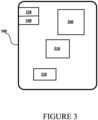
- FIGURE 3 illustrates an example apparatus capable of supporting at least some embodiments of the present invention.
- device 300 which may comprise, for example, a verifier 110 or data user 120 of FIGURE 1 .
- processor 310 which may comprise, for example, a single- or multi-core processor wherein a single-core processor comprises one processing core and a multi-core processor comprises more than one processing core.
- Processor 310 may comprise, in general, a control device.
- Processor 310 may comprise more than one processor.
- device 300 may be a distributed device wherein processing of tasks takes place in more than one physical unit.
- Processor 310 may be a control device.
- a processing core may comprise, for example, a Cortex-A8 processing core manufactured by ARM Holdings or a Zen processing core designed by Advanced Micro Devices Corporation.
- Processor 310 may comprise at least one Qualcomm Snapdragon and/or Intel Atom processor.
- Processor 310 may comprise at least one application-specific integrated circuit, ASIC.
- Processor 310 may comprise at least one field-programmable gate array, FPGA.
- Processor 310 may be means for performing method steps in device 300, such as determining, obtaining, providing, receiving, verifying and using.
- Processor 310 may be configured, at least in part by computer instructions, to perform actions. As described above, in case device 300 corresponds to the verifier, it further comprises a TEE, as illustrated in FIGURE 1 .
- a processor may comprise circuitry, or be constituted as circuitry or circuitries, the circuitry or circuitries being configured to perform phases of methods in accordance with embodiments described herein.
- circuitry may refer to one or more or all of the following: (a) hardware-only circuit implementations, such as implementations in only analogue and/or digital circuitry, and (b) combinations of hardware circuits and software, such as, as applicable: (i) a combination of analogue and/or digital hardware circuit(s) with software/firmware and (ii) any portions of hardware processor(s) with software (including digital signal processor(s)), software, and memory(ies) that work together to cause an apparatus, such as a server, to perform various functions) and (c) hardware circuit(s) and or processor(s), such as a microprocessor(s) or a portion of a microprocessor(s), that requires software (e.g., firmware) for operation, but the software may not be present when it is not needed for operation.
- firmware firmware
- circuitry also covers an implementation of merely a hardware circuit or processor (or multiple processors) or portion of a hardware circuit or processor and its (or their) accompanying software and/or firmware.
- circuitry also covers, for example and if applicable to the particular claim element, a baseband integrated circuit or processor integrated circuit for a mobile device or a similar integrated circuit in server, a cellular network device, or other computing or network device.
- Device 300 may comprise memory 320.
- Memory 320 may comprise random-access memory and/or permanent memory.
- Memory 320 may comprise at least one RAM chip.
- Memory 320 may be a computer readable medium.
- Memory 320 may comprise solid-state, magnetic, optical and/or holographic memory, for example.
- Memory 320 may be at least in part accessible to processor 310.
- Memory 320 may be at least in part comprised in processor 310.
- Memory 320 may be means for storing information.
- Memory 320 may comprise computer instructions that processor 310 is configured to execute.
- processor 310 and/or its at least one processing core may be considered to be configured to perform said certain actions.
- Memory 320 may be at least in part comprised in processor 310.
- Memory 320 may be at least in part external to device 300 but accessible to device 300.
- Memory 320 may be transitory or non-transitory.
- non-transitory is a limitation of the medium itself (that is, tangible, not a signal) as opposed to a limitation on data storage persistency (for example, RAM vs. ROM).
- Device 300 may comprise a transmitter 330.
- Device 300 may comprise a receiver 340.
- Transmitter 330 and receiver 340 may be configured to transmit and receive, respectively, information in accordance with at least one cellular or non-cellular standard.
- Transmitter 330 may comprise more than one transmitter.
- Receiver 340 may comprise more than one receiver.
- Device 300 may comprise user interface, UI, 360.
- UI 360 may comprise at least one of a display, a keyboard, a touchscreen, a vibrator arranged to signal to a user by causing device 300 to vibrate, a speaker or a microphone.
- a user may be able to operate device 300 via UI 360, for example to configure data set management parameters.
- Processor 310 may be furnished with a transmitter arranged to output information from processor 310, via electrical leads internal to device 300, to other devices comprised in device 300.
- a transmitter may comprise a serial bus transmitter arranged to, for example, output information via at least one electrical lead to memory 320 for storage therein.
- the transmitter may comprise a parallel bus transmitter.
- processor 310 may comprise a receiver arranged to receive information in processor 310, via electrical leads internal to device 300, from other devices comprised in device 300.
- Such a receiver may comprise a serial bus receiver arranged to, for example, receive information via at least one electrical lead from receiver 340 for processing in processor 310.
- the receiver may comprise a parallel bus receiver.
- Device 300 may comprise further devices not illustrated in FIGURE 3 .
- Processor 310, memory 320, transmitter 330, receiver 340, and/or UI 360 may be interconnected by electrical leads internal to device 300 in a multitude of different ways.
- each of the aforementioned devices may be separately connected to a master bus internal to device 300, to allow for the devices to exchange information.
- this is only one example and depending on the embodiment various ways of interconnecting at least two of the aforementioned devices may be selected without departing from the scope of the present invention.
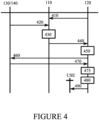
- FIGURE 4 illustrates signalling in accordance with at least some embodiments of the present invention.
- data sources 130, 140 On the vertical axes are disposed, on the left, data sources 130, 140, in the middle, verifier 110 and on the right, data user 120. Time advances from the top toward the bottom.
- phase 410 data user 120 specifies to verifier 110, which characteristic(s) data sets need to have to be useful to data user 120. Examples of such characteristics have been provided herein above.
- data source(s) 130, 140 provide one or more data set to verifier 110, which then proceeds, phase 430, to determine characteristics of the provided data set, or data sets. This determining takes place in the TEE 105 of verifier 110, and uses a first executable program, as described herein above.
- phase 440 verifier 110 provides to data user 120 the cryptographic signature, according to FIGURE 2A , of a hash of the first executable program and the data set, as an indication that the data set has the characteristics communicated in phase 410.
- the cryptographic signature may be over a hash of the first executable program and a hash of the data set, or over the first executable program and the hash of the data set.
- the cryptographic signature may be also, in addition to the above, over indications of characteristics of the data set, determined in phase 430. In this latest case, also the indications may be provided in phase 440.
- phase 450 data user 120 may decide whether to use the data set concerning which verifier 110 provided the signature in phase 440. More broadly, phase 450 may correspond to data user 120 deciding which data sets it is to use in the computation process it is to conduct. Phases 460 and 470 correspond to data user 120 requesting, and responsively receiving, the data set from the data source 130/140. In case verifier 110 provides the data set to data user 120 in phase 440, phases 460 and 470 may be absent. Upon reception of the data set data user 120 verifies, phase 475, the received data by calculating the hash over the data and comparing it to the hash value received with the signature in 440. The computation process may then be performed by data user 120, phase 480, using the data set as input in the computation process.
- Optional phase 490 corresponds to data user 120 providing a result of the computation process, such as, for example, a trained machine learning solution, to a separate user USE of the result of the computation process.
- a result of the computation process such as, for example, a trained machine learning solution
- data user 120 may use the result of the computation process, which may comprise, as explained herein above, running an artificial neural network.
- data source(s) 130/140 may request verifier 110 to determine characteristics of a data set and to provide the signature of phase 440 to data source 130/140. This also applies in case the message of phase 440 conforms to FIGURE 2B , rather than FIGURE 2A .
- Data source(s) 130/140 may then contact data user 120, or indeed other data users, to enable them to use the data set with confidence as to its characteristics.
- Data source(s) 130/140 are not able to change the signed data provider by the TEE 105 of verifier 110, wherefore providing the signed information to data source(s) 130/140 does not reduce the level of dependability of the process.
- Data source(s) 130/140 may be configured to use plural verifiers to determine characteristics of their data set, for example, different verifiers may have differing capabilities of determining different characteristics. It may be, that a data set has characteristics that a single verifier is not capable of determining, wherefore plural verifiers may be needed to obtain determination of all the relevant characteristics of the data set.
- FIGURE 5 is a flow graph of a method in accordance with at least some embodiments of the present invention.
- the phases of the illustrated method may be performed in device 110, an auxiliary device or a personal computer, for example, or in a control device configured to control the functioning thereof, when installed therein.
- Phase 510 comprises determining, in an apparatus, using a first executable program and in a trusted execution environment of the apparatus, at least one characteristic of a data item.
- Phase 520 comprises obtaining, in the trusted execution environment, responsive to a result of the determining of the at least one characteristic, a cryptographic signature over the data item or a hash value obtained from the data item and a hash value obtained from the first executable program, the cryptographic signature being obtained using a key of the trusted execution environment.
- phase 530 comprises providing at least one of the data item or the cryptographic signature to a node.
- At least some embodiments of the present invention find industrial application in dependable management of data, such as, for example, training data for machine learning applications.
Landscapes
- Engineering & Computer Science (AREA)
- Computer Security & Cryptography (AREA)
- Theoretical Computer Science (AREA)
- Software Systems (AREA)
- General Engineering & Computer Science (AREA)
- Computer Hardware Design (AREA)
- General Physics & Mathematics (AREA)
- Physics & Mathematics (AREA)
- Medical Informatics (AREA)
- Computing Systems (AREA)
- Evolutionary Computation (AREA)
- Mathematical Physics (AREA)
- Data Mining & Analysis (AREA)
- Computer Vision & Pattern Recognition (AREA)
- Health & Medical Sciences (AREA)
- Bioethics (AREA)
- General Health & Medical Sciences (AREA)
- Artificial Intelligence (AREA)
- Computer Networks & Wireless Communication (AREA)
- Signal Processing (AREA)
- Storage Device Security (AREA)
Applications Claiming Priority (1)
| Application Number | Priority Date | Filing Date | Title |
|---|---|---|---|
| FI20235739 | 2023-06-26 |
Publications (1)
| Publication Number | Publication Date |
|---|---|
| EP4485252A1 true EP4485252A1 (de) | 2025-01-01 |
Family
ID=91375100
Family Applications (1)
| Application Number | Title | Priority Date | Filing Date |
|---|---|---|---|
| EP24179269.6A Pending EP4485252A1 (de) | 2023-06-26 | 2024-05-31 | Sichere datenverarbeitung |
Country Status (1)
| Country | Link |
|---|---|
| EP (1) | EP4485252A1 (de) |
Citations (4)
| Publication number | Priority date | Publication date | Assignee | Title |
|---|---|---|---|---|
| US20190042937A1 (en) * | 2018-02-08 | 2019-02-07 | Intel Corporation | Methods and apparatus for federated training of a neural network using trusted edge devices |
| US20200219009A1 (en) * | 2017-08-21 | 2020-07-09 | Thales Dis France Sa | Method for securing a machine learning based decision system |
| US20210192360A1 (en) * | 2017-10-13 | 2021-06-24 | Nokia Technologies Oy | Artificial neural network |
| US20220292202A1 (en) * | 2021-03-12 | 2022-09-15 | International Business Machines Corporation | Verifiable training of model in untrusted environment |
-
2024
- 2024-05-31 EP EP24179269.6A patent/EP4485252A1/de active Pending
Patent Citations (4)
| Publication number | Priority date | Publication date | Assignee | Title |
|---|---|---|---|---|
| US20200219009A1 (en) * | 2017-08-21 | 2020-07-09 | Thales Dis France Sa | Method for securing a machine learning based decision system |
| US20210192360A1 (en) * | 2017-10-13 | 2021-06-24 | Nokia Technologies Oy | Artificial neural network |
| US20190042937A1 (en) * | 2018-02-08 | 2019-02-07 | Intel Corporation | Methods and apparatus for federated training of a neural network using trusted edge devices |
| US20220292202A1 (en) * | 2021-03-12 | 2022-09-15 | International Business Machines Corporation | Verifiable training of model in untrusted environment |
Similar Documents
| Publication | Publication Date | Title |
|---|---|---|
| Kamel et al. | Simulation framework for misbehavior detection in vehicular networks | |
| Baza et al. | Detecting sybil attacks using proofs of work and location in vanets | |
| Jain et al. | Improved recurrent neural network schema for validating digital signatures in VANET | |
| Rathore et al. | In-vehicle communication cyber security: challenges and solutions | |
| Van Der Heijden et al. | Veremi: A dataset for comparable evaluation of misbehavior detection in vanets | |
| Al-shareeda et al. | An efficient identity-based conditional privacy-preserving authentication scheme for secure communication in a vehicular ad hoc network | |
| EP2465279B1 (de) | Verfahren und Vorrichtungen zur Ableitung, Übertragung und Verifizierung der Eigentümerschaft von Expressionen | |
| Ahmed et al. | Privacy‐preserving blockchain‐based authentication and trust management in VANETs | |
| Al-Shareeda et al. | Provably secure with efficient data sharing scheme for fifth-generation (5G)-enabled vehicular networks without road-side unit (RSU) | |
| US10757053B2 (en) | High confidence digital content treatment | |
| CN104519031A (zh) | 一种用于恶意网络行为检测的方法和装置 | |
| US20240039983A1 (en) | Distributed trusted sensing method and system for integrated communication, sensing and computation network | |
| Islam et al. | A light-weight blockchain architecture for v2v knowledge sharing at vehicular edges | |
| CN111177794B (zh) | 城市画像方法、装置、计算机设备和存储介质 | |
| Ahmed et al. | Blockchain-assisted privacy-preserving and context-aware trust management framework for secure communications in VANETs | |
| WO2021143178A1 (zh) | 一种车载传感器的认证方法、装置及系统 | |
| CN111431908B (zh) | 一种访问处理方法、装置,管理服务器及可读存储介质 | |
| US20230334142A1 (en) | Data integrity with trusted code attestation tokens | |
| CN115222436A (zh) | 目标用户的确定方法、信息推送方法、装置及电子设备 | |
| Lee et al. | Secure key agreement and authentication protocol for message confirmation in vehicular cloud computing | |
| CN110505064A (zh) | 基于EC-Schnoor签名算法的门限投票方法、系统及相关设备 | |
| EP4040720A1 (de) | Gesicherte identitätskarte unter verwendung unklonbarer funktionen | |
| Junaidi et al. | Secure vehicular platoon management against Sybil attacks | |
| Mishra et al. | SFVCC: chaotic map‐based security framework for vehicular cloud computing | |
| Tripathi et al. | An optimal trust and secure model using deep metric learning for fog‐based VANET |
Legal Events
| Date | Code | Title | Description |
|---|---|---|---|
| PUAI | Public reference made under article 153(3) epc to a published international application that has entered the european phase |
Free format text: ORIGINAL CODE: 0009012 |
|
| STAA | Information on the status of an ep patent application or granted ep patent |
Free format text: STATUS: THE APPLICATION HAS BEEN PUBLISHED |
|
| AK | Designated contracting states |
Kind code of ref document: A1 Designated state(s): AL AT BE BG CH CY CZ DE DK EE ES FI FR GB GR HR HU IE IS IT LI LT LU LV MC ME MK MT NL NO PL PT RO RS SE SI SK SM TR |
|
| STAA | Information on the status of an ep patent application or granted ep patent |
Free format text: STATUS: REQUEST FOR EXAMINATION WAS MADE |
|
| 17P | Request for examination filed |
Effective date: 20250701 |