EP4483816A1 - Evaluation device, evaluation method, and evaluation program - Google Patents
Evaluation device, evaluation method, and evaluation program Download PDFInfo
- Publication number
- EP4483816A1 EP4483816A1 EP22933624.3A EP22933624A EP4483816A1 EP 4483816 A1 EP4483816 A1 EP 4483816A1 EP 22933624 A EP22933624 A EP 22933624A EP 4483816 A1 EP4483816 A1 EP 4483816A1
- Authority
- EP
- European Patent Office
- Prior art keywords
- gaze
- rate
- entire
- unit
- determination region
- Prior art date
- Legal status (The legal status is an assumption and is not a legal conclusion. Google has not performed a legal analysis and makes no representation as to the accuracy of the status listed.)
- Granted
Links
Images


Classifications
-
- A—HUMAN NECESSITIES
- A61—MEDICAL OR VETERINARY SCIENCE; HYGIENE
- A61B—DIAGNOSIS; SURGERY; IDENTIFICATION
- A61B5/00—Measuring for diagnostic purposes; Identification of persons
- A61B5/40—Detecting, measuring or recording for evaluating the nervous system
- A61B5/4076—Diagnosing or monitoring particular conditions of the nervous system
-
- A—HUMAN NECESSITIES
- A61—MEDICAL OR VETERINARY SCIENCE; HYGIENE
- A61B—DIAGNOSIS; SURGERY; IDENTIFICATION
- A61B3/00—Apparatus for testing the eyes; Instruments for examining the eyes
- A61B3/10—Objective types, i.e. instruments for examining the eyes independent of the patients' perceptions or reactions
- A61B3/113—Objective types, i.e. instruments for examining the eyes independent of the patients' perceptions or reactions for determining or recording eye movement
-
- A—HUMAN NECESSITIES
- A61—MEDICAL OR VETERINARY SCIENCE; HYGIENE
- A61B—DIAGNOSIS; SURGERY; IDENTIFICATION
- A61B5/00—Measuring for diagnostic purposes; Identification of persons
- A61B5/16—Devices for psychotechnics; Testing reaction times ; Devices for evaluating the psychological state
- A61B5/163—Devices for psychotechnics; Testing reaction times ; Devices for evaluating the psychological state by tracking eye movement, gaze, or pupil change
-
- A—HUMAN NECESSITIES
- A61—MEDICAL OR VETERINARY SCIENCE; HYGIENE
- A61B—DIAGNOSIS; SURGERY; IDENTIFICATION
- A61B5/00—Measuring for diagnostic purposes; Identification of persons
- A61B5/16—Devices for psychotechnics; Testing reaction times ; Devices for evaluating the psychological state
- A61B5/168—Evaluating attention deficit, hyperactivity
Definitions
- the present disclosure relates to an assessment device, an assessment method, and an assessment program.
- Patent Literature 1 A method for assessing developmental disabilities, such as autism spectrum disorder (ASD), by detecting gaze points of a subject when images, such as human images and geometric patterns, are shown to the subject has been proposed (for example, Patent Literature 1) .
- ASD autism spectrum disorder
- Patent Literature 1 JP-A-2017-99513
- Patent Literature 1 For the assessment technique described in Patent Literature 1, it is necessary to achieve a more accurate assessment of characteristics specific to a subject with ASD.
- the present disclosure has been achieved in view of the above challenge, and aims to provide an assessment device, an assessment method, and an assessment program that enable to improve the accuracy in assessment of characteristics specific to a subject with ASD.
- An assessment device includes: a display unit; a gaze-point detecting unit configured to detect a position of a gaze point of a subject; a display control unit configured to display a plurality of unit images including at least one of an object having specificity and an object having sensitivity on the display unit in different tasks; a region setting unit configured to set, for each of the tasks, an object determination region corresponding to each of the objects and an entire determination region corresponding to an entirety of the display unit; a determining unit configured to determine whether the gaze point is present in each of the object determination region and the entire determination region based on the detected position of the gaze point; an arithmetic unit configured to calculate an object gaze rate indicating a rate at which the gaze point is present in the object determination region in each of the tasks, and an entire gaze rate indicating a rate at which the gaze point is present in the entire determination region throughout all the tasks based on a determination result of the determining unit; and an assessing unit configured to calculate a score based on the object gaze rate and the entire gaze rate
- An assessment method includes: detecting a position of a gaze point of a subject; displaying a plurality of unit images including at least one of an object having specificity and an object having sensitivity on a display unit in different tasks; setting an object determination region corresponding to each of the objects and an entire determination region corresponding to an entirety of the display unit; determining whether the gaze point is present in each of the object determination region and the entire determination region based on the detected position of the gaze point; calculating an object gaze rate indicating a rate at which the gaze point is present in the object determination region in each of the tasks, and an entire gaze rate indicating a rate at which the gaze point is present in the entire determination region throughout all the tasks based on a determination result; and calculating a score based on the object gaze rate and the entire gaze rate calculated, to acquire assessment data indicating whether the calculated score exceeds a threshold.
- An assessment program causes a computer to execute the processes of: detecting a position of a gaze point of a subject; displaying a plurality of unit images including at least one of an object having specificity and an object having sensitivity on a display unit in different tasks; setting an object determination region corresponding to each of the objects and an entire determination region corresponding to an entirety of the display unit; determining whether the gaze point is present in each of the object determination region and the entire determination region based on the detected position of the gaze point; calculating an object gaze rate indicating a rate at which the gaze point is present in the object determination region in each of the tasks, and an entire gaze rate indicating a rate at which the gaze point is present in the entire determination region throughout all the tasks based on a determination result; and calculating a score based on the object gaze rate and the entire gaze rate calculated, to acquire assessment data based on the calculated score.
- FIG. 1 is a diagram schematically illustrating an example of an assessment device 100 according to the present embodiment.
- the assessment device 100 detects a line of sight of a subject, and performs assessment of autism spectrum disorder (hereinafter, denoted as "ASD") by using detection results.
- the assessment device 100 can detect a line of sight of a subject by various methods, such as a method of detecting a line of sight based on a position of the pupil of the subject and a position of the corneal reflection image, or a method of detecting a line of sight based on a position of the inner canthus and a position of the iris of the subject.
- the assessment device 100 includes a display device 10, an image acquiring device 20, a computer system 30, an output device 40, an input device 50, and an input/output interface device 60.
- the display device 10, the image acquiring device 20, the computer system 30, the output device 40, and the input device 50 performs data communication through the input/output interface device 60.
- the display device 10 and the image acquiring device 20 respectively have driving circuits not illustrated.
- the display device 10 includes a flat panel display, such as a liquid crystal display (LCD) or an organic electroluminescence display (OLED).
- the display device 10 includes the display unit 11.
- the display unit 11 displays information, such as an image.
- the display unit 11 is substantially parallel to an XY plane.
- An X axis direction on the XY plane is a left and right direction of the display unit 11, and a Y axis direction is an up and down direction of the display unit 11, and a Z axis direction is a depth direction perpendicular to the display unit 11.
- the display device 10 may be a head-mounted display device.
- a component such as the image acquiring device 20 is to be arranged in a head-mounted module.
- the image acquiring device 20 acquires image data of left and right eyeballs EB of a subject, and transmits the acquired image data to the computer system 30.
- the image acquiring device 20 includes an imaging device 21.
- the imaging device 21 captures the left and right eyeballs EB of the subject to acquire image data.
- the imaging device 21 has various kinds of cameras according to methods of detecting a line of sight of a subject.
- the imaging device 21 has an infrared camera, and includes an optical system that is capable of transmitting near-infrared light of, for example, a wavelength of 850 nm, and a imaging device that is capable of receiving the near-infrared light.
- the imaging device 21 has a visible light camera. The imaging device 21 outputs a frame synchronization signal.
- the period of the frame synchronization signal can be set to, for example, 20 milliseconds (msec), but is not limited thereto.
- the imaging device 21 can be configured, for example, as a stereo camera having a first camera 21A and a second camera 21B, but it is not limited thereto.
- the image acquiring device 20 includes an illumination device 22 that illuminates the eyeballs EB of the subject.
- the illumination device 22 includes a light emitting diode (LED) light source, and is capable of emitting near-infrared light of, for example, a wavelength of 850 nm.
- LED light emitting diode
- the illumination device 22 is not necessary to be arranged.
- the illumination device 22 emits detection light so as to synchronize with the frame synchronization signal with the imaging device 21.
- the illumination device 22 can be configured to have, for example, a first light source 22A and a second light source 22B, but it is not limited thereto.
- the computer system 30 comprehensively controls the operation of the assessment device 100.
- the computer system 30 includes an arithmetic processing device 30A and a storage device 30B.
- the arithmetic processing device 30A includes a micro-processor such as a central processing unit (CPU).
- the storage device 30B includes a memory, such as a read only memory (ROM) and a random access memory (RAM), or a storage.
- the arithmetic processing device 30A performs arithmetic processing according to a computer program 30C stored in the storage device 30B.
- the output device 40 includes a display device such as a flat panel display.
- the output device 40 may include a printing device.
- the input device 50 is operated to generate input data.
- the input device 50 includes a keyboard or a mouse for a computer system.
- the input device 50 may include a touch sensor that is arranged on a display unit of the output device 40 being a display device.
- the assessment device 100 has the display device 10 and the computer system 30 as separate devices.
- the display device 10 and the computer system 30 maybe integrated.
- the assessment device 100 may include a tablet-type personal computer.
- the display device, the image acquiring device, the computer system, the input device, the output device, and the like may be mounted on the tablet-type personal computer.
- FIG. 2 is a functional block diagram illustrating an example of the assessment device 100.
- the computer system 30 includes a display control unit 31, a gaze-point detecting unit 32, a region setting unit 33, a determining unit 34, an arithmetic unit 35, an assessing unit 36, an input/output control unit 37, and a storage unit 38.
- the functions of the computer system 30 are implemented by the arithmetic processing device 30A and the storage device 30B (refer to FIG. 1 ).
- the computer system 30 may be configured such that a part of the functions is arranged outside the assessment device 100.
- the display control unit 31 displays an assessment image on the display unit 11.
- the assessment image includes multiple unit images including at least one of an object with specificity, such as a person and an item (hereinafter, denoted as "specificity object”) and an object with sensitivity, such as a figure and a geometric pattern (hereinafter, denoted as "sensitivity object”).
- the unit image includes at least one of a still image and a moving image.
- the specificity object is an object that tends to be gazed by a subject having low possibility of having ASD. Examples of the specificity object include a person, an item, and the like.
- the sensitivity object is an object that tends to be gazed by a subject having high possibility of having ASD. Examples of the sensitivity object include a figure, a geometric pattern, and the like.
- the specificity object and the sensitivity object may be present within the same unit image, or may be present in different unit images.
- the display control unit 31 displays a single unit image on the display unit 11 as a single task as the assessment image.
- the display control unit 31 displays multiple pre-prepared unit images on the display unit 11 in different tasks.
- the display control unit 31 can display the assessment image described above on the display unit 11, for example, as an assessment moving image, but the display mode is not limited to the assessment moving image, and it may be a still image.
- the gaze-point detecting unit 32 detects position data of a gaze point of a subject.
- the gaze-point detecting unit 32 detects a line-of-sight vector of a subject that is defined by three-dimensional global coordinate system based on image data of the left and right eyeball EB of the subject acquired by the image acquiring unit 20.
- the gaze-point detecting unit 32 detects position data of an intersection of the detected line-of-sight vector of the subject and the display unit 11 of the display device 10 as the position data of the gaze point of the subject. That is, in the present embodiment, the position data of the gaze point is position data of an intersection of a line-of-sight vector of a subject defined by the three-dimensional global coordinate system and the display unit 11 of the display device 10.
- the gaze-point detecting unit 32 detects the position data of a gaze point of a subject at each sampling period. This sampling period may be, for example, the period (for example, each 20 msec) of the frame synchronization signal output from the imaging device 21.
- the region setting unit 33 sets, in the display unit 11, an object determination region corresponding to respective objects and an entire determination region corresponding to the entirety of the display unit 11 for each task.
- the respective determination regions set by the region setting unit 33 are basically not displayed on the display unit 11.
- the respective determination regions may be configured to be displayed by a control of the display control unit 31.
- the object determination region is included in the entire determination region.
- the determining unit 34 respectively determines whether a gaze point is present in a determination region based on the position data of the gaze point, and outputs the determination result as determination data.
- the determining unit 34 determines whether a gaze point is present in a determination region at each determination period.
- the determination period may be, for example, the period (for example, each 20 msec) of the frame synchronization signal output from the imaging device 21. That is, the determination period of the determining unit 34 is the same as the sampling period of the gaze-point detecting unit 32.
- the determining unit 34 performs, each time a position of a gaze point is sampled by the gaze-point detecting unit 32, determination about the gaze point, and outputs determination data. When multiple determination regions are set, the determining unit 34 can determine whether a gaze point is present for each of the determination regions, to output the determination data.
- the arithmetic unit 35 calculates an object gaze rate and an entire gaze rate based on the determination result of the determining unit 34.
- the object gaze rate indicates a rate at which a gaze point is present in the object determination region in each task.
- the entire gaze rate indicates a rate at which a gaze point is present in the entire determination region throughout all tasks.
- the arithmetic unit 35 includes a timer to detect elapsed time since the assessment image is displayed on the display unit 11, and a counter that counts the number of times of determination that a gaze point is present in the object determination region and the entire determination region by the determining unit 34.
- the arithmetic unit 35 calculates present time data of a gaze point based on the determination data of the determining unit 34.
- the present time data is data indicating time in which a gaze point is present in the determination region. As the number of times of determination that a gaze point is present in the determination region by the determining unit 34 increases, it is possible to estimate that presence time during which the gaze point is present in the determination region is longer. Therefore, presence time data can be regarded as the number of times of determination that a gaze point is present in the determination region by the determining unit 34.
- the arithmetic unit 35 calculates the object gaze rate that indicates a rate at which the gaze point is present in the object determination region in each task based on, for example, time from start of one task of the assessment image to completion, and the presence time data in the object determination region. Moreover, the arithmetic unit 35 calculates the entire gaze rate that indicates a rate at which the gaze point is present in the entire determination region throughout all tasks based on time from start of the first task of the assessment image to completion of the last task, and the presence time data in the entire determination region.
- the assessing unit 36 calculates a score to assess a subject based on the object gaze rate and the entire gaze rate.
- the assessing unit 36 acquires assessment data of the subject based on the calculated score.
- the assessing unit 36 may calculate a score, assigning a heavier weight to the entire gaze rate than the object gaze rate.
- the assessing unit 36 may calculate a correlation coefficient indicating a strength of correlation between reference data stored in the storage unit 38 described later and the object gaze rate and the entire gaze rate calculated by the arithmetic unit 35, and may calculate the score, setting weights to the object gaze rate and the entire gaze rage based on the calculated correlation coefficient.
- the input/output control unit 37 acquires data (image data of the eyeballs EB, input data, and the like) from at least one of the image acquiring unit 20 and the input device 50. Moreover, the input/output control unit 37 outputs data to at least one of the display device 10 and the output device 40. The input/output control unit 37 may output a problem for a subject from the output device 40, such as a speaker.
- the storage unit 38 stores various kinds of data, such as the determination data, the presence time data, the reference data of the object gaze rate and the entire gaze rate, and the assessment data described above.
- the reference data of the object gaze rate and the entire gaze rate is data including a calculation result of the object gaze rate and the entire gaze rate of a subject diagnosed as ASD, and a calculation result of the object gaze rate and the entire gaze rate of a subject diagnosed as not having ASD.
- the storage unit 38 stores an assessment program that causes a computer to execute processing of detecting a position of a gaze point of a subject; processing of displaying multiple different images including an object corresponding to at least one of the specificity region and the sensitivity region on the display unit in different tasks; processing of setting, for each task, the object determination region corresponding to respective objects and the entire determination region corresponding to the entirety of the display unit; processing of determining whether a gaze point is present in each of the object determination region and the entire determination region for each task, based on the detected position of the gaze point; processing of calculating the object gaze rate that indicates a rate at which a gaze point is present in the object determination region in each task and the entire gaze rate that indicates a rate at which a gaze point is present in the entire determination region throughout all tasks based on the determination result of the determining unit; and processing of calculating a score based on the object gaze rate and the entire gaze rate calculated by the arithmetic unit, and of acquiring the assessment data based on the calculated score.
- FIG. 3 is a diagram illustrating an example of the unit image displayed on the display unit 11.
- the display control unit 31 displays a unit image IM including at least one of a specificity object M1 and a sensitivity object M2 in a single task.
- the specificity object M1 is, for example, a person
- the sensitivity object M2 is, for example, a figure.
- the display control unit 31 displays a different unit image IM on the display unit 11 in each task.
- the unit image IM displayed in the first task is denoted as unit image IM1
- the unit image displayed in the k-th task is denoted as unit image IMk.
- the display control unit 31 may display an image including only one of the specificity object M1 and the sensitivity object M2 on the display unit 11. In this case, it is possible to prevent the interest of the subject from being dispersed.
- the region setting unit 33 sets object determination regions A1, A2 corresponding to the specificity object M1 and the sensitivity object M2.
- the region setting unit 33 sets the object determination regions A1, A2 in ranges not overlapping each other.
- the object determination regions A1, A2 are not displayed on the display unit 11.
- the region setting unit 33 sets an entire determination region A3 corresponding to the entirety of the display unit 11.
- the object determination regions A1, A2 are a part of the entire determination region A3, and are included in the entire determination region A3.
- the region setting unit 33 can be configured to set them within two regions in a single task. For example, when the specificity object M1 and the sensitivity object M3 are included in the single unit image IM displayed in a single task, it may be set as one region for the specificity object M1 and one region for the sensitivity object M2. For example, when the specificity object M1 and the sensitivity object M2 are included in the single unit image IM, the region setting unit 33 may set as one region for the multiple specificity objects M1 together, and one region for the multiple sensitivity objects M2 together.
- the shapes of the object determination regions A1, A2 may be, for example, a rectangular shape, a circular shape, an elliptical shape, a polygonal shape, and the like, and are not limited.
- the sizes of the multiple object determination regions A1, A2 may be different.
- subjects with a high possibility of having ASD tend to have a stronger interest (fixation) in the sensitivity object such as a figure and a geometric pattern than the specificity object, such as a person, an animal, and a plant, compared to subjects with a low possibility of having ASD.
- the inventors of the present invention have discovered that the subjects with a high possibility of having ASD tend to have a lower percentage of gazing at the display unit 11 throughout all tasks compared to the subjects with a low possibility of having ASD.
- assessment is performed by detecting a gaze point of a subject after instructing to look at an assessment image on the display unit 11 to the subject, and by acquiring the assessment data based on the detection result.
- the display control unit 31 displays the assessment image on the display unit 11.
- the assessment image includes multiple tasks in chronological order.
- a single unit image IM is displayed on the display unit 11.
- the display control unit 31 may display an eye-catch image to move a gaze point to a desired position on the display unit 11 at the beginning of one task.
- the region setting unit 33 sets the object determination region A1 corresponding to the specificity object M1, the object determination region A2 corresponding to the sensitivity object M2, and the entire determination region A3 corresponding to the entirety of the display unit 11 in a state in which the unit image IM of the assessment image is displayed.
- the display control unit 31 displays another unit image on the display unit 11 in a next task.
- the region setting unit 33 sets the object determination regions A1, A2, and the entire determination region A3 in a state in which the other unit image is displayed. As described, a different unit image is displayed on the display unit 11 by the display control unit 31 in each task. Moreover, the region setting unit 33 sets the object determination regions A1, A2, and the entire determination region A3 corresponding to the unit image in each task.
- the display control unit 31 may set a task of displaying a unit image that is not used for detection of the object gaze rate on the display unit 11.
- the gaze-point detecting unit 32 detects a position of a gaze point of a subject at every defined sampling period (for example, 20 msec) in a period in which the assessment image is displayed.
- the determining unit 34 determines whether the gaze point is present in the object determination regions A1, A2, and the entire determination region A3, and outputs the determination data. Therefore, the determining unit 34 outputs the determination data every determination period same as the sampling period described above each time a position of a gaze point is sampled by the gaze-point detecting unit 32.
- the arithmetic unit 35 calculates gaze point data of the subject based on the determination data.
- the arithmetic unit 35 calculates the presence time data as gaze point data.
- the presence time data indicates presence time in which a gaze point of the subject is present in the object determination regions A1, A2, and the entire determination region A3.
- the presence time data can be regarded as the number of times of determination that a gaze point is present in the object determination regions A1, A2, and in the entire determination region A3 by the determining unit 34.
- the arithmetic unit 35 calculates the object gaze rate of the specificity object M1 and the object gaze rate of the sensitivity object M2 based on the presence time data of the object determination region A1 and the object determination region A2 calculated for one task and time from start to completion of the one task.
- the arithmetic unit 35 calculates the object gaze rate for each task.
- the arithmetic unit 35 calculates the object gaze rate in one task for three kinds of periods of, for example, the first 1 second of the task, the first 2 seconds, and the entire duration of the task.
- the arithmetic unit 35 can use a value showing a correlation with the reference data described later out of the calculated three kinds of object gaze rates.
- the period in which the eye-catch image is displayed can be excluded from the time range for calculation of the object gaze rate. For example, when the first 0.3 seconds of the task is the display period of the eye-catch image, the arithmetic unit 35 can calculate the object gaze rate starting from 0.3 seconds after the beginning of the task.
- the arithmetic unit 35 calculates the entire gaze rate in the entirety of the display unit 11 based on the presence time data of the entire determination region A3 calculated in the respective tasks and time from start of the first task to completion of the last task.
- the assessing unit 36 acquires an assessment value based on the calculated object gaze rate and entire gaze rate, and acquires the assessment data based on the assessment value.
- C1 represents a coefficient indicating a weight of the object gaze rate R1 of the specificity object M1
- C2 represents a coefficient indicating a weight of the object gaze rate R2 of the sensitivity object M2
- C3 represents a coefficient indicating a weight of the entire gaze rate R3.
- k represents a number of task.
- m represents a number of a specificity region.
- n represents a number of a sensitivity region.
- Subjects having a low possibility of having ASD have a tendency that the object gaze rate R1 of the specificity object M1 is high and the object gaze rate R2 of the sensitivity object M2 is low, compared to subjects having a high possibility of having ASD. That is, the subjects having a low possibility of having ASD tend to have a higher value for the value indicating specificity and a lower value for the value indicating sensitivity.
- subjects having a high possibility of having ASD have a tendency that the object gaze rate R2 of the sensitivity object M2 is high and the object gaze rate R1 of the specificity object M1 is low, compared to subjects having a low possibility of having ASD. That is, the subjects having a high possibility of having ASD have a higher value for the value indicating sensitivity and a lower value of the value indicating specificity.
- Subjects having a lower possibility of having ASD have a tendency that the entire gaze rate R3 is high compared to subjects having a higher possibility of having ASD.
- subjects having a higher possibility of having ASD have a tendency that the entire gaze rate R3 is low compared to subjects having a lower possibility of having ASD. From these results, the entire gaze rate R3 can be used as a value indicating a tendency of specificity.
- the assessing unit 36 can set values of C1, C2, and C3 such that the weight of the entire gaze rate R3 is heavier than that of the object gaze rates R1, R2. Moreover, the assessing unit 36 calculates a correlation coefficient indicating a strength of correlation between the reference data stored in the storage unit 38 and the object gaze rates R1, R2 calculated by the arithmetic unit 35, and can set the C1, C2 based on the calculated correlation coefficient.
- the reference data is, for example, data of the object gaze rate and the entire gaze rate calculated in advance by making subjects diagnosed as having a low possibility of having ASD and subjects diagnosed as having a high possibility of having ASD gaze at respective unit images included in the assessment image.
- the assessing unit 36 can calculate a correlation coefficient based on a reference value and a calculation value of the object gaze rate of a subject to be assessed, using 0 as the reference value indicating the object gaze rate of the subjects diagnosed as having a low possibility of having ASD, and 1 as the reference value indicating the object gaze rate of the subjects diagnosed as having a high possibility of having ASD out of the reference data.
- the reference value an average value of the object gaze rate of multiple subjects or the like can be used.
- the assessing unit 36 can set the coefficient of relevant C1, C2 to 0. Moreover, for example, when the correlation coefficient is 0.25 or higher, the assessing unit 36 can set the coefficient of relevant C1, C2 to 1.
- the method of setting the coefficients C1, C2 is not limited to the above and, for example, a value of the correlation coefficient may be used as the values of the coefficient of C1, C2.
- the assessing unit 36 can set weights with opposite signs between the coefficients C1, C3 and the coefficient C2 such as setting a negative value to the coefficient C1 of the object gaze rate R1 and the entire gaze rate R3 that indicate a strength of specificity, and setting a positive value to the coefficient C2 of the object gaze rate R2 that indicates a strength of sensitivity.
- the smaller assessment score TS indicates the stronger specificity
- the larger assessment score TS indicates the stronger sensitivity.
- the assessing unit 36 can set, for example, a threshold to the assessment score TS, and can assess that specificity is strong when the assessment score TS is lower than the threshold, and assess that sensitivity is strong when the assessment score TS is equal to or higher than the threshold.
- the input/output control unit 37 can output, for example, text data of "the subject is considered to have strong specificity" or text data indicating "the subject is considered to have strong sensitivity” or the like according to the assessment data to the output device 40.
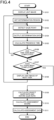
- FIG. 4 is a flowchart illustrating an example of the assessment method according to the present embodiment.
- the display control unit 31 displays the unit image IM according to the first task as the assessment image on the display unit 11 (step S101).
- the region setting unit 33 sets the object determination regions A1, A2 corresponding to the specificity object M1 and the sensitivity object M2, and the entire determination region A3 corresponding to the entirety of the display unit 11 in the unit image IM (step S102) .
- the gaze-point detecting unit 32 samples positions of a gaze point at a predetermined sampling period to detect a position of a gaze point (step S103).
- the determining unit 34 determines whether a gaze point is present in the object determination regions A1, A2 and the entire determination region A3 each time a position of a gaze point is sampled by the gaze-point detecting unit 32 based on the position of the gaze point, and outputs the determination data (step S104).
- the arithmetic unit 35 calculates presence time of the object determination regions A1, A2 and the entire determination region A3 based on the determination data (step S105).
- the arithmetic unit 35 determines whether the display time in the task has ended (step S106). When it is determined that the display time has not ended (step S106: NO), the processing at step S103 and later is repeated.
- step S106 When it is determined that the display time has ended (step S106: YES), the display control unit 31 determines whether all tasks have been finished (step S107). When it is determined that all tasks have not been finished (step S107: NO), the display control unit 31 causes the display unit 11 to display the unit image IM relating to the next task (step S108), and causes the processing at step S102 and later to be repeated.
- the arithmetic unit 35 calculates the object gaze rate and the entire gaze rate based on the arithmetic results (step S109).
- the assessing unit 36 calculates the assessment score based on the calculation result of the arithmetic unit 35 (step S110), calculates the assessment data based on the calculated assessment score (step S111), and ends the processing.
- the assessment device 100 includes the display unit 11, the gaze-point detecting unit 32 that detects a position of a gaze point of a subject, the display control unit 31 that displays multiple unit images including at least one of an object having specificity and an object having sensitivity on the display unit 11 in different tasks, the region setting unit 33 that sets the object determination region corresponding to each object and the entire determination region corresponding to the entirety of the display unit 11 in each task, the determining unit 34 that determines whether a gaze point is present in each of the object determination region and the entire determination region based on the detected position of the gaze point, the arithmetic unit 35 that calculates the object gaze rate indicating a rate at which a gaze point is present in the object determination region in each task and the entire gaze rate indicating a rate at which a gaze point is present in the entire determination region throughout all tasks based on the determination result of the determining unit 34, and the assessing unit 36 that calculates a score based on the object gaze rate and the entire gaze rate calculated by the arith
- the assessment method includes detecting a position of a gaze point of a subject; displaying multiple unit images including at least one of an object having specificity and an object having sensitivity on the display unit 11 in different tasks; setting the object determination region corresponding to each object and the entire determination region corresponding to the entirety of the display unit 11 for each task; determining whether a gaze point is present in each of the object determination region and the entire determination region based on the detected position of the gaze point; calculating the object gaze rate indicating a rate at which a gaze point is present in the object determination region in each task and the entire gaze rate at which a gaze point is present in the entire determination region throughout all tasks based on the determination result; and calculating a score based on the calculated object gaze rate and entire gaze rate, to acquire the assessment data indicating whether the calculated score exceeds a threshold.
- the assessment program causes a computer to execute processing of detecting a position of a gaze point of a subject; processing of displaying multiple unit images including at least one of an object having specificity and an object having sensitivity on the display unit 11 in different tasks; processing of setting the object determination region corresponding to each object and the entire determination region corresponding to the entirety of the display unit 11 for each task; processing of determining whether a gaze point is present in the object determination region and the entire determination region based on the detected position of the gaze point; processing of calculating the object gaze rate indicating a rate at which a gaze point is present in the object determination region in each task and the entire gaze rate at which a gaze point is present in the entire determination region throughout all tasks based on the determination result; and processing of calculating a score based on the calculated object gaze rate and entire gaze rate, to acquire the assessment data based on the calculated score.
- the assessing unit 36 calculates a score, assigning a heavier weight to the entire gaze rate than the object gaze rate. With this configuration, the assessment of the entire gaze rate of a subject can be reflected more strongly. Therefore, it is possible to assess characteristics specific to subjects with ASD more accurately.
- the assessment device 100 further includes the storage unit 38 that stores the reference data of the object gaze rate and the entire gaze rate, and the assessing unit 36 calculates a correlation coefficient indicating a strength of correlation between the reference data stored in the storage unit 38 and the object gaze rate and the entire gaze rate calculated by the arithmetic unit, and assigns weights to the object gaze rate and the entire gaze rate based on the calculated correlation coefficient, to calculate a score.
- the storage unit 38 that stores the reference data of the object gaze rate and the entire gaze rate
- the assessing unit 36 calculates a correlation coefficient indicating a strength of correlation between the reference data stored in the storage unit 38 and the object gaze rate and the entire gaze rate calculated by the arithmetic unit, and assigns weights to the object gaze rate and the entire gaze rate based on the calculated correlation coefficient, to calculate a score.
- the present disclosure contributes to the realization of the goal of SDGs, "Good Health and Well-being for All", and includes matters that contribute to value creation through healthcare products and services.
- the assessment device, the assessment method, and the assessment program according to the present disclosure can be used, for example, for processing device, such as a computer.
Landscapes
- Health & Medical Sciences (AREA)
- Life Sciences & Earth Sciences (AREA)
- Engineering & Computer Science (AREA)
- Veterinary Medicine (AREA)
- Molecular Biology (AREA)
- Public Health (AREA)
- General Health & Medical Sciences (AREA)
- Animal Behavior & Ethology (AREA)
- Physics & Mathematics (AREA)
- Surgery (AREA)
- Biophysics (AREA)
- Biomedical Technology (AREA)
- Heart & Thoracic Surgery (AREA)
- Medical Informatics (AREA)
- Pathology (AREA)
- Developmental Disabilities (AREA)
- Child & Adolescent Psychology (AREA)
- Educational Technology (AREA)
- Social Psychology (AREA)
- Psychology (AREA)
- Psychiatry (AREA)
- Hospice & Palliative Care (AREA)
- Neurology (AREA)
- Neurosurgery (AREA)
- Physiology (AREA)
- Human Computer Interaction (AREA)
- Ophthalmology & Optometry (AREA)
- Eye Examination Apparatus (AREA)
Abstract
Description
- The present disclosure relates to an assessment device, an assessment method, and an assessment program. Background
- A method for assessing developmental disabilities, such as autism spectrum disorder (ASD), by detecting gaze points of a subject when images, such as human images and geometric patterns, are shown to the subject has been proposed (for example, Patent Literature 1) .
- Patent Literature 1:
JP-A-2017-99513 - For the assessment technique described in Patent Literature 1, it is necessary to achieve a more accurate assessment of characteristics specific to a subject with ASD.
- The present disclosure has been achieved in view of the above challenge, and aims to provide an assessment device, an assessment method, and an assessment program that enable to improve the accuracy in assessment of characteristics specific to a subject with ASD.
- An assessment device according to the present disclosure includes: a display unit; a gaze-point detecting unit configured to detect a position of a gaze point of a subject; a display control unit configured to display a plurality of unit images including at least one of an object having specificity and an object having sensitivity on the display unit in different tasks; a region setting unit configured to set, for each of the tasks, an object determination region corresponding to each of the objects and an entire determination region corresponding to an entirety of the display unit; a determining unit configured to determine whether the gaze point is present in each of the object determination region and the entire determination region based on the detected position of the gaze point; an arithmetic unit configured to calculate an object gaze rate indicating a rate at which the gaze point is present in the object determination region in each of the tasks, and an entire gaze rate indicating a rate at which the gaze point is present in the entire determination region throughout all the tasks based on a determination result of the determining unit; and an assessing unit configured to calculate a score based on the object gaze rate and the entire gaze rate calculated by the arithmetic unit, and acquire assessment data based on the calculated score.
- An assessment method according to the present disclosure includes: detecting a position of a gaze point of a subject; displaying a plurality of unit images including at least one of an object having specificity and an object having sensitivity on a display unit in different tasks; setting an object determination region corresponding to each of the objects and an entire determination region corresponding to an entirety of the display unit; determining whether the gaze point is present in each of the object determination region and the entire determination region based on the detected position of the gaze point; calculating an object gaze rate indicating a rate at which the gaze point is present in the object determination region in each of the tasks, and an entire gaze rate indicating a rate at which the gaze point is present in the entire determination region throughout all the tasks based on a determination result; and calculating a score based on the object gaze rate and the entire gaze rate calculated, to acquire assessment data indicating whether the calculated score exceeds a threshold.
- An assessment program according to the present disclosure causes a computer to execute the processes of: detecting a position of a gaze point of a subject; displaying a plurality of unit images including at least one of an object having specificity and an object having sensitivity on a display unit in different tasks; setting an object determination region corresponding to each of the objects and an entire determination region corresponding to an entirety of the display unit; determining whether the gaze point is present in each of the object determination region and the entire determination region based on the detected position of the gaze point; calculating an object gaze rate indicating a rate at which the gaze point is present in the object determination region in each of the tasks, and an entire gaze rate indicating a rate at which the gaze point is present in the entire determination region throughout all the tasks based on a determination result; and calculating a score based on the object gaze rate and the entire gaze rate calculated, to acquire assessment data based on the calculated score.
- According to the present disclosure, it is possible to improve the accuracy of assessment of characteristics specific to a subject with ASD.
-
-
FIG. 1 is a diagram schematically illustrating an example of an assessment device according to the present embodiment. -
FIG. 2 is a functional block diagram illustrating an example of the assessment device. -
FIG. 3 is a diagram illustrating an example of a unit image displayed on a display unit. -
FIG. 4 is a flowchart illustrating an example of an assessment method according to the present embodiment. Description of Embodiments - Hereinafter, embodiments of an assessment device, an assessment method, and an assessment program according to the present disclosure will be explained based on the drawings. Note that the embodiments are not intended to limit the present invention. Moreover, components in the embodiments described below include those easily replaceable by a person skilled in the art, or those substantially identical.
-
FIG. 1 is a diagram schematically illustrating an example of anassessment device 100 according to the present embodiment. Theassessment device 100 according to the present embodiment detects a line of sight of a subject, and performs assessment of autism spectrum disorder (hereinafter, denoted as "ASD") by using detection results. Theassessment device 100 can detect a line of sight of a subject by various methods, such as a method of detecting a line of sight based on a position of the pupil of the subject and a position of the corneal reflection image, or a method of detecting a line of sight based on a position of the inner canthus and a position of the iris of the subject. - As illustrated in
FIG. 1 , theassessment device 100 includes adisplay device 10, animage acquiring device 20, acomputer system 30, anoutput device 40, aninput device 50, and an input/output interface device 60. Thedisplay device 10, theimage acquiring device 20, thecomputer system 30, theoutput device 40, and theinput device 50 performs data communication through the input/output interface device 60. Thedisplay device 10 and theimage acquiring device 20 respectively have driving circuits not illustrated. - The
display device 10 includes a flat panel display, such as a liquid crystal display (LCD) or an organic electroluminescence display (OLED). In the present embodiment, thedisplay device 10 includes thedisplay unit 11. Thedisplay unit 11 displays information, such as an image. Thedisplay unit 11 is substantially parallel to an XY plane. An X axis direction on the XY plane is a left and right direction of thedisplay unit 11, and a Y axis direction is an up and down direction of thedisplay unit 11, and a Z axis direction is a depth direction perpendicular to thedisplay unit 11. Thedisplay device 10 may be a head-mounted display device. When thedisplay device 10 is a head-mounted display device, a component, such as theimage acquiring device 20, is to be arranged in a head-mounted module. - The
image acquiring device 20 acquires image data of left and right eyeballs EB of a subject, and transmits the acquired image data to thecomputer system 30. Theimage acquiring device 20 includes animaging device 21. Theimaging device 21 captures the left and right eyeballs EB of the subject to acquire image data. Theimaging device 21 has various kinds of cameras according to methods of detecting a line of sight of a subject. For example, in the case of a method of detecting a line of sight based on a position of the pupil of the subject and a position of the corneal reflection image, theimaging device 21 has an infrared camera, and includes an optical system that is capable of transmitting near-infrared light of, for example, a wavelength of 850 nm, and a imaging device that is capable of receiving the near-infrared light. Moreover, in the case of a method of detecting a line of sight based on a position of the inner canthus and a position of the iris of a subject, theimaging device 21 has a visible light camera. Theimaging device 21 outputs a frame synchronization signal. The period of the frame synchronization signal can be set to, for example, 20 milliseconds (msec), but is not limited thereto. Theimaging device 21 can be configured, for example, as a stereo camera having afirst camera 21A and asecond camera 21B, but it is not limited thereto. - Furthermore, for example, in the case of the method of detecting a line of sight based on a position of the pupil of a subject and a position of the corneal reflection image, the
image acquiring device 20 includes anillumination device 22 that illuminates the eyeballs EB of the subject. Theillumination device 22 includes a light emitting diode (LED) light source, and is capable of emitting near-infrared light of, for example, a wavelength of 850 nm. In the case of the method of detecting a line of sight based on a position of the inner canthus and a position of the iris of a subject, theillumination device 22 is not necessary to be arranged. Theillumination device 22 emits detection light so as to synchronize with the frame synchronization signal with theimaging device 21. Theillumination device 22 can be configured to have, for example, a firstlight source 22A and a secondlight source 22B, but it is not limited thereto. - The
computer system 30 comprehensively controls the operation of theassessment device 100. Thecomputer system 30 includes anarithmetic processing device 30A and astorage device 30B. Thearithmetic processing device 30A includes a micro-processor such as a central processing unit (CPU). Thestorage device 30B includes a memory, such as a read only memory (ROM) and a random access memory (RAM), or a storage. Thearithmetic processing device 30A performs arithmetic processing according to acomputer program 30C stored in thestorage device 30B. - The
output device 40 includes a display device such as a flat panel display. Theoutput device 40 may include a printing device. Theinput device 50 is operated to generate input data. Theinput device 50 includes a keyboard or a mouse for a computer system. When theinput device 50 may include a touch sensor that is arranged on a display unit of theoutput device 40 being a display device. - The
assessment device 100 according to the present embodiment has thedisplay device 10 and thecomputer system 30 as separate devices. Thedisplay device 10 and thecomputer system 30 maybe integrated. For example, theassessment device 100 may include a tablet-type personal computer. In this case, the display device, the image acquiring device, the computer system, the input device, the output device, and the like may be mounted on the tablet-type personal computer. -
FIG. 2 is a functional block diagram illustrating an example of theassessment device 100. As illustrated inFIG. 2 , thecomputer system 30 includes adisplay control unit 31, a gaze-point detecting unit 32, aregion setting unit 33, a determiningunit 34, anarithmetic unit 35, an assessingunit 36, an input/output control unit 37, and astorage unit 38. The functions of thecomputer system 30 are implemented by thearithmetic processing device 30A and thestorage device 30B (refer toFIG. 1 ). Thecomputer system 30 may be configured such that a part of the functions is arranged outside theassessment device 100. - The
display control unit 31 displays an assessment image on thedisplay unit 11. In the present embodiment, the assessment image includes multiple unit images including at least one of an object with specificity, such as a person and an item (hereinafter, denoted as "specificity object") and an object with sensitivity, such as a figure and a geometric pattern (hereinafter, denoted as "sensitivity object"). The unit image includes at least one of a still image and a moving image. The specificity object is an object that tends to be gazed by a subject having low possibility of having ASD. Examples of the specificity object include a person, an item, and the like. The sensitivity object is an object that tends to be gazed by a subject having high possibility of having ASD. Examples of the sensitivity object include a figure, a geometric pattern, and the like. - In the assessment image, the specificity object and the sensitivity object may be present within the same unit image, or may be present in different unit images. The
display control unit 31 displays a single unit image on thedisplay unit 11 as a single task as the assessment image. Thedisplay control unit 31 displays multiple pre-prepared unit images on thedisplay unit 11 in different tasks. Thedisplay control unit 31 can display the assessment image described above on thedisplay unit 11, for example, as an assessment moving image, but the display mode is not limited to the assessment moving image, and it may be a still image. - The gaze-
point detecting unit 32 detects position data of a gaze point of a subject. In the present embodiment, the gaze-point detecting unit 32 detects a line-of-sight vector of a subject that is defined by three-dimensional global coordinate system based on image data of the left and right eyeball EB of the subject acquired by theimage acquiring unit 20. The gaze-point detecting unit 32 detects position data of an intersection of the detected line-of-sight vector of the subject and thedisplay unit 11 of thedisplay device 10 as the position data of the gaze point of the subject. That is, in the present embodiment, the position data of the gaze point is position data of an intersection of a line-of-sight vector of a subject defined by the three-dimensional global coordinate system and thedisplay unit 11 of thedisplay device 10. The gaze-point detecting unit 32 detects the position data of a gaze point of a subject at each sampling period. This sampling period may be, for example, the period (for example, each 20 msec) of the frame synchronization signal output from theimaging device 21. - The
region setting unit 33 sets, in thedisplay unit 11, an object determination region corresponding to respective objects and an entire determination region corresponding to the entirety of thedisplay unit 11 for each task. In the present embodiment, the respective determination regions set by theregion setting unit 33 are basically not displayed on thedisplay unit 11. However, the respective determination regions may be configured to be displayed by a control of thedisplay control unit 31. The object determination region is included in the entire determination region. - The determining
unit 34 respectively determines whether a gaze point is present in a determination region based on the position data of the gaze point, and outputs the determination result as determination data. The determiningunit 34 determines whether a gaze point is present in a determination region at each determination period. The determination period may be, for example, the period (for example, each 20 msec) of the frame synchronization signal output from theimaging device 21. That is, the determination period of the determiningunit 34 is the same as the sampling period of the gaze-point detecting unit 32. The determiningunit 34 performs, each time a position of a gaze point is sampled by the gaze-point detecting unit 32, determination about the gaze point, and outputs determination data. When multiple determination regions are set, the determiningunit 34 can determine whether a gaze point is present for each of the determination regions, to output the determination data. - The
arithmetic unit 35 calculates an object gaze rate and an entire gaze rate based on the determination result of the determiningunit 34. The object gaze rate indicates a rate at which a gaze point is present in the object determination region in each task. The entire gaze rate indicates a rate at which a gaze point is present in the entire determination region throughout all tasks. Thearithmetic unit 35 includes a timer to detect elapsed time since the assessment image is displayed on thedisplay unit 11, and a counter that counts the number of times of determination that a gaze point is present in the object determination region and the entire determination region by the determiningunit 34. - The
arithmetic unit 35 calculates present time data of a gaze point based on the determination data of the determiningunit 34. The present time data is data indicating time in which a gaze point is present in the determination region. As the number of times of determination that a gaze point is present in the determination region by the determiningunit 34 increases, it is possible to estimate that presence time during which the gaze point is present in the determination region is longer. Therefore, presence time data can be regarded as the number of times of determination that a gaze point is present in the determination region by the determiningunit 34. - The
arithmetic unit 35 calculates the object gaze rate that indicates a rate at which the gaze point is present in the object determination region in each task based on, for example, time from start of one task of the assessment image to completion, and the presence time data in the object determination region. Moreover, thearithmetic unit 35 calculates the entire gaze rate that indicates a rate at which the gaze point is present in the entire determination region throughout all tasks based on time from start of the first task of the assessment image to completion of the last task, and the presence time data in the entire determination region. - The assessing
unit 36 calculates a score to assess a subject based on the object gaze rate and the entire gaze rate. The assessingunit 36 acquires assessment data of the subject based on the calculated score. At calculation of the score, the assessingunit 36 may calculate a score, assigning a heavier weight to the entire gaze rate than the object gaze rate. Furthermore, the assessingunit 36 may calculate a correlation coefficient indicating a strength of correlation between reference data stored in thestorage unit 38 described later and the object gaze rate and the entire gaze rate calculated by thearithmetic unit 35, and may calculate the score, setting weights to the object gaze rate and the entire gaze rage based on the calculated correlation coefficient. - The input/
output control unit 37 acquires data (image data of the eyeballs EB, input data, and the like) from at least one of theimage acquiring unit 20 and theinput device 50. Moreover, the input/output control unit 37 outputs data to at least one of thedisplay device 10 and theoutput device 40. The input/output control unit 37 may output a problem for a subject from theoutput device 40, such as a speaker. - The
storage unit 38 stores various kinds of data, such as the determination data, the presence time data, the reference data of the object gaze rate and the entire gaze rate, and the assessment data described above. The reference data of the object gaze rate and the entire gaze rate is data including a calculation result of the object gaze rate and the entire gaze rate of a subject diagnosed as ASD, and a calculation result of the object gaze rate and the entire gaze rate of a subject diagnosed as not having ASD. - Moreover, the
storage unit 38 stores an assessment program that causes a computer to execute processing of detecting a position of a gaze point of a subject; processing of displaying multiple different images including an object corresponding to at least one of the specificity region and the sensitivity region on the display unit in different tasks; processing of setting, for each task, the object determination region corresponding to respective objects and the entire determination region corresponding to the entirety of the display unit; processing of determining whether a gaze point is present in each of the object determination region and the entire determination region for each task, based on the detected position of the gaze point; processing of calculating the object gaze rate that indicates a rate at which a gaze point is present in the object determination region in each task and the entire gaze rate that indicates a rate at which a gaze point is present in the entire determination region throughout all tasks based on the determination result of the determining unit; and processing of calculating a score based on the object gaze rate and the entire gaze rate calculated by the arithmetic unit, and of acquiring the assessment data based on the calculated score. - Next, an assessment method according to the present embodiment will be explained. In the assessment method according to the present embodiment, whether the assessment data of a subject exceeds a predetermined threshold is assessed by using the
assessment device 100 described above. -
FIG. 3 is a diagram illustrating an example of the unit image displayed on thedisplay unit 11. As illustrated inFIG. 3 , thedisplay control unit 31 displays a unit image IM including at least one of a specificity object M1 and a sensitivity object M2 in a single task. In the example illustrated inFIG. 3 , the specificity object M1 is, for example, a person, and the sensitivity object M2 is, for example, a figure. Thedisplay control unit 31 displays a different unit image IM on thedisplay unit 11 in each task. InFIG. 3 , the unit image IM displayed in the first task is denoted as unit image IM1, and the unit image displayed in the k-th task is denoted as unit image IMk. Thedisplay control unit 31 may display an image including only one of the specificity object M1 and the sensitivity object M2 on thedisplay unit 11. In this case, it is possible to prevent the interest of the subject from being dispersed. - The
region setting unit 33 sets object determination regions A1, A2 corresponding to the specificity object M1 and the sensitivity object M2. Theregion setting unit 33 sets the object determination regions A1, A2 in ranges not overlapping each other. The object determination regions A1, A2 are not displayed on thedisplay unit 11. Moreover, theregion setting unit 33 sets an entire determination region A3 corresponding to the entirety of thedisplay unit 11. The object determination regions A1, A2 are a part of the entire determination region A3, and are included in the entire determination region A3. - When setting the object determination regions A1, A2, the
region setting unit 33 can be configured to set them within two regions in a single task. For example, when the specificity object M1 and the sensitivity object M3 are included in the single unit image IM displayed in a single task, it may be set as one region for the specificity object M1 and one region for the sensitivity object M2. For example, when the specificity object M1 and the sensitivity object M2 are included in the single unit image IM, theregion setting unit 33 may set as one region for the multiple specificity objects M1 together, and one region for the multiple sensitivity objects M2 together. The shapes of the object determination regions A1, A2 may be, for example, a rectangular shape, a circular shape, an elliptical shape, a polygonal shape, and the like, and are not limited. The sizes of the multiple object determination regions A1, A2 may be different. - Generally, subjects with a high possibility of having ASD tend to have a stronger interest (fixation) in the sensitivity object such as a figure and a geometric pattern than the specificity object, such as a person, an animal, and a plant, compared to subjects with a low possibility of having ASD. In addition to this fact, the inventors of the present invention have discovered that the subjects with a high possibility of having ASD tend to have a lower percentage of gazing at the
display unit 11 throughout all tasks compared to the subjects with a low possibility of having ASD. Accordingly, in the present embodiment, assessment is performed by detecting a gaze point of a subject after instructing to look at an assessment image on thedisplay unit 11 to the subject, and by acquiring the assessment data based on the detection result. - First, the
display control unit 31 displays the assessment image on thedisplay unit 11. The assessment image includes multiple tasks in chronological order. In a single task, a single unit image IM is displayed on thedisplay unit 11. Thedisplay control unit 31 may display an eye-catch image to move a gaze point to a desired position on thedisplay unit 11 at the beginning of one task. Moreover, theregion setting unit 33 sets the object determination region A1 corresponding to the specificity object M1, the object determination region A2 corresponding to the sensitivity object M2, and the entire determination region A3 corresponding to the entirety of thedisplay unit 11 in a state in which the unit image IM of the assessment image is displayed. - After one task is finished, the
display control unit 31 displays another unit image on thedisplay unit 11 in a next task. Theregion setting unit 33 sets the object determination regions A1, A2, and the entire determination region A3 in a state in which the other unit image is displayed. As described, a different unit image is displayed on thedisplay unit 11 by thedisplay control unit 31 in each task. Moreover, theregion setting unit 33 sets the object determination regions A1, A2, and the entire determination region A3 corresponding to the unit image in each task. Thedisplay control unit 31 may set a task of displaying a unit image that is not used for detection of the object gaze rate on thedisplay unit 11. - The gaze-
point detecting unit 32 detects a position of a gaze point of a subject at every defined sampling period (for example, 20 msec) in a period in which the assessment image is displayed. When a position of a gaze point of a subject is detected, the determiningunit 34 determines whether the gaze point is present in the object determination regions A1, A2, and the entire determination region A3, and outputs the determination data. Therefore, the determiningunit 34 outputs the determination data every determination period same as the sampling period described above each time a position of a gaze point is sampled by the gaze-point detecting unit 32. - The
arithmetic unit 35 calculates gaze point data of the subject based on the determination data. Thearithmetic unit 35 calculates the presence time data as gaze point data. The presence time data indicates presence time in which a gaze point of the subject is present in the object determination regions A1, A2, and the entire determination region A3. In the present embodiment, as the number of times of determination that a gaze point is present in the object determination regions A1, A2, and the entire determination region A3 by the determiningunit 34 increases, it is possible to estimate that the presence time in which a gaze point is present in the object determination regions A1, A2, and in the entire determination region A3 is longer. Therefore, the presence time data can be regarded as the number of times of determination that a gaze point is present in the object determination regions A1, A2, and in the entire determination region A3 by the determiningunit 34. - The
arithmetic unit 35 calculates the object gaze rate of the specificity object M1 and the object gaze rate of the sensitivity object M2 based on the presence time data of the object determination region A1 and the object determination region A2 calculated for one task and time from start to completion of the one task. Thearithmetic unit 35 calculates the object gaze rate for each task. Thearithmetic unit 35 calculates the object gaze rate in one task for three kinds of periods of, for example, the first 1 second of the task, the first 2 seconds, and the entire duration of the task. Thearithmetic unit 35 can use a value showing a correlation with the reference data described later out of the calculated three kinds of object gaze rates. Moreover, when an eye-catch image is displayed at the beginning of a task by thedisplay control unit 31, the period in which the eye-catch image is displayed can be excluded from the time range for calculation of the object gaze rate. For example, when the first 0.3 seconds of the task is the display period of the eye-catch image, thearithmetic unit 35 can calculate the object gaze rate starting from 0.3 seconds after the beginning of the task. - Furthermore, the
arithmetic unit 35 calculates the entire gaze rate in the entirety of thedisplay unit 11 based on the presence time data of the entire determination region A3 calculated in the respective tasks and time from start of the first task to completion of the last task. - The assessing
unit 36 acquires an assessment value based on the calculated object gaze rate and entire gaze rate, and acquires the assessment data based on the assessment value. In the present embodiment, when the object gaze rate of the specificity object M1 is R1, the object gaze rate of the sensitivity object M2 is R2, and the entire gaze rate is R3, an assessment score TS can be expresses as
- Subjects having a low possibility of having ASD have a tendency that the object gaze rate R1 of the specificity object M1 is high and the object gaze rate R2 of the sensitivity object M2 is low, compared to subjects having a high possibility of having ASD. That is, the subjects having a low possibility of having ASD tend to have a higher value for the value indicating specificity and a lower value for the value indicating sensitivity. On the other hand, subjects having a high possibility of having ASD have a tendency that the object gaze rate R2 of the sensitivity object M2 is high and the object gaze rate R1 of the specificity object M1 is low, compared to subjects having a low possibility of having ASD. That is, the subjects having a high possibility of having ASD have a higher value for the value indicating sensitivity and a lower value of the value indicating specificity.
- Subjects having a lower possibility of having ASD have a tendency that the entire gaze rate R3 is high compared to subjects having a higher possibility of having ASD. On the other hand, subjects having a higher possibility of having ASD have a tendency that the entire gaze rate R3 is low compared to subjects having a lower possibility of having ASD. From these results, the entire gaze rate R3 can be used as a value indicating a tendency of specificity.
- The assessing
unit 36 can set values of C1, C2, and C3 such that the weight of the entire gaze rate R3 is heavier than that of the object gaze rates R1, R2. Moreover, the assessingunit 36 calculates a correlation coefficient indicating a strength of correlation between the reference data stored in thestorage unit 38 and the object gaze rates R1, R2 calculated by thearithmetic unit 35, and can set the C1, C2 based on the calculated correlation coefficient. - In the present embodiment, the reference data is, for example, data of the object gaze rate and the entire gaze rate calculated in advance by making subjects diagnosed as having a low possibility of having ASD and subjects diagnosed as having a high possibility of having ASD gaze at respective unit images included in the assessment image. The assessing
unit 36 can calculate a correlation coefficient based on a reference value and a calculation value of the object gaze rate of a subject to be assessed, using 0 as the reference value indicating the object gaze rate of the subjects diagnosed as having a low possibility of having ASD, and 1 as the reference value indicating the object gaze rate of the subjects diagnosed as having a high possibility of having ASD out of the reference data. As the reference value, an average value of the object gaze rate of multiple subjects or the like can be used. For example, when the correlation coefficient is lower than 0.25, the assessingunit 36 can set the coefficient of relevant C1, C2 to 0. Moreover, for example, when the correlation coefficient is 0.25 or higher, the assessingunit 36 can set the coefficient of relevant C1, C2 to 1. The method of setting the coefficients C1, C2 is not limited to the above and, for example, a value of the correlation coefficient may be used as the values of the coefficient of C1, C2. - The assessing
unit 36 can set weights with opposite signs between the coefficients C1, C3 and the coefficient C2 such as setting a negative value to the coefficient C1 of the object gaze rate R1 and the entire gaze rate R3 that indicate a strength of specificity, and setting a positive value to the coefficient C2 of the object gaze rate R2 that indicates a strength of sensitivity. In this case, the smaller assessment score TS indicates the stronger specificity, and the larger assessment score TS indicates the stronger sensitivity. The assessingunit 36 can set, for example, a threshold to the assessment score TS, and can assess that specificity is strong when the assessment score TS is lower than the threshold, and assess that sensitivity is strong when the assessment score TS is equal to or higher than the threshold. - In the present embodiment, when the assessing
unit 36 outputs the assessment data, the input/output control unit 37 can output, for example, text data of "the subject is considered to have strong specificity" or text data indicating "the subject is considered to have strong sensitivity" or the like according to the assessment data to theoutput device 40. - Next, an example of the assessment method according to the present embodiment will be explained, referring to
FIG. 4. FIG. 4 is a flowchart illustrating an example of the assessment method according to the present embodiment. In the assessment method according to the present embodiment, as illustrated inFIG. 4 , first, thedisplay control unit 31 displays the unit image IM according to the first task as the assessment image on the display unit 11 (step S101). Theregion setting unit 33 sets the object determination regions A1, A2 corresponding to the specificity object M1 and the sensitivity object M2, and the entire determination region A3 corresponding to the entirety of thedisplay unit 11 in the unit image IM (step S102) . - Thereafter, the gaze-
point detecting unit 32 samples positions of a gaze point at a predetermined sampling period to detect a position of a gaze point (step S103). The determiningunit 34 determines whether a gaze point is present in the object determination regions A1, A2 and the entire determination region A3 each time a position of a gaze point is sampled by the gaze-point detecting unit 32 based on the position of the gaze point, and outputs the determination data (step S104). Thearithmetic unit 35 calculates presence time of the object determination regions A1, A2 and the entire determination region A3 based on the determination data (step S105). Thearithmetic unit 35 determines whether the display time in the task has ended (step S106). When it is determined that the display time has not ended (step S106: NO), the processing at step S103 and later is repeated. - When it is determined that the display time has ended (step S106: YES), the
display control unit 31 determines whether all tasks have been finished (step S107). When it is determined that all tasks have not been finished (step S107: NO), thedisplay control unit 31 causes thedisplay unit 11 to display the unit image IM relating to the next task (step S108), and causes the processing at step S102 and later to be repeated. - When it is determined that all tasks have been finished (step S107: YES), the
arithmetic unit 35 calculates the object gaze rate and the entire gaze rate based on the arithmetic results (step S109). The assessingunit 36 calculates the assessment score based on the calculation result of the arithmetic unit 35 (step S110), calculates the assessment data based on the calculated assessment score (step S111), and ends the processing. - As described above, the
assessment device 100 according to the present embodiment includes thedisplay unit 11, the gaze-point detecting unit 32 that detects a position of a gaze point of a subject, thedisplay control unit 31 that displays multiple unit images including at least one of an object having specificity and an object having sensitivity on thedisplay unit 11 in different tasks, theregion setting unit 33 that sets the object determination region corresponding to each object and the entire determination region corresponding to the entirety of thedisplay unit 11 in each task, the determiningunit 34 that determines whether a gaze point is present in each of the object determination region and the entire determination region based on the detected position of the gaze point, thearithmetic unit 35 that calculates the object gaze rate indicating a rate at which a gaze point is present in the object determination region in each task and the entire gaze rate indicating a rate at which a gaze point is present in the entire determination region throughout all tasks based on the determination result of the determiningunit 34, and the assessingunit 36 that calculates a score based on the object gaze rate and the entire gaze rate calculated by thearithmetic unit 35 to acquire the assessment data based on the calculated score. - The assessment method according to the present embodiment includes detecting a position of a gaze point of a subject; displaying multiple unit images including at least one of an object having specificity and an object having sensitivity on the
display unit 11 in different tasks; setting the object determination region corresponding to each object and the entire determination region corresponding to the entirety of thedisplay unit 11 for each task; determining whether a gaze point is present in each of the object determination region and the entire determination region based on the detected position of the gaze point; calculating the object gaze rate indicating a rate at which a gaze point is present in the object determination region in each task and the entire gaze rate at which a gaze point is present in the entire determination region throughout all tasks based on the determination result; and calculating a score based on the calculated object gaze rate and entire gaze rate, to acquire the assessment data indicating whether the calculated score exceeds a threshold. - The assessment program according to the present embodiment causes a computer to execute processing of detecting a position of a gaze point of a subject; processing of displaying multiple unit images including at least one of an object having specificity and an object having sensitivity on the
display unit 11 in different tasks; processing of setting the object determination region corresponding to each object and the entire determination region corresponding to the entirety of thedisplay unit 11 for each task; processing of determining whether a gaze point is present in the object determination region and the entire determination region based on the detected position of the gaze point; processing of calculating the object gaze rate indicating a rate at which a gaze point is present in the object determination region in each task and the entire gaze rate at which a gaze point is present in the entire determination region throughout all tasks based on the determination result; and processing of calculating a score based on the calculated object gaze rate and entire gaze rate, to acquire the assessment data based on the calculated score. - With this configuration, by calculating the object gaze rate, it is possible to assess the tendency of a subject exhibiting characteristics of either specificity or sensitivity. Furthermore, the inventors of the present invention have discovered that the subjects with a high possibility of having ASD tend to have a lower percentage of gazing at the
display unit 11 throughout all tasks compared to the subjects with a low possibility of having ASD. Accordingly, by calculating the entire gaze rate of a subject in addition to the object gaze rate, it is possible to improve the accuracy of assessment of characteristics specific to subjects with ASD. - In the
assessment device 100 according to the present embodiment, the assessingunit 36 calculates a score, assigning a heavier weight to the entire gaze rate than the object gaze rate. With this configuration, the assessment of the entire gaze rate of a subject can be reflected more strongly. Therefore, it is possible to assess characteristics specific to subjects with ASD more accurately. - The
assessment device 100 according to the present embodiment further includes thestorage unit 38 that stores the reference data of the object gaze rate and the entire gaze rate, and the assessingunit 36 calculates a correlation coefficient indicating a strength of correlation between the reference data stored in thestorage unit 38 and the object gaze rate and the entire gaze rate calculated by the arithmetic unit, and assigns weights to the object gaze rate and the entire gaze rate based on the calculated correlation coefficient, to calculate a score. With this configuration, because weights are assigned to the object gaze rate and the entire gaze rate based on the reference data, characteristics specific to subjects with ASD can be assessed more accurately. - The technical scope of the present disclosure is not limited to the above embodiments, and various modifications can be made without departing from the gist of the disclosure.
- The present disclosure contributes to the realization of the goal of SDGs, "Good Health and Well-being for All", and includes matters that contribute to value creation through healthcare products and services.
- The assessment device, the assessment method, and the assessment program according to the present disclosure can be used, for example, for processing device, such as a computer.
-
- A1, A2
- Object determination region
- A3
- Entire determination region
- M1
- Specificity object
- M2
- Sensitivity object
- EB
- Eyeball
- IM
- Unit image
- 10
- Display device
- 11
- Display unit
- 20
- Image acquiring device
- 21
- Imaging device
- 21A
- First camera
- 21B
- Second camera
- 22
- Illumination device
- 22A
- First light source
- 22B
- Second light source
- 30
- Computer system
- 30A
- Arithmetic processing device
- 30B
- Storage device
- 30C
- Computer program
- 31
- Display control unit
- 32
- Gaze-point detecting unit
- 33
- Region setting unit
- 34
- Determining unit
- 35
- Arithmetic unit
- 36
- Assessing unit
- 37
- Input/output control unit
- 38
- Storage unit
- 40
- Output device
- 50
- Input device
- 60
- Input/output interface device
- 100
- Assessment device
Claims (5)
- An assessment device comprising:a display unit;a gaze-point detecting unit configured to detect a position of a gaze point of a subject;a display control unit configured to display a plurality of unit images including at least one of an object having specificity and an object having sensitivity on the display unit in different tasks;a region setting unit configured to set, for each of the tasks, an object determination region corresponding to each of the objects and an entire determination region corresponding to an entirety of the display unit;a determining unit configured to determine whether the gaze point is present in each of the object determination region and the entire determination region based on the detected position of the gaze point;an arithmetic unit configured to calculate an object gaze rate indicating a rate at which the gaze point is present in the object determination region in each of the tasks, and an entire gaze rate indicating a rate at which the gaze point is present in the entire determination region throughout all the tasks based on a determination result of the determining unit; andan assessing unit configured to calculate a score based on the object gaze rate and the entire gaze rate calculated by the arithmetic unit, and acquire assessment data based on the calculated score.
- The assessment device according to claim 1, wherein the assessing unit is configured to assign a heavier weight to the entire gaze rate than the object gaze rate, to calculate the score.
- The assessment device according to claim 1 or 2, further comprising a storage unit configured to store reference data of the object gaze rate and the entire gaze rate, wherein
the assessing unit is configured to calculate a correlation coefficient indicating a strength of correlation between the reference data stored in the storage unit and the object gaze rate and the entire gaze rate calculated by the arithmetic unit, and assign weights to the object gaze rate and the entire gaze rate based on the calculated correlation coefficient, to calculate the score. - An assessment method comprising:detecting a position of a gaze point of a subject;displaying a plurality of unit images including at least one of an object having specificity and an object having sensitivity on a display unit in different tasks;setting an object determination region corresponding to each of the objects and an entire determination region corresponding to an entirety of the display unit;determining whether the gaze point is present in each of the object determination region and the entire determination region based on the detected position of the gaze point;calculating an object gaze rate indicating a rate at which the gaze point is present in the object determination region in each of the tasks, and an entire gaze rate indicating a rate at which the gaze point is present in the entire determination region throughout all the tasks based on a determination result; andcalculating a score based on the object gaze rate and the entire gaze rate calculated, to acquire assessment data indicating whether the calculated score exceeds a threshold.
- An assessment program that causes a computer to execute the processes of:detecting a position of a gaze point of a subject;displaying a plurality of unit images including at least one of an object having specificity and an object having sensitivity on a display unit in different tasks;setting an object determination region corresponding to each of the objects and an entire determination region corresponding to an entirety of the display unit;determining whether the gaze point is present in each of the object determination region and the entire determination region based on the detected position of the gaze point;calculating an object gaze rate indicating a rate at which the gaze point is present in the object determination region in each of the tasks, and an entire gaze rate indicating a rate at which the gaze point is present in the entire determination region throughout all the tasks based on a determination result; andcalculating a score based on the object gaze rate and the entire gaze rate calculated, to acquire assessment data based on the calculated score.
Applications Claiming Priority (2)
| Application Number | Priority Date | Filing Date | Title |
|---|---|---|---|
| JP2022048808A JP2023142110A (en) | 2022-03-24 | 2022-03-24 | Evaluation device, evaluation method and evaluation program |
| PCT/JP2022/042990 WO2023181494A1 (en) | 2022-03-24 | 2022-11-21 | Evaluation device, evaluation method, and evaluation program |
Publications (3)
| Publication Number | Publication Date |
|---|---|
| EP4483816A1 true EP4483816A1 (en) | 2025-01-01 |
| EP4483816A4 EP4483816A4 (en) | 2025-05-21 |
| EP4483816B1 EP4483816B1 (en) | 2026-01-21 |
Family
ID=88100395
Family Applications (1)
| Application Number | Title | Priority Date | Filing Date |
|---|---|---|---|
| EP22933624.3A Active EP4483816B1 (en) | 2022-03-24 | 2022-11-21 | Evaluation device and evaluation program |
Country Status (4)
| Country | Link |
|---|---|
| US (1) | US20250009283A1 (en) |
| EP (1) | EP4483816B1 (en) |
| JP (1) | JP2023142110A (en) |
| WO (1) | WO2023181494A1 (en) |
Families Citing this family (2)
| Publication number | Priority date | Publication date | Assignee | Title |
|---|---|---|---|---|
| WO2025150132A1 (en) * | 2024-01-11 | 2025-07-17 | 富士通株式会社 | Display control method and display control program |
| JP7565656B1 (en) | 2024-05-14 | 2024-10-11 | 株式会社ユニコーン | Developmental disorder characteristic analysis system, program, and storage medium |
Family Cites Families (8)
| Publication number | Priority date | Publication date | Assignee | Title |
|---|---|---|---|---|
| US9463132B2 (en) * | 2013-03-15 | 2016-10-11 | John Castle Simmons | Vision-based diagnosis and treatment |
| EP3015075B1 (en) * | 2013-06-28 | 2018-12-19 | JVC Kenwood Corporation | Diagnosis assistance device and diagnosis assistance method |
| US20170188930A1 (en) * | 2014-09-10 | 2017-07-06 | Oregon Health & Science University | Animation-based autism spectrum disorder assessment |
| JP6593133B2 (en) | 2015-11-30 | 2019-10-23 | 株式会社Jvcケンウッド | Diagnosis support apparatus and diagnosis support method |
| EP3711680B1 (en) * | 2017-11-14 | 2025-01-01 | Osaka University | Cognitive dysfunction diagnostic apparatus and cognitive dysfunction diagnostic program |
| JP7057483B2 (en) * | 2018-12-14 | 2022-04-20 | 株式会社Jvcケンウッド | Evaluation device, evaluation method, and evaluation program |
| JP2022160012A (en) * | 2019-08-30 | 2022-10-19 | 国立研究開発法人国立成育医療研究センター | Prediction method and prediction device |
| CN113362961B (en) * | 2020-03-05 | 2024-07-09 | 北京力泰克科技有限公司 | Autism rapid screening system |
-
2022
- 2022-03-24 JP JP2022048808A patent/JP2023142110A/en active Pending
- 2022-11-21 EP EP22933624.3A patent/EP4483816B1/en active Active
- 2022-11-21 WO PCT/JP2022/042990 patent/WO2023181494A1/en not_active Ceased
-
2024
- 2024-09-19 US US18/889,452 patent/US20250009283A1/en active Pending
Also Published As
| Publication number | Publication date |
|---|---|
| JP2023142110A (en) | 2023-10-05 |
| EP4483816A4 (en) | 2025-05-21 |
| EP4483816B1 (en) | 2026-01-21 |
| WO2023181494A1 (en) | 2023-09-28 |
| US20250009283A1 (en) | 2025-01-09 |
Similar Documents
| Publication | Publication Date | Title |
|---|---|---|
| US11925464B2 (en) | Evaluation apparatus, evaluation method, and non-transitory storage medium | |
| US20200069230A1 (en) | Evaluation device, evaluation method, and evaluation program | |
| US20250009283A1 (en) | Assessment device, assessment method, and computer-readable storage medium | |
| EP3815621B1 (en) | Assessment device, assessment method, and assessment program | |
| EP3878373B1 (en) | Evaluation device, evaluation method, and evaluation program | |
| EP3928713B1 (en) | Evaluation device, evaluation method, and evaluation program | |
| EP3821816B1 (en) | Evaluation device, evaluation method, and evaluation program | |
| EP3884873B1 (en) | Evaluation device, evaluation method, and evaluation program | |
| JP7435694B2 (en) | Evaluation device, evaluation method, and evaluation program | |
| US12220236B2 (en) | Evaluation device, evaluation method, and non-transitory computer-readable recording medium | |
| EP3970624B1 (en) | Evaluation device, evaluation method, and evaluation program | |
| EP3542705B1 (en) | Visual function examination device, visual function examination method, and computer program | |
| JP7172787B2 (en) | Evaluation device, evaluation method, and evaluation program | |
| US12279869B2 (en) | Evaluation apparatus, evaluation method, and non-transitory storage medium | |
| WO2020031471A1 (en) | Assessment device, assessment method, and assessment program | |
| EP3884874A1 (en) | Evaluation device, evaluation method, and evaluation program |
Legal Events
| Date | Code | Title | Description |
|---|---|---|---|
| STAA | Information on the status of an ep patent application or granted ep patent |
Free format text: STATUS: THE INTERNATIONAL PUBLICATION HAS BEEN MADE |
|
| PUAI | Public reference made under article 153(3) epc to a published international application that has entered the european phase |
Free format text: ORIGINAL CODE: 0009012 |
|
| STAA | Information on the status of an ep patent application or granted ep patent |
Free format text: STATUS: REQUEST FOR EXAMINATION WAS MADE |
|
| 17P | Request for examination filed |
Effective date: 20240923 |
|
| AK | Designated contracting states |
Kind code of ref document: A1 Designated state(s): AL AT BE BG CH CY CZ DE DK EE ES FI FR GB GR HR HU IE IS IT LI LT LU LV MC ME MK MT NL NO PL PT RO RS SE SI SK SM TR |
|
| RAP1 | Party data changed (applicant data changed or rights of an application transferred) |
Owner name: SYSMEX CORPORATION |
|
| A4 | Supplementary search report drawn up and despatched |
Effective date: 20250423 |
|
| RIC1 | Information provided on ipc code assigned before grant |
Ipc: A61B 5/16 20060101ALI20250415BHEP Ipc: A61B 3/113 20060101ALI20250415BHEP Ipc: A61B 10/00 20060101AFI20250415BHEP |
|
| DAV | Request for validation of the european patent (deleted) | ||
| DAX | Request for extension of the european patent (deleted) | ||
| GRAP | Despatch of communication of intention to grant a patent |
Free format text: ORIGINAL CODE: EPIDOSNIGR1 |
|
| STAA | Information on the status of an ep patent application or granted ep patent |
Free format text: STATUS: GRANT OF PATENT IS INTENDED |
|
| RIC1 | Information provided on ipc code assigned before grant |
Ipc: A61B 10/00 20060101AFI20250718BHEP Ipc: A61B 3/113 20060101ALI20250718BHEP Ipc: A61B 5/16 20060101ALI20250718BHEP |
|
| INTG | Intention to grant announced |
Effective date: 20250805 |
|
| GRAS | Grant fee paid |
Free format text: ORIGINAL CODE: EPIDOSNIGR3 |
|
| GRAA | (expected) grant |
Free format text: ORIGINAL CODE: 0009210 |
|
| STAA | Information on the status of an ep patent application or granted ep patent |
Free format text: STATUS: THE PATENT HAS BEEN GRANTED |
|
| AK | Designated contracting states |
Kind code of ref document: B1 Designated state(s): AL AT BE BG CH CY CZ DE DK EE ES FI FR GB GR HR HU IE IS IT LI LT LU LV MC ME MK MT NL NO PL PT RO RS SE SI SK SM TR |
|
| REG | Reference to a national code |
Ref country code: CH Ref legal event code: F10 Free format text: ST27 STATUS EVENT CODE: U-0-0-F10-F00 (AS PROVIDED BY THE NATIONAL OFFICE) Effective date: 20260121 |
|
| REG | Reference to a national code |
Ref country code: DE Ref legal event code: R096 Ref document number: 602022029027 Country of ref document: DE |
|
| REG | Reference to a national code |
Ref country code: IE Ref legal event code: FG4D |