EP4481708A1 - Automobile safety driving event evaluation method, device and storage medium - Google Patents
Automobile safety driving event evaluation method, device and storage medium Download PDFInfo
- Publication number
- EP4481708A1 EP4481708A1 EP22963188.2A EP22963188A EP4481708A1 EP 4481708 A1 EP4481708 A1 EP 4481708A1 EP 22963188 A EP22963188 A EP 22963188A EP 4481708 A1 EP4481708 A1 EP 4481708A1
- Authority
- EP
- European Patent Office
- Prior art keywords
- characteristic
- event
- degree
- vehicle
- duration
- Prior art date
- Legal status (The legal status is an assumption and is not a legal conclusion. Google has not performed a legal analysis and makes no representation as to the accuracy of the status listed.)
- Pending
Links
Images


Classifications
-
- G—PHYSICS
- G08—SIGNALLING
- G08G—TRAFFIC CONTROL SYSTEMS
- G08G1/00—Traffic control systems for road vehicles
- G08G1/01—Detecting movement of traffic to be counted or controlled
- G08G1/0104—Measuring and analyzing of parameters relative to traffic conditions
- G08G1/0108—Measuring and analyzing of parameters relative to traffic conditions based on the source of data
- G08G1/0112—Measuring and analyzing of parameters relative to traffic conditions based on the source of data from the vehicle, e.g. floating car data [FCD]
-
- B—PERFORMING OPERATIONS; TRANSPORTING
- B60—VEHICLES IN GENERAL
- B60W—CONJOINT CONTROL OF VEHICLE SUB-UNITS OF DIFFERENT TYPE OR DIFFERENT FUNCTION; CONTROL SYSTEMS SPECIALLY ADAPTED FOR HYBRID VEHICLES; ROAD VEHICLE DRIVE CONTROL SYSTEMS FOR PURPOSES NOT RELATED TO THE CONTROL OF A PARTICULAR SUB-UNIT
- B60W40/00—Estimation or calculation of non-directly measurable driving parameters for road vehicle drive control systems not related to the control of a particular sub unit, e.g. by using mathematical models
- B60W40/08—Estimation or calculation of non-directly measurable driving parameters for road vehicle drive control systems not related to the control of a particular sub unit, e.g. by using mathematical models related to drivers or passengers
- B60W40/09—Driving style or behaviour
-
- G—PHYSICS
- G06—COMPUTING OR CALCULATING; COUNTING
- G06N—COMPUTING ARRANGEMENTS BASED ON SPECIFIC COMPUTATIONAL MODELS
- G06N3/00—Computing arrangements based on biological models
- G06N3/02—Neural networks
-
- G—PHYSICS
- G06—COMPUTING OR CALCULATING; COUNTING
- G06N—COMPUTING ARRANGEMENTS BASED ON SPECIFIC COMPUTATIONAL MODELS
- G06N3/00—Computing arrangements based on biological models
- G06N3/02—Neural networks
- G06N3/04—Architecture, e.g. interconnection topology
- G06N3/045—Combinations of networks
-
- G—PHYSICS
- G06—COMPUTING OR CALCULATING; COUNTING
- G06N—COMPUTING ARRANGEMENTS BASED ON SPECIFIC COMPUTATIONAL MODELS
- G06N3/00—Computing arrangements based on biological models
- G06N3/02—Neural networks
- G06N3/08—Learning methods
-
- G—PHYSICS
- G06—COMPUTING OR CALCULATING; COUNTING
- G06Q—INFORMATION AND COMMUNICATION TECHNOLOGY [ICT] SPECIALLY ADAPTED FOR ADMINISTRATIVE, COMMERCIAL, FINANCIAL, MANAGERIAL OR SUPERVISORY PURPOSES; SYSTEMS OR METHODS SPECIALLY ADAPTED FOR ADMINISTRATIVE, COMMERCIAL, FINANCIAL, MANAGERIAL OR SUPERVISORY PURPOSES, NOT OTHERWISE PROVIDED FOR
- G06Q10/00—Administration; Management
- G06Q10/06—Resources, workflows, human or project management; Enterprise or organisation planning; Enterprise or organisation modelling
- G06Q10/063—Operations research, analysis or management
- G06Q10/0639—Performance analysis of employees; Performance analysis of enterprise or organisation operations
- G06Q10/06398—Performance of employee with respect to a job function
-
- G—PHYSICS
- G06—COMPUTING OR CALCULATING; COUNTING
- G06Q—INFORMATION AND COMMUNICATION TECHNOLOGY [ICT] SPECIALLY ADAPTED FOR ADMINISTRATIVE, COMMERCIAL, FINANCIAL, MANAGERIAL OR SUPERVISORY PURPOSES; SYSTEMS OR METHODS SPECIALLY ADAPTED FOR ADMINISTRATIVE, COMMERCIAL, FINANCIAL, MANAGERIAL OR SUPERVISORY PURPOSES, NOT OTHERWISE PROVIDED FOR
- G06Q50/00—Information and communication technology [ICT] specially adapted for implementation of business processes of specific business sectors, e.g. utilities or tourism
- G06Q50/10—Services
- G06Q50/26—Government or public services
- G06Q50/265—Personal security, identity or safety
-
- G—PHYSICS
- G06—COMPUTING OR CALCULATING; COUNTING
- G06Q—INFORMATION AND COMMUNICATION TECHNOLOGY [ICT] SPECIALLY ADAPTED FOR ADMINISTRATIVE, COMMERCIAL, FINANCIAL, MANAGERIAL OR SUPERVISORY PURPOSES; SYSTEMS OR METHODS SPECIALLY ADAPTED FOR ADMINISTRATIVE, COMMERCIAL, FINANCIAL, MANAGERIAL OR SUPERVISORY PURPOSES, NOT OTHERWISE PROVIDED FOR
- G06Q50/00—Information and communication technology [ICT] specially adapted for implementation of business processes of specific business sectors, e.g. utilities or tourism
- G06Q50/40—Business processes related to the transportation industry
-
- G—PHYSICS
- G08—SIGNALLING
- G08G—TRAFFIC CONTROL SYSTEMS
- G08G1/00—Traffic control systems for road vehicles
- G08G1/01—Detecting movement of traffic to be counted or controlled
- G08G1/0104—Measuring and analyzing of parameters relative to traffic conditions
- G08G1/0125—Traffic data processing
- G08G1/0129—Traffic data processing for creating historical data or processing based on historical data
-
- G—PHYSICS
- G08—SIGNALLING
- G08G—TRAFFIC CONTROL SYSTEMS
- G08G1/00—Traffic control systems for road vehicles
- G08G1/01—Detecting movement of traffic to be counted or controlled
- G08G1/0104—Measuring and analyzing of parameters relative to traffic conditions
- G08G1/0137—Measuring and analyzing of parameters relative to traffic conditions for specific applications
- G08G1/0141—Measuring and analyzing of parameters relative to traffic conditions for specific applications for traffic information dissemination
-
- G—PHYSICS
- G08—SIGNALLING
- G08G—TRAFFIC CONTROL SYSTEMS
- G08G1/00—Traffic control systems for road vehicles
- G08G1/01—Detecting movement of traffic to be counted or controlled
- G08G1/052—Detecting movement of traffic to be counted or controlled with provision for determining speed or overspeed
-
- B—PERFORMING OPERATIONS; TRANSPORTING
- B60—VEHICLES IN GENERAL
- B60W—CONJOINT CONTROL OF VEHICLE SUB-UNITS OF DIFFERENT TYPE OR DIFFERENT FUNCTION; CONTROL SYSTEMS SPECIALLY ADAPTED FOR HYBRID VEHICLES; ROAD VEHICLE DRIVE CONTROL SYSTEMS FOR PURPOSES NOT RELATED TO THE CONTROL OF A PARTICULAR SUB-UNIT
- B60W40/00—Estimation or calculation of non-directly measurable driving parameters for road vehicle drive control systems not related to the control of a particular sub unit, e.g. by using mathematical models
- B60W40/08—Estimation or calculation of non-directly measurable driving parameters for road vehicle drive control systems not related to the control of a particular sub unit, e.g. by using mathematical models related to drivers or passengers
- B60W2040/0818—Inactivity or incapacity of driver
- B60W2040/0827—Inactivity or incapacity of driver due to sleepiness
-
- B—PERFORMING OPERATIONS; TRANSPORTING
- B60—VEHICLES IN GENERAL
- B60W—CONJOINT CONTROL OF VEHICLE SUB-UNITS OF DIFFERENT TYPE OR DIFFERENT FUNCTION; CONTROL SYSTEMS SPECIALLY ADAPTED FOR HYBRID VEHICLES; ROAD VEHICLE DRIVE CONTROL SYSTEMS FOR PURPOSES NOT RELATED TO THE CONTROL OF A PARTICULAR SUB-UNIT
- B60W2520/00—Input parameters relating to overall vehicle dynamics
- B60W2520/10—Longitudinal speed
-
- B—PERFORMING OPERATIONS; TRANSPORTING
- B60—VEHICLES IN GENERAL
- B60W—CONJOINT CONTROL OF VEHICLE SUB-UNITS OF DIFFERENT TYPE OR DIFFERENT FUNCTION; CONTROL SYSTEMS SPECIALLY ADAPTED FOR HYBRID VEHICLES; ROAD VEHICLE DRIVE CONTROL SYSTEMS FOR PURPOSES NOT RELATED TO THE CONTROL OF A PARTICULAR SUB-UNIT
- B60W2520/00—Input parameters relating to overall vehicle dynamics
- B60W2520/10—Longitudinal speed
- B60W2520/105—Longitudinal acceleration
-
- B—PERFORMING OPERATIONS; TRANSPORTING
- B60—VEHICLES IN GENERAL
- B60W—CONJOINT CONTROL OF VEHICLE SUB-UNITS OF DIFFERENT TYPE OR DIFFERENT FUNCTION; CONTROL SYSTEMS SPECIALLY ADAPTED FOR HYBRID VEHICLES; ROAD VEHICLE DRIVE CONTROL SYSTEMS FOR PURPOSES NOT RELATED TO THE CONTROL OF A PARTICULAR SUB-UNIT
- B60W2520/00—Input parameters relating to overall vehicle dynamics
- B60W2520/12—Lateral speed
- B60W2520/125—Lateral acceleration
-
- B—PERFORMING OPERATIONS; TRANSPORTING
- B60—VEHICLES IN GENERAL
- B60W—CONJOINT CONTROL OF VEHICLE SUB-UNITS OF DIFFERENT TYPE OR DIFFERENT FUNCTION; CONTROL SYSTEMS SPECIALLY ADAPTED FOR HYBRID VEHICLES; ROAD VEHICLE DRIVE CONTROL SYSTEMS FOR PURPOSES NOT RELATED TO THE CONTROL OF A PARTICULAR SUB-UNIT
- B60W2520/00—Input parameters relating to overall vehicle dynamics
- B60W2520/14—Yaw
-
- B—PERFORMING OPERATIONS; TRANSPORTING
- B60—VEHICLES IN GENERAL
- B60W—CONJOINT CONTROL OF VEHICLE SUB-UNITS OF DIFFERENT TYPE OR DIFFERENT FUNCTION; CONTROL SYSTEMS SPECIALLY ADAPTED FOR HYBRID VEHICLES; ROAD VEHICLE DRIVE CONTROL SYSTEMS FOR PURPOSES NOT RELATED TO THE CONTROL OF A PARTICULAR SUB-UNIT
- B60W2540/00—Input parameters relating to occupants
- B60W2540/223—Posture, e.g. hand, foot, or seat position, turned or inclined
-
- B—PERFORMING OPERATIONS; TRANSPORTING
- B60—VEHICLES IN GENERAL
- B60W—CONJOINT CONTROL OF VEHICLE SUB-UNITS OF DIFFERENT TYPE OR DIFFERENT FUNCTION; CONTROL SYSTEMS SPECIALLY ADAPTED FOR HYBRID VEHICLES; ROAD VEHICLE DRIVE CONTROL SYSTEMS FOR PURPOSES NOT RELATED TO THE CONTROL OF A PARTICULAR SUB-UNIT
- B60W2540/00—Input parameters relating to occupants
- B60W2540/225—Direction of gaze
-
- B—PERFORMING OPERATIONS; TRANSPORTING
- B60—VEHICLES IN GENERAL
- B60W—CONJOINT CONTROL OF VEHICLE SUB-UNITS OF DIFFERENT TYPE OR DIFFERENT FUNCTION; CONTROL SYSTEMS SPECIALLY ADAPTED FOR HYBRID VEHICLES; ROAD VEHICLE DRIVE CONTROL SYSTEMS FOR PURPOSES NOT RELATED TO THE CONTROL OF A PARTICULAR SUB-UNIT
- B60W2552/00—Input parameters relating to infrastructure
- B60W2552/05—Type of road, e.g. motorways, local streets, paved or unpaved roads
-
- B—PERFORMING OPERATIONS; TRANSPORTING
- B60—VEHICLES IN GENERAL
- B60W—CONJOINT CONTROL OF VEHICLE SUB-UNITS OF DIFFERENT TYPE OR DIFFERENT FUNCTION; CONTROL SYSTEMS SPECIALLY ADAPTED FOR HYBRID VEHICLES; ROAD VEHICLE DRIVE CONTROL SYSTEMS FOR PURPOSES NOT RELATED TO THE CONTROL OF A PARTICULAR SUB-UNIT
- B60W2552/00—Input parameters relating to infrastructure
- B60W2552/30—Road curve radius
-
- B—PERFORMING OPERATIONS; TRANSPORTING
- B60—VEHICLES IN GENERAL
- B60W—CONJOINT CONTROL OF VEHICLE SUB-UNITS OF DIFFERENT TYPE OR DIFFERENT FUNCTION; CONTROL SYSTEMS SPECIALLY ADAPTED FOR HYBRID VEHICLES; ROAD VEHICLE DRIVE CONTROL SYSTEMS FOR PURPOSES NOT RELATED TO THE CONTROL OF A PARTICULAR SUB-UNIT
- B60W2554/00—Input parameters relating to objects
- B60W2554/40—Dynamic objects, e.g. animals, windblown objects
- B60W2554/406—Traffic density
-
- B—PERFORMING OPERATIONS; TRANSPORTING
- B60—VEHICLES IN GENERAL
- B60W—CONJOINT CONTROL OF VEHICLE SUB-UNITS OF DIFFERENT TYPE OR DIFFERENT FUNCTION; CONTROL SYSTEMS SPECIALLY ADAPTED FOR HYBRID VEHICLES; ROAD VEHICLE DRIVE CONTROL SYSTEMS FOR PURPOSES NOT RELATED TO THE CONTROL OF A PARTICULAR SUB-UNIT
- B60W2554/00—Input parameters relating to objects
- B60W2554/80—Spatial relation or speed relative to objects
- B60W2554/802—Longitudinal distance
-
- B—PERFORMING OPERATIONS; TRANSPORTING
- B60—VEHICLES IN GENERAL
- B60W—CONJOINT CONTROL OF VEHICLE SUB-UNITS OF DIFFERENT TYPE OR DIFFERENT FUNCTION; CONTROL SYSTEMS SPECIALLY ADAPTED FOR HYBRID VEHICLES; ROAD VEHICLE DRIVE CONTROL SYSTEMS FOR PURPOSES NOT RELATED TO THE CONTROL OF A PARTICULAR SUB-UNIT
- B60W2555/00—Input parameters relating to exterior conditions, not covered by groups B60W2552/00, B60W2554/00
- B60W2555/20—Ambient conditions, e.g. wind or rain
-
- B—PERFORMING OPERATIONS; TRANSPORTING
- B60—VEHICLES IN GENERAL
- B60W—CONJOINT CONTROL OF VEHICLE SUB-UNITS OF DIFFERENT TYPE OR DIFFERENT FUNCTION; CONTROL SYSTEMS SPECIALLY ADAPTED FOR HYBRID VEHICLES; ROAD VEHICLE DRIVE CONTROL SYSTEMS FOR PURPOSES NOT RELATED TO THE CONTROL OF A PARTICULAR SUB-UNIT
- B60W2555/00—Input parameters relating to exterior conditions, not covered by groups B60W2552/00, B60W2554/00
- B60W2555/60—Traffic rules, e.g. speed limits or right of way
-
- B—PERFORMING OPERATIONS; TRANSPORTING
- B60—VEHICLES IN GENERAL
- B60W—CONJOINT CONTROL OF VEHICLE SUB-UNITS OF DIFFERENT TYPE OR DIFFERENT FUNCTION; CONTROL SYSTEMS SPECIALLY ADAPTED FOR HYBRID VEHICLES; ROAD VEHICLE DRIVE CONTROL SYSTEMS FOR PURPOSES NOT RELATED TO THE CONTROL OF A PARTICULAR SUB-UNIT
- B60W2556/00—Input parameters relating to data
- B60W2556/45—External transmission of data to or from the vehicle
- B60W2556/50—External transmission of data to or from the vehicle of positioning data, e.g. GPS [Global Positioning System] data
-
- G—PHYSICS
- G08—SIGNALLING
- G08G—TRAFFIC CONTROL SYSTEMS
- G08G1/00—Traffic control systems for road vehicles
- G08G1/16—Anti-collision systems
- G08G1/167—Driving aids for lane monitoring, lane changing, e.g. blind spot detection
Definitions
- the present application relates to the field of vehicle driving technology, and in particular to a method for evaluation of automobile safety driving events, a piece of equipment and a storage medium.
- DMS Driver Monitor System
- ADAS Advanced Driving Assistance System
- the driver's status and driving behavior, as well as the situation of the vehicle's surrounding environment are monitored through images collected by DMS cameras and ADAS cameras, and an alarm is generated to remind the driver when risks are detected.
- the evaluation is usually performed based on the number of alarm events, and the credibility of the evaluation of the driver's safe driving is not high, which is not conducive to improving the timeliness of driver intervention, the refinement of training, and the effectiveness of assessment.
- embodiments of the present application provide methods, equipment and storage media to solve the problems of untimely driver intervention, inaccurate training and invalid assessment caused by evaluating according to the number of alarm events when reviewing and tracking events in the existing technologies, so as to enhance the credibility of driver safety driving assessments.
- a method for evaluation of automobile safety driving events includes steps of:
- the degree characteristic of the event itself includes one or more of the following: a degree characteristic of sharp acceleration, a degree characteristic of sharp deceleration, a degree characteristic of sharp turning, a degree characteristic of acceleration, a degree characteristic of deceleration, a degree characteristic of turning, a degree characteristic of vibration, a degree characteristic of speeding, a degree characteristic of low speed, a degree characteristic of relative collision, a degree characteristic of pedestrian collision, a degree characteristic of lane keeping, a degree characteristic of eye closing, a degree characteristic of yawning, a degree characteristic of head lowering, a degree characteristic of left-and-right observation, a degree characteristic of down glancing, a degree characteristic of talking on or playing with a mobile phone, a degree characteristic of smoking, a degree characteristic of eating and drinking, a degree characteristic of unfastened seat belt, a degree characteristic of one-hand off handlebar, a degree characteristic of both-hands off handlebar, and a degree characteristic of facial expression
- the degree characteristic of the event itself include a duration of the event, a duration of driving when the event occurs, a frequency of occurrence of the event, and an attribute value of the event.
- the degree characteristic of sharp turning also includes a lateral direction angle during a sharp turning.
- the degree characteristic of vibration also includes an average interval duration of a vibration event.
- the degree characteristic of speeding also includes a speed limit value.
- the degree characteristic of relative collision also includes a time distribution characteristic of relative collision occurrence times.
- the degree characteristic of pedestrian collision also includes a time distribution characteristic of pedestrian collision occurrence times.
- the degree characteristic of lane keeping also includes a type of lane line.
- the degree characteristic of yawning also includes a distribution characteristic of mouth length-to-width ratios.
- the degree characteristic of head-lowering also includes an angle distribution characteristic of head lowering.
- the degree characteristic of left-and-right observation also includes a distribution characteristic of head deflection angles.
- the vehicle kinetic energy characteristic during the event includes a vehicle state at a beginning of the event, a vehicle state at an end of the event, and a distribution characteristic of vehicle states in a duration of the event.
- the vehicle state includes one or more of a speed of a vehicle, a longitudinal acceleration of the vehicle, a lateral acceleration of the vehicle, an acceleration in a vertical direction of the vehicle, and a relative position of the vehicle to a lane line in the duration of the event.
- the static environmental characteristic includes one or more of a characteristic of road location element, a characteristic of road type, a characteristic of temperature and a characteristic of weather
- the dynamic environmental characteristic includes one or two of a quantity characteristic of traffic flow and a front-to-vehicle distance characteristic of a current lane.
- the quantity characteristic of the traffic flow includes a quantity of the traffic flow at a beginning of the event, a quantity of the traffic flow at an end of the event and a distribution characteristic of quantities of the traffic flow in a duration of the event.
- the front-to-vehicle distance characteristic of the current lane includes a front-to-vehicle distance of the current lane at the beginning of the event, a front-to-vehicle distance of the current lane at the end of the event and a distribution characteristic of front-to-vehicle running of the current lane in the duration of the event.
- a piece of equipment for evaluation of automobile safety driving events including a memory, a processor, and a computer program stored in the memory and executable by the processor, where the processor, when executing the computer program, is configured to implement steps of the method described in any one of the first aspects.
- a computer-readable storage medium is provided, and in the computer-readable storage medium, a computer program is stored.
- the computer program when executed by a processor, causes steps of the method described in any one of the first aspects to be implemented.
- embodiments of the present application have the following beneficial effects: when a safety driving event occurs in an automobile, the embodiment of the present application obtains the event's static environmental characteristic, dynamic environmental characteristic, vehicle kinetic energy characteristic during the event, and the degree characteristic of the event itself, and inputs the obtained static environmental characteristic, dynamic environmental characteristic, vehicle kinetic energy characteristic and degree characteristic of the event itself into a fully-connected neural network for calculation to obtain an evaluation result of the event.
- the event since the event is evaluated based on the static environmental characteristic and dynamic environmental characteristic in view of the vehicle kinetic energy characteristic during the event as well as the degree characteristic of the event itself, the event can be comprehensively and accurately evaluated by means of spatial and temporal characteristics and kinetic energy degree characteristic of the event, which is conducive to improving the precise grasp of driving behaviors of a driver and improving the accuracy of the graded and classified assessment and targeted training of the driver.
- FIG. 1 is a schematic diagram of an implementation flow of a method for evaluation of automobile safety driving events provided in an embodiment of the present application, which is described in detail as follows:
- step S101 an event's static environmental characteristic, dynamic environmental characteristic, vehicle kinetic energy characteristic and degree characteristic of the event itself are obtained.
- characteristic information including the static environmental characteristic, the dynamic environmental characteristic, the vehicle kinetic energy characteristic and the degree characteristic of the event itself may be obtained from on-board unit (including DMS camera and/or ADAS camera, etc.), or may also be directly obtained from sensors that collect relevant information, for example, directly obtained from image sensors and motion sensors.
- the vehicle's motion information such as sharp acceleration, sharp deceleration, sharp turning, vibration, etc.
- the vehicle's motion sensor may be obtained from the vehicle's motion sensor through the on-board units, for example, a gyroscope.
- the vehicle's direction information may be obtained through calculation based on the real-time positioning coordinate information, and the vehicle's acceleration, deceleration, turning, over-speed, low speed, and other motion information may be calculated.
- the driver's action or status information including such action or status information as closing eyes, yawning, looking down, lowering head, making phone calls or playing with mobile phones, smoking, eating or drinking, not wearing a seat belt, leaving the handlebars with one hand, leaving the handlebars with both hands, and facial expressions, etc., may be directly or indirectly collected through the vehicle's DMS camera.
- the status information of the vehicle collision, the collision with pedestrians, the distance between the vehicle and the vehicle in front, and the position information of the vehicle relative to the lane line may be directly or indirectly collected through the vehicle's ADAS camera.
- Information such as weather, temperature, and location may also be obtained through the network, maps or other sensing devices.
- the static environmental characteristic, the dynamic environmental characteristic, the vehicle kinetic energy characteristic, and the degree characteristic of the event itself may be obtained when the event of vehicle occurs.
- the static environmental characteristic is used to describe the static environmental characteristic of a location where the event occurs, that is, the characteristic that is unrelated to the vehicle and the driver.
- the static environmental characteristic includes a location element characteristic e 1 of the location where the event occurs, a road type characteristic e 2 of the location where the event occurs, a temperature characteristic e 3 of the location where the event occurs, and a weather characteristic e 4 of the location where the event occurs.
- the location element characteristic e 1 of the location where the event occurs includes key elements of the location where the event occurs, such as traffic intersections, ramps, forks, toll stations, schools, party and government agencies, bridges, slopes, detours, etc.
- the road type characteristic e 2 includes an express road, a trunk road, a secondary trunk road, a branch road, etc.
- the temperature characteristic e 3 may include a specific temperature value.
- the environmental characteristic inside and/or outside the vehicle may be collected through temperature sensors.
- the weather characteristic e 4 may include sunny, cloudy, rainy, snowy, foggy, etc.
- relevant factors affecting the driving of the vehicle and relevant factors affecting the status of the driver may be obtained. For example, in the weather characteristic, foggy days may easily affect the driver's visual distance and may also reduce the friction between the vehicle and the ground.
- the dynamic environmental characteristic may include factors that have a dynamical changing in the environment when a vehicle event occurs.
- the dynamic environmental characteristic may include one or both of a quantity characteristic of traffic flow and a front-to-vehicle distance characteristic of a current lane.
- f 1 represents a quantity of traffic flow at a beginning of the vehicle event
- f 2 represents a quantity of traffic flow at an end of the vehicle event
- a i represents the traffic quantity
- n ai represents the number of occurrences when the traffic quantity is a i during a continuous process of the event.
- d 1 represents a front-to-vehicle distance of the lane at the beginning of the vehicle event, that is, the distance between the vehicle and the vehicle in front.
- d 2 represents a front-to-vehicle distance of the lane at the end of the vehicle event.
- d 2 represents a distribution characteristic of the front-to-vehicle distance of the lane in the duration of the vehicle event.
- b i represents the front-to-vehicle distance of the lane collected during the event
- n bi represents the number of occurrences when the front-to-vehicle distance of the lane is b i in the data collected at a predetermined time interval in a duration of the event.
- the vehicle kinetic energy characteristic may include a vehicle state at the beginning of the event, a vehicle state at the end of the event, and a distribution characteristic of vehicle states in a duration of the event.
- the vehicle state may include one or more of a speed of the vehicle, a longitudinal acceleration of the vehicle, a lateral acceleration of the vehicle, a vertical acceleration of the vehicle, and a relative position of the vehicle to the lane line during the event.
- the vehicle kinetic energy characteristic may include: one or more of the speed v of the vehicle, the longitudinal acceleration p of the vehicle, the lateral acceleration h of the vehicle, the vertical acceleration z of the vehicle, and the relative position l of the vehicle to the lane line.
- the speed v of the vehicle may include a speed v 1 of the vehicle at the beginning of the event, a speed v 2 at the end of the event, and a distribution characteristic v 3 of the speed collected by the vehicle in the duration of the event.
- g i represents a speed collected at a predetermined time interval in the duration of the event
- n gi represents the number of times the speed g i is collected in the duration of the event.
- the longitudinal acceleration of the vehicle may include a longitudinal acceleration p 1 of the vehicle at the beginning of the event, a longitudinal acceleration p 2 at the end of the event, and a distribution characteristic p 3 of the longitudinal acceleration in the duration of the event.
- k i represents the longitudinal acceleration collected at a predetermined time interval in the duration of the event
- n ki represents the number of times the longitudinal acceleration k i is collected in the duration of the event.
- the lateral acceleration of the vehicle may include a lateral acceleration h 1 of the vehicle at the beginning of the event, a lateral acceleration h 2 at the end of the event, and a distribution characteristic h 3 of the lateral acceleration in the duration of the event.
- o i represents the lateral acceleration collected at a predetermined time interval in the duration of the event
- n oi represents the number of times the lateral acceleration collected in the duration of the event.
- the vertical acceleration of the vehicle may include a vertical acceleration z 1 of the vehicle at the beginning of the event, a vertical acceleration z 2 at the end of the event, and a distribution characteristic z 3 of the vertical acceleration in the duration of the event.
- q i represents the vertical acceleration collected at a predetermined time interval in the duration of the event
- n qi represents the number of times the vertical acceleration collected in the duration of the event.
- the relative position of the vehicle to the lane line may be represented by a position between the vehicle and the lane line.
- the position between the vehicle and the lane line may include a position l 1 at the beginning of the event, a position l 2 at the end of the event, and a distribution characteristic l 3 of the position in the duration of the event.
- c i represents the position between the vehicle and the lane line collected at a predetermined time interval in the duration of the event
- n ci represents the number of times the position c i between the vehicle and the lane line is collected in the duration of the event.
- the event degree characteristic in the embodiment of the present application is used to represent a characteristic of an overall severity as determined according to the attribute and type of the event after the event occurs.
- the event degree characteristic may include one or more of the following: a degree characteristic of sharp acceleration, a degree characteristic of sharp turning, a degree characteristic of sharp deceleration, a degree characteristic of acceleration, a degree characteristic of deceleration, a degree characteristic of turning, a degree characteristic of vibration, a degree characteristic of speeding, a degree characteristic of low speed, a degree characteristic of relative collision, a degree characteristic of pedestrian collision, a degree characteristic of lane keeping, a degree characteristic of eye closing, a degree characteristic of yawning, a degree characteristic of head lowering, a degree characteristic of left-and-right observation, a degree characteristic of down glancing, a degree characteristic of talking on or playing with a mobile phone, a degree characteristic of smoking, a degree characteristic of eating and drinking, a degree characteristic of unfastened seat belt, a degree characteristic
- the degree characteristic may include a duration of the event, a duration of driving when the event occurs, a frequency when the event occurs and an attribute value of the event.
- Dur4 represents a duration of a sharp acceleration event
- D-time4 represents a duration the driver has been driving (the duration of continuous driving without rest, or the duration of driving for this trip) when the sharp acceleration event occurs
- Freq4 represents a frequency with which the sharp acceleration event occurs, where a duration range may be preset, and Freq4 is the frequency of the same sharp acceleration event occurring within the predetermined duration range before the current event occurs.
- H-Acc represents an attribute value of the sharp acceleration event, for example, the attribute value may include an acceleration of the sharp acceleration event.
- the sharp acceleration event may be an acceleration event when the acceleration of the vehicle is greater than or equal to a predetermined acceleration threshold.
- Dur5 represents a duration of a sharp deceleration event
- D-time5 represents a duration the driver has been driving (the duration of continuous driving without rest, or the duration of driving for this trip) when the sharp deceleration event occurs
- Freq5 represents a frequency with which the sharp deceleration event occurs, where a duration range may be preset, and Freq5 is the frequency of the same sharp deceleration event occurring within the predetermined duration range before the current event occurs.
- H-Dec represents an attribute value of the sharp deceleration event, for example, the attribute value may include an acceleration (negative value) of the sharp deceleration event.
- the sharp deceleration event may be a deceleration event when the acceleration of the vehicle is smaller than or equal to a predetermined acceleration threshold.
- Dur6 represents a duration of a sharp turning event
- D-time6 represents a duration the driver has been driving (the duration of continuous driving without rest, or the duration of driving for this trip) when the sharp turning event occurs
- Freq6 represents a frequency with which the sharp turning event occurs, where a duration range may be preset, and Freq6 is the frequency of the same sharp deceleration event occurring within the predetermined duration range before the current event occurs.
- H-Turn represents an attribute value of the sharp turning event, for example, the attribute value may include a turning angle, a turning speed, etc., of the sharp turning event.
- DIR represents a lateral direction angle during the sharp turning event, that is, an angle between directions perpendicular to the vehicle speed direction, which is used to represent a turning degree of the sharp turning.
- the sharp turning event may be that a vehicle turning angle is greater than a predetermined angle value, and the turning speed is greater than a predetermined speed threshold.
- Dur7 represents a duration of an acceleration event
- D-time7 represents a duration the driver has been driving (the duration of continuous driving without rest, or the duration of driving for this trip) when the acceleration event occurs
- Freq7 represents a frequency with which the acceleration event occurs, where a duration range may be preset
- Freq7 is the frequency of the same acceleration event occurring within the predetermined duration range before the current event occurs.
- Acc represents an attribute value of the acceleration event, and the attribute value includes such as an acceleration magnitude, an acceleration duration, etc., during the acceleration.
- the acceleration event may refer to a state when the vehicle is accelerating.
- Dur8 represents a duration of an deceleration event
- D-time8 represents a duration the driver has been driving when the deceleration event occurs (the duration of continuous driving without rest, or the duration of driving for this trip)
- Freq8 represents a frequency with which the deceleration event occurs, where a duration range may be preset, and Freq8 is the frequency of the same deceleration event occurring within the predetermined duration range before the current event occurs.
- Dec represents an attribute value of the deceleration event, and the attribute value includes such as an acceleration magnitude, a deceleration duration, etc., during the deceleration.
- the deceleration event can refer to a state when the vehicle is decelerating.
- Dur9 represents a duration of a turning event
- D-time9 represents a duration the driver has been driving (the duration of continuous driving without rest, or the duration of driving for this trip) when the turning event occurs
- Freq9 represents a frequency of the turning event, where a duration range may be preset, and Freq9 is the frequency of the same turning event occurring within the predetermined duration range before the current event occurs.
- Turn represents an attribute value of the turning event, and the attribute value includes such as a speed, a turning distance, etc., during the turning.
- DIR9 represents a lateral direction angle during the turning event, that is, an angle between directions perpendicular to the vehicle speed direction, which is used to represent the degree of the turning.
- the turning event may refer to a state when the vehicle is in arc motion.
- Dur10 represents a duration of a vibration event
- D-time10 represents a duration the driver has been driving (the duration of continuous driving without rest, or the duration of driving for this trip) when the vibration event occurs
- Freq10 represents a frequency with which the vibration event occurs, where a duration range may be preset, and Freq10 is the frequency of the same vibration event occurring within the predetermined duration range before the current event occurs.
- Shock represents an attribute value of the vibration event, and the attribute value includes such as a vibration frequency, a vibration amplitude, etc., of the vibration event.
- Avg - T - INR represents an average time interval of the vibration event.
- the vibration event may refer to a state when the vehicle is in up and down vibration.
- Dur11 represents a duration of a speeding event
- D-time11 represents a duration the driver has been driving (the duration of continuous driving without rest, or the duration of driving for this trip) when the speeding event occurs
- Freq11 represents a frequency with which the speeding event occurs, where a duration range may be preset, and Freq11 is the frequency of the same speeding event occurring within the predetermined duration range before the current event occurs.
- Over-V represents an attribute value of the speeding event, and the attribute value includes such as, a speeding amplitude, etc., of the speeding event.
- Lim represents a speed limit value of a lane where the speeding event occurs. The speeding event may be determined to be in a state of speeding by detecting that the vehicle is above the speed limit value.
- Dur13 represents a duration of a relative collision event
- D-time13 represents a duration the driver has been driving (the duration of continuous driving without rest, or the duration of driving for this trip) when the relative collision event occurs
- Freq13 represents a frequency with which the relative collision event occurs, where a duration range may be preset, and Freq13 is the frequency of the same relative collision event occurring within the predetermined duration range before the current event occurs.
- FCW represents an attribute value of the relative collision event, and the attribute value includes such as a relative minimum time, a minimum distance, etc., of the relative collision event.
- Relative collision refers to an event where a vehicle collides with a vehicle traveling in an opposite direction.
- Dur14 represents a duration of a pedestrian collision event
- D-time14 represents a duration the driver has been driving (the duration of continuous driving without rest, or the duration of driving for this trip) when the pedestrian collision event occurs
- Freq14 represents a frequency with which the pedestrian collision event occurs, where a duration range may be preset
- Freq14 is the frequency of the same relative collision event occurring within the predetermined duration range before the current event occurs.
- Ped - Col represents an attribute value of the pedestrian collision event, and the attribute value includes such as an absolute minimum time, a minimum distance, etc., of the pedestrian collision event.
- Ped - Ta represents a distribution characteristic the absolute collision time when the pedestrian collision occurs, indicating the number of times the certain absolute collision time occurs during driving.
- t pi represents the time when the pedestrian collision occurs
- n tpi represents the number of times the absolute collision time occurs when the pedestrian collision occurs.
- Dur15 represents a duration of a lane keeping event
- D-time15 represents a duration the driver has been driving (the duration of continuous driving without rest, or the duration of driving for this trip) when the lane keeping event occurs
- Freq15 represents a frequency with which the lane keeping event occurs, where a duration range may be preset
- Freq15 is the frequency of the same lane keeping event occurring within the predetermined duration range before the current event occurs.
- LDW represents an attribute value of the lane keeping event, and the attribute value includes such as, a lane deviation degree, etc., of the lane keeping event.
- Lane - T represents a type of lane line of the lane keeping, including a solid line, a dotted line, etc.
- DIR15 represents a lateral angle of the vehicle during the lane keeping event, that is, the magnitude of the lateral angle between a vehicle and the automobile.
- Dur16 represents a duration of an eye-closing event
- D-time16 represents a duration the driver has been driving (the duration of continuous driving without rest, or the duration of driving for this trip) when the eye-closing event occurs
- Freq16 represents a frequency with which the eye-closing event occurs, where a duration range may be preset, and Freq16 is the frequency of the same eye-closing event occurring within the predetermined duration range before the current event occurs.
- C - Eye represents an attribute value of the eye-closing event, and the attribute value includes such as, an amplitude of eye closing, etc.
- Dur17 represents a duration of a yawning event
- D-time17 represents a duration the driver has been driving (the duration of continuous driving without rest, or the duration of driving for this trip) when the yawning event occurs
- Freq17 represents a frequency with which the yawning event occurs, where a duration range may be preset
- Freq17 is the frequency of the same yawning event occurring within the predetermined duration range before the current event occurs.
- Yawn represents an attribute value of the yawning event, and the attribute value includes such as, an amplitude of yawning, etc.
- pr i is proportional data of the mouth length-to-width ratio
- n pri is the number of times the proportional of the mouth length-to-width ratio occurs according to a predetermined collection interval.
- Dur18 represents a duration of a head-lowering event
- D-time18 represents a duration the driver has been driving (the duration of continuous driving without rest, or the duration of driving for this trip) when the head-lowering event occurs
- Freq18 represents a frequency with which the head-lowering event occurs, where a duration range may be preset
- Freq18 is the frequency of the same head-lowering event occurring within the predetermined duration range before the current event occurs.
- L - Down represents an attribute value of the head-lowering event, and the attribute value includes such as, a degree of head lowering, etc.
- da i is an angle of head lowering
- n dai is the number of times the angle of the head lowering occurs according to a predetermined collection interval.
- Dur19 represents a duration of a left-and-right observation event
- D-time19 represents a duration the driver has been driving (the duration of continuous driving without rest, or the duration of driving for this trip) when the left-and-right observation event occurs
- Freq19 represents a frequency with which the left-and-right observation event occurs, where a duration range may be preset
- Freq19 is the frequency of the same left-and-right observation event occurring within the predetermined duration range before the current event occurs.
- L - Around represents an attribute value of the left-and-right observation event, and the attribute value includes such as, a degree of left-and-right observation, etc.
- A-Angle represents an angle distribution characteristic of the left-and-right observation, which may be represented by a two-dimensional matrix, for example may be represented as:
- a ⁇ Angle aa 1 n aa1 aa 2 n aa2 ... ... aa i n aai
- aa i is an angle of the left-and-right observation
- n aai is the number of times the angle of the left-and-right observation occurs according to a predetermined collection interval.
- Dur20 represents a duration of a down-glancing event
- D-time20 represents a duration the driver has been driving (the duration of continuous driving without rest, or the duration of driving for this trip) when the down-glancing event occurs
- Freq20 represents a frequency with which the down-glancing event occurs, where a duration range may be preset
- Freq20 is the frequency of the same down-glancing event occurring within the predetermined duration range before the current event occurs.
- G - Down represents an attribute value of the down-glancing event, and the attribute value includes such as, a degree of down glancing, etc.
- Dur21 represents a duration of a mobile phone calling or playing event
- D-time21 represents a duration the driver has been driving (the duration of continuous driving without rest, or the duration of driving for this trip) when the mobile phone calling or playing event occurs
- Freq21 represents a frequency with which the mobile phone calling or playing event occurs, where a duration range may be preset
- Freq21 is the frequency of the same mobile phone calling or playing event occurring within the predetermined duration range before the current event occurs.
- P - Phone represents an attribute value of the mobile phone calling or playing event, and the attribute value includes such as a posture, an excitement, etc., when taking on or playing with the mobile phone.
- Dur22 represents a duration of a smoking event
- D-time22 represents a duration the driver has been driving (the duration of continuous driving without rest, or the duration of driving for this trip) when the smoking event occurs
- Freq22 represents a frequency with which the smoking event occurs, where a duration range may be preset, and Freq22 is the frequency of the same smoking event occurring within the predetermined duration range before the current event occurs.
- Smoke represents an attribute value of the smoking event, and the attribute value includes such as the number of cigarettes smoked, a posture, etc.
- Dur23 represents a duration of a eating-and-drinking event
- D-time23 represents a duration the driver has been driving (the duration of continuous driving without rest, or the duration of driving for this trip) when the eating-and-drinking event occurs
- Freq23 represents a frequency with which the eating-and-drinking event occurs, where a duration range may be preset
- Freq23 is the frequency of the same eating-and-drinking event occurring within the predetermined duration range before the current event occurs.
- E&D represents an attribute value of the eating-and-drinking event, and the attribute value includes such as a content of eating, a motion amplitude of drinking or eating, etc.
- Dur23 represents a duration of an unfastened seat belt event
- D-time23 represents a duration the driver has been driving (the duration of continuous driving without rest, or the duration of driving for this trip) when the unfastened seat belt event occurs
- Freq23 represents a frequency with which the unfastened seat belt event occurs, where a duration range may be preset, and Freq23 is the frequency of the same unfastened seat belt event occurring within the predetermined duration range before the current event occurs.
- S - Belt represents an attribute value of the unfastened seat belt event, and the attribute value includes such as not wearing the seat belt properly, or forgetting to wear the seat belt, etc.
- Dur24 represents a duration of an one-hand off handlebar event
- D-time24 represents a duration the driver has been driving (the duration of continuous driving without rest, or the duration of driving for this trip) when the one-hand off handlebar event occurs
- Freq24 represents a frequency with which the one-hand off handlebar event occurs, where a duration range may be preset
- Freq24 is the frequency of the same one-hand off handlebar event occurring within the predetermined duration range before the current event occurs.
- 0 - Handlet represents an attribute value of the one-hand off handlebar event, and the attribute value includes such as, a distance of one hand off a handlebar, etc.
- one hand off handlebar refers to that the driver is in a state of holding the steering wheel with one hand.
- Dur25 represents a duration of a both-hands off handlebar event
- D-time25 represents a duration the driver has been driving (the duration of continuous driving without rest, or the duration of driving for this trip) when the both-hands off the handlebars event occurs
- Freq25 represents a frequency with which the both-hands off handlebar event occurs, where a duration range may be preset
- Freq25 is the frequency of the same both-hands off handlebars event occurring within the predetermined duration range before the current event occurs.
- N - Handlet represents an attribute value of the both-hands off handlebars event, and the attribute value includes such as a distance of both hands off a handlebar.
- both hands off the handlebar refers to that the driver is in a state where both hands are off the steering wheel.
- Dur26 represents a duration of a facial expression event
- D-time26 represents a duration the driver has been driving (the duration of continuous driving without rest, or the duration of driving for this trip) when the facial expression event occurs
- Freq26 represents a frequency with which the facial expression event occurs, where a duration range may be preset, and Freq26 is the frequency of the same facial expression event occurring within the predetermined duration range before the current event occurs.
- Expr represents an attribute value the facial expression event, and the attribute value includes for example a content of the facial expression, such as laughing, crying, angry, happy, sad, etc.
- the facial expression refers to a facial expression of the driver in a driving state.
- step S102 the static environmental characteristic, the dynamic environmental characteristic, the vehicle kinetic energy characteristic, and the event degree characteristic are input into a fully-connected neural network that has been trained in advance, and an evaluation result of the event is calculated by means of the fully-connected neural network.
- the characteristic information may be input into the pre-trained fully-connected neural network, and the evaluation result of the event is calculated by the trained fully-connected neural network.
- the calculated evaluation result of the event may include evaluation results such as good, bad, neutral, etc., or may also be a result of a comprehensive score of the event.
- the evaluation result of the event may be obtained by nested computation through multiple fully-connected layers.
- the static environmental characteristic and dynamic environmental characteristic may be calculated through a first fully-connected layer to obtain an environmental characteristic value
- the vehicle kinetic energy characteristic may be calculated through a second fully-connected layer to obtain a vehicle kinetic energy characteristic value of the event
- the event degree characteristic may be calculated through a third fully-connected layer to obtain an event degree characteristic value.
- the environmental characteristic value, the vehicle kinetic energy characteristic value and the event degree characteristic value are further calculated through a fourth fully-connected layer to obtain the evaluation result of the event.
- the present application effectively solves the problem that the evaluation factors of alarm events are too single by introducing static environmental characteristic, dynamic environmental characteristic, vehicle kinetic energy characteristic and event degree characteristic; and introduces characteristic information such as the time of occurrence of the alarm event, duration, surrounding environment, weather conditions, event degree, frequency of occurrence per unit time, and continuity of event occurrence, to fully characterize the event from multi-dimensional information, thereby helping to improve the accuracy of event evaluation.
- a score result of the event can better reflect the characteristics of the event itself.
- sequence number of each step in the above embodiment does not mean an order of execution.
- the execution order of each process should be determined by its function and internal logic, and should not constitute any limitation on the implementation processes of the embodiments of the present application.
- FIG. 3 is a schematic diagram of a device for evaluation of automobile safety driving events provided by an embodiment of the present application. As shown in FIG. 3 , the device includes: a characteristic acquisition unit 301 and an evaluation unit 302.
- the characteristic acquisition unit 301 is configured to obtain an event's static environmental characteristic, dynamic environmental characteristic, vehicle kinetic energy characteristic and degree characteristic of the event itself.
- the evaluation unit 302 is configured to input the static environmental characteristic, the dynamic environmental characteristic, the vehicle kinetic energy characteristic and the degree characteristic of the event itself into a fully-connected neural network that has been trained, and calculate an evaluation result of the event by means of the fully-connected neural network.
- the device for evaluation of the automobile safety driving events shown in FIG. 3 corresponds to the automobile safety driving method shown in FIG. 1 .
- FIG. 4 is a schematic diagram of a piece of equipment for evaluation of automobile safety driving events provided by an embodiment of the present application.
- the equipment 4 for evaluation of automobile safety driving events of this embodiment includes: a processor 40, a memory 41, and a computer program 42 stored in the memory 41 and executable by the processor 40, such as a program for evaluation of automobile safety driving events.
- the processor 40 when executing the computer program 42, is configured to implement steps in each method embodiment for evaluation of automobile safety driving events.
- the processor 40 when executing the computer program 42, is configured to implement functions of each module/unit in the above-mentioned device embodiments.
- the computer program 42 may be divided into one or more modules/units, and the one or more modules/units are stored in the memory 41 and executed by the processor 40 to complete the present application.
- the one or more modules/units may be a series of computer program instruction segments capable of completing specific functions, and the instruction segments are used to describe an execution process of the computer program 42 in the equipment 4 for evaluation of automobile safety driving events.
- the equipment 4 for evaluation of automobile safety driving events may be an automobile, automobile onboard equipment, remote cloud equipment, local area network server equipment, etc.
- the device for acquiring characteristics may include various sensors, etc.
- the equipment for evaluation of automobile safety driving events may include, but is not limited to, a processor 40 and a memory 41.
- FIG. 4 is only an example of the equipment 4 for evaluation of automobile safety driving events, and does not constitute a limitation on the equipment 4 for evaluation of automobile safety driving events.
- the equipment may include more or fewer components than shown in the figure, or may include a combination of some components, or different components.
- the equipment for evaluation of automobile safety driving events may also include input and output devices, network access devices, buses, etc.
- the processor 40 may be a central processing unit (Central Processing Unit, CPU), or other general-purpose processor, a digital signal processor (Digital Signal Processor, DSP), an application specific integrated circuit (Application Specific Integrated Circuit, ASIC), a field-programmable gate array (Field-Programmable Gate Array, FPGA) or other programmable logic devices, discrete gates or transistor logic devices, discrete hardware components, etc.
- the general-purpose processor may be a microprocessor or the processor may be any conventional processor, etc.
- the memory 41 may be an internal storage unit of the equipment 4 for evaluation of automobile safety driving events, such as a hard disk or memory of the equipment 4 for evaluation of automobile safety driving events.
- the memory 41 may also be an external storage device of the equipment 4 for evaluation of automobile safety driving events, such as a plug-in hard disk, a smart media card (Smart Media Card, SMC), or a secure digital (Secure Digital, SD) card, a flash card (Flash Card), etc., equipped on the equipment 4 for evaluation of automobile safety driving events.
- the memory 41 may also include both an internal storage unit of the equipment 4 for evaluation of automobile safety driving events and an external storage device.
- the memory 41 is configured to store the computer program and other programs and data required by the equipment for evaluation of automobile safety driving events.
- the memory 41 may also be configured to temporarily store data that has been output or is to be output.
- the disclosed device/terminal equipment and method may be implemented in other ways.
- the device/terminal equipment embodiments described above are only schematic.
- the division of the modules or units is only a logical function division.
- Other division methods may also be possible in actual implementation, such as multiple units or components may be combined or integrated into another system, or some features may be ignored or not executed.
- the coupling or direct coupling or communication connection between various devices or units shown or discussed may be an indirect coupling or communication connection of devices or units through some interfaces, which may be an electrical connection, a mechanical connection or may be in other forms.
- the units described as separate components may or may not be physically separated, and the components displayed as units may or may not be physical units, that is, these components may be located in one place, or may be distributed on multiple network units. Some or all of the units may be selected according to actual needs to achieve the purpose of the technical solution of the embodiment.
- each functional unit in each embodiment of the present application may be integrated into a processing unit, or each unit may exist physically separately, or two or more units may be integrated into one unit.
- the above-mentioned integrated units may be implemented in the form of hardware or in the form of software functional units.
- the integrated unit if implemented in the form of a software functional unit and sold or used as an independent product, may be stored in a computer-readable storage medium.
- the present application may implement all or part of the processes in the methods of the above embodiments by instructing relevant hardware through computer-readable instructions.
- the computer-readable instructions may be stored in a computer-readable storage medium, and the steps of each of the above method embodiments can be implemented when the computer-readable instructions are executed by the processor.
- the computer-readable instructions include computer-readable instruction codes, and the computer-readable instruction codes may be in a form of source codes, a form of object codes, executable files or some intermediate forms, etc.
- the computer-readable medium may at least include: any entity or device capable of carrying computer-readable instruction codes to an apparatus/terminal device, a recording medium, a computer memory, a read-only memory (ROM, Read-Only Memory), a random-access memory (RAM, Random Access Memory), electrical carrier signals, telecommunications signals, and software distribution media.
- ROM read-only memory
- RAM random-access memory
- electrical carrier signals telecommunications signals
- software distribution media for example, U disk, a mobile hard disk, a magnetic disk or CD, etc.
- computer-readable media may not be electrical carrier signals and telecommunications signals.
Landscapes
- Engineering & Computer Science (AREA)
- Physics & Mathematics (AREA)
- Business, Economics & Management (AREA)
- General Physics & Mathematics (AREA)
- Theoretical Computer Science (AREA)
- Human Resources & Organizations (AREA)
- Health & Medical Sciences (AREA)
- General Health & Medical Sciences (AREA)
- Tourism & Hospitality (AREA)
- Strategic Management (AREA)
- Economics (AREA)
- Mathematical Physics (AREA)
- Evolutionary Computation (AREA)
- General Business, Economics & Management (AREA)
- Computing Systems (AREA)
- Molecular Biology (AREA)
- Software Systems (AREA)
- Data Mining & Analysis (AREA)
- Computational Linguistics (AREA)
- Biophysics (AREA)
- Biomedical Technology (AREA)
- Marketing (AREA)
- Analytical Chemistry (AREA)
- Artificial Intelligence (AREA)
- Life Sciences & Earth Sciences (AREA)
- General Engineering & Computer Science (AREA)
- Chemical & Material Sciences (AREA)
- Development Economics (AREA)
- Educational Administration (AREA)
- Entrepreneurship & Innovation (AREA)
- Primary Health Care (AREA)
- Game Theory and Decision Science (AREA)
- Operations Research (AREA)
- Quality & Reliability (AREA)
- Automation & Control Theory (AREA)
- Transportation (AREA)
- Mechanical Engineering (AREA)
- Computer Security & Cryptography (AREA)
- Traffic Control Systems (AREA)
Abstract
Description
- The present application relates to the field of vehicle driving technology, and in particular to a method for evaluation of automobile safety driving events, a piece of equipment and a storage medium.
- In the field of driving safety, vehicles are generally equipped with DMS (Driver Monitor System) cameras facing the driver's face and ADAS (Advanced Driving Assistance System) cameras facing the driving direction to monitor the road surface. The driver's status and driving behavior, as well as the situation of the vehicle's surrounding environment are monitored through images collected by DMS cameras and ADAS cameras, and an alarm is generated to remind the driver when risks are detected.
- After the alarm occurs, it is extremely important to review and track the dangerous driving behavior during driving. Through review and tracking, it is enabled to understand the driver's behavioral habits, clarify the driver's driving rules, and grasp the driver's safe driving status during driving, and then conduct a personalized intervention, a refined training, a quantitative assessment, etc.
- Currently, when reviewing and tracking risky behaviors during driving, the evaluation is usually performed based on the number of alarm events, and the credibility of the evaluation of the driver's safe driving is not high, which is not conducive to improving the timeliness of driver intervention, the refinement of training, and the effectiveness of assessment.
- In view of this, embodiments of the present application provide methods, equipment and storage media to solve the problems of untimely driver intervention, inaccurate training and invalid assessment caused by evaluating according to the number of alarm events when reviewing and tracking events in the existing technologies, so as to enhance the credibility of driver safety driving assessments.
- In accordance with a first aspect of the embodiments of the present application, a method for evaluation of automobile safety driving events is provided, the method includes steps of:
- obtaining an event's static environmental characteristic, dynamic environmental characteristic, vehicle kinetic energy characteristic during the event, and degree characteristic of the event itself; and
- inputting the static environmental characteristic, the dynamic environmental characteristic, the vehicle kinetic energy characteristic, and the degree characteristic of the event itself into a fully-connected neural network that has been trained in advance, and calculating an evaluation result of the event by means of the fully-connected neural network.
- In combination with the first aspect, in a first possible implementation of the first aspect, the degree characteristic of the event itself includes one or more of the following: a degree characteristic of sharp acceleration, a degree characteristic of sharp deceleration, a degree characteristic of sharp turning, a degree characteristic of acceleration, a degree characteristic of deceleration, a degree characteristic of turning, a degree characteristic of vibration, a degree characteristic of speeding, a degree characteristic of low speed, a degree characteristic of relative collision, a degree characteristic of pedestrian collision, a degree characteristic of lane keeping, a degree characteristic of eye closing, a degree characteristic of yawning, a degree characteristic of head lowering, a degree characteristic of left-and-right observation, a degree characteristic of down glancing, a degree characteristic of talking on or playing with a mobile phone, a degree characteristic of smoking, a degree characteristic of eating and drinking, a degree characteristic of unfastened seat belt, a degree characteristic of one-hand off handlebar, a degree characteristic of both-hands off handlebar, and a degree characteristic of facial expression.
- In combination with the first possible implementation of the first aspect, in a second possible implementation of the first aspect, the degree characteristic of the event itself include a duration of the event, a duration of driving when the event occurs, a frequency of occurrence of the event, and an attribute value of the event.
- In combination with the second possible implementation of the first aspect, in a third possible implementation of the first aspect, the degree characteristic of sharp turning also includes a lateral direction angle during a sharp turning.
- The degree characteristic of vibration also includes an average interval duration of a vibration event.
- The degree characteristic of speeding also includes a speed limit value.
- The degree characteristic of relative collision also includes a time distribution characteristic of relative collision occurrence times.
- The degree characteristic of pedestrian collision also includes a time distribution characteristic of pedestrian collision occurrence times.
- The degree characteristic of lane keeping also includes a type of lane line.
- The degree characteristic of yawning also includes a distribution characteristic of mouth length-to-width ratios.
- The degree characteristic of head-lowering also includes an angle distribution characteristic of head lowering.
- The degree characteristic of left-and-right observation also includes a distribution characteristic of head deflection angles.
- In combination with the first aspect, in a fourth possible implementation of the first aspect, the vehicle kinetic energy characteristic during the event includes a vehicle state at a beginning of the event, a vehicle state at an end of the event, and a distribution characteristic of vehicle states in a duration of the event.
- In combination with a fourth possible implementation of the first aspect, in a fifth possible implementation of the first aspect, the vehicle state includes one or more of a speed of a vehicle, a longitudinal acceleration of the vehicle, a lateral acceleration of the vehicle, an acceleration in a vertical direction of the vehicle, and a relative position of the vehicle to a lane line in the duration of the event.
- In combination with the first aspect, in a sixth possible implementation of the first aspect, the static environmental characteristic includes one or more of a characteristic of road location element, a characteristic of road type, a characteristic of temperature and a characteristic of weather, and the dynamic environmental characteristic includes one or two of a quantity characteristic of traffic flow and a front-to-vehicle distance characteristic of a current lane.
- In combination with the sixth possible implementation of the first aspect, in a seventh possible implementation of the first aspect, the quantity characteristic of the traffic flow includes a quantity of the traffic flow at a beginning of the event, a quantity of the traffic flow at an end of the event and a distribution characteristic of quantities of the traffic flow in a duration of the event.
- The front-to-vehicle distance characteristic of the current lane includes a front-to-vehicle distance of the current lane at the beginning of the event, a front-to-vehicle distance of the current lane at the end of the event and a distribution characteristic of front-to-vehicle running of the current lane in the duration of the event.
- In accordance with a second aspect of the embodiments of the present application, a piece of equipment for evaluation of automobile safety driving events is provided, including a memory, a processor, and a computer program stored in the memory and executable by the processor, where the processor, when executing the computer program, is configured to implement steps of the method described in any one of the first aspects.
- In accordance with a third aspect of the embodiments of the present application, a computer-readable storage medium is provided, and in the computer-readable storage medium, a computer program is stored. The computer program, when executed by a processor, causes steps of the method described in any one of the first aspects to be implemented.
- Compared with the existing technologies, embodiments of the present application have the following beneficial effects: when a safety driving event occurs in an automobile, the embodiment of the present application obtains the event's static environmental characteristic, dynamic environmental characteristic, vehicle kinetic energy characteristic during the event, and the degree characteristic of the event itself, and inputs the obtained static environmental characteristic, dynamic environmental characteristic, vehicle kinetic energy characteristic and degree characteristic of the event itself into a fully-connected neural network for calculation to obtain an evaluation result of the event. In the present application, since the event is evaluated based on the static environmental characteristic and dynamic environmental characteristic in view of the vehicle kinetic energy characteristic during the event as well as the degree characteristic of the event itself, the event can be comprehensively and accurately evaluated by means of spatial and temporal characteristics and kinetic energy degree characteristic of the event, which is conducive to improving the precise grasp of driving behaviors of a driver and improving the accuracy of the graded and classified assessment and targeted training of the driver.
- In order to illustrate the technical solutions in the embodiments of the present application more clearly, the drawings needed to be used in the description of the embodiments or exemplary technologies will be briefly introduced below. Obviously, the drawings in the following description are merely some embodiments of the present application. For those of ordinary skill in the art, other drawings may be obtained based on these drawings without exerting creative efforts.
-
FIG. 1 is a schematic diagram of an implementation process of a method for evaluation of automobile safety driving events provided in an embodiment of the present application; -
FIG. 2 is a schematic diagram of a structure of a fully-connected neural network for evaluating an event's characteristics provided in an embodiment of the present application; -
FIG. 3 is a schematic diagram of a device for evaluation of automobile safety driving events provided in an embodiment of the present application; and -
FIG. 4 is a schematic diagram of a piece of equipment for evaluation of automobile safety driving events provided in an embodiment of the present application. - In the following description, for the purpose of explanation rather than limitation, specific details such as specific system structures and technologies are presented to provide a thorough understanding of the embodiments of the present application. However, it should be clear to those skilled in the art that the present application may also be implemented in other embodiments without these specific details. In other cases, detailed descriptions of well-known systems, devices, circuits and methods are omitted to avoid unnecessary details hindering the description of the present application.
- In order to illustrate the technical solution described in the present application, the following is illustrated through specific embodiments.
-
FIG. 1 is a schematic diagram of an implementation flow of a method for evaluation of automobile safety driving events provided in an embodiment of the present application, which is described in detail as follows:
In step S101, an event's static environmental characteristic, dynamic environmental characteristic, vehicle kinetic energy characteristic and degree characteristic of the event itself are obtained. - Herein, in the embodiments of the present application, characteristic information including the static environmental characteristic, the dynamic environmental characteristic, the vehicle kinetic energy characteristic and the degree characteristic of the event itself may be obtained from on-board unit (including DMS camera and/or ADAS camera, etc.), or may also be directly obtained from sensors that collect relevant information, for example, directly obtained from image sensors and motion sensors.
- Herein, the vehicle's motion information such as sharp acceleration, sharp deceleration, sharp turning, vibration, etc., may be obtained from the vehicle's motion sensor through the on-board units, for example, a gyroscope.
- The vehicle's direction information may be obtained through calculation based on the real-time positioning coordinate information, and the vehicle's acceleration, deceleration, turning, over-speed, low speed, and other motion information may be calculated.
- The driver's action or status information, including such action or status information as closing eyes, yawning, looking down, lowering head, making phone calls or playing with mobile phones, smoking, eating or drinking, not wearing a seat belt, leaving the handlebars with one hand, leaving the handlebars with both hands, and facial expressions, etc., may be directly or indirectly collected through the vehicle's DMS camera.
- The status information of the vehicle collision, the collision with pedestrians, the distance between the vehicle and the vehicle in front, and the position information of the vehicle relative to the lane line may be directly or indirectly collected through the vehicle's ADAS camera.
- Information such as weather, temperature, and location may also be obtained through the network, maps or other sensing devices.
- Based on the above information, the static environmental characteristic, the dynamic environmental characteristic, the vehicle kinetic energy characteristic, and the degree characteristic of the event itself may be obtained when the event of vehicle occurs.
- Herein, the static environmental characteristic is used to describe the static environmental characteristic of a location where the event occurs, that is, the characteristic that is unrelated to the vehicle and the driver. The static environmental characteristic may be expressed as:
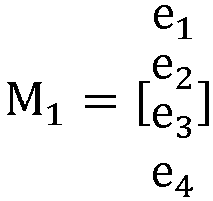
- The static environmental characteristic includes a location element characteristic e1 of the location where the event occurs, a road type characteristic e2 of the location where the event occurs, a temperature characteristic e3 of the location where the event occurs, and a weather characteristic e4 of the location where the event occurs.
- The location element characteristic e1 of the location where the event occurs includes key elements of the location where the event occurs, such as traffic intersections, ramps, forks, toll stations, schools, party and government agencies, bridges, slopes, detours, etc.
- The road type characteristic e2 includes an express road, a trunk road, a secondary trunk road, a branch road, etc.
- The temperature characteristic e3 may include a specific temperature value. For example, the environmental characteristic inside and/or outside the vehicle may be collected through temperature sensors.
- The weather characteristic e4 may include sunny, cloudy, rainy, snowy, foggy, etc.
- Based on the collection of static environmental characteristic, relevant factors affecting the driving of the vehicle and relevant factors affecting the status of the driver may be obtained. For example, in the weather characteristic, foggy days may easily affect the driver's visual distance and may also reduce the friction between the vehicle and the ground.
- The dynamic environmental characteristic may include factors that have a dynamical changing in the environment when a vehicle event occurs. For example, the dynamic environmental characteristic may include one or both of a quantity characteristic of traffic flow and a front-to-vehicle distance characteristic of a current lane.
- The dynamic environmental characteristic represents information about dynamic changes in the environment when a vehicle event occurs, and may be expressed as:

- In the above expression, f1 represents a quantity of traffic flow at a beginning of the vehicle event, f2 represents a quantity of traffic flow at an end of the vehicle event, f3 represents a distribution characteristic of the quantity of traffic flow, for quantities of traffic flow collected at a predetermined time interval in a duration of the vehicle event, and maybe expressed as:
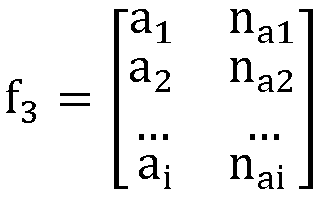
- Where, ai represents the traffic quantity, nai represents the number of occurrences when the traffic quantity is ai during a continuous process of the event.
- d1 represents a front-to-vehicle distance of the lane at the beginning of the vehicle event, that is, the distance between the vehicle and the vehicle in front. d2 represents a front-to-vehicle distance of the lane at the end of the vehicle event. d2 represents a distribution characteristic of the front-to-vehicle distance of the lane in the duration of the vehicle event. d3 may be expressed by the number of occurrences of the front-to-vehicle distance of the lane collected at a predetermined time interval in the duration of the vehicle event, for example, d3 may be expressed as:
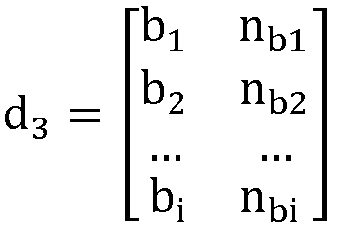
- Where, bi represents the front-to-vehicle distance of the lane collected during the event, nbi represents the number of occurrences when the front-to-vehicle distance of the lane is bi in the data collected at a predetermined time interval in a duration of the event.
- The vehicle kinetic energy characteristic may include a vehicle state at the beginning of the event, a vehicle state at the end of the event, and a distribution characteristic of vehicle states in a duration of the event. The vehicle state may include one or more of a speed of the vehicle, a longitudinal acceleration of the vehicle, a lateral acceleration of the vehicle, a vertical acceleration of the vehicle, and a relative position of the vehicle to the lane line during the event.
- For example, the vehicle kinetic energy characteristic may be used to indicate a severity of the event, and may be expressed as:

- In the above expression, the vehicle kinetic energy characteristic may include: one or more of the speed v of the vehicle, the longitudinal acceleration p of the vehicle, the lateral acceleration h of the vehicle, the vertical acceleration z of the vehicle, and the relative position l of the vehicle to the lane line.
- The speed v of the vehicle may include a speed v1 of the vehicle at the beginning of the event, a speed v2 at the end of the event, and a distribution characteristic v3 of the speed collected by the vehicle in the duration of the event. The distribution characteristic v3 of the speed may be expressed as:

- In the above expression, gi represents a speed collected at a predetermined time interval in the duration of the event, and ngi represents the number of times the speed gi is collected in the duration of the event.
- The longitudinal acceleration of the vehicle may include a longitudinal acceleration p1 of the vehicle at the beginning of the event, a longitudinal acceleration p2 at the end of the event, and a distribution characteristic p3 of the longitudinal acceleration in the duration of the event. p3 may be expressed as:

- In the above expression, ki represents the longitudinal acceleration collected at a predetermined time interval in the duration of the event, and nki represents the number of times the longitudinal acceleration ki is collected in the duration of the event.
- The lateral acceleration of the vehicle may include a lateral acceleration h1 of the vehicle at the beginning of the event, a lateral acceleration h2 at the end of the event, and a distribution characteristic h3 of the lateral acceleration in the duration of the event. h3 may be expressed as:

- In the above expression, oi represents the lateral acceleration collected at a predetermined time interval in the duration of the event, noi represents the number of times the lateral acceleration collected in the duration of the event.
- The vertical acceleration of the vehicle may include a vertical acceleration z1 of the vehicle at the beginning of the event, a vertical acceleration z2 at the end of the event, and a distribution characteristic z3 of the vertical acceleration in the duration of the event. z3 may be expressed as:

- In the above expression, qi represents the vertical acceleration collected at a predetermined time interval in the duration of the event, nqi represents the number of times the vertical acceleration collected in the duration of the event.
- The relative position of the vehicle to the lane line may be represented by a position between the vehicle and the lane line. The position between the vehicle and the lane line may include a position l1 at the beginning of the event, a position l2 at the end of the event, and a distribution characteristic l3 of the position in the duration of the event. l3 may be expressed as:
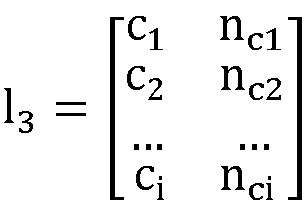
- In the above expression, ci represents the position between the vehicle and the lane line collected at a predetermined time interval in the duration of the event, and nci represents the number of times the position ci between the vehicle and the lane line is collected in the duration of the event.
- The event degree characteristic in the embodiment of the present application is used to represent a characteristic of an overall severity as determined according to the attribute and type of the event after the event occurs. Depending on a specific type of the event, the event degree characteristic may include one or more of the following: a degree characteristic of sharp acceleration, a degree characteristic of sharp turning, a degree characteristic of sharp deceleration, a degree characteristic of acceleration, a degree characteristic of deceleration, a degree characteristic of turning, a degree characteristic of vibration, a degree characteristic of speeding, a degree characteristic of low speed, a degree characteristic of relative collision, a degree characteristic of pedestrian collision, a degree characteristic of lane keeping, a degree characteristic of eye closing, a degree characteristic of yawning, a degree characteristic of head lowering, a degree characteristic of left-and-right observation, a degree characteristic of down glancing, a degree characteristic of talking on or playing with a mobile phone, a degree characteristic of smoking, a degree characteristic of eating and drinking, a degree characteristic of unfastened seat belt, a degree characteristic of one-hand off handlebar, a degree characteristic of both-hand off handlebar and a degree characteristic of facial expression.
- For each event itself, the degree characteristic may include a duration of the event, a duration of driving when the event occurs, a frequency when the event occurs and an attribute value of the event.
- The degree characteristic of sharp acceleration may be expressed as:

- In the above expression, Dur4 represents a duration of a sharp acceleration event, D-time4 represents a duration the driver has been driving (the duration of continuous driving without rest, or the duration of driving for this trip) when the sharp acceleration event occurs, and Freq4 represents a frequency with which the sharp acceleration event occurs, where a duration range may be preset, and Freq4 is the frequency of the same sharp acceleration event occurring within the predetermined duration range before the current event occurs. H-Acc represents an attribute value of the sharp acceleration event, for example, the attribute value may include an acceleration of the sharp acceleration event. The sharp acceleration event may be an acceleration event when the acceleration of the vehicle is greater than or equal to a predetermined acceleration threshold.
- The degree characteristic of sharp deceleration may be expressed as:

- In the above expression, Dur5 represents a duration of a sharp deceleration event, D-time5 represents a duration the driver has been driving (the duration of continuous driving without rest, or the duration of driving for this trip) when the sharp deceleration event occurs, and Freq5 represents a frequency with which the sharp deceleration event occurs, where a duration range may be preset, and Freq5 is the frequency of the same sharp deceleration event occurring within the predetermined duration range before the current event occurs. H-Dec represents an attribute value of the sharp deceleration event, for example, the attribute value may include an acceleration (negative value) of the sharp deceleration event. The sharp deceleration event may be a deceleration event when the acceleration of the vehicle is smaller than or equal to a predetermined acceleration threshold.
- The degree characteristic of sharp turning may be expressed as:

- In the above expression, Dur6 represents a duration of a sharp turning event, D-time6 represents a duration the driver has been driving (the duration of continuous driving without rest, or the duration of driving for this trip) when the sharp turning event occurs, and Freq6 represents a frequency with which the sharp turning event occurs, where a duration range may be preset, and Freq6 is the frequency of the same sharp deceleration event occurring within the predetermined duration range before the current event occurs. H-Turn represents an attribute value of the sharp turning event, for example, the attribute value may include a turning angle, a turning speed, etc., of the sharp turning event. DIR represents a lateral direction angle during the sharp turning event, that is, an angle between directions perpendicular to the vehicle speed direction, which is used to represent a turning degree of the sharp turning. The sharp turning event may be that a vehicle turning angle is greater than a predetermined angle value, and the turning speed is greater than a predetermined speed threshold.
- The degree characteristic of acceleration may be expressed as:

- In the above expression, Dur7 represents a duration of an acceleration event, D-time7 represents a duration the driver has been driving (the duration of continuous driving without rest, or the duration of driving for this trip) when the acceleration event occurs, and Freq7 represents a frequency with which the acceleration event occurs, where a duration range may be preset, and Freq7 is the frequency of the same acceleration event occurring within the predetermined duration range before the current event occurs. Acc represents an attribute value of the acceleration event, and the attribute value includes such as an acceleration magnitude, an acceleration duration, etc., during the acceleration. The acceleration event may refer to a state when the vehicle is accelerating.
- The degree characteristic of deceleration may be expressed as:

- In the above expression, Dur8 represents a duration of an deceleration event, D-time8 represents a duration the driver has been driving when the deceleration event occurs (the duration of continuous driving without rest, or the duration of driving for this trip), and Freq8 represents a frequency with which the deceleration event occurs, where a duration range may be preset, and Freq8 is the frequency of the same deceleration event occurring within the predetermined duration range before the current event occurs. Dec represents an attribute value of the deceleration event, and the attribute value includes such as an acceleration magnitude, a deceleration duration, etc., during the deceleration. The deceleration event can refer to a state when the vehicle is decelerating.
- The degree characteristic of turning may be expressed as:

- In the above expression, Dur9 represents a duration of a turning event, D-time9 represents a duration the driver has been driving (the duration of continuous driving without rest, or the duration of driving for this trip) when the turning event occurs, and Freq9 represents a frequency of the turning event, where a duration range may be preset, and Freq9 is the frequency of the same turning event occurring within the predetermined duration range before the current event occurs. Turn represents an attribute value of the turning event, and the attribute value includes such as a speed, a turning distance, etc., during the turning. DIR9 represents a lateral direction angle during the turning event, that is, an angle between directions perpendicular to the vehicle speed direction, which is used to represent the degree of the turning. The turning event may refer to a state when the vehicle is in arc motion.
- The degree characteristic of vibration may be expressed as:

- In the above expression, Dur10 represents a duration of a vibration event, D-time10 represents a duration the driver has been driving (the duration of continuous driving without rest, or the duration of driving for this trip) when the vibration event occurs, and Freq10 represents a frequency with which the vibration event occurs, where a duration range may be preset, and Freq10 is the frequency of the same vibration event occurring within the predetermined duration range before the current event occurs. Shock represents an attribute value of the vibration event, and the attribute value includes such as a vibration frequency, a vibration amplitude, etc., of the vibration event. Avg - T - INR represents an average time interval of the vibration event. The vibration event may refer to a state when the vehicle is in up and down vibration.
- The degree characteristic of speeding may be expressed as:

- In the above expression, Dur11 represents a duration of a speeding event, D-time11 represents a duration the driver has been driving (the duration of continuous driving without rest, or the duration of driving for this trip) when the speeding event occurs, and Freq11 represents a frequency with which the speeding event occurs, where a duration range may be preset, and Freq11 is the frequency of the same speeding event occurring within the predetermined duration range before the current event occurs. Over-V represents an attribute value of the speeding event, and the attribute value includes such as, a speeding amplitude, etc., of the speeding event. Lim represents a speed limit value of a lane where the speeding event occurs. The speeding event may be determined to be in a state of speeding by detecting that the vehicle is above the speed limit value.
- The degree characteristic of relative collision may be expressed as:

- In the above expression, Dur13 represents a duration of a relative collision event, D-time13 represents a duration the driver has been driving (the duration of continuous driving without rest, or the duration of driving for this trip) when the relative collision event occurs, and Freq13 represents a frequency with which the relative collision event occurs, where a duration range may be preset, and Freq13 is the frequency of the same relative collision event occurring within the predetermined duration range before the current event occurs. FCW represents an attribute value of the relative collision event, and the attribute value includes such as a relative minimum time, a minimum distance, etc., of the relative collision event. FCW - Tr represents a distribution characteristic of relative collision time, indicating the number of times the certain relative collision time occurs during driving. Time distribution of relative collisions may be represented by a two-dimensional matrix, for example may be expressed as:

- In the above expression, ti represents the relative collision time when the relative collision occurs, and nti represents the number of times the relative collision time occurs. Relative collision refers to an event where a vehicle collides with a vehicle traveling in an opposite direction.
- The degree characteristic of pedestrian collision may be expressed as:

- In the above expression, Dur14 represents a duration of a pedestrian collision event, D-time14 represents a duration the driver has been driving (the duration of continuous driving without rest, or the duration of driving for this trip) when the pedestrian collision event occurs, and Freq14 represents a frequency with which the pedestrian collision event occurs, where a duration range may be preset, and Freq14 is the frequency of the same relative collision event occurring within the predetermined duration range before the current event occurs. Ped - Col represents an attribute value of the pedestrian collision event, and the attribute value includes such as an absolute minimum time, a minimum distance, etc., of the pedestrian collision event. Ped - Ta represents a distribution characteristic the absolute collision time when the pedestrian collision occurs, indicating the number of times the certain absolute collision time occurs during driving. Time distribution of pedestrian collisions may be represented by a two-dimensional matrix, for example may be expressed as:

- In the above expression, tpi represents the time when the pedestrian collision occurs, and ntpi represents the number of times the absolute collision time occurs when the pedestrian collision occurs.
- The degree characteristic of lane keeping may be expressed as:

- In the above expression, Dur15 represents a duration of a lane keeping event, D-time15 represents a duration the driver has been driving (the duration of continuous driving without rest, or the duration of driving for this trip) when the lane keeping event occurs, and Freq15 represents a frequency with which the lane keeping event occurs, where a duration range may be preset, and Freq15 is the frequency of the same lane keeping event occurring within the predetermined duration range before the current event occurs. LDW represents an attribute value of the lane keeping event, and the attribute value includes such as, a lane deviation degree, etc., of the lane keeping event. Lane - T represents a type of lane line of the lane keeping, including a solid line, a dotted line, etc. DIR15 represents a lateral angle of the vehicle during the lane keeping event, that is, the magnitude of the lateral angle between a vehicle and the automobile.
- The degree characteristic of eye closing may be expressed as:

- In the above expression, Dur16 represents a duration of an eye-closing event, D-time16 represents a duration the driver has been driving (the duration of continuous driving without rest, or the duration of driving for this trip) when the eye-closing event occurs, and Freq16 represents a frequency with which the eye-closing event occurs, where a duration range may be preset, and Freq16 is the frequency of the same eye-closing event occurring within the predetermined duration range before the current event occurs. C - Eye represents an attribute value of the eye-closing event, and the attribute value includes such as, an amplitude of eye closing, etc.
- The degree characteristic of yawning may be expressed as:

- In the above expression, Dur17 represents a duration of a yawning event, D-time17 represents a duration the driver has been driving (the duration of continuous driving without rest, or the duration of driving for this trip) when the yawning event occurs, and Freq17 represents a frequency with which the yawning event occurs, where a duration range may be preset, and Freq17 is the frequency of the same yawning event occurring within the predetermined duration range before the current event occurs. Yawn represents an attribute value of the yawning event, and the attribute value includes such as, an amplitude of yawning, etc. M-Prop represents a distribution characteristic of a mouth length-to-width ratio of yawning, which may be represented by a two-dimensional matrix, for example may be represented as:

- In the above expression, pri is proportional data of the mouth length-to-width ratio, npri is the number of times the proportional of the mouth length-to-width ratio occurs according to a predetermined collection interval.
- The degree characteristic of head lowering may be represented as:

- In the above expression, Dur18 represents a duration of a head-lowering event, D-time18 represents a duration the driver has been driving (the duration of continuous driving without rest, or the duration of driving for this trip) when the head-lowering event occurs, and Freq18 represents a frequency with which the head-lowering event occurs, where a duration range may be preset, and Freq18 is the frequency of the same head-lowering event occurring within the predetermined duration range before the current event occurs. L - Down represents an attribute value of the head-lowering event, and the attribute value includes such as, a degree of head lowering, etc. D-Angle represents a distribution characteristic of head lowering angles, which may be represented by a two-dimensional matrix, for example may be represented as:

- In the above expression, dai is an angle of head lowering, ndai is the number of times the angle of the head lowering occurs according to a predetermined collection interval.
- The degree characteristic of left-and-right observation may be expressed as:

- In the above expression, Dur19 represents a duration of a left-and-right observation event, D-time19 represents a duration the driver has been driving (the duration of continuous driving without rest, or the duration of driving for this trip) when the left-and-right observation event occurs, and Freq19 represents a frequency with which the left-and-right observation event occurs, where a duration range may be preset, and Freq19 is the frequency of the same left-and-right observation event occurring within the predetermined duration range before the current event occurs. L - Around represents an attribute value of the left-and-right observation event, and the attribute value includes such as, a degree of left-and-right observation, etc. A-Angle represents an angle distribution characteristic of the left-and-right observation, which may be represented by a two-dimensional matrix, for example may be represented as:

- In the above expression, aai is an angle of the left-and-right observation, and naai is the number of times the angle of the left-and-right observation occurs according to a predetermined collection interval.
- The degree characteristic of down glancing may be expressed as:

- In the above expression, Dur20 represents a duration of a down-glancing event, D-time20 represents a duration the driver has been driving (the duration of continuous driving without rest, or the duration of driving for this trip) when the down-glancing event occurs, and Freq20 represents a frequency with which the down-glancing event occurs, where a duration range may be preset, and Freq20 is the frequency of the same down-glancing event occurring within the predetermined duration range before the current event occurs. G - Down represents an attribute value of the down-glancing event, and the attribute value includes such as, a degree of down glancing, etc.
- The degree characteristic of talking on or playing with a mobile phone may be expressed as:

- In the above expression, Dur21 represents a duration of a mobile phone calling or playing event, D-time21 represents a duration the driver has been driving (the duration of continuous driving without rest, or the duration of driving for this trip) when the mobile phone calling or playing event occurs, and Freq21 represents a frequency with which the mobile phone calling or playing event occurs, where a duration range may be preset, and Freq21 is the frequency of the same mobile phone calling or playing event occurring within the predetermined duration range before the current event occurs. P - Phone represents an attribute value of the mobile phone calling or playing event, and the attribute value includes such as a posture, an excitement, etc., when taking on or playing with the mobile phone.
- The degree characteristic of smoking may be expressed as:

- In the above expression, Dur22 represents a duration of a smoking event, D-time22 represents a duration the driver has been driving (the duration of continuous driving without rest, or the duration of driving for this trip) when the smoking event occurs, and Freq22 represents a frequency with which the smoking event occurs, where a duration range may be preset, and Freq22 is the frequency of the same smoking event occurring within the predetermined duration range before the current event occurs. Smoke represents an attribute value of the smoking event, and the attribute value includes such as the number of cigarettes smoked, a posture, etc.
- The degree characteristic of eating and drinking may be expressed as:

- In the above expression, Dur23 represents a duration of a eating-and-drinking event, D-time23 represents a duration the driver has been driving (the duration of continuous driving without rest, or the duration of driving for this trip) when the eating-and-drinking event occurs, and Freq23 represents a frequency with which the eating-and-drinking event occurs, where a duration range may be preset, and Freq23 is the frequency of the same eating-and-drinking event occurring within the predetermined duration range before the current event occurs. E&D represents an attribute value of the eating-and-drinking event, and the attribute value includes such as a content of eating, a motion amplitude of drinking or eating, etc.
- The degree characteristic of unfastened seat belt may be expressed as:

- In the above expression, Dur23 represents a duration of an unfastened seat belt event, D-time23 represents a duration the driver has been driving (the duration of continuous driving without rest, or the duration of driving for this trip) when the unfastened seat belt event occurs, and Freq23 represents a frequency with which the unfastened seat belt event occurs, where a duration range may be preset, and Freq23 is the frequency of the same unfastened seat belt event occurring within the predetermined duration range before the current event occurs. S - Belt represents an attribute value of the unfastened seat belt event, and the attribute value includes such as not wearing the seat belt properly, or forgetting to wear the seat belt, etc.
- The degree characteristic of one-hand off handlebar may be expressed as:

- In the above expression, Dur24 represents a duration of an one-hand off handlebar event, D-time24 represents a duration the driver has been driving (the duration of continuous driving without rest, or the duration of driving for this trip) when the one-hand off handlebar event occurs, and Freq24 represents a frequency with which the one-hand off handlebar event occurs, where a duration range may be preset, and Freq24 is the frequency of the same one-hand off handlebar event occurring within the predetermined duration range before the current event occurs. 0 - Handlet represents an attribute value of the one-hand off handlebar event, and the attribute value includes such as, a distance of one hand off a handlebar, etc. Herein, one hand off handlebar refers to that the driver is in a state of holding the steering wheel with one hand.
- The degree characteristic of both-hands off handlebar may be expressed as:

- In the above expression, Dur25 represents a duration of a both-hands off handlebar event, D-time25 represents a duration the driver has been driving (the duration of continuous driving without rest, or the duration of driving for this trip) when the both-hands off the handlebars event occurs, and Freq25 represents a frequency with which the both-hands off handlebar event occurs, where a duration range may be preset, and Freq25 is the frequency of the same both-hands off handlebars event occurring within the predetermined duration range before the current event occurs. N - Handlet represents an attribute value of the both-hands off handlebars event, and the attribute value includes such as a distance of both hands off a handlebar. Herein, both hands off the handlebar refers to that the driver is in a state where both hands are off the steering wheel.
- The degree characteristic of facial expression may be expressed as:

- In the above expression, Dur26 represents a duration of a facial expression event, D-time26 represents a duration the driver has been driving (the duration of continuous driving without rest, or the duration of driving for this trip) when the facial expression event occurs, and Freq26 represents a frequency with which the facial expression event occurs, where a duration range may be preset, and Freq26 is the frequency of the same facial expression event occurring within the predetermined duration range before the current event occurs. Expr represents an attribute value the facial expression event, and the attribute value includes for example a content of the facial expression, such as laughing, crying, angry, happy, sad, etc. Herein, the facial expression refers to a facial expression of the driver in a driving state.
- In step S102, the static environmental characteristic, the dynamic environmental characteristic, the vehicle kinetic energy characteristic, and the event degree characteristic are input into a fully-connected neural network that has been trained in advance, and an evaluation result of the event is calculated by means of the fully-connected neural network.
- After the static environmental characteristic, the dynamic environmental characteristic, the vehicle kinetic energy characteristic and the event degree characteristic are determined, the characteristic information may be input into the pre-trained fully-connected neural network, and the evaluation result of the event is calculated by the trained fully-connected neural network. The calculated evaluation result of the event may include evaluation results such as good, bad, neutral, etc., or may also be a result of a comprehensive score of the event.
- When using the fully-connected neural network to calculate the evaluation result corresponding to the characteristic information, the evaluation result of the event may be obtained by nested computation through multiple fully-connected layers. For example, in the schematic diagram of the fully-connected neural network for calculating the evaluation result shown in
FIG. 2 , the static environmental characteristic and dynamic environmental characteristic may be calculated through a first fully-connected layer to obtain an environmental characteristic value, the vehicle kinetic energy characteristic may be calculated through a second fully-connected layer to obtain a vehicle kinetic energy characteristic value of the event, and the event degree characteristic may be calculated through a third fully-connected layer to obtain an event degree characteristic value. The environmental characteristic value, the vehicle kinetic energy characteristic value and the event degree characteristic value are further calculated through a fourth fully-connected layer to obtain the evaluation result of the event. - It would be obvious that the present application is not necessary to be limited to the structure of the fully-connected neural network shown in
FIG. 2 , and other structures of the trained fully-connected neural network may also be used, such as an evaluation calculation is performed directly using a structure of one fully-connected layer. - The present application effectively solves the problem that the evaluation factors of alarm events are too single by introducing static environmental characteristic, dynamic environmental characteristic, vehicle kinetic energy characteristic and event degree characteristic; and introduces characteristic information such as the time of occurrence of the alarm event, duration, surrounding environment, weather conditions, event degree, frequency of occurrence per unit time, and continuity of event occurrence, to fully characterize the event from multi-dimensional information, thereby helping to improve the accuracy of event evaluation.
- In addition, in the present application, by introducing multi-dimensional information of the event, constructing a matrix of characteristics, and utilizing multiple fully-connected layers to obtain the environmental characteristics, the vehicle kinetic energy characteristic, and the degree characteristic of the event itself, and to eventually evaluate the event, a score result of the event can better reflect the characteristics of the event itself.
- It should be understood that the sequence number of each step in the above embodiment does not mean an order of execution. The execution order of each process should be determined by its function and internal logic, and should not constitute any limitation on the implementation processes of the embodiments of the present application.
-
FIG. 3 is a schematic diagram of a device for evaluation of automobile safety driving events provided by an embodiment of the present application. As shown inFIG. 3 , the device includes: acharacteristic acquisition unit 301 and anevaluation unit 302. - The
characteristic acquisition unit 301 is configured to obtain an event's static environmental characteristic, dynamic environmental characteristic, vehicle kinetic energy characteristic and degree characteristic of the event itself. - The
evaluation unit 302 is configured to input the static environmental characteristic, the dynamic environmental characteristic, the vehicle kinetic energy characteristic and the degree characteristic of the event itself into a fully-connected neural network that has been trained, and calculate an evaluation result of the event by means of the fully-connected neural network. - The device for evaluation of the automobile safety driving events shown in
FIG. 3 corresponds to the automobile safety driving method shown inFIG. 1 . -
FIG. 4 is a schematic diagram of a piece of equipment for evaluation of automobile safety driving events provided by an embodiment of the present application. As shown inFIG. 4 , theequipment 4 for evaluation of automobile safety driving events of this embodiment includes: aprocessor 40, amemory 41, and acomputer program 42 stored in thememory 41 and executable by theprocessor 40, such as a program for evaluation of automobile safety driving events. Theprocessor 40, when executing thecomputer program 42, is configured to implement steps in each method embodiment for evaluation of automobile safety driving events. Alternatively, theprocessor 40, when executing thecomputer program 42, is configured to implement functions of each module/unit in the above-mentioned device embodiments. - Exemplarily, the
computer program 42 may be divided into one or more modules/units, and the one or more modules/units are stored in thememory 41 and executed by theprocessor 40 to complete the present application. The one or more modules/units may be a series of computer program instruction segments capable of completing specific functions, and the instruction segments are used to describe an execution process of thecomputer program 42 in theequipment 4 for evaluation of automobile safety driving events. - The
equipment 4 for evaluation of automobile safety driving events may be an automobile, automobile onboard equipment, remote cloud equipment, local area network server equipment, etc. The device for acquiring characteristics may include various sensors, etc. The equipment for evaluation of automobile safety driving events may include, but is not limited to, aprocessor 40 and amemory 41. Those skilled in the art will understand thatFIG. 4 is only an example of theequipment 4 for evaluation of automobile safety driving events, and does not constitute a limitation on theequipment 4 for evaluation of automobile safety driving events. The equipment may include more or fewer components than shown in the figure, or may include a combination of some components, or different components. For example, the equipment for evaluation of automobile safety driving events may also include input and output devices, network access devices, buses, etc. - The
processor 40 may be a central processing unit (Central Processing Unit, CPU), or other general-purpose processor, a digital signal processor (Digital Signal Processor, DSP), an application specific integrated circuit (Application Specific Integrated Circuit, ASIC), a field-programmable gate array (Field-Programmable Gate Array, FPGA) or other programmable logic devices, discrete gates or transistor logic devices, discrete hardware components, etc. The general-purpose processor may be a microprocessor or the processor may be any conventional processor, etc. - The
memory 41 may be an internal storage unit of theequipment 4 for evaluation of automobile safety driving events, such as a hard disk or memory of theequipment 4 for evaluation of automobile safety driving events. Thememory 41 may also be an external storage device of theequipment 4 for evaluation of automobile safety driving events, such as a plug-in hard disk, a smart media card (Smart Media Card, SMC), or a secure digital (Secure Digital, SD) card, a flash card (Flash Card), etc., equipped on theequipment 4 for evaluation of automobile safety driving events. Furthermore, thememory 41 may also include both an internal storage unit of theequipment 4 for evaluation of automobile safety driving events and an external storage device. Thememory 41 is configured to store the computer program and other programs and data required by the equipment for evaluation of automobile safety driving events. Thememory 41 may also be configured to temporarily store data that has been output or is to be output. - It can be clearly understood by those skilled in the art that for the convenience and simplicity of description, only the division of the above-mentioned functional units and modules is exemplarily illustrated. In actual applications, the above-mentioned functions may be assigned to different functional units and modules as needed, that is, an internal structure of the device is divided into different functional units or modules to complete all or part of the functions described above. Each functional unit and module in the embodiment may be integrated into one processing unit, or each unit may exist physically separately, or two or more units may be integrated into one unit, and the above integrated unit may be implemented in the form of hardware or in the form of software functional units. In addition, specific names of various functional unit and module are only for the convenience of distinguishing each other, and are not intended to limit the protection scope of the present application. For specific working process of the units and modules in the above system, references may be made to the corresponding process in the above method embodiment, which will not be repeated here.
- In the above embodiments, the description of each embodiment has its own emphasis. For the part that is not described or recorded in detail in a certain embodiment, references may be made to the relevant description of other embodiments.
- It would be readily conceivable for a person of ordinary skill in the art that the units and algorithm steps of each example described in combination with the embodiments disclosed in this article may be implemented in electronic hardware, or in a combination of computer software and electronic hardware. Whether these functions are executed in hardware or software depends on the specific application and design constraints of the technical solution. Technical professionals may use different methods for each particular application to achieve the described functionality, but such implementation should not be considered beyond the scope of the present application.
- In the embodiments provided in the present application, it should be understood that the disclosed device/terminal equipment and method may be implemented in other ways. For example, the device/terminal equipment embodiments described above are only schematic. For example, the division of the modules or units is only a logical function division. Other division methods may also be possible in actual implementation, such as multiple units or components may be combined or integrated into another system, or some features may be ignored or not executed. In addition, the coupling or direct coupling or communication connection between various devices or units shown or discussed may be an indirect coupling or communication connection of devices or units through some interfaces, which may be an electrical connection, a mechanical connection or may be in other forms.
- The units described as separate components may or may not be physically separated, and the components displayed as units may or may not be physical units, that is, these components may be located in one place, or may be distributed on multiple network units. Some or all of the units may be selected according to actual needs to achieve the purpose of the technical solution of the embodiment.
- In addition, each functional unit in each embodiment of the present application may be integrated into a processing unit, or each unit may exist physically separately, or two or more units may be integrated into one unit. The above-mentioned integrated units may be implemented in the form of hardware or in the form of software functional units.
- The integrated unit, if implemented in the form of a software functional unit and sold or used as an independent product, may be stored in a computer-readable storage medium. Based on this understanding, the present application may implement all or part of the processes in the methods of the above embodiments by instructing relevant hardware through computer-readable instructions. The computer-readable instructions may be stored in a computer-readable storage medium, and the steps of each of the above method embodiments can be implemented when the computer-readable instructions are executed by the processor. Among them, the computer-readable instructions include computer-readable instruction codes, and the computer-readable instruction codes may be in a form of source codes, a form of object codes, executable files or some intermediate forms, etc. The computer-readable medium may at least include: any entity or device capable of carrying computer-readable instruction codes to an apparatus/terminal device, a recording medium, a computer memory, a read-only memory (ROM, Read-Only Memory), a random-access memory (RAM, Random Access Memory), electrical carrier signals, telecommunications signals, and software distribution media. For example, U disk, a mobile hard disk, a magnetic disk or CD, etc. In some jurisdictions, subject to legislation and patent practice, computer-readable media may not be electrical carrier signals and telecommunications signals.
- The above-described embodiments are intended only to illustrate the technical solutions of the present application, rather than limiting the present application. Although the present application has been described in detail with reference to the foregoing embodiments, it should be understood by those of ordinary skill in the art that the technical solutions described in the above-mentioned embodiments may still be modified, or some of the technical features in the embodiments are equivalently substituted. These modifications or substitutions do not cause the essence of the corresponding technical solutions to deviate from the spirit and scope of the technical solutions in the embodiments of the present application, and thus should all be included within the protection scope of the present application.
Claims (10)
- A method for evaluation of automobile safety driving events, characterized in that the method comprises:obtaining a static environmental characteristic, a dynamic environmental characteristic, a vehicle kinetic energy characteristic and an event degree characteristic of an event; andinputting the static environmental characteristic, the dynamic environmental characteristic, the vehicle kinetic energy characteristic and the degree characteristic of the event itself into a fully-connected neural network that has been trained in advance, and calculating an evaluation result of the event by means of the fully-connected neural network.
- The method according to claim 1, characterized in that the event degree characteristic comprises one or more of a degree characteristic of sharp acceleration, a degree characteristic of sharp deceleration, a degree characteristic of sharp turning, a degree characteristic of acceleration, a degree characteristic of deceleration, a degree characteristic of turning, a degree characteristic of vibration, a degree characteristic of speeding, a degree characteristic of low speed, a degree characteristic of relative collision, a degree characteristic of pedestrian collision, a degree characteristic of lane keeping, a degree characteristic of eye closing, a degree characteristic of yawning, a degree characteristic of head lowering, a degree characteristic of left-and-right observation, a degree characteristic of down glancing, a degree characteristic of talking on or playing with a mobile phone, a degree characteristic of smoking, a degree characteristic of eating and drinking, a degree characteristic of unfastened seat belt, a degree characteristic of one-hand off handlebar, a degree characteristic of both-hands off handlebar and a degree characteristic of facial expression.
- The method according to claim 2, characterized in that the event degree characteristic comprises a duration of the event, a duration of driving when the event occurs, a frequency of occurrence of the event and an attribute value of the event.
- The method according to claim 3, characterized in that:the degree characteristic of sharp turning further comprises a lateral direction angle during a sharp turning;the degree characteristic of vibration further comprises an average interval duration of a vibration event;the degree characteristic of speeding further comprises a speed limit value;the degree characteristic of relative collision further comprises a time distribution characteristic of relative collision occurrence times;the degree characteristic of pedestrian collision further comprises a time distribution characteristic of pedestrian collisions occurrence times;the degree characteristic of lane keeping further comprises a type of lane line;the degree characteristic of yawning further comprises a distribution characteristic of mouth length-to-width ratios;the degree characteristic of head lowering further comprises an angle distribution characteristic of head lowering; andthe degree characteristic of left-and-right observation further comprises a distribution characteristic of head deflection angles.
- The method according to claim 1, characterized in that the vehicle kinetic energy characteristic comprises a vehicle state at a beginning of the event, a vehicle state at an end of the event and a distribution characteristic of vehicle states in a duration of the event.
- The method according to claim 5, characterized in that the vehicle state comprises one or more of a speed of a vehicle, a longitudinal acceleration of the vehicle, a lateral acceleration of the vehicle, an acceleration in a vertical direction of the vehicle and a relative position of the vehicle to a lane line during the event.
- The method according to claim 1, characterized in that the static environmental characteristic comprises one or more of a characteristic of road location element, a characteristic of road type, a characteristic of temperature and a characteristic of weather, and the dynamic environmental characteristic comprises one or two of a quantity characteristic of a traffic flow and a front-to-vehicle distance characteristic of a current lane.
- The method according to claim 7, characterized in that:the quantity characteristic of the traffic flow comprises a quantity of the traffic flow at a beginning of the event, a quantity of the traffic flow at an end of the event and a distribution characteristic of quantities of the traffic flow in a duration of the event.the front-to-vehicle distance characteristic of the current lane comprises a front-to-vehicle distance of the current lane at the beginning of the event, a front-to-vehicle distance of the current lane at the end of the event and a distribution characteristic of front-to-vehicle running of the current lane in the duration of the event.
- Equipment for evaluation of automobile safety driving events, comprising a memory, a processor, and a computer program stored in the memory and executable by the processor, characterized in that the processor, when executing the computer program, is configured to implement steps of the method according to in any one of claims 1 to 8.
- A computer-readable storage medium in which a computer program is stored, characterized in that the computer program, when executed by a processor, causes steps of the method according to any one of claims 1 to 8 to be implemented.
Applications Claiming Priority (1)
| Application Number | Priority Date | Filing Date | Title |
|---|---|---|---|
| PCT/CN2022/128382 WO2024087207A1 (en) | 2022-10-28 | 2022-10-28 | Automobile safety driving event evaluation method, device and storage medium |
Publications (2)
| Publication Number | Publication Date |
|---|---|
| EP4481708A1 true EP4481708A1 (en) | 2024-12-25 |
| EP4481708A4 EP4481708A4 (en) | 2025-07-23 |
Family
ID=90829763
Family Applications (1)
| Application Number | Title | Priority Date | Filing Date |
|---|---|---|---|
| EP22963188.2A Pending EP4481708A4 (en) | 2022-10-28 | 2022-10-28 | METHOD, DEVICE AND STORAGE MEDIUM FOR ASSESSING VEHICLE SAFETY DRIVING EVENTS |
Country Status (3)
| Country | Link |
|---|---|
| EP (1) | EP4481708A4 (en) |
| CN (1) | CN118202395A (en) |
| WO (1) | WO2024087207A1 (en) |
Family Cites Families (9)
| Publication number | Priority date | Publication date | Assignee | Title |
|---|---|---|---|---|
| EP3266668B1 (en) * | 2016-07-06 | 2025-02-19 | Continental Autonomous Mobility Germany GmbH | Device for determining driving warning information |
| EP3495223B1 (en) * | 2017-12-11 | 2025-04-16 | Polestar Performance AB | Driving intervention in vehicles |
| CN112105537B (en) * | 2018-05-22 | 2024-06-14 | V3智能科技私人有限公司 | Driving risk calculation device and method |
| CN109840612A (en) * | 2018-07-24 | 2019-06-04 | 上海赢科信息技术有限公司 | User's driving behavior analysis method and system |
| CN109242251B (en) * | 2018-08-03 | 2020-03-06 | 百度在线网络技术(北京)有限公司 | Driving behavior safety detection method, device, equipment and storage medium |
| EP3722908B1 (en) * | 2019-04-09 | 2022-11-30 | Bayerische Motoren Werke Aktiengesellschaft | Learning a scenario-based distribution of human driving behavior for realistic simulation model |
| CN111047047A (en) * | 2019-11-15 | 2020-04-21 | 奇点汽车研发中心有限公司 | Driving model training method and device, electronic equipment and computer storage medium |
| US12097845B2 (en) * | 2020-10-28 | 2024-09-24 | Toyota Research Institute, Inc. | Systems and methods for identifying high-risk driving situations from driving data |
| CN113570747B (en) * | 2021-06-29 | 2023-05-23 | 东风汽车集团股份有限公司 | Driving safety monitoring system and method based on big data analysis |
-
2022
- 2022-10-28 CN CN202280063554.9A patent/CN118202395A/en active Pending
- 2022-10-28 EP EP22963188.2A patent/EP4481708A4/en active Pending
- 2022-10-28 WO PCT/CN2022/128382 patent/WO2024087207A1/en not_active Ceased
Also Published As
| Publication number | Publication date |
|---|---|
| WO2024087207A1 (en) | 2024-05-02 |
| EP4481708A4 (en) | 2025-07-23 |
| CN118202395A (en) | 2024-06-14 |
Similar Documents
| Publication | Publication Date | Title |
|---|---|---|
| US12614419B2 (en) | Driving event data analysis | |
| US12610210B2 (en) | Method for smartphone-based accident detection | |
| US9707971B2 (en) | Driving characteristics diagnosis device, driving characteristics diagnosis system, driving characteristics diagnosis method, information output device, and information output method | |
| US10636291B1 (en) | Driving event data analysis | |
| Sarala et al. | Emotionally adaptive driver voice alert system for advanced driver assistance system (ADAS) applications | |
| Saiprasert et al. | Driver behaviour profiling using smartphone sensory data in a V2I environment | |
| CN105564436A (en) | Advanced driver assistance system | |
| CN107195024A (en) | Universal vehicle operation data record system and processing method | |
| CN108986473A (en) | Vehicle-mounted traffic violation identification and processing system and method | |
| CN113140132A (en) | Pedestrian anti-collision early warning system and method based on 5G V2X mobile intelligent terminal | |
| CN117104256A (en) | Vehicle risk event monitoring method, device, computer equipment and storage medium | |
| CN110211401A (en) | A kind of dangerous tip method and device of driving | |
| Kirushanth et al. | Telematics and road safety | |
| WO2016107876A1 (en) | Vehicular motion monitoring method | |
| CN113298361A (en) | Dangerous driving behavior evaluation method and device, electronic equipment and system | |
| WO2024243804A1 (en) | Driving risk analysis method and system for driver, and electronic device and storage medium | |
| WO2024087205A1 (en) | Driver state assessment method and apparatus, electronic device, and storage medium | |
| CN107539038B (en) | Vehicle tire pressure state monitoring method and device | |
| EP4481708A1 (en) | Automobile safety driving event evaluation method, device and storage medium | |
| CN117574088A (en) | A bus driver driving behavior early warning evaluation method, system and device | |
| CN118103833A (en) | Driver status detection method, device, electronic device and storage medium | |
| Găvrută et al. | Software solution for monitoring and analyzing driver behavior | |
| CN114842571B (en) | Driving behavior data determining method and device | |
| Tsai et al. | A safety driving assistance system by integrating in-vehicle dynamics and real-time traffic information | |
| CN118043248B (en) | Driver risk analysis methods, systems, electronic devices and storage media |
Legal Events
| Date | Code | Title | Description |
|---|---|---|---|
| STAA | Information on the status of an ep patent application or granted ep patent |
Free format text: STATUS: THE INTERNATIONAL PUBLICATION HAS BEEN MADE |
|
| PUAI | Public reference made under article 153(3) epc to a published international application that has entered the european phase |
Free format text: ORIGINAL CODE: 0009012 |
|
| STAA | Information on the status of an ep patent application or granted ep patent |
Free format text: STATUS: REQUEST FOR EXAMINATION WAS MADE |
|
| 17P | Request for examination filed |
Effective date: 20240917 |
|
| AK | Designated contracting states |
Kind code of ref document: A1 Designated state(s): AL AT BE BG CH CY CZ DE DK EE ES FI FR GB GR HR HU IE IS IT LI LT LU LV MC ME MK MT NL NO PL PT RO RS SE SI SK SM TR |
|
| REG | Reference to a national code |
Ref country code: DE Ref legal event code: R079 Free format text: PREVIOUS MAIN CLASS: G08G0001000000 Ipc: B60W0040090000 |
|
| A4 | Supplementary search report drawn up and despatched |
Effective date: 20250624 |
|
| RIC1 | Information provided on ipc code assigned before grant |
Ipc: B60W 40/09 20120101AFI20250617BHEP Ipc: G08G 1/00 20060101ALI20250617BHEP Ipc: G06Q 10/00 20230101ALI20250617BHEP Ipc: G06N 3/02 20060101ALI20250617BHEP Ipc: B60W 40/08 20120101ALN20250617BHEP |
|
| DAV | Request for validation of the european patent (deleted) | ||
| DAX | Request for extension of the european patent (deleted) |