EP4478747A1 - Wiedergabe von audiosignalen unter verwendung von virtualisiertem nachhall - Google Patents
Wiedergabe von audiosignalen unter verwendung von virtualisiertem nachhall Download PDFInfo
- Publication number
- EP4478747A1 EP4478747A1 EP24177314.2A EP24177314A EP4478747A1 EP 4478747 A1 EP4478747 A1 EP 4478747A1 EP 24177314 A EP24177314 A EP 24177314A EP 4478747 A1 EP4478747 A1 EP 4478747A1
- Authority
- EP
- European Patent Office
- Prior art keywords
- brir
- audio signal
- frequency components
- audio
- frequency
- Prior art date
- Legal status (The legal status is an assumption and is not a legal conclusion. Google has not performed a legal analysis and makes no representation as to the accuracy of the status listed.)
- Pending
Links
Images





Classifications
-
- H—ELECTRICITY
- H04—ELECTRIC COMMUNICATION TECHNIQUE
- H04S—STEREOPHONIC SYSTEMS
- H04S7/00—Indicating arrangements; Control arrangements, e.g. balance control
- H04S7/30—Control circuits for electronic adaptation of the sound field
- H04S7/302—Electronic adaptation of stereophonic sound system to listener position or orientation
-
- H—ELECTRICITY
- H04—ELECTRIC COMMUNICATION TECHNIQUE
- H04S—STEREOPHONIC SYSTEMS
- H04S7/00—Indicating arrangements; Control arrangements, e.g. balance control
- H04S7/30—Control circuits for electronic adaptation of the sound field
- H04S7/305—Electronic adaptation of stereophonic audio signals to reverberation of the listening space
-
- H—ELECTRICITY
- H04—ELECTRIC COMMUNICATION TECHNIQUE
- H04S—STEREOPHONIC SYSTEMS
- H04S3/00—Systems employing more than two channels, e.g. quadraphonic
- H04S3/008—Systems employing more than two channels, e.g. quadraphonic in which the audio signals are in digital form, i.e. employing more than two discrete digital channels
-
- H—ELECTRICITY
- H04—ELECTRIC COMMUNICATION TECHNIQUE
- H04S—STEREOPHONIC SYSTEMS
- H04S7/00—Indicating arrangements; Control arrangements, e.g. balance control
- H04S7/30—Control circuits for electronic adaptation of the sound field
- H04S7/302—Electronic adaptation of stereophonic sound system to listener position or orientation
- H04S7/303—Tracking of listener position or orientation
- H04S7/304—For headphones
-
- H—ELECTRICITY
- H04—ELECTRIC COMMUNICATION TECHNIQUE
- H04S—STEREOPHONIC SYSTEMS
- H04S7/00—Indicating arrangements; Control arrangements, e.g. balance control
- H04S7/30—Control circuits for electronic adaptation of the sound field
- H04S7/305—Electronic adaptation of stereophonic audio signals to reverberation of the listening space
- H04S7/306—For headphones
-
- H—ELECTRICITY
- H04—ELECTRIC COMMUNICATION TECHNIQUE
- H04S—STEREOPHONIC SYSTEMS
- H04S7/00—Indicating arrangements; Control arrangements, e.g. balance control
- H04S7/30—Control circuits for electronic adaptation of the sound field
- H04S7/307—Frequency adjustment, e.g. tone control
-
- H—ELECTRICITY
- H04—ELECTRIC COMMUNICATION TECHNIQUE
- H04S—STEREOPHONIC SYSTEMS
- H04S2400/00—Details of stereophonic systems covered by H04S but not provided for in its groups
- H04S2400/01—Multi-channel, i.e. more than two input channels, sound reproduction with two speakers wherein the multi-channel information is substantially preserved
-
- H—ELECTRICITY
- H04—ELECTRIC COMMUNICATION TECHNIQUE
- H04S—STEREOPHONIC SYSTEMS
- H04S2400/00—Details of stereophonic systems covered by H04S but not provided for in its groups
- H04S2400/11—Positioning of individual sound objects, e.g. moving airplane, within a sound field
-
- H—ELECTRICITY
- H04—ELECTRIC COMMUNICATION TECHNIQUE
- H04S—STEREOPHONIC SYSTEMS
- H04S2400/00—Details of stereophonic systems covered by H04S but not provided for in its groups
- H04S2400/13—Aspects of volume control, not necessarily automatic, in stereophonic sound systems
-
- H—ELECTRICITY
- H04—ELECTRIC COMMUNICATION TECHNIQUE
- H04S—STEREOPHONIC SYSTEMS
- H04S2400/00—Details of stereophonic systems covered by H04S but not provided for in its groups
- H04S2400/15—Aspects of sound capture and related signal processing for recording or reproduction
-
- H—ELECTRICITY
- H04—ELECTRIC COMMUNICATION TECHNIQUE
- H04S—STEREOPHONIC SYSTEMS
- H04S2420/00—Techniques used stereophonic systems covered by H04S but not provided for in its groups
- H04S2420/01—Enhancing the perception of the sound image or of the spatial distribution using head related transfer functions [HRTF's] or equivalents thereof, e.g. interaural time difference [ITD] or interaural level difference [ILD]
-
- H—ELECTRICITY
- H04—ELECTRIC COMMUNICATION TECHNIQUE
- H04S—STEREOPHONIC SYSTEMS
- H04S2420/00—Techniques used stereophonic systems covered by H04S but not provided for in its groups
- H04S2420/07—Synergistic effects of band splitting and sub-band processing
-
- H—ELECTRICITY
- H04—ELECTRIC COMMUNICATION TECHNIQUE
- H04S—STEREOPHONIC SYSTEMS
- H04S2420/00—Techniques used stereophonic systems covered by H04S but not provided for in its groups
- H04S2420/11—Application of ambisonics in stereophonic audio systems
Definitions
- the various embodiments relate generally to audio processing, and more specifically, to techniques for rendering audio signals using virtualized reverberation.
- Reverberation refers to the persistence of sound in an enclosed or semienclosed space after the sound has been produced by a source.
- an acoustic space such as a room, concert hall, movie theater, etc.
- the propagating sound waves travel through the air and reflect off boundaries of the acoustic space, such as walls, ceilings, and floors, and/or objects included in the acoustic space.
- the reflected sound waves continue to bounce off the boundary surfaces and other objects within the acoustic space, these reflections blend together and gradually decay over time as the sound energy is absorbed by surfaces and/or objects in the acoustic space.
- the above-described reverberation effects can be artificially added to audio signals using digital signal processing techniques.
- a sound engineer can render audio signals with reverberation to simulate the effects of listening to music in a particular acoustic environment, such as a concert hall or an auditorium.
- audio signals can be rendered with reverberation to recreate the sounds of acoustic environments depicted on screen, such as caves, corridors, or specific outdoor spaces.
- audio signals rendered with reverberation allow users to perceive an enhanced sense of presence and immersion with the augmented or virtual world.
- RIR room impulse response
- An RIR is the timedomain acoustic transfer function between a sound source and a receiver in a given acoustic space (e.g., a concert hall, an auditorium, etc.).
- the RIR of an acoustic space can be measured, for example using loudspeakers and a microphone, or simulated using acoustic modelling software.
- One drawback to convolving an audio signal with an RIR is that when using high order processing techniques, convolving the long reverberation tails included an RIR with the audio signal is computationally very expensive and time consuming.
- an RIR derived from the model of an acoustic space can be difficult to obtain and/or generate and often fails to capture all of the reverberation effects of an acoustic space.
- Various embodiments of the present disclosure set forth a computer-implemented method for processing audio.
- the method includes obtaining a binaural room impulse response (BRIR) of an acoustic space, receiving an input audio signal, separating the input audio signal into low-frequency components and high-frequency components, and dividing the BRIR of the acoustic space into a first portion that occurs before a first time and a second portion that occurs after the first time.
- BRIR binaural room impulse response
- the method further includes generating a first component of an output audio signal based on the high-frequency components of the input audio signal and the first portion of the BRIR, generating a second component of the output audio signal based on the high-frequency components of the input audio signal and the second portion of the BRIR, generating a third component of the output audio signal based on the low-frequency components of the input audio signal and the BRIR, and outputting the output audio signal
- At least one technical advantage of the disclosed techniques relative to the prior art is that, with the disclosed techniques, the measured RIR of an acoustic space can be used to add reverberation to an audio signal with a lower computational cost. Accordingly, with the disclosed techniques, relatively modest processing power can be used to render reverberation for a large number of sound sources and acoustic spaces based on measured room impulse responses, which sound more natural than room impulse responses derived from models of acoustic spaces.
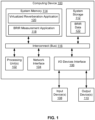
- FIG. 1 is a block diagram of a computing device 100, according to various embodiments.
- computing device 100 can be used to render audio signals using virtualized reverberation techniques.
- Computing device 100 can be implemented as any type of computing device, such as a desktop computer, a laptop computer, a mobile device, a server, or a smart audio output device, suitable for practicing the various embodiments.
- computing device 100 includes, without limitation, one or more processing units 102, network interface 104, input/output (I/O) devices interface 106, input device(s) 108, output device(s) 110, system storage 112, and system memory 114.
- Computing device 100 further includes an interconnect 116 that is configured to facilitate transmission of data, such as programming instructions and application data, between processing unit(s) 102, network interface 104, I/O devices interface 106, system storage 112, and system memory 114.
- Processing unit(s) 102 can be any technically feasible processing device configured to process data and execute program instructions.
- processing unit(s) 102 could include one or more central processing units (CPUs), digital signal processors (DSPs), graphics processing units (GPUs), application-specific integrated circuits (ASICs), field-programmable gate arrays (FPGAs), microprocessors, microcontrollers, other types of processing units, and/or a combination of different processing units.
- Processing unit(s) 102 is configured to retrieve and execute programming instructions, such as binaural room impulse response (BRIR) measurement application 118 and virtualized reverberation application 120, stored in system memory 114.
- processing unit(s) 102 is configured to store application data (e.g., software libraries) and retrieve application data from system storage 112 and/or system memory 114.
- application data e.g., software libraries
- Network interface 104 is hardware, software, or a combination of hardware and software, that is configured to connect to and interface with one or more devices and/or networks.
- network interface 104 facilitates communication with other devices or systems via one or more standard and/or proprietary protocols (e.g., Bluetooth, a proprietary protocol associated with a specific manufacturer, etc.)
- I/O devices interface 106 is configured to receive input data from input device(s) 108 and transmit the input data to processing unit(s) 102 via interconnect 116.
- input device(s) 108 can include one or more buttons, a keyboard, a mouse, a graphical user interface, a touchscreen display, a microphone, and/or other input devices.
- I/O devices interface 106 is further configured to receive output data from processing unit(s) 102 via interconnect 116 and transmit the output data to output device(s) 110.
- output device(s) 110 can include one or more of a display device, a touchscreen display, a graphical user interface, a loudspeaker, and/or other output devices.
- System storage 112 can include non-volatile storage for applications, software modules, and data, and can include fixed or removable disk drives, flash memory devices, and CD-ROM, DVD-ROM, Blu-Ray, HD-DVD, or other magnetic, optical, solid state storage devices, and/or the like.
- System storage 112 can be fully or partially located in a remote storage system, referred to herein as "the cloud," and accessed through network connections via network interface 104.
- System storage 112 is configured to store non-volatile data such as files (e.g., audio files, video files, subtitles, application files, software libraries, etc.).
- system storage 112 stores binaural room impulse response (BRIR) data 122 associated with the measured BRIRs of one or more acoustic spaces.
- BRIR binaural room impulse response
- a binaural room impulse response refers to the acoustic impulse response between a sound source and a listener's ears in an acoustic space.
- each BRIR includes a left ear component of the BRIR and a right ear component of the BRIR.
- System memory 114 can include a random access memory (RAM) module, a flash memory unit, or any other type of memory unit or combination thereof.
- RAM random access memory
- processing unit(s) 102, network interface 104, and I/O devices interface 106, are configured to read data from and write data to system memory 114.
- System memory 114 includes various software programs and modules (e.g., an operating system, one or more applications) that can be executed by processing unit(s) 102 and application data (e.g., data loaded from system storage 112) associated with said software programs.
- application data e.g., data loaded from system storage 112
- system memory 114 includes BRIR measurement application 118 and virtualized reverberation application 120.
- BRIR measurement application 118 can be executed by processing unit(s) 102 to measure the BRIR of an acoustic space and store the measured BRIR of the acoustic space as BRIR data 122 in system storage 112.
- Figure 2 is a block diagram of an example system 200 for measuring the binaural room impulse response of an acoustic space 202.
- Acoustic space 202 can be any type of room or listening environment for which it is desired to simulate a listening experience with reverberation effects.
- acoustic space 202 can be a concert hall, an auditorium, a theater, a stadium, or some other type of listening environment.
- system 200 includes computing device 100 executing BRIR measurement application 118, a loudspeaker 204, and an omni-directional microphone 206.
- loudspeaker 204 is illustrated as a single loudspeaker, in some embodiments, system 200 includes multiple loudspeakers distributed around acoustic space 202. In some embodiments, loudspeaker 204 includes multiple speaker drivers. For example, loudspeaker 204 includes one or more tweeters, mid-range drivers, and woofers.
- BRIR measurement application 118 controls loudspeaker 204 to emit audio signals within acoustic space 202.
- Omni-directional microphone 206 records the emitted audio signals propagating through acoustic space 202 and BRIR measurement application 118 processes the recorded audio signals to determine the BRIR of acoustic space 202.
- BRIR measurement application 118 can use one or more known techniques, such as the maximum-length sequence (MLS) technique, the inverse repeated sequence (IRS) technique, the time-stretched pulses technique, or the logarithmic sinesweep technique, to measure and determine the BRIR of acoustic space 202.
- the BRIR measurement application 118 then stores the measured BRIR of acoustic space 202 as BRIR data 122 in system storage 112.
- the BRIR of acoustic space 202 is the acoustic impulse response between a sound source and a listener's ears in acoustic space 202.
- the BRIR of acoustic space 202 includes a left ear component of the BRIR and a right ear component of the BRIR.
- virtualized reverberation application 120 when executed by processing unit(s) 102, renders audio signals with reverberation based on a measured BRIR of an acoustic space. For example, virtualized reverberation application 120 renders an audio signal with reverberation based on the BRIR of acoustic space 202 that was measured by BRIR measurement application 118 and stored as BRIR data 122 in system storage 112. Rendering an audio signal with reverberation based on a measured BRIR of an acoustic space includes adding reverberation to the audio signal to simulate the effects of listening to the playback of audio in the acoustic space.
- virtualized reverberation application 120 when rendering an audio signal with reverberation based on a measured BRIR, filters, or separates, the measured BRIR into the mid-to-high-frequency components of the measured BRIR and the low-frequency components of the measured BRIR.
- mid-to-high-frequency can be used interchangeably with the term high-frequency.
- Figure 3 illustrates the mid-to-high-frequency components 300 of a measured BRIR of an acoustic space, according to one or more aspects of the various embodiments.
- the Figure 3 illustrates the mid-to-high-frequency components 300 of the BRIR of acoustic space 202 measured by BRIR measurement application 118.
- the mid-to-high-frequency components 300 of the measured BRIR include the components of the measured BRIR that have frequencies greater than a crossover frequency.
- the value of the crossover frequency is determined empirically.
- the value of the crossover frequency is determined based on one or more characteristics of acoustic space 202. In one non-limiting example, the crossover frequency is 900 Hz.
- the value of the crossover frequency is less than 900 Hz or greater than 900 Hz.
- the mid-to-high-frequency components 300 of the measured BRIR of acoustic space 202 can also be referred to simply as the high-frequency components of the measured BRIR of acoustic space 202.
- the mid-to-high-frequency components of the measured BRIR include a direct sound portion 302 and a reflected sound portion 304.
- the direct sound portion 302 includes the portion of sound emitted by loudspeaker 204 that is received directly by omni-directional microphone 206 when BRIR measurement application 118 measures the BRIR of acoustic space 202. That is, the direct sound portion 302 is the portion of sound emitted by loudspeaker 204 that arrives directly at omni-directional microphone 206 without being reflected off one or more surfaces (e.g., walls, floor, ceiling, structures, etc.) of acoustic space 202.
- the time at which the direct sound portion 302 arrives at omni-directional microphone 206 is indicative of the time at which sound emitted by a source, such as loudspeaker 204, in acoustic space 202 arrives directly at a listener's ears.
- the reflected sound portion 304 includes the portions of sound emitted by loudspeaker 204 that are reflected off one or more surfaces of acoustic space 202 before arriving at omni-directional microphone 206 when BRIR measurement application 118 measures the BRIR of acoustic space 202.
- the time at which the reflected sound portion 304 arrives at omni-directional microphone 206 is indicative of the time at which sound emitted by a source, such as loudspeaker 204, that reflects off one or more surfaces in acoustic space 202 arrives at a listener's ear drums.
- the reflected sound portion 304 can be referred to as the "reverberation tail" of the measured BRIR of acoustic space 202.
- the peak amplitude of the direct sound portion 302 is generally greater than the peak amplitudes of the reflected sound portion 304. This occurs because some of the energy of a sound wave is absorbed by a surface of acoustic space 202 when the sound wave is reflected off the surface of acoustic space 202 and because the sound wave attenuates as the sound wave travels a further distance.
- the direct sound portion 302 arrives at omni-directional microphone 206 before the reflected sound portion 304 arrives at omni-directional microphone 206.
- virtualized reverberation application 120 can divide the mid-to-high-frequency components 300 of the measured BRIR into a first time window 306 and second time window 308 to separate the direct sound portion 302 from the reflected sound portion 304.
- dividing a measured BRIR of an acoustic space temporally into a first time window and a second time window is computationally inexpensive.
- the first time window 306 includes the time before time T1 and the second time window 308 includes the time after time T1.
- the value of time T1 is selected to be a time by which the direct sound portion 302 has already arrived at omni-directional microphone 206 but also a time by which the reflected sound portion 304 has not yet arrived at omni-directional microphone 206.
- the value of time T1 is dependent on one or more characteristics of acoustic space 202, as the amount of time taken for the direct and/or reflected sound portions 302, 304 to arrive at omni-directional microphone 206 can vary among different acoustic spaces.
- virtualized reverberation application 120 determines the value of time T1 automatically by analyzing the mid-to-high-frequency components 300 of the measured BRIR. In some embodiments, the value of time T1 is determined empirically and/or defined manually by a user.
- the value of time T1 is 2 ms.
- the direct sound portion 302 included in the mid-to-high-frequency components 300 of the measured BRIR arrives at omni-directional microphone 206 within 2 ms of being emitted by loudspeaker 204.
- the reflected sound portion 304 included in the mid-to-high-frequency components 300 of the measured BRIR arrives at omni-directional microphone 206 more than 2 ms after being emitted by loudspeaker 204.
- the value of time T1 is less than 2 ms. In other examples, the value of time T1 is greater than 2 ms.
- virtualized reverberation application 120 implements a hard windowing technique to divide the mid-to-high-frequency components 300 of the measured BRIR into a first time window 306 that occurs before time T1 and second time window 308 that occurs after time T1 to separate the direct sound portion 302 from the reflected sound portion 304.
- virtualized reverberation application 120 implements the hard windowing technique, in which there is no overlap between the first and second time windows 306, 308, to separate the direct sound portion 302 from the reflected sound portion 304, there are no negative effects that might typically be attributed to abruptly cutting off an impulse response.
- virtualized reverberation application 120 implements a soft windowing technique, in which there is some overlap between the first and second time windows 306, 308, to separate the direct sound portion 302 from the reflected sound portion 304.
- dividing the mid-to-high-frequency components 300 of the measured BRIR into first and second time windows 306, 308 allows virtualized reverberation application 120 to render the mid-to-high-frequency components of an audio signal with the direct sound portion 302 using a precise, yet computationally more expensive, processing technique and separately render the mid-to-high-frequency components of an audio signal with reflected sound portion 304 using a less precise, yet computationally more efficient, processing technique.
- virtualized reverberation application 120 implements the reverberant loudspeaker (RVL) method to discretely render the mid-to-high-frequency components of an audio signal with the direct sound portion 302 included in the mid-to-high-frequency components 300 of the measured BRIR.
- VL reverberant loudspeaker
- virtualized reverberation application 120 implements a low order processing technique in which the mid-to-high-frequency components of an audio signal are encoded and decoded before rendering the mid-to-high-frequency components of the audio signal with the reflected sound portion 304 included in the mid-to-high-frequency components of the measured BRIR.
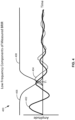
- Figure 4 illustrates the low-frequency components of a measured BRIR of an acoustic space, according to one or more aspects of the various embodiments.
- the Figure 4 illustrates the low-frequency components 400 of the BRIR of acoustic space 202 measured by BRIR measurement application 118.
- the low-frequency components 400 of the measured BRIR include the components of the measured BRIR that have frequencies less than a crossover frequency.
- the value of the crossover frequency is determined empirically.
- the value of the crossover frequency is determined based on one or more characteristics of acoustic space 202.
- the crossover frequency is 900 Hz.
- the value of the crossover frequency is less than 900 Hz or greater than 900 Hz.
- the low-frequency components 400 of the measured BRIR also include a direct sound portion 402 and a reflected sound portion 404.
- the direct and reflected sound portion 402, 404 included in the low-frequency components 400 of the measured BRIR cannot easily be separated temporally. For example, as shown in Figure 4 , there is overlap between the times at which direct sound portion 402 arrives at omni-directional microphone 206 and the times at which reflected sound portion 404 arrives at omni-directional microphone 206.
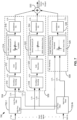
- Figure 5 illustrates a block diagram 500 of a technique for processing an audio signal with a virtualized reverberation algorithm based on measured binaural room impulse responses, according to one or more aspects of the various embodiments.
- the technique can be implemented, for example, by virtualized reverberation application 120 executing on processing unit(s) 102 of computing device 100.
- virtualized reverberation application 120 implements the processing technique illustrated in Figure 5 using the BRIR of acoustic space 202 that was measured by BRIR measurement application 118 and stored in system storage 112 as BRIR data 122.
- virtualized reverberation application 120 receives an input audio signal to render with reverberation.
- the input audio signal is monoaural audio signal that includes a single audio channel.
- the input audio signal includes more than one channel of audio.
- the input audio signal can include two or more audio channels.
- Virtualized reverberation application 120 applies a filtering process 502 to the input audio signal to separate the low-frequency components of the input audio signal from the mid-to-high-frequency components of the input audio signal.
- the filtering process 502 includes applying a low-pass filter to the input audio signal to obtain the low-frequency components of the input audio signal.
- the low-frequency components of the input audio signal include the components of the input audio signal that have frequencies less than a crossover frequency.
- Filtering process 502 further includes applying a high-pass filter to the input audio signal to obtain the mid-to-high-frequency components of the input audio signal.
- the mid-to-high-frequency components of the input audio signal include the components of the input audio signal that have frequencies greater than the crossover frequency.
- the value of the crossover frequency can be determined empirically and/or based on one or more characteristics of an acoustic space.
- the crossover frequency is 900 Hz.
- the mid-to-high-frequency components of an audio signal such as the input audio signal, can also simply be referred to as the high-frequency components of an audio signal.
- virtualized reverberation application 120 uses a first processing technique 504 to add reverberation to the low-frequency components of the input audio signal. Furthermore, virtualized reverberation application 120 uses second and third processing techniques 506, 508 to add reverberation to the mid-to-high-frequency components of the input audio signal.
- first and second processing techniques 504, 506 are less precise but more computationally efficient. That is, first and second processing techniques 504, 506 consume less computing resources when implemented by virtualized reverberation application 120 than third processing technique 508.
- first processing technique 504 includes an encoding and decoding process 510 in which virtualized reverberation application 120 encodes low-frequency components of the single audio channel of the input audio signal into a plurality of encoded channels of low-frequency audio. While implementing encoding and decoding process 510, virtualized reverberation application 120 further decodes the plurality of encoded channels of low-frequency audio into a plurality of decoded channels of low-frequency audio. In some instances, the plurality of decoded channels of low-frequency audio correspond to the cardinal directions (e.g., top, bottom, left, right, front, back) from which sound arrives at the ears of a listener.
- the decoded channels of low-frequency audio output by encoding and decoding process 510 can be referred to as converted channels of low-frequency audio and/or converted low-frequency audio channels.
- virtualized reverberation application 120 uses a low-order (e.g., first order) Ambisonics encoder-decoder to encode the single audio channel of the input audio signal into four low-frequency Ambisonics-encoded audio channels (e.g., Ambisonics B format) and decode the four low-frequency Ambisonics-encoded audio channels into six low-frequency audio channels.
- Each of the six low-frequency decoded, or converted, audio channels corresponds to a respective direction (e.g., top, bottom, left, right, front, back) from which sound arrives at the ears of a listener.
- virtualized reverberation application 120 uses other types of low-order encoder-decoders to implement encoding and decoding process 510.
- encoding and decoding process 510 encodes and decodes (e.g., converts) the single audio channel of the input audio signal into fewer than or more than six channels of low-frequency audio.
- First processing technique 504 further includes a gain reduction process 512 in which virtualized reverberation application 120 reduces the gain of the converted channels of low-frequency audio.
- gain reduction process 512 reduces the gain of the six low-frequency converted audio channels.
- Virtualized reverberation application 120 applies gain reduction process 512 to the plurality of converted low-frequency audio channels to prevent rendering an audio signal with reverberation in which the mid-to-high-frequency components of the rendered audio signal are overpowered by the low frequency components.
- gain reduction process 512 reduces the respective gains of the plurality of converted low-frequency audio channels to values between -8 dB and -15B.
- gain reduction process 512 reduces the respective gains of the plurality of converted low-frequency audio channels to other values.
- Virtualized reverberation application 120 then applies a low-frequency convolution process 514 to the plurality of converted low-frequency audio channels to generate left and right low-frequency audio channels that include reverberation effects.
- Low-frequency convolution process 514 includes convolving the plurality of converted low-frequency audio channels with low-frequency components of a measured BRIR of an acoustic space. As described above, because it is difficult to divide the low-frequency components of a measured BRIR into direct and reflected sound portions in a computationally efficient manner (e.g., temporally), low-frequency convolution process 514 convolves the plurality of converted low-frequency audio channels with both the direct and reflected sound portions included in the low-frequency components of the measured BRIR.
- virtualized reverberation application 120 convolves the plurality of converted low-frequency audio channels with the direct and reflected sound portions 402, 404 included in the low-frequency components 400 of the measured BRIR of acoustic space 202.
- Figure 6 illustrates a block diagram 600 of a convolution process that can be used to implement low-frequency convolution process 514.
- virtualized reverberation application 120 convolves each of the plurality of converted low-frequency audio channels with respective low-frequency left ear components of the measured BRIR.
- the result is a rendered low-frequency audio channel that includes reverberation effects.
- virtualized reverberation application 120 After convolving each converted low-frequency audio channel with a corresponding low-frequency left ear component of the measured BRIR, virtualized reverberation application 120 sums the resultant rendered low-frequency audio channels that into a single rendered low-frequency left ear audio channel that includes reverberation effects.
- each of the low-frequency left ear components of the measured BRIR corresponds to a respective direction (e.g., top, bottom, left, right, front, back) from which sound arrives at the left ear of a listener.
- virtualized reverberation application 120 convolves each of the plurality of converted low-frequency audio channels with respective low-frequency right ear components of the measured BRIR.
- a respective converted low-frequency audio channel is convolved with a corresponding low-frequency right ear component of the measured BRIR, the result is a rendered low-frequency audio channel that includes reverberation effects.
- virtualized reverberation application 120 sums the resultant rendered low-frequency audio channels into a single rendered low-frequency right ear audio channel that includes reverberation effects.
- each of the low-frequency right ear components of the measured BRIR corresponds to a respective direction (e.g., top, bottom, left, right, front, back) from which sound arrives at the right ear of a listener.
- First processing technique 504 further includes a headphone equalization process 516 in which virtualized reverberation application 120 equalizes the rendered low-frequency left ear audio channel and the rendered low-frequency right ear audio channel.
- Headphone equalization process 516 implements one or more known equalization techniques to adjust the respective volume levels of frequency components included in the rendered low-frequency left and right ear audio channels.
- virtualized reverberation application 120 also uses second and third processing techniques 506, 508 to add reverberation to the mid-to-high-frequency components of the input audio signal.
- second processing technique 506 includes an encoding and decoding process 518 in which virtualized reverberation application 120 encodes the mid-to-high-frequency components of the single audio channel of the input audio signal into a plurality of encoded channels of mid-to-high-frequency audio. While implementing encoding and decoding process 518, virtualized reverberation application 120 further decodes the plurality of encoded channels of mid-to-high-frequency audio into a plurality of decoded channels of mid-to-high-frequency audio.
- the plurality of decoded channels of mid-to-high-frequency audio correspond to the cardinal directions (e.g., top, bottom, left, right, front, back) from which sound arrives at the ears of a listener.
- the decoded channels of mid-to-high-frequency audio output by encoding and decoding process 510 can be referred to as converted channels of mid-to-high-frequency audio and/or converted mid-to-high-frequency audio channels.
- virtualized reverberation application 120 uses a low-order (e.g., first order) Ambisonics encoder-decoder to encode the single audio channel of the input audio signal into four mid-to-high-frequency Ambisonics-encoded audio channels (e.g., Ambisonics B format) and decode the four mid-to-high-frequency Ambisonics-encoded audio channels into six mid-to-high-frequency audio channels.
- Each of the six mid-to-high-frequency decoded, or converted, audio channels corresponds to a respective direction (e.g., top, bottom, left, right, front, back) from which sound arrives at the ears of a listener.
- virtualized reverberation application 120 uses other types of low-order encoder-decoders to implement encoding and decoding process 518.
- encoding and decoding process 518 encodes and decodes (e.g., converts) the single audio channel of the input audio signal into fewer than or more than six channels of mid-to-high-frequency audio.
- Second processing technique 508 further includes a gain reduction process 520 in which virtualized reverberation application 120 reduces the gain of the plurality of converted channels of mid-to-high-frequency audio.
- gain reduction process 520 reduces the gain of the six mid-to-high-frequency converted audio channels.
- Virtualized reverberation application 120 applies gain reduction process 520 to the plurality of converted low-frequency audio channels to prevent rendering an audio signal with reverberation in which the mid-to-high-frequency components rendered with direct sound portions of a measured BRIR are overpowered by mid-to-high-frequency components rendered with reflected sound portions of a measured BRIR.
- gain reduction process 520 reduces the respective gains of the plurality of converted mid-to-high-frequency audio channels to values between -8 dB and -15B.
- gain reduction process 520 reduces the respective gains of the plurality of converted mid-to-high-frequency audio channels to other values.
- Virtualized reverberation application 120 then applies a reflected convolution process 522 to the plurality of converted mid-to-high-frequency audio channels to generate left and right audio channels that include reverberation effects of reflected sound arriving at a listener's ears.
- Reflected convolution process 522 includes convolving the plurality of converted mid-to-high-frequency audio channels with only the reflected sound portions included in the mid-to-high-frequency components of a measured BRIR of an acoustic space.
- virtualized reverberation application 120 convolves the plurality of converted mid-to-high-frequency audio channels with only the reflected sound portion 304 included in the mid-to-high-frequency components 300 of the measured BRIR of acoustic space 202.
- the reflected sound portion 304 included in the mid-to-high-frequency components 300 of a measured BRIR can be separated from the direct sound portion 302 included in the mid-to-high-frequency components 300 temporally.
- the block diagram 600 of the convolution process illustrated in Figure 6 can also be used to implement reflected convolution process 522.
- virtualized reverberation application 120 convolves each of the plurality of converted mid-to-high-frequency audio channels with respective reflected sound portions included in the mid-to-high-frequency left ear components of the measured BRIR.
- a respective converted mid-to-high-frequency audio channel is convolved with a corresponding reflected sound portion included in the mid-to-high-frequency left ear component of the measured BRIR, the result is a rendered mid-to-high-frequency audio channel that includes reverberation effects associated with the reflected sound portion of a measured BRIR.
- virtualized reverberation application 120 After convolving each converted mid-to-high-frequency audio channel with a corresponding reflected sound portion included in the mid-to-high-frequency left ear component of the measured BRIR, virtualized reverberation application 120 sums the resultant rendered mid-to-high-frequency audio channels into a single rendered mid-to-high-frequency left ear audio channel that includes reverberation effects associated with the reflected sound portion of the measured BRIR.
- each of the reflected sound portions included in the mid-to-high-frequency left ear components of the measured BRIR corresponds to a respective direction (e.g., top, bottom, left, right, front, back) from which reflected sound arrives at the left ear of a listener.
- virtualized reverberation application 120 convolves each of the plurality of converted mid-to-high-frequency audio channels with respective reflected sound portions included in the mid-to-high-frequency right ear components of the measured BRIR.
- a respective converted mid-to-high-frequency audio channel is convolved with a corresponding reflected sound portion included in the mid-to-high-frequency right ear component of the measured BRIR, the result is a rendered mid-to-high-frequency audio channel that includes reverberation effects associated with the reflected sound portion of a measured BRIR.
- virtualized reverberation application 120 After convolving each converted mid-to-high-frequency audio channel with a corresponding reflected sound portion included in the mid-to-high-frequency right ear component of the measured BRIR, virtualized reverberation application 120 sums the resultant rendered mid-to-high-frequency audio channels into a single rendered mid-to-high-frequency right ear audio channel that includes reverberation effects associated with the reflected sound portion of the measured BRIR.
- each of the reflected sound portions included in the mid-to-high-frequency right ear components of the measured BRIR corresponds to a respective direction (e.g., top, bottom, left, right, front, back) from which reflected sound arrives at the right ear of a listener.
- Second processing technique 506 further includes a headphone equalization process 524 in which virtualized reverberation application 120 equalizes the above-described rendered mid-to-high-frequency left and right ear audio channels that include reverberation effects associated with the reflected sound portion of a measured BRIR.
- Headphone equalization process 524 which is similar to headphone equalization process 516, implements one or more known equalization techniques to adjust the respective volume levels of frequency components included in the rendered mid-to-high-frequency left and right ear audio channels.
- virtualized reverberation application 120 does not encode and decode, or convert, the mid-to-high-frequency components of the single audio channel included in the input audio signal before implementing direct convolution process 526. Rather, virtualized reverberation application 120 renders the discrete mid-to-high-frequency components of the single audio channel included in input audio signal with reverberation using a high-resolution, direct convolution process 526.
- third processing technique 508 is implemented using the RVL method for adding reverberation to an audio signal.
- virtualized reverberation application 120 When applying direct convolution process 526 to the discrete mid-to-high-frequency components of single audio channel included in the input audio signal, virtualized reverberation application 120 convolves the discrete mid-to-high-frequency audio channel with only the direct sound portion included in the mid-to-high-frequency components of a measured BRIR of an acoustic space. For example, when implementing direct convolution process 526, virtualized reverberation application 120 convolves the discrete mid-to-high-frequency audio channel with the only the direct sound portion 302 included in the mid-to-high-frequency components 300 of the measured BRIR of acoustic space 202. As described above with respect to Figure 3 , the direct sound portion 302 included in the mid-to-high-frequency components 300 of a measured BRIR can be separated from the reflected sound portion 304 included in the mid-to-high-frequency components 300 temporally.
- virtualized reverberation application 120 when implementing direct convolution process 526, convolves the discrete mid-to-high-frequency audio channel with the direct sound portion included in the mid-to-high-frequency left ear components of the measured BRIR.
- the direct sound portion included in the mid-to-high-frequency left ear components of the measured BRIR corresponds to the direction at which sound emitted by a source arrives directly at the left ear of a listener.
- virtualized reverberation application 120 when implementing direct convolution process 526, virtualized reverberation application 120 also convolves the discrete mid-to-high-frequency audio channel with the direct sound portion included in the mid-to-high-frequency right ear components of the measured BRIR.
- the direct sound portion included in the mid-to-high-frequency right ear components of the measured BRIR corresponds to the direction at which sound emitted by a source arrives directly at the right ear of a listener.
- the result of direct convolution process 526 is a rendered mid-to-high-frequency left ear audio channel that includes reverberation effects associated with the direct sound portion of a measured BRIR and a rendered mid-to-high-frequency right ear audio channel that includes reverberation effects associated with the direct sound portion of a measured BRIR.
- direct convolution process 525 to convolve the discrete mid-to-high-frequency audio channel with the direct sound portion included in the mid-to-high-frequency components of the measured BRIR helps offset potential performance losses attributed to using low-order encoding and decoding in the second processing technique 506.
- a low-order Ambisonics encoder-decoder is used to implement the low-order encoding and decoding in the second processing technique 506.
- Third processing technique 508 further includes a headphone equalization process 528 in which virtualized reverberation application 120 equalizes the rendered mid-to-high-frequency left and right ear audio channels that include reverberation effects associated with the direct sound portion of a measured BRIR.
- Headphone equalization process 528 which is similar to headphone equalization processes 516 and 524, implements one or more known equalization techniques to adjust the respective volume levels of frequency components included in the rendered mid-to-high-frequency left and right ear audio channels.
- Virtualized reverberation application 120 then implements a summation process 530 to combine the rendered left ear audio channels generated using first, second, third processing techniques 504, 506, and 508 and to combine the rendered right ear audio channels generated using first, second, third processing techniques 504, 506, and 508 into a rendered stereo audio signal that includes a left audio channel and a right audio channel.
- virtualized reverberation application 120 sums the rendered low-frequency left ear audio channel generated using first processing technique 504, the rendered mid-to-high-frequency left ear audio channel generated using second processing technique 506, and the rendered mid-to-high-frequency left ear audio channel generated using third processing technique 508 to obtain a single left ear audio channel that includes reverberation effects.
- virtualized reverberation application 120 when implementing summation process 530, sums the rendered low-frequency right ear audio channel generated using first processing technique 504, the rendered mid-to-high-frequency right ear audio channel generated using second processing technique 506, and the rendered mid-to-high-frequency right ear audio channel generated using third processing technique 508 to obtain a single right ear audio channel that includes reverberation effects. Virtualized reverberation application 120 then outputs a rendered stereo audio signal that includes the single left ear audio channel and the single right ear audio channel for playback by headphones or other loudspeaker arrangement capable of playing back stereo audio.
- the input audio signal is a monaural audio signal that includes a single audio channel.
- the input audio signal includes more than one channel of audio.
- the input audio signal can include two or more audio channels.
- Figure 7 illustrates a block diagram 700 of a technique for processing an audio signal of N channels with a virtualized reverberation algorithm based on measured binaural room impulse responses, according to one or more aspects of the various embodiments.
- the processing technique illustrated in Figure 7 is very similar in operation to the processing technique illustrated in Figure 5 .
- the processing technique illustrated in Figure 5 includes a single filtering process 502 for separating the low-frequency components of the mono input audio signal from the mid-to-high-frequency components of the mono input audio signal
- the processing technique illustrated in Figure 7 includes n filtering processes 702-1 - 702-N for separating the low-frequency components of the N audio channels included in the input audio signal from the mid-to-high-frequency components of the N audio channels included in the input audio signal.
- virtualized reverberation application 120 implements first filtering process 702-1 to separate the low-frequency components of a first audio channel included in the input audio signal from the mid-to-high-frequency components of the first audio channel included the input audio signal.
- the first filtering process 702-1 includes applying a low-pass filter to the first audio channel included in the input audio signal to obtain the low-frequency components of the first audio channel.
- the low-frequency components of the first audio channel included in the input audio signal include the components of the first audio channel that have frequencies less than a crossover frequency.
- First filtering process 702-1 further includes applying a high-pass filter to the first audio channel included in the input audio signal to obtain the mid-to-high-frequency components of the first audio channel.
- the mid-to-high-frequency components of the first audio channel included in the input audio signal include the components of the first audio channel that have frequencies greater than the crossover frequency.
- virtualized reverberation application 120 further applies respective filtering processes 702 to each additional audio channel included in the input audio signal to separate the low-frequency components of the additional audio channels included in the input audio signal from the mid-to-high-frequency components of the additional audio channels included in the input audio signal.
- virtualized reverberation application 120 implements Nth filtering process 702-N to separate the low-frequency components of the Nth audio channel included in the input audio signal from the mid-to-high-frequency components of the Nth audio channel included the input audio signal.
- virtualized reverberation application 120 uses the first processing technique 504, as described above, to add reverberation to the low-frequency components of the N audio channels included the input audio signal. Furthermore, virtualized reverberation application 120 uses second and third processing techniques 506, 508, as described above, to add reverberation to the mid-to-high-frequency components of the N audio channels included in the input audio signal.
- Figure 8 is a flow chart of method steps for processing an audio signal, according to one or more aspects of the various embodiments. Although the method steps are described with respect to the systems and examples of Figures 1-7 , persons skilled in the art will understand that any system configured to perform the method steps, in any order, falls within the scope of the various embodiments.
- a method 800 begins at step 802, where virtualized reverberation application 120 obtains a measured BRIR of an acoustic space, such as the measured BRIR of acoustic space 202.
- BRIR measurement application 118 obtains the BRIR by measuring the BRIR of acoustic space 202 and storing the measured BRIR of acoustic space 202 as BRIR data 122 in system storage 112.
- virtualized reverberation application 120 receives the measured BRIR of acoustic space 202 directly from BRIR measurement application 118.
- BRIR measurement application 118 measures the BRIR of acoustic space 202 and provides the measured BRIR of acoustic space 202 to virtualized reverberation application 120.
- BRIR measurement application 118 uses one or more known techniques, such as the MLS technique, the IRS technique, the time-stretched pulses technique, or the logarithmic sinesweep technique, to measure BRIR of acoustic space 202.
- virtualized reverberation application 120 receives an input audio signal.
- the input audio signal includes a single audio channel.
- the input audio signal includes multiple audio channels.
- the input audio signal is a stereo audio signal that includes a left audio channel and a right audio channel.
- the input audio signal includes 5.1.2 audio channels, 7.1.2 audio channels, or some other amount of audio channels.
- virtualized reverberation application 120 separates the low-frequency components of the input audio signal from the mid-to-high-frequency components of the input audio signal.
- virtualized reverberation application 120 applies a low-pass filter to the input audio signal to obtain low-frequency components of the input audio signal that have frequencies less than a crossover frequency.
- virtualized reverberation application 120 further applies a high-pass filter to the input audio signal to obtain mid-to-high-frequency components of the input audio signal that have frequencies greater than the crossover frequency.
- the crossover frequency is 900 Hz. In other examples, the crossover frequency can be greater than or less than 900 Hz.
- virtualized reverberation application 120 converts the low-frequency components of the input audio signal into a plurality of converted low-frequency audio channels.
- virtualized reverberation application 120 uses encoding and decoding process 510 to convert (e.g., encode and decode) the low-frequency components of the input audio signal into a plurality of converted low-frequency audio channels.
- virtualized reverberation application 120 uses a low-order Ambisonics encoder-decoder to encode the low-frequency components of the input audio signal into four low-frequency Ambisonics-encoded audio channels and decode the four low-frequency Ambisonics-encoded audio channels into a plurality of low-frequency decoded audio channels.
- virtualized reverberation application 120 can convert the low-frequency components of the input audio signal using a different type of low-order encoder-decoder.
- virtualized reverberation application 120 reduces the respective gains of the plurality of converted low-frequency audio channels.
- virtualized reverberation application 120 reduces the respective gains of the plurality of converted low-frequency audio channels to a value between -8 dB and -15B.
- virtualized reverberation application 120 can reduce the respective gains of the plurality of converted low-frequency audio channels to have different gain values.
- virtualized reverberation application 120 convolves the plurality of converted low-frequency audio channels with low-frequency components 400 of the measured BRIR of acoustic space 202.
- virtualized reverberation application 120 uses low-frequency convolution process 514 to convolve the plurality of converted low-frequency audio channels with low-frequency components 400 of the measured BRIR of acoustic space 202.
- the result of convolving the plurality of converted low-frequency audio channels with the low-frequency components 400 of the measured BRIR is a rendered low-frequency left audio channel that includes reverberation effects and a rendered low-frequency right audio channel that includes reverberation effects.
- virtualized reverberation application 120 divides the mid-to-high-frequency components 300 of the measured BRIR of acoustic space 202 into a direct sound portion 302 and a reflected sound portion 304. In some examples, virtualized reverberation application 120 divides the mid-to-high-frequency components 300 of the measured BRIR of acoustic space 202 into a direct sound portion 302 and a reflected sound portion 304 temporally.
- virtualized reverberation application 120 can divide the mid-to-high-frequency components 300 of the measured BRIR into a first time window 306 that occurs before a time T1 and second time window 308 that occurs after the time T1 to separate the direct sound portion 302 from the reflected sound portion 304.
- the value of time T1 is 2 ms. In other examples, the value of time T1 can be less than or greater than 2 ms.
- virtualized reverberation application 120 converts the mid-to-high-frequency components of the input audio signal into a plurality of converted mid-to-high-frequency audio channels.
- virtualized reverberation application 120 uses encoding and decoding process 518 to convert (e.g., encode and decode) the mid-to-high-frequency components of the input audio signal into a plurality of converted mid-to-high-frequency audio channels.
- virtualized reverberation application 120 uses a low-order Ambisonics encoder-decoder to encode the mid-to-high-frequency components of the input audio signal into four mid-to-high-frequency Ambisonics-encoded audio channels and decode the four mid-to-high-frequency Ambisonics-encoded audio channels into a plurality of mid-to-high-frequency decoded audio channels.
- virtualized reverberation application 120 can convert the mid-to-high-frequency components of the input audio signal using a different type of low-order encoder-decoder.
- virtualized reverberation application 120 reduces the respective gains of the plurality of converted mid-to-high-frequency audio channels.
- virtualized reverberation application 120 reduces the respective gains of the plurality of converted mid-to-high-frequency audio channels to values between -8 dB and -15B.
- virtualized reverberation application 120 can reduce the respective gains of the plurality of converted mid-to-high-frequency audio channels to have different gain values.
- virtualized reverberation application 120 convolves the plurality of converted mid-to-high-frequency audio channels with the reflected sound portion 304 included in the mid-to-high-frequency components 300 of the measured BRIR of acoustic space 202.
- virtualized reverberation application 120 uses reflected convolution process 522 to convolve the plurality of converted mid-to-high-frequency audio channels with the reflected sound portion 304 included in the mid-to-high-frequency components 300 of the measured BRIR of acoustic space 202.
- the result of convolving the plurality of converted mid-to-high-frequency audio channels with the reflected sound portion 304 included in the mid-to-high-frequency components 300 of the measured BRIR is a rendered mid-to-high-frequency left audio channel that includes reverberation effects associated with the reflected sound portion of a measured BRIR and a rendered mid-to-high-frequency right ear audio channel that includes reverberation effects associated with the reflected sound portion of a measured BRIR.
- virtualized reverberation application 120 convolves the discrete mid-to-high-frequency components of the input audio signal with the direct sound portion 302 included in the mid-to-high-frequency components 300 of the measured BRIR of acoustic space 202. That is, virtualized reverberation application 120 does not convert the mid-to-high-frequency components of the input audio signal before convolving the mid-to-high-frequency components of the input audio signal with the direct sound portion 302 included in the mid-to-high-frequency components 300 of the measured BRIR of acoustic space 202.
- virtualized reverberation application 120 uses direct convolution process 526 to convolve the discrete mid-to-high-frequency components of the input audio signal with the direct sound portion 302 included in the mid-to-high-frequency components 300 of the measured BRIR of acoustic space 202.
- the result of convolving the discrete mid-to-high-frequency audio channels with the direct sound portion 302 included in the mid-to-high-frequency components 300 of the measured BRIR is a rendered mid-to-high-frequency left audio channel that includes reverberation effects associated with the direct sound portion of a measured BRIR and a rendered mid-to-high-frequency right audio channel that includes reverberation effects associated with the direct sound portion of a measured BRIR.
- virtualized reverberation application 120 equalizes the rendered left and right audio channels. For example, virtualized reverberation application 120 applies headphone equalization process 516 to the rendered low-frequency left and right audio channels that include reverberation effects. As another example, virtualized reverberation application 120 applies headphone equalization process 524 to the rendered mid-to-high-frequency left and right audio channels that include reverberation effects associated with the reflected sound portion of a measured BRIR. As another example, virtualized reverberation application 120 applies headphone equalization process 528 to the rendered mid-to-high-frequency left and right audio channels that include reverberation effects associated with the direct sound portion of a measured BRIR.
- virtualized reverberation application 120 sums, or combines, the rendered left audio channels and sums, or combines, the rendered right audio channels.
- virtualized reverberation application 120 implements summation process 530 to combine the rendered low-frequency left audio channel that includes reverberation effects, the rendered mid-to-high-frequency left audio channel that includes reverberation effects associated with the reflected sound portion of a measured BRIR, and the rendered mid-to-high-frequency left audio channel that includes reverberation effects associated with the direct sound portion of a measured BRIR into a single rendered left audio channel that includes reverberation effects.
- virtualized reverberation application 120 implements summation process 530 to combine the rendered low-frequency right audio channel that includes reverberation effects, the rendered mid-to-high-frequency right audio channel that includes reverberation effects associated with the reflected sound portion of a measured BRIR, and the rendered mid-to-high-frequency right audio channel that includes reverberation effects associated with the direct sound portion of a measured BRIR into a single rendered right audio channel that includes reverberation effects.
- virtualized reverberation application 120 outputs a rendered stereo signal that includes the single rendered left audio channel that includes reverberation effects and the single rendered right audio channel that includes reverberation effects.
- a computing device renders an audio signal with reverberation based on a measured binaural room impulse response (BRIR) of an acoustic space to add reverberation effects of the acoustic space for playback using headphones.
- the computing device adds reverberation to the audio signal using three separate processing techniques.
- the computing device separates an audio signal into low-frequency components and high-frequency components.
- the computing device converts the low-frequency components of the audio signal into a first plurality of converted audio channels and convolves the first plurality of converted audio channels with the measured BRIR to generate a first left audio channel and a first right audio channel.
- the computing device further divides the measured BRIR into a first time window that includes the direct sound portion of the measured BRIR and a second time window that includes the reflected sound portion of the measured BRIR.
- the computing device converts the high-frequency components of the audio signal into a second plurality of converted audio channels and convolves the second plurality of converted audio channels with the reflected sound portion of the measured BRIR to generate a second left audio channel and a second right audio channel.
- the computing device convolves the discrete high-frequency components of the audio signal with the direct sound portion of the measured BRIR to generate a third left audio channel and a third right audio channel.
- the direct sound portion of the measured BRIR corresponds to a direction at which sound emitted by a source being rendered arrives directly at the ears of a listener.
- the computing device combines the results of the first, second, and third processing techniques to generate left and right ear sounds that include reverberation. For example, the computing device combines the first, second, and third left audio channels into a single left audio channel and the combines the first, second, and third right audio channels into a single right audio channel. The computing device then outputs an output audio signal that includes the combined left audio channel and the combined right audio channel for playback by headphones. Before or after combining the left and right ear audio channels, the computing device can optionally apply headphone equalization to the left and right audio channels.
- At least one technical advantage of the disclosed techniques relative to the prior art is that, with the disclosed techniques, a measured room impulse response of an acoustic space can be used to add reverberation to an audio signal with a lower computational cost. Accordingly, with the disclosed techniques, relatively modest processing power can be used to render reverberation for a large number of sound sources and acoustic spaces based on measured room impulse responses, which sound more natural than room impulse responses derived from models of acoustic spaces.
- aspects of the present embodiments may be embodied as a system, method or computer program product. Accordingly, aspects of the present disclosure may take the form of an entirely hardware embodiment, an entirely software embodiment (including firmware, resident software, micro-code, etc.) or an embodiment combining software and hardware aspects that may all generally be referred to herein as a "module,” a "system,” or a "computer.” In addition, any hardware and/or software technique, process, function, component, engine, module, or system described in the present disclosure may be implemented as a circuit or set of circuits. Furthermore, aspects of the present disclosure may take the form of a computer program product embodied in one or more computer readable medium(s) having computer readable program code embodied thereon.
- the computer readable medium may be a computer readable signal medium or a computer readable storage medium.
- a computer readable storage medium may be, for example, but not limited to, an electronic, magnetic, optical, electromagnetic, infrared, or semiconductor system, apparatus, or device, or any suitable combination of the foregoing.
- a computer readable storage medium may be any tangible medium that can contain, or store a program for use by or in connection with an instruction execution system, apparatus, or device.
- each block in the flowchart or block diagrams may represent a module, segment, or portion of code, which comprises one or more executable instructions for implementing the specified logical function(s).
- the functions noted in the block may occur out of the order noted in the figures. For example, two blocks shown in succession may, in fact, be executed substantially concurrently, or the blocks may sometimes be executed in the reverse order, depending upon the functionality involved.
Landscapes
- Engineering & Computer Science (AREA)
- Physics & Mathematics (AREA)
- Acoustics & Sound (AREA)
- Signal Processing (AREA)
- Multimedia (AREA)
- Stereophonic System (AREA)
Applications Claiming Priority (1)
| Application Number | Priority Date | Filing Date | Title |
|---|---|---|---|
| US18/336,267 US12408001B2 (en) | 2023-06-16 | 2023-06-16 | Rendering of audio signals using virtualized reverberation |
Publications (1)
| Publication Number | Publication Date |
|---|---|
| EP4478747A1 true EP4478747A1 (de) | 2024-12-18 |
Family
ID=91226923
Family Applications (1)
| Application Number | Title | Priority Date | Filing Date |
|---|---|---|---|
| EP24177314.2A Pending EP4478747A1 (de) | 2023-06-16 | 2024-05-22 | Wiedergabe von audiosignalen unter verwendung von virtualisiertem nachhall |
Country Status (3)
| Country | Link |
|---|---|
| US (1) | US12408001B2 (de) |
| EP (1) | EP4478747A1 (de) |
| CN (1) | CN119155622A (de) |
Citations (2)
| Publication number | Priority date | Publication date | Assignee | Title |
|---|---|---|---|---|
| EP1072089B1 (de) * | 1998-03-25 | 2011-03-09 | Dolby Laboratories Licensing Corp. | Verfahren und Vorrichtung zur Verarbeitung von Audiosignalen |
| US20210067897A1 (en) * | 2016-10-28 | 2021-03-04 | Panasonic Intellectual Property Corporation Of America | Binaural rendering apparatus and method for playing back of multiple audio sources |
Family Cites Families (6)
| Publication number | Priority date | Publication date | Assignee | Title |
|---|---|---|---|---|
| WO2014036121A1 (en) * | 2012-08-31 | 2014-03-06 | Dolby Laboratories Licensing Corporation | System for rendering and playback of object based audio in various listening environments |
| EP2830043A3 (de) * | 2013-07-22 | 2015-02-18 | Fraunhofer-Gesellschaft zur Förderung der angewandten Forschung e.V. | Verfahren zur Verarbeitung eines Audiosignals in Übereinstimmung mit einer Raumimpulsantwort, Signalverarbeitungseinheit, Audiocodierer, Audiodecodierer und binauraler Renderer |
| US9319819B2 (en) * | 2013-07-25 | 2016-04-19 | Etri | Binaural rendering method and apparatus for decoding multi channel audio |
| KR102230308B1 (ko) * | 2013-09-17 | 2021-03-19 | 주식회사 윌러스표준기술연구소 | 멀티미디어 신호 처리 방법 및 장치 |
| US10580417B2 (en) * | 2013-10-22 | 2020-03-03 | Industry-Academic Cooperation Foundation, Yonsei University | Method and apparatus for binaural rendering audio signal using variable order filtering in frequency domain |
| WO2015102920A1 (en) * | 2014-01-03 | 2015-07-09 | Dolby Laboratories Licensing Corporation | Generating binaural audio in response to multi-channel audio using at least one feedback delay network |
-
2023
- 2023-06-16 US US18/336,267 patent/US12408001B2/en active Active
-
2024
- 2024-05-22 EP EP24177314.2A patent/EP4478747A1/de active Pending
- 2024-06-12 CN CN202410752279.2A patent/CN119155622A/zh active Pending
Patent Citations (2)
| Publication number | Priority date | Publication date | Assignee | Title |
|---|---|---|---|---|
| EP1072089B1 (de) * | 1998-03-25 | 2011-03-09 | Dolby Laboratories Licensing Corp. | Verfahren und Vorrichtung zur Verarbeitung von Audiosignalen |
| US20210067897A1 (en) * | 2016-10-28 | 2021-03-04 | Panasonic Intellectual Property Corporation Of America | Binaural rendering apparatus and method for playing back of multiple audio sources |
Also Published As
| Publication number | Publication date |
|---|---|
| US20240422501A1 (en) | 2024-12-19 |
| US12408001B2 (en) | 2025-09-02 |
| CN119155622A (zh) | 2024-12-17 |
Similar Documents
| Publication | Publication Date | Title |
|---|---|---|
| AU2022202513B2 (en) | Generating binaural audio in response to multi-channel audio using at least one feedback delay network | |
| US10555109B2 (en) | Generating binaural audio in response to multi-channel audio using at least one feedback delay network | |
| US9769589B2 (en) | Method of improving externalization of virtual surround sound | |
| CA2744429C (en) | Converter and method for converting an audio signal | |
| EP3090573B1 (de) | Erzeugung eines binauralen tons in reaktion auf ein mehrkanalaudiosystem mit mindestens einem rückkopplungsverzögerungsnetzwerk | |
| US9794717B2 (en) | Audio signal processing apparatus and audio signal processing method | |
| US12408001B2 (en) | Rendering of audio signals using virtualized reverberation | |
| HK40094567A (en) | Generating binaural audio in response to multi-channel audio using at least one feedback delay network | |
| HK40041323B (en) | Generating binaural audio in response to multi-channel audio using at least one feedback delay network | |
| HK40000224A (en) | Generating binaural audio in response to multi-channel audio using at least one feedback delay network | |
| HK40000224B (en) | Generating binaural audio in response to multi-channel audio using at least one feedback delay network | |
| HK1231288B (en) | Generating binaural audio in response to multi-channel audio using at least one feedback delay network | |
| HK1231288A1 (en) | Generating binaural audio in response to multi-channel audio using at least one feedback delay network | |
| HK1166908B (zh) | 转换器及转换音频信号的方法 |
Legal Events
| Date | Code | Title | Description |
|---|---|---|---|
| PUAI | Public reference made under article 153(3) epc to a published international application that has entered the european phase |
Free format text: ORIGINAL CODE: 0009012 |
|
| STAA | Information on the status of an ep patent application or granted ep patent |
Free format text: STATUS: THE APPLICATION HAS BEEN PUBLISHED |
|
| AK | Designated contracting states |
Kind code of ref document: A1 Designated state(s): AL AT BE BG CH CY CZ DE DK EE ES FI FR GB GR HR HU IE IS IT LI LT LU LV MC ME MK MT NL NO PL PT RO RS SE SI SK SM TR |
|
| STAA | Information on the status of an ep patent application or granted ep patent |
Free format text: STATUS: REQUEST FOR EXAMINATION WAS MADE |
|
| 17P | Request for examination filed |
Effective date: 20250604 |