EP4478504B1 - Connecting structureand battery module - Google Patents
Connecting structureand battery module Download PDFInfo
- Publication number
- EP4478504B1 EP4478504B1 EP24155097.9A EP24155097A EP4478504B1 EP 4478504 B1 EP4478504 B1 EP 4478504B1 EP 24155097 A EP24155097 A EP 24155097A EP 4478504 B1 EP4478504 B1 EP 4478504B1
- Authority
- EP
- European Patent Office
- Prior art keywords
- plate
- positioning
- connecting member
- sub
- section
- Prior art date
- Legal status (The legal status is an assumption and is not a legal conclusion. Google has not performed a legal analysis and makes no representation as to the accuracy of the status listed.)
- Active
Links
Images




Classifications
-
- H—ELECTRICITY
- H01—ELECTRIC ELEMENTS
- H01M—PROCESSES OR MEANS, e.g. BATTERIES, FOR THE DIRECT CONVERSION OF CHEMICAL ENERGY INTO ELECTRICAL ENERGY
- H01M50/00—Constructional details or processes of manufacture of the non-active parts of electrochemical cells other than fuel cells, e.g. hybrid cells
- H01M50/50—Current conducting connections for cells or batteries
- H01M50/502—Interconnectors for connecting terminals of adjacent batteries; Interconnectors for connecting cells outside a battery casing
- H01M50/503—Interconnectors for connecting terminals of adjacent batteries; Interconnectors for connecting cells outside a battery casing characterised by the shape of the interconnectors
-
- H—ELECTRICITY
- H01—ELECTRIC ELEMENTS
- H01M—PROCESSES OR MEANS, e.g. BATTERIES, FOR THE DIRECT CONVERSION OF CHEMICAL ENERGY INTO ELECTRICAL ENERGY
- H01M50/00—Constructional details or processes of manufacture of the non-active parts of electrochemical cells other than fuel cells, e.g. hybrid cells
- H01M50/20—Mountings; Secondary casings or frames; Racks, modules or packs; Suspension devices; Shock absorbers; Transport or carrying devices; Holders
- H01M50/204—Racks, modules or packs for multiple batteries or multiple cells
- H01M50/207—Racks, modules or packs for multiple batteries or multiple cells characterised by their shape
- H01M50/209—Racks, modules or packs for multiple batteries or multiple cells characterised by their shape adapted for prismatic or rectangular cells
-
- H—ELECTRICITY
- H01—ELECTRIC ELEMENTS
- H01M—PROCESSES OR MEANS, e.g. BATTERIES, FOR THE DIRECT CONVERSION OF CHEMICAL ENERGY INTO ELECTRICAL ENERGY
- H01M50/00—Constructional details or processes of manufacture of the non-active parts of electrochemical cells other than fuel cells, e.g. hybrid cells
- H01M50/20—Mountings; Secondary casings or frames; Racks, modules or packs; Suspension devices; Shock absorbers; Transport or carrying devices; Holders
- H01M50/258—Modular batteries; Casings provided with means for assembling
-
- H—ELECTRICITY
- H01—ELECTRIC ELEMENTS
- H01M—PROCESSES OR MEANS, e.g. BATTERIES, FOR THE DIRECT CONVERSION OF CHEMICAL ENERGY INTO ELECTRICAL ENERGY
- H01M50/00—Constructional details or processes of manufacture of the non-active parts of electrochemical cells other than fuel cells, e.g. hybrid cells
- H01M50/50—Current conducting connections for cells or batteries
- H01M50/502—Interconnectors for connecting terminals of adjacent batteries; Interconnectors for connecting cells outside a battery casing
- H01M50/507—Interconnectors for connecting terminals of adjacent batteries; Interconnectors for connecting cells outside a battery casing comprising an arrangement of two or more busbars within a container structure, e.g. busbar modules
-
- H—ELECTRICITY
- H01—ELECTRIC ELEMENTS
- H01M—PROCESSES OR MEANS, e.g. BATTERIES, FOR THE DIRECT CONVERSION OF CHEMICAL ENERGY INTO ELECTRICAL ENERGY
- H01M50/00—Constructional details or processes of manufacture of the non-active parts of electrochemical cells other than fuel cells, e.g. hybrid cells
- H01M50/50—Current conducting connections for cells or batteries
- H01M50/502—Interconnectors for connecting terminals of adjacent batteries; Interconnectors for connecting cells outside a battery casing
- H01M50/514—Methods for interconnecting adjacent batteries or cells
- H01M50/516—Methods for interconnecting adjacent batteries or cells by welding, soldering or brazing
-
- Y—GENERAL TAGGING OF NEW TECHNOLOGICAL DEVELOPMENTS; GENERAL TAGGING OF CROSS-SECTIONAL TECHNOLOGIES SPANNING OVER SEVERAL SECTIONS OF THE IPC; TECHNICAL SUBJECTS COVERED BY FORMER USPC CROSS-REFERENCE ART COLLECTIONS [XRACs] AND DIGESTS
- Y02—TECHNOLOGIES OR APPLICATIONS FOR MITIGATION OR ADAPTATION AGAINST CLIMATE CHANGE
- Y02E—REDUCTION OF GREENHOUSE GAS [GHG] EMISSIONS, RELATED TO ENERGY GENERATION, TRANSMISSION OR DISTRIBUTION
- Y02E60/00—Enabling technologies; Technologies with a potential or indirect contribution to GHG emissions mitigation
- Y02E60/10—Energy storage using batteries
Definitions
- the disclosure relates to the technology field of energy storage apparatuses, and in particular, to a connecting structure, a battery module, an energy storage apparatus, and an electronic device.
- multiple battery modules are provided in a battery system to increase an energy density of the battery system, and electrical connections among the battery modules are implemented via conducting members.
- the conducting member is generally fixed to the battery module via a bolt.
- the bolt is easy to loosen to cause a gradually increased connection impedance that may cause increased heat-generation at electrical connection between the conducting member and the battery module, thereby causing overheating and fire at the electrical connection, and further causing fire and explosion of the battery system.
- CN 116 014 367 A discloses an output terminal assembly including an output base.
- the output base includes a first substrate and two limiting plates.
- the first substrate is provided with terminal clearance holes.
- the two limiting plates are connected to two sides of the first substrate in a first direction, thereby forming an insertion cavity between the two limiting plates and the first substrate.
- CN 113 258 220 A discloses a battery adapter integrated assembly including a connecting busbar and an adapter component.
- the adapter component is provided with a terminal post connection part and a receiving cavity, the connecting busbar being detachably connected to the adapter component and located within the receiving cavity, with a connecting chamber formed inside the connecting busbar that communicates with an opening.
- the battery module 1000 includes at least two battery cells 200 and a connecting structure 100 provided in the implementations of the disclosure.
- the first bending portion 111 is located at one end of the first connecting member 11, and the first bending portion 111 is bent and connected to the first connecting portion 112 and the second connecting portion 113.
- the first connecting portion 112, the first bending portion 111, and the second connecting portion 113 are of a U-shaped structure as a whole and cooperatively define the inserting groove 114.
- the inserting groove 114 defines an opening at one side of the inserting groove 114 in a height direction of the inserting groove 114, and thus the second connecting member 13 can be mounted in the inserting groove 114 through the opening.
- the conducting member 30 may also be mounted into the accommodating cavity 133 through the opening.
- Both the first fixing hole 1122 and the second fixing hole 1131 are through holes.
- both the first fixing hole 1122 and the second fixing hole 1131 may be round holes, and a central axis of the first fixing hole 1122 is coaxial with a central axis of the second fixing hole 1131 facing the first fixing hole 1122.
- the first fixing hole 1122 may be implemented as one first fixing hole 1122, or alternatively, as two or more first fixing holes 1122, where the number of the second fixing holes 1131 is the same as that of the first fixing holes 1122.
- the first fixing hole 1122 is implemented as two first fixing holes 1122, the two first fixing holes 1122 are defined at the first connecting portion 112 and spaced apart from each other, and correspondingly, the two second fixing holes 1131 are spaced apart from each other at the second connecting portion 113.
- the multiple second positioning holes 1123 are located at the same height of the first connecting portion 112.
- the multiple first positioning portions 1312 are located at the same height of the first plate 131, and the multiple first positioning holes 1121 and the multiple second positioning holes 1123 are defined at the first connecting portion 112.
- the multiple second positioning portions 1314 are simultaneously inserted into the corresponding second positioning holes 1123, and the multiple first positioning portions 1312 are inserted into the corresponding first positioning holes 1121.
- the second positioning portion 1314 is bent at a second angle ⁇ 2 relative to the first plate 131 in the direction in which the second positioning portion 1314 faces away from the second plate 132, and the second angle ⁇ 2 is greater than or equal to 45 degrees and less than 80 degrees.
- the second angle ⁇ 2 at which the second positioning portion 1314 is bent relative to the first plate 131 in a direction in which the second positioning portion 1314 faces away from the second plate 132 is less than 45 degrees, when the second positioning portion 1314 is inserted into the second positioning hole 1123, the second positioning portion 1314 is prone to detach from the second positioning hole 1123, and the connection stability between the second connecting member 13 and the first connecting portion 112 is poor.
- the second angle ⁇ 2 at which the second positioning portion 1314 is bent relative to the first plate 131 in a direction in which the second positioning portion 1314 faces away from the second plate 132 is greater than 80 degrees, during mounting or detaching of the second connecting member 13, it is necessary, in view of the electrical conductivity of the second connecting member 13, to avoid craping or wearing of the second connecting member 13, and thus the first connecting portion 112 needs to be bent in the direction away from the second connecting portion 113 or the second connecting portion 113 needs to be bent in the direction away from the first second connecting portion 112 so that a distance between the first connecting portion 112 and the second connecting portion 113 can be increased.
- the third positioning hole 1132 is defined at the second connecting portion 113 and opposite to the first positioning hole 1121.
- the second connecting portion 113 can be bent so that the second connecting member 13 can be vertically inserted into the inserting groove 114.
- the first positioning portion 1312 is correspondingly aligned with and inserted into the first positioning hole 1121
- the third positioning portion 1322 is correspondingly aligned with and inserted into the third positioning hole 1132.
- the third positioning portion 1322 is bent at a third angle ⁇ 3 relative to the second plate 132 in a direction in which the third positioning portion 1322 faces away from the first plate 131
- the first positioning portion 1312 is bent at the first angle ⁇ 1 relative to the first plate 131 in the direction in which the first positioning portion 1312 faces away from the second plate 132
- a value range of the third angle ⁇ 3 is equal to that of the first angle ⁇ 1.
- first angle ⁇ 1 of the first positioning portion 1312, the second angle ⁇ 2 of the second positioning portion 1314, and the third angle ⁇ 3 of the third positioning portion 1322 can each set to be 45 degrees, so that the first connecting portion 112 can be bent away from the second connecting portion 113 at an appropriately reduced angle, thereby prolonging the service life of the first connecting member 11, and facilitating mounting of the second connecting member 13 to the inserting groove 114 of the first connecting member 11.
- the first positioning portion 1312 and the third positioning portion 1322 are bent, and after the second connecting member 13 is mounted to the first connecting member 11, in the thickness direction of the first connecting member 11, a first gap is defined between the first plate 131 and the first connecting portion 112, a second gap is defined between the second plate 132 and the second connecting portion 113, and the sum of the first gap and the second gap is denoted as S1, where S1 satisfies 0.3 * H2 ⁇ S1 ⁇ 0.5 * H2.
- the first gap may be the same as or different from the second gap.
- the fourth width D4 of the third gap 1334 is less than D2 + 6.3 * H2
- the fourth width D4 of the third gap 1334 is excessively small, that is, a bending degree of the first positioning portion 1312 and/or a bending degree of the third positioning portion 1322 is excessively small
- the first positioning portion 1312 is prone to detach from the first positioning hole 1121
- the third positioning portion 1322 is also prone to detach from the third positioning hole 1132, thereby causing a poor connection reliability of the first connecting member 11 and the second connecting member 13. Consequently, the width of the accommodating cavity 133 will be excessively small, the thickness of the conducting member 30 needs to be reduced, resulting in a poor structural strength of the conducting member 30.
- the fourth width D4 of the third gap 1334 is greater than D2 +7.5 * H2
- the bending degree of the first positioning portion 1312 and/or the bending degree of the second positioning portion 1314 is excessively large, and thus a large force is required to bend the second connecting portion 113 during insertion of the first positioning portion 1312 into the first positioning hole 1121 and insertion of the third positioning portion 1322 into the third positioning hole 1132, it may cause an excessive bending of the second connecting portion 113, resulting in a fracture between the second connecting portion 113 and the first bending portion 111. Consequently, the width of the accommodating cavity 133 will be excessively large, resulting in an enlarged space occupied by the connecting structure 100.
- the fourth width D4 of the third gap 1334 satisfies D2 + 6.3 * H2 ⁇ D4 ⁇ D2 + 7.5 * H2, the first positioning portion 1312 can be stably snapped in the first positioning hole 1121, and the third positioning portion 1322 can be stably snapped in the third positioning hole 1132, thereby ensuring the connection reliability between the first connecting member 11 and the second connecting member 13. Furthermore, the first positioning portion 1312 is inserted into the first positioning hole 1121 and the third positioning hole 1132 is inserted into the third positioning hole 1132, thus the assembly is convenient and fast, which is beneficial to improving the automation efficiency of the production line. In addition, the width of the accommodating cavity 133 can be effectively prevented from being excessively large, thereby reducing the effect of the space occupied by the whole connecting structure 100 on the volume of the battery module 1000.
- a third thickness H3 of the first connecting portion 112 may be equal to a third thickness H3 of the second connecting portion 113, and thus the third thickness H3 satisfies 2.0 * H2 ⁇ H3 ⁇ 2.5 * H2.
- the second connecting portion 113 or the first connecting portion 112 needs to be bent, and the third thickness H3 satisfies 2.0 * H2 ⁇ H3 ⁇ 2.5 * H2, thereby preventing the third thickness H3 of the first connecting portion 112 and the third thickness H3 of the second connecting portion 113 from being excessively large or excessively small and preventing the mounting of the second connecting member 13 from being affected.
- the fourth positioning hole 1133 is a through hole.
- the fourth positioning hole 1133 may be implemented as one fourth positioning hole 1133, or alternatively, two or more fourth positioning holes 1133.
- the number of the fourth positioning portions 1324 is the same as the number of the fourth positioning holes 1133.
- the fourth positioning hole 1133 is implemented as two fourth positioning holes 1133, the two fourth positioning holes 1133 are defined at the second connecting portion 113 and spaced apart from each other, and the two fourth positioning portions 1324 are respectively arranged at two opposite sides of the fourth end 1323. With the two fourth positioning holes 1133 and the two fourth positioning portions 1324, the connection stability between the second connecting member 13 and the first connecting member 11 can be further enhanced.
- the fourth positioning hole 1133 is implemented as multiple fourth positioning holes 1133
- the multiple fourth positioning holes 1133 are located at the same height of the second connecting portion 113.
- the multiple fourth positioning portions 1324 are located at the same height of the second plate 132.
- the second connecting portion 113 defines the multiple fourth positioning holes 1133 and multiple third positioning holes 1132.
- the fourth positioning portion 1324 is bent relative to the second plate 132 in the direction in which the fourth positioning portion 1324 faces away from the first plate 131.
- the fourth positioning portion 1324 faces the second connecting portion 113 relative to the second plate 132, the fourth positioning portion 1324 is inserted into the fourth positioning hole 1133 and can abut against a peripheral wall of the fourth positioning hole 1133, and thus the second connecting member 13 is limited in the height direction of the second connecting member 13 by the third positioning portion 1322 and the fourth positioning portion 1324, thereby enhancing the connection stability between the first connecting member 11 and the second connecting member 13.
- the fourth positioning portion 1324 is bent at a fourth angle ⁇ 4 relative to the second plate 132 in a direction in which the fourth positioning portion 1324 faces away from the first plate 131, and a value range of the fourth angle ⁇ 4 is equal to that of the third angle ⁇ 3 of the third positioning portion 1322.
- the fourth angle ⁇ 4 of the fourth positioning portion 1324 can be equal to the third angle ⁇ 3 of the third positioning portion 1322, for example, the fourth angle ⁇ 4 of the fourth positioning portion 1324 can be 45 degrees.
- the first connecting member 11 can further include a welding portion 115, where the welding portion 115 is connected to one end of the first connecting portion 112 away from the first bending portion 111.
- the welding portion 115 of the first connecting member 11 may be welded to the battery cell 200 in the battery module 1000, so as to electrically connect the first connecting member 11 to the battery cell 200.
- the welding portion 115 is welded to the battery cell 200, so that the whole connecting structure 100 can be prevented from detaching from the battery cell 200, and the connection stability between the connecting structure 100 and the battery cell 200 can be ensured.
- An extending direction of the welding portion 115 may be the same as that of the first connecting portion 112, for example, the welding portion 115 is part of the first connecting portion 112. Alternatively, the extending direction of the welding portion 115 is different from that of the first connecting portion 112, for example, the extending direction of the welding portion 115 is perpendicular to that of the first connecting portion 112.
- the first connecting member 11 further includes a second bending portion 116, where the second bending portion 116 is located between the welding portion 115 and the first connecting portion 112, and the welding portion 115 is bent and connected to the first connecting portion 112 via the second bending portion 116.
- the connecting assembly 10 includes a base 70 and a cover plate 90.
- the first connecting member 11 is mounted at the base 70.
- the cover plate 90 covers the base 70 and shields the connecting assembly 10.
- Part of the first connecting member 11 can be mounted at the base 70, the base 70 can have an insulating function, and another part of the first connecting member 11 which is not electrically connected to the battery cell 200 is insulated from the battery cell 200 and is covered between the cover plate 90 and the base 70 via the cover plate 90, so as to protect the connecting assembly 10 in an insulating manner.
- the base 70 may be sleeved on one end of the battery cell 200.
- the base 70 shields one end of the battery cell 200.
- the base 70 may define a through hole, so that the battery cell 200 can be welded to the welding portion 115 through the through hole.
- the base 70 is snap-fitted with the cover plate 90 to enable most of the first connecting member 11 and the second connecting member 13 to be shielded between the base 70 and the cover plate 90.
- the opening 1331 for mounting of the conducting member 30 is reserved between the base 70 and the cover plate 90, so that the conducting member 30 can be electrically connected to two adjacent second connecting members 13.
- An energy storage apparatus is provided in the implementations of the disclosure, and the energy storage apparatus includes the battery module 1000 provided in any one of the implementations of the disclosure.
- the energy storage apparatus may include, but is not limited to, a battery pack, a battery system, a battery cabinet, a centralized energy storage apparatus, and the like.
- the electronic device includes the energy storage apparatus provided in any one of the implementations of the disclosure, and the energy storage apparatus is configured to power the electronic device.
- the second connecting member 13 is provided with the resilient portion 134. After the second connecting member 13 is inserted into the inserting groove 114 of the first connecting member 11, the conducting member 30 can be inserted into the first gap 1332 along the resilient portion 134 of the first plate 131 and the resilient portion 134 of the second plate 132 to resiliently abut against the first sub-section 1342 of the first plate 131 and the first sub-section 1342 of the second plate 132, thereby achieving electrically connection between the conducting member 30 and the second connecting member 13.
Landscapes
- Chemical & Material Sciences (AREA)
- Chemical Kinetics & Catalysis (AREA)
- Electrochemistry (AREA)
- General Chemical & Material Sciences (AREA)
- Battery Mounting, Suspending (AREA)
Description
- The disclosure relates to the technology field of energy storage apparatuses, and in particular, to a connecting structure, a battery module, an energy storage apparatus, and an electronic device.
- Generally, multiple battery modules are provided in a battery system to increase an energy density of the battery system, and electrical connections among the battery modules are implemented via conducting members. The conducting member is generally fixed to the battery module via a bolt. During an operation of the battery system, the bolt is easy to loosen to cause a gradually increased connection impedance that may cause increased heat-generation at electrical connection between the conducting member and the battery module, thereby causing overheating and fire at the electrical connection, and further causing fire and explosion of the battery system.
-
CN 116 014 367 A -
CN 113 258 220 A discloses a battery adapter integrated assembly including a connecting busbar and an adapter component. The adapter component is provided with a terminal post connection part and a receiving cavity, the connecting busbar being detachably connected to the adapter component and located within the receiving cavity, with a connecting chamber formed inside the connecting busbar that communicates with an opening. - The invention is set out in the appended set of claims.
- To describe technical solutions in implementations of the disclosure more clearly, the following briefly introduces the accompanying drawings required for describing the implementations.
-
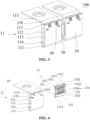
FIG. 1 is a schematic perspective structural view of a battery module provided in an implementation of the disclosure. -
FIG. 2 is an enlarged view of the battery module at circle II inFIG. 1 . -
FIG. 3 is a schematic perspective structural view of a connecting structure provided in an implementation of the disclosure. -
FIG. 4 is an exploded view of a first connecting member and a second connecting member of a connecting structure provided in an implementation of the disclosure. -
FIG. 5 is a schematic perspective structural view of a connecting structure provided in an implementation of the disclosure, viewed from a direction. -
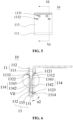
FIG. 6 is a schematic cross-sectional view of the connecting structure inFIG. 5 , taken along line VI-VI. -
FIG. 7 is an enlarged view of the connecting structure at circle VII inFIG. 6 . -
FIG. 8 is a schematic perspective structural view of a connecting structure provided in an implementation of the disclosure, viewed from another direction. -
FIG. 9 is a schematic cross-sectional view of another connecting structure provided in an implementation of the disclosure. -
FIG. 10 is a perspective schematic structural view of a battery module provided in an implementation of the disclosure. - The following clearly and completely describes the technical solutions in the implementations of the disclosure with reference to the accompanying drawings in the implementations of the disclosure. Apparently, the described implementations are merely part rather than all of the implementations of the disclosure. All other implementations obtained by those of ordinary skill in the art based on the implementations of the disclosure without creative efforts shall fall within the protection scope of the disclosure.
- The following illustrations of various implementations are provided with reference to the accompanying drawings to illustrate specific implementations that can be implemented in the disclosure. Directional terms such as "up", "down", "front", "back", "left", "right", "inside", "outside", "side", and the like referred to herein which are only for directions with reference to the accompanying drawings. Therefore, the directional terms used herein are intended to better and more clearly illustrate and understand the disclosure, rather than explicitly or implicitly indicate that devices or elements referred to herein must have a certain direction or be configured or operated in a certain direction and therefore cannot be understood as limitation on the disclosure.
- In addition, ordinal numbers of components in the disclosure, such as "first", "second", and the like, are only used to distinguish the described objects and do not imply any order or technical meaning. Terms "connected" and "coupled" in the disclosure, unless otherwise specified, both include direct connection and indirect connection.
- Referring to
FIG. 1 andFIG. 2 , abattery module 1000 is provided in the disclosure. Thebattery module 1000 includes at least twobattery cells 200 and a connectingstructure 100 provided in the implementations of the disclosure. - Referring to
FIG. 3 and FIG. 4 , the connectingstructure 100 provided in the implementations of the disclosure includes a connectingassembly 10 and a conductingmember 30. The connectingassembly 10 includes a first connectingmember 11 and a second connectingmember 13. The first connectingmember 11 includes afirst bending portion 111, a first connectingportion 112, and a second connectingportion 113 opposite the first connectingportion 112. One end of the first connectingportion 112 is connected to one end of the second connectingportion 113 via thefirst bending portion 111. The first connectingportion 112, thefirst bending portion 111, and the second connectingportion 113 surround a space to define aninserting groove 114. The second connectingmember 13 is mounted in theinserting groove 114 and resiliently abuts against the first connectingportion 112 and the second connectingportion 113. The second connectingmember 13 includes abridging portion 135, afirst plate 131, and asecond plate 132 opposite thefirst plate 131. Two ends of thebridging portion 135 are respectively connected to thefirst plate 131 and thesecond plate 132. Thebridging portion 135, thefirst plate 131, and thesecond plate 132 surround a space to define anaccommodating cavity 133. Each of thefirst plate 131 and thesecond plate 132 is provided with aresilient portion 134. Theresilient portion 134 has afirst sub-section 1342 protruding towards theaccommodating cavity 133, and thefirst sub-section 1342 of thefirst plate 131 and thefirst sub-section 1342 of thesecond plate 132 cooperatively define afirst gap 1332 extending in a thickness direction of the second connectingmember 13. The conductingmember 30 is mounted in theaccommodating cavity 133. One end of the conductingmember 30 in a height direction of the conductingmember 30 abuts against thebridging portion 135. A first width D1 of thefirst gap 1332 is less than a first thickness H1 of the conductingmember 30. Two opposite sides of the conductingmember 30 in a thickness direction of the conductingmember 30 resiliently abut against thefirst sub-section 1342 of thefirst plate 131 and thefirst sub-section 1342 of thesecond plate 132, respectively. - The thickness direction in the disclosure is an X direction as illustrated in
FIG. 1 andFIG. 2 , the length direction in the disclosure is a Y direction as illustrated inFIG. 1 andFIG. 2 , and the height direction in the disclosure is a Z direction as illustrated inFIG. 1 andFIG. 2 . - It can be understood that, after the second connecting
member 13 is mounted in theinserting groove 114, the second connectingmember 13 is resiliently compressed, and thefirst plate 131 and thesecond plate 132 are pressed against the first connectingportion 112 and the second connectingportion 113 due to a resilient force, and thus the second connectingmember 13 can be firmly mounted in theinserting groove 114 and abut against the first connectingportion 112 and the second connectingportion 113, thereby achieving electrical connection between the second connectingmember 13 and the first connectingmember 11. - Exemplarily, both the
first plate 131 and thesecond plate 132 are received in theinserting groove 114. - Specifically, each first connecting
portion 112 is electrically connected to onebattery cell 200, part of the conductingmember 30 is mounted in theaccommodating cavities 133 of two adjacent second connectingportions 13, and the conductingmember 30 is electrically connected to the two adjacent second connectingmembers 13. - It can be understood that, each
battery cell 200 is mounted with one connectingassembly 10, and the conductingmember 30 is connected to the second connectingmembers 13 of two adjacent connectingassemblies 10, thereby achieving electrical connection among thebattery cells 200. - In the connecting
structure 100 and thebattery module 1000 of the disclosure, the second connectingmember 13 is provided with aresilient portion 134. After the second connectingmember 13 is inserted into theinserting groove 114 of the first connectingmember 11, the conductingmember 30 can be inserted into theaccommodating cavity 133 along theresilient portion 134 of thefirst plate 131 and theresilient portion 134 of thesecond plate 132 to resiliently abut against thefirst sub-section 1342 of thefirst plate 131 and thefirst sub-section 1342 of thesecond plate 132. That is, the conductingmember 30 is received in thefirst gap 1332, thereby achieving electrically connection between the conductingmember 30 and the second connectingmember 13. Alternatively, the conductingmember 30 is first inserted into theaccommodating cavity 133 along theresilient portion 134 of thefirst plate 131 and theresilient portion 134 of thesecond plate 132 to resiliently abut against thefirst sub-section 1342 of thefirst plate 131 and thefirst sub-section 1342 of thesecond plate 132, and then the conductingmember 30 and the second connectingmember 13 are mounted together into theinserting groove 114 of the first connectingmember 11. Since the first width D1 of thefirst gap 1332 is less than the first thickness H1 of the conductingmember 30, the conductingmember 30 will apply a pushing force to thefirst sub-sections 1342 at both sides of the conductingmember 30 when the conductingmember 30 is inserted into thefirst gap 1332. Since thefirst sub-section 1342 is part of theresilient portion 134, thefirst sub-section 1342 will have a restoring force to press the conducingmember 30 when being subject to the pushing force applied by the conductingmember 30, so that a surface of thefirst sub-section 1342 of thefirst plate 131 facing thefirst gap 1332 and a surface of thefirst sub-section 1342 of thesecond plate 132 facing thefirst gap 1332 can clamp the conductingmember 30. In addition, thebridging portion 135 between thefirst plate 131 and thesecond plate 132 supports one end of the conductingmember 30, thereby preventing the conductingmember 30 from falling off from thefirst gap 1332, and ensuring stability of electrical connection between the conductingmember 30 and the second connectingmember 13. In addition, the second connectingmember 13 abuts against the first connectingportion 112 and the second connectingportion 113 to achieve electrical connection between the second connectingmember 13 and the first connectingmember 11, thereby achieving electrical connection among the conductingmember 30, the second connectingmember 13, and the first connectingmember 11. The connectingstructure 100 of the disclosure does not require a bolt connection, thereby avoiding overheating and fire caused by a bolt torque attenuation caused by the bolt connection, and ensuring the safety of thebattery module 1000. At the same time, quick insertion and connection of the second connectingmember 13 facilitates improving automation efficiency of the production line and improving production efficiency. - Referring to
FIG. 4 , thefirst bending portion 111 is located at one end of the first connectingmember 11, and thefirst bending portion 111 is bent and connected to the first connectingportion 112 and the second connectingportion 113. The first connectingportion 112, thefirst bending portion 111, and the second connectingportion 113 are of a U-shaped structure as a whole and cooperatively define the insertinggroove 114. As illustrated inFIG. 4 , the insertinggroove 114 defines an opening at one side of the insertinggroove 114 in a height direction of the insertinggroove 114, and thus the second connectingmember 13 can be mounted in the insertinggroove 114 through the opening. The conductingmember 30 may also be mounted into theaccommodating cavity 133 through the opening. The insertinggroove 11 also defines an opening at each of two opposite sides of the insertinggroove 114 in a length direction of the insertinggroove 114, so that the conductingmember 30 can be connected to the second connectingmembers 13 of two adjacent first connectingmembers 11. Thefirst bending portion 111 facilitates bending of the first connectingportion 112 in a direction away from the second connectingportion 113 and bending of the second connectingportion 113 in a direction away from the first connectingportion 112. - Referring to
FIGs. 4-6 , theresilient portion 134 of thefirst plate 131 has the same structure as theresilient portion 134 of thesecond plate 132. Theresilient portion 134 of thefirst plate 131 and theresilient portion 134 of thesecond plate 132 are arranged symmetrically with respect to a central axis of theaccommodating cavity 133 in a height direction of theaccommodating cavity 133. Thus, after the conductingmember 30 is mounted in theaccommodating cavity 133, two surfaces of the conductingmember 30 oppositely arranged in the thickness direction of the conductingmember 30 can both be attached to theresilient portions 134, thereby ensuring connection stability between the conductingmember 30 and theresilient portions 134, and further ensuring the stability of electrical connection between the conductingmember 30 and the second connectingmember 13. - As illustrated in
FIG. 4 , theresilient portion 134 is provided with multiple resilient sections 1341. The multiple resilient sections 1341 are spaced apart from one another and have the same structure. Each resilient section 1341 includes afirst sub-section 1342 protruding towards theaccommodating cavity 133. Thefirst gap 1332 is defined between thefirst sub-section 1342 of thefirst plate 131 and thefirst sub-section 1342 of thesecond plate 132. - It can be understood that the
first gap 1332 serves as part of theaccommodating cavity 133. - For example, when the conducting
member 30 is mounted in theaccommodating cavity 133, the first width D1 of thefirst gap 1332 is equal to the first thickness H1 of the conductingmember 30, where the conductingmember 30 is uniform in thickness at various positions. Alternatively, when the conductingmember 30 is mounted in theaccommodating cavity 133, the first width D1 of thefirst gap 1332 is less than the first thickness H1 of part of the conductingmember 30 in thefirst gap 1332. Before the conductingmember 30 is mounted in theaccommodating cavity 133, the first width D1 of thefirst gap 1332 is less than the first thickness H1 of the conductingmember 30. Thus, when the conductingmember 30 is mounted in theaccommodating cavity 133 and resiliently abuts against theresilient portion 134, theresilient portion 134 deforms resiliently under a force applied by the conductingmember 30. Theresilient portion 134 has a tendency to resume resilient deformation to apply a reverse force to the conductingmember 30. As a result, theresilient portions 134 at both sides can clamp the conductingmember 30, thereby preventing the conductingmember 30 from sliding off from theresilient portion 134, and ensuring the stability of electrical connection between the conductingmember 30 and the second connectingmember 13. - Optionally, the
resilient portion 134 further has asecond sub-section 1343 that is recessed relative to thefirst sub-section 1342 in a direction in which the second sub-section faces away from theaccommodating cavity 133. Theaccommodating cavity 133 has anopening 1331. Thesecond sub-section 1343 is located between thefirst sub-section 1342 and theopening 1331 in a height direction of the second connectingmember 13. - The
second sub-section 1343 recesses from thefirst sub-section 1342 in the direction away from theaccommodating cavity 133 to form aguiding section 1344. Theguiding section 1344 is located between thefirst sub-section 1342 and thesecond sub-section 1343. For example, a connecting portion between thefirst sub-section 1342 and thesecond sub-section 1343 is an arc section, and the arc section serves as theguiding section 1344. Theguiding section 1344 of thefirst plate 131 and theguiding section 1344 of thesecond plate 132 cooperatively form a guiding portion. When the conductingmember 30 is mounted through theopening 1331 onto the guiding portion of thesecond sub-section 1343 of thefirst plate 131 and the guiding portion of thesecond sub-section 1343 of thesecond plate 132, the conductingmember 30 will undergo a secondary guidance of the guiding portions, so that the conductingmember 30 can be inserted into thefirst gap 1332 and resiliently abut against thefirst sub-section 1342 of thefirst plate 131 and thefirst sub-section 1342 of thesecond plate 132. - For example, in a case where the
second sub-section 1343 is disposed at one side of thefirst sub-section 1342 in a height direction of thefirst sub-section 1342, thesecond sub-section 1343 is closer to theopening 1331 than thefirst sub-section 1342. During mounting of the conductingmember 30, the conductingmember 30 is inserted into theaccommodating cavity 133 through theopening 1331, thesecond sub-section 1343, and thefirst sub-section 1342 in sequence, and eventually abuts against thefirst sub-section 1342. - For another example, the
first sub-section 1342 is provided with thesecond sub-section 1343 at each of two sides of thefirst sub-section 1342 in the height direction of thefirst sub-section 1342. That is, at thefirst plate 131 or thesecond plate 132, thefirst sub-section 1342 is located between twosecond sub-sections 1343, and one of thesecond sub-sections 1343 is closer to theopening 1331 than thefirst sub-section 1342. During mounting of the conductingmember 30, the conductingmember 30 is inserted into theaccommodating cavity 133 through theopening 1331, one of thesecond sub-sections 1343, and thefirst sub-section 1342 in sequence, and eventually abuts against thefirst sub-section 1342. - Referring to
FIG. 7 , thesecond sub-section 1343 of thefirst plate 131 and thesecond sub-section 1343 of thesecond plate 132 cooperatively define asecond gap 1333 in the thickness direction of the second connectingmember 13, a second width D2 of the second gap satisfies 1.3 * D1 ≤ D2 ≤ 1.5 * D1, and the second width D2 of thesecond gap 1333 is greater than the first width D1 of thefirst gap 1332. - In the thickness direction of the second connecting
member 13, the second width D2 of thesecond gap 1333 is greater than the first width D1 of thefirst gap 1332, and the first width D1 of thefirst gap 1332 is less than the first thickness H1 of the conductingmember 30. In the height direction of the second connectingmember 13, thesecond sub-section 1343 is located between thefirst sub-section 1342 and theopening 1331. During insertion of the conductingmember 30 into theaccommodating cavity 133 through theopening 1331, the conductingmember 30 does not contact thesecond sub-section 1343 close to theopening 1331 when passing through thesecond gap 1333, thereby preventing thesecond sub-section 1343 of thefirst plate 131 and thesecond sub-section 1343 of thesecond plate 132 from scratching the conductingmember 30. If the second width D2 of thesecond gap 1333 is greater than 1.5 * D1, and the second connectingmember 13 is inserted into the insertinggroove 114 of the first connectingmember 11, the second width D2 of thesecond gap 1333 is excessively large, and the width of the insertinggroove 114 also becomes larger accordingly, resulting in that the first connectingmember 11 as a whole occupies an excessively large space in thebattery module 1000 and an energy density of thebattery module 1000 is reduced. The conductingmember 30 needs to be mounted in thefirst gap 1332 through thesecond gap 1333, and if the second width D2 of thesecond gap 1333 is less than 1.3 * D1, the conductingmember 30 is easily scratched by thesecond sub-section 1343, thus requirements for mounting accuracy of the conductingmember 30 are relatively high, resulting in a low assembling efficiency. In the disclosure, in the thickness direction of the second connectingmember 13, the second width D2 of thesecond gap 1333 also satisfies 1.3 * D1 ≤ D2 ≤ 1.5 * D1, which can prevent the second width D2 of thesecond gap 1333 from being excessively large, thereby preventing the first connectingmember 11 from being excessively thick, effectively reducing the space occupied by the first connectingmember 11 in thebattery module 1000, and improving the energy density of thebattery module 1000. At the same time, the second width D2 of thesecond gap 1333 can be prevented from being excessively small, and during insertion of the conductingmember 30 into theaccommodating cavity 133, thesecond sub-section 1343 is not easily scratched, thus requirements for the mounting accuracy of the conductingmember 30 are relatively low, thereby improving the assembly efficiency, facilitating improvement of automation efficiency of the production line, and accelerating a production rhythm. - Referring to
FIG. 7 , in an example, a second thickness H2 of thefirst plate 131 is equal to a second thickness H2 of thesecond plate 132, and a third width D3 of the insertinggroove 114 satisfies D2 + 2.3 * H2 ≤ D3 ≤ D2 + 2.5 * H2 in a thickness direction of the first connectingmember 11. - If the third width D3 of the inserting
groove 114 is less than D2 + 2.3 * H2, the third width D3 of the insertinggroove 114 is excessively small, and a mounting difficulty of the second connectingmember 13 is large. If the third width D3 of the insertinggroove 114 is greater than D2 + 2.5 * H2, the third width D3 of the insertinggroove 114 is excessively large, so that when the second connectingmember 13 is mounted in the insertinggroove 114, a clamping force applied by the first connectingportion 112 and the second connectingportion 113 to the second connectingmember 13 will be relatively small, resulting in a poor connection stability between the second connectingmember 13 and the first connectingmember 11. In order to ensure a sufficient clamping force applied by the first connectingportion 112 and the second connectingportion 113 to the second connectingmember 13, a width of the second connectingmember 13 would have to be increased, causing an increased space occupied by the connectingstructure 100. In the disclosure, in the thickness direction of the first connectingmember 11, the third width D3 of the insertinggroove 114 satisfies D2 + 2.3 * H2 ≤ D3 ≤ D2 + 2.5 * H2, so that when the second connectingmember 13 is snapped into the insertinggroove 114, it can ensure that the first connectingportion 112 and the second connectingportion 113 can stably clamp the second connectingmember 13, thereby improving the connection stability between the second connectingmember 13 and the first connectingmember 11, and effectively reducing the space occupied by the connectingstructure 100. - Referring to
FIG. 4 andFIG. 8 , which relate to embodiments of the invention, the first connectingportion 112 defines afirst positioning hole 1121. Thefirst plate 131 includes afirst end 1311. Thefirst end 1311 has afirst positioning portion 1312. Thefirst positioning portion 1312 is bent relative to thefirst plate 131 in a direction in which thefirst positioning portion 1312 faces away from thesecond plate 132. Thefirst positioning portion 1312 is inserted into thefirst positioning hole 1121. - The
first positioning hole 1121 is a through hole. Thefirst positioning hole 1121 may be implemented as onefirst positioning hole 1121, or alternatively, two or more first positioning holes 1121. The number of thefirst positioning portions 1312 is the same as that of the first positioning holes 1121. In the disclosure, thefirst positioning hole 1121 is implemented as twofirst positioning holes 1121, and the twofirst positioning holes 1121 are defined at the first connectingportion 112 and spaced apart from each other. The twofirst positioning portions 1312 are defined at thefirst end 1311 and located at two opposite sides of thefirst end 1311. With the twofirst positioning holes 1121 and the twofirst positioning portions 1312, it can ensure that the second connectingmember 13 does not tilt after the conductingmember 30 is mounted to the second connectingmember 13, and thus connection stability between the conductingmember 30 and the second connectingmember 13 can be ensured. - When there are multiple
first positioning holes 1121, the multiplefirst positioning holes 1121 are located at the same height of the first connectingportion 112, and accordingly, the multiplefirst positioning portions 1312 are located at the same height of thefirst plate 131. - Referring to
FIG. 7 , thefirst positioning portion 1312 is bent relative to thefirst plate 131 in a direction in which thefirst positioning portion 1312 faces away from the second plate 132.When the second connectingmember 13 is mounted in the insertinggroove 114, thefirst positioning portion 1312 faces the first connectingportion 112 with respect to thefirst plate 131. Thefirst positioning portion 1312 can be inserted into thefirst positioning hole 1121 and abut against a peripheral wall of thefirst positioning hole 1121, thereby achieving electrical connection between the first connectingmember 11 and the second connectingmember 13. The connection between the first connectingmember 11 and the second connectingmember 13 is simple, thus the electrical connection between the first connectingmember 11 and the second connectingmember 13 can be achieved quickly, thereby improving the automation efficiency of the production line. - The
first positioning portion 1312 is bent at a first angle α1 relative to thefirst plate 131 in the direction in which thefirst positioning portion 1312 faces away from thesecond plate 132, and the first angle α1 is greater than or equal to 45 degrees and less than 80 degrees. - If the first angle α1 at which the
first positioning portion 1312 is bent relative to thefirst plate 131 in the direction in which thefirst positioning portion 1312 faces away from thesecond plate 132 is less than 45 degrees, when thefirst positioning portion 1312 is inserted into thefirst positioning hole 1121, thefirst positioning portion 1312 is prone to detach from thefirst positioning hole 1121, and connection stability between the second connectingmember 13 and the first connectingportion 112 is poor. If the first angle α1 at which thefirst positioning portion 1312 is bent relative to thefirst plate 131 in the direction in which thefirst positioning portion 1312 faces away from thesecond plate 132 is greater than 80 degrees, it is necessary, in view of the electrical conductivity of the second connectingmember 13, to avoid scraping or wearing of the second connectingmember 13 during mounting or detaching of the second connectingmember 13. Thus, the first connectingportion 112 or the second connectingportion 113 is prone to beak during bending of the first connectingportion 112 in the direction away from the second connectingportion 113 or bending of the second connectingportion 113 in the direction away from the first connectingportion 112, adversely affecting the service life of the first connectingmember 11. In the disclosure, the first angle α1 at which thefirst positioning portion 1312 is bent relative to thefirst plate 131 in the direction away from thesecond plate 132 is greater than or equal to 45 degrees and less than 80 degrees, it can ensure that thefirst positioning portion 1312 can be stably inserted into thefirst positioning hole 1121, thereby ensuring connection stability between the first connectingmember 11 and the second connectingmember 13, and during mounting or detaching of the second connectingmember 13, an excessive bending of the first connectingportion 112 in the direction away from the second connectingportion 113 or an excessive bending of the second connectingportion 113 in the direction away from the first connectingportion 112 can be avoided, ensuring the service life of the first connectingmember 11. - Referring to
FIG. 4 andFIG. 8 , which relate to embodiments of the invention, the first connectingportion 112 further defines afirst fixing hole 1122 that is located at one side of thefirst positioning hole 1121 away from thefirst bending portion 111. The second connectingportion 113 defines asecond fixing hole 1131, and thefirst fixing hole 1122 is opposite to thesecond fixing hole 1131 in a thickness direction of the first connectingmember 11. The connectingstructure 100 further includes afastener 50, thefastener 50 extends through thesecond fixing hole 1131 and thefirst fixing hole 1122 in sequence to fix the first connectingportion 112 to the second connectingportion 113, and the second connectingmember 13 is located between thefirst bending portion 111 and thefastener 50 in a height direction of the first connectingmember 11. - Both the
first fixing hole 1122 and thesecond fixing hole 1131 are through holes. For example, both thefirst fixing hole 1122 and thesecond fixing hole 1131 may be round holes, and a central axis of thefirst fixing hole 1122 is coaxial with a central axis of thesecond fixing hole 1131 facing thefirst fixing hole 1122. Thefirst fixing hole 1122 may be implemented as onefirst fixing hole 1122, or alternatively, as two or more first fixingholes 1122, where the number of the second fixing holes 1131 is the same as that of the first fixing holes 1122. In the disclosure, thefirst fixing hole 1122 is implemented as two first fixingholes 1122, the two first fixingholes 1122 are defined at the first connectingportion 112 and spaced apart from each other, and correspondingly, the two second fixing holes 1131 are spaced apart from each other at the second connectingportion 113. - Referring to
FIG. 7 , the first connectingportion 112 defines thefirst fixing hole 1122 at one side of the first connectingportion 112 away from thefirst bending portion 111. Correspondingly, the second connectingportion 113 defines asecond fixing hole 1131 at one side away from thefirst bending portion 111. Thefirst fixing hole 1122 is opposite to thesecond fixing hole 1131. Thefastener 50 extends through thesecond fixing hole 1131 and thefirst fixing hole 1122 in sequence and is mounted to the first connectingportion 112 and the second connectingportion 113, thus the first connectingportion 112 and the second connectingportion 113 can stably clamp the second connectingmember 13, and thefastener 50 can limit the second connectingmember 13 in the insertinggroove 114, thereby preventing the second connectingmember 13 from detaching from the insertinggroove 114, and ensuring the connection reliability between the second connectingmember 13 and the first connectingmember 11. Thefastener 50 may be a bolt or other connecting member. - Referring to
FIG. 4 andFIG. 8 , the first connectingportion 112 further defines asecond positioning hole 1123. Thesecond positioning hole 1123 and thefirst positioning hole 1121 are respectively located at two opposite ends of the first connectingportion 112 in a height direction of the first connectingportion 112. Thefirst plate 131 further includes asecond end 1313. Thesecond end 1313 and thefirst end 1311 are respectively located at two opposite ends of thefirst plate 131. Thesecond end 1313 has asecond positioning portion 1314 that is bent relative to thefirst plate 131 in the direction in which thesecond positioning portion 1314 faces away from thesecond plate 132. Thesecond positioning portion 1314 is inserted into thesecond positioning hole 1123. - Correspondingly, the
second positioning hole 1123 is a through hole. Thesecond positioning hole 1123 can be implemented as onesecond positioning hole 1123, or alternatively, two or moresecond positioning holes 1123, where the number of thesecond positioning portions 1314 is the same as that of the second positioning holes 1123. In the disclosure, thesecond positioning hole 1123 is implemented as twopositioning holes 1123, and the twosecond positioning holes 1123 are defined at the second connectingportion 113 and spaced apart from each other. The twosecond positioning portions 1314 are disposed at thesecond end 1313 and at two opposite sides of thesecond end 1313. The twosecond positioning holes 1123 and twosecond positioning portions 1314 are provided to ensure that the second connectingmember 13 does not tilt after the conductingmember 30 is mounted to the second connectingmember 13, thereby ensuring the connection stability between the conductingmember 30 and the second connectingmember 13. - Similarly, in a case where there are multiple
second positioning holes 1123, the multiplesecond positioning holes 1123 are located at the same height of the first connectingportion 112. Correspondingly, the multiplefirst positioning portions 1312 are located at the same height of thefirst plate 131, and the multiplefirst positioning holes 1121 and the multiplesecond positioning holes 1123 are defined at the first connectingportion 112. During mounting of the second connectingmember 13 into the insertinggroove 114, the multiplesecond positioning portions 1314 are simultaneously inserted into the correspondingsecond positioning holes 1123, and the multiplefirst positioning portions 1312 are inserted into the corresponding first positioning holes 1121. - Referring to
FIG. 6 andFIG. 7 , thesecond positioning portion 1314 is bent relative to thefirst plate 131 in a direction in which thesecond positioning portion 1314 faces away from thesecond plate 132. When the second connectingmember 13 is mounted to the insertinggroove 114, thesecond positioning portion 1314 faces the first connectingportion 112 relative to thefirst plate 131. Thesecond positioning portion 1314 is inserted into thesecond positioning hole 1123, and thesecond positioning portion 1314 can abut against a peripheral wall of thesecond positioning hole 1123. Thus, the second connectingmember 13 is limited in the height direction of the second connectingmember 13 by thefirst positioning portion 1312 and thesecond positioning portion 1314, thereby enhancing the connection stability between the first connectingmember 11 and the second connectingmember 13. - The
second positioning portion 1314 is bent at a second angle α2 relative to thefirst plate 131 in the direction in which thesecond positioning portion 1314 faces away from thesecond plate 132, and the second angle α2 is greater than or equal to 45 degrees and less than 80 degrees. - If the second angle α2 at which the
second positioning portion 1314 is bent relative to thefirst plate 131 in a direction in which thesecond positioning portion 1314 faces away from thesecond plate 132 is less than 45 degrees, when thesecond positioning portion 1314 is inserted into thesecond positioning hole 1123, thesecond positioning portion 1314 is prone to detach from thesecond positioning hole 1123, and the connection stability between the second connectingmember 13 and the first connectingportion 112 is poor. If the second angle α2 at which thesecond positioning portion 1314 is bent relative to thefirst plate 131 in a direction in which thesecond positioning portion 1314 faces away from thesecond plate 132 is greater than 80 degrees, during mounting or detaching of the second connectingmember 13, it is necessary, in view of the electrical conductivity of the second connectingmember 13, to avoid craping or wearing of the second connectingmember 13, and thus the first connectingportion 112 needs to be bent in the direction away from the second connectingportion 113 or the second connectingportion 113 needs to be bent in the direction away from the first second connectingportion 112 so that a distance between the first connectingportion 112 and the second connectingportion 113 can be increased. However, the first connectingportion 112 or the second connectingmember 113 is prone to break under an excessive bending, adversely affecting the service life of the first connectingmember 11. In the disclosure, thesecond positioning portion 1314 is bent at the second angle α2 relative to thefirst plate 131 in the direction in which thesecond positioning portion 1314 faces away from thesecond plate 132, and the second angle α2 is greater than or equal to 45 degrees and less than 80 degrees, it can ensure that thesecond positioning portion 1314 can be stably inserted into thesecond positioning hole 1123, thereby ensuring the connection stability between the first connectingmember 11 and the second connectingmember 13. During mounting or detaching of the second connectingmember 13, an excessive bending of the first connectingportion 112 in the direction away from the second connectingportion 113 or an excessive bending of the second connectingportion 113 in the direction away from the first connectingportion 112 can be avoided, ensuring the service life of the first connectingmember 11. - Alternatively, in a case where the second connecting
member 13 is first mounted in the insertinggroove 114 and the conductingmember 30 is then mounted in theaccommodating cavity 133 of the second connectingmember 13, the second connectingportion 113 can be properly bent so that the conductingmember 30 can be mounted in theaccommodating cavity 133. During bending of the second connectingportion 113, it needs to ensure that thefirst positioning portion 1312 is always not separated from thefirst positioning hole 1121 and thesecond positioning portion 1314 is always not separated from thesecond positioning hole 1123, thereby preventing an inner wall of thesecond sub-section 1343 of the second connectingmember 13 from scratching the conductingmember 30. - Alternatively, the conducting
member 30 may be first mounted into theaccommodating cavity 133 of the second connectingmember 13. During mounting of the conductingmember 30 into theaccommodating cavity 133, thefirst plate 131 can be bent so that theopening 1331 of theaccommodating cavity 133 can be expanded and the second width D2 of thesecond gap 1333 can be enlarged, thereby preventing the conductingmember 30 from scratching thesecond sub-section 1343 close to theopening 1331. After the conductingmember 30 is mounted at thefirst gap 1332, thefirst plate 131 can be released so that thefirst sub-section 1342 of thefirst plate 131 and thefirst sub-section 1342 of thesecond plate 132 can clamp two surfaces of the conductingmember 30 in the thickness direction of the conductingmember 30, and at this point, thefirst sub-section 1342 of thefirst plate 131 is pushed apart from thefirst sub-section 1342 of thesecond plate 132, and then a combination of the conductingmember 30 and the second connectingmember 13 can be mounted in the insertinggroove 114. - Referring to
FIG. 4 andFIG. 7 , which relate to embodiments of the invention, the second connectingportion 113 defines athird positioning hole 1132. Thesecond plate 132 includes athird end 1321 opposite thefirst end 1311. Thethird end 1321 and thefirst end 1311 cooperatively define theopening 1331 of theaccommodating cavity 133. The conductingmember 30 can be inserted into theaccommodating cavity 133 through theopening 1331. Thethird end 1321 has athird positioning portion 1322. Thethird positioning portion 1322 is bent relative to thesecond plate 132 in a direction in which thethird positioning portion 1322 faces away from thefirst plate 131, and thethird positioning portion 1322 is inserted in thethird positioning hole 1132. - The
third positioning hole 1132 is defined at the second connectingportion 113 and opposite to thefirst positioning hole 1121. During insertion of the second connectingmember 13 into the insertinggroove 114, the second connectingportion 113 can be bent so that the second connectingmember 13 can be vertically inserted into the insertinggroove 114. When thesecond positioning portion 1314 is inserted into thesecond positioning hole 1123, thefirst positioning portion 1312 is correspondingly aligned with and inserted into thefirst positioning hole 1121, and thethird positioning portion 1322 is correspondingly aligned with and inserted into thethird positioning hole 1132. When the conductingmember 30 is inserted into thefirst gap 1332 and abuts against thefirst sub-sections 1342 on both sides, thefirst positioning portion 1312 and thesecond positioning portion 1314 have a function of limitation to prevent detachment of the second connectingmember 13 that occurs due to a force applied to insert the conductingmember 30, thereby ensuring the connection stability between the first connectingmember 11 and the second connectingmember 13. Based on above, thethird positioning portion 1322 is provided at thesecond plate 132, so that thesecond plate 132 is snapped to the second connectingportion 113 to ensure the relative balance between thefirst plate 131 and thesecond plate 132. Thethird positioning portion 1322 has a function of limitation to prevent tilting of thesecond plate 132 relative to thefirst plate 131 that may occur due to the force applied to insert the conductingmember 30, thereby enhancing the connection stability between the first connectingmember 11 and the second connectingmember 13. - Alternatively, the
third positioning portion 1322 is bent at a third angle α3 relative to thesecond plate 132 in a direction in which thethird positioning portion 1322 faces away from thefirst plate 131, thefirst positioning portion 1312 is bent at the first angle α1 relative to thefirst plate 131 in the direction in which thefirst positioning portion 1312 faces away from thesecond plate 132, and a value range of the third angle α3 is equal to that of the first angle α1. Thus, during mounting or detachment of the second connectingmember 13, the second connectingportion 113 or the first connectingportion 112 can be avoided from excessive bending, thereby ensuring the service life of the first connectingmember 11. - For example, the first angle α1 of the
first positioning portion 1312, the second angle α2 of thesecond positioning portion 1314, and the third angle α3 of thethird positioning portion 1322 can each set to be 45 degrees, so that the first connectingportion 112 can be bent away from the second connectingportion 113 at an appropriately reduced angle, thereby prolonging the service life of the first connectingmember 11, and facilitating mounting of the second connectingmember 13 to the insertinggroove 114 of the first connectingmember 11. - In the disclosure, the
first positioning portion 1312 and thethird positioning portion 1322 are bent, and after the second connectingmember 13 is mounted to the first connectingmember 11, in the thickness direction of the first connectingmember 11, a first gap is defined between thefirst plate 131 and the first connectingportion 112, a second gap is defined between thesecond plate 132 and the second connectingportion 113, and the sum of the first gap and the second gap is denoted as S1, where S1 satisfies 0.3 * H2 ≤ S1 ≤ 0.5 * H2. The first gap may be the same as or different from the second gap. The second connectingmember 13 is inserted into the insertinggroove 114, and the third width D3 of the insertinggroove 114 is equal to a sum of the second width D2 of thesecond gap 1333, the second thickness H2 of thefirst plate 131, the second thickness H2 of thesecond plate 132, the first gap, and the second gap. The first connectingportion 112 can press thefirst positioning portion 1312 towards thethird positioning portion 1322, and the second connectingportion 113 can press thethird positioning portion 1322 towards thefirst positioning portion 1312, so that theresilient portion 134 of the second connectingmember 13 is in a resiliently compressed state, and thefirst sub-section 1342 of thefirst plate 131 and thefirst sub-section 1342 of thesecond plate 132 press the two surfaces of the conductingmember 30 in the thickness direction. Exemplarily, thesecond plate 132 further includes afourth end 1323, thefourth end 1323 and thethird end 1321 are respectively located at two opposite ends of thesecond plate 132, thefourth end 1323 is opposite to thesecond end 1313, one end of the bridgingportion 135 is connected to thefourth end 1323, and the other end of the bridgingportion 135 is connected to thesecond end 1313. - The bridging
portion 135 is disposed at one end of theaccommodating cavity 133 opposite to theopening 1331. The bridgingportion 135 is connected to thefirst plate 131 and thesecond plate 132, thus the bridgingportion 135 can support one end of the conductingmember 30 to limit the conductingmember 30 within theaccommodating cavity 133. The conductingmember 30 remains within theaccommodating cavity 133, thereby ensuring the connection reliability between the conductingmember 30 and the second connectingmember 13. - Referring to
FIG. 7 , a second thickness H2 of thefirst plate 131 is equal to a second thickness H2 of thesecond plate 132. When the second connectingmember 13 is in a free state, one end of thefirst positioning portion 1312 and one end of thethird positioning portion 1322 defines athird gap 1334 in the thickness direction of the second connectingmember 13, and a fourth width D4 of thethird gap 1334 satisfies D2 + 6.3 * H2 ≤ D4 ≤ D2 + 7.5 * H2. - It can be understood that, when the
first positioning portion 1312 is inserted into thefirst positioning hole 1121 and thethird positioning portion 1322 is inserted into thethird positioning hole 1132, both thefirst positioning portion 1312 and thethird positioning portion 1322 are in a free state. The fourth width D4 of thethird gap 1334 is a distance, in the thickness direction of the second connectingmember 13, between an endpoint of the one end of thefirst positioning portion 1312 farthest from thefirst plate 131 and an endpoint of the one end of thethird positioning portion 1322 farthest from thesecond plate 132. If the fourth width D4 of thethird gap 1334 is less than D2 + 6.3 * H2, the fourth width D4 of thethird gap 1334 is excessively small, that is, a bending degree of thefirst positioning portion 1312 and/or a bending degree of thethird positioning portion 1322 is excessively small, thefirst positioning portion 1312 is prone to detach from thefirst positioning hole 1121, and thethird positioning portion 1322 is also prone to detach from thethird positioning hole 1132, thereby causing a poor connection reliability of the first connectingmember 11 and the second connectingmember 13. Consequently, the width of theaccommodating cavity 133 will be excessively small, the thickness of the conductingmember 30 needs to be reduced, resulting in a poor structural strength of the conductingmember 30. If the fourth width D4 of thethird gap 1334 is greater than D2 +7.5 * H2, the bending degree of thefirst positioning portion 1312 and/or the bending degree of thesecond positioning portion 1314 is excessively large, and thus a large force is required to bend the second connectingportion 113 during insertion of thefirst positioning portion 1312 into thefirst positioning hole 1121 and insertion of thethird positioning portion 1322 into thethird positioning hole 1132, it may cause an excessive bending of the second connectingportion 113, resulting in a fracture between the second connectingportion 113 and thefirst bending portion 111. Consequently, the width of theaccommodating cavity 133 will be excessively large, resulting in an enlarged space occupied by the connectingstructure 100. In the disclosure, in the thickness direction of the second connectingmember 13, the fourth width D4 of thethird gap 1334 satisfies D2 + 6.3 * H2 ≤ D4 ≤ D2 + 7.5 * H2, thefirst positioning portion 1312 can be stably snapped in thefirst positioning hole 1121, and thethird positioning portion 1322 can be stably snapped in thethird positioning hole 1132, thereby ensuring the connection reliability between the first connectingmember 11 and the second connectingmember 13. Furthermore, thefirst positioning portion 1312 is inserted into thefirst positioning hole 1121 and thethird positioning hole 1132 is inserted into thethird positioning hole 1132, thus the assembly is convenient and fast, which is beneficial to improving the automation efficiency of the production line. In addition, the width of theaccommodating cavity 133 can be effectively prevented from being excessively large, thereby reducing the effect of the space occupied by thewhole connecting structure 100 on the volume of thebattery module 1000. - In the disclosure, a third thickness H3 of the first connecting
portion 112 may be equal to a third thickness H3 of the second connectingportion 113, and thus the third thickness H3 satisfies 2.0 * H2 ≤ H3 ≤ 2.5 * H2. During mounting of the second connectingmember 13, the second connectingportion 113 or the first connectingportion 112 needs to be bent, and the third thickness H3 satisfies 2.0 * H2 ≤ H3 ≤ 2.5 * H2, thereby preventing the third thickness H3 of the first connectingportion 112 and the third thickness H3 of the second connectingportion 113 from being excessively large or excessively small and preventing the mounting of the second connectingmember 13 from being affected. - Referring to
FIG. 9 , optionally, the second connectingportion 113 may further define afourth positioning hole 1133. Thefourth positioning hole 1133 is opposite to thesecond positioning hole 1123 in the thickness direction of the first connectingmember 11. Thefourth end 1323 of thesecond plate 132 is further provided with afourth positioning portion 1324. Thefourth positioning portion 1324 is bent relative to thesecond plate 132 in a direction in which thefourth positioning portion 1324 faces away from thefirst plate 131. Thefourth positioning portion 1324 is inserted into thefourth positioning hole 1133. - Correspondingly, the
fourth positioning hole 1133 is a through hole. Thefourth positioning hole 1133 may be implemented as onefourth positioning hole 1133, or alternatively, two or more fourth positioning holes 1133. The number of thefourth positioning portions 1324 is the same as the number of the fourth positioning holes 1133. In the disclosure, thefourth positioning hole 1133 is implemented as twofourth positioning holes 1133, the twofourth positioning holes 1133 are defined at the second connectingportion 113 and spaced apart from each other, and the twofourth positioning portions 1324 are respectively arranged at two opposite sides of thefourth end 1323. With the twofourth positioning holes 1133 and the twofourth positioning portions 1324, the connection stability between the second connectingmember 13 and the first connectingmember 11 can be further enhanced. - Similarly, in a case where the
fourth positioning hole 1133 is implemented as multiplefourth positioning holes 1133, the multiplefourth positioning holes 1133 are located at the same height of the second connectingportion 113. Correspondingly, the multiplefourth positioning portions 1324 are located at the same height of thesecond plate 132. The second connectingportion 113 defines the multiplefourth positioning holes 1133 and multiple third positioning holes 1132. During mounting of the second connectingmember 13 into the insertinggroove 114, the multiplefourth positioning portions 1324 are simultaneously inserted into the multiplefourth positioning holes 1133, respectively, and the multiplethird positioning portions 1322 are inserted into the multiplethird positioning holes 1132, respectively. - The
fourth positioning portion 1324 is bent relative to thesecond plate 132 in the direction in which thefourth positioning portion 1324 faces away from thefirst plate 131. During mounting of the second connectingmember 13 into the insertinggroove 114, thefourth positioning portion 1324 faces the second connectingportion 113 relative to thesecond plate 132, thefourth positioning portion 1324 is inserted into thefourth positioning hole 1133 and can abut against a peripheral wall of thefourth positioning hole 1133, and thus the second connectingmember 13 is limited in the height direction of the second connectingmember 13 by thethird positioning portion 1322 and thefourth positioning portion 1324, thereby enhancing the connection stability between the first connectingmember 11 and the second connectingmember 13. - Alternatively, the
fourth positioning portion 1324 is bent at a fourth angle α4 relative to thesecond plate 132 in a direction in which thefourth positioning portion 1324 faces away from thefirst plate 131, and a value range of the fourth angle α4 is equal to that of the third angle α3 of thethird positioning portion 1322. The fourth angle α4 of thefourth positioning portion 1324 can be equal to the third angle α3 of thethird positioning portion 1322, for example, the fourth angle α4 of thefourth positioning portion 1324 can be 45 degrees. - Exemplarily, the first connecting
member 11 can further include awelding portion 115, where thewelding portion 115 is connected to one end of the first connectingportion 112 away from thefirst bending portion 111. - The
welding portion 115 of the first connectingmember 11 may be welded to thebattery cell 200 in thebattery module 1000, so as to electrically connect the first connectingmember 11 to thebattery cell 200. Thewelding portion 115 is welded to thebattery cell 200, so that thewhole connecting structure 100 can be prevented from detaching from thebattery cell 200, and the connection stability between the connectingstructure 100 and thebattery cell 200 can be ensured. An extending direction of thewelding portion 115 may be the same as that of the first connectingportion 112, for example, thewelding portion 115 is part of the first connectingportion 112. Alternatively, the extending direction of thewelding portion 115 is different from that of the first connectingportion 112, for example, the extending direction of thewelding portion 115 is perpendicular to that of the first connectingportion 112. - The first connecting
member 11 further includes asecond bending portion 116, where thesecond bending portion 116 is located between thewelding portion 115 and the first connectingportion 112, and thewelding portion 115 is bent and connected to the first connectingportion 112 via thesecond bending portion 116. - In the disclosure, the
welding portion 115 is connected to the first connectingportion 112 through thesecond bending portion 116 in a bending manner. As such, the first connectingportion 112 and the second connectingportion 113 may be mounted at a side of thebattery module 1000. Generally, an interface of a cooler is mounted at the side of thebattery module 1000 and thus protrudes relative to the side of thebattery module 1000, the first connectingportion 112 and the second connectingportion 113 can be mounted at the side of thebattery module 1000 so that an internal space of thebattery module 1000 can be fully utilized. - Referring to
FIG. 8 , exemplarily, the first connectingmember 11 can further include athird bending portion 117, and thethird bending portion 117 is connected to one end of the second connectingportion 113 away from thefirst bending portion 111. - Referring to
FIG. 10 , the connectingassembly 10 includes abase 70 and acover plate 90. The first connectingmember 11 is mounted at thebase 70. Thecover plate 90 covers thebase 70 and shields the connectingassembly 10. - Part of the first connecting
member 11 can be mounted at thebase 70, thebase 70 can have an insulating function, and another part of the first connectingmember 11 which is not electrically connected to thebattery cell 200 is insulated from thebattery cell 200 and is covered between thecover plate 90 and thebase 70 via thecover plate 90, so as to protect the connectingassembly 10 in an insulating manner. - The base 70 may be sleeved on one end of the
battery cell 200. The base 70 shields one end of thebattery cell 200. The base 70 may define a through hole, so that thebattery cell 200 can be welded to thewelding portion 115 through the through hole. Thebase 70 is snap-fitted with thecover plate 90 to enable most of the first connectingmember 11 and the second connectingmember 13 to be shielded between the base 70 and thecover plate 90. Theopening 1331 for mounting of the conductingmember 30 is reserved between the base 70 and thecover plate 90, so that the conductingmember 30 can be electrically connected to two adjacent second connectingmembers 13. - An energy storage apparatus is provided in the implementations of the disclosure, and the energy storage apparatus includes the
battery module 1000 provided in any one of the implementations of the disclosure. - It can be understood that the energy storage apparatus may include, but is not limited to, a battery pack, a battery system, a battery cabinet, a centralized energy storage apparatus, and the like.
- An electronic device is further provided in the implementations of the disclosure. The electronic device includes the energy storage apparatus provided in any one of the implementations of the disclosure, and the energy storage apparatus is configured to power the electronic device.
- The technical solutions of the implementations of the disclosure are all applicable to various electronic devices using the energy storage apparatus, for example, a battery cart, an electric toy, an electric tool, an electric vehicle, a ship, a spacecraft, a mobile phone, a portable device, a palmtop computer, and a notebook computer.
- In the energy storage apparatus and the electronic device of the disclosure, the second connecting
member 13 is provided with theresilient portion 134. After the second connectingmember 13 is inserted into the insertinggroove 114 of the first connectingmember 11, the conductingmember 30 can be inserted into thefirst gap 1332 along theresilient portion 134 of thefirst plate 131 and theresilient portion 134 of thesecond plate 132 to resiliently abut against thefirst sub-section 1342 of thefirst plate 131 and thefirst sub-section 1342 of thesecond plate 132, thereby achieving electrically connection between the conductingmember 30 and the second connectingmember 13. Alternatively, the conductingmember 30 is first inserted into thefirst gap 1332 along theresilient portion 134 of thefirst plate 131 and theresilient portion 134 of thesecond plate 132 to resiliently abut against thefirst sub-section 1342 of thefirst plate 131 and thefirst sub-section 1342 of thesecond plate 132, and then the conductingmember 30 and the second connectingmember 13 are mounted together into the insertinggroove 114 of the first connectingmember 11. Since the first width D1 of thefirst gap 1332 is less than the first thickness H1 of the conductingmember 30, the conductingmember 30 will apply a pushing force to thefirst sub-sections 1342 at both sides of the conductingmember 30 when the conductingmember 30 is inserted into thefirst gap 1332. Since thefirst sub-section 1342 is part of theresilient portion 134, thefirst sub-section 1342 will have a restoring force to press the conducingmember 30 when being subject to the pushing force applied by the conductingmember 30, so that a surface of thefirst sub-section 1342 of thefirst plate 131 facing thefirst gap 1332 and a surface of thefirst sub-section 1342 of thesecond plate 132 facing thefirst gap 1332 can clamp the conductingmember 30. In addition, the bridgingportion 135 between thefirst plate 131 and thesecond plate 132 supports one end of the conductingmember 30, thereby preventing the conductingmember 30 from falling off from thefirst gap 1332, and ensuring stability of electrical connection between the conductingmember 30 and the second connectingmember 13. In addition, the second connectingmember 13 abuts against the first connectingportion 112 and the second connectingportion 113 to achieve electrical connection between the second connectingmember 13 and the first connectingmember 11, thereby achieving electrical connection among the conductingmember 30, the second connectingmember 13, and the first connectingmember 11. The connectingstructure 100 of the disclosure does not require a bolt connection, thereby avoiding overheating and fire caused by a bolt torque attenuation caused by the bolt connection, and ensuring the safety of thebattery module 1000. At the same time, quick insertion and connection of the second connectingmember 13 facilitates improving automation efficiency of the production line and improving production efficiency.
Claims (13)
- A connecting structure (100) applicable to a battery module (1000) and comprising:a connecting assembly (10) comprising a first connecting member (11) and a second connecting member (13), wherein:the first connecting member (11) comprises a first bending portion (111), a first connecting portion (112), and a second connecting portion (113) opposite the first connecting portion (112), one end of the first connecting portion (112) is connected to one end of the second connecting portion (113) via the first bending portion (111), and the first connecting portion (112), the first bending portion (111), and the second connecting portion (113) surround a space to define an inserting groove (114);the second connecting member (13) is mounted in the inserting groove (114) and resiliently abuts against the first connecting portion (112) and the second connecting portion (113);the second connecting member (13) comprises a bridging portion (135), a first plate (131), and a second plate (132) opposite the first plate (131), two ends of the bridging portion (135) are respectively connected to the first plate (131) and the second plate (132), and the bridging portion (135), the first plate (131), and the second plate (132) surround a space to define an accommodating cavity (133); andeach of the first plate (131) and the second plate (132) is provided with a resilient portion (134), the resilient portion (134) has a first sub-section (1342) protruding towards the accommodating cavity (133), and the first sub-section (1342) of the first plate (131) and the first sub-section (1342) of the second plate (132) cooperatively define a first gap (1332) extending in a thickness direction of the second connecting member (13); anda conducting member (30) mounted in the accommodating cavity (133), wherein one end of the conducting member (30) in a height direction of the conducting member (30) abuts against the bridging portion (135), a first width D1 of the first gap (1332) is less than a first thickness H1 of the conducting member (30), and two opposite sides of the conducting member (30) in a thickness direction of the conducting member (30) resiliently abut against the first sub-section (1342) of the first plate (131) and the first sub-section (1342) of the second plate (132), respectively,characterized in that:the first connecting portion (112) defines a first positioning hole (1121), the first plate (131) comprises a first end (1311), the first end (1311) has a first positioning portion (1312), the first positioning portion (1312) is bent relative to the first plate (131) in a direction in which the first positioning portion (1312) faces away from the second plate (132), and the first positioning portion (1312) is inserted into the first positioning hole (1121);the second connecting portion (113) defines a third positioning hole (1132) that is opposite to the first positioning hole (1121) in the thickness direction of the first connecting member (11), the second plate (132) comprises a third end (1321) opposite the first end (1311), wherein the third end (1321) has a third positioning portion (1322), and the third positioning portion (1322) is bent relative to the second plate (132) in a direction in which the third positioning portion (1322) faces away from the accommodating cavity (133), and the third positioning portion (1322) is inserted into the third positioning hole (1132);the first connecting portion (112) further defines a first fixing hole (1122) that is located at one side of the first positioning hole (1121) away from the first bending portion (111), the second connecting portion (113) defines a second fixing hole (1131) that is located at one side of the third positioning hole (1132) away from the first bending portion (111), and the first fixing hole (1122) is opposite to the second fixing hole (1131) in the thickness direction of the first connecting member (11);the first bending portion (111) is located at one end of the first connecting member (11), the first bending portion (111) is bent and connected to the first connecting portion (112) and the second connecting portion (113), and the first connecting portion (112), the first bending portion (111), and the second connecting portion (113) are of a U-shaped structure as a whole; andthe connecting structure (100) further comprises a fastener (50), wherein the fastener (50) extends through the second fixing hole (1131) and the first fixing hole (1122) in sequence to secure another end of the second connecting portion (113) to another end of the first connecting portion (112), and the second connecting member (13) is located between the first bending portion (111) and the fastener (50) in a height direction of the first connecting member (11).
- The connecting structure (100) of claim 1, wherein:the resilient portion (134) further has a second sub-section (1343) that is recessed relative to the first sub-section (1342) in a direction in which the second sub-section (1343) faces away from the accommodating cavity (133), the accommodating cavity (133) has an opening (1331), and the second sub-section (1343) is located between the first sub-section (1342) and the opening (1331) in a height direction of the second connecting member (13); andthe second sub-section (1343) of the first plate (131) and the second sub-section (1343) of the second plate (132) cooperatively define a second gap (1333) in the thickness direction of the second connecting member (13), a second width D2 of the second gap (1333) satisfies 1.3 * D1 ≤ D2 ≤ 1.5 * D1, and the second width D2 of the second gap (1333) is greater than the first width D1 of the first gap (1332).
- The connecting structure (100) of claim 2, wherein a second thickness H2 of the first plate (131) is equal to a second thickness H2 of the second plate (132), and a third width D3 of the inserting groove (114) satisfies D2 + 2.3 * H2 ≤ D3 ≤ D2 + 2.5 * H2 in the thickness direction of the first connecting member (11).
- The connecting structure (100) of claim 1, wherein the first positioning portion (1312) is bent at a first angle relative to the first plate (131) in the direction in which the first positioning portion (1312) faces away from the second plate (132), and the first angle is greater than or equal to 45 degrees and less than 80 degrees.
- The connecting structure (100) of claim 1, wherein:the first connecting portion (112) further defines a second positioning hole (1123), and the second positioning hole (1123) and the first positioning hole (1121) are respectively located at two opposite ends of the first connecting portion (112) in a height direction of the first connecting portion (112); andthe first plate (131) further comprises a second end (1313), the second end (1313) and the first end (1311) are respectively located at two opposite ends of the first plate (131), the second end (1313) has a second positioning portion (1314) that is bent relative to the first plate (131) in the direction in which the second positioning portion (1314) faces away from the second plate (132), and the second positioning portion (1314) is inserted into the second positioning hole (1123).
- The connecting structure (100) of claim 5, wherein the second positioning portion (1314) is bent at a second angle relative to the first plate (131) in the direction in which the second positioning portion (1314) faces away from the second plate (132), and the second angle is greater than or equal to 45 degrees and less than 80 degrees.
- The connecting structure (100) of claim 5, wherein the third end (1321) and the first end (1311) cooperatively define the opening (1331) of the accommodating cavity (133).
- The connecting structure (100) of claim 7, wherein the second plate (132) further has a fourth end (1323), the fourth end (1323) and the third end (1321) are respectively located at two opposite ends of the second plate (132), the fourth end (1323) is opposite to the second end (1313), one end of the bridging portion (135) is connected to the fourth end (1323), and the other end of the bridging portion (135) is connected to the second end (1313).
- The connecting structure (100) of claim 7, wherein a second thickness H2 of the first plate (131) is equal to a second thickness H2 of the second plate (132); when the second connecting portion (113) is in a free state, one end of the first positioning portion (1312) and one end of the third positioning portion (1322) cooperatively define a third gap (1334) in a thickness direction of the second connecting portion (113), and a fourth width D4 of the third gap (1334) satisfies D2 + 6.3 * H2 ≤ D4 ≤ D2 + 7.5 * H2.
- The connecting structure (100) of claim 1, wherein the first connecting member (11) further comprises a welding portion (115), wherein the welding portion (115) is connected to one end of the first connecting portion (112) away from the first bending portion (111).
- The connecting structure (100) of claim 10, wherein the first connecting member (11) further comprises a second bending portion (116), the second bending portion (116) is located between the welding portion (115) and the first connecting portion (112), and the welding portion (115) is bent and connected to the first connecting portion (112) via the second bending portion (116).
- The connecting structure (100) of claim 1, wherein the connecting assembly (10) comprises a base (70) and a cover plate (90), the first connecting member (11) is mounted at the base (70), and the cover plate (90) covers the base (70) and shields the connecting assembly (10).
- A battery module (1000), comprising:at least two battery cells (200); andthe connecting structure (100) of any one of claims 1-12, wherein each first connecting portion (112) is electrically connected to one of the at least two battery cells (200), and the conducting member (30) is mounted in the accommodating cavities (133) of two adjacent second connecting members (13) and is electrically connected to the two adjacent second connecting members (13).
Applications Claiming Priority (1)
| Application Number | Priority Date | Filing Date | Title |
|---|---|---|---|
| CN202310708992.2A CN116435717B (en) | 2023-06-15 | 2023-06-15 | Connection structure, battery module, energy storage device and consumer |
Publications (2)
| Publication Number | Publication Date |
|---|---|
| EP4478504A1 EP4478504A1 (en) | 2024-12-18 |
| EP4478504B1 true EP4478504B1 (en) | 2025-07-02 |
Family
ID=87084086
Family Applications (1)
| Application Number | Title | Priority Date | Filing Date |
|---|---|---|---|
| EP24155097.9A Active EP4478504B1 (en) | 2023-06-15 | 2024-01-31 | Connecting structureand battery module |
Country Status (5)
| Country | Link |
|---|---|
| US (1) | US12136745B1 (en) |
| EP (1) | EP4478504B1 (en) |
| CN (1) | CN116435717B (en) |
| HU (1) | HUE072815T2 (en) |
| WO (1) | WO2024254946A1 (en) |
Families Citing this family (2)
| Publication number | Priority date | Publication date | Assignee | Title |
|---|---|---|---|---|
| CN116435717B (en) | 2023-06-15 | 2023-09-01 | 深圳海辰储能控制技术有限公司 | Connection structure, battery module, energy storage device and consumer |
| CN118017135B (en) * | 2024-04-08 | 2024-06-11 | 深圳海辰储能科技有限公司 | Limiting parts, energy storage devices, power consumption systems and energy storage systems |
Family Cites Families (13)
| Publication number | Priority date | Publication date | Assignee | Title |
|---|---|---|---|---|
| KR100949333B1 (en) * | 2007-11-12 | 2010-03-26 | 삼성에스디아이 주식회사 | Battery module |
| JP5225246B2 (en) * | 2009-10-20 | 2013-07-03 | 日本航空電子工業株式会社 | Battery connection device |
| JP2014154245A (en) * | 2013-02-05 | 2014-08-25 | Yazaki Corp | Connection connector and connection structure between cell and electrode of cell module |
| CN208173684U (en) * | 2018-03-09 | 2018-11-30 | 宁德时代新能源科技股份有限公司 | Output stage structure and battery pack |
| CN109411685B (en) | 2018-10-31 | 2022-03-15 | 广州小鹏汽车科技有限公司 | High-voltage electrical connection structure of power battery and power battery |
| CN210272949U (en) | 2019-08-19 | 2020-04-07 | 泰科电子(苏州)有限公司 | Terminal and terminal connecting assembly |
| CN113258220A (en) * | 2021-06-11 | 2021-08-13 | 厦门海辰新能源科技有限公司 | Battery switching piece integration, battery module and connection method of battery module |
| CN215451691U (en) * | 2021-06-24 | 2022-01-07 | 比亚迪股份有限公司 | Electrical connectors and power batteries |
| CN217239681U (en) * | 2021-12-30 | 2022-08-19 | 北京固芯能源科技有限公司 | Battery connector and battery module |
| CN217768674U (en) * | 2022-02-28 | 2022-11-08 | 宁德时代新能源科技股份有限公司 | Battery transfer structure, battery connection structure, battery module and battery |
| CN116014367B (en) * | 2023-01-10 | 2024-07-23 | 厦门海辰储能科技股份有限公司 | Output pole assembly, battery module, energy storage device and electric equipment |
| CN116169397B (en) * | 2023-03-31 | 2025-10-28 | 厦门海辰储能科技股份有限公司 | Liquid cooling plate, liquid cooling assembly, battery module and battery pack |
| CN116435717B (en) * | 2023-06-15 | 2023-09-01 | 深圳海辰储能控制技术有限公司 | Connection structure, battery module, energy storage device and consumer |
-
2023
- 2023-06-15 CN CN202310708992.2A patent/CN116435717B/en active Active
- 2023-07-24 WO PCT/CN2023/108924 patent/WO2024254946A1/en not_active Ceased
-
2024
- 2024-01-31 EP EP24155097.9A patent/EP4478504B1/en active Active
- 2024-01-31 HU HUE24155097A patent/HUE072815T2/en unknown
- 2024-02-27 US US18/588,931 patent/US12136745B1/en active Active
Also Published As
| Publication number | Publication date |
|---|---|
| EP4478504A1 (en) | 2024-12-18 |
| CN116435717A (en) | 2023-07-14 |
| US12136745B1 (en) | 2024-11-05 |
| CN116435717B (en) | 2023-09-01 |
| HUE072815T2 (en) | 2025-12-28 |
| WO2024254946A1 (en) | 2024-12-19 |
Similar Documents
| Publication | Publication Date | Title |
|---|---|---|
| EP4478504B1 (en) | Connecting structureand battery module | |
| EP4415132A1 (en) | End cover assembly, energy storage apparatus, and electricity-consumption device | |
| EP3624213B1 (en) | Lithium battery package | |
| US12506305B2 (en) | Position assurance apparatus, connector assembly, battery, and power consumption apparatus | |
| EP2076930A1 (en) | Secondary battery pack | |
| CN221928502U (en) | Battery monomer, battery, power utilization device and energy storage device | |
| CN212323136U (en) | Battery | |
| EP2804234B1 (en) | Rechargeable battery with insulation member having two insulation portions | |
| CN221427954U (en) | Batteries and electrical devices | |
| EP4266465A1 (en) | Battery module | |
| CN218939912U (en) | Tab bracket, battery and electricity utilization device | |
| CN214043831U (en) | Group structure of a square lithium battery | |
| CN215184672U (en) | Charger plug and charger | |
| CN219759776U (en) | Battery cell | |
| CN116315477A (en) | Battery packs and peripherals | |
| CN223167596U (en) | Energy storage device | |
| CN219226547U (en) | Battery cell | |
| CN223487206U (en) | Battery devices and electrical equipment | |
| CN215680777U (en) | Battery pack | |
| CN116799380B (en) | Battery monomer and electric equipment | |
| CN223181274U (en) | Battery module and energy storage device | |
| CN223898511U (en) | Connection structure, battery package and consumer of battery package | |
| CN222868120U (en) | Connector with a plurality of connectors | |
| CN217158480U (en) | Battery module | |
| CN221176414U (en) | Shell, battery and electricity utilization device |
Legal Events
| Date | Code | Title | Description |
|---|---|---|---|
| PUAI | Public reference made under article 153(3) epc to a published international application that has entered the european phase |
Free format text: ORIGINAL CODE: 0009012 |
|
| STAA | Information on the status of an ep patent application or granted ep patent |
Free format text: STATUS: REQUEST FOR EXAMINATION WAS MADE |
|
| 17P | Request for examination filed |
Effective date: 20241113 |
|
| AK | Designated contracting states |
Kind code of ref document: A1 Designated state(s): AL AT BE BG CH CY CZ DE DK EE ES FI FR GB GR HR HU IE IS IT LI LT LU LV MC ME MK MT NL NO PL PT RO RS SE SI SK SM TR |
|
| GRAP | Despatch of communication of intention to grant a patent |
Free format text: ORIGINAL CODE: EPIDOSNIGR1 |
|
| STAA | Information on the status of an ep patent application or granted ep patent |
Free format text: STATUS: GRANT OF PATENT IS INTENDED |
|
| INTG | Intention to grant announced |
Effective date: 20250214 |
|
| RAP1 | Party data changed (applicant data changed or rights of an application transferred) |
Owner name: HITHIUM TECH HK LIMITED |
|
| GRAS | Grant fee paid |
Free format text: ORIGINAL CODE: EPIDOSNIGR3 |
|
| GRAA | (expected) grant |
Free format text: ORIGINAL CODE: 0009210 |
|
| STAA | Information on the status of an ep patent application or granted ep patent |
Free format text: STATUS: THE PATENT HAS BEEN GRANTED |
|
| AK | Designated contracting states |
Kind code of ref document: B1 Designated state(s): AL AT BE BG CH CY CZ DE DK EE ES FI FR GB GR HR HU IE IS IT LI LT LU LV MC ME MK MT NL NO PL PT RO RS SE SI SK SM TR |
|
| REG | Reference to a national code |
Ref country code: GB Ref legal event code: FG4D |
|
| REG | Reference to a national code |
Ref country code: CH Ref legal event code: EP |
|
| REG | Reference to a national code |
Ref country code: DE Ref legal event code: R096 Ref document number: 602024000256 Country of ref document: DE |
|
| REG | Reference to a national code |
Ref country code: IE Ref legal event code: FG4D |
|
| REG | Reference to a national code |
Ref country code: NL Ref legal event code: MP Effective date: 20250702 |
|
| PG25 | Lapsed in a contracting state [announced via postgrant information from national office to epo] |
Ref country code: PT Free format text: LAPSE BECAUSE OF FAILURE TO SUBMIT A TRANSLATION OF THE DESCRIPTION OR TO PAY THE FEE WITHIN THE PRESCRIBED TIME-LIMIT Effective date: 20251103 |
|
| PG25 | Lapsed in a contracting state [announced via postgrant information from national office to epo] |
Ref country code: NL Free format text: LAPSE BECAUSE OF FAILURE TO SUBMIT A TRANSLATION OF THE DESCRIPTION OR TO PAY THE FEE WITHIN THE PRESCRIBED TIME-LIMIT Effective date: 20250702 |
|
| REG | Reference to a national code |
Ref country code: AT Ref legal event code: MK05 Ref document number: 1810335 Country of ref document: AT Kind code of ref document: T Effective date: 20250702 |
|
| REG | Reference to a national code |
Ref country code: HU Ref legal event code: AG4A Ref document number: E072815 Country of ref document: HU |
|
| PG25 | Lapsed in a contracting state [announced via postgrant information from national office to epo] |
Ref country code: IS Free format text: LAPSE BECAUSE OF FAILURE TO SUBMIT A TRANSLATION OF THE DESCRIPTION OR TO PAY THE FEE WITHIN THE PRESCRIBED TIME-LIMIT Effective date: 20251102 |
|
| PG25 | Lapsed in a contracting state [announced via postgrant information from national office to epo] |
Ref country code: NO Free format text: LAPSE BECAUSE OF FAILURE TO SUBMIT A TRANSLATION OF THE DESCRIPTION OR TO PAY THE FEE WITHIN THE PRESCRIBED TIME-LIMIT Effective date: 20251002 |
|
| REG | Reference to a national code |
Ref country code: LT Ref legal event code: MG9D |
|
| PG25 | Lapsed in a contracting state [announced via postgrant information from national office to epo] |
Ref country code: AT Free format text: LAPSE BECAUSE OF FAILURE TO SUBMIT A TRANSLATION OF THE DESCRIPTION OR TO PAY THE FEE WITHIN THE PRESCRIBED TIME-LIMIT Effective date: 20250702 |
|
| PG25 | Lapsed in a contracting state [announced via postgrant information from national office to epo] |
Ref country code: FI Free format text: LAPSE BECAUSE OF FAILURE TO SUBMIT A TRANSLATION OF THE DESCRIPTION OR TO PAY THE FEE WITHIN THE PRESCRIBED TIME-LIMIT Effective date: 20250702 |
|
| PG25 | Lapsed in a contracting state [announced via postgrant information from national office to epo] |
Ref country code: HR Free format text: LAPSE BECAUSE OF FAILURE TO SUBMIT A TRANSLATION OF THE DESCRIPTION OR TO PAY THE FEE WITHIN THE PRESCRIBED TIME-LIMIT Effective date: 20250702 |
|
| PG25 | Lapsed in a contracting state [announced via postgrant information from national office to epo] |
Ref country code: GR Free format text: LAPSE BECAUSE OF FAILURE TO SUBMIT A TRANSLATION OF THE DESCRIPTION OR TO PAY THE FEE WITHIN THE PRESCRIBED TIME-LIMIT Effective date: 20251003 |
|
| PG25 | Lapsed in a contracting state [announced via postgrant information from national office to epo] |
Ref country code: SE Free format text: LAPSE BECAUSE OF FAILURE TO SUBMIT A TRANSLATION OF THE DESCRIPTION OR TO PAY THE FEE WITHIN THE PRESCRIBED TIME-LIMIT Effective date: 20250702 Ref country code: CZ Free format text: LAPSE BECAUSE OF FAILURE TO SUBMIT A TRANSLATION OF THE DESCRIPTION OR TO PAY THE FEE WITHIN THE PRESCRIBED TIME-LIMIT Effective date: 20250702 |
|
| PG25 | Lapsed in a contracting state [announced via postgrant information from national office to epo] |
Ref country code: LV Free format text: LAPSE BECAUSE OF FAILURE TO SUBMIT A TRANSLATION OF THE DESCRIPTION OR TO PAY THE FEE WITHIN THE PRESCRIBED TIME-LIMIT Effective date: 20250702 |
|
| PG25 | Lapsed in a contracting state [announced via postgrant information from national office to epo] |
Ref country code: PL Free format text: LAPSE BECAUSE OF FAILURE TO SUBMIT A TRANSLATION OF THE DESCRIPTION OR TO PAY THE FEE WITHIN THE PRESCRIBED TIME-LIMIT Effective date: 20250702 Ref country code: BG Free format text: LAPSE BECAUSE OF FAILURE TO SUBMIT A TRANSLATION OF THE DESCRIPTION OR TO PAY THE FEE WITHIN THE PRESCRIBED TIME-LIMIT Effective date: 20250702 |
|
| PG25 | Lapsed in a contracting state [announced via postgrant information from national office to epo] |
Ref country code: RS Free format text: LAPSE BECAUSE OF FAILURE TO SUBMIT A TRANSLATION OF THE DESCRIPTION OR TO PAY THE FEE WITHIN THE PRESCRIBED TIME-LIMIT Effective date: 20251002 |
|
| PG25 | Lapsed in a contracting state [announced via postgrant information from national office to epo] |
Ref country code: ES Free format text: LAPSE BECAUSE OF FAILURE TO SUBMIT A TRANSLATION OF THE DESCRIPTION OR TO PAY THE FEE WITHIN THE PRESCRIBED TIME-LIMIT Effective date: 20250702 |
|
| PG25 | Lapsed in a contracting state [announced via postgrant information from national office to epo] |
Ref country code: SM Free format text: LAPSE BECAUSE OF FAILURE TO SUBMIT A TRANSLATION OF THE DESCRIPTION OR TO PAY THE FEE WITHIN THE PRESCRIBED TIME-LIMIT Effective date: 20250702 |
|
| PG25 | Lapsed in a contracting state [announced via postgrant information from national office to epo] |
Ref country code: DK Free format text: LAPSE BECAUSE OF FAILURE TO SUBMIT A TRANSLATION OF THE DESCRIPTION OR TO PAY THE FEE WITHIN THE PRESCRIBED TIME-LIMIT Effective date: 20250702 |
|
| PGFP | Annual fee paid to national office [announced via postgrant information from national office to epo] |
Ref country code: DE Payment date: 20260206 Year of fee payment: 3 |
|
| PG25 | Lapsed in a contracting state [announced via postgrant information from national office to epo] |
Ref country code: IT Free format text: LAPSE BECAUSE OF FAILURE TO SUBMIT A TRANSLATION OF THE DESCRIPTION OR TO PAY THE FEE WITHIN THE PRESCRIBED TIME-LIMIT Effective date: 20250702 |
|
| PG25 | Lapsed in a contracting state [announced via postgrant information from national office to epo] |
Ref country code: EE Free format text: LAPSE BECAUSE OF FAILURE TO SUBMIT A TRANSLATION OF THE DESCRIPTION OR TO PAY THE FEE WITHIN THE PRESCRIBED TIME-LIMIT Effective date: 20250702 Ref country code: SK Free format text: LAPSE BECAUSE OF FAILURE TO SUBMIT A TRANSLATION OF THE DESCRIPTION OR TO PAY THE FEE WITHIN THE PRESCRIBED TIME-LIMIT Effective date: 20250702 |
|
| P01 | Opt-out of the competence of the unified patent court (upc) registered |
Free format text: CASE NUMBER: UPC_APP_0010410_4478504/2026 Effective date: 20260319 |