EP4478291A1 - Verfahren zum bestimmen einer farbe eines verfolgten objekts - Google Patents
Verfahren zum bestimmen einer farbe eines verfolgten objekts Download PDFInfo
- Publication number
- EP4478291A1 EP4478291A1 EP23179223.5A EP23179223A EP4478291A1 EP 4478291 A1 EP4478291 A1 EP 4478291A1 EP 23179223 A EP23179223 A EP 23179223A EP 4478291 A1 EP4478291 A1 EP 4478291A1
- Authority
- EP
- European Patent Office
- Prior art keywords
- scene
- colour
- area
- video sequence
- colours
- Prior art date
- Legal status (The legal status is an assumption and is not a legal conclusion. Google has not performed a legal analysis and makes no representation as to the accuracy of the status listed.)
- Granted
Links
Images


Classifications
-
- G—PHYSICS
- G06—COMPUTING OR CALCULATING; COUNTING
- G06T—IMAGE DATA PROCESSING OR GENERATION, IN GENERAL
- G06T7/00—Image analysis
- G06T7/90—Determination of colour characteristics
-
- G—PHYSICS
- G06—COMPUTING OR CALCULATING; COUNTING
- G06T—IMAGE DATA PROCESSING OR GENERATION, IN GENERAL
- G06T7/00—Image analysis
- G06T7/20—Analysis of motion
- G06T7/215—Motion-based segmentation
-
- G—PHYSICS
- G06—COMPUTING OR CALCULATING; COUNTING
- G06T—IMAGE DATA PROCESSING OR GENERATION, IN GENERAL
- G06T7/00—Image analysis
- G06T7/20—Analysis of motion
- G06T7/246—Analysis of motion using feature-based methods, e.g. the tracking of corners or segments
- G06T7/248—Analysis of motion using feature-based methods, e.g. the tracking of corners or segments involving reference images or patches
-
- G—PHYSICS
- G06—COMPUTING OR CALCULATING; COUNTING
- G06T—IMAGE DATA PROCESSING OR GENERATION, IN GENERAL
- G06T2207/00—Indexing scheme for image analysis or image enhancement
- G06T2207/10—Image acquisition modality
- G06T2207/10016—Video; Image sequence
-
- G—PHYSICS
- G06—COMPUTING OR CALCULATING; COUNTING
- G06T—IMAGE DATA PROCESSING OR GENERATION, IN GENERAL
- G06T2207/00—Indexing scheme for image analysis or image enhancement
- G06T2207/20—Special algorithmic details
- G06T2207/20076—Probabilistic image processing
-
- G—PHYSICS
- G06—COMPUTING OR CALCULATING; COUNTING
- G06T—IMAGE DATA PROCESSING OR GENERATION, IN GENERAL
- G06T2207/00—Indexing scheme for image analysis or image enhancement
- G06T2207/30—Subject of image; Context of image processing
- G06T2207/30232—Surveillance
Definitions
- the present invention relates to determining a colour of a tracked object in a video sequence depicting a scene, and in particular to determining a colour of a tracked object in a video sequence depicting a scene with varying lighting conditions.
- Colour cast refers to an overall tint of a particular colour that pervades an image, usually a result of specific lighting conditions.
- Uneven colour cast a variant of this phenomenon, refers to different tints appearing in different areas of an image. This can transpire when diverse light sources with disparate colour temperatures illuminate different aspects of the scene. For instance, in an outdoor setting, daylight and street lighting may coexist, producing mixed lighting conditions. Daylight could cast a cooler, bluer light on certain parts of the scene, while street lighting might impose a warmer, yellowish light on others. In addition to this, shadows can also introduce localized colour casts. The colour of light in shadows often differs from the direct light, contributing to an uneven colour cast.
- An example of an application where uneven colour cast is important to handle is in monitoring systems, particularly when an operator examines video sequences to locate objects of a specific colour. Manually sifting through multiple video sequences to identify items of interest can be both tedious and time-consuming.
- automated video analytics tools are generally employed to analyse the video sequences. These tools can detect objects in the sequences and annotate the detected objects with attributes such as object type, size, and velocity. These features can then be utilized by the operator when searching for a specific object of interest, for example in a forensic search application. An important feature when searching for an object in an image or video sequence is the colour of the object.
- the apparent colour of an object will be influenced by surrounding light sources, such as natural light sources and artificial light sources, which may result in a faulty impression of the colour of the object in the image.
- surrounding light sources such as natural light sources and artificial light sources
- An example of this is a white car under a yellow streetlight, which may result in that the colour of the car in an image capturing that scene is yellow rather than white.
- a further problem is that lighting conditions in a scene vary based on many different reasons, such as placement of active artificial light sources, time of day, time of year, weather conditions, buildings, vegetation, etc. This makes it difficult to accurately determine an actual or natural colour of an object captured in an image which in turn may negatively influence the possibility to search for an object based on the colour of the object.
- a computer implemented method for determining a colour of a tracked object comprising the steps of: providing a first video sequence depicting a scene, the first video sequence comprising a plurality of image frames; for each image frame of the plurality of image frames, detecting foreground objects in the image frame; for each area of a plurality of areas in the scene, analysing the first video sequence and calculating an object colour probability vector associated with the area of the scene, wherein each value in the object colour probability vector relates to a colour from a set of predefined colours and indicates a probability that a foreground object located in the area of the scene has the colour; for each area of the plurality of areas of the scene, calculating a measurement of variability of the probabilities indicated by the object colour probability vector associated with the area of the scene, and associating the measurement of variability with the area of the scene.
- the method further comprises providing a second video sequence depicting the scene; tracking a foreground object in the second video sequence, the tracked foreground object being located in a first area of the plurality of areas in the scene in a first image frame of the second video sequence, and in a second different area of the plurality of areas in the scene in a second image frame of the second video sequence; determining a first set of colours of the tracked foreground object in the first image frame, and determining a second different set of colours of the tracked foreground object in the second image frame; and upon determining that the measurement of variability associated with the first area of the scene is lower than the measurement of variability associated with the second area of the scene, determining that the colour(s) of the tracked foreground object is the first set of colours, and otherwise determining that the colour(s) of the tracked foreground object is the second set of colours.
- An "object colour probability vector” is a mathematical representation associated with a specific area of a scene. Each value within this vector corresponds to a colour from a predefined set of colours.
- the predefined set of colours may for example comprise 8 colours, 12 colours, 16 colours, etc.
- the granularity of the predefined set of colours typically depends on the application. For example, too many shades of blue in the set may result in a difficulty to specify the actual blue colour when searching for an object, e.g., in a forensic search application, and thus increase the risk of false negatives in the search. On the other hand, too few colours may result in an increase of false positives since all shades of blue that an object can have may fall under the colour "blue”.
- Each value in the object colour probability vector indicates the likelihood or probability that a foreground object located within that specific area of the scene possesses the corresponding colour, i.e., indicates an estimated likelihood that a foreground object in the area of the scene will be of the colour corresponding to that value.
- each value in the object colour probability vector may directly or indirectly represent the probability.
- a direct representation may for example comprise a percentage, e.g., 23% probability that an object with the colour "light yellow” will occur in the area of the scene.
- An indirect representation may for example comprise a count of objects with the corresponding colour that has been detected in the area of the scene, e.g., 15 objects with the colour "dark red” has been detected in the area of the scene.
- Such indirect representation needs to be compared with the other values in the object colour probability vector to determine the actual probability of an object with the colour "dark red” occurring in the area of the scene, e.g., 15 out of a total of 73 objects detected in the area of the scene has the colour "dark red” resulting in a probability of 20.5%.
- measure of variability should, in the context of present specification, be interpreted as a statistical term that refers to how spread out a set of data (object colour probability vector) is. It indicates the degree of diversity or dissimilarity in the dataset, providing a sense of how much the numbers in the dataset "vary" from the average (or the centre point) and from each other. If all the numbers in the object colour probability vector (i.e., the probabilities) are close to each other and the average, the variability is low. If the numbers are widely spread out, the variability is high.
- the measurement of variability for the object colour probability vector comprising the values [0.2, 0.3, 0.3, 0.2] is lower than the measurement of variability for the object colour probability vector comprising the values [0.1, 0.7, 0.1, 0.1].
- the measurement of variability is often lower. This is due to the multitude of colours equally contributing to the probability distribution, reflecting an even representation across the colour spectrum.
- the measurement is an aggregate based on multiple objects with differing colours. As a result, when the colour variations are vast and balanced, the associated probabilities tend to converge, leading to lower variability since no single colour predominantly influences the overall measure.
- an apparent colour of an object will be influenced by surrounding light sources, such as natural light sources and artificial light sources.
- surrounding light sources such as natural light sources and artificial light sources.
- the apparent colour of an object in that area of the scene as captured by an image may shift towards yellow, even though the natural colour of the object is not yellow.
- an area of the scene is shadowed by a building.
- the apparent colour of an object in that area of the scene as captured by an image may shift towards darker colours (e.g., dark red, dark blue, black, etc.) even though the natural colour of the object is not dark.
- the measurement of variability will be larger than for areas in the scene with more natural light. For example, if there is a yellow colour cast due to a yellow streetlamp, a white car under the lamp would look yellowish, because the yellow light from the lamp is reflecting off the car. Similarly, a blue car would look more greenish under the yellow light, because the blue of the car combined with the yellow light results in a greenish colour.
- the probability that a foreground object located in the area of the scene (as captured by an image) is determined to have a yellow or green colour may thus increase while the probability that a foreground object located in the area of the scene is determined to have a white or blue colour may decrease, resulting in an increased measurement of variability for the area of the scene under the yellow street lamp compared to an area of the scene with only natural light.
- the inventors have realized that such a measurement of variability may be used to determine a colour (or colours) for a tracked object, in the case that different set of colours (one or more colours) are determined for the object while it moves through the scene.
- the variability is determined during a configuring (training) phase, by detecting foreground objects in a video sequence (or several video sequences) capturing the scene and using the image data of the video sequence to determine colours of objects located in different areas of the scene.
- a lower measurement of variability associated with an area of the scene points to that the colours of objects located in that area may be rendered more accurately in an image capturing the scene compared to an area associated with a higher measurement of variability, as discussed above.
- the measurement of variability may thus be used as a colour rendering metric associated with a specific area of the scene.
- colour rendering metric refers to a quantitative measure of the ability of light source(s) (i.e., the light sources illuminating an area of the scene, possibly influenced by other objects resulting in shadows etc.) to accurately reveal the colours of various objects compared to an ideal or natural light source.
- a lower measurement of variability results in a higher colour rendering metric, and vice versa.
- the variability determined during the configuration phase may thus be used for a further video sequence capturing the scene, to decide an "actual" colour of an object moving through the scene as described herein.
- a most likely colour (set of colours) for an object may be determined.
- all occurrences of the tracked foreground object in the second video sequence are labelled with the determined colour(s).
- images showing the foreground object when being in an area of the scene where the apparent colour is skewed away from its natural colour, as described above may be flagged when searching for an object of that particular colour in the second video sequence.
- each of the first and second set of colours comprises one of: a single colour value; a plurality of colour values; or a plurality of colour values, each colour value associated with a probability that the tracked object has the colour.
- the set of colours may be determined using a neural network trained to, based on input pixel data depicting the object, output a plurality of colour values, each colour value associated with a probability that the tracked object has the colour.
- the plurality of colour values is typically limited to the set of predefined colours.
- pixel data depicting the object may be used to calculate the average colour, e.g., adding up all the red, green, and blue values from the RGB pixel data separately, and then dividing by the number of pixels to get the average red, green, and blue values. The resulting RGB value may then be used as the single colour value.
- colour quantization or clustering which groups similar colours together, may be used to determine a plurality of colour values (the most common colours) for the object.
- the first and second video sequence is captured by a camera with a same field of view in the scene, wherein an area of the scene corresponds to a same pixel region in the image frames of the first and second video sequence.
- the granularity of the area of the scene depends on the requirements of and limitations of the application. For example, fewer areas of the scene may result in less computational resources being used for implementing the method. On the other hand, increasing the number of areas in the scene may result in a more accurate end result (of the determined colour(s) of the foreground object) since the likelihood of finding an area of the scene with advantageous lighting may increase.
- each area of the scene corresponds to a single pixel coordinate in the image frames of the first and second video sequence.
- the method further comprises the step of: determining a pixel region in an image frame from the first or the second video sequence that corresponds to an area of the scene using camera parameters, the camera parameters comprising one or more of: pan, tilt, roll or zoom. Consequently, the techniques described herein may be used also on video captured by a moving camera.
- the step of detecting foreground objects in the image frame comprises determining a location and an extent of each detected foreground object in the image frame, wherein the location and extent comprises one of: a pixel mask, or a bounding box.
- the location and extent may be used to map an object to a certain area of the scene. If the bounding box/pixel mask of the object at least partly overlaps more than one area of the scene, the colours of the object may contribute to the object colour probability vectors associated with each of these areas.
- the step of analysing the first video sequence comprises, for each foreground object located in the area of the scene in an image frame of the first video sequence: determining one or more colours of the foreground object from pixel data depicting the foreground object in the image frame; and using the determined one or more colours when calculating the object colour probability vector associated with the area of the scene.
- pixel data depicting the object may be used to calculate the average colour, e.g., adding up all the red, green, and blue values from the RGB pixel data separately (or similarly for other colour spaces such as HSV, CIE), and then dividing by the number of pixels to get the average red, green, and blue values.
- the resulting RGB value may then be used as the single colour value.
- colour quantization or clustering techniques which groups similar colours together, may be used to determine a plurality of colour values (the most common colours) for the object.
- the one or more colours determined for the foreground object may all be part of the set of predefined colours.
- Colour quantization techniques may be used to map a colour of the object to one of the predefined colours.
- the object colour probability vector associated with the area of the scene may then be updated using the determined one or more colours of the foreground object, for example by updating an object count for each of the one or more colours, or by recalculating probabilities based on of the one or more colours.
- the step of analysing the first video sequence comprises, for each foreground object located in the area of the scene in an image frame of the first video sequence: receiving a plurality of colour values, each colour value associated with a probability that the foreground object has the colour in the image frame; and using the plurality of colour values and their associated probabilities when calculating the object colour probability vector associated with the area of the scene.
- the plurality colour values may be received from a neural network trained to, based on input pixel data depicting the foreground object, output a plurality of colour values, each colour value associated with a probability that the tracked object has the colour.
- the plurality of colour values is typically limited to the set of predefined colours.
- the object colour probability vector associated with the area of the scene may then be updated using the colour values and their respective associated probability.
- the step of calculating an object colour probability vector for an area of the plurality of areas in the scene comprises detecting at least a threshold number of foreground objects in the area of the scene.
- at least the threshold number of each foreground object class of a plurality of foreground object classes needs to be detected. Consequently, a sufficient number of objects located in an area of the scene may be analysed to determine a representative object colour probability vector for the area of the scene.
- the threshold number depends on the requirements of the application as well as the scene captured by the video sequences. For example, the threshold number may be 50, 100, 130, 210, 450, etc.
- the first video sequence is captured during a first time period of a day, wherein the second video sequence is captured during a second time period of a subsequent day, wherein the second time period is entirely encompassed within the first time period.
- the lighting conditions of the configuration/traning phase of the object colour probability vectors may sufficiently well conform to the lighting conditions when the object colour probability vectors are used.
- the techniques described herein may advantageously be used for video captured during daylight hours since this increases the possibility that at least some of the areas of the scene is illuminated such that the true colour of an object is captured by an image. Consequently, in some embodiments, the first video sequence (and the second video sequence) is captured during daylight hours.
- the measurement of variability is at least one of: variance, standard deviation, mean absolute deviation, median absolute deviation or coefficient of variations.
- the above object is achieved by a non-transitory computer-readable storage medium having stored thereon instructions for implementing the method according to the first aspect when executed on a device having processing capabilities.
- a system comprising: one or more processors; and one or more non-transitory computer-readable media storing first computer executable instructions that, when executed by the one or more processors, cause the system to perform actions comprising: providing a first video sequence depicting a scene, the first video sequence comprising a plurality of image frames; for each image frame of the plurality of image frames, detecting foreground objects in the image frame; for each area of a plurality of areas in the scene, analysing the first video sequence and calculating an object colour probability vector associated with the area of the scene, wherein each value in the object colour probability vector relates to a colour from a set of predefined colours and indicates a probability that a foreground object located in the area of the scene has the colour; for each area of the plurality of areas of the scene, calculating a measurement of variability of the probabilities indicated by the object colour probability vector associated with the area of the scene, and associating the measurement of variability with the area of the scene;
- the above object is achieved by a system comprising a colour matching system and a forensic search application,
- the colour matching system comprises: one or more processors; and one or more non-transitory computer-readable media storing first computer executable instructions that, when executed by the one or more processors, cause the system to perform actions comprising: providing a first video sequence depicting a scene, the first video sequence comprising a plurality of image frames; for each image frame of the plurality of image frames, detecting foreground objects in the image frame; for each area of a plurality of areas in the scene, analysing the first video sequence and calculating an object colour probability vector associated with the area of the scene, wherein each value in the object colour probability vector relates to a colour from a set of predefined colours and indicates a probability that a foreground object located in the area of the scene has the colour; for each area of the plurality of areas of the scene, calculating a measurement of variability of the probabilities indicated by the object colour probability vector associated with the area of the scene, and associating the measurement of variability with the area of the scene; providing a second video sequence depicting the scene; tracking a for
- the forensic search application comprises: one or more processors; and one or more non-transitory computer-readable media storing second computer executable instructions that, when executed by the one or more processors, cause the forensic search application to perform actions comprising: providing the search request comprising the first colour value to the colour matching system; receiving a search response from the colour matching system; and displaying data from the search response to a user.
- a forensic search application may then be used for searching for an object, wherein a search request comprising a first colour value.
- the first colour value can be compared to the colour(s) determined for a tracked foreground object and if it is determined that the first colour value matches a colour determined for the foreground object using the techniques described herein, a search response may be returned based at least in part on the tracked foreground object. The details of the actual search response may be based on the requirements of the forensic search application.
- a search response may include the image where the object having a colour matching the colour value of the search request was found, or a time span of a video stream where the object is detected, or a time stamp where the object is detected, a license plate of the object, a face of the object, etc.
- the second, third and fourth aspects may generally have the same features and advantages as the first aspect. It is further noted that the disclosure relates to all possible combinations of features unless explicitly stated otherwise.
- a colour of an object in an image may be determined by the material and surface properties of the object, which determine the amount of light absorbed and reflected by the object and therefore its perceived colour.
- the colour of the object in the image may further be influenced by the camera settings (white balance, colour profile, etc.) and image post processing. These properties may typically be controllable by the owner of the camera. Properties that may be difficult to control are light sources and lighting conditions when capturing the image or video, in particular in a monitoring situation where the camera is continuously capturing a scene.
- Light sources and lighting conditions may have a big influence on the detected (apparent, perceived, etc.) colour of an object in the image of a scene, which in turn means that the colour may be perceived differently depending on time of day, time of year, weather conditions, etc., as well as depending on where in the scene an object is located when capturing the image. This may cause problems when searching for an object, e.g., in a forensic search application, based on a colour of the object, or in other applications where it is important to know the colour of an object.
- the present disclosure aims to provide methods, systems, and softwares for determining a colour of a tracked object in a video sequence of a scene, when lighting in the scene is uneven. Uneven lighting may, as described herein, cause uneven colour cast in an image depicting the scene, resulting in different parts of the image having different tints.
- Figure 1 shows a scenario with a scene 100 comprising uneven lighting.
- the scene 100 includes a road for vehicles 108.
- the scene 100 thus comprises objects 108 moving through the scene 100.
- the scene 100 further comprises both natural lighting from the sun 102 and the sky, as well as artificial lighting from a streetlamp 106.
- the scene also includes a tree 104, which casts a shadow over a portion of the scene 100.
- the depicted scene 100 can thus be divided into at least three areas 102a-c, each distinguished by unique lighting conditions.
- the first area 102a is shaded by the tree.
- the second area 102b is lit by the streetlamp 106.
- the third area 102c is exposed to direct sunlight from both the sun 102 and the diffused light from the sky.
- a scene depicted in figure 1 is simplified for ease of description and that in reality, a scene typically comprises more objects and/or light sources which influence the lighting conditions of different areas of the scene.
- the vehicles 108 moving on the road may be utilized to determine which area of the scene 100 that results in the most accurate colours of objects (located in the area), when depicted by an image/video stream capturing the scene 100.
- the process of calculating a colour rendering metric for an area of a scene will now be explained in conjunction with figure 2 and figure 5 .
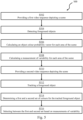
- FIG. 5 shows a flow chart of a method 500 of determining a colour of a tracked object.
- the method comprises a training/configuration phase S502-S508 and an implementation phase S510-S516.
- the training phase will now be described in conjunction with figure 2 .
- Figure 2 shows a camera 202 capturing the scene from figure 1 , and thus providing S502 a video sequence 204 depicting the scene 100.
- the image frames of the video sequence 204 each comprises background objects (a background) and foreground objects 206.
- the foreground objects 206 are, in this simplified example, the vehicles 108 moving in the scene.
- An object detector 212 is used to, for each image frame of the plurality of image frames of the video sequence 204, detect S504 the foreground objects 206 in the image frame.
- Any suitable type of object detector may be used, both neural networks-based techniques and non-neural network-based techniques.
- Neural network-based techniques include using convolutional neural networks using models such as YOLO (You Only Look Once), SSD (Single Shot MultiBox Detector), DETR (End-to-end detection with transformers), and Faster R-CNN (Region-based Convolutional Neural Networks).
- Other neural network-based techniques include LSTM (Long Short Term Memory) and GRU (Gated Recurrent Unit) networks.
- Non neural network-based techniques include Histogram of Oriented Gradients (HOG), Scale-Invariant Feature Transform (SIFT) and Speeded Up Robust Features (SURF).
- HOG Histogram of Oriented Gradients
- SIFT Scale-
- the detected foreground objects 206 are sent to a Colour probability calculator 214.
- the Colour probability calculator 214 may be configured to divide the scene into areas of the scene, or to receive data indicating the areas of the scene.
- each area of the scene may correspond to a same pixel region in the image frames of the video sequence 204.
- each area of the scene may correspond to a 10* 10 pixel region of the image frames of the video sequence, or a 20*20 pixel region, or a 30*20 pixel region or any suitable sized pixel region.
- each area of the scene corresponds to a single pixel coordinate in the image frames of the video sequence 204.
- the areas of the scene may in some embodiments be determined based on an analysis of the lighting conditions of the scene. In other embodiments, the areas of the scene may be determined based on a semantic segmentation of the background of the scene.
- the video sequence is captured by a camera with a changing field of view in the scene.
- a pixel region in an image frame from the video sequence that corresponds to an area of the scene may be determined using camera parameters, the camera parameters comprising one or more of: pan, tilt, roll or zoom.
- the scene is captured by a fixed camera and is divided into three areas of the scene 102a, 102b, 102c, according to the above description of figure 1 .
- the Colour probability calculator may calculate S506 an object colour probability vector 208a-c associated with the area of the scene 102a-c.
- Each value in the object colour probability vector 208a-c relates to a colour from a set of predefined colours and indicates a probability that a foreground object 206 located in the area of the scene 102a-c has the colour.
- the predefined colours may be configured based on the requirements of the system described herein.
- the predefined colours may comprise 10-25 different colours, or 5-10 colours.
- An increase in the number of colours may require a prolonged training phase of the system and techniques described herein. This is because a threshold number of foreground objects detected in a particular area of the scene in order to calculate a representative object colour probability vector 208a-c may correlate with the number of predefined colours.
- the accuracy of determining a most suitable area of the scene for colour determination (as will be described further below) may increase if the number of predefined colours increase.
- calculating an object colour probability vector 208a-c for an area of the plurality of areas 102a-c in the scene 100 comprises detecting at least a threshold number of foreground objects 206 in the area of the scene.
- the threshold number may depend on the number of predefined colours, the number of moving objects 108 that typically is located in the scene 100 per time interval, the variability of the colours of such objects 108, etc.
- the determining of the colour(s) of the foreground objects 206 in the video sequence may be implemented with any suitable colour determining algorithm.
- the step of analysing the first video sequence comprises, for each foreground object located in the area of the scene in an image frame of the first video sequence: determining one or more colours of the foreground object from pixel data of the foreground object in the image frame; and using the determined one or more colours when calculating the object colour probability vector associated with the area of the scene.
- the pixel data to use for a particular foreground object 206 may be determined by the object detector 212, which may determine a location and an extent of each detected foreground object 206 in each the image frame, wherein the location and extent comprises one of: a pixel mask, or a bounding box.
- Such pixel data may thus be analysed to determine one or more colours of the pixel data. For example, a histogram of colours may be determined and mapped to the predetermined colours.
- the predetermined colour that has most pixels in the pixel data with the same colour or similar colour may be chosen as the colour of the object. In some cases, more than one colour is determined for an object, for example the most common colours in the pixel data.
- Mapping of the colours of the pixel data to the predetermined colours may involve comparing a colour of the pixel data with each of the colours among the predetermined colours to choose the "closest" one.
- the definition of closest may vary based on the colour space, but generally, calculating a Euclidian distance between the colour to map and each of the predetermined colours may suffice. If enough pixels (e.g., above a certain percentage threshold) are similar enough (e.g., distance below a distance threshold), the object may be determined to have the relevant predetermined colour.
- the determined colours for an object located in an area of the scene may get a "tick" (an increase of the value/count) in the object colour probability vector (associated with the area of the scene in which the object is located) for that colour.
- an object colour probability vector for a certain area of the scene may look like this (5 predetermined colours, black, white, blue, red, green): [46, 120, 66, 40, 23], which may be converted to probabilities: [0.16, 0.41, 0.22, 0,13, 0.08].
- the numbers may be different based on the illumination conditions as described above.
- a neural network may be used to determine a colour of an object.
- the neural network may be trained to determine a probability of an object having a certain colour.
- the training may involve using training data, each training data comprising a set of pixels, which are labelled with one or more of the predetermined colours.
- the neural network may use this training data to learn how to identify the correct colours (among the predetermined colours) for a particular set of pixels.
- the output from using the neural network may be a plurality of colour values, each colour value associated with a probability that the foreground object has the colour in the image frame.
- an output for a dark blue object may result in the following probabilities (for 5 predetermined colours, black, white, blue, red, green): [0.30, 0.01, 0.6, 0.05, 0.04].
- Such vector may be used to add on to, or recalculate, the values of the object probability vector 208a-c.
- the object probability vector 208a-c may be normalized to always have a total value of one (100%) of the sum all the individual values in the vector.
- the colours among the predetermined colours that have a probability in the output from the neural network above a threshold probability for a certain input object may get a "tick" (an increase of the value/count) in the object colour probability vector for that colour/colours, as described above.
- an object is located in more than one area of the scene at the same time, for example when the size of the object is greater than the size of areas of the scene.
- a determined colour(s) of the object in an image frame of the video sequence may influence more than one object probability vector.
- the step of detecting foreground objects in the image frame comprises determining a location and an extent of each detected foreground object in the image frame, wherein the location and extent comprises one of: a pixel mask, or a bounding box.
- all areas of the scene at least partly overlapped by the pixel mask/bounding box of an object detected in an image frame may be influenced by the colours determined for that object.
- the number of predetermined colours is three (3).
- the object probability vector 208a for the area 102a (which is shadowed by a tree 104 in the scene 100) is determined to be [0.1, 0.1, 0.8].
- the object probability vector 208b for the area 102b (which is illuminated by a streetlight 108 in the scene 100) is determined to be [0.2, 0.7, 0.1].
- the object probability vector 208c for the area 102c (which is exposed to direct sunlight from both the sun 102 and the diffused light from the sky in the scene 100) is determined to be [0.3, 0.3, 0.4].
- the colour probability calculator 214 is further configured to calculate S508 a measurement of variability 210a-c of the probabilities indicated by the object colour probability vector associated with the area of the scene.
- the measurement of variability may be used as a colour rendering metric, e.g., a quantitative measure of the ability of light source(s) in an area of the scene (i.e., the light sources illuminating an area of the scene, possibly influenced by other objects resulting in shadows etc.) to accurately reveal the colours of various objects compared to an ideal or natural light source.
- the measurement of variability 210a-c is calculated using the variance of the respective object probability vectors 208a-c. In other embodiments, other measurements may be used such as standard deviation, mean absolute deviation, median absolute deviation or coefficient of variations.
- a measurement of variability of an area of the scene that is lower indicates an area of the scene with a suitable illumination for determining a "true" colour of an object, since a low variability indicates that image data capturing the scene at that area of the scene is not tinted in way that skews the colour distribution of the objects captured at that area of the scene.
- the variance 210a of the shadowed area 102a is 0.109
- the variance 210b of the streetlight illuminated area 102b is 0.089
- the variance 210c of the area of the scene 102c illuminated with natural light is 0.002.
- the third area of the scene 102c may thus be the most suitable (among the three areas 102a-c) for determining a "true" colour of an object.
- FIG 3 shows how the metrics calculated in figure 2 is used for a second video sequence 302 depicting the scene 100 from figure 1 .
- the usage of the metrics will now be described in conjunction with the implementation phase S510-S516 of the method 500 shown in figure 5 .
- the second video sequence 302 depicting the scene 100 is provided S510.
- the second video sequence 302 comprises three image frames 304a-c.
- the image frames 304a-c depict a foreground object 306 moving in the scene.
- the image frames 304a-c is inputted to an object tracker 308 for tracking the detected foreground objects.
- object tracker 308 for tracking the detected foreground objects.
- There are several techniques used for tracking objects in video sequences ranging from classic computer vision techniques to modern deep learning approaches, for example using Optical Flow, Kalman filtering, Particle filters, Correlation filters, or Deep SORT (Simple Online and Realtime Tracking with a Deep Association Metric) algorithm, which uses a CNN to extract features and a Kalman filter to predict motion, etc.
- the foreground object 306 may be tracked S512 in the second video sequence 302 by the object tracker 308.
- the tracked foreground object 306 is located in a first area 102a of the plurality of areas 102a-c in the scene in the first image frame 304a of the second video sequence, in a second different area 102b of the plurality of areas in the scene in the second image frame 304b, and in third different area 102c of the plurality of areas in scene in the third image frame 304c.
- the system of figure 3 further comprises a Colour determining component 310 which may be used to determine colour(s) of the tracked object 306.
- the measurements of variability 210a-c for each area 102a-c of the scene calculated in figure 2 may be input to the Colour determining component 310.
- the Colour determining component 310 may be configured to determine S512 a first set of colours of the tracked foreground object 306 in the first image frame 304a-c (when located in the first area of the scene 102a), a second different set of colours of the tracked foreground object 306 in the second image frame 304b (when located in the second area of the scene 102b), and a third different set of colours of the tracked foreground object 306 in the third image frame 304c (when located in the third area of the scene 102c).
- the different sets of colours may be determined as described above.
- the sets of colours may comprise one of: a single colour value; a plurality of colour values; or a plurality of colour values, each colour value associated with a probability that the tracked object has the colour.
- the Colour determining component 310 may select S516 among the sets of colours. More specifically, the Colour determining component 310 may select the set of colours that is determined for the object when it is in the area of the scene with the comparably lower measurement of variability. The Colour determining component 310 may thus determine that the colour(s) 310 of the tracked object 306 is the set of colours that is determined for the object 306 when it is in the area of the scene with the comparably lower measurement of variability. In this case, the colour(s) 310 of the tracked object 306 is determined to be the set of colours determined for the object 306 in the third image frame 304c, i.e., the third set of colours.
- the Colour determining component 310 may be configured to label all occurrences of the tracked foreground object 306 in the second video sequence 302 with the determined colour(s) 310. This may be particularly advantageous in a system comprising a Colour matching system 404 (as described in conjunction with figures 2-3 above) and a Forensic search application 402.
- the Colour matching system 404 may comprise the components 212, 214, 308, 310 discussed above and may be configured to implement the functionality of determining colour(s) of a tracked object in a second video sequence (as described above in conjunction with figure 3 ) based on measurements of variability of areas in the scene as determined using detected objects in a first video sequence (as described above in conjunction with figure 2 ).
- the Colour matching system 404 may further be configured to receiving a search request 408 comprising a first colour value, determining that the first colour value matches a colour determined for the foreground object; and returning a search response 406 based at least in part on the foreground object.
- the Forensic search application 402 may be configured to provide the search request 408 comprising the first colour value to the Colour matching system 404, receive a search response 406 from the Colour matching system 404; and display data from the search response to a user.
- the Colour matching system 404 may in examples be implemented in a single device such as a camera.
- some or all of the different components (modules, units, etc.,) 212, 214, 308, 310 may be implemented in a server or in the cloud.
- the device (camera, server, etc.,) implementing the components 212, 214, 308, 310 may comprise circuitry which is configured to implement the components 212, 214, 308, 310 and, more specifically, their functionality.
- the described features in the Colour matching system 404 and the Forensic search application 402 can be implemented advantageously in one or more computer programs that are executable on a programmable system including at least one programmable processor coupled to receive data and instructions from, and to transmit data and instructions to, a data storage system, at least one input device such as a camera, and in some cases at least one output device such as a display.
- Suitable processors for the execution of a program of instructions include, by way of example, both general and special purpose microprocessors, and the sole processor or one of multiple processors or cores, of any kind of computer.
- the processors can be supplemented by, or incorporated in, ASICs (application-specific integrated circuits).
- the training phase may relate to a particular time span of day, a particular time of the year, a particular weather situation etc.
- the measurement of variabilities determined for different time periods/weather, etc. may be stored and implemented when a similar time period/weather conditions occur, e.g., in the Colour determining component 310 of figure 3 .
- the measurement of variabilities of areas of the scene are reset or recalibrated on a regular basis.
Landscapes
- Engineering & Computer Science (AREA)
- Computer Vision & Pattern Recognition (AREA)
- Physics & Mathematics (AREA)
- General Physics & Mathematics (AREA)
- Theoretical Computer Science (AREA)
- Multimedia (AREA)
- Image Analysis (AREA)
Priority Applications (4)
| Application Number | Priority Date | Filing Date | Title |
|---|---|---|---|
| EP23179223.5A EP4478291B1 (de) | 2023-06-14 | 2023-06-14 | Verfahren zum bestimmen einer farbe eines verfolgten objekts |
| US18/653,356 US20240420372A1 (en) | 2023-06-14 | 2024-05-02 | Method for determining a color of a tracked object |
| JP2024089843A JP2024180311A (ja) | 2023-06-14 | 2024-06-03 | 追跡される物体の色を決定するための方法 |
| CN202410739115.6A CN119152047A (zh) | 2023-06-14 | 2024-06-07 | 用于确定被跟踪对象的颜色的方法 |
Applications Claiming Priority (1)
| Application Number | Priority Date | Filing Date | Title |
|---|---|---|---|
| EP23179223.5A EP4478291B1 (de) | 2023-06-14 | 2023-06-14 | Verfahren zum bestimmen einer farbe eines verfolgten objekts |
Publications (3)
| Publication Number | Publication Date |
|---|---|
| EP4478291A1 true EP4478291A1 (de) | 2024-12-18 |
| EP4478291C0 EP4478291C0 (de) | 2025-12-10 |
| EP4478291B1 EP4478291B1 (de) | 2025-12-10 |
Family
ID=86776454
Family Applications (1)
| Application Number | Title | Priority Date | Filing Date |
|---|---|---|---|
| EP23179223.5A Active EP4478291B1 (de) | 2023-06-14 | 2023-06-14 | Verfahren zum bestimmen einer farbe eines verfolgten objekts |
Country Status (4)
| Country | Link |
|---|---|
| US (1) | US20240420372A1 (de) |
| EP (1) | EP4478291B1 (de) |
| JP (1) | JP2024180311A (de) |
| CN (1) | CN119152047A (de) |
Citations (2)
| Publication number | Priority date | Publication date | Assignee | Title |
|---|---|---|---|---|
| US20070154088A1 (en) * | 2005-09-16 | 2007-07-05 | King-Shy Goh | Robust Perceptual Color Identification |
| CN107292933B (zh) * | 2017-04-27 | 2020-09-15 | 浙江工业大学 | 一种基于bp神经网络的车辆颜色识别方法 |
-
2023
- 2023-06-14 EP EP23179223.5A patent/EP4478291B1/de active Active
-
2024
- 2024-05-02 US US18/653,356 patent/US20240420372A1/en active Pending
- 2024-06-03 JP JP2024089843A patent/JP2024180311A/ja active Pending
- 2024-06-07 CN CN202410739115.6A patent/CN119152047A/zh active Pending
Patent Citations (2)
| Publication number | Priority date | Publication date | Assignee | Title |
|---|---|---|---|---|
| US20070154088A1 (en) * | 2005-09-16 | 2007-07-05 | King-Shy Goh | Robust Perceptual Color Identification |
| CN107292933B (zh) * | 2017-04-27 | 2020-09-15 | 浙江工业大学 | 一种基于bp神经网络的车辆颜色识别方法 |
Non-Patent Citations (1)
| Title |
|---|
| THIERRY BOUWMANS ET AL: "On the Role and the Importance of Features for Background Modeling and Foreground Detection", ARXIV.ORG, CORNELL UNIVERSITY LIBRARY, 201 OLIN LIBRARY CORNELL UNIVERSITY ITHACA, NY 14853, 28 November 2016 (2016-11-28), XP080735023, DOI: 10.1016/J.COSREV.2018.01.004 * |
Also Published As
| Publication number | Publication date |
|---|---|
| EP4478291C0 (de) | 2025-12-10 |
| US20240420372A1 (en) | 2024-12-19 |
| EP4478291B1 (de) | 2025-12-10 |
| JP2024180311A (ja) | 2024-12-26 |
| CN119152047A (zh) | 2024-12-17 |
Similar Documents
| Publication | Publication Date | Title |
|---|---|---|
| US10740648B1 (en) | System and method for automatically identifying and matching a color of a structure's external surface | |
| CN110544258B (zh) | 图像分割的方法、装置、电子设备和存储介质 | |
| US8577170B2 (en) | Shadow detection in a single image | |
| US7760942B2 (en) | Methods for discriminating moving objects in motion image sequences | |
| CN107622502B (zh) | 复杂光照条件下视觉导引系统的路径提取与识别方法 | |
| US9460521B2 (en) | Digital image analysis | |
| CN107590499B (zh) | 一种基于视频的设备led指示灯状态监测方法及系统 | |
| Xiong et al. | Color sensors and their applications based on real-time color image segmentation for cyber physical systems | |
| JP2009524884A (ja) | 画像内の照明域を識別する方法及びシステム | |
| KR100237284B1 (ko) | 화상신호로부터 조명색을 검출하는 방법 | |
| US8787666B2 (en) | Color analytics for a digital image | |
| CN103646392B (zh) | 逆光检测方法及设备 | |
| WO2018149253A1 (zh) | 图像处理的方法和设备 | |
| CN110346116B (zh) | 一种基于图像采集的场景照度计算方法 | |
| US20160140416A1 (en) | Method and system for classifying painted road markings in an automotive driver-vehicle-asistance device | |
| CN103810722A (zh) | 结合改进的lbp纹理和色度信息的运动目标检测方法 | |
| Xiong et al. | Early smoke detection of forest fires based on SVM image segmentation | |
| US20130342694A1 (en) | Method and system for use of intrinsic images in an automotive driver-vehicle-assistance device | |
| WO2009105812A1 (en) | Spatio-activity based mode matching field of the invention | |
| JP2020030751A (ja) | 物体検出装置、物体検出方法、及び物体検出プログラム | |
| EP4478291B1 (de) | Verfahren zum bestimmen einer farbe eines verfolgten objekts | |
| Hussain et al. | Max-RGB based colour constancy using the sub-blocks of the image | |
| Drew | Robust specularity detection from a single multi-illuminant color image | |
| Tattersall et al. | Adaptive shadow identification through automatic parameter estimation in video sequences | |
| KR20030091471A (ko) | YCrCb 칼라 기반 얼굴 영역 추출 방법 |
Legal Events
| Date | Code | Title | Description |
|---|---|---|---|
| PUAI | Public reference made under article 153(3) epc to a published international application that has entered the european phase |
Free format text: ORIGINAL CODE: 0009012 |
|
| STAA | Information on the status of an ep patent application or granted ep patent |
Free format text: STATUS: REQUEST FOR EXAMINATION WAS MADE |
|
| 17P | Request for examination filed |
Effective date: 20240115 |
|
| AK | Designated contracting states |
Kind code of ref document: A1 Designated state(s): AL AT BE BG CH CY CZ DE DK EE ES FI FR GB GR HR HU IE IS IT LI LT LU LV MC ME MK MT NL NO PL PT RO RS SE SI SK SM TR |
|
| GRAP | Despatch of communication of intention to grant a patent |
Free format text: ORIGINAL CODE: EPIDOSNIGR1 |
|
| STAA | Information on the status of an ep patent application or granted ep patent |
Free format text: STATUS: GRANT OF PATENT IS INTENDED |
|
| RIC1 | Information provided on ipc code assigned before grant |
Ipc: G06T 7/90 20170101AFI20250829BHEP Ipc: G06T 7/215 20170101ALI20250829BHEP |
|
| INTG | Intention to grant announced |
Effective date: 20250922 |
|
| GRAS | Grant fee paid |
Free format text: ORIGINAL CODE: EPIDOSNIGR3 |
|
| GRAA | (expected) grant |
Free format text: ORIGINAL CODE: 0009210 |
|
| STAA | Information on the status of an ep patent application or granted ep patent |
Free format text: STATUS: THE PATENT HAS BEEN GRANTED |
|
| AK | Designated contracting states |
Kind code of ref document: B1 Designated state(s): AL AT BE BG CH CY CZ DE DK EE ES FI FR GB GR HR HU IE IS IT LI LT LU LV MC ME MK MT NL NO PL PT RO RS SE SI SK SM TR |
|
| REG | Reference to a national code |
Ref country code: CH Ref legal event code: F10 Free format text: ST27 STATUS EVENT CODE: U-0-0-F10-F00 (AS PROVIDED BY THE NATIONAL OFFICE) Effective date: 20251210 Ref country code: GB Ref legal event code: FG4D |
|
| REG | Reference to a national code |
Ref country code: IE Ref legal event code: FG4D |
|
| U01 | Request for unitary effect filed |
Effective date: 20251210 |
|
| U07 | Unitary effect registered |
Designated state(s): AT BE BG DE DK EE FI FR IT LT LU LV MT NL PT RO SE SI Effective date: 20251216 |