EP4477231A2 - Kombinationsimpfstoff - Google Patents
Kombinationsimpfstoff Download PDFInfo
- Publication number
- EP4477231A2 EP4477231A2 EP24199040.7A EP24199040A EP4477231A2 EP 4477231 A2 EP4477231 A2 EP 4477231A2 EP 24199040 A EP24199040 A EP 24199040A EP 4477231 A2 EP4477231 A2 EP 4477231A2
- Authority
- EP
- European Patent Office
- Prior art keywords
- rna
- protein
- seq
- sequence
- combination vaccine
- Prior art date
- Legal status (The legal status is an assumption and is not a legal conclusion. Google has not performed a legal analysis and makes no representation as to the accuracy of the status listed.)
- Pending
Links
Images










Classifications
-
- A—HUMAN NECESSITIES
- A61—MEDICAL OR VETERINARY SCIENCE; HYGIENE
- A61K—PREPARATIONS FOR MEDICAL, DENTAL OR TOILETRY PURPOSES
- A61K39/00—Medicinal preparations containing antigens or antibodies
- A61K39/12—Viral antigens
-
- A—HUMAN NECESSITIES
- A61—MEDICAL OR VETERINARY SCIENCE; HYGIENE
- A61P—SPECIFIC THERAPEUTIC ACTIVITY OF CHEMICAL COMPOUNDS OR MEDICINAL PREPARATIONS
- A61P31/00—Antiinfectives, i.e. antibiotics, antiseptics, chemotherapeutics
- A61P31/12—Antivirals
- A61P31/14—Antivirals for RNA viruses
-
- A—HUMAN NECESSITIES
- A61—MEDICAL OR VETERINARY SCIENCE; HYGIENE
- A61P—SPECIFIC THERAPEUTIC ACTIVITY OF CHEMICAL COMPOUNDS OR MEDICINAL PREPARATIONS
- A61P31/00—Antiinfectives, i.e. antibiotics, antiseptics, chemotherapeutics
- A61P31/12—Antivirals
- A61P31/14—Antivirals for RNA viruses
- A61P31/16—Antivirals for RNA viruses for influenza or rhinoviruses
-
- A—HUMAN NECESSITIES
- A61—MEDICAL OR VETERINARY SCIENCE; HYGIENE
- A61K—PREPARATIONS FOR MEDICAL, DENTAL OR TOILETRY PURPOSES
- A61K39/00—Medicinal preparations containing antigens or antibodies
- A61K2039/51—Medicinal preparations containing antigens or antibodies comprising whole cells, viruses or DNA/RNA
- A61K2039/53—DNA (RNA) vaccination
-
- A—HUMAN NECESSITIES
- A61—MEDICAL OR VETERINARY SCIENCE; HYGIENE
- A61K—PREPARATIONS FOR MEDICAL, DENTAL OR TOILETRY PURPOSES
- A61K39/00—Medicinal preparations containing antigens or antibodies
- A61K2039/54—Medicinal preparations containing antigens or antibodies characterised by the route of administration
-
- A—HUMAN NECESSITIES
- A61—MEDICAL OR VETERINARY SCIENCE; HYGIENE
- A61K—PREPARATIONS FOR MEDICAL, DENTAL OR TOILETRY PURPOSES
- A61K39/00—Medicinal preparations containing antigens or antibodies
- A61K2039/545—Medicinal preparations containing antigens or antibodies characterised by the dose, timing or administration schedule
-
- A—HUMAN NECESSITIES
- A61—MEDICAL OR VETERINARY SCIENCE; HYGIENE
- A61K—PREPARATIONS FOR MEDICAL, DENTAL OR TOILETRY PURPOSES
- A61K39/00—Medicinal preparations containing antigens or antibodies
- A61K2039/57—Medicinal preparations containing antigens or antibodies characterised by the type of response, e.g. Th1, Th2
- A61K2039/572—Medicinal preparations containing antigens or antibodies characterised by the type of response, e.g. Th1, Th2 cytotoxic response
-
- A—HUMAN NECESSITIES
- A61—MEDICAL OR VETERINARY SCIENCE; HYGIENE
- A61K—PREPARATIONS FOR MEDICAL, DENTAL OR TOILETRY PURPOSES
- A61K39/00—Medicinal preparations containing antigens or antibodies
- A61K2039/57—Medicinal preparations containing antigens or antibodies characterised by the type of response, e.g. Th1, Th2
- A61K2039/575—Medicinal preparations containing antigens or antibodies characterised by the type of response, e.g. Th1, Th2 humoral response
-
- A—HUMAN NECESSITIES
- A61—MEDICAL OR VETERINARY SCIENCE; HYGIENE
- A61K—PREPARATIONS FOR MEDICAL, DENTAL OR TOILETRY PURPOSES
- A61K39/00—Medicinal preparations containing antigens or antibodies
- A61K2039/70—Multivalent vaccine
-
- C—CHEMISTRY; METALLURGY
- C12—BIOCHEMISTRY; BEER; SPIRITS; WINE; VINEGAR; MICROBIOLOGY; ENZYMOLOGY; MUTATION OR GENETIC ENGINEERING
- C12N—MICROORGANISMS OR ENZYMES; COMPOSITIONS THEREOF; PROPAGATING, PRESERVING, OR MAINTAINING MICROORGANISMS; MUTATION OR GENETIC ENGINEERING; CULTURE MEDIA
- C12N2760/00—MICROORGANISMS OR ENZYMES; COMPOSITIONS THEREOF; PROPAGATING, PRESERVING, OR MAINTAINING MICROORGANISMS; MUTATION OR GENETIC ENGINEERING; CULTURE MEDIA ssRNA viruses negative-sense
- C12N2760/00011—Details
- C12N2760/16011—Orthomyxoviridae
- C12N2760/16111—Influenzavirus A, i.e. influenza A virus
- C12N2760/16134—Use of virus or viral component as vaccine, e.g. live-attenuated or inactivated virus, VLP, viral protein
-
- C—CHEMISTRY; METALLURGY
- C12—BIOCHEMISTRY; BEER; SPIRITS; WINE; VINEGAR; MICROBIOLOGY; ENZYMOLOGY; MUTATION OR GENETIC ENGINEERING
- C12N—MICROORGANISMS OR ENZYMES; COMPOSITIONS THEREOF; PROPAGATING, PRESERVING, OR MAINTAINING MICROORGANISMS; MUTATION OR GENETIC ENGINEERING; CULTURE MEDIA
- C12N2760/00—MICROORGANISMS OR ENZYMES; COMPOSITIONS THEREOF; PROPAGATING, PRESERVING, OR MAINTAINING MICROORGANISMS; MUTATION OR GENETIC ENGINEERING; CULTURE MEDIA ssRNA viruses negative-sense
- C12N2760/00011—Details
- C12N2760/18011—Paramyxoviridae
- C12N2760/18511—Pneumovirus, e.g. human respiratory syncytial virus
- C12N2760/18534—Use of virus or viral component as vaccine, e.g. live-attenuated or inactivated virus, VLP, viral protein
Definitions
- the present invention relates to a vaccine, especially a combination vaccine providing at least a first and a second antigenic function, wherein the antigenic functions are encoded by at least one mRNA encoding at least one or more proteins or fragments, variants or derivatives of proteins awarding antigenic function, wherein the first antigenic function being a Fusion (F) protein or a fragment, variant or derivative of a Fusion (F) protein derived from the virus family Paramyxoviridae and the second antigenic function being an Hemagglutinin (HA) protein or a fragment, variant or derivative of an Hemagglutinin (HA) protein derived from the virus family Orthomyxoviridae.
- the present invention is directed to a kit or kit of parts comprising the components of said combination vaccine and to said combination vaccine for use in a method of prophylactic or therapeutic treatment of diseases, particularly in the prevention or treatment of infectious diseases like RSV and influenza.
- Respiratory diseases caused by viruses or bacteria are a major health and economic burden worldwide.
- most prominent viral pathogens are respiratory syncytial virus (RSV), parainfluenza viruses 1-3 (PIV), and influenza A and B viruses, which are responsible for the majority of lower respiratory tract infections resulting in a significant rate of hospitalizations particularly of young children less than 3 years of age ( Forster, J. et al., 2004. Prospective population-based study of viral lower respiratory tract infections in children under 3 years of age (the PRI.DE study). European Journal of Pediatrics, 163(12), S.709-716 .).
- RSV which belongs to the virus family of Paramyxoviridae, is one of the most contagious pathogens and makes a substantial contribution to severe respiratory tract infections in infants, the elderly and immunocompromised patients.
- PIV parainfluenza viruses
- RSV human parainfluenza viruses
- the subtypes 1 and 2 of PIV are the principal causes of croup, whereas subtype 3 causes more severe lower respiratory tract illness with RSV-like symptoms including pneumonia and bronchiolitis.
- Paramyxoviruses are also responsible for a range of diseases in other animal species, for example canine distemper virus (dogs), phocine distemper virus (seals), cetacean morbillivirus (dolphins and porpoises), Newcastle disease virus (birds), and rinderpest virus (cattle).
- canine distemper virus dogs
- phocine distemper virus seals
- cetacean morbillivirus diopterins and porpoises
- Newcastle disease virus birds
- rinderpest virus cattle.
- Some paramyxoviruses such as the henipaviruses are zoonotic pathogens, occurring naturally in an animal host, while being also able to infect humans.
- Henipavirus Hendra virus (HeV) and Nipah virus (NiV) in the genus Henipavirus have emerged in humans and are contagious, highly virulent, and capable of infecting a number of mammalian species and causing potentially fatal disease.
- influenza vaccines are subunit, inactivated split or whole virion vaccines propagated in cell culture or chicken eggs which are not recommended for infants and only limited recommended for pregnant women.
- WO 2011/030218 discloses immunogenic compositions comprising viral (RSV and influenza) and bacterial (pneumococcus) immunogens
- WO 00/35481 discloses combinations of RSV F, G and matrix proteins with a non-virulent influenza virus preparation
- WO 2010/149743 discloses combinations of F proteins derived from human metapneumovirus, parainfluenza virus and RSV.
- Talaat et al. Talaat, A.M. et al. 2001.
- a pharmaceutical composition or a kit comprising the (combination) vaccine or the respective components thereof. It is an object to provide a (combination) vaccine for use in a method of treatment of infections caused by viruses of the virus families Paramyxoviridae, e.g. RSV, and/or Orthomyxoviridae, e.g. Influenza virus.
- viruses of the virus families Paramyxoviridae e.g. RSV
- Orthomyxoviridae e.g. Influenza virus.
- RSV respiratory syncytial virus
- PIV parainfluenza viruses 1-3
- Influenza A and B viruses which induce a balanced immune response, i.e. a humoral and a cellular immune response.
- Genome of RSV RSV has 10 genes encoding 11 proteins-there are 2 open reading frames of M2.
- NS1 and NS2 inhibit type I interferon activity.
- N encodes nucleocapsid protein that associates with the genomic RNA forming the nucleocapsid.
- M encodes the Matrix protein required for viral assembly.
- SH, G and F form the viral coat.
- the "G” protein is a surface protein that is heavily glycosylated. It functions as the attachment protein.
- the "F” protein is another important surface protein; F mediates fusion, allowing entry of the virus into the cell cytoplasm and also allowing the formation of syncytia.
- Genome of Influenza Despite of all variations, the viral particles of all influenza viruses are similar in composition. These are made of a viral envelope containing two main types of glycoproteins, wrapped around a central core. The central core contains the viral RNA genome and other viral proteins that package and protect this RNA. Unusually for a virus, its genome is not a single piece of nucleic acid; instead, it contains seven or eight pieces of segmented negative-sense RNA, each piece of RNA containing either one or two genes, which code for a gene product (protein).
- Dendritic cells that can serve as antigen-presenting cells are inter alia dendritic cells, macrophages, and B cells. Each of these cells has a distinct function in eliciting immune responses.
- Dendritic cells take up antigens by phagocytosis and macropinocytosis and are stimulated by contact with e.g. a foreign antigen to migrate to the local lymphoid tissue, where they differentiate into mature dendritic cells.
- Macrophages ingest particulate antigens such as bacteria and are induced by infectious agents or other appropriate stimuli to express MHC molecules.
- the unique ability of B cells to bind and internalize soluble protein antigens via their receptors may also be important to induce T cells.
- T cells which induces their proliferation and differentiation into armed effector T cells.
- the most important function of effector T cells is the killing of infected cells by CD8+ cytotoxic T cells and the activation of macrophages by Th1 cells which together make up cell-mediated immunity, and the activation of B cells by both Th2 and Th1 cells to produce different classes of antibody, thus driving the humoral immune response.
- T cells recognize an antigen by their T cell receptors which do not recognize and bind antigen directly, but instead recognize short peptide fragments e.g. of pathogen-derived protein antigens, which are bound to MHC molecules on the surfaces of other cells.
- adjuvant is typically understood not to comprise agents which confer immunity by themselves.
- An adjuvant assists the immune system unspecifically to enhance the antigen-specific immune response by e.g. promoting presentation of an antigen to the immune system or induction of an unspecific innate immune response.
- an adjuvant may preferably e.g. modulate the antigen-specific immune response by e.g. shifting the dominating Th2-based antigen specific response to a more Th1-based antigen specific response or vice versa. Accordingly, an adjuvant may favourably modulate cytokine expression/secretion, antigen presentation, type of immune response etc.
- effector T cells The most important function of effector T cells is the killing of infected cells by CD8 + cytotoxic T cells and the activation of macrophages by TH1 cells which together make up cell-mediated immunity, and the activation of B cells by both TH2 and TH1 cells to produce different classes of antibody, thus driving the humoral immune response.
- T cells recognize an antigen by their T cell receptors which does not recognize and bind antigen directly, but instead recognize short peptide fragments e.g. of pathogens' protein antigens, which are bound to MHC molecules on the surfaces of other cells.
- T cells fall into two major classes that have different effector functions.
- the two classes are distinguished by the expression of the cell-surface proteins CD4 and CD8. These two types of T cells differ in the class of MHC molecule that they recognize.
- MHC molecules There are two classes of MHC molecules - MHC class I and MHC class II molecules - which differ in their structure and expression pattern on tissues of the body.
- CD4 + T cells bind to a MHC class II molecule and CD8 + T cells to a MHC class I molecule.
- MHC class I and MHC class II molecules have distinct distributions among cells that reflect the different effector functions of the T cells that recognize them.
- MHC class I molecules present peptides of cytosolic and nuclear origin e.g.
- CD8 + T cells that recognize MHC class I:peptide complexes at the surface of infected cells are specialized to kill any cells displaying foreign peptides and so rid the body of cells infected with viruses and other cytosolic pathogens.
- the main function of CD4 + T cells (CD4 + helper T cells) that recognize MHC class II molecules is to activate other effector cells of the immune system.
- MHC class II molecules are normally found on B lymphocytes, dendritic cells, and macrophages, cells that participate in immune responses, but not on other tissue cells. Macrophages, for example, are activated to kill the intravesicular pathogens they harbour, and B cells to secrete immunoglobulins against foreign molecules.
- MHC class II molecules are prevented from binding to peptides in the endoplasmic reticulum and thus MHC class II molecules bind peptides from proteins which are degraded in endosomes. They can capture peptides from pathogens that have entered the vesicular system of macrophages, or from antigens internalized by immature dendritic cells or the immunoglobulin receptors of B cells. Pathogens that accumulate in large numbers inside macrophage and dendritic cell vesicles tend to stimulate the differentiation of TH1 cells, whereas extracellular antigens tend to stimulate the production of TH2 cells.
- TH1 cells activate the microbicidal properties of macrophages and induce B cells to make IgG antibodies that are very effective of opsonising extracellular pathogens for ingestion by phagocytic cells
- TH2 cells initiate the humoral response by activating naive B cells to secrete IgM, and induce the production of weakly opsonising antibodies such as IgG1 and IgG3 (mouse) and IgG2 and IgG4 (human) as well as IgA and IgE (mouse and human).
- Antibacterial agent is typically a substance that may be effective against bacteria.
- the antibacterial agent may for example directly kill bacteria, reduce bacterial growth, and/or inhibit bacterial propagation and spreading. Examples for antibacterial agents are given further below.
- Antiviral agent is typically a substance that may be effective against viruses.
- the antiviral agent may for example directly inactivate viruses, reduce viral replication, and/or inhibit viral propagation and spreading. Examples for antibacterial agents are given further below.
- direct antigenic functionality typically means that the antigenic function is, e.g., a protein or peptide (or a killed bacterium, virus or the like) that is administered to an organism and induces an adaptive immune response, mostly without being modified by e.g. translation or the like.
- indirect antigenic functionality typically means in this context that the "antigenic function” is, e.g., a nucleic acid sequence that is taken up by the target organism and translated within the organism into a peptide or protein. This peptide or protein then functions as an immunogen and induces an adaptive immune response.
- an "antigenic function" is understood to be a preform or precursor of an immunogen.
- an "antigenic function" can be understood to be an immunogen itself.
- an antigenic function may in particular be a Fusion (F) protein of the virus family Paramyxoviridae and (e.g. artificial) functional variants or fragments thereof as well as (preferably immunogenic) fragments of said Fusion (F) protein and respective variants; as well as corresponding nucleic acids encoding any of these, i.e. Fusion (F) proteins of the virus family Paramyxoviridae, variants thereof as well as fragments of said Fusion (F) protein and respective variants.
- an antigenic function may also in particular be a Hemagglutinin (HA) protein of the virus family Orthomyxoviridae and (e.g. artificial) variants thereof as well as (preferably immunogenic) fragments of said Hemagglutinin (HA) protein and respective variants; as well as corresponding nucleic acids encoding any of these, i.e. Hemagglutinin (HA) proteins of the virus family Orthomyxoviridae, variants thereof as well as fragments of said Hemagglutinin (HA) protein and respective variants.
- HA and F protein may for example be identified in established databases such as the UniProt database or the Protein database provided by the National Center for Biotechnology (NCBI, US).
- Hemagglutinin (HA) proteins of the virus family Orthomyxoviridae and (e.g. artificial) variants thereof may for instance likewise be identified in databases such as the UniProt database or the Protein database provided by the National Center for Biotechnology (NCBI, US).
- Antigenic function preferably represents the immune response elicited by a protein or peptide sequence.
- the antigenic function or the antigenic potential of the HA and F protein is typically sequence specific and depends on specific epitope sequences within the full-length protein.
- Antigen-providing RNA in particular an antigen-providing mRNA in the context of the invention may typically be a RNA, having at least one open reading frame that can be translated by a cell or an organism provided with that RNA.
- the product of this translation is a peptide or protein that may act as an antigen, preferably as an immunogen.
- the product may also be a fusion protein composed of more than one immunogen, e.g. a fusion protein that consist of two or more epitopes, peptides or proteins derived from the same or different virus-proteins, wherein the epitopes, peptides or proteins may be linked by linker sequences.
- RNA preferably an mRNA, that typically may have two (bicistronic) or more (multicistronic) open reading frames (ORF).
- An open reading frame in this context is a sequence of several nucleotide triplets (codons) that can be translated into a peptide or protein. Translation of such RNA yields two (bicistronic) or more (multicistronic) distinct translation products (provided the ORFs are not identical).
- such RNA may for example comprise an internal ribosomal entry site (IRES) sequence.
- fragments or variants of nucleic acids may typically comprise a sequence having a sequence identity with a nucleic acid, or with a protein or peptide, if encoded by the nucleic acid molecule, of at least 5%, 10%, 20%, 30%, 40%, 50%, 60%, preferably at least 70%, more preferably at least 80%, equally more preferably at least 85%, even more preferably at least 90% and most preferably at least 95% or even 97%, 98% or 99%, to the entire wild type sequence, either on nucleic acid level or on amino acid level.
- Carrier / polymeric carrier A carrier in the context of the invention may typically be a compound that facilitates transport and/or complexation of another compound. Said carrier may form a complex with said other compound.
- a polymeric carrier is a carrier that is formed of a polymer.
- cationic may also refer to "polycationic" components.
- a 5' cap is typically a modified nucleotide, particularly a guanine nucleotide, added to the 5' end of a RNA-molecule.
- the 5'cap is added using a 5'-5'-triphosphate linkage.
- Cellular immunity/cellular immune response relates typically to the activation of macrophages, natural killer cells (NK), antigen-specific cytotoxic T-lymphocytes, and the release of various cytokines in response to an antigen.
- cellular immunity is not related to antibodies but to the activation of cells of the immune system.
- a cellular immune response is characterized e.g.
- cytotoxic T-lymphocytes that are able to induce apoptosis in body cells displaying epitopes of an antigen on their surface, such as virus-infected cells, cells with intracellular bacteria, and cancer cells displaying tumor antigens; activating macrophages and natural killer cells, enabling them to destroy pathogens; and stimulating cells to secrete a variety of cytokines that influence the function of other cells involved in adaptive immune responses and innate immune responses.
- a combination vaccine is typically a vaccine that may provide two or more immunogens and/or antigenic functions. The immunogens and/or antigenic functions are provided simultaneously by one composition.
- Fragments of proteins in the context of the present invention may, typically, comprise a sequence of a protein or peptide as defined herein, which is, with regard to its amino acid sequence (or its encoded nucleic acid molecule), N-terminally and/or C-terminally truncated compared to the amino acid sequence of the original (native) protein (or its encoded nucleic acid molecule). Such truncation may thus occur either on the amino acid level or correspondingly on the nucleic acid level.
- a sequence identity with respect to such a fragment as defined herein may therefore preferably refer to the entire protein or peptide as defined herein or to the entire (coding) nucleic acid molecule of such a protein or peptide.
- fragments of nucleic acids in the context of the present invention may comprise a sequence of a nucleic acid as defined herein, which is, with regard to its nucleic acid molecule 5'- and/or 3'- truncated compared to the nucleic acid molecule of the original (native) nucleic acid molecule.
- a sequence identity with respect to such a fragment as defined herein may therefore preferably refer to the entire nucleic acid as defined herein.
- Fragments of proteins or peptides in the context of the present invention may furthermore comprise a sequence of a protein or peptide as defined herein, which has a length of for example at least 5 amino acids, preferably a length of at least 6 amino acids, preferably at least 7 amino acids, more preferably at least 8 amino acids, even more preferably at least 9 amino acids; even more preferably at least 10 amino acids; even more preferably at least 11 amino acids; even more preferably at least 12 amino acids; even more preferably at least 13 amino acids; even more preferably at least 14 amino acids; even more preferably at least 15 amino acids; even more preferably at least 16 amino acids; even more preferably at least 17 amino acids; even more preferably at least 18 amino acids; even more preferably at least 19 amino acids; even more preferably at least 20 amino acids; even more preferably at least 25 amino acids; even more preferably at least 30 amino acids; even more preferably at least 35 amino acids; even more preferably at least 50 amino acids; or most preferably at least 100 amino acids.
- such fragment may have a length of about 6 to about 20 or even more amino acids, e.g. fragments as processed and presented by MHC class I molecules, preferably having a length of about 8 to about 10 amino acids, e.g. 8, 9, or 10, (or even 6, 7, 11, or 12 amino acids), or fragments as processed and presented by MHC class II molecules, preferably having a length of about 13 or more amino acids, e.g. 13, 14, 15, 16, 17, 18, 19, 20 or even more amino acids, wherein these fragments may be selected from any part of the amino acid sequence.
- These fragments are typically recognized by T-cells in form of a complex consisting of the peptide fragment and an MHC molecule, i.e. the fragments are typically not recognized in their native form.
- Fragments of proteins or peptides may comprise at least one epitope of those proteins or peptides.
- domains of a protein like the extracellular domain, the intracellular domain or the transmembrane domain and shortened or truncated versions of a protein may be understood to comprise a fragment of a protein. The fragment may be chosen as mentioned from any part of the full length protein or peptide.
- the fragment of a Fusion (F) protein of the virus family Paramyxoviridae, and/or the fragment of the Hemagglutinin (HA) protein of the virus family Orthomyxoviridae may be selected, independently of each other, from the first, second, third or fourth quarter of the amino acid sequence of said Fusion (F) protein of the virus family Paramyxoviridae and/or the amino acid sequence of said Hemagglutinin (HA) protein of the virus family Orthomyxoviridae, respectively.
- T cell epitopes or parts of the proteins in the context of the present invention may comprise fragments preferably having a length of about 6 to about 20 or even more amino acids, e.g. fragments as processed and presented by MHC class I molecules, preferably having a length of about 8 to about 10 amino acids, e.g. 8, 9, or 10, (or even 11, or 12 amino acids), or fragments as processed and presented by MHC class II molecules, preferably having a length of about 13 or more amino acids, e.g. 13, 14, 15, 16, 17, 18, 19, 20 or even more amino acids, wherein these fragments may be selected from any part of the amino acid sequence.
- These fragments are typically recognized by T cells in form of a complex consisting of the peptide fragment and an MHC molecule.
- B cell epitopes are typically fragments located on the outer surface of (native) protein or peptide antigens as defined herein, preferably having 5 to 15 amino acids, more preferably having 5 to 12 amino acids, even more preferably having 6 to 9 amino acids, which may be recognized by antibodies, i.e. in their native form.
- Such epitopes of proteins or peptides may furthermore be selected from any of the herein mentioned variants of such proteins or peptides.
- antigenic determinants can be conformational or discontinuous epitopes which are composed of segments of the proteins or peptides as defined herein that are discontinuous in the amino acid sequence of the proteins or peptides as defined herein but are brought together in the three-dimensional structure or continuous or linear epitopes which are composed of a single polypeptide chain.
- Variants of proteins may be generated, having an amino acid sequence which differs from the original sequence in one or more mutation(s), such as one or more substituted, inserted and/or deleted amino acid(s). Preferably, these fragments and/or variants have the same biological function or specific activity compared to the full-length native protein, e.g. its specific antigenic property. "Variants” of proteins or peptides as defined in the context of the present invention may comprise conservative amino acid substitution(s) compared to their native, i.e. non-mutated physiological, sequence. Those amino acid sequences as well as their encoding nucleotide sequences in particular fall under the term variants as defined herein.
- amino acids which originate from the same class, are exchanged for one another are called conservative substitutions.
- these are amino acids having aliphatic side chains, positively or negatively charged side chains, aromatic groups in the side chains or amino acids, the side chains of which can enter into hydrogen bridges, e.g. side chains which have a hydroxyl function.
- an amino acid having a polar side chain is replaced by another amino acid having a likewise polar side chain, or, for example, an amino acid characterized by a hydrophobic side chain is substituted by another amino acid having a likewise hydrophobic side chain (e.g.
- variants of proteins or peptides as defined herein, which may be encoded by a nucleic acid molecule may also comprise those sequences, wherein nucleotides of the nucleic acid are exchanged according to the degeneration of the genetic code, without leading to an alteration of the respective amino acid sequence of the protein or peptide, i.e. the amino acid sequence or at least part thereof may not differ from the original sequence in one or more mutation(s) within the above meaning.
- nucleic acid sequences or amino acid sequences as defined herein preferably the amino acid sequences encoded by a nucleic acid sequence of the polymeric carrier as defined herein or the amino acid sequences themselves
- the sequences can be aligned in order to be subsequently compared to one another. Therefore, e.g. a position of a first sequence may be compared with the corresponding position of the second sequence. If a position in the first sequence is occupied by the same component (residue) as is the case at a position in the second sequence, the two sequences are identical at this position. If this is not the case, the sequences differ at this position.
- gaps can be inserted into the first sequence to allow a further alignment. If deletions occur in the second sequence in comparison to the first sequence, gaps can be inserted into the second sequence to allow a further alignment.
- the percentage to which two sequences are identical is then a function of the number of identical positions divided by the total number of positions including those positions which are only occupied in one sequence. The percentage to which two sequences are identical can be determined using a mathematical algorithm. A preferred, but not limiting, example of a mathematical algorithm which can be used is the algorithm of Karlin et al. (1993), PNAS USA, 90:5873-5877 or Altschul et al. (1997), Nucleic Acids Res., 25:3389-3402 .
- a "variant" of a protein or peptide may have at least 70%, 75%, 80%, 85%, 90%, 95%, 98% or 99% amino acid identity over a stretch of 10, 20, 30, 50, 75 or 100 amino acids of such protein or peptide.
- a "variant" of a nucleic acid sequence may have at least 70%, 75%, 80%, 85%, 90%, 95%, 98% or 99% nucleotide identity over a stretch of 10, 20, 30, 50, 75 or 100 nucleotide of such nucleic acid sequence
- a derivative of a peptide or protein is typically understood to be a molecule that is derived from another molecule, such as said peptide or protein.
- a "derivative" of a peptide or protein also encompasses fusions comprising a peptide or protein used in the present invention.
- the fusion comprises a label, such as, for example, an epitope, e.g., a FLAG epitope or a V5 epitope.
- the epitope is a FLAG epitope.
- a tag is useful for, for example, purifying the fusion protein.
- Fusion protein is typically an artificial peptide or protein. Fusion proteins are typically created through the joining of two or more open reading frames which originally coded for separate peptides or proteins wherein joining may optionally occur via a linker sequence. These joined open reading frames are typically translated in a single peptide, polypeptide or protein with functional properties derived from each of the original proteins or peptides.
- Fusion protein does not relate to the terms "Fusion (F) protein” or F protein, which instead refer to a specific class of viral proteins (see above).
- Humoral immunity refers typically to antibody production and the accessory processes that may accompany it.
- a humoral immune response may be typically characterized, e.g., by Th2 activation and cytokine production, germinal center formation and isotype switching, affinity maturation and memory cell generation.
- Humoral immunity also typically may refer to the effector functions of antibodies, which include pathogen and toxin neutralization, classical complement activation, and opsonin promotion of phagocytosis and pathogen elimination.
- an immunogen is preferably a protein or peptide, e.g. the product of an in vivo translation of a provided antigenic function.
- an immunogen may elicit at least or exclusively an adaptive immunogen/antigen-specific immune response.
- an immunogen may in particular be a (F) protein of the virus family Paramyxoviridae and (e.g. artificial) variants thereof as well as immunogenic fragments of said Fusion (F) protein and respective variants.
- an immunogen may also in particular be a Hemagglutinin (HA) protein of the virus family Orthomyxoviridae and (e.g. artificial) variants thereof as well as immunogenic fragments of said Hemagglutinin (HA) protein and respective variants.
- HA Hemagglutinin
- Immune response may typically either be a specific reaction of the adaptive immune system to a particular antigen (so called specific or adaptive immune response) or an unspecific reaction of the innate immune system (so called unspecific or innate immune response).
- the invention relates to the core to specific reactions (adaptive immune responses) of the adaptive immune system. Particularly, it relates to adaptive immune responses to infections by viruses like e.g. RSV or influenza. However, this specific response can be supported by an additional unspecific reaction (innate immune response). Therefore, the invention also relates to a compound for simultaneous stimulation of the innate and the adaptive immune system to evoke an efficient adaptive immune response.
- the immune system may protect organisms from infection. If a pathogen breaks through a physical barrier of an organism and enters this organism, the innate immune system provides an immediate, but non-specific response. If pathogens evade this innate response, vertebrates possess a second layer of protection, the adaptive immune system. Here, the immune system adapts its response during an infection to improve its recognition of the pathogen. This improved response is then retained after the pathogen has been eliminated, in the form of an immunological memory, and allows the adaptive immune system to mount faster and stronger attacks each time this pathogen is encountered. According to this, the immune system comprises the innate and the adaptive immune system. Each of these two parts contains so called humoral and cellular components.
- Immunostimulatory RNA in the context of the invention may typically be a RNA that is able to induce an innate immune response itself. It usually does not have an open reading frame and thus does not provide a peptide-antigen or immunogen but elicits an innate immune response e.g. by binding to a specific kind of Toll-like-receptor (TLR) or other suitable receptors. However, of course also mRNAs having an open reading frame and coding for a peptide/protein (e.g. an antigenic function) may induce an innate immune response.
- TLR Toll-like-receptor
- the innate immune system also known as non-specific immune system, comprises the cells and mechanisms that defend the host from infection by other organisms in a non-specific manner. This means that the cells of the innate system recognize and respond to pathogens in a generic way, but unlike the adaptive immune system, it does not confer long-lasting or protective immunity to the host.
- the innate immune system may be e.g. activated by ligands of pathogen-associated molecular patterns (PAMP) receptors, e.g.
- PAMP pathogen-associated molecular patterns
- TLRs Toll-like receptors
- auxiliary substances such as lipopolysaccharides, TNF-alpha, CD40 ligand, or cytokines, monokines, lymphokines, interleukins or chemokines, IL-1, IL-2, IL-3, IL-4, IL-5, IL-6, IL-7, IL-8, IL-9, IL-10, IL-12, IL-13, IL-14, IL-15, IL-16, IL-17, IL-18, IL-19, IL-20, IL-21, IL-22, IL-23, IL-24, IL-25, IL-26, IL-27, IL-28, IL-29, IL-30, IL-31, IL-32, IL-33, IFN-alpha, IFN-beta, IFN-gamma, GM-CSF, G-CSF, M-CSF, LT-beta, TNF-alpha, growth factors, and hGH
- a response of the innate immune system includes recruiting immune cells to sites of infection, through the production of chemical factors, including specialized chemical mediators, called cytokines; activation of the complement cascade; identification and removal of foreign substances present in organs, tissues, the blood and lymph, by specialized white blood cells; activation of the adaptive immune system through a process known as antigen presentation; and/or acting as a physical and chemical barrier to infectious agents.
- a monocistronic RNA may typically be a RNA, preferably a mRNA, that encodes only one open reading frame.
- An open reading frame in this context is a sequence of several nucleotide triplets (codons) that can be translated into a peptide or protein.
- nucleic acid means any DNA- or RNA-molecule and is used synonymous with polynucleotide. Wherever herein reference is made to a nucleic acid or nucleic acid sequence encoding a particular protein and/or peptide, said nucleic acid or nucleic acid sequence, respectively, preferably also comprises regulatory sequences allowing in a suitable host, e.g. a human being, its expression, i.e. transcription and/or translation of the nucleic acid sequence encoding the particular protein or peptide.
- a suitable host e.g. a human being
- a peptide is a polymer of amino acid monomers. Usually the monomers are linked by peptide bonds.
- the term "peptide" does not limit the length of the polymer chain of amino acids. In some embodiments of the present invention a peptide may for example contain less than 50 monomer units. Longer peptides are also called polypeptides, typically having 50 to 600 monomeric units, more specifically 50 to 300 monomeric units.
- Pharmaceutically effective amount A pharmaceutically effective amount in the context of the invention is typically understood to be an amount that is sufficient to induce an immune response.
- a protein typically consists of one or more peptides and/or polypeptides folded into 3-dimensional form, facilitating a biological function.
- a poly-(C )-sequence is typically a long sequence of cytosine nucleotides, typically about 10 to about 200 cytosine nucleotides, preferably about 10 to about 100 cytosine nucleotides, more preferably about 10 to about 70 cytosine nucleotides or even more preferably about 20 to about 50 or even about 20 to about 30 cytosine nucleotides.
- a poly(C) sequence may preferably be located 3' of the coding region comprised by a nucleic acid.
- a poly-A-tail also called "3'-poly(A) tail” is typically a long sequence of adenosine nucleotides of up to about 400 adenosine nucleotides, e.g. from about 25 to about 400, preferably from about 50 to about 400, more preferably from about 50 to about 300, even more preferably from about 50 to about 250, most preferably from about 60 to about 250 adenosine nucleotides, added to the 3' end of a RNA.
- Polyadenylation is typically the addition of a Poly-A-Tail to a RNA, particularly to an mRNA. It is induced by a so called polyadenylation signal.
- This signal may be typically located at the 3'-end of a RNA to be polyadenylated and may typically comprise a hexamer consisting of adenine and uracil, preferably the hexamer AAUAAA. Other hexamer sequences are conceivable.
- Stabilized nucleic acid typically, exhibits a modification increasing resistance to in vivo degradation (e.g. degradation by an exo- or endo-nuclease) and/or ex vivo degradation (e.g. by the manufacturing process prior to vaccine administration, e.g. in the course of the preparation of the vaccine solution to be administered).
- Stabilization of RNA can, e.g., be achieved by providing a 5'Cap-Structure, a Poly-A-Tail, or any other UTR-modification. It can also be achieved by backbone-modification or modification of the G/C-content of the nucleic acid.
- Various other methods are known in the art and conceivable in the context of the invention.
- a vaccine is typically understood to be a prophylactic or therapeutic material providing at least one antigenic function, particularly an immunogen.
- the antigen or immunogen stimulates the body's adaptive immune system to provide an adaptive immune response.
- An agent e.g. a carrier, that may typically be used within a vaccine for facilitating administering of the immunogenic composition and/or the antigenic function to an individual.
- the invention provides a combination vaccine providing at least a first and a second antigenic function; the combination vaccine comprising at least one RNA (preferably mRNA) encoding at least one or more proteins or fragments, variants or derivatives of proteins awarding the antigenic functions; wherein the first antigenic function being a Fusion (F) protein or a fragment, variant or derivative of a Fusion (F) protein derived from the virus family Paramyxoviridae and the second antigenic function being an Hemagglutinin (HA) protein or a fragment, variant or derivative of an Hemagglutinin (HA) protein derived from the virus family Orthomyxoviridae.
- RNA preferably mRNA
- each RNA encoding an antigenic function is an antigen-providing RNA according to the above given definition.
- the immuno-active component that means the component that causes an interaction with the immune system of the treated individual to provoke preferably an adaptive immune response
- the combination vaccine can contain either one antigen-providing RNA that encodes both or all antigenic functions or two or more distinct antigen-providing RNAs encoding both or all antigenic functions.
- the RNA in the combination vaccine may for example be an mRNA.
- the RNA may be a virus derived RNA vector such as a retrovirus or an alphavirus derived RNA replicon vector.
- a retrovirus is an RNA virus that is duplicated in a host cell using the reverse transcriptase enzyme to produce DNA from its RNA genome. The DNA is then incorporated into the host's genome by an integrase enzyme. The virus thereafter replicates as part of the host cell's DNA and then undergoes the usual transcription and translational processes to express the genes carried by the virus.
- Alphaviruses are single stranded RNA viruses in which heterologous genes of interest may substitute for the alphavirus' structural genes.
- the replicon RNA is packaged into replicon particles (RP) which may be used for example for vaccination (see for example Vander Veen et al., 2012. Alphavirus replicon vaccines. Animal Health Research Reviews, p. 1-9 ).
- RP replicon particles
- the genomic viral RNA After entry into the host cell, the genomic viral RNA initially serves as an mRNA for translation of the viral nonstructural proteins (nsPs) required for initiation of viral RNA amplification.
- nsPs viral nonstructural proteins
- RNA replication occurs via synthesis of a full-length minusstrand intermediate that is used as the template for synthesis of additional genome-length RNAs and for transcription of a plus-strand subgenomic RNA from an internal promoter. Such RNA may then be considered as self replicating RNA, since the non-structural proteins responsible for replication (and transcription of the heterologous genes) are still present in such replicon.
- the Fusion (F) protein and the Hemagglutinin (HA) protein as encoded by said RNA e.g. mRNA or viral RNA
- RNA e.g. mRNA or viral RNA
- the encoded proteins or fragments, variants or derivatives of the proteins may be antigens, particularly immunogens. It is also possible that the coding sequence of the Fusion (F) protein and/or the Hemagglutinin (HA) protein is distributed over two or more RNAs and/or over two or more open reading frames. The two or more RNAs and/or two or more open reading frames will in such scenario encode several distinct fragments of the Fusion (F) protein and/or the Hemagglutinin (HA) protein.
- the inventive combination vaccine comprising at least one RNA providing these antigenic functions (HA protein and F protein, or fragments, variants or derivatives thereof) does show an unexpectedly remarkable synergistic effect.
- a combination vaccine comprising RNAs encoding a Fusion (F) protein of the virus family Paramyxoviridae, particularly RSV and a Hemagglutinin (HA) protein of the virus family Orthomyxoviridae, particularly Influenza, or fragments, variants or derivatives thereof, provides an improved Fusion (F) protein-specific immune response, particularly a superior specific T cell response compared to vaccination with mRNA coding solely for the Fusion (F) protein.
- the combination vaccine according to the invention is thus preferably suitable to elicit an antigen-specific immune response in a patient.
- the mRNA encoded Fusion (F) protein and Hemagglutinin (HA) protein serve as antigens.
- the RNA encoding the Fusion (F) protein or a fragment, variant or derivative thereof of the virus family Paramyxoviridae and the RNA encoding the Hemagglutinin (HA) protein or a fragment, variant or derivative thereof of the virus family Orthomyxoviridae are comprised in the same composition of the combination vaccine.
- One single composition enables the locally and timely simultaneous application of different antigens, which may be considered to be particularly advantageous in this specific application, because it improves the T cell response directed against the F protein. Furthermore, it reduces the number of injections required to prevent the diseases and minimizes the costs of stocking separate vaccines.
- Quasi-simultaneous administration may, alternatively, be also achieved by subsequent administration (within e.g. up to 10 minutes, more preferably within two minutes) of a combination vaccine which is composed of e.g. two separate compositions, wherein the first composition contains RNA encoding the Fusion (F) protein or a fragment, variant or derivative thereof of the virus family Paramyxoviridae, and the second composition contains the RNA encoding the Hemagglutinin (HA) protein or a fragment, variant or derivative thereof of the virus family Orthomyxoviridae.
- F Fusion
- HA Hemagglutinin
- both compositions are administered at the same site of the body or at least close to each other such that the same area of the patient's lymphatic system is addressed by both administrations, thereby triggering an immune response which as coherent as an immune response triggered by the administration of a combination vaccine composed one single composition containing mRNA molecules encoding both antigenic functions.
- a "staggered" combination vaccine may, alternatively, be provided by subsequent administration by separate compositions, each composition comprising distinct immunogens and/or antigenic functions.
- a immune response is to be triggered which is comparable to the coherent immune response achieved by the administration of one single composition, i.e. the synergistic effect on e.g. the immune response against the F protein.
- this approach according to the invention shows the potential of an RNA based vaccine allowing simultaneous vaccination against viruses belonging to the virus families Paramyxoviridae and Orthomyxoviridae, respectively, by combination of RNA vaccines encoding relevant viral antigens.
- the combination of RNAs encoding the Fusion (F) protein or a fragment, variant or derivative thereof of e.g. RSV strains and the Hemagglutinin (HA) protein or a fragment, variant or derivative thereof of e.g. Influenza viruses was shown to specifically enhance the adaptive immune response against the e.g. RSV F protein in an unexpected way.
- the combination vaccine according to the invention provides not only a mixture of RNAs encoding different antigens (of two distinct viruses) but also an unexpected synergistic effect for the F protein specific T cell immune response.
- any functional fragment, variant or derivative of the Fusion (F) protein or the Hemagglutinin (HA) protein which may be encoded by the RNAs of the inventive combination vaccine shall advantageously trigger the same synergistic immune response as the corresponding full-length proteins, in particular the same specific T cell immune response and preferably also the same B-cell response, as observed for the full-length protein-based combination vaccine, against the F protein of e.g. RSV.
- the "same” in this regard means of "the same order of magnitude”.
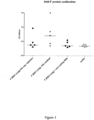
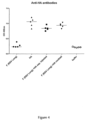
- the T cell or B cell immune responses against the F protein may be measured as shown in Examples 4 and 5 ( Figures 1 to 3 ) herein.
- any functional fragment, variant or derivative of the full-length F or HA proteins contains the decisive epitopes of the full-length HA or F protein sequences such that the immune response is not decreased due to less antigenic potential of the fragments, variant or derivative.
- the antigenic functions are provided by the combination vaccine in the form of monocistronic RNAs, whereby a first monocistronic RNA encodes said Fusion (F) protein or said fragment, variant or derivative thereof and a second monocistronic RNA encodes said Hemagglutinin (HA) protein or said fragment, variant or derivative thereof.
- the antigenic functions are provided by the combination vaccine in the form of a bicistronic or a multicistronic RNA.
- the bi- or multicistronic RNA may contain at least one open reading frame, which encodes said Fusion (F) protein or said fragment, variant or derivative thereof and wherein at least one other open reading frame encodes said Hemagglutinin (HA) protein or said fragment, variant or derivative thereof.
- both antigenic functions are provided by one single RNA molecule.
- such a bi- or multicistronic RNA may encode, e.g., two or even more coding sequences of at least two antigenic functions, as defined above.
- a bi- or multicistronic RNA may e.g.
- RNA may, e.g., contain distinct antigenic functions of the Hemagglutinin (HA) protein (derived e.g. from the same or from different Influenza strains).
- F Fusion
- HA Hemagglutinin
- the combination vaccine comprises a first bi- or multicistronic RNA encoding for an ensemble of Fusion (F) proteins or fragments, variants or derivatives thereof derived from different Paramyxoviridae and a second monocistronic RNA encoding for a Hemagglutinin (HA) protein derived from a virus belonging to the Orthomyxoviridae, or the other way around.
- F Fusion
- HA Hemagglutinin
- the coding sequences of such bi- or multicistronic RNAs may be separated by at least one internal ribosomal entry site (IRES) sequence.
- IRES sequence can function as a sole ribosome binding site, but it can also serve to provide a bi- or even multicistronic RNA as defined herein which codes for several antigens, which are to be translated by the ribosomes independently of one another.
- IRES sequences which can be used according to the invention are those from picornaviruses (e.g.
- FMDV pestiviruses
- CFFV pestiviruses
- PV polioviruses
- ECMV encephalomyocarditis viruses
- FMDV foot and mouth disease viruses
- HCV hepatitis C viruses
- CSFV classical swine fever viruses
- MLV mouse leukemia virus
- SIV simian immunodeficiency viruses
- CrPV cricket paralysis viruses
- the antigenic functions are provided by the combination vaccine in the form of a monocistronic RNA encoding the Fusion (F) protein or a fragment, variant or derivative thereof and encoding the Hemagglutinin (HA) protein or a fragment, variant or derivative thereof as a fusion protein.
- a fusion protein e.g. the full-length sequences of the Fusion (F) protein and the full-length sequence of the Hemagglutinin (HA) protein are linked with or without a linker sequence.
- such a fusion protein may contain a full-length protein sequence of the Fusion (F) protein and only parts of the Hemagglutinin (HA) protein (or vice versa) or may contain parts of either both of these proteins.
- RNAs encoding fusion proteins which are composed of one or more antigenic peptide sequences, encoding epitopes of the Fusion (F) and/or the Hemagglutinin (HA) protein that can individually act as immunogens.
- each of these proteins are preferably arranged in a non-native way, which means that the epitope sequences are isolated from the native sequences and are linked by non-native linker sequences (e.g linker sequences having more than 50% glycine and proline residues).
- linker sequences e.g linker sequences having more than 50% glycine and proline residues.
- inventive monocistronic RNAs encoding such fusion proteins may be provided with or without linker sequences.
- linker sequences typically comprise 5 to 25 amino acids, preferably selected from proline and glycine.
- the linker sequence is immunologically neutral. e.g. non-immunogenic and non-immunostimulatory.
- the at least one Fusion (F) protein is derived from viruses selected from: Avulavirus, Ferlavirus, Henipavirus, Morbillivirus, Respirovirus, Rubulavirus, TPMV-like viruses, Pneumovirus, Metapneumovirus, Atlantic salmon paramyxovirus, Beilong virus, J virus, Mossman virus, Nariva virus, Salem virus, or Pacific salmon paramyxovirus.
- Avulavirus can be e.g. Newcastle disease virus; Ferlavirus can be e.g. Fer-de-Lance virus; Henipavirus can be e.g. Hendravirus, Nipahvirus; Morbillivirus can be e.g.
- Respirovirus can be e.g. Sendai virus, Human Parainfluenza viruses 1 and 3, viruses of the common cold; Rubulavirus can be e.g. Mumps virus, Human Parainfluenza viruses 2 and 4, Simian Parainfluenza virus 5, Menangle virus, Tioman virus, Tuhokovirus 1, 2 and 3; TPMV-like viruses can be e.g. Tupaia paramyxovirus; Pneumovirus can be e.g.
- the Fusion (F) protein is derived from human respiratory syncytial virus (RSV), preferably selected from RSV Long (preferably according to SEQ ID No. 1) or RSV A2 (preferably according to SEQ ID No. 2 or mutants thereof such as P102A, I379V or M447V), more preferably the Fusion (F) protein is a protein encoded at least partially by one of the nucleic acid sequences according to SEQ ID No. 4, SEQ ID No. 5, SEQ ID No. 7, SEQ ID No. 8, SEQ ID No. 9, SEQ ID No. 10, SEQ ID No. 11, SEQ ID No. 13, SEQ ID No. 14, SEQ ID No. 15, SEQ ID No. 16, SEQ ID No. 17, SEQ ID No. 19, or SEQ ID No. 20.
- RSV human respiratory syncytial virus
- RSV Long preferably according to SEQ ID No. 1
- RSV A2 preferably according to SEQ ID No. 2 or mutants thereof such as P102A, I379V or M447V
- the combination vaccine of the invention can contain an ensemble of more than one antigenic function derived from distinct Fusion (F) proteins, which may either be derived from distinct strains of e.g. the above viruses or derived from (e.g. the above) different viruses or may be a combination of both. They may be provided distinct RNA molecules (more than one type) or by a single RNA molecule (one type). If provided by one single RNA type, the distinct antigenic functions may be provided by a monocistronic type of RNA encoding a fusion protein presenting these distinct antigenic functions or by a bi- or multicistronic RNA coding for distinct antigenic functions. Of course, the above embodiments may be combined and do not exclude each other.
- F Fusion
- the at least one Hemagglutinin (HA) protein is derived from an Influenza virus, preferably selected from: Influenza A (e.g. H1N1, H1N2, H2N2, H3N1, H3N2, H3N8, H5N1, H5N2, H5N3, H5N8, H5N9, H7N1, H7N2, H7N3, H7N4, H7N7, H9N1, H9N2, H10N7), Influenza B, Influenza C, Isavirus (e.g. Infectious salmon anemia virus), Thogotovirus (e.g.
- the HA protein is a protein according to SEQ ID No. 3, more preferably the Hemagglutinin (HA) protein is a protein encoded at least partially by the nucleic acid sequence according to SEQ ID No. 6, SEQ ID No: 12, SEQ ID No: 18, or SEQ ID No. 21. More preferably, the HA protein as encoded by any of the above SEQ ID Nos. may be combined, e.g. for providing one single composition comprising at least two nucleic acids, e.g. SEQ ID No. 18 or SEQ ID No. 21, with a F protein encoded by any of the following SEQ ID Nos. 13, 14, 15, 16, 17. 19 and 20.
- SEQ ID No. 18 or SEQ ID No. 21 may be combined for the combination vaccine, e.g. in the form of one single composition or as a staggered combination vaccine, with SEQ ID No. 13, alternatively, with SEQ ID No. 14. or alternatively with SEQ ID No. 15, or alternatively with SEQ ID No: 16, or alternatively SEQ ID No. 17 or alternatively SEQ ID No 19 or alternatively SEQ ID No 20.
- the combination vaccine of the invention can contain an ensemble of more than one antigenic function derived from distinct Hemagglutinin (HA) proteins, which may either be derived from distinct strains of e.g. the above viruses or derived from (e.g. the above) different viruses or may be a combination of both. They may be provided by more distinct RNA molecules (more than one type) or by a single RNA molecule (one type). If provided by one single RNA type, the distinct antigenic functions may be provided by a monocistronic type of RNA encoding a fusion protein presenting these distinct antigenic functions or a bi- or multicistronic RNA coding for distinct antigenic functions. Of course, the above embodiments may be combined and do not exclude each other.
- HA Hemagglutinin
- the at least one RNA of the inventive combination vaccine may be stabilized in order to prevent instability and (fast) degradation of the RNA (or any further nucleic acid molecule) by various approaches.
- This instability of RNA is typically due to RNA-degrading enzymes, "RNases" (ribonucleases), wherein contamination with such ribonucleases may sometimes completely degrade RNA in solution.
- RNases ribonucleases
- RNases ribonucleases
- the natural degradation of RNA in the cytoplasm of cells is very finely regulated and RNase contaminations may be generally removed by special treatment prior to use of said compositions, in particular with diethyl pyrocarbonate (DEPC).
- DEPC diethyl pyrocarbonate
- the terminal structure is typically of critical importance particularly for an mRNA.
- a so-called cap structure which is a modified guanosine nucleotide also called 5 'Cap structure, and at the 3' end is typically a sequence of up to 200 adenosine nucleotides (the so-called poly-A tail).
- the at least one RNA comprises at least one of the following structural elements: a histone-stem-loop structure, preferably a histone-stem-loop in its 3' untranslated region, a 5'Cap structure, a poly(C) sequence, a poly-A tail and/or a polyadenylation signal, preferably as defined herein.
- the at least one RNA preferably comprises at least two of the following structural elements: a 5' and/or 3'-stabilizing sequence; a histone-stem-loop structure, preferably a histone-stem-loop in its 3' untranslated region; a 5'-Cap structure; a poly(C) sequence; a poly-A tail; or a polyadenylation signal, e.g. given a 5'-Cap structure and a histone-stem-loop and, potentially a poly-A-tail.
- a 5' and/or 3'-stabilizing sequence e.g. given a 5'-Cap structure and a histone-stem-loop and, potentially a poly-A-tail.
- Stabilizing sequences in the 5' and/or 3' untranslated regions have the effect of increasing the half-life of the nucleic acid in the cytosol.
- These stabilizing sequences can have 100% sequence identity to naturally occurring sequences which occur in viruses, bacteria and eukaryotes, but can also be partly or completely synthetic.
- the untranslated sequences (UTR) of the (alpha-)globin gene e.g. from Homo sapiens or Xenopus laevis may be mentioned as an example of stabilizing sequences which can be used in the present invention for a stabilized nucleic acid.
- stabilizing sequence has the general formula (C/U)CCAN x CCC(U/A)Py x UC(C/U)CC) which is contained in the 3' UTR of the very stable RNA which codes for (alpha-)globin, type(I)-collagen, 15-lipoxygenase or for tyrosine hydroxylase (cf. Holcik et al., Proc. Natl. Acad. Sci. USA 1997, 94: 2410 to 2414 ).
- Such stabilizing sequences can of course be used individually or in combination with one another and also in combination with other stabilizing sequences known to a person skilled in the art.
- a histone stem-loop sequence suitable to be used within the present invention, is preferably selected from at least one of the following formulae (I) or (II): wherein:
- a further optionally comprised stabilizing element is a poly(A) sequence, also called poly-A-tail at the 3'-terminus of the at least one RNA.
- a poly(A) sequence comprises a sequence of about 25 to about 400 adenosine nucleotides, preferably a sequence of about 50 to about 400 adenosine nucleotides, more preferably a sequence of about 50 to about 300 adenosine nucleotides, even more preferably a sequence of about 50 to about 250 adenosine nucleotides, most preferably a sequence of about 60 to about 250 adenosine nucleotides.
- the term "about” refers to a deviation of ⁇ 10% of the value(s) it is attached to.
- the at least one RNA of the inventive combination vaccine or any further nucleic acid comprised in the inventive combination vaccine as defined herein can be modified by a sequence of at least 10 cytosines, preferably at least 20 cytosines, more preferably at least 30 cytosines (so-called "poly(C) sequence").
- the nucleic acid molecule may contain or code for a poly(C) sequence of typically about 10 to 200 cytosine nucleotides, preferably about 10 to 100 cytosine nucleotides, more preferably about 10 to 70 cytosine nucleotides or even more preferably about 20 to 50 or even 20 to 30 cytosine nucleotides.
- This poly(C) sequence is preferably located 3' of the coding region comprised in the nucleic acid particularly in the at least one RNA according to the first aspect of the present invention.
- the at least one RNA encoding at least one Fusion (F) protein or a fragment, variant or derivative thereof of the virus family Paramyxoviridae and at least one Hemagglutinin (HA) protein or a fragment, variant or derivative thereof of the virus family Orthomyxoviridae has the following structure in 5' to 3'-direction:
- the at least one RNA encoding at least one Fusion (F) protein or a fragment, variant or derivative thereof of the virus family Paramyxoviridae and at least one Hemagglutinin (HA) protein or a fragment, variant or derivative thereof of the virus family Orthomyxoviridae has the following structure in 5' to 3'-direction:
- the coding region might be or might comprise at least partially the coding region of one of the sequences according to SEQ ID No. 4 to SEQ ID No. 21.
- the RNA might be or might comprise at least partially one of the sequences according to SEQ ID No. 4 to SEQ ID No. 21.
- the RNA e.g. mRNA
- the RNA might comprise a combination of at least two of these sequences or a combination of fragments or variants thereof.
- at least one sequence is preferably selected from SEQ ID No. 19; or SEQ ID No. 20, and a further sequence is preferably selected from SEQ ID No. 21.
- Other combinations can of course be imagined as well.
- the at least one RNA of the inventive combination vaccine or any further nucleic acid comprised in the inventive combination vaccine may be provided as a stabilized nucleic acid, e.g. in the form of a modified nucleic acid.
- the at least one RNA or any further nucleic acid comprised in the inventive combination vaccine is stabilized, preferably by backbone modifications, sugar modifications and/or base modifications, more preferred stabilized by modification of the G/C-content.
- RNA modifications may be introduced into the at least one RNA without impairing the RNA's function to be translated into the antigenic function derived from the Fusion (F) protein or the Hemagglutinin (HA) protein or any further encoded protein or peptide.
- F Fusion
- HA Hemagglutinin
- a backbone modification in the context of the present invention is preferably a modification in which phosphates of the backbone of the nucleotides contained in the at least one RNA of the inventive combination vaccine (or any further nucleic acid as defined herein) are chemically modified, e.g. anionic internucleoside linkage, N3'-7P5' modifications, replacement of non-bridging oxygen atoms by boranes, neutral internucleoside linkage, amide linkage of the nucleosides, methylene(methylimino) linkages, formacetal and thioformacetal linkages, introduction of sulfonyl groups, or the like.
- anionic internucleoside linkage e.g. anionic internucleoside linkage, N3'-7P5' modifications, replacement of non-bridging oxygen atoms by boranes, neutral internucleoside linkage, amide linkage of the nucleosides, methylene(methylimino) linkages, formacetal and
- a sugar modification in the context of the present invention is preferably a chemical modification of the sugar of the nucleotides of the at least one RNA of the inventive combination vaccine (or any further nucleic acid as defined herein), e.g. methylation of the ribose residue or the like.
- the at least one RNA of the inventive combination vaccine or any further coding nucleic acid comprised in the inventive combination vaccine may be modified and thus stabilized by modifying the G (guanosine)/C (cytosine) content of the mRNA, preferably of the coding region thereof.
- the G/C content of the at least one RNA of the inventive combination vaccine or any further coding nucleic acid comprised in the inventive combination vaccine is particularly increased compared to the G/C content of the coding region of its particular wild type coding sequence, i.e. the unmodified RNA.
- the encoded amino acid sequence of the RNA or coding nucleic acid is preferably not modified compared to the coded amino acid sequence of the particular wild type RNA or coding nucleic acid.
- the modification of the G/C-content of the at least one RNA of the inventive combination vaccine or any further coding nucleic acid comprised in the inventive combination vaccine is based on the fact that RNA sequences having an increased G (guanosine)/C (cytosine) content are more stable than RNA sequences having an increased A (adenosine)/U (uracil) content.
- the codons of a coding sequence or a whole RNA might therefore be varied compared to the wild type coding sequence or mRNA, such that they include an increased amount of G/C nucleotides while the translated amino acid sequence is retained.
- the G/C content of the coding region of the at least one RNA of the inventive combination vaccine or any further coding nucleic acid comprised in the inventive combination vaccine according to the invention is increased by at least 7%, more preferably by at least 15%, particularly preferably by at least 20%, compared to the G/C content of the coded region of the wild type RNA.
- At least 5%, 10%, 20%, 30%, 40%, 50%, 60%, more preferably at least 70 %, even more preferably at least 80% and most preferably at least 90%, 95% or even 100% of the substitutable codons in the region coding for a protein or peptide as defined herein or its fragment or variant thereof or the whole sequence of the wild type RNA sequence or coding sequence are substituted, thereby increasing the G/C content of said sequence.
- the at least one RNA or any further coding nucleic acid comprised in the inventive combination vaccine is optimized for translation, preferably optimized for translation by replacing codons for less frequent tRNAs of a given amino acid by codons for more frequently occurring tRNAs of the respective amino acid. This is based on the finding that the translation efficiency is also determined by a different frequency in the occurrence of tRNAs in cells.
- the corresponding modified RNA is translated to a significantly poorer degree than in the case where codons coding for more frequent tRNAs are present.
- the coding region of the at least one RNA of the inventive combination vaccine or any further coding nucleic acid comprised in the inventive combination vaccine is modified compared to the corresponding region of the wild type RNA or coding sequence such that at least one codon of the wild type sequence which codes for a tRNA which is relatively rare or less frequent in the cell is exchanged for a codon which codes for a tRNA which is more or most frequent in the cell and carries the same amino acid as the relatively rare or less frequent tRNA.
- the sequences of the at least one RNA of the inventive combination vaccine or any further coding nucleic acid comprised in the inventive combination vaccine can be modified such that codons for which more frequently occurring tRNAs are available are inserted.
- Substitutions, additions or eliminations of bases are preferably carried out using a DNA matrix for preparation of the nucleic acid molecule by techniques of the well known site directed mutagenesis or with an oligonucleotide ligation.
- a corresponding DNA molecule may be transcribed in vitro.
- This DNA matrix preferably comprises a suitable promoter, e.g. a T7 or SP6 promoter, for in vitro transcription, which is followed by the desired nucleotide sequence for the at least one RNA to be prepared and a termination signal for in vitro transcription.
- the DNA molecule which forms the matrix of the at least one RNA of interest, may be prepared by fermentative proliferation and subsequent isolation as part of a plasmid which can be replicated in bacteria.
- Plasmids which may be mentioned as suitable for the present invention are e.g. the plasmids pT7Ts (GenBank accession number U26404; Lai et al., Development 1995, 121: 2349 to 2360 ), pGEM ® series, e.g. pGEM ® -1 (GenBank accession number X65300; from Promega) and pSP64 (GenBank accession number X65327); cf. also Mezei and Storts, Purification of PCR Products, in: Griffin and Griffin (ed.), PCR Technology: Current Innovation, CRC Press, Boca Raton, FL, 2001 .
- nucleic acid molecules used e.g. the at least one RNA of the inventive combination vaccine or any further nucleic acid molecule as defined herein, may be prepared using any method known in the art, including synthetic methods such as e.g. solid phase synthesis, as well as in vitro methods, such as in vitro transcription reactions.
- the at least one RNA of the inventive combination vaccine or any further nucleic acid comprised in the inventive combination vaccine may be administered naked without being associated with any further vehicle, transfection or complexation agent for increasing the transfection efficiency and/or the immunostimulatory properties of the at least one RNA or of further comprised nucleic acid.
- the at least one RNA of the inventive combination vaccine or any other nucleic acid comprised in the inventive combination vaccine according to the invention may be formulated together with a cationic or polycationic compound and/or with a polymeric carrier.
- the at least one RNA or any other nucleic acid comprised in the inventive combination vaccine is associated with or complexed with a cationic or polycationic compound or a polymeric carrier, optionally in a weight ratio selected from a range of about 6:1 (w/w) to about 0.25:1 (w/w), more preferably from about 5:1 (w/w) to about 0.5:1 (w/w), even more preferably of about 4:1 (w/w) to about 1:1 (w/w) or of about 3:1 (w/w) to about 1:1 (w/w), and most preferably a ratio of about 3:1 (w/w) to about 2:1 (w/w) of RNA to cationic or polycationic compound and/or with a
- the at least one RNA of the inventive combination vaccine or any other nucleic acid comprised in the inventive combination vaccine can also be associated with a vehicle, transfection or complexation agent for increasing the transfection efficiency and/or the immunostimulatory properties of the at least one RNA or of optionally comprised further included nucleic acids.
- Cationic or polycationic compounds being particularly preferred agents in this context include protamine, nucleoline, spermine or spermidine, or other cationic peptides or proteins, such as poly-L-lysine (PLL), poly-arginine, basic polypeptides, cell penetrating peptides (CPPs), including HIV-binding peptides, HIV-1 Tat (HIV), Tat-derived peptides, Penetratin, VP22 derived or analog peptides, HSV VP22 (Herpes simplex), MAP, KALA or protein transduction domains (PTDs), PpT620, prolin-rich peptides, arginine-rich peptides, lysine-rich peptides, MPG-peptide(s), Pep-1, L-oligomers, Calcitonin peptide(s), Antennapedia-derived peptides (particularly from Drosophila antennapedia ) , pAntp, pls
- protamine is particularly preferred.
- Particularly preferred cationic peptides in this context are e.g. Arg 7 , Arg 8 , Arg 9 , H 3 R 9 , R 9 H 3 , H 3 R 9 H 3 , YSSR 9 SSY, (RKH) 4 , Y(RKH) 2 R, etc.
- cationic or polycationic compounds which can be used as transfection or complexation agent may include cationic polysaccharides, for example chitosan, polybrene, cationic polymers, e.g. polyethyleneimine (PEI), cationic lipids, e.g.
- cationic polysaccharides for example chitosan, polybrene, cationic polymers, e.g. polyethyleneimine (PEI), cationic lipids, e.g.
- PEI polyethyleneimine
- DOTMA [1-(2,3-sioleyloxy)propyl)]-N,N,N-trimethylammonium chloride
- DMRIE di-C14-amidine
- DOTIM DOTIM
- SAINT DC-Chol
- BGTC CTAP
- DOPC DODAP
- DOPE Dioleyl phosphatidylethanolamine
- DOSPA DODAB
- DOIC DOIC
- DMEPC DOGS: Dioctadecylamidoglicylspermin
- DIMRI Dimyristo-oxypropyl dimethyl hydroxyethyl ammonium bromide
- DOTAP dioleoyloxy-3-(trimethylammonio)propane
- DC-6-14 O,O-ditetradecanoyl-N-( ⁇ -trimethylammonioacetyl)diethanolamine chloride
- CLIP1 rac-[(2,3-dioctadecyloxypropyl)(2-hydroxyethyl)]-
- modified polyaminoacids such as ⁇ -aminoacid-polymers or reversed polyamides, etc.
- modified polyethylenes such as PVP (poly(N-ethyl-4-vinylpyridinium bromide)), etc.
- modified acrylates such as pDMAEMA (poly(dimethylaminoethyl methylacrylate)), etc.
- modified amidoamines such as pAMAM (poly(amidoamine)), etc.
- modified polybetaaminoester (PBAE) such as diamine end modified 1,4 butanediol diacrylate-co-5-amino-1-pentanol polymers, etc.
- dendrimers such as polypropylamine dendrimers or pAMAM based dendrimers, etc.
- polyimine(s) such as PEI: poly(ethyleneimine), poly(propyleneimine), etc.
- polyallylamine sugar backbone based polymers,
- a polymeric carrier according to the invention might be a polymeric carrier formed by disulfide-crosslinked cationic components.
- the disulfide-crosslinked cationic components may be the same or different from each other.
- the polymeric carrier can also contain further components. It is also particularly preferred that the polymeric carrier of the present invention comprises mixtures of cationic peptides, proteins or polymers and optionally further components as defined herein, which are crosslinked by disulfide bonds as described herein.
- the cationic components which form basis for the polymeric carrier by disulfide-crosslinkage, are typically selected from any suitable cationic or polycationic peptide, protein or polymer suitable for this purpose, particular any cationic or polycationic peptide, protein or polymer capable to complex a nucleic acid as defined according to the present invention, and thereby preferably condensing the nucleic acid.
- the cationic or polycationic peptide, protein or polymer is preferably a linear molecule, however, branched cationic or polycationic peptides, proteins or polymers may also be used.
- Every disulfide-crosslinking cationic or polycationic protein, peptide or polymer of the polymeric carrier which may be used to complex the at least one RNA of the combination vaccine or any further nucleic acid comprised in the combination vaccine contains at least one -SH moiety, most preferably at least one cysteine residue or any further chemical group exhibiting an -SH moiety, capable to form a disulfide linkage upon condensation with at least one further cationic or polycationic protein, peptide or polymer as cationic component of the polymeric carrier as mentioned herein.
- the polymeric carrier which may be used to complex the at least one RNA of the combination vaccine or any further nucleic acid comprised in the combination vaccine may be formed by disulfide-crosslinked cationic (or polycationic) components.
- At least one cationic (or polycationic) component of the polymeric carrier which may be used to complex the at least one RNA of the inventive combination vaccine or any further nucleic acid comprised in the inventive combination vaccine may be selected from cationic or polycationic peptides or proteins.
- Such cationic or polycationic peptides or proteins preferably exhibit a length of about 3 to 100 amino acids, preferably a length of about 3 to 50 amino acids, more preferably a length of about 3 to 25 amino acids, e.g. a length of about 3 to 10, 5 to 15, 10 to 20 or 15 to 25 amino acids.
- such cationic or polycationic peptides or proteins may exhibit a molecular weight of about 0.01 kDa to about 100 kDa, including a molecular weight of about 0.5 kDa to about 100 kDa, preferably of about 10 kDa to about 50 kDa, even more preferably of about 10 kDa to about 30 kDa.
- the cationic component of the polymeric carrier which may be used to complex the at least one RNA of the inventive combination vaccine or any further nucleic acid comprised in the inventive combination vaccine comprises a cationic or polycationic peptide or protein
- the cationic properties of the cationic or polycationic peptide or protein or of the entire polymeric carrier if the polymeric carrier is entirely composed of cationic or polycationic peptides or proteins, may be determined upon its content of cationic amino acids.
- the content of cationic amino acids in the cationic or polycationic peptide or protein and/or the polymeric carrier is at least 10%, 20%, or 30%, preferably at least 40%, more preferably at least 50%, 60% or 70%, but also preferably at least 80%, 90%, or even 95%, 96%, 97%, 98%, 99% or 100%, most preferably at least 30%, 40%, 50%, 60%, 70%, 80%, 90%, 95%, 96%, 97%, 98%, 99% or 100%, or may be in the range of about 10% to 90%, more preferably in the range of about 15% to 75%, even more preferably in the range of about 20% to 50%, e.g.
- such cationic or polycationic peptides or proteins of the polymeric carrier which comprise or are additionally modified to comprise at least one -SH moiety, are selected from, without being restricted thereto, cationic peptides or proteins such as protamine, nucleoline, spermine or spermidine, oligo- or poly-L-lysine (PLL), basic polypeptides, oligo or poly-arginine, cell penetrating peptides (CPPs), chimeric CPPs, such as Transportan, or MPG peptides, HIV-binding peptides, Tat, HIV-1 Tat (HIV), Tat-derived peptides, members of the penetratin family, e.g.
- cationic peptides or proteins such as protamine, nucleoline, spermine or spermidine, oligo- or poly-L-lysine (PLL), basic polypeptides, oligo or poly-arginine, cell penetrating peptides (
- Penetratin Antennapedia-derived peptides (particularly from Drosophila antennapedia ) , pAntp, plsl, etc., antimicrobial-derived CPPs e.g. Buforin-2, Bac715-24, SynB, SynB(1), pVEC, hCT-derived peptides, SAP, MAP, PpTG20, Loligomere, FGF, Lactoferrin, histones, VP22 derived or analog peptides, Pestivirus Erns, HSV, VP22 (Herpes simplex), MAP, KALA or protein transduction domains (PTDs, PpT620, prolin-rich peptides, arginine-rich peptides, lysine-rich peptides, Pep-1, L-oligomers, Calcitonin peptide(s), etc.
- antimicrobial-derived CPPs e.g. Buforin-2, Bac715-24, SynB, SynB(1),
- Any of amino acids Arg, Lys, His, Orn and Xaa may be positioned at any place of the peptide.
- cationic peptides or proteins in the range of 7-30 amino acids are particular preferred.
- Even more preferred peptides of this formula are oligoarginines such as e.g. Arg 7 , Arg 8 , Arg 9 , Arg 12 , His 3 Arg 9 , Arg 9 His 3 , His 3 Arg 9 His 3 , His 6 Arg 9 His 6 , His 3 Arg 4 His 3 , His 6 Arg 4 His 6 , TyrSer 2 Arg 9 Ser 2 Tyr, (ArgLysHis) 4 , Tyr(ArgLysHis) 2 Arg, etc.
- the cationic or polycationic peptide or protein of the polymeric carrier e.g. when defined according to empirical formula (Arg) l ;(Lys) m ,;(His) n ;(Orn) o ;(Xaa) x (formula (IV)) as shown above, comprises or has been modified with at least one cysteine as -SH moiety in the above meaning such that the cationic or polycationic peptide as cationic component carries at least one cysteine, which is capable to form a disulfide bond with other components of the polymeric carrier.
- the cationic or polycationic peptide or protein of the polymeric carrier when defined according to formula ⁇ (Arg) l ;(Lys) m ;(His) n ;(Orn) o ;(Xaa) x ⁇ (formula (IV)) as shown above, may be, without being restricted thereto, selected from subformula (IVb): Cys 1 ⁇ (Arg) l ;(Lys) m ;(His) n ;(Orn) o ;(Xaa) x ⁇ Cys 2 formula (!Vb) wherein empirical formula ⁇ (Arg) l ;(Lys) m ;(His) n ;(Orn) o ;(Xaa) x ⁇ (formula (IV)) is as defined herein and forms a core of an amino acid sequence according to (semiempirical) formula (IV) and wherein Cys 1 and Cys 2
- This embodiment may apply to situations, wherein the cationic or polycationic peptide or protein of the polymeric carrier, which may be used to complex the at least one RNA of the inventive combination vaccine, e.g. when defined according to empirical formula (Arg) l ;(Lys) m ;(His) n ;(Orn) o ;(Xaa) x (formula (IV)) as shown above, has been modified with at least two cysteines as -SH moieties in the above meaning such that the cationic or polycationic peptide of the inventive polymeric carrier carries at least two (terminal) cysteines, which are capable to form a disulfide bond with other components of the polymeric carrier.
- At least one cationic (or polycationic) component of the polymeric carrier may be selected from e.g. any (non-peptidic) cationic or polycationic polymer suitable in this context, provided that this (non-peptidic) cationic or polycationic polymer exhibits or is modified to exhibit at least one -SH-moiety, which provide for a disulfide bond linking the cationic or polycationic polymer with another component of the polymeric carrier as defined herein.
- the polymeric carrier may comprise the same or different cationic or polycationic polymers.
- the cationic component of the polymeric carrier comprises a (non-peptidic) cationic or polycationic polymer
- the cationic properties of the (non-peptidic) cationic or polycationic polymer may be determined upon its content of cationic charges when compared to the overall charges of the components of the cationic polymer.
- the content of cationic charges in the cationic polymer at a (physiological) pH as defined herein is at least 10%, 20%, or 30%, preferably at least 40%, more preferably at least 50%, 60% or 70%, but also preferably at least 80%, 90%, or even 95%, 96%, 97%, 98%, 99% or 100%, most preferably at least 30%, 40%, 50%, 60%, 70%, 80%, 90%, 95%, 96%, 97%, 98%, 99% or 100%, or may be in the range of about 10% to 90%, more preferably in the range of about 30% to 100%, even preferably in the range of about 50% to 100%, e.g.
- the (non-peptidic) cationic component of the polymeric carrier represents a cationic or polycationic polymer, typically exhibiting a molecular weight of about 0.1 or 0.5 kDa to about 100 kDa, preferably of about 1 kDa to about 75 kDa, more preferably of about 5 kDa to about 50 kDa, even more preferably of about 5 kDa to about 30 kDa, or a molecular weight of about 10 kDa to about 50 kDa, even more preferably of about 10 kDa to about 30 kDa.
- non-peptidic cationic or polycationic polymer typically exhibits at least one -SH-moiety, which is capable to form a disulfide linkage upon condensation with either other cationic components or other components of the polymeric carrier as defined herein.
- the (non-peptidic) cationic component of the polymeric carrier which may be used to complex the at least one RNA of the inventive combination vaccine or any further nucleic acid comprised in the inventive combination vaccine may be selected from acrylates, modified acrylates, such as pDMAEMA (poly(dimethylaminoethyl methylacrylate)), chitosanes, aziridines or 2-ethyl-2-oxazoline (forming oligo ethylenimines or modified oligoethylenimines), polymers obtained by reaction of bisacrylates with amines forming oligo beta aminoesters or poly amido amines, or other polymers like polyesters, polycarbonates, etc.
- modified acrylates such as pDMAEMA (poly(dimethylaminoethyl methylacrylate)
- chitosanes such as pDMAEMA (poly(dimethylaminoethyl methylacrylate)
- Each molecule of these (non-peptidic) cationic or polycationic polymers typically exhibits at least one -SH-moiety, wherein these at least one -SH-moiety may be introduced into the (non-peptidic) cationic or polycationic polymer by chemical modifications, e.g. using imonothiolan, 3-thio propionic acid or introduction of -SH-moieties containing amino acids, such as cysteine or any further (modified) amino acid.
- -SH-moieties are preferably as already defined above.
- the further component which may be contained in the polymeric carrier, and which may be used to complex the at least one RNA of the inventive combination vaccine or any further nucleic acid comprised in the inventive combination vaccine or which may be used to modify the different (short) cationic or polycationic peptides or (non-peptidic) polymers forming basis for the polymeric carrier or the biophysical/biochemical properties of the polymeric carrier as defined herein, is an amino acid component (AA).
- AA amino acid component
- the amino acid component (AA) comprises a number of amino acids preferably in a range of about 1 to 100, preferably in a range of about 1 to 50, more preferably selected from a number comprising 1, 2, 3, 4, 5, 6, 7, 8, 9, 10, 11, 12, 13, 14 or 15-20, or may be selected from a range formed by any two of the afore mentioned values.
- the amino acids of amino acid component (AA) can be chosen independently from each other. For example if in the polymeric carrier two or more (AA) components are present they can be the same or can be different from each other.
- the amino acid component (AA) may contain or may be flanked (e.g. terminally) by a -SH containing moiety, which allows introducing this component (AA) via a disulfide bond into the polymeric carrier as defined herein.
- the amino acid component (AA) may also be read as -Cys-(AA)-Cys-wherein Cys represents cysteine and provides for the necessary -SH-moiety for a disulfide bond.
- the -SH containing moiety may be also introduced into amino acid component (AA) using any of modifications or reactions as shown above for the cationic component or any of its components.
- amino acid component (AA) may be provided with two -SH-moieties (or even more), e.g. in a form represented by formula HS-(AA)-SH to allow binding to two functionalities via disulfide bonds, e.g. if the amino acid component (AA) is used as a linker between two further components (e.g. as a linker between two cationic polymers).
- amino acid component (AA) may be provided with other functionalities as already described above for the other components of the polymeric carrier, which allow binding of the amino acid component (AA) to any of components of the polymeric carrier.
- the amino acid component (AA) of the polymeric carrier may be bound to further components of the polymeric carrier, which may be used to complex the at least one RNA of the inventive combination vaccine or any further nucleic acid comprised in the inventive combination vaccine with or without using a disulfide linkage.
- the amino acid component (AA) may be used to modify the polymeric carrier, particularly the content of cationic components in the polymeric carrier as defined above.
- the amino acid component (AA) may be selected from the following alternatives: an aromatic amino acid component, a hydrophilic (and preferably non charged polar) amino acid component, a lipophilic amino acid component, or a weak basic amino acid component.
- the amino acid component (AA) may be a signal peptide or signal sequence, a localisation signal or sequence, a nuclear localisation signal or sequence (NLS), an antibody, a cell penetrating peptide (e.g. TAT), etc.
- the amino acid component (AA) may be a functional peptide or protein, which may modulate the functionality of the polymeric carrier accordingly.
- Such functional peptides or proteins as the amino acid component (AA) preferably comprise any peptides or proteins as defined herein, e.g. as defined below as therapeutically active proteins.
- such further functional peptides or proteins may comprise so called cell penetrating peptides (CPPs) or cationic peptides for transportation.
- CPPs cell penetrating peptides
- the amino acid component (AA) may consist of any peptide or protein which can execute any favourable function in the cell.
- peptides or proteins selected from therapeutically active proteins or peptides, from antigens, e.g. tumour antigens, pathogenic antigens (animal antigens, viral antigens, protozoan antigens, bacterial antigens, allergic antigens), autoimmune antigens, or further antigens, from allergens, from antibodies, from immunostimulatory proteins or peptides, from antigen-specific T cell receptors, or from any other protein or peptide suitable for a specific (therapeutic) application.
- antigens e.g. tumour antigens, pathogenic antigens (animal antigens, viral antigens, protozoan antigens, bacterial antigens, allergic antigens), autoimmune antigens, or further antigens, from allergens, from antibodies, from immunostimulatory proteins or peptides, from antigen-specific T cell receptors, or
- peptide epitopes from antigens particularly of the virus family Paramyxoviridae and/or of the virus family Orthomyxoviridae as defined herein, and more particularly of the F protein of the virus family Paramyxoviridae and/or of the HA protein of the virus family Orthomyxoviridae as defined herein.
- the polymeric carrier which may be used to complex the at least one RNA of the inventive combination vaccine or any further nucleic acid comprised in inventive combination vaccine may comprise at least one of the above mentioned cationic or polycationic peptides, proteins or polymers or further components, e.g. (AA), wherein any of the above alternatives may be combined with each other, and may be formed by polymerizing same in a polymerization condensation reaction via their-SH-moieties.
- AA cationic or polycationic peptides, proteins or polymers or further components
- polymeric carrier may be selected from a polymeric carrier molecule according to generic formula (V): L-P 1 -S-[S-P 2 -S] n -S-P 3 -L formula (V) wherein,
- Each of hydrophilic polymers P 1 and P 3 typically exhibits at least one -SH-moiety, wherein the at least one -SH-moiety is capable to form a disulfide linkage upon reaction with component P 2 or with component (AA) or (AA) x , if used as linker between P 1 and P 2 or P 3 and P 2 as defined below and optionally with a further component, e.g. L and/or (AA) or (AA) x , e.g. if two or more -SH-moieties are contained.
- a further component e.g. L and/or (AA) or (AA) x , e.g. if two or more -SH-moieties are contained.
- the term "-S-S-" in these formulae may also be written as “-S-Cys", as “-Cys-S” or as “-Cys-Cys-”.
- the term “-Cys-Cys-” does not represent a peptide bond but a linkage of two cysteines via their -SH-moieties to form a disulfide bond.
- the term “-Cys-Cys-” also may be understood generally as “-(Cys-S)-(S-Cys)-", wherein in this specific case S indicates the sulphur of the -SH-moiety of cysteine.
- the terms "-S-Cys” and “-Cys-S” indicate a disulfide bond between a -SH containing moiety and a cysteine, which may also be written as “-S-(S-Cys)" and "-(Cys-S)-S".
- the hydrophilic polymers P 1 and P 3 may be modified with a -SH moiety, preferably via a chemical reaction with a compound carrying a -SH moiety, such that each of the hydrophilic polymers P 1 and P 3 carries at least one such -SH moiety.
- a compound carrying a -SH moiety may be e.g.
- Such a compound may also be any non-amino compound or moiety, which contains or allows to introduce a -SH moiety into hydrophilic polymers P 1 and P 3 as defined herein.
- Such non-amino compounds may be attached to the hydrophilic polymers P 1 and P 3 of formula (VI) of the polymeric carrier according to the present invention via chemical reactions or binding of compounds, e.g. by binding of a 3-thio propionic acid or thioimolane, by amide formation (e.g.
- alkenes or alkines e.g., alkenes or alkines
- imine or hydrozone formation aldehydes or ketons, hydrazins, hydroxylamins, amines
- complexation reactions avidin, biotin, protein G
- S n -type substitution reactions e.g halogenalkans, thiols, alcohols, amines, hydrazines, hydrazides, sulphonic acid esters, oxyphosphonium salts
- a particularly preferred PEG derivate in this context is alpha-Methoxy-omega-mercapto poly(ethylene glycol).
- the SH-moiety e.g.
- each of hydrophilic polymers P 1 and P 3 typically exhibits at least one -SH-moiety preferably at one terminal end, but may also contain two or even more - SH-moieties, which may be used to additionally attach further components as defined herein, preferably further functional peptides or proteins e.g. a ligand, an amino acid component (AA) or (AA) x , antibodies, cell penetrating peptides or enhancer peptides (e.g. TAT, KALA), etc.
- further functional peptides or proteins e.g. a ligand, an amino acid component (AA) or (AA) x , antibodies, cell penetrating peptides or enhancer peptides (e.g. TAT, KALA), etc.
- the entire formula (V) of the inventive polymeric carrier may be preferably defined as follows: L-P 1 -S-[Cys-P 2 -Cys] n -S-P 3 -L formula (VI) wherein L, P 1 , P 2 , P 3 and n are as defined herein, S is sulphur and each Cys provides for one -SH-moiety for the disulfide bond.
- the amino acid component (AA) or (AA) x in the polymeric carrier of formula (V or VI), e.g. as defined above for the polymeric carrier formed by disulfide-crosslinked cationic components may also occur as a mixed repetitive amino acid component [(AA) x ] z , wherein the number of amino acid components (AA) or (AA) x is further defined by integer z.
- z may be selected from a range of about 1 to 30, preferably from a range of about 1 to 15, more preferably 1 to 10 or 1 to 5 and even more preferably selected from a number selected from 1, 2, 3, 4, 5, 6, 7, 8, 9, 10, 11, 12, 13, 14 or 15, or may be selected from a range formed by any two of the afore mentioned values.
- the amino acid component (AA) or (AA) x may be used to modify component P 2 , particularly the content of component S-P 2 -S in repetitive component [S-P 2 -S] n of the polymeric carrier of formula (V) above. This may be represented in the context of the entire polymeric carrier according to formula (VI) e.g.
- any of the single components [S-P 2 -S] and [S-(AA) x -S] may occur in any order in the subformula ⁇ [S-P 2 -S] a [S-(AA) x -S] b ⁇ .
- the polymeric carrier which may be used to complex the at least one RNA of the combination vaccine or any further nucleic acid comprised in the combination vaccine or single components thereof, e.g. of the above mentioned cationic or polycationic peptides, proteins or polymers or further components, e.g. (AA), may be further modified with a ligand, preferably a carbohydrate, more preferably a sugar, even more preferably mannose.
- a ligand preferably a carbohydrate, more preferably a sugar, even more preferably mannose.
- the entire polymeric carrier may be formed by a polymerization condensation (of at least one) of the above mentioned cationic or polycationic peptides, proteins or polymers or further components, e.g. (AA), via their -SH-moieties in a first step and complexing the at least one RNA of the inventive combination vaccine or any further nucleic acid comprised in the inventive combination vaccine to such a polymeric carrier in a second step.
- the polymeric carrier may thus contain a number of at least one or even more of the same or different of the above defined cationic or polycationic peptides, proteins or polymers or further components, e.g. (AA), the number preferably determined by the above range.
- the polymeric carrier which may be used to complex the at least one RNA of the inventive combination vaccine or any further nucleic acid comprised in the inventive combination vaccine is formed by carrying out the polymerization condensation of at least one of the above mentioned cationic or polycationic peptides, proteins or polymers or further components, e.g. (AA), via their -SH-moieties simultaneously to complexing the at least one RNA of the inventive combination vaccine or any further nucleic acid comprised in the inventive combination vaccine to the (in situ prepared) polymeric carrier.
- AA cationic or polycationic peptides, proteins or polymers or further components
- the polymeric carrier may thus also here contain a number of at least one or even more of the same or different of the above defined cationic or polycationic peptides, proteins or polymers or further components, e.g. (AA), the number preferably determined by the above range.
- AA cationic or polycationic peptides, proteins or polymers or further components
- the at least one RNA of the inventive combination vaccine or any further coding nucleic acid in the inventive combination vaccine is complexed at least partially with a cationic or polycationic compound and/or a polymeric carrier, preferably cationic proteins or peptides.
- a cationic or polycationic compound and/or a polymeric carrier, preferably cationic proteins or peptides.
- a cationic compound preferably cationic proteins or peptides.
- the ratio of complexed RNA to: free RNA in the combination vaccine is selected from a range.
- the ratio of complexed RNA to free RNA in the inventive combination vaccine is selected from a ratio of about 1:1 (w/w).
- the complexed RNA in the inventive combination vaccine is preferably prepared according to a first step by complexing the at least one RNA with a cationic or polycationic compound and/or with a polymeric carrier, preferably as defined herein, in a specific ratio to form a stable complex.
- a cationic or polycationic compound or polymeric carrier preferably as defined herein, in a specific ratio to form a stable complex.
- the ratio of the RNA and the cationic or polycationic compound and/or the polymeric carrier in the component of the complexed RNA is typically selected in a range that the RNA is entirely complexed and no free cationic or polycationic compound or polymeric carrier or only a negligibly small amount thereof remains in the composition.
- the ratio of the RNA (e.g. mRNA) to the cationic or polycationic compound and/or the polymeric carrier, preferably as defined herein, is selected from a range of about 6:1 (w/w) to about 0,25:1 (w/w), more preferably from about 5:1 (w/w) to about 0,5:1 (w/w), even more preferably of about 4:1 (w/w) to about 1:1 (w/w) or of about 3:1 (w/w) to about 1:1 (w/w), and most preferably a ratio of about 3:1 (w/w) to about 2:1 (w/w).
- the ratio of the RNA to the cationic or polycationic compound and/or the polymeric carrier, preferably as defined herein, in the component of the complexed RNA may also be calculated on the basis of the nitrogen/phosphate ratio (N/P-ratio) of the entire complex.
- an N/P-ratio is preferably in the range of about 0.1-10, preferably in a range of about 0.3-4 and most preferably in a range of about 0.5-2 or 0.7-2 regarding the ratio of RNA: cationic or polycationic compound and/or polymeric carrier, preferably as defined herein, in the complex, and most preferably in a range of about 0.7-1,5, 0.5-1 or 0.7-1, and even most preferably in a range of about 0.3-0.9 or 0.5-0.9., preferably provided that the cationic or polycationic compound in the complex is a cationic or polycationic cationic or polycationic protein or peptide and/or the polymeric carrier as defined above.
- the complexed RNA is also emcompassed in the term "adjuvant component".
- the at least one antigen-providing RNA of the inventive combination vaccine as defined above may be formulated together with an adjuvant.
- an adjuvant may be preferably a further nucleic acid that is not encoding a further antigen but is able to stimulate an unspecific immune response, i.e. innate immune response, by interacting with any part of the innate immune system.
- an adjuvant nucleic acid Such a nucleic acid stimulating an unspecific immune response is termed herein as "adjuvant nucleic acid”.
- an adjuvant nucleic acid preferably comprises or consists of an oligo- or a polynucleotide; more preferably an adjuvant nucleic acid comprises or consists of a RNA or a DNA; even more preferably such an adjuvant nucleic acid comprising or consisting of a RNA or a DNA being complexed with a cationic or polycationic compound and/or with a polymeric carrier; optionally in a weight ratio selected from a range of about 6:1 (w/w) to about 0.25:1 (w/w), more preferably from about 5:1 (w/w) to about 0.5:1 (w/w), even more preferably of about 4:1 (w/w) to about 1:1 (w:w) or of about 3:1 (w/w) to about 1:1 (w/w), and most preferably a ration of about 3:1 (w/w) to about 2:1 (w/w) of adjuvant component to cationic or polycationic compound and/or with a polymeric carrier; or optional
- a combination vaccine according to the invention may comprise a first RNA encoding for an antigenic function, e.g. the RSV Fusion (F) protein, the Influenza Hemagglutinin (HA) protein or the like, and a second nucleic acid that is acting as an adjuvant which is called the adjuvant nucleic acid.
- the inventive combination vaccine may also comprise further RNAs encoding for further antigenic functions and is also not limited to comprise only one adjuvant nucleic acid but can comprise several different of them.
- Both kinds of nucleic acid, the antigen-encoding RNA and the adjuvant nucleic acid may be, independently from each other, complexed with a carrier as defined above. Therefore, a cationic or polycationic compound and/or a polymeric carrier used to complex the at least one adjuvant nucleic acid, may be selected from a cationic or polycationic compound and/or a polymeric carrier as defined above.
- an adjuvant nucleic acid is preferably selected from nucleic acids which are known to bind to TLR receptors.
- Such an adjuvant nucleic acid can be in the form of a(n) (immunostimulatory) CpG nucleic acid, in particular CpG-RNA or CpG-DNA, which preferably induces an innate immune response.
- a CpG-RNA or CpG-DNA used according to the invention can be a single-stranded CpG-DNA (ss CpG-DNA), a double-stranded CpG-DNA (dsDNA), a single-stranded CpG-RNA (ss CpG-RNA) or a double-stranded CpG-RNA (ds CpG-RNA).
- the CpG nucleic acid used according to the invention is preferably in the form of CpG-RNA, more preferably in the form of single-stranded CpG-RNA (ss CpG-RNA).
- such CpG nucleic acids have a length as described above.
- the CpG motifs are unmethylated.
- an adjuvant nucleic acid can be an immunostimulatory RNA (isRNA), which preferably elicits an innate immune response.
- the immunostimulatory RNA may be a single-stranded, a double-stranded or a partially double-stranded RNA, more preferably a single-stranded RNA, and/or a circular or linear RNA, more preferably a linear RNA.
- the immunostimulatory RNA may be a (linear) single-stranded RNA.
- the immunostimulatory RNA may be a (long) (linear) (single-stranded) non-coding RNA.
- the isRNA carries a triphosphate at its 5'-end which is the case for in vitro transcribed RNA.
- An immunostimulatory RNA may also occur as a short RNA oligonucleotide as defined herein.
- An immunostimulatory RNA as used herein may furthermore be selected from any class of RNA molecules, found in nature or being prepared synthetically, and which can induce an innate immune response and may support an adaptive immune response induced by an antigen.
- the inventive combination vaccine comprises an antigen-providing RNA and additionally an adjuvant nucleic acid
- the immune response that is evoked by administration of such a vaccine comprises activation of both parts of the immune system, the adaptive immune system as well as the innate immune system.
- T-lymphocytes are typically divided into two sub-populations, the T-helper 1 cells, in the following Th1-cells, and the T-helper 2 cells, in the following Th2-cells, with which the immune system is capable of destroying intracellular and extracellular pathogens (e.g. antigens).
- Th1-cells are responsible for intracellular pathogen destruction by assisting the cellular immune response by activation of macrophages and cytotoxic T cells.
- Th2-cells are mainly for extracellular pathogen-elimination and promote the humoral immune response by stimulation of B-cells for conversion into plasma cells and by formation of antibodies (e.g. against antigens).
- the two T-helper cell populations differ in the pattern of the effector proteins (cytokines) produced by them.
- the Th1-cell/Th2-cell ratio is of great importance in the induction and maintenance of an adaptive immune response.
- the Th1-cell/Th2-cell ratio of the (adaptive) immune response is preferably shifted in the direction towards the cellular response (Th1 response) and a cellular immune response is thereby induced. Stimulation of this response of the adaptive immune system is mainly provoked by the translation of the antigen-providing RNA and the resulting presence of the peptide or protein antigens within the organism.
- TLRs Toll-like receptors
- PRR pattern recognition receptor
- PAMPs pathogen-associated molecular patterns
- TLR1 - TLR13 Toll-like receptors: TLR1, TLR2, TLR3, TLR4, TLR5, TLR6, TLR7, TLR8, TLR9, TLR10, TLR11, TLR12 or TLR13
- TLR1 - TLR13 Toll-like receptors: TLR1, TLR2, TLR3, TLR4, TLR5, TLR6, TLR7, TLR8, TLR9, TLR10, TLR11, TLR12 or TLR13
- ligands for TLR9 include certain nucleic acid molecules and that certain types of RNA are immunostimulatory in a sequence-independent or sequence-dependent manner, wherein these various immunostimulatory RNAs may e.g. stimulate TLR3, TLR7, or TLR8, or intracellular receptors such as RIG-I, MDA-5, etc.
- an adjuvant nucleic acid preferably an immunostimulatory RNA (isRNA), as used herein, may comprise any RNA sequence known to be immunostimulatory, including, e.g., RNA sequences representing and/or encoding ligands of TLRs, preferably selected from human family members TLR1 - TLR10 or murine family members TLR1 - TLR13, more preferably selected from (human) family members TLR1 - TLR10, even more preferably from TLR7 and TLR8, ligands for intracellular receptors for RNA (such as RIG-I or MDA-5, etc.) (see e.g.
- immunostimulatory RNA molecules used as a further compound of the inventive combination vaccine, may include any other RNA capable of eliciting an innate immune response.
- an immunostimulatory RNA may include ribosomal RNA (rRNA), transfer RNA (tRNA), messenger RNA (mRNA), and viral RNA (vRNA).
- Such an immunostimulatory RNA may comprise a length of 1000 to 5000, of 500 to 5000, of 5 to 5000, or of 5 to 1000, 5 to 500, 5 to 250, of 5 to 100, of 5 to 50 or of 5 to 30 nucleotides.
- an adjuvant nucleic acid sequence may consist of or comprise a nucleic acid of formula (VII) or (VIII): G l X m G n , (formula (VII)) wherein:
- nucleic acids of formula (VII) or (VIII), which may be used as an adjuvant nucleic acid sequence, particularly an isRNA may be relatively short nucleic acid molecules with a typical length of approximately from 5 to 100 (but may also be longer than 100 nucleotides for specific embodiments, e.g. up to 200 nucleotides), from 5 to 90 or from 5 to 80 nucleotides, preferably a length of approximately from 5 to 70, more preferably a length of approximately from 8 to 60 and, more preferably a length of approximately from 15 to 60 nucleotides, more preferably from 20 to 60, most preferably from 30 to 60 nucleotides.
- the number of nucleotides G in the nucleic acid of formula (I) is determined by I or n.
- a nucleotide adjacent to X m in the nucleic acid of formula (VII) according to the invention is preferably not a uracil.
- the number of nucleotides C in the nucleic acid of formula (VIII) according to the invention is determined by I or n.
- a nucleotide adjacent to X m in the nucleic acid of formula (VIII) according to the invention is preferably not a uracil.
- I or n > 1 at least 60%, 70%, 80%, 90% or even 100% of the nucleotides are guanosine or an analogue thereof, as defined above.
- the remaining nucleotides to 100% (when guanosine constitutes less than 100% of the nucleotides) in the flanking sequences G 1 and/or G n are uracil or an analogue thereof, as defined hereinbefore.
- I and n independently of one another, are each an integer from 2 to 30, more preferably an integer from 2 to 20 and yet more preferably an integer from 2 to 15.
- the lower limit of I or n can be varied if necessary and is at least 1, preferably at least 2, more preferably at least 3, 4, 5, 6, 7, 8, 9 or 10. This definition applies correspondingly to formula (VIII).
- an immunostimulatory nucleic acid sequence may consist of or comprise a nucleic acid of formula (IX) or (X): (N u G l X m G n N v ) a , (formula (IX)) wherein:
- the definition of bordering elements N u and N v in formula (X) is identical to the definitions given above for N u and N v in formula (IX).
- the adjuvant which may be used together with the antigen-providing RNA in the inventive combination vaccine, is preferably prepared according to a first step by complexing the immunostimulatory RNA (isRNA) with a cationic or polycationic compound and/or with a polymeric carrier, preferably as defined herein, in a specific ratio to form a stable complex.
- a cationic or polycationic compound or polymeric carrier preferably as defined herein, in a specific ratio to form a stable complex.
- it is highly preferable that no free cationic or polycationic compound or polymeric carrier or only a negligibly small amount thereof remains in the adjuvant after complexing the isRNA.
- the ratio of the isRNA and the cationic or polycationic compound and/or the polymeric carrier in the adjuvant is typically selected in a range that the isRNA is entirely complexed and no free cationic or polycationic compound or polymeric carrier or only a negligibly small amount thereof remains in the composition.
- the ratio of the adjuvant i.e. the ratio of the isRNA to the cationic or polycationic compound and/or the polymeric carrier, preferably as defined herein, is selected from a range of about 6:1 (w/w) to about 0,25:1 (w/w), more preferably from about 5:1 (w/w) to about 0,5:1 (w/w), even more preferably of about 4:1 (w/w) to about 1:1 (w/w) or of about 3:1 (w/w) to about 1:1 (w/w), and most preferably a ratio of about 3:1 (w/w) to about 2:1 (w/w).
- the ratio of the isRNA to the cationic or polycationic compound and/or the polymeric carrier, preferably as defined herein, in the adjuvant may also be calculated on the basis of the nitrogen/phosphate ratio (N/P-ratio) of the entire complex of the adjuvant.
- an N/P-ratio is preferably in the range of about 0.1 - 10, preferably in a range of about 0.3-4 and most preferably in a range of about 0.5-2 or 0.7-2 regarding the ratio of isRNA: cationic or polycationic compound and/or polymeric carrier, preferably as defined herein, in the complex, and most preferably in a range of about 0.7-1,5, 0.7-1 or 0.5-1, and even most preferably in a range of about 0.3-0.9 or 0.5-0.9., preferably provided the cationic or polycationic compound in the complex is a cationic or polycationic cationic or polycationic protein or peptide and/or the polymeric carrier is as defined above.
- the optionally comprised adjuvant component comprises the same RNA as comprised in the inventive combination vaccine as antigen-providing RNA e.g. mRNA coding for a F protein of viruses of the Paramyxoviridae or fragments, variants or derivatives thereof, or coding for a HA protein of viruses of the Orthomyxoviridae or fragments, variants or derivatives thereof.
- antigen-providing RNA e.g. mRNA coding for a F protein of viruses of the Paramyxoviridae or fragments, variants or derivatives thereof, or coding for a HA protein of viruses of the Orthomyxoviridae or fragments, variants or derivatives thereof.
- inventive combination vaccine may comprise further components for facilitating administration and uptake of the vaccine.
- further components may be an appropriate carrier or vehicle, additional adjuvants for supporting any immune response, antibacterial and/or antiviral agents.
- the inventive combination vaccine furthermore comprises a pharmaceutically acceptable carrier and/or vehicle.
- liquids occurring in " in vivo” methods such as blood, lymph, cytosolic liquids, or other body liquids, or e.g. liquids, which may be used as reference media in “ in vitro” methods, such as common buffers or liquids.
- common buffers or liquids are known to a skilled person. Ringer-Lactate solution is particularly preferred as a liquid basis.
- compatible solid or liquid fillers or diluents or encapsulating compounds which are suitable for administration to a patient to be treated, may be used as well for the vaccine according to the invention.
- compatible means that these constituents of the combination vaccine are capable of being mixed with the components of the combination vaccine in such a manner that no interaction occurs which would substantially reduce the pharmaceutical effectiveness of the combination vaccine under typical use conditions.
- the inventive combination vaccine may comprise one or more additional adjuvants which are suitable to initiate or increase an immune response of the innate immune system, i.e. a non-specific immune response, particularly by binding to pathogen-associated molecular patterns (PAMPs).
- PAMPs pathogen-associated molecular patterns
- the vaccine when administered, the vaccine preferably elicits an innate immune response due to the adjuvant, optionally contained therein.
- an adjuvant may be selected from an adjuvant known to a skilled person and suitable for the present case, i.e. supporting the induction of an innate immune response in a mammal, e.g. an adjuvant protein as defined above or an adjuvant as defined in the following.
- an adjuvant may be selected from an adjuvant as defined above.
- an adjuvant may be selected from any adjuvant known to a skilled person and suitable for the present case, i.e. supporting the induction of an innate immune response in a mammal and/or suitable for depot and delivery of the components of the combination vaccine.
- adjuvants suitable for depot and delivery are cationic or polycationic compounds as defined above.
- the adjuvant may be selected from the group consisting of, e.g., cationic or polycationic compounds as defined above, from chitosan, TDM, MDP, muramyl dipeptide, pluronics, alum solution, aluminium hydroxide, ADJUMERTM (polyphosphazene); aluminium phosphate gel; glucans from algae; algammulin; aluminium hydroxide gel (alum); highly protein-adsorbing aluminium hydroxide gel; low viscosity aluminium hydroxide gel; AF or SPT (emulsion of squalane (5%), Tween 80 (0.2%), Pluronic L121 (1.25%), phosphate-buffered saline, pH 7.4); AVRIDINETM (propanediamine); BAY R1005TM ((N-(2-deoxy-2-L-leucylaminob- D-glucopyranosyl)-N-octadecyl-dodecan
- TM liposomes
- LOXORIBINETM (7-allyl-8-oxoguanosine); LT 5 oral adjuvant ( E.coli labile enterotoxin-protoxin); microspheres and microparticles of any composition; MF59TM; (squalenewater emulsion); MONTANIDE ISA 51TM (purified incomplete Freund's adjuvant); MONTANIDE ISA 720TM (metabolisable oil adjuvant); MPLTM (3-Q-desacyl-4'-monophosphoryl lipid A); MTP-PE and MTP-PE liposomes ((N-acetyl-L-alanyl-D-isoglutaminyl-L-alanine-2-(1,2-dipalmitoyl-sn-glycero-3-(hydroxyphosphoryloxy))-ethylamide, monosodium salt); MURAMETIDETM (Nac-Mur-L-Ala-D-Gln-OCH3);
- an adjuvant may be selected from adjuvants, which support induction of a Th1-immune response or maturation of naive T-cells, such as GM-CSF, IL-12, IFNg, any immunostimulatory nucleic acid as defined above, preferably an immunostimulatory RNA, CpG DNA, etc.
- the inventive combination vaccine contains besides the antigen-providing RNA further components which are selected from the group comprising: further antigens or further antigen-providing nucleic acids; a further immunotherapeutic agent; one or more auxiliary substances; or any further compound, which is known to be immunostimulating due to its binding affinity (as ligands) to human Toll-like receptors; and/or an adjuvant nucleic acid, preferably an immunostimulatory RNA (isRNA).
- further components which are selected from the group comprising: further antigens or further antigen-providing nucleic acids; a further immunotherapeutic agent; one or more auxiliary substances; or any further compound, which is known to be immunostimulating due to its binding affinity (as ligands) to human Toll-like receptors; and/or an adjuvant nucleic acid, preferably an immunostimulatory RNA (isRNA).
- a further component of the inventive combination vaccine may be an immunotherapeutic agent that can be selected from immunoglobulins, preferably IgGs, monoclonal or polyclonal antibodies, polyclonal serum or sera, etc, most preferably immunoglobulins directed against a virus of the Paramyxoviridae family e.g. palivizumab.
- a further immunotherapeutic agent may be provided as a peptide/protein or may be encoded by a nucleic acid, preferably by a DNA or an RNA, more preferably an mRNA.
- Such an immunotherapeutic agent allows providing passive vaccination additional to active vaccination triggered by the RNA encoded antigens of the inventive combination vaccine.
- the inventive combination vaccine can additionally contain one or more auxiliary substances in order to increase its immunogenicity or immunostimulatory capacity, if desired.
- a synergistic action of the components of the inventive combination vaccine and of an auxiliary substance, which may be optionally contained in the vaccine, is preferably achieved thereby.
- various mechanisms can come into consideration in this respect. For example, compounds that permit the maturation of dendritic cells (DCs), for example lipopolysaccharides, TNF-alpha or CD40 ligand, form a first class of suitable auxiliary substances.
- DCs dendritic cells
- TNF-alpha or CD40 ligand form a first class of suitable auxiliary substances.
- auxiliary substances are cytokines, such as monokines, lymphokines, interleukins or chemokines, that further promote the innate immune response, such as IL-1, IL-2, IL-3, IL-4, IL-5, IL-6, IL-7, IL-8, IL-9, IL-10, IL-12, IL-13, IL-14, IL-15, IL-16, IL-17, IL-18, IL-19, IL-20, IL-21, IL-22, IL-23, IL-24, IL-25, IL-26, IL-27, IL-28, IL-29, IL-30, IL-31, IL-32, IL-33, IFN-alpha, IFN-beta, IFN-gamma, GM-CSF, G-CSF, M-CSF, LT-beta or TNF-alpha, growth factors, such as hGH.
- cytokines such as monokines, lymphokines, interleukins
- the inventive combination vaccine can also additionally contain any further compound, which is known to be immunostimulating due to its binding affinity (as ligands) to human Toll-like receptors TLR1, TLR2, TLR3, TLR4, TLR5, TLR6, TLR7, TLR8, TLR9, TLR10, or due to its binding affinity (as ligands) to murine Toll-like receptors TLR1, TLR2, TLR3, TLR4, TLR5, TLR6, TLR7, TLR8, TLR9, TLR10, TLR11, TLR12 or TLR13, a ligand of a NOD-like receptor, or a ligand of a RIG-I like receptor.
- the inventive combination vaccine may also additionally contain an adjuvant nucleic acid, preferably an immunostimulatory RNA (isRNA), as defined above.
- the inventive combination vaccine furthermore comprises at least one adjuvant, an auxiliary substance selected from lipopolysaccharides, TNF-alpha, CD40 ligand, or cytokines, monokines, lymphokines, interleukins or chemokines, IL-1, IL-2, IL-3, IL-4, IL-5, IL-6, IL-7, IL-8, IL-9, IL-10, IL-12, IL-13, IL-14, IL-15, IL-16, IL-17, IL-18, IL-19, IL-20, IL-21, IL-22, IL-23, IL-24, IL-25, IL-26, IL-27, IL-28, IL-29, IL-30, IL-31, IL-32, IL-33, IFN-alpha, IFN-beta, IFN-gamma, GM-CSF, G-CSF, M-CSF, LT-beta, TNF-
- an auxiliary substance selected
- antigens additionally included in the inventive combination vaccine are typically substances such as cells, proteins, peptides, nucleic acids or other bio- or macromolecules or fragments thereof. More preferably, antigens may be proteins and peptides or fragments thereof, such as epitopes of those proteins or peptides, preferably having 5 to 15, more preferably 6 to 9, amino acids. Particularly, said proteins, peptides or epitopes may be derived from Hemagglutinin (HA)-proteins of viruses of the Orthomyxoviridae or may be derived from Fusion (F) proteins of viruses of the Paramyxoviridae. Further, antigens may also comprise any other biomolecule, e.g., lipids, carbohydrates, etc.
- HA Hemagglutinin
- F Fusion
- the antigen is a protein or (poly-) peptide antigen, a nucleic acid, a nucleic acid encoding a protein or (poly-) peptide antigen, a polysaccharide antigen, a polysaccharide conjugate antigen, a lipid antigen, a glycolipid antigen, a carbohydrate antigen, a bacterium, a cell (vaccine), or killed or attenuated viruses or bacteria.
- a protein or (poly-) peptide antigen a nucleic acid, a nucleic acid encoding a protein or (poly-) peptide antigen, a polysaccharide antigen, a polysaccharide conjugate antigen, a lipid antigen, a glycolipid antigen, a carbohydrate antigen, a bacterium, a cell (vaccine), or killed or attenuated viruses or bacteria.
- antigens of the virus family Paramyxoviridae particularly the addition of antigens comprising or coding for full-length or fragments, variants or derivatives of: F- fusion protein, N -nucleocapsid protein, P - phosphoprotein, M - matrix protein, SH - small hyrdophobic protein, G -glycoprotein, NS1 - non-structural protein 1, NS2 - non-structural protein 2, M2-1 - elongation factor, M2-2 - transcription regulation and/or L -large protein, or the addition of antigens of the virus family Orthomyxoviridae, particularly the addition of antigens comprising or coding for full-length or fragments, variants or derivatives of: HA - Hemagglutinin, NA - Neuraminidase, NP - Nucleoprotein, M1 - matrix protein 1, M2 - matrix protein 2, NEP - nuclear export protein, PA - polyme
- the combination vaccine as defined according to the present invention may furthermore comprise further additives or additional compounds.
- Further additives which may be included in the combination vaccine are emulsifiers, such as, for example, Tween ® ; wetting agents, such as, for example, sodium lauryl sulfate; colouring agents; taste-imparting agents, pharmaceutical carriers; tablet-forming agents; stabilizers; antioxidants; preservatives, RNase inhibitors and/or an anti-bacterial agent or an anti-viral agent.
- any anti-bacterial agents known to one of skill in the art may be used in combination with the components of the inventive combination vaccine as defined herein.
- anti-bacterial agents include Amikacin, Amoxicillin, Amoxicillin-clavulanic acid, Amphothericin-B, Ampicillin, Ampicllin-sulbactam, Apramycin, Azithromycin, Aztreonam, Bacitracin, Benzylpenicillin, Caspofungin, Cefaclor, Cefadroxil, Cefalexin, Cefalothin, Cefazolin, Cefdinir, Cefepime, Cefixime, Cefmenoxime, Cefoperazone, Cefoperazone-sulbactam, Cefotaxime, Cefoxitin, Cefbirome, Cefpodoxime, Cefpodoxime-clavulanic acid, Cefpodoxime-sulbactam, Cefbrozil, Cefquinome, Ceftazidime, Ce
- Anti-viral agents are preferably, e.g., nucleoside analogs (e.g., zidovudine, acyclovir, gancyclovir, vidarabine, idoxuridine, trifluridine, and ribavirin), foscarnet, amantadine, peramivir, rimantadine, saquinavir, indinavir, ritonavir, alpha-interferons and other interferons, AZT, t-705, zanamivir (Relenza ® ), and oseltamivir (Tamiflu ® ).
- nucleoside analogs e.g., zidovudine, acyclovir, gancyclovir, vidarabine, idoxuridine, trifluridine, and ribavirin
- foscarnet e.g., amantadine, peramivir, rimantadine, saquinavir,
- influenza virus vaccines e.g., Fluarix ® (Glaxo SmithKline), FluMist ® (Medlmmune Vaccines), Fluvirin ® (Chiron Corporation), Flulaval ® (GlaxoSmithKline), Afluria ® (CSL Biotherapies Inc.), Agriflu ® (Novartis) or Fluzone ® (Aventis Pasteur).
- influenza virus vaccines e.g., Fluarix ® (Glaxo SmithKline), FluMist ® (Medlmmune Vaccines), Fluvirin ® (Chiron Corporation), Flulaval ® (GlaxoSmithKline), Afluria ® (CSL Biotherapies Inc.), Agriflu ® (Novartis) or Fluzone ® (Aventis Pasteur).
- the inventive combination vaccine typically comprises a "safe and effective amount" of the components of the inventive combination vaccine as defined herein.
- a "safe and effective amount” preferably means an amount of the components, preferably of the at least one RNA encoding at least one F protein or a part thereof of the virus family Paramyxoviridae, and at least one HA protein or a part thereof of the virus family Orthomyxoviridae, that is sufficient to significantly induce a positive modification or prevention of a disease or disorder as defined herein.
- a "safe and effective amount” is small enough to avoid serious side-effects and to permit a sensible relationship between advantage and risk. The determination of these limits typically lies within the scope of sensible medical judgment.
- the invention provides a combination vaccine for use in a method of prophylactic and/or therapeutic treatment of infections caused by viruses of the virus family Paramyxoviridae and/or of the virus family Orthomyxoviridae, particularly respiratory tract infections; preferably RSV infection, mumps, measles, bronchitis, pneumonia, croup, distemper or rinderpest, and influenza. Consequently, in a further aspect, the present invention is directed to the first medical use of the inventive combination vaccine as defined herein as a medicament. Particularly, the invention provides the use of a combination vaccine as defined above for the preparation of a medicament.
- the present invention is directed to the second medical use of the combination vaccine, as defined herein, optionally in form of a kit or kit of parts, for the treatment of diseases as defined herein.
- the combination vaccine to be used in a method as said above is a combination vaccine formulated together with a pharmaceutically acceptable vehicle and an optionally additional adjuvant and an optionally additional further component as defined above e.g. a further antigen.
- the combination vaccine may alternatively be provided such that it is administered for treating diseases as disclosed herein by two doses, each dose containing distinct RNA species, e.g.
- both doses are administered in a staggered way, i.e. subsequently, shortly one after the other, e.g. within less than 10 minutes, preferably less than 2 minutes, and at the same site of the body to achieve the same immunological effect as for administration of one single composition containing both, e.g. the RNA encoding the the HA protein and the RNA encoding the F protein..
- the method comprises the in vitro transfection of isolated cells.
- the cells used therefore are preferably human or animal cells, particularly cells of a primary cell culture, which are then retransferred to a human or animal. Prior to transfection, these cells are typically isolated from the patient to be treated and cultivated.
- the combination vaccine comprises one or more RNAs encoding for the Fusion (F) protein or a fragment, variant or derivative of the Fusion (F) protein derived from the virus family Paramyxoviridae and for the Hemagglutinin (HA) protein or a fragment, variant or derivative of the Hemagglutinin (HA) protein derived from the virus family Orthomyxoviridae to be administered to an individual.
- both antigenic functions of the combination vaccine are provided by one composition and can be administered to an individual e.g. by one single injection, preferably by parental administration.
- parenteral as used herein includes subcutaneous, intravenous, intramuscular, intra-articular, intra-synovial, intrasternal, intrathecal, intrahepatic, intralesional, intracranial, transdermal, intradermal, intrapulmonal, intraperitoneal, intracardial, intraarterial, and sublingual injection or infusion techniques.
- the combination vaccine may be administered to the patient as a single dose.
- the inventive combination vaccine may be administered to a patient as a single dose followed by a second dose later and optionally even a third, fourth (or more) dose subsequent thereto etc.
- booster inoculations with the inventive combination vaccine may be administered to a patient at specific time intervals, preferably as defined below, following the second (or third, fourth, etc.) inoculation.
- such booster inoculations with the inventive combination vaccine may utilize an additional compound or component as defined for the inventive combination vaccine as defined herein.
- the inventive combination vaccine may be used for human and also for veterinary medical purposes, preferably for human medical purposes. More preferably, the inventive combination vaccine may be used for treating a mammal for diseases as mentioned herein.
- a mammal may be selected from any mammal, preferably from a mammal, selected from the group comprising, e.g., goat, cattle, swine, dog, cat, donkey, monkey, ape, a rodent such as a mouse, hamster, rabbit, and, in particular, human.
- Administration modes may be as defined herein.
- the method comprises the in vitro transfection of isolated cells.
- a method of treating an individual with his own cells can be performed advantageously by transfection of isolated cells with the inventive combination vaccine.
- the cells used therefore are preferably human or animal cells, particularly cells of a primary cell culture, which are then retransferred to a human or animal. Prior to transfection, these cells are typically isolated from the patient to be treated and cultivated.
- the inventive combination vaccine may be administered to the primary cell culture without further adjuvants or vehicles contained optionally in a combination vaccine according to the invention.
- the inventive combination vaccine is to be administered to an individual in a pharmaceutically effective amount.
- the invention is directed to a kit comprising the components of the combination vaccine according to the invention and optionally technical instructions with information on the administration and dosage of the components of the combination vaccine, wherein the combination vaccine contains one or more RNAs (for example mRNAs), said RNAs encoding a first and for a second antigen, wherein the first antigen is a Fusion (F) protein or a fragment, variant or derivative of a Fusion (F) protein derived from the virus family Paramyxoviridae and wherein the second antigen is a Hemagglutinin (HA) protein or a fragment, variant or derivative of a Hemagglutinin (HA) protein derived from the virus family Orthomyxoviridae.
- RNAs for example mRNAs
- the first antigen is a Fusion (F) protein or a fragment, variant or derivative of a Fusion (F) protein derived from the virus family Paramyxoviridae
- the second antigen is a Hemagglutinin (HA) protein or a fragment,
- the kit may additionally contain a pharmaceutically acceptable vehicle, an adjuvant and at least one further component as defined herein, as well as means for administration and technical instructions.
- the components of the combination vaccine and e.g. the adjuvant may be provided in lyophilized form.
- the provided vehicle prior to use of the kit for vaccination, is than added to the lyophilized components in a predetermined amount as written e.g. in the provided technical instructions.
- the combination vaccine is for use in a method of prophylactic and/or therapeutic treatment of infections caused by viruses of the virus family Paramyxoviridae and/or of the virus family Orthomyxoviridae, particularly respiratory tract infections, e.g. RSV infection, mumps, measles, bronchitis, pneumonia, croup, distemper or rinderpest, and influenza.
- the invention relates to a combination vaccine as defined herein for use in a method of prophylactic and/or therapeutic treatment of infections caused by viruses of the virus family Paramyxoviridae and/or of the virus family Orthomyxoviridae, particularly respiratory tract infections, e.g.
- the target group for such treatment preferably comprises infants, particularly pre-term infants (e.g. pre-term neonates), children, the elderly (e.g. people more than 60 years of age, preferably more than 65 years of age) and immunocompromised patients.
- pre-term infants e.g. pre-term neonates
- children e.g. people more than 60 years of age, preferably more than 65 years of age
- immunocompromised patients e.g.
- RSV infection, mumps, measles, bronchitis, pneumonia, croup, distemper or rinderpest, and influenza by administering the combination vaccine to pre-term infants, children, the elderly and immunocompromised patients, wherein the combination vaccine provokes a first adaptive immune response directed against an antigen that is similar or identical to the epitope of a Fusion (F) protein of Paramyxoviridae, and a second immune response elicited by an antigen that is similar or identical to the epitope of a Hemagglutinin (HA) protein of Orthomyxoviridae.
- vaccination with a combination vaccine according to the invention can be supported by adjuvants. Such adjuvants may stimulate the innate immune system which in turn supports the adaptive immune response.
- an HA-tag is preferably not used according to the invention as fragment of said Hemagglutinin (HA) protein of the virus family Orthomyxoviridae.
- RNA encoding a mere HA-tagged Fusion (F) proteins of the virus family Paramyxoviridae, e.g. a Fusion (F) protein of the virus family Paramyxoviridae linked (optionally via a short 1 to 10 amino acid peptide linker) to an HA tag - or nucleic acids encoding the same - is not an preferred embodiment of composition of the invention.
- F Fusion
- the encoded fusion protein must preferably comprise as Hemagglutinin (HA) derived portion (peptide b in item 1) aside of the HA tag preferably also other sequence elements of an Hemagglutinin protein.
- the Hemagglutinin (HA) derived portion may be longer than the real HA tag or may comprise elsewhere in its sequence additional Hemagglutinin protein derived sequence elements of sufficient length (e.g. sequence stretches of preferably 5 or more amino acids).
- An additional HA tag i.e.
- HA Hemagglutinin
- HA Hemagglutinin
- fusion of fragments of an Fusion (F) protein - instead of the full length F>Uion (F) protein - with an HA tag is not excluded from the scope of the present invention.
- a fusion protein of an Fusion (F) protein as defined herein with an HA tag is furthermore particularly acceptable, when the composition comprises - aside of said fusion protein - another distinct peptide which fulfils the requirements of peptide b in item 1 in lieu thereof.
- RNA encoding an HA tagged Fusion (F) protein is clearly contemplated by the present invention, for example as vaccine or in a method of treatment as disclosed herein.
- DNA sequences encoding the F protein of RSV-Long (SEQ ID No. 1), RSV-A2 (SEQ ID No. 2) and Hemagglutinin of A/Puerto Rico/8/34 (HA) (SEQ ID No. 3), and non-coding RNA as control (SEQ ID No. 23), were prepared and used for subsequent in vitro transcription reactions.
- All used DNA sequences (SEQ ID No. 7, SEQ ID No. 8 and SEQ ID No: 12) were prepared by modifying the wild type encoding DNA sequences by introducing a GC-optimized sequence for a better codon usage and stabilization.
- SEQ ID No. 19 SEQ ID No. 20 and SEQ ID No. 21 the sequences of the corresponding mRNAs are shown.
- sequences was furthermore introduced into a pCV19 vector and modified to comprise stabilizing sequences derived from alpha-globin-3'-UTR (muag (mutated alpha-globin-3'-UTR)), a histone-stem-loop structure, and a stretch of 70 ⁇ adenosine at the 3'-terminal end (poly-A-tail).
- the respective DNA plasmids prepared above were transcribed into mRNA in vitro using T7-Polymerase. Subsequently the obtained mRNA was purified using PureMessenger ® (CureVac, Tübingen, Germany).
- mRNAs used herein were furthermore complexed with protamine prior to use.
- the mRNA complexation consisted of a mixture of 50% free mRNA and 50% mRNA complexed with protamine at a weight ratio of 2:1.
- mRNA was complexed with protamine by slow addition of protamine-Ringer's lactate solution to mRNA. As soon as the complexes were stably generated, free mRNA was added, stirred shortly and the final concentration of the vaccine was adjusted with Ringer's lactate solution.
- mice were vaccinated twice intradermally with the vaccine comprising 80 ⁇ g mRNA coding for HA (Hemagglutinin of A/Puerto Rico/8/34) and 80 ⁇ g mRNA coding for F protein (RSV-A2).
- Mice either received the two mRNAs at separate injection sites (F (RSV A2) + HA sep. injected) or as a cocktail of both mRNAs (F (RSV A2) + HA cocktail).
- F (RSV A2) + HA sep. injected or as a cocktail of both mRNAs
- mice were treated with buffer.
- mice were vaccinated twice intradermally with the vaccine comprising 10 ⁇ g mRNA coding for HA (Hemagglutinin of A/Puerto Rico/8/34) and 10 ⁇ g mRNA coding for F protein (RSV-Long).
- Mice either received the two mRNAs at separate injection sites (F (RSV Long) + HA sep. injected) or as a cocktail of both mRNAs (F (RSV Long) + HA cocktail.
- F (RSV Long) + HA cocktail To control for unspecific immune effects of the cocktail application, one group was treated with a cocktail of F (RSV Long) mRNA and a non-coding RNA (F (RSV Long) + non-coding RNA).
- mice were treated with buffer.
- Detection of an antigen specific immune response was carried out by detecting RSV F protein or HA protein specific antibodies. Therefore, blood samples were taken from vaccinated mice two and four weeks after the last vaccination and sera were prepared. MaxiSorp ® plates (Nalgene Nunc International) were coated with F (Sino Biological Inc.) or HA protein (Charles River Laboratories). After blocking with 1 ⁇ PBS containing 0.05% Tween-20 and 1% BSA the plates were incubated with diluted mouse serum (1:50). Subsequently a biotin-coupled secondary antibody (Anti-mouse-IgG Dianova, cat. #115035003) was added.
- mice immunized with HA and RSV-A2, example 2 Four weeks (mice immunized with HA and RSV-A2, example 2) or one week (mice immunized with HA and RSV-Long, example 3) after the last vaccination mice were sacrificed, the spleens were removed and the splenocytes were isolated.
- a coat multiscreen plate (Millipore) was incubated overnight with coating buffer 0.1 M Carbonat-Bicarbonat Buffer pH 9.6, 10.59 g/l Na 2 CO 3 , 8.4g/l NaHCO 3 ) comprising antibody against INFy (BD Pharmingen, Heidelberg, Germany).
Landscapes
- Health & Medical Sciences (AREA)
- Life Sciences & Earth Sciences (AREA)
- Virology (AREA)
- Medicinal Chemistry (AREA)
- Veterinary Medicine (AREA)
- Public Health (AREA)
- General Health & Medical Sciences (AREA)
- Animal Behavior & Ethology (AREA)
- Chemical & Material Sciences (AREA)
- Pharmacology & Pharmacy (AREA)
- Organic Chemistry (AREA)
- Nuclear Medicine, Radiotherapy & Molecular Imaging (AREA)
- General Chemical & Material Sciences (AREA)
- Chemical Kinetics & Catalysis (AREA)
- Oncology (AREA)
- Communicable Diseases (AREA)
- Molecular Biology (AREA)
- Pulmonology (AREA)
- Immunology (AREA)
- Microbiology (AREA)
- Mycology (AREA)
- Epidemiology (AREA)
- Medicines Containing Antibodies Or Antigens For Use As Internal Diagnostic Agents (AREA)
- Medicines That Contain Protein Lipid Enzymes And Other Medicines (AREA)
Applications Claiming Priority (3)
| Application Number | Priority Date | Filing Date | Title |
|---|---|---|---|
| EP2013002513 | 2013-08-21 | ||
| EP14761282.4A EP3035959A1 (de) | 2013-08-21 | 2014-08-21 | Kombinationsimpfstoff |
| PCT/EP2014/002302 WO2015024669A1 (en) | 2013-08-21 | 2014-08-21 | Combination vaccine |
Related Parent Applications (1)
| Application Number | Title | Priority Date | Filing Date |
|---|---|---|---|
| EP14761282.4A Division EP3035959A1 (de) | 2013-08-21 | 2014-08-21 | Kombinationsimpfstoff |
Publications (2)
| Publication Number | Publication Date |
|---|---|
| EP4477231A2 true EP4477231A2 (de) | 2024-12-18 |
| EP4477231A3 EP4477231A3 (de) | 2025-03-19 |
Family
ID=56024444
Family Applications (2)
| Application Number | Title | Priority Date | Filing Date |
|---|---|---|---|
| EP14761282.4A Withdrawn EP3035959A1 (de) | 2013-08-21 | 2014-08-21 | Kombinationsimpfstoff |
| EP24199040.7A Pending EP4477231A3 (de) | 2013-08-21 | 2014-08-21 | Kombinationsimpfstoff |
Family Applications Before (1)
| Application Number | Title | Priority Date | Filing Date |
|---|---|---|---|
| EP14761282.4A Withdrawn EP3035959A1 (de) | 2013-08-21 | 2014-08-21 | Kombinationsimpfstoff |
Country Status (1)
| Country | Link |
|---|---|
| EP (2) | EP3035959A1 (de) |
Families Citing this family (3)
| Publication number | Priority date | Publication date | Assignee | Title |
|---|---|---|---|---|
| AU2017368050A1 (en) | 2016-11-29 | 2019-06-20 | Puretech Lyt, Inc. | Exosomes for delivery of therapeutic agents |
| US12194089B2 (en) | 2020-02-04 | 2025-01-14 | CureVac SE | Coronavirus vaccine |
| JP2023530229A (ja) * | 2020-05-29 | 2023-07-14 | キュアバック エスイー | 核酸ベースの混合ワクチン |
Citations (5)
| Publication number | Priority date | Publication date | Assignee | Title |
|---|---|---|---|---|
| WO1996040945A2 (en) | 1995-06-07 | 1996-12-19 | Connaught Laboratories Limited | Nucleic acid respiratory syncytial virus vaccines |
| WO2000035481A2 (en) | 1998-12-17 | 2000-06-22 | Connaught Laboratories Limited | Multivalent immunogenic composition containing rsv subunit composition and influenza virus preparation |
| WO2008077527A1 (de) | 2006-12-21 | 2008-07-03 | Pevion Biotech Ltd. | Rsv f-protein und seine verwendung |
| WO2010149743A2 (en) | 2009-06-24 | 2010-12-29 | Id Biomedical Corporation Of Quebec | Vaccine |
| WO2011030218A1 (en) | 2009-09-10 | 2011-03-17 | Novartis Ag | Combination vaccines against respiratory tract diseases |
Family Cites Families (1)
| Publication number | Priority date | Publication date | Assignee | Title |
|---|---|---|---|---|
| WO2012116714A1 (en) * | 2011-03-02 | 2012-09-07 | Curevac Gmbh | Vaccination in elderly patients |
-
2014
- 2014-08-21 EP EP14761282.4A patent/EP3035959A1/de not_active Withdrawn
- 2014-08-21 EP EP24199040.7A patent/EP4477231A3/de active Pending
Patent Citations (5)
| Publication number | Priority date | Publication date | Assignee | Title |
|---|---|---|---|---|
| WO1996040945A2 (en) | 1995-06-07 | 1996-12-19 | Connaught Laboratories Limited | Nucleic acid respiratory syncytial virus vaccines |
| WO2000035481A2 (en) | 1998-12-17 | 2000-06-22 | Connaught Laboratories Limited | Multivalent immunogenic composition containing rsv subunit composition and influenza virus preparation |
| WO2008077527A1 (de) | 2006-12-21 | 2008-07-03 | Pevion Biotech Ltd. | Rsv f-protein und seine verwendung |
| WO2010149743A2 (en) | 2009-06-24 | 2010-12-29 | Id Biomedical Corporation Of Quebec | Vaccine |
| WO2011030218A1 (en) | 2009-09-10 | 2011-03-17 | Novartis Ag | Combination vaccines against respiratory tract diseases |
Non-Patent Citations (18)
| Title |
|---|
| "GenBank", Database accession no. X65327 |
| ALTSCHUL ET AL., NUCLEIC ACIDS RES., vol. 25, 1997, pages 3389 - 3402 |
| BAUER S ET AL., PROC NATL. ACAD. SCI. USA, vol. 98, 2001, pages 9237 - 42 |
| CONTROL PRACTICES ADVISORY COMMITTEE: "Recommendations and Reports: Morbidity and Mortality Weekly Report", RECOMMENDATIONS AND REPORTS / CENTERS FOR DISEASE CONTROL, vol. 53, pages 1 - 36 |
| FORSTER, J. ET AL.: "Prospective population-based study of viral lower respiratory tract infections in children under 3 years of age (the PRIDE study", EUROPEAN JOURNAL OF PEDIATRICS, vol. 163, no. 12, 2004, pages 709 - 716 |
| HEMMI H ET AL., NATURE, vol. 408, 2000, pages 740 - 5 |
| HOLCIK ET AL., PROC. NATL. ACAD. SCI. USA, vol. 94, 1997, pages 2410 - 2414 |
| KARLIN, PNAS, 1993 |
| LAI ET AL., DEVELOPMENT, vol. 121, 1995, pages 2349 - 2360 |
| LIU, J. ET AL.: "Epitope-specific regulatory CD4 T cells reduce virus-induced illness while preserving CD8 T-cell effector function at the site of infection", JOURNAL OF VIROLOGY, vol. 84, no. 20, 2010, pages 10501 - 10509, XP055000829, DOI: 10.1128/JVI.00963-10 |
| MEYLAN, E.TSCHOPP, J.: "Toll-like receptors and RNA helicases: two parallel ways to trigger antiviral responses", MOL. CELL, vol. 22, 2006, pages 561 - 569, XP055512593, DOI: 10.1016/j.molcel.2006.05.012 |
| SINGH, S.R. ET AL.: "Immunogenicity and efficacy of recombinant RSV-F vaccine in a mouse model", VACCINE, vol. 25, no. 33, 2007, pages 6211 - 6223, XP022168621, DOI: 10.1016/j.vaccine.2007.05.068 |
| TABLAN ET AL., GUIDELINES FOR PREVENTING HEALTH CARE--ASSOCIATED PNEUMONIA, 2003 |
| TALAAT, A.M. ET AL.: "A combination vaccine confers full protection against co-infections with influenza, herpes simplex and respiratory syncytial viruses.", VACCINE, vol. 20, no. 3-4, 2001, pages 538 - 544, XP004310163, DOI: 10.1016/S0264-410X(01)00352-8 |
| THE IMPACT-RSV STUDY GROUP: "Palivizumab, a Humanized Respiratory Syncytial Virus Monoclonal Antibody, Reduces Hospitalization From Respiratory Syncytial Virus Infection in High-risk Infants", PEDIATRICS, vol. 102, no. 3, 1998, pages 531 - 537, XP008113362, DOI: 10.1542/peds.102.3.531 |
| VANDER VEEN ET AL.: "Alphavirus replicon vaccines", ANIMAL HEALTH RESEARCH REVIEWS, 2012, pages 1 - 9, XP009166113, DOI: 10.1017/S1466252312000011 |
| VAUGHAN, K. ET AL.: "DNA immunization against respiratory syncytial virus (RSV) in infant rhesus monkeys", VACCINE, vol. 23, no. 22, 2005, pages 2928 - 2942, XP004797066, DOI: 10.1016/j.vaccine.2004.10.046 |
| ZHAN, X. ET AL.: "Respiratory syncytial virus (RSV) F protein expressed by recombinant Sendai virus elicits B-cell and T-cell responses in cotton rats and confers protection against RSV subtypes A and B.", VACCINE, vol. 25, no. 52, 2007, pages 8782 - 8793, XP022374863 |
Also Published As
| Publication number | Publication date |
|---|---|
| EP4477231A3 (de) | 2025-03-19 |
| EP3035959A1 (de) | 2016-06-29 |
Similar Documents
| Publication | Publication Date | Title |
|---|---|---|
| US12337031B2 (en) | Combination vaccine | |
| US11965000B2 (en) | Respiratory syncytial virus (RSV) vaccine | |
| US11110166B2 (en) | Polymeric carrier cargo complex for use as an immunostimulating agent or as an adjuvant | |
| US12508308B2 (en) | Influenza mRNA vaccines | |
| EP2680880B2 (de) | Impfung von neugeborenen und kleinkindern | |
| US10682426B2 (en) | Rabies vaccine | |
| EP4477231A2 (de) | Kombinationsimpfstoff | |
| EP3035960B1 (de) | Impfstoff gegen das respiratorische synzytialvirus | |
| EP4043032A1 (de) | Tollwutimpfstoff | |
| CA2915712C (en) | Rabies vaccine |
Legal Events
| Date | Code | Title | Description |
|---|---|---|---|
| PUAI | Public reference made under article 153(3) epc to a published international application that has entered the european phase |
Free format text: ORIGINAL CODE: 0009012 |
|
| STAA | Information on the status of an ep patent application or granted ep patent |
Free format text: STATUS: REQUEST FOR EXAMINATION WAS MADE |
|
| 17P | Request for examination filed |
Effective date: 20240906 |
|
| AC | Divisional application: reference to earlier application |
Ref document number: 3035959 Country of ref document: EP Kind code of ref document: P |
|
| AK | Designated contracting states |
Kind code of ref document: A2 Designated state(s): AL AT BE BG CH CY CZ DE DK EE ES FI FR GB GR HR HU IE IS IT LI LT LU LV MC MK MT NL NO PL PT RO RS SE SI SK SM TR |
|
| REG | Reference to a national code |
Ref country code: DE Ref legal event code: R079 Free format text: PREVIOUS MAIN CLASS: A61K0039155000 Ipc: A61K0039120000 |
|
| PUAL | Search report despatched |
Free format text: ORIGINAL CODE: 0009013 |
|
| AK | Designated contracting states |
Kind code of ref document: A3 Designated state(s): AL AT BE BG CH CY CZ DE DK EE ES FI FR GB GR HR HU IE IS IT LI LT LU LV MC MK MT NL NO PL PT RO RS SE SI SK SM TR |
|
| RIC1 | Information provided on ipc code assigned before grant |
Ipc: A61P 31/16 20060101ALI20250211BHEP Ipc: A61P 31/14 20060101ALI20250211BHEP Ipc: A61K 39/12 20060101AFI20250211BHEP |