EP4477147A1 - Verfahren zur kalibrierung der empfindlichkeit zur glucosemessung - Google Patents
Verfahren zur kalibrierung der empfindlichkeit zur glucosemessung Download PDFInfo
- Publication number
- EP4477147A1 EP4477147A1 EP24181827.7A EP24181827A EP4477147A1 EP 4477147 A1 EP4477147 A1 EP 4477147A1 EP 24181827 A EP24181827 A EP 24181827A EP 4477147 A1 EP4477147 A1 EP 4477147A1
- Authority
- EP
- European Patent Office
- Prior art keywords
- sensitivity
- sensor
- value
- determining
- glucose
- Prior art date
- Legal status (The legal status is an assumption and is not a legal conclusion. Google has not performed a legal analysis and makes no representation as to the accuracy of the status listed.)
- Pending
Links
Images





Classifications
-
- A—HUMAN NECESSITIES
- A61—MEDICAL OR VETERINARY SCIENCE; HYGIENE
- A61B—DIAGNOSIS; SURGERY; IDENTIFICATION
- A61B5/00—Measuring for diagnostic purposes; Identification of persons
- A61B5/145—Measuring characteristics of blood in vivo, e.g. gas concentration or pH-value ; Measuring characteristics of body fluids or tissues, e.g. interstitial fluid or cerebral tissue
- A61B5/14532—Measuring characteristics of blood in vivo, e.g. gas concentration or pH-value ; Measuring characteristics of body fluids or tissues, e.g. interstitial fluid or cerebral tissue for measuring glucose, e.g. by tissue impedance measurement
-
- A—HUMAN NECESSITIES
- A61—MEDICAL OR VETERINARY SCIENCE; HYGIENE
- A61B—DIAGNOSIS; SURGERY; IDENTIFICATION
- A61B5/00—Measuring for diagnostic purposes; Identification of persons
- A61B5/145—Measuring characteristics of blood in vivo, e.g. gas concentration or pH-value ; Measuring characteristics of body fluids or tissues, e.g. interstitial fluid or cerebral tissue
- A61B5/14503—Measuring characteristics of blood in vivo, e.g. gas concentration or pH-value ; Measuring characteristics of body fluids or tissues, e.g. interstitial fluid or cerebral tissue invasive, e.g. introduced into the body by a catheter or needle or using implanted sensors
-
- A—HUMAN NECESSITIES
- A61—MEDICAL OR VETERINARY SCIENCE; HYGIENE
- A61B—DIAGNOSIS; SURGERY; IDENTIFICATION
- A61B5/00—Measuring for diagnostic purposes; Identification of persons
- A61B5/145—Measuring characteristics of blood in vivo, e.g. gas concentration or pH-value ; Measuring characteristics of body fluids or tissues, e.g. interstitial fluid or cerebral tissue
- A61B5/1468—Measuring characteristics of blood in vivo, e.g. gas concentration or pH-value ; Measuring characteristics of body fluids or tissues, e.g. interstitial fluid or cerebral tissue using chemical or electrochemical methods, e.g. by polarographic means
- A61B5/1486—Measuring characteristics of blood in vivo, e.g. gas concentration or pH-value ; Measuring characteristics of body fluids or tissues, e.g. interstitial fluid or cerebral tissue using chemical or electrochemical methods, e.g. by polarographic means using enzyme electrodes, e.g. with immobilised oxidase
- A61B5/14865—Measuring characteristics of blood in vivo, e.g. gas concentration or pH-value ; Measuring characteristics of body fluids or tissues, e.g. interstitial fluid or cerebral tissue using chemical or electrochemical methods, e.g. by polarographic means using enzyme electrodes, e.g. with immobilised oxidase invasive, e.g. introduced into the body by a catheter or needle or using implanted sensors
-
- A—HUMAN NECESSITIES
- A61—MEDICAL OR VETERINARY SCIENCE; HYGIENE
- A61B—DIAGNOSIS; SURGERY; IDENTIFICATION
- A61B5/00—Measuring for diagnostic purposes; Identification of persons
- A61B5/145—Measuring characteristics of blood in vivo, e.g. gas concentration or pH-value ; Measuring characteristics of body fluids or tissues, e.g. interstitial fluid or cerebral tissue
- A61B5/1495—Calibrating or testing of in-vivo probes
-
- A—HUMAN NECESSITIES
- A61—MEDICAL OR VETERINARY SCIENCE; HYGIENE
- A61B—DIAGNOSIS; SURGERY; IDENTIFICATION
- A61B5/00—Measuring for diagnostic purposes; Identification of persons
- A61B5/72—Signal processing specially adapted for physiological signals or for diagnostic purposes
- A61B5/7221—Determining signal validity, reliability or quality
-
- A—HUMAN NECESSITIES
- A61—MEDICAL OR VETERINARY SCIENCE; HYGIENE
- A61B—DIAGNOSIS; SURGERY; IDENTIFICATION
- A61B5/00—Measuring for diagnostic purposes; Identification of persons
- A61B5/72—Signal processing specially adapted for physiological signals or for diagnostic purposes
- A61B5/7271—Specific aspects of physiological measurement analysis
-
- A—HUMAN NECESSITIES
- A61—MEDICAL OR VETERINARY SCIENCE; HYGIENE
- A61B—DIAGNOSIS; SURGERY; IDENTIFICATION
- A61B2560/00—Constructional details of operational features of apparatus; Accessories for medical measuring apparatus
- A61B2560/02—Operational features
- A61B2560/0223—Operational features of calibration, e.g. protocols for calibrating sensors
-
- A—HUMAN NECESSITIES
- A61—MEDICAL OR VETERINARY SCIENCE; HYGIENE
- A61B—DIAGNOSIS; SURGERY; IDENTIFICATION
- A61B2560/00—Constructional details of operational features of apparatus; Accessories for medical measuring apparatus
- A61B2560/02—Operational features
- A61B2560/0223—Operational features of calibration, e.g. protocols for calibrating sensors
- A61B2560/0228—Operational features of calibration, e.g. protocols for calibrating sensors using calibration standards
-
- A—HUMAN NECESSITIES
- A61—MEDICAL OR VETERINARY SCIENCE; HYGIENE
- A61B—DIAGNOSIS; SURGERY; IDENTIFICATION
- A61B2560/00—Constructional details of operational features of apparatus; Accessories for medical measuring apparatus
- A61B2560/04—Constructional details of apparatus
- A61B2560/0443—Modular apparatus
- A61B2560/045—Modular apparatus with a separable interface unit, e.g. for communication
-
- A—HUMAN NECESSITIES
- A61—MEDICAL OR VETERINARY SCIENCE; HYGIENE
- A61B—DIAGNOSIS; SURGERY; IDENTIFICATION
- A61B2560/00—Constructional details of operational features of apparatus; Accessories for medical measuring apparatus
- A61B2560/04—Constructional details of apparatus
- A61B2560/0462—Apparatus with built-in sensors
-
- A—HUMAN NECESSITIES
- A61—MEDICAL OR VETERINARY SCIENCE; HYGIENE
- A61B—DIAGNOSIS; SURGERY; IDENTIFICATION
- A61B5/00—Measuring for diagnostic purposes; Identification of persons
- A61B5/68—Arrangements of detecting, measuring or recording means, e.g. sensors, in relation to patient
- A61B5/6801—Arrangements of detecting, measuring or recording means, e.g. sensors, in relation to patient specially adapted to be attached to or worn on the body surface
- A61B5/683—Means for maintaining contact with the body
- A61B5/6832—Means for maintaining contact with the body using adhesives
-
- A—HUMAN NECESSITIES
- A61—MEDICAL OR VETERINARY SCIENCE; HYGIENE
- A61B—DIAGNOSIS; SURGERY; IDENTIFICATION
- A61B5/00—Measuring for diagnostic purposes; Identification of persons
- A61B5/68—Arrangements of detecting, measuring or recording means, e.g. sensors, in relation to patient
- A61B5/6846—Arrangements of detecting, measuring or recording means, e.g. sensors, in relation to patient specially adapted to be brought in contact with an internal body part, i.e. invasive
- A61B5/6847—Arrangements of detecting, measuring or recording means, e.g. sensors, in relation to patient specially adapted to be brought in contact with an internal body part, i.e. invasive mounted on an invasive device
Definitions
- the present embodiments relate to calibrating the sensitivity for continuous blood glucose (hereinafter, simply referred to as glucose) measurement, and more particularly, to a technology that includes multiple steps for adjusting sensitivity to calibrate the sensitivity.
- glucose continuous blood glucose
- Medical devices attached to the user's body may be attached to the skin of patients with chronic illnesses and usefully utilized in monitoring biometric information or performing treatment.
- diabetes For example, chronic illnesses such as diabetes require constant care, and a medical device attached to the skin to measure glucose may be used in monitoring glucose in a patient with diabetes.
- Diabetes is characterized by almost no noticeable symptoms in the early stages, but as the disease progresses, diabetes-specific symptoms such as polydipsia, polyphagia, polyuria, weight loss, general malaise, itchy skin, and slow-healing wounds on the hands and feet appear.
- diabetes-specific symptoms such as polydipsia, polyphagia, polyuria, weight loss, general malaise, itchy skin, and slow-healing wounds on the hands and feet appear.
- complications that lead to vision impairment, hypertension, kidney disease, stroke, periodontal disease, muscle cramps, neuralgia, and gangrene appear.
- systematic glucose measurement and treatment should be carried out together.
- glucose meters For diabetic patients and people who have not developed diabetes but have a higher than normal glucose level detected in their blood, numerous medical device manufacturers provide various types of glucose meters that can measure glucose.
- glucose meters There are two types of glucose meters: one that collects blood from the user's fingertip to measure glucose on a one-time basis, and the other that is attached to the user's stomach or arm to continuously measure glucose.
- Diabetic patients generally go back and forth between hyperglycemia and hypoglycemia. Emergency situations occur during hypoglycemia, and a patient may lose consciousness, or prolonged hypoglycemia without sugar supply may lead to death. Therefore, immediate detection of hypoglycemia is very important for diabetic patients, but invasive glucose meters that measure glucose intermittently have limitations in accurately detecting hypoglycemia.
- CGMS continuous glucose monitoring system
- the CGMS may measure glucose continuously after a needle-type transcutaneous sensor is inserted into areas where pain is relatively less, such as the stomach and arms.
- the CGMS includes a sensor transmitter inserted into the user's skin and configured to measure glucose in the body and transmit the measured glucose level and a terminal configured to output the received glucose level.
- the sensor inserted into the body may be perceived as foreign matter. That is, a biological response to the sensor- for example, a hydration reaction- may occur.
- sensitivity may change at the beginning when the sensor is inserted. Consequently, the accuracy of the sensor may decrease, and it may be difficult to maintain the usage period of the sensor.
- the changed slope may cause an excessively large or excessively small glucose value to be obtained(or calculated) for a measured biometric signal and thus may decrease the accuracy of the CGMS.
- the present embodiments are directed to providing a technology for calibrating sensitivity to obtain accurate sensitivity.
- the present embodiments are also directed to providing a technology for providing calibrated sensitivity by adjusting sensitivity through several steps to increase the accuracy of sensitivity.
- one embodiment may provide a method for calibrating sensitivity for glucose measurement, the method including: obtaining an offset value for determining sensitivity; based on the offset value, determining a first sensitivity from a sensor data and a reference glucose value; determining a second sensitivity from the first sensitivity and predetermined sensitivity depending on a sensor; determining a third sensitivity by adjusting the second sensitivity based on reliability of the first sensitivity that is based on a difference between the first sensitivity and a previous sensitivity; determining a fourth sensitivity from the third sensitivity based on whether a glucose value obtained from the offset value and the third sensitivity is within a specific range; and determining the fourth sensitivity as the sensitivity.
- Another embodiment may provide a method for calibrating sensitivity for glucose measurement, the method including: obtaining an offset value; based on the offset value, determining a sensitivity from a sensor data and a reference glucose value; and adjusting the sensitivity according to at least one of a first method in which the sensitivity is adjusted based on a predetermined sensitivity depending on a sensor, a second method in which the sensitivity is adjusted based on a difference between the sensitivity and a previous sensitivity, and a third method in which the sensitivity is adjusted based on whether a glucose value obtained from the sensor data, in which the offset value is reflected, and the sensitivity is within a specific range.
- FIG. 1 is a view for schematically describing a glucose monitoring system according to one embodiment.
- a CGMS 10 (hereinafter referred to as "system") according to one embodiment may include a sensor transmitter 100 and a terminal 200.
- the sensor transmitter 100 is attached to a human body B, and when the sensor transmitter 100 is attached to the human body B, one end of a sensor of the sensor transmitter 100 may be inserted into the skin and periodically extract body fluids from the human body to measure glucose.
- the terminal 200 may receive a biometric signal including glucose information from the sensor transmitter 100, generate glucose information from the biometric signal, and output the glucose information to a user.
- Examples of the terminal 200 may include various devices such as a smartphone, a mobile phone, a tablet personal computer (PC), a desktop, and a laptop, but the terminal 200 is not limited thereto and may be any other device which has a communication interface that can communicate with the sensor transmitter 100 and in which a program or an application may be installed.
- the sensor transmitter 100 may transmit a periodically measured biometric signal to the terminal 200 in response to a request of the terminal 200 or at each set time.
- the sensor transmitter 100 and the terminal 200 may be connected to each other via a wire by a universal serial bus (USB) cable or the like or may be wirelessly connected to each other by methods such as infrared communication, near-field communication (NFC), or Bluetooth.
- USB universal serial bus
- NFC near-field communication
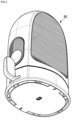
- FIG. 2 is a view for describing an applicator for attaching a sensor transmitter to the human body according to one embodiment
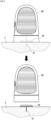
- FIG. 3 is a view for describing a process of attaching the sensor transmitter to the human body using the applicator according to one embodiment.
- an applicator 300 has the sensor transmitter 100 disposed therein and operates to attach the sensor transmitter 100, which is discharged to the outside due to manipulation by the user, to a specific body part of the user.
- the applicator 300 is formed in a shape that has one open surface, and the sensor transmitter 100 is installed in the applicator 300 through the one open surface of the applicator 300.
- the applicator 300 may include a needle (not illustrated) formed to have the one end of the sensor surrounded therein, a first elastic member (not illustrated) configured to push both the needle and the one end of the sensor toward the skin, and a second elastic member (not illustrated) configured to withdraw only the needle.
- a process of attaching the applicator 300 to the human body B will be described in detail.
- the one open surface of the applicator 300 is brought into close contact with the skin S of a specific part of the human body B.
- the sensor transmitter 100 may be discharged from the applicator 300 and attached to the skin S.
- one end of a sensor 101 is disposed to be exposed from the sensor transmitter 100 at a lower portion of the sensor transmitter 100, and the one end of the sensor 101 may be partially inserted into the skin S through the needle disposed in the applicator 300. Accordingly, the sensor transmitter 100 may be attached to the skin S while the one end of the sensor 101 is inserted into the skin S.
- an adhesive tape may be disposed on a surface of the sensor transmitter 100 that comes in contact with the human body B. Accordingly, when the applicator 300 is moved away from the skin S of the human body B, the sensor transmitter 100 may remain fixed and attached to the skin S of the human body B due to the adhesive tape.
- the sensor transmitter 100 may communicate with a terminal and transmit a biometric signal including glucose information to the terminal.
- the sensor transmitter 100 may generate various pieces of biometric information other than glucose information, but hereinafter, a case in which glucose information, which is an example of biometric information, is measured will be described.
- FIG. 4 is a block diagram of the sensor transmitter according to one embodiment.
- the sensor transmitter 100 may include a sensor module 110, a sensor communication unit 120, a sensor controller 130, and a sensor storage 140.
- the sensor module 110 may include at least one sensor inserted into the human body to detect biomass.
- the at least one sensor may measure biomass and generate a biometric signal.
- the biometric signal may be an analog signal that includes a current value.
- the sensor communication unit 120 may exchange data or information with a terminal.
- the sensor communication unit 120 may transmit a biometric signal received from the sensor module 110 or data stored in the sensor storage 140 to the terminal.
- the sensor controller 130 may control the overall configuration of the sensor transmitter 100 including the sensor module 110, the sensor storage 140, and the sensor communication unit 120. For example, the sensor controller 130 may receive a control signal from the terminal and control the configuration of the sensor transmitter 100 according to the control signal. Also, the sensor controller 130 may process a biometric signal. For example, the sensor controller 130 may convert a biometric signal into an analog or digital form or may perform processing for removing noise as necessary.
- Date or information may be stored in the sensor storage 140.
- data relating to biomass measured by the sensor module 110- for example, a current value of a biometric signal- or data received from the terminal- for example, a command value of a control signal- may be stored in the sensor storage 140.
- FIG. 5 is a block diagram of a terminal according to one embodiment.
- the terminal 200 may include an output unit 210, a communication unit 220, a controller 230, and a storage 240.
- the output unit 210 may output biometric information included in a biometric signal- for example, glucose information- for the user to check the biometric information.
- the output unit 210 may display glucose information in numerical values or a graph processed from the numerical values.
- the communication unit 220 may communicate with the sensor communication unit of the sensor transmitter and exchange data or information therewith.
- the communication unit 220 may receive a biometric signal including information on biomass measured by the sensor transmitter- biometric information.
- the communication unit 220 may receive a primarily processed biometric signal from the sensor transmitter.
- the communication unit 220 may transmit a control signal for controlling the sensor transmitter to the sensor transmitter.
- Data or information may be stored in the storage 240.
- data received from the sensor transmitter- for example, biometric information- may be stored in the storage 240.
- the biometric information may include glucose information and may have the form of a current value.
- data input from the user or environment setting data for setting an operating environment of the terminal may be stored in the storage 240.
- the controller 230 may include at least one processor configured to execute a program that calibrates sensitivity for glucose measurement and at least one memory in which the program is stored.
- the memory and the processor included in the controller 230 may be integrated on a single chip or physically separated.
- the memory may be implemented as a non-volatile memory device such as a read only memory (ROM), a programmable ROM (PROM), an erasable programmable ROM (EPROM), an electrically erasable programmable ROM (EEPROM), and a flash memory or a volatile memory device such as a random access memory (RAM) to store various programs, data, and/or information.
- ROM read only memory
- PROM programmable ROM
- EPROM erasable programmable ROM
- EEPROM electrically erasable programmable ROM
- flash memory such as a random access memory (RAM) to store various programs, data, and/or information.
- RAM random access memory
- the controller 230 may generate a glucose value, which is glucose information formed into a numerical value, from biometric information. To this end, the controller 230 may obtain biometric information in the form of a current value from the sensor transmitter and may perform preprocessing and/or processing of the current value of the biometric information. The controller 230 may first obtain sensitivity and generate a glucose value based on the sensitivity.
- the controller 230 may determine sensitivity based on the current value and a reference glucose value that is input from the outside, and the sensitivity may be determined according to Mathematical Equation 1 below.
- C represents a current value at a point in time at which sensitivity is determined based on a reference glucose value, that is, a point in time at which sensitivity is calibrated
- BGr represents a reference glucose value, which is a glucose value that is obtained from a blood glucose monitoring system (BGMS) and does not necessarily need to be obtained at the point in time at which sensitivity is calibrated.
- S BGr C
- the controller 230 may multiply the sensitivity by a current value and generate a glucose value that corresponds to the corresponding current value.
- the controller 230 may provide this new glucose value to the user through the output unit 210.
- the controller 230 may obtain sensitivity as in Mathematical Equation 1 through a first current value obtained at a first point in time and one reference glucose value, and then obtain a new glucose value using this sensitivity until a point in time at which a subsequent sensitivity calibration occurs- a second point in time. Then, the controller 230 may calibrate sensitivity again at the second point in time.
- the controller 230 may obtain sensitivity as in Mathematical Equation 1 through a second current value obtained at the second point in time and another reference glucose value and may newly obtain a glucose value corresponding thereto.
- the sensitivity may vary according to various environment variables. For example, a negative intercept phenomenon in which a variation in current values or a decrease in current values, which occurs due to hydration occurring when the sensor is inserted into the living body, continues may be a factor that changes sensitivity.
- the controller 230 of the terminal 200 may obtain a sensitivity from the current value lower than the original according to Mathematical Equation 1.
- the sensitivity obtained in this case may greatly increase.
- the controller 230 obtains a glucose value with excessively high sensitivity, the glucose value may increase even at a minute current value, and the controller 230 may generate an inaccurate glucose value.
- the controller 230 may calculate an offset value and reflect the offset value in obtaining sensitivity.
- the controller 230 may obtain the offset value in various ways without limitation, and the offset value may be fixed or variable. According to Mathematical Equation 2 below, the controller 230 may determine a sensitivity in which the offset value is reflected.
- the decrease in the current value due to the negative intercept phenomenon may be offset by the offset value, a decreased denominator may increase, and sensitivity may also change to a non-excessive, appropriate level.
- the controller 230 of the terminal 200 may, instead of immediately utilizing the sensitivity in which the offset value is reflected in obtaining a glucose value, adjust the sensitivity, and then finally utilize the adjusted sensitivity in obtaining a glucose value.
- a method in which the controller 230 of the terminal 200 calibrates sensitivity through multiple steps for adjusting sensitivity will be described.
- FIG. 6 is a flowchart illustrating a method for calibrating sensitivity according to one embodiment
- FIG. 7 is an exemplary view of adjusting sensitivity based on coding information of a sensor according to one embodiment
- FIG. 8 is an exemplary view of adjusting sensitivity based on a difference from a previous sensitivity according to one embodiment
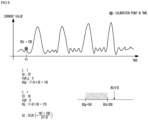
- FIGS. 9 to 11 are exemplary views of adjusting sensitivity based on a specific range formed by a reference glucose value and a previous glucose value obtained from a previous sensitivity according to one embodiment.
- sensitivity calibration is described below as being performed in a terminal, the present invention is not limited thereto, and depending on the configuration, sensitivity calibration may also be performed in a host- for example, a server- connected to a sensor transmitter or a terminal through a wired or wireless network.
- a controller of the terminal may first determine sensitivity necessary for generating a glucose value from a current value and may finally apply the current value to the determined sensitivity to generate a glucose value.
- the controller of the terminal may first obtain an offset value for determining sensitivity (step S601).
- the offset value may be a value that compensates for a change in sensitivity due to a decrease in a current value.
- the controller may determine sensitivity from a current value, in which the offset value is reflected, and a reference glucose value according to Mathematical Equation 2 (step S603).
- the sensitivity determined in this case may not be the final sensitivity and may be a sensitivity in which only the offset value is simply reflected before undergoing an adjusting step.
- first sensitivity a sensitivity in which only the offset value is simply reflected before undergoing an adjusting step.
- the current value is a type of value measured by a sensor included in a sensor module and may also be referred to as " sensor data (or analyte value)".
- the controller of the terminal may determine a second sensitivity from the first sensitivity and a predetermined sensitivity depending on the sensor (step S605).
- the predetermined sensitivity depending on the sensor may be a predetermined sensitivity for a single sensor or a predetermined sensitivity for a group- lot- which is a collection of a plurality of sensors.
- the sensitivity for a group of sensors may be understood as a specific sensitivity that represents the entire group instead of one sensor.
- the predetermined sensitivity depending on the sensor may be referred to as "sensor sensitivity.”
- the sensor sensitivity may include ideal sensitivity that is expected from a sensor or a group of sensors under ideal conditions.
- the sensor sensitivity may be understood as sensitivity that a sensor or a group of sensors should have under ideal conditions such as a laboratory environment.
- the sensor sensitivity may be understood as predetermined sensitivity in a factory when a sensor or group of sensors is manufactured.
- coding is necessary for initialization, and the sensor sensitivity may be included in coding information in a coding process and input and/or stored in the terminal.
- the controller of the terminal may reflect the sensor sensitivity to adjust the first sensitivity, and as a result thereof, may determine the second sensitivity.
- the controller of the terminal may reflect the sensor sensitivity in different ways according to some cases.
- the controller may compare the first sensitivity and the sensor sensitivity. When the first sensitivity is higher than the sensor sensitivity, the controller may determine the sensor sensitivity as the second sensitivity. For example, in FIG. 7 , when the first sensitivity S1 is 25 and the sensor sensitivity Ss, which is a sensitivity based on coding information, is 20 at a first calibration point in time P1, the controller may determine the second sensitivity S2 as 20. Hereinafter, for convenience of description, units will be omitted. The controller may trust the sensor sensitivity Ss more and determine the sensor sensitivity Ss as the second sensitivity S2.
- the controller may process the sensor sensitivity and determine the processed sensor sensitivity as the second sensitivity. For example, in FIG. 7 , when the first sensitivity S1 is 5 and the sensor sensitivity Ss, which is a sensitivity based on coding information of the sensor, is 20 at a second calibration point in time P2, the controller may process the sensor sensitivity Ss to obtain a value that corresponds to 1/3 of the sensor sensitivity Ss and may determine 20/3( ⁇ 6.7), which is the value corresponding to 1/3 of the sensor sensitivity Ss, as the second sensitivity S2. The controller may trust the sensor sensitivity Ss more and determine a value obtained by processing the sensor sensitivity Ss as the second sensitivity S2.
- the controller may determine the first sensitivity as is as the second sensitivity.
- the controller of the terminal may determine a third sensitivity by adjusting the second sensitivity based on reliability of the first sensitivity that is based on a difference between the first sensitivity and a previously determined sensitivity (step S607).
- the previously determined sensitivity may refer to the final sensitivity at a previous point in time
- the previous point in time may refer to a specific point in time in the past that is before the current point in time at which the sensitivity is about to be calibrated.
- the controller of the terminal may have obtained a glucose value based on the previously determined sensitivity even at the previous point in time.
- the previously determined sensitivity may be referred to as "previous sensitivity.”
- the controller of the terminal may trust the first sensitivity and determine that the reliability of the first sensitivity is high. Then, the controller may obtain a combined sensitivity in which the first sensitivity and the second sensitivity are reflected and may determine the combined sensitivity as the third sensitivity. The controller may average the first sensitivity and the second sensitivity to obtain the combined sensitivity.
- the controller may determine that reliability of the first sensitivity S1 having a value of 29 at a third calibration point in time P3 is high. Then, at the third calibration point in time P3, the controller may obtain the combined sensitivity from 29, which is the first sensitivity S1, and 25, which is the second sensitivity S2.
- the controller may determine 27, which is the combined sensitivity, as the third sensitivity S3.
- the first sensitivity When the first sensitivity is continuously higher or lower than the previous sensitivity as described above, the first sensitivity may be considered reasonable, and unlike in step S605, the first sensitivity may be reflected more than the second sensitivity.
- adjustment of the third sensitivity may be performed.
- the controller of the terminal may obtain a glucose value from the offset value and the third sensitivity and may determine a fourth sensitivity from the third sensitivity based on whether the obtained glucose value is within a specific range (step S609).
- the controller may consider the third sensitivity reasonable and may determine the third sensitivity as is as the fourth sensitivity. Otherwise, the controller may consider the third sensitivity unreasonable, obtain an adjusted sensitivity instead of the third sensitivity, and determine the adjusted sensitivity as the fourth sensitivity.
- the specific range may be specified by a previous glucose value and a reference glucose value.
- the controller may obtain the previous glucose value from a current value of the current point in time, the previous sensitivity, and a previously obtained offset value- a previous offset value. Also, the controller may obtain the reference glucose value- the reference glucose value used in determining the first sensitivity in step S601- from the outside. The controller may determine whether a glucose value obtained from the current value of the current point in time, an offset value of the current point in time, and the third sensitivity is within the range defined by the previous glucose value and the reference glucose value.
- the controller determines the fourth sensitivity at the first calibration point in time P1.
- the controller may specify the specific range and determine the validity of the third sensitivity.
- the previous sensitivity Sp and the previous offset value Voff_p may be a sensitivity and an offset value that are determined before sensitivity calibration is performed at the first calibration point in time P1.
- a reference glucose value BGr is 200 at the first calibration point in time P1
- a range of a glucose value based on the third sensitivity for the glucose value to be valid that is, a specific range specified by the previous glucose value and the reference glucose value, may correspond to 140 to 200.
- the controller may obtain the adjusted sensitivity through Mathematical Equation 3 below using a current value (at the current point in time), an offset value (at the current point in time), a previous glucose value, and a reference glucose value.
- Sa BGp + BGr 2 1 C ⁇ Voff
- the adjusted sensitivity Sa may be 24.29.
- the controller may determine the adjusted sensitivity Sa as the fourth sensitivity.
- the controller may determine 24.29 as the fourth sensitivity.
- the controller determines the fourth sensitivity at the second calibration point in time P2.
- the controller may specify the specific range and determine the validity of the third sensitivity.
- the previous sensitivity Sp and the previous offset value Voff_p may be a sensitivity and an offset value that are determined before sensitivity calibration is performed at the second calibration point in time P2.
- a reference glucose value BGr is 140 at the second calibration point in time P2
- a range of a glucose value based on the third sensitivity for the glucose value to be valid that is, a specific range specified by the previous glucose value and the reference glucose value, may correspond to 120 to 140.
- the controller determines the fourth sensitivity at the third calibration point in time P3.
- the controller may specify the specific range and determine the validity of the third sensitivity.
- the previous sensitivity Sp and the previous offset value Voff_p may be a sensitivity and an offset value that are determined before sensitivity calibration is performed at the third calibration point in time P3.
- a reference glucose value BGr is 200 at the third calibration point in time P3
- a range of a glucose value based on the third sensitivity for the glucose value to be valid that is, a specific range specified by the previous glucose value and the reference glucose value, may correspond to 200 to 287.5.
- the controller may obtain the adjusted sensitivity through Mathematical Equation 3 above using a current value (at the current point in time), an offset value (at the current point in time), a previous glucose value, and a reference glucose value.
- a current value at the current point in time
- an offset value at the current point in time
- a previous glucose value at the current point in time
- a reference glucose value e.g. 20.33.
- FIG. 12 is a flowchart illustrating a method for calibrating sensitivity according to another embodiment.
- the controller of the terminal may first obtain an offset value for determining sensitivity (step S1201).
- the controller may determine a first sensitivity from a sensor data (or current value), in which the obtained offset value is reflected, and a reference glucose value (step S1203).
- the controller may adjust sensitivity according to at least one of a first method in which the first sensitivity is adjusted based on sensor sensitivity-predetermined sensitivity depending on a sensor, a second method in which the first sensitivity is adjusted based on a difference between the first sensitivity and a previous sensitivity, and a third method in which the first sensitivity is adjusted based on whether a glucose value obtained from the first sensitivity is within a specific range specified by a previous glucose value and the reference glucose value (step S1205). Also, the controller may sequentially perform the first to third methods one by one to adjust sensitivity or may selectively perform only one method to adjust sensitivity.
- the first to third methods may be the same as one embodiment and may have a few differences therefrom.
- the controller may use the first method alone to calibrate sensitivity. Then, in the same manner as in one embodiment, the controller may adjust the first sensitivity based on the sensor sensitivity to determine the final sensitivity.
- the controller may use the second method alone to calibrate sensitivity.
- a sensitivity adjusted based on the sensor sensitivity may not be present in the second method. Then, when the first sensitivity is continuously higher or lower than the previous sensitivity, the controller may determine the first sensitivity as is as the final sensitivity.
- the controller may use the third method alone to calibrate sensitivity. Then, in the same manner as in one embodiment, the controller may determine the first sensitivity as the final sensitivity based on whether a glucose value obtained from the first sensitivity is within a specific range specified by a previous glucose value and a reference glucose value or may obtain an adjusted sensitivity according to Mathematical Equation 3 and determine the adjusted sensitivity as the final sensitivity.
- the controller may end the sensitivity calibration process once the controller determines the first sensitivity adjusted according to at least one or more of the first to third methods as the final sensitivity.
- the controller may generate a glucose value based on the final sensitivity, an offset value, and a sensor data (current value).
- the accuracy of sensitivity can be improved by adjusting sensitivity through several steps.
- program modules include routines, programs, objects, components, data structures, and the like, which perform particular tasks or implement particular abstract data types.
- the functions described herein can be performed, at least in part, by one or more hardware logic components.
- illustrative types of hardware logic components include field-programmable gate arrays (FPGAs), application-specific integrated circuits (ASICs), application-specific standard products (ASSPs), system-on-a-chip systems (SOCs), complex programmable logic devices (CPLDs), and the like.
- the embodiments disclosed herein may be implemented in the form of recording media that store computer-executable programs and/or instructions.
- the instructions may be stored in the form of program code, and when executed by a processor, may generate a program module to perform operations of the disclosed embodiments.
- the recording media may be implemented as computer-readable recording media.
- the computer-readable recording media include any type of recording media in which instructions that can be deciphered by computers are stored. Examples of the computer-readable recording media may include a read only memory (ROM), a random access memory (RAM), a magnetic tape, a magnetic disk, a flash memory, an optical data storage device, and the like.
- ROM read only memory
- RAM random access memory
- magnetic tape magnetic tape
- magnetic disk magnetic disk
- flash memory an optical data storage device, and the like.
Landscapes
- Health & Medical Sciences (AREA)
- Life Sciences & Earth Sciences (AREA)
- Physics & Mathematics (AREA)
- Engineering & Computer Science (AREA)
- Animal Behavior & Ethology (AREA)
- Veterinary Medicine (AREA)
- Biophysics (AREA)
- Biomedical Technology (AREA)
- Heart & Thoracic Surgery (AREA)
- Medical Informatics (AREA)
- Molecular Biology (AREA)
- Surgery (AREA)
- Pathology (AREA)
- General Health & Medical Sciences (AREA)
- Public Health (AREA)
- Optics & Photonics (AREA)
- Emergency Medicine (AREA)
- Artificial Intelligence (AREA)
- Computer Vision & Pattern Recognition (AREA)
- Physiology (AREA)
- Psychiatry (AREA)
- Signal Processing (AREA)
- Chemical & Material Sciences (AREA)
- Chemical Kinetics & Catalysis (AREA)
- General Chemical & Material Sciences (AREA)
- Measurement Of The Respiration, Hearing Ability, Form, And Blood Characteristics Of Living Organisms (AREA)
Applications Claiming Priority (1)
| Application Number | Priority Date | Filing Date | Title |
|---|---|---|---|
| KR1020230075334A KR20240175417A (ko) | 2023-06-13 | 2023-06-13 | 연속혈당측정을 위한 민감도를 교정하는 방법 |
Publications (1)
| Publication Number | Publication Date |
|---|---|
| EP4477147A1 true EP4477147A1 (de) | 2024-12-18 |
Family
ID=93561795
Family Applications (1)
| Application Number | Title | Priority Date | Filing Date |
|---|---|---|---|
| EP24181827.7A Pending EP4477147A1 (de) | 2023-06-13 | 2024-06-12 | Verfahren zur kalibrierung der empfindlichkeit zur glucosemessung |
Country Status (6)
| Country | Link |
|---|---|
| US (1) | US20240415421A1 (de) |
| EP (1) | EP4477147A1 (de) |
| JP (1) | JP2024178943A (de) |
| KR (1) | KR20240175417A (de) |
| CN (1) | CN119112171A (de) |
| AU (1) | AU2024204000A1 (de) |
Citations (6)
| Publication number | Priority date | Publication date | Assignee | Title |
|---|---|---|---|---|
| US20090036760A1 (en) * | 2007-07-31 | 2009-02-05 | Abbott Diabetes Care, Inc. | Method and apparatus for providing data processing and control in a medical communication system |
| US20090112478A1 (en) * | 2007-10-31 | 2009-04-30 | Medtronic Minimed, Inc. | Modified Sensor Calibration Algorithm |
| US20110184268A1 (en) * | 2010-01-22 | 2011-07-28 | Abbott Diabetes Care Inc. | Method, Device and System for Providing Analyte Sensor Calibration |
| US20120283960A1 (en) * | 2009-01-29 | 2012-11-08 | Abbott Diabetes Care Inc. | Method and Device for Providing Offset Model Based Calibration for Analyte Sensor |
| US20160183855A1 (en) * | 2013-03-14 | 2016-06-30 | Dexcom, Inc. | Advanced calibration for analyte sensors |
| US20210186383A1 (en) * | 2003-12-05 | 2021-06-24 | Dexcom, Inc. | Analyte sensor |
Family Cites Families (3)
| Publication number | Priority date | Publication date | Assignee | Title |
|---|---|---|---|---|
| US7890295B2 (en) * | 2000-02-23 | 2011-02-15 | Medtronic Minimed, Inc. | Real time self-adjusting calibration algorithm |
| EP1886113B1 (de) * | 2005-06-02 | 2010-08-18 | Isense Corporation | Verwendung von mehrfachen datenpunkten und filterung in einem analytsensor |
| EP3689237B1 (de) * | 2009-07-23 | 2021-05-19 | Abbott Diabetes Care, Inc. | Herstellungsverfahren und system zur kontinuierlichen analytmessung |
-
2023
- 2023-06-13 KR KR1020230075334A patent/KR20240175417A/ko active Pending
-
2024
- 2024-06-12 EP EP24181827.7A patent/EP4477147A1/de active Pending
- 2024-06-12 US US18/741,695 patent/US20240415421A1/en active Pending
- 2024-06-13 CN CN202410757337.0A patent/CN119112171A/zh active Pending
- 2024-06-13 JP JP2024095579A patent/JP2024178943A/ja active Pending
- 2024-06-13 AU AU2024204000A patent/AU2024204000A1/en active Pending
Patent Citations (6)
| Publication number | Priority date | Publication date | Assignee | Title |
|---|---|---|---|---|
| US20210186383A1 (en) * | 2003-12-05 | 2021-06-24 | Dexcom, Inc. | Analyte sensor |
| US20090036760A1 (en) * | 2007-07-31 | 2009-02-05 | Abbott Diabetes Care, Inc. | Method and apparatus for providing data processing and control in a medical communication system |
| US20090112478A1 (en) * | 2007-10-31 | 2009-04-30 | Medtronic Minimed, Inc. | Modified Sensor Calibration Algorithm |
| US20120283960A1 (en) * | 2009-01-29 | 2012-11-08 | Abbott Diabetes Care Inc. | Method and Device for Providing Offset Model Based Calibration for Analyte Sensor |
| US20110184268A1 (en) * | 2010-01-22 | 2011-07-28 | Abbott Diabetes Care Inc. | Method, Device and System for Providing Analyte Sensor Calibration |
| US20160183855A1 (en) * | 2013-03-14 | 2016-06-30 | Dexcom, Inc. | Advanced calibration for analyte sensors |
Also Published As
| Publication number | Publication date |
|---|---|
| CN119112171A (zh) | 2024-12-13 |
| AU2024204000A1 (en) | 2025-01-09 |
| KR20240175417A (ko) | 2024-12-20 |
| JP2024178943A (ja) | 2024-12-25 |
| US20240415421A1 (en) | 2024-12-19 |
Similar Documents
| Publication | Publication Date | Title |
|---|---|---|
| US9222951B2 (en) | Calibration method for the prospective calibration of measuring equipment | |
| US12558009B2 (en) | Method for calculating calibration sensitivity of sensor for insertion into body | |
| KR102312548B1 (ko) | 생체 정보 측정 데이터의 노이즈 처리 방법 | |
| EP3485810A1 (de) | Bioinformationsschätzvorrichtung und bioinformationsschätzverfahren | |
| US20120165639A1 (en) | Storage of calibration data at a continuous glucose monitor | |
| AU2025204433A1 (en) | Method and system of determining a probability of a blood glucose value for a patient being in an adverse blood glucose range at a prediction time, and computer program product | |
| EP4477147A1 (de) | Verfahren zur kalibrierung der empfindlichkeit zur glucosemessung | |
| US20250064362A1 (en) | Method for calibrating sensitivity for glucose measurement | |
| US20250064351A1 (en) | Method for calibrating sensitivity for glucose measurement | |
| KR20240027348A (ko) | 연속혈당측정을 위한 생체신호를 실시간으로 보상하는 방법 | |
| US20260066121A1 (en) | Method of measuring blood glucose using learning model | |
| US20250120626A1 (en) | Method for initial calibration of continuous biometrics sensor | |
| WO2022045872A1 (en) | A system for calibrating medical devices and its method | |
| CN120643220B (zh) | 一种用于生物相容性多参数检测的数字处理系统 | |
| US20250204816A1 (en) | Apparatus for monitoring glucose and method thereof | |
| KR20130134866A (ko) | 단일화모듈구성의 혈당측정장치 | |
| KR20250077054A (ko) | 검체 농도의 측정값 보정 방법, 그리고 이를 구현하기 위한 캘리브레이션 장치 | |
| KR20220080750A (ko) | 체온계를 이용한 체온 정보 제공 방법, iot 기반 신체 탈부착형 센서 단말의 제어 방법, 및 iot 기반 신체 탈부착형 센서 단말 | |
| WO2025264725A1 (en) | Analyte sensor system long term drift compensation | |
| Bailey | Blood Glucose Monitoring: Glycated Hemoglobin, Fructosamine, Meters, and Sensors | |
| HK1188106A1 (en) | Calibration of a handheld diabetes managing device that receives data from a continuous glucose monitor | |
| HK1188106B (en) | Calibration of a handheld diabetes managing device that receives data from a continuous glucose monitor | |
| HK1235650A1 (en) | A method and a device for determining a body fluid glucose level of a patient, and a computer program product |
Legal Events
| Date | Code | Title | Description |
|---|---|---|---|
| PUAI | Public reference made under article 153(3) epc to a published international application that has entered the european phase |
Free format text: ORIGINAL CODE: 0009012 |
|
| STAA | Information on the status of an ep patent application or granted ep patent |
Free format text: STATUS: THE APPLICATION HAS BEEN PUBLISHED |
|
| AK | Designated contracting states |
Kind code of ref document: A1 Designated state(s): AL AT BE BG CH CY CZ DE DK EE ES FI FR GB GR HR HU IE IS IT LI LT LU LV MC ME MK MT NL NO PL PT RO RS SE SI SK SM TR |
|
| STAA | Information on the status of an ep patent application or granted ep patent |
Free format text: STATUS: REQUEST FOR EXAMINATION WAS MADE |
|
| 17P | Request for examination filed |
Effective date: 20250107 |
|
| STAA | Information on the status of an ep patent application or granted ep patent |
Free format text: STATUS: EXAMINATION IS IN PROGRESS |
|
| 17Q | First examination report despatched |
Effective date: 20260203 |