EP4475693B1 - Aerosolerzeugender artikel, der ein stromaufwärtiges element aufweist - Google Patents
Aerosolerzeugender artikel, der ein stromaufwärtiges element aufweist Download PDFInfo
- Publication number
- EP4475693B1 EP4475693B1 EP23716336.5A EP23716336A EP4475693B1 EP 4475693 B1 EP4475693 B1 EP 4475693B1 EP 23716336 A EP23716336 A EP 23716336A EP 4475693 B1 EP4475693 B1 EP 4475693B1
- Authority
- EP
- European Patent Office
- Prior art keywords
- aerosol
- millimetres
- hollow tubular
- length
- downstream
- Prior art date
- Legal status (The legal status is an assumption and is not a legal conclusion. Google has not performed a legal analysis and makes no representation as to the accuracy of the status listed.)
- Active
Links
Images


Classifications
-
- A—HUMAN NECESSITIES
- A24—TOBACCO; CIGARS; CIGARETTES; SIMULATED SMOKING DEVICES; SMOKERS' REQUISITES
- A24D—CIGARS; CIGARETTES; TOBACCO SMOKE FILTERS; MOUTHPIECES FOR CIGARS OR CIGARETTES; MANUFACTURE OF TOBACCO SMOKE FILTERS OR MOUTHPIECES
- A24D1/00—Cigars; Cigarettes
- A24D1/20—Cigarettes specially adapted for simulated smoking devices
-
- A—HUMAN NECESSITIES
- A24—TOBACCO; CIGARS; CIGARETTES; SIMULATED SMOKING DEVICES; SMOKERS' REQUISITES
- A24B—MANUFACTURE OR PREPARATION OF TOBACCO FOR SMOKING OR CHEWING; TOBACCO; SNUFF
- A24B15/00—Chemical features or treatment of tobacco; Tobacco substitutes, e.g. in liquid form
- A24B15/10—Chemical features of tobacco products or tobacco substitutes
-
- A—HUMAN NECESSITIES
- A24—TOBACCO; CIGARS; CIGARETTES; SIMULATED SMOKING DEVICES; SMOKERS' REQUISITES
- A24D—CIGARS; CIGARETTES; TOBACCO SMOKE FILTERS; MOUTHPIECES FOR CIGARS OR CIGARETTES; MANUFACTURE OF TOBACCO SMOKE FILTERS OR MOUTHPIECES
- A24D1/00—Cigars; Cigarettes
- A24D1/02—Cigars; Cigarettes with special covers
- A24D1/027—Cigars; Cigarettes with special covers with ventilating means, e.g. perforations
-
- A—HUMAN NECESSITIES
- A24—TOBACCO; CIGARS; CIGARETTES; SIMULATED SMOKING DEVICES; SMOKERS' REQUISITES
- A24D—CIGARS; CIGARETTES; TOBACCO SMOKE FILTERS; MOUTHPIECES FOR CIGARS OR CIGARETTES; MANUFACTURE OF TOBACCO SMOKE FILTERS OR MOUTHPIECES
- A24D1/00—Cigars; Cigarettes
- A24D1/04—Cigars; Cigarettes with mouthpieces or filter-tips
- A24D1/045—Cigars; Cigarettes with mouthpieces or filter-tips with smoke filter means
-
- A—HUMAN NECESSITIES
- A24—TOBACCO; CIGARS; CIGARETTES; SIMULATED SMOKING DEVICES; SMOKERS' REQUISITES
- A24D—CIGARS; CIGARETTES; TOBACCO SMOKE FILTERS; MOUTHPIECES FOR CIGARS OR CIGARETTES; MANUFACTURE OF TOBACCO SMOKE FILTERS OR MOUTHPIECES
- A24D3/00—Tobacco smoke filters, e.g. filter-tips, filtering inserts; Filters specially adapted for simulated smoking devices; Mouthpieces for cigars or cigarettes
- A24D3/04—Tobacco smoke filters characterised by their shape or structure
Definitions
- the present invention relates to an aerosol-generating article comprising an aerosol-generating substrate and adapted to produce an inhalable aerosol upon heating.
- Aerosol-generating articles in which an aerosol-generating substrate, such as a tobacco-containing substrate, is heated rather than combusted, are known in the art.
- an aerosol is generated by the transfer of heat from a heat source to a physically separate aerosol-generating substrate or material, which may be located in contact with, within, around, or downstream of the heat source.
- volatile compounds are released from the aerosol-generating substrate by heat transfer from the heat source and are entrained in air drawn through the aerosol-generating article. As the released compounds cool, they condense to form an aerosol.
- WO 2021/233916 A1 discloses an aerosol-generating article for producing an inhalable aerosol upon heating.
- the aerosol-generating article comprises: a rod of aerosol-generating substrate and a downstream section at a location downstream of the rod of aerosol-generating substrate.
- a density of the aerosol-generating substrate is about 600 milligrams per cubic centimetre and the downstream section comprises a support element, an aerosol-cooling element and a mouthpiece element.
- the support element comprises a first hollow tubular segment having a length of about 8 millimetres.
- the aerosol-cooling element comprises a second hollow tubular segment having a length of about 8 millimetres.
- the mouthpiece element has a length of about 12 millimetres.
- Aerosol-generating articles in which a tobacco-containing substrate is heated rather than combusted present a number of challenges that were not encountered with conventional smoking articles.
- tobacco-containing substrates are typically heated to significantly lower temperatures compared with the temperatures reached by the combustion front in a conventional cigarette. This may have an impact on nicotine release from the tobacco-containing substrate and nicotine delivery to the consumer.
- the heating temperature is increased in an attempt to boost nicotine delivery, then the aerosol generated typically needs to be cooled to a greater extent and more rapidly before it reaches the consumer.
- aerosol-generating articles that are easy to use and have improved practicality.
- the present invention relates to an aerosol-generating article having a rod of aerosol-generating substrate having a relatively low bulk density and a relatively long downstream section.
- Aerosol-generating articles of the prior art may have a rod of aerosol-generating substrate that has a relatively high bulk density and a shorter downstream section. Therefore, the present invention provides a significantly different construction to aerosol-generating articles of the prior art.
- a rod of aerosol-generating substrate may generate an aerosol upon heating, for example, by an aerosol-generating device.
- the resulting generated aerosol may have a high temperature that could be very uncomfortable for a user if the aerosol was delivered to the user immediately after being generated. Therefore, some aerosol-generating articles provide space for an aerosol to cool down after being generated, and before the aerosol is delivered to a user. In some aerosol-generating articles, space for cooling is provided between the rod of aerosol-generating substrate and a downstream end of the aerosol-generating article.
- Providing a relatively long aerosol-generating article may increase the total length of the path travelled by the generated aerosol within the aerosol-generating article and through the downstream section, before the generated aerosol is delivered to a user. Increasing the total length of the path travelled by the aerosol before it is delivered to a user may provide more time of the aerosol to cool and reduce in temperature before it is delivered to a user.
- Higher density aerosol-generating substrates may not be sufficiently heated and consumed during a heating cycle of the article, particularly in the context of being externally heated, and could increase the resistance to draw (RTD) of the article. As a result, this may lead to a proportion of the aerosol-generating substrate not being heated effectively so as to contribute to the generation of aerosol. This proportion of aerosol-generating substrate may effectively be wasted.
- providing both a reduced density substrate and a relatively long downstream section may advantageously provide a cooler aerosol to a user while improving retention characteristics of the article within a heating device and minimising substrate waste.
- Providing a relatively long downstream section having a hollow tubular element may improve the retention of the aerosol-generating article within the heating chamber of an aerosol-generating device as longer portion of the downstream section may engage with the heating chamber of a heating device.
- Providing a relatively low bulk density substrate may minimise the likelihood of a proportion of the aerosol-generating article not generating aerosol, thereby reducing manufacturing costs and waste.
- a low density substrate may be advantageously quicker to heat up during use such that aerosol may be generated sooner within the heating cycle of the article.
- a rod of low density aerosol-generating substrate with a downstream section of increased length, for example, in order to maximise the proportion of the rod of aerosol-generating substrate that is heated when the aerosol-generating article is inserted into a heating cavity of an aerosol-generating device, while ensuring effective cooling of the aerosol flowing downstream from the substrate.
- This in turn may optimise the efficiency of aerosol generation from the rod of aerosol-generating substrate, so that the amount of aerosol-generating substrate can be minimised to the extent possible without impacting the generation of aerosol and the RTD characteristics of the article, which could otherwise be undesirably increased by the provision of a longer rod.
- the amount of aerosol-generating substrate that is effectively wasted, since it is not used to generate aerosol can also be minimised.
- it may be also be important to retain the overall length of the aerosol-generating article so that the article can continue to be used in conjunction with existing aerosol-generating devices. It may also be important that existing machinery and packaging can also be used, without the need for modification.
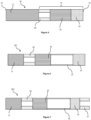
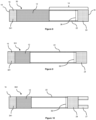
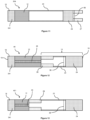
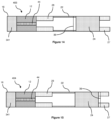
- An aerosol-generating article in accordance with the present invention comprises a rod of aerosol-generating substrate. Further, an aerosol-generating article in accordance with the present invention comprises one or more elements provided downstream of the aerosol-generating substrate. Where present, the one or more elements downstream of the rod of aerosol-generating substrate form a downstream section of the aerosol-generating article. An aerosol-generating article in accordance with the present invention may comprise one or more elements provided upstream of the aerosol-generating substrate. Where present, the one or more elements upstream of the rod of aerosol-generating substrate form an upstream section of the aerosol-generating article.
- the rod of aerosol-generating substrate is preferably circumscribed by a wrapper, such as a plug wrap.
- the rod of aerosol-generating substrate preferably has a length of at least 10 millimetres.
- the rod of aerosol-generating substrate has a length of at least 15 millimetres. More preferably, the rod of aerosol-generating substrate has a length of at least 17 millimetres. Even more preferably, the rod of aerosol-generating substrate has a length of at least 18 millimetres. Most preferably, the rod of aerosol-generating substrate has a length of at least 20 millimetres.
- the rod of aerosol-generating substrate preferably has a length of less than 40 millimetres.
- the rod of aerosol-generating substrate has a length of less than 35 millimetres. More preferably, the rod of aerosol-generating substrate has a length of less than 30 millimetres.
- the rod of aerosol-generating substrate preferably has a length of between 10 millimetres and 40 millimetres, or between 10 millimetres and 35 millimetres, or between 10 millimetres and 30 millimetres, or between 15 millimetres and 40 millimetres, or between 15 millimetres and 35 millimetres, or between 15 millimetres and 30 millimetres, or between 20 millimetres and 40 millimetres, or between 20 millimetres and 35 millimetres, or between 20 millimetres and 30 millimetres.
- the rod of aerosol-generating substrate preferably has an external diameter that is approximately equal to the external diameter of the aerosol-generating article.
- the “external diameter of the rod of aerosol-generating substrate” may be calculated as the average of a plurality of measurements of the diameter of the rod of aerosol-generating substrate taken at different locations along the length of the rod of aerosol-generating substrate.
- the rod of aerosol-generating substrate preferably has an external diameter of less than 8 millimetres. More preferably, the rod of aerosol-generating substrate has an external diameter of less than 7.5 millimetres. Even more preferably, the rod of aerosol-generating substrate has an external diameter of less than 7 millimetres.
- a smaller diameter of the rod of aerosol-generating substrate allows for a faster penetration of heat supplied to the aerosol-generating article into the entire volume of aerosol-generating substrate.
- a volume-to-surface ratio of the aerosol-generating substrate becomes less favourable, as the amount of available aerosol-generating substrate diminishes.
- a diameter of the rod of aerosol-generating substrate falling within the ranges described herein is particularly advantageous in terms of a balance between energy consumption and aerosol delivery.
- This advantage is felt in particular when an aerosol-generating article comprising a rod of aerosol-generating substrate having a diameter as described herein is used in combination with an external heater arranged around the periphery of the aerosol-generating article. Under such operating conditions, it has been observed that less thermal energy is required to achieve a sufficiently high temperature at the core of the rod of aerosol-generating substrate and, in general, at the core of the article. Thus, when operating at lower temperatures, a desired target temperature at the core of the aerosol-generating substrate may be achieved within a desirably reduced time frame and by a lower energy consumption.
- the use of a rod of aerosol-generating substrate having a smaller diameter may also advantageously reduce the overall weight of tobacco material that is needed in the aerosol-generating article whilst still being able to produce the desired levels of aerosol. The level of tobacco waste can therefore be reduced.
- a ratio between the length of the rod of aerosol-generating substrate and an overall length of the aerosol-generating article is preferably at least 0.20.
- a ratio between the length of the rod of aerosol-generating substrate and an overall length of the aerosol-generating article is at least 0.25. More preferably, a ratio between the length of the rod of aerosol-generating substrate and an overall length of the aerosol-generating article is at least 0.30.
- a ratio between the length of the rod of aerosol-generating substrate and an overall length of the aerosol-generating article is preferably less than 0.50.
- a ratio between the length of the rod of aerosol-generating substrate and an overall length of the aerosol-generating article is less than 0.45. More preferably, a ratio between the length of the rod of aerosol-generating substrate and an overall length of the aerosol-generating article is less than 0.40.
- a ratio between the length of the rod of aerosol-generating substrate and an overall length of the aerosol-generating article is from 0.20 to 0.50, preferably from 0.20 to 0.45, more preferably from 0.20 to 0.40. In other embodiments, a ratio between the length of the rod of aerosol-generating substrate and an overall length of the aerosol-generating article is from 0.25 to 0.50, preferably from 0.25 to 0.45, more preferably from 0.25 to 0.40. In further embodiments, a ratio between the length of the rod of aerosol-generating substrate and an overall length of the aerosol-generating article is from 0.30 to 0.50, preferably from 0.30 to 0.45, more preferably from 0.30 to 0.40. In yet further embodiments, a ratio between the length of the rod of aerosol-generating substrate and an overall length of the aerosol-generating article is from 0.30 to 0.50, preferably from 0.30 to 0.45, more preferably from 0.30 to 0.40.
- the rod of aerosol-generating substrate has a substantially uniform cross-section along the length of the rod.
- the rod of aerosol-generating substrate has a substantially circular cross-section.
- the density of the aerosol-generating substrate is preferably from 100 mg per cubic centimetre to 1000 mg per cubic centimetre, preferably from 100 mg per cubic centimetre to 800 mg per cubic centimetre, more preferably from 100 mg per cubic centimetre to 700 mg per cubic centimetre, more preferably from 100 mg per cubic centimetre to 600 mg per cubic centimetre, more preferably from 100 mg per cubic centimetre to 500 mg per cubic centimetre, even more preferably from 100 mg per cubic centimetre to 400 mg per cubic centimetre.
- the density of the aerosol-generating substrate is preferably from 100 mg per cubic centimetre to 350 mg per cubic centimetre, preferably from 100 mg per cubic centimetre to 345 mg per cubic centimetre, preferably from 125 mg per cubic centimetre to 325 mg per cubic centimetre, more preferably from 150 mg per cubic centimetre to 300 mg per cubic centimetre, more preferably from 150 mg per cubic centimetre to 290 mg per cubic centimetre, even more preferably from 200 mg per cubic centimetre to 280 mg per cubic centimetre.
- the aerosol-generating substrate may comprise a tobacco material.
- the rod of aerosol-generating substrate may comprise a tobacco material.
- the tobacco material may comprise a shredded tobacco material.
- the shredded tobacco material may be in the form of cut filler or tobacco cut filler.
- the tobacco material has a bulk density of at least 100 mg per cubic centimetre. More preferably, the tobacco material has a bulk density of at least 125 mg per cubic centimetre. More preferably, the tobacco material has a bulk density of at least 150 mg per cubic centimetre. Even more preferably, the tobacco material has a bulk density of at least 200 mg per cubic centimetre. Preferably, the tobacco material has a bulk density of less than 345 milligrams per cubic centimetre. More preferably, the tobacco material has a bulk density of less than 325 milligrams per cubic centimetre. Even more preferably, the tobacco material has a bulk density of less than 300 milligrams per cubic centimetre.
- the tobacco material has a bulk density of less than 290 milligrams per cubic centimetre. Even more preferably, the tobacco material has a bulk density of less than 280 milligrams per cubic centimetre.
- the tobacco material may have a bulk density of from 100 milligrams per cubic centimetre to 350 milligrams per cubic centimetre, preferably from 100 milligrams per cubic centimetre to 345 milligrams per cubic centimetre, more preferably from 125 milligrams per cubic centimetre to 325 milligrams per cubic centimetre, more preferably from 150 milligrams per cubic centimetre to 300 milligrams per cubic centimetre, more preferably from 150 milligrams per cubic centimetre to 290 milligrams per cubic centimetre, even more preferably from 200 milligrams per cubic centimetre to 280 milligrams per cubic centimetre.
- density refers to the bulk density of the aerosol-generating substrate. This can be calculated by measuring the total weight of the aerosol-generating substrate and dividing this by the volume of the rod of aerosol-generating substrate (excluding any wrapper).
- the aerosol-generating substrate may comprise a shredded tobacco material.
- the rod of aerosol-generating substrate may comprise a shredded tobacco material.
- the shredded tobacco material may be in the form of cut filler or tobacco cut filler.
- the density of such aerosol-generating substrate or shredded tobacco material may be in accordance with the below.
- the rod of aerosol-generating substrate comprises shredded tobacco material, for example tobacco cut filler, having a density of less than 350 mg per cubic centimetre, preferably less than 345 mg per cubic centimetre, preferably less than 325 mg per cubic centimetre, more preferably less than 300 mg per cubic centimetre, more preferably less than 290 mg per cubic centimetre, more preferably less than 280 mg per cubic centimetre.
- the rod of aerosol-generating substrate comprises shredded tobacco material having a bulk density of at least 100 mg per cubic centimetre. More preferably, the rod of aerosol-generating substrate comprises shredded tobacco material having a bulk density of at least 125 mg per cubic centimetre.
- the rod of aerosol-generating substrate comprises shredded tobacco material having a bulk density of at least 150 mg per cubic centimetre. Even more preferably, the rod of aerosol-generating substrate comprises shredded tobacco material having a bulk density of at least 200 mg per cubic centimetre.
- the rod of aerosol-generating substrate may comprise shredded tobacco material having a density of from 100 mg per cubic centimetre to 350 mg per cubic centimetre, preferably from 100 mg per cubic centimetre to 345 mg per cubic centimetre, preferably from 125 mg per cubic centimetre to 325 mg per cubic centimetre, more preferably from 150 mg per cubic centimetre to 300 mg per cubic centimetre, more preferably from 150 mg per cubic centimetre to 290 mg per cubic centimetre, even more preferably from 200 mg per cubic centimetre to 280 mg per cubic centimetre.
- the RTD of the rod of aerosol-generating substrate is preferably less than about 10 millimetres H 2 O. More preferably, the RTD of the rod of aerosol-generating substrate is less than 9 millimetres H 2 O. Even more preferably, the RTD of the rod of aerosol-generating substrate is less than 8 millimetres H 2 O.
- the RTD of the rod of aerosol-generating substrate is preferably at least 4 millimetres H 2 O. More preferably, the RTD of the rod of aerosol-generating substrate is at least 5 millimetres H 2 O. Even more preferably, the RTD of the rod of aerosol-generating substrate is at least 6 millimetres H 2 O.
- the RTD of the rod of aerosol-generating substrate is from 4 millimetres H 2 O to 10 millimetres H 2 O, preferably from 5 millimetres H 2 O to 10 millimetres H 2 O, preferably from 6 millimetres H 2 O to 25 millimetres H 2 O. In other embodiments, the RTD of the rod of aerosol-generating substrate is from 4 millimetres H 2 O to 20 millimetres H 2 O, preferably from 5 millimetres H 2 O to 18 millimetres H 2 O preferably from 6 millimetres H 2 O to 16 millimetres H 2 O.
- the RTD of the rod of aerosol-generating substrate is from 4 millimetres H 2 O to 15 millimetres H 2 O, preferably from 5 millimetres H 2 O to 14 millimetres H 2 O, more preferably from 6 millimetres H 2 O to 12 millimetres H 2 O.
- the aerosol-generating substrate may be a solid aerosol-generating substrate.
- the aerosol-generating substrate preferably comprises an aerosol former.
- the aerosol former may be any suitable known compound or mixture of compounds that, in use, facilitates formation of a dense and stable aerosol.
- the aerosol former may be facilitating that the aerosol is substantially resistant to thermal degradation at temperatures typically applied during use of the aerosol-generating article.
- Suitable aerosol formers are for example: polyhydric alcohols such as, for example, triethylene glycol, 1,3-butanediol, propylene glycol and glycerine; esters of polyhydric alcohols such as, for example, glycerol mono-, di- or triacetate; aliphatic esters of mono-, di- or polycarboxylic acids such as, for example, dimethyl dodecanedioate and dimethyl tetradecanedioate; and combinations thereof.
- polyhydric alcohols such as, for example, triethylene glycol, 1,3-butanediol, propylene glycol and glycerine
- esters of polyhydric alcohols such as, for example, glycerol mono-, di- or triacetate
- aliphatic esters of mono-, di- or polycarboxylic acids such as, for example, dimethyl dodecanedioate and dimethyl tetradecanedioate; and combinations
- the aerosol former comprises one or more of glycerine and propylene glycol.
- the aerosol former may consist of glycerine or propylene glycol or of a combination of glycerine and propylene glycol.
- the aerosol-generating substrate comprises at least 5 percent by weight of aerosol former on a dry weight basis of the aerosol-generating substrate, more preferably at least 6 percent by weight of aerosol former on a dry weight basis of the aerosol-generating substrate, at least 8 percent by weight of aerosol former on a dry weight basis of the aerosol-generating substrate.
- the aerosol-generating substrate comprises less than 90 percent by weight of aerosol former on a dry weight basis of the aerosol-generating substrate, more preferably less than 80 percent by weight of aerosol former on a dry weight basis of the aerosol-generating substrate, more preferably less than 70 percent by weight of aerosol former on a dry weight basis of the aerosol-generating substrate, more preferably less than 60 percent by weight of aerosol former on a dry weight basis of the aerosol-generating substrate, more preferably less than 50 percent by weight of aerosol former on a dry weight basis of the aerosol-generating substrate, more preferably less than 40 percent by weight of aerosol former on a dry weight basis of the aerosol-generating substrate.
- the aerosol-generating substrate comprises less than 30 percent by weight of aerosol former on a dry weight basis of the aerosol-generating substrate, more preferably less than 25 percent by weight of aerosol former on a dry weight basis of the aerosol-generating substrate, more preferably less than 20 percent by weight of aerosol former on a dry weight basis of the aerosol-generating substrate.
- the aerosol-generating substrate may comprise between 5 percent and 30 percent by weight of aerosol former on a dry weight basis of the aerosol-generating substrate, more preferably between 6 percent and 25 percent by weight of aerosol former on a dry weight basis of the aerosol-generating substrate, more preferably between 10 percent and 20 percent by weight of aerosol former on a dry weight basis of the aerosol-generating substrate.
- the aerosol-generating substrate may comprise between 5 percent and 30 percent by weight of glycerine on a dry weight basis of the aerosol-generating substrate, more preferably between 6 percent and 25 percent by weight of glycerine on a dry weight basis of the aerosol-generating substrate, more preferably between 10 percent and 20 percent by weight of glycerine on a dry weight basis of the aerosol-generating substrate.
- the aerosol-generating substrate comprises shredded tobacco material.
- the shredded tobacco material may be in the form of cut filler, as described in more detail below.
- the shredded tobacco material may be in the form of a shredded sheet of homogenised tobacco material. Suitable homogenised tobacco materials for use in the present invention are described below.
- the cut filler may also comprise other after-cut, filler tobacco or casing.
- the cut filler comprises at least 25 percent of plant leaf lamina, more preferably, at least 50 percent of plant leaf lamina, still more preferably at least 75 percent of plant leaf lamina and most preferably at least 90 percent of plant leaf lamina.
- the plant material is one of tobacco, mint, tea and cloves. Most preferably, the plant material is tobacco.
- the invention is equally applicable to other plant material that has the ability to release substances upon the application of heat that can subsequently form an aerosol.
- the cut filler comprises tobacco plant material comprising lamina of one or more of bright tobacco, dark tobacco, aromatic tobacco and filler tobacco.
- tobacco describes any plant member of the genus Nicotiana. Bright tobaccos are tobaccos with a generally large, light coloured leaves. Throughout the specification, the term “bright tobacco” is used for tobaccos that have been flue cured. Examples for bright tobaccos are Chinese Flue-Cured, Flue-Cured Brazil, US Flue-Cured such as Virginia tobacco, Indian Flue-Cured, Flue-Cured from Africa or other African Flue Cured. Bright tobacco is characterized by a high sugar to nitrogen ratio.
- the cut filler is soaked with aerosol former. Soaking the cut filler can be done by spraying or by other suitable application methods.
- the aerosol former may be applied to the blend during preparation of the cut filler.
- the aerosol former may be applied to the blend in the direct conditioning casing cylinder (DCCC).
- DCCC direct conditioning casing cylinder
- Conventional machinery can be used for applying an aerosol former to the cut filler.
- the aerosol former may be any suitable known compound or mixture of compounds that, in use, facilitates formation of a dense and stable aerosol.
- the aerosol former may be facilitating that the aerosol is substantially resistant to thermal degradation at temperatures typically applied during use of the aerosol-generating article.
- Suitable aerosol formers are for example to: polyhydric alcohols such as, for example, triethylene glycol, 1,3-butanediol, propylene glycol and glycerine; esters of polyhydric alcohols such as, for example, glycerol mono-, di- or triacetate; aliphatic esters of mono-, di- or polycarboxylic acids such as, for example, dimethyl dodecanedioate and dimethyl tetradecanedioate; and combinations thereof.
- polyhydric alcohols such as, for example, triethylene glycol, 1,3-butanediol, propylene glycol and glycerine
- esters of polyhydric alcohols such as, for example, glycerol mono-, di- or triacetate
- aliphatic esters of mono-, di- or polycarboxylic acids such as, for example, dimethyl dodecanedioate and dimethyl tetradecanedioate
- the aerosol former comprises one or more of glycerine and propylene glycol.
- the aerosol former may consist of glycerine or propylene glycol or of a combination of glycerine and propylene glycol.
- the amount of aerosol former is at least 5 percent by weight on a dry weight basis, preferably between 5 percent and 30 percent by weight on a dry weight basis of the cut filler, more preferably, the amount of aerosol former is between 6 percent and 20 percent by weight on a dry weight basis of the cut filler, for example the amount of aerosol former is between 8 percent and 15 percent by weight on a dry weight basis of the cut filler.
- the cut filler may become relatively sticky.
- the amount of aerosol former has a target value of about 13 percent by weight on a dry weight basis of the cut filler.
- the most efficient amount of aerosol former will depend also on the cut filler, whether the cut filler comprises plant lamina or homogenized plant material. For example, among other factors, the type of cut filler will determine to which extent the aerosol-former can facilitate the release of substances from the cut filler.
- a rod of aerosol-generating substrate comprising cut filler as described above is capable of efficiently generating sufficient amount of aerosol at relatively low temperatures.
- a temperature of between 150 degrees Celsius and 200 degrees Celsius in the heating chamber may be sufficient for one such cut filler to generate sufficient amounts of aerosol while in aerosol-generating devices using tobacco cast leave sheets typically temperatures of about 250 degrees Celsius are employed.
- a further advantage connected with operating at lower temperatures is that there is a reduced need to cool down the aerosol. As generally low temperatures are used, a simpler cooling function may be sufficient. This in turn allows using a simpler and less complex structure of the aerosol-generating article.
- the aerosol-generating substrate comprises homogenised plant material, preferably a homogenised tobacco material.
- homogenised plant material encompasses any plant material formed by the agglomeration of particles of plant.
- sheets or webs of homogenised tobacco material for the aerosol-generating substrates of the present invention may be formed by agglomerating particles of tobacco material obtained by pulverising, grinding or comminuting plant material and optionally one or more of tobacco leaf lamina and tobacco leaf stems.
- the homogenised plant material may be produced by casting, extrusion, paper making processes or other any other suitable processes known in the art.
- the homogenised plant material may be in the form of one or more sheets.
- sheet describes a laminar element having a width and length substantially greater than the thickness thereof.
- the homogenised plant material may be in the form of a plurality of pellets or granules.
- the homogenised plant material may be in the form of a plurality of strands, strips or shreds.
- strand describes an elongate element of material having a length that is substantially greater than the width and thickness thereof.
- strand should be considered to encompass strips, shreds and any other homogenised plant material having a similar form.
- the strands of homogenised plant material may be formed from a sheet of homogenised plant material, for example by cutting or shredding, or by other methods, for example, by an extrusion method.
- the strands may be formed in situ within the aerosol-generating substrate as a result of the splitting or cracking of a sheet of homogenised plant material during formation of the aerosol-generating substrate, for example, as a result of crimping.
- the strands of homogenised plant material within the aerosol-generating substrate may be separate from each other.
- each strand of homogenised plant material within the aerosol-generating substrate may be at least partially connected to an adjacent strand or strands along the length of the strands.
- adjacent strands may be connected by one or more fibres. This may occur, for example, where the strands have been formed due to the splitting of a sheet of homogenised plant material during production of the aerosol-generating substrate, as described above.
- the one or more sheets as described herein may each individually have a grammage of between 100 grams per square metre and 600 grams per square metre.
- the one or more sheets as described herein may each individually have a density of from 0.3 grams per cubic centimetre to 1.3 grams per cubic centimetre, and preferably from 0.7 grams per cubic centimetre to 1.0 gram per cubic centimetre.
- the sheets are preferably in the form of one or more gathered sheets.
- gathered denotes that the sheet of homogenised plant material is convoluted, folded, or otherwise compressed or constricted substantially transversely to the cylindrical axis of a plug or a rod.
- the one or more sheets of homogenised plant material may be gathered transversely relative to the longitudinal axis thereof and circumscribed with a wrapper to form a continuous rod or a plug.
- the one or more sheets of homogenised plant material may advantageously be crimped or similarly treated.
- crimped denotes a sheet having a plurality of substantially parallel ridges or corrugations.
- the one or more sheets of homogenised plant material may be embossed, debossed, perforated or otherwise deformed to provide texture on one or both sides of the sheet.
- the homogenised plant material may comprise up to 95 percent by weight of plant particles, on a dry weight basis.
- the homogenised plant material comprises up to 90 percent by weight of plant particles, more preferably up to 80 percent by weight of plant particles, more preferably up to 70 percent by weight of plant particles, more preferably up to 60 percent by weight of plant particles, more preferably up to 50 percent by weight of plant particles, on a dry weight basis.
- the term “elongate” means that the susceptor element has a length dimension that is greater than its width dimension or its thickness dimension, for example greater than twice its width dimension or its thickness dimension.
- the susceptor element is arranged substantially longitudinally within the rod. This means that the length dimension of the elongate susceptor element is arranged to be approximately parallel to the longitudinal direction of the rod, for example within plus or minus 10 degrees of parallel to the longitudinal direction of the rod. In preferred embodiments, the elongate susceptor element may be positioned in a radially central position within the rod, and extends along the longitudinal axis of the rod.
- the susceptor element extends all the way to a downstream end of the rod of aerosol-generating substrate.
- the susceptor element may extend all the way to an upstream end of the rod of aerosol-generating substrate.
- the susceptor element has substantially the same length as the rod of aerosol-generating substrate, and extends from the upstream end of the rod to the downstream end of the rod.
- the susceptor element is preferably in the form of a pin, rod, strip or blade.
- the susceptor element preferably has a length from 10 millimetres to 40 millimetres, for example from 15 millimetres to 35 millimetres, or from 17 millimetres to 30 millimetres.
- the susceptor element preferably has a length from 5 millimetres to 15 millimetres, for example from 6 millimetres to 12 millimetres, or from 8 millimetres to 10 millimetres.
- the susceptor element preferably has a width from 1 millimetre to 5 millimetres.
- the susceptor element may generally have a thickness from 0.01 millimetres to 2 millimetres, for example from 0.5 millimetres to 2 millimetres. In some embodiments, the susceptor element preferably has a thickness from 10 micrometres to 500 micrometres, more preferably from 10 micrometres to 100 micrometres.
- the susceptor element has a constant cross-section, for example a circular cross-section, it has a preferable width or diameter from 1 millimetre to 5 millimetres.
- the strip or blade preferably has a rectangular shape having a width of preferably from 2 millimetres to 8 millimetres, more preferably from 3 millimetres to 5 millimetres.
- a susceptor element in the form of a strip of blade may have a width of 4 millimetres.
- the susceptor element has the form of a strip or blade
- the strip or blade preferably has a rectangular shape and a thickness from 0.03 millimetres to 0.15 millimetres, more preferably from 0.05 millimetres to 0.09 millimetres.
- a susceptor element in the form of a strip of blade may have a thickness of 0.07 millimetres.
- the elongate susceptor element is in the form of a strip or blade, preferably has a rectangular shape, and has a thickness from 55 micrometres to 65 micrometres.
- the elongate susceptor element has a length which is the same or shorter than the length of the aerosol-generating substrate.
- the elongate susceptor element has a same length as the aerosol-generating substrate.
- a preferred susceptor element may comprise or consist of a ferromagnetic material, for example a ferromagnetic alloy, ferritic iron, or a ferromagnetic steel or stainless steel.
- a suitable susceptor element may be, or comprise, aluminium.
- Preferred susceptor elements may be formed from 400 series stainless steels, for example grade 410, or grade 420, or grade 430 stainless steel. Different materials will dissipate different amounts of energy when positioned within electromagnetic fields having similar values of frequency and field strength.
- parameters of the susceptor element such as material type, length, width, and thickness may all be altered to provide a desired power dissipation within a known electromagnetic field.
- Preferred susceptor elements may be heated to a temperature in excess of 250 degrees Celsius.
- Suitable susceptor elements may comprise a non-metallic core with a metal layer disposed on the non-metallic core, for example metallic tracks formed on a surface of a ceramic core.
- a susceptor element may have a protective external layer, for example a protective ceramic layer or protective glass layer encapsulating the susceptor element.
- the susceptor element may comprise a protective coating formed by a glass, a ceramic, or an inert metal, formed over a core of susceptor element material.
- the susceptor element is arranged in thermal contact with the aerosol-generating substrate.
- the susceptor element heats up the aerosol-generating substrate is heated up and an aerosol is formed.
- the susceptor element is arranged in direct physical contact with the aerosol-generating substrate, for example within the aerosol-generating substrate.
- the rod of aerosol-generating substrate may be circumscribed by a wrapper.
- the wrapper circumscribing the rod of aerosol-generating substrate may be a paper wrapper or a non-paper wrapper.
- Suitable paper wrappers for use in specific embodiments of the invention are known in the art and include, but are not limited to: cigarette papers; and filter plug wraps.
- Suitable non-paper wrappers for use in specific embodiments of the invention are known in the art and include, but are not limited to sheets of homogenised tobacco materials.
- a paper wrapper may have a grammage of at least 15 gsm (grams per square metre), preferably at least 20 gsm.
- the paper wrapper may have a grammage of less than or equal to 35 gsm, preferably less than or equal to 30 gsm.
- the paper wrapper may have a grammage from 15 gsm to 35 gsm, preferably from 20 gsm to 30 gsm.
- the paper wrapper may have a grammage of 25 gsm.
- a paper wrapper may have a thickness of at least 25 micrometres, preferably at least 30 micrometres, more preferably at least 35 micrometres.
- the paper wrapper may have a thickness of less than or equal to 55 micrometres, preferably less than or equal to 50 micrometres, more preferably less than or equal to 45 micrometres.
- the paper wrapper may have a thickness from 25 micrometres to 55 micrometres, preferably from 30 micrometres to 50 micrometres, more preferably from 35 micrometres to 45 micrometres. In a preferred embodiment, the paper wrapper may have a thickness of 40 microns.
- the wrapper may be formed of a laminate material comprising a plurality of layers.
- the wrapper is formed of an aluminium co-laminated sheet.
- a co-laminated sheet comprising aluminium advantageously prevents combustion of the aerosol-generating substrate in the event that the aerosol-generating substrate should be ignited, rather than heated in the intended manner.
- a paper layer of the co-laminated sheet may have a grammage of at least 35 gsm, preferably at least 40 gsm.
- the paper layer of the co-laminated sheet may have a grammage of less than or equal to 55 gsm, preferably less than or equal to 50 gsm.
- the paper layer of the co-laminated sheet may have a grammage from 35 gsm to 55 gsm, preferably from 40 gsm to 50 gsm. In a preferred embodiment, the paper layer of the co-laminated sheet may have a grammage of 45 gsm.
- a paper layer of the co-laminated sheet may have a thickness of at least 50 micrometres, preferably at least 55 micrometres, more preferably at least 60 micrometres.
- the paper layer of the co-laminated sheet may have a thickness of less than or equal to 80 micrometres, preferably less than or equal to 75 micrometres, more preferably less than or equal to 70 micrometres.
- the paper layer of the co-laminated sheet may have a thickness from 50 micrometres to 80 micrometres, preferably from 55 micrometres to 75 micrometres, more preferably from 60 micrometres to 70 micrometres. In a preferred embodiment, the paper layer of the co-laminated sheet may have a thickness of 65 microns.
- a metallic layer of the co-laminated sheet may have a grammage of at least 12 gsm, preferably at least 15 gsm.
- the metallic layer of the co-laminated sheet may have a grammage of less than or equal to 25 gsm, preferably less than or equal to 20 gsm.
- the metallic layer of the co-laminated sheet may have a grammage from 12 gsm to 25 gsm, preferably from 15 gsm to 20 gsm. In a preferred embodiment, the metallic layer of the co-laminated sheet may have a grammage of 17 gsm.
- the metallic layer of the co-laminated sheet may have a thickness from 2 micrometres to 15 micrometres, preferably from 3 micrometres to 12 micrometres, more preferably from 5 micrometres to 10 micrometres. In a preferred embodiment, the metallic layer of the co-laminated sheet may have a thickness of 6 microns.
- the term “hollow tubular element” denotes a generally elongate element defining a lumen or airflow passage along a longitudinal axis thereof.
- tubular will be used in the following with reference to a tubular element having a substantially cylindrical cross-section and defining at least one airflow conduit establishing an uninterrupted fluid communication between an upstream end of the tubular element and a downstream end of the tubular element.
- the hollow tubular cooling element may be an individual, discrete element of the aerosol-generating article which has a defined length and thickness.
- An internal volume defined by the hollow tubular cooling element may be at least 100 cubic millimetres.
- a volume of the cavity or lumen defined by the hollow tubular cooling element may be at least 100 cubic millimetres.
- an internal volume defined by the hollow tubular cooling element may be at least 300 cubic millimetres.
- An internal volume defined by the hollow tubular cooling element may be at least 700 cubic millimetres.
- An internal volume defined by the hollow tubular cooling element may be less than or equal to 1200 cubic millimetres. Preferably, an internal volume defined by the hollow tubular cooling element may be less than or equal to 1000 cubic millimetres. An internal volume defined by the hollow tubular cooling element may be less than or equal to 900 cubic millimetres.
- An internal volume defined by the hollow tubular cooling element may be between 100 and 1200 cubic millimetres. Preferably, an internal volume defined by the hollow tubular cooling element may be between 300 and 1000 cubic millimetres. An internal volume defined by the hollow tubular cooling element may be between 700 and 900 cubic millimetres.
- a hollow tubular cooling element provides an unrestricted flow channel. This means that the hollow tubular cooling element provides a negligible level of resistance to draw (RTD).
- RTD resistance to draw
- the term "negligible level of RTD” is used to describe an RTD of less than 1 millimetres H 2 O per 10 millimetres of length of the hollow tubular cooling element, preferably less than 0.4 millimetres H 2 O per 10 millimetres of length of the hollow tubular cooling element, more preferably less than 0.1 millimetres H 2 O per 10 millimetres of length of the hollow tubular cooling element.
- the RTD of a hollow tubular cooling element may be at least 0 millimetres H 2 O, or at least 0.25 millimetres H 2 O or at least 0.5 millimetres H 2 O or at least 1 millimetre H 2 O.
- the RTD of a hollow tubular cooling element is from 1 millimetre H 2 O to 5 millimetres H 2 O. In further embodiments, the RTD of a hollow tubular cooling element is from 0 millimetres H 2 O to 2.5 millimetres H 2 O, preferably from 0.25 millimetres H 2 O to 2.5 millimetres H 2 O, more preferably from 0.5 millimetres H 2 O to 2.5 millimetres H 2 O.
- the RTD of a hollow tubular cooling element is from 0 millimetres H 2 O to 2 millimetres H 2 O, preferably from 0.25 millimetres H 2 O to 2 millimetres H 2 O, more preferably from 0.5 millimetres H 2 O to 2 millimetres H 2 O. In a particularly preferred embodiment, the RTD of a hollow tubular cooling element is 0 millimetre H 2 O.
- the flow channel should therefore be free from any components that would obstruct the flow of air in a longitudinal direction.
- the flow channel is substantially empty and particularly preferably the flow channel is empty.
- the aerosol-generating article may comprise a ventilation zone at a location along the downstream section.
- the aerosol-generating article may comprise a ventilation zone at a location along the hollow tubular cooling element.
- ventilation zone may extend through the peripheral wall of the hollow tubular cooling element. As such, fluid communication is established between the flow channel internally defined by the hollow tubular cooling element and the outer environment. The ventilation zone is further described within the present disclosure.
- the length of the hollow tubular cooling element is at least 20 millimetres. More preferably, the length of the hollow tubular cooling element is at least 30 millimetres. The length of the hollow tubular cooling element may be at least 40 millimetres. More preferably, the length of the hollow tubular cooling element is at least 45 millimetres.
- the length of the hollow tubular cooling element may be between 20 millimetres and 60 millimetres, or between 30 millimetres and 60 millimetres, or between 40 millimetres and 60 millimetres, or between 45 millimetres and 60 millimetres. In other embodiments, the length of the hollow tubular cooling element may be between 20 millimetres and 55 millimetres, or between 30 millimetres and 55 millimetres, or between 40 millimetres and 55 millimetres, or between 45 millimetres and 55 millimetres.
- the length of the hollow tubular cooling element may be between 20 millimetres and 50 millimetres, or between 30 millimetres and 50 millimetres, or between 40 millimetres and 50 millimetres, or between 45 millimetres and 50 millimetres.
- a relatively long hollow tubular cooling element provides and defines a relatively long internal cavity within the aerosol-generating article and downstream of the rod of aerosol-generating substrate.
- providing an empty cavity downstream (preferably, immediately downstream) of the aerosol-generating substrate enhances the nucleation of aerosol particles generated by the substrate.
- Providing a relatively long cavity maximises such nucleation benefits, thereby improving aerosol formation and cooling.
- a ratio between the length of the hollow tubular cooling element and the length of the rod of aerosol-generating substrate is preferably at least 1.0. More preferably, a ratio between the length of the hollow tubular cooling element and the length of the rod of aerosol-generating substrate is at least 1.25. More preferably, a ratio between the length of the hollow tubular cooling element and the length of the rod of aerosol-generating substrate is at least 1.5. More preferably, a ratio between the length of the hollow tubular cooling element and the length of the rod of aerosol-generating substrate is at least 1.75.
- a ratio between the length of the hollow tubular cooling element and the length of the rod of aerosol-generating substrate is preferably less than 3.5.
- a ratio between the length of the hollow tubular cooling element and the length of the rod of aerosol-generating substrate is less than 3.25. More preferably, a ratio between the length of the hollow tubular cooling element and the length of the rod of aerosol-generating substrate is less than 3.0. Even more preferably, a ratio between the length of the hollow tubular cooling element and the length of the rod of aerosol-generating substrate is less than 2.75.
- a ratio between the length of the hollow tubular cooling element and the length of the rod of aerosol-generating substrate is from 1.0 to 3.5, preferably from 1.25 to 3.5, more preferably from 1.50 to 3.5, even more preferably from 1.75 to 3.5. In other embodiments, a ratio between the length of the hollow tubular cooling element and the length of the rod of aerosol-generating substrate is from 1.0 to 3.25, preferably from 1.25 to 3.25, more preferably from 1.50 to 3.25, even more preferably from 1.75 to 3.25.
- a ratio between the length of the hollow tubular cooling element and the length of the rod of aerosol-generating substrate is from 1.0 to 3.0, preferably from 1.25 to 3.0, more preferably from 1.50 to 3.0, even more preferably from 1.75 to 3.0. In further embodiments, a ratio between the length of the hollow tubular cooling element and the length of the rod of aerosol-generating substrate is from 1.0 to 2.75, preferably from 1.25 to 2.75, more preferably from 1.50 to 2.75, even more preferably from 1.75 to 2.75.
- a ratio between a length of the hollow tubular cooling element and a length of the downstream section may be less than 1.
- a ratio between a length of the hollow tubular cooling element and a length of the downstream section may be less than 0.90. More preferably, a ratio between a length of the hollow tubular cooling element and a length of the downstream section may be less than 0.85. Even more preferably, a ratio between a length of the hollow tubular cooling element and a length of the downstream section may be less than 0.80.
- a ratio between a length of the hollow tubular cooling element and a length of the downstream section may be at least 0.35.
- a ratio between a length of the hollow tubular cooling element and a length of the downstream section may be at least 0.45. More preferably, a ratio between a length of the hollow tubular cooling element and a length of the downstream section may be at least 0.50. Even more preferably, a ratio between a length of the hollow tubular cooling element and a length of the downstream section may be at least 0.60.
- a ratio between a length of the hollow tubular cooling element and a length of the downstream section is from 0.35 to 1, preferably from 0.45 to 1, more preferably from 0.50 to 1, even more preferably from 0.60 to 1. In other embodiments, a ratio between a length of the hollow tubular cooling element and a length of the downstream section is from 0.35 to 0.90, preferably from 0.45 to 0.90, more preferably from 0.50 to 0.90, even more preferably from 0.60 to 0.90. In further embodiments, a ratio between a length of the hollow tubular cooling element and a length of the downstream section is from 0.35 to 0.85, preferably from 0.45 to 0.85, more preferably from 0.50 to 0.85, even more preferably from 0.60 to 0.85. By way of example, a ratio between a length of the hollow tubular cooling element and a length of the downstream section may preferably be 0.75.
- a ratio between a length of the hollow tubular cooling element and an overall length of the aerosol-generating article may be less than or equal to 0.80.
- a ratio between a length of the hollow tubular cooling element and an overall length of the aerosol-generating article may be less than or equal to 0.75.
- a ratio between a length of the hollow tubular cooling element and an overall length of the aerosol-generating article may be less than or equal to 0.70.
- a ratio between a length of the hollow tubular cooling element and an overall length of the aerosol-generating article may be less than or equal to 0.65.
- a ratio between a length of the hollow tubular cooling element and an overall length of the aerosol-generating article may be at least 0.40.
- a ratio between a length of the hollow tubular cooling element and an overall length of the aerosol-generating article may be at least 0.45.
- a ratio between a length of the hollow tubular cooling element and an overall length of the aerosol-generating article may be at least 0.50.
- a ratio between a length of the hollow tubular cooling element and an overall length of the aerosol-generating article may be at least 0.6.
- a ratio between a length of the hollow tubular cooling element and an overall length of the aerosol-generating article is from 0.40 to 0.80, preferably from 0.45 to 0.80, more preferably from 0.50 to 0.80, even more preferably from 0.60 to 0.80. In other embodiments, a ratio between a length of the hollow tubular cooling element and an overall length of the aerosol-generating article is from 0.40 to 0.75, preferably from 0.45 to 0.75, more preferably from 0.50 to 0.75, even more preferably from 0.60 to 0.75.
- a ratio between a length of the hollow tubular cooling element and an overall length of the aerosol-generating article is from 0.40 to 0.70, preferably from 0.45 to 0.70, more preferably from 0.50 to 0.70, even more preferably from 0.60 to 0.70. In further embodiments, a ratio between a length of the hollow tubular cooling element and an overall length of the aerosol-generating article is from 0.40 to 0.65, preferably from 0.45 to 0.65, more preferably from 0.50 to 0.65, even more preferably from 0.60 to 0.65.
- Providing a downstream section or hollow tubular cooling element with the ratios listed above maximises the aerosol cooling and formation benefits of having a relatively long hollow tubular cooling element while providing a sufficient amount of filtration for an aerosol-generating article that is configured to be heated, not combusted. Further, providing a longer hollow tubular cooling element may advantageously lower the effective RTD of the downstream section of the aerosol-generating article, which would primarily be defined by the RTD of a downstream filter segment.
- the thickness of a peripheral wall (in other words, the wall thickness) of the hollow tubular cooling element may be at least 100 micrometres.
- the wall thickness of the hollow tubular cooling element may be at least 150 micrometres.
- the wall thickness of the hollow tubular cooling element may be at least 200 micrometres, preferably at least 250 micrometres and even more preferably at least 500 micrometres (or 0.5 millimetres).
- the wall thickness of the hollow tubular cooling element may be less than or equal to 2 millimetres, preferably less than or equal to 1.5 millimetres and even more preferably less than or equal to 1.25 millimetres.
- the wall thickness of the hollow tubular cooling element may be less than or equal to 1 millimetre.
- the wall thickness of the hollow tubular cooling element may be less than or equal to 500 micrometres.
- the wall thickness of the hollow tubular cooling element may between 100 micrometres and 2 millimetres, preferably between 150 micrometres and 1.5 millimetres, even more preferably between 200 micrometres and 1.25 millimetres.
- the wall thickness of the hollow tubular cooling element may preferably be 250 micrometres (0.25 millimetres).
- the thickness of the peripheral wall of the hollow tubular cooling element relatively low ensures that the overall internal volume of the hollow tubular cooling element - which is made available for the aerosol to begin the nucleation process as soon as the aerosol components leave the rod of aerosol-generating substrate - and the cross-sectional surface area of the hollow tubular cooling element are effectively maximised, whilst at the same time ensuring that the hollow tubular cooling element has the necessary structural strength to prevent a collapse of the aerosol-generating article as well as to provide some support to the rod of aerosol-generating substrate, and that the RTD of the hollow tubular cooling element is minimised.
- the hollow tubular cooling element preferably has an outer diameter that is approximately equal to the outer diameter of the rod of aerosol-generating substrate and to the outer diameter of the aerosol-generating article.
- the hollow tubular cooling element may have an outer diameter of between 5 millimetres and 10 millimetres, for example of between 5.5 millimetres and 9 millimetres or of between 6 millimetres and 8 millimetres. In a preferred embodiment, the hollow tubular cooling element has an outer diameter of less than 7 millimetres.
- the hollow tubular cooling element may have an internal diameter.
- the hollow tubular cooling element may have a constant internal diameter along a length of the hollow tubular cooling element.
- the internal diameter of the hollow tubular cooling element may vary along the length of the hollow tubular cooling element.
- the hollow tubular cooling element may have an internal diameter of at least 2 millimetres.
- the hollow tubular cooling element may have an internal diameter of at least 3 millimetres, at least 4 millimetres, or at least 5 millimetres.
- a hollow tubular cooling element having an internal diameter as set out above may advantageously provide sufficient rigidity and strength to the hollow tubular cooling element.
- the hollow tubular cooling element may have an internal diameter of between 2 millimetres and 10 millimetres, between 3 millimetres and 9 millimetres, between 4 millimetres and 8 millimetres, or between 5 millimetres and 7 millimetres.
- the aerosol-generating article according to the present invention may comprise a ventilation zone at a location along the downstream section.
- the ventilation zone may be provided at a location along the hollow tubular cooling element.
- the ventilation zone may be provided at a location along the downstream hollow tubular element.
- Aerosol-generating articles comprising a ventilation zone at a location along the hollow tubular cooling element at a distance from an upstream end of the upstream element falling within the ranges described above have been found to present multiple benefits.
- An aerosol-generating article in accordance with the present invention may have a ventilation level from 2 percent to 60 percent, preferably from 5 percent to 60 percent, more preferably from 10 percent to 60 percent, even more preferably from 15 percent to 60 percent.
- An aerosol-generating article in accordance with the present invention may have a ventilation level from 2 percent to 50 percent, preferably from 5 percent to 50 percent, more preferably from 10 percent to 50 percent, even more preferably from 15 percent to 50 percent.
- the aerosol-generating article preferably has a ventilation level of less than or equal to 30 percent, preferably less than or equal to 25 percent, more preferably less than or equal to 20 percent, even more preferably less than or equal to 18 percent.
- the aerosol-generating article has a ventilation level from 10 percent to 30 percent, preferably from 12 percent to 30 percent, more preferably from 15 percent to 30 percent. In other embodiments, the aerosol-generating article has a ventilation level from 10 percent to 25 percent, preferably from 12 percent to 25 percent, more preferably from 15 percent to 25 percent. In further embodiments, the aerosol-generating article has a ventilation level from 10 percent to 20 percent, preferably from 12 percent to 20 percent, more preferably from 15 percent to 20 percent. In particularly preferred embodiments, the aerosol-generating article has a ventilation level from 10 percent to 18 percent, preferably from 12 percent to 18 percent, more preferably from 15 percent to 18 percent.
- Formation of an aerosol from a gaseous mixture containing various chemical species depends on a delicate interplay between nucleation, evaporation, and condensation, as well as coalescence, all the while accounting for variations in vapour concentration, temperature, and velocity fields.
- the so-called classical nucleation theory is based on the assumption that a fraction of the molecules in the gas phase are large enough to stay coherent for long times with sufficient probability (for example, a probability of one half).
- These molecules represent some kind of a critical, threshold molecule clusters among transient molecular aggregates, meaning that, on average, smaller molecule clusters are likely to disintegrate rather quickly into the gas phase, while larger clusters are, on average, likely to grow.
- the temperature and rate of cooling can play a critical role in determining how the system responds.
- different cooling rates may lead to significantly different temporal behaviours as concerns the formation of the liquid phase (droplets), because the nucleation process is typically nonlinear.
- nucleation burst a strong, short-lived increase in this growth.
- This nucleation burst would appear to be more significant at lower temperatures.
- higher cooling rates may favour an earlier onset of nucleation.
- a reduction of the cooling rate would appear to have a favourable effect on the final size that the aerosol droplets ultimately reach.
- the rapid cooling induced by the admission of external air into the hollow tubular cooling element via the ventilation zone can be favourably used to favour nucleation and growth of aerosol droplets.
- the admission of external air into the hollow tubular cooling element has the immediate drawback of diluting the aerosol stream delivered to the consumer.
- the inventors have also surprisingly found that the diluting effect on the aerosol - which can be assessed by measuring, in particular, the effect on the delivery of aerosol former (for example, glycerol) included in the aerosol-generating substrate - is advantageously minimised when the ventilation level is within the ranges described above.
- aerosol former for example, glycerol
- Ventilation levels between 10 percent and 20 percent, and even more preferably between 12 and 18 percent, have been found to lead to particularly satisfactory values of glycerol delivery.
- the overall RTD of the article can advantageously be fine-tuned by adjusting the length and density of the rod of aerosol-generating substrate or the length and optionally the length and density of any segment of filtration material forming part of the downstream section, such as for example a downstream filter segment, or the length and density of a segment of filtration material provided upstream of the aerosol-generating substrate.
- aerosol-generating articles that have a predetermined RTD can be manufactured consistently and with great precision, such that satisfactory levels of RTD can be provided for the consumer even in the presence of ventilation.
- a distance between the ventilation zone and a downstream end of the rod of aerosol-generating substrate may be at least 4 millimetres or at least 6 millimetres or at least 8 millimetres.
- a distance between the ventilation zone and a downstream end of the rod of aerosol-generating substrate is at least 9 millimetres. More preferably, a distance between the ventilation zone and a downstream end of the rod of aerosol-generating substrate is at least 10 millimetres.
- a distance between the ventilation zone and a downstream end of the rod of aerosol-generating substrate is preferably less than 17 millimetres. More preferably, a distance between the ventilation zone and a downstream end of the rod of aerosol-generating substrate is less than 16 millimetres. Even more preferably, a distance between the ventilation zone and a downstream end of the rod of aerosol-generating substrate is less than 16 millimetres. In particularly preferred embodiments, a distance between the ventilation zone and a downstream end of the rod of aerosol-generating substrate is less than 15 millimetres.
- a distance between the ventilation zone and a downstream end of the rod of aerosol-generating substrate is from 4 millimetres to 17 millimetres, preferably from 7 millimetres to 17 millimetres, more preferably from 10 millimetres to 17 millimetres. In other embodiments, a distance between the ventilation zone and a downstream end of the rod of aerosol-generating substrate is from 8 millimetres to 16 millimetres, preferably from 9 millimetres to 16 millimetres, more preferably from 10 millimetres to 16 millimetres.
- Positioning the ventilation zone at a distance from a downstream end of the rod of aerosol-generating substrate within the ranges described above has the benefit of generally ensuring that, during use, the ventilation zone is just outside of the heating device when the aerosol-generating article is inserted in the heating device while reducing the risk of the ventilation zone being inadvertently obstructed by a user's lips or hands. Additionally, it has been found that positioning the ventilation zone at a distance from a downstream end of the rod of aerosol-generating substrate within the ranges described above may advantageously enhance nucleation and aerosol formation and delivery.
- a distance between the ventilation zone and a downstream end of the hollow tubular cooling element may be at least 3 millimetres. Preferably, a distance between the ventilation zone and a downstream end of the hollow tubular cooling element is at least 5 millimetres. More preferably, a distance between the ventilation zone and a downstream end of the hollow tubular cooling element is at least 7 millimetres.
- a distance between the ventilation zone and a downstream end of the hollow tubular cooling element is preferably less than or equal to 14 millimetres. More preferably, a distance between the ventilation zone and a downstream end of the hollow tubular cooling element is less than or equal to 12 millimetres. Even more preferably, a distance between the ventilation zone and a downstream end of the hollow tubular cooling element is less than or equal to 10 millimetres.
- a distance between the ventilation zone and a downstream end of the hollow tubular cooling element is from 3 millimetres to 14 millimetres, preferably from 5 millimetres to 14 millimetres, more preferably from 7 millimetres to 14 millimetres. In further embodiments, a distance between the ventilation zone and a downstream end of the hollow tubular cooling element is from 3 millimetres to 12 millimetres, preferably from 5 millimetres to 12 millimetres, more preferably from 7 millimetres to 12 millimetres.
- a distance between the ventilation zone and a downstream end of the hollow tubular cooling element is from 3 millimetres to 10 millimetres, preferably from 5 millimetres to 10 millimetres, more preferably from 7 millimetres to 10 millimetres.
- Positioning the ventilation zone at a distance from a downstream end of the hollow tubular cooling element within the ranges described above has the benefit of generally ensuring that, during use, the ventilation zone is just outside of the heating device when the aerosol-generating article is inserted in the heating device while reducing the risk of the ventilation zone being inadvertently obstructed by a user's lips or hands. Additionally, it has been found that positioning the ventilation zone at a distance from a downstream end of the hollow tubular cooling element within the ranges described above may advantageously lead to the formation and delivery of a comparatively more homogenous aerosol.
- a distance between the ventilation zone and a downstream end of the aerosol-generating article may be at least 10 millimetres. Preferably, a distance between the ventilation zone and a downstream end of the aerosol-generating article is at least 12 millimetres. More preferably, a distance between the ventilation zone and a downstream end of the aerosol-generating article is at least 15 millimetres.
- a distance between the ventilation zone and a downstream end of the aerosol-generating article is preferably less than or equal to 21 millimetres. More preferably, a distance between the ventilation zone and a downstream end of the aerosol-generating article is less than or equal to 19 millimetres. Even more preferably, a distance between the ventilation zone and a downstream end of the aerosol-generating article is less than or equal to 17 millimetres.
- a distance between the ventilation zone and a downstream end of the aerosol-generating article is from 10 millimetres to 21 millimetres, preferably from 12 millimetres to 21 millimetres, more preferably from 15 millimetres to 21 millimetres. In further embodiments, a distance between the ventilation zone and a downstream end of the aerosol-generating article is from 10 millimetres to 19 millimetres, preferably from 12 millimetres to 19 millimetres, more preferably from 15 millimetres to 19 millimetres.
- a distance between the ventilation zone and a downstream end of the aerosol-generating article is from 10 millimetres to 17 millimetres, preferably from 12 millimetres to 17 millimetres, more preferably from 15 millimetres to 17 millimetres.
- Positioning the ventilation zone at a distance from a downstream end of the aerosol-generating article within the ranges described above has the benefit of generally ensuring that, during use, when the aerosol-generating article is partially received within the heating device, a portion of the aerosol-generating article extending outside of the heating device is long enough for the consumer to comfortably hold the article between their lips while reducing the risk of the ventilation zone being inadvertently obstructed by a user's lips or hands.
- the downstream section may comprise a downstream filter segment.
- the downstream filter segment may extend to a downstream end of the downstream section.
- the downstream filter segment may be located at the downstream end of the aerosol-generating article.
- the downstream end of the downstream filter segment may define the downstream end of the aerosol-generating article.
- the downstream filter segment may be located downstream of a hollow tubular cooling element, which is described above.
- the downstream filter segment may extend between the hollow tubular cooling element and the downstream end of the aerosol-generating article.
- the downstream filter segment is preferably a solid plug, which may also be described as a 'plain' plug and is non-tubular.
- the filter segment therefore preferably has a substantially uniform transverse cross section.
- the downstream filter segment is preferably formed of a fibrous filtration material.
- the fibrous filtration material may be for filtering the aerosol that is generated from the aerosol-generating substrate. Suitable fibrous filtration materials would be known to the skilled person.
- the at least one downstream filter segment comprises a cellulose acetate filter segment formed of cellulose acetate tow.
- the downstream section includes a single downstream filter segment.
- the downstream section includes two or more downstream filter segments axially aligned in an abutting end to end relationship with each other.
- the downstream filter segment may optionally comprise a flavourant, which may be provided in any suitable form.
- the downstream filter segment may comprise one or more capsules, beads or granules of a flavourant, or one or more flavour loaded threads or filaments.
- the downstream filter segment has a low particulate filtration efficiency.
- the downstream filter segment is circumscribed by a plug wrap.
- the downstream filter segment is unventilated such that air does not enter the aerosol-generating article along the downstream filter segment.
- the downstream filter segment is preferably connected to one or more of the adjacent upstream components of the aerosol-generating article by means of a tipping wrapper.
- the downstream filter segment preferably has an external diameter that is approximately equal to the external diameter of the aerosol-generating article.
- the diameter of a downstream filter segment may be substantially the same as the outer diameter of the hollow tubular cooling element.
- the outer diameter of the downstream filter segment may be between 5 millimetres and 10 millimetres.
- the diameter of the downstream filter segment may be between 5.5 millimetres and 9 millimetres.
- the diameter of the downstream filter segment may be between 6 millimetres and 8 millimetres. In preferred embodiments, the diameter of the downstream filter segment is less than 7 millimetres.
- the resistance to draw (RTD) of a component or the aerosol-generating article is measured in accordance with ISO 6565-2015.
- the RTD refers the pressure required to force air through the full length of a component.
- the terms "pressure drop” or “draw resistance” of a component or article may also refer to the "resistance to draw”.
- Such terms generally refer to the measurements in accordance with ISO 6565-2015 are normally carried out at under test at a volumetric flow rate of 17.5 millilitres per second at the output or downstream end of the measured component at a temperature of 22 degrees Celsius, a pressure of 101 kPa (about 760 Torr) and a relative humidity of 60%.
- Conditions for smoking and smoking machine specifications are set out in ISO Standard 3308 (ISO 3308:2000).
- Atmosphere for conditioning and testing are set out in ISO Standard 3402 (ISO 3402:1999).
- the resistance to draw (RTD) of the downstream section may be at least 0 millimetres H 2 O.
- the RTD of the downstream section may be at least 3 millimetres H 2 O.
- the RTD of the downstream section may be at least 6 millimetres H 2 O.
- the RTD of the downstream section may be no greater than 12 millimetres H 2 O.
- the RTD of the downstream section may be no greater than 11 millimetres H 2 O.
- the RTD of the downstream section may be no greater than 10 millimetres H 2 O.
- the resistance to draw of the downstream section may be greater than or equal to 0 millimetres H 2 O and less than 12 millimetres H 2 O.
- the resistance to draw of the downstream section may be greater than or equal to 3 millimetres H 2 O and less than 12 millimetres H 2 O.
- the resistance to draw of the downstream section may be greater than or equal to 0 millimetres H 2 O and less than 11 millimetres H 2 O.
- the resistance to draw of the downstream section may be greater than or equal to 3 millimetres H 2 O and less than 11 millimetres H 2 O.
- the resistance to draw of the downstream section may be greater than or equal to 6 millimetres H 2 O and less than 10 millimetres H 2 O.
- the resistance to draw of the downstream section may be 8 millimetres H 2 O.
- the resistance to draw (RTD) characteristics of the downstream section may be wholly or mostly attributed to the RTD characteristics of the downstream filter segment of the downstream section.
- the RTD of the downstream filter segment of the downstream section may wholly define the RTD of the downstream section.
- the resistance to draw (RTD) of the downstream filter segment may be at least 0 millimetres H 2 O.
- the RTD of the downstream filter segment may be at least 3 millimetres H 2 O.
- the RTD of the downstream filter segment may be at least 6 millimetres H 2 O.
- the RTD of the downstream filter segment may be no greater than 12 millimetres H 2 O.
- the RTD of the downstream filter segment may be no greater than 11 millimetres H 2 O.
- the RTD of the downstream filter segment may be no greater than 10 millimetres H 2 O.
- the resistance to draw of the downstream filter segment may be greater than or equal to 0 millimetres H 2 O and less than 12 millimetres H 2 O.
- the resistance to draw of the downstream filter segment may be greater than or equal to 3 millimetres H 2 O and less than 12 millimetres H 2 O.
- the resistance to draw of the downstream filter segment may be greater than or equal to 0 millimetres H 2 O and less than 11 millimetres H 2 O. Even more preferably, the resistance to draw of the downstream filter segment may be greater than or equal to 3 millimetres H 2 O and less than 11 millimetres H 2 O.
- the resistance to draw of the downstream filter segment may be greater than or equal to 6 millimetres H 2 O and less than 10 millimetres H 2 O.
- the resistance to draw of the downstream filter segment may be 8 millimetres H 2 O.
- the downstream filter segment may be formed of a fibrous filtration material.
- the downstream filter segment may be formed of a porous material.
- the downstream filter segment may be formed of a biodegradable material.
- the downstream filter segment may be formed of a cellulose material, such as cellulose acetate.
- a downstream filter segment may be formed from a bundle of cellulose acetate fibres having a denier per filament between 10 and 15.
- the downstream filter segment may be formed of a polylactic acid based material.
- the downstream filter segment may be formed of a bioplastic material, preferably a starch-based bioplastic material.
- the downstream filter segment may be made by injection moulding or by extrusion.
- Bioplastic-based materials are advantageous because they are able to provide downstream filter segment structures which are simple and cheap to manufacture with a particular and complex cross-sectional profile, which may comprise a plurality of relatively large air flow channels extending through the downstream filter segment material, that provides suitable RTD characteristics.
- the downstream filter segment may be formed from a sheet of suitable material that has been crimped, pleated, gathered, woven or folded into an element that defines a plurality of longitudinally extending channels.
- sheet of suitable material may be formed of paper, cardboard, a polymer, such as polylactic acid, or any other cellulose-based, paper-based material or bioplastic-based material.
- a cross-sectional profile of such a downstream filter segment may show the channels as being randomly oriented.
- the downstream filter segment may be formed in any other suitable manner.
- the downstream filter segment may be formed from a bundle of longitudinally extending tubes.
- the longitudinally extending tubes may be formed from polylactic acid.
- the downstream filter segment may be formed by extrusion, moulding, lamination, injection, or shredding of a suitable material.
- the length of the downstream filter segment may be at least 5 millimetres.
- the length of the downstream filter segment may be at least 10 millimetres.
- the length of the downstream filter segment may less than 25 millimetres.
- the length of the downstream filter segment may be less than 20 millimetres.
- the length of the downstream filter segment may be between 5 millimetres and 25 millimetres, or between 10 millimetres and 25 millimetres, or between 5 millimetres and 20 millimetres, or between 10 millimetres and 20 millimetres.
- a ratio between a length of the downstream filter segment and a length of the downstream section may be less than or equal to 0.55.
- a ratio between a length of the downstream filter segment and a length of the downstream section may be less than or equal to 0.45. More preferably, a ratio between a length of the downstream filter segment and a length of the downstream section may be less than or equal to 0.35. Even more preferably, a ratio between a length of the downstream filter segment and a length of the downstream section may be less than or equal to 0.25.
- a ratio between a length of the downstream filter segment and a length of the downstream section may be at least 0.05.
- a ratio between a length of the downstream filter segment and a length of the downstream section may be at least 0.10. More preferably, a ratio between a length of the downstream filter segment and a length of the downstream section may be at least 0.15. Even more preferably, a ratio between a length of the downstream filter segment and a length of the downstream section may be at least 0.20.
- a ratio between a length of the downstream filter segment and a length of the downstream section is from 0.05 to 0.55, preferably from 0.10 to 0.55, more preferably from 0.15 to 0.55, even more preferably from 0.20 to 0.55. In other embodiments, a ratio between a length of the downstream filter segment and a length of the downstream section is from 0.05 to 0.45, preferably from 0.10 to 0.45, more preferably from 0.15 to 0.45, even more preferably from 0.20 to 0.45. In further embodiments, a ratio between a length of the downstream filter segment and a length of the downstream section is from 0.05 to 0.35, preferably from 0.10 to 0.35, more preferably from 0.15 to 0.35, even more preferably from 0.20 to 0.35. By way of example, a ratio between a length of the downstream filter segment and a length of the downstream section may preferably between 0.20 and 0.25, more preferably a ratio between a length of the downstream filter segment and a length of the downstream section may be 0.25.
- a ratio between a length of the downstream filter segment and an overall length of the aerosol-generating article may be less than or equal to 0.40.
- a ratio between a length of the downstream filter segment and an overall length of the aerosol-generating article may be less than or equal to 0.30.
- a ratio between a length of the downstream filter segment and an overall length of the aerosol-generating article may be less than or equal to 0.25.
- a ratio between a length of the downstream filter segment and an overall length of the aerosol-generating article may be less than or equal to 0.20.
- a ratio between a length of the downstream filter segment and an overall length of the aerosol-generating article may be at least 0.05.
- a ratio between a length of the downstream filter segment and an overall length of the aerosol-generating article may be at least 0.07. More preferably, a ratio between a length of the downstream filter segment and an overall length of the aerosol-generating article may be at least 0.10. Even more preferably, a ratio between a length of the downstream filter segment and an overall length of the aerosol-generating article may be at least 0.15.
- a ratio between a length of the downstream filter segment and an overall length of the aerosol-generating article is from 0.05 to 0.25, preferably from 0.07 to 0.25, more preferably from 0.10 to 0.25, even more preferably from 0.15 to 0.25.
- a ratio between a length of the downstream filter segment and an overall length of the aerosol-generating article may be between 0.15 and 0.20, more preferably ratio between a length of the downstream filter segment and an overall length of the aerosol-generating article may be 0.16.
- a ratio of the length of the hollow tubular cooling element to the length of the downstream filter segment may be equal to or less than 8.5.
- a ratio of the length of the hollow tubular cooling element to the length of the downstream filter segment may be equal to or less than 6.
- a ratio of the length of the hollow tubular cooling element to the length of the downstream filter segment may be equal to or less than 4.
- the ventilation zone downstream of the filter segment may comprise a plurality of perforations.
- the ventilation zone downstream of the filter segment comprises at least one circumferential row of perforations.
- the ventilation zone downstream of the filter segment may comprise two circumferential rows of perforations.
- the perforations may be formed online during manufacturing of the aerosol-generating article.
- each circumferential row of perforations comprises from 8 to 30 perforations.
- the hollow tubular support element may have a wall thickness of at least 1 millimetre, preferably at least 1.5 millimetres, more preferably at least 2 millimetres.
- the length of the hollow tubular section may be between 20 millimetres and 60 millimetres, or between 30 millimetres and 60 millimetres, or between 40 millimetres and 60 millimetres, or between 45 millimetres and 60 millimetres. In other embodiments, the length of the hollow tubular section may be between 20 millimetres and 55 millimetres, or between 30 millimetres and 55 millimetres, or between 40 millimetres and 55 millimetres, or between 45 millimetres and 55 millimetres.
- the length of the hollow tubular section may be between 20 millimetres and 50 millimetres, or between 30 millimetres and 50 millimetres, or between 40 millimetres and 50 millimetres, or between 45 millimetres and 50 millimetres.
- the downstream section may further comprise a downstream hollow tubular element downstream of the hollow tubular cooling element.
- the downstream hollow tubular element may be provided immediately adjacent to the hollow tubular cooling element.
- the downstream hollow tubular element is separated from the hollow tubular cooling element by at least one other component.
- the downstream section may comprise a downstream filter segment between the hollow tubular cooling element and the downstream hollow tubular element. The downstream hollow tubular element is therefore located downstream of the downstream filter segment and preferably, the downstream hollow tubular element abuts the downstream end of the downstream filter segment.
- the downstream hollow tubular element preferably extends to the downstream end of the downstream section.
- the downstream hollow tubular element therefore preferably extends to the downstream end of the aerosol-generating article.
- an additional downstream hollow tubular element may be provided, so that the downstream section comprises two adjacent downstream hollow tubular elements, downstream of the downstream filter segment.
- the RTD of the downstream hollow tubular element is preferably less than or equal to 10 millimetres H 2 O. More preferably, the RTD of the downstream hollow tubular element is less than or equal to 5 millimetres H 2 O. Even more preferably, the RTD of the downstream hollow tubular element is less than or equal to 2.5 millimetres H 2 O. Even more preferably, the RTD of the downstream hollow tubular element is less than or equal to 2 millimetres H 2 O. Even more preferably, the RTD of the downstream hollow tubular element is less than or equal to 1 millimetre H 2 O.
- the RTD of the downstream hollow tubular element may be at least 0 millimetres H 2 O, or at least 0.25 millimetres H 2 O or at least 0.5 millimetres H 2 O or at least 1 millimetre H 2 O.
- the RTD of the downstream hollow tubular element is from 0 millimetre H 2 O to 10 millimetres H 2 O, preferably from 0.25 millimetres H 2 O to 10 millimetres H 2 O, preferably from 0.5 millimetres H 2 O to 10 millimetres H 2 O. In other embodiments, the RTD of the downstream hollow tubular element is from 0 millimetres H 2 O to 5 millimetres H 2 O, preferably from 0.25 millimetres H 2 O to 5 millimetres H 2 O preferably from 0.5 millimetres H 2 O to 5 millimetres H 2 O. In other embodiments, the RTD of the downstream hollow tubular element is from 1 millimetre H 2 O to 5 millimetres H 2 O.
- the RTD of the downstream hollow tubular element is from 0 millimetres H 2 O to 2.5 millimetres H 2 O, preferably from 0.25 millimetres H 2 O to 2.5 millimetres H 2 O, more preferably from 0.5 millimetres H 2 O to 2.5 millimetres H 2 O. In further embodiments, the RTD of the downstream hollow tubular element is from 0 millimetres H 2 O to 2 millimetres H 2 O, preferably from 0.25 millimetres H 2 O to 2 millimetres H 2 O, more preferably from 0.5 millimetres H 2 O to 2 millimetres H 2 O. In a particularly preferred embodiment, the RTD of the downstream hollow tubular element is 0 millimetre H 2 O.
- the flow channel of the downstream hollow tubular element should therefore be free from any components that would obstruct the flow of air in a longitudinal direction.
- the flow channel is substantially empty and particularly preferably the flow channel is empty.
- the length of the downstream hollow tubular element is at least 3 millimetres. More preferably, the length of the downstream hollow tubular element is at least 4 millimetres. The length of the downstream hollow tubular element may be at least 5 millimetres. More preferably, the length of the downstream hollow tubular element is at least 6 millimetres.
- the length of the downstream hollow tubular element is preferably less than 20 millimetres. More preferably, the length of the downstream hollow tubular element is less than 15 millimetres. More preferably, the length of the downstream hollow tubular element is less than 12 millimetres. More preferably, the length of the downstream hollow tubular element is less than 10 millimetres.
- the length of the downstream hollow tubular element may be between 3 millimetres and 20 millimetres, or between 4 millimetres and 20 millimetres, or between 5 millimetres and 20 millimetres, or between 6 millimetres and 20 millimetres. In other embodiments, the length of the downstream hollow tubular element may be between 3 millimetres and 15 millimetres, or between 4 millimetres and 15 millimetres, or between 5 millimetres and 15 millimetres, or between 6 millimetres and 15 millimetres.
- the length of the downstream hollow tubular element may be between 3 millimetres and 12 millimetres, or between 4 millimetres and 12 millimetres, or between 5 millimetres and 12 millimetres, or between 6 millimetres and 12 millimetres. In other embodiments, the length of the downstream hollow tubular element may be between 3 millimetres and 10 millimetres, or between 4 millimetres and 10 millimetres, or between 5 millimetres and 10 millimetres, or between 6 millimetres and 10 millimetres.
- the combined length of the hollow tubular cooling element and the downstream hollow tubular element (or elements) is preferably at least 20 millimetres. This corresponds to the sum of the length of the hollow tubular cooling element and the length of the downstream hollow tubular element (or elements), not taking into account the length of any components provided in between. More preferably, the combined length is at least 30 millimetres. The combined length may be at least 40 millimetres. More preferably, the combined length is at least 45 millimetres.
- the combined length of the hollow tubular cooling element and the downstream hollow tubular element (or elements) is preferably less than 60 millimetres. More preferably, the combined length is less than 55 millimetres. More preferably, the combined length is less than 50 millimetres.
- the combined length of the hollow tubular cooling element and the downstream hollow tubular element may be between 20 millimetres and 60 millimetres, or between 30 millimetres and 60 millimetres, or between 40 millimetres and 60 millimetres, or between 45 millimetres and 60 millimetres.
- the combined length may be between 20 millimetres and 55 millimetres, or between 30 millimetres and 55 millimetres, or between 40 millimetres and 55 millimetres, or between 45 millimetres and 55 millimetres.
- the combined length may be between 20 millimetres and 50 millimetres, or between 30 millimetres and 50 millimetres, or between 40 millimetres and 50 millimetres, or between 45 millimetres and 50 millimetres.
- the overall length of the hollow tubular elements in the downstream section is relatively long, with the benefits as set out above in relation to the length of the hollow tubular cooling element.
- the lumen or cavity of the downstream hollow tubular element may have any cross sectional shape.
- the lumen of the downstream hollow tubular element may have a circular cross sectional shape.
- the downstream hollow tubular element may comprise a paper-based material.
- the downstream hollow tubular element may comprise at least one layer of paper.
- the paper may be very rigid paper.
- the paper may be crimped paper, such as crimped heat resistant paper or crimped parchment paper.
- the downstream hollow tubular element may comprise cardboard.
- the downstream hollow tubular element may be a cardboard tube.
- the downstream hollow tubular element may be a paper tube.
- the downstream hollow tubular element may be a tube formed from spirally wound paper.
- the downstream hollow tubular element may be formed from a plurality of layers of the paper.
- the paper may have a basis weight of at least 50 grams per square meter, at least 60 grams per square meter, at least 70 grams per square meter, or at least 90 grams per square meter.
- the downstream hollow tubular element may comprise a polymeric material.
- the downstream hollow tubular element may comprise a polymeric film.
- the polymeric film may comprise a cellulosic film.
- the downstream hollow tubular element may comprise low density polyethylene (LDPE) or polyhydroxyalkanoate (PHA) fibres.
- LDPE low density polyethylene
- PHA polyhydroxyalkanoate
- the downstream hollow tubular element comprises cellulose acetate tow.
- the downstream hollow tubular element comprises a hollow acetate tube.
- the downstream hollow tubular element comprises cellulose acetate tow
- the cellulose acetate tow may have a denier per filament of between 2 and 4 and a total denier of between 25 and 40.
- downstream section further comprises an additional downstream hollow tubular element
- the additional downstream hollow tubular element may be formed of the same material as the downstream hollow tubular element, or a different material.
- the downstream section may comprise a ventilation zone at a location on the downstream hollow tubular element.
- this ventilation zone at a location on the downstream hollow tubular element may be provided instead of a ventilation zone at a location on the hollow tubular cooling element.
- the ventilation zone at a location on the downstream hollow tubular element may be provided in addition to the ventilation zone provided at a location on the hollow tubular cooling element.
- the ventilation zone at a location along the downstream hollow tubular element may comprise a plurality of perforations through the peripheral wall of the downstream hollow tubular element.
- the ventilation zone at a location along the downstream hollow tubular element comprises at least one circumferential row of perforations.
- the ventilation zone may comprise two circumferential rows of perforations.
- the perforations may be formed online during manufacturing of the aerosol-generating article.
- each circumferential row of perforations comprises from 8 to 30 perforations.
- a distance between the ventilation zone and an upstream end of the downstream hollow tubular element may be at least 1 millimetre.
- a distance between the ventilation zone and an upstream end of the downstream hollow tubular element may be at least 2 millimetres.
- a distance between the ventilation zone and an upstream end of the downstream hollow tubular element is at least 3 millimetres.
- a distance between the ventilation zone and an upstream end of the downstream hollow tubular element is preferably less than or equal to 10 millimetres. More preferably, a distance between the ventilation zone and an upstream end of the downstream hollow tubular element is less than or equal to 7 millimetres. Even more preferably, a distance between the ventilation zone and an upstream end of the downstream hollow tubular element is less than or equal to 5 millimetres.
- a distance between the ventilation zone and an upstream end of the downstream hollow tubular element is from 1 millimetre to 10 millimetres, preferably from 1 millimetre to 7 millimetres, more preferably from 1 millimetres to 5 millimetres. In further embodiments, a distance between the ventilation zone and an upstream end of the downstream hollow tubular element is from 2 millimetres to 10 millimetres, preferably from 2 millimetres to 7 millimetres, more preferably from 2 millimetres to 5 millimetres.
- a distance between the ventilation zone and an upstream end of the downstream hollow tubular element is from 3 millimetres to 10 millimetres, preferably from 3 millimetres to 7 millimetres, more preferably from 3 millimetres to 5 millimetres.
- Positioning the ventilation zone at a distance from an upstream end of the downstream hollow tubular element within the ranges described above has the benefit of generally ensuring that, during use, the ventilation zone is just outside of the heating device when the aerosol-generating article is inserted in the heating device while reducing the risk of the ventilation zone being inadvertently obstructed by a user's lips or hands.
- the downstream section may optionally further comprise may further comprise an additional cooling element defining a plurality of longitudinally extending channels such as to make a high surface area available for heat exchange.
- an additional cooling element is adapted to function substantially as a heat exchanger.
- the plurality of longitudinally extending channels may be defined by a sheet material that has been pleated, gathered or folded to form the channels.
- the plurality of longitudinally extending channels may be defined by a single sheet that has been pleated, gathered or folded to form multiple channels. The sheet may also have been crimped prior to being pleated, gathered or folded.
- the plurality of longitudinally extending channels may be defined by multiple sheets that have been crimped, pleated, gathered or folded to form multiple channels.
- the plurality of longitudinally extending channels may be defined by multiple sheets that have been crimped, pleated, gathered or folded together - that is by two or more sheets that have been brought into overlying arrangement and then crimped, pleated, gathered or folded as one.
- the term 'crimped' denotes a sheet having a plurality of substantially parallel ridges or corrugations.
- the substantially parallel ridges or corrugations extend in a longitudinal direction with respect to the rod.
- the terms 'gathered', 'pleated', or 'folded' denote that a sheet of material is convoluted, folded, or otherwise compressed or constricted substantially transversely to the cylindrical axis of the rod.
- a sheet may be crimped prior to being gathered, pleated or folded.
- a sheet may be gathered, pleated or folded without prior crimping.
- One such additional cooling element may have a total surface area of between about 300 square millimetre per millimetre length and about 1000 square millimetres per millimetre length.
- the additional cooling element preferably offers a low resistance to the passage of air through additional cooling element.
- the additional cooling element does not substantially affect the resistance to draw of the aerosol-generating article.
- the porosity in a longitudinal direction is greater than 50 percent and that the airflow path through the additional cooling element is relatively uninhibited.
- the longitudinal porosity of the additional cooling element may be defined by a ratio of the cross-sectional area of material forming the additional cooling element and an internal cross-sectional area of the aerosol-generating article at the portion containing the additional cooling element.
- the additional cooling element preferably comprises a sheet material selected from the group comprising a metallic foil, a polymeric sheet, and a substantially non-porous paper or cardboard.
- the aerosol-cooling element may comprise a sheet material selected from the group consisting of polyethylene (PE), polypropylene (PP), polyvinylchloride (PVC), polyethylene terephthalate (PET), polylactic acid (PLA), cellulose acetate (CA), and aluminium foil.
- the additional cooling element comprises a sheet of PLA.
- the aerosol-generating article may have an overall length from 45 millimetres to 100 millimetres.
- an overall length of an aerosol-generating article in accordance with the invention is at least 50 millimetres. More preferably, an overall length of an aerosol-generating article in accordance with the invention is at least 60 millimetres. Even more preferably, an overall length of an aerosol-generating article in accordance with the invention is at least 70 millimetres.
- An overall length of an aerosol-generating article in accordance with the invention is preferably less than or equal to 90 millimetres. More preferably, an overall length of an aerosol-generating article in accordance with the invention is preferably less than or equal to 85 millimetres. Even more preferably, an overall length of an aerosol-generating article in accordance with the invention is preferably less than or equal to 80 millimetres.
- an overall length of the aerosol-generating article is preferably from 50 millimetres to 90 millimetres, more preferably from 60 millimetres to 90 millimetres, even more preferably from 70 millimetres to 90 millimetres. In other embodiments, an overall length of the aerosol-generating article is preferably from 50 millimetres to 85 millimetres, more preferably from 60 millimetres to 85 millimetres, even more preferably from 70 millimetres to 85 millimetres. In further embodiments, an overall length of the aerosol-generating article is preferably from 50 millimetres to 80 millimetres, more preferably from 60 millimetres to 80 millimetres, even more preferably from 70 millimetres to 80 millimetres. In an exemplary embodiment, an overall length of the aerosol-generating article is 75 millimetres.
- the aerosol-generating article preferably has an external diameter of at least 5 millimetres along the full length of the article. Where the diameter varies along the length of the aerosol-generating article, the external diameter is preferably at least 5 millimetres at all locations along the length of the article.
- the aerosol-generating article has an external diameter of at least 5.5 millimetres along the full length of the article. More preferably, the aerosol-generating article has an external diameter of at least 6 millimetres along the full length of the article.
- the aerosol-generating article has a maximum external diameter of less than 10 millimetres. This means that if the diameter of the aerosol-generating article varies along the length of the article, the diameter at all locations along the length is less than 10 millimetres. More preferably, the aerosol-generating article has a maximum external diameter of less than 9 millimetres. Even more preferably, the aerosol-generating article has a maximum external diameter of less than 8 millimetres. Even more preferably, the aerosol-generating article has a maximum external diameter of less than 7 millimetres.
- the aerosol-generating article has an external diameter from 5 millimetres to 10 millimetres, preferably from 5.5 millimetres to 10 millimetres, more preferably from 6 millimetres to 10 millimetres. In other embodiments, the aerosol-generating article has an external diameter from 5 millimetres to 9 millimetres, preferably from 5.5 millimetres to 9 millimetres, more preferably from 6 millimetres to 9 millimetres. In further embodiments, the aerosol-generating article has an external diameter from 5 millimetres to 8 millimetres, preferably from 5.5 millimetres to 8 millimetres, more preferably from 6 millimetres to 8 millimetres. In further embodiments, the aerosol-generating article has an external diameter from 5 millimetres to 7 millimetres, preferably from 5.5 millimetres to 7 millimetres, more preferably from 6 millimetres to 7 millimetres.
- the external diameter of the aerosol-generating article may be substantially constant over the whole length of the article. As an alternative, different portions of the aerosol-generating article may have different external diameters.
- one or more of the components of the aerosol-generating article are individually circumscribed by their own wrapper.
- the rod of aerosol-generating substrate and the downstream filter segment are individually wrapped.
- the upstream element, the rod of aerosol-generating substrate and the hollow tubular element are then combined together with an outer wrapper. Subsequently, they are combined with the downstream filter segment - which has its own wrapper - by means of tipping paper.
- At least one of the components of the aerosol-generating article is wrapped in a hydrophobic wrapper.
- hydrophobic refers to a surface exhibiting water repelling properties.
- the “water contact angle” is the angle, conventionally measured through the liquid, where a liquid/vapour interface meets a solid surface. It quantifies the wettability of a solid surface by a liquid via the Young equation. Hydrophobicity or water contact angle may be determined by utilizing TAPPI T558 test method and the result is presented as an interfacial contact angle and reported in "degrees" and can range from near zero to near 180 degrees.
- the hydrophobic wrapper is one including a paper layer having a water contact angle of about 30 degrees or greater, and preferably about 35 degrees or greater, or about 40 degrees or greater, or about 45 degrees or greater.
- the paper layer may comprise PVOH (polyvinyl alcohol) or silicon.
- PVOH polyvinyl alcohol
- the PVOH may be applied to the paper layer as a surface coating, or the paper layer may comprise a surface treatment comprising PVOH or silicon.
- an aerosol-generating article in accordance with the present invention comprises, in linear sequential arrangement, an upstream element, a rod of aerosol-generating substrate located immediately downstream of the upstream element, a hollow tubular cooling element located immediately downstream of the rod of aerosol-generating substrate, a downstream filter segment located immediately downstream of the hollow tubular cooling element, a downstream hollow tubular element located immediately downstream of the downstream filter segment and one or more outer wrappers combining the components.
- the upstream element defines an upstream section of the aerosol-generating article.
- the hollow tubular cooling element, the downstream filter segment and the downstream hollow tubular element form a downstream section of the aerosol-generating article.
- the rod of aerosol-generating substrate may abut the upstream element.
- the hollow tubular cooling element may abut the rod of aerosol-generating substrate.
- the downstream filter segment may abut the hollow tubular cooling element.
- the downstream hollow tubular element may abut the downstream filter segment.
- the hollow tubular cooling element abuts the rod of aerosol-generating substrate, the downstream filter segment abuts the hollow tubular cooling element and the downstream hollow tubular element abuts the downstream filter segment.
- the present disclosure also relates to an aerosol-generating system comprising an aerosol-generating device having a distal end and a mouth end.
- the aerosol-generating device may comprise a body.
- the body or housing of the aerosol-generating device may define a device cavity for removably receiving the aerosol-generating article at the mouth end of the device.
- the aerosol-generating device may comprise a heating element or heater for heating the aerosol-generating substrate when the aerosol-generating article is received within the device cavity.
- the device cavity may be referred to as the heating chamber of the aerosol-generating device.
- the device cavity may extend between a distal end and a mouth, or proximal, end.
- the distal end of the device cavity may be a closed end and the mouth, or proximal, end of the device cavity may be an open end.
- An aerosol-generating article may be inserted into the device cavity, or heating chamber, via the open end of the device cavity.
- the device cavity may be cylindrical in shape so as to conform to the same shape of an aerosol-generating article.
- the expression “received within” may refer to the fact that a component or element is fully or partially received within another component or element.
- the expression “aerosol-generating article is received within the device cavity” refers to the aerosol-generating article being fully or partially received within the device cavity of the aerosol-generating article.
- the aerosol-generating article may abut the distal end of the device cavity.
- the aerosol-generating article may be in substantial proximity to the distal end of the device cavity.
- the distal end of the device cavity may be defined by an end-wall.
- the length of the device cavity may be between 10 millimetres and 50 millimetres.
- the length of the device cavity may be between 20 millimetres and 40 millimetres.
- the length of the device cavity may be between 25 millimetres and 30 millimetres.
- the length of the device cavity may be the same as or greater than the length of the rod of the aerosol-generating substrate.
- the length of the device cavity may be the same as or greater than the combined length of the upstream section or element and rod of aerosol-generating substrate.
- the length of the device cavity is such that at least 75 percent of the length of the rod of aerosol-generating substrate is inserted or received within the device cavity, when the aerosol-generating article is received with the aerosol-generating device. More preferably, the length of the device cavity is such that at least 80 percent of the length of the rod of aerosol-generating substrate is inserted or received within the device cavity, when the aerosol-generating article is received with the aerosol-generating device.
- the length of the device cavity is such that at least 90 percent of the length of the rod of aerosol-generating substrate is inserted or received within the device cavity, when the aerosol-generating article is received with the aerosol-generating device. This maximises the length of the rod of aerosol-generating substrate along which the aerosol-generating substrate can be heated during use, thereby optimising the generation of aerosol from the aerosol-generating substrate and reducing tobacco waste.
- the length of the device cavity may be such that the downstream section or a portion thereof is configured to protrude from the device cavity, when the aerosol-generating article received within the device cavity.
- the length of the device cavity may be such that a portion of the downstream section (such as the hollow tubular cooling element or downstream filter segment) is configured to protrude from the device cavity, when the aerosol-generating article received within the device cavity.
- the length of the device cavity may be such that a portion of the downstream section (such as the hollow tubular cooling element or downstream filter segment) is configured to be received within the device cavity, when the aerosol-generating article received within the device cavity.
- At least 30 percent of the length of the hollow tubular element may be inserted or received within the device cavity, when the aerosol-generating article is received within the device. At least 40 percent of the length of the hollow tubular element may be inserted or received within the device cavity, when the aerosol-generating article is received within the device. At least 50 percent of the length of the hollow tubular element may be inserted or received within the device cavity, when the aerosol-generating article is received within the device.
- Various lengths of the hollow tubular element are described in more detail within the present disclosure.
- Optimising the amount or length of the article that is inserted into the aerosol-generating device may enhance the article's resistance to inadvertently falling out during use.
- the substrate may shrink such that its external diameter may have reduced, thereby reducing the extent to which the inserted portion of the article inserted into the device can frictionally engage with the device cavity.
- the inserted portion of the article, or the portion of the article configured to be received within the device cavity may be the same length as the device cavity.
- the length of the device cavity may be between 25 millimetres and 29 millimetres. Preferably, the length of the device cavity is between 25 millimetres and 29 millimetres. More preferably, the length of the device cavity is between 26 millimetres and 29 millimetres. Even more preferably, the length of the device cavity is 27 millimetres or 28 millimetres.
- a diameter of the device cavity may be between 4 millimetres and 10 millimetres.
- a diameter of the device cavity may be between 5 millimetres and 9 millimetres.
- a diameter of the device cavity may be between 6 millimetres and 8 millimetres.
- a diameter of the device cavity may be between 6 millimetres and 7 millimetres.
- a diameter of the device cavity may be substantially the same as or greater than a diameter of the aerosol-generating article.
- a diameter of the device cavity may be the same as a diameter of the aerosol-generating article in order to establish a tight fit with the aerosol-generating article.
- the device cavity may be configured to establish a tight fit with an aerosol-generating article received within the device cavity. Tight fit may refer to a snug fit.
- the aerosol-generating device may comprise a peripheral wall. Such a peripheral wall may define the device cavity, or heating chamber. The peripheral wall defining the device cavity may be configured to engage with an aerosol-generating article received within the device cavity in a tight fit manner, so that there is substantially no gap or empty space between the peripheral wall defining the device cavity and the aerosol-generating article when received within the device.
- Such a tight fit may establish an airtight fit or configuration between the device cavity and an aerosol-generating article received therein.
- the aerosol-generating device may comprise an air-flow channel extending between a channel inlet and a channel outlet.
- the air-flow channel may be configured to establish a fluid communication between the interior of the device cavity and the exterior of the aerosol-generating device.
- the air-flow channel of the aerosol-generating device may be defined within the housing of the aerosol-generating device to enable fluid communication between the interior of the device cavity and the exterior of the aerosol-generating device.
- the air-flow channel may be configured to provide air flow into the article in order to deliver generated aerosol to a user drawing from the mouth end of the article.
- the air-flow channel of the aerosol-generating device may be defined within, or by, the peripheral wall of the housing of the aerosol-generating device.
- the air-flow channel of the aerosol-generating device may be defined within the thickness of the peripheral wall or by the inner surface of the peripheral wall, or a combination of both.
- the air-flow channel may partially be defined by the inner surface of the peripheral wall and may be partially defined within the thickness of the peripheral wall.
- the inner surface of the peripheral wall defines a peripheral boundary of the device cavity.
- the air-flow channel of the aerosol-generating device may extend from an inlet located at the mouth end, or proximal end, of the aerosol-generating device to an outlet located away from mouth end of the device.
- the air-flow channel may extend along a direction parallel to the longitudinal axis of the aerosol-generating device.
- the heater may be any suitable type of heater.
- the heater is an external heater.
- the heater may externally heat the aerosol-generating article when received within the aerosol-generating device.
- Such an external heater may circumscribe the aerosol-generating article when inserted in or received within the aerosol-generating device.
- the heater is arranged to heat the outer surface of the aerosol-generating substrate. In some embodiments, the heater is arranged for insertion into an aerosol-generating substrate when the aerosol-generating substrate is received within the cavity. The heater may be positioned within the device cavity, or heating chamber.
- the heater may comprise at least one heating element.
- the at least one heating element may be any suitable type of heating element.
- the device comprises only one heating element.
- the device comprises a plurality of heating elements.
- the heater may comprise at least one resistive heating element.
- the heater comprises a plurality of resistive heating elements.
- the resistive heating elements are electrically connected in a parallel arrangement.
- providing a plurality of resistive heating elements electrically connected in a parallel arrangement may facilitate the delivery of a desired electrical power to the heater while reducing or minimising the voltage required to provide the desired electrical power.
- reducing or minimising the voltage required to operate the heater may facilitate reducing or minimising the physical size of the power supply.
- Suitable materials for forming the at least one resistive heating element include but are not limited to: semiconductors such as doped ceramics, electrically 'conductive' ceramics (such as, for example, molybdenum disilicide), carbon, graphite, metals, metal alloys and composite materials made of a ceramic material and a metallic material. Such composite materials may comprise doped or undoped ceramics. Examples of suitable doped ceramics include doped silicon carbides. Examples of suitable metals include titanium, zirconium, tantalum and metals from the platinum group.
- suitable metal alloys include stainless steel, nickel-, cobalt-, chromium-, aluminium- titanium- zirconium-, hafnium-, niobium-, molybdenum-, tantalum-, tungsten-, tin-, gallium-, manganese- and iron-containing alloys, and super-alloys based on nickel, iron, cobalt, stainless steel, Timetal ® and iron-manganese-aluminium based alloys.
- the at least one resistive heating element comprises one or more stamped portions of electrically resistive material, such as stainless steel.
- the at least one resistive heating element may comprise a heating wire or filament, for example a Ni-Cr (Nickel-Chromium), platinum, tungsten or alloy wire.
- the at least one heating element comprises an electrically insulating substrate, wherein the at least one resistive heating element is provided on the electrically insulating substrate.
- the electrically insulating substrate may comprise any suitable material.
- the electrically insulating substrate may comprise one or more of: paper, glass, ceramic, anodized metal, coated metal, and Polyimide.
- the ceramic may comprise mica, Alumina (Al 2 O 3 ) or Zirconia (ZrO 2 ).
- the electrically insulating substrate has a thermal conductivity of less than or equal to about 40 Watts per metre Kelvin, preferably less than or equal to about 20 Watts per metre Kelvin and ideally less than or equal to about 2 Watts per metre Kelvin.
- the heater may comprise a heating element comprising a rigid electrically insulating substrate with one or more electrically conductive tracks or wire disposed on its surface.
- the size and shape of the electrically insulating substrate may allow it to be inserted directly into an aerosol-generating substrate. If the electrically insulating substrate is not sufficiently rigid, the heating element may comprise a further reinforcement means. A current may be passed through the one or more electrically conductive tracks to heat the heating element and the aerosol-generating substrate.
- the heater comprises an inductive heating arrangement.
- the inductive heating arrangement may comprise an inductor coil and a power supply configured to provide high frequency oscillating current to the inductor coil.
- a high frequency oscillating current means an oscillating current having a frequency of between about 500 kHz and about 30 MHz.
- the heater may advantageously comprise a DC/AC inverter for converting a DC current supplied by a DC power supply to the alternating current.
- the inductor coil may be arranged to generate a high frequency oscillating electromagnetic field on receiving a high frequency oscillating current from the power supply.
- the inductor coil may be arranged to generate a high frequency oscillating electromagnetic field in the device cavity.
- the inductor coil may substantially circumscribe the device cavity.
- the inductor coil may extend at least partially along the length of the device cavity.
- the heater may comprise an inductive heating element.
- the inductive heating element may be a susceptor element.
- the term 'susceptor element' refers to an element comprising a material that is capable of converting electromagnetic energy into heat.
- Heating of the susceptor element may be the result of at least one of hysteresis losses and eddy currents induced in the susceptor, depending on the electrical and magnetic properties of the susceptor material.
- a susceptor element may be arranged such that, when the aerosol-generating article is received in the cavity of the aerosol-generating device, the oscillating electromagnetic field generated by the inductor coil induces a current in the susceptor element, causing the susceptor element to heat up.
- the aerosol-generating device is preferably capable of generating a fluctuating electromagnetic field having a magnetic field strength (H-field strength) of between 1 and 5 kilo amperes per metre (kA m), preferably between 2 and 3 kA/m, for example about 2.5 kA/m.
- the electrically-operated aerosol-generating device is preferably capable of generating a fluctuating electromagnetic field having a frequency of between 1 and 30 MHz, for example between 1 and 10 MHz, for example between 5 and 7 MHz.
- the susceptor element is preferably located in contact with the aerosol-generating substrate.
- a susceptor element is located in the aerosol-generating device.
- the susceptor element may be located in the cavity.
- the aerosol-generating device may comprise only one susceptor element.
- the aerosol-generating device may comprise a plurality of susceptor elements.
- the susceptor element is preferably arranged to heat the outer surface of the aerosol-generating substrate.
- the susceptor element preferably comprises more than about 5 percent, preferably more than 20 percent, more preferably more than 50 percent or more than 90 percent of ferromagnetic or paramagnetic materials. Some elongate susceptor elements may be heated to a temperature in excess of 250 degrees Celsius.
- the susceptor element may comprise a non-metallic core with a metal layer disposed on the non-metallic core.
- the susceptor element may comprise metallic tracks formed on an outer surface of a ceramic core or substrate.
- the aerosol-generating device may comprise at least one resistive heating element and at least one inductive heating element. In some embodiments the aerosol-generating device may comprise a combination of resistive heating elements and inductive heating elements.
- the heater may be controlled to operate within a defined operating temperature range, below a maximum operating temperature.
- An operating temperature range between about 150 degrees Celsius and about 300 degrees Celsius in the heating chamber (or device cavity) is preferable.
- the operating temperature range of the heater may be between about 150 degrees Celsius and about 250 degrees Celsius.
- the operating temperature range of the heater may be between about 150 degrees Celsius and about 200 degrees Celsius. More preferably, the operating temperature range of the heater may be between about 180 degrees Celsius and about 200 degrees Celsius.
- optimal and consistent aerosol delivery may be achieved when using an aerosol-generating device having an external heater, which has an operating temperature range between about 180 degrees Celsius and about 200 degrees Celsius, with aerosol-generating articles having a relatively low RTD (for example, with a downstream section RTD of less than 15 millimetres H 2 O), as mentioned in the present disclosure.
- the ventilation zone may be arranged to be exposed when the aerosol-generating article is received within the device cavity.
- the length of the device cavity or heating chamber may be less than the distance of the upstream end of the aerosol-generating article to a ventilation zone located along the downstream section.
- the distance between the ventilation zone and the upstream end of the upstream element may be greater than the length of the heating chamber.
- Such positioning of the ventilation zone ensures the ventilation zone is not occluded within the device cavity itself, while also minimising the risk of occlusion by a user's lips or hands as the ventilation zone is located at the most upstream position from the downstream end of the article as reasonably possible without being occluded within the device cavity.
- the power supply may have sufficient capacity to allow for continuous heating of an aerosol-generating substrate for a period of around six minutes, corresponding to the typical time taken to smoke a conventional cigarette, or for a period that is a multiple of six minutes.
- the power supply may have sufficient capacity to allow for a predetermined number of puffs or discrete activations of the heater.
- Aerosol-generating articles shown in all Figures of the present disclosure comprise a rod 12 of aerosol-generating substrate and a downstream section 14 located downstream of the rod 12 of aerosol-generating substrate. Aerosol-generating articles extend from an upstream or distal end 18 to a downstream or mouth end 19. The downstream or mouth end 19 is defined by the downstream end of the downstream section 14.
- each of the components of the aerosol-generating articles shown in the Figures and described in the present disclosure may be circumscribed by corresponding wrappers or may be joined together by one or more wrappers, which are not shown in the Figures.
- a maximum external diameter of each of the aerosol-generating articles shown in the Figures is about 6.5 mm, unless specified otherwise.
- the rod 12 of aerosol-generating substrate is circumscribed by a wrapper (not shown), and comprises at least one of the types of aerosol-generating substrate described in the present disclosure, such as plant cut filler, particularly tobacco cut filler, homogenised tobacco, a gel formulation, or a homogenised plant material comprising particles of a plant other than tobacco.
- plant cut filler particularly tobacco cut filler, homogenised tobacco, a gel formulation, or a homogenised plant material comprising particles of a plant other than tobacco.
- the rod 12 of the aerosol-generating articles shown in all Figures have an average tobacco density of about 250 mg per cubic centimetre.
- the downstream section 14 of the aerosol-generating article 10 shown in Figure 1 comprises a hollow tubular cooling element 22, a downstream filter segment 24, and a downstream, or mouth end, hollow tubular element 26.
- the hollow tubular cooling element 22 is located immediately downstream of the rod 12 of aerosol-generating substrate. In other words, the hollow tubular cooling element 22 abuts the downstream end of the rod 12.
- the downstream filter segment 24 abuts the downstream end of the hollow tubular cooling element 22 and the downstream hollow tubular element 26 abuts the downstream end of the downstream filter segment 24.
- the downstream filter segment 24 is therefore located between the hollow tubular cooling element 22 and the downstream hollow tubular element 26.
- the downstream end 19 of the article 10 is defined by the downstream end of the downstream hollow tubular element 26.
- the downstream filter segment 24 comprises a cylindrical plug of cellulose acetate tow.
- the length of the downstream filter segment 24 is about 10 mm.
- the downstream hollow tubular element 26 is provided in the form of a hollow cylindrical tube made of cellulose acetate.
- the downstream hollow tubular element 26 defines an internal cavity that extends all the way from an upstream end of the downstream hollow tubular element 26 to an downstream end of the downstream hollow tubular element 26.
- the internal cavity is substantially empty, and so substantially unrestricted airflow is enabled along the internal cavity.
- the downstream hollow tubular element 26 does not substantially contribute to the overall RTD of the aerosol-generating article 10.
- the length of the downstream hollow tubular element 26 is about 6 mm.
- the wall thickness of the downstream hollow tubular element 26 is about 1 mm.
- the aerosol-generating article 101 shown in Figure 2 is similar to the aerosol-generating article 10 shown in Figure 1 and differs only in the following aspects.
- the rod 12 of aerosol-generating substrate is shorter and the hollow tubular cooling element 22 is longer.
- the length of the rod 12 of aerosol-generating substrate is about 25 mm.
- the length of the hollow tubular cooling element 22 is about 40 mm.
- the aerosol-generating article 103 shown in Figure 3b is similar to the aerosol-generating article 102 shown in Figure 3a and differs only in the following aspects.
- the downstream hollow tubular element 27 comprises two abutting hollow tubular segments 271, 272.
- the first hollow tubular segment 271 is located between the downstream filter segment 24 and the second first hollow tubular segment 272.
- the first hollow tubular segment 271 is provided in the form of a hollow cylindrical tube made of cardboard.
- the first hollow tubular segment 271 defines an internal cavity that extends all the way from an upstream end of the first hollow tubular segment 271 to an downstream end of the first hollow tubular segment 271.
- the internal cavity is substantially empty, and so substantially unrestricted airflow is enabled along the internal cavity.
- the first hollow tubular segment 271 may not substantially contribute to the overall RTD of the aerosol-generating article 103.
- the length of the first hollow tubular segment 271 is about 10 mm.
- the wall thickness of the first hollow tubular segment 271 is about 250 micrometres ( ⁇ m).
- the ventilation zone 36 is provided at about 2 millimetres from the upstream end of the first hollow tubular segment 271 of the downstream hollow tubular element 27.
- the second hollow tubular segment 272 is provided in the form of a hollow cylindrical tube made of cellulose acetate.
- the second hollow tubular segment 272 defines an internal cavity that extends all the way from an upstream end of the second hollow tubular segment 272 to an downstream end of the second hollow tubular segment 272.
- the internal cavity is substantially empty, and so substantially unrestricted airflow is enabled along the internal cavity.
- the second hollow tubular segment 272 does not substantially contribute to the overall RTD of the aerosol-generating article 103.
- the length of the second hollow tubular segment 272 is about 10 mm.
- the wall thickness of the second hollow tubular segment 272 is about 1 mm.
- the aerosol-generating articles 104, 105 shown in Figures 4a & 4b are similar to the aerosol-generating article 101 shown in Figure 2 and differ only in that the aerosol-generating articles 104, 105 further comprise an upstream section 16 located upstream of the rod 12 of aerosol-generating substrate.
- the distal end 18 of the articles 104, 105 is defined by the upstream end of the upstream section 16.
- the upstream section 16 comprises an upstream element 341, 342 abutting the upstream end of the rod 12.
- the length of the upstream element 341, 342 is about 5 mm.
- the upstream element 341 is provided in the form of a cylindrical plug of cellulose acetate tow.
- the upstream element 342 is provided in the form of a hollow cylindrical tube made of cellulose acetate having a wall thickness of about 1 mm.
- the downstream section 14 of the aerosol-generating article 20 shown in Figure 5 comprises a hollow tubular support element 28, a cooling element 32, and a downstream filter segment 24.
- the hollow tubular support element 28 is located immediately downstream of the rod 12 of aerosol-generating substrate. In other words, the hollow tubular support element 28 abuts the downstream end of the rod 12.
- the cooling element 32 abuts the downstream end of the hollow tubular support element 28 and the downstream filter segment 24 abuts the downstream end of the cooling element 32.
- the cooling element 32 is therefore located between the hollow tubular support element 28 and the downstream filter segment 24.
- the downstream end 19 of the article 20 is defined by the downstream end of the downstream filter segment 24.
- the length of the rod 12 of aerosol-generating substrate is about 25 mm.
- the hollow tubular support element 28 is provided in the form of a hollow cylindrical tube made of cellulose acetate.
- the hollow tubular support element 28 defines an internal cavity that extends all the way from an upstream end of the hollow tubular support element 28 to an downstream end of the hollow tubular support element 28.
- the internal cavity is substantially empty, and so substantially unrestricted airflow is enabled along the internal cavity.
- the hollow tubular support element 28 may not substantially contribute to the overall RTD of the aerosol-generating article 20.
- the length of hollow tubular support element 28 is about 8 mm.
- the wall thickness of the hollow tubular support element 28 is about 1.5 mm.
- the cooling element 32 is formed by thin polylactic acid (PLA) sheet material that has been crimped, pleated, gathered, or folded to form the channels.
- the length of the cooling element 32 is about 18 mm.
- the downstream filter segment 24 comprises a cylindrical plug of cellulose acetate tow.
- the length of the downstream filter segment 24 is about 7 mm.
- a maximum external diameter of the aerosol-generating article 20 is about 7.3 mm.
- the hollow tubular cooling element 22 is provided in the form of a hollow cylindrical tube made of cardboard.
- the hollow tubular cooling segment 22 defines an internal cavity that extends all the way from an upstream end of the hollow tubular cooling element 22 to an downstream end of the hollow tubular cooling element 22.
- the internal cavity is substantially empty, and so substantially unrestricted airflow is enabled along the internal cavity.
- the hollow tubular cooling element 22 may not substantially contribute to the overall RTD of the aerosol-generating article 201.
- the length of the hollow tubular cooling element 22 is about 25 mm.
- the wall thickness of the hollow tubular cooling element 22 is about 250 micrometres ( ⁇ m).
- the aerosol-generating article 30 shown in Figure 8 comprises a rod 12 of aerosol-generating substrate and a downstream section 14 located downstream of the rod 12 of aerosol-generating substrate. Further, the aerosol-generating article 30 comprises an upstream section 16 located upstream of the rod 12 of aerosol-generating substrate. The distal end 18 of the article 30 is defined by the upstream end of the upstream section 16.
- the downstream section 14 of the aerosol-generating article 30 shown in Figure 8 comprises a hollow tubular cooling element 22 and a downstream filter segment 24.
- the hollow tubular cooling element 22 is located immediately downstream of the rod 12 of aerosol-generating substrate. In other words, the hollow tubular cooling element 22 abuts the downstream end of the rod 12.
- the downstream filter segment 24 abuts the downstream end of the hollow tubular cooling element 22.
- the hollow tubular cooling element 22 is therefore located between the rod 12 and the downstream filter segment 24.
- the downstream end 19 of the article 30 is defined by the downstream end of the downstream filter segment 24.
- the length of the rod 12 of aerosol-generating substrate is about 25 mm.
- the hollow tubular cooling element 22 is provided in the form of a hollow cylindrical tube made of cardboard or cellulose acetate.
- the hollow tubular cooling segment 22 defines an internal cavity that extends all the way from an upstream end of the hollow tubular cooling element 22 to an downstream end of the hollow tubular cooling element 22.
- the internal cavity is substantially empty, and so substantially unrestricted airflow is enabled along the internal cavity.
- the hollow tubular cooling element 22 may not substantially contribute to the overall RTD of the aerosol-generating article 30.
- the length of the hollow tubular cooling element 22 is about 21 mm.
- the wall thickness of the hollow tubular cooling element 22 is about 250 micrometres ( ⁇ m).
- the downstream filter segment 24 comprises a cylindrical plug of cellulose acetate tow.
- the length of the downstream filter segment 24 is about 7 mm.
- the upstream section 16 comprises an upstream element 341 abutting the upstream end of the rod 12.
- the upstream element 341 is provided in the form of a cylindrical plug of cellulose acetate tow.
- the length of the upstream element 341 is about 5 mm.
- the aerosol-generating article 301 shown in Figure 9 is similar to the aerosol-generating article 30 shown in Figure 8 and differs only in that the rod 12 is shorter and the hollow tubular cooling element 22 is longer.
- the length of the rod 12 of aerosol-generating substrate is about 12 mm and the length of the hollow tubular cooling element 22 is about 45 mm.
- the aerosol-generating article 302 shown in Figure 10 is similar to the aerosol-generating article 301 shown in Figure 8 and differs in that the rod 12 is shorter and the hollow tubular cooling element 22 is longer, and that the article 302 further comprises a downstream hollow tubular element 27.
- the length of the rod 12 of aerosol-generating substrate is about 12 mm and the length of the hollow tubular cooling element 22 is about 40 mm.
- the downstream filter segment 24 is therefore located between the hollow tubular cooling element 22 and the downstream hollow tubular element 27.
- the downstream end 19 of the article 302 is defined by the downstream end of the downstream hollow tubular element 27.
- the downstream hollow tubular element 27 is provided in the form of a hollow cylindrical tube made of cellulose acetate.
- the downstream hollow tubular element 27 defines an internal cavity that extends all the way from an upstream end of the downstream hollow tubular element 27 to an downstream end of the downstream hollow tubular element 27.
- the internal cavity is substantially empty, and so substantially unrestricted airflow is enabled along the internal cavity.
- the downstream hollow tubular element 27 may not substantially contribute to the overall RTD of the aerosol-generating article 302.
- the length of the downstream hollow tubular element 27 is about 5 mm.
- the wall thickness of the downstream hollow tubular element 27 is about 1 mm.
- the aerosol-generating article 304 shown in Figure 11 is similar to the aerosol-generating article 302 shown in Figure 10 and differs in that the ventilation zone 36 is instead provided along the downstream hollow tubular element 27.
- the ventilation zone 36 is provided at about 2 millimetres from the upstream end of the downstream hollow tubular element 27.
- the ventilation zone 36 comprises at least one circumferential row of perforations extending through the peripheral wall of the downstream hollow tubular element 27 and any wrapper (not shown) circumscribing the downstream hollow tubular element 27.
- the aerosol-generating article 40 shown in Figure 12 comprises a rod 12 of aerosol-generating substrate and a downstream section 14 located downstream of the rod 12 of aerosol-generating substrate. Further, the aerosol-generating article 40 comprises an upstream section 16 located upstream of the rod 12 of aerosol-generating substrate. The distal end 18 of the article is defined by the upstream end of the upstream section 16.
- the length of the rod 12 of aerosol-generating substrate is about 20 mm.
- the hollow tubular support element 28 is provided in the form of a hollow cylindrical tube made of cellulose acetate.
- the hollow tubular support element 28 defines an internal cavity that extends all the way from an upstream end of the hollow tubular support element 28 to an downstream end of the hollow tubular support element 28.
- the internal cavity is substantially empty, and so substantially unrestricted airflow is enabled along the internal cavity.
- the hollow tubular support element 28 may not substantially contribute to the overall RTD of the aerosol-generating article 40.
- the length of the hollow tubular support element 28 is about 8 mm.
- the wall thickness of the hollow tubular support element 28 is about 1.5 mm.
- the hollow tubular cooling element 22 is provided in the form of a hollow cylindrical tube made of cardboard or cellulose acetate.
- the hollow tubular cooling segment 22 defines an internal cavity that extends all the way from an upstream end of the hollow tubular cooling element 22 to an downstream end of the hollow tubular cooling element 22.
- the internal cavity is substantially empty, and so substantially unrestricted airflow is enabled along the internal cavity.
- the hollow tubular cooling element 22 may not substantially contribute to the overall RTD of the aerosol-generating article 40.
- the length of the hollow tubular cooling element 22 is about 8 mm.
- the wall thickness of the hollow tubular cooling element 22 is about 250 micrometres ( ⁇ m).
- the downstream filter segment 24 comprises a cylindrical plug of cellulose acetate tow.
- the length of the downstream filter segment 24 is about 12 mm.
- the upstream section 16 comprises an upstream element 341 abutting the upstream end of the rod 12.
- the upstream element 341 is provided in the form of a cylindrical plug of cellulose acetate tow.
- the length of the upstream element 341 is about 5 mm.
- the aerosol-generating article 40 comprises a ventilation zone 36 provided at a location along the hollow tubular cooling element 22.
- the ventilation zone 36 comprises at least one circumferential row of perforations extending through the peripheral wall of the hollow tubular cooling element 22 and any wrapper (not shown) circumscribing the hollow tubular cooling element 22.
- the ventilation zone 36 is provided at about 2 millimetres from the downstream end of the hollow tubular cooling element 22.
- the aerosol-generating article 40 comprises an elongate susceptor element 44 located within the rod 12 of aerosol-generating substrate.
- the susceptor element 44 is arranged substantially longitudinally within the rod 12, such as to be approximately parallel to the longitudinal direction of the rod 12. As the elongate susceptor element 44 is located in thermal contact with the aerosol-generating substrate, the aerosol-generating substrate is heated by the susceptor element 44, when the susceptor element 44 is inductively heated when located within a fluctuating electromagnetic field.
- the susceptor element 44 is positioned in a radially central position within the rod and extends effectively along the longitudinal axis of the rod 12.
- the susceptor element 44 extends all the way from an upstream end to a downstream end of the rod 12. In effect, the susceptor element 44 has substantially the same length as the rod 12 of aerosol-generating substrate.
- the susceptor element 44 is provided in any form described in the present disclosure and has a length substantially equal to the length of the rod 12.
- the upstream section 16 advantageously prevents the susceptor element 44 from being dislodged. Further, this ensures that the consumer cannot accidentally contact the heated susceptor element 44 after use.
- the aerosol-generating article 401 shown in Figure 13 is similar to the aerosol-generating article 40 shown in Figure 12 and differs only in that the rod 12 is shorter and the hollow tubular cooling element 22 is longer.
- the length of the rod 12 of aerosol-generating substrate is about 12 mm and the length of the hollow tubular cooling element 22 is about 25 mm.
- the aerosol-generating article 402 shown in Figure 14 is similar to the aerosol-generating article 40 shown in Figure 12 and differs in that the rod 12 is shorter and the hollow tubular cooling element 22 is longer, and in that the article 402 further comprises a downstream hollow tubular element 27.
- the length of the rod 12 of aerosol-generating substrate is about 12 mm and the length of the hollow tubular cooling element 22 is about 20 mm.
- the downstream filter segment 24 is therefore located between the hollow tubular cooling element 22 and the downstream hollow tubular element 27.
- the downstream end 19 of the article 402 is defined by the downstream end of the downstream hollow tubular element 27.
- the downstream hollow tubular element 27 is provided in the form of a hollow cylindrical tube made of cellulose acetate.
- the downstream hollow tubular element 27 defines an internal cavity that extends all the way from an upstream end of the downstream hollow tubular element 27 to an downstream end of the downstream hollow tubular element 27.
- the internal cavity is substantially empty, and so substantially unrestricted airflow is enabled along the internal cavity.
- the downstream hollow tubular element 27 may not substantially contribute to the overall RTD of the aerosol-generating article 402.
- the length of the downstream hollow tubular element 27 is about 5 mm.
- the wall thickness of the downstream hollow tubular element 27 is about 1 mm.
- the aerosol-generating article 403 shown in Figure 15 is similar to the aerosol-generating article 402 shown in Figure 14 and differs in that the ventilation zone 36 is provided along the downstream hollow tubular element 27.
- the ventilation zone 36 is provided at about 2 millimetres from the upstream end of the downstream hollow tubular element 27.
- the ventilation zone 36 comprises at least one circumferential row of perforations extending through the peripheral wall of the downstream hollow tubular element 27 and any wrapper (not shown) circumscribing the downstream hollow tubular element 27.
- Figure 16 illustrates an aerosol-generating system 1 comprising an exemplary aerosol-generating device 50 and an aerosol-generating article according to any one shown in Figures 1 to 15 and described above.
- FIG 16 illustrates a downstream, mouth end portion of the aerosol-generating device 50 where the device cavity is defined and the aerosol-generating article can be received.
- the aerosol-generating device 50 comprises a housing (or body) 4, extending between a mouth end 2 and a distal end (not shown).
- the housing 4 comprises a peripheral wall 6.
- the peripheral wall 6 defines a device cavity for receiving an aerosol-generating article 10.
- the device cavity is defined by a closed, distal end and an open, mouth end.
- the mouth end of the device cavity is located at the mouth end of the aerosol-generating device 50.
- the aerosol-generating article 10 is configured to be received through the mouth end of the device cavity and is configured to abut a closed end of the device cavity.
- a device air flow channel 5 is defined within the peripheral wall 6.
- the air-flow channel 5 extends between an inlet 7 located at the mouth end of the aerosol-generating device 50 and the closed end of the device cavity. Air may enter the aerosol-generating substrate 12 via an aperture (not shown) provided at the closed end of the device cavity, ensuring fluid communication between the air flow channel 5 and the aerosol-generating substrate 12.
- the aerosol-generating device 50 further comprises a heater (not shown) and a power source (not shown) for supplying power to the heater.
- a controller (not shown) is also provided to control such supply of power to the heater.
- the heater is configured to controllably heat the aerosol-generating article during use, when the aerosol-generating article is received within the device 50.
- the heater is preferably arranged to externally heat the aerosol-generating substrate of the aerosol-generating article for optimal aerosol generation.
- the ventilation zone of an aerosol-generating article is arranged to be exposed when the aerosol-generating article is received within the aerosol-generating device 50.
Landscapes
- Chemical & Material Sciences (AREA)
- Chemical Kinetics & Catalysis (AREA)
- General Chemical & Material Sciences (AREA)
- Manufacture Of Tobacco Products (AREA)
- Cigarettes, Filters, And Manufacturing Of Filters (AREA)
- Manufacturing Of Cigar And Cigarette Tobacco (AREA)
Claims (15)
- Aerosolerzeugender Artikel (10), aufweisend:einen Stab aus aerosolerzeugendem Substrat (12), wobei das aerosolerzeugende Substrat ein Tabakmaterial mit einer Schüttdichte von weniger als 350 Milligramm pro Kubikzentimeter aufweist, undeinen nachgelagerten Teilbereich (14), welcher dem Stab des aerosolerzeugenden Substrats (12) nachgelagert ist, wobei der nachgelagerte Teilbereich (14) wenigstens ein hohles rohrförmiges Element (22) umfasst, welches an einem nachgelagerten Ende des Stabes des aerosolerzeugenden Substrats (12) anstoßend ist und der nachgelagerte Teilbereich (14) eine Länge von wenigstens 40 Millimetern aufweist.
- Aerosolerzeugender Artikel (10) gemäß Anspruch 1, wobei der Stab des aerosolerzeugenden Substrats (12) eine Länge von wenigstens 17 Millimeter aufweist.
- Aerosolerzeugender Artikel (10) gemäß Anspruch 1 oder 2, wobei das Tabakmaterial eine durchschnittliche Dichte von weniger als 300 Milligramm pro Kubikzentimeter aufweist.
- Aerosolerzeugender Artikel (10) gemäß einem beliebigen vorangegangenen Anspruch, wobei das Tabakmaterial eine durchschnittliche Dichte von wenigstens 100 Milligramm pro Kubikzentimeter aufweist.
- Aerosolerzeugender Artikel (10) gemäß einem beliebigen vorhergehenden Anspruch, wobei das Verhältnis der Länge des Stabes aus aerosolerzeugendem Substrat (12) zur Gesamtlänge des aerosolerzeugenden Artikels (10) wenigstens 0,2, bevorzugt wenigstens 0,25 beträgt.
- Aerosolerzeugender Artikel (10) gemäß einem beliebigen vorhergehenden Anspruch, wobei der Stab des aerosolerzeugenden Substrats (12) eine Länge von weniger als 30 Millimeter aufweist.
- Aerosolerzeugender Artikel (10) nach einem beliebigen vorhergehenden Anspruch, wobei die Länge des nachgelagerten Teilbereichs (14) mindestens 45 Millimeter beträgt.
- Aerosolerzeugender Artikel (10) gemäß einem beliebigen vorhergehenden Anspruch, wobei der Stab des aerosolerzeugenden Substrats (12) eine Länge von wenigstens 20 Millimeter aufweist.
- Aerosolerzeugender Artikel (10) gemäß einem beliebigen vorhergehenden Anspruch, ferner umfassend eine Ventilationszone (36) an einer Stelle entlang des hohlen rohrförmigen Elements (22) des nachgelagerten Teilbereichs (14).
- Aerosolerzeugender Artikel (10) gemäß einem beliebigen vorhergehenden Anspruch, wobei das hohle rohrförmige Element (22) des nachgelagerten Teilbereichs (14) eine Wandstärke von weniger als 0,5 mm aufweist.
- Aerosolerzeugender Artikel (10) gemäß einem beliebigen vorhergehenden Anspruch, wobei das Verhältnis der Länge des hohlen rohrförmigen Elements (22) des nachgelagerten Teilbereichs (14) zur Länge des Stabes aus aerosolerzeugendem Substrat (12) wenigstens 1,5 beträgt.
- Aerosolerzeugender Artikel (10) gemäß einem beliebigen vorhergehenden Anspruch, wobei das Verhältnis der Länge des hohlen rohrförmigen Elements (22) des nachgelagerten Teilbereichs (14) zur Länge des Stabes aus aerosolerzeugendem Substrat (10) wenigstens 0,5 beträgt.
- Aerosolerzeugender Artikel (10) gemäß einem beliebigen vorhergehenden Anspruch, wobei die Länge des hohlen rohrförmigen Elements (22) wenigstens 25 Millimeter beträgt.
- Aerosolerzeugender Artikel (10) gemäß einem beliebigen vorhergehenden Anspruch, wobei die Länge des hohlen rohrförmigen Elements (22) wenigstens 45 Millimeter beträgt.
- Aerosolerzeugender Artikel (10) nach einem beliebigen vorhergehenden Anspruch, wobei das aerosolerzeugende Substrat ein zerkleinertes Tabakmaterial umfasst.
Applications Claiming Priority (2)
| Application Number | Priority Date | Filing Date | Title |
|---|---|---|---|
| EP22168017 | 2022-04-12 | ||
| PCT/EP2023/059587 WO2023198796A1 (en) | 2022-04-12 | 2023-04-12 | Aerosol-generating article with low density substrate and relatively long downstream section |
Publications (3)
| Publication Number | Publication Date |
|---|---|
| EP4475693A1 EP4475693A1 (de) | 2024-12-18 |
| EP4475693B1 true EP4475693B1 (de) | 2025-07-02 |
| EP4475693C0 EP4475693C0 (de) | 2025-07-02 |
Family
ID=81307407
Family Applications (1)
| Application Number | Title | Priority Date | Filing Date |
|---|---|---|---|
| EP23716336.5A Active EP4475693B1 (de) | 2022-04-12 | 2023-04-12 | Aerosolerzeugender artikel, der ein stromaufwärtiges element aufweist |
Country Status (7)
| Country | Link |
|---|---|
| US (1) | US20250221447A1 (de) |
| EP (1) | EP4475693B1 (de) |
| JP (1) | JP2025512956A (de) |
| KR (1) | KR20250002291A (de) |
| CN (1) | CN118946279A (de) |
| MX (1) | MX2024012460A (de) |
| WO (1) | WO2023198796A1 (de) |
Families Citing this family (1)
| Publication number | Priority date | Publication date | Assignee | Title |
|---|---|---|---|---|
| WO2025132612A1 (en) * | 2023-12-21 | 2025-06-26 | Philip Morris Products S.A. | Porous aerosol-generating element comprising cut filler |
Family Cites Families (7)
| Publication number | Priority date | Publication date | Assignee | Title |
|---|---|---|---|---|
| CN116649630A (zh) | 2014-05-21 | 2023-08-29 | 菲利普莫里斯生产公司 | 具有内部感受器的气溶胶生成制品 |
| KR102836943B1 (ko) * | 2015-09-30 | 2025-07-22 | 필립모리스 프로덕츠 에스.에이. | 부류연이 감소된 흡연 물품 |
| EP3890517A1 (de) | 2018-12-06 | 2021-10-13 | Philip Morris Products, S.A. | Aerosolerzeugungsartikel mit hohem aerosolformergehalt |
| HUE067060T2 (hu) * | 2019-04-08 | 2024-09-28 | Philip Morris Products Sa | Aeroszolfejlesztõ filmet magában foglaló aeroszolfejlesztõ szubsztrátum |
| PL3971345T3 (pl) * | 2019-05-13 | 2025-03-10 | Japan Tobacco Inc. | Wyrób do wdychania substancji smakowej z podgrzewaniem bez spalania i układ do wdychania substancji smakowej z podgrzewaniem elektrycznym |
| AU2021274841A1 (en) * | 2020-05-19 | 2022-12-08 | Philip Morris Products S.A. | Aerosol-generating article comprising a flame-retardant |
| BR112022022814A2 (pt) * | 2020-05-19 | 2022-12-13 | Philip Morris Products Sa | Artigo gerador de aerossol com invólucro de prevenção de combustão |
-
2023
- 2023-04-12 EP EP23716336.5A patent/EP4475693B1/de active Active
- 2023-04-12 CN CN202380031097.XA patent/CN118946279A/zh active Pending
- 2023-04-12 WO PCT/EP2023/059587 patent/WO2023198796A1/en not_active Ceased
- 2023-04-12 JP JP2024559156A patent/JP2025512956A/ja active Pending
- 2023-04-12 US US18/853,616 patent/US20250221447A1/en active Pending
- 2023-04-12 KR KR1020247035841A patent/KR20250002291A/ko active Pending
-
2024
- 2024-10-07 MX MX2024012460A patent/MX2024012460A/es unknown
Also Published As
| Publication number | Publication date |
|---|---|
| JP2025512956A (ja) | 2025-04-22 |
| KR20250002291A (ko) | 2025-01-07 |
| WO2023198796A1 (en) | 2023-10-19 |
| EP4475693C0 (de) | 2025-07-02 |
| US20250221447A1 (en) | 2025-07-10 |
| MX2024012460A (es) | 2024-11-08 |
| EP4475693A1 (de) | 2024-12-18 |
| CN118946279A (zh) | 2024-11-12 |
Similar Documents
| Publication | Publication Date | Title |
|---|---|---|
| EP4225064B1 (de) | Aerosolerzeugender artikel mit vorgeschaltetem segment, hohles rohrförmiges segment und mundstücksegment | |
| EP4475693B1 (de) | Aerosolerzeugender artikel, der ein stromaufwärtiges element aufweist | |
| EP4475692B1 (de) | Aerosolerzeugender gegenstand mit relativ langem stab aus aerosolerzeugendem substrat niedriger dichte | |
| EP4635316A2 (de) | Aerosolerzeugender artikel mit relativ kurzem stab aus aerosolerzeugendem substrat | |
| US20250234918A1 (en) | Aerosol-generating article comprising a ventilation zone downstream of a downstream filter segment | |
| US20250228285A1 (en) | Aerosol-generating article with downstream section | |
| US20250221446A1 (en) | Aerosol-generating article having upstream element | |
| HK40096363A (en) | Aerosol-generating article having a ventilated cavity and an upstream element | |
| HK40096363B (en) | Aerosol-generating article having a ventilated cavity and an upstream element |
Legal Events
| Date | Code | Title | Description |
|---|---|---|---|
| STAA | Information on the status of an ep patent application or granted ep patent |
Free format text: STATUS: UNKNOWN |
|
| STAA | Information on the status of an ep patent application or granted ep patent |
Free format text: STATUS: THE INTERNATIONAL PUBLICATION HAS BEEN MADE |
|
| PUAI | Public reference made under article 153(3) epc to a published international application that has entered the european phase |
Free format text: ORIGINAL CODE: 0009012 |
|
| STAA | Information on the status of an ep patent application or granted ep patent |
Free format text: STATUS: REQUEST FOR EXAMINATION WAS MADE |
|
| 17P | Request for examination filed |
Effective date: 20240910 |
|
| AK | Designated contracting states |
Kind code of ref document: A1 Designated state(s): AL AT BE BG CH CY CZ DE DK EE ES FI FR GB GR HR HU IE IS IT LI LT LU LV MC ME MK MT NL NO PL PT RO RS SE SI SK SM TR |
|
| REG | Reference to a national code |
Ref country code: DE Ref legal event code: R079 Ref document number: 602023004549 Country of ref document: DE Free format text: PREVIOUS MAIN CLASS: A24D0001200000 Ipc: A24B0015100000 Ref country code: DE Ref legal event code: R079 Free format text: PREVIOUS MAIN CLASS: A24D0001200000 Ipc: A24B0015100000 |
|
| GRAP | Despatch of communication of intention to grant a patent |
Free format text: ORIGINAL CODE: EPIDOSNIGR1 |
|
| STAA | Information on the status of an ep patent application or granted ep patent |
Free format text: STATUS: GRANT OF PATENT IS INTENDED |
|
| RIC1 | Information provided on ipc code assigned before grant |
Ipc: A24D 1/20 20200101ALI20250124BHEP Ipc: A24B 15/10 20060101AFI20250124BHEP |
|
| DAV | Request for validation of the european patent (deleted) | ||
| DAX | Request for extension of the european patent (deleted) | ||
| INTG | Intention to grant announced |
Effective date: 20250207 |
|
| GRAS | Grant fee paid |
Free format text: ORIGINAL CODE: EPIDOSNIGR3 |
|
| GRAA | (expected) grant |
Free format text: ORIGINAL CODE: 0009210 |
|
| STAA | Information on the status of an ep patent application or granted ep patent |
Free format text: STATUS: THE PATENT HAS BEEN GRANTED |
|
| AK | Designated contracting states |
Kind code of ref document: B1 Designated state(s): AL AT BE BG CH CY CZ DE DK EE ES FI FR GB GR HR HU IE IS IT LI LT LU LV MC ME MK MT NL NO PL PT RO RS SE SI SK SM TR |
|
| REG | Reference to a national code |
Ref country code: GB Ref legal event code: FG4D |
|
| REG | Reference to a national code |
Ref country code: CH Ref legal event code: EP |
|
| REG | Reference to a national code |
Ref country code: IE Ref legal event code: FG4D |
|
| U01 | Request for unitary effect filed |
Effective date: 20250702 |
|
| U07 | Unitary effect registered |
Designated state(s): AT BE BG DE DK EE FI FR IT LT LU LV MT NL PT RO SE SI Effective date: 20250708 |