EP4475474A2 - Verfahren und vorrichtung zur erzeugung eines stf-signals in einem wlan-system - Google Patents
Verfahren und vorrichtung zur erzeugung eines stf-signals in einem wlan-system Download PDFInfo
- Publication number
- EP4475474A2 EP4475474A2 EP24208144.6A EP24208144A EP4475474A2 EP 4475474 A2 EP4475474 A2 EP 4475474A2 EP 24208144 A EP24208144 A EP 24208144A EP 4475474 A2 EP4475474 A2 EP 4475474A2
- Authority
- EP
- European Patent Office
- Prior art keywords
- sequence
- stf
- eht
- 80mhz
- 160mhz
- Prior art date
- Legal status (The legal status is an assumption and is not a legal conclusion. Google has not performed a legal analysis and makes no representation as to the accuracy of the status listed.)
- Pending
Links
- 238000000034 method Methods 0.000 title claims abstract description 76
- 230000005540 biological transmission Effects 0.000 claims abstract description 58
- 238000012549 training Methods 0.000 claims description 21
- 230000008569 process Effects 0.000 description 22
- 230000004044 response Effects 0.000 description 22
- 238000004891 communication Methods 0.000 description 16
- 238000013528 artificial neural network Methods 0.000 description 14
- 238000005516 engineering process Methods 0.000 description 12
- 230000006870 function Effects 0.000 description 12
- 239000000523 sample Substances 0.000 description 10
- 238000010801 machine learning Methods 0.000 description 8
- 210000002569 neuron Anatomy 0.000 description 6
- OVGWMUWIRHGGJP-WVDJAODQSA-N (z)-7-[(1s,3r,4r,5s)-3-[(e,3r)-3-hydroxyoct-1-enyl]-6-thiabicyclo[3.1.1]heptan-4-yl]hept-5-enoic acid Chemical compound OC(=O)CCC\C=C/C[C@@H]1[C@@H](/C=C/[C@H](O)CCCCC)C[C@@H]2S[C@H]1C2 OVGWMUWIRHGGJP-WVDJAODQSA-N 0.000 description 5
- 101000988961 Escherichia coli Heat-stable enterotoxin A2 Proteins 0.000 description 5
- 238000013473 artificial intelligence Methods 0.000 description 5
- 239000013256 coordination polymer Substances 0.000 description 4
- 238000010586 diagram Methods 0.000 description 4
- 238000012545 processing Methods 0.000 description 4
- 238000005070 sampling Methods 0.000 description 4
- 230000008054 signal transmission Effects 0.000 description 4
- 210000000225 synapse Anatomy 0.000 description 4
- 101000752249 Homo sapiens Rho guanine nucleotide exchange factor 3 Proteins 0.000 description 3
- 102100021689 Rho guanine nucleotide exchange factor 3 Human genes 0.000 description 3
- VYLDEYYOISNGST-UHFFFAOYSA-N bissulfosuccinimidyl suberate Chemical compound O=C1C(S(=O)(=O)O)CC(=O)N1OC(=O)CCCCCCC(=O)ON1C(=O)C(S(O)(=O)=O)CC1=O VYLDEYYOISNGST-UHFFFAOYSA-N 0.000 description 3
- 230000007423 decrease Effects 0.000 description 3
- 230000003247 decreasing effect Effects 0.000 description 3
- 238000013135 deep learning Methods 0.000 description 3
- 101100395869 Escherichia coli sta3 gene Proteins 0.000 description 2
- 230000009471 action Effects 0.000 description 2
- 230000004913 activation Effects 0.000 description 2
- 238000013461 design Methods 0.000 description 2
- 230000002787 reinforcement Effects 0.000 description 2
- 230000011664 signaling Effects 0.000 description 2
- ALQLPWJFHRMHIU-UHFFFAOYSA-N 1,4-diisocyanatobenzene Chemical compound O=C=NC1=CC=C(N=C=O)C=C1 ALQLPWJFHRMHIU-UHFFFAOYSA-N 0.000 description 1
- 101000741965 Homo sapiens Inactive tyrosine-protein kinase PRAG1 Proteins 0.000 description 1
- 102100038659 Inactive tyrosine-protein kinase PRAG1 Human genes 0.000 description 1
- 108700026140 MAC combination Proteins 0.000 description 1
- 101710179684 Poly [ADP-ribose] polymerase Proteins 0.000 description 1
- 102100023712 Poly [ADP-ribose] polymerase 1 Human genes 0.000 description 1
- 229920000776 Poly(Adenosine diphosphate-ribose) polymerase Polymers 0.000 description 1
- 108091081062 Repeated sequence (DNA) Proteins 0.000 description 1
- 230000004931 aggregating effect Effects 0.000 description 1
- 230000003190 augmentative effect Effects 0.000 description 1
- 230000001186 cumulative effect Effects 0.000 description 1
- 125000004122 cyclic group Chemical group 0.000 description 1
- 230000009977 dual effect Effects 0.000 description 1
- 230000006872 improvement Effects 0.000 description 1
- 238000013507 mapping Methods 0.000 description 1
- 239000013589 supplement Substances 0.000 description 1
- 230000001360 synchronised effect Effects 0.000 description 1
Images









Classifications
-
- H—ELECTRICITY
- H04—ELECTRIC COMMUNICATION TECHNIQUE
- H04L—TRANSMISSION OF DIGITAL INFORMATION, e.g. TELEGRAPHIC COMMUNICATION
- H04L27/00—Modulated-carrier systems
- H04L27/26—Systems using multi-frequency codes
- H04L27/2601—Multicarrier modulation systems
- H04L27/2602—Signal structure
- H04L27/261—Details of reference signals
-
- H—ELECTRICITY
- H04—ELECTRIC COMMUNICATION TECHNIQUE
- H04L—TRANSMISSION OF DIGITAL INFORMATION, e.g. TELEGRAPHIC COMMUNICATION
- H04L27/00—Modulated-carrier systems
- H04L27/26—Systems using multi-frequency codes
- H04L27/2601—Multicarrier modulation systems
- H04L27/2602—Signal structure
- H04L27/261—Details of reference signals
- H04L27/2613—Structure of the reference signals
-
- H—ELECTRICITY
- H04—ELECTRIC COMMUNICATION TECHNIQUE
- H04L—TRANSMISSION OF DIGITAL INFORMATION, e.g. TELEGRAPHIC COMMUNICATION
- H04L27/00—Modulated-carrier systems
- H04L27/26—Systems using multi-frequency codes
- H04L27/2601—Multicarrier modulation systems
- H04L27/2614—Peak power aspects
-
- H—ELECTRICITY
- H04—ELECTRIC COMMUNICATION TECHNIQUE
- H04L—TRANSMISSION OF DIGITAL INFORMATION, e.g. TELEGRAPHIC COMMUNICATION
- H04L5/00—Arrangements affording multiple use of the transmission path
- H04L5/0001—Arrangements for dividing the transmission path
- H04L5/0003—Two-dimensional division
- H04L5/0005—Time-frequency
- H04L5/0007—Time-frequency the frequencies being orthogonal, e.g. OFDM(A) or DMT
-
- H—ELECTRICITY
- H04—ELECTRIC COMMUNICATION TECHNIQUE
- H04L—TRANSMISSION OF DIGITAL INFORMATION, e.g. TELEGRAPHIC COMMUNICATION
- H04L5/00—Arrangements affording multiple use of the transmission path
- H04L5/003—Arrangements for allocating sub-channels of the transmission path
- H04L5/0048—Allocation of pilot signals, i.e. of signals known to the receiver
- H04L5/0051—Allocation of pilot signals, i.e. of signals known to the receiver of dedicated pilots, i.e. pilots destined for a single user or terminal
-
- H—ELECTRICITY
- H04—ELECTRIC COMMUNICATION TECHNIQUE
- H04L—TRANSMISSION OF DIGITAL INFORMATION, e.g. TELEGRAPHIC COMMUNICATION
- H04L5/00—Arrangements affording multiple use of the transmission path
- H04L5/0091—Signalling for the administration of the divided path, e.g. signalling of configuration information
- H04L5/0092—Indication of how the channel is divided
-
- H—ELECTRICITY
- H04—ELECTRIC COMMUNICATION TECHNIQUE
- H04W—WIRELESS COMMUNICATION NETWORKS
- H04W72/00—Local resource management
- H04W72/04—Wireless resource allocation
- H04W72/044—Wireless resource allocation based on the type of the allocated resource
- H04W72/0453—Resources in frequency domain, e.g. a carrier in FDMA
-
- H—ELECTRICITY
- H04—ELECTRIC COMMUNICATION TECHNIQUE
- H04B—TRANSMISSION
- H04B7/00—Radio transmission systems, i.e. using radiation field
- H04B7/02—Diversity systems; Multi-antenna system, i.e. transmission or reception using multiple antennas
- H04B7/04—Diversity systems; Multi-antenna system, i.e. transmission or reception using multiple antennas using two or more spaced independent antennas
- H04B7/0413—MIMO systems
-
- H—ELECTRICITY
- H04—ELECTRIC COMMUNICATION TECHNIQUE
- H04L—TRANSMISSION OF DIGITAL INFORMATION, e.g. TELEGRAPHIC COMMUNICATION
- H04L27/00—Modulated-carrier systems
- H04L27/26—Systems using multi-frequency codes
- H04L27/2601—Multicarrier modulation systems
- H04L27/2614—Peak power aspects
- H04L27/262—Reduction thereof by selection of pilot symbols
-
- H—ELECTRICITY
- H04—ELECTRIC COMMUNICATION TECHNIQUE
- H04W—WIRELESS COMMUNICATION NETWORKS
- H04W84/00—Network topologies
- H04W84/02—Hierarchically pre-organised networks, e.g. paging networks, cellular networks, WLAN [Wireless Local Area Network] or WLL [Wireless Local Loop]
- H04W84/10—Small scale networks; Flat hierarchical networks
- H04W84/12—WLAN [Wireless Local Area Networks]
Definitions
- the present specification relates to a scheme of generating a short training field (STF) signal in a wireless local area network (WLAN) system, and more particularly, to a method and apparatus for setting an STF sequence with an optimal peak-to-average power ratio (PAPR) by considering preamble puncturing in a t0one plan which is a repetition of a tone plan for an 80MHz band in the WLAN system.
- STF short training field
- WLAN wireless local area network
- a wireless local area network has been improved in various ways.
- the IEEE 802.11ax standard proposed an improved communication environment using orthogonal frequency division multiple access (OFDMA) and downlink multi-user multiple input multiple output (DL MU MIMO) techniques.
- OFDMA orthogonal frequency division multiple access
- DL MU MIMO downlink multi-user multiple input multiple output
- the new communication standard may be an extreme high throughput (EHT) standard which is currently being discussed.
- the EHT standard may use an increased bandwidth, an enhanced PHY layer protocol data unit (PPDU) structure, an enhanced sequence, a hybrid automatic repeat request (HARQ) scheme, or the like, which is newly proposed.
- the EHT standard may be called the IEEE 802.111e standard.
- an increased number of spatial streams may be used.
- a signaling technique in the WLAN system may need to be improved.
- the present specification proposes a method and apparatus for generating a short training field (STF) signal in a wireless local area network (WLAN) system.
- STF short training field
- An example of the present specification proposes a method of transmitting an extremely high throughput (EHT) physical protocol data unit (PPDU).
- EHT extremely high throughput
- PPDU physical protocol data unit
- An example of the present embodiment may be performed in a network environment in which a next-generation WLAN system is supported.
- the next-generation WLAN system is a WLAN system evolved from an 802.1 1ax system, and may satisfy backward compatibility with the 802.1 1ax system.
- the next-generation WLAN system may support a wide band to increase a throughput.
- the wide band includes 160MHz, 240MHz, and 320MHz bands (or a 160+160MHz band).
- an STF sequence for obtaining an optimal peak-to-average power ratio (PAPR) is proposed by considering a tone plane for each band, whether preamble puncturing is performed, and radio frequency (RF) capability.
- PAPR peak-to-average power ratio
- the present embodiment may be performed by a transmitting station (STA), and the transmitting STA may correspond to an access point (AP).
- STA transmitting station
- AP access point
- a receiving STA of the present embodiment may correspond to an STA supporting an EHT WLAN system.
- the transmitting STA generates an EHT PPDU including an STF signal.
- the transmitting STA transmits the EHT PPDU to the receiving STA through a 320MHz band or a 160+160MHz band.
- the 320MHz band is a contiguous band
- the 160+160MHz band is a non-contiguous band.
- the STF signal is generated based on an EHT STF sequence for the 320MHz band or the 160+160MHz band.
- the EHT STF sequence for the 320MHz band is a first sequence in which a pre-set M sequence is repeated, and is defined as follows.
- the pre-set M sequence is defined as follows.
- M ⁇ -1, -1, -1, 1, 1, 1, -1, 1, 1, 1, -1, 1, 1, -1, 1 ⁇
- the pre-set M-sequence is the same as the M-sequence defined in the 801.11 ax.
- a short training field (STF) sequence with an optimal peak-to-average power ratio (PAPR) is set by considering preamble puncturing in a tone plan which is a repetition of a tone plan for an 80MHz band, thereby increasing a throughput for extremely high throughput (EHT) physical protocol data unit (PPDU) transmission and achieving overall system improvement.
- STF short training field
- PAPR peak-to-average power ratio
- a slash (/) or comma may indicate “and/or”.
- A/B may indicate “A and/or B,” and therefore may mean “only A”, “only B”, or "A and B”.
- Technical features that are separately described in one drawing may be implemented separately or may be implemented simultaneously.
- control information may mean that the "EHT-Signal” is proposed as an example of the "control information”. Further, “control information (i.e., EHT-Signal)” may also mean that the "EHT-Signal” is proposed as an example of the "control information.”
- the following examples of the present specification may be applied to various wireless communication systems.
- the following examples of the present specification may be applied to a wireless local area network (WLAN) system.
- WLAN wireless local area network
- the present specification may be applied to IEEE 802.11a/g/n/ac or IEEE 802.1 1ax.
- the present specification may also be applied to a newly proposed EHT standard or IEEE 802.1 1be.
- the present specification may be applied to a new WLAN stand which has enhanced IEEE 802.1 1be.
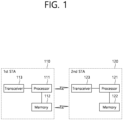
- FIG. 1 shows an example of a transmitting apparatus and/or receiving apparatus of the present specification.
- FIG. 1 relates to two stations (STAs).
- STAs 110 and 120 of the present specification may also be called in various terms such as a mobile terminal, a wireless device, a wireless transmit/receive unit (WTRU), a user equipment (UE), a mobile station (MS), a mobile subscriber unit, or simply a user.
- WTRU wireless transmit/receive unit
- UE user equipment
- MS mobile station
- the STAs 110 and 120 of the present specification may also be referred to as various names such as a receiving apparatus, a transmitting apparatus, a receiving STA, a transmitting STA, a receiving device, a transmitting device, or the like.
- the STAs 110 and 120 may serve as an AP or a non-AP. That is, the STAs 110 and 120 of the present specification may serve as the AP and/or the non-AP.
- the STAs 110 and 120 of the present specification may support various communication standards together in addition to the IEEE 802.11 standard.
- a communication standard e.g., LTE, LTE-A, 5G NR standard
- the STA of the present specification may be implemented as various devices such as a mobile phone, a vehicle, a personal computer, or the like.
- the STAs 110 and 120 of the present specification may include a medium access control (MAC) conforming to the IEEE 802.11 standard and a physical layer interface for a radio medium.
- MAC medium access control
- the first STA 110 may include a processor 111, a memory 112, and a transceiver 113.
- the illustrated process, memory, and transceiver may be implemented individually as separate chips, or at least two blocks/functions may be implemented through a single chip.
- the transceiver 113 of the first STA performs a signal transmission/reception operation. Specifically, an IEEE 802.11 packet (e.g., IEEE 802.11a/b/g/n/ac/ax/be, etc.) may be transmitted/received.
- IEEE 802.11a/b/g/n/ac/ax/be, etc. may be transmitted/received.
- the first STA 110 may perform an operation intended by an AP.
- the processor 111 of the AP may receive a signal through the transceiver 113, process a reception (RX) signal, generate a transmission (TX) signal, and provide control for signal transmission.
- the memory 112 of the AP may store a signal (e.g., RX signal) received through the transceiver 113, and may store a signal (e.g., TX signal) to be transmitted through the transceiver.
- the second STA 120 may perform an operation intended by a non-AP STA.
- a transceiver 123 of a non-AP performs a signal transmission/reception operation.
- an IEEE 802.11 packet (e.g., IEEE 802.11a/b/g/n/ac/ax/be packet, etc.) may be transmitted/received.
- a processor 121 of the non-AP STA may receive a signal through the transceiver 123, process an RX signal, generate a TX signal, and provide control for signal transmission.
- a memory 122 of the non-AP STA may store a signal (e.g., RX signal) received through the transceiver 123, and may store a signal (e.g., TX signal) to be transmitted through the transceiver.
- an operation of a device indicated as an AP in the specification described below may be performed in the first STA 110.
- the operation of the device indicated as the AP may be controlled by the processor 111 of the first STA 110, and a related signal may be transmitted or received through the transceiver 113 controlled by the processor 111 of the first STA 110.
- control information related to the operation of the AP or a TX/RX signal of the AP may be stored in the memory 112 of the first STA 110.
- an operation of a device indicated as a non-AP may be performed in the second STA 120.
- the operation of the device indicated as the non-AP may be controlled by the processor 121 of the second STA 120, and a related signal may be transmitted or received through the transceiver 123 controlled by the processor 121 of the second STA 120.
- control information related to the operation of the non-AP or a TX/RX signal of the non-AP may be stored in the memory 122 of the second STA 120.
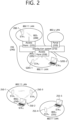
- FIG. 2 is a conceptual view illustrating the structure of a wireless local area network (WLAN).
- WLAN wireless local area network
- FIG. 2 An upper part of FIG. 2 illustrates the structure of an infrastructure basic service set (BSS) of institute of electrical and electronic engineers (IEEE) 802.11.
- BSS infrastructure basic service set
- IEEE institute of electrical and electronic engineers
- the wireless LAN system may include one or more infrastructure BSSs 200 and 205 (hereinafter, referred to as BSS).
- BSSs 200 and 205 as a set of an AP and an STA such as an access point (AP) 225 and a station (STA1) 200-1 which are successfully synchronized to communicate with each other are not concepts indicating a specific region.
- the BSS 205 may include one or more STAs 205-1 and 205-2 which may be joined to one AP 230.
- the BSS may include at least one STA, APs providing a distribution service, and a distribution system (DS) 210 connecting multiple APs.
- DS distribution system
- the distribution system 210 may implement an extended service set (ESS) 240 extended by connecting the multiple BSSs 200 and 205.
- ESS 240 may be used as a term indicating one network configured by connecting one or more APs 225 or 230 through the distribution system 210.
- the AP included in one ESS 240 may have the same service set identification (SSID).
- a portal 220 may serve as a bridge which connects the wireless LAN network (IEEE 802.11) and another network (e.g., 802.X).
- IEEE 802.11 the wireless LAN network
- 802.X another network
- a network between the APs 225 and 230 and a network between the APs 225 and 230 and the STAs 200-1, 205-1, and 205-2 may be implemented.
- the network is configured even between the STAs without the APs 225 and 230 to perform communication.
- a network in which the communication is performed by configuring the network even between the STAs without the APs 225 and 230 is defined as an Ad-Hoc network or an independent basic service set (IBSS).
- FIG. 2 A lower part of FIG. 2 illustrates a conceptual view illustrating the IBSS.
- the IBSS is a BSS that operates in an Ad-Hoc mode. Since the IBSS does not include the access point (AP), a centralized management entity that performs a management function at the center does not exist. That is, in the IBSS, STAs 250-1, 250-2, 250-3, 255-4, and 255-5 are managed by a distributed manner. In the IBSS, all STAs 250-1, 250-2, 250-3, 255-4, and 255-5 may be constituted by movable STAs and are not permitted to access the DS to constitute a self-contained network.
- AP access point
- FIG. 3 illustrates a general link setup process
- a STA may perform a network discovery operation.
- the network discovery operation may include a scanning operation of the STA. That is, to access a network, the STA needs to discover a participating network.
- the STA needs to identify a compatible network before participating in a wireless network, and a process of identifying a network present in a particular area is referred to as scanning.
- Scanning methods include active scanning and passive scanning.
- FIG. 3 illustrates a network discovery operation including an active scanning process.
- a STA performing scanning transmits a probe request frame and waits for a response to the probe request frame in order to identify which AP is present around while moving to channels.
- a responder transmits a probe response frame as a response to the probe request frame to the STA having transmitted the probe request frame.
- the responder may be a STA that transmits the last beacon frame in a BSS of a channel being scanned.
- the AP since an AP transmits a beacon frame, the AP is the responder.
- the responder is not fixed.
- the STA when the STA transmits a probe request frame via channel 1 and receives a probe response frame via channel 1, the STA may store BSS-related information included in the received probe response frame, may move to the next channel (e.g., channel 2), and may perform scanning (e.g., transmits a probe request and receives a probe response via channel 2) by the same method.
- the next channel e.g., channel 2
- scanning e.g., transmits a probe request and receives a probe response via channel 2 by the same method.
- scanning may be performed by a passive scanning method.
- a STA performing scanning may wait for a beacon frame while moving to channels.
- a beacon frame is one of management frames in IEEE 802.11 and is periodically transmitted to indicate the presence of a wireless network and to enable the STA performing scanning to find the wireless network and to participate in the wireless network.
- an AP serves to periodically transmit a beacon frame.
- STAs in the IBSS transmit a beacon frame in turns.
- the STA performing scanning stores information about a BSS included in the beacon frame and records beacon frame information in each channel while moving to another channel.
- the STA having received the beacon frame may store BSS-related information included in the received beacon frame, may move to the next channel, and may perform scanning in the next channel by the same method.
- the STA may perform an authentication process in S320.
- the authentication process may be referred to as a first authentication process to be clearly distinguished from the following security setup operation in S340.
- the authentication process in S320 may include a process in which the STA transmits an authentication request frame to the AP and the AP transmits an authentication response frame to the STA in response.
- the authentication frames used for an authentication request/response are management frames.
- the authentication frames may include information about an authentication algorithm number, an authentication transaction sequence number, a status code, a challenge text, a robust security network (RSN), and a finite cyclic group.
- RSN robust security network
- the STA may transmit the authentication request frame to the AP.
- the AP may determine whether to allow the authentication of the STA based on the information included in the received authentication request frame.
- the AP may provide the authentication processing result to the STA via the authentication response frame.
- the STA may perform an association process in S330.
- the association process includes a process in which the STA transmits an association request frame to the AP and the AP transmits an association response frame to the STA in response.
- the association request frame may include, for example, information about various capabilities, a beacon listen interval, a service set identifier (SSID), a supported rate, a supported channel, RSN, a mobility domain, a supported operating class, a traffic indication map (TIM) broadcast request, and an interworking service capability.
- SSID service set identifier
- TIM traffic indication map
- the association response frame may include, for example, information about various capabilities, a status code, an association ID (AID), a supported rate, an enhanced distributed channel access (EDCA) parameter set, a received channel power indicator (RCPI), a received signal-to-noise indicator (RSNI), a mobility domain, a timeout interval (association comeback time), an overlapping BSS scanning parameter, a TIM broadcast response, and a QoS map.
- AID association ID
- EDCA enhanced distributed channel access
- RCPI received channel power indicator
- RSNI received signal-to-noise indicator
- mobility domain a timeout interval (association comeback time)
- association comeback time an overlapping BSS scanning parameter
- a TIM broadcast response and a QoS map.
- the STA may perform a security setup process.
- the security setup process in S340 may include a process of setting up a private key through four-way handshaking, for example, through an extensible authentication protocol over LAN (EAPOL) frame
- EAPOL extensible authentication protocol over LAN
- FIG. 4 illustrates an example of a PPDU used in an IEEE standard.
- a LTF and a STF include a training signal
- a SIG-A and a SIG-B include control information for a receiving STA
- a data field includes user data corresponding to a PSDU (MAC PDU/aggregated MAC PDU).
- PSDU MAC PDU/aggregated MAC PDU
- FIG. 4 also includes an example of an HE PPDU according to IEEE 802.1 1ax.
- the HE PPDU according to FIG. 4 is an illustrative PPDU for multiple users.
- An HE-SIG-B may be included only in a PPDU for multiple users, and an HE-SIG-B may be omitted in a PPDU for a single user.
- the HE-PPDU for multiple users may include a legacy-short training field (L-STF), a legacy-long training field (L-LTF), a legacy-signal (L-SIG), a high efficiency-signal A (HE-SIG A), a high efficiency-signal-B (HE-SIG B), a high efficiency-short training field (HE-STF), a high efficiency-long training field (HE-LTF), a data field (alternatively, an MAC payload), and a packet extension (PE) field.
- L-STF legacy-short training field
- L-LTF legacy-long training field
- L-SIG legacy-signal
- HE-SIG A high efficiency-signal A
- HE-SIG B high efficiency-short training field
- HE-LTF high efficiency-long training field
- PE packet extension
- the respective fields may be transmitted for illustrated time periods (i.e., 4 or 8 ⁇ s).
- An RU may include a plurality of subcarriers (or tones).
- An RU may be used to transmit a signal to a plurality of STAs according to OFDMA. Further, an RU may also be defined to transmit a signal to one STA.
- An RU may be used for an STF, an LTF, a data field, or the like.
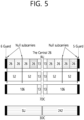
- FIG. 5 illustrates a layout of resource units (RUs) used in a band of 20 MHz
- resource units corresponding to different numbers of tones (i.e., subcarriers) may be used to form some fields of an HE-PPDU.
- resources may be allocated in illustrated RUs for an HE-STF, an HE-LTF, and a data field
- a 26-unit i.e., a unit corresponding to 26 tones
- Six tones may be used for a guard band in the leftmost band of the 20 MHz band, and five tones may be used for a guard band in the rightmost band of the 20 MHz band.
- seven DC tones may be inserted in a center band, that is, a DC band, and a 26-unit corresponding to 13 tones on each of the left and right sides of the DC band may be disposed.
- a 26-unit, a 52-unit, and a 106-unit may be allocated to other bands. Each unit may be allocated for a receiving STA, that is, a user.
- the layout of the RUs in FIG. 5 may be used not only for a multiple users (MUs) but also for a single user (SU), in which case one 242-unit may be used and three DC tones may be inserted as illustrated in the lowermost part of FIG. 5 .
- FIG. 5 proposes RUs having various sizes, that is, a 26-RU, a 52-RU, a 106-RU, and a 242-RU, specific sizes of RUs may be extended or increased. Therefore, the present embodiment is not limited to the specific size of each RU (i.e., the number of corresponding tones).
- FIG. 6 illustrates a layout of RUs used in a band of 40 MHz.
- a 26-RU, a 52-RU, a 106-RU, a 242-RU, a 484-RU, and the like may be used in an example of FIG. 6 .
- five DC tones may be inserted in a center frequency, 12 tones may be used for a guard band in the leftmost band of the 40 MHz band, and 11 tones may be used for a guard band in the rightmost band of the 40 MHz band.
- a 484-RU may be used.
- the specific number of RUs may be changed similarly to FIG. 5 .
- FIG. 7 illustrates a layout of RUs used in a band of 80 MHz.
- a 26-RU, a 52-RU, a 106-RU, a 242-RU, a 484-RU, a 996-RU, and the like may be used in an example of FIG. 7 .
- seven DC tones may be inserted in the center frequency, 12 tones may be used for a guard band in the leftmost band of the 80 MHz band, and 11 tones may be used for a guard band in the rightmost band of the 80 MHz band.
- a 26-RU corresponding to 13 tones on each of the left and right sides of the DC band may be used.
- a 996-RU may be used, in which case five DC tones may be inserted.
- the RU arrangement (i.e., RU location) shown in FIGS. 5 to 7 can be applied to a new wireless LAN system (e.g. EHT system) as it is.
- the RU arrangement for 80 MHz i.e., an example of FIG. 7
- the RU arrangement for the 40 MHz i.e., an example of FIG. 6
- the EHT PPDU is configured for the 320 MHz band
- the arrangement of the RU for 80 MHz (i.e., an example of FIG. 7 ) may be repeated 4 times or the arrangement of the RU for 40 MHz (i.e., an example of FIG. 6 ) may be repeated 8 times.
- One RU of the present specification may be allocated for a single STA (e.g., a single non-AP STA). Alternatively, a plurality of RUs may be allocated for one STA (e.g., a non-AP STA).
- the RU described in the present specification may be used in uplink (UL) communication and downlink (DL) communication.
- a transmitting STA e.g., AP
- the first STA may transmit a first trigger-based PPDU based on the first RU
- the second STA may transmit a second trigger-based PPDU based on the second RU.
- the first/second trigger-based PPDU is transmitted to the AP at the same (or overlapped) time period.
- the transmitting STA may allocate the first RU (e.g., 26/52/106/242-RU. etc.) to the first STA, and may allocate the second RU (e.g., 26/52/106/242-RU, etc.) to the second STA. That is, the transmitting STA (e.g., AP) may transmit HE-STF, HE-LTF, and Data fields for the first STA through the first RU in one MU PPDU, and may transmit HE-STF, HE-LTF, and Data fields for the second STA through the second RU.
- the transmitting STA e.g., AP
- Information related to a layout of the RU may be signaled through HE-SIG-B.
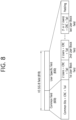
- FIG. 8 illustrates a structure of an HE-SIG-B field.
- an HE-SIG-B field 810 includes a common field 820 and a user-specific field 830.
- the common field 820 may include information commonly applied to all users (i.e., user STAs) which receive SIG-B.
- the user-specific field 830 may be called a user-specific control field. When the SIG-B is transferred to a plurality of users, the user-specific field 830 may be applied only any one of the plurality of users.
- the common field 820 and the user-specific field 830 may be separately encoded.
- the common field 820 may include RU allocation information of N*8 bits.
- the RU allocation information may include information related to a location of an RU.
- the RU allocation information may include information related to a specific frequency band to which a specific RU (26-RU/52-RU/106-RU) is arranged.
- up to nine 26-RUs may be allocated to the 20 MHz channel.
- the RU allocation information of the common field 820 is set to "00000000" as shown in Table 1
- the nine 26-RUs may be allocated to a corresponding channel (i.e., 20 MHz).
- the RU allocation information of the common field 820 is set to "00000001" as shown in Table 1
- seven 26-RUs and one 52-RU are arranged in a corresponding channel. That is, in the example of FIG. 5 , the 52-RU may be allocated to the rightmost side, and the seven 26-RUs may be allocated to the left thereof.
- Table 1 shows only some of RU locations capable of displaying the RU allocation information.
- the RU allocation information may include an example of Table 2 below.
- [Table 2] 00010y 2 y 1 y 0 52 52 - 106 8 00011y 2 y 1 y 0 106 - 52 52 8 00100y 2 y 1 y 0 26 26 26 26 26 26 106 8 00101y 2 y 1 y 0 26 26 52 26 106 8 00110y 2 y 1 y 0 52 26 26 26 26 106 8 00111y 2 y 1 y 0 52 52 26 106 8 01000y 2 y 1 y 0 106 26 26 26 26 26 26 26 8 01001y 2 y 1 y 0 106 26 26 26 26 26 26 8 01010y 2 y 1 y 0 106 26 52 26 26 8 01011y 2 y 1 y 0 106 26 52 52 8 0110y 1 y 0 z 1 z 0 106 - 106
- "01000y2y1y0" relates to an example in which a 106-RU is allocated to the leftmost side of the 20 MHz channel, and five 26-RUs are allocated to the right side thereof.
- a plurality of STAs e.g., user-STAs
- a MU-MIMO scheme e.g., up to 8 STAs (e.g., user-STAs) may be allocated to the 106-RU, and the number of STAs (e.g., user-STAs) allocated to the 106-RU is determined based on 3-bit information (y2yly0). For example, when the 3-bit information (y2yly0) is set to N, the number of STAs (e.g., user-STAs) allocated to the 106-RU based on the MU-MIMO scheme may be N+1.
- a plurality of STAs (e.g., user STAs) different from each other may be allocated to a plurality of RUs.
- the plurality of STAs (e.g., user STAs) may be allocated to one or more RUs having at least a specific size (e.g., 106 subcarriers), based on the MU-MIMO scheme.
- the user-specific field 830 may include a plurality of user fields.
- the number of STAs (e.g., user STAs) allocated to a specific channel may be determined based on the RU allocation information of the common field 820. For example, when the RU allocation information of the common field 820 is "00000000", one user STA may be allocated to each of nine 26-RUs (e.g., nine user STAs may be allocated). That is, up to 9 user STAs may be allocated to a specific channel through an OFDMA scheme. In other words, up to 9 user STAs may be allocated to a specific channel through a non-MU-MIMO scheme.
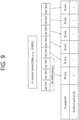
- RU allocation when RU allocation is set to "01000y2yly0", a plurality of STAs may be allocated to the 106-RU arranged at the leftmost side through the MU-MIMO scheme, and five user STAs may be allocated to five 26-RUs arranged to the right side thereof through the non-MU MIMO scheme. This case is specified through an example of FIG. 9 .
- FIG. 9 illustrates an example in which a plurality of user STAs are allocated to the same RU through a MU-MIMO scheme.
- a 106-RU may be allocated to the leftmost side of a specific channel, and five 26-RUs may be allocated to the right side thereof.
- three user STAs may be allocated to the 106-RU through the MU-MIMO scheme.
- the user-specific field 830 of HE-SIG-B may include eight user fields.
- the eight user fields may be expressed in the order shown in FIG. 9 .
- two user fields may be implemented with one user block field.
- the user fields shown in FIG. 8 and FIG. 9 may be configured based on two formats. That is, a user field related to a MU-MIMO scheme may be configured in a first format, and a user field related to a non-MIMO scheme may be configured in a second format. Referring to the example of FIG. 9 , a user field 1 to a user field 3 may be based on the first format, and a user field 4 to a user field 8 may be based on the second format.
- the first format or the second format may include bit information of the same length (e.g., 21 bits).
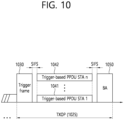
- FIG. 10 illustrates an operation based on UL-MU.
- a transmitting STA e.g., AP
- may perform channel access through contending e.g., a backoff operation
- a trigger-based (TB) PPDU is transmitted after a delay corresponding to SIFS.
- TB PPDUs 1041 and 1042 may be transmitted at the same time period, and may be transmitted from a plurality of STAs (e.g., user STAs) having AIDs indicated in the trigger frame 1030.
- An ACK frame 1050 for the TB PPDU may be implemented in various forms.
- a specific feature of the trigger frame is described with reference to FIG. 11 to FIG. 13 .
- an orthogonal frequency division multiple access (OFDMA) scheme or a MU MIMO scheme may be used, and the OFDMA and MU-MIMO schemes may be simultaneously used.
- OFDMA orthogonal frequency division multiple access
- MU MIMO MU MIMO
- FIG. 11 illustrates an example of a trigger frame.
- the trigger frame of FIG. 11 allocates a resource for uplink multiple-user (MU) transmission, and may be transmitted, for example, from an AP.
- the trigger frame may be configured of a MAC frame, and may be included in a PPDU.
- Each field shown in FIG. 11 may be partially omitted, and another field may be added. In addition, a length of each field may be changed to be different from that shown in the figure.
- a frame control field 1110 of FIG. 11 may include information related to a MAC protocol version and extra additional control information.
- a duration field 1120 may include time information for NAV configuration or information related to an identifier (e.g., AID) of an STA.
- an RA field 1130 may include address information of a receiving STA of a corresponding trigger frame, and may be optionally omitted.
- a TA field 1140 may include address information of an STA (e.g., AP) which transmits the corresponding trigger frame.
- a common information field 1150 includes common control information applied to the receiving STA which receives the corresponding trigger frame. For example, a field indicating a length of an L-SIG field of an uplink PPDU transmitted in response to the corresponding trigger frame or information for controlling content of an SIG-A field (i.e., HE-SIG-A field) of the uplink PPDU transmitted in response to the corresponding trigger frame may be included.
- common control information information related to a length of a CP of the uplink PPDU transmitted in response to the corresponding trigger frame or information related to a length of an LTF field may be included.
- per user information fields 1160#1 to 1160#N corresponding to the number of receiving STAs which receive the trigger frame of FIG. 11 are preferably included.
- the per user information field may also be called an "allocation field”.
- the trigger frame of FIG. 11 may include a padding field 1170 and a frame check sequence field 1180.
- Each of the per user information fields 1160# 1 to 1160#N shown in FIG. 11 may include a plurality of subfields.
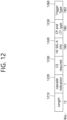
- FIG. 12 illustrates an example of a common information field of a trigger frame.
- a subfield of FIG. 12 may be partially omitted, and an extra subfield may be added.
- a length of each subfield illustrated may be changed.
- a length field 1210 illustrated has the same value as a length field of an L-SIG field of an uplink PPDU transmitted in response to a corresponding trigger frame, and a length field of the L-SIG field of the uplink PPDU indicates a length of the uplink PPDU.
- the length field 1210 of the trigger frame may be used to indicate the length of the corresponding uplink PPDU.
- a cascade identifier field 1220 indicates whether a cascade operation is performed.
- the cascade operation implies that downlink MU transmission and uplink MU transmission are performed together in the same TXOP. That is, it implies that downlink MU transmission is performed and thereafter uplink MU transmission is performed after a pre-set time (e.g., SIFS).
- a pre-set time e.g., SIFS.
- only one transmitting device e.g., AP
- a plurality of transmitting devices e.g., non-APs
- a CS request field 1230 indicates whether a wireless medium state or an NAV or the like is necessarily considered in a situation where a receiving device which has received a corresponding trigger frame transmits a corresponding uplink PPDU.
- An HE-SIG-A information field 1240 may include information for controlling content of an SIG-A field (i.e., HE-SIG-A field) of the uplink PPDU in response to the corresponding trigger frame.
- a CP and LTF type field 1250 may include information related to a CP length and LTF length of the uplink PPDU transmitted in response to the corresponding trigger frame.
- a trigger type field 1260 may indicate a purpose of using the corresponding trigger frame, for example, typical triggering, triggering for beamforming, a request for block ACK/NACK, or the like.
- the trigger type field 1260 of the trigger frame in the present specification indicates a trigger frame of a basic type for typical triggering.
- the trigger frame of the basic type may be referred to as a basic trigger frame.
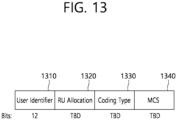
- FIG. 13 illustrates an example of a subfield included in a per user information field.
- a user information field 1300 of FIG. 13 may be understood as any one of the per user information fields 1160#1 to 1160#N mentioned above with reference to FIG. 11 .
- a subfield included in the user information field 1300 of FIG. 13 may be partially omitted, and an extra subfield may be added.
- a length of each subfield illustrated may be changed.
- a user identifier field 1310 of FIG. 13 indicates an identifier of an STA (i.e., receiving STA) corresponding to per user information.
- An example of the identifier may be the entirety or part of an association identifier (AID) value of the receiving STA.
- an RU allocation field 1320 may be included. That is, when the receiving STA identified through the user identifier field 1310 transmits a TB PPDU in response to the trigger frame, the TB PPDU is transmitted through an RU indicated by the RU allocation field 1320.
- the RU indicated by the RU allocation field 1320 may be an RU shown in FIG. 5 , FIG. 6 , and FIG. 7 .
- the subfield of FIG. 13 may include a coding type field 1330.
- the coding type field 1330 may indicate a coding type of the TB PPDU. For example, when BCC coding is applied to the TB PPDU, the coding type field 1330 may be set to '1', and when LDPC coding is applied, the coding type field 1330 may be set to '0'.
- the subfield of FIG. 13 may include an MCS field 1340.
- the MCS field 1340 may indicate an MCS scheme applied to the TB PPDU. For example, when BCC coding is applied to the TB PPDU, the coding type field 1330 may be set to '1', and when LDPC coding is applied, the coding type field 1330 may be set to '0'.
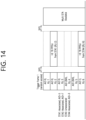
- FIG. 14 describes a technical feature of the UORA scheme.
- a transmitting STA may allocate six RU resources through a trigger frame as shown in FIG. 14 .
- the AP may allocate a 1st RU resource (AID 0, RU 1), a 2nd RU resource (AID 0, RU 2), a 3rd RU resource (AID 0, RU 3), a 4th RU resource (AID 2045, RU 4), a 5th RU resource (AID 2045, RU 5), and a 6th RU resource (AID 3, RU 6).
- Information related to the AID 0, AID 3, or AID 2045 may be included, for example, in the user identifier field 1310 of FIG. 13 .
- Information related to the RU 1 to RU 6 may be included, for example, in the RU allocation field 1320 of FIG. 13 .
- the 1st to 3rd RU resources of FIG. 14 may be used as a UORA resource for the associated STA
- the 4th and 5th RU resources of FIG. 14 may be used as a UORA resource for the un-associated STA
- the 6th RU resource of FIG. 14 may be used as a typical resource for UL MU.
- an OFDMA random access backoff (OBO) of an STA1 is decreased to 0, and the STA1 randomly selects the 2nd RU resource (AID 0, RU 2).
- OBO counter of an STA2/3 is greater than 0, an uplink resource is not allocated to the STA2/3.
- the STA1 of FIG. 14 is an associated STA
- the total number of eligible RA RUs for the STA1 is 3 (RU 1, RU 2, and RU 3), and thus the STA1 decreases an OBO counter by 3 so that the OBO counter becomes 0.
- the STA2 of FIG. 14 is an associated STA
- the total number of eligible RA RUs for the STA2 is 3 (RU 1, RU 2, and RU 3), and thus the STA2 decreases the OBO counter by 3 but the OBO counter is greater than 0.
- the STA3 of FIG. 14 is an un-associated STA
- the total number of eligible RA RUs for the STA3 is 2 (RU 4, RU 5), and thus the STA3 decreases the OBO counter by 2 but the OBO counter is greater than 0.
- FIG. 15 illustrates an example of a channel used/supported/defined within a 2.4 GHz band.
- the 2.4 GHz band may be called in other terms such as a first band.
- the 2.4 GHz band may imply a frequency domain in which channels of which a center frequency is close to 2.4 GHz (e.g., channels of which a center frequency is located within 2.4 to 2.5 GHz) are used/supported/defined.
- a plurality of 20 MHz channels may be included in the 2.4 GHz band.
- 20 MHz within the 2.4 GHz may have a plurality of channel indices (e.g., an index 1 to an index 14).
- a center frequency of a 20 MHz channel to which a channel index 1 is allocated may be 2.412 GHz
- a center frequency of a 20 MHz channel to which a channel index 2 is allocated may be 2.417 GHz
- a center frequency of a 20 MHz channel to which a channel index N is allocated may be (2.407 + 0.005*N) GHz.
- the channel index may be called in various terms such as a channel number or the like. Specific numerical values of the channel index and center frequency may be changed.
- FIG. 15 exemplifies 4 channels within a 2.4 GHz band.
- Each of 1st to 4th frequency domains 1510 to 1540 shown herein may include one channel.
- the 1st frequency domain 1510 may include a channel 1 (a 20 MHz channel having an index 1).
- a center frequency of the channel 1 may be set to 2412 MHz.
- the 2nd frequency domain 1520 may include a channel 6.
- a center frequency of the channel 6 may be set to 2437 MHz.
- the 3rd frequency domain 1530 may include a channel 11.
- a center frequency of the channel 11 may be set to 2462 MHz.
- the 4th frequency domain 1540 may include a channel 14. In this case, a center frequency of the channel 14 may be set to 2484 MHz.
- FIG. 16 illustrates an example of a channel used/supported/defined within a 5 GHz band.
- the 5 GHz band may be called in other terms such as a second band or the like.
- the 5 GHz band may imply a frequency domain in which channels of which a center frequency is greater than or equal to 5 GHz and less than 6 GHz (or less than 5.9 GHz) are used/supported/defined.
- the 5 GHz band may include a plurality of channels between 4.5 GHz and 5.5 GHz. A specific numerical value shown in FIG. 16 may be changed.
- a plurality of channels within the 5 GHz band include an unlicensed national information infrastructure (UNII)-1, a UNII-2, a UNII-3, and an ISM.
- the INII-1 may be called UNII Low.
- the UNII-2 may include a frequency domain called UNII Mid and UNII-2Extended.
- the UNII-3 may be called UNII-Upper.
- a plurality of channels may be configured within the 5 GHz band, and a bandwidth of each channel may be variously set to, for example, 20 MHz, 40 MHz, 80 MHz, 160 MHz, or the like.
- 5170 MHz to 5330 MHz frequency domains/ranges within the UNII-1 and UNII-2 may be divided into eight 20 MHz channels.
- the 5170 MHz to 5330 MHz frequency domains/ranges may be divided into four channels through a 40 MHz frequency domain.
- the 5170 MHz to 5330 MHz frequency domains/ranges may be divided into two channels through an 80 MHz frequency domain.
- the 5170 MHz to 5330 MHz frequency domains/ranges may be divided into one channel through a 160 MHz frequency domain.
- FIG. 17 illustrates an example of a channel used/supported/defined within a 6 GHz band.
- the 6 GHz band may be called in other terms such as a third band or the like.
- the 6 GHz band may imply a frequency domain in which channels of which a center frequency is greater than or equal to 5.9 GHz are used/supported/defined.
- a specific numerical value shown in FIG. 17 may be changed.
- the 20 MHz channel of FIG. 17 may be defined starting from 5.940GHz.
- the leftmost channel may have an index 1 (or a channel index, a channel number, etc.), and 5.945 GHz may be assigned as a center frequency. That is, a center frequency of a channel of an index N may be determined as (5.940 + 0.005*N)GHz.
- an index (or channel number) of the 2 MHz channel of FIG. 17 may be 1, 5, 9, 13, 17, 21, 25, 29, 33, 37, 41, 45, 49, 53, 57, 61, 65, 69, 73, 77, 81, 85, 89, 93, 97, 101, 105, 109, 113, 117, 121, 125, 129, 133, 137, 141, 145, 149, 153, 157, 161, 165, 169, 173, 177, 181, 185, 189, 193, 197, 201, 205, 209, 213, 217, 221, 225, 229, 233.
- an index of the 40 MHz channel of FIG. 17 may be 3, 11, 19, 27, 35, 43, 51, 59, 67, 75, 83, 91, 99, 107, 115, 123, 131, 139, 147, 155, 163, 171, 179, 187, 195, 203, 211, 219, 227.
- a 240 MHz channel or a 320 MHz channel may be additionally added.
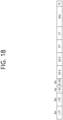
- FIG. 18 illustrates an example of a PPDU used in the present specification.
- the PPDU depicted in FIG. 18 may be referred to as various terms such as an EHT PPDU, a TX PPDU, an RX PPDU, a first type or N-th type PPDU, or the like.
- the EHT PPDU may be used in an EHT system and/or a new WLAN system enhanced from the EHT system.
- a SIG A field may be referred to an EHT-SIG-A field
- a SIG B field may be referred to an EHT-SIG-B
- a STF field may be referred to an EHT-STF field
- an LTF field may be referred to an EHT-LTF.
- the subcarrier spacing of the L-LTF, L-STF, L-SIG, and RL-SIG fields of FIG. 18 can be set to 312.5 kHz, and the subcarrier spacing of the STF, LTF, and Data fields of FIG. 18 can be set to 78.125 kHz. That is, the subcarrier index of the L-LTF, L-STF, L-SIG, and RL-SIG fields can be expressed in unit of 312.5 kHz, and the subcarrier index of the STF, LTF, and Data fields can be expressed in unit of 78.125 kHz.
- the SIG A and/or SIG B fields of FIG. 18 may include additional fields (e.g., a SIG C field or one control symbol, etc.).
- the subcarrier spacing of all or part of the SIG A and SIG B fields may be set to 312.5 kHz, and the subcarrier spacing of the remaining part/fields may be set to 78.125 kHz.
- the L-LTF and the L-STF may be the same as conventional L-LTF and L-STF fields.
- the L-SIG field of FIG. 18 may include, for example, bit information of 24 bits.
- the 24-bit information may include a rate field of 4 bits, a reserved bit of 1 bit, a length field of 12 bits, a parity bit of 1 bit, and a tail bit of 6 bits.
- the length field of 12 bits may include information related to the number of octets of a corresponding Physical Service Data Unit (PSDU).
- PSDU Physical Service Data Unit
- the length field of 12 bits may be determined based on a type of the PPDU. For example, when the PPDU is a non-HT, HT, VHT PPDU or an EHT PPDU, a value of the length field may be determined as a multiple of 3.
- the value of the length field may be determined as "a multiple of 3"+1 or "a multiple of 3"+2.
- the value of the length field may be determined as a multiple of 3
- the value of the length field may be determined as "a multiple of 3"+1 or "a multiple of 3"+2.
- the transmitting STA may apply BCC encoding based on a 1/2 coding rate to the 24-bit information of the L-SIG field. Thereafter, the transmitting STA may obtain a BCC coding bit of 48 bits. BPSK modulation may be applied to the 48-bit coding bit, thereby generating 48 BPSK symbols. The transmitting STA may map the 48 BPSK symbols to positions except for a pilot subcarrier ⁇ subcarrier index -21, -7, +7, +21 ⁇ and a DC subcarrier ⁇ subcarrier index 0 ⁇ .
- the 48 BPSK symbols may be mapped to subcarrier indices -26 to -22, -20 to -8, -6 to -1, +1 to +6, +8 to +20, and +22 to +26.
- the transmitting STA may additionally map a signal of ⁇ -1, -1, -1, 1 ⁇ to a subcarrier index ⁇ -28, -27, +27, +28 ⁇ .
- the aforementioned signal may be used for channel estimation on a frequency domain corresponding to ⁇ -28, -27, +27, +28 ⁇ .
- the transmitting STA may generate an RL-SIG which is identical to the L-SIG.
- BPSK modulation may be applied to the RL-SIG.
- the receiving STA may figure out that the RX PPDU is the HE PPDU or the EHT PPDU, based on the presence of the RL-SIG.
- EHT-SIG-A or one control symbol may be inserted.
- a symbol contiguous to the RL-SIG (i.e., EHT-SIG-A or one control symbol) may include 26 bit information and may further include information for identifying the type of the EHT PPDU.
- EHT PPDU when the EHT PPDU is classified into various types (e.g., an EHT PPDU supporting an SU mode, an EHT PPDU supporting a MU mode, an EHT PPDU related to the Trigger Frame, an EHT PPDU related to an Extended Range transmission, etc.), Information related to the type of the EHT PPDU may be included in a symbol contiguous to the RL-SIG.
- a symbol contiguous to the RL-SIG may include, for example, information related to the length of the TXOP and information related to the BSS color ID.
- the SIG-A field may be contiguous to the symbol contiguous to the RL-SIG (e.g., one control symbol).
- a symbol contiguous to the RL-SIG may be the SIG-A field.
- the SIG-A field may include 1) a DL/UL indicator, 2) a BSS color field which is an identifier of a BSS, 3) a field including information related to the remaining time of a current TXOP section, 4) a bandwidth field including information related to the bandwidth, 5) a field including information related to an MCS scheme applied to an HE-SIG B, 6) a field including information related to whether a dual subcarrier modulation (DCM) scheme is applied to the HE-SIG B, 7) a field including information related to the number of symbols used for the HE-SIG B, 8) a field including information related to whether the HE-SIG B is generated over the entire band, 9) a field including information related to the type of the LTF/STF , 10) a field indicating the length of the HE-LTF and a CP length.
- DCM dual subcarrier modulation
- An STF of FIG. 18 may be used to improve automatic gain control estimation in a multiple input multiple output (MIMO) environment or an OFDMA environment.
- An LTF of FIG. 18 may be used to estimate a channel in the MIMO environment or the OFDMA environment.
- the EHT-STF of FIG. 18 may be set in various types.
- a first type of STF e.g., 1x STF
- An STF signal generated based on the first type STF sequence may have a period of 0.8
- a second type of STF e.g., 2x STF
- An STF signal generated based on the second type STF sequence may have a period of 1.6 ⁇ s, and a periodicity signal of 1.6 ⁇ s may be repeated 5 times to become a second type STF having a length of 8 ⁇ s.
- a third type of STF e.g., 4x STF
- An STF signal generated based on the third type STF sequence may have a period of 3.2 ⁇ s, and a periodicity signal of 3.2 ⁇ s may be repeated 5 times to become a second type STF having a length of 16 ⁇ s.
- the EHT-LTF field may also have first, second, and third types (ie, 1x, 2x, 4x LTF).
- the first/second/third type LTF field may be generated based on an LTF sequence in which a non-zero coefficient is arranged with an interval of 4/2/1 subcarriers.
- the first/second/third type LTF may have a time length of 3.2/6.4/12.8 ⁇ s.
- Guard Intervals GIs
- GIs Guard Intervals with various lengths (e.g., 0.8/1/6/3.2 ⁇ s) may be applied to the first/second/third type LTF.
- Information related to the type of STF and/or LTF may be included in the SIG A field and/or the SIG B field of FIG. 18 .
- the PPDU of FIG. 18 may be identified as an EHT PPDU based on the following method.
- a receiving STA may determine a type of an RX PPDU as the EHT PPDU, based on the following aspect.
- the RX PPDU may be determined as the EHT PPDU: 1) when a first symbol after an L-LTF signal of the RX PPDU is a BPSK symbol; 2) when RL-SIG in which the L-SIG of the RX PPDU is repeated is detected; and 3) when a result of applying "modulo 3" to a value of a length field of the L-SIG of the RX PPDU is detected as "0".
- the receiving STA may detect a type of the EHT PPDU (e.g., an SU/MU/Trigger-based/Extended Range type), based on bit information included in a symbol after the RL-SIG of FIG. 18 .
- the receiving STA may determine the RX PPDU as the EHT PPDU, based on: 1) a first symbol after an L-LTF signal, which is a BPSK symbol; 2) RL-SIG contiguous to the L-SIG field and identical to L-SIG; and 3) L-SIG including a length field in which a result of applying "modulo 3" is set to "0".
- the receiving STA may determine the type of the RX PPDU as the EHT PPDU, based on the following aspect.
- the RX PPDU may be determined as the HE PPDU: 1) when a first symbol after an L-LTF signal is a BPSK symbol; 2) when RL-SIG in which the L-SIG is repeated is detected; and 3) when a result of applying "modulo 3" to a value of a length field of the L-SIG is detected as "1" or "2".
- the receiving STA may determine the type of the RX PPDU as a non-HT, HT, and VHT PPDU, based on the following aspect. For example, there may be cases where: 1) a first symbol after an L-LTF signal is a BPSK symbol; 2) RL-SIG in which L-SIG is repeated is not detected; and 3) the receiving STA determines that it is not 802.1 1ax and thus operates as a state machine for determining the legacy STA, and determines constellation of two symbols received after the L-SIG. In these cases, the RX PPDU may be determined as the non-HT, HT, and VHT PPDU.
- An HE-STF field mainly aims to improve automatic gain control estimation in MIMO transmission.
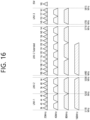
- FIG. 19 shows a 1x HE-STF tone in PPDU transmission for each channel according to the present embodiment. More specifically, an HE-STF tone (i.e., 16-tone sampling) having a periodicity of 0.8
- HE-STF tone i.e., 16-tone sampling
- an x-axis represents a frequency domain.
- a numerical value on the x-axis indicates a tone index, and an arrow indicates that a non-zero value is mapped to the tone index.
- a sub-figure (a) of FIG. 19 shows an example of a 1x HE-STF tone in 20MHz PPDU transmission.
- the 1x HE-STF sequence when an HE-STF sequence (i.e., 1x HE-STF sequence) for a periodicity of 0.8
- a sub-figure (b) shows an example of a 1x HE-STF tone in 40MHz PPDU transmission.
- the 1x HE-STF sequence when an HE-STF sequence (i.e., 1x HE-STF sequence) for a periodicity of 0.8
- a sub-figure (c) shows an example of a 1x HE-STF tone in 80MHz PPDU transmission.
- the 1x HE-STF sequence when an HE-STF sequence (i.e., 1x HE-STF sequence) for a periodicity of 0.8
- FIG. 20 shows a 2x HE-STF tone in PPDU transmission for each channel according to the present embodiment. More specifically, an HE-STF tone (i.e., 8-tone sampling) having a periodicity of 16 ⁇ s in a 20 MHz/40 MHz/80 MHz bandwidth is shown for example in FIG. 20 . Therefore, in FIG. 20 , HE-STF tones for respective bandwidths (or channels) may be located with an interval of 8 tones.
- HE-STF tone i.e., 8-tone sampling
- the 2x HE-STF signal according to FIG. 20 may be applied to an uplink MU PPDU. That is, the 2x HE-STF signal shown in FIG. 20 may be included in a PPDU transmitted through uplink in response to the aforementioned trigger frame.
- an x-axis represents a frequency domain.
- a numerical value on the x-axis indicates a tone index, and an arrow indicates that a non-zero value is mapped to the tone index.
- a sub-figure (a) of FIG. 20 shows an example of a 2x HE-STF tone in 20MHz PPDU transmission.
- the 2x HE-STF sequence when an HE-STF sequence (i.e., 2x HE-STF sequence) for a periodicity of 1.6 ⁇ s is mapped to tones of a 20MHz channel, the 2x HE-STF sequence may be mapped to a tone having a tone index which is a multiple of 8, except for DC, among tones having a tone index from -120 to 120, and 0 may be mapped to the remaining tones. That is, in the 20MHz channel, the 2x HE-STF tone may be located at a tone index which is a multiple of 8, except for DC, among the tones having the tone index from -120 to 120. Therefore, the total number of 2x HE-STF tones to which the 2x HE-STF sequence is mapped may be 30 in the 20MHz channel.
- a sub-figure (b) shows an example of a 2x HE-STF tone in 40MHz PPDU transmission.
- the 2x HE-STF sequence when an HE-STF sequence (i.e., 2x HE-STF sequence) for a periodicity of 16 ⁇ s is mapped to tones of a 40MHz channel, the 2x HE-STF sequence may be mapped to a tone having a tone index which is a multiple of 8, except for DC, among tones having a tone index from -248 to 248, and 0 may be mapped to the remaining tones. That is, in the 40MHz channel, the 2x HE-STF tone may be located at a tone index which is a multiple of 8, except for DC, among the tones having the tone index from -248 to 248.
- tones having the tone index of ⁇ 248 correspond to guard tones (left and right guard tones), and may be nulled (i.e., may have a zero value). Therefore, the total number of 2x HE-STF tones to which the 2x HE-STF sequence is mapped may be 60 in the 40MHz channel.
- a sub-figure (c) shows an example of a 2x HE-STF tone in 80MHz PPDU transmission.
- the 2x HE-STF sequence when an HE-STF sequence (i.e., 2x HE-STF sequence) for a periodicity of 16 ⁇ s is mapped to tones of an 80MHz channel, the 2x HE-STF sequence may be mapped to a tone having a tone index which is a multiple of 8, except for DC, among tones having a tone index from -504 to 504, and 0 may be mapped to the remaining tones. That is, in the 80MHz channel, the 2x HE-STF tone may be located at a tone index which is a multiple of 8, except for DC, among the tones having the tone index from -504 to 504.
- tones having the tone index of ⁇ 504 correspond to guard tones (left and right guard tones), and may be nulled (i.e., may have a zero value). Therefore, the total number of 2x HE-STF tones to which the 2x HE-STF sequence is mapped may be 124 in the 80MHz channel.
- the 1x HE-STF of FIG. 19 may be used to configure an HE-STF field not for the HE TB PPDU but for the HE PPDU.
- the 2x HE-STF sequence of FIG. 20 may be used to configure an HE-STF field for the HE TB PPDU.
- a sequence applicable to a 1x HE-STF tone i.e., sampling with an interval of 16 tones
- a sequence applicable to a 2x HE-STF tones i.e., sampling with an interval of 8 tones
- a sequence structure with excellent scalability is proposed by using a nested structure in which a basic sequence is set and the basic sequence is included as part of a new sequence.
- An M-sequence used in the following example is preferably a sequence having a length of 15.
- the M-sequence is preferably configured of a binary sequence to reduce the complexity during decoding.
- the M-sequence used to configure the HE-STF field is defined as follows.
- M ⁇ -1, -1, -1, 1, 1, 1, -1, 1, 1, 1, -1,1,1, -1, 1 ⁇
- the HE-STF field may be configured by mapping each 242-tone RU to the M sequence multiplied by (1+j)/sqrt(2) or (-1j)/sqrt(2).
- (1+j)/sqrt(2) or (-1j)/sqrt(2) may be assigned to a subcarrier index in a center 26-tone RU.
- a frequency domain sequence for an HE PPDU, not an HE TB PPDU is given as follows.
- HES ⁇ 112 : 16 : 112 M ⁇ 1 + j / 2
- HES a:b:c means coefficients of the HE-STF on every b subcarrier indices from a to c subcarrier indices and coefficients on other subcarrier indices are set to zero.
- Equation (27-24) the frequency domain sequence for HE PPDUs that are not HE TB PPDUs is given by Equation (27-24).
- HES ⁇ 240 : 16 : 240 M , 0 , ⁇ M ⁇ 1 + j / 2
- Equation (27-25) the frequency domain sequence for HE PPDUs that are not HE TB PPDUs is given by Equation (27-25).
- HES ⁇ 496 : 16 : 496 M , 1 , ⁇ M , 0 , ⁇ M , 1 , ⁇ M ⁇ 1 + j / 2
- Equation (27-26) the frequency domain sequence for HE PPDUs that are not HE TB PPDUs is given by Equation (27-26).
- HES ⁇ 1008 : 16 : 1008 M , 1 , ⁇ M , 0 , ⁇ M , 1 , ⁇ M , 0 , ⁇ M , ⁇ 1 , M , 0 , ⁇ M , 1 , ⁇ M ⁇ 1 + j / 2
- the lower 80 MHz segment for HE PPDUs that are not HE TB PPDUs shall use the HE-STF pattern for the 80 MHz defined in Equation (27-25).
- Equation (27-27) the frequency domain sequence of the upper 80 MHz segment for HE PPDUs that are not HE TB PPDUs is given by Equation (27-27).
- HES ⁇ 496 : 16 : 496 ⁇ M , ⁇ 1 , M , 0 , ⁇ M , 1 , ⁇ M ⁇ 1 + j / 2
- a frequency domain sequence for an HE TB PPDU and an HE TB feedback null data packet (NDP) is given as follows.
- Equation (27-28) the frequency domain sequence for HE TB PPDUs is given by Equation (27-28).
- HES ⁇ 120 : 8 : 120 M , 0 , ⁇ M ⁇ 1 + j / 2
- Equation (27-30) the frequency domain sequence for HE TB PPDUs is given by Equation (27-30).
- HES ⁇ 248 : 8 : 248 M , ⁇ 1 , ⁇ M , 0 , M , ⁇ 1 , M ⁇ 1 + j / 2
- Equation (27-32) the frequency domain sequence for HE TB PPDUs is given by Equation (27-32).
- HES ⁇ 504 : 8 : 504 M , ⁇ 1 , M , ⁇ 1 , ⁇ M , ⁇ 1 , M , 0 , ⁇ M , 1 , M , 1 , ⁇ M , 1 , ⁇ M ⁇ 1 + j / 2
- HES t504 0
- HES ⁇ 1016 : 8 : 1016 M , ⁇ 1 , M , ⁇ 1 , ⁇ M , ⁇ 1 , M , 0 , ⁇ M , 1 , M , 1 , ⁇ M , 1 , ⁇ M , 0 ⁇ M , 1 , ⁇ M , 1 , ⁇ M , 0 ⁇ M , 1 , ⁇ M , 1 , M , 1 ⁇ M , 0 , ⁇ M , 1 , M , 1 ⁇ M , 0 , ⁇ M , 1 , M , 1 ⁇ M , 1 ⁇ M ⁇ 1 + j / 2
- Equation (27-35) For an HE TB feedback NDP in 160 MHz channel width, the frequency domain sequence is given by Equation (27-35).
- the lower 80 MHz segment for HE TB PPDUs shall use the HE-STF pattern for the 80 MHz defined in Equation (27-32).
- Equation (27-36) the frequency domain sequence of the upper 80 MHz segment for HE TB PPDUs is given by Equation (27-36).
- HES ⁇ 504 : 8 : 504 ⁇ M , 1 , ⁇ M , 1 , M , 1 , ⁇ M , 0 , ⁇ M , 1 , M , 1 , ⁇ M , 1 , ⁇ M ⁇ 1 + j / 2
- Equation (27-33) For an HE TB feedback NDP in the lower 80 MHz segment of an 80+80 MHz channel width, the frequency domain sequence is given by Equation (27-33).
- EHT extreme high throughput
- transmission of an increased stream (up to 16 streams supported) is considered by using more antennas or a wider band than the existing 1 1ax.
- a scheme of aggregating and using various bands is also considered.
- the present specification proposes a 1x STF sequence in a situation of using 160MHz/240MHz/320MHz in particular, by considering a case of using a wide band.
- a 1x/2x HE-STF sequence is defined.
- the 1x HE-STF is used for all HE PPDUs except for an HE TB PPDU of uplink transmission, and the 2x HE-STF is used for an HE TB PPDU.
- the sequence is mapped in units of 16 subcarriers, and when inverse fast Fourier transform (IFFT) is taken, a symbol of 12.8us is generated, and the same signal is repeated in units of 0.8us. The signal of 0.8us is repeated to configure a 1x HE STF of 4us.
- IFFT inverse fast Fourier transform
- the sequence is mapped in units of 8 subcarriers, and when IFFT is taken, a symbol of 12.8us is generated, and the same signal is repeated in units of 1.6us.
- the signal of 1.6us is repeated 5 times to configure a 2x HE-STF of 8us.
- the present specification is in regard to the design of the 1x STF sequence when a PPDU is transmitted in a wide band situation, and such a sequence is referred to as a 1x EHT-STF sequence.
- the configuration of the 1x HE-STF sequence may vary depending on a tone plan.
- a wide bandwidth with a structure in which the existing 11ax 80MHz tone plan (see FIG. 7 ) is repeated is considered.
- a transmitting STA may configure the 1x EHT-STF sequence for the wide bandwidth by repeating the existing 80MHz 1x HE-STF sequence.
- a peak-to-average power ratio (PAPR) may be increased due to a feature of the repeated sequence. Therefore, it is necessary to additionally apply a phase rotation.
- the 80MHz 1x HE-STF sequence is repeated two times to configure the 160MHz 1x HE-STF sequence, and then a first 40MHz part of a secondary 80MHz channel (or an 80MHz channel with a relatively high frequency) is multiplied by -1 to configure the sequence (see the equation (27-26) described above).
- the present specification proposes a sequence for decreasing a PAPR by extendedly applying such a scheme, that is, in such a manner that the 80MHz STF sequence is repeated two times and an additional phase rotation is applied (by being multiplied by 1 or -1) in units of 20/40/80MHz to other channels except for a primary channel (or an 80MHz channel with a relatively low frequency).
- a sequence for decreasing a PAPR is proposed in 320MHz by repeating the 160MHz STF sequence and by applying an additional phase rotation in units of 20/40/80/160MHz to a secondary 160MHz channel (or an 80MHz channel with a relatively high frequency).
- Preamble puncturing is defined in 11ax, and is directly considered in 80MHz and 160MHz and extendedly applied in 240/320MHz to propose a 1x EHT-STF sequence for minimizing a maximum PAPR. That is, all cases where a 20MHz channel is punctured are considered when a PPDU is transmitted in each band.
- the number of puncturing cases is 2 ⁇ 4 / 2 ⁇ 8 / 2 ⁇ 12 / 2 ⁇ 16 in transmission of 80MHz / 160MHz / 240MHz / 320MHz, respectively.
- 240/320MHz a case where puncturing is performed in units of 80MHz is additionally taken into account by considering complexity of signalling and implementation.
- a PAPR obtained in the following proposal implies a maximum PAPR value among several preamble puncturing cases.
- the PAPR is calculated, only a situation where a band is contiguous is considered.
- the designed 1x EHT-STF sequence may also be applied directly to a non-contiguous situation.
- Capability for a maximum transmittable band of radio frequency (RF) is additionally considered, and thus an optimized sequence is proposed as follows.
- the M-sequence is as follows.
- M ⁇ -1, -1, -1, 1, 1, 1, -1, 1, 1, 1, -1, 1, 1, -1, 1 ⁇
- one RF can transmit the entire PPDU bandwidth.
- PAPR is 5.9810 dB.
- the 1x EHT-STF sequence proposed in Option 1 may be preferentially used in terms of PAPR.
- EHT ⁇ STF ⁇ 1008 : 16 : 1008 M 1 ⁇ M 0 ⁇ M 1 ⁇ M 0 ⁇ M ⁇ 1 M 0 M ⁇ 1 M * 1 + j / sqrt 2
- PAPR is 8.1403 dB.
- EHT ⁇ STF ⁇ 1008 : 16 : 1008 M ⁇ 1 ⁇ M 0 ⁇ M ⁇ 1 M 0 M 1 M 0 ⁇ M 1 ⁇ M * 1 + j / sqrt 2
- PAPR is 8.2085 dB.
- EHT ⁇ STF ⁇ 1008 : 16 : 1008 M 1 ⁇ M 0 ⁇ M 1 ⁇ M 0 ⁇ M ⁇ 1 M 0 M ⁇ 1 M * 1 + j / sqrt 2
- PAPR is 8.1403 dB.
- EHT ⁇ STF ⁇ 1008 : 16 : 1008 M ⁇ 1 ⁇ M 0 ⁇ M ⁇ 1 M 0 M ⁇ 1 ⁇ M 0 ⁇ M ⁇ 1 M * 1 + j / sqrt 2
- PAPR is 8.6275 dB.
- EHT ⁇ STF ⁇ 1008 : 16 : 1008 M 1 ⁇ M 0 ⁇ M 1 ⁇ M 0 ⁇ M ⁇ 1 M 0 M ⁇ 1 M * 1 + j / sqrt 2
- PAPR is 8.1403 dB.
- EHT ⁇ STF ⁇ 1008 : 16 : 1008 M ⁇ 1 ⁇ M 0 ⁇ M ⁇ 1 M 0 M ⁇ 1 ⁇ M 0 ⁇ M ⁇ 1 M * 1 + j / sqrt 2
- PAPR is 8.6275 dB.
- the 1x EHT-STF sequence proposed in Option 2-1 may be preferentially used in terms of PAPR when preamble puncturing is considered.
- PAPR is 11.8894 dB.
- PAPR is 10.3884 dB.
- EHT ⁇ STF ⁇ 1520 : 16 : 1520 M 1 ⁇ M 0 ⁇ M 1 ⁇ M 0 ⁇ M 1 ⁇ M 0 ⁇ M ⁇ 1 M 0 M ⁇ 1 M * 1 + j / sqrt 2
- PAPR is 9.9012 dB.
- EHT ⁇ STF ⁇ 1520 : 16 : 1520 M ⁇ 1 ⁇ M 0 ⁇ M ⁇ 1 M 0 M ⁇ 1 ⁇ M 0 M 1 ⁇ M 0 ⁇ M 1 M 0 ⁇ M ⁇ 1 M * 1 + j / sqrt 2
- PAPR is 10.0326 dB.
- EHT-STF ⁇ 1520 : 16 : 1520 M 1 ⁇ M 0 ⁇ M 1 ⁇ M 0 ⁇ M ⁇ 1 M 0 M ⁇ 1 M 0 M 1 ⁇ M 0 M ⁇ 1 M * 1 + j / sqrt 2
- PAPR is 10.4709 dB.
- EHT-STF ⁇ 1520 : 16 : 1520 M ⁇ 1 ⁇ M 0 ⁇ M ⁇ 1 M 0 M ⁇ 1 ⁇ M 0 M 1 ⁇ M 0 ⁇ M 1 M 0 ⁇ M ⁇ 1 M * 1 + j / sqrt 2
- PAPR is 10.0326 dB.
- EHT-STF ⁇ 1520 : 16 : 1520 M 1 ⁇ M 0 ⁇ M 1 ⁇ M 0 ⁇ M ⁇ 1 M 0 M ⁇ 1 M 0 ⁇ M ⁇ 1 M * 1 + j / sqrt 2
- PAPR is 10.6690 dB.
- EHT-STF ⁇ 1520 : 16 : 1520 M ⁇ 1 ⁇ M 0 ⁇ M ⁇ 1 M 0 M ⁇ 1 ⁇ M 0 ⁇ M ⁇ 1 M 0 ⁇ M 1 M 0 M 1 ⁇ M * 1 + j / sqrt 2
- PAPR is 10.0326 dB.
- the 1x EHT-STF sequence proposed in Option 2-1 may be preferentially used in terms of PAPR when preamble puncturing is considered.
- PAPR is 13.1388 dB.
- PAPR is 11.6378 dB.
- EHT-STF -2032:16:2032 ⁇ M 1 -M 0 -M 1 -M 0 M 1 -M 0 -M -1 M 0 M -1 M 0 M -1 M 0 -M -1 M 0 -M 1 -M ⁇ * (1 + j)/ sqrt(2)
- PAPR is 11.1506 dB.
- EHT-STF -2032:16:2032 ⁇ M -1 -M 0 -M -1 M 0 -M -1 M 0 M -1 -M 0 -M 1 -M 0 M 1 M 0 M 1 -M ⁇ * (1 + j)/ sqrt(2)
- PAPR is 11.1070 dB.
- EHT-STF -2032:16:2032 ⁇ M 1 -M 0 -M 1 -M 0 M 1 -M 0 M -1 M 0 -M -1 M 0 -M 1 -M 0 -M -1 M 0 M -1 M ⁇ * (1 + j)/ sqrt(2)
- PAPR is 11.1506 dB.
- EHT-STF -2032:16:2032 ⁇ M -1 -M 0 -M -1 M 0 M -1 -M 0 M 1 -M 0 -M 1 M 0 -M 1 M 0 M 1 -M ⁇ * (1 + j)/ sqrt(2)
- PAPR is 11.1070 dB.
- EHT-STF -2032:16:2032 ⁇ M 1 -M 0 -M 1 -M 0 -M -1 M 0 M -1 M 0 -M -1 M 0 M -1 M 0 M 1 -M 0 -M 1 -M ⁇ * (1 + j)/ sqrt(2)
- PAPR is 11.1506 dB.
- EHT-STF -2032:16:2032 ⁇ M -1 -M 0 -M -1 M 0 -M -1 -M 0 -M -1 M 0 M 1 -M 0 -M 1 M 0 M 1 -M ⁇ * (1 + j)/ sqrt(2)
- PAPR is 11.1070 dB.
- PAPR is 12.3618 dB.
- PAPR is 11.1506 dB.
- PAPR is 11.1070 dB.
- EHT-STF -2032:16:2032 ⁇ M 1 -M 0 -M 1 -M 0 -M -1 M 0 -M 1 -M 0 M 1 -M 0 -M -1 M 0 M -1 M ⁇ * (1 + j)/ sqrt(2)
- PAPR is 11.1506 dB.
- EHT-STF -2032:16:2032 ⁇ M 1 -M 0 -M 1 -M 0 -M -1 M 0 M -1 M 0 -M -1 -M 0 -M -1 M 0 M 1 -M 0 M 1 -M ⁇ * (1 + j)/ sqrt(2)
- PAPR is 11.1506 dB.
- EHT-STF -2032:16:2032 ⁇ M -1 -M 0 -M -1 M 0 M 1 M 0 -M 1 -M 0 -M 1 M 0 -M 1 -M 0 M -1 -M 0 M -1 M ⁇ * (1 + j)/ sqrt(2)
- EHT-STF ⁇ 2032 : 16 : 2032 M ⁇ 1 ⁇ M 0 ⁇ M ⁇ 1 M 0 M 1 M 0 ⁇ M 1 0 ⁇ M 1 M 0 ⁇ M 1 0 M ⁇ 1 ⁇ M 0 M ⁇ 1 M * 1 + j / sqrt 2
- PAPR is 11.1070 dB.
- EHT-STF -2032:16:2032 ⁇ M 1 -M 0 -M 1 -M 0 -M -1 M 0 -M 1 -M 0 -M -1 M 0 M -1 M 0 M 1 -M 0 M -1 M ⁇ * (1 + j)/ sqrt(2)
- PAPR is 11.1506 dB.
- EHT-STF -2032:16:2032 ⁇ M 1 -M 0 -M 1 -M 0 -M -1 M 0 M -1 M 0 -M -1 M 0 -M 1 -M 0 M 1 -M 0 M -1 M ⁇ * (1 + j)/ sqrt(2)
- PAPR is 11.1506 dB.
- EHT-STF -2032:16:2032 ⁇ M -1 -M 0 -M -1 M 0 M 1 M 0 -M 1 -M 0 -M 1 M 0 M 1 -M 0 -M -1 -M 0 M -1 M ⁇ * (1 + j)/ sqrt(2)
- PAPR is 11.1070 dB.
- EHT-STF -2032:16:2032 ⁇ M 1 -M 0 -M 1 -M 0 -M -1 M 0 -M 1 -M 0 -M -1 M 0 M -1 M 0 M 1 -M 0 M -1 M ⁇ * (1 + j)/ sqrt(2)
- PAPR is 11.1506 dB.
- EHT-STF -2032:16:2032 ⁇ M 1 -M 0 -M 1 -M 0 -M -1 M 0 M -1 M 0 -M -1 M 0 M -1 M 0 M 1 -M 0 -M 1 -M ⁇ * (1 + j)/ sqrt(2)
- PAPR is 11.1506 dB.
- EHT-STF -2032:16:2032 ⁇ M -1 -M 0 -M -1 M 0 M 1 M 0 -M 1 -M 0 -M 1 M 0 M 1 -M 0 -M -1 -M 0 M -1 M ⁇ * (1 + j)/ sqrt(2)
- PAPR is 11.1070 dB.
- EHT-STF -2032:16:2032 ⁇ M 1 -M 0 -M 1 -M 0 -M -1 M 0 -M 1 -M 0 -M -1 M 0 M -1 M 0 M 1 -M 0 M -1 M ⁇ * (1 + j)/ sqrt(2)
- PAPR is 11.1506 dB.
- EHT-STF -2032:16:2032 ⁇ M 1 -M 0 -M 1 -M 0 -M -1 M 0 M -1 M 0 -M -1 M 0 M -1 M 0 M 1 -M 0 -M 1 -M ⁇ * (1 + j)/ sqrt(2)
- PAPR is 11.1506 dB.
- EHT-STF -2032:16:2032 ⁇ M -1 -M 0 -M -1 M 0 M 1 M 0 -M 1 -M 0 -M 1 M 0 M 1 -M 0 -M -1 -M 0 M -1 M ⁇ * (1 + j)/ sqrt(2)
- PAPR is 11.1070 dB.
- one of several 1x EHT-STF sequences with the PAPR of 11.1070 dB may be preferentially used in terms of PAPR when preamble puncturing is considered.
- the following is a 1x EHT-STF sequence optimized in an 80MHz-based preamble puncturing situation.
- PAPR is 7.6892 dB.
- PAPR is 9.5869 dB.
- EHT-STF ⁇ 1520 : 16 : 1520 M 1 ⁇ M 0 ⁇ M 1 ⁇ M 0 ⁇ M 1 ⁇ M 0 ⁇ M ⁇ 1 M 0 ⁇ M 1 ⁇ M 0 M 1 ⁇ M * 1 + j / sqrt 2
- PAPR is 6.3992 dB.
- EHT-STF ⁇ 1520 : 16 : 1520 M ⁇ 1 ⁇ M 0 ⁇ M ⁇ 1 M 0 M 1 M 0 ⁇ M ⁇ 1 M 0 ⁇ M 1 M 0 M ⁇ 1 M * 1 + j / sqrt 2
- PAPR is 6.5334 dB.
- EHT-STF ⁇ 1520 : 16 : 1520 M 1 ⁇ M 0 ⁇ M 1 ⁇ M 0 M 1 ⁇ M 0 ⁇ M 1 ⁇ M 0 ⁇ M ⁇ 1 M 0 ⁇ M 1 ⁇ M * 1 + j / sqrt 2
- PAPR is 6.7250 dB.
- EHT-STF ⁇ 1520 : 16 : 1520 M ⁇ 1 ⁇ M 0 ⁇ M ⁇ 1 M 0 M ⁇ 1 ⁇ M 0 M 1 ⁇ M 0 M ⁇ 1 ⁇ M 0 ⁇ M ⁇ 1 M * 1 + j / sqrt 2
- PAPR is 7.8260 dB.
- EHT-STF ⁇ 1520 : 16 : 1520 M 1 ⁇ M 0 ⁇ M 1 ⁇ M 0 M 1 ⁇ M 0 ⁇ M 1 ⁇ M 0 ⁇ M ⁇ 1 M 0 M ⁇ 1 M * 1 + j / sqrt 2
- PAPR is 7.5390 dB.
- EHT-STF ⁇ 1520 : 16 : 1520 M ⁇ 1 ⁇ M 0 ⁇ M ⁇ 1 M 0 M ⁇ 1 ⁇ M 0 ⁇ M ⁇ 1 M 0 ⁇ M 1 M 0 M 1 ⁇ M * 1 + j / sqrt 2
- PAPR is 8.7568 dB.
- the 1x EHT-STF sequence proposed in Option 2-1 may be preferentially used in terms of PAPR when 80MHz-based preamble puncturing is considered.
- PAPR is 8.9386 dB.
- PAPR is 10.8363 dB.
- EHT-STF -2032:16:2032 ⁇ M 1 -M 0 -M 1 -M 0 -M 1 -M 0 M -1 M 0 M -1 M 0 -M -1 M 0 M -1 M 0 -M -1 M ⁇ * (1 + j)/ sqrt(2)
- PAPR is 6.6046 dB.
- EHT-STF -2032:16:2032 ⁇ M -1 -M 0 -M -1 M 0 M 1 M 0 -M -1 M 0 -M -1 -M 0 -M 1 M 0 M -1 M ⁇ * (1 + j)/ sqrt(2)
- PAPR is 7.1522 dB.
- EHT-STF -2032:16:2032 ⁇ M 1 -M 0 -M 1 -M 0 M 1 -M 0 -M 1 -M 0 -M -1 M 0 -M -1 M ⁇ * (1 + j)/ sqrt(2)
- PAPR is 7.5390 dB.
- EHT-STF -2032:16:2032 ⁇ M -1 -M 0 -M -1 M 0 M -1 -M 0 -M -1 M 0 -M 1 M 0 M 1 -M 0 M -1 -M 0 M 1 -M ⁇ * (1 + j)/ sqrt(2)
- PAPR is 8.7568 dB.
- EHT-STF -2032:16:2032 ⁇ M 1 -M 0 -M 1 -M 0 M 1 -M 0 -M 1 -M 0 -M -1 M 0 M -1 M 0 -M -1 M ⁇ * (1 + j)/ sqrt(2)
- PAPR is 7.5969 dB.
- EHT-STF -2032:16:2032 ⁇ M -1 -M 0 -M -1 M 0 M -1 -M 0 -M -1 M 0 -M 1 M 0 M 1 -M 0 -M 1 M 0 M -1 -M ⁇ * (1 + j)/ sqrt(2)
- PAPR is 9.3896 dB.
- PAPR is 7.8963 dB.
- PAPR is 10.5493 dB.
- PAPR is 8.6968 dB.
- EHT-STF -2032:16:2032 ⁇ M 1 -M 0 -M 1 -M 0 -M -1 M 0 M 1 -M 0 -M -1 M 0 M -1 M 0 M -1 M 0 -M -1 M ⁇ * (1 + j)/ sqrt(2)
- PAPR is 7.4163 dB.
- EHT-STF -2032:16:2032 ⁇ M 1 -M 0 -M 1 -M 0 -M -1 M 0 M -1 M 0 M 1 -M 0 M -1 M 0 M -1 M 0 -M -1 M ⁇ * (1 + j)/ sqrt(2)
- PAPR is 7.5390 dB.
- EHT-STF -2032:16:2032 ⁇ M -1 -M 0 -M -1 M 0 M 1 M 0 -M 1 -M 0 -M -1 -M 0 -M -1 M 0 M -1 -M 0 M 1 -M ⁇ * (1 + j)/ sqrt(2)
- PAPR is 7.6654 dB.
- EHT-STF -2032:16:2032 ⁇ M 1 -M 0 -M 1 -M 0 -M -1 M 0 -M 1 -M 0 -M -1 M 0 -M 1 -M 0 M 1 -M 0 -M 1 -M ⁇ * (1 + j)/ sqrt(2)
- PAPR is 7.5906 dB.
- EHT-STF -2032:16:2032 ⁇ M 1 -M 0 -M 1 -M 0 -M -1 M 0 M -1 M 0 M 1 -M 0 M -1 M 0 M 1 -M 0 M -1 M ⁇ * (1 + j)/ sqrt(2)
- PAPR is 7.5390 dB.
- EHT-STF -2032:16:2032 ⁇ M -1 -M 0 -M -1 M 0 M 1 M 0 -M 1 -M 0 M -1 -M 0 -M -1 M 0 M 1 M 0 M -1 M ⁇ * (1 + j)/ sqrt(2)
- PAPR is 8.1116 dB.
- EHT-STF -2032:16:2032 ⁇ M 1 -M 0 -M 1 -M 0 -M -1 M 0 -M 1 -M 0 M 1 -M 0 -M 1 -M 0 -M -1 M 0 -M 1 -M ⁇ * (1 + j)/ sqrt(2)
- PAPR is 7.8963 dB.
- EHT-STF -2032:16:2032 ⁇ M 1 -M 0 -M 1 -M 0 -M -1 M 0 M -1 M 0 -M -1 M 0 M -1 M 0 M 1 -M 0 -M 1 -M ⁇ * (1 + j)/ sqrt(2)
- PAPR is 8.2424 dB.
- EHT-STF -2032:16:2032 ⁇ M -1 -M 0 -M -1 M 0 M 1 M 0 -M 1 -M 0 M -1 -M 0 -M -1 M 0 M 1 M 0 -M 1 -M ⁇ * (1 + j)/ sqrt(2)
- PAPR is 8.6968 dB.
- EHT-STF -2032:16:2032 ⁇ M 1 -M 0 -M 1 -M 0 -M -1 M 0 -M 1 -M 0 M 1 -M 0 -M 1 -M 0 -M -1 M 0 -M 1 -M ⁇ * (1 + j)/ sqrt(2)
- EHT-STF ⁇ 2032 : 16 : 2032 M 1 ⁇ M 0 ⁇ M 1 ⁇ M 0 ⁇ M ⁇ 1 M 0 ⁇ M 1 ⁇ M 0 M 1 ⁇ M 0 ⁇ M 1 ⁇ M 0 ⁇ M 1 ⁇ M 0 ⁇ M 1 ⁇ M * 1 + j / sqrt 2
- PAPR is 7.8963 dB.
- EHT-STF -2032:16:2032 ⁇ M 1 -M 0 -M 1 -M 0 -M -1 M 0 M -1 M 0 -M -1 M 0 M -1 M 0 M 1 -M 0 -M 1 -M ⁇ * (1 + j)/ sqrt(2)
- PAPR is 8.2424 dB.
- EHT-STF -2032:16:2032 ⁇ M -1 -M 0 -M -1 M 0 M 1 M 0 -M 1 -M 0 M -1 M 0 -M -1 M 0 M 1 M 0 -M 1 -M ⁇ * (1 + j)/ sqrt(2)
- PAPR is 8.6968 dB.
- the 1x EHT-STF sequence proposed in Option 2-1 may be preferentially used in terms of PAPR when 80MHz-based preamble puncturing is considered.
- the present embodiment applies the aforementioned scheme in which a sequence with a good PAPR proposed in 320MHz is used in a non-contiguous 160+160MHz band (or channel).
- a sequence applied to 160MHz with a relatively low frequency may be applied to primary 160MHz
- a sequence applied to 160MHz with a relatively high frequency may be applied to secondary 160MHz.
- a maximum (or max) PAPR may be obtained in each preamble puncturing case by considering PAPRs for a case of using two 80MHz RFs and a case of using one 160MHz RF, and it is possible to design a sequence in which the max PAPR is minimized by comparing the max PAPRs for the respective preamble puncturing cases.
- a PAPR is a max PAPR found in such a manner that max PAPRs are determined among PARPs of several 80/160/240/320MHz parts in respective preamble puncturing cases and are compared for all preamble puncturing cases.
- PAPR is 7.1182 dB.
- PAPR is 5.9810 dB.
- the 1x EHT-STF sequence proposed in Option 1 may be preferentially used in terms of PAPR.
- PAPR is 9.3515 dB.
- PAPR is 10.1285 dB.
- PAPR is 8.6275 dB.
- EHT-STF ⁇ 1008 : 16 : 1008 M 1 ⁇ M 0 ⁇ M 1 ⁇ M 0 ⁇ M ⁇ 1 M 0 M ⁇ 1 M * 1 + j / sqrt 2
- PAPR is 8.1403 dB.
- EHT-STF ⁇ 1008 : 16 : 1008 M ⁇ 1 ⁇ M 0 ⁇ M ⁇ 1 M 0 M 1 M 0 ⁇ M 1 ⁇ M * 1 + j / sqrt 2
- PAPR is 8.2085 dB.
- EHT-STF ⁇ 1008 : 16 : 1008 M 1 ⁇ M 0 ⁇ M 1 ⁇ M 0 ⁇ M ⁇ 1 M 0 M ⁇ 1 M * 1 + j / sqrt 2
- PAPR is 8.1403 dB.
- EHT-STF ⁇ 1008 : 16 : 1008 M ⁇ 1 ⁇ M 0 ⁇ M ⁇ 1 M 0 M ⁇ 1 ⁇ M 0 ⁇ M ⁇ 1 M * 1 + j / sqrt 2
- PAPR is 8.6275 dB.
- EHT-STF ⁇ 1008 : 16 : 1008 M 1 ⁇ M 0 ⁇ M 1 ⁇ M 0 ⁇ M ⁇ 1 M 0 M ⁇ 1 M * 1 + j / sqrt 2
- PAPR is 8.1403 dB.
- EHT ⁇ STF ⁇ 1008 : 16 : 1008 M ⁇ 1 ⁇ M 0 ⁇ M ⁇ 1 M 0 M ⁇ 1 ⁇ M 0 ⁇ M ⁇ 1 M * 1 + j / sqrt 2
- PAPR is 8.6275 dB.
- the 1x EHT-STF sequence proposed in Option 2-1 may be preferentially used in terms of PAPR when preamble puncturing is considered.
- PAPR is 11.8894 dB.
- PAPR is 10.3884 dB.
- EHT ⁇ STF ⁇ 1520 : 16 : 1520 M 1 ⁇ M 0 ⁇ M 1 ⁇ M 0 ⁇ M 1 ⁇ M 0 ⁇ M ⁇ 1 M 0 M ⁇ 1 M * 1 + j / sqrt 2
- PAPR is 9.9012 dB.
- EHT ⁇ STF ⁇ 1520 : 16 : 1520 M ⁇ 1 ⁇ M 0 ⁇ M ⁇ 1 M 0 M ⁇ 1 ⁇ M 0 M 1 ⁇ M 0 ⁇ M 1 M 0 ⁇ M ⁇ 1 M * 1 + j / sqrt 2
- PAPR is 10.0326 dB.
- EHT ⁇ STF ⁇ 1520 : 16 : 1520 M 1 ⁇ M 0 ⁇ M 1 ⁇ M 0 ⁇ M ⁇ 1 M 0 M ⁇ 1 M 0 M 1 ⁇ M 0 M ⁇ 1 M * 1 + j / sqrt 2
- PAPR is 10.4709 dB.
- EHT ⁇ STF ⁇ 1520 : 16 : 1520 M ⁇ 1 ⁇ M 0 ⁇ M ⁇ 1 M 0 M ⁇ 1 ⁇ M 0 M 1 ⁇ M 0 ⁇ M 1 M 0 ⁇ M ⁇ 1 M * 1 + j / sqrt 2
- PAPR is 10.0326 dB.
- EHT ⁇ STF ⁇ 1520 : 16 : 1520 M 1 ⁇ M 0 ⁇ M 1 ⁇ M 0 ⁇ M ⁇ 1 M 0 M ⁇ 1 M 0 ⁇ M ⁇ 1 M * 1 + j / sqrt 2
- PAPR is 10.6690 dB.
- EHT ⁇ STF ⁇ 1520 : 16 : 1520 M ⁇ 1 ⁇ M 0 ⁇ M ⁇ 1 M 0 M ⁇ 1 ⁇ M 0 ⁇ M ⁇ 1 M 0 ⁇ M 1 M 0 M 1 ⁇ M * 1 + j / sqrt 2
- PAPR is 10.0326 dB.
- the 1x EHT-STF sequence proposed in Option 2-1 may be preferentially used in terms of PAPR when preamble puncturing is considered.
- the 320MHz is a contiguous band, and may consist of two non-contiguous 160MHz channels (lower 160MHz channel and higher 160MHz channel or primary 160MHz and secondary 160MHz). Some channels included in the 320MHz band may be expressed as high and low in a frequency domain.
- PAPR is 13.1388 dB.
- PAPR is 11.6378 dB.
- EHT-STF -2032:16:2032 ⁇ M 1 -M 0 -M 1 -M 0 M 1 -M 0 -M -1 M 0 M -1 M 0 -M -1 M 0 -M 1 -M ⁇ * (1 + j)/ sqrt(2)
- PAPR is 11.1506 dB.
- EHT-STF -2032:16:2032 ⁇ M -1 -M 0 -M -1 M 0 -M 1 M 0 -M -1 M 0 M -1 -M 0 -M 1 -M 0 M 1 M 0 M 1 -M ⁇ * (1 + j)/ sqrt(2)
- PAPR is 11.1070 dB.
- EHT-STF -2032:16:2032 ⁇ M 1 -M 0 -M 1 -M 0 M 1 -M 0 M -1 M 0 -M -1 M 0 -M 1 -M 0 -M -1 M 0 M -1 M ⁇ * (1 + j)/ sqrt(2)
- PAPR is 11.1506 dB.
- EHT-STF -2032:16:2032 ⁇ M -1 -M 0 -M -1 -M 0 M -1 -M 0 M 1 -M 0 -M 1 M 0 -M 1 M 0 M 1 -M ⁇ * (1 + j)/ sqrt(2)
- PAPR is 11.1070 dB.
- EHT-STF -2032:16:2032 ⁇ M 1 -M 0 -M 1 -M 0 -M -1 M 0 M -1 M 0 -M -1 M 0 M -1 M 0 M 1 -M 0 -M 1 -M ⁇ * (1 + j)/ sqrt(2)
- PAPR is 11.1506 dB.
- EHT-STF -2032:16:2032 ⁇ M -1 -M 0 -M -1 M 0 M -1 -M 0 -M 1 M 0 M 1 -M 0 -M 1 M 0 M 1 -M ⁇ * (1 + j)/ sqrt(2)
- PAPR is 11.1070 dB.
- PAPR is 12.3618 dB.
- PAPR is 11.1506 dB.
- PAPR is 11.1070 dB.
- EHT-STF -2032:16:2032 ⁇ M 1 -M 0 -M 1 -M 0 -M -1 M 0 -M 1 -M 0 M 1 -M 0 -M -1 M 0 M -1 M ⁇ * (1 + j)/ sqrt(2)
- PAPR is 11.1506 dB.
- EHT-STF -2032:16:2032 ⁇ M 1 -M 0 -M 1 -M 0 -M -1 M 0 M -1 M 0 M -1 M 0 -M 1 -M 0 M 1 -M 0 -M -1 M ⁇ * (1 + j)/ sqrt(2)
- PAPR is 11.1506 dB.
- EHT-STF -2032:16:2032 ⁇ M -1 -M 0 -M -1 -M 0 M 1 M 0 -M 1 -M 0 -M 1 M 0 -M 1 -M 0 M -1 -M 0 M -1 M ⁇ * (1 + j)/ sqrt(2)
- PAPR is 11.1070 dB.
- EHT-STF -2032:16:2032 ⁇ M 1 -M 0 -M 1 -M 0 -M -1 M 0 -M 1 -M 0 -M -1 M 0 M -1 M 0 M 1 -M 0 M -1 M ⁇ * (1 + j)/ sqrt(2)
- PAPR is 11.1506 dB.
- EHT-STF -2032:16:2032 ⁇ M 1 -M 0 -M 1 -M 0 -M -1 M 0 M -1 M 0 -M -1 M 0 -M 1 -M 0 M 1 -M 0 M -1 M ⁇ * (1 + j)/ sqrt(2)
- PAPR is 11.1506 dB.
- EHT-STF -2032:16:2032 ⁇ M -1 -M 0 -M -1 M 0 M 1 M 0 -M 1 -M 0 M -1 M 0 M 1 -M 0 -M -1 -M 0 M -1 M ⁇ * (1 + j)/ sqrt(2)
- PAPR is 11.1070 dB.
- EHT-STF -2032:16:2032 ⁇ M 1 -M 0 -M 1 -M 0 -M -1 M 0 -M 1 -M 0 -M -1 M 0 M -1 M 0 M 1 -M 0 M -1 M ⁇ * (1 + j)/ sqrt(2)
- PAPR is 11.1506 dB.
- EHT-STF -2032:16:2032 ⁇ M 1 -M 0 -M 1 -M 0 -M -1 M 0 M -1 M 0 -M -1 M 0 M -1 M 0 M 1 -M 0 -M 1 -M ⁇ * (1 + j)/ sqrt(2)
- PAPR is 11.1506 dB.
- EHT-STF -2032:16:2032 ⁇ M -1 -M 0 -M -1 M 0 M 1 M 0 -M 1 -M 0 -M 1 M 0 M 1 -M 0 -M -1 -M 0 M -1 M ⁇ * (1 + j)/ sqrt(2)
- PAPR is 11.1070 dB.
- EHT-STF -2032:16:2032 ⁇ M 1 -M 0 -M 1 -M 0 -M -1 M 0 -M 1 -M 0 -M -1 M 0 M -1 M 0 M 1 -M 0 M -1 M ⁇ * (1 + j)/ sqrt(2)
- EHT ⁇ STF ⁇ 2032 : 16 : 2032 M 1 ⁇ M 0 ⁇ M 1 ⁇ M 0 ⁇ M ⁇ 1 M 0 ⁇ M 1 ⁇ M 0 M ⁇ 1 M 0 M 1 ⁇ M 0 M 1 ⁇ M 0 M ⁇ 1 M * 1 + j / sqrt 2
- PAPR is 11.1506 dB.
- EHT-STF -2032:16:2032 ⁇ M 1 -M 0 -M 1 -M 0 -M -1 M 0 M -1 M 0 -M -1 M 0 M -1 M 0 M 1 -M 0 -M 1 -M ⁇ * (1 + j)/ sqrt(2)
- PAPR is 11.1506 dB.
- EHT-STF -2032:16:2032 ⁇ M -1 -M 0 -M -1 M 0 M 1 M 0 -M 1 -M 0 -M 1 M 0 M 1 -M 0 -M -1 -M 0 M -1 M ⁇ * (1 + j)/ sqrt(2)
- PAPR is 11.1070 dB.
- one of several 1x EHT-STF sequences with the PAPR of 11.1070 dB may be preferentially used in terms of PAPR when preamble puncturing is considered.
- the following is a 1x EHT-STF sequence optimized in an 80MHz-based preamble puncturing situation.
- PAPR is 7.6892 dB.
- PAPR is 9.5869 dB.
- EHT ⁇ STF ⁇ 1520 : 16 : 1520 M 1 ⁇ M 0 ⁇ M 1 ⁇ M 0 ⁇ M 1 ⁇ M 0 ⁇ M ⁇ 1 M 0 ⁇ M 1 ⁇ M 0 M 1 ⁇ M * 1 + j / sqrt 2
- PAPR is 6.3992 dB.
- EHT ⁇ STF ⁇ 1520 : 16 : 1520 M ⁇ 1 ⁇ M 0 ⁇ M ⁇ 1 M 0 M 1 M 0 ⁇ M ⁇ 1 M 0 ⁇ M 1 M 0 M ⁇ 1 M * 1 + j / sqrt 2
- PAPR is 6.5334 dB.
- EHT ⁇ STF ⁇ 1520 : 16 : 1520 M 1 ⁇ M 0 ⁇ M 1 ⁇ M 0 M 1 ⁇ M 0 ⁇ M 1 ⁇ M 0 ⁇ M ⁇ 1 M 0 ⁇ M 1 ⁇ M * 1 + j / sqrt 2
- PAPR is 6.7250 dB.
- EHT ⁇ STF ⁇ 1520 : 16 : 1520 M ⁇ 1 ⁇ M 0 ⁇ M ⁇ 1 M 0 M ⁇ 1 ⁇ M 0 M 1 ⁇ M 0 M ⁇ 1 ⁇ M 0 ⁇ M ⁇ 1 M * 1 + j / sqrt 2
- PAPR is 7.8260 dB.
- EHT ⁇ STF ⁇ 1520 : 16 : 1520 M 1 ⁇ M 0 ⁇ M 1 ⁇ M 0 M 1 ⁇ M 0 ⁇ M 1 ⁇ M 0 ⁇ M ⁇ 1 M 0 M ⁇ 1 M * 1 + j / sqrt 2
- PAPR is 7.5390 dB.
- EHT ⁇ STF ⁇ 1520 : 16 : 1520 M ⁇ 1 ⁇ M 0 ⁇ M ⁇ 1 M 0 M ⁇ 1 ⁇ M 0 ⁇ M ⁇ 1 M 0 ⁇ M 1 M 0 M 1 ⁇ M * 1 + j / sqrt 2
- PAPR is 8.7568 dB.
- the 1x EHT-STF sequence proposed in Option 2-1 may be preferentially used in terms of PAPR when 80MHz-based preamble puncturing is considered.
- PAPR is 8.9386 dB.
- PAPR is 10.8363 dB.
- EHT-STF -2032:16:2032 ⁇ M 1 -M 0 -M 1 -M 0 -M 1 -M 0 M -1 M 0 M -1 M 0 -M -1 -M 0 M -1 M 0 -M -1 M ⁇ * (1 + j)/ sqrt(2)
- PAPR is 6.6274 dB.
- EHT-STF -2032:16:2032 ⁇ M -1 -M 0 -M -1 M 0 M 1 M 0 -M -1 M 0 -M -1 -M 0 -M -1 M 0 -M 1 -M 0 M -1 M ⁇ * (1 + j)/ sqrt(2)
- PAPR is 7.2044 dB.
- EHT-STF -2032:16:2032 ⁇ M 1 -M 0 -M 1 -M 0 M 1 -M 0 -M 1 -M 0 -M -1 M 0 M -1 M 0 M 1 -M 0 M -1 M ⁇ * (1 + j)/ sqrt(2)
- PAPR is 7.5390 dB.
- EHT-STF -2032:16:2032 ⁇ M -1 -M 0 -M -1 M 0 M -1 -M 0 -M -1 M 0 -M 1 M 0 M 1 -M 0 M -1 -M 0 M 1 -M ⁇ * (1 + j)/ sqrt(2)
- PAPR is 8.7568 dB.
- EHT-STF -2032:16:2032 ⁇ M 1 -M 0 -M 1 -M 0 M 1 -M 0 -M 1 -M 0 M -1 M 0 M -1 M 0 -M -1 M 0 M -1 M ⁇ * (1 + j)/ sqrt(2)
- PAPR is 7.5969 dB.
- EHT-STF -2032:16:2032 ⁇ M -1 -M 0 -M -1 M 0 M -1 -M 0 -M -1 M 0 -M 1 M 0 M 1 -M 0 -M 1 M 0 M 1 -M ⁇ * (1 + j)/ sqrt(2)
- PAPR is 9.3896 dB.
- PAPR is 7.8963 dB.
- PAPR is 10.5493 dB.
- PAPR is 8.6968 dB.
- EHT-STF -2032:16:2032 ⁇ M 1 -M 0 -M 1 -M 0 -M -1 M 0 -M 1 -M 0 -M -1 M 0 M -1 M 0 M -1 M 0 -M -1 M ⁇ * (1 + j)/ sqrt(2)
- PAPR is 7.4136 dB.
- EHT-STF -2032:16:2032 ⁇ M 1 -M 0 -M 1 -M 0 -M -1 M 0 M -1 M 0 M 1 -M 0 M -1 M 0 M -1 M 0 -M -1 M ⁇ * (1 + j)/ sqrt(2)
- PAPR is 7.5390 dB.
- EHT-STF -2032:16:2032 ⁇ M -1 -M 0 -M -1 M 0 M 1 M 0 -M 1 -M 0 M -1 -M 0 -M -1 M 0 M -1 -M 0 M 1 -M ⁇ * (1 + j)/ sqrt(2)
- PAPR is 7.6654 dB.
- EHT-STF -2032:16:2032 ⁇ M 1 -M 0 -M 1 -M 0 -M -1 M 0 -M 1 -M 0 -M -1 M 0 -M 1 -M 0 M 1 -M 0 -M 1 -M ⁇ * (1 + j)/ sqrt(2)
- PAPR is 7.5906 dB.
- EHT-STF -2032:16:2032 ⁇ M 1 -M 0 -M 1 -M 0 -M -1 M 0 M -1 M 0 M 1 -M 0 M -1 M 0 M 1 -M 0 M -1 M ⁇ * (1 + j)/ sqrt(2)
- PAPR is 7.5390 dB.
- EHT-STF -2032:16:2032 ⁇ M -1 -M 0 -M -1 M 0 M 1 M 0 -M 1 M 0 M -1 M 0 -M -1 M 0 M 1 M 0 M -1 M ⁇ * (1 + j)/ sqrt(2)
- PAPR is 8.1116 dB.
- EHT-STF -2032:16:2032 ⁇ M 1 -M 0 -M 1 -M 0 -M -1 M 0 -M 1 -M 0 M 1 -M 0 -M 1 -M 0 -M -1 M 0 -M 1 -M ⁇ * (1 + j)/ sqrt(2)
- PAPR is 7.8963 dB.
- EHT-STF -2032:16:2032 ⁇ M 1 -M 0 -M 1 -M 0 -M -1 M 0 M -1 M 0 -M -1 M 0 M -1 M 0 M 1 -M 0 -M 1 -M ⁇ * (1 + j)/ sqrt(2)
- PAPR is 8.2424 dB.
- EHT-STF -2032:16:2032 ⁇ M -1 -M 0 -M -1 M 0 M 1 M 0 -M 1 -M 0 M -1 -M 0 -M -1 M 0 M 1 M 0 -M 1 -M ⁇ * (1 + j)/ sqrt(2)
- PAPR is 8.6968 dB.
- EHT-STF -2032:16:2032 ⁇ M 1 -M 0 -M 1 -M 0 -M -1 M 0 -M 1 -M 0 M 1 -M 0 -M 1 -M 0 -M -1 M 0 -M 1 -M ⁇ * (1 + j)/ sqrt(2)
- PAPR is 7.8963 dB.
- EHT-STF -2032:16:2032 ⁇ M 1 -M 0 -M 1 -M 0 -M -1 M 0 M -1 M 0 -M -1 M 0 M -1 M 0 M 1 -M 0 -M 1 -M ⁇ * (1 + j)/ sqrt(2)
- PAPR is 8.2424 dB.
- EHT-STF -2032:16:2032 ⁇ M -1 -M 0 -M -1 M 0 M 1 M 0 -M 1 -M 0 M -1 -M 0 -M -1 M 0 M 1 M 0 -M 1 -M ⁇ * (1 + j)/ sqrt(2)
- PAPR is.6968 dB.
- the 1x EHT-STF sequence proposed in Option 2-1 may be preferentially used in terms of PAPR when 80MHz-based preamble puncturing is considered.
- the present embodiment applies the aforementioned scheme in which a sequence with a good PAPR proposed in 320MHz is used in a non-contiguous 160+160MHz band (or channel).
- a sequence applied to 160MHz with a relatively low frequency may be applied to primary 160MHz
- a sequence applied to 160MHz with a relatively high frequency may be applied to secondary 160MHz.
- FIG. 21 is a flowchart illustrating a procedure in which a transmitting STA transmits an EHT PPDU according to the present embodiment.
- FIG. 21 may be performed in a network environment in which a next-generation WLAN system is supported.
- the next-generation WLAN system is a WLAN system evolved from an 802.11ax system, and may satisfy backward compatibility with the 802.1 1ax system.
- the next-generation WLAN system may support a wide band to increase a throughput.
- the wide band includes 160MHz, 240MHz, and 320MHz bands (or a 160+160MHz band).
- an STF sequence for obtaining an optimal PAPR is proposed by considering a tone plane for each band, whether preamble puncturing is performed, and RF capability.
- the example of FIG. 21 may be performed by the transmitting STA, and the transmitting STA may correspond to an access point (AP).
- a receiving STA of FIG. 21 may correspond to an STA supporting an EHT WLAN system.
- step S2110 the transmitting STA generates an EHT PPDU including an STF signal.
- step S2120 the transmitting STA transmits the EHT PPDU to the receiving STA through a 320MHz band or a 160+160MHz band.
- the 320MHz band is a contiguous band
- the 160+160MHz band is a non-contiguous band.
- the STF signal is generated based on an EHT STF sequence for the 320MHz band or the 160+160MHz band.
- the EHT STF sequence for the 320MHz band is a first sequence in which a pre-set M sequence is repeated, and is defined as follows.
- the pre-set M sequence is defined as follows.
- M ⁇ -1, -1, -1, 1, 1, 1, -1, 1, 1, 1, -1,1,1, -1, 1 ⁇
- the pre-set M-sequence is the same as the M-sequence defined in the 801.11 ax.
- the first sequence (i.e., ⁇ M 1 -M 0 -M 1 -M 0 -M -1 M0 -M 1 -M 0 -M -1 M 0 M -1 M 0 -M -1 M 0 -M 1 -
- M ⁇ *(1+j)/sqr1(2)) may be mapped to a frequency tone with an interval of 16 tones from a lowest tone having a tone index of - 2032 to a highest tone having a tone index of +2032.
- EHT STF sequence or the first sequence
- a frequency tone or subcarrier
- IFFT is performed thereon
- a time-domain signal of 12.8us in which the same 16 signals with a periodicity of 0.8us are repeated is generated.
- a 1x STF signal of 4us may be generated by repeating the signal of 0.8us five times.
- the STF signal may be the 1x STF signal.
- the EHT STF sequence for the 160+160MHz band may consist of a second sequence for a primary 160MHz channel and a third sequence for a secondary 160MHz channel.
- the second sequence may be defined as follows. M 1 ⁇ M 0 ⁇ M 1 ⁇ M 0 ⁇ M ⁇ 1 M 0 ⁇ M 1 ⁇ M * 1 + j / sqrt 2
- the third sequence may be defined as follows. ⁇ M ⁇ 1 M 0 M ⁇ 1 M 0 M 1 ⁇ M 0 M ⁇ 1 M * 1 + j / sqrt 2
- the second and third sequences may be mapped to the frequency tone with an interval of 16 tones from a lowest tone having a tone index of -1008 to a highest tone having a tone index of +1008.
- the 320MHz band may include a lower 160MHz channel in which the tone index is relative low and a higher 160MHz channel in which the tone index is relatively high.
- the first sequence may be generated in a fourth sequence in which a high efficiency (HE) STF sequence for the 160MHz band is repeated, by applying a phase rotation in units of 80MHz to a sequence for the higher 160MHz channel.
- the HE STF sequence for the 160MHz band may be a 160MHz 1x HE STF sequence defined in the 802.11ax WLAN system.
- the fourth sequence may be defined as follows. M 1 ⁇ M 0 ⁇ M 1 ⁇ M 0 ⁇ M ⁇ 1 M 0 ⁇ M 1 ⁇ M 0 M 1 ⁇ M 0 ⁇ M 1 ⁇ M 0 ⁇ M 1 ⁇ M * 1 + j / sqrt 2
- the phase rotation may be applied to a sequence for an 80MHz channel of which the tone index is low in the higher 160MHz channel and an 80MHz channel of which the tone index is high in the higher 160MHz channel.
- a value of the phase ration may be -1.
- ⁇ M 1 -M 0 -M 1 -M ⁇ *(1+j)/sqrt(2) i.e., a sequence for an 80MHz channel of which the tone index is low in the higher 160MHz channel and ⁇ -M -1 M 0 -M 1 -M ⁇ *(1+j)/sqrt(2), i.e., a sequence for an 80MHz channel of which the tone index is high
- ⁇ M 1 -M 0 -M 1 -M 0 -M -1 M0 -M 1 -M 0 -M -1 M 0 M -1 M 0 M 1 -M 0 M -1 M ⁇ *(1+j)/sqrt(2) i.e., ⁇ M 1 -M 0 -M 1 -M 0 -M -1 M0 -M 1 0 M -1 M 0 M 1 -M 0 M -1 M ⁇ *(1+j)/sqrt(2)).
- the 160MHz band may include a lower 80MHz channel of which the tone index is relatively low and a higher 80MHz channel of which the tone index is relatively high.
- an HE STF sequence for the 160MHz band is generated by applying a phase rotation in units of 40MHz to the higher 80MHz channel in a fifth sequence in which an HE STF sequence for the 80MHz band is repeated.
- the HE STF sequence for the 80MHz band may be the 80MHz 1x HE STF sequence defined in the 802.1 1ax WLAN system.
- the fifth sequence may be defined as follows. M 1 ⁇ M 0 ⁇ M 1 ⁇ M 0 M 1 ⁇ M 0 ⁇ M 1 ⁇ M * 1 + j / sqrt 2
- the phase rotation may be applied to a sequence for a 40MHZ channel of which the tone index is low in the higher 80MHz channel.
- a value of the phase rotation may be -1. That is, in the fifth sequence, ⁇ M 1 -M ⁇ *(1+j)/sqrt(2), i.e., a sequence for a 40MHz channel of which the tone index is low in the higher 80MHz channel may be multiplied by -1 to obtain an HE STF sequence (i.e., ⁇ M 1 -M 0 -M 1 -M 0 -M -1 M 0 -M 1 -M ⁇ *(1+j)/sqrt(2)) for the 160MHz band.
- the HE STF sequence for the 80MHz band (the 80MHz 1x HE STF sequence defined in the 802.11ax WLAN system) may be defined as follows. M 1 ⁇ M 0 ⁇ M 1 ⁇ M * 1 + j / sqrt 2
- a tone plan of the 320MHz band or 160+160MHz band may be determined as a repetition of a tone plan for the 80MHz band defined in the 802.1 1ax WLAN system.
- preamble puncturing may be performed based on the 20MHz band.
- the transmitting STA may have RF capability supporting the 320MHz band or the 160+160MHz band through one RF.
- the STF signal may be used to improve automatic gain control (AGC) estimation in multiple input multiple output (MIMO) transmission.
- AGC automatic gain control
- the EHT STF sequence may be a sequence for obtaining a minimum peak-to-average power ratio (PAPR) based on the tone plan of the 320MHz band or the 160+160MHz band, preamble puncturing performed in the 320MHz band or the 160+160MHz band, and the RF capability. That is, the present embodiment proposes an STF sequence optimized in terms of PAPR when the transmitting device supports the 320MHz band or the 160+160MHz band through one RF, by applying (20MHz-based) preamble puncturing in the 320MHz band which is a repetition of the tone plan for the 80MHz band defined in the 802.11ax WLAN system.
- the STF sequence optimized in terms of PAPR may also be set for the 160MHz band or the 240MHz band, and a related embodiment thereof has been descried above.
- FIG. 22 is a flowchart illustrating a procedure in which a receiving STA receives an EHT PPDU according to the present embodiment.
- FIG. 22 may be performed in a network environment in which a next-generation WLAN system is supported.
- the next-generation WLAN system is a WLAN system evolved from an 802.1 1ax system, and may satisfy backward compatibility with the 802.1 1ax system.
- the next-generation WLAN system may support a wide band to increase a throughput.
- the wide band includes 160MHz, 240MHz, and 320MHz bands (or a 160+160MHz band).
- an STF sequence for obtaining an optimal PAPR is proposed by considering a tone plane for each band, whether preamble puncturing is performed, and RF capability.
- the example of FIG. 22 may be performed by the receiving STA which may correspond to an STA supporting an EHT WLAN system.
- a transmitting STA of FIG. 22 may correspond to an AP.
- the receiving STA receives the EHT PPDU including an STF signal from the transmitting STA through a 320MHz band or a 160+160MHz band.
- the 320MHz band is a contiguous band
- the 160+160MHz band is a non-contiguous band.
- step S2220 the receiving STA decodes the EHT PPDU.
- the receiving STA may perform automatic gain control (AGC) estimation in multiple input multiple output (MIMO) transmission, based on the STF signal.
- AGC automatic gain control
- the STF signal is generated based on an EHT STF sequence for the 320MHz band or the 160+160MHz band.
- the EHT STF sequence for the 320MHz band is a first sequence in which a pre-set M sequence is repeated, and is defined as follows.
- the pre-set M sequence is defined as follows.
- M ⁇ -1, -1, -1, 1, 1, 1, -1, 1, 1, 1, -1,1,1, -1, 1 ⁇
- the pre-set M-sequence is the same as the M-sequence defined in the 801.1 1ax.
- the first sequence (i.e., ⁇ M 1 -M 0 -M 1 -M 0 -M -1 M0 -M 1 -M 0 -M -1 M 0 M -1 M0 -M -1 M0 -M 1 - M ⁇ *(1+j)/sqrt(2)) may be mapped to a frequency tone with an interval of 16 tones from a lowest tone having a tone index of - 2032 to a highest tone having a tone index of +2032.
- EHT STF sequence (or the first sequence) is mapped to a frequency tone (or subcarrier) corresponding to the 320MHz band in units of 16 frequency tones and then IFFT is performed thereon, a time-domain signal of 12.8us in which the same 16 signals with a periodicity of 0.8us are repeated is generated.
- a 1x STF signal of 4us may be generated by repeating the signal of 0.8us five times.
- the STF signal may be the 1x STF signal.
- the EHT STF sequence for the 160+160MHz band may consist of a second sequence for a primary 160MHz channel and a third sequence for a secondary 160MHz channel.
- the second sequence may be defined as follows. M 1 ⁇ M 0 ⁇ M 1 ⁇ M 0 ⁇ M ⁇ 1 M 0 ⁇ M 1 ⁇ M * 1 + j / sqrt 2 ,
- the third sequence may be defined as follows.
- the third sequence may be defined as follows.
- the second and third sequences may be mapped to the frequency tone with an interval of 16 tones from a lowest tone having a tone index of -1008 to a highest tone having a tone index of +1008.
- the 320MHz band may include a lower 160MHz channel in which the tone index is relative low and a higher 160MHz channel in which the tone index is relatively high.
- the first sequence may be generated in a fourth sequence in which a high efficiency (HE) STF sequence for the 160MHz band is repeated, by applying a phase rotation in units of 80MHz to a sequence for the higher 160MHz channel.
- the HE STF sequence for the 160MHz band may be a 160MHz 1x HE STF sequence defined in the 802.11ax WLAN system.
- the fourth sequence may be defined as follows. M 1 ⁇ M 0 ⁇ M 1 ⁇ M 0 ⁇ M ⁇ 1 M 0 ⁇ M 1 ⁇ M 0 M 1 ⁇ M 0 ⁇ M 1 ⁇ M 0 ⁇ M 1 ⁇ M * 1 + j / sqrt 2
- the phase rotation may be applied to a sequence for an 80MHz channel of which the tone index is low in the higher 160MHz channel and an 80MHz channel of which the tone index is high in the higher 160MHz channel.
- a value of the phase ration may be -1.
- ⁇ M 1 -M 0 -M 1 -M ⁇ *(1+j)/sqrt(2) i.e., a sequence for an 80MHz channel of which the tone index is low in the higher 160MHz channel and ⁇ -M -1 M 0 -M 1 -M ⁇ *(1+j)/sqrt(2), i.e., a sequence for an 80MHz channel of which the tone index is high
- ⁇ M 1 -M 0 -M 1 -M 0 -M -1 M0 -M 1 -M 0 -M -1 M 0 M -1 M 0 M 1 -M 0 M -1 M ⁇ *(1+j)/sqrt(2) i.e., ⁇ M 1 -M 0 -M 1 -M 0 -M -1 M0 -M 1 0 M -1 M 0 M 1 -M 0 M -1 M ⁇ *(1+j)/sqrt(2)).
- the 160MHz band may include a lower 80MHz channel of which the tone index is relatively low and a higher 80MHz channel of which the tone index is relatively high.
- an HE STF sequence for the 160MHz band is generated by applying a phase rotation in units of 40MHz to the higher 80MHz channel in a fifth sequence in which an HE STF sequence for the 80MHz band is repeated.
- the HE STF sequence for the 80MHz band may be the 80MHz 1x HE STF sequence defined in the 802.1 1ax WLAN system.
- the fifth sequence may be defined as follows. M 1 ⁇ M 0 ⁇ M 1 ⁇ M 0 M 1 ⁇ M 0 ⁇ M 1 ⁇ M * 1 + j / sqrt 2
- the phase rotation may be applied to a sequence for a 40MHz channel of which the tone index is low in the higher 80MHz channel.
- a value of the phase rotation may be -1. That is, in the fifth sequence, ⁇ M 1 -M ⁇ *(1+j)/sqrt(2), i.e., a sequence for a 40MHz channel of which the tone index is low in the higher 80MHz channel may be multiplied by -1 to obtain an HE STF sequence (i.e., ⁇ M 1 -M 0 -M 1 -M 0 -M -1 M 0 -M 1 -M ⁇ *(1+j)/sqrt(2)) for the 160MHz band.
- the HE STF sequence for the 80MHz band (the 80MHz 1x HE STF sequence defined in the 802.11ax WLAN system) may be defined as follows. M 1 ⁇ M 0 ⁇ M 1 ⁇ M * 1 + j / sqrt 2
- a tone plan of the 320MHz band or 160+160MHz band may be determined as a repetition of a tone plan for the 80MHz band defined in the 802.1 1ax WLAN system.
- preamble puncturing may be performed based on the 20MHz band.
- the transmitting STA may have RF capability supporting the 320MHz band or the 160+160MHz band through one RF.
- the STF signal may be used to improve automatic gain control (AGC) estimation in multiple input multiple output (MIMO) transmission.
- AGC automatic gain control
- the EHT STF sequence may be a sequence for obtaining a minimum peak-to-average power ratio (PAPR) based on the RF capability and the tone plan of the 320MHz band or the 160+160MHz band. That is, the present embodiment proposes an STF sequence optimized in terms of PAPR when the transmitting device supports the 320MHz band through one RF, instead of applying (20MHz-based) preamble puncturing in the 320MHz band which is a repetition of the tone plan for the 80MHz band defined in the 802.11ax WLAN system.
- the STF sequence optimized in terms of PAPR may also be set for the 160MHz band or the 240MHz band, and a related embodiment thereof has been descried above.
- FIG. 23 shows a wireless device to which the technical features of the present disclosure can be applied.
- the present disclosure described above for a transmitting device or a receiving device may be applied to this embodiment.
- the wireless device includes a processor 610, a power management module 611, a battery 612, a display 613, a keypad 614, a subscriber identification module (SIM) card 615, a memory 620, a transceiver 630, one or more antennas 631, a speaker 640, and a microphone 641.
- SIM subscriber identification module
- the processor 610 may be configured to implement proposed functions, procedures and/or methods described in the present specification. Layers of a radio interface protocol may be implemented in the processor 610.
- the processor 610 may include application-specific integrated circuit (ASIC), other chipset, logic circuit and/or data processing device.
- the processor 610 may be an application processor (AP).
- the processor 610 may include at least one of a digital signal processor (DSP), a central processing unit (CPU), a graphics processing unit (GPU), a modulator and demodulator (modem).
- DSP digital signal processor
- CPU central processing unit
- GPU graphics processing unit
- modem modulator and demodulator
- processor 610 may be found in SNAPDRAGONTM series of processors made by Qualcomm ® , EXYNOSTM series of processors made by Samsung ® , A series of processors made by Apple ® , HELIOTM series of processors made by MediaTek ® , ATOMTM series of processors made by Intel ® or a corresponding next generation processor.
- the power management module 611 manages power for the processor 610 and/or the transceiver 630.
- the battery 612 supplies power to the power management module 611.
- the display 613 outputs results processed by the processor 610.
- the keypad 614 receives inputs to be used by the processor 610.
- the keypad 614 may be shown on the display 613.
- the SIM card 615 is an integrated circuit that is intended to securely store the international mobile subscriber identity (IMSI) number and its related key, which are used to identify and authenticate subscribers on mobile telephony devices (such as mobile phones and computers). It is also possible to store contact information in many SIM cards.
- IMSI international mobile subscriber identity
- the memory 620 is operatively coupled with the processor 610 and stores a variety of information to operate the processor 610.
- the memory 620 may include read-only memory (ROM), random access memory (RAM), flash memory, memory card, storage medium and/or other storage device.
- ROM read-only memory
- RAM random access memory
- flash memory memory card
- storage medium storage medium
- the techniques described herein can be implemented with modules (e.g., procedures, functions, and so on) that perform the functions described herein.
- the modules can be stored in the memory 620 and executed by the processor 610.
- the memory 620 may be implemented inside the processor 610. Alternatively, the memory 620 may be implemented outside the processor 610, and may be communicatively coupled to the processor 610 via various means known in the art.
- the transceiver 630 is operatively coupled with the processor 610, and transmits and/or receives a radio signal.
- the transceiver 630 includes a transmitter and a receiver.
- the transceiver 630 may include baseband circuitry to process radio frequency signals.
- the transceiver controls the one or more antennas 631 to transmit and/or receive a radio signal.
- the speaker 640 outputs sound-related results processed by the processor 610.
- the microphone 641 receives sound-related inputs to be used by the processor 610.
- the processor 610 In case of the transmitting device, the processor 610 generates an STF signal, and transmits the EHT PPDU including the STF signal to a receiving STA through a 320MHz band or a 160+160MHz band.
- the processor 610 receives the EHT PPDU including the STF signal from the transmitting STA through the 320MHz band or the 160+160MHz band, decodes the EHT PPDU, and performs AGC estimation in MIMO transmission based on the STF signal.
- the 320MHz band is a contiguous band, and the 160+160MHz band is a non-contiguous band.
- the STF signal is generated based on an EHT STF sequence for the 320MHz band or the 160+160MHz band.
- the EHT STF sequence for the 320MHz band is a first sequence in which a pre-set M sequence is repeated, and is defined as follows.
- the pre-set M sequence is defined as follows.
- M ⁇ -1, -1, -1, 1, 1, 1, -1, 1, 1, 1, -1,1,1, -1, 1 ⁇
- the pre-set M-sequence is the same as the M-sequence defined in the 801.1 1ax.
- the first sequence (i.e., ⁇ M 1 -M 0 -M 1 -M 0 -M -1 M0 -M 1 -M 0 -M -1 M 0 M -1 M 0 -M -1 M 0 -M 1 -
- M ⁇ *(1+j)/sqr1(2)) may be mapped to a frequency tone with an interval of 16 tones from a lowest tone having a tone index of - 2032 to a highest tone having a tone index of +2032.
- EHT STF sequence or the first sequence
- a frequency tone or subcarrier
- IFFT is performed thereon
- a time-domain signal of 12.8us in which the same 16 signals with a periodicity of 0.8us are repeated is generated.
- a 1x STF signal of 4us may be generated by repeating the signal of 0.8us five times.
- the STF signal may be the 1x STF signal.
- the EHT STF sequence for the 160+160MHz band may consist of a second sequence for a primary 160MHz channel and a third sequence for a secondary 160MHz channel.
- the second sequence may be defined as follows. M 1 ⁇ M 0 ⁇ M 1 ⁇ M 0 ⁇ M ⁇ 1 M 0 ⁇ M 1 ⁇ M * 1 + j / sqrt 2
- the third sequence may be defined as follows. ⁇ M ⁇ 1 M 0 M ⁇ 1 M 0 M 1 ⁇ M 0 M ⁇ 1 M * 1 + j / sqrt 2
- the second and third sequences may be mapped to the frequency tone with an interval of 16 tones from a lowest tone having a tone index of -1008 to a highest tone having a tone index of +1008.
- the 320MHz band may include a lower 160MHz channel in which the tone index is relative low and a higher 160MHz channel in which the tone index is relatively high.
- the first sequence may be generated in a fourth sequence in which a high efficiency (HE) STF sequence for the 160MHz band is repeated, by applying a phase rotation in units of 80MHz to a sequence for the higher 160MHz channel.
- the HE STF sequence for the 160MHz band may be a 160MHz 1x HE STF sequence defined in the 802.11ax WLAN system.
- the fourth sequence may be defined as follows. M 1 ⁇ M 0 ⁇ M 1 ⁇ M 0 ⁇ M ⁇ 1 M 0 ⁇ M 1 ⁇ M 0 M 1 ⁇ M 0 ⁇ M 1 ⁇ M 0 ⁇ M 1 ⁇ M * 1 + j / sqrt 2
- the phase rotation may be applied to a sequence for an 80MHz channel of which the tone index is low in the higher 160MHz channel and an 80MHz channel of which the tone index is high in the higher 160MHz channel.
- a value of the phase ration may be -1.
- ⁇ M 1 -M 0 -M 1 -M ⁇ *(1+j)/sqrt(2) i.e., a sequence for an 80MHz channel of which the tone index is low in the higher 160MHz channel and ⁇ -M -1 M 0 -M 1 -M ⁇ *(1+j)/sqrt(2), i.e., a sequence for an 80MHz channel of which the tone index is high
- ⁇ M 1 -M 0 -M 1 -M 0 -M -1 M0 -M 1 -M 0 -M -1 M 0 M -1 M 0 M 1 -M 0 M -1 M ⁇ *(1+j)/sqrt(2) i.e., ⁇ M 1 -M 0 -M 1 -M 0 -M -1 M0 -M 1 0 M -1 M 0 M 1 -M 0 M -1 M ⁇ *(1+j)/sqrt(2)).
- the 160MHz band may include a lower 80MHz channel of which the tone index is relatively low and a higher 80MHz channel of which the tone index is relatively high.
- an HE STF sequence for the 160MHz band is generated by applying a phase rotation in units of 40MHz to the higher 80MHz channel in a fifth sequence in which an HE STF sequence for the 80MHz band is repeated.
- the HE STF sequence for the 80MHz band may be the 80MHz 1x HE STF sequence defined in the 802.1 1ax WLAN system.
- the fifth sequence may be defined as follows. M 1 ⁇ M 0 ⁇ M 1 ⁇ M 0 M 1 ⁇ M 0 ⁇ M 1 ⁇ M * 1 + j / sqrt 2
- the phase rotation may be applied to a sequence for a 40MHz channel of which the tone index is low in the higher 80MHz channel.
- a value of the phase rotation may be -1. That is, in the fifth sequence, ⁇ M 1 -M ⁇ *(1+j)/sqrt(2), i.e., a sequence for a 40MHz channel of which the tone index is low in the higher 80MHz channel may be multiplied by -1 to obtain an HE STF sequence (i.e., ⁇ M 1 -M 0 -M 1 -M 0 -M -1 M 0 -M 1 -M ⁇ *(1+j)/sqrt(2)) for the 160MHz band.
- the HE STF sequence for the 80MHz band (the 80MHz 1x HE STF sequence defined in the 802.11ax WLAN system) may be defined as follows. M 1 ⁇ M 0 ⁇ M 1 ⁇ M * 1 + j / sqrt 2
- a tone plan of the 320MHz band or 160+160MHz band may be determined as a repetition of a tone plan for the 80MHz band defined in the 802.1 1ax WLAN system.
- preamble puncturing may be performed based on the 20MHz band.
- the transmitting STA may have RF capability supporting the 320MHz band or the 160+160MHz band through one RF.
- the STF signal may be used to improve automatic gain control (AGC) estimation in multiple input multiple output (MIMO) transmission.
- AGC automatic gain control
- the EHT STF sequence may be a sequence for obtaining a minimum peak-to-average power ratio (PAPR) based on the RF capability and the tone plan of the 320MHz band or the 160+160MHz band. That is, the present embodiment proposes an STF sequence optimized in terms of PAPR when the transmitting device supports the 320MHz band through one RF, instead of applying (20MHz-based) preamble puncturing in the 320MHz band which is a repetition of the tone plan for the 80MHz band defined in the 802.11ax WLAN system.
- the STF sequence optimized in terms of PAPR may also be set for the 160MHz band or the 240MHz band, and a related embodiment thereof has been descried above.
- the foregoing technical features of this specification are applicable to various applications or business models.
- the foregoing technical features may be applied for wireless communication of a device supporting artificial intelligence (AI).
- AI artificial intelligence
- Machine learning refers to a field of study on methodologies for defining and solving various issues in the area of artificial intelligence.
- Machine learning is also defined as an algorithm for improving the performance of an operation through steady experiences of the operation.
- An artificial neural network is a model used in machine learning and may refer to an overall problem-solving model that includes artificial neurons (nodes) forming a network by combining synapses.
- the artificial neural network may be defined by a pattern of connection between neurons of different layers, a learning process of updating a model parameter, and an activation function generating an output value.
- the artificial neural network may include an input layer, an output layer, and optionally one or more hidden layers. Each layer includes one or more neurons, and the artificial neural network may include synapses that connect neurons. In the artificial neural network, each neuron may output a function value of an activation function of input signals input through a synapse, weights, and deviations.
- a model parameter refers to a parameter determined through learning and includes a weight of synapse connection and a deviation of a neuron.
- a hyper-parameter refers to a parameter to be set before learning in a machine learning algorithm and includes a learning rate, the number of iterations, a mini-batch size, and an initialization function.
- Learning an artificial neural network may be intended to determine a model parameter for minimizing a loss function.
- the loss function may be used as an index for determining an optimal model parameter in a process of learning the artificial neural network.
- Machine learning may be classified into supervised learning, unsupervised learning, and reinforcement learning.
- Supervised learning refers to a method of training an artificial neural network with a label given for training data, wherein the label may indicate a correct answer (or result value) that the artificial neural network needs to infer when the training data is input to the artificial neural network.
- Unsupervised learning may refer to a method of training an artificial neural network without a label given for training data.
- Reinforcement learning may refer to a training method for training an agent defined in an environment to choose an action or a sequence of actions to maximize a cumulative reward in each state.
- Machine learning implemented with a deep neural network is referred to as deep learning, and deep learning is part of machine learning.
- machine learning is construed as including deep learning.
- the foregoing technical features may be applied to wireless communication of a robot.
- Robots may refer to machinery that automatically process or operate a given task with own ability thereof.
- a robot having a function of recognizing an environment and autonomously making a judgment to perform an operation may be referred to as an intelligent robot.
- Robots may be classified into industrial, medical, household, military robots and the like according uses or fields.
- a robot may include an actuator or a driver including a motor to perform various physical operations, such as moving a robot joint.
- a movable robot may include a wheel, a brake, a propeller, and the like in a driver to run on the ground or fly in the air through the driver.
- the foregoing technical features may be applied to a device supporting extended reality.
- Extended reality collectively refers to virtual reality (VR), augmented reality (AR), and mixed reality (MR).
- VR technology is a computer graphic technology of providing a real-world object and background only in a CG image
- AR technology is a computer graphic technology of providing a virtual CG image on a real object image
- MR technology is a computer graphic technology of providing virtual objects mixed and combined with the real world.
- MR technology is similar to AR technology in that a real object and a virtual object are displayed together.
- a virtual object is used as a supplement to a real object in AR technology, whereas a virtual object and a real object are used as equal statuses in MR technology.
- XR technology may be applied to a head-mount display (HMD), a head-up display (HUD), a mobile phone, a tablet PC, a laptop computer, a desktop computer, a TV, digital signage, and the like.
- HMD head-mount display
- HUD head-up display
- a device to which XR technology is applied may be referred to as an XR device.
Landscapes
- Engineering & Computer Science (AREA)
- Signal Processing (AREA)
- Computer Networks & Wireless Communication (AREA)
- Mobile Radio Communication Systems (AREA)
Applications Claiming Priority (3)
| Application Number | Priority Date | Filing Date | Title |
|---|---|---|---|
| KR20180160333 | 2018-12-12 | ||
| EP19894704.6A EP3896929A4 (de) | 2018-12-12 | 2019-12-09 | Verfahren und vorrichtung zur stf-signalerzeugung in einem wlan-system |
| PCT/KR2019/017308 WO2020122530A1 (ko) | 2018-12-12 | 2019-12-09 | 무선랜 시스템에서 stf 신호를 생성하는 방법 및 장치 |
Related Parent Applications (1)
| Application Number | Title | Priority Date | Filing Date |
|---|---|---|---|
| EP19894704.6A Division EP3896929A4 (de) | 2018-12-12 | 2019-12-09 | Verfahren und vorrichtung zur stf-signalerzeugung in einem wlan-system |
Publications (2)
| Publication Number | Publication Date |
|---|---|
| EP4475474A2 true EP4475474A2 (de) | 2024-12-11 |
| EP4475474A3 EP4475474A3 (de) | 2025-03-12 |
Family
ID=71077308
Family Applications (2)
| Application Number | Title | Priority Date | Filing Date |
|---|---|---|---|
| EP24208144.6A Pending EP4475474A3 (de) | 2018-12-12 | 2019-12-09 | Verfahren und vorrichtung zur erzeugung eines stf-signals in einem wlan-system |
| EP19894704.6A Pending EP3896929A4 (de) | 2018-12-12 | 2019-12-09 | Verfahren und vorrichtung zur stf-signalerzeugung in einem wlan-system |
Family Applications After (1)
| Application Number | Title | Priority Date | Filing Date |
|---|---|---|---|
| EP19894704.6A Pending EP3896929A4 (de) | 2018-12-12 | 2019-12-09 | Verfahren und vorrichtung zur stf-signalerzeugung in einem wlan-system |
Country Status (4)
| Country | Link |
|---|---|
| US (1) | US20220103408A1 (de) |
| EP (2) | EP4475474A3 (de) |
| CN (1) | CN113196717B (de) |
| WO (1) | WO2020122530A1 (de) |
Families Citing this family (8)
| Publication number | Priority date | Publication date | Assignee | Title |
|---|---|---|---|---|
| WO2020144393A1 (en) * | 2019-01-11 | 2020-07-16 | Nokia Technologies Oy | Cooperative beamforming in wireless network |
| CN114303413B (zh) * | 2019-07-04 | 2025-03-14 | Lg电子株式会社 | 在无线通信系统中配置前导码的技术 |
| US12463853B2 (en) * | 2020-08-10 | 2025-11-04 | Avalon Technology Solutions LLC | Extending communication range of wireless devices operating in a 6 gigahertz band |
| CN114080005A (zh) * | 2020-08-21 | 2022-02-22 | 华为技术有限公司 | Ppdu的上行参数指示方法及相关装置 |
| US20210399923A1 (en) * | 2020-09-02 | 2021-12-23 | Xiaogang Chen | Extreme high throughput training fields for trigger based null data packet feedback |
| CN114697176A (zh) * | 2020-12-26 | 2022-07-01 | 华为技术有限公司 | 信息传输方法及装置 |
| EP4548553A1 (de) * | 2022-06-30 | 2025-05-07 | Intel Corporation | Vorrichtung, system und verfahren zur kommunikation eines kurzen trainingsfeldes (stf) über einen millimeterwellen (mmwave)-kanal |
| CN119892166A (zh) * | 2023-10-24 | 2025-04-25 | 华为技术有限公司 | 通信方法和通信装置 |
Family Cites Families (9)
| Publication number | Priority date | Publication date | Assignee | Title |
|---|---|---|---|---|
| CN102468952B (zh) * | 2010-11-08 | 2015-08-12 | 中兴通讯股份有限公司 | 一种超高吞吐量短训练域处理方法和系统 |
| CN106664277B (zh) * | 2014-06-27 | 2021-09-07 | 泰科弗勒克斯公司 | 用于发送数据单元的方法和装置 |
| KR20160028974A (ko) * | 2014-09-03 | 2016-03-14 | 뉴라컴 인코포레이티드 | 무선랜에서 스테이션의 동작 방법 |
| KR102015199B1 (ko) * | 2014-09-28 | 2019-08-27 | 후아웨이 테크놀러지 컴퍼니 리미티드 | 신호 송신 방법, 신호 수신 방법, 및 장치들 |
| KR20160073319A (ko) * | 2014-12-16 | 2016-06-24 | 뉴라컴 인코포레이티드 | 무선랜에서 다중 사용자를 위한 송수신 방법 |
| KR102603802B1 (ko) * | 2015-02-04 | 2023-11-20 | 엘지전자 주식회사 | 무선 통신 시스템에서 다중 사용자 송수신을 위한 방법 및 이를 위한 장치 |
| US20190288895A1 (en) * | 2018-03-16 | 2019-09-19 | Qualcomm Incorporated | Wireless communication via a large bandwidth channel |
| CN116319228B (zh) * | 2018-07-27 | 2023-10-20 | 华为技术有限公司 | 设计短训练序列的方法和装置 |
| US12457137B2 (en) * | 2018-11-29 | 2025-10-28 | Lg Electronics Inc. | Method and device for transmitting EHT PPDU in wireless LAN system |
-
2019
- 2019-12-09 EP EP24208144.6A patent/EP4475474A3/de active Pending
- 2019-12-09 WO PCT/KR2019/017308 patent/WO2020122530A1/ko not_active Ceased
- 2019-12-09 EP EP19894704.6A patent/EP3896929A4/de active Pending
- 2019-12-09 US US17/297,957 patent/US20220103408A1/en not_active Abandoned
- 2019-12-09 CN CN201980081938.1A patent/CN113196717B/zh active Active
Also Published As
| Publication number | Publication date |
|---|---|
| EP4475474A3 (de) | 2025-03-12 |
| CN113196717A (zh) | 2021-07-30 |
| US20220103408A1 (en) | 2022-03-31 |
| EP3896929A1 (de) | 2021-10-20 |
| WO2020122530A1 (ko) | 2020-06-18 |
| EP3896929A4 (de) | 2022-06-15 |
| CN113196717B (zh) | 2024-03-01 |
Similar Documents
| Publication | Publication Date | Title |
|---|---|---|
| US20260046964A1 (en) | Capability negotiation in multilink | |
| US20260032031A1 (en) | Method and device for transmitting eht ppdu in wireless lan system | |
| US20250119334A1 (en) | Method and device for setting 2x eht-stf sequence for wideband in wireless lan system | |
| US12095684B2 (en) | Method and apparatus for receiving EHT PPDU in wireless LAN system | |
| US11870628B2 (en) | Technique for configuring preamble in wireless communication system | |
| US11871447B2 (en) | Channel access in multi-link | |
| US12003461B2 (en) | Method and apparatus for receiving MU PPDU in wireless LAN system | |
| US12120065B2 (en) | Method and apparatus for receiving PPDU through multiple RU in wireless LAN system | |
| US12294541B2 (en) | Method and device for setting pilot tone in wideband in wireless LAN system | |
| EP4475474A2 (de) | Verfahren und vorrichtung zur erzeugung eines stf-signals in einem wlan-system | |
| US20250168701A1 (en) | Signaling for data duplication transmission | |
| US12368623B2 (en) | Method and device for receiving PPDU through broadband in wireless LAN system | |
| US12160394B2 (en) | Method and device for receiving EHT PPDU on basis of tone plan in wireless LAN system | |
| US12003356B2 (en) | Method and apparatus for transmitting EHT PPDU in wireless LAN system | |
| US20250142538A1 (en) | Signaling for multiple ru allocation | |
| CN115462016A (zh) | 在无线通信系统中配置前导的技术 | |
| US12237957B2 (en) | Method and device for receiving PPDU through broadband in wireless LAN system | |
| US12119938B2 (en) | 4X LTF sequence for 320MHZ | |
| US11863485B2 (en) | Pilot signal for 80 MHz | |
| US12273285B2 (en) | LTF compressed transmission | |
| US20220103317A1 (en) | Method and apparatus for receiving eht ppdu in wireless lan system | |
| US20220353121A1 (en) | Method and device for receiving ppdu through broadband in wireless lan system | |
| US12177015B2 (en) | Method and device for receiving ppdu through broadband in wireless lan system | |
| US20220311536A1 (en) | Method and apparatus for receiving ppdu in broadband in wireless lan system |
Legal Events
| Date | Code | Title | Description |
|---|---|---|---|
| PUAI | Public reference made under article 153(3) epc to a published international application that has entered the european phase |
Free format text: ORIGINAL CODE: 0009012 |
|
| STAA | Information on the status of an ep patent application or granted ep patent |
Free format text: STATUS: REQUEST FOR EXAMINATION WAS MADE |
|
| 17P | Request for examination filed |
Effective date: 20241022 |
|
| AC | Divisional application: reference to earlier application |
Ref document number: 3896929 Country of ref document: EP Kind code of ref document: P |
|
| AK | Designated contracting states |
Kind code of ref document: A2 Designated state(s): AL AT BE BG CH CY CZ DE DK EE ES FI FR GB GR HR HU IE IS IT LI LT LU LV MC MK MT NL NO PL PT RO RS SE SI SK SM TR |
|
| REG | Reference to a national code |
Ref country code: DE Ref legal event code: R079 Free format text: PREVIOUS MAIN CLASS: H04L0005000000 Ipc: H04L0027260000 |
|
| PUAL | Search report despatched |
Free format text: ORIGINAL CODE: 0009013 |
|
| AK | Designated contracting states |
Kind code of ref document: A3 Designated state(s): AL AT BE BG CH CY CZ DE DK EE ES FI FR GB GR HR HU IE IS IT LI LT LU LV MC MK MT NL NO PL PT RO RS SE SI SK SM TR |
|
| RIC1 | Information provided on ipc code assigned before grant |
Ipc: H04L 5/00 20060101ALI20250131BHEP Ipc: H04J 13/00 20110101ALI20250131BHEP Ipc: H04L 27/26 20060101AFI20250131BHEP |