EP4475046A1 - Welding defect prediction system, machine learning device, defect prediction method, and program - Google Patents
Welding defect prediction system, machine learning device, defect prediction method, and program Download PDFInfo
- Publication number
- EP4475046A1 EP4475046A1 EP22931065.1A EP22931065A EP4475046A1 EP 4475046 A1 EP4475046 A1 EP 4475046A1 EP 22931065 A EP22931065 A EP 22931065A EP 4475046 A1 EP4475046 A1 EP 4475046A1
- Authority
- EP
- European Patent Office
- Prior art keywords
- defect
- prediction
- parameter
- trained model
- welding
- Prior art date
- Legal status (The legal status is an assumption and is not a legal conclusion. Google has not performed a legal analysis and makes no representation as to the accuracy of the status listed.)
- Granted
Links
Images


Classifications
-
- B—PERFORMING OPERATIONS; TRANSPORTING
- B23—MACHINE TOOLS; METAL-WORKING NOT OTHERWISE PROVIDED FOR
- B23K—SOLDERING OR UNSOLDERING; WELDING; CLADDING OR PLATING BY SOLDERING OR WELDING; CUTTING BY APPLYING HEAT LOCALLY, e.g. FLAME CUTTING; WORKING BY LASER BEAM
- B23K31/00—Processes relevant to this subclass, specially adapted for particular articles or purposes, but not covered by any single one of main groups B23K1/00 - B23K28/00
- B23K31/12—Processes relevant to this subclass, specially adapted for particular articles or purposes, but not covered by any single one of main groups B23K1/00 - B23K28/00 relating to investigating the properties, e.g. the weldability, of materials
- B23K31/125—Weld quality monitoring
-
- B—PERFORMING OPERATIONS; TRANSPORTING
- B23—MACHINE TOOLS; METAL-WORKING NOT OTHERWISE PROVIDED FOR
- B23K—SOLDERING OR UNSOLDERING; WELDING; CLADDING OR PLATING BY SOLDERING OR WELDING; CUTTING BY APPLYING HEAT LOCALLY, e.g. FLAME CUTTING; WORKING BY LASER BEAM
- B23K9/00—Arc welding or cutting
- B23K9/04—Welding for other purposes than joining, e.g. built-up welding
-
- G—PHYSICS
- G06—COMPUTING OR CALCULATING; COUNTING
- G06N—COMPUTING ARRANGEMENTS BASED ON SPECIFIC COMPUTATIONAL MODELS
- G06N20/00—Machine learning
- G06N20/20—Ensemble learning
-
- G—PHYSICS
- G06—COMPUTING OR CALCULATING; COUNTING
- G06N—COMPUTING ARRANGEMENTS BASED ON SPECIFIC COMPUTATIONAL MODELS
- G06N3/00—Computing arrangements based on biological models
- G06N3/02—Neural networks
- G06N3/04—Architecture, e.g. interconnection topology
- G06N3/045—Combinations of networks
-
- G—PHYSICS
- G06—COMPUTING OR CALCULATING; COUNTING
- G06N—COMPUTING ARRANGEMENTS BASED ON SPECIFIC COMPUTATIONAL MODELS
- G06N3/00—Computing arrangements based on biological models
- G06N3/02—Neural networks
- G06N3/08—Learning methods
Definitions
- the present invention relates to a defect prediction system for welding, a machine learning device, a defect prediction method, and a program.
- a quality thereof is determined during welding, and a determination result thereof is utilized for welding quality evaluation for quality control, warning control, control for improving a welding work, and the like.
- a technique has been developed in which a learning device is applied to predict a welding result in real time during welding.
- PTL 1 discloses a configuration in which a probability of the presence or absence of a defect is estimated by using an estimation model after machine learning using an image as input for a welded structure, and an image of the structure is output according to the estimated value.
- Patent Literature 1 JP2020-060462A
- a defect such as a cavity occurs inside the manufactured object after the building depending on a shape or arrangement of the weld beads.
- a narrow portion is generated between the beads.
- a melting failure may occur.
- it is important to detect or predict a melting failure or a welding defect.
- there are many factors affecting the occurrence of the melting failure or the welding defect and thus it is difficult to detect or predict a welding defect based on a mechanism. This may occur not only in additive manufacturing but also in normal welding.
- an object of the present invention is to provide a defect prediction system, a machine learning device, a defect prediction method, and a program capable of predicting a defect related to welding with higher accuracy.
- a defect prediction system for predicting a defect occurring in welding includes:
- a defect prediction method for predicting a defect occurring in welding includes:
- Another embodiment of the present invention has the following configuration. That is, a program causes a computer to execute:
- “learning” or “machine learning” refers to generating a "trained model” by performing learning using learning data and any learning algorithm.
- the trained model is updated at an appropriate time as the learning proceeds using a plurality of pieces of learning data, and the output changes even for the same input. Therefore, the trained model is not limited to a state at any time point.
- a model used in learning is referred to as a "learning model”
- the learning model in which a certain degree of learning has been performed is referred to as a "trained model”.
- a specific example of the "learning data” will be described later, and the configuration may be changed according to a learning algorithm to be used.
- the learning data may include training data used for learning, verification data used for verifying a trained model, and test data used for testing a trained model.
- learning data data related to learning
- training data data used for learning
- the nonvolatile storage device 115 stores a learning program 115A that executes a learning processing using learning data and a predetermined learning algorithm, a trained model 115B generated by executing the learning program 115A, a prediction program 115C that predicts a defect using the trained model 115B, and learning data 115D.
- an operating system or an application program may be installed in the nonvolatile storage device 115.
- the defect prediction system 100 implements various functions by the CPU 111 and the GPU 112 executing programs.
- the defect prediction system 100 implements a function of generating a trained model by machine learning and a function of performing an actual defect prediction processing using the trained model. The contents of these functions will be described later.
- the present invention is not limited to this configuration. That is, the device that performs a learning processing and the device that performs prediction may be separate devices. From the viewpoint of versatility, it is more preferable to separate the defect prediction system 100 according to each function.
- the input and output interface 116 is connected to the input unit 120 including a keyboard, a mouse, and the like.
- a sensor 200 is also connected to the input and output interface 116.
- Various data output from the sensor 200 is provided to the CPU 111 or the GPU 112 via the input and output interface 116.
- the sensor 200 may be moved according to, for example, the driving of a welding robot (not illustrated) and acquire information on a weld bead or a peripheral shape thereof.
- a laser sensor that acquires reflected light of emitted laser light as height data, and a camera for three-dimensional shape measurement may be used.
- a plurality of types of sensors may be provided as the sensor 200.
- the communication interface 117 is a communication module for wired or wireless communication.
- a communication method used for the communication interface 117 is not limited to one, and a plurality of communication methods may be connected in combination.
- the communication interface 117 may be connected to acquire various parameters related to welding by communicating with the welding system, for example.
- the video output interface 118 is connected to the display unit 130 including, for example, a liquid crystal display or an organic electro-luminescence (EL) display, and outputs to the display unit 130 a video signal corresponding to video data supplied from the CPU 111.
- EL organic electro-luminescence
- the welding system capable of cooperating with the defect prediction system 100 may include, for example, a welding robot, and a welding power supply unit that provides electric power related to welding.
- the welding robot is an articulated robot, and a welding torch is attached to a tip end shaft thereof.
- a filler metal (welding wire) to be continuously supplied is supported at a tip end of the welding torch, and welding is performed according to a desired shape.
- control units thereof may also be integrated.
- the trained model is generated by executing a learning program.
- two trained models are used. Therefore, in the present embodiment, the two trained models are generated using learning models based on two different learning algorithms.
- learning data used as an input is common to all learning models.
- the terms "first" and "second" described in the present specification are merely used to be distinguished from other elements for convenience, and are not necessarily intended to be interpreted as being limited to specific elements.
- the two learning models according to the present embodiment are referred to as a "first learning model” and a “second learning model”.
- the two trained models corresponding thereto are referred to as a "first trained model” and a “second trained model”.
- the first learning model and the first trained model use a learning algorithm that outputs discrete values. More specifically, a well-known random forest will be described as an example.
- the second learning model and the second trained model use a learning algorithm that outputs continuous values. More specifically, a well-known Gaussian process regression will be described as an example.
- the learning algorithm used here is merely an example, and different types and combinations of algorithms may be used.
- welding parameters are used for the input to the first learning model and the first trained model. More specifically, image data acquired when the sensor 200 is implemented as a camera may be included. The image data may be used, or for example, a depth, a width (short length), a length (long length), and a target position deviation amount of a narrow portion may be extracted from the image data and used. In addition, point cloud data acquired when the sensor 200 is implemented as a laser sensor may be included. In addition, a welding current, a welding voltage, a bead-to-bead distance, a travel speed, and the like may be used as welding parameters. In addition, a feeding speed of the filler metal, an inclination angle of the welding torch, and the like may be used.
- the same data as described above may be used in the second learning model and the second trained model.
- the first learning model and the first trained model, and the second learning model and the second trained model may perform different preprocessing before input even when the same data is used.
- the outputs of the first learning model and the first trained model are discrete values, and may be, for example, a plurality of classifications. More specifically, for example, the output may indicate which of the four classifications the input belongs to.
- the number of classifications is not particularly limited, and two or more classifications may be used.
- the outputs of the second learning model and the second trained model are continuous values, and may be, for example, a defect size indicated in a predetermined unit.
- FIG. 2 is a diagram illustrating an example of a functional configuration of the defect prediction system 100 according to the present embodiment.
- Each unit may be implemented by the CPU 111 or the GPU 112 reading and executing various data or programs stored in the nonvolatile storage device 115.
- the nonvolatile storage device 115 includes the programs in which a plurality of learning models based on a plurality of types of learning algorithms are defined, and learning is performed using the programs.
- a data acquisition unit 201 acquires various data.
- the data acquired here includes data required for an actual defect prediction processing and learning data used for a learning processing.
- a learning data management unit 202 holds and manages learning data used for a learning processing.
- a first learning processing unit 203 generates the first trained model using the learning data and the first learning model.
- the first learning processing unit 203 manages the generated first trained model.
- the first trained model may be managed for each version as history information, or only the latest version may be managed.
- a second learning processing unit 204 generates the second trained model using the learning data and the second learning model.
- the second learning processing unit 204 manages the generated second trained model.
- the second trained model may be managed for each version as history information, or only the latest version may be managed.
- a first prediction unit 205 applies the first trained model generated by the first learning processing unit 203 to various input parameters and outputs a prediction result. Before various parameters are input to the first trained model, the first prediction unit 205 may perform preprocessing according to an input format.
- a degree of training of the first trained model used here is not particularly limited, and the first trained model that has been trained to a state in which a certain level of accuracy is obtained may be used.
- a second prediction unit 206 applies the second trained model generated by the second learning processing unit 204 to various input parameters and outputs a prediction result. Before various parameters are input to the second trained model, the second prediction unit 206 may perform preprocessing according to an input format.
- a degree of training of the second trained model used here is not particularly limited, and the second trained model that has been trained to a state in which a certain level of accuracy is obtained may be used.
- a prediction result synthesis unit 207 performs a synthesis processing based on the prediction result of the first prediction unit 205 and the second prediction result.
- a prediction result output unit 208 outputs a result predicted by the prediction result synthesis unit 207 in a predetermined format.
- the output format may be a format in which the result is displayed on a screen for a user, or a format in which the result is fed back to the welding system as control parameters for welding.
- the plurality of types of learning algorithms are used.
- a learning algorithm that outputs continuous values and a learning algorithm that outputs discrete values are used for inputs, and an example thereof will be described.
- FIG. 3 is a graph illustrating a Gaussian process regression, which is a type of the learning algorithm used in the present embodiment.
- the Gaussian process regression is a probability model that handles continuous values having non-linearity.
- inputs corresponding to six black points in the example of FIG. 3
- the Gaussian process regression is a well-known algorithm, and thus the detailed description thereof is omitted here.
- the inputs are used as the welding parameters, and predicted values (continuous values) for the output are derived. More specifically, parameters indicating a defect size are output as predicted values for the input.
- the parameters indicating a defect size will be described as two parameters (x, y) indicated in two dimensions. However, the present invention is not limited thereto, and three parameters (x, y, z) may be output when the defect size is indicated in three dimensions.
- FIG. 4 is a schematic diagram illustrating a random forest, which is a type of the learning algorithm used in the present embodiment.
- the random forest a plurality of data groups are set by extracting some data from the learning data. Then, a decision tree of a tree structure is generated while randomly selecting features using each data group. Further, results based on the decision tree are integrated by multi-decision to construct a trained model.
- the classifications are targeted, and multi-decision is used at the time of integration.
- the random forest is a well-known algorithm, and thus the detailed description thereof is omitted here.
- the inputs are used as the welding parameters, and the classifications (discrete values) for the output are derived.
- one of a plurality of classifications defined in accordance with the defect size is output.
- four classifications of "no defect (0)”, “small defect (1)”, “medium defect (2)”, and "large defect (3)” will be described.
- the processing according to the present embodiment is roughly divided into two phases, that is, a learning phase and a defect prediction phase.
- the learning phase is a phase in which a trained model is generated
- the defect prediction phase is a phase in which an actual prediction processing is performed using the trained model generated in the learning phase. Processing in each phase is implemented by the CPU 111 or the GPU 112 of the defect prediction system 100 reading and executing various programs stored in the nonvolatile storage device 115 or the like.
- a plurality of trained models having a certain level of accuracy are generated by repeatedly performing a learning processing, a verification operation, and the like using the above-described various learning data.
- the plurality of trained models are generated before a control phase is performed, and the latest trained model at that time is used in the control phase. After the control phase is performed, the learning phase may also be repeated as necessary, and does not limit at which time the trained model is used.
- the degree of each learning is not particularly limited, and may be set in consideration of properties or a processing load of each learning algorithm.
- the defect prediction system 100 performs a prediction processing using the plurality of trained models.
- the defect prediction system 100 performs both learning (generation of the plurality of trained models) and defect prediction.
- the defect prediction system 100 acquires a prediction result by inputting welding parameters to the second trained model, that is, a trained model based on a Gaussian process regression.
- the parameters indicating a defect size are obtained for the welding parameters.
- parameters (x a , y a ) are acquired to indicate a defect size in two dimensions.
- the defect prediction system 100 determines whether there is a defect based on the prediction result in S501. In the case of the present embodiment, when any one of "small defect (1)”, “medium defect (2)", and “large defect (3)” among the four classifications is predicted, it is determined that there is a defect. When it is determined that there is a defect (YES in S503), the process of the defect prediction system 100 proceeds to S505. On the other hand, when it is determined that there is no defect (NO in S503), the process of the defect prediction system 100 proceeds to S504.
- the defect prediction system 100 determines whether there is a defect based on the prediction result in S502.
- a threshold value for the prediction result (continuous values) is set, and it is determined that there is a defect when the prediction result exceeds the threshold value.
- the threshold value may be set by the user, or may be defined according to a shape, specification, or the like of the manufactured object. For example, the threshold value may be set to 0.5 mm.
- the defect prediction system 100 determines that there is a defect based on the prediction results of the two trained models. Thereafter, the process of the defect prediction system 100 proceeds to S506.
- the defect prediction system 100 synthesizes the prediction results of the two trained models to set the defect size.
- the parameters indicating a defect size are defined for each of the four classifications used in the first trained model. For example, two parameters (x, y) are defined in advance when the defect size is indicated in two dimensions, and three parameters (x, y, z) are defined when the defect size is indicated in three dimensions.
- the following setting may be performed.
- the set values may be set based on the shape or specification of the manufactured object, a relation with the trained model that handles continuous values, and the like. That is, the parameters (here, classifications) to be output as the discrete values are defined as information to be converted, assuming synthesis with parameters to be output as continuous values by using another learning algorithm.
- the information to be converted may be defined in a table format.
- the defect size is set using the parameters corresponding to the above-described classifications and an average value of the prediction results obtained in S502.
- Defect size x x a + x b / 2
- Defect size y y a + y b / 2
- the defect prediction system 100 determines that there is no defect based on the prediction results of the two trained models. Thereafter, the process of the defect prediction system 100 proceeds to S508.
- Defect size y 0
- FIG. 6 is a diagram illustrating a relation between an importance and features when a random forest is used as the first learning model that handles discrete values.
- K cross validation which is a well-known evaluation method
- a result in which an accuracy rate of 78% is obtained for the classifications is shown.
- a horizontal axis indicates the importance
- a vertical axis indicates the features. It can be seen that a narrow portion depth, a narrow portion width, a current, a voltage, a bead-to-bead distance, a travel speed, a target position deviation amount, and the like as the features obtained based on the input affect the detection of a defect.
- FIG. 7 illustrates prediction results when a Gaussian process regression is used as the second learning model that handles continuous values.
- a horizontal axis indicates a measured value [mm] of a diameter of a defect
- a vertical axis indicates a predicted value [mm] of the defect.
- RMSE Root Mean Squared Error 0.3973
- R 2 variance 0.7146
- FIG. 8 illustrates prediction results when the defect prediction processing illustrated in FIG. 5 is performed using the first trained model having the accuracy illustrated in FIG. 6 and the second trained model having the accuracy illustrated in FIG. 7 .
- a horizontal axis indicates a measured value [mm] of the diameter of the defect
- a vertical axis indicates a predicted value [mm] of the defect.
- RMSE 0.3047
- R 2 0.83
- the defect prediction method according to the present embodiment in which the first trained model and the second trained model are used in combination can obtain higher accuracy than when the first trained model and the second trained model are used alone.
- the variance also decreases, and thus the occurrence of errors can be reduced.
- the present invention when the prediction results of the first trained model and the second trained model are synthesized, a simple average is used.
- the present invention is not limited to this configuration, and predicted values may be integrated by weighting each prediction result according to properties, accuracy, or the like of learning algorithms to be combined.
- a maximum value may be selected from a plurality of predicted values and set as a prediction result. For example, when welding with higher accuracy is required, a welding quality can be improved by setting the prediction result on a safer side.
- a minimum value may be selected from the plurality of predicted values and set as a prediction result. For example, when a travel speed or the like is obtained in preference to the accuracy, it is possible to reduce excessive detection for a defect by setting the prediction result so that the defect size becomes small.
- a plurality of synthesis methods may be combined. For example, depending on a difference between a plurality of prediction results, it may be possible to switch between the average value, the maximum value, and the minimum value to be used for setting a predicted value.
- a defect may be predicted using a plurality of learning algorithms that handle discrete values, so long as the learning algorithms are different.
- a defect may be predicted using a plurality of learning algorithms that handle continuous values.
- the configuration is illustrated in which the learning algorithm that handles discrete values and the learning algorithm that handles continuous values are combined, and when the outputs of these are synthesized, the discrete values (classifications) are converted into the continuous values to perform synthesis.
- the present invention is not limited to this configuration, and the defect size may be predicted by converting the continuous values into the discrete values.
- the welding system may adjust the welding parameters based on the defect size obtained by the defect prediction according to the present embodiment.
- a degree of adjustment here is not particularly limited, and for example, the welding parameters may be adjusted according to an appearance frequency, an appearance position, an appearance timing, and the like of a defect of a certain size.
- a program or an application for implementing the functions of the one or more embodiments described above may be supplied to a system or an apparatus using a network, a storage medium, or the like, and one or more processors in a computer of the system or the apparatus may read and execute the program.
- one or more functions may be implemented by a circuit.
- the circuit that implements one or more functions include an application specific integrated circuit (ASIC) and a field programmable gate array (FPGA).
- ASIC application specific integrated circuit
- FPGA field programmable gate array
Landscapes
- Engineering & Computer Science (AREA)
- Theoretical Computer Science (AREA)
- Physics & Mathematics (AREA)
- Software Systems (AREA)
- Computing Systems (AREA)
- Artificial Intelligence (AREA)
- Mathematical Physics (AREA)
- Data Mining & Analysis (AREA)
- Evolutionary Computation (AREA)
- General Physics & Mathematics (AREA)
- General Engineering & Computer Science (AREA)
- Mechanical Engineering (AREA)
- Biophysics (AREA)
- Molecular Biology (AREA)
- General Health & Medical Sciences (AREA)
- Computational Linguistics (AREA)
- Biomedical Technology (AREA)
- Life Sciences & Earth Sciences (AREA)
- Health & Medical Sciences (AREA)
- Quality & Reliability (AREA)
- Computer Vision & Pattern Recognition (AREA)
- Medical Informatics (AREA)
- Plasma & Fusion (AREA)
- Image Analysis (AREA)
- Management, Administration, Business Operations System, And Electronic Commerce (AREA)
Abstract
Description
- The present invention relates to a defect prediction system for welding, a machine learning device, a defect prediction method, and a program.
- In the related art, in a welding system, a quality thereof is determined during welding, and a determination result thereof is utilized for welding quality evaluation for quality control, warning control, control for improving a welding work, and the like. Of course, the higher an accuracy, the better the determination. In recent years, a technique has been developed in which a learning device is applied to predict a welding result in real time during welding.
- A prediction technique using a learning device in the related art is disclosed in, for example,
PTL 1.PTL 1 discloses a configuration in which a probability of the presence or absence of a defect is estimated by using an estimation model after machine learning using an image as input for a welded structure, and an image of the structure is output according to the estimated value. - Patent Literature 1:
JP2020-060462A - For example, in a case of welding wire additive manufacturing in which a multilayer manufactured object is built by depositing weld beads formed by melting and solidifying a filler metal, a defect such as a cavity occurs inside the manufactured object after the building depending on a shape or arrangement of the weld beads. In addition, when welding conditions or building are inappropriate, a narrow portion is generated between the beads. When the building is continued in the state in which the narrow portion is generated, a melting failure may occur. For the quality control, it is important to detect or predict a melting failure or a welding defect. On the other hand, there are many factors affecting the occurrence of the melting failure or the welding defect, and thus it is difficult to detect or predict a welding defect based on a mechanism. This may occur not only in additive manufacturing but also in normal welding.
- In view of the above-described problems, an object of the present invention is to provide a defect prediction system, a machine learning device, a defect prediction method, and a program capable of predicting a defect related to welding with higher accuracy.
- In order to solve the above-described problems, the present invention has the following configurations. That is, a defect prediction system for predicting a defect occurring in welding includes:
- a first prediction unit configured to predict the defect using a first trained model that receives a welding parameter and outputs a parameter indicating a size of the defect;
- a second prediction unit configured to predict the defect using a second trained model that receives the welding parameter and outputs a parameter indicating a size of the defect; and
- a third prediction unit configured to predict the size of the defect based on a parameter predicted by the first prediction unit and a parameter predicted by the second prediction unit.
- Another embodiment of the present invention has the following configuration. That is, a machine learning device for generating a trained model for predicting a defect occurring in welding includes:
- a first learning processing unit configured to use a welding parameter as learning data and perform a learning processing according to a first learning algorithm that outputs discrete values, thereby generating a first trained model that uses the welding parameter as input data and outputs a parameter indicating a size of a defect caused by the welding parameter; and
- a second learning processing unit configured to use the welding parameter as learning data and perform a learning processing according to a second learning algorithm that outputs continuous values, thereby generating a second trained model that uses the welding parameter as input data and outputs a parameter indicating the size of the defect caused by the welding parameter, in which
- the parameter output from the first trained model and the parameter output from the second trained model are convertible into any one of parameter formats.
- Another embodiment of the present invention has the following configuration. That is, a defect prediction method for predicting a defect occurring in welding includes:
- a first prediction step of predicting the defect using a first trained model that receives a welding parameter and outputs a parameter indicating a size of the defect;
- a second prediction step of predicting the defect using a second trained model that receives the welding parameter and outputs a parameter indicating a size of the defect; and
- a third prediction step of predicting the size of the defect based on a parameter predicted in the first prediction step and a parameter predicted in the second prediction step.
- Another embodiment of the present invention has the following configuration. That is, a program causes a computer to execute:
- a first prediction step of predicting a defect occurring in welding using a first trained model that receives a welding parameter and outputs a parameter indicating a size of the defect;
- a second prediction step of predicting the defect using a second trained model that receives the welding parameter and outputs a parameter indicating a size of the defect; and
- a third prediction step of predicting the size of the defect based on a parameter predicted in the first prediction step and a parameter predicted in the second prediction step.
- According to the present invention, it is possible to predict a defect related to welding with higher accuracy.
-
-
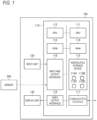
FIG. 1 is a block diagram illustrating a configuration example of a defect prediction system according to an embodiment of the present invention. -
FIG. 2 is a block diagram illustrating an example of a functional configuration of the defect prediction system according to the embodiment of the present invention. -
FIG. 3 is a graph illustrating an example of a defect prediction method according to an embodiment of the present invention. -
FIG. 4 is a schematic diagram illustrating an example of the defect prediction method according to the embodiment of the present invention. -
FIG. 5 is a flowchart of a prediction processing in the defect prediction system according to the embodiment of the present invention. -
FIG. 6 is a graph illustrating prediction results of the defect prediction method according to the embodiment of the present invention. -
FIG. 7 is a graph illustrating prediction results of the defect prediction method according to the embodiment of the present invention. -
FIG. 8 is a graph illustrating prediction results of the defect prediction method according to the embodiment of the present invention. - Hereinafter, embodiments of the present invention will be described with reference to the drawings. An embodiment to be described later is an embodiment for describing the present invention, and is not intended to be interpreted to limit the present invention, and all the configurations to be described in the embodiments are not necessarily essential configurations for solving the problem of the present invention. In the drawings, the same components are denoted by the same reference numerals, and a correspondence therebetween is shown.
- In the following description, "learning" or "machine learning" refers to generating a "trained model" by performing learning using learning data and any learning algorithm. The trained model is updated at an appropriate time as the learning proceeds using a plurality of pieces of learning data, and the output changes even for the same input. Therefore, the trained model is not limited to a state at any time point. Here, a model used in learning is referred to as a "learning model", and the learning model in which a certain degree of learning has been performed is referred to as a "trained model". A specific example of the "learning data" will be described later, and the configuration may be changed according to a learning algorithm to be used. In addition, the learning data may include training data used for learning, verification data used for verifying a trained model, and test data used for testing a trained model. In the following description, data related to learning is collectively referred to as "learning data", and data used for learning is referred to as "training data". It is not intended to clearly classify the training data, the verification data, and the test data included in the learning data, and for example, according to learning, verification, and test methods, all the learning data may be the training data.
- Hereinafter, an embodiment according to the present invention will be described with reference to the drawings.
-
FIG. 1 is a diagram illustrating a configuration example of adefect prediction system 100 capable of implementing a defect prediction method in welding according to the present embodiment. Thedefect prediction system 100 is implemented by, for example, an information processing device. Although not illustrated inFIG. 1 , thedefect prediction system 100 may be connected to a welding system including a welding robot or the like that performs welding, and may predict a defect that occurs with the welding in conjunction with the welding system. - The
defect prediction system 100 includes amain body 110, aninput unit 120, and adisplay unit 130. Themain body 110 includes a central processing unit (CPU) 111, a graphics processing unit (GPU) 112, aROM 113, aRAM 114, anonvolatile storage device 115, an input andoutput interface 116, acommunication interface 117, and avideo output interface 118. TheCPU 111, theGPU 112, theROM 113, theRAM 114, thenonvolatile storage device 115, the input andoutput interface 116, thecommunication interface 117, and thevideo output interface 118 are communicably connected to each other via a bus or a signal line. - The
nonvolatile storage device 115 stores alearning program 115A that executes a learning processing using learning data and a predetermined learning algorithm, a trainedmodel 115B generated by executing thelearning program 115A, aprediction program 115C that predicts a defect using the trainedmodel 115B, and learningdata 115D. In addition, an operating system or an application program may be installed in thenonvolatile storage device 115. - The
defect prediction system 100 implements various functions by theCPU 111 and theGPU 112 executing programs. In the case of the present embodiment, thedefect prediction system 100 implements a function of generating a trained model by machine learning and a function of performing an actual defect prediction processing using the trained model. The contents of these functions will be described later. - In the present embodiment, an example in which a device that performs a learning processing to generate a trained model and a device that performs prediction using the trained model are integrated will be described, and the present invention is not limited to this configuration. That is, the device that performs a learning processing and the device that performs prediction may be separate devices. From the viewpoint of versatility, it is more preferable to separate the
defect prediction system 100 according to each function. - The
CPU 111 and theGPU 112 are used as arithmetic devices when executing thelearning program 115A, the trainedmodel 115B, and theprediction program 115C. TheROM 113 stores a basic input output system (BIOS) or the like executed by theCPU 111. TheRAM 114 is used as a work area of the program read from thenonvolatile storage device 115. - The input and
output interface 116 is connected to theinput unit 120 including a keyboard, a mouse, and the like. Asensor 200 is also connected to the input andoutput interface 116. Various data output from thesensor 200 is provided to theCPU 111 or theGPU 112 via the input andoutput interface 116. Thesensor 200 may be moved according to, for example, the driving of a welding robot (not illustrated) and acquire information on a weld bead or a peripheral shape thereof. As thesensor 200, for example, a laser sensor that acquires reflected light of emitted laser light as height data, and a camera for three-dimensional shape measurement may be used. A plurality of types of sensors may be provided as thesensor 200. - The
communication interface 117 is a communication module for wired or wireless communication. A communication method used for thecommunication interface 117 is not limited to one, and a plurality of communication methods may be connected in combination. Thecommunication interface 117 may be connected to acquire various parameters related to welding by communicating with the welding system, for example. Thevideo output interface 118 is connected to thedisplay unit 130 including, for example, a liquid crystal display or an organic electro-luminescence (EL) display, and outputs to the display unit 130 a video signal corresponding to video data supplied from theCPU 111. - The welding system capable of cooperating with the
defect prediction system 100 may include, for example, a welding robot, and a welding power supply unit that provides electric power related to welding. The welding robot is an articulated robot, and a welding torch is attached to a tip end shaft thereof. A filler metal (welding wire) to be continuously supplied is supported at a tip end of the welding torch, and welding is performed according to a desired shape. When thedefect prediction system 100 and the welding system are integrated, control units thereof may also be integrated. - First, the generation of the trained model according to the present embodiment will be described. The trained model is generated by executing a learning program. In the present embodiment, two trained models are used. Therefore, in the present embodiment, the two trained models are generated using learning models based on two different learning algorithms. In the present embodiment, learning data used as an input is common to all learning models. The terms "first" and "second" described in the present specification are merely used to be distinguished from other elements for convenience, and are not necessarily intended to be interpreted as being limited to specific elements.
- For convenience, the two learning models according to the present embodiment are referred to as a "first learning model" and a "second learning model". In addition, the two trained models corresponding thereto are referred to as a "first trained model" and a "second trained model". In the present embodiment, the first learning model and the first trained model use a learning algorithm that outputs discrete values. More specifically, a well-known random forest will be described as an example. The second learning model and the second trained model use a learning algorithm that outputs continuous values. More specifically, a well-known Gaussian process regression will be described as an example. The learning algorithm used here is merely an example, and different types and combinations of algorithms may be used.
- Parameters related to welding (hereinafter also referred to as "welding parameters") are used for the input to the first learning model and the first trained model. More specifically, image data acquired when the
sensor 200 is implemented as a camera may be included. The image data may be used, or for example, a depth, a width (short length), a length (long length), and a target position deviation amount of a narrow portion may be extracted from the image data and used. In addition, point cloud data acquired when thesensor 200 is implemented as a laser sensor may be included. In addition, a welding current, a welding voltage, a bead-to-bead distance, a travel speed, and the like may be used as welding parameters. In addition, a feeding speed of the filler metal, an inclination angle of the welding torch, and the like may be used. - The same data as described above may be used in the second learning model and the second trained model. The first learning model and the first trained model, and the second learning model and the second trained model may perform different preprocessing before input even when the same data is used.
- The outputs of the first learning model and the first trained model are discrete values, and may be, for example, a plurality of classifications. More specifically, for example, the output may indicate which of the four classifications the input belongs to. The number of classifications is not particularly limited, and two or more classifications may be used.
- The outputs of the second learning model and the second trained model are continuous values, and may be, for example, a defect size indicated in a predetermined unit.
-
FIG. 2 is a diagram illustrating an example of a functional configuration of thedefect prediction system 100 according to the present embodiment. Each unit may be implemented by theCPU 111 or theGPU 112 reading and executing various data or programs stored in thenonvolatile storage device 115. As described above, thenonvolatile storage device 115 includes the programs in which a plurality of learning models based on a plurality of types of learning algorithms are defined, and learning is performed using the programs. - A
data acquisition unit 201 acquires various data. The data acquired here includes data required for an actual defect prediction processing and learning data used for a learning processing. A learningdata management unit 202 holds and manages learning data used for a learning processing. - A first
learning processing unit 203 generates the first trained model using the learning data and the first learning model. The firstlearning processing unit 203 manages the generated first trained model. The first trained model may be managed for each version as history information, or only the latest version may be managed. - A second
learning processing unit 204 generates the second trained model using the learning data and the second learning model. The secondlearning processing unit 204 manages the generated second trained model. The second trained model may be managed for each version as history information, or only the latest version may be managed. - A
first prediction unit 205 applies the first trained model generated by the firstlearning processing unit 203 to various input parameters and outputs a prediction result. Before various parameters are input to the first trained model, thefirst prediction unit 205 may perform preprocessing according to an input format. A degree of training of the first trained model used here is not particularly limited, and the first trained model that has been trained to a state in which a certain level of accuracy is obtained may be used. - A
second prediction unit 206 applies the second trained model generated by the secondlearning processing unit 204 to various input parameters and outputs a prediction result. Before various parameters are input to the second trained model, thesecond prediction unit 206 may perform preprocessing according to an input format. A degree of training of the second trained model used here is not particularly limited, and the second trained model that has been trained to a state in which a certain level of accuracy is obtained may be used. - A prediction
result synthesis unit 207 performs a synthesis processing based on the prediction result of thefirst prediction unit 205 and the second prediction result. A predictionresult output unit 208 outputs a result predicted by the predictionresult synthesis unit 207 in a predetermined format. The output format may be a format in which the result is displayed on a screen for a user, or a format in which the result is fed back to the welding system as control parameters for welding. - As described above, in the present embodiment, the plurality of types of learning algorithms are used. In the present embodiment, a learning algorithm that outputs continuous values and a learning algorithm that outputs discrete values are used for inputs, and an example thereof will be described.
-
FIG. 3 is a graph illustrating a Gaussian process regression, which is a type of the learning algorithm used in the present embodiment. The Gaussian process regression is a probability model that handles continuous values having non-linearity. In the algorithm of Gaussian process regression, inputs (corresponding to six black points in the example ofFIG. 3 ) are fitted with a curve. Further, uncertainty is used for values other than the inputs as indicated by oblique lines. The Gaussian process regression is a well-known algorithm, and thus the detailed description thereof is omitted here. In the present embodiment, the inputs are used as the welding parameters, and predicted values (continuous values) for the output are derived. More specifically, parameters indicating a defect size are output as predicted values for the input. Here, the parameters indicating a defect size will be described as two parameters (x, y) indicated in two dimensions. However, the present invention is not limited thereto, and three parameters (x, y, z) may be output when the defect size is indicated in three dimensions. -
FIG. 4 is a schematic diagram illustrating a random forest, which is a type of the learning algorithm used in the present embodiment. In the random forest, a plurality of data groups are set by extracting some data from the learning data. Then, a decision tree of a tree structure is generated while randomly selecting features using each data group. Further, results based on the decision tree are integrated by multi-decision to construct a trained model. In the present embodiment, the classifications are targeted, and multi-decision is used at the time of integration. The random forest is a well-known algorithm, and thus the detailed description thereof is omitted here. In the present embodiment, the inputs are used as the welding parameters, and the classifications (discrete values) for the output are derived. More specifically, as a classification for an input, one of a plurality of classifications defined in accordance with the defect size is output. In the present embodiment, four classifications of "no defect (0)", "small defect (1)", "medium defect (2)", and "large defect (3)" will be described. - The processing according to the present embodiment is roughly divided into two phases, that is, a learning phase and a defect prediction phase. The learning phase is a phase in which a trained model is generated, and the defect prediction phase is a phase in which an actual prediction processing is performed using the trained model generated in the learning phase. Processing in each phase is implemented by the
CPU 111 or theGPU 112 of thedefect prediction system 100 reading and executing various programs stored in thenonvolatile storage device 115 or the like. - In the learning phase, a plurality of trained models having a certain level of accuracy are generated by repeatedly performing a learning processing, a verification operation, and the like using the above-described various learning data. The plurality of trained models are generated before a control phase is performed, and the latest trained model at that time is used in the control phase. After the control phase is performed, the learning phase may also be repeated as necessary, and does not limit at which time the trained model is used.
- As described above, in the present embodiment, in the learning phase, learning using a learning algorithm that handles discrete values and learning using a learning algorithm that handles continuous values are performed. The degree of each learning is not particularly limited, and may be set in consideration of properties or a processing load of each learning algorithm.
- In the defect prediction phase, the
defect prediction system 100 performs a prediction processing using the plurality of trained models. In the present embodiment, thedefect prediction system 100 performs both learning (generation of the plurality of trained models) and defect prediction. -
FIG. 5 is a flowchart of a defect prediction processing by thedefect prediction system 100 according to the present embodiment. In the present embodiment, the two trained models are already generated and available. - In S501, the
defect prediction system 100 acquires a prediction result by inputting welding parameters into the first trained model, that is, a trained model based on a random forest. As described above, as the prediction result, any one of the four classifications is obtained for the welding parameters. - In S502, the
defect prediction system 100 acquires a prediction result by inputting welding parameters to the second trained model, that is, a trained model based on a Gaussian process regression. As described above, as the prediction result, the parameters indicating a defect size are obtained for the welding parameters. In the present embodiment, parameters (xa, ya) are acquired to indicate a defect size in two dimensions. - In S503, the
defect prediction system 100 determines whether there is a defect based on the prediction result in S501. In the case of the present embodiment, when any one of "small defect (1)", "medium defect (2)", and "large defect (3)" among the four classifications is predicted, it is determined that there is a defect. When it is determined that there is a defect (YES in S503), the process of thedefect prediction system 100 proceeds to S505. On the other hand, when it is determined that there is no defect (NO in S503), the process of thedefect prediction system 100 proceeds to S504. - In S504, the
defect prediction system 100 determines whether there is a defect based on the prediction result in S502. In the case of the present embodiment, a threshold value for the prediction result (continuous values) is set, and it is determined that there is a defect when the prediction result exceeds the threshold value. The threshold value may be set by the user, or may be defined according to a shape, specification, or the like of the manufactured object. For example, the threshold value may be set to 0.5 mm. When it is determined that there is a defect (YES in S504), the process of thedefect prediction system 100 proceeds to S505. On the other hand, when it is determined that there is no defect (NO in S504), the process of thedefect prediction system 100 proceeds to S507. - In S505, the
defect prediction system 100 determines that there is a defect based on the prediction results of the two trained models. Thereafter, the process of thedefect prediction system 100 proceeds to S506. - In S506, the
defect prediction system 100 synthesizes the prediction results of the two trained models to set the defect size. In the present embodiment, the parameters indicating a defect size are defined for each of the four classifications used in the first trained model. For example, two parameters (x, y) are defined in advance when the defect size is indicated in two dimensions, and three parameters (x, y, z) are defined when the defect size is indicated in three dimensions. - For example, in the case of four classifications, the following setting may be performed.
- "no defect (0)" = (0, 0)
- "small defect (1)" = (xb1, yb1)
- "medium defect (2)" = (xb2, yb2)
- "large defect (3)" = (xb3, yb3)
- xb1 < xb2 < xb3, yb1 < yb2 < yb3.
- The set values may be set based on the shape or specification of the manufactured object, a relation with the trained model that handles continuous values, and the like. That is, the parameters (here, classifications) to be output as the discrete values are defined as information to be converted, assuming synthesis with parameters to be output as continuous values by using another learning algorithm. The information to be converted may be defined in a table format.
- In the present embodiment, the defect size is set using the parameters corresponding to the above-described classifications and an average value of the prediction results obtained in S502.


- Then, this processing flow ends.
- In S507, the
defect prediction system 100 determines that there is no defect based on the prediction results of the two trained models. Thereafter, the process of thedefect prediction system 100 proceeds to S508. - In S508, the
defect prediction system 100 sets the defect size to zero based on the prediction results of the two trained models.

- Then, this processing flow ends.
- [Prediction Result]
- The prediction results by using the defect prediction method according to the present embodiment will be described with reference to
FIGS. 6 to 8 . -
FIG. 6 is a diagram illustrating a relation between an importance and features when a random forest is used as the first learning model that handles discrete values. Here, in K cross validation which is a well-known evaluation method, a result in which an accuracy rate of 78% is obtained for the classifications is shown. InFIG. 6 , a horizontal axis indicates the importance, and a vertical axis indicates the features. It can be seen that a narrow portion depth, a narrow portion width, a current, a voltage, a bead-to-bead distance, a travel speed, a target position deviation amount, and the like as the features obtained based on the input affect the detection of a defect. -
FIG. 7 illustrates prediction results when a Gaussian process regression is used as the second learning model that handles continuous values. InFIG. 7 , a horizontal axis indicates a measured value [mm] of a diameter of a defect, and a vertical axis indicates a predicted value [mm] of the defect. In the case of the prediction result, the following accuracy is obtained.

-
FIG. 8 illustrates prediction results when the defect prediction processing illustrated inFIG. 5 is performed using the first trained model having the accuracy illustrated inFIG. 6 and the second trained model having the accuracy illustrated inFIG. 7 . InFIG. 8 , a horizontal axis indicates a measured value [mm] of the diameter of the defect, and a vertical axis indicates a predicted value [mm] of the defect. In the case of the prediction result, the following accuracy is obtained.

- That is, the defect prediction method according to the present embodiment in which the first trained model and the second trained model are used in combination can obtain higher accuracy than when the first trained model and the second trained model are used alone. In addition, the variance also decreases, and thus the occurrence of errors can be reduced.
- As described above, according to the present embodiment, it is possible to predict a defect related to welding with higher accuracy.
- In the above-described embodiment, when the prediction results of the first trained model and the second trained model are synthesized, a simple average is used. However, the present invention is not limited to this configuration, and predicted values may be integrated by weighting each prediction result according to properties, accuracy, or the like of learning algorithms to be combined.
- When the prediction results of the first trained model and the second trained model are synthesized, a maximum value may be selected from a plurality of predicted values and set as a prediction result. For example, when welding with higher accuracy is required, a welding quality can be improved by setting the prediction result on a safer side.
- When the prediction results of the first trained model and the second trained model are synthesized, a minimum value may be selected from the plurality of predicted values and set as a prediction result. For example, when a travel speed or the like is obtained in preference to the accuracy, it is possible to reduce excessive detection for a defect by setting the prediction result so that the defect size becomes small.
- When the prediction results of the first trained model and the second trained model are synthesized, a plurality of synthesis methods may be combined. For example, depending on a difference between a plurality of prediction results, it may be possible to switch between the average value, the maximum value, and the minimum value to be used for setting a predicted value.
- In addition, when a difference between the plurality of prediction results exceeds a predetermined threshold value or when one prediction result indicates an extreme value, it is assumed that there is an error in any one prediction result, and a predicted value thereof may be ignored.
- Although two types of learning algorithms that handle discrete values and continuous values respectively are used in the above-described embodiments, three or more types of learning algorithms may be combined. In addition, a defect may be predicted using a plurality of learning algorithms that handle discrete values, so long as the learning algorithms are different. Similarly, a defect may be predicted using a plurality of learning algorithms that handle continuous values.
- In the above-described embodiments, the configuration is illustrated in which the learning algorithm that handles discrete values and the learning algorithm that handles continuous values are combined, and when the outputs of these are synthesized, the discrete values (classifications) are converted into the continuous values to perform synthesis. However, the present invention is not limited to this configuration, and the defect size may be predicted by converting the continuous values into the discrete values.
- The welding system may adjust the welding parameters based on the defect size obtained by the defect prediction according to the present embodiment. A degree of adjustment here is not particularly limited, and for example, the welding parameters may be adjusted according to an appearance frequency, an appearance position, an appearance timing, and the like of a defect of a certain size.
- In the present invention, a program or an application for implementing the functions of the one or more embodiments described above may be supplied to a system or an apparatus using a network, a storage medium, or the like, and one or more processors in a computer of the system or the apparatus may read and execute the program.
- Alternatively, one or more functions may be implemented by a circuit. Examples of the circuit that implements one or more functions include an application specific integrated circuit (ASIC) and a field programmable gate array (FPGA).
- As described above, the present specification discloses the following matters.
- (1) A defect prediction system for predicting a defect occurring in welding, the defect prediction system including:
- a first prediction unit configured to predict the defect using a first trained model that receives a welding parameter and outputs a parameter indicating a size of the defect;
- a second prediction unit configured to predict the defect using a second trained model that receives the welding parameter and outputs a parameter indicating a size of the defect; and
- a third prediction unit configured to predict the size of the defect based on a parameter predicted by the first prediction unit and a parameter predicted by the second prediction unit.
- (2) The defect prediction system according to (1), in which
- the first trained model is generated using a first learning algorithm that outputs discrete values, and
- the second trained model is generated using a second learning algorithm that outputs continuous values.
- (3) The defect prediction system according to (2), in which
- the discrete value output from the first trained model is one of a plurality of classifications, and
- the third prediction unit converts a classification, which is the parameter predicted by the first prediction unit, into a value indicating a size of a defect defined in advance for the classification, and synthesizes the converted value with the parameter predicted by the second prediction unit.
- (4) The defect prediction system according to (1), in which
- the first trained model is generated using a first learning algorithm that outputs continuous values, and
- the second trained model is generated using a second learning algorithm that outputs continuous values.
- (5) The defect prediction system according to (1), in which
- the first trained model is generated using a first learning algorithm that outputs discrete values, and
- the second trained model is generated using a second learning algorithm that outputs discrete values.
- (6) The defect prediction system according to any one of (1) to (5), in which
the third prediction unit predicts the size of the defect using any one of an average value, a maximum value, and a minimum value of the parameter predicted by the first prediction unit and the parameter predicted by the second prediction unit.
According to this configuration, it is possible to predict the size of the welding defect using the average value, the maximum value, or the minimum value of the plurality of predicted parameters. - (7) A machine learning device for generating a trained model for predicting a defect occurring in welding, the machine learning device including:
- a first learning processing unit configured to use a welding parameter as learning data and perform a learning processing according to a first learning algorithm that outputs discrete values, thereby generating a first trained model that uses the welding parameter as input data and outputs a parameter indicating a size of a defect caused by the welding parameter; and
- a second learning processing unit configured to use the welding parameter as learning data and perform a learning processing according to a second learning algorithm that outputs continuous values, thereby generating a second trained model that uses the welding parameter as input data and outputs a parameter indicating the size of the defect caused by the welding parameter, in which
- the parameter output from the first trained model and the parameter output from the second trained model are convertible into any one of parameter formats.
- (8) A defect prediction method for predicting a defect occurring in welding, the defect prediction method including:
- a first prediction step of predicting the defect using a first trained model that receives a welding parameter and outputs a parameter indicating a size of the defect;
- a second prediction step of predicting the defect using a second trained model that receives the welding parameter and outputs a parameter indicating a size of the defect; and
- a third prediction step of predicting the size of the defect based on a parameter predicted in the first prediction step and a parameter predicted in the second prediction step.
- (9) A program causing a computer to execute:
- a first prediction step of predicting a defect occurring in welding using a first trained model that receives a welding parameter and outputs a parameter indicating a size of the defect;
- a second prediction step of predicting the defect using a second trained model that receives the welding parameter and outputs a parameter indicating a size of the defect; and
- a third prediction step of predicting the size of the defect based on a parameter predicted in the first prediction step and a parameter predicted in the second prediction step.
- Although various embodiments are described above, it is needless to say that the present invention is not limited to these embodiments. It is apparent that those skilled in the art can conceive of various modifications and alterations within the scope described in the claims, and it is understood that such modifications and alterations naturally fall within the technical scope of the present invention. In addition, the respective components in the above-described embodiments may be freely combined without departing from the gist of the invention.
- The present application is based on
Japanese Patent Application No. 2022-036454 filed on March 9, 2022 -
- 100:
- defect prediction system
- 110:
- main body
- 111:
- CPU
- 112:
- GPU
- 113:
- ROM
- 114:
- RAM
- 115:
- nonvolatile storage device
- 116:
- input and output interface
- 117:
- communication interface
- 118:
- video output interface
- 120:
- input unit
- 130:
- display unit
- 200:
- sensor
- 201:
- data acquisition unit
- 202:
- learning data management unit
- 203:
- first learning processing unit
- 204:
- second learning processing unit
- 205:
- first prediction unit
- 206:
- second prediction unit
- 207:
- prediction result synthesis unit
- 208:
- prediction result output unit
Claims (9)
- A defect prediction system for predicting a defect occurring in welding, the defect prediction system comprising:a first prediction unit configured to predict the defect using a first trained model that receives a welding parameter and outputs a parameter indicating a size of the defect;a second prediction unit configured to predict the defect using a second trained model that receives the welding parameter and outputs a parameter indicating a size of the defect; anda third prediction unit configured to predict the size of the defect based on a parameter predicted by the first prediction unit and a parameter predicted by the second prediction unit.
- The defect prediction system according to claim 1, wherein:the first trained model is generated using a first learning algorithm that outputs discrete values; andthe second trained model is generated using a second learning algorithm that outputs continuous values.
- The defect prediction system according to claim 2, wherein:the discrete value output from the first trained model is one of a plurality of classifications; andthe third prediction unit converts a classification, which is the parameter predicted by the first prediction unit, into a value indicating a size of a defect defined in advance for the classification, and synthesizes the converted value with the parameter predicted by the second prediction unit.
- The defect prediction system according to claim 1, wherein:the first trained model is generated using a first learning algorithm that outputs continuous values; andthe second trained model is generated using a second learning algorithm that outputs continuous values.
- The defect prediction system according to claim 1, wherein:the first trained model is generated using a first learning algorithm that outputs discrete values; andthe second trained model is generated using a second learning algorithm that outputs discrete values.
- The defect prediction system according to any one of claims 1 to 5, wherein
the third prediction unit predicts the size of the defect using any one of an average value, a maximum value, and a minimum value of the parameter predicted by the first prediction unit and the parameter predicted by the second prediction unit. - A machine learning device for generating a trained model for predicting a defect occurring in welding, the machine learning device comprising:a first learning processing unit configured to use a welding parameter as learning data and perform a learning processing according to a first learning algorithm that outputs discrete values, thereby generating a first trained model that uses the welding parameter as input data and outputs a parameter indicating a size of a defect caused by the welding parameter; anda second learning processing unit configured to use the welding parameter as learning data and perform a learning processing according to a second learning algorithm that outputs continuous values, thereby generating a second trained model that uses the welding parameter as input data and outputs a parameter indicating the size of the defect caused by the welding parameter, whereinthe parameter output from the first trained model and the parameter output from the second trained model are convertible into any one of parameter formats.
- A defect prediction method for predicting a defect occurring in welding, the defect prediction method comprising:a first prediction step of predicting the defect using a first trained model that receives a welding parameter and outputs a parameter indicating a size of the defect;a second prediction step of predicting the defect using a second trained model that receives the welding parameter and outputs a parameter indicating a size of the defect; anda third prediction step of predicting the size of the defect based on a parameter predicted in the first prediction step and a parameter predicted in the second prediction step.
- A program causing a computer to execute:a first prediction step of predicting a defect occurring in welding using a first trained model that receives a welding parameter and outputs a parameter indicating a size of the defect;a second prediction step of predicting the defect using a second trained model that receives the welding parameter and outputs a parameter indicating a size of the defect; anda third prediction step of predicting the size of the defect based on a parameter predicted in the first prediction step and a parameter predicted in the second prediction step.
Applications Claiming Priority (2)
| Application Number | Priority Date | Filing Date | Title |
|---|---|---|---|
| JP2022036454A JP7726818B2 (en) | 2022-03-09 | 2022-03-09 | Welding defect prediction system, machine learning device, defect prediction method, and program |
| PCT/JP2022/048305 WO2023171095A1 (en) | 2022-03-09 | 2022-12-27 | Welding defect prediction system, machine learning device, defect prediction method, and program |
Publications (3)
| Publication Number | Publication Date |
|---|---|
| EP4475046A1 true EP4475046A1 (en) | 2024-12-11 |
| EP4475046A4 EP4475046A4 (en) | 2025-09-10 |
| EP4475046B1 EP4475046B1 (en) | 2026-06-24 |
Family
ID=87936625
Family Applications (1)
| Application Number | Title | Priority Date | Filing Date |
|---|---|---|---|
| EP22931065.1A Active EP4475046B1 (en) | 2022-03-09 | 2022-12-27 | Welding defect prediction system, machine learning device, defect prediction method, and program |
Country Status (5)
| Country | Link |
|---|---|
| US (1) | US20250269472A1 (en) |
| EP (1) | EP4475046B1 (en) |
| JP (1) | JP7726818B2 (en) |
| CN (1) | CN118843874A (en) |
| WO (1) | WO2023171095A1 (en) |
Families Citing this family (1)
| Publication number | Priority date | Publication date | Assignee | Title |
|---|---|---|---|---|
| CN119839508B (en) * | 2024-12-24 | 2025-10-10 | 中国核动力研究设计院 | Welding process reliability optimization acceleration method and system based on machine learning |
Family Cites Families (8)
| Publication number | Priority date | Publication date | Assignee | Title |
|---|---|---|---|---|
| JP7021728B2 (en) * | 2017-05-12 | 2022-02-17 | 株式会社神戸製鋼所 | Automatic welding system, welding control method, and machine learning model |
| JP6743084B2 (en) * | 2018-04-25 | 2020-08-19 | 株式会社小松製作所 | Welding system, method, welding determination device, and method for constructing learned model |
| JP6976910B2 (en) * | 2018-07-04 | 2021-12-08 | 株式会社日立製作所 | Data classification system, data classification method, and data classification device |
| JP7186054B2 (en) | 2018-10-11 | 2022-12-08 | 神鋼検査サービス株式会社 | Defect detection support device, method and program |
| JP7330645B2 (en) * | 2019-11-19 | 2023-08-22 | 株式会社神戸製鋼所 | Automatic welding system, automatic welding method, welding support device, and program |
| JP7303163B2 (en) * | 2020-07-20 | 2023-07-04 | 株式会社神戸製鋼所 | Defect Occurrence Prediction Method and Defect Occurrence Prediction Apparatus |
| JP7567282B2 (en) | 2020-08-24 | 2024-10-16 | 株式会社プロテリアル | Test methods for isolated converters |
| CN112365491A (en) * | 2020-11-27 | 2021-02-12 | 上海市计算技术研究所 | Method for detecting welding seam of container, electronic equipment and storage medium |
-
2022
- 2022-03-09 JP JP2022036454A patent/JP7726818B2/en active Active
- 2022-12-27 EP EP22931065.1A patent/EP4475046B1/en active Active
- 2022-12-27 CN CN202280093232.9A patent/CN118843874A/en active Pending
- 2022-12-27 WO PCT/JP2022/048305 patent/WO2023171095A1/en not_active Ceased
- 2022-12-27 US US18/844,745 patent/US20250269472A1/en active Pending
Also Published As
| Publication number | Publication date |
|---|---|
| JP7726818B2 (en) | 2025-08-20 |
| EP4475046B1 (en) | 2026-06-24 |
| JP2023131600A (en) | 2023-09-22 |
| CN118843874A (en) | 2024-10-25 |
| EP4475046A4 (en) | 2025-09-10 |
| WO2023171095A1 (en) | 2023-09-14 |
| US20250269472A1 (en) | 2025-08-28 |
Similar Documents
| Publication | Publication Date | Title |
|---|---|---|
| US11267059B2 (en) | Control device of wire electric discharge machine and machine learning device | |
| JP7040851B2 (en) | Anomaly detection device, anomaly detection method and anomaly detection program | |
| EP3405843B1 (en) | Model adaption and online learning for unstable environments | |
| US11982998B2 (en) | Manufacturing monitoring assistance device, manufacturing monitoring assistance method, and manufacturing monitoring assistance program | |
| CN109031954B (en) | Welding parameter determination method based on reinforcement learning, welding method and welding equipment | |
| US10775780B2 (en) | Causal relation model building system and method thereof | |
| CN111823594A (en) | Machine learning based on virtual and real data | |
| US12103169B2 (en) | Abnormality diagnosis device and abnormality diagnosis method | |
| US11741394B2 (en) | Information processing method, information processing apparatus, and abnormality determination system | |
| US11947623B2 (en) | Information processing device, information processing method, and computer program product | |
| US20250269472A1 (en) | Welding defect prediction system, machine learning device, defect prediction method, and program | |
| CN116542076A (en) | Aircraft landing method, device, equipment and medium based on unstable platform | |
| KR102052304B1 (en) | Control methods and systems for welding automation | |
| JP6253838B1 (en) | Action log generation method, action log generation device, and action log generation program | |
| US20230152092A1 (en) | Systems and Methods for Generating a Phase-Resolved Ocean Wave Forecasts with Ensemble Based Data Assimilation | |
| US12175646B2 (en) | Abnormality detection apparatus, control method, and program | |
| JP6855826B2 (en) | Judgment device, judgment method and judgment program | |
| JP2020028909A (en) | Processing condition adjustment device and machine learning device | |
| CN112183555A (en) | Method and system for detecting welding quality, electronic device and storage medium | |
| JP6308808B2 (en) | Inspection system, inspection apparatus, control method, and program | |
| CN115100141A (en) | Welding offset abnormity determination method, device, equipment and storage medium | |
| JP7089438B2 (en) | Plant operation support equipment | |
| CN116443521A (en) | Automatic control method and system for coal flow based on laser scanner | |
| US12249134B2 (en) | Visualization method, program for the same, visualization device, and discrimination device having the same | |
| JP7515169B2 (en) | Verification device, verification method, and verification program for verifying the authenticity of lightning detection by a lightning location system |
Legal Events
| Date | Code | Title | Description |
|---|---|---|---|
| STAA | Information on the status of an ep patent application or granted ep patent |
Free format text: STATUS: THE INTERNATIONAL PUBLICATION HAS BEEN MADE |
|
| PUAI | Public reference made under article 153(3) epc to a published international application that has entered the european phase |
Free format text: ORIGINAL CODE: 0009012 |
|
| STAA | Information on the status of an ep patent application or granted ep patent |
Free format text: STATUS: REQUEST FOR EXAMINATION WAS MADE |
|
| 17P | Request for examination filed |
Effective date: 20240906 |
|
| AK | Designated contracting states |
Kind code of ref document: A1 Designated state(s): AL AT BE BG CH CY CZ DE DK EE ES FI FR GB GR HR HU IE IS IT LI LT LU LV MC ME MK MT NL NO PL PT RO RS SE SI SK SM TR |
|
| DAV | Request for validation of the european patent (deleted) | ||
| DAX | Request for extension of the european patent (deleted) | ||
| A4 | Supplementary search report drawn up and despatched |
Effective date: 20250813 |
|
| RIC1 | Information provided on ipc code assigned before grant |
Ipc: G06N 20/20 20190101AFI20250807BHEP Ipc: B23K 31/12 20060101ALI20250807BHEP Ipc: B23K 9/04 20060101ALI20250807BHEP Ipc: G06N 3/045 20230101ALI20250807BHEP Ipc: G06N 3/08 20230101ALI20250807BHEP |
|
| GRAP | Despatch of communication of intention to grant a patent |
Free format text: ORIGINAL CODE: EPIDOSNIGR1 |
|
| STAA | Information on the status of an ep patent application or granted ep patent |
Free format text: STATUS: GRANT OF PATENT IS INTENDED |
|
| RIC1 | Information provided on ipc code assigned before grant |
Ipc: G06N 20/20 20190101AFI20260211BHEP Ipc: B23K 31/12 20060101ALI20260211BHEP Ipc: B23K 9/04 20060101ALI20260211BHEP Ipc: G06N 3/045 20230101ALI20260211BHEP Ipc: G06N 3/08 20230101ALI20260211BHEP |
|
| INTG | Intention to grant announced |
Effective date: 20260309 |
|
| RIN1 | Information on inventor provided before grant (corrected) |
Inventor name: HUANG, SHUO Inventor name: ASHIDA, TSUYOSHI |
|
| GRAS | Grant fee paid |
Free format text: ORIGINAL CODE: EPIDOSNIGR3 |
|
| P01 | Opt-out of the competence of the unified patent court (upc) registered |
Free format text: CASE NUMBER: UPC_APP_0012167_4475046/2026 Effective date: 20260409 |
|
| GRAA | (expected) grant |
Free format text: ORIGINAL CODE: 0009210 |
|
| STAA | Information on the status of an ep patent application or granted ep patent |
Free format text: STATUS: THE PATENT HAS BEEN GRANTED |
|
| AK | Designated contracting states |
Kind code of ref document: B1 Designated state(s): AL AT BE BG CH CY CZ DE DK EE ES FI FR GB GR HR HU IE IS IT LI LT LU LV MC ME MK MT NL NO PL PT RO RS SE SI SK SM TR |
|
| REG | Reference to a national code |
Ref country code: CH Ref legal event code: F10 Free format text: ST27 STATUS EVENT CODE: U-0-0-F10-F00 (AS PROVIDED BY THE NATIONAL OFFICE) Effective date: 20260624 Ref country code: GB Ref legal event code: FG4D |
|
| REG | Reference to a national code |
Ref country code: IE Ref legal event code: FG4D |
|
| REG | Reference to a national code |
Ref country code: DE Ref legal event code: R096 Ref document number: 602022039005 Country of ref document: DE |