EP4474766A2 - System and method for measuring and aligning roof bolts - Google Patents
System and method for measuring and aligning roof bolts Download PDFInfo
- Publication number
- EP4474766A2 EP4474766A2 EP24208255.0A EP24208255A EP4474766A2 EP 4474766 A2 EP4474766 A2 EP 4474766A2 EP 24208255 A EP24208255 A EP 24208255A EP 4474766 A2 EP4474766 A2 EP 4474766A2
- Authority
- EP
- European Patent Office
- Prior art keywords
- bolt
- roof
- location
- mine
- controller
- Prior art date
- Legal status (The legal status is an assumption and is not a legal conclusion. Google has not performed a legal analysis and makes no representation as to the accuracy of the status listed.)
- Pending
Links
Images






Classifications
-
- E—FIXED CONSTRUCTIONS
- E02—HYDRAULIC ENGINEERING; FOUNDATIONS; SOIL SHIFTING
- E02D—FOUNDATIONS; EXCAVATIONS; EMBANKMENTS; UNDERGROUND OR UNDERWATER STRUCTURES
- E02D5/00—Bulkheads, piles, or other structural elements specially adapted to foundation engineering
-
- E—FIXED CONSTRUCTIONS
- E21—EARTH OR ROCK DRILLING; MINING
- E21D—SHAFTS; TUNNELS; GALLERIES; LARGE UNDERGROUND CHAMBERS
- E21D20/00—Setting anchoring-bolts
-
- E—FIXED CONSTRUCTIONS
- E21—EARTH OR ROCK DRILLING; MINING
- E21D—SHAFTS; TUNNELS; GALLERIES; LARGE UNDERGROUND CHAMBERS
- E21D20/00—Setting anchoring-bolts
- E21D20/003—Machines for drilling anchor holes and setting anchor bolts
-
- G—PHYSICS
- G01—MEASURING; TESTING
- G01C—MEASURING DISTANCES, LEVELS OR BEARINGS; SURVEYING; NAVIGATION; GYROSCOPIC INSTRUMENTS; PHOTOGRAMMETRY OR VIDEOGRAMMETRY
- G01C3/00—Measuring distances in line of sight; Optical rangefinders
- G01C3/02—Details
- G01C3/06—Use of electric means to obtain final indication
- G01C3/08—Use of electric radiation detectors
-
- G—PHYSICS
- G01—MEASURING; TESTING
- G01C—MEASURING DISTANCES, LEVELS OR BEARINGS; SURVEYING; NAVIGATION; GYROSCOPIC INSTRUMENTS; PHOTOGRAMMETRY OR VIDEOGRAMMETRY
- G01C3/00—Measuring distances in line of sight; Optical rangefinders
- G01C3/10—Measuring distances in line of sight; Optical rangefinders using a parallactic triangle with variable angles and a base of fixed length in the observation station, e.g. in the instrument
- G01C3/14—Measuring distances in line of sight; Optical rangefinders using a parallactic triangle with variable angles and a base of fixed length in the observation station, e.g. in the instrument with binocular observation at a single point, e.g. stereoscopic type
-
- G—PHYSICS
- G06—COMPUTING OR CALCULATING; COUNTING
- G06F—ELECTRIC DIGITAL DATA PROCESSING
- G06F18/00—Pattern recognition
- G06F18/20—Analysing
- G06F18/25—Fusion techniques
-
- G—PHYSICS
- G06—COMPUTING OR CALCULATING; COUNTING
- G06T—IMAGE DATA PROCESSING OR GENERATION, IN GENERAL
- G06T7/00—Image analysis
- G06T7/0002—Inspection of images, e.g. flaw detection
- G06T7/0004—Industrial image inspection
- G06T7/001—Industrial image inspection using an image reference approach
-
- G—PHYSICS
- G06—COMPUTING OR CALCULATING; COUNTING
- G06T—IMAGE DATA PROCESSING OR GENERATION, IN GENERAL
- G06T7/00—Image analysis
- G06T7/60—Analysis of geometric attributes
- G06T7/62—Analysis of geometric attributes of area, perimeter, diameter or volume
-
- G—PHYSICS
- G06—COMPUTING OR CALCULATING; COUNTING
- G06T—IMAGE DATA PROCESSING OR GENERATION, IN GENERAL
- G06T7/00—Image analysis
- G06T7/70—Determining position or orientation of objects or cameras
- G06T7/73—Determining position or orientation of objects or cameras using feature-based methods
-
- G—PHYSICS
- G06—COMPUTING OR CALCULATING; COUNTING
- G06V—IMAGE OR VIDEO RECOGNITION OR UNDERSTANDING
- G06V10/00—Arrangements for image or video recognition or understanding
- G06V10/20—Image preprocessing
- G06V10/24—Aligning, centring, orientation detection or correction of the image
- G06V10/245—Aligning, centring, orientation detection or correction of the image by locating a pattern; Special marks for positioning
-
- B—PERFORMING OPERATIONS; TRANSPORTING
- B62—LAND VEHICLES FOR TRAVELLING OTHERWISE THAN ON RAILS
- B62D—MOTOR VEHICLES; TRAILERS
- B62D11/00—Steering non-deflectable wheels; Steering endless tracks or the like
- B62D11/02—Steering non-deflectable wheels; Steering endless tracks or the like by differentially driving ground-engaging elements on opposite vehicle sides
-
- G—PHYSICS
- G01—MEASURING; TESTING
- G01V—GEOPHYSICS; GRAVITATIONAL MEASUREMENTS; DETECTING MASSES OR OBJECTS; TAGS
- G01V1/00—Seismology; Seismic or acoustic prospecting or detecting
-
- G—PHYSICS
- G01—MEASURING; TESTING
- G01V—GEOPHYSICS; GRAVITATIONAL MEASUREMENTS; DETECTING MASSES OR OBJECTS; TAGS
- G01V8/00—Prospecting or detecting by optical means
- G01V8/10—Detecting, e.g. by using light barriers
-
- G—PHYSICS
- G06—COMPUTING OR CALCULATING; COUNTING
- G06T—IMAGE DATA PROCESSING OR GENERATION, IN GENERAL
- G06T2207/00—Indexing scheme for image analysis or image enhancement
- G06T2207/30—Subject of image; Context of image processing
- G06T2207/30108—Industrial image inspection
-
- G—PHYSICS
- G06—COMPUTING OR CALCULATING; COUNTING
- G06T—IMAGE DATA PROCESSING OR GENERATION, IN GENERAL
- G06T2207/00—Indexing scheme for image analysis or image enhancement
- G06T2207/30—Subject of image; Context of image processing
- G06T2207/30108—Industrial image inspection
- G06T2207/30164—Workpiece; Machine component
Definitions
- Embodiments relate to industrial machines, and in some embodiments, mining machines.
- one or more roof bolts are driven into the roof or sidewalls of the mine to provide stability to the roof and sidewalls of the mine.
- the roof bolts may be installed using a roof bolter machine configured to drill holes into the roof and thereafter install a roof bolt along with a resin, in order to stabilize the roof or sidewalls and thereby prevent delamination and falls of the roof and sidewalls.
- Roof bolts are typically installed according to a pre-approved bolting plan, which typically is a two-dimensional matrix of bolts arranged in a line across the span of the mine and in linear rows along the mine shaft.
- the pre-approved bolting plan includes set distances between roof bolts both across the span of the mine and along the mine shaft.
- the distances between the roof bolts, and the distances between the roof bolts closest to the sidewalls and the sidewalls is measured manually by an operator (for example, using a tape measure). Such measurements may be prone to human faults.
- the application provides a industrial machine including a chassis, a first sensor configured to sense a roof bolt, a second sensor configured to sense the roof bolt, and a controller.
- the controller configured to receive sensor information from the first and second sensors, and determine a location of the roof bolt based on the sensor information from the first and second sensors.
- the application provides a method of operating a roof bolting apparatus.
- the method including sensing, via a first sensor, a roof bolt; sensing, via a second sensor, the roof bolt; and determining, via a controller, a location of the roof bolt based on sensing information from the first sensor and the second sensor.
- the application provides an industrial machine including a camera and a controller.
- the camera is configured to capture an image of an object. Wherein the captured image has a known capture area and the object has a known dimension.
- the controller is configured to receive the captured image from the sensor, and determine a location of the roof bolt, the location based on the captured image, the known captured area of the capture image, and the known dimension of the roof bolt.
- Embodiments disclosed herein provide benefits, such as but not limited to, accurate measurements, accurate location determination, ensuring roof bolts are installed correctly according to a roof bolting plan, ensuring a roof of a mine is correctly supported, preventing mine closure due to incorrectly installed roof bolts, increase productivity due to correctly installed roof bolts, and increase productivity due to automatic measurements of the roof bolts.
- embodiments disclosed herein provide benefits, such as but not limited to, providing evidence of roof bolt installation, providing information and statistics to analyze roof bolt installation, providing means for planning and optimizing roof bolt installation, and providing means for education and training of roof bolt installation.
- controllers can include standard processing components, such as one or more processors, one or more computer-readable medium modules, one or more input/output interfaces, and various connections (e.g., a system bus) connecting the components.
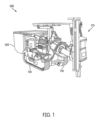
- Fig. 1 illustrates an industrial machine 100 according to some embodiments.
- the industrial machine 100 is a roof bolter, or roof bolting machine.
- the industrial machine 100 includes a chassis 105 and one or more tracks 110 supporting the chassis 105 and propelling the industrial machine 100 forward and backward, and for turning the industrial machine 100 (i.e., by varying the speed and/or direction of the left and right tracks relative to each other).
- the industrial machine 100 may include other propulsion devices, such as but not limited to, one or more wheels.
- the industrial machine 100 further includes a bolting apparatus 115 supported by the chassis 105.
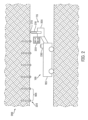
- Figs. 2 and 3 illustrate the industrial machine 100 within mine 200.
- the bolting apparatus 115 includes a roof bolt drill boom 205, a roof bolter drill 210, and a roof bolter drill bit 215.
- the roof bolt drill boom 205 couples the bolting apparatus 115 to the chassis 105, and is configured to move the bolting apparatus 115 during operation.
- the roof bolt drill boom may include a boom actuator 220 ( Fig. 4 ) to promote such movement.
- the boom actuator 220 is one or more hydraulic actuators.
- the boom actuator 220 may be one or more motors.
- the boom actuator 220 may be one or more hydraulic actuators in combination with one or more motors.
- the bolting apparatus 115 is configured to secure one or more roof bolts 225 into the roof or sidewalls of the mine 200.
- installing a roof bolt 225 into the roof or sidewalls of the mine 200 includes, among other things, drilling a hole into a roof or a sidewall of the mine 200 (for example, via the roof bolt drill 210 and roof bolt drill bit 215) and driving a roof bolt 225, along with a resin into the hole.
- the industrial machine 100 may further include a sensing system 230 and a user-interface 235.
- the roof bolts 225 may be spaced apart from other roof bolts 225 by column spacing 605 as well as by row spacing 610. However, in other embodiments, the roof bolts 225 may have different spacing, or arranged in different matrixes within mine 200.
- Fig. 4 illustrates a control system 300 of the industrial machine 100 according to some embodiments.
- the control system 300 includes a controller 305 and an input/output module (I/O) 307.
- the controller 305 includes a processor 310 and memory 315.
- the memory 315 stores instructions executable by the processor 310.
- the controller 305 includes one or more of a microprocessor, digital signal processor (DSP), field programmable gate array (FPGA), application specific integrated circuit (ASIC), or the like.
- DSP digital signal processor
- FPGA field programmable gate array
- ASIC application specific integrated circuit
- the controller 305 is electrically and/or communicatively coupled to the roof bolt drill 210, boom actuator 220, the sensing system 230, the user-interface 235, one or more track actuators 320 for actuating the tracks 110, and one or more operator controls 325.
- the sensing system 230 may include one or more sensors 330 (for example, sensors 330a and 330b).
- the sensors 330 may be any combination of one or more cameras, one or more lasers, and one or more transducers (for example, ultrasonic transducers).
- the sensing system 230 is configured to use the one or more sensors 330 to detect one or more roof bolts 215 ( Fig. 2 ).
- the one or more sensors 330 are a first camera and a second camera.
- the first camera captures a first image of the mine 200
- the second camera captures a second image of the mine 200.
- the controller 305 may then determine a location of a roof bolt 225 by using stereo vision of the first image and the second image.
- the controller 305 may determine the location of the roof bolt 225 by using the following distances: the known distance between the first camera and the second camera; a first pixel location (according to the first image) of the roof bolt 225 (for example, a pixel distance between the roof bolt 225 and a second roof bolt or a pixel distance between a roof bolt 225 and a sidewall of mine 200), and a second pixel location (according to the second image) of the one or more roof bolts 225 (for example, a pixel distance between the roof bolt 225 and a second roof bolt or a pixel distance between a roof bolt 225 and the sidewall of mine 200).
- the one or more sensors 330 include a camera and a laser measuring device, or a transducer.
- the camera captures an image of the mine 200
- the laser measuring device, or transducer determines a distance between the industrial machine 100 to a point of the mine 200 (for example, a roof bolt 225 or a roof of the mine 200) captured within the image.
- the controller 305 may determine a location of the roof bolt 225 within the mine 200.
- the captured image may provide a location of the roof bolt 225 (for example, a pixel distance between roof bolts 225 or a pixel distance between the roof bolt 225 and a sidewall of mine 200), by using the determined distance, via the laser measuring device or transducer, from the industrial machine 100 to a known point in the captured image, the pixel distance may be converted to an actual distance (for example, meters).
- a location of the roof bolt 225 for example, a pixel distance between roof bolts 225 or a pixel distance between the roof bolt 225 and a sidewall of mine 200
- the one or more sensors 330 include a camera and a laser (for example, a laser pointer) located a known distance from the camera.
- the camera captures an image of the mine 200, while the laser projects a mark (for example, a dot) at a point of the mine 200 (for example, a roof bolt 225 or a roof of the mine 200) captured within the image.
- the controller 305 may then determine a pixel distance between the mark in the captured distance and a known point (for example, a center point) of the captured image. Based on the pixel distance between the mark and known point, and the known distance between the camera and laser, the controller 305 may convert the pixel distance to an actual distance. The controller 305 may then use that actual distance to determine an actual distance between other objects in the captured image, for example, the actual distance between roof bolts 225 and/or the actual distance between a roof bolt 225 and a sidewall of the mine 200.
- the one or more sensors 330 include a single camera.
- the camera captures an image of the mine 200.
- the controller 305 may determine a location of the roof bolt 225 within the mine 200.
- the captured image may provide a location of the roof bolt 225 (with respect to other roof bolts 225 or a sidewall of mine 200) with respect to an image pixel matrix (for example, a known image pixel matrix used by the camera, or a known image area captured by the camera), by using the known dimension of the roof bolt 225, the image pixel matrix of the captured image may be converted to an actual size matrix (for example, a meter by meter matrix).
- the user-interface 235 provides information to the operator about the status of the industrial machine 100 and other systems communicating with the industrial machine 100.
- other systems may include other industrial machines and user-personal devices (for example, including external computers, laptops, tablets, smartphones, etc.).
- the user-interface 235 includes one or more of the following: a display (e.g. a liquid crystal display (LCD)); one or more light emitting diodes (LEDs) or other illumination devices; a heads-up display; speakers for audible feedback (e.g., beeps, spoken messages, etc.); tactile feedback devices such as vibration devices that cause vibration of the operator's seat or operator controls 325; or other feedback devices.
- a display e.g. a liquid crystal display (LCD)
- LEDs light emitting diodes
- heads-up display e.g., speakers for audible feedback (e.g., beeps, spoken messages, etc.); tactile feedback devices such as vibration devices that cause vibration of the operator's seat or operator
- the operator controls 325 receive operator input via one or more input devices and output control signals to the controller 305 based on the operator input. Upon receiving the control signals, the controller 305 controls, among other things, the roof bolt drill 210, the boom actuator 220, and the track actuators 320.
- the input/output (I/O) module 307 is configured to provide communication between the controller 305 and outside devices (for example, a laptop, a smartphone, a tablet, an external server, or an external computer system).
- the I/O module 307 provides communication via a network.
- the network may be a wide area network (WAN), such as but not limited to, the Internet.
- the network may be a local area network (LAN), a neighborhood area network (NAN), a home area network (HAN), a vehicular area network (VAN), or personal area network (PAN) employing any of a variety of communications protocols, such as Wi-Fi ® , Bluetooth ® , ZigBee ® , and the like.
- the controller 305 uses the sensing system 230 to determine a location of one or more roof bolts 215. The controller 305, based on the location, controls at least one of the roof bolt drill 210, the boom actuator 220, and the track actuators 320, to install a subsequent roof bolt. In another embodiment of operation, the controller 305, based on the location, provides feedback to an operator via the user-interface 235. The operator then uses the operator controls 325 to install a subsequent roof bolt using the feedback.
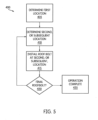
- Fig. 5 illustrates a process, or operation, 400 of the industrial machine 100 according to some embodiments. It should be understood that the order of the steps disclosed in process 400 could vary. Although illustrated as occurring in parallel order, in other embodiments, the steps disclosed may be performed in serial order. Furthermore, additional steps may be added to the process and not all of the steps may be required.
- a first location of a first roof bolt 225a ( Fig. 5 ) is determined using the sensing system 230 (block 405).
- a second, or additional, location of a second, or subsequent, roof bolt 225b ( Fig. 6 ) is determined using the sensing system 230 (block 410). As illustrated in Fig.
- roof bolts 225 may be spaced apart from other roof bolts 225 by column spacing 605 as well as by row spacing 610. Additionally, roof bolts 225 may be spaced from a side wall 615 by a side wall spacing 620. In some embodiments, the predetermined first and second distances 505, 510 may be determined based on a roof bolting plan.
- the second roof bolt 225b is then installed at the second location (block 415). A determination is then made as to whether the second roof bolt 225b is the final roof bolt to be installed (block 420). If the second roof bolt 225b is the final roof bolt to be installed, then operation is complete (block 425). If subsequent roof bolts (for example, 225a, 225b, 225c, 225d, 225e, ... 225n) are necessary, operation 400 reverts back to block 410.
- controller 305 once a location is determined by controller 305, feedback is provided to the user via the user-interface 235. The user may then operate the operator controls 325 to position the roof bolt boom 205, roof bolter drill 210, and roof bolter drill bit 215, and install one or more roof bolts 225. In another embodiment, once a location is determined by controller 305, the controller 305 automatically controls the industrial machine 100, including the roof bolt boom 205, roof bolter drill 210, and roof bolter drill bit 215, to install one or more roof bolts 225. The automatic installation of the subsequent bolts can be based on discrete measurements from the previously installed roof bolt, or be based on a predetermined placement plan stored in the controller 305.
- the industrial machine 100 marks the location on the mine 200.
- the industrial machine 100 may use paint, or similar marking material, to mark the mine 200 with one or more identifications (for example, one or more numbers) associated with the locations. This marking may occur either during installation of the bolt, or post-installation during an inspection to detect bolt locations.
- the industrial machine 100, or another mining machine may use the one or more identifications to assist in tracking the position of the roof bolts, in order to determine, post-installation, whether the roof bolts have been installed correctly, and according to mining regulations, a predetermined placement plan or established spacing criteria.
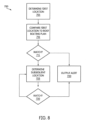
- Fig. 8 illustrates a process, or operation, 700 of the industrial machine 100 according to some embodiments. It should be understood that the order of the steps disclosed in process 700 could vary. Although some steps are illustrated as occurring in parallel order, in other embodiments, the steps disclosed may be performed in serial order, or vice versa. Furthermore, additional steps may be added to the process and not all of the steps may be required.
- a first location of a first roof bolt 225a is determined using the sensing system 230 (block 705). The first location is then compared to the roof bolting plan, or alternatively, pre-established spacing criteria (block 710). A determination is then made as to whether the first location matches the roof bolting plan or spacing criteria (block 715).
- an alert is output (block 720).
- the alert may be output via the user-interface 235.
- a subsequent location of a subsequent roof bolt for example roof bolt 225b, 215c, . . . 215n
- a determination is then made as to whether the subsequent location matches the roof bolting plan (block 730). If the subsequent location does not match the roof bolting plan, an alert is output (block 720). If the subsequent location matches the roof bolting plan, process 700 cycles back to block 725 until all of the roof bolts are located.
- Fig. 9 is a block diagram of industrial machine 100 communicatively coupled to an external server 900 and/or external computer 905, via a network.
- the industrial machine 100 continuously senses, via the sensing system 230, the one or more roof bolts 225.
- the sensed information of the roof bolts 225 may include photographs of the roof bolts 225.
- the sensed information may then be stored in memory 315 and/or output to the external server 900 and/or external computer 905, via a network and I/O module 307.
- the sensed information may then be used to create a roof bolting report that may be displayed on the external computer 905.
- sensing system 230 may include any combination of one or more cameras, one or more lasers, and one or more ultrasonic transducers.
- Fig. 10 is a partial, cross-sectional, top view diagram of the industrial machine of Fig. 1 within a mine according to some embodiments.
- the sensing system 230 may have a visibility area 1000.
- the sensing system 230 may analyze one or more roof bolts 225 simultaneously that are within the visibility area 1000.
- the industrial machine 100 may then determine roof bolt locations 1005 within the visibility area 1000.
- the industrial machine 100 may also determine a position 1010 where roof bolts 225 should have been installed according to a roof bolt plan or other pre-established spacing criteria.
- the industrial machine 100 may determine roof bolt locations 1005, while simultaneously measuring and comparing previously installed roof bolts 225 to a roof bolting plan or other pre-established spacing criteria.
- the industrial machine 100 may simultaneously establish the location of and install a new roof bolt based on a prior roof bolt location or locations, and determine whether previously installed roof bolts match a roof bolting plan or other spacing criteria.
- the invention provides, among other things, a method and system for installing roof bolts and inspecting installed roof bolts.
- Various features and advantages of the invention are set forth in the following claims.
- an industrial machine comprising:
- the industrial machine further comprises a roof bolter supported by a chassis.
- the controller is further configured to control the roof bolter to install a second roof bolt based on the location of the roof bolt.
- the first sensor is a camera and the second sensor is at least one selected from the group consisting of a second camera, a laser, and an ultrasonic transducer.
- the location of the roof bolt includes a distance from a second roof bolt.
- the location of the roof bolt includes a distance from a sidewall of a mine.
- the controller is further configured to compare the location of the roof bolt to a roof bolt plan.
- the controller is further configure to output a report based on the comparison.
- controller is further configured to control a roof bolter to install a second roof bolt based on the comparison.
- the industrial machine further comprises a user-interface, wherein feedback is provided, via the user-interface, to a user based on the comparison.
- the controller uses stereo vision to determine the location of the roof bolt based on the sensor information from the first and second sensors.
- a method of operating a roof bolting apparatus comprising:
- the method further comprises installing a second roof bolt based on the location of the roof bolt.
- the first sensor is a camera and the second sensor is at least one selected from the group consisting of a second camera, a laser, and an ultrasonic transducer.
- the location of the roof bolt includes a distance from a second roof bolt.
- the location of the roof bolt includes a distance from a sidewall of a mine.
- the method further comprises comparing the location of the roof bolt to a roof bolt plan.
- the method further comprises outputting a report based on the comparison.
- the method further comprises controlling a roof bolter to install a second roof bolt based on the comparison.
- the method further comprises providing, via a user-interface, feedback to a user based on the comparison.
- the step of determining, via the controller, the location of the roof bolt based on sensed information from the first sensor and the second sensor includes the use of stereo vision.
- an industrial machine comprises:
- the object is a roof bolt and the known dimension is a dimension of the roof bolt.
- the object is a mark on a mine made by a laser and the known dimension is a distance between the camera and the laser.
- an industrial machine comprises one or more of:
- the controller is configured to control the bolter to install the third bolt at the new bolt location.
- the industrial machine further comprises a user-interface for providing feedback to a user, wherein the controller is further configured to provide feedback to a user, via the user-interface, based on the new bolt location to enable installation of the third bolt at the new bolt location.
- the controller is configured to determine the new bolt location on the mine surface for the third bolt based on the location of the first bolt, the location of the second bolt, the first data, and the second data.
- the industrial machine further comprising a user-interface for providing feedback to a user
- the controller is further configured to provide feedback to a user, via the user-interface, based on the new bolt location to enable installation of the third bolt at the new bolt location.
Landscapes
- Engineering & Computer Science (AREA)
- Physics & Mathematics (AREA)
- General Physics & Mathematics (AREA)
- Theoretical Computer Science (AREA)
- Mining & Mineral Resources (AREA)
- Computer Vision & Pattern Recognition (AREA)
- Structural Engineering (AREA)
- Life Sciences & Earth Sciences (AREA)
- General Life Sciences & Earth Sciences (AREA)
- Geology (AREA)
- Geochemistry & Mineralogy (AREA)
- Electromagnetism (AREA)
- Radar, Positioning & Navigation (AREA)
- Remote Sensing (AREA)
- Geometry (AREA)
- Multimedia (AREA)
- Data Mining & Analysis (AREA)
- General Engineering & Computer Science (AREA)
- Quality & Reliability (AREA)
- Civil Engineering (AREA)
- Evolutionary Computation (AREA)
- Bioinformatics & Computational Biology (AREA)
- Bioinformatics & Cheminformatics (AREA)
- Paleontology (AREA)
- Artificial Intelligence (AREA)
- Evolutionary Biology (AREA)
- Length Measuring Devices With Unspecified Measuring Means (AREA)
- Length Measuring Devices By Optical Means (AREA)
- Component Parts Of Construction Machinery (AREA)
- Automatic Assembly (AREA)
- Connection Of Plates (AREA)
- Length Measuring Devices Characterised By Use Of Acoustic Means (AREA)
- Earth Drilling (AREA)
- Operation Control Of Excavators (AREA)
Abstract
Description
- This application claims the benefit to
U.S. Provisional Patent Application No. 62/485,258, filed on April 13, 2017 - Embodiments relate to industrial machines, and in some embodiments, mining machines.
- In some underground mining operations, one or more roof bolts are driven into the roof or sidewalls of the mine to provide stability to the roof and sidewalls of the mine. The roof bolts may be installed using a roof bolter machine configured to drill holes into the roof and thereafter install a roof bolt along with a resin, in order to stabilize the roof or sidewalls and thereby prevent delamination and falls of the roof and sidewalls.
- Roof bolts are typically installed according to a pre-approved bolting plan, which typically is a two-dimensional matrix of bolts arranged in a line across the span of the mine and in linear rows along the mine shaft. The pre-approved bolting plan includes set distances between roof bolts both across the span of the mine and along the mine shaft. Typically, the distances between the roof bolts, and the distances between the roof bolts closest to the sidewalls and the sidewalls is measured manually by an operator (for example, using a tape measure). Such measurements may be prone to human faults.
- Thus, in one embodiment, the application provides a industrial machine including a chassis, a first sensor configured to sense a roof bolt, a second sensor configured to sense the roof bolt, and a controller. The controller configured to receive sensor information from the first and second sensors, and determine a location of the roof bolt based on the sensor information from the first and second sensors.
- In another embodiment the application provides a method of operating a roof bolting apparatus. The method including sensing, via a first sensor, a roof bolt; sensing, via a second sensor, the roof bolt; and determining, via a controller, a location of the roof bolt based on sensing information from the first sensor and the second sensor.
- In yet another embodiment, the application provides an industrial machine including a camera and a controller. The camera is configured to capture an image of an object. Wherein the captured image has a known capture area and the object has a known dimension. The controller is configured to receive the captured image from the sensor, and determine a location of the roof bolt, the location based on the captured image, the known captured area of the capture image, and the known dimension of the roof bolt.
- Embodiments disclosed herein provide benefits, such as but not limited to, accurate measurements, accurate location determination, ensuring roof bolts are installed correctly according to a roof bolting plan, ensuring a roof of a mine is correctly supported, preventing mine closure due to incorrectly installed roof bolts, increase productivity due to correctly installed roof bolts, and increase productivity due to automatic measurements of the roof bolts.
- Additionally, embodiments disclosed herein provide benefits, such as but not limited to, providing evidence of roof bolt installation, providing information and statistics to analyze roof bolt installation, providing means for planning and optimizing roof bolt installation, and providing means for education and training of roof bolt installation.
- Other aspects of the application will become apparent by consideration of the detailed description and accompanying drawings.
-
-
Fig. 1 is a perspective view of an industrial machine according to some embodiments. -
Fig. 2 is a partial, cross-sectional, side view diagram of a mine showing the industrial machine ofFig. 1 in the mine. -
Fig. 3 is a partial, cross-sectional, top view diagram of the industrial machine ofFig. 1 in the mine. -
Fig. 4 is a block diagram of a control system of the industrial machine ofFig. 1 . -
Fig. 5 is a flow chart illustrating a process effectuated by the control system of the industrial machine ofFig. 1 . -
Fig. 6 is a partial, cross-sectional, side view diagram of a mine illustrating bolt positions in the mine roof. -
Fig. 7 is a partial, cross-sectional, top view diagram of a mine illustrating one embodiment of a roof bolt plan. -
Fig. 8 is a flow chart illustrating a process of locating roof bolts and comparing to a roof bolt plan performed by the industrial machine ofFig. 1 . -
Fig. 9 is a block diagram of the industrial machine ofFig. 1 illustrating the industrial machine communicatively coupled to an external server and/or an external computer. -
Fig. 10 is a partial, cross-sectional, top view diagram of the industrial machine ofFig. 1 in the mine. - Before any embodiments of the application are explained in detail, it is to be understood that the application is not limited in its application to the details of construction and the arrangement of components set forth in the following description or illustrated in the following drawings. The application is capable of other embodiments and of being practiced or of being carried out in various ways. Also, it is to be understood that the phraseology and terminology used herein is for the purpose of description and should not be regarded as limiting. The use of "including," "comprising" or "having" and variations thereof herein is meant to encompass the items listed thereafter and equivalents thereof as well as additional items. The terms "mounted," "connected" and "coupled" are used broadly and encompass both direct and indirect mounting, connecting and coupling. Further, "connected" and "coupled" are not restricted to physical or mechanical connections or couplings, and can include electrical connections or couplings, whether direct or indirect. Also, electronic communications and notifications may be performed using any known means including direct connections, wireless connections, etc.
- It should also be noted that a plurality of hardware and software based devices, as well as a plurality of different structural components may be used to implement the application. In addition, it should be understood that embodiments of the application may include hardware, software, and electronic components or modules that, for purposes of discussion, may be illustrated and described as if the majority of the components were implemented solely in hardware. However, one of ordinary skill in the art, and based on a reading of this detailed description, would recognize that, in at least one embodiment, the electronic based aspects of the application may be implemented in software (e.g., stored on non-transitory computer-readable medium) executable by one or more processors. As such, it should be noted that a plurality of hardware and software based devices, as well as a plurality of different structural components may be utilized to implement the application. Furthermore, and as described in subsequent paragraphs, the specific mechanical configurations illustrated in the drawings are intended to exemplify embodiments of the application and that other alternative mechanical configurations are possible. For example, "controllers" described in the specification can include standard processing components, such as one or more processors, one or more computer-readable medium modules, one or more input/output interfaces, and various connections (e.g., a system bus) connecting the components.
-
Fig. 1 illustrates anindustrial machine 100 according to some embodiments. In the illustrated embodiment, theindustrial machine 100 is a roof bolter, or roof bolting machine. Theindustrial machine 100 includes achassis 105 and one ormore tracks 110 supporting thechassis 105 and propelling theindustrial machine 100 forward and backward, and for turning the industrial machine 100 (i.e., by varying the speed and/or direction of the left and right tracks relative to each other). In other embodiments, rather thantracks 110, theindustrial machine 100 may include other propulsion devices, such as but not limited to, one or more wheels. Theindustrial machine 100 further includes a boltingapparatus 115 supported by thechassis 105. -
Figs. 2 and3 illustrate theindustrial machine 100 within mine 200. As illustrated, the boltingapparatus 115 includes a roofbolt drill boom 205, aroof bolter drill 210, and a roofbolter drill bit 215. Although much of the description herein references a roof bolter and the installation of roof bolts, it is understood that the bolts can variously be installed in the side walls or other surfaces of the mine. The roofbolt drill boom 205 couples the boltingapparatus 115 to thechassis 105, and is configured to move the boltingapparatus 115 during operation. The roof bolt drill boom may include a boom actuator 220 (Fig. 4 ) to promote such movement. In some embodiments, theboom actuator 220 is one or more hydraulic actuators. In other embodiments, theboom actuator 220 may be one or more motors. In yet another embodiment, theboom actuator 220 may be one or more hydraulic actuators in combination with one or more motors. - The bolting
apparatus 115 is configured to secure one ormore roof bolts 225 into the roof or sidewalls of themine 200. In some embodiments, installing aroof bolt 225 into the roof or sidewalls of themine 200 includes, among other things, drilling a hole into a roof or a sidewall of the mine 200 (for example, via theroof bolt drill 210 and roof bolt drill bit 215) and driving aroof bolt 225, along with a resin into the hole. As discussed in more detail below, theindustrial machine 100 may further include asensing system 230 and a user-interface 235. - As illustrated in
Fig. 3 , in some embodiments, as discussed in further detail below, theroof bolts 225 may be spaced apart fromother roof bolts 225 bycolumn spacing 605 as well as byrow spacing 610. However, in other embodiments, theroof bolts 225 may have different spacing, or arranged in different matrixes within mine 200. -
Fig. 4 illustrates acontrol system 300 of theindustrial machine 100 according to some embodiments. Thecontrol system 300 includes acontroller 305 and an input/output module (I/O) 307. Thecontroller 305 includes aprocessor 310 andmemory 315. Thememory 315 stores instructions executable by theprocessor 310. In some instances, thecontroller 305 includes one or more of a microprocessor, digital signal processor (DSP), field programmable gate array (FPGA), application specific integrated circuit (ASIC), or the like. Thecontroller 305 is electrically and/or communicatively coupled to theroof bolt drill 210,boom actuator 220, thesensing system 230, the user-interface 235, one ormore track actuators 320 for actuating thetracks 110, and one or more operator controls 325. - The
sensing system 230 may include one or more sensors 330 (for example,sensors sensing system 230 is configured to use the one or more sensors 330 to detect one or more roof bolts 215 (Fig. 2 ). - In some embodiments, the one or more sensors 330 are a first camera and a second camera. In such an embodiment, the first camera captures a first image of the
mine 200, while the second camera captures a second image of themine 200. Thecontroller 305 may then determine a location of aroof bolt 225 by using stereo vision of the first image and the second image. For example, thecontroller 305 may determine the location of theroof bolt 225 by using the following distances: the known distance between the first camera and the second camera; a first pixel location (according to the first image) of the roof bolt 225 (for example, a pixel distance between theroof bolt 225 and a second roof bolt or a pixel distance between aroof bolt 225 and a sidewall of mine 200), and a second pixel location (according to the second image) of the one or more roof bolts 225 (for example, a pixel distance between theroof bolt 225 and a second roof bolt or a pixel distance between aroof bolt 225 and the sidewall of mine 200). - In some embodiments, the one or more sensors 330 include a camera and a laser measuring device, or a transducer. In such an embodiment, the camera captures an image of the
mine 200, while the laser measuring device, or transducer, determines a distance between theindustrial machine 100 to a point of the mine 200 (for example, aroof bolt 225 or a roof of the mine 200) captured within the image. Based on the captured image and the determined distance, thecontroller 305 may determine a location of theroof bolt 225 within themine 200. For example, although the captured image may provide a location of the roof bolt 225 (for example, a pixel distance betweenroof bolts 225 or a pixel distance between theroof bolt 225 and a sidewall of mine 200), by using the determined distance, via the laser measuring device or transducer, from theindustrial machine 100 to a known point in the captured image, the pixel distance may be converted to an actual distance (for example, meters). - In some embodiments, the one or more sensors 330 include a camera and a laser (for example, a laser pointer) located a known distance from the camera. In such an embodiment, the camera captures an image of the
mine 200, while the laser projects a mark (for example, a dot) at a point of the mine 200 (for example, aroof bolt 225 or a roof of the mine 200) captured within the image. Thecontroller 305 may then determine a pixel distance between the mark in the captured distance and a known point (for example, a center point) of the captured image. Based on the pixel distance between the mark and known point, and the known distance between the camera and laser, thecontroller 305 may convert the pixel distance to an actual distance. Thecontroller 305 may then use that actual distance to determine an actual distance between other objects in the captured image, for example, the actual distance betweenroof bolts 225 and/or the actual distance between aroof bolt 225 and a sidewall of themine 200. - In some embodiments, the one or more sensors 330 include a single camera. In such an embodiment, the camera captures an image of the
mine 200. Based on the captured image, and a known dimension of aroof bolt 225, thecontroller 305 may determine a location of theroof bolt 225 within themine 200. For example, although the captured image may provide a location of the roof bolt 225 (with respect toother roof bolts 225 or a sidewall of mine 200) with respect to an image pixel matrix (for example, a known image pixel matrix used by the camera, or a known image area captured by the camera), by using the known dimension of theroof bolt 225, the image pixel matrix of the captured image may be converted to an actual size matrix (for example, a meter by meter matrix). - The user-
interface 235 provides information to the operator about the status of theindustrial machine 100 and other systems communicating with theindustrial machine 100. For example, other systems may include other industrial machines and user-personal devices (for example, including external computers, laptops, tablets, smartphones, etc.). The user-interface 235 includes one or more of the following: a display (e.g. a liquid crystal display (LCD)); one or more light emitting diodes (LEDs) or other illumination devices; a heads-up display; speakers for audible feedback (e.g., beeps, spoken messages, etc.); tactile feedback devices such as vibration devices that cause vibration of the operator's seat or operator controls 325; or other feedback devices. - The operator controls 325 receive operator input via one or more input devices and output control signals to the
controller 305 based on the operator input. Upon receiving the control signals, thecontroller 305 controls, among other things, theroof bolt drill 210, theboom actuator 220, and thetrack actuators 320. - The input/output (I/O)
module 307 is configured to provide communication between thecontroller 305 and outside devices (for example, a laptop, a smartphone, a tablet, an external server, or an external computer system). In some embodiments, the I/O module 307 provides communication via a network. In such an embodiment, the network may be a wide area network (WAN), such as but not limited to, the Internet. In other embodiments, the network may be a local area network (LAN), a neighborhood area network (NAN), a home area network (HAN), a vehicular area network (VAN), or personal area network (PAN) employing any of a variety of communications protocols, such as Wi-Fi®, Bluetooth®, ZigBee®, and the like. - In one embodiment of operation, the
controller 305 uses thesensing system 230 to determine a location of one ormore roof bolts 215. Thecontroller 305, based on the location, controls at least one of theroof bolt drill 210, theboom actuator 220, and thetrack actuators 320, to install a subsequent roof bolt. In another embodiment of operation, thecontroller 305, based on the location, provides feedback to an operator via the user-interface 235. The operator then uses the operator controls 325 to install a subsequent roof bolt using the feedback. -
Fig. 5 illustrates a process, or operation, 400 of theindustrial machine 100 according to some embodiments. It should be understood that the order of the steps disclosed inprocess 400 could vary. Although illustrated as occurring in parallel order, in other embodiments, the steps disclosed may be performed in serial order. Furthermore, additional steps may be added to the process and not all of the steps may be required. A first location of afirst roof bolt 225a (Fig. 5 ) is determined using the sensing system 230 (block 405). A second, or additional, location of a second, or subsequent,roof bolt 225b (Fig. 6 ) is determined using the sensing system 230 (block 410). As illustrated inFig. 7 ,roof bolts 225 may be spaced apart fromother roof bolts 225 by column spacing 605 as well as by row spacing 610. Additionally,roof bolts 225 may be spaced from aside wall 615 by aside wall spacing 620. In some embodiments, the predetermined first andsecond distances 505, 510 may be determined based on a roof bolting plan. Thesecond roof bolt 225b is then installed at the second location (block 415). A determination is then made as to whether thesecond roof bolt 225b is the final roof bolt to be installed (block 420). If thesecond roof bolt 225b is the final roof bolt to be installed, then operation is complete (block 425). If subsequent roof bolts (for example, 225a, 225b, 225c, 225d, 225e, ... 225n) are necessary,operation 400 reverts back to block 410. - In some embodiments, once a location is determined by
controller 305, feedback is provided to the user via the user-interface 235. The user may then operate the operator controls 325 to position theroof bolt boom 205,roof bolter drill 210, and roofbolter drill bit 215, and install one ormore roof bolts 225. In another embodiment, once a location is determined bycontroller 305, thecontroller 305 automatically controls theindustrial machine 100, including theroof bolt boom 205,roof bolter drill 210, and roofbolter drill bit 215, to install one ormore roof bolts 225. The automatic installation of the subsequent bolts can be based on discrete measurements from the previously installed roof bolt, or be based on a predetermined placement plan stored in thecontroller 305. In yet another embodiment, once a location is determined bycontroller 305, theindustrial machine 100 marks the location on themine 200. For example, theindustrial machine 100 may use paint, or similar marking material, to mark themine 200 with one or more identifications (for example, one or more numbers) associated with the locations. This marking may occur either during installation of the bolt, or post-installation during an inspection to detect bolt locations. In some embodiments, theindustrial machine 100, or another mining machine, may use the one or more identifications to assist in tracking the position of the roof bolts, in order to determine, post-installation, whether the roof bolts have been installed correctly, and according to mining regulations, a predetermined placement plan or established spacing criteria. -
Fig. 8 illustrates a process, or operation, 700 of theindustrial machine 100 according to some embodiments. It should be understood that the order of the steps disclosed inprocess 700 could vary. Although some steps are illustrated as occurring in parallel order, in other embodiments, the steps disclosed may be performed in serial order, or vice versa. Furthermore, additional steps may be added to the process and not all of the steps may be required. A first location of afirst roof bolt 225a is determined using the sensing system 230 (block 705). The first location is then compared to the roof bolting plan, or alternatively, pre-established spacing criteria (block 710). A determination is then made as to whether the first location matches the roof bolting plan or spacing criteria (block 715). If the first location does not match the roof bolting plan or spacing criteria, an alert is output (block 720). In some embodiments, the alert may be output via the user-interface 235. If the first location matches the roof bolting plan, a subsequent location of a subsequent roof bolt (forexample roof bolt 225b, 215c, . . . 215n) is determined using the sensing system 230 (block 725). A determination is then made as to whether the subsequent location matches the roof bolting plan (block 730). If the subsequent location does not match the roof bolting plan, an alert is output (block 720). If the subsequent location matches the roof bolting plan,process 700 cycles back to block 725 until all of the roof bolts are located. -
Fig. 9 is a block diagram ofindustrial machine 100 communicatively coupled to anexternal server 900 and/orexternal computer 905, via a network. In some embodiments of operation, as theindustrial machine 100 travels through themine 200, theindustrial machine 100 continuously senses, via thesensing system 230, the one ormore roof bolts 225. In some embodiments, the sensed information of theroof bolts 225 may include photographs of theroof bolts 225. The sensed information may then be stored inmemory 315 and/or output to theexternal server 900 and/orexternal computer 905, via a network and I/O module 307. In such an embodiment, the sensed information may then be used to create a roof bolting report that may be displayed on theexternal computer 905. As discussed above in more detail, although illustrated as having two cameras, in other embodiments, sensing system 230 (includingsensors -
Fig. 10 is a partial, cross-sectional, top view diagram of the industrial machine ofFig. 1 within a mine according to some embodiments. As illustrated, thesensing system 230 may have avisibility area 1000. Thesensing system 230 may analyze one ormore roof bolts 225 simultaneously that are within thevisibility area 1000. Additionally, theindustrial machine 100 may then determineroof bolt locations 1005 within thevisibility area 1000. In some embodiments, theindustrial machine 100 may also determine aposition 1010 whereroof bolts 225 should have been installed according to a roof bolt plan or other pre-established spacing criteria. Thus, in some embodiments, theindustrial machine 100 may determineroof bolt locations 1005, while simultaneously measuring and comparing previously installedroof bolts 225 to a roof bolting plan or other pre-established spacing criteria. In other embodiments, theindustrial machine 100 may simultaneously establish the location of and install a new roof bolt based on a prior roof bolt location or locations, and determine whether previously installed roof bolts match a roof bolting plan or other spacing criteria. - Thus, the invention provides, among other things, a method and system for installing roof bolts and inspecting installed roof bolts. Various features and advantages of the invention are set forth in the following claims.
- According to an aspect, an industrial machine is provided comprising:
- a first sensor configured to sense a roof bolt;
- a second sensor configured to sense at least one selected from the group consisting of the roof bolt and a mine;
- a controller configured to
- receive sensor information from the first and second sensors, and
- determine a location of the roof bolt based on the sensor information from the first and second sensors.
- Advantageously, the industrial machine further comprises a roof bolter supported by a chassis.
- Advantageously, the controller is further configured to control the roof bolter to install a second roof bolt based on the location of the roof bolt.
- Advantageously, the first sensor is a camera and the second sensor is at least one selected from the group consisting of a second camera, a laser, and an ultrasonic transducer.
- Advantageously, the location of the roof bolt includes a distance from a second roof bolt.
- Advantageously, the location of the roof bolt includes a distance from a sidewall of a mine.
- Advantageously, the controller is further configured to compare the location of the roof bolt to a roof bolt plan.
- Advantageously, the controller is further configure to output a report based on the comparison.
- Advantageously, the controller is further configured to control a roof bolter to install a second roof bolt based on the comparison.
- Advantageously, the industrial machine further comprises a user-interface, wherein feedback is provided, via the user-interface, to a user based on the comparison.
- Advantageously, the controller uses stereo vision to determine the location of the roof bolt based on the sensor information from the first and second sensors.
- According to an aspect, a method of operating a roof bolting apparatus is provided, the method comprising:
- sensing, via a first sensor, a roof bolt;
- sensing, via a second sensor, at least one selected from the group consisting of the roof bolt and a mine; and
- determining, via a controller, a location of the roof bolt based on sensed information from the first sensor and the second sensor.
- Advantageously, the method further comprises installing a second roof bolt based on the location of the roof bolt.
- Advantageously, the first sensor is a camera and the second sensor is at least one selected from the group consisting of a second camera, a laser, and an ultrasonic transducer.
- Advantageously, the location of the roof bolt includes a distance from a second roof bolt.
- Advantageously, the location of the roof bolt includes a distance from a sidewall of a mine.
- Advantageously, the method further comprises comparing the location of the roof bolt to a roof bolt plan.
- Advantageously, the method further comprises outputting a report based on the comparison.
- Advantageously, the method further comprises controlling a roof bolter to install a second roof bolt based on the comparison.
- Advantageously, the method further comprises providing, via a user-interface, feedback to a user based on the comparison.
- Advantageously, the step of determining, via the controller, the location of the roof bolt based on sensed information from the first sensor and the second sensor includes the use of stereo vision.
- According to an aspect, an industrial machine comprises:
- a camera configured to capture an image of an object, wherein the captured image has a known capture area and the object has a known dimension;
- a controller configured to
- receive the captured image from the sensor, and
- determine a location of a roof bolt, the location based on the captured image, the known captured area of the capture image, and the known dimension.
- Advantageously, the object is a roof bolt and the known dimension is a dimension of the roof bolt.
- Advantageously, the object is a mark on a mine made by a laser and the known dimension is a distance between the camera and the laser.
- According to an aspect, an industrial machine comprises one or more of:
- a bolter supported by a chassis; and/or
- a sensor configured to acquire first data relating to a mine surface of a mine, wherein the sensor is a camera and the first data is an image of the mine surface; and/or
- an ultrasonic transducer for determining second data, wherein the second data includes a distance from the ultrasonic transducer to a point of the mine surface; and/or
- a controller connected to the sensor and the ultrasonic transducer, the controller e.g. configured to:
- analyze the first data to identify the presence of a first bolt and a second bolt in the image of the mine surface; and/or
- determine a pixel distance between the first bolt and the second bolt in the image of the mine surface; and/or
- identify a physical distance between the first bolt and the second bolt based on the pixel distance and the second data; and/or
- identify a location of the first bolt and a location of the second bolt; and/or determine a new bolt location on the mine surface for a third bolt based on the location of the first bolt, the first data, and the second data.
- Advantageously, the controller is configured to control the bolter to install the third bolt at the new bolt location.
- Advantageously, the industrial machine further comprises a user-interface for providing feedback to a user,
wherein the controller is further configured to provide feedback to a user, via the user-interface, based on the new bolt location to enable installation of the third bolt at the new bolt location. - Advantageously, the controller is configured to determine the new bolt location on the mine surface for the third bolt based on the location of the first bolt, the location of the second bolt, the first data, and the second data.
- Advantageously, the industrial machine further comprising a user-interface for providing feedback to a user,
wherein the controller is further configured to provide feedback to a user, via the user-interface, based on the new bolt location to enable installation of the third bolt at the new bolt location.
Claims (5)
- An industrial machine comprising:
a bolter supported by a chassis;a sensor configured to acquire first data relating to a mine surface of a mine, wherein the sensor is a camera and the first data is an image of the mine surface;an ultrasonic transducer for determining second data, wherein the second data includes a distance from the ultrasonic transducer to a point of the mine surface; anda controller connected to the sensor and the ultrasonic transducer, the controller configured to:analyze the first data to identify the presence of a first bolt and a second bolt in the image of the mine surface;determine a pixel distance between the first bolt and the second bolt in the image of the mine surface;identify a physical distance between the first bolt and the second bolt based on the pixel distance and the second data;identify a location of the first bolt and a location of the second bolt; anddetermine a new bolt location on the mine surface for a third bolt based on the location of the first bolt, the first data, and the second data. - The industrial machine of claim 1, wherein the controller is configured to control the bolter to install the third bolt at the new bolt location.
- The industrial machine of claim 1, further comprising a user-interface for providing feedback to a user,
wherein the controller is further configured to provide feedback to a user, via the user-interface, based on the new bolt location to enable installation of the third bolt at the new bolt location. - The industrial machine of claim 1, wherein the controller is configured to determine the new bolt location on the mine surface for the third bolt based on the location of the first bolt, the location of the second bolt, the first data, and the second data.
- The industrial machine of claim 4, further comprising a user-interface for providing feedback to a user,
wherein the controller is further configured to provide feedback to a user, via the user-interface, based on the new bolt location to enable installation of the third bolt at the new bolt location.
Applications Claiming Priority (3)
| Application Number | Priority Date | Filing Date | Title |
|---|---|---|---|
| US201762485258P | 2017-04-13 | 2017-04-13 | |
| EP18784588.8A EP3610223B1 (en) | 2017-04-13 | 2018-04-13 | System and method for measuring and aligning roof bolts |
| PCT/US2018/027468 WO2018191602A1 (en) | 2017-04-13 | 2018-04-13 | System and method for measuring and aligning roof bolts |
Related Parent Applications (1)
| Application Number | Title | Priority Date | Filing Date |
|---|---|---|---|
| EP18784588.8A Division EP3610223B1 (en) | 2017-04-13 | 2018-04-13 | System and method for measuring and aligning roof bolts |
Publications (2)
| Publication Number | Publication Date |
|---|---|
| EP4474766A2 true EP4474766A2 (en) | 2024-12-11 |
| EP4474766A3 EP4474766A3 (en) | 2025-05-14 |
Family
ID=63791677
Family Applications (2)
| Application Number | Title | Priority Date | Filing Date |
|---|---|---|---|
| EP18784588.8A Active EP3610223B1 (en) | 2017-04-13 | 2018-04-13 | System and method for measuring and aligning roof bolts |
| EP24208255.0A Pending EP4474766A3 (en) | 2017-04-13 | 2018-04-13 | System and method for measuring and aligning roof bolts |
Family Applications Before (1)
| Application Number | Title | Priority Date | Filing Date |
|---|---|---|---|
| EP18784588.8A Active EP3610223B1 (en) | 2017-04-13 | 2018-04-13 | System and method for measuring and aligning roof bolts |
Country Status (11)
| Country | Link |
|---|---|
| US (1) | US11174731B2 (en) |
| EP (2) | EP3610223B1 (en) |
| AU (1) | AU2018253271B2 (en) |
| CA (1) | CA3059960A1 (en) |
| FI (1) | FI3610223T3 (en) |
| GB (1) | GB2576840B (en) |
| NO (1) | NO20191244A1 (en) |
| PL (1) | PL431444A1 (en) |
| RU (1) | RU2766965C2 (en) |
| WO (1) | WO2018191602A1 (en) |
| ZA (1) | ZA201907064B (en) |
Families Citing this family (7)
| Publication number | Priority date | Publication date | Assignee | Title |
|---|---|---|---|---|
| US11391153B2 (en) * | 2017-08-28 | 2022-07-19 | J.H. Fletcher & Co. | Autonomous roof bolter and related methods |
| US20230349292A1 (en) * | 2020-09-28 | 2023-11-02 | J.H. Fletcher & Co. | Autonomous roof bolter with sensor and related methods |
| CN113931669B (en) * | 2021-10-19 | 2024-07-12 | 中国煤炭科工集团太原研究院有限公司 | Anchor bolt supporting method based on automatic drilling frame |
| CN114320398B (en) * | 2021-11-25 | 2023-10-13 | 中国煤炭科工集团太原研究院有限公司 | High-precision full-intelligent anchor rod support robot |
| EP4534797A1 (en) * | 2023-10-06 | 2025-04-09 | Sandvik Mining and Construction Oy | Determining position for a bolt of a bolt fan |
| CN119878005A (en) * | 2024-12-16 | 2025-04-25 | 中煤科工(天津)岩层智控科技有限公司 | Autonomous positioning and controlling device and method for underground coal mine anchor rod |
| CN119878251A (en) * | 2024-12-17 | 2025-04-25 | 中煤科工(天津)岩层智控科技有限公司 | Underground coal mine anchor rod setting method, device and system |
Family Cites Families (30)
| Publication number | Priority date | Publication date | Assignee | Title |
|---|---|---|---|---|
| SU901552A1 (en) * | 1980-04-03 | 1982-01-30 | Молдавский Научно-Исследовательский И Проектно-Конструкторский Институт Строительных Материалов "Молдниистромпроект" | Anchor roof support mounting method |
| US4398850A (en) | 1981-02-09 | 1983-08-16 | Copper Range Company | Roof bolter and process |
| US4865390A (en) | 1987-09-04 | 1989-09-12 | Consolidation Coal Company | Continuous mining machine with roof supporting apparatus and method for anchoring crossbeam supports |
| CA2224207A1 (en) * | 1995-06-08 | 1996-12-27 | John C. Stankus | Method of roof control in an underground mine |
| JPH09250911A (en) * | 1996-03-14 | 1997-09-22 | Nippon Steel Corp | How to measure dimensions from images |
| US5680048A (en) | 1996-08-19 | 1997-10-21 | Net Results, Inc. | Mine detecting device having a housing containing metal detector coils and an antenna |
| ATE261108T1 (en) * | 1998-04-24 | 2004-03-15 | Inco Ltd | AUTOMATIC DRIVEN VEHICLE |
| US6392688B1 (en) | 1999-10-04 | 2002-05-21 | Point Grey Research Inc. | High accuracy stereo vision camera system |
| FI110806B (en) * | 2000-03-17 | 2003-03-31 | Sandvik Tamrock Oy | Arrangements for determining the position of unmanned mining vehicles |
| AUPQ989600A0 (en) | 2000-09-01 | 2000-09-28 | Commonwealth Scientific And Industrial Research Organisation | A support assembly for a rock structure |
| SE0201014L (en) * | 2002-04-04 | 2003-04-08 | Atlas Copco Rock Drills Ab | Procedure for locating a hole drilled with a rock drill rig |
| JP3682461B1 (en) | 2004-08-17 | 2005-08-10 | 株式会社演算工房 | Drilling positioning control method for bogie mounted carriage |
| SE528911C2 (en) * | 2005-01-19 | 2007-03-13 | Atlas Copco Rock Drills Ab | Procedure and system for monitoring and documenting installation of rock reinforcement bolt |
| SE530113C2 (en) | 2006-07-17 | 2008-03-04 | Atlas Copco Rock Drills Ab | Method for determining position of rock reinforcing bolt in tunnel or mine involves determining position of rock reinforcing bolt in tunnel or mine on basis of position of carrier and determined angle of rotation |
| DE102010022115A1 (en) | 2009-11-11 | 2011-05-12 | Dh Mining System Gmbh | Compact construction roadheader |
| DE102010000481A1 (en) * | 2010-02-19 | 2011-08-25 | Bucyrus Europe GmbH, 44534 | Method for determining the position or location of plant components in mining and extraction facilities |
| SE1450819A1 (en) * | 2011-12-28 | 2014-07-02 | Sandvik Mining & Constr Oy | Method and arrangement for post-drilling insertion |
| WO2013170348A1 (en) * | 2012-05-15 | 2013-11-21 | Tesman Inc. | Mapping of mining excavations |
| SE537993C2 (en) | 2012-08-30 | 2016-01-26 | Atlas Copco Rock Drills Ab | Method and bolt configuration, vehicles including bolt configuration and computer software and computer software product |
| ES2785273T3 (en) | 2012-10-24 | 2020-10-06 | Sandvik Mining & Construction Oy | Mining vehicle and method of moving the arm |
| WO2014191013A1 (en) * | 2013-05-27 | 2014-12-04 | Sandvik Mining And Construction Oy | Method and control system for a mining vehicle and a mining vehicle |
| US9222355B2 (en) * | 2013-08-29 | 2015-12-29 | Joy Mm Delaware, Inc. | Detecting sump depth of a miner |
| US10208595B2 (en) * | 2013-12-17 | 2019-02-19 | Sandvik Mining And Construction Oy | Arrangement and method of utilizing rock drilling information |
| WO2015106799A1 (en) | 2014-01-14 | 2015-07-23 | Sandvik Mining And Construction Oy | Mine vehicle, mine control system and mapping method |
| US10240457B2 (en) * | 2014-03-31 | 2019-03-26 | Komatsu Ltd. | Mine management system |
| US20160001707A1 (en) | 2014-07-02 | 2016-01-07 | Caterpillar Inc. | Hinged service step for large wheeled loaders |
| US10099609B2 (en) * | 2014-07-03 | 2018-10-16 | InfoMobility S.r.L. | Machine safety dome |
| US10349035B2 (en) * | 2015-11-16 | 2019-07-09 | Abb Schweiz Ag | Automatically scanning and representing an environment having a plurality of features |
| US10248130B2 (en) * | 2017-08-22 | 2019-04-02 | Caterpillar Inc. | System and method for underground machine location detection |
| SE1851620A1 (en) | 2018-12-20 | 2020-06-21 | Epiroc Rock Drills Ab | Method and device for determining the position of a mining and / or construction machine |
-
2018
- 2018-04-13 GB GB1916159.5A patent/GB2576840B/en active Active
- 2018-04-13 US US15/952,567 patent/US11174731B2/en active Active
- 2018-04-13 AU AU2018253271A patent/AU2018253271B2/en active Active
- 2018-04-13 FI FIEP18784588.8T patent/FI3610223T3/en active
- 2018-04-13 EP EP18784588.8A patent/EP3610223B1/en active Active
- 2018-04-13 WO PCT/US2018/027468 patent/WO2018191602A1/en not_active Ceased
- 2018-04-13 CA CA3059960A patent/CA3059960A1/en active Pending
- 2018-04-13 RU RU2019136183A patent/RU2766965C2/en active
- 2018-04-13 PL PL431444A patent/PL431444A1/en unknown
- 2018-04-13 EP EP24208255.0A patent/EP4474766A3/en active Pending
-
2019
- 2019-10-18 NO NO20191244A patent/NO20191244A1/en not_active Application Discontinuation
- 2019-10-25 ZA ZA2019/07064A patent/ZA201907064B/en unknown
Also Published As
| Publication number | Publication date |
|---|---|
| CA3059960A1 (en) | 2018-10-18 |
| GB2576840B (en) | 2022-10-12 |
| US20180298756A1 (en) | 2018-10-18 |
| WO2018191602A1 (en) | 2018-10-18 |
| RU2766965C2 (en) | 2022-03-16 |
| AU2018253271B2 (en) | 2022-09-29 |
| US11174731B2 (en) | 2021-11-16 |
| FI3610223T3 (en) | 2025-02-26 |
| GB201916159D0 (en) | 2019-12-18 |
| AU2018253271A1 (en) | 2019-10-31 |
| BR112019021542A2 (en) | 2020-08-04 |
| GB2576840A (en) | 2020-03-04 |
| ZA201907064B (en) | 2020-09-30 |
| EP3610223A4 (en) | 2021-01-06 |
| NO20191244A1 (en) | 2019-10-18 |
| EP3610223A1 (en) | 2020-02-19 |
| PL431444A1 (en) | 2020-08-24 |
| EP4474766A3 (en) | 2025-05-14 |
| RU2019136183A (en) | 2021-05-13 |
| RU2019136183A3 (en) | 2021-08-04 |
| EP3610223B1 (en) | 2024-11-20 |
Similar Documents
| Publication | Publication Date | Title |
|---|---|---|
| AU2018253271B2 (en) | System and method for measuring and aligning roof bolts | |
| US10928482B2 (en) | Monitoring and/or recording a position of a tool in an elevator shaft | |
| WO2018217543A1 (en) | Infrastructure positioning camera system | |
| CN106104197A (en) | The duty detecting system of engineering machinery and engineering machinery | |
| US20150345941A1 (en) | Cartridge and detection method for the same | |
| WO2020134095A1 (en) | Vehicle parking positioning apparatus and vehicle parking guide method | |
| CN101923325A (en) | Wharf collection truck guidance system and method | |
| CN112894799A (en) | Display device and display program | |
| CN105547181A (en) | Car dashboard beam assembly online detection system | |
| CN214039969U (en) | Bridge support capable of measuring displacement, corner and stress state signals in real time | |
| JP2004118304A (en) | Work status management system | |
| JP6442227B2 (en) | Tilt detection system for agricultural machines | |
| KR101593050B1 (en) | Moving type measuring apparatus for automatic alignment | |
| BR112019021542B1 (en) | MACHINE AND METHOD FOR MEASURING AND ALIGNING CEILING BOLTS | |
| KR101551864B1 (en) | Location Recognition System and Method thereof | |
| CN113387274B (en) | Alignment method and system for truck collection and container crane | |
| KR20110062860A (en) | Measuring device and method for measurement of long | |
| CN115806180A (en) | Inspection device for steel rolling finishing transportation line | |
| US10907964B2 (en) | Method for transmitting an object onto a boundary surface | |
| JP2017211218A (en) | Intelligent reflection target | |
| KR101754244B1 (en) | Block arrangement apparatus and method for block arrangemendt using the same | |
| HK1253296B (en) | Monitoring and/or registering a position of a tool in an elevator shaft | |
| KR20180112532A (en) | Automatic Machining Apparatus Having Measuring Devices, Operating Method Thereof |
Legal Events
| Date | Code | Title | Description |
|---|---|---|---|
| PUAI | Public reference made under article 153(3) epc to a published international application that has entered the european phase |
Free format text: ORIGINAL CODE: 0009012 |
|
| STAA | Information on the status of an ep patent application or granted ep patent |
Free format text: STATUS: THE APPLICATION HAS BEEN PUBLISHED |
|
| AC | Divisional application: reference to earlier application |
Ref document number: 3610223 Country of ref document: EP Kind code of ref document: P |
|
| AK | Designated contracting states |
Kind code of ref document: A2 Designated state(s): AL AT BE BG CH CY CZ DE DK EE ES FI FR GB GR HR HU IE IS IT LI LT LU LV MC MK MT NL NO PL PT RO RS SE SI SK SM TR |
|
| REG | Reference to a national code |
Ref country code: DE Ref legal event code: R079 Free format text: PREVIOUS MAIN CLASS: G01C0001040000 Ipc: G01C0001000000 |
|
| PUAL | Search report despatched |
Free format text: ORIGINAL CODE: 0009013 |
|
| AK | Designated contracting states |
Kind code of ref document: A3 Designated state(s): AL AT BE BG CH CY CZ DE DK EE ES FI FR GB GR HR HU IE IS IT LI LT LU LV MC MK MT NL NO PL PT RO RS SE SI SK SM TR |
|
| RIC1 | Information provided on ipc code assigned before grant |
Ipc: G01C 1/04 20060101ALI20250407BHEP Ipc: G01C 1/00 20060101AFI20250407BHEP |
|
| STAA | Information on the status of an ep patent application or granted ep patent |
Free format text: STATUS: REQUEST FOR EXAMINATION WAS MADE |
|
| 17P | Request for examination filed |
Effective date: 20251028 |