EP4472358B1 - Programmabhängige umgebungslichtverwaltung - Google Patents
Programmabhängige umgebungslichtverwaltung Download PDFInfo
- Publication number
- EP4472358B1 EP4472358B1 EP24178643.3A EP24178643A EP4472358B1 EP 4472358 B1 EP4472358 B1 EP 4472358B1 EP 24178643 A EP24178643 A EP 24178643A EP 4472358 B1 EP4472358 B1 EP 4472358B1
- Authority
- EP
- European Patent Office
- Prior art keywords
- light
- current
- programme
- top box
- management method
- Prior art date
- Legal status (The legal status is an assumption and is not a legal conclusion. Google has not performed a legal analysis and makes no representation as to the accuracy of the status listed.)
- Active
Links
Images



Classifications
-
- H—ELECTRICITY
- H05—ELECTRIC TECHNIQUES NOT OTHERWISE PROVIDED FOR
- H05B—ELECTRIC HEATING; ELECTRIC LIGHT SOURCES NOT OTHERWISE PROVIDED FOR; CIRCUIT ARRANGEMENTS FOR ELECTRIC LIGHT SOURCES, IN GENERAL
- H05B47/00—Circuit arrangements for operating light sources in general, i.e. where the type of light source is not relevant
- H05B47/10—Controlling the light source
- H05B47/105—Controlling the light source in response to determined parameters
- H05B47/11—Controlling the light source in response to determined parameters by determining the brightness or colour temperature of ambient light
-
- H—ELECTRICITY
- H05—ELECTRIC TECHNIQUES NOT OTHERWISE PROVIDED FOR
- H05B—ELECTRIC HEATING; ELECTRIC LIGHT SOURCES NOT OTHERWISE PROVIDED FOR; CIRCUIT ARRANGEMENTS FOR ELECTRIC LIGHT SOURCES, IN GENERAL
- H05B47/00—Circuit arrangements for operating light sources in general, i.e. where the type of light source is not relevant
- H05B47/10—Controlling the light source
- H05B47/165—Controlling the light source following a pre-assigned programmed sequence; Logic control [LC]
-
- H—ELECTRICITY
- H05—ELECTRIC TECHNIQUES NOT OTHERWISE PROVIDED FOR
- H05B—ELECTRIC HEATING; ELECTRIC LIGHT SOURCES NOT OTHERWISE PROVIDED FOR; CIRCUIT ARRANGEMENTS FOR ELECTRIC LIGHT SOURCES, IN GENERAL
- H05B47/00—Circuit arrangements for operating light sources in general, i.e. where the type of light source is not relevant
- H05B47/10—Controlling the light source
- H05B47/105—Controlling the light source in response to determined parameters
-
- H—ELECTRICITY
- H05—ELECTRIC TECHNIQUES NOT OTHERWISE PROVIDED FOR
- H05B—ELECTRIC HEATING; ELECTRIC LIGHT SOURCES NOT OTHERWISE PROVIDED FOR; CIRCUIT ARRANGEMENTS FOR ELECTRIC LIGHT SOURCES, IN GENERAL
- H05B47/00—Circuit arrangements for operating light sources in general, i.e. where the type of light source is not relevant
- H05B47/10—Controlling the light source
- H05B47/175—Controlling the light source by remote control
-
- H—ELECTRICITY
- H05—ELECTRIC TECHNIQUES NOT OTHERWISE PROVIDED FOR
- H05B—ELECTRIC HEATING; ELECTRIC LIGHT SOURCES NOT OTHERWISE PROVIDED FOR; CIRCUIT ARRANGEMENTS FOR ELECTRIC LIGHT SOURCES, IN GENERAL
- H05B47/00—Circuit arrangements for operating light sources in general, i.e. where the type of light source is not relevant
- H05B47/10—Controlling the light source
- H05B47/175—Controlling the light source by remote control
- H05B47/19—Controlling the light source by remote control via wireless transmission
Definitions
- the invention relates to the field of set-top boxes and lighting management when viewing a program.
- Some televisions are equipped with a system comprising a backlighting device and a control module that controls the backlighting device to adjust the color and brightness of the backlighting according to the color and brightness of the current image.
- the control module uses an analysis of the pixels in the current image to control the backlighting device.
- the object of the invention is, during the broadcasting of a program on a viewing device, to improve user experience by improving light adjustment.
- the set-top box transmits a stream including the first current program to the viewing device, so that it can be viewed by the user.
- the decoder box can therefore control the lighting device so that, from the start of the broadcast of the first current program until the end of its broadcast, it adjusts the ambient light according to the characteristics of the first current program.
- the lighting adjustments are very relevant and very effective (in terms of immersion and visual comfort in particular) because they are made according to the first current program itself.
- the decoder box is arranged to, before storing the second current values in the light parameter base, verify that, following receipt of the second command, the user has not attempted to adjust the ambient light again during a first predefined duration.
- a management method is further provided as previously described, in which the light parameter base comprises second reference values of the light parameters associated with second program metadata, said second reference values being stored in the light parameter base by a third-party external system.
- the decoder box comprises a detection device arranged to detect the presence of the user in a room in which the decoder box is located, and in which the decoder box is arranged to verify, before transmitting the first command to the lighting device, that the user is indeed present in said room.
- the primary functions of the set-top box 1 are to receive an audio-video stream, to process it, to separate the audio stream and the video stream, and to transmit the audio stream and the video stream to the television 2.
- the television 2 then broadcasts the video stream via its screen, and the audio stream via its speakers.
- the audio-video stream includes programs.
- program we mean any type of audiovisual sequence with a beginning and an end: film, series, television news, sporting event, musical, commercial, etc.
- the decoder box 1 includes a communication module 4.
- the user can interact with the decoder box 1 by means of a remote control 5 which also includes a communication module 6 allowing this interaction.
- the decoder box 1 further comprises a processing unit 9.
- the processing unit 9 is an electronic and software unit.
- the processing unit 9 comprises one or more processing components 10, and for example any processor or microprocessor, general or specialized (for example a DSP, for Digital Signal Processor, or a GPU, for Graphics Processing Unit, or even an NPU, for Neural Processing Unit ), a microcontroller, or even a programmable logic circuit such as an FPGA (for Field Programmable Gate Arrays ) or an ASIC (for Application Specific Integrated Circuit ) .
- the decoder box 1 further includes a camera, positioned on its front face.
- the decoder box 1 further includes microphones, positioned on its upper face.
- the decoder box 1 also includes a proximity sensor. These components are not shown in the Figure 1 .
- the decoder box 1 is further connected to a lighting device 12 which makes it possible to adjust ambient light.
- the lighting device 12 here comprises a control box 14 and light sources 15 connected to the control box 14.
- the control box 14 controls the light sources 15 for adjusting the ambient lighting of the room in which the set-top box 1, the television 2 and the lighting device 12 are located.
- the ambient lighting is adjustable according to various light parameters, for example switching on/off the light sources 15, the color, the intensity or the color temperature.
- the control box 14 comprises a communication module 16.
- the decoder box 1, via its communication module 8, can communicate with the control box 14, via its communication module 16.
- a link 17 is therefore established between the communication modules 8, 16.
- This connection 17 can be a wired connection, or use radio signals, infrared (using for example IrDA technology), light (using for example LiFi technology), or any other type of appropriate signals.
- the communication protocol used can be, for example, a Bluetooth, ZigBee, Z-Wave type protocol, or any type of protocol that can be exposed via communication interfaces, such as those used for home automation applications.
- connection 17 can be established via direct access to the communication network shared between the decoder box 1 and the control box 14, for example in the case where a compatible radio interface exists in the decoder box 1. This is for example the case for a Wi-Fi connection, or if the decoder box 1 is equipped with ZigBee/Z-Wave radio interfaces.
- the fact that the decoder box 1 and the control box 14 are directly connected to the same network of Communication does not necessarily mean that the link 17 is a direct link.
- the link can be established indirectly, by means of one or more relays. This is the case, for example, if an external Wi-Fi access point is used, or in a mesh network if one or more intermediate nodes are necessary to establish a route between the set-top box 1 and the control box 14.
- connection 17 can also be made by means of an external gateway (home automation gateway), which could perform a protocol translation, and thus allow a connection 17 between the decoder box 1 and the control box 14, without them having a protocol in common.
- an external gateway home automation gateway
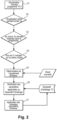
- the processing unit 9 of the decoder box 1 first detects the start of the broadcasting of a first current program Pc1, which is viewed by the user: step E1.
- Detecting the broadcast of this new program can be done in different ways.
- the processing unit 9 can, for example, detect the start of a new program on a channel currently being viewed.
- the processing unit 9 can also detect the start of playback of VOD or PVR content.
- the processing unit 9 can also detect a channel change ( zapping ).
- the processing unit 9 will control the control box 14 of the lighting device 12, via the link 17, so that the lighting device 12 adjusts the ambient light according to the first current program.
- the processing unit 9 sends a first command C1 to the control box 14 for this purpose.
- the processing unit 9 waits for the first current program to be broadcast for a predetermined duration Ta: step E2.
- This predetermined duration Ta is for example equal to 60 seconds or 120 seconds.
- This step E2 is intended to avoid untimely adjustments, for example when the user is zapping between channels.
- Step E2 is optional.
- the processing unit 9 then checks, before transmitting the first command C1 to the lighting device 12, that there is still at least a predefined duration Tb of the first current program to be broadcast: step E3.
- This predefined duration is for example equal to 5 minutes or 10 minutes.
- This E3 step aims to avoid too frequent adjustments, for example when chaining short programs.
- Step E3 is optional.
- the processing unit can also check, before transmit the first command C1 to the lighting device 12, that the user has remained on the channel broadcasting the first current program for at least a predefined duration Tc: step E4.
- Tc 1 minute
- Step E4 is optional.
- the processing unit 9 determines the first current values of light parameters, associated with the first current program, which will be used to adjust the ambient light: step E5.
- the processing unit 9 checks one or more conditions on the applicability of the first current values of the light parameters.
- the condition(s) can be defined by the user. These conditions must be verified for the processing unit 9 to consider that the adjustment of the lighting, corresponding to the first current values of the lighting parameters, is authorized.
- the user can in fact prohibit the adjustment of certain lighting parameters, or prohibit value ranges for certain lighting parameters.
- the user can also authorize the adjustment of certain lighting parameters, or the application of certain value ranges for certain lighting parameters, but only over one or more time ranges that he has defined himself.
- the processing unit 9 acquires the current time and checks the condition(s).
- Step E6 is optional.
- step E6' When the user views a second current program Pc2, which is therefore being broadcast, new lighting parameters are applied (for example at the start of the second current program): step E6'.
- This step E6' is optional here.
- This step is called E6' and not E7: step E7 is in fact required in the implementation of the management method shown in the Figure 2 , whereas step E6' is only optional in the implementation of the method of the Figure 3 .
- step E6' is only optional in the implementation of the method of the Figure 3 .
- the processing unit 9 Before storing the second current values Vc2 of the light parameters in the light parameter base 23, the processing unit 9 checks that, following receipt of the second command C2, the user has not attempted to adjust the ambient light again for a predefined duration Td.
- the predefined duration is for example equal to 30 seconds or 1 minute.
- Decoder box 1 thus ensures that the user leaves the lighting parameters at their value (and therefore makes no further adjustments). This step is optional.
- the light adjustment of the first embodiment is therefore an adjustment based solely on user actions, without prior information.
- the light parameter base does not require being powered by a third-party external system.
- step E11 that is to say at the recovery of the first current values Vc1 of the light parameters, corresponding to the first current program.
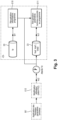
- the processing unit 9 retrieves from the program database 20 the first program information Ip1 associated with the first current program: step E20.
- the processing unit 9 accesses the light parameter base 23.
- the processing unit 9 will select, from the light parameter base 23, first current values Vc1 of the light parameters, which are associated with program metadata corresponding to the first current program Pc1.
- the processing unit 9 first checks that the program metadata of the parameter base luminous 23 include a first identifier of the first current program: step E21.
- the processing unit 9 selects the reference values of the light parameters associated with the first identifier, which become the first current values Vc1: step E22.
- the processing unit 9 verifies that the program metadata of the light parameter base 23 includes a second identifier of a genre and/or a sub-genre of the first current program: step E23.
- the processing unit 9 selects the reference values associated with said second identifier, which therefore become the first current values Vc1: step E22.
- the processing unit 9 verifies that the program metadata includes a third identifier of a channel on which the first current program is broadcast: step E24.
- the processing unit 9 selects the reference values associated with the third identifier, which therefore become the first current values Vc1: step E22.
- the processing unit 9 selects default values Vd of the light parameters: step E25. These default values Vd therefore become the first current values Vc1: step E22.
- Step E25 is optional, because in case no match was found in the previous steps, Processing unit 9 could either apply default values or not apply new settings (current values are retained).
- the processing unit 9 can also take into account the current time to choose the parameters from the base.
- the processing unit 9 may retain, when searching in the light parameter database 23, only the reference values of light parameters previously applied by the user in a predefined duration slot extending before and/or after the current time.
- the predefined duration is for example equal to 60 minutes, and the slot thus begins 30 minutes before the current time and ends 30 minutes after the current time. This makes it possible to have light parameter values that change during the day (example: different parameters during the day and in the evening).
- the light parameter base 23 comprises second reference values Vref2 of the light parameters, associated with second program metadata.
- the second reference values Vref2 are stored in the light parameter database 23 by a third-party external system.
- the light adjustment is therefore an adjustment with prior information.
- third-party external system we mean, for example, a content (program) broadcaster, a telecom operator (in the case of IP broadcasting) or an external data provider.
- the data provider external provides additional metadata related to programs on a server.
- the light parameter base 23 may be stored locally in the set-top box 1 (e.g. via periodic download), or be located on a remote server.
- Step E30 using the program database 20, proceeds in a similar manner to step E10.
- Step E30 could be optional, being replaced directly by step E31.
- step E31 the processing unit 9 uses the program information Ip (program identifier, or failing that, program genre, or failing that, channel identifier, or failing that, channel genre) to retrieve, from the light parameter base 20, the target light parameters to be used with the program.
- program information Ip program identifier, or failing that, program genre, or failing that, channel identifier, or failing that, channel genre
- steps E30 and E31 can be combined, for example if the program information directly contains the light parameter information. This could for example be the case in a DVB environment, if the light parameters are contained in a private field of the EITs.
- the light parameter base 23 may comprise both first reference values Vref1 of the light parameters (resulting from learning based on user actions), and second reference values Vref2 (provided by the third-party system).
- first reference values Vref1 and second reference values Vref2 are present in the light parameter base 23
- the processing unit 9 gives priority to the first reference values (and therefore to the adjustment information defined by the user; the optional step E25 will not be carried out). If the light parameter base 23 does not contain first reference values corresponding to the first current program, then the processing unit 9 will try to obtain second reference values corresponding to the first current program.
- the values of the light parameters can be absolute or relative values.
- limits applicable to the values of the light parameters to be modified e.g. via internal settings of the set-top box, or via user settings.
- the user could restrict the adjustment of the color temperature so that it does not exceed 4000°K, or restrict the adjustment of the light intensity so that it is always at least 30% of the maximum value.
- these terminals can be advantageously combined with time restrictions, such as allowing the full color temperature adjustment range during the day, and restricting the maximum temperature to 3500°K during the time slot 9 p.m. - 6 a.m.
- this program will therefore trigger a color temperature of 4000°K during the day, but only a temperature of 3500°K during the night slot, which will reduce the user's exposure to blue light.
- the architecture of the set-top box can of course be different from that described here.
- the communication module allowing the set-top box to control the lighting device is not necessarily integrated into a home automation controller itself integrated into the set-top box: it could be any type of communication module.
- the set-top box could also communicate with the lighting device via a home automation interface (distinct from the set-top box and the lighting device).
- the set-top box does not necessarily include all of the components described herein. Those skilled in the art will understand that the camera, microphones, etc., are not necessary for the implementation of the invention.
- the set-top box and the lighting device could be integrated into the same equipment.
- control box and light sources of the lighting device could be integrated into the same equipment.
- the viewing device does not necessarily have to be a television. It could be, for example, a video projector or any other device that can be connected to a set-top box.
Landscapes
- Circuit Arrangement For Electric Light Sources In General (AREA)
- Two-Way Televisions, Distribution Of Moving Picture Or The Like (AREA)
Claims (15)
- Verfahren zum Umgebungslichtmangagement, welches in einer Decoderbox (1) ausgeführt wird, die mit einem Anzeigegerät (2) und einer Beleuchtungseinrichtung (12) zur Einstellung des Umgebungslichts verbunden ist, wobei das Managementverfahren die Schritte umfasst, dass:- erkannt wird, dass ein Ausstrahlen eines ersten aktuellen Programms (Pc1) gestartet wird;- auf eine Lichtparameter-Datenbank (23) zugegriffen wird, die Referenzwerte (Vref) für Lichtparameter umfasst, welche Programm-Metadaten zugeordnet sind;- in der Lichtparameter-Datenbank (23) erste aktuelle Lichtparameterwerte (Vc1) ausgewählt werden, welche Programm-Metadaten zugeordnet sind, die dem ersten aktuellen Programm (Pc1) entsprechen;- ein erster Befehl (C1) an die Beleuchtungseinrichtung (12) übertragen wird, damit diese das Umgebungslicht in Abhängigkeit zu den ersten aktuellen Lichtparameterwerten einstellt,dadurch gekennzeichnet, dass
wobei die Lichtparameter-Datenbank (23) erste Referenzwerte (Vref1) für Lichtparameter umfasst, welche ersten Programm-Metadaten zugeordnet sind, wobei die ersten Referenzwerte von dem Benutzer definiert werden,
die Decoderbox (1) dafür ausgelegt ist:- einen zweiten Befehl (C2) eines Benutzers zu empfangen, der das Umgebungslicht einstellen möchte, während gerade ein zweites aktuelles Programm ausgestrahlt wird;- in Abhängigkeit zu dem zweiten Befehl zweite aktuelle Lichtparameterwerte (Vc2) zu erzeugen;- einen dritten Befehl (C3) an die Beleuchtungseinrichtung (12) zu übertragen, damit diese das Umgebungslicht in Abhängigkeit zu den zweiten aktuellen Werten einstellt;- die zweiten aktuellen Werte unter Zuordnung zu Metadaten des zweiten aktuellen Programms in der Lichtparameter-Datenbank (23) abzuspeichern, sodass die ersten Referenzwerte nun die zweiten aktuellen Werte umfassen und die ersten Programm-Metadaten nun die Metadaten des zweiten aktuellen Programms umfassen. - Managementverfahren nach Anspruch 1, wobei die Decoderbox (1) dafür ausgelegt ist, bevor sie die zweiten aktuellen Werte (Vc2) in der Lichtparameter-Datenbank (23) abspeichert, zu prüfen, ob der Benutzer, nachdem der zweite Befehl empfangen wurde, nicht versucht hat, das Umgebungslicht während einer ersten vorgegebenen Zeitdauer (Td) erneut einzustellen.
- Managementverfahren nach einem der vorhergehenden Ansprüche, wobei die Lichtparameter-Datenbank (23) zweite Referenzwerte (Vref2) für Lichtparameter umfasst, welche zweiten Programm-Metadaten zugeordnet sind, wobei die zweiten Referenzwerte von einem externen Drittsystem in der Lichtparameter-Datenbank abgespeichert werden.
- Managementverfahren nach einem der vorhergehenden Ansprüche, wobei die Decoderbox (1) dafür ausgelegt ist, abzuwarten, bis das erste aktuelle Programm während einer zweiten vorgegebenen Zeitdauer (Ta) ausgestrahlt worden ist, bevor sie den ersten Befehl (C1) an die Beleuchtungsvorrichtung (12) überträgt.
- Managementverfahren nach einem der vorhergehenden Ansprüche, wobei die Decoderbox (1) prüft, bevor sie den ersten Befehl (C1) an die Beleuchtungseinrichtung (12) überträgt, ob zumindest noch eine dritte vorgegebene Zeitdauer (Tb) des ersten aktuellen Programms zur Ausstrahlung verbleibt.
- Managementverfahren nach einem der vorhergehenden Ansprüche, wobei die Decoderbox (1) prüft, bevor sie den ersten Befehl (C1) an die Beleuchtungseinrichtung (12) überträgt, ob der Benutzer auf einem Sendekanal geblieben ist, auf welchem das erste aktuelle Programm während zumindest einer vierten vorgegebenen Zeitdauer (Tc) ausgestrahlt wird.
- Managementverfahren nach einem der vorhergehenden Ansprüche, wobei die Decoderbox (1) prüft, bevor sie den ersten Befehl (C1) an die Beleuchtungseinrichtung (12) überträgt, ob die ersten aktuellen Werte mit einem Betrieb der Beleuchtungseinrichtung (12) kompatibel sind.
- Managementverfahren nach einem der vorhergehenden Ansprüche, wobei die Decoderbox (1) eine Anwesenheitserkennungsvorrichtung zur Erkennung einer Anwesenheit des Benutzers in einem Raum, in welchem sich die Decoderbox befindet, umfasst, und wobei die Decoderbox dafür ausgelegt ist, zu prüfen, bevor sie den ersten Befehl an die Beleuchtungseinrichtung (12) überträgt, ob der Benutzer tatsächlich in dem betreffenden Raum anwesend ist.
- Managementverfahren nach einem der vorhergehenden Ansprüche, wobei die Decoderbox (1) dafür ausgelegt ist, wenn sie in Abhängigkeit zu dem ersten Programm die ersten aktuellen Werte in der Lichtparameter-Datenbank (23) auswählt:- zu prüfen, ob die Programm-Metadaten der Lichtparameter-Datenbank (23) eine erste Kennung des ersten aktuellen Programms umfassen;- wenn dies der Fall ist, die der ersten Kennung zugeordneten Referenzwerte auszuwählen;- wenn dies nicht der Fall ist, zu prüfen, ob die Programm-Metadaten eine zweite Kennung einer Gattung und/oder Untergattung des ersten aktuellen Programms umfassen und, wenn dies der Fall ist, die der zweiten Kennung zugeordneten Referenzwerte auszuwählen.
- Managementverfahren nach Anspruch 9, wobei die Decoderbox (1) dafür ausgelegt ist, wenn die Programm-Metadaten der Lichtparameter-Datenbank (23) die zweite Kennung nicht enthalten:- zu prüfen, ob die Programm-Metadaten eine dritte Kennung eines Sendekanals, auf welchem das erste aktuelle Programm ausgestrahlt wird, umfassen und, wenn dies der Fall ist, die der dritten Kennung zugeordneten Referenzwerte auszuwählen.
- Managementverfahren nach Anspruch 10, wobei die Decoderbox (1) dafür ausgelegt ist, wenn die Lichtparameter-Datenbank (23) die dritte Kennung nicht enthält, Standardwerte (Vd) für die Lichtparameter auszuwählen.
- Managementverfahren nach einem der vorhergehenden Ansprüche, wobei die Lichtparameter-Datenbank (23) in der Decoderbox (1) abgespeichert ist.
- Decoderbox (1), umfassend eine Verarbeitungseinheit (9), in welcher das Managementverfahren nach einem der vorhergehenden Ansprüche ausgeführt wird.
- Computerprogramm, das Befehle umfasst, welche die Verarbeitungseinheit (9) der Decoderbox (1) nach Anspruch 13 dazu veranlassen, die Schritte des Managementverfahrens nach einem der Ansprüche 1 bis 12 auszuführen.
- Computerlesbares Speichermedium, auf welchem das Computerprogramm nach Anspruch 14 abgespeichert ist.
Applications Claiming Priority (1)
| Application Number | Priority Date | Filing Date | Title |
|---|---|---|---|
| FR2305555A FR3149463A1 (fr) | 2023-06-02 | 2023-06-02 | Gestion de la lumière ambiante en fonction du programme |
Publications (2)
| Publication Number | Publication Date |
|---|---|
| EP4472358A1 EP4472358A1 (de) | 2024-12-04 |
| EP4472358B1 true EP4472358B1 (de) | 2025-07-09 |
Family
ID=88147374
Family Applications (1)
| Application Number | Title | Priority Date | Filing Date |
|---|---|---|---|
| EP24178643.3A Active EP4472358B1 (de) | 2023-06-02 | 2024-05-28 | Programmabhängige umgebungslichtverwaltung |
Country Status (3)
| Country | Link |
|---|---|
| US (1) | US20240407071A1 (de) |
| EP (1) | EP4472358B1 (de) |
| FR (1) | FR3149463A1 (de) |
Family Cites Families (2)
| Publication number | Priority date | Publication date | Assignee | Title |
|---|---|---|---|---|
| DE10252698B3 (de) * | 2002-11-13 | 2004-08-12 | Loewe Opta Gmbh | Unterhaltungselektronisches Gerät mit einer Empfangseinrichtung für den Empfang von Rundfunksignalen und EPG-Daten |
| US11317137B2 (en) * | 2020-06-18 | 2022-04-26 | Disney Enterprises, Inc. | Supplementing entertainment content with ambient lighting |
-
2023
- 2023-06-02 FR FR2305555A patent/FR3149463A1/fr not_active Withdrawn
-
2024
- 2024-05-28 EP EP24178643.3A patent/EP4472358B1/de active Active
- 2024-05-31 US US18/679,773 patent/US20240407071A1/en active Pending
Also Published As
| Publication number | Publication date |
|---|---|
| FR3149463A1 (fr) | 2024-12-06 |
| US20240407071A1 (en) | 2024-12-05 |
| EP4472358A1 (de) | 2024-12-04 |
Similar Documents
| Publication | Publication Date | Title |
|---|---|---|
| US12342050B2 (en) | Channel bar user interface | |
| US12229475B2 (en) | Multi-user TV user interface | |
| US12225253B2 (en) | Agnostic media delivery system | |
| US8601512B2 (en) | Meta channel network-based content download technology | |
| US10049702B2 (en) | Digital video recorder options for editing content | |
| US10142585B2 (en) | Methods and systems for synching supplemental audio content to video content | |
| US20140157320A1 (en) | Meta Channel Based Media System Control Technology | |
| US20240275862A1 (en) | Media player for receiving media content from a remote server | |
| WO2010091089A1 (en) | Meta channel based media system control technology | |
| EP3826316A1 (de) | Decodiergerät, das eine anweisung eines anzuwendenden audioprofils erzeugt | |
| JP2026031956A (ja) | コンテンツディスプレイに再生デバイスを適応させるシステム及び方法 | |
| EP1741294B1 (de) | Verfahren und einrichtung für die automatische verarbeitung von spontandaten | |
| EP4472358A1 (de) | Programmabhängige umgebungslichtverwaltung | |
| JP2023509805A5 (de) | ||
| EP4161081A1 (de) | Verfahren zur erzeugung eines personalisierten fernsehkanals für einen benutzer eines endgeräts, das für den zugang zu mindestens einem rundfunkdienst für audiovisuelle inhalte konfiguriert ist, entsprechende vorrichtung, dienstausrüstung, system und computerprogramm. | |
| WO2016177692A1 (fr) | Procede de reglage du niveau de definition des images d'un programme multimedia | |
| EP4254968A1 (de) | Verfahren zur erzeugung einer virtuellen fernsehkette für einen benutzer von mindestens einem rundfunkdienst für audiovisuelle inhalte, entsprechende erzeugungsvorrichtung, dienstausrüstung und computerprogramm | |
| KR102156356B1 (ko) | 방송 수신 장치 | |
| EP3641326A1 (de) | Verbesserter tv-dekodierer | |
| FR2876239A1 (fr) | Procede et systeme de constitution automatique d'un flux audiovisuel personnalise a partir de sources multiples | |
| FR2892882A1 (fr) | Communication bidirectionnelle sans fil entre un terminal et decodeur, notamment de television numerique. | |
| FR3007924A1 (fr) | Traitement et restitution de contenus audiovisuels |
Legal Events
| Date | Code | Title | Description |
|---|---|---|---|
| PUAI | Public reference made under article 153(3) epc to a published international application that has entered the european phase |
Free format text: ORIGINAL CODE: 0009012 |
|
| STAA | Information on the status of an ep patent application or granted ep patent |
Free format text: STATUS: REQUEST FOR EXAMINATION WAS MADE |
|
| 17P | Request for examination filed |
Effective date: 20240528 |
|
| AK | Designated contracting states |
Kind code of ref document: A1 Designated state(s): AL AT BE BG CH CY CZ DE DK EE ES FI FR GB GR HR HU IE IS IT LI LT LU LV MC ME MK MT NL NO PL PT RO RS SE SI SK SM TR |
|
| GRAP | Despatch of communication of intention to grant a patent |
Free format text: ORIGINAL CODE: EPIDOSNIGR1 |
|
| STAA | Information on the status of an ep patent application or granted ep patent |
Free format text: STATUS: GRANT OF PATENT IS INTENDED |
|
| INTG | Intention to grant announced |
Effective date: 20250203 |
|
| GRAS | Grant fee paid |
Free format text: ORIGINAL CODE: EPIDOSNIGR3 |
|
| GRAA | (expected) grant |
Free format text: ORIGINAL CODE: 0009210 |
|
| STAA | Information on the status of an ep patent application or granted ep patent |
Free format text: STATUS: THE PATENT HAS BEEN GRANTED |
|
| AK | Designated contracting states |
Kind code of ref document: B1 Designated state(s): AL AT BE BG CH CY CZ DE DK EE ES FI FR GB GR HR HU IE IS IT LI LT LU LV MC ME MK MT NL NO PL PT RO RS SE SI SK SM TR |
|
| REG | Reference to a national code |
Ref country code: GB Ref legal event code: FG4D Free format text: NOT ENGLISH |
|
| REG | Reference to a national code |
Ref country code: CH Ref legal event code: EP |
|
| REG | Reference to a national code |
Ref country code: IE Ref legal event code: FG4D Free format text: LANGUAGE OF EP DOCUMENT: FRENCH |
|
| REG | Reference to a national code |
Ref country code: DE Ref legal event code: R096 Ref document number: 602024000289 Country of ref document: DE |
|
| REG | Reference to a national code |
Ref country code: NL Ref legal event code: MP Effective date: 20250709 |
|
| PG25 | Lapsed in a contracting state [announced via postgrant information from national office to epo] |
Ref country code: PT Free format text: LAPSE BECAUSE OF FAILURE TO SUBMIT A TRANSLATION OF THE DESCRIPTION OR TO PAY THE FEE WITHIN THE PRESCRIBED TIME-LIMIT Effective date: 20251110 |
|
| PG25 | Lapsed in a contracting state [announced via postgrant information from national office to epo] |
Ref country code: NL Free format text: LAPSE BECAUSE OF FAILURE TO SUBMIT A TRANSLATION OF THE DESCRIPTION OR TO PAY THE FEE WITHIN THE PRESCRIBED TIME-LIMIT Effective date: 20250709 |
|
| REG | Reference to a national code |
Ref country code: AT Ref legal event code: MK05 Ref document number: 1813099 Country of ref document: AT Kind code of ref document: T Effective date: 20250709 |
|
| PG25 | Lapsed in a contracting state [announced via postgrant information from national office to epo] |
Ref country code: IS Free format text: LAPSE BECAUSE OF FAILURE TO SUBMIT A TRANSLATION OF THE DESCRIPTION OR TO PAY THE FEE WITHIN THE PRESCRIBED TIME-LIMIT Effective date: 20251109 |
|
| PG25 | Lapsed in a contracting state [announced via postgrant information from national office to epo] |
Ref country code: NO Free format text: LAPSE BECAUSE OF FAILURE TO SUBMIT A TRANSLATION OF THE DESCRIPTION OR TO PAY THE FEE WITHIN THE PRESCRIBED TIME-LIMIT Effective date: 20251009 |
|
| REG | Reference to a national code |
Ref country code: LT Ref legal event code: MG9D |
|
| PG25 | Lapsed in a contracting state [announced via postgrant information from national office to epo] |
Ref country code: AT Free format text: LAPSE BECAUSE OF FAILURE TO SUBMIT A TRANSLATION OF THE DESCRIPTION OR TO PAY THE FEE WITHIN THE PRESCRIBED TIME-LIMIT Effective date: 20250709 |
|
| PG25 | Lapsed in a contracting state [announced via postgrant information from national office to epo] |
Ref country code: FI Free format text: LAPSE BECAUSE OF FAILURE TO SUBMIT A TRANSLATION OF THE DESCRIPTION OR TO PAY THE FEE WITHIN THE PRESCRIBED TIME-LIMIT Effective date: 20250709 |
|
| PG25 | Lapsed in a contracting state [announced via postgrant information from national office to epo] |
Ref country code: HR Free format text: LAPSE BECAUSE OF FAILURE TO SUBMIT A TRANSLATION OF THE DESCRIPTION OR TO PAY THE FEE WITHIN THE PRESCRIBED TIME-LIMIT Effective date: 20250709 |
|
| PG25 | Lapsed in a contracting state [announced via postgrant information from national office to epo] |
Ref country code: GR Free format text: LAPSE BECAUSE OF FAILURE TO SUBMIT A TRANSLATION OF THE DESCRIPTION OR TO PAY THE FEE WITHIN THE PRESCRIBED TIME-LIMIT Effective date: 20251010 |
|
| PG25 | Lapsed in a contracting state [announced via postgrant information from national office to epo] |
Ref country code: SE Free format text: LAPSE BECAUSE OF FAILURE TO SUBMIT A TRANSLATION OF THE DESCRIPTION OR TO PAY THE FEE WITHIN THE PRESCRIBED TIME-LIMIT Effective date: 20250709 |
|
| PG25 | Lapsed in a contracting state [announced via postgrant information from national office to epo] |
Ref country code: LV Free format text: LAPSE BECAUSE OF FAILURE TO SUBMIT A TRANSLATION OF THE DESCRIPTION OR TO PAY THE FEE WITHIN THE PRESCRIBED TIME-LIMIT Effective date: 20250709 |
|
| PG25 | Lapsed in a contracting state [announced via postgrant information from national office to epo] |
Ref country code: PL Free format text: LAPSE BECAUSE OF FAILURE TO SUBMIT A TRANSLATION OF THE DESCRIPTION OR TO PAY THE FEE WITHIN THE PRESCRIBED TIME-LIMIT Effective date: 20250709 Ref country code: BG Free format text: LAPSE BECAUSE OF FAILURE TO SUBMIT A TRANSLATION OF THE DESCRIPTION OR TO PAY THE FEE WITHIN THE PRESCRIBED TIME-LIMIT Effective date: 20250709 |
|
| PG25 | Lapsed in a contracting state [announced via postgrant information from national office to epo] |
Ref country code: RS Free format text: LAPSE BECAUSE OF FAILURE TO SUBMIT A TRANSLATION OF THE DESCRIPTION OR TO PAY THE FEE WITHIN THE PRESCRIBED TIME-LIMIT Effective date: 20251009 |
|
| PG25 | Lapsed in a contracting state [announced via postgrant information from national office to epo] |
Ref country code: ES Free format text: LAPSE BECAUSE OF FAILURE TO SUBMIT A TRANSLATION OF THE DESCRIPTION OR TO PAY THE FEE WITHIN THE PRESCRIBED TIME-LIMIT Effective date: 20250709 |
|
| PG25 | Lapsed in a contracting state [announced via postgrant information from national office to epo] |
Ref country code: SM Free format text: LAPSE BECAUSE OF FAILURE TO SUBMIT A TRANSLATION OF THE DESCRIPTION OR TO PAY THE FEE WITHIN THE PRESCRIBED TIME-LIMIT Effective date: 20250709 |
|
| PG25 | Lapsed in a contracting state [announced via postgrant information from national office to epo] |
Ref country code: DK Free format text: LAPSE BECAUSE OF FAILURE TO SUBMIT A TRANSLATION OF THE DESCRIPTION OR TO PAY THE FEE WITHIN THE PRESCRIBED TIME-LIMIT Effective date: 20250709 |
|
| PG25 | Lapsed in a contracting state [announced via postgrant information from national office to epo] |
Ref country code: IT Free format text: LAPSE BECAUSE OF FAILURE TO SUBMIT A TRANSLATION OF THE DESCRIPTION OR TO PAY THE FEE WITHIN THE PRESCRIBED TIME-LIMIT Effective date: 20250709 |
|
| PG25 | Lapsed in a contracting state [announced via postgrant information from national office to epo] |
Ref country code: CZ Free format text: LAPSE BECAUSE OF FAILURE TO SUBMIT A TRANSLATION OF THE DESCRIPTION OR TO PAY THE FEE WITHIN THE PRESCRIBED TIME-LIMIT Effective date: 20250709 |
|
| PG25 | Lapsed in a contracting state [announced via postgrant information from national office to epo] |
Ref country code: SK Free format text: LAPSE BECAUSE OF FAILURE TO SUBMIT A TRANSLATION OF THE DESCRIPTION OR TO PAY THE FEE WITHIN THE PRESCRIBED TIME-LIMIT Effective date: 20250709 Ref country code: EE Free format text: LAPSE BECAUSE OF FAILURE TO SUBMIT A TRANSLATION OF THE DESCRIPTION OR TO PAY THE FEE WITHIN THE PRESCRIBED TIME-LIMIT Effective date: 20250709 |
|
| PLBE | No opposition filed within time limit |
Free format text: ORIGINAL CODE: 0009261 |
|
| STAA | Information on the status of an ep patent application or granted ep patent |
Free format text: STATUS: NO OPPOSITION FILED WITHIN TIME LIMIT |