EP4472269A1 - Verfahren und vorrichtung zur qoe-unterstützung in einem mobilkommunikationssystem - Google Patents
Verfahren und vorrichtung zur qoe-unterstützung in einem mobilkommunikationssystem Download PDFInfo
- Publication number
- EP4472269A1 EP4472269A1 EP23835736.2A EP23835736A EP4472269A1 EP 4472269 A1 EP4472269 A1 EP 4472269A1 EP 23835736 A EP23835736 A EP 23835736A EP 4472269 A1 EP4472269 A1 EP 4472269A1
- Authority
- EP
- European Patent Office
- Prior art keywords
- qoe
- signaling
- information
- terminal
- configuration information
- Prior art date
- Legal status (The legal status is an assumption and is not a legal conclusion. Google has not performed a legal analysis and makes no representation as to the accuracy of the status listed.)
- Pending
Links
Images






Classifications
-
- H—ELECTRICITY
- H04—ELECTRIC COMMUNICATION TECHNIQUE
- H04W—WIRELESS COMMUNICATION NETWORKS
- H04W24/00—Supervisory, monitoring or testing arrangements
- H04W24/08—Testing, supervising or monitoring using real traffic
-
- H—ELECTRICITY
- H04—ELECTRIC COMMUNICATION TECHNIQUE
- H04W—WIRELESS COMMUNICATION NETWORKS
- H04W76/00—Connection management
- H04W76/20—Manipulation of established connections
- H04W76/27—Transitions between radio resource control [RRC] states
-
- H—ELECTRICITY
- H04—ELECTRIC COMMUNICATION TECHNIQUE
- H04L—TRANSMISSION OF DIGITAL INFORMATION, e.g. TELEGRAPHIC COMMUNICATION
- H04L41/00—Arrangements for maintenance, administration or management of data switching networks, e.g. of packet switching networks
- H04L41/50—Network service management, e.g. ensuring proper service fulfilment according to agreements
- H04L41/5061—Network service management, e.g. ensuring proper service fulfilment according to agreements characterised by the interaction between service providers and their network customers, e.g. customer relationship management
- H04L41/5067—Customer-centric QoS measurements
-
- H—ELECTRICITY
- H04—ELECTRIC COMMUNICATION TECHNIQUE
- H04L—TRANSMISSION OF DIGITAL INFORMATION, e.g. TELEGRAPHIC COMMUNICATION
- H04L43/00—Arrangements for monitoring or testing data switching networks
- H04L43/06—Generation of reports
-
- H—ELECTRICITY
- H04—ELECTRIC COMMUNICATION TECHNIQUE
- H04W—WIRELESS COMMUNICATION NETWORKS
- H04W24/00—Supervisory, monitoring or testing arrangements
- H04W24/10—Scheduling measurement reports ; Arrangements for measurement reports
-
- H—ELECTRICITY
- H04—ELECTRIC COMMUNICATION TECHNIQUE
- H04W—WIRELESS COMMUNICATION NETWORKS
- H04W24/00—Supervisory, monitoring or testing arrangements
- H04W24/02—Arrangements for optimising operational condition
Definitions
- the disclosure relates to operations of a terminal and base station in a mobile communication system.
- the disclosure relates to a method for protecting signaling-based quality-of-experience (QoE) in a mobile communication system.
- QoE quality-of-experience
- 5G mobile communication technology defines a wide frequency band to enable fast transmission speed and new services, and can be implemented not only in a sub-6 GHz frequency band ("sub 6 GHz”) such as 3.5 GHz but also in an ultra-high frequency band (“above 6 GHz”) called mmWave such as 28 GHz or 39 GHz.
- sub 6 GHz sub-6 GHz frequency band
- mmWave ultra-high frequency band
- 6G mobile communication technology called “beyond 5G system” is being considered for implementation in a terahertz (THz) band (e.g., band of 95 GHz to 3 THz) to achieve transmission speed that is 50 times faster and ultra-low latency that is reduced to 1/10 compared with 5G mobile communication technology.
- THz terahertz
- V2X Vehicle-to-Everything
- NR-U new radio unlicensed
- UE power saving low power consumption scheme for NR terminals
- NTN non-terrestrial network
- radio interface architecture/protocol is in progress for technologies such as intelligent factories (industrial Internet of things, IIoT) for new service support through linkage and convergence with other industries, integrated access and backhaul (IAB) that provides nodes for network service area extension by integrating and supporting wireless backhaul links and access links, mobility enhancement including conditional handover and dual active protocol stack (DAPS) handover, 2-step random access (2-step RACH for NR) that simplifies the random access procedure; and standardization in system architecture/service is also in progress for the 5G baseline architecture (e.g., service based architecture, service based interface) for integrating network functions virtualization (NFV) and software defined networking (SDN) technologies, and mobile edge computing (MEC) where the terminal receives a service based on its location.
- 5G baseline architecture e.g., service based architecture, service based interface
- NFV network functions virtualization
- SDN software defined networking
- MEC mobile edge computing
- 5G mobile communication system When such a 5G mobile communication system is commercialized, connected devices whose number is explosively increasing will be connected to the communication networks; accordingly, it is expected that enhancement in function and performance of the 5G mobile communication system and the integrated operation of the connected devices will be required.
- new research will be conducted regarding 5G performance improvement and complexity reduction, AI service support, metaverse service support, and drone communication by utilizing extended reality (XR) for efficiently supporting augmented reality (AR), virtual reality (VR), and mixed reality (MR), artificial intelligence (AI), and machine learning (ML).
- XR extended reality
- AR augmented reality
- VR virtual reality
- MR mixed reality
- AI artificial intelligence
- ML machine learning
- the disclosure aims to provide an efficient operation method for a terminal and a base station in a mobile communication system.
- the disclosure aims to provide a method and apparatus for protecting signaling-based QoE in a mobile communication system.
- the method of a terminal in a wireless communication system may include: receiving a first radio resource control (RRC) message including at least quality-of-experience (QoE) configuration information and information indicating that the QoE configuration information is related to one piece of signaling-based QoE configuration information; receiving a second RRC message for RRC connection release; performing a QoE measurement operation based on at least one piece of QoE configuration information; and transmitting, in case that the terminal in RRC idle state or RRC inactive state is connected to a base station, a third RRC message including signaling-based QoE related information to the base station.
- RRC radio resource control
- QoE quality-of-experience
- the method of a base station in a wireless communication system may include: receiving, in case that connected to a terminal in radio resource control (RRC) idle state or RRC inactive state, an RRC message including signaling-based quality-of- experience (QoE) related information from the terminal; receiving a request for configuring management-based QoE from a server; and determining whether to configure management-based QoE to the terminal based on the signaling-based QoE related information.
- RRC radio resource control
- QoE quality-of- experience
- the terminal in a wireless communication system may include: a transceiver; and a controller, wherein the controller may be configured to control: receiving a first radio resource control (RRC) message including at least quality-of-experience (QoE) configuration information and information indicating that the QoE configuration information is related to one piece of signaling-based QoE configuration information; receiving a second RRC message for RRC connection release; performing a QoE measurement operation based on at least one piece of QoE configuration information; and transmitting, in case that the terminal in RRC idle state or RRC inactive state is connected to a base station, a third RRC message including signaling-based QoE related information to the base station.
- RRC radio resource control
- QoE quality-of-experience
- the base station in a wireless communication system may include: a transceiver; and a controller, wherein the controller may be configured to control: receiving, in case that connected to a terminal in radio resource control (RRC) idle state or RRC inactive state, an RRC message including signaling-based quality-of- experience (QoE) related information from the terminal; receiving a request for configuring management-based QoE from a server; and determining whether to configure management-based QoE to the terminal based on the signaling-based QoE related information.
- RRC radio resource control
- QoE quality-of- experience
- a block of a flowchart may correspond to a module, a segment or a code containing one or more executable instructions implementing one or more logical functions, or to a part thereof.
- functions described by blocks may be executed in an order different from the listed order. For example, two blocks listed in sequence may be executed at the same time or executed in reverse order.
- this may include the 5 th generation mobile communication technology (SG, new radio, NR) developed after LTE-A, and the term 5G hereinafter may be a concept that includes existing LTE, LTE-A, and other similar services.
- SG new radio
- NR new radio
- LTE long term evolution
- 3GPP NR new radio
- the disclosure is not limited by the above terms and names, and may be equally applied to systems complying with other standards.
- the description written based on LTE systems in the disclosure may also be applied to other mobile communication systems such as next-generation mobile communication system NR.
- the eNB in LTE may correspond to the gNB in NR
- the MME in LTE may correspond to the AMF in NR.
- FIG. 1 is a diagram illustrating the architecture of a next-generation mobile communication system according to an embodiment of the disclosure.
- the radio access network of a next-generation mobile communication system (new radio, NR) is composed of a new radio node B (hereinafter, gNB) 1-10 and an AMF (new radio core network) 1-05.
- a new radio user equipment (hereinafter, NR UE or terminal) 1-15 connects to an external network through the gNB 1-10 and the AMF 1-05.
- the gNB 1-10 corresponds to an evolved node B (eNB) of the existing LTE system.
- the gNB 1-10 may be connected to the NR UE 1-15 through a radio channel, and it can provide a more superior service than that of the existing node B (1-20).
- eNB evolved node B
- the gNB 1-10 takes charge of this. In a typical situation, one gNB controls a plurality of cells.
- a bandwidth beyond the existing maximum bandwidth may be utilized, and a beamforming technology may be additionally combined with orthogonal frequency division multiplexing (OFDM) serving as a radio access technology.
- OFDM orthogonal frequency division multiplexing
- AMC adaptive modulation and coding
- the AMF 1-05 may perform functions such as mobility support, bearer configuration, and QoS (quality of service) configuration.
- the AMF 1-05 is an entity taking charge of not only mobility management but also various control functions for the UE, and is connected to a plurality of base stations.
- next-generation mobile communication system may interwork with the existing LTE system, and the AMF 1-05 is connected to the MME 1-25 through a network interface.
- the MME 1-25 is connected to an eNB 1-30 being a legacy base station.
- the UE supporting LTE-NR dual connectivity may transmit and receive data while maintaining connections to both the gNB 1-10 and the eNB 1-30 (1-35).
- FIG. 2 is a diagram of QoE (quality of experience) measurement operation according to an embodiment of the disclosure.
- the QoE measurement and reporting operation means reporting a specific result measured at the application layer of the UE to the network (gNB) according to the network settings.
- the application layer refers to a layer that provides specific services such as a streaming service, MTSI (multimedia telephony service for IMS) service, and VR service. In addition, it will be expanded to AR/MR services and MBS (multicast/broadcast service) services.
- the QoE measurement and reporting operation may be driven at the time in case that the application layer of the network (gNB) provides the UE with configuration information for the operation.
- the base station transmits to the UE a specific RRC message including one RRC container in which the configuration information provided from the application layer of the network is stored (2-05).
- the specific RRC message may be a RRCReconfiguration message.
- the RRC container may be included in a specific IE, AppLayerMeasConfig, of the RRCReconfiguration message.
- the ASN.1 of the AppLayerMeasConfig IE is shown in Table 1 below.
- the configuration information (measConfigAppLayerContainer) is delivered to the application layer of the UE, and the application layer of the UE collects specific measurement results according to the above configuration information (measConfigAppLayerContainer).
- the collected results are stored in one RRC container and delivered to the application layer of the network (gNB) through a given RRC message MeasurementReportAppLayer (2-10).
- the MeasurementReportAppLayer message is provided via an SRB.
- the SRB may be SRB4 (signaling radio bearer 4).
- the ASN.1 of the MeasurementReportAppLayer message is shown in Table 2 below.
- the above RRC message may include a measConfigAppLayerId field and multiple measurementReportAppLayerContainer fields separated by the measConfigAppLayerId field. QoE measurement results may be stored in the measurementReportAppLayerContainer fields. This RRC message may be transmitted from the UE to the base station.
- the above QoE measurement and reporting operation is possible only in the connected mode.
- the Rel-18 NR system will consider MBS services that can be served in all RRC states for the QoE measurement and reporting operation, QoE measurement and logging operation will also be performed in the RRC_IDLE and RRC INACTIVE states of the UE.
- FIG. 3 is a diagram for explaining signaling-based QoE and management-based QoE according to an embodiment of the disclosure.
- QoE is divided into signaling-based QoE and management-based QoE. There are signaling-based QoE where the OAM requests QoE operation to a specific UE, and management-based QoE in which the OAM requests QoE operation to specific UE(s) belonging to a specified area.
- the OAM 3-05 designates a specific UE 3-25 to perform QoE operation and transmits related QoE configuration information to the base station 3-15 (3-10).
- the base station 3-15 includes the configuration information provided by the OAM in an RRCReconfiguration message and transmits it to the UE 3-25 (3-20).
- the OAM 3-05 designates an area of interest where QoE results are required, and transmits related QoE configuration information to the base station 3-35 (3-30).
- the base station 3-35 selects specific UEs 3-45, 3-50 and 3-55 among the UEs supporting QoE in the interested area, and transmits an RRCReconfiguration message including the configuration information provided by the OAM to the selected UEs 3-45, 3-50 and 3-55 (3-40).
- Signaling-based QoE is performed only in a designated UE and should not be invalidated (stopped or restricted) by management-based QoE. For example, a maximum of 16 QoE configuration sets may be configured in a single UE. If the QoE configurations exceed this number, an existing QoE configuration and related stored information may need to be deleted. At this time, the configuration information and measurement results for existing signaling-based QoE should not be deleted.
- the UE(s) having received the above QoE configuration information do not recognize whether the QoE set for them is signaling-based or management-based. That is, the current QoE configuration information does not contain any information that can indicate whether it is signaling-based or management-based.
- QoE operation in the Rel-17 NR system is performed only in the RRC_CONNECTED state of the UE, it is possible for the network to control the signaling-based QoE so that it is not stopped.
- FIG. 4 is a diagram for explaining a problem in which signaling-based QoE is invalidated according to an embodiment of the disclosure.
- MBS services that may be received in all RRC states can also be considered for QoE measurement.
- the UE may perform QoE measurement and storing operation.
- the base station may configure new QoE to the UE, and the UE may have to invalidate the previously configured signaling-based QoE to apply the new QoE configuration.
- the OAM 4-05 transmits signaling-based QoE configuration information for a first UE 4-30 to the first base station 4-15 (4-10).
- This QoE configuration information is for the MBS service, which instructs the first UE 4-30 to perform QoE operation even in the RRC_IDLE or RRC_INACTIVE state.
- the first base station 4-15 triggers QoE for the first UE 4-30 in the RRC_CONNECTED state (4-20), and transmits configuration information on a QoE operation to be performed in the RRC_IDLE or RRC_INACTIVE state to the first UE 4-30 by using a specific RRC message (4-25).
- the first UE 4-30 collects and stores QoE measurement results according to the QoE configuration information (4-35). Thereafter, the first UE 4-30 is connected to the second base station 4-45. This first UE 4-30 maintains the configuration information for the signaling-based QoE operation that has not yet been terminated or unreported signaling-based QoE measurement results.
- the OAM 4-05 may request the second base station 4-45 to collect QoE measurement results in a specific area (4-40).
- the second base station 4-45 selects specific UE(s) among the UEs supporting QoE operation in the above area and configures QoE operation (4-55).
- the first UE 4-30 may have to delete the configuration information on the previously configured signaling-based QoE and related collected information. This means that the signaling-based QoE having been triggered by the OAM 4-05 is invalidated.
- the second base station 4-45 should be aware that the first UE 4-30 has configuration information for a signaling-based QoE operation that has not yet been terminated or unreported signaling-based QoE measurement results. Therefore, various embodiments of the disclosure propose a method by which the base station may determine whether a UE has configuration information for a signaling-based QoE operation that has not yet been terminated or unreported signaling-based QoE measurement results.
- FIG. 5 is a diagram for explaining a method for protecting signaling-based QoE according to an embodiment of the disclosure.
- Each QoE configuration information corresponding to one service provided by the first base station 5-15 includes an indication indicating whether the configured QoE is signaling-based or management-based. Through this indication, the first UE 5-30 may determine whether the QoE operation corresponding to each service is signaling-based or management-based. For example, one indication is set per measConfigAppLayerId or trace reference. If all the QoE configuration information sets to be configured are signaling-based QoE, a single indication indicating this may be set. To receive and recognize the above indication, a corresponding UE capability may be required, and for this purpose, the first UE 5-30 may report its capability information in advance to the first base station 5-15.
- the first UE 5-30 transitions from the RRC_CONNECTED state to the RRC_IDLE or RRC_INACTIVE state, and performs QoE operation according to the QoE configuration in the above RRC state (5-35).
- the above first UE 5-30 may report to the second base station that it has signaling-based QoE configuration information that needs to be protected or QoE measurement results that have been collected but not reported according to the signaling-based QoE configuration by using a specific RRC message (5-40).
- the specific RRC message may be an existing RRCSetupComplete, RRCResumeComplete, RRCReconfigurationComplete, RRCReestablishmentComplete or UEAssistanceInformation message, or a new RRC message.
- the first UE 5-30 may include one indication for each QoE configuration information set. For example, this indication may be included if one of the following conditions is satisfied.
- a Boolean format indication may be used to indicate whether the first UE 5-30 has valid signaling-based QoE configuration information or there are QoE measurement results collected but unreported according to the signaling-based QoE configuration. For example, if the Boolean format indication is set to 'true', this means that the first UE 5-30 has valid signaling-based QoE configuration information; if it set to 'false', this means that there are QoE measurement results that have been collected but not reported according to the signaling-based QoE configuration.
- the UE may have room to additionally configure a new QoE operation in addition to the previously configured (signaling-based) QoE operation.
- the base station can determine whether it can configure an additional QoE operation to the UE. Accordingly, the UE may report at least one of the following information to the base station.
- FIG. 6 is a diagram describing UE operations for protecting signaling-based QoE according to an embodiment of the disclosure.
- the UE receives an RRCRelease message from the base station.
- This message includes configuration information indicating switching to the RRC_IDLE or RRC INACTIVE state.
- the UE performs QoE operation in the RRC_IDLE or RRC_INACTIVE state according to the received QoE configuration information.
- the UE switches to the RRC_CONNECTED state with respect to the base station.
- This base station may be the base station that has transmitted the RRCRelease message or a different base station.
- the UE transmits an indication to the base station indicating that the UE possesses previously configured signaling-based QoE.
- the UE may report at least one of the following information.
- the base station having received at least one piece of information from the UE may perform operations to protect signaling-based QoE.
- operations to protect signaling-based QoE For detailed operations, refer to the operations in FIG. 5 and FIG. 7 below.
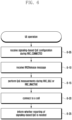
- FIG. 7 is a diagram describing base station operations for protecting signaling-based QoE according to an embodiment of the disclosure.
- the operation of the base station in FIG. 7 may correspond to the operation of the second base station in FIG. 5, and FIG. 5 may be referenced for detailed operations.
- the base station receives at least one piece of the above information from the UE.
- the at least one piece of information refer to at least one piece of information described at step 6-25 of FIG. 6 .
- the base station recognizes that the UE has measurement results according to signaling-based QoE or the above QoE configuration. For example, based on the information received at step 7-10, the base station may identify that the UE has measurement results according to signaling-based QoE or the above QoE configuration.
- the base station may exclude the UE or configure new QoE as far as the UE allows.
- FIG. 8 is a diagram for describing a method for protecting signaling-based QoE in RRC_INACTIVE mode according to an embodiment of the disclosure.
- the serving base station may retrieve various configuration information on the UE from the old base station.
- This configuration information is called "inactive UE context”.
- Embodiments of the disclosure propose a method of additionally including QoE configuration information provided to the UE in the inactive UE context and allowing the serving cell to utilize the same to prevent signaling-based QoE from being overridden.
- the OAM 8-05 transmits signaling-based QoE configuration information for the first UE 8-30 to the first base station 8-15 (8-10).
- This QoE configuration information is for the MBS service, which instructs the first UE 8-30 to perform QoE operation even in the RRC_IDLE or RRC_INACTIVE state.
- the first base station 8-15 triggers QoE for the first UE 8-30 in the RRC_CONNECTED state (8-20) and transmits, to the first UE, configuration information for the QoE operation to be performed in the RRC_IDLE or RRC_INACTIVE state by using a specific RRC message (8-25).
- the first base station 8-15 transmits an RRCRelease message including a suspendConfig IE to the first UE 8-30 and stores the inactive UE context of the first UE 8-30.
- the inactive UE context may include QoE configuration information set for the first UE 8-30 (8-35). After the first UE 8-30 transitions to the RRC_IDLE or RRC_INACTIVE state, it collects and stores QoE measurement results according to the QoE configuration information (8-40).
- the first UE 8-30 is connected to the second base station 8-50 through a resume process (8-45).
- the second base station 8-50 makes a request for the inactive UE context of the first UE 8-30 to the first base station 8-15 (8-55).
- the first base station 8-15 transmits the inactive UE context to the second base station 8-50 (8-60).
- the second base station 8-50 Based on the inactive UE context, the second base station 8-50 recognizes that the first UE 8-30 has configuration information for a signaling-based QoE operation that has not yet been terminated, or unreported signaling-based QoE measurement results.
- the second base station 8-50 may control the QoE operation of the first UE 8-30 based on the information obtained from the inactive UE context.
- the OAM 8-05 may request the second base station 8-50 to collect QoE measurement results in a specific area (8-65).
- the second base station 8-50 selects specific UE(s) among the UEs supporting QoE operation in the area and configures QoE operation to the selected UEs (8-70).
- the second base station 8-50 may configure QoE to specific UEs 8-75 and 8-80 except for the first UE 8-30.
- the second base station 8-50 may configure QoE to the first UE 8-30 based on the information obtained from the inactive UE context. If the first UE 8-30 possesses previously configured signaling-based QoE but can additionally perform a QoE operation, the second base station 8-50 may additionally configure QoE to the first UE 8-30 as far as allowed.
- FIG. 9 is a diagram describing operations of the old base station (old gNB) for protecting signaling-based QoE in RRC_INACTIVE mode according to an embodiment of the disclosure.
- the operation of the old base station in FIG. 9 may correspond to the operation of the first base station in FIG. 8, and FIG. 8 may be referenced for the detailed operation.
- the base station configures the UE with signaling-based QoE to be applied in RRC INACTIVE.
- the base station stores the QoE configuration information in the inactive UE context of the UE.
- the base station causes the UE to transition to the RRC_INACTIVE state through an RRCRelease message.
- the base station receives a request for the inactive UE context of the UE from a neighbor base station.
- the base station may check whether the inactive UE context for the UE requested from the neighbor base station is stored.
- the base station transmits the requested inactive UE context to the neighbor base station.
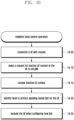
- FIG. 10 is a diagram describing operations of the neighbor base station for protecting signaling-based QoE in RRC_INACTIVE mode according to an embodiment of the disclosure.
- the operation of the neighbor base station in FIG. 10 may correspond to the operation of the second base station in FIG. 8, and FIG. 8 may be referenced for the detailed operation.
- the base station is connected to the UE through a resume process.
- the base station makes a request for the inactive UE context of the UE to the old serving base station of the UE.
- the base station receives the inactive UE context from the old serving base station.
- the base station is aware that the UE has configuration information for signaling-based QoE operation that has not yet been terminated, or unreported signaling-based QoE measurement results.
- the base station configures QoE to selected UEs except for the UE. If the UE possesses previously configured signaling-based QoE but can additionally perform QoE operation, the base station may additionally configure QoE to the UE as far as allowed.
- the UE may ignore the new QoE configuration set by the network and continue the previously configured signaling-based QoE operation. At this time, the UE may report, using a specific indication, that it cannot apply the new QoE operation set by the network due to previously configured signaling-based QoE set by the network.
- the method for providing information indicating that a UE has signaling-based QoE is described with reference to FIGS. 5 , 6 and 7
- the method for an old gNB to provide an inactive UE context is described with reference to FIGS. 8 , 9 and 10 , but it may be possible to carry out them in combination.
- the old serving base station may provide the inactive UE context to the current serving base station.
- the current serving base station may request the UE to report information indicating that there is signaling-based QoE.
- the current serving base station may selectively request the inactive UE context from the old serving base station or request the terminal to report information indicating that there is signaling-based QoE.
- FIG. 11 is a diagram showing the structure of a UE according to an embodiment of the disclosure.
- the UE may include a radio frequency (RF) processor 11-10, a baseband processor 11-20, a storage 11-30, and a controller 11-40. Additionally, the controller 11-40 may include a multi-connectivity processor 11-42.
- RF radio frequency
- the RF processor 11-10 performs a function for transmitting and receiving a signal through a radio channel, such as signal band conversion and amplification. That is, the RF processor 11-10 performs up-conversion of a baseband signal provided from the baseband processor 11-20 into an RF-band signal and transmit it through an antenna, and performs down-conversion of an RF-band signal received through an antenna into a baseband signal.
- the RF processor 11-10 may include a transmission filter, a reception filter, an amplifier, a mixer, an oscillator, a digital-to-analog converter (DAC), and an analog-to-digital converter (ADC).
- DAC digital-to-analog converter
- ADC analog-to-digital converter
- the RF processor 11-10 may include a plurality of RF chains. Further, the RF processor 11-10 may perform beamforming. For beamforming, the RF processor 11-10 may adjust phases and magnitudes of individual signals transmitted and received through the plural antennas or antenna elements. Further, the RF processor may perform MIMO (multi input multi output), and may receive several layers during an MIMO operation.
- MIMO multi input multi output
- the baseband processor 11-20 performs conversion between a baseband signal and a bit stream in accordance with the physical layer specification of the system. For example, during data transmission, the baseband processor 11-20 generates complex symbols by encoding and modulating a transmission bit stream. Further, during data reception, the baseband processor 11-20 restores a reception bit stream by demodulating and decoding a baseband signal provided from the RF processor 11-10. For example, in the case of utilizing orthogonal frequency division multiplexing (OFDM), for data transmission, the baseband processor 11-20 generates complex symbols by encoding and modulating a transmission bit stream, maps the complex symbols to subcarriers, and composes OFDM symbols through inverse fast Fourier transform (IFFT) operation and cyclic prefix (CP) insertion.
- OFDM orthogonal frequency division multiplexing
- the baseband processor 11-20 divides a baseband signal provided from the RF processor 11-10 in units of OFDM symbols, restores the signals mapped to subcarriers through fast Fourier transform (FFT) operation, and restores the reception bit stream through demodulation and decoding.
- FFT fast Fourier transform
- the baseband processor 11-20 and the RF processor 11-10 transmit and receive signals as described above.
- the baseband processor 11-20 and the RF processor 11-10 may be called a transmitter, a receiver, a transceiver, or a communication unit.
- at least one of the baseband processor 11-20 or the RF processor 11-10 may include a plurality of communication modules.
- at least one of the baseband processor 11-20 or the RF processor 11-10 may include different communication modules.
- the different radio access technologies may include a wireless LAN (e.g., IEEE 802.11), a cellular network (e.g., LTE), and the like.
- the different frequency bands may include a super high frequency (SHF) band (e.g., 2.NRHz, NRhz) and a millimeter wave (mmWave) band (e.g., 60 GHz).
- SHF super high frequency
- mmWave millimeter wave
- the storage 11-30 stores data such as basic programs, application programs, and configuration information for the operation of the UE.
- the storage 11-30 may store information on a second access node that performs wireless communication using a second radio access technology.
- the storage 11-30 provides stored data in response to a request from the controller 11-40.
- the controller 11-40 controls the overall operation of the UE. For example, the controller 11-40 transmits and receives signals through the baseband processor 11-20 and the RF processor 11-10. Further, the controller 11-40 writes or reads data to or from the storage 11-30. To this end, the controller 11-40 may include at least one processor.
- the controller 11-40 may include a communication processor (CP) for controlling communication and an application processor (AP) for controlling higher layers such as application programs.
- CP communication processor
- AP application processor
- controller 11-40 may control the operation of the UE according to various embodiments of the disclosure.
- FIG. 12 is a diagram showing the structure of a base station in a wireless communication system according to an embodiment of the disclosure.
- the base station includes an RF processor 12-10, a baseband processor 12-20, a backhaul communication unit 12-30, a storage 12-40, and a controller 12-50. Additionally, the controller 12-50 may include a multi-connectivity processor 12-52.
- the RF processor 12-10 performs a function for transmitting and receiving a signal through a radio channel, such as signal band conversion and amplification. That is, the RF processor 12-10 performs up-conversion of a baseband signal provided from the baseband processor 12-20 into an RF-band signal and transmits the converted signal through an antenna, and performs down-conversion of an RF-band signal received through an antenna into a baseband signal.
- the RF processor 12-10 may include a transmission filter, a reception filter, an amplifier, a mixer, an oscillator, a DAC, and an ADC.
- the first access node may be provided with a plurality of antennas.
- the RF processor 12-10 may include a plurality of RF chains. Further, the RF processor 12-10 may perform beamforming. For beamforming, the RF processor 12-10 may adjust phases and amplitudes of individual signals transmitted and received through plural antennas or antenna elements. The RF processor may perform downlink MIMO operation by transmitting one or more layers.
- the baseband processor 12-20 performs conversion between a baseband signal and a bit stream in accordance with the physical layer specification of a first radio access technology. For example, for data transmission, the baseband processor 12-20 generates complex symbols by encoding and modulating a transmission bit stream. Further, for data reception, the baseband processor 12-20 restores a reception bit stream by demodulating and decoding a baseband signal provided from the RF processor 12-10. For example, in the case of utilizing OFDM, for data transmission, the baseband processor 12-20 generates complex symbols by encoding and modulating a transmission bit stream, maps the complex symbols to subcarriers, and composes OFDM symbols through IFFT operation and CP insertion.
- the baseband processor 12-20 divides a baseband signal provided from the RF processor 12-10 in units of OFDM symbols, restores the signals mapped to subcarriers through FFT operation, and restores the reception bit stream through demodulation and decoding.
- the baseband processor 12-20 and the RF processor 12-10 transmits and receives signals as described above.
- the baseband processor 12-20 and the RF processor 12-10 may be called a transmitter, a receiver, a transceiver, a communication unit, or a wireless communication unit.
- the backhaul communication unit 12-30 provides an interface for communication with other nodes in the network. That is, the backhaul communication unit 12-30 converts a bit stream, which is to be transmitted from the base station to another node, for example, a secondary base station or the core network, into a physical signal, and converts a physical signal received from another node into a bit stream.
- the controller 12-50 controls the overall operation of the base station. For example, the controller 12-50 transmits and receives signals through the baseband processor 12-20 and the RF processor 12-10 or through the backhaul communication unit 12-30. Further, the controller 12-50 writes or reads data to or from the storage 12-40. To this end, the controller 12-50 may include at least one processor.
- controller 12-50 may control the operation of the base station according to various embodiments of the disclosure.
- a computer-readable storage medium storing one or more programs (software modules) may be provided.
- the one or more programs stored in the computer-readable storage medium may be configured to be executable by one or more processors of an electronic device.
- the one or more programs may include instructions that cause the electronic device to execute the methods according to the embodiments described in the claims or specification of the disclosure.
- Such a program may be stored in a random access memory, a nonvolatile memory such as a flash memory, a read only memory (ROM), an electrically erasable programmable read only memory (EEPROM), a magnetic disc storage device, a compact disc ROM (CD-ROM), a digital versatile disc (DVD), other types of optical storage devices, or a magnetic cassette.
- a program may be stored in a memory composed of a combination of some or all of them.
- a plurality of component memories may be included.
- such a program may be stored in an attachable storage device that can be accessed through a communication network such as the Internet, an intranet, a local area network (LAN), a wide LAN (WLAN), or a storage area network (SAN), or through a communication network composed of a combination thereof.
- a storage device may access the equipment that carries out an embodiment of the disclosure through an external port.
- a separate storage device on a communication network may access the equipment that carries out an embodiment of the disclosure.
- the elements included in the disclosure are expressed in a singular or plural form according to the presented specific embodiment.
- the singular or plural expression is appropriately selected for ease of description according to the presented situation, and the disclosure is not limited by a single element or plural elements.
- Those elements described in a plural form may be configured as a single element, and those elements described in a singular form may be configured as plural elements.
Landscapes
- Engineering & Computer Science (AREA)
- Computer Networks & Wireless Communication (AREA)
- Signal Processing (AREA)
- Business, Economics & Management (AREA)
- General Business, Economics & Management (AREA)
- Mobile Radio Communication Systems (AREA)
Applications Claiming Priority (2)
| Application Number | Priority Date | Filing Date | Title |
|---|---|---|---|
| KR1020220083334A KR20240006363A (ko) | 2022-07-06 | 2022-07-06 | 이동통신 시스템에서 QoE 를 지원하는 방법 및 장치 |
| PCT/KR2023/008959 WO2024010269A1 (ko) | 2022-07-06 | 2023-06-27 | 이동통신 시스템에서 qoe 를 지원하는 방법 및 장치 |
Publications (2)
| Publication Number | Publication Date |
|---|---|
| EP4472269A1 true EP4472269A1 (de) | 2024-12-04 |
| EP4472269A4 EP4472269A4 (de) | 2025-07-09 |
Family
ID=89453703
Family Applications (1)
| Application Number | Title | Priority Date | Filing Date |
|---|---|---|---|
| EP23835736.2A Pending EP4472269A4 (de) | 2022-07-06 | 2023-06-27 | Verfahren und vorrichtung zur qoe-unterstützung in einem mobilkommunikationssystem |
Country Status (5)
| Country | Link |
|---|---|
| US (1) | US20250220764A1 (de) |
| EP (1) | EP4472269A4 (de) |
| KR (1) | KR20240006363A (de) |
| CN (1) | CN119404542A (de) |
| WO (1) | WO2024010269A1 (de) |
Families Citing this family (1)
| Publication number | Priority date | Publication date | Assignee | Title |
|---|---|---|---|---|
| EP4478680A1 (de) * | 2023-06-16 | 2024-12-18 | Nokia Technologies Oy | Vorrichtung, verfahren und computerprogramme im zusammenhang mit der erfahrungsqualität |
Family Cites Families (2)
| Publication number | Priority date | Publication date | Assignee | Title |
|---|---|---|---|---|
| US20220046503A1 (en) * | 2020-08-05 | 2022-02-10 | Qualcomm Incorporated | Quality of experience techniques for a wireless communication system |
| EP4256838A4 (de) * | 2020-12-07 | 2024-05-08 | Telefonaktiebolaget LM Ericsson (publ) | Netzwerkknoten und verfahren zur handhabung eines dienstes in einem drahtloskommunikationsnetzwerk |
-
2022
- 2022-07-06 KR KR1020220083334A patent/KR20240006363A/ko active Pending
-
2023
- 2023-06-27 WO PCT/KR2023/008959 patent/WO2024010269A1/ko not_active Ceased
- 2023-06-27 EP EP23835736.2A patent/EP4472269A4/de active Pending
- 2023-06-27 US US18/880,763 patent/US20250220764A1/en active Pending
- 2023-06-27 CN CN202380051018.1A patent/CN119404542A/zh active Pending
Also Published As
| Publication number | Publication date |
|---|---|
| CN119404542A (zh) | 2025-02-07 |
| WO2024010269A1 (ko) | 2024-01-11 |
| US20250220764A1 (en) | 2025-07-03 |
| EP4472269A4 (de) | 2025-07-09 |
| KR20240006363A (ko) | 2024-01-15 |
Similar Documents
| Publication | Publication Date | Title |
|---|---|---|
| US12356316B2 (en) | Method and apparatus for supporting system information acquisition by sidelink remote terminal over sidelink relay | |
| US20240260121A1 (en) | Apparatus and method for supporting network switching of user equipment in wireless communication system | |
| US20230362749A1 (en) | Method and apparatus to optimize conditional pscell addition and change (cpac) in wireless communication system | |
| US20240306067A1 (en) | Method and device for performing conditional daps handover in mobile communication system | |
| US20240154880A1 (en) | Method and apparatus for qoe measurement of ue in dual connectivity in a wireless communication system | |
| US20240096223A1 (en) | Method and apparatus for reporting flight path of terminal in mobile communication system | |
| EP4472269A1 (de) | Verfahren und vorrichtung zur qoe-unterstützung in einem mobilkommunikationssystem | |
| EP4301016A1 (de) | Verfahren und vorrichtung zur verwaltung der verfolgungsbereichsaktualisierung in einem satellitenkommunikationssystem der nächsten generation | |
| KR20230157775A (ko) | 차세대 이동 통신 시스템에서 QoE 측정 보고에 관한 방법 및 장치 | |
| EP4525494A1 (de) | Verfahren und vorrichtung zur verwaltung der lückenpriorität für ein musim-endgerät in einem drahtloskommunikationssystem | |
| US20250063440A1 (en) | Method and device for optimizing voice fallback in next-generation mobile communication | |
| US20240049066A1 (en) | Method and device for operating mobile integrated access and backhaul node in next-generation mobile communication system | |
| US20230199484A1 (en) | Method and device for control plane-based registration and remote provisioning in communication system | |
| US20230142532A1 (en) | Method and device for supporting efficient network slicing in wireless communication system | |
| US12368564B2 (en) | Method and apparatus for supporting UDM update data for NPN | |
| US20230156651A1 (en) | Method and apparatus for selection of user plane or control plane for user equipment remote provisioning | |
| WO2024136403A1 (ko) | 차세대 이동통신에서 sib-less cell을 지원하는 방법 및 장치 | |
| KR20240142039A (ko) | 차세대 이동통신에서 이동성을 지원하는 방법 및 장치 | |
| US20240098581A1 (en) | Method and apparatus for optimizing eps fallback in next generation mobile communication | |
| EP4598120A1 (de) | Verfahren und vorrichtung zur übertragung von konfigurationsinformationen von kandidatenzellen zur l1/l2-basierten mobilitätsunterstützung in einem kommunikationssystem der nächsten generation | |
| US20230389111A1 (en) | Method and apparatus to optimize random access in wireless communication system | |
| EP4654655A1 (de) | Verfahren und vorrichtung zur messung der qoe im inaktiven und standby-modus in einem drahtloskommunikationssystem | |
| US20250294525A1 (en) | Method and device for managing cooperation information between terminals for sidelink communication in wireless communication system | |
| KR20250045998A (ko) | 이동 통신 시스템에서 mt-sdt 동작을 최적화하는 방법 및 장치 | |
| KR20250114779A (ko) | 무선 통신 시스템에서 비활성모드 및 대기모드에서 QoE를 측정하기 위한 방법 및 장치 |
Legal Events
| Date | Code | Title | Description |
|---|---|---|---|
| STAA | Information on the status of an ep patent application or granted ep patent |
Free format text: STATUS: THE INTERNATIONAL PUBLICATION HAS BEEN MADE |
|
| PUAI | Public reference made under article 153(3) epc to a published international application that has entered the european phase |
Free format text: ORIGINAL CODE: 0009012 |
|
| STAA | Information on the status of an ep patent application or granted ep patent |
Free format text: STATUS: REQUEST FOR EXAMINATION WAS MADE |
|
| 17P | Request for examination filed |
Effective date: 20240829 |
|
| AK | Designated contracting states |
Kind code of ref document: A1 Designated state(s): AL AT BE BG CH CY CZ DE DK EE ES FI FR GB GR HR HU IE IS IT LI LT LU LV MC ME MK MT NL NO PL PT RO RS SE SI SK SM TR |
|
| REG | Reference to a national code |
Ref country code: DE Ref legal event code: R079 Free format text: PREVIOUS MAIN CLASS: H04W0024020000 Ipc: H04W0024080000 |
|
| A4 | Supplementary search report drawn up and despatched |
Effective date: 20250605 |
|
| RIC1 | Information provided on ipc code assigned before grant |
Ipc: H04W 24/02 20090101ALN20250530BHEP Ipc: H04W 24/10 20090101ALI20250530BHEP Ipc: H04W 24/08 20090101AFI20250530BHEP |
|
| DAV | Request for validation of the european patent (deleted) | ||
| DAX | Request for extension of the european patent (deleted) |