EP4471784A1 - Verfahren und system zur probabilistischen typisierung mikrobieller stämme - Google Patents
Verfahren und system zur probabilistischen typisierung mikrobieller stämme Download PDFInfo
- Publication number
- EP4471784A1 EP4471784A1 EP23176319.4A EP23176319A EP4471784A1 EP 4471784 A1 EP4471784 A1 EP 4471784A1 EP 23176319 A EP23176319 A EP 23176319A EP 4471784 A1 EP4471784 A1 EP 4471784A1
- Authority
- EP
- European Patent Office
- Prior art keywords
- variation
- genetic
- level
- phylogenetic tree
- microorganism
- Prior art date
- Legal status (The legal status is an assumption and is not a legal conclusion. Google has not performed a legal analysis and makes no representation as to the accuracy of the status listed.)
- Withdrawn
Links
Images





Classifications
-
- G—PHYSICS
- G16—INFORMATION AND COMMUNICATION TECHNOLOGY [ICT] SPECIALLY ADAPTED FOR SPECIFIC APPLICATION FIELDS
- G16B—BIOINFORMATICS, i.e. INFORMATION AND COMMUNICATION TECHNOLOGY [ICT] SPECIALLY ADAPTED FOR GENETIC OR PROTEIN-RELATED DATA PROCESSING IN COMPUTATIONAL MOLECULAR BIOLOGY
- G16B20/00—ICT specially adapted for functional genomics or proteomics, e.g. genotype-phenotype associations
- G16B20/20—Allele or variant detection, e.g. single nucleotide polymorphism [SNP] detection
-
- G—PHYSICS
- G16—INFORMATION AND COMMUNICATION TECHNOLOGY [ICT] SPECIALLY ADAPTED FOR SPECIFIC APPLICATION FIELDS
- G16B—BIOINFORMATICS, i.e. INFORMATION AND COMMUNICATION TECHNOLOGY [ICT] SPECIALLY ADAPTED FOR GENETIC OR PROTEIN-RELATED DATA PROCESSING IN COMPUTATIONAL MOLECULAR BIOLOGY
- G16B10/00—ICT specially adapted for evolutionary bioinformatics, e.g. phylogenetic tree construction or analysis
-
- G—PHYSICS
- G16—INFORMATION AND COMMUNICATION TECHNOLOGY [ICT] SPECIALLY ADAPTED FOR SPECIFIC APPLICATION FIELDS
- G16B—BIOINFORMATICS, i.e. INFORMATION AND COMMUNICATION TECHNOLOGY [ICT] SPECIALLY ADAPTED FOR GENETIC OR PROTEIN-RELATED DATA PROCESSING IN COMPUTATIONAL MOLECULAR BIOLOGY
- G16B20/00—ICT specially adapted for functional genomics or proteomics, e.g. genotype-phenotype associations
- G16B20/40—Population genetics; Linkage disequilibrium
-
- G—PHYSICS
- G16—INFORMATION AND COMMUNICATION TECHNOLOGY [ICT] SPECIALLY ADAPTED FOR SPECIFIC APPLICATION FIELDS
- G16B—BIOINFORMATICS, i.e. INFORMATION AND COMMUNICATION TECHNOLOGY [ICT] SPECIALLY ADAPTED FOR GENETIC OR PROTEIN-RELATED DATA PROCESSING IN COMPUTATIONAL MOLECULAR BIOLOGY
- G16B30/00—ICT specially adapted for sequence analysis involving nucleotides or amino acids
- G16B30/10—Sequence alignment; Homology search
-
- G—PHYSICS
- G16—INFORMATION AND COMMUNICATION TECHNOLOGY [ICT] SPECIALLY ADAPTED FOR SPECIFIC APPLICATION FIELDS
- G16B—BIOINFORMATICS, i.e. INFORMATION AND COMMUNICATION TECHNOLOGY [ICT] SPECIALLY ADAPTED FOR GENETIC OR PROTEIN-RELATED DATA PROCESSING IN COMPUTATIONAL MOLECULAR BIOLOGY
- G16B40/00—ICT specially adapted for biostatistics; ICT specially adapted for bioinformatics-related machine learning or data mining, e.g. knowledge discovery or pattern finding
- G16B40/20—Supervised data analysis
Definitions
- the invention relates to the field of genomic typing of microorganisms, namely the characterization of bacterial strains at a taxonomic level below the species based on their genomes.
- the invention finds particular application in the epidemiological monitoring of bacterial strains, the monitoring of contamination by bacterial strains and the search for the root causes of bacterial contamination and/or infection, whether their origin is industrial, environmental, veterinary, clinical or other.
- Genomic typing of microorganisms includes all the techniques for comparing the genomes of bacterial strains in order to characterize them at levels below that of the species. Typing makes it possible in particular to determine the degree of similarity between two bacterial strains or to classify strains among subdivisions of the species level, for example clonal groups or groups defined by phenotypic characteristics of the bacteria such as their serotypes or their susceptibility to antibiotics.
- Typing techniques can be classified into two categories, the first based on the analysis of a very restricted targeted portion of the bacterial genome, such as typing based on MLST markers (for “MultiLocus Sequence Typing") called “16S rRNA”, and the second based on the comparison of genomes obtained by complete sequencing (or WGS for "Whole Genome Sequencing"), for example a typing of the cg-MLST type (for "core genome”MLST”). If the second presents the highest level of precision, the use of complete sequencing has many disadvantages including the duration, the cost, or the need to implement complex bioinformatics treatments. Conversely, when the first techniques use a very limited number of markers, they allow the use of amplification platforms by polymerase chain reaction (or "PCR”) for their detection, much faster and less expensive.
- PCR polymerase chain reaction
- state-of-the-art genomic typing is based on the search for and use of conserved portions of the genome to characterize microorganisms.
- MLST typing is based on housekeeping genes that exhibit high stability over time, while cg-MSLT typing directly targets the entire basic genome (or "core genome” in English, these three expressions being used interchangeably). It is observed in this type of approach that obtaining high precision requires a very large number of markers. For example, in order to detect clonal groups of the species P. aeruginosa with a precision greater than 90%, a cg-MLST typing involves several thousand markers, making de facto the use of classic PCR platforms irrelevant, or even impossible.
- a user wishing to perform molecular typing for example for the purpose of monitoring microbial contamination, must choose between precision and speed.
- the aim of the present invention is to propose molecular typing using a limited number of genetic markers and with high precision.
- the invention is based on the principle that the variation frequencies of the accessory genome, when structured by a phylogenetic tree built on the base genome, effectively explain the diversity of a microbial species. Applying this principle, the invention consists in constructing a precise and flexible genomic "sensor" of this information to make simple, rapid and reliable use of it for the user. This sensor measures the profile of a strain to be tested and estimates its probability that it belongs to a taxon of the tree according to the variation frequencies of the profile of this taxon.
- the invention thus allows classification precision in several hundred subdivisions of the species. For example, an assignment rate in an 18-level tree greater than 80% with a confidence interval of 95% can be obtained in Listeria monocytogenes and Salmonella with 23 and 13 markers respectively.
- This very low number of genetic targets allows the use of amplification platforms such as PCR platforms, for example the GENE-UP ® and FilmArray platforms marketed by the Applicant, or isothermal amplification platforms, or the use of DNA chips.
- step c) is implemented for the level directly above in the phylogenetic tree.
- the number of markers in the genetic profiles is less than 50, and preferably between 16 and 30.
- the set of predefined markers is selected so as to minimize an entropy or impurity criterion of said set at a level of the phylogenetic tree.
- the markers of the genetic profiles are selected so as to minimize an entropy or an impurity criterion at the level comprising between 150 and 350 differences in the core genome.
- the first identification performance criterion further comprises the deviation between the probability of variation for the subdivision and the probabilities of variation for the other subdivisions of said level, the first identification performance criterion being achieved if said deviation is greater than a second predefined threshold.
- the second identification performance criterion further comprises the deviation between the probability of variation for said group and the probabilities of variation for the other groups, the second identification performance criterion being achieved if said deviation is greater than a fourth predefined threshold.
- the database comprises pairs of first and second thresholds, and for each of said thresholds at least one identification performance indicator, said performance indicator comprising at least one indicator linked to the specificity and/or the sensitivity of the identification method.
- the identification performance indicator comprises a correct assignment rate and/or a raw precision and/or a balanced precision.
- the performance indicators for the pairs of first and second thresholds are displayed on a screen, in which a user selects a displayed identification performance indicator value, and in which the method sets the first and second thresholds to their values corresponding to the selected performance indicator value.
- the second identification performance criterion further comprises the deviation between the probability of variation for said group and the probabilities of variation for the other groups, the second identification performance criterion being achieved if said deviation is greater than a fourth predefined threshold.
- the microbial groups are serotypes or sequence types.
- the method further comprises searching for racial causes during contamination of a food product.
- the measurement of the genetic profile of the microorganism is carried out by means of an amplification of target genetic sequences without implementing complete sequencing, in particular a polymerase chain reaction.
- Such a system is configured to implement a method of the aforementioned type.
- the invention also relates to a computer program product recorded on a computer-readable computer medium comprising instructions for executing step c. of a method of the aforementioned type.
- the invention also relates to a computer program product recorded on a computer-readable computer medium comprising instructions for the construction of a phylogenetic tree based on a core genome and the variation frequencies of a set of markers of an accessory genome at levels of the phylogenetic tree.
- the invention also relates to a composition for the in vitro typing of microorganisms included in a sample by amplification of target nucleotide sequences, in particular by a polymerase chain reaction, said composition comprising a set of oligonucleotides for the amplification of at least the set of genetic markers obtained in accordance with the aforementioned method.
- the invention also relates to a method for preparing a biological sample comprising, or capable of comprising, a bacterial strain, with a view to typing said strain by a polymerase chain reaction, comprising bringing said sample into contact with a aforementioned composition.
- the method comprises lysing the sample resulting from said contacting so as to release genetic material from the bacteria of the bacterial strain.
- a probabilistic typing according to the invention is now described, applied to the monitoring of contamination by bacterial strains of a species within an organization, in particular in premises for the production of food intended for human consumption, as well as the detection of their serotypes.
- the database of complete genomes is as representative as possible of the genetic diversity of the species. It is advantageously completed over time by adding complete genomes so as to target this diversity if its initial version is incomplete.
- the typing according to the invention is implemented when said database comprises at least 100 genomes of the species, preferably at least 1000 genomes and even more preferably several thousand genomes.
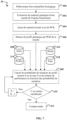
- the training phase 20 begins with the production of a base genome at 202 and an accessory genome at 204 from the genomes of the database 200.
- the genomes include annotations categorizing the genes as belonging to one or the other of these genomes.
- the latter are produced ad hoc from the database, the genes having an allele frequency greater than a threshold, for example 95%, belonging to the base genome, otherwise to the accessory genome.
- the base and accessory genomes are produced from the database by comparison with a reference genome of the species, stored in the database, the genes having an allele frequency compared to the reference genome greater than a threshold, for example 95%, belonging to the base genome, otherwise to the accessory genome.
- the database is already constituted for the species as well as a version of its base and accessory genome.
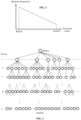
- the typing according to the invention continues, in 206, by the generation of a phylogenetic tree based on the basic genome.
- Several techniques for constructing such a tree are possible, as described for example in the documents " Phylogenetics Algorithms and Applications” (Hu et al., Ambient Communications and Computer Systems, 2019 ), “ A Review: Phylogeny Construction Methods” (Shaktawat et al., International Journal of Emerging Science and Engineering, 2019 ) Or “ Essential Bioinformatics” (chapter 11 by Jin Xiong, Cambridge University, 2011 ).
- the tree is constructed from a cg-MLST (for "core-genome multi locus sequencing typing") coding of the basic genomes.
- the latter are translated into cg-MLST profiles using for example the software BioNumerics (bioMérieux, Marcy l'Etoile, France), SeqSphere+ (Ridom, Weg, Germany), BIGSdb (accessible at https://github.com/kjolley/BIGSdb and described in the document Schürch, A. et al. "Whole sequencing genome options for bacterial strain typing and epidemiology analysis based on single nucleotide polymorphism versus gene-by-gene-based approaches". Clin. Microbiol.
- This tree is advantageously generated by applying a succession of groupings by single-linkage clustering, and therefore based on genetic distances between the basic genomes, for example calculated using the normalized Hamming distance.
- the subdivision of a taxon of the tree then consists of grouping in the same subgroup the basic genomes differing from each other by a distance lower than a predefined threshold.
- HierCC a multi-level clustering scheme for population assignments based on core genome MLST" by Zhou et al., Bioinformatics, 2021
- Pathogenwatch from the Center for Genomic Pathogen Surveillance (accessible at https://pathogen.watch/ )
- the tree is built, it is stored in a database 208.
- the number of levels of the tree and the clustering distances are chosen so as to produce at least one level in the tree such that the diversity of the basic genome at this level corresponds to or is close to the clonal diversity observed in the species, so that the taxa at this level make it possible to distinguish different clonal complexes among the bacterial strains corresponding to the complete genomes of the database.
- the level has between 150 and 350 differences in the basic genome of the strains, preferably between 200 and 300 differences.
- the clustering distance decreases from the root to the leaves, for example linearly.
- the learning phase 20 continues with the choice, at 210, of a type of genetic profiles in the accessory genome, namely a set of genetic markers of the accessory genome of the species whose absence and presence are measured in a strain to be tested during the prediction phase 30.
- the choice of the profile consists of choosing a level in the tree, and preferably one of the levels representing the clonal diversity, then choosing a set of markers having a minimum entropy or degree of impurity at this level.
- the total number N M of markers selected to construct the genetic profile is advantageously selected according to the particular PCR platform which is used to carry out the typing. For example, for the applicant's GENE-UP platform, this number N M is equal to 23 markers for Salmonella and 16 markers for Listeria monocytogenes.
- the set of markers is chosen so as to minimize an entropy criterion (for example the Rényi, Hartley, Shannon, collision entropy, or min entropy) or a Gini impurity criterion, by implementing a greedy algorithm.
- an entropy criterion for example the Rényi, Hartley, Shannon, collision entropy, or min entropy
- a Gini impurity criterion for example the Rényi, Hartley, Shannon, collision entropy, or min entropy
- the inventors have observed that the typing according to the invention requires at most 50 markers, preferably less than 30 markers, more particularly a number between 16 and 30 markers, to obtain high typing performances.
- the learning phase 20 continues, in 212, with the extraction of accessory genomes from the genetic profiles made up of the selected markers, profiles stored in a database 214.
- the genetic profile of an accessory genome is therefore a vector P of ⁇ 0,1 ⁇ N M , the jth component P(j) of the vector P corresponding to the value of the marker M j , this value being equal to 0 when the marker M j is absent and to 1 when it is present.
- variation frequencies of the profiles along the tree are calculated at 216. Referring to the figure 5 , for each taxon T in the tree that is partitioned into subdivisions T 1 , T 2 , ..., T Q , there exists a set of genetic profiles ⁇ P 1 , P 2 , ...
- P T ⁇ associated with the taxon T partitioned into subsets of profiles P 1 T 1 , P 2 T 1 , ... , P S 1 T 1 , P 1 T 2 , P 2 T 2 , ... , P S 2 T 2 , ... , P 1 T Q , P 2 T Q , ... , P S Q T Q respectively associated with the subtaxa T 1 , T 2 , ..., T Q .
- T ) of this marker for the taxon T is calculated as being equal to the number, divided by Q, of subtaxa T 1 , T 2 , ..., T Q for which the marker M j takes both the value 0 and the value 1, namely a frequency according to the relation: P M I
- the learning phase 20 ends with the calculation, at 220, of a grid of hyperparameters used during the prediction phase 30, a calculation which will be detailed below once the prediction 30 has been described, parameters being stored in a database 222.
- the training phase 20 provides a phylogenetic tree in which each complete genome and its genetic profile extracted from its accessory genome is positioned in the tree and each taxon in the tree, excluding leaves, is associated with a frequency of variation of each genetic marker in the profile.
- this phase begins with the collection 300 of a biological sample in the organization, for example a food product production plant.
- the sample is prepared so as to detect a given pathogen by methods known in the state of the art such as a culture on a dish, an immunological detection of the VIDAS ® type, or by molecular biology for example with the GENE-UP ® platform.
- a confirmation step can take place.
- the prediction phase 30 continues at 302 from isolated colonies or an enrichment broth with a view to its characterization by PCR amplification.
- the sample undergoes a set of preliminary steps, such as lysis to release the DNA of the bacteria constituting it, optionally extraction of the DNA resulting from the lysis using beads, for example magnetic or ceramic beads.
- beads for example magnetic or ceramic beads.
- the PCR kit designed to target at least the genetic markers selected during the learning step 20.
- the PCR is implemented at 306 in order to measure the genetic profile of the strain, for example using the Applicant's GENE-UP ® platform.
- the prediction phase 30 delivers a report to the user, for example in the form of a display on a screen and/or files stored on a computer and/or a message ( eg . email) for the user. If two taxa have identical results at the end of step b, these two taxa are included or an inconclusive typing is noted in the report.
- the position of the new bacterial strain tested in the phylogenetic tree makes it possible to type the latter in relation to the bacterial strains corresponding to the complete genomes of the database 200.
- the typing according to the invention allows the relative typing of two bacterial strains if these two strains are assigned to the same taxon.
- the invention makes it possible to define the lineage of a strain in relation to those of the databases or in relation to another strain tested. Indeed, the relative position of two strains in the tree makes it possible to characterize their evolution in relation to each other.
- the number of levels in the phylogenetic tree and the law of decrease of clustering distances, for example affine, are also hyperparameters, the method described in relation to the figure 8 being therefore completed by the selection of a grid for these two parameters, and the traversal of said grid jointly with the traversal of the threshold grid S 1 and S 2 .
- a preferred variant of the invention is now described, which consists in predicting the membership of a bacterial strain in a particular group of the bacterial species based on its measured genetic profile.
- these groups are serotypes, but this variant applies to any explicit subdivision at a level of the bacterial species. It will be noted that this subdivision of the species does not correspond to the first level of the phylogenetic tree and is defined independently of the latter.
- the prediction phase 30 can take two forms. In the first, the phase 30 already described is completed by a prediction of the serotype of a new strain to be tested, in parallel with steps 308-312 of the figure 2 . In the second form, only said prediction is solely implemented and replaces steps 308-312.
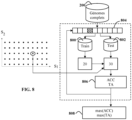
- serotyping if the second condition P mute max ST I ⁇ P mute max ST i ⁇ S 4 is not satisfied, serotyping returns the first two or three serotypes associated with the probabilities P mute max ST i the highest, as well as the said probabilities.
- the determination of the serotype of a strain to be tested comprises the calculations as described in relation to the Figures 9 and 10 .
- the probability of each serotype in that taxon is calculated based on the serotype database 224. For example, the probability of a given serotype ST j in taxon T i is equal to the number of genomes clustered in that taxon that exhibit that serotype divided by the total number of genomes in the taxon.
- These probabilities are stored in a reference table or dictionary, and predicting the serotype of a strain to be tested involves first determining the taxon in the phylogenetic tree to which it belongs in the manner described in steps 308-312. Once the taxon has been identified, serotyping the strain consists of querying the probabilities of the reference table associated with said taxon and delivering at least the serotype with the highest probability to the user.
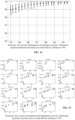
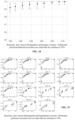
- figure 13 illustrates the frequencies of profile variation at different levels of the tree, with a curve in a graph corresponding to a taxon of the level and the bold curve corresponding to the frequency of the labeled marker.
- the average balanced precision is equal to 90%, demonstrating the effectiveness of this typing according to the invention. It should be noted that it is possible to choose a higher precision for a satisfactory lower assignment rate. In particular for a rate of 80%, the precision is close to 95% with the 95% confidence interval contained entirely in the last decile.
- figure 15 illustrates the average accuracy of a level as a function of the correct phylogenetic assignment rate.
- these two values being respectively greater than 95% and 70% for any level above level 15, and each close to 100% for levels above level 9.
- the number of levels in the tree is equal to 23, i.e. the total number of targets of the Applicant's GENE-UP ® PCR platform, and the distance decay law is selected for clustering so as to obtain a diversity similar to clonal diversity at a level between 10 and 15 in a phylogenetic tree comprising 24 levels.
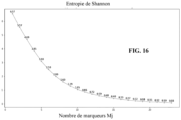
- the figure 16 illustrates the decay of the Shannon entropy of the genetic profile as markers are selected in the accessory genome at level 13, with the final profile entropy being substantially zero.
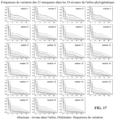
- the figure 17 illustrates the frequencies of variation of the profile at different levels of the tree, a curve in a graph corresponding to a taxon of the level and the curve in bold corresponding to the average frequency of the level.
- the figure 18 which illustrates the serotype typing among the more than 2,600 known serotypes of Salmonella, for a correct serotype assignment rate of 100%, the average balanced precision is greater than 90%, demonstrating the effectiveness of this typing according to the invention. It should be noted that it is possible to choose a higher precision for a satisfactory lower assignment rate. In particular for a rate of 80%, the precision is close to 100% with the 95% confidence interval contained entirely in the last decile.
- figure 19 illustrates the average accuracy of a level as a function of the correct phylogenetic assignment rate.
- these two values being respectively greater than 95% and 80% for any level higher than level 13.
- the solution's ability to easily and quickly identify strains makes it possible to consider its use for root cause research in the event of contamination of a finished food product identified during routine inspections. This includes, in particular, searching for the strain in the environment of the plant concerned, using surface samples using, for example, swabs, sponges or wipes.
- the strain can also be searched for in the raw materials involved in the design of the finished product concerned, in order to link the contamination to one or more suppliers and/or carrier(s) and/or storage location(s). It can also be used to identify contamination during the laboratory detection phase, either by a laboratory strain or by their DNA, which may have biased the release test that identified the presence of the species concerned. In this case, it would make it possible to establish a plan for retesting the finished product and avoid its destruction.
- the solution can be used during a health crisis to quickly characterize the responsible strain(s) and link them to strains identified in incriminated food, cosmetic, veterinary or other products. Its usefulness therefore covers internal needs of a production plant, for example of food products, investigation needs during health crises or during on-site regulatory audits.
- the use of this solution thus makes it possible to rationalize and implement preventive and/or corrective measures adapted to reduce or even eliminate the risks of recurrence of contaminations, and consequently of infections.
- the learning phase 20, 20A and the prediction phase 30-30A apart from the steps of sample preparation and measurement of the genetic profile of the strains to be tested, are implemented by computer, namely by means of hardware circuits comprising computer memories (cache, RAM, ROM, etc.) and one or more microprocessors or processors, whether or not organized in the form of calculation nodes, necessary for the execution of computer instructions stored in the memories for the implementation of said phases.
- computer memories cache, RAM, ROM, etc.
- microprocessors or processors whether or not organized in the form of calculation nodes, necessary for the execution of computer instructions stored in the memories for the implementation of said phases.
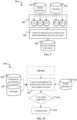
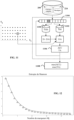
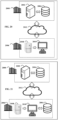
- a first organization 2000 for example the Applicant, hosts or controls one or more calculation servers 2002 associated with one or more databases 2002 for storing genomes, the phylogenetic tree, phylogenetic frequencies, observed genetic profiles, serotypes and serotype frequencies and the learning phase 20, 20A is implemented by the organization 2000 on its server(s ) 2002.
- a second organization 2006 for example a microbiological laboratory, hosts a PCR platform 2008 connected to, or incorporating, a computer 2010 and implements part of the prediction phase 30, namely all of the steps up to the measurement of the genetic profile of a bacterial strain to be tested. The measured profile is then pushed, through a remote connection network, to the first organization 2000 for the implementation on the server 2002 of the remainder of the prediction phase 30, 30A.
- a second architecture variant differs from the first, in that a copy of the database 2004 and of the software implementing the prediction phase 30, 30A are downloaded into the second organization which implements using the computer 2010 or a calculation server (not shown) the entire prediction phase 30, 30A.
- a third variant fig. 22
- all learning phases 20, 20A and prediction 30,30A are implemented by a single organization 2006.
- the complete genome database is independent, at least in its first version, of the bacterial ecology of the organization implementing the typing for its own needs.
- this database consists essentially of bacterial strains originating only from the organization.
- a first minimal version of the database can however be provided to the organization and then completed with the organization's strains.
- Serotyping has been described. Other subtypes of a species can be characterized, such as their resistance and/or susceptibility to microbial agents or groups based on typical sequences.
- a correct assignment rate and a precision, balanced or not, have been described as criteria for choosing the hyperparameters of the prediction.
- Other criteria are possible, such as sensitivity and specificity or a confidence interval other than 95%.
Landscapes
- Life Sciences & Earth Sciences (AREA)
- Physics & Mathematics (AREA)
- Health & Medical Sciences (AREA)
- Engineering & Computer Science (AREA)
- Bioinformatics & Cheminformatics (AREA)
- Medical Informatics (AREA)
- Theoretical Computer Science (AREA)
- Bioinformatics & Computational Biology (AREA)
- General Health & Medical Sciences (AREA)
- Evolutionary Biology (AREA)
- Biotechnology (AREA)
- Spectroscopy & Molecular Physics (AREA)
- Biophysics (AREA)
- Analytical Chemistry (AREA)
- Chemical & Material Sciences (AREA)
- Proteomics, Peptides & Aminoacids (AREA)
- Genetics & Genomics (AREA)
- Data Mining & Analysis (AREA)
- Physiology (AREA)
- Molecular Biology (AREA)
- Public Health (AREA)
- Artificial Intelligence (AREA)
- Software Systems (AREA)
- Bioethics (AREA)
- Evolutionary Computation (AREA)
- Ecology (AREA)
- Epidemiology (AREA)
- Databases & Information Systems (AREA)
- Computer Vision & Pattern Recognition (AREA)
- Animal Behavior & Ethology (AREA)
- Measuring Or Testing Involving Enzymes Or Micro-Organisms (AREA)
Priority Applications (4)
| Application Number | Priority Date | Filing Date | Title |
|---|---|---|---|
| EP23176319.4A EP4471784A1 (de) | 2023-05-31 | 2023-05-31 | Verfahren und system zur probabilistischen typisierung mikrobieller stämme |
| CN202480036672.XA CN121444170A (zh) | 2023-05-31 | 2024-05-30 | 用于微生物菌株的概率分型的方法和系统 |
| AU2024280223A AU2024280223A1 (en) | 2023-05-31 | 2024-05-30 | Method and system for probabilistic typing of microbial strains |
| PCT/EP2024/064923 WO2024246213A1 (fr) | 2023-05-31 | 2024-05-30 | Procede et systeme de typage probabiliste de souches microbiennes |
Applications Claiming Priority (1)
| Application Number | Priority Date | Filing Date | Title |
|---|---|---|---|
| EP23176319.4A EP4471784A1 (de) | 2023-05-31 | 2023-05-31 | Verfahren und system zur probabilistischen typisierung mikrobieller stämme |
Publications (1)
| Publication Number | Publication Date |
|---|---|
| EP4471784A1 true EP4471784A1 (de) | 2024-12-04 |
Family
ID=86646740
Family Applications (1)
| Application Number | Title | Priority Date | Filing Date |
|---|---|---|---|
| EP23176319.4A Withdrawn EP4471784A1 (de) | 2023-05-31 | 2023-05-31 | Verfahren und system zur probabilistischen typisierung mikrobieller stämme |
Country Status (4)
| Country | Link |
|---|---|
| EP (1) | EP4471784A1 (de) |
| CN (1) | CN121444170A (de) |
| AU (1) | AU2024280223A1 (de) |
| WO (1) | WO2024246213A1 (de) |
Citations (4)
| Publication number | Priority date | Publication date | Assignee | Title |
|---|---|---|---|---|
| US20160114322A1 (en) * | 2013-04-19 | 2016-04-28 | Qichao Pan | Parallelized sample handling |
| US20180365375A1 (en) * | 2015-04-24 | 2018-12-20 | University Of Utah Research Foundation | Methods and systems for multiple taxonomic classification |
| US10865447B2 (en) * | 2014-02-06 | 2020-12-15 | Immunexpress Pty Ltd | Biomarker signature method, and apparatus and kits therefor |
| WO2022159838A1 (en) * | 2021-01-22 | 2022-07-28 | Idbydna Inc. | Methods and systems for metagenomics analysis |
-
2023
- 2023-05-31 EP EP23176319.4A patent/EP4471784A1/de not_active Withdrawn
-
2024
- 2024-05-30 CN CN202480036672.XA patent/CN121444170A/zh active Pending
- 2024-05-30 WO PCT/EP2024/064923 patent/WO2024246213A1/fr active Pending
- 2024-05-30 AU AU2024280223A patent/AU2024280223A1/en active Pending
Patent Citations (4)
| Publication number | Priority date | Publication date | Assignee | Title |
|---|---|---|---|---|
| US20160114322A1 (en) * | 2013-04-19 | 2016-04-28 | Qichao Pan | Parallelized sample handling |
| US10865447B2 (en) * | 2014-02-06 | 2020-12-15 | Immunexpress Pty Ltd | Biomarker signature method, and apparatus and kits therefor |
| US20180365375A1 (en) * | 2015-04-24 | 2018-12-20 | University Of Utah Research Foundation | Methods and systems for multiple taxonomic classification |
| WO2022159838A1 (en) * | 2021-01-22 | 2022-07-28 | Idbydna Inc. | Methods and systems for metagenomics analysis |
Non-Patent Citations (9)
| Title |
|---|
| HU ET AL.: "Phylogenetics Algorithms and Applications", AMBIENT COMMUNICATIONS AND COMPUTER SYSTEMS, 2019 |
| JAGADEESAN BALAMURUGAN ET AL: "The use of next generation sequencing for improving food safety: Translation into practice", FOOD MICROBIOLOGY, ACADEMIC PRESS LTD, LONDON, GB, vol. 79, 1 June 2019 (2019-06-01), pages 96 - 115, XP085574633, ISSN: 0740-0020, [retrieved on 20181117], DOI: 10.1016/J.FM.2018.11.005 * |
| JIN XIONG: "Essential Bioinformatics", 2011, CAMBRIDGE UNIVERSITY |
| PINTO M ET AL: "Insights into the population structure and pan-genome of Haemophilus influenzae", INFECTION , GENETICS AND EVOLUTION, ELSEVIER, AMSTERDAM, NL, vol. 67, 31 October 2018 (2018-10-31), pages 126 - 135, XP085569133, ISSN: 1567-1348, DOI: 10.1016/J.MEEGID.2018.10.025 * |
| SCHÜRCH, A ET AL.: "Whole genome sequencing options for bacterial strain typing and épidémiologie analysis based on single nucléotide polymorphism versus gene-by-gene-based approaches", CLIN. MICROBIOL. INFECT., 2018 |
| SHAKTAWAT ET AL.: "A Review: Phylogeny Construction Methods", INTERNATIONAL JOURNAL OF EMERGING SCIENCE AND ENGINEERING, 2019 |
| SILVA M ET AL.: "chewBBACA: a complété suite for gene-by-gene schéma création and strain identification", MICROB. GENOM., 2018 |
| TODD J TREANGEN ET AL: "The Harvest suite for rapid core-genome alignment and visualization of thousands of intraspecific microbial genomes", GENOME BIOLOGY, BIOMED CENTRAL LTD, vol. 15, no. 11, 19 November 2014 (2014-11-19), pages 524, XP021206431, ISSN: 1465-6906, DOI: 10.1186/S13059-014-0524-X * |
| ZHOU ET AL.: "HierCC: a multi-level clustering scheme for population assignments based on core genome MLST", BIOINFORMATICS, 2021 |
Also Published As
| Publication number | Publication date |
|---|---|
| CN121444170A (zh) | 2026-01-30 |
| WO2024246213A1 (fr) | 2024-12-05 |
| AU2024280223A1 (en) | 2026-01-08 |
Similar Documents
| Publication | Publication Date | Title |
|---|---|---|
| Collins et al. | Non‐specific amplification compromises environmental DNA metabarcoding with COI | |
| Stevens et al. | Comparison of Oxford Nanopore Technologies and Illumina MiSeq sequencing with mock communities and agricultural soil | |
| Kumar et al. | Comparing eDNA metabarcoding primers for assessing fish communities in a biodiverse estuary | |
| Andres et al. | Detecting and analysing intraspecific genetic variation with eDNA: From population genetics to species abundance | |
| Claesson et al. | Comparative analysis of pyrosequencing and a phylogenetic microarray for exploring microbial community structures in the human distal intestine | |
| Porter et al. | Scaling up: A guide to high‐throughput genomic approaches for biodiversity analysis | |
| Forster et al. | Improving eDNA‐based protist diversity assessments using networks of amplicon sequence variants | |
| Tsuji et al. | Environmental DNA analysis shows high potential as a tool for estimating intraspecific genetic diversity in a wild fish population | |
| Caron et al. | Are we overestimating protistan diversity in nature? | |
| Abad et al. | Is metabarcoding suitable for estuarine plankton monitoring? A comparative study with microscopy | |
| Dı́ez et al. | Application of denaturing gradient gel electrophoresis (DGGE) to study the diversity of marine picoeukaryotic assemblages and comparison of DGGE with other molecular techniques | |
| Schütte et al. | Advances in the use of terminal restriction fragment length polymorphism (T-RFLP) analysis of 16S rRNA genes to characterize microbial communities | |
| Eiler et al. | Unveiling distribution patterns of freshwater phytoplankton by a next generation sequencing based approach | |
| Feinstein et al. | Assessment of bias associated with incomplete extraction of microbial DNA from soil | |
| Sandt et al. | Use of Fourier-transform infrared spectroscopy for typing of Candida albicans strains isolated in intensive care units | |
| Winder et al. | Metabolic fingerprints of Mycobacterium bovis cluster with molecular type: implications for genotype–phenotype links | |
| Catlett et al. | Evaluation of accuracy and precision in an amplicon sequencing workflow for marine protist communities | |
| García‐Timermans et al. | Discriminating bacterial phenotypes at the population and single‐cell level: a comparison of flow cytometry and Raman spectroscopy fingerprinting | |
| Hirai et al. | Effects of plankton net characteristics on metagenetic community analysis of metazoan zooplankton in a coastal marine ecosystem | |
| Wohlfahrt et al. | A bacterial signature-based method for the identification of seven forensically relevant human body fluids | |
| Marinchel et al. | Mock community experiments can inform on the reliability of eDNA metabarcoding data: a case study on marine phytoplankton | |
| Peter et al. | Changes in bacterioplankton community structure during early lake ontogeny resulting from the retreat of the Greenland Ice Sheet | |
| Anderson et al. | Optimizing an enclosed bead beating extraction method for microbial and fish environmental DNA | |
| Boscaro et al. | Strengths and biases of high-throughput sequencing data in the characterization of freshwater ciliate microbiomes | |
| Keroack et al. | A novel quantitative real-time PCR diagnostic assay for seal heartworm (Acanthocheilonema spirocauda) provides evidence for possible infection in the grey seal (Halichoerus grypus) |
Legal Events
| Date | Code | Title | Description |
|---|---|---|---|
| PUAI | Public reference made under article 153(3) epc to a published international application that has entered the european phase |
Free format text: ORIGINAL CODE: 0009012 |
|
| STAA | Information on the status of an ep patent application or granted ep patent |
Free format text: STATUS: THE APPLICATION HAS BEEN PUBLISHED |
|
| AK | Designated contracting states |
Kind code of ref document: A1 Designated state(s): AL AT BE BG CH CY CZ DE DK EE ES FI FR GB GR HR HU IE IS IT LI LT LU LV MC ME MK MT NL NO PL PT RO RS SE SI SK SM TR |
|
| STAA | Information on the status of an ep patent application or granted ep patent |
Free format text: STATUS: THE APPLICATION IS DEEMED TO BE WITHDRAWN |
|
| 18D | Application deemed to be withdrawn |
Effective date: 20250605 |