EP4471635A2 - Beschleunigung der erkennung des phishing eines webs für verdächtige stellen - Google Patents
Beschleunigung der erkennung des phishing eines webs für verdächtige stellen Download PDFInfo
- Publication number
- EP4471635A2 EP4471635A2 EP24206693.4A EP24206693A EP4471635A2 EP 4471635 A2 EP4471635 A2 EP 4471635A2 EP 24206693 A EP24206693 A EP 24206693A EP 4471635 A2 EP4471635 A2 EP 4471635A2
- Authority
- EP
- European Patent Office
- Prior art keywords
- url
- phishing
- analysis
- web page
- queue
- Prior art date
- Legal status (The legal status is an assumption and is not a legal conclusion. Google has not performed a legal analysis and makes no representation as to the accuracy of the status listed.)
- Granted
Links
Images




Classifications
-
- H—ELECTRICITY
- H04—ELECTRIC COMMUNICATION TECHNIQUE
- H04L—TRANSMISSION OF DIGITAL INFORMATION, e.g. TELEGRAPHIC COMMUNICATION
- H04L63/00—Network architectures or network communication protocols for network security
- H04L63/14—Network architectures or network communication protocols for network security for detecting or protecting against malicious traffic
- H04L63/1441—Countermeasures against malicious traffic
- H04L63/1483—Countermeasures against malicious traffic service impersonation, e.g. phishing, pharming or web spoofing
-
- H—ELECTRICITY
- H04—ELECTRIC COMMUNICATION TECHNIQUE
- H04L—TRANSMISSION OF DIGITAL INFORMATION, e.g. TELEGRAPHIC COMMUNICATION
- H04L63/00—Network architectures or network communication protocols for network security
- H04L63/14—Network architectures or network communication protocols for network security for detecting or protecting against malicious traffic
- H04L63/1408—Network architectures or network communication protocols for network security for detecting or protecting against malicious traffic by monitoring network traffic
- H04L63/1416—Event detection, e.g. attack signature detection
-
- H—ELECTRICITY
- H04—ELECTRIC COMMUNICATION TECHNIQUE
- H04L—TRANSMISSION OF DIGITAL INFORMATION, e.g. TELEGRAPHIC COMMUNICATION
- H04L63/00—Network architectures or network communication protocols for network security
- H04L63/14—Network architectures or network communication protocols for network security for detecting or protecting against malicious traffic
- H04L63/1408—Network architectures or network communication protocols for network security for detecting or protecting against malicious traffic by monitoring network traffic
- H04L63/1425—Traffic logging, e.g. anomaly detection
-
- H—ELECTRICITY
- H04—ELECTRIC COMMUNICATION TECHNIQUE
- H04L—TRANSMISSION OF DIGITAL INFORMATION, e.g. TELEGRAPHIC COMMUNICATION
- H04L63/00—Network architectures or network communication protocols for network security
- H04L63/14—Network architectures or network communication protocols for network security for detecting or protecting against malicious traffic
- H04L63/1433—Vulnerability analysis
-
- H—ELECTRICITY
- H04—ELECTRIC COMMUNICATION TECHNIQUE
- H04L—TRANSMISSION OF DIGITAL INFORMATION, e.g. TELEGRAPHIC COMMUNICATION
- H04L63/00—Network architectures or network communication protocols for network security
- H04L63/16—Implementing security features at a particular protocol layer
- H04L63/168—Implementing security features at a particular protocol layer above the transport layer
-
- G—PHYSICS
- G06—COMPUTING OR CALCULATING; COUNTING
- G06F—ELECTRIC DIGITAL DATA PROCESSING
- G06F2221/00—Indexing scheme relating to security arrangements for protecting computers, components thereof, programs or data against unauthorised activity
- G06F2221/21—Indexing scheme relating to G06F21/00 and subgroups addressing additional information or applications relating to security arrangements for protecting computers, components thereof, programs or data against unauthorised activity
- G06F2221/2119—Authenticating web pages, e.g. with suspicious links
-
- H—ELECTRICITY
- H04—ELECTRIC COMMUNICATION TECHNIQUE
- H04L—TRANSMISSION OF DIGITAL INFORMATION, e.g. TELEGRAPHIC COMMUNICATION
- H04L63/00—Network architectures or network communication protocols for network security
- H04L63/02—Network architectures or network communication protocols for network security for separating internal from external traffic, e.g. firewalls
- H04L63/0227—Filtering policies
- H04L63/0236—Filtering by address, protocol, port number or service, e.g. IP-address or URL
Definitions
- This application relates in general to computer security, and more particularly though not exclusively to a system and method for expedition of web phishing detection for suspicious websites.
- a computing apparatus comprising: a processor and a memory; a uniform resource locator (URL) reputation store; a network interface; and instructions encoded within the memory to instruct the processor to: receive via the network interface a request for a reputation for a URL; query the URL reputation store and determine that the URL does not have a known reliable reputation; add the URL to a URL analysis queue; perform a rough analysis of the URL, and determine from the rough analysis that the URL potentially is for a phishing website; and move the URL ahead in the analysis queue.
- URL uniform resource locator
- a "phishing" attack occurs when an attacker attempts to convince a user to provide sensitive information, which could include, for example, a username, password, Social Security number, banking information, personally identifying information (PII), proprietary information, confidential information, classified information, or any other sensitive information. Phishing is essentially a social engineering attack. The point of phishing is not to necessarily compromise the device itself, but rather to convince the user to voluntarily supply the sensitive information.
- one form of phishing attack uses false websites that are designed to look like the legitimate websites of banks or other institutions to which a user may legitimately supply information. For example, if a customer of ABC Bank normally logs into the "ABCBank.com" website to conduct online banking, then a phishing attacker may create a fake website that is designed to look identical to the ABCBank.com website. The attacker then secures a suspicious uniform resource locator (URL), such as: http://ABCBank.com.go.7rqxpt4.co.IL
- Security service providers may be able to provide security agents that help to defeat these types of phishing attacks.
- a security services provider such as MCAFEE, LLC may provide a global reputation store such as MCAFEE, LLC's global threat intelligence (GTI TM ), which includes a global cache of reputations for many different kinds of objects. This can include cache reputations for many different phishing sites, which can be identified by URL and other characteristics.
- GTI TM global threat intelligence
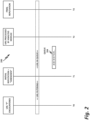
- a security services provider may have a global repository or cache of URL reputations. As new, unknown URLs are first encountered, these URLs are added to an analysis queue. For example, a subscriber to the service may encounter a new URL, and a client device may query the global repository for a reputation for the URL. Note that URLs under analysis may be compared to current versions of known websites, or to one or more archived previous versions of those websites. If there is a known reputation, it is returned. But if the reputation is not known, then further analysis is required before the URL can be assigned a reliable reputation.
- the site under analysis may be marked as potentially a phishing site.
- a benefit of this approach is that while it can be defeated by making the phishing website visually dissimilar to the target website, this also makes it less likely that users will be deceived by the phishing site. For example, regular PayPal customers will know what the PayPal homepage looks like. If the phishing site looks radically different from the PayPal homepage, then the user is unlikely to be deceived. In fact, operators of phishing sites often take great pains to mimic the visual appearance of their target websites as closely as possible.
- the rough analysis engine When the rough analysis engine identifies a URL as being a potential phishing URL, that URL can be given priority in the analysis queue. Thus, URLs that are more likely to point to phishing websites are analyzed first, before URLs that are not tagged by the rough analysis engine.
- Phishing is an old, but still very active, cyber security threat that continues to be effective, particularly against untrained users. Effectively fighting the phishing threat may demand big infrastructure and expensive resources. Typically, millions of URLs are created every week, and because web phishing campaigns have a very short lifespan, detecting phishing sites has become very challenging.
- the phishing issue is addressed by a combination of threat intelligence feeds provided by security services providers (e.g., wherein URLs are submitted to feeds for verification), and heuristics or models based mainly on URL attributes. Running these heuristics and models in a timely manner is challenging. Detection mechanisms may therefore be applied in a deferred mode. Assigning the right reputation to a URL may take somewhere on the order of hours, and even up to days in some cases. This creates a window for bad actors to compromise users who visit zero-day phishing websites. By the time the URL is properly classified as phishing, the site may have long since disappeared.
- security services providers e.g., wherein URLs are submitted to feeds for verification
- heuristics or models based mainly on URL attributes. Running these heuristics and models in a timely manner is challenging. Detection mechanisms may therefore be applied in a deferred mode. Assigning the right reputation to a URL may take somewhere on the order of hours, and even
- the methods disclosed in the present specification reduce the user's exposure time to phishing websites while the URL reputation assignment process is ongoing. This reduces the gap between the time when a newly created phishing website appears, and the time when its URL is assigned a reliable bad reputation.
- the system and method disclosed herein are particularly useful to high volumes of URLs that can be processed in real time or near real time.
- the system and method disclosed herein reduce the user's exposure time to phishing sites by speculatively prioritizing URLs queued in the list of scan-pending URLs. This may be based on the likelihood of a site being a phishing site.
- the method also identifies potential phishing sites, but that initial identification may not necessarily be a reliable or accurate determination. Rather, it may be considered a "first pass" analysis that is likely to catch a substantial number of non-phishing sites, but that is also unlikely to miss true phishing sites.
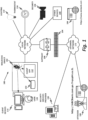
- security ecosystem 100 may be an enterprise, a government entity, a data center, a telecommunications provider, a "smart home” with computers, smart phones, and various Internet of things (IoT) devices, or any other suitable ecosystem.
- Security ecosystem 100 is provided herein as an illustrative and nonlimiting example of a system that may employ, and benefit from, the teachings of the present specification.
- Client devices 110 may be communicatively coupled to one another and to other network resources via local network 170.
- Local network 170 may be any suitable network or combination of one or more networks operating on one or more suitable networking protocols, including a local area network, a home network, an intranet, a virtual network, a wide area network, a wireless network, a cellular network, or the internet (optionally accessed via a proxy, virtual machine, or other similar security mechanism) by way of nonlimiting example.
- Local network 170 may also include one or more servers, firewalls, routers, switches, security appliances, antivirus servers, or other network devices, which may be single-purpose appliances, virtual machines, containers, or functions. Some functions may be provided on client devices 110.
- local network 170 is shown as a single network for simplicity, but in some embodiments, local network 170 may include any number of networks, such as one or more intranets connected to the internet. Local network 170 may also provide access to an external network, such as the internet, via external network 172. External network 172 may similarly be any suitable type of network.
- Local network 170 may connect to the internet via gateway 108, which may be responsible, among other things, for providing a logical boundary between home network 172 and external network 170.
- Local network 170 may also provide services such as dynamic host configuration protocol (DHCP), gateway services, router services, and switching services, and may act as a security portal across local boundary 104.
- DHCP dynamic host configuration protocol
- Local network 170 may also include a number of discrete IoT devices.
- local network 170 may include IoT functionality to control lighting 132, thermostats or other environmental controls 134, a security system 136, and any number of other devices 140.
- Other devices 140 may include, as illustrative and nonlimiting examples, network attached storage (NAS), computers, printers, smart televisions, smart refrigerators, smart vacuum cleaners and other appliances, and network connected vehicles.
- NAS network attached storage
- Malicious harm or mischief may take the form of installing root kits or other malware on client devices 110 to tamper with the system, installing spyware or adware to collect personal and commercial data, defacing websites, operating a botnet such as a spam server, or simply to annoy and harass users 120.
- one aim of attacker 180 may be to install his malware on one or more client devices 110 or any of the IoT devices described.
- malicious software includes any object configured to provide unwanted results or do unwanted work.
- malware objects will be executable objects, including, by way of nonlimiting examples, viruses, Trojans, zombies, rootkits, backdoors, worms, spyware, adware, ransomware, dialers, payloads, malicious browser helper objects, tracking cookies, loggers, or similar objects designed to take a potentially-unwanted action, including, by way of nonlimiting example, data destruction, data denial, covert data collection, browser hijacking, network proxy or redirection, covert tracking, data logging, keylogging, excessive or deliberate barriers to removal, contact harvesting, and unauthorized self-propagation.
- malware could also include negligently-developed software that causes such results even without specific intent.
- a software developer may not explicitly have malicious intent, but may develop software that poses a security risk.
- a well-known and often-exploited security flaw is the so-called buffer overrun, in which a malicious user is able to enter an overlong string into an input form and thus gain the ability to execute arbitrary instructions or operate with elevated privileges on a computing device.
- Buffer overruns may be the result, for example, of poor input validation or use of insecure libraries, and in many cases arise in nonobvious contexts.
- a developer contributing software to an application repository or programming an IoT device may inadvertently provide attack vectors for attacker 180. Poorly-written applications may also cause inherent problems, such as crashes, data loss, or other undesirable behavior. Because such software may be desirable itself, it may be beneficial for developers to occasionally provide updates or patches that repair vulnerabilities as they become known. However, from a security perspective, these updates and patches are essentially new objects that must themselves be validated.
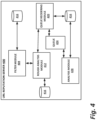
- rough analysis module 412 also performs a rough visual analysis by taking a screenshot of the unknown URL, and comparing it to a phishing target store 416.
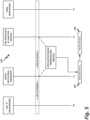
- FIGURE 5 The benefit can be seen in FIGURE 5 .
- FIGURE 5 is a block diagram of a queuing mechanism 500.
- Queuing mechanism 500 is similar to queuing mechanism 200 of FIGURE 2 , except that it provides speculative reordering and/or prioritization of URLs in the queue.
- the rough analysis module may be configured such that URLs A, B, C, D, E, G, and H are unlikely to be phishing websites.
- URL F may or may not be a false positive, but if it is a phishing website, it is unlikely to be missed by the rough analysis module. The result is that the time to identify a URL as a phishing URL is less, on average, than the time to assign legitimate reputations to legitimate URLs.
- FIGURES 6 and 7 illustrate an example flow for providing phishing mitigation.
- the various operations described in these two flows may be performed by the same device, or they may be performed by different devices.
- the operations illustrated herein could be performed on a mainframe, or on various virtual machines running in a cloud infrastructure.
- some or all of the operations may be performed on a user class machine or endpoint.
- FIGURE 6 is a flowchart of a method 600.
- the URL may be added to a filtered queue.
- the filtered queue contains URLs that the service has not seen before and that require further processing to determine an appropriate reputation for the URL.
- decision block 616 there is an initial determination of whether the URL can simply be dismissed. For example, if the URL is known, whitelisted, duplicated, or otherwise subject to a filtering criterion. If the URL can be dismissed, then in block 620, the URL is dismissed, and in block 612 the system fetches the next item from the global queue.
- the system can simply treat the existing queue as the correct queue.
- the analysis system gets the prioritized queue.
- the analysis module runs conventional workflows for URL reputation assignment, using the order provided in the prioritized queue.
- the prioritized queue is not necessarily a FIFO queue, but rather may be prioritized asynchronously by a queue reordering model, which may perform a method such as method 700 of FIGURE 7 .
- the analysis module can treat the queue as though it were a simple FIFO queue. In other words, the analysis module can work sequentially through each element in the queue without having to bother about the priority for each element.
- the rough analysis module runs an image similarity model against the top n phishing target websites.
- n 100.
- additional matches may be performed, and if there is a match to more than one site, this may influence a weighting of how suspicious the site is deemed.
- more highly-weighted, "suspicious" websites are pushed farther to the front of the queue, while more lowly-weighted websites are not pushed as far forward in the queue.
- the URL is flagged as suspicious or potentially a phishing website. In that case, in block 724, the suspicious URL is moved to the front of the FIFO queue, or at least forward in the FIFO queue ahead of non-suspicious websites.
- hardware platform 800 is arranged in a point-to-point (PtP) configuration.
- PtP point-to-point
- PC personal computer
- server-type devices although it is not so limited, and any other bus type may be used.
- Hardware platform 800 is an example of a platform that may be used to implement embodiments of the teachings of this specification.
- instructions could be stored in storage 850. Instructions could also be transmitted to the hardware platform in an ethereal form, such as via network interface 848, or retrieved from another source via any suitable interconnect. Once received (from any source), the instructions may be loaded into memory 804, and may then be executed by one or more processor 802 to provide elements such as an operating system 806, operational agents 808, or data 812.
- Memory 804 may store any suitable data or information utilized by platform logic.
- memory 804 may also comprise storage for instructions that may be executed by the cores of CPUs 802 or other processing elements (e.g., logic resident on chipsets 816) to provide functionality.
- memory 804 may comprise a relatively low-latency volatile main memory, while storage 850 may comprise a relatively higher-latency nonvolatile memory.
- memory 804 and storage 850 need not be physically separate devices, and in some examples may represent simply a logical separation of function (if there is any separation at all).
- DMA is disclosed by way of nonlimiting example, DMA is not the only protocol consistent with this specification, and that other memory architectures are available.
- main memory 804 and storage 850 for example, in a single physical memory device, and in other cases, memory 804 and/or storage 850 are functionally distributed across many physical devices.
- all or part of a function may be provided in the form of software or firmware running over a virtualization layer to provide the logical function, and resources such as memory, storage, and accelerators may be disaggregated (i.e., located in different physical locations across a data center).
- a device such as a network interface may provide only the minimum hardware interfaces necessary to perform its logical operation, and may rely on a software driver to provide additional necessary logic.
- Graphics adapter 822 may be configured to provide a human-readable visual output, such as a command-line interface (CLI) or graphical desktop such as Microsoft Windows, Apple OSX desktop, or a Unix/Linux X Window System-based desktop. Graphics adapter 822 may provide output in any suitable format, such as a coaxial output, composite video, component video, video graphics array (VGA), or digital outputs such as digital visual interface (DVI), FPDLink, DisplayPort, or high-definition multimedia interface (HDMI), by way of nonlimiting example. In some examples, graphics adapter 822 may include a hardware graphics card, which may have its own memory and its own graphics processing unit (GPU).
- GPU graphics processing unit
- Chipset 816 may be in communication with a bus 828 via an interface circuit.
- Bus 828 may have one or more devices that communicate over it, such as a bus bridge 832, I/O devices 835, network interface 848, accelerators 846, communication devices 840, and a keyboard and/or mouse 838, by way of nonlimiting example.
- the elements of hardware platform 800 may be coupled together in any suitable manner.
- a bus may couple any of the components together.
- computer program instructions may be implemented in programming languages, such as an object code, an assembly language, or a high-level language such as OpenCL, FORTRAN, C, C++, JAVA, or HTML. These may be used with any compatible operating systems or operating environments. Hardware elements may be designed manually, or with a hardware description language such as Spice, Verilog, and VHDL.
- the source code may define and use various data structures and communication messages.
- the source code may be in a computer executable form (e.g., via an interpreter), or the source code may be converted (e.g., via a translator, assembler, or compiler) into a computer executable form, or converted to an intermediate form such as byte code.
- any of the foregoing may be used to build or describe appropriate discrete or integrated circuits, whether sequential, combinatorial, state machines, or otherwise.
- SoC system-on-a-chip
- embodiments disclosed herein can be incorporated into systems including mobile devices such as smart cellular telephones, tablet computers, personal digital assistants, portable gaming devices, and similar. These mobile devices may be provided with SoC architectures in at least some embodiments.
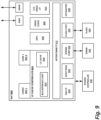
- An example of such an embodiment is provided in FIGURE 9 .
- Such an SoC (and any other hardware platform disclosed herein) may include analog, digital, and/or mixed-signal, radio frequency (RF), or similar processing elements.
- RF radio frequency
- Other embodiments may include a multichip module (MCM), with a plurality of chips located within a single electronic package and configured to interact closely with each other through the electronic package.
- MCM multichip module
- the computing functionalities disclosed herein may be implemented in one or more silicon cores in application-specific integrated circuits (ASICs), field-programmable gate arrays (FPGAs), and other semiconductor chips.
- ASICs application-specific integrated circuits
- FPGAs field-programmable gate arrays
- FIGURE 9 is a block illustrating selected elements of an example SoC 900.
- Embodiments of SoC 900 may be configured or adapted to provide expedition of web phishing detection for suspicious sites, as disclosed in the present specification.
- a system integrator designing an SoC for a smart phone may use IP blocks in addition to the processor core, such as a memory controller, a nonvolatile memory (NVM) controller, Wi-Fi, Bluetooth, GPS, a fourth or fifth-generation network (4G or 5G), an audio processor, a video processor, an image processor, a graphics engine, a graphics processing unit (GPU) engine, a security controller, and many other IP blocks.
- IP blocks in addition to the processor core, such as a memory controller, a nonvolatile memory (NVM) controller, Wi-Fi, Bluetooth, GPS, a fourth or fifth-generation network (4G or 5G), an audio processor, a video processor, an image processor, a graphics engine, a graphics processing unit (GPU) engine, a security controller, and many other IP blocks.
- each of these IP blocks has its own embedded microcontroller.
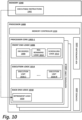
- Processor 1000 includes one or more processor cores 1002, including core 1002-1 - 1002-N.
- Cores 1002 may be, as appropriate, single-thread cores or multi-thread cores. In multithreaded cores, more than one hardware thread may be provided at a time, and the core may therefore provide more than one logical core per physical core.
- the cores may be configured to execute instruction code.
- Each processor 1000 may include at least one shared cache 1030, which may be treated logically as part of memory 1040.
- Caches 1030 may be filled according to known caching techniques, and may store instructions and/or data that may be used by one or more components of processor 1000.
- Processor 1000 may include an integrated memory controller (MC) 1034, to communicate with memory 1040.
- Memory controller 1034 may include logic and circuitry to interface with memory 1040, and may also include a cache controller to handle filling and evicting instructions and data to and from cache 1030.
- each core 1002 may include front-end logic 1006, execution logic 1014, and backend logic 1018.
- Backend logic 1018 includes retirement logic 1020.
- Core 1002 may provide for speculative execution of instructions, branch prediction, and similar.
- Retirement logic 1020 may be configured to determine which predicted instructions were actually needed by the program flow.
- NFV is an aspect of network virtualization that is generally considered distinct from, but that can still interoperate with, SDN.
- virtual network functions VNFs
- NFV virtual network functions
- Capex reduced capital expenditure
- Opex operating expenses
- One feature of NFV is replacing proprietary, special-purpose hardware appliances with virtual appliances running on commercial off-the-shelf (COTS) hardware within a virtualized environment.
- COTS commercial off-the-shelf
- NFV provides a more agile and adaptable network.
- VNFs virtual network functions
- VNFs can be provisioned ("spun up") or removed (“spun down") to meet network demands.
- more load balancing VNFs may be spun up to distribute traffic to more workload servers (which may themselves be virtual machines).
- DPI deep packet inspection
- NFV orchestrator 1101 itself may be virtualized (rather than a special-purpose hardware appliance). NFV orchestrator 1101 may be integrated within an existing SDN system, wherein an operations support system (OSS) manages the SDN. This may interact with cloud resource management systems (e.g., OpenStack) to provide NFV orchestration.
- An NFVI 1100 may include the hardware, software, and other infrastructure to enable VNFs to run. This may include a hardware platform 1102 on which one or more VMs 1104 may run. For example, hardware platform 1102-1 in this example runs VMs 1104-1 and 1104-2. Hardware platform 1102-2 runs VMs 1104-3 and 1104-4. Each hardware platform may include a hypervisor 1120, virtual machine manager (VMM), or similar function, which may include and run on a native (bare metal) operating system, which may be minimal so as to consume very few resources.
- VMM virtual machine manager
- Hardware platforms 1102 may be or comprise a rack or several racks of blade or slot servers (including, e.g., processors, memory, and storage), one or more data centers, other hardware resources distributed across one or more geographic locations, hardware switches, or network interfaces.
- An NFVI 1100 may also include the software architecture that enables hypervisors to run and be managed by NFV orchestrator 1101.
- Running on NFVI 1100 are a number of VMs 1104, each of which in this example is a VNF providing a virtual service appliance.
- Each VM 1104 in this example includes an instance of the Data Plane Development Kit (DPDK), a virtual operating system 1108, and an application providing the VNF 1112.
- DPDK Data Plane Development Kit
- FIGURE 11 shows that a number of VNFs 1104 have been provisioned and exist within NFVI 1100. This FIGURE does not necessarily illustrate any relationship between the VNFs and the larger network, or the packet flows that NFVI 1100 may employ.
- the illustrated DPDK instances 1116 provide a set of highly-optimized libraries for communicating across a virtual switch (vSwitch) 1122.
- vSwitch 1122 is provisioned and allocated by a hypervisor 1120.
- the hypervisor uses a network interface to connect the hardware platform to the data center fabric (e.g., an HFI).
- HFI may be shared by all VMs 1104 running on a hardware platform 1102.
- a vSwitch may be allocated to switch traffic between VMs 1104.
- the vSwitch may be a pure software vSwitch (e.g., a shared memory vSwitch), which may be optimized so that data are not moved between memory locations, but rather, the data may stay in one place, and pointers may be passed between VMs 1104 to simulate data moving between ingress and egress ports of the vSwitch.
- the vSwitch may also include a hardware driver (e.g., a hardware network interface IP block that switches traffic, but that connects to virtual ports rather than physical ports).
- a distributed vSwitch 1122 is illustrated, wherein vSwitch 1122 is shared between two or more physical hardware platforms 1102.
- any methods or flows illustrated herein are provided by way of illustration only. Inclusion or exclusion of operations in such methods or flows should be understood the same as inclusion or exclusion of other elements as described in this paragraph. Where operations are illustrated in a particular order, the order is a nonlimiting example only. Unless expressly specified, the order of operations may be altered to suit a particular embodiment.
- a computing apparatus comprising: a processor and a memory; a uniform resource locator (URL) reputation store; a network interface; and instructions encoded within the memory to instruct the processor to: receive via the network interface a request for a reputation for a URL; query the URL reputation store and determine that the URL does not have a known reliable reputation; add the URL to a URL analysis queue; perform a rough analysis of the URL, and determine from the rough analysis that the URL potentially is for a phishing website; and move the URL ahead in the analysis queue.
- URL uniform resource locator
- performing the rough analysis of the URL comprises first filtering the URL.
- filtering the URL comprises filtering on an attribute selected from the group consisting of URL prevalence, length of the URL, presence of secure socket layer (SSL) or transport layer security (TLS), and context.
- attribute selected from the group consisting of URL prevalence, length of the URL, presence of secure socket layer (SSL) or transport layer security (TLS), and context.
- comparing the web page of the URL comprises comparing the web page to a current version or one or more archived versions of the known phishing target.
- an example computing apparatus further comprising comparing the web page of the URL to n most popular phishing targets, wherein n > 1.
- performing the rough analysis of the URL comprises performing an image comparison of a web page of the URL with an image of a known phishing target.
- image comparison is a comparison for gross visual similarity.
- the image comparison comprises a comparison of a low-resolution image of the known phishing target with a low-resolution image of the web page of the URL.
- the image comparison comprises a comparison of a low-color-depth image of the known phishing target with a low-color-depth image of the web page of the URL.
- the instructions are further to assign a binary reputation to the URL, the binary reputation to indicate that the URL is to a phishing website or not.
- the instructions are further to assign a granular reputation to the URL, the granular reputation to indicate a likelihood, along a spectrum, that the URL is to a phishing website.
- performing the initial analysis of the URL comprises first filtering the URL.
- filtering the URL comprises filtering on an attribute selected from the group consisting of URL prevalence, length of the URL, presence of secure socket layer (SSL) or transport layer security (TLS), and context.
- SSL secure socket layer
- TLS transport layer security
- performing the initial analysis of the URL comprises comparing a web page of the URL to a web page of a known phishing target.
- comparing the web page of the URL comprises comparing the web page to a current version or one or more archived versions of the known phishing target.
- performing the initial analysis of the URL comprises performing an image comparison of a web page of the URL with an image of a known phishing target.
- the image comparison comprises a comparison of a low-resolution image of the known phishing target with a low-resolution image of the web page of the URL.
- the image comparison comprises a comparison of a low-color-depth image of the known phishing target with a low-color-depth image of the web page of the URL.
- an example computer-implemented method of providing URL-based anti-phishing services comprising: identifying a plurality of URLs that lack a reliable phishing-related reputation; queuing the URLs in a first-in-first-out full analysis queue, the queue for ordering URLs for full analysis; periodically identifying within the full analysis queue a batch of URLs that have not received an initial analysis; subjecting a URL of the batch to an initial analysis, the initial analysis being less thorough than the full analysis; and according to the initial analysis, determining that the URL is potentially to a phishing website and accelerating the URL's priority in the full analysis queue.
- subjecting the URL to the initial analysis comprises first filtering the URL.
- filtering the URL comprises filtering on an attribute selected from the group consisting of URL prevalence, length of the URL, presence of secure socket layer (SSL) or transport layer security (TLS), and context.
- attribute selected from the group consisting of URL prevalence, length of the URL, presence of secure socket layer (SSL) or transport layer security (TLS), and context.
- the initial analysis comprises comparing a web page of the URL to a web page of a known phishing target.
- comparing the web page of the URL comprises comparing the web page to a current version or one or more archived versions of the known phishing target.
- the image comparison comprises a comparison of a low-resolution image of the known phishing target with a low-resolution image of the web page of the URL.
- the image comparison comprises a comparison of a low-color-depth image of the known phishing target with a low-color-depth image of the web page of the URL.
- the image comparison comprises redacting text fields.
- an example method further comprising assigning a granular reputation to the URL, the granular reputation to indicate a likelihood, along a spectrum, that the URL is to a phishing website.
- the means for performing the method comprise a processor and a memory.
- the memory comprises machine-readable instructions, that when executed cause the apparatus to perform the method of a number of the above examples.
Landscapes
- Engineering & Computer Science (AREA)
- Computer Security & Cryptography (AREA)
- Computer Hardware Design (AREA)
- Computing Systems (AREA)
- General Engineering & Computer Science (AREA)
- Computer Networks & Wireless Communication (AREA)
- Signal Processing (AREA)
- Computer And Data Communications (AREA)
- Information Transfer Between Computers (AREA)
Applications Claiming Priority (3)
| Application Number | Priority Date | Filing Date | Title |
|---|---|---|---|
| US16/517,403 US11381597B2 (en) | 2019-07-19 | 2019-07-19 | Expedition of web phishing detection for suspicious sites |
| PCT/US2020/042695 WO2021016142A1 (en) | 2019-07-19 | 2020-07-19 | Expedition of web phishing detection for suspicious sites |
| EP20843952.1A EP3999982B1 (de) | 2019-07-19 | 2020-07-19 | Beschleunigte erkennung von web-fishing für verdächtige stellen |
Related Parent Applications (1)
| Application Number | Title | Priority Date | Filing Date |
|---|---|---|---|
| EP20843952.1A Division EP3999982B1 (de) | 2019-07-19 | 2020-07-19 | Beschleunigte erkennung von web-fishing für verdächtige stellen |
Publications (3)
| Publication Number | Publication Date |
|---|---|
| EP4471635A2 true EP4471635A2 (de) | 2024-12-04 |
| EP4471635A3 EP4471635A3 (de) | 2024-12-18 |
| EP4471635B1 EP4471635B1 (de) | 2026-04-29 |
Family
ID=74193781
Family Applications (2)
| Application Number | Title | Priority Date | Filing Date |
|---|---|---|---|
| EP24206693.4A Active EP4471635B1 (de) | 2019-07-19 | 2020-07-19 | Beschleunigung der erkennung des phishing eines webs für verdächtige stellen |
| EP20843952.1A Active EP3999982B1 (de) | 2019-07-19 | 2020-07-19 | Beschleunigte erkennung von web-fishing für verdächtige stellen |
Family Applications After (1)
| Application Number | Title | Priority Date | Filing Date |
|---|---|---|---|
| EP20843952.1A Active EP3999982B1 (de) | 2019-07-19 | 2020-07-19 | Beschleunigte erkennung von web-fishing für verdächtige stellen |
Country Status (3)
| Country | Link |
|---|---|
| US (1) | US11381597B2 (de) |
| EP (2) | EP4471635B1 (de) |
| WO (1) | WO2021016142A1 (de) |
Families Citing this family (12)
| Publication number | Priority date | Publication date | Assignee | Title |
|---|---|---|---|---|
| US11411992B2 (en) | 2019-11-07 | 2022-08-09 | Mcafee, Llc | Visual detection of phishing websites via headless browser |
| US11595437B1 (en) * | 2020-04-22 | 2023-02-28 | SlashNext, Inc. | Method and system for stopping multi-vector phishing attacks using cloud powered endpoint agents |
| US11082445B1 (en) | 2021-01-21 | 2021-08-03 | Netskope, Inc. | Preventing phishing attacks via document sharing |
| KR102413355B1 (ko) * | 2021-03-25 | 2022-06-27 | 주식회사 이알마인드 | 디바이스로의 보안 서비스 제공 방법 및 이를 수행하는 서버 |
| US11336689B1 (en) * | 2021-09-14 | 2022-05-17 | Netskope, Inc. | Detecting phishing websites via a machine learning-based system using URL feature hashes, HTML encodings and embedded images of content pages |
| US11444978B1 (en) | 2021-09-14 | 2022-09-13 | Netskope, Inc. | Machine learning-based system for detecting phishing websites using the URLS, word encodings and images of content pages |
| US12045331B2 (en) * | 2021-11-08 | 2024-07-23 | AT&T Intellect al P Property I, L.P. | Device and network-based enforcement of biometric data usage |
| US12556575B2 (en) * | 2022-03-31 | 2026-02-17 | Citrix Systems, Inc. | Website access workflow |
| JP2024136161A (ja) * | 2023-03-23 | 2024-10-04 | 株式会社日立製作所 | 悪性サイト生存期間予測システム及び悪性サイト生存期間予測方法 |
| US12445488B2 (en) | 2023-04-28 | 2025-10-14 | Karthik Shourya Kaligotla | Webpage phishing auto-detection |
| US12401687B2 (en) | 2023-04-28 | 2025-08-26 | Mcafee, Llc | Phishing detection via grammatical artifacts |
| WO2025072928A1 (en) * | 2023-09-29 | 2025-04-03 | Obsidian Security, Inc. | Systems and methods to perform phishing detection and device attestation via browser extension |
Family Cites Families (30)
| Publication number | Priority date | Publication date | Assignee | Title |
|---|---|---|---|---|
| KR20070006559A (ko) * | 2005-07-07 | 2007-01-11 | (주)화이트코어 | 안티피싱 방법 |
| KR100723867B1 (ko) | 2005-11-23 | 2007-05-31 | 한국전자통신연구원 | 피싱웹페이지 차단 장치 및 방법 |
| US20070245422A1 (en) * | 2006-04-18 | 2007-10-18 | Softrun, Inc. | Phishing-Prevention Method Through Analysis of Internet Website to be Accessed and Storage Medium Storing Computer Program Source for Executing the Same |
| US7890612B2 (en) * | 2006-05-08 | 2011-02-15 | Electro Guard Corp. | Method and apparatus for regulating data flow between a communications device and a network |
| KR100885634B1 (ko) | 2006-09-22 | 2009-02-26 | 주식회사 소프트런 | 피싱 방지를 위한 웹 사이트 및 메일 검증 방법과 그 방법에 대한 컴퓨터 프로그램을 저장한 기록매체 |
| US9654495B2 (en) | 2006-12-01 | 2017-05-16 | Websense, Llc | System and method of analyzing web addresses |
| US9038171B2 (en) | 2008-10-20 | 2015-05-19 | International Business Machines Corporation | Visual display of website trustworthiness to a user |
| US20100332593A1 (en) * | 2009-06-29 | 2010-12-30 | Igor Barash | Systems and methods for operating an anti-malware network on a cloud computing platform |
| US8819826B2 (en) * | 2010-01-27 | 2014-08-26 | Mcafee, Inc. | Method and system for detection of malware that connect to network destinations through cloud scanning and web reputation |
| US9009820B1 (en) * | 2010-03-08 | 2015-04-14 | Raytheon Company | System and method for malware detection using multiple techniques |
| US9516058B2 (en) * | 2010-08-10 | 2016-12-06 | Damballa, Inc. | Method and system for determining whether domain names are legitimate or malicious |
| US8521667B2 (en) | 2010-12-15 | 2013-08-27 | Microsoft Corporation | Detection and categorization of malicious URLs |
| US9003532B2 (en) | 2011-09-15 | 2015-04-07 | Raytheon Company | Providing a network-accessible malware analysis |
| US8918881B2 (en) | 2012-02-24 | 2014-12-23 | Appthority, Inc. | Off-device anti-malware protection for mobile devices |
| US9621566B2 (en) * | 2013-05-31 | 2017-04-11 | Adi Labs Incorporated | System and method for detecting phishing webpages |
| WO2015099756A1 (en) * | 2013-12-27 | 2015-07-02 | Mcafee, Inc. | Frequency-based reputation |
| WO2016034935A1 (en) | 2014-09-02 | 2016-03-10 | Gas Informatica Ltda | Protecting against phishing attacks |
| US9516055B1 (en) * | 2015-05-29 | 2016-12-06 | Trend Micro Incorporated | Automatic malware signature extraction from runtime information |
| US20170195293A1 (en) | 2015-12-31 | 2017-07-06 | Check Point Software Technologies Ltd. | System and method to detect and prevent phishing attacks |
| US10193923B2 (en) | 2016-07-20 | 2019-01-29 | Duo Security, Inc. | Methods for preventing cyber intrusions and phishing activity |
| CN107770776A (zh) * | 2016-08-18 | 2018-03-06 | 阿里巴巴集团控股有限公司 | Wifi安全防护系统、无线网络防护方法、装置及电子设备 |
| RU2671991C2 (ru) | 2016-12-29 | 2018-11-08 | Общество с ограниченной ответственностью "Траст" | Система и способ сбора информации для обнаружения фишинга |
| US20190014149A1 (en) | 2017-07-06 | 2019-01-10 | Pixm | Phishing Detection Method And System |
| US10601866B2 (en) | 2017-08-23 | 2020-03-24 | International Business Machines Corporation | Discovering website phishing attacks |
| WO2019051507A1 (en) * | 2017-09-11 | 2019-03-14 | Carbon Black, Inc. | METHODS OF BEHAVIORAL DETECTION AND PREVENTION OF CYBERATTAICS, AS WELL AS APPARATUS AND RELATED TECHNIQUES |
| US10805346B2 (en) * | 2017-10-01 | 2020-10-13 | Fireeye, Inc. | Phishing attack detection |
| US10581883B1 (en) | 2018-05-01 | 2020-03-03 | Area 1 Security, Inc. | In-transit visual content analysis for selective message transfer |
| EP3599753A1 (de) | 2018-07-25 | 2020-01-29 | Cyren Inc. | System und verfahren zur detektion von phishing |
| US11743290B2 (en) * | 2018-12-21 | 2023-08-29 | Fireeye Security Holdings Us Llc | System and method for detecting cyberattacks impersonating legitimate sources |
| US11411992B2 (en) | 2019-11-07 | 2022-08-09 | Mcafee, Llc | Visual detection of phishing websites via headless browser |
-
2019
- 2019-07-19 US US16/517,403 patent/US11381597B2/en active Active
-
2020
- 2020-07-19 EP EP24206693.4A patent/EP4471635B1/de active Active
- 2020-07-19 EP EP20843952.1A patent/EP3999982B1/de active Active
- 2020-07-19 WO PCT/US2020/042695 patent/WO2021016142A1/en not_active Ceased
Also Published As
| Publication number | Publication date |
|---|---|
| US11381597B2 (en) | 2022-07-05 |
| US20210021638A1 (en) | 2021-01-21 |
| EP3999982A4 (de) | 2023-08-23 |
| WO2021016142A1 (en) | 2021-01-28 |
| EP3999982B1 (de) | 2024-10-16 |
| EP3999982A1 (de) | 2022-05-25 |
| EP4471635A3 (de) | 2024-12-18 |
| EP4471635B1 (de) | 2026-04-29 |
Similar Documents
| Publication | Publication Date | Title |
|---|---|---|
| US12413621B2 (en) | Visual detection of phishing websites via headless browser | |
| EP3999982B1 (de) | Beschleunigte erkennung von web-fishing für verdächtige stellen | |
| US12294611B2 (en) | Phishing mitigation service | |
| US11630900B2 (en) | Detection of malicious scripted activity in fileless attacks | |
| EP4038526B1 (de) | Analyse der priorität von objekten aus querschnittsvarianz | |
| US11361072B2 (en) | Runtime detection of browser exploits via injected scripts | |
| US12282555B2 (en) | Multi-dimensional malware analysis | |
| US20240154982A1 (en) | Device Anomaly Detection | |
| US12273384B2 (en) | User activity-triggered URL scan | |
| US11399033B2 (en) | Malicious advertisement protection | |
| US11463440B2 (en) | Cloud-based shared security cache | |
| US11669615B2 (en) | Skewness in indicators of compromise | |
| US20220200941A1 (en) | Reputation Clusters for Uniform Resource Locators |
Legal Events
| Date | Code | Title | Description |
|---|---|---|---|
| PUAI | Public reference made under article 153(3) epc to a published international application that has entered the european phase |
Free format text: ORIGINAL CODE: 0009012 |
|
| STAA | Information on the status of an ep patent application or granted ep patent |
Free format text: STATUS: THE APPLICATION HAS BEEN PUBLISHED |
|
| REG | Reference to a national code |
Ref country code: DE Ref legal event code: R079 Free format text: PREVIOUS MAIN CLASS: G06F0021550000 Ipc: H04L0009400000 Ref country code: DE Ref legal event code: R079 Ref document number: 602020071441 Country of ref document: DE Free format text: PREVIOUS MAIN CLASS: G06F0021550000 Ipc: H04L0009400000 |
|
| PUAL | Search report despatched |
Free format text: ORIGINAL CODE: 0009013 |
|
| AC | Divisional application: reference to earlier application |
Ref document number: 3999982 Country of ref document: EP Kind code of ref document: P |
|
| AK | Designated contracting states |
Kind code of ref document: A2 Designated state(s): AL AT BE BG CH CY CZ DE DK EE ES FI FR GB GR HR HU IE IS IT LI LT LU LV MC MK MT NL NO PL PT RO RS SE SI SK SM TR |
|
| AK | Designated contracting states |
Kind code of ref document: A3 Designated state(s): AL AT BE BG CH CY CZ DE DK EE ES FI FR GB GR HR HU IE IS IT LI LT LU LV MC MK MT NL NO PL PT RO RS SE SI SK SM TR |
|
| RIC1 | Information provided on ipc code assigned before grant |
Ipc: H04L 9/40 20220101AFI20241112BHEP |
|
| STAA | Information on the status of an ep patent application or granted ep patent |
Free format text: STATUS: REQUEST FOR EXAMINATION WAS MADE |
|
| 17P | Request for examination filed |
Effective date: 20250616 |
|
| GRAP | Despatch of communication of intention to grant a patent |
Free format text: ORIGINAL CODE: EPIDOSNIGR1 |
|
| STAA | Information on the status of an ep patent application or granted ep patent |
Free format text: STATUS: GRANT OF PATENT IS INTENDED |
|
| INTG | Intention to grant announced |
Effective date: 20251125 |
|
| GRAS | Grant fee paid |
Free format text: ORIGINAL CODE: EPIDOSNIGR3 |
|
| GRAA | (expected) grant |
Free format text: ORIGINAL CODE: 0009210 |
|
| STAA | Information on the status of an ep patent application or granted ep patent |
Free format text: STATUS: THE PATENT HAS BEEN GRANTED |