EP4471111A1 - Verfahren zur herstellung von synthetischen kohlenwasserstoffen unter verwendung von kohlendioxidreichen einsatzstoffen - Google Patents
Verfahren zur herstellung von synthetischen kohlenwasserstoffen unter verwendung von kohlendioxidreichen einsatzstoffen Download PDFInfo
- Publication number
- EP4471111A1 EP4471111A1 EP24177029.6A EP24177029A EP4471111A1 EP 4471111 A1 EP4471111 A1 EP 4471111A1 EP 24177029 A EP24177029 A EP 24177029A EP 4471111 A1 EP4471111 A1 EP 4471111A1
- Authority
- EP
- European Patent Office
- Prior art keywords
- reactor
- carbon dioxide
- syngas
- sct
- gas shift
- Prior art date
- Legal status (The legal status is an assumption and is not a legal conclusion. Google has not performed a legal analysis and makes no representation as to the accuracy of the status listed.)
- Pending
Links
Images



Classifications
-
- C—CHEMISTRY; METALLURGY
- C10—PETROLEUM, GAS OR COKE INDUSTRIES; TECHNICAL GASES CONTAINING CARBON MONOXIDE; FUELS; LUBRICANTS; PEAT
- C10G—CRACKING HYDROCARBON OILS; PRODUCTION OF LIQUID HYDROCARBON MIXTURES, e.g. BY DESTRUCTIVE HYDROGENATION, OLIGOMERISATION, POLYMERISATION; RECOVERY OF HYDROCARBON OILS FROM OIL-SHALE, OIL-SAND, OR GASES; REFINING MIXTURES MAINLY CONSISTING OF HYDROCARBONS; REFORMING OF NAPHTHA; MINERAL WAXES
- C10G2/00—Production of liquid hydrocarbon mixtures of undefined composition from oxides of carbon
- C10G2/30—Production of liquid hydrocarbon mixtures of undefined composition from oxides of carbon from carbon monoxide with hydrogen
-
- C—CHEMISTRY; METALLURGY
- C01—INORGANIC CHEMISTRY
- C01B—NON-METALLIC ELEMENTS; COMPOUNDS THEREOF; METALLOIDS OR COMPOUNDS THEREOF NOT COVERED BY SUBCLASS C01C
- C01B3/00—Hydrogen; Gaseous mixtures containing hydrogen; Separation of hydrogen from mixtures containing it; Purification of hydrogen; Reversible storage of hydrogen
- C01B3/02—Production of hydrogen; Production of gaseous mixtures containing hydrogen
- C01B3/06—Production of hydrogen; Production of gaseous mixtures containing hydrogen by reaction of inorganic compounds containing electro-positively bound hydrogen with inorganic reducing agents
- C01B3/12—Production of hydrogen; Production of gaseous mixtures containing hydrogen by reaction of inorganic compounds containing electro-positively bound hydrogen with inorganic reducing agents by reaction of water vapour with carbon monoxide
-
- C—CHEMISTRY; METALLURGY
- C01—INORGANIC CHEMISTRY
- C01B—NON-METALLIC ELEMENTS; COMPOUNDS THEREOF; METALLOIDS OR COMPOUNDS THEREOF NOT COVERED BY SUBCLASS C01C
- C01B3/00—Hydrogen; Gaseous mixtures containing hydrogen; Separation of hydrogen from mixtures containing it; Purification of hydrogen; Reversible storage of hydrogen
- C01B3/02—Production of hydrogen; Production of gaseous mixtures containing hydrogen
- C01B3/32—Production of hydrogen; Production of gaseous mixtures containing hydrogen by reaction of gaseous or liquid organic compounds with gasifying agents, e.g. water, carbon dioxide or air
- C01B3/34—Production of hydrogen; Production of gaseous mixtures containing hydrogen by reaction of gaseous or liquid organic compounds with gasifying agents, e.g. water, carbon dioxide or air by reaction of hydrocarbons with gasifying agents
- C01B3/38—Production of hydrogen; Production of gaseous mixtures containing hydrogen by reaction of gaseous or liquid organic compounds with gasifying agents, e.g. water, carbon dioxide or air by reaction of hydrocarbons with gasifying agents using catalysts
- C01B3/386—Catalytic partial combustion
-
- C—CHEMISTRY; METALLURGY
- C01—INORGANIC CHEMISTRY
- C01B—NON-METALLIC ELEMENTS; COMPOUNDS THEREOF; METALLOIDS OR COMPOUNDS THEREOF NOT COVERED BY SUBCLASS C01C
- C01B3/00—Hydrogen; Gaseous mixtures containing hydrogen; Separation of hydrogen from mixtures containing it; Purification of hydrogen; Reversible storage of hydrogen
- C01B3/02—Production of hydrogen; Production of gaseous mixtures containing hydrogen
- C01B3/32—Production of hydrogen; Production of gaseous mixtures containing hydrogen by reaction of gaseous or liquid organic compounds with gasifying agents, e.g. water, carbon dioxide or air
- C01B3/34—Production of hydrogen; Production of gaseous mixtures containing hydrogen by reaction of gaseous or liquid organic compounds with gasifying agents, e.g. water, carbon dioxide or air by reaction of hydrocarbons with gasifying agents
- C01B3/48—Production of hydrogen; Production of gaseous mixtures containing hydrogen by reaction of gaseous or liquid organic compounds with gasifying agents, e.g. water, carbon dioxide or air by reaction of hydrocarbons with gasifying agents followed by reaction of water vapour with carbon monoxide
-
- C—CHEMISTRY; METALLURGY
- C10—PETROLEUM, GAS OR COKE INDUSTRIES; TECHNICAL GASES CONTAINING CARBON MONOXIDE; FUELS; LUBRICANTS; PEAT
- C10J—PRODUCTION OF PRODUCER GAS, WATER-GAS, SYNTHESIS GAS FROM SOLID CARBONACEOUS MATERIAL, OR MIXTURES CONTAINING THESE GASES; CARBURETTING AIR OR OTHER GASES
- C10J3/00—Production of combustible gases containing carbon monoxide from solid carbonaceous fuels
-
- C—CHEMISTRY; METALLURGY
- C10—PETROLEUM, GAS OR COKE INDUSTRIES; TECHNICAL GASES CONTAINING CARBON MONOXIDE; FUELS; LUBRICANTS; PEAT
- C10K—PURIFYING OR MODIFYING THE CHEMICAL COMPOSITION OF COMBUSTIBLE GASES CONTAINING CARBON MONOXIDE
- C10K3/00—Modifying the chemical composition of combustible gases containing carbon monoxide to produce an improved fuel, e.g. one of different calorific value, which may be free from carbon monoxide
- C10K3/02—Modifying the chemical composition of combustible gases containing carbon monoxide to produce an improved fuel, e.g. one of different calorific value, which may be free from carbon monoxide by catalytic treatment
- C10K3/026—Increasing the carbon monoxide content, e.g. reverse water-gas shift [RWGS]
-
- C—CHEMISTRY; METALLURGY
- C01—INORGANIC CHEMISTRY
- C01B—NON-METALLIC ELEMENTS; COMPOUNDS THEREOF; METALLOIDS OR COMPOUNDS THEREOF NOT COVERED BY SUBCLASS C01C
- C01B2203/00—Integrated processes for the production of hydrogen or synthesis gas
- C01B2203/02—Processes for making hydrogen or synthesis gas
- C01B2203/0205—Processes for making hydrogen or synthesis gas containing a reforming step
- C01B2203/0227—Processes for making hydrogen or synthesis gas containing a reforming step containing a catalytic reforming step
- C01B2203/0238—Processes for making hydrogen or synthesis gas containing a reforming step containing a catalytic reforming step the reforming step being a carbon dioxide reforming step
-
- C—CHEMISTRY; METALLURGY
- C01—INORGANIC CHEMISTRY
- C01B—NON-METALLIC ELEMENTS; COMPOUNDS THEREOF; METALLOIDS OR COMPOUNDS THEREOF NOT COVERED BY SUBCLASS C01C
- C01B2203/00—Integrated processes for the production of hydrogen or synthesis gas
- C01B2203/02—Processes for making hydrogen or synthesis gas
- C01B2203/0205—Processes for making hydrogen or synthesis gas containing a reforming step
- C01B2203/0227—Processes for making hydrogen or synthesis gas containing a reforming step containing a catalytic reforming step
- C01B2203/0244—Processes for making hydrogen or synthesis gas containing a reforming step containing a catalytic reforming step the reforming step being an autothermal reforming step, e.g. secondary reforming processes
-
- C—CHEMISTRY; METALLURGY
- C01—INORGANIC CHEMISTRY
- C01B—NON-METALLIC ELEMENTS; COMPOUNDS THEREOF; METALLOIDS OR COMPOUNDS THEREOF NOT COVERED BY SUBCLASS C01C
- C01B2203/00—Integrated processes for the production of hydrogen or synthesis gas
- C01B2203/06—Integration with other chemical processes
- C01B2203/062—Hydrocarbon production, e.g. Fischer-Tropsch process
-
- C—CHEMISTRY; METALLURGY
- C01—INORGANIC CHEMISTRY
- C01B—NON-METALLIC ELEMENTS; COMPOUNDS THEREOF; METALLOIDS OR COMPOUNDS THEREOF NOT COVERED BY SUBCLASS C01C
- C01B2203/00—Integrated processes for the production of hydrogen or synthesis gas
- C01B2203/08—Methods of heating or cooling
- C01B2203/0805—Methods of heating the process for making hydrogen or synthesis gas
- C01B2203/085—Methods of heating the process for making hydrogen or synthesis gas by electric heating
-
- C—CHEMISTRY; METALLURGY
- C01—INORGANIC CHEMISTRY
- C01B—NON-METALLIC ELEMENTS; COMPOUNDS THEREOF; METALLOIDS OR COMPOUNDS THEREOF NOT COVERED BY SUBCLASS C01C
- C01B2203/00—Integrated processes for the production of hydrogen or synthesis gas
- C01B2203/10—Catalysts for performing the hydrogen forming reactions
- C01B2203/1041—Composition of the catalyst
- C01B2203/1047—Group VIII metal catalysts
- C01B2203/1064—Platinum group metal catalysts
-
- C—CHEMISTRY; METALLURGY
- C01—INORGANIC CHEMISTRY
- C01B—NON-METALLIC ELEMENTS; COMPOUNDS THEREOF; METALLOIDS OR COMPOUNDS THEREOF NOT COVERED BY SUBCLASS C01C
- C01B2203/00—Integrated processes for the production of hydrogen or synthesis gas
- C01B2203/10—Catalysts for performing the hydrogen forming reactions
- C01B2203/1041—Composition of the catalyst
- C01B2203/1047—Group VIII metal catalysts
- C01B2203/1064—Platinum group metal catalysts
- C01B2203/107—Platinum catalysts
-
- C—CHEMISTRY; METALLURGY
- C25—ELECTROLYTIC OR ELECTROPHORETIC PROCESSES; APPARATUS THEREFOR
- C25B—ELECTROLYTIC OR ELECTROPHORETIC PROCESSES FOR THE PRODUCTION OF COMPOUNDS OR NON-METALS; APPARATUS THEREFOR
- C25B1/00—Electrolytic production of inorganic compounds or non-metals
- C25B1/01—Products
- C25B1/02—Hydrogen or oxygen
- C25B1/04—Hydrogen or oxygen by electrolysis of water
-
- C—CHEMISTRY; METALLURGY
- C25—ELECTROLYTIC OR ELECTROPHORETIC PROCESSES; APPARATUS THEREFOR
- C25B—ELECTROLYTIC OR ELECTROPHORETIC PROCESSES FOR THE PRODUCTION OF COMPOUNDS OR NON-METALS; APPARATUS THEREFOR
- C25B15/00—Operating or servicing cells
- C25B15/08—Supplying or removing reactants or electrolytes; Regeneration of electrolytes
- C25B15/081—Supplying products to non-electrochemical reactors that are combined with the electrochemical cell, e.g. Sabatier reactor
Definitions
- the present invention relates to a process for the production of synthetic hydrocarbons compounds by utilizing carbon dioxide-rich feedstock.
- the invention also relates to an apparatus for carrying out this process.
- the CO 2 concentration in the atmosphere has overcome, in 2016, the 400 ppm after having remained between 100 ppm and 300 ppm for thousands of years before, during and after the industrial revolution periods.
- a task of the present invention is to provide a new process for using CO 2 rich reactant streams in a process that includes the Fischer-Tropsch (F-T) synthesis to produce liquid hydrocarbons compounds and olefins.
- F-T Fischer-Tropsch
- F-T reactor solutions are: i) slurry bubble column (SBCR), ii) multi-tubular trickle-bed, iii) circulating fluidized-bed, and iv) fixed fluidized-bed reactors.
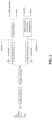
- Figure 1 includes a simplified scheme with the main unit operations of the F-T processes, with indications of the reactants and the achievable products.
- feedstock is converted into synthesis gas (syngas) that is purified and sent to the F-T reactors that, depending on their operation condition, design and catalysts used, can originate linear hydrocarbons (low temperature F-T) or branched hydrocarbons (high temperature F-T).
- synthesis gas syngas
- These hydrocarbons are subjected to hydrotreating, oligomerization, isomerization, hydrogenation steps to originate: i) middle distillates (i.e., gasoils), ii) waxes, iii) gasoline, iv) olefins.
- reaction [6] that is strongly endothermic, also require an extremely high energy input.
- CAMERE process aiming at the production of methanol, was demonstrated till a relatively large pilot scale but did not result into a viable industrial technology since the integration of a RWGS operating at high temperature (ca. 900 °C) and pressure (ca. 30 -50 ATM) required the usage of a furnace emitting CO 2 containing gases that contributed on the overall net production of CO 2 per ton of produced methanol.
- the weaknesses of the original CAMERE processes could be improved by utilizing electrified RWGS reactors (E-RWGS) and H 2 produced from steam/water electrolysis, but also in this case minor CO 2 positive emissions, between 0.04 - 0.15 per ton of produced methanol, would be produced. Only the usage of CO 2 contained in a bio-gas source and of electric energy sources with a carbon footprint lower than 120 gCO 2 /kWh would determine negative CO 2 emissions.
- A-RWGS autothermal reverse water gas shift
- Figure 2 includes a simplified and "state of the art” process scheme integrating RWGS and F-T unit operations.
- the source of H 2 to be mixed with the CO 2 is steam electrolysis (e.g., Alkalyne Electrolysis - AE, Proton Exchange Membrane Electrolysis - PEME, Solyd Oxide Elkectrolyzer Cell - SOEC) that also produces an O 2 flow that is vented.
- steam electrolysis e.g., Alkalyne Electrolysis - AE, Proton Exchange Membrane Electrolysis - PEME, Solyd Oxide Elkectrolyzer Cell - SOEC
- Alkaline Water electrolyzers which also include technologies utilizing solid polymeric membrane electrolytes also referred to as Alkaline Electrolyte Membrane (AEM) electrolyzers.
- AEM Alkaline Electrolyte Membrane
- the scheme also considers that the tail gases of the F-T reactor can be either recycled to F-T reactor itself and/or combined with the H 2 and the CO 2 rich flow for being sent to the RWGS reactor.
- the obtained syngas mixture is then compressed prior to being fed to the F-T Synthesis Unit. Noteworthy, this process will require to purge the tail gas recycle for avoiding the build-up of small (C1-C5) hydrocarbon molecules and CO 2 in the F-T recycle loop.
- the occurrence of carbon formation reactions determines limitations in the operation conditions; these limitations particularly affect the possibility of lowering or avoiding the steam content in the reactant mixtures. More in detail, the carbon formation reactions are particularly relevant at pressures between 15 - 40 ATM.
- reactions [9] and [11-12] are the primary sources of carbon that can be divided into three typologies: i) whisker carbon, ii) gum (encapsulating carbon), and iii) pyrolytic carbon.
- Gum formation and pyrolytic carbon are especially associated with the presence of hydrocarbons with more than two carbon atoms in the feedstock and can be avoided by removing these molecules with a pre-reformer unit upstream dry reforming.
- whisker carbon can only be avoided by operating in condition having a low thermodynamic affinity towards this species which, once formed, brings to the catalyst pellet destruction and to the plant shut down due to the necessity of avoiding that the heat flow from the furnace not adsorbed by the endothermic reactions could lead to tubes overheating and fracturing.
- Nickel, cobalt, and noble metal catalysts among others, have been extensively studied as potential catalysts for steam-CO 2 reforming, with nickel and particularly Ni-Mg and Ni-Mg-Al mixed oxide systems deposited on an alumina support, being the most investigated system, as Ni catalysts, cost-wise, are the most attractive catalyst.
- Noble metal catalysts are also utilized since they typically have a lower kinetic affinity for carbon formation and a higher activity for steam-CO 2 reforming reactions.
- TOPSOE A/S has also developed a process solution in which a hot CO 2 containing stream is added to the synthesis gas produced by a steam reformer operating at low steam vs. carbon ratios.
- a CO 2 enriched synthesis gas is transformed in a subsequent Adiabatic POst Converter (APOC) reactor in conditions in which the thermodynamic affinity towards the carbon formation reactions is greatly reduced.
- APOC Adiabatic POst Converter
- the CO 2 is transformed with a reverse water gas shift reaction into CO and H 2 O.
- the use of the APOC provides then a method for tailoring a synthesis gas composition in a wide range of H 2 vs CO ratio minimizing the risk of carbon formation.
- WO 2016/016256 A1 discloses an integrated SCT-CPO/ATR process for the production of synthesis gas that can be used in Fischer-Tropsch processes. There is no disclosure of producing syngas via reverse a water gas shift reaction and combining said syngas with syngas produced via the SCT-CPO process. Furthermore, there is no disclosure of a SCT-CPO reactor with the specific structure disclosed in the present application.
- US 2010/294994 A1 describes a process for the production of syngas by means of a reactor provided with four sections (I, II, III, IV, Fig. 2 ) in which the first and the second zones include: i) a device for the nebulization of a liquid hydrocarbon feedstock and ii) a nebulization and mixing chamber for providing a reactant mixture that is subsequently converted into synthesis gas in a reaction zone included in section III having a cylindrical shape and layered catalytic structures for converting the mixture of nebulized liquid hydrocarbons with the oxidant flow.
- An aspect of the present invention is a process to produce hydrocarbon compounds by converting syngas by means of a Fischer-Tropsch process, characterized in that said syngas comprises a part produced by means of a short contact time catalytic partial oxidation process and a part produced by reverse water gas shift process; wherein:
- Another aspect of the invention is an apparatus for producing synthetic hydrocarbon compounds with the process defined above, comprising a short contact time catalytic partial oxidation reactor including a first portion having a cylindrical shape consisting of an inlet a mixing zone and a thermal shield zone, a second portion containing a catalytic bed having a truncated cone shape, and a third portion having a cylindrical shape with a diameter greater than the diameter of said first cylindrical portion, followed by a second thermal shield zone, wherein:
- associated gas designates a gas produced as a byproduct of the production of crude oil. Associated gas is generally regarded as an undesirable byproduct, which is either reinjected, flared, or vented.
- off-gas designates a gas produced as a byproduct of a chemical process.
- tail gas designates gases and vapors released into the atmosphere from an industrial process after all reactions and treatments have taken place.
- the SCT-CPO reactor has the unique features described above that allow the utilization of CO 2 rich feedstock and of the F-T tail gases and off-gases produced in the separation and/or upgrading of the primary F-T products for producing a synthesis gas that will be utilized in the F-T synthesis.
- This allows the incorporation of carbon dioxide in the reaction products as it will be described in the following detailed description of the invention.
- This CO 2 utilization would not be allowed by the existing synthesis gas production technologies due to: i) the occurrence of carbon formation reactions [9-12] and ii) the possibility allowed only by SCT-CPO to avoid heating furnaces for pre-heating the reaction mixture and consequently avoiding CO 2 emissions in the heating furnaces.
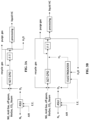
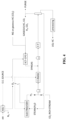
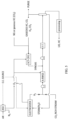
- Figures 3 , 4 , 5 , 6 and 7 include schematic drawings describing the process according to the invention.
- the process and apparatus according to the present invention overcome the steam-CO 2 reforming and the dry reforming drawbacks related to the occurrence of carbon formation reactions and reduce the relevance of the RWGS and hence the H 2 requirements. This is done by utilizing short contact time - catalytic partial oxidation (SCT-CPO) reactors integrated in process solutions that allow the CO 2 conversion into syngas and the avoidance or the strong reduction of the purge flow of the F-T recycle loop since this purge can also be utilized in the SCT-CPO feedstock.
- SCT-CPO short contact time - catalytic partial oxidation
- This SCT-CPO reactor is particularly advantageous for utilizing CO 2 rich feedstock since the reactivity features and operation conditions are not limited by the carbon formation reactions affecting the steam-CO 2 reforming reactors.
- the presence of the CO 2 in the SCT-CPO reactor has an inhibiting effect towards the parasitic gaseous phase radical reactions that, particularly in high pressure conditions, are the only reactions that could lead to unsaturated hydrocarbon molecules formation that could possibly aggregate and decompose for producing carbonaceous deposits.
- SCT-CPO short contact time catalytic partial oxidation
- SCT-CPO technology requires moderate pre-heating of the reactant mixtures, and the heat required for this moderate pre-heating can be obtained by recovering the heat contained in the synthesis gas, hence avoiding the utilization of fire heaters and avoiding the CO 2 emissions that this use would produce.
- the SCT-CPO based technology solutions allow the utilization of hydrocarbon feedstock also including relevant amounts of CO 2 .
- the CO 2 /C v/v in the hydrocarbon feedstock can be comprised between 0 - 1.5 v/v and preferentially between 0.2 - 1.0 v/v) in a wide range of pressure (1 - 80 ATM and preferentially between 5 - 50 ATM) and temperature (inlet temperatures comprised between 100 and 500 °C and preferentially between 150 and 400 °C) without incurring in the carbon formation reactions.
- the SCT-CPO reactor feedstock may include the F-T recycle gas stream with no or minor amounts of fresh gaseous HC feedstock.
- This allows the conversion into synthesis gas of the small hydrocarbon molecules and of the CO 2 that do not participate to the F-T reactions and that will build up in the F-T recycle loop, thus requiring purge gas emissions.
- the process solutions integrating: i) E-RWGS or A-RWGS, ii) SCT-CPO, iii) F-T and iv) electrolyzers (as described in figures 4-7 ) allow unique possibility of including CO 2 and CO 2 containing streams into hydrocarbon compounds with very effective CO 2 sink process solutions.
- the SCT-CPO reactor here described with a truncated cone geometry of the catalytic bed can operate at Gas Hourly Space Velocity Values comprised between 15,000 - 500,000 h -1 and preferentially between 30,000 - 250,000 h -1 .
- the catalysts can be any suitable material comprising a support with a pelletized or a monolith structure having active metal species onto their external surface. Examples of these catalysts are included in WO 2022/263409 A1 .
- RWGS Radial Component Interconnect System
- E-RWGS E-RWGS
- A-RWGS reactors can be operated at pressures comprised between 1 - 100 ATM and preferentially between 20 - 80 ATM), and temperatures between 850 - 1200 °C and preferentially between 900 - 1050 °C.
- the catalysts may be any suitable transition metal oxide for example, Nickel Oxide, Iron Oxide, Chromium Oxide.
- the H 2 /CO 2 ratios may be comprised between 0.5 and 2.5 v/v and preferentially close to 1.0 v/v depending on the desired composition of the synthesis gas and the GHSV values can be comprised between 3,000 - 50,000 h -1 .
- the F-T synthesis step may comprise one or more F-T reactors including F-T catalysts and can be performed according to anyone of the known processes, using anyone of the known catalysts such as those including Iron or Cobalt active species.
- the F-T steps can be differentiated between high-temperature processes with reaction temperatures typically between 320-360 °C and low-temperature processes, with reaction temperatures typically between 220-250 °C.
- the high-temperature processes typically utilize catalysts containing Iron species and utilize a synthesis gas with H 2 /CO ratios between 0.8 - 2.0 v/v and preferentially between 1.2 - 1.8 v/v.
- the low-temperature F-T processes utilize catalysts containing Cobalt species and utilize a synthesis gas with H 2 /CO ratios between 1.8 - 2.5 v/v and preferentially between 1.9 - 2.2 v/v.
- Pressures can be comprised between 1 - 100 ATM and preferentially between 10-80 ATM.
- the GHSV values may be comprised between 1,000 - 25,000 h -1 , depending on the reactor solutions, namely fixed-bed, slurry-phase, bubble column reactors.
- H 2 and O 2 sources such those produced by steam and water electrolysis and in some process configurations, integrate the syngas production obtained with SCT-CPO with the syngas production obtained by a RWGS reactor and particularly by a E-RWGS or A-RWGS reactors.
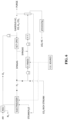
- Figure 3 (A) shows how the SCT-CPO and F-T steps can integrate by feeding the SCT-CPO reactor with part of the F-T loop recycle gas for reducing or avoiding the purge gas emissions.
- Figure 3 (B) shows how the scheme can be further implemented with steam or water electrolysis. In this case the amount of the CO 2 in the reactant flow and the addition of H 2 to the produced synthesis gas are balanced for reaching the H 2 /CO ca. 2 v/v before entering in the F-T reactor.
- the oxygen from air is obtained by means of a method selected from a cryogenic air separation unit (ASU), or other methos such as vacuum pressure swing adsorption, membrane separation.
- ASU cryogenic air separation unit
- methos such as vacuum pressure swing adsorption, membrane separation.
- the gaseous hydrocarbon feedstock can be composed by natural gas, liquefied petroleum gas (LPG), naphtha and/or gaseous mixtures having a biomass origin, and/or gaseous mixtures produced by other industrial activities; such as refinery off-gases, gaseous feedstock associated to chemical and petrochemical productions, gaseous feedstocks associated to oil productions (designated as "associated gases"), gaseous feedstocks associated to the iron and steel productions such as blast furnace gases (BFG), coke oven gases (COG), direct reduction gases (DRG).
- LPG liquefied petroleum gas
- COG coke oven gases
- DSG direct reduction gases
- Figure 4 and 5 shows how the F-T, SCT-CPO, E-RWGS or A-RWGS and steam or water electrolysis can be integrated by feeding the SCT-CPO reactor only with part or all the F-T recycle gas for reducing or completely avoiding any purge gas stream.
- the feedstock fed to the RWGS reactor may contain a mixture of carbon dioxide in which the carbon dioxide is from 10 to 70% and the hydrogen is from 10 to 70% v/v of the mixture, which optionally comprises also hydrogen contained in the syngas produced in the short contact time catalytic partial oxidation reactor.
- Figure 6 and 7 shows how the F-T, SCT-CPO, E-RWGS or A-RWGS and steam or water electrolysis can be integrated by feeding the SCT-CPO reactor either with hydrocarbon feedstocks that are gaseous at the reactor inlet temperatures and with part or all the F-T recycle gas for reducing or completely avoiding any purge gas stream.
- the gaseous hydrocarbon feedstock can be composed by natural gas, liquefied petroleum gas (LPG), naphtha and/or gaseous mixtures having a biomass origin, and/or gaseous mixtures produced by other industrial activities; such as refinery off-gases, gaseous feedstock associated to chemical and petrochemical productions, gaseous feedstocks associated to oil productions, gaseous feedstocks associated to the iron and steel productions such as blast furnace gases (BFG), coke oven gases (COG), direct reduction gases (DRG).
- LPG liquefied petroleum gas
- COG coke oven gases
- DSG direct reduction gases
- the exothermic total oxidation reaction [15] has the highest probability to occur at the beginning of the bed, while the endothermic steam-CO 2 reforming reactions [6] and [13] and the mildly endothermic (RWGS) reactions [5] would have the highest probability to occur in following zone. Noteworthy by increasing the reaction temperature above 830 °C reaction [5] is shifted on the right side and favoured with respect to steam-CO 2 reforming [6] and [13]. However, we found that the extent and the localization of these reactions inside the catalytic bed is greatly affected by physical and chemical factors. Total combustion [15] has been found be the most competitive reaction on noble metal base (Rh, Ru, Ir, Pt, Pd) catalysts at "relatively low temperatures" below 750 °C and at high O 2 partial pressure.
- noble metal base Rh, Ru, Ir, Pt, Pd
- reaction [15] cannot be controlled and propagate reactions into the gaseous phase with the risk of flame ignition particularly at high pressure (e.g., above 10 ATM) but in any case, producing some radical reactions leading to the formation of unsaturated hydrocarbons precursors of solid carbonaceous compounds.
- the solid catalyst temperatures reach values higher than 1000 °C while the gas remains relatively cool by utilizing a reaction environment geometry that allows to reduce the contact time at the entrance of the catalytic bed to few milliseconds and that allows the expansion of the reaction volume when the temperature and the mole flow increases due to the progressing of the reaction.
- This effect is obtained by adopting a truncated shape geometry of the catalytic bed and catalyst geometrical features that allow to reduce the pressure drop inside the reaction zone.
- Figure 8 shows qualitative pictures of the Enthalpy/Temperature profiles obtained at (A) low mass velocity, high contact time, tubular geometry of the catalytic bed and (B) high mass velocity, short contact time, truncated cone geometry of the catalytic bed.
- the black solid line represents the total enthalpy variation.
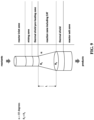
- Figure 9 shows the main zones of the SCT-CPO reactor including a truncated cone reaction zone.
- the cylindrical first portion includes a mixing inlet zone and a first thermal shield pre-heating zone.
- the central second portion includes a reaction zone
- the cylindrical third portion includes a second thermal shield and a reactor exit zone.
- the angle ⁇ shown in Figure 9 is clearly lower than 80° and preferentially comprised between 75° and 30°.
- the other geometrical features namely the: i) truncated cone inlet radius R1, ii) the truncated cone exit radius R2, iii) the truncated cone length L and the catalytic bed filling are designed for allowing pressure drop values ( ⁇ P) inside the catalytic bed between 0.1 and 10 ATM and preferentially between 0.5 and 5 ATM.
- ratios R1/R2 must be comprised between 0.9 and 0.1 and preferentially between 0.8 and 0.4 and the shapes of the filling of the catalyst bed need to be defined for minimizing the pressure drop conditions by utilizing pelletized or monolith structures and their combinations.
- thermo-chemical properties of the SCT environments are synthesized as follows:
- the CO 2 emissions are mainly related to the E.E. consumption required for:
- tubular cylindrical SCT-CPO reactors would be immediately clogged by carbon formation reactions due to heterogenous cracking and polymerization reactions of the unsaturated molecules particularly occurring before the catalytic bed and by unselective radical reactions occurring in the gas phase either in the inlet and mixing zones and in the catalytic zones.
Landscapes
- Chemical & Material Sciences (AREA)
- Chemical Kinetics & Catalysis (AREA)
- Organic Chemistry (AREA)
- Engineering & Computer Science (AREA)
- Combustion & Propulsion (AREA)
- Oil, Petroleum & Natural Gas (AREA)
- Health & Medical Sciences (AREA)
- General Health & Medical Sciences (AREA)
- Inorganic Chemistry (AREA)
- General Chemical & Material Sciences (AREA)
- Organic Low-Molecular-Weight Compounds And Preparation Thereof (AREA)
- Hydrogen, Water And Hydrids (AREA)
Applications Claiming Priority (1)
| Application Number | Priority Date | Filing Date | Title |
|---|---|---|---|
| PCT/EP2023/064418 WO2024245538A1 (en) | 2023-05-30 | 2023-05-30 | Process for the production of synthetic hydrocarbons compounds by utilizing carbon dioxide-rich feedstock |
Publications (1)
| Publication Number | Publication Date |
|---|---|
| EP4471111A1 true EP4471111A1 (de) | 2024-12-04 |
Family
ID=86771380
Family Applications (1)
| Application Number | Title | Priority Date | Filing Date |
|---|---|---|---|
| EP24177029.6A Pending EP4471111A1 (de) | 2023-05-30 | 2024-05-21 | Verfahren zur herstellung von synthetischen kohlenwasserstoffen unter verwendung von kohlendioxidreichen einsatzstoffen |
Country Status (3)
| Country | Link |
|---|---|
| EP (1) | EP4471111A1 (de) |
| MX (1) | MX2025014347A (de) |
| WO (2) | WO2024245538A1 (de) |
Citations (17)
| Publication number | Priority date | Publication date | Assignee | Title |
|---|---|---|---|---|
| EP0640559A1 (de) | 1993-08-27 | 1995-03-01 | SNAMPROGETTI S.p.A. | Verfahren zur partiellen Oxidation von Erdgas zur Herstellung von Synthesegas und Formaldehyd |
| EP0725038A1 (de) | 1995-02-03 | 1996-08-07 | SNAMPROGETTI S.p.A. | Hydrotalcitmaterial mit Schichtstruktur und seine Verwendung |
| WO1997037929A1 (en) | 1996-04-11 | 1997-10-16 | Snamprogetti S.P.A. | Equipment for partial oxidation reactions |
| WO2005023710A2 (en) | 2003-09-11 | 2005-03-17 | Eni S.P.A. | Catalytic partial oxidation process for producing synthesis gas |
| US20050211604A1 (en) | 2002-05-24 | 2005-09-29 | Snamprogetti S.P.A. | Process for catalytic partial oxidation reactions |
| WO2006034868A1 (en) | 2004-09-30 | 2006-04-06 | Eni S.P.A. | Equipment for the atomisation of a liquid stream by means of a dispersing gaseous stream and for mixing the atomised product with a further suitable gaseous stream in equipment for effecting catalytic partial oxidations and relative catalytic partial oxidation process |
| WO2007045457A1 (en) | 2005-10-21 | 2007-04-26 | Eni S.P.A. | Fluid mixing device inserted in or combined with a reactor |
| US20090127512A1 (en) | 2007-11-21 | 2009-05-21 | Eni S.P.A. | Enhanced process for the production of synthesis gas starting from oxygenated compounds deriving from biomasses |
| WO2009065559A1 (en) | 2007-11-23 | 2009-05-28 | Eni S.P.A. | Process for the production of synthesis gas and hydrogen starting from liquid or gaseous hydrocarbons |
| WO2011072877A1 (en) | 2009-12-16 | 2011-06-23 | Eni S.P.A. | Process for the production of hydrogen starting from liquid hydrocarbons, gaseous hydrocarbons and/or oxygenated compounds also deriving from biomasses |
| WO2011151082A1 (en) | 2010-06-03 | 2011-12-08 | Eni S.P.A. | Catalytic system for catalytic partial oxidation processes with a short contact time |
| US20140288195A1 (en) * | 2011-11-04 | 2014-09-25 | Commissariat A L'energie Atomique Et Aux Energies Alternatives | Process for the thermochemical conversion of a carbon-based feedstock to synthesis gas containing predominantly h2 and co |
| WO2016016256A1 (en) | 2014-07-29 | 2016-02-04 | Eni S.P.A. | Integrated sct-cpo/atr process for the production of synthesis gas |
| WO2016016251A1 (en) | 2014-07-29 | 2016-02-04 | Eni S.P.A. | Integrated sct-cpo/sr process for producing synthesis gas |
| WO2016016253A1 (en) | 2014-07-29 | 2016-02-04 | Eni S.P.A. | Integrated short contact time catalytic partial oxidation/gas heated reforming process for the production of synthesis gas |
| WO2016016257A1 (en) | 2014-07-29 | 2016-02-04 | Eni S.P.A. | Integrated sct-cpo/pox process for producing synthesis gas |
| WO2022263409A1 (en) | 2021-06-14 | 2022-12-22 | NextChem S.p.A. | Method for producing catalysts for high temperature chemical processes and catalysts thus obtained. |
-
2023
- 2023-05-30 WO PCT/EP2023/064418 patent/WO2024245538A1/en not_active Ceased
-
2024
- 2024-05-21 WO PCT/EP2024/063939 patent/WO2024245818A1/en not_active Ceased
- 2024-05-21 EP EP24177029.6A patent/EP4471111A1/de active Pending
-
2025
- 2025-11-28 MX MX2025014347A patent/MX2025014347A/es unknown
Patent Citations (19)
| Publication number | Priority date | Publication date | Assignee | Title |
|---|---|---|---|---|
| EP0640559A1 (de) | 1993-08-27 | 1995-03-01 | SNAMPROGETTI S.p.A. | Verfahren zur partiellen Oxidation von Erdgas zur Herstellung von Synthesegas und Formaldehyd |
| EP0725038A1 (de) | 1995-02-03 | 1996-08-07 | SNAMPROGETTI S.p.A. | Hydrotalcitmaterial mit Schichtstruktur und seine Verwendung |
| WO1997037929A1 (en) | 1996-04-11 | 1997-10-16 | Snamprogetti S.P.A. | Equipment for partial oxidation reactions |
| US20050211604A1 (en) | 2002-05-24 | 2005-09-29 | Snamprogetti S.P.A. | Process for catalytic partial oxidation reactions |
| WO2005023710A2 (en) | 2003-09-11 | 2005-03-17 | Eni S.P.A. | Catalytic partial oxidation process for producing synthesis gas |
| WO2006034868A1 (en) | 2004-09-30 | 2006-04-06 | Eni S.P.A. | Equipment for the atomisation of a liquid stream by means of a dispersing gaseous stream and for mixing the atomised product with a further suitable gaseous stream in equipment for effecting catalytic partial oxidations and relative catalytic partial oxidation process |
| WO2007045457A1 (en) | 2005-10-21 | 2007-04-26 | Eni S.P.A. | Fluid mixing device inserted in or combined with a reactor |
| US20090127512A1 (en) | 2007-11-21 | 2009-05-21 | Eni S.P.A. | Enhanced process for the production of synthesis gas starting from oxygenated compounds deriving from biomasses |
| WO2009065559A1 (en) | 2007-11-23 | 2009-05-28 | Eni S.P.A. | Process for the production of synthesis gas and hydrogen starting from liquid or gaseous hydrocarbons |
| US20100294994A1 (en) | 2007-11-23 | 2010-11-25 | Eni S.P.A. | Process for the production of synthesis gas and hydrogen starting from liquid or gaseous hydrocarbons |
| WO2011072877A1 (en) | 2009-12-16 | 2011-06-23 | Eni S.P.A. | Process for the production of hydrogen starting from liquid hydrocarbons, gaseous hydrocarbons and/or oxygenated compounds also deriving from biomasses |
| US20120301391A1 (en) * | 2009-12-16 | 2012-11-29 | Eni S.P.A. | Process for the production of hydrogen starting from liquid hydrocarbons, gaseous hydrocarbons and/or oxygenated compounds also deriving from biomasses |
| WO2011151082A1 (en) | 2010-06-03 | 2011-12-08 | Eni S.P.A. | Catalytic system for catalytic partial oxidation processes with a short contact time |
| US20140288195A1 (en) * | 2011-11-04 | 2014-09-25 | Commissariat A L'energie Atomique Et Aux Energies Alternatives | Process for the thermochemical conversion of a carbon-based feedstock to synthesis gas containing predominantly h2 and co |
| WO2016016256A1 (en) | 2014-07-29 | 2016-02-04 | Eni S.P.A. | Integrated sct-cpo/atr process for the production of synthesis gas |
| WO2016016251A1 (en) | 2014-07-29 | 2016-02-04 | Eni S.P.A. | Integrated sct-cpo/sr process for producing synthesis gas |
| WO2016016253A1 (en) | 2014-07-29 | 2016-02-04 | Eni S.P.A. | Integrated short contact time catalytic partial oxidation/gas heated reforming process for the production of synthesis gas |
| WO2016016257A1 (en) | 2014-07-29 | 2016-02-04 | Eni S.P.A. | Integrated sct-cpo/pox process for producing synthesis gas |
| WO2022263409A1 (en) | 2021-06-14 | 2022-12-22 | NextChem S.p.A. | Method for producing catalysts for high temperature chemical processes and catalysts thus obtained. |
Non-Patent Citations (5)
| Title |
|---|
| BASINI ET AL: "Fuel rich catalytic combustion: Principles and technological developments in short contact time (SCT) catalytic processes", CATALYSIS TODAY, ELSEVIER, AMSTERDAM, NL, vol. 117, no. 4, 15 October 2006 (2006-10-15), pages 384 - 393, XP027976254, ISSN: 0920-5861, [retrieved on 20061015] * |
| BASINI, L.: "Fuel rich catalytic combustion: Principles and technological developments in short contact time (SCT) catalytic processes", CATALYSIS TODAY, vol. 117, no. 4, 15 October 2006 (2006-10-15), pages 384 - 393, XP025116884, DOI: 10.1016/j.cattod.2006.06.043 |
| BASINI, LUCA: "Issues in H and synthesis gas technologies for refinery, GTL and small and distributed industrial needs", CATALYSIS TODAY, vol. 106, no. 1-4, October 2005 (2005-10-01), pages 34 |
| G. IAQUANIELLOE. ANTONETTIB. CUCCHIELLAE. PALOA. SALLADINIA. GUARINONIA. LAINATIL. BASINI, NATURAL GAS CATALYTIC PARTIAL OXIDATION: A WAY TO SYNGAS AND BULK CHEMICALS PRODUCTION I INTECHOPEN, Retrieved from the Internet <URL:http://dx.doi.org/10.5772/48708> |
| L.E. BASINIA. GUARINONI: "Short Contact Time Catalytic Partial Oxidation (SCT-CPO) for Synthesis Gas Processes and Olefins Production", IND. ENG. CHEM. RES., vol. 52, 2013, pages 17023 - 17037, XP093124801, Retrieved from the Internet <URL:https://doi.org/10.1021/ie402463m> DOI: 10.1021/ie402463m |
Also Published As
| Publication number | Publication date |
|---|---|
| WO2024245818A1 (en) | 2024-12-05 |
| WO2024245538A1 (en) | 2024-12-05 |
| MX2025014347A (es) | 2026-03-02 |
Similar Documents
| Publication | Publication Date | Title |
|---|---|---|
| KR102936971B1 (ko) | 이산화탄소와 전력을 연료 및 화학 물질로 전환하는 공정 | |
| Pen et al. | New catalytic routes for syngas and hydrogen production | |
| US20230174376A1 (en) | Production of Hydrocarbons | |
| CA2384764A1 (en) | Autothermal reformer | |
| US20250256960A1 (en) | Production of synthesis gas and of methanol | |
| KR20240017375A (ko) | 금속 더스팅이 감소된 열교환 반응기 | |
| JP2026063299A (ja) | 炭化水素製造システム | |
| Shah et al. | Hydrogen from natural gas | |
| US20250263302A1 (en) | Catalytic Reactor System and Catalyst for Conversation of Captured CO2 and Renewable H2 Into Low-Carbon Syngas | |
| US12351457B2 (en) | Method and device for producing hydrogen and pyrolytic carbon from hydrocarbons | |
| AU2002362693B2 (en) | System for power generation in a process producing hydrocarbons | |
| US10513436B1 (en) | Production of pure hydrogen and synthesis gas or carbon with CUO-Fe2O3 oxygen carriers using chemical looping combustion and methane decomposition/reforming | |
| EP4471111A1 (de) | Verfahren zur herstellung von synthetischen kohlenwasserstoffen unter verwendung von kohlendioxidreichen einsatzstoffen | |
| CA3184312A1 (en) | A process and reactor for converting carbon dioxide into carbon monoxide, involving a catalyst | |
| CN1726077A (zh) | 利用部分催化氧化产生合成气的方法 | |
| EP4719977A1 (de) | Verfahren zur herstellung von carbonsäuren und carbonylverbindungen unter verwendung von kohlendioxidreichen einsatzstoffen | |
| WO2024245821A1 (en) | Process for the production of fuel and chemicals from waste materials by utilizing carbon dioxide-rich feedstock | |
| WO2026008712A1 (en) | Process for the valorization of hydrocarbon mixtures and of secondary streams of industrial processes through partial oxidation reaction and co2 separation technologies | |
| BG112796A (bg) | Получаване на сингаз за производство на водород, чрез паров реформинг на въглеводороди с прилагане на процес на пълно горене на поток горивни газове в автотермичен реформинг | |
| Udemu et al. | Steam Reforming Process for Conversion of Hydrocarbons to Hydrogen | |
| EA050952B1 (ru) | Теплообменный реактор для конверсии co2 | |
| EA047820B1 (ru) | Способ превращения диоксида углерода и энергии в топливо и химические реагенты | |
| Guarinoni et al. | Chapter Natural Gas Catalytic Partial Oxidation: A Way to Syngas and Bulk Chemicals Production | |
| Salladini et al. | Natural Gas Catalytic Partial Oxidation: A Way to Syngas and Bulk Chemicals Production |
Legal Events
| Date | Code | Title | Description |
|---|---|---|---|
| PUAI | Public reference made under article 153(3) epc to a published international application that has entered the european phase |
Free format text: ORIGINAL CODE: 0009012 |
|
| STAA | Information on the status of an ep patent application or granted ep patent |
Free format text: STATUS: THE APPLICATION HAS BEEN PUBLISHED |
|
| AK | Designated contracting states |
Kind code of ref document: A1 Designated state(s): AL AT BE BG CH CY CZ DE DK EE ES FI FR GB GR HR HU IE IS IT LI LT LU LV MC ME MK MT NL NO PL PT RO RS SE SI SK SM TR |
|
| STAA | Information on the status of an ep patent application or granted ep patent |
Free format text: STATUS: REQUEST FOR EXAMINATION WAS MADE |
|
| 17P | Request for examination filed |
Effective date: 20250530 |