EP4470622A2 - Feste orale darreichungsformen von decitabin und cedazuridin in kombination - Google Patents
Feste orale darreichungsformen von decitabin und cedazuridin in kombination Download PDFInfo
- Publication number
- EP4470622A2 EP4470622A2 EP24192979.3A EP24192979A EP4470622A2 EP 4470622 A2 EP4470622 A2 EP 4470622A2 EP 24192979 A EP24192979 A EP 24192979A EP 4470622 A2 EP4470622 A2 EP 4470622A2
- Authority
- EP
- European Patent Office
- Prior art keywords
- decitabine
- oral dosage
- dosage form
- solid oral
- days
- Prior art date
- Legal status (The legal status is an assumption and is not a legal conclusion. Google has not performed a legal analysis and makes no representation as to the accuracy of the status listed.)
- Pending
Links
Images


Classifications
-
- A—HUMAN NECESSITIES
- A61—MEDICAL OR VETERINARY SCIENCE; HYGIENE
- A61K—PREPARATIONS FOR MEDICAL, DENTAL OR TOILETRY PURPOSES
- A61K31/00—Medicinal preparations containing organic active ingredients
- A61K31/185—Acids; Anhydrides, halides or salts thereof, e.g. sulfur acids, imidic, hydrazonic or hydroximic acids
- A61K31/19—Carboxylic acids, e.g. valproic acid
- A61K31/20—Carboxylic acids, e.g. valproic acid having a carboxyl group bound to a chain of seven or more carbon atoms, e.g. stearic, palmitic, arachidic acids
-
- A—HUMAN NECESSITIES
- A61—MEDICAL OR VETERINARY SCIENCE; HYGIENE
- A61K—PREPARATIONS FOR MEDICAL, DENTAL OR TOILETRY PURPOSES
- A61K31/00—Medicinal preparations containing organic active ingredients
- A61K31/70—Carbohydrates; Sugars; Derivatives thereof
- A61K31/7016—Disaccharides, e.g. lactose, lactulose
-
- A—HUMAN NECESSITIES
- A61—MEDICAL OR VETERINARY SCIENCE; HYGIENE
- A61K—PREPARATIONS FOR MEDICAL, DENTAL OR TOILETRY PURPOSES
- A61K31/00—Medicinal preparations containing organic active ingredients
- A61K31/70—Carbohydrates; Sugars; Derivatives thereof
- A61K31/7042—Compounds having saccharide radicals and heterocyclic rings
- A61K31/7052—Compounds having saccharide radicals and heterocyclic rings having nitrogen as a ring hetero atom, e.g. nucleosides, nucleotides
- A61K31/706—Compounds having saccharide radicals and heterocyclic rings having nitrogen as a ring hetero atom, e.g. nucleosides, nucleotides containing six-membered rings with nitrogen as a ring hetero atom
-
- A—HUMAN NECESSITIES
- A61—MEDICAL OR VETERINARY SCIENCE; HYGIENE
- A61K—PREPARATIONS FOR MEDICAL, DENTAL OR TOILETRY PURPOSES
- A61K31/00—Medicinal preparations containing organic active ingredients
- A61K31/70—Carbohydrates; Sugars; Derivatives thereof
- A61K31/7042—Compounds having saccharide radicals and heterocyclic rings
- A61K31/7052—Compounds having saccharide radicals and heterocyclic rings having nitrogen as a ring hetero atom, e.g. nucleosides, nucleotides
- A61K31/706—Compounds having saccharide radicals and heterocyclic rings having nitrogen as a ring hetero atom, e.g. nucleosides, nucleotides containing six-membered rings with nitrogen as a ring hetero atom
- A61K31/7064—Compounds having saccharide radicals and heterocyclic rings having nitrogen as a ring hetero atom, e.g. nucleosides, nucleotides containing six-membered rings with nitrogen as a ring hetero atom containing condensed or non-condensed pyrimidines
- A61K31/7068—Compounds having saccharide radicals and heterocyclic rings having nitrogen as a ring hetero atom, e.g. nucleosides, nucleotides containing six-membered rings with nitrogen as a ring hetero atom containing condensed or non-condensed pyrimidines having oxo groups directly attached to the pyrimidine ring, e.g. cytidine, cytidylic acid
-
- A—HUMAN NECESSITIES
- A61—MEDICAL OR VETERINARY SCIENCE; HYGIENE
- A61K—PREPARATIONS FOR MEDICAL, DENTAL OR TOILETRY PURPOSES
- A61K31/00—Medicinal preparations containing organic active ingredients
- A61K31/70—Carbohydrates; Sugars; Derivatives thereof
- A61K31/715—Polysaccharides, i.e. having more than five saccharide radicals attached to each other by glycosidic linkages; Derivatives thereof, e.g. ethers, esters
- A61K31/716—Glucans
- A61K31/717—Celluloses
-
- A—HUMAN NECESSITIES
- A61—MEDICAL OR VETERINARY SCIENCE; HYGIENE
- A61K—PREPARATIONS FOR MEDICAL, DENTAL OR TOILETRY PURPOSES
- A61K9/00—Medicinal preparations characterised by special physical form
- A61K9/0012—Galenical forms characterised by the site of application
- A61K9/0053—Mouth and digestive tract, i.e. intraoral and peroral administration
- A61K9/0056—Mouth soluble or dispersible forms; Suckable, eatable, chewable coherent forms; Forms rapidly disintegrating in the mouth; Lozenges; Lollipops; Bite capsules; Baked products; Baits or other oral forms for animals
-
- A—HUMAN NECESSITIES
- A61—MEDICAL OR VETERINARY SCIENCE; HYGIENE
- A61K—PREPARATIONS FOR MEDICAL, DENTAL OR TOILETRY PURPOSES
- A61K9/00—Medicinal preparations characterised by special physical form
- A61K9/20—Pills, tablets, discs, rods
-
- A—HUMAN NECESSITIES
- A61—MEDICAL OR VETERINARY SCIENCE; HYGIENE
- A61K—PREPARATIONS FOR MEDICAL, DENTAL OR TOILETRY PURPOSES
- A61K9/00—Medicinal preparations characterised by special physical form
- A61K9/48—Preparations in capsules, e.g. of gelatin, of chocolate
-
- A—HUMAN NECESSITIES
- A61—MEDICAL OR VETERINARY SCIENCE; HYGIENE
- A61K—PREPARATIONS FOR MEDICAL, DENTAL OR TOILETRY PURPOSES
- A61K9/00—Medicinal preparations characterised by special physical form
- A61K9/48—Preparations in capsules, e.g. of gelatin, of chocolate
- A61K9/4891—Coated capsules; Multilayered drug free capsule shells
-
- A—HUMAN NECESSITIES
- A61—MEDICAL OR VETERINARY SCIENCE; HYGIENE
- A61P—SPECIFIC THERAPEUTIC ACTIVITY OF CHEMICAL COMPOUNDS OR MEDICINAL PREPARATIONS
- A61P35/00—Antineoplastic agents
-
- A—HUMAN NECESSITIES
- A61—MEDICAL OR VETERINARY SCIENCE; HYGIENE
- A61P—SPECIFIC THERAPEUTIC ACTIVITY OF CHEMICAL COMPOUNDS OR MEDICINAL PREPARATIONS
- A61P35/00—Antineoplastic agents
- A61P35/02—Antineoplastic agents specific for leukemia
-
- A—HUMAN NECESSITIES
- A61—MEDICAL OR VETERINARY SCIENCE; HYGIENE
- A61K—PREPARATIONS FOR MEDICAL, DENTAL OR TOILETRY PURPOSES
- A61K2300/00—Mixtures or combinations of active ingredients, wherein at least one active ingredient is fully defined in groups A61K31/00 - A61K41/00
Definitions
- Cedazuridine ((4R)-2'-deoxy-2',2'-difluoro-3,4,5,6-tetrahydrouridine; also known as E7727) is a recently developed CDA inhibitor. Cedazuridine and methods of making and/or using thereof are further disclosed in U.S. Patent Nos. 8,268,800 and 9,834,576 , the contents of which are incorporated by reference herein in their entirety.
- decitabine Due to decitabine's lack of bioavailability when orally administered, treatment methods using decitabine currently require parenteral injections daily for 5-7 days for several months or even years.
- An orally bioavailable decitabine dosage form would decrease the burden of monthly, multiple-day, intravenous infusions or subcutaneous injections, which sometimes involve long-distance travel for clinic visits.
- the present invention is based, in part, on the development of solid oral dosage forms of decitabine and cedazuridine, wherein the solid oral dosage form upon daily administration to a subject provides plasma levels of decitabine with a 5-day area under the curve (AUC) for decitabine that is equivalent to the 5-day AUC for a daily intravenous (IV) dose of decitabine of 20 mg/m 2 administered as a one hour infusion.
- AUC area under the curve
- IV daily intravenous
- the ratio of AUC for decitabine on day 2 versus day 1 is about 1.5: 1 to about 2:1.
- An additional aspect of the invention relates to methods for treating a disorder in a subject in need thereof, comprising administering to the subject a solid oral dosage form according to an embodiment of the invention, thereby treating cancer in the subject.
- the disorder is cancer.
- Another aspect of the invention relates to methods of reducing DNA methylation (e.g ., LINE-1 methylation) in a subject in need thereof, comprising administering to the subject a solid oral dosage form according to an embodiment of the invention, thereby reducing DNA methylation in the subject.
- reducing DNA methylation e.g ., LINE-1 methylation
- An additional aspect of the invention relates to use of a solid oral dosage form according to an embodiment of the invention in methods for treating a disorder, methods for inhibiting degradation of decitabine, and methods of reducing DNA methylation (e.g., LINE-1 methylation).
- Effective amount refers to the amount required to produce a desired effect (e.g ., enhancing the half-life, bioavailability, or efficacy of a CDA substrate drug, treating cancer in a subject, reducing DNA methylation in a subject, inhibiting cytidine deaminase in a subject, or inhibiting degradation of a CDA substrate drug by cytidine deaminase).
- AUC refers to the area under the concentration time curve of an active agent such as decitabine.
- Half-life refers to the period of time required for the concentration or amount of a compound in a subject to be reduced to exactly one-half of a given concentration or amount.
- “Pharmaceutically acceptable” refers to those properties and/or substances that are acceptable to the patient from a pharmacological and/or toxicological point of view, and/or to the manufacturing pharmaceutical chemist from a physical and/or chemical point of view regarding composition, formulation, stability, patient acceptance, bioavailability, and compatibility with other ingredients.
- “Pharmaceutically acceptable salt” refers to an acid or base salt of a compound of the invention, which salt possesses the desired pharmacological activity and is neither biologically nor otherwise undesirable.
- the salt can be formed with acids that include without limitation acetate, adipate, alginate, aspartate, benzoate, benzenesulfonate, bisulfate butyrate, citrate, camphorate, camphorsulfonate, cyclopentanepropionate, digluconate, dodecylsulfate, ethanesulfonate, fumarate, glucoheptanoate, glycerophosphate, hemisulfate, heptanoate, hexanoate, hydrochloride hydrobromide, hydroiodide, 2-hydroxyethanesulfonate, lactate, maleate, methanesulfonate, 2-naphthalenesulfonate, nicotinate, oxalate,
- Examples of a base salt include without limitation ammonium salts, alkali metal salts such as sodium and potassium salts, alkaline earth metal salts such as calcium and magnesium salts, salts with organic bases such as dicyclohexylamine salts, N-methyl-D-glucamine, and salts with amino acids such as arginine and lysine.
- the basic nitrogen-containing groups can be quaternized with agents including lower alkyl halides such as methyl, ethyl, propyl and butyl chlorides, bromides, and iodides; dialkyl sulfates such as dimethyl, diethyl, dibutyl and diamyl sulfates; long chain halides such as decyl, lauryl, myristyl and stearyl chlorides, bromides, and iodides; and aralkyl halides such as phenethyl bromides.
- lower alkyl halides such as methyl, ethyl, propyl and butyl chlorides, bromides, and iodides
- dialkyl sulfates such as dimethyl, diethyl, dibutyl and diamyl sulfates
- long chain halides such as decyl, lauryl, myristyl and stearyl chlorides, bro
- Unit dosage form refers to a physically discrete unit suitable as a unitary dosage for human or other animal subjects.
- Each unit dosage form may contain a predetermined amount of an active substance (e.g., compound or composition of the invention, CDA substrate drug and/or other therapeutic agent) calculated to produce a desired effect.
- an active substance e.g., compound or composition of the invention, CDA substrate drug and/or other therapeutic agent
- inhibitor or “reduce” or grammatical variations thereof as used herein refers to a decrease or diminishment in the specified level or activity of at least about 15%, 25%, 35%, 40%, 50%, 60%, 75%, 80%, 90%, 95% or more. In particular embodiments, the inhibition or reduction results in little or essentially no detectible activity (at most, an insignificant amount, e.g., less than about 10% or even 5%).
- Subject refers to a cell or tissue, in vitro or in vivo, an animal or a human.
- An animal or human subject may also be referred to as a "patient.”
- Treating By the term “treat,” “treating,” or “treatment of” (or grammatically equivalent terms) it is meant that the severity of the subject's condition is reduced or at least partially improved or ameliorated and/or that some alleviation, mitigation or decrease in at least one clinical symptom is achieved. "Treating” in reference to a disease, disorder or condition may refer to: (i) inhibiting a disease, disorder, or condition, e.g., arresting its development; and/or (ii) relieving a disease, disorder, or condition, e.g., causing regression of the clinical symptoms.
- Cancer refers to an abnormal growth of cells which tend to proliferate in an uncontrolled way and, in some cases, to metastasize (spread).
- Specific cancers types include without limitation the cancers identified in Publication No. US 2006/0014949 and the following: cardiac: sarcoma (e.g., such as angiosarcoma, fibrosarcoma, rhabdomyosarcoma, liposarcoma and the like), myxoma, rhabdomyoma, fibroma, lipoma and teratomas; lung: bronchogenic carcinoma (e.g., such as squamous cell, undifferentiated small cell, undifferentiated large cell, adenocarcinoma and the like), alveolar (e.g., such as bronchiolar) carcinoma, bronchial adenoma, sarcoma, lymphoma, chondromatous hamartoma, mesothelioma; gastrointestinal:
- the inventors of the present invention have discovered combination decitabine and cedazuridine solid oral dosage forms that have equivalent or improved epigenetic effects (e.g., LINE-1 demethylation, e.g., % F cell expansion) and/or decreased myelosuppressive effects (e.g., neutropenia), relative to those obtained with IV decitabine, in IPSS-low and IPSS-intermediate-1 myelodysplastic syndromes (MDS) cancer patients.
- epigenetic effects e.g., LINE-1 demethylation, e.g., % F cell expansion
- myelosuppressive effects e.g., neutropenia
- the term "equivalent” refers to a value that varies by less than 10% from the reference value, e.g., less than 10%, 9%, 8%, 7%, 6%, 5%, 4%, 3%, 2%, or 1%.
- the solid oral dosage form is a unit dosage form that comprises about 35 mg decitabine. In some embodiments of the invention, the solid oral dosage form is unit dosage form that comprises about 100 mg of cedazuridine. Furthermore, in some embodiments, the solid oral dosage form is a unit dosage form that comprises about 35 mg decitabine and about 100 mg of cedazuridine. In some embodiments of the invention, the unit dosage form comprises about 35 mg decitabine and about 100 mg of cedazuridine and at least one pharmaceutically acceptable excipient.
- Examples of pharmaceutically acceptable excipients include without limitation: (1) sugars, such as lactose, glucose and sucrose; (2) starches, such as corn starch and potato starch; (3) cellulose and its derivatives, such as sodium carboxymethyl cellulose, ethyl cellulose, cellulose acetate, hydroxypropylmethylcellulose (hypromellose), and hydroxypropylcellulose; (4) powdered tragacanth; (5) malt; (6) gelatin; (7) talc; (8) excipients, such as cocoa butter and suppository waxes; (9) oils, such as peanut oil, cottonseed oil, safflower oil, sesame oil, olive oil, corn oil and soybean oil; (10) glycols, such as propylene glycol; (11) polyols, such as glycerin, sorbitol, mannitol and polyethylene glycol; (12) esters, such as ethyl oleate and ethyl laurate; (13) a
- the solid oral dosage form includes one or more of a diluent, binder, disintegrant, glidant, and lubricant.
- the solid oral dosage form includes a diluent, binder, disintegrant, glidant, and lubricant.
- the solid oral dosage form includes the following excipients: lactose monohydrate as a diluent; hydroxypropyl methylcellulose as a binder; croscarmellose sodium as a disintegrant; colloidal silicon dioxide as a glidant; and magnesium stearate as a lubricant.
- such components are formed into a tablet.
- the tablet is an immediate release tablet.
- the tablet is coated with a film, which may be colored. Any pharmaceutically acceptable coating may be used but in some embodiments, the tablet is coated with an OPADRY ® coating.
- the cedazuridine is present in the solid oral dosage form in an amount of about 17-22 % w/w, e.g., about 17.0, 17.2, 17.4, 17.6, 17.8, 18.0, 18.2, 18.4, 18.6, 18.8, 19.0, 19.2, 19.4, 19.6, 19.8, 20.0, 20.2, 20.4, 20.6, 20.8, 21.0, 21.2, 21.4, 21.6, 21.8, or 22.0 % w/w or any range therein, e.g., about 19.42 %w/w.
- the binder e.g., hypromellose
- the binder is present in the solid oral dosage form in an amount of about 1-3 % w/w, e.g., about 1.0, 1.2, 1.4, 1.6, 1.8, 2.0, 2.2, 2.4, 2.6, 2.8, or 3.0 % w/w or any range therein, e.g., about 1.94 %w/w.
- the disintegrant e.g., croscarmellose sodium
- the solid oral dosage form in an amount of about 3-7 % w/w, e.g., about 3.0, 3.2, 3.4, 3.6, 3.8, 4.0, 4.2, 4.4, 4.6, 4.8, 5.0, 5.2, 5.4, 5.6, 5.8, 6.0, 6.2, 6.4, 6.6, 6.8, or 7.0 % w/w or any range therein, e.g., about 4.85 %w/w.
- the solid oral dosage form comprises the components listed in Table 2.
- Table 1 Component Function Composition (% w/w) Cedazuridine Active 17-22 Decitabine Active 4-8 Lactose monohydrate Diluent 55-70 Hypromellose Binder 1-3 Croscarmellose sodium Disintegrant 3-7 Colloidal silicon dioxide Glidant 0.5-2 Magnesium stearate Lubricant 0.1-2
- the solid oral dosage form comprises the components listed in Table 2.
- Table 2 Component Function Composition (% w/w) Cedazuridine Active 19.42 Decitabine Active 6.80 Lactose monohydrate Diluent 62.62 Hypromellose Binder 1.94 Croscarmellose sodium Disintegrant 4.85 Colloidal silicon dioxide Glidant 0.97 Magnesium stearate Lubricant 0.49 Total Core Tablet 97.09 Coating Film Coat 2.91 Total Coated Tablet 100.0
- the kit may further comprise a container and/or a package suitable for commercial sale.
- the container can be in any conventional shape or form known in the art which is made of a pharmaceutically acceptable material, such as a paper or cardboard box, a glass or plastic bottle or jar, a re-sealable bag, or a blister pack with individual dosages for pressing out of the pack according to a therapeutic schedule. More than one container can be used together in a single package. For example, tablets may be contained in a blister pack which is in turn contained within a box.
- the container is a bottle, e.g., a 30-cc white high-density polyethylene bottles containing unit dosage forms (e.g., about 5 unit dosage forms).
- the bottle may further contain desiccant, e.g., silica desiccant canisters.
- desiccant e.g., silica desiccant canisters.
- the container is a blister pack, e.g., formed by aluminum foil on foil lidding containing one tablet per cavity.
- the blister packs may be present in a carton.
- the kit may further comprise information.
- the information may be provided on a readable medium.
- the readable medium may comprise a label.
- the information may be directed towards a physician, pharmacist, or patient.
- the information may indicate that the unit dosage form may cause one or more adverse effects.
- the information may comprise instructions for administering the unit dosage form, such as in a manner described herein. These instructions may be provided in a variety of ways.
- the information can be associated with the container, for example, by being: written on a label (e.g., the prescription label or a separate label) adhesively affixed to a container; included inside a container as a written package insert; applied directly to the container such as being printed on the wall of a box or blister pack; or attached as by being tied or taped, for example as an instructional card affixed to the neck of a bottle via a string, cord or other line, lanyard or tether type device.
- a label e.g., the prescription label or a separate label
- kits for administering to a subject a solid oral dosage form comprising cedazuridine and decitabine are provided.
- methods of administering to a subject a solid oral dosage form comprising cedazuridine and decitabine wherein the solid oral dosage form upon daily administration to a subject (e.g., a human) provides plasma levels of decitabine with a 5-day AUC for decitabine that is equivalent to the 5-day AUC for a daily IV dose of decitabine of 20 mg/m 2 administered as a one hour (1 h) infusion.
- the ratio of AUC for decitabine on day 2 versus day 1 is about 1.5:1 to about 2:1.
- the methods comprise administering to the subject a solid oral dosage form comprising decitabine and cedazuridine, wherein the solid oral dosage form upon daily administration to a subject provides a pharmacodynamic effect that is equivalent to the pharmacodynamic effect for a daily intravenous dose of decitabine of 20 mg/m 2 administered as a one hour (1 h) infusion.
- the pharmacodynamic effect is DNA demethylation.
- the solid oral dosage form used may be any solid oral dosage form described herein.
- the disorder that is treatable with decitabine is a hyperproliferative disorder, e.g., cancer.
- the methods can be used to treat any cancer which decitabine is known or later discovered to be effective in treating.
- the disorder is a cancer selected from hematological cancers and solid cancers.
- hematological cancers includes myelodysplastic syndromes (MDS), leukemia (e.g., acute lymphocytic leukemia (ALL), acute myelogenous leukemia (AML), chronic myelogenous leukemia (CML), myeloproliferative neoplasms (MPN), or chronic myelomonocytic leukemia (CMML)), and lymphoma (e.g., Hodgkin's Lymphoma, Non-Hodgkin lymphoma, or T-cell lymphoma).
- the solid cancer includes pancreatic cancer, ovarian cancer, peritoneal cancer, non-small cell lung cancer, breast cancer, neuroectodermal tumors and/or sarcomas.
- the present invention provides a method for treating a hyperproliferative disorder, e.g., cancer, wherein the cancer is MDS.
- MDS is a group of cancer disorders with shared improper maturation of bone marrow derived blood cells, and symptoms can vary.
- the International Prognostic Scoring System (IPSS) scores MDS severity into several risk groups based on patient hemoglobin levels, absolute neutrophil count (ANC), platelet count, and percent bone marrow blasts. Risk groups include “low”, “intermediate-1", “intermediate-2", and "high”.
- a hyperproliferative disorder e.g., cancer in a subject (e.g., a human patient) diagnosed with any risk group of MDS based on any scoring methodology.
- a subject in need of the present invention may include a subject diagnosed with lower risk MDS (defined as IPSS low and/or intermediate-1).
- LINE-1 is a long interspersed nuclear element found in human DNA (e.g., the subject) known in the art, and its methylation levels can be measured using standard techniques in the art to determine genetic effects of hypomethylating agents such as CDA substrate drugs (e.g., decitabine).
- CDA substrate drugs e.g., decitabine
- the administering reduces DNA methylation in the subject by at least 5% (e.g., at least 5, 6, 7, 8, 9, 10, 11, 12, 13, 14, or 15% or more or any value or range therein) as compared to a control measurement, e.g., as compared to DNA methylation in the subject prior to the administering (e.g., subject "baseline” DNA methylation).
- DNA methylation in the subject may be quantitatively and/or qualitatively evaluated by any standard technique in the art, e.g., as measured by a marker of relative global methylation as compared to a control, e.g., as measured by LINE-1 methylation as compared to a control.
- the administering reduces LINE-1 methylation in the subject by at least 5% (e.g., at least 5, 6, 7, 8, 9, 10, 11, 12, 13, 14, or 15% or more) as compared to a control measurement, e.g., as compared to LINE-1 methylation in the subject prior to the administering (e.g., subject baseline LINE-1 methylation).
- the administering may reduce LINE-1 methylation in the subject by at least 5%, at least 8%, at least 10% or at least 15% or more. In some embodiments, the administering may reduce LINE-1 methylation in the subject by about 5% to about 20%, about 6% to about 15%, or by about 8% to about 10%.
- the administering may reduce absolute neutrophil count (ANC) in the subject to less than 0.5 ⁇ 10 9 cells/L of blood for no more than two weeks (e.g., no more than 14, 13, 12, 11, 10, 9, 8, 7, 6, 5, 4, 3, or 2 consecutive days or any value or range therein) following a 28-day cycle.
- the administering reduces absolute neutrophil count (ANC) in the subject to less than 0.5 ⁇ 10 9 cells/L of blood for no more than two weeks (e.g., more than two, three, four, five, six weeks etc.) during treatment (e.g., between multiple, repeated 28-day cycles).
- the administering expands hemoglobin F-expressing cells (i.e., F cells) by at least 5% (e.g., at least 5, 6, 7, 8, 9, 10, 15, 20, 25, or 30% or more), optionally as measured by % F cells/erythrocytes per sample (e.g., in a patient blood sample) as compared to a "baseline" control % F cells/erythrocytes (e.g., as compared to % F cells/erythrocytes of the patient prior to treatment, e.g., as compared to the average % F cells/erythrocytes of a patient population not undergoing treatment (e.g., a healthy patient population)).
- the administering expands F cells to a total amount of at least 10% to at least 30% or more of total erythrocytes (e.g., at least 15%, 16%, 17%, 18%, 19%, 20%, 21%, 22%, 23%, 24%, 25%, 26%, 27%, 28%, 29%, or 30% or more F cells/erythrocytes or any value or range therein) per sample (e.g., in a patient blood sample).
- the administering may expand F cells to a total amount of at least 15%, at least 20%, at least 23%, at least 35% or more of total erythrocytes in a sample.
- the administering may expand F cells to a total amount of about 15% to about 30%, about 18% to about 25%, or about 15% to about 35%, of total erythrocytes in a sample.
- the subject may be a mammal. In some embodiments of the methods of the present invention, the subject may be a human.
- the solid oral dosage forms of the invention may be administered 1, 2, 3, or 4 times daily, by a single dose, multiple discrete doses, or continuous infusion.
- the solid oral dosage form is administered once daily.
- the administering of solid oral dosage forms according to an embodiment of the invention may be performed about 1 day to about 28 days per 28-day cycle (e.g., about 1, 2, 3, 4, 5, 6, 7, 8, 9, 10, 11, 12, 13, 14, 15, 16, 17, 18, 19, 20, 21, 22, 23, 24, 25, 26, 27, or 28 days per 28-day cycle).
- the administering of solid oral dosage forms is performed once daily for five days (e.g., 5 consecutive days) per 28-day cycle.
- the administering of solid oral dosage forms according to the embodiment of the invention may be performed on consecutive days per 28-day cycle.
- solid oral dosage forms according to the embodiment of the invention may be administered on 5 consecutive days.
- solid oral dosage forms according to the embodiment of the invention may be administered on any 3 consecutive days (e.g., on a Monday, Tuesday, and a Wednesday "MTW”; on a Tuesday, Wednesday, and a Thursday "TWTh”; on a Wednesday, Thursday, and a Friday "WThF”; on a Thursday, Friday, and Saturday "ThFS”; on a Friday, Saturday, and a Sunday “FSS”; on a Saturday, Sunday, and a Monday “SSM”; and/or on a Sunday, Monday, and a Tuesday “SMT”, etc.).
- 3 consecutive days e.g., on a Monday, Tuesday, and a Wednesday “MTW”; on a Tuesday, Wednesday, and a Thursday "TWTh”; on a Wednesday, Thursday, and a Friday “WThF”; on a Thursday, Friday, and Saturday “ThFS”; on a Friday, Saturday, and a Sunday “FSS”; on a Saturday, Sunday, and a Monday “SSM”; and/or on
- the administering of solid oral dosage forms according to an embodiment of the invention may be performed on 5 consecutive days (e.g., MTWThF or any other combination of 5 consecutive days), on 7 consecutive days (MTWThFSS or any other combination of 7 consecutive days), on 14 consecutive days (e.g., two consecutive weeks); 21 consecutive days (e.g., three consecutive weeks), and/or on 28 consecutive days (e.g., four consecutive weeks) per 28-day cycle.
- the consecutive day treatments may be repeated one or more times per 28-day cycle, e.g., every week, every other week.
- the administering of solid oral dosage forms according to an embodiment of the invention may be performed on non-consecutive days per 28-day cycle, e.g., for 1, 2, 3, 4, 5, 6, 7, 8, 9, 10, 11, 12, 13, 14, 15, 16, 17, 18, 19, 20, 21, 22, 23, 24, 25, 26, or 27 or more non-consecutive days.
- Non-consecutive days may comprise a schedule of every-other day, (e.g., MWF), every two days, every three days, every four days, every five days, every six days, every seven days, etc. in a 28-day cycle.
- Non-consecutive days may comprise administering for a number of consecutive days (e.g., "on"), followed by a number of days without administering (e.g., "off"), followed by administering for a number of consecutive days (e.g., "on"), etc., within a 28-day cycle.
- the administering may be performed on 2 non-consecutive days (e.g., every Monday and Friday or any other combination of 2 non-consecutive days).
- the administering may be performed on 3 non-consecutive days (e.g., MWF or any other combination of 3 non-consecutive days).
- the non-consecutive day treatments may be repeated one or more times per 28-day cycle, e.g., every week, every other week.
- a time period of 0 to 31 days or more may pass between multiple 28-day treatment cycles of the present invention.
- the time period of no treatment may be desirable to allow a subject (e.g., a human patient) of the present invention to have adequate health to continue treatment.
- the time period between treatment cycles can be determined by a physician using standard techniques in the art and may be determined individually on a per-subject basis, for example, as based on adequate blood count, e.g., adequate lack of neutropenia (e.g., absolute neutrophil count (ANC) in the subject of at least or greater than 0.5 ⁇ 10 9 cells/L), and may be adjusted over the course of treatment based on the judgement of the administering physician.
- the time period between treatment cycles may be minimal, e.g., no time period, e.g., immediately starting on the next 28-day time period.
- the time period between treatment cycles may be 1 week, 2 weeks, 3 weeks, 4 weeks, 5 weeks, 6 weeks, or more.
- the administering may be performed, e.g., for 10 total days per 28-day cycle, wherein the 10 days of administering comprise 5 consecutive days administering (e.g., 5 days "on"), followed by 2 consecutive days without administering (e.g., 2 days “off'), followed by 5 consecutive days administering (e.g., 5 days "on"), per 28-day cycle.
- the administering may be performed, e.g., for 14 total days, wherein the 14 days of administering comprise 7 days "on” followed by 7 days "off' followed by 7 days "on", per 28-day cycle.
- the administering may be performed, e.g., for 9 total days, wherein the 9 days of administering comprise 3 consecutive days "on” followed by 4 consecutive days “off', followed by 3 consecutive days “on” followed by 4 consecutive days “off', followed by 3 consecutive days “on”, per 28-day cycle.
- the administering may be performed, e.g., for 9 total days, wherein the 9 days of administering comprise 3 non-consecutive days "on” (e.g., MWF), followed by 1 day “off', followed by 3 non-consecutive days “on” (e.g., MWF), followed by 1 day "off', followed by 3 non-consecutive days "on", per 28-day cycle.
- the administering a solid oral dosage form according to an embodiment of the invention may be performed for one or more weeks per 28-day cycle, e.g., one week, two weeks, three weeks, or four weeks per 28-day cycle.
- the weeks may be consecutive and/or non-consecutive.
- the administration regimen may include pretreatment and/or co-administration with at least one additional therapeutic agent.
- the solid oral dosage form comprising decitabine and cedazuridine may be administered with the at least one additional therapeutic agent simultaneously, separately, or sequentially.
- the additional therapeutic agent may also be included within the solid oral dosage form.
- chemotherapeutic agent examples include without limitation: alkylating agents (e.g., which may include doxorubicin, cyclophosphamide, estramustine, carmustine, mitomycin, bleomycin and the like); antimetabolites (e.g., which may include 5-Fluoro-Uracil, capecitabine, gemcitabine, nelarabine, fludarabine, methotrexate and the like); platinating agents (e.g., which may include cisplatin, oxaliplatin, carboplatin and the like); topoisomerase inhibitors (e.g., which may include topotecan, irinotecan, etoposide and the like); tubulin agents (e.g., which may include paclitaxel, docetaxel, vinorelbine, vinblastine, vincristine, other taxanes, epothilones, and the like); signaling inhibitors (e.g., dox
- the present invention contemplates about 35 mg per daily dose of decitabine, and so, for example, for a five-day dosing schedule, a cumulative dose on the order of about 175 mg cumulative per 28-day cycle of treatment of decitabine is contemplated.
- Dose levels, mode of administration, and administration regimen may be modified by those skilled in the art using known techniques as judged necessary for the subject (e.g., the patient).
- the present invention contemplates about 100 mg per daily dose of cedazuridine, and so for a five-day dosing schedule, a cumulative dose on the order of about 500 mg cumulative per 28-day cycle of treatment is contemplated.
- Dose levels, mode of administration, and administration regimen may be modified by those skilled in the art using known techniques as judged necessary for the subject (e.g., the patient).
- the methods of the present invention can be carried by administering cedazuridine and decitabine separately (e.g., in separate dosage forms) in the same amounts and/or ratios as found in the solid oral dosage forms of the invention and using the same administration regimens.
- the ASTX727 Phase 1 study was a dose escalation designed to establish the recommended doses of cedazuridine and decitabine likely to achieve AUC equivalence with standard dose decitabine IV (decitabine 20 mg/m 2 IV).
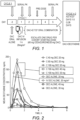
- FIG. 1 provides an overview of the study design.
- each patient received a cohort-defined dose of oral decitabine on day -3, a 1-h intravenous infusion of decitabine 20 mg/m 2 on day 1, and cohort-defined doses of oral decitabine plus cedazuridine on days 2-5.
- the oral decitabine and cedazuridine were given on days 1-5.
- cedazuridine was escalated first and decitabine was escalated once CDA inhibition by cedazuridine approached the maximum effect. Only one drug was escalated per cohort. Fixed doses were given without adjustment for bodyweight or body surface area. Days -3, 1, 2, and 5 for decitabine included a full-day pharmacokinetic analysis. The starting dose was 20 mg for oral decitabine and 40 mg for cedazuridine (a human equivalent dose with approximately 100 times greater safety margin than the no-observed adverse effect level in cynomolgus monkeys). Escalation of each drug was performed if mean decitabine AUC of the oral drug was less than 90% of that for IV decitabine in the cohort and if no dose-limiting toxicity was observed.
- Dose-limiting toxicity was defined as a grade 4 hematologic toxicity or grade 3 lasting more than 14 days and unrelated to the underlying disease.
- the pharmacokinetic profile of decitabine was characterized through analysis of plasma treated with EDTA (edetic acid) by validated liquid chromatography-tandem mass spectrometry, with tetrahydrouridine (Santa Cruz Biotechnology, Dallas, TX) for stabilization and with a linear assay range of 0.5-100 ng/mL for decitabine.
- Serial plasma samples (from before dose administration until 24 h after administration) were collected on days -3, 1, 2, and 5 (also immediately before dose administration on days 3 and 4) during the first cycle.
- pharmacokinetic samples were obtained before dose administration and 0.25 h, 0.5 h, 1.0 h (for IV only 1.083 h), 1.5 h, 2 h, 3 h, 4 h, 6 h, 8 h, and 24 h after the dose.
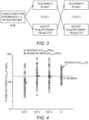
- the two highlighted curves show the exposures from cedazuridine 100 mg and oral decitabine at 30 and 40 mg (Cohort 4 and 5 in Table 3). At these doses, the oral decitabine exposure was between 81% and 128% of the IV decitabine exposure. Based on this, a middle dose of decitabine between 30 and 40 mg, which is 35 mg, was predicted to be the closest match with the IV.
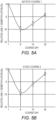
- the ASTX727 Phase 2 study was a randomized cross over design of decitabine 20 mg/m 2 IV daily (for 5 days) vs. oral decitabine/cedazuridine once daily (for 5 days) in Cycle 1 with patients crossing over to the other drug in Cycle 2 (See FIG. 3 ). From Cycle 3 onward, all patients continued on oral decitabine/cedazuridine once daily (for 5 days), each cycle every 28 days, until progression.
- Table 5 Composition of ASTX727 Tablet Component Function Standard Composition (% w/w) Quantity (mg/tab) Cedazuridine Active In-house specification 19.42 100.0 Decitabine Active In-house specification 6.80 35.0 Lactose monohydrate Diluent NF 62.62 322.5 Hypromellose Binder USP 1.94 10.0 Croscarmellose sodium Disintegrant NF 4.85 25.0 Colloidal silicon dioxide Glidant NF 0.97 5.0 Magnesium stearate Lubricant NF 0.49 2.5 Total Core Tablet 97.09 500.0 Opadry II 85F15458 Red Film Coat Supplier 2.91 15.0 Total Coated Tablet 100.00 515.0
- Table 6A Phase 2 PK (Cedazuridine + Decitabine Capsules vs IV DEC) N IV Geo. LSM Oral Geo. LSM Ratio of Geo.
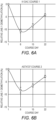
- FIG. 4 provides the individual and geometric mean plasma decitabine AUC 0-24 following oral 100 mg cedazuridine and 35 mg decitabine vs. a single infusion of decitabine 20 mg/m 2 .
- the oral 5-day decitabine exposure was approximately 98% that of IV decitabine confirming that the doses selected for cedazuridine and decitabine in the tablet was a close match to IV decitabine.
- Phase 3 was a randomized cross over design where MDS and CMML patients eligible to receive decitabine were randomized to Sequence A where they received ASTX727 in Cycle 1 then IV decitabine in Cycle 2, or Sequence B with the reverse order. All patients received ASTX727 from Cycle 3 onwards to assess long term efficacy and safety. 118 evaluable patients were needed to show AUC equivalence between oral and IV administrations. See FIG. 7 . The major entry criteria for subjects: 1) candidates for IV decitabine; 2) ECOG PS 0-2; 3) Life expectancy of at least 3 months; 4) adequate organ function; and 5) one prior cycle of HMA is allowed.
- the primary endpoint included total plasma level 5-day decitabine AUC equivalence (Oral/IV 90% CI between 80% and 125%).
- the secondary endpoints were efficacy, including response rate, transfusion independence, duration of response, leukemia-free and overall survival; safety of ASTX727; and Max LINE-1 demethylation.
- FIG. 8 shows the individual patient exposures for both ASTX727 at days 1, 2, and 5 and IV decitabine at days 1 and 5.
- the individual exposures of patients treated with either oral decitabine or IV decitabine largely overlap with each other despite oral decitabine being given at a fixed dose while IV is being given based on body surface area.
- the AUC for decitabine on day 1 is slightly lower than the AUC on days 2-5 and the AUC for IV administration.
- the ratio of AUC for decitabine on day 2 versus day 1 is about 1.5: 1 to about 2:1.
- FIG. 9 shows the pharmacodynamic effect of global DNA demethylation as measured by LINE-1 assay was also almost identical when oral is compared to IV in cycles 1 and 2. The difference in DNA methylation between oral and IV was ⁇ 1% and not significant.
- the oral ASTX727 fixed-dose tablet (cedazuridine/decitabine 100/35 mg) achieved -99% of plasma decitabine 5-day AUC systemic exposures compared with IV decitabine 20 mg/m 2 (primary endpoint). Furthermore, the robust results were confirmed in all AUC sensitivity and secondary analyses. Furthermore, the oral ASTX727 achieved almost identical pharmacodynamic effect to IV decitabine ( ⁇ 1% difference in LINE-1 % DNA demethylation). Additionally, the durable clinical responses, 50% transfusion independence, and median survival of 18.3 months observed in Phase 2 with long term follow up are consistent with IV decitabine. Furthermore, no significant differences in adverse events including GI adverse events between oral ASTX727 and IV decitabine in the randomized first 2 cycles.
Landscapes
- Health & Medical Sciences (AREA)
- Life Sciences & Earth Sciences (AREA)
- Veterinary Medicine (AREA)
- Chemical & Material Sciences (AREA)
- Medicinal Chemistry (AREA)
- Pharmacology & Pharmacy (AREA)
- Animal Behavior & Ethology (AREA)
- General Health & Medical Sciences (AREA)
- Public Health (AREA)
- Epidemiology (AREA)
- Molecular Biology (AREA)
- Chemical Kinetics & Catalysis (AREA)
- General Chemical & Material Sciences (AREA)
- Nuclear Medicine, Radiotherapy & Molecular Imaging (AREA)
- Organic Chemistry (AREA)
- Hematology (AREA)
- Oncology (AREA)
- Bioinformatics & Cheminformatics (AREA)
- Zoology (AREA)
- Nutrition Science (AREA)
- Physiology (AREA)
- Engineering & Computer Science (AREA)
- Pharmaceuticals Containing Other Organic And Inorganic Compounds (AREA)
- Medicinal Preparation (AREA)
Applications Claiming Priority (3)
| Application Number | Priority Date | Filing Date | Title |
|---|---|---|---|
| US202062981304P | 2020-02-25 | 2020-02-25 | |
| PCT/US2021/019310 WO2021173598A1 (en) | 2020-02-25 | 2021-02-24 | Combination decitabine and cedazuridine solid oral dosage forms |
| EP21761883.4A EP4069254B1 (de) | 2020-02-25 | 2021-02-24 | Feste orale darreichungsformen mit decitabin und cedazuridin |
Related Parent Applications (2)
| Application Number | Title | Priority Date | Filing Date |
|---|---|---|---|
| EP21761883.4A Division-Into EP4069254B1 (de) | 2020-02-25 | 2021-02-24 | Feste orale darreichungsformen mit decitabin und cedazuridin |
| EP21761883.4A Division EP4069254B1 (de) | 2020-02-25 | 2021-02-24 | Feste orale darreichungsformen mit decitabin und cedazuridin |
Publications (2)
| Publication Number | Publication Date |
|---|---|
| EP4470622A2 true EP4470622A2 (de) | 2024-12-04 |
| EP4470622A3 EP4470622A3 (de) | 2025-02-19 |
Family
ID=77491956
Family Applications (2)
| Application Number | Title | Priority Date | Filing Date |
|---|---|---|---|
| EP21761883.4A Active EP4069254B1 (de) | 2020-02-25 | 2021-02-24 | Feste orale darreichungsformen mit decitabin und cedazuridin |
| EP24192979.3A Pending EP4470622A3 (de) | 2020-02-25 | 2021-02-24 | Feste orale darreichungsformen von decitabin und cedazuridin in kombination |
Family Applications Before (1)
| Application Number | Title | Priority Date | Filing Date |
|---|---|---|---|
| EP21761883.4A Active EP4069254B1 (de) | 2020-02-25 | 2021-02-24 | Feste orale darreichungsformen mit decitabin und cedazuridin |
Country Status (22)
| Country | Link |
|---|---|
| US (3) | US12239653B2 (de) |
| EP (2) | EP4069254B1 (de) |
| JP (1) | JP7742841B2 (de) |
| KR (1) | KR20220145815A (de) |
| CN (1) | CN115151261A (de) |
| AU (1) | AU2021227888A1 (de) |
| BR (1) | BR112022013264A2 (de) |
| DK (1) | DK4069254T3 (de) |
| ES (1) | ES2992301T3 (de) |
| FI (1) | FI4069254T3 (de) |
| HR (1) | HRP20241355T1 (de) |
| HU (1) | HUE069002T2 (de) |
| IL (1) | IL294288A (de) |
| LT (1) | LT4069254T (de) |
| MX (1) | MX2022010214A (de) |
| PH (1) | PH12022552250A1 (de) |
| PL (1) | PL4069254T3 (de) |
| PT (1) | PT4069254T (de) |
| SA (1) | SA522433445B1 (de) |
| SI (1) | SI4069254T1 (de) |
| TW (1) | TW202140039A (de) |
| WO (1) | WO2021173598A1 (de) |
Families Citing this family (5)
| Publication number | Priority date | Publication date | Assignee | Title |
|---|---|---|---|---|
| BR112022013264A2 (pt) | 2020-02-25 | 2022-11-16 | Otsuka Pharma Co Ltd | Combinação de formas de dosagem oral sólida de decitabina e cedazuridina |
| KR20240064656A (ko) * | 2021-09-21 | 2024-05-13 | 오츠카 세이야쿠 가부시키가이샤 | 데시타빈 및 세다주리딘에 의한 골수이형성 증후군의 치료 방법 |
| CA3266274A1 (en) * | 2022-08-31 | 2024-03-07 | Taiho Pharmaceutical Co., Ltd. | Combination therapies for the treatment of T-cell lymphoma with tolinapant, cedazuridine, and decitabin |
| KR20250100273A (ko) * | 2023-12-26 | 2025-07-03 | 서울대학교병원 | 난소암 예방 또는 치료를 위한 데시타빈 및 벨로테칸의 병용 요법 |
| CN119818525A (zh) * | 2025-01-17 | 2025-04-15 | 沈阳信达泰康医药科技有限公司 | 一种阿糖胞苷氨基酸酯组合物及其应用 |
Citations (3)
| Publication number | Priority date | Publication date | Assignee | Title |
|---|---|---|---|---|
| US20060014949A1 (en) | 2004-07-13 | 2006-01-19 | Supergen Inc. | Compositions and formulations of decitabine polymorphs and methods of use thereof |
| US8268800B2 (en) | 2007-10-16 | 2012-09-18 | Eisai Inc. | Certain compounds, compositions and methods |
| US9834576B2 (en) | 2013-10-29 | 2017-12-05 | Otsuka Pharmaceutical Co., Ltd. | Synthetic route to 2′-deoxy-2′,2′-difluorotetrahydrouridines |
Family Cites Families (6)
| Publication number | Priority date | Publication date | Assignee | Title |
|---|---|---|---|---|
| US20060069060A1 (en) | 2004-09-27 | 2006-03-30 | Sanjeev Redkar | Salts of decitabine |
| TW200848041A (en) * | 2007-03-30 | 2008-12-16 | Otsuka Pharma Co Ltd | A medicament for treating schizophrenia comprising cilostazol |
| WO2010037001A2 (en) * | 2008-09-26 | 2010-04-01 | Immune Disease Institute, Inc. | Selective oxidation of 5-methylcytosine by tet-family proteins |
| RU2018135973A (ru) * | 2013-05-24 | 2018-11-14 | Рисерч Инститьют Фор Ньютришн Энд Эджинг Ко., Лтд. | Фармацевтическая комбинация, содержащая метроформин и дигидрокверценин, и ее применение для лечения рака |
| US11224610B2 (en) | 2018-09-19 | 2022-01-18 | Otsuka Pharmaceutical Co., Ltd. | Low dose combination CDA substrate drug/cedazuridine with extended administration |
| BR112022013264A2 (pt) | 2020-02-25 | 2022-11-16 | Otsuka Pharma Co Ltd | Combinação de formas de dosagem oral sólida de decitabina e cedazuridina |
-
2021
- 2021-02-24 BR BR112022013264A patent/BR112022013264A2/pt unknown
- 2021-02-24 LT LTEPPCT/US2021/019310T patent/LT4069254T/lt unknown
- 2021-02-24 JP JP2022550210A patent/JP7742841B2/ja active Active
- 2021-02-24 MX MX2022010214A patent/MX2022010214A/es unknown
- 2021-02-24 TW TW110106543A patent/TW202140039A/zh unknown
- 2021-02-24 CN CN202180012701.5A patent/CN115151261A/zh active Pending
- 2021-02-24 ES ES21761883T patent/ES2992301T3/es active Active
- 2021-02-24 EP EP21761883.4A patent/EP4069254B1/de active Active
- 2021-02-24 PL PL21761883.4T patent/PL4069254T3/pl unknown
- 2021-02-24 FI FIEP21761883.4T patent/FI4069254T3/fi active
- 2021-02-24 HR HRP20241355TT patent/HRP20241355T1/hr unknown
- 2021-02-24 KR KR1020227025363A patent/KR20220145815A/ko active Pending
- 2021-02-24 HU HUE21761883A patent/HUE069002T2/hu unknown
- 2021-02-24 EP EP24192979.3A patent/EP4470622A3/de active Pending
- 2021-02-24 WO PCT/US2021/019310 patent/WO2021173598A1/en not_active Ceased
- 2021-02-24 DK DK21761883.4T patent/DK4069254T3/da active
- 2021-02-24 SI SI202130200T patent/SI4069254T1/sl unknown
- 2021-02-24 AU AU2021227888A patent/AU2021227888A1/en active Pending
- 2021-02-24 PH PH1/2022/552250A patent/PH12022552250A1/en unknown
- 2021-02-24 US US17/904,536 patent/US12239653B2/en active Active
- 2021-02-24 IL IL294288A patent/IL294288A/en unknown
- 2021-02-24 PT PT217618834T patent/PT4069254T/pt unknown
-
2022
- 2022-07-28 SA SA522433445A patent/SA522433445B1/ar unknown
-
2023
- 2023-04-28 US US18/309,440 patent/US11963971B2/en active Active
-
2025
- 2025-02-10 US US19/049,426 patent/US20250177427A1/en active Pending
Patent Citations (3)
| Publication number | Priority date | Publication date | Assignee | Title |
|---|---|---|---|---|
| US20060014949A1 (en) | 2004-07-13 | 2006-01-19 | Supergen Inc. | Compositions and formulations of decitabine polymorphs and methods of use thereof |
| US8268800B2 (en) | 2007-10-16 | 2012-09-18 | Eisai Inc. | Certain compounds, compositions and methods |
| US9834576B2 (en) | 2013-10-29 | 2017-12-05 | Otsuka Pharmaceutical Co., Ltd. | Synthetic route to 2′-deoxy-2′,2′-difluorotetrahydrouridines |
Non-Patent Citations (11)
| Title |
|---|
| "Handbook of Pharmaceutical Excipients", 1986, AMERICAN PHARMACEUTICAL ASSOCIATION |
| "Remington's Pharmaceutical Sciences", 2000, MACK PUBLISHING CO. |
| ANTIVIRAL CHEM. CHEMOTHER., vol. 1, 1990, pages 255 - 262 |
| ARCH. BIOCHEM. BIOPHYS., vol. 290, 1991, pages 285 - 292 |
| BIOCHEM. J., vol. 104, 1967, pages 7 |
| BIOCHEM. PHARMACOL., vol. 45, 1993, pages 1857 - 1861 |
| CANCER CHEMOTHER. PHARMACOL., vol. 42, 1998, pages 373 - 378 |
| CANCER RES., vol. 49, 1989, pages 3015 - 3019 |
| LEUK. RES., vol. 14, 1990, pages 751 - 754 |
| METHODS ENZYMOL., vol. 51, 1978, pages 401 - 407 |
| YANG, ASKOSHI KDCHOI SW ET AL.: "DNA methylation changes after 5-aza-2-deoxycytidine therapy in patients with leukemia", CAN. RES., vol. 66, 2006, pages 5495 - 503, XP093076551, DOI: 10.1158/0008-5472.CAN-05-2385 |
Also Published As
| Publication number | Publication date |
|---|---|
| US12239653B2 (en) | 2025-03-04 |
| HUE069002T2 (hu) | 2025-02-28 |
| DK4069254T3 (da) | 2024-10-07 |
| CN115151261A (zh) | 2022-10-04 |
| ES2992301T3 (es) | 2024-12-11 |
| US11963971B2 (en) | 2024-04-23 |
| MX2022010214A (es) | 2022-10-07 |
| TW202140039A (zh) | 2021-11-01 |
| FI4069254T3 (fi) | 2024-10-07 |
| EP4069254B1 (de) | 2024-09-11 |
| EP4069254A1 (de) | 2022-10-12 |
| HRP20241355T1 (hr) | 2024-12-20 |
| CA3163122A1 (en) | 2021-09-02 |
| US20250177427A1 (en) | 2025-06-05 |
| BR112022013264A2 (pt) | 2022-11-16 |
| EP4069254A4 (de) | 2023-11-29 |
| AU2021227888A1 (en) | 2022-07-14 |
| US20230089147A1 (en) | 2023-03-23 |
| US20230263818A1 (en) | 2023-08-24 |
| EP4470622A3 (de) | 2025-02-19 |
| PT4069254T (pt) | 2024-10-10 |
| IL294288A (en) | 2022-08-01 |
| JP7742841B2 (ja) | 2025-09-22 |
| JP2023518162A (ja) | 2023-04-28 |
| PL4069254T3 (pl) | 2024-11-18 |
| KR20220145815A (ko) | 2022-10-31 |
| SI4069254T1 (sl) | 2024-11-29 |
| SA522433445B1 (ar) | 2024-08-14 |
| WO2021173598A1 (en) | 2021-09-02 |
| LT4069254T (lt) | 2024-10-10 |
| PH12022552250A1 (en) | 2023-11-13 |
Similar Documents
| Publication | Publication Date | Title |
|---|---|---|
| EP4069254B1 (de) | Feste orale darreichungsformen mit decitabin und cedazuridin | |
| US11660310B2 (en) | Low dose combination CDA substrate drug/cedazuridine with extended administration | |
| EP1113802B1 (de) | Antivirale kombinationen von lamivudin und adefovir | |
| CA3163122C (en) | Combination decitabine and cedazuridine solid oral dosage forms | |
| HK40121574A (en) | Combination decitabine and cedazuridine solid oral dosage forms | |
| ES2644237T3 (es) | Tratamiento de neurotoxicidad asociada a combinaciones de 5-FU o sus profármacos e inhibidores de DPD | |
| HK40082478B (en) | Solid oral dosage forms comprising decitabine and cedazuridine | |
| HK40082478A (en) | Solid oral dosage forms comprising decitabine and cedazuridine | |
| US6432966B2 (en) | Antiviral combinations | |
| EA045934B1 (ru) | Комбинированные твердые пероральные лекарственные формы децитабина и цедазуридина | |
| HK40085734A (en) | Solid oral dosage forms of combination of decitabine and cedazuridine | |
| WO2022093930A1 (en) | Pharmaceutical compositions and methods of using the same for treating cancer | |
| WO2024229073A1 (en) | Response-based dosing for treating cancer with a hypomethylating agent and cedazuridine | |
| AU2024265282A1 (en) | Response-based dosing for treating cancer with a hypomethylating agent and cedazuridine | |
| WO2000018383A2 (en) | Antiviral combinations comprising (s)-2- ethyl-7- fluoro-3- oxo-3,4- dihydro-2h- quinoxaline-1- carboxylic acid isopropyl ester | |
| WO2000016754A2 (en) | Antiviral combinations comprising lamivudine and lobucavir | |
| HK1035670B (en) | Antiviral combinations of lamivudine and adefovir | |
| MXPA01002673A (en) | Antiviral combinations |
Legal Events
| Date | Code | Title | Description |
|---|---|---|---|
| PUAI | Public reference made under article 153(3) epc to a published international application that has entered the european phase |
Free format text: ORIGINAL CODE: 0009012 |
|
| STAA | Information on the status of an ep patent application or granted ep patent |
Free format text: STATUS: THE APPLICATION HAS BEEN PUBLISHED |
|
| AC | Divisional application: reference to earlier application |
Ref document number: 4069254 Country of ref document: EP Kind code of ref document: P |
|
| AK | Designated contracting states |
Kind code of ref document: A2 Designated state(s): AL AT BE BG CH CY CZ DE DK EE ES FI FR GB GR HR HU IE IS IT LI LT LU LV MC MK MT NL NO PL PT RO RS SE SI SK SM TR |
|
| REG | Reference to a national code |
Ref country code: DE Ref legal event code: R079 Free format text: PREVIOUS MAIN CLASS: A61P0035020000 Ipc: A61K0031706000 |
|
| PUAL | Search report despatched |
Free format text: ORIGINAL CODE: 0009013 |
|
| AK | Designated contracting states |
Kind code of ref document: A3 Designated state(s): AL AT BE BG CH CY CZ DE DK EE ES FI FR GB GR HR HU IE IS IT LI LT LU LV MC MK MT NL NO PL PT RO RS SE SI SK SM TR |
|
| RIC1 | Information provided on ipc code assigned before grant |
Ipc: A61P 35/02 20060101ALI20250110BHEP Ipc: A61P 35/00 20060101ALI20250110BHEP Ipc: A61K 31/7068 20060101ALI20250110BHEP Ipc: A61K 31/706 20060101AFI20250110BHEP |
|
| REG | Reference to a national code |
Ref country code: HK Ref legal event code: DE Ref document number: 40121574 Country of ref document: HK |
|
| STAA | Information on the status of an ep patent application or granted ep patent |
Free format text: STATUS: REQUEST FOR EXAMINATION WAS MADE |
|
| 17P | Request for examination filed |
Effective date: 20251029 |
|
| RAX | Requested extension states of the european patent have changed |
Extension state: BA Payment date: 20251029 Extension state: ME Payment date: 20251029 |