EP4469906B1 - System und verfahren zur erzeugung eines digitalen beweises - Google Patents
System und verfahren zur erzeugung eines digitalen beweises Download PDFInfo
- Publication number
- EP4469906B1 EP4469906B1 EP23702686.9A EP23702686A EP4469906B1 EP 4469906 B1 EP4469906 B1 EP 4469906B1 EP 23702686 A EP23702686 A EP 23702686A EP 4469906 B1 EP4469906 B1 EP 4469906B1
- Authority
- EP
- European Patent Office
- Prior art keywords
- module
- verification
- sub
- query
- dataset
- Prior art date
- Legal status (The legal status is an assumption and is not a legal conclusion. Google has not performed a legal analysis and makes no representation as to the accuracy of the status listed.)
- Active
Links
Images




Classifications
-
- G—PHYSICS
- G06—COMPUTING OR CALCULATING; COUNTING
- G06F—ELECTRIC DIGITAL DATA PROCESSING
- G06F16/00—Information retrieval; Database structures therefor; File system structures therefor
- G06F16/20—Information retrieval; Database structures therefor; File system structures therefor of structured data, e.g. relational data
- G06F16/23—Updating
- G06F16/2365—Ensuring data consistency and integrity
-
- H—ELECTRICITY
- H04—ELECTRIC COMMUNICATION TECHNIQUE
- H04L—TRANSMISSION OF DIGITAL INFORMATION, e.g. TELEGRAPHIC COMMUNICATION
- H04L9/00—Cryptographic mechanisms or cryptographic arrangements for secret or secure communications; Network security protocols
- H04L9/32—Cryptographic mechanisms or cryptographic arrangements for secret or secure communications; Network security protocols including means for verifying the identity or authority of a user of the system or for message authentication, e.g. authorization, entity authentication, data integrity or data verification, non-repudiation, key authentication or verification of credentials
- H04L9/3218—Cryptographic mechanisms or cryptographic arrangements for secret or secure communications; Network security protocols including means for verifying the identity or authority of a user of the system or for message authentication, e.g. authorization, entity authentication, data integrity or data verification, non-repudiation, key authentication or verification of credentials using proof of knowledge, e.g. Fiat-Shamir, GQ, Schnorr, ornon-interactive zero-knowledge proofs
- H04L9/3221—Cryptographic mechanisms or cryptographic arrangements for secret or secure communications; Network security protocols including means for verifying the identity or authority of a user of the system or for message authentication, e.g. authorization, entity authentication, data integrity or data verification, non-repudiation, key authentication or verification of credentials using proof of knowledge, e.g. Fiat-Shamir, GQ, Schnorr, ornon-interactive zero-knowledge proofs interactive zero-knowledge proofs
-
- G—PHYSICS
- G06—COMPUTING OR CALCULATING; COUNTING
- G06F—ELECTRIC DIGITAL DATA PROCESSING
- G06F16/00—Information retrieval; Database structures therefor; File system structures therefor
- G06F16/20—Information retrieval; Database structures therefor; File system structures therefor of structured data, e.g. relational data
- G06F16/22—Indexing; Data structures therefor; Storage structures
- G06F16/2228—Indexing structures
- G06F16/2255—Hash tables
-
- G—PHYSICS
- G06—COMPUTING OR CALCULATING; COUNTING
- G06F—ELECTRIC DIGITAL DATA PROCESSING
- G06F16/00—Information retrieval; Database structures therefor; File system structures therefor
- G06F16/20—Information retrieval; Database structures therefor; File system structures therefor of structured data, e.g. relational data
- G06F16/24—Querying
- G06F16/245—Query processing
- G06F16/2452—Query translation
- G06F16/24524—Access plan code generation and invalidation; Reuse of access plans
-
- G—PHYSICS
- G06—COMPUTING OR CALCULATING; COUNTING
- G06F—ELECTRIC DIGITAL DATA PROCESSING
- G06F16/00—Information retrieval; Database structures therefor; File system structures therefor
- G06F16/20—Information retrieval; Database structures therefor; File system structures therefor of structured data, e.g. relational data
- G06F16/24—Querying
- G06F16/245—Query processing
- G06F16/2455—Query execution
-
- H—ELECTRICITY
- H04—ELECTRIC COMMUNICATION TECHNIQUE
- H04L—TRANSMISSION OF DIGITAL INFORMATION, e.g. TELEGRAPHIC COMMUNICATION
- H04L9/00—Cryptographic mechanisms or cryptographic arrangements for secret or secure communications; Network security protocols
- H04L9/008—Cryptographic mechanisms or cryptographic arrangements for secret or secure communications; Network security protocols involving homomorphic encryption
-
- H—ELECTRICITY
- H04—ELECTRIC COMMUNICATION TECHNIQUE
- H04L—TRANSMISSION OF DIGITAL INFORMATION, e.g. TELEGRAPHIC COMMUNICATION
- H04L9/00—Cryptographic mechanisms or cryptographic arrangements for secret or secure communications; Network security protocols
- H04L9/32—Cryptographic mechanisms or cryptographic arrangements for secret or secure communications; Network security protocols including means for verifying the identity or authority of a user of the system or for message authentication, e.g. authorization, entity authentication, data integrity or data verification, non-repudiation, key authentication or verification of credentials
- H04L9/3236—Cryptographic mechanisms or cryptographic arrangements for secret or secure communications; Network security protocols including means for verifying the identity or authority of a user of the system or for message authentication, e.g. authorization, entity authentication, data integrity or data verification, non-repudiation, key authentication or verification of credentials using cryptographic hash functions
-
- H—ELECTRICITY
- H04—ELECTRIC COMMUNICATION TECHNIQUE
- H04L—TRANSMISSION OF DIGITAL INFORMATION, e.g. TELEGRAPHIC COMMUNICATION
- H04L9/00—Cryptographic mechanisms or cryptographic arrangements for secret or secure communications; Network security protocols
- H04L9/32—Cryptographic mechanisms or cryptographic arrangements for secret or secure communications; Network security protocols including means for verifying the identity or authority of a user of the system or for message authentication, e.g. authorization, entity authentication, data integrity or data verification, non-repudiation, key authentication or verification of credentials
- H04L9/3297—Cryptographic mechanisms or cryptographic arrangements for secret or secure communications; Network security protocols including means for verifying the identity or authority of a user of the system or for message authentication, e.g. authorization, entity authentication, data integrity or data verification, non-repudiation, key authentication or verification of credentials involving time stamps, e.g. generation of time stamps
Definitions
- the present disclosure generally relates to verifiable computing, and more particularly to a system and method for generation of digital proof for operations executed on a dataset without disclosing the entire dataset in verifiable computing.
- Verifiable computing (or verified computation or verified computing) enables a computer to offload the computation of some function, to other perhaps clients, while maintaining verifiable results. The other clients evaluate the function and return the result with a proof that the computation of the function was carried out correctly.
- Verifiable computing applied to database technologies where the execution of a data query on a dataset is complete, correct, and done with real time dataset updates without revealing the underlying dataset, is an active area of research without robust products and technologies. In some scenarios, the clients to whom the computational tasks are outsourced may not be trustworthy. In such cases, the systems employing verifiable computing may find it difficult to confirm an accuracy of the outsourced computational tasks.
- the present disclosure has been made in view of such considerations, and it is an object of the present disclosure to provide systems and methods for verifiable computing with reliability and accuracy.
- a system for generation of a digital proof comprises a data management module configured to manage a dataset having a plurality of data rows.
- each data row of the plurality of data rows includes data entries and each data row possess a hash value and a commitment for the hash value associated with the corresponding data entries.
- the system further comprises a query execution and verification module.
- the query execution and verification module comprises a commitment storage sub-module configured to store a plurality of commitments of the dataset; a query execution sub-module configured to enable access to the dataset; and a result verification sub-module configured to verify an execution of a query.
- the data management module is configured to: receive a query from the query execution sub-module, the query being related to an operation on one or more data rows of the plurality of data rows of the dataset; process the query to generate an execution result associated with the said one or more data rows; transfer the execution result associated with the one or more data rows of the dataset along with the one or more data rows to the query execution sub-module; and transfer a set of commitments associated with the execution result to the commitment storage submodule.
- the query execution sub-module is configured to: transfer the set of commitments, from the commitment storage sub-module, and the said one or more data rows to the result verification sub-module for verification; and receive a verification result from the result verification sub-module, based on the verification.
- the set of commitments includes at least one of a homomorphic hash value of the dataset, a zero-knowledge proof associated with the execution result and a timestamp associated with each commitment of the set of commitments.
- the set of commitments correspond to one of Pedersen commitments or Generalized Pedersen commitments.
- the query execution sub-module is configured to check that a first timestamp of a first commitment value of the set of commitments to be preceding a time of the generation of the execution result and a second timestamp of a second commitment value of the set of commitments to be succeeding the time of the generation of the execution result, to indicate a successful verification.
- the method in case of the query being the analysis of the one or more data rows of the dataset, includes applying a homomorphic hash technique to the one or more data rows included in the execution result and verify that they are included in the set of homomorphic hash values related to the data rows of the dataset included in the execution result; applying an addition operation on the one or more homomorphic hash values related to the data rows of the dataset to generate a first analysis hash value; retrieving a latest commitment value of the set of commitments from the commitment storage sub-module; generating a first validation based on confirming that the first analysis hash value matches a latest analysis hash value included in the retrieved latest commitment value; generating a second validation based on confirming that a zero-knowledge proof associated with the execution result is valid; and generating the verification result indicative of a successful verification, in response to generation of the first validation and the second validation.
- the method includes generating the verification result indicative of a failed verification, in response to at least one of failure of generation of the first validation or failure of generation of the second validation.
- the query corresponds to at least one of update of the one or more data rows of the dataset and an analysis of the one or more data rows of the dataset.
- FIG. 1 shows an exemplary embodiment of the present disclosure as a schematic diagram of a system 100 for generation of a digital proof.
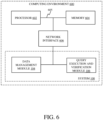
- the system 100 may reside on or may be executed by one or multiple computing devices, which may be connected to a network (e.g., the internet or a local area network), such as a network. Details of the computing device (also referred to as "computing environment") are provided, for example, in FIG. 6 .
- the system 100 includes a data management module 104 and a query execution and verification module 106.
- the data management module 104 includes a data owner sub-module 108 and a database 110.
- the term database is used broadly to include any known or convenient means for storing data, whether centralized or distributed, relational or otherwise.
- the database 110 includes a dataset 110A.
- the database 110 is configured to receive information (such as the dataset 110A) and store, organize, and process the received information in a way that enables users to easily and intuitively go back and find details they are searching for in the database 110.
- the dataset 110A is a private dataset, and thus the data stored of the dataset 110A is accessible and viewable to authorized users.
- the content, including the data entries of the dataset 110A is accessible to the data owner sub-module 108.
- the query execution and verification module 106 includes a commitment storage sub-module 112, a query execution sub-module 114, and a result verification sub-module 116.
- the commitment storage sub-module 112 may be a public data storage that may store every commitment (such as a homomorphic hash value and a zero-knowledge proof) of the dataset 110A.
- the commitment storage sub-module 112 is configured to enforce an order of homomorphic hash values and the zero-knowledge proof of the dataset 110A by storing triple samples of a type 'timestamp, the homomorphic hash value and the zero-knowledge proof.
- the commitment storage sub-module 112 is further configured to provide public access to the homomorphic hash value and the zero-knowledge proof, on a condition that the homomorphic hash value and the zero-knowledge proof do not reveal any information about the dataset 110A.
- the query execution sub-module 114 may include hardware and software components (for example, cloud-based components) that enable access to the dataset 110A and to a query result verification protocol.
- a query satisfies a correctness property if corresponding query result includes only values that satisfy the query itself.
- the query result verification protocol (or a digital proof protocol or a digital verification protocol) enables proving that an execution of queries on the dataset 110A are correct and complete, without disclosing the the dataset 110A itself.
- the query result verification protocol is not trivial, and requires a combined use of homomorphic hashing, zero-knowledge proof, the commitment scheme, and database technologies (such as associated with the database 110A).
- the zero-knowledge proof enables proving possession of knowledge of certain information without revealing the information itself or any additional detail.
- the queries associated with the dataset 110A may be proved by use of the zero-knowledge proof without revealing the dataset 110A.
- the zero-knowledge proof may be utilized by one party to prove to another party that a given statement is true, without revealing any additional information related to the statement.
- the result verification sub-module 116 enables the query execution sub-module 114 to verify the correct result (such as an execution result) of an update or selection query executed by the data owner sub-module 108. Based on a successful verification, the result verification sub-module 116 outputs a verified result that indicates a successful verification. Further, based on a failed verification, the result verification submodule 116 outputs the verified result that indicates a failed verification.
- the data management module 104 is configured to receive a query from the query execution sub-module 114, the query being related to an operation on one or more data rows of the plurality of data rows of the dataset 110A.
- the data management module 104 processes the query to generate an execution result associated with the said one or more data rows. Further, the data management module 104 transfers the execution result associated with the one or more data rows of the dataset 110A along with the one or more data rows to the query execution sub-module 114.
- the data management module 104 transfers a set of commitments associated with the execution result to the commitment storage sub-module 112.
- the query execution sub-module 114 is configured to transfer the set of commitments, from the commitment storage sub-module 112, and the said one or more data rows to the result verification sub-module 116 for verification. Furthermore, the query execution sub-module 114 receives a verification result from the result verification sub-module 116, based on the verification. Details of the verification of the execution of the first query are explained further in the description in reference to FIG. 2 .
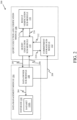
- FIG. 2 illustrates a schematic diagram depicting operation of the system for generation of a digital proof, in accordance with one or more exemplary embodiments of the present disclosure.
- an operational architecture 200 that depicts flow of operations between the components of the data management module 104 and the query execution and verification module 106 shown in FIG. 1 .
- the query execution and verification module 106 includes the commitment storage sub-module 112 configured to store a plurality of commitments of the dataset 110A. Also, the query execution and verification module 106 further includes the query execution sub-module 114 that is configured to enable access to the dataset 110A. The query execution sub-module 114 is further configured to enable access to a query result verification protocol. Further, the query execution and verification module 106 includes the result verification sub-module 116 that is configured to verify an execution of a query.
- the query may be related to one or more data rows of the plurality of data rows of the dataset 110A.
- the data management module 104 is configured to receive a query from the query execution sub-module 114.
- the query is related to an operation on the one or more data rows of the plurality of data rows of the dataset 110A.
- the data owner sub-module 108 receives the query from the query execution sub-module 114.
- the query may be a semantic or an analytical query.
- the query corresponds to at least one of an update of the one or more data rows of the dataset 110A or an analysis of the one or more data rows of the dataset 110A.
- the update of the one or more data rows corresponds to deletion of the one or more data rows of the dataset 110A.
- the analysis of the one or more data rows corresponds to reception of the data entries of the one or more data rows. For example, the reception of the data entries may be required by a new owner (such as the authorized user) of the one or more data rows.
- the data management module 104 is configured to process the query to generate an execution result associated with the said one or more data rows.
- the data owner sub-module 108 to processes the query to generate the execution result associated with the said one or more data rows. It may be understood that the processing of the query may correspond to execution of the query.
- the data owner sub-module 108 enforces access to the database 110A relying on an access policies sub-module (not shown), to execute the queries for generation of the execution result.
- the access policies sub-module enables the data owner sub-module 108 to define rules and policies to who can access the data (such as external users) and the kind of queries the users may execute (such as update queries or analytical queries) on the database 110. Further, the access policies sub-module includes but is not limit to role-based access control (RBAC) and attribute-based access control (ABAC).
- RBAC role-based access control
- ABAC attribute-based access control
- the execution result includes the one or more data rows included in the dataset 110A and the homomorphic hash values of the one or more data rows. Further, the zero-knowledge proof of a number of rows returned by the query may be included in the execution result. In other words, running an aggregate query, that counts the number of rows in the dataset 110A while satisfying a same filter condition of the analytical query, is included in the execution result.
- the execution result includes a set of commitments of the dataset 110A.
- the set of commitments includes at least one of the homomorphic hash value of the dataset 110A, the zero-knowledge proof associated with the execution result and a timestamp associated with each commitment of the set of commitments.
- the result verification sub-module 116 Based on a match of the first update hash value with the second update hash value, the result verification sub-module 116 generates the verification result indicative of a successful verification. In some embodiments, when the first update hash value does not match with the second update hash value, the result verification sub-module 116 generates the verification result indicative of a failed verification.
- the user may require to be allowed to verify the query of the update of the one or more data rows of the dataset 110A.
- the update request is successfully executed without giving access of the dataset 110A to the user.
- the data owner sub-module 108 is required to extend the data of the dataset 110A with the homomorphic hash value of the data itself and the Pedersen commitment value of the homomorphic hash value.
- the data owner sub-module 108 returns the rows of the dataset 110A affected by the update request. Further, the access is provided to the commitment storage sub-module 112, such that one may retrieve the latest commitments published by the data owner sub-module 108.
- the zero-knowledge proof associated with the execution result is validated by selection of the Pedersen commitments. Further, the homomorphic hash technique is applied to obtain a cumulated homomorphic hash value of the Pedersen commitments. Moreover, a signature on the cumulated homomorphic hash value is checked to validate the zero-knowledge proof.
- the result verification sub-module 116 further generates the verification result indicative of the successful verification, in response to generation of the first validation and the second validation.
- the result verification sub-module 116 is configured to generate the verification result indicative of a failed verification, if the first update hash value does not match the second update hash value. For example, an unauthorized execution of the update query may have taken place. In such a case, the verification result indicates the failed verification.
- the user may require to be allowed to verify the query of analysis of the one or more data rows of the dataset 110A.
- the requirement is for the data owner sub-module 108 to maintain the commitment storage sub-module 112 up-to-date after each analytical request.
- the data owner sub-module 108 may be required to return the rows of the dataset 110A while satisfying the query constraints. Further, the data owner sub-module 108 is required to return the homomorphic hash values of all the rows of the dataset 110A, while the commitment storage sub-module 112 provides the latest commitment. This enables the verification that, by executing the homomorphic hash method on the rows returned by the query, the result is part of the dataset 110A.
- the data owner sub-module 108 may be required to return the zero-knowledge proof related to the number of rows returned as result of the query. This enables to verify that the rows returned by the query are all and only those that satisfies the query constraint. Moreover, it is required that the commitment value provided by the commitment storage sub-module 112 includes the zero-knowledge proof. This enables verification that the homomorphic hash value contained in the commitment value is calculated on the totality of the dataset 110A. Thus, the combination of the above-mentioned verifications enables proof of completeness and soundness of the analytical query execution without disclosing the underlying dataset 110A. Details of the exemplary scenario of the cases when the query is the analysis query, are further provided, for example, in FIG. 5 .
- result verification sub-module 116 is configured to generate the verification result indicative of the failed verification, in response to at least one of failure of generation of the first validation or failure of generation of the second validation. For example, an unauthorized execution of the analysis query may have taken place. In such a case, the verification result indicates the failed verification.
- the system 100 of the present disclosure utilizes the homomorphic hash method to cumulate homomorphic hash values related to the set of commitments needed for the zero-knowledge proof protocols, to obtain a final value that may be used to provide authentication of the set of commitments of the values contained in the dataset 110A.
- the utilization of the homomorphic hash method instead of a conventional Merkle tree data structure method enables faster update on the value used for authentication in the event of a change in the underlying dataset 110A.
- the homomorphic hash method enables subtraction or addition of a homomorphic hash value from the cumulated hash value without the need to rebuild the entire data structure, as opposed to the rebuild of the entire data structure required in the Merkle tree data structure method.
- the system 100 of the present disclosure combines the homomorphic hash techniques and the zero-knowledge proof protocols to provide data owners (associated with the data owner sub-module 108) a way to answer any kind of query, posed by a third party that do not have access to the dataset 110A, while providing a proof of completeness and correctness of the answer without disclosing the underlying dataset 110A.
- the system 100 enables data the data owners to publish the set of commitments over the dataset 110A to give a third party, that does not have access to the dataset 110A, a way to check if an expected update on the dataset 110A is correctly performed by the data owner.
- the homomorphic hash value of the dataset 110A computed performing the sum of the homomorphic hash over the values contained in the dataset 110A and that is stored in a separate field, and the corresponding zero-knowledge proof are published so that the data owner commits on a specific dataset.
- the zero-knowledge proof enables users to certify that the homomorphic hash value of the dataset 110A is both correct and complete.
- other entities participating in the digital protocol may require updates on the dataset 110A controlled by the data owner, receiving a proof that the dataset 110A has been correctly updated.
- the proof consists in the two latest commitments over the dataset 110A, that includes the homomorphic hash value together with corresponding zero-knowledge proof to certify correctness and completeness, and the row of the plurality of rows on which the update command may be executed.
- the release of the set of commitments over the dataset 110A enables spotting of malicious behavior of the data owner that may commit on fake dataset updates.
- the storage of the homomorphic hash values in the dataset 110A, together with the generation of the set of commitments thereon (which are stored in a separate field) enables entities participating in the digital protocol to require selection queries on the dataset 110A, receiving both the values related to the query, and the corresponding zero-knowledge proof that the result of the query is correct, valid and complete.
- the combination of the homomorphic hash and the set of commitments, together with the commitment of the whole dataset 110A enables catching of malicious behavior of the data owner that may reply with fake data when asked for execution of queries on its the dataset 110A.
- the system 100 enables replacement of data structure with a homomorphic hash technique which cumulates the homomorphic hash values of the set of commitments, allowing a faster update on this structure in the event of a change in the underlying data set as compared to conventional systems.
- the faster update is the result of subtracting or adding the homomorphic hash values from the cumulated one instead of updating the whole Merkle tree as performed in the conventional systems.
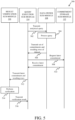
- a process flow 300 depicting operations of a system (such as, the system 100 shown in FIG. 1 ) for an update of a query related to data insertion, in accordance with one or more exemplary embodiments of the present disclosure.
- the process flow 300 implements the data owner sub-module 108, the commitment storage sub-module 112, the query execution sub-module 114 and the result verification sub-module 116.
- the system 100 may be connected to an application where users need to register and provide personal information to use the services provided by the application. For example, a user named "Alice" may need to register (such as a query related to data insertion) to the application.
- the system 100 enables proving that the personal data belonging to the user Alice was successfully added to the system 100 as a result of the registration phase, without disclosing the dataset 110A (such as the data belonging to other users). Further, the system 100 may allow the data owner submodule 108 to not be trusted, since the data owner sub-module 108 must prove that all the operations are performed as requested by the authorized users of the application.
- the query execution sub-module 114 transmits the query to the data owner sub-module 108.
- the query may include a request to add personal data (such as insertion of rows associated with the personal data) belonging to the user Alice in the dataset 110A.
- the data owner sub-module 108 may process or execute the update query related to data insertion.
- the execution may include augmentation of the personal data added to the dataset 110 A with the homomorphic hash value of the query and related commitment (such as the Pedersen commitment).
- the data owner sub-module 108 confirms the addition of the data by pushing (or transmitting) the set of commitments to the commitment storage sub-module 112.
- the set of commitments may include the homomorphic hash value of the current data included in the dataset 110A, the relevant zero-knowledge proof (such as, generated over the Pedersen commitments contained in the dataset 110A), and the cumulated hash value of the Pedersen commitments.
- the cumulated hash value may be generated due to the homomorphic hash method disclosed. Further, the cumulated hash value is appropriately signed to prove the authenticity.
- the set of commitments may further include the associated timestamp.
- the data owner sub-module 108 transmits the inserted rows of the dataset 110A.
- the data owner sub-module 108 transmits the inserted rows associated with the personal data of the user Alice to the query execution submodule 114.
- the query execution sub-module 114 performs a check that the first timestamp associated with the first commitment value Cl comes before the second timestamp associated with the second commitment value C2, upon reception of the first commitment value Cl and the second commitment value C2 from the commitment storage sub-module 112.
- the query execution sub-module 114 is configured to transmit the first commitment value Cl and the second commitment value C2, as well as the inserted rows to the result verification sub-module 116.
- the result verification sub-module 116 Based on a match of the first update hash value with the second update hash value, the result verification sub-module 116 generates the verification result indicative of the successful verification.
- a process flow 400 depicting operation of the system (such as, the system 100) for an update of a query related to data deletion, in accordance with one or more exemplary embodiments of the present disclosure.
- the process flow 400 implements the data owner sub-module 108, the commitment storage submodule 112, the query execution sub-module 114 and the result verification sub-module 116.
- the query execution sub-module 114 transmits the query to the data owner sub-module 108.
- the query may be a request to delete the personal data (such as deletion of rows associated with the personal data) belonging to the user Alice from the dataset 110A.
- the data owner sub-module 108 may process or execute the update query related to data deletion.
- the execution may include deletion of the rows associated with the personal data from the dataset 110A.
- the data owner sub-module 108 confirms the deletion of the data by pushing (or transmitting) the set of commitments to the commitment storage sub-module 112.
- the set of commitments may include the homomorphic hash value of the current data included in the dataset 110A, the relevant zero-knowledge proof (such as generated over the Pedersen commitments contained in the dataset 110A), and the cumulated hash value of the Pedersen commitments.
- the cumulated hash value may be generated due to the homomorphic hash method disclosed.
- the cumulated hash value is appropriately signed to prove the authenticity.
- the set of commitments further include the associated timestamp.
- the data owner sub-module 108 transmits the deleted rows of the dataset 110A.
- the data owner sub-module 108 transmits the deleted rows associated with the personal data of the user Alice to the query execution submodule 114.
- the result verification sub-module 116 performs the verification by application of the homomorphic hash method to the inserted rows to obtain the function H(R). Further, the verification is performed by application of the subtraction operation between the homomorphic hash value contained in the first commitment value Cl and the function H(R), checking that the result is equal to the homomorphic hash value contained in the second commitment value C2. For the update query being a deletion query, the operation corresponds to C1-C2 to obtain the second update hash value. The result verification sub-module 116 further compares the first update hash value and the second update hash value.
- the result verification sub-module 116 transmits the verification result to the query execution sub-module 114.
- the user Alice has a knowledge of the correct (or incorrect) behaviour of the data owner sub-module 108.
- the verification result may be accessed by the user Alice via the user device, such as the smartphone or the laptop in communication with the system 100.
- a process flow 500 depicting operation of the system (such as, the system 100) for an analysis of a query, in accordance with one or more exemplary embodiments of the present disclosure.
- the process flow 500 implements the data owner submodule 108, the commitment storage sub-module 112, the query execution sub-module 114 and the result verification sub-module 116.
- the system 100 is connected to the application where users need to register and provide personal information to use the services. Further, the users need the registration to keep track.
- the users may keep track of their data stored in the dataset 110A and generation of the commitments related to insertion of the data.
- Some external users such as a government entity that may be authorized, may require the execution of analytical queries for controlling purposes. For example, the government entity may require operations executed by all the users in the application in a year 2020. In another example, the government entity may require operations executed by a certain user such as Alice.
- the query execution sub-module 114 transmits the analytical query to the data owner sub-module 108.
- the query may be a request to receive operations associated with the user Alice.
Landscapes
- Engineering & Computer Science (AREA)
- Computer Security & Cryptography (AREA)
- Theoretical Computer Science (AREA)
- Computer Networks & Wireless Communication (AREA)
- Signal Processing (AREA)
- Databases & Information Systems (AREA)
- Data Mining & Analysis (AREA)
- Physics & Mathematics (AREA)
- General Engineering & Computer Science (AREA)
- General Physics & Mathematics (AREA)
- Computational Linguistics (AREA)
- Software Systems (AREA)
- Information Retrieval, Db Structures And Fs Structures Therefor (AREA)
Claims (15)
- Ein System (100) für die Erzeugung digitaler Beweise, das Folgendes beinhaltet:ein Datenverwaltungsmodul (104), das konfiguriert ist, einen Datensatz (110A) mit einer Vielzahl von Datenzeilen zu verwalten, wobei jede Datenzeile der Vielzahl von Datenzeilen Dateneinträge umfasst und jede Datenzeile einen Hash-Wert und eine Verpflichtung für den Hash-Wert besitzt, der entsprechenden Dateneinträgen zugeordnet ist;ein Modul (106) für die Ausführung und Verifizierung von Abfragen, das Folgendes beinhaltet:ein Speicherteilmodul (112) für das Commitment, das dazu konfiguriert ist, eine Vielzahl von Commitments des Datensatzes zu speichern;ein Teilmodul (114) für die Ausführung von Abfragen, das dazu konfiguriert ist, den Zugriff auf den Datensatz zu ermöglichen; undein Teilmodul (116) für die Verifizierung von Ergebnissen, das dazu konfiguriert ist, eine Ausführung einer Abfrage zu verifizieren,wobei das Datenverwaltungsmodul (104) für Folgendes konfiguriert ist:Empfangen einer Abfrage von dem Teilmodul (114) für die Ausführung von Abfragen, wobei sich die Abfrage auf einen Vorgang an einer oder mehreren Datenzeilen der Vielzahl von Datenzeilen des Datensatzes (110A) bezieht;Verarbeiten der Abfrage, um ein Ausführungsergebnis zu erzeugen, das der einen oder den mehreren Datenzeilen zugeordnet ist; dadurch gekennzeichnet, dass das Datenverwaltungsmodul (104) für Folgendes konfiguriert ist:Übertragen des Ausführungsergebnisses, das der einen oder den mehreren Datenzeilen des Datensatzes (110A) zugeordnet ist, zusammen mit der einen oder den mehreren Datenzeilen an das Teilmodul (114) für die Ausführung von Abfragen; undÜbertragen eines Satzes Commitments, die dem Ausführungsergebnis zugeordnet sind, an das Speicherteilmodul (112) für das Commitment, undwobei in dem Modul (106) für die Ausführung und Verifizierung von Abfragen das Teilmodul (114) für die Ausführung von Abfragen für Folgendes konfiguriert ist:Übertragen des Satzes Commitments aus dem Speicherteilmodul (112) für das Commitment und der einen oder der mehreren Datenzeilen an das Teilmodul (116) für die Verifizierung von Ergebnissen für die Verifizierung; undEmpfangen eines Verifizierungsergebnisses von dem Teilmodul (116) für die Verifizierung von Ergebnissen auf Grundlage der Verifizierung.
- System (100) gemäß Anspruch 1, wobei der Satz Commitments wenigstens eines von Folgendem umfasst: einem homomorphen Hash-Wert des Datensatzes, einem dem Ausführungsergebnis zugeordneten Zero-Knowledge-Beweis und einem jedem Commitment des Satzes Commitments zugeordneten Zeitstempel.
- System (100) gemäß Anspruch 1, wobei der Satz Commitments einem von Folgendem entspricht: Pedersen-Commitments oder verallgemeinerte Pedersen-Commitments.
- System (100) gemäß Anspruch 1, wobei das Teilmodul (114) für die Ausführung von Abfragen dazu konfiguriert ist, zu prüfen, ob ein erster Zeitstempel eines ersten Commitment-Wertes des Satzes Commitments vor einem Zeitpunkt einer Erzeugung des Ausführungsergebnisses liegt und ein zweiter Zeitstempel eines zweiten Commitment-Wertes des Satzes Commitments nach dem Zeitpunkt der Erzeugung des Ausführungsergebnisses liegt, um eine erfolgreiche Verifizierung anzuzeigen.
- System (100) gemäß Anspruch 1, wobei die Abfrage wenigstens einem von Folgendem entspricht: Aktualisierung der einen oder der mehreren Datenzeilen des Datensatzes (110A) und einer Analyse der einen oder der mehreren Datenzeilen des Datensatzes (110A).
- System (100) gemäß Anspruch 5, wobei im Falle, dass die Abfrage die Aktualisierung der einen oder der mehreren Datenzeilen des Datensatzes (110A) ist, das Teilmodul (116) für die Verifizierung von Ergebnissen für Folgendes konfiguriert ist:Anwenden eines homomorphen Hash-Verfahrens auf das Ausführungsergebnis, um einen ersten Aktualisierungs-Hash-Wert zu erzeugen;Anwenden eines von Folgendem: einem Additions- oder Subtraktionsvorgang auf einen ersten Commitment-Wert und einen zweiten Commitment-Wert des Satzes Commitments, um einen zweiten Aktualisierungs-Hash-Wert zu erhalten;Vergleichen des ersten Aktualisierungs-Hash-Wertes und des zweiten Aktualisierungs-Hash-Wertes; und Erzeugen des Verifizierungsergebnis, das eine erfolgreiche Verifizierung anzeigt, wenn der erste Aktualisierungs-Hash-Wert mit dem zweiten Aktualisierungs-Hash-Wert übereinstimmt, und optional wobei das Teilmodul (116) für die Verifizierung von Ergebnissen dazu konfiguriert ist, das Verifizierungsergebnis zu erzeugen, das eine fehlgeschlagene Verifizierung anzeigt, wenn der erste Aktualisierungs-Hash-Wert nicht mit dem zweiten Aktualisierungs-Hash-Wert übereinstimmt.
- System (100) gemäß Anspruch 5, wobei im Falle, dass die Abfrage die Analyse der einen oder der mehreren Datenzeilen des Datensatzes (110A) ist, das Teilmodul (116) für die Verifizierung von Ergebnissen für Folgendes konfiguriert ist:Anwenden eines homomorphen Hash-Verfahrens auf die eine oder die mehreren Datenzeilen, die in dem Ausführungsergebnis enthalten sind, und Verifizieren, dass sie in einem Satz homomorpher Hash-Werte enthalten sind, die sich auf die Datenzeilen, die in dem Ausführungsergebnis enthalten sind, des Datensatzes (110A) beziehen;Anwenden eines Additionsvorgangs auf den einen oder die mehreren homomorphen Hash-Werte, die sich auf die Datenzeilen des Datensatzes beziehen, um einen ersten Analyse-Hash-Wert zu erzeugen; Abrufen eines letzten Commitment-Wertes des Satzes Commitments aus dem Speicherteilmodul (112) für das Commitment;Erzeugen einer ersten Validierung auf Grundlage des Bestätigens, dass der erste Analyse-Hash-Wert mit einem letzten Analyse-Hash-Wert übereinstimmt, der in dem abgerufenen letzten Commitment-Wert enthalten ist;Erzeugen einer zweiten Validierung auf Grundlage des Bestätigens, dass ein Zero-Knowledge-Beweis, der dem Ausführungsergebnis zugeordnet ist, gültig ist; undErzeugen des Verifizierungsergebnisses, das eine erfolgreiche Verifizierung anzeigt, als Reaktion auf die Erzeugung der ersten Validierung und der zweiten Validierung, und optional wobei das Teilmodul (116) für die Verifizierung von Ergebnissen dazu konfiguriert ist, das Verifizierungsergebnis zu erzeugen, das eine fehlgeschlagene Verifizierung anzeigt, als Reaktion auf wenigstens eines von Folgendem: Fehlschlagen der Erzeugung der ersten Validierung oder Fehlschlagen der Erzeugung der zweiten Validierung.
- System (100) gemäß Anspruch 1, wobei der Datensatz (110A) ein privater Datensatz ist.
- Ein Verfahren für die Erzeugung digitaler Beweise, das Folgendes beinhaltet:Empfangen einer Abfrage von einem Teilmodul (114) für die Ausführung von Abfragen, wobei sich die Abfrage auf einen Vorgang an einer oder mehreren Datenzeilen einer Vielzahl von Datenzeilen eines Datensatzes (110A) bezieht;Verarbeiten der Abfrage, um ein Ausführungsergebnis zu erzeugen, das der einen oder den mehreren Datenzeilen zugeordnet ist; gekennzeichnet durch Folgendes:Übertragen des Ausführungsergebnisses, das der einen oder den mehreren Datenzeilen des Datensatzes (110A) zugeordnet ist, zusammen mit der einen oder den mehreren Datenzeilen an das Teilmodul (114) für die Ausführung von Abfragen; undÜbertragen eines Satzes Commitments, die dem Ausführungsergebnis zugeordnet sind, an ein Speicherteilmodul (112) für das Commitment, undÜbertragen durch das Teilmodul (114) für die Ausführung von Abfragen des Satzes Commitments aus dem Speicherteilmodul (112) für das Commitment und der einen oder der mehreren Datenzeilen an ein Teilmodul (116) für die Verifizierung von Ergebnissen für die Verifizierung; undEmpfangen eines Verifizierungsergebnisses von dem Teilmodul (116) für die Verifizierung von Ergebnissen auf Grundlage der Verifizierung.
- Verfahren gemäß Anspruch 9, wobei die Abfrage wenigstens einem von Folgendem entspricht: Aktualisierung der einen oder der mehreren Datenzeilen des Datensatzes (110A) und einer Analyse der einen oder der mehreren Datenzeilen des Datensatzes (110A).
- Verfahren gemäß Anspruch 10, wobei im Falle, dass die Abfrage die Aktualisierung der einen oder der mehreren Datenzeilen des Datensatzes (110A) ist, das Verfahren Folgendes beinhaltet:Anwenden eines homomorphen Hash-Verfahrens auf das Ausführungsergebnis, um einen ersten Aktualisierungs-Hash-Wert zu erzeugen;Anwenden eines von Folgendem: einem Additions- oder Subtraktionsvorgang auf einen ersten Commitment-Wert und einen zweiten Commitment-Wert des Satzes Commitments, um einen zweiten Aktualisierungs-Hash-Wert zu erhalten;Vergleichen des ersten Aktualisierungs-Hash-Wertes und des zweiten Aktualisierungs-Hash-Wertes; undErzeugen des Verifizierungsergebnisses, das eine erfolgreiche Verifizierung anzeigt, wenn der erste Aktualisierungs-Hash-Wert mit dem zweiten Aktualisierungs-Hash-Wert übereinstimmt.
- Verfahren gemäß Anspruch 11, wobei das Verfahren das Erzeugen des Verifizierungsergebnisses umfasst, das eine fehlgeschlagene Verifizierung anzeigt, wenn der erste Aktualisierungs-Hash-Wert nicht mit dem zweiten Aktualisierungs-Hash-Wert übereinstimmt.
- Verfahren gemäß Anspruch 10, wobei im Falle, dass die Abfrage die Analyse der einen oder der mehreren Datenzeilen des Datensatzes (110A) ist, das Verfahren Folgendes umfasst:Anwenden eines homomorphen Hash-Verfahrens auf die eine oder die mehreren Datenzeilen, die in dem Ausführungsergebnis enthalten sind, und Verifizieren, dass sie in einem Satz homomorpher Hash-Werte enthalten sind, die sich auf die Datenzeilen, die in dem Ausführungsergebnis enthalten sind, des Datensatzes (110A) beziehen;Anwenden eines Additionsvorgangs auf den einen oder die mehreren homomorphen Hash-Werte, die sich auf die Datenzeilen des Datensatzes (110A) beziehen, um einen ersten Analyse-Hash-Wert zu erzeugen;Abrufen eines letzten Commitment-Wertes des Satzes Commitments aus dem Speicherteilmodul (112) für das Commitment;Erzeugen einer ersten Validierung auf Grundlage des Bestätigens, dass der erste Analyse-Hash-Wert mit einem letzten Analyse-Hash-Wert übereinstimmt, der in dem abgerufenen letzten Commitment-Wert enthalten ist;Erzeugen einer zweiten Validierung auf Grundlage des Bestätigens, dass ein Zero-Knowledge-Beweis, der dem Ausführungsergebnis zugeordnet ist, gültig ist; undErzeugen des Verifizierungsergebnisses, das eine erfolgreiche Verifizierung anzeigt, als Reaktion auf die Erzeugung der ersten Validierung und der zweiten Validierung.
- Verfahren gemäß Anspruch 13, wobei das Verfahren das Erzeugen des Verifizierungsergebnisses, das eine fehlgeschlagene Verifizierung anzeigt, als Reaktion auf wenigstens eines von Folgendem umfasst: Fehlschlagen der Erzeugung der ersten Validierung oder Fehlschlagen der Erzeugung der zweiten Validierung.
- Ein nichttransitorisches computerlesbares Medium, das darauf gespeicherte Software-Anweisungen aufweist, die, wenn sie von einem Prozessor ausgeführt werden, veranlassen, dass der Prozessor für die digitale Beweiserzeugung implementiert wird, indem das Verfahren gemäß einem der Ansprüche 9 bis 14 ausgeführt wird.
Applications Claiming Priority (2)
| Application Number | Priority Date | Filing Date | Title |
|---|---|---|---|
| US17/583,880 US12010237B2 (en) | 2022-01-25 | 2022-01-25 | System and method for digital proof generation |
| PCT/IB2023/050594 WO2023144698A1 (en) | 2022-01-25 | 2023-01-24 | System and method for digital proof generation |
Publications (3)
| Publication Number | Publication Date |
|---|---|
| EP4469906A1 EP4469906A1 (de) | 2024-12-04 |
| EP4469906C0 EP4469906C0 (de) | 2025-07-09 |
| EP4469906B1 true EP4469906B1 (de) | 2025-07-09 |
Family
ID=85150909
Family Applications (1)
| Application Number | Title | Priority Date | Filing Date |
|---|---|---|---|
| EP23702686.9A Active EP4469906B1 (de) | 2022-01-25 | 2023-01-24 | System und verfahren zur erzeugung eines digitalen beweises |
Country Status (3)
| Country | Link |
|---|---|
| US (1) | US12010237B2 (de) |
| EP (1) | EP4469906B1 (de) |
| WO (1) | WO2023144698A1 (de) |
Families Citing this family (1)
| Publication number | Priority date | Publication date | Assignee | Title |
|---|---|---|---|---|
| US11526622B1 (en) * | 2022-07-01 | 2022-12-13 | Space and Time, LLC | Methods for verifying database query results and devices thereof |
Family Cites Families (4)
| Publication number | Priority date | Publication date | Assignee | Title |
|---|---|---|---|---|
| US10277395B2 (en) | 2017-05-19 | 2019-04-30 | International Business Machines Corporation | Cryptographic key-generation with application to data deduplication |
| US10891304B2 (en) * | 2018-07-25 | 2021-01-12 | Commvault Systems, Inc. | Distributed and scalable client-based storage management |
| WO2020082031A1 (en) * | 2018-10-18 | 2020-04-23 | Eian Labs Inc. | Confidential transaction auditing using an authenticated data structure |
| US11431487B2 (en) * | 2020-04-28 | 2022-08-30 | Visa International Service Association | Adaptive attack resistant distributed symmetric encryption |
-
2022
- 2022-01-25 US US17/583,880 patent/US12010237B2/en active Active
-
2023
- 2023-01-24 WO PCT/IB2023/050594 patent/WO2023144698A1/en not_active Ceased
- 2023-01-24 EP EP23702686.9A patent/EP4469906B1/de active Active
Also Published As
| Publication number | Publication date |
|---|---|
| US12010237B2 (en) | 2024-06-11 |
| WO2023144698A1 (en) | 2023-08-03 |
| EP4469906C0 (de) | 2025-07-09 |
| EP4469906A1 (de) | 2024-12-04 |
| US20230239153A1 (en) | 2023-07-27 |
Similar Documents
| Publication | Publication Date | Title |
|---|---|---|
| US11444782B2 (en) | Dynamically managing exchanges of data using a distributed ledger and homomorphic commitments | |
| JP7199466B2 (ja) | クロスブロックチェーン認証方法および装置 | |
| US12393664B1 (en) | Document authentication certification with blockchain and distributed ledger techniques | |
| US11741083B2 (en) | Cross-shard private atomic commit | |
| US20250062916A1 (en) | System and method for off-chain cryptographic transaction verification | |
| EP3520047B1 (de) | Unveränderliche, kryptografisch gesicherte ledger-unterstützte datenbanken | |
| KR102002509B1 (ko) | 공증센터를 포함하는 프라이빗 블록체인 시스템 및 이의 공증방법 | |
| JP7759695B2 (ja) | 機密保護プロトコルを使用するサプライ・チェーン用の持続可能なトークン | |
| US11693840B2 (en) | Database storing authenticated skill-based attributes | |
| EP3693886A1 (de) | Optimierungen zur verifizierung von interaktionssystemen und verfahren | |
| WO2020076535A1 (en) | Storing and verification of derivative work data on blockchain with original work data | |
| CN111984725B (zh) | 分布式数据库中的测量数据集的验证 | |
| WO2022058183A1 (en) | Integrating device identity into a permissioning framework of a blockchain | |
| Shivers | Toward a secure and decentralized blockchain-based ride-hailing platform for autonomous vehicles | |
| US11842287B1 (en) | Systems and methods for conducting blockchain actions based on network mappings of self-executing program characteristics | |
| US20240232381A1 (en) | Systems and methods for conducting blockchain actions based on network mappings of self-executing program characteristics | |
| EP3744071B1 (de) | Datenisolierung in verteilten hash-ketten | |
| US20220004647A1 (en) | Blockchain implementation to securely store information off-chain | |
| US12445288B2 (en) | Multi-issuer anonymous credentials for permissioned blockchains | |
| EP4469906B1 (de) | System und verfahren zur erzeugung eines digitalen beweises | |
| EP4559130A1 (de) | System und verfahren zur bereitstellung von zero-knowledge-bereichsbeweisungen | |
| EP4348476B1 (de) | Verfahren und system zur aufhebung des zugriffs auf blockchain-daten | |
| Knezevic | A blockchain approach for negotiating trust in IoT | |
| CN117333175A (zh) | 区块链系统、智能合约同步方法、计算机设备及存储介质 | |
| US12353584B2 (en) | Real-time servicing of verification queries using hybrid data sources |
Legal Events
| Date | Code | Title | Description |
|---|---|---|---|
| STAA | Information on the status of an ep patent application or granted ep patent |
Free format text: STATUS: UNKNOWN |
|
| STAA | Information on the status of an ep patent application or granted ep patent |
Free format text: STATUS: THE INTERNATIONAL PUBLICATION HAS BEEN MADE |
|
| PUAI | Public reference made under article 153(3) epc to a published international application that has entered the european phase |
Free format text: ORIGINAL CODE: 0009012 |
|
| STAA | Information on the status of an ep patent application or granted ep patent |
Free format text: STATUS: REQUEST FOR EXAMINATION WAS MADE |
|
| 17P | Request for examination filed |
Effective date: 20240826 |
|
| AK | Designated contracting states |
Kind code of ref document: A1 Designated state(s): AL AT BE BG CH CY CZ DE DK EE ES FI FR GB GR HR HU IE IS IT LI LT LU LV MC ME MK MT NL NO PL PT RO RS SE SI SK SM TR |
|
| GRAP | Despatch of communication of intention to grant a patent |
Free format text: ORIGINAL CODE: EPIDOSNIGR1 |
|
| STAA | Information on the status of an ep patent application or granted ep patent |
Free format text: STATUS: GRANT OF PATENT IS INTENDED |
|
| INTG | Intention to grant announced |
Effective date: 20250129 |
|
| DAV | Request for validation of the european patent (deleted) | ||
| DAX | Request for extension of the european patent (deleted) | ||
| GRAS | Grant fee paid |
Free format text: ORIGINAL CODE: EPIDOSNIGR3 |
|
| GRAA | (expected) grant |
Free format text: ORIGINAL CODE: 0009210 |
|
| STAA | Information on the status of an ep patent application or granted ep patent |
Free format text: STATUS: THE PATENT HAS BEEN GRANTED |
|
| AK | Designated contracting states |
Kind code of ref document: B1 Designated state(s): AL AT BE BG CH CY CZ DE DK EE ES FI FR GB GR HR HU IE IS IT LI LT LU LV MC ME MK MT NL NO PL PT RO RS SE SI SK SM TR |
|
| REG | Reference to a national code |
Ref country code: GB Ref legal event code: FG4D |
|
| REG | Reference to a national code |
Ref country code: CH Ref legal event code: EP |
|
| REG | Reference to a national code |
Ref country code: IE Ref legal event code: FG4D |
|
| REG | Reference to a national code |
Ref country code: DE Ref legal event code: R096 Ref document number: 602023004722 Country of ref document: DE |
|
| U01 | Request for unitary effect filed |
Effective date: 20250731 |
|
| U07 | Unitary effect registered |
Designated state(s): AT BE BG DE DK EE FI FR IT LT LU LV MT NL PT RO SE SI Effective date: 20250811 |
|
| PG25 | Lapsed in a contracting state [announced via postgrant information from national office to epo] |
Ref country code: IS Free format text: LAPSE BECAUSE OF FAILURE TO SUBMIT A TRANSLATION OF THE DESCRIPTION OR TO PAY THE FEE WITHIN THE PRESCRIBED TIME-LIMIT Effective date: 20251109 |
|
| PG25 | Lapsed in a contracting state [announced via postgrant information from national office to epo] |
Ref country code: NO Free format text: LAPSE BECAUSE OF FAILURE TO SUBMIT A TRANSLATION OF THE DESCRIPTION OR TO PAY THE FEE WITHIN THE PRESCRIBED TIME-LIMIT Effective date: 20251009 |
|
| PG25 | Lapsed in a contracting state [announced via postgrant information from national office to epo] |
Ref country code: HR Free format text: LAPSE BECAUSE OF FAILURE TO SUBMIT A TRANSLATION OF THE DESCRIPTION OR TO PAY THE FEE WITHIN THE PRESCRIBED TIME-LIMIT Effective date: 20250709 |
|
| PG25 | Lapsed in a contracting state [announced via postgrant information from national office to epo] |
Ref country code: GR Free format text: LAPSE BECAUSE OF FAILURE TO SUBMIT A TRANSLATION OF THE DESCRIPTION OR TO PAY THE FEE WITHIN THE PRESCRIBED TIME-LIMIT Effective date: 20251010 |
|
| PG25 | Lapsed in a contracting state [announced via postgrant information from national office to epo] |
Ref country code: PL Free format text: LAPSE BECAUSE OF FAILURE TO SUBMIT A TRANSLATION OF THE DESCRIPTION OR TO PAY THE FEE WITHIN THE PRESCRIBED TIME-LIMIT Effective date: 20250709 |
|
| PG25 | Lapsed in a contracting state [announced via postgrant information from national office to epo] |
Ref country code: RS Free format text: LAPSE BECAUSE OF FAILURE TO SUBMIT A TRANSLATION OF THE DESCRIPTION OR TO PAY THE FEE WITHIN THE PRESCRIBED TIME-LIMIT Effective date: 20251009 |
|
| PG25 | Lapsed in a contracting state [announced via postgrant information from national office to epo] |
Ref country code: ES Free format text: LAPSE BECAUSE OF FAILURE TO SUBMIT A TRANSLATION OF THE DESCRIPTION OR TO PAY THE FEE WITHIN THE PRESCRIBED TIME-LIMIT Effective date: 20250709 |