EP4468805A2 - Ressourcenkonfigurationsverfahren und -vorrichtung - Google Patents
Ressourcenkonfigurationsverfahren und -vorrichtung Download PDFInfo
- Publication number
- EP4468805A2 EP4468805A2 EP24188584.7A EP24188584A EP4468805A2 EP 4468805 A2 EP4468805 A2 EP 4468805A2 EP 24188584 A EP24188584 A EP 24188584A EP 4468805 A2 EP4468805 A2 EP 4468805A2
- Authority
- EP
- European Patent Office
- Prior art keywords
- bandwidth
- terminal device
- initial bwp
- network device
- coreset
- Prior art date
- Legal status (The legal status is an assumption and is not a legal conclusion. Google has not performed a legal analysis and makes no representation as to the accuracy of the status listed.)
- Pending
Links
Images
Classifications
-
- H—ELECTRICITY
- H04—ELECTRIC COMMUNICATION TECHNIQUE
- H04W—WIRELESS COMMUNICATION NETWORKS
- H04W72/00—Local resource management
- H04W72/50—Allocation or scheduling criteria for wireless resources
- H04W72/53—Allocation or scheduling criteria for wireless resources based on regulatory allocation policies
-
- H—ELECTRICITY
- H04—ELECTRIC COMMUNICATION TECHNIQUE
- H04W—WIRELESS COMMUNICATION NETWORKS
- H04W52/00—Power management, e.g. Transmission Power Control [TPC] or power classes
- H04W52/02—Power saving arrangements
- H04W52/0209—Power saving arrangements in terminal devices
- H04W52/0212—Power saving arrangements in terminal devices managed by the network, e.g. network or access point is leader and terminal is follower
- H04W52/0216—Power saving arrangements in terminal devices managed by the network, e.g. network or access point is leader and terminal is follower using a pre-established activity schedule, e.g. traffic indication frame
-
- H—ELECTRICITY
- H04—ELECTRIC COMMUNICATION TECHNIQUE
- H04W—WIRELESS COMMUNICATION NETWORKS
- H04W52/00—Power management, e.g. Transmission Power Control [TPC] or power classes
- H04W52/02—Power saving arrangements
- H04W52/0209—Power saving arrangements in terminal devices
- H04W52/0212—Power saving arrangements in terminal devices managed by the network, e.g. network or access point is leader and terminal is follower
-
- H—ELECTRICITY
- H04—ELECTRIC COMMUNICATION TECHNIQUE
- H04L—TRANSMISSION OF DIGITAL INFORMATION, e.g. TELEGRAPHIC COMMUNICATION
- H04L5/00—Arrangements affording multiple use of the transmission path
- H04L5/0001—Arrangements for dividing the transmission path
- H04L5/0003—Two-dimensional division
- H04L5/0005—Time-frequency
- H04L5/0007—Time-frequency the frequencies being orthogonal, e.g. OFDM(A) or DMT
- H04L5/001—Time-frequency the frequencies being orthogonal, e.g. OFDM(A) or DMT the frequencies being arranged in component carriers
-
- H—ELECTRICITY
- H04—ELECTRIC COMMUNICATION TECHNIQUE
- H04L—TRANSMISSION OF DIGITAL INFORMATION, e.g. TELEGRAPHIC COMMUNICATION
- H04L5/00—Arrangements affording multiple use of the transmission path
- H04L5/003—Arrangements for allocating sub-channels of the transmission path
- H04L5/0053—Allocation of signalling, i.e. of overhead other than pilot signals
-
- H—ELECTRICITY
- H04—ELECTRIC COMMUNICATION TECHNIQUE
- H04W—WIRELESS COMMUNICATION NETWORKS
- H04W28/00—Network traffic management; Network resource management
- H04W28/16—Central resource management; Negotiation of resources or communication parameters, e.g. negotiating bandwidth or QoS [Quality of Service]
- H04W28/18—Negotiating wireless communication parameters
- H04W28/20—Negotiating bandwidth
-
- H—ELECTRICITY
- H04—ELECTRIC COMMUNICATION TECHNIQUE
- H04W—WIRELESS COMMUNICATION NETWORKS
- H04W52/00—Power management, e.g. Transmission Power Control [TPC] or power classes
- H04W52/02—Power saving arrangements
- H04W52/0209—Power saving arrangements in terminal devices
- H04W52/0212—Power saving arrangements in terminal devices managed by the network, e.g. network or access point is leader and terminal is follower
- H04W52/0219—Power saving arrangements in terminal devices managed by the network, e.g. network or access point is leader and terminal is follower where the power saving management affects multiple terminals
-
- H—ELECTRICITY
- H04—ELECTRIC COMMUNICATION TECHNIQUE
- H04W—WIRELESS COMMUNICATION NETWORKS
- H04W52/00—Power management, e.g. Transmission Power Control [TPC] or power classes
- H04W52/04—Transmission power control [TPC]
- H04W52/30—Transmission power control [TPC] using constraints in the total amount of available transmission power
- H04W52/32—TPC of broadcast or control channels
- H04W52/325—Power control of control or pilot channels
-
- H—ELECTRICITY
- H04—ELECTRIC COMMUNICATION TECHNIQUE
- H04W—WIRELESS COMMUNICATION NETWORKS
- H04W72/00—Local resource management
- H04W72/04—Wireless resource allocation
- H04W72/044—Wireless resource allocation based on the type of the allocated resource
- H04W72/0453—Resources in frequency domain, e.g. a carrier in FDMA
-
- H—ELECTRICITY
- H04—ELECTRIC COMMUNICATION TECHNIQUE
- H04W—WIRELESS COMMUNICATION NETWORKS
- H04W72/00—Local resource management
- H04W72/12—Wireless traffic scheduling
- H04W72/1263—Mapping of traffic onto schedule, e.g. scheduled allocation or multiplexing of flows
-
- H—ELECTRICITY
- H04—ELECTRIC COMMUNICATION TECHNIQUE
- H04W—WIRELESS COMMUNICATION NETWORKS
- H04W72/00—Local resource management
- H04W72/20—Control channels or signalling for resource management
- H04W72/23—Control channels or signalling for resource management in the downlink direction of a wireless link, i.e. towards a terminal
-
- H—ELECTRICITY
- H04—ELECTRIC COMMUNICATION TECHNIQUE
- H04W—WIRELESS COMMUNICATION NETWORKS
- H04W76/00—Connection management
- H04W76/20—Manipulation of established connections
- H04W76/27—Transitions between radio resource control [RRC] states
-
- Y—GENERAL TAGGING OF NEW TECHNOLOGICAL DEVELOPMENTS; GENERAL TAGGING OF CROSS-SECTIONAL TECHNOLOGIES SPANNING OVER SEVERAL SECTIONS OF THE IPC; TECHNICAL SUBJECTS COVERED BY FORMER USPC CROSS-REFERENCE ART COLLECTIONS [XRACs] AND DIGESTS
- Y02—TECHNOLOGIES OR APPLICATIONS FOR MITIGATION OR ADAPTATION AGAINST CLIMATE CHANGE
- Y02D—CLIMATE CHANGE MITIGATION TECHNOLOGIES IN INFORMATION AND COMMUNICATION TECHNOLOGIES [ICT], I.E. INFORMATION AND COMMUNICATION TECHNOLOGIES AIMING AT THE REDUCTION OF THEIR OWN ENERGY USE
- Y02D30/00—Reducing energy consumption in communication networks
- Y02D30/70—Reducing energy consumption in communication networks in wireless communication networks
Definitions
- This application relates to the field of communications technologies, and in particular, to a communication method, an apparatus, and a communications system.
- a system bandwidth in a new radio access technology is relatively large, and is at least 100 MHz. Due to different capabilities of terminal devices, maximum bandwidths supported by the terminal devices are different. Some terminal devices may support only 80 MHz, 40 MHz, 20 MHz, or even a smaller bandwidth. Therefore, usually, a concept of bandwidth part (bandwidth part, BWP) is introduced into NR to adapt to a requirement for a maximum bandwidth supported by a terminal device.
- bandwidth part bandwidth part
- the BWP is configured for the terminal device, to adapt to the maximum bandwidth that can be supported by the terminal device.
- a plurality of BWPs with different bandwidths may be configured for the terminal device.
- a base station broadcasts a synchronization signal block (synchronous signal block, SSB) to facilitate camping of the terminal device.
- the SSB carries a primary synchronization signal (primary synchronization signal, PSS), a secondary synchronization signal (secondary synchronization signal, SSS), and a physical broadcast channel (physical broadcast channel, PBCH).
- the PBCH carries a master information block (master information block, MIB).
- the MIB includes configuration information (such as a bandwidth and a frequency domain position of a control resource set (control resource set, CORESET) 0) of the CORESET 0, and configuration information (such as time domain configuration information of a physical downlink control channel (physical downlink control channel, PDCCH)) of the PDCCH of a system information block type 1 (system information block type 1) SIB 1.
- the terminal device determines that a bandwidth of an initial BWP (initial BWP) is a bandwidth of the CORESET 0, then receives scheduling information of the SIB 1 on the initial BWP, and receives the SIB 1 on the initial BWP based on the scheduling information of the SIB 1.
- the bandwidth of the CORESET 0 configured in the MIB is relatively small.
- a bandwidth parameter is carried in the SIB 1, and the bandwidth parameter is used to indicate a reset bandwidth of the initial BWP.
- the terminal device After receiving the SIB 1, the terminal device adjusts a bandwidth of the initial BWP based on the bandwidth parameter, so that the terminal device works on the initial BWP of the reset bandwidth.
- This manner of adjusting the bandwidth of the initial BWP has relatively poor flexibility, and performance of the terminal device is possible to be reduced.
- the reset bandwidth of the initial BWP is greater than the bandwidth of the CORESET 0. Therefore, after the terminal device works on the initial BWP of the reset bandwidth, for a terminal device in an idle (idle) state, power consumption of the terminal device is possible to be increased.
- Embodiments of this application provide a communication method, an apparatus, and a communications system, to help improve flexibility of adjusting a bandwidth of an initial BWP by a terminal device, thereby improving performance of the terminal device.
- an embodiment of this application provides a communication method, including: A terminal device receives system information broadcast by a network device, and determines a bandwidth of an initial BWP based on the system information.
- the system information includes first indication information.
- the first indication information indicates that the bandwidth of the initial BWP used for the terminal device is a first bandwidth or a second bandwidth.
- the first bandwidth is indicated by using a first bandwidth parameter carried in the system information.
- the second bandwidth is a bandwidth of a CORESET 0.
- the CORESET 0 is used to schedule the system information.
- the first indication information is added to the system information. Therefore, the network device may indicate, to the terminal device based on the first indication information, whether to adjust the bandwidth of the initial BWP based on the first bandwidth after the terminal device receives the system information. Compared with an adjustment manner in the conventional technology, this helps improve flexibility of determining the bandwidth of the initial BWP by the terminal device.
- the first indication information indicates that the bandwidth of the initial BWP used for the terminal device is the second bandwidth.
- the terminal device determines, based on the system information, that the bandwidth of the initial BWP is the second bandwidth, where the terminal device is in an idle state or an inactive state.
- the foregoing technical solution helps the terminal device skip adjusting the bandwidth of the initial BWP when the terminal device is in the idle state or the inactive state, thereby reducing power consumption of the terminal device.
- the terminal device determines, based on the system information, that the bandwidth of the initial BWP is the first bandwidth, where the terminal device is in a connected state. The foregoing technical solution helps meet a service requirement of the terminal device.
- the terminal device determines, based on the first bandwidth parameter, that the bandwidth of the initial BWP is the first bandwidth.
- the terminal device when sending a random access request to the network device, the terminal device determines, based on the first bandwidth parameter, that the bandwidth of the initial BWP is the first bandwidth.
- the system information further includes a second bandwidth parameter.
- the second bandwidth parameter indicates a bandwidth of a downlink frequency domain resource used to carry a random access response.
- the bandwidth indicated by the second bandwidth parameter is greater than the second bandwidth.
- the foregoing technical solution helps the terminal device determine a moment for adjusting the bandwidth of the initial BWP.
- the terminal device when sending a random access complete message to the network device, the terminal device determines, based on the first bandwidth parameter, that the bandwidth of the initial BWP is the first bandwidth.
- the foregoing technical solution helps simplify a manner in which the terminal device determines the bandwidth of the initial BWP.
- a system message further includes a second bandwidth parameter.
- the second bandwidth parameter indicates a bandwidth of a downlink frequency domain resource used to carry a random access response.
- the bandwidth indicated by the second bandwidth parameter is less than or equal to the second bandwidth.
- a system message further includes second indication information, and the second indication information is used to indicate a first moment.
- the terminal device determines, based on the first bandwidth parameter, that starting from the first moment, the bandwidth of the initial BWP is the first bandwidth.
- the first indication information indicates that the bandwidth of the initial BWP used for the terminal device is the first bandwidth.
- the terminal device determines, based on the system information, that the bandwidth of the initial BWP is the first bandwidth.
- the first bandwidth is greater than the second bandwidth.
- an embodiment of this application provides a communication method, including: The network device generates system information, and broadcasts the system information.
- the system information includes first indication information.
- the first indication information indicates that a bandwidth of an initial BWP used for a terminal device is a first bandwidth or a second bandwidth.
- the first bandwidth is indicated by using a first bandwidth parameter carried in the system information.
- the second bandwidth is a bandwidth of a CORESET 0.
- the CORESET 0 is used to schedule the system information.
- the first indication information is added to the system information. Therefore, the network device may indicate, to the terminal device based on the first indication information, whether to adjust the bandwidth of the initial BWP based on the first bandwidth after the terminal device receives the system information. Compared with an adjustment manner in the conventional technology, this helps improve flexibility of determining the bandwidth of the initial BWP by the terminal device.
- the system information further includes second indication information, and the second indication information is used to indicate a moment for adjusting the bandwidth of the initial BWP used for the terminal device.
- the system information further includes a second bandwidth parameter, and the second bandwidth parameter indicates a bandwidth of a downlink frequency domain resource used to carry a random access response.
- an embodiment of this application provides an apparatus.
- the apparatus includes a receiving module and a processing module.
- the receiving module is configured to receive system information broadcast by a network device.
- the system information includes first indication information.
- the first indication information indicates that a bandwidth of an initial bandwidth part BWP used for a terminal device is a first bandwidth or a second bandwidth.
- the processing module is configured to determine the bandwidth of the initial BWP based on the system information.
- the first bandwidth is indicated by using a first bandwidth parameter carried in the system information.
- the second bandwidth is a bandwidth of a control resource set CORESET 0.
- the CORESET 0 is used to schedule the system information.
- the first indication information indicates that the bandwidth of the initial BWP used for the terminal device is the second bandwidth.
- the processing module is configured to determine, based on the system information, that the bandwidth of the initial BWP is the second bandwidth, where the terminal device is in an idle state or an inactive state.
- the processing module is configured to determine, based on the system information, that the bandwidth of the initial BWP is the first bandwidth, where the terminal device is in a connected state.
- the processing module is further configured to: after determining, based on the system information, that the bandwidth of the initial BWP is the second bandwidth, determine, based on a first bandwidth parameter, that the bandwidth of the initial BWP is the first bandwidth.
- the apparatus further includes a sending module.
- the processing module is configured to: when the sending module sends a random access request to the network device, determine, based on the first bandwidth parameter, that the bandwidth of the initial BWP is the first bandwidth.
- the system information further includes a second bandwidth parameter.
- the second bandwidth parameter indicates a bandwidth of a downlink frequency domain resource used to carry a random access response.
- the bandwidth indicated by the second bandwidth parameter is greater than the second bandwidth.
- the apparatus further includes a sending module.
- the processing module is configured to: when the sending module sends a random access complete message to the network device, determine, based on the first bandwidth parameter, that the bandwidth of the initial BWP is the first bandwidth.
- a system message further includes a second bandwidth parameter.
- the second bandwidth parameter indicates a bandwidth of a downlink frequency domain resource used to carry a random access response.
- the bandwidth indicated by the second bandwidth parameter is less than or equal to the second bandwidth.
- a system message further includes second indication information, and the second indication information is used to indicate a first moment.
- the processing module is configured to determine, based on the first bandwidth parameter, that starting from the first moment, the bandwidth of the initial BWP is the first bandwidth.
- the first indication information indicates that the bandwidth of the initial BWP used for the terminal device is the first bandwidth.
- the processing module is configured to determine, based on the system information, that the bandwidth of the initial BWP is the first bandwidth.
- the first bandwidth is greater than the second bandwidth.
- the processing module corresponds to a processor in a hardware device
- the receiving module corresponds to a receiver in a hardware module
- the sending module corresponds to a transmitter in the hardware module.
- the sending module and the receiving module may be integrated into one functional entity such as a transceiver, or may be two independent functional entities. This is not limited in this embodiment of this application.
- an embodiment of this application further provides a terminal device, including a processor, a transceiver, and a memory.
- the memory is configured to store a program instruction
- the transceiver is configured to receive and send information
- the processor is configured to execute the program instruction stored in the memory, to implement the technical solution according to any one of the first aspect or the possible designs provided in the first aspect of the embodiments of this application.
- an embodiment of this application further provides a computer storage medium, configured to store a program of the technical solution according to any one of the first aspect or the possible designs provided in the first aspect.
- an embodiment of this application provides a chip.
- the chip is coupled to a transceiver in a terminal device, and is configured to perform the technical solution according to any one of the first aspect or the possible designs provided in the first aspect of the embodiments of this application.
- an embodiment of this application provides an apparatus, including a processing module and a sending module.
- the processing module is configured to generate system information.
- the system information includes first indication information.
- the first indication information indicates that a bandwidth of an initial BWP used for a terminal device is a first bandwidth or a second bandwidth.
- the sending module is configured to broadcast the system information.
- the first bandwidth is indicated by using a first bandwidth parameter carried in the system information.
- the second bandwidth is a bandwidth of a CORESET 0.
- the CORESET 0 is used to schedule the system information.
- the system information further includes second indication information, and the second indication information is used to indicate a moment for adjusting the bandwidth of the initial BWP used for the terminal device.
- the system information further includes a second bandwidth parameter, and the second bandwidth parameter indicates a bandwidth of a downlink frequency domain resource used to carry a random access response.
- the processing module corresponds to the processor in the hardware device, and the sending module corresponds to the transmitter in the hardware module.
- an embodiment of this application further provides a network device, including a processor, a transceiver, and a memory.
- the memory is configured to store a program instruction
- the transceiver is configured to receive and send information
- the processor is configured to execute the program instruction stored in the memory, to implement the technical solution according to any one of the second aspect or the possible designs provided in the second aspect of the embodiments of this application.
- an embodiment of this application further provides a computer storage medium, configured to store a program of the technical solution according to any one of the second aspect or the possible designs provided in the second aspect.
- an embodiment of this application provides a chip.
- the chip is coupled to a transceiver in a network device, and is configured to perform the technical solution according to any one of the second aspect or the possible designs provided in the second aspect of the embodiments of this application.
- an embodiment of this application provides a communications system, including the terminal device according to any one of the third aspect or the possible designs provided in the third aspect of the embodiments of this application and the terminal device according to any one of the eighth aspect or the possible designs provided in the eighth aspect of the embodiments of this application.
- system and “network” may be used interchangeably in the embodiments of this application.
- term “and/or” in the embodiments of this application describes only an association relationship for describing associated objects and represents that three relationships may exist.
- a and/or B may represent the following three cases: Only A exists, both A and B exist, and only B exists.
- character "/" in this specification usually indicates an "or" relationship between the associated objects.
- the embodiments of this application may be used in, but not limited to, an NR system, and may further be used in communications systems such as a long term evolution (long term evolution, LTE) system, a long term evolution-advanced (long term evolution-advanced, LTE-A) system, and an enhanced long term evolution-advanced (enhanced long term evolution-advanced, eLTE) system.
- LTE long term evolution
- LTE-A long term evolution-advanced
- eLTE enhanced long term evolution-advanced
- the embodiments of this application may also be used in related cellular systems such as a wireless fidelity (wireless fidelity, WiFi) system, a worldwide interoperability for microwave access (worldwide interoperability for microwave access, wimax) system, and a 3rd generation partnership project (3rd generation partnership project, 3GPP) system.
- wireless fidelity wireless fidelity, WiFi
- WiFi wireless fidelity
- wimax worldwide interoperability for microwave access
- 3rd generation partnership project 3rd generation partnership project
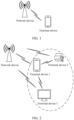
- FIG. 1 is a schematic architectural diagram of a possible communications system to which embodiments of this application are applicable.
- the communications system shown in FIG. 1 includes a network device and a terminal device.
- a quantity of network devices and a quantity of terminal devices in the communications system are not limited in the embodiments of this application.
- the communications system to which the embodiments of this application is applicable may further include other devices such as a core network device, a wireless relay device, and a wireless backhaul device. This is not limited in the embodiments of this application either.
- the network device in the embodiments of this application may integrate all functions into one independent physical device, or may distribute the functions on a plurality of independent physical devices. This is not limited in the embodiments of this application either.
- the terminal device in the embodiments of this application may be connected to the network device wirelessly. It should be further noted that the terminal device in the embodiments of this application may be at a fixed position, or may be mobile.
- FIG. 1 is merely a schematic architectural diagram of the communications system.
- the terminal device may send uplink data to the network device, and the network device may send downlink data to the terminal device.
- the terminal devices may further form a communications system.
- an architecture of the communications system may be shown in FIG. 2 .
- the communications system shown in FIG. 2 includes a network device, a terminal device 1, a terminal device 2, and a terminal device 3.
- the network device may send downlink data to the terminal device 1, the terminal device 2, and the terminal device 3.
- the terminal device 1 may send downlink data to the terminal device 2 and the terminal device 3.
- the embodiments of this application may also be used in a communications system including the terminal device 1, the terminal device 2, and the terminal device 3.
- the terminal device 1 may be equivalent to the network device in the embodiments of this application, and the terminal device 2 and the terminal device 3 are equivalent to the terminal device in the embodiments of this application.
- the network device in the embodiments of this application is an entity configured to transmit or receive a signal on an access network side, and may be configured to connect the terminal device to the communications system.
- the network device may be a NodeB (node B), an evolved NodeB (evolved node B, eNB), a base station in 5G, a base station in a future mobile communications system, an access node in a wireless fidelity (wireless fidelity, WiFi) system, or the like.
- a specific technology and a specific device form that are used by the network device are not limited.
- the terminal device in the embodiments of this application is an entity configured to transmit or receive a signal on a user side, and may also be referred to as a terminal (terminal), user equipment (user equipment, UE), a mobile station (mobile station, MS), a mobile terminal (mobile terminal, MT), or the like.
- the terminal device may be a mobile phone (mobile phone), a tablet computer (pad), a computer having a wireless transceiver function, a virtual reality (virtual reality, VR) terminal device, an augmented reality (augmented reality, AR) terminal device, a wireless terminal in industrial control (industrial control), a wireless terminal in self driving (self driving), a wireless terminal in remote medical surgery (remote medical surgery), a wireless terminal in a smart grid (smart grid), a wireless terminal in transportation safety (transportation safety), a wireless terminal in a smart city (smart city), a wireless terminal in a smart home (smart home), or the like. This is not limited.
- the network device and the terminal device in the embodiments of this application may be deployed on the land, including an indoor device, an outdoor device, a handheld device, or a vehicle-mounted device; may be deployed on the water; or may be deployed on an airplane, a balloon, and a satellite in the air.
- Application scenarios of the network device and the terminal device are not limited.
- communication between the network device and the terminal device and communication between terminal devices may be performed by using a licensed spectrum (licensed spectrum), or may be performed by using an unlicensed spectrum (unlicensed spectrum), or may be performed by using both a licensed spectrum and an unlicensed spectrum.
- a licensed spectrum licensed spectrum
- unlicensed spectrum unlicensed spectrum
- Communication between a radio access network device and the terminal device and communication between the terminal devices may be performed by using a spectrum below 6 gigahertz (gigahertz, GHz), a spectrum above 6 GHz, or both a spectrum below 6 GHz and a spectrum above 6 GHz.
- a spectrum resource used between the network device and the terminal device is not limited in the embodiments of this application.
- a terminal device determines a bandwidth of an initial BWP based on a bandwidth parameter configured by a network device. For example, after receiving a MIB on a PBCH, the terminal device determines that the bandwidth of the initial BWP is a bandwidth of a CORESET 0 included in the MIB. Then, the terminal device receives a SIB 1 on the initial BWP of the bandwidth of the CORESET 0. In the conventional technology, to meet a service requirement, the SIB 1 carries a reset parameter for the bandwidth of the initial BWP, and then the terminal device resets the bandwidth of the initial BWP based on the reset parameter.
- the terminal device after the terminal device receives the SIB 1, if the bandwidth of the initial BWP is reset based on the reset parameter, power consumption of the terminal device may increase. For example, when the terminal device is in an idle state, and a bandwidth of a reset initial BWP is greater than the bandwidth of the CORESET 0, in the foregoing adjustment manner based on the bandwidth of the initial BWP, the power consumption of the terminal device increases. Therefore, for the terminal device, flexibility of the manner in which the bandwidth of the initial BWP is adjusted based only on the bandwidth that is of the initial BWP and that is indicated by the bandwidth parameter is relatively poor. This may cause relatively poor performance of the terminal device.
- an indication indicating a bandwidth of the initial BWP that is to be used by the terminal device is added to system information, so that the terminal device can determine, based on the foregoing indication and with reference to the bandwidth parameter, whether to adjust the bandwidth of the initial BWP.
- the following describes the embodiments of this application in detail by using the communications system architecture shown in FIG. 1 as an example.
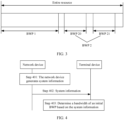
- a communication method in the embodiments of this application includes the following steps.
- Step 401 A network device generates system information.
- the system information includes first indication information.
- the first indication information indicates that a bandwidth of an initial BWP used for a terminal device is a first bandwidth or a second bandwidth.
- the first bandwidth is indicated by using a first bandwidth parameter carried in the system information.
- the second bandwidth is a bandwidth of a CORESET 0.
- the CORESET 0 is used to schedule the system information.
- the network device determines that the bandwidth of the initial BWP used for the terminal device is one of the first bandwidth and the second bandwidth, and notifies the terminal device based on the first indication information.
- the network device may add the bandwidth of the CORESET 0 to a MIB and send the MIB to the terminal device, or may send the bandwidth of the CORESET 0 to the terminal device in another manner. This is not limited.
- the system information may be a SIB 1, or may be other system information or the like. This is not limited.
- the bandwidth that is of the initial BWP used for the terminal device and that is indicated by the first indication information is one of the first bandwidth and the second bandwidth.
- the initial BWP used for the terminal device is an initial BWP used to carry downlink data sent by the network device to the terminal device.
- the first indication information indicates one of the first bandwidth and the second bandwidth does not mean that the first indication information is used to indicate only the first bandwidth or the second bandwidth. Instead, in different scenarios, the network device determines, from the first bandwidth and the second bandwidth, a bandwidth used for the terminal device, and indicates the bandwidth by using the first indication information.
- the first indication information indicates that a bandwidth of an initial BWP used for a terminal device in an idle state/inactive state is a smaller one of the first bandwidth and the second bandwidth. For example, when the first bandwidth is greater than the second bandwidth, the first indication information indicates that the bandwidth of the initial BWP used for the terminal device in the idle state/inactive state is the second bandwidth. For another example, when the first bandwidth is less than or equal to the second bandwidth, the first indication information indicates that the bandwidth of the initial BWP used for the terminal device in the idle state/inactive state is the first bandwidth.
- the first indication information may further indicate that the initial bandwidth used for the terminal device is the first bandwidth.
- whether the bandwidth that is of the initial BWP used for the terminal device and that is indicated by the first indication information is the first bandwidth or the second bandwidth may be determined by the network device based on a preconfigured policy, or may be preconfigured. This is not limited.
- Step 402 The network device broadcasts the system information.
- a frequency domain resource used to carry the system information is the initial BWP, and when the initial BWP is used to carry the system information, the bandwidth of the initial BWP is the second bandwidth.
- Step 403 After receiving the system information, the terminal device determines the bandwidth of the initial BWP based on the system information. Specifically, the terminal device receives the system information on the initial BWP of the second bandwidth. It should be noted that the terminal device determines the bandwidth of the initial BWP based on the system information, to ensure better communication of the terminal device and correspondingly adjust a bandwidth of an initial BWP used in current communication.
- the bandwidth of the initial BWP used by the terminal device in current communication is the bandwidth of the initial BWP carrying the system information.
- step 403 in detail with reference to different states of the terminal device.
- the terminal device determines, based on the system information, that the bandwidth of the initial BWP is the first bandwidth. Therefore, when the terminal device is in the connected state, if the terminal device works on an initial BWP of the second bandwidth when receiving the system information, and determines, based on the system information, that the bandwidth of the initial BWP is the first bandwidth, the terminal device adjusts the bandwidth of the initial BWP from the second bandwidth to the first bandwidth. Specifically, the terminal device adjusts a radio frequency of a transceiver from the second bandwidth to the first bandwidth.
- the terminal device determines, based on the system information, that the bandwidth of the initial BWP is the first bandwidth. It should be noted that, when the terminal device determines, based on the system information, that the bandwidth of the initial BWP is the first bandwidth, if the terminal device works on an initial BWP of the second bandwidth when receiving the system information, to enable the terminal device to normally receive data, the terminal device adjusts a bandwidth of the initial BWP from the second bandwidth to the first bandwidth. Specifically, the terminal device adjusts a radio frequency of a transceiver from the second bandwidth to the first bandwidth.
- the terminal device determines, based on the system information, that the bandwidth of the initial BWP is the second bandwidth. In this case, because an operating bandwidth of a radio frequency of a transceiver of the terminal device is the second bandwidth, the radio frequency of the transceiver does not need to be adjusted.
- the terminal device when the terminal device is in the idle state or the inactive state, and the first indication information indicates that the bandwidth of the initial BWP used for the terminal device is the second bandwidth, after the terminal device determines, based on the system information, that the bandwidth of the initial BWP is the second bandwidth, further, if a state of the terminal device changes, the terminal device determines, based on the first bandwidth parameter, that the bandwidth of the initial BWP is the first bandwidth. That is, after determining, based on the first indication information, that the bandwidth of the initial BWP is the second bandwidth, the terminal device may further adjust the bandwidth of the initial BWP from the second bandwidth to the first bandwidth based on a state change of the terminal device or another possible factor or condition.
- the terminal device determines, based on the system information, that the bandwidth of the initial BWP is the second bandwidth, when the terminal device enters the connected state from the idle state or the inactive state, the terminal device determines, based on the first bandwidth parameter, that the bandwidth of the initial BWP is the first bandwidth. For example, when the terminal device has a service (answering a call, making a call, or the like) requirement, the terminal device may enter the connected state from the idle state or the inactive state.
- a random access process is a process in which the terminal device enters the connected state from the idle state or the inactive state, and specifically includes the following steps.
- Step 1 The terminal device sends a random access request to the network device.
- the random access request may also be referred to as an Msg1, and may specifically be a preamble.
- Step 2 After receiving the random access request, the network device sends a random access response to the terminal device.
- the random access response may also be referred to as an Msg2. It should be noted that the random access response is carried on a PDSCH, and the terminal device needs to detect a PDCCH on a downlink frequency domain resource used to carry the random access response; and then determines a position of the corresponding PDSCH on the downlink frequency domain resource used to carry the random access response, and receives the random access response at the position of the corresponding PDSCH on the downlink frequency domain resource used to carry the random access response.
- the initial BWP of the second bandwidth is used as the downlink frequency domain resource used to carry the random access response.
- the downlink frequency domain resource used to carry the random access response may also be referred to as a random access response control resource set (random access response control resource set, RAR CORESET).
- Step 3 After receiving the random access response sent by the network device, the terminal device sends a connection setup request to the network device.
- the connection setup request may also be referred to as an Msg3.
- Step 4 After receiving the connection setup request, the network device sends a connection configuration message to the terminal device.
- the connection configuration message may also be referred to as an Msg4.
- Step 5 After receiving the connection configuration message, the terminal device performs corresponding configuration based on the connection configuration message. In this case, the terminal device enters the connected state. Then, the UE sends a random access complete message to the network device.
- the random access complete message may also be referred to as an Msg5.
- the random access complete message may also be referred to as a connection setup complete message.
- the random access complete message may also be referred to as a connection resume complete message.
- a moment at which the bandwidth of the initial BWP of the terminal device is adjusted may be pre-agreed on.
- the terminal device determines, based on the first bandwidth parameter, that the bandwidth of the initial BWP is the first bandwidth. Then, the terminal device adjusts the radio frequency of the transceiver from the second bandwidth to the first bandwidth. After the terminal device adjusts the radio frequency of the transceiver from the second bandwidth to the first bandwidth, the terminal device works on an initial BWP of the first bandwidth. For example, the terminal device receives the random access response on the initial BWP of the first bandwidth.
- the terminal device determines, based on the first bandwidth parameter, that the bandwidth of the initial BWP is the first bandwidth.
- the terminal device may send the random access request to the network device at any moment before the terminal device listens to the random access response (random access response, RAR) and after the terminal device determines that the terminal device needs to send the random access request to the network device.
- RAR random access response
- a start moment of listening to the RAR by the terminal device is a start moment of a RAR window
- an end moment of listening to the RAR by the terminal device is an end moment of the RAR window.
- a purpose of adjusting the bandwidth of the initial BWP by the terminal device is to avoid a case in which the terminal device misses listening to the RAR on the initial BWP of the second bandwidth.
- the terminal device completes adjustment of the bandwidth of the initial BWP before the start moment of the RAR window.
- the terminal device determines, based on the first bandwidth parameter at a sending moment T1 of the random access request, that the bandwidth of the initial BWP is the first bandwidth. After determining that the bandwidth of the initial BWP is the first bandwidth, the terminal device adjusts the bandwidth of the initial BWP from the second bandwidth to the first bandwidth at, for example, a moment T2 before the start moment of the RAR window.
- the sending moment T1 of the random access request is before the moment T2.
- T2 may be any moment between T1 and the start moment of the RAR window.
- the terminal device determines, based on the first bandwidth parameter, that the bandwidth of the initial BWP is the first bandwidth. After determining that the bandwidth of the initial BWP is the first bandwidth, the terminal device adjusts the bandwidth of the initial BWP from the second bandwidth to the first bandwidth at, for example, a moment T4 before the start moment of the RAR window.
- T3 is before the moment T4.
- T4 may be any moment between T3 and the start moment of the RAR window.
- the terminal device determines, based on the first bandwidth parameter, that the bandwidth of the initial BWP is the first bandwidth. After determining that the bandwidth of the initial BWP is the first bandwidth, the terminal device adjusts the bandwidth of the initial BWP from the second bandwidth to the first bandwidth at, for example, a moment T6 before the start moment of the RAR window.
- T5 is before the moment T6.
- T6 may be any moment between T5 and the start moment of the RAR window.
- the moment T6 may be the sending moment of the random access request.
- the terminal device determines, based on the first bandwidth parameter, that the bandwidth of the initial BWP is the first bandwidth. It should be noted that when sending the random access complete message to the network device, the terminal device determines, based on the first bandwidth parameter, that the bandwidth of the initial BWP is the first bandwidth.
- the terminal device may send the random access complete message to the network device at a moment after the terminal device determines that the terminal device needs to send the random access complete message to the network device.
- the terminal device may complete adjustment of the bandwidth of the initial BWP after determining that the terminal device needs to send the random access complete message to the network device.
- the network device may send downlink data to the terminal device, and the terminal device adjusts the bandwidth of the initial BWP to better receive the downlink data sent by the network device. Therefore, to adjust the bandwidth of the initial BWP, it is ensured as much as possible that the terminal device completes adjustment of the bandwidth of the initial BWP at the sending moment of the random access complete message or at a moment before the sending moment of the random access complete message.
- the downlink data sent by the network device in response to the random access complete message may be downlink service data, downlink control data, or the like. This is not limited.
- the terminal device determines, based on the first bandwidth parameter, that the bandwidth of the initial BWP is the first bandwidth. After determining that the bandwidth of the initial BWP is, for example, the first bandwidth, the terminal device adjusts the bandwidth of the initial BWP from the second bandwidth to the first bandwidth at, for example, a moment t2 before the sending moment of the random access complete message.
- t1 is before the moment t2.
- t2 may be any moment between t1 and the sending moment of the random access complete message.
- the terminal device determines, based on the first bandwidth parameter at the sending moment t1 of the random access complete message, that the bandwidth of the initial BWP is the first bandwidth. After determining that the bandwidth of the initial BWP is the first bandwidth, the terminal device adjusts the bandwidth of the initial BWP from the second bandwidth to the first bandwidth. Therefore, the terminal device can listen to, on an initial BWP of the first bandwidth, the downlink data sent by the network device.
- the moment at which the bandwidth of the initial BWP of the terminal device is adjusted may be pre-agreed on as another moment, for example, a moment at which the terminal device sends the connection setup request to the network device. This is not limited.
- the system information further includes configuration information of the downlink frequency domain resource used to carry the random access response.
- the system information includes a second bandwidth parameter, and the second bandwidth parameter indicates a bandwidth of the downlink frequency domain resource used to carry the random access response.
- the terminal device determines, based on the bandwidth indicated by the second bandwidth parameter and the second bandwidth, a moment at which the bandwidth of the initial BWP of the terminal device is adjusted.
- the terminal device determines, based on the first bandwidth parameter, that the bandwidth of the initial BWP is the first bandwidth.
- the terminal device determines, based on the first bandwidth parameter, that the bandwidth of the initial BWP is the first bandwidth.
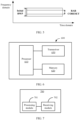
- FIG. 5 is a schematic diagram of an initial BWP and a frequency domain resource used to carry a random access response that exist when the bandwidth indicated by the second bandwidth parameter is less than the second bandwidth.
- system information may further include second indication information, and the second indication information is used to indicate a first moment.
- the terminal device determines, based on the first bandwidth parameter, that starting from the first moment, the bandwidth of the initial BWP is the first bandwidth.
- the first moment is the moment at which the bandwidth of the initial BWP used for the terminal device is adjusted. It should be noted that the moment at which the bandwidth of the initial BWP used for the terminal device is adjusted may also be expressed as a moment at which the bandwidth of the initial BWP used for the terminal device is switched.
- the first moment may be a moment in the random access process.
- the first moment is the moment at which the terminal device sends the random access request to the network device, or the first moment is the moment at which the terminal device sends the random access complete message to the network device.
- the first moment may be another preset moment, for example, a moment at which the terminal device sends uplink data to the network device for the first time after entering the connected state.
- the first moment is not limited in the embodiments of this application.
- Example 1 When the first moment is the moment at which the terminal device sends the random access request to the network device, the terminal device determines, based on the first bandwidth parameter, that starting from the moment at which the terminal device sends the random access request to the network device, the bandwidth of the initial BWP is the first bandwidth. When the bandwidth of the initial BWP of the terminal device in the idle state or the inactive state is the second bandwidth, the terminal device adjusts the radio frequency of the transceiver from the second bandwidth to the first bandwidth. When the bandwidth of the initial BWP of the terminal device in the idle state or the inactive state is the first bandwidth, the terminal device does not adjust the radio frequency of the transceiver.
- Example 2 When the first moment is the moment at which the terminal device sends the random access complete message to the network device, the terminal device determines, based on the first bandwidth parameter, that starting from the moment at which the terminal device sends the random access complete message to the network device, the bandwidth of the initial BWP is the first bandwidth. Whether the terminal device adjusts the radio frequency of the transceiver is related to the bandwidth of the initial BWP when the terminal device is in the idle state or the inactive state. For a specific implementation, refer to Example 1. Details are not described herein again.
- the foregoing specifically describes a manner in which the terminal device adjusts the bandwidth of the initial BWP when the first indication information indicates that the bandwidth of the initial BWP used for the terminal device is the second bandwidth, and the terminal device enters the connected state from the idle state or the inactive state.
- the terminal device may further enter the idle state or the inactive state from the connected state, to reduce the power consumption of the terminal device.
- the bandwidth of the initial BWP may be further re-determined when the terminal device enters the idle state or the inactive state from the connected state.
- the terminal device determines the bandwidth of the initial BWP based on the first indication information.
- the first indication information indicates that the bandwidth of the initial BWP used for the terminal device is the second bandwidth. If the terminal device enters the idle state or the inactive state from the connected state, the terminal device determines, based on the first indication information, that the bandwidth of the initial BWP is the second bandwidth. Then, the terminal device correspondingly adjusts the radio frequency of the transceiver to the second bandwidth.
- the first indication information indicates that the bandwidth of the initial BWP used for the terminal device is the first bandwidth.
- the terminal device determines, based on the first indication information, that the bandwidth of the initial BWP is the first bandwidth. In this case, the terminal device does not need to correspondingly adjust the radio frequency of the transceiver.
- the network device may send a connection release message to the terminal device when the terminal device enters the idle state or the inactive state from the connected state because the terminal device releases a corresponding connection.
- the connection release message includes fourth indication information, and the fourth indication information indicates that the bandwidth of the initial BWP used for the terminal device is a third bandwidth.
- the connection release message may be radio resource control (radio resource control, RRC) signaling, or may be signaling of another type. This is not limited.
- the third bandwidth may be the first bandwidth, or may be the second bandwidth, or may be a bandwidth other than the first bandwidth and the second bandwidth. This is not limited in the embodiments of this application.
- the third bandwidth may be determined by the network device based on a preconfigured policy, or may be a bandwidth preconfigured in the network device. This is not limited in the embodiments of this application either.
- the third bandwidth when the first bandwidth is greater than the second bandwidth, to reduce the power consumption of the terminal device, the third bandwidth may be the second bandwidth, or may be another bandwidth less than the first bandwidth. However, to prevent the terminal device from missing a paging when listening to pagings on an initial BWP of the third bandwidth, when the third bandwidth is the another bandwidth less than the first bandwidth, the third bandwidth is greater than or equal to the second bandwidth.
- the terminal device receives the connection release message sent by the network device, and determines, based on the fourth indication information, that the bandwidth of the initial BWP is the second bandwidth.
- the terminal device after receiving the connection release message sent by the network device, the terminal device enters the idle state or the inactive state from the connected state.
- the bandwidth of the initial BWP is the first bandwidth. Therefore, when the terminal device enters the idle state or the inactive state, the terminal device needs to readjust the radio frequency of the transceiver based on the bandwidth that is of the initial BWP and that is determined based on the fourth indication information. Specifically, the terminal device adjusts the radio frequency of the transceiver from the first bandwidth to the second bandwidth.
- the terminal device when the third bandwidth is the first bandwidth, receives the connection release message sent by the network device, and determines, based on the fourth indication information, that the bandwidth of the initial BWP is the first bandwidth.
- the bandwidth of the initial BWP is the first bandwidth. Therefore, when the terminal device enters the idle state or the inactive state, and the bandwidth that is of the initial BWP and that is determined based on the fourth indication information is the first bandwidth, there is no need to readjust the radio frequency of the transceiver.
- the terminal device receives the connection release message sent by the network device, and determines, based on the fourth indication information, that the bandwidth of the initial BWP is the third bandwidth.
- the terminal device after receiving the connection release message sent by the network device, the terminal device enters the idle state or the inactive state from the connected state.
- the bandwidth of the initial BWP is the first bandwidth. Therefore, when the terminal device enters the idle state or the inactive state, the terminal device needs to readjust the radio frequency of the transceiver based on the bandwidth that is of the initial BWP and that is determined based on the fourth indication information.
- the terminal device adjusts the radio frequency of the transceiver from the first bandwidth to the third bandwidth.
- the terminal device adjusts the radio frequency of the transceiver from the first bandwidth to the third bandwidth may also be expressed as that the terminal device performs switching on the radio frequency of the transceiver from the first bandwidth to the third bandwidth.
- the communication method provided in the embodiments of this application is described from a perspective of the terminal device and the network device as execution bodies.
- the terminal device and the network device may include a hardware structure and/or a software module, and implement the functions in a form of the hardware structure, the software module, or a combination of the hardware structure and the software module. Whether a specific function in the foregoing functions is performed by the hardware structure, the software module, or the combination of the hardware structure and the software module depends on a specific application and a design constraint of the technical solutions.
- FIG. 6 shows an apparatus 600 according to this application.
- the apparatus 600 includes at least one processor 610, a memory 620, and a transceiver 630.
- the processor 610 is coupled to the memory 620 and the transceiver 630.
- Coupling in this embodiment of this application is indirect coupling or communication connection between apparatuses, units, or modules, may be in an electrical form, a mechanical form, or another form, and is used for information exchange between the apparatuses, the units, or the modules.
- the transceiver 630 is configured to receive or send data.
- the transceiver 630 may include a receiver and a transmitter.
- the receiver is configured to receive data
- the transmitter is configured to send data.
- the memory 620 is configured to store a program instruction.
- the processor 610 is configured to invoke the program instruction stored in the memory 620, to perform the communication method shown in FIG. 4 in the embodiments of this application.
- the processor 610 may be a general-purpose central processing unit (Central Processing Unit, CPU), a microprocessor, an application-specific integrated circuit (Application Specific Integrated Circuit, ASIC), or one or more integrated circuits, and is configured to perform a related operation, to implement the technical solutions provided in the embodiments of this application.
- CPU Central Processing Unit
- ASIC Application Specific Integrated Circuit
- the processor 610 invokes the program instruction stored in the memory 620, to implement the steps performed by the terminal device in the communication method shown in FIG. 4 in the embodiments of this application.
- the processor 610 invokes the program instruction stored in the memory 620, to implement the steps performed by the network device in the communication method shown in FIG. 4 in the embodiments of this application.
- the apparatus 600 further includes another component required for implementing normal running.
- the apparatus 600 may further include a hardware component for implementing another additional function.
- the apparatus 600 may include only devices or modules necessary for implementing this embodiment of this application, and does not need to include all the devices shown in FIG. 6 .
- FIG. 7 shows an apparatus 700 according to an embodiment of this application.
- the apparatus 700 includes a processing module 701 and a transceiver module 702.
- the transceiver module 702 is configured to receive or send data, and may be implemented by using a transceiver Specifically, the transceiver module 702 is a module having receiving and sending functions, and may include a receiving module and a sending module.
- the receiving module is configured to receive data
- the sending module is configured to send data.
- the processing module 701 is configured to perform the steps performed by the terminal device in the communication method shown in FIG. 4 .
- the processing module 701 is configured to perform the steps performed by the network device in the communication method shown in FIG. 4 .
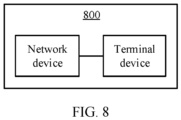
- an embodiment of this application further provides a communications system 800, including the terminal device in the embodiments of this application and the network device in the embodiments of this application.
- a communications system 800 including the terminal device in the embodiments of this application and the network device in the embodiments of this application.
- the embodiments of this application may be implemented through hardware, firmware, or a combination thereof.
- the foregoing functions may be stored in a computer-readable medium or transmitted as one or more instructions or code in a computer-readable medium.
- the computer-readable medium includes a computer storage medium and a communications medium, and the communications medium includes any medium that enables a computer program to be transmitted from one place to another
- the storage medium may be any available medium accessible by a computer.
- the computer-readable medium may include, by way of example and not limitation, a RAM, a ROM, an electrically erasable programmable read-only memory (electrically erasable programmable read only memory, EEPROM), a compact disc read-only memory (compact disc read-Only memory, CD-ROM) or another compact disc storage, a magnetic disk storage medium or another magnetic storage device, or any other medium that can be configured to carry or store desired program code in a form of an instruction or a data structure and that can be accessed by a computer.
- any connection may be appropriately defined as a computer-readable medium.
- the coaxial cable, the optical fiber/cable, the twisted pair, the DSL, or the wireless technologies such as infrared, radio, and microwave are included in a definition of a medium to which the coaxial cable, the optical fiber/cable, the twisted pair, the DSL, or the wireless technologies such as the infrared ray, the radio, and the microwave belong.
- a disk (disk) and a disc (disc) that are used in the embodiments of this application include a compact disc (compact disc, CD), a laser disc, an optical disc, a digital video disc (digital video disc, DVD), a floppy disk, and a Blu-ray disc.
- the disk usually magnetically copies data, and the disc optically copies data in a laser manner.
- the foregoing combination shall also be included in the protection scope of the computer-readable medium. Further embodiments of the present invention are provided in the following. It should be noted that the numbering used in the following section does not necessarily need to comply with the numbering used in the previous sections.
- Embodiment 1 A communication method, wherein the method comprises:
- Embodiment 4 The method according to any one of embodiments 1 to 3, wherein the method comprises:
- Embodiment 5 The method according to any one of embodiments 1 to 4, wherein the determining, by the terminal device based on system information, that the bandwidth of the initial BWP is a first bandwidth comprises: after determining that a random access complete message needs to be sent to the network device, determining, by the terminal device based on the SIB 1, that the bandwidth of the initial BWP is the first bandwidth.
- Embodiment 6 The method according to any one of embodiments 1 to 5, wherein the first bandwidth is greater than the second bandwidth.
- Embodiment 7 A communication method, wherein the method comprises:
- Embodiment 8 The method according to embodiment 7, wherein the CORESET 0 is used to schedule the SIB 1.
- Embodiment 9 The method according to embodiment 7 or 8, wherein the SIB 1 comprises a first bandwidth parameter, and the first bandwidth parameter indicates the first bandwidth.
- Embodiment 10 The method according to any one of embodiments 7 to 9, wherein the first bandwidth is greater than the second bandwidth.
- Embodiment 11 The method according to any one of embodiments 7 to 10, wherein
- Embodiment 12 An apparatus, comprising a receiving module and a processing module, wherein
- Embodiment 13 The apparatus according to embodiment 12, wherein the CORESET 0 is used to schedule the SIB 1.
- Embodiment 14 The apparatus according to embodiment 12 or 13, wherein the SIB 1 comprises a first bandwidth parameter; and the processing module is configured to determine, based on the first bandwidth parameter, that the bandwidth of the initial BWP is the first bandwidth.
- Embodiment 15 The apparatus according to any one of embodiments 12 to 14, wherein the receiving module is configured to receive a connection configuration message Msg4.
- Embodiment 16 The apparatus according to any one of embodiments 12 to 15, wherein after determining that a random access complete message needs to be sent to the network device, the processing module is configured to determine, based on the SIB 1, that the bandwidth of the initial BWP is the first bandwidth.
- Embodiment 17 The apparatus according to any one of embodiments 12 to 16, wherein the first bandwidth is greater than the second bandwidth.
- Embodiment 18 An apparatus, wherein the apparatus comprises a processing module and a sending module, wherein
- Embodiment 20 The apparatus according to embodiment 18 or 19, wherein the SIB 1 comprises a first bandwidth parameter, and the first bandwidth parameter indicates the first bandwidth.
- Embodiment 21 The apparatus according to any one of embodiments 18 to 20, wherein the first bandwidth is greater than the second bandwidth.
- Embodiment 22 The apparatus according to any one of embodiments 18 to 21, wherein
- Embodiment 23 A computer storage medium, wherein the computer storage medium stores a program instruction, and when the program instruction is executed by a computer, the method according to any one of embodiments 1 to 6 is implemented.
- Embodiment 24 A computer storage medium, wherein the computer storage medium stores a program instruction, and when the program instruction is executed by a computer, the method according to any one of embodiments 7 to 11 is implemented.
- Embodiment 25 A chip, coupled to a transceiver in a terminal device, to implement the method according to any one of embodiments 1 to 6.
- Embodiment 26 A chip, coupled to a transceiver in a network device, to implement the method according to any one of embodiments 7 to 11.
- Embodiment 27 An apparatus, comprising a receiver and a processor, wherein
- Embodiment 28 An apparatus, wherein the apparatus comprises a processor and a transmitter, wherein
- Embodiment 29 A communications system, comprising a terminal device and a network device, wherein the terminal device is configured to perform the method according to any one of embodiments 1 to 6, and the network device is configured to perform the method according to any one of embodiments 7 to 11.
Landscapes
- Engineering & Computer Science (AREA)
- Signal Processing (AREA)
- Computer Networks & Wireless Communication (AREA)
- Quality & Reliability (AREA)
- Mobile Radio Communication Systems (AREA)
- Data Exchanges In Wide-Area Networks (AREA)
Applications Claiming Priority (3)
| Application Number | Priority Date | Filing Date | Title |
|---|---|---|---|
| CN201810912067.0A CN110831126A (zh) | 2018-08-10 | 2018-08-10 | 一种通信方法、装置及系统 |
| PCT/CN2019/099816 WO2020030051A1 (zh) | 2018-08-10 | 2019-08-08 | 一种资源配置方法及装置 |
| EP19848160.8A EP3836688B1 (de) | 2018-08-10 | 2019-08-08 | Ressourcenkonfigurationsverfahren und -vorrichtung |
Related Parent Applications (1)
| Application Number | Title | Priority Date | Filing Date |
|---|---|---|---|
| EP19848160.8A Division EP3836688B1 (de) | 2018-08-10 | 2019-08-08 | Ressourcenkonfigurationsverfahren und -vorrichtung |
Publications (2)
| Publication Number | Publication Date |
|---|---|
| EP4468805A2 true EP4468805A2 (de) | 2024-11-27 |
| EP4468805A3 EP4468805A3 (de) | 2025-02-26 |
Family
ID=68531095
Family Applications (2)
| Application Number | Title | Priority Date | Filing Date |
|---|---|---|---|
| EP19848160.8A Active EP3836688B1 (de) | 2018-08-10 | 2019-08-08 | Ressourcenkonfigurationsverfahren und -vorrichtung |
| EP24188584.7A Pending EP4468805A3 (de) | 2018-08-10 | 2019-08-08 | Ressourcenkonfigurationsverfahren und -vorrichtung |
Family Applications Before (1)
| Application Number | Title | Priority Date | Filing Date |
|---|---|---|---|
| EP19848160.8A Active EP3836688B1 (de) | 2018-08-10 | 2019-08-08 | Ressourcenkonfigurationsverfahren und -vorrichtung |
Country Status (5)
| Country | Link |
|---|---|
| US (1) | US12439438B2 (de) |
| EP (2) | EP3836688B1 (de) |
| CN (2) | CN110831126A (de) |
| BR (1) | BR112021002375A2 (de) |
| WO (1) | WO2020030051A1 (de) |
Families Citing this family (20)
| Publication number | Priority date | Publication date | Assignee | Title |
|---|---|---|---|---|
| EP4018743B1 (de) * | 2019-08-21 | 2024-09-04 | Nokia Technologies Oy | Einstellen eines anderen bandbreitenteils früher in einem verbindungsaufbauverfahren zu einem drahtlosen netzwerk durch ein benutzergerät beim übergang von einem ruhemodus oder inaktiven zustand |
| US11240867B2 (en) | 2019-10-25 | 2022-02-01 | Huawei Technologies Co., Ltd. | Method and device for configuring and using a bandwidth part for communication in radio resource control inactive state |
| EP4122249B1 (de) * | 2020-03-23 | 2025-05-07 | Sharp Kabushiki Kaisha | Methode des erstzugriffs in der dratlosen kommunikation und verwandtes gerät |
| US20230171074A1 (en) * | 2020-04-08 | 2023-06-01 | Qualcomm Incorporated | Updating bandwidth part width from default configuration |
| SG10202003546XA (en) * | 2020-04-17 | 2021-11-29 | Panasonic Ip Corp America | Control resource set zero for reduced capability new radio devices |
| CN116634380A (zh) * | 2020-05-28 | 2023-08-22 | 华为技术有限公司 | 多播信息的接收方法、指示信息的收发方法及相关装置 |
| CN115767673A (zh) * | 2020-06-15 | 2023-03-07 | 华为技术有限公司 | 一种信息指示方法及装置 |
| WO2021258262A1 (zh) * | 2020-06-22 | 2021-12-30 | Oppo广东移动通信有限公司 | 无线通信方法、终端设备和网络设备 |
| EP4192150A1 (de) * | 2020-07-27 | 2023-06-07 | Guangdong Oppo Mobile Telecommunications Corp., Ltd. | Kanalübertragungsverfahren, endgerätevorrichtung und netzwerkvorrichtung |
| JP7456551B2 (ja) * | 2020-08-06 | 2024-03-27 | 富士通株式会社 | 信号の送受信方法、装置及び通信システム |
| CN114079926B (zh) * | 2020-08-10 | 2025-05-13 | 大唐移动通信设备有限公司 | 一种资源配置方法及装置 |
| JP7597948B2 (ja) * | 2021-03-17 | 2024-12-10 | 北京小米移動軟件有限公司 | 帯域幅部分設定方法、帯域幅部分設定装置及び記憶媒体 |
| CN115119183A (zh) * | 2021-03-19 | 2022-09-27 | 华为技术有限公司 | 一种通信方法及通信装置 |
| US20240357625A1 (en) * | 2021-06-03 | 2024-10-24 | Beijing Xiaomi Mobile Software Co., Ltd. | Method and apparatus for sidelink bandwidth part configuration |
| WO2023279262A1 (zh) * | 2021-07-06 | 2023-01-12 | 北京小米移动软件有限公司 | 一种消息配置方法、消息配置装置及存储介质 |
| CN115604751A (zh) * | 2021-07-08 | 2023-01-13 | 维沃移动通信有限公司(Cn) | 初始带宽部分确定方法、装置及相关设备 |
| US20240349171A1 (en) * | 2021-08-05 | 2024-10-17 | Beijing Xiaomi Mobile Software Co., Ltd. | Method and apparatus for receiving or sending system message, and non-transitory computer-readable storage medium |
| US20240276476A1 (en) * | 2021-09-22 | 2024-08-15 | Beijing Xiaomi Mobile Software Co., Ltd. | Method for determining initial bandwidth part, and terminal |
| US20250097777A1 (en) * | 2022-01-10 | 2025-03-20 | Beijing Xiaomi Mobile Software Co., Ltd. | Cell access method and apparatus, and device and readable storage medium |
| WO2023141999A1 (en) * | 2022-01-28 | 2023-08-03 | Nec Corporation | Method, device and computer storage medium of communication |
Family Cites Families (12)
| Publication number | Priority date | Publication date | Assignee | Title |
|---|---|---|---|---|
| US9814025B2 (en) * | 2012-11-29 | 2017-11-07 | Lg Electronics Inc. | Method of reporting information on UE state performed by UE in wireless communication system and device for supporting said method |
| US10492157B2 (en) * | 2017-01-04 | 2019-11-26 | Samsung Electronics Co., Ltd. | Method and apparatus for system information delivery in advanced wireless systems |
| EP3566502A4 (de) * | 2017-02-02 | 2020-01-01 | Samsung Electronics Co., Ltd. | Verfahren und vorrichtung zum senden und empfangen von steuerungsinformationen |
| EP3442304B1 (de) * | 2017-08-07 | 2020-09-23 | HTC Corporation | Verfahren zur handhabung von funkverbindungsfehlern und zugehörige kommunikationsvorrichtung |
| EP3454624B1 (de) * | 2017-09-10 | 2022-04-06 | HTC Corporation | Vorrichtung und systeme zur handhabung von bandbreitenteilen und funkressourcen steuerungen |
| CN109245876B (zh) * | 2017-09-27 | 2019-09-03 | 华为技术有限公司 | 一种寻呼的方法、通信定时的方法和装置 |
| KR102645643B1 (ko) * | 2018-05-21 | 2024-03-11 | 삼성전자 주식회사 | 무선 통신 시스템을 위한 기준 신호 송수신 방법 및 장치 |
| US10887864B2 (en) * | 2018-06-05 | 2021-01-05 | Samsung Electronics Co., Ltd. | System and method of determining paging occasions for transmitting and receiving paging |
| CN112400351B (zh) * | 2018-07-05 | 2023-12-19 | 株式会社Ntt都科摩 | 终端以及无线通信方法 |
| US11252733B2 (en) * | 2018-08-06 | 2022-02-15 | Lg Electronics Inc. | Method of receiving signal in CORESET of wireless communication system and apparatus using the method |
| CN110958671B (zh) * | 2018-09-27 | 2021-09-17 | 华为技术有限公司 | 通信方法及装置 |
| PL3668128T3 (pl) * | 2018-12-13 | 2021-10-18 | Kontron Transportation France Sas | Sposób i system do prowadzenia łączności między pierwszą a drugą aplikacją |
-
2018
- 2018-08-10 CN CN201810912067.0A patent/CN110831126A/zh active Pending
- 2018-08-10 CN CN201910729391.3A patent/CN110475294B/zh active Active
-
2019
- 2019-08-08 BR BR112021002375-5A patent/BR112021002375A2/pt unknown
- 2019-08-08 EP EP19848160.8A patent/EP3836688B1/de active Active
- 2019-08-08 WO PCT/CN2019/099816 patent/WO2020030051A1/zh not_active Ceased
- 2019-08-08 EP EP24188584.7A patent/EP4468805A3/de active Pending
-
2021
- 2021-02-09 US US17/171,514 patent/US12439438B2/en active Active
Also Published As
| Publication number | Publication date |
|---|---|
| BR112021002375A2 (pt) | 2021-05-11 |
| CN110831126A (zh) | 2020-02-21 |
| WO2020030051A1 (zh) | 2020-02-13 |
| EP4468805A3 (de) | 2025-02-26 |
| EP3836688A4 (de) | 2021-11-17 |
| CN110475294A (zh) | 2019-11-19 |
| EP3836688C0 (de) | 2024-07-31 |
| CN110475294B (zh) | 2020-08-07 |
| EP3836688A1 (de) | 2021-06-16 |
| US12439438B2 (en) | 2025-10-07 |
| EP3836688B1 (de) | 2024-07-31 |
| US20210168810A1 (en) | 2021-06-03 |
Similar Documents
| Publication | Publication Date | Title |
|---|---|---|
| US12439438B2 (en) | Resource configuration method and apparatus | |
| US11523347B2 (en) | Message transmissions based on power control parameters | |
| US20220070918A1 (en) | Communication Method And Device | |
| US12052650B2 (en) | Method and apparatus for informing user equipment of optimization modes for early data transmission | |
| JP7446476B2 (ja) | ランダムアクセス方法、装置、およびシステム | |
| CN110958671B (zh) | 通信方法及装置 | |
| JP6805326B2 (ja) | システム情報伝送方法、ユーザ端末、ネットワーク側機器、システムおよび記憶媒体 | |
| US12402167B2 (en) | Communication method and system, and device | |
| US10791501B2 (en) | Anchor base station, slave cell and user equipment | |
| US20210258922A1 (en) | Resource configuration method and apparatus | |
| US20210091850A1 (en) | Communications device, infrastructure equipment and method | |
| JP2018536348A (ja) | 要求に応じてシステム情報を一斉同報するための方法およびデバイス | |
| EP4021101A1 (de) | Kommunikationsverfahren und -vorrichtung | |
| EP4369819A1 (de) | Verfahren zur erfassung einer anfänglichen bandbreitenteilkonfiguration, endgerät und netzwerkseitige vorrichtung | |
| EP3651520B1 (de) | Verfahren und vorrichtung zur berechtigungsfreien ressourcenzuweisung | |
| US20230319890A1 (en) | Method, device and computer storage medium of communication | |
| US11317338B2 (en) | Access control method and apparatus | |
| WO2019068224A1 (en) | COMMUNICATION METHOD, APPARATUS AND COMPUTER PROGRAM | |
| EP3928578B1 (de) | Ressourcenkonfiguration für nb-iot | |
| WO2025166768A1 (zh) | 信息接收、发送方法和装置、通信系统和网络设备 | |
| CN120935726A (zh) | 系统消息块的传输方法、装置、设备、介质和程序产品 |
Legal Events
| Date | Code | Title | Description |
|---|---|---|---|
| PUAI | Public reference made under article 153(3) epc to a published international application that has entered the european phase |
Free format text: ORIGINAL CODE: 0009012 |
|
| STAA | Information on the status of an ep patent application or granted ep patent |
Free format text: STATUS: REQUEST FOR EXAMINATION WAS MADE |
|
| 17P | Request for examination filed |
Effective date: 20240718 |
|
| AC | Divisional application: reference to earlier application |
Ref document number: 3836688 Country of ref document: EP Kind code of ref document: P |
|
| AK | Designated contracting states |
Kind code of ref document: A2 Designated state(s): AL AT BE BG CH CY CZ DE DK EE ES FI FR GB GR HR HU IE IS IT LI LT LU LV MC MK MT NL NO PL PT RO RS SE SI SK SM TR |
|
| PUAL | Search report despatched |
Free format text: ORIGINAL CODE: 0009013 |
|
| AK | Designated contracting states |
Kind code of ref document: A3 Designated state(s): AL AT BE BG CH CY CZ DE DK EE ES FI FR GB GR HR HU IE IS IT LI LT LU LV MC MK MT NL NO PL PT RO RS SE SI SK SM TR |
|
| RIC1 | Information provided on ipc code assigned before grant |
Ipc: H04W 72/04 20230101AFI20250120BHEP |