EP4468404A1 - Olivine composite positive-electrode material, preparation method and application thereof, and lithium-ion battery - Google Patents
Olivine composite positive-electrode material, preparation method and application thereof, and lithium-ion battery Download PDFInfo
- Publication number
- EP4468404A1 EP4468404A1 EP22913268.3A EP22913268A EP4468404A1 EP 4468404 A1 EP4468404 A1 EP 4468404A1 EP 22913268 A EP22913268 A EP 22913268A EP 4468404 A1 EP4468404 A1 EP 4468404A1
- Authority
- EP
- European Patent Office
- Prior art keywords
- source
- cathode material
- lithium
- composite cathode
- terms
- Prior art date
- Legal status (The legal status is an assumption and is not a legal conclusion. Google has not performed a legal analysis and makes no representation as to the accuracy of the status listed.)
- Pending
Links
Images

Classifications
-
- H—ELECTRICITY
- H01—ELECTRIC ELEMENTS
- H01M—PROCESSES OR MEANS, e.g. BATTERIES, FOR THE DIRECT CONVERSION OF CHEMICAL ENERGY INTO ELECTRICAL ENERGY
- H01M4/00—Electrodes
- H01M4/02—Electrodes composed of, or comprising, active material
- H01M4/36—Selection of substances as active materials, active masses, active liquids
- H01M4/58—Selection of substances as active materials, active masses, active liquids of inorganic compounds other than oxides or hydroxides, e.g. sulfides, selenides, tellurides, halogenides or LiCoFy; of polyanionic structures, e.g. phosphates, silicates or borates
- H01M4/5825—Oxygenated metallic salts or polyanionic structures, e.g. borates, phosphates, silicates, olivines
-
- C—CHEMISTRY; METALLURGY
- C01—INORGANIC CHEMISTRY
- C01G—COMPOUNDS CONTAINING METALS NOT COVERED BY SUBCLASSES C01D OR C01F
- C01G49/00—Compounds of iron
- C01G49/009—Compounds containing iron, with or without oxygen or hydrogen, and containing two or more other elements
-
- H—ELECTRICITY
- H01—ELECTRIC ELEMENTS
- H01M—PROCESSES OR MEANS, e.g. BATTERIES, FOR THE DIRECT CONVERSION OF CHEMICAL ENERGY INTO ELECTRICAL ENERGY
- H01M10/00—Secondary cells; Manufacture thereof
- H01M10/05—Accumulators with non-aqueous electrolyte
- H01M10/052—Li-accumulators
- H01M10/0525—Rocking-chair batteries, i.e. batteries with lithium insertion or intercalation in both electrodes; Lithium-ion batteries
-
- H—ELECTRICITY
- H01—ELECTRIC ELEMENTS
- H01M—PROCESSES OR MEANS, e.g. BATTERIES, FOR THE DIRECT CONVERSION OF CHEMICAL ENERGY INTO ELECTRICAL ENERGY
- H01M4/00—Electrodes
- H01M4/02—Electrodes composed of, or comprising, active material
- H01M4/04—Processes of manufacture in general
-
- H—ELECTRICITY
- H01—ELECTRIC ELEMENTS
- H01M—PROCESSES OR MEANS, e.g. BATTERIES, FOR THE DIRECT CONVERSION OF CHEMICAL ENERGY INTO ELECTRICAL ENERGY
- H01M4/00—Electrodes
- H01M4/02—Electrodes composed of, or comprising, active material
- H01M4/04—Processes of manufacture in general
- H01M4/0402—Methods of deposition of the material
- H01M4/0404—Methods of deposition of the material by coating on electrode collectors
-
- H—ELECTRICITY
- H01—ELECTRIC ELEMENTS
- H01M—PROCESSES OR MEANS, e.g. BATTERIES, FOR THE DIRECT CONVERSION OF CHEMICAL ENERGY INTO ELECTRICAL ENERGY
- H01M4/00—Electrodes
- H01M4/02—Electrodes composed of, or comprising, active material
- H01M4/13—Electrodes for accumulators with non-aqueous electrolyte, e.g. for lithium-accumulators; Processes of manufacture thereof
- H01M4/136—Electrodes based on inorganic compounds other than oxides or hydroxides, e.g. sulfides, selenides, tellurides, halogenides or LiCoFy
-
- H—ELECTRICITY
- H01—ELECTRIC ELEMENTS
- H01M—PROCESSES OR MEANS, e.g. BATTERIES, FOR THE DIRECT CONVERSION OF CHEMICAL ENERGY INTO ELECTRICAL ENERGY
- H01M4/00—Electrodes
- H01M4/02—Electrodes composed of, or comprising, active material
- H01M4/13—Electrodes for accumulators with non-aqueous electrolyte, e.g. for lithium-accumulators; Processes of manufacture thereof
- H01M4/139—Processes of manufacture
- H01M4/1397—Processes of manufacture of electrodes based on inorganic compounds other than oxides or hydroxides, e.g. sulfides, selenides, tellurides, halogenides or LiCoFy
-
- H—ELECTRICITY
- H01—ELECTRIC ELEMENTS
- H01M—PROCESSES OR MEANS, e.g. BATTERIES, FOR THE DIRECT CONVERSION OF CHEMICAL ENERGY INTO ELECTRICAL ENERGY
- H01M4/00—Electrodes
- H01M4/02—Electrodes composed of, or comprising, active material
- H01M4/36—Selection of substances as active materials, active masses, active liquids
-
- H—ELECTRICITY
- H01—ELECTRIC ELEMENTS
- H01M—PROCESSES OR MEANS, e.g. BATTERIES, FOR THE DIRECT CONVERSION OF CHEMICAL ENERGY INTO ELECTRICAL ENERGY
- H01M4/00—Electrodes
- H01M4/02—Electrodes composed of, or comprising, active material
- H01M4/36—Selection of substances as active materials, active masses, active liquids
- H01M4/362—Composites
-
- H—ELECTRICITY
- H01—ELECTRIC ELEMENTS
- H01M—PROCESSES OR MEANS, e.g. BATTERIES, FOR THE DIRECT CONVERSION OF CHEMICAL ENERGY INTO ELECTRICAL ENERGY
- H01M4/00—Electrodes
- H01M4/02—Electrodes composed of, or comprising, active material
- H01M4/36—Selection of substances as active materials, active masses, active liquids
- H01M4/362—Composites
- H01M4/364—Composites as mixtures
-
- H—ELECTRICITY
- H01—ELECTRIC ELEMENTS
- H01M—PROCESSES OR MEANS, e.g. BATTERIES, FOR THE DIRECT CONVERSION OF CHEMICAL ENERGY INTO ELECTRICAL ENERGY
- H01M4/00—Electrodes
- H01M4/02—Electrodes composed of, or comprising, active material
- H01M4/36—Selection of substances as active materials, active masses, active liquids
- H01M4/58—Selection of substances as active materials, active masses, active liquids of inorganic compounds other than oxides or hydroxides, e.g. sulfides, selenides, tellurides, halogenides or LiCoFy; of polyanionic structures, e.g. phosphates, silicates or borates
-
- H—ELECTRICITY
- H01—ELECTRIC ELEMENTS
- H01M—PROCESSES OR MEANS, e.g. BATTERIES, FOR THE DIRECT CONVERSION OF CHEMICAL ENERGY INTO ELECTRICAL ENERGY
- H01M4/00—Electrodes
- H01M4/02—Electrodes composed of, or comprising, active material
- H01M4/36—Selection of substances as active materials, active masses, active liquids
- H01M4/58—Selection of substances as active materials, active masses, active liquids of inorganic compounds other than oxides or hydroxides, e.g. sulfides, selenides, tellurides, halogenides or LiCoFy; of polyanionic structures, e.g. phosphates, silicates or borates
- H01M4/583—Carbonaceous material, e.g. graphite-intercalation compounds or CFx
-
- C—CHEMISTRY; METALLURGY
- C01—INORGANIC CHEMISTRY
- C01P—INDEXING SCHEME RELATING TO STRUCTURAL AND PHYSICAL ASPECTS OF SOLID INORGANIC COMPOUNDS
- C01P2004/00—Particle morphology
- C01P2004/60—Particles characterised by their size
- C01P2004/61—Micrometer sized, i.e. from 1-100 micrometer
-
- C—CHEMISTRY; METALLURGY
- C01—INORGANIC CHEMISTRY
- C01P—INDEXING SCHEME RELATING TO STRUCTURAL AND PHYSICAL ASPECTS OF SOLID INORGANIC COMPOUNDS
- C01P2006/00—Physical properties of inorganic compounds
- C01P2006/40—Electric properties
-
- H—ELECTRICITY
- H01—ELECTRIC ELEMENTS
- H01M—PROCESSES OR MEANS, e.g. BATTERIES, FOR THE DIRECT CONVERSION OF CHEMICAL ENERGY INTO ELECTRICAL ENERGY
- H01M4/00—Electrodes
- H01M4/02—Electrodes composed of, or comprising, active material
- H01M2004/021—Physical characteristics, e.g. porosity, surface area
-
- H—ELECTRICITY
- H01—ELECTRIC ELEMENTS
- H01M—PROCESSES OR MEANS, e.g. BATTERIES, FOR THE DIRECT CONVERSION OF CHEMICAL ENERGY INTO ELECTRICAL ENERGY
- H01M4/00—Electrodes
- H01M4/02—Electrodes composed of, or comprising, active material
- H01M2004/026—Electrodes composed of, or comprising, active material characterised by the polarity
- H01M2004/028—Positive electrodes
-
- Y—GENERAL TAGGING OF NEW TECHNOLOGICAL DEVELOPMENTS; GENERAL TAGGING OF CROSS-SECTIONAL TECHNOLOGIES SPANNING OVER SEVERAL SECTIONS OF THE IPC; TECHNICAL SUBJECTS COVERED BY FORMER USPC CROSS-REFERENCE ART COLLECTIONS [XRACs] AND DIGESTS
- Y02—TECHNOLOGIES OR APPLICATIONS FOR MITIGATION OR ADAPTATION AGAINST CLIMATE CHANGE
- Y02E—REDUCTION OF GREENHOUSE GAS [GHG] EMISSIONS, RELATED TO ENERGY GENERATION, TRANSMISSION OR DISTRIBUTION
- Y02E60/00—Enabling technologies; Technologies with a potential or indirect contribution to GHG emissions mitigation
- Y02E60/10—Energy storage using batteries
Definitions
- the present disclosure relates to the technical field of new energy and lithium-ion batteries, and more particularly, to an olivine composite cathode material, a preparation method and use thereof, and a lithium-ion battery.
- a cathode material of the lithium-ion batteries is one of the key materials costing the highest and taking a great mass percentage in the lithium-ion batteries.
- the performance of the cathode material greatly determines an energy density, a fast charging performance, and a safety performance of the lithium-ion batteries.
- Lithium iron phosphate as a representative of olivine cathode materials, has become one of the mainstream cathode material systems in the current market of the power and energy storage batteries due to its high energy density, excellent cycle performance and safety performance, and low cost and selling price.
- the cathode material of lithium iron phosphate due to its particularity of chemical composition and structure, may only reach a maximum discharge specific capacity of 170 mAh/g.
- a discharge voltage platform is usually lower than 3.4 V and has a relatively low electronic conductivity, resulting in poor low-temperature performance and rate performance of the cathode material of lithium iron phosphate (LiFePO 4 ).
- a cathode material of lithium manganese ferric phosphate (LiMn x Fe 1- x PO 4 ) can further improve the discharge voltage platform and thus further increase the energy density of the batteries by replacing Fe with Mn on the basis of LiFePO 4 .
- LiMn x Fe 1- x PO 4 has a worse electronic conductivity and a more serious dissolution of Mn may occur, which adversely affect the low-temperature performance, rate performance, cycle performance, and safety performance of the batteries. Therefore, LiMn x Fe 1- x PO 4 has not yet been truly industrialized for application.
- the present disclosure provides an olivine composite cathode material, a preparation method and use thereof, and a lithium-ion battery.
- the olivine composite cathode material includes a matrix and a composite phase T m G n .
- the composite phase is introduced in situ into the cathode material, enabling the composite phase to be uniformly compounded at crystal boundaries and surface of the matrix of the cathode material and to be tightly integrated with the matrix of the cathode material. In this way, the electronic conductivity and surface structure stability of the cathode material during operation can be improved.
- the composite phase T m G n has a metal-like electronic structure and generally exhibits characteristics such as low electrical resistivity ( ⁇ 10 ⁇ cm), strong chemical adsorption capacity, and stable chemical performance. Therefore, the composite cathode material containing the composite phase can have high conductivity and excellent chemical stability, and it can be applied to the fields of supercapacitors, the lithium-ion batteries, lithium-sulfur batteries, etc. In particular, the lithium-ion battery including the composite cathode material has significantly improved rate performance and cycle life.
- the present disclosure provides an olivine composite cathode material.
- the composite cathode material includes a matrix and a composite phase.
- the matrix has a composition represented by formula I: Li x M 1 y Mn z Fe 1- z-u M 2 u (PO 4 ) w (RO a ) b C v (formula I), where: 0.5 ⁇ x ⁇ 1.3, 0 ⁇ y ⁇ 0.5, 0 ⁇ z ⁇ 1, 0 ⁇ u ⁇ 0.01, 0 ⁇ w ⁇ 1, 0 ⁇ v ⁇ 0.05, 0 ⁇ a ⁇ 8, and 0 ⁇ b ⁇ 1; M 1 is selected from at least one element of Mg, Na, and K; M 2 is selected from at least one element of Ga, Sn, V, Y, Mo, Al, Mg, Ce, Ti, Zr, Nb, Si, W, and In; and R is selected from at least one element of Si, Cl, Br,
- the composite phase has a composition represented by formula II: T m G n (formula II), where 0.1 ⁇ m ⁇ 5, and 0.1 ⁇ n ⁇ 5; T is selected from at least one element of Ti, Mo, Co, W, Zn, Cu, B, V, Nb, Ta, Pd, Cr, Ag, Al, Mn, Sn, Mg, Sc, Zr, and Hf; and G is selected from N and/or C.
- the present disclosure provides a preparation method of an olivine composite cathode material.
- the preparation method includes: (1) performing a first mixing on a compound containing element T with a compound containing element G to obtain a first mixture, and performing a first heat treatment on the first mixture in the presence of a protective atmosphere to obtain a compound containing elements T and G; (2) performing a second mixing on a lithium source, a carbon source, a phosphorus source, an optional iron source, a manganese source, an optional R source, an optional M 1 source, an optional M 2 source with a solvent to obtain a second mixture, and grinding the second mixture to obtain a slurry; (3) performing a third mixing on the compound containing elements T and G with the slurry and drying to obtain powder; and (4) performing a second heat treatment on the powder in the presence of a non-oxidizing atmosphere and performing crushing to obtain the olivine composite cathode material.
- the present disclosure provides an olivine composite cathode material prepared by the above-mentioned preparation method.
- the present disclosure provides use of the above-mentioned olivine composite cathode material in at least one of a supercapacitor, a lithium-ion battery, and a lithium-sulfur battery.
- the present disclosure provides a lithium-ion battery, the lithium-ion battery including the above-mentioned olivine composite cathode material.
- the olivine composite cathode material, the preparation method and the use thereof, and the lithium-ion battery according to the present disclosure have the following beneficial effects.
- endpoints nor any of values of ranges disclosed herein are limited to the exact range or value, and those ranges or values should be understood to include values close to those ranges or values.
- one or more new numerical ranges can be obtained by combining the endpoints of each range, combining an endpoint and an individual point value of each range, or combing individual point values, and these numerical ranges should be deemed to be specifically disclosed herein.
- the present disclosure provides an olivine composite cathode material.
- the composite cathode material includes a matrix and a composite phase.
- the matrix has a composition represented by formula I: Li x M 1 y Mn z Fe 1- z-u M 2 u (PO 4 ) w (RO a ) b C v (formula I), where: 0.5 ⁇ x ⁇ 1.3, 0 ⁇ y ⁇ 0.5, 0 ⁇ z ⁇ 1, 0 ⁇ u ⁇ 0.01, 0 ⁇ w ⁇ 1, 0 ⁇ v ⁇ 0.05, 0 ⁇ a ⁇ 8, and 0 ⁇ b ⁇ 1; M 1 is selected from at least one element of Mg, Na, and K; M 2 is selected from at least one element of Ga, Sn, V, Y, Mo, Al, Mg, Ce, Ti, Zr, Nb, Si, W, and In; and R is selected from at least one element of Si, Cl, Br, S, Sb, and Sn.
- the composite phase has a composition represented by formula II: T m G n (formula II), where 0.1 ⁇ m ⁇ 5, and 0.1 ⁇ n ⁇ 5; T is selected from at least one element of Ti, Mo, Co, W, Zn, Cu, B, V, Nb, Ta, Pd, Cr, Ag, Al, Mn, Sn, Mg, Sc, Zr, and Hf; and G is selected from N and/or C.
- the olivine composite cathode material includes the matrix and the composite phase T m G n .
- the composite phase is introduced in situ into the cathode material, enabling the composite phase to be uniformly compounded at the crystal boundaries and surface of the matrix of the cathode material and to be tightly integrated with the matrix of the cathode material. In this way, the cathode material can have enhanced electronic conductivity and surface structure stability during operation.
- the composite phase T m G n such as TiN, MoN, Co 3 N, W 2 N, VN, etc.
- the composite cathode material containing the composite phase can have high conductivity and excellent chemical stability, and it can be applied to the fields of supercapacitors, lithium-ion batteries, lithium-sulfur batteries, etc.
- the lithium-ion battery including the composite cathode material has significantly improved rate performance and cycle life.
- 0.5 ⁇ m ⁇ 3 , 1 ⁇ n ⁇ 5, and T is selected from at least one element of Ti, Mo, Co, W, Zn, Cu, B, V, Nb, Ta, Cr, Ag, Al, Mn, Sn, Mg, Sc, and Zr.
- a content of the composite phase ranges from 0.01 wt% to 10 wt%.
- the content of the composite phase in the composite cathode material is measured using an ICP method.
- the electronic conductivity and structural stability of an interface of the matrix can be improved, allowing the composite cathode material to have low powder resistivity and excellent surface stability.
- a rate performance and a cycle performance of the lithium-ion battery can be significantly improved, and an amount of manganese dissolution can be reduced.
- the content of the composite phase ranges from 0.01 wt% to 1 wt%.
- the composite cathode material has a pellet density ranging from 1.5 g/cm 3 to 3 g/cm 3
- the composite cathode material has a high pellet density.
- more cathode materials can be carried in the same volume, thereby improving capacity and energy density of the battery.
- pellet density of the composite cathode material ranges from 2 g/cm 3 to 3 g/cm 3
- the composite cathode material has an electrical resistivity of ⁇ 2,500 Q/cm.
- the composite cathode material has a low electrical resistivity, indicating that the composite cathode material has a high conductivity.
- the rate performance and cycle life of the lithium-ion battery can be improved.
- the composite cathode material has an electrical resistivity of ⁇ 1,000 Q/cm.
- the composite cathode material 0.5 ⁇ m/n ⁇ 7.
- the composite phase of the composite cathode material when m/n is within the above-mentioned range, it indicates that the composite phase of the composite cathode material is a pure phase. In this way, the advantages of the composite phase such as high conductivity and structural stability can be fully utilized, such that the lithium-ion battery including the composite cathode material can have excellent rate performance and cycle performance.
- a content m of element T is measured by EDS surface scanning
- a content n of element G was measured by EDS surface scanning.
- the composite cathode material has an average particle size D 50 ranging from 0.5 ⁇ m to 20 ⁇ m, and preferably, from 1 ⁇ m to 15 ⁇ m.
- m/n has a standard deviation of ⁇ 1% at any position in an EDS elemental analysis of the composite cathode material.
- the composite phase T m G n is uniformly compounded in the cathode material and exists in the form of element T m G n pure phase.
- the composite phase is partially characterized by a low electrical resistivity and a stable structure, allowing the overall resistivity of the composite cathode material to be maintained at a low level. In this way, smooth flow of electron transmission channels during charging and discharging can be ensured. Meanwhile, the surface structure stability can be ensured, and metal dissolution rate is low.
- the rate performance and cycle performance of the lithium-ion battery can be significantly improved.
- the present disclosure provides a preparation method of an olivine composite cathode material.
- the preparation method includes: (1) performing a first mixing on a compound containing element T with a compound containing element G to obtain a first mixture, and performing a first heat treatment on the first mixture in the presence of a protective atmosphere to obtain a compound containing elements T and G; (2) performing a second mixing on a lithium source, a carbon source, a phosphorus source, an optional iron source, a manganese source, an optional R source, an optional M 1 source, an optional M 2 source with a solvent to obtain a second mixture, and grinding the second mixture to obtain a slurry; (3) performing a third mixing on the compound containing elements T and G with the slurry and drying to obtain powder; and (4) performing a second heat treatment on the powder in the presence of a non-oxidizing atmosphere and performing crushing to obtain the olivine composite cathode material.
- the mixture of the compound containing element T and the compound containing element G is subjected to a heat treatment in the protective atmosphere, and the compound containing elements T and G obtained by the heat treatment is introduced into the olivine composite cathode material.
- the composite phase formed by the compound containing elements T and G can be uniformly compounded at the crystal boundaries and surface of the matrix of the cathode material and can be tightly integrated with the matrix of the cathode material, thereby improving the electronic conductivity and the surface structure stability of the cathode material during operation.
- the raw materials are derived from abundant sources, and thus the preparation cost is low, facilitating the industrialization of the overall process.
- the compound containing element T is selected from at least one of an elementary substance of element T, an oxide of element T, a nitrate of element T, and a hydroxide of element T.
- a morphology of the oxide of element T is not specifically limited.
- the oxide of element T may be selected from at least one of nanoparticles, nanosheets, and nanowires.
- the oxide of element T has an average particle size D 50 ranging from 0.001 ⁇ m to 1 ⁇ m.
- the compound containing element G is selected from at least one of nitrogen, ammonia, melamine, polydopamine, urea, glucose, starch, sucrose, and graphite;
- the compound containing element G is selected from at least one of nitrogen, ammonia, urea, and glucose.
- conditions of the first heat treatment include: a heat treatment temperature ranging from 400°C to 1,000°C, and a heat treatment duration ranging from 2 hours to 8 hours.
- the first mixture is subjected to the heat treatment under the above-mentioned conditions, enabling the compound containing element T and the compound containing element G to be completely transformed into a pure phase compound containing elements T and G (nitride and/or carbide).
- a pure phase compound containing elements T and G nitride and/or carbide.
- the conditions of the first heat treatment include: a heat treatment temperature ranging from 500°C to 800°C, and a heat treatment duration ranging from 4 hours to 10 hours.
- a molar ratio of the compound containing element T in terms of element T to the compound containing element G in terms of element G is (0.5 to 7): 1.
- the composite phase in the composite cathode material prepared by compounding the compound containing elements T and G with the slurry is a pure phase, thereby allowing the prepared composite cathode material to have high conductivity and good structural stability.
- the rate performance and cycle performance of the lithium-ion battery can be significantly improved.
- the conditions of the first mixing are not specifically limited, as long as the compound containing element T and the compound containing element G can be fully and uniformly mixed.
- the conditions of the first mixing include: a mixing speed ranging from 100 rpm to 1,000 rpm and a mixing duration ranging from 1 hour to 10 hours.
- the manner of the first mixing is not specifically limited.
- the first mixing may be performed with the methods known in the art.
- the manner of the first mixing is selected from at least one of mechanical planetary mixing, mechanical high-speed mixing, ball milling, and sanding.
- a type of the protective atmosphere is not specifically limited.
- Conventional protective atmospheres in the art such as nitrogen and/or argon, can be selected and used.
- the lithium source is selected from at least one of lithium carbonate, lithium hydroxide, lithium oxide, and lithium nitrate.
- the phosphorus source is selected from at least one of phosphoric acid, metaphosphoric acid, pyrophosphoric acid, ammonium dihydrogen phosphate, diammonium hydrogen phosphate, and phosphorus oxide.
- the carbon source is selected from at least one of glucose, sucrose, starch, graphene, and carbon nanotube.
- the iron source is selected from at least one of ferric phosphate, ferrous oxalate, ferric acetate, ferric oxide, and hydroxyl iron oxide.
- the manganese source is selected from at least one of manganese oxide, manganese carbonate, and manganese nitrate.
- the R source is selected from a compound containing at least one element of Si, Cl, Br, S, Sb, and Sn.
- the R source is selected from at least one of an acid containing element R, an oxide containing element R, and a hydroxide containing element R.
- the M 1 source is selected from a compound containing at least one element of Mg, Na, and K.
- the M 1 source is selected from at least one of an oxide containing element M 1 , a hydroxide containing element M 1 , and a carbonate containing element M 1 .
- the M 2 source is selected from a compound containing at least one element of Ga, Sn, V, Y, Mo, Al, Mg, Ce, Ti, Zr, Nb, Si, W, and In.
- the M 2 source is selected from at least one of an oxide containing element M 2 , a hydroxide containing element M 2 , and a carbonate containing element M 2 .
- the solvent is selected from at least one of water, ethanol, methanol, N-methylpyrrolidone (NMP), and isopropanol.
- a molar ratio of the lithium source in terms of Li, the phosphorus source in terms of P, the carbon source in terms of C, the iron source in terms of Fe, the manganese resource in terms of Mn, the R source in terms of R, the M 1 source in terms of M 1 , and the M 2 source in terms of M 2 is (0.5 to 1.3): (0 to 1): (0 to 0.05): (0 to 1): (0 to 1): (0 to 1): (0 to 0.5): (0 to 0.01), and the amount of the phosphorus source, manganese source, and carbon source used is not equal to 0.
- the prepared composite cathode material when the lithium source, the phosphorus source, the carbon source, the iron source, the manganese source, the R source, the M 1 source, and the M 2 source satisfy the above-mentioned ratio, the prepared composite cathode material can have high ionic conductivity and excellent structural stability.
- the composite cathode material is used in a lithium-ion battery, the charge and discharge capacity, rate performance, and cycle performance of the lithium-ion battery can be significantly improved.
- the molar ratio of the lithium source in terms of Li, the phosphorus source in terms of P, the carbon source in terms of C, the iron source in terms of Fe, the manganese resource in terms of Mn, the R source in terms of R, the M 1 source in terms of M 1 , and the M 2 source in terms of M 2 is (0.9 to 1.1): (0.5 to 1): (0.001 to 0.03): (0 to 0.495): (0.5 to 1): (0 to 0.1): (0 to 0.01): (0 to 0.005), and the content of the M 1 source, iron source, R source, and M 2 source is not equal to 0.
- the slurry has a solid content ranging from 10 wt% to 60 wt%.
- the solid content of the slurry ranges from 20 wt% to 50 wt%
- the amount of the solvent used is not specifically limited, as long as the solid content of the slurry is within the above-mentioned range.
- the slurry has an average particle size D 50 ranging from 0.1 ⁇ m to 1 ⁇ m.
- the average particle size D 50 of the slurry when the average particle size D 50 of the slurry is within the above-mentioned range, an apparent density of powder obtained after drying the slurry and the compound containing elements T and G can be advantageously increased, Furthermore, by controlling the average particle size of the slurry within the above-mentioned range, the slurry is more suitable for spray drying.
- the average particle size D 50 of the slurry ranges from 0.1 ⁇ m to 0.8 ⁇ m.
- the conditions of the second mixing are not specifically limited, as long as the lithium source, the phosphorus source, the carbon source, the iron source, the manganese source, the R source, the M 1 source, the M 2 source, and the solvent may be fully and uniformly mixed.
- the conditions of grinding are not specifically limited, as long as the average particle size D 50 of the slurry can be within the above-mentioned range.
- the conditions of the grinding include: a grinding speed ranging from 500 rpm to 2,000 rpm and a grinding duration ranging from 1 hour to 10 hours.
- the manner of the grinding is not specifically limited. Said grinding may be performed with a method known in the art. In an embodiment, the manner of grinding is selected from at least one of stirred milling, ball milling, and sanding.
- said grinding includes: grinding the second mixture to obtain the slurry.
- the equipment for grinding includes one or more of a stirred mill, a ball mill, and a sand mill.
- a solid-liquid ratio of the compound containing elements T and G to the slurry ranges from 0.000001 g/mL to 10 g/mL.
- the compound containing elements T and G when the solid-liquid ratio of the compound containing elements T and G to the slurry is within the above-mentioned range, the compound containing elements T and G can have good dispersibility in the slurry. As a result, the composite phase and the matrix in the prepared cathode material can be uniformly compounded without aggregation, enabling the lithium-ion battery including the composite cathode material to have more stable electrochemical performance.
- the solid-liquid ratio of the compound containing elements T and G to the slurry ranges from 0.000001 g/mL to 1 g/mL.
- the conditions of the third mixing are not specifically limited, as long as the compound containing elements T and G and the slurry can be fully and uniformly mixed.
- the conditions of drying and drying equipment are not specifically limited, as long as the mixture of the compound containing elements T and G and the slurry can be fully dried.
- the drying equipment may be selected from at least one of a spray dryer, a blast oven, a vacuum oven, a freeze dryer and a flash evaporator.
- conditions of the second heat treatment include: a heat treatment temperature ranging from 400°C to 1,000°C, and a heat treatment duration ranging from 4 hours to 12 hours.
- T m G n when the powder is subjected to the second heat treatment under the above-mentioned conditions, T m G n can be compounded in situ during phase formation of the matrix material, and thus the composite phase T m G n and the matrix can be tightly bonded. At the same time, a carbon coating layer can be formed on the surface of the composite phase and the matrix. As a result, the composite cathode material prepared can have high conductivity and excellent cycle performance. When the cathode material is used in a lithium-ion battery, the rate performance and cycle performance of the lithium-ion batteries can be significantly improved.
- the conditions of the second heat treatment include: a heat treatment temperature ranging from 500°C to 900°C, and a heat treatment duration ranging from 6 hours to 10 hours.
- the type of the non-oxidizing atmosphere is not specifically limited. Conventional non-oxidizing atmospheres in the art, such as nitrogen and/or argon, may be used.
- the equipment used for the crushing is not specifically limited.
- Conventional equipment known in the art such as at least one of a mechanical mill, a colloid mill, and a jet mill, may be used.
- the present disclosure provides an olivine composite cathode material prepared by the above-mentioned preparation method.
- the present disclosure provides use of the above-mentioned olivine composite cathode material in at least one of a supercapacitor, a lithium-ion battery, and a lithium-sulfur battery.
- the present disclosure provides a lithium-ion battery.
- the lithium-ion battery includes the above-mentioned olivine composite cathode material.
- the lithium-ion battery is a liquid lithium-ion battery.
- an amount of manganese dissolved from a negative electrode of the liquid lithium-ion battery is ⁇ 3000 ppm, and preferably, ranging from 500 ppm to 2,000 ppm.
- the composition of the composite cathode material was measured using an ICP method; the content of the composite phase in the composite cathode material was measured by an ICP method; the pellet density of the composite cathode material was measured using powder pellet density instrument; the electrical resistivity of the composite cathode material was measured using an electrical resistivity instrument; in the composite cathode material, the content of element G was measured by EDS surface scanning and the content and distribution of element T were measured by EDS surface scanning; and the raw materials used in the examples and comparative examples were all commercially available products.
- composition, content of the composite phase, particle size, pellet density, electrical resistivity, and T/G of the olivine composite cathode material A1 were tested, and the results are shown in Table 2.
- composition, content of the composite phase, particle size, pellet density, electrical resistivity, and T/G of the olivine composite cathode material A2 were tested, and the results are shown in Table 1.
- composition, content of the composite phase, particle size, pellet density, electrical resistivity, and T/G of the olivine composite cathode material A3 were tested, and the results are shown in Table 1.
- composition, content of the composite phase, particle size, pellet density, electrical resistivity, and T/G of the olivine composite cathode material A4 were tested, and the results are shown in Table 1.
- composition, content of the composite phase, particle size, pellet density, electrical resistivity, and T/G of the olivine composite cathode material A5 were tested, and the results are shown in Table 1.
- composition, content of the composite phase, particle size, pellet density, electrical resistivity, and T/G of the olivine composite cathode material A6 were tested, and the results are shown in Table 1.
- the cathode material was prepared according to the method in Example 1. Comparative Example 1 differed from Example 1 in that: step (1) was omitted; and TiN nanoparticles were not added in step (3).
- the olivine cathode material D1 was obtained.
- the composition, content of the composite phase, particle size, pellet density, and electrical resistivity of the olivine composite cathode material D1 were tested, and the results are shown in Table 1.
- the cathode material was prepared according to the method in Example 1. Comparative Example 2 differed from Example 1 in the following aspects:
- the olivine cathode material D2 was obtained.
- composition, content of the composite phase, particle size, pellet density, and electrical resistivity of the olivine composite cathode material D2 were tested, and the results are shown in Table 1.
- the cathode material was prepared according to the method in Example 1.
- Step (1) was the same as step (1) in Example 1.
- step (2) 24.28 g of lithium carbonate (lithium source), 99.96 g of ferric nitrate (iron source), 132.83 g of manganese nitrate (manganese source), 73.52 g of phosphoric acid (phosphorus source), 0.33 g of barium nitrate (Ba), and 62.52 g of glucose (carbon source) were weighed and mixed in 200 g of pure water. The mixture was stirred in a mechanical mixer at 300 rpm for 6 hours to obtain a slurry.
- a molar ratio of the lithium source in terms of Li, the phosphorus source in terms of P, the carbon source in terms of C, the iron source in terms of Fe, the manganese source in terms of Mn, and the barium nitrate in terms of Ba was 1:1:0.1:0.4:0.6:0.0008.
- the slurry had a solid content of 45 wt%.
- step (4) the conditions of the second heat treatment were as follows.
- the slurry was treated at 750°C for 8 hours to obtain a sintered material.
- the sintered material was crushed by a jet mill to obtain a crushed material having an average particle size D 50 of 1.5 ⁇ m and a chemical formula of LiMn 0.6 Fe 0.398 Ba 0.002 PO 4 C 0.1 .
- Step (5) The crushed material LiMn 0.6 Fe 0.398 Ba 0.002 PO 4 C 0.1 obtained in step (4) and the TiN nanoparticles obtained in step (1) were mixed in a ball milling tank at a rotational speed of 850 rpm for 4 hours to obtain a mixture. The mixture was subjected to a heat treatment at 600° C for 4 hours under a nitrogen atmosphere. Finally, an olivine cathode material D3 having a chemical formula of LiMn 0.6 Fe 0.398 Ba 0.002 PO 4 C 0.1 @TiN was obtained. Relative to the crushed material LiMn 0.6 Fe 0.398 Ba 0.002 PO 4 C 0.1 , an amount of element TiN nanoparticles used was 15wt%.
- the prepared cathode materials in Example 1 to Example 6 have high pellet density and low electrical resistivity. Particularly, the pellet density is generally higher than 2 g/cm 3 , and the electrical resistivity is lower than 500 Q cm.
- element T is uniformly distributed in the prepared cathode materials in Example 1 to Example 6. Therefore, the lithium-ion batteries obtained by assembling the above cathode materials can have excellent electrical performance, in particular high rate performance.
- the electrical resistivity of the prepared cathode materials in Comparative Example 1 to Comparative Example 3 is higher than 2,500 ⁇ cm, and element T is unevenly distributed. The lithium-ion batteries obtained by assembling these cathode materials may have poorer electrical performance and serious deterioration of the rate performance.
- FIG. 1 is an image of T distribution of a sintered material in Example 3
- FIG. 2 is an image of T distribution of a sintered material in Comparative Example 3.
- element N was uniformly distributed in FIG. 1
- element N was not uniformly distributed in FIG. 2 with a lot of agglomerated parts. It indicates that the composite phase of the samples prepared according to the present disclosure was uniformly distributed in the matrix, having a higher capability in improving transportation of surface electron and the surface structure stability.
- each of the olivine cathode material in examples and comparative examples, acetylene black, and polyvinylidene fluoride (PVDF) were mixed at a mass ratio of 90:5:5, and the mixture was coated on an aluminum foil and dried, which was punched into a positive electrode plate having a diameter of 12 mm and a thickness of 120 ⁇ m with a pressure of 100 MPa. Then, the positive electrode plate was placed in a vacuum drying oven and dried at 120° C for 12 hours. A Li metal plate having a diameter of 17 mm and a thickness of 1 mm was used as a negative electrode. A porous film Celgard 2400 having a thickness of 25 ⁇ m was used as a separator.
- a mixture containing an equal amount of 1 mol/L LiPF 6 , ethylene carbonate (EC), and diethyl carbonate (DEC) was used as an electrolyte.
- the positive electrode plate, separator, negative electrode plate, and electrolyte were assembled into a button battery of 2025 type in an Ar gas glove box having a water content and an oxygen content of less than 5 ppm.
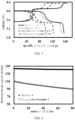
- the assembled button battery was tested at 25°C for capacity at 0.1 C and 2 C rates and cycled for 100 cycles at 1 C rate. The results are shown in Table 2.
- FIG. 3 is a graph of rate charge-discharge curves at 0.1 C and 2 C of a liquid ion battery obtained by assembling cathode materials in Comparative Example 3 and Example 3.
- FIG. 4 is a cycle performance graph at 1 C of a liquid ion battery obtained by assembling cathode materials in Comparative Example 3 and Example 3.
- the liquid lithium-ion batteries obtained by assembling the prepared cathode materials in examples of the present disclosure have significantly superior discharge capacity, high rate, and cycle retention rate over the liquid lithium-ion batteries obtained by assembling the prepared cathode materials in comparative examples.
- Preparation method of all-solid-state lithium battery each of the olivine cathode material in examples and comparative examples, conductive carbon black, and polyvinylidene fluoride (PVDF) were mixed at a mass ratio of 90:5:5, and an appropriate amount of NMP was added. The mixture was uniformly stirred and then coated on an aluminum foil, dried in a blast oven at 120°C for 1 hour, and punched into a positive electrode plate having a diameter of 11. Metal Li was taken as a negative electrode, and a PEO-based solid electrolyte film was taken as an electrolyte.
- PVDF polyvinylidene fluoride
- the high rate and cycle retention rate of the solid-state lithium-ion batteries obtained by assembling the prepared cathode materials in examples were significantly better than those of the solid-state lithium-ion batteries obtained by assembling the prepared cathode materials in the comparative examples.
- a cathode material, acetylene black, and polyvinylidene fluoride (PVDF) were mixed according to a mass ratio of 90:5:5, coated on an aluminum foil and dried, and punched into a positive electrode plate having a diameter of 12 mm and a thickness of 120 ⁇ m with a pressure of 100 MPa. Then, the positive electrode plate was placed in a vacuum drying oven and dried at 120° C for 12 hours. A conventional graphite negative electrode was used as a negative electrode. A porous film Celgard 2400 having a thickness of 25 ⁇ m was used as a separator.
- a mixture containing an equal amount of 1 mol/L LiPF 6 , ethylene carbonate (EC), and diethyl carbonate (DEC) was used as an electrolyte.
- the positive electrode plate, separator, negative electrode plate, and electrolyte were assembled into a button battery of 2025 type in an Ar gas glove box having a water content and an oxygen content of less than 5 ppm.
- the assembled button battery was cycled for 100 cycles at 1 C rate and at 45°C. Subsequent to 100 cycles, the negative electrode was obtained by disassemble of the battery.
- a content of manganese in the negative electrode was tested by ICP. The results are shown in Table 4.
- the amount of dissolved Mn in the liquid lithium-ion batteries obtained by assembling the prepared cathode materials in examples were significantly lower than that in the liquid lithium-ion batteries obtained by assembling the prepared cathode materials in the comparative examples.
Landscapes
- Chemical & Material Sciences (AREA)
- General Chemical & Material Sciences (AREA)
- Chemical Kinetics & Catalysis (AREA)
- Electrochemistry (AREA)
- Engineering & Computer Science (AREA)
- Inorganic Chemistry (AREA)
- Manufacturing & Machinery (AREA)
- Materials Engineering (AREA)
- Composite Materials (AREA)
- Crystallography & Structural Chemistry (AREA)
- Organic Chemistry (AREA)
- Battery Electrode And Active Subsutance (AREA)
- Electric Double-Layer Capacitors Or The Like (AREA)
- Secondary Cells (AREA)
Abstract
Description
- The present disclosure relates to the technical field of new energy and lithium-ion batteries, and more particularly, to an olivine composite cathode material, a preparation method and use thereof, and a lithium-ion battery.
- The rapid development of power batteries of new energy vehicles and market of energy storage batteries has prompted people to place higher requirements on fast charging performance and safety performance of lithium-ion batteries. A cathode material of the lithium-ion batteries is one of the key materials costing the highest and taking a great mass percentage in the lithium-ion batteries. The performance of the cathode material greatly determines an energy density, a fast charging performance, and a safety performance of the lithium-ion batteries. Lithium iron phosphate, as a representative of olivine cathode materials, has become one of the mainstream cathode material systems in the current market of the power and energy storage batteries due to its high energy density, excellent cycle performance and safety performance, and low cost and selling price.
- However, the cathode material of lithium iron phosphate (LiFePO4), due to its particularity of chemical composition and structure, may only reach a maximum discharge specific capacity of 170 mAh/g. A discharge voltage platform is usually lower than 3.4 V and has a relatively low electronic conductivity, resulting in poor low-temperature performance and rate performance of the cathode material of lithium iron phosphate (LiFePO4). A cathode material of lithium manganese ferric phosphate (LiMn x Fe1-x PO4) can further improve the discharge voltage platform and thus further increase the energy density of the batteries by replacing Fe with Mn on the basis of LiFePO4. However, LiMn x Fe1-x PO4 has a worse electronic conductivity and a more serious dissolution of Mn may occur, which adversely affect the low-temperature performance, rate performance, cycle performance, and safety performance of the batteries. Therefore, LiMn x Fe1-x PO4 has not yet been truly industrialized for application.
- An object of the present disclosure is to overcome the above-mentioned problems existing in the related art. The present disclosure provides an olivine composite cathode material, a preparation method and use thereof, and a lithium-ion battery. The olivine composite cathode material includes a matrix and a composite phase T m G n. The composite phase is introduced in situ into the cathode material, enabling the composite phase to be uniformly compounded at crystal boundaries and surface of the matrix of the cathode material and to be tightly integrated with the matrix of the cathode material. In this way, the electronic conductivity and surface structure stability of the cathode material during operation can be improved. The composite phase T m G n has a metal-like electronic structure and generally exhibits characteristics such as low electrical resistivity (<10 Ω·cm), strong chemical adsorption capacity, and stable chemical performance. Therefore, the composite cathode material containing the composite phase can have high conductivity and excellent chemical stability, and it can be applied to the fields of supercapacitors, the lithium-ion batteries, lithium-sulfur batteries, etc. In particular, the lithium-ion battery including the composite cathode material has significantly improved rate performance and cycle life.
- In order to achieve the above-mentioned object, in a first aspect, the present disclosure provides an olivine composite cathode material. The composite cathode material includes a matrix and a composite phase. The matrix has a composition represented by formula I: Li x M1 y Mn z Fe1-z-u M2 u (PO4) w (RO a ) b Cv (formula I), where: 0.5≤x<1.3, 0≤y≤0.5, 0<z≤1, 0≤u≤0.01, 0<w<1, 0<v≤0.05, 0≤a≤8, and 0≤b≤1; M1 is selected from at least one element of Mg, Na, and K; M2 is selected from at least one element of Ga, Sn, V, Y, Mo, Al, Mg, Ce, Ti, Zr, Nb, Si, W, and In; and R is selected from at least one element of Si, Cl, Br, S, Sb, and Sn. The composite phase has a composition represented by formula II: T m G n (formula II), where 0.1≤m≤5, and 0.1≤n≤5; T is selected from at least one element of Ti, Mo, Co, W, Zn, Cu, B, V, Nb, Ta, Pd, Cr, Ag, Al, Mn, Sn, Mg, Sc, Zr, and Hf; and G is selected from N and/or C.
- In a second aspect, the present disclosure provides a preparation method of an olivine composite cathode material. The preparation method includes: (1) performing a first mixing on a compound containing element T with a compound containing element G to obtain a first mixture, and performing a first heat treatment on the first mixture in the presence of a protective atmosphere to obtain a compound containing elements T and G; (2) performing a second mixing on a lithium source, a carbon source, a phosphorus source, an optional iron source, a manganese source, an optional R source, an optional M1 source, an optional M2 source with a solvent to obtain a second mixture, and grinding the second mixture to obtain a slurry; (3) performing a third mixing on the compound containing elements T and G with the slurry and drying to obtain powder; and (4) performing a second heat treatment on the powder in the presence of a non-oxidizing atmosphere and performing crushing to obtain the olivine composite cathode material.
- In a third aspect, the present disclosure provides an olivine composite cathode material prepared by the above-mentioned preparation method. In fourth aspect, the present disclosure provides use of the above-mentioned olivine composite cathode material in at least one of a supercapacitor, a lithium-ion battery, and a lithium-sulfur battery.
- In fifth aspect, the present disclosure provides a lithium-ion battery, the lithium-ion battery including the above-mentioned olivine composite cathode material.
- Based on the above-mentioned technical solutions, the olivine composite cathode material, the preparation method and the use thereof, and the lithium-ion battery according to the present disclosure have the following beneficial effects.
- (1) The olivine composite cathode material according to the present disclosure includes the matrix and the composite phase T m G n . The composite phase is introduced in situ into the cathode material, enabling the composite phase to be uniformly compounded at crystal boundaries and surface of the matrix of the cathode material and to be tightly integrated with the matrix of the cathode material. In this way, the electronic conductivity and surface structure stability of the cathode material during operation can be improved. The cathode material exhibits a low electrical resistivity (<10 Q cm), a strong chemical adsorption capacity, and stable chemical performance. Therefore, the composite cathode material can be applied to the fields of supercapacitors, the lithium-ion batteries, lithium-sulfur batteries, etc. In particular, the lithium-ion battery including the composite cathode material has significantly improved rate performance and cycle life.
- (2) In the preparation method of the olivine composite cathode material according to the present disclosure, the mixture of the compound containing element T and the compound containing element G is subjected to a heat treatment in the protective atmosphere, and the compound containing elements T and G obtained by the heat treatment is introduced into the olivine composite cathode material. In this way, the composite phase formed by the compound containing elements T and G can be uniformly compounded at the crystal boundaries and surface of the matrix of the cathode material and can be tightly integrated with the matrix of the cathode material, thereby improving the electronic conductivity and the surface structure stability of the cathode material during operation. In addition, the raw materials are derived from abundant sources, and thus the preparation cost is low, facilitating the industrialization of the overall process.
- (3) In the preparation method of the olivine composite cathode material according to the present disclosure, only one sintering is required to complete synthesis of a matrix material, carbon coating, and compounding of the compound containing elements T and G with the matrix material, thereby shortening preparation time of samples, effectively saving energy, and reducing carbon emission.
-
-
FIG. 1 is an image of T distribution of a sintered material in Example 3; -
FIG. 2 is an image of T distribution of a sintered material in Comparative Example 3; -
FIG. 3 is a graph of rate charge-discharge curves at 0.1 C and 2 C of a liquid ion battery obtained by assembling cathode materials in Comparative Example 3 and Example 3; and -
FIG. 4 is a cycle performance graph at 1 C of a liquid ion battery obtained by assembling cathode materials in Comparative Example 3 and Example 3. - Neither endpoints nor any of values of ranges disclosed herein are limited to the exact range or value, and those ranges or values should be understood to include values close to those ranges or values. For numerical ranges, one or more new numerical ranges can be obtained by combining the endpoints of each range, combining an endpoint and an individual point value of each range, or combing individual point values, and these numerical ranges should be deemed to be specifically disclosed herein.
- In a first aspect, the present disclosure provides an olivine composite cathode material. The composite cathode material includes a matrix and a composite phase. The matrix has a composition represented by formula I: Li x M1 y Mn z Fe1-z-u M2 u (PO4) w (RO a ) b Cv (formula I), where: 0.5≤x<1.3, 0≤y≤0.5, 0<z≤1, 0≤u≤0.01, 0<w≤1, 0<v≤0.05, 0≤a≤8, and 0≤b≤1; M1 is selected from at least one element of Mg, Na, and K; M2 is selected from at least one element of Ga, Sn, V, Y, Mo, Al, Mg, Ce, Ti, Zr, Nb, Si, W, and In; and R is selected from at least one element of Si, Cl, Br, S, Sb, and Sn. The composite phase has a composition represented by formula II: T m G n (formula II), where 0.1≤m≤5, and 0.1≤n≤5; T is selected from at least one element of Ti, Mo, Co, W, Zn, Cu, B, V, Nb, Ta, Pd, Cr, Ag, Al, Mn, Sn, Mg, Sc, Zr, and Hf; and G is selected from N and/or C.
- In the present disclosure, the olivine composite cathode material includes the matrix and the composite phase T m G n . The composite phase is introduced in situ into the cathode material, enabling the composite phase to be uniformly compounded at the crystal boundaries and surface of the matrix of the cathode material and to be tightly integrated with the matrix of the cathode material. In this way, the cathode material can have enhanced electronic conductivity and surface structure stability during operation.
- Further, the composite phase T m G n , such as TiN, MoN, Co3N, W2N, VN, etc., has a metal-like electronic structure and generally exhibits characteristics such as a low electrical resistivity (<10 Ω·cm),a strong chemical adsorption capacity, a stable chemical performance, and the like. Therefore, the composite cathode material containing the composite phase can have high conductivity and excellent chemical stability, and it can be applied to the fields of supercapacitors, lithium-ion batteries, lithium-sulfur batteries, etc. In particular, the lithium-ion battery including the composite cathode material has significantly improved rate performance and cycle life.
- Further, in formula I, 0.9<x<1.1, 0<y≤0.01, 0.5<z<1, 0<u≤0.005, 0.5≤w<1; 0.001<v≤0.03, 0≤a≤4, and 0<b<0.1.
- Further, in formula II, 0.5≤m≤3, 1≤n≤5, and T is selected from at least one element of Ti, Mo, Co, W, Zn, Cu, B, V, Nb, Ta, Cr, Ag, Al, Mn, Sn, Mg, Sc, and Zr.
- According to the present disclosure, based on a total weight of the composite cathode material, a content of the composite phase ranges from 0.01 wt% to 10 wt%.
- In the present disclosure, the content of the composite phase in the composite cathode material is measured using an ICP method.
- In the present disclosure, when the content of the composite phase in the composite cathode material is within the above-mentioned range, the electronic conductivity and structural stability of an interface of the matrix can be improved, allowing the composite cathode material to have low powder resistivity and excellent surface stability. When the composite cathode material is used in a lithium-ion battery, a rate performance and a cycle performance of the lithium-ion battery can be significantly improved, and an amount of manganese dissolution can be reduced.
- Further, based on the total weight of the composite cathode material, the content of the composite phase ranges from 0.01 wt% to 1 wt%.
- According to the present disclosure, the composite cathode material has a pellet density ranging from 1.5 g/cm3 to 3 g/cm3
- In the present disclosure, the composite cathode material has a high pellet density. When the composite cathode material is used in a lithium-ion battery, more cathode materials can be carried in the same volume, thereby improving capacity and energy density of the battery.
- Further, the pellet density of the composite cathode material ranges from 2 g/cm3 to 3 g/cm3
- According to the present disclosure, the composite cathode material has an electrical resistivity of <2,500 Q/cm.
- In the present disclosure, the composite cathode material has a low electrical resistivity, indicating that the composite cathode material has a high conductivity. As a result, when the composite cathode material is used in a lithium-ion battery, the rate performance and cycle life of the lithium-ion battery can be improved.
- Further, the composite cathode material has an electrical resistivity of ≤1,000 Q/cm.
- According to the present disclosure, in the composite cathode material, 0.5≤m/n≤7.
- In the present disclosure, in the composite cathode material, when m/n is within the above-mentioned range, it indicates that the composite phase of the composite cathode material is a pure phase. In this way, the advantages of the composite phase such as high conductivity and structural stability can be fully utilized, such that the lithium-ion battery including the composite cathode material can have excellent rate performance and cycle performance.
- In the present disclosure, in the composite cathode material, a content m of element T is measured by EDS surface scanning, and a content n of element G was measured by EDS surface scanning.
- Further, in the composite cathode material, 1≤m/n≤5.
- According to the present disclosure, the composite cathode material has an average particle size D50 ranging from 0.5 µm to 20 µm, and preferably, from 1 µm to 15 µm.
- According to the present disclosure, m/n has a standard deviation of≤1% at any position in an EDS elemental analysis of the composite cathode material.
- In the present disclosure, in the EDS elemental analysis on the composite cathode material, when the standard deviation of the molar ratio m/n of element T and element G in the composite phase T m G n at any position is within the above-mentioned range, it indicates that the composite phase T m G n is uniformly compounded in the cathode material and exists in the form of element T m G n pure phase. As a result, it can be ensured that the composite phase is partially characterized by a low electrical resistivity and a stable structure, allowing the overall resistivity of the composite cathode material to be maintained at a low level. In this way, smooth flow of electron transmission channels during charging and discharging can be ensured. Meanwhile, the surface structure stability can be ensured, and metal dissolution rate is low. When the composite cathode material is used in a lithium-ion battery, the rate performance and cycle performance of the lithium-ion battery can be significantly improved.
- Further, the standard deviation of m/n is≤0.8%.
- In a second aspect, the present disclosure provides a preparation method of an olivine composite cathode material. The preparation method includes: (1) performing a first mixing on a compound containing element T with a compound containing element G to obtain a first mixture, and performing a first heat treatment on the first mixture in the presence of a protective atmosphere to obtain a compound containing elements T and G; (2) performing a second mixing on a lithium source, a carbon source, a phosphorus source, an optional iron source, a manganese source, an optional R source, an optional M1 source, an optional M2 source with a solvent to obtain a second mixture, and grinding the second mixture to obtain a slurry; (3) performing a third mixing on the compound containing elements T and G with the slurry and drying to obtain powder; and (4) performing a second heat treatment on the powder in the presence of a non-oxidizing atmosphere and performing crushing to obtain the olivine composite cathode material.
- In the present disclosure, the mixture of the compound containing element T and the compound containing element G is subjected to a heat treatment in the protective atmosphere, and the compound containing elements T and G obtained by the heat treatment is introduced into the olivine composite cathode material. In this way, the composite phase formed by the compound containing elements T and G can be uniformly compounded at the crystal boundaries and surface of the matrix of the cathode material and can be tightly integrated with the matrix of the cathode material, thereby improving the electronic conductivity and the surface structure stability of the cathode material during operation. In addition, the raw materials are derived from abundant sources, and thus the preparation cost is low, facilitating the industrialization of the overall process.
- Further, in the preparation method according to the present disclosure, only one sintering is required to complete synthesis of a matrix material, carbon coating, and compounding of the compound containing elements T and G with the matrix material, thereby shortening preparation time of samples, effectively saving energy, and reducing carbon emission.
- According to the present disclosure, in step (1), the compound containing element T is selected from at least one of an elementary substance of element T, an oxide of element T, a nitrate of element T, and a hydroxide of element T.
- In the present disclosure, a morphology of the oxide of element T is not specifically limited. For example, the oxide of element T may be selected from at least one of nanoparticles, nanosheets, and nanowires.
- In the present disclosure, the oxide of element T has an average particle size D50 ranging from 0.001 µm to 1 µm.
- According to the present disclosure, the compound containing element G is selected from at least one of nitrogen, ammonia, melamine, polydopamine, urea, glucose, starch, sucrose, and graphite;
- Further, the compound containing element G is selected from at least one of nitrogen, ammonia, urea, and glucose.
- According to the present disclosure, conditions of the first heat treatment include: a heat treatment temperature ranging from 400°C to 1,000°C, and a heat treatment duration ranging from 2 hours to 8 hours.
- In the present disclosure, the first mixture is subjected to the heat treatment under the above-mentioned conditions, enabling the compound containing element T and the compound containing element G to be completely transformed into a pure phase compound containing elements T and G (nitride and/or carbide). In this way, it can be ensured that the composite phase in the composite cathode material prepared by compounding the compound containing elements T and G with the slurry is a pure phase, thereby allowing the prepared composite cathode material to have high conductivity and good structural stability. When the composite cathode material is used in a lithium-ion battery, the rate performance and cycle performance of the lithium-ion battery can be significantly improved.
- Further, the conditions of the first heat treatment include: a heat treatment temperature ranging from 500°C to 800°C, and a heat treatment duration ranging from 4 hours to 10 hours.
- According to the present disclosure, a molar ratio of the compound containing element T in terms of element T to the compound containing element G in terms of element G is (0.5 to 7): 1.
- In the present disclosure, when the molar ratio of the compound containing element T to the compound containing element G is within the above-mentioned range, it can be ensured that the composite phase in the composite cathode material prepared by compounding the compound containing elements T and G with the slurry is a pure phase, thereby allowing the prepared composite cathode material to have high conductivity and good structural stability. When the composite cathode material is used in a lithium-ion battery, the rate performance and cycle performance of the lithium-ion battery can be significantly improved.
- In the present disclosure, the conditions of the first mixing are not specifically limited, as long as the compound containing element T and the compound containing element G can be fully and uniformly mixed. Preferably, the conditions of the first mixing include: a mixing speed ranging from 100 rpm to 1,000 rpm and a mixing duration ranging from 1 hour to 10 hours.
- In the present disclosure, the manner of the first mixing is not specifically limited. The first mixing may be performed with the methods known in the art. In an embodiment, the manner of the first mixing is selected from at least one of mechanical planetary mixing, mechanical high-speed mixing, ball milling, and sanding.
- In the present disclosure, a type of the protective atmosphere is not specifically limited. Conventional protective atmospheres in the art, such as nitrogen and/or argon, can be selected and used.
- According to the present disclosure, in step (2), the lithium source is selected from at least one of lithium carbonate, lithium hydroxide, lithium oxide, and lithium nitrate.
- According to the present disclosure, the phosphorus source is selected from at least one of phosphoric acid, metaphosphoric acid, pyrophosphoric acid, ammonium dihydrogen phosphate, diammonium hydrogen phosphate, and phosphorus oxide.
- According to the present disclosure, the carbon source is selected from at least one of glucose, sucrose, starch, graphene, and carbon nanotube.
- According to the present disclosure, the iron source is selected from at least one of ferric phosphate, ferrous oxalate, ferric acetate, ferric oxide, and hydroxyl iron oxide.
- According to the present disclosure, the manganese source is selected from at least one of manganese oxide, manganese carbonate, and manganese nitrate.
- According to the present disclosure, the R source is selected from a compound containing at least one element of Si, Cl, Br, S, Sb, and Sn. In an embodiment, the R source is selected from at least one of an acid containing element R, an oxide containing element R, and a hydroxide containing element R.
- According to the present disclosure, the M1 source is selected from a compound containing at least one element of Mg, Na, and K. In an embodiment, the M1 source is selected from at least one of an oxide containing element M1, a hydroxide containing element M1, and a carbonate containing element M1.
- According to the present disclosure, the M2 source is selected from a compound containing at least one element of Ga, Sn, V, Y, Mo, Al, Mg, Ce, Ti, Zr, Nb, Si, W, and In. In an embodiment, the M2 source is selected from at least one of an oxide containing element M2, a hydroxide containing element M2, and a carbonate containing element M2.
- According to the present disclosure, the solvent is selected from at least one of water, ethanol, methanol, N-methylpyrrolidone (NMP), and isopropanol.
- According to the present disclosure, a molar ratio of the lithium source in terms of Li, the phosphorus source in terms of P, the carbon source in terms of C, the iron source in terms of Fe, the manganese resource in terms of Mn, the R source in terms of R, the M1 source in terms of M1, and the M2 source in terms of M2 is (0.5 to 1.3): (0 to 1): (0 to 0.05): (0 to 1): (0 to 1): (0 to 1): (0 to 0.5): (0 to 0.01), and the amount of the phosphorus source, manganese source, and carbon source used is not equal to 0.
- In the present disclosure, when the lithium source, the phosphorus source, the carbon source, the iron source, the manganese source, the R source, the M1 source, and the M2 source satisfy the above-mentioned ratio, the prepared composite cathode material can have high ionic conductivity and excellent structural stability. When the composite cathode material is used in a lithium-ion battery, the charge and discharge capacity, rate performance, and cycle performance of the lithium-ion battery can be significantly improved.
- Further, the molar ratio of the lithium source in terms of Li, the phosphorus source in terms of P, the carbon source in terms of C, the iron source in terms of Fe, the manganese resource in terms of Mn, the R source in terms of R, the M1 source in terms of M1, and the M2 source in terms of M2 is (0.9 to 1.1): (0.5 to 1): (0.001 to 0.03): (0 to 0.495): (0.5 to 1): (0 to 0.1): (0 to 0.01): (0 to 0.005), and the content of the M1 source, iron source, R source, and M2 source is not equal to 0.
- According to the present disclosure, the slurry has a solid content ranging from 10 wt% to 60 wt%.
- Further, the solid content of the slurry ranges from 20 wt% to 50 wt%
- In the present disclosure, the amount of the solvent used is not specifically limited, as long as the solid content of the slurry is within the above-mentioned range.
- According to the present disclosure, the slurry has an average particle size D50 ranging from 0.1 µm to 1 µm.
- In the present disclosure, when the average particle size D50 of the slurry is within the above-mentioned range, an apparent density of powder obtained after drying the slurry and the compound containing elements T and G can be advantageously increased, Furthermore, by controlling the average particle size of the slurry within the above-mentioned range, the slurry is more suitable for spray drying.
- Further, the average particle size D50 of the slurry ranges from 0.1 µm to 0.8 µm.
- In the present disclosure, the conditions of the second mixing are not specifically limited, as long as the lithium source, the phosphorus source, the carbon source, the iron source, the manganese source, the R source, the M1 source, the M2 source, and the solvent may be fully and uniformly mixed.
- In the present disclosure, the conditions of grinding are not specifically limited, as long as the average particle size D50 of the slurry can be within the above-mentioned range. Preferably, the conditions of the grinding include: a grinding speed ranging from 500 rpm to 2,000 rpm and a grinding duration ranging from 1 hour to 10 hours.
- In the present disclosure, the manner of the grinding is not specifically limited. Said grinding may be performed with a method known in the art. In an embodiment, the manner of grinding is selected from at least one of stirred milling, ball milling, and sanding.
- In the present disclosure, said grinding includes: grinding the second mixture to obtain the slurry. The equipment for grinding includes one or more of a stirred mill, a ball mill, and a sand mill.
- According to the present disclosure, in step (3), a solid-liquid ratio of the compound containing elements T and G to the slurry ranges from 0.000001 g/mL to 10 g/mL.
- In the present disclosure, when the solid-liquid ratio of the compound containing elements T and G to the slurry is within the above-mentioned range, the compound containing elements T and G can have good dispersibility in the slurry. As a result, the composite phase and the matrix in the prepared cathode material can be uniformly compounded without aggregation, enabling the lithium-ion battery including the composite cathode material to have more stable electrochemical performance.
- Further, the solid-liquid ratio of the compound containing elements T and G to the slurry ranges from 0.000001 g/mL to 1 g/mL.
- In the present disclosure, the conditions of the third mixing are not specifically limited, as long as the compound containing elements T and G and the slurry can be fully and uniformly mixed.
- In the present disclosure, the conditions of drying and drying equipment are not specifically limited, as long as the mixture of the compound containing elements T and G and the slurry can be fully dried. The drying equipment may be selected from at least one of a spray dryer, a blast oven, a vacuum oven, a freeze dryer and a flash evaporator.
- According to the present disclosure, in step (4), conditions of the second heat treatment include: a heat treatment temperature ranging from 400°C to 1,000°C, and a heat treatment duration ranging from 4 hours to 12 hours.
- In the present disclosure, when the powder is subjected to the second heat treatment under the above-mentioned conditions, T m G n can be compounded in situ during phase formation of the matrix material, and thus the composite phase T m G n and the matrix can be tightly bonded. At the same time, a carbon coating layer can be formed on the surface of the composite phase and the matrix. As a result, the composite cathode material prepared can have high conductivity and excellent cycle performance. When the cathode material is used in a lithium-ion battery, the rate performance and cycle performance of the lithium-ion batteries can be significantly improved.
- Further, the conditions of the second heat treatment include: a heat treatment temperature ranging from 500°C to 900°C, and a heat treatment duration ranging from 6 hours to 10 hours.
- In the present disclosure, the type of the non-oxidizing atmosphere is not specifically limited. Conventional non-oxidizing atmospheres in the art, such as nitrogen and/or argon, may be used.
- In the present disclosure, the equipment used for the crushing is not specifically limited. Conventional equipment known in the art, such as at least one of a mechanical mill, a colloid mill, and a jet mill, may be used.
- In a third aspect, the present disclosure provides an olivine composite cathode material prepared by the above-mentioned preparation method.
- In a fourth aspect, the present disclosure provides use of the above-mentioned olivine composite cathode material in at least one of a supercapacitor, a lithium-ion battery, and a lithium-sulfur battery.
- In a fifth aspect, the present disclosure provides a lithium-ion battery. The lithium-ion battery includes the above-mentioned olivine composite cathode material.
- In the present disclosure, when the olivine composite cathode material is a Mn-containing cathode material, that is, z is not equal to 0, and when the olivine composite cathode material is used in a lithium-ion battery, the lithium-ion battery is a liquid lithium-ion battery. Subsequent to 1,000 cycles at 45°C, an amount of manganese dissolved from a negative electrode of the liquid lithium-ion battery is ≤3000 ppm, and preferably, ranging from 500 ppm to 2,000 ppm.
- The present disclosure will be described in detail below through examples. In the following examples, the composition of the composite cathode material was measured using an ICP method; the content of the composite phase in the composite cathode material was measured by an ICP method; the pellet density of the composite cathode material was measured using powder pellet density instrument; the electrical resistivity of the composite cathode material was measured using an electrical resistivity instrument; in the composite cathode material, the content of element G was measured by EDS surface scanning and the content and distribution of element T were measured by EDS surface scanning; and the raw materials used in the examples and comparative examples were all commercially available products.
-
- (1) 10 g of element TiO2 nanoparticles having an average particle size of 0.05 µm and 80 g of urea were weighed and mixed in a ball milling tank at 600 rpm for 5 hours. The mixture was placed in a tube furnace and subjected to a heat treatment at 550°C for 10 hours under a nitrogen atmosphere to obtain TiN nanoparticles. A molar ratio of the compound containing element T in terms of element T to the compound containing element G in terms of element G was 1:1.
- (2) 24.04 g of lithium carbonate (lithium source), 19.89 g of iron oxide (iron source), 44.12 g of manganese carbonate (manganese source), 73.24 g of ammonium dihydrogen phosphate (phosphorus source), and 14.34 g of glucose (carbon source) were weighed and mixed in 200 g of pure water. The mixture was subjected to ball milling in a planetary ball mill at a rotational speed of 500 rpm for 6 hours to obtain a slurry having D50 of 0.62 µm. A molar ratio of the lithium source in terms of Li, the phosphorus source in terms of P, the carbon source in terms of C, the iron source in terms of Fe, and the manganese source in terms of Mn was 1:1:0.1 :0.4:0.6. The slurry had a solid content of 45 wt%.
- (3) The slurry obtained in step (2) and 0.3 g of element TiN nanoparticles were mechanically stirred for 30 minutes to obtain an evenly dispersed mixed slurry. The mixed slurry was dried in a spray dryer to obtain powder. A solid-liquid ratio of the TiN nanoparticles to the slurry was 0.0001 g/mL.
- (4) The powder obtained in step (3) was treated in a tube furnace at 750°C for 8 hours under a nitrogen atmosphere to obtain a sintered material. The sintered material was crushed by a jet mill to obtain the olivine composite cathode material A1. The amount of the respective materials used and process conditions in the preparation process are shown in Table 1.
- Part of the sintered material was taken for plasma beam cutting to obtain a cross section of the material. Distribution uniformity of element Ti in the material was tested by EDS surface scanning. The results are shown in Table 2.
- The composition, content of the composite phase, particle size, pellet density, electrical resistivity, and T/G of the olivine composite cathode material A1 were tested, and the results are shown in Table 2.
-
- (1) 10 g of Co3O4 nanosheets having an average particle size of 0.09 µm and 80 g of melamine were weighed and mixed in a ball milling tank at 600 rpm for 5 hours. The mixture was placed in a tube furnace and subjected to a heat treatment at 600°C for 10 hours under a nitrogen atmosphere to obtain Co3N nanoparticles. A molar ratio of the compound containing element T in terms of element T to the compound containing element G in terms of element G was 3:1.
- (2) 24.04 g of lithium carbonate (lithium source), 95.93 g of ferric phosphate (iron source and phosphorus source), 44.16 g of manganese carbonate (manganese source), 0.04 g of titanium oxide (M2 source), and 14.34 g of glucose (carbon source) were weighed and mixed in 200 g of pure water. The mixture was subjected to ball milling in a planetary ball mill at a rotational speed of 500 rpm for 6 hours to obtain a slurry having D50 of 0.48 µm. A molar ratio of the lithium source in terms of Li, the phosphorus source in terms of P, the carbon source in terms of C, the iron source in terms of Fe, the manganese source in terms of Mn, and the M2 source in terms of M2 was 1:1:0.1:0.4:0.599:0.001. The slurry had a solid content of 45 wt%.
- (3) The slurry obtained in step (2) and 0.2 g of Co3N nanoparticles were mechanically stirred for 30 minutes to obtain an evenly dispersed mixed slurry. The mixed slurry was dried in a spray dryer to obtain powder. A solid-liquid ratio of the Co3N nanoparticles to the slurry was 0.001 g/mL.
- (4) The powder obtained in step (3) was treated in a tube furnace at 800°C for 8 hours under a nitrogen atmosphere to obtain a sintered material. The sintered material was crushed by a jet mill to obtain the olivine composite cathode material A2.
- Part of the sintered material was taken for plasma beam cutting to obtain a cross section of the material. Distribution uniformity of element Co in the material was tested by EDS surface scanning. The results are shown in Table 1.
- The composition, content of the composite phase, particle size, pellet density, electrical resistivity, and T/G of the olivine composite cathode material A2 were tested, and the results are shown in Table 1.
-
- (1) 10 g of MoOs nanowires having an average particle size of 0.07 µm were weighed and subjected to a heat treatment in a tube furnace at 700°C for 10 hours under an ammonia atmosphere to obtain MoN nanoparticles. A molar ratio of the compound containing element T in terms of element T to the compound containing element G in terms of element G was 1:1.
- (2) 24.28 g of lithium carbonate (lithium source), 99.96 g of ferric nitrate (iron source), 132.83 g of manganese nitrate (manganese source), 73.52 g of phosphoric acid (phosphorus source), 0.17 g of niobium oxide (M2 source), and 62.52 g of glucose (carbon source) were weighed and mixed in 200 g of pure water. The mixture was stirred in a mechanical mixer at a rotational speed of 300 rpm for 6 hours to obtain a slurry. A molar ratio of the lithium source in terms of Li, the phosphorus source in terms of P, the carbon source in terms of C, the iron source in terms of Fe, the manganese source in terms of Mn, and the M2 source in terms of M2 was 1:1:0.1 :0.398:0.6:0.002. The slurry had a solid content of 45 wt%.
- (3) The slurry obtained in step (2) and 0.5 g of MoN nanoparticles were mechanically stirred for 30 minutes to obtain an evenly dispersed mixed slurry. The mixed slurry was dried in a vacuum oven to obtain a dry gel powder. A solid-liquid ratio of the MoN nanoparticles to the slurry was 0.0001 g/mL.
- (4) The powder obtained in step (3) was treated in a tube furnace at 760°C for 8 hours under a nitrogen atmosphere to obtain a sintered material. The sintered material was crushed by a jet mill to obtain the olivine composite cathode material A3.
- Part of the sintered material was taken for plasma beam cutting to obtain a cross section of the material. Distribution uniformity of Mo element in the material was tested by EDS surface scanning. The results are shown in Table 1.
- The composition, content of the composite phase, particle size, pellet density, electrical resistivity, and T/G of the olivine composite cathode material A3 were tested, and the results are shown in Table 1.
-
- (1) 10 g of V2O5 nanoparticles having an average particle size of 0.05 µm and 20 g of urea were weighed and mixed in a ball milling tank at 600 rpm for 5 hours. The mixture was placed in a tube furnace and subjected to a heat treatment at 550°C for 10 hours under an ammonia atmosphere to obtain VN nanoparticles. A molar ratio of the compound containing element T in terms of element T to the compound containing element G in terms of element G was 1:1.
- (2) 24.04 g of lithium carbonate (lithium source), 95.58 g of ammonium manganese ferrous phosphate (phosphorus source, iron source, and manganese source), 14.34 g of glucose (carbon source), 0.06 g of magnesium carbonate (M1 source), and 0.17 g of niobium oxide (M2 source) were weighed and mixed in 200 g of pure water. The mixture was subjected to ball milling in a planetary ball mill at a rotational speed of 500 rpm for 6 hours to obtain a slurry having D50 of 0.62 µm. A molar ratio of the lithium source in terms of Li, the phosphorus source in terms of P, the carbon source in terms of C, the iron source in terms of Fe, the manganese source in terms of Mn, the M1 source in terms of M1, and the M2 source in terms of M2 was 1:1:0.1:0.398:0.6:0.001:0.002. The slurry had a solid content of 45 wt%.
- (3) The slurry obtained in step (2) and 0.3 g of VN nanoparticles were mechanically stirred for 30 minutes to obtain an evenly dispersed mixed slurry. The mixed slurry was dried in a spray dryer to obtain powder. A solid-liquid ratio of the VN nanoparticles to the slurry was 0.0001 g/mL.
- (4) The powder obtained in step (3) was treated in a tube furnace at 750°C for 8 hours under a nitrogen atmosphere to obtain a sintered material. The sintered material was crushed by a jet mill to obtain the olivine composite cathode material A4.
- Part of the sintered material was taken for plasma beam cutting to obtain a cross section of the material. Distribution uniformity of V element in the material was tested by EDS surface scanning. The results are shown in Table 1.
- The composition, content of the composite phase, particle size, pellet density, electrical resistivity, and T/G of the olivine composite cathode material A4 were tested, and the results are shown in Table 1.
-
- (1) B2O3 nanosheets having an average particle size of 0.09 µm were mixed with glucose in a ball milling tank at 600 rpm for 5 hours. The mixture was placed in a tube furnace and subjected to a heat treatment at 1800°C for 5 hours under a nitrogen atmosphere to obtain B4C nanoparticles. A molar ratio of the compound containing element T in terms of element T to the compound containing element G in terms of element G was 4:1.
- (2) 24.04 g of lithium carbonate (lithium source), 111.92 g of ferric phosphate (iron source and phosphorus source), 33.12 g of manganese carbonate (manganese source), 0.04 g of titanium oxide (M2 source), and 14.34 g of glucose (carbon source) were weighed and mixed in 200 g of pure water. The mixture was subjected to ball milling in a planetary ball mill at a rotational speed of 500 rpm for 6 hours to obtain a slurry having D50 of 0.48 µm. A molar ratio of the lithium source in terms of Li, the phosphorus source in terms of P, the carbon source in terms of C, the iron source in terms of Fe, the manganese source in terms of Mn, and the M2 source in terms of M2 was 1:1:0.1:0.3:0.699:0.001. The slurry had a solid content of 45 wt%.
- (3) The slurry obtained in step (2) and 0.2 g of B4C nanoparticles were mechanically stirred for 30 minutes to obtain an evenly dispersed mixed slurry. The mixed slurry was dried in a spray dryer to obtain powder. A solid-liquid ratio of the B4C nanoparticles to the slurry was 0.00015 g/mL.
- (4) The powder obtained in step (3) was treated in a tube furnace at 800°C for 8 hours under a nitrogen atmosphere to obtain a sintered material. The sintered material was crushed by a jet mill to obtain the olivine composite cathode material A5.
- Part of the sintered material was taken for plasma beam cutting to obtain a cross section of the material. Distribution uniformity of B element in the material was tested by EDS surface scanning. The results are shown in Table 1.
- The composition, content of the composite phase, particle size, pellet density, electrical resistivity, and T/G of the olivine composite cathode material A5 were tested, and the results are shown in Table 1.
-
- (1) 10 g of element TiO2 nanoparticles having an average particle size of 0.05 µm and 80 g of urea were weighed and mixed in a ball milling tank at 600 rpm for 5 hours. The mixture was placed in a tube furnace and subjected to a heat treatment at 550°C for 10 hours under a nitrogen atmosphere to obtain TiN nanoparticles. A molar ratio of the compound containing element T in terms of element T to the compound containing element G in terms of element G was 1:1.
- (2) 10 g of element TiO2 nanoparticles having an average particle size of 0.05 µm were weighed and mixed with 100 g of glucose in a ball milling tank at 600 rpm for 5 hours. The mixture was placed in a tube furnace and subjected to a heat treatment at 550°C for 10 hours under a nitrogen atmosphere to obtain TiN nanoparticles. A molar ratio of the compound containing element T in terms of element T to the compound containing element G in terms of element G was 1:1.
- (3) 24.04 g of lithium carbonate (lithium source), 19.89 g of iron oxide (iron source), 44.12 g of manganese carbonate (manganese source), 72.5 g of ammonium dihydrogen phosphate (phosphorus source), 0.6 g of silicon dioxide (R source), and 14.34 g of glucose (carbon source) were weighed and mixed in 200 g of pure water. The mixture was subjected to ball milling in a planetary ball mill at a rotational speed of 500 rpm for 6 hours to obtain a slurry having D50 of 0.62 µm. A molar ratio of the lithium source in terms of Li, the phosphorus source in terms of P, the carbon source in terms of C, the iron source in terms of Fe, the manganese source in terms of Mn, and the R source in terms of R was 1:1:0.1:0.4:0.6:0.01. The slurry had a solid content of 45 wt%.
- (4) The slurry obtained in step (2), 0.15 g of element TiN nanoparticles, and 0.15 g of element TiC nanoparticles were mechanically stirred for 30 minutes to obtain an evenly dispersed mixed slurry. The mixed slurry was dried in a spray dryer to obtain powder. A solid-liquid ratio of the TiN/TiC nanoparticles to the slurry was 0.0001 g/mL.
- (5) The olivine composite cathode material A6 was obtained in the same manner as step (1) in Example 1 was used to obtain the.
- Part of the sintered material was taken for plasma beam cutting to obtain a cross section of the material. Distribution uniformity of element Ti in the material was tested by EDS surface scanning. The results are shown in Table 1.
- The composition, content of the composite phase, particle size, pellet density, electrical resistivity, and T/G of the olivine composite cathode material A6 were tested, and the results are shown in Table 1.
- The cathode material was prepared according to the method in Example 1. Comparative Example 1 differed from Example 1 in that: step (1) was omitted; and TiN nanoparticles were not added in step (3).
- The olivine cathode material D1 was obtained. The composition, content of the composite phase, particle size, pellet density, and electrical resistivity of the olivine composite cathode material D1 were tested, and the results are shown in Table 1.
- The cathode material was prepared according to the method in Example 1. Comparative Example 2 differed from Example 1 in the following aspects:
- step (1) was omitted;
- in step (2), 24.04 g of lithium carbonate (lithium source), 95.93 g of ferric phosphate (iron source and phosphorus source), 44.08 g of manganese carbonate (manganese source), 0.05 g of calcium oxide (Ca), and 14.34 g of glucose (carbon source) were weighed and mixed in 200 g of pure water; the mixture was subjected to ball milling in a planetary ball mill at a rotational speed of 500 rpm for 6 hours to obtain a slurry having D50 of 0.62 µm; a molar ratio of the lithium source in terms of Li, the phosphorus source in terms of P, the carbon source in terms of C, the iron source in terms of Fe, the manganese source in terms of Mn, and the calcium oxide in terms of Ca was 1:1:0.1:0.4:0.6:0.0001; and the slurry had a solid content of 30 wt%; and
- TiN nanoparticles were not added in step (3).
- The olivine cathode material D2 was obtained.
- The composition, content of the composite phase, particle size, pellet density, and electrical resistivity of the olivine composite cathode material D2 were tested, and the results are shown in Table 1.
- The cathode material was prepared according to the method in Example 1.
- Step (1) was the same as step (1) in Example 1.
- In step (2): 24.28 g of lithium carbonate (lithium source), 99.96 g of ferric nitrate (iron source), 132.83 g of manganese nitrate (manganese source), 73.52 g of phosphoric acid (phosphorus source), 0.33 g of barium nitrate (Ba), and 62.52 g of glucose (carbon source) were weighed and mixed in 200 g of pure water. The mixture was stirred in a mechanical mixer at 300 rpm for 6 hours to obtain a slurry. A molar ratio of the lithium source in terms of Li, the phosphorus source in terms of P, the carbon source in terms of C, the iron source in terms of Fe, the manganese source in terms of Mn, and the barium nitrate in terms of Ba was 1:1:0.1:0.4:0.6:0.0008. The slurry had a solid content of 45 wt%.
- The step (3) in Example 1 was omitted.
- In step (4), the conditions of the second heat treatment were as follows. The slurry was treated at 750°C for 8 hours to obtain a sintered material. The sintered material was crushed by a jet mill to obtain a crushed material having an average particle size D50 of 1.5 µm and a chemical formula of LiMn0.6Fe0.398Ba0.002PO4 C0.1.
- Step (5): The crushed material LiMn0.6Fe0.398Ba0.002PO4 C0.1 obtained in step (4) and the TiN nanoparticles obtained in step (1) were mixed in a ball milling tank at a rotational speed of 850 rpm for 4 hours to obtain a mixture. The mixture was subjected to a heat treatment at 600° C for 4 hours under a nitrogen atmosphere. Finally, an olivine cathode material D3 having a chemical formula of LiMn0.6Fe0.398Ba0.002PO4C0.1@TiN was obtained. Relative to the crushed material LiMn0.6Fe0.398Ba0.002PO4C0.1, an amount of element TiN nanoparticles used was 15wt%.
- A part of the material was taken for EDS surface scanning to test distribution uniformity of element Ti in the material, and the results are shown in Table 1.
- The composition, content of the composite phase, particle size, pellet density, electrical resistivity, and T/G of the olivine composite cathode material D3 were tested, and the results are shown in Table 1.
[Table 1] Item Matrix Composite phase Content of composite phase/wt% Example 1 LiMn0.6Fe0.4PO4C0.1 TiN 0.3 Example 2 LiMn0.599Fe0.4Ti0.001PO4C0.1 Co3N 0.2 Example 3 LiMn0.6Fe0.398Nb0.002PO4C0.1 MoN 0.5 Example 4 Li0.999Mg0.001Mn0.6Fe0.398Nb0.002PO4C0.1 VN 0.3 Example 5 LiMn0.699Fe0.3Ti0.001PO4C0.1 B4C 0.2 Example 6 LiMn0.6Fe0.4(PO4)0.99(SiO3)0.01C0.1 TiN+TiC 0.3 Comparative Example 1 LiMn0.6Fe0.4PO4C0.1 / Comparative Example 2 LiMn0.6Fe0.4PO4C0.1 / Comparative Example 3 LiMn0.6Fe0. 398Ba0.002PO4C0.1 TiN 15 [Table 1 (continued)] Item D50 µm Compacted density g/cm3 Electrical resistivity Ω·cm T distribution of sintered material T/G Standard deviation of m/n/% Example 1 1.5 2.1 349 Uniform 1 0.21 Example 2 1.3 2.3 325 Uniform 3 0.35 Example 3 1.2 2.0 278 Uniform 1 0.20 Example 4 1.5 2.2 233 Uniform 1 0.19 Example 5 1.3 2.3 312 Uniform 4 0.15 Example 6 1.4 2.1 330 Uniform 0.5/0.5 0.23 Comparative Example 1 1.5 1.8 4874 None / / Comparative Example 2 1.3 2.0 4265 None / / Comparative Example 3 1.2 1.7 2938 Uneven 1 2.55 - As revealed in Table 1, compared with Comparative Example 1 to Comparative Example 3, the prepared cathode materials in Example 1 to Example 6 have high pellet density and low electrical resistivity. Particularly, the pellet density is generally higher than 2 g/cm3, and the electrical resistivity is lower than 500 Q cm. At the same time, element T is uniformly distributed in the prepared cathode materials in Example 1 to Example 6. Therefore, the lithium-ion batteries obtained by assembling the above cathode materials can have excellent electrical performance, in particular high rate performance. In contrast, the electrical resistivity of the prepared cathode materials in Comparative Example 1 to Comparative Example 3 is higher than 2,500 Ω·cm, and element T is unevenly distributed. The lithium-ion batteries obtained by assembling these cathode materials may have poorer electrical performance and serious deterioration of the rate performance.
-
FIG. 1 is an image of T distribution of a sintered material in Example 3, andFIG. 2 is an image of T distribution of a sintered material in Comparative Example 3. As reveled inFIG. 1 and FIG. 2 , element N was uniformly distributed inFIG. 1 , while element N was not uniformly distributed inFIG. 2 with a lot of agglomerated parts. It indicates that the composite phase of the samples prepared according to the present disclosure was uniformly distributed in the matrix, having a higher capability in improving transportation of surface electron and the surface structure stability. - Preparation method of liquid lithium-ion battery: each of the olivine cathode material in examples and comparative examples, acetylene black, and polyvinylidene fluoride (PVDF) were mixed at a mass ratio of 90:5:5, and the mixture was coated on an aluminum foil and dried, which was punched into a positive electrode plate having a diameter of 12 mm and a thickness of 120 µm with a pressure of 100 MPa. Then, the positive electrode plate was placed in a vacuum drying oven and dried at 120° C for 12 hours. A Li metal plate having a diameter of 17 mm and a thickness of 1 mm was used as a negative electrode. A porous film Celgard 2400 having a thickness of 25 µm was used as a separator. A mixture containing an equal amount of 1 mol/L LiPF6, ethylene carbonate (EC), and diethyl carbonate (DEC) was used as an electrolyte. The positive electrode plate, separator, negative electrode plate, and electrolyte were assembled into a button battery of 2025 type in an Ar gas glove box having a water content and an oxygen content of less than 5 ppm. The assembled button battery was tested at 25°C for capacity at 0.1 C and 2 C rates and cycled for 100 cycles at 1 C rate. The results are shown in Table 2.
[Table 2] Liquid battery I Item 0.1 C discharge specific capacity 2 C discharge specific capacity 1C capacity retention rate for 100 cycles mAh/g mAh/g % Example1 136.4 114.3 90.5 Example2 145.4 129.2 92.6 Example3 155.2 142.7 95.1 Example4 161 155.4 95.9 Example5 144.5 130.4 92.5 Example6 135.5 115.4 90.4 Comparative Example1 93.1 30.4 74.2 Comparative Example2 114.3 86.1 76.5 Comparative Example3 125.8 100.3 80.1 -
FIG. 3 is a graph of rate charge-discharge curves at 0.1 C and 2 C of a liquid ion battery obtained by assembling cathode materials in Comparative Example 3 and Example 3.FIG. 4 is a cycle performance graph at 1 C of a liquid ion battery obtained by assembling cathode materials in Comparative Example 3 and Example 3. As revealed in Table 2,FIG. 3, and FIG. 4 , the liquid lithium-ion batteries obtained by assembling the prepared cathode materials in examples of the present disclosure have significantly superior discharge capacity, high rate, and cycle retention rate over the liquid lithium-ion batteries obtained by assembling the prepared cathode materials in comparative examples. - Preparation method of all-solid-state lithium battery: each of the olivine cathode material in examples and comparative examples, conductive carbon black, and polyvinylidene fluoride (PVDF) were mixed at a mass ratio of 90:5:5, and an appropriate amount of NMP was added. The mixture was uniformly stirred and then coated on an aluminum foil, dried in a blast oven at 120°C for 1 hour, and punched into a positive electrode plate having a diameter of 11. Metal Li was taken as a negative electrode, and a PEO-based solid electrolyte film was taken as an electrolyte. The prepared positive electrode plate, the composite electrolyte film, and the negative electrode were assembled into a button battery of 2025 type in an Ar gas glove box having a water content and an oxygen content of less than 5 ppm. The assembled button battery was tested at 25°C for capacity at 2 C rate and cycled for 100 cycles at 1 C rate. The results are shown in Table 3.
[Table 3] Solid battery Item 2C discharge specific capacity Capacity retention rate for 100 cycles mAh/g % Example 1 110.2 90.4 Example 2 126.5 92.7 Example 3 140.8 95.1 Example 4 155 96 Example 5 125.6 91.5 Example 6 111.3 91.4 Comparative Example 1 10.2 70.4 Comparative Example 2 71.4 73.5 Comparative Example 3 91.5 88.6 - As revealed in Table 3, the high rate and cycle retention rate of the solid-state lithium-ion batteries obtained by assembling the prepared cathode materials in examples were significantly better than those of the solid-state lithium-ion batteries obtained by assembling the prepared cathode materials in the comparative examples.
- Preparation method of liquid lithium-ion battery: a cathode material, acetylene black, and polyvinylidene fluoride (PVDF) were mixed according to a mass ratio of 90:5:5, coated on an aluminum foil and dried, and punched into a positive electrode plate having a diameter of 12 mm and a thickness of 120 µm with a pressure of 100 MPa. Then, the positive electrode plate was placed in a vacuum drying oven and dried at 120° C for 12 hours. A conventional graphite negative electrode was used as a negative electrode. A porous film Celgard 2400 having a thickness of 25 µm was used as a separator. A mixture containing an equal amount of 1 mol/L LiPF6, ethylene carbonate (EC), and diethyl carbonate (DEC) was used as an electrolyte. The positive electrode plate, separator, negative electrode plate, and electrolyte were assembled into a button battery of 2025 type in an Ar gas glove box having a water content and an oxygen content of less than 5 ppm. The assembled button battery was cycled for 100 cycles at 1 C rate and at 45°C. Subsequent to 100 cycles, the negative electrode was obtained by disassemble of the battery. A content of manganese in the negative electrode was tested by ICP. The results are shown in Table 4.
[Table 4] Item Content of manganese dissolved from negative electrode subsequent to 1,000 cycles at 45°C and 1 C, ppm Example 1 1820 Example 2 1840 Example 3 1850 Example 4 1800 Example 5 1950 Example 6 1800 Comparative Example 1 8450 Comparative Example 2 8430 Comparative Example 3 5960 - As revealed in Table 4, the amount of dissolved Mn in the liquid lithium-ion batteries obtained by assembling the prepared cathode materials in examples were significantly lower than that in the liquid lithium-ion batteries obtained by assembling the prepared cathode materials in the comparative examples.
- Although the preferred embodiments of the present disclosure are described in detail above, the present disclosure is not limited thereto. Within the scope of technical concept of the present disclosure, a variety of simple variations may be made to the technical solution of the present disclosure, including the combination of various technical features in any other suitable manner. These simple variations and combinations shall be regarded as the contents disclosed by the present disclosure, and they shall all fall within the scope of protection of the present disclosure.
Claims (12)
- An olivine composite cathode material, comprising:a matrix; anda composite phase;wherein the matrix has a composition represented by formula I:
Li x M1 y Mn z Fe1-z-u M2 u (PO4) w (RO a ) bCv formula I,
where:0.5≤x<1.3, 0≤y≤0.5, 0<z≤1, 0≤u≤0.01, 0<w≤1, 0<v≤0.05, 0≤a≤8, and 0≤b≤1;M1 is selected from at least one element of Mg, Na, and K;M2 is selected from at least one element of Ga, Sn, V, Y, Mo, Al, Mg, Ce, Ti, Zr, Nb, Si, W, and In; andR is selected from at least one element of Si, Cl, Br, S, Sb, and Sn; andwherein the composite phase has a composition represented by formula II:
TmGn formula II,
where:0.1≤m≤5, and 0.1≤n≤5;T is selected from at least one element of Ti, Mo, Co, W, Zn, Cu, B, V, Nb, Ta, Pd, Cr, Ag, Al, Mn, Sn, Mg, Sc, Zr, and Hf; andG is selected from N and/or C. - The olivine composite cathode material according to claim 1, wherein:in formula I, 0.9≤x<1.1, 0<y≤0.01, 0.5≤z≤1, 0<u≤0.005, 0.5≤w<1, 0.001<v≤0.03, 0≤a≤4, and 0<b≤0.1; andpreferably, in formula II, 0.5≤m≤3, 1≤n≤5, and T is selected from at least one element of Ti, Mo, Co, W, Zn, Cu, B, V, Nb, Ta, Cr, Ag, Al, Mn, Sn, Mg, Sc, and Zr.
- The olivine composite cathode material according to claim 1 or 2, wherein based on a total weight of the composite cathode material, a content of the composite phase ranges from 0.01 wt% to 10 wt%, and preferably, from 0.01 wt% to 1 wt%.
- The olivine composite cathode material according to any one of claims 1 to 3, wherein:the composite cathode material has a pellet density ranging from 1.5 g/cm3 to 3 g/cm3, and preferably, from 2 g/cm3 to 3 g/cm3;preferably, the composite cathode material has an electrical resistivity of ≤2,500 Q/cm, and preferably, ≤1,000 Q/cm;preferably, in the composite cathode material, 0.5≤m/n≤7, and preferably, 1≤m/n≤5;preferably, the composite cathode material has an average particle size D50 ranging from 0.5 µm to 20 µm, and preferably, from 1 µm to 15 µm; andpreferably, in an EDS elemental analysis of the composite cathode material, m/n has a standard deviation of≤1% at any position.
- A preparation method of an olivine composite cathode material, comprising:(1) performing a first mixing on a compound containing element T with a compound containing element G to obtain a first mixture, and performing a first heat treatment on the first mixture in the presence of a protective atmosphere to obtain a compound containing elements T and G;(2) performing a second mixing on a lithium source, a carbon source, a phosphorus source, an optional iron source, a manganese source, an optional R source, an optional M1 source, an optional M2 source with a solvent to obtain a second mixture, and grinding the second mixture to obtain a slurry;(3) performing a third mixing on the compound containing elements T and G with the slurry and drying to obtain powder; and(4) performing a second heat treatment on the powder in the presence of a non-oxidizing atmosphere and performing crushing to obtain the olivine composite cathode material.
- The preparation method according to claim 5, wherein:in step (1), the compound containing element T is selected from at least one of an elementary substance of element T, an oxide of element T, a nitrate of element T, and a hydroxide of element T;preferably, the compound containing element G is selected from at least one of nitrogen, ammonia, melamine, polydopamine, urea, glucose, starch, sucrose, and graphite;preferably, conditions of the first heat treatment comprise: a heat treatment temperature ranging from 400°C to 1,000°C, and a heat treatment duration ranging from 2 hours to 8 hours; andpreferably, a molar ratio of the compound containing element T in terms of element T to the compound containing element G in terms of element G is (0.5 to 7): 1.
- The preparation method according to claim 5 or 6, wherein:in step (2), the lithium source is selected from at least one of lithium carbonate, lithium hydroxide, lithium oxide, and lithium nitrate;preferably, the phosphorus source is selected from at least one of phosphoric acid, metaphosphoric acid, pyrophosphoric acid, ammonium dihydrogen phosphate, diammonium hydrogen phosphate, and phosphorus oxide;preferably, the carbon source is selected from at least one of glucose, sucrose, starch, graphene, and carbon nanotube;preferably, the iron source is selected from at least one of ferric phosphate, ferrous oxalate, ferric acetate, ferric oxide, and hydroxyl iron oxide;preferably, the manganese source is selected from at least one of manganese oxide, manganese carbonate, and manganese nitrate;preferably, the R source is selected from a compound containing at least one element of Si, Cl, Br, S, Sb, and Sn;preferably, the M1 source is selected from a compound containing at least one element of Mg, Na, and K;preferably, the M2 source is selected from a compound containing at least one element of Ga, Sn, V, Y, Mo, Al, Mg, Ce, Ti, Zr, Nb, Si, W, and In,preferably, the solvent is selected from at least one of water, ethanol, methanol, N-methylpyrrolidone (NMP), and isopropanol;preferably, a molar ratio of the lithium source in terms of Li, the phosphorus source in terms of P, the carbon source in terms of C, the iron source in terms of Fe, the manganese resource in terms of Mn, the R source in terms of R, the M1 source in terms of M1, and the M2 source in terms of M2 is (0.5 to 1.3): (0 to 1): (0 to 0.05): (0 to 1): (0 to 1): (0 to 1): (0 to 0.5): (0 to 0.01);preferably, the slurry has a solid content ranging from 10 wt% to 60 wt%; andpreferably, the slurry has an average particle size D50 ranging from 0.1 µm to 1 µm.
- The preparation method according to any one of claims 5 to 7, wherein:in step (3), a solid-liquid ratio of the compound containing elements T and G to the slurry ranges from 0.000001 g/mL to 10 g/mL; andpreferably, in step (4), conditions of the second heat treatment comprise: a heat treatment temperature ranging from 400°C to 1,000°C, and a heat treatment duration ranging from 4 hours to 12 hours.
- An olivine composite cathode material prepared by the preparation method according to any one of claims 5 to 8.
- Use of the olivine composite cathode material according to any one of claims 1 to 4 and claim 9 in at least one of a supercapacitor, a lithium-ion battery, and a lithium-sulfur battery.
- A lithium-ion battery, comprising the olivine composite cathode material according to any one of claims 1 to 4 and claim 9.
- The lithium-ion battery according to claim 11, wherein:the lithium-ion battery is a liquid lithium-ion battery; andsubsequent to 1,000 cycles at 45°C, an amount of manganese dissolved from a negative electrode of the liquid lithium-ion battery is ≤3000 ppm, and preferably, ranging from 500 ppm to 2,000 ppm.
Applications Claiming Priority (1)
| Application Number | Priority Date | Filing Date | Title |
|---|---|---|---|
| PCT/CN2022/103057 WO2023123979A1 (en) | 2022-06-30 | 2022-06-30 | Olivine composite positive-electrode material, preparation method and application thereof, and lithium-ion battery |
Publications (2)
| Publication Number | Publication Date |
|---|---|
| EP4468404A1 true EP4468404A1 (en) | 2024-11-27 |
| EP4468404A4 EP4468404A4 (en) | 2025-07-23 |
Family
ID=86997360
Family Applications (1)
| Application Number | Title | Priority Date | Filing Date |
|---|---|---|---|
| EP22913268.3A Pending EP4468404A4 (en) | 2022-06-30 | 2022-06-30 | Olivine compound positive electrode material, manufacturing method and application thereof, and lithium-ion battery |
Country Status (5)
| Country | Link |
|---|---|
| US (1) | US20240421302A1 (en) |
| EP (1) | EP4468404A4 (en) |
| JP (1) | JP7702578B2 (en) |
| KR (1) | KR20240138112A (en) |
| WO (1) | WO2023123979A1 (en) |
Families Citing this family (1)
| Publication number | Priority date | Publication date | Assignee | Title |
|---|---|---|---|---|
| CN117246990B (en) * | 2023-11-16 | 2024-03-05 | 合肥国轩高科动力能源有限公司 | Lithium iron manganese phosphate, preparation method thereof and lithium ion battery |
Family Cites Families (14)
| Publication number | Priority date | Publication date | Assignee | Title |
|---|---|---|---|---|
| CN101070148B (en) * | 2007-05-22 | 2010-05-19 | 无锡市凯天星电光材料有限公司 | Method for preparing lithium iron phosphate as lithium ion cell positive-pole material |
| CN101969115B (en) * | 2010-09-21 | 2013-09-11 | 福建师范大学 | Method for preparing titanium nitride-doped lithium ferrous phosphate anode material |
| JP2012229147A (en) * | 2011-04-27 | 2012-11-22 | Nichia Corp | Olivine-type lithium transition metal oxide, and method of producing the same |
| KR101805541B1 (en) * | 2011-06-24 | 2017-12-08 | 삼성에스디아이 주식회사 | Composite cathode active material, cathode and lithium battery comprising the material, and preparation method thereof |
| JP6077206B2 (en) | 2011-09-22 | 2017-02-08 | 住友大阪セメント株式会社 | ELECTRODE MATERIAL, ITS MANUFACTURING METHOD, ELECTRODE, LITHIUM ION BATTERY |
| CN105047921A (en) * | 2015-07-14 | 2015-11-11 | 宁夏共享新能源材料有限公司 | Lithium ion battery cathode material composite lithium iron phosphate and preparation method thereof and lithium ion battery |
| CN106058220B (en) * | 2016-08-12 | 2019-07-12 | 合肥国轩高科动力能源有限公司 | Preparation method of titanium nitride and carbon double-coated lithium manganese iron phosphate composite material |
| CN106450304A (en) | 2016-11-15 | 2017-02-22 | 安徽安达新能源材料有限公司 | Lithium manganese phosphate composite cathode material and preparation method and application thereof |
| CN108091851B (en) * | 2017-12-12 | 2021-01-12 | 中国科学院过程工程研究所 | Lithium iron phosphate composite cathode material and preparation method and application thereof |
| US11967717B2 (en) * | 2019-10-16 | 2024-04-23 | Hcm Co., Ltd. | Tungsten-doped lithium manganese iron phosphate-based particulate and tungsten-doped lithium manganese iron phosphate-based powdery material including the same |
| CN111710846A (en) * | 2020-06-29 | 2020-09-25 | 上海华谊(集团)公司 | Lithium iron manganese phosphate powder material and preparation method and use thereof |
| CN112701281B (en) * | 2020-12-28 | 2021-12-28 | 北京当升材料科技股份有限公司 | Composite olivine structure cathode material and preparation method and application thereof |
| CN113363483A (en) * | 2021-04-27 | 2021-09-07 | 北京当升材料科技股份有限公司 | Olivine-structure positive electrode material, preparation method and application thereof, and lithium ion battery |
| CN113942990B (en) * | 2021-08-25 | 2023-06-20 | 北京当升材料科技股份有限公司 | Lithium manganese iron phosphate precursor, lithium manganese iron phosphate positive electrode material and preparation method thereof, electrode material, electrode and lithium ion battery |
-
2022
- 2022-06-30 EP EP22913268.3A patent/EP4468404A4/en active Pending
- 2022-06-30 JP JP2024552093A patent/JP7702578B2/en active Active
- 2022-06-30 KR KR1020247028685A patent/KR20240138112A/en active Pending
- 2022-06-30 WO PCT/CN2022/103057 patent/WO2023123979A1/en not_active Ceased
-
2024
- 2024-08-27 US US18/815,861 patent/US20240421302A1/en active Pending
Also Published As
| Publication number | Publication date |
|---|---|
| JP7702578B2 (en) | 2025-07-03 |
| JP2025507881A (en) | 2025-03-21 |
| US20240421302A1 (en) | 2024-12-19 |
| WO2023123979A1 (en) | 2023-07-06 |
| EP4468404A4 (en) | 2025-07-23 |
| KR20240138112A (en) | 2024-09-20 |
Similar Documents
| Publication | Publication Date | Title |
|---|---|---|
| EP2936592B1 (en) | Lmfp cathode materials with improved electrochemical performance | |
| CA2735248C (en) | Method for producing electrode material, electrode material, electrode and battery | |
| JP6077206B2 (en) | ELECTRODE MATERIAL, ITS MANUFACTURING METHOD, ELECTRODE, LITHIUM ION BATTERY | |
| EP2654110B1 (en) | Electrode material and method for producing same | |
| JP2023522808A (en) | Negative electrode active material for battery and manufacturing method thereof, battery negative electrode, battery | |
| CN115101734B (en) | Olivine type composite positive electrode material, preparation method and application thereof, and lithium ion battery | |
| EP2760069B1 (en) | Electrode material and electrode | |
| EP4517868A1 (en) | Positive electrode material with low water content and preparation method therefor, and lithium-ion battery | |
| CN116404154A (en) | A high-entropy sodium ferric phosphate pyrophosphate positive electrode material and preparation method thereof | |
| KR102584722B1 (en) | Negative electrode active material and fabrication method thereof | |
| WO2012121110A1 (en) | Electrode active substance and method for producing same | |
| US11374221B2 (en) | Lithium-ion secondary battery | |
| KR20220065124A (en) | Anode active material including core-shell composite and method for manufacturing same | |
| CN112701281A (en) | Composite olivine structure positive electrode material and preparation method and application thereof | |
| EP4485562B1 (en) | Negative active material, negative electrode plate, battery, battery module, and electric device | |
| JP6231966B2 (en) | Electrode material and manufacturing method thereof, electrode, and lithium ion battery | |
| US20240421302A1 (en) | Olivine composite cathode material, preparation method and application thereof, and lithium-ion battery | |
| US9716269B2 (en) | Electrode material and method for producing same | |
| CN117293298A (en) | Lithium iron manganese phosphate composite material and preparation method and application thereof | |
| KR101194911B1 (en) | Electrode active material for secondary battery and method for preparing the same | |
| JP2013069567A (en) | Electrode active material and method for manufacturing the same, and lithium ion battery | |
| WO2025138541A1 (en) | Lithium iron phosphate material, preparation method therefor and use thereof | |
| JP5843038B2 (en) | Electrode material for lithium ion secondary battery | |
| KR20250145790A (en) | Olivine cathode material for lithium secondary battery and manufacturing method thereof | |
| CN121565857A (en) | Long-life lithium iron manganese phosphate positive electrode material and preparation method thereof |
Legal Events
| Date | Code | Title | Description |
|---|---|---|---|
| STAA | Information on the status of an ep patent application or granted ep patent |
Free format text: STATUS: THE INTERNATIONAL PUBLICATION HAS BEEN MADE |
|
| PUAI | Public reference made under article 153(3) epc to a published international application that has entered the european phase |
Free format text: ORIGINAL CODE: 0009012 |
|
| STAA | Information on the status of an ep patent application or granted ep patent |
Free format text: STATUS: REQUEST FOR EXAMINATION WAS MADE |
|
| 17P | Request for examination filed |
Effective date: 20240822 |
|
| AK | Designated contracting states |
Kind code of ref document: A1 Designated state(s): AL AT BE BG CH CY CZ DE DK EE ES FI FR GB GR HR HU IE IS IT LI LT LU LV MC MK MT NL NO PL PT RO RS SE SI SK SM TR |
|
| STAA | Information on the status of an ep patent application or granted ep patent |
Free format text: STATUS: EXAMINATION IS IN PROGRESS |
|
| A4 | Supplementary search report drawn up and despatched |
Effective date: 20250620 |
|
| RIC1 | Information provided on ipc code assigned before grant |
Ipc: H01M 4/36 20060101AFI20250613BHEP Ipc: H01M 4/58 20100101ALI20250613BHEP Ipc: H01M 4/04 20060101ALI20250613BHEP Ipc: H01M 4/136 20100101ALI20250613BHEP Ipc: H01M 4/1397 20100101ALI20250613BHEP Ipc: H01M 10/0525 20100101ALI20250613BHEP Ipc: H01M 4/02 20060101ALI20250613BHEP |
|
| 17Q | First examination report despatched |
Effective date: 20250702 |
|
| DAV | Request for validation of the european patent (deleted) | ||
| DAX | Request for extension of the european patent (deleted) |