EP4467575A1 - Hochdruckpolymerisation von äthylen - Google Patents
Hochdruckpolymerisation von äthylen Download PDFInfo
- Publication number
- EP4467575A1 EP4467575A1 EP23175771.7A EP23175771A EP4467575A1 EP 4467575 A1 EP4467575 A1 EP 4467575A1 EP 23175771 A EP23175771 A EP 23175771A EP 4467575 A1 EP4467575 A1 EP 4467575A1
- Authority
- EP
- European Patent Office
- Prior art keywords
- reactor
- range
- reaction fluid
- mpa
- pressure
- Prior art date
- Legal status (The legal status is an assumption and is not a legal conclusion. Google has not performed a legal analysis and makes no representation as to the accuracy of the status listed.)
- Withdrawn
Links
Images
Classifications
-
- C—CHEMISTRY; METALLURGY
- C08—ORGANIC MACROMOLECULAR COMPOUNDS; THEIR PREPARATION OR CHEMICAL WORKING-UP; COMPOSITIONS BASED THEREON
- C08F—MACROMOLECULAR COMPOUNDS OBTAINED BY REACTIONS ONLY INVOLVING CARBON-TO-CARBON UNSATURATED BONDS
- C08F2/00—Processes of polymerisation
- C08F2/02—Polymerisation in bulk
-
- C—CHEMISTRY; METALLURGY
- C08—ORGANIC MACROMOLECULAR COMPOUNDS; THEIR PREPARATION OR CHEMICAL WORKING-UP; COMPOSITIONS BASED THEREON
- C08F—MACROMOLECULAR COMPOUNDS OBTAINED BY REACTIONS ONLY INVOLVING CARBON-TO-CARBON UNSATURATED BONDS
- C08F2/00—Processes of polymerisation
- C08F2/01—Processes of polymerisation characterised by special features of the polymerisation apparatus used
-
- C—CHEMISTRY; METALLURGY
- C08—ORGANIC MACROMOLECULAR COMPOUNDS; THEIR PREPARATION OR CHEMICAL WORKING-UP; COMPOSITIONS BASED THEREON
- C08F—MACROMOLECULAR COMPOUNDS OBTAINED BY REACTIONS ONLY INVOLVING CARBON-TO-CARBON UNSATURATED BONDS
- C08F110/00—Homopolymers of unsaturated aliphatic hydrocarbons having only one carbon-to-carbon double bond
- C08F110/02—Ethene
-
- C—CHEMISTRY; METALLURGY
- C08—ORGANIC MACROMOLECULAR COMPOUNDS; THEIR PREPARATION OR CHEMICAL WORKING-UP; COMPOSITIONS BASED THEREON
- C08F—MACROMOLECULAR COMPOUNDS OBTAINED BY REACTIONS ONLY INVOLVING CARBON-TO-CARBON UNSATURATED BONDS
- C08F2400/00—Characteristics for processes of polymerization
- C08F2400/04—High pressure, i.e. P > 50 MPa, 500 bars or 7250 psi
Definitions
- the present disclosure relates to a process for the production of ethylene homopolymers or copolymers, as well as ethylene homopolymers or copolymers.
- Polyethylene is the most widely used commercial polymer. It can be prepared by a couple of different processes. Polymerization in the presence of free-radical initiators at elevated pressures was the method first discovered to obtain polyethylene and continues to be a valued process with high commercial relevance for the preparation of low density polyethylene (LDPE).
- LDPE low density polyethylene
- a common set-up of a plant for preparing low density polyethylene comprises, beside a polymerization reactor, further equipment.
- the reaction components are usually pressurized by a combination of two compressors, a primary compressor and a secondary compressor.
- a high-pressure polymerization unit normally further includes apparatuses like extruders and granulators for pelletizing the obtained polymer.
- such a polymerization unit generally also comprises means for feeding monomers and comonomers, free-radical initiators, chain transfer agents or other substances at one or more positions to the polymerization reaction.
- a characteristic of the radically initiated polymerization of ethylenically unsaturated monomers under high pressure is that the conversion of the monomers is by far not complete. Per pass of the tubular reactor or the reactor combination, only about 10% to 50% of the dosed monomers are converted.
- the obtained reaction mixture usually leaves the reactor through a pressure control valve, often designated as let-down valve, and is then commonly separated into polymeric and gaseous components with the unreacted monomers being recycled. To avoid unnecessary decompression and compression steps, the separation into polymeric and gaseous components is usually carried out in two stages.
- the monomer-polymer mixture leaving the reactor is transferred to a first separating vessel, frequently called high-pressure product separator, in which the separation in polymeric and gaseous components is carried out at a pressure that allows recycling the ethylene and comonomers separated from the monomer-polymer mixture to the reaction mixture at a position between the primary compressor and the secondary compressor.
- a first separating vessel frequently called high-pressure product separator
- the separation in polymeric and gaseous components is carried out at a pressure that allows recycling the ethylene and comonomers separated from the monomer-polymer mixture to the reaction mixture at a position between the primary compressor and the secondary compressor.
- the polymeric components within the separating vessel are in liquid state.
- the liquid phase obtained in the first separating vessel is transferred to a second separation vessel, frequently called low-pressure product separator, in which a further separation in polymeric and gaseous components takes place at lower pressure.
- the ethylene and comonomers separated from the mixture in the second separation vessel are fed to the primary compressor where they are compressed to the pressure of the fresh ethylene feed, combined with the fresh ethylene feed and the joined streams are further pressurized to the pressure of the high-pressure gas recycle stream.
- WO 2012/044504 A1 discloses a high-pressure polymerization process for producing low density polyethylene in an autoclave or autoclave/tubular reactor.
- the prepared film has improved optical properties.
- WO 2019/034718 A1 discloses a process for the preparation of ethylene homopolymers or copolymers in a facility, the facility comprising a high-pressure tubular reactor and a preheater. According to the examples, the use of a preheater of a larger cross-section, or two preheater units operating in parallel, improves the optical properties of the product.
- EP 3121199 A1 teaches a process for polymerizing or copolymerizing ethylenically unsaturated monomers in the presence of free-radical polymerization initiators.
- the examples report the production of low density polyethylenes having a haze value of 6.5 %, at a gloss value (60°) of 97.
- WO 2020/127079 A1 teaches a process for polymerizing ethylene in a high-pressure polymerization system comprising a continuously operated polymerization reactor and a reactor blow down system.
- the stated objects are achieved by a process for the preparation of ethylene homopolymers or copolymers in a facility, the facility comprising a high-pressure tubular reactor used in a continuous flow mode with a reaction fluid comprising or consisting of ethylene being introduced into the reactor at a reactor inlet and polymer leaving the reactor at a reactor outlet and the facility further comprising a preheater having an inlet and an outlet,
- an ethylene homopolymer or ethylene copolymer production process in a tubular reactor the reactor having a volume to surface ratio of more than 0.016, gives an ethylene homopolymer or ethylene copolymer product with improved optical and mechanical properties, namely when the process is performed under specific process conditions.
- optical properties of the product such as haze, gloss, and clarity
- mechanical properties such as DDI and MFR are improved.
- the reactor has a volume to surface ratio in a range of from 0.016 to 0.025, preferably from 0.019 to 0.022.
- the conversion rate is in a range of from 23 to 29, preferably in a range of from 24 to 28, in particular in a range of from 25 to 27.5, such as in a range of from 25.5 to 27, or in a range of from 26 to 27.
- the tubular reactor has an inner diameter d i of from 65 to 120 mm, preferably from 70 mm to 110 mm.
- the tubular reactor is composed of tubes of a length of from 5 m to 25 m.
- the design pressure p des of the tubular reactor is from 240 MPa to 400 MPa.
- the feed rate of the reaction gas composition to the tubular reactor is from 80 t/h to 210 t/h.
- step b) comprises addition of one or more chain-transfer agents.
- the chain transfer agent is selected from hydrogen, aliphatic and olefinic hydrocarbons, ketones, aldehydes and saturated aliphatic alcohols. More preferably, the chain-transfer agent is a saturated aliphatic aldehyde, 1-olefins or aliphatic hydrocarbons.
- the amount of added aldehydes and ketones is in a range of from 0.4 kg/t of prepared polymer to 10 kg/t of prepared polymer.
- propionic aldehyde is used as sole chain transfer agent or the chain transfer agent is a mixture of propionic aldehyde and one or more olefinic hydrocarbons.
- the average velocity of the reaction fluid at the outlet of the preheater is lower than the average velocity of the reaction fluid in the tubular reactor at the reactor inlet and the ratio of the average velocity of the reaction fluid in the tubular reactor at the reactor inlet to the average velocity of the reaction fluid in the preheater at the outlet of the preheater is in the range from 1.5 to 5.
- the pressure of the reaction fluid after compression ranges from 180 MPa to 320 MPa, and/or, in step c), when introducing the heated reaction fluid into the reactor, the pressure of the reaction fluid ranges from 175 MPa to 315 MPa.
- step c) when introducing the heated reaction fluid into the reactor, the temperature of the reaction fluid ranges from 130°C to 180°C.
- a low density polyethylene having:
- the present disclosure relates to a process for polymerizing ethylene and optionally one or more comonomers, to obtain an ethylene-based polymer (ethylene homopolymer or copolymer) in a facility, the facility comprising a high-pressure tubular reactor used in a continuous flow mode with a reaction fluid comprising or consisting of ethylene being introduced into the reactor at a reactor inlet and polymer leaving the reactor at a reactor outlet and the facility further comprising a preheater having an inlet and an outlet.
- ethylene-based polymer ethylene homopolymer or copolymer
- the monomers are brought to the polymerization pressure by one or more compressors in a sequence of compression stages, the compressed monomers are optionally passed through a pre-heater or a pre-cooler and are then transferred into the polymerization reactor at the reactor inlet.
- a reaction mixture obtained by the polymerization leaves the reactor at the reactor outlet through a pressure control valve and is optionally cooled by a post reactor cooler.
- the reaction mixture is separated into polymeric and gaseous components in two or more stages, where the gaseous components separated off in a first stage at an absolute pressure of from 15 MPa to 50 MPa are recycled to the one or more compressors via a high-pressure gas recycle line and the gaseous components separated off in a second stage at an absolute pressure in the range of from 0.1 MPa to 0.5 MPa are recycled to the first stage of the sequence of compression stages via a low-pressure gas recycle line, and the polymeric components obtained by the polymerization are transformed into pellets.
- the polymerization is preferably a homopolymerization of ethylene or a copolymerization of ethylene with one or more other monomers, provided that these monomers are free-radically copolymerizable with ethylene under high pressure.
- copolymerizable monomers for use in the present technology are ⁇ , ⁇ -unsaturated Cs-Ca-carboxylic acids, derivatives of ⁇ , ⁇ -unsaturated C 3 -C 8 -carboxylic acids, e.g. unsaturated C 3 -C 15 -carboxylic esters or anhydrides, and 1-olefins.
- vinyl carboxylates such as vinyl acetate, can be used as comonomers.
- Propene, 1-butene, 1-hexene, acrylic acid, n-butyl acrylate, tert-butyl acrylate, 2-ethylhexyl acrylate, vinyl acetate or vinyl propionate are particularly suitable as comonomer.
- the proportion of comonomer or comonomers in the reaction mixture is from 1 to 50% by weight, preferably from 3 to 40% by weight, based on the amount of monomers, i.e. the sum of ethylene and other monomers.
- the comonomers are fed to the suction side of the secondary compressor.
- polymers or polymeric materials are substances which are made up of at least ten monomer units.
- the polymers or polymeric materials are preferably low density polyethylenes having an average molecular weight M n of more than 20 000 g/mole.
- the term "low density polyethylene” (LDPE) includes ethylene homopolymers and ethylene copolymers.
- LDPE low density polyethylene
- the process of the present disclosure can also be employed in the preparation of oligomers, waxes and polymers having a molecular weight Mn of less than 20 000 g/mole.
- the molecular weight of the polymers to be prepared can as usual be altered by the addition of modifiers which act as chain-transfer agents.
- modifiers for use in the present technology are hydrogen, aliphatic and olefinic hydrocarbons, e.g.
- aldehydes such as formaldehyde, acetaldehyde or propionaldehyde and saturated aliphatic alcohols such as methanol, ethanol, propanol, isopropanol or butanol.
- saturated aliphatic aldehydes in particular propionaldehyde or 1-olefins such as propene, 1-butene or 1-hexene, or aliphatic hydrocarbons such as propane.
- the high polymerization is preferably carried out at pressures of from 110 MPa to 500 MPa, with pressures of from 160 MPa to 350 MPa being more preferred and pressures of from 200 MPa to 330 MPa being particularly preferred for polymerization in a tubular reactor and with pressures of from 110 MPa to 300 MPa being more preferred and pressures of from 120 MPa to 280 MPa being particularly preferred for polymerization in an autoclave reactor.
- the polymerization temperatures are preferably in the range of from 100°C to 350°C, and more preferably in the range of from 180°C to 340°C and particularly preferred from 200°C to 330°C for polymerization in a tubular reactor and more preferably in the range of from 110°C to 320°C and particularly preferred from 120°C to 310°C for polymerization in an autoclave reactor.
- the polymerization can be carried out with all types of high-pressure reactors appropriate for high-pressure polymerization.
- High-pressure reactors for use in the present technology are, for example, tubular reactors or autoclave reactors.
- the polymerization is carried out in one or more tubular reactors or one or more autoclave reactors or combinations of such reactors.
- the polymerization reactor is a tubular reactor.
- Common high-pressure autoclave reactors are stirred reactors and have a length-to- diameter ratio in a range from 2 to 30, preferably from 2 to 20.
- Such autoclave reactors have one or more reaction zones, preferably from 1 to 6 reaction zones and more preferably from 1 to 4 reaction zones. The number of reaction zones depends on the number of agitator baffles which separate individual mixed zones within the autoclave reactor.
- the reaction mixture coming from the compressors is usually first passed through a pre-cooler before entering the autoclave reactor.
- Appropriate tubular reactors are basically long, thick-walled pipes, which are usually from about 0.5 km to 4 km, preferably from 1 km to 3 km and especially from 1.5 km to 2.5 km long.
- Such tubular reactors have preferably a length-to-diameter ratio of greater than 1000:1, preferably from 10000:1 to 40000:1 and especially from 25000:1 to 35000:1.
- Preferred tubular reactors have at least two reaction zones, preferably from 2 to 6 reaction zones and more preferably from 2 to 5 reaction zones.
- the number of reaction zones is given by the number of feeding points for the initiator.
- a feeding point can, for example, be an injection point for a solution of azo compounds or organic peroxides.
- Fresh initiator is added to the reactor, where the initiator decomposes into free radicals and initiates further polymerization.
- the generated heat of the reaction raises the temperature of the reaction mixture, since more heat is generated than can be removed through the walls of the tubular reactor.
- the rising temperature increases the rate of decomposition of the free-radical initiators and accelerates polymerization until essentially all of the free-radical initiator is consumed.
- the part of the tubular reactor downstream of an initiator feeding point in which the temperature rises is the reaction zone, while the part thereafter, in which the temperature decreases again, is predominantly a cooling zone.
- the amount and nature of added free-radical initiators determines how much the temperature rises and accordingly allows for adjusting that value.
- the temperature rise may be set to be in the range of from 70°C to 170°C in the first reaction zone and 50°C to 130°C for the subsequent reaction zones depending on the product specifications and the reactor configuration.
- the tubular reactor is equipped with cooling jackets for removing the heat of the reaction. More preferably, all reaction zones of the tubular reactor are cooled by cooling jackets.
- the compression of the reaction gas composition to the polymerization pressure is carried out by one or more compressors in a sequence of compression stages, where preferably a primary compressor first compresses the reaction gas composition to a pressure of from 10 MPa to 50 MPa and a secondary compressor further compresses the reaction gas composition to the polymerization pressure of from 110 MPa to 500 MPa.
- the primary compressor and the secondary compressor are multistage compressors. It is further possible to separate one or more stages of one or both of these compressors and divide the stages into separated compressors. However, usually a series of one primary compressor and one secondary compressor is used for compressing the reaction gas composition to the polymerization pressure. In such cases, sometimes the whole primary compressor is designated as primary compressor.
- the booster compressor which compress the recycle gas from the low- pressure product separator to the pressure of the fresh ethylene feed
- the booster compressor and then only the one or more subsequent stages as the primary compressor, although the booster compressor and the subsequent stages are all part of one apparatus.
- the facility comprises a pre-heater upstream of a tubular reactor for heating the reaction gas composition to a temperature capable of initiating the polymerization.
- the entire reaction gas composition provided by the secondary compressor is fed via a pre-heater to the inlet of the tubular reactor.
- only a part of the reaction gas composition compressed by the secondary compressor is fed via the pre-heater to the inlet of the tubular reactor and the remainder of the reaction gas composition compressed by the secondary compressor is fed as one or more side streams to the tubular reactor downstream of the inlet of the tubular reactor.
- the facility for carrying out the polymerization of the present disclosure preferably comprises, besides the polymerization reactor and the rector blow down system, two or more gas recycle lines for recycling unreacted monomers into the polymerization process.
- the reaction mixture obtained in the polymerization reactor is transferred to a first separation vessel, frequently called high-pressure product separator, and separated into a gaseous fraction and a liquid fraction at an absolute pressure of from 15 MPa to 50 MPa.
- the gaseous fraction withdrawn from the first separation vessel is fed via a high-pressure gas recycle line to the suction side of the secondary compressor.
- the gas is usually purified by several purification steps for removing undesired components such as entrained polymer or oligomers.
- the liquid fraction withdrawn from the first separation vessel which usually still comprises dissolved monomers such as ethylene and comonomers in an amount of 20 to 40% of weight, is transferred to a second separation vessel, frequently called low-pressure product separator, and further separated, at reduced pressure, usually at an absolute pressure in the range of from 0.1 MPa to 0.5 MPa, in polymeric and gaseous components.
- the gaseous fraction withdrawn from the second separation vessel is fed via a so-called low-pressure gas recycle line to the primary compressor, preferably to the foremost of the stages.
- the low-pressure gas recycle line usually comprises several purification steps for purifying the gas from undesired components.
- the facility can further comprise additional separation steps for separating additional gaseous fractions from the reaction mixtures and additional gas recycle lines for feeding such additional gaseous fractions comprising not reacted monomers to one of the compressors, for example in-between the first separation step and the second separation step operating at an intermediate pressure.
- the recycled gas coming from the low-pressure gas recycle line is compressed by the first stages of the primary compressor to the pressure of the fresh feed of ethylenically unsaturated monomers, preferably ethylene, and thereafter combined with the fresh gas feed and the combined gases are further compressed in the primary compressor to the pressure of from 10 MPa to 50 MPa.
- the primary compressor comprises five or six compression stages, two or three before adding the fresh gas and two or three after adding the fresh gas.
- the secondary compressor has preferably two stages; a first stage, which compresses the gas to a pressure in the range from 50 MPa to 150 MPa, and a second stage, which further compresses the gas to the final polymerization pressure.
- the pressure within the polymerization reactor is preferably controlled by a pressure control valve, which is arranged at the outlet of the polymerization reactor and through which the reaction mixture leaves the reactor.
- the pressure control valve can be any valve arrangement which is adapted to reducing the pressure of the reaction mixture leaving the reactor to the pressure within the first separation vessel.
- Preferred polymerization reactors are located in a chamber having a surrounding protective wall.
- the polymeric components obtained by the polymerization are finally transformed into pellets, normally by apparatuses like extruders or granulators.
- the ethylene-based polymer produced by the process is a LDPE having a density in the range from 0.910 g/cm 3 to 0.936 g/cm 3 .
- the tubular reactor is composed of individual segments. These segments or tubings are preferably flanged together.
- the tubings can be straight tubes or the tubings can be bends.
- the straight tubes have a length of from 15 m to 20 m.
- the tubes can be flanged to other tubes, or the tubes can be flanged to a bend.
- Preferred bends are 180° bend bends, i.e. bends which are shaped in a semicircle. It is also possible that the bends are formed in a way that more than one bend flanged together, for example two bends flanged together, form a semicircle.
- the bends have preferably a small radius; i.e.
- the centerline radius of the bends is not more than the tenfold of the average inside diameter of the bends, more preferably the centerline radius of the bends is not more than the eightfold of the average inside diameter of the bends, and in particular the centerline radius of the bends is not more than the fivefold of the average inside diameter of the bends.
- the flanges are arranged such that groups of flanges are aligned on top of each other.
- a group of flanges is arranged one atop of the other and has at least two flanges, more preferably from 3 to 100 flanges, and most preferably from 5 to 60 flanges.
- the cooling jackets are arranged on straight tubes.
- each of the straight tubes is equipped with a cooling jacket.
- water is used as a cooling medium.
- not each of the straight tubes is supplied individually with the cooling medium but some adjacent straight tubes form a group, for example a group of two, three, four, five or six straight tubes, and this group of straight tubes is supplied with the cooling medium.
- the cooling medium is then conveyed to the cooling jacket of one of the straight tubes of the group and thereafter passed through the cooling jackets of the other members of the group of straight tubes before being taken away from the tubular reactor.
- the facility comprises a preheater upstream of the tubular reactor for heating the reaction fluid to a temperature capable of initiating the polymerization, the preheater having an inlet into which the reaction fluid is introduced for being heated and an outlet through which the heated reaction fluid leaves the preheater.
- the preheater is a long, thick-walled pipe having an inner diameter from 30 mm to 140 mm and preferably from 60 mm to 120 mm.
- the preheater is preferably composed of individual segments. These segments or tubings are preferably flanged together.
- the preheating tubings can be straight tubes or the tubings can be bends.
- the straight tubes have a length of from 15 m to 20 m.
- the tubes can be flanged to other tubes, or the tubes can be flanged to a bend.
- Preferred bends are 180° bend bends, i.e. bends which are shaped in a semicircle. It is also possible that the bends are formed in a way that more than one bend is flanged together, for example two bends flanged together, to form a semicircle.
- the bends have preferably a small radius; i.e.
- the centerline radius of the bends is not more than the tenfold of the average inside diameter of the bends, more preferably the centerline radius of the bends is not more than the eightfold of the average inside diameter of the bends, and in particular the centerline radius of the bends is not more than the fivefold of the average inside diameter of the bends.
- the flanges are arranged such that groups of flanges are aligned on top of each other. Preferably such a group of flanges is arranged one atop of the other and has at least two flanges, more preferably from 3 to 50 flanges, and most preferably from 5 to 30 flanges.
- the entire reaction fluid provided by the secondary compressor is fed via the preheater to the inlet of the tubular reactor.
- only a part of the reaction fluid compressed by the secondary compressor is fed via the preheater to the inlet of the tubular reactor and the remainder of the reaction fluid compressed by the secondary compressor is fed as one or more side streams to the tubular reactor downstream of the inlet of the tubular reactor.
- the facility for carrying out the polymerization of the present disclosure comprises, beside the polymerization reactor, two or more gas recycle lines for recycling unreacted monomers into the polymerization process.
- the reaction mixture obtained in the polymerization reactor is transferred to a first separation vessel, frequently called high-pressure product separator, and separated into a gaseous fraction and a liquid fraction at an absolute pressure of from 15 MPa to 50 MPa.
- the gaseous fraction withdrawn from the first separation vessel is fed via a high-pressure gas recycle line to the suction side of the secondary compressor.
- the gas is usually purified by several purification steps for removing undesired components such as entrained polymer or oligomers.
- the liquid fraction withdrawn from the first separation vessel which usually still comprises dissolved monomers such as ethylene and comonomers in an amount of 20 to 40% of weight, is transferred to a second separation vessel, frequently called a low-pressure product separator, and further separated, at reduced pressure, usually at an absolute pressure in the range of from 0.1 MPa to 0.5 MPa, in polymeric and gaseous components.
- the gaseous fraction withdrawn from the second separation vessel is fed via a so-called low-pressure gas recycle line to the primary compressor, preferably to the foremost of the stages.
- the low-pressure gas recycle line usually comprises several purification steps for purifying the gas from undesired components.
- the facility can further comprise additional separation steps for separating additional gaseous fractions from the reaction mixtures and additional gas recycle lines for feeding such additional gaseous fractions comprising not reacted monomers to one of the compressors, for example in-between the first separation step and the second separation step operating at an intermediate pressure.
- the facility comprises a post reactor cooler downstream of the polymerization reactor for cooling the reaction mixture.
- the post reactor cooler can be arranged upstream of the pressure control valve or the post reactor cooler can be arranged downstream of the pressure control valve.
- the post reactor cooler is arranged downstream of the pressure control valve.
- the post reactor cooler is a long, thick-walled pipe having an inner diameter from 30 mm to 120 mm and preferably from 60 mm to 100 mm.
- the post reactor cooler is preferably composed of individual segments. These segments or cooling tubings are preferably flanged together.
- the cooling tubings can be straight tubes or the tubings can be bends.
- the straight tubes have a length of from 15 m to 20 m.
- the tubes can be flanged to other tubes, or the tubes can be flanged to a bend.
- Preferred bends are 180° bends, i.e. bends which are shaped in a semicircle. It is also possible that the bends are formed in a way that more than one bend flanged together, for example two bends flanged together, form a semicircle.
- the bends have preferably a small radius; i.e.
- the centerline radius of the bends is not more than the tenfold of the average inside diameter of the bends, more preferably the centerline radius of the bends is not more than the eightfold of the average inside diameter of the bends, and in particular the centerline radius of the bends is not more than the fivefold of the average inside diameter of the bends.
- the flanges are arranged such that groups of flanges are aligned on top of each other. Preferably such a group of flanges is arranged one atop of the other and has at least two flanges, more preferably from 3 to 80 flanges, and most preferably from 5 to 60 flanges.
- the process of the present disclosure is preferably a radical polymerization carried out in the presence of free-radical polymerization initiators.
- Possible initiators for starting the free-radical polymerization in the respective reaction zones are in general all substances that can produce radical species under the conditions in the polymerization reactor, for example, oxygen, air, azo compounds or peroxidic polymerization initiators.
- the polymerizations is carried out by using oxygen, either fed in the form of pure O 2 or as air.
- the initiator is normally first mixed with the ethylene feed and then fed to the reactor.
- organic peroxides or azo compounds also represents a preferred embodiment of the present disclosure.
- suitable organic peroxides are peroxy esters, peroxy ketals, peroxy ketones and peroxycarbonates, e.g.
- Azoalkanes (diazenes), azodicarboxylic esters, azodicarboxylic dinitriles such as azobisisobutyronitrile and hydrocarbons which decompose into free radicals and are also referred as C-C initiators, e.g. 1,2-diphenyl-1,2-dimethylethane derivatives and 1,1,2,2-tetramethylethane derivatives, are also suitable. It is possible to use either individual initiators or preferably mixtures of various initiators. A large range of initiators, in particular peroxides, are commercially available, for example the products of Akzo Nobel offered under the trade names Trigonox ® or Perkadox ® .
- Suitable peroxidic polymerization initiators include, for example, 1,1-di(tert-butyl-peroxy)cyclohexane, 2,2-di(tert-butylperoxy)butane, tert-butyl peroxy-3,5,5-trimethyl-hexanoate, tert-butyl peroxybenzoate, 2,5-dimethyl-2,5-di(tert-butylperoxy)hexane, tert-butyl cumyl peroxide, di-tert-butyl peroxide and 2,5-dimethyl-2,5-di(tert-butylperoxy)hex-3-yne, and particular preference is given to using tert-butyl peroxy-3,5,5-trimethylhexanoate, di-(2-ethylhexyl)peroxydicarbonate or tert-butyl peroxy-2-ethylhexanoate.
- the initiators can be employed individually or as a mixture in concentrations of from 0.1 mol/t to 50 mol/t of polyethylene produced, in particular from 0.2 mol/t to 20 mol/t, in each reaction zone.
- the free-radical polymerization initiator which is fed to a reaction zone, is a mixture of at least two different azo compounds or organic peroxides. If such initiator mixtures are used it is preferred that these are fed to all reaction zones. There is no limit for the number of different initiators in such a mixture, however preferably the mixtures are composed of from two to six and in particular of two, three or four different initiators. Particular preference is given to using mixtures of initiators which have different decomposition temperatures.
- the initiators are in the dissolved state.
- solvents are ketones and aliphatic hydrocarbons, in particular octane, decane and isododecane and also other saturated C 8 -C 25 -hydrocarbons.
- the solutions comprise the initiators or initiator mixtures in proportions of from 2 to 65% by weight, preferably from 5 to 40% by weight and particularly preferably from 8 to 30% by weight.
- the polymerization is carried out in the presence of a chain transfer agent.
- Chain transfer agents are chemical compounds that may interact with a growing polymer chain, terminate the further growth of the growing polymer chain and induce the growth of another growing chain. Accordingly, the molecular weight of the polymers to be prepared can be altered by addition of chain transfer agents which are sometimes also called modifiers or regulators. Examples of chain transfer agents are hydrogen, aliphatic and olefinic hydrocarbons, e.g.
- ketones such as acetone, methyl ethyl ketone (2-butanone), methyl isobutyl ketone, methyl isoamyl ketone, diethyl ketone or diamyl ketone, aldehydes such as formaldehyde, acetaldehyde or propionaldehyde and saturated aliphatic alcohols such as methanol, ethanol, propanol, isopropanol or butanol or mixtures of these compounds.
- the amount of chain transfer agent fed to the tubular reactor is from 0.2 kg/t prepared polymer to 40 kg/t prepared polymer, more preferably 0.4 kg/t prepared polymer to 20 kg/t prepared polymer.
- a chain transfer agent comprising at least one aldehyde or at least one ketone is employed and the amount of added aldehydes and ketones is from 0.4 kg/t of prepared polymer to 10 kg/t of prepared polymer.
- propionic aldehyde is used as sole chain transfer agent or the chain transfer agent is a mixture of propionic aldehyde and one or more olefinic hydrocarbons.
- the polymers obtained by the process according to the present disclosure are adapted for being converted to shaped articles such as films, laminating films or sheets, fibers, cables or wires or molded parts.
- Appropriate methods for the preparation of the shaped articles include extrusion molding, extrusion coating, blow molding, rotomolding or injection molding.
- the polymers are especially configured for producing films, e.g. on blown film machines or cast film lines. Such films are characterized in that they can be produced with a good operability and that they have a good balance of optical and mechanical properties.
- the present disclosure accordingly also covers processes for preparing shaped articles from the obtained polymers and especially processes in which the shaped article is a film.
- Conversion rate means polymerized monomer at the end of the reaction based on total starting monomer.
- Density was determined according to DIN EN ISO 1183-1:2004, Method A (Immersion) with compression molded plaques of 2 mm thickness.
- the compression molded plaques were prepared with a defined thermal history: Pressed at 180°C, 20MPa for 8 min with subsequent crystallization in boiling water for 30 min.
- the melt flow rate MFR was determined according to DIN EN ISO 1133:2005, condition D at a temperature of 190°C under a load of 2.16 kg.
- the solvent was vacuum distilled under Nitrogen and was stabilized with 0.025% by weight of 2,6-di-tert-butyl-4-methylphenol.
- the flowrate used was 1 ml/min, the injection was 500 ⁇ l and polymer concentration was in the range of 0.01 % ⁇ conc. ⁇ 0.05% w/w.
- the molecular weight calibration was established by using monodisperse polystyrene (PS) standards from Polymer Laboratories (now Agilent Technologies, Reifenberger Str. 130, 71034 Boeblingen, Germany) in the range from 580g/mol up to 11600000g/mol and additionally with hexadecane.
- PS monodisperse polystyrene
- the calibration curve was then adapted to Polyethylene (PE) by means of the Universal Calibration method ( Benoit H., Rempp P. and Grubisic Z., & in J. Polymer Sci., Phys. Ed., 5, 753(1967 )).
- Data recording, calibration and calculation was carried out using NTGPC_Control_V6.02.03 and NTGPC_V6.4.24 (hs GmbH, Haupt No 36, D-55437 Ober-Hilbersheim, Germany) respectively.
- Mw was measured by Gel Permeation Chromatography (GPC) coupled with Multi-Angle Laser-Light Scattering (MALLS), which is also referred to as GPC-LS.
- GPC Gel Permeation Chromatography
- MALLS Multi-Angle Laser-Light Scattering
- the radius of gyration for each fraction eluted from the GPC is measured by analyzing the light scattering at the different angles with the MALLS (detector Wyatt Dawn HELEOS II, Wyatt Technology, Santa Barbara, Calif.).
- a laser source of 120mW of wavelength 658nm was used.
- the specific index of refraction was taken as 0.104 ml/g. Data evaluation was done with Wyatt ASTRA 7.3.1 software.
- the LCB index corresponds to the branching factor g', measured for a molecular weight of 106 g/mol.
- the branching factor g' allows determining long-chain branches at high Mw.
- the LCB Index is determined as described in the following.
- the radius of gyration for each fraction eluted from the GPC (as described above but with a flow-rate of 0.6 ml/min and a column packed with 30mm particles) is measured by analyzing the light scattering at the different angles.
- the ⁇ Rg 2 > linear ref.,M is calculated by the established relation between radius-of-gyration and molecular weight for a linear polymer in solution (Zimm and Stockmayer WH 1949)) and confirmed by measuring a linear PE reference with the same apparatus and methodology described.
- haze refers to the percentage of transmitted light in passing through the polymer derivates from the incident beam by forward scattering. The effect of haze is to impart a cloudy or milky appearance to the sample. Haze was determined according to ASTM D 1003-00 using 50 ⁇ m thickness blown film extruded at a melt temperature of 180°C and a blow-up ratio of 2.5:1. In general, this test method covers the evaluation of specific light-transmitting and wide-angle-light-scattering properties of planar sections of materials such as essentially transparent plastic. Light that is scattered upon passing through a film or sheet of a material can produce a hazy or smoky field when objects are viewed through the material. In particular, “Haze” is an average of the percentage of light that deviates from the incident beam by more than 2.5°.
- “Clarity” is a measurement of narrow angle scattering and is a standardized characterization of the translucence or "see-through” property of an optically transmissive component. It is a standard measurement on BYK Haze-gard I equipment (available from BYK-Gardner GmbH) as an added measurement to the ASTM D1003 test method configuration established for the haze.
- Gloss was determined at 60° according to ASTM D 2457-03 using 50 ⁇ m thickness blown film extruded at a melt temperature of 180°C and a blow-up ratio of 2.5:1.
- the conversion rate corresponds to the hourly production rate [t/h] divided by the hyper compressor throughput [t/h] times 100 %.
- TABLE 1 Reactor sizes used in the experiments Tube diameter D, [mm] Reactor length L, [m] Volume V, [m3] Surface area A, [m2] V/A Reactor 1 40 934 1.1731 117.3104 0.010 Reactor 2 76 2210 10.0256 527.6710 0.019
- Example 1 (reactor 2 with low conversion rate)
- a LDPE film grade was produced by continuous polymerization of ethylene as ethylenically unsaturated monomer in a high-pressure tubular reactor.
- the reactor had in total a length of 2210 m and a design pressure of 300 MPa.
- the tubular reactor was composed of reactor tubes having a length of 13 m with an outer diameter d o of 180 mm and an inner diameter d i of 76 mm.
- the resulting volume to surface ratio V/A is 0.0190.
- Propionic aldehyde was added as chain transfer agent to the fresh ethylene stream entering the primary compressor in an amount of 1.4 kg per t of produced polyethylene.
- the secondary compressor was operated with a throughput of 117 t reaction gas composition per hour.
- the compressed reaction gas composition was heated to 155°C in a pre-heater, and fed to the inlet of the tubular reactor having a pressure of 280 MPa.
- cooling water was circulated through cooling the jackets attached to the outer surface of the reactor tubes.
- the reaction mixture discharged from the tubular reactor was passed through a post reactor cooler and separated from volatiles in two steps via a first separation vessel and a second separation vessel.
- the degassed liquid polymer was conveyed to an extruder and granulator to form LDPE pellets.
- 31.2 t/h of LDPE were obtained having the properties summarized in Table 2. Accordingly, the conversion rate of ethylene per pass through the reactor was 26.7 %.
- the continuous hourly production was reduced by increasing the preheater outlet temperature, lowering the peak temperature and adjusting the cooling water temperature of the reactor.
- Example 2 The polymerization of Example 1 was repeated. However, the conversion rate of ethylene per pass through was increased to 31.9%, obtaining within a period of 24 hours of continuous production 37.4 t/h of LDPE, having the properties summarized in Table 2.
- the continuous hourly production was increased by decreasing the preheater outlet temperature, increasing the peak temperature and adjusting the cooling water temperature of the reactor.
- Example 3 comparative, reactor 1 with the low conversion rate of Example 1
- a film grade of LDPE of the same density and melt flow rate as the film grade LDPE prepared in Example 1 was produced by continuous polymerization of ethylene as ethylenically unsaturated monomer in a high-pressure tubular reactor of the design shown in Figure 1 having in total a length of 934 m and a design pressure of 300 MPa.
- the tubular reactor was composed of reactor tubes having a length of 10 m, an outer diameter do of 96 mm and an inner diameter of di of 40 mm, thus resulting in a volume to surface ratio V/A of 0.0100.
- Propionic aldehyde was added as chain transfer agent to the fresh ethylene stream entering the primary compressor in an amount of 1.4 kg per t of produced polyethylene.
- the secondary compressor was operated with a throughput of 30 t reaction gas composition per hour.
- Example 2 The polymerization was carried out as described in Example 1. Within a period of 24 hours of continuous production, 8 t of LDPE were obtained having the properties summarized in Table 2. Accordingly, the conversion rate of ethylene per pass through the reactor was 26.7 %, the same as in Example 1. Table 2.
- Example 1 a Example 2 b (comparative)
- Example 3 c (comparative) Density [g/cm 3 ] 0.9245 0.9241 0.9237 MFR 2.16 [g/10min] 0.68 0.66 0.65 Haze [%] 6.1 7.4 6.7 Gloss 20° 74 37 47 Gloss 60° 113 90 98 Clarity [%] 98.3 95.0 96.0 DDI [g] 138 196 194 Mn 21602 19622 17068 Mw (GPC/GPC_LS) 84504/108783 106067/141715 94485/175230 a average value from 6 runs. b average value from 13 runs. a average value from 7 runs.
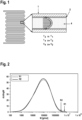
- Fig. 1 shows a detailed view of a tube 1, comprising an edge layer 2, which is located adjacent to the inner walls of the reactor.
- the tube 1 further comprises a core layer 4, which is indicated with the dotted hashing.
- the temperature of the edge layer T 2 is about the same as the temperature of the tube wall T 1 , wherein the temperature of the core layer T 4 is much higher than the temperature of the edge layer T 2 .
- the velocity in the core layer v 4 is higher than the velocity in the edge layer v 2 .
- a high molecular weight fraction is produced, which impacts the MWD of the final product.
Landscapes
- Chemical & Material Sciences (AREA)
- Health & Medical Sciences (AREA)
- Chemical Kinetics & Catalysis (AREA)
- Medicinal Chemistry (AREA)
- Polymers & Plastics (AREA)
- Organic Chemistry (AREA)
- Addition Polymer Or Copolymer, Post-Treatments, Or Chemical Modifications (AREA)
- Polymerisation Methods In General (AREA)
Priority Applications (2)
| Application Number | Priority Date | Filing Date | Title |
|---|---|---|---|
| EP23175771.7A EP4467575A1 (de) | 2023-05-26 | 2023-05-26 | Hochdruckpolymerisation von äthylen |
| PCT/EP2024/064318 WO2024245913A1 (en) | 2023-05-26 | 2024-05-24 | High pressure polymerization of ethylene |
Applications Claiming Priority (1)
| Application Number | Priority Date | Filing Date | Title |
|---|---|---|---|
| EP23175771.7A EP4467575A1 (de) | 2023-05-26 | 2023-05-26 | Hochdruckpolymerisation von äthylen |
Publications (1)
| Publication Number | Publication Date |
|---|---|
| EP4467575A1 true EP4467575A1 (de) | 2024-11-27 |
Family
ID=86688523
Family Applications (1)
| Application Number | Title | Priority Date | Filing Date |
|---|---|---|---|
| EP23175771.7A Withdrawn EP4467575A1 (de) | 2023-05-26 | 2023-05-26 | Hochdruckpolymerisation von äthylen |
Country Status (2)
| Country | Link |
|---|---|
| EP (1) | EP4467575A1 (de) |
| WO (1) | WO2024245913A1 (de) |
Citations (6)
| Publication number | Priority date | Publication date | Assignee | Title |
|---|---|---|---|---|
| US3503949A (en) * | 1965-07-09 | 1970-03-31 | Sir Soc Italiana Resine Spa | Process for polymerizing gaseous ethylene utilizing a constant diameter reactor with varying surface area/volume ratio |
| WO2012044504A1 (en) | 2010-09-30 | 2012-04-05 | Dow Global Technologies Llc | Polymerization process to make low density polyethylene |
| EP3121199A1 (de) | 2015-07-23 | 2017-01-25 | Basell Polyolefine GmbH | Hochdruckpolymerisierungsverfahren von ethylenisch ungesättigten monomeren in einem rohrförmigen reaktor |
| WO2019034718A1 (en) | 2017-08-17 | 2019-02-21 | Basell Polyolefine Gmbh | PROCESS FOR THE PREPARATION OF HOMOPOLYMERS OR ETHYLENE COPOLYMERS |
| WO2020127079A1 (en) | 2018-12-18 | 2020-06-25 | Basell Polyolefine Gmbh | High-pressure polymerization process of ethylenically unsaturated monomers in a polymerization reactor |
| US20210324185A1 (en) * | 2020-04-16 | 2021-10-21 | Exxonmobil Chemical Patents, Inc. | Polyethylene compositions with improved sealing performance and tear strength |
-
2023
- 2023-05-26 EP EP23175771.7A patent/EP4467575A1/de not_active Withdrawn
-
2024
- 2024-05-24 WO PCT/EP2024/064318 patent/WO2024245913A1/en active Pending
Patent Citations (6)
| Publication number | Priority date | Publication date | Assignee | Title |
|---|---|---|---|---|
| US3503949A (en) * | 1965-07-09 | 1970-03-31 | Sir Soc Italiana Resine Spa | Process for polymerizing gaseous ethylene utilizing a constant diameter reactor with varying surface area/volume ratio |
| WO2012044504A1 (en) | 2010-09-30 | 2012-04-05 | Dow Global Technologies Llc | Polymerization process to make low density polyethylene |
| EP3121199A1 (de) | 2015-07-23 | 2017-01-25 | Basell Polyolefine GmbH | Hochdruckpolymerisierungsverfahren von ethylenisch ungesättigten monomeren in einem rohrförmigen reaktor |
| WO2019034718A1 (en) | 2017-08-17 | 2019-02-21 | Basell Polyolefine Gmbh | PROCESS FOR THE PREPARATION OF HOMOPOLYMERS OR ETHYLENE COPOLYMERS |
| WO2020127079A1 (en) | 2018-12-18 | 2020-06-25 | Basell Polyolefine Gmbh | High-pressure polymerization process of ethylenically unsaturated monomers in a polymerization reactor |
| US20210324185A1 (en) * | 2020-04-16 | 2021-10-21 | Exxonmobil Chemical Patents, Inc. | Polyethylene compositions with improved sealing performance and tear strength |
Non-Patent Citations (4)
| Title |
|---|
| BENOIT H.REMPP PGRUBISIC Z.: "J. Polymer Sci., Phys", vol. 5, 1967, pages: 753 |
| CHRISTIAN-ULRICH SCHMIDT ET AL: "Detailed Molecular Structure Modeling - A Path Forward to Designing Application Properties of ldPE", MACROMOLECULAR MATERIALS AND ENGINEERING., vol. 290, no. 4, 19 April 2005 (2005-04-19), DE, pages 404 - 414, XP055226725, ISSN: 1438-7492, DOI: 10.1002/mame.200400342 * |
| RUBINSTEIN M.COLBY RH: "Polymer Physics", 2003, OXFORD UNIVERSITY PRESS |
| ZIMM BHSTOCKMAYER WH: "The dimensions of chain molecules containing branches and rings.", J CHEM PHYSICS, vol. 17 |
Also Published As
| Publication number | Publication date |
|---|---|
| WO2024245913A1 (en) | 2024-12-05 |
Similar Documents
| Publication | Publication Date | Title |
|---|---|---|
| EP3002300B1 (de) | Polymerisationsverfahren mit frischen ethylenverteilungen zur herstellung von polymeren auf der basis von ethylen mit niedriger dichte | |
| US10301403B2 (en) | Low density ethylene-based polymers with broad molecular weight distributions and low extractables | |
| EP3121199B1 (de) | Hochdruckpolymerisierungsverfahren von ethylenisch ungesättigten monomeren in einem rohrförmigen reaktor | |
| EP2464672B1 (de) | Ldpe zur verwendung als mischbestandteil für schrumpffolienanwendungen | |
| EP2700661B1 (de) | Neues ldpe, das in Abmischung mit anderen Polymeren einen hohen Ausstoss und gute Optik ermöglicht | |
| EP3083716B1 (de) | Ethylenbasierte polymere mit geringer dichte mit verbessertem gleichgewicht an extrahierbaren stoffen und verbesserter schmelzdehnung hergestellt im röhrenreaktor | |
| US9931608B2 (en) | Process for separating components of a polymer-monomer mixture obtained by high-pressure polymerization of ethylenically unsaturated monomers | |
| EP3077423A1 (de) | Verfahren zur trennung von komponenten eines reaktionsgemisches durch hochdruckpolymerisation von ethylenisch ungesättigten monomeren | |
| EP4467575A1 (de) | Hochdruckpolymerisation von äthylen | |
| US20240360255A1 (en) | Variable temperature tubular reactor profiles and intermediate density polyethylene compositions produced therefrom |
Legal Events
| Date | Code | Title | Description |
|---|---|---|---|
| PUAI | Public reference made under article 153(3) epc to a published international application that has entered the european phase |
Free format text: ORIGINAL CODE: 0009012 |
|
| STAA | Information on the status of an ep patent application or granted ep patent |
Free format text: STATUS: THE APPLICATION HAS BEEN PUBLISHED |
|
| AK | Designated contracting states |
Kind code of ref document: A1 Designated state(s): AL AT BE BG CH CY CZ DE DK EE ES FI FR GB GR HR HU IE IS IT LI LT LU LV MC ME MK MT NL NO PL PT RO RS SE SI SK SM TR |
|
| STAA | Information on the status of an ep patent application or granted ep patent |
Free format text: STATUS: THE APPLICATION IS DEEMED TO BE WITHDRAWN |
|
| 18D | Application deemed to be withdrawn |
Effective date: 20250528 |