EP4465753B1 - Benutzergerät, knoten und kommunikationsverfahren - Google Patents
Benutzergerät, knoten und kommunikationsverfahren Download PDFInfo
- Publication number
- EP4465753B1 EP4465753B1 EP23757501.4A EP23757501A EP4465753B1 EP 4465753 B1 EP4465753 B1 EP 4465753B1 EP 23757501 A EP23757501 A EP 23757501A EP 4465753 B1 EP4465753 B1 EP 4465753B1
- Authority
- EP
- European Patent Office
- Prior art keywords
- node
- user equipment
- notification
- scell
- radio quality
- Prior art date
- Legal status (The legal status is an assumption and is not a legal conclusion. Google has not performed a legal analysis and makes no representation as to the accuracy of the status listed.)
- Active
Links
Images






Classifications
-
- H—ELECTRICITY
- H04—ELECTRIC COMMUNICATION TECHNIQUE
- H04L—TRANSMISSION OF DIGITAL INFORMATION, e.g. TELEGRAPHIC COMMUNICATION
- H04L5/00—Arrangements affording multiple use of the transmission path
- H04L5/0091—Signalling for the administration of the divided path, e.g. signalling of configuration information
- H04L5/0096—Indication of changes in allocation
- H04L5/0098—Signalling of the activation or deactivation of component carriers, subcarriers or frequency bands
-
- H—ELECTRICITY
- H04—ELECTRIC COMMUNICATION TECHNIQUE
- H04W—WIRELESS COMMUNICATION NETWORKS
- H04W36/00—Hand-off or reselection arrangements
- H04W36/24—Reselection being triggered by specific parameters
- H04W36/30—Reselection being triggered by specific parameters by measured or perceived connection quality data
- H04W36/304—Reselection being triggered by specific parameters by measured or perceived connection quality data due to measured or perceived resources with higher communication quality
-
- H—ELECTRICITY
- H04—ELECTRIC COMMUNICATION TECHNIQUE
- H04W—WIRELESS COMMUNICATION NETWORKS
- H04W36/00—Hand-off or reselection arrangements
- H04W36/34—Reselection control
- H04W36/36—Reselection control by user or terminal equipment
- H04W36/362—Conditional handover
-
- H—ELECTRICITY
- H04—ELECTRIC COMMUNICATION TECHNIQUE
- H04W—WIRELESS COMMUNICATION NETWORKS
- H04W52/00—Power management, e.g. Transmission Power Control [TPC] or power classes
- H04W52/02—Power saving arrangements
- H04W52/0203—Power saving arrangements in the radio access network or backbone network of wireless communication networks
- H04W52/0206—Power saving arrangements in the radio access network or backbone network of wireless communication networks in access points, e.g. base stations
-
- H—ELECTRICITY
- H04—ELECTRIC COMMUNICATION TECHNIQUE
- H04W—WIRELESS COMMUNICATION NETWORKS
- H04W52/00—Power management, e.g. Transmission Power Control [TPC] or power classes
- H04W52/02—Power saving arrangements
- H04W52/0209—Power saving arrangements in terminal devices
- H04W52/0212—Power saving arrangements in terminal devices managed by the network, e.g. network or access point is leader and terminal is follower
- H04W52/0216—Power saving arrangements in terminal devices managed by the network, e.g. network or access point is leader and terminal is follower using a pre-established activity schedule, e.g. traffic indication frame
-
- H—ELECTRICITY
- H04—ELECTRIC COMMUNICATION TECHNIQUE
- H04W—WIRELESS COMMUNICATION NETWORKS
- H04W52/00—Power management, e.g. Transmission Power Control [TPC] or power classes
- H04W52/02—Power saving arrangements
- H04W52/0209—Power saving arrangements in terminal devices
- H04W52/0212—Power saving arrangements in terminal devices managed by the network, e.g. network or access point is leader and terminal is follower
- H04W52/0219—Power saving arrangements in terminal devices managed by the network, e.g. network or access point is leader and terminal is follower where the power saving management affects multiple terminals
-
- H—ELECTRICITY
- H04—ELECTRIC COMMUNICATION TECHNIQUE
- H04W—WIRELESS COMMUNICATION NETWORKS
- H04W52/00—Power management, e.g. Transmission Power Control [TPC] or power classes
- H04W52/02—Power saving arrangements
- H04W52/0209—Power saving arrangements in terminal devices
- H04W52/0225—Power saving arrangements in terminal devices using monitoring of external events, e.g. the presence of a signal
- H04W52/0229—Power saving arrangements in terminal devices using monitoring of external events, e.g. the presence of a signal where the received signal is a wanted signal
-
- H—ELECTRICITY
- H04—ELECTRIC COMMUNICATION TECHNIQUE
- H04W—WIRELESS COMMUNICATION NETWORKS
- H04W52/00—Power management, e.g. Transmission Power Control [TPC] or power classes
- H04W52/02—Power saving arrangements
- H04W52/0209—Power saving arrangements in terminal devices
- H04W52/0261—Power saving arrangements in terminal devices managing power supply demand, e.g. depending on battery level
- H04W52/0274—Power saving arrangements in terminal devices managing power supply demand, e.g. depending on battery level by switching on or off the equipment or parts thereof
- H04W52/028—Power saving arrangements in terminal devices managing power supply demand, e.g. depending on battery level by switching on or off the equipment or parts thereof switching on or off only a part of the equipment circuit blocks
-
- H—ELECTRICITY
- H04—ELECTRIC COMMUNICATION TECHNIQUE
- H04W—WIRELESS COMMUNICATION NETWORKS
- H04W76/00—Connection management
- H04W76/10—Connection setup
- H04W76/15—Setup of multiple wireless link connections
-
- H—ELECTRICITY
- H04—ELECTRIC COMMUNICATION TECHNIQUE
- H04W—WIRELESS COMMUNICATION NETWORKS
- H04W76/00—Connection management
- H04W76/20—Manipulation of established connections
-
- H—ELECTRICITY
- H04—ELECTRIC COMMUNICATION TECHNIQUE
- H04W—WIRELESS COMMUNICATION NETWORKS
- H04W36/00—Hand-off or reselection arrangements
- H04W36/0005—Control or signalling for completing the hand-off
- H04W36/0055—Transmission or use of information for re-establishing the radio link
-
- H—ELECTRICITY
- H04—ELECTRIC COMMUNICATION TECHNIQUE
- H04W—WIRELESS COMMUNICATION NETWORKS
- H04W88/00—Devices specially adapted for wireless communication networks, e.g. terminals, base stations or access point devices
- H04W88/02—Terminal devices
-
- Y—GENERAL TAGGING OF NEW TECHNOLOGICAL DEVELOPMENTS; GENERAL TAGGING OF CROSS-SECTIONAL TECHNOLOGIES SPANNING OVER SEVERAL SECTIONS OF THE IPC; TECHNICAL SUBJECTS COVERED BY FORMER USPC CROSS-REFERENCE ART COLLECTIONS [XRACs] AND DIGESTS
- Y02—TECHNOLOGIES OR APPLICATIONS FOR MITIGATION OR ADAPTATION AGAINST CLIMATE CHANGE
- Y02D—CLIMATE CHANGE MITIGATION TECHNOLOGIES IN INFORMATION AND COMMUNICATION TECHNOLOGIES [ICT], I.E. INFORMATION AND COMMUNICATION TECHNOLOGIES AIMING AT THE REDUCTION OF THEIR OWN ENERGY USE
- Y02D30/00—Reducing energy consumption in communication networks
- Y02D30/70—Reducing energy consumption in communication networks in wireless communication networks
Definitions
- the present disclosure relates to a user equipment, a node, and a communication method.
- CA carrier aggregation
- UE user equipment
- node a network of a mobile communication system
- a plurality of component carriers (CCs) corresponding to a plurality of serving cells are aggregated, enabling the UE to simultaneously receive or transmit over the plurality of CCs (plurality of cells).
- the plurality of CCs may be contiguous or non-contiguous in the frequency domain.
- One serving cell is referred to as a primary cell (PCell) and one or more secondary cells (SCells) are configured for the UE together with the PCell to form a set of serving cells.
- PCell primary cell
- SCells secondary cells
- the UE When CA has been configured, the UE has one radio resource control (RRC) connection to the network.
- RRC radio resource control
- SCells can be added and deleted through RRC signaling. SCells can be activated and deactivated through a medium access control (MAC) control element (CE).
- MAC medium access control
- CA is generally configured and activated with the following procedure.
- the UE transmits a measurement report message including a radio quality measurement result of each cell to a node.
- the node configures SCells for the UE using an RRC message based on the measurement report message.
- the node activates the SCells of the UE using a MAC CE. Activation of an SCell causes the SCell to transition from an inactive state to an active state, enabling wireless communication using the SCell.
- Such three-step control poses the problem that it is difficult to shorten a time period from when radio quality corresponding to an SCell in the UE has improved to when wireless communication using the SCell becomes possible.
- US 2022/124853 A1 discloses an apparatus comprising at least one processing core, at least one memory including computer program code, the at least one memory and the computer program code being configured to, with the at least one processing core, cause the apparatus at least to receive, from a primary cell, a candidate secondary cell configuration which comprises at least one condition, determine that the at least one condition is fulfilled, and activate, as a response to the determining, the candidate secondary cell into a carrier aggregation or a dual connectivity session of the apparatus.
- CN 111 436 074 A discloses a method for activating a secondary cell, a method for measuring a secondary cell, and a terminal, the method for activating a secondary cell comprising: determining a secondary cell satisfying a self-activation determination condition as a self-activated secondary cell; and activating the self-activated secondary cell.
- Non-Patent Document 1 3GPP Technical Specification: TS 38.300 V17.3.0 (2022-12 )
- the present invention provides a user equipment, a node, and communication methods according to the independent claims. Further embodiments of the present invention are disclosed in the dependent claims.
- FIGs. 1 to 9 A first embodiment will be described with reference to FIGs. 1 to 9 .
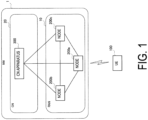
- FIG. 1 is a diagram illustrating a configuration example of a mobile communication system according to the embodiment.
- the mobile communication system according to the embodiment is a system conforming to the 3GPP standard.
- the mobile communication system according to the embodiment may be a 5th Generation (5G) System or a 6th Generation (6G) System.
- the mobile communication system includes a network (NW) 1 and a user equipment (UE) 100.
- the UE 100 is a mobile communication apparatus and performs wireless communication with the NW 1.
- the UE 100 may be an apparatus used by a user and may be, for example, a mobile phone terminal (including a smartphone), a tablet terminal, a laptop personal computer (PC), a communication module (including a communication card or chipset), a sensor or an apparatus provided in a sensor, a vehicle or an apparatus provided in a vehicle (a vehicle UE), an aircraft or an apparatus provided in an aircraft (an aerial UE).
- the NW 1 includes a radio access network (RAN) 10 and a core network (CN) 20.
- RAN radio access network
- CN core network
- the RAN 10 is called a Next Generation Radio Access Network (NG-RAN)
- NG-RAN Next Generation Radio Access Network
- GC 5G Core Network
- the RAN 10 includes a plurality of nodes 200 (nodes 200a to 200c in the illustrated example).
- the nodes 200 are connected to each other via inter-node interfaces.
- the nodes 200 are also called base stations.
- Each node 200 may include (i.e., be functionally divided into) a Central Unit (CU) and a Distributed Unit (DU), and the two units may be connected through a fronthaul interface.
- CU Central Unit
- DU Distributed Unit
- the two units may be connected through a fronthaul interface.
- the nodes 200 are called gNBs
- the inter-node interfaces are called Xn interfaces
- the fronthaul interface is called an F1 interface.
- Each node 200 manages one or more cells.
- the node 200 performs wireless communication with the UE 100 that has established connections to the cells of the node 200.
- Each node 200 has a radio resource management (RRM) function, a user data (also simply referred to as “data”) routing function, a measurement control function for mobility control/scheduling, and the like.
- RRM radio resource management
- a "cell” is used as a term indicating a minimum unit of a wireless communication area.
- a “cell” is also used as a term indicating a function or resource for wireless communication with the UE 100.
- One cell belongs to one carrier frequency (also simply referred to as one "frequency").
- the CN 20 includes a CN apparatus 300.
- the CN apparatus 300 may include a control plane (C-plane) apparatus corresponding to a C-plane and a user plane (U-plane) apparatus corresponding to a U-plane.
- the C-plane apparatus performs various mobility control, paging, and the like for the UE 100.
- the C-plane apparatus communicates with the UE 100 using Non-Access Stratum (NAS) signaling.
- NAS Non-Access Stratum
- the U-plane apparatus performs data transfer control.
- the C-plane apparatus is called an Access and Mobility Management Function (AMF)
- the U-plane apparatus is called a User Plane Function (UPF)
- the interfaces between the node 200 and the CN apparatus 300 are called NG interfaces.
- AMF Access and Mobility Management Function
- UPF User Plane Function
- FIG. 2 is a diagram illustrating a configuration example of a radio interface protocol stack of the U-plane that handles data.
- the U-plane radio interface protocols include, for example, a physical (PHY) layer, a Medium Access Control (MAC) layer, a Radio Link Control (RLC) layer, a Packet Data Convergence Protocol (PDCP) layer, and a Service Data Adaptation Protocol (SDAP) layer.
- PHY physical
- MAC Medium Access Control
- RLC Radio Link Control
- PDCP Packet Data Convergence Protocol
- SDAP Service Data Adaptation Protocol
- the PHY layer performs encoding/decoding, modulation/demodulation, antenna mapping/demapping, and resource mapping/demapping. Data and control information is transferred between the PHY layer of the UE 100 and the PHY layer of the node 200 via a physical channel.
- the PHY layer of the UE 100 receives downlink control information (DCI) transmitted from the node 200 over a physical downlink control channel (PDCCH).
- DCI downlink control information
- PDCCH physical downlink control channel
- RNTI radio network temporary identifier
- the DCI transmitted from the node 200 is appended with CRC parity bits scrambled by the RNTI.
- the MAC layer performs data priority control, retransmission processing through hybrid ARQ (HARQ), and the like. Data and control information is transferred between the MAC layer of the UE 100 and the MAC layer of the node 200 via a transport channel.
- the MAC layer of the node 200 includes a scheduler. The scheduler determines uplink and downlink transport formats (transport block sizes and modulation and coding schemes (MCSs)) and resources allocated to the UE 100.
- MCSs modulation and coding schemes
- the RLC layer transfers data to the RLC layer of the receiving side using the functions of the MAC layer and the PHY layer. Data and control information is transferred between the RLC layer of the UE 100 and the RLC layer of the node 200 via a logical channel.
- the PDCP layer performs header compression/decompression, encryption/decryption, and the like.
- the SDAP layer performs mapping between an IP flow which is the unit in which the CN 20 performs QoS control and a radio bearer which is the unit in which an Access Stratum (AS) performs QoS control. Note that the SDAP need not be present when the RAN is connected to an EPC.
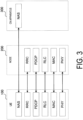
- FIG. 3 is a diagram illustrating a configuration example of a radio interface protocol stack of the C-plane that handles signaling (control signals).
- the radio interface protocol stack of the C-plane includes, for example, a Radio Resource Control (RRC) layer and a Non-Access Stratum (NAS) layer instead of the SDAP layer illustrated in FIG. 2 .
- RRC Radio Resource Control
- NAS Non-Access Stratum
- RRC signaling for various configurations is transferred between the RRC layer of the UE 100 and the RRC layer of the node 200.
- the RRC layer controls logical, transport, and physical channels in response to establishment, re-establishment, and release of radio bearers.
- RRC connection When there is a connection between the RRC of the UE 100 and the RRC of the node 200 (RRC connection), the UE 100 is in an RRC connected state.
- RRC connection When there is no connection between the RRC of the UE 100 and the RRC of the node 200 (RRC connection), the UE 100 is in an RRC idle state.
- the connection between the RRC of the UE 100 and the RRC of the node 200 is suspended, the UE 100 is in an RRC inactive state.
- the NAS layer (also simply referred to as a "NAS") located above the RRC layer performs session management, mobility management, and the like. NAS signaling is transferred between the NAS layer of the UE 100 and the NAS layer of the CN apparatus 300.
- the UE 100 includes an application layer in addition to the radio interface protocols.
- Each layer lower than the NAS layer is referred to as an AS layer (also simply referred to as an "AS").
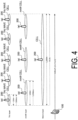
- FIG. 4 is a diagram for explaining terahertz (THz) wave cells according to the embodiment.
- a mobile communication system may be a 6G system.
- 6G is expected to utilize terahertz (THz) waves.
- THz wave cell A cell that operates with THz waves is called a THz wave cell.
- mmW millimeter waves
- THz waves have higher propagation, higher free space loss, and are more susceptible to the effects of the atmosphere and rainfall.
- THz wave cells can be ultra-compact size cells.
- the diameter of the coverage area of a THz wave cell is about 10 m
- the diameter of the coverage area of a mmW cell that operates with mmW is about 100 m
- the diameter of the coverage area of a macro cell is about 1000 m.
- the UE 100 which is moving at, for example, 60 km/s passes through the coverage area of each THz wave cell in about 599 ms.
- Carrier aggregation is one method for reliably controlling compact size cells in a mobile communication system.
- THz wave cells are used as secondary cells (SCells) of CA.
- SCells secondary cells
- PCell primary cell
- PCell primary cell
- mmW cell mmW cell
- FIG. 5 is a diagram for explaining carrier aggregation (CA) according to the embodiment.
- CA can be configured for the UE 100, which is in an RRC connected state, through the node 200.
- a plurality of component carriers (CCs) corresponding to a plurality of serving cells are aggregated, enabling the UE to simultaneously receive or transmit over the plurality of CCs (plurality of cells).
- the plurality of CCs may be contiguous or non-contiguous in the frequency domain.
- One serving cell is referred to as a primary cell (PCell) and one or more secondary cells (SCells) are configured for the UE together with the PCell to form a set of serving cells.
- PCell primary cell
- SCells secondary cells
- the UE 100 has one RRC connection to the network 1.
- SCells can be added and deleted through RRC signaling.
- SCells can be activated and deactivated through a medium access control (MAC) control element (CE).
- MAC medium access control
- the mobile communication system supports activation and deactivation of cells to enable a reduction in the power consumption of the UE 100 when CA has been configured.
- an SCell When an SCell is inactive, the UE 100 does not need to receive a PDCCH or a physical downlink shared channel (PDSCH) over the SCell and cannot perform uplink transmission over the SCell.
- the UE 100 also does not need to perform channel quality indicator (CQI) measurement for the inactive SCell.
- CQI channel quality indicator
- the UE 100 receives a PDSCH and a PDCCH over the SCell. The UE 100 can perform CQI measurement for the active SCell.
- the node 200 when reconfiguring a set of serving cells, the node 200 first activates or deactivates SCells added to the set and does not change the activation state (active or inactive state) of SCells remaining in the set (which have not been changed or reconfigured).
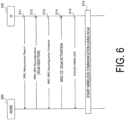
- FIG. 6 is a diagram illustrating a general procedure for adding and activating SCells.
- the UE 100 transmits a Measurement Report message including the radio quality measurement result of each cell to the node 200, for example, over the PCell.
- the radio quality is, for example, at least one selected from the group consisting of Reference Signal Received Power (RSRP), Reference Signal Received Quality (RSRQ), and Signal to Interference & Noise Ratio (SINR).
- the Measurement Report message is an RRC message transmitted and received in the RRC layer.
- the Measurement Report message may be transmitted periodically or by an event trigger.
- the node 200 receives the Measurement Report Message.
- step S12 the node 200 determines to configure (add) the SCell for the UE 100 based on the Measurement Report message and transmits, to the UE 100, an RRC Reconfiguration message for adding the SCell to the UE 100, for example, over the PCell.
- the RRC Reconfiguration message is transmitted and received in the RRC layer.
- the UE 100 receives the RRC Reconfiguration message.
- step S13 the UE 100 transmits an RRC Reconfiguration Complete message indicating completion of adding the SCell based on the RRC Reconfiguration message to the node 200, for example, over the PCell.
- the RRC Reconfiguration Complete message is transmitted and received in the RRC layer.
- the node 200 receives the RRC Reconfiguration Complete message.
- the added SCell is inactive.
- the node 200 transmits, to the UE 100, a MAC CE for activating the SCell added to the UE 100, for example, over the PCell.
- the MAC CE is transmitted and received in the MAC layer.
- the UE 100 starts activating the SCell upon receiving the MAC CE.
- the UE 100 receives a reference signal of the SCell and performs channel state information (CSI) measurement, automatic gain control (AGC), and beam management to prepare for communication.
- CSI channel state information
- AGC automatic gain control
- step S15 the UE 100 transmits a HARQ ACK indicating successful reception of the MAC CE to the node 200, for example, over a PUCCH of the PCell.
- the node 200 receives the HARQ ACK.
- a first extended function is direct SCell activation.
- direct SCell activation the node 200 can designate the initial state of an SCell as an active state when adding the SCell to the UE 100 using an RRC message. This eliminates the need to transmit and receive the MAC CE for SCell activation in FIG. 6 and thus can speed up SCell activation.
- a second extended function is a technique called dormant BWP.
- the node 200 can configure dormant bandwidth parts (BWPs) for SCells. If an active BWP for an activated SCell is a dormant BWP, the UE 100 stops PDCCH monitoring and sounding reference signal (SRS)/PUSCH/PUCCH transmission over the SCell, but continues the execution of CSI measurement, AGC, and beam management. PDCCH/downlink control information (DCI) is used to control entering and leaving a dormant BWP for the SCell.
- the dormant BWP is one of dedicated BWPs of the UE 100 that the network 1 has configured via dedicated RRC signaling. An example using dormant BWPs will be described in a second embodiment.
- a third extended function is a method of configuring, for an SCell, an aperiodic CSI-RS for tracking (synchronization) for fast SCell activation.
- an aperiodic CSI-RS can support AGC and time/frequency synchronization.
- a MAC CE is used to trigger (start) SCell activation and trigger an aperiodic CSI-RS for a deactivated SCell.
- FIG. 7 is a diagram illustrating a configuration example of the UE 100 (user equipment) according to the embodiment.
- the UE 100 includes a receiver 110, a transmitter 120, and a controller 130.
- the receiver 110 and the transmitter 120 constitute a wireless communicator 140 that performs wireless communication with the node 200.
- the controller 130 performs various types of control and processes in the UE 100. The operations of the UE 100 described above and below may also be performed under the control of a controller 230.
- the controller 130 includes at least one processor and at least one memory.
- the memory stores programs executed by the processor and information used for processing by the processor.
- the processor may include a baseband processor and a Central Processing Unit (CPU).
- the baseband processor performs modulation/demodulation, encoding/decoding, or the like on the baseband signal.
- the CPU executes the programs stored in the memory to perform various processes.
- the UE 100 configured as such performs wireless communication with the node 200 using CA.
- the receiver 110 receives, from the node 200, information indicating a radio quality condition that is to be met for the UE 100 to perform an activation process for each SCell configured for the UE 100.
- the controller 130 measures radio quality of the SCell and evaluates whether the radio quality condition is met.
- the controller 130 performs an activation process for the SCell in response to the radio quality condition being met.
- the node 200 needs to identify that the radio quality of an SCell meets a radio quality condition (a predetermined level of quality) based on a Measurement Report message and instruct the UE 100 to activate the SCell and/or switch a dormant BWP to a non-dormant state (cause a dormant BWP to leave a dormant state).
- a radio quality condition is configured for the UE 100 and the UE 100 can determine whether the radio quality condition is met, such that the UE 100 can autonomously perform an activation process for the SCell without transmitting a Measurement Report message to the node 200.
- the UE 100 can autonomously perform an activation process for the SCell without transmitting a Measurement Report message to the node 200.
- the activation process includes a process for transitioning the SCell from an inactive state to an active state.
- the activation process may also include a process of causing a dormant BWP in the SCell to leave the dormant state.
- An example using dormant BWPs will be described in the second embodiment.
- the transmitter 120 transmits a notification regarding the activation process to the node 200 in response to the radio quality condition being met.
- the node 200 can determine that the UE 100 will perform an activation process. Therefore, wireless communication using the activated SCell can be started smoothly.
- the transmitter 120 transmits a notification regarding the activation process to the node 200 over the PCell.
- the notification can be transmitted to the node 200 before activation of the SCell is completed. Therefore, wireless communication using the activated SCell can be started smoothly and quickly.
- FIG. 8 is a diagram illustrating a configuration example of the node 200 (base station) according to the embodiment.
- the node 200 includes a transmitter 210, a receiver 220, the controller 230, and a NW communicator 240.
- the transmitter 210 and the receiver 220 constitute a wireless communicator 250 that performs wireless communication with the UE 100.
- the transmitter 210 performs various types of transmission under the control of the controller 230.
- the transmitter 210 includes an antenna and a transmission device.
- the transmission device converts a baseband signal (transmission signal) output from the controller 230 into a radio signal and transmits the radio signal through the antenna.
- the receiver 220 performs various types of reception under the control of the controller 230.
- the receiver 220 includes an antenna and a reception device.
- the reception device converts the radio signal received through the antenna into a baseband signal (reception signal) and outputs the baseband signal to the controller 230.
- the controller 230 performs various types of control and processes in the node 200. The operations of the node 200 described above and below may also be performed under the control of the controller 230.
- the controller 230 includes at least one processor and at least one memory.
- the memory stores programs executed by the processor and information used for processing by the processor.
- the processor may include a baseband processor and a CPU.
- the baseband processor performs modulation/demodulation, encoding/decoding, or the like on the baseband signal.
- the CPU executes the programs stored in the memory to perform various processes.
- the NW communicator 240 is connected to adjacent nodes via inter-node interfaces.
- the NW communicator 240 is connected to the CN apparatus 300 via a node-CN interface.
- the node 200 configured as such performs wireless communication with the UE 100 using CA.
- the controller 230 configures SCells for the UE 100.
- the transmitter 210 transmits to the UE 100 information indicating a radio quality condition that is to be met for the UE 100 to perform an activation process for each SCell. This allows the UE 100 to autonomously perform an activation process for an SCell when the radio quality of the SCell meets the radio quality condition (the predetermined level of quality).
- the receiver 220 receives a notification regarding the activation process from the UE 100 in response to the radio quality condition being met in the UE 100. For example, the receiver 220 receives the notification from the UE 100 over the PCell.
- FIG. 9 is a diagram illustrating an operation example of a system according to the first embodiment.
- dashed lines indicate non-essential steps. Overlapping description of operations the same as those of FIG. 6 will be omitted.
- step S101 the receiver 110 of the UE 100 receives a reference signal from each cell, the controller 130 of the UE 100 measures radio quality based on the reference signal, and the transmitter 120 of the UE 100 transmits a Measurement Report message including the measurement result to the node 200, for example, over the PCell.
- the Measurement Report message includes the measurement results of THz wave cells.
- the receiver 220 of the node 200 receives the Measurement Report message.
- step S102 the controller 230 of the node 200 generates an RRC Reconfiguration message and the transmitter 210 of the node 200 transmits the RRC Reconfiguration message to the UE 100, for example, over the PCell.
- the receiver 110 of the UE 100 receives the RRC Reconfiguration message.
- the RRC Reconfiguration message includes configuration information for adding SCells and configuration information for conditional SCell activation.
- the configuration information for adding SCells may be an sCellToAddModList which is a list of SCells to be added or changed.
- the sCellToAddModList is a list that has SCell configurations (SCellConfig) as entries.
- SCellConfig SCellConfig
- Each SCell configuration (SCellConfig) includes an index of the corresponding SCell (sCellIndex) and a configuration of the corresponding SCell (sCellConfigCommon and sCellConfigDedicated).
- the SCell configuration may include the configuration information for conditional SCell activation.
- the configuration information for conditional SCell activation includes information indicating a radio quality condition that is to be met for the UE 100 to activate the corresponding SCell.
- the information indicating the radio quality condition may include at least one radio quality threshold value selected from the group consisting of an RSRP threshold value, an RSRQ threshold value, and an SINR threshold value.
- the initial state of the SCell added to the UE 100 is the inactive state.
- the controller 130 of the UE 100 starts radio quality measurement for the SCell based on the configuration information for conditional SCell activation.
- step S103 the controller 130 of the UE 100 generates an RRC Reconfiguration Complete message and the transmitter 210 of the UE 100 transmits the RRC Reconfiguration Complete message to the node 200, for example, over the PCell.
- the receiver 220 of the node 200 receives the RRC Reconfiguration Complete message.
- the receiver 110 of the UE 100 receives a reference signal of each SCell and the controller 130 of the UE 100 measures radio quality based on the reference signal.
- the reference signal of the SCell may be a demodulation reference signal (DMRS) included in an SS/PBCH Block (SSB) transmitted by the SCell or may be a Tracking Reference Signal (TRS) which is a type of CSI-RS.
- DMRS demodulation reference signal
- SSB SS/PBCH Block
- TRS Tracking Reference Signal
- step S105 the controller 130 of the UE 100 determines whether the radio quality condition configured in step S102 is met. Specifically, the controller 130 of the UE 100 compares the measurement result (RSRP, RSRQ, and/or SINR) in step S104 with the radio quality threshold value configured in step S102, and if the measurement result exceeds the radio quality threshold value, determines that the radio quality condition is met. When it is determined that the radio quality condition is not met (NO in step S105), the process returns to step S104.
- the measurement result RSRP, RSRQ, and/or SINR
- the controller 130 of the UE 100 upon determining that the radio quality condition is met (YES in step S105), the controller 130 of the UE 100 starts activating the SCell in step S106.
- the controller 130 of the UE 100 may perform control for establishing time/frequency synchronization with the SCell.
- the receiver 110 of the UE 100 receives an SSB or TRS of the SCell and the controller 130 of the UE 100 establishes time/frequency synchronization using the SSB or TRS.
- the controller 130 of the UE 100 may also perform CSI measurement, AGC, and beam management for the SCell.
- the node 200 may transmit the TRS over the SCell at a time (occasion) that the node 200 has configured in the UE 100 in advance and the UE 100 may wake up at the time to receive the TRS.
- the RRC configuration of step S102 may include information on the time (occasion).
- step S107 the controller 130 of the UE 100 triggers transmission of an SCell activation notification and the transmitter 120 of the UE 100 transmits the SCell activation notification to the node 200 over the PCell.
- the receiver 220 of the node 200 receives the SCell activation notification.
- the SCell activation notification may be a newly introduced MAC CE.
- the SCell activation notification includes an index value (which may be a cell ID) of the activated SCell.
- the SCell activation notification may be a notification included in UCI transmitted over a PUCCH, may be a PDCP Control PDU, or may be a notification included in an RRC message.
- the UE 100 transmits a Scheduling Request (SR) to the node 200, the node 200 transmits a UL grant for a Buffer Status Report (BSR) to the UE 100, the UE 100 transmits a BSR to the node 200, and the node 200 transmits a UL grant for PUSCH transmission to the UE 100.
- SR Scheduling Request
- BSR Buffer Status Report
- the UE 100 then transmits an SCell activation notification based on the UL grant for PUSCH transmission.
- the SCell activation notification may include an index of the activated SCell.
- the index may refer to each entry in the SCell configuration list configured in the RRC Reconfiguration.
- the cell ID of the activated SCell may be transmitted instead of the index.
- each bit position may be associated with a respective SCell and each bit (0/1) may indicate whether the bit is activated.
- step S108 the transmitter 210 of the node 200 transmits a HARQ ACK indicating successful reception of the SCell activation notification to the UE 100 over a PDCCH of the PCell.
- the receiver 110 of the UE 100 receives the HARQ ACK. Note that step S108 need not be performed if the SCell activation notification is UCI.
- the node 200 identifies that the SCell of the UE 100 has become available in response to receiving the SCell activation notification in step S107.
- the node 200 performs DL transmission and/or UL granting to the UE 100 over the activated SCell and starts wireless communication (data communication) over the SCell.
- the second embodiment will be described with reference to FIGs. 10 and 12 , focusing on differences from the first embodiment.
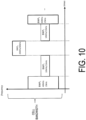
- FIG. 10 is a diagram for explaining BWPs.
- BWPs bandwidth adaptation
- the node 200 configures one or more BWPs in the cell for the UE 100 and informs the UE 100 which of the configured BWPs is currently active.
- BWPs include an initial BWP used for initial access and dedicated BWPs individually configured for the UE 100.
- the bandwidth and subcarrier spacing of each BWP can be variably configured.
- the illustrated example illustrates an example in which three different BWPs are configured for the UE 100 and an active BWP is switched among these BWPs.
- BWP1 has a width of 40 MHz and a subcarrier spacing of 15 kHz
- BWP2 has a width of 10 MHz and a subcarrier spacing of 15 kHz
- BWP3 has a width of 20 MHz and a subcarrier spacing of 60 kHz.
- each of the UL and DL only one BWP is active and the rest are inactive.
- the UE 100 does not monitor a PDCCH and does not transmit a PUCCH, a PRACH, and an UL-SCH.
- the node 200 can configure dormant BWPs for SCells. If an active BWP for an activated SCell is a dormant BWP, the UE 100 stops PDCCH monitoring and SRS/PUSCH/PUCCH transmission over the SCell, but continues the execution of CSI measurement, AGC, and beam management. A PDCCH/DCI is used to control entering and leaving a dormant BWP for the SCell. Note that the dormant BWP is one of the dedicated BWPs of the UE 100 that the node 200 has configured via dedicated RRC signaling.
- the UE 100 performs wireless communication with the node 200 using CA the same as, and/or similar to, in the first embodiment.
- the receiver 110 receives, from the node 200, information indicating a radio quality condition that is to be met for the UE 100 to perform an activation process for each SCell configured for the UE 100.
- the controller 130 measures radio quality of the SCell and evaluates whether the radio quality condition is met.
- the controller 130 performs an activation process for the SCell in response to the radio quality condition being met.
- the activation process includes a dormant leaving process for switching a dormant BWP to a non-dormant state in the SCell.
- the controller 130 of the UE 100 causes a dormant BWP for the active SCell to leave the dormant state in response to the radio quality condition configured by the node 200 being met.
- the UE 100 can cause a dormant BWP to leave the dormant state without transmitting a Measurement Report message to the node 200 and receiving DCI indicating leaving a dormant BWP.
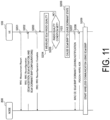
- FIG. 11 is a diagram illustrating an operation example of a system according to the second embodiment.
- dashed lines indicate non-essential steps. Overlapping description of operations the same as those of the first embodiment described above will be omitted.
- step S201 the receiver 110 of the UE 100 receives a reference signal from each cell, the controller 130 of the UE 100 measures radio quality based on the reference signal, and the transmitter 120 of the UE 100 transmits a Measurement Report message including the measurement result to the node 200, for example, over the PCell.
- the Measurement Report message includes the measurement results of THz wave cells.
- the receiver 220 of the node 200 receives the Measurement Report message.
- step S202 the controller 230 of the node 200 generates an RRC Reconfiguration message and the transmitter 210 of the node 200 transmits the RRC Reconfiguration message to the UE 100, for example, over the PCell.
- the receiver 110 of the UE 100 receives the RRC Reconfiguration message.
- the RRC Reconfiguration message includes configuration information for adding SCells, configuration information for designating the initial state of the SCell as an active state, configuration information for configuring a BWP (a dedicated BWP) for the SCell, configuration information for setting the BWP to a dormant state, and configuration information for conditionally leaving the dormant BWP.
- the configuration information for adding SCells may be an sCellToAddModList which is a list of SCells to be added or changed.
- the sCellToAddModList is a list that has SCell configurations (SCellConfig) as entries.
- Each SCell configuration (SCellConfig) includes an index of the corresponding SCell (sCellIndex) and a configuration of the corresponding SCell (sCellConfigCommon and sCellConfigDedicated).
- the SCell configuration may include the configuration information for designating the initial state of the SCell as an active state, the configuration information for configuring a BWP (a dedicated BWP) for the SCell, the configuration information for configuring the BWP to a dormant state, and the configuration information for conditionally leaving the dormant BWP.
- SCellConfig may include the configuration information for designating the initial state of the SCell as an active state, the configuration information for configuring a BWP (a dedicated BWP) for the SCell, the configuration information for configuring the BWP to a dormant state, and the configuration information for conditionally leaving the dormant BWP.
- the configuration information for conditionally leaving the dormant BWP includes information indicating, when the active BWP of the corresponding active SCell is a dormant BWP, a radio quality condition that is to be met to terminate (leave) the dormant state of the corresponding BWP.
- the information indicating the radio quality condition may include at least one radio quality threshold value selected from the group consisting of an RSRP threshold value, an RSRQ threshold value, and an SINR threshold value.
- the initial state of the active BWP of the SCell added to the UE 100 is the dormant state.
- the controller 130 of the UE 100 starts radio quality measurement for the SCell based on the configuration information for conditionally leaving the dormant BWP.
- step S203 the controller 130 of the UE 100 generates an RRC Reconfiguration Complete message and the transmitter 210 of the UE 100 transmits the RRC Reconfiguration Complete message to the node 200, for example, over the PCell.
- the receiver 220 of the node 200 receives the RRC Reconfiguration Complete message.
- step S205 the controller 130 of the UE 100 determines whether the radio quality condition configured in step S202 is met. Specifically, the controller 130 of the UE 100 compares the measurement result (RSRP, RSRQ, and/or SINR) in step S204 with the radio quality threshold value configured in step S202, and if the measurement result exceeds the radio quality threshold value, determines that the radio quality condition is met. When it is determined that the radio quality condition is not met (NO in step S205), the process returns to step S204.
- the measurement result RSRP, RSRQ, and/or SINR
- the controller 130 of the UE 100 terminates (leaves) the dormant BWP of the SCell (i.e., switches the dormant BPW to a non-dormant state) in step S206.
- the node 200 may transmit the TRS over the SCell at a time (occasion) that the node 200 has configured in the UE 100 in advance and the UE 100 may wake up at the time to receive the TRS.
- the RRC configuration of step S202 may include information on the time (occasion).
- step S207 the controller 130 of the UE 100 triggers transmission of an SCell BWP dormant leaving notification and the transmitter 120 of the UE 100 transmits the SCell BWP dormant leaving notification to the node 200 over the PCell.
- the receiver 220 of the node 200 receives the SCell BWP dormant leaving notification.
- the SCell BWP dormant leaving notification may be a newly introduced MAC CE.
- the SCell BWP dormant leaving notification includes an index value (which may be a cell ID) of the SCell which has terminated the dormant BWP and/or a BWP ID of the BWP.
- the SCell BWP dormant leaving notification may be a notification included in UCI transmitted over a PUCCH, may be a PDCP Control PDU, or may be a notification included in an RRC message.
- the UE 100 transmits a Scheduling Request (SR) to the node 200, the node 200 transmits a UL grant for a Buffer Status Report (BSR) to the UE 100, the UE 100 transmits a BSR to the node 200, and the node 200 transmits a UL grant for PUSCH transmission to the UE 100.
- SR Scheduling Request
- BSR Buffer Status Report
- the UE 100 then transmits an SCell BWP dormant leaving notification based on the UL grant for PUSCH transmission.
- the UE 100 may also transmit the SCell BWP dormant leaving notification to the node 200 over the SCell.
- step S208 the transmitter 210 of the node 200 transmits a HARQ ACK indicating successful reception of the SCell BWP dormant leaving notification to the UE 100 over a PDCCH of the PCell.
- the receiver 110 of the UE 100 receives the HARQ ACK. Note that step S208 need not be performed if the SCell BWP dormant leaving notification is UCI.
- the node 200 identifies that the active BWP of the SCell of the UE 100 has become available in response to receiving the SCell BWP dormant leaving notification in step S207.
- the node 200 performs DL transmission and/or UL granting to the UE 100 over the activated BWP of the SCell and starts wireless communication (data communication) over the activated BWP of the SCell.
- a third embodiment will be described with reference to FIG. 12 , focusing on differences from the embodiments described above.
- the third embodiment is an embodiment based on the first embodiment described above.
- the third embodiment may also be an embodiment based on the second embodiment described above.
- the controller 130 of the UE 100 completes activating the SCell (i.e., makes the SCell ready for data communication) within a predetermined time period from the time of transmitting an SCell activation notification or from the time of receiving a positive acknowledgment (HARQ ACK) to the SCell activation notification from the node 200.
- the controller 230 of the node 200 assumes that the activation process is completed within the predetermined time period from the time of receiving an SCell activation notification or from the time of transmitting, to the UE 100, a positive acknowledgment (HARQ ACK) to the SCell activation notification. This allows the node 200 to smoothly start data communication over the SCell after activation of the SCell is completed.
- the transmitter 120 of the UE 100 transmits information indicating the predetermined time period to the node 200 when transmitting the SCell activation notification or before transmitting the SCell activation notification.
- the receiver 220 of the node 200 receives information indicating the predetermined time period from the UE 100. This allows the node 200 to appropriately determine the time when the UE 100 completes activation of the SCell and can smoothly start data communication over the SCell.
- the predetermined time period is also referred to as a "time offset.”
- FIG. 12 is a diagram illustrating an operation example of a system according to the third embodiment.
- dashed lines indicate non-essential steps. Overlapping description of operations the same as those of the first embodiment described above will be omitted.
- step S301 the transmitter 120 of the UE 100 transmits a Measurement Report message to the node 200, for example, over the PCell.
- the receiver 220 of the node 200 receives the Measurement Report message.
- step S302 the transmitter 210 of the node 200 transmits an RRC Reconfiguration message to the UE 100, for example, over the PCell.
- the receiver 110 of the UE 100 receives the RRC Reconfiguration message.
- the RRC Reconfiguration message may include configuration information for configuring a time offset from the time of transmitting an SCell activation notification (or from a positive acknowledgment for the notification) to when the SCell activation process is completed in addition to the information described in the first embodiment above.
- the time offset may be in units of milliseconds (e.g., X ms) or may be in units according to the radio frame structure (e.g., X frames, X subframes, X slots, or X OFDM symbols).
- step S303 the transmitter 210 of the UE 100 transmits an RRC Reconfiguration Complete message to the node 200, for example, over the PCell.
- the receiver 220 of the node 200 receives the RRC Reconfiguration Complete message.
- step S304 the controller 130 of the UE 100 measures radio quality based on a reference signal of the SCell.
- step S305 the controller 130 of the UE 100 determines whether the radio quality condition configured in step S302 is met. When it is determined that the radio quality condition is not met (NO in step S305), the process returns to step S304.
- step S305 Upon determining that the radio quality condition is met (YES in step S305), the controller 130 of the UE 100 starts activating the SCell in step S306.
- step S307 the transmitter 120 of the UE 100 transmits an SCell activation notification to the node 200 over the PCell.
- the receiver 220 of the node 200 receives the SCell activation notification.
- the SCell activation notification may include information indicating the time offset.
- the UE 100 determines a time period it will take to complete the SCell activation at the time of transmitting the SCell activation notification and notifies the node 200 of the time period as a time offset.
- the UE 100 may notify the network 1 in advance of information indicating a time offset determined according to the capabilities of the UE 100.
- the node 200 transmits an enquiry message inquiring about the capabilities of the UE 100 (a UE Capability Enquiry message) to the UE 100.
- the UE 100 transmits a UE capability information message including time offset information to the node 200 in response to receiving the UE Capability Enquiry message.
- step S308 the transmitter 210 of the node 200 transmits a HARQ ACK indicating successful reception of the SCell activation notification to the UE 100 over a PDCCH of the PCell.
- the receiver 110 of the UE 100 receives the HARQ ACK. Note that step S308 need not be performed if the SCell activation notification is UCI.
- the node 200 identifies that the SCell of the UE 100 has become available after the time offset from the time of receiving the SCell activation notification or from the time of transmitting the HARQ ACK.
- the time offset may be a variable time offset configured in step S302, a variable time offset notified of in step S307, or a fixed time offset predefined in technical specifications.
- step S309 the node 200 performs DL transmission and/or UL granting to the UE 100 over the activated SCell and starts wireless communication (data communication) over the SCell.
- a fourth embodiment will be described with reference to FIGs. 13 and 14 , focusing on differences from the embodiments described above.
- the fourth embodiment is an embodiment based on the first embodiment described above.
- the fourth embodiment may also be an embodiment based on the second embodiment described above.
- the UE 100 detects that the radio quality of the SCell meets the predetermined level of quality and activates the SCell or leaves the dormant BWP.
- the UE 100 can constantly measure the radio quality of the SCell.
- the UE 100 measures the radio quality (such as an RSRP) using SSBs or TRSs (CSI-RSs) as reference signals, but these reference signals are transmitted discretely in time.
- the UE 100 cannot perform wireless communication measurement and may be delayed in detecting that the radio quality of the SCell meets the predetermined level of quality.
- the UE 100 When the SCell is activated, the UE 100 establishes time/frequency synchronization using SSBs or TRSs (CSI-RSs) as reference signals and performs processes such as CSI measurement, AGC, and beam management. Thus, at times when no SSBs or CSI-RSs are transmitted, the UE 100 cannot perform the processes for SCell activation and may be delayed in SCell activation.
- SSBs or TRSs CSI-RSs
- the transmitter 210 of the node 200 transmits a reference signal (also referred to as a "Fast tracking RS") used for radio quality measurement continuously in the time domain over the SCell.
- the receiver 110 of the UE 100 receives the Fast tracking RS transmitted continuously in the time domain over the SCell from the node 200.
- the controller 130 of the UE 100 measures the radio quality of the SCell based on the Fast tracking RS.
- the controller 130 of the UE 100 may perform a process for SCell activation (e.g., at least one selected from the group consisting of time/frequency synchronization establishment, CSI measurement, AGC, and beam management) based on the Fast tracking RS. This can suppress the delay described above.
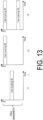
- FIG. 13 is a diagram illustrating specific examples of Fast tracking RSs according to the fourth embodiment.
- Fast tracking RSs according to the fourth embodiment are arranged in some frequency resources in the bandwidth of a cell (SCell).
- a Fast tracking RS is arranged in one or more resource blocks in the middle of the bandwidth of the SCell or in one or more subcarriers in the middle of the bandwidth of the SCell.
- a Fast tracking RS is arranged in one or more resource blocks at one end of the bandwidth of the SCell or in one or more subcarriers at one end of the bandwidth of the SCell.
- the Fast tracking RS is arranged in one or more resource blocks at both ends of the bandwidth of the SCell or in one or more subcarriers on both sides of the bandwidth of the SCell.
- FIG. 14 is a diagram illustrating an operation example of a system according to the fourth embodiment.
- dashed lines indicate non-essential steps. Overlapping description of operations the same as those of the first embodiment described above will be omitted.
- step S401 the transmitter 120 of the UE 100 transmits a Measurement Report message to the node 200, for example, over the PCell.
- the receiver 220 of the node 200 receives the Measurement Report message.
- step S402 the transmitter 210 of the node 200 transmits an RRC Reconfiguration message to the UE 100, for example, over the PCell.
- the receiver 110 of the UE 100 receives the RRC Reconfiguration message.
- the RRC Reconfiguration message may include configuration information regarding a Fast tracking RS in addition to the information described in the first embodiment above.
- the configuration information regarding a Fast tracking RS includes at least one selected from the group consisting of information indicating the presence or absence of a Fast tracking RS, information indicating the position of the Fast tracking RS on the frequency axis (e.g., a resource block number, a subcarrier number, and/or an Absolute Radio-Frequency Channel Number (ARFCN)), and information that assists in demodulating the Fast tracking RS (e.g., a root sequence number indicating the signal sequence of the reference signal).
- ARFCN Absolute Radio-Frequency Channel Number
- the node 200 may broadcast the configuration information regarding a Fast tracking RS in a system information block (SIB) of the PCell.
- SIB system information block
- step S403 the transmitter 210 of the UE 100 transmits an RRC Reconfiguration Complete message to the node 200, for example, over the PCell.
- the receiver 220 of the node 200 receives the RRC Reconfiguration Complete message.
- step S404 the transmitter 210 of the node 200 transmits a steady Fast tracking RS on the time axis in the SCell targeted for high speed detection.
- the receiver 110 of the UE 100 receives the Fast tracking RS over the SCell.
- step S405 the controller 130 of the UE 100 measures radio quality based on the Fast tracking RS of the SCell.
- step S406 the controller 130 of the UE 100 determines whether the radio quality condition set in step S402 is met. When it is determined that the radio quality condition is not met (NO in step S406), the process returns to step S405.
- step S409 the transmitter 120 of the UE 100 transmits an SCell activation notification to the node 200 over the PCell.
- the receiver 220 of the node 200 receives the SCell activation notification.
- step S410 the transmitter 210 of the node 200 transmits a HARQ ACK indicating successful reception of the SCell activation notification to the UE 100 over a PDCCH of the PCell.
- the receiver 110 of the UE 100 receives the HARQ ACK. Note that step S408 need not be performed if the SCell activation notification is UCI.
- step S411 the node 200 performs DL transmission and/or UL granting to the UE 100 over the activated SCell and starts wireless communication (data communication) over the SCell.
- the first to fourth embodiments described above may be implemented independently or two or more of the embodiments may be combined and implemented.
- the SCell is not limited to a THz wave cell.
- the SCell may be a mmW cell.
- a program that causes the computer (the UE 100, the node 200) to perform operations according to the embodiments described above may be provided.
- the program may be recorded on a computer readable medium.
- the computer readable medium allows installation of the program on a computer.
- the computer readable medium on which the program is recorded may be a non-transitory recording medium.
- the non-transitory recording medium is not particularly limited, but may be, for example, a recording medium such as a CD-ROM or a DVD-ROM.
- first and second elements may be used herein as a convenient method of distinguishing between two or more elements.
- a reference to first and second elements does not mean that only two elements may be employed there or that the first element needs to precede the second element in some manner.
- English articles such as “a,” “an,” and “the” are added in the present disclosure through translation, these articles include the plural unless clearly indicated otherwise in context.
Landscapes
- Engineering & Computer Science (AREA)
- Signal Processing (AREA)
- Computer Networks & Wireless Communication (AREA)
- Mobile Radio Communication Systems (AREA)
Claims (12)
- Benutzereinrichtung (100) zum Durchführen einer Drahtloskommunikation mit einem Knoten (200) mittels Trägerbündelung in einem Mobilkommunikationssystem, wobei die Benutzereinrichtung (100) aufweist:einen Empfänger (110), der konfiguriert ist, um von dem Knoten (200) Informationen zu empfangen, die eine Funkqualitätsbedingung angeben, die erfüllt sein muss, damit die Benutzereinrichtung (100) einen Aktivierungsprozess für eine Sekundärzelle durchführt, die für die Benutzereinrichtung (100) konfiguriert ist,eine Steuereinrichtung (130), die konfiguriert ist, um eine Funkqualität zu messen und zu evaluieren, ob die Funkqualitätsbedingung erfüllt ist, undeinen Sender (120), der konfiguriert ist, um eine Benachrichtigung bezüglich des Aktivierungsprozesses an den Knoten (200) zu senden, als Reaktion darauf, dass die Funkqualitätsbedingung erfüllt ist,wobei die Steuereinrichtung (130) konfiguriert ist, umden Aktivierungsprozess für die Sekundärzelle durchzuführen, als Reaktion darauf, dass die Funkqualitätsbedingung erfüllt ist, undden Aktivierungsprozess innerhalb eines vorbestimmten Zeitraums ab einem Zeitpunkt des Sendens der Benachrichtigung oder ab einem Zeitpunkt des Empfangens einer positiven Bestätigung der Benachrichtigung von dem Knoten (200) abzuschließen,wobei der Sender (120) konfiguriert ist, um Informationen, die den vorbestimmten Zeitraum angeben, an den Knoten (200) zu senden, wenn die Benachrichtigung gesendet wird oder bevor die Benachrichtigung gesendet wird.
- Benutzereinrichtung (100) gemäß Anspruch 1, wobei der Aktivierungsprozess einen Prozess des Übergangs der Sekundärzelle, die sich in einem inaktiven Zustand befindet, in einen aktiven Zustand aufweist.
- Benutzereinrichtung (100) gemäß Anspruch 1, wobei der Aktivierungsprozess einen Prozess des Veranlassens eines Bandbreitenteils, der sich in einem Ruhezustand in der Sekundärzelle befindet, den Ruhezustand zu verlassen, aufweist.
- Benutzereinrichtung (100) gemäß Anspruch 1, wobei der Sender (120) konfiguriert ist, um die Benachrichtigung über eine Primärzelle an den Knoten (200) zu senden.
- Benutzereinrichtung (100) gemäß Anspruch 1, wobeider Empfänger (110) konfiguriert ist, um ein Referenzsignal, das kontinuierlich in einem Zeitbereich über die Sekundärzelle gesendet wird, von dem Knoten (200) zu empfangen, unddie Steuereinrichtung (130) konfiguriert ist, um die Funkqualität basierend auf dem Referenzsignal zu messen.
- Knoten (200) zum Durchführen einer Drahtloskommunikation mit einer Benutzereinrichtung (100) mittels Trägerbündelung in einem Mobilkommunikationssystem, wobei der Knoten (200) aufweist:eine Steuereinrichtung (230), die konfiguriert ist, um eine Sekundärzelle für die Benutzereinrichtung (100) zu konfigurieren,einen Sender (210), der konfiguriert ist, um an die Benutzereinrichtung (100) Informationen zu senden, die eine Funkqualitätsbedingung angeben, die erfüllt sein muss, damit die Benutzereinrichtung (100) einen Aktivierungsprozess für die Sekundärzelle durchführt, undeinen Empfänger (220), der konfiguriert ist, um eine Benachrichtigung bezüglich des Aktivierungsprozesses von der Benutzereinrichtung (100) zu empfangen, als Reaktion darauf, dass die Funkqualitätsbedingung in der Benutzereinrichtung (100) erfüllt ist,wobei die Steuereinrichtung (230) konfiguriert ist, um anzunehmen, dass der Aktivierungsprozess innerhalb eines vorbestimmten Zeitraums ab einem Zeitpunkt des Empfangens der Benachrichtigung oder ab einem Zeitpunkt des Sendens einer positiven Bestätigung der Benachrichtigung an die Benutzereinrichtung (100) abgeschlossen ist, undder Empfänger (220) konfiguriert ist, um Informationen, die den vorbestimmten Zeitraum angeben, von der Benutzereinrichtung (100) zu empfangen, wenn die Benachrichtigung empfangen wird oder bevor die Benachrichtigung empfangen wird.
- Knoten (200) gemäß Anspruch 6, wobei der Aktivierungsprozess einen Prozess des Übergangs der Sekundärzelle, die sich in einem inaktiven Zustand befindet, in einen aktiven Zustand aufweist.
- Knoten (200) gemäß Anspruch 6, wobei der Aktivierungsprozess einen Prozess des Veranlassens eines Bandbreitenteils, der sich in einem Ruhezustand in der Sekundärzelle befindet, den Ruhezustand zu verlassen, aufweist.
- Knoten (200) gemäß Anspruch 6, wobei der Empfänger (220) konfiguriert ist, um die Benachrichtigung von der Benutzereinrichtung (100) über eine Primärzelle zu empfangen.
- Knoten (200) gemäß Anspruch 6, wobei der Sender (210) konfiguriert ist, um ein Referenzsignal, das verwendet wird, um die Funkqualität kontinuierlich im Zeitbereich zu messen, über die Sekundärzelle zu senden.
- Kommunikationsverfahren, das in einer Benutzereinrichtung (100) verwendet wird, die konfiguriert ist, um eine Drahtloskommunikation mit einem Knoten (200) mittels Trägerbündelung in einem Mobilkommunikationssystem durchzuführen, wobei das Verfahren aufweist:Empfangen von Informationen von dem Knoten (200), die eine Funkqualitätsbedingung angeben, die erfüllt sein muss, damit die Benutzereinrichtung (100) einen Aktivierungsprozess für eine Sekundärzelle durchführt, die für die Benutzereinrichtung (100) konfiguriert ist,Messen einer Funkqualität und Evaluieren, ob die Funkqualitätsbedingung erfüllt ist,Senden einer Benachrichtigung bezüglich des Aktivierungsprozesses an den Knoten (200) als Reaktion darauf, dass die Funkqualitätsbedingung erfüllt ist,Durchführen des Aktivierungsprozesses für die Sekundärzelle als Reaktion darauf, dass die Funkqualitätsbedingung erfüllt ist,Abschließen des Aktivierungsprozesses innerhalb eines vorbestimmen Zeitraums ab einem Zeitpunkt des Sendens der Benachrichtigung oder ab einem Zeitpunkt des Empfangens einer positiven Bestätigung der Benachrichtigung von dem Knoten (200), undSenden von Informationen, die den vorbestimmten Zeitraum angeben, an den Knoten (200), wenn die Benachrichtigung gesendet wird oder bevor die Benachrichtigung gesendet wird.
- Kommunikationsverfahren, das in einem Knoten (200) verwendet wird, der konfiguriert ist, um eine Drahtloskommunikation mit einer Benutzereinrichtung (100) mittels Trägerbündelung in einem Mobilkommunikationssystem durchzuführen, wobei das Verfahren aufweist:Konfigurieren einer Sekundärzelle für die Benutzereinrichtung (100),Senden von Informationen an die Benutzereinrichtung (100), die eine Funkqualitätsbedingung angeben, die erfüllt sein muss, damit die Benutzereinrichtung (100) einen Aktivierungsprozess für die Sekundärzelle durchführt,Empfangen einer Benachrichtigung bezüglich des Aktivierungsprozesses von der Benutzereinrichtung (100) als Reaktion darauf, dass die Funkqualitätsbedingung in der Benutzereinrichtung (100) erfüllt ist,Annehmen, dass der Aktivierungsprozess innerhalb eines vorbestimmten Zeitraums ab einem Zeitpunkt des Empfangens der Benachrichtigung oder ab einem Zeitpunkt des Sendens einer positiven Bestätigung der Benachrichtigung an die Benutzereinrichtung (100) abgeschlossen ist, undEmpfangen von Informationen, die den vorbestimmten Zeitraum angeben, von der Benutzereinrichtung (100), wenn die Benachrichtigung empfangen wird oder bevor die Benachrichtigung empfangen wird.
Applications Claiming Priority (1)
| Application Number | Priority Date | Filing Date | Title |
|---|---|---|---|
| PCT/JP2023/014117 WO2024209594A1 (ja) | 2023-04-05 | 2023-04-05 | ユーザ装置、ノード、及び通信方法 |
Publications (3)
| Publication Number | Publication Date |
|---|---|
| EP4465753A4 EP4465753A4 (de) | 2024-11-20 |
| EP4465753A1 EP4465753A1 (de) | 2024-11-20 |
| EP4465753B1 true EP4465753B1 (de) | 2025-05-07 |
Family
ID=87428110
Family Applications (1)
| Application Number | Title | Priority Date | Filing Date |
|---|---|---|---|
| EP23757501.4A Active EP4465753B1 (de) | 2023-04-05 | 2023-04-05 | Benutzergerät, knoten und kommunikationsverfahren |
Country Status (4)
| Country | Link |
|---|---|
| US (1) | US20240340745A1 (de) |
| EP (1) | EP4465753B1 (de) |
| JP (2) | JP7314439B1 (de) |
| WO (1) | WO2024209594A1 (de) |
Family Cites Families (5)
| Publication number | Priority date | Publication date | Assignee | Title |
|---|---|---|---|---|
| JP2015088997A (ja) * | 2013-10-31 | 2015-05-07 | 株式会社Nttドコモ | 移動局 |
| US10791512B2 (en) * | 2017-07-14 | 2020-09-29 | Qualcomm Incorporated | User equipment power consumption and secondary cell activation latency reductions in a wireless communication system |
| WO2020173538A1 (en) * | 2019-02-25 | 2020-09-03 | Nokia Technologies Oy | Multi-carrier communication |
| CN111436074B (zh) * | 2019-03-22 | 2023-04-07 | 维沃移动通信有限公司 | 激活辅小区的方法及终端 |
| CA3098280A1 (en) * | 2019-11-05 | 2021-05-05 | Comcast Cable Communications, Llc | Wireless communications for scheduling transmissions |
-
2023
- 2023-04-05 WO PCT/JP2023/014117 patent/WO2024209594A1/ja not_active Ceased
- 2023-04-05 JP JP2023533597A patent/JP7314439B1/ja active Active
- 2023-04-05 EP EP23757501.4A patent/EP4465753B1/de active Active
- 2023-07-12 JP JP2023114272A patent/JP2024149327A/ja active Pending
- 2023-08-25 US US18/456,319 patent/US20240340745A1/en active Pending
Also Published As
| Publication number | Publication date |
|---|---|
| US20240340745A1 (en) | 2024-10-10 |
| EP4465753A4 (de) | 2024-11-20 |
| JP2024149327A (ja) | 2024-10-18 |
| JPWO2024209594A1 (de) | 2024-10-10 |
| WO2024209594A1 (ja) | 2024-10-10 |
| EP4465753A1 (de) | 2024-11-20 |
| JP7314439B1 (ja) | 2023-07-25 |
Similar Documents
| Publication | Publication Date | Title |
|---|---|---|
| US9363720B2 (en) | In-device coexistence interference report control method and apparatus of network in mobile communication system | |
| US20260032641A1 (en) | Communication control method and user equipment | |
| US20250311037A1 (en) | Method and user equipment | |
| US10433227B2 (en) | Base station and wireless LAN termination apparatus | |
| JP2025148389A (ja) | 通信方法、ユーザ装置、プロセッサ、プログラム及びシステム | |
| US20210153264A1 (en) | Radio terminal and method | |
| US20220225202A1 (en) | Communication control method and user equipment | |
| US20240129768A1 (en) | Communication apparatus, master node, and communication control method | |
| EP4465753B1 (de) | Benutzergerät, knoten und kommunikationsverfahren | |
| EP4366447A1 (de) | Kommunikationsvorrichtung und kommunikationssteuerungsverfahren | |
| JP7713081B2 (ja) | ユーザ装置、ノード、及び通信方法 | |
| US12520361B2 (en) | User equipment, node, and communication method | |
| EP4657948A1 (de) | Benutzergerät, knoten und kommunikationsverfahren | |
| JP2024180387A (ja) | ユーザ装置、ノード、及び通信方法 |
Legal Events
| Date | Code | Title | Description |
|---|---|---|---|
| STAA | Information on the status of an ep patent application or granted ep patent |
Free format text: STATUS: UNKNOWN |
|
| STAA | Information on the status of an ep patent application or granted ep patent |
Free format text: STATUS: THE INTERNATIONAL PUBLICATION HAS BEEN MADE |
|
| PUAI | Public reference made under article 153(3) epc to a published international application that has entered the european phase |
Free format text: ORIGINAL CODE: 0009012 |
|
| STAA | Information on the status of an ep patent application or granted ep patent |
Free format text: STATUS: REQUEST FOR EXAMINATION WAS MADE |
|
| 17P | Request for examination filed |
Effective date: 20230829 |
|
| A4 | Supplementary search report drawn up and despatched |
Effective date: 20240212 |
|
| AK | Designated contracting states |
Kind code of ref document: A1 Designated state(s): AL AT BE BG CH CY CZ DE DK EE ES FI FR GB GR HR HU IE IS IT LI LT LU LV MC ME MK MT NL NO PL PT RO RS SE SI SK SM TR |
|
| GRAP | Despatch of communication of intention to grant a patent |
Free format text: ORIGINAL CODE: EPIDOSNIGR1 |
|
| STAA | Information on the status of an ep patent application or granted ep patent |
Free format text: STATUS: GRANT OF PATENT IS INTENDED |
|
| RIC1 | Information provided on ipc code assigned before grant |
Ipc: H04W 88/02 20090101ALN20241114BHEP Ipc: H04W 16/10 20090101ALN20241114BHEP Ipc: H04L 5/00 20060101ALN20241114BHEP Ipc: H04W 76/15 20180101AFI20241114BHEP |
|
| RIC1 | Information provided on ipc code assigned before grant |
Ipc: H04W 88/02 20090101ALN20241118BHEP Ipc: H04W 16/10 20090101ALN20241118BHEP Ipc: H04L 5/00 20060101ALN20241118BHEP Ipc: H04W 76/15 20180101AFI20241118BHEP |
|
| INTG | Intention to grant announced |
Effective date: 20241129 |
|
| GRAS | Grant fee paid |
Free format text: ORIGINAL CODE: EPIDOSNIGR3 |
|
| GRAA | (expected) grant |
Free format text: ORIGINAL CODE: 0009210 |
|
| STAA | Information on the status of an ep patent application or granted ep patent |
Free format text: STATUS: THE PATENT HAS BEEN GRANTED |
|
| AK | Designated contracting states |
Kind code of ref document: B1 Designated state(s): AL AT BE BG CH CY CZ DE DK EE ES FI FR GB GR HR HU IE IS IT LI LT LU LV MC ME MK MT NL NO PL PT RO RS SE SI SK SM TR |
|
| DAV | Request for validation of the european patent (deleted) | ||
| DAX | Request for extension of the european patent (deleted) | ||
| REG | Reference to a national code |
Ref country code: GB Ref legal event code: FG4D |
|
| REG | Reference to a national code |
Ref country code: CH Ref legal event code: EP |
|
| REG | Reference to a national code |
Ref country code: DE Ref legal event code: R096 Ref document number: 602023003387 Country of ref document: DE |
|
| REG | Reference to a national code |
Ref country code: IE Ref legal event code: FG4D |
|
| REG | Reference to a national code |
Ref country code: NL Ref legal event code: FP |
|
| PG25 | Lapsed in a contracting state [announced via postgrant information from national office to epo] |
Ref country code: FI Free format text: LAPSE BECAUSE OF FAILURE TO SUBMIT A TRANSLATION OF THE DESCRIPTION OR TO PAY THE FEE WITHIN THE PRESCRIBED TIME-LIMIT Effective date: 20250507 Ref country code: PT Free format text: LAPSE BECAUSE OF FAILURE TO SUBMIT A TRANSLATION OF THE DESCRIPTION OR TO PAY THE FEE WITHIN THE PRESCRIBED TIME-LIMIT Effective date: 20250908 Ref country code: ES Free format text: LAPSE BECAUSE OF FAILURE TO SUBMIT A TRANSLATION OF THE DESCRIPTION OR TO PAY THE FEE WITHIN THE PRESCRIBED TIME-LIMIT Effective date: 20250507 |
|
| REG | Reference to a national code |
Ref country code: LT Ref legal event code: MG9D |
|
| PG25 | Lapsed in a contracting state [announced via postgrant information from national office to epo] |
Ref country code: GR Free format text: LAPSE BECAUSE OF FAILURE TO SUBMIT A TRANSLATION OF THE DESCRIPTION OR TO PAY THE FEE WITHIN THE PRESCRIBED TIME-LIMIT Effective date: 20250808 Ref country code: NO Free format text: LAPSE BECAUSE OF FAILURE TO SUBMIT A TRANSLATION OF THE DESCRIPTION OR TO PAY THE FEE WITHIN THE PRESCRIBED TIME-LIMIT Effective date: 20250807 |
|
| PG25 | Lapsed in a contracting state [announced via postgrant information from national office to epo] |
Ref country code: PL Free format text: LAPSE BECAUSE OF FAILURE TO SUBMIT A TRANSLATION OF THE DESCRIPTION OR TO PAY THE FEE WITHIN THE PRESCRIBED TIME-LIMIT Effective date: 20250507 |
|
| REG | Reference to a national code |
Ref country code: AT Ref legal event code: MK05 Ref document number: 1793904 Country of ref document: AT Kind code of ref document: T Effective date: 20250507 |
|
| PG25 | Lapsed in a contracting state [announced via postgrant information from national office to epo] |
Ref country code: BG Free format text: LAPSE BECAUSE OF FAILURE TO SUBMIT A TRANSLATION OF THE DESCRIPTION OR TO PAY THE FEE WITHIN THE PRESCRIBED TIME-LIMIT Effective date: 20250507 |
|
| PG25 | Lapsed in a contracting state [announced via postgrant information from national office to epo] |
Ref country code: HR Free format text: LAPSE BECAUSE OF FAILURE TO SUBMIT A TRANSLATION OF THE DESCRIPTION OR TO PAY THE FEE WITHIN THE PRESCRIBED TIME-LIMIT Effective date: 20250507 |
|
| PG25 | Lapsed in a contracting state [announced via postgrant information from national office to epo] |
Ref country code: AT Free format text: LAPSE BECAUSE OF FAILURE TO SUBMIT A TRANSLATION OF THE DESCRIPTION OR TO PAY THE FEE WITHIN THE PRESCRIBED TIME-LIMIT Effective date: 20250507 |
|
| PG25 | Lapsed in a contracting state [announced via postgrant information from national office to epo] |
Ref country code: RS Free format text: LAPSE BECAUSE OF FAILURE TO SUBMIT A TRANSLATION OF THE DESCRIPTION OR TO PAY THE FEE WITHIN THE PRESCRIBED TIME-LIMIT Effective date: 20250807 |
|
| PG25 | Lapsed in a contracting state [announced via postgrant information from national office to epo] |
Ref country code: IS Free format text: LAPSE BECAUSE OF FAILURE TO SUBMIT A TRANSLATION OF THE DESCRIPTION OR TO PAY THE FEE WITHIN THE PRESCRIBED TIME-LIMIT Effective date: 20250907 |
|
| PG25 | Lapsed in a contracting state [announced via postgrant information from national office to epo] |
Ref country code: LV Free format text: LAPSE BECAUSE OF FAILURE TO SUBMIT A TRANSLATION OF THE DESCRIPTION OR TO PAY THE FEE WITHIN THE PRESCRIBED TIME-LIMIT Effective date: 20250507 |
|
| PG25 | Lapsed in a contracting state [announced via postgrant information from national office to epo] |
Ref country code: SM Free format text: LAPSE BECAUSE OF FAILURE TO SUBMIT A TRANSLATION OF THE DESCRIPTION OR TO PAY THE FEE WITHIN THE PRESCRIBED TIME-LIMIT Effective date: 20250507 Ref country code: DK Free format text: LAPSE BECAUSE OF FAILURE TO SUBMIT A TRANSLATION OF THE DESCRIPTION OR TO PAY THE FEE WITHIN THE PRESCRIBED TIME-LIMIT Effective date: 20250507 |
|
| PG25 | Lapsed in a contracting state [announced via postgrant information from national office to epo] |
Ref country code: CZ Free format text: LAPSE BECAUSE OF FAILURE TO SUBMIT A TRANSLATION OF THE DESCRIPTION OR TO PAY THE FEE WITHIN THE PRESCRIBED TIME-LIMIT Effective date: 20250507 |
|
| PG25 | Lapsed in a contracting state [announced via postgrant information from national office to epo] |
Ref country code: EE Free format text: LAPSE BECAUSE OF FAILURE TO SUBMIT A TRANSLATION OF THE DESCRIPTION OR TO PAY THE FEE WITHIN THE PRESCRIBED TIME-LIMIT Effective date: 20250507 |
|
| PG25 | Lapsed in a contracting state [announced via postgrant information from national office to epo] |
Ref country code: SK Free format text: LAPSE BECAUSE OF FAILURE TO SUBMIT A TRANSLATION OF THE DESCRIPTION OR TO PAY THE FEE WITHIN THE PRESCRIBED TIME-LIMIT Effective date: 20250507 |
|
| PG25 | Lapsed in a contracting state [announced via postgrant information from national office to epo] |
Ref country code: IT Free format text: LAPSE BECAUSE OF FAILURE TO SUBMIT A TRANSLATION OF THE DESCRIPTION OR TO PAY THE FEE WITHIN THE PRESCRIBED TIME-LIMIT Effective date: 20250507 |
|
| REG | Reference to a national code |
Ref country code: DE Ref legal event code: R097 Ref document number: 602023003387 Country of ref document: DE |
|
| PLBE | No opposition filed within time limit |
Free format text: ORIGINAL CODE: 0009261 |
|
| STAA | Information on the status of an ep patent application or granted ep patent |
Free format text: STATUS: NO OPPOSITION FILED WITHIN TIME LIMIT |
|
| REG | Reference to a national code |
Ref country code: CH Ref legal event code: L10 Free format text: ST27 STATUS EVENT CODE: U-0-0-L10-L00 (AS PROVIDED BY THE NATIONAL OFFICE) Effective date: 20260318 |