EP4465639A1 - Verfahren zur verwaltung der verarbeitung eines videostroms in einem lokalen netzwerk - Google Patents
Verfahren zur verwaltung der verarbeitung eines videostroms in einem lokalen netzwerk Download PDFInfo
- Publication number
- EP4465639A1 EP4465639A1 EP24172781.7A EP24172781A EP4465639A1 EP 4465639 A1 EP4465639 A1 EP 4465639A1 EP 24172781 A EP24172781 A EP 24172781A EP 4465639 A1 EP4465639 A1 EP 4465639A1
- Authority
- EP
- European Patent Office
- Prior art keywords
- processing
- data
- entity
- local network
- management method
- Prior art date
- Legal status (The legal status is an assumption and is not a legal conclusion. Google has not performed a legal analysis and makes no representation as to the accuracy of the status listed.)
- Pending
Links
Images

Classifications
-
- H—ELECTRICITY
- H04—ELECTRIC COMMUNICATION TECHNIQUE
- H04N—PICTORIAL COMMUNICATION, e.g. TELEVISION
- H04N21/00—Selective content distribution, e.g. interactive television or video on demand [VOD]
- H04N21/40—Client devices specifically adapted for the reception of or interaction with content, e.g. set-top-box [STB]; Operations thereof
- H04N21/43—Processing of content or additional data, e.g. demultiplexing additional data from a digital video stream; Elementary client operations, e.g. monitoring of home network or synchronising decoder's clock; Client middleware
- H04N21/436—Interfacing a local distribution network, e.g. communicating with another STB or one or more peripheral devices inside the home
- H04N21/43615—Interfacing a Home Network, e.g. for connecting the client to a plurality of peripherals
-
- H—ELECTRICITY
- H04—ELECTRIC COMMUNICATION TECHNIQUE
- H04L—TRANSMISSION OF DIGITAL INFORMATION, e.g. TELEGRAPHIC COMMUNICATION
- H04L65/00—Network arrangements, protocols or services for supporting real-time applications in data packet communication
- H04L65/80—Responding to QoS
-
- H—ELECTRICITY
- H04—ELECTRIC COMMUNICATION TECHNIQUE
- H04L—TRANSMISSION OF DIGITAL INFORMATION, e.g. TELEGRAPHIC COMMUNICATION
- H04L65/00—Network arrangements, protocols or services for supporting real-time applications in data packet communication
- H04L65/60—Network streaming of media packets
- H04L65/61—Network streaming of media packets for supporting one-way streaming services, e.g. Internet radio
-
- H—ELECTRICITY
- H04—ELECTRIC COMMUNICATION TECHNIQUE
- H04N—PICTORIAL COMMUNICATION, e.g. TELEVISION
- H04N21/00—Selective content distribution, e.g. interactive television or video on demand [VOD]
- H04N21/40—Client devices specifically adapted for the reception of or interaction with content, e.g. set-top-box [STB]; Operations thereof
- H04N21/43—Processing of content or additional data, e.g. demultiplexing additional data from a digital video stream; Elementary client operations, e.g. monitoring of home network or synchronising decoder's clock; Client middleware
- H04N21/44—Processing of video elementary streams, e.g. splicing a video clip retrieved from local storage with an incoming video stream or rendering scenes according to encoded video stream scene graphs
- H04N21/4402—Processing of video elementary streams, e.g. splicing a video clip retrieved from local storage with an incoming video stream or rendering scenes according to encoded video stream scene graphs involving reformatting operations of video signals for household redistribution, storage or real-time display
- H04N21/440218—Processing of video elementary streams, e.g. splicing a video clip retrieved from local storage with an incoming video stream or rendering scenes according to encoded video stream scene graphs involving reformatting operations of video signals for household redistribution, storage or real-time display by transcoding between formats or standards, e.g. from MPEG-2 to MPEG-4
-
- H—ELECTRICITY
- H04—ELECTRIC COMMUNICATION TECHNIQUE
- H04N—PICTORIAL COMMUNICATION, e.g. TELEVISION
- H04N21/00—Selective content distribution, e.g. interactive television or video on demand [VOD]
- H04N21/40—Client devices specifically adapted for the reception of or interaction with content, e.g. set-top-box [STB]; Operations thereof
- H04N21/43—Processing of content or additional data, e.g. demultiplexing additional data from a digital video stream; Elementary client operations, e.g. monitoring of home network or synchronising decoder's clock; Client middleware
- H04N21/442—Monitoring of processes or resources, e.g. detecting the failure of a recording device, monitoring the downstream bandwidth, the number of times a movie has been viewed, the storage space available from the internal hard disk
- H04N21/44227—Monitoring of local network, e.g. connection or bandwidth variations; Detecting new devices in the local network
-
- H—ELECTRICITY
- H04—ELECTRIC COMMUNICATION TECHNIQUE
- H04N—PICTORIAL COMMUNICATION, e.g. TELEVISION
- H04N21/00—Selective content distribution, e.g. interactive television or video on demand [VOD]
- H04N21/60—Network structure or processes for video distribution between server and client or between remote clients; Control signalling between clients, server and network components; Transmission of management data between server and client, e.g. sending from server to client commands for recording incoming content stream; Communication details between server and client
- H04N21/63—Control signaling related to video distribution between client, server and network components; Network processes for video distribution between server and clients or between remote clients, e.g. transmitting basic layer and enhancement layers over different transmission paths, setting up a peer-to-peer communication via Internet between remote STB's; Communication protocols; Addressing
- H04N21/64—Addressing
- H04N21/6405—Multicasting
-
- H—ELECTRICITY
- H04—ELECTRIC COMMUNICATION TECHNIQUE
- H04N—PICTORIAL COMMUNICATION, e.g. TELEVISION
- H04N21/00—Selective content distribution, e.g. interactive television or video on demand [VOD]
- H04N21/60—Network structure or processes for video distribution between server and client or between remote clients; Control signalling between clients, server and network components; Transmission of management data between server and client, e.g. sending from server to client commands for recording incoming content stream; Communication details between server and client
- H04N21/63—Control signaling related to video distribution between client, server and network components; Network processes for video distribution between server and clients or between remote clients, e.g. transmitting basic layer and enhancement layers over different transmission paths, setting up a peer-to-peer communication via Internet between remote STB's; Communication protocols; Addressing
- H04N21/64—Addressing
- H04N21/6408—Unicasting
-
- H—ELECTRICITY
- H04—ELECTRIC COMMUNICATION TECHNIQUE
- H04N—PICTORIAL COMMUNICATION, e.g. TELEVISION
- H04N21/00—Selective content distribution, e.g. interactive television or video on demand [VOD]
- H04N21/60—Network structure or processes for video distribution between server and client or between remote clients; Control signalling between clients, server and network components; Transmission of management data between server and client, e.g. sending from server to client commands for recording incoming content stream; Communication details between server and client
- H04N21/63—Control signaling related to video distribution between client, server and network components; Network processes for video distribution between server and clients or between remote clients, e.g. transmitting basic layer and enhancement layers over different transmission paths, setting up a peer-to-peer communication via Internet between remote STB's; Communication protocols; Addressing
- H04N21/647—Control signaling between network components and server or clients; Network processes for video distribution between server and clients, e.g. controlling the quality of the video stream, by dropping packets, protecting content from unauthorised alteration within the network, monitoring of network load, bridging between two different networks, e.g. between IP and wireless
- H04N21/64707—Control signaling between network components and server or clients; Network processes for video distribution between server and clients, e.g. controlling the quality of the video stream, by dropping packets, protecting content from unauthorised alteration within the network, monitoring of network load, bridging between two different networks, e.g. between IP and wireless for transferring content from a first network to a second network, e.g. between IP and wireless
-
- H—ELECTRICITY
- H04—ELECTRIC COMMUNICATION TECHNIQUE
- H04N—PICTORIAL COMMUNICATION, e.g. TELEVISION
- H04N21/00—Selective content distribution, e.g. interactive television or video on demand [VOD]
- H04N21/80—Generation or processing of content or additional data by content creator independently of the distribution process; Content per se
- H04N21/83—Generation or processing of protective or descriptive data associated with content; Content structuring
- H04N21/845—Structuring of content, e.g. decomposing content into time segments
- H04N21/8456—Structuring of content, e.g. decomposing content into time segments by decomposing the content in the time domain, e.g. in time segments
-
- H—ELECTRICITY
- H04—ELECTRIC COMMUNICATION TECHNIQUE
- H04N—PICTORIAL COMMUNICATION, e.g. TELEVISION
- H04N21/00—Selective content distribution, e.g. interactive television or video on demand [VOD]
- H04N21/40—Client devices specifically adapted for the reception of or interaction with content, e.g. set-top-box [STB]; Operations thereof
- H04N21/43—Processing of content or additional data, e.g. demultiplexing additional data from a digital video stream; Elementary client operations, e.g. monitoring of home network or synchronising decoder's clock; Client middleware
- H04N21/442—Monitoring of processes or resources, e.g. detecting the failure of a recording device, monitoring the downstream bandwidth, the number of times a movie has been viewed, the storage space available from the internal hard disk
- H04N21/4424—Monitoring of the internal components or processes of the client device, e.g. CPU or memory load, processing speed, timer, counter or percentage of the hard disk space used
Definitions
- the field of the invention is that of digital multimedia content, namely digital audio and/or video content, also called audiovisual content.
- the invention relates to a method for managing the processing of a video stream in a local network.
- the processing entity is capable of receiving a data stream, processing the data and transmitting the processed data.
- the processing entity is a device provided with a processor and is capable of receiving data packets from a first network, processing the data so as to obtain content segments and transmitting the obtained segments on request to a reading device.
- Such an entity is for example an entity capable of providing segments in “adaptive streaming” mode without being limited to the latter.
- a reading device refers in particular to any device capable of receiving multimedia streams in the form of segments, for example a decoder, a mobile phone, a tablet, etc., and of reading the content received.
- the communication link between the playback device and a segment-providing device is arbitrary. In the example described below, this link will be a unicast link.
- Content is, for example, content broadcast in real time, also called “live” content by those skilled in the art, or on-demand television content, or on-demand video content, etc.
- a well-known mode is for example the Multicast ABR mode (M-ABR or Multicast Adaptive Bit Rate).
- This M-ABR mode implements IP packet transport in Multicast mode.
- multiple multicast transmission channels are created for a single chain TV to encode and broadcast multiple streams with different qualities on each multicast channel, respectively.
- the channels broadcast the same content with different image qualities, respectively.
- Each channel is assigned an IP address, in this way access to the content in a desired quality is done by connecting to the corresponding IP address.
- the M-ABR multicast mode is implemented by a processing entity that will be referred to as nCDN in the following.
- This processing entity is installed in a home gateway that interfaces a WAN (Wide Area Network) and a LAN (Local Area Network).
- This processing entity acts as the termination point of the Multicast stream.
- this processing entity receives an audio and/or video data stream transmitted from a server in multicast mode (for example with “IPTV” technology (Internet Protocol Television); the processing entity then stores the packets received, segments the packets received in accordance with the HAS standard and transmits, in unicast, the segments one after the other to a segment playback device.
- IPTV Internet Protocol Television
- the processing quality therefore depends on the processing capabilities of the gateway. It is important that the processing capabilities of the gateway are optimal to best process the data flow and ensure optimal quality of service.
- the gateway may be processing other data and may therefore see its processing capabilities reduced; also, the gateway may be natively underperforming in terms of processing capacity for financial cost reasons.
- One problem is that when the home gateway sees its processing capacity reduced or its performance is not sufficient, we see image freezes. The content rendering is therefore not optimal, and the user experience is very poor.
- the invention improves the situation
- the invention relates to a method for managing the processing of a data flow in a local network comprising a set of data processing devices, characterized in that it comprises a step of selecting a device in the set of data processing devices and processing the flow in the selected device.
- the invention avoids using a default device for processing a data stream, in this case a home gateway.
- a default device for processing a data stream in this case a home gateway.
- the possibility of choosing a device at will from a set of data processing devices makes it possible, among other things, to avoid a blocking situation linked to the unavailability of the device including the processing entity, for example because the device concerned is powered off.
- the resulting processing will necessarily be of better quality. The risks of image freezing are then greatly reduced or even non-existent.
- a device of said set is a home gateway.
- the stream is received by the home gateway according to a first transmission mode, and routed by the gateway to the selected device for processing there, the processing consisting of transforming the first transmission mode into a second transmission mode.
- the first mode is a multicast transmission mode and the second transmission mode is the unicast mode.
- the data processing devices have an address in the network; in this configuration, the selection of the data processing device is followed by a transmission of the address to a reading device capable of reading the data stream resulting from the processing.
- This mode is useful when the home network is composed of several data processing devices.
- the reading device addresses its requests for access to content using the address of the data processing device of the device to obtain segments from this selected device and then request a restitution of the segments obtained. It will be seen in an example that this address is an IP address (acronym for Internet Protocol).
- a variant could also consist of the reading device issuing all access requests to the home gateway which then routes to the selected device.
- the data processing device is selected according to its processing capabilities.
- a data processing device is chosen judiciously, here according to its capabilities, meaning the capabilities of its physical and/or software resources. This selection will make it possible to achieve better processing and therefore ensure restitution of the content without image freezes.
- the selection is performed by comparing processing capacities of devices of the local network and by selecting a device at the base of the comparison.
- a management entity recovers the processing capacities of all or part of the devices of the local network, namely the powers of the processors, the memory sizes, etc., respectively. Once recovered, the calculation is limited to a comparison of the capacities. This mode is simple and consumes very few resources.
- the processing capabilities include a volatile memory size.
- This mode makes it possible to select a device equipped with a volatile memory adapted to the data stream. For example, if the data stream is a 4K video stream entering the local network, the volatile memory will be selected from the volatile memories of the different devices in such a way as to process this stream correctly.
- the choice of the installation location of the processing entity may also depend on the encoding rate. Indeed, some streams see their encoding rates vary over time due to the variation in the bandwidth on the network; in this case, it is wise to take this encoding rate into account when choosing the volatile memory to be used, meaning the device including this volatile memory.
- the local network comprises a home gateway capable of interfacing a wide area network and the local network.
- the gateway routes a data stream from the network to the processing location in the local network.
- This mode targets the case of receiving a data stream, for example a multimedia stream, from a content server for example a multicast server of the M-ABR type; the gateway having knowledge of the selected device, in particular the IP address of the selected device, routes the received stream using this IP address.
- the data processing device is capable of receiving the data stream from a communication network.
- This mode makes it possible to select a data processing device capable not only of processing the stream with performance but also of receiving the data stream from the communication network, for example without requiring a home gateway.
- the advantage is that if the gateway is unavailable, the device thus selected can access the stream instead of the gateway.
- the selected processing device varies over time. This mode makes it possible to modify the location of the processing of the data stream over time. This makes it possible to use the most suitable device in particular when the selected device sees its capacities decrease at a given time.
- the change of device for processing may also be based on load forecasts on the devices of the local network.
- the invention relates to an entity for managing the processing of a data flow in a local network comprising a set of data processing devices, characterized in that it consists in selecting a data processing device in said set, and in processing the data flow in the selected device.
- the invention relates to a decoder comprising a management entity as defined above.
- the invention relates to a computer program capable of being implemented on an entity as defined above, the program comprising code instructions which, when executed by a processor, performs the steps of the selection method defined above.
- the invention relates to a data medium on which at least one series of program code instructions has been stored for the execution of a management method as defined above.
- Such a recording medium may be any entity or device capable of storing the program.
- the medium may comprise a storage medium, such as a ROM, for example a CD ROM or a microelectronic circuit ROM, or a magnetic recording medium, for example a USB key or a hard disk.
- such a recording medium may be a transmissible medium such as an electrical or optical signal, which can be conveyed via an electrical or optical cable, by radio or by other means, so that the computer program contained therein is remotely executable.
- the program according to the invention may in particular be downloaded over a network, for example the Internet.
- the recording medium may be an integrated circuit in which the program is incorporated, the circuit being adapted to perform or to be used in performing the aforementioned display control method.
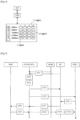
- a SYS computer system including a GTW home gateway providing a local network in which is located data processing devices namely an STB playback device, for example a decoder, a PC computer, a TAB tablet.
- data processing devices namely an STB playback device, for example a decoder, a PC computer, a TAB tablet.
- the SYS system also includes a data flow processing entity referenced nCDN.
- the nCDN processing entity is able to transmit content segments to the STB playback device on request.
- FIG. 2 represents an architecture of an STB reading device.
- This STB device typically includes MEM1 memories associated with a CPU1 processor.
- the memories can be of the ROM (Read Only Memory) or RAM (Random Access Memory) type or even Flash.
- the STB playback device can transmit content to be played back to the TV playback device via a COM12 communication module.
- This COM12 module is, for example, an HDMI connection.
- the STB reading device communicates with the gateway via an Ethernet module for local wired communication or via a Wi-Fi radio module for local wireless communication with the GTW residential gateway.
- the module in question is referenced CMO11 on the figure 2 .
- the STB playback device comprises a HAS streaming mode download entity capable of handling the downloading of segments.
- This HAS download entity is capable of entering into communication with a compatible nCDN data stream processing entity.
- FIG 3 represents an architecture of a GTW home gateway.
- This gateway typically includes MEM2 memories associated with a CPU2 processor.
- the memories can also be of the ROM (Read Only Memory) or RAM (Random Access Memory) or Flash type.
- the gateway communicates with a WAN type wide area network via a COM21 communication module.
- the gateway can transmit, using a COM22 communication module, content to a device on the local network via an LI1 link, Wi-Fi in our example.
- the GTW gateway further comprises a management entity ENT capable of carrying out steps described below.
- the management entity ENT is located in the gateway in the example, it could however be located elsewhere in the system, for example on a data processing device of the local network.
- Segments created by the nCDN processing entity are compatible with the HAS entity.
- the nCDN processing entity has multiple SMC multicast sources to retrieve content.
- the STB playback device meaning the HAS module present on the STB playback device, issues a content access request and indicates a desired quality for the restitution often expressed in kbits/sec by those skilled in the art.
- the nCDN entity addresses (or subscribes to) an SMC multicast server (among several multicast servers) having the content in the desired quality and receives the content in return from the multicast server in question via the telecommunications network, the Internet network in our example;
- the transmission mode implemented between the multicast server and the processing entity is for example the IPTV mode (acronym for "Internet Protocol Television"), known to those skilled in the art.
- the invention is not limited to the IPTV mode but to any other similar transmission modes.
- the nCDN processing entity stores the received IP packets in a RAM memory in order to process these packets, the processing consisting in our example of cutting the packets into segments, and encoding each segment to obtain segments in the requested quality.
- the nCDN processing entity After encoding, the nCDN processing entity transmits in response a description file including the addresses (URLs) of the segments thus created.
- nCDN processing entity is located in the local network in accordance with the invention.
- a RES communication network allows communication between content sources, in our example multicast servers each offering respective qualities for the same content and the nCDN entity.
- the RES network is the Internet network.
- the STB playback device is connected via a LI1 communication link to the GTW gateway and via a communication link, for example an HDMI link, to a TV playback device such as a television screen.
- connection between the STB playback device and the nCDN processing entity is a point-to-point (or unicast) connection.
- segments are represented in table form, the HAS entity that accesses the segments and an interface that allows the HAS entity to communicate with the outside.
- the STB playback device in an adaptive progressive download context, can adapt the access requests it transmits to the nCDN entity to receive and decode the requested content at the quality that best suits it.
- the content is available at the rates of 400 kb/s (kilobits per second) (Resolution 1, or level 1, noted N1), 800 kb/s (N2), 1200 kb/s (N3) 2100 kb/s (N4) 3000 kb/s (N5) and the client terminal has a bandwidth of 3000 kb/s, it can request the content at any rate below this limit, for example 2100 kb/s.
- Ci@Nj the content number i with quality j (for example the j-th quality level Nj described in the description file).
- the STB playback device first queries, via the GTW service gateway, the nCDN processing entity to obtain an address of the content description file managed by the device concerned.
- this file is a file of the description file type according to the MPEG-DASH standard.
- N1 400 kb/s
- N2 800 kb/s
- N3 1200 kb/s, ...)
- the access addresses of the segments in question Once the STB playback device has the segment addresses corresponding to the desired content, the STB playback device downloads the segments one after the other. Note that this download is traditionally done here via an HTTP URL, but could also be done via a universal address (URI) describing another protocol (dvb://mycontentsegment for example).
- URI universal address
- the STB decoder receives the segments, then decodes them, and requests a playback on the TV screen.
- the content is arbitrary.
- the content is for example a television program broadcast on a delayed basis, or a video on demand, or a personal video of the user, or any other multimedia content, for which the invention also applies.
- the STB playback device can be controlled by the user using a remote control.
- the remote control can be physical or software.
- a preliminary step is performed in which a data processing device is selected in the local network to perform the desired processing.
- the processing entity can be located on a device in the local network of choice.
- the stream received by the home gateway according to a first transmission mode is routed by the gateway to the selected device to be processed there, the processing consisting of transforming the first transmission mode (multicast) into a second transmission mode (unicast).
- Our example is based on a transformation of the multicast mode into a unicast mode; however, the invention is not limited to this example but extends to any type of transmission mode.
- the gateway could receive a unicast stream and transform this stream into a multicast transmission mode in the local network.
- the data processing device is selected based on the performance of the physical and/or software resources for carrying out the data processing.
- a time axis is used to represent the direction of execution of the steps.
- the management entity ENT present in the home gateway in our example, receives data representative of physical and/or software resources from all or part of the data processing devices of the local area network LAN, namely in our example the mobile MOB and the PC computer.
- the management entity ENT is interested in a physical resource in particular, namely the volatile RAM type memory of the different devices, more particularly in the size in bytes of these memories.
- the invention is not limited to this resource but extends to other resources; for example, other resources can be taken into account, namely the power of the processor, the communication links available to the processing devices. data for example allowing the reception of a data stream from the RES network etc.
- step ET3 the ENT entity classifies the devices according to the sizes of the respective RAM memories and selects in our example the device with the largest byte size.
- the selected device is the PC computer.
- the management entity ENT requires the downloading of the nCDN processing entity into the selected device PC.
- the selected device may be equipped with a deactivated processing entity.
- the processing entity is simply activated.
- the ENT management entity having the IP address available in the local network of the PC computer designates this IP address and transmits this IP address to the HAS client installed in the STB reading device.
- the PC computer with a Wi-Fi connection is able to communicate directly with the STB playback device.
- the selected device communicates with the STB playback device via the home gateway. GTW.
- the PC computer meaning the nCDN processing entity installed on the PC computer, can transmit segments to the STB playback device in Unicast mode.
- the STB reading device transmits, during a step ET6, a request for access to content.
- This request is transmitted to the PC computer equipped with the Ncdn processing entity, the computer having been selected as the processing location, namely the transition from multicast mode to unicast mode.
- the nCDN entity installed on the PC computer, then receives and requests, during a step ET7, access to the content from a multicast server SRV chosen in our example based on a quality provided in the request from the STB playback device.
- the request passes through the home gateway in our example.
- the gateway routes the request during a step ET8.
- the home gateway GTW receives in return a data flow which it routes to the PC computer in a step ET10 so that the nCDN processing entity installed on the PC computer can process the received data flow.
- the nCDN processing entity then receives IP data packets from the GTW gateway. After reception, the nCDN processing entity performs processing via its processor.
- the processing is known to those skilled in the art and will not be described further because it is of no interest for the presentation of the invention. Let us simply recall that the received IP packets are divided into content segments; in a step ET12, the segments are then transmitted successively from the PC computer to the STB playback device.
- the STB playback device can receive the segments, decode them and request playback on the TV playback device.
- the location of the nCDN processing entity may be determined after each content access request from the STB playback device.
- the location of the data stream processing location therefore varies over time.
- the choice of the location can be made during the reception of the content segments. Indeed, the initial choice may no longer be suitable later, for example the CPU decreases on the chosen equipment and is suddenly requested for another task. In this case, another data processing device is selected to perform the processing of the nCDN processing entity.
- the processing capacities include a volatile memory size.
- the management entity ENT also takes into account the encoding rate associated with the received stream. Indeed, the encoding rate varying over time when the download is adaptive, the RAM memory requirements during the processing of the data stream also vary. The number of data processing devices adapted to the processing can therefore increase according to the current encoding rate.
- the GTW home gateway routes the data flow to the chosen processing device, in the example the PC computer.
- the data processing device is chosen according to its ability to receive the data flow from a communication network. This mode allows access to the content even if the gateway is unavailable; in this case the selected device accesses the stream and receives the stream from the RES network instead of the gateway.
- nCDN processing entities are stored natively on the data processing devices of the local network and can be activated on demand. This variant avoids a step of transmitting the nCDN processing entity.
- the invention comprises, for carrying out processing of a data stream received by the local network, a step of selecting (ET3) a device from the set of devices included in the local network, and of processing the stream in the selected device.
- ET3 a step of selecting
- the processing location can be modified and be relocated to a device distinct from the local network.
- a data stream intended to be processed by a device will be processed by another device in the local network.
- processing may concern the transition from a multicast transmission mode to a unicast transmission mode; this embodiment relates to a method for managing the processing of a data stream in a local network comprising a set of data processing devices (GTW, PC, MOB) including a home gateway, the stream being received by the home gateway according to a first transmission mode and capable of being received by a device of the local network in unicast mode; the method comprising a step of selecting (ET3) a device in the set of data processing devices, and a step of transforming the multicast transmission mode to the unicast mode in the selected device.
- GTW data processing devices
- PC PC, MOB
- the initial processing location may be the GTW home gateway; then the location may be the PC computer; the location may then become the home gateway again, etc.
- the processing location changes over time.
- entity may correspond to a software component as well as to a hardware component or a set of hardware and software components, a software component itself corresponding to one or more computer programs or subprograms or more generally to any element of a program capable of implementing a function or a set of functions such as as described for the modules concerned.
- a hardware component corresponds to any element of a hardware assembly capable of implementing a function or a set of functions for the module concerned (integrated circuit, smart card, memory card, etc.).
Landscapes
- Engineering & Computer Science (AREA)
- Multimedia (AREA)
- Signal Processing (AREA)
- Computer Networks & Wireless Communication (AREA)
- Computer Security & Cryptography (AREA)
- Databases & Information Systems (AREA)
- Data Exchanges In Wide-Area Networks (AREA)
Applications Claiming Priority (1)
| Application Number | Priority Date | Filing Date | Title |
|---|---|---|---|
| FR2304804A FR3148887A1 (fr) | 2023-05-15 | 2023-05-15 | Procédé de gestion du traitement d’un flux vidéo dans un réseau local. |
Publications (1)
| Publication Number | Publication Date |
|---|---|
| EP4465639A1 true EP4465639A1 (de) | 2024-11-20 |
Family
ID=87889080
Family Applications (1)
| Application Number | Title | Priority Date | Filing Date |
|---|---|---|---|
| EP24172781.7A Pending EP4465639A1 (de) | 2023-05-15 | 2024-04-26 | Verfahren zur verwaltung der verarbeitung eines videostroms in einem lokalen netzwerk |
Country Status (3)
| Country | Link |
|---|---|
| US (1) | US12549619B2 (de) |
| EP (1) | EP4465639A1 (de) |
| FR (1) | FR3148887A1 (de) |
Citations (3)
| Publication number | Priority date | Publication date | Assignee | Title |
|---|---|---|---|---|
| US20060227864A1 (en) * | 2005-04-12 | 2006-10-12 | Hiroki Miyamoto | Contents conversion apparatus and transcode system |
| US20160269801A1 (en) * | 2015-03-13 | 2016-09-15 | Telefonaktiebolaget L M Ericsson (Publ) | System and method for optimized delivery of live abr media |
| EP3833038A1 (de) * | 2019-12-06 | 2021-06-09 | Broadpeak | Verfahren zur abgabe von audio- und/oder videoinhalten an einen abspieler |
Family Cites Families (8)
| Publication number | Priority date | Publication date | Assignee | Title |
|---|---|---|---|---|
| WO2005036818A1 (en) * | 2003-10-07 | 2005-04-21 | Thomson Licensing | Multicast over unicast in a network |
| US8707456B2 (en) * | 2009-07-24 | 2014-04-22 | Broadcom Corporation | Method and system for integrating remote devices into a domestic VLAN |
| US20120320757A1 (en) * | 2010-01-04 | 2012-12-20 | Telefonaktiebolaget L M Ericsson (Publ) | Method and Node in an Internet Protocol Television (IPTV) Network |
| US8681758B2 (en) * | 2010-12-14 | 2014-03-25 | Symbol Technologies, Inc. | Video caching in a wireless communication network |
| US8868658B2 (en) * | 2012-04-27 | 2014-10-21 | Cisco Technology, Inc. | Client assisted multicasting for audio and video streams |
| US9787751B2 (en) * | 2014-08-06 | 2017-10-10 | At&T Intellectual Property I, L.P. | Method and apparatus for delivering media content utilizing segment and packaging information |
| FR3032580B1 (fr) * | 2015-02-06 | 2017-12-29 | Thales Sa | Ajustement dynamique du mode de transmission dans un systeme de communication satellite |
| WO2022196628A1 (ja) * | 2021-03-19 | 2022-09-22 | 日本電気株式会社 | ネットワークシステム構築装置、通信システム、ネットワークシステム構築方法、及び非一時的なコンピュータ可読媒体 |
-
2023
- 2023-05-15 FR FR2304804A patent/FR3148887A1/fr not_active Withdrawn
-
2024
- 2024-04-26 EP EP24172781.7A patent/EP4465639A1/de active Pending
- 2024-05-14 US US18/663,556 patent/US12549619B2/en active Active
Patent Citations (3)
| Publication number | Priority date | Publication date | Assignee | Title |
|---|---|---|---|---|
| US20060227864A1 (en) * | 2005-04-12 | 2006-10-12 | Hiroki Miyamoto | Contents conversion apparatus and transcode system |
| US20160269801A1 (en) * | 2015-03-13 | 2016-09-15 | Telefonaktiebolaget L M Ericsson (Publ) | System and method for optimized delivery of live abr media |
| EP3833038A1 (de) * | 2019-12-06 | 2021-06-09 | Broadpeak | Verfahren zur abgabe von audio- und/oder videoinhalten an einen abspieler |
Also Published As
| Publication number | Publication date |
|---|---|
| US12549619B2 (en) | 2026-02-10 |
| US20240388619A1 (en) | 2024-11-21 |
| FR3148887A1 (fr) | 2024-11-22 |
Similar Documents
| Publication | Publication Date | Title |
|---|---|---|
| EP2947888A1 (de) | Verfahren zum adaptiven herunterladen von digitalen inhalten für mehrere bildschirme | |
| EP4184922A1 (de) | Verfahren zur verwaltung des zugriffs auf medieninhalte | |
| EP3496407A1 (de) | Verfahren zur steuerung des stromverbrauchs einer elektrischen vorrichtung | |
| FR3067544A1 (fr) | Procede et dispositif de telechargement de contenu audiovisuel | |
| EP4465639A1 (de) | Verfahren zur verwaltung der verarbeitung eines videostroms in einem lokalen netzwerk | |
| EP3135042A1 (de) | Verfahren zur verwaltung der auswahl der darstellung von segmenten von über ein kommunikationsnetz übertragenen multimedia-inhalten | |
| EP3926929B1 (de) | Verfahren zum verwalten des lesens von digitalen inhalten in einem multimedia-lesegerät, das mit einem wiedergabegerät verbunden ist | |
| EP4521753A1 (de) | Verfahren zur verwaltung der verarbeitung eines videostroms in einem lokalen netzwerk | |
| EP3461135A1 (de) | Steuerungsverfahren des zugangsrechts zu einem digitalen inhalt | |
| EP3840391A1 (de) | Verwaltung der wiedergabe von multimediainhalten und einer navigationsschnittstelle auf einem bildschirm | |
| EP4543015A1 (de) | Verfahren zur verwaltung des zugriffs auf beschreibungsdateien im zusammenhang mit gestreamtem inhalt in echtzeit | |
| FR3147677A1 (fr) | procédé de gestion de l’accès à un contenu multimédia et de la lecture de ce contenu. | |
| EP4297409A1 (de) | Verfahren zur verwaltung der wiedergabe von multimedia-inhalten. | |
| FR3124344A1 (fr) | Procédé de gestion d’accès à des contenus téléchargés en mode de téléchargement adaptatif. | |
| EP4668759A1 (de) | Verfahren zur verwaltung des zugriffs auf einen multimedia-inhalt durch eine wiedergabevorrichtung nach unterbrechung des tons | |
| FR3155115A1 (fr) | procédé de gestion de l’accès à des fichiers de description associés à un contenu diffusé en temps réel. | |
| EP4564823A1 (de) | Gateway zur lokalen kodierung von terrestrischen digitalen fernsehinhalten in http-adaptiven inhaltssegmenten | |
| WO2023208688A1 (fr) | Gestion de la restitution d'un contenu multimédia | |
| EP4373099A1 (de) | Verfahren zur verwaltung des zugriffs auf zu lesende inhalte von medieninhalten | |
| WO2025114181A1 (fr) | Procédé de gestion de la relecture d'un contenu ayant été diffusé en temps réel | |
| EP4424021A1 (de) | Verfahren zur verwaltung des zugriffs auf ein zu lesendes inhaltselement eines multimedia-inhaltselements | |
| FR3128084A1 (fr) | procédé de gestion de la lecture d’un contenu multimédia. | |
| WO2023052703A1 (fr) | Procédé de gestion de la restitution d'un contenu audio | |
| FR3143930A1 (fr) | Gestion de gestion de la fourniture d’adresses de segments d’un contenu multimédia | |
| EP2957104B1 (de) | Verfahren zur auswahl der darstellung von segmenten eines über ein kommunikationsnetzwerk übertragenen multimediainhalts |
Legal Events
| Date | Code | Title | Description |
|---|---|---|---|
| PUAI | Public reference made under article 153(3) epc to a published international application that has entered the european phase |
Free format text: ORIGINAL CODE: 0009012 |
|
| STAA | Information on the status of an ep patent application or granted ep patent |
Free format text: STATUS: THE APPLICATION HAS BEEN PUBLISHED |
|
| AK | Designated contracting states |
Kind code of ref document: A1 Designated state(s): AL AT BE BG CH CY CZ DE DK EE ES FI FR GB GR HR HU IE IS IT LI LT LU LV MC ME MK MT NL NO PL PT RO RS SE SI SK SM TR |
|
| STAA | Information on the status of an ep patent application or granted ep patent |
Free format text: STATUS: REQUEST FOR EXAMINATION WAS MADE |
|
| 17P | Request for examination filed |
Effective date: 20250403 |