EP4465308A1 - Systemic decontamination method of heavy water reactor - Google Patents
Systemic decontamination method of heavy water reactor Download PDFInfo
- Publication number
- EP4465308A1 EP4465308A1 EP23740388.6A EP23740388A EP4465308A1 EP 4465308 A1 EP4465308 A1 EP 4465308A1 EP 23740388 A EP23740388 A EP 23740388A EP 4465308 A1 EP4465308 A1 EP 4465308A1
- Authority
- EP
- European Patent Office
- Prior art keywords
- decontamination
- moderator
- coolant
- coolant system
- reduction process
- Prior art date
- Legal status (The legal status is an assumption and is not a legal conclusion. Google has not performed a legal analysis and makes no representation as to the accuracy of the status listed.)
- Pending
Links
Images



Classifications
-
- G—PHYSICS
- G21—NUCLEAR PHYSICS; NUCLEAR ENGINEERING
- G21F—PROTECTION AGAINST X-RADIATION, GAMMA RADIATION, CORPUSCULAR RADIATION OR PARTICLE BOMBARDMENT; TREATING RADIOACTIVELY CONTAMINATED MATERIAL; DECONTAMINATION ARRANGEMENTS THEREFOR
- G21F9/00—Treating radioactively contaminated material; Decontamination arrangements therefor
- G21F9/001—Decontamination of contaminated objects, apparatus, clothes, food; Preventing contamination thereof
-
- G—PHYSICS
- G21—NUCLEAR PHYSICS; NUCLEAR ENGINEERING
- G21C—NUCLEAR REACTORS
- G21C17/00—Monitoring; Testing ; Maintaining
- G21C17/02—Devices or arrangements for monitoring coolant or moderator
- G21C17/022—Devices or arrangements for monitoring coolant or moderator for monitoring liquid coolants or moderators
- G21C17/0225—Chemical surface treatment, e.g. corrosion
-
- G—PHYSICS
- G21—NUCLEAR PHYSICS; NUCLEAR ENGINEERING
- G21C—NUCLEAR REACTORS
- G21C19/00—Arrangements for treating, for handling, or for facilitating the handling of, fuel or other materials which are used within the reactor, e.g. within its pressure vessel
- G21C19/28—Arrangements for introducing fluent material into the reactor core; Arrangements for removing fluent material from the reactor core
- G21C19/30—Arrangements for introducing fluent material into the reactor core; Arrangements for removing fluent material from the reactor core with continuous purification of circulating fluent material, e.g. by extraction of fission products deterioration or corrosion products, impurities, e.g. by cold traps
- G21C19/307—Arrangements for introducing fluent material into the reactor core; Arrangements for removing fluent material from the reactor core with continuous purification of circulating fluent material, e.g. by extraction of fission products deterioration or corrosion products, impurities, e.g. by cold traps specially adapted for liquids
-
- G—PHYSICS
- G21—NUCLEAR PHYSICS; NUCLEAR ENGINEERING
- G21F—PROTECTION AGAINST X-RADIATION, GAMMA RADIATION, CORPUSCULAR RADIATION OR PARTICLE BOMBARDMENT; TREATING RADIOACTIVELY CONTAMINATED MATERIAL; DECONTAMINATION ARRANGEMENTS THEREFOR
- G21F9/00—Treating radioactively contaminated material; Decontamination arrangements therefor
- G21F9/001—Decontamination of contaminated objects, apparatus, clothes, food; Preventing contamination thereof
- G21F9/002—Decontamination of the surface of objects with chemical or electrochemical processes
- G21F9/004—Decontamination of the surface of objects with chemical or electrochemical processes of metallic surfaces
-
- G—PHYSICS
- G21—NUCLEAR PHYSICS; NUCLEAR ENGINEERING
- G21F—PROTECTION AGAINST X-RADIATION, GAMMA RADIATION, CORPUSCULAR RADIATION OR PARTICLE BOMBARDMENT; TREATING RADIOACTIVELY CONTAMINATED MATERIAL; DECONTAMINATION ARRANGEMENTS THEREFOR
- G21F9/00—Treating radioactively contaminated material; Decontamination arrangements therefor
- G21F9/04—Treating liquids
- G21F9/06—Processing
Definitions
- the present disclosure relates to a systematic decontamination method for a heavy water nuclear reactor.
- heavy water is used as a moderator for slowing down neutrons and a coolant for absorbing heat energy.
- an object of the present disclosure is to provide a systematic decontamination method for a heavy water nuclear reactor.
- a system decontamination method for a heavy water nuclear reactor including: performing decontamination of a moderator system; and performing decontamination of a coolant system after the decontamination of the moderator system, wherein the decontamination of the moderator system is performed by adjusting a temperature of first system water of the moderator system to a first system water process temperature and sequentially performing a moderator system oxidation process and a moderator system reduction process.
- the first system water process temperature may be 65°C to 95°C, and the adjustment of the first system water process temperature may be performed through at least one of a) heating of the first system water using an ultraviolet lamp, and b) use of a heat source of the coolant system.
- the heat source of the coolant system may be provided by using a coolant pump and a heat exchanger of the coolant system.
- a moderator system waste liquid treatment process may be performed after the moderator system reduction process, and an ultraviolet lamp may be used in the moderator system waste liquid treatment process.
- the decontamination of the coolant system may be performed by adjusting a temperature of second system water of the coolant system to a second system water process temperature and then performing a coolant system reduction process.
- At least one of permanganic acid and potassium permanganate may be used in the moderator system oxidation process
- at least one of oxalic acid and citric acid may be used in the moderator system reduction process
- a decontamination target in the moderator system oxidation process may include chromium oxide
- a decontamination target in the moderator system reduction process may include at least one of iron oxide and nickel oxide.
- the second system water process temperature may be 90°C to 100°C.
- a coolant system oxidation process In the decontamination of the coolant system, a coolant system oxidation process, a coolant system additional reduction process, and a coolant system waste liquid treatment process may be sequentially performed after the coolant system reduction process.
- the system decontamination method may include: measuring a surface dose rate of the coolant system to derive a decontamination factor value, after the coolant system reduction process, and the coolant system oxidation process and the coolant system additional reduction process may be performed when the derived decontamination factor value does not satisfy a target value.
- At least one of citric acid and oxalic acid may be used in the coolant system reduction process, at least one of permanganic acid and potassium permanganate may be used in the coolant system oxidation process, at least one of citric acid and oxalic acid may be used in the coolant system additional reduction process, a decontamination target in the coolant system reduction process may include iron oxide, and a decontamination target in the coolant system oxidation process may include chromium oxide.
- a moderator system and a coolant system are separated, unlike a light water nuclear reactor.
- the present disclosure provides a decontamination method for each of the moderator system and the coolant system.
- the present disclosure proposes a decontamination order and a system-specific decontamination method in which the moderator system is decontaminated first and the coolant system is decontaminated later.
- FIG. 1 is a configuration diagram illustrating a configuration of a moderator decontamination facility that performs the decontamination method of the present disclosure
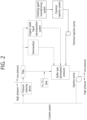
- FIG. 2 is a configuration diagram illustrating a configuration of a coolant decontamination facility that performs the decontamination method of the present disclosure.
- the moderator decontamination facility is connected to the moderator system, and first system water is circulated therein.
- the moderator decontamination facility includes, for example, a filter, a demineralizer, a UV reaction tank, an oxidizing agent manufacturing device, and a chemical injection pump. Although not shown, the moderator decontamination facility may further include a configuration for supplying a reducing agent. Further, in the moderator system, chemicals can be supplied through a calandria.
- an ultraviolet lamp particularly, a UVB lamp may be used.
- the coolant decontamination facility is connected to the coolant system, and second system water is circulated therein.
- the coolant decontamination facility includes, for example, a pressure reducing device, a filter, a demineralizer, a UV reaction tank, and an injection pump. Although not shown, the coolant decontamination facility may further include a configuration for supplying a reducing agent and an oxidizing agent.
- an ultraviolet lamp particularly, a UVC lamp may be used.
- a decontamination method according to an embodiment of the present disclosure will be described with reference to FIGS. 3 and 4 .
- FIG. 3 is a flowchart of a decontamination method for a moderator system according to an embodiment of the present disclosure
- FIG. 4 is a flowchart of a decontamination method for a coolant system according to an embodiment of the present disclosure.
- a temperature of the first system water is first adjusted (S110).
- a temperature of the first system water is increased and adjusted to a first system water process temperature.
- the first system water process temperature may be 65°C to 95°C or 85°C to 95°C.
- the moderator system operates at room temperature at the time of a normal operation.
- the increase in the temperature of the first system water may be performed using the UV reaction tank or a heat source of the coolant system.
- the ultraviolet lamp may include a UVB lamp.
- a temperature of the second system water is increased to 100°C or higher in the coolant system using a coolant pump so that a heat source is generated, and then the generated heat source is transferred to the first system water.
- the heat source of the coolant system is transferred to the inside of the calandria, and the temperature of the moderator system can be increased through the heat transfer.
- the moderator system In the moderator system oxidation process, at least one of permanganic acid, permanganic acid + nitric acid, and potassium permanganate + pH adjuster (the pH adjuster is nitric acid or sodium hydroxide) is used.
- the moderator system is usually made of stainless steel, and a decontamination target includes chromium oxide or a chromium oxide film.
- organic acid is used, and the organic acid may include at least one of citric acid and oxalic acid.
- the decontamination target is iron oxide and/or nickel oxide.
- a moderator system waste liquid treatment process (S140) is performed, and waste liquid treatment may be performed using the UV reaction tank.
- waste liquid treatment may be performed using the UV reaction tank.
- the organic acid is removed by using the UV reaction tank, the remaining organic acid may be removed by using an ion exchange resin or an oxidizing agent.
- a UV lamp of the UV reaction tank used at this time a UVC or UVB lamp may be used.
- a surface dose rate of the moderator system is measured for derivation of a decontamination factor (DF), and when the derived DF value does not satisfy a target value, the moderator system oxidation process (S120), the moderator system reduction process (S130), and the moderator system waste liquid treatment process (S140) are repeatedly performed.
- the decontamination factor is a value derived by using a surface dose rate measurement value of a pipe or the like, and a reference value of the decontamination factor is a specific value in a range of 20 to 40 and may be determined depending on an on-site situation.
- the surface dose rate the surface dose rate of the pipe or the like within the system may be measured using a mobile or fixed radiation meter.
- the decontamination of the coolant system is performed.
- the temperature of the second system water is first adjusted (S210).
- the temperature of the second system water is adjusted to a second system water process temperature.
- the temperature adjustment is performed using a coolant pump and a shutdown cooling heat exchanger, and the second system water process temperature may be 90°C to 100°C.
- the temperature of the second system water only needs to be slightly decreased after the use as the heat source, making the process simpler and efficient treatment possible.
- the decontamination of the coolant system can be performed immediately by slightly reducing the temperature of the second system water to 95°C.
- a coolant system reduction process (S220) is performed.
- organic acid is supplied, and the organic acid includes at least one of citric acid and oxalic acid.
- the coolant system is mainly made of carbon steel, and the decontamination target includes iron oxide or an iron oxide film.
- a concentration of the organic acid may be 500 to 1,000 ppm or 500 to 2,000 ppm.
- a surface dose rate of the coolant system is measured for derivation of a decontamination factor (DF), and when the derived DF value does not satisfy a target value, a coolant system oxidation process (S230) and a coolant system additional reduction process (S240) are performed.
- the decontamination factor is a value derived by using a surface dose rate measurement value of a pipe or the like, and a target reference value of the decontamination factor may be determined as a specific value in a range of 20 to 40.
- the surface dose rate the surface dose rate of the pipe or the like within the system may be measured using a mobile or fixed radiation meter.
- the surface dose rate of the coolant system is measured, and when the decontamination factor satisfies the target reference value, the coolant system oxidation process (S230) and the coolant system additional reduction process (S240) are omitted, and a coolant system waste liquid treatment process (S250) is performed.
- the coolant system oxidation process (S230) and the coolant system additional reduction process (S240) that are selectively performed may be performed when chromium oxide is generated due to a steam generator pipe made of Alloy 800 and it is difficult to remove all of the oxide film through the reduction process.
- At least one of permanganic acid, permanganic acid + nitric acid, and potassium permanganate + pH adjuster (the pH adjuster is nitric acid or sodium hydroxide) is used.
- a target of the decontamination is the chromium oxide (chromium oxide film).
- a large amount of oxidizing agent may be used so that the decomposition of the organic acid remaining in the reduction process, and the oxidation process are simultaneously performed. This oxidation process is performed after the reduction process in consideration of a problem that the permanganic acid is self-decomposed by carbon steel and deposits are formed.
- the permanganic acid remaining after the oxidation process is decomposed into organic acid. Further, in the present process, the iron oxide (iron oxide film) and/or nickel oxide (nickel oxide film) present under the chromium oxide film can be removed. A large amount of oxidizing agent may be used so that the decomposition of the remaining permanganic acid and the reduction process can be simultaneously performed.
- the organic acid oxalic acid or citric acid may be used.
- the coolant system waste liquid treatment process may be performed using the UV reaction tank.
- the organic acid is removed by using the UV reaction tank, the remaining organic acid may be removed by using an ion exchange resin or an oxidizing agent.
- a UVB lamp or a UVC lamp may be used for the ultraviolet lamp of the UV reaction tank used at this time.
- FIG. 5 shows results of an experiment in which an oxide film removal rate of a coolant system depending on a temperature is simulated
- FIG. 6 shows results of an experiment in which an oxide film removal rate of a moderator system depending on a temperature is simulated.
- a simulated specimen was immersed in citric acid (1L) of 0.1% for 8 hours and then the experiment was performed at a temperature of 60 to 95°C. After the experiment was performed, weights of the simulated specimen before and after the decontamination were measured for derivation of the oxide film removal rate.
- the oxidation process and the reduction process were performed for a total of eight hours, each four hours.
- permanganic acid + nitric acid was used for the experiment
- oxalic acid was used. After the experiment was performed, weights of the simulated specimen before and after the decontamination were measured for derivation of the oxide film removal rate.
Landscapes
- Engineering & Computer Science (AREA)
- Physics & Mathematics (AREA)
- High Energy & Nuclear Physics (AREA)
- General Engineering & Computer Science (AREA)
- Food Science & Technology (AREA)
- Life Sciences & Earth Sciences (AREA)
- Plasma & Fusion (AREA)
- Chemical & Material Sciences (AREA)
- General Chemical & Material Sciences (AREA)
- Electrochemistry (AREA)
- Chemical Kinetics & Catalysis (AREA)
- Monitoring And Testing Of Nuclear Reactors (AREA)
- Physical Water Treatments (AREA)
Abstract
Description
- The present disclosure relates to a systematic decontamination method for a heavy water nuclear reactor.
- In a heavy water nuclear reactor, heavy water is used as a moderator for slowing down neutrons and a coolant for absorbing heat energy.
- The development of decommissioning technology and decontamination technology for a heavy water nuclear reactor is required, as in a light water nuclear reactor.
- However, there is no development of technology for systematic decontamination for a heavy water nuclear reactor.
- Therefore, an object of the present disclosure is to provide a systematic decontamination method for a heavy water nuclear reactor.
- The object of the present disclosure is achieved by a system decontamination method for a heavy water nuclear reactor, the system decontamination method including: performing decontamination of a moderator system; and performing decontamination of a coolant system after the decontamination of the moderator system, wherein the decontamination of the moderator system is performed by adjusting a temperature of first system water of the moderator system to a first system water process temperature and sequentially performing a moderator system oxidation process and a moderator system reduction process.
- The first system water process temperature may be 65°C to 95°C, and the adjustment of the first system water process temperature may be performed through at least one of a) heating of the first system water using an ultraviolet lamp, and b) use of a heat source of the coolant system.
- The heat source of the coolant system may be provided by using a coolant pump and a heat exchanger of the coolant system.
- In the decontamination of the moderator system, a moderator system waste liquid treatment process may be performed after the moderator system reduction process, and an ultraviolet lamp may be used in the moderator system waste liquid treatment process.
- The decontamination of the coolant system may be performed by adjusting a temperature of second system water of the coolant system to a second system water process temperature and then performing a coolant system reduction process.
- At least one of permanganic acid and potassium permanganate may be used in the moderator system oxidation process, at least one of oxalic acid and citric acid may be used in the moderator system reduction process, a decontamination target in the moderator system oxidation process may include chromium oxide, and a decontamination target in the moderator system reduction process may include at least one of iron oxide and nickel oxide.
- The second system water process temperature may be 90°C to 100°C.
- In the decontamination of the coolant system, a coolant system oxidation process, a coolant system additional reduction process, and a coolant system waste liquid treatment process may be sequentially performed after the coolant system reduction process.
- The system decontamination method may include: measuring a surface dose rate of the coolant system to derive a decontamination factor value, after the coolant system reduction process, and the coolant system oxidation process and the coolant system additional reduction process may be performed when the derived decontamination factor value does not satisfy a target value.
- At least one of citric acid and oxalic acid may be used in the coolant system reduction process, at least one of permanganic acid and potassium permanganate may be used in the coolant system oxidation process, at least one of citric acid and oxalic acid may be used in the coolant system additional reduction process, a decontamination target in the coolant system reduction process may include iron oxide, and a decontamination target in the coolant system oxidation process may include chromium oxide.
- According to the present disclosure, a systematic decontamination method for a heavy water nuclear reactor is provided.
-
-
FIG. 1 is a diagram illustrating a configuration of a moderator decontamination facility that performs a decontamination method of the present disclosure. -
FIG. 2 is a diagram illustrating a configuration of a coolant decontamination facility that performs the decontamination method of the present disclosure. -
FIG. 3 is a flowchart of a decontamination method for a moderator system according to an embodiment of the present disclosure. -
FIG. 4 is a flowchart of a decontamination method for a coolant system according to an embodiment of the present disclosure. -
FIG. 5 shows results of an experiment in which an oxide film removal rate of the coolant system depending on a temperature is simulated. -
FIG. 6 shows results of an experiment in which an oxide film removal rate of the moderator system depending on a temperature is simulated. - In a heavy water nuclear reactor, a moderator system and a coolant system are separated, unlike a light water nuclear reactor.
- The present disclosure provides a decontamination method for each of the moderator system and the coolant system. In particular, the present disclosure proposes a decontamination order and a system-specific decontamination method in which the moderator system is decontaminated first and the coolant system is decontaminated later.
- A decontamination process of the coolant system and the moderator system according to the present disclosure will be described with reference to
FIGS. 1 and2 . -
FIG. 1 is a configuration diagram illustrating a configuration of a moderator decontamination facility that performs the decontamination method of the present disclosure, andFIG. 2 is a configuration diagram illustrating a configuration of a coolant decontamination facility that performs the decontamination method of the present disclosure. - The moderator decontamination facility is connected to the moderator system, and first system water is circulated therein.
- The moderator decontamination facility includes, for example, a filter, a demineralizer, a UV reaction tank, an oxidizing agent manufacturing device, and a chemical injection pump. Although not shown, the moderator decontamination facility may further include a configuration for supplying a reducing agent. Further, in the moderator system, chemicals can be supplied through a calandria.
- For the UV reaction tank, an ultraviolet lamp, particularly, a UVB lamp may be used.
- The coolant decontamination facility is connected to the coolant system, and second system water is circulated therein.
- The coolant decontamination facility includes, for example, a pressure reducing device, a filter, a demineralizer, a UV reaction tank, and an injection pump. Although not shown, the coolant decontamination facility may further include a configuration for supplying a reducing agent and an oxidizing agent.
- For the UV reaction tank, an ultraviolet lamp, particularly, a UVC lamp may be used.
- A decontamination method according to an embodiment of the present disclosure will be described with reference to
FIGS. 3 and4 . -
FIG. 3 is a flowchart of a decontamination method for a moderator system according to an embodiment of the present disclosure, andFIG. 4 is a flowchart of a decontamination method for a coolant system according to an embodiment of the present disclosure. - In the moderator decontamination method, a temperature of the first system water is first adjusted (S110).
- A temperature of the first system water is increased and adjusted to a first system water process temperature. The first system water process temperature may be 65°C to 95°C or 85°C to 95°C.
- The moderator system operates at room temperature at the time of a normal operation. The increase in the temperature of the first system water may be performed using the UV reaction tank or a heat source of the coolant system.
- When the UV reaction tank is used, the ultraviolet lamp may include a UVB lamp.
- When the heat source of the coolant system is used, a temperature of the second system water is increased to 100°C or higher in the coolant system using a coolant pump so that a heat source is generated, and then the generated heat source is transferred to the first system water. Specifically, the heat source of the coolant system is transferred to the inside of the calandria, and the temperature of the moderator system can be increased through the heat transfer.
- Next, a moderator system oxidation process (S120) is performed.
- In the moderator system oxidation process, at least one of permanganic acid, permanganic acid + nitric acid, and potassium permanganate + pH adjuster (the pH adjuster is nitric acid or sodium hydroxide) is used. The moderator system is usually made of stainless steel, and a decontamination target includes chromium oxide or a chromium oxide film.
- Thereafter, a moderator system reduction process (S130) is performed.
- In the moderator system reduction process, organic acid is used, and the organic acid may include at least one of citric acid and oxalic acid. The decontamination target is iron oxide and/or nickel oxide.
- After the decontamination is completed, a moderator system waste liquid treatment process (S140) is performed, and waste liquid treatment may be performed using the UV reaction tank. After the organic acid is removed by using the UV reaction tank, the remaining organic acid may be removed by using an ion exchange resin or an oxidizing agent. For a UV lamp of the UV reaction tank used at this time, a UVC or UVB lamp may be used.
- Thereafter, a surface dose rate of the moderator system is measured for derivation of a decontamination factor (DF), and when the derived DF value does not satisfy a target value, the moderator system oxidation process (S120), the moderator system reduction process (S130), and the moderator system waste liquid treatment process (S140) are repeatedly performed. The decontamination factor is a value derived by using a surface dose rate measurement value of a pipe or the like, and a reference value of the decontamination factor is a specific value in a range of 20 to 40 and may be determined depending on an on-site situation. For the surface dose rate, the surface dose rate of the pipe or the like within the system may be measured using a mobile or fixed radiation meter.
- After the decontamination of the moderator system is completed, the decontamination of the coolant system is performed.
- In the coolant system decontamination, the temperature of the second system water is first adjusted (S210).
- The temperature of the second system water is adjusted to a second system water process temperature. The temperature adjustment is performed using a coolant pump and a shutdown cooling heat exchanger, and the second system water process temperature may be 90°C to 100°C.
- When the temperature of the first system water is adjusted by the heat source of the coolant system, the temperature of the second system water only needs to be slightly decreased after the use as the heat source, making the process simpler and efficient treatment possible. For example, when the temperature of the second system water is increased to 100°C for generation of a heat source for the adjustment of the temperature of the first system water, the decontamination of the coolant system can be performed immediately by slightly reducing the temperature of the second system water to 95°C.
- Thereafter, a coolant system reduction process (S220) is performed. In the coolant system reduction process, organic acid is supplied, and the organic acid includes at least one of citric acid and oxalic acid. The coolant system is mainly made of carbon steel, and the decontamination target includes iron oxide or an iron oxide film. A concentration of the organic acid may be 500 to 1,000 ppm or 500 to 2,000 ppm.
- Thereafter, a surface dose rate of the coolant system is measured for derivation of a decontamination factor (DF), and when the derived DF value does not satisfy a target value, a coolant system oxidation process (S230) and a coolant system additional reduction process (S240) are performed. The decontamination factor is a value derived by using a surface dose rate measurement value of a pipe or the like, and a target reference value of the decontamination factor may be determined as a specific value in a range of 20 to 40. For the surface dose rate, the surface dose rate of the pipe or the like within the system may be measured using a mobile or fixed radiation meter.
- The surface dose rate of the coolant system is measured, and when the decontamination factor satisfies the target reference value, the coolant system oxidation process (S230) and the coolant system additional reduction process (S240) are omitted, and a coolant system waste liquid treatment process (S250) is performed.
- The coolant system oxidation process (S230) and the coolant system additional reduction process (S240) that are selectively performed may be performed when chromium oxide is generated due to a steam generator pipe made of Alloy 800 and it is difficult to remove all of the oxide film through the reduction process.
- In the coolant system oxidation process (S230), at least one of permanganic acid, permanganic acid + nitric acid, and potassium permanganate + pH adjuster (the pH adjuster is nitric acid or sodium hydroxide) is used. A target of the decontamination is the chromium oxide (chromium oxide film). A large amount of oxidizing agent may be used so that the decomposition of the organic acid remaining in the reduction process, and the oxidation process are simultaneously performed. This oxidation process is performed after the reduction process in consideration of a problem that the permanganic acid is self-decomposed by carbon steel and deposits are formed.
- In the coolant system additional reduction process (S240), the permanganic acid remaining after the oxidation process is decomposed into organic acid. Further, in the present process, the iron oxide (iron oxide film) and/or nickel oxide (nickel oxide film) present under the chromium oxide film can be removed. A large amount of oxidizing agent may be used so that the decomposition of the remaining permanganic acid and the reduction process can be simultaneously performed. For the organic acid, oxalic acid or citric acid may be used.
- Thereafter, the coolant system waste liquid treatment process (S250) is performed. The coolant system waste liquid treatment process may be performed using the UV reaction tank. After the organic acid is removed by using the UV reaction tank, the remaining organic acid may be removed by using an ion exchange resin or an oxidizing agent. For the ultraviolet lamp of the UV reaction tank used at this time, a UVB lamp or a UVC lamp may be used.
-
FIG. 5 shows results of an experiment in which an oxide film removal rate of a coolant system depending on a temperature is simulated, andFIG. 6 shows results of an experiment in which an oxide film removal rate of a moderator system depending on a temperature is simulated. - Experimental conditions and experiment method of the coolant system are as follows.
- Using carbon steel, a simulated specimen was immersed in citric acid (1L) of 0.1% for 8 hours and then the experiment was performed at a temperature of 60 to 95°C. After the experiment was performed, weights of the simulated specimen before and after the decontamination were measured for derivation of the oxide film removal rate.
- Experimental conditions and experiment method of the moderator system are as follows.
- Using stainless steel, the oxidation process and the reduction process were performed for a total of eight hours, each four hours. In this case, in the oxidation process, permanganic acid + nitric acid was used for the experiment, and in the reduction process, oxalic acid was used. After the experiment was performed, weights of the simulated specimen before and after the decontamination were measured for derivation of the oxide film removal rate.
- Experimental results showed that the oxide film removal rate of 100% or more was shown at 70°C or more in the case of the carbon steel as shown in
FIG. 5 , and the oxide film removal rate of 70% or more was shown at 80°C or more in one cycle, but the highest removal rate was shown at 95°C after two cycles in the case of stainless steel, as shown inFIG. 6 . Therefore, it is necessary to perform systematic decontamination between 70°C and 95°C in the coolant system, and it is necessary to perform systematic decontamination at 80°C or more in the moderator system. - The above-described embodiments are examples for describing the present disclosure, and the present disclosure is not limited thereto. Since those skilled in the art to which the present disclosure pertains will be able to implement the present disclosure through various modifications of the embodiments, the technical protection scope of the present disclosure should be determined by the appended claims.
Claims (10)
- A system decontamination method for a heavy water nuclear reactor, the system decontamination method comprising:performing decontamination of a moderator system; andperforming decontamination of a coolant system after the decontamination of the moderator system, whereinthe decontamination of the moderator system is performed by adjusting a temperature of first system water of the moderator system to a first system water process temperature and sequentially performing a moderator system oxidation process and a moderator system reduction process.
- The system decontamination method of claim 1, whereinthe first system water process temperature is 65°C to 95°C, andthe adjustment of the first system water process temperature is performed through at least one ofa) heating of the first system water using an ultraviolet lamp, andb) use of a heat source of the coolant system.
- The system decontamination method of claim 2, wherein the heat source of the coolant system is provided by using a coolant pump and a heat exchanger of the coolant system.
- The system decontamination method of claim 1, whereinin the decontamination of the moderator system,a moderator system waste liquid treatment process is performed after the moderator system reduction process, andan ultraviolet lamp is used in the moderator system waste liquid treatment process.
- The system decontamination method of claim 1, wherein the decontamination of the coolant system is performed by adjusting a temperature of second system water of the coolant system to a second system water process temperature and then performing a coolant system reduction process.
- The system decontamination method of claim 1, whereinat least one of permanganic acid and potassium permanganate is used in the moderator system oxidation process,at least one of oxalic acid and citric acid is used in the moderator system reduction process,a decontamination target in the moderator system oxidation process includes chromium oxide, anda decontamination target in the moderator system reduction process includes at least one of iron oxide and nickel oxide.
- The system decontamination method of claim 6, wherein the second system water process temperature is 90°C to 100°C.
- The system decontamination method of claim 1, wherein
in decontamination of the coolant system, a coolant system oxidation process, a coolant system additional reduction process, and a coolant system waste liquid treatment process are sequentially performed after the coolant system reduction process. - The system decontamination method of claim 8, comprising:measuring a surface dose rate of the coolant system to derive a decontamination factor value, after the coolant system reduction process, andthe coolant system oxidation process and the coolant system additional reduction process are performed when the derived decontamination factor value does not satisfy a target value.
- The system decontamination method of claim 8, whereinat least one of citric acid and oxalic acid is used in the coolant system reduction process, at least one of permanganic acid and potassium permanganate is used in the coolant system oxidation process,at least one of citric acid and oxalic acid is used in the coolant system additional reduction process,a decontamination target in the coolant system reduction process includes iron oxide, anda decontamination target in the coolant system oxidation process includes chromium oxide.
Applications Claiming Priority (2)
| Application Number | Priority Date | Filing Date | Title |
|---|---|---|---|
| KR1020220006014A KR102667516B1 (en) | 2022-01-14 | 2022-01-14 | System decontamination method in heavy water nuclear reactor |
| PCT/KR2023/000203 WO2023136544A1 (en) | 2022-01-14 | 2023-01-05 | Systemic decontamination method of heavy water reactor |
Publications (2)
| Publication Number | Publication Date |
|---|---|
| EP4465308A1 true EP4465308A1 (en) | 2024-11-20 |
| EP4465308A4 EP4465308A4 (en) | 2025-12-10 |
Family
ID=87279330
Family Applications (1)
| Application Number | Title | Priority Date | Filing Date |
|---|---|---|---|
| EP23740388.6A Pending EP4465308A4 (en) | 2022-01-14 | 2023-01-05 | SYSTEMIC DECONTAMINATION PROCESS FOR A HEAVY WATER REACTOR |
Country Status (4)
| Country | Link |
|---|---|
| EP (1) | EP4465308A4 (en) |
| KR (1) | KR102667516B1 (en) |
| CA (1) | CA3241832A1 (en) |
| WO (1) | WO2023136544A1 (en) |
Family Cites Families (5)
| Publication number | Priority date | Publication date | Assignee | Title |
|---|---|---|---|---|
| JP5091727B2 (en) * | 2008-03-11 | 2012-12-05 | 日立Geニュークリア・エナジー株式会社 | Chemical decontamination method |
| KR20180080284A (en) * | 2015-11-03 | 2018-07-11 | 프라마톰 게엠베하 | Decontamination of metallic surfaces of heavy water cooling and deceleration reactors |
| ES2795002T3 (en) * | 2017-01-19 | 2020-11-20 | Framatome Gmbh | Procedure for decontaminating metallic surfaces of a nuclear facility |
| JP2019002825A (en) | 2017-06-16 | 2019-01-10 | 日立Geニュークリア・エナジー株式会社 | Chemical decontamination method |
| KR102006015B1 (en) * | 2018-09-20 | 2019-07-31 | 한국수력원자력 주식회사 | Method for system decontamination |
-
2022
- 2022-01-14 KR KR1020220006014A patent/KR102667516B1/en active Active
-
2023
- 2023-01-05 WO PCT/KR2023/000203 patent/WO2023136544A1/en not_active Ceased
- 2023-01-05 EP EP23740388.6A patent/EP4465308A4/en active Pending
- 2023-01-05 CA CA3241832A patent/CA3241832A1/en active Pending
Also Published As
| Publication number | Publication date |
|---|---|
| EP4465308A4 (en) | 2025-12-10 |
| KR102667516B1 (en) | 2024-05-20 |
| WO2023136544A1 (en) | 2023-07-20 |
| CA3241832A1 (en) | 2023-07-20 |
| KR20230110015A (en) | 2023-07-21 |
Similar Documents
| Publication | Publication Date | Title |
|---|---|---|
| US4756768A (en) | Method for the chemical decontamination of metallic parts of a nuclear reactor | |
| US4587043A (en) | Decontamination of metal surfaces in nuclear power reactors | |
| US7087120B1 (en) | System and method for chemical decontamination of radioactive material | |
| US7713402B2 (en) | Method for treating a chemical decontamination solution | |
| TWI675380B (en) | Method of decontaminating metal surfaces in a cooling system of a nuclear reactor | |
| CA3003488C (en) | Method of decontaminating metal surfaces in a heavy water cooled and moderated nuclear reactor | |
| Kawamura et al. | PWR secondary water chemistry guidelines in Japan-Purpose and technical background | |
| US4476047A (en) | Process for treatment of oxide films prior to chemical cleaning | |
| KR930005582B1 (en) | How to decontaminate metal surfaces | |
| CA3241832A1 (en) | Systemic decontamination method of heavy water reactor | |
| JP6752750B2 (en) | Decontamination treatment water treatment method | |
| JP2002071883A (en) | Surface treatment method for structural material of nuclear power plant and method of operating nuclear power plant | |
| KR102085283B1 (en) | System decontamination facilities | |
| US5901368A (en) | Radiolysis-assisted decontamination process | |
| KR102035853B1 (en) | Method for system decontamination | |
| Liu et al. | Advances in Chemical Decontamination Processes for Nuclear Power Plants | |
| Jenks et al. | WATER CHEMISTRY IN PRESSURIZED AND BOILING WATER POWER REACTORS. | |
| JP3266485B2 (en) | Boiling water nuclear power plant, method of operating the same, and method of forming oxide film on wetted surface of its component | |
| Kratzer | Decontamination of the Hanford N-Reactor in support of continued operation | |
| JP2020012845A (en) | Method for decontaminating metal surfaces in a reactor cooling system | |
| Yoon et al. | Analysis on the Current Status of Chemical Decontamination Technology of Steam Generators in the Oversea Nuclear Power Plants (NPPs) | |
| Miskimova | Water chemistry management for future large experimental facilities | |
| JP2020051958A (en) | Excess water processing method and excess water processing system | |
| JP2016064950A (en) | Permanganic acid preparation equipment | |
| JPH05188191A (en) | Boiling water reactor power plant |
Legal Events
| Date | Code | Title | Description |
|---|---|---|---|
| STAA | Information on the status of an ep patent application or granted ep patent |
Free format text: STATUS: THE INTERNATIONAL PUBLICATION HAS BEEN MADE |
|
| PUAI | Public reference made under article 153(3) epc to a published international application that has entered the european phase |
Free format text: ORIGINAL CODE: 0009012 |
|
| STAA | Information on the status of an ep patent application or granted ep patent |
Free format text: STATUS: REQUEST FOR EXAMINATION WAS MADE |
|
| 17P | Request for examination filed |
Effective date: 20240531 |
|
| AK | Designated contracting states |
Kind code of ref document: A1 Designated state(s): AL AT BE BG CH CY CZ DE DK EE ES FI FR GB GR HR HU IE IS IT LI LT LU LV MC ME MK MT NL NO PL PT RO RS SE SI SK SM TR |
|
| DAV | Request for validation of the european patent (deleted) | ||
| DAX | Request for extension of the european patent (deleted) | ||
| A4 | Supplementary search report drawn up and despatched |
Effective date: 20251106 |
|
| RIC1 | Information provided on ipc code assigned before grant |
Ipc: G21F 9/00 20060101AFI20251031BHEP Ipc: G21F 9/06 20060101ALI20251031BHEP Ipc: G21C 17/022 20060101ALI20251031BHEP Ipc: G21C 19/307 20060101ALI20251031BHEP |