EP4465293A1 - Automatische spracherkennung mit kombinierten sprache-text-embeddings - Google Patents
Automatische spracherkennung mit kombinierten sprache-text-embeddings Download PDFInfo
- Publication number
- EP4465293A1 EP4465293A1 EP24171251.2A EP24171251A EP4465293A1 EP 4465293 A1 EP4465293 A1 EP 4465293A1 EP 24171251 A EP24171251 A EP 24171251A EP 4465293 A1 EP4465293 A1 EP 4465293A1
- Authority
- EP
- European Patent Office
- Prior art keywords
- speech
- embeddings
- computer
- encodings
- filtered
- Prior art date
- Legal status (The legal status is an assumption and is not a legal conclusion. Google has not performed a legal analysis and makes no representation as to the accuracy of the status listed.)
- Pending
Links
Images


Classifications
-
- G—PHYSICS
- G10—MUSICAL INSTRUMENTS; ACOUSTICS
- G10L—SPEECH ANALYSIS TECHNIQUES OR SPEECH SYNTHESIS; SPEECH RECOGNITION; SPEECH OR VOICE PROCESSING TECHNIQUES; SPEECH OR AUDIO CODING OR DECODING
- G10L15/00—Speech recognition
- G10L15/08—Speech classification or search
- G10L15/18—Speech classification or search using natural language modelling
- G10L15/183—Speech classification or search using natural language modelling using context dependencies, e.g. language models
-
- G—PHYSICS
- G10—MUSICAL INSTRUMENTS; ACOUSTICS
- G10L—SPEECH ANALYSIS TECHNIQUES OR SPEECH SYNTHESIS; SPEECH RECOGNITION; SPEECH OR VOICE PROCESSING TECHNIQUES; SPEECH OR AUDIO CODING OR DECODING
- G10L15/00—Speech recognition
- G10L15/08—Speech classification or search
- G10L15/16—Speech classification or search using artificial neural networks
-
- G—PHYSICS
- G06—COMPUTING OR CALCULATING; COUNTING
- G06N—COMPUTING ARRANGEMENTS BASED ON SPECIFIC COMPUTATIONAL MODELS
- G06N3/00—Computing arrangements based on biological models
- G06N3/02—Neural networks
- G06N3/04—Architecture, e.g. interconnection topology
- G06N3/045—Combinations of networks
-
- G—PHYSICS
- G10—MUSICAL INSTRUMENTS; ACOUSTICS
- G10L—SPEECH ANALYSIS TECHNIQUES OR SPEECH SYNTHESIS; SPEECH RECOGNITION; SPEECH OR VOICE PROCESSING TECHNIQUES; SPEECH OR AUDIO CODING OR DECODING
- G10L15/00—Speech recognition
- G10L15/02—Feature extraction for speech recognition; Selection of recognition unit
-
- G—PHYSICS
- G10—MUSICAL INSTRUMENTS; ACOUSTICS
- G10L—SPEECH ANALYSIS TECHNIQUES OR SPEECH SYNTHESIS; SPEECH RECOGNITION; SPEECH OR VOICE PROCESSING TECHNIQUES; SPEECH OR AUDIO CODING OR DECODING
- G10L15/00—Speech recognition
- G10L15/26—Speech to text systems
Definitions
- the present disclosure relates generally to speech understanding using large language models. More particularly, the present disclosure relates to a joint speech and language model that maps speech to text token embedding space without observable loss of speech information.
- LLMs Large language models
- Current efforts attempt to map speech and text to the same latent representations using a shared encoder, which suffers from the fact that the shared encoder cannot leverage pre-trained speech and language encoders and therefore requires additional amounts of further training for both speech and language.
- One example aspect of the present disclosure is directed to a computer-implemented method for recognizing speech.
- the method includes performing, by a processor, blank filtering on a received speech input to generate a plurality of filtered encodings and processing, by the processor, the plurality of filtered encodings to generate a plurality of audio embeddings.
- the method also includes mapping, by the processor, each audio embedding of the plurality of audio embeddings to a textual embedding using a speech adapter to generate a plurality of combined embeddings and providing, by the processor, the plurality of combined embeddings to a machine-learned model.
- the method further includes receiving, by the processor, a textual output from the machine-learned model.
- the computing system can include one or more processors and a non-transitory, computer-readable medium comprising instructions that, when executed by the one or more processors, cause the one or more processors to perform operations.
- the operations can include performing blank filtering on a received speech input to generate a plurality of filtered encodings and processing the plurality of filtered encodings to generate a plurality of audio embeddings.
- the operations can also include mapping each audio embedding of the plurality of audio embeddings to a textual embedding using a speech adapter; to generate a plurality of combined encodings and receiving one or more specific textual embeddings from a domain-specific entity retriever based on the plurality of filtered encodings.
- the operations can further include providing the plurality of combined embeddings and the one or more specific textual embeddings to a machine-learned model and receiving a textual output representing speech from the speech input from the machine-learned model.
- Another example aspect of the present disclosure is directed to a non-transitory, computer-readable medium comprising instructions that, when executed by one or more processors, cause the one or more processors to perform operations.
- the operations can include performing blank filtering on a received speech input to generate a plurality of filtered encodings and processing the plurality of filtered encodings to generate a plurality of audio embeddings.
- the operations can also include mapping each audio embedding of the plurality of audio embeddings to a textual embedding using a speech adapter to generate a plurality of combined embeddings and receiving one or more specific textual embeddings from a domain-specific entity retriever based on the plurality of filtered encodings.
- the operations can further include providing the plurality of combined embeddings and the one or more specific textual embeddings to a machine-learned model and receiving a textual output representing speech from the speech input from the machine-learned model.
- the present disclosure is directed to a joint speech and language model ("SLM") that maps speech into a text token embedding spaces without speech information loss. This is accomplished by utilizing blank filtering, which is a technique that is used to reduce speech data sequence length to the same order of magnitude as the text token embedding space.
- SLM joint speech and language model
- the present disclosure also includes a domain-specific retriever to augment the SLM by performing domain-specific retrieval tasks for corner cases that the LLM may not properly handle, such as names for towns or cities, family names, and other unique words that may not be captured in a general LLM.
- the speech understanding task requires a model that can simultaneously recognize speech inputs and understand the semantic meaning of the corresponding language.
- Combining a speech encoder with an LLM helps to enable this process.
- the speech encoder can be based on a connectionist temporal classification model that can be trained separately from other described models.
- the blank frames (or frames having a low probability of any spoken words) can be filtered out using a variety of filtering techniques.
- the resulting filtered frames (e.g., only frames containing speech) therefore only provide semantic relevant information from the speech input to the speech encoder, which makes fine-tuning the model easier.
- reducing the length of the speech input helps with the j oint modeling of the speech input and text sequences, because otherwise the speech input is much larger than the text sequence.
- a connectionist temporal classification (“CTC”) model can be used as a base for the speech encoder for blank filtering.
- a CTC model is a type of neural network output for training neural networks to handle sequence problems with variable timing.
- the input is a sequence (e.g., the speech input) and the output is a sequence of labels for each frame of the input sequence, such as "speech" or "blank.”
- the speech encoder can filter out blank frames from the speech input, leaving only a sequence of non-blank frames. The speech encoder can then generate encodings for the remaining non-blank frames.
- the present disclosure can also include a speech adapter, which is a model that includes one or more self-attention layers.
- the speech adapter can map the filtered encodings to text token embeddings within the pre-trained LLM.
- the text token embeddings can be embeddings generated from example dialogue text, such as "Hello, how can I help you?" or other similar phrases.
- the speech adapter can create embeddings that encapsulates any ambiguities in speech and provide these embeddings to the LLM so that relevant information can be extracted using the context and any additional prompts, instead of providing possibly corrupted words from automatic speech recognition.
- the speech adapter can be trained using any suitable method for training a speech recognition model, where the input is speech and the output is a corresponding transcript of the speech.
- the speech adapter can be trained with the text input being unused and/or with both speech and language model weights being frozen during the training process.
- the domain-specific entity retriever's task is to extract a subset of domain-specific entities (such as last names, names of cities, names of restaurants or hotels, or other specific names/language that may not be included in a normal language model) from a list of given domain-specific entities that are relevant to the speech input.
- the domain-specific entity retriever can include a dual encoder that includes keys that are acoustic encodings (e.g., audio encodings) and values that are the entities mentioned in the speech input.
- the domain-specific entity retriever can be trained using a specific set of entities associated with the domain, and in-batch negatives can be used as negative targets during training to optimize a contrastive loss.
- the keys and values can be encoded separately and, in some embodiments, a cosine distance or other distance measure can be determined between the key and a value to determine a measure of similarity between the key and the value.
- the domain-specific entity retriever can retrieve a subset of K top candidates that are likely domain-specific entities in the speech input and provide this subset of candidates to the SLM for final analysis and output.
- the SLM takes the filtered encodings, the text token embeddings, and the subset of candidates into account for determining the content of the speech input.
- the retrieved domain-specific entities can be pre-pended to the original text inputs before processing.
- the SLM can then use, for example, an encoder-decoder or other machine-learned model to process this group of inputs to determine a final transcript of the speech input.
- the SLM can perform dialog state tracking, but instead of tracking written word, the SLM can track spoken word.
- Dialog state values can be inferred turn-by-turn in an auto-regressive fashion by providing turn (i) as speech input and illustrating the dialog history from turn (1) to turn (i) as text input.
- the SLM can simultaneously recognize words spoken in turn (i) along with the dialog states in one output string, and the transcript from each turn can be incrementally collated to create a dialog history for subsequent turns.
- the present disclosure provides a number of technical effects and benefits.
- the present disclosure provides advantages over conventional approaches by mapping the speech encoding into the text token embedding space without speech information loss.
- the dual nature of the adapter and the retriever allows for conversion of speech into a textual encoding space useful by the LLM and allows for domain-specific words that may be mishandled by LLMs to be properly integrated into the understanding of the speech.
- blank filtering allows for the use of only those frames of speech that are semantically relevant to the processing to be used, as well as reducing input speech down in the time scale to a similar length as textual input. Encodings created using blank filtering can then be readily converted to the textual encoding space, which enables easy use of existing LLMs for understanding the content of both speech and text input. Furthermore, the LLM decoder does not need to be trained to obtain the performance gains from the use of the speech adapter, which means that additional training steps to use the output from the speech adapter are unnecessary, thus reducing the number of training cycles (and therefore processing power, memory usage, and/or network bandwidth) that are required to train the model(s).
- the model can efficiently reduce the length of the speech data sequence to match that of the text token embedding space. This ensures the preservation of speech information during the conversion process, preventing information loss which is often a challenge in speech recognition. Reducing the length of the data sequence can also result in reduced usage of computational resources.
- the model uses a connectionist temporal classification (CTC) model for the speech encoder, filtering out "blank frames" or frames with a low probability of spoken words.
- CTC connectionist temporal classification
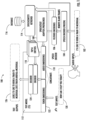
- FIG. 1 depicts a block diagram of an example speech recognition model (SLM) 100 according to example embodiments of the present disclosure.
- SLM 100 receives an audio input 102 and provides the audio input to speech encoder 104.
- Speech encoder 104 performs, among other things, blank filtering on the audio input 102 to generate filtered encodings 106.
- the filtered encodings are provided to a speech adapter 108, which generates audio embeddings/encodings 110 using the filtered encodings 106, which are provided to LLM 112.
- the filtered encodings 106 can also be provided to domain-specific entity retriever 114, which identifies domain-specific words in the speech input based on the filtered encodings 106.
- the domain-specific entity retriever 114 can, in some embodiments, retrieve a subset of domain-specific entities from a database 116 and then provide the subset of domain-specific entities (illustrated as 118) to the LLM 112.
- the LLM 112 can also receive text inputs 120 (such as generated prompts) and generate token text embeddings 122, which can be concatenated with audio embeddings 110 as combined embeddings.
- the combined embeddings and the domain-specific entities 118 can be provided to a machine learned model, represented by encoder/decoder 124, which outputs a textual representation 126 of the audio input 102.
- Figure 2 illustrates dialog tracking using an SLM 200 according to example embodiments of the present disclosure.
- a first utterance 202 is presented to the SLM 200, which processes the first utterance 202 to identify the speech of the first utterance 202, which is output as a first predicted transcript 204.
- Predicted transcript 204 is then saved as an entry in a dialog history.
- a prompt 206 from an outside source can be received as part of the dialog and added to the dialog history.
- a response to the prompt 206, second utterance 208 can then be received and processed by the SLM 200.
- the second utterance 208 can be processed by the SLM 200 to generate a second predicted transcript 210 based on the dialog history, and the second utterance 208.
- the second predicted transcript 210 can then be added as another entry to the dialog history.
- Figure 3 depicts a flow chart diagram of an example method 300 to perform speech recognition according to example embodiments of the present disclosure.
- Figure 3 depicts steps performed in a particular order for purposes of illustration and discussion, the methods of the present disclosure are not limited to the particularly illustrated order or arrangement. The various steps of the method 300 can be omitted, rearranged, combined, and/or adapted in various ways without deviating from the scope of the present disclosure.
- a computing system receives a speech input.
- the speech input can be received directly from a microphone or from another source, such as a received audio data file.
- the computing system performs blank filtering on the speech input to generate a plurality of filtered encodings.
- Blank filtering is performed using a CTC model to remove frames of the speech input that do not include actual speech, but instead contain only silence.
- the resulting output is the plurality of filtered encodings.
- the computing system processes the plurality of filtered encodings to generate a plurality of audio embeddings.
- a speech adapter receives the filtered encodings and transforms the filtered encodings into audio embeddings in a textual embedding space.
- the computing system maps each audio embedding of the plurality of audio embeddings to a textual embedding using the speech adapter.
- the textual embeddings the audio embeddings are mapped to can be any textual token embeddings in the textual embedding space of a LLM.
- the computing system concatenates each audio embedding of the plurality of audio embeddings with its respective textual embedding to generate a plurality of combined embeddings.
- the audio and textual embeddings are combined in the textual embedding space for later processing by the LLM.
- the audio and textual embeddings are of the same size in order of magnitude, and thus can be more easily processed by the LLM than if the audio embeddings were encoded at their original size.
- the computing system provides the plurality of filtered encodings to a domain-specific entity retriever.
- the domain-specific entity retriever receives the filtered encodings and determines if any domain-specific entities are similar to the received filtered encodings.
- the domain-specific entity retriever then returns a subset of specific textual embeddings associated with the domain-specific entities that are deemed to be similar enough one or more of the filtered encodings.
- the computing system receives the one or more specific textual embeddings from the domain-specific entity retriever.
- the computing system provides the plurality of combined embeddings and the one or more specific textual embeddings to a machine-learned model, such as an encoder/decoder model in an LLM.
- a machine-learned model such as an encoder/decoder model in an LLM.
- the computing system receives a textual output from the machine-learned model.
- the textual output represents the recognized speech from the LLM based on the combined embeddings and the domain-specific textual embeddings.
- FIG. 4A depicts a block diagram of an example computing system 400 that performs speech recognition according to example embodiments of the present disclosure.
- the system 400 includes a user computing device 402, a server computing system 430, and a training computing system 450 that are communicatively coupled over a network 480.
- the user computing device 402 can be any type of computing device, such as, for example, a personal computing device (e.g., laptop or desktop), a mobile computing device (e.g., smartphone or tablet), a gaming console or controller, a wearable computing device, an embedded computing device, or any other type of computing device.
- a personal computing device e.g., laptop or desktop
- a mobile computing device e.g., smartphone or tablet
- a gaming console or controller e.g., a gaming console or controller
- a wearable computing device e.g., an embedded computing device, or any other type of computing device.
- the user computing device 402 includes one or more processors 412 and a memory 414.
- the one or more processors 412 can be any suitable processing device (e.g., a processor core, a microprocessor, an ASIC, an FPGA, a controller, a microcontroller, etc.) and can be one processor or a plurality of processors that are operatively connected.
- the memory 414 can include one or more non-transitory computer-readable storage media, such as RAM, ROM, EEPROM, EPROM, flash memory devices, magnetic disks, etc., and combinations thereof.
- the memory 414 can store data 416 and instructions 418 which are executed by the processor 412 to cause the user computing device 402 to perform operations.
- the user computing device 402 can store or include one or more speech recognition models 420.
- the speech recognition models 420 can be or can otherwise include various machine-learned models such as neural networks (e.g., deep neural networks) or other types of machine-learned models, including non-linear models and/or linear models.
- Neural networks can include feed-forward neural networks, recurrent neural networks (e.g., long short-term memory recurrent neural networks), convolutional neural networks or other forms of neural networks.
- Some example machine-learned models can leverage an attention mechanism such as self-attention.
- some example machine-learned models can include multi-headed self-attention models (e.g., transformer models).
- Example speech recognition models 420 are discussed with reference to Figures 1-2 .
- the one or more speech recognition models 420 can be received from the server computing system 430 over network 480, stored in the user computing device memory 414, and then used or otherwise implemented by the one or more processors 412.
- the user computing device 402 can implement multiple parallel instances of a single speech recognition model 420 (e.g., to perform parallel processing across multiple instances of speech recognition).
- the single speech recognition model 420 maps speech into a text token embedding spaces without speech information loss. This is accomplished by utilizing blank filtering, which is a technique that is used to reduce speech data sequence length to the same order of magnitude as the text token embedding space.
- the present disclosure also includes a domain-specific retriever to augment the SLM by performing domain-specific retrieval tasks for corner cases that the LLM may not properly handle, such as names for towns or cities, family names, and other unique words that may not be captured in a general LLM.
- the speech understanding task requires a model that can simultaneously recognize speech inputs and understand the semantic meaning of the corresponding language.
- Combining a speech encoder with an LLM helps to enable this process.
- the speech encoder can be based on a connectionist temporal classification model that can be trained separately from other described models. This speech encoder works optimally on non-blank frames, and therefore it is advantageous to have the blank frames in a speech input removed.
- the blank frames (or frames having a low likelihood of containing any spoken words) can be filtered out using a variety of filtering techniques.
- the resulting filtered frames e.g., only frames containing speech
- reducing the length of the speech input helps with the joint modeling of the speech input and text sequences, because otherwise the speech input is much larger than the text sequence.
- a connectionist temporal classification (“CTC”) model can be used as a base for the speech encoder for blank filtering.
- a CTC model is a type of neural network output for training neural networks to handle sequence problems with variable timing.
- the input is a sequence (e.g., the speech input) and the output is a sequence of labels for each frame of the input sequence, such as "speech" or "blank.”
- the speech encoder can filter out blank frames from the speech input, leaving only a sequence of non-blank frames. The speech encoder can then generate encodings for the remaining non-blank frames.
- the present disclosure can also include a speech adapter, which is a model that includes one or more self-attention layers.
- the speech adapter can map the filtered encodings to text token embeddings within the pre-trained LLM.
- the text token embeddings can be embeddings generated automatically as a "dialogue” with a request of a user, such as generating "how can I help you” or "what do you need” as a token prompt.
- the domain-specific entity retriever's task is to extract a subset of domain-specific entities (such as last names, names of cities, names of restaurants or hotels, or other specific names/language that may not be included in a normal language model) from a list of given domain-specific entities that are relevant to the speech input.
- the domain-specific entity retriever can include a dual encoder that includes keys that are acoustic encodings (e.g., audio encodings) and values that are the entities mentioned in the speech input.
- the keys and values can be encoded separately and, in some embodiments, a cosine distance or other distance measure can be determined between the key and a value to determine a measure of similarity between the key and the value.
- the domain-specific entity retriever can retrieve a subset of K top candidates that are likely domain-specific entities in the speech input and provide this subset of candidates to the SLM for final analysis and output.
- the SLM takes the filtered encodings, the text token embeddings, and the subset of candidates into account for determining the content of the speech input.
- the retrieved domain-specific entities can be pre-pended to the original text inputs before processing.
- the SLM can then use, for example, an encoder-decoder or other machine-learned model to process this group of inputs to determine a final transcript of the speech input.
- the SLM can perform dialog state tracking, but instead of tracking written word, the SLM can track spoken word.
- Dialog state values can be inferred turn-by-turn in an auto-regressive fashion by providing turn (i) as speech input and illustrating the dialog history from turn (1) to turn (i) as text input.
- the SLM can simultaneously recognize words spoken in turn (i) along with the dialog states in one output string, and the transcript from each turn can be incrementally collated to create a dialog history for subsequent turns.
- one or more speech recognition models 440 can be included in or otherwise stored and implemented by the server computing system 430 that communicates with the user computing device 402 according to a client-server relationship.
- the speech recognition models 440 can be implemented by the server computing system 440 as a portion of a web service (e.g., a speech recognition service).
- a web service e.g., a speech recognition service.
- one or more models 420 can be stored and implemented at the user computing device 402 and/or one or more models 440 can be stored and implemented at the server computing system 430.
- the user computing device 402 can also include one or more user input components 422 that receives user input.
- the user input component 422 can be a touch-sensitive component (e.g., a touch-sensitive display screen or a touch pad) that is sensitive to the touch of a user input object (e.g., a finger or a stylus).
- the touch-sensitive component can serve to implement a virtual keyboard.
- Other example user input components include a microphone, a traditional keyboard, or other means by which a user can provide user input.
- the server computing system 430 includes one or more processors 432 and a memory 434.
- the one or more processors 432 can be any suitable processing device (e.g., a processor core, a microprocessor, an ASIC, an FPGA, a controller, a microcontroller, etc.) and can be one processor or a plurality of processors that are operatively connected.
- the memory 434 can include one or more non-transitory computer-readable storage media, such as RAM, ROM, EEPROM, EPROM, flash memory devices, magnetic disks, etc., and combinations thereof.
- the memory 434 can store data 436 and instructions 438 which are executed by the processor 432 to cause the server computing system 430 to perform operations.
- the server computing system 430 includes or is otherwise implemented by one or more server computing devices. In instances in which the server computing system 430 includes plural server computing devices, such server computing devices can operate according to sequential computing architectures, parallel computing architectures, or some combination thereof.
- the server computing system 430 can store or otherwise include one or more speech recognition models 440.
- the models 440 can be or can otherwise include various machine-learned models.
- Example machine-learned models include neural networks or other multi-layer non-linear models.
- Example neural networks include feed forward neural networks, deep neural networks, recurrent neural networks, and convolutional neural networks.
- Some example machine-learned models can leverage an attention mechanism such as self-attention.
- some example machine-learned models can include multi-headed self-attention models (e.g., transformer models).
- Example models 440 are discussed with reference to Figures 1-2 .
- the user computing device 402 and/or the server computing system 430 can train the models 420 and/or 440 via interaction with the training computing system 450 that is communicatively coupled over the network 480.
- the training computing system 450 can be separate from the server computing system 430 or can be a portion of the server computing system 430.
- the training computing system 450 includes one or more processors 452 and a memory 454.
- the one or more processors 452 can be any suitable processing device (e.g., a processor core, a microprocessor, an ASIC, an FPGA, a controller, a microcontroller, etc.) and can be one processor or a plurality of processors that are operatively connected.
- the memory 454 can include one or more non-transitory computer-readable storage media, such as RAM, ROM, EEPROM, EPROM, flash memory devices, magnetic disks, etc., and combinations thereof.
- the memory 454 can store data 456 and instructions 458 which are executed by the processor 452 to cause the training computing system 450 to perform operations.
- the training computing system 450 includes or is otherwise implemented by one or more server computing devices.
- the training computing system 450 can include a model trainer 460 that trains the machine-learned models 420 and/or 440 stored at the user computing device 402 and/or the server computing system 430 using various training or learning techniques, such as, for example, backwards propagation of errors.
- a loss function can be backpropagated through the model(s) to update one or more parameters of the model(s) (e.g., based on a gradient of the loss function).
- Various loss functions can be used such as mean squared error, likelihood loss, cross entropy loss, hinge loss, and/or various other loss functions.
- Gradient descent techniques can be used to iteratively update the parameters over a number of training iterations.
- performing backwards propagation of errors can include performing truncated backpropagation through time.
- the model trainer 460 can perform a number of generalization techniques (e.g., weight decays, dropouts, etc.) to improve the generalization capability of the models being trained.
- the model trainer 460 can train the speech recognition models 420 and/or 440 based on a set of training data 462.
- the training data 462 can include, for example, any suitable speech inputs and associated transcripts.
- the speech adapter can be trained using any suitable method for training a speech recognition model, where the input is speech and the output is a corresponding transcript of the speech.
- the speech adapter can be trained with the text input being unused and/or with both speech and language model weights being frozen during the training process.
- the domain-specific entity retriever can be trained using a specific set of entities associated with the domain, and in-batch negatives can be used as negative targets during training to optimize a contrastive loss.
- the training examples can be provided by the user computing device 402.
- the model 420 provided to the user computing device 402 can be trained by the training computing system 450 on user-specific data received from the user computing device 402. In some instances, this process can be referred to as personalizing the model.
- the model trainer 460 includes computer logic utilized to provide desired functionality.
- the model trainer 460 can be implemented in hardware, firmware, and/or software controlling a general purpose processor.
- the model trainer 460 includes program files stored on a storage device, loaded into a memory and executed by one or more processors.
- the model trainer 460 includes one or more sets of computer-executable instructions that are stored in a tangible computer-readable storage medium such as RAM, hard disk, or optical or magnetic media.
- the network 480 can be any type of communications network, such as a local area network (e.g., intranet), wide area network (e.g., Internet), or some combination thereof and can include any number of wired or wireless links.
- communication over the network 480 can be carried via any type of wired and/or wireless connection, using a wide variety of communication protocols (e.g., TCP/IP, HTTP, SMTP, FTP), encodings or formats (e.g., HTML, XML), and/or protection schemes (e.g., VPN, secure HTTP, SSL).
- the machine-learned models described in this specification may be used in a variety of tasks, applications, and/or use cases.
- the input to the machine-learned model(s) of the present disclosure can be text or natural language data.
- the machine-learned model(s) can process the text or natural language data to generate an output.
- the machine-learned model(s) can process the natural language data to generate a language encoding output.
- the machine-learned model(s) can process the text or natural language data to generate a latent text embedding output.
- the machine-learned model(s) can process the text or natural language data to generate a translation output.
- the machine-learned model(s) can process the text or natural language data to generate a classification output.
- the machine-learned model(s) can process the text or natural language data to generate a textual segmentation output.
- the machine-learned model(s) can process the text or natural language data to generate a semantic intent output.
- the machine-learned model(s) can process the text or natural language data to generate an upscaled text or natural language output (e.g., text or natural language data that is higher quality than the input text or natural language, etc.).
- the machine-learned model(s) can process the text or natural language data to generate a prediction output.
- the input to the machine-learned model(s) of the present disclosure can be speech data.
- the machine-learned model(s) can process the speech data to generate an output.
- the machine-learned model(s) can process the speech data to generate a speech recognition output.
- the machine-learned model(s) can process the speech data to generate a speech translation output.
- the machine-learned model(s) can process the speech data to generate a latent embedding output.
- the machine-learned model(s) can process the speech data to generate an encoded speech output (e.g., an encoded and/or compressed representation of the speech data, etc.).
- an encoded speech output e.g., an encoded and/or compressed representation of the speech data, etc.
- the machine-learned model(s) can process the speech data to generate an upscaled speech output (e.g., speech data that is higher quality than the input speech data, etc.).
- the machine-learned model(s) can process the speech data to generate a textual representation output (e.g., a textual representation of the input speech data, etc.).
- the machine-learned model(s) can process the speech data to generate a prediction output.
- the input to the machine-learned model(s) of the present disclosure can be latent encoding data (e.g., a latent space representation of an input, etc.).
- the machine-learned model(s) can process the latent encoding data to generate an output.
- the machine-learned model(s) can process the latent encoding data to generate a recognition output.
- the machine-learned model(s) can process the latent encoding data to generate a reconstruction output.
- the machine-learned model(s) can process the latent encoding data to generate a search output.
- the machine-learned model(s) can process the latent encoding data to generate a reclustering output.
- the machine-learned model(s) can process the latent encoding data to generate a prediction output.
- the input includes audio data representing a spoken utterance and the task is a speech recognition task.
- the output may comprise a text output which is mapped to the spoken utterance.
- the task comprises encrypting or decrypting input data.
- the task comprises a microprocessor performance task, such as branch prediction or memory address translation.
- Figure 4A illustrates one example computing system that can be used to implement the present disclosure.
- the user computing device 402 can include the model trainer 460 and the training dataset 162.
- the models 420 can be both trained and used locally at the user computing device 402.
- the user computing device 402 can implement the model trainer 460 to personalize the models 420 based on user-specific data.
- Figure 4B depicts a block diagram of an example computing device 10 that performs according to example embodiments of the present disclosure.
- the computing device 10 can be a user computing device or a server computing device.
- the computing device 10 includes a number of applications (e.g., applications 1 through N). Each application contains its own machine learning library and machine-learned model(s). For example, each application can include a machine-learned model.
- Example applications include a text messaging application, an email application, a dictation application, a virtual keyboard application, a browser application, etc.
- each application can communicate with a number of other components of the computing device, such as, for example, one or more sensors, a context manager, a device state component, and/or additional components.
- each application can communicate with each device component using an API (e.g., a public API).
- the API used by each application is specific to that application.
- Figure 4C depicts a block diagram of an example computing device 50 that performs according to example embodiments of the present disclosure.
- the computing device 50 can be a user computing device or a server computing device.
- the computing device 50 includes a number of applications (e.g., applications 1 through N). Each application is in communication with a central intelligence layer.
- Example applications include a text messaging application, an email application, a dictation application, a virtual keyboard application, a browser application, etc.
- each application can communicate with the central intelligence layer (and model(s) stored therein) using an API (e.g., a common API across all applications).
- the central intelligence layer includes a number of machine-learned models. For example, as illustrated in Figure 4C , a respective machine-learned model can be provided for each application and managed by the central intelligence layer. In other implementations, two or more applications can share a single machine-learned model. For example, in some implementations, the central intelligence layer can provide a single model for all of the applications. In some implementations, the central intelligence layer is included within or otherwise implemented by an operating system of the computing device 50.
- the central intelligence layer can communicate with a central device data layer.
- the central device data layer can be a centralized repository of data for the computing device 50. As illustrated in Figure 4C , the central device data layer can communicate with a number of other components of the computing device, such as, for example, one or more sensors, a context manager, a device state component, and/or additional components. In some implementations, the central device data layer can communicate with each device component using an API (e.g., a private API).
- an API e.g., a private API
- the technology discussed herein makes reference to servers, databases, software applications, and other computer-based systems, as well as actions taken and information sent to and from such systems.
- the inherent flexibility of computer-based systems allows for a great variety of possible configurations, combinations, and divisions of tasks and functionality between and among components.
- processes discussed herein can be implemented using a single device or component or multiple devices or components working in combination.
- Databases and applications can be implemented on a single system or distributed across multiple systems. Distributed components can operate sequentially or in parallel.
Landscapes
- Engineering & Computer Science (AREA)
- Physics & Mathematics (AREA)
- Computational Linguistics (AREA)
- Health & Medical Sciences (AREA)
- Audiology, Speech & Language Pathology (AREA)
- Human Computer Interaction (AREA)
- Acoustics & Sound (AREA)
- Multimedia (AREA)
- Artificial Intelligence (AREA)
- Evolutionary Computation (AREA)
- Theoretical Computer Science (AREA)
- Biophysics (AREA)
- General Engineering & Computer Science (AREA)
- Data Mining & Analysis (AREA)
- Life Sciences & Earth Sciences (AREA)
- General Health & Medical Sciences (AREA)
- Molecular Biology (AREA)
- Computing Systems (AREA)
- Biomedical Technology (AREA)
- General Physics & Mathematics (AREA)
- Mathematical Physics (AREA)
- Software Systems (AREA)
- Computer Vision & Pattern Recognition (AREA)
- Machine Translation (AREA)
- Telephonic Communication Services (AREA)
Applications Claiming Priority (1)
| Application Number | Priority Date | Filing Date | Title |
|---|---|---|---|
| US202363502787P | 2023-05-17 | 2023-05-17 |
Publications (1)
| Publication Number | Publication Date |
|---|---|
| EP4465293A1 true EP4465293A1 (de) | 2024-11-20 |
Family
ID=90810903
Family Applications (1)
| Application Number | Title | Priority Date | Filing Date |
|---|---|---|---|
| EP24171251.2A Pending EP4465293A1 (de) | 2023-05-17 | 2024-04-19 | Automatische spracherkennung mit kombinierten sprache-text-embeddings |
Country Status (3)
| Country | Link |
|---|---|
| US (1) | US20240386881A1 (de) |
| EP (1) | EP4465293A1 (de) |
| CN (1) | CN118506773A (de) |
Families Citing this family (4)
| Publication number | Priority date | Publication date | Assignee | Title |
|---|---|---|---|---|
| US20250131919A1 (en) * | 2023-10-18 | 2025-04-24 | Cisco Technology, Inc. | Generative speech model for compact data-driven speech vectors for versatile speech applications |
| US12511497B1 (en) * | 2023-11-30 | 2025-12-30 | Amazon Technologies, Inc. | Embedding-based large language model tuning |
| CN119961482B (zh) * | 2025-04-09 | 2025-09-12 | 先进计算与关键软件(信创)海河实验室 | 一种基于检索增强的执法记录仪音频语义检索方法及系统 |
| CN120181137B (zh) * | 2025-05-21 | 2025-10-03 | 宁波东方理工大学(暂名) | 一种面向大型语言模型的动态层裁剪系统和方法 |
Family Cites Families (7)
| Publication number | Priority date | Publication date | Assignee | Title |
|---|---|---|---|---|
| US10347244B2 (en) * | 2017-04-21 | 2019-07-09 | Go-Vivace Inc. | Dialogue system incorporating unique speech to text conversion method for meaningful dialogue response |
| WO2019222591A1 (en) * | 2018-05-17 | 2019-11-21 | Google Llc | Synthesis of speech from text in a voice of a target speaker using neural networks |
| CN109741732B (zh) * | 2018-08-30 | 2022-06-21 | 京东方科技集团股份有限公司 | 命名实体识别方法、命名实体识别装置、设备及介质 |
| US12154558B1 (en) * | 2020-06-16 | 2024-11-26 | Amazon Technology, Inc. | Entity resolution using speech recognition data |
| US11947912B1 (en) * | 2020-09-30 | 2024-04-02 | Amazon Technologies, Inc. | Natural language processing |
| US11908458B2 (en) * | 2020-12-29 | 2024-02-20 | International Business Machines Corporation | Customization of recurrent neural network transducers for speech recognition |
| CN114596868B (zh) * | 2022-03-10 | 2025-12-16 | 平安科技(深圳)有限公司 | 语音编码方法、语音编码装置、终端设备及存储介质 |
-
2024
- 2024-04-19 EP EP24171251.2A patent/EP4465293A1/de active Pending
- 2024-04-25 CN CN202410504716.9A patent/CN118506773A/zh active Pending
- 2024-05-17 US US18/667,763 patent/US20240386881A1/en active Pending
Non-Patent Citations (2)
| Title |
|---|
| MINGQIU WANG ET AL: "Speech-to-Text Adapter and Speech-to-Entity Retriever Augmented LLMs for Speech Understanding", ARXIV.ORG, CORNELL UNIVERSITY LIBRARY, 201 OLIN LIBRARY CORNELL UNIVERSITY ITHACA, NY 14853, 8 June 2023 (2023-06-08), XP091537464 * |
| WANG YONGQIANG ET AL: "Accelerating RNN-T Training and Inference Using CTC Guidance", ICASSP 2023 - 2023 IEEE INTERNATIONAL CONFERENCE ON ACOUSTICS, SPEECH AND SIGNAL PROCESSING (ICASSP), IEEE, 5 May 2023 (2023-05-05), pages 1 - 5, XP034448812, DOI: 10.1109/ICASSP49357.2023.10096065 * |
Also Published As
| Publication number | Publication date |
|---|---|
| CN118506773A (zh) | 2024-08-16 |
| US20240386881A1 (en) | 2024-11-21 |
Similar Documents
| Publication | Publication Date | Title |
|---|---|---|
| US12051407B2 (en) | Contextual biasing for speech recognition | |
| EP4465293A1 (de) | Automatische spracherkennung mit kombinierten sprache-text-embeddings | |
| CN113811946B (zh) | 数字序列的端到端自动语音识别 | |
| US11533495B2 (en) | Hierarchical video encoders | |
| US12136414B2 (en) | Integrating dialog history into end-to-end spoken language understanding systems | |
| US12046236B2 (en) | Training end-to-end spoken language understanding systems with unordered entities | |
| JP7678227B2 (ja) | 多言語自動音声認識のための教師無しおよび教師有り共同トレーニング(just) | |
| CN114467096B (zh) | 增强基于注意力的神经网络以选择性地关注过去的输入 | |
| WO2022121251A1 (zh) | 文本处理模型训练方法、装置、计算机设备和存储介质 | |
| JP7544989B2 (ja) | ルックアップテーブルリカレント言語モデル | |
| CN108780464A (zh) | 用于处理输入查询的方法和系统 | |
| EP4409568A1 (de) | Kontrastempfindliches siames-netzwerk für halbüberwachte spracherkennung | |
| EP4469999B1 (de) | Selbstüberwachtes lernen zur audioverarbeitung | |
| WO2023245389A1 (zh) | 歌曲生成方法、装置、电子设备和存储介质 | |
| WO2022072801A2 (en) | Systems and methods for training dual-mode machine-learned speech recognition models | |
| CN114373443A (zh) | 语音合成方法和装置、计算设备、存储介质及程序产品 | |
| KR20250169167A (ko) | 비자기회귀 디코딩을 사용한 오디오 생성 | |
| Chaoji et al. | Integrating Speech Recognition into Intelligent Information Systems: From Statistical Models to Deep Learning | |
| US20250118293A1 (en) | Chain of thought reasoning for asr | |
| WO2025183885A1 (en) | Speech encoders with think tokens | |
| Yue et al. | An Improved Speech Recognition System Based on Transformer Language Model | |
| Huynh et al. | V-Scribe: Structured Transcription of Vietnamese Speech for Digital Knowledge Management | |
| CN121725775A (zh) | 音频识别方法、装置、设备、存储介质及计算机程序产品 |
Legal Events
| Date | Code | Title | Description |
|---|---|---|---|
| PUAI | Public reference made under article 153(3) epc to a published international application that has entered the european phase |
Free format text: ORIGINAL CODE: 0009012 |
|
| STAA | Information on the status of an ep patent application or granted ep patent |
Free format text: STATUS: THE APPLICATION HAS BEEN PUBLISHED |
|
| AK | Designated contracting states |
Kind code of ref document: A1 Designated state(s): AL AT BE BG CH CY CZ DE DK EE ES FI FR GB GR HR HU IE IS IT LI LT LU LV MC ME MK MT NL NO PL PT RO RS SE SI SK SM TR |
|
| STAA | Information on the status of an ep patent application or granted ep patent |
Free format text: STATUS: REQUEST FOR EXAMINATION WAS MADE |
|
| 17P | Request for examination filed |
Effective date: 20250520 |