EP4464883A1 - Exhaust brake valve - Google Patents
Exhaust brake valve Download PDFInfo
- Publication number
- EP4464883A1 EP4464883A1 EP24176253.3A EP24176253A EP4464883A1 EP 4464883 A1 EP4464883 A1 EP 4464883A1 EP 24176253 A EP24176253 A EP 24176253A EP 4464883 A1 EP4464883 A1 EP 4464883A1
- Authority
- EP
- European Patent Office
- Prior art keywords
- periphery
- machining
- bore
- sealing face
- cutting tool
- Prior art date
- Legal status (The legal status is an assumption and is not a legal conclusion. Google has not performed a legal analysis and makes no representation as to the accuracy of the status listed.)
- Pending
Links
Images





Classifications
-
- F—MECHANICAL ENGINEERING; LIGHTING; HEATING; WEAPONS; BLASTING
- F02—COMBUSTION ENGINES; HOT-GAS OR COMBUSTION-PRODUCT ENGINE PLANTS
- F02D—CONTROLLING COMBUSTION ENGINES
- F02D9/00—Controlling engines by throttling air or fuel-and-air induction conduits or exhaust conduits
- F02D9/08—Throttle valves specially adapted therefor; Arrangements of such valves in conduits
- F02D9/10—Throttle valves specially adapted therefor; Arrangements of such valves in conduits having pivotally-mounted flaps
- F02D9/107—Manufacturing or mounting details
-
- B—PERFORMING OPERATIONS; TRANSPORTING
- B23—MACHINE TOOLS; METAL-WORKING NOT OTHERWISE PROVIDED FOR
- B23P—METAL-WORKING NOT OTHERWISE PROVIDED FOR; COMBINED OPERATIONS; UNIVERSAL MACHINE TOOLS
- B23P15/00—Making specific metal objects by operations not covered by a single other subclass or a group in this subclass
- B23P15/001—Making specific metal objects by operations not covered by a single other subclass or a group in this subclass valves or valve housings
-
- F—MECHANICAL ENGINEERING; LIGHTING; HEATING; WEAPONS; BLASTING
- F02—COMBUSTION ENGINES; HOT-GAS OR COMBUSTION-PRODUCT ENGINE PLANTS
- F02D—CONTROLLING COMBUSTION ENGINES
- F02D9/00—Controlling engines by throttling air or fuel-and-air induction conduits or exhaust conduits
- F02D9/04—Controlling engines by throttling air or fuel-and-air induction conduits or exhaust conduits concerning exhaust conduits
- F02D9/06—Exhaust brakes
-
- F—MECHANICAL ENGINEERING; LIGHTING; HEATING; WEAPONS; BLASTING
- F02—COMBUSTION ENGINES; HOT-GAS OR COMBUSTION-PRODUCT ENGINE PLANTS
- F02D—CONTROLLING COMBUSTION ENGINES
- F02D9/00—Controlling engines by throttling air or fuel-and-air induction conduits or exhaust conduits
- F02D9/08—Throttle valves specially adapted therefor; Arrangements of such valves in conduits
- F02D9/10—Throttle valves specially adapted therefor; Arrangements of such valves in conduits having pivotally-mounted flaps
- F02D9/1005—Details of the flap
-
- F—MECHANICAL ENGINEERING; LIGHTING; HEATING; WEAPONS; BLASTING
- F02—COMBUSTION ENGINES; HOT-GAS OR COMBUSTION-PRODUCT ENGINE PLANTS
- F02D—CONTROLLING COMBUSTION ENGINES
- F02D9/00—Controlling engines by throttling air or fuel-and-air induction conduits or exhaust conduits
- F02D9/08—Throttle valves specially adapted therefor; Arrangements of such valves in conduits
- F02D9/10—Throttle valves specially adapted therefor; Arrangements of such valves in conduits having pivotally-mounted flaps
- F02D9/1005—Details of the flap
- F02D9/101—Special flap shapes, ribs, bores or the like
- F02D9/1015—Details of the edge of the flap, e.g. for lowering flow noise or improving flow sealing in closed flap position
-
- F—MECHANICAL ENGINEERING; LIGHTING; HEATING; WEAPONS; BLASTING
- F02—COMBUSTION ENGINES; HOT-GAS OR COMBUSTION-PRODUCT ENGINE PLANTS
- F02D—CONTROLLING COMBUSTION ENGINES
- F02D9/00—Controlling engines by throttling air or fuel-and-air induction conduits or exhaust conduits
- F02D9/08—Throttle valves specially adapted therefor; Arrangements of such valves in conduits
- F02D9/10—Throttle valves specially adapted therefor; Arrangements of such valves in conduits having pivotally-mounted flaps
- F02D9/1035—Details of the valve housing
- F02D9/104—Shaping of the flow path in the vicinity of the flap, e.g. having inserts in the housing
- F02D9/1045—Shaping of the flow path in the vicinity of the flap, e.g. having inserts in the housing for sealing of the flow in closed flap position, e.g. the housing forming a valve seat
-
- F—MECHANICAL ENGINEERING; LIGHTING; HEATING; WEAPONS; BLASTING
- F02—COMBUSTION ENGINES; HOT-GAS OR COMBUSTION-PRODUCT ENGINE PLANTS
- F02D—CONTROLLING COMBUSTION ENGINES
- F02D9/00—Controlling engines by throttling air or fuel-and-air induction conduits or exhaust conduits
- F02D9/08—Throttle valves specially adapted therefor; Arrangements of such valves in conduits
- F02D9/10—Throttle valves specially adapted therefor; Arrangements of such valves in conduits having pivotally-mounted flaps
- F02D9/1035—Details of the valve housing
- F02D9/106—Sealing of the valve shaft in the housing, e.g. details of the bearings
-
- F—MECHANICAL ENGINEERING; LIGHTING; HEATING; WEAPONS; BLASTING
- F02—COMBUSTION ENGINES; HOT-GAS OR COMBUSTION-PRODUCT ENGINE PLANTS
- F02D—CONTROLLING COMBUSTION ENGINES
- F02D9/00—Controlling engines by throttling air or fuel-and-air induction conduits or exhaust conduits
- F02D9/08—Throttle valves specially adapted therefor; Arrangements of such valves in conduits
- F02D9/10—Throttle valves specially adapted therefor; Arrangements of such valves in conduits having pivotally-mounted flaps
- F02D9/1075—Materials, e.g. composites
- F02D9/1085—Non-organic materials, e.g. metals, alloys, ceramics
-
- F—MECHANICAL ENGINEERING; LIGHTING; HEATING; WEAPONS; BLASTING
- F16—ENGINEERING ELEMENTS AND UNITS; GENERAL MEASURES FOR PRODUCING AND MAINTAINING EFFECTIVE FUNCTIONING OF MACHINES OR INSTALLATIONS; THERMAL INSULATION IN GENERAL
- F16K—VALVES; TAPS; COCKS; ACTUATING-FLOATS; DEVICES FOR VENTING OR AERATING
- F16K1/00—Lift valves or globe valves, i.e. cut-off apparatus with closure members having at least a component of their opening and closing motion perpendicular to the closing faces
- F16K1/16—Lift valves or globe valves, i.e. cut-off apparatus with closure members having at least a component of their opening and closing motion perpendicular to the closing faces with pivoted closure-members
- F16K1/18—Lift valves or globe valves, i.e. cut-off apparatus with closure members having at least a component of their opening and closing motion perpendicular to the closing faces with pivoted closure-members with pivoted discs or flaps
- F16K1/22—Lift valves or globe valves, i.e. cut-off apparatus with closure members having at least a component of their opening and closing motion perpendicular to the closing faces with pivoted closure-members with pivoted discs or flaps with axis of rotation crossing the valve member, e.g. butterfly valves
- F16K1/222—Shaping of the valve member
-
- F—MECHANICAL ENGINEERING; LIGHTING; HEATING; WEAPONS; BLASTING
- F16—ENGINEERING ELEMENTS AND UNITS; GENERAL MEASURES FOR PRODUCING AND MAINTAINING EFFECTIVE FUNCTIONING OF MACHINES OR INSTALLATIONS; THERMAL INSULATION IN GENERAL
- F16K—VALVES; TAPS; COCKS; ACTUATING-FLOATS; DEVICES FOR VENTING OR AERATING
- F16K1/00—Lift valves or globe valves, i.e. cut-off apparatus with closure members having at least a component of their opening and closing motion perpendicular to the closing faces
- F16K1/32—Details
- F16K1/34—Cutting-off parts, e.g. valve members, seats
- F16K1/36—Valve members
Definitions
- the present disclosure generally relates to valve assemblies, and more particular, to exhaust brake valve assemblies.
- the present disclosure provides, in one independent aspect, a method of manufacturing a butterfly member of an exhaust brake valve assembly.
- the method includes a step of providing a metal material.
- the method also includes a step of machining the metal material to form a body.
- the method also includes a step of drilling a through bore in a central portion of the body, thereby delimiting a first side of the body from a second side of the body that is opposite the first side.
- the through bore is configured to receive a shaft for pivoting movement of the body in a valve housing of the exhaust brake valve assembly.
- the method also includes a step of positioning the body for a single machining operation.
- the method also includes a step of machining, during the single machining operation, the body to form a first sealing face on the first side of the body and a second sealing face on the second side of the body, thereby producing the butterfly member.
- the first sealing face defines a first plane and the second sealing face defines a second plane spaced from the first plane.
- the present disclosure provides, in another independent aspect, a method of manufacturing a butterfly member of an exhaust brake valve assembly.
- the method includes a step of providing a valve housing having an interior surface.
- the method also includes a step of providing a metal material.
- the method also includes a step of machining the metal material to form a body configured to be positioned within the valve housing.
- the method also includes a step of drilling a through bore in a central portion of the body, thereby delimiting a first side of the body from a second side of the body that is opposite the first side.
- the method also includes a step of positioning the body for a single machining operation.
- the method also includes a step of machining, during the single machining operation, the body to form a first sealing face on the first side of the body and a second sealing face on the second side of the body, thereby producing the butterfly member.
- the first sealing face defines a first plane and the second sealing face defines a second plane spaced from the first plane.
- the body is formed to define a gap between a periphery of the body and the interior surface of the valve housing as the body pivots within the valve housing between a closed position and an open position. The gap defines a distance of at least 1.5 mm.
- the present disclosure provides, in yet another independent aspect, a method of manufacturing a butterfly member of an exhaust brake valve assembly.
- the method includes a step of providing a metal material.
- the method also includes a step of machining the metal material to form a body.
- the body includes a first surface, a second surface opposite the first surface, a first spline formed on the first surface, the first spline extending between a central portion of the body and a periphery of the body, a second spline formed on the second surface, the second spline extending between the central portion of the body and the periphery of the body, and a plurality of protrusions formed on the first surface.
- the method also includes a step of drilling a through bore in the central portion of the body, thereby delimiting a first side of the body from a second side of the body that is opposite the first side.
- the method also includes a step of positioning the body for a single machining operation.
- the method also includes a step of machining, during the single machining operation, the body to form a first sealing face around the periphery of the body on the first side of the body and a second sealing face around the periphery of the body on the second side of the body, thereby producing the butterfly member.
- the first sealing face defines a first plane and the second sealing face defines a second plane spaced from the first plane.
- functionality described herein as being performed by one component may be performed by multiple components in a distributed manner. Likewise, functionality performed by multiple components may be consolidated and performed by a single component. Similarly, a component described as performing particular functionality may also perform additional functionality not described herein. For example, a device or structure that is "configured" in a certain way is configured in at least that way but may also be configured in ways that are not listed.
- FIG. 1 illustrates a valve assembly 10, particularly an exhaust brake valve assembly, which is used in an exhaust system of a diesel-powered vehicle.
- the valve assembly 10 is provided in an exhaust manifold of a diesel engine and is operable to create a back pressure in the exhaust system.
- the valve assembly 10 partially closes to restrict the flow of exhaust gas or completely close to inhibit the flow of the exhaust gas within the exhaust manifold to create the back pressure.
- the exhaust gas becomes compressed in the exhaust manifold and in a cylinder of the engine.
- the valve assembly 10 slows the speed of the engine by way of the back pressure in the exhaust system, and thereby reduces the speed of the vehicle to provide braking.
- the valve assembly 10 includes a valve housing 14 having a flow housing 18, a butterfly flap or butterfly member 22, and a shaft 26 coupled to the butterfly member 22.
- the butterfly member 22 is supported in the flow housing 18 by the shaft 26 for pivoting movement therewith between an open position, a closed position, and a plurality of intermediate pivoting positions defined between the open and closed positions.
- the valve assembly 10 further includes an actuation mechanism 30 operably coupled to the shaft 26 of the valve housing 14. The actuation mechanism 30 controls pivoting movement of the shaft 26 and the butterfly member 22 when the actuation mechanism 30 is activated.
- the valve housing 14 is illustrated.
- the valve housing 14 is formed with a generally cylindrical shape between opposite ends 34, 38.
- the flow housing 18 of the valve housing 14 defines a flow passage 42 extending therethrough between a first flow opening 46 (e.g., inlet) at the first end 34 and a second flow opening 50 (e.g., outlet) at the second end 38.
- the flow passage 42 defines a flow axis 54 ( FIG. 3 ) extending between the inlet and outlet 46, 50 of the flow passage 42.
- a sealing flange 58 extends from an interior surface 64 of the flow passage 42, such that the butterfly member 22 sealingly engages the sealing flange 58 to inhibit the flow of exhaust gas through the flow passage 42.
- the valve housing 14 further includes a first shaft housing 62 extending from a bottom of the flow housing 18 and a second shaft housing 66 extending from a top of the flow housing 18.
- the second shaft housing 66 is coupled to the actuation mechanism 30 by a plurality of fasteners 68 ( FIG. 1 ).
- the first shaft housing 62 defines a first bore 70 extending in a direction transverse to the flow axis 54.
- the second shaft housing 66 defines a second bore 74 that is coaxial with the first bore 70.
- the first bore 70 and the second bore 74 together define a shaft bore axis 78 ( FIG. 3 ) transverse the flow axis 54.
- the first and second bores 70, 74 are proximate a center of the flow passage 42 and divide the sealing flange 58 into first and second sealing flange halves 58a, 58b ( FIG. 4 ).
- the butterfly assembly includes the butterfly member 22 and the shaft 26.
- the butterfly member 22 includes a body 100 formed by a first surface 104 and a second surface 108 opposite the first surface 104.
- the body 100 has a substantially circular shape to conform to the flow passage 42 of the flow housing 18.
- a through bore or a shaft bore 112 ( FIGS. 9 and 10 ) extends through a central portion of the body 100 defined between a first end 116 of the shaft bore 112 and a second end 120 of the shaft bore 112 opposite the first end 116. Proximate the first and second ends 116, 120 of the shaft bore 112, flat edges along the body 100 are also formed.
- the shaft bore 112 defines a first side 124 of the body 100 of the butterfly member 22 and a second side 128 of the body 100 of the butterfly member 22 opposite the first side 124. Since the shaft bore 112 extends through the central portion of the body 100 of the butterfly member 22, the shaft bore 112 delimits the first side 124 from the second side 128.
- the butterfly member 22 further includes a first sealing face or first sealing surface 132 on the first side 124 of the body 100 of the butterfly member 22 and a second sealing face or second sealing surface 136 on the second side 128 of the body 100 of the butterfly member 22, which will be further discussed below.
- the body 100 of the butterfly member 22 also includes a plurality of protrusions 140a-c (three, in the illustrated construction) formed on the first surface 104 of the body 100, in which the protrusions 140a-c have a circular shape.
- a first protrusion 140a of the plurality of protrusions 140a-c is formed on the first side 124 of the body 100 proximate a periphery 144 of the body 100.
- a second protrusion 140b and a third protrusion 140c of the plurality of protrusions 140a-c are formed on the second side 128 of the body 100, also proximate the periphery 144 of the body 100.
- the body 100 of the butterfly member 22 includes a first spline 146 formed on the first surface 104 of the body 100 and a second spline 148 formed on the second surface 108 of the body 100.
- the first spline 146 extends between the periphery 144 and the central portion of the body 100 on the second side 128 of the body 100.
- the second spline 148 extends between the periphery 144 and the central portion of the body 100 on the first side 124 of the body 100.
- the second and third protrusions 140b, 140c are located on opposite side of the first spline 146, while the first protrusion 140a aligns with the first spline 146.
- the first and second splines 146, 148 provide structural strength to the butterfly member 22.
- the butterfly member 22 is drilled to define pin holes 150 (two, in the illustrated construction) that extend through the first surface 104 of the body 100.
- Each pin hole 150 has a corresponding protrusion 152 extending from the second surface 108 of the body 100.
- the pin holes 150 and the protrusions 152 are aligned through a center of the shaft bore 112.
- the shaft 26 includes a body 156 with opposite ends 160, 164 and extends along a shaft axis 166. A chamfered edge is formed on each end 160, 164 of the body 156 of the shaft 26.
- the shaft 26 is received within the shaft bore 112 of the butterfly member 22 so that the butterfly member 22 is pivotable with the shaft 26 in the valve housing 14.
- the shaft is drilled to define pin holes 172 corresponding to and, as installed, coaxial with the pin holes 150 drilled through the body 100 of the butterfly member 22.
- a method 200 for manufacturing the butterfly member 22 is provided.
- a metal material is provided and machined to form the body 100 of the butterfly member 22.
- the metal material is from a billet of stainless steel. More specifically, martensitic stainless steel can be used to form the butterfly member 22 for corrosion resistance.
- the metal material is cast iron.
- rough machining is first performed to remove excess material. Rough machining of the metal material is performed until a workpiece of a desired shape and size, or a shape similar to a configuration of the butterfly member 22 is provided.
- finish machining is performed to remove a small amount of material until the workpiece is within tolerance of the finial dimensions of the body 100 of the butterfly member 22.
- finish machining is performed to remove a small amount of material until the workpiece is within tolerance of the finial dimensions of the body 100 of the butterfly member 22.
- a casting process is performed to form the body 100 of the butterfly member 22.
- the metal material is machined to form the first surface 104, the second surface 108, the first spline 146, the second spline 148, and the plurality of protrusions 140a-c.
- the shaft bore 112 is drilled into the central portion of the body 100 of the butterfly member 22.
- the position of the butterfly member 22 is adjusted for a single machining operation.
- the body 100 is particularly clamped in a lathe (not shown) for the single machining operation.
- the plurality of protrusions 140a-c provided on the body 100 serve as clamping reference points and datum references for use with machining processes.
- Clamping forces are exerted on the first surface 104 and the second surface 108 of the body 100. Specifically, the clamping forces are exerted on the second surface 108 at locations opposite the plurality of protrusions 140a-c to securely clamp the butterfly member 22 within the lathe. As such, the clamping forces are exerted at specific locations on the butterfly member 22 to prevent the butterfly member 22 from moving during the machining operation.
- the body 100 of the butterfly member 22 is machined in the lathe to form the first and second sealing surfaces 132, 136 in a single machining operation to produce the butterfly member 22.
- the body 100 of the butterfly member 22 is securely clamped in the lathe.
- the lathe When the lathe is actuated, the body 100 rotates about a rotational axis 220 defined at a center point of the body 100.
- a cutting tool 224, provided on the lathe moves towards the body 100 in a cutting direction, defined by arrow 226, perpendicular to the rotational axis 220.
- the cutting tool 224 engages the body 100 of the butterfly member 22 to perform a facing operation to form the first and second sealing surfaces 132, 136 with consistent dimensions around the periphery 144 of the body 100.
- the facing operation begins once the cutting tool 224 contacts the periphery 144 of the body 100.
- material along the periphery 144 of the body 100 is removed.
- Rotation of the butterfly member 22 permits a first side 228a of the cutting tool 224 to engage and remove material from the first surface 104 of the body 100 at the first side 124 to form the first sealing surface 132.
- first and second sealing surfaces 132, 136 provide a step-like structure on the periphery 144 of the body 100.
- first and second sealing surfaces 132, 136 are respectively formed to extend between the first end 116 and the second end 120 of the shaft bore 112 on the first and second sides 124, 128 of the body 100.
- first sealing surface 132 defines a first plane
- the second sealing surface 136 defines a second plane parallel to and spaced a distance from the first plane.
- the body 100 of the butterfly member 22 can undergo plating (e.g., nickel electroplating).
- the first and second surfaces 104, 108 of the body 100 are coated by a thin layer of nickel by using electroplating.
- the nickel coating provides the butterfly member 22 with protection against corrosion, erosion, and abrasion.
- the body 100 is coated by a ceramic-like slurry and placed in an oven to dry the butterfly member 22 to complete the coating process.
- the butterfly assembly is assembled when the butterfly member 22 is positioned in the flow passage 42 of the flow housing 18, and the shaft 26 is inserted into the shaft bore 112 of the butterfly member 22 with the first end 160 extending a greater distance from the body 100 of the butterfly member 22 than the second end 164.
- the first end 160 of the shaft 26 is disposed in the second bore 74 of the second shaft housing 66, while the second end 164 of the shaft 26 is disposed in the first bore 70 of the first shaft housing 62.
- the pin hole(s) 150, 172 are then drilled into the butterfly member 22 and the shaft 26.
- the pin hole(s) 150, 172 have a diameter of between about 2 millimeters (mm) and about 12 mm.
- each pin 230 has a diameter about 5% less than the diameter of the pin holes 150, 172 so that the pin 230 easily slips into the pin holes 150, 172 to accommodate loose, low cost tolerances between the components.
- Each pin 230 is fully inserted into the pin holes 150, 172 to be guided.
- a tool (not shown) is positioned through a respective pin hole 150 so that a corresponding pin 230 is pressed between the tool and the inner surface of a corresponding protrusion 152 to make the pin 230 "swell" (e.g., increase in diameter) to match the form and diameter of the pin holes 150, 172.
- material of the pin 230, the butterfly member 22 (proximate the pin hole 150) and the shaft 26 (proximate the pin hole 172) deforms to be retained together as a unitary structure.
- the exhaust gas through the valve assembly 10 has a temperature of about 600 °C (1,112 °F)
- the components of the butterfly assembly expand and contract at the same rate in response to temperature changes. Components formed of materials with different coefficients of thermal expansion will expand and contract at different rates, causing connections between the components to loosen.
- the material(s) e.g., austenitic stainless steel, ferritic stainless steel, martensitic stainless steel, tool steel, etc., depending on application requirements
- the shaft 26, and the pin(s) 230 have substantially equal coefficients of thermal expansion.
- the actuation mechanism 30 is operated to rotate the shaft 26 of the butterfly assembly, and thereby pivot the butterfly member 22.
- the butterfly member 22 is pivoted between the closed position and the open position to control the flow of exhaust gas within the exhaust system.
- the butterfly member 22 In the open position, the butterfly member 22 is oriented in a direction parallel to the flow axis 54 to allow the flow of the exhaust gas from the inlet 46 of the flow passage 42 to the outlet 50 of the flow passage 42 for exhaustion from the exhaust system.
- the butterfly assembly is illustrated in the closed position.
- the butterfly member 22 is oriented perpendicular to the flow axis 54.
- the first sealing surface 132 of the butterfly member 22 sealingly engages the first sealing flange half 58a, while the second sealing surface 136 of the butterfly member 22 sealingly engages the second sealing flange half 58b.
- the flow of the exhaust gas from the inlet 46 of the flow passage 42 to the outlet 50 of the flow passage 42 is inhibited.
- the butterfly member 22 is manufactured such that a gap 234 is defined between the interior surface 64 of the flow passage 42 and the periphery 144 of the body 100 when the butterfly member 22 is in the closed position.
- the gap 234 defines a distance D1 of at least 1.5 mm. In all positions of the butterfly member 22, including the intermediate pivoting positions, the distance of the gap 234 remains to be at least 1.5 mm.
- the manufactured gap 234 prevents the butterfly member 22 from contacting, other than the sealing flange 58, the interior surface 64 of the flow passage 42 when the butterfly member 22 pivots within the flow housing 18. Corrosion is then inhibited from forming between the butterfly member 22 and the interior surface 64 of the flow passage 42. As such, pivoting movement of the butterfly member 22 will not be obstructed by corrosion.
Landscapes
- Engineering & Computer Science (AREA)
- General Engineering & Computer Science (AREA)
- Mechanical Engineering (AREA)
- Chemical & Material Sciences (AREA)
- Combustion & Propulsion (AREA)
- Manufacturing & Machinery (AREA)
- Ceramic Engineering (AREA)
- Lift Valve (AREA)
- Control Of Throttle Valves Provided In The Intake System Or In The Exhaust System (AREA)
Abstract
Description
- This application claims priority to
U.S. Provisional Patent Application No. 63/503,088 filed on May 18, 2023 - The present disclosure generally relates to valve assemblies, and more particular, to exhaust brake valve assemblies.
- The present disclosure provides, in one independent aspect, a method of manufacturing a butterfly member of an exhaust brake valve assembly. The method includes a step of providing a metal material. The method also includes a step of machining the metal material to form a body. The method also includes a step of drilling a through bore in a central portion of the body, thereby delimiting a first side of the body from a second side of the body that is opposite the first side. The through bore is configured to receive a shaft for pivoting movement of the body in a valve housing of the exhaust brake valve assembly. The method also includes a step of positioning the body for a single machining operation. The method also includes a step of machining, during the single machining operation, the body to form a first sealing face on the first side of the body and a second sealing face on the second side of the body, thereby producing the butterfly member. The first sealing face defines a first plane and the second sealing face defines a second plane spaced from the first plane.
- The present disclosure provides, in another independent aspect, a method of manufacturing a butterfly member of an exhaust brake valve assembly. The method includes a step of providing a valve housing having an interior surface. The method also includes a step of providing a metal material. The method also includes a step of machining the metal material to form a body configured to be positioned within the valve housing. The method also includes a step of drilling a through bore in a central portion of the body, thereby delimiting a first side of the body from a second side of the body that is opposite the first side. The method also includes a step of positioning the body for a single machining operation. The method also includes a step of machining, during the single machining operation, the body to form a first sealing face on the first side of the body and a second sealing face on the second side of the body, thereby producing the butterfly member. The first sealing face defines a first plane and the second sealing face defines a second plane spaced from the first plane. The body is formed to define a gap between a periphery of the body and the interior surface of the valve housing as the body pivots within the valve housing between a closed position and an open position. The gap defines a distance of at least 1.5 mm.
- The present disclosure provides, in yet another independent aspect, a method of manufacturing a butterfly member of an exhaust brake valve assembly. The method includes a step of providing a metal material. The method also includes a step of machining the metal material to form a body. The body includes a first surface, a second surface opposite the first surface, a first spline formed on the first surface, the first spline extending between a central portion of the body and a periphery of the body, a second spline formed on the second surface, the second spline extending between the central portion of the body and the periphery of the body, and a plurality of protrusions formed on the first surface. The method also includes a step of drilling a through bore in the central portion of the body, thereby delimiting a first side of the body from a second side of the body that is opposite the first side. The method also includes a step of positioning the body for a single machining operation. The method also includes a step of machining, during the single machining operation, the body to form a first sealing face around the periphery of the body on the first side of the body and a second sealing face around the periphery of the body on the second side of the body, thereby producing the butterfly member. The first sealing face defines a first plane and the second sealing face defines a second plane spaced from the first plane.
-
-
FIG. 1 is a perspective view of an exhaust brake valve assembly. -
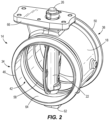
FIG. 2 is a perspective view of an exhaust brake valve ofFIG. 1 . -
FIG. 3 is a perspective view of a valve housing of the exhaust brake valve ofFIG. 2 . -
FIG. 4 is a top cross-sectional view of the valve housing ofFIG. 3 , taken generally along line 4-4 inFIG. 3 . -
FIG. 5 is a front perspective view of a butterfly assembly of the exhaust brake valve ofFIG. 2 . -
FIG. 6 is a rear perspective view of a butterfly assembly of the exhaust brake valve ofFIG. 2 . -
FIG. 7 is a perspective view of a shaft of the butterfly assembly ofFIGS. 5 and6 . -
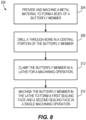
FIG. 8 is a block diagram of a method of manufacturing a butterfly member of the butterfly assembly ofFIGS. 5 and6 . -
FIG. 9 is a perspective view of a first position of a cutting tool for machining the butterfly member ofFIG. 8 to form a first sealing face and a second sealing face. -
FIG. 10 is a perspective view of a second position of a cutting tool for machining the butterfly member ofFIG. 8 to form a first sealing face and a second sealing face. -
FIG. 11 is a top view of the exhaust brake valve ofFIG. 2 in a closed position. - Before any independent embodiments are explained in detail, it is to be understood that the disclosure is not limited in its application to the details of construction and the arrangement of components set forth in the following description or illustrated in the following drawings. The disclosure is capable of other independent embodiments and of being practiced or of being carried out in various ways. Also, it is to be understood that the phraseology and terminology used herein is for the purpose of description and should not be regarded as limiting.
- Use of "including" and "comprising" and variations thereof as used herein is meant to encompass the items listed thereafter and equivalents thereof as well as additional items. Use of "consisting of" and variations thereof as used herein is meant to encompass only the items listed thereafter and equivalents thereof. Unless specified or limited otherwise, the terms "mounted," "connected," "supported," and "coupled" and variations thereof are used broadly and encompass both direct and indirect mountings, connections, supports, and couplings.
- Relative terminology, such as, for example, "about", "approximately", "substantially", etc., used in connection with a quantity or condition would be understood by those of ordinary skill to be inclusive of the stated value and has the meaning dictated by the context (for example, the term includes at least the degree of error associated with the measurement of, tolerances (e.g., manufacturing, assembly, use, etc.) associated with the particular value, etc.). Such terminology should also be considered as disclosing the range defined by the absolute values of the two endpoints. For example, the expression "from about 2 to about 4" also discloses the range "from 2 to 4". The relative terminology may refer to plus or minus a percentage (e.g., 1%, 5%, 10% or more) of an indicated value.
- Also, the functionality described herein as being performed by one component may be performed by multiple components in a distributed manner. Likewise, functionality performed by multiple components may be consolidated and performed by a single component. Similarly, a component described as performing particular functionality may also perform additional functionality not described herein. For example, a device or structure that is "configured" in a certain way is configured in at least that way but may also be configured in ways that are not listed.
- The embodiment(s) described below and illustrated in the figures are presented by way of example only and are not intended as a limitation upon the concepts and principles of the present disclosure. As such, it will be appreciated that variations and modifications to the elements and their configuration and/or arrangement exist within the spirit and scope of one or more independent aspects as described.
-
FIG. 1 illustrates avalve assembly 10, particularly an exhaust brake valve assembly, which is used in an exhaust system of a diesel-powered vehicle. Specifically, thevalve assembly 10 is provided in an exhaust manifold of a diesel engine and is operable to create a back pressure in the exhaust system. Thevalve assembly 10 partially closes to restrict the flow of exhaust gas or completely close to inhibit the flow of the exhaust gas within the exhaust manifold to create the back pressure. As such, the exhaust gas becomes compressed in the exhaust manifold and in a cylinder of the engine. Thevalve assembly 10 slows the speed of the engine by way of the back pressure in the exhaust system, and thereby reduces the speed of the vehicle to provide braking. - The
valve assembly 10 includes avalve housing 14 having a flowhousing 18, a butterfly flap orbutterfly member 22, and ashaft 26 coupled to thebutterfly member 22. Thebutterfly member 22 is supported in theflow housing 18 by theshaft 26 for pivoting movement therewith between an open position, a closed position, and a plurality of intermediate pivoting positions defined between the open and closed positions. Thevalve assembly 10 further includes anactuation mechanism 30 operably coupled to theshaft 26 of thevalve housing 14. Theactuation mechanism 30 controls pivoting movement of theshaft 26 and thebutterfly member 22 when theactuation mechanism 30 is activated. - With reference to
FIGS. 2-4 , thevalve housing 14 is illustrated. Thevalve housing 14 is formed with a generally cylindrical shape between opposite ends 34, 38. Theflow housing 18 of thevalve housing 14 defines aflow passage 42 extending therethrough between a first flow opening 46 (e.g., inlet) at thefirst end 34 and a second flow opening 50 (e.g., outlet) at thesecond end 38. Theflow passage 42 defines a flow axis 54 (FIG. 3 ) extending between the inlet andoutlet flow passage 42. A sealingflange 58 extends from aninterior surface 64 of theflow passage 42, such that thebutterfly member 22 sealingly engages the sealingflange 58 to inhibit the flow of exhaust gas through theflow passage 42. - The
valve housing 14 further includes afirst shaft housing 62 extending from a bottom of theflow housing 18 and asecond shaft housing 66 extending from a top of theflow housing 18. Thesecond shaft housing 66 is coupled to theactuation mechanism 30 by a plurality of fasteners 68 (FIG. 1 ). Thefirst shaft housing 62 defines afirst bore 70 extending in a direction transverse to theflow axis 54. Thesecond shaft housing 66 defines asecond bore 74 that is coaxial with thefirst bore 70. Thefirst bore 70 and thesecond bore 74 together define a shaft bore axis 78 (FIG. 3 ) transverse theflow axis 54. The first andsecond bores flow passage 42 and divide the sealingflange 58 into first and secondsealing flange halves FIG. 4 ). - With reference to
FIGS. 2 ,5 and6 , a butterfly assembly is illustrated. The butterfly assembly includes thebutterfly member 22 and theshaft 26. Thebutterfly member 22 includes abody 100 formed by afirst surface 104 and asecond surface 108 opposite thefirst surface 104. Thebody 100 has a substantially circular shape to conform to theflow passage 42 of theflow housing 18. A through bore or a shaft bore 112 (FIGS. 9 and 10 ) extends through a central portion of thebody 100 defined between afirst end 116 of the shaft bore 112 and asecond end 120 of the shaft bore 112 opposite thefirst end 116. Proximate the first and second ends 116, 120 of the shaft bore 112, flat edges along thebody 100 are also formed. The shaft bore 112 defines afirst side 124 of thebody 100 of thebutterfly member 22 and asecond side 128 of thebody 100 of thebutterfly member 22 opposite thefirst side 124. Since the shaft bore 112 extends through the central portion of thebody 100 of thebutterfly member 22, the shaft bore 112 delimits thefirst side 124 from thesecond side 128. Thebutterfly member 22 further includes a first sealing face or first sealingsurface 132 on thefirst side 124 of thebody 100 of thebutterfly member 22 and a second sealing face orsecond sealing surface 136 on thesecond side 128 of thebody 100 of thebutterfly member 22, which will be further discussed below. - The
body 100 of thebutterfly member 22 also includes a plurality ofprotrusions 140a-c (three, in the illustrated construction) formed on thefirst surface 104 of thebody 100, in which theprotrusions 140a-c have a circular shape. Afirst protrusion 140a of the plurality ofprotrusions 140a-c is formed on thefirst side 124 of thebody 100 proximate aperiphery 144 of thebody 100. Asecond protrusion 140b and athird protrusion 140c of the plurality ofprotrusions 140a-c are formed on thesecond side 128 of thebody 100, also proximate theperiphery 144 of thebody 100. - Moreover, the
body 100 of thebutterfly member 22 includes afirst spline 146 formed on thefirst surface 104 of thebody 100 and asecond spline 148 formed on thesecond surface 108 of thebody 100. Thefirst spline 146 extends between theperiphery 144 and the central portion of thebody 100 on thesecond side 128 of thebody 100. Thesecond spline 148 extends between theperiphery 144 and the central portion of thebody 100 on thefirst side 124 of thebody 100. The second andthird protrusions first spline 146, while thefirst protrusion 140a aligns with thefirst spline 146. As such, the first andsecond splines butterfly member 22. - As discussed below, the
butterfly member 22 is drilled to define pin holes 150 (two, in the illustrated construction) that extend through thefirst surface 104 of thebody 100. Eachpin hole 150 has acorresponding protrusion 152 extending from thesecond surface 108 of thebody 100. The pin holes 150 and theprotrusions 152 are aligned through a center of the shaft bore 112. - With reference to
FIG. 7 , theshaft 26 includes abody 156 withopposite ends shaft axis 166. A chamfered edge is formed on eachend body 156 of theshaft 26. Theshaft 26 is received within the shaft bore 112 of thebutterfly member 22 so that thebutterfly member 22 is pivotable with theshaft 26 in thevalve housing 14. As discussed below, the shaft is drilled to definepin holes 172 corresponding to and, as installed, coaxial with the pin holes 150 drilled through thebody 100 of thebutterfly member 22. - With reference to
FIG. 8 , amethod 200 for manufacturing thebutterfly member 22 is provided. Atblock 204, a metal material is provided and machined to form thebody 100 of thebutterfly member 22. In some embodiments, the metal material is from a billet of stainless steel. More specifically, martensitic stainless steel can be used to form thebutterfly member 22 for corrosion resistance. In other embodiments, the metal material is cast iron. When machining the metal material, rough machining is first performed to remove excess material. Rough machining of the metal material is performed until a workpiece of a desired shape and size, or a shape similar to a configuration of thebutterfly member 22 is provided. Then, finish machining is performed to remove a small amount of material until the workpiece is within tolerance of the finial dimensions of thebody 100 of thebutterfly member 22. In other embodiments of manufacturing thebutterfly member 22, a casting process is performed to form thebody 100 of thebutterfly member 22. After the casting process, the metal material is machined to form thefirst surface 104, thesecond surface 108, thefirst spline 146, thesecond spline 148, and the plurality ofprotrusions 140a-c. - At
block 208, the shaft bore 112 is drilled into the central portion of thebody 100 of thebutterfly member 22. Atblock 212, the position of thebutterfly member 22 is adjusted for a single machining operation. When adjusting the position of thebutterfly member 22, thebody 100 is particularly clamped in a lathe (not shown) for the single machining operation. The plurality ofprotrusions 140a-c provided on thebody 100 serve as clamping reference points and datum references for use with machining processes. Clamping forces are exerted on thefirst surface 104 and thesecond surface 108 of thebody 100. Specifically, the clamping forces are exerted on thesecond surface 108 at locations opposite the plurality ofprotrusions 140a-c to securely clamp thebutterfly member 22 within the lathe. As such, the clamping forces are exerted at specific locations on thebutterfly member 22 to prevent thebutterfly member 22 from moving during the machining operation. - At
block 216, thebody 100 of thebutterfly member 22 is machined in the lathe to form the first and second sealing surfaces 132, 136 in a single machining operation to produce thebutterfly member 22. With reference toFIG. 9 , thebody 100 of thebutterfly member 22 is securely clamped in the lathe. When the lathe is actuated, thebody 100 rotates about arotational axis 220 defined at a center point of thebody 100. Acutting tool 224, provided on the lathe, moves towards thebody 100 in a cutting direction, defined byarrow 226, perpendicular to therotational axis 220. - With reference to
FIG. 10 , thecutting tool 224 engages thebody 100 of thebutterfly member 22 to perform a facing operation to form the first and second sealing surfaces 132, 136 with consistent dimensions around theperiphery 144 of thebody 100. The facing operation begins once the cuttingtool 224 contacts theperiphery 144 of thebody 100. As thecutting tool 224 continues to move in the cutting direction 266, material along theperiphery 144 of thebody 100 is removed. Rotation of thebutterfly member 22 permits afirst side 228a of thecutting tool 224 to engage and remove material from thefirst surface 104 of thebody 100 at thefirst side 124 to form thefirst sealing surface 132. Further rotation of thebutterfly member 22 permits asecond side 228b of thecutting tool 224 to alternatively engage and remove material from thesecond surface 108 of thebody 100 at thesecond side 128 to form thesecond sealing surface 136. The first and second sealing surfaces 132, 136 provide a step-like structure on theperiphery 144 of thebody 100. In addition, the first and second sealing surfaces 132, 136 are respectively formed to extend between thefirst end 116 and thesecond end 120 of the shaft bore 112 on the first andsecond sides body 100. As such, thefirst sealing surface 132 defines a first plane and thesecond sealing surface 136 defines a second plane parallel to and spaced a distance from the first plane. - In some embodiments, after manufacturing the
butterfly member 22, thebody 100 of thebutterfly member 22 can undergo plating (e.g., nickel electroplating). The first andsecond surfaces body 100 are coated by a thin layer of nickel by using electroplating. As such, the nickel coating provides thebutterfly member 22 with protection against corrosion, erosion, and abrasion. In other examples, thebody 100 is coated by a ceramic-like slurry and placed in an oven to dry thebutterfly member 22 to complete the coating process. - With reference to
FIGS. 5 and6 , in some embodiments of thevalve assembly 10, the butterfly assembly is assembled when thebutterfly member 22 is positioned in theflow passage 42 of theflow housing 18, and theshaft 26 is inserted into the shaft bore 112 of thebutterfly member 22 with thefirst end 160 extending a greater distance from thebody 100 of thebutterfly member 22 than thesecond end 164. Thefirst end 160 of theshaft 26 is disposed in thesecond bore 74 of thesecond shaft housing 66, while thesecond end 164 of theshaft 26 is disposed in thefirst bore 70 of thefirst shaft housing 62. The pin hole(s) 150, 172 are then drilled into thebutterfly member 22 and theshaft 26. Depending on the size and loading requirements of thebutterfly member 22, the pin hole(s) 150, 172 have a diameter of between about 2 millimeters (mm) and about 12 mm. - After the pin holes 150, 172 are drilled, a pin 230 (
FIG. 5 ) is inserted into each set of pin holes 150, 172. Eachpin 230 has a diameter about 5% less than the diameter of the pin holes 150, 172 so that thepin 230 easily slips into the pin holes 150, 172 to accommodate loose, low cost tolerances between the components. Eachpin 230 is fully inserted into the pin holes 150, 172 to be guided. After insertion, a tool (not shown) is positioned through arespective pin hole 150 so that acorresponding pin 230 is pressed between the tool and the inner surface of acorresponding protrusion 152 to make thepin 230 "swell" (e.g., increase in diameter) to match the form and diameter of the pin holes 150, 172. As such, material of thepin 230, the butterfly member 22 (proximate the pin hole 150) and the shaft 26 (proximate the pin hole 172) deforms to be retained together as a unitary structure. - Considering that the exhaust gas through the
valve assembly 10 has a temperature of about 600 °C (1,112 °F), it is advantageous that the components of the butterfly assembly expand and contract at the same rate in response to temperature changes. Components formed of materials with different coefficients of thermal expansion will expand and contract at different rates, causing connections between the components to loosen. To maintain connection of the butterfly assembly components during operation of the valve assembly 10 (e.g., heating and cooling), the material(s) (e.g., austenitic stainless steel, ferritic stainless steel, martensitic stainless steel, tool steel, etc., depending on application requirements) of thebutterfly member 22, theshaft 26, and the pin(s) 230 have substantially equal coefficients of thermal expansion. - In operation, the
actuation mechanism 30 is operated to rotate theshaft 26 of the butterfly assembly, and thereby pivot thebutterfly member 22. Thebutterfly member 22 is pivoted between the closed position and the open position to control the flow of exhaust gas within the exhaust system. In the open position, thebutterfly member 22 is oriented in a direction parallel to theflow axis 54 to allow the flow of the exhaust gas from theinlet 46 of theflow passage 42 to theoutlet 50 of theflow passage 42 for exhaustion from the exhaust system. - In reference to
FIG. 11 , the butterfly assembly is illustrated in the closed position. Thebutterfly member 22 is oriented perpendicular to theflow axis 54. Thefirst sealing surface 132 of thebutterfly member 22 sealingly engages the firstsealing flange half 58a, while thesecond sealing surface 136 of thebutterfly member 22 sealingly engages the secondsealing flange half 58b. The flow of the exhaust gas from theinlet 46 of theflow passage 42 to theoutlet 50 of theflow passage 42 is inhibited. - The
butterfly member 22 is manufactured such that agap 234 is defined between theinterior surface 64 of theflow passage 42 and theperiphery 144 of thebody 100 when thebutterfly member 22 is in the closed position. Thegap 234 defines a distance D1 of at least 1.5 mm. In all positions of thebutterfly member 22, including the intermediate pivoting positions, the distance of thegap 234 remains to be at least 1.5 mm. The manufacturedgap 234 prevents thebutterfly member 22 from contacting, other than the sealingflange 58, theinterior surface 64 of theflow passage 42 when thebutterfly member 22 pivots within theflow housing 18. Corrosion is then inhibited from forming between thebutterfly member 22 and theinterior surface 64 of theflow passage 42. As such, pivoting movement of thebutterfly member 22 will not be obstructed by corrosion. - Although the invention has been described in detail with reference to certain preferred embodiments, variations and modifications exist within the scope and spirit of one or more independent aspects of the invention as described.
Claims (15)
- A method of manufacturing a butterfly member of an exhaust brake valve assembly, the method comprising:providing a metal material;machining the metal material to form a body;drilling a through bore in a central portion of the body, thereby delimiting a first side of the body from a second side of the body that is opposite the first side, the through bore configured to receive a shaft for pivoting movement of the body in a valve housing of the exhaust brake valve assembly;positioning the body for a single machining operation; andmachining, during the single machining operation, the body to form a first sealing face on the first side of the body and a second sealing face on the second side of the body, thereby producing the butterfly member,wherein the first sealing face defines a first plane and the second sealing face defines a second plane spaced from the first plane.
- The method of claim 1, wherein the step of machining the metal material includes machining the metal material such that the body includes a first surface, a second surface that is opposite the first surface, a plurality of protrusions formed on the first surface, a first spline formed on the first surface and extending between the central portion of the body and a periphery of the body on the first side of the body, and a second spline formed on the second surface and extending between the central portion of the body and the periphery of the body on the second side of the body.
- The method of claim 2, wherein the step of positioning the body includes clamping the body in a lathe by exerting a force on the second surface at a first location disposed opposite a first of the protrusions that is formed on the first side of the body proximate the periphery of the body, a second location disposed opposite a second of the protrusions that is formed on the second side of the body proximate the periphery, and a third location disposed opposite a third of the protrusions formed on the second side of the body proximate the periphery, and wherein the second and third protrusions are located on opposite sides of the first spline.
- The method of claim 2 or 3, wherein the step of machining, during the single machining operation, includes moving a cutting tool provided on a lathe to remove material from the periphery of the body as the body rotates about a rotational axis to form the first and second sealing faces, thereby providing a step-like structure on the periphery of the body, wherein optionally the step of machining, during the single machining operation, includes rotating the body so that a first side of the cutting tool engages and removes material from the first surface of the body at the first side of the body as the cutting tool moves in a cutting direction perpendicular to the rotational axis to form the first sealing face extending between a first end of the through bore and a second end of the through bore.
- The method of claim 4, wherein the step of machining, during the single machining operation, includes rotating the body so that a second side of the cutting tool opposite the first side of the cutting tool engages and removes material from the second surface of the body at the second side of the body as the cutting tool moves in the cutting direction to form the second sealing face between the first end of the through bore and the second end of the through bore.
- The method of any one of the preceding claims, including one or more of the following features:(i) wherein the method further comprises:
after the step of machining the body, plating the body with a layer of nickel;(ii) wherein the step of providing a metal material includes providing a metal material that includes stainless steel; or(iii) wherein the step of providing a metal material includes providing a metal material that includes martensitic stainless steel. - A method of manufacturing a butterfly member of an exhaust brake valve assembly, the method comprising:providing a valve housing having an interior surface;providing a metal material;machining the metal material to form a body configured to be positioned within the valve housing;drilling a through bore in a central portion of the body, thereby delimiting a first side of the body from a second side of the body that is opposite the first side;positioning the body for a single machining operation; andmachining, during the single machining operation, the body to form a first sealing face on the first side of the body and a second sealing face on the second side of the body, thereby producing the butterfly member,wherein the first sealing face defines a first plane and the second sealing face defines a second plane spaced from the first plane, andwherein the body is formed to define a gap between a periphery of the body and the interior surface of the valve housing as the body pivots within the valve housing between a closed position and an open position, the gap defining a distance of at least 1.5 mm.
- The method of claim 7, wherein the step of machining the metal material includes machining the metal material such that the body includes a first surface, a second surface that is opposite the first surface, a plurality of protrusions formed on the first surface, a first spline formed on the first surface and extending between the central portion of the body and the periphery of the body on the first side of the body, and a second spline formed on the second surface and extending between the central portion of the body and the periphery of the body on the second side of the body.
- The method of claim 8, wherein the step of positioning the body includes clamping the body in a lathe by exerting a force on the second surface at a first location disposed opposite a first of the protrusions that is formed on the first side of the body proximate the periphery of the body, a second location disposed opposite a second of the protrusions that is formed on the second side of the body proximate the periphery, and a third location disposed opposite a third of the protrusions formed on the second side of the body proximate the periphery, the second and third protrusions are located on opposite sides of the first spline.
- The method of claim 8 or 9, wherein the step of machining, during the single machining operation, includes moving a cutting tool provided on a lathe to remove material from the periphery of the body as the body rotates about a rotational axis to form the first and second sealing faces, thereby providing a step-like structure on the periphery of the body, wherein optionally the step of machining, during the single machining operation, includes rotating the body so that a first side of the cutting tool engages and removes material from the first surface of the body at the first side of the body as the cutting tool moves in a cutting direction perpendicular to the rotational axis to form the first sealing face extending between a first end of the through bore and a second end of the through bore.
- The method of claim 10, wherein the step of machining, during the single machining operation, includes rotating the body so that a second side of the cutting tool opposite the first side of the cutting tool engages and removes material from the second surface of the body at the second side of the body as the cutting tool moves in the cutting direction to form the second sealing face between the first end of the through bore and the second end of the through bore.
- A method of manufacturing a butterfly member of an exhaust brake valve assembly, the method comprising:providing a metal material;machining the metal material to form a body, wherein the body includes:a first surface,a second surface opposite the first surface,a first spline formed on the first surface, the first spline extending between a central portion of the body and a periphery of the body,a second spline formed on the second surface, the second spline extending between the central portion of the body and the periphery of the body, anda plurality of protrusions formed on the first surface;drilling a through bore in the central portion of the body, thereby delimiting a first side of the body from a second side of the body that is opposite the first side;positioning the body for a single machining operation; andmachining, during the single machining operation, the body to form a first sealing face around the periphery of the body on the first side of the body and a second sealing face around the periphery of the body on the second side of the body, thereby producing the butterfly member,wherein the first sealing face defines a first plane and the second sealing face defines a second plane spaced from the first plane.
- The method of claim 12, wherein the step of positioning the body includes clamping the body in a lathe by exerting a force on the second surface at a first location disposed opposite a first of the protrusions that is formed on the first side of the body proximate the periphery of the body, a second location disposed opposite a second of the protrusions that is formed on the second side of the body proximate the periphery, and a third location disposed opposite a third of the protrusions formed on the second side of the body proximate the periphery, and wherein the second and third protrusions are located on opposite sides of the first spline.
- The method of claim 12 or 13, wherein the step of machining, during the single machining operation, includes moving a cutting tool provided on a lathe to remove material from the periphery of the body as the body rotates about a rotational axis to form the first and second sealing faces, thereby providing a step-like structure on the periphery of the body, wherein optionally the step of machining, during the single machining operation, includes rotating the body so that a first side of the cutting tool engages and removes material from the first surface of the body at the first side of the body as the cutting tool moves in a cutting direction perpendicular to the rotational axis to form the first sealing face extending between a first end of the through bore and a second end of the through bore.
- The method of claim 14, wherein the step of machining, during the single machining operation, includes rotating the body so that a second side of the cutting tool opposite the first side of the cutting tool engages and removes material from the second surface of the body at the second side of the body as the cutting tool moves in the cutting direction to form the second sealing face between the first end of the through bore and the second end of the through bore.
Applications Claiming Priority (1)
| Application Number | Priority Date | Filing Date | Title |
|---|---|---|---|
| US202363503088P | 2023-05-18 | 2023-05-18 |
Publications (1)
| Publication Number | Publication Date |
|---|---|
| EP4464883A1 true EP4464883A1 (en) | 2024-11-20 |
Family
ID=91129844
Family Applications (1)
| Application Number | Title | Priority Date | Filing Date |
|---|---|---|---|
| EP24176253.3A Pending EP4464883A1 (en) | 2023-05-18 | 2024-05-16 | Exhaust brake valve |
Country Status (3)
| Country | Link |
|---|---|
| US (1) | US12510032B2 (en) |
| EP (1) | EP4464883A1 (en) |
| CN (1) | CN118989863A (en) |
Citations (7)
| Publication number | Priority date | Publication date | Assignee | Title |
|---|---|---|---|---|
| JPH0947826A (en) * | 1995-07-31 | 1997-02-18 | Jidosha Kiki Co Ltd | Punching method |
| US5741006A (en) * | 1993-12-01 | 1998-04-21 | Okumura Engineering Corp. | Butterfly valve |
| JP2001173466A (en) * | 1999-10-07 | 2001-06-26 | Aisan Ind Co Ltd | Throttle control device for internal combustion engine, throttle valve and its making method |
| EP1200722B1 (en) * | 1999-08-03 | 2004-10-13 | Mann + Hummel GmbH | Throttle device, comprising a butterfly valve for fitting into a flange joint |
| DE102005014441A1 (en) * | 2005-03-30 | 2006-11-23 | Siemens Ag | Throttle cap for use on vehicle engines is covered on one side by grid structure made of parallel and right-angled positioned grooves, projecting parts and/ or hollow spaces inbetween |
| WO2012030222A1 (en) * | 2010-09-02 | 2012-03-08 | The Jekill & Hyde Company B.V. | Exhaust, valve housing, motorized vehicle, and method of mounting |
| FR3128756A1 (en) * | 2021-10-28 | 2023-05-05 | Faurecia Systemes D'echappement | Exhaust valve |
Family Cites Families (42)
| Publication number | Priority date | Publication date | Assignee | Title |
|---|---|---|---|---|
| DE2427995A1 (en) | 1974-06-10 | 1976-01-02 | Standard Elektrik Lorenz Ag | Butterfly-type gas valve - has housing in two identical halves with widened cylindrical portions accommodating butterfly |
| CA1034106A (en) | 1974-07-22 | 1978-07-04 | Avm Corporation | Butterfly valve |
| US4213595A (en) | 1978-05-04 | 1980-07-22 | Avm Corporation | Butterfly valve |
| IT7823208U1 (en) | 1978-11-03 | 1980-05-03 | Off Mec Goriziane S P A | Diesel engine brake valve |
| US4605201A (en) | 1979-05-03 | 1986-08-12 | Okumura Engineering Works Co., Ltd. | Butterfly valve |
| DE3509352A1 (en) | 1985-03-15 | 1986-09-25 | Zimmermann & Jansen GmbH, 5160 Düren | Flap valve |
| GB2249611A (en) | 1990-11-06 | 1992-05-13 | Ford Motor Co | Throttle body sealing unit |
| DE4329527A1 (en) | 1993-09-02 | 1995-03-09 | Mann & Hummel Filter | Throttle device |
| DE4329526A1 (en) | 1993-09-02 | 1995-03-09 | Mann & Hummel Filter | Throttle device |
| DE19500475C2 (en) | 1995-01-10 | 2001-09-27 | Schatz Thermo Gastech Gmbh | Shut-off or throttle valve with rotatable valve flap |
| US5630571A (en) | 1995-10-16 | 1997-05-20 | General Motors Corporation | Exhaust flow control valve |
| US6193214B1 (en) | 1996-09-10 | 2001-02-27 | Schatz Thermo System Gmbh | Shut-off or throttle valve with pivotal flap |
| JP3712533B2 (en) | 1998-06-30 | 2005-11-02 | 愛三工業株式会社 | Intake control valve device for internal combustion engine |
| US6283448B1 (en) | 2000-04-19 | 2001-09-04 | Daniel Webster Denton | Offset butterfly valve |
| DE10140410A1 (en) * | 2001-08-23 | 2003-03-13 | Siemens Ag | throttle assembly |
| DE10159362A1 (en) | 2001-12-04 | 2003-06-18 | Visteon Global Tech Inc | Pressure control valve, especially for exhaust systems |
| JP2004068794A (en) | 2002-08-02 | 2004-03-04 | Aisan Ind Co Ltd | Variable suction valve |
| US6698717B1 (en) | 2002-10-24 | 2004-03-02 | Honeywell International Inc. | Modified butterfly valve and assembly |
| DE102004056764B4 (en) | 2003-11-25 | 2009-10-08 | Aisan Kogyo Kabushiki Kaisha, Obu | Throttle body and method for producing such throttle body |
| EP1847738B1 (en) | 2006-04-18 | 2008-05-07 | Delphi Technologies, Inc. | EGR valve for an internal combustion engine |
| GB2441588B (en) | 2006-09-06 | 2011-02-23 | Gt Group Ltd | Improved butterfly valve |
| FR2918146B1 (en) | 2007-06-29 | 2013-04-05 | Valeo Sys Controle Moteur Sas | A SHUTTER VALVE HAVING A PERIPHERAL SUPPORT SURFACE FILLED WITH A LIP SEALING ELEMENT |
| FR2918145B1 (en) | 2007-06-29 | 2016-09-30 | Valeo Systemes De Controle Moteur | FLAP VALVE WITH PERIPHERAL SUPPORT SURFACE |
| JP5154888B2 (en) | 2007-10-19 | 2013-02-27 | 大豊工業株式会社 | Valve assembly |
| JP5301209B2 (en) | 2008-06-27 | 2013-09-25 | 大豊工業株式会社 | Flow control valve and manufacturing method thereof |
| DE102010007431B4 (en) | 2010-02-09 | 2016-08-25 | Pierburg Gmbh | Double-layered switching flap |
| US20130299728A1 (en) | 2011-03-30 | 2013-11-14 | Mitsubishi Electric Corporation | Butterfly valve |
| DE102011106744B3 (en) | 2011-06-28 | 2012-12-27 | Pierburg Gmbh | Valve device for controlling an exhaust gas flow of an internal combustion engine |
| GB201116858D0 (en) | 2011-09-30 | 2011-11-09 | Gt Group Ltd | Improved butterfly valve |
| DE102012107840B4 (en) | 2012-08-24 | 2014-05-28 | Eberspächer Exhaust Technology GmbH & Co. KG | Change-over valve and method for producing the same |
| EP2728158B1 (en) | 2012-11-01 | 2019-01-23 | Aisin Seiki Kabushiki Kaisha | Surge tank with an air intake control valve |
| DE102014112398B4 (en) | 2014-08-28 | 2021-01-21 | BorgWarner Esslingen GmbH | Valve for an exhaust line of an internal combustion engine |
| DE102015104287B4 (en) | 2015-03-23 | 2018-02-01 | BorgWarner Esslingen GmbH | Valve for an exhaust system of an internal combustion engine |
| EP3279443B1 (en) | 2015-03-30 | 2019-07-24 | Mitsubishi Heavy Industries Engine & Turbocharger, Ltd. | Exhaust-flow-rate control valve, and two-stage supercharging system provided with same |
| US10697377B2 (en) | 2015-03-30 | 2020-06-30 | Mitsubishi Heavy Industries Engine & Turbocharger, Ltd. | Turbine supercharger and two-stage supercharging system |
| WO2017154204A1 (en) | 2016-03-11 | 2017-09-14 | 三菱電機株式会社 | Valve device |
| DE102016107265B4 (en) | 2016-04-20 | 2019-03-21 | Pierburg Gmbh | Exhaust flap device for an internal combustion engine |
| DE102016107266B4 (en) | 2016-04-20 | 2019-03-28 | Pierburg Gmbh | Exhaust flap device for an internal combustion engine |
| DE102016223444B3 (en) | 2016-11-25 | 2018-05-24 | smk systeme metall kunststoff gmbh & co. kg | Optimized flap valve for an exhaust flap system and manufacturing method therefor |
| DE102017112551A1 (en) | 2017-06-07 | 2018-12-13 | Faurecia Emissions Control Technologies, Germany Gmbh | Exhaust flap valve |
| DE102018127500B4 (en) | 2018-11-05 | 2021-12-23 | Pierburg Gmbh | Exhaust flap device for an internal combustion engine |
| JP7428533B2 (en) | 2020-02-14 | 2024-02-06 | 株式会社ミクニ | vehicle exhaust valve device |
-
2024
- 2024-05-08 US US18/658,317 patent/US12510032B2/en active Active
- 2024-05-16 EP EP24176253.3A patent/EP4464883A1/en active Pending
- 2024-05-18 CN CN202410619234.8A patent/CN118989863A/en active Pending
Patent Citations (7)
| Publication number | Priority date | Publication date | Assignee | Title |
|---|---|---|---|---|
| US5741006A (en) * | 1993-12-01 | 1998-04-21 | Okumura Engineering Corp. | Butterfly valve |
| JPH0947826A (en) * | 1995-07-31 | 1997-02-18 | Jidosha Kiki Co Ltd | Punching method |
| EP1200722B1 (en) * | 1999-08-03 | 2004-10-13 | Mann + Hummel GmbH | Throttle device, comprising a butterfly valve for fitting into a flange joint |
| JP2001173466A (en) * | 1999-10-07 | 2001-06-26 | Aisan Ind Co Ltd | Throttle control device for internal combustion engine, throttle valve and its making method |
| DE102005014441A1 (en) * | 2005-03-30 | 2006-11-23 | Siemens Ag | Throttle cap for use on vehicle engines is covered on one side by grid structure made of parallel and right-angled positioned grooves, projecting parts and/ or hollow spaces inbetween |
| WO2012030222A1 (en) * | 2010-09-02 | 2012-03-08 | The Jekill & Hyde Company B.V. | Exhaust, valve housing, motorized vehicle, and method of mounting |
| FR3128756A1 (en) * | 2021-10-28 | 2023-05-05 | Faurecia Systemes D'echappement | Exhaust valve |
Also Published As
| Publication number | Publication date |
|---|---|
| US20240384690A1 (en) | 2024-11-21 |
| US12510032B2 (en) | 2025-12-30 |
| CN118989863A (en) | 2024-11-22 |
Similar Documents
| Publication | Publication Date | Title |
|---|---|---|
| EP2462326B1 (en) | Product comprising an engine breathing system valve and a passage | |
| CA2667123A1 (en) | Rotatable wedge valve mechanism and method for manufacture | |
| KR102316923B1 (en) | Turbine wastegate | |
| KR102363772B1 (en) | Turbine wastegate assembly | |
| EP2215390B1 (en) | Rotary valve lever apparatus having interchangeable shaft adaptor inserts | |
| EP4464883A1 (en) | Exhaust brake valve | |
| CA2306653C (en) | Improved metal ball valves for gas | |
| US5676110A (en) | Exhaust brake with offset butterfly and method of reducing back pressure therein | |
| WO2019045977A1 (en) | Ball element for a rotary valve and method of manufacturing the same | |
| US20080149185A1 (en) | Method for producing a device for controlling the flow of a gaseous or liquid medium | |
| US8342148B2 (en) | Throttle valve for internal combustion engine | |
| EP2422064A1 (en) | Throttle valve and method of fabrication | |
| US20180224001A1 (en) | Valve Assembly With Anti-Seizing | |
| CN210290786U (en) | Valve, motor vehicle exhaust line comprising said valve and motor vehicle | |
| JP2021196023A (en) | Valve device | |
| JP7669378B2 (en) | Fusion coated ball valve trim | |
| EP4060172A1 (en) | Turbocharger turbine wastegate assembly | |
| JPH07189630A (en) | Air supply / exhaust valve for internal combustion engine | |
| WO2010123910A1 (en) | Valve with offset bore | |
| EP3839301B1 (en) | Crank pin configuration for butterfly valve | |
| US20140345557A1 (en) | Thermal Spray Coated Engine Valve for Increased Wear Resistance | |
| US11118630B2 (en) | Adapter for a valve system | |
| US11149658B2 (en) | Anti-rattle valve, exhaust line comprising such valve and method for manufacturing such valve | |
| US20220220893A1 (en) | Bush | |
| US11428114B1 (en) | Actuation lever for turbine VTG |
Legal Events
| Date | Code | Title | Description |
|---|---|---|---|
| PUAI | Public reference made under article 153(3) epc to a published international application that has entered the european phase |
Free format text: ORIGINAL CODE: 0009012 |
|
| STAA | Information on the status of an ep patent application or granted ep patent |
Free format text: STATUS: THE APPLICATION HAS BEEN PUBLISHED |
|
| AK | Designated contracting states |
Kind code of ref document: A1 Designated state(s): AL AT BE BG CH CY CZ DE DK EE ES FI FR GB GR HR HU IE IS IT LI LT LU LV MC ME MK MT NL NO PL PT RO RS SE SI SK SM TR |
|
| STAA | Information on the status of an ep patent application or granted ep patent |
Free format text: STATUS: REQUEST FOR EXAMINATION WAS MADE |
|
| 17P | Request for examination filed |
Effective date: 20241126 |
|
| RBV | Designated contracting states (corrected) |
Designated state(s): AL AT BE BG CH CY CZ DE DK EE ES FI FR GB GR HR HU IE IS IT LI LT LU LV MC ME MK MT NL NO PL PT RO RS SE SI SK SM TR |
|
| STAA | Information on the status of an ep patent application or granted ep patent |
Free format text: STATUS: EXAMINATION IS IN PROGRESS |
|
| 17Q | First examination report despatched |
Effective date: 20250904 |