EP4464689A1 - Antibacterial composition - Google Patents
Antibacterial composition Download PDFInfo
- Publication number
- EP4464689A1 EP4464689A1 EP23903719.5A EP23903719A EP4464689A1 EP 4464689 A1 EP4464689 A1 EP 4464689A1 EP 23903719 A EP23903719 A EP 23903719A EP 4464689 A1 EP4464689 A1 EP 4464689A1
- Authority
- EP
- European Patent Office
- Prior art keywords
- antibacterial composition
- group
- based anion
- compound
- substituted
- Prior art date
- Legal status (The legal status is an assumption and is not a legal conclusion. Google has not performed a legal analysis and makes no representation as to the accuracy of the status listed.)
- Pending
Links
Images

Classifications
-
- A—HUMAN NECESSITIES
- A01—AGRICULTURE; FORESTRY; ANIMAL HUSBANDRY; HUNTING; TRAPPING; FISHING
- A01N—PRESERVATION OF BODIES OF HUMANS OR ANIMALS OR PLANTS OR PARTS THEREOF; BIOCIDES, e.g. AS DISINFECTANTS, AS PESTICIDES OR AS HERBICIDES; PEST REPELLANTS OR ATTRACTANTS; PLANT GROWTH REGULATORS
- A01N33/00—Biocides, pest repellants or attractants, or plant growth regulators containing organic nitrogen compounds
- A01N33/02—Amines; Quaternary ammonium compounds
- A01N33/12—Quaternary ammonium compounds
-
- C—CHEMISTRY; METALLURGY
- C07—ORGANIC CHEMISTRY
- C07C—ACYCLIC OR CARBOCYCLIC COMPOUNDS
- C07C309/00—Sulfonic acids; Halides, esters, or anhydrides thereof
- C07C309/63—Esters of sulfonic acids
- C07C309/64—Esters of sulfonic acids having sulfur atoms of esterified sulfo groups bound to acyclic carbon atoms
- C07C309/65—Esters of sulfonic acids having sulfur atoms of esterified sulfo groups bound to acyclic carbon atoms of a saturated carbon skeleton
-
- A—HUMAN NECESSITIES
- A01—AGRICULTURE; FORESTRY; ANIMAL HUSBANDRY; HUNTING; TRAPPING; FISHING
- A01N—PRESERVATION OF BODIES OF HUMANS OR ANIMALS OR PLANTS OR PARTS THEREOF; BIOCIDES, e.g. AS DISINFECTANTS, AS PESTICIDES OR AS HERBICIDES; PEST REPELLANTS OR ATTRACTANTS; PLANT GROWTH REGULATORS
- A01N37/00—Biocides, pest repellants or attractants, or plant growth regulators containing organic compounds containing a carbon atom having three bonds to hetero atoms with at the most two bonds to halogen, e.g. carboxylic acids
- A01N37/06—Unsaturated carboxylic acids or thio analogues thereof; Derivatives thereof
-
- A—HUMAN NECESSITIES
- A01—AGRICULTURE; FORESTRY; ANIMAL HUSBANDRY; HUNTING; TRAPPING; FISHING
- A01N—PRESERVATION OF BODIES OF HUMANS OR ANIMALS OR PLANTS OR PARTS THEREOF; BIOCIDES, e.g. AS DISINFECTANTS, AS PESTICIDES OR AS HERBICIDES; PEST REPELLANTS OR ATTRACTANTS; PLANT GROWTH REGULATORS
- A01N37/00—Biocides, pest repellants or attractants, or plant growth regulators containing organic compounds containing a carbon atom having three bonds to hetero atoms with at the most two bonds to halogen, e.g. carboxylic acids
- A01N37/10—Aromatic or araliphatic carboxylic acids, or thio analogues thereof; Derivatives thereof
-
- A—HUMAN NECESSITIES
- A01—AGRICULTURE; FORESTRY; ANIMAL HUSBANDRY; HUNTING; TRAPPING; FISHING
- A01N—PRESERVATION OF BODIES OF HUMANS OR ANIMALS OR PLANTS OR PARTS THEREOF; BIOCIDES, e.g. AS DISINFECTANTS, AS PESTICIDES OR AS HERBICIDES; PEST REPELLANTS OR ATTRACTANTS; PLANT GROWTH REGULATORS
- A01N37/00—Biocides, pest repellants or attractants, or plant growth regulators containing organic compounds containing a carbon atom having three bonds to hetero atoms with at the most two bonds to halogen, e.g. carboxylic acids
- A01N37/36—Biocides, pest repellants or attractants, or plant growth regulators containing organic compounds containing a carbon atom having three bonds to hetero atoms with at the most two bonds to halogen, e.g. carboxylic acids containing at least one carboxylic group or a thio analogue, or a derivative thereof, and a singly bound oxygen or sulfur atom attached to the same carbon skeleton, this oxygen or sulfur atom not being a member of a carboxylic group or of a thio analogue, or of a derivative thereof, e.g. hydroxy-carboxylic acids
-
- A—HUMAN NECESSITIES
- A01—AGRICULTURE; FORESTRY; ANIMAL HUSBANDRY; HUNTING; TRAPPING; FISHING
- A01N—PRESERVATION OF BODIES OF HUMANS OR ANIMALS OR PLANTS OR PARTS THEREOF; BIOCIDES, e.g. AS DISINFECTANTS, AS PESTICIDES OR AS HERBICIDES; PEST REPELLANTS OR ATTRACTANTS; PLANT GROWTH REGULATORS
- A01N37/00—Biocides, pest repellants or attractants, or plant growth regulators containing organic compounds containing a carbon atom having three bonds to hetero atoms with at the most two bonds to halogen, e.g. carboxylic acids
- A01N37/36—Biocides, pest repellants or attractants, or plant growth regulators containing organic compounds containing a carbon atom having three bonds to hetero atoms with at the most two bonds to halogen, e.g. carboxylic acids containing at least one carboxylic group or a thio analogue, or a derivative thereof, and a singly bound oxygen or sulfur atom attached to the same carbon skeleton, this oxygen or sulfur atom not being a member of a carboxylic group or of a thio analogue, or of a derivative thereof, e.g. hydroxy-carboxylic acids
- A01N37/38—Biocides, pest repellants or attractants, or plant growth regulators containing organic compounds containing a carbon atom having three bonds to hetero atoms with at the most two bonds to halogen, e.g. carboxylic acids containing at least one carboxylic group or a thio analogue, or a derivative thereof, and a singly bound oxygen or sulfur atom attached to the same carbon skeleton, this oxygen or sulfur atom not being a member of a carboxylic group or of a thio analogue, or of a derivative thereof, e.g. hydroxy-carboxylic acids having at least one oxygen or sulfur atom attached to an aromatic ring system
- A01N37/40—Biocides, pest repellants or attractants, or plant growth regulators containing organic compounds containing a carbon atom having three bonds to hetero atoms with at the most two bonds to halogen, e.g. carboxylic acids containing at least one carboxylic group or a thio analogue, or a derivative thereof, and a singly bound oxygen or sulfur atom attached to the same carbon skeleton, this oxygen or sulfur atom not being a member of a carboxylic group or of a thio analogue, or of a derivative thereof, e.g. hydroxy-carboxylic acids having at least one oxygen or sulfur atom attached to an aromatic ring system having at least one carboxylic group or a thio analogue, or a derivative thereof, and one oxygen or sulfur atom attached to the same aromatic ring system
-
- A—HUMAN NECESSITIES
- A01—AGRICULTURE; FORESTRY; ANIMAL HUSBANDRY; HUNTING; TRAPPING; FISHING
- A01N—PRESERVATION OF BODIES OF HUMANS OR ANIMALS OR PLANTS OR PARTS THEREOF; BIOCIDES, e.g. AS DISINFECTANTS, AS PESTICIDES OR AS HERBICIDES; PEST REPELLANTS OR ATTRACTANTS; PLANT GROWTH REGULATORS
- A01N47/00—Biocides, pest repellants or attractants, or plant growth regulators containing organic compounds containing a carbon atom not being member of a ring and having no bond to a carbon or hydrogen atom, e.g. derivatives of carbonic acid
- A01N47/02—Biocides, pest repellants or attractants, or plant growth regulators containing organic compounds containing a carbon atom not being member of a ring and having no bond to a carbon or hydrogen atom, e.g. derivatives of carbonic acid the carbon atom having no bond to a nitrogen atom
-
- A—HUMAN NECESSITIES
- A01—AGRICULTURE; FORESTRY; ANIMAL HUSBANDRY; HUNTING; TRAPPING; FISHING
- A01P—BIOCIDAL, PEST REPELLANT, PEST ATTRACTANT OR PLANT GROWTH REGULATORY ACTIVITY OF CHEMICAL COMPOUNDS OR PREPARATIONS
- A01P1/00—Disinfectants; Antimicrobial compounds or mixtures thereof
-
- A—HUMAN NECESSITIES
- A01—AGRICULTURE; FORESTRY; ANIMAL HUSBANDRY; HUNTING; TRAPPING; FISHING
- A01P—BIOCIDAL, PEST REPELLANT, PEST ATTRACTANT OR PLANT GROWTH REGULATORY ACTIVITY OF CHEMICAL COMPOUNDS OR PREPARATIONS
- A01P3/00—Fungicides
-
- C—CHEMISTRY; METALLURGY
- C07—ORGANIC CHEMISTRY
- C07C—ACYCLIC OR CARBOCYCLIC COMPOUNDS
- C07C211/00—Compounds containing amino groups bound to a carbon skeleton
- C07C211/01—Compounds containing amino groups bound to a carbon skeleton having amino groups bound to acyclic carbon atoms
- C07C211/26—Compounds containing amino groups bound to a carbon skeleton having amino groups bound to acyclic carbon atoms of an unsaturated carbon skeleton containing at least one six-membered aromatic ring
- C07C211/27—Compounds containing amino groups bound to a carbon skeleton having amino groups bound to acyclic carbon atoms of an unsaturated carbon skeleton containing at least one six-membered aromatic ring having amino groups linked to the six-membered aromatic ring by saturated carbon chains
-
- C—CHEMISTRY; METALLURGY
- C07—ORGANIC CHEMISTRY
- C07C—ACYCLIC OR CARBOCYCLIC COMPOUNDS
- C07C211/00—Compounds containing amino groups bound to a carbon skeleton
- C07C211/62—Quaternary ammonium compounds
- C07C211/63—Quaternary ammonium compounds having quaternised nitrogen atoms bound to acyclic carbon atoms
-
- C—CHEMISTRY; METALLURGY
- C07—ORGANIC CHEMISTRY
- C07C—ACYCLIC OR CARBOCYCLIC COMPOUNDS
- C07C309/00—Sulfonic acids; Halides, esters, or anhydrides thereof
- C07C309/01—Sulfonic acids
- C07C309/28—Sulfonic acids having sulfo groups bound to carbon atoms of six-membered aromatic rings of a carbon skeleton
- C07C309/29—Sulfonic acids having sulfo groups bound to carbon atoms of six-membered aromatic rings of a carbon skeleton of non-condensed six-membered aromatic rings
- C07C309/30—Sulfonic acids having sulfo groups bound to carbon atoms of six-membered aromatic rings of a carbon skeleton of non-condensed six-membered aromatic rings of six-membered aromatic rings substituted by alkyl groups
-
- C—CHEMISTRY; METALLURGY
- C07—ORGANIC CHEMISTRY
- C07C—ACYCLIC OR CARBOCYCLIC COMPOUNDS
- C07C309/00—Sulfonic acids; Halides, esters, or anhydrides thereof
- C07C309/63—Esters of sulfonic acids
- C07C309/64—Esters of sulfonic acids having sulfur atoms of esterified sulfo groups bound to acyclic carbon atoms
- C07C309/65—Esters of sulfonic acids having sulfur atoms of esterified sulfo groups bound to acyclic carbon atoms of a saturated carbon skeleton
- C07C309/66—Methanesulfonates
-
- C—CHEMISTRY; METALLURGY
- C07—ORGANIC CHEMISTRY
- C07C—ACYCLIC OR CARBOCYCLIC COMPOUNDS
- C07C311/00—Amides of sulfonic acids, i.e. compounds having singly-bound oxygen atoms of sulfo groups replaced by nitrogen atoms, not being part of nitro or nitroso groups
- C07C311/48—Amides of sulfonic acids, i.e. compounds having singly-bound oxygen atoms of sulfo groups replaced by nitrogen atoms, not being part of nitro or nitroso groups having nitrogen atoms of sulfonamide groups further bound to another hetero atom
-
- C—CHEMISTRY; METALLURGY
- C07—ORGANIC CHEMISTRY
- C07C—ACYCLIC OR CARBOCYCLIC COMPOUNDS
- C07C53/00—Saturated compounds having only one carboxyl group bound to an acyclic carbon atom or hydrogen
- C07C53/15—Saturated compounds having only one carboxyl group bound to an acyclic carbon atom or hydrogen containing halogen
- C07C53/16—Halogenated acetic acids
-
- C—CHEMISTRY; METALLURGY
- C07—ORGANIC CHEMISTRY
- C07C—ACYCLIC OR CARBOCYCLIC COMPOUNDS
- C07C59/00—Compounds having carboxyl groups bound to acyclic carbon atoms and containing any of the groups OH, O—metal, —CHO, keto, ether, groups, groups, or groups
- C07C59/235—Saturated compounds containing more than one carboxyl group
- C07C59/245—Saturated compounds containing more than one carboxyl group containing hydroxy or O-metal groups
- C07C59/265—Citric acid
-
- C—CHEMISTRY; METALLURGY
- C07—ORGANIC CHEMISTRY
- C07C—ACYCLIC OR CARBOCYCLIC COMPOUNDS
- C07C63/00—Compounds having carboxyl groups bound to a carbon atoms of six-membered aromatic rings
- C07C63/04—Monocyclic monocarboxylic acids
- C07C63/06—Benzoic acid
- C07C63/08—Salts thereof
-
- C—CHEMISTRY; METALLURGY
- C07—ORGANIC CHEMISTRY
- C07C—ACYCLIC OR CARBOCYCLIC COMPOUNDS
- C07C65/00—Compounds having carboxyl groups bound to carbon atoms of six—membered aromatic rings and containing any of the groups OH, O—metal, —CHO, keto, ether, groups, groups, or groups
- C07C65/01—Compounds having carboxyl groups bound to carbon atoms of six—membered aromatic rings and containing any of the groups OH, O—metal, —CHO, keto, ether, groups, groups, or groups containing hydroxy or O-metal groups
- C07C65/03—Compounds having carboxyl groups bound to carbon atoms of six—membered aromatic rings and containing any of the groups OH, O—metal, —CHO, keto, ether, groups, groups, or groups containing hydroxy or O-metal groups monocyclic and having all hydroxy or O-metal groups bound to the ring
- C07C65/05—Compounds having carboxyl groups bound to carbon atoms of six—membered aromatic rings and containing any of the groups OH, O—metal, —CHO, keto, ether, groups, groups, or groups containing hydroxy or O-metal groups monocyclic and having all hydroxy or O-metal groups bound to the ring o-Hydroxy carboxylic acids
- C07C65/10—Salicylic acid
Definitions
- the present specification relates to an antibacterial composition including a compound.
- the degree of antibacterial properties required and the material requirements for imparting antibacterial properties differ depending on the material of the product requiring antibacterial properties and the state of final use.
- the properties of the material for imparting antibacterial properties and the degree of antibacterial properties vary depending on the amount of antibacterial material applied to a product used and the materials used together.
- An exemplary embodiment of the present invention relates to an antibacterial composition, and more specifically, an object thereof is to provide an antibacterial composition including a quaternary ammonium compound having a specific structure that has hydrophilicity and hydrophobicity, and thus, is advantageous in imparting antibacterial properties.
- an object of the antibacterial composition according to an exemplary embodiment of the present invention is to secure heat resistance by including a quaternary ammonium compound including an anion other than a halogen as a counterion.
- An exemplary embodiment of the present invention provides an antibacterial composition including a compound represented by the following Chemical Formula 1.
- the antibacterial composition of the present invention includes a compound having a quaternary ammonium structure and a specific anion, which makes it possible to secure high heat resistance and simultaneously a high level of antibacterial activity.
- an antibacterial composition including a compound represented by the following Chemical Formula 1.
- X - may be an anion selected from among trifluoromethanesulfonate, p-toluenesulfonate, tetrafluoroborate, thiocyanate, hexafluorophosphate, salicylate, hydroxybenzoate, carboxyphenolate, trifluoromethylsulfonamidate, trifluoromethanesulfonimidate, bistrifluoromethylsulfonamidate, or bis(trifluoromethyl)sulfonimidate.
- L1 and L2 are the same as or different from each other, and are each independently a direct bond; or a substituted or unsubstituted alkylene group having 1 to 4 carbon atoms.
- L1 may be a direct bond; a methylene group or an ethylene group.
- L1 may be a methylene group.
- L1 may be a direct bond.
- L2 may be a direct bond; a methylene group; or an ethylene group.
- L2 may be a methylene group.
- L2 may be a direct bond.
- A may be all hydrogen.
- two groups of R1 to R3 are the same as or different from each other, and are each independently a methyl group; or an ethyl group, and the other group may be an unsubstituted alkyl group having 8 to 20 carbon atoms.
- Chemical Formula 1 may be represented by any one of the following structures.
- the primary thermal decomposition temperature of the antibacterial composition may be 200°C or higher.
- the thermal decomposition temperature may be measured using a thermogravimetric analyzer.
- the primary thermal decomposition temperature may be defined as an extrapolated intersection point between a starting mass reference line and the tangent line of the maximum slope point in the first mass reduction section of a mass loss curve measured by a thermogravimetric analyzer in an N 2 atmospheric environment.
- the primary thermal decomposition temperature of the antibacterial composition has a value higher than the primary thermal decomposition temperature of the material before substitution, the heat resistance has increased.
- the polymer has thermal stability only when the primary thermal decomposition temperature is 200°C or higher.
- the primary thermal decomposition temperature of the antibacterial composition is 200°C or higher
- the upper limit thereof is not particularly limited, and it means that the higher the primary thermal decomposition temperature, the better the heat resistance.
- the primary thermal decomposition temperature is the temperature at which thermal decomposition occurs in the quaternary ammonium group of the compound, and the present inventors found that when the compound is substituted with a specific anion other than a halogen anion as an anion group (that is, X - ), the thermal stability of the quaternary ammonium group increases, and as a result, the thermal decomposition temperature increases. Meanwhile, in secondary and higher thermal decomposition, thermal decomposition occurs in areas other than the quaternary ammonium group, so that the primary thermal decomposition experiment is used as the reference, as it is easier to compare effects under the same conditions.
- a polymer including the compound provides an effect in which resistance is high in processes in a high temperature environment.
- the antibacterial composition may have a bacterial proliferation inhibition rate of 70% or more against at least one strain of Gram-positive bacteria, Gram-negative bacteria, and fungi, as measured by the following Method 1.
- the absorbance at a wavelength of 600 nm is measured using a UV/Vis spectrophotometer
- the bacterial proliferation inhibition rate of the compound according to Method 1 may be 50% or more, 60% or more, 70% or more, 80% or more, or 90% or more.
- the bacterial proliferation inhibition rate (%) is 50% or more, 60% or more, preferably 70% or more, more preferably 80% or more.
- “having antibacterial properties” means that the bacterial proliferation inhibition rate (%) according to Method 1 is 70% or more, preferably 80% or more.
- the Gram-positive bacterium may be any one selected from among Enterococcus faecalis, Staphylococcus aureus, Streptococcus pneumoniae, Streptococcus pyogene, Enterococcus faecium, and Lactobacillus lactis, but is not limited thereto.
- Gram-positive bacteria is a general term for bacteria that are stained purple when stained using the Gram staining method, and Gram-positive bacteria exhibit a purple color without discoloration even though the Gram-positive bacteria are stained with a basic dye such as crystal violet and then treated with ethanol because the cell walls of Gram-positive bacteria are composed of several layers of peptidoglycan.
- the Gram-negative bacterium may be any one selected from among Proteus mirabilis, Escherichia coli, Salmonella typhi, Pseudomonas aeruginosa, Vibrio cholerae, and Enterobacter cloacae as a bacterium, but is not limited thereto.
- Gram-negative bacteria is a general term for bacteria that are stained red when stained using the Gram staining method, and Gram-negative bacteria have an outer membrane composed of lipid polysaccharides, lipid proteins, and/or other complex polymeric materials instead of having a cell wall with a relatively small amount of peptidoglycan compared to Gram-positive bacteria.
- the fungus may be Candida albicans, and the like, but is not limited thereto.
- the bacterial strains of the Gram-positive bacteria, Gram-negative bacteria and fungi may not only induce various diseases upon contact, but also cause secondary infections, it is preferred to exhibit antibacterial properties against all of the Gram-positive bacteria, Gram-negative bacteria, and fungi using one antibacterial compound.
- one member (layer) is disposed "on" another member (layer) in the present invention, this includes not only a case where the one member (layer) is brought into contact with another member, but also a case where still another member (layer) is present between the two members (layers).
- the "monomer” means a unit compound that may be converted into a polymer compound by a polymerization reaction, that is, a monomer, and structures derived therefrom may become a repeating unit in a polymer or copolymer. Specifically, this means that in a state in which the corresponding compound is polymerized and bonded in the polymer, in the structure of the compound, all or a portion of two or more substituents are omitted, and a radical for being bonded to other units of the polymer is located at the position. In this case, the corresponding compound may be included in a state of being polymerized in any order and bonded in the polymer.
- the reaction scheme of the present invention is as follows.
- a compound having a halogen anion (or an antibacterial monomer) used in the present invention was prepared as described above.
- a reactor in the form of a two-neck round flask connected to a blade-type stirrer to which a condenser and a stirrer are connected was prepared.
- 50 g of 1-chloromethyl-4-vinyl benzene and 81.3 g of N,N-dimethyldodecyl amine were mixed with acetonitrile (150 mL) and then put into the reactor. After the inside of the reactor was substituted with a nitrogen atmosphere, the temperature was increased to 45°C, and a reaction was performed with stirring for 24 hours or more.
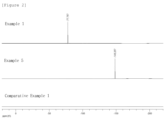
- Example 1 After only the upper part of ethyl acetate was separated from the separated mixed solution, MgSO 4 was added thereto to remove the remaining water. After MgSO 4 in the ethyl acetate solution was filtered, the ethyl acetate was removed from a 40°C vacuum oven to obtain the antibacterial composition of Example 1. According to FIG. 2 , it was confirmed in the 19 F-Nuclear Magnetic Resonance (NMR, Ascend TM 500 manufactured by Bruker) spectroscopic results that the F element of trifluoromethyl sulfonate was detected, so that it was confirmed that the anion of Compound 1 of Synthesis Example 1 was substituted with trifluoromethyl sulfonate containing a F element from Cl - .
- NMR 19 F-Nuclear Magnetic Resonance
- Example 2 The antibacterial composition of Example 2 was obtained by performing the same method as in Example 1, except that 1 g of Compound 1 was changed to 1 g of Compound 2 prepared in Synthesis Example 2. It was confirmed by 19 F-NMR spectrum that the antibacterial composition of Example 2 was subjected to anion substitution in a manner similar to the compound of Example 1.
- Example 3 The antibacterial composition of Example 3 was obtained by performing the same method as in Example 1, except that 1 g of Compound 1 was changed to 1 g of Compound 3 prepared in Synthesis Example 3. It was confirmed by 19 F-NMR spectrum that the antibacterial composition of Example 3 was subjected to anion substitution in a manner similar to the compound of Example 1.
- Example 4 The antibacterial composition of Example 4 was obtained by performing the same method as in Example 1, except that 1 g of Compound 1 was changed to 1 g of Compound 4 prepared in Synthesis Example 4. It was confirmed by 19 F-NMR spectrum that the antibacterial composition of Example 4 was subjected to anion substitution in a manner similar to the compound of Example 1.
- Example 5 The antibacterial composition of Example 5 was obtained by performing the same method as in Example 1, except that 1 g of sodium trifluoromethyl sulfonate was changed to 0.60 g of sodium tetrafluoro borate. According to FIG. 2 , it was confirmed in the 19 F-NMR spectroscopic results that the F element of tetrafluoro borate was detected, so that it was confirmed that the anion of Compound 1 of Synthesis Example 1 was substituted with tetrafluoro borate containing a F element from Cl - .
- the antibacterial composition of Example 6 was obtained by performing the same method as in Example 1, except that 1 g of sodium trifluoromethyl sulfonate was changed to 0.87 g of sodium salicylate. It was indirectly confirmed by the 19 F-NMR spectrum of the compound of Example 1 that the antibacterial composition of Example 6 was substituted with F - from Cl - , and it was confirmed that anions were substituted with salicylate from F - by confirming that an F peak disappeared during substitution with salicylate.
- Example 7 The antibacterial composition of Example 7 was obtained by performing the same method as in Example 1, except that 1 g of sodium trifluoromethyl sulfonate was changed to 1.65 g of sodium bis(trifluoro methane) sulfonamide. It was confirmed by 19 F-NMR spectrum that the antibacterial composition of Example 7 was subjected to anion substitution in a manner similar to the compound of Example 1.
- Example 8 The antibacterial composition of Example 8 was obtained by performing the same method as in Example 1, except that 1 g of sodium trifluoromethyl sulfonate was changed to 0.65 g of sodium methane sulfonate. It was confirmed by the 19 F-NMR spectrum of Example 1 that the antibacterial composition of Example 8 was substituted with F - from Cl - , and it was indirectly confirmed that anions were substituted with methane sulfonate from F - by confirming that an F peak disappeared during substitution with methane sulfonate.
- Example 9 The antibacterial composition of Example 9 was obtained by performing the same method as in Example 1, except that 1 g of sodium trifluoromethyl sulfonate was changed to 0.79 g of sodium benzoate. It was confirmed by the 19 F-NMR spectrum of Example 1 that the antibacterial composition of Example 9 was substituted with F - from Cl - , and it was indirectly confirmed that anions were substituted with benzoate from F - by confirming that an F peak disappeared during substitution with benzoate.
- Example 10 The antibacterial composition of Example 10 was obtained by performing the same method as in Example 1, except that 1 g of sodium trifluoromethyl sulfonate was changed to 1.41 g of sodium citrate monobasic. It was confirmed by the 19 F-NMR spectrum of Example 1 that the antibacterial composition of Example 10 was substituted with F - from Cl - , and it was indirectly confirmed that anions were substituted with citrate monobasic from F - by confirming that an F peak disappeared during substitution with citrate monobasic.
- Example 11 The antibacterial composition of Example 11 was obtained by performing the same method as in Example 1, except that 1 g of sodium trifluoromethyl sulfonate was changed to 0.74 g of sodium trifluoroacetate. It was confirmed by 19 F-NMR spectrum that the antibacterial composition of Example 11 was subjected to anion substitution in a manner similar to the compound of Example 1.
- Example 12 The antibacterial composition of Example 12 was obtained by performing the same method as in Example 1, except that 1 g of sodium trifluoromethyl sulfonate was changed to 1.01 g of potassium hexafluorophosphate. It was confirmed by 19 F-NMR spectrum that the antibacterial composition of Example 12 was subjected to anion substitution in a manner similar to the compound of Example 1.
- Example 13 The antibacterial composition of Example 13 was obtained by performing the same method as in Example 1, except that 1 g of sodium trifluoromethyl sulfonate was changed to 0.53 g of potassium thiocyanate. It was confirmed by the 19 F-NMR spectrum of Example 1 that the antibacterial composition of Example 13 was substituted with F - from Cl - , and it was indirectly confirmed that anions were substituted with thiocyanate from F - by confirming that an F peak disappeared during substitution with thiocyanate.
- Example 14 The antibacterial composition of Example 14 was obtained by performing the same method as in Example 1, except that 1 g of sodium trifluoromethyl sulfonate was changed to 1.06 g of sodium p-toluenesulfonate. It was confirmed by the 19 F-NMR spectrum of Example 1 that the antibacterial composition of Example 14 was substituted with F - from Cl - , and it was indirectly confirmed that anions were substituted with p-toluenesulfonate from F - by confirming that an F peak disappeared during substitution with p-toluenesulfonate.
- Compound 1 of Synthesis Example 1 was selected as the compound of Comparative Example 1. According to FIG. 2 , it was confirmed in the 19 F-NMR spectroscopic results that the F element was not detected, so that it can be assumed that the anion (Cl - ) of Compound 1 of Synthesis Example 1 remains as it is.
- thermogravimetric analyzer (TGA2 manufactured by Mettler Toledo) was used in order to perform an experiment on the primary thermal decomposition temperature of the antibacterial compositions of Examples 1 to 13 and Comparative Example 1.
- the primary thermal decomposition temperature may be defined as an extrapolated intersection point between a starting mass reference line and the tangent line of the maximum slope point in the first mass reduction section of a mass loss curve measured by a thermogravimetric analyzer in an N 2 atmospheric environment.
- the measurement results are shown in the following Table 1.
- the bacterial proliferation inhibition rate was measured according to the following Method 1.
- E.coli bacteria were used.
- the measurement results are shown in the following Table 1.
- the absorbance at a wavelength of 600 nm is measured using a UV/Vis spectrophotometer
- Examples 1 to 14 are antibacterial compositions substituted with anions other than halogens, exhibit a bacterial proliferation inhibition rate of 90% or more to maintain high antibacterial properties, and simultaneously, the primary thermal decomposition temperature exceeded 200°C, indicating high thermal resistance.
- Comparative Example 1 including halogen anions has a primary thermal decomposition temperature of 200°C or less, and thus, has low thermal resistance even though a high level of antibacterial properties was maintained.
Landscapes
- Chemical & Material Sciences (AREA)
- Organic Chemistry (AREA)
- Life Sciences & Earth Sciences (AREA)
- Environmental Sciences (AREA)
- Zoology (AREA)
- Engineering & Computer Science (AREA)
- Pest Control & Pesticides (AREA)
- Plant Pathology (AREA)
- Wood Science & Technology (AREA)
- Agronomy & Crop Science (AREA)
- General Health & Medical Sciences (AREA)
- Dentistry (AREA)
- Health & Medical Sciences (AREA)
- Chemical Kinetics & Catalysis (AREA)
- General Chemical & Material Sciences (AREA)
- Microbiology (AREA)
- Mycology (AREA)
- Agricultural Chemicals And Associated Chemicals (AREA)
- Pharmaceuticals Containing Other Organic And Inorganic Compounds (AREA)
- Compositions Of Macromolecular Compounds (AREA)
- Addition Polymer Or Copolymer, Post-Treatments, Or Chemical Modifications (AREA)
Abstract
Description
- The present specification relates to an antibacterial composition including a compound.
- This application claims priority to and the benefit of
Korean Patent Application Nos. 10-2022-0175181 10-2023-0140150 filed in the Korean Intellectual Property Office on December 14, 2022 and October 19, 2023 - Recently, various products such as daily supplies or hygiene products are required to have high antibacterial properties.
- The degree of antibacterial properties required and the material requirements for imparting antibacterial properties differ depending on the material of the product requiring antibacterial properties and the state of final use. For example, the properties of the material for imparting antibacterial properties and the degree of antibacterial properties vary depending on the amount of antibacterial material applied to a product used and the materials used together.
- Therefore, there is a need for developing an antibacterial material suitable for application to each of the various products.
- An exemplary embodiment of the present invention relates to an antibacterial composition, and more specifically, an object thereof is to provide an antibacterial composition including a quaternary ammonium compound having a specific structure that has hydrophilicity and hydrophobicity, and thus, is advantageous in imparting antibacterial properties.
- Further, an object of the antibacterial composition according to an exemplary embodiment of the present invention is to secure heat resistance by including a quaternary ammonium compound including an anion other than a halogen as a counterion.
- An exemplary embodiment of the present invention provides an antibacterial composition including a compound represented by the following Chemical Formula 1.


- In Chemical Formula 1,
- L1 and L2 are the same as or different from each other, and are each independently a direct bond; a substituted or unsubstituted alkylene group having 1 to 4 carbon atoms; or a substituted or unsubstituted arylene group having 6 to 30 carbon atoms,
- A is hydrogen; or a substituted or unsubstituted alkyl group having 1 to 3 carbon atoms,
- n is an integer from 0 to 4,
- two groups of R1 to R3 are the same as or different from each other, and are each independently a substituted or unsubstituted alkyl group having 1 to 4 carbon atoms, and the other groups are a substituted or unsubstituted alkyl group having 3 to 20 carbon atoms,
- when n is 2 or higher, two or more A's are the same as or different from each other, and
- X- is a hydroxy-based anion, a carbonate-based anion, a citrate-based anion, a cyanate-based anion, a phosphate-based anion, a benzoate-based anion, a sulfonate-based anion, a borate-based anion, a salicylate-based anion, a sulfonamide-based anion, or a sulfonimide-based anion.
- The antibacterial composition of the present invention includes a compound having a quaternary ammonium structure and a specific anion, which makes it possible to secure high heat resistance and simultaneously a high level of antibacterial activity.
-
-
FIG. 1 is a 1H-NMR spectroscopic spectrum of a compound according to an exemplary embodiment of the present invention. -
FIG. 2 is a 19F-NMR spectroscopic spectrum of a compound according to an exemplary embodiment of the present invention. - Hereinafter, the present invention will be described in detail.
- According to an exemplary embodiment of the present invention, provided is an antibacterial composition including a compound represented by the following Chemical Formula 1.

- In Chemical Formula 1,
- L1 and L2 are the same as or different from each other, and are each independently a direct bond; a substituted or unsubstituted alkylene group having 1 to 4 carbon atoms; or a substituted or unsubstituted arylene group having 6 to 30 carbon atoms,
- A is hydrogen; or a substituted or unsubstituted alkyl group having 1 to 3 carbon atoms,
- n is an integer from 0 to 4,
- two groups of R1 to R3 are the same as or different from each other, and are each independently a substituted or unsubstituted alkyl group having 1 to 4 carbon atoms, and the other group is a substituted or unsubstituted alkyl group having 3 to 20 carbon atoms,
- when n is 2 or higher, two or more A's are the same as or different from each other, and
- X- is a hydroxy-based anion, a carbonate-based anion, a citrate-based anion, a cyanate-based anion, a phosphate-based anion, a benzoate-based anion, a sulfonate-based anion, a borate-based anion, a salicylate-based anion, a sulfonamide-based anion, or a sulfonimide-based anion.
- According to an exemplary embodiment of the present invention, X- may be an anion selected from among trifluoromethanesulfonate, p-toluenesulfonate, tetrafluoroborate, thiocyanate, hexafluorophosphate, salicylate, hydroxybenzoate, carboxyphenolate, trifluoromethylsulfonamidate, trifluoromethanesulfonimidate, bistrifluoromethylsulfonamidate, or bis(trifluoromethyl)sulfonimidate.
- According to an exemplary embodiment of the present invention, L1 and L2 are the same as or different from each other, and are each independently a direct bond; or a substituted or unsubstituted alkylene group having 1 to 4 carbon atoms.
- According to an exemplary embodiment of the present invention, L1 may be a direct bond; a methylene group or an ethylene group.
- According to an exemplary embodiment of the present invention, L1 may be a methylene group.
- According to an exemplary embodiment of the present invention, L1 may be a direct bond.
- According to an exemplary embodiment of the present invention, L2 may be a direct bond; a methylene group; or an ethylene group.
- According to an exemplary embodiment of the present invention, L2 may be a methylene group.
- According to an exemplary embodiment of the present invention, L2 may be a direct bond.
- According to an exemplary embodiment of the present invention, A may be all hydrogen.
- According to an exemplary embodiment of the present invention, two groups of R1 to R3 are the same as or different from each other, and are each independently a methyl group; or an ethyl group, and the other group may be an unsubstituted alkyl group having 8 to 20 carbon atoms.
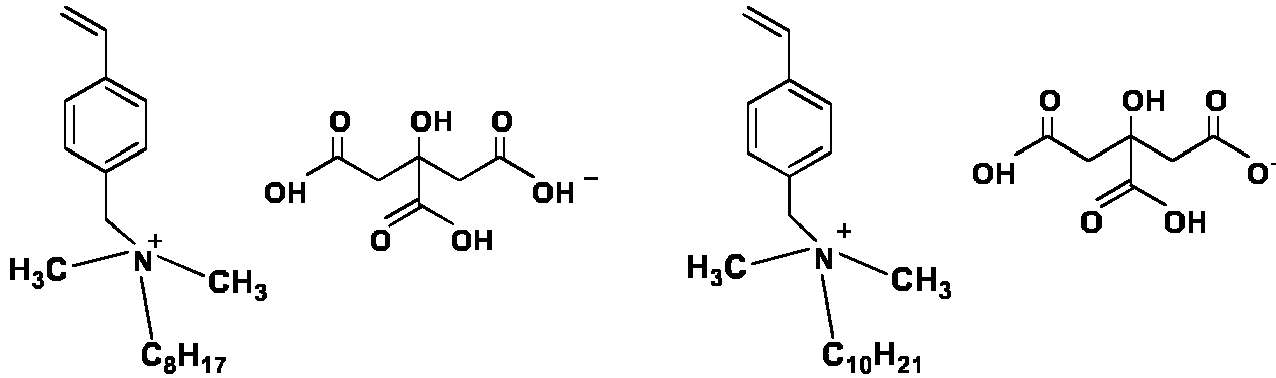
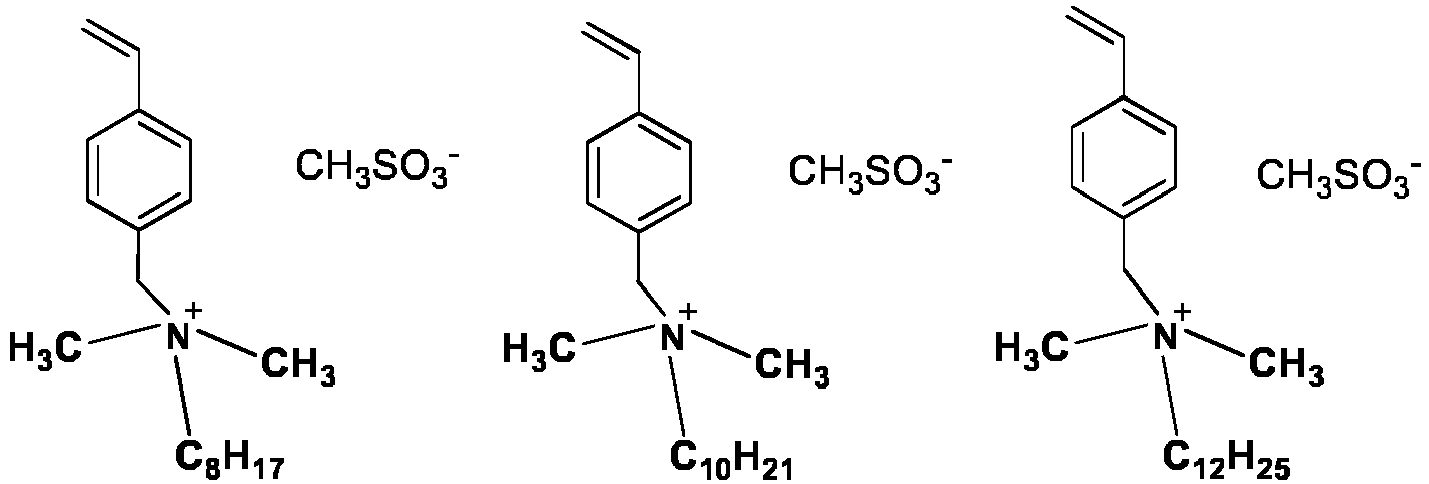
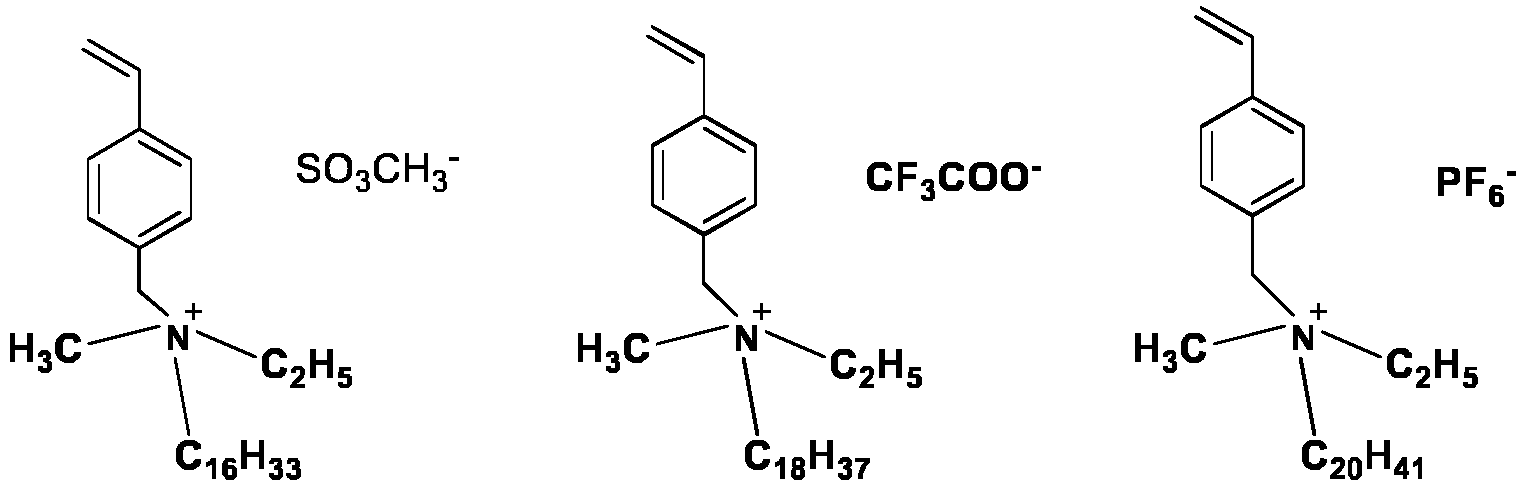
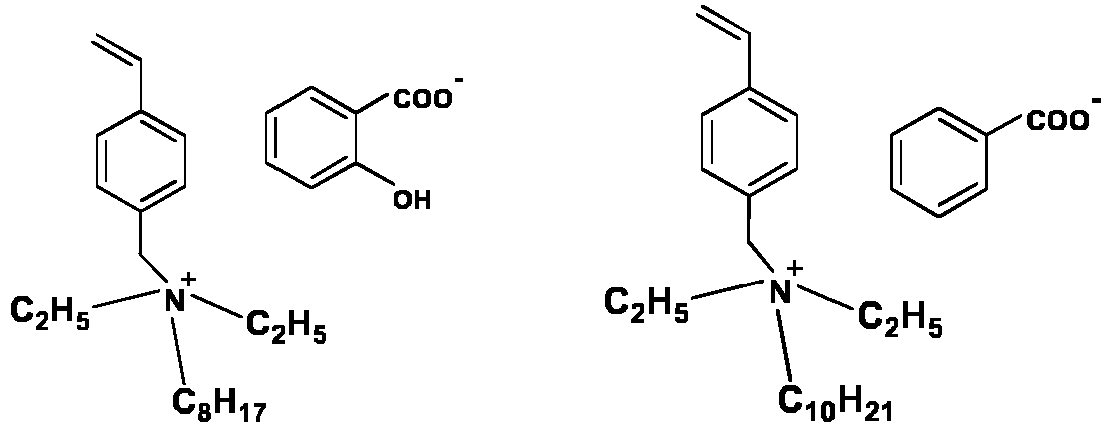
- According to an exemplary embodiment of the present invention, Chemical Formula 1 may be represented by any one of the following structures.


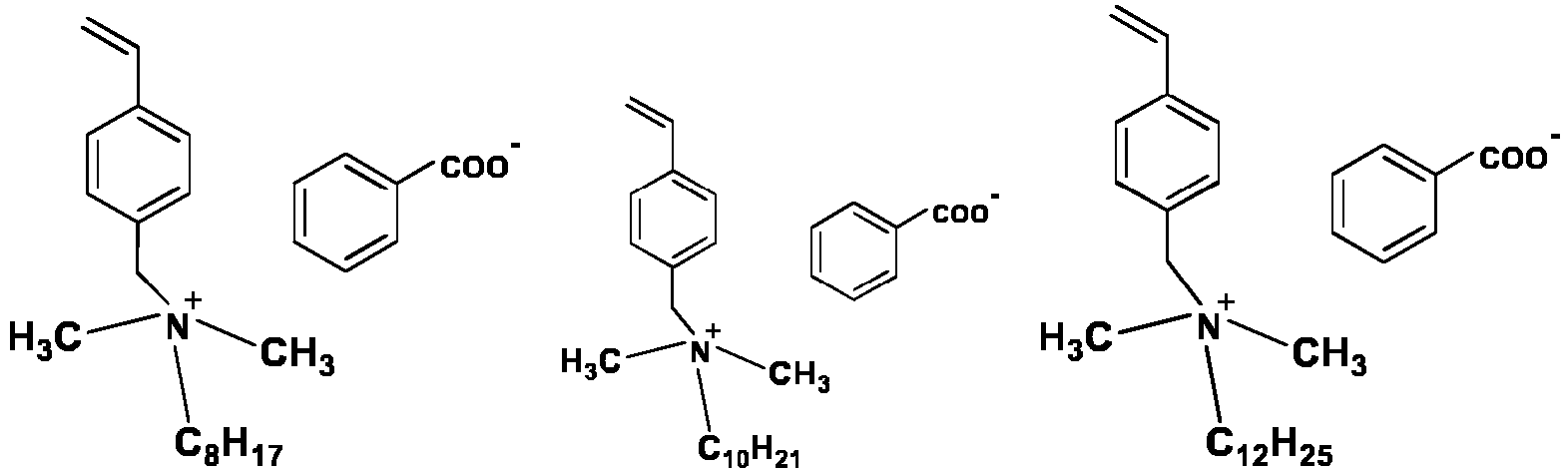


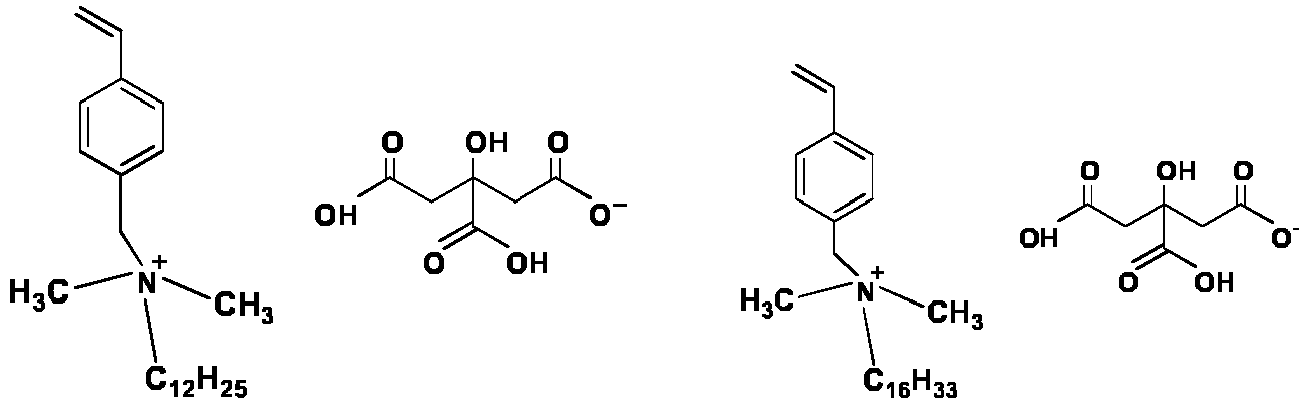


- According to an exemplary embodiment of the present invention, the primary thermal decomposition temperature of the antibacterial composition may be 200°C or higher.
- In the present invention, the thermal decomposition temperature may be measured using a thermogravimetric analyzer.
- The primary thermal decomposition temperature may be defined as an extrapolated intersection point between a starting mass reference line and the tangent line of the maximum slope point in the first mass reduction section of a mass loss curve measured by a thermogravimetric analyzer in an N2 atmospheric environment.
- In the present invention, it is determined that when the primary thermal decomposition temperature of the antibacterial composition has a value higher than the primary thermal decomposition temperature of the material before substitution, the heat resistance has increased. However, in consideration of the processing and application processes of a polymer using the compound, it is determined that the polymer has thermal stability only when the primary thermal decomposition temperature is 200°C or higher.
- As long as the primary thermal decomposition temperature of the antibacterial composition is 200°C or higher, the upper limit thereof is not particularly limited, and it means that the higher the primary thermal decomposition temperature, the better the heat resistance.
- In the present specification, the primary thermal decomposition temperature is the temperature at which thermal decomposition occurs in the quaternary ammonium group of the compound, and the present inventors found that when the compound is substituted with a specific anion other than a halogen anion as an anion group (that is, X-), the thermal stability of the quaternary ammonium group increases, and as a result, the thermal decomposition temperature increases. Meanwhile, in secondary and higher thermal decomposition, thermal decomposition occurs in areas other than the quaternary ammonium group, so that the primary thermal decomposition experiment is used as the reference, as it is easier to compare effects under the same conditions.
- Furthermore, as described above, when the thermal decomposition temperature of the quaternary ammonium compound (that is, monomer) substituted with the specific anion increases, a polymer including the compound provides an effect in which resistance is high in processes in a high temperature environment.
- According to an exemplary embodiment of the present invention, the antibacterial composition may have a bacterial proliferation inhibition rate of 70% or more against at least one strain of Gram-positive bacteria, Gram-negative bacteria, and fungi, as measured by the following
Method 1. - After 0.04 g of the antibacterial composition is added to 20 mL of a nutrient broth culture solution inoculated with 3,000 ± 300 CFU/mL of bacterial strain, from the culture solution of an experimental group in which the resulting mixture is incubated at 37°C in a shaking incubator for 24 hours, the absorbance at a wavelength of 600 nm is measured using a UV/Vis spectrophotometer,
- the antibacterial composition is not added to 20 mL of a nutrient broth culture solution inoculated with 3,000 ± 300 CFU/mL of bacterial strain, from the culture solution of a control in which the nutrient broth culture solution is incubated at 37°C for 24 hours, the absorbance at a wavelength of 600 nm is measured using a UV/Vis spectrophotometer, and
- from the absorbance of the experimental group and the absorbance of the control group, the bacterial proliferation inhibition rate (%) of the test bacteria is calculated using the following
Equation 1.Bacterial proliferation inhibition rate= (1- AExperimental group/AControl) × 100% - AExperimental group = Absorbance of culture solution of experimental group
- AControl = Absorbance of culture solution of control
- According to an exemplary embodiment of the present invention, the bacterial proliferation inhibition rate of the compound according to
Method 1 may be 50% or more, 60% or more, 70% or more, 80% or more, or 90% or more. - In the present invention, "having antibacterial properties" means that the bacterial proliferation inhibition rate (%) is 50% or more, 60% or more, preferably 70% or more, more preferably 80% or more.
- In the present invention, "having antibacterial properties" means that the bacterial proliferation inhibition rate (%) according to
Method 1 is 70% or more, preferably 80% or more. - According to an exemplary embodiment of the present invention, the Gram-positive bacterium may be any one selected from among Enterococcus faecalis, Staphylococcus aureus, Streptococcus pneumoniae, Streptococcus pyogene, Enterococcus faecium, and Lactobacillus lactis, but is not limited thereto.
- As used herein, the term Gram-positive bacteria is a general term for bacteria that are stained purple when stained using the Gram staining method, and Gram-positive bacteria exhibit a purple color without discoloration even though the Gram-positive bacteria are stained with a basic dye such as crystal violet and then treated with ethanol because the cell walls of Gram-positive bacteria are composed of several layers of peptidoglycan.
- The Gram-negative bacterium may be any one selected from among Proteus mirabilis, Escherichia coli, Salmonella typhi, Pseudomonas aeruginosa, Vibrio cholerae, and Enterobacter cloacae as a bacterium, but is not limited thereto.
- As used herein, the term Gram-negative bacteria is a general term for bacteria that are stained red when stained using the Gram staining method, and Gram-negative bacteria have an outer membrane composed of lipid polysaccharides, lipid proteins, and/or other complex polymeric materials instead of having a cell wall with a relatively small amount of peptidoglycan compared to Gram-positive bacteria.
- According to an exemplary embodiment of the present invention, the fungus may be Candida albicans, and the like, but is not limited thereto.
- Since the bacterial strains of the Gram-positive bacteria, Gram-negative bacteria and fungi may not only induce various diseases upon contact, but also cause secondary infections, it is preferred to exhibit antibacterial properties against all of the Gram-positive bacteria, Gram-negative bacteria, and fungi using one antibacterial compound.
- When one member (layer) is disposed "on" another member (layer) in the present invention, this includes not only a case where the one member (layer) is brought into contact with another member, but also a case where still another member (layer) is present between the two members (layers).
- When one part "includes" one constituent element in the present invention, unless otherwise specifically described, this does not mean that another constituent element is excluded, but means that another constituent element may be further included.
- In the present invention, the "monomer" means a unit compound that may be converted into a polymer compound by a polymerization reaction, that is, a monomer, and structures derived therefrom may become a repeating unit in a polymer or copolymer. Specifically, this means that in a state in which the corresponding compound is polymerized and bonded in the polymer, in the structure of the compound, all or a portion of two or more substituents are omitted, and a radical for being bonded to other units of the polymer is located at the position. In this case, the corresponding compound may be included in a state of being polymerized in any order and bonded in the polymer.
- Hereinafter, the present invention will be described in detail with reference to Examples for specifically describing the present invention. However, the Examples according to the present invention may be modified into various different forms, and it should not be interpreted that the scope of the present invention is limited to the Examples to be described below. The Examples of the present invention are provided for more completely explaining the present invention to the person with ordinary skill in the art.
- The reaction scheme of the present invention is as follows.

- A compound having a halogen anion (or an antibacterial monomer) used in the present invention was prepared as described above. A reactor in the form of a two-neck round flask connected to a blade-type stirrer to which a condenser and a stirrer are connected was prepared. 50 g of 1-chloromethyl-4-vinyl benzene and 81.3 g of N,N-dimethyldodecyl amine were mixed with acetonitrile (150 mL) and then put into the reactor. After the inside of the reactor was substituted with a nitrogen atmosphere, the temperature was increased to 45°C, and a reaction was performed with stirring for 24 hours or more. A solution in which the reaction had been completed was added to hexane to precipitate and purify the reaction product. After the purification process was additionally performed two or more times,
Compound 1 was obtained by drying the purified reaction product at about 80°C for 24 hours or more. SeeFIG. 1 , for the 1H-NMR spectrum ofCompound 1. -
Compound 2 was prepared in the same manner as in Synthesis Example 1, except that 81.3 g of N,N-dimethyldodecyl amine was changed to 56.7 g of N,N-dimethyloctyl amine. It was confirmed by 1H-NMR spectrum thatCompound 2 was synthesized in a manner similar toCompound 1. -
Compound 3 was prepared in the same manner as in Synthesis Example 1, except that 81.3 g of N,N-dimethyldodecyl amine was changed to 69.0 g of N,N-dimethyldecyl amine. It was confirmed by 1H-NMR spectrum thatCompound 3 was synthesized in a manner similar toCompound 1. - Compound 4 was prepared in the same manner as in Synthesis Example 1, except that 81.3 g of N,N-dimethyldodecyl amine was changed to 105.9 g of N,N-dimethylcetyl amine. It was confirmed by 1H-NMR spectrum that Compound 4 was synthesized in a manner similar to
Compound 1. -
Compound 5 was prepared in the same manner as in Synthesis Example 1, except that 81.3 g of N,N-dimethyldodecyl amine was changed to 130.6 g of N,N-dimethyl eicosanamine. It was confirmed by 1H-NMR spectrum thatCompound 5 was synthesized in a manner similar toCompound 1. - 1 g of
Compound 1 prepared in Synthesis Example 1 was dissolved in 10 g of water. After 0.94 g of sodium trifluoromethyl sulfonate was dissolved in 10 g of water in another container, the resulting solution was added to the reactor and stirred for 8 hours or more to substitute the anion with a trifluoromethyl sulfonate anion (CF3SO3 -) from a halogen anion (that is, Cl-). An excess amount of ethyl acetate was added to and mixed with the substitution solution, and the mixed solution was allowed to stand for 30 minutes or more to separate phases. After only the upper part of ethyl acetate was separated from the separated mixed solution, MgSO4 was added thereto to remove the remaining water. After MgSO4 in the ethyl acetate solution was filtered, the ethyl acetate was removed from a 40°C vacuum oven to obtain the antibacterial composition of Example 1. According toFIG. 2 , it was confirmed in the 19F-Nuclear Magnetic Resonance (NMR, Ascend™ 500 manufactured by Bruker) spectroscopic results that the F element of trifluoromethyl sulfonate was detected, so that it was confirmed that the anion ofCompound 1 of Synthesis Example 1 was substituted with trifluoromethyl sulfonate containing a F element from Cl-. - The antibacterial composition of Example 2 was obtained by performing the same method as in Example 1, except that 1 g of
Compound 1 was changed to 1 g ofCompound 2 prepared in Synthesis Example 2. It was confirmed by 19F-NMR spectrum that the antibacterial composition of Example 2 was subjected to anion substitution in a manner similar to the compound of Example 1. - The antibacterial composition of Example 3 was obtained by performing the same method as in Example 1, except that 1 g of
Compound 1 was changed to 1 g ofCompound 3 prepared in Synthesis Example 3. It was confirmed by 19F-NMR spectrum that the antibacterial composition of Example 3 was subjected to anion substitution in a manner similar to the compound of Example 1. - The antibacterial composition of Example 4 was obtained by performing the same method as in Example 1, except that 1 g of
Compound 1 was changed to 1 g of Compound 4 prepared in Synthesis Example 4. It was confirmed by 19F-NMR spectrum that the antibacterial composition of Example 4 was subjected to anion substitution in a manner similar to the compound of Example 1. - The antibacterial composition of Example 5 was obtained by performing the same method as in Example 1, except that 1 g of sodium trifluoromethyl sulfonate was changed to 0.60 g of sodium tetrafluoro borate. According to
FIG. 2 , it was confirmed in the 19F-NMR spectroscopic results that the F element of tetrafluoro borate was detected, so that it was confirmed that the anion ofCompound 1 of Synthesis Example 1 was substituted with tetrafluoro borate containing a F element from Cl-. - The antibacterial composition of Example 6 was obtained by performing the same method as in Example 1, except that 1 g of sodium trifluoromethyl sulfonate was changed to 0.87 g of sodium salicylate. It was indirectly confirmed by the 19F-NMR spectrum of the compound of Example 1 that the antibacterial composition of Example 6 was substituted with F- from Cl-, and it was confirmed that anions were substituted with salicylate from F- by confirming that an F peak disappeared during substitution with salicylate.
- The antibacterial composition of Example 7 was obtained by performing the same method as in Example 1, except that 1 g of sodium trifluoromethyl sulfonate was changed to 1.65 g of sodium bis(trifluoro methane) sulfonamide. It was confirmed by 19F-NMR spectrum that the antibacterial composition of Example 7 was subjected to anion substitution in a manner similar to the compound of Example 1.
- The antibacterial composition of Example 8 was obtained by performing the same method as in Example 1, except that 1 g of sodium trifluoromethyl sulfonate was changed to 0.65 g of sodium methane sulfonate. It was confirmed by the 19F-NMR spectrum of Example 1 that the antibacterial composition of Example 8 was substituted with F- from Cl-, and it was indirectly confirmed that anions were substituted with methane sulfonate from F- by confirming that an F peak disappeared during substitution with methane sulfonate.
- The antibacterial composition of Example 9 was obtained by performing the same method as in Example 1, except that 1 g of sodium trifluoromethyl sulfonate was changed to 0.79 g of sodium benzoate. It was confirmed by the 19F-NMR spectrum of Example 1 that the antibacterial composition of Example 9 was substituted with F- from Cl-, and it was indirectly confirmed that anions were substituted with benzoate from F- by confirming that an F peak disappeared during substitution with benzoate.
- The antibacterial composition of Example 10 was obtained by performing the same method as in Example 1, except that 1 g of sodium trifluoromethyl sulfonate was changed to 1.41 g of sodium citrate monobasic. It was confirmed by the 19F-NMR spectrum of Example 1 that the antibacterial composition of Example 10 was substituted with F- from Cl-, and it was indirectly confirmed that anions were substituted with citrate monobasic from F- by confirming that an F peak disappeared during substitution with citrate monobasic.
- The antibacterial composition of Example 11 was obtained by performing the same method as in Example 1, except that 1 g of sodium trifluoromethyl sulfonate was changed to 0.74 g of sodium trifluoroacetate. It was confirmed by 19F-NMR spectrum that the antibacterial composition of Example 11 was subjected to anion substitution in a manner similar to the compound of Example 1.
- The antibacterial composition of Example 12 was obtained by performing the same method as in Example 1, except that 1 g of sodium trifluoromethyl sulfonate was changed to 1.01 g of potassium hexafluorophosphate. It was confirmed by 19F-NMR spectrum that the antibacterial composition of Example 12 was subjected to anion substitution in a manner similar to the compound of Example 1.
- The antibacterial composition of Example 13 was obtained by performing the same method as in Example 1, except that 1 g of sodium trifluoromethyl sulfonate was changed to 0.53 g of potassium thiocyanate. It was confirmed by the 19F-NMR spectrum of Example 1 that the antibacterial composition of Example 13 was substituted with F- from Cl-, and it was indirectly confirmed that anions were substituted with thiocyanate from F- by confirming that an F peak disappeared during substitution with thiocyanate.
- The antibacterial composition of Example 14 was obtained by performing the same method as in Example 1, except that 1 g of sodium trifluoromethyl sulfonate was changed to 1.06 g of sodium p-toluenesulfonate. It was confirmed by the 19F-NMR spectrum of Example 1 that the antibacterial composition of Example 14 was substituted with F- from Cl-, and it was indirectly confirmed that anions were substituted with p-toluenesulfonate from F- by confirming that an F peak disappeared during substitution with p-toluenesulfonate.
- As a compound not subjected to anion substitution as in the Examples,
Compound 1 of Synthesis Example 1 was selected as the compound of Comparative Example 1. According toFIG. 2 , it was confirmed in the 19F-NMR spectroscopic results that the F element was not detected, so that it can be assumed that the anion (Cl-) ofCompound 1 of Synthesis Example 1 remains as it is. - A thermogravimetric analyzer (TGA2 manufactured by Mettler Toledo) was used in order to perform an experiment on the primary thermal decomposition temperature of the antibacterial compositions of Examples 1 to 13 and Comparative Example 1.
- In the present experiment, the primary thermal decomposition temperature may be defined as an extrapolated intersection point between a starting mass reference line and the tangent line of the maximum slope point in the first mass reduction section of a mass loss curve measured by a thermogravimetric analyzer in an N2 atmospheric environment. In the present invention, it was determined that when the primary thermal decomposition temperature of the antibacterial composition has a value higher than the primary thermal decomposition temperature of the material before anion substitution, the heat resistance has increased. The measurement results are shown in the following Table 1.
- In the present experiment, the bacterial proliferation inhibition rate was measured according to the following
Method 1. In this case, E.coli bacteria were used. The measurement results are shown in the following Table 1. - After 0.04 g of the antibacterial composition is added to 20 mL of a nutrient broth culture solution inoculated with 3,000 ± 300 CFU/mL of bacterial strain, from the culture solution of an experimental group in which the resulting mixture is incubated at 37°C in a shaking incubator for 24 hours, the absorbance at a wavelength of 600 nm is measured using a UV/Vis spectrophotometer,
- the antibacterial composition is not added to 20 mL of a nutrient broth culture solution inoculated with 3,000 ± 300 CFU/mL of bacterial strain, from the culture solution of a control in which the nutrient broth culture solution is incubated at 37°C for 24 hours, the absorbance at a wavelength of 600 nm is measured using a UV/Vis spectrophotometer, and
- from the absorbance of the experimental group and the absorbance of the control group, the bacterial proliferation inhibition rate (%) of the test bacteria is calculated using the following
Equation 1.Bacterial proliferation inhibition rate= (1- AExperimental group/AControl) × 100% - AExperimental group = Absorbance of culture solution of experimental group
- AControl = Absorbance of culture solution of control
- According to those described in Table 1 above, it was found that Examples 1 to 14 are antibacterial compositions substituted with anions other than halogens, exhibit a bacterial proliferation inhibition rate of 90% or more to maintain high antibacterial properties, and simultaneously, the primary thermal decomposition temperature exceeded 200°C, indicating high thermal resistance. In contrast, it was found that Comparative Example 1 including halogen anions has a primary thermal decomposition temperature of 200°C or less, and thus, has low thermal resistance even though a high level of antibacterial properties was maintained.
| No. | Primary thermal decomposition temperature1 (°C) | Bacterial proliferation inhibition rate (%) |
| Example 1 | 369 | 93.3 |
| Example 2 | 353 | 91.4 |
| Example 3 | 362 | 93.1 |
| Example 4 | 359 | 95.7 |
| Example 5 | 335 | 98.6 |
| Example 6 | 208 | 93.5 |
| Example 7 | 384 | 95.8 |
| Example 8 | 205 | 93.2 |
| Example 9 | 204 | 96.4 |
| Example 10 | 202 | 94.2 |
| Example 11 | 201 | 95.4 |
| Example 12 | 309 | 93.2 |
| Example 13 | 211 | 94.7 |
| Example 14 | 233 | 95.2 |
| Comparative Example 1 | 176 | 96.3 |
Claims (11)
- An antibacterial composition comprising a compound represented by the following Chemical Formula 1:
 L1 and L2 are the same as or different from each other, and are each independently a direct bond; a substituted or unsubstituted alkylene group having 1 to 4 carbon atoms; or a substituted or unsubstituted arylene group having 6 to 30 carbon atoms,A is hydrogen; or a substituted or unsubstituted alkyl group having 1 to 3 carbon atoms,n is an integer from 0 to 4,two groups of R1 to R3 are the same as or different from each other, and are each independently a substituted or unsubstituted alkyl group having 1 to 4 carbon atoms, and the other group is a substituted or unsubstituted alkyl group having 3 to 20 carbon atoms,when n is 2 or higher, two or more A's are the same as or different from each other, andX- is a hydroxy-based anion, a carbonate-based anion, a citrate-based anion, a cyanate-based anion, a phosphate-based anion, a benzoate-based anion, a sulfonate-based anion, a borate-based anion, a salicylate-based anion, a sulfonamide-based anion, or a sulfonimide-based anion.
 - The antibacterial composition of claim 1, wherein X-is an anion selected from among trifluoromethanesulfonate, p-toluenesulfonate, tetrafluoroborate, thiocyanate, hexafluorophosphate, salicylate, hydroxybenzoate, carboxyphenolate, trifluoromethylsulfonamidate, trifluoromethanesulfonimidate, bistrifluoromethylsulfonamidate, or bis(trifluoromethyl)sulfonimidate.
- The antibacterial composition of claim 1, wherein L1 is a direct bond.
- The antibacterial composition of claim 1, wherein L2 is a methylene group.
- The antibacterial composition of claim 1, wherein A is hydrogen.
- The antibacterial composition of claim 1, wherein two groups of R1 to R3 are the same as or different from each other, and are each independently a methyl group; or an ethyl group, and the other group is an unsubstituted alkyl group having 8 to 20 carbon atoms.
- The antibacterial composition of claim 1, wherein Chemical Formula 1 is represented by any one of the following structures:


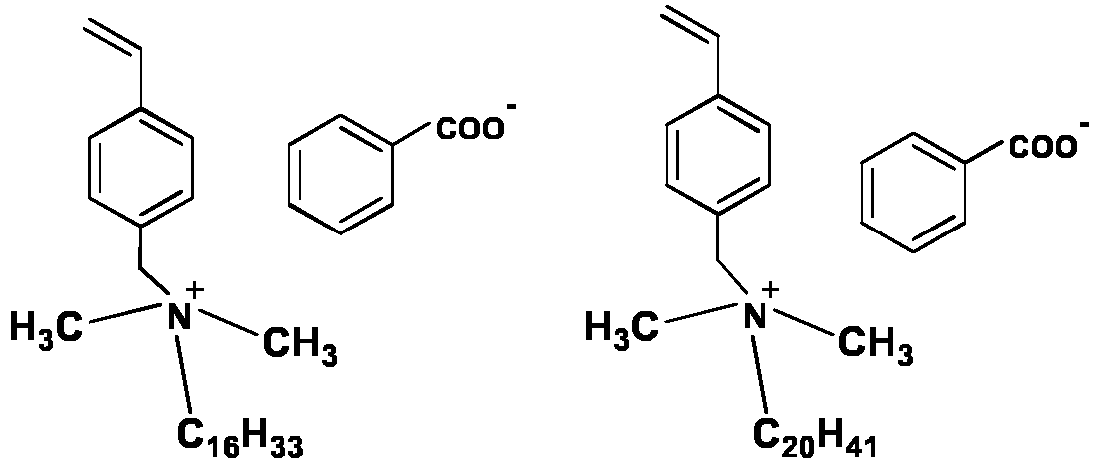






- The antibacterial composition of claim 1, wherein the primary thermal decomposition temperature of the compound is 200°C or higher.
- The antibacterial composition of claim 1, wherein the compound has a bacterial proliferation inhibition rate of 70% or more against at least one strain of Gram-positive bacteria, Gram-negative bacteria, and fungi, as measured by the following Method 1:[Method 1]After 0.04 g of the antibacterial composition is added to 20 mL of a nutrient broth culture solution inoculated with 3,000 ± 300 CFU/mL of bacterial strain, from the culture solution of an experimental group in which the resulting mixture is incubated at 37°C in a shaking incubator for 24 hours, the absorbance at a wavelength of 600 nm is measured using a UV/Vis spectrophotometer,the antibacterial composition is not added to 20 mL of a nutrient broth culture solution inoculated with 3,000 ± 300 CFU/mL of bacterial strain, from the culture solution of a control in which the nutrient broth culture solution is incubated at 37°C for 24 hours, the absorbance at a wavelength of 600 nm is measured using a UV/Vis spectrophotometer, andfrom the absorbance of the experimental group and the absorbance of the control group, the bacterial proliferation inhibition rate (%) of the test bacteria is calculated using the following Equation 1.
Bacterial proliferation inhibition rate= (1- AExperimental group/AControl) × 100% AExperimental group = Absorbance of culture solution of experimental groupAControl = Absorbance of culture solution of control - The antibacterial composition of claim 9, wherein the Gram-positive bacterium is any one selected from among Enterococcus faecalis, Staphylococcus aureus, Streptococcus pneumoniae, Streptococcus pyogene, Enterococcus faecium, and Lactobacillus lactis.
- The antibacterial composition of claim 9, wherein the Gram-negative bacterium is any one selected from among Proteus mirabilis, Escherichia coli, Salmonella typhi, Pseudomonas aeruginosa, Vibrio cholerae, and Enterobacter cloacae as a bacterium.
Applications Claiming Priority (3)
| Application Number | Priority Date | Filing Date | Title |
|---|---|---|---|
| KR20220175181 | 2022-12-14 | ||
| KR1020230140150A KR20240092561A (en) | 2022-12-14 | 2023-10-19 | Anti-bacterial composition |
| PCT/KR2023/016313 WO2024128515A1 (en) | 2022-12-14 | 2023-10-20 | Antibacterial composition |
Publications (2)
| Publication Number | Publication Date |
|---|---|
| EP4464689A1 true EP4464689A1 (en) | 2024-11-20 |
| EP4464689A4 EP4464689A4 (en) | 2025-07-02 |
Family
ID=91485068
Family Applications (1)
| Application Number | Title | Priority Date | Filing Date |
|---|---|---|---|
| EP23903719.5A Pending EP4464689A4 (en) | 2022-12-14 | 2023-10-20 | Antibacterial composition |
Country Status (4)
| Country | Link |
|---|---|
| US (1) | US20250176542A1 (en) |
| EP (1) | EP4464689A4 (en) |
| JP (1) | JP7823987B2 (en) |
| WO (1) | WO2024128515A1 (en) |
Family Cites Families (10)
| Publication number | Priority date | Publication date | Assignee | Title |
|---|---|---|---|---|
| AU763355B2 (en) * | 1998-08-20 | 2003-07-17 | Kuraray Co., Ltd. | Bonding compositions for dental use |
| JP3734777B2 (en) * | 2001-07-24 | 2006-01-11 | 三洋化成工業株式会社 | Antibacterial agent for resin |
| JP4388244B2 (en) * | 2001-08-16 | 2009-12-24 | 独立行政法人海洋研究開発機構 | Antibacterial polymer substance and antibacterial polymer gel |
| JP4320755B2 (en) * | 2003-05-20 | 2009-08-26 | パイオトレック株式会社 | Antibacterial / antifungal agent and antibacterial / antifungal resin composition containing the same |
| CN103613707A (en) * | 2013-12-13 | 2014-03-05 | 山东大学 | Amphiprotic acrylamide copolymer with twin tail long chains and preparation method thereof |
| CN106188419B (en) * | 2016-07-25 | 2018-08-21 | 东南大学 | The preparation method of graft polymers and antibacterial soft lens based on surface grafting |
| JP6316531B1 (en) * | 2016-10-31 | 2018-04-25 | 大塚化学株式会社 | Block copolymer, dispersant and pigment dispersion composition |
| CN107652394A (en) * | 2017-09-30 | 2018-02-02 | 南京师范大学 | Antibiont adhesion material and preparation method thereof and surface are coated with the metallic weapon of the antibiont adhesion material |
| CN109134715B (en) * | 2018-08-06 | 2020-10-30 | 浙江工业大学 | Preparation method of antifouling, bactericidal and reproducible long-acting antibacterial mixed polymer brush |
| KR102893470B1 (en) | 2022-03-29 | 2025-11-28 | 주식회사 케이티 | File sharing method and system thereof |
-
2023
- 2023-10-20 US US18/842,087 patent/US20250176542A1/en active Pending
- 2023-10-20 WO PCT/KR2023/016313 patent/WO2024128515A1/en not_active Ceased
- 2023-10-20 JP JP2024552056A patent/JP7823987B2/en active Active
- 2023-10-20 EP EP23903719.5A patent/EP4464689A4/en active Pending
Also Published As
| Publication number | Publication date |
|---|---|
| WO2024128515A1 (en) | 2024-06-20 |
| JP2025506943A (en) | 2025-03-13 |
| US20250176542A1 (en) | 2025-06-05 |
| JP7823987B2 (en) | 2026-03-04 |
| EP4464689A4 (en) | 2025-07-02 |
Similar Documents
| Publication | Publication Date | Title |
|---|---|---|
| EP2607437B1 (en) | Siloxane nitrones and their application | |
| RU2541013C2 (en) | Black pigment dispersion | |
| JP7291710B2 (en) | Branched polyamino acid antimicrobial agent and use thereof | |
| EP2557108B1 (en) | Method for producing organopolysiloxane compound | |
| CN116283667B (en) | A functional isocyanate cross-linking agent and its preparation method | |
| US20250176542A1 (en) | Antibacterial Composition | |
| KR20240092561A (en) | Anti-bacterial composition | |
| CN118742535A (en) | Antibacterial composition | |
| US4444750A (en) | Method of conditioning hair | |
| KR20240092426A (en) | Anti-bacterial polymer | |
| US20240107999A1 (en) | Antibacterial composition | |
| EP4435022A1 (en) | Antibacterial resin, composition for preparing same, and molded body comprising same | |
| Kumar et al. | The Graft Copolymerization of N-(Hydroxymethyl) Acrylamide onto Xanthan Gum and Its Anti-Oxidative Property | |
| JP7639178B2 (en) | Antibacterial Composition | |
| CN113214464A (en) | Antibacterial polyester material and preparation method and application thereof | |
| US20240182641A1 (en) | Fluoropolyether compound | |
| Gan et al. | Synthesis and properties of piperazine derivatives and their quaternary ammonium amphiphilic salts | |
| EP4435018A1 (en) | Antibacterial resin and molded body comprising same | |
| EP4442678A1 (en) | Compound and molded body comprising same | |
| KR20240047213A (en) | Anti-bacterial compound | |
| US20250129009A1 (en) | Compound and Method for Identifying Impurities Included Therein | |
| KR20240047211A (en) | Anti-bacterial polymer | |
| WO2020008375A1 (en) | Spirobiindane derivatives and a process for preparation thereof | |
| US3213096A (en) | Quaternary salts of 1, 4-diazoniabicyclo-(2. 2. 2)-octane | |
| CN112521611B (en) | Non-permeable block copolymer containing polysiloxane, preparation method and application thereof |
Legal Events
| Date | Code | Title | Description |
|---|---|---|---|
| STAA | Information on the status of an ep patent application or granted ep patent |
Free format text: STATUS: THE INTERNATIONAL PUBLICATION HAS BEEN MADE |
|
| PUAI | Public reference made under article 153(3) epc to a published international application that has entered the european phase |
Free format text: ORIGINAL CODE: 0009012 |
|
| STAA | Information on the status of an ep patent application or granted ep patent |
Free format text: STATUS: REQUEST FOR EXAMINATION WAS MADE |
|
| 17P | Request for examination filed |
Effective date: 20240814 |
|
| AK | Designated contracting states |
Kind code of ref document: A1 Designated state(s): AL AT BE BG CH CY CZ DE DK EE ES FI FR GB GR HR HU IE IS IT LI LT LU LV MC ME MK MT NL NO PL PT RO RS SE SI SK SM TR |
|
| A4 | Supplementary search report drawn up and despatched |
Effective date: 20250603 |
|
| RIC1 | Information provided on ipc code assigned before grant |
Ipc: C07C 309/66 20060101ALI20250527BHEP Ipc: C07C 211/63 20060101ALI20250527BHEP Ipc: C07C 65/10 20060101ALI20250527BHEP Ipc: C07C 63/08 20060101ALI20250527BHEP Ipc: C07C 53/16 20060101ALI20250527BHEP Ipc: C07C 309/65 20060101ALI20250527BHEP Ipc: A01N 33/12 20060101ALI20250527BHEP Ipc: C07C 211/27 20060101AFI20250527BHEP |
|
| DAV | Request for validation of the european patent (deleted) | ||
| DAX | Request for extension of the european patent (deleted) |