EP4464545A1 - Battery management apparatus and server - Google Patents
Battery management apparatus and server Download PDFInfo
- Publication number
- EP4464545A1 EP4464545A1 EP23756607.0A EP23756607A EP4464545A1 EP 4464545 A1 EP4464545 A1 EP 4464545A1 EP 23756607 A EP23756607 A EP 23756607A EP 4464545 A1 EP4464545 A1 EP 4464545A1
- Authority
- EP
- European Patent Office
- Prior art keywords
- battery
- setting parameter
- vehicle
- battery setting
- optimal
- Prior art date
- Legal status (The legal status is an assumption and is not a legal conclusion. Google has not performed a legal analysis and makes no representation as to the accuracy of the status listed.)
- Pending
Links
Images



Classifications
-
- B—PERFORMING OPERATIONS; TRANSPORTING
- B60—VEHICLES IN GENERAL
- B60L—PROPULSION OF ELECTRICALLY-PROPELLED VEHICLES; SUPPLYING ELECTRIC POWER FOR AUXILIARY EQUIPMENT OF ELECTRICALLY-PROPELLED VEHICLES; ELECTRODYNAMIC BRAKE SYSTEMS FOR VEHICLES IN GENERAL; MAGNETIC SUSPENSION OR LEVITATION FOR VEHICLES; MONITORING OPERATING VARIABLES OF ELECTRICALLY-PROPELLED VEHICLES; ELECTRIC SAFETY DEVICES FOR ELECTRICALLY-PROPELLED VEHICLES
- B60L3/00—Electric devices on electrically-propelled vehicles for safety purposes; Monitoring operating variables, e.g. speed, deceleration or energy consumption
- B60L3/12—Recording operating variables ; Monitoring of operating variables
-
- B—PERFORMING OPERATIONS; TRANSPORTING
- B60—VEHICLES IN GENERAL
- B60L—PROPULSION OF ELECTRICALLY-PROPELLED VEHICLES; SUPPLYING ELECTRIC POWER FOR AUXILIARY EQUIPMENT OF ELECTRICALLY-PROPELLED VEHICLES; ELECTRODYNAMIC BRAKE SYSTEMS FOR VEHICLES IN GENERAL; MAGNETIC SUSPENSION OR LEVITATION FOR VEHICLES; MONITORING OPERATING VARIABLES OF ELECTRICALLY-PROPELLED VEHICLES; ELECTRIC SAFETY DEVICES FOR ELECTRICALLY-PROPELLED VEHICLES
- B60L58/00—Methods or circuit arrangements for monitoring or controlling batteries or fuel cells, specially adapted for electric vehicles
- B60L58/10—Methods or circuit arrangements for monitoring or controlling batteries or fuel cells, specially adapted for electric vehicles for monitoring or controlling batteries
- B60L58/12—Methods or circuit arrangements for monitoring or controlling batteries or fuel cells, specially adapted for electric vehicles for monitoring or controlling batteries responding to state of charge [SoC]
-
- B—PERFORMING OPERATIONS; TRANSPORTING
- B60—VEHICLES IN GENERAL
- B60L—PROPULSION OF ELECTRICALLY-PROPELLED VEHICLES; SUPPLYING ELECTRIC POWER FOR AUXILIARY EQUIPMENT OF ELECTRICALLY-PROPELLED VEHICLES; ELECTRODYNAMIC BRAKE SYSTEMS FOR VEHICLES IN GENERAL; MAGNETIC SUSPENSION OR LEVITATION FOR VEHICLES; MONITORING OPERATING VARIABLES OF ELECTRICALLY-PROPELLED VEHICLES; ELECTRIC SAFETY DEVICES FOR ELECTRICALLY-PROPELLED VEHICLES
- B60L53/00—Methods of charging batteries, specially adapted for electric vehicles; Charging stations or on-board charging equipment therefor; Exchange of energy storage elements in electric vehicles
- B60L53/60—Monitoring or controlling charging stations
- B60L53/66—Data transfer between charging stations and vehicles
-
- B—PERFORMING OPERATIONS; TRANSPORTING
- B60—VEHICLES IN GENERAL
- B60L—PROPULSION OF ELECTRICALLY-PROPELLED VEHICLES; SUPPLYING ELECTRIC POWER FOR AUXILIARY EQUIPMENT OF ELECTRICALLY-PROPELLED VEHICLES; ELECTRODYNAMIC BRAKE SYSTEMS FOR VEHICLES IN GENERAL; MAGNETIC SUSPENSION OR LEVITATION FOR VEHICLES; MONITORING OPERATING VARIABLES OF ELECTRICALLY-PROPELLED VEHICLES; ELECTRIC SAFETY DEVICES FOR ELECTRICALLY-PROPELLED VEHICLES
- B60L3/00—Electric devices on electrically-propelled vehicles for safety purposes; Monitoring operating variables, e.g. speed, deceleration or energy consumption
- B60L3/0023—Detecting, eliminating, remedying or compensating for drive train abnormalities, e.g. failures within the drive train
- B60L3/0046—Detecting, eliminating, remedying or compensating for drive train abnormalities, e.g. failures within the drive train relating to electric energy storage systems, e.g. batteries or capacitors
-
- B—PERFORMING OPERATIONS; TRANSPORTING
- B60—VEHICLES IN GENERAL
- B60L—PROPULSION OF ELECTRICALLY-PROPELLED VEHICLES; SUPPLYING ELECTRIC POWER FOR AUXILIARY EQUIPMENT OF ELECTRICALLY-PROPELLED VEHICLES; ELECTRODYNAMIC BRAKE SYSTEMS FOR VEHICLES IN GENERAL; MAGNETIC SUSPENSION OR LEVITATION FOR VEHICLES; MONITORING OPERATING VARIABLES OF ELECTRICALLY-PROPELLED VEHICLES; ELECTRIC SAFETY DEVICES FOR ELECTRICALLY-PROPELLED VEHICLES
- B60L58/00—Methods or circuit arrangements for monitoring or controlling batteries or fuel cells, specially adapted for electric vehicles
- B60L58/10—Methods or circuit arrangements for monitoring or controlling batteries or fuel cells, specially adapted for electric vehicles for monitoring or controlling batteries
- B60L58/16—Methods or circuit arrangements for monitoring or controlling batteries or fuel cells, specially adapted for electric vehicles for monitoring or controlling batteries responding to battery ageing, e.g. to the number of charging cycles or the state of health [SoH]
-
- B—PERFORMING OPERATIONS; TRANSPORTING
- B60—VEHICLES IN GENERAL
- B60L—PROPULSION OF ELECTRICALLY-PROPELLED VEHICLES; SUPPLYING ELECTRIC POWER FOR AUXILIARY EQUIPMENT OF ELECTRICALLY-PROPELLED VEHICLES; ELECTRODYNAMIC BRAKE SYSTEMS FOR VEHICLES IN GENERAL; MAGNETIC SUSPENSION OR LEVITATION FOR VEHICLES; MONITORING OPERATING VARIABLES OF ELECTRICALLY-PROPELLED VEHICLES; ELECTRIC SAFETY DEVICES FOR ELECTRICALLY-PROPELLED VEHICLES
- B60L58/00—Methods or circuit arrangements for monitoring or controlling batteries or fuel cells, specially adapted for electric vehicles
- B60L58/10—Methods or circuit arrangements for monitoring or controlling batteries or fuel cells, specially adapted for electric vehicles for monitoring or controlling batteries
- B60L58/18—Methods or circuit arrangements for monitoring or controlling batteries or fuel cells, specially adapted for electric vehicles for monitoring or controlling batteries of two or more battery modules
-
- B—PERFORMING OPERATIONS; TRANSPORTING
- B60—VEHICLES IN GENERAL
- B60L—PROPULSION OF ELECTRICALLY-PROPELLED VEHICLES; SUPPLYING ELECTRIC POWER FOR AUXILIARY EQUIPMENT OF ELECTRICALLY-PROPELLED VEHICLES; ELECTRODYNAMIC BRAKE SYSTEMS FOR VEHICLES IN GENERAL; MAGNETIC SUSPENSION OR LEVITATION FOR VEHICLES; MONITORING OPERATING VARIABLES OF ELECTRICALLY-PROPELLED VEHICLES; ELECTRIC SAFETY DEVICES FOR ELECTRICALLY-PROPELLED VEHICLES
- B60L58/00—Methods or circuit arrangements for monitoring or controlling batteries or fuel cells, specially adapted for electric vehicles
- B60L58/10—Methods or circuit arrangements for monitoring or controlling batteries or fuel cells, specially adapted for electric vehicles for monitoring or controlling batteries
- B60L58/18—Methods or circuit arrangements for monitoring or controlling batteries or fuel cells, specially adapted for electric vehicles for monitoring or controlling batteries of two or more battery modules
- B60L58/21—Methods or circuit arrangements for monitoring or controlling batteries or fuel cells, specially adapted for electric vehicles for monitoring or controlling batteries of two or more battery modules having the same nominal voltage
-
- B—PERFORMING OPERATIONS; TRANSPORTING
- B60—VEHICLES IN GENERAL
- B60L—PROPULSION OF ELECTRICALLY-PROPELLED VEHICLES; SUPPLYING ELECTRIC POWER FOR AUXILIARY EQUIPMENT OF ELECTRICALLY-PROPELLED VEHICLES; ELECTRODYNAMIC BRAKE SYSTEMS FOR VEHICLES IN GENERAL; MAGNETIC SUSPENSION OR LEVITATION FOR VEHICLES; MONITORING OPERATING VARIABLES OF ELECTRICALLY-PROPELLED VEHICLES; ELECTRIC SAFETY DEVICES FOR ELECTRICALLY-PROPELLED VEHICLES
- B60L58/00—Methods or circuit arrangements for monitoring or controlling batteries or fuel cells, specially adapted for electric vehicles
- B60L58/10—Methods or circuit arrangements for monitoring or controlling batteries or fuel cells, specially adapted for electric vehicles for monitoring or controlling batteries
- B60L58/18—Methods or circuit arrangements for monitoring or controlling batteries or fuel cells, specially adapted for electric vehicles for monitoring or controlling batteries of two or more battery modules
- B60L58/22—Balancing the charge of battery modules
-
- G—PHYSICS
- G06—COMPUTING OR CALCULATING; COUNTING
- G06N—COMPUTING ARRANGEMENTS BASED ON SPECIFIC COMPUTATIONAL MODELS
- G06N20/00—Machine learning
-
- G—PHYSICS
- G06—COMPUTING OR CALCULATING; COUNTING
- G06N—COMPUTING ARRANGEMENTS BASED ON SPECIFIC COMPUTATIONAL MODELS
- G06N3/00—Computing arrangements based on biological models
- G06N3/12—Computing arrangements based on biological models using genetic models
- G06N3/126—Evolutionary algorithms, e.g. genetic algorithms or genetic programming
-
- H—ELECTRICITY
- H01—ELECTRIC ELEMENTS
- H01M—PROCESSES OR MEANS, e.g. BATTERIES, FOR THE DIRECT CONVERSION OF CHEMICAL ENERGY INTO ELECTRICAL ENERGY
- H01M10/00—Secondary cells; Manufacture thereof
- H01M10/42—Methods or arrangements for servicing or maintenance of secondary cells or secondary half-cells
- H01M10/425—Structural combination with electronic components, e.g. electronic circuits integrated to the outside of the casing
-
- B—PERFORMING OPERATIONS; TRANSPORTING
- B60—VEHICLES IN GENERAL
- B60L—PROPULSION OF ELECTRICALLY-PROPELLED VEHICLES; SUPPLYING ELECTRIC POWER FOR AUXILIARY EQUIPMENT OF ELECTRICALLY-PROPELLED VEHICLES; ELECTRODYNAMIC BRAKE SYSTEMS FOR VEHICLES IN GENERAL; MAGNETIC SUSPENSION OR LEVITATION FOR VEHICLES; MONITORING OPERATING VARIABLES OF ELECTRICALLY-PROPELLED VEHICLES; ELECTRIC SAFETY DEVICES FOR ELECTRICALLY-PROPELLED VEHICLES
- B60L2240/00—Control parameters of input or output; Target parameters
- B60L2240/10—Vehicle control parameters
- B60L2240/12—Speed
-
- B—PERFORMING OPERATIONS; TRANSPORTING
- B60—VEHICLES IN GENERAL
- B60L—PROPULSION OF ELECTRICALLY-PROPELLED VEHICLES; SUPPLYING ELECTRIC POWER FOR AUXILIARY EQUIPMENT OF ELECTRICALLY-PROPELLED VEHICLES; ELECTRODYNAMIC BRAKE SYSTEMS FOR VEHICLES IN GENERAL; MAGNETIC SUSPENSION OR LEVITATION FOR VEHICLES; MONITORING OPERATING VARIABLES OF ELECTRICALLY-PROPELLED VEHICLES; ELECTRIC SAFETY DEVICES FOR ELECTRICALLY-PROPELLED VEHICLES
- B60L2240/00—Control parameters of input or output; Target parameters
- B60L2240/40—Drive Train control parameters
- B60L2240/54—Drive Train control parameters related to batteries
- B60L2240/545—Temperature
-
- B—PERFORMING OPERATIONS; TRANSPORTING
- B60—VEHICLES IN GENERAL
- B60L—PROPULSION OF ELECTRICALLY-PROPELLED VEHICLES; SUPPLYING ELECTRIC POWER FOR AUXILIARY EQUIPMENT OF ELECTRICALLY-PROPELLED VEHICLES; ELECTRODYNAMIC BRAKE SYSTEMS FOR VEHICLES IN GENERAL; MAGNETIC SUSPENSION OR LEVITATION FOR VEHICLES; MONITORING OPERATING VARIABLES OF ELECTRICALLY-PROPELLED VEHICLES; ELECTRIC SAFETY DEVICES FOR ELECTRICALLY-PROPELLED VEHICLES
- B60L2240/00—Control parameters of input or output; Target parameters
- B60L2240/40—Drive Train control parameters
- B60L2240/54—Drive Train control parameters related to batteries
- B60L2240/547—Voltage
-
- B—PERFORMING OPERATIONS; TRANSPORTING
- B60—VEHICLES IN GENERAL
- B60L—PROPULSION OF ELECTRICALLY-PROPELLED VEHICLES; SUPPLYING ELECTRIC POWER FOR AUXILIARY EQUIPMENT OF ELECTRICALLY-PROPELLED VEHICLES; ELECTRODYNAMIC BRAKE SYSTEMS FOR VEHICLES IN GENERAL; MAGNETIC SUSPENSION OR LEVITATION FOR VEHICLES; MONITORING OPERATING VARIABLES OF ELECTRICALLY-PROPELLED VEHICLES; ELECTRIC SAFETY DEVICES FOR ELECTRICALLY-PROPELLED VEHICLES
- B60L2240/00—Control parameters of input or output; Target parameters
- B60L2240/40—Drive Train control parameters
- B60L2240/54—Drive Train control parameters related to batteries
- B60L2240/549—Current
-
- B—PERFORMING OPERATIONS; TRANSPORTING
- B60—VEHICLES IN GENERAL
- B60L—PROPULSION OF ELECTRICALLY-PROPELLED VEHICLES; SUPPLYING ELECTRIC POWER FOR AUXILIARY EQUIPMENT OF ELECTRICALLY-PROPELLED VEHICLES; ELECTRODYNAMIC BRAKE SYSTEMS FOR VEHICLES IN GENERAL; MAGNETIC SUSPENSION OR LEVITATION FOR VEHICLES; MONITORING OPERATING VARIABLES OF ELECTRICALLY-PROPELLED VEHICLES; ELECTRIC SAFETY DEVICES FOR ELECTRICALLY-PROPELLED VEHICLES
- B60L2240/00—Control parameters of input or output; Target parameters
- B60L2240/70—Interactions with external data bases, e.g. traffic centres
-
- B—PERFORMING OPERATIONS; TRANSPORTING
- B60—VEHICLES IN GENERAL
- B60L—PROPULSION OF ELECTRICALLY-PROPELLED VEHICLES; SUPPLYING ELECTRIC POWER FOR AUXILIARY EQUIPMENT OF ELECTRICALLY-PROPELLED VEHICLES; ELECTRODYNAMIC BRAKE SYSTEMS FOR VEHICLES IN GENERAL; MAGNETIC SUSPENSION OR LEVITATION FOR VEHICLES; MONITORING OPERATING VARIABLES OF ELECTRICALLY-PROPELLED VEHICLES; ELECTRIC SAFETY DEVICES FOR ELECTRICALLY-PROPELLED VEHICLES
- B60L2240/00—Control parameters of input or output; Target parameters
- B60L2240/80—Time limits
-
- B—PERFORMING OPERATIONS; TRANSPORTING
- B60—VEHICLES IN GENERAL
- B60L—PROPULSION OF ELECTRICALLY-PROPELLED VEHICLES; SUPPLYING ELECTRIC POWER FOR AUXILIARY EQUIPMENT OF ELECTRICALLY-PROPELLED VEHICLES; ELECTRODYNAMIC BRAKE SYSTEMS FOR VEHICLES IN GENERAL; MAGNETIC SUSPENSION OR LEVITATION FOR VEHICLES; MONITORING OPERATING VARIABLES OF ELECTRICALLY-PROPELLED VEHICLES; ELECTRIC SAFETY DEVICES FOR ELECTRICALLY-PROPELLED VEHICLES
- B60L2250/00—Driver interactions
- B60L2250/18—Driver interactions by enquiring driving style
-
- B—PERFORMING OPERATIONS; TRANSPORTING
- B60—VEHICLES IN GENERAL
- B60L—PROPULSION OF ELECTRICALLY-PROPELLED VEHICLES; SUPPLYING ELECTRIC POWER FOR AUXILIARY EQUIPMENT OF ELECTRICALLY-PROPELLED VEHICLES; ELECTRODYNAMIC BRAKE SYSTEMS FOR VEHICLES IN GENERAL; MAGNETIC SUSPENSION OR LEVITATION FOR VEHICLES; MONITORING OPERATING VARIABLES OF ELECTRICALLY-PROPELLED VEHICLES; ELECTRIC SAFETY DEVICES FOR ELECTRICALLY-PROPELLED VEHICLES
- B60L2260/00—Operating Modes
- B60L2260/20—Drive modes; Transition between modes
- B60L2260/22—Standstill, e.g. zero speed
-
- B—PERFORMING OPERATIONS; TRANSPORTING
- B60—VEHICLES IN GENERAL
- B60L—PROPULSION OF ELECTRICALLY-PROPELLED VEHICLES; SUPPLYING ELECTRIC POWER FOR AUXILIARY EQUIPMENT OF ELECTRICALLY-PROPELLED VEHICLES; ELECTRODYNAMIC BRAKE SYSTEMS FOR VEHICLES IN GENERAL; MAGNETIC SUSPENSION OR LEVITATION FOR VEHICLES; MONITORING OPERATING VARIABLES OF ELECTRICALLY-PROPELLED VEHICLES; ELECTRIC SAFETY DEVICES FOR ELECTRICALLY-PROPELLED VEHICLES
- B60L2260/00—Operating Modes
- B60L2260/20—Drive modes; Transition between modes
- B60L2260/26—Transition between different drive modes
-
- B—PERFORMING OPERATIONS; TRANSPORTING
- B60—VEHICLES IN GENERAL
- B60L—PROPULSION OF ELECTRICALLY-PROPELLED VEHICLES; SUPPLYING ELECTRIC POWER FOR AUXILIARY EQUIPMENT OF ELECTRICALLY-PROPELLED VEHICLES; ELECTRODYNAMIC BRAKE SYSTEMS FOR VEHICLES IN GENERAL; MAGNETIC SUSPENSION OR LEVITATION FOR VEHICLES; MONITORING OPERATING VARIABLES OF ELECTRICALLY-PROPELLED VEHICLES; ELECTRIC SAFETY DEVICES FOR ELECTRICALLY-PROPELLED VEHICLES
- B60L2260/00—Operating Modes
- B60L2260/40—Control modes
- B60L2260/42—Control modes by adaptive correction
-
- B—PERFORMING OPERATIONS; TRANSPORTING
- B60—VEHICLES IN GENERAL
- B60L—PROPULSION OF ELECTRICALLY-PROPELLED VEHICLES; SUPPLYING ELECTRIC POWER FOR AUXILIARY EQUIPMENT OF ELECTRICALLY-PROPELLED VEHICLES; ELECTRODYNAMIC BRAKE SYSTEMS FOR VEHICLES IN GENERAL; MAGNETIC SUSPENSION OR LEVITATION FOR VEHICLES; MONITORING OPERATING VARIABLES OF ELECTRICALLY-PROPELLED VEHICLES; ELECTRIC SAFETY DEVICES FOR ELECTRICALLY-PROPELLED VEHICLES
- B60L2260/00—Operating Modes
- B60L2260/40—Control modes
- B60L2260/46—Control modes by self learning
-
- B—PERFORMING OPERATIONS; TRANSPORTING
- B60—VEHICLES IN GENERAL
- B60Y—INDEXING SCHEME RELATING TO ASPECTS CROSS-CUTTING VEHICLE TECHNOLOGY
- B60Y2200/00—Type of vehicle
- B60Y2200/90—Vehicles comprising electric prime movers
- B60Y2200/91—Electric vehicles
-
- H—ELECTRICITY
- H01—ELECTRIC ELEMENTS
- H01M—PROCESSES OR MEANS, e.g. BATTERIES, FOR THE DIRECT CONVERSION OF CHEMICAL ENERGY INTO ELECTRICAL ENERGY
- H01M10/00—Secondary cells; Manufacture thereof
- H01M10/42—Methods or arrangements for servicing or maintenance of secondary cells or secondary half-cells
- H01M10/425—Structural combination with electronic components, e.g. electronic circuits integrated to the outside of the casing
- H01M2010/4271—Battery management systems including electronic circuits, e.g. control of current or voltage to keep battery in healthy state, cell balancing
-
- H—ELECTRICITY
- H01—ELECTRIC ELEMENTS
- H01M—PROCESSES OR MEANS, e.g. BATTERIES, FOR THE DIRECT CONVERSION OF CHEMICAL ENERGY INTO ELECTRICAL ENERGY
- H01M10/00—Secondary cells; Manufacture thereof
- H01M10/42—Methods or arrangements for servicing or maintenance of secondary cells or secondary half-cells
- H01M10/425—Structural combination with electronic components, e.g. electronic circuits integrated to the outside of the casing
- H01M2010/4278—Systems for data transfer from batteries, e.g. transfer of battery parameters to a controller, data transferred between battery controller and main controller
-
- H—ELECTRICITY
- H01—ELECTRIC ELEMENTS
- H01M—PROCESSES OR MEANS, e.g. BATTERIES, FOR THE DIRECT CONVERSION OF CHEMICAL ENERGY INTO ELECTRICAL ENERGY
- H01M2220/00—Batteries for particular applications
- H01M2220/20—Batteries in motive systems, e.g. vehicle, ship, plane
-
- Y—GENERAL TAGGING OF NEW TECHNOLOGICAL DEVELOPMENTS; GENERAL TAGGING OF CROSS-SECTIONAL TECHNOLOGIES SPANNING OVER SEVERAL SECTIONS OF THE IPC; TECHNICAL SUBJECTS COVERED BY FORMER USPC CROSS-REFERENCE ART COLLECTIONS [XRACs] AND DIGESTS
- Y02—TECHNOLOGIES OR APPLICATIONS FOR MITIGATION OR ADAPTATION AGAINST CLIMATE CHANGE
- Y02T—CLIMATE CHANGE MITIGATION TECHNOLOGIES RELATED TO TRANSPORTATION
- Y02T10/00—Road transport of goods or passengers
- Y02T10/60—Other road transportation technologies with climate change mitigation effect
- Y02T10/70—Energy storage systems for electromobility, e.g. batteries
-
- Y—GENERAL TAGGING OF NEW TECHNOLOGICAL DEVELOPMENTS; GENERAL TAGGING OF CROSS-SECTIONAL TECHNOLOGIES SPANNING OVER SEVERAL SECTIONS OF THE IPC; TECHNICAL SUBJECTS COVERED BY FORMER USPC CROSS-REFERENCE ART COLLECTIONS [XRACs] AND DIGESTS
- Y02—TECHNOLOGIES OR APPLICATIONS FOR MITIGATION OR ADAPTATION AGAINST CLIMATE CHANGE
- Y02T—CLIMATE CHANGE MITIGATION TECHNOLOGIES RELATED TO TRANSPORTATION
- Y02T10/00—Road transport of goods or passengers
- Y02T10/60—Other road transportation technologies with climate change mitigation effect
- Y02T10/7072—Electromobility specific charging systems or methods for batteries, ultracapacitors, supercapacitors or double-layer capacitors
-
- Y—GENERAL TAGGING OF NEW TECHNOLOGICAL DEVELOPMENTS; GENERAL TAGGING OF CROSS-SECTIONAL TECHNOLOGIES SPANNING OVER SEVERAL SECTIONS OF THE IPC; TECHNICAL SUBJECTS COVERED BY FORMER USPC CROSS-REFERENCE ART COLLECTIONS [XRACs] AND DIGESTS
- Y02—TECHNOLOGIES OR APPLICATIONS FOR MITIGATION OR ADAPTATION AGAINST CLIMATE CHANGE
- Y02T—CLIMATE CHANGE MITIGATION TECHNOLOGIES RELATED TO TRANSPORTATION
- Y02T10/00—Road transport of goods or passengers
- Y02T10/60—Other road transportation technologies with climate change mitigation effect
- Y02T10/72—Electric energy management in electromobility
Definitions
- Embodiments disclosed herein relate to a battery management apparatus and a server.
- An electric vehicle is supplied with electricity from outside to charge a battery, and then a motor is driven by a voltage charged in the battery to obtain power.
- the battery of the electric vehicle may have heat generated therein by chemical reaction occurring in a process of charging and discharging electricity, and the heat may impair performance and lifetime of the battery.
- a battery management apparatus or a battery management system (BMS) that monitors and controls temperature, voltage, and current of the battery is driven to diagnose the state of the battery.
- Embodiments disclosed herein aim to provide a battery management apparatus and a server in which driving information of a vehicle having a battery mounted thereon is precisely analyzed and a battery setting parameter optimized for a driving pattern of the vehicle is applied to a battery.
- a battery management apparatus includes a controller configured to extract a driving pattern of a vehicle having mounted thereon a battery based on driving information of the vehicle, extract a battery setting parameter corresponding to the driving pattern of the vehicle, and control the battery based on the extracted battery setting parameter and a communication unit configured to transmit at least any one of information about the driving pattern of the vehicle and the extracted battery setting parameter to a server and transmit a battery setting parameter previously applied to the battery to the server at specific periods.
- the battery management apparatus may further include a memory storing a plurality of battery setting parameters, in which the controller is further configured to repeatedly extract the battery setting parameter corresponding to the driving pattern of the vehicle from among the plurality of battery setting parameters at specific periods.
- the communication unit may be further configured to receive driving information of the vehicle from another control device of the vehicle.
- the communication unit may be further configured to receive from the server, at least one optimal battery setting parameter generated based on the driving pattern of the vehicle and the battery setting parameter previously applied to the battery, and the memory may store the at least one optimal battery setting parameter by including the same among the plurality of battery setting parameters.
- the controller may be further configured to repeatedly extract the battery setting parameter corresponding to the driving pattern of the vehicle among the plurality of battery setting parameters including the at least one optimal battery setting parameter at specific periods and control the battery based on the extracted battery setting parameter.
- the controller may be further configured to apply the extracted battery setting parameter to the battery when the vehicle operates in an idle state or a consent to change the battery setting parameter of the vehicle is received from the other control device of the vehicle.
- the battery setting parameter may include at least any one of an internal resistance, a capacitance, a time constant, a capacity, and an open circuit voltage (OCV) of the battery.
- OCV open circuit voltage
- the controller may be further configured to extract the driving pattern of the vehicle by applying the driving information of the vehicle to machine learning.
- a server includes a communication unit configured to receive information about a driving pattern of a vehicle having mounted thereon a battery and receive information about a battery setting parameter previously applied to the battery at specific periods and a controller configured to extract a similar vehicle driving pattern that is similar to the driving pattern of the vehicle having mounted thereon the battery from among a plurality of previously stored vehicle driving patterns, extract a battery setting parameter of the similar vehicle driving pattern, and generate at least one optimal battery setting parameter based on the battery setting parameter of the similar vehicle driving pattern.
- the controller may be further configured to generate the at least one optimal battery setting parameter by inputting the battery setting parameter of the similar vehicle driving pattern and the battery setting parameter previously applied to the battery to a genetic algorithm
- the communication unit may be further configured to transmit the at least one optimal battery setting parameter to the vehicle.
- the controller may be further configured to repeatedly generate the at least one optimal battery setting parameter by repeatedly performing the genetic algorithm based on a set number of times and terminate the genetic algorithm when a number of at least one generated optimal battery setting parameter with respect to a number of battery setting parameters previously applied to the battery exceeds a specific rate.
- the controller may be further configured to additionally perform the genetic algorithm based on a preset number of additional times, when the number of at least one generated optimal battery setting parameter with respect to the number of battery setting parameters previously applied to the battery is less than or equal to the specific rate.
- the controller may be further configured to additionally perform the genetic algorithm, and then include the battery setting parameter previously applied to the battery in the at least one optimal battery setting parameter when the number of at least one generated optimal battery setting parameter with respect to the number of battery setting parameters previously applied to the battery is less than or equal to the preset ratio, and the communication unit may be further configured to transmit the at least one optimal battery setting parameter including the battery setting parameter previously applied to the battery to the vehicle.
- the controller when any one of the at least one optimal battery setting parameter may be equal to the battery setting parameter previously applied to the battery, the controller may be further configured to generate identification information of the optimal battery setting parameter that is equal to the battery setting parameter previously applied to the battery, and the communication unit may be further configured to transmit to the vehicle, the at least one optimal battery setting parameter except for the optimal battery setting parameter equal to the battery setting parameter previously applied to the battery.
- driving information of a vehicle having a battery mounted thereon may be precisely analyzed to apply a battery setting parameter optimized for a driving pattern of the vehicle to a battery.
- terms such as first, second, A, B, (a), (b), etc. may be used. These terms are used merely for distinguishing one component from another component and do not limit the component to the essence, sequence, order, etc., of the component.
- the terms used herein, including technical and scientific terms, have the same meanings as terms that are generally understood by those skilled in the art, as long as the terms are not differently defined.
- the terms defined in a generally used dictionary should be interpreted as having the same meanings as the contextual meanings of the relevant technology and should not be interpreted as having ideal or exaggerated meanings unless they are clearly defined in the present document.
- FIG. 1 is a diagram showing a relationship between a battery management apparatus and a server, according to an embodiment disclosed herein.
- a battery management apparatus 120 may control a battery mounted on a vehicle by communicating with a server 200.
- the vehicle may include an electric vehicle driven by rotating a motor with electricity accumulated in a battery of the vehicle.
- the server 200 may generate battery data optimized for controlling a plurality of batteries based on the vehicle data and the battery data obtained from the battery management apparatus 120.
- the server 200 may include, for example, a cloud computing technique.
- the server 200 may generate battery data optimized for a plurality of batteries for control over the plurality of batteries based on the cloud computing technique.
- the server 200 may generate the battery data optimized for the plurality of batteries and transmit the generated battery data to the battery management apparatus 120.
- the battery management apparatus 120 may update previously stored battery data upon receiving the optimized battery data from the server 200.
- the plurality of batteries may be implemented in the form of a battery pack 100 that is installed on an electric vehicle or an energy storage system (ESS) to store electric energy.
- the battery pack 100 may be a unit that stores electric energy in the electric vehicle.
- the electric vehicle may include one or more battery packs 100.
- the battery pack 100 may include a battery module 110, the battery management apparatus 120, and a relay 130.
- the battery module 110 may include a first battery cell 111, a second battery cell 112, a third battery cell 113, and a fourth battery cell 114. Although the plurality of battery cells are illustrated as four in FIG. 1 , the present disclosure is not limited thereto, and the battery module 110 may include n battery cells (n is a natural number equal to or greater than 2).
- the battery module 110 may supply power to a target device (not shown). To this end, the battery module 110 may be electrically connected to the target device.
- the target device may include an electrical, electronic, or mechanical device that operates by receiving power from the battery pack 100 including the plurality of battery cells 111, 112, 113, and 114, and the target device may be, for example, an electric vehicle (EV), but is not limited thereto.
- EV electric vehicle
- the battery cell 111 may be a lithium ion (Li-ion) battery, a Li-ion polymer battery, a nickel-cadmium (Ni-Cd) battery, a nickel hydrogen (Ni-MH) battery, etc., and may not be limited thereto. Meanwhile, although one battery module 110 is illustrated in FIG. 1 , the battery module 110 may be configured in plural according to an embodiment.
- the battery management apparatus 120 may manage and/or control a state and/or an operation of the battery module 110.
- the battery management apparatus 120 may manage and/or control the states and/or operations of the plurality of battery cells 111, 112, 113, and 114 included in the battery module 110.
- the battery management apparatus 120 may manage charging and/or discharging of the battery module 110.
- the battery management apparatus 120 may monitor a voltage, a current, a temperature, etc., of the battery module 110 and/or each of the plurality of battery cells 111, 112, 113, and 114 included in the battery module 110.
- a sensor or various measurement modules for monitoring performed by the battery management apparatus 120 may be additionally installed in the battery module 110, a charging/discharging path, any position of the battery module 110, etc.
- the battery management apparatus 120 may calculate a parameter indicating a state of the battery module 110, e.g., a state of charge (SoC), a state of health (SoH), etc., based on a measurement value such as monitored voltage, current, temperature, etc.
- SoC state of charge
- SoH state of health
- the battery management apparatus 120 may control an operation of the relay 130. For example, the battery management apparatus 120 may short-circuit the relay 130 to supply power to the target device. The battery management apparatus 120 may short-circuit the relay 130 when a charging device is connected to the battery pack 100.
- the battery management apparatus 120 may calculate a cell balancing time of each of the plurality of battery cells 111, 112, 113, and 114.
- the cell balancing time may be defined as a time required for balancing of the battery cell.
- the battery management apparatus 120 may calculate a cell balancing time based on an SoC, a battery capacity, and a balancing efficiency of each of the plurality of battery cells 111, 112, 113, and 114.
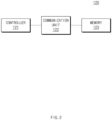
- FIG. 2 is a view showing a configuration of a battery management apparatus according to an embodiment disclosed herein.
- the battery management apparatus 120 may include a controller 121, a communication unit 122, and a memory 123.
- the controller 121 may extract a driving pattern of a vehicle having mounted thereon the battery pack 100, based on driving information of the vehicle.
- the driving information of the vehicle may be defined as a motion input while a user of the vehicle uses the vehicle or an electronic device installed on the vehicle and characteristics of the motion.
- the driving information of the vehicle may include battery use information according to user's vehicle driving.
- the controller 121 may extract the driving pattern of the vehicle by applying the driving information of the vehicle obtained from the other control device of the vehicle to machine learning.
- machine learning refers to a technique for predicting a certain result by training a computer.
- the controller 121 may extract the driving pattern of the vehicle by inputting the driving information of the vehicle to machine learning with a time-series analysis structure.
- the time series may be defined as an order of arrangement at specific time periods over time.
- the machine learning with the time-series analysis structure may include a long short term memory (LSTM).
- the LSTM algorithm which is one of artificial neural networks, may be defined as a structure in which a recurrent neural network (RNN) is modified to reflect a long term feature.
- RNN recurrent neural network
- the LSTM is mainly applied to problems of time-series data showing a change over time.
- the LSTM algorithm may predict an (n+1) th action for user action time-series data having a length of n.
- the controller 121 may extract the battery setting parameter of the battery pack 100 corresponding to the driving pattern of the vehicle based on the driving pattern of the vehicle extracted by applying the driving information of the vehicle to a machine learning model.
- the battery setting parameter may include at least any one of a voltage, an internal resistance, a capacitance, a time constant, a capacity, and an open circuit voltage (OCV) of the plurality of battery cells 111, 112, 113, and 114, the battery module 110, or the battery pack 100.
- OCV open circuit voltage
- this parameter may be merely an example and is not limited to the above-described examples.
- the controller 121 may extract a battery setting parameter that is most suitable or optimal for the driving pattern of the vehicle from among a plurality of battery setting parameters previously stored in the memory 123.
- the controller 121 may input the plurality of battery setting parameters to a recursive least squares (RLS) filter, a least mean squares (LMS) filter, or an extended Kalman filter (EKF) to extract a battery setting parameter that is optimal for the driving pattern of the vehicle.
- RLS filter may be defined as a time-series recursive correction algorithm for error minimization.
- LMS filter may be defined as an algorithm for extracting a time that minimizes an average error of a group to estimate a probabilistic optimal value.
- the EKF filter may be defined as an algorithm for correcting a measurement error of a non-linear equivalent model to estimate an actual value.
- the controller 121 may extract the battery setting parameter that is optimal for the driving pattern of the vehicle from among the plurality of battery setting parameters based on an RLS filter, an LMS filter, or an EKF filter that reflect characteristics of the driving pattern of the vehicle.
- the controller 121 may repeatedly extract the battery setting parameter corresponding to the driving pattern of the vehicle from among the plurality of battery setting parameters at specific periods. That is, the controller 121 may dynamically extract the battery setting parameter corresponding to the driving pattern of the vehicle and a driving history of the vehicle by performing a periodic battery setting parameter extraction operation.
- the controller 121 may control the battery pack 100 based on the extracted battery setting parameter. That is, the controller 121 may control at least any one of a voltage, an internal resistance, a capacitance, a time constant, a capacity, and an OCV of the plurality of battery cells 111, 112, 113, and 114, the battery module 110, or the battery pack 100, based on the extracted battery setting parameter.
- the controller 120 may control the battery based on the optimal battery setting parameter received by the communication unit 122 from the server 200.
- the controller 120 may include the optimal battery setting parameter in a plurality of existing battery setting parameters and extract the battery setting parameter corresponding to the driving pattern of the vehicle from among the plurality of battery setting parameters including at least one optimal battery setting parameter.
- the controller 121 may control the battery based on the extracted battery setting parameter.
- the controller 121 may apply the extracted battery setting parameter to the battery when the vehicle operates in an idle state or a consent to change the vehicle's battery setting parameter is received from the other control device of the vehicle.
- the communication unit 122 may receive information about driving of the vehicle from the other control device of the vehicle.
- the other control device of the vehicle may bean electronic control unit (ECU) of the vehicle according to an embodiment.
- the electronic control unit of the vehicle may communicate with another electronic control unit of the vehicle without a host computer in the vehicle through CAN communication.
- the communication unit 122 may transmit to the server 200, the vehicle's driving pattern generated by the controller 121 based on information about driving of the vehicle or the battery setting parameter corresponding to the driving pattern of the vehicle extracted by the controller 121 from among the plurality of battery setting parameters.
- the communication unit 122 may transmit the battery setting parameter applied to the plurality of battery cells 111, 112, 113, and 114, the battery module 110, or the battery pack 100 to the server 200 at specific periods.
- the communication unit 122 may receive from the server 200, at least one optimal battery setting parameter generated by the server 200 based on the driving pattern of the vehicle and the battery setting parameter previously applied to the battery.
- the communication unit 122 may verify integrity in terms of loss or distortion of the at least one optimal battery setting parameter generated by the server 200.
- the communication unit 122 may verify the integrity of the at least one optimal battery setting parameter through a checksum check, a cyclic redundancy check (CRC) check, or a secure hash algorithm (SHA) check with respect to the at least one optimal battery setting parameter generated by the server 200.
- CRC cyclic redundancy check
- SHA secure hash algorithm
- the communication unit 122 may encrypt and decrypt data by using an AES or RSA authentication key when transmitting or receiving the data to or from the server 200.
- the communication unit 122 may repeatedly perform self-integrity verification to prevent modification, omission, or erroneous distortion of the battery setting parameters obtained from the server 200.
- the memory 123 may store a plurality of battery setting parameters.
- the memory 123 may store at least one optimal battery setting parameter obtained from the server 200 by including the same among the plurality of battery setting parameters. That is, the memory 123 may store the at least one optimal battery setting parameter obtained from the server 200 accumulatively among the plurality of battery setting parameters.
- FIG. 3 is a block diagram illustrating a configuration of a server according to an embodiment disclosed herein.
- the server 200 may include a communication unit 210, a controller 220, and a database 230.
- the communication unit 210 may receive information about a driving pattern of a vehicle having mounted thereon a battery from the battery management apparatus 120.
- the communication unit 210 may also receive information about a battery setting parameter previously applied to the battery from the battery management apparatus 120 at specific periods. For example, the communication unit 210 may receive the battery setting parameter applied to the plurality of battery cells 111, 112, 113, and 114, the battery module 110, or the battery pack 100 from the battery management apparatus 120 at specific periods. The communication unit 210 may receive a battery setting parameter of a driving pattern of each of a plurality of vehicles from a battery management apparatus of the plurality of vehicles other than the battery management apparatus 120.
- the communication unit 210 may transmit at least one optimal battery setting parameter generated by the controller 220 to the battery management apparatus 120. That is, the communication unit 210 may transmit to the battery management apparatus 120, at least one optimal battery setting parameter generated by the server 200 based on the driving pattern of the vehicle and the battery setting parameter previously applied to the battery.
- the controller 220 may extract a similar vehicle driving pattern that is similar to the driving pattern of the vehicle having mounted thereon a battery from among a plurality of vehicle driving patterns stored in the database 230.
- the controller 220 may extract a battery setting parameter of the similar vehicle driving pattern.
- the controller 220 may generate at least one optimal battery setting parameter based on the battery setting parameter of the similar vehicle driving pattern.
- the controller 220 may generate the at least one optimal battery setting parameter by inputting the battery setting parameter of the similar vehicle driving pattern and the battery setting parameter applied to the battery to a genetic algorithm.
- the genetic algorithm may be a search technique for finding out an optimal solution by imitating the evolution of organisms while adapting to the environment.
- the genetic algorithm may operate in a manner of selecting an optimal solution from an initially existing solution group, i.e., a parent group, and repeating a search toward the selected solution to find an optimal solution. That is, the genetic algorithm may be defined as a technique for proposing the optimal solution to a problem rather than an algorithm for solving a specific problem or generating an answer. More specifically, the genetic algorithm may generate child chromosomes that are the solutions of the next generation through mating of parental chromosome populations. The genetic algorithm may select two chromosomes from a parental chromosome group and generate child chromosomes through crossover operations and mutation of each parent chromosome.
- the controller 220 may extract at least one similar vehicle driving pattern that is similar to the driving pattern of the vehicle having mounted thereon the battery from among a plurality of battery setting parameters stored in the database 230.
- the controller 220 may use as a parental chromosome group, the battery setting parameter of the at least one similar vehicle driving pattern and the battery setting parameter applied to the battery obtained periodically from the battery management apparatus 120.
- the controller 220 may generate a child battery setting parameter by inputting the battery setting parameter of the at least one similar vehicle driving pattern and the battery setting parameter previously applied to the battery to the genetic algorithm. That is, the controller 220 may generate the optimal battery setting parameter optimized for the vehicle driving pattern by inputting the battery setting parameter of the at least one similar vehicle driving pattern and the battery setting parameter previously applied to the battery to the genetic algorithm.
- the controller 220 may repeatedly perform the genetic algorithm based on a set number of times.
- the controller 220 may repeatedly generate at least one optimal battery setting parameter based on the set number of times and terminate the genetic algorithm when the number of at least one generated optimal battery setting parameter with respect to the number of battery setting parameters previously applied to the battery exceeds a specific rate.
- the controller 220 may repeatedly generate at least one optimal battery setting parameter based on the set number of times and further perform the genetic algorithm based on a preset additional number of times when the number of at least one generated optimal battery setting parameter with respect to the number of battery setting parameters previously applied to the battery is less than or equal to the specific rate.
- the controller 220 may additionally perform the genetic algorithm, and then include the battery setting parameter previously applied to the battery in the at least one optimal battery setting parameter when the number of at least one generated optimal battery setting parameter with respect to the number of battery setting parameters previously applied to the battery is less than or equal to the preset ratio.
- the controller 220 may generate identification information of the optimal battery setting parameter that is equal to the battery setting parameter previously applied to the battery.
- the controller 220 may record the identification information of the optimal battery setting parameter that is equal to the battery setting parameter previously applied to the battery.
- the communication unit 210 may transmit at least one optimal battery setting parameter generated by the controller 220 to the battery management apparatus 120.
- the communication unit 210 may transmit to the battery management apparatus 120, the at least one optimal battery setting parameter except for the optimal battery setting parameter equal to the battery setting parameter previously applied to the battery.
- the communication unit 210 may compress and encrypt the optimal battery setting parameter generated by the controller 220.
- the controller 220 may encrypt the generated optimal battery setting parameter by using the AES or RSA authentication key.
- the communication unit 210 may repeatedly perform self-integrity verification to prevent modification, omission, or erroneous distortion of battery setting parameters and vehicle driving information collected, accumulated, managed, evaluated, and verified in the server 200.
- the communication unit 210 may encrypt data by using the AES or RSA authentication key when transmitting or receiving the data to or from the server 120.
- the communication unit 210 may perform a checksum check, a CRC check, or an SHA check with respect to the at least one optimal battery setting parameter generated by the server 220 to verify the integrity of the at least one optimal battery setting parameter generated by the controller 220.
- the database 230 may store the vehicle driving pattern received by the communication unit 210 from the battery management apparatus 120.
- the database 230 may also store the battery setting parameter applied to the battery, received by the communication unit 210 from the battery management apparatus 120.
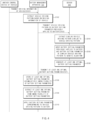
- FIG. 4 is a view showing an operating method of a battery management apparatus and a server, according to an embodiment disclosed herein.
- the battery management apparatus 120 may receive driving information of the vehicle from another control device of the vehicle.
- the battery management apparatus 120 may extract the driving pattern of the vehicle by applying the driving information of the vehicle obtained from the other control device of the vehicle to machine learning.
- the battery management apparatus 120 may transmit the vehicle driving pattern or the battery setting parameter previously applied to the battery among the plurality of battery setting parameters to the server 200.
- the server 200 may receive information about the battery setting parameter previously applied to the battery from the battery management apparatus 120 at specific periods. In operation S103, the server 200 may receive a battery setting parameter of a driving pattern of each of a plurality of vehicles from a battery management apparatus of the plurality of vehicles other than the battery management apparatus 120. Although it is illustrated in FIG. 4 that the server 200 receives the battery setting parameter from one battery management apparatus, the present disclosure is not limited thereto, and the server 200 may receive battery setting parameters from n battery management apparatuses (n is a natural number equal to or greater than 2).
- the server 200 may extract a similar vehicle driving pattern that is similar to the driving pattern of the vehicle having mounted thereon the battery from among a plurality of stored vehicle driving patterns.
- the server 200 may input the battery setting parameter of the similar vehicle driving pattern and the battery setting parameter applied to the battery to a genetic algorithm.
- the server 200 may generate at least one optimal battery setting parameter based on the battery setting parameter of the similar vehicle driving pattern.
- the server 200 may compress and encrypt the optimal battery setting parameter generated by the controller 200.
- the server 200 may transmit at least one optimal battery setting parameter generated by the controller 200 to the battery management apparatus 120.
- the battery management apparatus 120 may store the at least one optimal battery setting parameter obtained from the server 200 accumulatively among the plurality of battery setting parameters.
- the battery management apparatus 120 may extract a battery setting parameter that is optimal for the driving pattern of the vehicle from among a plurality of battery setting parameters previously stored in the memory 120.
- the battery management apparatus 120 may input the plurality of battery setting parameters to an RLS filter, an LMS filter, or an EKF to extract a battery setting parameter that is optimal for the driving pattern of the vehicle.
- the battery management apparatus 120 may repeatedly extract the battery setting parameter corresponding to the driving pattern of the vehicle from among the plurality of battery setting parameters at specific periods. In operation S109, that is, the battery management apparatus 120 may dynamically extract the battery setting parameter corresponding to the driving pattern of the vehicle and a driving history of the vehicle by performing a periodic battery setting parameter extraction operation.
- the battery management apparatus 120 may control the battery pack 100 based on the extracted battery setting parameter.
- the battery management apparatus 120 may control at least any one of a voltage, an internal resistance, a capacitance, a time constant, a capacity, and an OCV of the plurality of battery cells 111, 112, 113, and 114, the battery module 110, or the battery pack 100, based on the extracted battery setting parameter.
- the battery management apparatus 120 may apply the extracted battery setting parameter to the battery when the vehicle operates in an idle state or a consent to change the vehicle's battery setting parameter is received from the other control device of the vehicle.
- driving information of a vehicle having a battery mounted thereon may be precisely analyzed to apply a battery setting parameter optimized for a driving pattern of the vehicle to a battery.
- the battery management apparatus 120 and the server 200 may first analyze driving information of a vehicle having mounted thereon a battery by using a vehicle pattern analysis model mounted on the battery management apparatus, transmit the vehicle driving pattern and the battery setting parameter applied to the battery to the server having rich computing resources for precise analysis, and reduce communication resources to lighten storage and computing power of the cloud computer included in the server.
- the battery management apparatus 120 and the server 200 may transmit necessary minimum battery data to the server without a data loss to reduce infrastructure investment cost and network cost of the server.
- the battery management apparatus 120 and the server 200 may periodically update the optimal battery setting parameter to which the driving pattern of the vehicle having mounted thereon the battery is reflected, thereby establishing the battery system optimized for vehicle driving.
- FIG. 5 is a block diagram showing a hardware configuration of a computing system for implementing a battery management apparatus according to an embodiment disclosed herein.
- a computing system 300 may include an MCU 310, a memory 320, an input/output I/F 330, and a communication I/F 440.
- the MCU 310 may be a processor that executes various programs (e.g., a program for controlling the battery setting parameter of the battery cell) stored in the memory 320, processes various data through these programs, and performs the above-described functions of the battery management apparatus 120 shown in FIG. 1 .
- programs e.g., a program for controlling the battery setting parameter of the battery cell
- the memory 320 may store various programs regarding operations.
- the memory 320 may also store operation data.
- the memory 320 may be provided in plural, depending on a need.
- the memory 320 may be volatile memory or non-volatile memory.
- RAM random access memory
- DRAM dynamic RAM
- SRAM static RAM
- ROM read only memory
- PROM programmable ROM
- EAROM electrically alterable ROM
- EPROM erasable PROM
- EEPROM electrically erasable PROM
- flash memory etc.
- the above-listed examples of the memory 320 are merely examples and are not limited thereto.
- the input/output I/F 330 may provide an interface for transmitting and receiving data by connecting an input device (not shown) such as a keyboard, a mouse, a touch panel, etc., and an output device such as a display (not shown), etc., to the MCU 310.
- an input device such as a keyboard, a mouse, a touch panel, etc.
- an output device such as a display (not shown), etc.
- the communication I/F 440 which is a component capable of transmitting and receiving various data to and from a server, may be various devices capable of supporting wired or wireless communication.
- a program for resistance measurement and abnormality diagnosis of the battery cell or various data may be transmitted and received to and from a separately provided external server through the communication I/F 440.
- a computer program according to an embodiment disclosed herein may be recorded in the memory 320 and processed by the MCU 310, thus being implemented as a module that performs respective functions of the battery management apparatus 120 described with reference to FIGS. 1 and 2 .
Landscapes
- Engineering & Computer Science (AREA)
- Life Sciences & Earth Sciences (AREA)
- Power Engineering (AREA)
- Mechanical Engineering (AREA)
- Transportation (AREA)
- Sustainable Energy (AREA)
- Sustainable Development (AREA)
- Theoretical Computer Science (AREA)
- Physics & Mathematics (AREA)
- Software Systems (AREA)
- Mathematical Physics (AREA)
- Computing Systems (AREA)
- Artificial Intelligence (AREA)
- Data Mining & Analysis (AREA)
- Evolutionary Computation (AREA)
- General Physics & Mathematics (AREA)
- General Engineering & Computer Science (AREA)
- Biophysics (AREA)
- Health & Medical Sciences (AREA)
- Computer Vision & Pattern Recognition (AREA)
- Medical Informatics (AREA)
- Bioinformatics & Computational Biology (AREA)
- Evolutionary Biology (AREA)
- Bioinformatics & Cheminformatics (AREA)
- Manufacturing & Machinery (AREA)
- Molecular Biology (AREA)
- Physiology (AREA)
- Chemical & Material Sciences (AREA)
- Chemical Kinetics & Catalysis (AREA)
- Electrochemistry (AREA)
- General Chemical & Material Sciences (AREA)
- Computational Linguistics (AREA)
- Biomedical Technology (AREA)
- Microelectronics & Electronic Packaging (AREA)
- Genetics & Genomics (AREA)
- General Health & Medical Sciences (AREA)
- Charge And Discharge Circuits For Batteries Or The Like (AREA)
- Secondary Cells (AREA)
- Electric Propulsion And Braking For Vehicles (AREA)
- Tests Of Electric Status Of Batteries (AREA)
Abstract
Description
- This application claims priority to and the benefit of
Korean Patent Application No. 10-2022-0021123 filed in the Korean Intellectual Property Office on February 17, 2022 - Embodiments disclosed herein relate to a battery management apparatus and a server.
- An electric vehicle is supplied with electricity from outside to charge a battery, and then a motor is driven by a voltage charged in the battery to obtain power. The battery of the electric vehicle may have heat generated therein by chemical reaction occurring in a process of charging and discharging electricity, and the heat may impair performance and lifetime of the battery. Thus, a battery management apparatus (or a battery management system (BMS)) that monitors and controls temperature, voltage, and current of the battery is driven to diagnose the state of the battery.
- However, traditional vehicle development systems collectively apply standard operating parameters of experimentally developed batteries to batteries installed in all vehicles. As a result, when a driving pattern of an actual vehicle differs from vehicle to vehicle, many errors occur in battery systems due to generalized battery setting parameters.
- Embodiments disclosed herein aim to provide a battery management apparatus and a server in which driving information of a vehicle having a battery mounted thereon is precisely analyzed and a battery setting parameter optimized for a driving pattern of the vehicle is applied to a battery.
- Technical problems of the embodiments disclosed herein are not limited to the above-described technical problems, and other unmentioned technical problems would be clearly understood by one of ordinary skill in the art from the following description.
- A battery management apparatus according to an embodiment disclosed herein includes a controller configured to extract a driving pattern of a vehicle having mounted thereon a battery based on driving information of the vehicle, extract a battery setting parameter corresponding to the driving pattern of the vehicle, and control the battery based on the extracted battery setting parameter and a communication unit configured to transmit at least any one of information about the driving pattern of the vehicle and the extracted battery setting parameter to a server and transmit a battery setting parameter previously applied to the battery to the server at specific periods.
- According to an embodiment, the battery management apparatus may further include a memory storing a plurality of battery setting parameters, in which the controller is further configured to repeatedly extract the battery setting parameter corresponding to the driving pattern of the vehicle from among the plurality of battery setting parameters at specific periods.
- According to an embodiment, the communication unit may be further configured to receive driving information of the vehicle from another control device of the vehicle.
- According to an embodiment, the communication unit may be further configured to receive from the server, at least one optimal battery setting parameter generated based on the driving pattern of the vehicle and the battery setting parameter previously applied to the battery, and the memory may store the at least one optimal battery setting parameter by including the same among the plurality of battery setting parameters.
- According to an embodiment, the controller may be further configured to repeatedly extract the battery setting parameter corresponding to the driving pattern of the vehicle among the plurality of battery setting parameters including the at least one optimal battery setting parameter at specific periods and control the battery based on the extracted battery setting parameter.
- According to an embodiment, in case that the vehicle operates in a key-off state, the controller may be further configured to apply the extracted battery setting parameter to the battery when the vehicle operates in an idle state or a consent to change the battery setting parameter of the vehicle is received from the other control device of the vehicle.
- According to an embodiment, the battery setting parameter may include at least any one of an internal resistance, a capacitance, a time constant, a capacity, and an open circuit voltage (OCV) of the battery.
- According to an embodiment, the controller may be further configured to extract the driving pattern of the vehicle by applying the driving information of the vehicle to machine learning.
- A server according to an embodiment disclosed herein includes a communication unit configured to receive information about a driving pattern of a vehicle having mounted thereon a battery and receive information about a battery setting parameter previously applied to the battery at specific periods and a controller configured to extract a similar vehicle driving pattern that is similar to the driving pattern of the vehicle having mounted thereon the battery from among a plurality of previously stored vehicle driving patterns, extract a battery setting parameter of the similar vehicle driving pattern, and generate at least one optimal battery setting parameter based on the battery setting parameter of the similar vehicle driving pattern.
- According to an embodiment, the server may further include a database storing the plurality of vehicle driving patterns and the plurality of battery setting parameters, in which the database stores a battery setting parameter previously applied to the battery, received by the communication unit.
- According to an embodiment, the controller may be further configured to generate the at least one optimal battery setting parameter by inputting the battery setting parameter of the similar vehicle driving pattern and the battery setting parameter previously applied to the battery to a genetic algorithm, and the communication unit may be further configured to transmit the at least one optimal battery setting parameter to the vehicle.
- According to an embodiment, the controller may be further configured to repeatedly generate the at least one optimal battery setting parameter by repeatedly performing the genetic algorithm based on a set number of times and terminate the genetic algorithm when a number of at least one generated optimal battery setting parameter with respect to a number of battery setting parameters previously applied to the battery exceeds a specific rate.
- According to an embodiment, the controller may be further configured to additionally perform the genetic algorithm based on a preset number of additional times, when the number of at least one generated optimal battery setting parameter with respect to the number of battery setting parameters previously applied to the battery is less than or equal to the specific rate.
- According to an embodiment, the controller may be further configured to additionally perform the genetic algorithm, and then include the battery setting parameter previously applied to the battery in the at least one optimal battery setting parameter when the number of at least one generated optimal battery setting parameter with respect to the number of battery setting parameters previously applied to the battery is less than or equal to the preset ratio, and the communication unit may be further configured to transmit the at least one optimal battery setting parameter including the battery setting parameter previously applied to the battery to the vehicle.
- According to an embodiment, when any one of the at least one optimal battery setting parameter may be equal to the battery setting parameter previously applied to the battery, the controller may be further configured to generate identification information of the optimal battery setting parameter that is equal to the battery setting parameter previously applied to the battery, and the communication unit may be further configured to transmit to the vehicle, the at least one optimal battery setting parameter except for the optimal battery setting parameter equal to the battery setting parameter previously applied to the battery.
- With a battery management apparatus and a server according to an embodiment disclosed herein, driving information of a vehicle having a battery mounted thereon may be precisely analyzed to apply a battery setting parameter optimized for a driving pattern of the vehicle to a battery.
-
-
FIG. 1 is a block diagram showing a relationship between a battery management apparatus and a server, according to an embodiment disclosed herein. -
FIG. 2 is a block diagram illustrating a configuration of a battery management apparatus, according to an embodiment disclosed herein. -
FIG. 3 is a block diagram illustrating a configuration of a server according to an embodiment disclosed herein. -
FIG. 4 is a view showing an operating method of a battery management apparatus and a server, according to an embodiment disclosed herein. -
FIG. 5 is a block diagram showing a hardware configuration of a computing system for implementing a battery management apparatus according to an embodiment disclosed herein. - Hereinafter, some embodiments disclosed in this document will be described in detail with reference to the example drawings. In adding reference numerals to components of each drawing, it should be noted that the same components are given the same reference numerals even though they are indicated in different drawings. In addition, in describing the embodiments disclosed in this document, when it is determined that a detailed description of a related known configuration or function interferes with the understanding of an embodiment disclosed in this document, the detailed description thereof will be omitted.
- To describe a component of an embodiment disclosed herein, terms such as first, second, A, B, (a), (b), etc., may be used. These terms are used merely for distinguishing one component from another component and do not limit the component to the essence, sequence, order, etc., of the component. The terms used herein, including technical and scientific terms, have the same meanings as terms that are generally understood by those skilled in the art, as long as the terms are not differently defined. Generally, the terms defined in a generally used dictionary should be interpreted as having the same meanings as the contextual meanings of the relevant technology and should not be interpreted as having ideal or exaggerated meanings unless they are clearly defined in the present document.
-
FIG. 1 is a diagram showing a relationship between a battery management apparatus and a server, according to an embodiment disclosed herein. - Referring to
FIG. 1 , abattery management apparatus 120 may control a battery mounted on a vehicle by communicating with aserver 200. Herein, the vehicle may include an electric vehicle driven by rotating a motor with electricity accumulated in a battery of the vehicle. - The
battery management apparatus 120 may transmit battery data and vehicle data to theserver 200. Thebattery management apparatus 120 may transmit vehicle data obtained from another control device (not shown) of the vehicle and battery data generated based on the vehicle data to theserver 200, and analyze and manage the battery data by using theserver 200 with rich computing resources. Thebattery management apparatus 120 may precisely analyze the battery data through theserver 200 to obtain battery data optimized for operating the battery. - The
server 200 may generate battery data optimized for controlling a plurality of batteries based on the vehicle data and the battery data obtained from thebattery management apparatus 120. Theserver 200 may include, for example, a cloud computing technique. Theserver 200 may generate battery data optimized for a plurality of batteries for control over the plurality of batteries based on the cloud computing technique. - The
server 200 may generate the battery data optimized for the plurality of batteries and transmit the generated battery data to thebattery management apparatus 120. Thebattery management apparatus 120 may update previously stored battery data upon receiving the optimized battery data from theserver 200. - According to an embodiment, the plurality of batteries may be implemented in the form of a
battery pack 100 that is installed on an electric vehicle or an energy storage system (ESS) to store electric energy. Thebattery pack 100 may be a unit that stores electric energy in the electric vehicle. The electric vehicle may include one ormore battery packs 100. - The
battery pack 100 may include abattery module 110, thebattery management apparatus 120, and arelay 130. - The
battery module 110 may include afirst battery cell 111, asecond battery cell 112, athird battery cell 113, and afourth battery cell 114. Although the plurality of battery cells are illustrated as four inFIG. 1 , the present disclosure is not limited thereto, and thebattery module 110 may include n battery cells (n is a natural number equal to or greater than 2). - The
battery module 110 may supply power to a target device (not shown). To this end, thebattery module 110 may be electrically connected to the target device. Herein, the target device may include an electrical, electronic, or mechanical device that operates by receiving power from thebattery pack 100 including the plurality ofbattery cells - The
battery cell 111 may be a lithium ion (Li-ion) battery, a Li-ion polymer battery, a nickel-cadmium (Ni-Cd) battery, a nickel hydrogen (Ni-MH) battery, etc., and may not be limited thereto. Meanwhile, although onebattery module 110 is illustrated inFIG. 1 , thebattery module 110 may be configured in plural according to an embodiment. - The battery management apparatus (or a battery management system (BMS)) 120 may manage and/or control a state and/or an operation of the
battery module 110. For example, thebattery management apparatus 120 may manage and/or control the states and/or operations of the plurality ofbattery cells battery module 110. Thebattery management apparatus 120 may manage charging and/or discharging of thebattery module 110. - In addition, the
battery management apparatus 120 may monitor a voltage, a current, a temperature, etc., of thebattery module 110 and/or each of the plurality ofbattery cells battery module 110. A sensor or various measurement modules for monitoring performed by thebattery management apparatus 120, which are not shown, may be additionally installed in thebattery module 110, a charging/discharging path, any position of thebattery module 110, etc. Thebattery management apparatus 120 may calculate a parameter indicating a state of thebattery module 110, e.g., a state of charge (SoC), a state of health (SoH), etc., based on a measurement value such as monitored voltage, current, temperature, etc. - The
battery management apparatus 120 may control an operation of therelay 130. For example, thebattery management apparatus 120 may short-circuit therelay 130 to supply power to the target device. Thebattery management apparatus 120 may short-circuit therelay 130 when a charging device is connected to thebattery pack 100. - The
battery management apparatus 120 may calculate a cell balancing time of each of the plurality ofbattery cells battery management apparatus 120 may calculate a cell balancing time based on an SoC, a battery capacity, and a balancing efficiency of each of the plurality ofbattery cells - Hereinbelow, each of the
battery management apparatus 120 and theserver 200 will be described in detail. - First, detailed configuration and operation of the
battery management apparatus 120 will be described.FIG. 2 is a view showing a configuration of a battery management apparatus according to an embodiment disclosed herein. First, referring toFIG. 2 , thebattery management apparatus 120 may include acontroller 121, acommunication unit 122, and amemory 123. - The
controller 121 may extract a driving pattern of a vehicle having mounted thereon thebattery pack 100, based on driving information of the vehicle. Herein, the driving information of the vehicle may be defined as a motion input while a user of the vehicle uses the vehicle or an electronic device installed on the vehicle and characteristics of the motion. For example, the driving information of the vehicle may include battery use information according to user's vehicle driving. - The
controller 121 may extract the driving pattern of the vehicle by applying the driving information of the vehicle obtained from the other control device of the vehicle to machine learning. Herein, machine learning refers to a technique for predicting a certain result by training a computer. - For example, the
controller 121 may extract the driving pattern of the vehicle by inputting the driving information of the vehicle to machine learning with a time-series analysis structure. The time series may be defined as an order of arrangement at specific time periods over time. The machine learning with the time-series analysis structure may include a long short term memory (LSTM). The LSTM algorithm, which is one of artificial neural networks, may be defined as a structure in which a recurrent neural network (RNN) is modified to reflect a long term feature. The LSTM is mainly applied to problems of time-series data showing a change over time. The LSTM algorithm may predict an (n+1)th action for user action time-series data having a length of n. - The
controller 121 may extract the battery setting parameter of thebattery pack 100 corresponding to the driving pattern of the vehicle based on the driving pattern of the vehicle extracted by applying the driving information of the vehicle to a machine learning model. Herein, the battery setting parameter may include at least any one of a voltage, an internal resistance, a capacitance, a time constant, a capacity, and an open circuit voltage (OCV) of the plurality ofbattery cells battery module 110, or thebattery pack 100. However, this parameter may be merely an example and is not limited to the above-described examples. - The
controller 121 may extract a battery setting parameter that is most suitable or optimal for the driving pattern of the vehicle from among a plurality of battery setting parameters previously stored in thememory 123. - More specifically, the
controller 121 may input the plurality of battery setting parameters to a recursive least squares (RLS) filter, a least mean squares (LMS) filter, or an extended Kalman filter (EKF) to extract a battery setting parameter that is optimal for the driving pattern of the vehicle. Herein, the RLS filter may be defined as a time-series recursive correction algorithm for error minimization. The LMS filter may be defined as an algorithm for extracting a time that minimizes an average error of a group to estimate a probabilistic optimal value. The EKF filter may be defined as an algorithm for correcting a measurement error of a non-linear equivalent model to estimate an actual value. - That is, the
controller 121 may extract the battery setting parameter that is optimal for the driving pattern of the vehicle from among the plurality of battery setting parameters based on an RLS filter, an LMS filter, or an EKF filter that reflect characteristics of the driving pattern of the vehicle. - The
controller 121 may repeatedly extract the battery setting parameter corresponding to the driving pattern of the vehicle from among the plurality of battery setting parameters at specific periods. That is, thecontroller 121 may dynamically extract the battery setting parameter corresponding to the driving pattern of the vehicle and a driving history of the vehicle by performing a periodic battery setting parameter extraction operation. - The
controller 121 may control thebattery pack 100 based on the extracted battery setting parameter. That is, thecontroller 121 may control at least any one of a voltage, an internal resistance, a capacitance, a time constant, a capacity, and an OCV of the plurality ofbattery cells battery module 110, or thebattery pack 100, based on the extracted battery setting parameter. - The
controller 120 may control the battery based on the optimal battery setting parameter received by thecommunication unit 122 from theserver 200. Upon receiving the optimal battery setting parameter from theserver 200, thecontroller 120 may include the optimal battery setting parameter in a plurality of existing battery setting parameters and extract the battery setting parameter corresponding to the driving pattern of the vehicle from among the plurality of battery setting parameters including at least one optimal battery setting parameter. Thecontroller 121 may control the battery based on the extracted battery setting parameter. - In case that the vehicle operates in a key-off state, the
controller 121 may apply the extracted battery setting parameter to the battery when the vehicle operates in an idle state or a consent to change the vehicle's battery setting parameter is received from the other control device of the vehicle. - The
communication unit 122 may receive information about driving of the vehicle from the other control device of the vehicle. Herein, the other control device of the vehicle may bean electronic control unit (ECU) of the vehicle according to an embodiment. The electronic control unit of the vehicle may communicate with another electronic control unit of the vehicle without a host computer in the vehicle through CAN communication. - The
communication unit 122 may transmit to theserver 200, the vehicle's driving pattern generated by thecontroller 121 based on information about driving of the vehicle or the battery setting parameter corresponding to the driving pattern of the vehicle extracted by thecontroller 121 from among the plurality of battery setting parameters. - The
communication unit 122 may transmit the battery setting parameter applied to the plurality ofbattery cells battery module 110, or thebattery pack 100 to theserver 200 at specific periods. - The
communication unit 122 may receive from theserver 200, at least one optimal battery setting parameter generated by theserver 200 based on the driving pattern of the vehicle and the battery setting parameter previously applied to the battery. - According to an embodiment, the
communication unit 122 may verify integrity in terms of loss or distortion of the at least one optimal battery setting parameter generated by theserver 200. For example, thecommunication unit 122 may verify the integrity of the at least one optimal battery setting parameter through a checksum check, a cyclic redundancy check (CRC) check, or a secure hash algorithm (SHA) check with respect to the at least one optimal battery setting parameter generated by theserver 200. - According to an embodiment, the
communication unit 122 may encrypt and decrypt data by using an AES or RSA authentication key when transmitting or receiving the data to or from theserver 200. Thus, thecommunication unit 122 may repeatedly perform self-integrity verification to prevent modification, omission, or erroneous distortion of the battery setting parameters obtained from theserver 200. - The
memory 123 may store a plurality of battery setting parameters. Thememory 123 may store at least one optimal battery setting parameter obtained from theserver 200 by including the same among the plurality of battery setting parameters. That is, thememory 123 may store the at least one optimal battery setting parameter obtained from theserver 200 accumulatively among the plurality of battery setting parameters. - Hereinbelow, detailed configuration and operation of the
server 200 will be described with reference toFIG. 3. FIG. 3 is a block diagram illustrating a configuration of a server according to an embodiment disclosed herein. Referring toFIG. 3 , theserver 200 may include acommunication unit 210, acontroller 220, and adatabase 230. - The
communication unit 210 may receive information about a driving pattern of a vehicle having mounted thereon a battery from thebattery management apparatus 120. - The
communication unit 210 may also receive information about a battery setting parameter previously applied to the battery from thebattery management apparatus 120 at specific periods. For example, thecommunication unit 210 may receive the battery setting parameter applied to the plurality ofbattery cells battery module 110, or thebattery pack 100 from thebattery management apparatus 120 at specific periods. Thecommunication unit 210 may receive a battery setting parameter of a driving pattern of each of a plurality of vehicles from a battery management apparatus of the plurality of vehicles other than thebattery management apparatus 120. - The
communication unit 210 may transmit at least one optimal battery setting parameter generated by thecontroller 220 to thebattery management apparatus 120. That is, thecommunication unit 210 may transmit to thebattery management apparatus 120, at least one optimal battery setting parameter generated by theserver 200 based on the driving pattern of the vehicle and the battery setting parameter previously applied to the battery. - The
controller 220 may extract a similar vehicle driving pattern that is similar to the driving pattern of the vehicle having mounted thereon a battery from among a plurality of vehicle driving patterns stored in thedatabase 230. Thecontroller 220 may extract a battery setting parameter of the similar vehicle driving pattern. Thecontroller 220 may generate at least one optimal battery setting parameter based on the battery setting parameter of the similar vehicle driving pattern. - More specifically, the
controller 220 may generate the at least one optimal battery setting parameter by inputting the battery setting parameter of the similar vehicle driving pattern and the battery setting parameter applied to the battery to a genetic algorithm. - Herein, the genetic algorithm may be a search technique for finding out an optimal solution by imitating the evolution of organisms while adapting to the environment. The genetic algorithm may operate in a manner of selecting an optimal solution from an initially existing solution group, i.e., a parent group, and repeating a search toward the selected solution to find an optimal solution. That is, the genetic algorithm may be defined as a technique for proposing the optimal solution to a problem rather than an algorithm for solving a specific problem or generating an answer. More specifically, the genetic algorithm may generate child chromosomes that are the solutions of the next generation through mating of parental chromosome populations. The genetic algorithm may select two chromosomes from a parental chromosome group and generate child chromosomes through crossover operations and mutation of each parent chromosome.
- The
controller 220 may extract at least one similar vehicle driving pattern that is similar to the driving pattern of the vehicle having mounted thereon the battery from among a plurality of battery setting parameters stored in thedatabase 230. Thecontroller 220 may use as a parental chromosome group, the battery setting parameter of the at least one similar vehicle driving pattern and the battery setting parameter applied to the battery obtained periodically from thebattery management apparatus 120. - The
controller 220 may generate a child battery setting parameter by inputting the battery setting parameter of the at least one similar vehicle driving pattern and the battery setting parameter previously applied to the battery to the genetic algorithm. That is, thecontroller 220 may generate the optimal battery setting parameter optimized for the vehicle driving pattern by inputting the battery setting parameter of the at least one similar vehicle driving pattern and the battery setting parameter previously applied to the battery to the genetic algorithm. - The
controller 220 may repeatedly perform the genetic algorithm based on a set number of times. Thecontroller 220 may repeatedly generate at least one optimal battery setting parameter based on the set number of times and terminate the genetic algorithm when the number of at least one generated optimal battery setting parameter with respect to the number of battery setting parameters previously applied to the battery exceeds a specific rate. - The
controller 220 may repeatedly generate at least one optimal battery setting parameter based on the set number of times and further perform the genetic algorithm based on a preset additional number of times when the number of at least one generated optimal battery setting parameter with respect to the number of battery setting parameters previously applied to the battery is less than or equal to the specific rate. - The
controller 220 may additionally perform the genetic algorithm, and then include the battery setting parameter previously applied to the battery in the at least one optimal battery setting parameter when the number of at least one generated optimal battery setting parameter with respect to the number of battery setting parameters previously applied to the battery is less than or equal to the preset ratio. When any one of the at least one optimal battery setting parameter is equal to the battery setting parameter previously applied to the battery, thecontroller 220 may generate identification information of the optimal battery setting parameter that is equal to the battery setting parameter previously applied to the battery. Thecontroller 220 may record the identification information of the optimal battery setting parameter that is equal to the battery setting parameter previously applied to the battery. - The
communication unit 210 may transmit at least one optimal battery setting parameter generated by thecontroller 220 to thebattery management apparatus 120. For example, thecommunication unit 210 may transmit to thebattery management apparatus 120, the at least one optimal battery setting parameter except for the optimal battery setting parameter equal to the battery setting parameter previously applied to the battery. - The
communication unit 210 may compress and encrypt the optimal battery setting parameter generated by thecontroller 220. For example, thecontroller 220 may encrypt the generated optimal battery setting parameter by using the AES or RSA authentication key. More specifically, thecommunication unit 210 may repeatedly perform self-integrity verification to prevent modification, omission, or erroneous distortion of battery setting parameters and vehicle driving information collected, accumulated, managed, evaluated, and verified in theserver 200. Thus, thecommunication unit 210 may encrypt data by using the AES or RSA authentication key when transmitting or receiving the data to or from theserver 120. - According to an embodiment, the
communication unit 210 may perform a checksum check, a CRC check, or an SHA check with respect to the at least one optimal battery setting parameter generated by theserver 220 to verify the integrity of the at least one optimal battery setting parameter generated by thecontroller 220. - The
database 230 may store the vehicle driving pattern received by thecommunication unit 210 from thebattery management apparatus 120. Thedatabase 230 may also store the battery setting parameter applied to the battery, received by thecommunication unit 210 from thebattery management apparatus 120. -
FIG. 4 is a view showing an operating method of a battery management apparatus and a server, according to an embodiment disclosed herein. - Referring to
FIG. 4 , in operation S101, thebattery management apparatus 120 may receive driving information of the vehicle from another control device of the vehicle. - In operation S102, the
battery management apparatus 120 may extract the driving pattern of the vehicle by applying the driving information of the vehicle obtained from the other control device of the vehicle to machine learning. - In operation S103, the
battery management apparatus 120 may transmit the vehicle driving pattern or the battery setting parameter previously applied to the battery among the plurality of battery setting parameters to theserver 200. - In operation S103, the
server 200 may receive information about the battery setting parameter previously applied to the battery from thebattery management apparatus 120 at specific periods. In operation S103, theserver 200 may receive a battery setting parameter of a driving pattern of each of a plurality of vehicles from a battery management apparatus of the plurality of vehicles other than thebattery management apparatus 120. Although it is illustrated inFIG. 4 that theserver 200 receives the battery setting parameter from one battery management apparatus, the present disclosure is not limited thereto, and theserver 200 may receive battery setting parameters from n battery management apparatuses (n is a natural number equal to or greater than 2). - In operation S104, the
server 200 may extract a similar vehicle driving pattern that is similar to the driving pattern of the vehicle having mounted thereon the battery from among a plurality of stored vehicle driving patterns. - In
operation S 105, theserver 200 may input the battery setting parameter of the similar vehicle driving pattern and the battery setting parameter applied to the battery to a genetic algorithm. - In operation S106, the
server 200 may generate at least one optimal battery setting parameter based on the battery setting parameter of the similar vehicle driving pattern. - In operation S106, the
server 200 may compress and encrypt the optimal battery setting parameter generated by thecontroller 200. - In operation S107, the
server 200 may transmit at least one optimal battery setting parameter generated by thecontroller 200 to thebattery management apparatus 120. - In operation S108, the
battery management apparatus 120 may store the at least one optimal battery setting parameter obtained from theserver 200 accumulatively among the plurality of battery setting parameters. - In operation S109, the
battery management apparatus 120 may extract a battery setting parameter that is optimal for the driving pattern of the vehicle from among a plurality of battery setting parameters previously stored in thememory 120. In operation S109, more specifically, thebattery management apparatus 120 may input the plurality of battery setting parameters to an RLS filter, an LMS filter, or an EKF to extract a battery setting parameter that is optimal for the driving pattern of the vehicle. - In operation S109, the
battery management apparatus 120 may repeatedly extract the battery setting parameter corresponding to the driving pattern of the vehicle from among the plurality of battery setting parameters at specific periods. In operation S109, that is, thebattery management apparatus 120 may dynamically extract the battery setting parameter corresponding to the driving pattern of the vehicle and a driving history of the vehicle by performing a periodic battery setting parameter extraction operation. - In operation S110, the
battery management apparatus 120 may control thebattery pack 100 based on the extracted battery setting parameter. In operation S110, that is, thebattery management apparatus 120 may control at least any one of a voltage, an internal resistance, a capacitance, a time constant, a capacity, and an OCV of the plurality ofbattery cells battery module 110, or thebattery pack 100, based on the extracted battery setting parameter. - In operation S110, in case that the vehicle operates in a key-off state, the
battery management apparatus 120 may apply the extracted battery setting parameter to the battery when the vehicle operates in an idle state or a consent to change the vehicle's battery setting parameter is received from the other control device of the vehicle. - As described above, with the
battery management apparatus 120 and theserver 200 according to an embodiment disclosed herein, driving information of a vehicle having a battery mounted thereon may be precisely analyzed to apply a battery setting parameter optimized for a driving pattern of the vehicle to a battery. - Moreover, the
battery management apparatus 120 and theserver 200 may first analyze driving information of a vehicle having mounted thereon a battery by using a vehicle pattern analysis model mounted on the battery management apparatus, transmit the vehicle driving pattern and the battery setting parameter applied to the battery to the server having rich computing resources for precise analysis, and reduce communication resources to lighten storage and computing power of the cloud computer included in the server. - The
battery management apparatus 120 and theserver 200 may transmit necessary minimum battery data to the server without a data loss to reduce infrastructure investment cost and network cost of the server. - Furthermore, the
battery management apparatus 120 and theserver 200 may periodically update the optimal battery setting parameter to which the driving pattern of the vehicle having mounted thereon the battery is reflected, thereby establishing the battery system optimized for vehicle driving. -
FIG. 5 is a block diagram showing a hardware configuration of a computing system for implementing a battery management apparatus according to an embodiment disclosed herein. - Referring to
FIG. 5 , acomputing system 300 according to an embodiment disclosed herein may include anMCU 310, amemory 320, an input/output I/F 330, and a communication I/F 440. - The
MCU 310 may be a processor that executes various programs (e.g., a program for controlling the battery setting parameter of the battery cell) stored in thememory 320, processes various data through these programs, and performs the above-described functions of thebattery management apparatus 120 shown inFIG. 1 . - The
memory 320 may store various programs regarding operations. Thememory 320 may also store operation data. - The
memory 320 may be provided in plural, depending on a need. Thememory 320 may be volatile memory or non-volatile memory. For thememory 320 as the volatile memory, random access memory (RAM), dynamic RAM (DRAM), static RAM (SRAM), etc., may be used. For thememory 320 as the nonvolatile memory, read only memory (ROM), programmable ROM (PROM), electrically alterable ROM (EAROM), erasable PROM (EPROM), electrically erasable PROM (EEPROM), flash memory, etc., may be used. The above-listed examples of thememory 320 are merely examples and are not limited thereto. - The input/output I/
F 330 may provide an interface for transmitting and receiving data by connecting an input device (not shown) such as a keyboard, a mouse, a touch panel, etc., and an output device such as a display (not shown), etc., to theMCU 310. - The communication I/F 440, which is a component capable of transmitting and receiving various data to and from a server, may be various devices capable of supporting wired or wireless communication. For example, a program for resistance measurement and abnormality diagnosis of the battery cell or various data may be transmitted and received to and from a separately provided external server through the communication I/F 440.
- As such, a computer program according to an embodiment disclosed herein may be recorded in the
memory 320 and processed by theMCU 310, thus being implemented as a module that performs respective functions of thebattery management apparatus 120 described with reference toFIGS. 1 and2 . - The above description is merely illustrative of the technical idea of the present disclosure, and various modifications and variations will be possible without departing from the essential characteristics of the present disclosure by those of ordinary skill in the art to which the present disclosure pertains.
- Therefore, the embodiments disclosed in the present disclosure are intended for description rather than limitation of the technical spirit of the present disclosure and the scope of the technical spirit of the present disclosure is not limited by these embodiments. The protection scope of the present disclosure should be interpreted by the following claims, and all technical spirits within the same scope should be understood to be included in the scope of the present disclosure.
Claims (15)
- A battery management apparatus comprising:a controller configured to extract a driving pattern of a vehicle having mounted thereon a battery based on driving information of the vehicle, extract a battery setting parameter corresponding to the driving pattern of the vehicle, and control the battery based on the extracted battery setting parameter; anda communication unit configured to transmit at least any one of information about the driving pattern of the vehicle and the extracted battery setting parameter to a server and transmit a battery setting parameter previously applied to the battery to the server at specific periods.
- The battery management apparatus of claim 1, further comprising a memory storing a plurality of battery setting parameters,
wherein the controller is further configured to repeatedly extract the battery setting parameter corresponding to the driving pattern of the vehicle from among the plurality of battery setting parameters at specific periods. - The battery management apparatus of claim 2, wherein the communication unit is further configured to receive driving information of the vehicle from another control device of the vehicle.
- The battery management apparatus of claim 3, wherein the communication unit is further configured to receive from the server, at least one optimal battery setting parameter generated based on the driving pattern of the vehicle and the battery setting parameter previously applied to the battery, and the memory stores the at least one optimal battery setting parameter by including the same among the plurality of battery setting parameters.
- The battery management apparatus of claim 4, wherein the controller is further configured to repeatedly extract the battery setting parameter corresponding to the driving pattern of the vehicle among the plurality of battery setting parameters comprising the at least one optimal battery setting parameter at specific periods and control the battery based on the extracted battery setting parameter.
- The battery management apparatus of claim 5, wherein in case that the vehicle operates in a key-off state, the controller is further configured to apply the extracted battery setting parameter to the battery when the vehicle operates in an idle state or a consent to change the battery setting parameter of the vehicle is received from the other control device of the vehicle.
- The battery management apparatus of claim 1, wherein the battery setting parameter comprises at least any one of an internal resistance, a capacitance, a time constant, a capacity, and an open circuit voltage (OCV) of the battery.
- The battery management apparatus of claim 1, wherein the controller is further configured to extract the driving pattern of the vehicle by applying the driving information of the vehicle to machine learning.
- A server comprising:a communication unit configured to receive information about a driving pattern of a vehicle having mounted thereon a battery and receive information about a battery setting parameter previously applied to the battery at specific periods; anda controller configured to extract a similar vehicle driving pattern that is similar to the driving pattern of the vehicle having mounted thereon the battery from among a plurality of previously stored vehicle driving patterns, extract a battery setting parameter of the similar vehicle driving pattern, and generate at least one optimal battery setting parameter based on the battery setting parameter of the similar vehicle driving pattern.
- The server of claim 9, further comprising a database storing the plurality of vehicle driving patterns and the plurality of battery setting parameters,
wherein the database stores a battery setting parameter previously applied to the battery, received by the communication unit. - The server of claim 9, wherein the controller is further configured to generate the at least one optimal battery setting parameter by inputting the battery setting parameter of the similar vehicle driving pattern and the battery setting parameter previously applied to the battery to a genetic algorithm, and
the communication unit is further configured to transmit the at least one optimal battery setting parameter to the vehicle. - The server of claim 11, wherein the controller is further configured to repeatedly generate the at least one optimal battery setting parameter by repeatedly performing the genetic algorithm based on a set number of times and terminate the genetic algorithm when a number of at least one generated optimal battery setting parameter with respect to a number of battery setting parameters previously applied to the battery exceeds a specific rate.
- The server of claim 12, wherein the controller is further configured to additionally perform the genetic algorithm based on a preset number of additional times, when the number of at least one generated optimal battery setting parameter with respect to the number of battery setting parameters previously applied to the battery is less than or equal to the specific rate.
- The server of claim 13, wherein the controller is further configured to additionally perform the genetic algorithm, and then include the battery setting parameter previously applied to the battery in the at least one optimal battery setting parameter when the number of at least one generated optimal battery setting parameter with respect to the number of battery setting parameters previously applied to the battery is less than or equal to the preset ratio, and
the communication unit is further configured to transmit the at least one optimal battery setting parameter comprising the battery setting parameter previously applied to the battery to the vehicle. - The server of claim 14, wherein when any one of the at least one optimal battery setting parameter is equal to the battery setting parameter previously applied to the battery, the controller is further configured to generate identification information of the optimal battery setting parameter that is equal to the battery setting parameter previously applied to the battery, and
the communication unit is further configured to transmit to the vehicle, the at least one optimal battery setting parameter except for the optimal battery setting parameter equal to the battery setting parameter previously applied to the battery.
Applications Claiming Priority (2)
| Application Number | Priority Date | Filing Date | Title |
|---|---|---|---|
| KR1020220021123A KR20230123840A (en) | 2022-02-17 | 2022-02-17 | Apparatus for managing battery and server |
| PCT/KR2023/002161 WO2023158195A1 (en) | 2022-02-17 | 2023-02-14 | Battery management apparatus and server |
Publications (2)
| Publication Number | Publication Date |
|---|---|
| EP4464545A1 true EP4464545A1 (en) | 2024-11-20 |
| EP4464545A4 EP4464545A4 (en) | 2025-05-28 |
Family
ID=87578556
Family Applications (1)
| Application Number | Title | Priority Date | Filing Date |
|---|---|---|---|
| EP23756607.0A Pending EP4464545A4 (en) | 2022-02-17 | 2023-02-14 | BATTERY AND SERVER MANAGEMENT DEVICE |
Country Status (6)
| Country | Link |
|---|---|
| US (1) | US20250162448A1 (en) |
| EP (1) | EP4464545A4 (en) |
| JP (1) | JP2025507578A (en) |
| KR (1) | KR20230123840A (en) |
| CN (1) | CN118613391A (en) |
| WO (1) | WO2023158195A1 (en) |
Cited By (1)
| Publication number | Priority date | Publication date | Assignee | Title |
|---|---|---|---|---|
| EP4714708A1 (en) * | 2024-09-19 | 2026-03-25 | Ford Global Technologies, LLC | A vehicle control system and method for battery sox management |
Family Cites Families (13)
| Publication number | Priority date | Publication date | Assignee | Title |
|---|---|---|---|---|
| US7782021B2 (en) * | 2007-07-18 | 2010-08-24 | Tesla Motors, Inc. | Battery charging based on cost and life |
| US7954579B2 (en) * | 2008-02-04 | 2011-06-07 | Illinois Institute Of Technology | Adaptive control strategy and method for optimizing hybrid electric vehicles |
| KR101500358B1 (en) * | 2013-07-08 | 2015-03-18 | 현대자동차 주식회사 | System and method for controlling state of charge of battery in vehicle |
| US10026998B2 (en) * | 2014-05-15 | 2018-07-17 | Ford Global Technologies, Llc | Electric vehicle operation to manage battery capacity |
| CN109917298A (en) * | 2017-12-13 | 2019-06-21 | 北京创昱科技有限公司 | A kind of cell charge state prediction method and system |
| CN110549902A (en) * | 2018-03-30 | 2019-12-10 | 比亚迪股份有限公司 | Cloud server, electric automobile and management system and method of power battery in electric automobile |
| GB201813561D0 (en) * | 2018-08-21 | 2018-10-03 | Shapecast Ltd | Machine learning optimisation method |
| KR20200026607A (en) * | 2018-09-03 | 2020-03-11 | 엘지전자 주식회사 | Device including battery |
| KR102166092B1 (en) * | 2018-12-13 | 2020-10-15 | 한국자동차연구원 | Central management system capable of operating remote sensing type battery sensor and method thereof |
| US11065978B2 (en) * | 2019-02-25 | 2021-07-20 | Toyota Research Institute, Inc. | Systems, methods, and storage media for adapting machine learning models for optimizing performance of a battery pack |
| CN110370983B (en) * | 2019-06-19 | 2021-10-01 | 东北大学 | Battery management system for electric vehicles based on 5G mobile communication |
| KR102304092B1 (en) * | 2019-11-11 | 2021-09-28 | 주식회사 에스제이 테크 | Power management system for electronic vehicles and the battery room's temperature control method using the system |
| KR102857462B1 (en) * | 2020-07-08 | 2025-09-08 | 현대자동차주식회사 | System and method for managing battery of vehicle |
-
2022
- 2022-02-17 KR KR1020220021123A patent/KR20230123840A/en active Pending
-
2023
- 2023-02-14 US US18/837,091 patent/US20250162448A1/en active Pending
- 2023-02-14 WO PCT/KR2023/002161 patent/WO2023158195A1/en not_active Ceased
- 2023-02-14 EP EP23756607.0A patent/EP4464545A4/en active Pending
- 2023-02-14 CN CN202380021055.8A patent/CN118613391A/en active Pending
- 2023-02-14 JP JP2024548473A patent/JP2025507578A/en active Pending
Cited By (1)
| Publication number | Priority date | Publication date | Assignee | Title |
|---|---|---|---|---|
| EP4714708A1 (en) * | 2024-09-19 | 2026-03-25 | Ford Global Technologies, LLC | A vehicle control system and method for battery sox management |
Also Published As
| Publication number | Publication date |
|---|---|
| US20250162448A1 (en) | 2025-05-22 |
| CN118613391A (en) | 2024-09-06 |
| EP4464545A4 (en) | 2025-05-28 |
| KR20230123840A (en) | 2023-08-24 |
| WO2023158195A1 (en) | 2023-08-24 |
| JP2025507578A (en) | 2025-03-21 |
Similar Documents
| Publication | Publication Date | Title |
|---|---|---|
| US20240410952A1 (en) | Battery management apparatus and operating method thereof | |
| US20240283039A1 (en) | Battery Testing Apparatus And Battery Testing System | |
| EP4446760B1 (en) | Battery depth-of-charge calculation apparatus and operating method thereof | |
| EP4386401A1 (en) | Battery management apparatus and battery inspection system including same | |
| EP4425198B1 (en) | Battery capacity prediction apparatus and operating method thereof | |
| EP4556920A1 (en) | Battery state prediction device and operating method therefor | |
| US20250162448A1 (en) | Battery management apparatus and server | |
| KR102886638B1 (en) | Apparatus for estimating state of health of battery and operating method of the same | |
| US20260086523A1 (en) | Battery manufacturing method and battery manufacturing system | |
| KR102889128B1 (en) | Charging protocol inspection apparatus and operating method of the same | |
| EP4629395A1 (en) | Battery state prediction device and operation method therefor | |
| US20250147113A1 (en) | Battery management apparatus and operating method thereof | |
| EP4628913A1 (en) | Battery data management device and operation method therefor | |
| EP4660652A1 (en) | Battery data management device and operation method therefor | |
| US20240320375A1 (en) | Energy storage system and operating method thereof | |
| EP4407829A1 (en) | Battery management device and method for operating same | |
| EP4306977B1 (en) | Battery life prediction apparatus and operating method thereof | |
| KR102966905B1 (en) | Apparatus for managing battery and operating method of the same | |
| US20240418781A1 (en) | Battery data management apparatus and operating method thereof | |
| US12436196B2 (en) | Battery self-discharge current measurement apparatus and operating method thereof | |
| EP4647789A1 (en) | Battery management device and server, and battery system comprising same | |
| EP4711782A1 (en) | Battery management apparatus and operation method therefor | |
| Adel et al. | Modeling techniques for electric vehicle powertrains: A comparative review and future insights | |
| CN120112802A (en) | Monitoring system and operation method thereof | |
| JP2025501973A (en) | Battery life prediction device and operation method thereof |
Legal Events
| Date | Code | Title | Description |
|---|---|---|---|
| STAA | Information on the status of an ep patent application or granted ep patent |
Free format text: STATUS: THE INTERNATIONAL PUBLICATION HAS BEEN MADE |
|
| PUAI | Public reference made under article 153(3) epc to a published international application that has entered the european phase |
Free format text: ORIGINAL CODE: 0009012 |
|
| STAA | Information on the status of an ep patent application or granted ep patent |
Free format text: STATUS: REQUEST FOR EXAMINATION WAS MADE |
|
| 17P | Request for examination filed |
Effective date: 20240816 |
|
| AK | Designated contracting states |
Kind code of ref document: A1 Designated state(s): AL AT BE BG CH CY CZ DE DK EE ES FI FR GB GR HR HU IE IS IT LI LT LU LV MC ME MK MT NL NO PL PT RO RS SE SI SK SM TR |
|
| DAV | Request for validation of the european patent (deleted) | ||
| DAX | Request for extension of the european patent (deleted) | ||
| A4 | Supplementary search report drawn up and despatched |
Effective date: 20250428 |
|
| RIC1 | Information provided on ipc code assigned before grant |
Ipc: B60L 3/00 20190101ALI20250422BHEP Ipc: G06N 3/126 20230101ALI20250422BHEP Ipc: B60L 58/22 20190101ALI20250422BHEP Ipc: B60L 58/21 20190101ALI20250422BHEP Ipc: G06N 20/00 20190101ALI20250422BHEP Ipc: B60L 58/18 20190101ALI20250422BHEP Ipc: B60L 53/66 20190101AFI20250422BHEP |
|
| STAA | Information on the status of an ep patent application or granted ep patent |
Free format text: STATUS: EXAMINATION IS IN PROGRESS |
|
| 17Q | First examination report despatched |
Effective date: 20260102 |